

Submitted:
01 May 2026
Posted:
05 May 2026
You are already at the latest version
Abstract
While the pathological impact of reactive oxygen species (ROS) in the aetiology of human infertility has received much attention, this review explores the counterproposal that these highly reactive metabolites play an essential role in mediating reproductive success. The physiological importance of ROS in biological systems can be distilled into three main categories of influence: (1) ROS can oxidize thiols to generate either the corresponding sulfenic acid or disulfide bridges. This oxidizing capacity is critical for several reproductive processes including the cross linking of sperm chromatin during epididymal maturation, formation of the mitochondrial sheath, and the activation of proteolytic zymogens involved in such processes as ovulation, menstruation, implantation and parturition. Thiol oxidation is also involved in the suppression of phosphatase activity and the resulting promotion of phosphorylation-dependent signal transduction pathways, that are involved in virtually every aspect of reproduction from sperm capacitation to parturition; (2) The destructive properties of ROS are also biologically significant in the defence against genital tract infections and in mediating such processes as autophagy, apoptosis and ferroptosis, which are fundamental to the reproductive process; (3) Finally, ROS are involved in controlling the redox status of transition metals (particularly iron and copper) in the active site of many enzymes that are of fundamental importance to reproduction. Given the biological importance of ROS to procreation, we should use antioxidants with care in managing both male and female infertility and avoid the induction of reductive stress.
Keywords:
reactive oxygen species (ROS)
; redox signalling
; reproduction
; antioxidants
1. Introduction
Oxidative stress (OS) is a well-recognized pathological phenomenon that plays a central role in the aetiology of human infertility. OS can occur as a result of a variety of factors including pathological conditions such as varicocele, polycystic ovary syndrome, endometriosis, fibroids and inflammation [1,2,3], exposure to environmental stressors such as air pollutants, pesticides and radiofrequency electromagnetic radiation [4,5,6,7] and the impact of a wide variety of lifestyle factors including diet, obesity, and smoking [8,9,10,11,12]. Fundamentally, OS occurs because of an imbalance between reactive oxygen species (ROS) production and the body’s ability to neutralise those ROS through the action of enzymatic and non-enzymatic antioxidants [13]. This imbalance can lead to cellular damage because their unstable and reactive nature allows ROS to abduct electrons from nearby molecules including proteins, nucleic acids and carbohydrates leading to lipid peroxidation, protein degradation and the formation of advanced glycation products respectively. In addition, ROS are instrumental in the activation of cellular defence mechanisms such as apoptosis/ferroptosis, which can lead to the large scale depletion of reproductive cells, including the male and female germ lines [12]. Within the microcosm of reproductive health, oxidative stress is recognized as having a key role in disrupting such fundamental biological processes such as fertilization, oocyte maturation, ovulation, decidualisation, embryo development, blastocyst implantation, pregnancy and parturition [13,14,15]. Given all these negative impacts of ROS on the reproductive process, it is reasonable to question why evolution would have encouraged the generation of these potentially toxic molecules in cells that are so critically important for procreation and transgenerational carriage of the genome. This review addresses the physiological roles of ROS in the reproductive biology of mammals, with particular reference to human fertility and the ability of men and women to participate in the procreative process.
2. The Positive Role for ROS in Reproductive Cells
ROS are biologically important signalling molecules that are constantly being generated in cells. Their biochemical significance is built upon on three fundamental biochemical principles:
- (1)
- ROS can oxidize cysteine thiols to generate the corresponding sulfenic acid (SOH) or create disulfide bridges, thereby fundamentally altering protein conformation and function. In the following review of the reproductive process, this property of ROS is exemplified in numerous ways from the cross linking of chromatin in the sperm head to the activation of zymogens (e.g. metalloproteases) and the suppression of protein phosphatase activity [16,17]. The latter is an extremely powerful consequence of ROS exposure that results in phosphorylation-dependent signal transduction cascades being maintained in an activated state. A reproductively important example is the phosphoinositide 3-kinase (PI3K)/protein kinase B (AKT) pathway, which is essential for cell proliferation, protein synthesis, cell cycle progression, the suppression of apoptosis, the resumption of meiosis and implantation [18,19]. Similarly, mitogen-activated protein kinase (MAPK) activity is promoted by ROS and drives several processes central to reproductive fitness including spermatogenesis and oocyte maturation [20,21]. Thiol oxidation may also affect cellular activity via changes in transcription factors such as Nrf2/Keap1 or NF-κB that regulate the responsiveness of reproductive cells and tissues to oxidative stress and are critical for the survival of the germ line and critical processes such as ovulation, implantation and labour [22,23,24].
- (2)
- At high levels of intensity, ROS can be very destructive, attacking a variety of critical biomolecules and inducing physiological cell death [12,25]. This property is an essential element in cellular remodelling processes encountered in reproduction including luteolysis, menstruation, implantation as well as the deletion of defective gametes and embryos. Under these circumstances, ROS are being used as positive mediators of cellular turnover, mediating such key processes as apoptosis, ferroptosis and autophagy [12,19,26].
A third fundamental property of ROS is that they can interact with metal centres at the core of many key proteins and control redox-switching activities. Typically, such metal centres are occupied by transition metals such as iron and copper, the redox status of which controls the overall function of the protein. For example, the redox regulation of heme-iron centres in key proteins such as cytochrome P450s, cytochrome C, nitric oxide synthase, catalase and a variety of peroxidases is important for such diverse reproductive processes as sperm hyperactivation, progesterone synthesis by the corpus luteum and the generation of prostaglandins at parturition. Lipoxygenase activity is also dependent on the oxidation of an iron atom at its active site, triggering such vital biological processes as eicosanoid generation and ferroptosis [27]. Similarly, the redox cycling of bound copper supports the functionality of proteins such as superoxide dismutase (SOD) and ceruloplasmin that play critical protective roles at all stages of the reproductive process from gametogenesis to foetal development [28,29].
In the following sections, the positive contributions of ROS to all stages of reproductive process from gamete maturation to childbirth, are examined. The review is focused on human reproduction although the concepts expressed are often supplemented with data obtained in animal models, particularly laboratory rodents. Furthermore, this review focuses on ROS-mediated events and only gives limited consideration to other forms of redox-induced change, including S-nitrosylation, sulfhydration, glutathionylation, CoAlation, and protein carbonylation, which have been considered in detail elsewhere [30]. The results of this analysis clearly illustrate the important biological role of ROS in reproductive biology and highlight why caution should be exercised in determining the type and dose of antioxidants deployed in the therapeutic management of human infertility.
3. ROS and Sperm Function
3.1. ROS and Chromatin Cross-Linking
Human spermatozoa feature 3 major sources of ROS including electron leakage from their mitochondria, the activation of specialized calcium-dependent NADPH oxidases such as NOX5 and the activity of L-amino acid oxidases such as IL4I1 [12] (Figure 1; Step 1). These ROS are then used to drive various aspects of sperm biology starting with their fundamental architecture. As spermatozoa mature, cysteine groups in an important protective enzyme, glutathione peroxidase 4 (GPx4), become oxidized leading to the formation of multiple intermolecular disulphide bridges and the formation of a polymer that stabilizes the spiral arrangement of the mitochondria around the axoneme. In this way, an enzyme that started as a powerful antioxidant becomes transformed, via oxidation, to a key structural element in the sperm midpiece, the mitochondrial sheath [31].
Another redox-mediated change in maturing spermatozoa involves chromatin cross linking in the sperm head. This change compacts the DNA into a near-crystalline state and is thought to be important for safeguarding the integrity of the male genome during its long journey from the male to the female reproductive tract [32,33]. The cross linking of sperm chromatin is achieved by replacement of nuclear histones with cysteine-rich protamines during spermatogenesis, followed by ROS-mediated formation of inter- and intra- molecular disulfide bridges, mediated by GPx4 during epididymal transit (Figure 1; Step 2) [34,35,36,37]. Although all Eutherian mammals use 6–9 cysteines for disulfide cross-linking, the specific placement and subsequent intra- vs inter- molecular bonding patterns vary. Interestingly, variation in packaging efficiency and DNA integrity appears to correlate with sperm competition levels within a species. Higher competition often selects for more robustly packaged and damage-resistant chromatin to ensure successful fertilisation in a competitive environment. In this context, it is interesting to note that human spermatozoa, which have not evolved to cope with high levels of sperm competition, have notoriously poor chromatin cross linking and, as a result, are far more susceptible to DNA damage than other Eutherian spermatozoa [36]. Such deficiencies in chromatin packaging correlate with incomplete thiol oxidation during epididymal transit. As a result, spermatozoa from infertile males are often found to possess a higher thiol content (fewer disulfide bonds) compared with normozoospermic, control samples [38,39,40].
3.2. ROS and Capacitation
Another crucial pathway regulated by redox-responsive mechanisms is capacitation, the process by which mammalian spermatozoa undergo a final maturation during their ascent of the female reproductive tract and gain the capacity to fertilize the oocyte. Capacitation is characterised by increases in pH, intracellular calcium, HCO3, cyclic AMP (cAMP) and protein phosphorylation [41]. ROS are positively involved in many of these processes as indicated in Figure 1; Step 3. Thus, the increase in tyrosine phosphorylation that characterises the attainment of a capacitated state, is a major redox-driven event in human spermatozoa. This enhancement is achieved via the ability of H2O2 to oxidize catalytic cysteine residues (often protected by glutathionylation or CoAlation) at the active site of tyrosine phosphatases to generate sulfenic acids which can then react with adjacent cysteines to form disulfide bonds or with nearby amides to form sulfenyl-amide linkages [30,42].
Additionally, ROS promote tyrosine phosphorylation by stimulating generation of the second messenger that drives this activity, cAMP, via the ability of O2•− to stimulate soluble adenylyl cyclase activity [43,44,45]. While the biochemical mechanisms responsible for redox-regulated cAMP generation in spermatozoa are not fully understood, the adenylyl cyclase within these cells contain cysteine residues that are susceptible to oxidation forming disulfide bonds or sulfenic acids. These modifications may induce a structural shift in the catalytic domain, increasing the enzyme's affinity for its substrate, ATP, or its essential cofactors, Mg2+ or Mn2+. In addition, ROS facilitate capacitation by enhancing the rate of cholesterol efflux from the plasma membrane, thereby contributing to an increase in membrane fluidity [46]. This phenomenon reflects the ability of ROS to directly induce the formation of oxysterols, which are more hydrophilic that the parent sterols and, as a result, move closer to the sperm surface where they are removed by binding proteins such as albumin (Figure 1; Step 4). The disruption of this redox process using hydrophobic antioxidants such as vitamin E or A, suppresses the tyrosine phosphorylation events associated with sperm capacitation and also interferes with sperm-zona interaction [47].
Hyperactivated motility is another feature of capacitation that is redox regulated. This type of movement is characterised by a change in the flagellar waveform to deliver a high amplitude, high intensity, asymmetrical beat pattern. This vitally important change is dependent on associated changes in tyrosine phosphorylation and is stimulated by ROS via the MAPK/ERK (Extracellular Signal-Regulated Kinase) pathway [48,49,50]. Another ROS-regulated factor involved in the control of hyperactivation is the Epidermal Growth Factor Receptor (EGFR); a transmembrane protein found in many cell types, mediating differentiation, cell proliferation and migration. EGFR activity has been shown to be directly enhanced by ROS through the inhibition of the receptor’s internalization and, indirectly, via the suppression of protein phosphatase activity [51,52,53]. In spermatozoa, ROS-dependent EGFR activation leads to actin polymerization which, in turn, leads to hyperactivated motility by mechanically facilitating flagellar bending and acting as a regulatory scaffold for key signalling molecules such as Catsper [54,55,56]. In keeping with this model, studies have shown that light-induced ROS production successfully activates EGFR leading to hyperactivated motility, contrasting with the suppression of this process by the presence of SOD [54].
3.3. ROS and Fertilization
Following successful hyperactivation and capacitation, further redox-regulated changes lead to egg recognition, the acrosome reaction and finally sperm-oocyte fusion [41,45,55,56]. The ROS mediated increase in membrane fluidity during capacitation enables egg-recognition complexes to move anteriorly within the plasma membrane to a location where sperm-zona recognition can be achieved [57]. This cell-cell interaction then activates signal transduction processes in the spermatozoa leading to the induction of the acrosomal exocytosis and, ultimately, fusion with the vitelline membrane.
The mechanistic underpinnings of these membrane fusion events appear to involve the induction of lipid peroxidation via the lipoxygenase pathway, followed by activation of phospholipase A2, where the removal of the oxidized fatty acid from position 2 (sn2) of the phospholipid, generates a lysophospholipid [58,59]. The latter event results in membrane instability, thereby supporting fusion of the plasma and outer acrosomal membranes during acrosomal exocytosis. ROS might also be involved in the IP3-mediated activation of actin severing proteins that promote the acrosome reaction by further destabilizing the plasma membrane [54,55]. The increase in membrane instability might also explain the observed positive role of ROS in the generation of a fusogenic equatorial segment in the spermatozoa, primed for interaction with the oocyte’s plasma membrane [60].
3.4. ROS and Sperm Vitality
Finally, ROS are also involved in the mediation of both sperm survival and senescence. In the context of sperm vitality, ROS have been suggested to act directly on AMP kinase (AMPK), activating the enzyme via the oxidation of key cysteines (299 and 304) on the α-subunit and upregulating both the cells’ antioxidant defences, as well as their capacity for ATP generation [61,62]. On the other hand, ROS are also central to the induction of apoptosis in human spermatozoa, facilitating the apoptotic removal of aged, damaged spermatozoa and ensuring that they do not participate in the fertilization process [63]. In light of these observations, it has been suggested that sperm capacitation and senescence represent a physiological continuum mediated by ROS [64]. During the early stages of sperm capacitation ROS are positive mediators of biological change promoting signal transduction pathways, elevating intracellular calcium and increasing membrane fluidity, under the protective control of antioxidants, notably peroxiredoxin-6 [65]. However, if capacitated spermatozoa do not find an oocyte, these same changes will ultimately generate senescence and seal their apoptotic fate [64].
4. ROS and Oocyte Function
4.1. Oocyte Recruitment and Maturation
Oocyte recruitment, development and maturation involve a series of complex molecular signalling processes within the follicular microenvironment, many of which are mediated by ROS [66,67,68,69]. Oocytes spend much of their lifespan reposing within primordial follicles and arrested at prophase I. Following follicle selection and growth, a pre-ovulatory surge of gonadotrophins (LH and FSH) triggers ROS production through NOX enzymes, precipitating germinal vesicle breakdown (GVB) and meiotic resumption (Figure 2; Step 1). Within cumulus-oocyte complexes (COCs), cumulus cells mediate transmission of the gonadotrophin-driven signals that coordinate meiotic resumption, partly by modulating cyclic AMP (cAMP) generation. Concurrently, ATP production in the mitochondria rise to meet the energetic demands of oocyte maturation, with ROS produced as a by-product (Figure 2; Step 2). At physiological levels, ROS, especially H₂O₂, can activate signalling pathways such as AMPK and EGFR, which are involved in energy sensing, cumulus expansion, and ovulation [70]. AMPK and calcium-activated pathways are both implicated in meiotic resumption from diplotene arrest [71,72]. LH itself stimulates ROS production in the ovary, as suggested by ascorbic acid depletion studies [73], and this transient oxidative stress is functionally critical. Thus, normal cumulus expansion and mucification are effectively inhibited in vitro in both mice and rats by membrane permeant antioxidants such as BHA (butylated hydroxyanisole) [74,75]. In this situation, ROS serve as a primary signal for the activation of AMPK (Figure 2; Step 3).
Activated AMPK can then increase phosphodiesterase 3A (PDE3A) activity, thereby facilitating reduced generation and accelerated breakdown of cAMP and cGMP. The decline in cAMP, in particular, leads to dephosphorylation of maturation promoting factor (MPF) and resumption of meiosis. However, if the metabolic activity of oocytes fails to meet mitochondrial thresholds, as reflected in poor AMPK activation, then ROS-mediated apoptotic pathways are initiated by cytochrome C release, inducing large-scale apoptosis and a state of follicular atresia (Figure 2. Step 3) [75]. In addition to ROS mediated activation of AMPK, EGFR activation by H₂O₂ stimulates the calpain-2 pathway, leading to loosening of granulosa cell adhesions thereby allowing these cells to expand and reorganise as the follicle grows [76] (Figure 2; Step 4).
Ovarian follicles are therefore much like spermatozoa in that they rely significantly on redox regulation. ROS signalling pathways are crucial for the stimulation of follicle growth and the resumption of meiosis. While ROS are potentially toxic, the short half-life and limited diffusion capacity of these molecules, helps confer spatial precision to these signalling events within the ovarian follicle. However, if ROS generation overwhelms the follicle’s defensive capacity, then these same metabolites can trigger pathways leading to apoptosis and cell death. Thus, the ultimate fate of each follicle, and the oocyte it encases, critically depends upon its capacity to manage ROS, divining whether it will successfully achieve ovulation or succumb to atresia [77,78,79,80].
4.2. ROS and Ovulation
Ovulation is similarly modulated by redox activity. As indicated above, the LH surge that precedes ovulation, is associated with a sharp rise in inflammatory precursors in the ovary and an increase in ROS generation (Figure 3; Step 1) [81]. A causal relationship between acute inflammation, ROS and ovulation has been suggested by the ability of anti-inflammatory strategies [82] as well as antioxidants to successfully suppress ovulation in vivo [83,84]. Critical in this regard is the ability of ROS to promote the activation of proteases (matrix metalloproteinases [MMPs-14 and 16s] and plasminogen activators) that actively digest the collagen and connective tissues of the follicular wall (the theca externa), creating a weakened area called the stigma, which ultimately becomes the point of follicular rupture (Figure 3; Step 2). MMP activation involves a cysteine switch whereby ROS oxidise a thiol group in the pro-domain of the inactive zymogen, displacing a zinc ion, thus activating the enzyme. ROS also promote MMP activation by inhibiting key phosphatases allowing activation of the MAPK pathway and facilitating activation of transcription factors such as activator protein-1 (AP-1), which bind to the promoter region of MMP genes [16,17,84,85]. Such redox regulated protease activation in conjunction with ROS-induced apoptosis of granulosa cells, promotes detachment of the cumulus cells from the follicular wall, further contributing to follicular wall breakdown and ovulation of the mature oocyte [84]. LH also triggers the activation of EGFs (Epidermal Growth Factor like factors), in granulosa cells via ROS-mediated activation of MMPs [86,87]. EGFs trigger mucification of the cumulus cells [88] and cause an increase in the generation of PGE2 leading to a localized inflammatory response necessary for ovulation [89].
Evidence of NOX4 and 5 in human granulosa cells also supports a role for ROS in follicular rupture and ovulation [90], while animal studies using Drosophila, support this claim by demonstrating that O2∙- generating NOX enzymes work in conjunction with SOD3 to generate H2O2 which then acts as a secondary messenger triggering the apoptotic pathway leading to follicular rupture [91]. Indeed, in vivo studies in mice as well as ex vivo studies in rabbit also corroborate the essential role for ROS, such as H2O2, in follicular rupture and ovulation [75,87,91].
The generation of estrogen is another crucial function of the ovulating follicle. According to the two-cell/two gonadotrophin theory, LH stimulates follicular thecal cells to generate androgens which are then converted into estrogen by the granulosa cells under the influence of FSH. This is a redox regulated process catalysed by cytochrome P450 side chain cleavage activity within the mitochondria, to actively convert cholesterol to pregnenolone and other products. These events depend on the movement of electrons from the mitochondrial electron transport chain (ETC) to the P450 enzyme mediated by adrenodoxin and NADPH-dependent FAD flavoprotein, adrenodoxin reductase (Figure 3; Step 4).The reliance on electrons transfer elevates the risk of ROS production [92] which is in turn quickly controlled by peroxidase and catalase and other non-enzymatic antioxidants in granulosa cells to ensure redox balance and limit oxidative damage [68,69].
5. ROS, Corpus Luteum Function and Menstruation
Following ovulation, the corpus luteum (CL) is formed from the remaining follicular structure and is tasked with producing progesterone to delay the shedding of the endometrium, thereby allowing implantation to occur. Nitric oxide (NO) promotes blood flow and angiogenesis within the newly formed CL. Low levels of ROS generation also stabilize Hypoxia-Inducible Factor 1-alpha which triggers the release of Vascular Endothelial Growth Factor (VEGF), which is the primary engine driving the massive influx of blood vessels into the CL (Figure 3; Step 5) [93]. Whilst ROS and RNS are crucial in the establishment of the corpus luteum, there is a simultaneous shift towards the upregulation of antioxidant protection. Thus, the CL, literally the ‘yellow body’, acquires its colour from the presence of a powerful antioxidant, β-carotene, designed to limit the amount of oxidative damage incurred by the CL during the luteal phase. Together with a parallel increase in SOD activity, ROS are actively scavenged during the lifespan of the CL in order to prolong the generation of progesterone.
However, in the absence of a conceptus, SOD expression decreases, and ROS accumulate leading to the initiation of luteolysis [94,95]. During this process, ROS uncouple the LH receptor from adenylyl cyclase and inhibit steroidogenesis by interrupting transmitochondrial cholesterol transport. ROS (particularly lipid peroxides) also activate the cyclooxygenase (COX-2) responsible for regulating the production of prostaglandin F2α (PGF2α) and trigger the induction and expression of a transcription factor, nuclear factor-kappa B (NF-κB), that binds to the promoter region of the PTGS2 gene encoding COX-2, dramatically enhancing PGF2α synthesis [95,96]. The latter then acts on both luteal cells and inflammatory cells such as macrophages and neutrophils in the immediate vicinity, prompting them to upregulate ROS production in a self-perpetuating cycle to complete the destruction of the CL in preparation for the initiation of another menstrual cycle.
In concert with luteolysis, ROS are also mediators of the endometrial regression that characterises menstruation. In this context, the fall in progesterone levels resulting from the lack of human chorionic gonadotrophin (hCG) signalling from the foetus, creates a pro-inflammatory state that activates NF-κB and triggers the expression of several genes with a key role in menstruation including COX-2, MMPs and cytokines [97,98]. The latter then trigger the infiltration of leukocytes and the generation of more ROS. Oxidative stress, exacerbated by local hypoxia caused by PGF2α-induced vasoconstriction, triggers widespread apoptosis in the upper layer of the endometrium (stratum functionalis) allowing endometrial shedding, while minimizing damage to the underlying tissues and preventing development of a chronic inflammatory condition that might damage future fertility [97,98].
6. ROS Involvement in the Establishment of Pregnancy
6.1. ROS and Early Embryonic Development
Following ovulation, ROS are centrally involved in the rapid senescence of the unfertilized oocyte thereby ensuring that an ageing egg is rapidly eliminated and cannot contribute a potentially damaged genome the next generation [99]. If fertilization does occur, physiological concentrations of ROS are involved in pronuclear formation, initiation of cleavage and subsequent cell proliferation [100,101]. However, it is important to note that the needs of the embryo change as embryo development progresses and therefore reasonable to infer that ROS production would also vary. During the cleavage stages of embryonic development, energy production relies on the oxidation of pyruvate via carboxylic acid metabolism with lactate being produced as a by-product [101,102]. At this stage of embryogenesis, ROS production is relatively low, and the embryo is extremely vulnerable to oxidative stress. This offers a mechanistic explanation for the limitations experienced in early embryo culture systems including the 2-cell block in mice and the 4-cell block in human embryos [102,103]. Such blocks occur at the moment of zygotic genome activation due to ROS accumulation in the high oxygen tension environments employed in traditional embryo culture systems, impacting effective activation of the embryonic genome and thus hindering cellular division [104,105].
When the embryo develops into a blastocyst, the mitochondria increase their contribution to overall metabolism and ROS generation is accelerated due to electron leakage from the ETC (Figure 4; Step 1). The ROS generated at this time influence patterns of gene expression, generating proteins that support embryo growth and differentiation [106,107]. Central to this developmental response to oxidative stress is the ability of ROS to activate signal transduction pathways such as MAPK, which is centrally involved in the process of lineage determination [108,109,110]. Through their ability to cross link cysteines on the redox-sensing protein KEAP1, ROS are also able to stabilise the transcription factor NRF2, which regulates genes involved in maintaining redox homeostasis [111]. Other transcription factors important for development including hypoxia-inducible factors and proteins in the FoxO subfamily are also responsive to ROS and, again, play a key role in ensuring that the developing embryo does not suffer from oxidative stress [112]. The generation of ROS in the early embryo largely involves NOX, complexes I-III of the mitochondrial ETC and xanthine oxidase, while superoxide dismutase, catalase, glutathione peroxidase and peroxiredoxins are the major defences against oxidative damage [112,113,114,115].
In addition to their role in embryonic cell division and differentiation, ROS are also powerful mediators of cell death, ensuring that damaged cells do not contribute to the developing embryo and that defective embryos do not contribute to future generations. The use of ROS in the apoptotic deletion of defective cells is therefore a quality control measure ensuring that the maternal investment in pregnancy will ultimately be productive.
6.2. ROS and Implantation
Implantation involves synchronised interactions between the trophoblast, derived from the trophectoderm of the blastocyst, and the epithelial lining of the uterus. In humans, the process of implantation involves three basic phases: apposition of the activated and hatched blastocyst to the endometrial lining, adhesion, and finally invasion of the decidualised endometrial lining. The decidual cells regulate the invasion of the blastocyst through immune responses, paracrine signalling as well as other molecular signalling pathways. Mounting evidence suggests that physiological concentrations of ROS contribute to the cellular and molecular events underlying the implantation process [116,117].
Once formed, the blastocyst must hatch out of the zona pellucida before implantation can occur. The vigorous pulsing activity of the blastocyst at the time of hatching necessitates a sudden increase in mitochondrial ATP production which, in turn, leads to a spike in local O2∙-production as a consequence of electron leakage from the mitochondria, with possible additional input from NADPH and xanthine oxidase activities [118,119] (Figure 4; Step 1). Thomas et al., demonstrated the pivotal role of ROS, specifically O2∙-, plays in blastocyst hatching in the mouse [118]. Their studies on murine embryos, involved comparison of blastocysts in pre, peri- and post- hatching stages. While blastocysts in both pre- and post- hatching stages recorded low levels of O2∙- and high SOD activity, blastocysts in the peri-hatching stage showed the opposite. The addition of SOD to peri-hatching blastocysts in vitro decreased hatching, while direct exposure of such embryos to O2∙- enhanced this process [118]. ROS generated from this oxidative burst activate a family of enzymes called ADAMs (A Disintegrin and Metalloproteinases), particularly ADAM17, which cleaves pro-HB-EGF (Heparin-binding epidermal growth factor-like growth factor) to release the biologically active molecule, HB-EGF (Figure 4; Step 2). The latter then promotes the rapid proliferation of trophectoderm cells and the accumulation of fluid within the blastocoel. This increases the internal hydrostatic pressure, physically stretching the ZP from the inside and forcing this structure to fracture. HB-EGF signalling also triggers the blastocyst to produce and secrete lysins or proteases that chemically digest and weaken the ZP, making it easier for the embryo to escape. ROS also silence protein tyrosine phosphatases which would otherwise suppress HB-EGF signalling by dephosphorylating the cognate receptor (EGFR) [120,121,122,123,124].
A hatched blastocyst must then engage in a series of interactive events with the endometrium to allow for successful implantation, such as apposition, adhesion/attachment and invasion. Hormone synthesis, inflammatory like events, uterine secretions and gene expression all have a part to play in orchestrating these critical changes allowing for interactions between the endometrial lining and the blastocyst [124]. During apposition, the uterine wall secretes lysophosphatidic acid (LPA) the production of which involves the oxidation of low-density lipoprotein (LDL) by ROS [125]. LPA, in turn, triggers a downstream signalling pathway involving G protein-coupled receptors and phospholipase C leading to the release Ca2+ and activation of protein kinase C (PKC). This process culminates in the shedding of embryonic HB-EGF into the uterine environment signalling the blastocyst’s presence [126]. LPA also drives COX-2-derived prostaglandin E2 (PGE2) production in the luminal epithelium and the stroma at the site of adhesion. In addition, LPA increases nitric oxide synthase activity leading to the production of NO at the implantation site [126,127]. The combination of PGE2 and NO plays a key role in angiogenesis and vascularisation leading to the evolution of a highly vascularised nidus capable of supporting implantation.
Decidualisation of the endometrial cells is another important facet of implantation characterized by the morphological remodelling and differentiation of maternal stromal cells during the secretory phase of the menstrual cycle. Decidualisation is mediated by oestrogen, progesterone, transcription factors, cytokines and other complex signal transduction pathways. This process sees the elongated, fibroblast-like cells of the uterine stroma transforming into rounded, epithelioid-like cells. Interestingly, decidualisation not only involves a morphological transformation of existing stromal cells but is also associated with the influx of inflammatory cells into the uterus prior to blastocyst adhesion [127,128]. The initiation of decidualization is a biphasic process involving ROS [129]. While progesterone and cAMP are the primary drivers, they use ROS to activate certain genes. Thus, decidualization triggers the activation of a free radical-generating NADPH oxidase (NOX-4) producing a burst of O2∙- and H2O2 inside the cell which is needed to activate the transcription factor C/EBPβ (CCAAT/enhancer-binding protein beta) (Figure 4; Step 3). This factor then binds to the promoters of key decidual markers like prolactin and insulin-like growth factor-binding protein-1 (Figure 4; Step 4) [129,130]. Significantly, antioxidants or NOX inhibitors can block the generation of ROS during this initiating phase of decidualization, reducing the expression of decidual markers.
In addition to this positive role for ROS in initiating the decidualisation process, the formation of these cells is associated with the upregulation of antioxidant enzymes like SOD2, catalase, glutathione peroxidase and glucocorticoid-inducible kinase-1 in these differentiated cells [131,132]. This sudden elaboration of defensive enzymes designed to protect against oxidative damage does not impair the ability of ROS to drive positive physiological changes during implantation but rather helps prepare the uterus for the approaching oxidative stress associated with pregnancy.
The final step of implantation is the invasion of the endometrial lining by the blastocyst. To accomplish this step, the trophoblast layer differentiates into different subtypes: villous cytotrophoblasts (vCTBs) and syncytiotrophoblasts (STs). The invasive behaviour and functional characteristics of cytotrophoblasts have often been compared to those observed in malignant cells, especially when considering the expression of Tubulointerstitial nephritis antigen-like 1 (TINAGL1 or lipocalin7),a structural matrix protein that interacts with integrins on the trophoblast surface and endometrial epithelium, enabling adhesion [133]. This adhesion event then triggers intracellular signalling cascades including the FAK (Focal Adhesion Kinase) and MAPK/ERK pathways, which are essential for trophoblast outgrowth and promoted by the local generation of ROS, through their ability to inhibit tyrosine phosphatases [134]. Cytotrophoblasts at the time of invasion also exhibit a down regulation of E-cadherin, a negative regulator of trophoblast invasion. By analogy with cancer cell invasion, the generation of ROS is thought to trigger this change in E-cadherin expression through the upregulation of transcription factors such as Snail (SNAI1) and Slug (SNAI2), which are transcriptional repressors of the CDH1 gene (which encodes E-cadherin) as well as stimulation of the MAPK/ERK kinase pathway [135,136,137]. ROS can also stabilize Hypoxia-Inducible Factor 1-alpha (HIF-1α), which then promotes the expression of E-cadherin repressors to facilitate trophoblast invasion [138,139]. During the invasive stage of embryo implantation, the syncytiotrophoblast expresses endothelial nitric oxide synthase to increase the production of NO, a vasodilator, which is of critical importance in establishing the placentation process [139]. Trophoblast invasion is also facilitated by a range of MMPs, (MMP-1, MMP-2, MMP-3 MMP-9, MMP-11 and MMP-14) that have been identified in human placentae [140,141]. ROS are critical for the activation and production of MMPs via pathways that involve the upregulation of MAPK and PI3K/Akt [142,143,144]. These enzymes are central to the implantation process, promoting degradation of the ECM and allowing the trophoblast to break through the uterine lining.
7. ROS and Parturition
The fertility journey culminates in parturition, a complex process featuring hormonal fluctuation, inflammatory reactions and rapid tissue remodelling. ROS are physiologically involved in several aspects of parturition, including the myometrial contractions that initiate labour and the ripening of the cervix, largely through activation of the MAPK pathway. P38 MAPK proteins, modulated by ROS, initiate the release of pro-inflammatory cytokines and prostaglandins from the uterine lining [145]. Within the same tissues, oxytocin in turn activates NF-κB mediated inflammatory signalling pathways leading to stimulation of ROS generation via NADPH oxidases (primarily NOX 1 and NOX4), the sensitisation of oxytocin receptors and the onset of myometrial contractions leading to labour [146,147]. Further evidence of the crucial role of ROS during parturition can be seen in the ability of non-enzymatic antioxidants to reduce the risk of preterm birth [147]. In this context, N-acetylcysteine was found to decrease COX-2, and prevent the activation of NF-κB, by scavenging local ROS generation and inhibiting some of the key downstream signalling pathways involved in the onset of labour [148].
8. The Positive Role for ROS and Reductive Stress
Given ROS play such an important role in the biology of reproduction, it would be reasonable to ask whether the indiscriminate administration of antioxidants, albeit with the best of therapeutic intentions, might impede rather than promote this process. The over supplementation of healthy individuals who are not suffering from oxidative stress with antioxidants, runs the risk of impairing the myriad cellular signalling pathways that rely on physiological levels of ROS, as detailed in this review, generating a state of reductive stress. The latter is just as associated with infertility issues as oxidative stress [149]. In vitro scavenging of ROS suppresses tyrosine phosphorylation events associated with sperm capacitation, inhibiting hyperactivated motility, disrupting acrosomal exocytosis and, in animal models, reducing fertilization rates [49,150,151,152,153]. Similarly with oocyte maturation, while low doses of antioxidant can facilitate this process, high doses delay or completely suppress the ability of mammalian oocytes to undergo meiotic maturation in vitro and ovulate in vivo [154,155,156,157,158]. High doses of antioxidant have also been found to have a negative impact on both cleavage and blastocyst development rates in vitro, while compounds with antioxidant properties such as sanguinarine and EGCG have also been found to suppress blastocyst implantation and post-implantation embryonic development [159,160]. Later in pregnancy, coenzyme Q10 administration has been found to increase oxidative stress in rats [161]. Furthermore, because ROS play a crucial role in the fetal brain-sparing response (prioritization of oxygen and nutrient delivery to the brain, heart and adrenal glands at the expense of other organs during pregnancy), there are also concerns that excessive antioxidant use by pregnant women could weaken foetal defences against acute hypoxia, increasing the risk of hypoxic–ischaemic encephalopathy [162]. Towards the end of pregnancy, antioxidants have been used in an attempt to address complications such as pre-eclampsia, pre-term labour, foetal death, foetal growth restriction and stillbirth but no positive outcomes have been recorded. Indeed, occasionally detrimental impacts of such treatment have even surfaced including decreases in human chorionic gonadotrophin generation, foetal growth restriction, low birthweight, gestational hypertension and others [163,164,165,166].
In terms of mechanisms, over-supplementation with antioxidants can drive mitochondrial ROS generation by enhancing the reduced status of key electron donors to the ETC. This leads to increases in the NADH:NAD+ and FADH2:FAD ratios to the point that the ETC cannot cope; electrons leak directly, or following reverse electron transport to Complex I, and are swept up oxygen, to generate O2∙-, which then rapidly dismutates to H2O2 under the influence of SOD. Similarly, increases in the NADPH: NADP+ ratio can favour the activation of NADPH oxidases such as NOX 4 and NOX5, generating ROS and impairing cell function [167].
High doses of powerful reductants like vitamin C can also enhance oxidative stress by promoting Fenton chemistry, whereby the reduced form of transition metals such as iron and copper can promote the generation of free radicals. High levels of certain antioxidants can also interfere with cellular homeostasis by disrupting the intricate redox signalling processes highlighted above or by interfering with critical homeostatic mechanisms such as apoptosis or protein folding. Some antioxidants such as polyphenols may also have chemical structures (large planar hydrophobic molecules) that at high concentrations can insinuate themselves into membranes disrupting cellular activity by promoting electron leakage and ROS generation from the mitochondria or disrupting receptor activation and signal transduction at the plasma membrane. They can also intercalate into the DNA, distorting the DNA backbone, disrupting chromatin compaction and inducing DNA fragmentation [168,169,170]. At high doses, instead of protecting the genome from oxidative stress, such molecules can induce DNA strand breaks and/or inhibit repair enzymes like topoisomerase [171].
9. Conclusions
So, ROS are physiologically important at all stages of the reproductive process. While oxidative stress may well contribute towards many of the pathologies affecting human fertility, antioxidants should be utilised with care, with the aim of ensuring that an appropriate redox balance is maintained and that critical biological processes can continue unimpaired. This is especially important as there is now growing evidence for reductive stress negatively impacting the reproductive process from gametogenesis to parturition [172]. To rationalize the use of antioxidants to treat reproductive deficiencies in vivo and in vitro, we need to consider much more carefully the dose and specific structure of the antioxidants used in clinical practice. Too often, antioxidant administration is not calibrated with the level of oxidative stress being experienced by the patient or the cells being targeted. Indeed, antioxidants are frequently administered in vivo and in vitro without any diagnostic assessment of oxidative stress [173]. In addition, too little consideration has been given to the source and type of oxidative stress when selecting antioxidants in terms of their physicochemical properties (charge, size, hydrophobicity) or mode of antioxidant action (one electron-, two electron-, or hydrogen atom- donating) in optimizing their biological action. With the introduction of new ART culture media formulations enriched with antioxidants and an abundance of articles highlighting the negative impacts of ROS on ART outcomes, there is a risk that antioxidants will be used in doses that compromise the physiological role of ROS in driving the reproductive process and inadvertently create a state of reductive stress, which can be just as damaging as its oxidative counterpart.
Funding
This research received no external funding.
Institutional Review Board Statement
Not applicable.
Informed Consent Statement
Not applicable.
Data Availability Statement
No new data were created or analyzed in this study.
Acknowledgments
During the preparation of this manuscript, the author(s) used BioRender for the generation of figures. The authors have reviewed and edited the output and take full responsibility for the content of this publication. Emma Pyneandee also acknowledges the University of Newcastle, Australia and the Australian Government Research Training Program (RTP) Scholarship for support.
Conflicts of Interest
The authors declare no conflicts of interest.
Abbreviations
The following abbreviations are used in this manuscript:
| ADAM | A Disintegrin and Metalloproteinases |
| AMPK | AMP Kinase |
| AP1 | Activator Protein-1 |
| ART | Assisted Reproductive Technologies |
| BHA | Butylated Hydroxyanisole |
| CAM | cell adhesion molecules |
| cAMP | cyclic AMP |
| CL | Corpus Luteum |
| COC | Cumulus-Oocyte Complexes |
| COX-2 | Cyclooxygenase-2 |
| ECM | Extracellular Matrix |
| EGFR | Epidermal Growth Factor Receptor |
| ERK | Extracellular Signal-Regulated Kinase |
| ETC | Electron Transport Chain |
| FSH | Follicle Stimulating Hormone |
| GVB | Germinal Vesicle Breakdown |
| HB-EGF | Heparin-Binding Epidermal growth factor-like Growth Factor |
| hCG IGFBP1 LAAO |
human Chorionic Gonadotrophin Insulin-like growth factor-binding protein-1 L-Amino Acid Oxidases |
| LDL | Low-Density Lipoprotein |
| LH | Luteinising Hormone |
| LPA | Lysophosphatidic Acid |
| MAPK | Mitogen-Activated Protein Kinase |
| MMP | Matrix Metalloproteinases |
| NF-kB | Nuclear Factor-kappa B |
| NOX | NADPH-Oxidase |
| OS | Oxidative Stress |
| PCOS | Polycystic ovary syndrome |
| PGF2α | Prostaglandin F2α |
| PI3K | Phosphoinositide 3-Kinase |
| PKC | Protein Kinase C |
| SOD | Superoxide Dismutase |
References
- Mostafa, T.; Anis, T.; El Nashar, A.; Imam, H.; Osman, I. Seminal plasma reactive oxygen species–antioxidants relationship with varicocele grade. Andrologia 2012, 44(1), 66–69. [Google Scholar] [CrossRef]
- Fang, Y.; Su, Y.; Xu, J.; Hu, Z.; Zhao, K.; Liu, C.; Zhang, H. Varicocele-mediated male infertility: From the perspective of testicular immunity and inflammation. Front. Immunol. 2021, 12, 729539. [Google Scholar] [CrossRef] [PubMed]
- Liu, Y.; Yu, Z.; Zhao, S.; Cheng, L.; Man, Y.; Gao, X.; Zhao, H. Oxidative stress markers in the follicular fluid of patients with polycystic ovary syndrome correlate with a decrease in embryo quality. J. Assist. Reprod. Genet. 2021, 38(2), 471–477. [Google Scholar] [CrossRef]
- Kumari, S.; Dcunha, R.; Sanghvi, S.P.; Nayak, G.; Kalthur, S.G.; Raut, S.Y.; Mutalik, S.; Siddiqui, S.; Alrumman, S.A.; Adiga, S.K.; et al. Organophosphorus pesticide quinalphos (Ekalux 25 E.C.) reduces sperm functional competence and decreases the fertilisation potential in Swiss albino mice. Andrologia 2021, 53(8), e14115. [Google Scholar] [CrossRef]
- Mohammadi-Sardoo, M.; Mandegary, A.; Nabiuni, M.; Nematollahi-Mahani, S.N.; Amirheidari, B. Mancozeb induces testicular dysfunction through oxidative stress and apoptosis: Protective role of N-acetylcysteine antioxidant. Toxicol. Ind. Heal. 2018, 34(11), 798–811. [Google Scholar] [CrossRef]
- De Iuliis, G.N.; Newey, R.J.; King, B.V.; Aitken, R.J. Mobile phone radiation induces reactive oxygen species production and DNA damage in human spermatozoa in vitro. PLoS ONE 2009, 4(7), e6446. [Google Scholar] [CrossRef]
- Juan-Reyes, S.S.; Gómez-Oliván, L.M.; Juan-Reyes, N.S.; Islas-Flores, H.; Dublán-García, O.; Orozco-Hernández, J.M.; Pérez-Álvarez, I.; Mejía-García, A. Women with preeclampsia exposed to air pollution during pregnancy: Relationship between oxidative stress and neonatal disease—pilot study. Sci. Total Environ. 2023, 871, 161858. [Google Scholar] [CrossRef]
- Abbasihormozi, S.H.; Babapour, V.; Kouhkan, A.; Niasari Naslji, A.; Afraz, K.; Zolfaghary, Z.; Shahverdi, A.H. Stress hormone and oxidative stress biomarkers link obesity and diabetes with reduced fertility potential. Cell J. 2019, 21(3), 307–313. [Google Scholar] [CrossRef]
- DeMarini, D.M. Genotoxicity of tobacco smoke and tobacco smoke condensate: A review. Mutat. Res. 2004, 567(2–3), 447–474. [Google Scholar] [CrossRef] [PubMed]
- Ferramosca, A.; Conte, A.; Zara, V. Krill oil ameliorates mitochondrial dysfunctions in rats treated with high-fat diet. Biomed. Res. Int. 2015, 2015, 645984. [Google Scholar] [CrossRef] [PubMed]
- Ballesteros-Guzmán, A.K.; Carrasco-Legleu, C.E.; Levario-Carrillo, M.; Chávez-Corral, D.V.; Sánchez-Ramírez, B.; Mariñelarena-Carrillo, E.O.; Guerrero-Salgado, F.; Reza-López, S.A. Prepregnancy obesity, maternal dietary intake, and oxidative stress biomarkers in the fetomaternal unit. Biomed. Res. Int. 2019, 2019, 5070453. [Google Scholar] [CrossRef]
- Aitken, R.J. Male infertility and oxidative stress: A focus on the underlying mechanisms. Antioxidants 2022, 11(2), 306. [Google Scholar] [CrossRef] [PubMed]
- Sies, H. Oxidative stress: A concept in redox biology and medicine. Redox Biol. 2015, 4, 180–183. [Google Scholar] [CrossRef]
- Kamkar, N.; Ramezanali, F.; Sabbaghian, M. The relationship between sperm DNA fragmentation, free radicals, and antioxidant capacity with idiopathic repeated pregnancy loss. Reprod. Biol. 2018, 18(4), 330–335. [Google Scholar] [CrossRef] [PubMed]
- Hadi, T.; Bardou, M.; Mace, G.; Sicard, P.; Wendremaire, M.; Barrichon, M.; Richaud, S.; Demidov, O.; Sagot, P.; Garrido, C.; et al. Glutathione prevents preterm parturition and fetal death by targeting macrophage-induced reactive oxygen species production in the myometrium. FASEB J. 2015, 29(6), 2653–2666. [Google Scholar] [CrossRef]
- Puttabyatappa, M.; Jacot, T.A.; Al-Alem, L.F.; Rosewell, K.L.; Duffy, D.M.; Brännström, M.; Curry, T.E., Jr. Ovarian membrane-type matrix metalloproteinases: Induction of MMP14 and MMP16 during the periovulatory period in the rat, macaque, and human. Biol. Reprod. 2014, 91(2), 34. [Google Scholar] [CrossRef]
- Kim, D.J.; Iwasaki, A.; Chien, A.L.; Kang, S. UVB-mediated DNA damage induces matrix metalloproteinases to promote photoaging in an AhR- and SP1-dependent manner. JCI Insight 2022, 7(9), e156344. [Google Scholar] [CrossRef]
- Kalous, J.; Aleshkina, D.; Anger, M. A role of PI3K/Akt signaling in oocyte maturation and early embryo development. Cells. 2023, 12(14), 1830. [Google Scholar] [CrossRef] [PubMed]
- Koppers, A.J.; Mitchell, L.A.; Wang, P.; Lin, M.; Aitken, R.J. Phosphoinositide 3-kinase signalling pathway involvement in a truncated apoptotic cascade associated with motility loss and oxidative DNA damage in human spermatozoa. Biochem. J. 2011, 436(3), 687–698. [Google Scholar] [CrossRef]
- Zhao, H.; Dinh, T.H.; Wang, Y.; Yang, Y. The roles of MAPK signaling pathway in ovarian folliculogenesis. J. Ovarian Res. 2025, 18(1), 152. [Google Scholar] [CrossRef]
- Luo, D.; He, Z.; Yu, C.; Guan, Q. Role of p38 MAPK signalling in testis development and male fertility. Oxid. Med. Cell Longev. 2022, 2022, 6891897. [Google Scholar] [CrossRef] [PubMed]
- Signorini, C.; Saso, L.; Ghareghomi, S.; Telkoparan-Akıllılar, P.; Collodel, G.; Moretti, E. Redox homeostasis and Nrf2-regulated mechanisms are relevant to male infertility. Antioxidants 2024, 13(2). [Google Scholar] [CrossRef]
- Chapple, S.J.; Puszyk, W.M.; Mann, G.E. Keap1–Nrf2 regulated redox signaling in utero: Priming of disease susceptibility in offspring. Free Radic. Biol. Med. 2015, 88 Pt B, 212–220. [Google Scholar] [CrossRef]
- Kabe, Y.; Ando, K.; Hirao, S.; Yoshida, M.; Handa, H. Redox regulation of NF-κB activation: Distinct redox regulation between the cytoplasm and the nucleus. Antioxid. Redox Signal. 2005, 7(3–4), 395–403. [Google Scholar] [CrossRef]
- Aitken, R.J.; Gibb, Z.; Baker, M.A.; Drevet, J.; Gharagozloo, P. Causes and consequences of oxidative stress in spermatozoa. Reprod. Fertil. Dev. 2016, 28, 1–10. [Google Scholar] [CrossRef] [PubMed]
- Liu, M.; Wu, K.; Wu, Y. The emerging role of ferroptosis in female reproductive disorders. Biomed. Pharmacother. 2023, 166, 115415. [Google Scholar] [CrossRef]
- Eghtedari, A.R.; Safizadeh, B.; Vaezi, M.A.; Kalantari, S.; Tavakoli-Yaraki, M. Functional and pathological role of 15-lipoxygenase and its metabolites in pregnancy and pregnancy-associated complications. Prostaglandins Other Lipid Mediat. 2022, 161, 106648. [Google Scholar] [CrossRef]
- Mruk, D.D.; Silvestrini, B.; Mo, M.Y.; Cheng, C.Y. Antioxidant superoxide dismutase—a review: Its function, regulation in the testis, and role in male fertility. Contraception. 2002, 65(4), 305–311. [Google Scholar] [CrossRef] [PubMed]
- Herman, S.; Lipiński, P.; Ogórek, M.; Starzyński, R.; Grzmil, P.; Bednarz, A.; Lenartowicz, M. Molecular regulation of copper homeostasis in the male gonad during the process of spermatogenesis. Int. J. Mol. Sci. 2020, 21(23), 9053. [Google Scholar] [CrossRef]
- Onochie, C.; Evi, K.; O’Flaherty, C. Role of redox-induced protein modifications in spermatozoa in health and disease. Antioxidants 2025, 14(6), 720. [Google Scholar] [CrossRef]
- Ursini, F.; Heim, S.; Kiess, M.; Maiorino, M.; Roveri, A.; Wissing, J.; Flohé, L. Dual function of the selenoprotein PHGPx during sperm maturation. Science. 1999, 285(5432), 1393–1396. [Google Scholar] [CrossRef] [PubMed]
- Aitken, R.J.; De Iuliis, G.N.; Nixon, B. The sins of our forefathers: Paternal impacts on de novo mutation rate and development. Annu. Rev. Genet. 2020, 54, 1–24. [Google Scholar] [CrossRef]
- Ribas-Maynou, J.; Nguyen, H.; Wu, H.; Ward, W.S. Functional aspects of sperm chromatin organization. Results Probl. Cell Differ. 2022, 70, 295–311. [Google Scholar] [CrossRef]
- Chabory, E.; Damon, C.; Lenoir, A.; Henry-Berger, J.; Vernet, P.; Cadet, R.; Saez, F.; Drevet, J.R. Mammalian glutathione peroxidases control acquisition and maintenance of spermatozoa integrity. J. Anim. Sci. 2010, 88(4), 1321–1331. [Google Scholar] [CrossRef] [PubMed]
- Pfeifer, H.; Conrad, M.; Roethlein, D.; Kyriakopoulos, A.; Brielmeier, M.; Bornkamm, G.W.; Behne, D. Identification of a specific sperm nuclei selenoenzyme necessary for protamine thiol cross-linking during sperm maturation. FASEB J. 2001, 15(7), 1236–1238. [Google Scholar] [CrossRef]
- Bennetts, L.E.; Aitken, R.J. A comparative study of oxidative DNA damage in mammalian spermatozoa. Mol. Reprod. Dev. 2005, 71(1), 77–87. [Google Scholar] [CrossRef]
- Ward, W.S. Organization of sperm DNA by the nuclear matrix. Am. J. Clin. Exp. Urol. 2018, 6(2), 87–92. [Google Scholar]
- Bianchi, P.G.; Manicardi, G.C.; Bizzaro, D.; Bianchi, U.; Sakkas, D. Effect of deoxyribonucleic acid protamination on fluorochrome staining and in situ nick-translation of murine and human mature spermatozoa. Biol. Reprod. 1993, 49(5), 1083–1088. [Google Scholar] [CrossRef]
- Oliva, R. Protamines and male infertility. Hum. Reprod. Updat. 2006, 12(4), 417–435. [Google Scholar] [CrossRef]
- Zini, A.; Kamal, K.M.; Phang, D. Free thiols in human spermatozoa: Correlation with sperm DNA integrity. Urology 2001, 58(1), 80–84. [Google Scholar] [CrossRef] [PubMed]
- Aitken, R.J.; Curry, B.J. Redox regulation of human sperm function: From the physiological control of sperm capacitation to the etiology of infertility and DNA damage in the germ line. Antioxid. Redox Signal. 2011, 14(3), 367–381. [Google Scholar] [CrossRef]
- Welsh, C.L.; Madan, L.K. Protein tyrosine phosphatase regulation by reactive oxygen species. Adv. Cancer Res. 2024, 162, 45–74. [Google Scholar] [CrossRef]
- Aitken, R.J.; Harkiss, D.; Knox, W.; Paterson, M.; Irvine, D.S. A novel signal transduction cascade in capacitating human spermatozoa characterised by a redox-regulated, cAMP-mediated induction of tyrosine phosphorylation. J. Cell Sci. 1998, 111 Pt 5, 645–656. [Google Scholar] [CrossRef]
- Zhang, H.; Zheng, R.L. Promotion of human sperm capacitation by superoxide anion. Free Radic. Res. 1996, 24(4), 261–268. [Google Scholar] [CrossRef]
- Rivlin, J.; Mendel, J.; Rubinstein, S.; Etkovitz, N.; Breitbart, H. Role of hydrogen peroxide in sperm capacitation and acrosome reaction. Biol. Reprod. 2004, 70(2), 518–522. [Google Scholar] [CrossRef]
- Boerke, A.; Brouwers, J.F.; Olkkonen, V.M.; van de Lest, C.H.; Sostaric, E.; Schoevers, E.J.; Helms, J.B.; Gadella, B.M. Involvement of bicarbonate-induced radical signaling in oxysterol formation and sterol depletion of capacitating mammalian sperm during in vitro fertilization. Biol. Reprod. 2013, 88(1), 21. [Google Scholar] [CrossRef]
- Griveau, J.F.; Renard, P.; Le Lannou, D. Superoxide anion production by human spermatozoa as a part of the ionophore-induced acrosome reaction process. Int. J. Androl. 1995, 18(2), 67–74. [Google Scholar] [CrossRef] [PubMed]
- de Lamirande, E.; Gagnon, C. A positive role for the superoxide anion in triggering hyperactivation and capacitation of human spermatozoa. Int. J. Androl. 1993, 16(1), 21–25. [Google Scholar] [CrossRef]
- Aitken, R.J.; Paterson, M.; Fisher, H.; Buckingham, D.W.; van Duin, M. Redox regulation of tyrosine phosphorylation in human spermatozoa and its role in the control of human sperm function. J. Cell Sci. 1995, 108 Pt 5, 2017–2025. [Google Scholar] [CrossRef] [PubMed]
- Serafini, S.; O’Flaherty, C. Redox regulation to modulate phosphorylation events in human spermatozoa. Antioxid. Redox Signal. 2022, 37(7–9), 437–450. [Google Scholar] [CrossRef] [PubMed]
- Voldborg, B.R.; Damstrup, L.; Spang-Thomsen, M.; Poulsen, H.S. Epidermal growth factor receptor (EGFR) and EGFR mutations: Function and possible role in clinical trials. Ann. Oncol. 1997, 8(12), 1197–1206. [Google Scholar] [CrossRef]
- León-Buitimea, A.; Rodríguez-Fragoso, L.; Lauer, F.T.; Bowles, H.; Thompson, T.A.; Burchiel, S.W. Ethanol-induced oxidative stress is associated with EGF receptor phosphorylation in MCF-10A cells overexpressing CYP2E1. Toxicol. Lett. 2012, 209(2), 161–165. [Google Scholar] [CrossRef]
- Papaiahgari, S.; Zhang, Q.; Kleeberger, S.R.; Cho, H.Y.; Reddy, S.P. Hyperoxia stimulates an Nrf2-ARE transcriptional response via ROS-EGFR-PI3K-Akt/ERK MAP kinase signaling in pulmonary epithelial cells. Antioxid. Redox Signal. 2006, 8(1–2), 43–52. [Google Scholar] [CrossRef]
- Shahar, S.; Hillman, P.; Lubart, R.; Ickowicz, D.; Breitbart, H. Activation of sperm EGFR by light irradiation is mediated by reactive oxygen species. Photochem. Photobiol. 2014, 90(5), 1077–1083. [Google Scholar] [CrossRef]
- Finkelstein, M.; Etkovitz, N.; Breitbart, H. Ca(2+) signaling in mammalian spermatozoa. Mol. Cell Endocrinol. 2020, 516, 110953. [Google Scholar] [CrossRef]
- Aitken, R.J. The importance of oxidative stress in determining the functionality of mammalian spermatozoa: A two-edged sword. Antioxidants. 2020, 9(2), 111. [Google Scholar] [CrossRef]
- Redgrove, K.A.; Anderson, A.L.; McLaughlin, E.A.; O’Bryan, M.K.; Aitken, R.J.; Nixon, B. Investigation of the mechanisms by which the molecular chaperone HSPA2 regulates the expression of sperm surface receptors involved in human sperm–oocyte recognition. Mol. Hum. Reprod. 2013, 19(3), 120–135. [Google Scholar] [CrossRef] [PubMed]
- Llanos, M.N.; Morales, P.; Riffo, M.S. Studies of lysophospholipids related to the hamster sperm acrosome reaction in vitro. J. Exp. Zool. 1993, 267(2), 209–216. [Google Scholar] [CrossRef] [PubMed]
- Goldman, R.; Ferber, E.; Zort, U. Reactive oxygen species are involved in the activation of cellular phospholipase A2. FEBS Lett. 1992, 309(2), 190–192. [Google Scholar] [CrossRef]
- Aitken, R.J.; Gordon, E.; Harkiss, D.; Twigg, J.P.; Milne, P.; Jennings, Z.; Irvine, D.S. Relative impact of oxidative stress on the functional competence and genomic integrity of human spermatozoa. Biol. Reprod. 1998, 59(5), 1037–1046. [Google Scholar] [CrossRef] [PubMed]
- Zmijewski, J.W.; Banerjee, S.; Bae, H.; Friggeri, A.; Lazarowski, E.R.; Abraham, E. Exposure to hydrogen peroxide induces oxidation and activation of AMP-activated protein kinase. J. Biol. Chem. 2010, 285(43), 33154–33164. [Google Scholar] [CrossRef] [PubMed]
- Calle-Guisado, V.; de Llera, A.H.; Martin-Hidalgo, D.; Mijares, J.; Gil, M.C.; Alvarez, I.S.; Bragado, M.J.; Garcia-Marin, L.J. AMP-activated kinase in human spermatozoa: Identification, intracellular localization, and key function in the regulation of sperm motility. Asian J. Androl. 2017, 19(6), 707–714. [Google Scholar] [CrossRef]
- Aitken, R.J.; De Iuliis, G.N. On the possible origins of DNA damage in human spermatozoa. Mol. Hum. Reprod. 2010, 16(1), 3–13. [Google Scholar] [CrossRef] [PubMed]
- Aitken, R.J.; Baker, M.A.; Nixon, B. Are sperm capacitation and apoptosis the opposite ends of a continuum driven by oxidative stress? Asian J. Androl. 2015, 17(4), 633–639. [Google Scholar] [CrossRef]
- O’Flaherty, C. Redox signaling regulation in human spermatozoa: A primary role of peroxiredoxins. Asian J. Androl. 2025, 27(5), 556–563. [Google Scholar] [CrossRef]
- Hanukoglu, I. Antioxidant protective mechanisms against reactive oxygen species (ROS) generated by mitochondrial P450 systems in steroidogenic cells. Drug Metab. Rev. 2006, 38(1–2), 171–196. [Google Scholar] [CrossRef]
- Grinberg, A.V.; Hannemann, F.; Schiffler, B.; Müller, J.; Heinemann, U.; Bernhardt, R. Adrenodoxin: Structure, stability, and electron transfer properties. Proteins. 2000, 40(4), 590–612. [Google Scholar] [CrossRef]
- Kala, M.; Shaikh, M.V.; Nivsarkar, M. Equilibrium between antioxidants and reactive oxygen species: A requisite for oocyte development and maturation. Reprod. Med. Biol. 2017, 16(1), 28–35. [Google Scholar] [CrossRef]
- Hummitzsch, K.; Kelly, J.E.; Hatzirodos, N.; Bonner, W.M.; Tang, F.; Harris, H.H.; Rodgers, R.J. Expression levels of the selenium-uptake receptor LRP8, the antioxidant selenoprotein GPX1, and steroidogenic enzymes correlate in granulosa cells. Reprod. Fertil. 2024, 5(3). [Google Scholar] [CrossRef] [PubMed]
- Zhang, J.; Wang, X.; Vikash, V.; Ye, Q.; Wu, D.; Liu, Y.; Dong, W. ROS and ROS-mediated cellular signaling. Oxid. Med. Cell Longev. 2016, 2016, 4350965. [Google Scholar] [CrossRef]
- Ban, Z.; Todorov, P.; Rahimi, G.; Skala, C.; Isachenko, V. Reciprocal interactions between human GV-oocytes and cumulus cells: Effects on GVBD, ROS production, and AMPK expression. Medicina 2025, 61, 2107. [Google Scholar] [CrossRef]
- Chen, J.; Hudson, E.; Chi, M.M.; Chang, A.S.; Moley, K.H.; Hardie, D.G.; Downs, S.M. AMPK regulation of mouse oocyte meiotic resumption in vitro. Dev. Biol. 2006, 291(2), 227–238. [Google Scholar] [CrossRef]
- Guarnaccia, M.M.; Takami, M.; Jones, E.E.; Preston, S.L.; Behrman, H.R. Luteinizing hormone depletes ascorbic acid in preovulatory follicles. Fertil. Steril. 2000, 74(5), 959–963. [Google Scholar] [CrossRef] [PubMed]
- Takami, M.; Preston, S.L.; Toyloy, V.A.; Behrman, H.R. Antioxidants reversibly inhibit the spontaneous resumption of meiosis. Am. J. Physiol. 1999, 276(4), E684–E688. [Google Scholar] [CrossRef] [PubMed]
- Shkolnik, K.; Tadmor, A.; Ben-Dor, S.; Nevo, N.; Galiani, D.; Dekel, N. Reactive oxygen species are indispensable in ovulation. Proc. Natl. Acad. Sci. U. S. A. 2011, 108(4), 1462–1467. [Google Scholar] [CrossRef]
- Kawashima, I.; Liu, Z.; Mullany, L.K.; Mihara, T.; Richards, J.S.; Shimada, M. EGF-like factors induce expansion of the cumulus cell–oocyte complexes by activating calpain-mediated cell movement. Endocrinology. 2012, 153(8), 3949–3959. [Google Scholar] [CrossRef]
- Begum, I.A. Oxidative stress: oocyte quality and infertility. Reprod. Toxicol. 2025, 137, 109011. [Google Scholar] [CrossRef] [PubMed]
- Hennet, M.L.; Yu, H.Y.; Combelles, C.M. Follicular fluid hydrogen peroxide and lipid hydroperoxide in bovine antral follicles of various size, atresia, and dominance status. J. Assist. Reprod. Genet. 2013, 30(3), 333–340. [Google Scholar] [CrossRef]
- Liu, S.; Jia, Y.; Meng, S.; Luo, Y.; Yang, Q.; Pan, Z. Mechanisms of and potential medications for oxidative stress in ovarian granulosa cells: a review. Int. J. Mol. Sci. 2023, 24(11). [Google Scholar] [CrossRef]
- Wang, S.; He, G.; Chen, M.; Zuo, T.; Xu, W.; Liu, X. The role of antioxidant enzymes in the ovaries. Oxid. Med. Cell Longev. 2017, 2017, 4371714. [Google Scholar] [CrossRef]
- Varga, D.; Szatmári, P.; Ducza, E. Inflammatory and redox mediators in rat and human ovulation. Int. J. Mol. Sci. 2025, 26(24). [Google Scholar] [CrossRef] [PubMed]
- Brännström, M.; Bonello, N.; Norman, R.J.; Robertson, S.A. Reduction of ovulation rate in the rat by administration of a neutrophil-depleting monoclonal antibody. J. Reprod. Immunol. 1995, 29(3), 265–270. [Google Scholar] [CrossRef]
- Richards, J.S.; Russell, D.L.; Ochsner, S.; Espey, L.L. Ovulation: new dimensions and new regulators of the inflammatory-like response. Annu. Rev. Physiol. 2002, 64, 69–92. [Google Scholar] [CrossRef]
- Russell, D.L.; Robker, R.L. Molecular mechanisms of ovulation: co-ordination through the cumulus complex. Hum. Reprod. Update 2007, 13(3), 289–312. [Google Scholar] [CrossRef]
- Shrestha, K.; Puttabyatappa, M.; Wynn, M.A.; Hannon, P.R.; Al-Alem, L.F.; Rosewell, K.L.; Akin, J.; Curry, T.E., Jr. Protease expression in the human and rat cumulus-oocyte complex during the periovulatory period: A role in cumulus-oocyte complex migration. Biol. Reprod. 2024, 111(4), 845–855. [Google Scholar] [CrossRef]
- Richani, D.; Gilchrist, R.B. The epidermal growth factor network: Role in oocyte growth, maturation, and developmental competence. Hum. Reprod. Update 2018, 24(1), 1–14. [Google Scholar] [CrossRef]
- Chen, Y.H.; Chu, T.Y. Ovulation: a consequence of acute inflammation cultivated by E2-induced reactive oxygen species and triggered by progesterone withdrawal. Tzu Chi Med. J. 2025, 37(4), 351–359. [Google Scholar] [CrossRef] [PubMed]
- Fang, L.; Cheng, J.C.; Chang, H.M.; Sun, Y.P.; Leung, P.C. EGF-like growth factors induce COX-2-derived PGE2 production through ERK1/2 in human granulosa cells. J. Clin. Endocrinol. Metab. 2013, 98(12), 4932–4941. [Google Scholar] [CrossRef] [PubMed]
- Kampfer, C.; Saller, S.; Windschüttl, S.; Berg, D.; Berg, U.; Mayerhofer, A. Pigment-epithelium-derived factor (PEDF) and the human ovary: A role in the generation of ROS in granulosa cells. Life Sci. 2014, 97(2), 129–136. [Google Scholar] [CrossRef]
- Li, W.; Young, J.F.; Sun, J. NADPH oxidase-generated reactive oxygen species in mature follicles are essential for Drosophila ovulation. Proc. Natl. Acad. Sci. U. S. A. 2018, 115(30), 7765–7770. [Google Scholar] [CrossRef]
- Miyazaki, T.; Sueoka, K.; Dharmarajan, A.M.; Atlas, S.J.; Bulkley, G.B.; Wallach, E.E. Effect of inhibition of oxygen free radical on ovulation and progesterone production by the in vitro perfused rabbit ovary. J. Reprod. Fertil. 1991, 91(1), 207–212. [Google Scholar] [CrossRef] [PubMed]
- Ramalho-Santos, J.; Amaral, S. Mitochondria and mammalian reproduction. Mol. Cell. Endocrinol. 2013, 379(1–2), 74–84. [Google Scholar] [CrossRef] [PubMed]
- Yalu, R.; Oyesiji, A.E.; Eisenberg, I.; Imbar, T.; Meidan, R. HIF1A-dependent increase in endothelin 2 levels in granulosa cells: Role of hypoxia, LH/cAMP, and reactive oxygen species. Reproduction 2015, 149(1), 11–20. [Google Scholar] [CrossRef]
- Behrman, H.R.; Kodaman, P.H.; Preston, S.L.; Gao, S. Oxidative stress and the ovary. J. Soc. Gynecol. Investig. 2001, 8 (1 Suppl.), S40–S42. [Google Scholar] [CrossRef]
- Tang, Z.; Chen, J.; Zhang, Z.; Bi, J.; Xu, R.; Lin, Q.; Wang, Z. HIF-1α activation promotes luteolysis by enhancing ROS levels in the corpus luteum of pseudopregnant rats. Oxid. Med. Cell Longev. 2021, 2021, 1764929. [Google Scholar] [CrossRef]
- Luo, W.; Salih, S.M.; Bormann, C.L.; Wiltbank, M.C. Induction of chemokines and prostaglandin synthesis pathways in luteinized human granulosa cells: Potential role of luteotropin withdrawal and prostaglandin F2α in regression of the human corpus luteum. Reprod. Biol. 2015, 15(4), 247–256. [Google Scholar] [CrossRef]
- Evans, J.; Salamonsen, L.A. Inflammation, leukocytes, and menstruation. Rev. Endocr. Metab. Disord. 2012, 13(4), 277–288. [Google Scholar] [CrossRef]
- Wu, B.; Chen, X.; He, B.; Liu, S.; Li, Y.; Wang, Q.; Gao, H.; Wang, S.; Liu, J.; Zhang, S.; et al. ROS are critical for endometrial breakdown via NF-κB–COX-2 signaling in a female mouse menstrual-like model. Endocrinology 2014, 155(9), 3638–3648. [Google Scholar] [CrossRef]
- Lord, T.; Martin, J.H.; Aitken, R.J. Accumulation of electrophilic aldehydes during postovulatory aging of mouse oocytes causes reduced fertility, oxidative stress, and apoptosis. Biol. Reprod. 2015, 92(2), 33. [Google Scholar] [CrossRef]
- Gardner, D.K.; Pool, T.B.; Lane, M. Embryo nutrition and energy metabolism and its relationship to embryo growth, differentiation, and viability. Semin. Reprod. Med. 2000, 18(2), 205–218. [Google Scholar] [CrossRef] [PubMed]
- Houghton, F.D.; Thompson, J.G.; Kennedy, C.J.; Leese, H.J. Oxygen consumption and energy metabolism of the early mouse embryo. Mol. Reprod. Dev. 1996, 44(4), 476–485. [Google Scholar] [CrossRef]
- Kimura, N.; Tsunoda, S.; Iuchi, Y.; Abe, H.; Totsukawa, K.; Fujii, J. Intrinsic oxidative stress causes either 2-cell arrest or cell death depending on developmental stage of the embryos from SOD1-deficient mice. Mol. Hum. Reprod. 2010, 16(7), 441–451. [Google Scholar] [CrossRef]
- Nasr-Esfahani, M.H.; Aitken, R.J.; Johnson, M.H. Hydrogen peroxide levels in mouse oocytes and early cleavage stage embryos developed in vitro or in vivo. Development 1990, 109(2), 501–507. [Google Scholar] [CrossRef]
- Legge, M.; Sellens, M.H. Free radical scavengers ameliorate the 2-cell block in mouse embryo culture. Hum. Reprod. 1991, 6(6), 867–871. [Google Scholar] [CrossRef]
- Mu, X.F.; Jin, X.L.; Farnham, M.M.; Li, Y.; O’Neill, C. DNA damage-sensing kinases mediate the mouse 2-cell embryo’s response to genotoxic stress. Biol. Reprod. 2011, 85(3), 524–535. [Google Scholar] [CrossRef]
- Harvey, A.J. The role of oxygen in ruminant preimplantation embryo development and metabolism. Anim. Reprod. Sci. 2007, 98(1–2), 113–128. [Google Scholar] [CrossRef]
- Jurisicova, A.; Acton, B.M. Deadly decisions: the role of genes regulating programmed cell death in human preimplantation embryo development. Reproduction. 2004, 128(3), 281–291. [Google Scholar] [CrossRef]
- Son, Y.; Cheong, Y.K.; Kim, N.H.; Chung, H.T.; Kang, D.G.; Pae, H.O. Mitogen-activated protein kinases and reactive oxygen species: How can ROS activate MAPK pathways? J. Signal Transduct. 2011, 2011, 792639. [Google Scholar] [CrossRef] [PubMed]
- Tang, C.; Liang, J.; Qian, J.; Jin, L.; Du, M.; Li, M.; Li, D. Opposing role of JNK-p38 kinase and ERK1/2 in hydrogen peroxide-induced oxidative damage of human trophoblast-like JEG-3 cells. Int. J. Clin. Exp. Pathol. 2014, 7(3), 959–968. [Google Scholar] [PubMed]
- Ji, A.R.; Ku, S.Y.; Cho, M.S.; Kim, Y.Y.; Kim, Y.J.; Oh, S.K.; Kim, S.H.; Moon, S.Y.; Choi, Y.M. Reactive oxygen species enhance differentiation of human embryonic stem cells into mesendodermal lineage. Exp. Mol. Med. 2010, 42(3), 175–186. [Google Scholar] [CrossRef]
- Fourquet, S.; Guerois, R.; Biard, D.; Toledano, M.B. Activation of NRF2 by nitrosative agents and H₂O₂ involves KEAP1 disulfide formation. J. Biol. Chem. 2010, 285(11), 8463–8471. [Google Scholar] [CrossRef]
- Hardy, M.L.M.; Day, M.L.; Morris, M.B. Redox regulation and oxidative stress in mammalian oocytes and embryos developed in vivo and in vitro. Int. J. Environ. Res. Public Heal. 2021, 18(21), 11374. [Google Scholar] [CrossRef]
- Deluao, J.C.; Winstanley, Y.; Robker, R.L.; Pacella-Ince, L.; Gonzalez, M.B.; McPherson, N.O. Oxidative stress and reproductive function: Reactive oxygen species in the mammalian pre-implantation embryo. Reproduction 2022, 164(6), F95–F108. [Google Scholar] [CrossRef]
- Li, L. The relevance of mammalian peroxiredoxins to the gametogenesis, embryogenesis, and pregnancy outcomes. Reprod. Sci. 2017, 24(6), 812–817. [Google Scholar] [CrossRef]
- Guérin, P.; El Mouatassim, S.; Ménézo, Y. Oxidative stress and protection against reactive oxygen species in the pre-implantation embryo and its surroundings. Hum. Reprod. Update 2001, 7, 175–189. [Google Scholar] [CrossRef]
- Laloraya, M.; Kumar, G.P.; Laloraya, M.M. A possible role of superoxide anion radical in the process of blastocyst implantation in Mus musculus. Biochem. Biophys. Res. Commun. 1989, 161(2), 762–770. [Google Scholar] [CrossRef] [PubMed]
- Sunuwar, S.; Heo, Y.S. Reactive oxygen species in embryo development: sources, impacts, and implications for in vitro culture systems. Life. 2026, 16(1), 136. [Google Scholar] [CrossRef] [PubMed]
- Thomas, M.; Jain, S.; Kumar, G.P.; Laloraya, M. A programmed oxyradical burst causes hatching of mouse blastocysts. J. Cell Sci. 1997, 110 Pt 14, 1597–1602. [Google Scholar] [CrossRef]
- Manes, C.; Lai, N.C. Nonmitochondrial oxygen utilization by rabbit blastocysts and surface production of superoxide radicals. J. Reprod. Fertil. 1995, 104(1), 69–75. [Google Scholar] [CrossRef] [PubMed]
- Mishra, A.; Seshagiri, P.B. Heparin-binding epidermal growth factor improves blastocyst hatching and trophoblast outgrowth in the golden hamster. Reprod. Biomed. Online 2000, 1(3), 87–95. [Google Scholar] [CrossRef]
- Polani, B.S.; Shubhendu; Garimella, S.; Rajnish, P.R. Cellular and molecular regulation of mammalian blastocyst hatching. J. Reprod. Immunol. 2009, 83(1), 79–84. [Google Scholar] [CrossRef]
- Kim, S.M.; Kim, J.S. A review of mechanisms of implantation. Dev. Reprod. 2017, 21(4), 351–359. [Google Scholar] [CrossRef]
- Geraldo, L.H.M.; Spohr, T.C.L.S.; Amaral, R.F.D.; Fonseca, A.C.C.D.; Garcia, C.; Mendes, F.A.; Freitas, C.; dosSantos, M.F.; Lima, F.R.S. Role of lysophosphatidic acid and its receptors in health and disease: novel therapeutic strategies. Signal Transduct. Target Ther. 2021, 6(1), 45. [Google Scholar] [CrossRef] [PubMed]
- Fritz, R.; Jain, C.; Armant, D.R. Cell signaling in trophoblast-uterine communication. Int. J. Dev. Biol. 2014, 58(2–4), 261–271. [Google Scholar] [CrossRef] [PubMed]
- Beltrame, J.S.; Sordelli, M.S.; Cella, M.; Perez Martinez, S.; Franchi, A.M.; Ribeiro, M.L. Lysophosphatidic acid increases the production of pivotal mediators of decidualization and vascularization in the rat uterus. Placenta 2013, 34(9), 751–756. [Google Scholar] [CrossRef]
- Okada, H.; Tsuzuki, T.; Murata, H. Decidualization of the human endometrium. Reprod. Med. Biol. 2018, 17(3), 220–227. [Google Scholar] [CrossRef]
- Dunn, C.L.; Kelly, R.W.; Critchley, H.O. Decidualization of the human endometrial stromal cell: An enigmatic transformation. Reprod. Biomed. Online 2003, 7(2), 151–161. [Google Scholar] [CrossRef]
- Gellersen, B.; Brosens, J. Cyclic AMP and progesterone receptor cross-talk in human endometrium: A decidualizing affair. J. Endocrinol. 2003, 178(3), 357–372. [Google Scholar] [CrossRef] [PubMed]
- Al-Sabbagh, M.; Fusi, L.; Higham, J.; Lee, Y.; Lei, K.; Hanyaloglu, A.C.; Lam, E.W.; Christian, M.; Brosens, J.J. NADPH oxidase-derived reactive oxygen species mediate decidualization of human endometrial stromal cells in response to cyclic AMP signaling. Endocrinology. 2011, 152(2), 730–740. [Google Scholar] [CrossRef] [PubMed]
- Salker, M.S.; Christian, M.; Steel, J.H.; Nautiyal, J.; Lavery, S.; Trew, G.; Webster, Z.; Al-Sabbagh, M.; Puchchakayala, G.; Föller, M.; et al. Deregulation of the serum- and glucocorticoid-inducible kinase SGK1 in the endometrium causes reproductive failure. Nat. Med. 2011, 17(11), 1509–1513. [Google Scholar] [CrossRef]
- Lou, Y.; Hu, M.; Mao, L.; Zheng, Y.; Jin, F. Involvement of serum glucocorticoid-regulated kinase 1 in reproductive success. FASEB J. 2017, 31(2), 447–456. [Google Scholar] [CrossRef]
- Sugino, N. The role of oxygen radical-mediated signaling pathways in endometrial function. Placenta 2007, 28 (Suppl A), S133–S136. [Google Scholar] [CrossRef]
- Li, D.; Mukai, K.; Suzuki, T.; Suzuki, R.; Yamashita, S.; Mitani, F.; Suematsu, M. Adrenocortical zonation factor 1 is a novel matricellular protein promoting integrin-mediated adhesion of adrenocortical and vascular smooth muscle cells. FEBS J. 2007, 274(10), 2506–2522. [Google Scholar] [CrossRef]
- Matsumoto, H. Molecular and cellular events during blastocyst implantation in the receptive uterus: Clues from mouse models. J. Reprod. Dev. 2017, 63(5), 445–454. [Google Scholar] [CrossRef]
- Varisli, L.; Tolan, V. Increased ROS alters E-/N-cadherin levels and promotes migration in prostate cancer cells. Bratisl. Lek. List. 2022, 123(10), 752–757. [Google Scholar] [CrossRef]
- Zhao, H.B.; Wang, C.; Li, R.X.; Tang, C.L.; Li, M.Q.; Du, M.R.; Hou, X.F.; Li, D.J. E-cadherin, as a negative regulator of invasive behavior of human trophoblast cells, is down-regulated by cyclosporin A via epidermal growth factor/extracellular signal-regulated protein kinase signaling pathway. Biol. Reprod. 2010, 83(3), 370–376. [Google Scholar] [CrossRef]
- Wang, Y.; Ma, J.; Shen, H.; Wang, C.; Sun, Y.; Howell, S.B.; Lin, X. Reactive oxygen species promote ovarian cancer progression via the HIF-1α/LOX/E-cadherin pathway. Oncol. Rep. 2014, 32(5), 2150–2158. [Google Scholar] [CrossRef]
- Brüne, B.; Zhou, J. The role of nitric oxide (NO) in stability regulation of hypoxia inducible factor-1α (HIF-1α). Curr. Med. Chem. 2003, 10(10), 845–855. [Google Scholar] [CrossRef]
- Lyall, F. Development of the utero-placental circulation: The role of carbon monoxide and nitric oxide in trophoblast invasion and spiral artery transformation. Microsc. Res. Tech. 2003, 60(4), 402–411. [Google Scholar] [CrossRef]
- Huppertz, B.; Kertschanska, S.; Demir, A.Y.; Frank, H.G.; Kaufmann, P. Immunohistochemistry of matrix metalloproteinases (MMP), their substrates, and their inhibitors (TIMP) during trophoblast invasion in the human placenta. Cell Tissue Res. 1998, 291(1), 133–148. [Google Scholar] [CrossRef]
- Nisolle, B.; Pinzani, M.; Martinez, E.; Bischof, P. Expression of matrix metalloproteinases and their inhibitors during human placental development. Placenta 1997, 18, 97–113. [Google Scholar] [CrossRef]
- Sánchez-Santos, A.; Martínez-Hernández, M.G.; Contreras-Ramos, A.; Ortega-Camarillo, C.; Baiza-Gutman, L.A. Hyperglycemia-induced mouse trophoblast spreading is mediated by reactive oxygen species. Mol. Reprod. Dev. 2018, 85(4), 303–315. [Google Scholar] [CrossRef]
- Li, L.; Zhou, Y.; Zhou, W.; Liu, Y.; Mei, J. Fibroblast growth factor 7 facilitates invasion of human trophoblast cells through the JNK pathway during pregnancy. Placenta 2025, 167, 87–94. [Google Scholar] [CrossRef]
- Zhan, X.; Xie, Y.; Sun, L.; Si, Q.; Shang, H. Dexamethasone may inhibit placental growth by blocking glucocorticoid receptors via phosphatidylinositol 3-kinase/AKT/mammalian target of rapamycin and reactive oxygen species/AMP-activated protein kinase signalling pathways in human placental JEG-3 cells. Reprod. Fertil. Dev. 2021, 33(12), 700–712. [Google Scholar] [CrossRef]
- Sheller-Miller, S.; Richardson, L.; Martin, L.; Jin, J.; Menon, R. Systematic review of p38 mitogen-activated kinase and its functional role in reproductive tissues. Am. J. Reprod. Immunol. 2018, 80(6), e13047. [Google Scholar] [CrossRef]
- Kim, S.H.; MacIntyre, D.A.; Firmino Da Silva, M.; Blanks, A.M.; Lee, Y.S.; Thornton, S.; Bennett, P.R.; Terzidou, V. Oxytocin activates NF-κB-mediated inflammatory pathways in human gestational tissues. Mol. Cell. Endocrinol. 2015, 403, 64–77. [Google Scholar] [CrossRef]
- Mandalà, M. Oxidative stress and inflammation in uterine-vascular adaptation during pregnancy. Antioxidants. 2025, 14(9), 1051. [Google Scholar] [CrossRef]
- Chang, E.Y.; Zhang, J.; Sullivan, S.; Newman, R.; Singh, I. N-acetylcysteine prevents preterm birth by attenuating the LPS-induced expression of contractile associated proteins in an animal model. J. Matern. Fetal Neonatal Med. 2012, 25(11), 2395–2400. [Google Scholar] [CrossRef]
- Sadeghi, N.; Boissonneault, G.; Tavalaee, M.; Nasr-Esfahani, M.H. Oxidative versus reductive stress: A delicate balance for sperm integrity. Syst. Biol. Reprod. Med. 2023, 69(1), 20–31. [Google Scholar] [CrossRef]
- Leclerc, P.; de Lamirande, E.; Gagnon, C. Regulation of protein-tyrosine phosphorylation and human sperm capacitation by reactive oxygen derivatives. Free Radic. Biol. Med. 1997, 22(4), 643–656. [Google Scholar] [CrossRef]
- de Lamirande, E.; Tsai, C.; Harakat, A.; Gagnon, C. Involvement of reactive oxygen species in human sperm acrosome reaction induced by A23187, lysophosphatidylcholine, and biological fluid ultrafiltrates. J. Androl. 1998, 19(5), 585–594. [Google Scholar] [CrossRef]
- Sapanidou, V.; Taitzoglou, I.; Tsakmakidis, Ι.; Kourtzelis, I.; Fletouris, D.; Theodoridis, A.; Zervos, I.; Tsantarliotou, M. Antioxidant effect of crocin on bovine sperm quality and in vitro fertilization. Theriogenology. 2015, 84(8), 1273–1282. [Google Scholar] [CrossRef]
- Takei, G.L.; Tourzani, D.A.; Paudel, B.; Visconti, P.E. Activation of cAMP-dependent phosphorylation pathways is independent of ROS production during mouse sperm capacitation. Mol. Reprod. Dev. 2021, 88(8), 544–557. [Google Scholar] [CrossRef]
- Park, Y.G.; Lee, S.E.; Son, Y.J.; Jeong, S.G.; Shin, M.Y.; Kim, W.J.; Kim, E.Y.; Park, S.P. Antioxidant β-cryptoxanthin enhances porcine oocyte maturation and subsequent embryo development in vitro. Reprod. Fertil. Dev. 2018, 30(9), 1204–1213. [Google Scholar] [CrossRef]
- Wei, P.; Wang, J.; Yu, H.; Chen, Y.; Liu, C.; Zhang, Y.; Zeng, W.; Hu, G. Effects of leonurine on oocyte maturation and parthenogenetic embryo development in sheep. Reprod. Domest. Anim. 2024, 59(3), e14546. [Google Scholar] [CrossRef]
- Morais, A.N.P.; Lima, L.F.; Silva, A.F.B.; Lienou, L.L.; Ferreira, A.C.A.; Watanabe, Y.F.; Joaquim, D.C.; Alves, B.G.; Pereira, A.F.; Alves, D.R.; et al. Effect of carvacrol antioxidant capacity on oocyte maturation and embryo production in cattle. Zygote. 2023, 31(2), 173–179. [Google Scholar] [CrossRef]
- Musapoor, S.; Davoodian, N.; Kadivar, A.; Ahmadi, E.; Nazari, H.; Mehrban, H. Gamma-oryzanol dose optimization in maturation or culture media for in vitro ovine oocyte and embryo development. Iran. J. Vet. Res. 2023, 24(2), 136–142. [Google Scholar] [CrossRef]
- Tonekam, K.; Anthakat, Y.; Polrachom, A.; Samruan, W.; Anwised, P.; Boonchuen, P.; Ketudat-Cairns, M.; Parnpai, R. Resveratrol supplementation in vitro maturation and culture medium: Enhancing blastocyst viability after vitrification. Anim. Sci. J. 2025, 96(1), e70061. [Google Scholar] [CrossRef]
- Fan, Y.C.; Chan, W.H. Epigallocatechin gallate induces embryonic toxicity in mouse blastocysts through apoptosis. Drug Chem. Toxicol. 2014, 37(3), 247–254. [Google Scholar] [CrossRef]
- Chan, W.H. Embryonic toxicity of sanguinarine through apoptotic processes in mouse blastocysts. Toxicol. Lett. 2011, 205(3), 285–292. [Google Scholar] [CrossRef]
- Staicu, M.L.; Mureşan, A.; Tache, S.; Moldovan, R. Effects of exogenous antioxidants on oxidative stress in pregnancy. J. Med. Life. 2011, 4(2), 163–167. [Google Scholar]
- Botting-Lawford, K.J.; Skeffington, K.L.; Murphy, M.P.; David, A.L.; Giussani, D.A. Antioxidants: Powering the fight against fetal hypoxia. Philos. Trans. R. Soc. Lond. B Biol. Sci. 2025, 380(1933), 20240183. [Google Scholar] [CrossRef]
- Di Fabrizio, C.; Giorgione, V.; Khalil, A.; Murdoch, C.E. Antioxidants in pregnancy: do we really need more trials? Antioxidants 2022, 11(5). [Google Scholar] [CrossRef]
- Poston, L.; Igosheva, N.; Mistry, H.D.; Seed, P.T.; Shennan, A.H.; Rana, S.; Karumanchi, S.A.; Chappell, L.C. Role of oxidative stress and antioxidant supplementation in pregnancy disorders. Am. J. Clin. Nutr. 2011, 94 (6 Suppl.), 1980S–1985S. [Google Scholar] [CrossRef]
- Aris, A.; Leblanc, S.; Ouellet, A.; Moutquin, J.M. Detrimental effects of high levels of antioxidant vitamins C and E on placental function: Considerations for the vitamins in preeclampsia (VIP) trial. J. Obstet. Gynaecol. Res. 2008, 34(4), 504–511. [Google Scholar] [CrossRef]
- Shennan, A.H.; Duckworth, S. Use of vitamin C and E to prevent preeclampsia. Obstet. Med. 2010, 3(3), 121–122. [Google Scholar] [CrossRef]
- Korge, P.; Calmettes, G.; Weiss, J.N. Increased reactive oxygen species production during reductive stress: The roles of mitochondrial glutathione and thioredoxin reductases. Biochim. Biophys. Acta. 2015, 1847(6–7), 514–525. [Google Scholar] [CrossRef]
- Menezo, Y.; Evenson, D.; Cohen, M.; Dale, B. Effect of antioxidants on sperm genetic damage. Adv. Exp. Med. Biol. 2014, 791, 173–189. [Google Scholar] [CrossRef]
- Menezo, Y.J.; Silvestris, E.; Dale, B.; Elder, K. Oxidative stress and alterations in DNA methylation: Two sides of the same coin in reproduction. Reprod. Biomed. Online 2016, 33(6), 668–683. [Google Scholar] [CrossRef]
- Ménézo, Y.J.; Hazout, A.; Panteix, G.; Robert, F.; Rollet, J.; Cohen-Bacrie, P.; Chapuis, F.; Clément, P.; Benkhalifa, M. Antioxidants to reduce sperm DNA fragmentation: An unexpected adverse effect. Reprod. Biomed. Online 2007, 14(4), 418–421. [Google Scholar] [CrossRef]
- Bandele, O.J.; Osheroff, N. Epigallocatechin gallate, a major constituent of green tea, poisons human type II topoisomerases. Chem. Res. Toxicol. 2008, 21(4), 936–943. [Google Scholar] [CrossRef] [PubMed]
- Moustakli, E.; Zikopoulos, A.; Skentou, C.; Katopodis, P.; Domali, E.; Potiris, A.; Stavros, S.; Zachariou, A. Impact of reductive stress on human infertility: Underlying mechanisms and perspectives. Int. J. Mol. Sci. 2024, 25(21). [Google Scholar] [CrossRef] [PubMed]
- Aitken, R.J. Antioxidant trials—the need to test for stress. Hum. Reprod. Open. 2021, 2021(1), hoab007. [Google Scholar] [CrossRef] [PubMed]
Figure 1.
Physiological role of ROS in human sperm function. Step 1. Sources of ROS within spermatozoa include NADPH oxidases, L- Amino acid oxidases (LAAO), and the mitochondria. NADPH oxidases (particularly NOX5) reduce molecular oxygen to superoxide anion (O2∙−) following calcium stimulation, which then dismutates under the influence of superoxide dismutase (SOD) to generate H2O2. L- Amino acid oxidases (LAAO) generate H2O2 following exposure to aromatic amino acids such as phenylalanine and tryptophan. The mitochondria leak electrons from the electron transport chain, which are then swept up by molecular oxygen to generate O2∙−. Step 2. During the final stages of spermiogenesis the cross linking of glutathione peroxidase molecules mediated by excess H2O2 leads to the stabilization of the mitochondrial sheath. At around the same time, hyperacetylation of histones reduces their affinity for DNA facilitating their replacement with transition proteins which are, in turn, replaced by protamines. Protamines are rich in cysteine groups, which become oxidized by ROS during epididymal maturation leading to the formation of multiple inter- and intra- molecular disulphide bridges that stabilize and compact the chromatin, providing a measure of protection for the DNA. Step 3. Capacitation is characterised by increases in pH, intracellular calcium, HCO3-, cyclic AMP (cAMP) and protein phosphorylation, all of which are mediated by ROS. Step 4. Hydrogen peroxide oxidises cholesterol resulting in an increase in hydrophilicity which enhances oxysterol efflux from the plasma membrane. The resulting increase in membrane fluidity facilitates the anterior movement of egg recognition complexes within the plasma membrane and, following binding to the egg surface, acrosomal exocytosis and sperm-oocyte fusion. (This figure was created in BioRender. Pyneandee, E. (2026) https://BioRender.com/ wnbsbft).
Figure 1.
Physiological role of ROS in human sperm function. Step 1. Sources of ROS within spermatozoa include NADPH oxidases, L- Amino acid oxidases (LAAO), and the mitochondria. NADPH oxidases (particularly NOX5) reduce molecular oxygen to superoxide anion (O2∙−) following calcium stimulation, which then dismutates under the influence of superoxide dismutase (SOD) to generate H2O2. L- Amino acid oxidases (LAAO) generate H2O2 following exposure to aromatic amino acids such as phenylalanine and tryptophan. The mitochondria leak electrons from the electron transport chain, which are then swept up by molecular oxygen to generate O2∙−. Step 2. During the final stages of spermiogenesis the cross linking of glutathione peroxidase molecules mediated by excess H2O2 leads to the stabilization of the mitochondrial sheath. At around the same time, hyperacetylation of histones reduces their affinity for DNA facilitating their replacement with transition proteins which are, in turn, replaced by protamines. Protamines are rich in cysteine groups, which become oxidized by ROS during epididymal maturation leading to the formation of multiple inter- and intra- molecular disulphide bridges that stabilize and compact the chromatin, providing a measure of protection for the DNA. Step 3. Capacitation is characterised by increases in pH, intracellular calcium, HCO3-, cyclic AMP (cAMP) and protein phosphorylation, all of which are mediated by ROS. Step 4. Hydrogen peroxide oxidises cholesterol resulting in an increase in hydrophilicity which enhances oxysterol efflux from the plasma membrane. The resulting increase in membrane fluidity facilitates the anterior movement of egg recognition complexes within the plasma membrane and, following binding to the egg surface, acrosomal exocytosis and sperm-oocyte fusion. (This figure was created in BioRender. Pyneandee, E. (2026) https://BioRender.com/ wnbsbft).
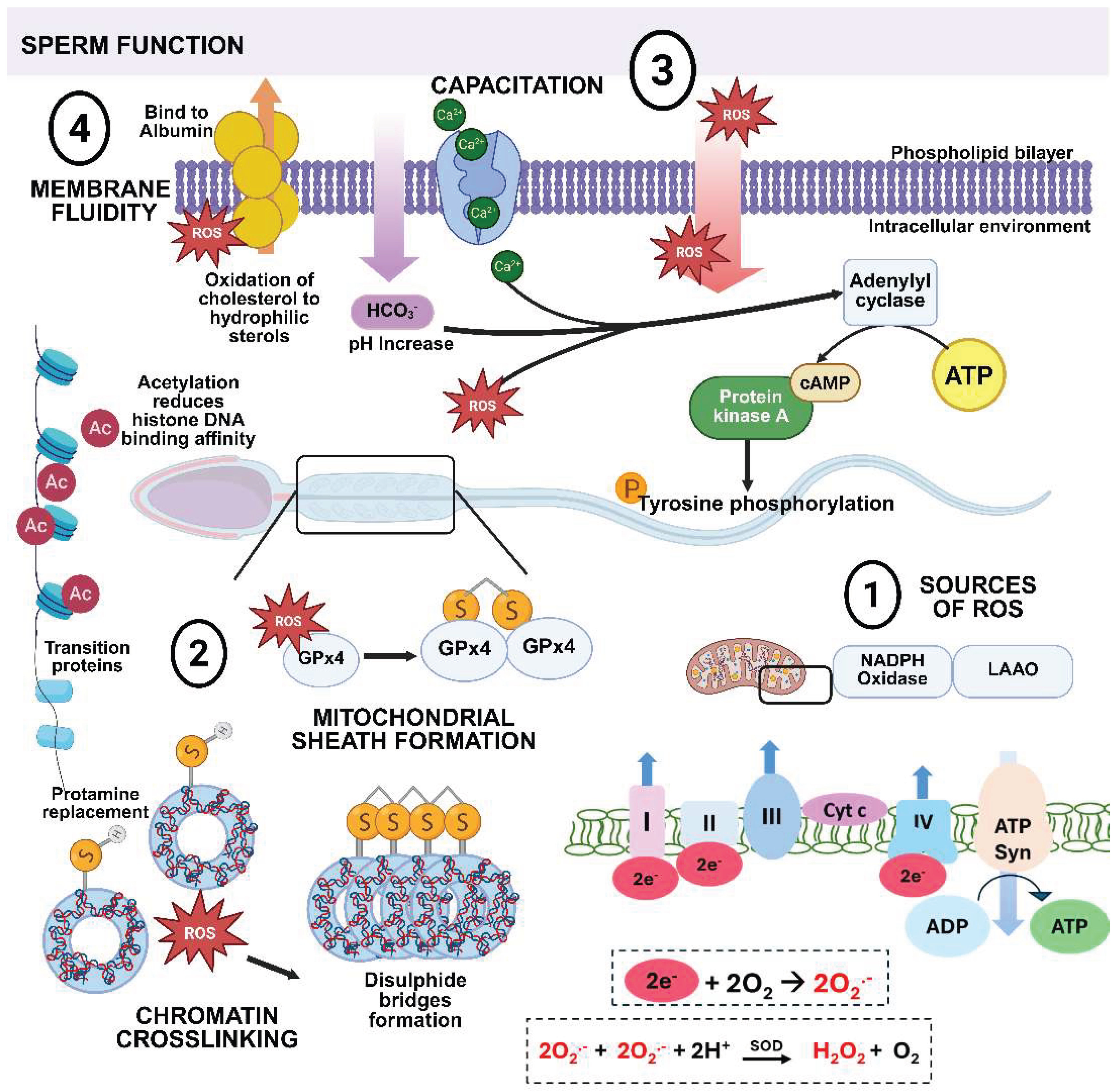
Figure 2.
Redox signalling pathways involved in oocyte maturation during follicular phase. Step 1. The gonadotrophin surge that characterises the end of follicular phase triggers NOX enzymes in the granulosa and theca cells to produce ROS. Step 2. The increase in energy demand of the developing follicle results in an increase in mitochondrial activity with an increase in electron leakage and, as a result, the further generation of ROS. Step 3. At this point, ROS act as part of a negative feedback loop by activating AMPK, a marker of adequate energy production. Physiological levels of ROS maintain the level of activated AMPK and promote mitochondrial activity. Activated AMPK stimulates PDE3A (phosphodiesterase 3A) activity, facilitating the reduced generation and accelerated breakdown of cAMP and cGMP. This leads to the activation of maturation promoting factor, triggering the resumption of meiosis. Conversely, a depleting pool of available ROS decreases AMPK signalling triggering the apoptotic pathway and cell death. Step 4. ROS mediates the activation of EGFR and thereby modulates the calpain-2 pathway, partly responsible for cumulus mucification and expansion. (This figure was created in BioRender. Pyneandee, E. (2026) https://BioRender.com/orf6chz).
Figure 2.
Redox signalling pathways involved in oocyte maturation during follicular phase. Step 1. The gonadotrophin surge that characterises the end of follicular phase triggers NOX enzymes in the granulosa and theca cells to produce ROS. Step 2. The increase in energy demand of the developing follicle results in an increase in mitochondrial activity with an increase in electron leakage and, as a result, the further generation of ROS. Step 3. At this point, ROS act as part of a negative feedback loop by activating AMPK, a marker of adequate energy production. Physiological levels of ROS maintain the level of activated AMPK and promote mitochondrial activity. Activated AMPK stimulates PDE3A (phosphodiesterase 3A) activity, facilitating the reduced generation and accelerated breakdown of cAMP and cGMP. This leads to the activation of maturation promoting factor, triggering the resumption of meiosis. Conversely, a depleting pool of available ROS decreases AMPK signalling triggering the apoptotic pathway and cell death. Step 4. ROS mediates the activation of EGFR and thereby modulates the calpain-2 pathway, partly responsible for cumulus mucification and expansion. (This figure was created in BioRender. Pyneandee, E. (2026) https://BioRender.com/orf6chz).
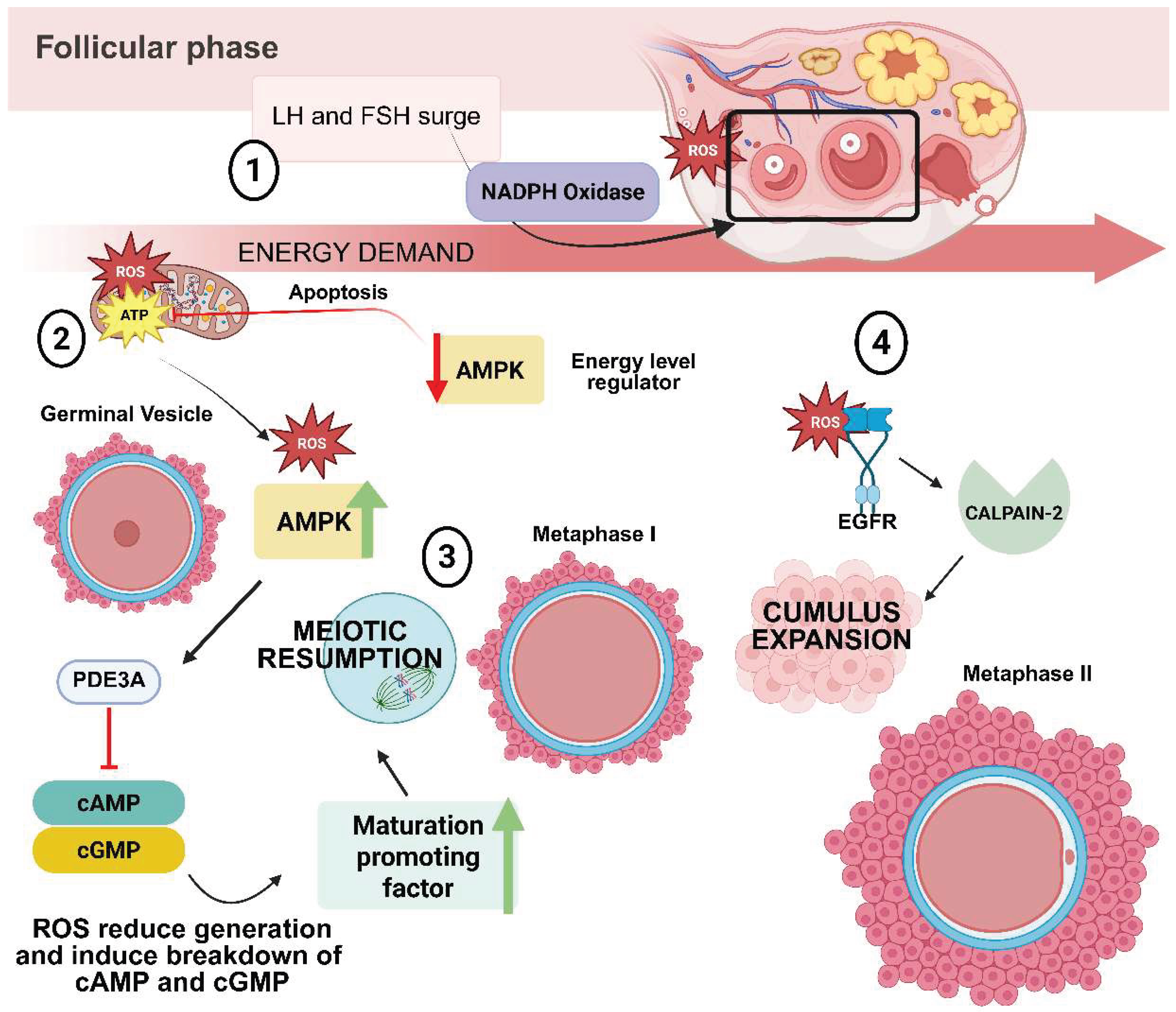
Figure 3.
ROS as a mediator of ovulation and the luteal phase. Step 1. ROS production by mitochondria and NOX enzymes is triggered by the pre-ovulatory LH peak, primarily produced in mitochondria or through NOX pathways in the ovary. This also triggers the recruitment of inflammatory cells which furthers the induction of an oxidative state. Step 2. ROS inhibit MAPK phosphatase which drives the MAPK pathway leading to the generation of transcription factors such as AP-1 that drive the further expression of MMPs. Step 3. ROS activates COX-2 leading to production of PGE2. The latter induces cumulus expansion and furthers upregulation of MMPs that act on granulosa cells and facilitate degradation of the extracellular matrix in the follicle wall, facilitating its rupture. Step 4. Post ovulation the ovulated follicle transforms into a corpus luteum (CL) that generates progesterone (P4). ROS facilitates this branch of steroidogenesis by activating a cholesterol side chain cleavage enzyme (Cytochrome P450) which requires electrons donated from the mitochondrial electron transport chain to facilitate the generation of pregnenolone, the P4 precursor. Step 5. The development of a healthy corpus luteum requires cell proliferation as well as angiogenesis. During this process, ROS stabilises HIF1a, driving expression of VEGF6, which, in turn, leads to the production of nitric oxide (NO) which enhances blood flow and hence the release of P4 into the circulation. (This figure was created in BioRender. Pyneandee, E. (2026) https://BioRender.com/wnbp4on).
Figure 3.
ROS as a mediator of ovulation and the luteal phase. Step 1. ROS production by mitochondria and NOX enzymes is triggered by the pre-ovulatory LH peak, primarily produced in mitochondria or through NOX pathways in the ovary. This also triggers the recruitment of inflammatory cells which furthers the induction of an oxidative state. Step 2. ROS inhibit MAPK phosphatase which drives the MAPK pathway leading to the generation of transcription factors such as AP-1 that drive the further expression of MMPs. Step 3. ROS activates COX-2 leading to production of PGE2. The latter induces cumulus expansion and furthers upregulation of MMPs that act on granulosa cells and facilitate degradation of the extracellular matrix in the follicle wall, facilitating its rupture. Step 4. Post ovulation the ovulated follicle transforms into a corpus luteum (CL) that generates progesterone (P4). ROS facilitates this branch of steroidogenesis by activating a cholesterol side chain cleavage enzyme (Cytochrome P450) which requires electrons donated from the mitochondrial electron transport chain to facilitate the generation of pregnenolone, the P4 precursor. Step 5. The development of a healthy corpus luteum requires cell proliferation as well as angiogenesis. During this process, ROS stabilises HIF1a, driving expression of VEGF6, which, in turn, leads to the production of nitric oxide (NO) which enhances blood flow and hence the release of P4 into the circulation. (This figure was created in BioRender. Pyneandee, E. (2026) https://BioRender.com/wnbp4on).
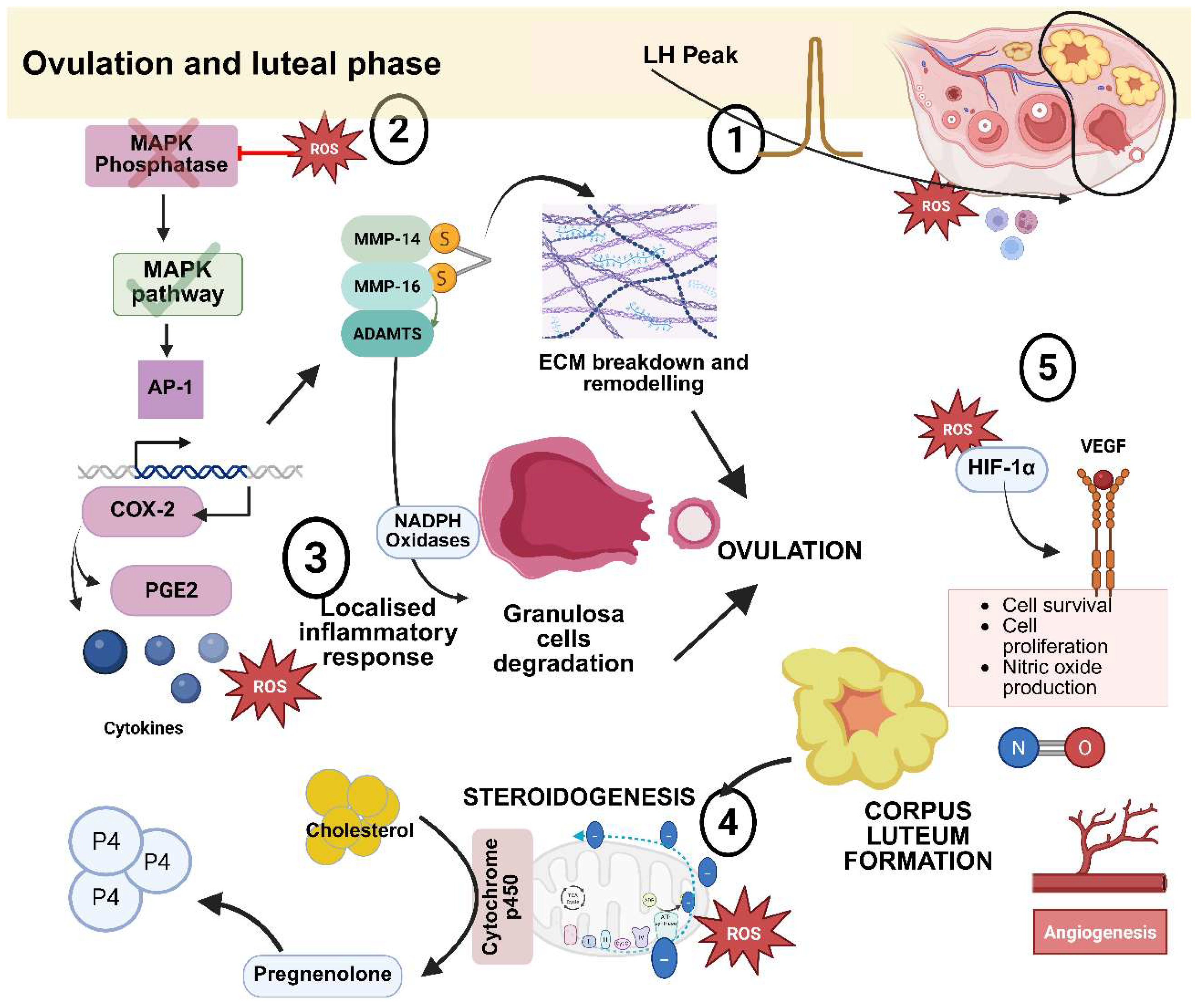
Figure 4.
ROS signalling on blastocyst hatching and decidualisation of uterine stroma. Step 1 The implanting blastocyst exhibits increased O2·-production as a result of increased metabolic activity, and, potentially, NADPH and xanthine oxidase activities. Step 2. ROS inhibits the activity of protein tyrosine phosphatase and promotes that of ADAM17 allowing for the release of HB-EGF. HB-EGF acts on the trophectoderm of the blastocyst promoting cell proliferation and secretion of lysin and proteases. The combined effect of blastocyst expansion and lytic secretions contribute to the weakening of the zona pellucida and subsequently the hatching of the blastocyst. Step 3. In the uterine stroma, the rise in progesterone as well as cAMP drive decidualisation by firstly activating NOX4 and triggering ROS production. Step 4. The resulting cascade includes gene activation necessary to promote decidualisation of the uterine lining. Step 5. This stage includes the activation of MMP that work towards degrading the endometrial ECM to assist trophoblast invasion. The syncytiotrophoblast cells express nitric oxide synthase to increase the production of NO to promote angiogenesis. (This figure was created in BioRender. Pyneandee, E. (2026) https://BioRender.com/pjk2859).
Figure 4.
ROS signalling on blastocyst hatching and decidualisation of uterine stroma. Step 1 The implanting blastocyst exhibits increased O2·-production as a result of increased metabolic activity, and, potentially, NADPH and xanthine oxidase activities. Step 2. ROS inhibits the activity of protein tyrosine phosphatase and promotes that of ADAM17 allowing for the release of HB-EGF. HB-EGF acts on the trophectoderm of the blastocyst promoting cell proliferation and secretion of lysin and proteases. The combined effect of blastocyst expansion and lytic secretions contribute to the weakening of the zona pellucida and subsequently the hatching of the blastocyst. Step 3. In the uterine stroma, the rise in progesterone as well as cAMP drive decidualisation by firstly activating NOX4 and triggering ROS production. Step 4. The resulting cascade includes gene activation necessary to promote decidualisation of the uterine lining. Step 5. This stage includes the activation of MMP that work towards degrading the endometrial ECM to assist trophoblast invasion. The syncytiotrophoblast cells express nitric oxide synthase to increase the production of NO to promote angiogenesis. (This figure was created in BioRender. Pyneandee, E. (2026) https://BioRender.com/pjk2859).
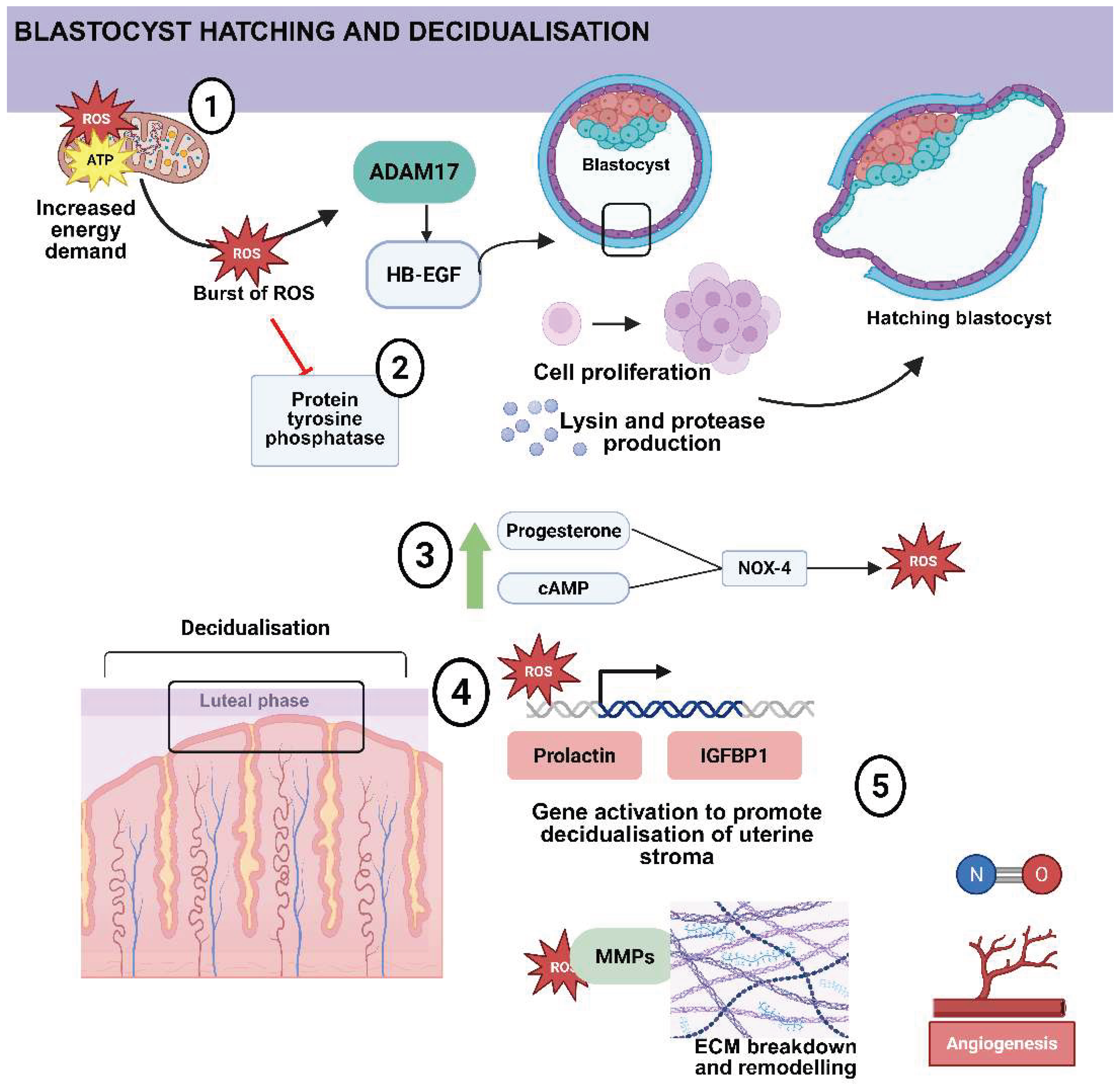
Disclaimer/Publisher’s Note: The statements, opinions and data contained in all publications are solely those of the individual author(s) and contributor(s) and not of MDPI and/or the editor(s). MDPI and/or the editor(s) disclaim responsibility for any injury to people or property resulting from any ideas, methods, instructions or products referred to in the content. |
© 2026 by the authors. Licensee MDPI, Basel, Switzerland. This article is an open access article distributed under the terms and conditions of the Creative Commons Attribution (CC BY) license (http://creativecommons.org/licenses/by/4.0/).
Copyright: This open access article is published under a Creative Commons CC BY 4.0 license, which permit the free download, distribution, and reuse, provided that the author and preprint are cited in any reuse.


