

Submitted:
30 April 2026
Posted:
04 May 2026
You are already at the latest version
Abstract
Heparin is a highly sulfated polyelectrolyte, and its properties depend a lot on its shape in solution. In this study, we closely examined the structural behaviour of UVC-irradiated low-molecular-weight heparin. By using controlled photodegradation, we created native, small, and ultra-small molar mass fractions, which allowed us to study how structural properties change with molecular weight. We examined how molar mass, radius of gyration, second virial coefficient, and critical overlap concentration are related to one another to understand different conformational states. Our results showed that as molar mass decreased, the chain diameter and persistence length also dropped, while the overlap concentration increased. This means the hydrodynamic volume went down and the chains became more flexible. The positive second virial coefficient values showed that polymer–solvent interactions remained favourable after photo-tailing. The scaling exponents suggest that degraded heparin behaves as a semi-flexible polyelectrolyte and adopts an extended-coil shape in water with electrolytes. Further analysis showed that the characteristic ratio and stiffness of the chains decreased as the chains were broken by irradiation. Overall, UVC phototailing provides a reliable way to modify the structure of these molecules while maintaining solution stability. These findings show a clear link between reduced molecular weight and changes in shape, which is useful for developing better low-molecular-weight heparins for pharmaceutical and medical use.
Keywords:
UVC-degraded heparin
; ultra-small molar mass
; intrinsic viscosity
; shelf-life
; activation entropy
; scaling laws
; conformational models
1. Introduction
Polysaccharides are diverse biopolymers characterised by a range of molar masses and corresponding viscosities. Due to their inherent flexibility and biocompatibility, they are used in many industries, including food, medicine, and materials science [1]. Today, ionising radiation is frequently used to modify the structure of polysaccharides, with molar mass playing a vital role in achieving specific results. Intrinsic viscosity is often measured to understand how polysaccharides are shaped in solution, as it gives information about their molecular weight, size, shape, and interactions [2].
Recent studies show that gamma and electron beam irradiation are eco-friendly methods for breaking down polysaccharides without the need for additives. These methods reduce the molecular weight, increase the polymer's solubility, and alter its biological activities, including antioxidant and hypolipidemic effects. Consequently, irradiation enables the tailoring of polysaccharides for food science and medicine, optimising their solubility or specific bioactivities as needed. [2,3,4].
Heparin, a highly sulphated polysaccharide, exists in several molecular weight ranges. Low-molecular-weight heparins, LMWH, are smaller molecules that primarily inhibit coagulation factor Xa rather than multiple clotting factors simultaneously [5,6]. Because of their reduced size, they work in a more controlled and predictable way. They cause less bleeding. These forms are safer and easier to utilise, making them particularly valuable in modern medical treatments [6,7].
Previous studies have shown that producing low-molecular-weight heparin via gamma or UVC irradiation offers advantages over traditional methods [8,9,10]. These radiation techniques use water, yield pure heparin fragments with lower molecular weight and toxicity, and are better for some medical uses [9,10]. Notably, Gamma or UVC irradiation creates heparin fragments with intermediate or low molar mass that are unsulfated or only slightly sulfated [10]. These fragments are mainly used to develop non-anticoagulant heparin derivatives for a range of therapeutic uses, including anti-inflammatory and anti-complement activities, tissue regeneration and wound healing, anticancer and anti-metastatic effects, biomedical device surface modification, and antioxidant functions. [5,10]
While gamma and UVC-irradiation methods have been used to produce low-molecular-weight heparin, the solution conformation of the resulting fragments has not been thoroughly examined. This study investigates the conformational behaviour of UVC-irradiated low-molecular-mass heparin in dilute solution. UVC-degradation is presented as a more controlled, efficient, and safer alternative to standard cobalt-60 gamma irradiation for tailoring LMWH.
Specifically, this study examines how low-molecular-weight heparin changes its shape and structure following photodegradation. Section 2 explains the experimental methods, including materials, viscosity measurements, molar mass analysis, UVC-irradiation, and conformational modelling. Section 3 shows the results, beginning with the kinetics of photodegradation and conformational stability. It also discusses how molecular weight affects modified heparin, explores scaling behaviour, and looks at chain flexibility and phototailing effects. The main findings are then discussed, and their significance is emphasised in Section 4.
2. Materials and Methods
2.1. Chemicals and Preparation of Solutions
Glentham Life Sciences Ltd. (UK) supplied commercial-grade heparin sodium salt powder. Surechem Products Ltd. (UK) provided sodium nitrate (NaNO3) for use as the supporting electrolyte.
A 0.1 M NaNO3 stock solution was prepared using double-distilled water. Heparin was then dissolved in this solvent to achieve a native solution concentration () of 0.005 g/cm³. All solutions were stirred continuously and thoroughly with a magnetic stirrer to ensure complete dissolution and uniformity.
2.2. UVC-Irradiation Procedure
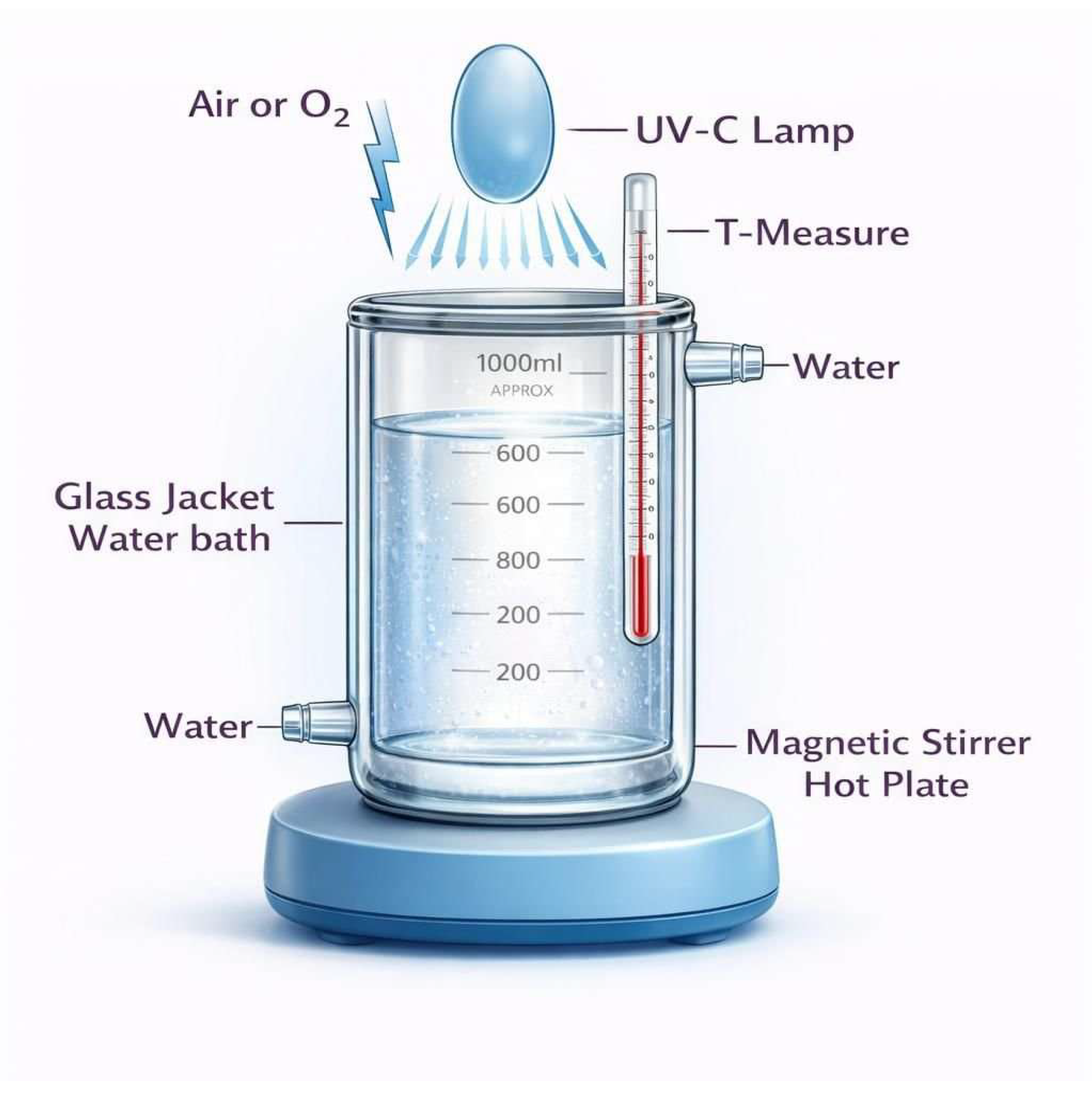
Photodegradation was performed in a specially designed UVC reactor (Fig. 1). The heparin solutions were irradiated in ambient air at room temperature. To monitor the degradation kinetics, samples were collected for viscosity analysis immediately after irradiation and at set intervals thereafter (see, for example, Refs. [10]).
Figure 1.
Schematic illustration of a laboratory photodegradation reactor.
2.3. Viscosity and Molar Mass Determination
An Ostwald viscometer (YUCHENGTECH) with a 0.5 mm capillary and a solvent flow time of 100-150 seconds was used for the tests. A TCB-7 viscometer bath (PSL-Rheotek) was employed to maintain a constant temperature with ±0.01 °C. Flow times for both the solvent () and the solution () were measured three times to ensure reproducibility. Viscosity values were calculated as follows [11]:
where and are recognised as the relative and specific viscosities, respectively.
The intrinsic viscosity () of both native and degraded solutions was determined via the single-concentration approach using the Solomon–Ciută equation [12]:
The relative weight-average molar mass () was derived using the Mark-Houwink (M-H) equation [13,14]:
Using the literature values for the heparin- NaNO3 system [15]: 3.16 X cm3/ g and 0.88.
2.4. Photodegradation Kinetics
The overall first-order constant () was derived from the slope of the linear regression of Eq. 4. The degradation lifetimes—half-life () and shelf-life () —were calculated using Equations 5 and 6, respectively [16,17]. Thermodynamic parameters, including the activation energy (), Arrhenius-like frequency factor () and activation entropy (), were determined through Equations (7) and (8) [18,19]:

Table 1.
Kinetic Equations for Heparin Photodegradation.
| Parameter | Equation | Eq. No. |
|---|---|---|
| Overall First-order Rate Law | // | (4) |
| Half-life | (5) | |
| helf-life (90%) | // | (6) |
| Arrhenius-type relation | (7) | |
| Eyring equation | (8) |
2.5. Conformational Modelling
We evaluated chain conformations by using equations for the Self-Avoiding Walk Model (SAWM) and Random Walk Model (RWM), as shown in Table 2 [11,19,20,21]. The transition to theta conditions was described theoretically by Equation 18; This approach allowed determination of unperturbed dimensions and chain stiffness parameters, including the Flory characteristic ratio and persistence length, without adjusting the solvent [21].
3. Results and Discussion
3.1. Photo-Modification Kinetics
3.1.1. Degradation Rate and Lifetimes
Figure 2 depicts the photodegradation process inside the specified polymer-solvent system. The initial rapid decay phase is characterised by random chain scission events occurring at a roughly constant rate, signifying first-order kinetics [22,23]. According to the kinetic analysis presented in Figure 2, the rate constant ( ) was calculated to be 583 min⁻¹ with a half-life ( ) of 4.29 min and a shelf-life duration () of 0.857 min [16,17].
3.1.2. Thermodynamic Interpretation
The Arrhenius-like plots in Figure 3 are used to compute the flow activation energy (), which is proportional to the slope of each line and describes how viscosity depends on temperature for different heparin fractions; the plot intercepts give the Arrhenius pre-exponential factors (), which are then evaluated with Eyring transition-state theory to calculate the activation entropy () [18,19,24]. The calculated values for activation energy, pre-exponential factor, and activation entropy for native (NM), small (SM), and ultra-small (USM) molar masses are listed in Table 3.
Figure 4.
Arrhenius-like plots of three samples for aerobic UVC-degraded heparin sodium salt (0.005 g / cm3) in 0.1 M NaNO3 at 25°C; samples of native (NM, blue circles), small (SM, red circles), and ultra-small (USM, green circles) molar masses. The y-axis represents the natural logarithm of viscosity () and the x-axis is the inverse of temperature (1/T). The solid lines represent linear fits to the data for each molar mass group, with the corresponding regression equations displayed.
Figure 4.
Arrhenius-like plots of three samples for aerobic UVC-degraded heparin sodium salt (0.005 g / cm3) in 0.1 M NaNO3 at 25°C; samples of native (NM, blue circles), small (SM, red circles), and ultra-small (USM, green circles) molar masses. The y-axis represents the natural logarithm of viscosity () and the x-axis is the inverse of temperature (1/T). The solid lines represent linear fits to the data for each molar mass group, with the corresponding regression equations displayed.
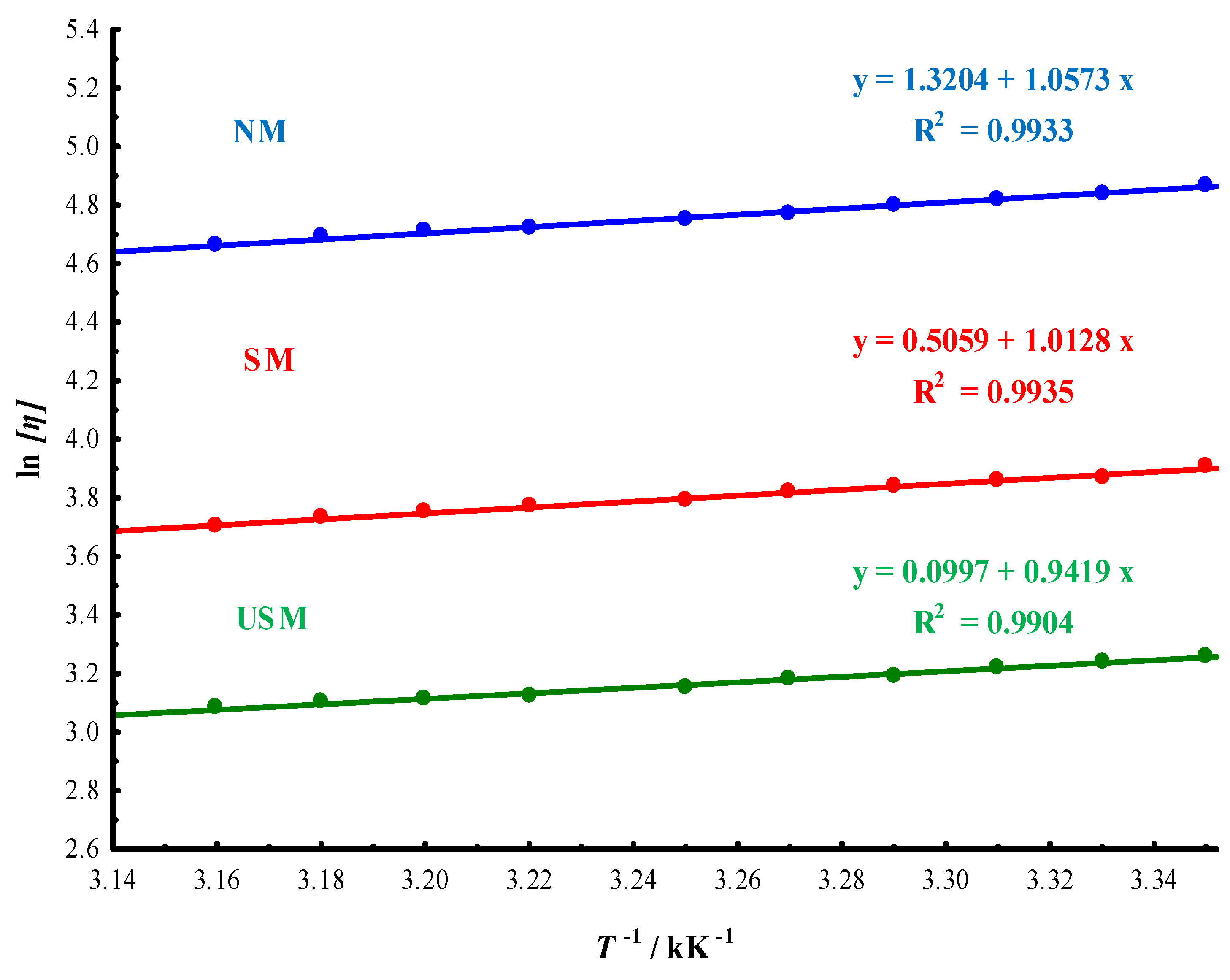
Table 3 shows that both the activation energy () and the pre-exponential factor () decrease simultaneously. As the molar mass drops from NM to USM, this points to a major change in how the system behaves. Specifically, the lower activation energy indicates the chains are more flexible and need less energy to flow [24]. Moreover, the less negative activation entropy () suggests the transition state is less restricted [19,24]. Taken together with lower values, these results show that the heparin fragments become smaller and less complex as their molar mass decreases. From a biological perspective, this helps explain why low-molecular-weight heparins are more effective. Notify, the increased flexibility and simpler structures of USM and SM make them more suitable for advanced drug delivery systems that require rapid diffusion, sustained bioavailability, and stable in vivo performance.
3.2. Macromolecular Characteristics
3.2.1. Molecular-Weight Dependence and Size Behaviour
Figure 5 and Table 4 show that aerobic UVC irradiation gradually lowers both the radius of gyration and the hydrodynamic radius of heparin as its molar mass decreases. The NM, SM, and USM fractions also drop in a similar way, suggesting that the chain breaks are controlled and do not cause major changes in the shape, as indicated by the constant value of in Table 4. The stable structural ratio shows that the chain’s structure and flexibility remain intact after depolymerisation. These results suggest UVC irradiation can adjust molecular size while maintaining the structural stability, which is important for making functional low-molecular-weight heparin derivatives [25].
3.2.2. Impact on Critical Overlap and Thermodynamic Stability
Exposure to UVC light breaks down heparin chains, resulting in lower molar mass (). As a result, the critical overlap concentration () increases, which improves the polymer's mixing with the solvent, as shown in Figure 6 and Figure 7 and Table 5 as well as in Ref [26]. Because the degraded chains (SM, USM) are smaller, they occupy less space in solution, requiring higher concentrations for overlap. Furthermore, higher second virial coefficients () indicate better solvation since the charged groups on these chains are more accessible [27].
3.2.3. Scaling laws and conformational regime
The logarithmic scaling connections between molar mass (M) and structural parameters depicted in Figure 8 provide significant insight into the conformational regime of photo-tailed heparin chains. The scaling plots show pronounced linearity. This linearity substantiates that the deteriorated samples exhibit power-law behaviour characteristic of flexible polyelectrolytes in dilute solution; see, for example, Ref. [3].
Table 6 shows the scaling exponents that describe the behaviour of the chains. A high radius-of-gyration exponent ( 1.30) means the chains expand a lot. This result suggests that UVC-treated heparin retains sufficient charge for electrostatic repulsion, preventing chain collapse, a behaviour characteristic of polyelectrolytes under screening conditions [28]. As established by de Gennes [29], the negative exponent for overlap concentration ( ) indicates that larger chains start to overlap at lower concentrations due to stronger excluded-volume effects. The second virial coefficient ( ) changes only a little with molar mass, which shows that 0.1 M NaNO3 is a good solvent. In summary, photo-modified heparin behaves like a charged polymer in a good solvent.
3.2.4. Ideal chain length parameters and chain flexibility
Figure 9 demonstrates how ideal chain parameters—end-to-end distance (), characteristic ratio (), and persistence length ( )—relate to molar mass ( ). Analysing these variables helps us understand how UVC irradiation changes the structure. As these values increase together, it suggests that longer chains become more extended and exhibit greater long-range stiffness [30,31,32].
Table 7 shows that native heparin molar mass (NM) has the highest persistence length, which means it is more rigid because of intramolecular electrostatic repulsion and a regular backbone structure [31,32]. The SM and USM fractions have lower persistence lengths, resulting in shorter, more flexible chains [3]. When the chain breaks, the polymer becomes less stiff, but its local structure remains ordered since only the long-range backbone is affected. Because of leftover charge effects, the polymer does not become a perfect random coil [31]. Still, the steady reduction in the persistence length indicates that it is becoming more flexible. In summary, these results show that UVC degradation mainly alters the size of heparin chains, rather than their local chemical structure [30]. Overall, these results indicate that UVC degradation primarily alters the size of heparin chains, rather than their chemical structure. The reduction in the unperturbed dimension , Flory ratio, and persistence length () versus molar mass () shows that smaller fragments occupy less excluded volume and have lower local chain stiffness.
3.3. Conformational Consequences of Photo-Tailing
Scaling analysis and chain-length measurements show that photo-tailoring consistently changes the shape of heparin. When the molar mass decreases, the coils become smaller and more flexible, making the polymer more easily soluble in solvents and other molecules. The strong bond between the polymer and the solvent remains unchanged, so photochemical degradation does not appear to damage the groups needed for biological activity [32]. Photo-tailored low-molecular-weight heparin is more flexible and takes up more space, mainly due to electrostatic repulsion and excluded-volume effects [33].
3.4. Overall Structural Interpretation
In summary, the results show that UVC photo-tailing changes heparin’s shape in a manner consistent with predictions of polymer scaling theory [33]. As heparin moves from its natural state to very small molar masses, its chains get shorter, the overlap concentration increases, the interaction with the solvent gets better, and the chains become less stiff. These findings suggest that we can adjust heparin’s structure and physical properties through controlled photodegradation while retaining its polyelectrolyte properties [32].
4. Conclusions
This study shows that UVC photo-tailoring can alter the shape of heparin by lowering its molar mass, but its basic polyelectrolyte properties stay the same. Scaling analysis found that the broken-down fragments act like semi-flexible charged chains in a good solvent and follow typical power-law scaling. As molar mass went down, overlap concentration went up, and persistence length went down. This means the polymer chains became smaller and more flexible. Even after targeted photodegradation, the polymer stayed highly soluble in the solvent, which suggests better hydration and a stable shape.
In summary, controlled photo-tailoring is an effective way to change the structure of macromolecules. This method provides precise control over chain length, flexibility, and molecular behaviour in solution. Our results show that lowering the molecular weight with UVC irradiation changes the molecular shape. These findings offer a basis for developing low-molecular-weight heparin materials with improved physical and chemical properties for advanced medical and pharmaceutical uses.
Author Contributions
All authors contributed to the study conception and design under the supervision of (F.E.) and (L. S.). Experimental work and data collection were performed by (N.E.). Data analysis and interpretation were carried out by (F.E.) and (L.S.). The first draft of the manuscript was written by (N.E.). All authors critically reviewed and edited the manuscript. All authors read and approved the final version of the manuscript and agree to be accountable for all aspects of the work.
Funding
This work was supported in part by the University of Benghazi.
Acknowledgments
The authors would like to extend their sincere appreciation to the President of the University of Benghazi for approving this work. Deep gratitude is also expressed to the Director and staff of the National Oncology Centre, Benghazi, Libya, for their invaluable technical assistance and insightful contributions throughout this study.
Conflicts of Interest
The authors declare no conflict of interest.
References
- Li, J.; Ahmed, H.H.; Hussein, A.M.; Kaur, M.; Jameel, M.K.; Kaur, H.; Tillaeva, U.; Al-Hussainy, A.F.; Sameer, H.N.; Hameed, H.G.; et al. Advances in polysaccharide-based materials for biomedical and pharmaceutical applications: A comprehensive review. Arch. Pharm. 2025, 358, e2400854. [Google Scholar] [CrossRef]
- Hamed, Y.S.; Hassan, K.R.; Salem, M.E.; Shen, M.; Wang, J.; Bu, T.; Cao, Y.; Xia, Q.; Youssef, K.M.; Yang, K. Gamma rays irradiated polysaccharides: A review of structure, physicochemical properties, biological activity alteration, and future food applications. Carbohydr. Polym. 2025, 123, 123326. [Google Scholar] [CrossRef]
- Elashhab, F.; Sheha, L.; Elzawi, N.; Youssef, A.E.A. Viscosity Analysis of Electron-Beam Degraded Gellan in Dilute Aqueous Solution. Physchem 2025, 5, 40. [Google Scholar] [CrossRef]
- Ahmed, M.S.; Islam, M.; Hasan, M.K.; Nam, K.W. A comprehensive review of radiation-induced hydrogels: Synthesis, properties, and multidimensional applications. Gels 2024, 10, 381. [Google Scholar] [CrossRef]
- Sultana, R.; Kamihira, M. Multifaceted heparin: Diverse applications beyond anticoagulant therapy. Pharmaceuticals 2024, 17, 1362. [Google Scholar] [CrossRef] [PubMed]
- Zhang, Y.; Guo, S.; Xu, J. Multifunctional applications and research advances of low-molecular-weight heparin. Front. Pharmacol. 2025, 16, 1585762. [Google Scholar] [CrossRef]
- Hogwood, J.; Mulloy, B.; Lever, R.; Gray, E.; Page, C.P. Pharmacology of heparin and related drugs: An update. Pharmacol. Rev. 2023, 75, 328–379. [Google Scholar] [CrossRef] [PubMed]
- Yu, Y.; Song, Y.; Zhao, Y.; Wang, N.; Wei, B.; Linhardt, R.J.; Dordick, J.S.; Zhang, F.; Wang, H. Quality control, safety assessment, and preparation approaches of low-molecular-weight heparin. Carbohydr. Polym. 2024, 339, 122216. [Google Scholar] [CrossRef] [PubMed]
- Tuaeva, N.O.; Trukhan, V.M.; Kardonskii, D.A.; et al. Preparation of low-molecular-weight heparins by radiation-induced destruction. Pharm. Chem. J. 2018, 52, 122–126. [Google Scholar] [CrossRef]
- Higashi, K.; Hosoyama, S.; Ohno, A.; Masuko, S.; Yang, B.; Sterner, E.; Wang, Z.; Linhardt, R.J.; Toida, T. Photochemical preparation of a novel low molecular weight heparin. Carbohydr. Polym. 2012, 87, 1737–1743. [Google Scholar] [CrossRef]
- Kulick, W.M.; Clasen, C. Viscosimetry of Polymers and Polyelectrolytes; Springer: Berlin/Heidelberg, Germany, 2004. [Google Scholar]
- Solomon, O.F.; Ciută, I.Z. Détermination de la viscosité intrinsèque de solutions de polymères par une simple détermination de la viscosité. J. Appl. Polym. Sci. 1962, 6, 683–686. [Google Scholar] [CrossRef]
- Mark, H. Überdie Entstehung und eigenschaften hoch polymer festkörper. In Der Festekörper; Sanger, R., Ed.; Hirzel: Leipzig, Germany, 1938; pp. 65–104. [Google Scholar]
- Houwink, R. Zusammenhang zwischen viscosimetrisch und osmotisch bestimmten Polymerisationsgraden bei Hochpolymeren. J. Prakt. Chem. 1940, 157, 15–18. [Google Scholar] [CrossRef]
- Bertini, S.; Bisio, A.; Torri, G.; Bensi, D.; Terbojevich, M. Molecular weight determination of heparin and dermatan sulfate by size exclusion chromatography with a triple detector array. Biomacromolecules 2005, 6, 168–173. [Google Scholar] [CrossRef]
- Sinko, P.J. Martin’s Physical Pharmacy and Pharmaceutical Sciences, 7th ed.; Lippincott Williams & Wilkins: Philadelphia, PA, USA, 2017; pp. 412–415. [Google Scholar]
- Khalil, R.A. Direct Mathematical Models for Estimating the Shelf Life of Second- and Zero-Order Degradation Relationships of Food and Drugs. Iran. J. Math. Chem. 2023, 14, 161–169. [Google Scholar]
- Glassstone, S.; Laidler, K.J.; Eyring, H. The Theory of Rate Processes; McGraw-Hill: New York, NY, USA, 1941. [Google Scholar]
- Moore, W.R. Viscosities of dilute polymer solutions. Prog. Polym. Sci. 1967, 1, 1–43. [Google Scholar] [CrossRef]
- Teraoka, I. Polymer Solutions: An Introduction to Physical Properties; Wiley-Interscience: New York, NY, USA, 2002. [Google Scholar]
- Qian, J.W.; Wang, M.L.; Han, D.L.; Cheng, R.S. Eur. Polym. J. 2001, 37, 1403. [CrossRef]
- Calvini, P. The role of the Ekenstam equation on the kinetics of cellulose hydrolytic degradation. Cellulose 2012, 19, 313–318. [Google Scholar] [CrossRef]
- Emsley, A.M.; Stevens, G.C. Kinetics and Mechanisms of the low temperature degradation of cellulose. Cellulose 1994, 1, 26–56. [Google Scholar] [CrossRef]
- Kauzmann, W.; Eyring, H. J. Am. Chem. Soc. 1940, 62, 3113. [CrossRef]
- Seyrek, E.; Dubin, P.L.; Tribet, C.; Jasupaithum, A. Conformation of heparin studied with macromolecular hydrodynamic methods and X-ray scattering. Biomacromolecules 2003, 4, 273–280. [Google Scholar] [CrossRef]
- Beirne, J.; Mourier, P.; Rudd, T.R.; Guichard, O.; Bazin, R.; Guerrini, M.; Torri, G.; Yates, E.A. Characterisation of currently marketed heparin products: Analysis of molecular weight and heparinase-I digest patterns. Anal. Bioanal. Chem. 2011, 401, 2825–2832. [Google Scholar]
- Dobrynin, A.V.; Rubinstein, M. Theory of polyelectrolytes in solutions and at surfaces. Prog. Polym. Sci. 2005, 30, 1049–1118. [Google Scholar] [CrossRef]
- de Gennes, P.-G. Scaling Concepts in Polymer Physics; Cornell University Press: Ithaca, NY, USA, 1979. [Google Scholar]
- Yates, E.A.; Santini, F.; Guerrini, M.; Naggi, A.; Torri, G.; Casu, B. 1D and 2D NMR spectroscopy of low molecular weight heparins: A correlation and approach to the definition of structures. Carbohydr. Res. 2004, 339, 239–248. [Google Scholar]
- Papadopoulou, A.; Gani, E.N.; Katsifa, A.; Kyritsis, A.; Efthimiadou, E.K. Solution properties and chain flexibility of sodium heparin in aqueous media. J. Mol. Liq. 2016, 219, 247–254. [Google Scholar]
- Rubinstein, M.; Colby, R.H. Polymer Physics; Oxford University Press: New York, NY, USA, 2003. [Google Scholar]
- Hong, S.; et al. Photochemical preparation of a novel low molecular weight heparin. Carbohydr. Polym. 2012, 87, 1181–1185. [Google Scholar] [CrossRef]
- Zatsepina, O.; et al. Heparin in Acid and Alkaline Environments—A Study of the Correlations between Hydrodynamic Properties and Desulphation. Polysaccharides 2023, 4, 88–98. [Google Scholar] [CrossRef]
Figure 2.
UVC- radiation exponential decay of aerobic first-order degradation process for aerobic UVC- degraded heparin sodium salt (0.005 g / cm3) in 0.1 M NaNO3 at 25°C.
Figure 2.
UVC- radiation exponential decay of aerobic first-order degradation process for aerobic UVC- degraded heparin sodium salt (0.005 g / cm3) in 0.1 M NaNO3 at 25°C.
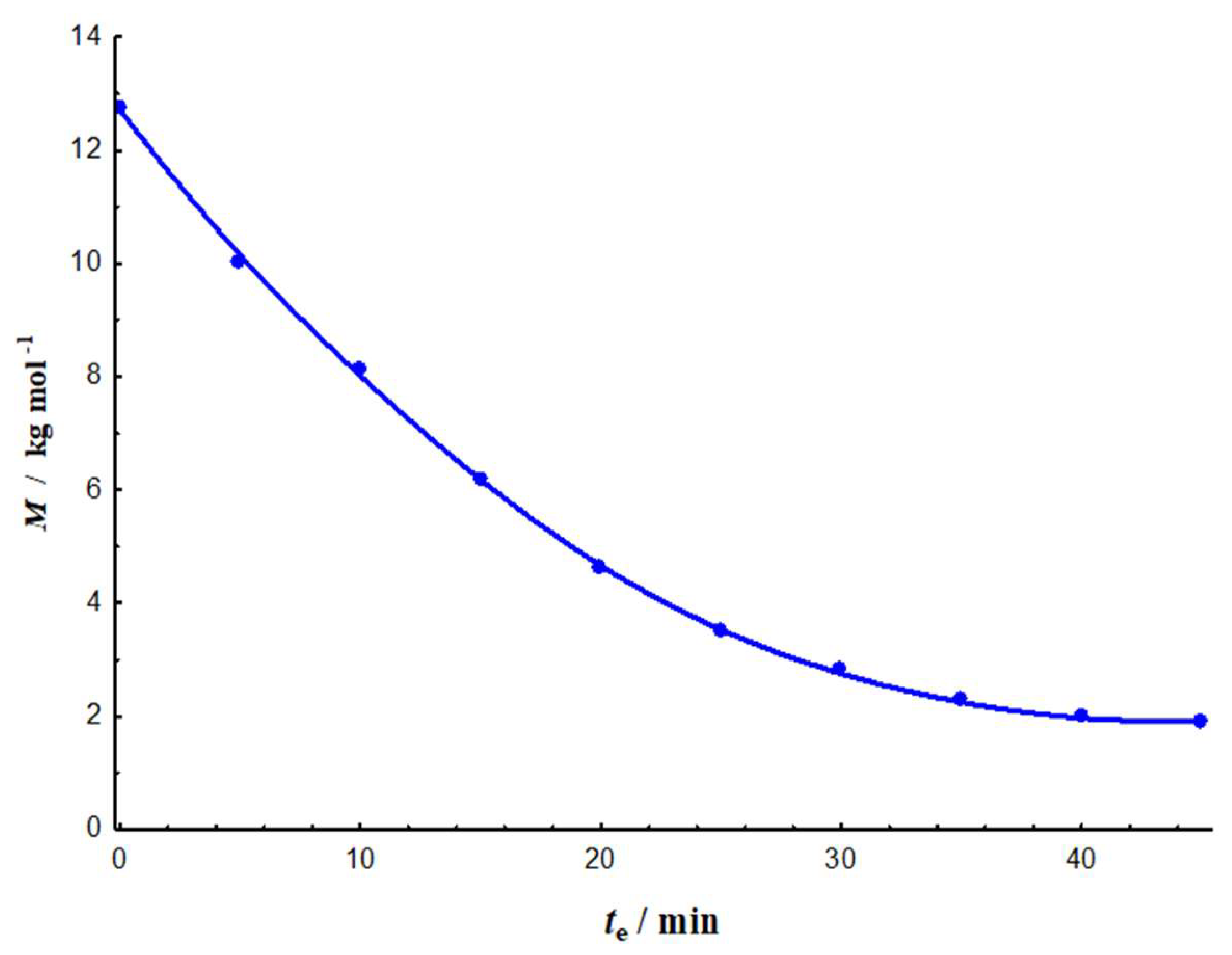
Figure 3.
The Ekenstam linearity relationship of first-order kinetics for aerobic UVC-degraded heparin sodium salt (0.005 g / cm3) in 0.1 M NaNO3 at 25°. This plot was used to determine the rate constant (); consequently, they have a lifetime ( ) and shelf-life time ().
Figure 3.
The Ekenstam linearity relationship of first-order kinetics for aerobic UVC-degraded heparin sodium salt (0.005 g / cm3) in 0.1 M NaNO3 at 25°. This plot was used to determine the rate constant (); consequently, they have a lifetime ( ) and shelf-life time ().
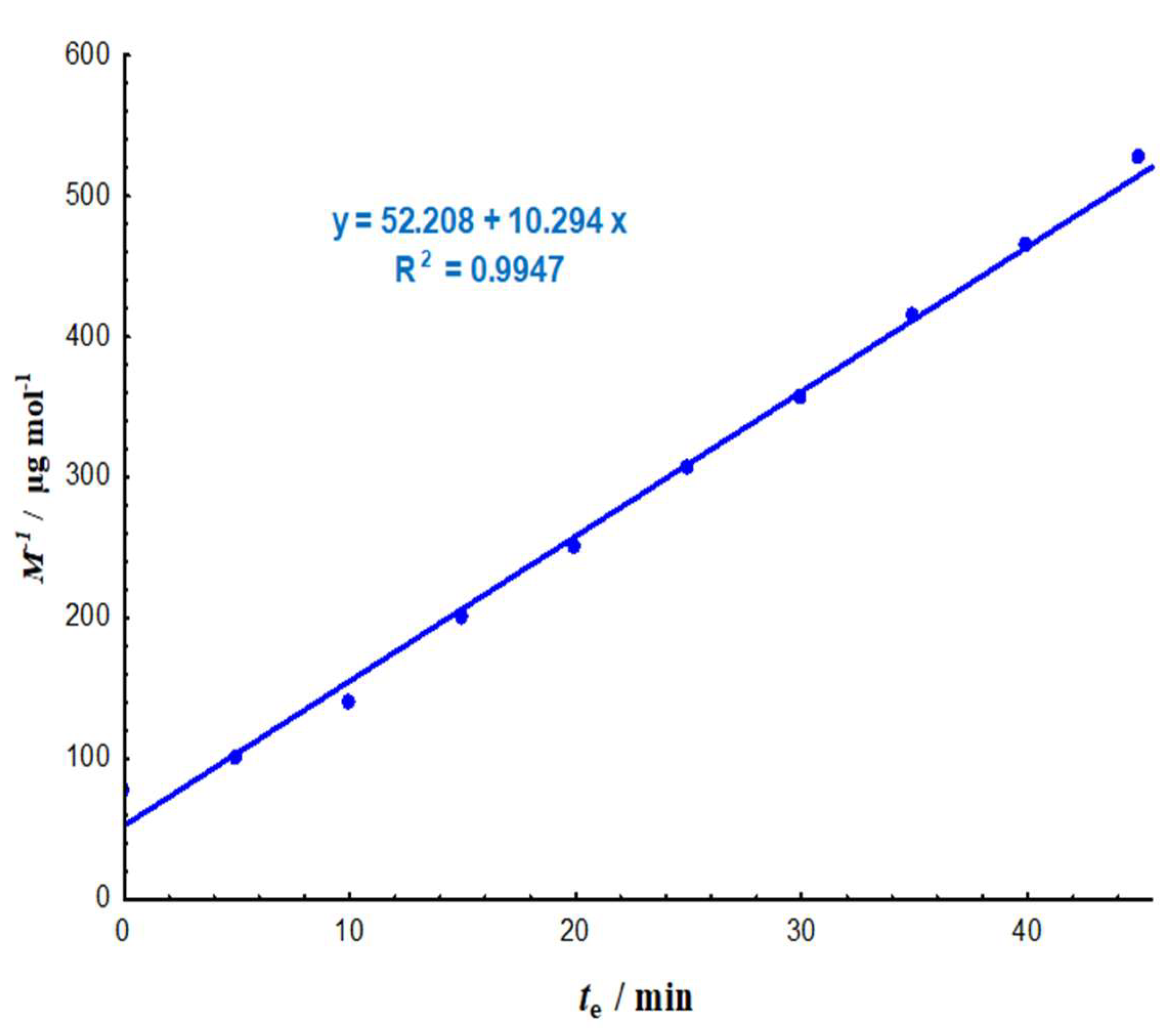
Figure 5.
Molar mass dependences of radius of gyration () and hydrodynamic radius () for aerobic UVC degraded heparin sodium salt (0.005 g / cm3) in 0.1 M NaNO3 at 25°C.
Figure 5.
Molar mass dependences of radius of gyration () and hydrodynamic radius () for aerobic UVC degraded heparin sodium salt (0.005 g / cm3) in 0.1 M NaNO3 at 25°C.
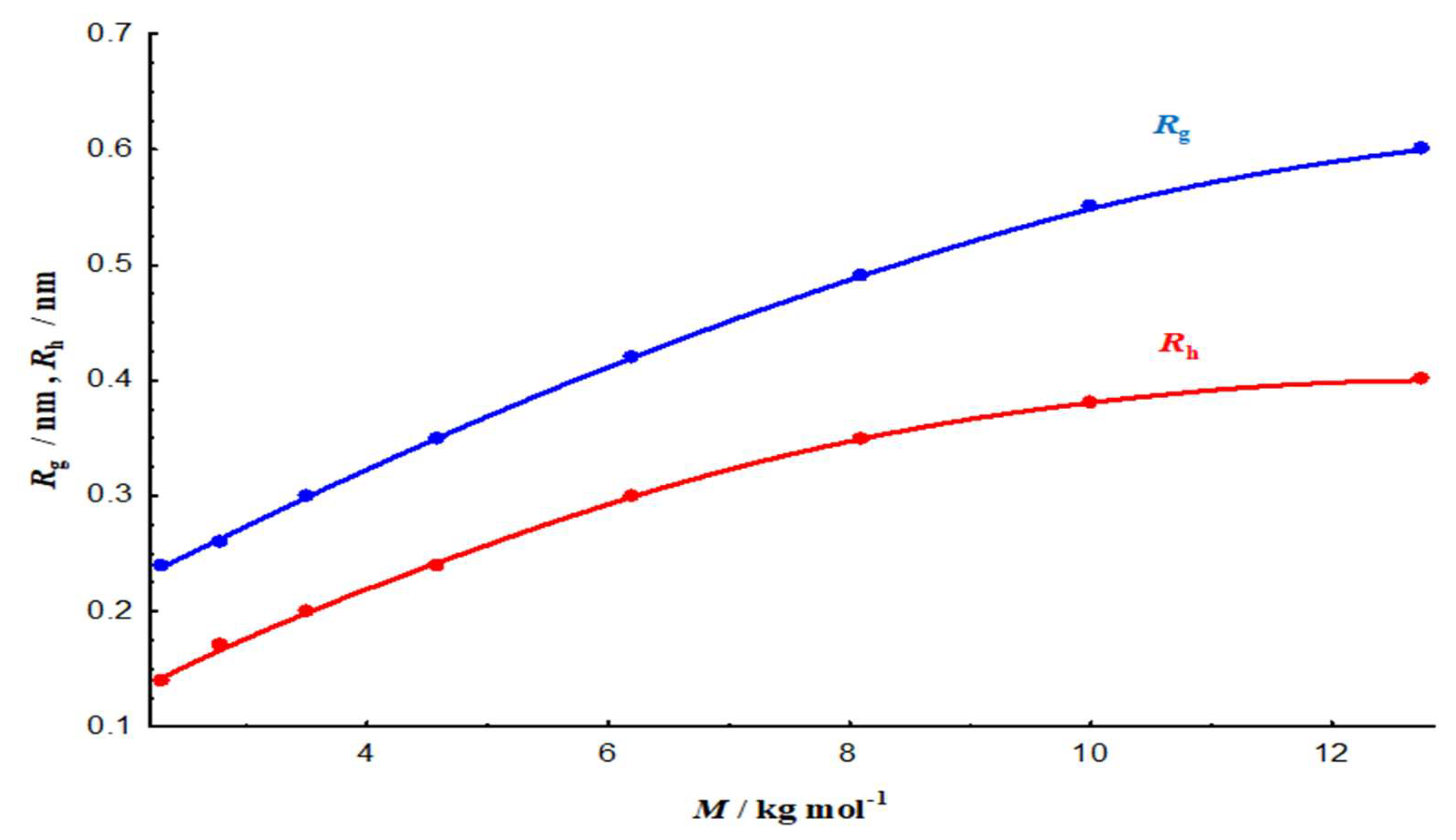
Figure 6.
Molar mass () dependence of the critical concentration () for aerobic UVC-degraded heparin sodium salt (0.005 g / cm3) in 0.1 M NaNO3 at 25°C.
Figure 6.
Molar mass () dependence of the critical concentration () for aerobic UVC-degraded heparin sodium salt (0.005 g / cm3) in 0.1 M NaNO3 at 25°C.
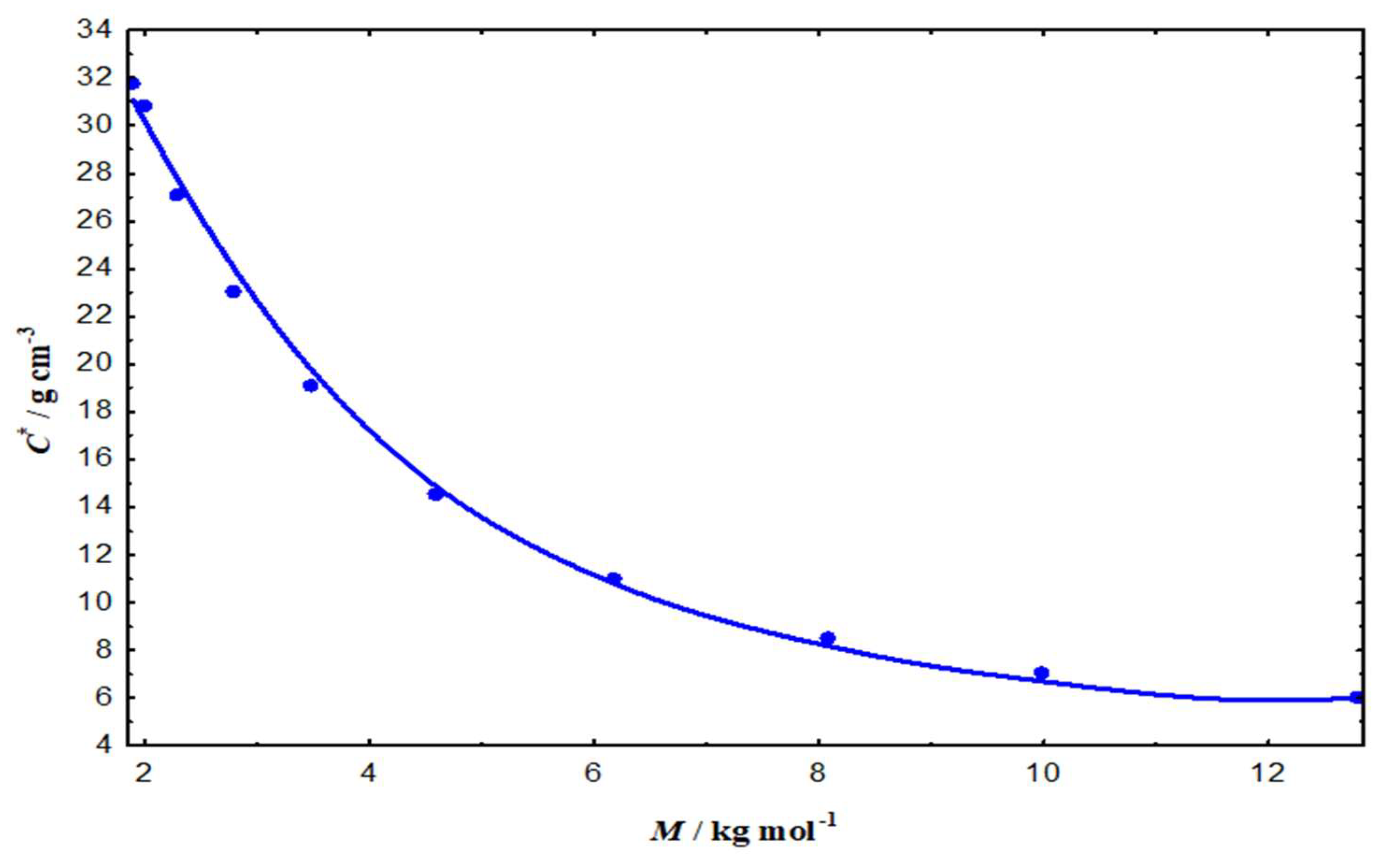
Figure 7.
Molar mass () dependence of the second virial coefficient () for aerobic UVC-degraded heparin sodium salt (0.005 g / cm3) in 0.1 M NaNO3 at 25°C.
Figure 7.
Molar mass () dependence of the second virial coefficient () for aerobic UVC-degraded heparin sodium salt (0.005 g / cm3) in 0.1 M NaNO3 at 25°C.
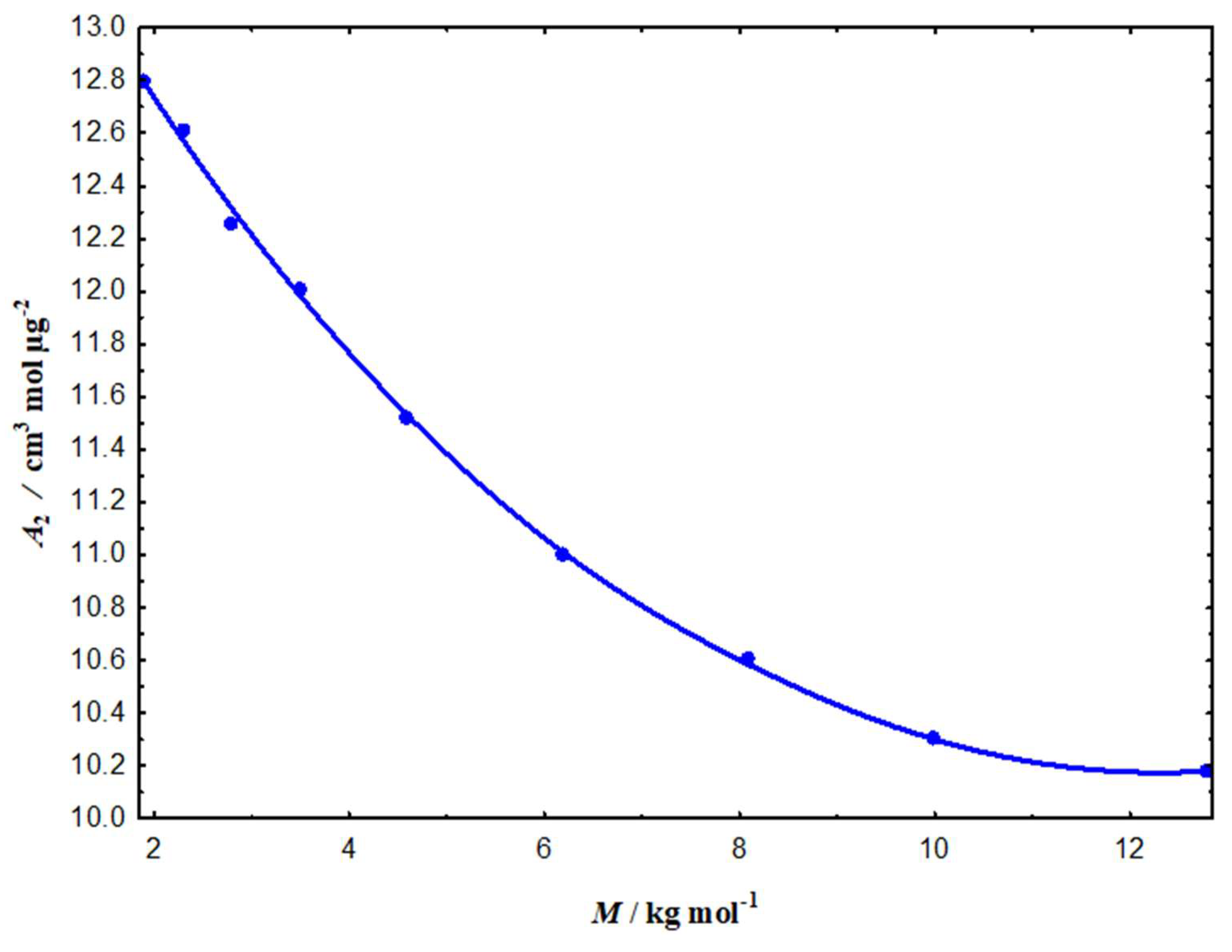
Figure 8.
The logarithmic relationships of molar masses () versus radius of gyration(), second virial coefficient (), and critical concentration () for aerobic UVC-degraded heparin sodium salt (0.005 g / cm3) in 0.1 M NaNO3 at 25°C.
Figure 8.
The logarithmic relationships of molar masses () versus radius of gyration(), second virial coefficient (), and critical concentration () for aerobic UVC-degraded heparin sodium salt (0.005 g / cm3) in 0.1 M NaNO3 at 25°C.
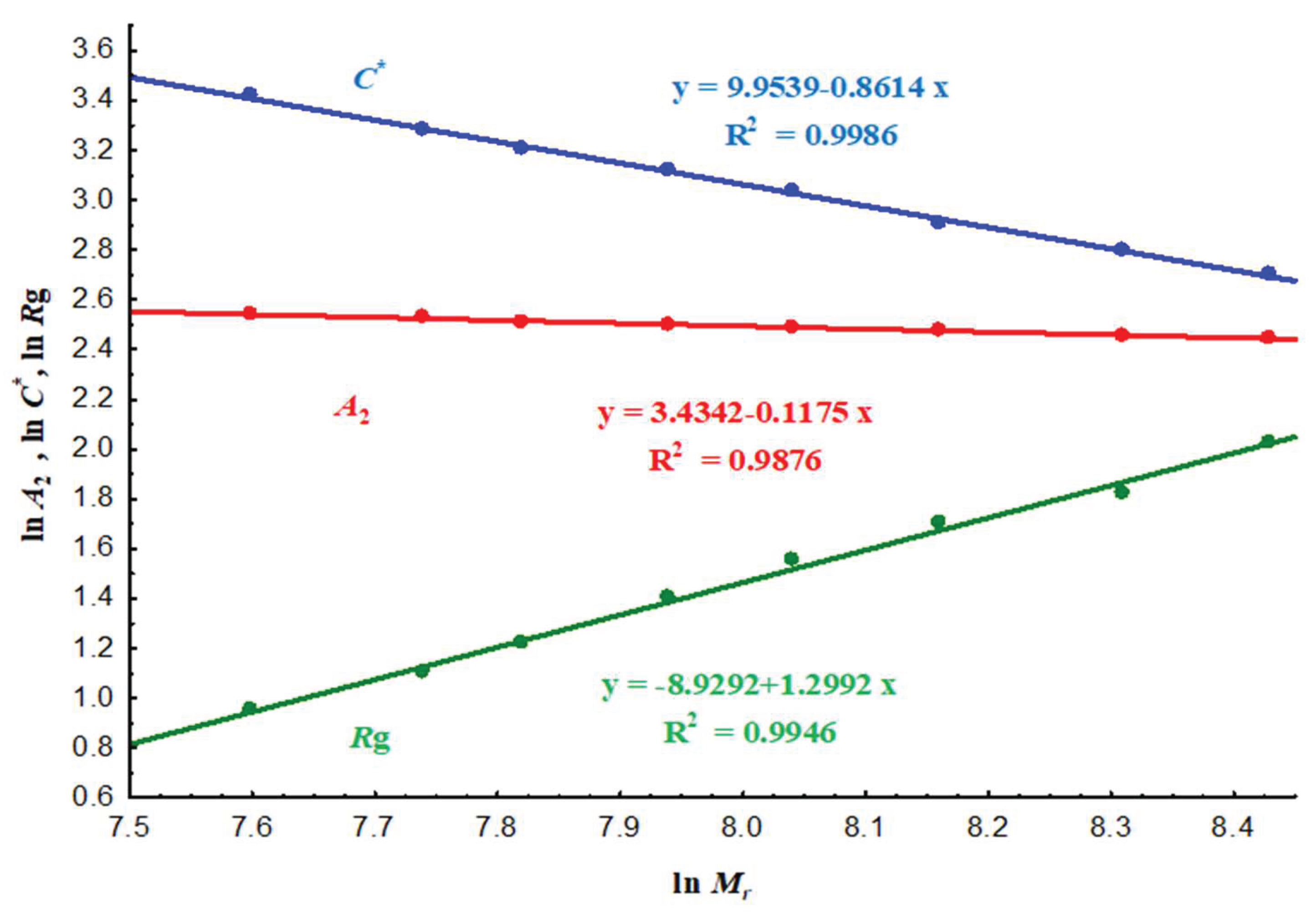
Figure 9.
Molar mass dependences of the ideal end-to-end distance (), characteristic ratio ( ), and persistence length (), for aerobic UVC-degraded heparin sodium salt (0.005 g / cm3) in 0.1 M NaNO3 at 25°C.
Figure 9.
Molar mass dependences of the ideal end-to-end distance (), characteristic ratio ( ), and persistence length (), for aerobic UVC-degraded heparin sodium salt (0.005 g / cm3) in 0.1 M NaNO3 at 25°C.
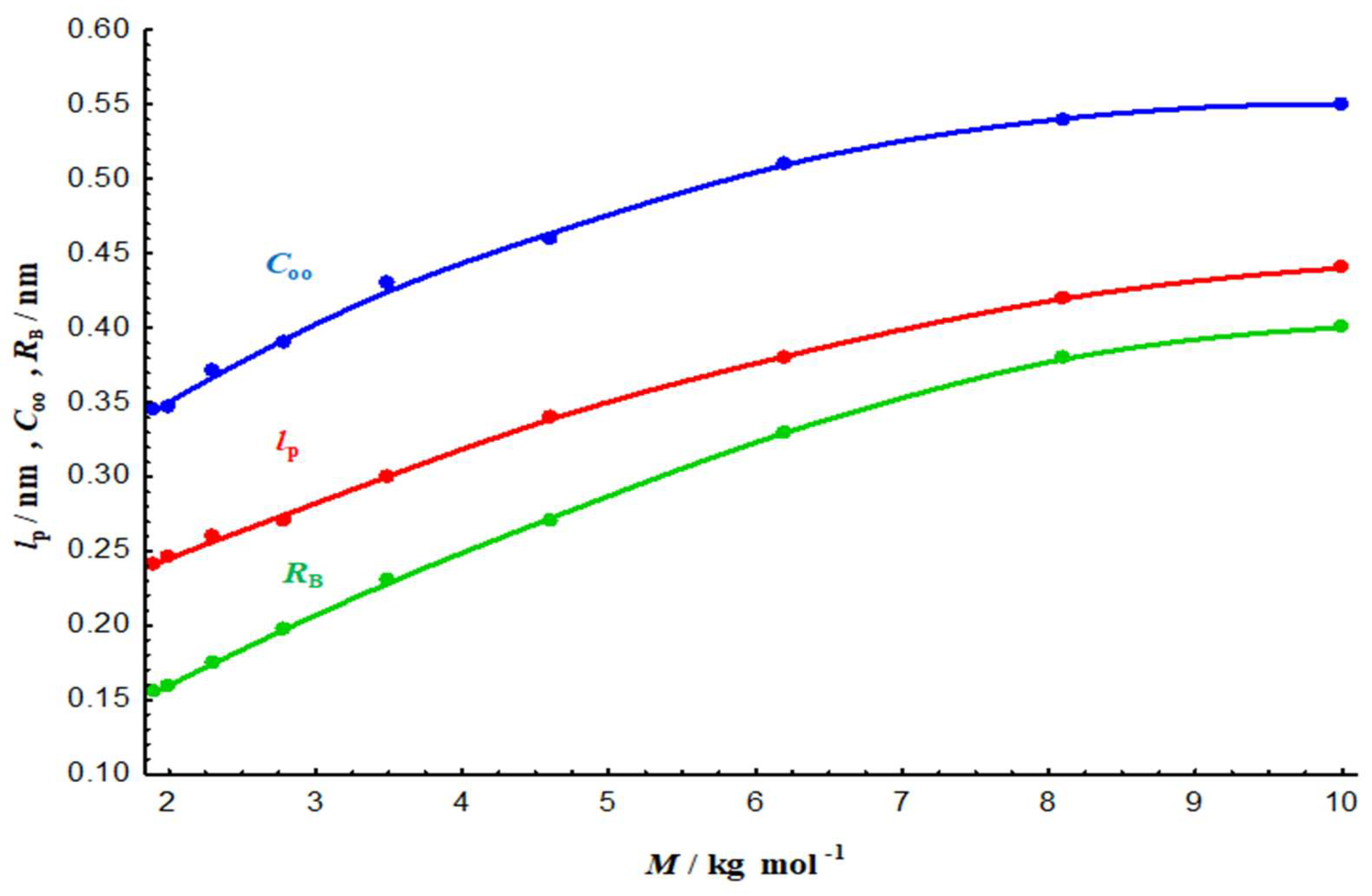
Table 2.
Key Equations for SAW and RW Models. Note: is the radius of gyration, is the critical concentration, is the expansion ratio, is the hydrodynamic radius, is the unperturbed end-to-end distance, is the Flory characteristic ratio, and is the persistence length; notify the Flory constants and are used for the real and ideal chains, respectively.
Table 2.
Key Equations for SAW and RW Models. Note: is the radius of gyration, is the critical concentration, is the expansion ratio, is the hydrodynamic radius, is the unperturbed end-to-end distance, is the Flory characteristic ratio, and is the persistence length; notify the Flory constants and are used for the real and ideal chains, respectively.
| Model / Parameter | Equation | Eq. No. |
|---|---|---|
| Self-Avoiding Walk Model (SAWM) | ||
| Radius of Gyration | , | (9) |
| Critical Concentration | (10) | |
| Expansion Ratio | (11) | |
| Mark-Houwink Scaling | , = 3 – 1 | (12) |
| Scaling Law | (13) | |
| Scaling Law | (14) | |
| Random Walk Model (RWM): Theta -Conditions | ||
| Unperturbed Dimensions | , | (15) |
| Flory Characteristic Ratio | , cm | (16) |
| Persistence Length | (17) | |
| Theoretical Viscosity | , | (18) |
Table 3.
Arrhenius-like parameters of aerobic UVC-degraded heparin sodium salt (0.005 g / cm3) in 0.1 M NaNO3 at 25°C; for native (NM), small (SM), and ultra-small (USM) molar masses.
Table 3.
Arrhenius-like parameters of aerobic UVC-degraded heparin sodium salt (0.005 g / cm3) in 0.1 M NaNO3 at 25°C; for native (NM), small (SM), and ultra-small (USM) molar masses.
| Sample | |||||
|---|---|---|---|---|---|
| NM | 12.76 | 8.80 | 3.75 | -240.50 | |
| SM | 4.00 | 8.42 | 1.66 | -215.98 | |
| USM | 2.12 | 7.83 | 1.10 | -200.10 |
Table 4.
Evaluation of molar mass () dependences of the radius of gyration (), hydrodynamic radius (), and structural ratio( ) for aerobic UVC degraded heparin sodium salt (0.005 g / cm3) in 0.1 M NaNO3 at 25°C. NM, SM, and USM represent the native, small and ultra-small molar masses of heparin, respectively.
Table 4.
Evaluation of molar mass () dependences of the radius of gyration (), hydrodynamic radius (), and structural ratio( ) for aerobic UVC degraded heparin sodium salt (0.005 g / cm3) in 0.1 M NaNO3 at 25°C. NM, SM, and USM represent the native, small and ultra-small molar masses of heparin, respectively.
| Sample | ||||||
|---|---|---|---|---|---|---|
| NM | 12.76 | 0.77 | 0.44 | 1.19 | ||
| SM | 4.00 | 0.40 | 0.23 | 1.19 | ||
| USM | 2.12 | 0.26 | 0.14 | 1.19 |
Table 5.
Evaluation of molar mass () dependence of critical concentration () and second virial coefficient () for aerobic UVC-degraded heparin sodium salt (0.005 g / cm3) in 0.1 M NaNO3 at 25°C.
Table 5.
Evaluation of molar mass () dependence of critical concentration () and second virial coefficient () for aerobic UVC-degraded heparin sodium salt (0.005 g / cm3) in 0.1 M NaNO3 at 25°C.
| Sample | |||||
|---|---|---|---|---|---|
| NM | 12.76 | 5.92 | 10.18 | ||
| SM | 4.00 | 14.53 | 11.52 | ||
| USM | 2.12 | 30.80 | 12.5 |
Table 6.
Scaling coefficients for aerobic UVC-degraded heparin sodium salt (0.005 g / cm3) in 0.1 M NaNO3 at 25°C.
Table 6.
Scaling coefficients for aerobic UVC-degraded heparin sodium salt (0.005 g / cm3) in 0.1 M NaNO3 at 25°C.
| Coefficient | ||||
|---|---|---|---|---|
| Value | 1.30 | - 0.86 | - 0.12 |
Table 7.
Ideal chain characteristics of aerobic UVC-degraded heparin sodium salt (0.005 g / cm3) in 0.1 M NaNO3 at 25°C.; for native (NM), small (SM), and ultra-small (USM) molar masses.
Table 7.
Ideal chain characteristics of aerobic UVC-degraded heparin sodium salt (0.005 g / cm3) in 0.1 M NaNO3 at 25°C.; for native (NM), small (SM), and ultra-small (USM) molar masses.
| Sample | |||||
|---|---|---|---|---|---|
| NM | 12.76 | 0.4 | 0.55 | 0.44 | |
| SM | 4.00 | 0.23 | 0.43 | 0.30 | |
| USM | 2.12 | 0.16 | 0.34 | 0.24 |
Disclaimer/Publisher’s Note: The statements, opinions and data contained in all publications are solely those of the individual author(s) and contributor(s) and not of MDPI and/or the editor(s). MDPI and/or the editor(s) disclaim responsibility for any injury to people or property resulting from any ideas, methods, instructions or products referred to in the content. |
© 2026 by the authors. Licensee MDPI, Basel, Switzerland. This article is an open access article distributed under the terms and conditions of the Creative Commons Attribution (CC BY) license (http://creativecommons.org/licenses/by/4.0/).
Copyright: This open access article is published under a Creative Commons CC BY 4.0 license, which permit the free download, distribution, and reuse, provided that the author and preprint are cited in any reuse.