

Submitted:
29 April 2026
Posted:
01 May 2026
You are already at the latest version
Abstract
Introduction: A major health issue in individuals living at high altitude regions is an increase in the number of red blood cells (RBCs). This condition generates a series of physiological alterations, including the nervous system, where damage can occur due to increased blood viscosity. This increased viscosity, in turn, could compromise oxygen uptake, potentially leading to a degree of cognitive impairment. Objective: To determine the association between exposure to chronic hypoxia and sleep quality with the degree of cognitive impairment (IQ) in a young adult population residing at different altitude levels. Methodology: Two hundred apparently healthy subjects of both sexes, aged 21 to 26 years, permanently residing in four cities at different altitudes—Lima, Arequipa, Puno, and La Rinconada (50 participants per location)—were evaluated. Physiological variables such as oxygen saturation (SpO2), blood pressure (BP), heart rate (HR), and hemoglobin (Hb) and hematocrit (Hct) levels were measured. Cognitive impairment was assessed using the Montreal Cognitive Assessment (MoCA), and sleep quality was assessed using the Pittsburgh Sleep Quality Index (PSQI). ANOVA, chi-square, and linear regression models were used to analyze correlations. Results: Hemoglobin (Hb) levels increased gradually with altitude, reaching a maximum of 19.47 ± 3.01 g/dL in La Rinconada, while SpO2 decreased to 81.64% at the same site. Moderate to severe cognitive impairment was a finding exclusive to the La Rinconada population (5100 m), where only 10% of subjects remained unaffected. Regression analysis showed that for each unit increase in Hb, the MoCA score decreased by 0.59 points, indicating that elevated Hb levels were associated with varying degrees of cognitive impairment. No association was found between sleep quality and the degree of cognitive impairment. Conclusions: Chronic exposure to severe hypoxia (>5000 m) is associated with a greater presence of cognitive impairment, while sleep quality is not associated with any degree of cognitive impairment.
Keywords:
chronic hypoxia
; cognitive impairment
; excessive erythrocytosis
; sleep quality
; MoCA
; high altitude
1. Introduction
Ascent to and permanent residence in high-altitude regions expose the body to reduced barometric pressure, compromising the partial pressure of inspired oxygen and generating a state of persistent hypobaric hypoxia [1]. To counteract this deficit, the hematological system activates a compensatory response mediated by erythropoietin to increase red blood cell (RBC) mass. However, in a significant percentage of the Andean population, this response becomes maladaptive, leading to excessive erythrocytosis (EE) that alters blood rheology and increases cerebral vascular resistance [2,3].
The relationship between hyperviscosity and neurological function is complex. Although high hemoglobin (Hb) levels aim to maximize arterial oxygen content, the increased hematocrit leads to a decrease in overall cerebral blood flow. This reduction limits glucose delivery to the cortex, a crucial aspect considering the unique glucose metabolism observed in high-altitude residents. [4,5,6] Recent studies have shown that this microvascular hypoperfusion is directly associated with impaired memory and processing speed [7].
A key, often underestimated factor is the disruption of sleep architecture in hypoxic environments. Nocturnal hypoxia induces a pattern of frequent micro-arousals that fragment rest and periodic breathing, the role of which in sleep is still debated [8]. According to research using the Pittsburgh Sleep Quality Index (PSQI), high-altitude residents with scores indicative of poor sleep quality (PSQI > 5) exhibit exacerbated cognitive impairment, particularly in processing speed and memory consolidation. This phenomenon suggests that poor sleep quality acts as a synergistic stressor to environmental hypoxia, potentiating neuroinflammation and oxidative stress [9,10].
Despite this evidence, it remains unclear whether cognitive impairment (CI) is a linear consequence of altitude or the result of an interaction between critical hemoglobin (Hb) thresholds, oxygen saturation (SpO2), and systematic sleep quality degradation. Most studies have not simultaneously integrated these variables in native populations exposed to different barometric pressure gradients.
Therefore, the present study aimed to evaluate the impact of a hypoxic environment on cognitive ability in healthy individuals residing at different altitudes. It sought to determine the association between hematological parameters, PSQI scores, and neuropsychological performance, in order to identify which factors have the greatest impact on the manifestation of cognitive impairment in the Andean population.
2. Materials and Methods
- STUDY POPULATION: Two hundred apparently healthy subjects of both sexes, aged 21 to 26 years, permanently residing in the cities of Lima (154 m), Arequipa (2335 m), Puno (3820 m), and the town of La Rinconada (5100 m), 50 in each study location, were included. Exclusion criteria were: a history of psychiatric illnesses (such as depression, anxiety, and traumatic brain injuries), previously diagnosed sleep disorders, decompensated chronic diseases, and harmful habits (frequent alcohol consumption, smoking, or illicit substance use). Participants with regular use of psychotropic drugs or hypnotic medications that could alter sleep architecture or cognitive performance were also excluded, as were those with any sensory or motor limitations that would prevent the proper execution of the assessments (MOCA y PSQI).
- PROCEDURE: Sociodemographic data, including age, sex, and length of residence in the study cities (Lima, Arequipa, Puno, and La Rinconada), were collected through direct interviews and the completion of a clinical data sheet. Anthropometric and vital sign assessments were performed following standardized protocols. Systolic and diastolic blood pressure (SBP and DBP) and heart rate (HR) were recorded using a Riester ri-champion adult digital upper arm sphygmomanometer (measurement range 30–280 mmHg and heart rate 40–200 bpm) after a period of rest. Oxygen saturation (SpO2) was measured using a Nellcor® OxiMax® N-65 portable pulse oximeter (Digicare Biomedical brand, 1% saturation resolution, and heart rate range 30–235 bpm). For anthropometric assessment, a Camry EB9068-59 digital scale and a fixed stadiometer were used to determine weight and height, respectively. Body mass index (BMI) was subsequently calculated from these data. For hemoglobin (Hb) level determination, a capillary puncture was performed. The area (middle or ring finger) was disinfected beforehand with an alcohol-moistened swab, and the puncture was made with a sterile lancet. The first two drops were discarded to avoid dilution with interstitial fluid, ensuring that the third drop had sufficient volume to fill the microcuvette by capillary action. The measurement was performed immediately using a HemoCue HB 201+ portable hemoglobinometer, based on the azide-methemoglobin method, with a measurement range of 0 to 25.6 g/dL. Hematocrit was measured using a HemataStat II brand microcentifuge from EKF Diagnostics from a blood sample obtained from the fingertip, which was filled into the capillary and then centrifuged.
Neuropsychological and sleep quality assessments were performed using validated instruments administered by the patient. The MoCA was used to screen for cognitive impairment, evaluating domains such as attention, concentration, executive functions, memory, language, visuospatial skills, abstraction, calculation, and orientation. Sleep quality was assessed using the PSQI, considering its seven components to obtain an overall score.
Finally, for the classification of the participants, the cut-off criteria for EE established in the current International Consensus on Chronic Mountain Sickness [11] were considered, adjusting the reference values according to the altitude level of each city of residence.
- STATISTICAL ANALYSIS: A database was created in Excel format to record the results, following the established protocol. Measures of central tendency were calculated for each variable. Normality was determined using the Shapiro-Wilk and Kolmogorov-Smirnov tests, assuming a normal distribution for the parametric analysis. Analysis of variance (ANOVA) was used to compare means between more than two groups, while the chi-square test was used to establish the association between categorical variables. A linear regression model was also applied to evaluate the relationship between dependent and independent variables. Statistical processing was performed using IBM SPSS version 26.
- ETHICAL ASPECTS: Prior to the start of the study, participants were fully informed about the objectives and procedures, and informed consent was obtained from each of them. The research protocol was approved on April 15, 2025, by the Ethics Committee of the University of San Martín de Porres, and received Federal Guarantees for the Protection of Human Subjects (FWA No. 00015320) and was registered with the Institutional Review Board of the U.S. Department of Health and Human Services (IRB/HHS No. 00003251).
3. Results
Two hundred apparently healthy subjects of both sexes were studied: 25 women and 25 men in Lima, 22 women and 28 men in Arequipa, 34 women and 16 men in Puno, and 18 women and 32 men in La Rinconada.
Regarding anthropometric characteristics, it was observed that the age ranged between 21 and 26; subjects residing at higher altitudes exhibited a significantly higher BMI compared to residents at lower altitudes (Table 1).
Regarding vital signs, respiratory rate (RH) increased with altitude, with the highest values recorded in La Rinconada. Oxygen saturation (SpO2) decreased progressively, being highest in Lima (154 m) and lowest in La Rinconada (5100 m). Simultaneously, hemoglobin (Hb) levels gradually increased, reaching a maximum mean of 19.47± 3.01 g/dL in the highest altitude population, demonstrating a robust erythropoietic response (Table 2).
In the hemodynamic assessment, both SBP and MAP were significantly higher in the higher altitude group, while DBP showed no significant differences between sites (p = 0.176). (Table 2).
Moderate to severe cognitive impairment was a finding exclusive to the population of La Rinconada, where only 10% of subjects remained without impairment. Unlike La Rinconada, where cases of moderate to severe cognitive impairment appear in both genders, in this locality mild impairment is more frequent in men, while more advanced forms tend to occur more frequently in women, making La Rinconada the area with the highest burden of cognitive impairment. (Table 3)
It was observed that scores in the Visuospatial/Executive, Identification, and Attention domains were lower in La Rinconada and Lima, followed by Puno and Arequipa. In Abstraction, La Rinconada and Puno showed the greatest deficits, followed by Arequipa and Lima, while in Referred Recall and Orientation, the greatest deficits were also observed in La Rinconada and Lima, followed by Arequipa and Puno. (Figure 5)
In the group without excessive erythrocytosis, mild cognitive impairment (MCI) predominated, followed by individuals without impairment, while cases of moderate and severe impairment were minimal. In the group with excessive erythrocytosis, values were low in all categories, with no statistically significant difference. (Table 4)
The bar chart reflects this distribution, showing a high peak in mild cognitive impairment in the Without EE group and very low frequencies in the With EE group. (Figure 5) Finally, the data suggest that, although mild cognitive impairment is more frequent in those without excessive erythrocytosis, the difference between the two groups does not reach statistical significance, indicating that excessive erythrocytosis is not clearly associated with greater cognitive impairment. (Table 4)
Poor sleep quality was prevalent in all cities, being most common in Lima and Rinconada. Good sleep quality was infrequent, with Arequipa and Puno being the most notable. Statistically significant differences in sleep quality were found depending on the study location. (Table 5)
Poor sleep quality was prevalent in both the group without EE and the group with EE. Good sleep quality was infrequent in both groups. No statistically significant differences were observed between sleep quality and the presence of EE. (Table 6)
Regarding the relationship between cognitive impairment and sleep quality, mild cognitive impairment was predominant in both groups, being more frequent in those with poor sleep quality compared to those with good sleep quality. The absence of cognitive impairment was more common in the group with good sleep quality compared to the group with poor sleep quality. Moderate and severe impairment were infrequent in both groups. (Table 7)
4. Discussion
The participants were between 21 and 26 years old. There is a slight difference in the ages of the subjects at the different study sites because matching was not possible due to the small number of volunteers. However, according to previous studies, this difference in age does not significantly affect the results of the tests performed [12]. (Table 1)
On the other hand, the BMI assessment revealed that subjects residing at 5100 m presented higher values compared to the other groups studied (Table 1). It is important to clarify that, although this population exhibits overweight conditions, this factor does not represent a variable that alters the final results of the cognitive assessment (MoCA) [13]. The increased caloric consumption among the residents of La Rinconada is explained by the combination of low temperatures, which require a greater food intake as a compensatory mechanism, and the increase in income derived from mining activity [14]. Likewise, their vulnerable socioeconomic situation drives the adoption of less healthy eating patterns, given the high price of foods with significant nutritional value [14,15].
Regarding relative humidity (RH), it increases with altitude of residence, registering the lowest values in Lima (154 m) (Table 2). This phenomenon is attributed to hypoxemia-induced adrenergic activation, a finding that persists in permanent residents and natives of high altitudes [16]. While it has been described that RH increases during acute exposure to altitude and then decreases to baseline values similar to those at sea level, although not completely, in the present study, where the subjects are permanent residents and mostly natives, a sustained gradual increase is observed. This suggests that adrenergic activation is not completely attenuated in native populations of high altitudes [17].
Regarding cardiovascular function, stable HR values were observed among Lima, Arequipa, and Puno, but a significant increase was observed in residents of La Rinconada (Table 2). Although previous studies suggest minimal variations in HR according to altitude of residence in all age groups, our results at the highest altitude indicate a distinct response [18]. While it is described that in chronic hypoxia, heart rate returns to baseline values at sea level due to increased parasympathetic activity, which is associated with a reduced heart rate, the increase observed in La Rinconada suggests that high-altitude hypoxia produces sustained stimulation of the sympathetic nervous system. The severity of hypoxia at 5100 m could maintain predominant sympathetic over vagal activity, also explaining an increase in SBP in this group [19,20,21]. At the molecular level, this mechanism is associated with decreased Gs protein activity and increased Gi expression, which in turn activates adenylate cyclase and HR regulatory ion channels [22].
On the other hand, our results demonstrate a gradual decrease in SpO2, falling from 98% to 82%, a phenomenon attributable to the lower barometric pressure [23,24] (Figure 1). To determine the behavior of SpO2 according to altitude, a Generalized Additive Model (GAM) was applied using cubic splines (Figure 2). The model (R² = 0.776, p < 0.001) demonstrated that the relationship between altitude and saturation is not strictly linear. It was observed that SpO2 decreases progressively, with the decline accelerating at higher elevations. These results allow for the establishment of more precise normative curves for different altitude populations, overcoming the limitations of previous linear models [16,17]. This physiological phenomenon corresponds to the progressive decrease in inspired oxygen pressure (PiO2) as altitude increases, with a strong linear relationship existing between hypoxia and SpO2 [25]. Unlike in high respiratory rate (HR), in chronic hypoxia SpO2 remains persistently below baseline sea level values, a finding consistent with previous studies [21]. It is important to note that at altitudes above 3,000 m a.s.l., where values are significantly lower, the 90% cutoff point may be less useful [25].
Finally, regarding the red blood cell series, it was observed that Hb concentrations gradually increase with increasing altitude from 300 meters above sea level, reaching a mean of 19.47 g/dL in La Rinconada (Figure 3). This finding coincides with previous reports where Hb increased from an altitude of 375 meters, suggesting that there is no absolute "safety threshold," but rather a continuous adaptive response [26,27]. This compensatory mechanism occurs because Hb concentrations are primarily regulated by the cellular oxygen-sensing mechanism involving the prolyl-hydroxylase-2–hypoxia-inducible factor-2 (HIF-2)–erythropoietin (EPO) axis [28]. It should be noted that, although at moderate altitude the increase in Hb may be largely due to plasma volume contraction, in our study a robust and sustained increase proportional to the severity of hypoxia was observed [29]. This massive erythropoietic response is characteristic of permanent residents exposed to extreme hypoxia, where red blood cell production exceeds fluid volume compensation. Furthermore, sex differences in hemoglobin levels persist at high altitude, influenced by the hormonal profile that modulates the sensitivity of the HIF-2/Epo axis [27,30].
Hemodynamic analysis revealed significant differences in SBP and MAP, indicating adequate tissue perfusion. These values were markedly elevated in the higher-altitude population, while DBP remained stable (Table 2). The selective increase in SBP at extreme altitude is due to chronic sympathetic hyperactivity triggered by chemoreceptor stimulation in response to severe hypoxia. This is compounded by increased blood viscosity resulting from excessive erythrocytosis, which increases peripheral vascular resistance and forces the ventricle to generate a higher ejection pressure [31,32]. The elevated MAP indicates arterial stiffening and endothelial dysfunction due to reduced nitric oxide bioavailability in hypoxic environments, which could predispose individuals to major cardiovascular events in the long term [33]. Finally, the lack of variation in DBP differs from current literature, which describes a predominance of isolated diastolic hypertension [34]. This discrepancy could be explained by the young age range of our participants (21-26 years), who may retain sufficient vascular distensibility to buffer the increase in diastolic pressure despite hypoxic stress.
Assessment using the MoCA test revealed statistically significant differences in overall cognitive status among the cities studied. The city of Puno (3,800 m) showed the highest proportion of subjects without cognitive impairment, suggesting successful functional preservation, likely because the subjects are native to the area, while in La Rinconada, most are migrants from lower altitudes. In the population residing at 5,100 m, the proportion of healthy subjects dropped drastically to only 10%. Moderate and severe cognitive impairment was a finding exclusive to this population. (Figure 4)
These results support the hypothesis that the relationship between altitude and cognitive function is not linear, but rather that there is a functional threshold beyond which brain adaptation mechanisms become insufficient, unlike the sensory system, which appears to maintain a degree of homeostasis [35]. Evidence suggests that at moderate altitudes near 3,800 m, acclimatization processes allow for selective cognitive adaptation that attenuates overall decline, while chronic exposure to altitudes above 4,000–5,000 m appears to progressively exceed this adaptive capacity, increasing the risk of neurocognitive impairment [36]. Consistent with this, it has been shown that even moderate hypobaric hypoxia can induce early functional alterations in visual cognitive processing, which are only partially compensated for, supporting the hypothesis of greater brain vulnerability to more severe or prolonged exposures [37].
The unique pattern of moderate to severe impairment in La Rinconada can be pathophysiologically explained by the high prevalence of excessive erythrocytosis (Chronic Mountain Sickness) in this group (Table 3). The marked elevation of hemoglobin levels, characteristic of this condition, increases blood viscosity and can paradoxically reduce cerebral perfusion and glucose delivery to neurons, a mechanism that has been directly correlated with deficits in executive function and psychomotor speed in Andean populations [38,39]. Furthermore, neuroimaging studies have shown that severe chronic hypoxia causes selective atrophy of gray matter in critical cortical areas, which could explain the greater clinical severity observed in residents of extreme altitudes compared to lower-altitude populations [40].
When the results were stratified by sex according to altitude of residence and degree of cognitive impairment, distinct patterns were identified; however, statistical analysis did not reveal significant differences in the overall distribution between men and women within each city. In the sea level and Puno (3,800 m) groups, the proportion of subjects without cognitive impairment was higher in women, suggesting better cognitive preservation in women at these altitudes. However, this trend was reversed at intermediate and extreme altitudes, where the proportion of cognitively healthy subjects was slightly higher in men. At 5,100 m, mild cognitive impairment was markedly more prevalent in men, while moderate impairment showed the opposite trend, affecting a greater proportion of the female population. Severe cognitive impairment, although infrequent, was similarly distributed between both sexes. (Table 3).
The observed variability between sexes in response to hypoxia can be explained by biological differences in acclimatization mechanisms (Table 3). The trend toward better performance in women at moderate altitudes is consistent with studies describing greater female cognitive resilience associated with cerebral metabolic reserve, possibly modulated by female sex hormones, allowing them to compensate for the response to early brain damage or stress [41]. Specifically, progesterone acts as a potent respiratory stimulant, increasing the hypoxic ventilatory response, which could improve arterial oxygen saturation and, consequently, increase cerebral oxygenation [42].
Conversely, the high prevalence of mild cognitive impairment observed in men at 5,100 m could be related to their greater susceptibility to developing excessive erythrocytosis (Table 3). In this regard, androgens, particularly testosterone, have been described as stimulating erythropoiesis, which, combined with severe hypoxia, increases blood viscosity and reduces cerebral blood flow, contributing to the greater cognitive vulnerability observed in men living at high altitude [43].
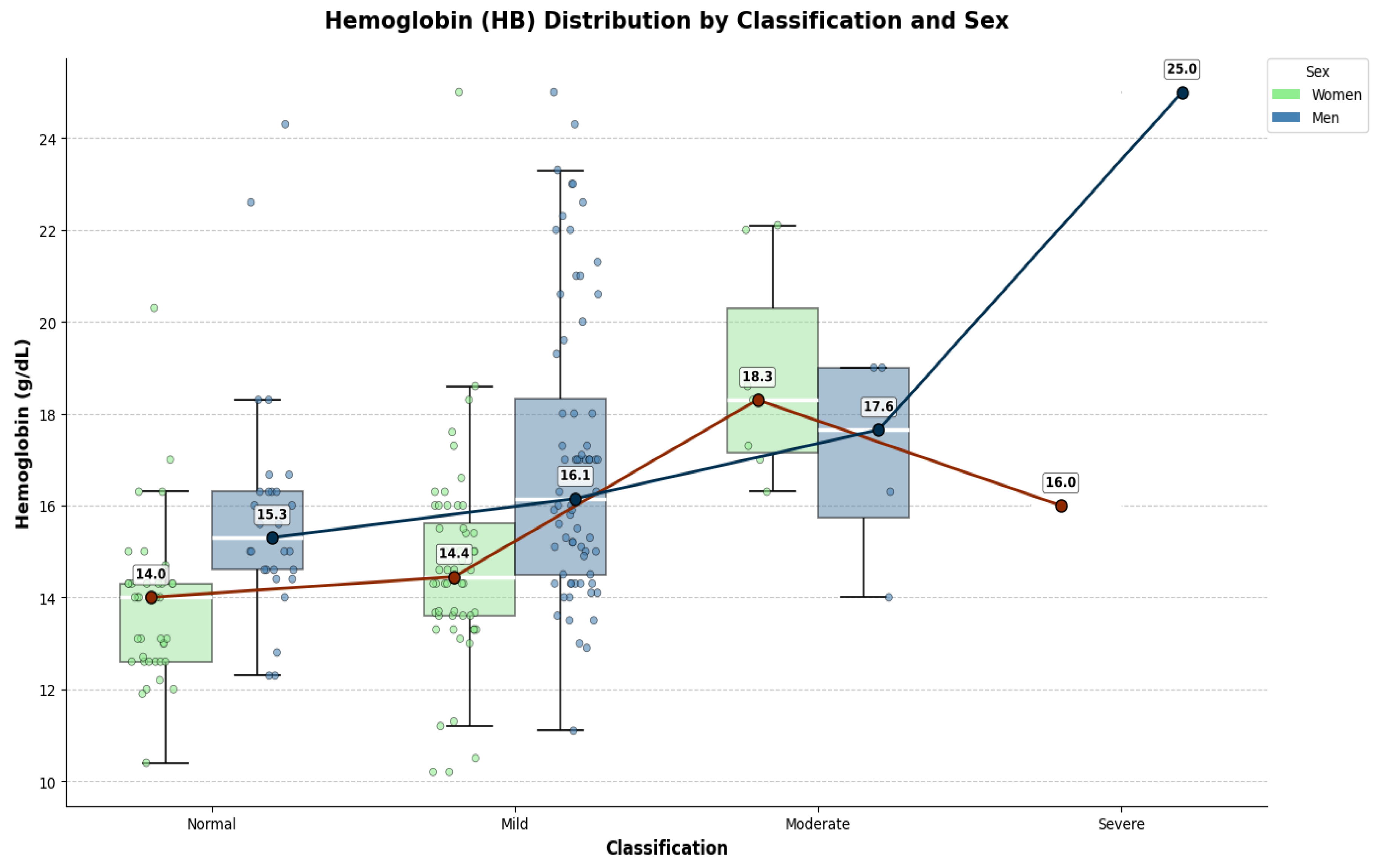
Although classic literature maintains that young women of childbearing age have some protection against cognitive decline and excessive erythrocytosis, attributed mainly to progesterone-mediated ventilatory stimulation, our results at the extreme altitude of La Rinconada (5,100 m) revealed a different pattern [44,45]. In this context, young women showed a higher proportion of moderate cognitive impairment, associated with elevated Hb levels (18.80 g/dL) (Figure 6). Given that the study population was between 20 and 30 years old, excluding the effect of menopause, these findings suggest a phenomenon of relative hemodynamic intolerance, in which an Hb concentration that might represent moderate adaptation in men constitutes, for young women, an extreme physiological deviation from their baseline (~12-14 g/dL) (Table 1). Under conditions of severe hypoxia, the possible failure of protective hormonal mechanisms could expose the female cerebral microvasculature to disproportionate hyperviscosity stress, favoring greater cognitive vulnerability, a hypothesis consistent with recent observations in extreme altitude populations [3].
Analysis of cognitive domains revealed a non-linear relationship with altitude: residents of intermediate altitudes (Arequipa and Puno) showed superior performance in visuospatial skills, attention, and language compared to sea level and extreme altitude (Figure 5). However, the significant decline in executive function and attention observed at La Rinconada (5100 m) suggests the existence of a physiological "decompensation threshold" beyond which severe chronic hypoxia overcomes acclimatization mechanisms. While field studies typically report functional preservation due to acclimatization, our findings indicate that this adaptation is not maintained under conditions of sustained extreme hypoxia [46].
Figure 5.
Detailed cognitive profile by MoCA domains according to city of residence. The average score obtained in seven cognitive domains is shown. The lines connect the averages across Lima, Arequipa, Puno, and La Rinconada, while the shaded areas represent the confidence interval or variability of the group.
Figure 5.
Detailed cognitive profile by MoCA domains according to city of residence. The average score obtained in seven cognitive domains is shown. The lines connect the averages across Lima, Arequipa, Puno, and La Rinconada, while the shaded areas represent the confidence interval or variability of the group.
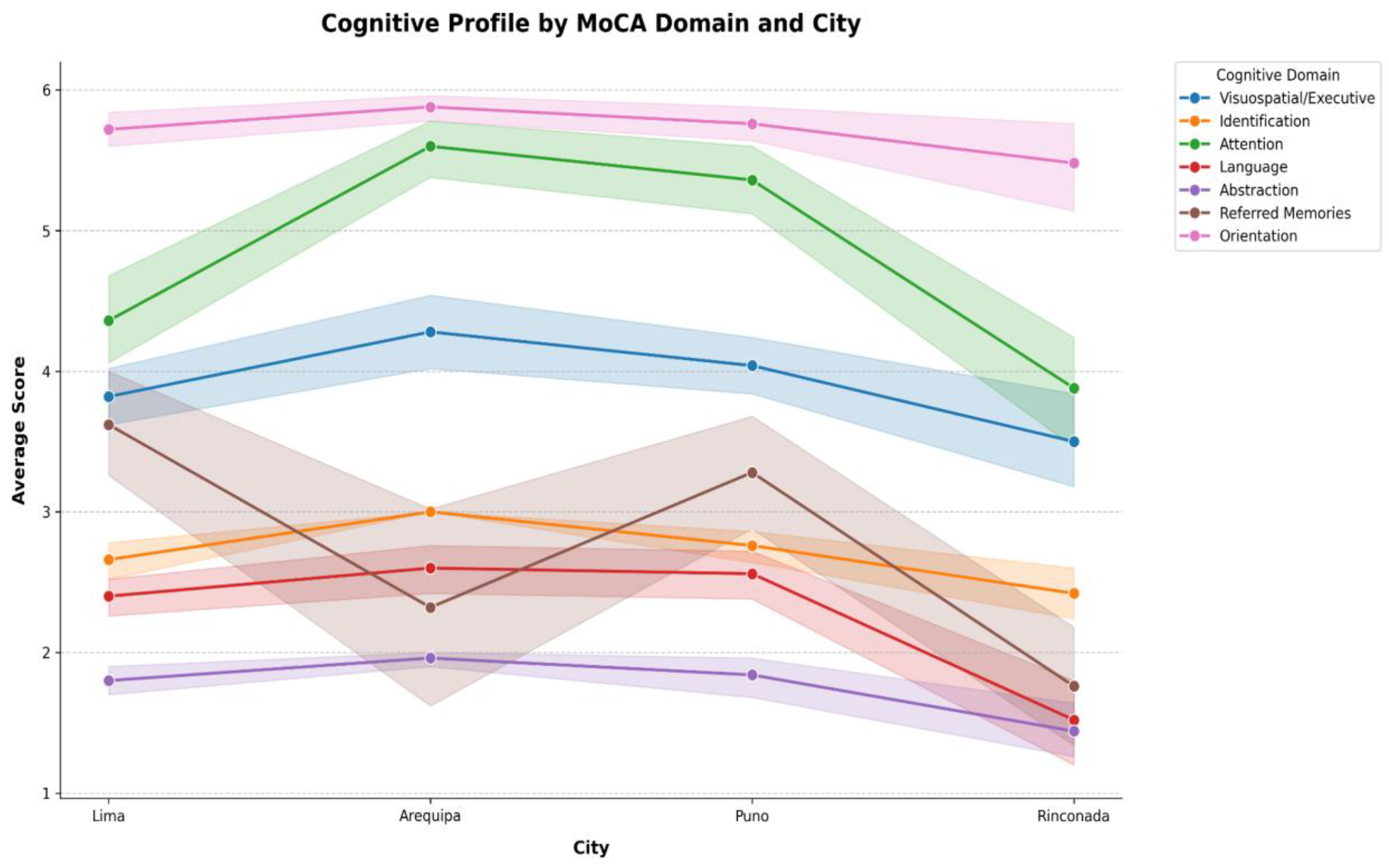
Figure 6.
Distribution of hemoglobin levels (g/dL) according to cognitive function classification and sex (women: light green and men: blue). Numerical labels indicate the median hemoglobin for each MoCA category. Trend lines connect the medians to illustrate the relationship between the severity of cognitive impairment and hemoglobin levels.
Figure 6.
Distribution of hemoglobin levels (g/dL) according to cognitive function classification and sex (women: light green and men: blue). Numerical labels indicate the median hemoglobin for each MoCA category. Trend lines connect the medians to illustrate the relationship between the severity of cognitive impairment and hemoglobin levels.
This selective impairment observed in the highest city could be explained by at least two critical pathophysiological mechanisms described in recent literature (Figure 4). First, the excessive erythrocytosis identified in our La Rinconada group (Hb > 19 g/dL) drastically increases blood viscosity; paradoxically, this reduces cerebral blood flow (CBF) and oxygen delivery to neuronal tissue, exacerbating cognitive deficits rather than compensating for them [47,48]. Second, chronic exposure to severe hypoxia has been linked to structural changes, specifically a reduction in gray matter volume in areas such as the prefrontal cortex and hippocampus, regions essential for executive control and memory that were affected in our high-altitude population [40,49].
The findings of this study are consistent with those of previous studies, as in inhabitants of high altitudes, decreased oxygen pressure reduces SpO2 and oxygen supply to the brain, a highly sensitive organ that consumes one-fifth of the total oxygen [50]. This hypoxic stress affects advanced neurobehavioral functions, potentially leading to cognitive impairment, primarily impacting the hippocampus (the center of learning and memory) [51,52]. Key mechanisms include apoptosis and neuronal dysfunction, especially in the anoxia-sensitive CA1 region, exacerbated by oxidative stress and cellular damage [53,54,55]. Alterations in energy metabolism and neurotransmitters exceed biological adaptation and could result in persistent cognitive deficits [56].
The evaluation of the relationship between the MOCA score and EE revealed a significant clinical trend, despite marginal statistical significance (p=0.072). The EE group showed a markedly higher prevalence of mild and moderate cognitive impairment compared to the group without this condition (Table 4). This finding is consistent with the pathophysiology of CMS, which is not defined solely by elevated Hb levels, but rather constitutes a multisystem syndrome that includes neurocognitive manifestations such as mental confusion, memory impairment, and slowed reaction times, resulting from chronic inefficient adaptation to hypobaric hypoxia [3,57,58]. Furthermore, prolonged exposure to high altitude without adequate acclimatization has been described as inducing specific deficits in attention and executive function, which are exacerbated by low arterial oxygen saturation [59].
Analysis of mean Hb values demonstrated a statistically significant linear association in which higher Hb levels were related to greater severity of cognitive impairment in both sexes (Figure 6). While studies in the general population describe a U-shaped association where both anemia and high Hb are associated with a greater risk of cognitive decline and dementia at high altitude, the upper end of the curve appears to be the critical factor [60,61]. In permanent residents, excessive erythrocytosis is related to a prothrombotic state, characterized by blood hyperviscosity and accelerated coagulation [62]. This phenomenon, according to our study conducted in La Rinconada, could explain why Hb is a powerful and linear predictor of cognitive impairment, thus diverging from the pattern documented in lowland areas.
Excessive Hb levels cause blood hyperviscosity, which paradoxically reduces cerebral blood flow and oxygen delivery to neuronal tissue, accelerating cognitive decline [47,63]. This mechanism is consistent with our linear regression analysis, where for each unit increase in Hb, the total MoCA score decreases by 0.59 points (Figure 7), suggesting that the exaggerated erythropoietic response ceases to be adaptive and acquires a potential neurotoxic effect [3,64]. Furthermore, the pattern of cognitive decline varies by sex; the results show that women with moderate impairment reached Hb levels of 18.80 g/dL, representing a proportionally more drastic increase from their baseline compared to men (Figure 6). Although there is evidence of estrogen's protective effect against chronic mountain sickness, recent neuroimaging studies in high-altitude populations indicate that women may be more susceptible to structural brain changes and cognitive deficits under conditions of chronic hypoxia compared to men, suggesting sex-differentiated brain adaptation mechanisms [65,66]. This reinforces the need to analyze risk thresholds in a stratified manner, as hormonal and vascular mechanisms differ significantly [45].
Linear regression analysis demonstrated a highly significant positive association between SatO2 saturation and MoCA score. The coefficient of determination indicates that oxygenation influences the variability of cognitive performance, confirming that higher SatO2 levels are associated with better mental function (Figure 8). Pathophysiologically, chronic hypoxia compromises neurotransmitter synthesis and affects the structural integrity of key areas such as the hippocampus and prefrontal cortex [40,49]. Consequently, oxygen desaturation acts as an independent predictor of impairment in memory and executive functions, suggesting that chronic hypoxia at high altitude serves as a pathophysiological model for structural and functional brain alterations similar to those observed in brain aging and neurodegenerative diseases [67].
Additionally, a comparative analysis of sleep quality across cities revealed a clear gradient: sleep quality worsens with increasing altitude, reaching 88.0% poor quality in La Rinconada, the highest altitude evaluated (Table 5). At high altitudes, low oxygen pressure induces instability in ventilatory control, generating what is known as "periodic breathing" or Cheyne-Stokes respiration during the night, characterized by cycles of hyperventilation followed by central apneas [68]. These apneas cause constant micro-arousals that fragment sleep and drastically reduce the deep sleep phase, resulting in a subjective perception of insufficient rest [69].
Comparative studies have shown that native highland residents have a significantly higher prevalence of central sleep apnea (77% vs 54%) compared to lowland inhabitants, which explains the significant difference found between our lower and higher altitude sites [70].
The finding that there is no significant difference in sleep quality between subjects with and without EE (Table 6) is consistent with the specialized literature. Previous research on CMS has reported that the severity of clinical symptoms (including sleep disturbances) does not always correlate with Hb levels, but is more closely linked to oxygen desaturation and overall health status [71]. Specifically in La Rinconada, recent studies from Expedition 5300 confirm that nocturnal hypoxemia is severe and widespread, affecting both subjects with and without erythrocytosis [72].
Statistical analysis did not demonstrate a significant association between subjective sleep quality and the degree of cognitive impairment (Table 7). A widespread prevalence of "poor sleep quality" was observed across all groups, affecting even 76% of subjects without cognitive impairment (Table 5). This suggests a strong influence of altitude; chronic hypobaric hypoxia universally alters sleep architecture in high-altitude populations (prolonged sleep latency and micro-arousals), making poor sleep quality a constant of the environment rather than a specific predictor of dementia [69]. Consequently, cognitive impairment in this population appears to be driven by direct tissue hypoxemia and neuronal oxidative stress, rather than by the subjective perception of insufficient rest [59].
5. Conclusions
This research demonstrates that hemoglobin concentration and extreme altitude are critical determinants of cognitive performance in young adults. While functional preservation is observed at moderate altitudes, residents at 5,100 m showed a significant prevalence of moderate to severe cognitive impairment. A crucial finding is that hemoglobin acted as a negative predictor of the MoCA score (a decrease of 0.59 points for each unit of hemoglobin), demonstrating that excessive erythrocytosis ceases to be adaptive and becomes neurotoxic.
Interestingly, sleep quality did not show a significant association with the degree of impairment in this population. These results expand current knowledge by identifying a threshold of physiological decompensation at extreme altitudes, underscoring the need to monitor hematological profiles to prevent permanent neurological damage.
Author Contributions
Conceptualization: MY, GV, IHZ, MEBI; methodology: GV, MY, IHZ, RMCS; formal analysis: IHZ, MY, GV, MEBI, DEHM, ZMGM; investigation: MY, IHZ, DEHM, JMMV, TMCR, MEPF, RMCS; resources: I.H.Z. MACC, MEPF, DCR, WAC; data curation: IHZ, CALC, MEBI, RMCS, ZMGM, MACC. Drafting the original: IHZ, MY, GV, MEBI, DEHM.; Review and editing: JMMV, TMCR, DCR, MMAP; visualization: IHZ, MEPF, RMCS, MEBI; Supervisión: IHZ, GV; Project administration: IHZ; Funding acquisition IHZ. All authors have read, reviewed, and agreed to the published version of the article.
Funding
M.Y. is supported by the National Institute of Health National Heart Lung and Blood grant R00 HL164888.
Acknowledgments
We thank the study participants for their time and willingness to collaborate.
Conflicts of interest
The authors declare no conflicts of interest.
References
- Della Rocca Y, Fonticoli L, Rajan TS, Trubiani O, Caputi S, Diomede F, et al. Hypoxia: molecular pathophysiological mechanisms in human diseases. J Physiol Biochem. 2022;78(4):739–52. PubMed PMID: 35870078; PubMed Central PMCID: PMC9684243. [CrossRef]
- Pittman RN. Elevated haematocrit – when too much of a good thing wreaks havoc on the endothelial surface layer. J Physiol. 2011 Nov 15;589(Pt 22):5339. PubMed PMID: 22086247; PubMed Central PMCID: PMC3240872. [CrossRef]
- Villafuerte FC, Simonson TS, Bermúdez D, León-Velarde F. High-Altitude Erythrocytosis: Mechanisms of Adaptive and Maladaptive Responses. Physiology. 2022 Jul;37(4):175–86. [CrossRef]
- Stacey BS, Hoiland RL, Caldwell HG, Howe CA, Vermeulen T, Tymko MM, et al. Lifelong exposure to high-altitude hypoxia in humans is associated with improved redox homeostasis and structural–functional adaptations of the neurovascular unit. J Physiol. 2023 Mar 15;601(6):1095–120. PubMed PMID: 36633375; PubMed Central PMCID: PMC10952731. [CrossRef]
- van der Veen PH, Muller M, Vincken KL, Westerink J, Mali WPTM, van der Graaf Y, et al. Hemoglobin, hematocrit, and changes in cerebral blood flow: the Second Manifestations of ARTerial disease-Magnetic Resonance study. Neurobiol Aging. 2015 Mar 1;36(3):1417–23. [CrossRef]
- Vilca Coaquira KM, Rojas Chambilla RA, Tejada Flores J, Tintaya Ramos HO, Quispe Trujillo MM, Quispe Humpiri SA, et al. Lower glycemia levels in subjects with excessive erythrocytosis during the oral glucose tolerance test living in conditions of severe hypoxia. Front Physiol. 2024 Apr 9;15:1387132. PubMed PMID: 38655033; PubMed Central PMCID: PMC11035787. [CrossRef]
- Rensma SP, van Sloten TT, Houben AJHM, Köhler S, van Boxtel MPJ, Berendschot TTJM, et al. Microvascular Dysfunction Is Associated With Worse Cognitive Performance: The Maastricht Study. Hypertension. 2020 Jan;75(1):237–45. PubMed PMID: 31735081. [CrossRef]
- Ibrahim A, Stefani A, Cesari M, Roche J, Gatterer H, Holzknecht E, et al. Effects of periodic breathing on sleep at high altitude: a randomized, placebo-controlled, crossover study using inspiratory CO2. J Physiol. 2024 Nov;602(21):5549–68. PubMed PMID: 38408065. [CrossRef]
- Jiang F, Li T, Huang J, Fan L, Zhou W, Le W, et al. Nocturnal hypoxia moderates the relationship between rapid eye movement sleep and anxiety. BMC Psychiatry. 2025 Oct 8;25:952. PubMed PMID: 41063099; PubMed Central PMCID: PMC12506378. [CrossRef]
- Zhang J, Tang S, Chen C, Jiang H, Liao H, Liu H, et al. A bibliometric analysis of the studies in high-altitude induced sleep disturbances and cognitive impairment research. Front Physiol. 2023 Jan 13;14:1133059. PubMed PMID: 36860517; PubMed Central PMCID: PMC9968939. [CrossRef]
- León-Velarde F, Maggiorini M, Reeves JT, Aldashev A, Asmus I, Bernardi L, et al. Consensus statement on chronic and subacute high altitude diseases. High Alt Med Biol. 2005;6(2):147–57. PubMed PMID: 16060849. [CrossRef]
- Jia X, Wang Z, Huang F, Su C, Du W, Jiang H, et al. A comparison of the Mini-Mental State Examination (MMSE) with the Montreal Cognitive Assessment (MoCA) for mild cognitive impairment screening in Chinese middle-aged and older population: a cross-sectional study. BMC Psychiatry. 2021 Dec;21(1):485. [CrossRef]
- Oliveros E, Somers VK, Sochor O, Goel K, Lopez-Jimenez F. The Concept of Normal Weight Obesity. Prog Cardiovasc Dis. 2014 Jan 1;Obesity and Obesity Paradox in Cardiovascular Diseases56(4):426–33. [CrossRef]
- Leonard WR. Nutritional determinants of high-altitude growth in nuñoa, Peru. Am J Phys Anthropol. 1989;80(3):341–52. [CrossRef]
- Andretti B, Vieites Y, Elmor L, Andrade EB. How Socioeconomic Status Shapes Food Preferences and Perceptions. J Mark. 2025 Nov 1;89(6):33–56. [CrossRef]
- Richalet JP, Hermand E, Lhuissier F. Cardiovascular physiology and pathophysiology at high altitude. Nat Rev Cardiol. 2024 Feb;21:75–88. [CrossRef]
- Roach RC, Wagner PD, Ainslie PN, Hackett PH. Translation in Progress: Hypoxia 2017. J Appl Physiol Bethesda Md 1985. 2017 Oct 1;123(4):922–5. PubMed PMID: 29025903. [CrossRef]
- Mejia CR, Cárdenas MM, Benites-Gamboa D, Miñan-Tapia A, Torres-Riveros GS, Paz M, et al. Values of heart rate at rest in children and adults living at different altitudes in the Andes. PLoS ONE. 2019 Feb 28;14(2):e0213014. PubMed PMID: 30817775; PubMed Central PMCID: PMC6394920. [CrossRef]
- Bärtsch P, Gibbs JSR. Effect of Altitude on the Heart and the Lungs. Circulation. 2007 Nov 6;116(19):2191–202. [CrossRef]
- Grover RF, Weil JV, Reeves JT. Cardiovascular adaptation to exercise at high altitude. Exerc Sport Sci Rev. 1986;14:269–302. PubMed PMID: 3525187.
- Liao Y, Lu D, Yang J. Changes and monitoring technology of human heart rate and blood oxygen saturation under high-altitude hypoxia. Front Physiol. 2025 Sep 1;16:1642777. PubMed PMID: 40959123; PubMed Central PMCID: PMC12433960. [CrossRef]
- Kacimi R, Moalic J, Aldashev A, Vatner D, Richalet J, Crozatier B. Differential regulation of G protein expression in rat hearts exposed to chronic hypoxia. Am J Physiol-Heart Circ Physiol. 1995 Dec;269(6):H1865–73. [CrossRef]
- Mier-Martínez M, García-Benítez L, Santiago-Vázquez V, Tamariz-Cruz O. Arterial oxygen saturation in healthy Mexican full-term newborns at different altitudes above sea level. Bol Méd Hosp Infant México. 2023 Sep 13;80(4):11247. [CrossRef]
- Tannheimer M, Lechner R. The correct measurement of oxygen saturation at high altitude. Sleep Breath. 2019 Dec 1;23(4):1101–6. [CrossRef]
- Lorente-Aznar T, Perez-Aguilar G, García-Espot A, Benabarre-Ciria S, Mendia-Gorostidi JL, Dols-Alonso D, et al. Estimation of arterial oxygen saturation in relation to altitude. Med Clínica Engl Ed. 2016 Nov 18;147(10):435–40. [CrossRef]
- Gonzales GF, Tapia V, Vásquez-Velásquez C. Changes in hemoglobin levels with age and altitude in preschool-aged children in Peru: the assessment of two individual-based national databases. Ann N Y Acad Sci. 2021 Mar;1488(1):67–82. PubMed PMID: 33147649; PubMed Central PMCID: PMC8647184. [CrossRef]
- Mairbäurl H, Kilian S, Seide S, Muckenthaler MU, Gassmann M, Benedict RK. The Increase in Hemoglobin Concentration With Altitude Differs Between World Regions and Is Less in Children Than in Adults. HemaSphere. 2023 Apr 5;7(4):e854. PubMed PMID: 37038466; PubMed Central PMCID: PMC10082317. [CrossRef]
- Staub K, Haeusler M, Bender N, Morozova I, Eppenberger P, Panczak R, et al. Hemoglobin concentration of young men at residential altitudes between 200 and 2000 m mirrors Switzerland’s topography. Blood. 2020 Mar 26;135(13):1066–9. PubMed PMID: 32043119; PubMed Central PMCID: PMC7118400. [CrossRef]
- Alkhaldy HYM, Alqahtani MM, Al Amri MA, Alasmri YD, Alshehri MA, Ghazy R, et al. Assessment of Hemoglobin Mass and Blood Volumes at High Altitude Using a Carbon Monoxide Rebreathing Technique. Blood. 2024 Nov 5;66th ASH Annual Meeting Abstracts144:5229. [CrossRef]
- Wan L, Yuan Q, Tang M, Zhu Z, Liu Y, Huang Z, et al. Comparison of routine blood parameters by altitude and residence duration in the Western Sichuan Plateau. Pract Lab Med. 2025 Jul 1;45:e00467. [CrossRef]
- Lusina SJC, Kennedy PM, Inglis JT, McKenzie DC, Ayas NT, Sheel AW. Long-term intermittent hypoxia increases sympathetic activity and chemosensitivity during acute hypoxia in humans. J Physiol. 2006 Sep 15;575(Pt 3):961–70. PubMed PMID: 16809359; PubMed Central PMCID: PMC1995690. [CrossRef]
- Pop GAM, de Boer MJ, Stalenhoef AF. Reducing cardiac after-load by lowering blood viscosity in patients with familial hypercholesterolemia – A pilot study. Possible mechanism for occurrence of anemia in chronic heart failure patients? Cor Vasa. 2016 Aug 1;58(4):e374–8. [CrossRef]
- Janaszak-Jasiecka A, Siekierzycka A, Płoska A, Dobrucki IT, Kalinowski L. Endothelial Dysfunction Driven by Hypoxia—The Influence of Oxygen Deficiency on NO Bioavailability. Biomolecules. 2021 Jul;11(7):982. [CrossRef]
- Ortiz-Saavedra B, Montes-Madariaga ES, Moreno-Loaiza O, Toro-Huamanchumo CJ. Hypertension subtypes at high altitude in Peru: Analysis of the Demographic and Family Health Survey 2016–2019. PLOS ONE. 2024 Apr 12;19(4):e0300457. [CrossRef]
- Bernedo-Itusaca ME, Vilca-Coaquira KM, Calisaya-Huacasi ÁG, Cosi-Cupi MR, Leqque-Santi SR, Cutipa-Tinta S, et al. Physical Activity and Pain Perception in Residents Under Conditions of Chronic Hypoxia. Oxygen. 2025 Sep;5(3):11. [CrossRef]
- Su R, Jia S, Zhang N, Wang Y, Li H, Zhang D, et al. The effects of long-term high-altitude exposure on cognition: A meta-analysis. Neurosci Biobehav Rev. 2024 Jun 1;161:105682. [CrossRef]
- Tsarouchas N, Benedek K, Bezerianos A, Benedek G, Keri S. Effects of moderate hypobaric hypoxia on evoked categorical visuocognitive responses. Clin Neurophysiol. 2008 Jul 1;119(7):1475–85. [CrossRef]
- Hill CM, Dimitriou D, Baya A, Webster R, Gavlak-Dingle J, Lesperance V, et al. Cognitive performance in high-altitude Andean residents compared with low-altitude populations: from childhood to older age. Neuropsychology. 2014 Sep;28(5):752–60. PubMed PMID: 24819068. [CrossRef]
- Jansen GF, Basnyat B. Brain blood flow in Andean and Himalayan high-altitude populations: evidence of different traits for the same environmental constraint. J Cereb Blood Flow Metab. 2011 Feb;31(2):706–14. PubMed PMID: 20736959; PubMed Central PMCID: PMC3049524. [CrossRef]
- Zhang Z, He M, Liu Y, Guan Z, Li C. Neuroimaging insights into lung disease-related brain changes: from structure to function. Front Aging Neurosci. 2025 Feb 20;17:1550319. PubMed PMID: 40051465; PubMed Central PMCID: PMC11882867. [CrossRef]
- Sundermann EE, Maki PM, Reddy S, Bondi MW, Biegon A. Women’s higher brain metabolic rate compensates for early Alzheimer’s pathology. Alzheimers Dement Diagn Assess Dis Monit. 2020 Nov 20;12(1):e12121. PubMed PMID: 33251322; PubMed Central PMCID: PMC7678742. [CrossRef]
- Pascual O, Morin-Surun MP, Barna B, Denavit-Saubié M, Pequignot JM, Champagnat J. Progesterone reverses the neuronal responses to hypoxia in rat nucleus tractus solitarius in vitro. J Physiol. 2002 Oct 15;544(Pt 2):511–20. PubMed PMID: 12381823; PubMed Central PMCID: PMC2290600. [CrossRef]
- Gonzales GF. Serum testosterone levels and excessive erythrocytosis during the process of adaptation to high altitudes. Asian J Androl. 2013 May 6;15(3):368–74. PubMed PMID: 23524530; PubMed Central PMCID: PMC3752551. [CrossRef]
- Ou LC, Sardella GL, Leiter JC, Brinck-Johnsen T, Smith RP. Role of sex hormones in development of chronic mountain sickness in rats. J Appl Physiol Bethesda Md 1985. 1994 Jul;77(1):427–33. PubMed PMID: 7961265. [CrossRef]
- Raberin A, Burtscher J, Citherlet T, Manferdelli G, Krumm B, Bourdillon N, et al. Women at Altitude: Sex-Related Physiological Responses to Exercise in Hypoxia. Sports Med Auckl Nz. 2024;54(2):271–87. PubMed PMID: 37902936; PubMed Central PMCID: PMC10933174. [CrossRef]
- Bliemsrieder K, Weiss EM, Fischer R, Brugger H, Sperner-Unterweger B, Hüfner K. Cognition and Neuropsychological Changes at Altitude—A Systematic Review of Literature. Brain Sci. 2022 Dec 19;12(12):1736. PubMed PMID: 36552195; PubMed Central PMCID: PMC9775937. [CrossRef]
- Huamaní C, Bayona-Pancorbo W, Sarmiento W, Córdova-Heredia G, Cruz-Huanca L, Damián-Saavedra P, et al. Does blood viscosity affect cerebral blood flow? A study in a population living in a high-altitude city [Internet]. medRxiv; 2023 [cited 2026 Jan 15]. p. 2023.01.15.23284577. Available from: https://www.medrxiv.org/content/10.1101/2023.01.15.23284577v1. [CrossRef]
- Rafnsson S, Deary IJ, Whiteman MC, Rumley A, Lowe GDO, Fowkes FGR. Haemorheological predictors of cognitive decline: the Edinburgh Artery Study. Age Ageing. 2010 Mar;39(2):217–22. PubMed PMID: 20097662. [CrossRef]
- Zhang YQ, Zhang W juan, Liu J hao, Ji W zhong. Effects of Chronic Hypoxic Environment on Cognitive Function and Neuroimaging Measures in a High-Altitude Population. Front Aging Neurosci. 2022 May 6;14:788322. PubMed PMID: 35601614; PubMed Central PMCID: PMC9122256. [CrossRef]
- Li C, Li X, Liu J, Fan X, You G, Zhao L, et al. Investigation of the differences between the Tibetan and Han populations in the hemoglobin-oxygen affinity of red blood cells and in the adaptation to high-altitude environments. Hematology. 2018 Jun;23(5):309–13. PubMed PMID: 29130390. [CrossRef]
- Cramer NP, Korotcov A, Bosomtwi A, Xu X, Holman DR, Whiting K, et al. Neuronal and vascular deficits following chronic adaptation to high altitude. Exp Neurol. 2019 Jan;311:293–304. PubMed PMID: 30321497. [CrossRef]
- Moral Y, Robertson NJ, Goni-de-Cerio F, Alonso-Alconada D. [Neonatal hypoxia-ischemia: cellular and molecular brain damage and therapeutic modulation of neurogenesis]. Rev Neurol. 2019 Jan 1;68(1):23–36. PubMed PMID: 30560986.
- Coimbra-Costa D, Alva N, Duran M, Carbonell T, Rama R. Oxidative stress and apoptosis after acute respiratory hypoxia and reoxygenation in rat brain. Redox Biol. 2017 Feb 24;12:216–25. PubMed PMID: 28259102; PubMed Central PMCID: PMC5334548. [CrossRef]
- Hwang L, Choi IY, Kim SE, Ko IG, Shin MS, Kim CJ, et al. Dexmedetomidine ameliorates intracerebral hemorrhage-induced memory impairment by inhibiting apoptosis and enhancing brain-derived neurotrophic factor expression in the rat hippocampus. Int J Mol Med. 2013 May;31(5):1047–56. PubMed PMID: 23503673. [CrossRef]
- Troncoso M, Bannoud N, Carvelli L, Asensio J, Seltzer A, Sosa MA. Hypoxia-ischemia alters distribution of lysosomal proteins in rat cortex and hippocampus. Biol Open. 2018 Oct 15;7(10):bio036723. PubMed PMID: 30361205; PubMed Central PMCID: PMC6215404. [CrossRef]
- Arumugam TV, Baik SH, Balaganapathy P, Sobey CG, Mattson MP, Jo DG. Notch signaling and neuronal death in stroke. Prog Neurobiol. 2018;165–167:103–16. PubMed PMID: 29574014; PubMed Central PMCID: PMC6100747. [CrossRef]
- Gonzales GF. Monge’s disease at 100 years: Revisiting the origins and endocrine mechanisms of chronic mountain sickness. Sci Prog. 2025 Oct 21;108(4):00368504251387827. PubMed PMID: 41118472; PubMed Central PMCID: PMC12553845. [CrossRef]
- Hancco I, Bailly S, Baillieul S, Doutreleau S, Germain M, Pépin JL, et al. Excessive Erythrocytosis and Chronic Mountain Sickness in Dwellers of the Highest City in the World. Front Physiol. 2020 Jul 15;11. [CrossRef]
- Chen X, Zhang J, Lin Y, Li Y, Wang H, Wang Z, et al. Mechanism, prevention and treatment of cognitive impairment caused by high altitude exposure. Front Physiol. 2023 Sep 4;14:1191058. PubMed PMID: 37731540; PubMed Central PMCID: PMC10507266. [CrossRef]
- Shah RC, Buchman AS, Wilson RS, Leurgans SE, Bennett DA. Hemoglobin level in older persons and incident Alzheimer disease. Neurology. 2011 Jul 19;77(3):219–26. PubMed PMID: 21753176; PubMed Central PMCID: PMC3136057. [CrossRef]
- Wolters FJ, Zonneveld HI, Licher S, Cremers LGM, on behalf of the Heart Brain Connection Collaborative Research Group, Ikram MK, et al. Hemoglobin and anemia in relation to dementia risk and accompanying changes on brain MRI. Neurology. 2019 Aug 27;93(9). [CrossRef]
- Hancco I, Champigneulle B, Stauffer E, Pichon A, Robach P, Brugniaux JV, et al. Hemostasis in highlanders with excessive erythrocytosis at 5100 m: Preliminary data from the highest city of the world. Respir Physiol Neurobiol. 2020 Nov;282:103535-. [CrossRef]
- Frietsch T, Maurer MH, Vogel J, Gassmann M, Kuschinsky W, Waschke KF. Reduced cerebral blood flow but elevated cerebral glucose metabolic rate in erythropoietin overexpressing transgenic mice with excessive erythrocytosis. J Cereb Blood Flow Metab Off J Int Soc Cereb Blood Flow Metab. 2007 Mar;27(3):469–76. PubMed PMID: 16804549. [CrossRef]
- Tian Z, Jin F, Geng Z, Xu Z, Shao Q, Liu G, et al. Unraveling the Mystery of Hemoglobin in Hypoxia-Accelerated Neurodegenerative Diseases. Biomolecules. 2025 Sep;15(9):1221. [CrossRef]
- Azad P, Villafuerte FC, Bermudez D, Patel G, Haddad GG. Protective role of estrogen against excessive erythrocytosis in Monge’s disease. Exp Mol Med. 2021 Jan;53(1):125–35. [CrossRef]
- Zhang X, Fan C, Liu Y, Zhao C, Zhao Y, Yin W, et al. Gender differences of the brain structures in young high-altitude Tibetans. Cereb Cortex N Y N 1991. 2025 Feb 5;35(2):bhaf012. PubMed PMID: 39907214. [CrossRef]
- Coronel-Oliveros C, Medel V, Whitaker GA, Astudillo A, Gallagher D, Z-Rivera L, et al. Elevating understanding: Linking high-altitude hypoxia to brain aging through EEG functional connectivity and spectral analyses. Netw Neurosci. 2024 Apr 1;8(1):275–92. PubMed PMID: 38562297; PubMed Central PMCID: PMC10927308. [CrossRef]
- Douglas CG, Haldane JS. The causes of periodic or Cheyne-Stokes breathing. J Physiol. 1909 Jun 15;38(5):401–19. PubMed PMID: 16992962; PubMed Central PMCID: PMC1533630. [CrossRef]
- San T, Polat S, Cingi C, Eskiizmir G, Oghan F, Cakir B. Effects of High Altitude on Sleep and Respiratory System and Theirs Adaptations. Sci World J. 2013 Apr 17;2013:241569. PubMed PMID: 23690739; PubMed Central PMCID: PMC3654241. [CrossRef]
- Pham LV, Meinzen C, Arias RS, Schwartz NG, Rattner A, Miele CH, et al. Cross-Sectional Comparison of Sleep-Disordered Breathing in Native Peruvian Highlanders and Lowlanders. High Alt Med Biol. 2017 Mar 1;18(1):11–9. PubMed PMID: 28306414; PubMed Central PMCID: PMC5361758. [CrossRef]
- Gonzales GF, Rubio J, Gasco M. Chronic mountain sickness score was related with health status score but not with hemoglobin levels at high altitudes. Respir Physiol Neurobiol. 2013 Aug 15;188(2):152–60. PubMed PMID: 23770310; PubMed Central PMCID: PMC3752419. [CrossRef]
- Champigneulle B, Brugniaux JV, Stauffer E, Doutreleau S, Furian M, Perger E, et al. Expedition 5300: limits of human adaptations in the highest city in the world. J Physiol. 2024 Nov;602(21):5449–62. PubMed PMID: 38146929. [CrossRef]
Figure 1.
Changes in SpO2 in relation to altitude and sex. Numerical labels represent the median saturation for each group. Regression lines show a strong negative correlation between altitude and oxygen saturation.
Figure 1.
Changes in SpO2 in relation to altitude and sex. Numerical labels represent the median saturation for each group. Regression lines show a strong negative correlation between altitude and oxygen saturation.
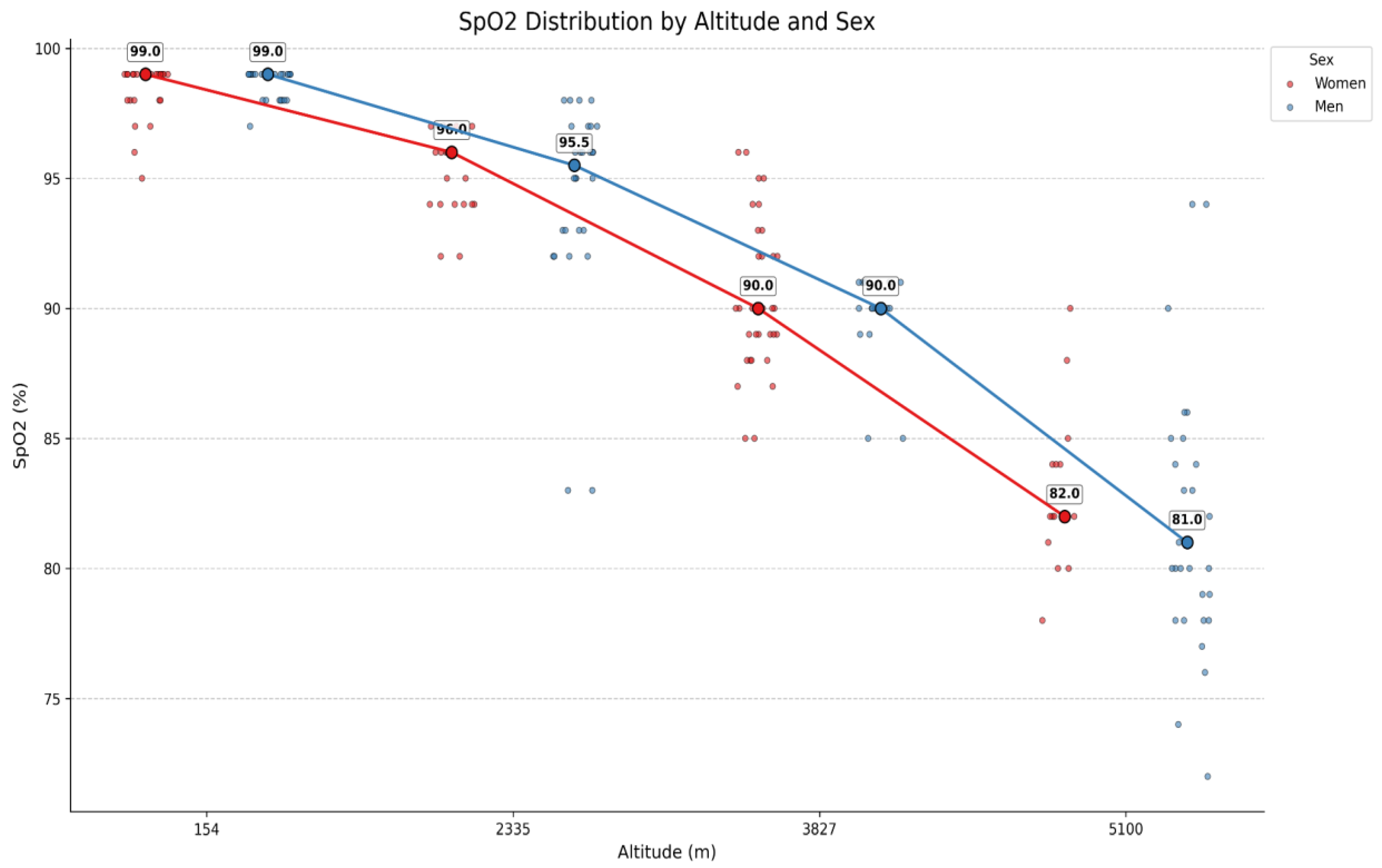
Figure 2.
Generalized additive model (GAM) of oxygen saturation (SpO2) as a function of altitude. The green dots represent individual observations at the four assessed altitude levels. The solid red line indicates the trend predicted by the model, while the light red shaded area represents the 95% confidence interval (CI).
Figure 2.
Generalized additive model (GAM) of oxygen saturation (SpO2) as a function of altitude. The green dots represent individual observations at the four assessed altitude levels. The solid red line indicates the trend predicted by the model, while the light red shaded area represents the 95% confidence interval (CI).
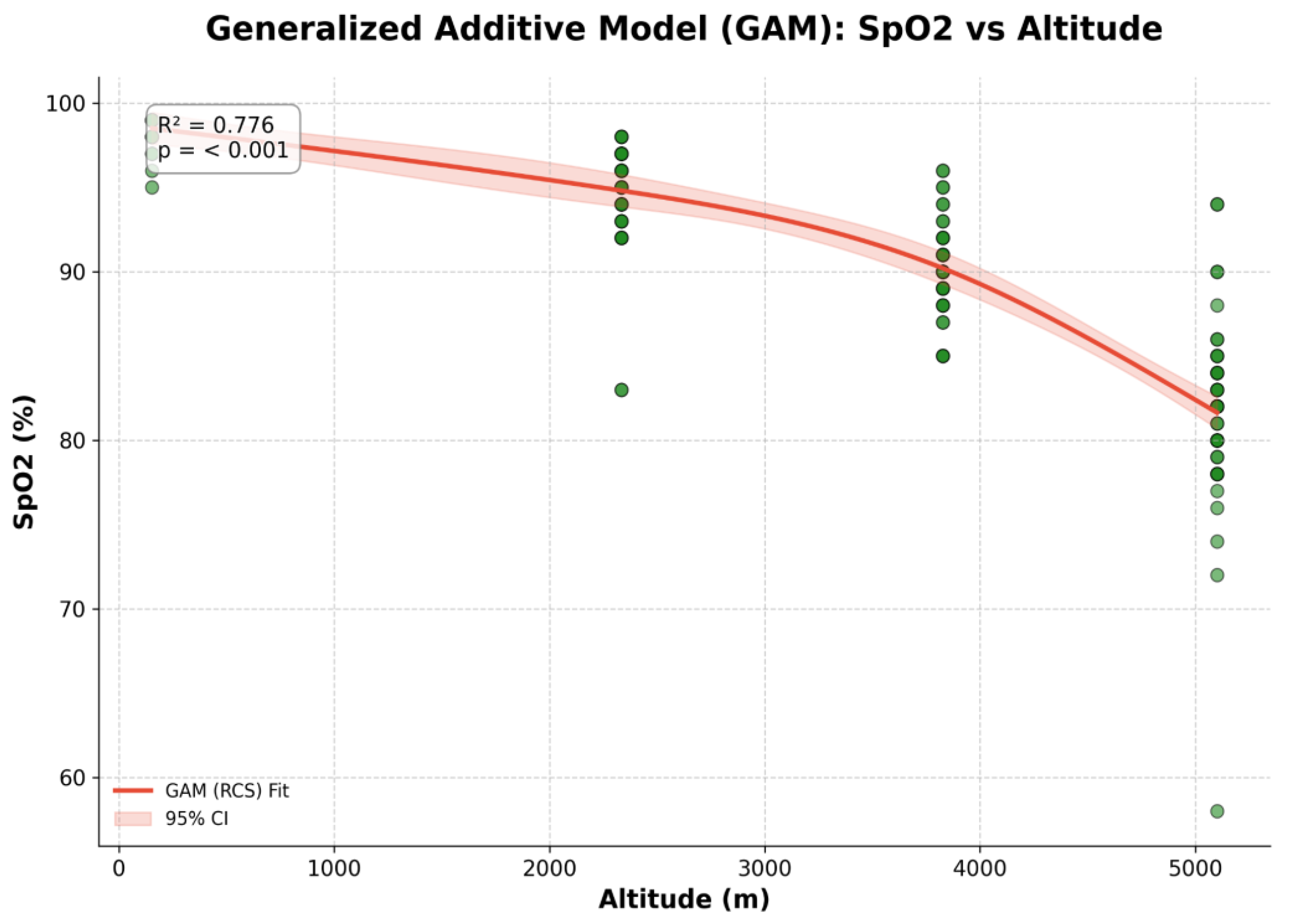
Figure 3.
Comparison of hemoglobin levels by sex at different altitudes. Numerical labels indicate the median hemoglobin (g/dL) for each population. Trend lines connect the medians to show physiological changes according to geographic location.
Figure 3.
Comparison of hemoglobin levels by sex at different altitudes. Numerical labels indicate the median hemoglobin (g/dL) for each population. Trend lines connect the medians to show physiological changes according to geographic location.
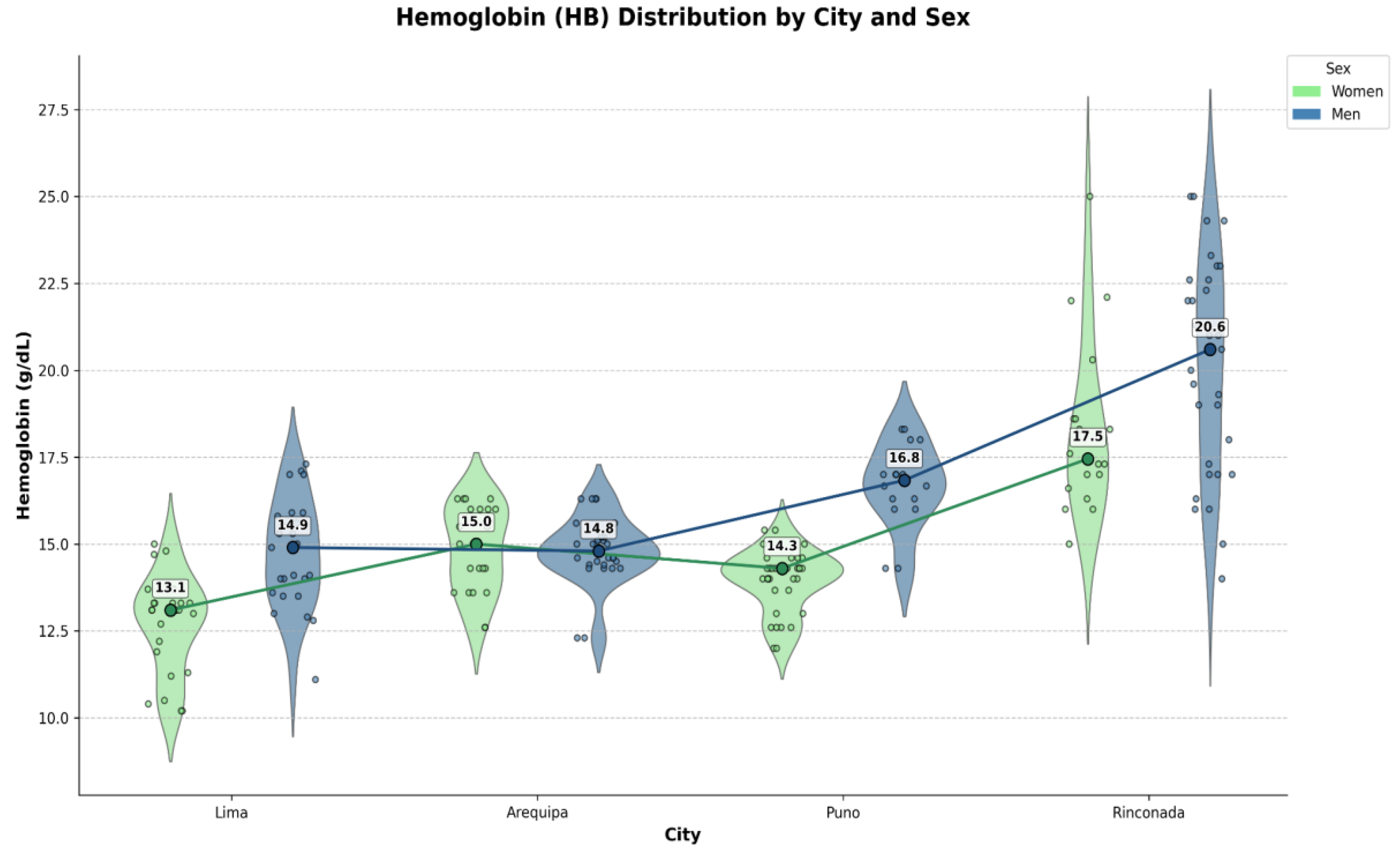
Figure 4.
Proportional distribution of cognitive function according to the MoCA classification in the four cities with different altitude levels. The stacked bars represent the proportion (%) of subjects in the categories: Normal (light blue), Mild (light blue), Moderate (dark blue), and Severe (light orange).
Figure 4.
Proportional distribution of cognitive function according to the MoCA classification in the four cities with different altitude levels. The stacked bars represent the proportion (%) of subjects in the categories: Normal (light blue), Mild (light blue), Moderate (dark blue), and Severe (light orange).
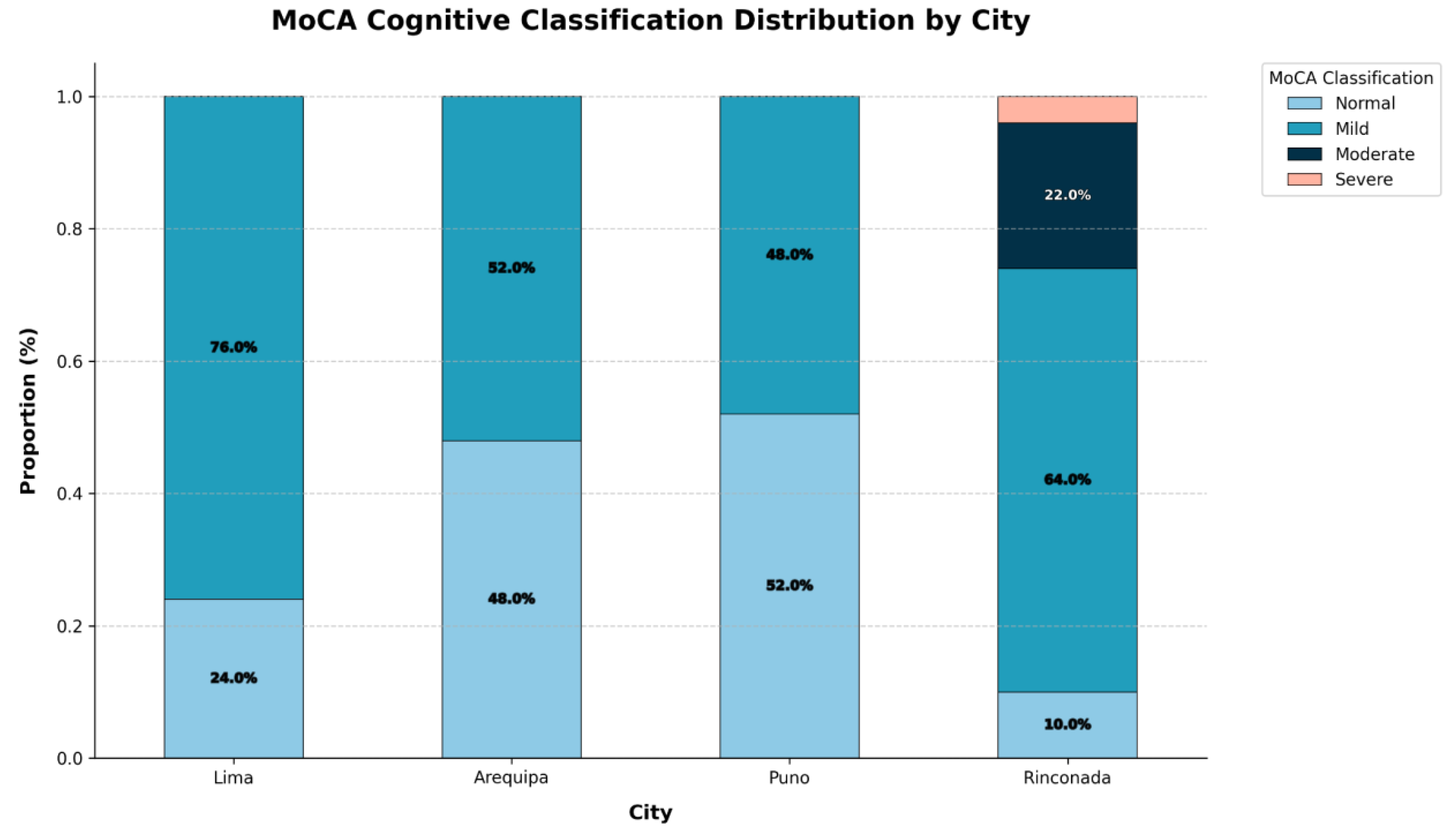
Figure 7.
Linear regression analysis between MoCA score and hemoglobin levels, broken down by sex. Three regression models are presented: a black dashed line for the overall trend (R² = 0.153) and solid lines for men (blue, R² = 0.135) and women (red, R² = 0.211). Shaded areas represent 95% confidence intervals.
Figure 7.
Linear regression analysis between MoCA score and hemoglobin levels, broken down by sex. Three regression models are presented: a black dashed line for the overall trend (R² = 0.153) and solid lines for men (blue, R² = 0.135) and women (red, R² = 0.211). Shaded areas represent 95% confidence intervals.
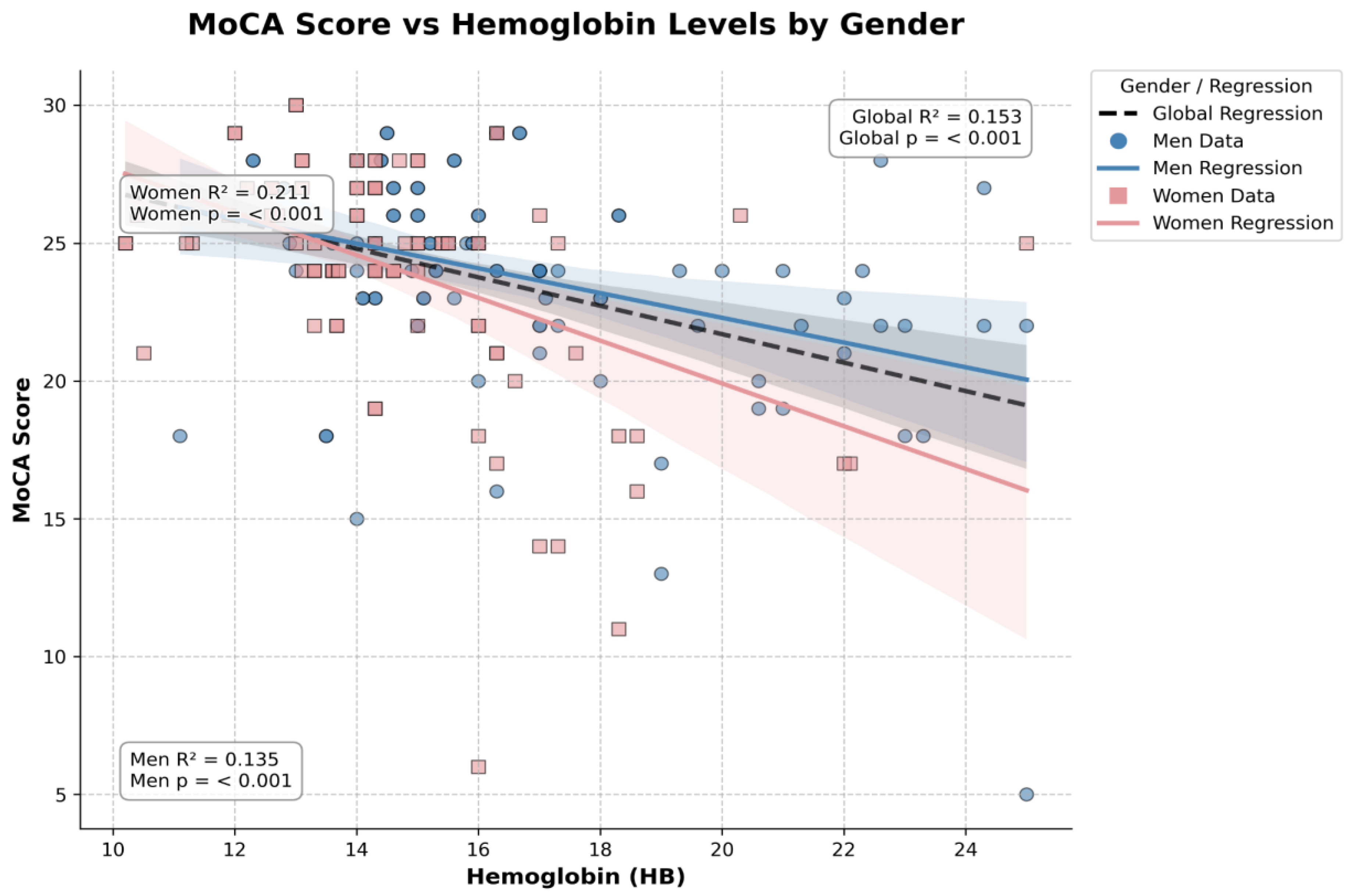
Figure 8.
Linear regression analysis between MoCA score and SpO2. The scatter plot shows the positive relationship between oxygen saturation levels and global cognitive performance. The red regression line indicates that lower saturation is significantly associated with lower MoCA scores (p < 0.001), with a coefficient of determination R² = 0.144. The shaded area represents the 95% confidence interval for the regression line.
Figure 8.
Linear regression analysis between MoCA score and SpO2. The scatter plot shows the positive relationship between oxygen saturation levels and global cognitive performance. The red regression line indicates that lower saturation is significantly associated with lower MoCA scores (p < 0.001), with a coefficient of determination R² = 0.144. The shaded area represents the 95% confidence interval for the regression line.
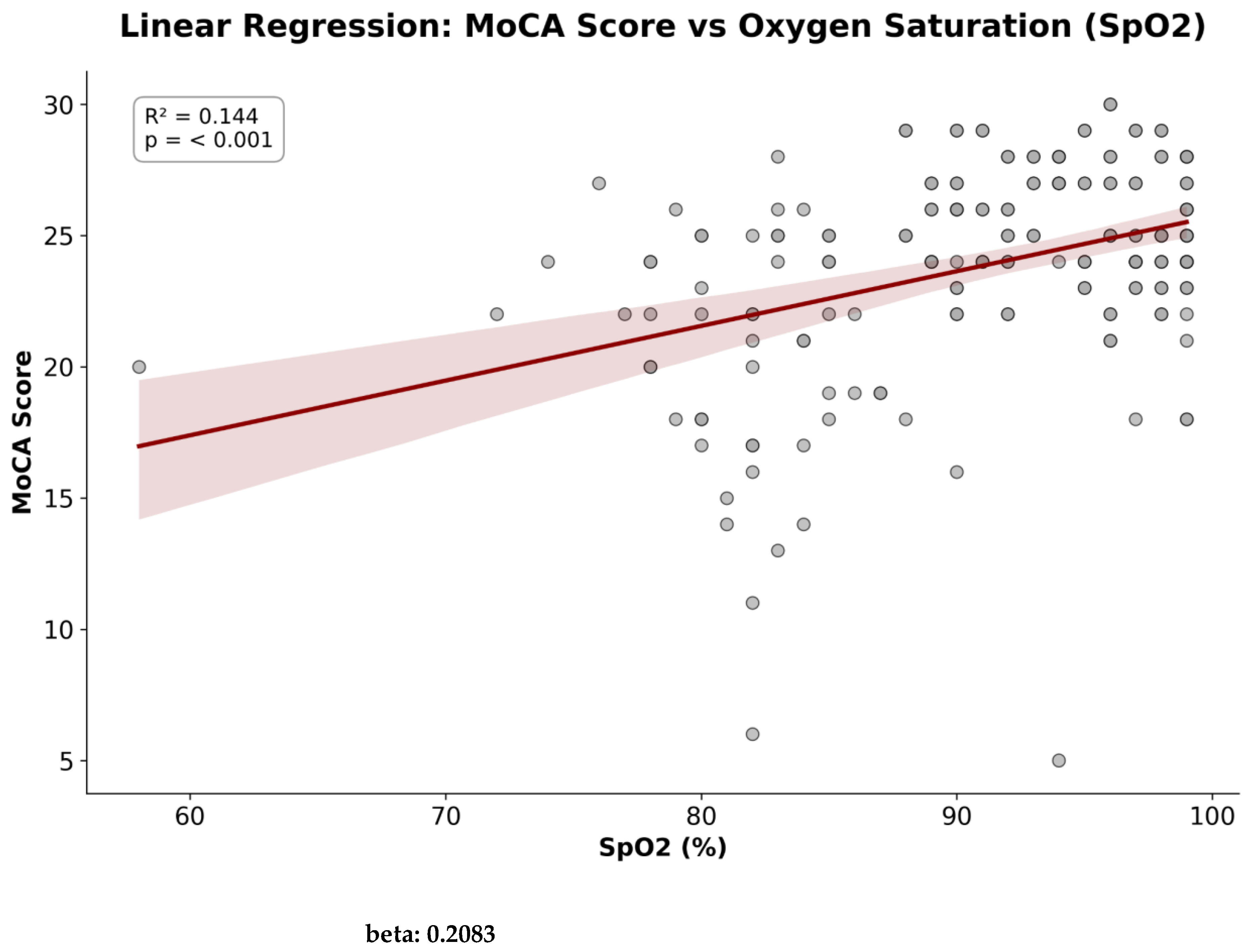

Table 1.
Age and body mass index (BMI) by city of residence.
| Lima | Arequipa | Puno | Rinconada | p value | |
| Age (years) | 21.42 ± 1.99 | 23.52 ± 2.32 | 26.36 ± 3.31 | 24.94 ± 2.51 | 0.000* |
| BMI (kg/m2) | 24.27 ± 2.72 | 24.93 ± 2.79 | 24.48 ± 3.51 | 28.01 ± 5.64 | 0.000* |
*, statistically significant (p < 0.05); kg, kilograms; m, meters; BMI, body-mass-index; p value, level of statistical significance.
Table 2.
Physiological and hemodynamic parameters by city of residence.
| Lima | Arequipa | Puno | Rinconada | p value | |
| Heart Rate (bpm) | 79.66±12.96 | 77.88±8.64 | 77.26±9.38 | 85.40 ±10.65 | 0.000* |
| Oxygen Saturation (%) | 98.50±0.86 | 94.80±3.05 | 90.20±2.62 | 81.64 ± 5.45 | 0.000* |
| Hemoglobin (g/dl) | 13.71±1.78 | 14.84±1.08 | 14.82±1.63 | 19.47 ± 3.01 | 0.000* |
| SBP (mmHg) | 110.24±10.24 | 108.04±11.76 | 107.44±9.27 | 117.98 ±17.98 | 0.000* |
| DBP (mmHg) | 76.38±9.14 | 73.80±13.76 | 72.40±8.93 | 76.80 ±13.35 | 0.176 |
| MAP (mmHg) | 87.67±7.84 | 85.18±11.92 | 84.12±7.43 | 90.52 ±13.95 | 0.015* |
*, statistically significant (p < 0.05); HR, heart rate; Hb, hemoglobin; SBP, systolic blood pressure; DBP, diastolic blood pressure; MAP, mean arterial pressure; p value, level of statistical significance.
Table 3.
Cognitive impairment classification by city, altitude, and sex.
| City | Without CI | Mild CI | Moderate CI | Severe CI | pa value | pb value |
| LIMA (154 m) | 12 (24.0%) | 38 (76.0%) | 0 (0.0%) | 0 (0.0%) | 0.000* | |
| Women (n=25) | 9 (36.0%) | 16 (64.0%) | 0 (0.0%) | 0 (0.0%) | 0.098 | |
| Men (n=25) | 3 (12.0%) | 22 (88.0%) | 0 (0.0%) | 0 (0.0%) | ||
| AREQUIPA (2335 m) | 24 (48.0%) | 26 (52.0%) | 0 (0.0%) | 0 (0.0%) | ||
| Women (n=22) | 10 (45.5%) | 12 (54.5%) | 0 (0.0%) | 0 (0.0%) | 0.973 | |
| Men (n=28) | 14 (50.0%) | 14 (50.0%) | 0 (0.0%) | 0 (0.0%) | ||
| PUNO (3821 m) | 26 (52.0%) | 24 (48.0%) | 0 (0.0%) | 0 (0.0%) | ||
| Women (n=34) | 18 (52.9%) | 16 (47.1%) | 0 (0.0%) | 0 (0.0%) | 1.000 | |
| Men (n=16) | 8 (50.0%) | 8 (50.0%) | 0 (0.0%) | 0 (0.0%) | ||
| LA RINCONADA (5100 m) | 5 (10.0%) | 32 (64.0%) | 11 (22.0%) | 2 (4.0%) | ||
| Women (n=18) | 2 (11.1%) | 8 (44.4%) | 7 (38.9%) | 1 (5.6%) | 0.137 | |
| Men (n=32) | 3 (9.4%) | 24 (75.0%) | 4 (12.5%) | 1 (3.1%) |
*, statistically significant (p < 0.05); CI, cognitive impairment; pavalue, level of statistical significance between men and women; pbvalue, level of statistical significance between cities.
Table 4.
Cognitive impairment classification by presence of excessive erythrocytosis (EE).
| Cognitive impairment | Without EE | With EE | p value |
| Without CI | 64 (35.36%) | 3 (15.79%) | 0.072* |
| Mild CI | 107 (59.12%) | 13 (68.42%) | |
| Moderate CI | 9 (4.97%) | 2 (10.53%) | |
| Severe CI | 1 (0.55%) | 1 (5.26%) |
*, statistically significant (p < 0.05); CI, cognitive impairment; EE, excessive erythrocytosis; p value, level of statistical significance.
Table 5.
Sleep quality classification by city of residence.
| Lima | Arequipa | Puno | Rinconada | p value | |
| Good quality sleep | 0 (0.0%) | 14 (28.0%) | 12 (24.0%) | 6 (12.0%) | 0.001* |
| Poor sleep quality | 50 (100.0%) | 36 (72.0%) | 38 (76.0%) | 44 (88.0%) |
*, statistically significant (p < 0.05); p value, level of statistical significance.
Table 6.
Sleep quality classification by presence of excessive erythrocytosis (EE).
| Without EE | With EE | p value | |
| Poor sleep quality | 152 (83.98%) | 16 (84.21%) | 1,000 |
| Good quality sleep | 29 (16.02%) | 4(14,81%) |
EE, excessive erythrocytosis.
Table 7.
Cognitive impairment classification by sleep quality (Pittsburgh Sleep Quality Index).
| Cognitive impairment | PSQI | P | |
| Good quality sleep | Poor sleep quality | ||
| Without CI | 16 (50.0%) | 51 (30.4%) | 0.1746 |
| Mild CI | 15 (46.9%) | 105 (62.5%) | |
| Moderate CI | 1 (3.1%) | 10 (6.0%) | |
| Severe CI | 0 (0.0%) | 2 (1.2%) | |
CI, cognitive impairment.
Disclaimer/Publisher’s Note: The statements, opinions and data contained in all publications are solely those of the individual author(s) and contributor(s) and not of MDPI and/or the editor(s). MDPI and/or the editor(s) disclaim responsibility for any injury to people or property resulting from any ideas, methods, instructions or products referred to in the content. |
© 2026 by the authors. Licensee MDPI, Basel, Switzerland. This article is an open access article distributed under the terms and conditions of the Creative Commons Attribution (CC BY) license (http://creativecommons.org/licenses/by/4.0/).
Copyright: This open access article is published under a Creative Commons CC BY 4.0 license, which permit the free download, distribution, and reuse, provided that the author and preprint are cited in any reuse.


