
Submitted:
29 April 2026
Posted:
30 April 2026
You are already at the latest version
Abstract
Background: Early detection of colorectal cancer (CRC) still relies mainly on invasive screening. Tumor hypoxia induces epigenetic, metabolic, and immune changes via hypoxia-inducible factor (HIF) signaling in experimental models. Building on these insights, this study evaluated whether hypoxia pathway biomarkers—plasma methylated SEPT9 (mSEPT9), urinary N¹, N¹² diacetylspermine (DiAcSpm), and systemic inflammatory indices (NLR, PLR, LMR)—could be combined into a noninvasive diagnostic panel compared with standard serum tumor markers. The study focused solely on diagnostic performance; it did not directly assess tumor hypoxia or HIF expression in patients. Methods: This prospective single-center study enrolled 382 participants: 142 with CRC, 62 with colorectal polyps, and 178 non-malignant controls. Plasma mSEPT9 was quantified by real-time PCR, urinary DiAcSpm by ELISA, and inflammatory indices from blood counts. Serum tumor markers (CEA, CA19-9, CA125, AFP) were measured by immunoassay. Diagnostic accuracy was assessed using ROC analysis and multivariable modeling. Results: mSEPT9 (AUC 0.843) and DiAcSpm (AUC 0.831) demonstrated significantly higher diagnostic accuracy than CEA (AUC 0.660) and CA19-9 (AUC 0.649). A combined panel including mSEPT9, DiAcSpm, NLR, PLR, and LMR achieved an AUC of 0.947, with 85.9% sensitivity and 92.9% specificity. This panel also showed strong performance for early-stage CRC (AUC 0.905).” Conclusions: A multimarker panel of previously reported hypoxia-associated biomarkers (mSEPT9, DiAcSpm, NLR, PLR, and LMR) provides a scalable, noninvasive approach for CRC detection with high diagnostic accuracy. These findings are associative; direct evidence that tumor hypoxia drives these biomarker changes in patients was not obtained and requires future investigation.
Keywords:
colorectal cancer
; liquid biopsy
; methylated SEPT9 (mSEPT9)
; N¹
; N¹²-diacetylspermine (DiAcSpm)
; hypoxia-associated biomarkers
; multimarker diagnostic panel
; circulating cell-free DNA (cfDNA)
; inflammatory biomarkers (NLR
; PLR
; LMR)
; non-invasive cancer detection
; diagnostic accuracy
1. Introduction
1.1. Global Colorectal Cancer Burden
Colorectal cancer (CRC) is a serious worldwide health problem. It is the third most common cancer and the second leading cause of cancer deaths. In 2020, there were more than 1.9 million new cases and about 935,000 deaths. By 2040, these numbers could increase by 50%, mainly due to aging populations and the wider adoption of Western lifestyles[1,2]. In high-income countries, CRC rates have dropped due to screening programs. In contrast, low- and middle-income countries (LMICs) are seeing a sharp rise in cases [3,4,5]. This is mostly because of limited screening, late diagnoses, and risk factors like obesity, lack of physical activity, and increased use of processed foods [6,7,8,9]. Research shows that LMICs are likely to experience the largest increase. By 2030, new CRC cases could rise by 60%, reaching about 2.2 million cases and 1.1 million deaths[10]. The main reason remains the lack of efficient screening methods that are both sensitive and affordable to address this crisis, in addition to aging populations, urbanization, and changing diets and lifestyles [11,12].
Colonoscopy remains the best way to diagnose CRC, but it needs many resources. It is invasive and not practical for large-scale use in resource-limited settings[13]. Stool-based tests are less invasive. However, too few people use them, and they are not sufficiently sensitive, especially in early-stage disease [14]. Therefore, there is a strong need for non-invasive, reliable biomarkers to detect CRC early across different healthcare settings.
Tumor hypoxia represents a critical aspect of colorectal cancer progression reported to influence epigenetic regulation, metabolic adaptation, and immune responses primarily via hypoxia-inducible factor (HIF) signaling pathways[15,16]. Under hypoxic conditions, the oxygen-sensitive subunits HIF-1α and HIF-2α are stabilized and function as transcriptional regulators of genes involved in angiogenesis, metabolism, and cellular survival [16,17,18,19]. These signaling pathways are linked to changes in DNA methylation, metabolic reprogramming, and inflammatory signaling in colorectal cancer. Importantly, HIF-1β (also known as ARNT) is constitutively expressed and not regulated by hypoxia, but serves as a dimerization partner required for HIF transcriptional activity[20,21].
1.2. Hypoxia-Associated Biological Framework
Tumor hypoxia affects epigenetic regulation, metabolism, and immune responses in CRC. This occurs mainly through hypoxia-inducible factor (HIF) signaling pathways[22]. When oxygen is low, HIF-1α and HIF-2α subunits become stable. They then regulate genes involved in blood vessel growth, metabolism, and cell survival[23]. These pathways are linked to changes in DNA methylation, metabolism, and inflammation in colorectal cancer [24,25] HIF-1β, also called ARNT, is always present and acts as a required partner for HIF activity. It is not possible to directly measure tumor hypoxia, such as HIF-1α/2α levels or hypoxia gene signatures, in routine liquid biopsies. Therefore, our study does not directly measure hypoxia or HIF expression in patient tumors[26,27]. Instead, we examined whether a group of biomarkers, already linked to hypoxia-related processes, could work together in a non-invasive diagnostic test. These biomarkers include plasma methylated SEPT9 (mSEPT9, an epigenetic marker), urinary N¹,N¹²-diacetylspermine (DiAcSpm, a metabolic marker), and systemic inflammatory indices (NLR, PLR, LMR). We compared these to standard serum tumor markers. Previous studies have explored links between tumor metabolism (like FDG-PET uptake) and systemic inflammation in recurrent CRC[28]. In our study, the multimarker model should be considered hypoxia-associated based on the literature, not as direct proof of hypoxia in each tumor.
1.3. Study Rationale
Based on the convergent biology of hypoxia-associated signaling reported in CRC, a streamlined, hypoxia-associated multimarker panel was prospectively designed to integrate plasma mSEPT9, urinary DiAcSpm, and systemic inflammatory indices (NLR, PLR, LMR). We also considered traditional serum markers (CEA, CA19-9, CA125, AFP) which were evaluated as comparators but excluded from the final model due to limited diagnostic contribution and lack of mechanistic alignment with the literature-based hypoxia framework. This integrated strategy is intended to provide a biologically coherent, globally scalable approach to non-invasive CRC detection. The term “hypoxia-associated” refers to prior published evidence; this study does not directly measure hypoxia or HIF signaling in patient tumors.
1.4. Biological Basis of the Hypoxia-Associated Multimarker Panel
This section outlines the biological processes that have been reported to connect hypoxia-related signaling to changes in epigenetics, metabolism, and the immune system in colorectal cancer[29,30]. Importantly, this study did not directly measure tumor hypoxia or HIF expression. The biomarkers included were selected based on earlier research linking them to pathways affected by hypoxic tumor environments[31]. Therefore, the multimarker model is intended to represent hypoxia-associated tumor biology (i.e., based on published evidence) rather than direct proof of hypoxia signaling in individual patients.
1.5. mSEPT9-Epigenetic Changes and Hypoxic Microenvironment in CRC Development
The SEPT9 gene encodes a protein involved in cell division, cytoskeletal structure, and apoptosis. Aberrant methylation of the SEPT9 promoter is a well-recognized epigenetic hallmark of colorectal cancer. mSEPT9 is a useful biomarker because its methylation occurs at a highly specific site[32,33]; research shows that this abnormal methylation is restricted to a single CpG island in the SEPT9_v2 promoter. This precise location is diagnostically relevant, as a positive result typically originates from cancer cells rather than from stromal or benign inflammatory cells in the gut [34,35].
Experimental studies have reported that this methylation pattern is influenced by the low-oxygen tumor microenvironment[36,37]. Hypoxia-inducible factors (HIFs), particularly HIF-1α and HIF-2α, regulate cellular responses to low oxygen levels[38,39]. In colorectal cancer models, HIFs have been shown to increase the activity of DNA methyltransferases (DNMTs), mainly DNMT1 and DNMT3A/3B[40]. These DNMTs may further enhance HIF activity by silencing negative regulators of hypoxic signaling, creating a potential feedback loop[41,42]. This HIF-DNMT interaction is thought to alter the cell’s epigenetic state, leading to targeted methylation and silencing of tumor suppressor genes, including SEPT9[43,44]. The release of methylated SEPT9 DNA fragments into the bloodstream has been proposed as a detectable biomarker linked to hypoxia-associated epigenetic changes[32,45,46] (see Figure 1). Clinically, plasma mSEPT9 has been extensively validated as a non-invasive CRC marker, with the FDA-approved Epi proColon® assay demonstrating superior sensitivity compared with conventional serum tumor markers, particularly in early-stage disease[47]. Previous studies have associated abnormal SEPT9 methylation with epigenetic changes related to hypoxia; however, the present study did not directly evaluate HIF signaling. Consequently, mSEPT9 should be regarded as a circulating epigenetic biomarker that may reflect tumor-associated molecular alterations, including those reported to be linked to hypoxia[48].
1.6. The Role of the Hypoxic Tumor Microenvironment in Enhancing DiAcSpm-Associated Metabolic Reprogramming
Colorectal cancer (CRC) tumors often develop hypoxic regions, arising when rapid cellular proliferation outpaces neovascularization. Experimental studies have shown that hypoxia-inducible factor 1α (HIF-1α) mediates changes in gene expression during polyamine synthesis and metabolism, enabling cellular adaptation and destabilizing non-coding RNAs, thus mediating the Warburg effect in CRC carcinogenesis progression[49,50]. Under hypoxic conditions, cellular metabolism shifts toward pathways supporting polyamine biosynthesis, increasing the availability of substrates required for SSAT-mediated acetylation and subsequent DiAcSpm formation. Notably, a study using CRC cell lines cultured under hypoxia reported that these metabolic alterations may serve as potential biomarkers[51].
Polyamines—including putrescine, spermidine, and spermine—are critical regulators of cellular proliferation and differentiation. In CRC, polyamine metabolism is significantly dysregulated, a phenomenon linked to hypoxia-associated signaling pathways[52,53]. Under hypoxic conditions, HIF-2α activation upregulates c-MYC transcription[50,54,55], which in turn induces key enzymes such as ornithine decarboxylase (ODC) and spermidine/spermine N¹-acetyltransferase (SAT1)[56]. This metabolic reprogramming also affects immunometabolism and immune regulation, increasing spermine production and acetylation, leading to the formation of N¹,N¹²-diacetylspermine[57] (DiAcSpm) (see Figure 2).
DiAcSpm is a chemically stable metabolite that is readily excreted in urine. This provides a non-invasive indicator of hypoxia-associated metabolic dysregulation. Urinary DiAcSpm can be quantified by ELISA or LC–MS/MS. It has shown consistent diagnostic performance in CRC, with reported sensitivities exceeding 70% and specificities above 80%. DiAcSpm often outperforms classical serum tumor markers[58]. These properties make DiAcSpm a robust metabolic biomarker linked to tumor adaptation processes reported in the literature and associated with hypoxia. Researchers at Karolinska University Hospital found DiAcSpm levels were 8.1 times higher in CRC patient tissues, underscoring the marker’s significance[59]. It is important to note that, as in the mSEPT9 section, this study did not directly assess HIF-1α, HIF-2α, or tissue oxygen in patient samples. This biological model is based on prior published experimental evidence and is intended to provide a rationale for biomarker selection. Urinary DiAcSpm should therefore be interpreted as a metabolite whose elevation is associated with CRC status. It is not a direct indicator of tumor hypoxia.
1.7. Neutrophil-to-Lymphocyte Ratio (NLR), Platelet-to-Lymphocyte Ratio (PLR), and Lymphocyte-to-Monocyte Ratio (LMR) Reflected In Tumor-Hypoxia Micorenvironment
Experimental studies indicate that hypoxia within the tumor microenvironment promotes the recruitment and functional reprogramming of innate immune cells, particularly macrophages and neutrophils[60]. Hypoxia-associated chemokines and growth factors, such as CCL2, CXCL12, VEGF, and macrophage colony-stimulating factor, drive monocyte infiltration and polarization toward tumor-associated macrophages[60,61]. These macrophages contribute to angiogenesis, extracellular matrix remodeling, and immunosuppression by secreting cytokines, matrix metalloproteinases, and pro-angiogenic mediators. This process reinforces tumor progression and shapes systemic inflammatory responses that are detectable in peripheral blood indices.
Elevated NLR and PLR result from cytokines in the tumor microenvironment that stimulate granulopoiesis and thrombopoiesis while suppressing lymphocyte function[62,63,64]. The platelet-to-lymphocyte ratio correlates positively with circulating tumor cell counts[65], and both NLR and PLR are significantly associated with poor tumor differentiation[66]. The LMR serves as an indicator of immune competence and reflects tumor-associated macrophage activity, as monocytes are recruited to the tumor and lymphocyte counts decrease due to cytokine-mediated immunosuppression. A low LMR independently predicts worse progression-free and overall survival[67].
Systemic inflammatory indices derived from routine blood counts, including NLR, PLR, and LMR, capture these hypoxia-associated immune alterations, which are characterized by increased NLR and PLR and reduced LMR[68,69,70]. Although these indices are well established as prognostic markers in CRC, their diagnostic utility within an integrated hypoxia-associated biomarker framework remains insufficiently explored.
Note: As with the epigenetic and metabolic biomarkers, this study did not directly measure tumor hypoxia, HIF expression, or tissue oxygen levels. The association between systemic inflammatory indices and hypoxia is based on prior literature; in this study, these indices are interpreted as statistical correlates of CRC status rather than as direct markers of tumor hypoxia.
Classical Serum Tumor Markers
Conventional serum tumor antigens, such as carcinoembryonic antigen (CEA), carbohydrate antigen 19-9 (CA19-9), carbohydrate antigen 125 (CA125), and alpha-fetoprotein (AFP), are widely used as clinical comparators. However, these markers demonstrate limited sensitivity for early-stage CRC, often below 40%, and lack direct mechanistic links to tumor biology associated with hypoxia in the literature[71]. Consequently, their diagnostic performance is insufficient for use as standalone tools for early detection. In this study, these markers were evaluated as comparators but were excluded from the final multimarker model due to limited diagnostic contribution and lack of alignment with the hypoxia-associated framework.
2. Materials and Methods
Non-Invasive multi-analyte flowchart for CRC
Patient (CRC)
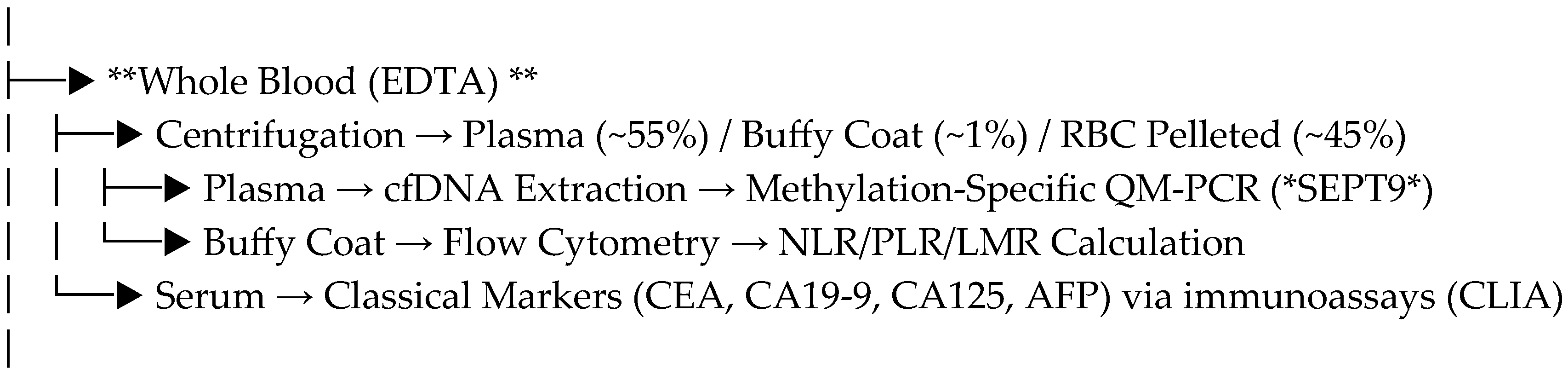
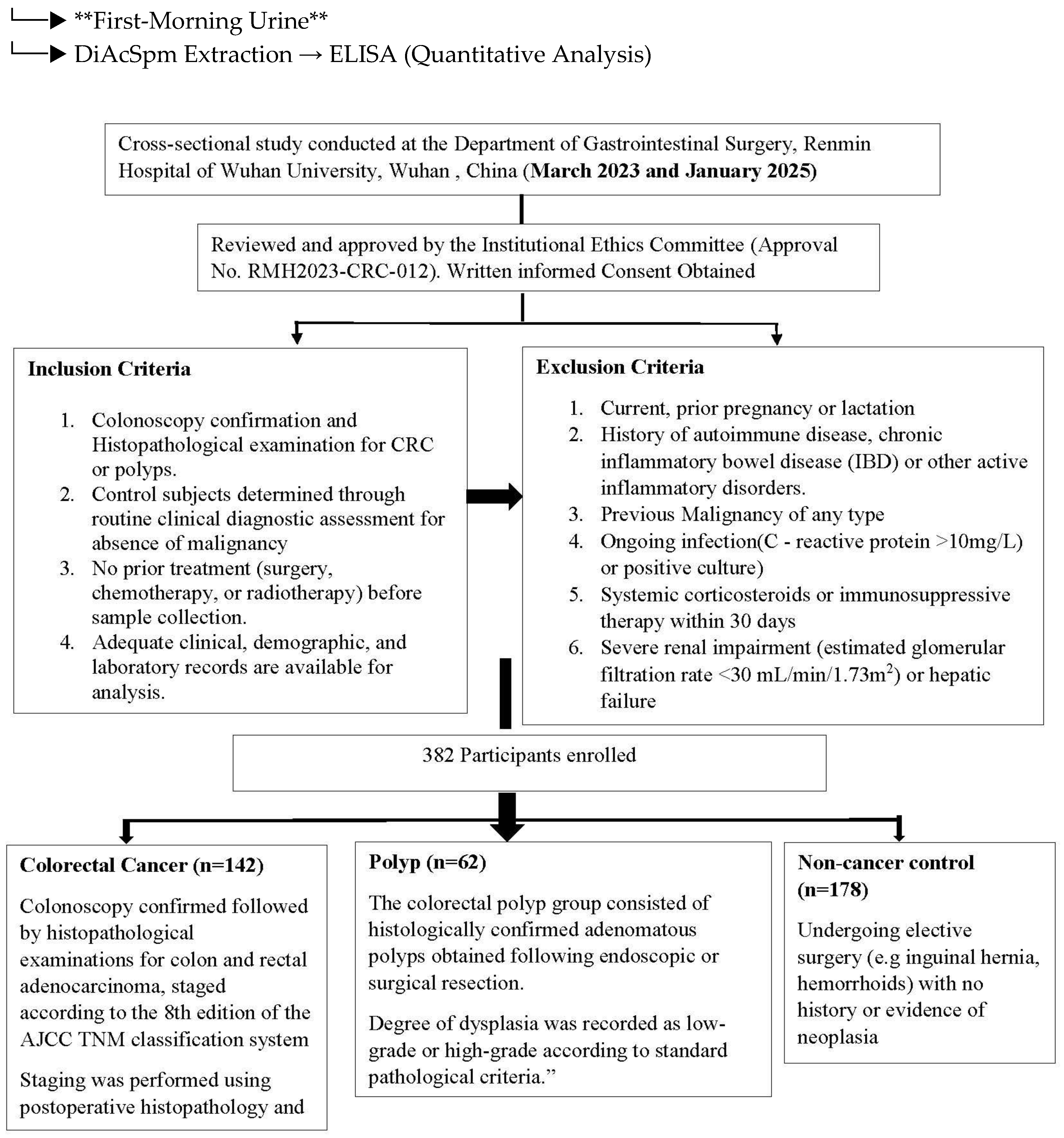
2.1. Study Design and Participants
Between March 2023 and January 2025, a total of 382 participants were prospectively enrolled at the Department of Gastrointestinal Surgery, Renmin Hospital of Wuhan University, under an institutional ethics committee–approved protocol (Approval No. RMH2023-CRC-012). Written informed consent was obtained from all participants before inclusion.
The study cohort comprised 142 patients with histologically confirmed colorectal cancer (CRC), 62 patients with colorectal polyps, and 178 non-malignant controls consisting of individuals treated for benign conditions such as hernia or hemorrhoids without evidence of malignancy.
All CRC diagnoses were established through colonoscopic evaluation followed by histopathological confirmation. Colorectal polyps were classified based on histopathological evaluation into adenomatous (tubular, tubulovillous, villous), serrated, and hyperplastic subtypes. Degree of dysplasia was recorded as low-grade or high-grade according to standard pathological criteria.”Inclusion of this group enabled assessment of biomarker performance during early neoplastic transformation preceding invasive carcinoma.
Control participants were recruited from patients undergoing clinical evaluation for non-malignant surgical conditions. The absence of colorectal malignancy was determined through routine clinical assessment, including colonoscopy when clinically indicated, imaging studies, laboratory investigations, and specialist evaluation. No control participant demonstrated clinical, endoscopic, or pathological evidence of CRC. Because colonoscopy was not performed universally in all controls, the study reflects a real-world clinical diagnostic setting rather than a population-based screening cohort.
This cross-sectional study was conducted in accordance with the Declaration of Helsinki (2013 revision) and followed STARD 2015 and TRIPOD reporting guidelines for diagnostic biomarker studies. Recruitment procedures, biospecimen collection, and sample handling adhered to institutional ethical and quality standards. Tumor staging was performed using the tumor–node–metastasis (TNM) classification according to the American Joint Committee on Cancer (AJCC, 8th edition) and Lymph node ratio (LNR) based on a cutoff of ≥ 0.20 according to established prognostic thresholds in colorectal cancer (Berger et al., J Clin Oncol 2005; Park et al., Ann Coloproctol 2013)[72,73]. All biological samples were obtained before initiation of any therapeutic intervention.
2.2. Sample Processing and Storage
Fasting peripheral blood samples (10 mL) were collected into K₂-EDTA tubes and centrifuged at 1,350 × g for 10 minutes within 2 hours of collection. Plasma was aliquoted and stored at −80 °C until circulating cell-free DNA (cfDNA) analysis. First-morning urine samples were processed within 4 hours of collection, aliquoted, and stored at −80 °C and samples underwent no more than two freeze–thaw cycles to preserve analyte stability.
Urinary N¹, N¹²-diacetylspermine (DiAcSpm) concentrations were reported as absolute values (ng/mL) without creatinine normalisation to avoid confounding related to renal function, hydration status, or systemic inflammation.
2.3. Detection and Quantification of Plasma Methylated SEPT9
Plasma cfDNA was extracted from ≥4 mL EDTA plasma using a magnetic bead–based kit (Namagene, Wuhan, China) optimized for low-abundance methylated DNA recovery. DNA quantity and fragment distribution were verified before bisulfite conversion. Bisulfite treatment (Biyuntian, Shanghai, China) selectively converted unmethylated cytosines to uracil while preserving methylated cytosines, enabling methylation-specific amplification. Converted DNA (20 μL) was obtained after thermal cycling (95 °C for 3 min; 12 cycles of 95 °C for 30 s and 70 °C for 10 min) and purification.
Methylated SEPT9 (mSEPT9) was quantified by quantitative methylation-specific PCR (qMSP) using a Bori real-time PCR system. Reactions (20 μL) contained 1 μL bisulfite-converted DNA and dual-labeled probes detecting methylated (FAM) and unmethylated (HEX) alleles, with ACTB as an internal control. Cycling conditions were 95 °C for 10 min followed by 40 cycles of 95 °C for 15 s, 53 °C for 30 s, and 60 °C for 30 s.
Methylation scores were calculated as 100 / [1 + 2^ΔCt], where ΔCt (Ctₘ−Ctᵤ) reflects the relative abundance of methylated(Ctm) versus unmethylated(Ctu) DNA. Lower Ctₘ values indicate higher methylated cfDNA levels. Quantitative accuracy was verified using calibration curves derived from standards with known methylation fractions.[74,75]. Assay performance was validated using calibration curves derived from known methylation standards.
2.4. Quantification of Urinary DiAcSpm by Competitive ELISA
Urinary DiAcSpm concentrations were measured using a competitive enzyme-linked immunosorbent assay (ELISA) kit (Shanghai Lianzu Biotechnology), following the manufacturer’s protocol. Each 96-well plate included six standard concentrations (0–40 ng/mL), prepared in duplicate, along with internal quality controls.
Urine samples stored at −80 °C were diluted 1:5 in assay buffer to align with the linear detection range (1–50 ng/mL; limit of detection 0.1 ng/mL). Standard curves were generated using four-parameter logistic regression. In brief, DiAcSpm in samples competed with horseradish peroxidase (HRP)-conjugated DiAcSpm for binding to immobilised monoclonal antibodies. After incubation and washing, tetramethylbenzidine (TMB) substrate was added, and the reaction was stopped to generate a colorimetric signal.
Optical density was measured at 450 nm and was inversely proportional to DiAcSpm concentration. All incubations were performed at 37 °C in the dark to maintain assay consistency. Intra- and inter-assay coefficients of variation were ≤8% and ≤10%, respectively. Samples exceeding the assay range were diluted and re-analysed. DiAcSpm values were reported as absolute concentrations (ng/mL) without creatinine normalization to avoid confounding from physiological or pathological factors [76,77].
Detailed assay procedures and calibration plots for mSEPT9 and DiAcSpm are provided in the Supplementary Methods (files 1 and 2, respectively).
2.5. Peripheral Inflammatory Blood Indices
Fasting venous blood samples (3–5 mL) were collected between 07:00 and 09:00 to minimize circadian variation. Complete blood counts were analyzed using Sysmex XN-Series hematology analysers (XN9000; Sysmex Corporation) based on fluorescence flow cytometry.
Neutrophil-to-lymphocyte ratio (NLR), platelet-to-lymphocyte ratio (PLR), and lymphocyte-to-monocyte ratio (LMR) were calculated from absolute cell counts. These indices were evaluated as systemic indicators of hypoxia-associated immune activation.
2.6. Serum Tumor Marker Measurement
Serum was obtained from 3–5 mL venous blood after clotting at room temperature for 30 minutes and centrifugation at 3,000 rpm for 5 minutes. Serum carcinoembryonic antigen (CEA), carbohydrate antigen 19-9 (CA19-9), carbohydrate antigen 125 (CA125), and alpha-fetoprotein (AFP) were quantified using Siemens ADVIA Centaur® XP/XPT immunoassay systems (Siemens Healthineers), according to the manufacturer’s instructions.
Thresholds for abnormal values were defined as follows: CEA ≥5 ng/mL, CA19-9 ≥30 U/mL, CA125 ≥24 U/mL, and AFP ≥7 ng/mL. These markers were evaluated as comparators but were excluded from the final multimarker model due to limited diagnostic contribution and lack of mechanistic association with hypoxia signaling.
2.7. Determination of Diagnostic Cutoff Values
Optimal cutoff values for hypoxia-associated biomarkers were determined using ROC curve analysis. The selected thresholds were ≥10.01% for plasma mSEPT9 and ≥32.32 ng/mL for urinary DiAcSpm maximizing sensitivity and specificity for CRC detection.
2.8. Statistical Analysis
Statistical analyses were conducted using IBM SPSS Statistics (IBM Corp., Armonk, NY, USA) and R (R Foundation for Statistical Computing, Vienna, Austria), with the pROC package. The Kolmogorov–Smirnov test was used to assess the distribution of the data.
Continuous variables are reported as medians with interquartile ranges (IQR). Comparisons between two groups were performed using the Mann–Whitney U test, while the Kruskal–Wallis test was applied for three or more groups, with Dunn–Bonferroni post hoc correction when appropriate. Categorical variables were presented as counts and percentages and compared using the Chi-square test or Fisher’s exact test, as appropriate. Paired comparisons of diagnostic performance between biomarkers were conducted using McNemar’s test.
Diagnostic accuracy was assessed using receiver operating characteristic (ROC) curve analysis. The area under the curve (AUC) was calculated with 95% confidence intervals, and comparisons between ROC curves were conducted using DeLong’s test. Sensitivity, specificity, positive predictive value (PPV), and negative predictive value (NPV) were calculated with corresponding 95% confidence intervals.
All statistical tests were two-sided, and p-values less than 0.05 were considered statistically significant. Model robustness and overfitting were addressed through internal validation using bootstrap resampling (1,000 iterations). Optimism-corrected performance estimates were reported to provide more conservative and reliable measures of diagnostic accuracy.
3. Experimental Results and Analysis
A total of 382 participants were prospectively enrolled between March 2023 and January 2025 and included in the final analysis, comprising 142 patients with histologically confirmed colorectal cancer (CRC), 62 patients with colorectal adenomatous polyps, and 178 non-cancer controls diagnosed with inguinal hernia or hemorrhoids. The overall cohort included 203 males and 179 females, with a mean age of 58 years, reflecting a clinically representative population encountered in gastrointestinal surgical practice. Detailed demographic distribution according to diagnostic category, sex, and age group is presented in Table 1, while clinicopathological and lifestyle characteristics are summarized in Table 2.
Age distribution differed across diagnostic groups, with CRC patients presenting at an older mean age (65 years) compared with non-cancer controls, consistent with the established age-related risk profile of colorectal carcinogenesis. Sex distribution was balanced across groups and showed no statistically significant difference (p = 0.992), indicating minimal sex-related selection bias within the study population. Age stratification demonstrated a progressive increase in CRC frequency in older age categories, particularly among individuals aged 60–69 and ≥70 years, whereas younger age groups were predominantly represented in control subgroups, especially hemorrhoid patients.
Tumor localization among CRC cases showed heterogeneous anatomical distribution, with lesions identified in the right colon (n = 38), left colon (n = 65), and rectum (n = 39), supporting inclusion of tumors arising from distinct embryologic and molecular colorectal segments. Disease stages spanned the full clinical spectrum (stages I–IV), with 13.4% of patients presenting with metastatic disease at diagnosis, reflecting real-world clinical presentation rather than screening-detected cohorts.
Pathological evaluation revealed that ulcerative morphology represented the predominant gross tumor type (56.3%), followed by polypoid lesions. Depth of invasion indicated advanced local disease in most cases, with more than 80% of tumors extending beyond the muscularis propria into pericolic tissues, serosa, or adjacent structures. Indicators of aggressive tumor biology were frequently observed, including lymphovascular invasion in approximately half of cases, perineural invasion in 41.5%, and lymph node involvement in 45.1% of patients. Tumor budding analysis demonstrated a distribution across low-, intermediate-, and high-grade categories, supporting biological heterogeneity within the CRC cohort. Molecular characterization showed a predominance of mutant-pattern p53 expression, while the median Ki-67 proliferation index of 60% (IQR 50–70) indicated high proliferative activity consistent with malignant epithelial tumors.
The colorectal polyp group consisted entirely of adenomatous lesions confirmed histologically following endoscopic resection, representing premalignant neoplasia within the adenoma–carcinoma sequence. Inclusion of this intermediate group enabled evaluation of biomarker behavior during early neoplastic transformation preceding invasive cancer development.
Lifestyle characteristics demonstrated selective differences between groups. Alcohol consumption was significantly more common among CRC patients compared with other diagnostic categories (p = 0.007), suggesting a potential association with disease risk within this cohort. In contrast, smoking status and family history of cancer did not differ significantly across groups (p = 0.265 and p = 0.811, respectively), indicating that these factors were unlikely to confound biomarker comparisons in subsequent analyses.
Among the colorectal polyp cohort (n = 62), the majority were adenomatous lesions, including tubular, tubulovillous, and villous subtypes, with a subset demonstrating high-grade dysplasia. Detailed histological distribution is presented in Table 2.
Overall, the demographic balance, broad stage representation, and detailed pathological characterization confirm that the study population captures the clinical and biological diversity of colorectal disease progression, ranging from premalignant adenomas to invasive carcinoma and benign surgical conditions. This structured cohort provides an appropriate foundation for evaluating non-invasive biomarker performance across the continuum of colorectal tumorigenesis.
3.1. Diagnostic Yield Across Clinical Subgroups between mSEPT9 and DiAcSpm Biomarkers
Both plasma methylated SEPT9 and urinary N¹, N¹²-diacetylspermine (DiAcSpm) showed strong and complementary results for diagnosing colorectal cancer (CRC). The detection rates were close: mSEPT9 detected 73.2% of CRC cases, while DiAcSpm detected 72.5%, both well above chance (Figure 3A). There were a few false positives among patients with colorectal polyps and almost none in non-malignant controls, showing that the tests are highly specific. Table 3 shows there is a significant difference in positive detection rates between the two biomarkers (p < 0.05).
Across different cancer stages, both biomarkers were more likely to be positive as the tumor progressed. mSEPT9 positivity increased from 34.3% in stage I to 94.7% in stage IV, suggesting greater epigenetic changes. Urinary DiAcSpm also increased, from 60.0% in stage I to 84.2% in stage IV (Figure 3B), which suggests polyamine activity previously reported to be associated with hypoxia.Looking at how deeply the tumor invaded (Figure 3C), mSEPT9 positivity rose from 31.0% in pT2 to 86.7% in pT4, and DiAcSpm rose from 58.6% to 86.7%. All six pT1 tumors tested positive for DiAcSpm, suggesting it may be sensitive to early metabolic changes, though the sample size is small. Nodal status (Figure 3D) showed that both biomarkers had nearly identical detection rates across all stages, indicating they are similarly effective. Using both markers together improves overall diagnostic accuracy.
3.2. Comparative Analysis of mSEPT9 and DiAcSpm Biomarker Positivity and Negativity Status: Clinicopathological Correlations
Clinicopathological analyses revealed biological differences between these two hypoxia-related biomarkers. Table S1 gives a summary; mSEPT9 positivity was strongly linked to signs of more aggressive tumors. It was found more often in patients aged 60 or older (p < 0.001) and in larger tumors (p < 0.001). mSEPT9 positivity also increased with higher TNM stage, deeper tumor invasion, lymph node involvement, and distant metastasis, showing a clear link to disease progression. There were also connections with poorer tumor differentiation (p = 0.042) and lymph node invasion (p < 0.001). This suggests that mSEPT9 reflects epigenetic changes tied to invasive and metastatic potential. On the other hand, there were no significant links with tumor location, overall appearance, vascular invasion, or perineural invasion. This means that methylation status primarily reflects tumor aggressiveness, not its location.
In comparison, the clinicopathological links for urinary DiAcSpm (Table S2) point to a more local biological role. DiAcSpm positivity was associated with higher tumor stage (p = 0.018) and deeper invasion (pT stage, p = 0.040), suggesting it is sensitive to tumor growth at the primary site. Unlike mSEPT9, DiAcSpm was not significantly associated with lymph node or distant metastasis, tumor differentiation, vascular invasion, or perineural invasion. Higher positivity was also observed in patients aged 60 or older (p < 0.001), but sex and tumor location did not differ significantly.
However, the convergence of these independent, biologically linked biomarkers, mSEPT9 and DiAcSpm, explains their similar diagnostic performance. It also highlights their distinct clinicopathological associations. These observations support integrating epigenetic and metabolic biomarkers into a unified hypoxia-informed diagnostic framework (HIF-linked-D4 model). This approach enables non-invasive detection and simultaneously provides biological stratification of colorectal cancer progression.
3.2. McNemar’s Test Comparison for Significance Between (mSEPT9 and DiAcSpm) Biomarkers in Different Clinical Subgroups
McNemar’s analyses across clinical subgroups in Table 3 below confirmed largely concordant diagnostic behaviour between biomarkers (mSEPT9 and DiAcSpm). No significant discordance was observed across most tumor stages or nodal categories, whereas significant differences emerged within the non-malignant control group (p = 0.031) and at the pT3 invasion stage (p = 0.0197), and tumor stage I (p=0.050*) indicating almost no variation in detection behavior of these two biomarkers except in a few cases of disease status and tumor progression. These comparisons evaluated paired positive–negative classifications within the same individuals. All staging classifications were defined according to the American Joint Committee on Cancer (AJCC) 8th edition TNM system. Significance threshold: p < 0.05.
3.3. Comparison of mSEPT9 and DiAcSpm Biomarker Positivity and Negativity Status Correlating with Inflammatory Indices
To evaluate whether tumor-derived biomarkers are associated with systemic inflammatory status, relationships between mSEPT9, DiAcSpm, and circulating inflammatory indices including neutrophil-to-lymphocyte ratio (NLR), platelet-to-lymphocyte ratio (PLR), and lymphocyte-to-monocyte ratio (LMR), were analyzed in colorectal cancer patients (Table 4).
Patients were stratified independently according to biomarker positivity, generating two separate binary comparisons: mSEPT9-positive vs. mSEPT9-negative and DiAcSpm-positive vs. DiAcSpm-negative
Because inflammatory indices were non-normally distributed, comparisons between positive and negative groups for each biomarker were performed using the Mann–Whitney U test (two independent groups). Thus, each reported P value represents a pairwise comparison within a single biomarker classification, rather than a simultaneous comparison across four groups.
mSEPT9-positive patients exhibited significantly higher NLR (median 3.05 [IQR 2.23–3.86]) and PLR (181.25 [137.79–228.96]) compared with mSEPT9-negative patients (NLR 2.20 [1.78–2.23]; PLR 126.19 [107.38–166.02]; both p < 0.001). Conversely, LMR was significantly lower among mSEPT9-positive individuals (2.49 [1.92–3.28] vs. 3.50 [2.66–4.89]; p < 0.001). A comparable pattern was observed for DiAcSpm stratification. DiAcSpm-positive patients demonstrated elevated NLR (2.83 [2.12–3.69]) and PLR (174.26 [123.51–232.65]) together with reduced LMR (2.65 [1.93–3.42]) relative to DiAcSpm-negative patients (NLR 2.24 [1.81–2.96]; PLR 128.19 [108.06–168.49]; LMR 3.43 [2.60–4.88]; all p < 0.001).
These findings indicate that biomarker positivity is consistently associated with a systemic inflammatory profile characterized by increased neutrophil- and platelet-dominant responses alongside reduced lymphocyte-associated immune balance. While hypoxia-related mechanisms have been proposed in prior experimental studies, showing that tumor progression is accompanied by proinflammatory cytokines including IL-6, IL-8, TNF-α, and VEGF production and myeloid cell expansion, processes that elevate NLR and PLR while reducing lymphocyte-dependent immune activity [51,52,53], the present analysis demonstrates statistical associations between circulating tumor biomarkers and host inflammatory remodeling Collectively, the results support integration of molecular (mSEPT9), metabolic (DiAcSpm), and inflammatory indices within a combined diagnostic framework for colorectal cancer.
3.4. Comparative Distributions of mSEPT9, DiAcSpm, Inflammatory, and Classical Biomarkers Across Diagnostic Categories
Non-parametric analyses found clear differences in biomarker levels among colorectal cancer (CRC), colorectal polyp, and non-cancer control groups (Table S3; Figure 4A). Plasma mSEPT9 methylation showed the most distinct separation. CRC patients had much higher methylation percentages (median = 15.2%, IQR 8.89–25.07) than those with polyps (8.05%, IQR 5.62–11.31) or controls (5.35%, IQR 2.15–7.25; p < 0.001). These results suggest a gradual epigenetic transition from adenoma to carcinoma and support mSEPT9 as a tumor marker, consistent with earlier reports of DNA methylation changes in colorectal cancer.
Urinary N¹, N¹²-diacetylspermine (DiAcSpm) levels (Figure 4B) also showed a similar pattern: CRC patients had higher levels (33.81 ng/mL, IQR 31.42–35.37) than those with polyps (30.03 ng/mL, IQR 28.73–32.84) or controls (29.28 ng/mL, IQR 27.71–31.21; p < 0.001). While the difference was smaller than for mSEPT9, this gradual increase suggests changes in polyamine metabolism as cancer develops, consistent with earlier findings linking higher polyamine turnover to tumor growth and metabolic changes.
Systemic inflammatory markers (Figure 4C) also varied between groups. CRC patients had higher neutrophil-to-lymphocyte ratios (NLRs) and platelet-to-lymphocyte ratios (PLRs), but lower lymphocyte-to-monocyte ratios (LMRs) (all p < 0.001). These results suggest a more pro-inflammatory, imbalanced immune state in CRC. These blood changes likely show the body’s inflammatory response to tumor growth, rather than directly measuring hypoxia.
Classical serum tumor markers (CEA, CA19-9, CA125, and AFP; Figure 4D) did not clearly separate the groups, even though the differences were statistically significant (p < 0.001). This means they are less specific for early tumor-related changes. Increases in these markers are likely due to tumor size, tissue breakdown, or mucin production, rather than specific molecular changes.
These findings show that CRC is characterized by changes in epigenetic, metabolic, and inflammatory markers. While previous studies[78] connect these changes to hypoxia in tumors, this study only looks at the measurable biomarker patterns, not direct hypoxia levels. The combined biomarker profile offers a practical, integrated approach to better distinguish between cancer, precancer, and non-cancer cases than using traditional antigen markers alone.
3.5. Comparison of Classical Tumor Markers and Inflammatory Indices According to Clinico-Pathological Characteristics
Comparative analyses were performed to evaluate the relationships between classical tumor markers, systemic inflammatory indices, and clinico-pathological characteristics among colorectal cancer (CRC) patients (Table S4). Overall, systemic inflammatory indices demonstrated stronger and more consistent associations with indicators of tumor progression than conventional serum tumor markers.
The neutrophil-to-lymphocyte ratio (NLR) showed a clear association with disease severity. NLR increased progressively with advancing TNM stage (p < 0.001) and was significantly associated with greater depth of tumor invasion (T stage; p = 0.015), nodal involvement (p = 0.001), and the presence of distant metastasis (p = 0.007). These findings indicate that elevated NLR reflects increasing systemic inflammatory activation accompanying tumor progression. Similarly, the platelet-to-lymphocyte ratio (PLR) was significantly higher in patients with lymph node metastasis (p = 0.002) and poorer histological differentiation (p = 0.009), suggesting an association between platelet-mediated inflammatory responses and aggressive tumor biology. In contrast, the lymphocyte-to-monocyte ratio (LMR) decreased significantly in patients with nodal metastasis (p = 0.033) and in older patients (p < 0.001), consistent with reduced immune surveillance capacity during disease advancement.
Importantly, these inflammatory indices represent systemic host responses measurable through routine hematological testing. Although prior experimental studies have linked inflammatory remodeling to hypoxia-related signaling pathways in tumors, the present study did not directly measure hypoxia or hypoxia-inducible factor expression. Therefore, the observed associations should be interpreted as reflecting tumor-associated systemic inflammation rather than direct evidence of hypoxia activation.
In contrast, conventional serum tumor markers demonstrated weaker and less consistent clinicopathological correlations. CA19-9 levels showed an association with increasing age (p < 0.001), while CA125 exhibited a limited relationship with gross tumor morphology (p = 0.027). AFP displayed modest variation according to tumor location (p = 0.039). Notably, carcinoembryonic antigen (CEA) did not show significant associations with most clinicopathological parameters (all p > 0.05). Sex-related differences were minimal overall, although slightly higher LMR values were observed among female patients (p = 0.040). Neither inflammatory indices nor classical tumor markers demonstrated consistent relationships with vascular or perineural invasion, aside from isolated statistical findings without a uniform pattern.
Taken together, these results indicate that systemic inflammatory indices, particularly NLR, PLR, and LMR are more closely aligned with clinical indicators of tumor burden and progression than traditional serum antigens. Rather than representing specific molecular pathways, these indices likely capture the cumulative interaction between tumor growth and host immune response. Consequently, inflammatory markers provide complementary clinical information to molecular biomarkers within the multimodal diagnostic framework evaluated in this study, whereas classical tumor markers alone show limited ability to reflect underlying disease dynamics.
3.6. Positive Detection Rates Across Conventional Biomarkers, mSEPT9, and DiAcSpm
Comparative analyses of biomarker positivity further highlighted the diagnostic advantage of hypoxia-associated markers (Figure 5). Plasma mSEPT9 and urinary DiAcSpm demonstrated the highest detection rates among CRC patients (73.2% and 72.5%, respectively), both significantly exceeding the 50% reference threshold (binomial test, p < 0.001). In contrast, classical serum markers exhibited substantially lower sensitivities, including CEA (41.5%), CA19-9 (33.1%), CA125 (20.4%), and AFP (8.5%). These results underscore the superior sensitivity of mSEPT9 and DiAcSpm, consistent with previously reported hypoxia-associated epigenetic and metabolic dysregulation. Compared with traditional serum antigens, these pathways appear to capture core biological features of colorectal tumor associated with hypoxia, supporting their role as more reliable candidates for non-invasive disease detection.
3.7. Pairwise Comparison of Biomarkers for Assessing Detection Performance for Colorectal Cancer Using McNemar’s Test
Pairwise comparisons of diagnostic performance were performed using McNemar’s test, which evaluates differences between correlated binary outcomes obtained from the same patients. This approach determines whether one biomarker detects significantly more colorectal cancer (CRC) cases than another while accounting for within-subject dependence. Results are summarized in Figure 6 and Table S5.
In McNemar analysis, n10 represents patients positive for Biomarker 1 but negative for Biomarker 2, whereas n01 represents patients positive for Biomarker 2 but negative for Biomarker 1. Odds ratios (ORs), therefore, quantify the relative detection advantage between paired tests.
Plasma methylated SEPT9 (mSEPT9) identified significantly more CRC cases than all conventional serum markers, including CEA, CA19-9, CA125, and AFP (OR range: 4.00–20.33; all adjusted p < 0.001). Similarly, urinary N¹, N¹²-diacetylspermine (DiAcSpm) detected substantially more cases than these classical antigens (OR range: 5.00–17.25; all adjusted p < 0.001). These findings indicate markedly higher diagnostic sensitivity of the molecular and metabolic biomarkers compared with traditional antigen-based assays.
Direct comparison between mSEPT9 and DiAcSpm showed no significant difference in detection performance (OR = 0.77, 95% CI: 0.53–1.13, FDR-adjusted p = 0.226), suggesting that both biomarkers provide comparable diagnostic yield. The absence of superiority between them supports the interpretation that they capture partially independent biological signals rather than redundant information.
Among conventional markers, only CEA demonstrated modest superiority over AFP (OR = 3.76, adjusted p < 0.001), whereas most comparisons among CA19-9, CA125, and AFP were not significant, indicating substantial overlap and limited discriminatory differentiation within this group.
Overall, paired diagnostic analysis demonstrates that mSEPT9 and DiAcSpm consistently outperform conventional serum antigens in CRC detection. The complementary detection patterns observed here support combining molecular, metabolic, and conventional markers within a multi-parameter non-invasive diagnostic strategy linked to hypoxia signaling, as inferred from previous studies.
3.8. ROC Analysis and Diagnostic Performance of Individual and Multimarker Panels
Diagnostic performance was evaluated using receiver operating characteristic (ROC) curve analysis. Areas under the curve (AUCs) were compared using the DeLong test for correlated ROC curves. Sensitivity, specificity, positive predictive value (PPV), and negative predictive value (NPV) were calculated at optimal thresholds determined by the Youden index.
3.9. Performance of Individual Biomarkers
Among single biomarkers (Figure 7A; Table S6), plasma methylated SEPT9 demonstrated strong discriminative ability for colorectal cancer detection, achieving an AUC of 0.843 (95% CI 0.800–0.886) with a sensitivity of 73.2%. DiAcSpm showed comparable performance (AUC 0.831, 95% CI 0.788–0.874; sensitivity 72.5%). Both biomarkers substantially outperformed classical serum markers, including AFP (AUC 0.543) and CA125 (AUC 0.558). Systemic inflammatory indices exhibited intermediate diagnostic accuracy, with AUC values ranging from 0.746 to 0.781, consistent with their role as indirect indicators of tumor-associated inflammation rather than tumor-specific molecular alterations.
3.10. Performance of Multimarker Models
To evaluate synergistic diagnostic effects, multivariable logistic regression models integrating biomarkers across biological domains were constructed. Predicted probabilities derived from each model were used to generate ROC curves (Figure 7B; Table 5).
The highest diagnostic performance was observed in full multimarker panels (Group D), with Models D1, D3, and D4 achieving AUCs of 0.950, 0.950, and 0.947, respectively (Table 5).
Notably, Model D4 comprising mSEPT9, DiAcSpm, NLR, PLR, and LMR achieved diagnostic accuracy comparable to larger panels while excluding conventional serum antigens (CEA, CA19-9, CA125, AFP). This streamlined composition demonstrates that combining epigenetic, metabolic, and inflammatory biomarkers provides robust discrimination without reliance on traditional tumor markers, indicating greater clinical practicality and biological coherence
A thorough review of an extended multimarker combination (Table S7) found that diagnostic performance improved as more biological markers were integrated. Epigenetic and metabolic marker combinations performed better than single biomarkers, with an AUC as high as 0.940 (Model A6). Models using inflammatory indices and traditional tumor markers had moderate accuracy, with a maximum AUC of 0.899 (Model B8). When classical markers were added to the epigenetic and metabolic panels, performance improved further, reaching an AUC of 0.932 (Model C7).
3.11. Logistic Regression Analysis
Univariate and multivariate logistic regression analyses (Table S8) showed that integrated biomarker domains were independently linked to colorectal cancer risk.
In a univariate logistic regression, age showed a strong association with colorectal cancer (CRC). People aged 70 or older had a much higher odds ratio (OR = 97.03; 95% CI: 27.87–337.85; p < 0.001). However, this large effect should be interpreted with caution, as most participants in the CRC group were older, which may have skewed the odds ratio. As a result, age was treated as a demographic factor rather than a direct cause of disease risk. Sex showed no significant effect. Molecular and inflammatory biomarkers were significantly associated with disease presence, with mSEPT9 and DiAcSpm demonstrating robust effects alongside elevated inflammatory ratios. Classical serum markers displayed statistically significant associations in unadjusted models; however, their odds ratios reflected cohort-related variability rather than independent diagnostic strength.
After multivariable adjustment (Table S8), mSEPT9, DiAcSpm, and the inflammatory ratios remained independently associated with CRC, whereas most classical markers lost statistical significance, indicating that their predictive value was largely explained by overlap with stronger biological signals captured by the integrated biomarker domains. Odds ratios presented in the model represent statistical associations within the study population and should be interpreted as measures of diagnostic contribution rather than causal biological effects.
3.12. Multivariable Risk Association Analysis for Colorectal Cancer
The standardized multivariable logistic regression analysis (Table S9) quantifies each biomarker’s contribution to colorectal cancer risk while accounting for all other variables in the optimized D4 framework. Because the biomarkers are measured in different ways, such as DNA methylation in blood, urinary metabolites, blood cell ratios, and serum proteins, all predictors were converted to Z-scores before analysis. This means the odds ratios show how the risk of colorectal cancer changes with a one-standard-deviation increase in a biomarker, making it easier to compare their effects.
The forest plot (Figure 8) visually summarizes the standardized multivariable logistic regression analysis results by showing adjusted odds ratios and 95% confidence intervals centered on the reference line (OR = 1). Biomarkers to the right of this line mean higher CRC risk as their levels rise. If the intervals cross the line, it means there is no independent association after adjustment. The plot clearly separates hypoxia-related biomarkers from traditional tumor antigens. Molecular and inflammatory markers have higher odds ratios with narrower confidence intervals, while classical serum markers are close to 1 with wider confidence intervals, suggesting they contribute less when all pathways are considered together.
Of all the predictors, the inflammatory index NLR had the strongest independent association with CRC (OR 2.80, 95% CI 1.86–4.21; p < 0.001), indicating that changes in the immune system play a major role in identifying CRC in the integrated model. The metabolic marker DiAcSpm had the next-largest effect (OR 1.48, 95% CI 1.28–1.71; p < 0.001), highlighting its value as a sensitive marker of tumor-related metabolic changes. The epigenetic marker mSEPT9 also stayed significant (OR 1.15, 95% CI 1.08–1.22; p < 0.001), confirming that changes in DNA methylation in the blood provide reliable, disease-specific information even after accounting for other factors. Other immune-based markers added value, with LMR showing a moderate association (OR 1.54; p = 0.005) and PLR showing a smaller but still significant association (OR 1.01; p = 0.001), which aligns with their roles as general markers of how the body responds to tumors rather than direct tumor signals.
In contrast, classical tumor markers had little independent value. CA19-9 was statistically significant (OR 1.01; p = 0.007), but its effect was small, showing it has a limited impact compared to hypoxia-related biomarkers. Carcinoembryonic antigen (CEA), cancer antigen 125 (CA125), and alpha-fetoprotein (AFP) were not independently associated with CRC risk after adjustment, as their confidence intervals did not indicate a clear association, and their p-values were not significant. This suggests that the diagnostic value of these markers is mostly covered by the epigenetic, metabolic, and inflammatory markers in the D4 panel, which combines these biological factors.
Overall, Figure 8 and Table S9 show that the optimized model mainly distinguishes colorectal cancer risk through biological pathways related to tumor hypoxia and the body’s response, rather than traditional antigen secretion. The standardized method confirms that each part of the D4 panel adds value and provides a clear ranking of effect strength, making the results both understandable and statistically reliable. The agreement between the visual forest plot and the numerical regression results increases confidence that this multimarker approach captures distinct aspects of disease biology rather than merely repeating signals, and supports its use as a clear, non-invasive diagnostic tool.
3.13. Internal Validation of the Integrated Diagnostic Model
We validated the final multimarker model (D4) internally using bootstrap resampling with 1,000 iterations. For each iteration, we drew samples with replacement, refitted the model, and recalculated diagnostic metrics. We estimated optimism as the difference between bootstrap and apparent performance, then used this to get optimism-corrected estimates. The corrected AUC values differed by less than 0.02 from the original values, indicating minimal overfitting and stable performance.
3.14. Delong’s test and McNemar’s test for Comparison of Optimized Multimarker Panels
We directly compared the top-performing models (D1, D3, and D4) using paired DeLong and McNemar tests (Table S10). The DeLong analysis found no statistically significant differences in AUC between the panels (all p > 0.05), showing that their overall discrimination was similar. The McNemar test also showed no significant differences in sensitivity or specificity. These results show that the evaluated models performed similarly.
Although multiple multimarker panels demonstrated high diagnostic performance, the D4 model achieved comparable accuracy using fewer biomarkers, indicating greater clinical practicality and biological coherence
3.15. Subgroup Performance of the Optimized D4 Multimarker Model to determine robustness
Subgroup analyses showed that the D4 multimarker panel remained robust and stable across key colorectal cancer subgroups (Figure 9A–D; Table S11). The model performed well in early-stage disease (Stage I–II; AUC = 0.905) and was highly accurate in advanced stages (Stage III–IV; AUC = 0.994), indicating consistent sensitivity across tumor progression. The panel also maintained high accuracy across nodal involvement, with AUC values ranging from 0.907 in node-negative patients to 0.994 in node-positive cases. For metastatic cases, the model classified patients very accurately (M1; AUC = 0.998).
Analysis of tumor burden also showed the model’s stability. Diagnostic accuracy was higher for larger tumors (≥5.88 cm; AUC = 0.979) than for smaller ones (AUC = 0.893). When comparing age groups, D4 performed better than the more complex D3 model in younger patients (AUC 0.981 vs. 0.960; p = 0.002), and its performance was similar to the expanded D1 model. For patients with larger tumors, D4 clearly outperformed D1 (AUC 0.979 vs. 0.892; p = 0.002), showing that it is more efficient even though it is less complex.
Overall, these results show that D4 matches or exceeds the performance of larger multimarker panels, even though it uses fewer, more targeted biomarkers. Its consistent results across disease stage, tumor burden, and metastatic status support the model’s robustness. This suggests that combining epigenetic, metabolic, and systemic inflammatory signals offers a strong approach for non-invasive colorectal cancer detection.
4. Discussion
Colorectal cancer (CRC) is the second most common cause of cancer-related death worldwide, with the biggest increases expected in low- and middle-income regions where colonoscopy and stool-based screening are less available[79]. Although liquid biopsy methods have improved, many biomarkers still do not detect early disease well or provide enough biological information. In this prospective study, we found that a multimarker panel, D4, that integrates molecular and systemic processes linked to tumor growth, offers high diagnostic accuracy and is practical for clinical use. The main result is that combining epigenetic, metabolic, and inflammatory biomarkers in one test improves CRC detection compared to using single markers. The D4 model, which includes mSEPT9, DiAcSpm, NLR, PLR, and LMR, showed strong diagnostic performance while staying simple, making it a promising option.
One important limitation of this study is that we did not directly measure tumor hypoxia using methods such as immunohistochemistry for HIF-1α or HIF-2α, pimonidazole staining, or a validated hypoxia-related gene expression signature in tumor tissue. While we chose our biomarker panel based on published links between hypoxia and changes in epigenetic regulation, polyamine metabolism, and inflammation[15,21,26,39,60,61,78,80], we did not confirm that these markers were specifically increased by hypoxia in our patients’ tumors. So, when we refer to these biomarkers as “hypoxia-associated,” it means they are statistically linked to CRC status, not that we have proven a direct, hypoxia-driven cause. The biological models in Figure 1 and Figure 2 are based on published literature and intended to explain why we chose these biomarkers, not to present conclusions from our own data. Future studies should include direct tests for tumor hypoxia, such as HIF expression analysis or hypoxia-specific imaging, to confirm these pathways.
In our group of 382 participants, both plasma methylated SEPT9 and urinary N¹,N¹²-diacetylspermine detected more than 70% of CRC cases and did better than standard serum tumor markers. The rate of mSEPT9 positivity increased with higher TNM stage, greater tumor burden, and poorer differentiation, supporting its use as a marker of tumor-related epigenetic changes and overall disease activity. DiAcSpm levels also increased with tumor stage and depth of invasion, but were less strongly associated with lymph node or metastatic status, which is consistent with its role as a marker of changes in polyamine metabolism during tumor growth[81]. These findings suggest that mSEPT9 and DiAcSpm reflect distinct biological processes in tumors rather than providing the same diagnostic information.
Systemic inflammatory markers provided more biological insight. Higher neutrophil-to-lymphocyte ratio (NLR) and platelet-to-lymphocyte ratio (PLR), along with lower lymphocyte-to-monocyte ratio (LMR), were closely associated with more advanced disease, suggesting an immune imbalance with increased myeloid cells and fewer lymphocytes[82]. Patients who tested positive for mSEPT9 or DiAcSpm also had higher NLR and PLR and lower LMR, suggesting that molecular changes from the tumor are matched by changes in the immune system. These results support a clear link between tumor progression, metabolic and epigenetic changes, and changes in the body’s inflammatory response.
When we combined these different marker types in the D4 panel (mSEPT9, DiAcSpm, NLR, PLR, and LMR), the test performed very well, with an AUC of 0.947, sensitivity of 85.9%, and specificity of 92.9%. Adding additional traditional tumor markers to the model yielded similar AUC values but did not significantly improve results, as assessed by the DeLong and McNemar tests (all p > 0.05). Including markers like CEA or CA19-9 did not help and, in fact, made the results less consistent, since these markers mostly reflect general cell turnover or mucin production. The D4 model works well because it focuses on markers that are part of related biological pathways, rather than just adding more markers.
Earlier studies have shown that mSEPT9 or DiAcSpm are useful for diagnosis and have looked at combining methylation markers with inflammatory markers[83,84,85]. Our study goes further by combining epigenetic, metabolic, and immune-inflammatory biomarkers into a single test and showing that this combination improves diagnosis more than any single marker. This approach also makes it easier to understand the clinical meaning of the results, since the markers are tied to known biological processes rather than just statistics. By including colorectal polyps examined under the microscope, especially adenomas with dysplasia, we make the D4 panel more relevant for early detection, since these polyps represent precancerous stages. The biomarker results for polyp patients fell between those for CRC and non-cancer controls, supporting the idea that the panel can detect changes along the adenoma-to-carcinoma pathway.
4.1. Study Limitations
While this study has important strengths, it also has some limitations to keep in mind. Since the study was conducted at a single center, the participants may not reflect the full range of differences observed in other regions, ethnic groups, or healthcare systems. This could limit how well the results apply to other settings and shows the need for further testing in different groups.
The sample size within specific clinical groups, especially in the DiAcSpm pT1 group, was small. Although the results show strong diagnostic performance, having fewer people in these subgroups can make the results less reliable and more variable. Larger studies are needed to confirm the stability and reproducibility of these results. Additionally, urinary DiAcSpm levels were reported as absolute values to avoid confounding by renal function; future studies should employ standardized normalization methods (e.g., creatinine correction) to determine whether these findings can be replicated.”
The age range of participants in this study could introduce bias, as many CRC patients were 70 years of age or older. This uneven age distribution might make some odds ratios look higher than they really are. So, these results should not be seen as definite proof of biological effects. Future studies should use age-matched or age-divided groups. Also, changes that come with age and other health problems could affect how the biomarkers work, and inflammatory ratios might be influenced by infections or other conditions. Still, the consistent association of these markers with tumor burden supports their biological importance.
Finally, we developed and tested the multimarker model using the same group of participants, which could lead to overfitting despite our internal checks. The model needs to be tested in new, independent groups before it can be used in practice.
4.2. Clinical Implications
This study stands out because it was prospectively designed, compared new and traditional biomarkers simultaneously, and used robust statistical methods. We used ROC and regression analyses and checked the results across different subgroups. The D4 panel only requires blood and urine samples, so patients do not need colonoscopies or stool tests. It is effective for early-stage disease and detects nearly all cases of metastatic CRC. The necessary tests (PCR, ELISA, and standard blood counts) are widely available. This makes the approach practical and scalable, especially in regions with limited access to endoscopy.
4.3. Future Directions
Future research should focus on confirming and extending these findings to ensure their reliability and practical usefulness. Large studies across multiple centers and diverse populations are needed to determine whether the D4 panel performs well across settings and to fine-tune its diagnostic cutoffs.
Long-term studies are also needed to determine how the panel can be used beyond the initial diagnosis. In particular, more research should examine whether it can help monitor cancer recurrence, track patients’ responses to treatment, and predict outcomes. These studies could make the panel more useful in managing CRC overall.
Economic evaluations represent another critical area for future research. Assessing the cost-effectiveness of the D4 panel relative to existing screening strategies is necessary to support its adoption within healthcare systems. Such analyses should consider both direct costs and broader impacts on healthcare utilization and patient outcomes and should also present further opportunities to enhance the predictive performance of the panel. The incorporation of machine learning algorithms may facilitate more sophisticated risk stratification and personalized diagnostic strategies.
Finally, studies examining the biological pathways underlying these markers, including direct measurement of hypoxia-related signals, would strengthen the science underpinning the panel. These studies would help us better understand how the biomarkers relate to tumor biology and increase confidence in using the panel in the clinic.
5. Conclusions
Our results show that the D4 multimarker panel is a promising non-invasive approach for detecting CRC. By including markers for epigenetic changes, metabolism, and inflammation, the panel achieves high diagnostic accuracy and is practical for clinical use. Its strong performance in early-stage disease highlights its potential for screening and early detection, where it can have the most impact.
Rather than measuring upstream factors such as tumor hypoxia directly, the panel detects downstream biological effects that can be detected in blood or urine. This practical approach makes it easier to use the panel as a diagnostic tool in different healthcare settings, especially where invasive screening is not available, such as in LMICs. However, the link between these biomarkers and hypoxia is still based on indirect evidence; future studies should directly test for hypoxia signaling in patient tumors.
Supplementary Materials
The following supporting information can be downloaded at the website of this paper posted on Preprints.org.
Author Contributions
Qiang Tong conceptualized the study with a focus on hypoxia-inducible factor (HIF) biology in non-invasive colorectal cancer (CRC) diagnostics, supervised and obtained institutional ethics approval (Renmin Hospital of Wuhan University, No. WDRY2025-K158). Bing Qu, Teng Zuo, Wenzheng Yuan, Qingbo Wang, Wei Song, and Weiwei Wan contributed to study design, patient recruitment, sample collection and handling, and selection and validation of biomarkers, including SEPT9 methylation, urinary N¹,N¹²-diacetylspermine, and systemic inflammatory indices (NLR, PLR, and LMR). Christopher Birigwa conducted laboratory experiments, coordinated data collection and curation, performed preliminary analyses, and drafted the original manuscript under the supervision of Jianfei Luo and Qiang Tong. Jianfei Luo provided overall supervision, methodological and statistical guidance, and critically revised the manuscript for important intellectual content. Yongqing Tong assisted with laboratory workflows, sample processing, and data quality control. Jing Xiong contributed to scientific discussion and critical review of the manuscript. All authors reviewed and approved the final version of the manuscript and agree to be accountable for all aspects of the work.
Funding
This study received institutional support from Renmin Hospital of Wuhan University. No external funding was received from public, commercial, or not-for-profit agencies.
Institutional Review Board Statement
This study was approved by the Medical Ethics Committee of Renmin Hospital of Wuhan University (Approval No. WDRY2025-K158; valid until 18 June 2026). The approval was granted under a broader departmental project led by Prof. Qiang Tong of the Department of Gastrointestinal Surgery at Renmin Hospital of Wuhan University. The present sub-study was conducted under the supervision of Prof. Jianfei Luo in the Department of Gastrointestinal Surgery at the same institution. All study procedures were performed in accordance with the ethical principles of the Declaration of Helsinki (1964) and its later amendments. Written informed consent was obtained from all participants before enrollment.
Informed Consent Statement
Written informed consent was obtained from all participants prior to enrollment. All procedures involving human participants were conducted in accordance with institutional and international ethical standards.
Data Availability Statement
All relevant data is contained within the article: The original contributions presented in the study are included in the article/supplementary material; further inquiries can be directed to the corresponding authors.
Acknowledgments
The authors sincerely thank all study participants and the clinical staff of Renmin Hospital of Wuhan University for their assistance in sample collection, data recording, and logistical support. We also acknowledge the guidance and administrative support provided by the Department of Gastrointestinal Surgery, Renmin Hospital of Wuhan University. We are grateful to Jing Xiong (School of Medicine, Wuhan University of Science and Technology) for her valuable discussions and intellectual input on study design and data interpretation.
Use of Artificial Intelligence
No generative artificial intelligence tools were used to generate the content, figures, or scientific interpretations in this manuscript. Any editorial assistance was limited to language refinement and guidance, and all content was written, reviewed, and approved by the authors.
Conflicts of Interest
The authors declare that they have no competing interests.
Abbreviations and Full Meaning
| mSEPT9 | Methylated septin9 gene |
| DiAcSpm | N¹, N¹²-diacetylspermine |
| CEA | Carcinoembryonic antigen |
| CA19-9 | Carbohydrate antigen 19 − 9 |
| CA125 | Carbohydrate antigen 125 |
| PLT | Platelet |
| NLR | Neutrophil-lymphocyte ratio |
| PLR | Platelet-lymphocyte ratio |
| ROC | Receiver operating characteristic |
| AUC | Area under the ROC curve |
| PCR | polymerase chain reaction |
| LC–MS/MS | liquid chromatography–tandem mass spectrometry |
| ELISA | enzyme-linked immunosorbent assay |
| DNMTs | DNA methyltransferases |
| ODC | ornithine decarboxylase |
| SAT1 | spermine N¹-acetyltransferas |
| VEGF | vascular endothelial growth factor |
| EGFR | epidermal growth factor |
| dcSAM | decarboxylated S-adenosylmethionine |
| AMD1 | adenosylmethionine decarboxylase 1 |
| HRP | Horseradish peroxidase |
| TMB | (3, 3’, 5, 5’-Tetramethylbenzidine) |
| HIF | Hypoxia-Inducible Factor |
| C-MYC | A transcription factor that regulates genes involved in cell growth |
| FIT | Fecal Immunochemical Test |
| HCT | Hematocrit |
References
- Morgan, E.; Arnold, M.; Gini, A.; Lorenzoni, V.; Cabasag, C.J.; Laversanne, M.; et al. Global burden of colorectal cancer in 2020 and 2040: incidence and mortality estimates from GLOBOCAN. Gut 2023, 72(2), 338–44. [Google Scholar] [CrossRef]
- Sung, H.; Ferlay, J.; Siegel, R.L.; Laversanne, M.; Soerjomataram, I.; Jemal, A.; et al. Global cancer statistics 2020: GLOBOCAN estimates of incidence and mortality worldwide for 36 cancers in 185 countries. CA A Cancer J. Clin. 2021, 71(3), 209–49. [Google Scholar] [CrossRef] [PubMed]
- Khan, S.Z.; Lengyel, C.G. Challenges in the management of colorectal cancer in low-and middle-income countries. Cancer Treat. Res. Commun. 2023, 35, 100705. [Google Scholar] [CrossRef]
- Abreu Lopez, B.A.; Pinto-Colmenarez, R.; Caliwag, F.M.C.; Ponce-Lujan, L.; Fermin, M.D.; Granillo Cortés, A.V.; et al. Colorectal cancer screening and management in low-and middle-income countries and high-income countries: a narrative review. Cureus 2024, 16(10), e70933. [Google Scholar] [CrossRef] [PubMed]
- Schliemann, D.; Ramanathan, K.; Matovu, N.; O’Neill, C.; Kee, F.; Su, T.T.; et al. The implementation of colorectal cancer screening interventions in low-and middle-income countries: a scoping review. Bmc Cancer 2021, 21(1), 1125. [Google Scholar] [CrossRef]
- Zhang, T.; Guo, Y.; Qiu, B.; Dai, X.; Wang, Y.; Cao, X. Global, regional, and national trends in colorectal cancer burden from 1990 to 2021 and projections to 2040. Front. Oncol. 2025, 14, 1466159. [Google Scholar] [CrossRef]
- Siegel, R.L.; Wagle, N.S.; Cercek, A.; Smith, R.A.; Jemal, A. Colorectal cancer statistics, 2023. CA: a cancer journal for clinicians 2023, 73(3), 233–54. [Google Scholar] [CrossRef]
- Deo, S.; Kumar, S.; Bhoriwal, S.; Shukla, N.; Sharma, A.; Thulkar, S.; et al. Colorectal cancers in low-and middle-income countries—demographic pattern and clinical profile of 970 patients treated at a tertiary care cancer center in India. JCO Glob. Oncol. 2021, 7, 1110–5. [Google Scholar] [CrossRef]
- Chen, X.; Dong, X.; Zheng, Y.; Wang, C.; Luo, Z.; Xie, J.; et al. Global trajectories of colorectal cancer burden from 1990 to 2021 and projection to 2040. Cancer Innov. 2025, 4(4), e70020. [Google Scholar] [CrossRef] [PubMed]
- Le, D.T.P.; Pham, T.D. Colorectal cancer worldwide: epidemiological trends, economic burden, and the promise of AI-driven solutions. Explor. Med. 2025, 6, 1001371. [Google Scholar] [CrossRef]
- Peterse, E.F.; Meester, R.G.; De Jonge, L.; Omidvari, A.-H.; Alarid-Escudero, F.; Knudsen, A.B.; et al. Comparing the cost-effectiveness of innovative colorectal cancer screening tests. JNCI J. Natl. Cancer Inst. 2021, 113(2), 154–61. [Google Scholar] [CrossRef] [PubMed]
- Verguet, S.; Alkire, B.C.; Bickler, S.W.; Lauer, J.A.; Uribe-Leitz, T.; Molina, G.; et al. Timing and cost of scaling up surgical services in low-income and middle-income countries from 2012 to 2030: a modelling study. Lancet Glob. Health 2015, 3, S28–S37. [Google Scholar] [CrossRef]
- Moradoghli, F.; Aghaei, M.H.; Hakimi, M.H.; Ghadimi, S.; Ebrahimoghli, R. Uptake of Colorectal Cancer Screening in Low- and Middle-Income Countries: a Systematic Review and Meta-analysis. J. Gastrointest. Cancer 2025, 56(1), 154. [Google Scholar] [CrossRef]
- Mannucci, A.; Goel, A. Stool and blood biomarkers for colorectal cancer management: an update on screening and disease monitoring. Mol. Cancer 2024, 23(1), 259. [Google Scholar] [CrossRef]
- Li, T.; Mao, C.; Wang, X.; Shi, Y.; Tao, Y. Epigenetic crosstalk between hypoxia and tumor driven by HIF regulation. J. Exp. Clin. Cancer Res. 2020, 39(1), 224. [Google Scholar] [CrossRef]
- Silina, M.; Dzhalilova, D.S.; Makarova, O. The Role of Hypoxia and HIF Transcription Factors in the Development of Ulcerative Colitis and Associated Colorectal Cancer. Mosc. Univ. Biol. Sci. Bull. 2025, 80(2), 52–65. [Google Scholar] [CrossRef]
- Chen, Z.; Han, F.; Du, Y.; Shi, H.; Zhou, W. Hypoxic microenvironment in cancer: molecular mechanisms and therapeutic interventions. Signal Transduct. Target. Ther. 2023, 8(1), 70. [Google Scholar] [CrossRef]
- Magar, A.G.; Morya, V.K.; Kwak, M.K.; Oh, J.U.; Noh, K.C. A molecular perspective on HIF-1α and angiogenic stimulator networks and their role in solid tumors: an update. Int. J. Mol. Sci. 2024, 25(6), 3313. [Google Scholar] [CrossRef]
- Muz, B.; de la Puente, P.; Azab, F.; Kareem Azab, A. The role of hypoxia in cancer progression, angiogenesis, metastasis, and resistance to therapy. Hypoxia 2015, 3(null), 83–92. [Google Scholar] [CrossRef] [PubMed]
- Zhang, M.; Hu, Y.; Yang, F.; Zhang, J.; Zhang, J.; Yu, W.; et al. Interaction between AhR and HIF-1 signaling pathways mediated by ARNT/HIF-1β. BMC Pharmacol. Toxicol. 2022, 23(1), 26. [Google Scholar] [CrossRef] [PubMed]
- D’Ignazio, L.; Batie, M.; Rocha, S. Hypoxia and inflammation in cancer, focus on HIF and NF-κB. Biomedicines 2017, 5(2), 21. [Google Scholar] [CrossRef]
- Bigos, K.; Quiles, C.; Lunj, S.; Smith, D.; Krause, M.; Troost, E. Tumour response to hypoxia: understanding the hypoxic tumour microenvironment to improve treatment outcome in solid tumours. Front Oncol. 2024, 14, 1331355. [Google Scholar] [CrossRef] [PubMed]
- Fletcher, T.; Thompson, A.J.; Ashrafian, H.; Darzi, A. The measurement and modification of hypoxia in colorectal cancer: overlooked but not forgotten. Gastroenterol. Rep. 2022, 10, goac042. [Google Scholar] [CrossRef]
- Imamura, T.; Kikuchi, H.; Herraiz, M.T.; Park, D.Y.; Mizukami, Y.; Mino-Kenduson, M.; et al. HIF-1α and HIF-2α have divergent roles in colon cancer. Int. J. Cancer 2009, 124(4), 763–71. [Google Scholar] [CrossRef] [PubMed]
- Vadde, R.; Vemula, S.; Jinka, R.; Merchant, N.; Bramhachari, P.V.; Nagaraju, G.P. Role of hypoxia-inducible factors (HIF) in the maintenance of stemness and malignancy of colorectal cancer. Crit. Rev. Oncol. 2017, 113, 22–7. [Google Scholar] [CrossRef]
- Ben Lassoued, A.; Beaufils, N.; Dales, J.-P.; Gabert, J. Hypoxia-inducible factor-1α as prognostic marker. Expert Opin. Med. Diagn. 2013, 7(1), 53–70. [Google Scholar] [CrossRef] [PubMed]
- Tatum, J.L. Hypoxia: importance in tumor biology, noninvasive measurement by imaging, and value of its measurement in the management of cancer therapy. Int. J. Radiat. Biol. 2006, 82(10), 699–757. [Google Scholar] [CrossRef]
- McSorley, S.T.; Khor, B.Y.; Tsang, K.; Colville, D.; Han, S.; Horgan, P.G.; et al. The relationship between 18F-FDG-PETCT-derived markers of tumour metabolism and systemic inflammation in patients with recurrent disease following surgery for colorectal cancer. Colorectal Dis. 2018, 20(5), 407–15. [Google Scholar] [CrossRef]
- Gonzalez-Jaramillo, V.; Portilla-Fernandez, E.; Glisic, M.; Voortman, T.; Ghanbari, M.; Bramer, W.; et al. Epigenetics and inflammatory markers: a systematic review of the current evidence. Int. J. Inflamm. 2019, 2019(1), 6273680. [Google Scholar] [CrossRef]
- Deris Zayeri, Z.; Parsi, A.; Shahrabi, S.; Kargar, M.; Davari, N.; Saki, N. Epigenetic and metabolic reprogramming in inflammatory bowel diseases: diagnostic and prognostic biomarkers in colorectal cancer. Cancer Cell. Int. 2023, 23(1), 264. [Google Scholar] [CrossRef]
- Nicolini, A.; Ferrari, P. Involvement of tumor immune microenvironment metabolic reprogramming in colorectal cancer progression, immune escape, and response to immunotherapy. Front. Immunol. 2024, 15, 1353787. [Google Scholar] [CrossRef] [PubMed]
- Loomans-Kropp, H.A.; Song, Y.; Gala, M.; Parikh, A.R.; Van Seventer, E.E.; Alvarez, R.; et al. Methylated Septin9 (m SEPT9): a promising blood-based biomarker for the detection and screening of early-onset colorectal cancer. Cancer Res. Commun. 2022, 2(2), 90–8. [Google Scholar] [CrossRef]
- Xie, L.; Jiang, X.; Li, Q.; Sun, Z.; Quan, W.; Duan, Y.; et al. Diagnostic value of methylated Septin9 for colorectal cancer detection. Front. Oncol. 2018, 8, 247. [Google Scholar] [CrossRef] [PubMed]
- Nian, J.; Sun, X.; Ming, S.; Yan, C.; Ma, Y.; Feng, Y.; et al. Diagnostic accuracy of methylated SEPT9 for blood-based colorectal cancer detection: a systematic review and meta-analysis. Clin. Transl. Gastroenterol. 2017, 8(1), e216. [Google Scholar] [CrossRef]
- Wasserkort, R.; Kalmar, A.; Valcz, G.; Spisak, S.; Krispin, M.; Toth, K.; et al. Aberrant septin 9 DNA methylation in colorectal cancer is restricted to a single CpG island. BMC Cancer 2013, 13(1), 398. [Google Scholar] [CrossRef] [PubMed]
- Shahrzad, S.; Bertrand, K.; Minhas, K.; Coomber, B. Induction of DNA hypomethylation by tumor hypoxia. Epigenetics 2007, 2(2), 119–25. [Google Scholar] [CrossRef]
- Bhandari, P.N.; Cui, Y.; Elzey, B.D.; Goergen, C.J.; Long, C.M.; Irudayaraj, J. Oxygen nanobubbles revert hypoxia by methylation programming. Sci. Rep. 2017, 7(1), 9268. [Google Scholar] [CrossRef]
- Scanlon, S.E.; Glazer, P.M. Multifaceted control of DNA repair pathways by the hypoxic tumor microenvironment. DNA repair. 2015, 32, 180–9. [Google Scholar] [CrossRef]
- Han, S.; Huang, T.; Li, W.; Liu, S.; Yang, W.; Shi, Q.; et al. Association between hypoxia-inducible factor-2α (HIF-2α) expression and colorectal cancer and its prognostic role: a systematic analysis. Cell. Physiol. Biochem. 2018, 48(2), 516–27. [Google Scholar] [CrossRef]
- Thienpont, B.; Steinbacher, J.; Zhao, H.; D’Anna, F.; Kuchnio, A.; Ploumakis, A.; et al. Tumour hypoxia causes DNA hypermethylation by reducing TET activity. Nature 2016, 537(7618), 63–8. [Google Scholar] [CrossRef]
- Huang, H.; Li, Q.; Tu, X.; Yu, D.; Zhou, Y.; Ma, L.; et al. DNA hypomethylation patterns and their impact on the tumor microenvironment in colorectal cancer. Cell. Oncol. 2024, 47(4), 1375–89. [Google Scholar] [CrossRef]
- Yang, X.; Chen, Q.; Yu, Y.; Zang, Y.; Zheng, R.; Zhang, Z.; et al. Oxidative Stress and DNA Epigenetic Modifications in Cancer: Mechanisms and Targeted Therapeutics. MedComm–Oncology 2026, 5(2), e70065. [Google Scholar] [CrossRef]
- Byrne, M.B.; Leslie, M.T.; Gaskins, H.R.; Kenis, P.J. Methods to study the tumor microenvironment under controlled oxygen conditions. Trends Biotechnol. 2014, 32(11), 556–63. [Google Scholar] [CrossRef]
- D’anna, F.; Van Dyck, L.; Xiong, J.; Zhao, H.; Berrens, R.V.; Qian, J.; et al. DNA methylation repels binding of hypoxia-inducible transcription factors to maintain tumor immunotolerance. Genome Biol. 2020, 21(1), 182. [Google Scholar] [CrossRef]
- Payne, S.R. From discovery to the clinic: the novel DNA methylation biomarker m SEPT9 for the detection of colorectal cancer in blood. Epigenomics 2010, 2(4), 575–85. [Google Scholar] [CrossRef] [PubMed]
- Devos, T.; Tetzner, R.; Model, F.; Weiss, G.; Schuster, M.; Distler, J.; et al. Circulating methylated SEPT9 DNA in plasma is a biomarker for colorectal cancer. Clin. Chem. 2009, 55(7), 1337–46. [Google Scholar] [CrossRef]
- Lin, K.W. mSEPT9 blood test (Epi proColon) for colorectal cancer screening. Am. Fam. Physician 2019, 100(1), 10–1. [Google Scholar] [PubMed]
- Wang, Y.; Chen, P.-M.; Liu, R.-B. Advance in plasma SEPT9 gene methylation assay for colorectal cancer early detection. World J. Gastrointest. Oncol. 2018, 10(1), 15. [Google Scholar] [CrossRef]
- Abi Zamer, B.; Abumustafa, W.; Hamad, M.; Maghazachi, A.A.; Muhammad, J.S. Genetic mutations and non-coding RNA-based epigenetic alterations mediating the warburg effect in colorectal carcinogenesis. Biology 2021, 10(9), 847. [Google Scholar] [CrossRef]
- Gong, L.; Zhang, H.; Liu, Y.; Wang, X.; Xia, R. Interactions between non-coding RNAs and HIF-1alpha in the context of colorectal cancer. Biomolecules 2025, 15(4), 510. [Google Scholar] [CrossRef] [PubMed]
- Nimer, R.M.; Arjah, S.; Obeidat, M.; Jaradat, S.A.; Zenati, R.A.; Bustanji, Y.; et al. Untargeted LC-MS/MS- based metabolomics profiling of colorectal cancer cell lines reveals potential hypoxia-associated biomarkers. J. Pharm. Biomed. Anal. 2025, 263, 116912. [Google Scholar] [CrossRef]
- Gong, L.; Zou, C.; Zhang, H.; Yang, F.; Qi, G.; Ma, Z. Landscape of noncoding RNA in the hypoxic tumor microenvironment. Genes. 2025, 16(2), 140. [Google Scholar] [CrossRef] [PubMed]
- Wang, D.; Zou, S.; Ding, J.; Gao, C.; Wang, J.; Tang, Z. Crosstalk between dysregulated amino acid sensing and glucose and lipid metabolism in colorectal cancer. Front. Oncol. 2025, 15, 1665056. [Google Scholar] [CrossRef] [PubMed]
- Li, Y.; Sun, X.-X.; Qian, D.Z.; Dai, M.-S. Molecular crosstalk between MYC and HIF in cancer. Front. Cell. Dev. Biol. 2020, 8, 590576. [Google Scholar] [CrossRef] [PubMed]
- Wang, L.; Xue, M.; Chung, D.C. c-Myc is regulated by HIF-2α in chronic hypoxia and influences sensitivity to 5-FU in colon cancer. Oncotarget 2016, 7(48), 78910. [Google Scholar] [CrossRef]
- Guo, Y.; Ye, Q.; Deng, P.; Cao, Y.; He, D.; Zhou, Z.; et al. Spermine synthase and MYC cooperate to maintain colorectal cancer cell survival by repressing Bim expression. Nat. Commun. 2020, 11(1), 3243. [Google Scholar] [CrossRef]
- Mahalingam, S.S.; Pandiyan, P. Polyamines: key players in immunometabolism and immune regulation. J. Cell. Immunol. 2024, 6(5), 196–208. [Google Scholar] [CrossRef]
- Kobayashi, M.; Samejima, K.; Hiramatsu, K.; Kawakita, M. Mass spectrometric separation and determination of N1, N12-diacetylspermine in the urine of cancer patients. Biol. Pharm. Bull. 2002, 25(3), 372–4. [Google Scholar] [CrossRef]
- Erben, V.; Bhardwaj, M.; Schrotz-King, P.; Brenner, H. Metabolomics biomarkers for detection of colorectal neoplasms: a systematic review. Cancers 2018, 10(8), 246. [Google Scholar] [CrossRef]
- Castillo-Rodríguez, R.A.; Trejo-Solís, C.; Cabrera-Cano, A.; Gómez-Manzo, S.; Dávila-Borja, V.M. Hypoxia as a modulator of inflammation and immune response in cancer. Cancers 2022, 14(9), 2291. [Google Scholar] [CrossRef]
- Korbecki, J.; Kojder, K.; Kapczuk, P.; Kupnicka, P.; Gawrońska-Szklarz, B.; Gutowska, I.; et al. The effect of hypoxia on the expression of CXC chemokines and CXC chemokine receptors—a review of literature. Int. J. Mol. Sci. 2021, 22(2), 843. [Google Scholar] [CrossRef]
- Minici, R.; Siciliano, M.A.; Ammendola, M.; Santoro, R.C.; Barbieri, V.; Ranieri, G.; et al. Prognostic role of neutrophil-to-lymphocyte ratio (NLR), lymphocyte-to-monocyte ratio (LMR), platelet-to-lymphocyte ratio (PLR) and lymphocyte-to-C reactive protein ratio (LCR) in patients with hepatocellular carcinoma (HCC) undergoing chemoembolizations (TACE) of the liver: the unexplored corner linking tumor microenvironment, biomarkers and interventional radiology. Cancers 2022, 15(1), 257. [Google Scholar]
- Gawiński, C.; Michalski, W.; Mróz, A.; Wyrwicz, L. Correlation between lymphocyte-to-monocyte ratio (LMR), neutrophil-to-lymphocyte ratio (NLR), platelet-to-lymphocyte ratio (PLR) and tumor-infiltrating lymphocytes (TILs) in left-sided colorectal cancer patients. Biology 2022, 11(3), 385. [Google Scholar] [CrossRef]
- Maloney, S.; Pavlakis, N.; Itchins, M.; Arena, J.; Mittal, A.; Hudson, A.; et al. The Prognostic and Predictive Role of the Neutrophil-to-Lymphocyte Ratio (NLR), Platelet-to-Lymphocyte Ratio (PLR), and Lymphocyte-to-Monocyte Ratio (LMR) as Biomarkers in Resected Pancreatic Cancer. J. Clin. Med. [Internet] 2023, 12(5). [Google Scholar] [CrossRef]
- Xing, Y.; Qin, F.; Zhai, Y.; Yang, J.; Yan, Y.; Li, D.; et al. Association of Clinical Features of Colorectal Cancer with Circulating Tumor Cells and Systemic Inflammatory Markers. Dis. Markers 2022, 2022(1), 5105599. [Google Scholar] [CrossRef]
- Talebi, V.; Hashemi, M.G.; Ghazanfari, R.; Tabrizi, M.; Saleh, M.; Saatian, M. Association of neutrophil to lymphocyte ratio and platelet to lymphocyte ratio with tumoral differentiation in colorectal cancer. Gene Rep. 2022, 29, 101701. [Google Scholar] [CrossRef]
- Park, J.W.; Chang, H.J.; Yeo, H.Y.; Han, N.; Kim, B.C.; Kong, S.-Y.; et al. The relationships between systemic cytokine profiles and inflammatory markers in colorectal cancer and the prognostic significance of these parameters. Br. J. Cancer 2020, 123(4), 610–8. [Google Scholar] [CrossRef] [PubMed]
- Nøst, T.H.; Alcala, K.; Urbarova, I.; Byrne, K.S.; Guida, F.; Sandanger, T.M.; et al. Systemic inflammation markers and cancer incidence in the UK Biobank. Eur. J. Epidemiol. 2021, 36(8), 841–8. [Google Scholar] [CrossRef]
- Castillo-Rodríguez, R.A.; Trejo-Solís, C.; Cabrera-Cano, A.; Gómez-Manzo, S.; Dávila-Borja, V.M. Hypoxia as a Modulator of Inflammation and Immune Response in Cancer. Cancers [Internet] 2022, 14(9), 2291 p. [Google Scholar] [CrossRef] [PubMed]
- Taylor, C.T.; Doherty, G.; Fallon, P.G.; Cummins, E.P. Hypoxia-dependent regulation of inflammatory pathways in immune cells. J. Clin. Investig. 2016, 126(10), 3716–24. [Google Scholar] [CrossRef]
- Zhou, Y.; Tao, L.; Qiu, J.; Xu, J.; Yang, X.; Zhang, Y.; et al. Tumor biomarkers for diagnosis, prognosis and targeted therapy. Signal Transduct. Target. Ther. 2024, 9(1), 132. [Google Scholar] [CrossRef]
- Berger, A.C.; Sigurdson, E.R.; LeVoyer, T.; Hanlon, A.; Mayer, R.J.; Macdonald, J.S.; et al. Colon Cancer Survival Is Associated With Decreasing Ratio of Metastatic to Examined Lymph Nodes. J. Clin. Oncol. 23(34), 8706–12. [CrossRef]
- Park, H.C. Clinical Significance of the Metastatic Lymph-Node Ratio in Rectal Cancer. Ann. Coloproctol. 2013, 29(3), 89–90. [Google Scholar] [CrossRef] [PubMed]
- Semaan, A.; van Ellen, A.; Meller, S.; Bergheim, D.; Branchi, V.; Lingohr, P.; et al. SEPT9 and SHOX2 DNA methylation status and its utility in the diagnosis of colonic adenomas and colorectal adenocarcinomas. Clin. Epigenet. 2016, 8(1), 100. [Google Scholar] [CrossRef]
- Dietrich, D.; Jung, M.; Puetzer, S.; Leisse, A.; Holmes, E.E.; Meller, S.; et al. Diagnostic and Prognostic Value of SHOX2 and SEPT9 DNA Methylation and Cytology in Benign, Paramalignant and Malignant Pleural Effusions. PLoS ONE 2013, 8(12), e84225. [Google Scholar] [CrossRef]
- Gunasekara, T.D.K.S.C.; Herath, C.; De Silva, P.M.C.S.; Jayasundara, N. Exploring the Utility of Urinary Creatinine Adjustment for KIM-1, NGAL, and Cystatin C for the Assessment of Kidney Function: Insights from the C-KidnEES Cohort. Children [Internet] 2024, 11(1). [Google Scholar] [CrossRef] [PubMed]
- Waikar, S.S.; Sabbisetti, V.S.; Bonventre, J.V. Normalization of urinary biomarkers to creatinine during changes in glomerular filtration rate. Kidney Int. 2010, 78(5), 486–94. [Google Scholar] [CrossRef] [PubMed]
- Di Giovannantonio, M.; Hartley, F.; Elshenawy, B.; Barberis, A.; Hudson, D.; Shafique, H.S.; et al. Defining hypoxia in cancer: A landmark evaluation of hypoxia gene expression signatures. Cell. Genom. 2025, 5(2). [Google Scholar] [CrossRef] [PubMed]
- Moen, L.; Liu, B.; Bukirwa, P.; Chingonzoh, T.; Chokunonga, E.; Finesse, A.; et al. Trends in the incidence of colorectal cancer in sub-Saharan Africa: A population-based registry study. Int. J. Cancer 2024, 155(4), 675–82. [Google Scholar] [CrossRef]
- Qiao, Y.; Jiang, X.; Li, Y.; Wang, K.; Chen, R.; Liu, J.; et al. Identification of a hypoxia-related gene prognostic signature in colorectal cancer based on bulk and single-cell RNA-seq. Sci. Rep. 2023, 13(1), 2503. [Google Scholar] [CrossRef]
- Jun, J.C.; Rathore, A.; Younas, H.; Gilkes, D.; Polotsky, V.Y. Hypoxia-Inducible Factors and Cancer. Curr. Sleep. Med. Rep. 2017, 3(1), 1–10. [Google Scholar] [CrossRef]
- Triner, D.; Shah, Y.M. Hypoxia-inducible factors: a central link between inflammation and cancer. J. Clin. Investig. 2016, 126(10), 3689–98. [Google Scholar] [CrossRef]
- Huang, M.; Deng, S.; Li, M.; Yang, Z.; Guo, J.; Deng, Y.; et al. Clinical diagnostic value of methylated SEPT9 combined with NLR, PLR and LMR in colorectal cancer. BMC Gastroenterol. 2024, 24(1), 240. [Google Scholar] [CrossRef] [PubMed]
- Sun, Q.; Long, L. Diagnostic performances of methylated septin9 gene, CEA, CA19-9 and platelet-to-lymphocyte ratio in colorectal cancer. BMC Cancer 2024, 24(1), 906. [Google Scholar] [CrossRef] [PubMed]
- Xue, C.; Yang, B.; Fu, L.; Hou, H.; Qiang, J.; Zhou, C.; et al. Urine biomarkers can outperform serum biomarkers in certain diseases. URINE 2023, 5, 57–64. [Google Scholar] [CrossRef]
Figure 1.
Hypoxia associated epigenetic reprogramming in colorectal cancer. Note: This figure is based on prior literature and is provided to illustrate the biological rationale for biomarker selection. No direct measurement of HIF-1α, HIF-2α, or tissue oxygen levels was performed in the patient samples in this study.
Figure 1.
Hypoxia associated epigenetic reprogramming in colorectal cancer. Note: This figure is based on prior literature and is provided to illustrate the biological rationale for biomarker selection. No direct measurement of HIF-1α, HIF-2α, or tissue oxygen levels was performed in the patient samples in this study.
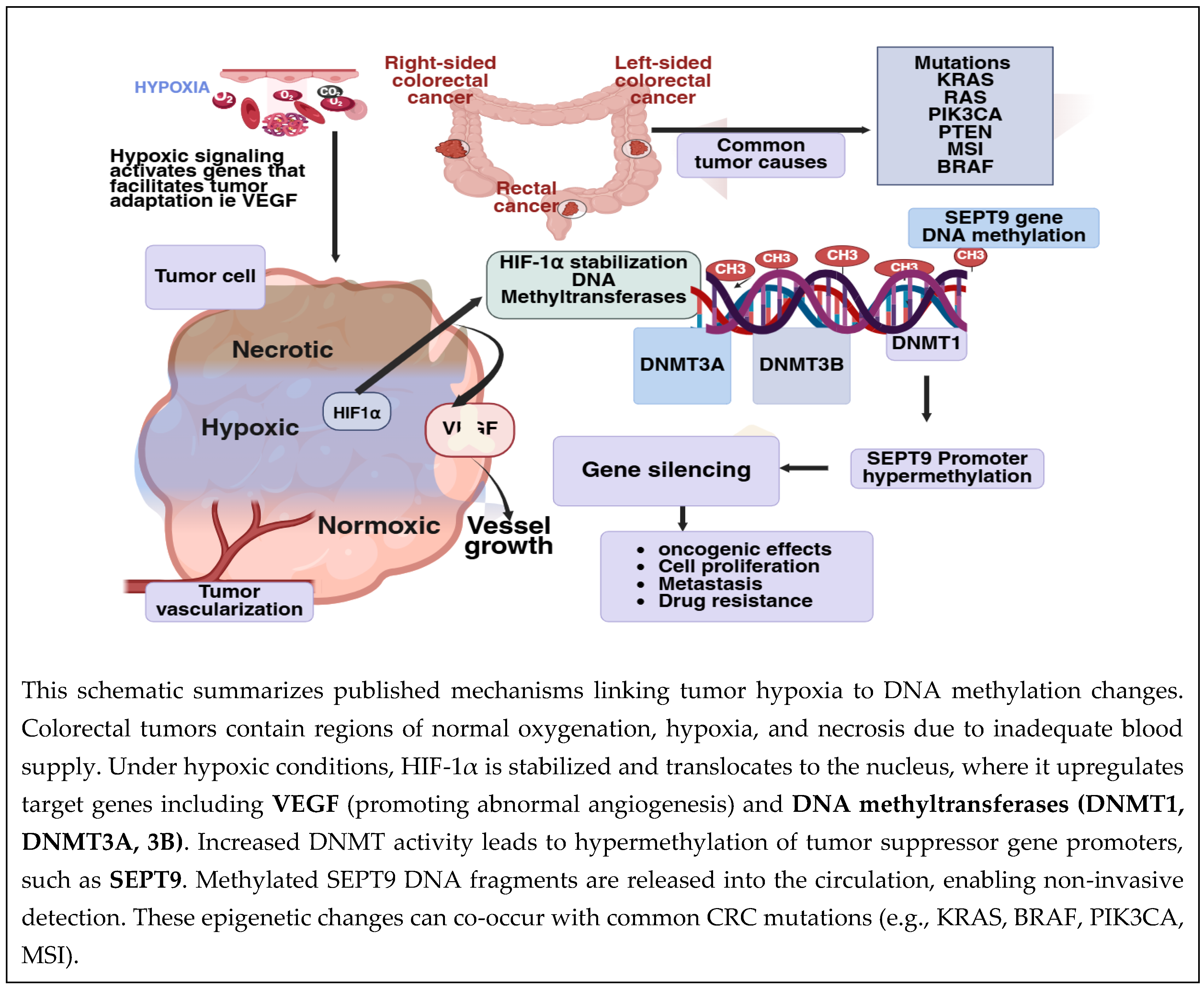
Figure 2.
Hypoxia-associated signaling and polyamine metabolism in colorectal cancer (literature-based model). Note: This figure is based on prior literature and is provided to illustrate the biological rationale for selecting DiAcSpm as a metabolic biomarker. No direct measurement of HIF-1α, HIF-2α, or tissue oxygen levels was performed in the patient samples included in this study. Urinary DiAcSpm levels are reported as statistical associations with CRC status, not as direct evidence of tumor hypoxia.
Figure 2.
Hypoxia-associated signaling and polyamine metabolism in colorectal cancer (literature-based model). Note: This figure is based on prior literature and is provided to illustrate the biological rationale for selecting DiAcSpm as a metabolic biomarker. No direct measurement of HIF-1α, HIF-2α, or tissue oxygen levels was performed in the patient samples included in this study. Urinary DiAcSpm levels are reported as statistical associations with CRC status, not as direct evidence of tumor hypoxia.
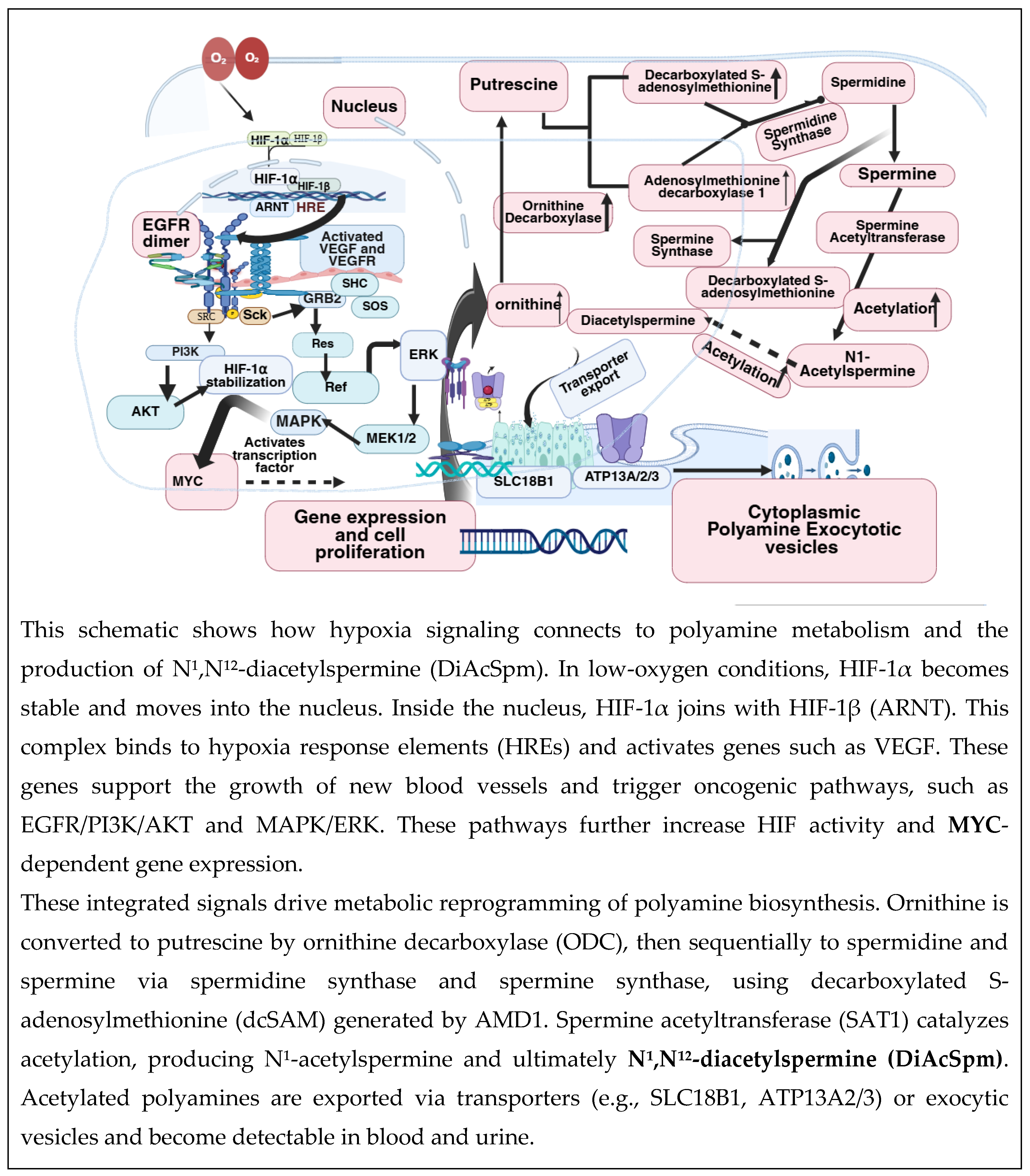
Figure 3.
Positive detection rates of mSEPT9 and DiAcSpm across clinical subgroups.
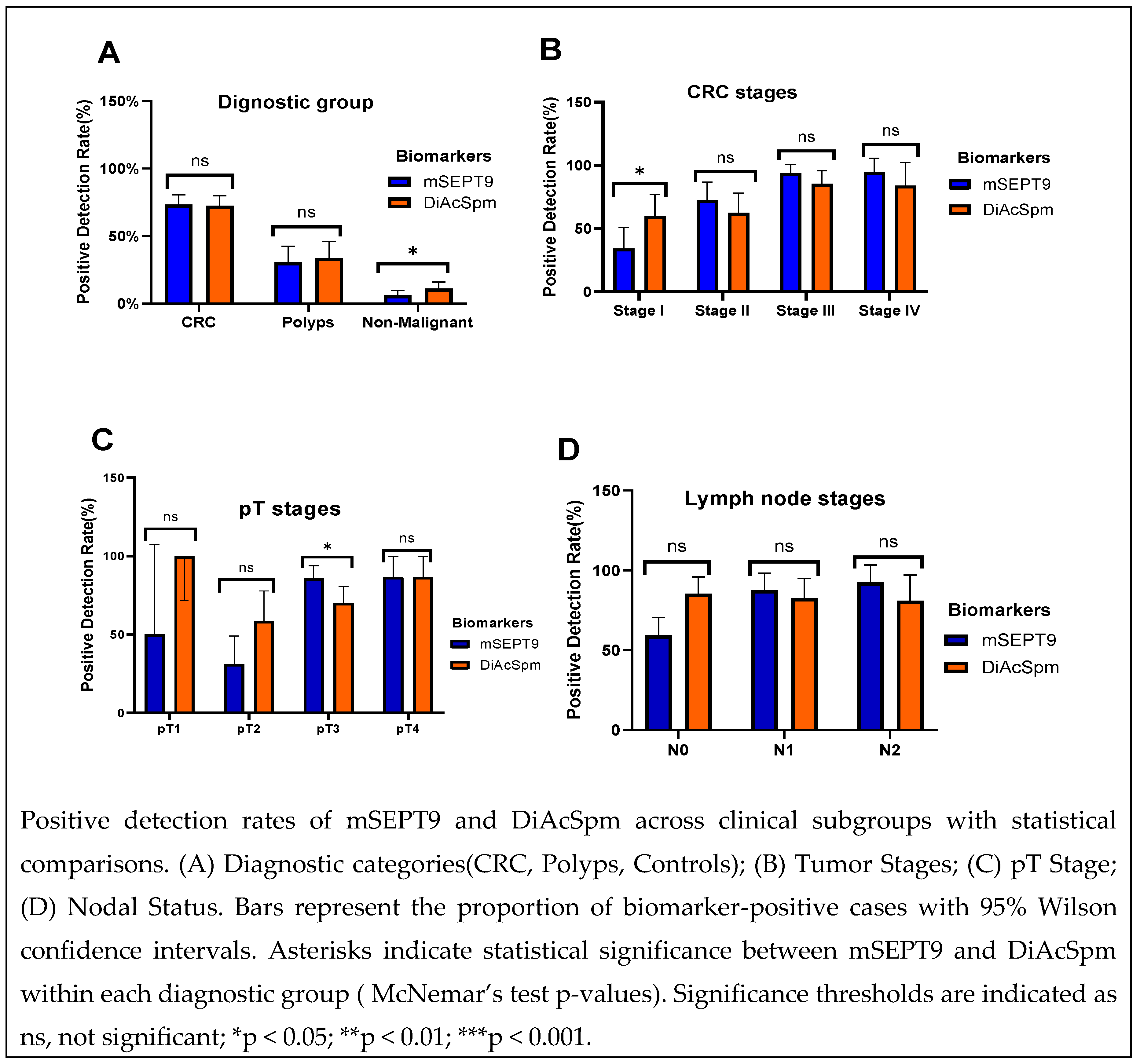
Figure 4.
Comparative distributions of Epigenetic, Metabolic, Inflammatory, and Classical biomarkers across diagnostic categories.
Figure 4.
Comparative distributions of Epigenetic, Metabolic, Inflammatory, and Classical biomarkers across diagnostic categories.
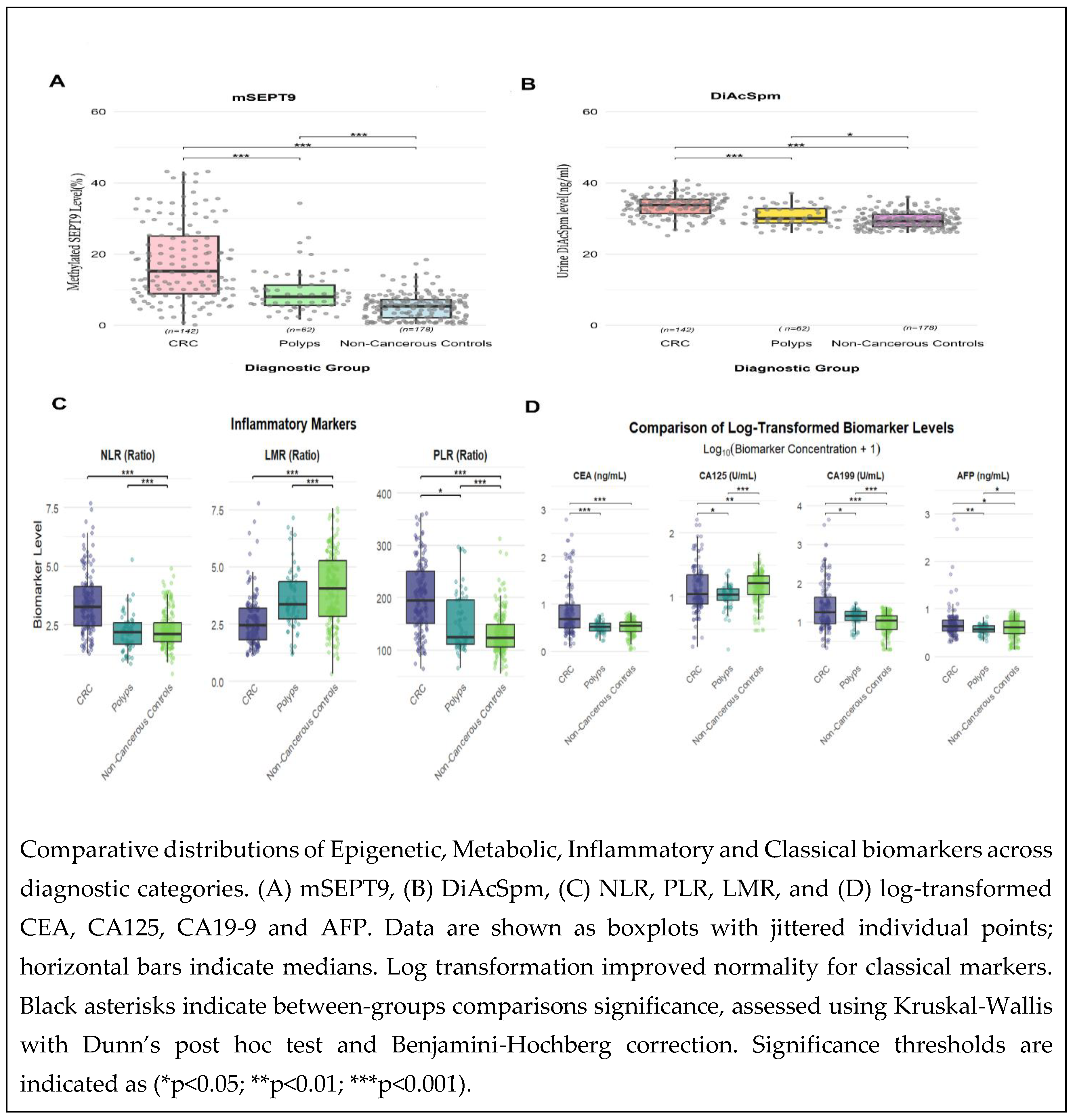
Figure 5.
Positive detection rates of biomarkers in colorectal cancer patients.
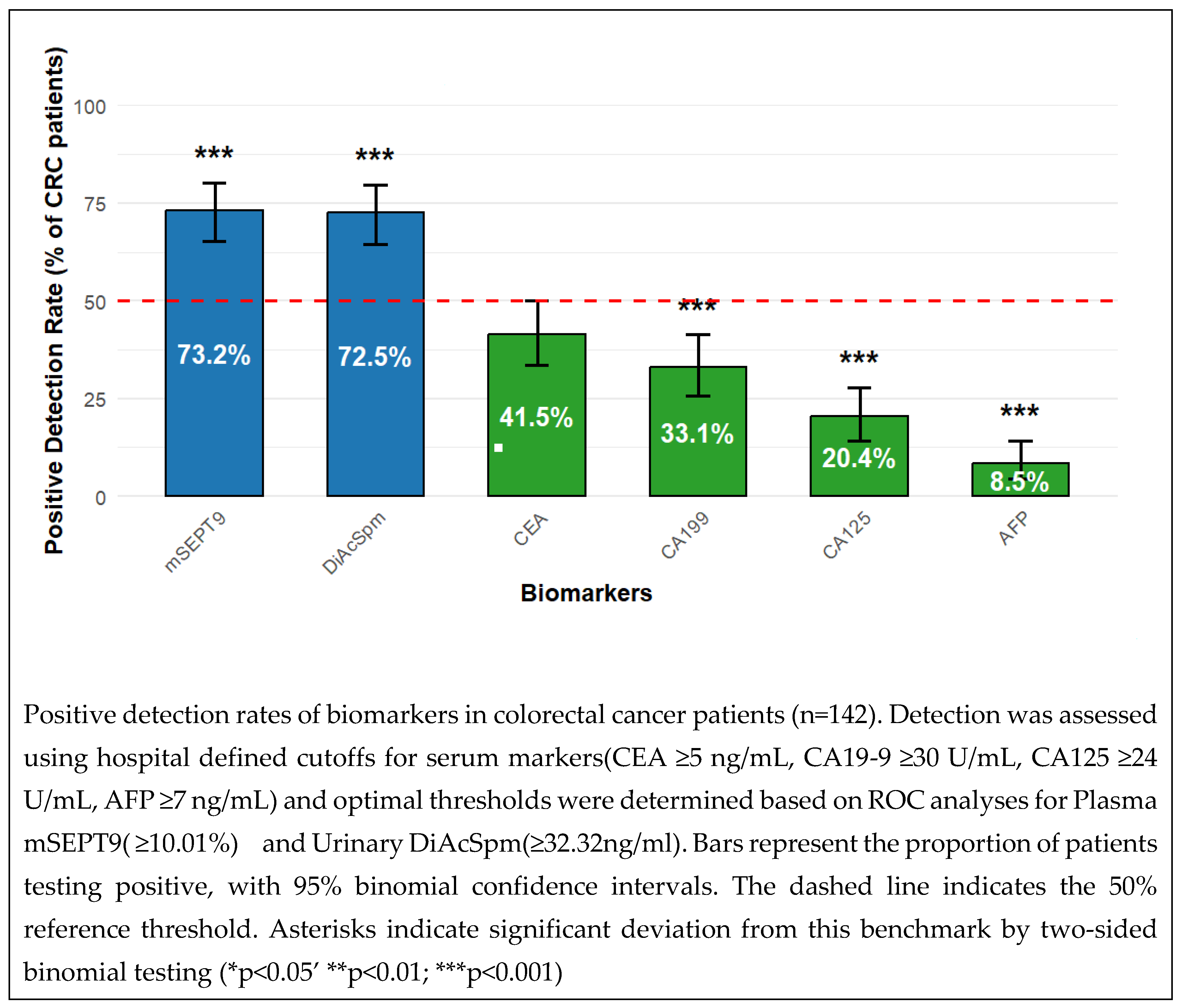
Figure 6.
Pairwise McNemar’s odds ratios comparing novel and conventional biomarkers in colorectal cancer.
Figure 6.
Pairwise McNemar’s odds ratios comparing novel and conventional biomarkers in colorectal cancer.
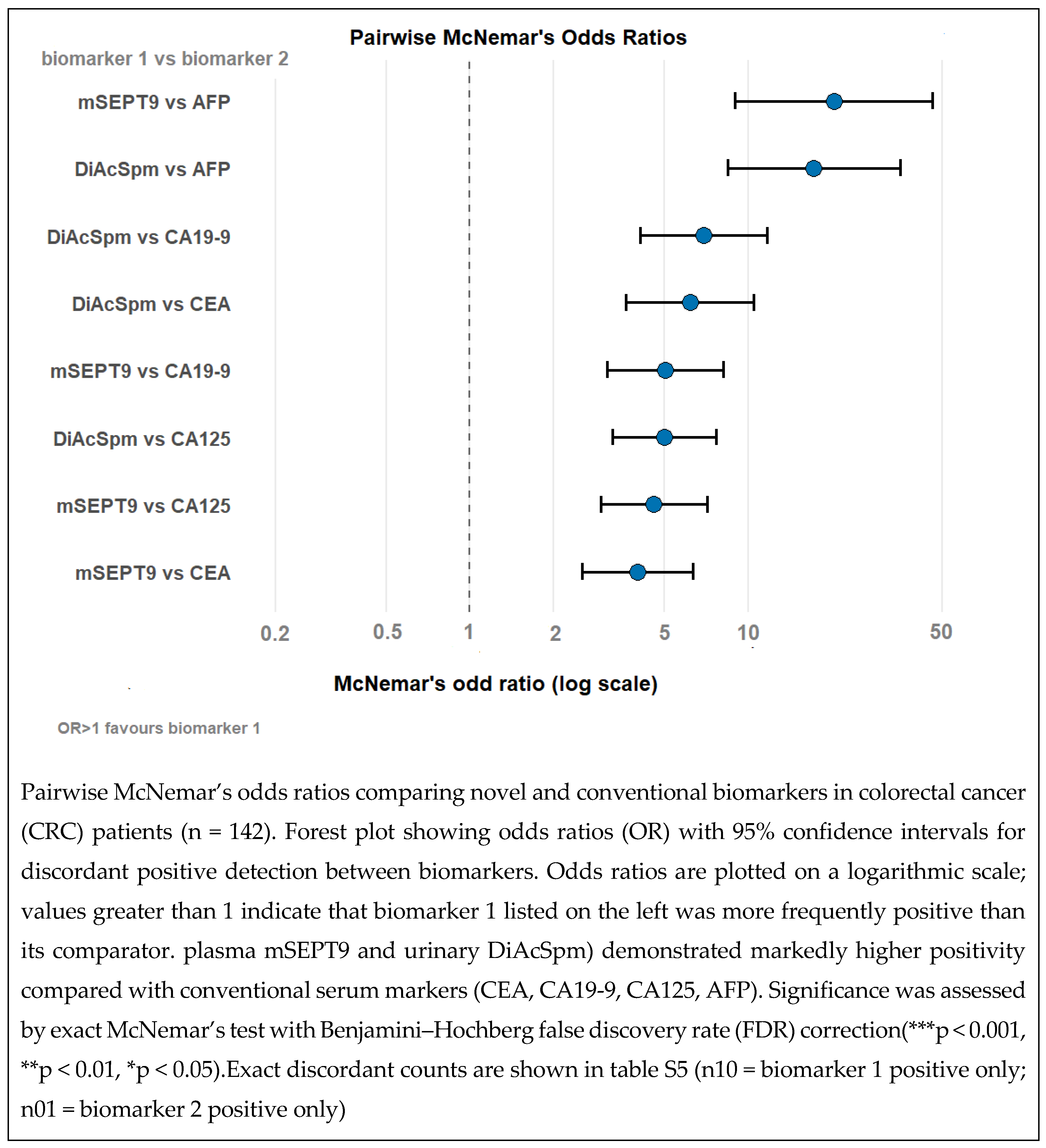
Figure 7.
Receiver operating characteristic (ROC) analysis comparing diagnostic performance of individual biomarkers and combined multimodal models for colorectal cancer detection.
Figure 7.
Receiver operating characteristic (ROC) analysis comparing diagnostic performance of individual biomarkers and combined multimodal models for colorectal cancer detection.
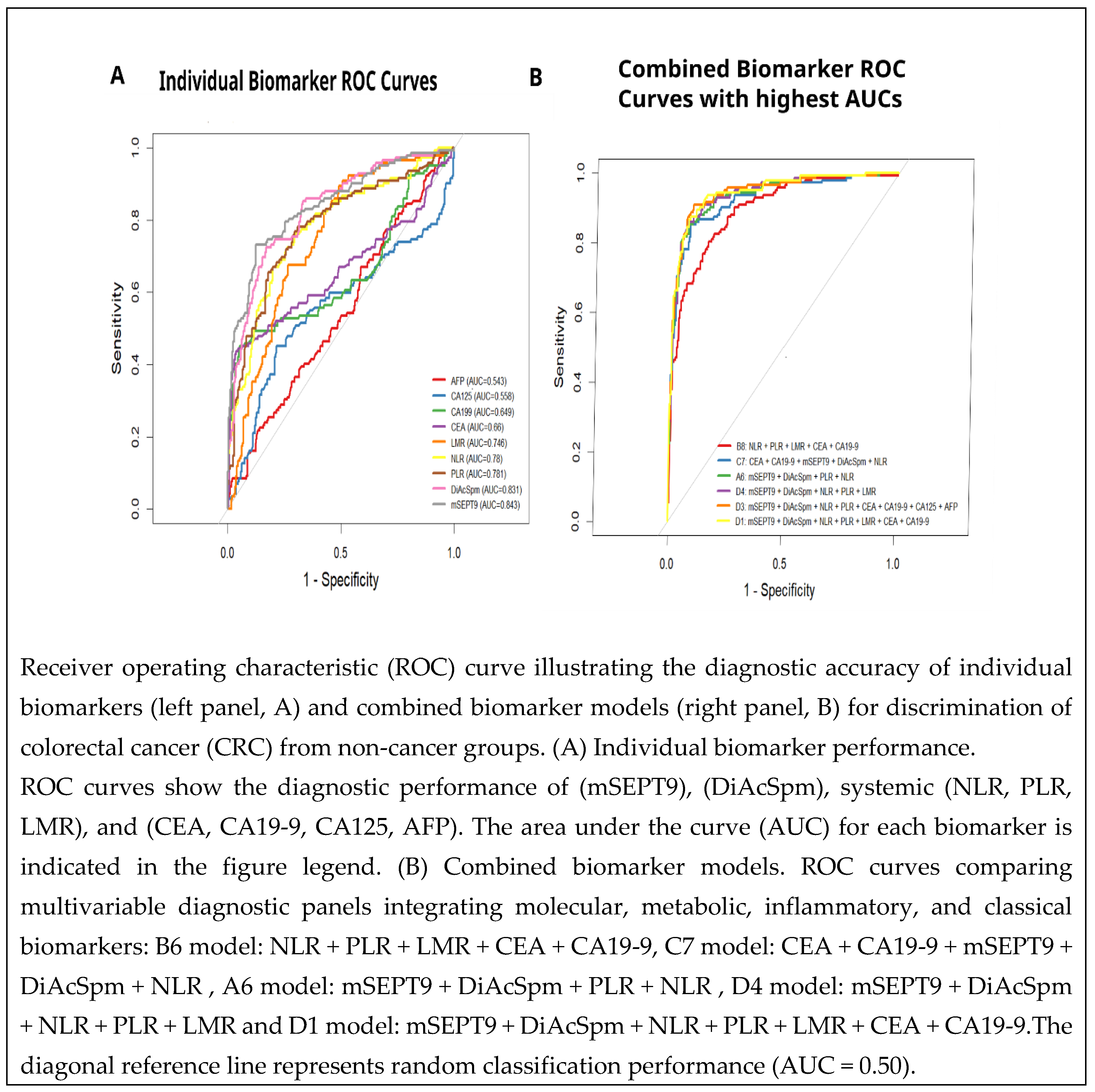
Figure 8.
Forest plot of multivariable Logistic regression for biomarker predictors of Colorectal Cancer.
Figure 8.
Forest plot of multivariable Logistic regression for biomarker predictors of Colorectal Cancer.
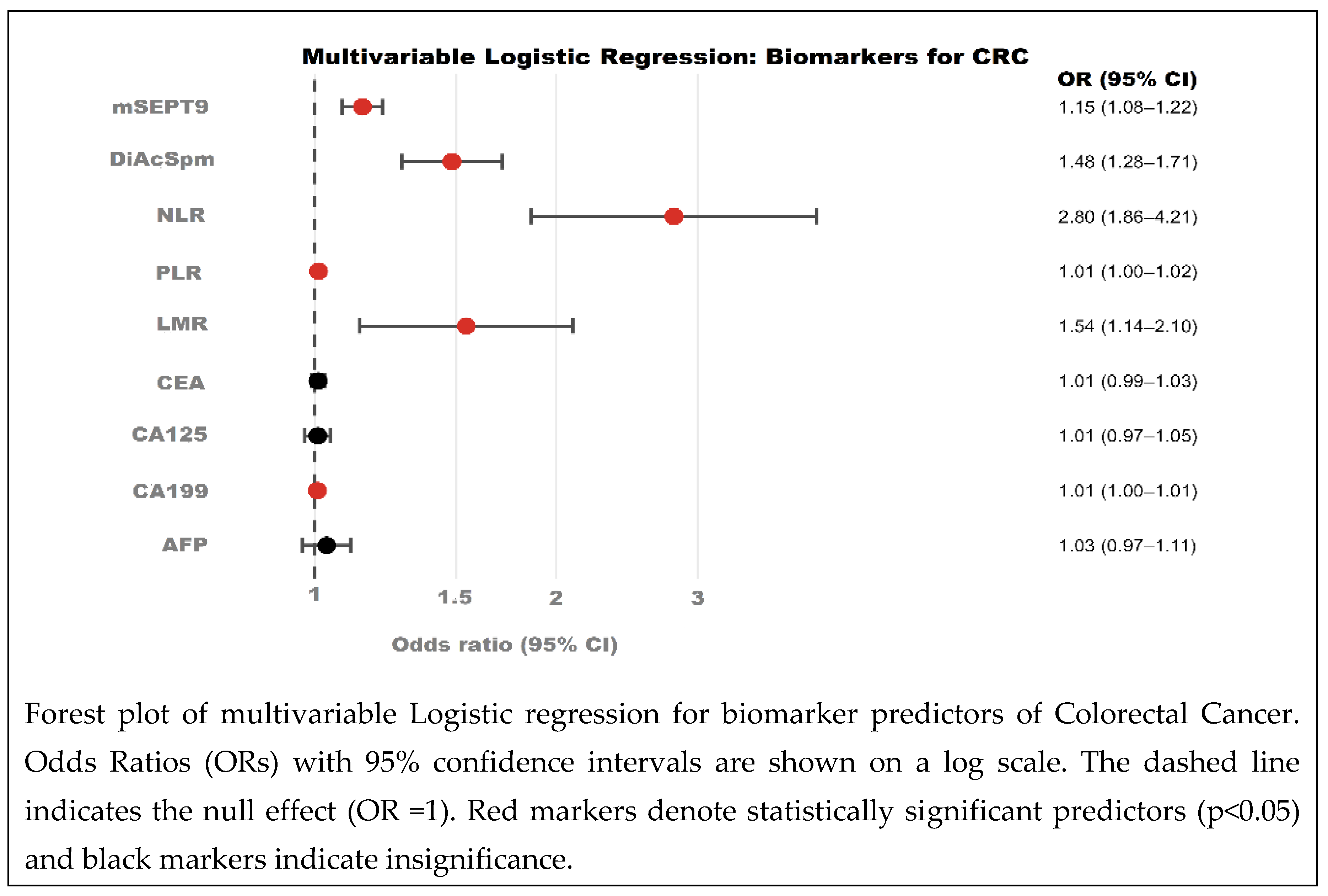
Figure 9.
Diagnostic Performance of the D4 Multimarker Panel Across Clinicopathological Subgroups of Colorectal Cancer.
Figure 9.
Diagnostic Performance of the D4 Multimarker Panel Across Clinicopathological Subgroups of Colorectal Cancer.
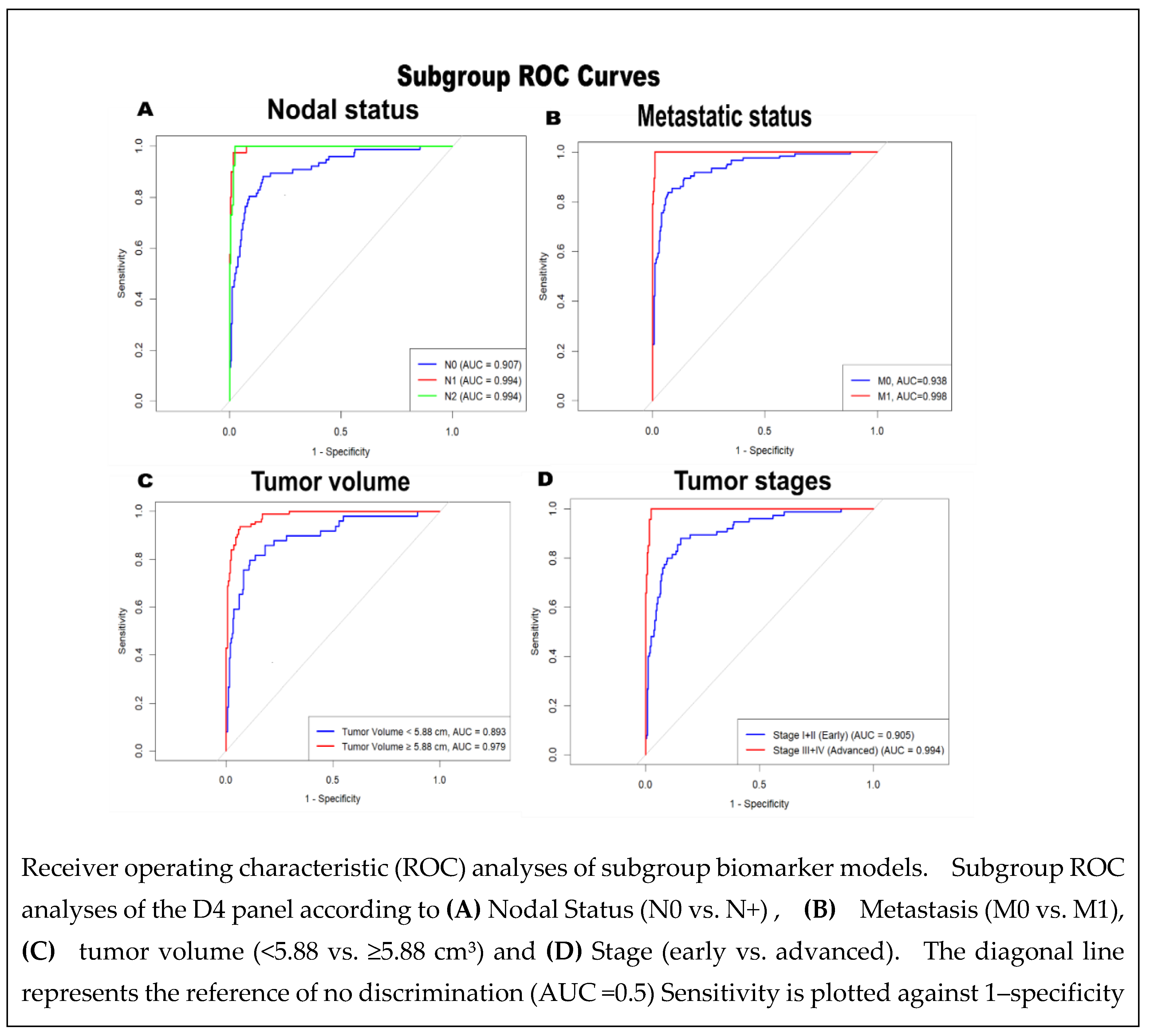

Table 1.
Distribution of CRC and Non-CRC Diagnoses by Sex and Age Group with Mean Age.
| Diagnosis | Description | Total | Gender | Age Groups | |||||
|---|---|---|---|---|---|---|---|---|---|
| Male | Female | <50 | 50–59 | 60–69 | ≥ 70 | Mean | |||
| CRC | Overall | 142 | 76 | 66 | 6 | 29 | 66 | 41 | 65 |
| Right Colon | 38 | 16 | 22 | 2 | 6 | 17 | 13 | 66 | |
| Left Colon | 65 | 38 | 27 | 1 | 12 | 35 | 17 | 65 | |
| Rectum | 39 | 22 | 17 | 3 | 11 | 14 | 11 | 63 | |
| Stage I | 35 | 21 | 14 | 1 | 5 | 21 | 8 | 65 | |
| Stage II | 40 | 19 | 21 | 1 | 8 | 20 | 11 | 65 | |
| Stage III | 48 | 26 | 22 | 2 | 14 | 15 | 17 | 65 | |
| Stage IV | 19 | 10 | 9 | 2 | 2 | 10 | 5 | 66 | |
| Non-cancer subgroups | |||||||||
| Adenomatous Colorectal polyps | 62 | 33 | 29 | 2 | 18 | 29 | 3 | 59 | |
| Inguinal Hernia | 64 | 39 | 25 | 16 | 31 | 16 | 1 | 54 | |
| Hemorrhoids | 114 | 55 | 59 | 53 | 36 | 24 | 1 | 50 | |
| Total | 382 | 203 | 179 | 77 | 124 | 135 | 46 | 58 | |
Table 2.
Clinicopathological and lifestyle characteristics of colorectal cancer, adenomatous polyp, and control groups.
Table 2.
Clinicopathological and lifestyle characteristics of colorectal cancer, adenomatous polyp, and control groups.
| Category | Variable | CRC n=142 | Polyps n= 62 | Controls n=178 | p-value |
|---|---|---|---|---|---|
| Demographics | Sex | 0.992 | |||
| Male | 76(37.4%) | 33(16.3%) | 94(46.3%) | ||
| Female | 66(36.9%) | 29(16.2%) | 84(46.9%) | ||
| Clinical parameters | Tumor Gross type | ||||
| Ulcerative | 80 (56.3%) | — | — | ||
| Polypoid | 40 (28.2%) | — | — | ||
| Unknown | 22 (15.5%) | — | — | ||
| Tumor Infiltration | |||||
| Mucosa | 4 (2.8%) | — | — | ||
| Sub mucosa | 5 (3.5%) | — | — | ||
| Muscularis propria | 51 (35.9%) | — | — | ||
| Pericolic tissue | 44 (31.0%) | — | — | ||
| Serosa | 18(27.7%) | — | — | ||
| Adjacent structures | 20(14.1%) | — | — | ||
| Lymph node ratio | — | ||||
| <0.2 (low) | 112 (78.9%) | — | — | ||
| ≥0.2 (high) | 30 (21.1%) | — | — | ||
| Tumor Budding | |||||
| Bd1 (Low) | 62 (43.7%) | — | — | ||
| Bd2 (Intermediate) | 45 (31.7%) | — | — | ||
| Bd3 (High) | 35 (24.6%) | — | |||
| Lymph Node Invasion | — | ||||
| Absent | 78 (54.9%) | — | — | ||
| Present | 64 (45.1%) | — | — | ||
| Vascular Invasion | |||||
| Absent | 70 (49.3%) | — | — | ||
| Present | 72 (50.7%) | — | — | ||
| Perineural Invasion | — | ||||
| Absent | 83 (58.5%) | — | — | ||
| Present | 59 (41.5%) | — | — | ||
| p53 Mutation Pattern | — | ||||
| Wild-type | 48 (33.8%) | — | |||
| Mutant pattern | 76 (53.5%) | — | — | ||
| Indeterminate | 18 (12.7%) | — | — | ||
| Ki-67 Index Group ( Median-IQR) | 60[50,51,52,53,54,55,56,57,58,59,60,61,62,63,64,65,66,67,68,69,70] | — | — | ||
| Colorectal Polyps | |||||
| Tubular adenoma | — | 23(37.1%) | — | ||
| Tubulovillous adenoma | — | 17(27.4%) | — | ||
| Villous adenoma | — | 11(17.7%) | — | ||
| Serrated lesions | — | 5(8.1%) | — | ||
| Hyperplastic polyps | — | 6(9.7%) | — | ||
| Colorectal polyps Dysplasia grade | |||||
| Low-grade dysplasia | 22(35.5% | ||||
| High-grade dysplasia | 40(64.5%) | ||||
| Lifestyle parameters | Smoking History | 0.265 | |||
| Never smoked | 54 (38.0%) | 31 (50.0%) | — | ||
| Former smoker | 68 (47.9%) | 23 (37.1%) | — | ||
| Current smoker | 20 (14.1%) | 8 (12.9%) | — | ||
| Alcohol History | 0.007* | ||||
| Never drank | 52 (36.6%) | 24 (38.7%) | — | ||
| Former drinker | 72 (50.7%) | 20 (32.3%) | — | ||
| Current drinker | 18 (12.7%) | 18 (29.0%) | — | ||
| Family History of Cancer | |||||
| No | 55 (38.7%) | 21 (34.4%) | — | 0.811 | |
| Yes | 24 (16.9%) | 12 (19.7%) | — | ||
| Unknown | 63 (44.4%) | 28 (45.9%) | — |
Table 3.
McNemar’s test comparison of paired diagnostic performance between biomarkers across diagnostic categories and clinicopathological stages.
Table 3.
McNemar’s test comparison of paired diagnostic performance between biomarkers across diagnostic categories and clinicopathological stages.
| McNemar’s P-value for Diagnostic groups | McNemar’s P-value for Stages | McNemar’s P-value for pT stage | McNemar’s p-value for Lymph node stage |
|---|---|---|---|
| CRC (p=0.894) | Stage I(p=0.050*) | pT1 (p=0.250) | N0(p=0.596) |
| Polyps (p=0.570) | Stage II(p=0.450) | pT2 (p=0.061) | N1(p=724) |
| Non-Malignant (p=0.031*) | Stage III(p=0.340) | pT3 (p=0.0197*) | N2(p=0.450) |
| - | Stage IV(p=0.620 | pT4(p=1.00) | - |
Table 4.
Pairwise comparison of mSEPT9 and DiAcSpm positivity and negativity status in correlation with inflammatory markers.
Table 4.
Pairwise comparison of mSEPT9 and DiAcSpm positivity and negativity status in correlation with inflammatory markers.
| Marker | mSEPT9-positive | mSEPT9-negative | DiAcSpm-positive | DiAcSpm-negative | P-value |
|---|---|---|---|---|---|
| NLR | 3.05(2.23–3.86) | 2.20(1.78–2.23) | 2.83(2.12–3.69) | 2.24(1.81–2.96) | <0.001** |
| PLR | 181.25(137.79–228.96) | 126.19(107.38–166.02) | 174.26(123.51–232.65) | 128.19(108.06–168.49) | <0.001** |
| LMR | 2.49(1.92–3.28) | 3.50(2.66–4.89) | 2.65(1.93–3.42) | 3.43(2.60–4.88) | <0.001** |
† P values derived from Mann–Whitney U test comparing mSEPT9-positive vs. mSEPT9-negative patients.‡ P values derived from Mann–Whitney U test comparing DiAcSpm-positive vs. DiAcSpm-negative patients, Statistical significance was set at P < 0.05. Data presented as median (interquartile range).
Table 5.
Receiver operating characteristic (ROC) analyses for top-performing combined biomarker models with the highest AUCs.
Table 5.
Receiver operating characteristic (ROC) analyses for top-performing combined biomarker models with the highest AUCs.
| Model Group | Biomarker Combination | AUC (95% CI) | Sensitivity (%) | Specificity (%) | p-value |
|---|---|---|---|---|---|
| A6 | mSEPT9 + DiAcSpm + PLR + NLR | 0.940 (0.918–0.967) | 85.2 | 92.5 | <0.001** |
| B8 | NLR + PLR + LMR + CEA + CA19-9 | 0.899 (0.867–0.932) | 93.2 | 80.3 | <0.001** |
| C7 | CEA + CA19-9 + mSEPT9 + DiAcSpm + NLR | 0.932 (0.904–0.959) | 85.2 | 91.7 | <0.001** |
| D1 | mSEPT9 + DiAcSpm + NLR + PLR + LMR + CEA + CA19-9 | 0.950 (0.928–0.973) | 86.6 | 93.5 | <0.001** |
| D3 | mSEPT9 + DiAcSpm + NLR + PLR + CEA + CA19-9 + CA125 + AFP | 0.950 (0.927–0.973) | 90.8 | 90.4 | <0.001** |
| D4 | mSEPT9 + DiAcSpm + NLR + PLR + LMR | 0.947 (0.924–0.970) | 85.9 | 92.9 | <0.001** |
Disclaimer/Publisher’s Note: The statements, opinions and data contained in all publications are solely those of the individual author(s) and contributor(s) and not of MDPI and/or the editor(s). MDPI and/or the editor(s) disclaim responsibility for any injury to people or property resulting from any ideas, methods, instructions or products referred to in the content. |
© 2026 by the authors. Licensee MDPI, Basel, Switzerland. This article is an open access article distributed under the terms and conditions of the Creative Commons Attribution (CC BY) license (http://creativecommons.org/licenses/by/4.0/).
Copyright: This open access article is published under a Creative Commons CC BY 4.0 license, which permit the free download, distribution, and reuse, provided that the author and preprint are cited in any reuse.


