
Submitted:
28 April 2026
Posted:
30 April 2026
You are already at the latest version
Abstract
Purpose – This article aimed to offer insight into and discuss how the concepts of Industry 5.0 and Society 5.0 are perceived and understood by managers in the Norwegian construction industry. The research questions were limited to the perceptions and opinions of a group of bachelor's students in construction site management. Design/methodology/approach – The study used qualitative data collection, encompassing participants with different functions and experiences in the Norwegian construction industry. The student group was thus interdisciplinary. Everyone was a part-time student and had a full job at the same time. The participants represented two classes, with a total of 70 students divided into 15 work/study groups. Findings – The empirical evidence shows that the groups had insight into the concepts of Industry 5.0 and Society 5.0. They reflected on opportunities and obstacles. A transition to Industry 5.0 and Society 5.0 will require a focus on competence and self-directed learning, as well as a willingness to invest in competence and technology. This can be seen in light of a knowledge-intensive society and sustainable development. The participants emphasised the Norwegian working life model as a strength in the possible implementation of Industry 5.0 as it has several similarities with the concept of Industry 5.0 in terms of being human-centred. Originality/value – The article contributes insights into how the concepts of Society 5.0 and Industry 5.0 are perceived and understood by bachelor's students in construction site management. The study provides an in-depth analysis of the concept of resilience and the sub-concepts of vulnerability and capacity in a Norwegian context. Practical implications – The practical impact of the study can be linked to the students' participation as both informants and in assisting analysis of the empirical material, which has given them a foundation to communicate the topic of Industry 5.0 and Society 5.0 in their workplaces and other forums in which they participate as leaders in the construction industry.
Keywords:
social sustainability
; Society 5.0
; Industry 5.0
; human-centric
; sustainability
; resilience
Introduction
A study was conducted on how the concepts of Industry 5.0 (I5.0) and Society 5.0 (S5.0) are perceived and understood by bachelor’s students in construction site management. This is one of three articles published as a result of that study. The study covered three research questions: 1. Do the concepts of I5.0 and S5.0 describe a utopia, or could they become a future reality? 2. How mature is the construction industry for development towards the concept of I5.0? 3. What will be required of construction site managers if the concept of I5.0 becomes a reality in the Norwegian construction industry? The research question thematises the challenges and obstacles that may arise if it is deemed desirable to adopt the I5.0 philosophy in the construction industry in Norway. In short, industrial development has gone from steam (I1.0) via electricity (I2.0), computers and automation (I3.0) to smart data (I4.0) and now moving towards sustainable collaboration between humans and machines (I5.0) [1].
Recently, Industry 4.0 (I4.0) has been criticised for being too narrowly focused on the use of technological solutions, such as robots and artificial intelligence (AI), rather than on human aspects [2,3]. Some responses to these criticisms are presented below. In the European Commission’s R&I Paper Series [2], “Industry 5.0: towards a sustainable, human-centric and resilient European industry,” an alternative to I4.0 is presented in the form of I5.0. The paper claims the following: During its years of existence, Industry 4.0 has focused less on the original principles of social justice and sustainability and more on digitalisation and AI-driven technologies to increase efficiency and flexibility in production. The concepts of I5.0 provides a different focus and highlights the importance of research and innovation to support industry in long-term development for the good of humanity and Earth’s resources [2,4]
The construction industry is a vital sector in any country. It contributes about 5–6% to the global gross domestic product [5], which has been predicted to increase to about 15% by 2030 [6]). The construction industry creates job opportunities for both skilled and unskilled workers [7].
In Norway, the building and construction industry is the largest in terms of the number of companies. In 2019, the building and construction sector comprised approximately 59,000 companies with 250,000 employees, and the companies had a turnover of approximately NOK 563 billion [8].
Based on a Google Scholar search, there is limited literature dealing with the concept of I4.0 as regards the construction industry in Norway and Europe. In contrast, more articles produced in Asia can be identified that focus on I5.0 in combination with the construction industry, for example, Ikudayisi et al., [9]. Nor can I4.0, which was launched many years ago, be linked to the Norwegian construction industry. It may seem that I4.0 has passed unnoticed by the construction industry, and it may appear that I5.0 is currently receiving limited attention as well. It should be noted that in recent years, digitalisation has taken place in the construction industry, particularly within project planning, building information modelling (BIM) and digital tools linked to the production and completion of projects in the overall value chain from design to the delivery to the customer [10].
Based on what is stated above and the literature review, the following research question was formulated:
To what extent can the concepts of Society 5.0 and Industry 5.0 be realised as practical societal models in Norway rather than remaining utopian ideals?
The research question thematises managers/leaders in the construction industry’s knowledge of and opinion towards the concepts of S5.0 and I5.0, and their beliefs about the concept’s future reality.
Scope of the Study
The research questions were limited to the perceptions and opinions of two classes of bachelor’s students in a construction site management programme. The classes comprised 70 people who worked as managers in small, medium and large companies in the Norwegian construction industry. For example, they held roles such as project manager, consultants and directors.
This article discusses I5.0 and S5.0. Both of these concepts have sustainability as their core values. Sustainability is one of the three fundamental premises of the I5.0 concept. Sustainability is therefore a category that is discussed in relation to the empirical data of the article. The content of this article can be both explicitly and implicitly linked to the UN’s Sustainable Development Goals, such as sustainable cities and communities, quality of education and lifelong learning, decent work and ensuring sustainable consumption and production [11].
Objectives
The article’s intention was to gain insight into and discuss how the concepts S5.0 and I5.0 are perceived and understood by managers in different positions in the Norwegian construction industry.
The Norwegian Context: The Norwegian Model
Norwegian working life is regulated through Norwegian law, with a strong focus on the working environment and the obligations and rights of employees and employers. This legislation has contributed to a democratic culture in most workplaces in Norway for decades. In Norway, there is a long tradition of developing independent employees at all levels of an organisation. This is known as the Norwegian model [12].
The Norwegian model comprises three main components: the welfare state with its universal welfare benefits, economic management with monetary and fiscal policy and organised working life with coordinated wages. It is the interaction between these components that is at the core of the Norwegian model. The interaction between the various parts is crucial to ensuring high employment, small differences and a competitive business life. One concrete result of the three-party cooperation in the workplace is that employees have real power through trade unions, and the employers have a contract that provides duties and rights [12]
Employees and their representatives must be kept informed on an ongoing basis about the systems that are used when planning and carrying out work. They must be given the necessary training to familiarise themselves with the systems, and they must contribute to the design of the individual’s work situation, according to the Working Environment Act [12]
The precursor to the Working Environment Act mentioned above, was the cooperative experiments between the Confederation of Norwegian Enterprise (NHO) and the Norwegian Trade Unions (LO), established in 1962. The goal of the project was to increase productivity by democratising work life (Thorsrud and Emery, 1970). [13]
Literature review and conceptual framework
In this section, a short literature review based on the keywords ‘I5.0’ and ‘S5.0’ is presented. Then the study’s conceptual framework is presented, comprising the theories, models and concepts that help explain the empirical data and shed light on the article’s problem area and research question.
Literature Review
In this section, selected scientific articles are presented, thematising the concepts of I5.0 and S5.0. The tool used for the literature review was inspired by DiCenso et al.’s [14] 5S and 6S model and Persson’s [15] (2021) model, which has much in common with the work of DiCenso et al. (2009). [14]. The model is an adapted Norwegian version of DiCenso et al.’s [14] 6S model and has the following categories: ask, search, sort, synthesise, write and systematise [15]. The literature review was systematic in the sense that procedures were followed to ensure quality and relevance in the selected literature. The various publications were categorised into three main groups: empirical studies, literature studies and bibliometric studies. Within these three overarching themes, sub-themes emerged, including I5.0, S5.0 and technology such as artificial intelligence (AI), Internet of things (IoT) and robotisation.
A literature review is considered a necessary part of any study. Since the themes examined in this article are rather new and are developing rapidly, the literature review became a central part of the article to conceptualise and contextualise the empirical findings of the study.
The literature review was summarised by presenting several articles that have been comprehensively reviewed. These articles made reference to bibliometric analyses that document a growing interest in I5.0 as a concept and interesting knowledge about global actors who are engaged with these concepts.
There was limited empirical research and publications related to I5.0 and S5.0; however, there were several articles that illuminated the concepts from various perspectives, such as Verma [16]. In addition, several publications based on bibliometric analyses showed trends in research and a growing interest in these concepts, such as Madsen et al. [17]and Marinelli [18]. There were also several publications that had a strong focus on technology, such as Wang [19]. In addition, there were publications that thematised education linked to I5.0 and S5.0, such as Rane [20] and de Villiers [21], where de Villiers focused specifically on curriculum development in higher education.
According to Madsen et al. [17], bibliometric analyses regarding the topic of I5.0 showed a growing research interest in the concept and the various dimensions that give it substance, including the human-centric, resilience, sustainability, Internet of things (IoT), robotics and other digital tools.
Madsen et al.’s [17] bibliometric analyses showed which countries and parts of the world are the most productive in the scientific literature on I5.0. In terms of research, two Asian countries top the list: China and India; the industrial country of Germany is surprisingly far down the list.
Madsen et al. [17] explained the three phases of development in I5.0 research. In the first phase (2016–2019), I4.0 was the dominant theme; then, during the second phase (2020–2021), research on the concept split into several themes, and studies on I5.0 related to concepts such as IoT, Society 5.0, big data, digital transformation, digital innovation and human factors. The third phase (2022–2023) was characterised by a continuation of some themes, such as big data, but also the emergence of additional themes [17]. These splits show a need for the operationalisation and further development of the various dimensions comprising the concept of I5.0.
Henriksen and Thomassen [22] completed a case study in boat manufacturing on I5.0, in which they examined sustainability, resilience and human centricity. The empirical data were taken from a research and development project with Norwegian leisure boat manufacturers, an industry that is a traditional handcraft industry with a high degree of manual labour. The findings showed that this industry has several suitable conditions for developing strong capabilities related to sustainability, resilience and human centricity. The investigated companies seemed to have limited knowledge of I4.0 and I5.0 [22].
In the article “Beyond lean production practices and Industry 4.0 technologies towards the human-centric Industry 5.0”, Eriksson et al. [23] highlighted the challenges and opportunities that arise when organisations move towards I5.0. The study examined how lean manufacturing practices and I4.0 technologies can be combined in a way that strengthens a human-centred perspective in the transition towards I5.0, which places greater emphasis on social sustainability and human well-being in production. The main finding can be summarised as follows: To meet the requirements of I5.0, organisations must look beyond traditional lean philosophy. They must not only focus on technology, but also on people, the working environment and social sustainability. The article is an interesting empirical contribution to a deeper, concrete understanding of the challenges that can arise in organisations that want to develop into I5.0 organisations.
Thomai [24] published a master’s thesis exploring how the human-centred principles of I5.0 are realised in Norwegian industry, with a particular focus on the role of the Norwegian leadership model in this transition. The study was based on a qualitative case study of an industrial park in Norway and was grounded in in-depth interviews with industrial experts. The study focused on how technological development can be aligned with values such as well-being, psychological safety, professional autonomy, sound judgment, operator involvement and practice-based learning. The findings indicated that many of these principles are already culturally embedded in Norwegian industrial environments [24]. The study concluded that I5.0 is not primarily a technological revolution but rather a value-driven and organisational transformation. Human centricity must be institutionalised as a strategic core of organisational structure and culture, where technology, leadership and human insight are integrated [24].
In “Industry 5.0: Prospect and retrospect”, Leng et al. [25]presented an interesting model in which I5.0 is placed in a context called Society 5.0. This provided a meaningful connection between industry and society, where he introduced a number of fruitful concepts that may be of interest for research and conceptual development. Leng et al. [25] used an interesting conceptual framework/model as a system to understand and further develop the society 5.0 concept. This system contains the following terms: Operator 5.0, Society 5.0 and Industry 5.0. This model was adapted and fleshed out by Yitmen et al. [25]. Key enablers for practical I5.0 scenarios were discussed along with the limitations of current research and potential future research directions [25]. Leng et al.’s [25] models are elaborated on below.
Conceptual Framework
The conceptual framework is partly based on publications by the Council for Science, Technology and Innovation (CSTI) [27], Keidanren [28], Önday [29], Breque et al. [30] and the EU Resilience Dashboard [31,32]. These publications present relevant concepts for discussing the empirical data presented in this article. The Resilience Dashboard is particularly noteworthy because it is currently on the EU policy agenda, and the empirical material includes opinions and statements related to resilience (although it does not use the term explicitly).
Society 5.0
This section briefly explains the concept of S5. (Figure 1). Because it can be fruitful to place I5.0 in a societal context, the term S5.0 is included in the conceptual framework. It is a concept aimed at creating a balanced society in which economic development does not come at the expense of addressing social and environmental challenges. It is closely linked to the technologies that are likewise central to I5.0 [30].
The concept of S5.0 extends beyond that of I5.0. It can be understood as placing industry within a broader societal context, where S5.0 serves as an overarching framework that encompasses I5.0 (CSTI [27]; Keidanren [28]; Önday [29]. The CSTI is also involved in promoting S5.0, a vision for a future society that leverages science, technology and innovation to solve societal challenges and improve quality of life. The values in the concept of S5.0 are linked to the UN’s Sustainable Development Goals (SDG) [11] and can also be related to corporate social responsibility (CSR) [33,34], with an emphasis on social and human values. In addition, the concept of I5.0 has several significant dimensions related to technology, not least smart technology, that will contribute to the desired social development. Examples include IoT, robotics and AI.
Industry 5.0
The EU paper “Industry 5.0: Towards a sustainable, human-centric and resilient European industry” [30], outlined the concept of I5.0 and the EU’s intentions for it and highlights its connection to S5.0. The paper notes that both concepts, I5.0 and S5.0, refer to a fundamental shift in our society and economy towards a new paradigm. Regarding the concept of S5.0, reference is made to Keidanren, Japan’s most important business federation [28]. Breque et al., [30] defined I5.0 based on the existing literature; however, they also developed their own vision based on several other elements, including analysis of the fast-paced societal evolutions taking place in Europe and around the world.
A human-centric approach to industry prioritises human needs and values over technological advancement. Instead of focusing on how emerging technologies can boost efficiency, this perspective asks how technology can serve people. It emphasises adapting production processes to support workers—such as through training and guidance—rather than requiring workers to conform to rapidly changing technologies. Crucially, it also safeguards fundamental rights such as privacy, autonomy and human dignity in the workplace [30,35].
To respect planetary boundaries, industry must become sustainable. This involves developing circular processes that reuse, repurpose and recycle natural resources while reducing waste and environmental impact. Sustainability also means lowering energy consumption and greenhouse gas emissions to preserve resources for future generations. Technologies such as AI and additive manufacturing can support this by optimising resource efficiency and minimising waste [30].
Resilience in industry refers to strengthening production systems to better withstand crises and disruptions, especially in sectors that support essential needs, such as healthcare and security. To address this, industries must develop flexible value chains, adaptable production capacity and agile business processes. Resilience is a comprehensive concept related to I5.0 in terms of content, while also being well suited to the analysis and discussion of this article’s empirical material. Therefore, the dimensions of the concept of resilience are treated more comprehensively than human-centricity and sustainability [30].
Resilience Dashboards
The resilience dashboards (RDBs) were developed by the European Commission as a follow-up to the Strategic Foresight Report 2020 and were first published in November 2021 [31]. They are intended to support the EU’s transition-driven policy agenda by providing a comprehensive assessment of Member States’ capacity to handle challenges and promote progress. The following text is based on the European Commission’s resilience dashboards as of 2021 and 2024. This most recent version of the dashboards is based on data up to 2022.
The dashboards cover four interconnected dimensions of resilience in the face of future crises and societal transformations:
- The social and economic dimension includes indicators that shed light on the social consequences of the green and digital transitions, as well as issues related to health, education, employment, economic stability and sustainability.
- The green dimension addresses climate change and actions for adaptation and mitigation, sustainable use of resources, biodiversity and sustainable agriculture.
- The digital dimension focuses on how digitalisation impacts individuals, businesses and public spaces, along with aspects of cybersecurity.
- The geopolitical dimension concerns strengthening Europe’s open strategic autonomy and its role as a global actor.
The dashboards are accompanied by synthetic resilience indices, which provide an overarching assessment of each country’s relative vulnerabilities and resilience capacities. These indices reflect aggregated performance across the four key dimensions and their corresponding subcategories. [31].
For the social and economic, green and digital dimensions, the analysis is developed at both the level of EU countries and at the global level. For the geopolitical dimension, the analysis is developed at both levels for the first four areas, while for the last three, the analysis is only at the global level. (Figure 2) [31].
The resilience dashboards provide a comparative assessment of national vulnerabilities and capacities. In this article, the dashboard is applied in a general way, primarily to conceptualise the empirical material related to resilience. The analysis is based on four dimensions: the social and economic dimension, the green dimension, the digital dimension and the geopolitical dimension. Since the empirical data only minimally address geopolitical issues, this dimension is de-emphasised. We systematically adhered to the dashboard’s conceptual framework and definitions [32]. The dashboards aim to capture vulnerabilities and capacities in the four dimensions (social and economic, green, digital and geopolitical).
Vulnerability: This is a country’s structural feature that points to elements of its systems (economic, social and environmental) that can be disproportionally hit in the case of shocks and/or structural changes or can hinder the transitions [31].
Capacity: This is a country’s structural feature that points to elements of its system (economic, social and environmental) that are crucial for coping with shocks and/or structural changes and managing transitions successfully [31].
The RDBs support a holistic framework for assessing human well-being beyond traditional economic metrics such as Gross Domestic Product (GDP). Rooted in the 2020 Strategic Foresight Report, the concept of resilience is seen as a key bridge between present and future well-being—by identifying vulnerabilities and enhancing coping capacities to safeguard society against crises and transitions. Consequently, the RDBs are closely aligned with the UN SDGs and their associated monitoring systems [31]
Research Design and Methodology
This section describes the research design and methodology employed in this study. The selected methodology is explained and justified, along with how the empirical material was collected.
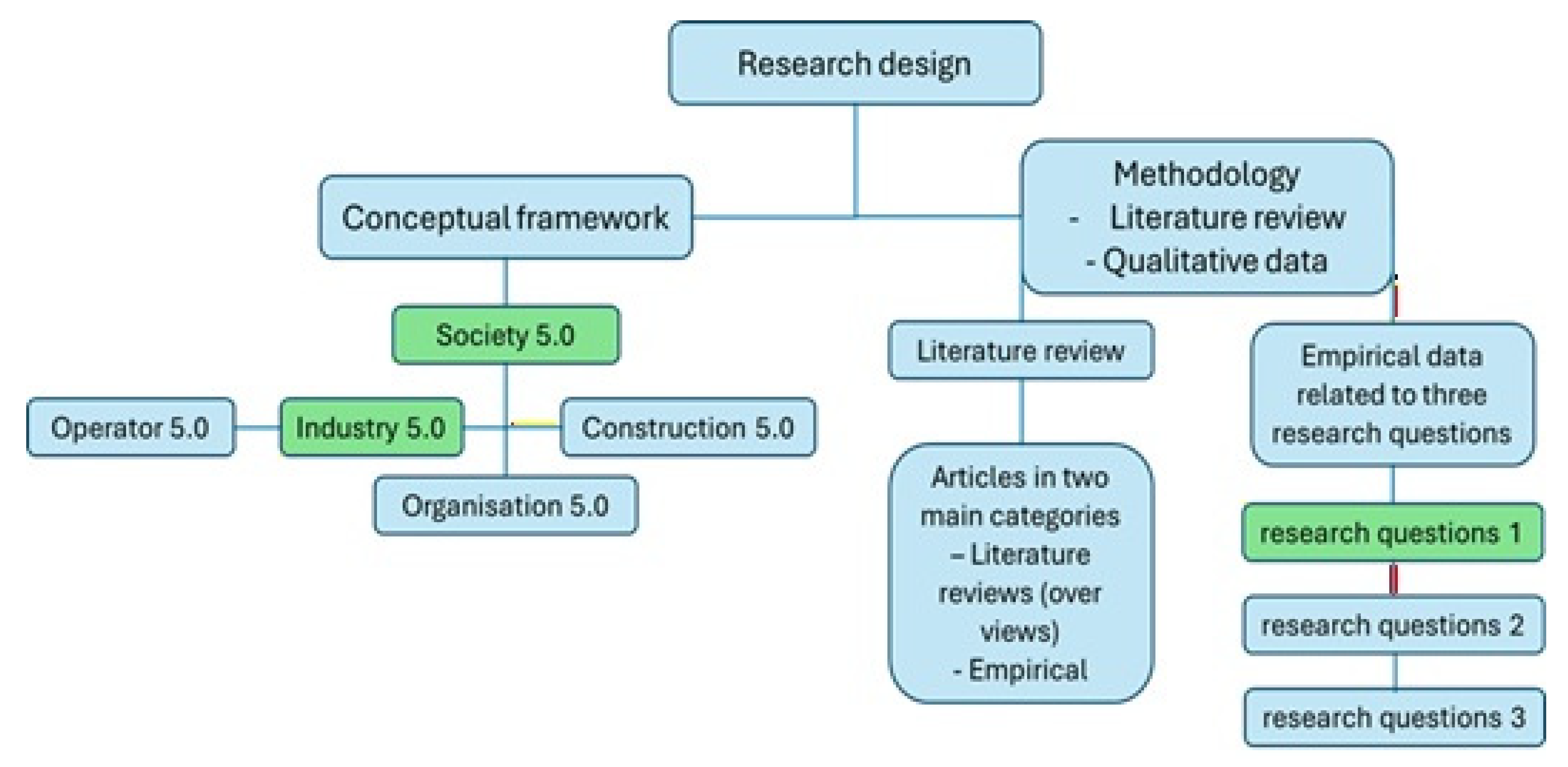
Figure 3 shows the research design for the overall study. The study examined three research questions, of which only the first is addressed in this article and is linked to the concepts of Society 5.0 and Industry 5.0. The research design is identical for all three articles, including a literature review and qualitative data, as described below.
Methodology
In addition to the literature review, a qualitative research method was chosen. The preferred research design had democratic intentions, inviting the participants—in this case, the students—to participate in the entire research process from developing the problem statement and research question, reflecting on the various aspects of the research topic, being participants and finally contributing to the analysis of the empirical data. That is, in a democratic design, empowerment, participant involvement, transparency and ethics are central values. The qualitative approach in this case meant using problem-based group work to collect empirical data. The term “problem-based learning” (PBL) was originally developed by Barrows and Tamblyn (1980) for medical education. It is based on the constructivist theory of learning and has been a common learning method in Norway [36,37]
Participants were assigned to groups in accordance with HØFY’s study plan and learning outcomes [37] and had this content and structure, expressed by the following text:
We have just thematised Industry 5.0 and Society 5.0. We have problematised topics such as management, competence and digitalisation in the extension of the concepts of Industry 5.0 and Society 5.0. Now, you will work further in groups where you will, through discussions, develop some views and opinions on the following question:
To what extent can the concepts of Society 5.0 and Industry 5.0 be realised as practical societal models in Norway rather than remain utopian ideals?
The group work will end with a written “report” of about one page. You will prepare a 5-minute presentation to be presented to the full group (preferably visualised using PowerPoint).
The defined question was identical to this article’s research questions and was therefore relevant for the preparation of empirical data for this study. The group work took place immediately following a session on industrial development. All the participants were familiar with industrial development from Industry 1.0 via 4.0 to 5.0 and the new concept of Society 5.0 as well. This meant that the students had fresh insights and an overview of industrial development.
Participants
The participants were bachelor’s students in the construction site management programme. Almost everyone had a management position, such as construction site manager or project manager. They had responsibility for small projects and projects worth a hundred million Norwegian kroner. Overall, they had extensive work experience with all types of work in the building and construction industries. While most of the students worked in the construction industry, some worked with building management, plumbing and electricity. The student group was thus interdisciplinary. All were part-time students and had full-time jobs at the same time [39]. The participants represented two classes totalling 60 students divided in 14 groups. The students worked in the same group throughout the two semesters, so they knew each other quite well.
Validity and Reliability
In qualitative studies, it is beneficial to use qualitative assessment criteria [40], where credibility corresponds to internal validity. For example, the informants, the contributors to the empirical data are given the opportunity to assess whether the data are trustworthy. In this study, participants were invited to analyse their own empirical data in order to ensure credibility and validity.
Transferability corresponds to external validity. The question is whether the identified phenomena can be transferred from one context to another, which relates to generalisability. Transferability is first addressed after a comparative interpretation has been conducted [40,41]. This is partly ensured through a discussion of the empirical data in relation to the article’s conceptual framework.
Regarding confirmability, it is important that the researcher accounts for their own values, as these influence preunderstanding and the interpretive process. The researcher’s values are embedded in the methodological design; it is therefore essential to articulate and explain the methodological choices as clearly and explicitly as possible.
Ethical Considerations
The students/participants were involved in all phases of the research project, from the development of research questions, serving as participants through the completion of academic tasks related to the topic to active participation in the analysis process. Finally, the participants were given the opportunity to read the text and provide comments on how the empirical data were processed. This meant that both the research process and the writing process were transparent and open. Student participation as informants was voluntary, and they could withdraw at any time. It is also worth mentioning our dual roles as researchers and teachers. Since teachers may have authority, this may be a possible aspect of power in the teacher–student relationship.
Analysis
The analysis was inspired by the concepts of open coding and axial coding [42,43]). The purpose of the open coding was to identify meaningful elements that could be placed in various categories. The axial coding was primarily aimed at ensuring that the relationships and facets between the different categories were identified and placed. Open coding and axial coding ensured the quality of the analyses. Through the analyses, the empirical data were linked to the theoretical framework of the study.
Data Analysis
The analytical process began with an initial reading of the material to gain insight into the participants’ reflections. This was followed by open coding, in which data segments were coded using colours to highlight emerging concepts. During this phase, recurring terms were identified across all three research questions. These terms were then grouped based on shared meaning and thematic relevance.
In the interpretive phase, a thematic map was constructed to visualise recurring and potentially related terms. The open coding process revealed meaningful elements that were subsequently used in the axial coding phase. Axial coding led to the development of the following categories: change, technology, competence, culture, human-centricity and sustainability. The latter two categories were preselected because they represent the core values of the I5.0 framework. As the analysis progressed, additional terms and concepts emerged that could be linked to the third core value of Industry 5.0: resilience.
Throughout this process, the distinctiveness of the subthemes was evaluated to determine whether they were mutually exclusive or should be merged. Although some subthemes were consolidated, thematic overlap remained. For instance, competence emerged as a subtheme relevant to all three main categories of human-centricity, sustainability and resilience.
Students were also involved in the analytical process. Working in groups, they were tasked with analysing the empirical material using AI-based tools. The AI-supported analyses offered additional perspectives and interpretations, identifying terms and concepts (particularly related to resilience) and reinforcing the significance of competence as a recurring theme.
As themes and subthemes emerged, the process gradually transitioned into a deductive phase, drawing on theoretical concepts to refine the final analytical categories. The combined insights from the researcher-led and student-led analyses, along with the theoretical underpinnings of the I5.0 framework, resulted in three main categories: human-centricity, sustainability and resilience.
These categories were deemed appropriate for structuring the presentation of empirical findings and are considered conceptual analytical categories derived from the dimensions of the I5.0 and S5.0 frameworks. They were directly linked to the participants’ reflections on the study’s research question. The subcategories identified through inductive analysis (human–technology interaction, competence, culture and change, and technology) served to further elaborate the overarching themes.
Findings and Discussion
In this chapter, the study’s findings and discussion are structured according to the main categories and their associated subcategories, as they appear above. This means that the findings are presented in the following structure: Human-Centricity, with subcategories of Human–Technology Interaction, Competence, Culture and Change, and Technology; Sustainability; and Resilience with the subcategories Vulnerabilities and Capacities.
The research question addressed the participants’ beliefs and thoughts about the reality of the concepts of I5.0 and S5.0. The empirical data showed that, from their position as managers in the construction industry, they reflected on various dimensions of these concepts and assessed the conditions necessary for future development towards I5.0 and S5.0. They placed particular emphasis on people, technology and the interaction between the two. Because the research question was somewhat philosophical and invited reflection on a possible future, the results are presented under the first main category, Human-Centricity, with the subcategories of Humans and Technology in Interaction, Competence, Culture and Change, and Technology.
Human-Centricity
Humans and Technology in Interaction
The students pointed out ethical dilemmas related to, for example, the use of AI and expressed concern about it. Although I5.0 has human-centricity as an essential value, the extensive use of technology is a factor that can challenge this approach. Therefore, it will be important to ensure fundamental rights such as privacy, autonomy and human dignity in the workplace [30,35]). The groups also emphasised the need for synergy between humans, technology and sustainability, while admitting the ethical dilemmas associated with AI and automation. This expresses a concern that the human aspect does not get enough attention. Henriksen et al. (2022) claimed that I5.0 seems to have been research-driven to some extent; it has been linked to developments that have occurred in industry. Therefore, the spotlight is once again placed on the human side [35]). The participants’ concerns are in line with Henriksen et al.’s [35]) point that the absence of the human aspect can lead to a drift away from the human-centric intention. Not all participants were equally concerned and claimed that they believed the concepts of I5.0 and S5.0 represent a vision for the future in which technology, sustainability and human well-being are integrated. They seemed to believe that the concepts of I5.0 and S5.0 would, in practice, represent human-centric values [30,35]). Instead of focusing on how emerging technologies can boost efficiency, this perspective asks how technology can serve people.
Several groups explicitly stated that the concepts of S5.0 and I5.0 were not utopian. Group D remarked, “Although the construction industry is not always quick to adopt new technology, we see that things like digital models, automated machinery and more environmentally friendly solutions are becoming increasingly common. Therefore, we believe that a transition to I5.0 is not far off.” Group J simply stated, “The transition to I5.0 is not far away.” The empirical data showed that the groups anticipated gradual development towards both I5.0 and S5.0. This shows that the participants believed in the concepts of I5.0 and S5.0, as expressed in the EU paper, “Industry 5.0: Towards a sustainable, human-centric and resilient European industry” [30].
Overall, the findings indicate a proactive attitude towards the concepts of I5.0 and S5.0. The groups generally perceived these frameworks not as utopian ideals but as achievable futures, provided that certain conditions and prerequisites would be in place to support the transition. The participants’ perception of and possible introduction of I5.0 and S5.0 in the Norwegian construction industry may be due to the fact that they have been part of a working life that has built on values that may resemble the values in I5.0 over several years. The Norwegian model, which is characterised by values such as employee influence, autonomy and empowerment, may appear to have something in common with I5.0 [44].
Several groups focused on privacy and data security, expressing concerns about major challenges related to cybersecurity, personal privacy, economic inequality and political will. Group B noted, “If technology is used solely to maximise profit and control, we believe S5.0 will remain a utopia for most people”. This indicates that they did not want a working life dominated by control and profit. These statements can be linked to employees in the Norwegian construction industry having a reflective relationship to their workplace that is rooted in the Norwegian model [44].
Competence, Culture and Change
Several groups emphasised that competence is a critical factor in shaping an industry and society that is human-centric, sustainable and resilient. Group E stated, “The transition to I5.0 will create a need for competence development and for fostering a culture of self-directed learning among employees”. In addition to competence, some groups also highlighted the need for innovation. This may require a new form of leadership where leaders and managers must provide training of their employees to be ready to react to rapid technological developments. In addition, they should rethink conventional project management strategies and switch to more collaborative, data-driven techniques to take advantage of innovations such as BIM, digital twins and predictive analytics [45].
Although the students did not focus extensively on culture, some mentioned it in relation to competence and learning. For example, Group E noted, “The transition to I5.0 will create a need for competence development and depends on a culture of self-directed learning”. This is also emphasised by Musarat et al. (2023 p. 21 [45]). Group L further added, “It depends on a willingness to invest in technology, training and the development of a culture of collaboration between humans and machines”. Musarat et al. (2023, p. 21 [45]) claimed that “leaders must provide training of their employees to be ready to react to rapid technological developments and switch to more collaborative, data-driven techniques to take advantage of innovations such as BIM, digital twins and predictive analytics”.
The topic of change and adaptability was not a major focus among the groups, although some did make brief comments on the subject. For instance, they emphasised the importance of willingness to embrace technology and recognise its value in everyday life. Keidanren [28]) claimed that S5.0 is a society in which advanced IT technologies, IoT, robots, AI and augmented reality would be actively used in daily life, industry and healthcare. They also noted that the industry would increasingly depend on the human capacity to envision further development and discover new solutions to optimise operations and adapt to societal needs. This means that a human-centred approach would be crucial [30,35].
Technology
Several groups pointed to significant technological developments in AI, IoT and Big Data, noting that digitalisation is already underway across multiple industries. They further asserted that AI and robotics are rapidly evolving and will have a substantial impact on the construction sector. An internet search shows that the Norwegian construction industry is currently using BIM, digital twins and AI, which can be used, for example, for creating project plans, predicting budget overruns or delays, optimising resource use, helping managers make quick and precise decisions and improving health, environment and safety, and workflow on the construction site [46]. The participants noted that they were up-to-date on types of technology and were aware that the construction industry must keep up with developments.
Group K stated, “We believe AI will become a major part of everyday life, for example by optimising processes that involve varying degrees of data collection”. Keidanren (2018 [28]) claimed that S5.0 is a society in which AI and augmented reality are actively used in daily life, industry and healthcare. The empirical data indicated a shared understanding among participants that the construction industry is undergoing a transformation, marked by the increasing use of digital tools such as AI and BIM. Technologies enabling zero-emission construction sites and the use of climate-friendly materials and building designs are also gaining traction. This is in line with (Lodgaard et al. [1] understanding of the situation in the Norwegian construction industry, as expressed above.
Sustainability
The students expressed concern for various facets of sustainability. One key aspect is economic sustainability—for example, that technology should be easy to use and economically possible, and that I5.0 and S5.0 are not utopias but realistic goals. Achieving these goals, however, requires a willingness to change, accessible technology and economic feasibility.
The students also noted that although the construction industry is not always quick to adopt new technologies, they see that the use of digital models, automated machinery and more environmentally friendly solutions is becoming increasingly common. Group E stated, “We are being pushed towards circular thinking and sustainable solutions”. This quote shows that the construction industry is being pushed into a more sustainable future than today, including by customers, the EU and Norwegian authorities. Norway has set a target to reduce emissions by at least 55% by 2030 compared to 1990 levels. This commitment is set in the Norwegian Climate Change Act, which establishes national climate targets for 2030 and 2050 and serves as the legal foundation for climate policy [47]. The Act further aims to facilitate the transition to a low-emission society, with the aim of achieving a 90–95% reduction in emissions by 2050 compared to 1990 levels [48]. One example of regulatory requirements is the EU’s classification system for sustainable economic activity [49]. The students believed that a strong emphasis on sustainability, in which current standards for sustainability and sustainability reporting can serve as valuable contributors to the development of Industry 5.0 and Society 5.0, and thus a sustainable construction industry. One example is the European sustainability reporting standards [50].
The EU Taxonomy for Sustainable Activities [49] aimed to shift capital from brown to green projects. Group E remarked, “We will have cyber-carpenters working on zero-emission construction sites with inclusive, sustainable and safe working environments”. This shows that the participants had a vision that can be interpreted as believing in a sustainable future for the construction industry. The empirical evidence below expressed a form of optimism and the idea that the construction industry is developing in the right direction. I5.0 and S5.0 were seen as visions for the future in which technology, sustainability and human-centred values go hand in hand. One group argued that Norwegian companies, having already made significant progress in integrating the I4.0 philosophy, are well positioned to transition towards I5.0. This point of view may appear to be embodied in the Norwegian model in practice and experienced in everyday work [44].
Some students expressed strong confidence in the concepts of I5.0 and S5.0. Group L stated, “I5.0 is not a utopia, but a continuation of I4.0, where the goal is to combine advanced technology with human creativity and sustainability. In Norway, where digitalisation and green solutions are strongly emphasised, the construction industry can benefit from I5.0 through smarter use of materials, reduced emissions and more efficient work processes”. This indicates that they saw the connection and opportunities inherent in the concept of I5.0 and a future sustainable construction industry in Norway [50]. This perspective was echoed by group N: “I5.0 and S5.0 represent a future where technology, sustainability and human collaboration are central. The concepts are ambitious, but not utopian”.
Resilience – Vulnerabilities and Capacities
The empirical data from the group work provided insight into what the students believed and perceived regarding the resilience of the Norwegian construction industry. How prepared is the industry to move towards the visions of I5.0 and S5.0? While some of the themes presented in this section could also be categorised under competence, change or technology, it is most fruitful to present them under the heading of resilience, as this concept is central to understanding vulnerabilities and capacities in the face of industrial and societal transformation [31,32]. The empirical findings are therefore presented under the subheadings Vulnerabilities and Capacities.
Vulnerabilities
If the concepts of I5.0 and S5.0 are to become reality, several groups emphasised the critical importance of having accessible resources for change. They also stressed the need for educational institutions and society at large to keep pace with developments and for competence development to be facilitated at both the individual and organisational levels. The participants pointed to challenges linked to social and economic aspects, which can be considered in light of the EU’s resilience dashboards under the social and economic dimensions and the health, education and work indicators [31,32]. The participants’ perceptions of the need for education can also be linked to the concept of lifelong learning (European Parliamentary Research Service, 2023). Approximately half of the groups identified competence as one of several prerequisites for realising I5.0, citing the need for technological, digital and leadership competencies. Here, reference can also be made to the EU’s resilience dashboards under the social and economic dimension and the indicators of health, education and work, and the digital dimension [31,32].
Group G noted, “There has also been insufficient recruitment of skilled workers, and we have relied too heavily on foreign labour. Increasing recruitment will be crucial for a human-centred and competence-driven society to function”. In other words, they argued that S5.0 and I5.0 would depend on stable local expertise to ensure a sustainable construction sector in the future. The participants pointed to challenges related to the social and economic dimensions that could be considered in light of the EU’s resilience dashboards under the social and economic dimensions and the indicators of education and work, economics for financial stability and sustainability. This shows that the participants had good insight into the current situation in the Norwegian construction industry and could articulate it clearly. Their statements could be directly linked to the EU’s resilience dashboards [31,32].
While the students expressed optimism that I5.0 and S5.0 could become future realities, they also acknowledged that the construction industry lags somewhat behind in terms of innovation. The lack of skilled labour and overreliance on foreign workers were seen as vulnerabilities. Increasing recruitment was viewed as essential for building a human-centred and competence-driven construction industry and society. The participants were concerned about little innovation, foreign labour and a lack of competence, which could be considered weaknesses and obstacles in the development towards I5.0 and S5.0. It may be relevant to discuss such challenges in light of the EU’s resilience dashboards under the social and economic dimensions and the indicators: inequalities and social impact of the transitions, and health education and work. For example, it may be difficult to include and involve foreign labourers who are challenged by language barriers. This can, among other things, create unfortunate inequalities and hinder the desired development [31,32].
Capacities
The data showed that several groups pointed to Norway’s “human-centred” labour and societal structures. Some even argued that the values embedded in the I5.0 concept are not far from current practices in Norwegian working life [44]. The participants were aware of the culture that characterises Norwegian working life and felt that the Norwegian model would be a suitable “tool” if there were a desire to launch I5.0 in Norwegian working life [44].
Whether these concepts are utopian or realistic depends on several factors, including technological development, societal willingness and economic conditions. Several groups explicitly stated that I5.0 and S5.0 were not utopias. Group D remarked, “Although the construction industry is not always quick to adopt new technology, we see that digital models, automated machinery and more environmentally friendly solutions are becoming increasingly common. Therefore, we believe that a transition to I5.0 is not far off”. Group J simply stated, “The transition to I5.0 is not far away”. The empirical data showed that the students expected a gradual development towards both I5.0 and S5.0. The statements above can be related to three of the Resilience Dashboard’s four dimensions: social and economic, digital and green. Some groups explicitly stated that I5.0 and S5.0 are not utopias that can be linked to the social and economic dimension, while one group was very clear that digital models, automated machinery and more environmentally friendly solutions were becoming increasingly common and could be related to the digital and green dimensions [31,32].
Groupe L emphasised that Norway is a human-centred society, stating: “Most industries have trade unions that advocate for workers’ rights. This naturally leads us into Construction 5.0, with a focus on collaboration between people with specialised skills and machines and software”. This statement can be considered in the light of the social and economic dimensions [3132]. Group N added, “I5.0 and S5.0 represent a future in which technology, sustainability and human collaboration are central. The concepts are ambitious but not utopian. Digitalisation and AI are evolving rapidly”. Here it can be referred to the digital dimension [31,32]. The statements above point out that a journey into I5.0 and S5.0 would be dependent on some prerequisites, such as special skills, technology and collaboration between people.
Nevertheless, challenges remain. The construction industry is conservative, and the transition will require investments, standardisation and upskilling. There is also a risk of resistance to change, particularly among skilled workers, who may perceive technology as a threat. On the positive side, I5.0 offers opportunities for increased efficiency, reduced emissions and more sustainable solutions. The empirical data above can be related to three of the Resilience Dashboard’s four dimensions: social and economic (education), digital (digital for industry) and green (sustainable use and resources) [31,32]. Even though Norway may have sufficient capacity to introduce I5.0, the participants were also aware of potential resistance and obstacles that could make the development challenging.
Summary and Conclusion in Light of Society 5.0
The empirical evidence showed that the groups had insight into the concepts of I5.0 and S5.0. They reflected on opportunities and obstacles. The quality of the empirical evidence was characterised by competent participants who were strongly rooted in experiences from working life and education. Because the groups represented 60 individuals having different positions in the Norwegian construction industry, the empirical material can be considered reliable and valid, where transferability corresponds to external validity [39,40]. The validity was also ensured by participants’ engagement in analyses of their own empirical data. Furthermore, this chapter summarised the empirical evidence and the discussion in which several of the elements in Leng et al.’s [25] supersmart S5.0 model were used (Figure 1).
The content of the empirical evidence can be related to Leng et al.’s [25]) supersmart S5.0 model. For example, where the groups described and reflected on the interaction between people and technology and the dilemmas that may arise, reference was made to the use of AI and automation, which may lead to a lesser need for humans in production. This can be linked to merging space, where people in physical space are connected to cyberspace. This would probably require smart communication, which, in turn, can be linked to competent management. Eventually, it would lead to superintelligent management and a human-centred society [25].
Empirical evidence claims that transformation to I5.0 and S5.0 will require a focus on competence and self-directed learning, along with a willingness to invest in competence and technology. This can be seen in light of a knowledge-intensive society and sustainable development [25]. The participants pointed out that technology, such as Big Data, AI and IoT, will be central in the future. This can be linked to intelligent technology and a data-driven society [25]. Furthermore, approximately half of the groups identified competence as one of several prerequisites for realising I5.0, citing the need for technological, digital and leadership competencies that can be considered in light of superintelligent leadership and merging space [25].
The participants emphasised the Norwegian working life model as a strength and capacity in the possible implementation of I5.0. It has several similarities with the concept of I5.0 in that it is human-centred; it is claimed that Norwegian working life is generally human-centred, with strong employer and employee organisations that set the agenda. These are values that can be linked to Leng et al.’s [25] four overarching elements in their model: superintelligent leadership, new system methodology, sustainable development and new social values.
Finally, it can be argued that 70 well-qualified managers in the Norwegian construction industry have a perception and a belief that the concepts of I5.0 and S5.0 are not a utopia, but a reality. This perception may seem to rest on their experiences from Norwegian working life, which is strongly democratised and human-oriented, in which participation, empowerment and democracy are prominent values [44]. This study is limited to the opinions and views of seventy informants in the Norwegian construction industry. Nevertheless, it provides a good insight into how I5.0 and S5.0 are understood within a specific industry. To gain broader and deeper insight into this topic, more quantitative and qualitative studies should be conducted with different perspectives. It could be particularly interesting to conduct large-scale studies within different industries that can reveal how mature or prepared different industries are for the concept of Industry 5.0. For example, the construction industry. This could provide a good basis for deeper qualitative studies.
Funding
This research received no external funding.
Institutional Review Board Statement
This study adhered to the research ethics regulations of the Norwegian Agency for Shared Services in Education and Research (SIKT). The participants received appropriate information on privacy and data protection and gave informed consent in accordance with SIKT’s guidelines.
Data Availability Statement
The authors declare no conflict of interest.
References
- Lodgaard, E.; Sørumsbrenden, J.; Torvatn, H. Digitalisering i manufacturing. En studie av utvalgte norske industribedrifter; SINTEF. 2021 https://www.sintef.no/globalassets/sintef-manufacturing/digitalisering-i-manufacturing-rapport-2021.pdf.
- European Commission, Directorate-General for Research and Innovation, (2021a), Industry 5.0: towards a sustainable, human-centric and resilient European industry. Publications Office of the European Union. https://data.europa.eu/doi/10.2777/308407.
- European Commission (2022b), Industry 5.0: A Transformative Vision for Europe. ESIR Policy Brief No. 3. Luxembourg: Publications Office of the European Union. https://research-and-innovation.ec.europa.eu/knowledge-publications-tools-and-data/publications/all-publications/industry-50-transformative-vision-europe_en.
- Grydeland, A.; Karstensen, S.; Lier, A. R.; Sannerud, A. R. Læring i teknologifag: Opplæringen for yrker innenfor industriteknologi for å møte kravene til det 21. århundrets arbeidsliv og kompetansebehov, (Learning in technology subjects: Training for careers in industrial technology to meet the demands of 21st century working life and competence needs). Skandinavisk Tidsskrift for Yrker og Profesjoner I Utvikling 2024, 9(1), 18–46. [Google Scholar] [CrossRef]
- Khaertdinova, A.; Maliashova, A.; Gadelshina, S. Economic development of the construction industry as a basis for sustainable development of the country. E3S Web of Conferences 2021, 274, 10021. [Google Scholar] [CrossRef]
- Iqbal, M.; Ma, J.; Ahmad, N.; Hussain, K.; Waqas, M.; Liang, Y. Sustainable construction through energy management practices: an integrated hierarchal framework of drivers in the construction sector. Environmental Science and Pollution Research 2022, 29, 90108–90127. [Google Scholar] [CrossRef] [PubMed]
- Tunji-Olayeni, P.; Aigbavboa, C.; Oke, A.; Chukwu, N. Research trends in industry 5.0 and its application in the construction industry. Technological Sustainability. Emerald Publishing Limited 2003, 3, 1–23. [Google Scholar] [CrossRef]
- Statstics Norway (SSB). (2019), “Bygge- og anleggsvirksomhet, strukturstatistikk blir publisert i statistikken Næringenes økonomiske utvikling”, (Construction and civil engineering activities, structural statistics are published in the statistics Economic development of industries) https://www.ssb.no/bygg-bolig-og-eiendom/statistikker/stbygganl.
- Ikudayisi, A.E.; Chan Albert, P.C.; Darko, A.; Yomi; Adedeji, M.D. Integrated practices in the Architecture, Engineering, and Construction industry: current scope and pathway towards Industry 5.0. Journal of Building Engineering 2023, 73, p15. [Google Scholar] [CrossRef]
- Olsson, N.O.E.; Arica, E.; Woods, R.; Madrid, J. A. Industry 4.0 in a project context: introducing 3D printing in construction projects. Project Leadership and Society 2021, 2. [Google Scholar] [CrossRef]
- United Nations. Department of Economic and Social Affairs - Sustainable Development (Webpage) 2025. https://sdgs.un.org/goals.
- Norwegian Ministry of Labour and Social Inclusion. (2006), Act relating to the working environment, working hours and employment protection, (Working Environment Act Norway). https://lovdata.no/dokument/NL/lov/2005-06-17-62.
- Thorsrud, E.; Emery, F. E. Mot en ny bedriftsorganisasjon - eksperimenter i industrielt demokrati; Tano Aschehoug: Oslo, 1970.
- DiCenso, A.; Bayley, L.; Haynes, B. Accessing pre-appraised evidence: fine-tuning the 5S model into a 6S model. Evidence-Based Nursing 2009, 12(4), 99–101. [Google Scholar] [CrossRef] [PubMed]
- Persson, M. Hvordan skrive en litteraturgjennomgang? En praktisk guide. (How to write a literature review? A practical guide) Universitetsforlaget, Oslo, 2021.
- Verma, M. Transition From Industry 4.0 to Industry 5.0: a comprehensive overview. International Journal of Trends in Scientific Research and Development 2024, 8(2), 91–102. [Google Scholar]
- Madsen, D.Ø.; Berg, T.; Di Nardo, M. Bibliometric trends in Industry 5.0 research: an updated overview. Applied System Innovation 2023, 6, 63. [Google Scholar] [CrossRef]
- Marinelli, M. From Industry 4.0 to Construction 5.0: exploring the path towards human–robot collaboration in construction. Systems. 2023, 11(3), 152. [Google Scholar] [CrossRef]
- Wang, W.; Guo, H.; Li, X.; Tang, S.; Li, Y.; Xie, L.; Lv, Z. “BIM information integration based VR modeling in digital twins in Industry 5.0”. Journal of Industrial Information Integration 2022, 28, 100351. [Google Scholar] [CrossRef]
- Rane, N. Transformers in Industry 4.0, Industry 5.0, and Society 5.0: Roles and Challenges SSRN, 2023, https://ssrn.com/abstract=4609915. [CrossRef]
- De Villiers, C. The impact of Society 5.0 on curriculum development in Higher Education. Journal of Ethics in Higher Education 2024, 4, 1–25. [Google Scholar] [CrossRef]
- Henriksen, B.; Thomassen, M.K. Industry 5.0 and Manufacturing Paradigms: Craft Manufacturing – A Case from Boat Manufacturing”, In Alfnes, E., Romsdal, A., Strandhagen, J.O., von Cieminski, G., Romero, D. (Ed.s), Advances in Production Management Systems. Production Management Systems for Responsible Manufacturing, Service, and Logistics Futures. APMS 2023. IFIP Advances in Information and Communication Technology, 2023, 689. Springer, Cham. [CrossRef]
- Eriksson, K. M.; Olsson, A. K.; Carlsson, L. Beyond lean production practices and Industry 4.0 technologies towards the human-centric Industry 5.0. Technological Sustainability 2024, 3(3), 286–308. [Google Scholar] [CrossRef]
- Thomai, F. Menneskesentrering i norsk industri: Den norske ledelsesmodellen og Industry 5.0 i praksis – En kvalitativ casestudie av Raufoss Industripark. (Human-centeredness in Norwegian industry: The Norwegian management model and Industry 5.0 in practice – A qualitative case study of Raufoss Industrial Park) Norges teknisk-naturvitenskapelige universitet. Fakultet for økonomi - Institutt for industriell økonomi og teknologiledelse. Trondheim, 2025 https://hdl.handle.net/11250/3206802.
- Leng, J.; Sha, W.; Wang, B.; Zheng, P.; Zhuang, C.; Liu; Liu, Q. Qiang; Wuest, T.; Mourtzis, D.; Wang, L. Industry 5.0: Prospect and retrospect”. Journal of Manufacturing Systems 2022, 65, 279–295. [Google Scholar] [CrossRef]
- Yitmen, I.; Almusaed, A.; Alizadehsalehi, S. Investigating the causal relationships among enablers of the Construction 5.0 paradigm: integration of Operator 5.0 and Society 5.0 with human-centricity, sustainability, and resilience. Sustainability 2023, 15(11), 9105. [Google Scholar] [CrossRef]
- Council for Science, Technology and Innovation (CSTI). Industry 5.0. Japan 2015 https://www8.cao.go.jp/cstp/english/society5_0/index.html.
- Keidanren. Japan Business Federation. (Webpage) 2022 2018https://www.keidanren.or.jp/en/policy/2018/095.html.
- Önday, Ö. Japan’s Society 5.0: going beyond Industry 4.0. Business and Economics Journa 2019, 10, 2, https://www.researchgate.net/profile/Oezguer-Oenday/publication/333139463_Japan’s_Society_50_Going_Beyond_Industry_40/links/5cdd64b9a6fdccc9ddb3604c/Japans-Society-50-Going-Beyond-Industry-40.pdf. [Google Scholar]
- Breque, M.; De Nul, L.; Petridis, A. Towards a sustainable, human-centric and resilient European industry; Publications Office of the European Union, Luxembourg, 2021 https://op.europa.eu/s/z1iK.
- European Commission. (2021b), Resilience Dashboards for the Social and Economic, Green, Digital, and Geopolitical Dimensions. https://commission.europa.eu/system/files/2021-11/dashboard_report_20211129_en.pdf.
- European Commission. (2024), Resilience Dashboards: Spring 2024 Update. European Commission, Joint Research Centre (JRC), Available at: http://data.europa.eu/89h/d99c5b3f-0f21-47b2-ae34-bf0956143bc0 (June 2025).
- Unesco. Corporate Social Responsibility (CSR)” (Webpage) 2025 https://media.unesco.org/sites/default/files/webform/gec003/corporate-social-responsibility_0.pdf.
- Elkington, J. Cannibals with Forks. The Triple Bottom Line of the 21st Century Business. New Society Publishers, Gabriola Island, British Columbia, 1998. 1998. [Google Scholar]
- Henriksen, B.; Røstad, C.C.; Thomassen, M.K. Industry 5.0 – Making It Happen in the Agri Industry. The Core Product Service Platform, in Kim, D.Y., von Cieminski, G., Romero, D. (Ed.s), Advances in Production Management Systems. Smart Manufacturing and Logistics Systems: Turning Ideas into Action. APMS 2022. IFIP Advances in Information and Communication Technology, 2022, 663. Springer, Cham. [CrossRef]
- Barrows, H. S.; Tamblyn, R. M. Problem-Based Learning. An Approach to Medical Education. Springer Publishing Company. New York, NY. 1980 https://app.nova.edu/toolbox/instructionalproducts/edd8124/fall11/1980-BarrowsTamblyn-PBL.pdf.
- Rondestvedt, A. Yrkesretting og praktisk anvendelse av fellesfagene. PhD. Thesis. The Arctic University of Norway, Universitetet i Tromsø (UiT), 2019 https://hdl.handle.net/10037/16248.
- Høyskolen for yrkesfag (HØFY) (2025). (The university college of vocational studies), Gjøvik – Norway. studieplan-bachelor-i-byggeplassledelse-2025-1300.pdf.
- Drange, R.; Lier, A. R.; Sannerud, A. R.; Solbakken, A. “HØFY-studentenes ressurser og kompetanse i møte med Bachelorstudiet i byggeplassledelse”, (HØFY students’ resources and competence in relation to the Bachelor’s degree program in construction site management). Skandinavisk tidsskrift for yrker og profesjoner i utvikling 2024, 9, 155–180. [Google Scholar] [CrossRef]
- Heldbjerg, G. Grøftegraving i metodisk perspektiv, (Trenching in a methodological perspective) Samfundslitteratur: Copenhagen, Denmark, 1997.
- Sannerud, R. Interaktiv forskning. Utfordringer i interaktiv forskning, (Interactive research. Challenges in interactive research) Akershus University College. Oslo – Norway, 2003.
- Charmaz, K. Constructing Grounded Theory, Introducing Qualitative Methods Series; SAGE Publications: London, 2014.
- Corbin, J.; Strauss, A. Basics of Qualitative Research: Techniques and Procedures for Developing Grounded Theory; SAGE Publications: Thousand Oaks, CA, 2015.
- Norwegian Ministry of Labour and Social Inclusion, (2024), Act relating to the working environment, working hours and employment protection (Working Environment Act), https://lovdata.no/dokument/LTI/lov/2024-06-14-31 , accessed on July 1, 2024.
- Musarat, M.A.; Irfan, M.; Alaloul, W.S.; Maqsoom, A.; Ghufran, M.A. Review on the way forward in construction through Industrial Revolution 5.0. Sustainability 2023, 15.(18), 13862. [Google Scholar] [CrossRef]
- SINTEF. Digital transformation in construction. (Webpage) 2025. https://www.sintef.no/en/sintef-research-areas/digital-transformation-in-construction/.
- Norwegian Ministry of Climate and Environment, (2021), “Meld. St. 13 (2020 – 2021) Report to the Storting (white paper) Norway’s Climate Action Plan for 2021–2030”, https://www.regjeringen.no/contentassets/a78ecf5ad2344fa5ae4a394412ef8975/en-gb/pdfs/stm202020210013000engpdfs.pdf.
- Gholipour, H. F.; Arjomandi, A.; Yam, S. Green property finance and CO2 emissions in the building industry. Global Finance Journal 2022, 51, 10069. [Google Scholar] [CrossRef]
- European Commission (2022a), EU Taxonomy for Sustainable Activities, Brussels. https://finance.ec.europa.eu/sustainable-finance/tools-and-standards/eu-taxonomy-sustainable-activities_en.
- Confederation of Norwegian Enterprise (NHO) (2025), Norsk konkurransekraft – Veien til vekst. (Norwegian competitiveness – The path to growth) https://www.nho.no/contentassets/5208f621a625424690e4dd2b366f1501/nho_-norsk_skrivebordsversjon_konkurransekraft-veien_til_vekst_070825_finale_oppslag-1.pdf.
Figure 1.
The concept of Society 5.0. (Leng et al. [25] p. 282).
Figure 1.
The concept of Society 5.0. (Leng et al. [25] p. 282).
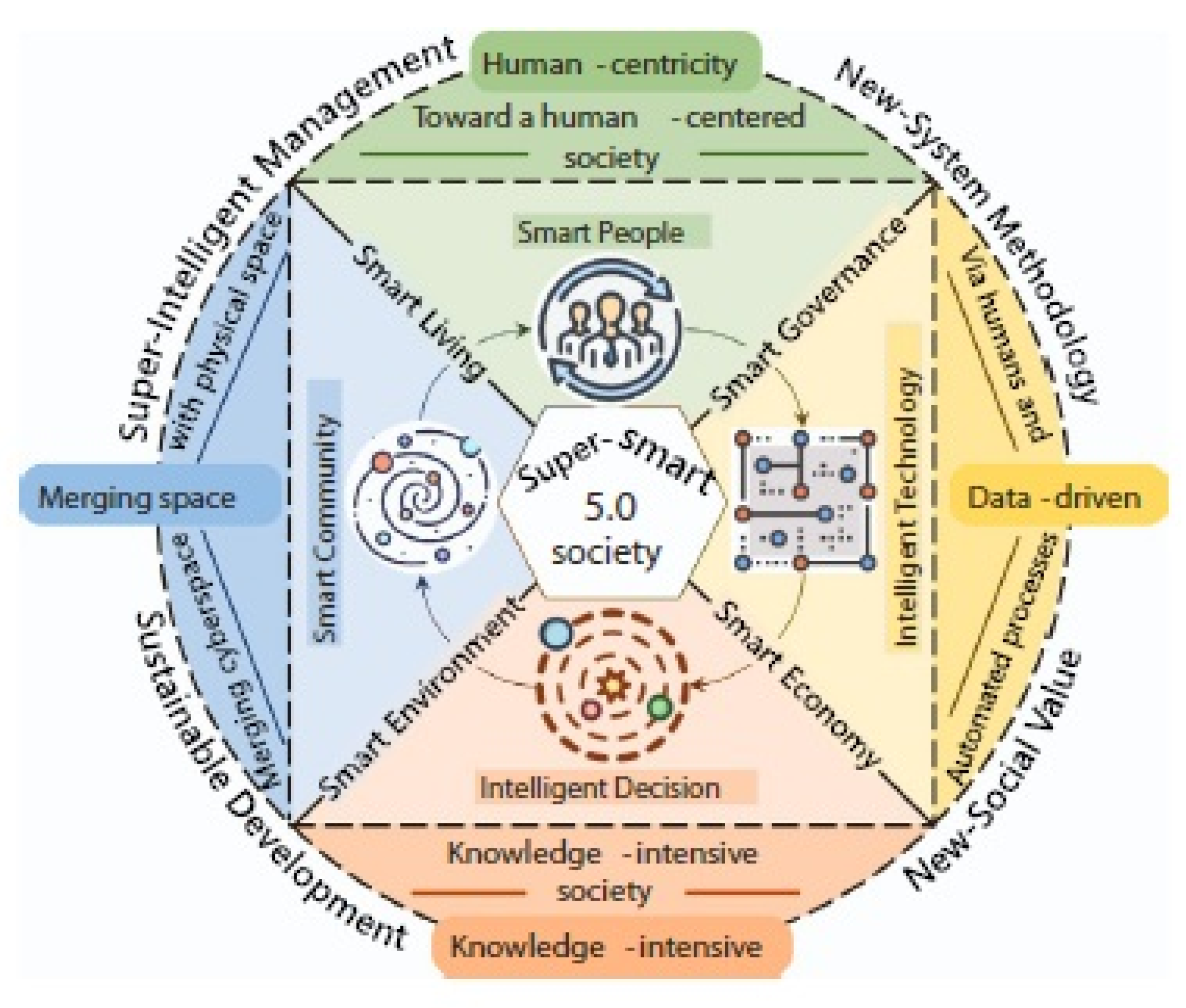
Figure 2.
Areas covered in the four dimensions of the resilience dashboards (European Commission, 2021b [31]).
Figure 2.
Areas covered in the four dimensions of the resilience dashboards (European Commission, 2021b [31]).
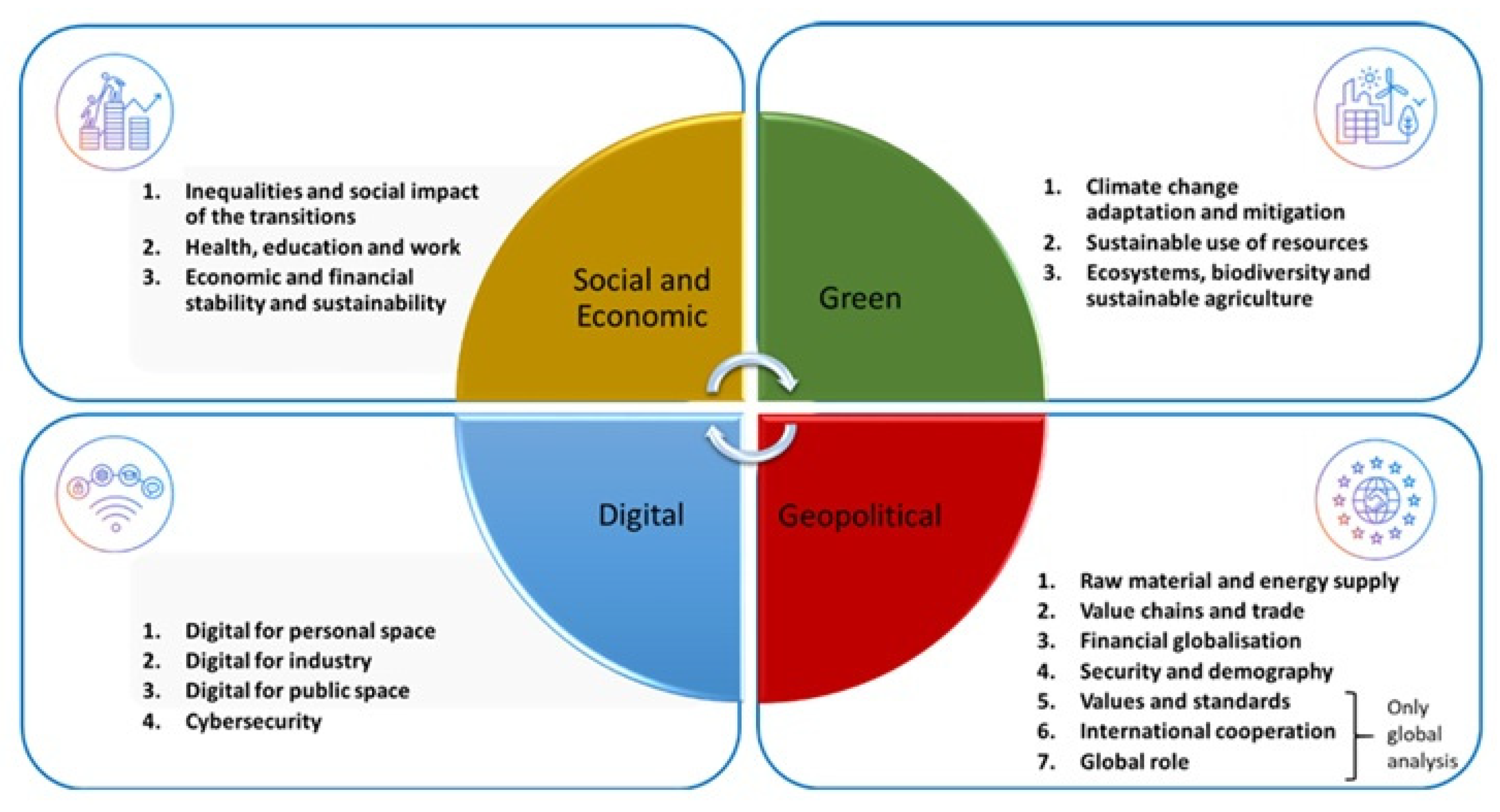
Figure 3.
Research design.
Disclaimer/Publisher’s Note: The statements, opinions and data contained in all publications are solely those of the individual author(s) and contributor(s) and not of MDPI and/or the editor(s). MDPI and/or the editor(s) disclaim responsibility for any injury to people or property resulting from any ideas, methods, instructions or products referred to in the content. |
© 2026 by the authors. Licensee MDPI, Basel, Switzerland. This article is an open access article distributed under the terms and conditions of the Creative Commons Attribution (CC BY) license (http://creativecommons.org/licenses/by/4.0/).
Copyright: This open access article is published under a Creative Commons CC BY 4.0 license, which permit the free download, distribution, and reuse, provided that the author and preprint are cited in any reuse.


