
Submitted:
27 April 2026
Posted:
29 April 2026
You are already at the latest version
Abstract
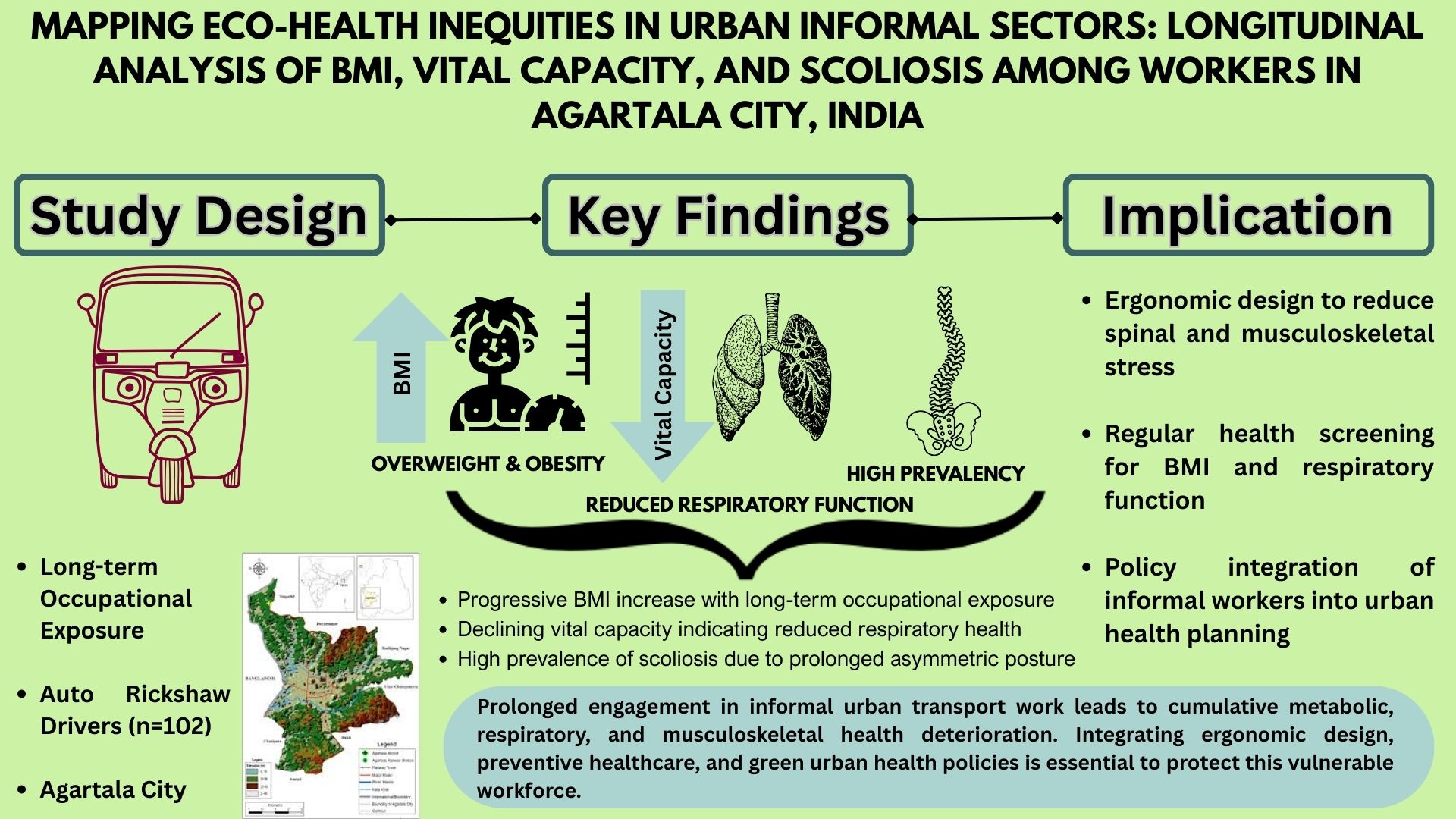
Auto rickshaw drivers face significant occupational health risks due to prolonged sedentary behaviour, poor ergonomics, and exposure to environmental pollutants, yet systematic longitudinal assessments of their health deterioration remain scarce. We conducted a cross-sectional study involving 102 auto rickshaw drivers in Agartala, India, to evaluate longitudinal trends in mapping Eco-health inequities in the urban informal sector. This study conducted a cross-sectional survey of 102 auto-rickshaw service provider in the urban informal sector of Agartala, to assess and mapping of health inequalities. This study was involving body mass index (BMI), vital capacity and scoliosis prevalence. Participants/Samples were selected via/through incidental convenience sampling and data were collected through/following structured interviews, anthropometric measurements, spirometry, and spinal curvature assessments using a baseline inclinometer. The results revealed a concerning trend of increasing BMI with driving tenure, rising from 25.1±3.03 for drivers with 0–9 years of experience to 29.36±2.94 for those with ≥20 years, indicating a high prevalence of overweight and obesity. Moreover, vital capacity declined from 3.3±0.49 litres in novice drivers to 3.2±0.61 litres in veterans, suggesting a decline in respiratory function over time. Scoliosis was prevalent in 91% of participants, with 74% showing severe curvature (≥5°), and lateral deviations were predominantly left-sided (55.72% cervical, 70% thoracic, 64.29% lumbar), likely due to asymmetric driving postures. These findings highlight the cumulative health deterioration associated with prolonged occupational exposure, emphasising the urgent need for ergonomic interventions and lifestyle modifications. The study also provides novel longitudinal insights into the health challenges faced by auto rickshaw drivers, laying the foundation for targeted public health strategies to mitigate occupational hazards and improve their overall well-being. The study also provides novel longitudinal insights into the health challenges faced by auto rickshaw drivers. Findings suggested the inclusive foundation for targeted public health strategies to mitigate occupational health hazards and improve their overall well-being.
Keywords:
musculoskeletal disorders
; scoliosis
; informal transport sector
; health vulnerability
Copyright: This open access article is published under a Creative Commons CC BY 4.0 license, which permit the free download, distribution, and reuse, provided that the author and preprint are cited in any reuse.


