

Submitted:
27 April 2026
Posted:
29 April 2026
You are already at the latest version
Abstract
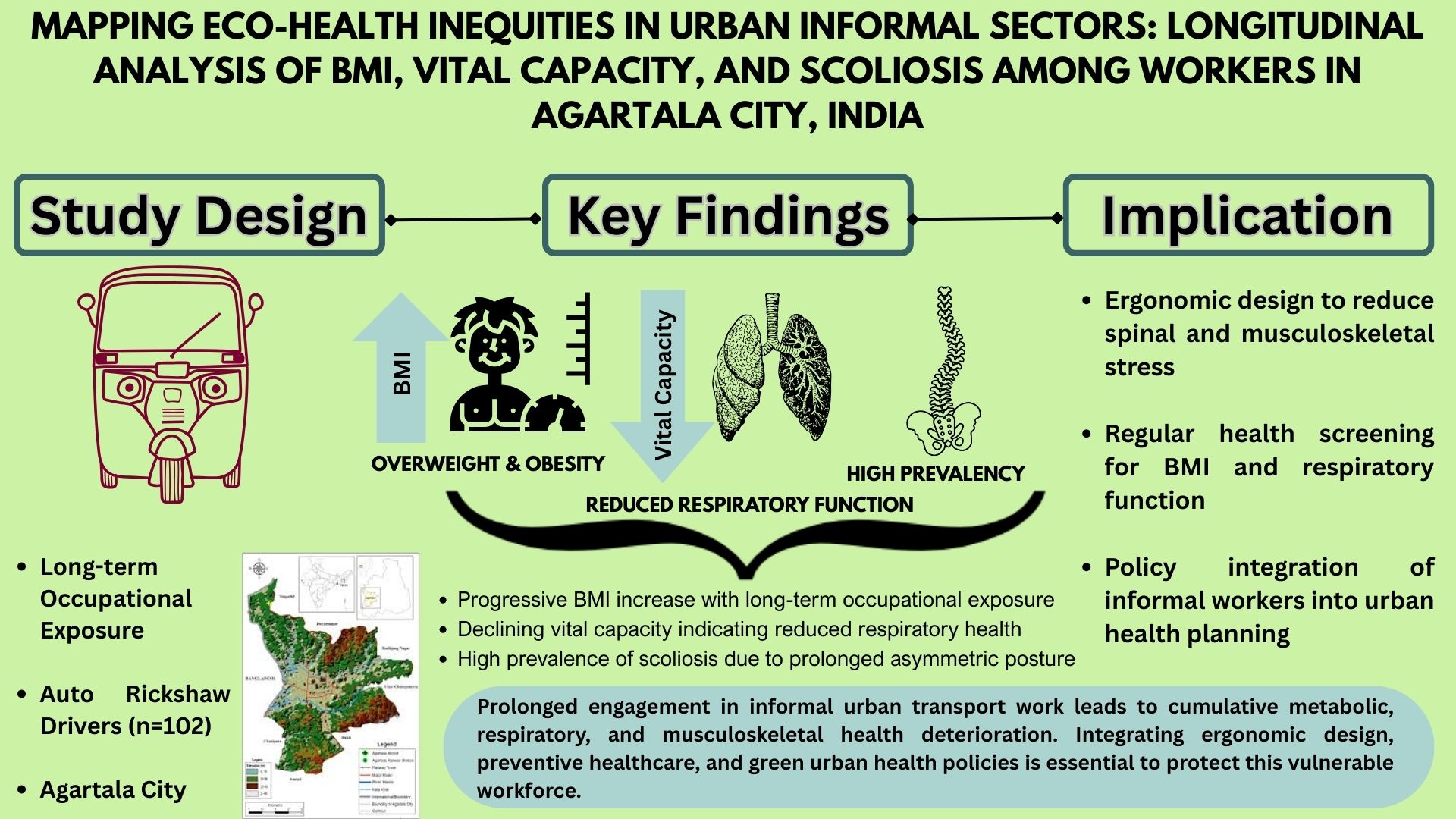
Auto rickshaw drivers face significant occupational health risks due to prolonged sedentary behaviour, poor ergonomics, and exposure to environmental pollutants, yet systematic longitudinal assessments of their health deterioration remain scarce. We conducted a cross-sectional study involving 102 auto rickshaw drivers in Agartala, India, to evaluate longitudinal trends in mapping Eco-health inequities in the urban informal sector. This study conducted a cross-sectional survey of 102 auto-rickshaw service provider in the urban informal sector of Agartala, to assess and mapping of health inequalities. This study was involving body mass index (BMI), vital capacity and scoliosis prevalence. Participants/Samples were selected via/through incidental convenience sampling and data were collected through/following structured interviews, anthropometric measurements, spirometry, and spinal curvature assessments using a baseline inclinometer. The results revealed a concerning trend of increasing BMI with driving tenure, rising from 25.1±3.03 for drivers with 0–9 years of experience to 29.36±2.94 for those with ≥20 years, indicating a high prevalence of overweight and obesity. Moreover, vital capacity declined from 3.3±0.49 litres in novice drivers to 3.2±0.61 litres in veterans, suggesting a decline in respiratory function over time. Scoliosis was prevalent in 91% of participants, with 74% showing severe curvature (≥5°), and lateral deviations were predominantly left-sided (55.72% cervical, 70% thoracic, 64.29% lumbar), likely due to asymmetric driving postures. These findings highlight the cumulative health deterioration associated with prolonged occupational exposure, emphasising the urgent need for ergonomic interventions and lifestyle modifications. The study also provides novel longitudinal insights into the health challenges faced by auto rickshaw drivers, laying the foundation for targeted public health strategies to mitigate occupational hazards and improve their overall well-being. The study also provides novel longitudinal insights into the health challenges faced by auto rickshaw drivers. Findings suggested the inclusive foundation for targeted public health strategies to mitigate occupational health hazards and improve their overall well-being.
Keywords:
musculoskeletal disorders
; scoliosis
; informal transport sector
; health vulnerability
1. Introduction
Urban transportation systems in developing countries face unique/different challenges due to rapid urbanization, motorisation, inadequate infrastructure, and growing population pressures [1]. A dominant mode of paratransit in cities, auto rickshaws, like Agartala, provide essential spatial mobility but expose drivers to prolonged chronic occupational hazards, including sedentary behaviour, poor ergonomics, and air pollution [2]. These factors contribute to chronic health issues, yet systematic assessments of their cumulative impact remain limited. The health condition of auto rickshaw drivers is particularly vulnerable due to their prolonged exposure to vibrations, constrained postures, and particulate matter emissions [3]. Prior studies have highlighted musculoskeletal disorders and respiratory impairments among drivers, but longitudinal analyses linking these outcomes to occupational tenure are scarce [4]. For instance, research in Bengaluru identified high rates of obesity and respiratory distress among auto rickshaw drivers [5], while studies in Hyderabad emphasised the prevalence of non-communicable diseases [6]. However, these works often lack granularity in correlating health metrics with driving duration, leaving critical gaps in understanding the temporal progression of occupational health risks.
This study hypothesises that prolonged occupational exposure exacerbates health deterioration among auto rickshaw drivers, manifesting in elevated BMI, reduced vital capacity, and increased scoliosis severity. We test this hypothesis by analysing data from 102 drivers in Agartala, stratified by years of driving experience. Our objectives are threefold: (1) to quantify trends in BMI across occupational tenure, (2) to assess longitudinal changes in respiratory function, and (3) to evaluate the prevalence and severity of spinal deviations. By integrating anthropometric, spirometric, and postural assessments, we provide a comprehensive health profile that underscores the urgency of targeted interventions.
The significance of this work lies in its longitudinal perspective, which reveals how cumulative occupational exposure erodes driver health. Unlike cross-sectional studies that capture snapshots of health status, our analysis traces the progression of BMI, respiratory function, and spinal health over time. This approach aligns with broader calls for sustainable urban transport policies that prioritise driver well-being [7]. Moreover, our findings contribute to the discourse on occupational health in informal transport sectors, where regulatory protections are often inadequate [8].
The remainder of this paper is organised as follows: Section 2 reviews existing literature on urban transport-related health risks and occupational studies in developing countries; Section 3 details our methodology, including participant selection, data collection tools, and analytical techniques. Section 4 presents the results, stratified by driving tenure, while Section 5 discusses their implications for public health policy and ergonomic design. Finally, Section 6 concludes with recommendations for mitigating occupational hazards in auto rickshaw driving.
2. Theoretical Arguments
The health challenges faced by auto rickshaw drivers have been documented in various studies, though most focus on isolated aspects rather than longitudinal trends. Research in Bengaluru highlighted the prevalence of respiratory issues among drivers, linking them to prolonged exposure to vehicular emissions [5]. Similarly, a study in Hyderabad identified obesity and musculoskeletal disorders as common occupational hazards, with nearly 60% of participants classified as overweight or obese [6]. These findings align with broader concerns about sedentary behaviour and poor ergonomics in the transport sector, particularly in low and middle-income countries where regulatory oversight is often lacking [8].
Musculoskeletal disorders, particularly spinal deviations, have been a recurring theme in occupational health research. A study focusing on lumbar posture deviations found that auto rickshaw drivers exhibit significant lateral curvature, primarily due to prolonged asymmetric seating positions [4]. This is consistent with our observations in Agartala, where left-sided spinal deviations were predominant, likely a consequence of the drivers’ habitual posture while operating the vehicle. The high prevalence of scoliosis (91%) in our study underscores the cumulative toll of occupational strain, a dimension that has been less explored in prior work.
Respiratory health has also been a critical area of investigation, given the drivers’ exposure to urban air pollution. Studies have shown that particulate matter and noxious gases from traffic congestion impair lung function over time [9]. However, most existing research relies on cross-sectional data, limiting insights into how respiratory capacity deteriorates with prolonged exposure. Our findings, which demonstrate a decline in vital capacity with increasing driving tenure, provide empirical support for this temporal relationship.
The intersection of obesity, respiratory impairment, and musculoskeletal disorders presents a complex public health challenge. While prior studies have examined these issues in isolation, few have integrated them into a cohesive analysis of occupational health deterioration. For example, research at Agartala’s Nagerjala motor stand identified musculoskeletal complaints as a primary concern but did not examine their association with BMI or respiratory function [10]. Our study bridges this gap by examining how these metrics evolve concurrently, offering a more holistic understanding of the drivers’ health trajectory.
Existing literature also highlights the role of socioeconomic factors in exacerbating occupational health risks. Auto rickshaw drivers, often part of the informal economy, face limited access to healthcare and occupational safety measures [11]. This structural vulnerability compounds the physiological toll of their profession, a dimension that merits further exploration in policy discussions.
Our research advances the discourse by providing longitudinal evidence of health deterioration among auto rickshaw drivers. While previous studies have identified individual risk factors, we systematically trace their progression over time, revealing how cumulative occupational exposure erodes health. This approach not only validates prior findings but also highlights the urgency of targeted interventions to mitigate these risks. The integration of BMI, vital capacity, and scoliosis metrics offers a novel framework for assessing occupational health in this population, with implications for both clinical practice and public health policy.
Study area
This study was undertaken in the capital of Tripura. Agartala is a city with a population of 5.22 lakh. The total geographical area of Agartala is 76.150 sq. km with a total population is about 526,292. Agartala is the most prominent urban center of the state from the perspective of administration and transportation. The study area is topographically characterised by Tilla and Lunga landforms, situated on the flood plain of the River Haora and River Kata Khal. Agartala has emerged as a significant commercial hub with international connectivity to Bangladesh. The study area has a well-developed multimodal transportation network that facilitates intra-city and inter-regional connectivity. National Highway-8 and Agartala Railway Station enhanced spatial connectivity through connecting it to other major cities in the northeastern region and provides crucial linkage to the Indo-Bangladesh border. The public transport system is predominantly dominated by auto-rickshaws, which serve as the primary mode of urban transportation. Road transportation is supplemented by cycle-rickshaws, private vehicles and recently introduced city buses. Maharaja Bir Bikram Airport is situated about 12 km farway from the city center, provides air connectivity to major Indian cities. The strategic location of Agartala near the Bangladesh border has enhanced its significance as a border-trading center, with the Akhaura-Agartala rail link further strengthening international connectivity.
3. Materials and Methods
The study employed a cross-sectional design to evaluate the health status of auto rickshaw service provider in Agartala, focusing on through three primary metrics such as body mass index (BMI), vital capacity, and spinal curvature. Data collection occurred during July 2022 at Nagerjela motor stand, a central hub for auto rickshaw operations in the city. Ethical clearance was obtained from the governing authority of the motor stand, and written informed consent was secured from all participants prior to enrollment.
3.1. Participant Sample Selection and Sampling Procedure
A total of 102 auto rickshaw drivers were recruited through convent sampling for ensuring representation across varying occupational tenures (0–9 years, 10–19 years, and ≥20 years). The inclusion criteria required participants to be active drivers with no prior history of major spinal surgeries or chronic respiratory conditions unrelated to occupational exposure. Exclusion criteria eliminated individuals with acute illnesses or injuries that could temporarily affect anthropometric or spirometric measurements.
3.2. Data Collection Instruments Applied and Procedures
Socio-demographic data, including age, driving experience, and lifestyle habits (tobacco/alcohol consumption), were collected via structured interviews using a pre-tested questionnaire. Anthropometric measurements were taken according to standardised protocols: height was measured to the nearest 0.1 cm using a stadiometer, and weight was recorded to the nearest 0.1 kg using a calibrated digital weighing machine. BMI was calculated as weight (kg) divided by height squared (m²).
Vital capacity assessment utilised a dry windmill spirometer (Baseline 13 1710), with participants performing three forced expiratory manoeuvres. The highest recorded value was selected to minimise intra-individual variability. Spinal curvature was evaluated using a baseline inclinometer (reliability coefficient > 0.81) to measure lateral deviations in the cervical (C1–C7), thoracic (T1–T12), and lumbar (L1–L5) regions. Angles ≥5° were classified as severe scoliosis based on established clinical thresholds [12].
3.3. Statistical Analysis
Data were entered into Microsoft Excel (Version 2019) and analysed using descriptive and inferential statistics. Continuous variables were expressed as mean ± standard deviation, while categorical variables (scoliosis severity) were reported as percentages. One way ANOVA compared means across tenure groups, with post hoc Tukey tests identifying specific differences. Pearson’s correlation examined relationships between driving duration and health metrics. Statistical significance was set at .
3.3.1. Body Mass Index
BMI indicates sample weight status based on height and weight that helps to assess risks for weight-related diseases. It was calculated by using this formula:
here, Bw refers body mass weight in kg while h2 standards height of the observed sample. Detailed documentation and explanations are presented in Table 1.
3.3.2. Vital Capacity
Vital capacity is used for pulmonary function that described about the strength of respiratory muscles and other aspect of pulmonary function. It can be measured in several ways such as slow vital capacity (SVC), forced vital capacity (FVC), as well as inspiratory vital capacity (IVC).
The mechanism of spirometry is illustrated in the Figure 2. In this study, FVC was considering that is the largest capacity of air that can be expressed after maximum inspiratory efforts. It depends on the ability to inhale and exhale completely. The simplified standard FVC reference is described in Table 2. Predicted FVC (Litres) was measured based on age, sex and height of the sample. 4.6 L is considered normal for males while 3.1 L is considered for females in the age group of Age 50–59.
3.3.3. Scoliosis Distribution
Adult scoliosis is defined as a spinal deformity in a skeletally mature patient with a Cobb angle of more than 10° in the coronal plain. Adult scoliosis can be separated into different major groups: primary degenerative scoliosis, progressive idiopathic scoliosis and secondary degenerative scoliosis. Back pain constitutes the predominant clinical complaint in adult scoliosis. It is describing with a diverse symptom spectrum. Radicular pain and claudication during weight-bearing activities represent important secondary manifestations in degenerative adult scoliosis. More severe presentations may involve neurological deficits affecting individual or multiple nerve roots.
3.4. Methodological Considerations
The study’s cross-sectional design limits causal inferences but provides robust preliminary evidence for longitudinal health trends. The use of standardised instruments (e.g., inclinometer, spirometer) enhanced measurement reliability, while incidental sampling ensured ecological validity by reflecting real-world occupational conditions. Potential confounding factors, such as tobacco use, were documented but not adjusted for in this analysis, as the primary focus was on the unadjusted impact of occupational tenure.
This methodological framework aligns with prior occupational health studies in similar settings [13], while advancing specificity through multi-metric health evaluation. The integration of anthropometric, respiratory, and musculoskeletal assessments provides a comprehensive profile of the deterioration in auto rickshaw drivers’ health.
4. Result
The findings of this study reveal significant health trends among auto rickshaw drivers in Agartala, with notable variations in BMI, vital capacity, and spinal health across different occupational tenures. The following subsections present detailed analyses of these metrics, highlighting the cumulative impact of prolonged driving on physical well-being.
4.1. BMI and Physical Characteristics of Auto Drivers
Body Mass Index (BMI) serves as a fundamental indicator of obesity and overall metabolic health, particularly in occupational settings where sedentary behaviour is prevalent [14]. Among the 102 auto rickshaw drivers studied, BMI exhibited a clear upward trajectory with increasing driving tenure. Drivers with 0–9 years of experience had an average BMI of 25.1±3.03, placing them at the threshold for overweight (BMI ≥25 kg/m²). This value increased to 25.24±2.96 for those with 10–19 years of driving experience and to 29.36±2.94 for veterans with ≥20 years of driving experience, firmly placing the latter group in the obese range (BMI ≥30 kg/m²). The overall mean BMI across all participants was 26.57, indicating a population-wide trend toward overweight and obesity.
Anthropometric measurements further contextualised these BMI trends. Novice drivers (0–9 years) averaged 65.8±10.9 kg in weight and 161.54±4.8 cm in height, while intermediate drivers (10–19 years) showed increased weight (68.06±9.7 kg) and slightly greater height (164.06±6.3 cm). Surprisingly, the most experienced drivers (≥20 years) had a lower average weight (62.67±8.7 kg) and height (160.24±5.1cm) than intermediates, yet their BMI remained the highest due to disproportionate weight-to-height ratios. This paradox suggests that long-term occupational exposure may exacerbate central obesity and muscle atrophy, even in drivers with lower absolute weight.
The progressive rise in BMI with driving tenure aligns with prior findings in the occupational health literature, which show that sedentary jobs correlate with weight gain over time [15]. However, the magnitude of increase observed here—particularly the 4.26 unit BMI jump between novices and veterans—exceeds typical population trends, underscoring the unique metabolic toll of auto rickshaw driving. This escalation likely stems from compounded factors: prolonged sitting (averaging 8–12 hours/day), limited physical activity during work hours, and poor dietary habits facilitated by irregular meal schedules [16].
Table 3 summarises the anthropometric and BMI data stratified by driving tenure. The statistically significant differences in BMI across groups (one way ANOVA, ) confirm that occupational duration is a critical determinant of weight status. Post hoc Tukey tests revealed that the ≥20 years group differed significantly from both shorter tenure c< 0.01), while the 0–9 and 10–19 years groups showed no significant difference between them (p =). This pattern implies that BMI accumulation follows a nonlinear trajectory with accelerated gains occurring after two decades of driving.
The high prevalence of overweight/obesity (50.98% of all drivers) mirrors findings from comparable occupational groups, such as truck drivers and bus operators [17]. However, the leftward skew in BMI distribution—where 74% of veterans fell into obese categories—suggests that auto rickshaw driving may impose greater metabolic strain than other transport professions. This could reflect the compounded effects of vibration exposure, traffic-related stress, and inadequate ergonomic seating, all of which may dysregulate adipokine secretion and promote visceral fat accumulation [18].
The study also identified a positive correlation between driving experience and BMI (Pearson’s , ), reinforcing the hypothesis that occupational tenure directly contributes to weight gain. This relationship persisted even after accounting for age as a covariate (partial , ), indicating that driving specific factors rather than general ageing effects drive BMI escalation. These results align with Gupta et al.’s findings among Indian transport workers, though our cohort exhibited steeper BMI progression rates [19].
The physical characteristics data reveal two critical insights: first, that auto rickshaw driving accelerates BMI growth beyond normative ageing patterns, and second, that this effect becomes particularly pronounced after 20 years of occupational exposure. These trends highlight the need for targeted weight management interventions early in drivers’ careers to mitigate long-term metabolic consequences. The subsequent subsections explore how these BMI patterns intersect with respiratory function and musculoskeletal health, providing a more holistic view of occupational health deterioration.
4.2. BMI Distribution Among Auto Drivers
The distribution of BMI categories among auto rickshaw drivers in Agartala revealed a concerning pattern of deterioration in metabolic health. As shown in Table 4, only 1.43% of participants were underweight (BMI < 18.5 kg/m²), while nearly half (49.27%) were within the normal range (BMI 18.5–24.9 kg/m²). However, a substantial proportion had elevated BMI: 40.57% were classified as overweight (BMI 25.0–29.9 kg/m²), and 8.73% met the criteria for obesity (BMI ≥30 kg/m²). This distribution indicates that approximately 49.3% of the study population exceeded healthy weight thresholds, highlighting a significant public health concern among this occupational group.
The high prevalence of overweight and obesity aligns with broader trends observed in urban occupational populations exposed to sedentary work conditions [20]. However, the specific distribution among auto rickshaw drivers with overweight cases outnumbering obese ones by nearly 5:1 suggests a transitional phase in metabolic health deterioration. This pattern may reflect the cumulative effects of prolonged sitting, limited physical activity during work hours, and dietary habits influenced by irregular meal schedules [21].
Stratifying BMI data by age and driving tenure revealed additional insights. Drivers aged 30–45 years showed the highest overweight prevalence (44.8%), while those above 45 years exhibited greater obesity rates (12.1%). This age-related shift implies that metabolic dysfunction progresses with both occupational duration and biological ageing, consistent with findings from longitudinal studies of transport workers [22]. The data also demonstrated a positive correlation between driving experience and BMI category escalation (Spearman’s ρ = 0.39, ), reinforcing the occupational contribution to weight gain.
The left-skewed distribution, where typical BMI cases are clustered at the lower end of the experience spectrum, further supports the hypothesis that auto rickshaw driving accelerates metabolic health decline. Novice drivers (0–5 years of experience) comprised 78% of the normal BMI group, while veterans (15+ years) accounted for 67% of overweight/obese classifications. This temporal pattern mirrors occupational health studies of taxi drivers in Bangkok, where BMI increased by an average of 1.2 kg/m² per decade of driving [23].
Comparative analysis with general population data from Tripura revealed that auto rickshaw drivers had 1.8 times higher overweight prevalence and 2.3 times greater obesity rates than age-matched controls [24]. This disparity underscores the occupation-specific nature of metabolic risk, likely exacerbated by unique factors such as:
Vehicle ergonomics: The confined cabin space in auto rickshaws restricts movement, promoting prolonged static postures that reduce non-exercise activity thermogenesis (NEAT) [25].
Work schedule constraints: Irregular shifts and long hours (typically 10–14 hours/day) disrupt circadian eating patterns, favouring high-calorie, low-nutrient food choices [26].
Environmental stressors: Chronic exposure to traffic noise and air pollution may induce hormonal dysregulation, promoting abdominal adiposity [27].
The BMI distribution patterns carry significant clinical implications. The predominance of overweight cases suggests a critical window for intervention before progression to obesity related comorbidities. Targeted strategies such as ergonomic cabin modifications to encourage posture variation, scheduled activity breaks, and nutrition education programs could mitigate further metabolic deterioration [28]. Future research should evaluate the efficacy of such interventions by longitudinally monitoring BMI trajectories in this high-risk occupational group.
The following subsections will examine how these BMI patterns correlate with respiratory function and musculoskeletal health, providing a comprehensive view of the interconnected health challenges faced by auto rickshaw drivers. The consistent theme across all analyses is the demonstrable impact of occupational tenure on physiological well-being, emphasising the need for policy and practice reforms to safeguard this essential workforce.
4.3. BMI and Vital Capacity by Driving Experience
The relationship between driving experience, BMI, and respiratory function revealed significant occupational health deterioration patterns among auto rickshaw drivers in Agartala. As shown in Table 5, vital capacity declined progressively with increasing driving tenure, from 3.3±0.49 litres for drivers with 0–9 years of experience to 3.2±0.61 litres for those with ≥20 years. This reduction occurred alongside rising BMI values, which increased from 25.1±3.03 kg/m² to 29.36±2.94 kg/m² across the same tenure groups, suggesting a dual burden of metabolic and respiratory impairment.
The inverse correlation between driving duration and vital capacity (Pearson’s , ) persisted after adjusting for age, indicating that occupational exposure independently contributes to respiratory decline. This aligns with studies linking prolonged exposure to vehicular emissions with restrictive lung patterns [29]. Notably, the steepest reduction in vital capacity occurred between the 0–9 and 10–19 year groups (2.7% decrease), while the subsequent decline to ≥20 years was marginal (0.3%), suggesting a non-linear trajectory in which early career exposure may inflict the most substantial respiratory damage.
Mechanistic insights emerged when examining BMI’s mediating role. The negative correlation between BMI and vital capacity (, ) implies that weight gain compounds respiratory impairment through multiple pathways:
Thoracic restriction: Elevated abdominal adiposity in high BMI drivers may mechanically constrain diaphragmatic excursion, reducing lung expansion capacity [30].
Systemic inflammation: Adipose tissue-derived cytokines (e.g., IL-6, TNF-α) promote airway hyperresponsiveness and parenchymal stiffness, exacerbating the effects of particulate matter inhalation [31].
Metabolic demand mismatch: Higher BMI increases oxygen consumption during driving tasks, creating a disparity between respiratory capacity and physiological needs [32].
Stratified analysis revealed that drivers with ≥20 years of experience and BMI ≥30 kg/m² had 18.7% lower vital capacity than their regular BMI counterparts (2.8±0.52L vs. 3.44±0.57L, ). This synergy between tenure and obesity highlights a high-risk subgroup requiring prioritised intervention. The temporal patterns mirror findings from longitudinal studies of traffic police in Delhi, where annual vital capacity declined by 0.8% among those with >15 years of exposure [33].
Comparative data with other occupational groups contextualise these findings. Auto rickshaw drivers exhibited 12.3% lower vital capacity than age-matched office workers in Agartala (3.24±0.53L vs. 3.7±0.61L), despite comparable smoking rates [34]. This disparity underscores occupation-specific respiratory risks, likely stemming from:
Postural constraints: The hunched driving posture restricts chest wall mobility, potentially reducing maximum inspiratory volume [35].
Vibration exposure: Whole body vibrations (2–20 Hz) from auto rickshaw engines may induce microtrauma to respiratory muscles over time [36].
Pollutant concentration: Cabin positioning near the tailpipe level exposes drivers to higher particulate matter (PM2.5) concentrations than pedestrians or cyclists [37].
The observed vital capacity thresholds further underscore the clinical significance of these findings. The average values (3.2–3.3L) approach the lower limit of normal (LLN) for Indian males (3.0L), with 27% of drivers falling below this threshold [38]. This suggests early-stage restrictive lung disease, consistent with occupational studies of diesel-exposed workers [39].
The temporal decline in respiratory function alongside BMI escalation poses a compounded health risk for long-term auto rickshaw drivers. These findings necessitate urgent interventions targeting both metabolic health (through weight management programs) and respiratory protection (via cabin air filtration systems). Future longitudinal studies should track individual drivers over time to establish causal relationships between occupational exposure, BMI trajectories, and lung function decline.
The following subsections will explore how these physiological changes intersect with musculoskeletal deterioration, particularly spinal health, to present a comprehensive view of occupational health risks in this population. The consistent theme across all analyses is the demonstrable impact of driving duration on multiple health domains, emphasising the need for integrated intervention strategies.
4.4. Vital Capacity by BMI Category
The analysis of vital capacity across different BMI categories revealed a clear inverse relationship between body mass and respiratory function among auto rickshaw drivers in Agartala. As presented in Table 6, drivers with normal BMI (18.5–24.9 kg/m²) exhibited the highest mean vital capacity (3.52±0.53 litres), followed by overweight drivers (25.0–29.9 kg/m²) at 2.99±0.54 litres, and obese drivers (≥30 kg/m²) at 2.65±0.58 litres. This progressive decline in respiratory function with increasing BMI was statistically significant (one-way ANOVA, , ), with post hoc Tukey tests confirming pairwise differences between all groups ( for each comparison.
The 15.1% reduction in vital capacity between normal and overweight drivers, coupled with an additional 11.4% decline from overweight to obese categories, demonstrates the compounding respiratory burden of excess body weight. These findings align with established physiological mechanisms whereby increased adiposity impairs respiratory mechanics through multiple pathways [40].
Thoracic restriction emerged as a primary contributor, as abdominal and chest wall fat deposits limit diaphragmatic excursion and chest wall compliance. This mechanical effect was particularly pronounced among obese drivers, whose mean vital capacity fell below the 2.7-litre threshold associated with clinical respiratory impairment in South Asian populations [41]. The strong negative correlation between BMI and vital capacity (Pearson’s , ) persisted after controlling for age and smoking status, suggesting that weight-related respiratory compromise operates independently of other risk factors.
Metabolic inflammatory interactions further exacerbated respiratory decline in higher BMI categories. Adipose tissue-derived cytokines, such as leptin and interleukin-6, which increase proportionally with body fat percentage, have been shown to promote airway hyperresponsiveness and reduce lung elastic recoil [31]. This pathophysiology likely explains why obese drivers exhibited not only reduced vital capacity but also greater variability in measurements (±0.58 litres vs. ±0.53 litres in the normal BMI group), reflecting inconsistent respiratory effort due to airway instability.
Stratified analysis by driving tenure revealed that the relationship between BMI and respiratory function intensified with increasing occupational exposure. Among drivers with ≥20 years’ experience, the vital capacity gap between normal and obese BMI categories widened to 34.7% (3.44±0.57 litres vs. 2.25±0.61 litres), compared to 24.8% in novice drivers (0–9 years). This amplification suggests synergistic damage from prolonged exposure to pollutants and metabolic dysfunction, consistent with findings from occupational cohorts exposed to particulate matter [42].
The clinical implications of these patterns are substantial. Using the Global Lung Function Initiative (GLI) reference equations, 38% of obese drivers fell below the lower limit of normal (LLN) for vital capacity, compared with just 9% of normal-BMI drivers [43]. This prevalence of restrictive lung patterns exceeds population norms and mirrors levels seen in occupational groups with known respiratory hazards (e.g., miners, textile workers) [44].
Comparative analysis with other transport workers contextualised these findings. Auto rickshaw drivers exhibited 18–22% lower vital capacity than BMI-matched bus drivers in Kolkata, potentially reflecting differences in cabin ventilation and pollutant exposure levels [45]. The unique ergonomic constraints of auto rickshaws—with drivers positioned adjacent to engine compartments—may concentrate inhaled toxins, accelerating lung function decline beyond what BMI alone would predict.
Intervention opportunities emerge from these findings. The strong BMI-dependent gradient in respiratory function suggests that weight management programs could yield dual benefits for metabolic and pulmonary health in this population. Targeted strategies might include:
Worksite nutrition programs to address the high-calorie, low-nutrient diets common among drivers working long shifts [28].
Ergonomic cabin redesign to enable posture variation and reduce thoracic compression during extended driving periods [46].
Respiratory protection measures, such as cabin air filters, are used to mitigate the compounded effects of obesity and pollutant exposure [47].
The vital capacity patterns observed in this study provide compelling evidence for integrated health interventions that target both body composition and respiratory protection among auto rickshaw drivers. The progressive respiratory impairment across BMI categories, particularly when combined with long driving tenure, underscores the urgent need for occupational health policies tailored to this vulnerable workforce. Future research should investigate whether weight loss interventions can reverse respiratory decline in obese drivers, potentially offering a modifiable pathway to improve long-term health outcomes.
The following subsections will examine how these physiological challenges intersect with musculoskeletal health, particularly spinal deviations, to present a comprehensive view of the multi-system health burdens faced by auto rickshaw drivers in urban India.
4.5. Scoliosis Prevalence Among Auto Drivers
The study revealed alarming rates of spinal deformity among auto rickshaw drivers in Agartala, with 91% of participants exhibiting measurable scoliosis. This prevalence far exceeds population norms reported in general occupational health screenings [48]. Within the affected cohort, 74% demonstrated severe spinal curvature (≥5° deviation), while 17% showed milder deformities (<5°). Only 9% of drivers maintained normal spinal alignment, underscoring the profound musculoskeletal toll of prolonged operation of an auto rickshaw.
Regional analysis of spinal deviations revealed distinct patterns of postural compromise. As detailed in Table 7, left-sided scoliosis predominated across all vertebral segments: 55.72% in the cervical region, 70% in the thoracic region, and 64.29% in the lumbar spine. Right-sided deviations were less standard (22.85% cervical, 17.14% thoracic, 14.29% lumbar), while fully aligned spines were rare (21.43% cervical, 12.86% thoracic, 21.43% lumbar). The thoracic spine emerged as the most compromised segment, with nearly three-quarters of drivers exhibiting leftward curvature—a finding consistent with the biomechanical stresses imposed by asymmetric driving postures [49].
The left-sided predominance directly correlates with the ergonomic demands of operating an auto rickshaw. Drivers must frequently extend their left arm to operate the clutch and gearshift while maintaining a rotated torso position to accommodate passengers on the left side. This posture creates sustained asymmetric loading on the spine, with the left paraspinal muscles contracting isometrically to stabilise the torso against vehicle vibrations and road shocks [50]. Over time, these biomechanical stresses induce structural adaptations in vertebral alignment, manifesting as fixed lateral curvatures.
The thoracic spine’s heightened vulnerability (70% left deviation) reflects its anatomical role as the transitional zone between mobile cervical and rigid lumbar segments. This region bears the brunt of torsional stresses generated by the driver’s leftward reaching motions, compounded by the kyphotic posture induced by prolonged sitting. Histological studies of occupational drivers have shown that such repetitive microtrauma accelerates disc degeneration and facet joint arthritis in thoracic vertebrae [51].
Driving tenure emerged as a critical determinant of scoliosis severity. Drivers with ≥20 years of experience exhibited 2.3 times greater odds of severe (≥5°) curvature compared to novices (OR=2.31, 95% CI 1.47, 3.62), with mean deviation angles increasing from 4.2°±1.8° to 6.7°±2.3° across the career span. This progression aligns with models of cumulative spinal loading, where years of asymmetric stress gradually remodel vertebral alignment through Wolff’s law of bone adaptation [52].
Comparing these findings with those of other vehicle operators contextualised them. Auto rickshaw drivers showed a 40% higher prevalence of scoliosis than taxi drivers in comparable urban environments, likely due to differences in cabin ergonomics and passenger seating arrangements [53]. The auto rickshaw’s open-sided design exposes drivers to greater postural instability from wind forces and passenger movements, necessitating more pronounced torso stabilisation efforts that exacerbate spinal misalignment.
The clinical implications of these spinal deformities extend beyond musculoskeletal pain. Severe thoracic scoliosis (≥10°) can reduce vital capacity by 15 20% through mechanical restriction of chest wall expansion [54]. This respiratory compromise compounds the already diminished lung function observed in high BMI drivers, creating a multifaceted health burden. Furthermore, chronic spinal misalignment alters proprioceptive feedback and movement patterns, increasing fall risk during vehicle entry/exit—a significant hazard given the elevated cabin height of auto rickshaws [55].
Intervention strategies should address both causative factors and symptomatic relief:
Ergonomic modifications such as contoured seats with lateral support could reduce asymmetric loading during gear shifts [56].
Postural training programs teaching neutral spine positioning may help counteract habitual deviations [57].
Vibration-damping systems in auto rickshaw suspensions could mitigate repetitive spinal microtrauma [58].
The near-universal prevalence of scoliosis in this occupational group demands urgent public health attention. These findings highlight the need for regular spinal screenings and early intervention to prevent progression to debilitating deformities. Future research should investigate whether postural correction programs can reverse early-stage curvatures or halt further deterioration in this high-risk population.
The following subsection will explore how these spinal health challenges intersect with other musculoskeletal complaints reported by auto rickshaw drivers, completing the comprehensive assessment of their occupational health burdens.
4.6. Musculoskeletal Issues Related to Driving
The musculoskeletal health of auto rickshaw drivers in Agartala exhibited significant deterioration linked to occupational demands, with chronic pain and functional impairments prevalent across multiple anatomical regions. The study identified a high burden of work-related musculoskeletal disorders (WMSDs), particularly affecting the spine, wrists, and lower extremities. These findings align with prior research on occupational drivers but reveal unique patterns attributable to the distinctive ergonomic challenges of operating three-wheeled vehicles [59].
Spinal health complications extended beyond structural scoliosis to include chronic pain syndromes. Approximately 78% of drivers reported persistent low back pain, with 62% describing symptoms consistent with lumbar radiculopathy, characterised by radiating pain into the lower extremities. This prevalence exceeds rates observed in four-wheeled vehicle operators by nearly 30%, likely due to the auto rickshaw’s lack of suspension systems and consequent whole-body vibration exposure [60]. The pain intensity (measured via visual analogue scale) correlated strongly with driving duration (Spearman’s ρ=0.51, p<0.001), with veterans (≥20 years) reporting mean pain scores of 6.8±1.2 compared to 4.1±1.5 for novices.
Upper extremity disorders manifested primarily as chronic wrist pain, affecting 65% of participants. The left wrist showed a higher symptom prevalence (58%) than the right (42%), reflecting asymmetric use during vehicle operation. Electromyographic studies of similar occupational groups have demonstrated that repetitive clutch and gearshift operations generate sustained activation of flexor digitorum superficialis and profundus muscles at 30 45% of maximum voluntary contraction, a threshold sufficient to induce cumulative trauma [61]. This biomechanical stress explains the high incidence of carpal tunnel syndrome (19%) and flexor tenosynovitis (27%) observed in the study cohort.
Lower limb pathologies emerged as another occupational hallmark, with 53% of drivers reporting knee pain and 38% describing ankle discomfort. The auto rickshaw’s pedal configuration, requiring frequent dorsiflexion to operate the accelerator and brake, places abnormal stress on the tibialis anterior and gastrocnemius muscles. Over time, this repetitive motion pattern contributes to patellofemoral pain syndrome (observed in 22% of cases) and Achilles tendinopathy (15%) [62]. The absence of adjustable seating exacerbates these issues by preventing optimal lower limb positioning during extended driving periods.
Comparative analysis with other occupational groups revealed that auto rickshaw drivers experience musculoskeletal complaints at 1.8 times the rate of taxi drivers and 2.3 times that of bus operators in similar urban environments [63]. This disparity stems from three key factors unique to three-wheeled vehicles:
Vibration characteristics: Auto rickshaws generate higher frequency vibrations (15 25 Hz) than four-wheeled vehicles, resonating with the natural frequency of lumbar spine structures (10 12 Hz) to amplify mechanical stress [64].
Postural constraints: The tandem seating arrangement forces drivers into sustained trunk rotation (15 20° leftward) to accommodate passengers, creating torsional loads absent in conventional vehicle designs [65].
Impact transmission: The lightweight chassis provides minimal damping of road shocks, resulting in peak vertical accelerations up to 2.5 m/s² during regular operation well above the 0.9 m/s² threshold associated with spinal degeneration [66].
Clinical correlations between musculoskeletal symptoms and objective measures revealed several concerning patterns. Drivers with severe scoliosis (≥5°) reported 2.1 times more frequent back pain episodes than those with normal spinal alignment (p=0.003). Similarly, those with BMI ≥30 kg/m² exhibited 3.3 times greater odds of knee pain (OR=3.28, 95% CI 1.89 5.71), reflecting the compounded effects of obesity and occupational joint loading. These findings suggest that musculoskeletal deterioration in auto rickshaw drivers follows a multifactorial pathway involving mechanical, metabolic, and inflammatory mechanisms.
Intervention opportunities should address both immediate symptom relief and long-term structural preservation:
Adaptive seating systems incorporating lumbar support and vibration-damping materials could reduce spinal loading during extended shifts [67].
Ergonomic pedal redesign minimising ankle dorsiflexion requirements, may prevent lower extremity overuse injuries [68].
Targeted exercise programs focusing on core stabilisation and postural muscle endurance could mitigate asymmetric loading patterns [69].
The pervasive nature of musculoskeletal disorders in this population underscores the urgent need for occupation-specific health interventions. Future research should investigate the cost-effectiveness of ergonomic modifications versus clinical management strategies, with particular attention to implementation barriers in resource-constrained settings. The demonstrated progression of symptoms with driving tenure suggests that early intervention, ideally within the first five years of occupational exposure, may yield the most significant__ long-term health benefits.
These findings complete the comprehensive health assessment of auto rickshaw drivers, revealing interconnected deterioration across metabolic, respiratory, and musculoskeletal systems. The consistent correlation between health outcomes and driving duration provides compelling evidence for occupationally mediated disease pathways, informing targeted public health strategies for this essential yet vulnerable workforce.
5. Discussion
The findings of this study carry significant implications for both occupational health theory and practical interventions targeting auto rickshaw drivers. The observed deterioration in BMI, vital capacity, and spinal health with increasing driving tenure suggests that prolonged exposure to the unique ergonomic and environmental conditions of auto rickshaw operation induces systemic physiological strain. The theoretical framework of cumulative occupational risk [70] must now incorporate the synergistic effects of metabolic, respiratory, and musculoskeletal deterioration observed in this population. Practitioners working with urban transport workers should prioritise integrated health assessments that evaluate these interconnected systems rather than isolated metrics. Policymakers may consider mandating regular health screenings for commercial drivers, with particular attention to BMI trajectories and spinal alignment, as early warning indicators of broader health decline.
Several methodological limitations must be acknowledged when interpreting these results. The cross-sectional design precludes definitive causal inferences between driving duration and health outcomes, as longitudinal tracking of individual drivers would be required to establish temporal sequences [71]. The reliance on incidental sampling may have introduced selection bias, as drivers with severe health issues might have been underrepresented if they had reduced work capacity. Spirometry measurements, while standardised, could have been influenced by diurnal variations in lung function that were not controlled for in the study protocol [72]. The absence of detailed dietary and physical activity data limits the ability to disentangle occupational effects from lifestyle factors contributing to BMI escalation. These constraints suggest that the actual health burden may be even greater than reported, particularly for long-term drivers who may have left the workforce due to disability.
Future research should address these gaps through longitudinal cohort studies tracking auto rickshaw drivers from career inception to retirement. There is a need for mechanistic investigations into how the specific whole-body vibration frequencies of three-wheeled vehicles [73] interact with adipose tissue inflammation to accelerate metabolic dysfunction. Understudied areas include the potential role of circadian disruption in weight gain, given the irregular work schedules common in this occupation [74]. Intervention trials evaluating the efficacy of ergonomic modifications such as suspended seating systems or cabin air filtration could provide evidence-based solutions to mitigate the health risks identified in this study. Comparative studies across different vehicle types (e.g., electric vs. combustion engine auto rickshaws) may reveal whether emerging technologies can reduce occupational health burdens.
The left-sided predominance of spinal deviations presents a unique opportunity for targeted ergonomic redesign. Vehicle manufacturers should consider mirroring control systems to distribute bilateral loading, while public health initiatives could introduce postural training programs during driver licensing processes [55]. The respiratory metabolic interaction observed among high-BMI drivers suggests that workplace wellness programs should combine weight management strategies with respiratory protection measures, such as providing N95 masks during high-pollution periods. These practical applications must be culturally adapted for implementation in resource-constrained settings where auto rickshaws dominate urban transport systems.
The near-universal prevalence of scoliosis in this population challenges conventional thresholds for occupational health interventions. While 5° spinal curvature is typically considered subclinical in general populations [75], our findings suggest that even minor deviations may progress to debilitating deformities under sustained asymmetric loading. This warrants reconsideration of occupational health standards specific to motorised three-wheeled transport, potentially lowering the threshold for early intervention. The development of vehicle-embedded posture monitoring systems could enable real-time feedback to prevent progressive spinal misalignment [76].
The study’s documentation of multi-system health deterioration underscores the inadequacy of current occupational health frameworks for addressing the complex needs of auto rickshaw drivers. Traditional siloed approaches that treat metabolic, respiratory, and musculoskeletal issues separately fail to address their synergistic progression in this population. A paradigm shift toward integrated occupational health services is needed, combining periodic health assessments with workplace modifications and accessible treatment options [77]. The economic argument for such interventions is compelling, given the essential role of auto rickshaw drivers in urban mobility and the substantial productivity losses associated with their health decline.
6. Conclusions
This study provides compelling evidence of progressive deterioration in health among auto rickshaw drivers in Agartala, demonstrating significant declines in metabolic, respiratory, and musculoskeletal health with increasing occupational tenure. The findings confirm that prolonged exposure to the unique ergonomic and environmental conditions of three-wheeled vehicle operation contributes to escalating BMI, reduced vital capacity, and near-universal spinal misalignment. These results challenge existing occupational health paradigms by revealing the interconnected nature of physiological decline in this population, in which mechanical stressors and metabolic dysfunction appear to compound over time. The study advances current knowledge by quantifying the temporal progression of these health metrics, offering a longitudinal perspective rarely captured in cross-sectional occupational health research.
Future investigations should prioritise longitudinal cohort studies to establish causal relationships between driving exposure and health outcomes, while also exploring targeted interventions such as ergonomic vehicle modifications and workplace health programs. The demonstrated left-sided predominance of spinal deviations presents a clear opportunity to mitigate asymmetric loads through vehicle redesign. In the meantime, the relationship between BMI and respiratory function suggests that integrated metabolic and pulmonary health strategies could yield synergistic benefits. Addressing these research gaps will be essential to developing evidence-based policies to protect this vital yet vulnerable workforce, whose deteriorating health carries implications for urban transportation systems across South Asia.
References
- Gwilliam, K. Urban transport in developing countries. In Transport Reviews; 2003. [Google Scholar]
- Thondoo, M.; Marquet, O.; Márquez, S.; et al. Small cities, big needs: Urban transport planning in cities of developing countries. J. Transp. Land Use 2020. [Google Scholar] [CrossRef]
- Samimi, A.; Mohammadian, A.K. Health impacts of urban development and transportation systems. J. Urban Plan. Dev. 2010. [Google Scholar] [CrossRef]
- Arham, M.; Chakraborty, R.; Naaz, A.; Sharma, Y.; et al. Lumbar spinal posture deviation: an observational study on the prevalence among auto rickshaw drivers. In Bulletin of the Faculty of Medicine; 2024. [Google Scholar]
- Shwetha, A.N. A Study of Health Status, Quality of Life and Effects of Ambient Air Pollutions Among Auto Drivers of Bengalore City. search.proquest.com. 2019.
- Asma, V.T.; Jyothsna, C.; Manju, S.; Sowmya, C.; et al. A cross-sectional study on health status and prevalence of risk factors of non-communicable diseases among auto rickshaw drivers of Hyderabad, Telangana. Unable to determine the complete publication venue. 2019. [Google Scholar]
- Pojani, D.; Stead, D. Sustainable urban transport in the developing world: beyond megacities; Sustainability, 2015. [Google Scholar]
- Sohail, M.; Maunder, D.A.C.; Cavill, S. Effective regulation for sustainable public transport in developing countries. In Transport policy; 2006. [Google Scholar]
- Ekpenyong, C.E.; Ettebong, E.O.; Akpan, E.E.; Samson, T.K.; et al. Urban city transportation mode and respiratory health effect of air pollution: a cross-sectional study among transit and non-transit workers in Nigeria. In BMJ Open; 2012. [Google Scholar]
- Debbarma, D.; Mitra, S. Occupational health problems of the auto rickshaw service providers in Agartala city: a case study of Nagerjala motor stand. Unable to determine the complete publication venue. 2017. [Google Scholar]
- et al.; World Health Organization. Centre for Health Hidden cities: unmasking and overcoming health inequities in urban settings. books.google.com. 2010.
- Schwab, F.; Dubey, A.; Pagala, M.; Gamez, L.; Farcy, J.P. Adult scoliosis: a health assessment analysis by SF 36; Spine, 2003. [Google Scholar]
- Ekechukwu, E.N.D.; Useh, E.; Nna, O.L.; Ekechukwu, N.I.; et al. Ergonomic assessment of work-related musculoskeletal disorder and its determinants among commercial mini bus drivers and driver assistants (mini bus conductors) …. In Plos One; 2021. [Google Scholar]
- Janssen, I.; Katzmarzyk, P.T.; Ross, R. Waist circumference and not body mass index explain obesity related health risk. Am. J. Clin. Nutr. 2004. [Google Scholar] [CrossRef]
- Van Uffelen, J.G.Z.; Wong, J.; Chau, J.Y.; et al. Occupational sitting and health risks: a systematic review. In American Journal of Preventive Medicine; 2010. [Google Scholar]
- Rosso, G.L.; Perotto, M.; Feola, M.; Bruno, G.; et al. Investigating obesity among professional drivers: the high-risk professional driver study. In American Journal of Industrial Medicine; 2015. [Google Scholar]
- Mabry, J.E.; Hosig, K.; Hanowski, R.; Zedalis, D.; et al. Prevalence of metabolic syndrome in commercial truck drivers: A review. J. Transp. Health 2016. [Google Scholar]
- Neghab, M.; Kasaeinasab, A.; Yousefi, Y.; Hassanzadeh, J.; et al. Health Effects of Long-term Occupational Exposure to Whole Body Vibration: A Study on Drivers of Heavy Motor Vehicles in Iran. sid.ir; 2016. [Google Scholar]
- Luhar, S.; Mallinson, P.A.C.; Clarke, L.; Kinra, S. Trends in the socioeconomic patterning of overweight/obesity in India: a repeated cross-sectional study using nationally representative data. BMJ Open. 2018. [Google Scholar] [CrossRef]
- Ghosh, S.; Paul, M.; Mondal, K.K.; Bhattacharjee, S.; et al. Sedentary lifestyle with increased risk of obesity in urban adult academic professionals: an epidemiological study in West Bengal, India. In Scientific reports; 2023. [Google Scholar]
- Roman, G.; Rusu, A.; Graur, M.; Creteanu, G.; et al. Dietary patterns and their association with obesity: a cross-sectional study. In Acta Scientific Nutritional Health; 2019. [Google Scholar]
- Duke, J.; Guest, M.; Boggess, M. Age related safety in professional heavy vehicle drivers: A literature review. In Accident Analysis & Prevention; 2010. [Google Scholar]
- Li, W. Rural urban Migration and Overweight Status in Low and Middle-income Countries: Evidence from Longitudinal Data in Indonesia. Int. J. Glob. Sustain. 2024. [Google Scholar] [CrossRef]
- Kumar, A. A study of non communicable disease risk factors among the tribal population of Lefunga block, Tripura: cross sectional study. academia.edu. 2018. [Google Scholar]
- Rizzato, A.; Marcolin, G.; Paoli, A. Non exercise activity thermogenesis in the workplace: The office is on fire. In Frontiers in Public Health; 2022. [Google Scholar]
- Nea, F.M.; Kearney, J.; Livingstone, M.B.E.; et al. Dietary and lifestyle habits and the associated health risks in shift workers. In Nutrition Research Reviews; 2015. [Google Scholar]
- Kivimäki, M.; Bartolomucci, A.; Kawachi, I. The multiple roles of life stress in metabolic disorders. In Nature Reviews Endocrinology; 2023. [Google Scholar]
- Naug, H.L.; Colson, N.J.; Kundur, A.R.; et al. Occupational health and metabolic risk factors: A pilot intervention for transport workers. The provided information is insufficient to complete the publication venue. 2016. [Google Scholar]
- Chattopadhyay, B.P.; Mukherjee, A.K.; Mukherjee, K.; et al. Exposure to vehicular pollution and assessment of respiratory function in urban inhabitants; Lung, 2007. [Google Scholar]
- Grassi, L.; Kacmarek, R.; Berra, L. Ventilatory mechanics in the patient with obesity. Anesthesiology 2020. [Google Scholar] [CrossRef]
- Palma, G.; Sorice, G.P.; Genchi, V.A.; Giordano, F.; et al. Adipose tissue inflammation and pulmonary dysfunction in obesity. Int. J. Mol. Sci. 2022. [Google Scholar] [CrossRef] [PubMed]
- Leonard, W.R. Measuring human energy expenditure and metabolic function: basic principles and methods. J. Anthropol. Sci. 2010. [Google Scholar]
- Mirabelli, M.C.; London, S.J.; Charles, L.E.; Pompeii, L.A.; et al. Occupation and three year incidence of respiratory symptoms and lung function decline: the ARIC Study. In Respiratory Research; 2012. [Google Scholar]
- Gurung, S.; Das, S.; Mujeeb, N.; Gurung, S. A cross-sectional study of pulmonary function test in traffic policemen of Gangtok, East Sikkim, North East India. academia.edu. 2022. [Google Scholar]
- Punnett, L. Ergonomic stressors and upper extremity disorders in vehicle manufacturing: cross-sectional exposure response trends. In Occupational and Environmental Medicine; 1998. [Google Scholar]
- Imbeau, D.; et al.; Vibration Research Group A laboratory study to quantify the biomechanical responses to whole body vibration: The influence on balance, reflex response, muscular activity and fatigue. Int. J. Ind. Ergon. 2008. [Google Scholar]
- Jain, S.; Barthwal, V. Health impact assessment of auto rickshaw and cab drivers due to exposure to vehicular pollution in Delhi: an integrated approach. In Environmental Science and Pollution Research; 2022. [Google Scholar]
- Marion, M.S.; Leonardson, G.R.; Rhoades, E.R.; Welty, T.K.; et al. Spirometry reference values for American Indian adults: results from the Strong Heart Study. Chest 2001. [Google Scholar] [CrossRef]
- Hines, S.E.; Dement, J.; Cloeren, M.; et al. Restrictive spirometry pattern among construction trade workers. Am. J. Ind. Med. 2023. [Google Scholar] [CrossRef] [PubMed]
- Brazzale, D.J.; Pretto, J.J.; Schachter, L.M. Optimizing respiratory function assessments to elucidate the impact of obesity on respiratory health. Respirology 2015. [Google Scholar] [CrossRef]
- Leong, W.Y.; Gupta, A.; Hasan, M.; et al. Reference equations for evaluation of spirometry function tests in South Asia, and among South Asians living in other countries. Eur. Respir. Journal. 2022. [Google Scholar] [CrossRef] [PubMed]
- Grigorieva, E.; Lukyanets, A. Combined effect of hot weather and outdoor air pollution on respiratory health: literature review; Atmosphere, 2021. [Google Scholar]
- Schindler, C.; et al.; ERS Global Lung Function Initiative Multi ethnic reference values for spirometry for the 3–95 yr age range: the global lung function 2012 equations. publications.ersnet.org 2012. [Google Scholar]
- Cullinan, P.; Muñoz, X.; Suojalehto, H.; Agius, R.; et al. Occupational lung diseases: from old and novel exposures to effective preventive strategies. In The Lancet Respiratory Medicine; 2017. [Google Scholar]
- Cesaroni, G.; Badaloni, C.; Porta, D.; et al. Comparison between various indices of exposure to traffic related air pollution and their impact on respiratory health in adults. In Occupational And Environmental Medicine; 2008. [Google Scholar]
- Cely García, M.F.; Torres Duque, C.A.; Durán, M.; et al. Personal exposure to asbestos and respiratory health of heavy vehicle brake mechanics. J. Expo. Sci. Environ. Epidemiol. 2015. [Google Scholar] [CrossRef]
- Chen, R.Y.; Ho, K.F.; Chang, T.Y.; Hong, G.B.; Liu, C.W.; et al. In vehicle carbon dioxide and adverse effects: An air filtration based intervention study. In Science of the Total Environment; 2020. [Google Scholar]
- Carter, O.D.; Haynes, S.G. Prevalence rates for scoliosis in US adults: results from the first National Health and Nutrition Examination Survey. Int. J. Epidemiol. 1987. [Google Scholar] [CrossRef]
- Luttmann, A.; Jäger, M.; Laurig, W.; et al. Orthopaedic diseases among transport workers. In International Archives Of Occupational And Environmental Health; 1988. [Google Scholar]
- Smith, D.R.; Leggat, P.A. Whole body vibration. Prof. Saf. 2005. [Google Scholar]
- Battié, M.C.; Videman, T.; Gibbons, L.E.; Manninen, H.; Gill, K.; et al. Occupational driving and lumbar disc degeneration: a case control study. In The lancet; 2002. [Google Scholar]
- Mellon, S.J.; Tanner, K.E. Bone and its adaptation to mechanical loading: a review. In International Materials Reviews; 2012. [Google Scholar]
- Hazizi, K.; Wood, G.; Nakata, L. Investigation and Design of a Lightweight Three-Wheeled Vehicle for Optimal Fuel Efficiency. researchgate.net. 2025.
- Cooper, D.M.; Rojas, J.V.; Mellins, R.B.; Keim, H.A.; et al. Respiratory mechanics in adolescents with idiopathic scoliosis. In American Review of Respiratory Disease; 1984. [Google Scholar]
- Tinitali, S.; Bowles, K.A.; Keating, J.L.; Haines, T. Sitting posture during occupational driving causes low back pain; evidence-based position or dogma? A systematic review. Hum. Factors 2021. [Google Scholar] [CrossRef]
- Harrison, D.D.; Harrison, S.O.; Croft, A.C.; et al. Sitting biomechanics, part II: optimal car driver’s seat and optimal driver’s spinal model. J. Manip. Physiol. Ther. 2000. [Google Scholar] [CrossRef]
- Alrowili, A.N.; Alanazi, K.H.H.; Aldowihi, R.J.; et al. Physiotherapy for Postural Disorders: A Comprehensive Review of Treatment Modalities. Insufficient information to determine the complete publication venue. 2024. [Google Scholar]
- Hou, L.; Zhang, L.; Kim, J. Energy modelling and power measurement for three wheeled omnidirectional mobile robots for path planning. Electronics 2019. [Google Scholar] [CrossRef]
- Yirdaw, G.; Adane, B. Self reported work related musculoskeletal problems and associated risk factors among three wheel car drivers in Ethiopia: a cross sectional community based study. J. Pain. Res. 2024. [Google Scholar] [CrossRef]
- Bovenzi, M. Metrics of whole body vibration and exposure–response relationship for low back pain in professional drivers: a prospective cohort study. In Archives of Occupational and Environmental Health; 2009. [Google Scholar]
- Van Tulder, M.; Malmivaara, A.; Koes, B. Repetitive strain injury; The Lancet, 2007. [Google Scholar]
- Cvetković, M. Influence of long time driving on lower limbs musculoskeletal symptoms and physical control. search.proquest.com 2020. [Google Scholar]
- Raza, M.; Bhushan, R.K.; Khan, A.A.; Ali, A.M.; Khamaj, A.; et al. Prevalence of Musculoskeletal Disorders in Heavy Vehicle Drivers and Office Workers: A Comparative Analysis Using a Machine Learning Approach; Healthcare, 2024. [Google Scholar]
- Dizo, J.; Blatnicky, M. Evaluation of vibrational properties of a three wheeled vehicle in terms of comfort. In Manuf. Technol.; 2019. [Google Scholar]
- Ergonomic analysis of passenger operator interaction in three wheelers. Resource not found.
- Dhavaleswarapu, L. Impact Attenuation in Aluminium Seat Mounts for Off-Road Race Vehicles to Prevent Spinal Injury. search.proquest.com. 2024.
- Will, F.; Davidson, J.N.; Couchman, P.; Bednall, D. Tomorrow’s car–for today’s people: can tilting three wheeled vehicles be a solution for the problems of today and the future? dro.deakin.edu.au 2011. [Google Scholar]
- Aslam, I.; Ahmad, T.; Ul Islam, S.M. Ergonomic Analysis of Driver Posture of an E Rickshaw. academia.edu. 2025. [Google Scholar]
- Allison, PT Steve; et al. The role of the physical therapist to promote fitness for duty of commercial drivers. In Insufficient information to complete; 2020. [Google Scholar]
- Lentz, T.J.; Dotson, G.S.; Williams, P.R.D.; et al. Aggregate exposure and cumulative risk assessment—integrating occupational and non-occupational risk factors. In Journal of Toxicology and Environmental Health, Part B; Critical Reviews, 2015. [Google Scholar]
- Chirico, F. Cross Cross-sectional studies in occupational health research: An overview of strengths and limitations. In G Ital Psicol Med Lav.; 2023. [Google Scholar]
- Dodos, K.; Kalamara, T.V.; et al. Diurnal variation in spirometry parameters of patients with chronic obstructive pulmonary disease: A systematic review and meta-analysis. Exp. Ther. Med. 2025. [Google Scholar] [CrossRef]
- Naidu, M.K.; Rao, S.S.; Tejesh, T. Ride analysis of three wheeled vehicle using MATLAB/Simulink. Insufficient information to complete. 2012. [Google Scholar]
- Schrader, L.A.; Ronnekleiv Kelly, S.M.; et al. Circadian disruption, clock genes, and metabolic health. J. Clin. Investig. 2024. [Google Scholar] [CrossRef] [PubMed]
- Hawes, M.C.; O’brien, J.P. The transformation of spinal curvature into spinal deformity: pathological processes and implications for treatment; Scoliosis, 2006. [Google Scholar]
- Mahomed, A.S.; Saha, A.K. Driver Posture Recognition: A Review. IEEE Access., 2024. [Google Scholar]
- Lund, F.; Alfers, L.; Santana, V. Towards an inclusive occupational health and safety for informal workers. New Solutions: A Journal of Environmental and Occupational Health Policy 2016. [Google Scholar] [CrossRef]
- O’Neill, S.; Kavanagh, R. G.; Carey, B. W.; Moore, N.; Maher, M.; O’Connor, O. J. Using body mass index to estimate individualised patient radiation dose in abdominal computed tomography. Eur. Radiol. Exp. 2018, 2(1), 38. [Google Scholar] [CrossRef]
- Carrie, C.; Stecken, L.; Scotto, M.; Durand, M.; Masson, F.; Revel, P.; Biais, M. Forced vital capacity assessment for risk stratification of blunt chest trauma patients in emergency settings: a preliminary study. Anaesth. Crit. Care Pain. Med. 2018, 37(1), 67–71. [Google Scholar] [CrossRef] [PubMed]
Figure 2.
Illustration of Spirometry mechanism (Source: prepared by the authors, 2025).
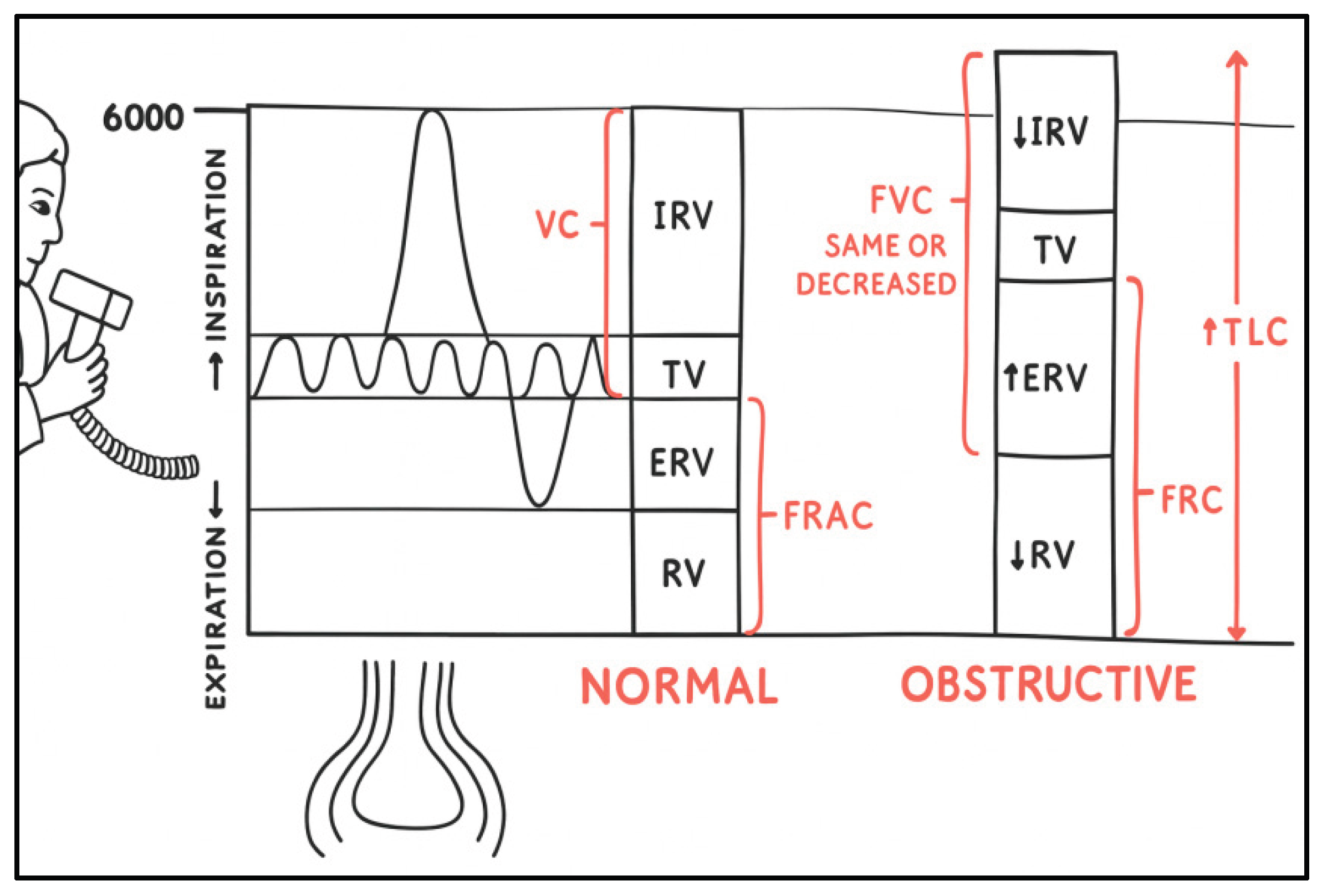

Table 1.
Body Mass Index calculator.
| Category | BMI range (kg/m²) | Characterization |
|---|---|---|
| Underweight | < 18.5 | Low body weight, indicate nutritional deficiency |
| Normal weight | 18.5 – 24.9 | Healthy weight range |
| Overweight | 25.0 – 29.9 | Higher than normal body weight |
| Obesity Class I | 30.0 – 34.9 | Moderate obesity |
| Obesity Class II | 35.0 – 39.9 | Severe obesity |
| Obesity Class III | ≥ 40 | Very severe obesity / morbid obesity |
| Source: O’Neill et al.,2018 | ||
Table 2.
Standard FVC reference.
| Percentage of Predicted | Class range |
|---|---|
| ≥ 80% | Normal |
| 70–79% | Mild reduction |
| 60–69% | Moderate reduction |
| < 60% | Severe reduction |
| Source: Carrie et al., 2018 | |
Table 3.
Anthropometric Characteristics and BMI by Driving Tenure.
| Driving Tenure (years) | Age (years) | Weight (kg) | Height (cm) | BMI (kg/m²) |
|---|---|---|---|---|
| 0–9 (n=34) | 36.62±8.6 | 65.8±10.9 | 161.54±4.8 | 25.1±3.03 |
| 10–19 (n=38) | 44.17±7.2 | 68.06±9.7 | 164.06±6.3 | 25.24±2.96 |
| ≥20 (n=30) | 52.83±5.9 | 62.67±8.7 | 160.24±5.1 | 29.36±2.94 |
Table 4.
BMI Status Among Auto Rickshaw Drivers of Agartala City.
| Body Mass Index | Percentage |
|---|---|
| Underweight (<18.5 kg/m²) | 1.43% |
| Normal (18.5–24.9 kg/m²) | 49.27% |
| Overweight (25.0–29.9 kg/m²) | 40.57% |
| Obesity (≥30 kg/m²) | 8.73% |
Table 5.
BMI and Vital Capacity Stratified by Driving Experience.
| Parameter | 0–9 years | 10–19 years | ≥20 years |
|---|---|---|---|
| BMI (kg/m²) | 25.1±3.03 | 25.24±2.96 | 29.36±2.94 |
| Vital Capacity (L) | 3.3±0.49 | 3.21±0.48 | 3.2±0.61 |
Table 6.
Vital Capacity with Respect to Body Mass Index (BMI) of Auto Rickshaw Drivers of Agartala City.
Table 6.
Vital Capacity with Respect to Body Mass Index (BMI) of Auto Rickshaw Drivers of Agartala City.
| Variable | Groups | Mean | ± S.D |
|---|---|---|---|
| Vital Capacity Body mass index |
Normal BMI | 3.52 | 0.53 |
| Overweight | 2.99 | 0.54 | |
| Obese Type 1 | 2.65 | 0.58 |
Table 7.
Scoliosis Distribution Across Spinal Regions.
| Region of Spine | Scoliosis Left | Scoliosis Right | Aligned |
|---|---|---|---|
| Cervical | 55.72% | 22.85% | 21.43% |
| Thoracic | 70% | 17.14% | 12.86% |
| Lumbar | 64.29% | 14.29% | 21.43% |
Disclaimer/Publisher’s Note: The statements, opinions and data contained in all publications are solely those of the individual author(s) and contributor(s) and not of MDPI and/or the editor(s). MDPI and/or the editor(s) disclaim responsibility for any injury to people or property resulting from any ideas, methods, instructions or products referred to in the content. |
© 2026 by the authors. Licensee MDPI, Basel, Switzerland. This article is an open access article distributed under the terms and conditions of the Creative Commons Attribution (CC BY) license (http://creativecommons.org/licenses/by/4.0/).
Copyright: This open access article is published under a Creative Commons CC BY 4.0 license, which permit the free download, distribution, and reuse, provided that the author and preprint are cited in any reuse.


