

Submitted:
28 April 2026
Posted:
29 April 2026
You are already at the latest version
Abstract
Background/Objectives: Idiopathic granulomatous mastitis (IGM) is a rare, benign, chronic inflammatory disease of the breast that may present with recurrent and treatment-resistant courses and can clinically and radiologically mimic breast cancer. Despite its benign nature, IGM may significantly impair quality of life, and its underlying pathophysiology remains unclear. This study aimed to evaluate oxidative stress and DNA damage in patients with IGM. Methods: In this prospective case–control study, 28 patients with clinically and histopathologically confirmed idiopathic granulomatous mastitis who had not received corticosteroid or immunosuppressive therapy within the previous six months were enrolled. An age-matched control group of 27 healthy women was included. Venous blood and urine samples were collected for the assessment of total oxidant status (TOS), total antioxidant status (TAS), and calculation of the oxidative stress index (OSI). Mononuclear leukocyte DNA damage was evaluated using the alkaline Comet assay, and urinary 8-hydroxy-2′-deoxyguanosine (8-OHdG) levels were measured by ELISA. Sociodemographic data, laboratory and imaging results of the patients were also evaluated. Results: The mean ages of the patient and control groups were 37.3 ± 5.3 and 35.4 ± 8.6 years, respectively, with no significant difference (p = 0.081). Patients exhibited significantly higher inflammatory markers and oxidative stress parameters, including TOS, OSI, and urinary 8-OHdG (p < 0.05), whereas TAS did not differ between groups (p = 0.534). Comet assay analysis demonstrated significantly increased tail intensity (%) and tail moment in the patient group (p = 0.029 and p = 0.016). Conclusions: IGM is associated with increased oxidative stress and mononuclear leukocyte DNA damage. These findings suggest that oxidative stress-induced DNA damage may play a role in the pathophysiology of IGM and highlight the potential value of antioxidant-based therapeutic strategies as adjunctive treatment options.
Keywords:
idiopathic granulomatous mastitis
; oxidative stress
; DNA damage
1. Introduction
Idiopathic granulomatous mastitis (IGM) is a rare, chronic inflammatory disease of the breast with an unknown etiology. It has an annual prevalence of 2.4 in 100,000 and an incidencerate of 0.37%. Although it is a benign disease, IGM may follow a complicated, treatment-resistant course with a tendency for recurrence. The disease was first described by Kessler and Wolloch in 1972, and since then, various etiological hypotheses have been proposed [1,2,3]. Suggested contributing factors include autoimmune mechanisms, pregnancy or breastfeeding history, oral contraceptive use, hyperprolactinemia, smoking, and alpha-1 antitrypsin deficiency, with autoimmune-mediated inflammation considered the most plausible underlying mechanism [4,5]. Clinically and radiologically, IGM may closely mimic breast cancer, making differential diagnosis challenging. Despite being classified as a benign breast disease, its chronic nature and recurrent episodes may significantly impair patients’ quality of life. Clinically, breast mass, tenderness, nipple discharge and retraction, skin ulcerations, abscesses, and sinus or fistula formation can be seen [6,7]. Definitive diagnosis relies on histopathological examination of breast tissue obtained by biopsy, which typically demonstrates a distinctive chronic inflammatory pattern characterized by aggregates of activated macrophages forming non-caseating granulomas [8].
Although no specific ethnic predisposition has been clearly identified, epidemiological data suggest a higher prevalence of IGM in Mediterranean and Asian countries. The increased number of reported cases from developing regions in these areas raises the possibility that genetic susceptibility combined with environmental factors may play a role in disease pathogenesis [9,10]. There is no consensus concerning the definitive treatment approach. Management strategies are individualized based on clinical presentation and range from conservative observation to local or systemic corticosteroids, antibiotics, immunomodulatory therapies, phytotherapy, and, in refractory cases, surgical interventions including mastectomy [11].
Deoxyribonucleic acid (DNA) is the fundamental genetic material of the cell, and persistent DNA damage may result in altered protein synthesis, genomic instability, mutations, and the development of various diseases, including malignancies [12]. Oxidative stress is considered one of the principal causes of DNA damage, leading to DNA strand breaks, nucleotide loss, and oxidative modifications of nucleobases. A close relationship between chronic inflammation and oxidative stress has been demonstrated in numerous studies [13]. Oxidative stress reflects an imbalance between reactive oxygen species (ROS) production and antioxidant defense mechanisms, resulting in oxidative damage to cellular macromolecules such as DNA, proteins, and lipids. In particular, hydroxyl radicals are known to induce extensive damage to purine and pyrimidine bases as well as the deoxyribose backbone of DNA [14].
The alkaline single-cell gel electrophoresis technique, commonly known as the Comet assay, is a widely accepted and sensitive method for assessing DNA damage at the single-cell level. It is extensively used in human biomonitoring, genotoxicity studies, and ecological monitoring to evaluate DNA strand breaks and repair capacity in response to various genotoxic agents. [15]. In other words, DNA fragments with different electrical charges and molecular weights, generated as a result of single- or double-strand breaks, migrate at different rates in an electrophoretic field and form a comet-like distribution according to the extent of DNA damage. Due to its simplicity, low cost, and high sensitivity, the Comet assay is considered particularly suitable for clinical research applications [16].
Another well-established biomarker of oxidative DNA damage is 8-hydroxy-2′-deoxyguanosine (8-OHdG), a modified DNA base generated by ROS-mediated hydroxyl radical attack at the 8-carbon of guanine. Among oxidative base lesions, 8-OHdG is one of the most frequently detected and best-characterized mutagenic products. Following excision by DNA repair enzymes, 8-OHdG enters the systemic circulation and is excreted in urine, where it can be reliably quantified using enzyme-linked immunosorbent assay (ELISA) as a marker of oxidative stress [17].
Aim
IGM appears to be reported relatively frequently in our country compared with many other regions; however, to the best of our knowledge, no previous study has simultaneously evaluated oxidative stress and DNA damage in patients with IGM. The aim of this study was to investigate whether idiopathic granulomatous mastitis is associated with increased oxidative stress and DNA damage. Demonstrating the presence of oxidative stress–related DNA damage in IGM may contribute to a better understanding of disease pathophysiology and support the development of novel therapeutic strategies targeting oxidative stress in this clinically challenging condition.
2. Materials and Methods
In this prospective study, a total of 28 patients with clinically and histopathologically confirmed granulomatous mastitis, classified as idiopathic due to the absence of an identifiable etiological cause, were included. The study was conducted in accordance with the STROBE reporting guidelines. Patients were conducted from the General Surgery Clinic of Bezmialem Vakıf University Faculty of Medicine Hospital and the Granulomatous Mastitis Outpatient Clinic of İstanbul University–Cerrahpaşa, Cerrahpaşa Faculty of Medicine. All patients had not received any systemic or local corticosteroid or immunosuppressive therapy within the preceding six months. In addition, 27 age-matched healthy female volunteers were enrolled as the control group. The study protocol was approved by the Bezmialem Vakıf University Ethics Committee (16.10.2023-E.126508) and conducted in accordance with the Declaration of Helsinki. After providing detailed verbal information about the study, written informed consent was obtained from all participants in both the patient and control groups.
Inclusion Criteria
The study included female participants aged 18 years or older with histopathologically confirmed idiopathic granulomatous mastitis, diagnosed between 2023 and 2024 at Bezmialem Vakıf University Faculty of Medicine Hospital and İstanbul University–Cerrahpaşa Faculty of Medicine Hospital. Eligible patients had breast biopsy findings consistent with granulomatous mastitis, with no identifiable etiological cause, and had not received any local or systemic corticosteroid or immunosuppressive therapy for idiopathic granulomatous mastitis within the preceding six months. Additionally, only patients with negative microbiological cultures for tuberculosis and fungal infections in tissue or aspiration specimens were included. An age-matched group of healthy female volunteers was enrolled as the control group.
Exclusion Criteria
Patients were excluded if they were younger than 18 years, male, or if breast biopsy findings were inconsistent with granulomatous mastitis or revealed an alternative etiological diagnosis. Other exclusion criteria included positive tuberculosis or fungal cultures in tissue or aspiration material, active anti-inflammatory treatment for a chronic autoimmune disease, a diagnosis of malignancy, or the presence of tuberculous mastitis.
Blood Sample Collection and Storage
In addition to routine blood tests obtained during outpatient clinic visits, 10 mL of venous blood was collected under sterile conditions into a single EDTA-containing tube from patients with idiopathic granulomatous mastitis at our clinic and at İstanbul University–Cerrahpaşa, Cerrahpaşa Faculty of Medicine, and immediately transferred to the laboratory. Prior to centrifugation, 250 μL of whole blood was aliquoted into a separate Eppendorf tube and stored at −80°C for subsequent DNA damage analysis. The remaining blood in the EDTA tube was centrifuged at 3000 rpm for 10 minutes, after which plasma samples were separated and stored at −80°C until biochemical analyses were performed. In addition, urine samples collected from patients for 8-hydroxy-2′-deoxyguanosine (8-OHdG) analysis were transferred into Eppendorf tubes and stored at −80°C until the day of analysis.
From these blood and urine samples, mononuclear DNA damage, total antioxidant status (TAS), and total oxidant status (TOS) were measured. The oxidative stress index (OSI) was subsequently calculated.
Total Oxidant Status (TOS) Measurement
Total oxidant status (TOS) was measured using the fully automated colorimetric method developed by Erel. In this assay, oxidants in the sample oxidize the ferrous ion–o-dianisidine complex to ferric ions, which subsequently form a colored complex with xylenol orange in an acidic medium. The intensity of the color, proportional to the total oxidant concentration, was measured spectrophotometrically using an automated analyzer. TOS values were expressed as micromoles of hydrogen peroxide equivalent per liter (μmol H₂O₂ Eq/L).
Total Antioxidant Status (TAS) Measurement
Total antioxidant status (TAS) was determined using the fully automated colorimetric method developed by Erel. In this assay, hydroxyl radicals generated through a Fenton-type reaction oxidize o-dianisidine, resulting in color formation under acidic conditions. Antioxidants present in the sample suppress this oxidation reaction, thereby inhibiting color development. The reaction was measured spectrophotometrically using an automated analyzer. TAS values were expressed as micromoles of Trolox equivalent per liter (μmol Trolox Eq/L).
Oxidative Stress Index (OSI) Calculation
The oxidative stress index (OSI) was calculated as the ratio of total oxidant status (TOS) to total antioxidant status (TAS) using the following formula:
OSİ = TOS (μmol H2O2 Eqv/L) / TAS (mmol Trolox Eqv/L) X 100
Assessment of DNA Damage by the Comet Assay
DNA damage was evaluated using the alkaline single-cell gel electrophoresis (Comet assay) method. This technique is based on the migration of fragmented DNA under an electric field at alkaline pH, with damaged DNA forming a characteristic “comet tail” structure. Blood samples stored at −80 °C were thawed in a water bath at 37 °C for 1–2 minutes before analysis. Ten microliters of whole blood were mixed with 90 µL of pre-warmed low-melting-point agarose (0.65%) and 90 µL of the suspension was layered onto microscope slides pre-coated with 1% normal-melting-point agarose. Each slide contained two samples, which were covered with coverslips and allowed to solidify at 4 °C.
Following agarose solidification, coverslips were removed and slides were incubated overnight at 4 °C in a cold lysis solution containing 2.5 M NaCl, 0.1 M Na₂EDTA, 10 mM Tris, and 1% Triton X-100 (pH 10) to remove cellular and nuclear membranes and allow DNA unwinding. Slides were then rinsed for 15 minutes with neutralization buffer (0.4 M Tris-HCl, pH 7.5) and placed in an electrophoresis chamber containing alkaline electrophoresis buffer (0.3 M NaOH, 1 mM EDTA). DNA was allowed to unwind for 50 minutes at 4 °C without current, followed by electrophoresis at 25 V and 300 mA for 20 minutes at 4 °C.
After electrophoresis, slides were neutralized by washing three times for 3 minutes with neutralization buffer (0.4 M Tris-HCl, pH 7.5), fixed in cold ethanol (−20 °C) for 5 minutes, and air-dried. DNA was stained with ethidium bromide (10 µg/mL; Sigma). Comets were visualized using a fluorescence microscope (Leica DM100, Germany) at 20× magnification. An average of 50 cells per slide were analyzed using Comet Assay IV image analysis software (Perspective Instruments Ltd). DNA damage was quantified using tail DNA percentage and tail moment (product of tail length and percentage of tail DNA).
Urinary 8-Hydroxy-2′-Deoxyguanosine (8-OHdG) Measurement
Reactive oxygen species induce various forms of oxidative DNA base damage, among which 8-hydroxy-2′-deoxyguanosine (8-OHdG) is one of the most sensitive and widely used biomarkers. Urinary 8-OHdG levels were measured using a commercial enzyme-linked immunosorbent assay (ELISA) kit, according to the manufacturer’s instructions. Absorbance values were read using an ELISA microplate reader (Thermo, USA).
Statistical Analysis
Descriptive statistics were presented as mean ± standard deviation, median (minimum–maximum), frequency, and percentage, as appropriate. The distribution of variables was assessed using the Kolmogorov–Smirnov and Shapiro–Wilk tests. For comparisons between independent groups, the independent samples t-test was used for normally distributed quantitative variables, while the Mann–Whitney U test was applied for non-normally distributed variables. Categorical variables were analyzed using the chi-square test or Fisher’s exact test when chi-square assumptions were not met. Receiver operating characteristic (ROC) curve analysis was performed to determine effect size and optimal cut-off values. Univariate and multivariate logistic regression analyses were used to evaluate effect estimates. Pearson or Spearman correlation analyses were conducted according to data distribution. All statistical analyses were performed using SPSS software version 27.0 (IBM Corp., Armonk, NY, USA).
3. Results
All participants included in the study were female. The mean age at diagnosis was 37.3 ± 5.3 years in the patient group and 35.4 ± 8.6 years in the control group, with no significant difference between groups (p = 0.081). The age at menarche was significantly lower and the spontaneous abortion rate was significantly higher in the patient group compared with controls (p < 0.05). No significant differences were observed between groups regarding parity, age at first birth, number of births, induced abortion rate, menopausal status, smoking, oral contraceptive use, history of breastfeeding, family history of breast cancer, or the presence of autoimmune disease. (Table 1)
Breast pain was reported by all patients. Lesions were predominantly unilateral and most frequently located in the upper outer quadrant. (Figure 1) A history of abscess drainage, axillary lymphadenopathy, and fistula formation was common. Previous antibiotic use was reported in 85.7% of patients, while 42.9% had a history of systemic and 35.7% of local corticosteroid use; none had received corticosteroids or immunosuppressive therapy within the preceding six months. Most diagnoses were established by tru-cut biopsy (%78.6).(Table 2)
Laboratory analysis revealed significantly higher white blood cell (WBC) count, neutrophil, lymphocyte counts, neutrophil-to-lymphocyte ratio (NLR), urea, creatinine, lactate dehydrogenase (LDH), and potassium levels in the patient group, while hemoglobin(HB) and hematocrit (HCT) levels were significantly lower (p < 0.05). No significant differences were observed for other routine hematological and biochemical parameters. Regarding oxidative stress parameters, TOS, OSI, and urinary 8-OHdG levels were significantly higher in patients compared with controls (p < 0.05), whereas TAS did not differ significantly between groups.(Table 3).
To assess mononuclear leukocyte DNA damage, a modified alkaline single-cell gel electrophoresis (Comet assay) method was employed. Venous blood samples collected in EDTA tubes were aliquoted (250 µL) into separate Eppendorf tubes prior to centrifugation. Due to cell loss during thawing from −80°C and suspension in low-melting-point agarose, tail intensity and tail moment parameters could be calculated in 14 of 27 patients and 15 of 28 controls. The percentage of tail intensity and tail moment values were significantly higher in the patient group compared with the control group (p = 0.029 and p = 0.016, respectively). (Table 4) (Figure 2)
ROC Analysis and Correlations
ROC curve analysis showed that TOS, urinary 8-OHdG, and OSI each demonstrated significant discriminatory ability in distinguishing patients from controls, with AUC values of 0.73, 0.68, and 0.67, respectively. The optimal cut-off values were 1.36 for TOS (p = 0.009), 24.19 for urinary 8-OHdG (p = 0.0204), and 178.39 for OSI (p = 0.028). At these thresholds, TOS provided 62.96% sensitivity and 77.78% specificity, urinary 8-OHdG showed 100% sensitivity but 48.15% specificity and OSI demonstrated 85.19% specificity with 51.85% sensitivity. (Figure 3)
Tail intensity (%) showed a moderate positive correlation with tail moment (r = 0.64, p = 0.0007), total oxidant status (TOS) (r = 0.73, p < 0.001), and the oxidative stress index (OSI) (r = 0.74, p < 0.001). In contrast, tail intensity (%) was negatively correlated with total antioxidant status (TAS) (r = −0.51, p = 0.005) and showed a moderate positive correlation with urinary 8-hydroxy-2′-deoxyguanosine (8-OHdG) levels (r = 0.45, p = 0.015). Tail moment demonstrated significant positive correlations with TOS (r = 0.69, p < 0.001), OSI (r = 0.73, p = 0.002), and urinary 8-OHdG (r = 0.56, p = 0.002), while showing a negative correlation with TAS (r = −0.53, p = 0.003). A strong positive correlation was observed between TOS and OSI (r = 0.96, p = 0.001). Additionally, TOS was positively correlated with urinary 8-OHdG (r = 0.66, p < 0.001) and negatively correlated with TAS (r = −0.53, p = 0.003). TAS showed a significant negative correlation with OSI (r = −0.73, p = 0.001) and urinary 8-OHdG levels (r = −0.52, p = 0.004). Finally, OSI demonstrated a moderate positive correlation with urinary 8-OHdG (r = 0.66, p < 0.001). These correlations indicate a strong association between oxidative stress and DNA damage, with antioxidant capacity showing an inverse relationship. (Table 5) (Figure 4)
4. Discussion
Idiopathic granulomatous mastitis (IGM) remains a challenging clinical entity due to its ability to mimic breast cancer, the absence of a standardized treatment algorithm, and its unpredictable clinical course, including treatment resistance and recurrence. Despite extensive investigation, the etiopathogenesis of IGM has not been clearly defined. Proposed contributing factors such as hormonal imbalance, autoimmune mechanisms, smoking, infectious agents, and alpha-1 antitrypsin deficiency suggest that dysregulated inflammatory and immune responses may play a central role in disease development [2,5,18]. Currently, increasing emphasis has been placed on the theory that IGM has an autoimmune basis. In the literature, a favorable response to corticosteroid and immunosuppressive therapies, reports of patients presenting with extramammary manifestations such as erythema nodosum or arthritis, and the demonstration of T-lymphocyte predominance in immunohistochemical studies all support the autoimmune hypothesis. Oxidative stress is a well-recognized mediator of chronic inflammation and immune-related tissue injury and has been implicated in the pathogenesis of several granulomatous and autoimmune diseases. Excessive production of reactive oxygen species may overwhelm antioxidant defense mechanisms, leading to cellular damage and genomic instability. A review of the current literature reveals no studies investigating oxidative stress and mononuclear leukocyte DNA damage in patients with IGM [19,20,21,22].
Consistent with large-scale literature, including the systematic review by Martinez-Ramos et al. encompassing 70 studies and 3,060 patients, IGM predominantly affects young to middle-aged women in the early postpartum period, and the age distribution observed in our cohort (mean age: 37.3 ± 5.3 years) aligns closely with previously reported data with no statistically significant difference observed between the groups [21]. Oral contraceptives have been suggested as a potential etiological factor in IGM by increasing mammary secretions; however, reported associations in the literature vary widely (0–42%). In our study , oral contraceptive use was observed in 2 patients (7.1%). Smoking has also been proposed as a possible contributing factor, although no definitive association with IGM has been established [23,24]. No statistically significant differences were observed between the patient and control groups with respect to menopausal status, smoking prevalence, oral contraceptive use, or hyperprolactinemia (p > 0.05).
Management of idiopathic granulomatous mastitis remains challenging due to heterogeneous study populations, small sample sizes, and the absence of a clearly defined etiology, resulting in a wide spectrum of treatment approaches ranging from clinical observation to radical surgery. Reported treatment options include conservative follow-up, abscess drainage with antibiotics, nonsteroidal anti-inflammatory drugs, and, in refractory or complicated cases, local or systemic corticosteroids, colchicine, methotrexate, azathioprine, prolactin inhibitors, or surgical excision [25,26,27]. Systemic corticosteroids and immunosuppressive agents have demonstrated favorable outcomes in selected patients; however, recurrence or treatment resistance remains common, reported in up to 20–50% of cases [28,29,30]. In our study, most patients had received antibiotics prior to diagnosis (85.7%), while systemic and local corticosteroid use was observed in 42.9% and 35.7% of patients, respectively, consistent with previously published treatment patterns. In addition to these treatment strategies, the potential role of diet in IGM management should also be considered, given the growing evidence supporting autoimmune and inflammatory mechanisms in its pathogenesis. Although the role of diet has not been clearly established in IGM, pro-inflammatory dietary patterns have been associated with increased levels of inflammatory mediators such as interleukin-6 and tumor necrosis factor-α, which may contribute to chronic granulomatous inflammation. Conversely, anti-inflammatory diets rich in fruits, vegetables, vitamin D and omega-3 fatty acids may reduce systemic inflammation and oxidative stress, potentially influencing immune regulation and disease activity [31,32,33].
Immune imbalance plays important roles in the onset and progression of autoimmune diseases. Aberrantly activated immune cells release large amounts of cytokines, triggering autoimmune attacks on host tissues. This overexpression of cytokines further exacerbates immune system hyperactivity, creating a cycle that worsens disease severity. Studies have demonstrated that in IGM, dysregulation of T cells, B cells, and Natural killer (NK) cells, along with elevated release of inflammatory cytokines, are central to the disease process. These immune dysregulations can be alleviated by immunosuppressive treatments, suggesting that immune imbalance is a key mechanism underlying the pathological damage in IGM [34].
Dogan et al. demonstrated that patients with IGM had significantly higher neutrophil and eosinophil counts, an increased neutrophil-to-lymphocyte ratio, and a higher proportion of non-classical monocytes compared with controls (p=0.006, p=0.022, p=0.008, and p=0.000, respectively), while CD4+ CD25+ CD127− regulatory T-cell (Treg) levels were significantly reduced (p=0.012), indicating a shift toward a proinflammatory immune profile [22]. Similarly, Koksal et al. evaluated proinflammatory cytokines and reported significantly elevated IL-8, IL-10, and IL-17 levels in IGM patients compared with controls, whereas IL-4 and TNF-α levels did not differ significantly [35]. In another study, Ates et al. investigated the role of triggering receptor expressed on myeloid cells-1 (TREM-1), a key amplifier of inflammatory signaling that enhances IL-6, IL-8, and TNF-α production, and found significantly higher TREM-1 levels in patients with IGM. Given that TREM-1 activation has also been implicated in autoimmune diseases such as rheumatoid arthritis and systemic lupus erythematosus, these findings further support immune dysregulation as a central mechanism in IGM and suggest TREM-1 as a potential therapeutic target [36]. The presence of concomitant autoimmune diseases was evaluated in both patients and healthy volunteers in our study. A total of 13 individuals were found to have an accompanying autoimmune condition, with Hashimoto’s thyroiditis being the most frequently identified (8 patients; 61.5%). Family history of breast cancer was also assessed, and no statistically significant differences were observed between the patient and control groups with respect to the presence of autoimmune diseases or a family history of breast cancer (p > 0.05). []
In a study including 41 patients, Cetinkaya et al. investigated the utility of the neutrophil-to-lymphocyte ratio (NLR) and platelet-to-lymphocyte ratio in predicting recurrence of idiopathic granulomatous mastitis. Both preoperative and postoperative values were evaluated, and only the preoperative NLR was found to be significantly associated with recurrent IGM (p = 0.024), predicting recurrence with a sensitivity of 62.5% and a specificity of 84.8% [37]. Consistent with these findings, in our study neutrophil, leukocyte, and lymphocyte counts, as well as the NLR, were significantly higher in the patient group compared with the control group in our study (p < 0.05).
Although the precise initiating factor remains unclear, accumulating evidence indicates that aberrant immune-mediated responses against normal breast tissue may be involved. Recent whole-exome sequencing studies have provided emerging evidence for a genetic contribution to IGM, identifying novel single nucleotide variants in immune-related genes such as NCF1, CFTR, PTPN22, HLA-DRB1, C3, and BRCA2. Notably, the NCF1 rs10614 variant—previously associated with reduced reactive oxygen species (ROS) production and impaired neutrophil function—suggests a potential mechanistic link between genetic susceptibility, altered oxidative balance, and chronic inflammation. Dysregulated ROS homeostasis may promote persistent immune activation and genomic instability, thereby contributing to the inflammatory microenvironment observed in GM. In parallel, variants affecting immune tolerance and antigen presentation, including PTPN22 rs2476601 and multiple HLA-DRB1 variants, support the concept of defective immune regulation and T-cell–mediated autoimmunity [38,39]. In this context, our findings of increased oxidative stress parameters and mononuclear leukocyte DNA damage further strengthen the hypothesis that IGM develops in genetically predisposed individuals through interconnected pathways involving immune dysregulation and oxidative stress. Although the identified variants are classified as benign and require functional validation, the convergence of genetic susceptibility, oxidative imbalance, and immune activation highlights a plausible integrative mechanism underlying IGM pathogenesis.
Oxidative stress has been consistently implicated in the pathogenesis of multiple autoimmune and autoinflammatory diseases—including systemic lupus erythematosus (SLE), rheumatoid arthritis, ankylosing spondylitis, inflammatory bowel disease, Hashimoto’s thyroiditis, and familial Mediterranean fever—and is particularly relevant given the frequent coexistence of IGM with autoimmune conditions such as SLE and Sjögren’s syndrome [40]. Previous studies have demonstrated increased oxidative DNA damage and impaired antioxidant defense in these conditions. For instance, Buczynska et al. reported significantly elevated levels of 8-hydroxy-2′-deoxyguanosine (8-OHdG), a marker of oxidative DNA damage, in patients with Hashimoto’s thyroiditis compared with healthy controls [41]. Similarly, Da Silva et al. highlighted that excessive production of reactive oxygen species (ROS) and autoantibodies in autoimmune diseases accelerates tissue damage and disease progression, while suggesting antioxidant strategies as a potential adjunctive therapeutic approach [42]. In inflammatory bowel disease, Muro et al. demonstrated significantly increased oxidative stress markers, including malondialdehyde and 8-OHdG, which correlated with disease severity, and Aslan et al. further showed increased DNA damage assessed by comet assay alongside elevated TOS and OSI values [43,44]. In rheumatoid arthritis, Kundu et al. identified markedly increased ROS production in neutrophils, which showed a strong positive correlation with inflammatory markers such as CRP [45]. Likewise, Souliotis et al. demonstrated significantly increased DNA damage parameters in patients with systemic lupus erythematosus using the comet assay technique [46]. Consistent with these findings, our study demonstrated significantly higher total oxidant status, urinary 8-OHdG levels, oxidative stress index, and mononuclear leukocyte DNA damage in patients with idiopathic granulomatous mastitis compared with healthy controls, while total antioxidant status did not differ significantly between groups. Collectively, these findings support the concept that oxidative stress–induced DNA damage represents a shared mechanistic pathway across autoimmune diseases and suggest that similar redox imbalance may play a critical role in the immunopathogenesis of idiopathic granulomatous mastitis.
5. Conclusions
This study evaluated oxidative stress and mononuclear leukocyte DNA damage in patients with idiopathic granulomatous mastitis (IGM), addressing a gap in the existing literature in which oxidative stress and DNA damage have not previously been assessed together in this disease. Our findings demonstrated significantly increased total oxidant status, urinary 8-hydroxy-2′-deoxyguanosine levels, oxidative stress index, and oxidative burden in patients with IGM. Furthermore, DNA damage parameters assessed by the comet assay, including tail moment and tail intensity, were markedly elevated compared with healthy controls. These results indicate that oxidative stress–induced DNA damage may play a contributory role in the pathogenesis of IGM. Importantly, all patients were evaluated during the remission phase and were not receiving active medical therapy at the time of sampling, minimizing the potential influence of treatment on oxidative stress markers and suggesting that the observed alterations more accurately reflect the underlying pathophysiology of the disease. Given the absence of a standardized treatment algorithm for IGM, identifying oxidative stress and DNA damage as potential pathogenic mechanisms may provide a rationale for exploring antioxidant-based therapeutic strategies, similar to those investigated in other autoimmune diseases. Moreover, our findings may serve as a foundation for future studies focusing on disease-specific autoantibodies, genetic susceptibility, and targeted treatment approaches, thereby contributing to improved diagnostic and therapeutic strategies for IGM.
Author Contributions
Conceptualization C.G., H.D. and A.A.; Methodology C.G., A.K., G.Ş.; Software C.G.; Validation C.G., A.K., G.Ş. ; Formal analysis C.G., A.K., G.Ş.; Investigation C.G., H.D., A.K. and G.Ş.; Resources H.D., A.A., M.V. and B.P.K.; Data curation, C.G.; G.Ş. ; Writing—original draft preparation C.G.; H.D. and A.A; Writing—review and editing C.G., H.D., A.A.; Visualization C.G.; Supervision A.A, H.D.; Project administration C.G., H.D and A.A.; Funding acquisition C.G., H.D. All authors have read and agreed to the published version of the manuscript.
Funding
This research was funded by Bezmialem Vakıf University Scientific Research Project Coordination Unit with grant number 20231204.
Institutional Review Board Statement
The study was conducted in accordance with the Declaration of Helsinki, and approved by the Bezmialem Vakıf University Ethics Committee (16.10.2023-E.126508).
Informed Consent Statement
Informed consent was obtained from all participants included in the study.
Data Availability Statement
The datasets generated and/or analyzed during this study are not publicly available for ethical reasons but are available from the corresponding author upon reasonable request.
Acknowledgements
The authors would like to thank the participants for their contribution and Istanbul University–Cerrahpaşa Faculty of Medicine Hospital for their support in the recruitment of patients with idiopathic granulomatous mastitis included in this study.
Conflict of Interest
The authors declare no conflicts of interest related to this study.
Abbreviations
The following abbreviations are used in this manuscript:
| IGM | Idiopathic granulomatous mastitis |
| TOS | Total oxidant status |
| TAS | Total antioxidant status |
| OSI | Oxidative stress index |
| 8-OhdG | 8-hydroxy-2′-deoxyguanosine |
| DNA | Deoxyribonucleic acid |
| ROS | Reactive oxygen species |
| ROC | Receiver operating characteristic |
| ELISA | Enzyme-linked immunosorbent assay |
| WBC | White blood cell |
| NLR | Neutrophil-to-lymphocyte ratio |
| Hb | Hemoglobin |
| Hct | Hematocrit |
| NK | Natural killer cell |
| TREM-1 | Triggering receptor expressed on myeloid cells-1 |
| SLE | Systemic lupus erythematosus |
References
- Kessler, E.; Wolloch, Y. Granulomatous Mastitis: A Lesion Clinically Simulating Carcinoma. Am. J. Clin. Pathol. 1972, 58, 642–646. [CrossRef]
- Altintoprak, F.; Karakece, E.; Kivilcim, T.; Dikicier, E.; Cakmak, G.; Celebi, F.; Ciftci, I.H. Idiopathic Granulomatous Mastitis: An Autoimmune Disease?. Sci. World J. 2013, 2013, 148727. [CrossRef]
- D. Y. Kehribar, T. I. Duran, A. K. Polat, and M. Ozgen,“Efectiveness of methotrexate in idiopathic granulomatousmastitis treatment,” Te American Journal of the MedicalSciences, vol. 360, no. 5, pp. 560–565, 2020.
- Cohen C. Granulomatous mastitis. A review of 5 cases. S Afr Med J. 1977 Jul 2;52(1):14–6.
- Altintoprak, F.; Kivilcim, T.; Ozkan, O.V. Aetiology of idiopathic granulomatous mastitis. World J. Clin. Cases 2014, 2, 852–8. [CrossRef]
- Al-Khaffaf, B.; Knox, F.; Bundred, N.J. Idiopathic Granulomatous Mastitis: A 25-Year Experience. J. Am. Coll. Surg. 2008, 206, 269–273. [CrossRef]
- Benson JR, Dumitru D. Idiopathic granulomatous mastitis: Presentation, investigation and management. Vol. 12, Future Oncology. Future Medicine Ltd.; 2016. p. 1381–94.
- Heer, R.; Shrimankar, J.; Griffith, C. Granulomatous mastitis can mimic breast cancer on clinical, radiological or cytological examination: a cautionary tale. Breast 2003, 12, 283–286. [CrossRef]
- Zhang, M.; Pu, D.; Feng, D.; Shi, G.; Li, J. Rare and Complicated Granulomatous Lobular Mastitis (2000–2023): A Bibliometrics Study and Visualization Analysis. J. Inflamm. Res. 2024, ume 17, 3709–3724. [CrossRef]
- Sarmadian, R.; Safi, F.; Sarmadian, H.; Shokrpour, M.; Almasi-Hashiani, A. Treatment modalities for granulomatous mastitis, seeking the most appropriate treatment with the least recurrence rate: a systematic review and meta-analysis. Eur. J. Med Res. 2024, 29, 1–21. [CrossRef]
- Velidedeoglu, M.; Kilic, F.; Mete, B.; Yemisen, M.; Celik, V.; Gazioglu, E.; Ferahman, M.; Ozaras, R.; Yilmaz, M.H.; Aydogan, F. Bilateral idiopathic granulomatous mastitis. Asian J. Surg. 2016, 39, 12–20. [CrossRef]
- Basu, A.K. DNA Damage, Mutagenesis and Cancer. Int. J. Mol. Sci. 2018, 19, 970. [CrossRef]
- Altindag, O.; Karakoc, M.; Kocyigit, A.; Celik, H.; Soran, N. Increased DNA damage and oxidative stress in patients with rheumatoid arthritis. Clin. Biochem. 2007, 40, 167–171. [CrossRef]
- Kocyigit, A.; Keles, H.; Selek, S.; Guzel, S.; Celik, H.; Erel, O. Increased DNA damage and oxidative stress in patients with cutaneous leishmaniasis. Mutat. Res. Toxicol. Environ. Mutagen. 2005, 585, 71–78. [CrossRef]
- Dizdaroglu, M. Oxidatively induced DNA damage: Mechanisms, repair and disease. Cancer Lett. 2012, 327, 26–47. [CrossRef]
- Collins, A.R. The Comet Assay for DNA Damage and Repair: Principles, Applications, and Limitations. Mol. Biotechnol. 2004, 26, 249–261. [CrossRef]
- Valavanidis, A.; Vlachogianni, T.; Fiotakis, C. 8-hydroxy-2′ -deoxyguanosine (8-OHdG): A Critical Biomarker of Oxidative Stress and Carcinogenesis. J. Environ. Sci. Heal. Part C 2009, 27, 120–139. [CrossRef]
- Velidedeoglu, M.; Kundaktepe, B.P.; Aksan, H.; Uzun, H. Preoperative Fibrinogen and Hematological Indexes in the Differential Diagnosis of Idiopathic Granulomatous Mastitis and Breast Cancer. Medicina 2021, 57, 698. [CrossRef]
- Emsen, A.; Köksal, H.; Uçaryilmaz, H.; Kadoglou, N.; Artaç, H. The alteration of lymphocyte subsets in idiopathic granulomatous mastitis. Turk. J. Med Sci. 2021, 51, 1905–1911. [CrossRef]
- Velidedeoglu M, Umman V, Kilic F, Celik V, Gazioglu E, Hatipoglu E, et al. Idiopathic granulomatous mastitis: introducing a diagnostic algorithm based on 5 years of follow-up of 152 cases from Turkey and a review of the literature. Surg Today. 2022 Apr 21;52(4):668–80.
- Martinez-Ramos, D.; Simon-Monterde, L.; Suelves-Piqueres, C.; Queralt-Martin, R.; Granel-Villach, L.; Laguna-Sastre, J.M.; Nicolau, M.J.; Escrig-Sos, J. Idiopathic granulomatous mastitis: A systematic review of 3060 patients. Breast J. 2019, 25, 1245–1250. [CrossRef]
- Dogan, S.; Dal, F.; Guler, M.; Sevik, H.; Idiz, U.O. Is peripheral blood immunophenotyping useful to understand the etiology of Idiopathic Granulomatous?. Hum. Immunol. 2023, 84, 315–319. [CrossRef]
- Baslaim, M.M.; Khayat, H.A.; Al-Amoudi, S.A. Idiopathic Granulomatous Mastitis: A Heterogeneous Disease with Variable Clinical Presentation. World J. Surg. 2007, 31, 1677–1681. [CrossRef]
- Rowe, P.H. Granulomatous Mastitis Associated with a Pituitary Prolactinoma. Int. J. Clin. Pr. 1984, 38, 32–34. [CrossRef]
- Çetinkaya, G.; Kozan, R.; Emral, A.C.; Tezel, E. Granulomatous mastitis, watch and wait is a good option. Ir. J. Med Sci. (1971 -) 2020, 190, 1117–1122. [CrossRef]
- Fattahi, A.S.; Amini, G.; Sajedi, F.; Mehrad-Majd, H. Factors Affecting Recurrence of Idiopathic Granulomatous Mastitis: A Systematic Review. Breast J. 2023, 2023, 1–12. [CrossRef]
- Erozgen, F.; Ersoy, Y.E.; Akaydin, M.; Memmi, N.; Celik, A.S.; Celebi, F.; Guzey, D.; Kaplan, R. Corticosteroid treatment and timing of surgery in idiopathic granulomatous mastitis confusing with breast carcinoma. Breast Cancer Res. Treat. 2010, 123, 447–452. [CrossRef]
- Mizrakli, T.; Velidedeoglu, M.; Yemisen, M.; Mete, B.; Kilic, F.; Yilmaz, H.; Ozturk, T.; Ozaras, R.; Aydogan, F.; Perek, A. Corticosteroid treatment in the management of idiopathic granulomatous mastitis to avoid unnecessary surgery. Surg. Today 2014, 45, 457–465. [CrossRef]
- Toktas, O.; Konca, C.; Trabulus, D.C.; Soyder, A.; Koksal, H.; Karanlik, H.; Polat, A.K.; Ozbas, S.; Yormaz, S.; Isik, A.; et al. A Novel First-Line Treatment Alternative for Noncomplicated Idiopathic Granulomatous Mastitis: Combined İntralesional Steroid İnjection with Topical Steroid Administration. Breast Care 2020, 16, 181–187. [CrossRef]
- Papila Kundaktepe B, Velidedeoğlu M, Mete B. The effect of methotrexate monotherapy on treatment-resistant idiopathic granulomatous mastitis patients. The Surgeon. 2022 Jun;20(3):e13–9.
- Zeng, Y.; Zhang, D.; Fu, N.; Zhao, W.; Huang, Q.; Cui, J.; Chen, Y.; Liu, Z.; Zhang, X.; Zhang, S.; et al. Risk Factors for Granulomatous Mastitis and Establishment and Validation of a Clinical Prediction Model (Nomogram). Risk Manag. Heal. Policy 2023, ume 16, 2209–2222. [CrossRef]
- Afeiche, M.C.; Iroz, A.; Thielecke, F.; De Castro, A.C.; Lefebvre, G.; Draper, C.F.; Martínez-Costa, C.; Haaland, K.; Marchini, G.; Agosti, M.; et al. The Dietary Inflammatory Index Is Associated with Subclinical Mastitis in Lactating European Women. Nutrients 2022, 14, 4719. [CrossRef]
- Ramos-Lopez, O.; Martinez-Urbistondo, D.; Vargas-Nuñez, J.A.; Martinez, J.A. The Role of Nutrition on Meta-inflammation: Insights and Potential Targets in Communicable and Chronic Disease Management. Curr. Obes. Rep. 2022, 11, 305–335. [CrossRef]
- Wang, X.; He, X.; Liu, J.; Zhang, H.; Wan, H.; Luo, J.; Yang, J. Immune pathogenesis of idiopathic granulomatous mastitis: from etiology toward therapeutic approaches. Front. Immunol. 2024, 15, 1295759. [CrossRef]
- Koksal, H.; Vatansev, H.; Artac, H.; Kadoglou, N. The clinical value of interleukins-8, -10, and -17 in idiopathic granulomatous mastitis. Clin. Rheumatol. 2020, 39, 1671–1677. [CrossRef]
- Ates, D.; Doner, H.C.; Kurban, S.; Koksal, H. The Effect of Soluble TREM-1 in Idiopathic Granulomatous Mastitis. Immunol. Investig. 2021, 51, 839–850. [CrossRef]
- Cetinkaya ÖA, Çelik SU, Terzioğlu SG, Eroğlu A. The Predictive Value of the Neutrophil-to-Lymphocyte and Platelet-to-Lymphocyte Ratio in Patients with Recurrent Idiopathic Granulomatous Mastitis. Eur J Breast Health. 2020 Jan;16(1):61–5.
- Zhu, Q.; Wang, L.; Wang, P. The Identification of Gene Expression Profiles Associated with Granulomatous Mastitis. Breast Care 2020, 16, 319–327. [CrossRef]
- Ozcinar, B.; Ocak, Z.; Billur, D.; Ertugrul, B.; Timirci-Kahraman, O. Whole-Exome Sequencing: Discovering Genetic Causes of Granulomatous Mastitis. Int. J. Mol. Sci. 2025, 26, 425. [CrossRef]
- Kurien, B.T.; Hensley, K.; Bachmann, M.; Scofield, R.H. Oxidatively modified autoantigens in autoimmune diseases. Free. Radic. Biol. Med. 2006, 41, 549–556. [CrossRef]
- Buczyńska A, Sidorkiewicz I, Wiatr A, Adamska A, Siewko K, Krętowski A, et al. The role of oxidative stress in Hashimoto’s disease. Endocrine Abstracts. 2023 May 2;
- da Silva, G.B.; Yamauchi, M.A.; Bagatini, M.D. Oxidative stress in Hashimoto’s thyroiditis: possible adjuvant therapies to attenuate deleterious effects. Mol. Cell. Biochem. 2022, 478, 949–966. [CrossRef]
- Muro, P.; Zhang, L.; Li, S.; Zhao, Z.; Jin, T.; Mao, F.; Mao, Z. The emerging role of oxidative stress in inflammatory bowel disease. Front. Endocrinol. 2024, 15, 1390351. [CrossRef]
- Aslan M, Nazligul Y, Bolukbas C, Bolukbas FF, Horoz M, Dulger AC, et al. Peripheral lymphocyte DNA damage and oxidative stress in patients with ulcerative colitis. Pol Arch Intern Med. 2011 Jul 1;121(7–8):223–9.
- Kundu, S.; Ghosh, P.; Datta, S.; Ghosh, A.; Chattopadhyay, S.; Chatterjee, M. Oxidative stress as a potential biomarker for determining disease activity in patients with Rheumatoid Arthritis. Free. Radic. Res. 2012, 46, 1482–1489. [CrossRef]
- Souliotis, V.L.; Sfikakis, P.P. Increased DNA double-strand breaks and enhanced apoptosis in patients with lupus nephritis. Lupus 2014, 24, 804–815. [CrossRef]
Figure 1.
Localization of lesions by breast quadrants.
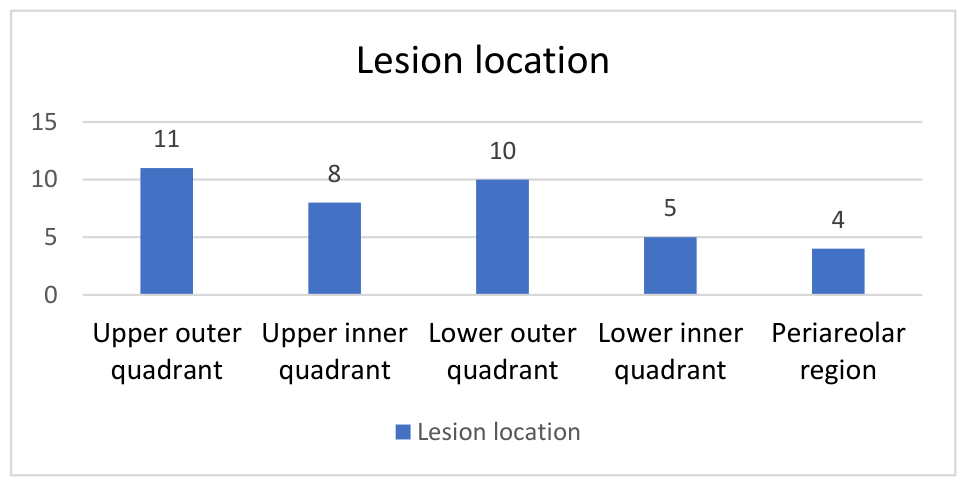
Figure 2.
Representative images of damaged DNA exhibiting a comet-like appearance in the patient group, as assessed by the alkaline single-cell gel electrophoresis (Comet assay).
Figure 2.
Representative images of damaged DNA exhibiting a comet-like appearance in the patient group, as assessed by the alkaline single-cell gel electrophoresis (Comet assay).
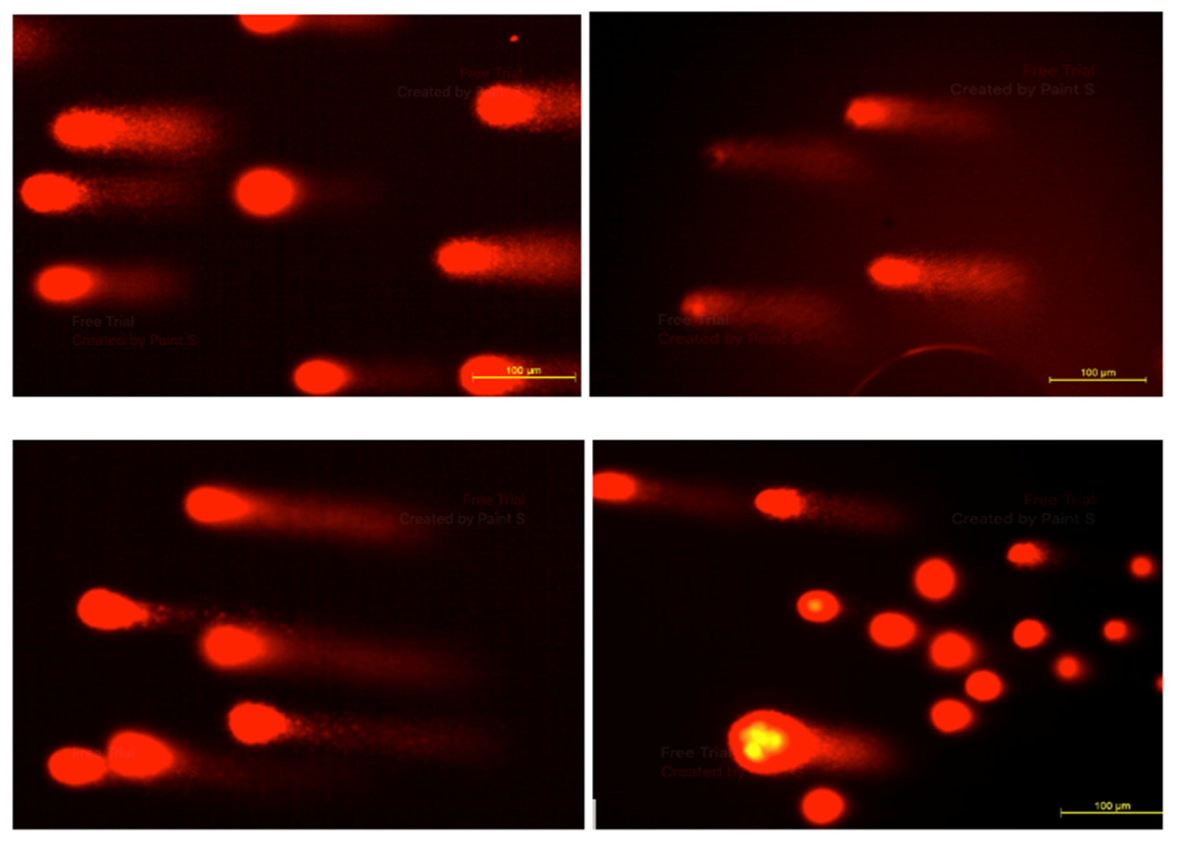
Figure 3.
ROC curves of oxidative stress markers for discrimination between patient and control groups.
Figure 3.
ROC curves of oxidative stress markers for discrimination between patient and control groups.
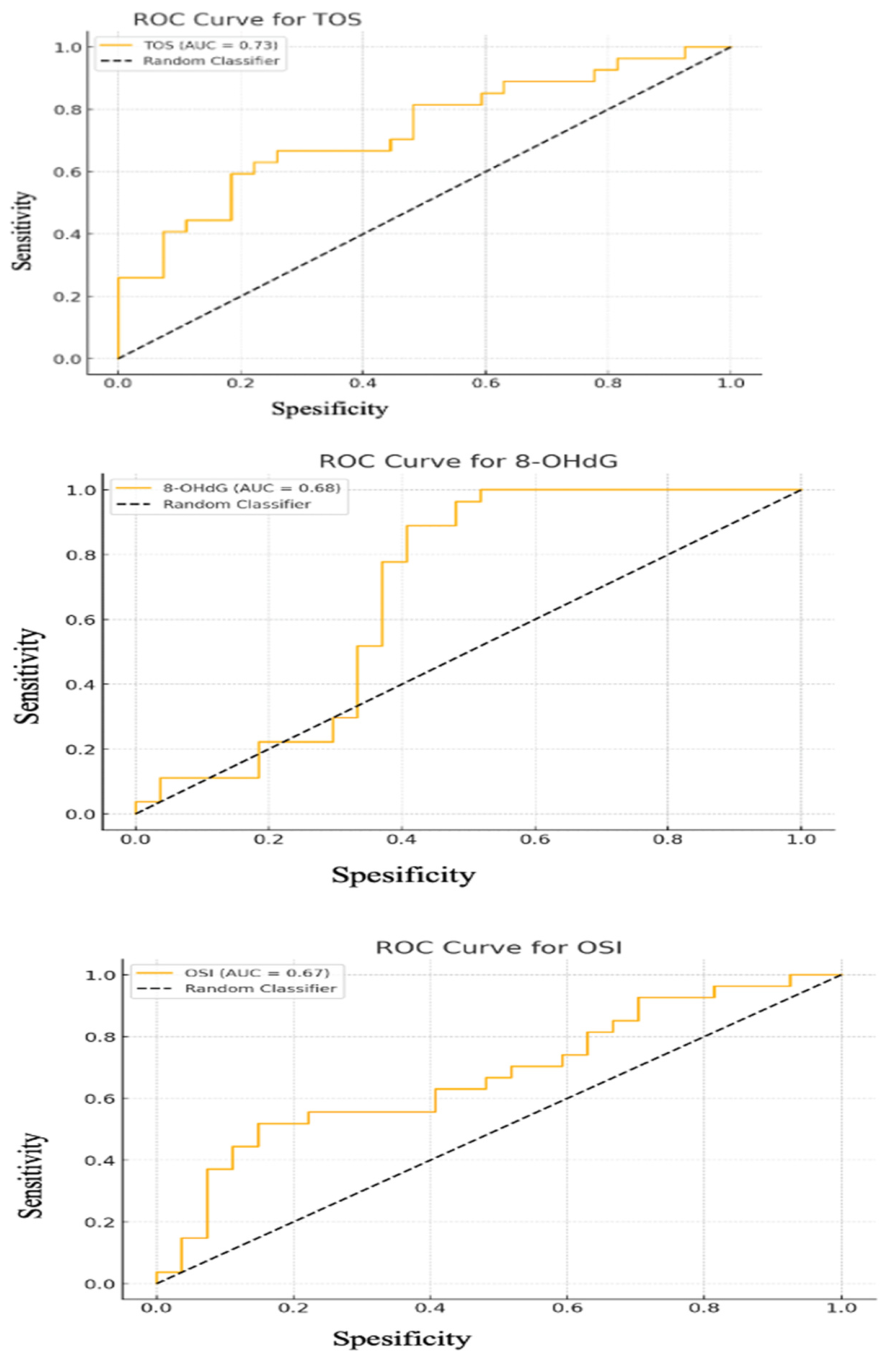
Figure 4.
“Correlation plots of DNA damage, 8-OHdG, and oxidative stress parameters in the control and patient groups.”.
Figure 4.
“Correlation plots of DNA damage, 8-OHdG, and oxidative stress parameters in the control and patient groups.”.
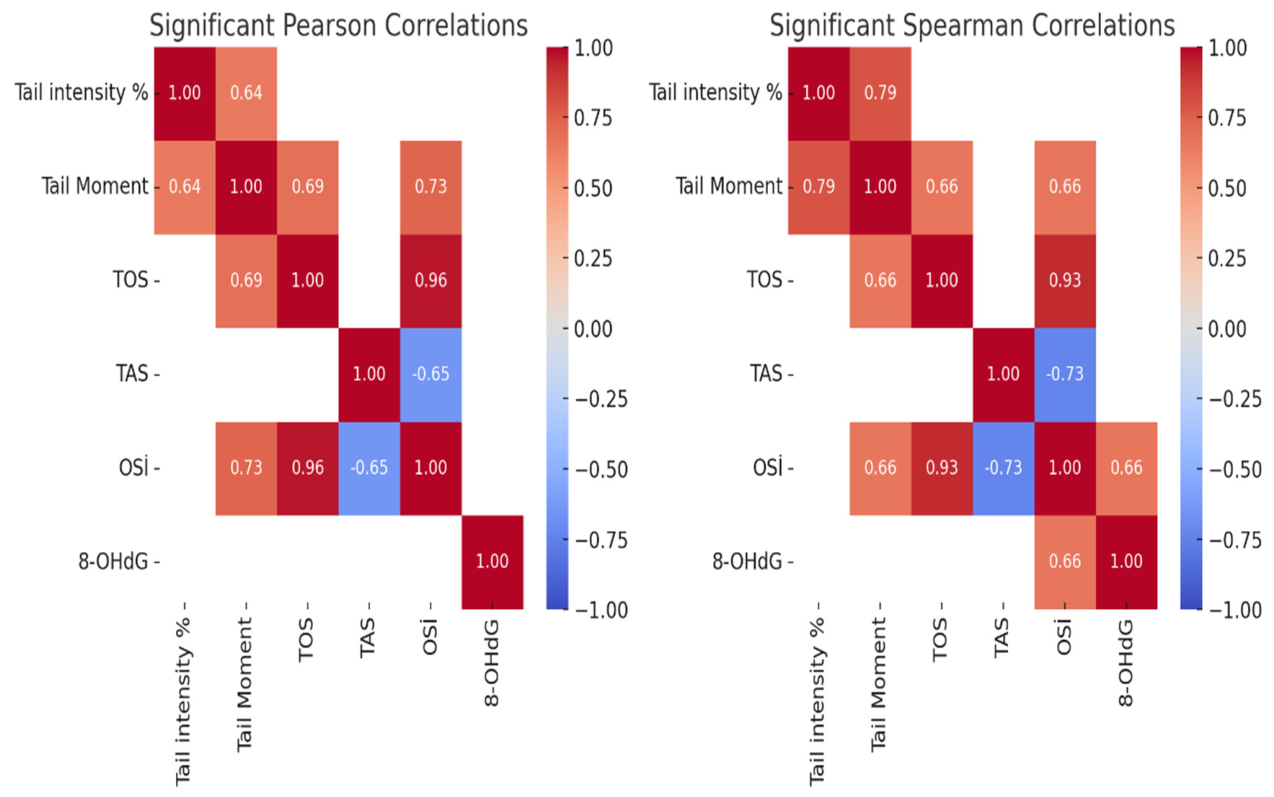

Table 1.
Demographic characteristics of patient and control groups.
| Control group (n=27) | Patient Group (n=28) | p | |||||||||
| Mean±SD/n-% | Median | Mean±SD/n-% | Median | ||||||||
| Age | 35.4 | ± | 8.6 | 32.0 | 37.3 | ± | 5.3 | 37.5 | 0.081 | m | |
| Age at menarche | 13.7 | ± | 1.4 | 14.0 | 12.8 | ± | 1.1 | 13.0 | 0.006 | m | |
| Parity | (-) | 9 | 33.3% | 4 | 14.3% | 0.179 | X² | ||||
| (+) | 18 | 66.7% | 24 | 85.7% | |||||||
| Age at first birth | 23.8 | ± | 5.5 | 21.0 | 23.5 | ± | 4.6 | 23.5 | 0.901 | m | |
| Number of births | 1.8 | ± | 0.7 | 2.0 | 2.6 | ± | 1.1 | 2.0 | 0.055 | m | |
| Spontaneous abortion | (-) | 26 | 96.3% | 21 | 75.0% | 0.025 | X² | ||||
| I | 1 | 3.7% | 6 | 21.4% | |||||||
| II | 0 | 0.0% | 1 | 3.6% | |||||||
| Induced abortion | (-) | 25 | 92.6% | 23 | 82.1% | 0.245 | X² | ||||
| I | 1 | 3.7% | 4 | 14.3% | |||||||
| II | 1 | 3.7% | 1 | 3.6% | |||||||
| History of breastfeeding | (-) (+) |
9 18 |
33.3% 66.7% |
4 24 |
14.3% 85.7% |
0.179 | X² | ||||
| Presence of autoimmune disease | (-) (+) |
20 7 |
74.1% 25.9% |
22 6 |
78.6% 21.4% |
0.695 | X² | ||||
| Family history of breast cancer | (-) (+) |
24 3 |
88.9% 11.1% |
25 3 |
89.3% 10.7% |
0.962 | X² | ||||
|
Menopausal status Premenopausal Postmenopasal |
24 3 |
88.9% 11.1% |
280 | 100.0% 0.0% |
0.111 | X² | |||||
| Smoking status | (-) (+) |
14 13 |
51.9% 48.1% |
18 10 |
64.3% 35.7% |
0.350 | X² | ||||
| Oral contraceptive use | (-) (+) |
26 1 |
96.3% 3.7% |
26 2 |
92.9% 7.1% |
1.000 | X² | ||||
Table 2.
Clinical characteristics of the patients.
| Number of patient | n-% | ||
| History of abscess drainage | (-) | 7 | 25.0% |
| (+) | 21 | 75.0% | |
| Presence of axillary lymphadenopathy | (-) | 7 | 25.0% |
| (+) | 21 | 75.0% | |
| Presence of breast fistula | (-) | 13 | 46.4% |
| (+) | 15 | 53.6% | |
| Prior antibiotic use | (-) | 4 | 14.3% |
| (+) | 24 | 85.7% | |
| History of systemic steroid use | (-) | 16 | 57.1% |
| (+) | 12 | 42.9% | |
| History of topical steroid use | (-) | 18 | 64.3% |
| (+) | 10 | 35.7% | |
| Biopsy method | Core needle biopsy | 22 | 78.6% |
| Excisional biopsy | 5 | 17.8% | |
| Fine-needle aspiration biopsy (FNAB) | 1 | 3.6% |
Table 3.
Comparison of hematological, biochemical, serological, and oxidative stress parameters between patient and control groups.
Table 3.
Comparison of hematological, biochemical, serological, and oxidative stress parameters between patient and control groups.
| Control Group (n=27) | Patient Group (n=28) | p | |||||||||
| Mean±SD | Median | Mean±SD | Median | ||||||||
| WBC (×10⁹/L) | 7.5 | ± | 1.1 | 7.8 | 8.7 | ± | 1.4 | 8.61 | 0.002 | t | |
| Neutrophil (×10⁹/L) | 3.9 | ± | 1.1 | 3.8 | 6.5 | ± | 1.4 | 6.3 | 0.000 | t | |
| Lymphocyte (×10⁹/L) | 1.8 | ± | 0.4 | 1.8 | 2.2 | ± | 0.7 | 2.2 | 0.027 | m | |
| NLR | 2.04 | ± | 0.57 | 2.06 | 3.02 | ± | 1.1 | 3.05 | 0.007 | m | |
| HB (g/dL) | 13.5 | ± | 1.0 | 13.6 | 12.5 | ± | 1.2 | 12.6 | 0.003 | t | |
| HCT (%) | 43.3 | ± | 2.8 | 44.4 | 40.4 | ± | 4.2 | 41.1 | 0.008 | m | |
| PLT (×10⁹/L) | 301.7 | ± | 44.4 | 312.0 | 291.0 | ± | 47.4 | 276.0 | 0.395 | t | |
| MCV (fL) | 88.4 | ± | 2.8 | 88.6 | 88.2 | ± | 2.8 | 87.9 | 0.844 | t | |
| MCH (pg) | 30.0 | ± | 1.6 | 29.9 | 29.9 | ± | 1.6 | 29.7 | 0.730 | t | |
| MCHC (g/dL) | 33.6 | ± | 1.3 | 33.8 | 33.6 | ± | 1.2 | 33.7 | 0.821 | t | |
| Urea (mg/dL) | 31.0 | ± | 5.5 | 29.7 | 47.1 | ± | 6.0 | 44.4 | 0.000 | m | |
| Creatinine (mg/dL) | 0.78 | ± | 0.20 | 0.74 | 1.14 | ± | 0.32 | 1.28 | 0.000 | m | |
| AST (U/L) | 20.1 | ± | 6.1 | 19.0 | 21.5 | ± | 6.4 | 21.5 | 0.418 | m | |
| ALT (U/L) | 29.9 | ± | 10.7 | 31.0 | 30.0 | ± | 11.1 | 29.5 | 0.970 | t | |
| LDH (U/L) | 157.5 | ± | 35.9 | 149.0 | 274.8 | ± | 35.6 | 267.0 | 0.000 | t | |
| Serum albumin (g/dL) | 3.9 | ± | 0.5 | 3.9 | 3.9 | ± | 0.6 | 3.9 | 0.993 | t | |
| Serum sodium (mmol/L) | 139.4 | ± | 3.8 | 139.0 | 138.9 | ± | 3.6 | 139.0 | 0.563 | t | |
| Serum potassium (mmol/L) | 3.8 | ± | 0.3 | 3.7 | 4.9 | ± | 0.5 | 4.9 | 0.000 | m | |
| TOS (µmol H2O2 Equiv./L) | 1.04 | ± | 0.71 | 0.81 | 2.39 | ± | 2.27 | 1.43 | 0.009 | m | |
| TAS (mmol Trolox Equiv./L) | 0.85 | ± | 0.32 | 0.91 | 0.89 | ± | 0.22 | 0.90 | 0.534 | t | |
| Urine 8-OHdG (ng/ml) | 23.62 | ± | 19.2 | 25.63 | 36.3 | ± | 8.5 | 35.0 | 0.024 | m | |
| OSI(arbitrary unit,AU) | 155.2 | ± | 168.2 | 116.7 | 284.7 | ± | 296.5 | 178.3 | 0.028 | m | |
Table 4.
Tail intensity, Tail moment Analysis of control and patient groups m Mann-whitney u test .
| Min-Max | Median | Mean±SD | |||||||||||
| Tail İntensity % | 0.003 | - | 16.58 | 3.45 | 4.84 | ± | 5.0 | ||||||
| Tail Moment | 0.0001 | - | 51.74 | 16.51 | 17.16 | ± | 14.7 | ||||||
| Control Group (n=15) | Patient Group (n=14) | p | |||||||||||
| Mean±SD | Median | Mean±SD | Median | ||||||||||
| Tail İntensity % | 3.15 | ± | 4.1 | 1.80 | 6.78 | ± | 5.3 | 5.26 | 0.029 | m | |||
| Tail Moment | 10.8 | ± | 11.9 | 7.71 | 24.0 | ± | 15.0 | 22.29 | 0.016 | m | |||
Table 5.
Correlation analysis of DNA damage, 8-OHdG, and oxidative stress markers in patient and control groups.
Table 5.
Correlation analysis of DNA damage, 8-OHdG, and oxidative stress markers in patient and control groups.
| Tail İntensity % | Tail Moment | TOS | TAS | OSİ | ||
| Tail Moment | r | 0.64 | ||||
| p | 0.0007 | |||||
| TOS | r | 0.729 | 0.69 | |||
| p | 0.000 | 0.000 | ||||
| TAS | r | -0.511 | -0.528 | -0.529 | ||
| p | 0.005 | 0.003 | 0.003 | |||
| OSİ | r | 0.735 | 0.734 | 0.961 | -0.727 | |
| p | 0.000 | 0.002 | 0.001 | 0.001 | ||
| 8-OHDG | r | 0.449 | 0.556 | 0.664 | -0.522 | 0.662 |
| p | 0.015 | 0.002 | 0.000 | 0.004 | 0.000 | |
| Pearson-Spearman Correlation | ||||||
Disclaimer/Publisher’s Note: The statements, opinions and data contained in all publications are solely those of the individual author(s) and contributor(s) and not of MDPI and/or the editor(s). MDPI and/or the editor(s) disclaim responsibility for any injury to people or property resulting from any ideas, methods, instructions or products referred to in the content. |
© 2026 by the authors. Licensee MDPI, Basel, Switzerland. This article is an open access article distributed under the terms and conditions of the Creative Commons Attribution (CC BY) license.
Copyright: This open access article is published under a Creative Commons CC BY 4.0 license, which permit the free download, distribution, and reuse, provided that the author and preprint are cited in any reuse.


