

Submitted:
27 April 2026
Posted:
29 April 2026
You are already at the latest version
Abstract
The AMA Guides to the Evaluation of Permanent Impairment; Sixth Edition have undergone a substantial transformation from a static publication to a continuously refined digital resource. This transition reflects both the rapid evolution of medical knowledge and longstanding concerns regarding the usability and reproducibility of impairment ratings. Central to this transformation was the establishment of the AMA Guides Editorial Panel in 2019, which introduced a structured, evidence-based framework for iterative revision. This review examines the development of AMA Guides Digital, the governance and methodological contributions of the Editorial Panel, and major system-specific refinements, with particular emphasis on the Nervous System chapter in 2023, the Musculoskeletal chapters in 2024, and the Pulmonary chapter in 2025. These developments demonstrate a shift toward transparency, methodological rigor, and alignment with contemporary clinical practice while maintaining continuity with the foundational principles of the Sixth Edition.
Keywords:
impairment
; disability
; digital
; musculoskeletal
; neurology
; pulmonary
; spirometry
; resource
; methods
; transparency
; reproducibility
; reliability
1. Introduction
The AMA Guides to the Evaluation of Permanent Impairment have long served as the principal standard for assessing permanent impairment in clinical, occupational, and medicolegal contexts. Since the publication of the Sixth Edition in 2008, the Guides have been widely adopted across jurisdictions; however, they have also been the subject of ongoing critique related to complexity, limited adaptability to emerging medical evidence, and variability in application.[1,2,3] Over time, it became increasingly evident that a static print edition was insufficient to meet the demands of modern medical practice, in which diagnostic and therapeutic advances occur rapidly and require timely incorporation into evaluative frameworks [4].
In response to these challenges, the American Medical Association initiated a transition to a digital platform, referred to as AMA Guides Digital.[5] This transition was not merely a change in format, but a fundamental change in the conceptual model underlying the Guides, enabling continuous refinements rather than periodic wholesale revisions. The establishment of a formal governance structure in 2019 through the creation of the AMA Guides Editorial Panel was a critical step in operationalizing this model. [5]
2. Transition to a Digital, Continuously Evolving Framework
The transformation of the Sixth Edition into a digital resource represents a substantial departure from traditional publication paradigms. Whereas prior editions functioned as fixed reference texts, the digital platform permits iterative revision of individual chapters and methodologies as new evidence emerges.⁵ This approach addresses a central limitation of earlier editions, which often lagged behind contemporary clinical knowledge because of the lengthy publication cycles inherent in print-based revisions [2].
The digital platform integrates the original 2008 content with subsequent refinements, thereby preserving continuity while allowing refinement [5]. Importantly, this model supports cumulative improvement, as each refinement builds on prior revisions rather than replacing them wholesale. As a result, the Guides have evolved into a dynamic resource that more closely reflects contemporary standards of care and scientific understanding.
3. Establishment and Role of the AMA Guides Editorial Panel
The creation of the AMA Guides Editorial Panel in 2019 marked a pivotal moment in the evolution of the Guides [5]. Before this development, revisions were episodic and lacked a formalized, ongoing governance structure. The Editorial Panel was conceived as a multidisciplinary body responsible for overseeing content refinements, promoting methodological consistency, and incorporating stakeholder input into the revision process.
The Panel’s work is characterized by an emphasis on evidence-based decision-making and structured consensus development [6,7]. The adoption of RAND/UCLA modified Delphi methodologies and iterative peer-review processes has enabled more systematic evaluation of proposed changes and improved consistency across chapters. These approaches enhance transparency while preserving methodological rigor.
In addition to methodological oversight, the Editorial Panel serves as a central coordinating entity, integrating contributions from subject matter experts, clinicians, and other stakeholders. This structure strengthens the credibility, consistency, and reproducibility of the revision process.
4. Development of a Continuous Refinement Methodology
The implementation of a continuous refinement model represents one of the most significant innovations introduced by the Editorial Panel. Under this framework, chapters are identified for revision on the basis of advances in medical science, documented limitations of existing methodologies, and user feedback.[5].Once selected, revisions undergo structured processes that include evidence synthesis, expert consensus development, and validation through case-based application [6].
This iterative approach allows targeted improvements without requiring full-scale revision of the entire text. It also permits more timely incorporation of new clinical knowledge, thereby enhancing the relevance and utility of impairment evaluations.
5. Chapter 14 Mental & Behavioral Disorders (2021)
The enhanced content provided clarification with current terminology and methodology from DSM IV to DSM V, provided descriptions for malingering and motivation and newer editions of assessment tools and tests. And the refinements removed use of the GAF (Global Assessment of Function) in the impairment rating process resulting in more accurate mental & behavioral disorder impairment ratings.
6. Chapter 13 The Nervous System (2023)
The 2023 revision of the Chapter 13, The Central and Peripheral Nervous System represents a critical component of the modernization of the Guides. Historically, neurologic impairment evaluation has been challenging because of the complexity of neurologic disorders and the variability of clinical presentation [3].
A significant and relevant criticism of prior Guides editions surrounded the large range of impairment numbers that were assigned to the various diagnoses using the Class system. For example, in the 6th edition print version of 2008, performing an impairment rating for cognitive deficits due to a traumatic brain injury required the physician to choose a number from a wide range. (See Figure 1). An individual with a Class 2 level of impairment may have an impairment rating number anywhere between and including 11 to 20%, with no guidance in the text regarding how a specific number should be chosen. This led to considerable interrater reliability issues and created angst among stakeholders and triers of fact; two physicians evaluating the same individual could each be correct while a difference of 9% whole person impairment might occur between the impairment rating numbers assigned.
Table 13-8
Criteria for Rating Neurologic Impairment due to Alteration in Mental Status, Cognition, and Highest Integrative Function (MSCHIF)
| CLASS | CLASS 0 | CLASS 1 | CLASS 2 | CLASS 3 | CLASS 4 |
| WHOLE PERSON IMPAIRMENT RATING (%) | 0% | 1%–10% | 11%–20% | 21%–35% | 36%–50% |
| EXTENDED MENTAL STATUS EXAM | Normal | Mild abnormalities | Moderate abnormalities | Severe abnormalities | Most profound abnormalities |
| NEUROPSYCHOLOGICAL ASSESSMENT AND TESTINGa | Normal | Mild abnormalities | Moderate abnormalities | Severe abnormalities | Most profound abnormalities |
| DESCRIPTION | Normal MSCHIF | Alteration in MSCHIF but patient is able to assume all usual roles and perform ADLs | Alteration in MSCHIF that interferes with ability to assume some normal roles or perform ADLs | Alteration in MSCHIF that significantly interferes with ability to assume normal roles or perform ADLs | Alteration in MSCHIF that prohibits performance of normal roles or performance of ADLs |
a Neuropsychological testing may not always be required but may serve as a useful resource.
Figure 1. Table 13-5 AMA Guides 6th Edition 2008 Edition.
The enhanced Nervous System chapter places greater emphasis on objective neurologic findings and refines diagnostic criteria, thereby improving consistency in impairment ratings across central and peripheral nervous system conditions [5]. The revision aligns the evaluation process more closely with contemporary neurologic practice and incorporates advances in diagnostic imaging and clinical assessment.
A defining feature of the revised chapter is the introduction of a clearer methodology for determining a specific numerical impairment value. Examiners are required to select one of three Grades within each Class on the basis of adaptive measures and burden of treatment compliance. This approach reduces interrater variability and improves consistency in rating assignment (Figure 2).
Table 13-5C
Mental Status, Cognition, Highest Integrative Function, and Emotion (MSCHIF-E)
| CLASS | CLASS 0 | CLASS 1 | CLASS 2 | CLASS 3 | CLASS 4 |
|
Whole Person Impairment Rating (%) |
0% | 1%-3% | 5%-20% | 25%-45% | 50%-65% |
| Grade Severity |
1 2 3 A B C |
5 12 20 A B C |
25 35 45 A B C |
50 60 65 A B C |
|
| Class Description |
Subjective complaints: Some difficulties with performance of ADLs and iADLs And Without objective evidence of cognitive impairment |
Mild neurocognitive disorder: Normal performance of ADLs. And Some limitations in performance of iADLs And With mild cognitive impairment And Without neurobehavioral symptoms |
Mild neurocognitive disorder: Limitations in basic ADLs And Significant limitations in iADLs And With moderate cognitive impairment And With neurobehavioral symptoms |
Major neurocognitive disorder: Limitations in ADLs that preclude independence And Limitations in iADLs that preclude independence And With severe cognitive impairment |
|
|
Grade modifier instructions:Either Adaptive Measures OR BOTC may be applied; if both are applicable, the rater should choose the higher rating. BOTC as defined in TABLE 13-1D. Adaptive Measures as defined in section 13.1d. A = Mild: Performs activities within class with symptoms without adaptation B = Moderate: Performs activities within class with adaptation C = Severe: Performs most, but not all, activities within class with adaptation | |||||
| Grade Modifier Adjustment: BOTC Adaptive Measures |
A B C A B C |
A B C A B C |
A B C A B C |
A B C A B C |
|
| Adjusted Final Impairment Rating |
1 2 3 A B C |
5 12 20 A B C |
25 35 45 A B C |
50 60 65 A B C |
|
When both Table 13-5B and Table 13-5C can be applied, the rater chooses the table with the higher rating. a.Exclusions: Disorders of consciousness, migraine, neuropathic pain. b.Preferably documented by standardized neuropsychological testing or, in its absence, another quantified clinical assessment. c.Preferably obtained from someone who has close and continual contact with the individual. d.This table allows for progression to Table 13-5A at terminal stages. e.The classes of impairment correspond to the previously used Global Assessment of Functioning.
Figure 2. AMA Guides 6th 2023.
The revised structure of the chapter enhances usability and supports more reproducible impairment determinations, addressing longstanding concerns regarding variability in neurologic ratings.
7. Chapters 15, 16, 17 Musculoskeletal (2024)
The 2024 revisions to the Musculoskeletal chapters represent one of the most comprehensive refinement to the Sixth Edition. These revisions encompass the upper extremity, lower extremity, and spine and pelvis chapters and introduce substantial methodological refinements [8,9].
Central to the enhanced framework is a refined diagnosis-based impairment model that integrates clinical history, physical examination findings, and diagnostic studies into a cohesive evaluative structure known as specific individual elements [8]. The evaluation process has been standardized to improve clarity and consistency across examiners through the removal of multiple modifier tables and net adjustment calculations, as well as the elimination of nonspecific terms such as mild, moderate, and severe. As a result, the framework is clearer, more consistent, and easier to apply. This same approach to revising Grade options within each Class was continued, consistent with the refinements made to the Nervous System chapter, in order to maintain a uniform methodology across all newly revised organ system chapters
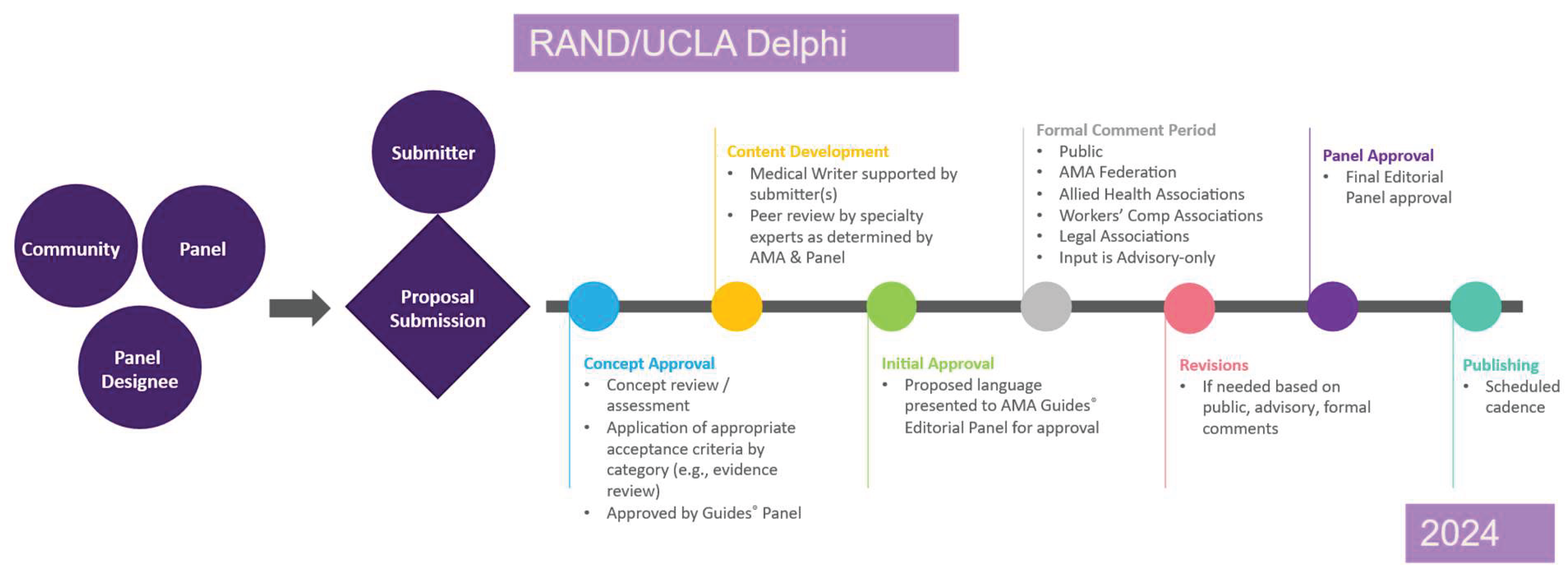
The development of these revisions relied heavily on formal consensus methodologies, including the RAND/UCLA modified Delphi approach [6,9]. This process allowed for systematic incorporation of expert input and stakeholder feedback, resulting in a methodology that is both evidence-based and practical for clinical use. (Figure 3 and Figure 4).
Emerging data suggest that the enhaced musculoskeletal methodology improves efficiency while maintaining or enhancing reliability and interrater agreement [8].These findings support the utility of the revised framework in both clinical and medicolegal settings.
8. Chapter 5 Pulmonary (2025): Transition to Race-Neutral Reference Standards
The 2025 refinements to the Pulmonary chapter represents a significant conceptual and methodological shift in the evaluation of respiratory impairment, particularly with respect to pulmonary function testing. Historically, the Sixth Edition relied on reference equations derived from the National Health and Nutrition Examination Survey (NHANES III), which incorporated race-specific adjustments for spirometric values [14,15]. Although widely used, these equations have been increasingly scrutinized due to concerns regarding scientific validity and their potential to perpetuate health disparities.
The refined Pulmonary chapter replaces NHANES-based reference equations with those derived from the Global Lung Function Initiative, incorporating race-neutral or composite reference standards.[10]. This transition reflects a growing consensus that race-based adjustments in clinical algorithms lack a robust biologic foundation and may contribute to systematic misclassification of disease severity [4,16].
Evidence suggests that race-specific reference equations may underestimate impairment in certain populations. Studies have shown that individuals classified as normal under race-adjusted equations may nonetheless exhibit increased symptoms and worse clinical outcomes, indicating underrecognition of clinically meaningful disease [11]. Similarly, adoption of race-neutral reference standards has been associated with increased detection of respiratory impairment and improved consistency across populations [4].
The Global Lung Function Initiative reference equations provide predicted values based on age, sex, and height without requiring race as a variable [18].Their adoption aligns the AMA Guides with recommendations from major professional societies advocating removal of race from pulmonary function test interpretation [16]. From a methodological standpoint, this shift enhances standardization and promotes greater international harmonization of pulmonary assessment.
The implications of this revision are substantial. Eliminating race-based adjustments reduces the risk of underestimating impairment in historically marginalized populations and promotes greater equity in impairment evaluation. At the same time, the transition may alter impairment classifications, potentially increasing severity ratings in some individuals who would previously have been categorized as normal under prior models [12].
Within the broader context of AMA Guides Digital, the Pulmonary refinement exemplifies the capacity of the continuous revision model to incorporate evolving scientific evidence and ethical considerations into impairment methodology.
9. Integration Across Body Systems
Recent refinements demonstrate increasing alignment of methodologies across body systems. The coordinated revision of the Nervous System, Musculoskeletal, and Pulmonary chapters reflects an effort to harmonize evaluation frameworks and improve consistency in impairment determination [15].
This integration enhances usability and supports more coherent and defensible evaluations, particularly in conditions involving overlapping physiologic systems.
10. Implications for Clinical and Medicolegal Practice
The transition to a digital, continuously refinement model has important implications for clinical and medicolegal practice. Incorporation of current medical evidence enhances the accuracy and relevance of impairment ratings, while structured methodologies improve transparency and defensibility [1,5].
At the same time, the evolving nature of the Guides requires ongoing education and adaptation among clinicians. Variability in jurisdictional adoption may also present challenges. Nonetheless, the overall effect of these changes is likely to improve the quality and consistency of impairment evaluation.
11. Future Directions
The continued evolution of AMA Guides Digital is likely to extend to additional organ systems and incorporate further methodological refinements [5]. Future developments may include integration of functional outcome measures, digital decision-support tools, and greater alignment with international standards.
12. Conclusions
The evolution of the AMA Guides Sixth Edition into a digital, continuously enhanced resource represents a paradigm shift in impairment evaluation. The establishment of the AMA Guides Editorial Panel in 2019 provided the governance and methodological framework necessary to support this transformation. Subsequent enhancments, including the Mental & Behavioral Disorders in 2021, Nervous System revision in 2023, the Musculoskeletal revisions in 2024, and the Pulmonary revision in 2025, demonstrate improved clarity, consistency, and alignment with contemporary medical practice. As the Guides continue to evolve, they will remain a central and authoritative resource in impairment evaluation.
References
- Rondinelli RD, Genovese E, Katz RT, et al. Guides to the Evaluation of Permanent Impairment. 6th ed. American Medical Association; 2008. [CrossRef]
- Brigham CR. Future directions in the use of the AMA Guides. J Occup Environ Med. 2011;53(10):1099-1104.
- Melhorn JM, Talmage JB. Impairment ratings and the Sixth Edition. J Occup Environ Med. 2009;51(3):316-328.
- Moffett AT, et al. Race-neutral reference equations and pulmonary function. JAMA Netw Open. 2023;6(6):e2312345. [CrossRef]
- American Medical Association. AMA Guides® Sixth Edition Digital updates. Accessed 2025.
- Fitch K, Bernstein SJ, Aguilar MD, et al. RAND/UCLA Appropriateness Method. RAND; 2001.
- Hsu CC, Sandford BA. The Delphi technique. Pract Assess Res Eval. 2007;12(10):1-8.
- AMA Guides Editorial Panel. Musculoskeletal updates. AMA Guides Digital; 2024.
- J Occup Environ Med. Advances in musculoskeletal methodology. 2024.
- AMA Guides Editorial Panel. Pulmonary chapter update. AMA Guides Digital; 2025.
- Ekström M, et al. Race-specific lung function outcomes. Respir Res. 2022.
- Townsend MC, et al. Spirometric equation impacts. J Occup Environ Med. 2025.
- Elmaleh-Sachs A, et al. Spirometry reference equations. Am J Respir Crit Care Med. 2021. [CrossRef]
- NHANES III reference equations. US CDC.
- Hankinson JL, et al. Spirometric reference values. Am J Respir Crit Care Med. 1999;159:179-187. [CrossRef]
- American Thoracic Society. Race and PFT interpretation statement. 2023.
- Bhakta NR, et al. Race-neutral lung function equations. Am J Respir Crit Care Med. 2023.
- Quanjer PH, et al. GLI spirometry reference values. Eur Respir J. 2012;40:1324-1343.
Figure 3.
AMA Guides 6th 2024 RAND/UCLA Method – General Framework.
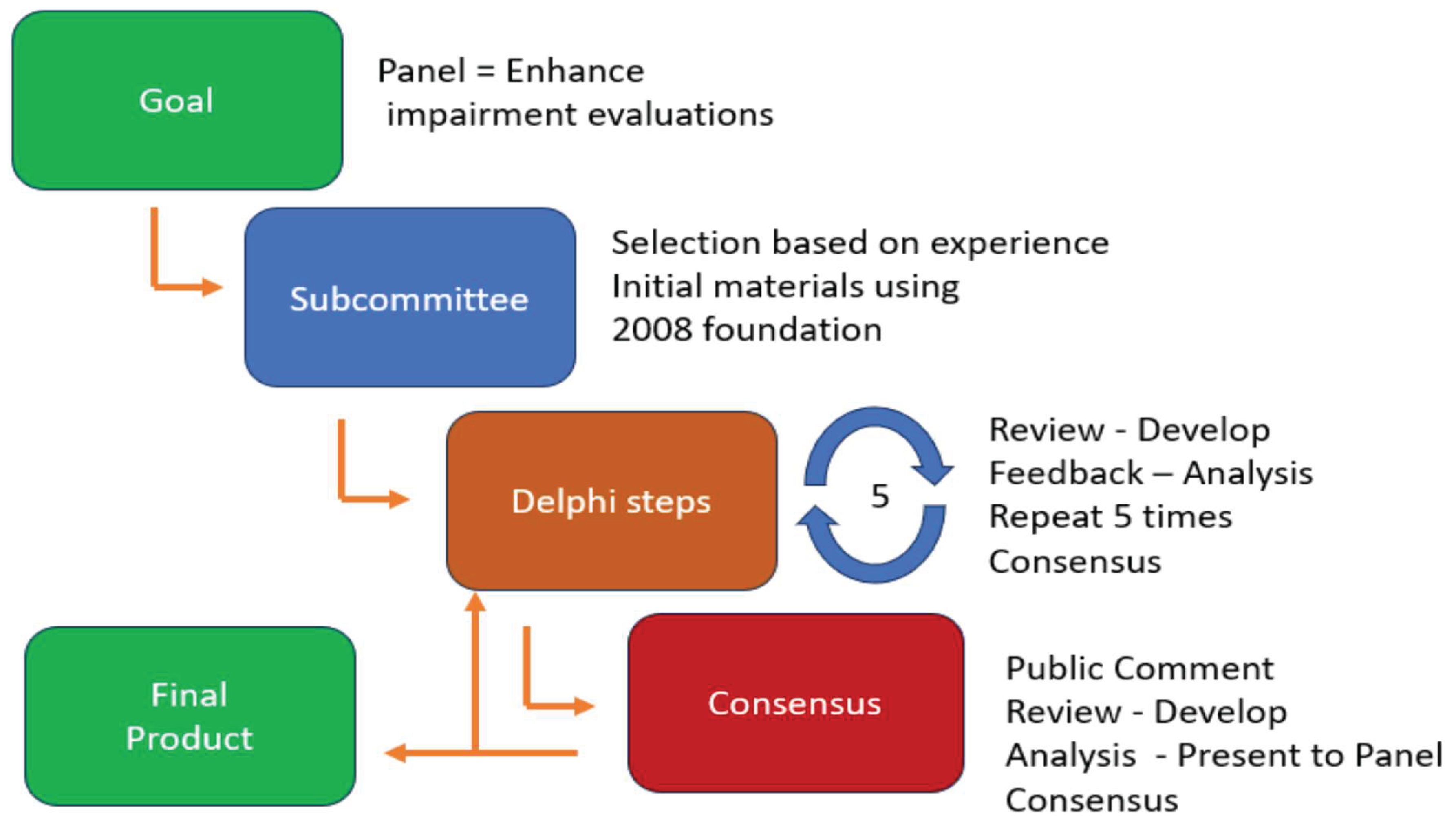
Figure 4.
AMA Guides 6th 2024 RAND/UCLA Method Guides Editorial Panel Specific Protocol.
Disclaimer/Publisher’s Note: The statements, opinions and data contained in all publications are solely those of the individual author(s) and contributor(s) and not of MDPI and/or the editor(s). MDPI and/or the editor(s) disclaim responsibility for any injury to people or property resulting from any ideas, methods, instructions or products referred to in the content. |
© 2026 by the authors. Licensee MDPI, Basel, Switzerland. This article is an open access article distributed under the terms and conditions of the Creative Commons Attribution (CC BY) license (http://creativecommons.org/licenses/by/4.0/).
Copyright: This open access article is published under a Creative Commons CC BY 4.0 license, which permit the free download, distribution, and reuse, provided that the author and preprint are cited in any reuse.


