
Submitted:
28 April 2026
Posted:
28 April 2026
You are already at the latest version
Abstract
Honeybee populations face significant threats from a range of viral and parasitic pathogens, contributing to declining colony health, reduced pollination services, and economic losses in agriculture. In recent years, RNA interference (RNAi) has emerged as a novel and promising approach for mitigating these threats. This review explores the applications and advancements of RNAi as a targeted, species-specific, and environmentally sustainable strategy for managing honeybee health. In addition, symbiont-mediated RNAi delivery —a promising avenue for overcoming current limitations in RNAi application — is discussed.
Keywords:
RNA interference
; Varroa destructor
; Small hive beetle
; Nosema ceranae
; honeybee viral disease
1. Introduction
Honeybees are essential to the health and functioning of terrestrial ecosystems, serving as the primary pollinators of flowering plants [1]. Through pollinating a broad spectrum of wild and cultivated plants, honeybees maintain ecological balance and support biodiversity. Their pollination services are indispensable to agricultural systems, facilitating the production of approximately one-third of the food crops consumed globally, including fruits, vegetables, nuts, and oilseeds [2]. In the United States alone, the economic value of honeybee pollination is estimated at $10~20 billion annually, with some studies suggesting contributions up to $24 billion when indirect benefits to industries such as food processing, transport, and export are considered [2]. Beyond their ecological and agricultural significance, honeybees also produce a variety of economically valuable products, including honey, propolis, bee venom, royal jelly, and beeswax, which have applications in the food, pharmaceutical, and cosmetic industries.
Despite their critical importance, honeybee populations have experienced substantial declines over the past few decades. Since 2006, U.S. beekeepers have reported annual colony losses ranging from 30% to 40% [3]. This decline is multifactorial, driven by the synergistic effects of parasitic mites, pathogenic infections, pesticide exposure, habitat loss, and nutritional stress due to reduced floral diversity or excessive sugar feeding [4]. Among these, Varroa destructor mites are considered the most significant biotic threat to honeybee health. These ectoparasites not only weaken individual bees through hemolymph feeding but also serve as vectors for a range of debilitating viruses, including deformed wing virus (DWV), thereby exacerbating colony mortality [5].
Addressing honeybee health threats remains a significant challenge for apicultural researchers and practitioners. Currently, there are no approved antiviral treatments for honeybee diseases, except HoneyGuard-R® (Eagle Vet Tech Co., Republic of Korea), making colony management, biosecurity, and vector control essential components of disease prevention strategies [6,7]. Antibiotics are commonly used to manage bacterial and fungal infections; however, their overuse has raised concerns about antibiotic residues in hive products and the development of drug-resistant pathogens [8]. Similarly, miticides used against Varroa mites are becoming less effective due to the emergence of resistant mite populations [9]. In light of these challenges, RNA interference (RNAi) has emerged as a promising and targeted biotechnological tool for managing honeybee diseases. RNAi offers a species-specific mechanism to silence the expression of critical pathogen and parasite genes, potentially enabling safer, more sustainable control methods. This review explores the potential benefits and limitations of RNAi technologies in enhancing honeybee health and mitigating colony losses.
2. Mechanism of RNAi in Honeybee
RNAi is a powerful, targeted gene-silencing mechanism with significant applications in insect research and pest management [10]. RNAi in insects begins with the introduction of exogenous double-stranded RNA (dsRNA), which can be delivered through microinjection, oral ingestion, or transgenic expression in plants for pest control [11]. Once inside the insect, dsRNA is taken up by cells via endocytosis or SID-like channels, depending on the species [12]. Inside the cell, the enzyme DICER processes the dsRNA into short fragments known as small interfering RNAs (siRNAs), typically 21~23 nucleotides in length [13]. These siRNAs are then incorporated into the RNA-Induced Silencing Complex (RISC), which guides the complex to a complementary messenger RNA (mRNA) target. Upon binding, the Argonaute (AGO) protein within RISC cleaves the mRNA, preventing its translation and thereby silencing the gene by reducing or eliminating the production of the corresponding protein [14] (Figure 1).
RNAi has emerged as a valuable tool in honeybee research and pathogen control, offering a targeted approach to enhance bee health. Researchers have used RNAi to investigate gene function in honeybees, providing insights into developmental processes, immune responses, and behavior [15]. More importantly, RNAi is being explored as a strategy to combat viral infections that pose significant threats to honeybee populations. For instance, dsRNA targeting viral genes has been successfully used to reduce the replication and pathogenicity of the Israeli acute paralysis virus (IAPV), thereby improving honeybee survival rates [16]. Additionally, RNAi has shown potential in controlling other viruses such as deformed wing virus (DWV), which is often associated with Varroa destructor mite infestations [17]. These findings highlight RNAi as a promising method not only for functional genomics in honeybees but also for developing antiviral therapeutics to mitigate colony losses.
3. Utilizing RNAi for the Treatment of Viral Infections in Honeybees
Viral pathogens pose a significant threat to honeybee health, contributing to reduced colony productivity and, in severe cases, colony collapse. Viruses such as DWV and IAPV have been linked to weakening bee colonies, leading to diminished honey yields, reduced brood production, and a decline in adult bee populations [18,19,20]. DWV, in particular, is associated with colony collapse disorder, in which entire colonies may die off or abandon their hives [21]. Additionally, viral infections increase honeybees' susceptibility to other stressors, including parasites, pesticides, and poor nutrition, further compromising colony health [19,22]. The spread of viruses is not limited to managed bee populations; many honeybee viruses can also infect wild bee species, potentially contributing to declines in global pollinator populations [23]. Compounding this issue, the detection and management of viral infections are difficult, as many viruses can persist asymptomatically, making their impact hard to detect [18,23,24]. The Varroa mite, an invasive pest, plays a crucial role in the spread of these viruses, as it weakens bee immune systems and acts as a vector for many viral diseases [25,26]. The combination of viral infections and other environmental stressors has led to high annual losses of honeybee colonies, which have averaged 30~40% in the U.S. since 2006 [19,22]. With at least 20 known viruses affecting honeybees, including DWV, IAPV, and black queen cell virus (BQCV), the impact of viral pathogens is substantial, with effects ranging from paralysis and deformities to colony collapse [17,18,23]. As honeybees play a critical role in pollinating about one-third of the world’s food crops, addressing viral threats is essential for sustaining agricultural productivity and ecosystem health [28].
Cultural management practices are fundamental components of integrated pest management (IPM) strategies for controlling viral diseases in honeybees. These practices help alleviate colony stressors that can exacerbate viral infections, as viruses typically persist at low levels within colonies and become more prominent under stressful conditions [19]. Key elements of cultural management include promoting strong colony health through practices such as effective queen management, routine equipment rotation, and control of viral vectors such as Varroa mites [23,26,28]. Varroa mites not only weaken bees but also serve as vectors for several bee viruses, including DWV, which complicates viral transmission [29,30,31,32]. Regular monitoring of colony health, with particular attention to viral symptoms and screening for other pathogens such as Nosema, is crucial for early detection and management [3,22]. Although no chemotherapies are available to treat viral diseases in honeybees, effective management of these stressors can substantially reduce the risk of viral outbreaks and enhance colony resilience [25]. Furthermore, proper management of colonies under stress can prevent asymptomatic viral infections from progressing to more severe, symptomatic stages, making cultural management an essential tool for minimizing the impact of viral pathogens on bee populations [21].
RNAi for treating viral diseases in honeybees has emerged as a promising strategy for controlling viral infections. RNAi, a key antiviral defense mechanism in honeybees, involves the recognition and degradation of viral RNA by small interfering RNAs (siRNAs) generated via the RNAi pathway. Research has shown that honeybee colonies affected by colony collapse disorder (CCD) exhibit a strong RNAi response against several major honeybee viruses, such as DWV, IAPV, and Kashmir bee virus (KBV), indicating that RNAi is an effective mechanism for virus recognition and silencing [15,33,34]. Furthermore, the application of dsRNA has shown potential to reduce viral load, particularly for controlling sacbrood virus (SBV) in honeybee colonies, suggesting that dsRNA treatments could be scaled up for broader use [36]. One advantage of RNAi is its ability to target specific viral genes, providing highly targeted therapy with minimal off-target effects.
Additionally, RNAi can be administered through various delivery methods, including feeding or injection of siRNA, or using dsRNA products like Remebee-IAPV and HoneyGuard-R®, which have shown effectiveness in reducing virus-related mortality and improving colony health [33,35,36]. However, challenges remain, such as the potential for viruses to evolve mechanisms to suppress the RNAi pathway and the difficulty of delivering RNAi effectively to all tissues within the bee [38]. Moreover, the duration of the protective effect and the optimal frequency of dsRNA administration remain unclear [35,37]. Despite these limitations, RNAi represents a promising tool for combating honeybee viral diseases and improving colony health, with ongoing research aimed at optimizing delivery methods and addressing current challenges [38,39,40].
4. RNAi for Nosema Disease Treatment
Nosema infection, especially caused by Nosema ceranae, poses a serious threat to honeybee health and colony sustainability. Infected colonies often exhibit reduced adult bee populations, decreased brood rearing, and lower honey yields, directly impacting productivity [41,42]. At the individual level, infected worker bees may begin foraging prematurely, experience shortened lifespans, and suffer from impaired nursing abilities, which further destabilize colony dynamics [44]. In queens, Nosema infection can be fatal, leading to a cessation of egg-laying and death within a matter of weeks [45]. Additionally, Nosema increases colony vulnerability to collapse and winter mortality, compounding the risks to long-term colony survival [44,45]. The parasite invades and damages the midgut epithelial cells of honeybees, hindering digestion and nutrient absorption, while also inducing energetic stress, immune suppression, and behavioral changes [47]. Its spores are highly transmissible, allowing the disease to rapidly spread throughout a colony [45]. Given its significant implications for both managed and wild bee populations, Nosema infection is a global concern with far-reaching consequences for agricultural productivity and food security, as it reduces pollination services. Thus, vigilant monitoring and strategic management are essential for mitigating its impact.
Fumagillin has long been used as the primary chemotherapeutic agent for treating Nosema infections in honeybees, primarily by inhibiting the enzyme methionine aminopeptidase 2 (MetAP2), which disrupts critical protein modifications necessary for cellular function [48]. As the only antibiotic approved in the United States for Nosema control for over 50 years, fumagillin has played a significant role in mitigating the impact of Nosema apis and Nosema ceranae. However, its use comes with notable limitations. Fumagillin is toxic to mammals, raising concerns about contamination and accumulation in honey, leading to its ban in many countries, especially across the European Union [47,48]. Moreover, recent research indicates that Nosema ceranae can escape fumagillin treatment, with studies reporting that treated colonies exhibited post-treatment spore loads nearly 100% higher than those in untreated control groups [50]. Increasing fumagillin concentrations to enhance efficacy has been shown to alter the expression of structural and metabolic proteins in the honeybee midgut and to significantly increase worker bee mortality [51]. These findings highlight the declining effectiveness of fumagillin and underscore the urgent need for alternative, safer, and more sustainable treatments for Nosema disease.
RNAi has emerged as a promising therapeutic strategy for combating Nosema ceranae infections in honeybees, offering targeted, innovative approaches to enhance colony health and resilience. One notable approach involves silencing mitosome-related genes in N. ceranae, such as NCER_101456 and NCER_100157, using dsRNA. This method significantly reduced spore production and improved the survival of infected bees, demonstrating RNAi’s potential to suppress vital parasite functions [51,52]. Another RNAi-based technique targets the parasite's structural integrity by silencing genes encoding spore wall proteins (SWP8 and SWP12), thereby decreasing infection levels, enhancing immunity, and extending the lifespan of treated bees [54]. Beyond direct RNA delivery, researchers have also leveraged symbiont-mediated RNAi by engineering the honeybee gut bacterium Snodgrassella alvi to express dsRNA targeting essential N. ceranae genes. This approach effectively reduced Nosema proliferation and improved bee survival, even among older forager bees [55]. Notably, the engineered bacteria were shown to transmit between cohoused bees, enabling colony-level protection and making this method a scalable solution for Nosema management [55]. Similarly, Lang et al. (2023) [56] demonstrated that interfering with the Nosema redox system using engineered symbiotic bacteria could enhance host resistance to infection. Together, these studies underscore the transformative potential of RNAi-based technologies—particularly those using microbial symbionts—as sustainable, targeted alternatives to conventional chemical treatments that Nosema has increasingly become resistant to.
Despite the promising potential of RNAi in controlling Nosema ceranae infections in honeybees, several vital limitations remain that hinder its practical application. One key issue is the inconsistent efficacy of RNAi treatments. While some studies have demonstrated that dsRNA targeting specific Nosema genes can reduce spore loads and improve bee survival, the effectiveness varies significantly depending on the gene target, with some dsRNAs showing limited inhibition of spore proliferation [51,53,56]. Furthermore, combining multiple dsRNAs targeting different genes has not reliably produced synergistic effects, suggesting that further research is needed to identify optimal gene targets and combinations [52]. Delivery remains another major hurdle; although approaches such as nanocarriers have been proposed to enhance dsRNA stability and uptake, the most effective and scalable delivery method in field conditions is still under investigation [56].
Additionally, while RNAi is considered relatively specific, the potential for off-target effects—either in honeybees or in non-target environmental organisms—requires careful risk assessment. Perhaps most critically, the majority of RNAi studies have been conducted in controlled laboratory settings, and their real-world effectiveness in large-scale apiculture has yet to be thoroughly validated. As such, although RNAi remains a compelling candidate for Nosema management, further research is essential to overcome these technical and ecological challenges before widespread field application becomes viable.
5. RNAi for Varroa Mite Control
The Varroa destructor mite poses one of the most significant threats to honeybee health and global apiculture. Widely recognized as a primary driver of honeybee decline, especially in Apis mellifera populations that lack natural resistance, Varroa mites have contributed to severe colony losses worldwide [30,32,57]. These mites feed parasitically on the fat body tissue and hemolymph of both developing brood and adult bees, leading to weakened individuals with shortened lifespans, compromised immune systems, and impaired physiological functions [31]. In addition to their direct effects, Varroa mites serve as efficient vectors of devastating honeybee viruses, such as DWV, IAPV, and BQCV, which exacerbate colony morbidity and mortality [32,57]. Colonies suffering from heavy infestations display scattered brood patterns, deformed bees, impaired flight ability, and reduced worker bee weight and longevity—symptoms that often culminate in colony collapse. Alarmingly, Varroa mite populations can expand rapidly within a few years if not managed, overwhelming bee colonies' natural defenses [30,32,57]. Given its widespread prevalence and multifaceted impact, the Varroa mite is regarded as a leading cause of honeybee losses and a critical concern for beekeepers and researchers alike.
Varroa mite control relies heavily on the integrated pest management (IPM) strategies that combine cultural, mechanical, chemical, and biological approaches to limit infestation while minimizing harm to bees and the environment. Cultural methods, such as creating brood breaks and selectively breeding mite-resistant honeybee strains, aim to disrupt the mite reproductive cycle and promote long-term colony resilience [59]. Mechanical interventions, such as screened bottom boards and sugar dusting, help dislodge mites from bees, offering non-chemical control options [60]. Chemical treatments are often divided into natural compounds—including thymol, formic acid, oxalic acid, and hop beta acids—which can be effective when applied correctly but may vary in efficacy depending on environmental conditions [60,62]. Synthetic miticides, such as amitraz, tau-fluvalinate, and coumaphos, have traditionally provided strong mite suppression; however, widespread and repeated use has led to the development of mite resistance, reducing their effectiveness and raising concerns about residues in hive products and potential harm to bees [58,62]. Despite the variety of available methods, each has limitations, and overreliance on any single approach can lead to resistance or reduced efficacy, underscoring the need for rotation and combination within a comprehensive IPM framework [59,63].
RNAi has emerged as a promising approach to controlling Varroa mites (Varroa destructor), a significant threat to honeybee colonies. RNAi is a natural process in which small RNA molecules, such as small interfering RNA (siRNA), silence specific genes by preventing protein production. For Varroa control, scientists create dsRNA sequences targeting essential reproductive genes in the mites. These dsRNAs are incorporated into a sugar solution, which is then fed to honeybee larvae. When Varroa mites feed on larvae, they ingest dsRNA, triggering the RNAi pathway and impairing the mites' reproductive capacity [65]. One of the key advantages of RNAi is its non-lethal nature, as it does not harm bees or mites directly, making it a more environmentally friendly approach [66]. However, RNAi treatments require repeated applications because they are not heritable and may not eliminate the mite population, even though the genetic heritability should be further studied, given their limited duration of effectiveness [65].
Additionally, although RNAi does not alter the DNA of the species, further research is needed to understand its long-term effects on non-target species [64,65]. Studies have shown that RNAi can significantly reduce mite populations, with some research indicating reductions of over 60% [67]. Future research is focused on optimizing the dsRNA sequences to target more vital genes, improving the efficiency of delivery systems, and monitoring long-term impacts in field conditions [64,65,66].
6. RNAi for Small Hive Beetle Control
The small hive beetle (SHB), Aethina tumida, poses a serious threat to honeybee colonies, particularly in warm and humid regions where it thrives. While adult SHBs are relatively harmless, the larval stage is highly destructive—larvae tunnel through honeycomb, consuming honey, pollen, and bee brood, while contaminating the hive with excrement and secretions that promote fermentation and spoilage of honey [67,68,69]. The economic and biological impacts are considerable: SHB infestations can reduce honey yields by up to 3-fold compared to uninfested colonies [70,71], and severe infestations may lead to absconding, with one study reporting that up to 80% of untreated colonies abandoned their hives [72]. Larvae consume all stages of bee brood, significantly reducing the sealed brood area [73], while the presence of adult beetles correlates with reduced adult bee populations in susceptible European honeybee colonies. Additionally, SHB larvae can cause the loss of stored pollen and render honey unfit for consumption or sale due to fermentation and foul odor [73]. These direct and indirect damages highlight SHB as a formidable pest requiring vigilant management strategies to safeguard colony health and honey production [71].
RNAi represents a promising and species-specific strategy for managing the small hive beetle (Aethina tumida), an invasive pest that causes significant damage to honeybee colonies. This gene-silencing technology operates by introducing dsRNA designed to target essential beetle genes, ultimately disrupting vital physiological processes. In laboratory studies, injection of dsRNA targeting genes such as V-ATPase subunit A, involved in proton gradient maintenance, and laccase 2, crucial for cuticle formation, led to 100% mortality in SHB larvae, with quantitative PCR (qPCR) confirming significant gene knockdown over time [74]. Feeding larvae dsRNA targeting V-ATPase subunit A resulted in 50% mortality, although gene suppression was not detected, likely due to degradation by gut nucleases [74]. Importantly, specificity testing showed that these SHB-targeted dsRNAs had no adverse effects on honeybee survival or gene expression, demonstrating the method's safety for non-target pollinators [73,74]. Despite these encouraging results, practical challenges remain, particularly in delivering RNAi orally under field conditions. Advances in the design of nuclease-resistant dsRNA and in the optimization of delivery mechanisms are necessary before RNAi can become a viable tool for SHB management in apiculture [73,74].
7. Engineered Endosymbionts Producing RNAi Offer a Promising Method for Controlling Pathogens and Parasites in Honeybees
Engineered endosymbionts producing RNAi represent a promising and innovative strategy for preventing and treating honeybee pathogens and parasites, addressing key challenges such as delivery efficiency and cost in field applications. This approach utilizes genetically modified gut bacteria—specifically Snodgrassella alvi, a natural symbiont of honeybees—to produce dsRNA that activates the RNAi pathway. Known as Functional Genomics Using Engineered Symbionts (FUGUES), this method enables persistent, systemic knockdown of targeted genes in honeybees by up to 75% [76]. When engineered S. alvi colonizes bees, the symbionts not only improve survival after viral infections but also induce RNAi in Varroa destructor, significantly reducing mite populations [75,76]. This dual-action effect offers a sustainable alternative to traditional treatments, particularly against viral threats like DWV, which are exacerbated by mite infestations [67]. Beyond treatment, symbiont-mediated RNAi also provides a powerful tool for functional genomics in honeybees, facilitating gene-phenotype studies that were previously difficult to perform. Overall, this method holds great promise for enhancing honeybee resilience through precise, eco-friendly, and scalable biotechnological solutions.
Using probiotic Lactobacillus strains to engineer honeybee endosymbionts that carry recombinant plasmids encoding dsRNA targeting species-specific genes of viral pathogens and parasites offers a promising strategy for enhancing honeybee health and resilience. Lactobacillus species, such as Lactobacillus apis and Lactobacillus kunkeei, are naturally present in the honeybee gut and play a vital role in maintaining gut health, modulating immune responses, and protecting against bacterial pathogens, such as Paenibacillus larvae, the causative agent of American foulbrood [77,78]. These beneficial bacteria can be engineered to produce dsRNA that inhibits viral pathogens, such as DWV, and parasitic threats, such as Varroa mites, thereby directly targeting the pathogens that affect bee colonies. The expression of dsRNA can be controlled by using promoters from Lactobacillus species, such as the constitutive PldhL promoter from Lactobacillus plantarum or the inducible PnisA promoter from Lactococcus lactis [79,80,81]. Additionally, engineered Lactobacillus strains can enhance bees' immune function by supporting a balanced gut microbiome, which is critical for their ability to resist infections and environmental stressors [82,83,84]. This dual functionality of engineered Lactobacillus strains, as both a probiotic and a delivery system for RNAi-based pathogen control, provides a sustainable, targeted approach to protecting honeybees from the increasing challenges posed by pathogens and environmental changes (Figure 2).
8. Conclusions
RNAi is a promising, targeted strategy to combat major threats to honeybee health, including viral pathogens, Nosema, Varroa mites, and SHB (Table 1). RNAi silences specific genes via dsRNA, reducing pathogen virulence or parasite reproduction without harming bees. For viral diseases like DWV and IAPV, RNAi targets viral RNA to suppress replication, improving colony health and reducing mortality. RNAi treatments such as Remebee-IAPV and HoneyGauard-R® have shown success via feeding or injection, offering specificity and minimal off-target effects. In Nosema ceranae infections, RNAi targeting genes related to spore formation or metabolism significantly reduces infection and increases bee survival—innovative approaches using engineered gut bacteria (Snodgrassella alvi) to deliver dsRNA offer scalable, colony-wide protection. Still, variability in treatment efficacy, delivery limitations, and off-target risks requires further study. For Varroa destructor, RNAi targets reproduction-related genes, disrupting mite fertility. Feeding bees dsRNA leads to ingestion by mites, reducing their populations by over 60% in some studies. While environmentally friendly, repeated applications are needed, and long-term field validation is ongoing. RNAi also shows promise against SHB by silencing vital genes, reducing larval survival. Despite technical and regulatory hurdles, RNAi's specificity, adaptability, and compatibility with integrated pest management make it a powerful tool for sustainable protection of honeybee health.
Author Contributions
Conceptualization, Y.S.C and A.T.T.; writing—original draft preparation,
A.T.T.; writing—review and editing, Y.S.C, A.T.T., H.T.K.L., H.S.L., M.S.Y., and S.Y.Y. All authors have read and agreed to the published version of the manuscript.
Funding
Please add: This work was supported by the Animal and Plant Quarantine Agency under the project code N-1543083-2025-34-01; this work was also partially funded by the TNU-University of Sciences under the project code CS2024-TN06-16.
Conflicts of Interest
The authors declare no conflicts of interest. The funders had no role in the design of the study; in the collection, analyses, or interpretation of data; in the writing of the manuscript; or in the decision to publish the results.
Abbreviations
The following abbreviations are used in this manuscript:
| RNAi | RNA interference |
| dsRNA | double-stranded RNA |
| DWV | Deformed Wing Virus |
| SHB | Small hive beetles |
| RISC | RNA-Induced Silencing Complex |
| mRNA | Messenger RNA |
| IAPV | Israeli Acute Paralysis Virus |
| BQCV | Black Queen Cell Virus |
| siRNAs | Small interfering RNAs |
| N. ceranae | Nosema ceranae |
| qPCR | Quantitative Polymerase Chain Reaction |
References
- Hung, K.-L.J.; Kingston, J.M.; Albrecht, M.; Holway, D.A.; Kohn, J.R. The Worldwide Importance of Honey Bees as Pollinators in Natural Habitats. Proc. R. Soc. B Biol. Sci. 2018, 285, 20172140. [Google Scholar] [CrossRef]
- DeGrandi-Hoffman, G.; Chen, Y.; Simonds, R. The Effects of Pesticides on Queen Rearing and Virus Titers in Honey Bees (Apis mellifera L.). Insects 2013, 4, 71–89. [Google Scholar] [CrossRef]
- Kulhanek, K.; Steinhauer, N.; Rennich, K.; Caron, D.M.; Sagili, R.R.; Pettis, J.S.; Ellis, J.D.; Wilson, M.E.; Wilkes, J.T.; Tarpy, D.R.; et al. A National Survey of Managed Honey Bee 2015–2016 Annual Colony Losses in the USA. J. Apic. Res. 2017, 56, 328–340. [Google Scholar] [CrossRef]
- Goulson, D.; Nicholls, E.; Botias, C.; Rotheray, E.L. Bee Declines Driven by Combined Stress from Parasites, Pesticides, and Lack of Flowers. Science 2015, 347, 1255957. [Google Scholar] [CrossRef] [PubMed]
- Rosenkranz, P.; Aumeier, P.; Ziegelmann, B. Biology and Control of Varroa destructor. J. Invertebr. Pathol. 2010, 103, S96–S119. [Google Scholar] [CrossRef]
- Brutscher, L.M.; Flenniken, M.L. RNAi and Antiviral Defense in the Honeybee. J. Immunol. 2015, 2015, 941897. [Google Scholar] [CrossRef]
- Brutscher, L.M.; Daughenbaugh, K.F.; Flenniken, M.L. Antiviral Defense Mechanisms in Honey Bees. Curr. Opin. Insect Sci. 2015, 10, 71–82. [Google Scholar] [CrossRef]
- Reybroeck, W. Residues of Antibiotics and Chemotherapeutics in Honey. J. Apic. Res. 2017, 57, 97–112. [Google Scholar] [CrossRef]
- Elzen, P.J.; Westervelt, D.; Lucas, R. Formic Acid Treatment for Control of Varroa destructor (Mesostigmata: Varroidae) and Safety to Apis mellifera (Hymenoptera: Apidae) under Southern United States Conditions. J. Econ. Entomol. 2004, 97, 1509–1512. [Google Scholar] [CrossRef]
- Whyard, S.; Singh, A.D.; Wong, S. Ingested Double-Stranded RNAs Can Act as Species-Specific Insecticides. Insect Biochem. Mol. Biol. 2009, 39, 824–832. [Google Scholar] [CrossRef]
- Baum, J.A.; Bogaert, T.; Clinton, W.; Heck, G.R.; Feldmann, P.; Ilagan, O.; Johnson, S.; Plaetinck, G.; Munyikwa, T.; Pleau, M.; Vaughn, T.; Roberts, J. Control of Coleopteran Insect Pests through RNA Interference. Nat. Biotechnol. 2007, 25, 1322–1326. [Google Scholar] [CrossRef] [PubMed]
- Huvenne, H.; Smagghe, G. Mechanisms of DsRNA Uptake in Insects and Potential of RNAi for Pest Control: A Review. J. Insect. Physiol. 2010, 56, 227–235. [Google Scholar] [CrossRef]
- Fire, A.; Xu, S.; Montgomery, M.K.; Kostas, S.A.; Driver, S.E.; Mello, C.C. Potent and Specific Genetic Interference by Double-Stranded RNA in Caenorhabditis Elegans. Nature 1998, 391, 806–811. [Google Scholar] [CrossRef]
- Hammond, S.M.; Bernstein, E.; Beach, D.; Hannon, G.J. An RNA-Directed Nuclease Mediates Post-Transcriptional Gene Silencing in Drosophila Cells. Nature 2000, 404, 293–296. [Google Scholar] [CrossRef]
- Azzami, K.; Ritter, W.; Tautz, J.; Beier, H. Infection of Honey Bees with Acute Bee Paralysis Virus Does Not Trigger Humoral or Cellular Immune Responses. Arch. Virol. 2012, 157, 689–702. [Google Scholar] [CrossRef]
- Maori, E.; Paldi, N.; Shafir, S.; Kalev, H.; Tsur, E.; Glick, E.; Sela, I. IAPV, a Bee-Affecting Virus Associated with Colony Collapse Disorder Can Be Silenced by DsRNA Ingestion. Insect Mol. Biol. 2009, 18, 55–60. [Google Scholar] [CrossRef]
- Smeele, Z.E.; Baty, J.W.; Lester, P.J. Effects of Deformed Wing Virus-Targeting DsRNA on Viral Loads in Bees Parasitised and Non-Parasitised by Varroa destructor. Viruses 2023, 15, 2259. [Google Scholar] [CrossRef] [PubMed]
- Grozinger, C.M.; Flenniken, M.L. Bee Viruses: Ecology, Pathogenicity, and Impacts. Annu. Rev. Entomol. 2019, 64, 205–226. [Google Scholar] [CrossRef]
- Ullah, A.; Tlak Gajger, I.; Majoros, A.; Dar, S.A.; Khan, S.; Kalimullah; Haleem Shah, A.; Nasir Khabir, M.; Hussain, R.; Khan, H.U.; Hameed, M.; Anjum, S.I. Viral Impacts on Honey Bee Populations: A Review. Saudi J. Biol. Sci. 2021, 28, 523–530. [Google Scholar] [CrossRef] [PubMed]
- Woodford, L.; Evans, D.J. Deformed Wing Virus: Using Reverse Genetics to Tackle Unanswered Questions about the Most Important Viral Pathogen of Honey Bees. FEMS Microbiol. Rev. 2021, 45, 1–20. [Google Scholar] [CrossRef]
- Sumpter, D.J.T.; Martin, S.J. The Dynamics of Virus Epidemics in Varroa-Infested Honey Bee Colonies. J. Anim. Ecol. 2004, 73, 51–63. [Google Scholar] [CrossRef]
- vanEngelsdorp, D.; Evans, J.D.; Saegerman, C.; Mullin, C.; Haubruge, E.; Nguyen, B.K.; Frazier, M.; Frazier, J.; Cox-Foster, D.; Chen, Y.; Underwood, R.; Tarpy, D.R.; Pettis, J.S. Colony Collapse Disorder: A Descriptive Study. PLoS ONE 2009, 4, e6481. [Google Scholar] [CrossRef]
- Dolezal, A.G.; Hendrix, S.D.; Scavo, N.A.; Carrillo-Tripp, J.; Harris, M.A.; Wheelock, M.J.; O’Neal, M.E.; Toth, A.L. Honey Bee Viruses in Wild Bees: Viral Prevalence, Loads, and Experimental Inoculation. PLoS ONE 2016, 11, e0166190. [Google Scholar] [CrossRef]
- McMenamin, A.J.; Genersch, E. Honey Bee Colony Losses and Associated Viruses. Curr. Opin. Insect Sci. 2015, 8, 121–129. [Google Scholar] [CrossRef]
- Tantillo, G.; Bottaro, M.; Di Pinto, A.; Martella, V.; Di Pinto, P.; Terio, V. Virus Infections of Honeybees Apis mellifera. Ital. J. Food Saf. 2015, 4, 5364. [Google Scholar] [CrossRef]
- Truong, A.-T.; Yoo, M.-S.; Yun, B.-R.; Kang, J.E.; Noh, J.; Hwang, T.J.; Seo, S.K.; Yoon, S.-S.; Cho, Y.S. Prevalence and Pathogen Detection of Varroa and Tropilaelaps Mites in Apis mellifera (Hymenoptera, Apidae) Apiaries in South Korea. J. Apic. Res. 2023, 62, 804–812. [Google Scholar] [CrossRef]
- Doublet, V.; Oddie, M.A.Y.; Mondet, F.; Forsgren, E.; Dahle, B.; Furuseth-Hansen, E.; Williams, G.R.; De Smet, L.; Natsopoulou, M.E.; Murray, T.E.; Semberg, E.; Yanez, O.; de Graaf, D.C.; Conte, Y.L.; Neumann, P.; Rimstad, E.; Paxton, R.J.; de Miranda, J.R. Shift in Virus Composition in Honeybees (Apis mellifera) Following Worldwide Invasion by the Parasitic Mite and Virus Vector Varroa destructor. R. Soc. Open. Sci. 2024, 11, 231529. [Google Scholar] [CrossRef] [PubMed]
- Gallai, N.; Salles, J.M.; Settele, J.; Vaissière, B. Economic Valuation of the Vulnerability of World Agriculture Confronted with Pollinator Decline. Ecol. Econ. 2009, 68, 810–821. [Google Scholar] [CrossRef]
- Chen, Y.P.; Siede, R. Honey Bee Viruses. Adv. Virus Res. 2007, 70, 33–80. [Google Scholar] [PubMed]
- Paudel, Y.; Mackereth, R.; Hanley, R.; Qin, W. Honey Bees (Apis mellifera L.) and Pollination Issues: Current Status, Impacts and Potential Drivers of Decline. J. Agric. Sci. 2015, 7, 2015. [Google Scholar] [CrossRef]
- Morfin, N.; Goodwin, P.H.; Guzman-Novoa, E. Varroa destructor and Its Impacts on Honey Bee Biology. Front. Bee Sci. 2023, 1, 1272937. [Google Scholar] [CrossRef]
- Martin, S.J. The Role of Varroa and Viral Pathogens in the Collapse of Honeybee Colonies: A Modelling Approach. J. Appl. Ecol. 2001, 38, 1082–1093. [Google Scholar] [CrossRef]
- Warner, S.; Pokhrel, L.R.; Akula, S.M.; Ubah, C.S.; Richards, S.L.; Jensen, H.; Kearney, G.D. A Scoping Review on the Effects of Varroa Mite (Varroa destructor) on Global Honey Bee Decline. Sci. Total Environ. 2024, 906, 167492. [Google Scholar] [CrossRef] [PubMed]
- Hunter, W.; Ellis, J.; vanEngelsdorp, D.; Hayes, J.; Westervelt, D.; Glick, E.; Williams, M.; Sela, I.; Maori, E.; Pettis, J.; Cox-Foster, D.; Paldi, N. Large-Scale Field Application of RNAi Technology Reducing Israeli Acute Paralysis Virus Disease in Honey Bees (Apis mellifera, Hymenoptera: Apidae). PLoS Pathog. 2010, 6, e1001160. [Google Scholar] [CrossRef]
- Desai, S.D.; Eu, Y. -J.; Whyard, S.; Currie, R.W. Reduction in Deformed Wing Virus Infection in Larval and Adult Honey Bees (Apis mellifera L.) by Double-stranded RNA Ingestion. Insect Mol. Biol. 2012, 21, 446–455. [Google Scholar] [CrossRef]
- Yoo, M.S.; Truong, A.T.; Jeong, H.; Hahn, D.H.; Lee, J.S.; Yoon, S.S.; Youn, S.Y.; Cho, Y.S. Large-Scale Application of Double-Stranded RNA Shows Potential for Reduction of Sacbrood Virus Disease in Apis cerana Apiaries. Viruses 2023, 15, 897. [Google Scholar] [CrossRef]
- Zhang, Y.; Li, Z.; Wang, Z.-L.; Zhang, L.-Z.; Zeng, Z.-J. A Comparison of RNA Interference via Injection and Feeding in Honey Bees. Insects 2022, 13, 928. [Google Scholar] [CrossRef] [PubMed]
- Yang, D.; Xu, X.; Zhao, H.; Yang, S.; Wang, X.; Zhao, D.; Diao, Q.; Hou, C. Diverse Factors Affecting Efficiency of RNAi in Honey Bee Viruses. Front. Genet. 2018, 9, 384. [Google Scholar] [CrossRef]
- Ferrufino, C.; Scannapieco, A.; Russo, R.M.; Gonzalez, F.N.; Salvador, R.; Dus Santos, M.J. Reduction in Acute Bee Paralysis Virus Infection and Mortality in Honey Bees (Apis Mellifera) by RNA Interference Technology. Insects 2025, 16, 453. [Google Scholar] [CrossRef] [PubMed]
- Brutscher, L.M.; Daughenbaugh, K.F.; Flenniken, M.L. Virus and DsRNA-Triggered Transcriptional Responses Reveal Key Components of Honey Bee Antiviral Defense. Sci. Rep. 2017, 7, 6448. [Google Scholar] [CrossRef]
- Zhu, K.Y.; Palli, S.R. Mechanisms, Applications, and Challenges of Insect RNA Interference. Annu. Rev. Entomol. 2020, 65, 293–311. [Google Scholar] [CrossRef]
- Botías, C.; Martín-Hernández, R.; Barrios, L.; Meana, A.; Higes, M. Nosema Spp. Infection and Its Negative Effects on Honey Bees (Apis mellifera iberiensis) at the Colony Level. Vet. Res. 2013, 44, 25. [Google Scholar] [CrossRef]
- Ghramh, H.A.; Khan, K.A. Current Insight into Nosema Disease of Honeybees and Their Future Prospective. Pak. J. Zool. 2025, 57, 951–960. [Google Scholar] [CrossRef]
- Paris, L.; Peghaire, E.; Moné, A.; Diogon, M.; Debroas, D.; Delbac, F.; El Alaoui, H. Honeybee Gut Microbiota Dysbiosis in Pesticide/Parasite Co-Exposures Is Mainly Induced by Nosema ceranae. J. Invertebr. Pathol. 2020, 172, 107348. [Google Scholar] [CrossRef]
- Goblirsch, M. Nosema Ceranae Disease of the Honey Bee (Apis mellifera). Apidologie 2018, 49, 131–150. [Google Scholar] [CrossRef]
- Marín-García, P.J.; Peyre, Y.; Ahuir-Baraja, A.E.; Garijo, M.M.; Llobat, L. The Role of Nosema ceranae (Microsporidia: Nosematidae) in Honey Bee Colony Losses and Current Insights on Treatment. Vet. Sci. 2022, 9, 130. [Google Scholar] [CrossRef]
- Panek, J.; Paris, L.; Roriz, D.; Moné, A.; Dubuffet, A.; Delbac, F.; Diogon, M.; Alaoui, H.E. Impact of the Microsporidian Nosema ceranae on the Gut Epithelium Renewal of the Honeybee, Apis mellifera. J. Invertebr. Pathol. 2018, 159, 121–128. [Google Scholar] [CrossRef]
- Huang, W.F.; Solter, L.F.; Yau, P.M.; Imai, B.S. Nosema Ceranae Escapes Fumagillin Control in Honey Bees. PLoS Pathog. 2013, 9, e1003185. [Google Scholar] [CrossRef]
- Williams, G.R.; Shafer, A.B.A.; Rogers, R.E.L.; Shutler, D.; Stewart, D.T. First Detection of Nosema ceranae, a Microsporidian Parasite of European Honey Bees (Apis mellifera) in Canada and Central USA. J. Invertebr. Pathol. 2008, 97, 189–192. [Google Scholar] [CrossRef] [PubMed]
- Higes, M.; Nozal, M.J.; Alvaro, A.; Barrios, L.; Meana, A.; Martín-Hernández, R.; Bernal, J.L.; Bernal, J. The Stability and Effectiveness of Fumagillin in Controlling Nosema ceranae (Microsporidia) Infection in Honey Bees (Apis mellifera) under Laboratory and Field Conditions. Apidologie 2011, 42, 364–377. [Google Scholar] [CrossRef]
- Porrini, M.P.; Sarlo, E.G.; Medici, S.K.; Garrido, P.M.; Porrini, D.P.; Damiani, N.; Eguaras, M.J. Nosema ceranae Development in Apis mellifera: Influence of Diet and Infective Inoculum. J. Apic. Res. 2011, 50, 35–41. [Google Scholar] [CrossRef]
- Kim, I.H.; Kim, D.J.; Gwak, W.S.; Woo, S.D. Increased Survival of the Honey Bee Apis mellifera Infected with the Microsporidian Nosema ceranae by Effective Gene Silencing. Arch. Insect Biochem. Physiol. 2020, 105, e21734. [Google Scholar] [CrossRef] [PubMed]
- Qi, Y.; Wang, C.; Lang, H.; Wang, Y.; Wang, X.; Zheng, H.; Lu, Y. Liposome-Based RNAi Delivery in Honeybee for Inhibiting Parasite Nosema ceranae. Synth. Syst. Biotechnol. 2024, 9, 853–860. [Google Scholar] [CrossRef] [PubMed]
- He, N.; Zhang, Y.; Duan, X.L.; Li, J.H.; Huang, W.F.; Evans, J.D.; DeGrandi-Hoffman, G.; Chen, Y.P.; Huang, S.K. RNA Interference-Mediated Knockdown of Genes Encoding Spore Wall Proteins Confers Protection against Nosema ceranae Infection in the European Honey Bee, Apis mellifera. Microorganisms 2021, 9, 505. [Google Scholar] [CrossRef]
- Huang, Q.; Lariviere, P.J.; Powell, J.E.; Moran, N.A. Engineered Gut Symbiont Inhibits Microsporidian Parasite and Improves Honey Bee Survival. Proc. Natl. Acad. Sci. U.S. A. 2023, 120, e2220922120. [Google Scholar] [CrossRef]
- Lang, H.; Wang, H.; Wang, H.; Zhong, Z.; Xie, X.; Zhang, W.; Guo, J.; Meng, L.; Hu, X.; Zhang, X.; et al. Engineered Symbiotic Bacteria Interfering Nosema Redox System Inhibit Microsporidia Parasitism in Honeybees. Nat. Commun. 2023, 14, 2778. [Google Scholar] [CrossRef]
- Huang, Q.; Chen, Y.; Neumann, P.; Li, W.; Evans, J.D. Effective Silencing of Dicer Decreases Spore Load of the Honey Bee Parasite Nosema ceranae. Fungal Genet. Biol. 2016, 6, 1000144. [Google Scholar] [CrossRef]
- Noël, A.; Le Conte, Y.; Mondet, F. Varroa destructor: How Does It Harm Apis mellifera Honey Bees and What Can Be Done about It? Emerg. Top. Life Sci. 2020, 4, 45–57. [Google Scholar] [CrossRef]
- Ayan, A.; Tutun, H.; Aldemir, O.S. Control Methods against Varroa Mites. Int. J. Adv. Study Res. Work 2019, 2, 19–23. [Google Scholar] [CrossRef]
- Jack, C.J.; Ellis, J.D. Integrated Pest Management Control of Varroa destructor (Acari: Varroidae), the Most Damaging Pest of (Apis mellifera L. (Hymenoptera: Apidae)) Colonies. J. Insect Sci. 2021, 21, 6. [Google Scholar] [CrossRef]
- Calderón, R.A.; Ramírez, M.; Ramírez, F.; Villalobos, E. Effectiveness of Formic Acid and Thymol in the Control of Varroa destructor in Africanized Honey Bee Colonies. Agron. Costarric. 2014, 38, 175–188. [Google Scholar]
- Narciso, L.; Topini, M.; Ferraiuolo, S.; Ianiro, G.; Marianelli, C. Effects of Natural Treatments on the Varroa Mite Infestation Levels and Overall Health of Honey Bee (Apis mellifera) Colonies. PLoS ONE 2024, 19, e0302846. [Google Scholar] [CrossRef]
- Lipiński, Z.; Szubstarski, J. Resistance of Varroa destructor to Most Commonly Used Synthetic Acaricides. Pol. J. Vet. Sci. 2007, 10, 289–294. [Google Scholar]
- Nekoei, S.; Rezvan, M.; Khamesipour, F.; Mayack, C.; Molento, M.B.; Revainera, P.D. A Systematic Review of Honey Bee (Apis mellifera, Linnaeus, 1758) Infections and Available Treatment Options. Vet. Med. Sci. 2023, 9, 1848–1860. [Google Scholar] [CrossRef] [PubMed]
- McGruddy, R.A.; Smeele, Z.E.; Manley, B.; Masucci, J.D.; Haywood, J.; Lester, P.J. RNA Interference as a Next-Generation Control Method for Suppressing Varroa destructor Reproduction in Honey Bee (Apis mellifera) Hives. Pest. Manag. Sci. 2024, 80, 4770–4778. [Google Scholar] [CrossRef]
- Bortolin, F.; Rigato, E.; Perandin, S.; Granato, A.; Zulian, L.; Millino, C.; Pacchioni, B.; Mutinelli, F.; Fusco, G. First Evidence of the Effectiveness of a Field Application of RNAi Technology in Reducing Infestation of the Mite Varroa destructor in the Western Honey Bee (Apis mellifera). Parasit. Vectors 2025, 18, 28. [Google Scholar] [CrossRef]
- Niu, J.; Shen, G.; Christiaens, O.; Smagghe, G.; He, L.; Wang, J. Beyond Insects: Current Status and Achievements of RNA Interference in Mite Pests and Future Perspectives. Pest. Manag. Sci. 2018, 74, 2680–2687. [Google Scholar] [CrossRef] [PubMed]
- Cuthbertson, A.G.S.; Wakefield, M.E.; Powell, M.E.; Marris, G.A.; Anderson, H.; Budge, G.E.; Brown, M.A. The Small Hive Beetle Aethina tumida: A Review of Its Biology and Control Measures. Curr. Zool. 2013, 59, 644–653. [Google Scholar] [CrossRef]
- Hood, W.M. The Small Hive Beetle, Aethina tumida: A Review. Bee World 2004, 85, 51–59. [Google Scholar] [CrossRef]
- Neumann, P.; Pirk, C.W.; Hepburn, H.R.; Solbrig, A.J.; Ratnieks, F.L.; Elzen, P.J.; Baxter, J.R. Social Encapsulation of Beetle Parasites by Cape Honeybee Colonies (Apis mellifera capensis Esch.). Sci. Nat. 2001, 88, 214–216. [Google Scholar] [CrossRef]
- Tutun, H.; Sekercİ, Y.; Sevin, S. Future Effects of Small Hive Beetle, Aethina tumida, on Honey Bee Colony in Turkey Based on Temperature Factor Using a Mathematical Model. Eur. Zool. J. 2022, 89, 1259–1270. [Google Scholar] [CrossRef]
- Gela, A.A.B.T.N. Investigating the Effect and Control of Small Hive Beetle, Aethina tumida (Murray) on Honeybee Colonies in Ethiopia. Int. J. Res. Stud. Biosci. 2018, 6, 1–6. [Google Scholar]
- Ellis, J.D.; Delaplane, K.S. Small Hive Beetle (Aethina tumida) Oviposition Behaviour in Sealed Brood Cells with Notes on the Removal of the Cell Contents by European Honey Bees (Apis mellifera). J. Apic. Res. 2008, 47, 210–215. [Google Scholar] [CrossRef]
- Powell, M.E.; Bradish, H.M.; Gatehouse, J.A.; Fitches, E.C. Systemic RNAi in the Small Hive Beetle Aethina tumida Murray (Coleoptera: Nitidulidae), a Serious Pest of the European Honey Bee Apis mellifera. Pest. Manag. Sci. 2017, 73, 53–63. [Google Scholar] [CrossRef]
- Kim, K.; Kim, S.H.; Yoon, K.A.; Cho, Y.S.; Yoo, M.-S.; Lee, S.H. Characterization of the Small Hive Beetle Transcriptome Focused on the Insecticide Target Site and RNA Interference Genes. J. Asia. Pac. Entomol. 2018, 21, 1256–1261. [Google Scholar] [CrossRef]
- Lariviere, P.J.; Leonard, S.P.; Horak, R.D.; Powell, J.E.; Barrick, J.E. Honey Bee Functional Genomics Using Symbiont-Mediated RNAi. Nat. Protoc. 2023, 18, 902–928. [Google Scholar] [CrossRef]
- Leonard, S.P.; Powell, J.E.; Perutka, J.; Geng, P.; Heckmann, L.C.; Horak, R.D.; Davies, B.W.; Ellington, A.D.; Barrick, J.E.; Moran, N.A. Engineered Symbionts Activate Honey Bee Immunity and Limit Pathogens. Science 2020, 367, 573–576. [Google Scholar] [CrossRef] [PubMed]
- Chege, M.; Kinyua, J.; Paredes, J.C. Lactobacillus kunkeei Impacts the Health of Honey Bees, Apis mellifera scutellata, and Protects the Bees against the Opportunistic Pathogen Serratia marcescens. Int. J. Trop. Insect Sci. 2023, 43, 1947–1955. [Google Scholar] [CrossRef]
- Mojgani, N.; Bagheri, M.; Ashique, S.; Islam, A.; Moharrami, M.; Modirrousta, H.; Hussain, A. Honeybee Defense Mechanisms: Role of Honeybee Gut Microbiota and Antimicrobial Peptides in Maintaining Colony Health and Preventing Diseases. Microb. Pathog. 2025, 198, 107161. [Google Scholar] [CrossRef] [PubMed]
- Peirotén, Á.; Landete, J.M. Natural and Engineered Promoters for Gene Expression in Lactobacillus Species. Appl. Microbiol. Biotechnol. 2020, 104, 3797–3805. [Google Scholar] [CrossRef] [PubMed]
- Heiss, S.; Hörmann, A.; Tauer, C.; Sonnleitner, M.; Egger, E.; Grabherr, R.; Heinl, S. Evaluation of Novel Inducible Promoter/Repressor Systems for Recombinant Protein Expression in Lactobacillus plantarum. Microb. Cell. Fact. 2016, 15, 50. [Google Scholar] [CrossRef] [PubMed]
- Kazi, T.A.; Acharya, A.; Mukhopadhyay, B.C.; Mandal, S.; Arukha, A.P.; Nayak, S.; Biswas, S.R. Plasmid-Based Gene Expression Systems for Lactic Acid Bacteria: A Review. Microorganisms 2022, 10, 1132. [Google Scholar] [CrossRef]
- Daisley, B.A.; Pitek, A.P.; Chmiel, J.A.; Gibbons, S.; Chernyshova, A.M.; Al, K.F.; Faragalla, K.M.; Burton, J.P.; Thompson, G.J.; Reid, G. Lactobacillus spp. Attenuate Antibiotic-Induced Immune and Microbiota Dysregulation in Honey Bees. Commun. Biol. 2020, 3, 534. [Google Scholar] [CrossRef] [PubMed]
- Daisley, B.A.; Pitek, A.P.; Torres, C.; Lowery, R.; Adair, B.A.; Al, K.F.; Niño, B.; Burton, J.P.; Allen-Vercoe, E.; Thompson, G.J.; Niño, E. Delivery Mechanism Can Enhance Probiotic Activity against Honey Bee Pathogens. ISME J. 2023, 17, 1382–1395. [Google Scholar] [CrossRef] [PubMed]
- Iorizzo, M.; Letizia, F.; Ganassi, S.; Testa, B.; Petrarca, S.; Albanese, G.; Di Criscio, D.; De Cristofaro, A. Functional Properties and Antimicrobial Activity from Lactic Acid Bacteria as Resources to Improve the Health and Welfare of Honey Bees. Insects 2022, 13, 308. [Google Scholar] [CrossRef]
Figure 1.
Mechanism of RNA Interference (RNAi) in the Honeybee. This schematic diagram illustrates the stepwise process of RNAi in honeybees. Exogenous double-stranded RNA (dsRNA) is introduced into the honeybee through methods such as ingestion, injection, or transgenic plant expression. The dsRNA is taken up by honeybee cells via endocytosis or SID-like channels and is subsequently processed by the DICER enzyme into small interfering RNAs (siRNAs) of approximately 21~23 nucleotides. These siRNAs are incorporated into the RNA-Induced Silencing Complex (RISC), which uses them as guides to recognize complementary messenger RNA (mRNA) targets. The Argonaute protein within the RISC then cleaves the target RNA, leading to its degradation and resulting in gene silencing. This mechanism is utilized for functional genomics studies and for controlling honeybee pathogens such as viruses.
Figure 1.
Mechanism of RNA Interference (RNAi) in the Honeybee. This schematic diagram illustrates the stepwise process of RNAi in honeybees. Exogenous double-stranded RNA (dsRNA) is introduced into the honeybee through methods such as ingestion, injection, or transgenic plant expression. The dsRNA is taken up by honeybee cells via endocytosis or SID-like channels and is subsequently processed by the DICER enzyme into small interfering RNAs (siRNAs) of approximately 21~23 nucleotides. These siRNAs are incorporated into the RNA-Induced Silencing Complex (RISC), which uses them as guides to recognize complementary messenger RNA (mRNA) targets. The Argonaute protein within the RISC then cleaves the target RNA, leading to its degradation and resulting in gene silencing. This mechanism is utilized for functional genomics studies and for controlling honeybee pathogens such as viruses.
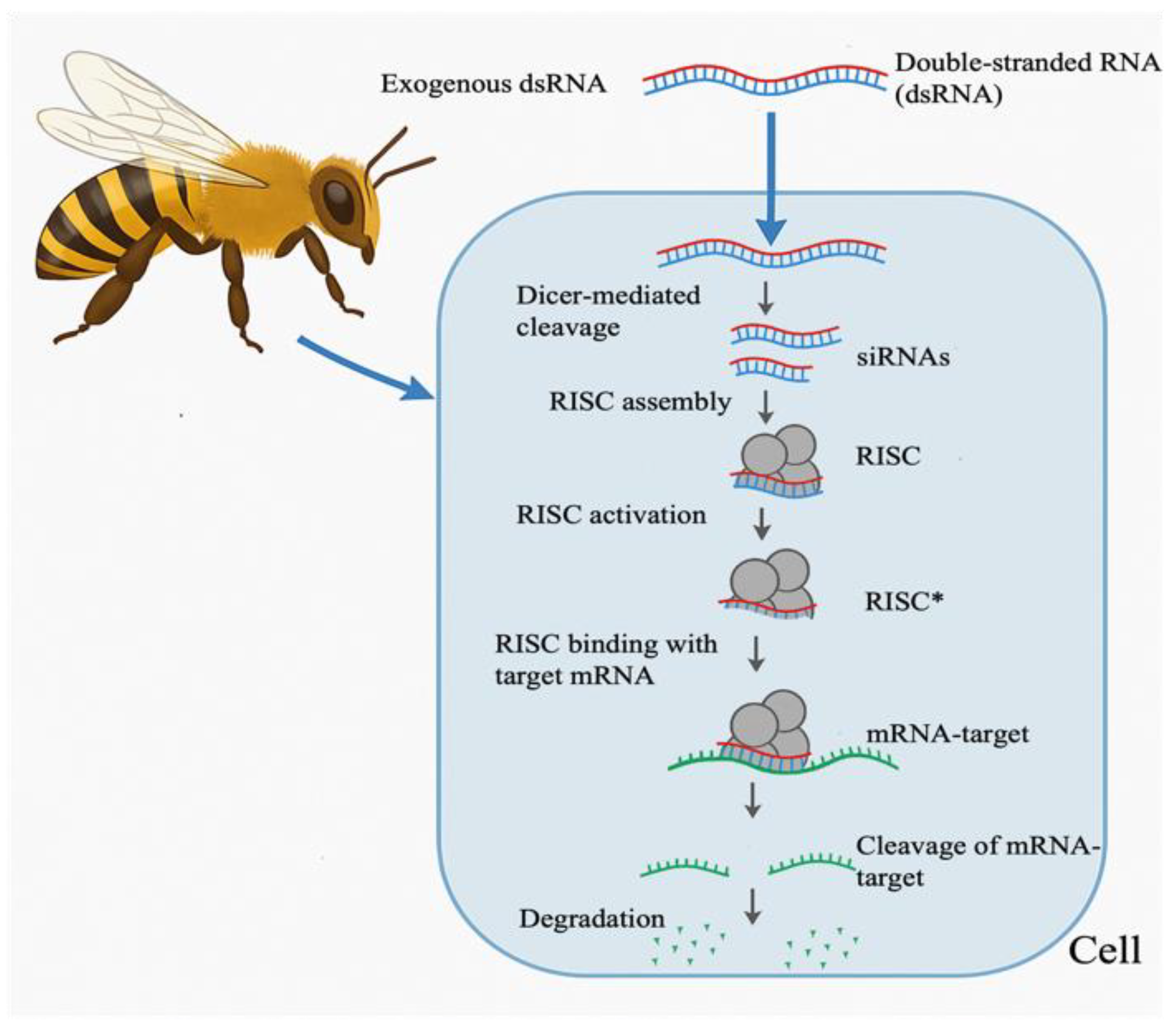
Figure 2.
Schematic representation of engineered Lactobacillus probiotics as a dual-function symbiont to enhance honeybee health. Naturally residing in the honeybee gut, probiotic strains such as Lactobacillus apis and Lactobacillus kunkeei are genetically engineered to carry a recombinant plasmid containing Lactobacillus-specific promoter sequences and target genes from viral pathogens (e.g., deformed wing virus), parasitic mites (e.g., Varroa destructor), and small hive beetles (SHB). These engineered Lactobacillus strains produce double-stranded RNA (dsRNA) to silence pathogen and parasite genes through RNA interference (RNAi), thus inhibiting their development. Simultaneously, the probiotic activity of the Lactobacillus strain supports gut microbiome balance and suppresses bacterial pathogens, including Paenibacillus larvae, the causative agent of American foulbrood. This approach demonstrates a sustainable and targeted strategy to protect honeybee colonies from a range of biotic stressors while promoting overall colony resilience.
Figure 2.
Schematic representation of engineered Lactobacillus probiotics as a dual-function symbiont to enhance honeybee health. Naturally residing in the honeybee gut, probiotic strains such as Lactobacillus apis and Lactobacillus kunkeei are genetically engineered to carry a recombinant plasmid containing Lactobacillus-specific promoter sequences and target genes from viral pathogens (e.g., deformed wing virus), parasitic mites (e.g., Varroa destructor), and small hive beetles (SHB). These engineered Lactobacillus strains produce double-stranded RNA (dsRNA) to silence pathogen and parasite genes through RNA interference (RNAi), thus inhibiting their development. Simultaneously, the probiotic activity of the Lactobacillus strain supports gut microbiome balance and suppresses bacterial pathogens, including Paenibacillus larvae, the causative agent of American foulbrood. This approach demonstrates a sustainable and targeted strategy to protect honeybee colonies from a range of biotic stressors while promoting overall colony resilience.
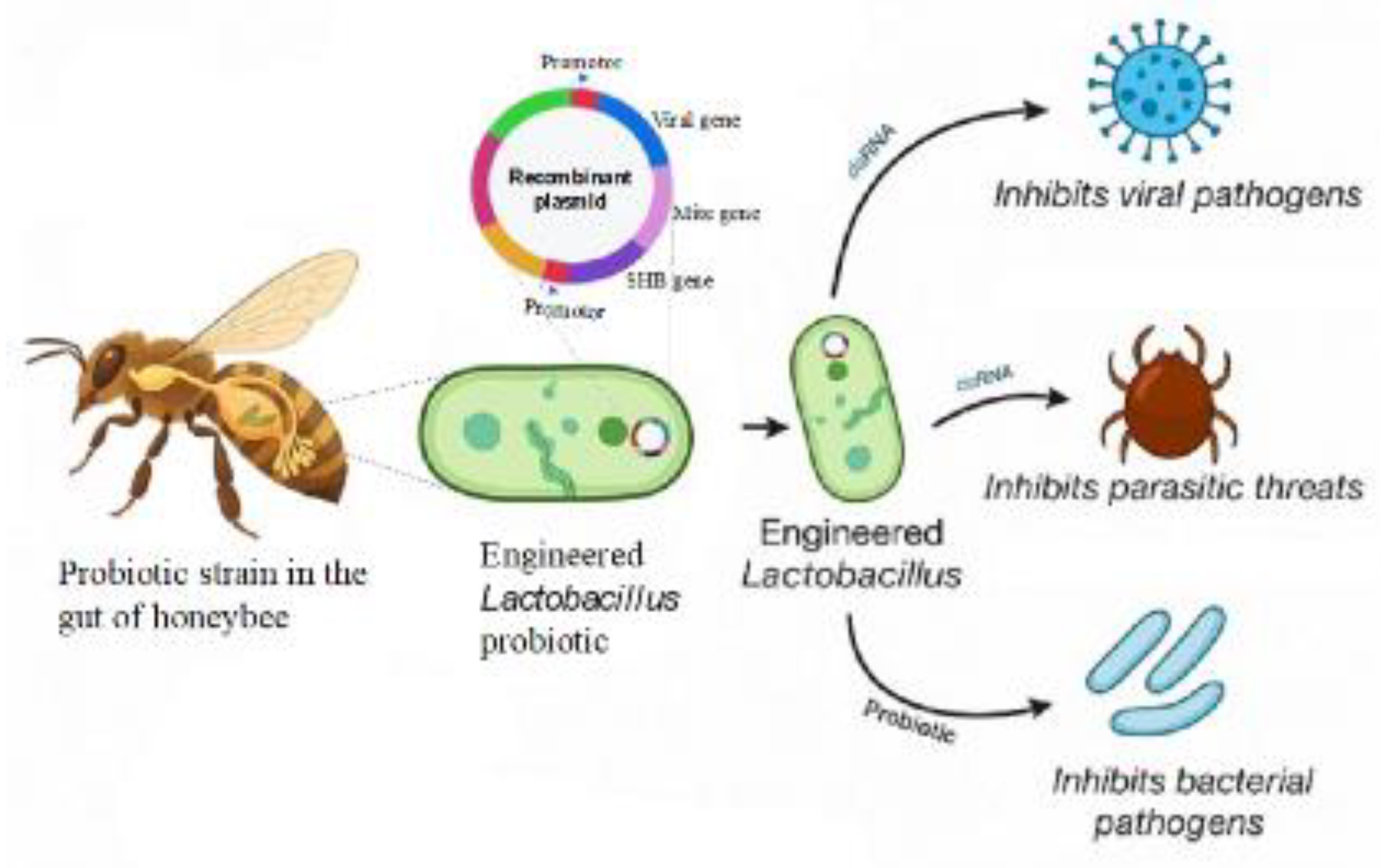

Table 1.
RNAi applications in honeybee disease and pest management.
| Target | RNAi Application | Delivery Method | Effect/Outcome | References |
|---|---|---|---|---|
| Viral Diseases | Silencing viral genes (e.g., DWV, IAPV, SBV, KBV) using virus-specific dsRNA or siRNA | Injection, feeding (e.g., Remebee-I), engineered symbionts | Reduced viral load, increased survival, suppression of replication, improved colony health | [16,34,37,39,41,76] |
| Nosema spp. | Silencing of essential parasite genes (e.g., SWP, mitosome-related genes), redox system | Direct feeding with dsRNA, engineered gut symbionts (Snodgrassella alvi) | Reduced spore load, increased survival, improved immunity, colony-level protection via symbiont transfer | [52,56] |
| Varroa destructor | Targeting reproductive and metabolic genes in mites (e.g., vitellogenin, aquaporins) | Feeding bees with dsRNA (larvae/adults), engineered symbionts | Reduced mite reproduction, decreased infestation, environmentally friendly, 60%+ reduction in studies | [65,67,76,77] |
| Small Hive Beetle | Silencing essential genes (e.g., V-ATPase, laccase2) for development and survival | Injection or feeding (larvae/adults) | High larval mortality (up to 100% via injection), no adverse effects on bees, specificity confirmed | [74,75] |
Disclaimer/Publisher’s Note: The statements, opinions and data contained in all publications are solely those of the individual author(s) and contributor(s) and not of MDPI and/or the editor(s). MDPI and/or the editor(s) disclaim responsibility for any injury to people or property resulting from any ideas, methods, instructions or products referred to in the content. |
© 2026 by the authors. Licensee MDPI, Basel, Switzerland. This article is an open access article distributed under the terms and conditions of the Creative Commons Attribution (CC BY) license (http://creativecommons.org/licenses/by/4.0/).
Copyright: This open access article is published under a Creative Commons CC BY 4.0 license, which permit the free download, distribution, and reuse, provided that the author and preprint are cited in any reuse.


