

Submitted:
27 April 2026
Posted:
28 April 2026
You are already at the latest version
Abstract
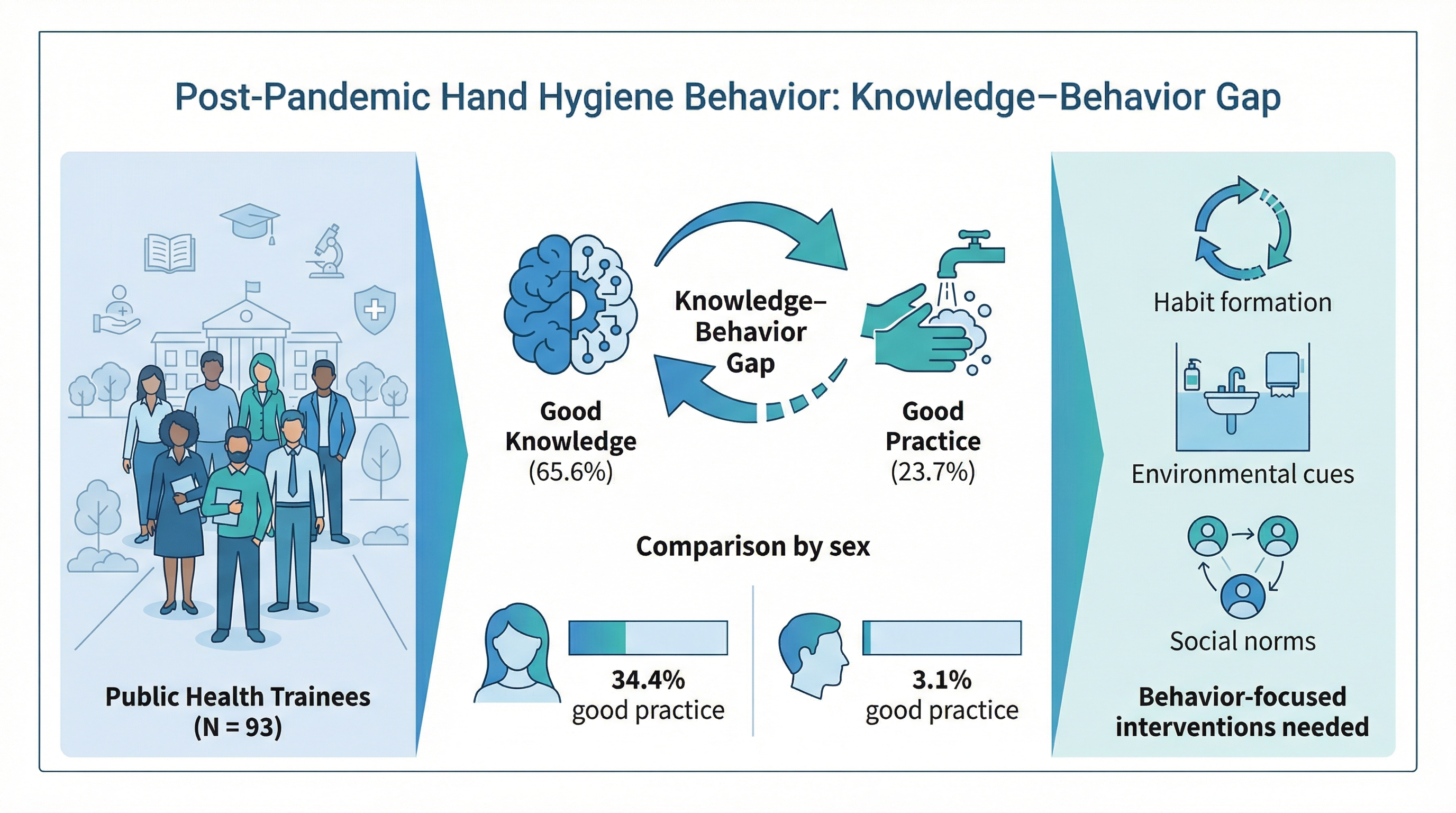
Hand hygiene is a cornerstone of infection prevention, yet adherence often declines once public health emergencies subside. This study examines post-pandemic hand hygiene practices and knowledge among public health trainees. We conducted a cross-sectional study of students and staff (N = 93) at a U.S. School of Public Health between May and October 2025. Participants completed a self-administered questionnaire assessing knowledge, self-reported practices, and demographics, with associations analyzed using chi-square tests. Results indicated that while 65.6% of participants possessed good knowledge (mean score 6.92 ± 1.92), only 23.7% met the criteria for good hand hygiene practice. Knowledge level was not associated with practice (p = 0.631). In contrast, sex was strongly associated with behavior: 34.4% of females reported good practice compared with 3.1% of males (p = 0.0016). Furthermore, adherence in high-risk situations was low, with only 7% reporting handwashing after coughing or sneezing. In conclusion, hand hygiene knowledge did not translate into consistent preventive behavior among these trainees. The observed differences by sex suggest that post-pandemic interventions should prioritize behavioral and social determinants rather than relying on information-based strategies alone.
Keywords:
hand hygiene
; infection prevention
; public health trainees
; knowledge–behavior gap
Copyright: This open access article is published under a Creative Commons CC BY 4.0 license, which permit the free download, distribution, and reuse, provided that the author and preprint are cited in any reuse.


