

Submitted:
27 April 2026
Posted:
28 April 2026
You are already at the latest version
Preprints on COVID-19 and SARS-CoV-2
Abstract
Background: The COVID-19 pandemic profoundly disrupted healthcare utilization patterns at both primary care (PC) and hospital emergency department (ED) levels. This study aimed to assess the impact of the pandemic on referral patterns from PC to a hospital ED and on the resource consumption associated with those referrals. Methods: describe briefly the main methods or treatments applied. Methods: A descriptive, retrospective, longitudinal comparative study was conducted at a first level hospital of Madrid (Spain). All consecutive PC-to-ED referrals received during two observation windows were included: a pre-pandemic period (1 June-31 December 2019; n=946) and a post-pandemic period (1 January-30 June 2022; n=1,797). Sociodemographic characteristics, referral form quality, diagnostic specialty, and in-ED resource utilization variables were collected and compared using χ2, Student’s t-test, and Mann–Whitney U tests as appropriate. Results: A total of 2,743 referrals were analyzed. The monthly referral rate increased by approximately 122% between periods (135/month vs 300/month). No significant differences were found in patient age (mean 53.1±18.3 vs 54.9±19.0 years; p=0.015) or sex. Referral form completion improved significantly for clinical history (94.5% vs 98.2%; p<0.001). Orthopedics referrals nearly tripled (5.8% vs 18.4%), while respiratory/COVID-19-related referrals represented 22.0% of the 2022 caseload. ED length of stay between 3 and 6 hours increased from 13.0% to 42.8% (p<0.001), while the need for urgent blood tests fell from 68.9% to 56.0% (p<0.001), hospital admission from 68.4% to 10.9% (p<0.001), and referral to another center from 12.3% to 0.9% (p<0.001). Conclusions: indicate the main conclusions or interpretations. The abstract should be an objective representation of the article, it must not contain results which are not presented and substantiated in the main text and should not exaggerate the main conclusions. After the initial COVID-19 waves, PC-to-ED referrals increased substantially while requiring fewer complementary investigations and generating fewer hospital admissions, suggesting improved coordination and clinical resolution capacity between PC and the ED. These findings have important implications for post-pandemic healthcare planning.
Keywords:
COVID-19
; pandemic
; emergency department
; primary care
; referral patterns
; healthcare utilization
; health services research
1. Introduction
The Spanish National Health System operates through a multilevel, multidisciplinary structure in which primary care (PC) and hospital emergency departments (EDs) constitute the two main entry points for patients [1]. Both levels of care have experienced a sustained increase in demand over recent decades, making effective coordination between them essential for delivering safe, high-quality, and efficient care [2,3].
PC physicians have a pivotal role in regulating patient flow to EDs. Appropriate referral not only ensures that patients receive the level of care they require but also prevents unnecessary overcrowding of EDs, which is associated with increased adverse outcomes and healthcare costs[4,5]. The proportion of patients who may be safely managed at the PC level depends on the accessibility and technical capacity of PC services, including the availability of point-of-care diagnostics and specialist teleconsultation [5,6]. When PC capacity is insufficient, patients who could be managed in the community end up attending the ED with benign or low-acuity conditions, straining hospital resources [4].
The COVID-19 pandemic, declared by the World Health Organization in March 2020, caused unprecedented disruption to health systems worldwide [7,8]. In Spain, as in many other countries, the successive pandemic waves forced a rapid reorganization of healthcare delivery at all levels: telehealth consultations were scaled up, elective activities were canceled, and infection control measures were implemented throughout the care pathway. Several studies have documented a sharp initial reduction in ED attendances during the first COVID-19 wave [9,10], followed by a gradual recovery and, in some centers, a rebound in demand during subsequent waves in 2021–2022.
However, the specific effect of the pandemic on PC-to-ED referral behavior, in terms of both volume and clinical complexity, remains poorly characterized, particularly for the post-confinement recovery period. Existing Spanish literature has primarily focused on within-hospital or within-ED impact [10], without explicitly examining the interface between PC and secondary care. Understanding how the pandemic reshaped this interface is crucial for informing future resource planning and for identifying whether pandemic-era improvements in communication and clinical resolution may be sustained.
The study hospital is a first-level referral university hospital affiliated with a Spanish public university, serving a catchment area of approximately 200,000 inhabitants through eight main PC centers in its reference health district. In 2019, the ED received approximately 150 patients per day, of whom an estimated 7-8% were referred from PC. This setting therefore represents a suitable single-center model for studying the PC-ED interface.
The objectives of this study were: (1) to compare the volume and characteristics of -ED referrals between the pre-pandemic and post-pandemic periods; (2) to evaluate the quality of referral documentation; and (3) to compare in-ED resource utilization and patient outcomes between the two periods.
2. Materials and Methods
2.1. Study Design and Setting
A descriptive, retrospective, longitudinal comparative study was conducted at the Emergency Department of a first-level referral university hospital serving a mixed urban-rural area in southern Spain, affiliated with a national public university.
2.2. Study Periods and Population
Two non-overlapping observation windows were selected (Figure 1):
- Pre-pandemic period: 1 June - 31 December 2019 (7 months), preceding the onset of the COVID-19 pandemic in Spain.
- Post-pandemic period: 1 January - 30 June 2022 (6 months), after the main pandemic waves had subsided but while the healthcare system was still operating under the influence of pandemic-related structural changes.
All consecutive referrals from PC centers to the ED received during regular working hours (Monday to Friday, 08:00–21:00; morning shift 08:00–15:00 and afternoon shift 15:00-21:00) were included. Referrals originating from PC urgent-care services, specialist outpatient clinics, or external specialists were excluded.
2.3. Variables
The following variables were collected from anonymized referral forms and the electronic medical record:
Sociodemographic variables: age (years, continuous); sex (male/female); PC center of origin (eight centers, identified as PC Centers 1-8 in order of referral volume).
Temporal variables: day of the week (Monday to Friday); work shift (morning or afternoon).
Referral form quality variables, assessed using the validated quality criteria of Irazábal and Gutiérrez [11] as modified by Morera et al. [12]: presence of clinical history (yes/no); physical examination findings (yes/no); diagnostic impression or clinical judgment (yes/no); and reason for referral (specialist assessment; request for complementary test; request for admission; appointment request).
Clinical specialty: diagnoses classified into Cardiology, Hematology, Infectious Diseases, Dermatology, Neurology, Gastroenterology, Pulmonology (including COVID-19), Orthopedics, ENT (Otorhinolaryngology), Nephrology, Urology, Gynecology, Ophthalmology, Psychiatry, General Surgery, Endocrinology, Rheumatology, Maxillofacial Surgery, Allergology, and Vascular Surgery.
In-ED resource utilization and outcome variables: need for urgent blood tests (yes/no); plain radiography (yes/no); advanced imaging (urgent ultrasound or CT scan) (yes/no); urgent specialist consultation (yes/no); intravenous treatment or plaster cast (yes/no); ED length of stay (<3 h; 3–6 h; 6–12 h; >12 h); need for ED observation (yes/no); hospital admission (yes/no); and referral to another center (yes/no).
2.4. Data Collection and Ethics
All data were extracted from a password-protected database specifically designed for this study and accessible only to the principal investigators. The study was approved by the Ethics and Research Committee of Hospital Universitario Puerta de Hierro (Approval No. ACT 151/22) and conducted in accordance with the principles of the Declaration of Helsinki, the Spanish Data Protection Act (BOE-A-2018) and the European General Data Protection Regulation (EU 2016/679).
2.5. Statistical Analysis
Categorical variables were described as frequencies and percentages. Continuous variables were expressed as mean ± standard deviation (SD). Between-group comparisons used the test for categorical variables, Student’s t-test for normally distributed continuous variables, and the Mann-Whitney U test for non-normally distributed variables; ANOVA and Kruskal-Wallis tests were applied for comparisons involving more than two groups. Statistical significance was set at . All analyzes were performed with IBM SPSS Statistics version 26.0 (IBM Corp., Armonk, NY, USA).
3. Results
3.1. Referral Volume and Sociodemographic Characteristics
A total of 2743 PC-to-ED referrals were analyzed: 946 (34.5%) in the pre-pandemic period (June-December 2019) and 1797 (65.5%) in the post-pandemic period (January-June 2022). Adjusting for the different observation lengths (7 vs. 6 months), the monthly referral rate increased from approximately 135 to 300 referrals per month, a 122% increase.
The mean age of patients was similar between periods ( years in 2019 vs. years in 2022; ), with no clinically meaningful difference. No significant sex differences were observed: 431 males (45.6%) and 515 females (54.4%) in 2019 vs. 829 males (46.1%) and 968 females (53.9%) in 2022 ().
Referral distribution by day of the week showed significant differences ();Wednesday was consistently the day with the highest number of referrals in both periods (223, 23.6% in 2019; 401, 22.3% in 2022). No significant shift differences were observed (). Referral volume varied significantly by PC center (): PC Centre 1 generated the most referrals in both periods (255 in 2019; 428 in 2022), followed by PC Centre 2 (180; 214), PC Centre 3 (159; 278), and PC Centre 4 (158; 350). Full data are presented in Table 1.
3.2. Referral Form Quality
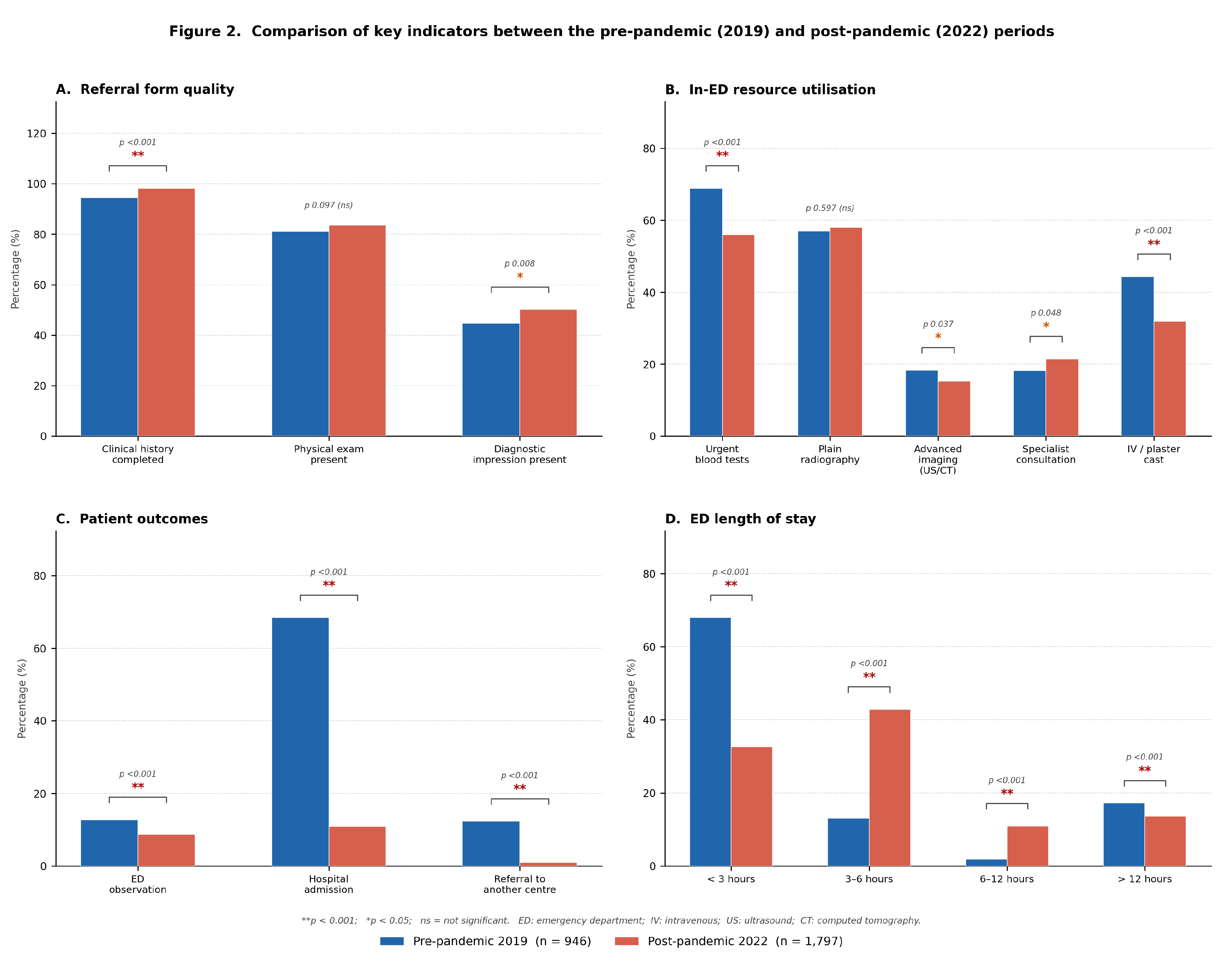
Completion of the clinical history section improved significantly (94.5% in 2019 vs. 98.2% in 2022; ). The presence of a diagnostic impression also increased significantly (44.7% vs. 50.1%; ). No significant change was found for the physical examination section (81.2% vs. 83.7%; ).The most frequent reason for referral was specialist assessment in both periods (92.8% vs. 92.9%; ). Data are summarized in Table 2.
3.3. Diagnostic Specialty Distribution
The distribution of referrals by specialty changed significantly (; Table 3). The most notable shifts were:
- Orthopedics: increased from 5.8% to 18.4%, nearly tripling, consistent with a surge in physical activity after the end of confinement.
- Pulmonology + COVID-19: 12.9% in 2019, rising to 22.0% in 2022 when COVID-19-specific referrals (7.7%) are combined with pulmonology (14.3%).
- Gastroenterology: decreased from 17.2% to 9.1%.
- Hematology: decreased from 7.1% to 2.7%.
- Infectious Diseases: decreased markedly from 5.7% to 0.5%.
- Ophthalmology: increased from 3.0% to 6.1%.
- Vascular Surgery: appeared as a new category in 2022 (1.1%).
3.4. Emergency Department Length of Stay
The distribution of ED length of stay changed substantially (; Table 4). Stays of less than 3 hours decreased from 67.9% to 32.7%, while stays of 3–6 hours increased from 13.0% to 42.8%. Stays of 6–12 hours increased from 1.9% to 10.9%, and stays exceeding 12 hours decreased slightly from 17.2% to 13.6%.
3.5. In-ED Resource Utilisation and Outcomes
Compared with the pre-pandemic period, significant decreases were observed across multiple resource utilization variables (Table 4):
- Urgent blood tests: 68.9% vs. 56.0%; .
- Advanced imaging (ultrasound or CT): 18.3% vs. 15.2%; .
- Intravenous treatment or plaster cast: 44.3% vs. 31.9%; .
- ED observation: 12.7% vs. 8.7%; .
- Hospital admission: 68.4% vs. 10.9%; .
- Referral to another centre: 12.3% vs. 0.9%; .
Conversely, urgent specialist consultation increased (18.2% vs. 21.4%; ), and plain radiography use remained stable (57.0% vs. 58.0%; ).
Figure 2.
Comparison of key performance indicators between the pre-pandemic (2019) and post-pandemic (2022) periods. (A) Monthly referral rates. (B) ED length of stay distribution. (C) Resource utilization rates. (D) Patient outcome rates. Data are expressed as percentages. ; .
Figure 2.
Comparison of key performance indicators between the pre-pandemic (2019) and post-pandemic (2022) periods. (A) Monthly referral rates. (B) ED length of stay distribution. (C) Resource utilization rates. (D) Patient outcome rates. Data are expressed as percentages. ; .
4. Discussion
This study provides a comprehensive comparison of PC-to-ED referral patterns and in-ED resource utilization between the pre-pandemic (2019) and post-pandemic (2022) periods at a first-level referral university hospital. The principal finding is a substantial increase in referral volume following the COVID-19 pandemic, paradoxically accompanied by a reduction in in-ED resource consumption and hospital admission rates, suggesting an overall improvement in the clinical appropriateness of referrals.
4.1. Increase in Referral Volume
The monthly referral rate approximately doubled between the two study periods. This contrasts with the sharp initial decline in ED attendances documented during the first COVID-19 wave, attributed to patient avoidance of healthcare facilities, lockdown restrictions, and the repurposing of hospitals for COVID-19 management [9,10]. Our post-confinement data from 2022 capture a different dynamic: the pent-up demand accumulated during the pandemic, combined with a sustained rise in baseline PC caseload and the addition of COVID-19-related referrals, resulted in a substantially higher referral volume. Similar rebounds in emergency activity during 2021-2022 have been described by other Spanish authors [10,13].
The near-tripling of traumatology referrals (5.8% to 18.4%) is particularly noteworthy. This finding aligns with the widely reported surge in physical and sports-related injuries following the lifting of movement restrictions in 2021 [9], and may also partly reflect patients with accumulated musculoskeletal pathology that had gone unattended during the pandemic. By contrast, the sharp fall in infectious disease referrals (5.7% to 0.5%) likely reflects both improved telemedicine management of infectious episodes at PC level and the diversion of COVID-19 cases to dedicated care pathways.
4.2. Improvement in Referral Form Quality
The improvement in clinical history completion (94.5% to 98.2%; ) and diagnostic impression documentation (44.7% to 50.1%; ) is a clinically relevant finding. High-quality referral documentation reduces iatrogenic errors, facilitates ED triage, and enables more efficient clinical assessment[14]. It is plausible that the pandemic-driven shift towards structured electronic referral platforms and telemedicine contributed to this improvement. However, the absence of a diagnostic impression in almost half of referrals in 2022 (49.9%) remains a meaningful gap, and targeted training programs for PC physicians may be warranted. The validated quality framework of Irazábal and Gutiérrez [11] as modified by Morera et al. [12] provided a robust instrument for this assessment.
4.3. Changes in ED Resource Utilization
The dramatic fall in hospital admission rates from 68.4% in 2019 to 10.9% in 2022 () is the most striking finding of this study. Although the pre-pandemic figure may partly reflect complex or semi-urgent cases that were channeled through the ED, the post-pandemic figure suggests that a greater proportion of 2022 referrals were of lower acuity or were resolved definitively within the ED. The concurrent increase in ED stays of 3-6 hours (13.0% to 42.8%) is consistent with this interpretation: patients required greater observation time within the ED but were ultimately discharged.
The reductions in urgent blood test requests (68.9% to 56.0%) and advanced imaging use (18.3% to 15.2%) likely reflect both a shift in case mix towards more musculoskeletal and respiratory presentations requiring fewer laboratory investigations and an enhanced clinical resolution capacity within the PC setting, where general practitioners may have gained confidence in managing borderline cases through the pandemic experience. The increased use of telephone consultations between PC and hospital specialists during the pandemic[6] may also have enabled a more appropriate pre-referral work-up.
The increase in urgent specialist consultations within the ED (18.2% to 21.4%; ) may reflect a more selective referral process, with PC physicians retaining simpler cases and referring only those genuinely requiring specialist assessment, thereby increasing the average acuity of the referred population.
4.4. Temporal Patterns
The consistent predominance of Wednesday as the peak referral day in both periods aligns with previously reported patterns[2] and may reflect the accumulation of clinical decisions across the first half of the working week. The absence of significant differences by work shift suggests that PC-to-ED referral activity is relatively evenly distributed across morning and afternoon hours, which has implications for ED staffing planning.
4.5. Strengths and Limitations
Strengths of this study include the large consecutive sample from a real-world secondary care setting, the coverage of two epidemiologically distinct periods, and the use of validated quality criteria for referral form assessment. The retrospective design enabled complete data capture without participant drop-out.
Limitations include the single-center design, which restricts generalizability to other health districts with different demographic compositions or healthcare organizational models. The observation windows differ in duration (7 vs. 6 months), which was addressed by converting raw counts to monthly rates. Unmeasured confounders such as changes in GP workforce, adoption of new telemedicine platforms, or shifts in the catchment population during the pandemic may have contributed to the observed differences and cannot be disentangled from the pandemic effect itself.
The retrospective design precludes causal inference, and outcomes beyond the ED encounter were not available.
5. Conclusions
Following the initial waves of the COVID-19 pandemic, PC-to-ED referrals increased substantially in volume, with a monthly rate approximately twice that of the pre-pandemic period. Despite this increase, referred patients required fewer complementary investigations, were significantly less frequently hospitalized, and were rarely transferred to other centers, while the quality of referral forms improved significantly. These findings suggest that the pandemic period fostered enhanced coordination between PC and the ED and led to more appropriate patient selection for secondary care referral. Future multi-center studies with longer follow-up are needed to determine whether these improvements are sustained and whether targeted interventions, particularly around referral form completion and telemedicine integration, can further optimize the PC-to-ED interface in the post-pandemic era.
Author Contributions
Conceptualisation, Á.I.D.S. and F.G.S.; methodology, Á.I.D.S., A.F.G., and F.G.S.; data collection, Á.I.D.S., A.F.G., A.E.Z., I.P.A., S.M.R., and M.T.S.Á.; formal analysis, N.M.G. and F.G.S.; writing - original draft, Á.I.D.S.; writing - review and editing, all authors; supervision, F.G.S. All authors have read and agreed to the published version of the manuscript.
Funding
The APC was funded by Instituto de Investigación Sanitaria Puerta de Hierro Segovia Arana (IDIPHISA)
Institutional Review Board Statement
The study was conducted in accordance with the Declaration of Helsinki and approved by the Ethics Committee of Hospital Universitario Puerta de Hierro (PI 151/22 of 18 of july 2022).
Informed Consent Statement
Patient consent was waived due to the retrospective nature of the study and the complete anonymization of all data, as approved by the Ethics Committee.
Data Availability Statement
The data that support the findings of this study are available from the corresponding author upon reasonable request, subject to data protection regulations.
Acknowledgments
During the preparation of this manuscript, the authors used Claude (Sonnet 4.6; Anthropic, San Francisco, CA, USA) to assist with language editing, manuscript drafting, and translation from Spanish to English. After using this tool, the authors reviewed and edited all content as necessary and take full responsibility for the accuracy, integrity, and conclusions of the published work. The AI tool was not used for data analysis, interpretation of results, or any scientific decision-making.
Conflicts of Interest
The authors declare no conflicts of interest.
Abbreviations
The following abbreviations are used in this manuscript:
| COVID-19 | Coronavirus Disease 2019 |
| CT | Computed Tomography |
| ED | Emergency Department |
| ENT | Ear, Nose and Throat (Otorhinolaryngology) |
| EU | European Union |
| GP | General Practitioner |
| IV | Intravenous |
| NHS | National Health System |
| PC | Primary Care |
| SD | Standard Deviation |
| SPSS | Statistical Package for the Social Sciences |
| US | Ultrasound |
| WHO | World Health Organization |
References
- Espinosa Sabina, L.; Castilla Pérez, M.d.P. Estudio descriptivo de las derivaciones urgentes a una unidad de salud mental. Rev. De. La Asoc. Española De. Neuropsiquiatría No DOI assigned for this article. 2002, 111–123. [Google Scholar] [CrossRef]
- Márquez Cabeza, J.J.; et al. Análisis de las derivaciones hospitalarias desde un servicio de urgencias de Atención Primaria durante un año. Med. De. Fam. SEMERGEN Authors: verify full author list in Dialnet record 3747456. 2007, 33, 341–348. [Google Scholar] [CrossRef]
- Bermejo Higuera, J.C.; Carabias Maza, R.; Díaz-Albo Hermida, E.; Muñoz Alustiza, C.; Villacieros Durbán, M. Derivaciones al Servicio de Urgencias del hospital en una población de ancianos residentes: Estudio retrospectivo sobre sus causas y adecuación. Gerokomos No DOI assigned; indexed in IBECS and SciELO. 2010, 21, 114–117. [Google Scholar] [CrossRef]
- Lang, T.; Davido, A.; Diakite, B.; Agay, E.; Viel, J.F.; Flicoteaux, B. Non-urgent care in the hospital medical emergency department in France: how much and which health need does it reflect? J. Epidemiol. Community Health 1996, 50, 456–462. [Google Scholar] [CrossRef] [PubMed]
- Gómez-Jiménez, J.; Becerra, Ó.; Boneu, F.; Bugués, L.; Pàmies, S. Análisis de la casuística de los pacientes derivables desde urgencias a atención primaria. Gac. Sanit. 2006, 20, 40–46. [Google Scholar] [CrossRef] [PubMed]
- Manzano Fernández, S.; Pastor Pérez, F.J.; Salar Alcaraz, M.; Pascual Figal, D.A. Resultados de una consulta telefónica entre cardiología y atención primaria previa a la derivación de casos dudosos a urgencias hospitalarias. Atención Primaria 2022, 54, 102303. [Google Scholar] [CrossRef] [PubMed]
- Meneses, A.S.d. Gerenciamento emergencial de recursos da Atenção Primária à Saúde no enfrentamento à pandemia da COVID-19. SciELO Prepr. Preprint; not peer-reviewed at time of citation. 2020. [Google Scholar] [CrossRef]
- Solera Albero, J.; Tárraga López, P.J. La Atención Primaria de Salud: más necesaria que nunca en la crisis del Coronavirus. J. Negat. No Posit. Results 2020, 5, 468–472. [Google Scholar] [CrossRef]
- Kuitunen, I.; Ponkilainen, V.T.; Launonen, A.P.; Reito, A.; Hevonkorpi, T.P.; Paloneva, J.; et al. The effect of national lockdown due to COVID-19 on emergency department visits. Scand. J. Trauma Resusc. Emerg. Med. 2020, 28, 114. [Google Scholar] [CrossRef] [PubMed]
- Montero-Pérez, F.J.; Jiménez Murillo, L.M. Impacto de la primera ola pandémica COVID-19 sobre los indicadores asistenciales y de calidad de un servicio de urgencias de hospital. Emergencias No DOI assigned by journal; available via Emergencias journal portal. 2021, 33, 345–353. [Google Scholar] [PubMed]
- Irazábal Olabarrieta, L.; Gutiérrez Ruiz, B. ?`Funciona la comunicación entre los niveles primario y secundario? Atención Primaria No DOI assigned; pre-DOI era publication. 1996, 17, 376–381. [Google Scholar] [PubMed]
- Morera, J.; Custodi, J.; Sanchez, K.; Miaja, F. Análisis de la calidad de la información transmitida entre atención primaria y atención especializada. Medifam No DOI assigned; pre-DOI era publication. Verify author given names. 1991, 1, 132–140. [Google Scholar]
- López-Villegas, A.; Bautista-Mesa, R.J.; Baena-López, M.Á.; Garzón-Miralles, A.; Castellano-Ortega, M.Á.; Leal-Costa, C.; et al. Impact of the COVID-19 Pandemic on Healthcare Activity in the Regional Hospitals of Andalusia (Spain). J. Clin. Med. 2022, 11, 363. [Google Scholar] [CrossRef] [PubMed]
- Bouzas Senande, E.; López Olmeda, C.; Cerrada Cerrada, E.; Olalla Linares, J.; Menéndez, J.L. Adecuación de las derivaciones desde atención primaria al servicio de urgencias hospitalario en el Área 9 de Madrid. Emergencias No DOI assigned; available as open-access PDF via journal portal. 2005, 17, 215–219. [Google Scholar]
Figure 1.
Flowchart of the study population. PC: primary care; ED: emergency department.
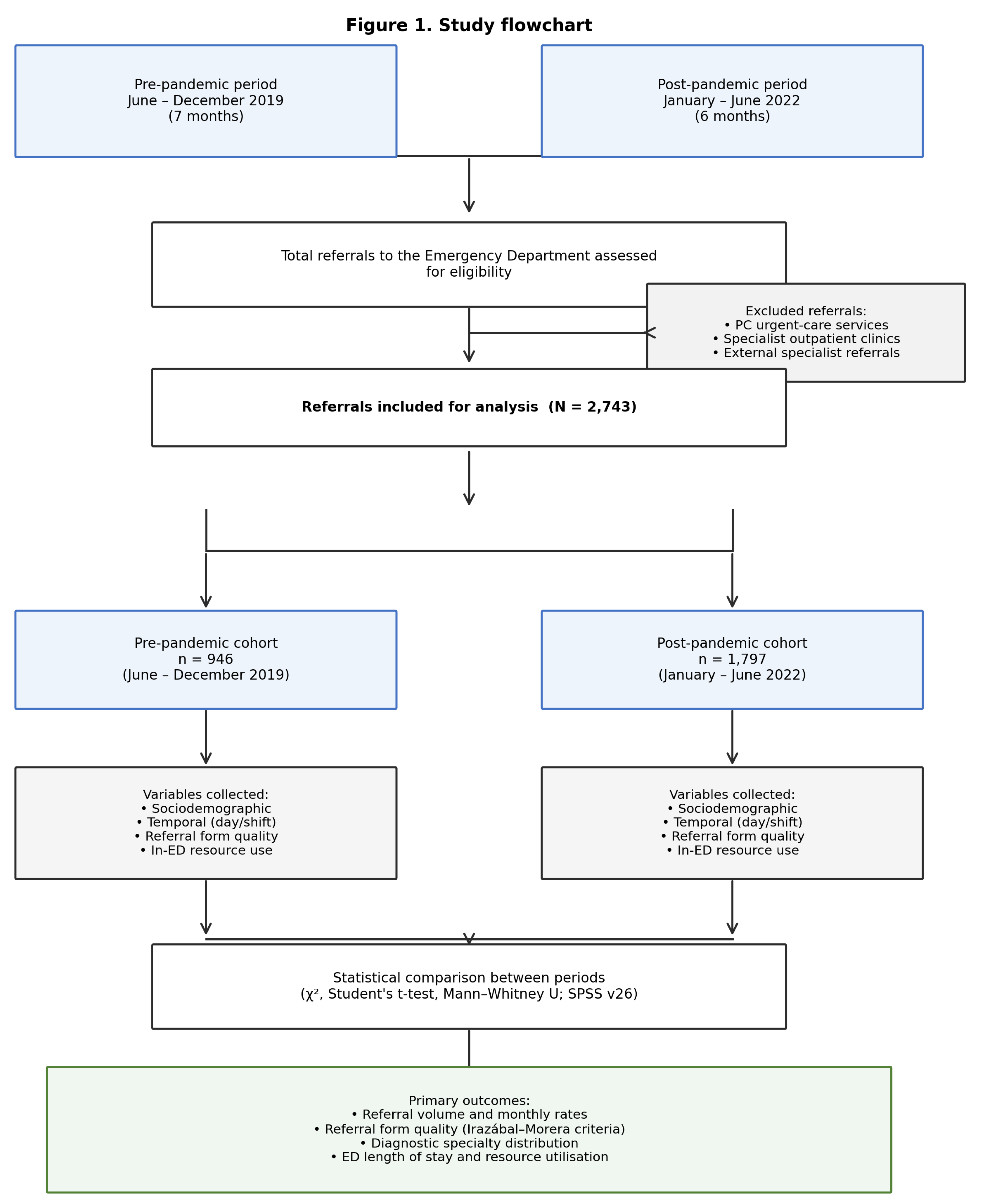

Table 1.
Sociodemographic characteristics, referral origin by PC centre, and temporal distribution of referrals in the pre-pandemic (2019) and post-pandemic (2022) periods. PC centres are numbered in descending order of referral volume in 2019.
Table 1.
Sociodemographic characteristics, referral origin by PC centre, and temporal distribution of referrals in the pre-pandemic (2019) and post-pandemic (2022) periods. PC centres are numbered in descending order of referral volume in 2019.
| Variable | 2019 () | 2022 () | p-value |
|---|---|---|---|
| (%) | (%) | ||
| Sex | |||
| Female | 515 (54.4) | 968 (53.9) | 0.775 |
| Male | 431 (45.6) | 829 (46.1) | |
| PC centre of origin | |||
| PC Centre 1 | 255 (27.0) | 428 (23.8) | <0.001 |
| PC Centre 2 | 180 (19.0) | 214 (11.9) | |
| PC Centre 3 | 159 (16.8) | 278 (15.5) | |
| PC Centre 4 | 158 (16.7) | 350 (19.5) | |
| PC Centre 5 | 71 (7.5) | 96 (5.3) | |
| PC Centre 6 | 33 (3.5) | 196 (10.9) | |
| PC Centre 7 | 23 (2.4) | 107 (6.0) | |
| PC Centre 8 | 9 (1.0) | 49 (2.7) | |
| Other centres | 58 (6.1) | 79 (4.4) | |
| Day of the week | |||
| Monday | 214 (22.6) | 360 (20.0) | 0.026 |
| Tuesday | 161 (17.0) | 390 (21.7) | |
| Wednesday | 223 (23.6) | 401 (22.3) | |
| Thursday | 168 (17.8) | 340 (18.9) | |
| Friday | 180 (19.0) | 306 (17.0) | |
| Work shift | |||
| Morning (08:00–15:00) | 543 (57.4) | 993 (55.3) | 0.283 |
| Afternoon (15:00–21:00) | 403 (42.6) | 804 (44.7) | |
Table 2.
Reason for referral and quality of referral form completion in the pre-pandemic (2019) and post-pandemic (2022) periods. Quality criteria assessed per Irazábal–Gutiérrez/Morera methodology.
Table 2.
Reason for referral and quality of referral form completion in the pre-pandemic (2019) and post-pandemic (2022) periods. Quality criteria assessed per Irazábal–Gutiérrez/Morera methodology.
| Variable | 2019 () | 2022 () | p-value |
|---|---|---|---|
| (%) | (%) | ||
| Reason for referral | |||
| Specialist assessment | 878 (92.8) | 1,668 (92.9) | 0.282 |
| Request for complementary test | 68 (7.0) | 128 (7.1) | |
| Request for admission | 1 (0.1) | 0 (0.0) | |
| Appointment request | 1 (0.1) | 0 (0.0) | |
| Referral form completeness | |||
| Clinical history present | 894 (94.5) | 1,765 (98.2) | <0.001 |
| Physical examination present | 768 (81.2) | 1,504 (83.7) | 0.097 |
| Diagnostic impression present | 423 (44.7) | 899 (50.1) | 0.008 |
Table 3.
Distribution of referrals by diagnostic specialty in the pre-pandemic (2019) and post-pandemic (2022) periods ( for overall between-period comparison).
Table 3.
Distribution of referrals by diagnostic specialty in the pre-pandemic (2019) and post-pandemic (2022) periods ( for overall between-period comparison).
| Specialty | 2019 () | 2022 () | p-value |
|---|---|---|---|
| (%) | (%) | ||
| Gastroenterology | 163 (17.2) | 164 (9.1) | <0.001 |
| Cardiology | 147 (15.5) | 248 (13.8) | |
| Pulmonology | 122 (12.9) | 257 (14.3) | |
| COVID-19 | 0 (—) | 139 (7.7) | |
| Neurology | 98 (10.4) | 104 (5.8) | |
| Hematology | 67 (7.1) | 48 (2.7) | |
| ENT (Otorhinolaryngology) | 61 (6.4) | 75 (4.2) | |
| Orthopedics | 55 (5.8) | 330 (18.4) | |
| Infectious Diseases | 54 (5.7) | 9 (0.5) | |
| Urology | 51 (5.4) | 83 (4.6) | |
| Ophthalmology | 28 (3.0) | 109 (6.1) | |
| Dermatology | 38 (4.0) | 36 (2.0) | |
| Endocrinology | 17 (1.8) | 21 (1.2) | |
| Maxillofacial Surgery | 15 (1.6) | 0 (0.0) | |
| Nephrology | 5 (0.5) | 35 (1.1) | |
| Psychiatry | 8 (0.8) | 22 (1.2) | |
| General Surgery | 7 (0.7) | 62 (3.5) | |
| Gynecology | 3 (0.3) | 12 (0.7) | |
| Rheumatology | 3 (0.3) | 15 (0.8) | |
| Allergology | 0 (0.0) | 8 (0.4) | |
| Vascular Surgery | 0 (0.0) | 21 (1.1) | |
| Social Work | 2 (0.2) | 0 (0.0) |
Table 4.
Emergency department length of stay, complementary investigations, treatments, and patient outcomes in the pre-pandemic (2019) and post-pandemic (2022) periods.
Table 4.
Emergency department length of stay, complementary investigations, treatments, and patient outcomes in the pre-pandemic (2019) and post-pandemic (2022) periods.
| Variable | 2019 () | 2022 () | p-value |
|---|---|---|---|
| (%) | (%) | ||
| ED length of stay | |||
| <3 hours | 642 (67.9) | 588 (32.7) | <0.001 |
| 3–6 hours | 123 (13.0) | 769 (42.8) | |
| 6–12 hours | 18 (1.9) | 195 (10.9) | |
| >12 hours | 163 (17.2) | 245 (13.6) | |
| Complementary investigations and treatments | |||
| Urgent blood tests | 652 (68.9) | 1,011 (56.0) | <0.001 |
| Plain radiography | 539 (57.0) | 1,043 (58.0) | 0.597 |
| Advanced imaging (US or CT) | 173 (18.3) | 273 (15.2) | 0.037 |
| Urgent specialist consultation | 172 (18.2) | 384 (21.4) | 0.048 |
| IV treatment or plaster cast | 419 (44.3) | 573 (31.9) | <0.001 |
| Outcomes | |||
| ED observation area admission | 120 (12.7) | 157 (8.7) | <0.001 |
| Hospital admission | 647 (68.4) | 196 (10.9) | <0.001 |
| Referral to another centre | 116 (12.3) | 16 (0.9) | <0.001 |
US: ultrasound; CT: computed tomography; IV: intravenous; ED: emergency department.
Disclaimer/Publisher’s Note: The statements, opinions and data contained in all publications are solely those of the individual author(s) and contributor(s) and not of MDPI and/or the editor(s). MDPI and/or the editor(s) disclaim responsibility for any injury to people or property resulting from any ideas, methods, instructions or products referred to in the content. |
© 2026 by the authors. Licensee MDPI, Basel, Switzerland. This article is an open access article distributed under the terms and conditions of the Creative Commons Attribution (CC BY) license (http://creativecommons.org/licenses/by/4.0/).
Copyright: This open access article is published under a Creative Commons CC BY 4.0 license, which permit the free download, distribution, and reuse, provided that the author and preprint are cited in any reuse.


