
Submitted:
27 April 2026
Posted:
28 April 2026
You are already at the latest version
Abstract
The alkaline oxidation of pine wood powder (Pinus sylvestris) by oxygen to produce vanillin and cellulose has been studied. The influence of temperature and catalyst (CuO) on the yield of vanillin, other monophenols and lignocellulosic residue (LCR) has been studied over a wide temperature range (120-220 °C). The highest vanillin yield obtained (49 wt.%) surpasses previously reported values. This can be attributed to the high oxidation rate, intense mass transfer, and optimal temperature conditions (12-15 minutes; stirring speed 1200 rpm; 180 °C). Within the temperature range of 120-180 °C, the use of a catalyst slightly increased the maximum vanillin yield (approximately 10% relative). The cellulose yield in the process attained 28-45% based on its initial content in wood. The highest vanillin yield was attained under harder conditions compared to those for cellulose production. Catalyst use accelerated the process, but this effect decreased to zero as temperature increased to 160 °C. The decrease in apperent activation energy as temperature increases can be explained by the transition of the process from a kinetic mode at lower temperatures (120-140 °C) to a diffusion-controlled regime under the conditions of maximum vanillin yield. The structure of native lignin in softwood is discussed.
Keywords:
vanillin
; native lignin
; cellulose
; oxygen
; nitrobenzene oxidation
; pine
; Pinus sylvestris
; aromatic aldehydes
1. Introduction
Natural fossil resources are limited, and chemical industry faces inevitable gradual transition from this type of raw materials to plant-based feedstocks. One of tactical goals within this strategy is production of vanillin and syringaldehyde from technical and native lignins, and it is studied quite actively [1].
Catalytic oxidation by oxygen in alkaline media produces 20-32 wt.% of vanillin from softwood lignins (based on the initial lignin amount), and up to 30-43 wt.% of vanillin and syringaldehyde mixture from hardwood lignins [2,3,4,5]; and this level of the aldehyde yield can be attained together with isolation of cellulose in oxidative catalytic fractionation of wood. Specialized methods for processing wood into cellulose cause significant chemical modification of the lignin, including condensation reactions. The yield of the aromatic aldehydes from these technical lignins is 2-3 times lower compared to the native ones [1,2,6].
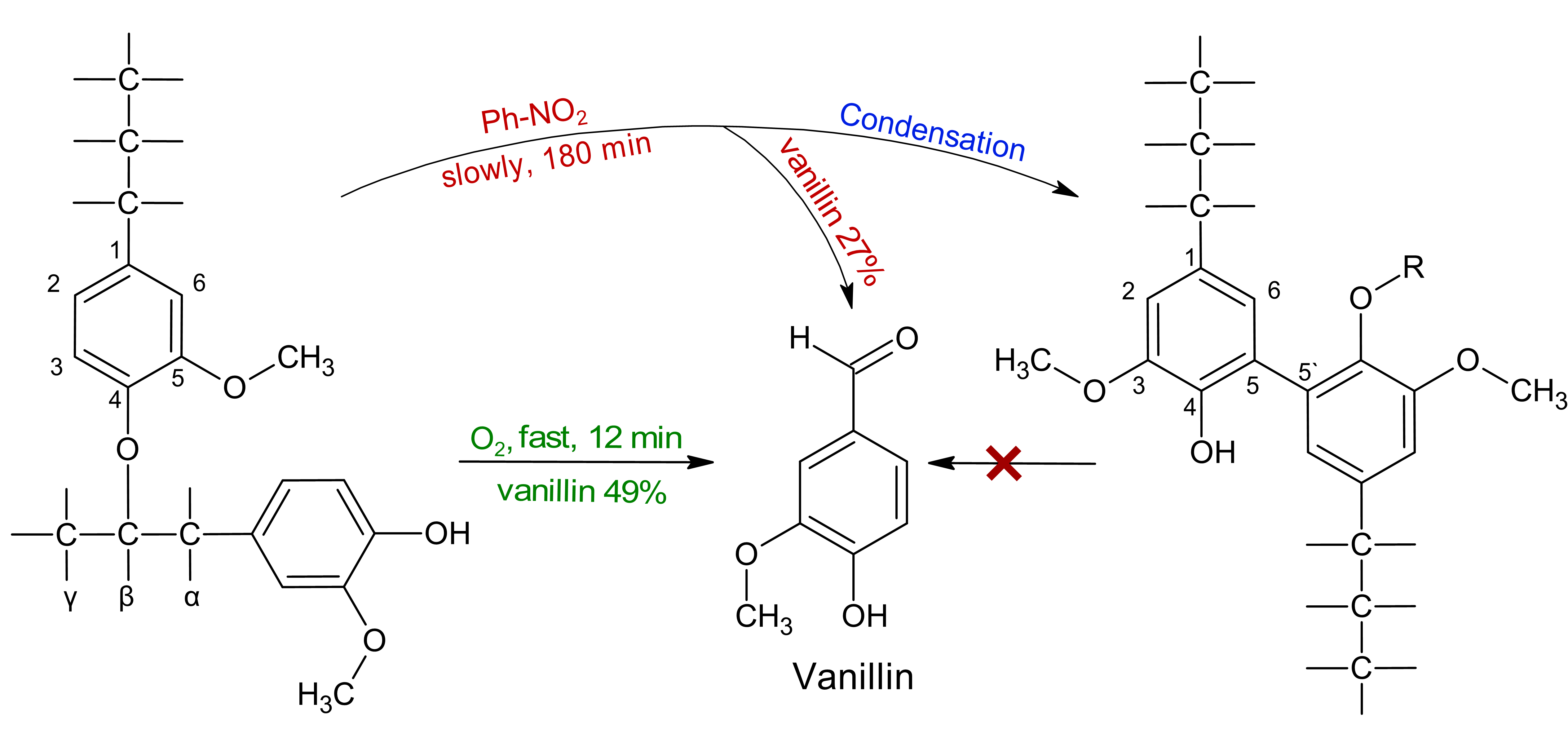
Various catalysts were proposed for the oxidation of lignins by oxygen, but classic catalysts based on copper oxide allow attaining the aldehyde yield that is quite close to that in oxidation by nitrobenzene (27%) [2,7]. Yield of vanillin (and syringaldehyde) from the nitrobenzene oxidation (NBO) — together with data from NMR and other methods — is the basis for quantitative structural models of lignin. From this viewpoint, the NBO results can be considered the theoretical limit of the aldehyde yield, and until recently only Gogotov managed to overcome it: Vanillin yield of 36% based on the lignin was obtained in oxidation of pine wood by a combination of nitrobenzene and o phenanthroline [8]. A three-stage oxidation of pine wood by oxygen yielded 25-28% of vanillin [9], equaling the NBO result [7].
Oxidation of lignins by oxygen in conventional conditions (160 °C) without copper oxide as the catalyst is known to produce 1.5-2 times less vanillin in comparison to the catalytic process [2]. A US patent describes oxidation of lignosulfonates and Kraft lignins without catalysts at 200-250 °C with vanillin yield as high as 20 wt.% based on the initial lignosulfonate [10]. This reveals an attractive prospect for developing effective methods of lignin oxidation into vanillin without catalysts. The afore-mentioned patent does not study such high-temperature approach to oxidation of native lignins (sawdust) [10]. Our experiments showed that increasing the temperature from 170 to 200 °C while oxidizing aspen wood without a catalyst leads to a rise of the yield of the aromatic aldehydes from 17 to 27% based on the initial lignin. For context, combined yield of vanillin and syringaldehyde from oxidation by nitrobenzene at 160 °C is 44%, and using oxygen with a copper catalyst yields 37% [2].
Separation of the solid catalyst from the solid residue poses a notable problem for oxidative fractionation of wood into cellulose and the lignin-dervied chemicals. When copper catalysts are used for the oxidation of wood into pulp and vanillin, a problem of wastewater treatment arises. While threshold limit value of copper concentration in foods like bread and meat is 5 mg/kg in Russia, its concentration in bodies of water used for fish farming is limited to 1 mg/m3.
By eliminating copper and other types of catalysts, and by using wood instead of technical lignins as the raw material, the wastewater toxicity problem can be mitigated to a large degree. As a result, the wastewaters from oxidative wood processing can be used as agricultural growth stimulants and fertilizers [11,12].
An important matter of organizing a process of lignin oxidation into the aromatic aldehydes is managing its kinetic mode (reaction-controlled or diffusion-controlled limit of the process rate) in the multi-phase system which comprises oxygen, aqueous alkali, and the lignocellulosic solid phase, and potentially a solid catalyst. In these oxidation processes, vanillin is an intermediate product (on the path to total oxidation), and a general trend for such systems is that the yield of intermediate products decreases when the process moves from the reaction-controlled to the diffusion-controlled mode [2,13]. With low intensity of mass transfer (8 watt magnetic stirrer in a 1 L reactor), oxidation of flax shives is rate-limited by external diffusion; whereas with highly intense mass transfer (200 W impeller stirrer, 1 L reactor) limitation by internal diffusion is observed [14,15]. However, neither of these processes surpasses nitrobenzene oxidation in terms of the vanillin yield [16]. On the other hand, some recent papers on catalytic oxidation of native lignins by oxygen with intense mass transfer systematically claim exceeding the yield of the NBO [4].
The presented literature data suggest that it may be possible to increase the vanillin yield while eliminating the catalyst from the process of lignin oxidation using oxygen, by means of increasing the temperature and the mass transfer intensity. The goal of this work is studying the influence of catalyst presence (copper oxide) and of temperature in a wide range (120-220 °C) on oxidation of powdered pine wood by oxygen into vanillin and cellulose under intense mass transfer.
2. Materials and Methods
Air-dry sawdust (size fraction ⩽ 2 mm) of pine wood (Pinus sylvestris) was used in the following experiments. Composition of the wood (in wt.%): lignin 27.1, cellulose 49.5, extractives 4.6 [9].
Oxidation of the wood was carried out in a stainless steel autoclave of 1 L capacity (Nanomag®, India) with magnetically coupled impeller stirrer (200 watt), and with buffer vessels for oxygen and argon (Figure 1). Temperature in the autoclave was managed by a PID regulator, maintaining it with ± 3 °C precision. Reaction mixtures were prepared by adding the following substances under constant stirring in this order: 300 mL of distilled water, 15 g NaOH (or 10.8 g for experiments without the catalyst), 15 g pine wood powder, optionally 11.25 g CuSO4 · 5 H2O as the catalyst. The experiments were conducted at 120-220 °C, with oxygen partial pressure 0.2 MPa, stirring rate 1200 min−1 [15].
To perform an experiment, one buffer vessel was filled with oxygen, the other with argon via valves B4 and B1 respectively, up to required pressure which was monitored with pressure gauges M1 (argon) and M2 (oxygen). Via valve B2, the autoclave was purged three times with the inert gas, and was filled with it up to pressure 0.1 MPa(g). Then, the reactor was heated to the chosen temperature. Afterwards, oxygen from the buffer volume was introduced into the autoclave (adding 0.2 MPa to the reactor pressure). The resulting pressure in the autoclave was maintained at constant value by periodically adding more oxygen from the buffer volume via valve B5. Oxygen consumption during the oxidation is calculated from the pressure decrease in the buffer vessel as shown by gauge M2. Samples of the reaction mass were withdrawn during the oxidation experiment through a bottom orifice via valves B6 and B7 (Figure 1).
The reaction mass samples (5 mL) were acidified and filtered. The filtrate was extracted with chloroform; the extract was concentrated by evaporation and analyzed by gas chromatography.
The solid residue of the reaction mass was removed from the reactor after it cools down (15-120 min, depending on the experiment temperature), and then used for cellulose quantification.
3. Results and Discussion
Based on earlier studies, the reaction parameters under which the oxidation of flax shives is known to attain internal diffusion control of the process rate had been chosen as the initial conditions (160 °C, stirring rate 1200 min−1, oxygen partial pressure 0.2 MPa), around which variations were introduced [15].
3.1. Influence of Temperature on Vanillin Formation Rate and Its Maximum Yield
Figure 2 presents the experimental data on the effect of temperature on vanillin accumulation dynamics during the oxidation with the catalyst and without it. The vanillin accumulation rate increases concordantly with the temperature, and the maximum of its concentration is attained in 7-20 min for the temperature range 160-220 °C. Such duration of the oxidation can be found in literature, and it is shorter than the oxidation by nitrobenzene. The oxidation of flax shives at 160 °C under external diffusion rate control took 20 minutes [14,15]; the oxidation of steam-explosion lignin of poplar (Populus Tremuloides) at 170 °C proceeded for 2-5 min with stirring rate 2000 min−1 [17]. Quantitative analysis of how the oxidation rate depends on temperature in our experiments will be given below.
Dependence of the highest attained vanillin amount versus oxidation temperature exhibits the maximum (49 wt.% based on the initial lignin, with the catalyst) at 180 °C (Figure 3). In many publications, a general trend can be observed for higher yield of vanillin (and syringaldehyde) with increasing temperature of the lignin oxidation by oxygen in the range 90-200 °C [2]. The typical temperature at which the oxidation of lignin by either oxygen or nitrobenzene exhibits the maximum vanillin yield is 160-170 °C [2], and the presently shown results are close to this range. Papers in which the maximum yield of the aldehydes was attained at higher temperature are rare. No significant differences were reported between the yields of the aromatic aldehydes from the NBO at different temperatures in the range 170-190 °C [18]. 59 wt.% yield of combined monophenols (vanillin, syringaldehyde, their corresponding carboxylic acids, acetovanillone, acetosyringone) was obtained in the oxidation of eucalyptus wood by using copper oxide as the oxidant at 210 °C [19].
The most important result of the present work is unprecedented high yield of vanillin (up to 49 wt.%) and of combined monophenols (up to 57 wt.% based on the initial lignin) from oxidation of pine native lignin by oxygen. This result has been reproduced in three experiments; arithmetic error of the mean for the vanillin yield is 2-4% relative to the mean value itself (Table 1).
We believe that the main reason for the high vanillin yield in our experiments is inherently high rate of lignin oxidation by oxygen that exceeds the rate of oxidation by nitrobenzene by a factor of 10-20 (Table 2). High intensity of mass transfer allows the high activity of oxygen to manifest itself to a greater degree; high temperature also increases the rate of oxidation. It should be noted that according to literature data [4], the monophenols yield in the oxidation of lignins by oxygen systematically exceeds the results of the oxidation by nitrobenzene; whereas duration of the oxidation by oxygen [4] is twice shorter than that of the NBO.
Some other factors that may contribute to the higher than conventional yield of the monophenols from the oxidation are a deliberate search for the optimal reaction duration and maintaining constant oxygen partial pressure during the process.
Previously published data on oxidation of native pine lignin by oxygen (with or without catalysts) do not exceed 21-34 wt.% yield of the monophenols (Table 2). The classic data [2,7] on the nitrobenzene oxidation of pine wood (27%) (that serve as the basis for quantitative models of lignin structure) are almost twice as low as the values obtained in the present work. Similar data (28 wt.% of vanillin based on the initial lignin) were obtained by oxidation of native cypress lignin (Cryptomeria japonica) for two hours [20]. The value of vanillin yield for oxidation of pine wood (Pinus sylvesrtis) by the system nitrobenzene-o-phenanthroline obtained by Gogotov (36%) [8] is also lower than our current results. Larger yield (38-40 mol.% or 32-34 wt.% of vanillin) was obtained in NBO of loblolly pine for 1.5-2.5 hours at 170-190 °C [18], but this still does not exceed our present data.
The presently obtained vanillin yield values can be compared to the theoretical limits for the yield of monomeric derivatives from oxidation or hydrogenolysis of lignins, as estimated in some publications. Freudenberg’s model of spruce lignin structure includes 30% of phenylpropane units (PPUs) capable of yielding vanillin during oxidation [22]. An estimate of 56-59% is given for the maximum yield of the monomeric products from catalytic hydrogenolysis of birch native lignin [23]. Theoretical limit of the monomer yield from catalytic hydrogenolysis of pine lignin (23%) was calculated elsewhere [24]. Theoretical yield at 30% of the monophenols for oxidation of pine lignin [4] is estimated according to the same method but in a different paper [23]; our current results exceed this theoretical limit.
It should be noted that the monomeric product yield limit as estimated according to an early quantitative structural model of spruce lignin proposed by Adler (Figure 4) [25] can approach 50 mol.%: Out of the 16 included PPU types, at least seven (non-substituted guaiacyl PPUs number 1, 2, 4, 7, 9, 14, 16) can produce monophenolic products during oxidation. Adler pointed out that this model was made for Björkman lignin rather than the native one. Our experimental data (51-57 wt.%) closely approach and overcome this theoretical yield limit.
Considering that vanillin yield from oxidation of native softwood lignins by nitrobenzene (27-36 wt.%, Table 2) is markedly lower than our experimental results from the oxidation by oxygen (42-49 wt.%), we conclude that the results of the NBO do not so much characterize structure of the initial lignin, as they rather characterize modification of the lignin occurring during the NBO. In the course of the slow oxidation by nitrobenzene, formation of the monomeric products occurs concurrently with cross-linking of the remaining polymer into new condensed structures that are not suitable for formation of the monophenols, thereby reducing their yield. This consideration should be taken into account when inferring structure of native lignins based on NMR analyses of isolated lignins, which may be altered to some extent by the isolation procedure.
Our experimental yield of vanillin from the oxidation of native pine lignin (42-49 wt.%) is close to the value of vanillin and syringaldehyde for oxidation of native hardwood lignins by nitrobenzene (44-50%) [2]. This comparison shows that well-known differences between hardwoods and softwoods in terms of effectiveness of their delignification in slow pulping processes are caused not so much by a difference of the initial condensation extent in native lignins, but rather by higher rate of softwood lignin condensation in comparison to hardwood lignin.
3.2. Mechanisms for Influence of Temperature and the Process Rate on the Yield of Vanillin and the Monophenols
There are numerous potential mechanisms for the influence of temperature on the maximum vanillin yield from oxidation of lignins [2], we will point out two of them. On one hand, there is an obvious thermodynamic factor: At high temperatures, equilibrium of depolymerization shifts towards monomeric products; to some extent, this can explain how high temperature promotes formation of the aldehydes.
On the other hand, a more significant explanation arises from the general mechanism of oxidation of phenols [2,26,27,28]. Its first step is abstraction of an electron from a phenoxide anion of lignin in alkaline medium with formation of a phenoxyl radical (1). Afterwards, there are two principal concurrent pathways of its transformation — dimerization leading to formation of side products (2), or further oxidation [2,27] into monomeric products from which vanillin eventually forms (3).
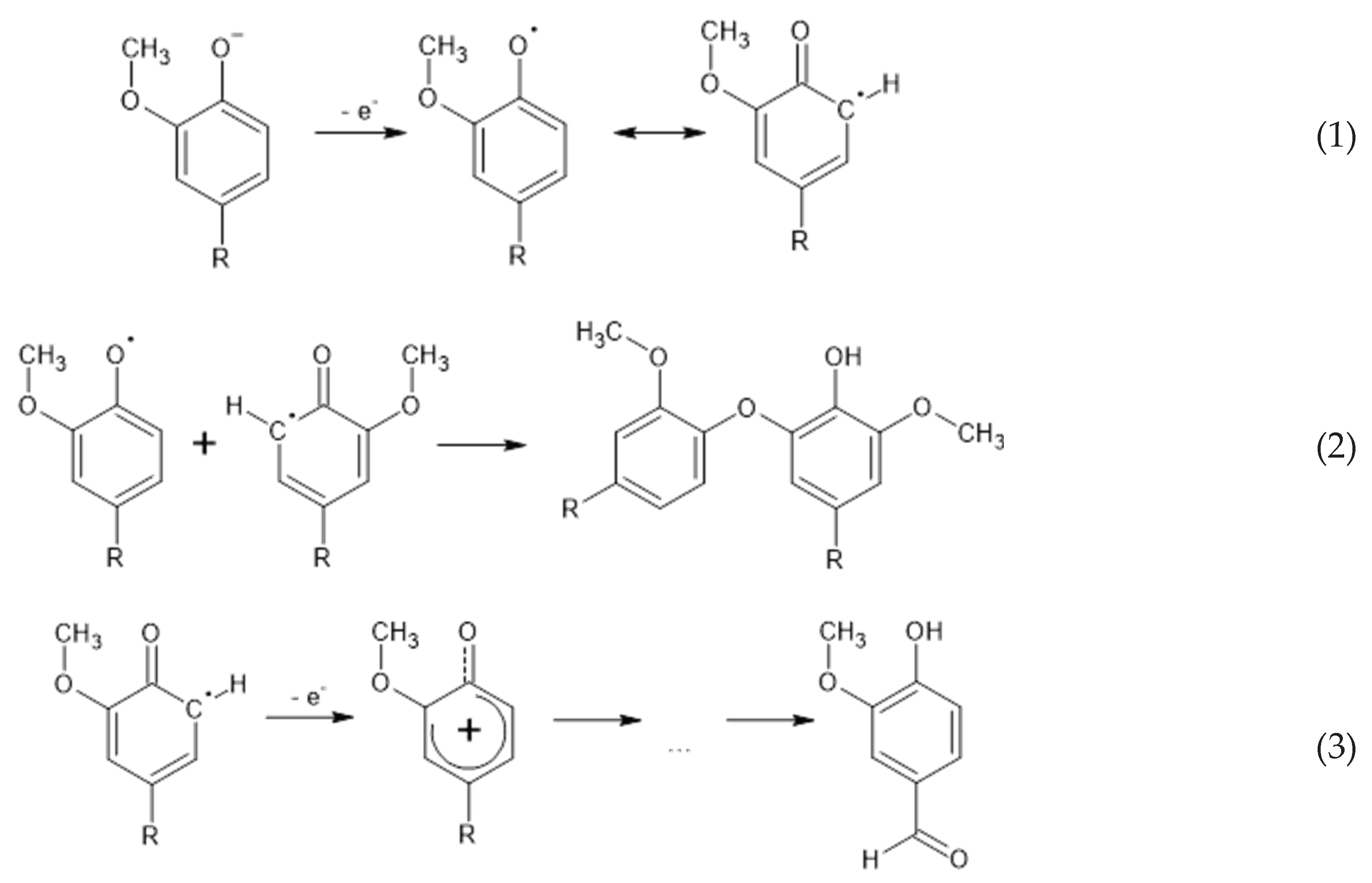
Dimerization of phenoxyl radicals can be the main pathway of their transformation under the influence of weak oxidants that are unable to oxidize these radicals into cations (3) [28]. The dimerization side reaction (2) proceeds at the rate of diffusion and tends to have near-zero activation energy. Oxidation of the same radicals into cations (3) and deeper oxidation products [2,28] has significantly higher activation barrier that is typical for chemical reactions [2,29]. Therefore, increasing temperature accelerates the phenoxyl radical oxidation reaction (3) to a greater extent than the radical dimerization side reaction (2); this results in higher yield of the target products.
The competition between the dimerization (2) and the oxidation (3) of the phenoxyl radicals can also explain higher vanillin yield when oxygen is used for lignin oxidation instead of the weaker oxidant nitrobenzene. Oxygen and oxyradicals forming from it can oxidize phenoxyl radicals faster than nitrobenzene can, thereby suppressing condensation of lignin while maintaining higher overall rate of oxidation.
3.3. Influence of a Catalyst on the Oxidation Rate and the Vanillin Yield
Complexity of the studied process makes it quite difficult to interpret its dynamics in terms of formal kinetics. We used the time at which the maximum vanillin concentration is attained in the reactor to characterize the reaction rate (Figure 5 a), and the rate of vanillin accumulation (Figure 2 and Figure 5 b) to estimate the apparent activation energy. The obtained results show that at low temperatures (120-140 °C) the catalyst (copper oxide) increases the rate of vanillin accumulation by a factor of up to two, but in the range 160-220 °C this rate difference becomes zero. The decrease of the contribution by the catalytic reaction to the overall process rate at higher temperatures is obviously caused by lower activation energy of the catalytic pathway.
So, with intense mass transfer as a part of the process conditions, the catalyst has practically no influence on the process rate in the most important temperature range 160-180 °C (Figure 2 and Figure 5). There is a systematic yield gain when the catalyst is used, but it does not exceed 10-12% relative (Figure 3).
This observation is in stark contrast with the majority of published data [2,30], where the maximum vanillin yield increases by a factor of 1.5 – 2 when catalysts are used, and this difference becomes even more drastic at lower temperatures. On the other hand, some recent publications found no significant influence of catalysts on oxidation of lignins into the aromatic aldehydes. Vanillin yield that is typical for catalytic processes was obtained in oxidation of pine wood lignin without catalysts (21 wt.%) [3]. In a recent review [1] there are data on oxidation of Kraft lignins catalyzed by systems based on Fe, Co, Mn, Cu, Cu-Mn, V, and V-Cu; but there is no comparison to non-catalytic equivalent processes. Yield gain of vanillin and the monomers attains 20 relative % when V-Cu/ZrO2 catalyst is added to the process of LignoBoost Kraft lignin oxidation [30], but this gain drops to zero when the regenerated catalyst is used. The same paper cites seven works on catalytic oxidation of LignoBoost Kraft lignin by oxygen which report lower combined yield of the monomeric products compared to the citing publication. A study of influence of a copper-based and of LaMn0.8Cu0.2O3 (sic) catalysts for oxidation of pine, poplar, and other lignins at 170 °C with stirring rate 700 min−1 revealed that catalysts accelerate the oxidation, but the maximum yield of the monomeric products (up to 30%) is not altered by them; the maximum yields are attained at duration of the oxidation in the range from 0 to 10 min [31].
Thus, the combination of the discussed literature data and our experimental results shows that there exist conditions in which catalysts indubitably accelerate the lignin oxidation by oxygen and also increase the yield of vanillin and other monophenols. On the other hand — equally indubitably — there exist conditions in which catalysts do not increase the yield of vanillin and the monophenols, but they can accelerate the process. Further detailed studying will be necessary to clarify the reasons for the poor effect of catalysts at improving the vanillin yield in certain situations.
As the literature data [1,3,31,32] and the presented experimental results demonstrate, there exist conditions for oxidation of lignins by oxygen under which catalysts have very little influence over the process rate and the vanillin yield (10-20% relative, or less). This fact suggests that it is possible to entirely eliminate catalysts from the lignin oxidation processes, and thereby avoid the problems related to isolation and regeneration of the catalysts that will become very considerable when the process is scaled up.
3.4. Influence of Temperature on the Apparent Activation Energy of Pine Native Lignin Oxidation
Figure 5 b shows Arrhenius plot of vanillin accumulation rate versus temperature; it also contains the calculated apparent activation energy for the process in narrow temperature ranges. At low temperatures 120-140 °C the apparent activation energy has high values typical for reaction-limited processes, 144-170 kJ mol−1; the value is lower for the catalytic oxidation. Similar values 120-170 kJ mol−1 were observed for soda pulping of softwood, and they likewise decrease in presence of a catalyst (anthraquinone) [33,34].
Heating to 140-160 °C causes the activation energy of the oxidation with no catalyst to become twice as low (80 kJ mol−1), and this ratio is typical for a transition to rate limitation by internal diffusion [35]. Heating to 160-180 °C leads to a further decrease of the activation energy to values common for external diffusion rate limitation (10-20 kJ mol−1). This temperature trend and kinetic mode transitions are typical for heterogeneous processes that involve porous reactants or catalysts [36].
3.5. Influence of Temperature on Cellulose Yield in Oxidation of Pine Wood Lignin
Figure 6 demonstrates the influence of oxidation temperature on yield and composition of solid lignocellulosic residues (LCRs) after the oxidation process, with and without the catalyst. The LCR yield dependences exhibit mild maxima at 160 and 180 °C, with and without the catalyst respectively. In the range 120-200 °C the LCR yield is 15-23% based on the mass of the initial wood. No more than 5% of the initial lignin amount remains at the process temperature 140-200 °C. The cellulose yield based on its initial mass does not exceed 28-45% at the oxidation temperature 120-200 °C. Under the conditions that provide the maximum vanillin yield (180 °C, 12 min), the yield of cellulose is 30% of its initial amount.
According to literature data, the oxidation of pine wood can provide cellulose yield 45-70 wt.% and vanillin yield 21-32 wt.% based on the initial amounts of the corresponding polymers [3,4]. Higher cellulose yield was obtained from the oxidation of hardwood native lignins — 85% from northern red oak [36] and 87% from birch [19]. Literature data show that the maximum vanillin yield is observed in harsher conditions than those that favor isolation of more cellulose [19,36,37]. The presently performed experiments confirm this trend: The low yield of cellulose in this study is the price paid for higher vanillin yield. Therefore, efficient combined production of the monophenols together with cellulose by oxidative catalytic fractionation of lignocellulose remains a formidable challenge [36].
4. Conclusions
Oxidative catalytic fractionation of wood using oxygen has been quite actively researched in the recent decade as a part of the “Lignin-first” paradigm of biomass processing. This can be observed in the fact that the 1990-2017 period saw no improvement of the reported vanillin yields from the oxidation of softwoods (21-23 wt.% based on the initial lignin), but these values rose to 28-32% in 2020-2023 (see Table 2).
The main result of the present paper is unprecedented large yield of vanillin and related monophenols (42-49 wt.% of vanillin, 61-65 mol.% of combined vanillin, acetovanillone, and vanillic acid) from oxidation of native pine lignin by oxygen. These numbers exceed the yields from classic and contemporary reports on oxidation of pine wood by nitrobenzene. The high yield of vanillin is attained at the expense of cellulose, more than a half of which is lost in the oxidation process; on the other hand, market price of cellulose is an order of magnitude lower than that of vanillin.
Another noteworthy finding is that influence of a catalyst on the vanillin yield is minimal (10-12% relative) in certain conditions of lignin oxidation. This reveals the possibility of excluding catalysts from the lignin oxidation, thereby eliminating the problems related to isolation and regeneration of the catalyst, and to potential wastewater contamination.
The maximum yield of vanillin (and of the combined monophenols) was obtained at 180 °C. The apparent activation energy of vanillin accumulation decreases from 140-170 to 10-20 kJ mol−1 when the temperature is raised from 120 to 180 °C. Such temperature trend is typical for heterogeneous processes and shows a transition from the reaction-controlled kinetics at lower temperature to diffusion rate control at the upper studied temperature range.
We believe that the main reason for our high vanillin yield is inherently high rate of lignin oxidation by oxygen that is 10-20 times higher than that of nitrobenzene oxidation (Table 2). Yield of the monophenols from oxidation of lignin is determined by two competing reaction pathways — oxidation of phenoxyl radicals of lignin phenylpropane units (leading to vanillin), and dimerization of these radicals (leading to condensation of lignin). Oxygen and oxyradicals forming from it cause faster oxidation of the phenoxyl radicals than what nitrobenzene can achieve, and this results in higher overall oxidation rate, while the condensation rate is kept at minimum.
High conversion of lignin into valuable vanillin was obtained owing to high oxidation rate, which is attained because oxygen is a very active oxidant (compared to nitrobenzene or stoichiometric amounts of copper oxide), and also due to high temperature and mass transfer intensity. This suggests that the idea of “Lignin first” biomass processing paradigm offered by Sels and coauthors can be extended: “Lignin first, fast”.
For a long time it was believed that yield of the monophenols from the oxidation by nitrobenzene characterizes structure and condensation extent of lignins that are close to native state. However, as new and more efficient methods for oxidation of native lignin by oxygen produce higher vanillin yield than the value from NBO, it becomes clear that the latter only characterizes the structure of lignin as it becomes modified during the long process of nitrobenzene oxidation. It should be noted that systematic improvement over the NBO in terms of the monophenols yield was also observed elsewhere [4].
Theoretical understanding of lignin structure and of the maximum possible yield of the monophenols from selective processes of chemical depolymerization of this substance needs to correspond to experimental results in this research area, and the theories describing these things need to be updated as novel experimental results become available. For a long time, the highest known yield from oxidation of softwood lignins (30 mol.% of vanillin) belonged to nitrobenzene oxidation [7] and was considered to be the theoretical limit for the product yield from any type of oxidation. Freudenberg model is an example of the corresponding theoretical lignin structure [22]. However, accumulation of more recent data where this supposed limit is exceeded [4,8,18] reveals shortcomings in this understanding. The results in the present paper (51-57 wt.% yield of combined vanillin, acetovanillone, and vanillic acid) shows that the theoretical maximum of the monophenol yield should not be lower than 59-66 mol.% of phenylpropane units in native pine lignin. The classic lignin structure offered by Adler in 1977 is a sufficiently close fit for this value [25].
Our experimental yield of vanillin from the oxidation of native pine lignin (42-49 wt.%) is close to the value for oxidation of native hardwood lignins by nitrobenzene (44-50% of combined vanillin and syringaldehyde) [2]. This comparison shows that well-known differences between hardwoods and soft-woods in terms of effectiveness of their delignification in slow pulping processes are caused not so much by a difference of the native lignins initial condensation extent, but rather by higher rate of softwood lignin condensation in comparison to hardwood lignin.
Author Contributions
V.E.T.: conceptualization, supervision, writing, funding acquisition, project administration, A.V.K.: investigation, analysis, methodology, writing, visualization, K.L.K.: investigation, analysis, methodology, writing, visualization, M.A.S.: - investigation, resources, analysis, writing, Y.V.C.: investigation, analysis, resources. All authors have read and agreed to the published version of the manuscript.
Funding
This research was funded by Russian Science Foundation (№ 25-26-20104) and Krasnoyarsk Region-al Science Foundation (contract № 42).
Data Availability Statement
Data will be made available on request.
Acknowledgments
The equipment of Krasnoyarsk Regional Research Equipment Centre of SB RAS was used in the experiments. The authors thank Nikolay Tarabanko for valuable technical assistance.
Conflicts of Interest
The authors declare that they have no known competing financial interests or personal relationships that could have appeared to in this paper.
References
- Song, J.X.; Zhang, H.J.; Niu, M.H.; Guo, Y.Z.; Li, H.M. Research progress on vanillin synthesis by catalytic oxidation of lignin: A review. Ind. Crop. Prod. 2024, 214, 118443. [Google Scholar] [CrossRef]
- Tarabanko, V.E.; Tarabanko, N. Catalytic oxidation of lignins into the aromatic aldehydes: general process trends and development prospects. Int. J. Mol. Sci. 2017, 18, 2421. [Google Scholar] [CrossRef]
- Zhu, Y., Liao, Y., Lv, W., Liu, J., Song, X., Chen, L., ... Ma, L. Complementing vanillin and cellulose production by oxidation of lignocellulose with stirring control. ACS Sustain. Chem. Eng. 2020, 8, 2361–2374. [CrossRef]
- Zhu, Y., Liao, Y., Lu, L., Lv, W., Liu, J., Song, X., ... Sels, B. F. Oxidative catalytic fractionation of lignocellulose to high-yield aromatic aldehyde monomers and pure cellulose. Acs Catal. 2023, 13, 7929–7941. [CrossRef]
- Koropachinskaya, N.V.; Tarabanko, V.E.; Chernyak, M.Y. Catalytic oxidation of birch wood (Betula Pendula Roth.) with oxygen in syringaldehyde and vanillin. Khimiya Rastit. Syr’ya 2003, 2, 9–14. [Google Scholar]
- Pacek, A.W.; Ding, P.; Garrett, M.; Sheldrake, G.; Nienow, A.W. Catalytic conversion of sodium lignosulfonate to vanillin: engineering aspects. Part 1. Effects of processing conditions on vanillin yield and selectivity. Ind. Eng. Chem. Res. 2013, 52, 8361–8372. [Google Scholar] [CrossRef]
- Leopold, B.E.N.G.T.; Malmstrom, L.L. Studies on lignin. IV. Investigation on the nitrobenzene oxidation products of lignin from different woods by paper partition chromatography. 1951. [Google Scholar] [CrossRef]
- Gogotov, A.F.; Rybal'chenko, N.A.; Makovskaya, T.I.; Babkin, V.A. Catalytic nitrobenzene oxidation of lignins. Russ. Chem. Bull. 1996, 45, 2854–2857. [Google Scholar] [CrossRef]
- Tarabanko, V.E.; Kaygorodov, K.L.; Vigul, D.O.; Tarabanko, N.; Chelbina, Y.V.; Smirnova, M.A. Influence of acid prehydrolysis on the process of wood oxidation into vanillin and pulp. J. Wood Chem. Technol. 2020, 40, 421–433. [Google Scholar] [CrossRef]
- Schoefel, E.W. Manufacture of vanillin. US Pat. 2598311, 27.05.1952.
- Smirnova, M.A.; Taraban'ko, V.E.; Chelbina Yu, V.; Kajgorodov, K.L.; Oreshina, I.D. Rostostimuliruyushhaya aktivnost` lignokislot–pobochnogo produkta okisleniya rastitel`nogo sy`r`ya v vanilin i cellyulozu. Khimiya Rastit. Syr’ya 2024, (4), 427–437. [Google Scholar] [CrossRef]
- Smirnova, M.A.; Taraban'ko, V.E.; Kajgorodov, K.L.; Korsakov, A.V.; Golubkov, V.A.; Chelbina Yu, V. Vliyanie lignokislot, pobochnogo produkta okislitelnoj pererabotki sosnovoj i osinovoj drevesiny v vanilin i cellylozu, na prorastanie semyan redisa raphanus sativus var radicula. Khimiya Rastit. Syr’ya 2025, (4), 456–465. [Google Scholar] [CrossRef]
- Taraban'ko, V.E.; Koropatchinskaya, N.V.; Kudryashev, A.V.; Kuznetsov, B.N. Influence of lignin origin on the efficiency of the catalytic oxidation of lignin into vanillin and syringaldehyde. Russ. Chem. Bull. 1995, 44, 367–371. [Google Scholar] [CrossRef]
- Tarabanko, V.E.; Vigul, D.O.; Kaygorodov, K.L.; Kosivtsov, Y.; Tarabanko, N.; Chelbina, Y.V. Influence of mass transfer and acid prehydrolysis on the process of flax shives catalytic oxidation into vanillin and pulp. Biomass Convers. Biorefinery 2024, 14, 489–499. [Google Scholar] [CrossRef]
- Tarabanko, V.E.; Kaygorodov, K.L.; Kazachenko, A.S.; Smirnova, M.A.; Chelbina, Y.V.; Kosivtsov, Y.; Golubkov, V.A. Mass transfer in the processes of native lignin oxidation into vanillin via oxygen. Catalysts 2023, 13, 1490. [Google Scholar] [CrossRef]
- Buranov, A.U.; Mazza, G.J.I.C. Lignin in straw of herbaceous crops. Ind. Crop. Prod. 2008, 28, 237–259. [Google Scholar] [CrossRef]
- Wu, G.; Heitz, M.; Chornet, E. Improved alkaline oxidation process for the production of aldehydes (vanillin and syringaldehyde) from steam-explosion hardwood lignin. Ind. Eng. Chem. Res. 1994, 33, 718–723. [Google Scholar] [CrossRef]
- Min, D.; Xiang, Z.; Liu, J.; Jameel, H.; Chiang, V.; Jin, Y.; Chang, H.M. Improved protocol for alkaline nitrobenzene oxidation of woody and non-woody biomass. J. Wood Chem. Technol. 2015, 35, 52–61. [Google Scholar] [CrossRef]
- Zhu, Y.; Li, N.; Liu, H.; Cai, C.; Wang, Y.; Mu, J.; Wang, F. Oxidative catalytic fractionation of lignocellulose enhanced by copper–manganese-doped CeO2. ACS Catal. 2024, 14, 16872–16884. [Google Scholar] [CrossRef]
- Tamai, A.; Goto, H.; Akiyama, T.; Matsumoto, Y. Revisiting alkaline nitrobenzene oxidation: quantitative evaluation of biphenyl structures in cedar wood lignin (Cryptomeria japonica) by a modified nitrobenzene oxidation method. Holzforschung 2015, 69, 951–958. [Google Scholar] [CrossRef]
- Tarabanko V.E., e.a. Khimiya Rastitel’nogo Syr’ya, 2026, in press.
- Freudenberg, K. Lignin: Its Constitution and Formation from p-Hydroxycinnamyl Alcohol: Lignin is duplicated by dehydrogenation of these alcohols; intermediates explain formation and structure. Science 1965, 148, 595–600. [Google Scholar] [CrossRef] [PubMed]
- Song, Q.; Wang, F.; Cai, J.; Wang, Y.; Zhang, J.; Yu, W.; Xu, J. Lignin depolymerization (LDP) in alcohol over nickel-based catalysts via a fragmentation–hydrogenolysis process. Energy Environ. Sci. 2013, 6, 994–1007. [Google Scholar] [CrossRef]
- Evstigneyev, E.I. Selective depolymerization of lignin: Assessment of yields of monomeric products. J. Wood Chem. Technol. 2018, 38, 409–415. [Google Scholar] [CrossRef]
- Adler, E. Lignin chemistry—past, present and future. Wood Sci. Technol. 1977, 11, 169–218. [Google Scholar] [CrossRef]
- Abu-Omar, M. M.; Barta, K.; Beckham, G. T.; Luterbacher, J. S.; Ralph, J.; Rinaldi, R.; Wang, F. Guidelines for performing lignin-first biorefining. Energy Environ. Sci. 2021, 14, 262–292. [Google Scholar] [CrossRef]
- Tarabanko, V.E.; Petukhov, D.V.; Selyutin, G.E. New mechanism for the catalytic oxidation of lignin to vanillin. Kinet. Catal. 2004, 45, 569–577. [Google Scholar] [CrossRef]
- Nonhebel, D.C.; Walton, J.C. Free-radical chemistry: structure and mechanism; CUP Archive, 1974. [Google Scholar]
- Garcia-Rollan, M., Rivas-Marquez, M. N., Bertran-Llorens, S., Deuss, P. J., Ruiz-Rosas, R., Rosas, J. M., ... Cordero, T. Biobased vanillin production by oxidative depolymerization of kraft lignin on a nitrogen-and phosphorus-functionalized activated carbon catalyst. Energy Fuels 2024, 38, 7018–7032. [CrossRef]
- Abdelaziz, O.Y.; Clemmensen, I.; Meier, S.; Bjelić, S.; Hulteberg, C.P.; Riisager, A. Oxidative depolymerization of Kraft Lignin to Aromatics over bimetallic V–Cu/ZrO2 catalysts. Top. Catal. 2023, 66, 1369–1380. [Google Scholar] [CrossRef]
- Schutyser, W., Kruger, J. S., Robinson, A. M., Katahira, R., Brandner, D. G., Cleveland, N. S., ... Beckham, G. T. Revisiting alkaline aerobic lignin oxidation. Green. Chem. 2018, 20, 3828–3844. [CrossRef]
- Pen, R.Z.; Shapiro, I.L. Kinetics of soda cooking of coniferous wood in wide temperature range. Russ. J. Appl. Chem. 1995, 68, 1536–1538. [Google Scholar]
- Pen, R.Z.; Shapiro, I.L.; Pen, V.R. Kinetics of soda-anthraquinone pulping of pine wood. 1989. [Google Scholar]
- Buwa, V.V.; Roy, S.; Ranade, V.V. Three-phase slurry reactors. Multiph. Catal. React. Theory Des. Manuf. Appl. 2016, 132–155. [Google Scholar] [CrossRef]
- Steinfeld, J.I.; Francisco, J.S.; Hase, W.L. Chemical kinetics and dynamics; Prentice Hall: Upper Saddle River, NJ, 1999; Vol. 2. [Google Scholar]
- Hafezisefat, P.; Rahic, E.; Brown, R.C. Oxidative fractionation of biomass to produce phenolic monomers and processable carbohydrate pulp. React. Chem. Eng. 2025, 10, 2644–2656. [Google Scholar] [CrossRef]
- Tarabanko, V. E., Kaygorodov, K. L., Skiba, E. A., Tarabanko, N., Chelbina, Y. V., Baybakova, O. V., ... Djakovitch, L. Processing pine wood into vanillin and glucose by sequential catalytic oxidation and enzymatic hydrolysis. J. Wood Chem. Technol. 2017, 37, 43–51. [CrossRef]
Figure 1.
Schematic of the equipment for the lignin oxidation experiments.
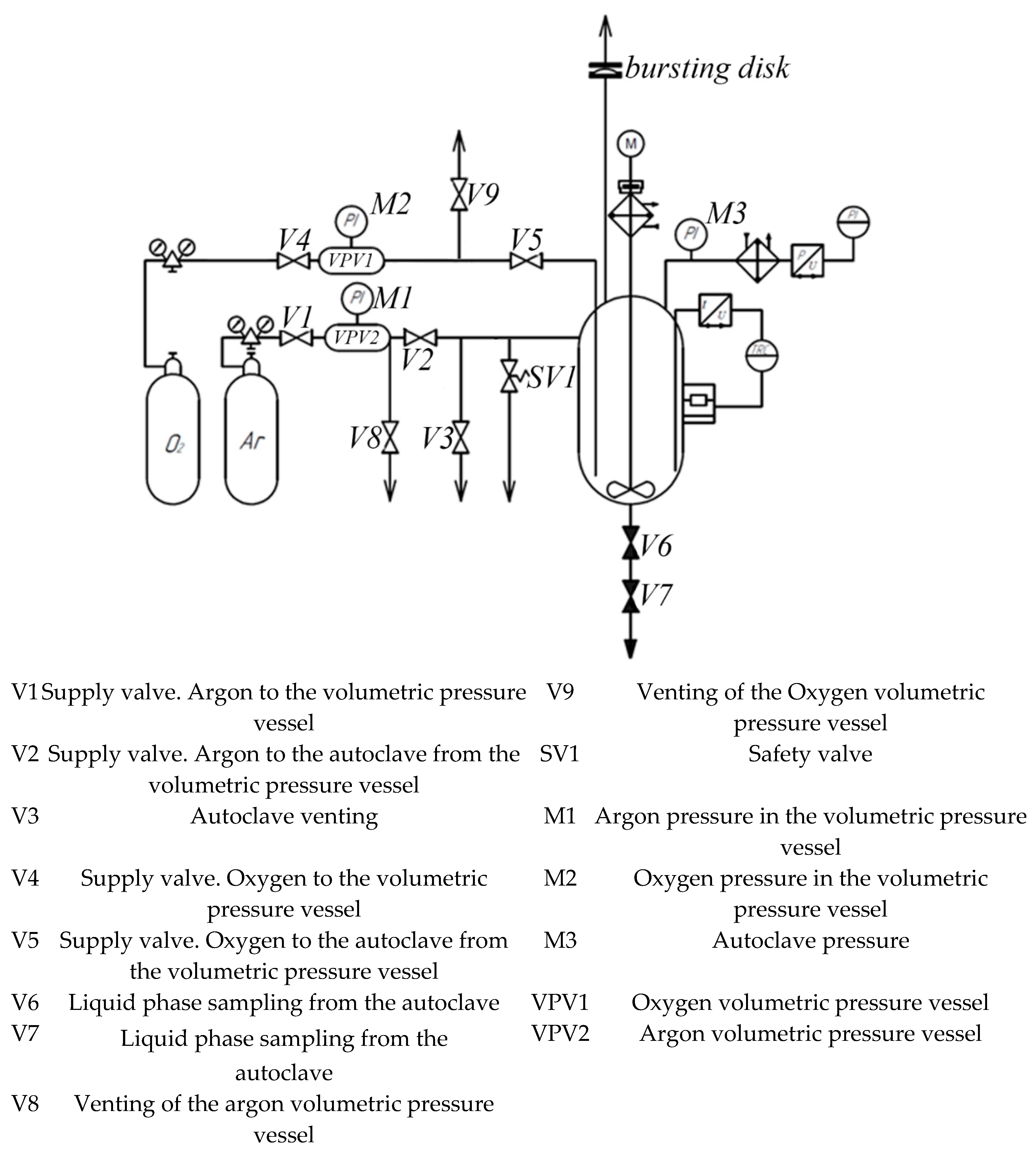
Figure 2.
Influence of temperature on vanillin accumulation dynamics during oxidation of pine wood sawdust at 120-140 °C (a), 160-180 °C (b), and 200-220 °C (c) with copper oxide catalyst (red lines) and without catalyst (blue lines). For conditions, please see the Experimental section. Slopes of the dashed straight lines were used for activation energy calculations (Figure 5 b).
Figure 2.
Influence of temperature on vanillin accumulation dynamics during oxidation of pine wood sawdust at 120-140 °C (a), 160-180 °C (b), and 200-220 °C (c) with copper oxide catalyst (red lines) and without catalyst (blue lines). For conditions, please see the Experimental section. Slopes of the dashed straight lines were used for activation energy calculations (Figure 5 b).
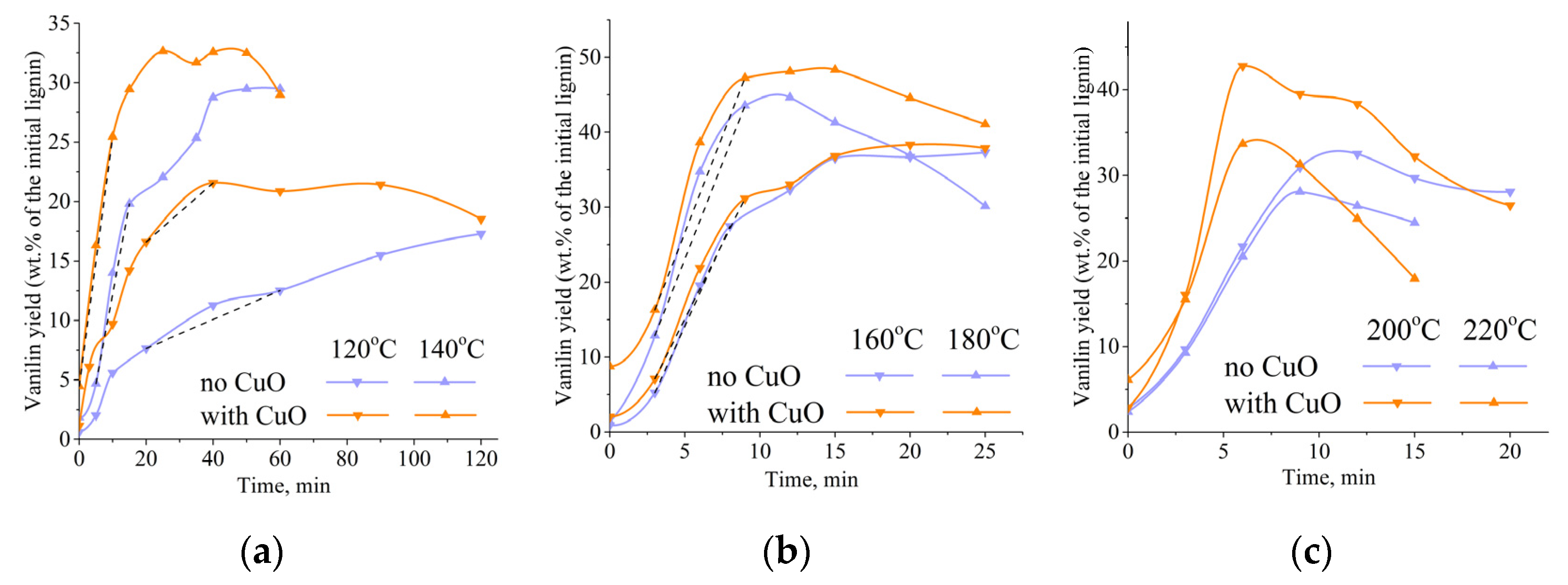
Figure 3.
Influence of temperature on the maximum yield of monomeric phenols based on the initial lignin from oxidation of pine sawdust by oxygen. For conditions, please see the Experimental section.
Figure 3.
Influence of temperature on the maximum yield of monomeric phenols based on the initial lignin from oxidation of pine sawdust by oxygen. For conditions, please see the Experimental section.
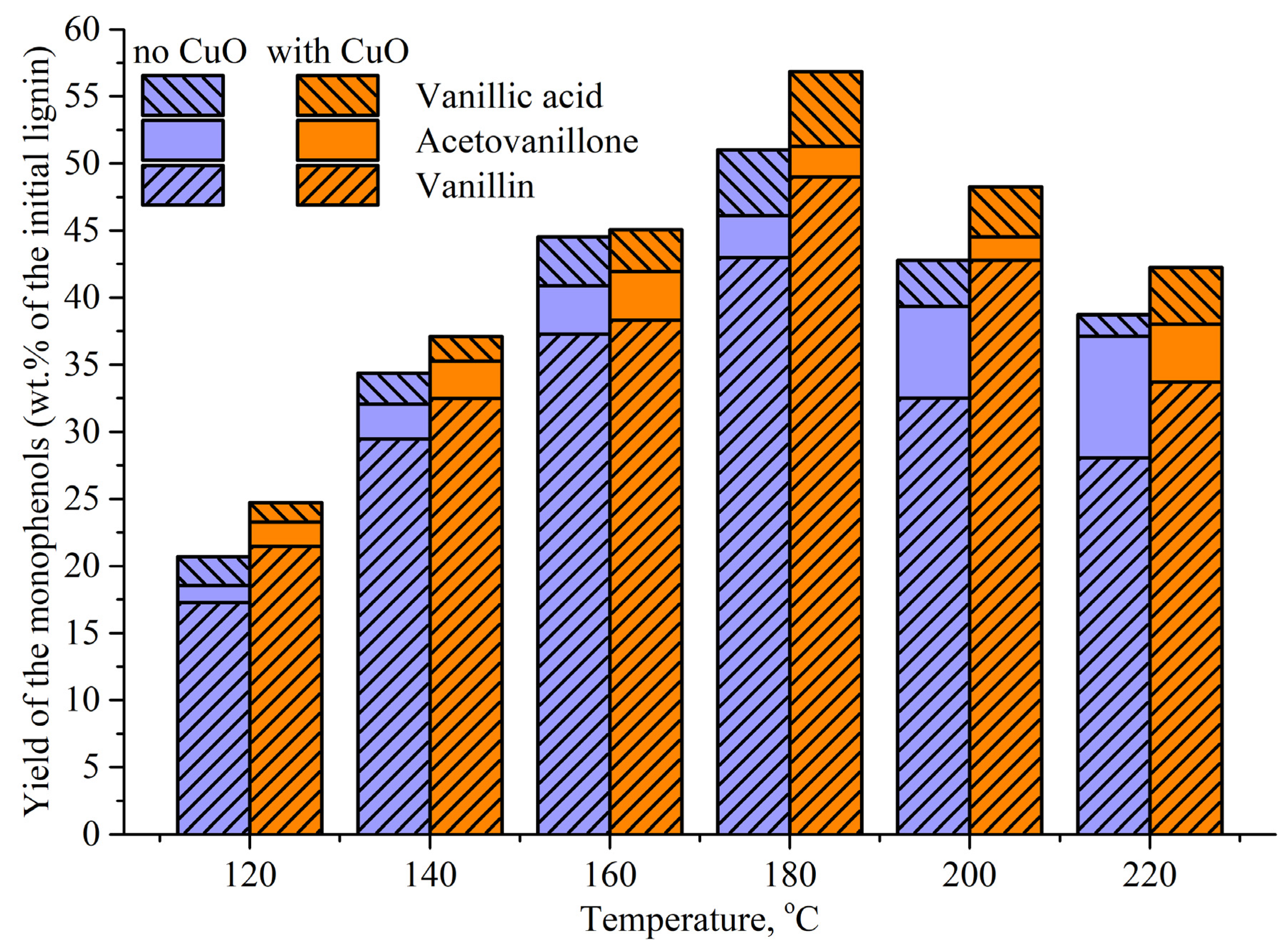
Figure 4.
Schematic of spruce lignin structure according to Adler model [25].
Figure 4.
Schematic of spruce lignin structure according to Adler model [25].
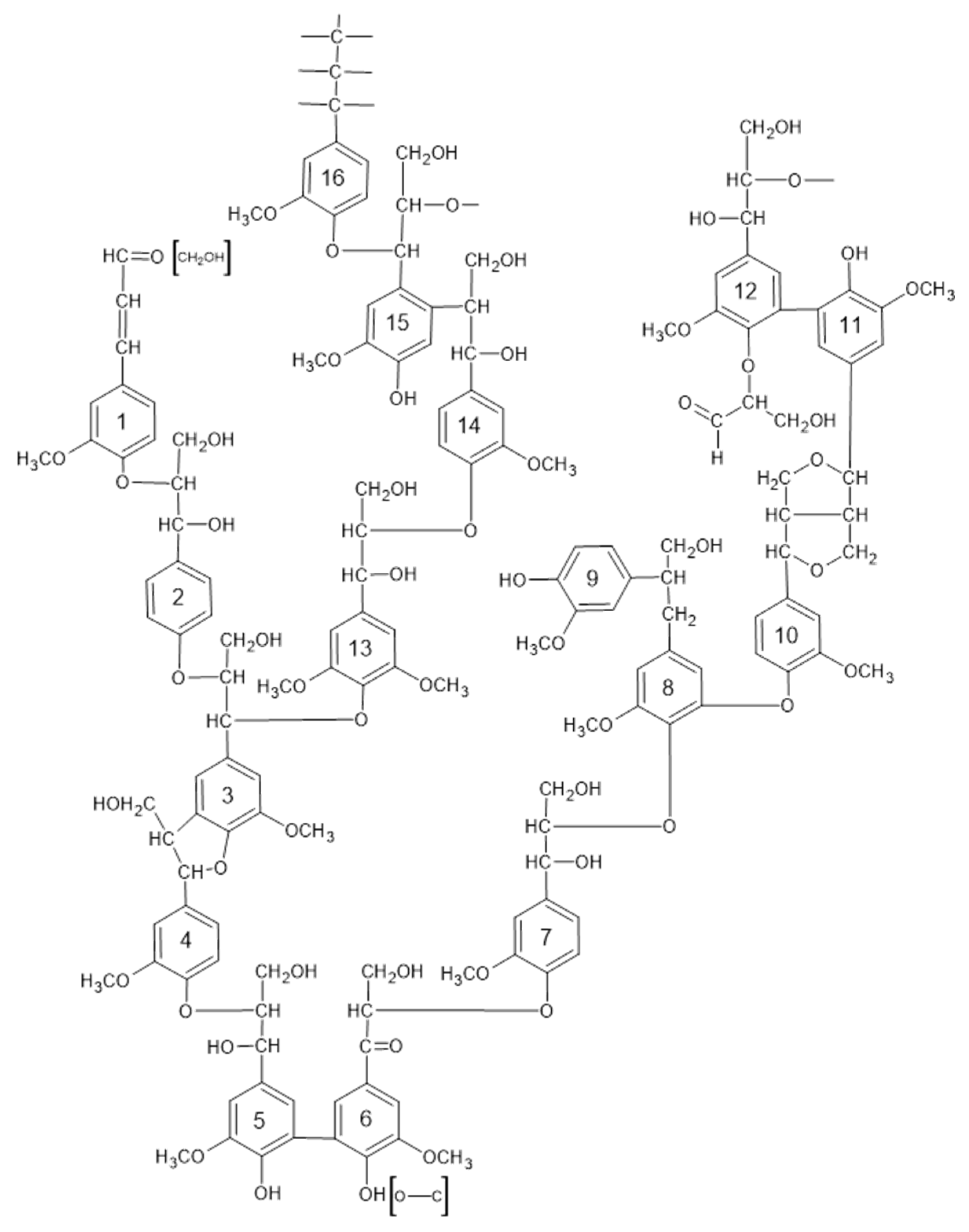
Figure 5.
Influence of temperature on the time at which the maximum vanillin concentration is attained (a) and Arrhenius plot of the vanillin accumulation rate (b) during oxidation of pine sawdust by oxygen. The numbers next to each segment (b) represent the estimated apparent activation energy (kJ/mol) at the corresponding temperature range.
Figure 5.
Influence of temperature on the time at which the maximum vanillin concentration is attained (a) and Arrhenius plot of the vanillin accumulation rate (b) during oxidation of pine sawdust by oxygen. The numbers next to each segment (b) represent the estimated apparent activation energy (kJ/mol) at the corresponding temperature range.
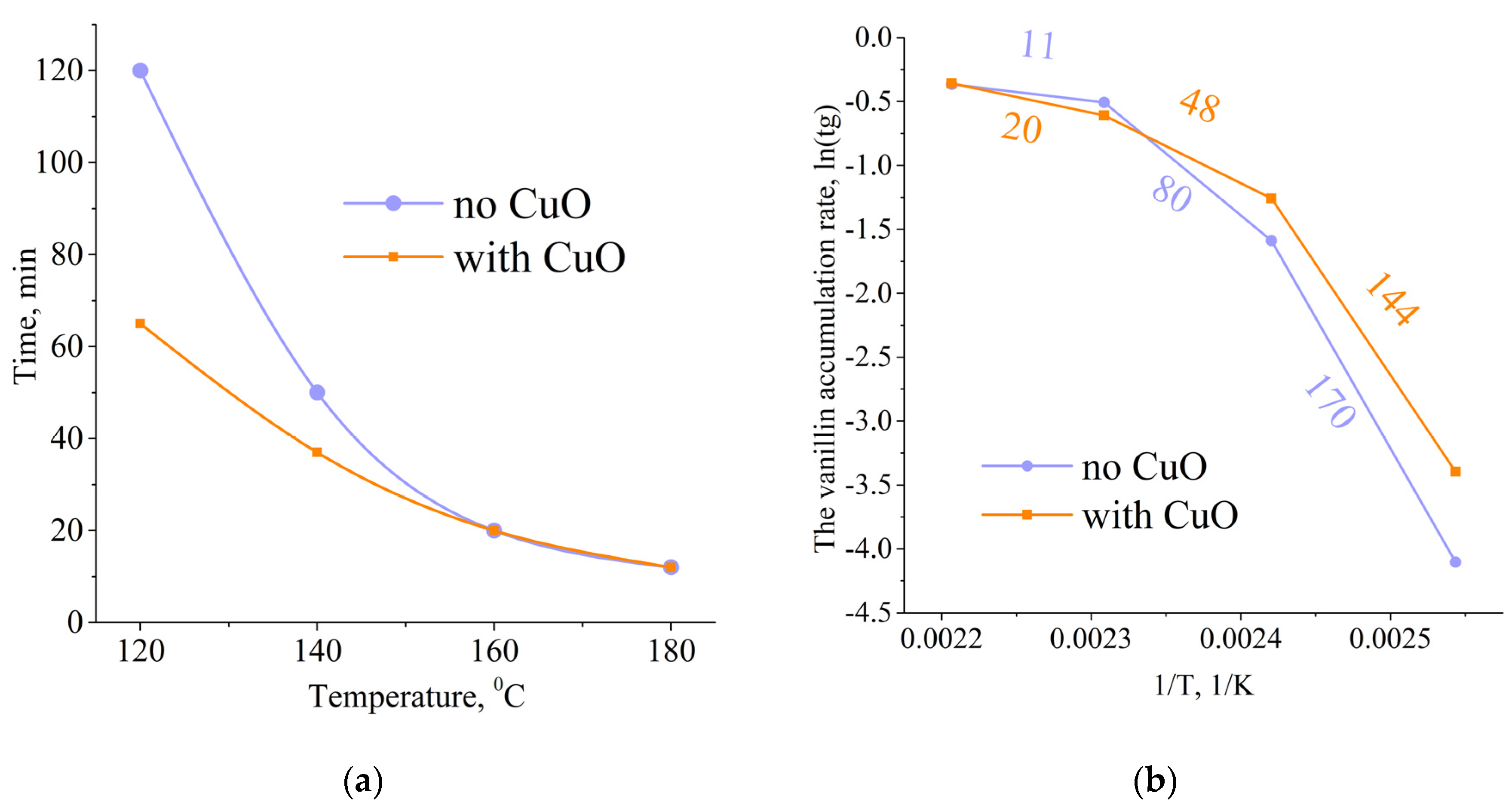
Figure 6.
Influence of temperature on yield and composition of solid lignocellulosic residue after oxidation of pine sawdust by oxygen.
Figure 6.
Influence of temperature on yield and composition of solid lignocellulosic residue after oxidation of pine sawdust by oxygen.
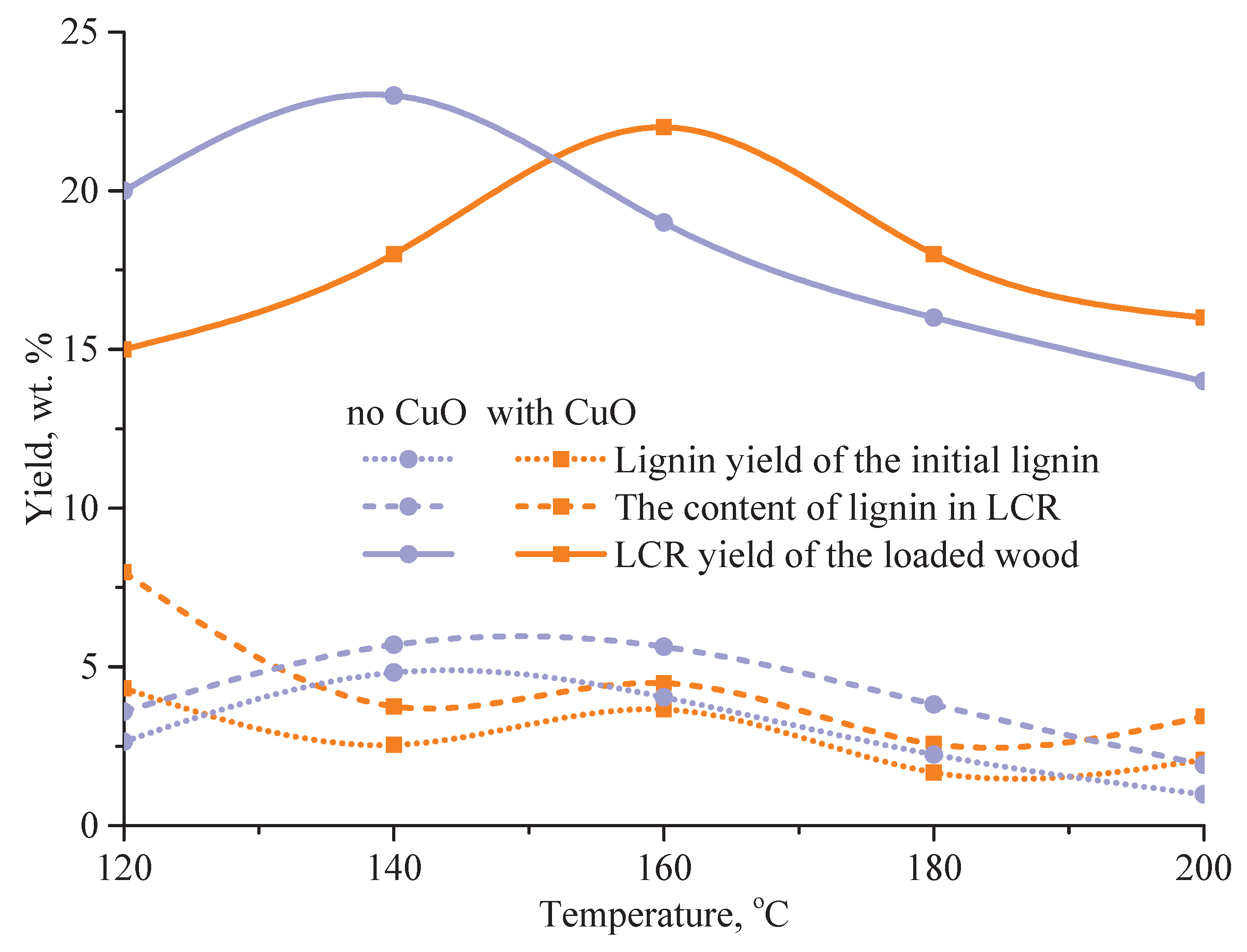

Table 1.
Reproducibility of the maximum yields of vanillin and the monophenols in oxidation of pine sawdust at 180 °C.
Table 1.
Reproducibility of the maximum yields of vanillin and the monophenols in oxidation of pine sawdust at 180 °C.
| Oxidation conditions | With the catalyst | Without catalyst | ||||||
| Mean value and arithmetic mean error | Mean value and arithmetic mean error | |||||||
| Oxidation duration (min) | 15 | 12 | 12 | 12 | 12 | 12 | ||
| Vanillin (wt.% of the initial lignin) | 48.6 | 50.4 | 48.3 | 49.1±0.87 | 41.2 | 40.5 | 44.6 | 42.1±1.7 |
| Acetovanillone (wt.% of the initial lignin) | 4.02 | 2.99 | 2.27 | 3.09±0.61 | 3.26 | 5.71 | 3.11 | 4.03±1.12 |
| Vanillic acid (wt.% of the initial lignin) | 3.11 | 5.15 | 5.56 | 5.25±0.85 | 4.73 | 4.54 | 4.91 | 4.73±0.73 |
| Sum of the monophenols (wt.% of the initial lignin) | 55.76 | 58.58 | 56.13 | 56.8±1.2 | 50.23 | 50.75 | 52.65 | 51.2±0.96 |
| Sum of the monophenols (mol.% of the initial lignin) | 64.84 | 68.01 | 65.27 | 66.04±1,83 | 57.05 | 58.7 | 61.08 | 58.94±2.01 |
Table 2.
Maximum yield of the monophenols (vanillin, acetovanillone, vanillic acid) in oxidation of pine wood by nitrobenzene and by oxygen.
Table 2.
Maximum yield of the monophenols (vanillin, acetovanillone, vanillic acid) in oxidation of pine wood by nitrobenzene and by oxygen.
| References | Oxidant | Vanillin yield (wt.% of the initial lignin) | Vanillin yield (mol.% of the initial lignin) | Yield of the monophenols (wt.% of the initial lignin) | Yield of the mono-phenols (mol.% of the initial lignin) | Vanillin concentration (g/L) | Oxidation duration (min) |
|---|---|---|---|---|---|---|---|
| [7] | Nitrobenzene | 27 | 32 | - | - | - | 180 |
| [8] | 36 | 42 | - | - | 9.6 | 180 | |
| [18] | 35-40 | 41-47 | 39-43 | 45-50 | - | 90-120 | |
| [4] | - | - | 30.2 | - | - | 120 | |
| [13] | Molecular oxygen | 23 | 27 | - | - | 4.5 | 20 |
| [4] | 32 | 38 | 33.8 | - | 0.97 | 60 | |
| [9] | 25-28 | 29-33 | - | - | - | - | |
| [21] | 32-37 | 38-44 | 38-42 | 44-49 | 5 | 9-15 | |
| This paper | 42-49 | 49-58 | 51-57 | 59-66 | 5-6.5 | 9-15 |
Disclaimer/Publisher’s Note: The statements, opinions and data contained in all publications are solely those of the individual author(s) and contributor(s) and not of MDPI and/or the editor(s). MDPI and/or the editor(s) disclaim responsibility for any injury to people or property resulting from any ideas, methods, instructions or products referred to in the content. |
© 2026 by the authors. Licensee MDPI, Basel, Switzerland. This article is an open access article distributed under the terms and conditions of the Creative Commons Attribution (CC BY) license (http://creativecommons.org/licenses/by/4.0/).
Copyright: This open access article is published under a Creative Commons CC BY 4.0 license, which permit the free download, distribution, and reuse, provided that the author and preprint are cited in any reuse.


