
Submitted:
25 April 2026
Posted:
28 April 2026
You are already at the latest version
Abstract
Sensors are a fundamental component of Structural Health Monitoring (SHM) systems. Among the different types of sensors, piezoelectric (PZT) sensors are widely used due to their desirable properties, such as dual actuation–sensing capability, high sensitivity, low cost, and suitability for real-time monitoring. In addition to proper sensors, SHM also requires effective signal processing techniques for interpreting the data acquired by the sensors. Recently, the rapid advancement of Artificial Intelligence (AI) has significantly improved the automated SHM of structures and demonstrated how effective SHM can become when combined with artificial intelligence. Thus, the use of appropriate sensors, effective signal processing techniques, and AI can significantly enhance SHM performance. Guided by these developments, this paper presents a critical review of signal processing and machine learning approaches in PZT-based SHM systems, with emphasis on engineering structures. The fundamental principles of PZT sensing and wave propagation are first outlined. Next, signal processing techniques and their importance in SHM are discussed with a focus on recent advancements in the use of AI in PZT-based SHM. This work also discusses the Hybrid frameworks that integrate signal processing with data-driven AI models which are promising directions for improving robustness and accuracy of SHM. Finally, existing key challenges such as environmental variability, sensor degradation, data scarcity, and model generalization are discussed, along with future directions including physics-informed learning, transfer learning, explainable AI, and baseline-free SHM systems.
Keywords:
structural health monitoring (SHM)
; structures
; piezoelectric (PZT) sensors
; signal processing
; machine learning
; deep learning
1. Introduction
1.2. Background of SHM
As the number of aging structures continues to rise worldwide, the need for SHM becomes increasingly urgent. SHM, by providing continuous real-time detection of fatigue cracks, corrosion, delamination, and material degradation, can solve this problem effectively and prevent catastrophic failures, extends service life, and enhances structural safety [1].
Traditionally, engineers relied on visual inspections and periodic evaluations to find possible structural faults and address the issues [2]. While these methods are widely used, they are often subjective, labor-intensive, inaccurate, and may not be able to detect or locate internal or small structural damages. In contrast, SHM techniques can provide continuous or real-time monitoring and are able detect or locate subtle damages at an early stage before it become visible or critical [3]. This enables engineers to shift from reactive maintenance to proactive and predictive management of infrastructure systems. Consequently, new SHM techniques are being developed by researchers to overcome the limitations of conventional methods. These techniques can be further improved through the integration of efficient sensors, advanced signal processing, machine learning algorithms, and real-time data analytics. This can enhance detection accuracy and sensitivity, reduce false alarms, and lower maintenance costs.
So far, many SHM techniques have been well integrated in many engineering sectors such as building construction, bridges and roads. Some real-world applications of SHM include monitoring of long-span bridges for fatigue damage [4], assessment of reinforced concrete buildings for cracking and corrosion [5], and evaluation of pipelines for leakage or material degradation [6]. However, SHM systems have inherent limitations, including limited sensing range, sensor durability issues, environmental sensitivity, high initial deployment costs, and data processing complexity, all of which require further improvement.
1.3. Limitations of Conventional Methods
Despite their widespread use in infrastructure management, conventional inspection and maintenance approaches suffer from several fundamental limitations that reduce their effectiveness in ensuring structural safety and long-term reliability [7]. The most common approach, visual inspection, relies heavily on human expertise and subjective judgment. As a result, it is prone to human error, inconsistency between inspectors, and difficulties in detecting early-stage or hidden damage that is not visually observable. Another major limitation is that traditional inspection methods are inherently non-continuous. Structural assessments are typically conducted at discrete time intervals, such as annual or periodic inspections, which means that damage occurring between inspection cycles may go undetected. This lack of continuous monitoring prevents timely identification of rapidly evolving damage mechanisms such as fatigue cracking, corrosion progression, or debonding in composite structures [8,9].
In addition, conventional inspection and maintenance strategies are often associated with high operational costs. These include labor-intensive field inspections, traffic or service interruptions in the case of bridges and transportation networks, and expensive maintenance or repair actions initiated at later stages of deterioration. In many cases, maintenance decisions are made reactively rather than proactively, leading to increased lifecycle costs and reduced structural reliability. These limitations necessitate the development of advanced and automated monitoring strategies capable of providing continuous, objective, and early-stage damage detection. This necessity has driven the development of SHM systems based on embedded or surface-mounted sensing technologies, such as PZT sensors, which enable real-time assessment of structural condition and more efficient maintenance planning.
1.4. SHM Techniques
SHM techniques, based on monitoring strategy, are generally classified into passive and active approaches. Passive SHM relies on measuring the natural or operational response of a structure without applying an external excitation. Typical examples include ambient vibration monitoring, acoustic emission, impact detection, and tracking changes in modal properties such as natural frequencies and damping ratios. In contrast, active SHM employs a controlled input signal introduced into the structure and analyzes the measured response to identify damage [10]. Common active methods include guided wave (GW) techniques, electromechanical impedance (EMI) monitoring, ultrasonic pulse methods, impact-echo testing, and forced vibration excitation. Passive methods are often suitable for continuous large-scale monitoring, whereas active methods generally provide higher sensitivity for detecting localized and early-stage damage. However, SHM techniques can be more effectively classified according to their underlying physical sensing or Nondestructive Testing (NDT) principles rather than solely by active or passive monitoring strategies. Based on this classification, SHM methods are commonly divided into vibration-based techniques, wave propagation–based techniques, impedance-based techniques, electromagnetic methods, optical and vision-based methods, static response–based methods, thermal methods, and chemical/environmental sensing techniques. Figure 1 shows the SHM technique categories together with their associated techniques based on the NDT technique employed.
Among active SHM techniques, guided waves have been extensively used due to their unique capability for efficient damage interrogation over relatively large structural areas [10,11]. Unlike localized point-based methods, guided waves can propagate long distances while interacting with discontinuities such as cracks, corrosion, debonding, delamination, and voids. This enables wide-area inspection using a limited number of sensors, reducing instrumentation cost and installation complexity. Guided waves are also highly sensitive to small changes in material and geometric properties, making them suitable for early-stage damage detection. Another major advantage is their applicability to different structural forms, including plates, beams, pipes, shells, composite laminates, and concrete members. They can be generated and received using compact transducers such as piezoelectric sensors, allowing integration into permanent monitoring systems. In addition, guided wave responses contain rich information in time, frequency, and mode characteristics, which can be exploited for damage detection, localization, and severity assessment.
1.5. Role of Sensors in SHM
In response to the limitations of conventional inspection methods, sensor-based monitoring technologies have become increasingly important in modern SHM systems. Sensors are used to measure structural and environmental quantities that are sensitive to damage initiation, deterioration, or abnormal structural behavior. In practice, SHM sensors are commonly categorized according to the physical parameter they measure. Strain sensors are used to monitor deformation and stress redistribution, with common examples including strain gauges [12] and fiber Bragg grating (FBG) sensors [13]. Vibration and dynamic response sensors are employed to capture acceleration, vibration characteristics, and modal changes, typically using accelerometers [14], velocimeters [15], and seismometers [16]. Displacement sensors are used to quantify relative movement, deflection, or crack opening, including linear variable differential transformers (LVDTs) [17], laser displacement sensors [18], and GNSS/GPS-based systems for large structures [19]. Temperature and environmental sensors monitor thermal and humidity effects that influence structural performance and sensor signals, using thermocouples [20], resistance temperature detectors (RTDs) [21], and humidity sensors [22]. Wave propagation and acoustic sensors are used for damage interrogation and event detection through stress-wave generation or reception, with common examples including piezoelectric transducers [23], acoustic emission sensors [24], and ultrasonic probes [25]. Load and force sensors, such as load cells and pressure sensors [26], are also employed where external actions or support reactions must be monitored. The summary of common SHM sensors classification is shown in Figure 2.
Within this framework, PZT sensors belong to the wave propagation and acoustic sensing category and represent one of the most versatile and widely used transducer technologies in SHM [5].
1.6. Motivation for Signal Processing and Machine Learning
Although PZT-based SHM systems provide fundamental information on structural condition, the measured signals are often complex, noisy, and influenced by factors other than damage, such as environmental variations, operational loading, boundary reflections, and sensor noise. In wave-based monitoring, additional effects, including attenuation, dispersion, and multimodal propagation further complicate signal interpretation [27]. Early-stage defects such as micro-cracks, debonding, corrosion initiation, or local stiffness reduction may only cause subtle changes in signal amplitude, phase, frequency content, or wave arrival time [10,18,28]. These weak indicators can be easily masked by normal operational or environmental variability. Therefore, signal processing techniques are essential for converting raw measurements into meaningful damage-sensitive features. Common objectives include noise reduction, feature extraction, time-of-flight estimation, frequency analysis, and identification of nonlinear damage indicators. Techniques such as Fourier transforms, wavelet analysis, filtering, and correlation methods have been widely used for this purpose [29,30]. More recently, machine learning approaches have gained increasing attention for automating structural condition assessment [31,32]. By learning patterns from measured data, ML models can support NDT with reduced reliance on manual interpretation. Consequently, the integration of signal processing and machine learning has become a promising direction for intelligent and reliable SHM systems.
1.7. Scope and Contribution of This Review
The rapid development of PZT-based sensing technologies has led to a wide range of SHM methodologies that combine conventional signal analysis with emerging data-driven approaches. However, the existing literature often treats signal processing, ML techniques, and hybrid frameworks separately, creating the need for a more integrated review. Accordingly, this paper reviews three major research directions in PZT-based SHM. First, key signal processing methods are examined, including time-domain, frequency-domain, time–frequency, guided-wave, and nonlinear techniques for extracting damage-sensitive features. Second, the paper reviews ML approaches, ranging from classical algorithms to deep learning models for automated damage detection, classification, and localization. Third, recent hybrid approaches that combine physics-based signal processing with data-driven ML models are discussed. The main contribution of this review is its focus on the integration of physics-based signal processing and ML in PZT-based SHM. By summarizing recent advances, comparing capabilities and limitations, and identifying research gaps, this paper aims to provide a useful reference for the development of more reliable and intelligent SHM systems.
The remainder of this paper is organized as follows. Section 2 presents the fundamentals of PZT-based SHM systems, including the operating principles of piezoelectric sensors and their role in structural monitoring. Section 3 reviews major signal processing methods used for extracting damage-sensitive information from PZT measurements. Section 4 discussed the linear and nonlieanr guided wave techniques. Section 0 discusses ML techniques applied to PZT-based SHM for automated damage detection and classification. Section 6 examines hybrid approaches that integrate signal processing with ML models. Section 7 summarizes key engineering applications of PZT-based SHM systems. Section 8 outlines the main technical and practical challenges associated with current implementations. Section 9 highlights emerging research trends and future directions. Finally, Section 10 presents the main conclusions of the review.
2. Fundamentals of PZT-Based SHM
2.1. Piezoelectric Effect
PZT (lead zirconate titanate) is a perovskite ceramic material composed of lead, zirconium, titanium, and oxygen, typically formulated as Pb(Zr,Ti)O₃. PZT materials exhibit a coupled electromechanical behavior through the piezoelectric effect, whereby mechanical deformation generates an electrical response (direct effect) (Figure 3a), while an applied electric field induces mechanical strain or vibration (inverse effect) (Figure 3b). This dual functionality enables a single PZT element to operate both as an actuator and a sensor [33].
This actuator–sensor capability makes PZT sensors particularly suitable for active SHM approaches, where stress waves are intentionally introduced into a structure and the received signals are analyzed to identify changes caused by damage. As a result, PZT transducers have been widely employed in NDT applications such as crack detection [34], delamination monitoring [35], corrosion assessment [36], bolt loosening detection [37], and interfacial debonding evaluation in composite and reinforced structures [38,39].
Several practical advantages have contributed to the widespread adoption of PZT sensors in SHM. Their compact size and lightweight nature allow easy surface bonding or embedding within structural components without significantly affecting structural behavior. In addition, PZT elements are relatively low cost compared with many alternative sensing systems, making them attractive for dense sensor networks and large-scale infrastructure monitoring [40]. They also enable real-time or near real-time monitoring through rapid signal generation and acquisition, which is essential for continuous condition assessment. Furthermore, PZT sensors exhibit high sensitivity to local stiffness changes, wave scattering, and nonlinear damage signatures, allowing detection of small defects that may not be visible through conventional inspections [41,42].
2.2. Types of PZT Sensors
PZT sensors used in SHM are available in different forms, geometries, and packaging configurations depending on the host structure and monitoring objective. Rather than being distinguished solely by shape, PZT transducers are more appropriately classified according to their installation method and functional application, including surface-bonded sensors, embedded sensors, and packaged probes. Common geometries include rectangular, square, circular, and ring-shaped elements (Figure 4).
2.2.1. Surface-bonded PZTs
Surface-bonded PZT sensors are the most widely used configuration in SHM applications. These transducers are adhesively attached to the surface of structural members and are extensively employed for guided-wave monitoring, electromechanical impedance measurements, vibration sensing, and local damage detection. Their ease of installation makes them suitable for metallic, composite, and accessible concrete structures [43].
2.2.2. Embedded PZTs
Embedded PZT sensors, often referred to as smart aggregates in concrete applications, consist of PZT elements encapsulated within protective materials and cast inside the structure during construction. They are particularly useful for long-term internal monitoring of concrete members, slabs, foundations, and bridge components where external access is limited. Smart aggregates have been widely applied for crack detection, impact monitoring, and health assessment of concrete infrastructure [44].
2.3. Packaged or Reusable PZT Probes
Packaged or reusable PZT probes are mounted within protective housings or detachable fixtures for temporary inspections, laboratory testing, or harsh environments where direct bonding is not practical. These configurations are commonly used in ultrasonic testing and repeated measurements [45]. In general, surface-mounted patches are preferred for retrofit and externally accessible structures, disk sensors for compact or omnidirectional applications, and smart aggregates for embedded long-term monitoring in concrete systems.
2.4. Actuator–Sensor Configurations
Depending on the monitoring objective, PZT elements may be configured as individual actuator–sensor pairs or as distributed sensor networks. Among the most widely used configurations are the pitch-catch and pulse-echo methods.
2.4.1. Pitch-catch configuration
In the pitch-catch method, one PZT transducer operates as an actuator to generate diagnostic waves, while one or more separate PZT elements act as receivers to capture the propagated response after transmission through the structure (Figure 5a). Damage located along the wave path may alter signal amplitude, arrival time, phase, or frequency content due to scattering, attenuation, or mode conversion [10].
2.4.2. Pulse-echo configuration
In the pulse-echo configuration, a single PZT transducer or colocated transducer pair is used to transmit a wave pulse and receive reflections from boundaries, interfaces, or damage features [10](Figure 5b). Defects such as cracks, voids, or delaminations may generate reflected signals whose arrival times and amplitudes can be analyzed to estimate damage presence and location. Pulse-echo configuration is particularly useful when access is limited to one side of the structure or when internal reflections are of interest.
2.4.3. Sensor network
For large or complex structures, multiple PZT elements are commonly arranged as a sensor network to improve spatial coverage and reliability. In such systems, individual transducers can sequentially function as actuators and sensors, generating multiple interrogation paths across the monitored region (Figure 5c). Network-based configurations enhance damage localization accuracy, reduce dependence on a single sensing path, and provide redundancy in case of sensor failure. Consequently, distributed PZT networks have been widely adopted in bridges, aircraft panels, composite components, and reinforced concrete structures requiring continuous multi-point monitoring [46,47].
2.5. Wave Propagation in Structures
Wave propagation forms the basis of many PZT-based SHM techniques, particularly those relying on active sensing and ultrasonic interrogation. When a PZT actuator excites a structure, mechanical waves travel through the material and interact with boundaries, joints, material discontinuities, and damage features. Changes in the received wave response can therefore provide important information regarding the structural condition [10]. In structural elements, these waves often propagate as guided waves.
Guided waves are generally classified into three main mode families: symmetric (S) modes, asymmetric (A) modes, and shear horizontal (SH) modes. Symmetric modes involve particle motion that is symmetric about the structural mid-plane and are often associated with extensional behavior. Asymmetric modes exhibit asymmetric particle motion with stronger flexural characteristics and are frequently sensitive to surface and interfacial damage. Shear horizontal modes involve in-plane shear motion parallel to the surface and perpendicular to the propagation direction, and are attractive in some applications due to simpler wave behavior [50]. Each mode family may contain multiple fundamental and higher-order modes depending on structural geometry and excitation frequency. Among these, the fundamental modes such as S0, A0, and SH0 are commonly used in SHM because they can propagate efficiently over practical monitoring distances [51].
A major challenge in guided-wave SHM is dispersion, where wave velocity depends on frequency. As a result, different frequency components of the same signal travel at different speeds, causing waveform distortion over distance and complicating arrival-time analysis and damage localization. If the proper mode is not identified, the correct time of arrival cannot be estimated, and existence of defect or location may become impossible to determine. Figure 6 shows the phase velocity dispersion curve for a concrete beam. As can be seen, for any selected any frequency (e.g. 270 kHz), multiple wave modes exist with different phase velocities.
Another important issue is attenuation, where wave energy gradually decreases due to material damping, geometric spreading, scattering, and leakage into surrounding media. Dispersion and attenuation can significantly affect signal quality and must be carefully considered when selecting excitation frequency, sensor spacing, and signal processing methods in PZT-based SHM techniques [52].
3. Signal Processing Methods
3.1. Time-Domain Analysis
Time-domain analysis is one of the most fundamental and widely used signal processing approaches in PZT-based SHM. In this method, the measured response is analyzed directly in the time domain by examining waveform characteristics such as arrival time, peak amplitude, signal duration, and waveform shape. The simplest form of time-domain analysis involves direct interpretation of raw signals acquired from actuator–sensor paths. By comparing current signals with baseline responses obtained from the undamaged state, changes caused by cracks, debonding, corrosion, or stiffness loss can be identified. Typical indicators include waveform distortion, delayed arrivals, additional reflected components, and reduction in transmitted energy. A key parameter in wave-based SHM is the time-of-flight (TOF), defined as the travel time of a wave packet between the actuator and sensor, or between transmission and reflection events. For the pitch-catch configuration:
whereas for pulse-echo configuration it is given by
where d is the propagation distance and v is the wave velocity. Damage may change the effective propagation path or local wave velocity, leading to measurable TOF shifts. TOF analysis is therefore widely used for damage localization, crack detection, and debonding assessment. Signal modification is another commonly used damage-sensitive feature. Structural defects can scatter, absorb, or reflect wave energy, resulting in reduced transmitted amplitude or increased reflected amplitude. Figure 7 shows the modification of wave due to debonding in a structure with debonding.
As can be seen in Figure 7, the captured wave by the receiver is not identical to the incident wave generated by the actuator, which is an indication of wave modification and existence of damage in the structure. Although amplitude-based indicators are simple to implement, they can also be influenced by sensor coupling, temperature changes, and operational variability, requiring careful interpretation. To improve robustness, envelope detection is often applied to time-domain signals [30]. In this approach, the oscillatory waveform is converted into a smooth envelope that highlights the energy distribution and main wave packets, making arrival-time identification and peak tracking more reliable. Envelope extraction is commonly performed using the Hilbert transform or rectification-based methods and is particularly useful when signals are noisy or contain overlapping modes.
3.2. Frequency-Domain Analysis
Frequency-domain analysis is widely used in wave-based SHM, particularly in nonlinear GW methods where damage is often identified through spectral changes. In this approach, time-domain signals are converted into the frequency domain using the Fast Fourier Transform (FFT), which separates the signal into its frequency components. This enables the detection of fundamental frequencies, harmonics, and sidebands that may not be clear in the time domain. In nonlinear GW analysis, damage such as cracks, delamination, or debonding can generate higher harmonics, for example excitation at may produce components at 2 or 3.
The presence and growth of these components are commonly used as sensitive indicators of structural damage. The frequency spectrum of this nonlinear wave can be expressed as [53]:
where are the amplitudes of the fundamental and higher harmonic frequencies, and is the angular frequency. Nonlinear wave techniques are commonly divided into classical and nonclassical techniques [54]. The classical method focuses on wave nonlinearity arising from material nonlinearity (fatigue, corrosion, etc.), while the nonclassical nonlinear techniques rely on nonlinearity due to the interaction of defect interfaces (cracks, delamination, etc.) with the wave. This phenomenon is schematically shown in Figure 8.
In addition to harmonic generation, frequency-domain analysis can also be used to evaluate spectral energy changes caused by structural damage [55]. When waves interact with cracks, corrosion, delamination, or debonding, part of the signal energy may be attenuated, scattered, or redistributed to other frequency components. This results in measurable variations in the energy content of specific frequency bands within the spectrum. By comparing the spectral energy of intact and damaged states, changes associated with damage initiation, growth, and severity can be identified. The spectral energy analysis is also widely used as an effective damage indicator in SHM applications.
3.3. Time–Frequency Analysis
Time–frequency analysis is especially useful for damage localization in SHM, where accurate estimation of time of flight (TOF) and time of arrival (TOA) is essential. Since damage-induced wave responses are often non-stationary, traditional frequency-domain methods alone cannot capture when specific wave components arrive. Time–frequency methods overcome this limitation by providing simultaneous time and frequency information, allowing the arrival of both linear and nonlinear wave components to be tracked more precisely. In particular, nonlinear guided wave signals often exhibit time-varying harmonic content that can be effectively analyzed using time–frequency representations to identify the onset of damage-related features and improve localization accuracy.
One of the most widely used time–frequency tools in SHM is the Continuous Wavelet Transform (CWT). The CWT decomposes a signal into scaled and shifted versions of a mother wavelet, enabling multi-resolution analysis of wave propagation. This makes it highly effective for identifying transient wave packets and extracting precise TOA information even in noisy environments. In SHM applications, CWT is commonly used to detect wave arrival times, track dispersion effects, and isolate damage-scattered wave components. Because of its strong time localization capability, it is particularly effective for GW-based damage detection and localization in complex structural systems.
Figure 9 presents the CWT of signals acquired from a structural member containing a defect. The guided wave is generated by the actuator and propagates through the structure. Receiver 1 is positioned in a pulse-echo configuration, whereas Receiver 2 is arranged in a pitch-catch configuration. Receiver 1 captures damage-related information through waves reflected from the defect, while Receiver 2 receives defect information through scattered waves transmitted across the damaged region. As shown, the CWT of both received signals clearly identifies the signal spectrum, providing both frequency content and time-of-arrival information. The actuator response exhibits a concentrated CWT contour around the incident excitation frequency f. In contrast, the CWT results of Receivers 1 and 2 show two dominant frequency components: the fundamental frequency f, corresponding to the incident wave, and the second harmonic component 2f, generated due to the presence of damage-induced nonlinearities. The figure demonstrates that the CWT is capable of simultaneously revealing the frequency components of the signal and the arrival time of each component, making it an effective tool for structural damage detection and localization.
4. Linear and Nonlinear Guided Waves SHM Techniques
GW–based NDT techniques, irrespective of the specific wave mode employed, are generally classified into linear and nonlinear approaches. Linear GW techniques rely on changes in conventional wave features such as amplitude attenuation, wave velocity, phase shift, reflection coefficients, mode conversion, scattering, and time-of-flight variations to identify structural damage. In contrast, nonlinear GW techniques are based on damage-induced nonlinear phenomena, including higher harmonic generation, subharmonics, superharmonics, sidebands, and modulation effects [18,56].
Because linear techniques depend on comparing wave responses before and after damage, they often require a baseline signal from the pristine or undamaged state for reliable interpretation. Their sensitivity is primarily linked to changes in material or structural properties caused by damage. Conversely, nonlinear techniques evaluate modifications imposed on the incident wave itself, such as frequency content changes and the generation of new harmonic components, enabling inherently baseline-free damage detection in many applications. This baseline-independent capability is considered a major advantage of nonlinear methods. Another limitation of linear wave parameters is their susceptibility to environmental and operational variations, such as temperature fluctuations, loading conditions, humidity, and boundary condition changes, which may alter amplitude or velocity and lead to false indications [57]. Nonlinear techniques are generally less affected by such factors because they focus on newly generated frequency components associated with damage mechanisms rather than absolute signal changes [37,58].
On the other hand, nonlinear GW methods also present challenges. The amplitudes of nonlinear components are typically very small compared with the fundamental wave, making them sensitive to measurement noise, sensor limitations, and signal processing errors. This can reduce detection accuracy and increase experimental complexity [53]. Nevertheless, the growing shift from linear to nonlinear GW techniques is driven by the superior sensitivity of nonlinear methods to early-stage and micro-scale defects that may remain undetected using conventional linear approaches. Table 1 shows comparison of linear and nonlinear GW techniques.
5. Machine Learning in PZT-Based Guided Waves SHM
5.1. Feature Extraction
Feature extraction is a crucial step in SHM because raw sensor signals are often complex, noisy, and high-dimensional, making direct interpretation difficult and unreliable. Its main purpose is to transform raw measurements into a reduced set of meaningful, damage-sensitive features that effectively represent the structural condition. This process suppresses irrelevant information such as noise, operational variability, and environmental effects, which can otherwise mask damage signatures. As a result, feature extraction plays a central role in reliable damage detection, localization, and classification, especially in large-scale SHM systems where multiple sensors continuously generate large volumes of data [59].
In GW SHM applications, extracted features are commonly categorized into time-domain, frequency-domain, and time–frequency-domain features. Time-domain features include statistical indicators such as root mean square (RMS), peak value, mean, variance, and kurtosis, which are useful for identifying amplitude-related changes caused by damage. Frequency-domain features, such as spectral energy, dominant frequency, and bandwidth variations, capture changes in signal content due to stiffness reduction or discontinuities. Time–frequency features, such as wavelet coefficients, provide localized information in both domains, making them particularly effective for non-stationary GW signals. These features are commonly used as inputs for statistical pattern recognition and machine learning algorithms for automated decision-making [60]. However, careful feature selection remains critical. For instance, in nonlinear GW SHM, weak higher harmonic components generated by material nonlinearity may be confused with noise-induced spectral components or measurement artifacts. Since these nonlinear signatures are often very small in amplitude, improper feature selection can lead to misinterpretation and false damage indication.
5.2. Classical Machine Learning Models in SHM
ML models are widely used in SHM and particularly in GW SHM to map extracted signal features to damage states or damage locations. In most cases, the raw captured signals are first processed in time, frequency, or time–frequency to extract meaningful features such as amplitude, energy, statistical moments, or wavelet coefficients. These features are then used as input to ML models, while the output typically represents either a classification (damage vs. no damage) or a regression task (damage location or size estimation) [61].
5.2.1. Support Vector Machine (SVM)
One of the most commonly used classifiers in SHM is SVM. In GW SHM, SVM is particularly effective because the extracted guided waves features such as TOF shifts, wave amplitude changes, spectral energy variations, or wavelet coefficients, often form separable patterns between intact and damaged conditions. SVM works by finding an optimal decision boundary (hyperplane) that maximizes the margin between these classes, and kernel functions can be used to handle nonlinear relationships that frequently arise in guided wave propagation through complex structures. This makes SVM suitable for the NDT tasks such as identifying crack or debonding presence based on GW signal features, even when the dataset size is limited, which is common in experimental SHM studies. The general decision function of SVM is [62]:
where x is the feature vector, w is the weight vector, and b is the bias term.
5.2.2. Artificial Neural Networks (ANNs)
ANNs are also widely applied due to their ability to model complex nonlinear relationships between input features and damage states. ANNs consist of interconnected layers of neurons that learn patterns through a training process. A typical ANN architecture includes an input layer, one or more hidden layers, and an output layer. In GW, the input layer receives extracted signal features such as time-of-flight, amplitude, RMS value, spectral energy, wavelet coefficients, or higher harmonic components. The hidden layer(s) learn the relationships between these features and structural conditions, while the output layer provides the final prediction. In SHM, ANNs are often used for both classification (e.g., damage detection) and regression (e.g., estimating damage location based on wave features). Their performance generally improves with larger datasets [63].
5.2.3. K-Nearest Neighbors (KNN)
KNN is a simple yet effective algorithm that classifies a new sample based on the labels of its nearest neighbors in the feature space. In GW SHM, the feature space is typically constructed from extracted GW characteristics such as TOF shifts, wave packet energy, spectral features, or wavelet-based descriptors. In this context, a new measurement is classified by comparing its guided wave feature vector with those from previously recorded intact and damaged states; if it lies closer to damaged samples, it is labeled as damaged. This makes KNN particularly intuitive for GW damage classification problems, especially when the feature distributions are well separated. Despite its simplicity, KNN can perform effectively in guided wave applications where the extracted features preserve clear damage-sensitive patterns and the dataset is well structured. The classification of a new sample x in K-Nearest Neighbors (KNN) is based on the majority vote of its K closest training samples [65]:
where denotes the set of K nearest neighbors of x in the feature space, and yi represents their corresponding class labels. The distance between samples is typically computed using Euclidean distance:
In GW, the feature vector represents extracted guided-wave characteristics from the measured signals. Typically, each component corresponds to a damage-sensitive feature such as time-of-flight (TOF) shifts, signal amplitude, RMS value, wave packet energy, spectral peaks from FFT analysis, or wavelet-based coefficients. The training samples are feature vectors obtained from previously recorded healthy and damaged states of the structure, while denotes their associated class labels (e.g., healthy or damaged). The distance quantifies similarity between a new measurement and stored reference states in the feature space.
5.2.4. Random Forest
Random Forest is another powerful ML method that operates as an ensemble of decision trees. In GW SHM, it is particularly effective because GW signals are often influenced by noise, boundary reflections, and environmental variations, which can make single-model decisions unstable. Each tree in the forest is trained on a random subset of GW-derived features such as TOF variations, amplitude attenuation, spectral energy distribution, or wavelet-based descriptors [66]. The final prediction is obtained through majority voting (for classification) or averaging (for regression), which helps stabilize the output across different signal conditions. This ensemble strategy improves robustness and reduces overfitting, making Random Forest well-suited for GW data where variability in wave propagation characteristics can otherwise degrade the reliability of damage detection and localization results [67].
Overall, each algorithm has its own areas of strength and limitations depending on the monitoring objective, data characteristics, and computational requirements. Table 2 presents a comparison of discussed machine learning algorithms in terms of typical applications, advantages, and limitations.
5.3. Deep Learning (DL)
While classical machine learning methods such as KNN and Random Forest rely on carefully extracted guided wave features, their performance is ultimately dependent on the quality and completeness of these handcrafted descriptors. In many practical SHM scenarios, however, GW signals are highly complex, nonlinear, and affected by noise, dispersion, and environmental variability, which makes feature engineering both challenging and sometimes limiting. To overcome these issues, DL approaches have emerged as a more powerful alternative by enabling automatic feature extraction directly from raw or minimally processed data [68]. Here we evaluated some of the most common DL techniques in GW [69].
5.3.1. Convolutional Neural Networks (CNNs)
CNNs are particularly effective for GW SHM because they can automatically learn spatial and temporal patterns from image-like signal representations. Guided wave signals are commonly converted into time–frequency images, such as spectrograms or wavelet scalograms, which retain both time and frequency information of wave propagation. In a typical CNN, the architecture consists of an input layer, convolutional layers, activation layers, pooling layers, fully connected layers, and an output layer for damage classification or localization. The convolution operation can be expressed as [70]:
where x is the GW input image (e.g., spectrogram or scalogram), k is the learnable filter used to identify damage-sensitive patterns, y is the extracted feature map, i,j denote spatial positions in the image, m,n are filter indices, and b is the bias term. However, in most deep learning implementations, CNN layers compute cross-correlation instead of strict convolution, expressed as:
where kernel flipping is not applied. This formulation is widely used in practice while still referred to as convolution in the literature. This framework enables the network to automatically extract damage-sensitive features such as reflections, scattering, and energy redistribution from GW signals without manual feature engineering. Figure 11 shows a schematic diagram of the CNN architecture.
5.3.2. Long Short-Term Memory (LSTM)
LSTM networks are used for modeling sequential guided wave signals in SHM. Unlike CNNs, which focus on image-like representations, LSTMs directly process time-series data and capture how waveforms evolve over time. This is important in GW analysis, where damage information is embedded in time-dependent features such as wave arrivals, reflections, and scattering. The model operates on an input sequence , representing the guided wave signal at time step t, while denotes the previous hidden state (short-term memory) and represents the previous cell state (long-term memory of wave propagation).
The LSTM uses a gated mechanism controlled by learnable parameters ,,, (weight matrices) and ,,, (bias terms). The forget gate determines which past information from is retained, while the input gate controls the incorporation of new information. The candidate state represents newly extracted features from the current GW input. The cell state integrates both past and new information, and the output gate regulates what information is passed to the hidden state , which serves as the final feature representation for damage detection or localization. The governing equations are [71]:
Figure 12 shows a schematic diagram of a typical LSTM architecture.
5.3.3. Autoencoders
Autoencoders are widely used in guided wave (GW) SHM for unsupervised anomaly detection, particularly when labeled damaged data are limited or unavailable, which is common in real structures. An autoencoder is trained using only intact GW signals to learn a compressed latent representation of the normal structural response and then reconstruct the original input. In GW applications, the input x may consist of raw signals or extracted features containing wave propagation information such as reflections, attenuation, mode conversion, and dispersion. The encoder maps the input into a latent feature vector z, while the decoder reconstructs the signal as . The encoding and decoding processes are commonly expressed as [72]:
where and are the encoder and decoder weight matrices, and are bias terms, and f(⋅) and g(⋅) denote activation functions. The network is trained by minimizing the reconstruction loss:
After training on undamaged data, the model learns the inherent patterns of wave propagation in the healthy state. When a damaged GW signal is introduced, the reconstruction error increases because abnormal characteristics caused by cracks, debonding, or delamination cannot be accurately reproduced. Therefore, the reconstruction error serves as a damage index, where larger values indicate a higher likelihood of structural anomalies. This makes autoencoders highly effective for baseline-free or weakly supervised GW SHM when damaged-state data are difficult to obtain.
Table 3 compares common deep learning algorithms used in GW SHM terms of their applications, advantages, and limitations.
5.4. Existing Challenges
Although machine learning is an attractive tool for SHM and has shown strong potential for improving GW NDT, there are several challenges that limit its practical implementation. Here we discuss some of major challenges in this field.
5.4.1. Lack of Datasets
One of the main challenges is the lack of large, high-quality, and publicly available datasets. This issue is more significant in GW SHM, since GW techniques are relatively new and many applications are still in the research and development stage. As a result, there are still limited large-scale datasets collected from real structures under different damage conditions. Data generation often requires costly experiments, sensor installation, and controlled damage scenarios. Consequently, many studies rely on small laboratory datasets, which can lead to poor model generalization in practical field applications [73].
5.4.2. Overfitting
Another major challenge is overfitting, where a machine learning model performs well on the training data but fails to generalize to new unseen data. This problem is common in guided wave GW SHM because available datasets are often small and may not capture the full variability of real operating conditions. Thus, the model may learn noise or experiment-specific patterns instead of true damage-sensitive features. Overfitting also reduces the reliability of damage detection when the system is applied to different structures or environmental conditions. Techniques such as cross-validation, regularization, and data augmentation are commonly used to reduce this issue [74].
5.4.3. Poor Generalization
Poor generalization is also a significant challenge, where a trained machine learning model performs well on the dataset used for training but shows reduced accuracy when applied to new structures or different operating conditions. This is especially a major challenge for GW SHM because the signal characteristics vary with geometry, material properties, boundary conditions, temperature, and sensor placement. As a result, a model developed under one set of conditions may not transfer well to another scenario. Poor generalization limits the practical deployment of ML models in real structures, making robust training strategies, adaptive models, and diverse datasets essential for reliable performance [74].
5.4.4. Noise Sensitivity
Noise sensitivity is another important challenge, as machine learning models can be strongly influenced by contaminated or low-quality sensor data. In practical monitoring systems, signals are affected by electrical interference, environmental disturbances, operational vibrations, or sensor degradation. These unwanted effects can distort useful damage-related patterns and reduce feature quality. As a result, the model may produce inaccurate predictions or false alarms. Noise sensitivity becomes more critical when training data are limited, since the model may fail to distinguish between actual damage signatures and random disturbances. Robust preprocessing and noise-resistant learning methods are therefore essential [75].
6. Hybrid Methods
As discussed, both traditional machine learning and deep learning approaches face important limitations when applied individually to GW SHM. Conventional ML methods depend strongly on handcrafted features that may not fully capture subtle damage-related information, while DL models often require large datasets and may suffer from limited interpretability and reduced generalization in practical applications. Therefore, a hybrid strategy is needed to integrate complementary strengths and improve the robustness, accuracy, and reliability of damage detection and localization in GW SHM systems [76].
6.1. Signal Processing + ML Pipeline
A typical GW SHM hybrid framework follows a sequential pipeline that starts with raw signal acquisition and ends with automated damage assessment. In the first stage, piezoelectric transducers or similar sensors are used to excite and receive guided wave responses from the structure. These raw signals contain information related to wave propagation, reflections, scattering, attenuation, and possible damage interactions. However, the measured responses commonly include noise and unwanted components. The second stage is signal preprocessing, where filtering techniques are applied to improve signal quality. Common methods include band-pass filtering, wavelet denoising, normalization, baseline subtraction, and windowing [77]. These methods suppress noise, isolate useful frequency bands, and enhance damage-sensitive wave packets. Effective preprocessing is essential because poor-quality signals can significantly reduce model performance. The third stage is feature extraction. Relevant descriptors are obtained from the processed signals using time-domain, frequency-domain, or time–frequency analysis. Typical features include peak amplitude, RMS, signal energy, time of flight, dominant frequency, spectral entropy, and wavelet coefficients. These parameters summarize the structural condition in a compact form suitable for learning [78].
Finally, the extracted features are provided to ML or DL algorithms such as SVM, Random Forest, KNN, CNN, or LSTM. The trained model can classify the structure as healthy or damaged, identify damage type, estimate severity, or locate defects. This hybrid pipeline enables efficient interpretation of complex GW data and improves the reliability of SHM systems. Figure 13 illustrates a typical GW SHM hybrid framework. The pipeline begins with signal acquisition and processing, followed by ML/DL algorithms that output damage detection, localization, quantification or identification [79,80].
6.2. Hybrid Frameworks
As discussed, hybrid frameworks in GW SHM are considered more effective than standalone machine learning (ML) approaches because they combine complementary strengths to address the inherent limitations of purely data-driven models. While ML methods can learn complex patterns from data, their performance is highly dependent on the quality of input features and the availability of representative datasets. In practical SHM applications, GW signals are often affected by noise, dispersion, environmental variability, and boundary reflections, which can significantly reduce the reliability of ML models if used directly on raw data or poorly defined features [81]. Therefore, relying solely on ML may lead to reduced accuracy, weak generalization, and sensitivity to changing operating conditions. In hybrid frameworks, signal processing plays a crucial role in improving the quality and interpretability of input data before it is provided to ML algorithms. Techniques such as filtering, denoising, normalization, and time–frequency transformation enhance signal-to-noise ratio and isolate damage-sensitive components such as reflections, scattering effects, and energy variations [82]. This preprocessing stage ensures that the extracted features better represent the underlying physical behavior of wave propagation in the structure. As a result, ML models receive more informative and structured inputs, which improves learning efficiency, stability, and overall classification performance [83].
Moreover, hybrid frameworks reduce the dependency on large datasets and manual feature engineering while improving robustness under varying environmental conditions. This combination allows more reliable damage detection, localization, and classification in real-world SHM systems, making hybrid approaches more suitable for practical engineering applications compared to ML alone.
6.3. Physics-Informed Machine Learning (PIML)
PIML has emerged as a powerful framework in GW SHM by integrating governing physical laws of wave propagation directly into data-driven models. Unlike purely data-driven approaches, which learn patterns only from training data, physics-informed methods embed prior knowledge such as wave propagation behavior, dispersion characteristics, and boundary conditions into the learning process. This allows the model to remain consistent with the underlying physics of guided waves while still benefiting from the flexibility of machine learning. As a result, PIML reduces the risk of physically unrealistic predictions and improves performance in data-limited SHM scenarios. In GW SHM, physics can be incorporated through constraints in the loss function, regularization terms, or hybrid model structures that enforce consistency with wave equations and propagation principles. This integration ensures that the learned representations are not only statistically accurate but also physically meaningful, capturing essential behaviors such as reflection, scattering, and mode conversion due to damage. Consequently, the model becomes more robust to noise and environmental variability, which are common challenges in practical structural monitoring [84].
By embedding wave physics into the learning process, PIML enhances both interpretability and accuracy. The model’s predictions can be better understood in terms of physical wave behavior rather than purely abstract features, which increases trust in decision-making for engineering applications.
6.4. Comparative Discussion
Classical machine learning, deep learning, and hybrid approaches represent three progressively advanced paradigms in GW SHM, each with distinct strengths and limitations. Classical ML methods such as SVM, KNN, and Random Forest rely heavily on handcrafted features extracted from GW signals. While these methods are computationally efficient and easier to interpret, their performance is strongly dependent on feature quality and prior domain knowledge, which limits their ability to capture complex wave phenomena. Deep learning approaches, such as CNNs and LSTMs, overcome the need for manual feature engineering by automatically learning representations from raw or minimally processed GW data. These methods are highly effective in capturing nonlinear spatial and temporal patterns associated with wave propagation and damage. However, they typically require large datasets, significant computational resources, and may suffer from limited interpretability and reduced generalization under varying environmental conditions [78,84].
Hybrid approaches combine signal processing, physics knowledge, and machine learning or deep learning models to leverage the advantages of each method. By improving input data quality and embedding physical insights, hybrid frameworks enhance robustness, reduce data dependency, and improve overall reliability. As a result, hybrid methods are generally more suitable for practical GW SHM applications, where data limitations, noise, and environmental variability are common challenges.
7. Applications
Recent studies have demonstrated the successful application of GW-based machine learning approaches across a wide range of structural systems. Owing to the versatility of GW sensing, these methods have been explored in both laboratory-scale specimens and practical engineering components for tasks such as condition classification, damage localization, and structural assessment. Reported applications include composite materials, metallic members, concrete structures, strengthened systems, and full-scale infrastructure. The following sections summarize the main structural categories in which GW-based machine learning methods have been implemented and evaluated.
7.1. Metallic Structures
Metallic structures have been widely investigated in guided wave GW SHM due to their applications in bridges, pipelines, storage tanks, offshore platforms, and transportation systems. Compared with composite materials, their relatively homogeneous and isotropic nature often allows more predictable wave propagation, making them suitable for the application of data-driven monitoring methods. Nevertheless, defects such as fatigue cracks, corrosion pits, weld discontinuities, and wall-thickness loss can significantly modify wave responses and require reliable interpretation techniques. Machine learning has been increasingly adopted to improve automated assessment of these structures. In many studies, extracted GW features such as arrival time variations, attenuation levels, spectral content, and reflected wave characteristics are used to train classifiers that distinguish intact and damaged states. Methods including SVM, KNN, and Random Forest have shown promising results for crack identification and corrosion assessment, particularly when multiple sensing paths are available [85,86,87,88].
More recent work has explored deep learning models that directly process raw signals or transformed wave images. CNN-based approaches have demonstrated strong capability in recognizing subtle crack-related patterns, while sequence-based models such as LSTM are useful for continuous monitoring where signals are collected over time. Table 4 presents the summary of ML & DL applications in metallic structures using GW.
7.2. Composite Structures
Composite structures represent one of the most extensively studied application areas for GW-based machine learning approaches due to their widespread use in aerospace, marine, and energy systems, as well as their susceptibility to internal damage mechanisms such as delamination, matrix cracking, fiber breakage, and impact-induced defects. Because these damages are often hidden within layered configurations and anisotropic media, GW signals provide a powerful means of interrogation, while machine learning methods enable more reliable interpretation of the resulting complex wave responses. However, NDT in composite structures is more challenging than in metallic structures. This is mainly due to their heterogeneous and anisotropic nature, which introduces significant complexities in guided wave propagation. Unlike metallic materials, wave behavior in composites is less predictable, as propagation characteristics vary with fiber orientation, layup configuration, and material interfaces. In particular, wave speed, attenuation, and mode behavior can differ in different directions, making signal interpretation and damage identification more complicated.
Several studies have demonstrated the use of supervised learning techniques for damage classification in composite laminates using GW-derived features. For example, SVM have been widely applied to classify healthy and damaged states based on features such as TOF variations, signal amplitude changes, and energy-based descriptors [87]. ANNs have also been employed to capture nonlinear relationships between guided wave features and damage severity or location, showing improved adaptability to complex signal patterns. More recently, deep learning methods have gained increasing attention. CNNs have been used to analyze time–frequency representations such as spectrograms and wavelet scalograms, enabling automatic extraction of damage-sensitive features without manual intervention [103]. In parallel, autoencoder-based methods have been explored for anomaly detection in scenarios where only healthy-state data are available, providing a baseline-free approach for identifying structural deviations.
Overall, these studies indicate that the combination of guided wave sensing and ML significantly enhances the capability for automated damage detection and localization in composite structures. However, challenges remain in terms of data availability, generalization across different layups and boundary conditions, and robustness under environmental variability. Table 5 presents the summary of ML & DL applications in composite structures using GW.
7.3. Concrete Structures
Concrete structures represent an important application area for GW-based SHM because they are widely used in buildings, bridges, tunnels, and other civil infrastructure systems. Early detection of cracking, voids, delamination, and reinforcement-related deterioration is essential for maintaining structural safety and extending service life.
Compared with the two previous groups, namely metallic and composite structures, wave propagation in concrete members is generally more complex due to their larger thickness, more massive geometry, and heterogeneous material composition. In addition, plain concrete members are less common in practice, as most structural elements are reinforced with steel bars, prestressing tendons, or embedded components, which further complicate wave behavior through scattering, reflections, and multiple propagation paths. Numerical modelling of concrete structures is also more challenging, since concrete contains cement paste, sand, and coarse aggregates that create a highly non-uniform medium, making accurate finite element simulation of wave propagation computationally demanding.
In the context of concrete structures, strengthening and rehabilitation techniques such as FRP retrofitting, steel plate bonding, jacketing, and other repair systems are frequently used to improve structural capacity and extend service life. The performance of these retrofitted members depends strongly on the integrity of the interface between the original concrete and the strengthening layer.
To improve interpretation of the complex wave responses obtained from concrete and retrofitted members, machine learning and deep learning methods have been increasingly applied. Features extracted from time-domain, frequency-domain, and time–frequency analyses have been used with classical algorithms such as SVM, KNN, and Random Forest for crack detection, condition classification, and debonding assessment. More recently, deep learning models such as CNN and LSTM have been explored for automated feature learning and improved damage localization. These developments demonstrate the strong potential of combining GW sensing with intelligent data-driven methods for monitoring concrete infrastructure.
Table 6 presents the summary of ML & DL applications in composite structures using GW. As discussed, GW NDT in concrete structures involves significant complexity due to material heterogeneity, reinforcement effects, and strong wave attenuation, which is why the number of studies in this field is still relatively limited and it remains an area under active development.
7.4. Real World/Full Scale Applications
Despite significant progress in machine learning-assisted guided wave SHM, truly field-deployed applications on operational civil, aerospace, and energy infrastructure remain limited, with most studies still conducted on laboratory specimens or controlled component-level structures. However, there are limited reported studies demonstrating practical real-world or full-scale implementation of such methods, mainly due to the challenges of collecting labeled damage data from operational structures, environmental and loading variability, long-term sensor reliability, and the high cost and complexity of field deployment. For example, field-oriented applications have been explored for full scale wind turbine blades [130] and pipeline monitoring systems [131] where machine learning has been used to improve damage detection under realistic operating conditions. Nevertheless, large-scale long-term deployment on civil infrastructure such as bridges and buildings remains scarce.
8. Challenges
8.1. Environmental Effects
Environmental conditions remain a major challenge in guided wave-based SHM, particularly for linear guided wave approaches integrated with machine learning models. Temperature variations, humidity changes, and operational loading can significantly alter wave velocity, attenuation, and dispersion characteristics, often producing signal variations that may be comparable to or even larger than those induced by structural damage. Among these factors, temperature is the most influential, as it changes material stiffness and causes thermal expansion, leading to shifts in phase and time-of-flight features that are commonly used as inputs for machine learning algorithms [22,57].
From a data-driven perspective, these variations introduce strong domain shift and data distribution mismatch between training (laboratory) and deployment (field) conditions, which can severely degrade the performance of supervised learning models. Humidity further increases variability by affecting material properties and sensor coupling, particularly in concrete and composite structures. As a result, machine learning classifiers trained under controlled conditions often fail to generalize reliably in real environments without compensation strategies such as normalization, adaptive learning, or transfer learning.
However, nonlinear guided wave approaches show relatively better robustness, since nonlinear features such as harmonic generation are less sensitive to environmental variations and more directly related to damage mechanisms. This improves the stability of feature sets used in machine learning models, making nonlinear guided wave–based SHM more promising for field deployment, although noise sensitivity and signal processing complexity still remain important challenges [132,133].
8.2. Sensor Issues
Sensor-related issues represent another critical limitation in guided wave-based SHM systems, particularly when PZT transducers are permanently bonded to civil or aerospace structures. Over time, debonding between the sensor and host structure can occur due to environmental exposure, cyclic loading, and adhesive aging. This loss of coupling efficiency directly affects signal quality, leading to reduced signal-to-noise ratio, amplitude attenuation, and distortion of guided wave measurements. In addition, sensor degradation due to temperature fluctuations, moisture ingress, and electrical fatigue can introduce further inconsistencies in long-term monitoring data. These effects are especially problematic for machine learning models, as they may misinterpret sensor-induced signal changes as structural damage, resulting in false alarms or reduced classification accuracy [26].
From a data-driven SHM perspective, sensor variability introduces an additional layer of uncertainty that is often not explicitly included during model training. This leads to poor model generalization when transitioning from laboratory-calibrated systems to field-deployed networks. While recalibration and redundancy strategies can partially mitigate these issues, maintaining stable sensor performance over long monitoring periods remains a significant challenge. Consequently, improving sensor durability and developing learning algorithms that are robust to sensor drift and degradation are essential for reliable real-world implementation of guided wave-based machine learning SHM systems [134].
8.3. Signal Noise & Boundary Reflections
Signal noise is a major challenge in guided wave-based SHM, particularly in realistic structural environments where reflections from boundaries, welds, joints, and geometric discontinuities are unavoidable. Linear guided wave approaches are especially susceptible to these reflections and interference effects, since damage detection is typically based on changes in amplitude, phase, or time-of-flight, all of which can be significantly distorted by multipath propagation and structural complexity. This leads to noisy and overlapping features, which directly affects the quality of input data used for machine learning models, reducing their ability to correctly learn damage-related patterns [135,136,137].
In contrast, nonlinear guided wave methods are generally less sensitive to reflections because they rely on higher-order damage-induced effects such as harmonic generation. However, they are more vulnerable to measurement noise, since weak nonlinear components can be masked or artificially generated by noise, sensor instability, or signal processing artifacts. From a machine learning perspective, this introduces label uncertainty and feature contamination, which can lead to false classifications or unstable decision boundaries [138]. Therefore, robust preprocessing, denoising techniques, and feature engineering are essential to ensure that both linear and nonlinear guided wave signals provide reliable inputs for machine learning-based SHM systems [53,139].
8.4. Data Problems
Data-related issues represent one of the most fundamental challenges in applying machine learning to GW SHM systems. Unlike many conventional machine learning domains, there is a lack of standardized, publicly available datasets for guided wave signals collected from real engineering structures. Most existing datasets are generated under laboratory conditions using simplified specimens, controlled boundary conditions, and artificially introduced damage. As a result, these datasets do not fully capture the complexity, variability, and noise characteristics of real-world structural responses, limiting the generalization capability of trained models [140,141,142].
From a machine learning perspective, this absence of standardized datasets leads to poor reproducibility and weak benchmarking across different studies. Models are often trained and validated on custom datasets, making direct comparison between methods difficult. In addition, the scarcity of labeled field data further complicates supervised learning approaches, since obtaining ground truth damage information from operational structures is often impractical. This forces many studies to rely on simulated or synthetic data, which introduces a significant domain gap between training and deployment conditions. Consequently, developing shared datasets, data augmentation strategies, and transfer learning frameworks is essential to improve robustness and accelerate the practical adoption of machine learning in guided wave-based SHM systems
9. Future Directions
Despite significant advances in machine learning for guided wave-based structural health monitoring, several key challenges remain unresolved, limiting its transition from laboratory research to full-scale deployment. These challenges include data scarcity, environmental sensitivity, sensor reliability issues, and signal noise, all of which affect model robustness and generalization. To address these limitations, emerging research directions are focusing on more adaptive, interpretable, and physics-aware learning frameworks that can operate reliably under real-world conditions. The following section highlights several promising future directions that are expected to shape the next generation of SHM systems.
9.1. Transfer Learning
Transfer learning is a promising approach to address the limited availability of labeled data in GW SHM by reusing knowledge learned from one structure and applying it to another. In cross-structure learning, models trained on one type of structure, such as laboratory beams or composite panels, are adapted to different but related systems like pipelines, bridge elements, or stiffened plates. This reduces the need for extensive retraining and large-scale data collection in each new application. However, variations in geometry, material properties, and boundary conditions introduce significant domain shifts that can degrade performance. Therefore, effective domain adaptation techniques are essential to ensure reliable and robust model transfer across different structural configurations [143,144].
9.2. Explainable AI (XAI)
XAI is increasingly important in GW SHM to improve the transparency and interpretability of machine learning models. In many existing approaches, especially deep learning methods, damage detection decisions are made in a “black-box” manner, making it difficult to understand which signal features contribute to the final prediction. XAI techniques aim to address this limitation by revealing the relationship between guided wave features (such as TOF, frequency content, or nonlinear harmonics) and model outputs. This is particularly important in safety-critical civil and aerospace applications where engineering justification is required. By improving interpretability, XAI also increases user trust and helps validate whether the model is learning true damage-sensitive features or environmental/noise-induced artifacts [145,146].
9.3. Physics-Informed ML
PIML integrates governing physical principles of wave propagation into data-driven models for GW SHM. Unlike purely data-driven approaches, PIML incorporates constraints from elastodynamics, dispersion behavior, and wave–structure interaction, ensuring that predictions remain physically consistent. This helps reduce overfitting and improves generalization, especially in cases with limited training data. In GW applications, embedding prior knowledge about wave velocity, boundary reflections, and mode characteristics allows the model to distinguish damage-induced features from environmental or noise effects. As a result, physics-informed models provide higher robustness and interpretability, making them more suitable for real-world SHM deployment [147].
9.4. Baseline-Free SHM
Baseline-free SHM is increasingly shifting toward nonlinear GW methods, where damage is identified without requiring a base-line. In particular, techniques such as frequency mixing and modulation-based nonlinear analysis exploit damage-induced nonlinear interactions in the material response. Compared to harmonic-based approaches, frequency mixing and modulation effects can provide more pronounced and stable damage indicators, making the detection of weak nonlinearities more reliable in practice. A key advantage of these nonlinear methods is that the influence of environmental variability and baseline uncertainty is reduced, since the focus is on interaction-generated spectral components rather than direct signal comparison. This also makes them more compatible with machine learning frameworks, where features derived from nonlinear spectral content can improve damage separability. However, challenges remain in accurately isolating true nonlinear effects from noise and ensuring consistent feature extraction under real operating conditions [53,148].
9.5. Digital Twins
Digital twins represent a promising future direction in GW SHM by creating a dynamic virtual representation of physical structures. These models integrate physics-based simulations with real-time sensor data, enabling continuous updating of the structural state under actual operating conditions. In the context of guided waves, digital twins can simulate wave propagation, damage evolution, and sensor responses, allowing direct comparison between predicted and measured signals [149,150].
When combined with machine learning, digital twins can significantly enhance damage prediction, anomaly detection, and decision-making by providing high-fidelity synthetic data for training and validation. This is particularly valuable in scenarios where real damage data are scarce. The continuous interaction between the physical structure and its digital counterpart enables adaptive SHM strategies that evolve over time. However, challenges such as computational cost, model calibration, and accurate representation of complex boundary conditions still limit large-scale implementation in real engineering systems.
Figure 14 presents a schematic overview of future research directions in machine learning-assisted GW SHM.
10. Conclusions
Machine learning has emerged as a powerful tool for enhancing guided wave-based structural health monitoring by enabling automated damage detection, classification, localization, and prognosis from complex sensing data. This review highlighted the main stages of the workflow, including signal preprocessing, feature extraction, model development, and performance evaluation, together with recent advances in deep learning and hybrid frameworks. Compared with conventional approaches, machine learning offers improved capability for handling large datasets and extracting subtle damage-sensitive patterns that may be difficult to identify using manual analysis alone. However, several challenges still hinder practical deployment, including environmental variability, sensor degradation, signal noise, limited standardized datasets, and poor model generalization under real operating conditions. These issues are particularly important for full-scale civil and aerospace structures, where robust long-term monitoring is required. Emerging directions such as transfer learning, explainable artificial intelligence, physics-informed machine learning, baseline-free nonlinear methods, and digital twins provide promising pathways to address current limitations. Overall, the successful integration of guided wave sensing, advanced signal processing, and intelligent learning algorithms has strong potential to transform next-generation SHM systems from laboratory demonstrations into reliable field-deployable technologies for safer and more sustainable infrastructure.
Declaration of Competing Interest
The authors certify that there is no conflict of interest regarding the publication of this paper.
Acknowledgments
This project received partial funding from Australian University with the project number IRC-2025/2026-SRC-PR02 and Kuwait Foundation for the Advancement of Sciences (KFAS) with project codes PR19-15EC-09 & CR20-13EV-01.
References
- Frangopol DM, Soliman M. Life-cycle of structural systems: recent achievements and future directions. Struct Infrastruct Eng 2016;12. [CrossRef]
- Agdas D, Rice JA, Martinez JR, Lasa IR. Comparison of Visual Inspection and Structural-Health Monitoring As Bridge Condition Assessment Methods. J Perform Constr Facil 2016;30. [CrossRef]
- Housner GW, Bergman LA, Caughey TK, Chassiakos AG, Claus RO, Masri SF, et al. Structural Control: Past, Present, and Future. J Eng Mech 1997;123. [CrossRef]
- Cardini AJ, DeWolf JT. Long-term structural health monitoring of a multi-girder steel composite bridge using strain data. Struct Heal Monit 2009;8. [CrossRef]
- Yang Y, Hu Y, Lu Y. Sensitivity of PZT impedance sensors for damage detection of concrete structures. Sensors 2008;8. [CrossRef]
- Tan X, Fan L, Huang Y, Bao Y. Detection, visualization, quantification, and warning of pipe corrosion using distributed fiber optic sensors. Autom Constr 2021;132. [CrossRef]
- Omer M, Margetts L, Mosleh MH, Cunningham LS. Inspection of Concrete Bridge Structures: Case Study Comparing Conventional Techniques with a Virtual Reality Approach. J Bridg Eng 2021;26. [CrossRef]
- Dubey A, Shakoor M, Vasiukov D, Khoury B, Deléglise Lagardère M, Chaki S. An Overview of Damage Identification in Composite Structures—From Computational Methods to Machine Learning. J Compos Sci 2025;9:683. [CrossRef]
- Hassani S, Mousavi M, Gandomi AH. Structural Health Monitoring in Composite Structures: A Comprehensive Review. Sensors 2021;22:153. [CrossRef]
- Rose JL. Ultrasonic Guided Waves in Solid Media. Cambridge University Press; 2014. [CrossRef]
- Cawley P, Alleyne D. The use of Lamb waves for the long range inspection of large structures. Ultrasonics 1996;34:287–90. [CrossRef]
- Ghahremani B, Enshaeian A, Rizzo P. Bridge Health Monitoring Using Strain Data and High-Fidelity Finite Element Analysis. Sensors 2022;22. [CrossRef]
- Čápová K, Velebil L, Včelák J. Laboratory and in-situ testing of integrated fbg sensors for shm for concrete and timber structures. Sensors (Switzerland) 2020;20. [CrossRef]
- Kavitha S, Joseph Daniel R, Sumangala K. High performance MEMS accelerometers for concrete SHM applications and comparison with COTS accelerometers. Mech Syst Signal Process 2016;66–67. [CrossRef]
- Patanè D, Tusa G, Yang W, Astuti A, Colino A, Costanza A, et al. The Urban Seismic Observatory of Catania (Italy): A Real-Time Seismic Monitoring at Urban Scale. Remote Sens 2022;14. [CrossRef]
- Gentile C, Ruccolo A, Canali F. Long-term monitoring for the condition-based structural maintenance of the Milan Cathedral. Constr Build Mater 2019;228. [CrossRef]
- Nhung NTC, Vu L Van, Huu QN, Thi HD, Nguyen DB, Quang MT. Development and Application of Linear Variable Differential Transformer (LVDT) Sensors for the Structural Health Monitoring of an Urban Railway Bridge in Vietnam. Eng Technol Appl Sci Res 2023;13. [CrossRef]
- Soleimanpour R, Ng C-T, Wang CH. Higher harmonic generation of guided waves at delaminations in laminated composite beams. Struct Heal Monit 2017;16:400–17. [CrossRef]
- Hussan M, Kaloop MR, Sharmin F, Kim D. GPS Performance Assessment of Cable-Stayed Bridge using Wavelet Transform and Monte-Carlo Techniques. KSCE J Civ Eng 2018;22. [CrossRef]
- Cavadia P, Benjumea JM, Begambre O, Osorio E, Mantilla MA. An Open Database of the Internal and Surface Temperatures of a Reinforced-Concrete Slab-on-I-Beam Section. Data 2025;10. [CrossRef]
- Bel-Hadj Y, Fernandes A, Weijtjens W, Devriendt C. Feasibility study on monitoring the structural health of a transmission tower with controlled damage scenarios. J. Phys. Conf. Ser., vol. 2647, 2024. [CrossRef]
- Liu LY, Poddar AK, Rohde UL, Tong MS. A Novel Flexible Chipless RFID Tag Sensor for Monitoring Environmental Humidity. IEEE Sens J 2023;23. [CrossRef]
- Giurgiutiu V. Tuned Lamb wave excitation and detection with piezoelectric wafer active sensors for structural health monitoring. J Intell Mater Syst Struct 2005;16. [CrossRef]
- Xu W, Zhang LC, Wu Y. Elliptic vibration-assisted cutting of fibre-reinforced polymer composites: Understanding the material removal mechanisms. Compos Sci Technol 2014;92:103–11. [CrossRef]
- Saponaro A, Nobile R. In Situ Fatigue Damage Monitoring by Means of Nonlinear Ultrasonic Measurements. Metals (Basel) 2023;14:11. [CrossRef]
- Sikarwar S, Satyendra, Singh S, Yadav BC. Review on pressure sensors for structural health monitoring. Photonic Sensors 2017;7:294–304. [CrossRef]
- Collazos-Burbano DA, Ealo Cuello JL, Villagrán-Muniz M. Propagation of ultrasonic guided waves in plant leaves. J Phys D Appl Phys 2021;54:095401. [CrossRef]
- Cregeen JS, Edwards RS. Focused Electromagnetic Acoustic Transducers for Lamb Wave Inspection. J Nondestruct Eval Diagnostics Progn Eng Syst 2025;8. [CrossRef]
- Zeng Z, Liang P, Ng CT, Sheikh AH. On the selection of distance functions and signal processing techniques for guided wave-based damage identification through a likelihood-free Bayesian framework. NDT E Int 2025;156:103472. [CrossRef]
- Ng CT. On the selection of advanced signal processing techniques for guided wave damage identification using a statistical approach. Eng Struct 2014;67. [CrossRef]
- Ennis S, Giurgiutiu V. Artificial Intelligence-Enabled Crack Length Estimation From Acoustic Emission Signal Signatures. J Nondestruct Eval Diagnostics Progn Eng Syst 2024;7. [CrossRef]
- Gardner P, Fuentes R, Dervilis N, Mineo C, Pierce SG, Cross EJ, et al. Machine learning at the interface of structural health monitoring and non-destructive evaluation: Machine Learning in SHM and NDE. Philos Trans R Soc A Math Phys Eng Sci 2020;378. [CrossRef]
- Atif R, Khaliq J, Combrinck M, Hassanin AH, Shehata N, Elnabawy E, et al. Solution Blow Spinning of Polyvinylidene Fluoride Based Fibers for Energy Harvesting Applications: A Review. Polymers (Basel) 2020;12:1304. [CrossRef]
- Soleimanpour R, Hany Yassin M, Mehdizadeh A, Chronopoulos D. Locating cracks in isotropic plates using nonlinear guided waves. Appl Acoust 2023;211:109522. [CrossRef]
- Soleimanpour R, Ng C-T. Locating delaminations in laminated composite beams using nonlinear guided waves. Eng Struct 2017;131:207–19. [CrossRef]
- Nagy PB, Simonetti F, Instanes G. Corrosion and erosion monitoring in plates and pipes using constant group velocity Lamb wave inspection. Ultrasonics 2014;54:1832–41. [CrossRef]
- Reza S, Mohamad SS, Sulaiman SMN. A baseline free method for locating imperfect bolted joints. Struct Monit Maint 2022;9:237–58. [CrossRef]
- Soleimanpour R, Said Saad A. Nondestructive testing of FRP-bonded structures using a nonlinear baseline-free approach. Meas Sci Technol 2025;36:096117. [CrossRef]
- Soleimanpour R. Enhancing non-destructive detection and localization of interfacial debonding in FRP concrete composite beams. Mech Adv Mater Struct 2025:1–22. [CrossRef]
- Karunakaran C, Rajkumar R, Bhargava K. Introduction to Biosensors. Biosens. Bioelectron., 2015. [CrossRef]
- Sittig EK. Design and Technology of Piezoelectric Transducers for Frequencies Above 100 MHz. Phys. Acoust., vol. 9, 1972. [CrossRef]
- Pineda Allen JC, Ng CT. Debonding detection at adhesive joints using nonlinear Lamb waves mixing. NDT E Int 2022;125. [CrossRef]
- Tichý J, Erhart J, Kittinger E, Přívratská J. Fundamentals of piezoelectric sensorics: Mechanical, dielectric, and thermodynamical properties of piezoelectric materials. 2010. [CrossRef]
- Qian H, Guo Y, Li F, Zhang Y, Wang X. Monitoring the interfacial debonding damage of composite concrete beams using piezoelectric smart aggregates. Structures 2025;79. [CrossRef]
- Jiang D, Du F, Li P, Zhang K, Wang H, Xu C. A high-consistency reusable PZT transducer with removable adhesive for in-situ guided wave-based structural health monitoring. Measurement 2025;256:118491. [CrossRef]
- Naoum MC, Papadopoulos NA, Sapidis GM, Voutetaki ME. Efficacy of PZT Sensors Network Different Configurations in Damage Detection of Fiber-Reinforced Concrete Prisms under Repeated Loading. Sensors 2024;24. [CrossRef]
- Wang Y, Qiu L, Luo Y, Ding R, Jiang F. A piezoelectric sensor network with shared signal transmission wires for structural health monitoring of aircraft smart skin. Mech Syst Signal Process 2020;141. [CrossRef]
- Alleyne DN. Rapid, long range inspection of chemical plant pipework using guided waves. AIP Conf. Proc., vol. 557, AIP; 2001, p. 180–7. [CrossRef]
- El-Hussein S, Harrigan JJ, Starkey A. Long range guided waves for detecting holes in pipelines. J Struct Integr Maint 2020;5. [CrossRef]
- Lissenden CJ, Liu Y, Rose JL. Use of non-linear ultrasonic guided waves for early damage detection. Insight - Non-Destructive Test Cond Monit 2015;57:206–11. [CrossRef]
- Wang Z, Tong J, Ying X, Sun H, Qi L, Jin H, et al. Multi-mode flexural guided waves imaging in pipes. Mech Syst Signal Process 2026;245:113885. [CrossRef]
- Leinov E, Lowe MJS, Cawley P. Investigation of guided wave propagation and attenuation in pipe buried in sand. J Sound Vib 2015;347:96–114. [CrossRef]
- Klepka A. Nonlinear Acoustics. Adv. Struct. Damage Detect. From Theory to Eng. Appl., 2013. [CrossRef]
- Solodov IY, Krohn N, Busse G. CAN: An example of nonclassical acoustic nonlinearity in solids. Ultrasonics, vol. 40, 2002. [CrossRef]
- Ng C-T. On the selection of advanced signal processing techniques for guided wave damage identification using a statistical approach. Eng Struct 2014;67:50–60. [CrossRef]
- Yang Y, Ng C-T, Kotousov A, Sohn H, Lim HJ. Second harmonic generation at fatigue cracks by low-frequency Lamb waves: Experimental and numerical studies. Mech Syst Signal Process 2018;99:760–73. [CrossRef]
- Junges R, Lomazzi L, Miele L, Giglio M, Cadini F. Mitigating the Impact of Temperature Variations on Ultrasonic Guided Wave-Based Structural Health Monitoring through Variational Autoencoders. Sensors 2024;24:1494. [CrossRef]
- Boccardi S, Fierro GPM, Meo M. Nonlinear ultrasonic imaging of damage in composite materials using a higher harmonic and modulated multi-path reciprocal method. Struct Heal Monit 2021;20:2953–62. [CrossRef]
- Farrar CR, Worden K. Damage-Sensitive Features. Struct. Heal. Monit., 2012. [CrossRef]
- Doroudi R, Gavgani SAM, Lavassani SHH, Bekdaş G, Nigdeli SM. Artificial Intelligence for Structural Health Monitoring: Techniques, Applications, and Future Directions. Stud. Syst. Decis. Control, vol. 643, 2026. [CrossRef]
- Luckey D, Fritz H, Legatiuk D, Peralta Abadía JJ, Walther C, Smarsly K. Explainable Artificial Intelligence to Advance Structural Health Monitoring, 2022, p. 331–46. [CrossRef]
- Jabardi M. Support Vector Machines: Theory, Algorithms, and Applications. Infocommunications J 2025;17:66–75. [CrossRef]
- Hielscher T, Khalil S, Virgona N, Hadigheh SA. A neural network based digital twin model for the structural health monitoring of reinforced concrete bridges. Structures 2023;57. [CrossRef]
- Mijwel MM. Artificial Neural Networks Advantages and Disadvantages. Mesopotamian J Big Data 2021;2021. [CrossRef]
- Cunningham P, Delany SJ. K-Nearest Neighbour Classifiers-A Tutorial. ACM Comput Surv 2022;54. [CrossRef]
- Zhang YH, Zhang X, Gu YH, Fu LM, Su XR, Yuan JD, et al. Classification performance improvement in imbalanced circumferential guided wave detection data. AIP Adv 2024;14. [CrossRef]
- Salman HA, Kalakech A, Steiti A. Random Forest Algorithm Overview. Babylonian J Mach Learn 2024;2024. [CrossRef]
- Janiesch C, Zschech P, Heinrich K. Machine learning and deep learning. Electron Mark 2021;31. [CrossRef]
- Wu Z, Liu A, Teng S, Ng C-T, Wang J, Fu J, et al. A multi-stage method for defect detection of underwater structures based on deep learning. Struct Heal Monit 2026;25:987–1011. [CrossRef]
- Koonce B. Convolutional neural networks with swift for tensorflow: Image recognition and dataset categorization. 2021. [CrossRef]
- Van Houdt G, Mosquera C, Nápoles G. A review on the long short-term memory model. Artif Intell Rev 2020;53. [CrossRef]
- Kingma DP, Welling M. An introduction to variational autoencoders. Found Trends Mach Learn 2019;12. [CrossRef]
- Mehtaj N, Banerjee S. Scientific Machine Learning for Guided Wave and Surface Acoustic Wave (SAW) Propagation: PgNN, PeNN, PINN, and Neural Operator. Sensors 2025;25. [CrossRef]
- Yuan F-G, Zargar SA, Chen Q, Wang S. Machine learning for structural health monitoring: challenges and opportunities, 2020. [CrossRef]
- Ormiston R, Nguyen T, Coughlin M, Adhikari RX, Katsavounidis E. Noise reduction in gravitational-wave data via deep learning. Phys Rev Res 2020;2:33066. [CrossRef]
- Shang L, Zhang Z, Tang F, Cao Q, Pan H, Lin Z. CNN-LSTM Hybrid Model to Promote Signal Processing of Ultrasonic Guided Lamb Waves for Damage Detection in Metallic Pipelines. Sensors 2023;23. [CrossRef]
- Yazdani MH, Azad MM, Khalid S, Kim HS. A Hybrid Deep Transfer Learning Framework for Delamination Identification in Composite Laminates. Sensors 2025;25. [CrossRef]
- Yang B, Zeng Z, Ng CT, Kotousov A. A generalized data-driven framework for guided wave-based damage localization and severity determination across different structures using small-sample data. Measurement 2026;277:121530. [CrossRef]
- Qiu M, Ge X. Nondestructive Evaluation of Aging Failure in Insulation Coatings by Ultrasonic Guided Wave Based on Signal Processing and Machine Learning. Coatings 2025;15. [CrossRef]
- Henkmann J, Memmolo V, Moll J. Tiny Machine Learning Implementation for Guided Wave-Based Damage Localization. Sensors 2025;25. [CrossRef]
- Svendsen BT, Øiseth O, Frøseth GT, Rønnquist A. A hybrid structural health monitoring approach for damage detection in steel bridges under simulated environmental conditions using numerical and experimental data. Struct Heal Monit 2023;22. [CrossRef]
- Byfield R, Shabaka A, Molina Vargas M, Tansel I. Intelligent Hybrid SHM-NDT Approach for Structural Assessment of Metal Components. Infrastructures 2025;10. [CrossRef]
- Shang L, Zhang Z, Tang F, Cao Q, Yodo N, Pan H, et al. Deep Learning Enriched Automation in Damage Detection for Sustainable Operation in Pipelines with Welding Defects under Varying Embedment Conditions. Computation 2023;11. [CrossRef]
- Cha YJ, Ali R, Lewis J, Büyükӧztürk O. Deep learning-based structural health monitoring. Autom Constr 2024;161. [CrossRef]
- Quy HN, Nguyen HP, Nguyen TG, Nguyen H, Van Thanh P, Phan H. Inverse Characterization of Multilayered Composite Plates Using Ultrasonic Guided Waves and Machine Learning Algorithms. Lect. Notes Networks Syst., vol. 1195 LNNS, 2024. [CrossRef]
- Sreekanth T, Senthilkumar M, Reddy SM. Vibration-based delamination evaluation in GFRP composite beams using ANN. Polym Polym Compos 2021;29:S317–24. [CrossRef]
- Tang L, Li Y, Bao Q, Hu W, Wang Q, Su Z, et al. Quantitative identification of damage in composite structures using sparse sensor arrays and multi-domain-feature fusion of guided waves. Meas J Int Meas Confed 2023;208. [CrossRef]
- Chen J, Wang W, Zhu J, Chen J, Negahban M, Li Z. Intelligent Damage Assessment Method Based on Physics-Oriented Wavefield Sensing for Composite Laminates. Acta Mech Solida Sin 2025. [CrossRef]
- Wang Y, Li H. Dynamics-Guided Support Vector Machines for Response Analysis of Steel Frame Under Sine Wave Excitation. Buildings 2025;15:1399. [CrossRef]
- Zamani HosseinAbadi H, Amirfattahi R, Nazari B, Mirdamadi HR, Atashipour SA. GUW-based structural damage detection using WPT statistical features and multiclass SVM. Appl Acoust 2014;86:59–70. [CrossRef]
- Fekrmandi H, Unal M, Rojas Neva S, Tansel IN, McDaniel D. A novel approach for classification of loads on plate structures using artificial neural networks. Measurement 2016;82:37–45. [CrossRef]
- Xiao J, Cui F. Numerical Study on Sharp Defect Evaluation Using Higher Order Modes Cluster (HOMC) Guided Waves and Machine Learning Models. Acoustics 2025;7:22. [CrossRef]
- Vitola J, Pozo F, Tibaduiza D, Anaya M. A Sensor Data Fusion System Based on k-Nearest Neighbor Pattern Classification for Structural Health Monitoring Applications. Sensors 2017;17:417. [CrossRef]
- Juan B, Airton N. Guided waves with machine learning for structural health monitoring: transparent features and Monte Carlo confidence. Fract Struct Integr 2026;20. [CrossRef]
- Liu X. Machine learning based short fatigue crack growth rate prediction for aluminium alloys. J Phys Conf Ser 2022;2338:012066. [CrossRef]
- Modir A, Casterman A, Tansel I. Detection of Anomalies in Additively Manufactured Metal Parts Using CNN and LSTM Networks. Recent Prog Mater 2023;05. [CrossRef]
- Liu H, Zhang Y. Deep learning based crack damage detection technique for thin plate structures using guided lamb wave signals. Smart Mater Struct 2020;29. [CrossRef]
- Wen J, Liu J, Deng M, Li W. Quantification of microcracks by physics-guided neural network-assisted nonlinear ultrasonic technique. Ultrasonics 2026;165:108079. [CrossRef]
- Rezazadeh N, Perfetto D, Polverino A, De Luca A, Lamanna G. Guided wave-driven machine learning for damage classification with limited dataset in aluminum panel. Struct Heal Monit 2025;24:3138–61. [CrossRef]
- Wang J, Qu J. GUIDED WAVES-BASED DISBOND DETECTION OF DOUBLE-LAYER PLATES USING LSTM NETWORKS. Proc. 2024 51st Annu. Rev. Prog. Quant. Nondestruct. Eval. QNDE 2024, 2024. [CrossRef]
- Ebrahimkhanlou A, Dubuc B, Salamone S. A generalizable deep learning framework for localizing and characterizing acoustic emission sources in riveted metallic panels. Mech Syst Signal Process 2019;130. [CrossRef]
- Fisher C, Billon F, Thomas A, Druet T. DEEP LEARNING METHOD BASED ON DENOISING AUTOENCODERS FOR TEMPERATURE SELECTION OF GUIDED WAVES SIGNALS. Proc. 2024 51st Annu. Rev. Prog. Quant. Nondestruct. Eval. QNDE 2024, 2024. [CrossRef]
- Cui R, Azuara G, Lanza di Scalea F, Barrera E. Damage imaging in skin-stringer composite aircraft panel by ultrasonic-guided waves using deep learning with convolutional neural network. Struct Heal Monit 2022;21:1123–38. [CrossRef]
- Lyu Y, Yang J, Ge M, Xu L. Wavelet packet energy-based damage detection using guided ultrasonic waves and support vector machine. Meas Sci Technol 2023;34. [CrossRef]
- He J, Zhuang L, Chaurasia A, Najafi A. Investigating the Application of Stress Wave Factors in Machine Learning for Delamination Location Prediction in a Composite Laminate. AIAA SciTech Forum Expo. 2024, 2024. [CrossRef]
- Perfetto D, De Luca A, Perfetto M, Lamanna G, Caputo F. Damage Detection in Flat Panels by Guided Waves Based Artificial Neural Network Trained through Finite Element Method. Materials (Basel) 2021;14:7602. [CrossRef]
- Jiménez AA, Gómez Muñoz CQ, García Márquez FP. Machine learning for wind turbine blades maintenance management. Energies 2018;11. [CrossRef]
- Perfetto D, Rezazadeh N, Aversano A, De Luca A, Lamanna G. Composite Panel Damage Classification Based on Guided Waves and Machine Learning: An Experimental Approach. Appl Sci 2023;13. [CrossRef]
- Sawant S, Banerjee S, Sethi A. Damage Identification for Guided Wave Testing of Composite Structures Using Statistical Features. Struct. Heal. Monit. 2023 Des. SHM Sustain. Maint. Reliab. - Proc. 14th Int. Work. Struct. Heal. Monit., 2023. [CrossRef]
- Pillai AJ, Sikdar S. Guided wave based health monitoring of composite wind turbine blades: multi-level damage assessment. Front Mech Eng 2026;11. [CrossRef]
- Migot A, Saaudi A, Giurgiutiu V. Delamination Depth Detection in Composite Plates Using the Lamb Wave Technique Based on Convolutional Neural Networks. Sensors 2024;24:3118. [CrossRef]
- Ding M, Li J, Gao D, Zhou G, Wang B, Wu Z. Fatigue Life Prediction of Composite Materials Based on BO-CNN-BiLSTM Model and Ultrasonic Guided Waves. Comput Mater Contin 2025;85:597–612. [CrossRef]
- Barzegar M, Moradi Cherati S, Zhan M, Pasadas DJ, Ribeiro AL, Ramos HG. Unsupervised Disbond Detection in CFRP Joints via Guided Waves and Autoencoders. IEEE Trans Instrum Meas 2026;75:1–9. [CrossRef]
- Cui R, Cai G, Wei C, Shen W. Autoencoder enhanced Bayesian fusion method for damage imaging of composite materials under variable temperature using ultrasonic guided waves. NDT E Int 2026;160:103670. [CrossRef]
- Dackermann U, Yu Y, Niederleithinger E, Li J, Wiggenhauser H. Condition assessment of foundation piles and utility poles based on guided wave propagation using a network of tactile transducers and support vector machines. Sensors (Switzerland) 2017;17. [CrossRef]
- Park JY, Yoon YG, Oh TK. Prediction of Concrete Strength with P-, S-, R-Wave Velocities by Support Vector Machine (SVM) and Artificial Neural Network (ANN). Appl Sci 2019;9:4053. [CrossRef]
- Ziaja D, Jurek M, Wiater A. Elastic Wave Application for Damage Detection in Concrete Slab with GFRP Reinforcement. Materials (Basel) 2022;15:8523. [CrossRef]
- Wang Z, Zou Y, Zhang J, Su H, Liu G. Ultrasonic evaluation of compressive strength of underwater concrete using a support vector machine embedded with physical laws. Nondestruct Test Eval 2025:1–23. [CrossRef]
- Zhang T, Mahdi M, Issa M, Xu C, Ozevin D. Experimental Study on Monitoring Damage Progression of Basalt-FRP Reinforced Concrete Slabs Using Acoustic Emission and Machine Learning. Sensors 2023;23:8356. [CrossRef]
- Sankarapandian K, Alshahrani HM, Alotaibi FA, Alnfiai MM. Estimating punching performance in fiber-reinforced polymer concrete slabs utilizing machine learning and gradient-boosted regression techniques. Matéria (Rio Janeiro) 2025;30. [CrossRef]
- Tao L, Xue X. AN IMPROVED RANDOM FOREST MODEL TO PREDICT BOND STRENGTH OF FRP-TO-CONCRETE. J Civ Eng Manag 2024;30:520–35. [CrossRef]
- Wang Y, Wang L, Ye W, Zhang F, Pan Y, Li Y. Concrete Defect Localization Based on Multilevel Convolutional Neural Networks. Materials (Basel) 2024;17:3685. [CrossRef]
- Xu W, Li W, Wang D, Ji Y. Mechanical performance degradation investigation on FRP reinforced concrete based on neural network design method. Sci Rep 2024;14:11807. [CrossRef]
- Zhang C, Yan Q, Liao X, Xiong Z, Yang K, Miao S, et al. Smart Monitoring of Cyclic Freeze–Thaw Damage of Lining Concrete Using Dual-Channel Feature Fusion of Piezoelectric Conductance and Stress Wave Signals. Struct Control Heal Monit 2025;2025. [CrossRef]
- Alizamir M, Gholampour A, Kim S, Keshtegar B, Jung W. Designing a reliable machine learning system for accurately estimating the ultimate condition of FRP-confined concrete. Sci Rep 2024;14:20466. [CrossRef]
- Yao M, Chen Z, Li J, Guan S, Tang Y. Ultrasonic identification of CFST debonding via A novel Bayesian Optimized-LSTM network. Mech Syst Signal Process 2025;238:113175. [CrossRef]
- Ullah S, Jeong M, Lee W. Nondestructive Inspection of Reinforced Concrete Utility Poles with ISOMAP and Random Forest. Sensors 2018;18:3463. [CrossRef]
- Toufigh V, Ranjbar I. Unsupervised deep learning framework for ultrasonic-based distributed damage detection in concrete: integration of a deep auto-encoder and Isolation Forest for anomaly detection. Struct Heal Monit 2024;23:1313–33. [CrossRef]
- Liebert A, Dethof F, Keßler S, Niggemann O. Automated Impact Echo Spectrum Anomaly Detection using U-Net Autoencoder, 2024. [CrossRef]
- Dadashbaki F, Pillai AJ, Sikdar S, Liu D, Walton K, Mishra R. Autonomous structural health monitoring of composite wind turbine blades using guided waves and machine learning. Compos Struct 2026;378:119955. [CrossRef]
- Lee S, Palanisamy RP, Pyun D-K, Findikoglu AT. Improved guided-wave acoustic defect detection and localization in pipes under varying temperature conditions using deep learning. J Pipeline Sci Eng 2025:100395. [CrossRef]
- Pavlopoulou S, Worden K, Soutis C. Novelty detection and dimension reduction via guided ultrasonic waves: Damage monitoring of scarf repairs in composite laminates. J Intell Mater Syst Struct 2016;27:549–66. [CrossRef]
- Soleimanpour R, Soleimani SM. Scattering analysis of linear and nonlinear symmetric Lamb wave at cracks in plates. Nondestruct Test Eval 2022;37:439–63. [CrossRef]
- Jinachandran S, Rajan G. Fibre bragg grating based acoustic emission measurement system for structural health monitoring applications. Materials (Basel) 2021;14. [CrossRef]
- Putkis O, Dalton RP, Croxford AJ. The influence of temperature variations on ultrasonic guided waves in anisotropic CFRP plates. Ultrasonics 2015;60:109–16. [CrossRef]
- Alleyne DN, Lowe MJS, Cawley P. The Reflection of Guided Waves From Circumferential Notches in Pipes. J Appl Mech 1998;65:635–41. [CrossRef]
- Hettler J, Tabatabaeipour M, Delrue S, Van Den Abeele K. Linear and Nonlinear Guided Wave Imaging of Impact Damage in CFRP Using a Probabilistic Approach. Materials (Basel) 2016;9:901. [CrossRef]
- Molla MM, Ng CT, Tafsirojjaman T, Smith ST. Damage evaluation of regolith-resin-composite (RRC) materials for lunar structures using linear and nonlinear ultrasonic waves. Constr Build Mater 2026;514:145564. [CrossRef]
- Soleimanpour R, Ng CT. Scattering of the fundamental anti-symmetric Lamb wave at through-thickness notches in isotropic plates. J Civ Struct Heal Monit 2016;6. [CrossRef]
- Brownjohn JMW. Structural health monitoring of civil infrastructure. Philos Trans R Soc A Math Phys Eng Sci 2007;365. [CrossRef]
- Pakzad SS, Masoodi AR. Early damage detection in bridges using a variational autoencoder–based hybrid unsupervised learning framework. Sci Rep 2026;16. [CrossRef]
- Wu P, Liu L, Xiang Y, Xuan F-Z. Data-driven time–frequency analysis of nonlinear Lamb waves for characterization of grain size distribution. Appl Acoust 2023;207:109367. [CrossRef]
- Tronci EM, Beigi H, Feng MQ, Betti R. A transfer learning SHM strategy for bridges enriched by the use of speaker recognition x-vectors. J Civ Struct Heal Monit 2022;12. [CrossRef]
- Poole J, Gardner P, Hughes AJ, Dervilis N, Mills RS, Dardeno TA, et al. Physics-informed transfer learning for SHM via feature selection. Mech Syst Signal Process 2025;237. [CrossRef]
- Azad MM, Kim HS. An explainable artificial intelligence-based approach for reliable damage detection in polymer composite structures using deep learning. Polym Compos 2025;46. [CrossRef]
- Pedraza A, del-Río-Velilla D, Fernández-López A. AI-Based Impact Location in Structural Health Monitoring for Aerospace Application Evaluation Using Explainable Artificial Intelligence Techniques. Electron 2025;14. [CrossRef]
- Rizvi SHM, Abbas M. From data to insight, enhancing structural health monitoring using physics-informed machine learning and advanced data collection methods. Eng Res Express 2023;5. [CrossRef]
- Malfense Fierro GP, Meo M. A combined linear and nonlinear ultrasound time-domain approach for impact damage detection in composite structures using a constructive nonlinear array technique. Ultrasonics 2019;93:43–62. [CrossRef]
- Chacón R, Casas JR, Ramonell C, Posada H, Stipanovic I, Škarić S. Requirements and challenges for infusion of SHM systems within Digital Twin platforms. Struct Infrastruct Eng 2025;21. [CrossRef]
- Kessler S, Köhncke M. SHM-Driven Digital Twins for Civil Engineering. E-Journal Nondestruct Test 2025;30. [CrossRef]
Figure 1.
SHM technique categories based on the NDT technique employed.
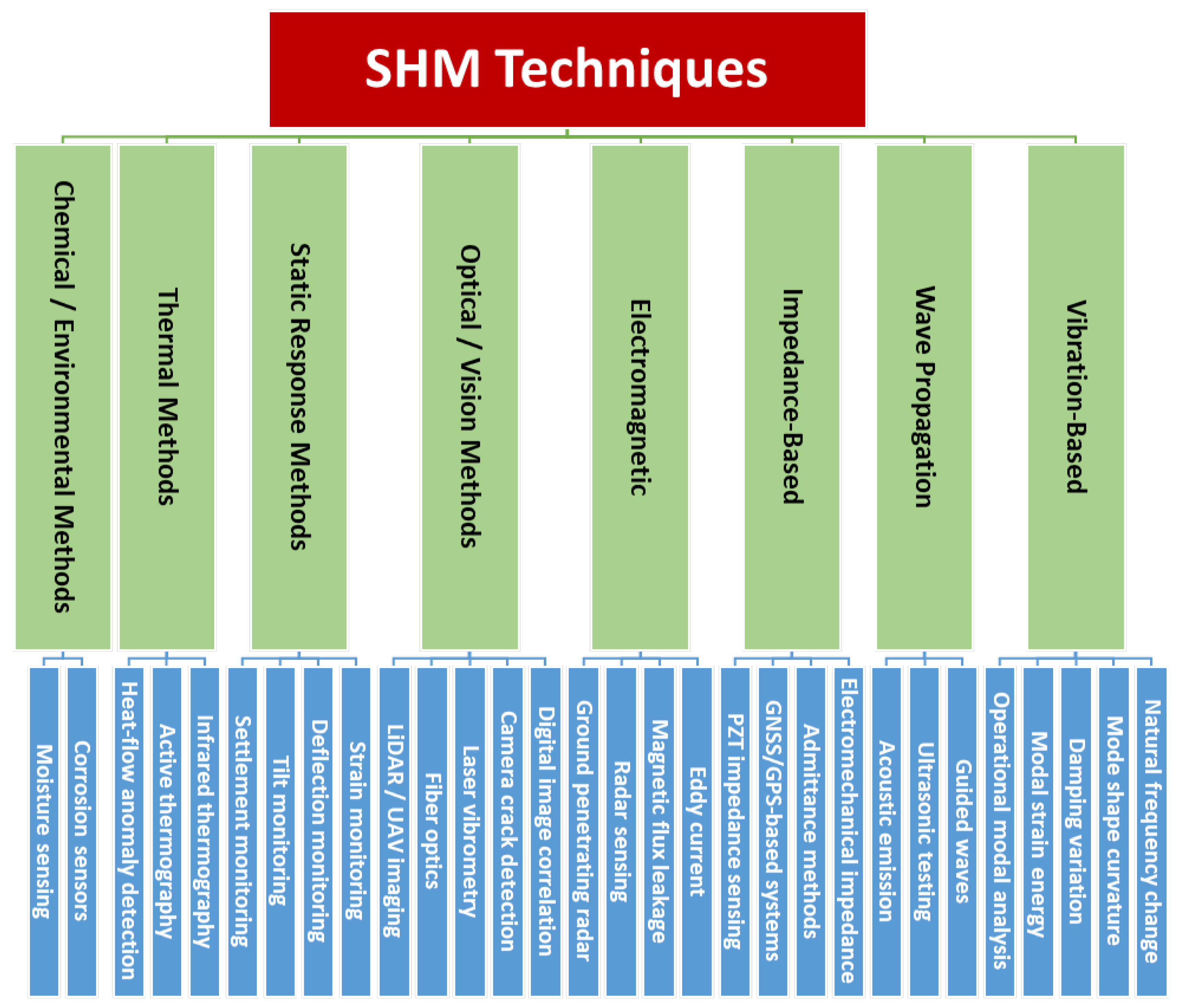
Figure 2.
Classification of SHM sensors.
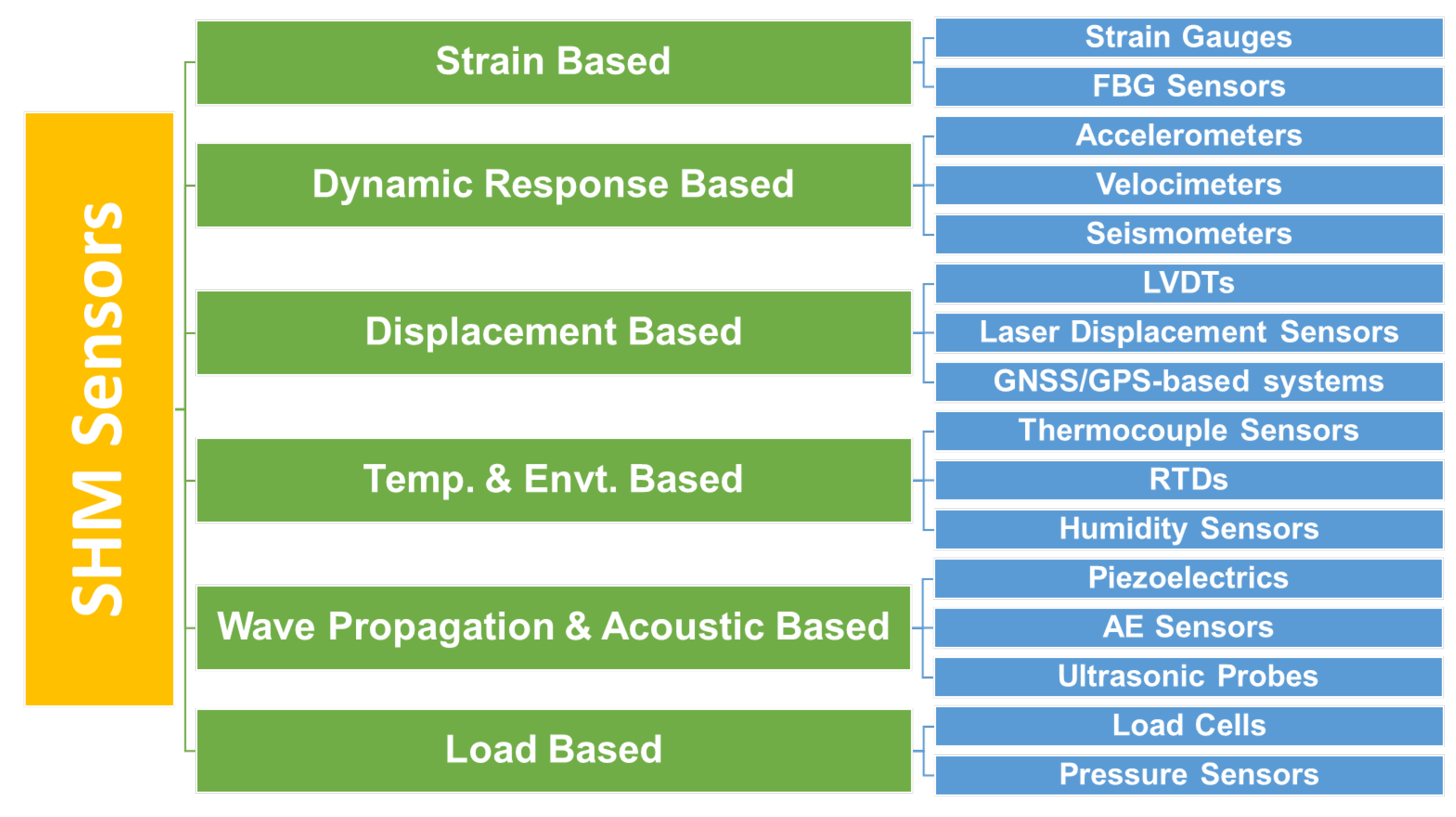
Figure 3.
Schematic of mechanical deformation due to coupled electromechanical behavior in PZT transducers in (a) direct (b) indirect configuration.
Figure 3.
Schematic of mechanical deformation due to coupled electromechanical behavior in PZT transducers in (a) direct (b) indirect configuration.
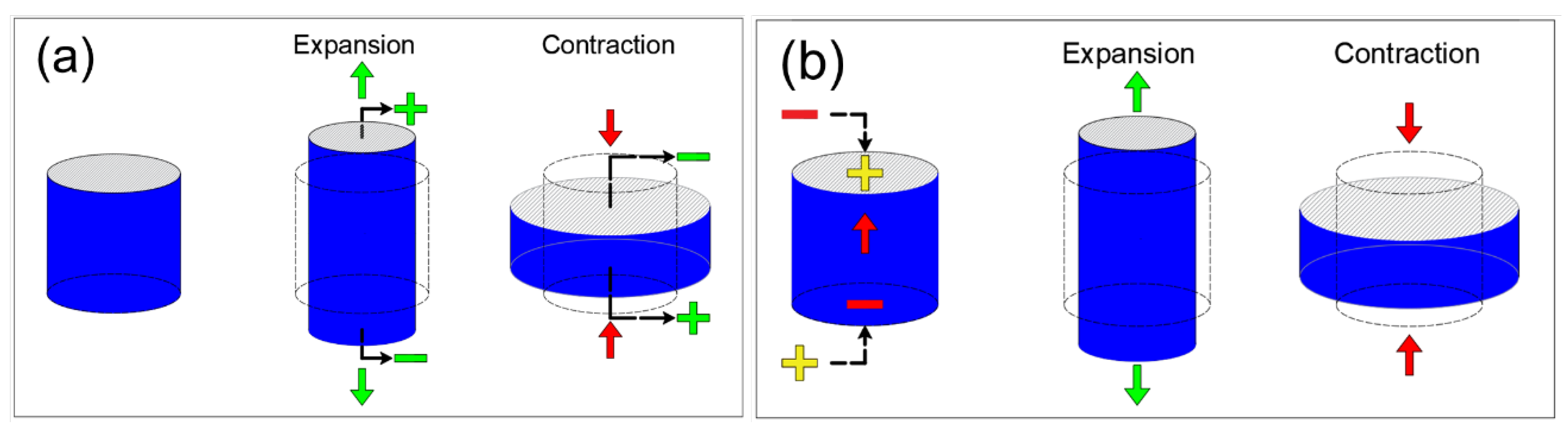
Figure 4.
PZTs in different shapes: (a) disks (b) plates (c) rings (d) hollow spheres, hemispheres, focus bowls.
Figure 4.
PZTs in different shapes: (a) disks (b) plates (c) rings (d) hollow spheres, hemispheres, focus bowls.
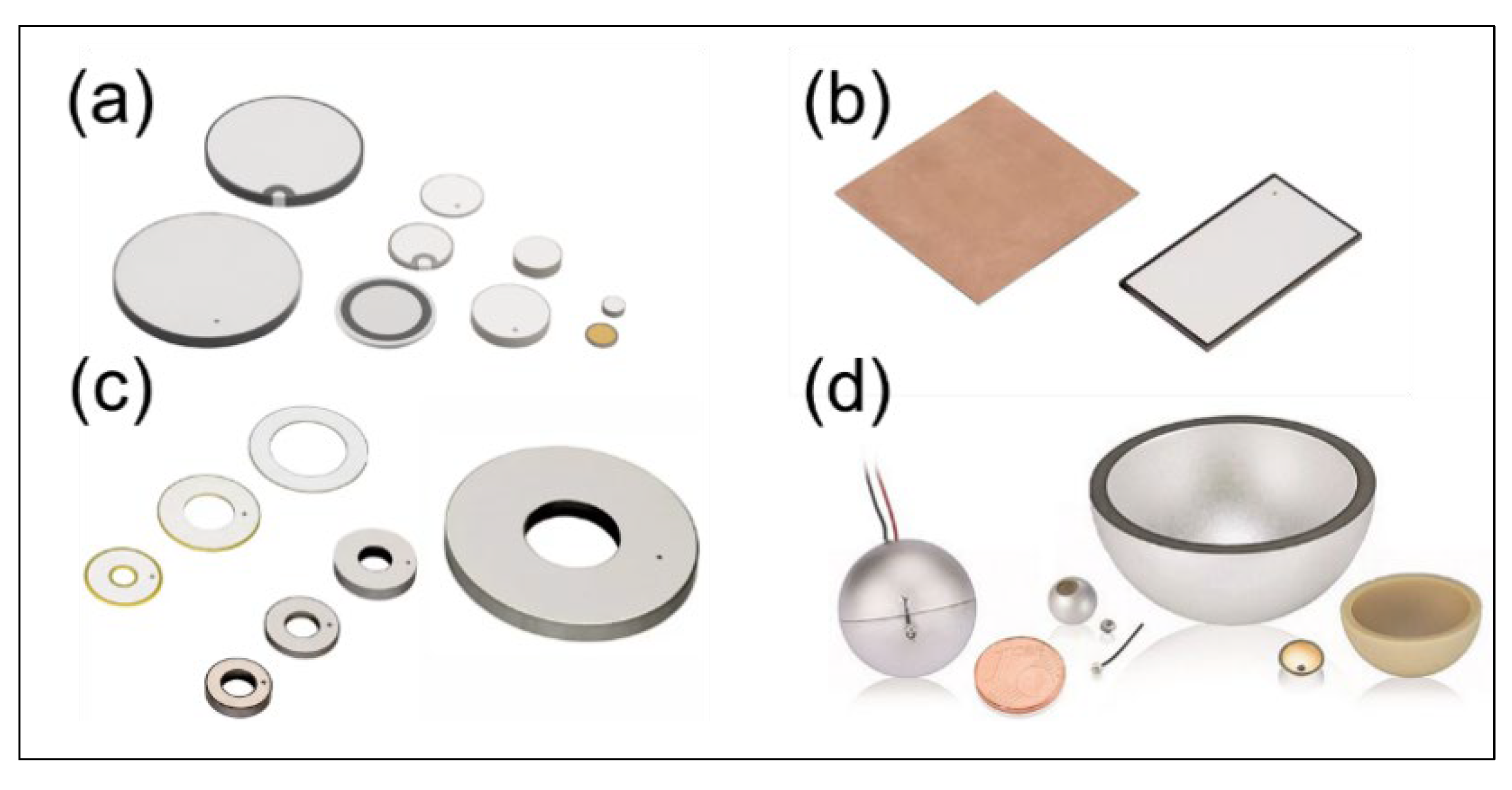
Figure 5.
Sensor configuration (a) pitch-catch (b) pulse-echo (c) sensors network.
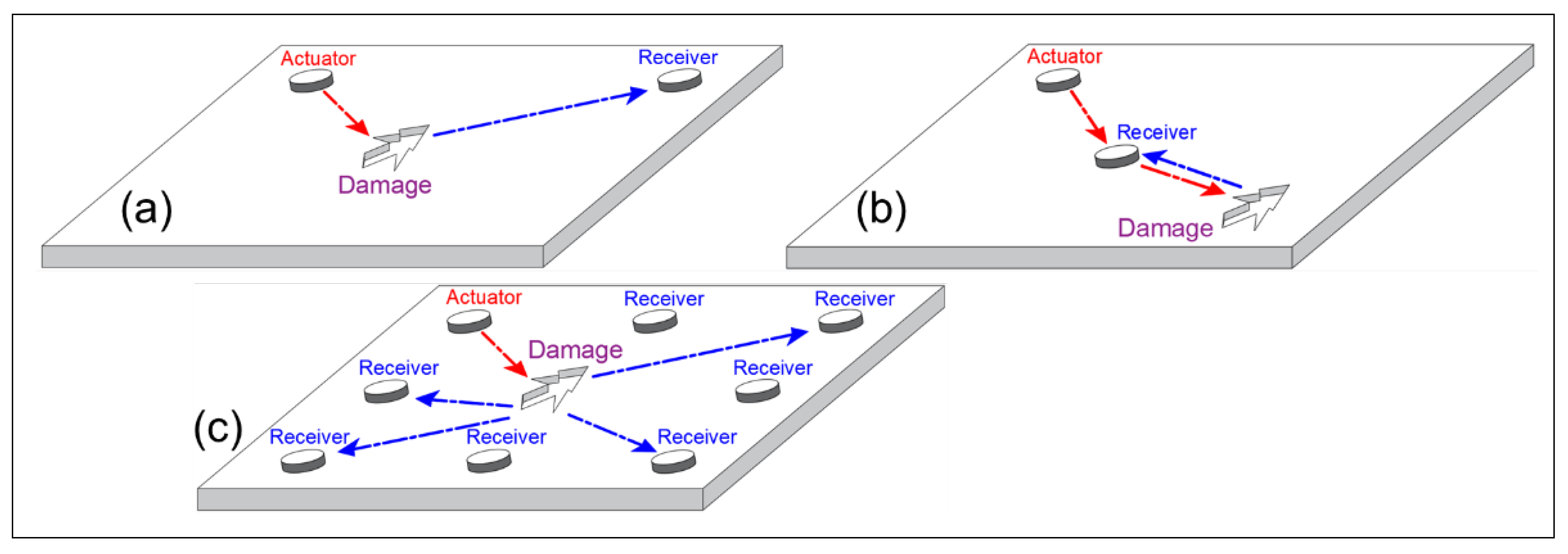
Figure 6.
Phase velocity dispersion curve for a concrete beam.
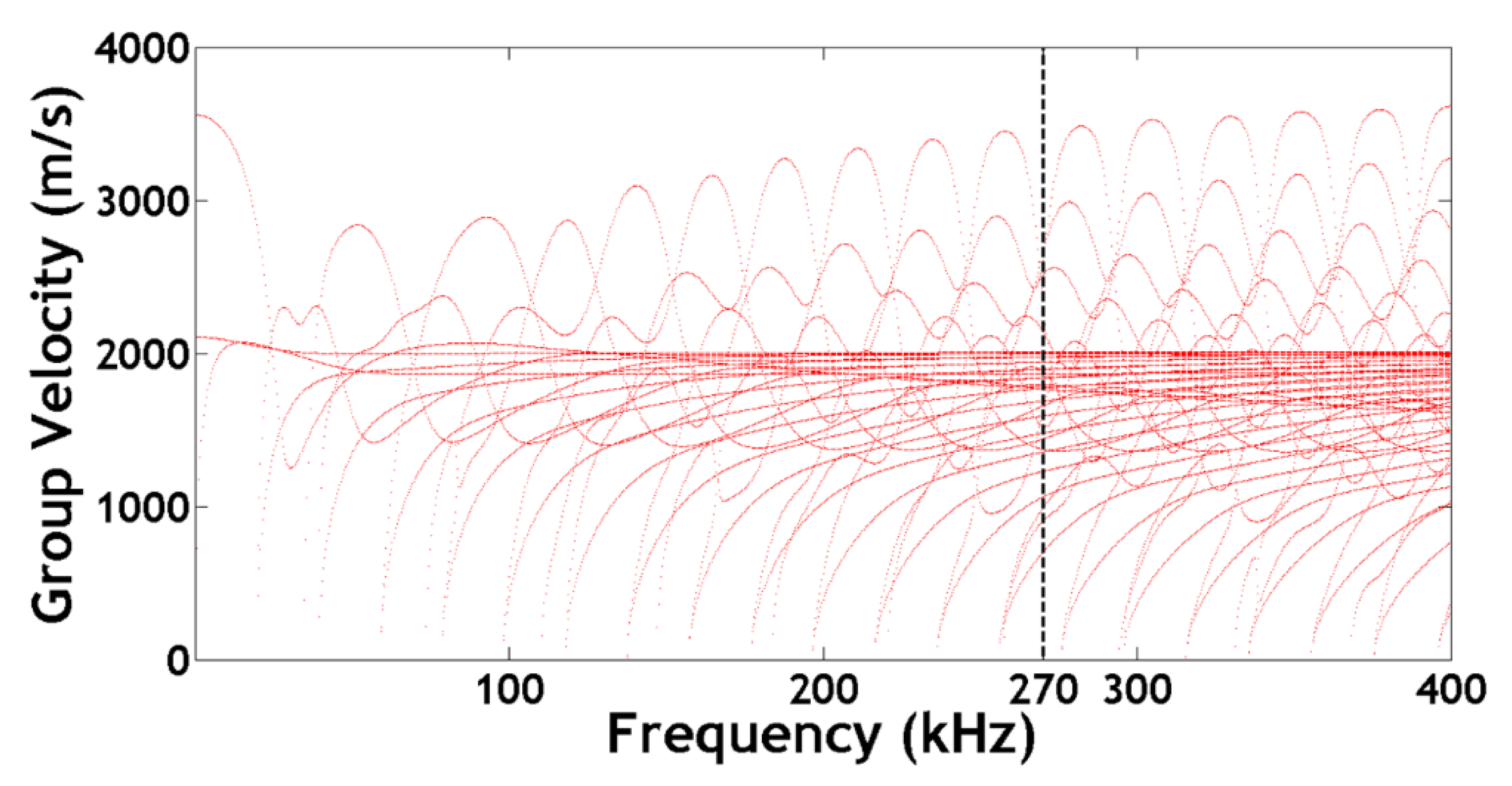
Figure 7.
Modification of incident wave due to debonding.
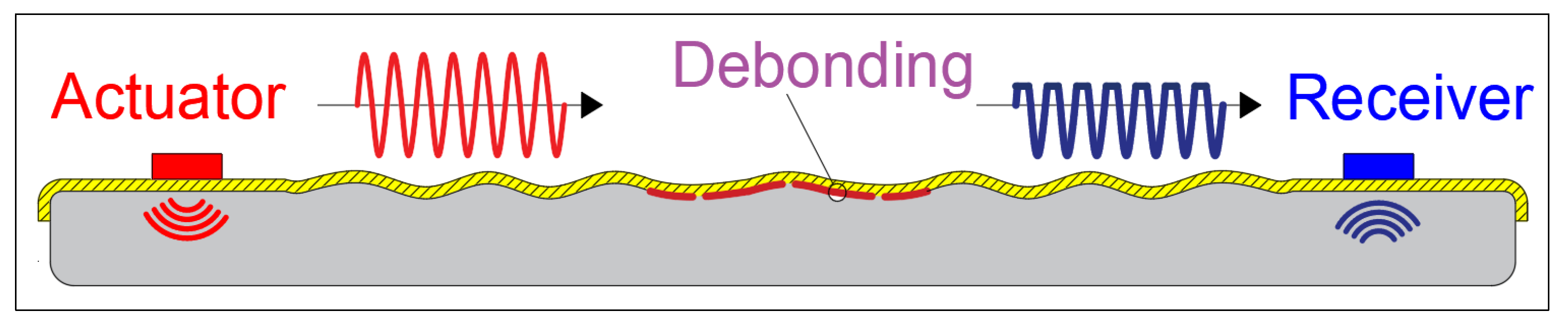
Figure 8.
Higher harmonic generation due to nonclassical nonlinearity [34].
Figure 8.
Higher harmonic generation due to nonclassical nonlinearity [34].
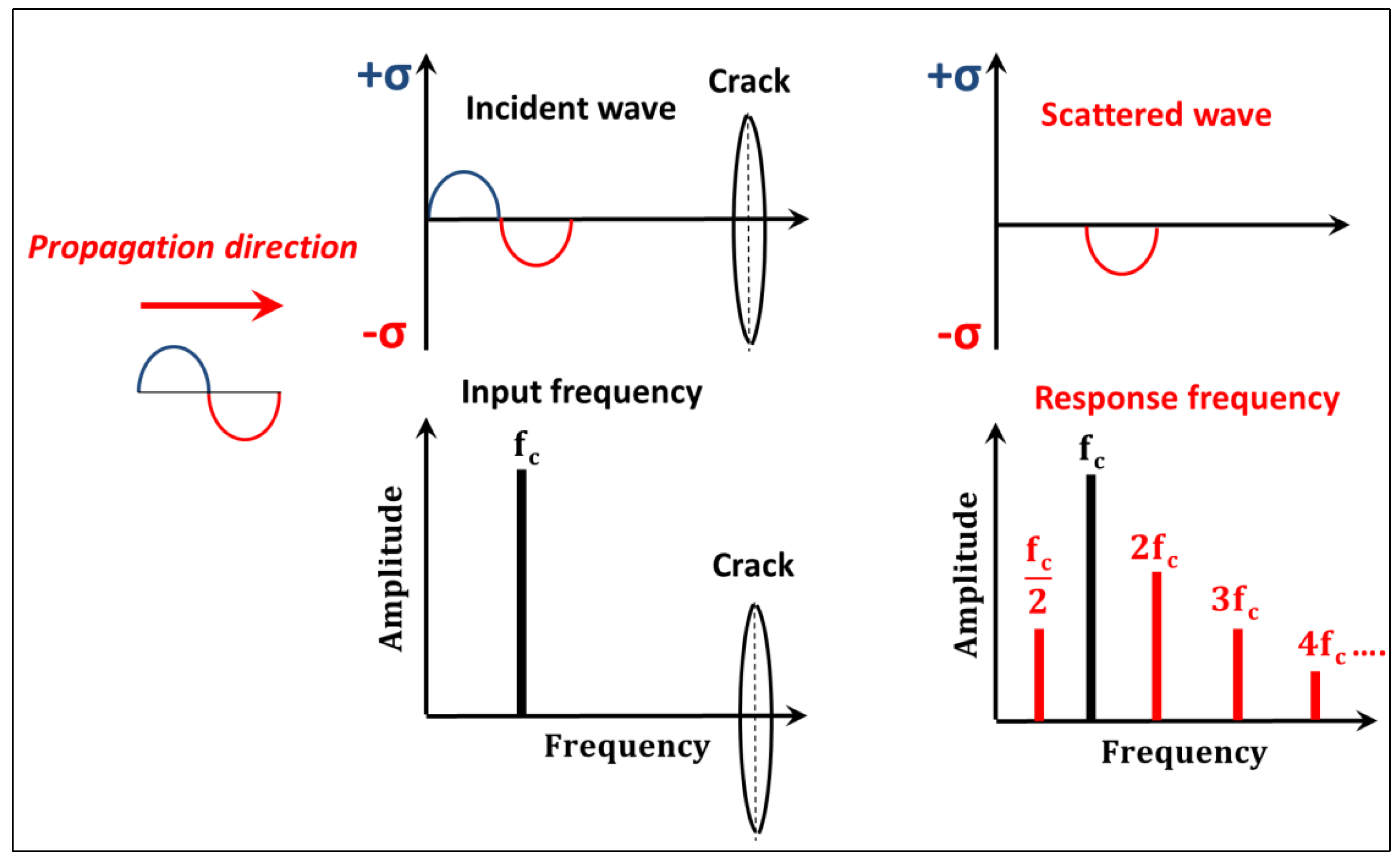
Figure 9.
Time domain data at (a) actuator (b) receiver 1 (pulse-echo) (c) receiver 2 (pitch-catch) and CWT at (d) actuator (e) receiver 1 (pulse-echo) (f) receiver 2 (pitch-catch).
Figure 9.
Time domain data at (a) actuator (b) receiver 1 (pulse-echo) (c) receiver 2 (pitch-catch) and CWT at (d) actuator (e) receiver 1 (pulse-echo) (f) receiver 2 (pitch-catch).
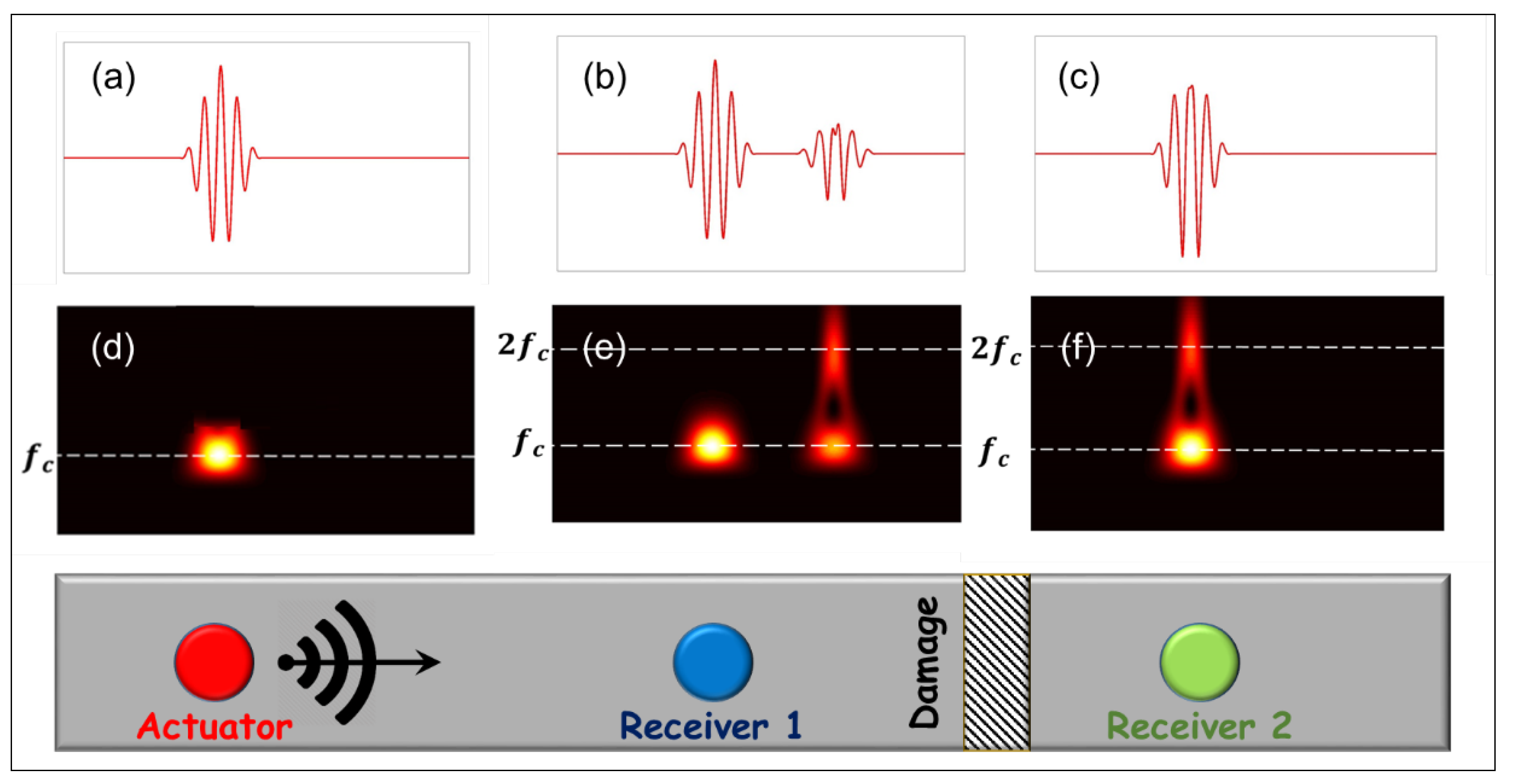
Figure 10.
Schematic diagram of ANN architecture.
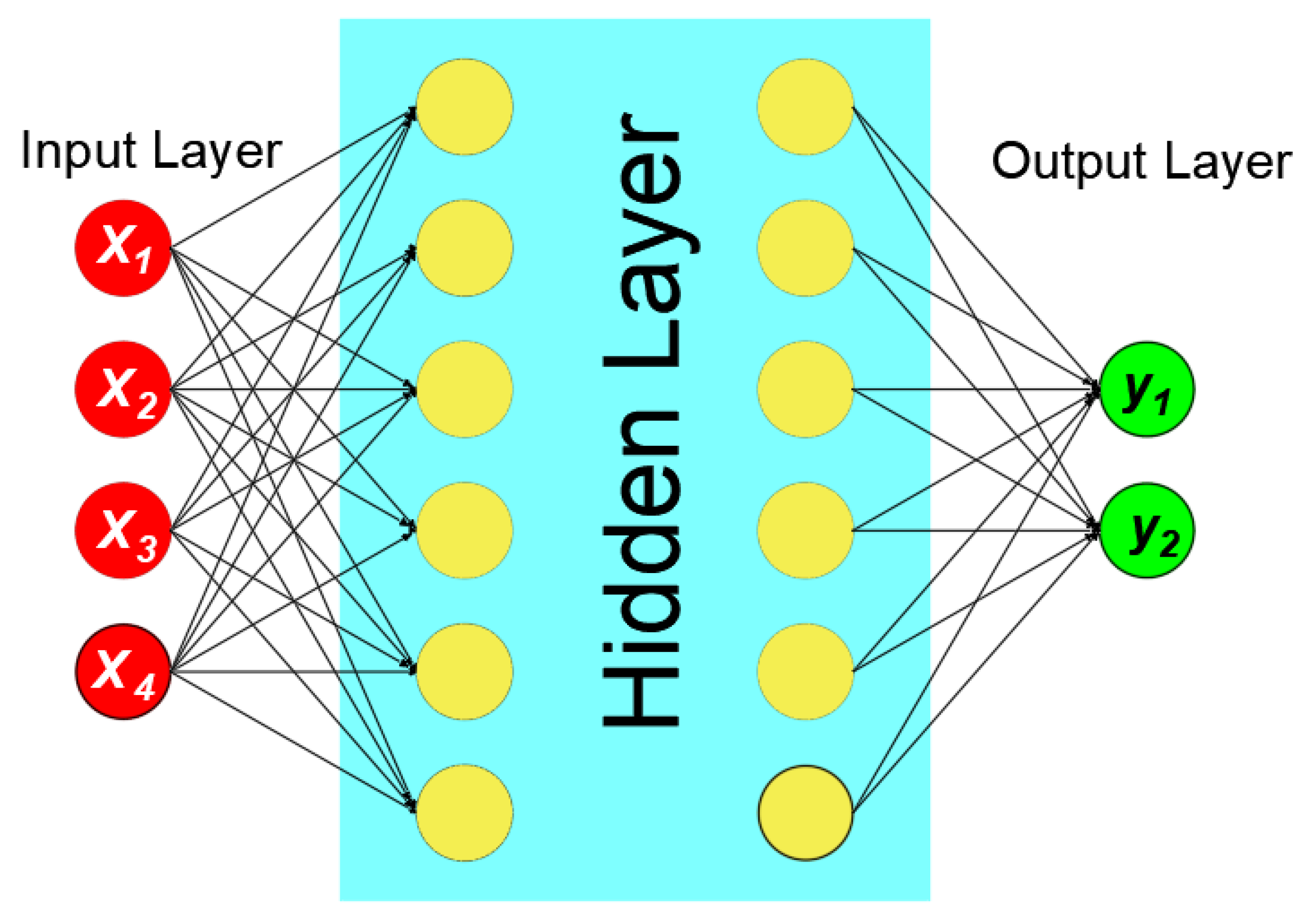
Figure 11.
Schematic diagram of CNN architecture.
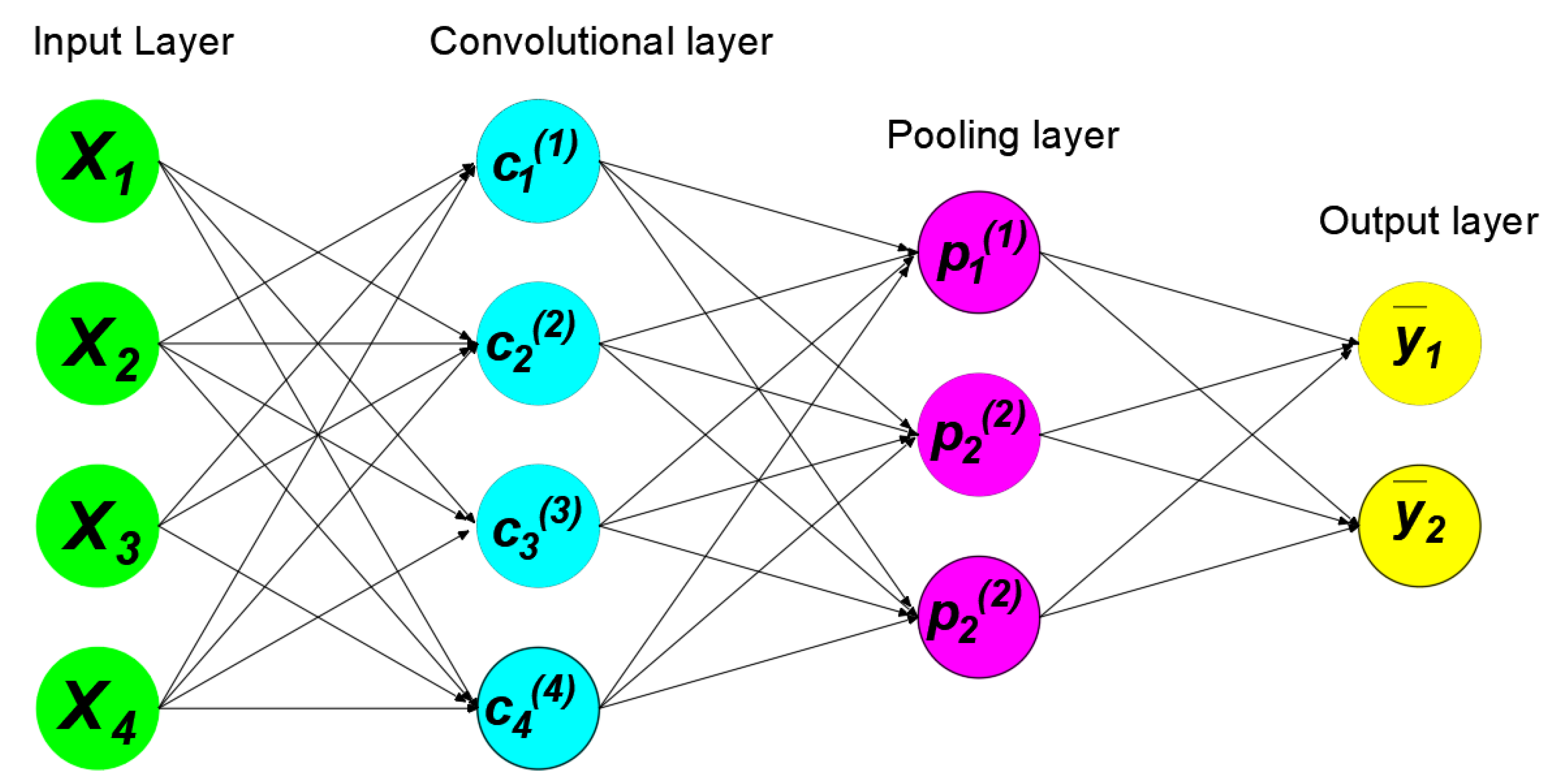
Figure 12.
Schematic diagram of a typical LSTM architecture.
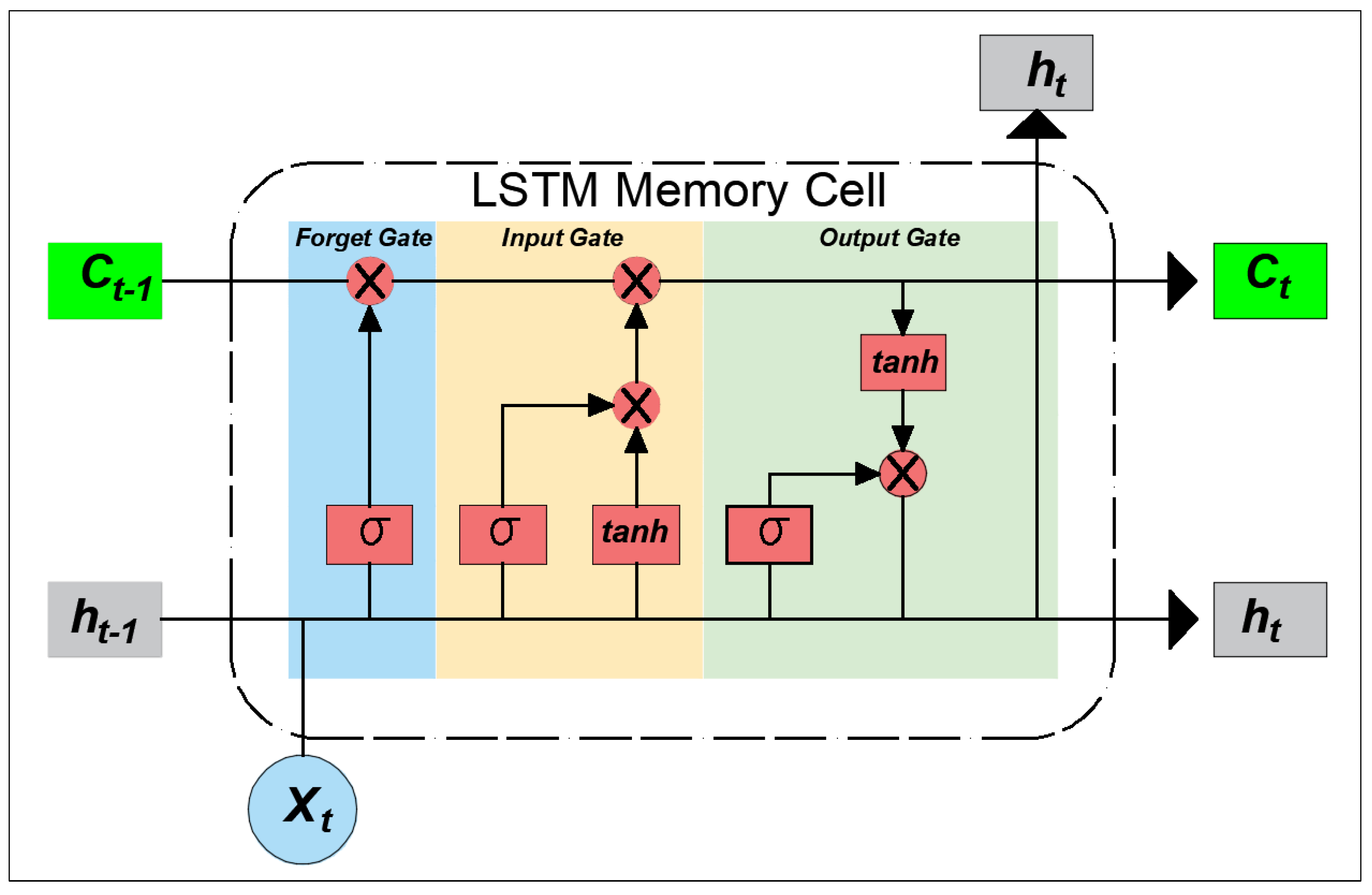
Figure 13.
Typical GW SHM hybrid framework combining signal processing and machine learning for damage assessment.
Figure 13.
Typical GW SHM hybrid framework combining signal processing and machine learning for damage assessment.
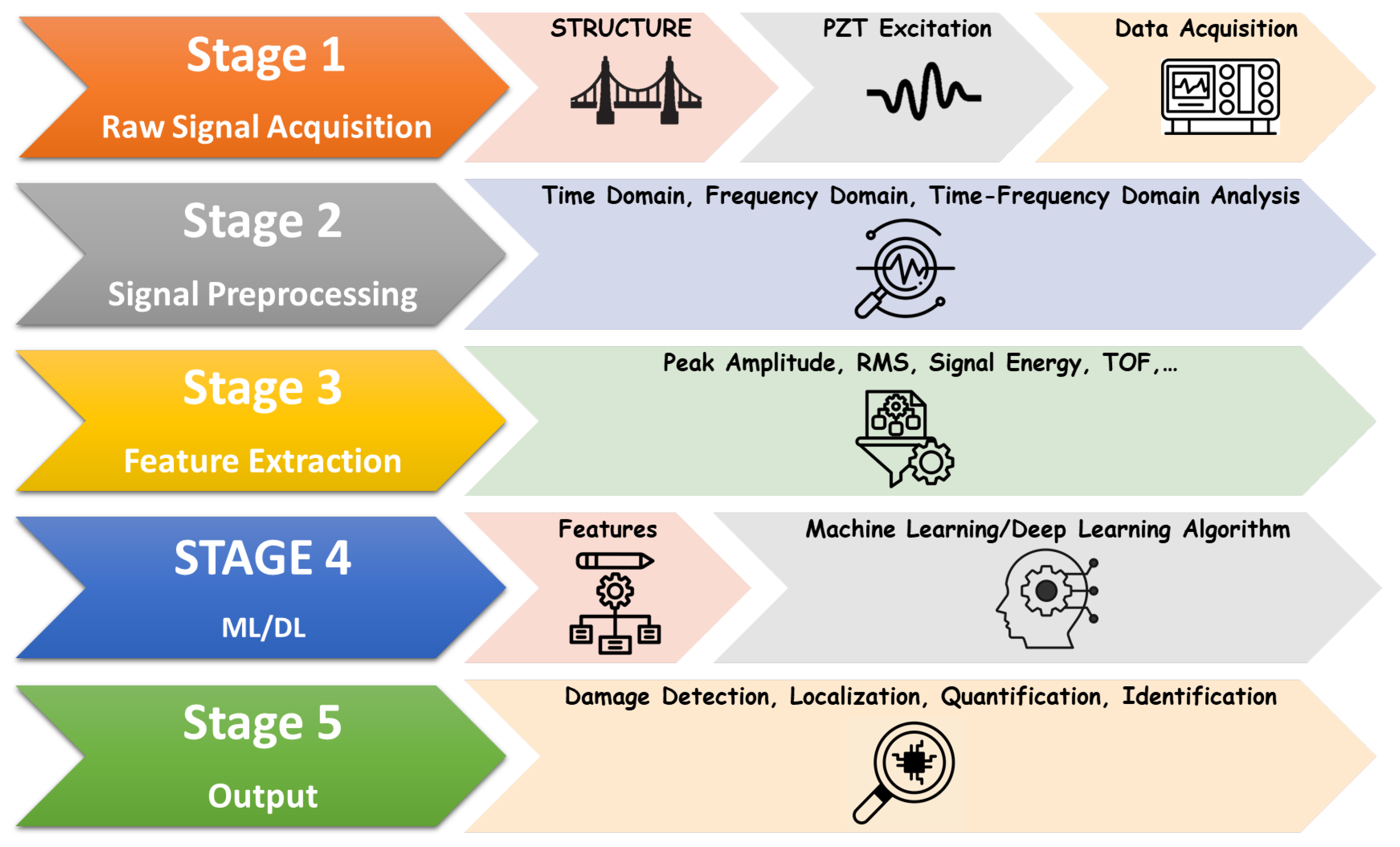
Figure 14.
Schematic overview of future research directions in machine learning-assisted GW SHM.


Table 1.
Comparison of Linear and Nonlinear GW Techniques.
| Technique | Parameters Used | Advantages | Disadvantages |
|---|---|---|---|
| Linear GW |
|
|
|
| Nonlinear GW |
|
|
|
Table 2.
Comparison of ML Algorithms for GW.
| ML Algorithm | GW Applications | Advantages | Limitations |
|---|---|---|---|
| Support Vector Machine (SVM) |
|
|
|
| Artificial Neural Networks (ANNs) |
|
|
|
| K-Nearest Neighbors (KNN) |
|
|
|
| Random Forest (RF) |
|
|
|
Table 3.
Comparison of DL Algorithms for GW.
| Algorithm | Application | Advantages / Strengths | Limitations |
|---|---|---|---|
| CNN |
|
|
|
| LSTM |
|
|
|
| Autoencoder |
|
|
|
Table 4.
Summary of ML & DL applications in metallic structures using GW.
| Ref. | Structure | Method | Input Features | Task |
|---|---|---|---|---|
| [89] | Steel Frame Structure | SVM | System Parameters (Mass, Damping, Stiffness) + Dynamic Load (Sine Wave Excitation) + Initial Conditions | Dynamic Response Analysis (Displacement, Velocity, Acceleration Prediction) |
| [90] | Steel Beam | SVM | Statistical Features of Wavelet Packets | Damage Detection & Severity Estimation |
| [91] | Aluminum Plate & Glass-Fiber Resin Epoxy Composite Plate | ANN | Sum Of Squares Of Differences (SSDs) Of Frequency Spectrums (SuRE Method) | Load Location Classification (Load Monitoring On Plates) |
| [92] | Aluminum Plate And T-Joint | KNN+SVM | Time-Domain, Frequency-Domain, And Wavelet Transform Features | Sharp Defect Depth Prediction (Pitting Corrosion Characterization) |
| [93] | Aluminum Rectangular Profile / Aluminum Plate / Composite Plate (Carbon Fiber) | k-NN (Fine, Medium, Coarse, Cosine, Cubic, Weighted) + PCA | PCA Scores (Principal Components Projections) | Damage Detection & Classification |
| [94] | Aluminum Plate | Random Forest + SVM | Physics-Informed Features (RMS, Peak Measures, Envelope Statistics, Band-Limited Energies, Spectral Peak, Inter-Channel Correlation, Second Harmonic Index) | Damage Severity Classification |
| [95] | Aluminum Alloys | Random Forest + KNN | Stress Intensity Factor Range, Maximum Stress Level, Stress Ratio | Short Fatigue Crack Growth Rate Prediction |
| [96] | Stainless Steel Test Bars | CNN + LSTM | 2D Time-Frequency Images (STFT & CWT) For CNN; Raw Signal Data For LSTM | Load Detection & Fabrication Classification (Anomaly Detection) |
| [97] | Thin Aluminum Plate | CNN | Lamb Wave Data Converted Images | Crack Damage Detection |
| [98] | 45CrNiMoVA Steel Torsion Shafts | PGCNN (Physics-Guided CNN) | Nonlinear Rayleigh Wave Signals (Damage Indicator/Relative Nonlinear Coefficient) | Microcrack Quantification (Length & Width Prediction/Decoupling) |
| [99] | Aluminum Panel | LSTM | Wavelet Time Scattering Features | Damage Classification (Region & Size) |
| [100] | Double-Layer Plate (Aluminum Substrate With Stainless-Steel Coating Layer) | LSTM + CNN | Guided Wave Pulse-Echo & Pitch-Catch Signals (With Gaussian Noise Added) | Disbond Localization & Sizing |
| [101] | Riveted Metallic Aluminum Panels | Stacked Autoencoders | AE Waveforms | AE Source Localization & Characterization (Single-Sensor) |
| [102] | Aluminum Plate | Denoising Autoencoders | Guided Wave Signals | Temperature Compensation & Baseline Signal Selection |
Table 5.
Summary of ML & DL applications in composite structures using GW.
| Ref. | Structure | Method | Input Features | Task |
|---|---|---|---|---|
| [104] | GFRP Laminates | SVM | Wavelet packet energy | Damage Detection |
| [87] | GFRP Laminates | SVM | Multi-feature extraction | Damage Localization & Quantification |
| [105] | Composite Laminate | SVM + Random Forest | Stress wave factors | Damage Localization |
| [106] | Aluminum Plate (Isotropic) & CFRP Composite Panel | ANN (Feed-Forward Neural Network, Levenberg-Marquardt Training) | Damage Indexes (DIs) From S0 Mode Guided Wave Signals | Damage Detection & Localization (Coordinates Prediction) |
| [107] | Composite Wind Turbine Blades | KNN | Yule-Walker AR coefficients | Damage Detection & Diagnosis |
| [108] | CFRP Composite Panel | KNN + SVM | TOF | Damage Localization & Quantification |
| [85] | Multilayered Composite Plate | KNN | Dispersion Curve | Material Property Characterization |
| [109] | Composite Structures | Random Forest | CCD + RMSD | Damage Identification |
| [110] | Composite Wind Turbine Blades (GFRC) | Random Forest | A0/S0 Mode Group Velocities & Amplitudes | Damage Detection & Sensitivity |
| [111] | CFRP Composite Plate | CNN | Wavefield Images / Wavenumber Spectrum Images | Delamination Depth Classification |
| [103] | Stiffened Skin-To-Stringer Composite Aircraft Panel | CNN | Ultrasonic Guided Wave Features (Automatically Selected By CNN) | Damage Imaging & Localization |
| [112] | CFRP Composite Laminates | BO-CNN-BiLSTM | Ultrasonic Guided Wave Features | Fatigue Life Prediction |
| [88] | Composite Laminates | LSTM | Incomplete Guided Wave Measurements | Full Wavefield Prediction & Damage Visualization |
| [113] | CFRP Adhesive Joints (Quasi-Isotropic CFRP Plates Bonded With Adhesive Layer) | Fully Connected Autoencoder + Transformer Autoencoder + CNN-LSTM Autoencoder | Ultrasonic Guided Wave Signals | Disbond Detection, Localization & Sizing (Unsupervised Anomaly Detection) |
| [114] | CFRP Composite Plate | Autoencoder | TOF of Scattered Signals | Damage Localization & Temperature Compensation |
| [57] | CFRP Composite Plate | Autoencoder | Ultrasonic Guided Wave Signals | Temperature Compensation & Signal Reconstruction |
Table 6.
Summary of ML & DL applications in concrete structures using GW.
| Ref. | Structure | Method | Input Features | Task |
|---|---|---|---|---|
| [115] | Foundation Piles And Utility Poles (Timber & Concrete) | SVM (With Different Kernel Functions) + PCA | FFT Signals | Damage Classification (Condition Assessment) |
| [116] | Concrete Slabs | SVM + ANN | P-Wave, S-Wave, And R-Wave Velocities | Concrete Compressive Strength Prediction |
| [117] | Concrete Deck Slab With GFRP Reinforcement | ANN (Shallow Neural Network With One Hidden Layer) | Centers Of Gravity Of Absolute Cross-Correlation Vectors (From Elastic Wave Signals Via PZT Sensors) And Loading Condition | Crack Detection & Structural Condition Monitoring (Alarm State Classification) |
| [63] | Reinforced Concrete Bridges | ANN | Wave aplitude | Digital Twin For Structural Health Monitoring (Bending Moment & Deflection Prediction, Baseline Strain Generation) |
| [118] | Underwater Concrete Specimens | SVM + Intelligent Algorithm (Physics-Embedded) | Sand-Aggregate Ratio, Water-Cement Ratio, Aggregate Diameter, P-Wave Velocity, Rayleigh Wave Velocity | Compressive Strength Evaluation |
| [119] | Basalt-FRP Reinforced Concrete Slabs (Bridge Decks) | K-NN (Supervised) + K-Means Clustering (Unsupervised) + SHAP Analysis | AE Features (Counts, Energy, Absolute Energy, Rise Time, Initiation Frequency, Peak Frequency, Frequency Centroid, Amplitude, Duration) | Damage Progression Monitoring (Tensile/Shear Crack Classification & Crack Width Prediction) |
| [120] | FRP Concrete Slabs (Fiber-Reinforced Polymer Concrete Blocks) | KNN + Lasso Regression | Compressive Strength, Fiber Volume Percentage, Slab Thickness, Reinforcement Ratio, Shear Span-To-Depth Ratio, Area, Dimensions, Density, Elastic Modulus | Punching Shear Performance Prediction (Structural Integrity Assessment) |
| [121] | FRP-To-Concrete Bond Joints | PSO-Random Forest (Particle Swarm Optimization + Random Forest) | Concrete Compressive Strength, Concrete Tensile Strength, Concrete Width, Maximum Aggregate Size, FRP Tensile Strength, FRP Thickness, FRP Elastic Modulus, Adhesive Tensile Strength, FRP Bond Length, FRP Bond Width | Bond Strength Prediction |
| [122] | Concrete (Plain Concrete With Hole Defects) | Multilevel CNN + Array Ultrasonic Testing (AUT) | Ultrasonic Echo Signals (One-Dimensional Time-Domain Signals) | Defect Localization |
| [123] | FRP-Reinforced Concrete (Cylindrical & Prismatic Specimens) | BP Neural Network + CNN | FRP Density, FRP Elastic Modulus, Acid/Alkali/Salt Freeze-Thaw Cycles, Mass Loss Rate (Cylindrical & Prism), Relative Dynamic Elastic Modulus | Compressive Strength & Flexural Capacity Prediction (Durability/Performance Degradation) |
| [124] | Concrete Beams (Lining Concrete Under Bending Loads & Freeze-Thaw Cycling) | BiGRU + 2D CNN + Feature Fusion | Conductance Signals (EMI) + CWT Time-Frequency Spectra Of Stress Wave Signals (WP) | Cyclic Freeze-Thaw Damage Monitoring & Classification (Damage Phase Classification) |
| [125] | FRP-Confined Concrete (Circular Specimens) | Random Forest + ANNMLP + ANNRBF | Concrete Diameter, Total FRP Thickness, Unconfined Concrete Strength, Hoop Rupture Strain of FRP, Elastic Modulus of Fiber, Tensile Strength of Fiber, Confinement Stiffness Ratio, Lateral Confining Pressure Ratio, Strain Ratio | Ultimate Condition Prediction (Strength Ratio & Strain Ratio |
| [126] | Concrete-Filled Steel Tube (CFST) Arch Bridge Specimens | BO-LSTM + Random Forest (Bayesian Optimization + Long Short-Term Memory) + Random Forest + GBDT + XGBoost | Ultrasonic Amplitude & Pulse Wave Velocity | Debonding Defect Classification (Void/Debonding Detection In CFST) |
| [127] | Reinforced Concrete Utility Poles (With Internal Steel Wires) | Random Forest +ISOMAP | Hall Effect Values | Structural Safety Inspection (Damage Classification: Safe vs. Crack/Broken Steel Wires) |
| [128] | Geopolymer Concrete Specimens | Deep Fully Connected Autoencoder + Isolation Forest | Ultrasonic Response Signals (Time-Domain: MSE & Reconstructed-to-Original Signal Ratio; Frequency-Domain: Fundamental Amplitude Ratio) | Distributed Damage Detection (Anomaly Detection - Damaged vs. Intact Classification) |
| [129] | Concrete (Reinforced Concrete Structures With Honeycomb Defects | U-AE (U-Net Autoencoder) | Impact Echo B-Scan Images (Frequency Spectra) | Anomaly Detection (Honeycomb Defect Classification - Sound vs. Defective) |
Disclaimer/Publisher’s Note: The statements, opinions and data contained in all publications are solely those of the individual author(s) and contributor(s) and not of MDPI and/or the editor(s). MDPI and/or the editor(s) disclaim responsibility for any injury to people or property resulting from any ideas, methods, instructions or products referred to in the content. |
© 2026 by the authors. Licensee MDPI, Basel, Switzerland. This article is an open access article distributed under the terms and conditions of the Creative Commons Attribution (CC BY) license (http://creativecommons.org/licenses/by/4.0/).
Copyright: This open access article is published under a Creative Commons CC BY 4.0 license, which permit the free download, distribution, and reuse, provided that the author and preprint are cited in any reuse.


