
Submitted:
24 April 2026
Posted:
28 April 2026
You are already at the latest version
Abstract
This study investigated the expression of E-cadherin, N-cadherin, vimentin, Snail1, Slug (Snail2), Twist, ZEB1, ZEB2, and E47 in oral squamous cell carcinoma (OSCC) and assessed their association with clinicopathological parameters and patient survival. Immunohistochemical analysis was performed in OSCC samples, and correlations with clinicopathological variables and survival outcomes were evaluated. E-cadherin expression was detected in 54.5% of cases, vimentin in 39.6%, N-cadherin in 2.5%, Snail in 59.4%, Slug in 82.4%, ZEB1 in 3%, Twist in 94.5%, and E47 in 4.2% of tumors. Loss of E-cadherin was significantly associated with advanced clinical stage. N-cadherin expression was linked to moderate or poor differentiation, while vimentin expression correlated with lymph node metastasis, advanced stage, poor differentiation, recurrence, and disease-related death. Snail1 and Slug were associated with tobacco use, and Slug also with alcohol consumption. Complete epithelial–mesenchymal transition (EMT), defined by loss of E-cadherin and vimentin expression, was associated with poorer survival. Co-expression of vimentin and N-cadherin was linked to worse disease-specific and overall survival. However, only clinical stage remained independently associated with survival in multivariate analysis. In conclusion, vimentin expression is associated with aggressive tumor behavior, and EMT-related transcription factors are linked to tobacco exposure.
Keywords:
epithelial-mesenchymal transition
; cadherin switching
; vimentin
; Snail
; Slug
1. Introduction
Oral squamous cell carcinoma (OSCC), the most common histopathological form of oral cancer, is among the most prevalent cancers worldwide [1]. It has a 5-year survival rate ranging from 15% to 60%, depending on the stage of the disease, largely due to its tendency for local invasion and metastasis, the most lethal consequence of tumor progression [2]. Epithelial–mesenchymal transition (EMT) is a biological process in which immotile epithelial cells undergo morphological and phenotypic changes to acquire a mesenchymal, spindle-shaped, and motile phenotype [3]. EMT plays a crucial role in embryonic morphogenesis; although it is largely silenced in adult tissues, it can be reactivated under pathological conditions, including carcinomas. It has been hypothesized that EMT confers an invasive phenotype on cancer cells, enabling them to invade surrounding tissues and eventually disseminate through blood or lymphatic vessels to form metastases [4]. However, most evidence supporting EMT is derived from experimental models [5,6,7,8], and its role in human cancer remains controversial [9,10,11,12].EMT is characterized by the loss of epithelial cell junction proteins, such as E-cadherin, and the gain of mesenchymal markers, including N-cadherin (a phenomenon known as “cadherin switching”) and vimentin. This process has been associated with tumorigenesis, tumor progression, angiogenesis, and immune response [13,14]. Based on the combined expression of E-cadherin and vimentin, Wangmo et al. [15] classified EMT into three categories: (1) no EMT (E-cadherin-positive and vimentin-negative), (2) complete EMT (E-cadherin-negative and vimentin-positive), and (3) partial EMT (co-expression or absence of both markers). Cadherin switching is considered a hallmark of EMT and has been associated with poor survival in several cancers, including head and neck cancer [16]. Nevertheless, its prognostic significance in OSCC remains controversial [13,15,17].
The completion of EMT requires activation of a genetic program that not only represses E-cadherin expression but also induces mesenchymal gene expression. A recent meta-analysis has identified several key genes involved in EMT induction [18], and cigarette smoking has been shown to promote EMT through upregulation of EMT-related genes [19]. Zinc finger proteins Snail1 (Snail) and Snail2 (Slug), Twist, E47, and zinc finger E-box-binding homeobox 1 and 2 (ZEB1 and ZEB2) are transcription factors capable of inducing EMT (EMT-TFs) [20,21]. However, their roles in OSCC progression remain unclear. These factors suppress E-cadherin expression, primarily through promoter methylation or through the upregulation of EMT-related transcriptional regulators [16]. In addition, Twist upregulates N-cadherin expression [20], while Snail promotes the expression of mesenchymal genes such as vimentin, thereby enhancing tumor invasiveness. The basic helix–loop–helix transcription factor E47 is also an EMT inducer, capable of regulating the transcription of fibronectin and cytokines such as tumor necrosis factor Alpha [22].
The aim of this study was to investigate the expression of E-cadherin, N-cadherin, vimentin, Snail1, Slug (Snail2), Twist, ZEB1, ZEB2, and E47 in OSCC, and to analyze their relationship with clinicopathological parameters and patient survival.
2. Results
2.1. Immunohistochemical Analysis of EMT Markers in OSCC
E-cadherin expression was detected in 89 (54.5%) cases, vimentin in 65 (39.6%), and N-cadherin in 4 (2.5%) OSCC samples. Five cases were not evaluable for N-cadherin, and two cases for E-cadherin and vimentin. Regarding transcription factors, Twist was predominantly expressed in the nuclei of tumor cells, Snail1 in both the cytoplasm and nucleus, and Slug mainly in the cytoplasm (Figure 1). Snail1 expression was observed in 98 (59.4%) tumors, Slug in 136 (82.4%), ZEB1 in 5 (3%), Twist in 155 (94.5%), and E47 in 7 (4.2%). In contrast, ZEB2 expression was not detected in any case. One case was not evaluable for EMT transcription factor analysis (except for Twist, for which two cases were not evaluable). Figure 1 shows representative immunostaining patterns of E-cadherin, N-cadherin, vimentin, Snail1, Slug, ZEB1, Twist, and E47 in OSCC.
A statistically significant association was found between loss of E-cadherin expression and vimentin expression (p = 0.004). E-cadherin expression was also significantly associated with Snail1 (p = 0.04) and Slug (p < 0.0001). Significant associations were observed between Snail1 and Slug (p < 0.0001), as well as between Slug and vimentin (p = 0.04). In addition, Slug expression was significantly associated with Twist expression (p < 0.0001), and ZEB1 expression was associated with E47 expression (p < 0.0001).
2.2. Associations with Clinicopathological Variables and Prognosis
Table 1 summarizes the associations between EMT markers and clinicopathological characteristics. Loss of E-cadherin expression was significantly associated with advanced clinical stage (χ² test, p = 0.03). N-cadherin expression was significantly associated with moderately or poorly differentiated tumors (Fisher’s exact test, p = 0.01).
Vimentin expression was significantly associated with the presence of neck lymph node metastasis (p = 0.002), advanced clinical stage (p = 0.001), moderate or poor tumor differentiation (p = 0.001), tumor recurrence (p = 0.009), and death due to the index cancer (p = 0.001). Regarding EMT-related transcription factors, Snail1 expression was significantly associated with male sex (p = 0.02) and tobacco use (p = 0.01). Slug expression was significantly associated with tobacco use (p = 0.04) and alcohol consumption (p = 0.02), and inversely associated with tumor classification (p = 0.001) and clinical stage (p = 0.002). No significant associations were observed between ZEB1, Twist, or E47 expression and the clinicopathological variables analyzed (Table 1).
2.3. Survival Analysis
At the last follow-up (range: 1–221 months), 67 patients (40.4%) had died due to the index cancer. The mean and median follow-up times were 62.6 (SD: 53.6) and 59.0 months, respectively. The 5- and 10-year disease-specific survival (DSS) rates were 61% and 53%, respectively, with a mean survival time of 132.7 months (95% CI: 116.5–149.0).Tumor classification (T1–2 vs. T3–4), lymph node status (N0 vs. N+), and clinical stage (I–II vs. III–IV) were significantly associated with survival (p < 0.0005; HR = 3.9, 3.8, and 4.3, respectively).
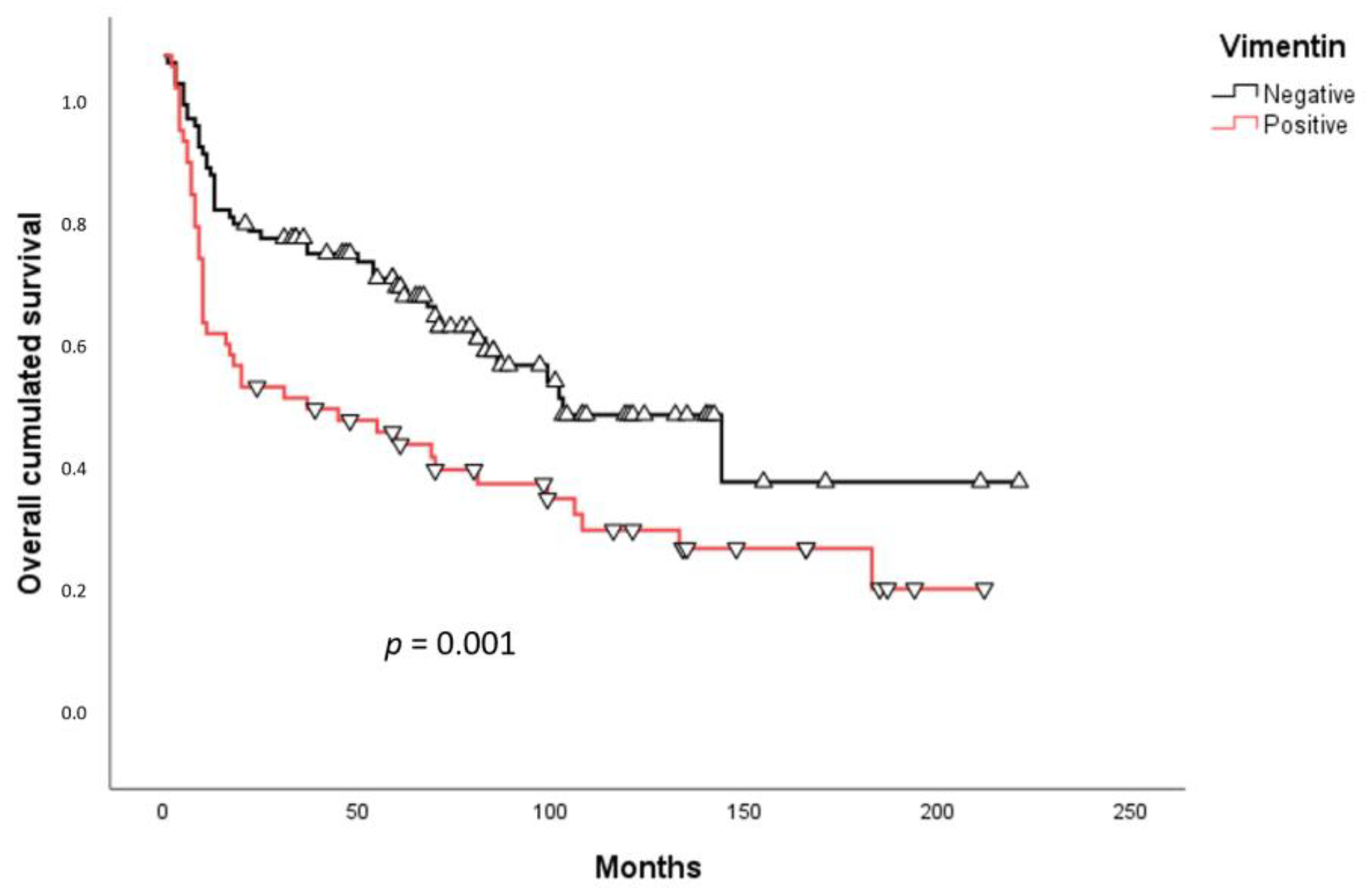
Kaplan–Meier analysis showed that patients with positive vimentin expression had significantly poorer DSS (p = 0.001; HR = 2.18; 95% CI: 1.34–3.55) (Figure 2A) and OS (p = 0.001; HR = 1.77; 95% CI: 1.16–2.71) (Figure 2B).
Figure 2.
A. Disease specific cumulated survival according to vimentin expression among 165 OSCC patients. Log-rank statistics is depicted.
Figure 2.
A. Disease specific cumulated survival according to vimentin expression among 165 OSCC patients. Log-rank statistics is depicted.
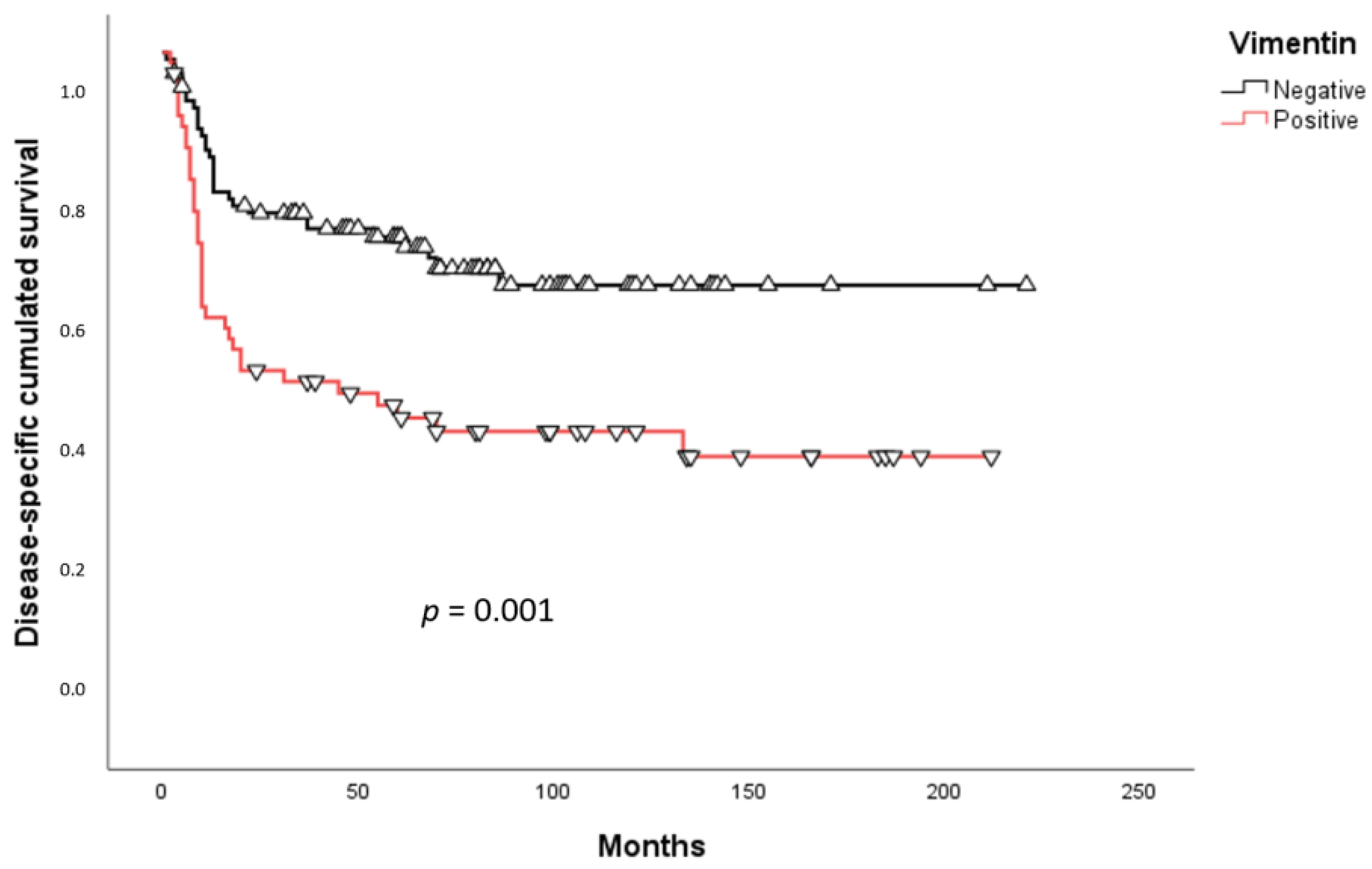
Figure 2.
B. Overall cumulated cumulated survival according to vimentin expression among 165 OSCC patients. Log-rank statistics is depicted.
Figure 2.
B. Overall cumulated cumulated survival according to vimentin expression among 165 OSCC patients. Log-rank statistics is depicted.
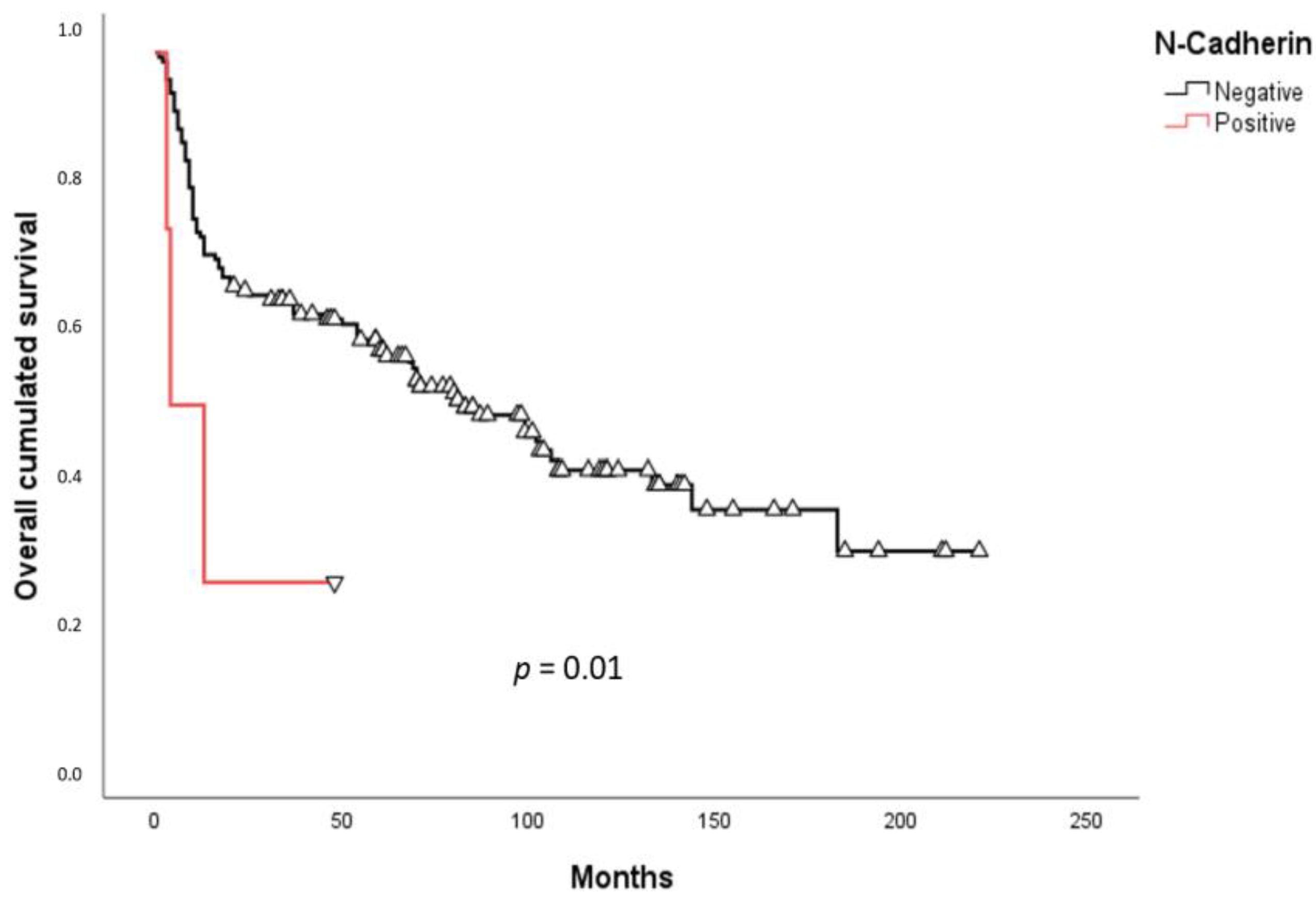
Similarly, N-cadherin expression was associated with poorer DSS (p = 0.01; HR = 3.63; 95% CI: 1.13–11.65) (Figure 2C) and OS (p = 0.01; HR = 3.29; 95% CI: 1.03–10.54) (Figure 2D).
Figure 2.
C. Disease specific cumulated survival according to N-cadherin expression among 165 OSCC patients. Log-rank statistics is depicted.
Figure 2.
C. Disease specific cumulated survival according to N-cadherin expression among 165 OSCC patients. Log-rank statistics is depicted.
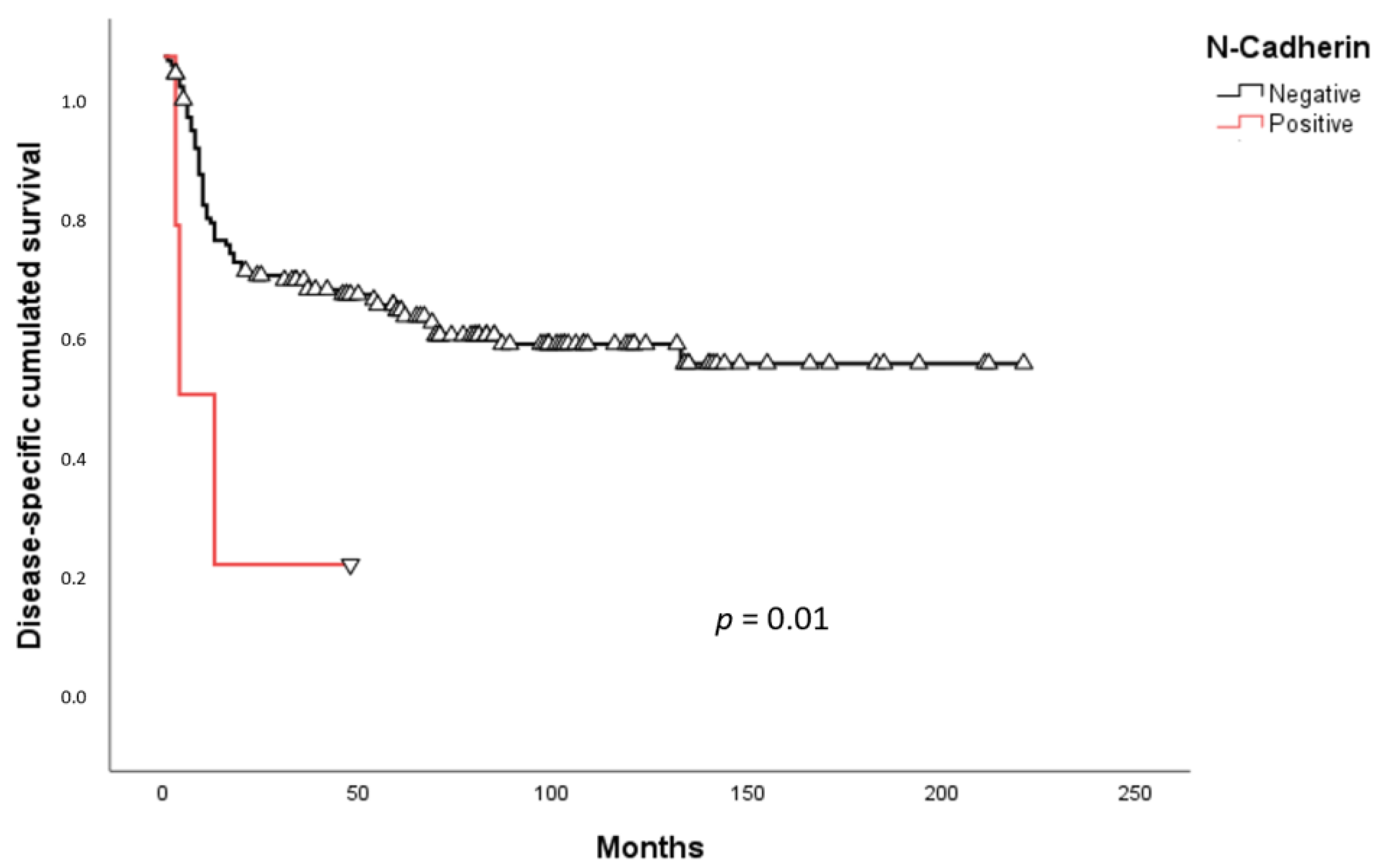
Figure 2.
D. Overall cumulated survival according to N-cadherin expression among 165 OSCC patients. Log-rank statistics is depicted.
Figure 2.
D. Overall cumulated survival according to N-cadherin expression among 165 OSCC patients. Log-rank statistics is depicted.
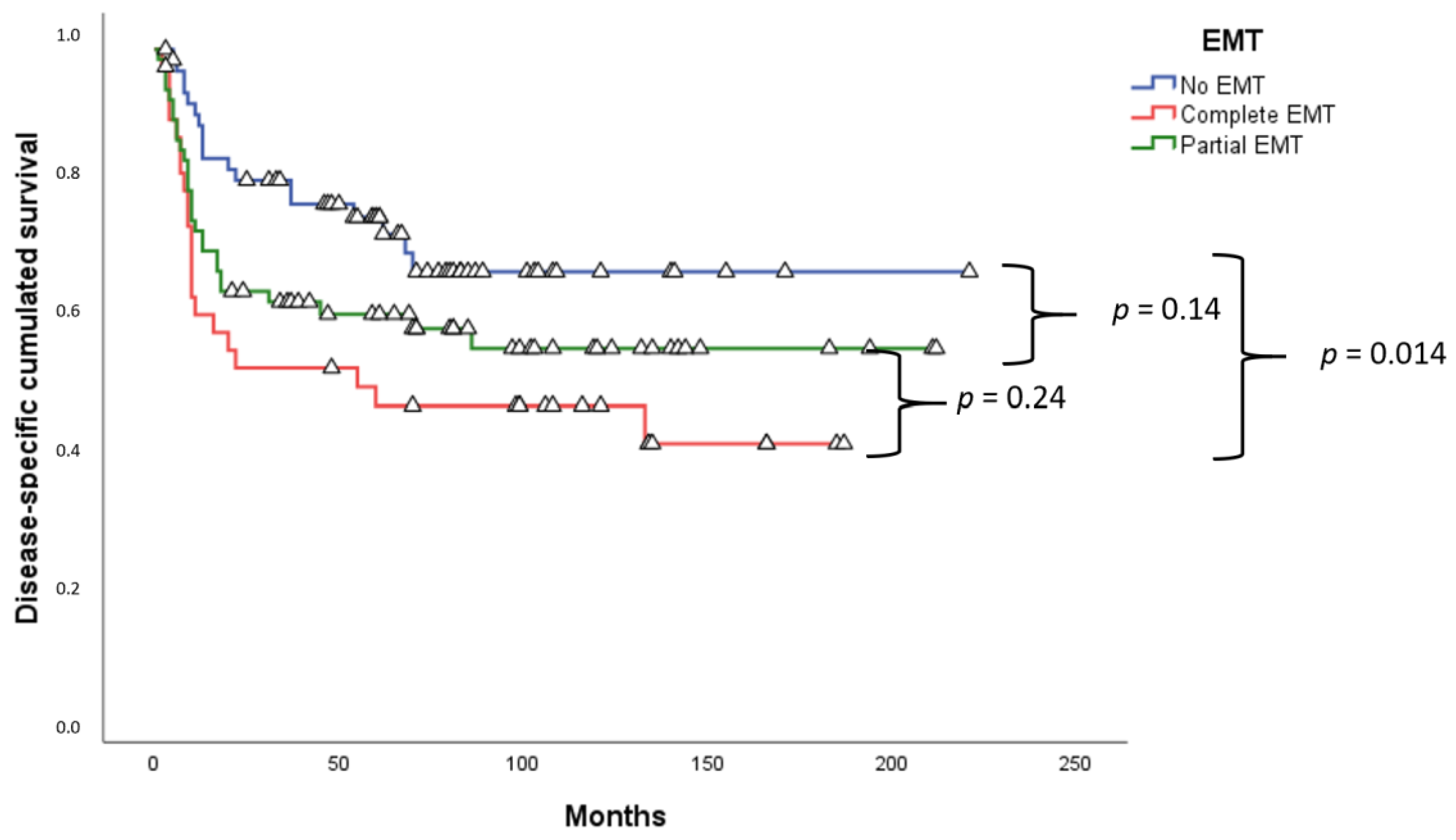
Neither E-cadherin nor any of the EMT transcription factors analyzed showed significant associations with survival.Based on EMT classification, 63 tumors (38%) showed no EMT, 64 (39%) partial EMT, and 38 (23%) complete EMT. EMT status was significantly associated with advanced clinical stage (p = 0.001), poorer differentiation (p = 0.03), and death due to the index cancer (p = 0.04).Kaplan–Meier and Cox analyses revealed that complete EMT was associated with poorer survival (mean survival: 90.2 months; p = 0.014; HR = 2.18; 95% CI: 1.17–4.06) compared with no EMT (153.9 months). In contrast, partial EMT was not significantly associated with disease-specific survival compared with either no EMT (p = 0.14) or complete EMT (p = 0.24) (Figure 2E).
Figure 2.
E. Disease specific cumulated survival according to EMT classification among 165 OSCC patients. Log-rank statistics is depicted.
Figure 2.
E. Disease specific cumulated survival according to EMT classification among 165 OSCC patients. Log-rank statistics is depicted.
Multivariate Cox analysis including vimentin and N-cadherin demonstrated that only vimentin remained an independent predictor of poor DSS (p = 0.001; HR = 2.21; 95% CI: 1.36–3.60) and OS (p = 0.005; HR = 1.83; 95% CI: 1.20–2.80).A second multivariate model including clinical stage and vimentin expression showed that both variables were independently associated with DSS (clinical stage: p < 0.0001; HR = 3.86; vimentin: p = 0.04; HR = 1.66). However, for OS, only clinical stage remained significant (p < 0.0001; HR = 2.66), whereas vimentin did not reach statistical significance (p = 0.09).
3. Discussion
OSCC treatment largely relies on clinicopathological parameters such as age, tumor grade, and stage, but these factors do not reliably predict tumor aggressiveness. Despite therapeutic advances, prognosis for advanced-stage OSCC remains poor [23], highlighting the need for biomarkers that improve prognostic accuracy and guide therapy.
E-cadherin, a key molecule for cell–cell adhesion in epithelial tissues, is frequently downregulated in cancer, while N-cadherin is upregulated during epithelial–mesenchymal transition (EMT), a process associated with tumor progression [24,25]. Loss of E-cadherin may result from promoter hypermethylation, somatic or germline mutations, or transcriptional repression by factors such as Snail, Slug, Twist, or Zeb1 [25]. In our study, E-cadherin was expressed in 54.5% of OSCC cases, whereas N-cadherin expression was rare (2.5%). E-cadherin expression correlated with earlier clinical stage but not with other clinicopathological features or overall survival. Loss of E-cadherin expression during EMT may result from promoter hypermethylation, somatic or germline mutations, or upregulation of transcriptional repressors such as Snail, Slug, Twist, or Zeb1 [26]. In the present study, E-cadherin expression was observed in 54.5% of OSCC cases, whereas N-cadherin expression was detected in only 2.5%. E-cadherin expression was significantly associated with earlier clinical stages but not with other clinicopathological features or patient survival.Previous studies have reported inconsistent associations between E-cadherin and patient outcomes.Kumar et al. [23] linked its loss to reduced disease-free survival, while a meta-analysis by Lorenzo-Pouso et al. [27] associated E-cadherin overexpression with improved survival. However, some studies found no significant relationship between E-cadherin expression and clinicopathological variables in OSCC [4,24,26,28,29,30,31], whereas others reported that E-cadherin loss associates with advanced disease [23]. N-cadherin is absent in normal oral epithelium, and cadherin-switching may occur during EMT [32]. However, Hashimoto et al. [33] found that a reduction in E-cadherin expression is associated with OSCC progression but not with cadherin switching. Similarly, Upko et al. [29] showed in oropharyngeal squamous cell carcinoma that cadherin expression is unrelated to histopathological grade, metastasis, and prognosis, and Nieman et al. [34] established that E-cadherin replacement in malignant cells did not affect the aggressive phenotype. Our study found that E-cadherin expression decreases with tumor dedifferentiation, while N-cadherin expression slightly increases from well- to moderately or poorly differentiated OSCC, though its low frequency suggests that cadherin switching may not reliably indicate EMT in OSCC. Experimental and clinical studies have similarly indicated that neither N-cadherin expression nor cadherin switching plays a decisive role in OSCC progression or metastasis [14,29,33,35]. Variability among studies may result from differences in antibodies, scoring systems, sample sizes, and patient populations. Additionally, E-cadherin expression may vary depending on tumor location and ethno-geographical factors [36].
Vimentin, a type III intermediate filament protein, regulates cytoskeletal organization and focal adhesion stability, promoting invasiveness and metastasis [37]. In our cohort, vimentin was expressed in 39.6% of tumors and significantly associated with lymph node metastasis, advanced clinical stage, poorer differentiation, recurrence, and worse prognosis. Notably, vimentin was the only EMT marker strongly linked to both lymph node metastasis and histological grade. Poor differentiation is a hallmark of OSCC aggressiveness, and our results confirmed an association with EMT markers, such as vimentin and N-cadherin, which aligns with previous literature [23]. Although poorly differentiated tumors may express mesenchymal markers due to disorganized gene expression rather than true EMT [9,12], our findings highlight the role of vimentin in OSCC progression. By combining E-cadherin and vimentin expression, tumors were categorized as no EMT, partial EMT, or complete EMT [15]. Complete EMT was associated with the poorest survival. Interestingly, although partial EMT has been proposed as a highly metastatic phenotype [25], our results showed that complete EMT was associated with the worst prognosis. Kaplan–Meier analysis confirmed that advanced stage, lymph node metastasis, vimentin expression, and complete EMT significantly reduced survival, with multivariate Cox analysis identifying clinical stage as an independent prognostic factor.
The Snail/Slug, Twist, Zeb, and E47 families regulate E-cadherin expression [38,39,40], repress epithelial markers, and promote mesenchymal traits [16]. In this study, Snail1 was expressed in 59% of cases and was associated with male sex and smoking status but not other clinicopathological parameters. Slug expression was detected in 82.4% of tumors and correlated with smoking, alcohol use, smaller tumor size, and early stage, suggesting a context-dependent role. Slug also contributes to EMT regulation and treatment resistance in head and neck cancers [36].
Smoking may promote EMT via nicotine-induced oxidative stress and activation of EMT-related pathways [41]. Nicotine-treated tumor cells show increased Snail and vimentin expression and decreased E-cadherin [42], supporting a role for tobacco in driving a more invasive phenotype [43]. In our study, smoking was associated with increased expression of Snail1 and Slug, supporting this hypothesis. Other transcription factors, including Zeb1, E47, and Twist, showed low expression and no significant associations, reflecting EMT’s dynamic and context-dependent nature [44,45,46]. Thus, expression of EMT-related genes and their regulating transcription factors is highly heterogeneous—even within a single entity, between patients, in different lesions from one patient, and among individual cancer cells within one lesion [47,48], prompting some authors to refer to it as epithelial–mesenchymal plasticity (EMP) [47,49].
This study’s retrospective design is a limitation, potentially introducing bias. Immunohistochemistry provides a static snapshot of EMT, and TMA analysis may not fully capture spatial heterogeneity, limiting assessment of differences between tumor edges and the bulk of the tumor [50].
4. Materials and Methods
4.1. Patients and Tissue Specimens
Surgical tissue specimens from 164 patients with histologically confirmed OSCC who underwent curative surgical treatment at the Hospital Universitario Central de Asturias between March 1, 2000, and December 31, 2010, were retrospectively collected in accordance with institutional review board guidelines. All procedures were conducted in accordance with the Declaration of Helsinki and approved by the Institutional Ethics Committee of the Hospital Universitario Central de Asturias and the Regional Ethics Committee of the Principado de Asturias (approval date: May 14, 2019; approval number: 136/19; project PI19/01255). Due to the retrospective nature of the study, the requirement for written informed consent was waived. The inclusion criteria were: (i) diagnosis of OSCC and (ii) radical resection of the primary tumor with simultaneous neck lymph node dissection. Tumor staging was determined according to the 8th edition of the AJCC Cancer Staging Manual.
Clinicopathological data were obtained from medical records, as summarized in Table 2.
Tissue specimens were provided by the Principado de Asturias BioBank (PT17/0015/0023), part of the Spanish National Biobanks Network. Representative tumor areas from the 164 OSCC cases were selected from archival formalin-fixed, paraffin-embedded blocks for the construction of tissue microarrays (TMAs).
4.2. Immunohistochemistry (IHC)
TMA blocks were sectioned into 3-μm-thick slices and mounted on Flex IHC microscope slides (DakoCytomation, Glostrup, Denmark). Sections were deparaffinized in xylene and rehydrated through graded alcohols to water. Antigen retrieval was performed using EnVision Flex Target Retrieval Solution (pH 9) for 20 minutes at 95°C in a PT Link system (Dako).
Immunostaining was performed at room temperature using an automated staining system (DakoAutostainer Plus, Dako) with the following primary antibodies: mouse monoclonal anti-E-cadherin (Clone 36, BD Biosciences, #610181; 1:4000); mouse monoclonal anti-N-cadherin (Novus Biologicals, #13A9 NBP1-48309; 1:100); mouse monoclonal anti-vimentin (Clone RV202, Abcam, #ab8978; 1:200); mouse monoclonal anti-Snail1 (L70G2, Cell Signaling Technology, #3895; 1:200); rabbit monoclonal anti-Snail2/Slug (C19G7, Cell Signaling Technology, #9585; 1:200); mouse monoclonal anti-Twist (10E4E6, Abcam, #ab175430; 1:500); mouse monoclonal anti-ZEB1 (Clone CL0151, Novus Biologicals, #NBP2-52866; 1:200); rabbit monoclonal anti-ZEB2 (Novus Biologicals, #NBP1-82991; 1:200); and rabbit polyclonal anti-E47 (TCF3; Invitrogen, Thermo Fisher, #PA5-84553; 1:200). Detection was performed using the DakoEnVision Flex+ visualization system with diaminobenzidine as chromogen. Negative controls were prepared by omitting the primary antibody. Sections were counterstained with hematoxylin. IHC results were independently evaluated by three observers (HET-R, VB-L, and JPR), blinded to clinical data. Biomarker expression was classified as present or absent. A binary scoring system based on staining intensity was used: negative (no staining) or positive (presence of cytoplasmic or nuclear staining, depending on the biomarker, in tumor cells).
4.3. Statistical Analysis
Statistical analyses were performed using IBM SPSS for Windows (version 27.0.1; IBM Corp., Armonk, NY, USA). Clinicopathological characteristics were summarized as absolute frequencies, percentages, means, and medians. Associations between clinicopathological variables and protein or transcription factor expression were assessed using the χ² test or Fisher’s exact test, as appropriate. Disease-specific survival (DSS) was defined as the interval from the date of treatment completion to death due to the tumor. Patients alive at the last follow-up or who died from other causes were censored. Overall survival (OS) was defined as the time from treatment to death or last follow-up.
Survival curves were estimated using the Kaplan–Meier method and compared using the log-rank test. Hazard ratios (HRs) with 95% confidence intervals (CIs) were calculated using univariate and multivariate Cox proportional hazards models. All tests were two-sided, and p-values < 0.05 were considered statistically significant.
5. Conclusions
Vimentin expression plays a critical role in OSCC progression and poor clinical outcomes. The combination of vimentin positivity and E-cadherin loss identifies a high-risk subgroup. The association between tobacco use and EMT transcription factors suggests a mechanistic link between smoking and tumor invasiveness. These findings emphasize the clinical relevance of EMT in OSCC.
Author Contributions
Conceptualization, PLF, CVF-K, and JC de V; software, JPR, RML-P, HETR, TRS, VBL, and SAT; validation, SAT, JMG-P and RML-P; formal analysis, PLF, JCdeV, and HETR; investigation, PLF, CVF-K, RML-P, JCdeV; resources, JMG-P, TRS, JPR; data curation, PLF, CVF-K, HETR, and VBL; writing—original draft preparation, PLF and JCdeV; writing—review and editing, All authors; visualization, HETR, VBL, SAT and JMG-P; supervision, PLF, JCdeV, CVF-K and RML-P; project administration, JCdeV, JMG-P; funding acquisition, JCdeV, PLF, TRS, JPR, JMG-P. All authors have read and agreed to the published version of the manuscript.
Funding
This study has been funded by Instituto de Salud Carlos III (ISCIII) through the projectsPI24/01530, PI19/01255, and PI19/00560, and,and co-funded by the European Union.
Institutional Review Board Statement
The study was conducted in accordance with the Declaration of Helsinki, and approved by the Institutional Ethics Committee of the Hospital Universitario Central de Asturias and the Regional Ethics Committee of the Principado de Asturias (approval date: May 14, 2019; approval number: 136/19; project PI19/01255).
Informed Consent Statement
Patient consent was waived due to the retrospective nature of the study.
Data Availability Statement
All data generated oranalyzed in this study are provided within the article. Additional information is available from the corresponding author upon request.
Conflicts of Interest
The authors declare no conflicts of interest.
Abbreviations
The following abbreviations are used in this manuscript:
| tOSCC | Oral squamous cell carcinoma |
| EMT | Epithelial–mesenchymal transition |
| EMT-TFs | Transcription factors capable of inducing EMT |
| DSS | Disease-specific survival |
| OS | Overall survival |
| HR | Hazard ratio |
| CI | Confidence interval |
References
- Graillon, N.; Iocca, O.; Carey, R.M.; Benjamin, K.; Cannady, S.B.; Hartner, L.; Newman, J.G.; Rajasekaran, K.; Brant, J.A.; Shanti, R.M. What has the National Cancer Database taught us about oral cavity squamous cell carcinoma? Int. J. Oral. Maxillofac. Surg. 2022, 51, 10–17. [Google Scholar] [CrossRef]
- Zanoni, D.K.; Montero, P.H.; Migliacci, J.C.; Shah, J.P.; Wong, R.J.; Ganly, I.; Patel, S.G. Survival outcomes after treatment of cancer of the oral cavity (1985-2015). Oral. Oncol. 2019, 90, 115–121. [Google Scholar] [CrossRef] [PubMed]
- Kang, Y.; Massagué, J. Epithelial-mesenchymal transitions: twist in development and metastasis. Cell 2004, 118, 277–279. [Google Scholar] [CrossRef]
- Zidar, N.; Boštjančič, E.; Malgaj, M.; Gale, N.; Dovšak, T.; Didanovič, V. The role of epitelial-mesenchymal transition in squamous cell carcinoma of the oral cavity. Virchows Arch. 2018, 472, 237–245. [Google Scholar] [CrossRef]
- Tsai, J.H.; Donaher, J.L.; Murphy, D.A.; Chau, S.; Yang, J. Spatiotemporal regulation of epithelial-mesenchymal transition is essential for squamous cell carcinoma metastasis. Cancer Cell. 2012, 22, 725–736. [Google Scholar] [CrossRef]
- Ocaña, O.H.; Córcoles, R.; Fabra, A.; Moreno-Bueno, G.; Acloque, H.; Vega, S.; Barrallo-Gimeno, A.; Cano, A.; Nieto, M.A. Metastatic colonization requires the repression of the epithelial-mesenchymal transition inducer Prrx1. Cancer Cell. 2012, 22, 709–724. [Google Scholar] [CrossRef] [PubMed]
- Fischer, K.R.; Durrans, A.; Lee, S.; Sheng, J.; Li, F.; Wong, S.T.; Choi, H.; El Rayes, T.; Ryu, S.; Troeger, J.; Schwabe, R.F.; Vahdat, L.T.; Altorki, N.K.; Mittal, V.; Gao, D. Epithelial-to-mesenchymal transition is not required for lung metastasis but contributes to chemoresistance. Nature 2015, 527, 472–476. [Google Scholar] [CrossRef]
- Zheng, X.; Carstens, J.L.; Kim, J.; Scheible, M.; Kaye, J.; Sugimoto, H.; Wu, C.C.; LeBleu, V.S.; Kalluri, R. Epithelial-to-mesenchymal transition is dispensable for metastasis but induces chemoresistance in pancreatic cancer. Nature 2015, 527, 525–530. [Google Scholar] [CrossRef]
- Chui, M.H. Insights into cancer metastasis from a clinicopathologic perspective: Epithelial-mesenchymal transition is not a necessary step. Int. J. Cancer 2013, 132, 1487–1495. [Google Scholar] [CrossRef]
- Tarin, D.; Thompson, E.W.; Newgreen, D.F. The fallacy of epithelial mesenchymal transition in neoplasia. Cancer Res. 2005, 65, 5996-6000; discussion 6000-1. [Google Scholar] [CrossRef] [PubMed]
- Tarin, D. Inappropriate gene expression in human cancer and its far-reaching biological and clinical significance. Cancer Metastasis Rev. 2012, 31, 21–39. [Google Scholar] [CrossRef]
- Tarin, D. Role of the host stroma in cancer and its therapeutic significance. Cancer Metastasis Rev. 2013, 32, 553–566. [Google Scholar] [CrossRef]
- Scanlon, C.S.; Van Tubergen, E.A.; Inglehart, R.C.; D'Silva, N.J. Biomarkers of epithelial-mesenchymal transition in squamous cell carcinoma. J. Dent. Res. 2013, 92, 114–121. [Google Scholar] [CrossRef]
- Hakim, S.G.; Taubitz, C.; Hoppe, S.; Steller, D.; Rades, D.; Ribbat-Idel, J.; Alsharif, U.; Falougy, M. Prognostic impact of the loss of E-cadherin and de novo expression of N-cadherin at the invasive front of primary and recurrent oral squamous cell carcinoma. Front. Oncol. 2023, 13, 1151879. [Google Scholar] [CrossRef] [PubMed]
- Wangmo, C.; Charoen, N.; Jantharapattana, K.; Dechaphunkul, A.; Thongsuksai, P. Epithelial-mesenchymal transition predicts survival in oral squamous cell carcinoma. Pathol. Oncol. Res. 2020, 26, 1511–1518. [Google Scholar] [CrossRef]
- Wolf, G.T.; Winter, W.; Bellile, E.; Nguyen, A.; Donnelly, C.R.; McHugh, J.B.; Thomas, D.; Amlani, L.; Rozek, L.; Lei, Y.L. Head and Neck SPORE Program. Histologic pattern of invasion and epithelial-mesenchymal phenotype predict prognosis in squamous carcinoma of the head and neck. Oral. Oncol. 2018, 87, 29–35. [Google Scholar] [CrossRef]
- Takkunen, M.; Grenman, R.; Hukkanen, M.; Korhonen, M.; García de Herreros, A.; Virtanen, I. Snail-dependent and -independent epithelial-mesenchymal transition in oral squamous carcinoma cells. J. Histochem. Cytochem. 2006, 54, 1263–1275. [Google Scholar] [CrossRef] [PubMed]
- Vallina, C.; López-Pintor, R.M.; González-Serrano, J.; de Vicente, J.C.; Hernández, G.; Lorz, C. Genes involved in the epithelial-mesenchymal transition in oral cancer: A systematic review. Oral. Oncol. 2021, 117, 105310. [Google Scholar] [CrossRef] [PubMed]
- Yoshino, I.; Kometani, T.; Shoji, F.; Osoegawa, A.; Ohba, T.; Kouso, H.; Takenaka, T.; Yohena, T.; Maehara, Y. Induction of epithelial-mesenchymal transition-related genes by benzo[a]pyrene in lung cancer cells. Cancer 2007, 110, 369–374. [Google Scholar] [CrossRef]
- Göppel, J.; Möckelmann, N.; Münscher, A.; Sauter, G.; Schumacher, U. Expression of epithelial-mesenchymal transition regulating transcription factors in head and neck squamous cell carcinomas. Anticancer Res. 2017, 37, 5435–5440. [Google Scholar] [CrossRef]
- Riechelmann, H.; Steinbichler, T.B.; Sprung, S.; Santer, M.; Runge, A.; Ganswindt, U.; Gamerith, G.; Dudas, J. The epithelial-mesenchymal transcription factor Slug predicts survival benefit of up-front surgery in head and neck cancer. Cancers 2021, 13, 772. [Google Scholar] [CrossRef]
- Wen, B.; Xu, L.Y.; Li, E.M. LOXL2 in cancer: regulation, downstream effectors and novel roles. Biochim. Biophys. Acta Rev. Cancer 2020, 1874, 188435. [Google Scholar] [CrossRef]
- Kumar, D.; Gupta, A.; Agrahari, S.; Singh, S.; Gupta, S.; Kumar, V.; Singh, S.K. Association of epithelial to mesenchymal transition markers on prognosis and clinicopathological characteristics in oral squamous cell carcinoma: A systematic review and meta-analysis. Head. Neck. Pathol. 2025, 19, 124. [Google Scholar] [CrossRef]
- Vanini, J.V.; Koyama, L.K.S.; de Matos, L.L.; Junior, J.M.F.; Cernea, C.R.; Nagano, C.P.; Coutinho-Camillo, C.M.; Hsieh, R.; Lourenço, S.V. Epithelial-mesenchymal transition related to bone invasion in oral squamous cell carcinoma. J. Bone Oncol. 2022, 33, 100418. [Google Scholar] [CrossRef]
- Kisoda, S.; Mouri, Y.; Kitamura, N.; Yamamoto, T.; Miyoshi, K.; Kudo, Y. The role of partial-EMT in the progression of head and neck squamous cell carcinoma. J. Oral. Biosci. 2022, 64, 176–182. [Google Scholar] [CrossRef]
- Mehendiratta, M.; Solomon, M.C.; Boaz, K.; Guddattu, V.; Mohindra, A. Clinico-pathological correlation of E-cadherin expression at the invasive tumor front of Indian oral squamous cell carcinomas: An immunohistochemical study. J. Oral. Maxillofac. Pathol. 2014, 18, 217–222. [Google Scholar] [CrossRef] [PubMed]
- Lorenzo-Pouso, A.I.; Silva, F.F.E.; Pérez-Jardón, A.; Chamorro-Petronacci, C.M.; Oliveira-Alves, M.G.; Álvarez-Calderón-Iglesias, Ó.; Caponio, V.C.A.; Pinti, M.; P errotti, V.; Pérez-Sayáns, M. Overexpression of E-cadherin Is a favorable prognostic biomarker in oral squamous cell carcinoma: A systematic review and meta-analysis. Biology 2023, 12, 239. [Google Scholar] [CrossRef] [PubMed]
- de Farias Morais, H.G.; de Morais, E.F.; Carlan, L.M.; de Pontes Santos, H.B.; da Silveira, É.J.D.; de Almeida Freitas, R. Epithelial-mesenchymaltransition modulates lower lip carcinogenesis and promotes cancer progression. Arch. Oral. Biol. 2022, 136, 105387. [Google Scholar] [CrossRef] [PubMed]
- Ukpo, O.C.; Thorstad, W.L.; Zhang, Q.; Lewis, J.S., Jr. Lack of association of cadherin expression and histopathologic type, metastasis, or patient outcome in oropharyngeal squamous cell carcinoma: a tissue microarray study. Head. NeckPathol 2012, 6, 38–47. [Google Scholar] [CrossRef]
- Cheng, S.Y.; Shi, K.; Bai, X.R.; Wu, Q.W.; Lv, X.Q. Double-staining of E-cadherin and podoplaninofferhelp in thepathological diagnosis ofindecisiveearly-invasive oral squamouscellcarcinoma. Int. J. Clin.Exp. Pathol. 2018, 11, 38–47. [Google Scholar] [CrossRef]
- Al-Rawi, N.; Al Ani, M.; Quadri, A.; Hamdoon, Z.; Awwad, A.; Al Kawas, S.; Al Nuaimi, A. Prognostic significance of E-Cadherin, β-Catenin and cyclin D1 in oral squamous cell carcinoma: a tissue microarray study. Histol.Histopathol 2021, 36, 1073–1083. [Google Scholar] [CrossRef]
- Ali, A.N.; Ghoneim, S.M.; Ahmed, E.R.; El-Farouk Abdel Salam, L.O.; Anis Saleh, S.M. Cadherin switching in oral squamous cell carcinoma: A clinicopathologicalstudy. J. Oral. Biol.Craniofac. Res. 2023, 13, 486–494. [Google Scholar] [CrossRef]
- Hashimoto, T.; Soeno, Y.; Maeda, G.; Taya, Y.; Aoba, T.; Nasu, M.; Kawashiri, S.; Imai, K. Progression of oral squamous cell carcinoma accompanied with reduced E-cadherin expression but not cadherin switch. PLoSOne 2012, 7, e47899. [Google Scholar] [CrossRef]
- Nieman, M.T.; Prudoff, R.S.; Johnson, K.R.; Wheelock, M.J. N-cadherinpromotesmotility in human breastcancercellsregardless of their E-cadherin expression. J. Cell. Biol. 1999, 147, 631–44. [Google Scholar] [CrossRef]
- Balasundaram, P.; Singh, M.K.; Dinda, A.K.; Thakar, A.; Yadav, R. Studyof β-catenin, E-cadherin and vimentin in oral squamous cell carcinoma with and without lymph node metastases. Diagn.Pathol 2014, 9, 145. [Google Scholar] [CrossRef]
- Sgaramella, N.; Wilms, T.; Boldrup, L.; Loljung, L.; Gu, X.; Coates, P.J.; Hassellöf, P.; Califano, L.; Lo Muzio, L.; Fåhraeus, R.; Norberg Spaak, L.; Franco, R.; Tartaro; Colella, G.; Santagata, M.; Dell'AversanaOrabona, G.; Chirico, F.; Danielsson, K.; Troiano, G.; Ardito, F.; Nylander, K. Ethnicity based variation in expression of E-cadherin in patients with squamous cell carcinoma of the oral tongue. Oncol. Lett. 2018, 16, 6603–6607. [Google Scholar] [CrossRef]
- Nambiyar, K.; Ahuja, A.; Bhardwaj, M. A study of epithelial-mesenchymal transition immunohistochemical markers in primary oral squamous cell carcinoma. Oral. Surg. Oral. Med. Oral. Pathol. Oral. Radiol. 2021, 132, 680–686. [Google Scholar] [CrossRef] [PubMed]
- Yokoyama, K.; Kamata, N.; Hayashi, E.; Hoteiya, T.; Ueda, N.; Fujimoto, R.; Nagayama, M. Reverse correlation of E-cadherin and snail expression in oral squamouscell carcinoma cells in vitro. Oral. Oncol. 2001, 37, 65–71. [Google Scholar] [CrossRef] [PubMed]
- Baqai, N.; Amin, R.; Fatima, T.; Ahmed, Z.; Faiz, N. Expression profiling of EMT transcriptional regulators ZEB1 and ZEB2 in different histopathological grades of oral squamous cell carcinoma patients. Curr. Genom. 2024, 25, 140–151. [Google Scholar] [CrossRef]
- van der Heijden, M.; Essers, P.B.M.; Verhagen, C.V.M.; Willems, S.M.; Sanders, J.; de Roest, R.H.; Vossen, D.M.; Leemans, C.R.; Verheij, M.; Brakenhoff, R.H.; van den Brekel, M.W.M.; Vens, C. Epithelial-to-mesenchymal transition is a prognostic marker for patient outcome in advanced stage HNSCC patients treated with chemoradiotherapy. Radiother. Oncol. 2020, 147, 186–194. [Google Scholar] [CrossRef] [PubMed]
- Zhang, H.; Liu, H.; Borok, Z.; Davies, K.J.; Ursini, F.; Forman, H.J. Cigarettessmokeextractstimulatesepithelial-mesenchymaltransitionthroughSrcactivation. Free Radic. Biol.Med 2012, 52, 1437–1442. [Google Scholar] [CrossRef]
- Yu, M.A.; Kiang, A.; Wang-Rodriguez, J.; Rahimy, E.; Haas, M.; Yu, V.; Ellies, L.G.; Chen, J.; Fan, J.B.; Brumund, K.T.; Weisman, R.A.; Ongkeko, W.M. Nicotinepromotesacquisitionofstemcell and epithelial-to-mesenchymalproperties in head and necksquamouscell carcinoma. PLoSOne 2012, 7, e51967. [Google Scholar] [CrossRef]
- Ghantous, Y.; Mozalbat, S.; Nashef, A.; Abdol-Elraziq, M.; Sudri, S.; Araidy, S.; Tadmor, H.; Abu El-Naaj, I. EMT dynamics in lymphnodemetastasisoforal squamous cell carcinoma. Cancers 2024, 16, 1185. [Google Scholar] [CrossRef]
- Sakamoto, K.; Imanishi, Y.; Tomita, T.; Shimoda, M.; Kameyama, K.; Shibata, K.; Sakai, N.; Ozawa, H.; Shigetomi, S.; Fujii, R.; Fujii, M.; Ogawa, K. Overexpression of SIP1 and downregulation of E-cadherin predict delayed neck metastasis in stage I/II oral tongue squamouscell carcinoma after partial glossectomy. A nn.Surg. Oncol. 2012, 19, 612–619. [Google Scholar] [CrossRef] [PubMed]
- Cook, D.P.; Vanderhyden, B.C. Context specificity of the EMT transcriptional response. Nat. Commun. 2020, 11, 2142. [Google Scholar] [CrossRef] [PubMed]
- Horny, K.; Sproll, C.; Peiffer, L.; Furtmann, F.; Gerhardt, P.; Gravemeyer, J.; Stoecklein, N.H.; Spassova, I.; Becker, J.C. Mesenchymal-epithelialtransition in lymphnodemetastasesoforal squamouscell carcinoma is accompanied by ZEB1 expression. J.Transl.Med. 2023, 21, 267. [Google Scholar] [CrossRef]
- Yang, J.; Antin, P.; Berx, G.; Blanpain, C.; Brabletz, T.; Bronner, M.; Campbell, K.; Cano, A.; Casanova, J.; Christofori, G. Guidelines and definitions for research on epithelial-esenchymal transition. Nat. Rev. Mol. Cell. Biol. 2020, 21, 341–352. [Google Scholar] [CrossRef]
- Vasaikar, S.V.; Deshmukh, A.P.; den Hollander, P.; Addanki, S.; Kuburich, N.A.; Kudaravalli, S.; Joseph, R.; Chang, J.T.; Soundararajan, R.; Mani, S.A. EMTome: a resource for pan-cancer analysis of epithelial-mesenchymal transition genes and signatures. Br. J.Cancer. 2021, 124, 259–269. [Google Scholar] [CrossRef]
- Pal, A.; Barrett, T.F.; Paolini, R.; Parikh, A.; Puram, S.V. Partial EMT in head and neck cancer biology: a spectrum instead of a switch. Oncogene 2021, 40, 5049–5065. [Google Scholar] [CrossRef]
- Heguedusch, D.; Carvalho, G.L.; Tomo, S.; Aguiar, E.M.G.; Custódio, M.; Siqueira, J.M.; da unhaMercante, A.M.; Cury, P.M.; Tajara, E.H.; De Cicco, R.; Nunes, F.D. The patterns of P53, E-Cadherin, β-Catenin, CXCR4 and Podoplanin expression in oral squamous cell carcinoma suggests a hybrid invasion model: an immunohistochemical study on tissue microarrays. Head. NeckPathol 2025, 19, 6. [Google Scholar] [CrossRef] [PubMed]
Figure 1.
Representative immunohistochemical staining of a panel of EMT markers (E-cadherin, vimentin, N-cadherin, ZEB1, Snail1, Slug, Twist, and E47) in OSCC.
Figure 1.
Representative immunohistochemical staining of a panel of EMT markers (E-cadherin, vimentin, N-cadherin, ZEB1, Snail1, Slug, Twist, and E47) in OSCC.
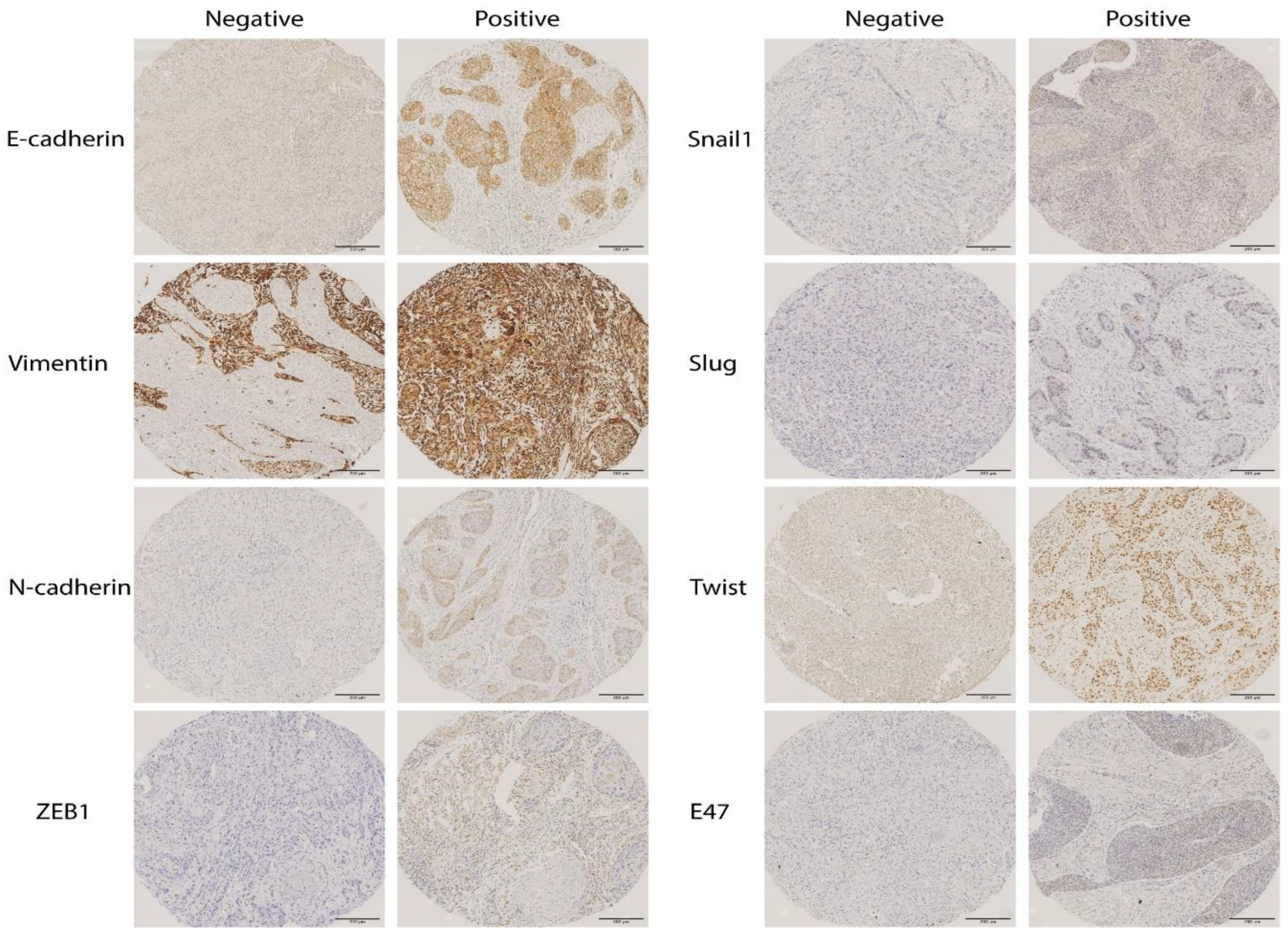

Table 1.
Expression of E-cadherin, N-cadherin, and vimentin and their associations with clinicopathological variables in the cohort of 165 OSCC patients.
Table 1.
Expression of E-cadherin, N-cadherin, and vimentin and their associations with clinicopathological variables in the cohort of 165 OSCC patients.
| Variable | Snail1 (%) (-) (+) |
p | Slug (%) (-) (+) |
p | Zeb1 (%) (-) (+) |
p | Twist (%) (-) (+) |
p |
E47 (%) (-) (+) |
p |
|---|---|---|---|---|---|---|---|---|---|---|
|
Gender Men Women |
39 (35) 74 (65) 28 (54) 24 (46) |
0.02 | 16 (14) 97 (86) 13 (25) 39 (75) |
0.08 | 111 (98) 2 (2) 49 (94) 3 (6) |
0.18 | 6 (5) 106 (95) 3 (6) 49 (94) |
1.0 | 109 (96) 4 (4) 49 (94) 3 (6) |
0.67 |
|
Tobacco use Smoker Non-smoker |
36 (34) 71 (66) 31 (53) 27 (47) |
0.01 | 14 (13) 93 (87) 15 (26) 43 (74) |
0.04 | 105 (98) 2 (2) 55 (95) 3 (5) |
0.34 | 4 (4) 102 (96) 5 (9) 53 (91) |
0.28 | 104 (97) 3 (3) 54 (93) 4 (7) |
0.24 |
|
Alcohol use Drinker Non-drinker |
32 (36) 57 (64) 35 (46) 41 (54) |
0.18 | 10 (11) 79 (89) 19 (25) 57 (75) |
0.02 | 88 (99) 1 (1) 72 (95) 4 (5) |
0.18 | 2 (2) 86 (98) 7 (9) 69 (91) |
0.08 | 85 (95) 4 (5) 73 (96) 3 (4) |
1.0 |
|
pT pT1 + 2 pT3 + 4 |
42 (37) 72 (63) 20 (47) 23 (53) |
0.26 | 12 (11) 102 (89) 14 (33) 29 (67) |
0.001 | 112 (98) 2 (2) 40 (93) 3 (7) |
0.12 | 4 (4) 109 (96) 5 (12) 38 (88) |
0.11 |
111 (97) 3(3) 39 (91) 4 (9) |
0.09 |
|
pN pN0 pN+ |
39 (41) 56 59) 23 (37) 40 (63) |
0.56 | 13 (14) 82 (86) 12 (19) 51 (81) |
0.36 | 92 (97) 3 (3) 61 (97) 2 (3) |
0.66 | 3 (3) 91 (97) 4 (6) 59 (94) |
0.44 | 91 (96) 4 (4) 60 (95) 3 (5) |
1.0 |
|
Clinical stage I + II III + IV |
32 (36) 56 (64) 35 (46) 42 (54) |
0.23 | 8 (9) 80 (91) 21 (27) 56 (73) |
0.002 | 86 (98) 2 (2) 74 (96) 3 (4) |
0.66 | 2 (2) 85 (98) 7 (9) 70 (90) |
0.05 | 85 (97) 3 (3) 73 (95) 4 (5) |
0.70 |
|
G status Well Moderate - poor |
44 (42) 61 (58) 23 (38) 37 (62) |
0.65 | 18 (17) 87 (83) 11 (18) 49 (82) |
0.84 | 102 (97) 3 (3) 58 (97) 2 (3) |
1.0 | 5 (5) 99 (95) 4 (7) 56 (93) |
0.72 | 101 (96) 4 (4) 57 (95) 3 (5) |
0.70 |
|
Tumor recurrence No Yes |
29 (35) 54 (65) 38 (46) 44 (54) |
0.13 |
11 (13) 72 (87) 18 (22) 64 (78) |
0.14 | 81 (98) 2 (2) 79 (96) 3 (4) |
0.68 | 3 (4) 79 (96) 6 (7) 76 (93) |
0.49 |
81 (98) 2 (2) 77 (94) 5 (6) |
0.27 |
|
Clinical outcome Alive Dead of index cancer |
38 (39) 60 (61) 29 (43) 38 (57) |
0.56 | 14 (14) 84 (86) 15 (22) 52 (78) |
0.17 | 95 (97) 3 (3) 65 (97) 2 (3) |
1.0 | 4 (4) 93 (96) 5 (7) 62 (93) |
0.48 | 95 (97) 3 (3) 63 (94) 4 (6) |
0.44 |
Table 2.
Clinical and pathological characteristics of the cohort of 165 OSCC patients selected for study.
Table 2.
Clinical and pathological characteristics of the cohort of 165 OSCC patients selected for study.
| Variable | Number (%) | E-cadherin(%) (-)(+) |
p | N-cadherin(%) (-) (+) |
p | Vimentin (%) (-) (+) |
p |
|---|---|---|---|---|---|---|---|
|
Gender Men Women |
113 (69) 52 (31) |
48 (43) 64 (57) 27 (52) 25 (48) |
0.27 | 108 (97) 3 (3) 49 (98) 1 (2) |
0.63 | 67 (60) 45 (40) 32 (61) 20 (39) |
0.83 |
|
Tobacco use Smoker Non-smoker |
107 (65) 58 (35) |
45 (42) 61 (58) 30 (52) 28 (48) |
0.25 | 103 (98) 2 (2) 54 (96) 2 (4) |
0.61 | 67 (63) 39 (37) 32 (55) 26 (45) |
0.31 |
|
Alcohol use Drinker Non-drinker |
89 (54) 76 (46) |
35 (40) 53 (60) 40 (53) 36 (47) |
0.09 | 73 (99) 1 (1) 84 (97) 3 (3) |
0.62 | 55 (63) 33 (37) 44 (58) 32 (42) |
0.54 |
|
pT pT1 + 2 pT3 + 4 |
114 (73) 43 (27) |
48 (42) 65 (58) 20 (46) 23 (54) |
0.65 | 110 (99) 1 (1) 39 (93) 3 (7) |
0.06 | 73 (64) 41 (36) 23 (55) 19 (45) |
0.29 |
|
pN pN0 pN+ |
95 (60) 63 (40) |
39 (41) 56 (59) 31 (50) 31 (50) |
0.27 | 91 (97) 3 (3) 60 (98) 1 (2) |
0.48 | 66 (69) 29 (31) 28 (45) 34 (55) |
0.002 |
|
Clinical stage I + II III + IV |
88 (53) 77 (47) |
34 (39) 54 (61) 41 (54) 35 (46) |
0.03 | 85 (99) 1 (1) 72 (96) 3 (4) |
0.33 | 61 (69) 27 (31) 38 (50) 38 (50) |
0.009 |
|
G status Well Moderate-poor |
105 (64) 60 (36) |
46 (44) 58 (56) 29 (48) 31 (51) |
0.61 | 102 (100) 0 (0) 55 (93) 4 (7) |
0.01 | 73 (70) 32 (30) 26 (44) 33 (56) |
0.001 |
|
Tumor recurrence No Yes |
83 (50) 82 (50) |
33 (40) 49 (60) 42 (51) 40 (49) |
0.15 | 79 (99) 1 (1) 78 (96) 3 (4) |
0.62 | 61 (73) 22 (27) 38 (47) 43 (53) |
0.001 |
|
Clinical status at the end of the follow-up Alive Dead of index cancer |
98 (59) 67 (41) |
41 (42) 56 (58) 34 (51) 35 (49) |
0.28 | 94 (99) 1 (1) 63 (96) 3 (4) |
0.30 | 69 (70) 29 (30) 30 (45) 36 (55) |
0.001 |
Disclaimer/Publisher’s Note: The statements, opinions and data contained in all publications are solely those of the individual author(s) and contributor(s) and not of MDPI and/or the editor(s). MDPI and/or the editor(s) disclaim responsibility for any injury to people or property resulting from any ideas, methods, instructions or products referred to in the content. |
© 2026 by the authors. Licensee MDPI, Basel, Switzerland. This article is an open access article distributed under the terms and conditions of the Creative Commons Attribution (CC BY) license (http://creativecommons.org/licenses/by/4.0/).
Copyright: This open access article is published under a Creative Commons CC BY 4.0 license, which permit the free download, distribution, and reuse, provided that the author and preprint are cited in any reuse.


