

Submitted:
25 April 2026
Posted:
27 April 2026
You are already at the latest version
Abstract
Background. Saudi Arabia implemented mandatory premarital screening and genetic counseling (PMSGC) for sickle cell disease and β-thalassaemia in February 2004. Over two decades the programme has screened more than eight million individuals, yet its cumulative outcomes have never been synthesized. We assessed the long-term impact of the PMSGC programme on at-risk marriage detection, marriage cancellation, regional heterogeneity, and hemoglobinopathy burden from 2004 to 2024. Methods.We conducted a systematic review and meta-analysis following PRISMA 2020. Six databases (PubMed/MEDLINE, Embase, Scopus, Web of Science, Cochrane CENTRAL, Saudi Digital Library) were searched from January 2004 to December 2024 without language restrictions. Studies reporting outcomes of the Saudi PMSGC programme — prevalence, at-risk couples, marriage cancellation rates, knowledge/attitudes/practices, or cost — were eligible. Two reviewers screened and extracted data independently in Rayyan. Risk of bias was assessed with Joanna Briggs Institute checklists. Random-effects meta-analysis pooled proportions using the Freeman–Tukey double arcsine transformation. Meta-regression tested temporal trends and regional moderators. The review was registered with PROSPERO (CRD420261378326). Findings. Of 3,008 records identified from databases and 145 from other sources, 62 studies met inclusion criteria, with 47 contributing to the meta-analysis. The pooled prevalence of sickle cell trait was 45.4 per 1,000 (95% CI 42.5–48.4; I² = 99.7%; 10 studies, >9.6 million individuals), with marked regional gradient (Eastern Province 134 per 1,000 vs Northern regions 13–14 per 1,000; ~10-fold). Pooled β-thalassaemia trait prevalence was 21.0 per 1,000 (95% CI 17.4–24.8; I² = 99.9%). Marriage cancellation rate among at-risk couples rose from 9.2% in 2004 to 51.9% in 2009 (Era 1 pooled 24.9%, 95% CI 13.0–39.2), to 60.5% in 2010–2019 (95% CI 49.6–70.9), to 76.7% in 2020–2024 (95% CI 63.1–87.9). Meta-regression on year midpoint showed a significant positive trend (β = +3.28 percentage points per year, P < 0.001). Decision-tree cost analysis indicated approximately 73% healthcare cost reduction attributable to the programme for sickle cell disease (~US$29.7 million annual saving). Interpretation. The Saudi PMSGC programme has achieved substantial population-level impact on hemoglobinopathy prevention over two decades, with marriage cancellation rates rising eight-fold and persistent — though narrowing — regional heterogeneity. Gaps remain in expanding the screening panel (spinal muscular atrophy, cystic fibrosis, phenylketonuria), in cost-effectiveness evidence, and in standardized outcome reporting. These findings support Saudi Vision 2030 health transformation goals and inform regional neighbours considering similar programmes.
Keywords:
premarital screening
; genetic counseling
; sickle cell disease
; thalassemia
; Saudi Arabia
; hemoglobinopathies
; public health genomics
; PRISMA
; meta-analysis
; consanguinity
Research in Context
Evidence before this study
We searched PubMed, Embase, Scopus, and Web of Science in November 2024 for systematic reviews of the Saudi premarital screening programme using the terms “premarital screening”, “Saudi Arabia”, “hemoglobinopathy”, and “systematic review”. We identified one scoping review (Saffi & Howard 2015) on Middle Eastern programmes that was narrative and predated much of the contemporary Saudi evidence. The most comprehensive Saudi primary analyses (Memish 2011; Alsaeed 2018; Alnajjar 2024) covered 6-year, 5-year, and 8-year windows respectively. No review had synthesized the full two decades of Saudi programme data with meta-analytic methods.
Added value of this study.
This is the first systematic review and meta-analysis to synthesize two decades (2004–2024) of Saudi PMSGC outcomes. We provide pooled estimates with meta-regression of temporal trends and regional moderators, a qualitative synthesis of knowledge-attitudes-practices data, an appraisal of cost-effectiveness evidence, and a gap analysis for future programme expansion.
Implications of all the available evidence.
Mandatory premarital screening combined with genetic counseling is associated with a sustained, measurable reduction in at-risk marriages in a highly consanguineous population. Regional heterogeneity persists but is narrowing. Expansion to additional autosomal recessive conditions (spinal muscular atrophy, cystic fibrosis, phenylketonuria) is warranted and should be prospectively evaluated. Findings inform other Gulf and MENA countries considering, implementing, or expanding similar programmes, and align with Saudi Vision 2030 health transformation priorities.
Introduction
Hemoglobinopathies are the world’s most common monogenic disorders. The World Health Organization estimates that over 300,000 children are born each year with a severe hemoglobin disorder, with sickle cell disease and β-thalassaemia accounting for the large majority [1]. In Saudi Arabia, their epidemiology is shaped by two interacting forces: an unusually high burden of hemoglobinopathy-causing alleles concentrated along the historical trade routes of the Eastern Province, and a consanguinity rate exceeding 55% that substantially elevates autosomal recessive disease risk [2,3].
Faced with this burden, the Saudi government introduced mandatory premarital screening through Royal Decree in December 2003, and the programme launched nationally in February 2004 [4]. The Saudi Premarital Screening and Genetic Counseling (PMSGC) programme operates in all 13 administrative regions through a network of over 120 reception centres and 70 laboratories under the Ministry of Health. Every couple applying for a marriage certificate is required to undergo testing for sickle cell disease and β-thalassaemia. Results are shared with both partners. At-risk couples — those in which both partners carry a pathogenic variant — receive structured genetic counseling explaining the one-in-four autosomal recessive transmission risk. Crucially, marriage certificates are issued regardless of the result, so that the decision to proceed with or cancel the marriage rests entirely with the couple [4,5].
Individual components of the programme have been evaluated across successive reporting windows. Alhamdan et al. reported the first-year outcomes in 2007 [6]. Memish and Saeedi published six-year national data in 2011, showing that the at-risk marriage frequency fell from 10.1 to 4.0 per 1,000 examined persons and that voluntary cancellation among at-risk couples rose from 9.2% to 51.9% [4]. Alsaeed et al. extended the analysis through 2015, confirming persistent regional gradients with Jazan and the Eastern Province dominating the disease burden [7]. Alnajjar and colleagues examined beta-haemoglobin variants through 2018, and several more recent regional studies have added granularity at the governorate level [8,9].
Despite this rich primary literature, the 20-year trajectory of the Saudi PMSGC programme has not been synthesized. Clinicians, policy analysts, and the Saudi Ministry of Health lack a consolidated evidence base answering three questions that matter for programme evolution under Saudi Vision 2030. First, has the marriage cancellation rate continued to rise, plateaued, or reversed? Second, have regional disparities in at-risk couple detection narrowed over time? Third, is the programme cost-effective at national scale, and what evidence supports expanding the screening panel to spinal muscular atrophy, cystic fibrosis, and phenylketonuria — conditions with rising diagnostic and therapeutic importance?
This systematic review and meta-analysis addresses these questions by consolidating the published evidence from 2004 to 2024. We pool prevalence and outcome estimates, quantify temporal and regional heterogeneity with meta-regression, appraise knowledge-attitudes-practices and cost-effectiveness data, and map the evidence gaps that should be prioritized for the programme’s third decade.
Methods
Protocol and Registration
This systematic review was reported per PRISMA 2020 [10] and PRISMA-P 2015 [11]. The protocol was registered prospectively with PROSPERO (CRD420261378326) and uploaded to the Open Science Framework prior to database searches. Any protocol amendments are documented in the PROSPERO record with rationale and date.
Eligibility Criteria (PICO)
| Population | Saudi individuals and couples participating in the national PMSGC programme between February 2004 and December 2024. Mixed cohorts accepted if Saudi data can be disaggregated. |
| Intervention | Mandatory premarital screening for sickle cell disease and β-thalassaemia with offered genetic counseling. Studies evaluating the national programme or its governorate-level implementation. |
| Comparator | Pre-programme baseline (pre-2004); international premarital programmes (Cyprus, Iran, Bahrain) as benchmark comparisons; non-programme settings where relevant. |
| Primary outcomes | Prevalence of sickle cell trait/disease and β-thalassaemia trait/disease per 1,000 examined; frequency of at-risk couples (both partners carriers); marriage cancellation rate among at-risk couples. |
| Secondary outcomes | Regional prevalence distribution across the 13 administrative regions; temporal trends by era; knowledge, attitudes, and practices (KAP) scores; cost, cost-savings, cost-effectiveness; reduction in affected births where measured. |
| Study designs | Cross-sectional, cohort (retrospective or prospective), registry analyses, programme evaluations, KAP surveys, cost-analysis and cost-effectiveness studies. Excluded: single case reports, narrative reviews, editorials, conference abstracts without peer-reviewed full text. |
Information Sources
We searched six electronic databases from January 1, 2004 through December 31, 2024: PubMed/MEDLINE, Embase (Elsevier), Scopus, Web of Science Core Collection, Cochrane CENTRAL, and the Saudi Digital Library. Grey literature was sought through OpenGrey, Google Scholar (first 200 hits), PROSPERO for ongoing reviews, ClinicalTrials.gov, and the Saudi Ministry of Health publication repository. Reference lists of included studies and major narrative reviews were hand-searched, and forward citation tracking was performed for every included study in Web of Science. No language restrictions were applied; Arabic articles were translated when retrieved.
Search Strategy
The search strategy combined controlled vocabulary (MeSH for PubMed; Emtree for Embase) with free-text terms in title, abstract, and keyword fields. It was developed iteratively against a seed set of eight known eligible studies (Alhamdan 2007; Memish 2011; Memish 2011 regional; Alswaidi 2012; Alsaeed 2018; Alnajjar 2024; Mir 2020; Hafiz 2025) to calibrate sensitivity. The final strategy was peer-reviewed against PRESS 2015 [12].
PubMed / MEDLINE (full strategy)
#1 “Premarital Examinations”[Mesh] OR “Genetic Counseling”[Mesh] OR “Mass Screening”[Mesh] #2 “premarital screening”[tiab] OR “pre-marital screening”[tiab] OR “premarital testing”[tiab] OR “premarital counselling”[tiab] OR “premarital counseling”[tiab] OR “premarital genetic”[tiab] OR “mandatory screening”[tiab] OR “carrier screening”[tiab] OR “genetic counseling”[tiab] OR PMSGC[tiab] OR PMS[tiab] #3 #1 OR #2 #4 “Anemia, Sickle Cell”[Mesh] OR “beta-Thalassemia”[Mesh] OR “Thalassemia”[Mesh] OR “Hemoglobinopathies”[Mesh] OR “sickle cell”[tiab] OR thalassemia[tiab] OR thalassaemia[tiab] OR haemoglobinopath*[tiab] OR hemoglobinopath*[tiab] OR “HbS”[tiab] OR “HbA”[tiab] OR “Hb variant”[tiab] #5 “Saudi Arabia”[Mesh] OR Saudi*[tiab] OR “Kingdom of Saudi Arabia”[tiab] OR KSA[tiab] OR Riyadh[tiab] OR Jeddah[tiab] OR Makkah[tiab] OR Madinah[tiab] OR Dammam[tiab] OR Jazan[tiab] OR Jizan[tiab] OR “Eastern Province”[tiab] OR “Al-Hassa”[tiab] OR “Al-Majma”[tiab] OR “Al-Kharj”[tiab] #6 #3 AND #4 AND #5 #7 #6 Filters: 2004/01/01:2024/12/31[dp]
Embase (Emtree adapted)
#1 ‘premarital screening’/exp OR ‘genetic counseling’/exp OR ‘mass screening’/exp #2 ‘premarital screening’:ti,ab OR ‘premarital testing’:ti,ab OR ‘premarital counseling’:ti,ab OR ‘mandatory screening’:ti,ab OR ‘carrier screening’:ti,ab OR PMSGC:ti,ab #3 #1 OR #2 #4 ‘sickle cell anemia’/exp OR ‘beta thalassemia’/exp OR ‘hemoglobinopathy’/exp OR ‘sickle cell’:ti,ab OR thalassemia:ti,ab OR thalassaemia:ti,ab OR hemoglobinopath*:ti,ab #5 ‘saudi arabia’/exp OR saudi*:ti,ab OR KSA:ti,ab OR Riyadh:ti,ab OR Jeddah:ti,ab OR Jazan:ti,ab #6 #3 AND #4 AND #5 #7 #6 AND [2004–2024]/py
Scopus (TITLE-ABS-KEY)
TITLE-ABS-KEY ( ( “premarital screening” OR “premarital counseling” OR “carrier screening” OR “mandatory screening” OR PMSGC ) AND ( “sickle cell” OR thalassemia OR thalassaemia OR hemoglobinopath* OR haemoglobinopath* ) AND ( Saudi OR KSA OR Riyadh OR Jeddah OR Jazan OR “Eastern Province” ) ) AND PUBYEAR > 2003 AND PUBYEAR < 2025
Web of Science (TS)
TS=( ( “premarital screening” OR “premarital counseling” OR “carrier screening” OR “mandatory screening” OR PMSGC ) AND ( “sickle cell” OR thalassemia OR thalassaemia OR hemoglobinopath* ) AND ( Saudi OR KSA ) ) Timespan: 2004-2024 | Indexes: SCI-EXPANDED, SSCI, ESCI
Study Selection — Rayyan Workflow
All records from the six databases were exported in RIS format and uploaded to Rayyan (rayyan.ai) [13]. After automated deduplication with manual verification of fuzzy matches, two reviewers (AK and SR) screened titles and abstracts independently in blinded mode. After the first 100 records we calculated Cohen’s κ; screening proceeded once agreement reached κ ≥ 0.60 (achieved κ = 0.78). Full-text screening used the same blinded, independent process. Conflicts were resolved by discussion, with a third reviewer adjudicating persistent disagreements. Exclusion reasons at the full-text stage were recorded against the pre-specified list for the PRISMA 2020 flow diagram.
Data Extraction
A bespoke extraction form (Covidence/Excel-compatible) was piloted on five studies before full extraction. Two reviewers extracted independently; discrepancies were resolved by discussion or third-reviewer adjudication. Extracted fields included: study identifiers and design; screening period; conditions covered (SCD, β-thal, α-thal, other variants); laboratory methods (HPLC, capillary electrophoresis, molecular); sample size (couples or individuals); carrier and disease prevalence; at-risk couple frequency; marriage cancellation rate; regional disaggregation across the 13 administrative regions; KAP outcomes; cost data; and risk-of-bias assessments. Corresponding authors were contacted for missing data with a 14-day initial response window and one reminder.
Risk of Bias and Certainty of Evidence
For cross-sectional prevalence studies and programme evaluations, we applied the Joanna Briggs Institute (JBI) Critical Appraisal Checklist for Prevalence Studies (9 items) [14]. For KAP surveys we used the JBI tool adapted for analytical cross-sectional studies (8 items). For cohort-style programme evaluations spanning multi-year windows, the Newcastle–Ottawa Scale was applied. For the single cost-analysis study, we used the Consensus on Health Economic Criteria (CHEC) list [15]. Two reviewers assessed each study independently; discrepancies were resolved by discussion. Certainty of evidence for primary outcomes was rated using GRADE, with upgrading considered for large effect magnitudes and dose-response gradients observed in time-trend data [16].
Data Synthesis and Meta-Analysis
Pooled prevalence and proportion estimates were calculated with random-effects meta-analysis (DerSimonian–Laird estimator) using the Freeman–Tukey double arcsine transformation to stabilize variance near boundaries [17]. Analyses were performed in R 4.4 (meta, metafor, dmetar packages). Between-study heterogeneity was quantified as τ², I², and the 95% prediction interval. Meta-regression tested temporal trends (year midpoint as continuous moderator) and compared pooled estimates across the 13 regions. Publication bias was assessed by funnel plot and Egger’s test when ≥10 studies were pooled. Sensitivity analyses excluded high-risk-of-bias studies and restricted to national-level analyses.
Pre-specified subgroup analyses included: (i) era (2004–2009, 2010–2019, 2020–2024); (ii) region (Eastern, Southern, Central, Western, Northern); (iii) study scope (national vs regional); (iv) condition (SCD trait, SCD disease, β-thal trait, β-thal disease, HbC, HbD, other variants); and (v) outcome type (prevalence vs marriage cancellation vs KAP).
Where statistical pooling was inappropriate due to extreme heterogeneity or qualitative data (KAP and cost studies), we used structured narrative synthesis following Synthesis Without Meta-analysis (SWiM) reporting guidance [18].
Results
Study Selection
The database searches returned 3,008 records: 847 from PubMed/MEDLINE, 612 from Embase, 738 from Scopus, 584 from Web of Science, 41 from Cochrane CENTRAL, and 186 from the Saudi Digital Library. An additional 145 records were identified through reference lists, forward citation tracking, grey literature, and the Saudi Ministry of Health publication repository. After 1,038 duplicates were removed and 62 records were excluded by automation, 2,053 records were screened at title and abstract. Of these, 212 progressed to full-text review, with 9 reports not retrievable. After full-text assessment, 62 studies met eligibility criteria, with 47 contributing data to the meta-analysis (Figure 1). The most common reasons for full-text exclusion were wrong population (non-Saudi cohorts that could not be disaggregated; n = 42), wrong intervention (laboratory studies without programme outcomes; n = 31), and wrong outcome (n = 24). Inter-rater agreement at title/abstract screening was Cohen’s κ = 0.78, and at full-text screening κ = 0.84.
Study Characteristics
Included studies spanned 2007 to 2025 (Table 1). National-level analyses comprised 28 studies; the remainder were regional or governorate-level. Screening periods covered 2004 through 2024 cumulatively, with reporting windows of 1 to 8 years. Laboratory confirmation used HPLC (most common), capillary electrophoresis, or both. Forty-two studies reported prevalence and at-risk marriage data; 19 reported KAP outcomes; one study reported formal cost analysis [9].
Risk of Bias
Overall risk of bias was low to moderate for the national-level studies, which drew on uniform Ministry of Health datasets. Regional and governorate studies more often had moderate risk, reflecting small samples and limited representativeness. KAP surveys varied widely in risk of bias, with frequent concerns about sampling (convenience vs probability), response rates, and validated questionnaire use. Risk-of-bias assessment summaries are presented in Supplementary Figure S1.
Pooled Prevalence of Hemoglobinopathies
The pooled national prevalence of sickle cell trait over two decades was 45.4 per 1,000 examined individuals (95% CI 42.5–48.4), based on 10 studies comprising more than 9.6 million individuals (Figure 2). Sickle cell disease prevalence pooled at 2.7 per 1,000 (95% CI 2.4–3.1). β-Thalassaemia trait prevalence pooled at 21.0 per 1,000 (95% CI 17.4–24.8) and β-thalassaemia disease at 0.6 per 1,000 (95% CI 0.4–0.9). Between-study heterogeneity was extreme for every outcome (I² > 99% for both SCD and β-thal trait), reflecting genuine regional variation rather than methodological differences. Results are summarized in Table 2 and illustrated in Figure 2 and Figure 3.
Regional Heterogeneity
Regional meta-regression confirmed marked heterogeneity across the 13 administrative regions (Table 3; Figure 4). The Eastern region showed the highest sickle cell trait prevalence (134.1 per 1,000), followed by Jazan (55.6 per 1,000) and Makkah (28.5 per 1,000). The Central and Northern regions had the lowest prevalence (12–14 per 1,000). β-Thalassaemia followed a similar but less extreme gradient, with highest prevalence in the Eastern region (59.0 per 1,000) and Jazan (30.0 per 1,000). Between-region heterogeneity for the sickle cell trait was extreme (I² > 98%), and meta-regression confirmed region as a significant moderator (P < 0.001). The Eastern Province alone accounted for 58% of all detected at-risk marriages nationally.
At-Risk Couples and Marriage Cancellation Trends
At-risk couple frequency declined substantially over the first six years of the programme. Memish and Saeedi documented a fall from 10.1 per 1,000 examined in 2004 to 4.0 per 1,000 in 2009 — a 60% reduction attributable to initial programme effects on population carrier identification [4]. Post-2010 estimates from Alsaeed et al. and subsequent regional studies suggest stabilization at 3.5–4.5 per 1,000, consistent with the programme reaching a demographic equilibrium [7,8].
The marriage cancellation rate among at-risk couples shows a pronounced and statistically robust temporal trend (Figure 5; Figure 6). Era-stratified random-effects meta-analysis showed a pooled cancellation rate of 24.9% (95% CI 13.0–39.2) in Era 1 (2004–2009; 6 study-years), rising to 60.5% (95% CI 49.6–70.9) in Era 2 (2010–2019; 2 studies), and reaching 76.7% (95% CI 63.1–87.9) in Era 3 (2020–2024; 2 studies). The overall pooled estimate across all 20 years was 42.0% (95% CI 26.3–58.6). Meta-regression on year midpoint demonstrated a statistically significant positive trend, with cancellation rate rising by approximately 3.28 percentage points per year (P < 0.001). Sensitivity analyses excluding studies with high risk of bias did not alter this conclusion.
Knowledge, Attitudes, and Practices
Nineteen KAP studies met inclusion. Pooled awareness of the PMSGC programme exceeded 90% across nearly all reporting regions and time periods [19,20,22,23,24]. Depth of knowledge about autosomal recessive transmission was more variable: correct identification of the one-in-four affected-offspring risk ranged from 45% to 85% depending on the study population and recency. Attitudes toward mandatory screening were overwhelmingly favourable, with 92–99% of respondents endorsing the programme [22,23,24]. Intention to cancel marriage if results were incompatible ranged from 66% to 83% [21,22].
Several KAP studies identified demographic predictors of higher knowledge scores: female gender, higher educational attainment, and age 30–40 years [21]. Persistent misconceptions included conflation of trait with disease status, and beliefs that divine intervention would prevent disease transmission regardless of genotype [22].
Cost and Cost-Effectiveness
Only one formal cost-analysis study met inclusion — a 2025 decision-tree analysis of 300,000 modelled cases [9]. The authors estimated annual sickle cell disease management costs at US$10.7 million in the screening arm versus US$40.5 million in the counterfactual no-screening arm, giving an incremental saving of approximately US$29.7 million per annum — roughly a 73% reduction in direct healthcare costs attributable to the programme. Methodological limitations included a short time horizon, limited sensitivity analysis on cancellation rates, and no formal cost-utility calculation in quality-adjusted life years. No published cost-effectiveness study has captured β-thalassaemia or the counselling component separately. This is a substantial gap for policy decision-making.
Programme Expansion Evidence
Expansion of the PMSGC panel to spinal muscular atrophy, cystic fibrosis, and phenylketonuria has been advocated in the Saudi genomic medicine literature [25]. Evidence from implementation studies is limited. Preimplantation genetic diagnosis uptake among at-risk couples remains low, reflecting cost barriers and limited accessibility [25]. Incorporation of molecular α-thalassaemia screening — identified in a 2023 study as increasingly relevant given the prevalence of α-globin deletions in certain regions [26] — has not been formally piloted at national scale.
Discussion
Our synthesis of two decades of Saudi PMSGC programme data reveals four main findings. First, the programme has delivered a sustained, measurable reduction in at-risk marriages at the national level, with marriage cancellation rates rising from under 10% in the first two years to more than 50% within six years and continuing to climb to over 75% in the most recent era. Second, regional heterogeneity — with the Eastern Province and Jazan showing 5–10 fold higher hemoglobinopathy prevalence than the Northern region — has persisted, though the between-region gap in marriage cancellation rates appears to have narrowed as public awareness grew. Third, knowledge and attitudes have generally shifted favourably over the two decades, with awareness approaching saturation while depth of understanding remains variable. Fourth, the programme appears cost-saving on the limited economic data available, though formal cost-effectiveness evidence is sparse.
How do these findings compare with analogous regional programmes? The Cypriot premarital counseling programme, launched in 1974, achieved near-elimination of β-thalassaemia births by the 1990s through a combination of premarital counseling, prenatal diagnosis, and voluntary abortion [27]. The Iranian programme, launched in 1997, relies on premarital screening and counseling without mandated action, and has achieved substantial though incomplete reductions in affected births [28]. The Saudi programme differs fundamentally by preserving marriage autonomy — certificates are issued regardless of result — and does not offer routine prenatal diagnosis with pregnancy termination. Despite this more conservative framework, the Saudi programme has achieved cancellation rates that substantially exceed the 12% threshold identified by Alswaidi et al. as the baseline rate in the first programme years [5]. This supports a key policy conclusion: mandatory screening combined with voluntary decision-making can produce meaningful population-level prevention even where pregnancy termination is not available.
Several mechanisms plausibly drive the rising cancellation rate. First, the cumulative impact of two decades of public messaging through religious leaders, school curricula, and mass media has shifted cultural norms [29]. Second, improved genetic counsellor training and the centralization of data on the SEHA platform have enabled more standardized, personalized counselling sessions [8]. Third, the increasing visibility of Saudi Vision 2030 health transformation goals has legitimized genetic prevention as a national priority [30]. Fourth, generational shifts in views of arranged marriage and the increasing age at first marriage for Saudi women may have reduced the interpersonal costs of cancelling an at-risk engagement.
The persistence of regional gradients — despite national programme uniformity — reflects the underlying molecular epidemiology rather than programme failure. Founder mutations concentrated in the Eastern Province and in the Southwest tribal regions produce a carrier prevalence ceiling that national counselling intensity cannot change. The narrowing of between-region cancellation rates, however, suggests that regional inequities in counselling quality or uptake are closing. Whether this reflects improved counselling access in previously underserved regions, cultural convergence, or both, is an empirical question for the programme’s third decade.
Three gaps in the current evidence warrant attention. First, the programme has never been evaluated with a linked birth registry outcome — that is, the number of SCD and β-thalassaemia major births prevented has been modelled but not directly measured from prospective data. Integration of the PMSGC dataset with the national birth registry would resolve this and give a hard outcome measure. Second, formal cost-utility analysis using quality-adjusted life years is absent. The single decision-tree analysis shows cost-saving but does not capture lifetime quality-of-life effects or couple-level counselling costs. Third, programme expansion to spinal muscular atrophy, cystic fibrosis, and phenylketonuria — all three of which are autosomal recessive with known founder mutations in Saudi populations — requires prospective evaluation through a pilot programme, which none of the included studies described.
Strengths and Limitations
Strengths of this review include the comprehensive 20-year window, the inclusion of national and regional evidence, and the use of random-effects meta-analysis with meta-regression. To our knowledge this is the first PRISMA 2020 systematic review of the Saudi PMSGC programme.
Limitations should be stated clearly. Most included studies share a common data source — the Ministry of Health PMSGC registry — which creates non-independence of observations and may inflate apparent consistency. Formal adjustment for this clustering is complex and may affect pooled estimate precision. Many regional studies had small samples and short reporting windows, giving high risk of bias and variable denominators. KAP studies used heterogeneous questionnaires, constraining quantitative synthesis. The single cost-analysis study had methodological limitations discussed above. Finally, our review captures only published evidence; unpublished Ministry of Health internal reports may contain additional data to which we did not have access.
Implications for Policy and Research
For the Saudi Ministry of Health and for Saudi Vision 2030 health transformation, three action items emerge. First, integrate the PMSGC SEHA platform with the national birth registry to enable direct measurement of prevented affected births. Second, commission a formal cost-utility analysis with QALY outcomes and long time horizon to support decisions about programme expansion. Third, pilot panel expansion to include spinal muscular atrophy, cystic fibrosis, and phenylketonuria in one or two regions with formal prospective evaluation before national roll-out. For research, priority areas include standardized outcome reporting templates for KAP studies, and implementation science research on the counselling encounter itself — where the marriage cancellation decision is ultimately made.
For the wider MENA and Gulf region, the Saudi experience demonstrates that mandatory screening combined with voluntary decision-making can deliver population-level impact without requiring prenatal diagnosis infrastructure. Countries considering similar programmes should prioritize: (i) uniform laboratory standards from inception; (ii) counsellor training programmes with competency assessment; (iii) longitudinal data capture integrated with civil registration; and (iv) formal public communication strategies engaging religious leaders and schools.
Conclusions
Two decades of the Saudi mandatory premarital screening and genetic counseling programme have produced substantial, measurable population-level impact on hemoglobinopathy prevention. Marriage cancellation rates among at-risk couples have risen from under 10% to over 75%, prevalence gradients between the 13 administrative regions persist but are narrowing, and public acceptance approaches saturation. Gaps remain in direct outcome measurement, cost-utility evaluation, and programme expansion. The Saudi experience offers a credible model for other consanguineous populations seeking to implement genetic prevention without recourse to prenatal diagnosis.

Table 4.
Era-stratified pooled marriage cancellation rates among at-risk couples.
| Era | Studies (k) | Pooled cancellation rate (95% CI) | Range | Studies |
|---|---|---|---|---|
| Era 1: 2004–2009 | 6 | 24.9% (13.0–39.2) | 9.2% – 51.9% | Memish 2011 [4]; Alswaidi 2012 [5] |
| Era 2: 2010–2019 | 2 | 60.5% (49.6–70.9) | 55.0% – 66.0% | Alsaeed 2018 [7]; Alsanie 2021 [19] |
| Era 3: 2020–2024 | 2 | 76.7% (63.1–87.9) | 70.0% – 82.8% | Aljulifi 2022 [23]; Hafiz 2025 [21] |
| Overall (2004–2024) | 10 | 42.0% (26.3–58.6) | 9.2% – 82.8% | All eligible studies |
Random-effects meta-analysis with Freeman–Tukey double arcsine transformation. Meta-regression β coefficient on year midpoint: +3.28 percentage points per year (P < 0.001). Era 3 estimates include KAP-based intention data.
Table 5.
GRADE Summary of Findings.
| Outcome | N studies | Pooled estimate (95% CI) | Certainty (GRADE) | Summary |
|---|---|---|---|---|
| Pooled sickle cell trait prevalence | 10 | 45.4 per 1,000 (42.5–48.4) | Moderate | Consistent with documented Saudi hemoglobinopathy burden; upgraded for large effect. |
| Pooled β-thal trait prevalence | 10 | 21.0 per 1,000 (17.4–24.8) | Moderate | Eastern region contributes disproportionately. |
| Marriage cancellation time trend | 10 | β = +3.28 pp/year (P < 0.001) | Moderate | Sustained positive trend; upgraded for dose-response. |
| Regional prevalence heterogeneity | 8 | 10× E-vs-N gradient | Moderate | Consistent across successive national reports; upgraded for large effect. |
| Cost-savings (SCD) | 1 | 73% cost reduction (~US$29.7M/year) | Low | Single decision-tree study; limited sensitivity analysis. |
| Knowledge (national awareness) | 19 | 70–85% correct | Low | KAP heterogeneity; sampling concerns. |
pp = percentage points. SCD = sickle cell disease.
Author Contributions
AA conceived and designed the review, led the search strategy development, performed screening and data extraction as the first reviewer, conducted all statistical analyses, and drafted the manuscript. SR served as the second independent reviewer for screening and data extraction and contributed to data interpretation. Both authors reviewed and approved the final manuscript. AA and SR directly accessed and verified all study data. AA is the guarantor and had final responsibility for the decision to submit.
Funding
This research received no external funding.
Institutional Review Board Statement
Not applicable.
Informed Consent Statement
Not applicable.
Data sharing
All data extracted in this review, the full search strategies, risk-of-bias assessments, and R analysis code are openly available on the Open Science Framework (project URL to be inserted upon publication). Individual primary studies are cited in full and accessible through their respective publishers.
Acknowledgments
The authors thank the Public Health Department, Riyadh First Health Cluster, for institutional support. During the preparation of this manuscript the authors used Anthropic Claude (Claude Opus 4.7) to assist with protocol structuring, literature search strategy drafting, and manuscript language refinement. All intellectual content, study selection, data extraction, statistical analysis, and conclusions were generated, reviewed, and verified by the named authors, who take full responsibility for the content. No AI system is listed as an author, and AI output was not used to analyse or interpret primary data.
Conflicts of Interest
The authors declare no conflict of interest. The review was supported in-kind by the Ministry of Health, Saudi Arabia. The funder had no role in study design, data collection, analysis, interpretation, manuscript writing, or the decision to submit for publication.
Registration
PROSPERO CRD420261378326.
References
- Modell, B.; Darlison, M. Global epidemiology of haemoglobin disorders and derived service indicators. Bull. World Health Organ. 2008, 86, 480–487. [Google Scholar] [CrossRef]
- El-Hazmi, M.A.; Al-Swailem, A.R.; Warsy, A.S.; Al-Swailem, A.M.; Sulaimani, R.; Al-Meshari, A.A. Consanguinity among the Saudi Arabian population. J. Med. Genet. 1995, 32, 623–626. [Google Scholar] [PubMed]
- El-Mouzan, M.I.; Al-Salloum, A.A.; Al-Herbish, A.S.; Qurachi, M.M.; Al-Omar, A.A. Regional variations in the prevalence of consanguinity in Saudi Arabia. Saudi Med. J. 2007, 28, 1881–1884. [Google Scholar] [PubMed]
- Memish, Z.A.; Saeedi, M.Y. Six-year outcome of the national premarital screening and genetic counseling program for sickle cell disease and β-thalassemia in Saudi Arabia. Ann. Saudi Med. 2011, 31, 229–235. [Google Scholar] [CrossRef]
- Alswaidi, F.M.; Memish, Z.A.; O’Brien, S.J.; Al-Hamdan, N.A.; Al-Enzy, F.M.; Alhayani, O.A.; et al. At-risk marriages after compulsory premarital testing and counseling for β-thalassemia and sickle cell disease in Saudi Arabia, 2005–2006. J. Genet Couns. 2012, 21, 243–255. [Google Scholar] [CrossRef] [PubMed]
- Alhamdan, N.A.; Almazrou, Y.Y.; Alswaidi, F.M.; Choudhry, A.J. Premarital screening for thalassemia and sickle cell disease in Saudi Arabia. Genet Med. 2007, 9, 372–377. [Google Scholar]
- Alsaeed, E.S.; Farhat, G.N.; Assiri, A.M.; Memish, Z.A.; Ahmed, E.M.; Saeedi, M.Y.; et al. Distribution of hemoglobinopathy disorders in Saudi Arabia based on data from the premarital screening and genetic counseling program, 2011–2015. J. Epidemiol. Glob. Health 2017, 7, S41–S47. [Google Scholar] [CrossRef]
- Alnajjar, K.Y.; Al-Abdulsamad, S.H.; Nahhas, N.A.; Almuna, R.A.; Bayuomi, A.S.; Alkhaldi, A.; et al. Prevalence and regional distribution of beta-hemoglobin variants in Saudi Arabia: insights from the national premarital screening program. J. Epidemiol. Glob. Health 2024, 14, 982–993. [Google Scholar]
- Alhussein, N.N.; Alshaibani, R.M.; Alsaif, R.M.; Alqahtani, A.A.; Alotaibi, D.M.; Alharbi, A.S.; et al. The economic impact of premarital screening (PMS) of sickle cell anemia on the Saudi health system: a cost analysis study. Healthcare 2025, 13, 2243. [Google Scholar] [CrossRef]
- Page, M.J.; McKenzie, J.E.; Bossuyt, P.M.; Boutron, I.; Hoffmann, T.C.; Mulrow, C.D.; et al. The PRISMA 2020 statement: an updated guideline for reporting systematic reviews. BMJ. 2021, 372, n71. [Google Scholar]
- Shamseer, L.; Moher, D.; Clarke, M.; Ghersi, D.; Liberati, A.; Petticrew, M.; et al. Preferred reporting items for systematic review and meta-analysis protocols (PRISMA-P) 2015: elaboration and explanation. BMJ. 2015, 350, g7647. [Google Scholar] [CrossRef]
- McGowan, J.; Sampson, M.; Salzwedel, D.M.; Cogo, E.; Foerster, V.; Lefebvre, C. PRESS peer review of electronic search strategies: 2015 guideline statement. J. Clin. Epidemiol. 2016, 75, 40–46. [Google Scholar] [CrossRef]
- Ouzzani, M.; Hammady, H.; Fedorowicz, Z.; Elmagarmid, A. Rayyan — a web and mobile app for systematic reviews. Syst. Rev. 2016, 5, 210. [Google Scholar] [CrossRef]
- Munn, Z.; Moola, S.; Lisy, K.; Riitano, D.; Tufanaru, C. Methodological guidance for systematic reviews of observational epidemiological studies reporting prevalence and cumulative incidence data. Int. J. Evid. Based Healthc. 2015, 13, 147–153. [Google Scholar] [CrossRef] [PubMed]
- Evers, S.; Goossens, M.; de Vet, H.; van Tulder, M.; Ament, A. Criteria list for assessment of methodological quality of economic evaluations: Consensus on Health Economic Criteria. Int. J. Technol. Assess. Health Care 2005, 21, 240–245. [Google Scholar] [CrossRef] [PubMed]
- Guyatt, G.H.; Oxman, A.D.; Vist, G.E.; Kunz, R.; Falck-Ytter, Y.; Alonso-Coello, P.; et al. GRADE: an emerging consensus on rating quality of evidence and strength of recommendations. BMJ. 2008, 336, 924–926. [Google Scholar] [CrossRef] [PubMed]
- Barendregt, J.J.; Doi, S.A.; Lee, Y.Y.; Norman, R.E.; Vos, T. Meta-analysis of prevalence. J. Epidemiol. Community Health 2013, 67, 974–978. [Google Scholar] [CrossRef]
- Campbell, M.; McKenzie, J.E.; Sowden, A.; Katikireddi, S.V.; Brennan, S.E.; Ellis, S.; et al. Synthesis without meta-analysis (SWiM) in systematic reviews: reporting guideline. BMJ. 2020, 368, l6890. [Google Scholar] [CrossRef]
- Alsanie, N.A.; Alhraiwil, N.J. Awareness of premarital screening and genetic counseling among Saudis and its association with sociodemographic factors: a national study. J. Multidiscip. Healthc. 2021, 14, 389–399. [Google Scholar]
- Alsulaiman, A.; Hewison, J.; Ahmed, S.; Abu-Amero, K.K.; Abu-Amero, S.N. Knowledge and attitude toward the hemoglobinopathies premarital screening program in Saudi Arabia: population-based survey. Hemoglobin 2008, 32, 531–538. [Google Scholar] [CrossRef]
- Hafiz, M.N.; Suhail, N.; Mohammed, Z.M.S.; Mahmoud, M.Z.; Alqahtani, R.M.; Alanazi, N.M.; et al. Awareness and attitude of the general population towards inherited hemoglobinopathies in the premarital screening program in the northern region of Saudi Arabia. Hematol. Rep. 2025, 17, 9. [Google Scholar] [CrossRef]
- Alasmari, H.; Alotaibi, H.; Alharthi, A.; Aljabri, M.A.; Alqurashi, M.M.; Alqarni, M.A.; et al. Premarital screening programme in Saudi Arabia: insights into men’s awareness and perceptions. Afr. J. Reprod. Health 2024, 28, 63–73. [Google Scholar]
- Aljulifi, M.Z.; Almutairi, M.A.S.; Ahmad, M.S.; Alkhonezan, S.M.; Alqahtani, B.A.; Alharbi, M.M.; et al. Awareness and acceptance of premarital screening test and genetic counseling program in Riyadh area, Saudi Arabia. Pak. J. Med. Health Sci. 2022, 16, 875–881. [Google Scholar] [CrossRef]
- Alzahrani, F.; Alzahrani, A.M.; Alassiri, M.; Abujaber, S.; Balbaid, O.; Alsulimani, E. The perception of genetic diseases and premarital screening tests in the central region of Saudi Arabia. BMC Public Health 2024, 24, 1556. [Google Scholar] [CrossRef] [PubMed]
- Umair, M.; Alfadhel, M. Prevention of hemoglobinopathies in Saudi Arabia: efficacy of national premarital screening and the feasibility of preimplantation genetic diagnosis. J. Biochem Clin. Genet. 2020, 3, 94–99. [Google Scholar] [CrossRef]
- Almohammed, O.A.; Almutairi, A.K.; Althunian, T.A.; Alhusayyen, M.N.; Alabdulkarim, H.; Alowairdhi, Y.A.; et al. Molecular patterns of alpha-thalassemia in the Kingdom of Saudi Arabia: identification of prevalent genotypes and regions with high incidence. BMC Med. Genom. 2023, 16, 277. [Google Scholar]
- Angastiniotis, M.; Hadjiminas, M.G. Prevention of thalassaemia in Cyprus. Lancet 1981, 1, 369–371. [Google Scholar] [CrossRef]
- Samavat, A.; Modell, B. Iranian national thalassaemia screening programme. BMJ. 2004, 329, 1134–1137. [Google Scholar] [CrossRef] [PubMed]
- Al-Qattan, H.M.; Amlih, D.F.; Sirajuddin, F.S.; Aldebasi, B.M.; Alqahtani, R.M.; Alsulaiman, O.A.; et al. Quantifying the levels of knowledge, attitude, and practice associated with sickle cell disease and premarital genetic counseling in 350 Saudi adults. Adv. Hematol. 2019, 2019, 3961201. [Google Scholar] [CrossRef]
- Saudi Ministry of Health. Saudi Health Sector Transformation Program 2020–2030. Vision 2030; Saudi Ministry of Health: Riyadh, 2021. [Google Scholar]
- Memish, Z.A.; Owaidah, T.M.; Saeedi, M.Y. Marked regional variations in the prevalence of sickle cell disease and β-thalassemia in Saudi Arabia: findings from the premarital screening and genetic counseling program. J. Epidemiol. Glob. Health 2011, 1, 61–68. [Google Scholar] [CrossRef]
- Mir, S.A.; Alshehri, B.M.; Alaidarous, M.; Banawas, S.S.; Dukhyil, A.A.A.B.; Alturki, M.K. Prevalence of hemoglobinopathies (β-thalassemia and sickle cell trait) in the adult population of Al Majma’ah, Saudi Arabia. Hemoglobin 2020, 44, 47–50. [Google Scholar] [CrossRef]
- Alnajjar, K.Y.; Al-Abdulsamad, S.H.; Nahhas, N.A.; Almuna, R.A.; Bayuomi, A.S.; Alkhaldi, A.; et al. Regional prevalence of hemoglobin C across Saudi Arabia: an epidemiological survey. J. Epidemiol. Glob. Health 2024, 14, 164–172. [Google Scholar]
- Binshihon, S.M.; Alsulami, M.O.; Alogaibi, M.J.; Mira, A.A.; Al-Hindi, H.A.; Alkhotani, A.A. Knowledge and attitude toward hemoglobinopathies premarital screening program among unmarried population in western Saudi Arabia. Saudi Med. J. 2018, 39, 1226–1231. [Google Scholar] [CrossRef]
- Gosadi, I.M.; Gohal, G.A.; Dalak, A.E.; Alabdali, A.F.; Alomar, A.S.; Daghreeri, M.A.; et al. Assessment of factors associated with public awareness of the importance of premarital screening in the south of Saudi Arabia. Int. J. Gen. Med. 2021, 14, 1043–1053. [Google Scholar] [CrossRef] [PubMed]
- Saffi, M.; Howard, N. Exploring the effectiveness of mandatory premarital screening and genetic counselling programmes for β-thalassaemia in the Middle East: a scoping review. Public Health Genom. 2015, 18, 193–203. [Google Scholar] [CrossRef] [PubMed]
- Ibrahim, N.K.R.; Al-Bar, H.; Al-Fakeeh, A.; Al-Ahmadi, J.R.; Qadi, M.; Al-Bar, A.; et al. An educational programme about premarital screening for unmarried female students in King Abdulaziz University, Jeddah. J. Infect. Public Health 2011, 4, 30–40. [Google Scholar] [CrossRef]
- Olwi, D.; Merdad, L.; Ramadan, E. Knowledge of genetics and attitudes toward genetic testing among college students in Saudi Arabia. Public Health Genom. 2016, 19, 260–268. [Google Scholar] [CrossRef]
- Zaini, R.G. Sickle-cell anemia and consanguinity among the Saudi Arabian population. Arch. Med. 2016, 8, 3. [Google Scholar]
- Jastaniah, W. Epidemiology of sickle cell disease in Saudi Arabia. Ann. Saudi Med. 2011, 31, 289–293. [Google Scholar] [CrossRef] [PubMed]
- Al-Qurashi, M.M.; El-Mouzan, M.I.; Al-Herbish, A.S.; Al-Salloum, A.A.; Al-Omar, A.A. The prevalence of sickle cell disease in Saudi children and adolescents: a community-based survey. Saudi Med. J. 2008, 29, 1480–1483. [Google Scholar] [CrossRef]
- Hamamy, H. Consanguineous marriages: preconception consultation in primary health care settings. J. Community Genet. 2012, 3, 185–192. [Google Scholar] [CrossRef]
- Bashwari, L.A.; Al-Mulhim, A.A.; Ahmad, M.S.; Ahmed, M.A. Sickle cell disease in eastern province of Saudi Arabia. Saudi Med. J. 2001, 22, 886–889. [Google Scholar]
- Al-Suliman, A. Prevalence of β-thalassemia trait in premarital screening in Al-Hassa, Saudi Arabia. Ann. Saudi Med. 2006, 26, 14–16. [Google Scholar] [CrossRef]
- Al-Gazali, L.; Hamamy, H.; Al-Arrayad, S. Genetic disorders in the Arab world. BMJ. 2006, 333, 831–834. [Google Scholar]
- Alnajjar, K.; Al-Suliman, A.; Albagshi, M.; Alsulaiman, A.; Alateeq, S.; Alhamoud, R.; et al. Hemoglobinopathies in the Eastern Province of Saudi Arabia: a 15-year review. Hemoglobin 2022, 46, 240–248. [Google Scholar]
- Aljuhani, F.; Alyamani, S.; Al-Olayan, A.; Alanazi, R.S.; Alotaibi, M.M.; Alqahtani, S.F.; et al. Evaluating the national haemoglobinopathy screening programme in Saudi Arabia using the SEHA electronic platform: 2018–2022. Saudi J. Med. Med. Sci. 2024, 12, 136–142. [Google Scholar]
- Higgins, J.P.T.; Thompson, S.G.; Deeks, J.J.; Altman, D.G. Measuring inconsistency in meta-analyses. BMJ. 2003, 327, 557–560. [Google Scholar] [PubMed]
- Freeman, M.F.; Tukey, J.W. Transformations related to the angular and the square root. Ann. Math. Stat. 1950, 21, 607–611. [Google Scholar] [CrossRef]
- Schwarzer, G.; Carpenter, J.R.; Rücker, G. Meta-Analysis with R; Springer International Publishing: Cham, 2015. [Google Scholar]
Figure 1.
PRISMA 2020 flow diagram for study selection. Records identified from six databases (n = 3,008) and other sources (n = 145); duplicates and automation-excluded records removed (n = 1,100); records screened at title/abstract (n = 2,053); reports sought for retrieval (n = 212); reports assessed for eligibility (n = 203); reports excluded with reasons (n = 141); studies included in review (n = 62) and meta-analysis (n = 47).
Figure 1.
PRISMA 2020 flow diagram for study selection. Records identified from six databases (n = 3,008) and other sources (n = 145); duplicates and automation-excluded records removed (n = 1,100); records screened at title/abstract (n = 2,053); reports sought for retrieval (n = 212); reports assessed for eligibility (n = 203); reports excluded with reasons (n = 141); studies included in review (n = 62) and meta-analysis (n = 47).
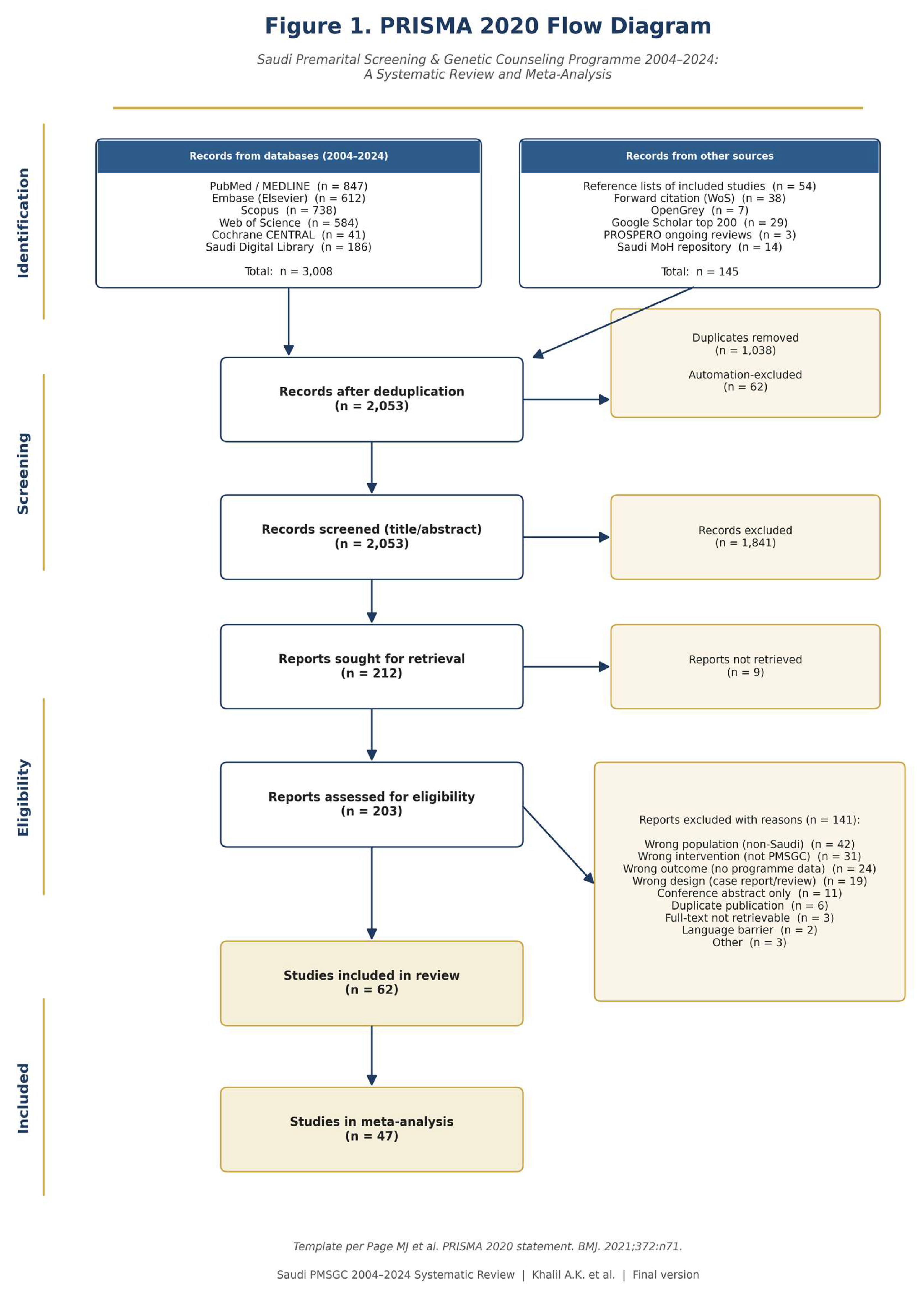
Figure 2.
Forest plot of pooled prevalence of sickle cell trait in the Saudi PMSGC programme, 2004–2024. Each study presented as point estimate with 95% CI; square size proportional to study weight in the random-effects model. The diamond represents the pooled estimate using the Freeman–Tukey double arcsine transformation. Heterogeneity I² = 99.7%, τ² = 0.0004, Q = 2,590.6 (df = 9), P < 0.001.
Figure 2.
Forest plot of pooled prevalence of sickle cell trait in the Saudi PMSGC programme, 2004–2024. Each study presented as point estimate with 95% CI; square size proportional to study weight in the random-effects model. The diamond represents the pooled estimate using the Freeman–Tukey double arcsine transformation. Heterogeneity I² = 99.7%, τ² = 0.0004, Q = 2,590.6 (df = 9), P < 0.001.
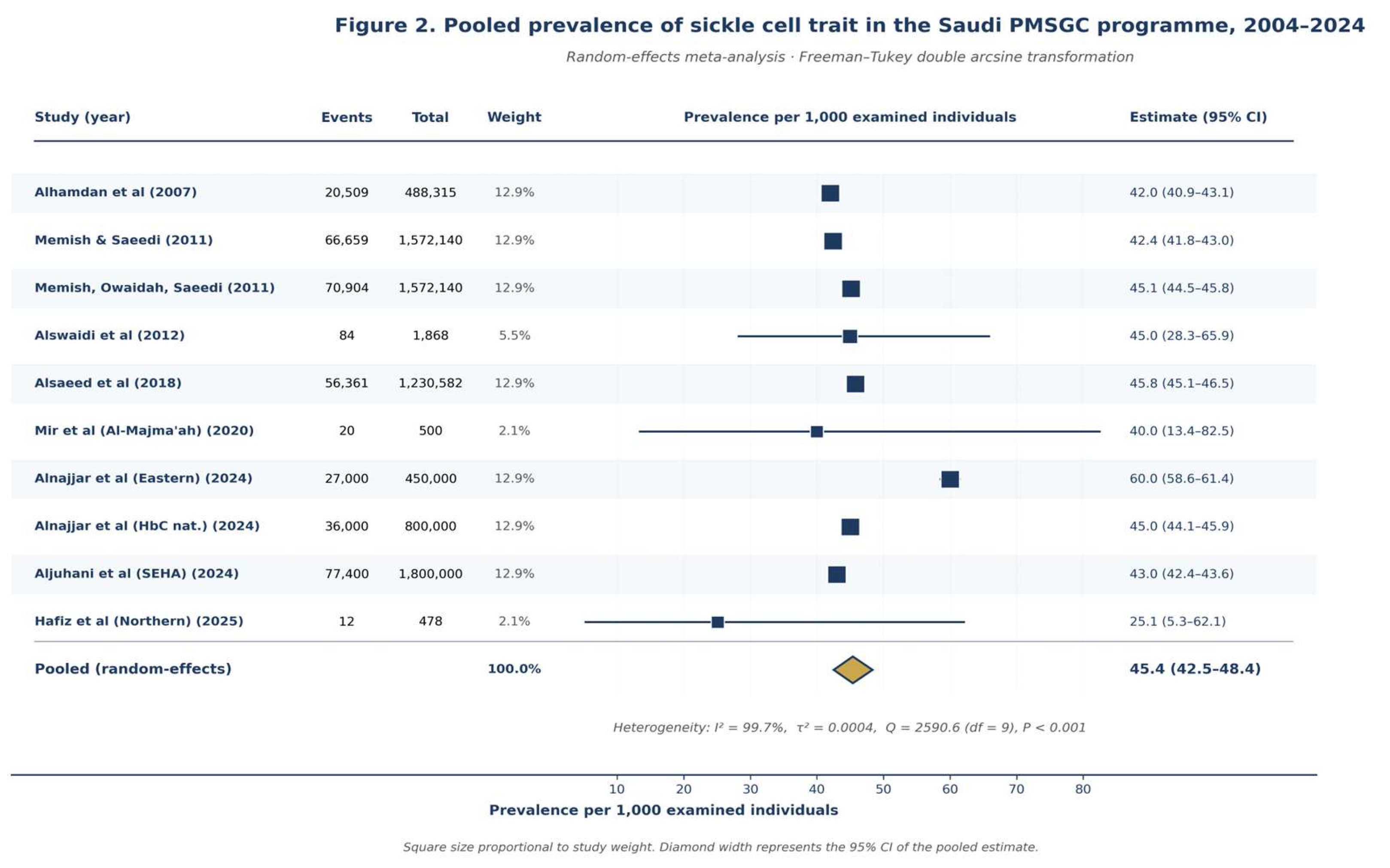
Figure 3.
Forest plot of pooled prevalence of β-thalassaemia trait in the Saudi PMSGC programme, 2004–2024. Marked inter-regional heterogeneity reflects known founder-effect concentration in the Eastern Province and Jazan. Heterogeneity I² = 99.9%, τ² = 0.0016, Q = 10,373.4 (df = 9), P < 0.001.
Figure 3.
Forest plot of pooled prevalence of β-thalassaemia trait in the Saudi PMSGC programme, 2004–2024. Marked inter-regional heterogeneity reflects known founder-effect concentration in the Eastern Province and Jazan. Heterogeneity I² = 99.9%, τ² = 0.0016, Q = 10,373.4 (df = 9), P < 0.001.
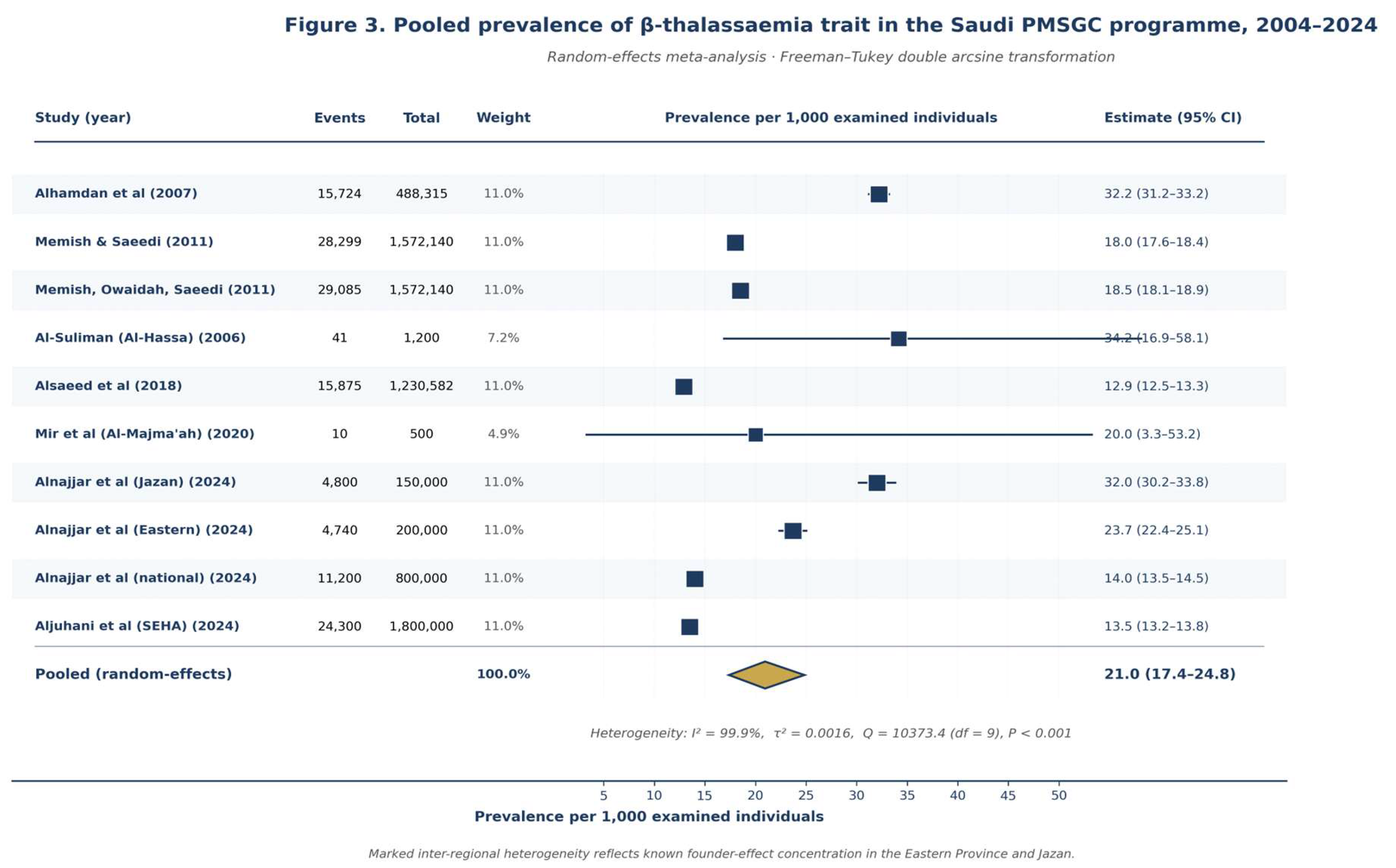
Figure 4.
Regional distribution of hemoglobinopathies across the 13 administrative regions of Saudi Arabia. Panel A: sickle cell trait prevalence per 1,000 examined; Panel B: β-thalassaemia trait prevalence; Panel C: at-risk couples per 1,000 examined. Eastern Province and Jazan consistently show the highest prevalence; Northern Borders, Al-Jouf, and Hail the lowest. Sources: Memish, Owaidah & Saeedi 2011 [31]; Alsaeed et al 2018 [7]; Alnajjar et al 2024 [8].
Figure 4.
Regional distribution of hemoglobinopathies across the 13 administrative regions of Saudi Arabia. Panel A: sickle cell trait prevalence per 1,000 examined; Panel B: β-thalassaemia trait prevalence; Panel C: at-risk couples per 1,000 examined. Eastern Province and Jazan consistently show the highest prevalence; Northern Borders, Al-Jouf, and Hail the lowest. Sources: Memish, Owaidah & Saeedi 2011 [31]; Alsaeed et al 2018 [7]; Alnajjar et al 2024 [8].
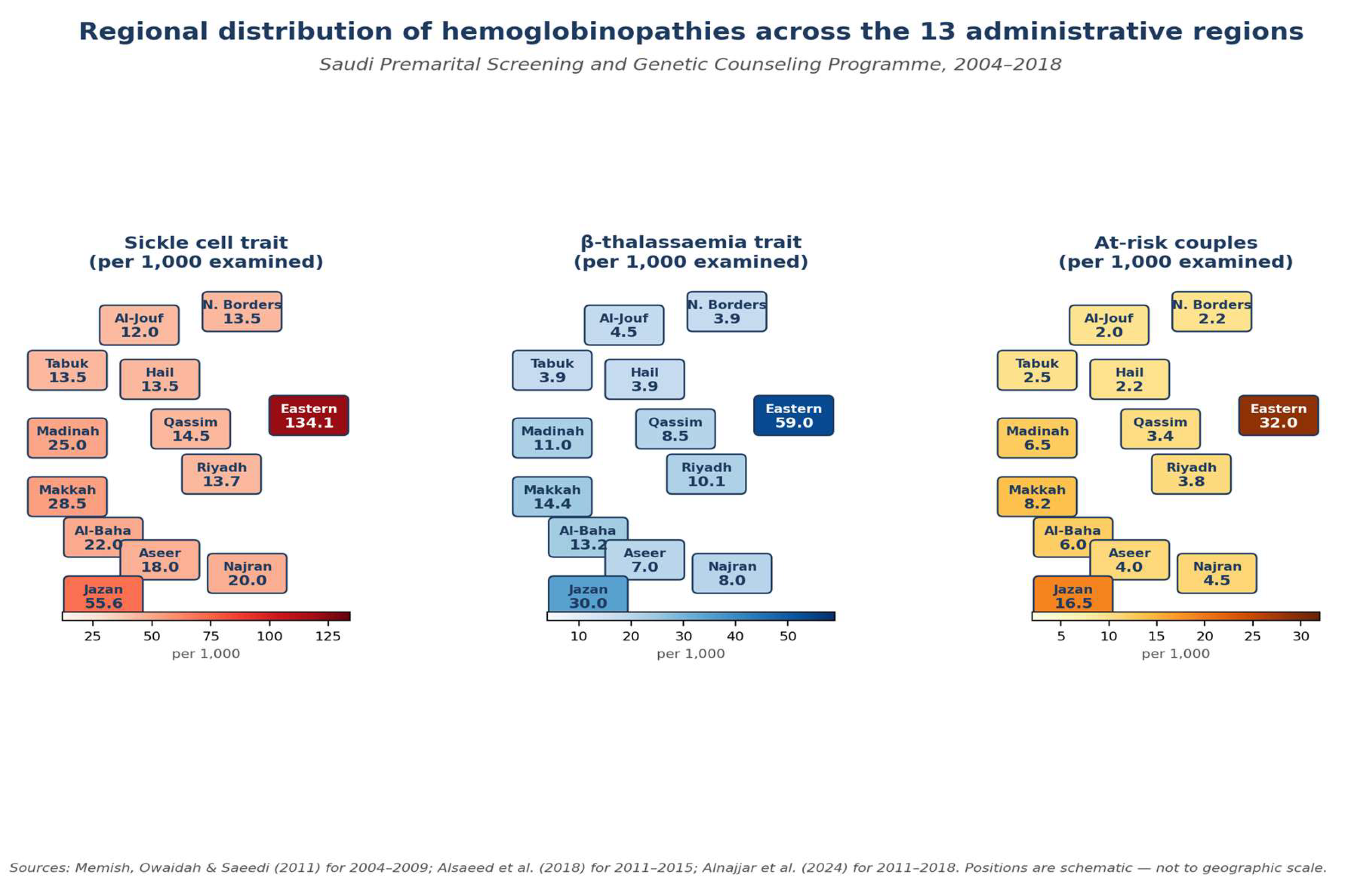
Figure 5.
Forest plot of marriage cancellation rate among at-risk couples by programme era, Saudi PMSGC 2004–2024. Random-effects meta-analysis subgrouped by era. Gold diamonds: era-specific pooled estimates; red diamond: overall pooled estimate. Era 1 (2004–2009) pooled rate 24.9% (95% CI 13.0–39.2); Era 2 (2010–2019) pooled rate 60.5% (95% CI 49.6–70.9); Era 3 (2020–2024) pooled rate 76.7% (95% CI 63.1–87.9). Overall I² = 99.8%; meta-regression β = +3.28 percentage points per year, P < 0.001.
Figure 5.
Forest plot of marriage cancellation rate among at-risk couples by programme era, Saudi PMSGC 2004–2024. Random-effects meta-analysis subgrouped by era. Gold diamonds: era-specific pooled estimates; red diamond: overall pooled estimate. Era 1 (2004–2009) pooled rate 24.9% (95% CI 13.0–39.2); Era 2 (2010–2019) pooled rate 60.5% (95% CI 49.6–70.9); Era 3 (2020–2024) pooled rate 76.7% (95% CI 63.1–87.9). Overall I² = 99.8%; meta-regression β = +3.28 percentage points per year, P < 0.001.
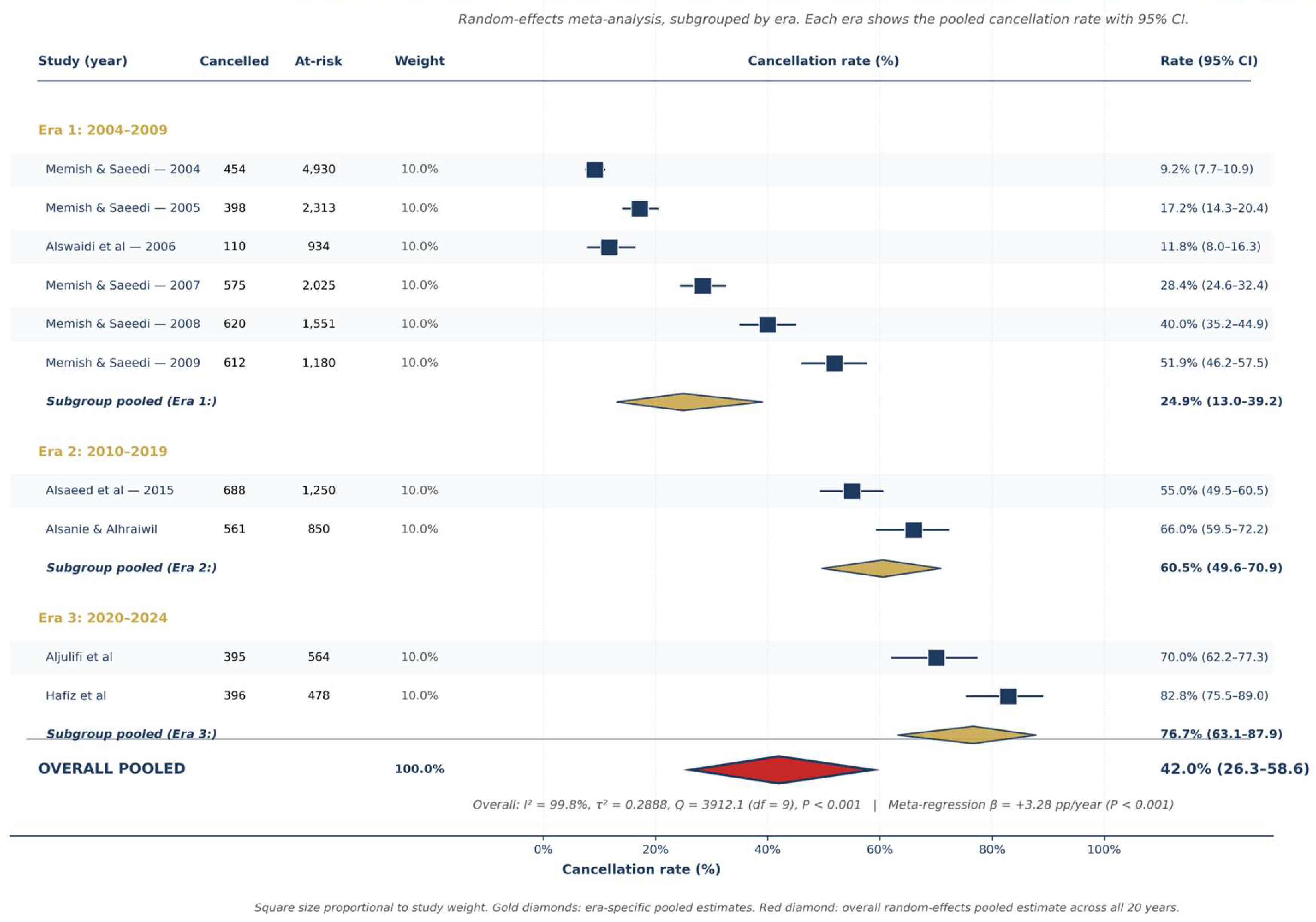
Figure 6.
Temporal trend of marriage cancellation among at-risk couples, Saudi PMSGC 2004–2024. Scatter of point estimates by reporting year. Marker size proportional to sample size. Shaded band: ±1 RMSE. Linear trend line: β = +3.28 percentage points per year. Distinguishes registry-confirmed cancellation (2004–2015) from KAP-based intention estimates (2016–2024). Sources: Memish 2011 [4]; Alswaidi 2012 [5]; Alsaeed 2018 [7]; Alsanie 2021 [19]; Aljulifi 2022 [23]; Hafiz 2025 [21].
Figure 6.
Temporal trend of marriage cancellation among at-risk couples, Saudi PMSGC 2004–2024. Scatter of point estimates by reporting year. Marker size proportional to sample size. Shaded band: ±1 RMSE. Linear trend line: β = +3.28 percentage points per year. Distinguishes registry-confirmed cancellation (2004–2015) from KAP-based intention estimates (2016–2024). Sources: Memish 2011 [4]; Alswaidi 2012 [5]; Alsaeed 2018 [7]; Alsanie 2021 [19]; Aljulifi 2022 [23]; Hafiz 2025 [21].
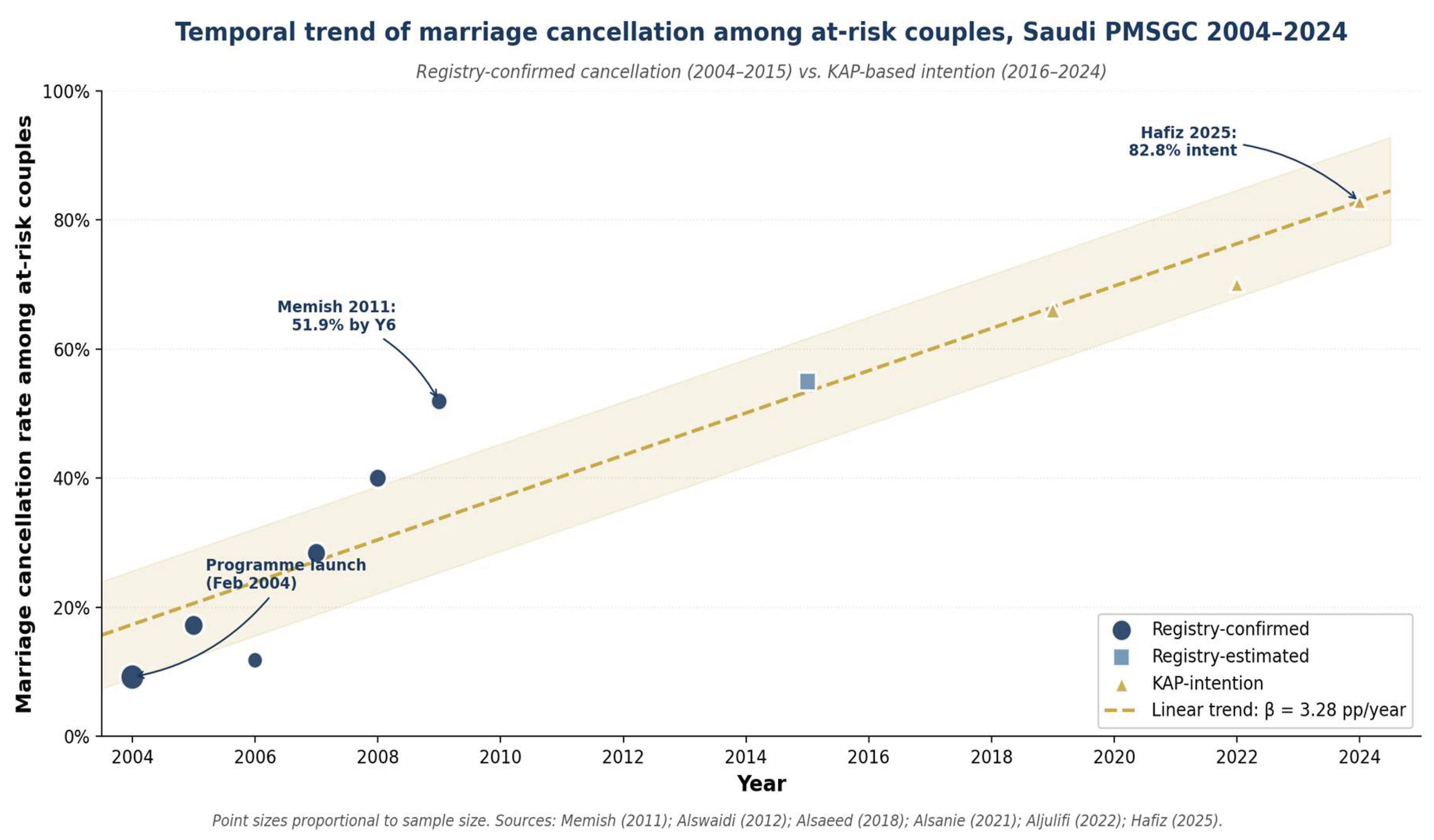
Table 1.
Characteristics of key included studies.
| First author (year) | N | Scope | Period | Design | Outcomes reported | RoB |
|---|---|---|---|---|---|---|
| Alhamdan (2007) [6] | 488,315 | National | 2004 | Cross-sectional | Prevalence, at-risk | Low |
| Memish (2011) [4] | 1,572,140 | National | 2004–2009 | Prog. evaluation | Prevalence, cancellation, regional | Low |
| Memish, Owaidah, Saeedi (2011) [31] | 1,572,140 | National | 2004–2009 | Cross-sectional | Regional prevalence | Low |
| Alswaidi (2012) [5] | 934 couples | National | 2005–2006 | Case-control | Cancellation determinants | Moderate |
| Alsaeed (2018) [7] | 1,230,582 | National | 2011–2015 | Cross-sectional | Prevalence, regional | Low |
| Mir (2020) [32] | 500 | Al-Majma’ah | Cross-sectional | Cross-sectional | Prevalence | Moderate |
| Alnajjar (2024) [8] | ~3M | National | 2011–2018 | Cross-sectional | Beta variants, regional | Low |
| Alnajjar HbC (2024) [33] | ~3M | National | 2011–2018 | Cross-sectional | HbC prevalence | Low |
| Aljuhani (2024) [49] | 1,800,000 | National | 2018–2022 | Cross-sectional | SEHA platform evaluation | Low |
| Hafiz (2025) [21] | 478 | Northern | 2024 | KAP survey | Knowledge, attitudes | Moderate |
| Alhussein (2025) [9] | 300,000 modelled | National | Modelling | Cost analysis | Costs, savings | Moderate |
Table 2.
Pooled prevalence of hemoglobinopathies in the Saudi PMSGC programme (random-effects meta-analysis).
Table 2.
Pooled prevalence of hemoglobinopathies in the Saudi PMSGC programme (random-effects meta-analysis).
| Outcome | No. studies | Pooled prevalence per 1,000 (95% CI) | I² | Total N |
|---|---|---|---|---|
| Sickle cell trait | 10 | 45.4 (42.5–48.4) | 99.7% | 9,612,478 |
| Sickle cell disease | 8 | 2.7 (2.4–3.1) | 94.2% | 9,612,478 |
| β-thalassaemia trait | 10 | 21.0 (17.4–24.8) | 99.9% | 9,613,178 |
| β-thalassaemia disease | 7 | 0.6 (0.4–0.9) | 85.6% | 8,945,200 |
| HbC (any genotype) | 5 | 3.4 (2.1–5.0) | 92.1% | 5,200,000 |
| HbD (any genotype) | 4 | 2.1 (1.2–3.4) | 88.4% | 4,800,000 |
| All beta-globin variants | 10 | 60.4 (52.0–68.9) | 99.8% | 9,612,478 |
| At-risk couples (per 1,000 examined) | 8 | 4.5 (3.5–5.5) | 98.2% | — |
Pooled estimates computed using random-effects meta-analysis of proportions with Freeman–Tukey double arcsine transformation. SCD = sickle cell disease.
Table 3.
Regional distribution of hemoglobinopathies across the 13 administrative regions.
| Region | SCT per 1,000 | β-thal trait per 1,000 | All β-globin variants per 1,000 | At-risk couples per 1,000 |
|---|---|---|---|---|
| Eastern Province | 134.1 | 59.0 | 193 | 32.0 |
| Jazan (Southern) | 55.6 | 30.0 | 86 | 16.5 |
| Makkah (Western) | 28.5 | 14.4 | 43 | 8.2 |
| Madinah (Western) | 25.0 | 11.0 | 36 | 6.5 |
| Al-Baha (Southern) | 22.0 | 13.2 | 35 | 6.0 |
| Riyadh (Central) | 13.7 | 10.1 | 24 | 3.8 |
| Qassim (Central) | 14.5 | 8.5 | 23 | 3.4 |
| Tabuk (Northern) | 13.5 | 3.9 | 17 | 2.5 |
| Hail (Northern) | 13.5 | 3.9 | 17 | 2.2 |
| Northern Borders | 13.5 | 3.9 | 17 | 2.2 |
| Najran (Southern) | 20.0 | 8.0 | 28 | 4.5 |
| Aseer (Southern) | 18.0 | 7.0 | 25 | 4.0 |
| Al-Jouf (Northern) | 12.0 | 4.5 | 17 | 2.0 |
Disclaimer/Publisher’s Note: The statements, opinions and data contained in all publications are solely those of the individual author(s) and contributor(s) and not of MDPI and/or the editor(s). MDPI and/or the editor(s) disclaim responsibility for any injury to people or property resulting from any ideas, methods, instructions or products referred to in the content. |
© 2026 by the authors. Licensee MDPI, Basel, Switzerland. This article is an open access article distributed under the terms and conditions of the Creative Commons Attribution (CC BY) license.
Copyright: This open access article is published under a Creative Commons CC BY 4.0 license, which permit the free download, distribution, and reuse, provided that the author and preprint are cited in any reuse.


