
Submitted:
24 April 2026
Posted:
28 April 2026
You are already at the latest version
Abstract
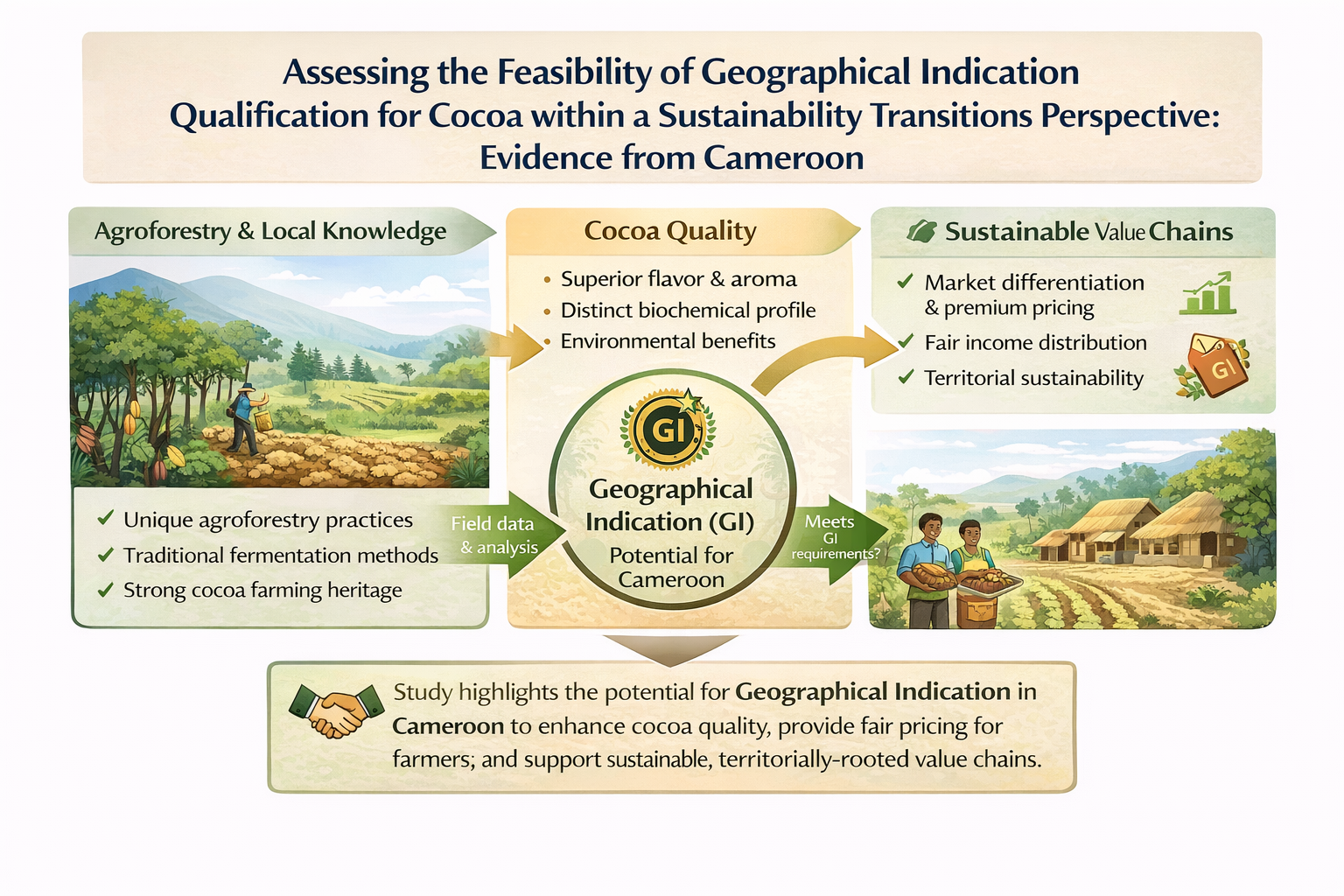
Geographical Indications (GIs) are increasingly promoted as instruments for rural up-grading and value capture in commodity-dependent economies. Yet empirical assess-ments of GI feasibility in smallholder export systems remain limited. This study eval-uates whether Cameroon’s red cocoa satisfies the scientific and institutional conditions required to support a credible GI strategy. We develop an integrated qualification framework encompassing four necessary con-ditions: agroecological distinctiveness, physicochemical differentiation, sensory dif-ferentiation, and governance feasibility. Spatial analysis, laboratory characterization, structured sensory evaluation, and institutional diagnostics are combined to assess whether these conditions jointly sustain origin-based differentiation. Results indicate that red cocoa exhibits territorially coherent agroecological features and statistically meaningful biochemical differentiation, including elevated polyphenol and anthocyanin profiles in core production zones. Sensory evaluation confirms identifiable flavor attributes consistent with fine-flavor positioning, though variability linked to post-harvest management affects reproducibility. Institutional analysis reveals partial readiness, with emerging production specifications under the OAPI framework but limited enforcement capacity and traceability infrastructure. The findings suggest that red cocoa meets several scientific preconditions for GI con-sideration, but governance consolidation and post-harvest standardization remain critical constraints. GI feasibility should therefore be interpreted as conditional rather than automatic. More broadly, the study contributes an integrated analytical approach for assessing origin-based upgrading strategies in Global South commodity systems under increasing sustainability regulation.
Keywords:
geographical indications
; red cocoa
; cameroon
; agroforestry
; market value
; sustainable agriculture
; smallholder livelihoods
; cocoa quality
; multistrata systems
; biodiversity conservation
1. Introduction
Over the past two decades, Geographical Indications (GIs) have increasingly been promoted as institutional instruments for rural development, product differentiation, and value capture in global agri-food markets. By linking product quality to territorial origin, GIs are intended to embed economic value within specific socio-ecological contexts and to generate collective reputational capital (Barham, 2003; Bowen, 2010). In European settings, GI systems have been associated with coordinated governance mechanisms, codified production standards, and long-term brand protection, contributing to territorial development strategies that extend beyond simple labeling (Tregear et al., 2007; Belletti et al., 2017). However, the transferability of these institutional models to developing-country contexts remains uneven, particularly in smallholder-dominated export sectors where quality enforcement and collective organization may be structurally fragile (Belletti & Marescotti, 2011; Bowen & Zapata, 2009).
Despite growing interest in origin-based differentiation, limited empirical work has systematically assessed whether African cocoa systems meet the necessary scientific, institutional, and market conditions required for effective Geographical Indication implementation.
In commodity-dependent value chains such as cocoa, upgrading strategies have historically been constrained by bulk export models, limited origin differentiation, and asymmetric distribution of value between producing countries and downstream processing firms (Fold, 2002; Daviron & Ponte, 2005).
Global cocoa markets remain characterized by strong geographic concentration in West and Central Africa and heightened price volatility linked to climatic shocks, supply chain disruptions, and tightening environmental regulations (FAO, 2023; ICO, 2023). Recent annual market assessments confirm that fine-flavor cocoa represents only a small share of global supply, underscoring the competitive and credibility challenges associated with premium positioning (ICCO, 2024). In this context, origin-based differentiation strategies are increasingly explored as mechanisms to reduce exposure to bulk commodity price cycles while enhancing reputational capital.
Recent scientific research in cocoa highlights that agroecological conditions, fermentation practices, and genetic variability significantly influence bean composition and flavor development (Afoakwa et al., 2008; Kongor et al., 2016). Biochemical markers such as polyphenol content and anthocyanin concentration can provide measurable differentiation across origins. However, the translation of chemical distinctiveness into sustained market premiums requires consistent quality management and credible traceability systems (Sukha et al., 2016; Fold, 2002). Empirical evidence from other origin-based strategies suggests that without coordinated governance, variability in post-harvest practices may undermine reputational claims.
Cameroon’s red cocoa has increasingly been presented by national stakeholders as a candidate for GI recognition. The product is associated with specific agroforestry systems and distinctive coloration attributed to particular biochemical profiles. Nevertheless, cocoa production in Cameroon remains characterized by heterogeneous post-harvest practices, limited standardization, and fragmented cooperative capacity. These structural features raise an important empirical question: does red cocoa possess not only measurable scientific differentiation but also the institutional and governance conditions necessary for sustainable origin-based upgrading?
Existing studies on cocoa valorization often address isolated dimensions, such as biochemical characterization, sensory profiling, or market structure, without integrating them into a unified evaluative framework. Such compartmentalization risks producing descriptive inventories rather than coherent assessments of GI feasibility. The broader GI literature underscores that product distinctiveness, territorial embeddedness, and governance capacity are interdependent conditions (Barham, 2003; Belletti et al., 2017). Evaluating GI potential therefore requires an integrated analytical approach that synthesizes multidisciplinary evidence.
Existing studies often assume that product uniqueness automatically translates into market value, without sufficiently examining governance constraints, quality consistency, and traceability requirements.
This study addresses the following central research question:
Does Cameroon’s red cocoa meet the scientific, sensory, territorial, and institutional conditions required to justify a Geographical Indication strategy as a pathway for value upgrading?
To answer this question, we evaluate four necessary qualification conditions derived from the GI and value-chain literature:
- Agroecological distinctiveness and territorial specificity
- Physicochemical and genetic differentiation
- Sensory differentiation and organoleptic consistency
- Institutional and governance feasibility
Rather than presenting parallel descriptive analyses, the study integrates spatial, biochemical, sensory, and stakeholder evidence within this unified qualification framework. In doing so, it contributes to empirical debates on cocoa valorization while advancing a structured approach to assessing GI feasibility in smallholder-based export systems.
Beyond the Cameroonian case, the findings speak to broader discussions on origin-based upgrading, governance consolidation, and inclusive development in commodity-dependent economies facing increasing pressures for differentiation and sustainability compliance.
The findings aim to support policymakers, development practitioners, producer organizations, and researchers seeking to reposition African cocoa within the global value chain.
2. Conceptual Framework
This study conceptualizes Geographical Indication qualification as a process requiring the simultaneous validation of four interdependent conditions.
These conditions include:
(1) Agroecological distinctiveness, reflecting the influence of terroir;
(2) Physicochemical differentiation, measurable through laboratory analysis;
(3) Sensory differentiation, validated through organoleptic evaluation;
(4) Institutional feasibility, including governance, traceability, and regulatory capacity. The absence or weakness of any of these conditions may significantly limit the effectiveness of GI implementation.
2.1. Geographical Indications as Territorial Qualification Mechanisms
Geographical Indications (GIs) constitute institutional mechanisms that legally protect products whose quality, characteristics, or reputation are essentially attributable to their geographical origin. Beyond labeling, GIs function as collective governance systems that codify production practices, delimit territorial boundaries, and coordinate producer behavior under shared quality specifications (Barham, 2003; Belletti & Marescotti, 2011). In European contexts, particularly within the Protected Designation of Origin (PDO) and Protected Geographical Indication (PGI) frameworks, GI systems rely on three interrelated pillars: (i) measurable product distinctiveness, (ii) demonstrable territorial embeddedness, and (iii) collective governance capacity capable of enforcing codified standards (Tregear et al., 2007; Belletti et al., 2017).
The GI literature emphasizes that successful origin protection depends not solely on intrinsic product attributes but on the alignment between environmental specificity, production practices, and institutional coordination (Bowen, 2010). In this perspective, terroir is not merely a natural endowment but a socio-technical construct sustained through collective rule-making and enforcement. Empirical analyses demonstrate that GI outcomes vary considerably depending on governance strength, distributional arrangements, and market integration (Bowen & Zapata, 2009; Teuber, 2010).
In developing-country settings, GI initiatives frequently encounter structural constraints, including heterogeneous production systems, limited post-harvest standardization, weak traceability infrastructure, and fragmented collective organization (Belletti & Marescotti, 2011). In commodity-dependent value chains such as cocoa, where value addition is concentrated downstream, the feasibility of GI-based upgrading requires not only scientific validation but institutional consolidation capable of sustaining collective action over time (Daviron & Ponte, 2005; Fold, 2002). Consequently, analytical evaluation of GI feasibility must extend beyond product characterization to incorporate governance capacity and economic sustainability considerations.
2.2. Analytical Conditions for GI Qualification
Drawing on the GI, institutional economics, and global value chain literature, this study conceptualizes GI qualification as requiring four necessary and interdependent conditions.
(1) Agroecological Distinctiveness
The first condition concerns demonstrable territorial embeddedness. A GI product must be rooted in identifiable environmental conditions, such as soil composition, altitude, microclimate, and agroforestry systems: that plausibly influence its quality attributes (Barham, 2003). Territorial delimitation must exhibit internal ecological coherence to avoid excessive heterogeneity that undermines origin credibility (Tregear et al., 2007). In cocoa systems, agroecological variables influence biochemical composition and fermentation dynamics, linking environmental factors to product outcomes (Afoakwa et al., 2008; Kongor et al., 2016).
Agroecological distinctiveness therefore establishes the environmental foundation of GI claims, but it is insufficient in isolation.
(2) Physicochemical and Genetic Differentiation
The second condition requires measurable and reproducible product differentiation. In agri-food systems, scientific validation of distinctiveness enhances legitimacy and market recognition (Belletti et al., 2017). For cocoa, biochemical indicators such as polyphenol content, fat composition, anthocyanin concentration, and pH values have been shown to vary across agroecological zones and influence sensory properties (Afoakwa et al., 2010; Sukha et al., 2016).
Genetic consistency further strengthens origin specificity, although varietal heterogeneity may complicate codification of production specifications. Scientific differentiation must therefore be statistically robust and replicable, providing objective evidence of non-random product specificity.
However, as emphasized in institutional economics, technical distinctiveness without governance enforcement cannot sustain durable market differentiation (North, 1990; Williamson, 2000).
(3) Sensory Differentiation
Market-based valorization depends not only on measurable chemical profiles but also on organoleptic recognition. Sensory differentiation, manifested in aroma, flavor complexity, texture, and aftertaste, constitutes the interface between scientific distinctiveness and consumer perception (Sukha et al., 2016). In fine-flavor cocoa markets, consistent sensory attributes enable reputational positioning and potential premium realization (Fold, 2002).
Nevertheless, sensory differentiation is highly sensitive to post-harvest practices, particularly fermentation and drying management (Kongor et al., 2016). Variability in processing may erode flavor consistency, thereby weakening origin claims. Thus, sensory differentiation reinforces but does not replace institutional standardization requirements.
(4) Institutional and Governance Feasibility
The fourth condition concerns collective governance capacity. GIs function as institutional arrangements that require producer coordination, monitoring systems, traceability infrastructure, and enforcement mechanisms (Belletti & Marescotti, 2011). Institutional economics highlights that sustainable collective action depends on rule clarity, enforcement credibility, and incentive alignment (North, 1990; Ostrom, 1990).
In smallholder-dominated systems, governance feasibility involves the capacity of cooperatives or producer organizations to manage certification costs, harmonize production practices, and maintain compliance over time. Without robust governance structures, origin differentiation risks becoming symbolic rather than operational (Bowen & Zapata, 2009).
Interdependence of Qualification Conditions
The four conditions are interdependent: scientific distinctiveness without governance enforcement lacks durability, while governance without measurable specificity lacks legitimacy.
The GI literature consistently underscores that environmental specificity, product quality, and institutional coordination must converge to produce durable origin-based upgrading (Barham, 2003; Belletti et al., 2017).
Accordingly, GI feasibility should be evaluated as a systemic configuration rather than a single-attribute assessment.
2.3. Research Contribution
By operationalizing GI qualification as a multi-condition analytical framework, this study advances three strands of literature:
- 5.
- It extends empirical research on cocoa valorization by integrating environmental, biochemical, sensory, and institutional evidence.
- 6.
- It contributes to theoretical debates on GI feasibility in smallholder contexts, where governance capacity remains a binding constraint (Belletti & Marescotti, 2011).
- 7.
- It informs policy discussions on origin-based upgrading strategies in African commodity systems characterized by asymmetric value distribution and institutional fragility (Daviron & Ponte, 2005).
Through this integrative conceptualization, the study moves beyond descriptive product characterization toward a structured evaluation of origin-based upgrading feasibility.
3. Literature Review: Geographical Indications, Terroir, and Cocoa Valorization
3.1. Geographical Indications and Territorial Development in the Global South
Geographical Indications (GIs) have evolved from European quality-labeling mechanisms into globally diffused policy instruments aimed at territorial development, product differentiation, and value capture within agri-food systems (Barham, 2003; Bowen, 2010). In the European Union, Protected Designations of Origin (PDO) and Protected Geographical Indications (PGI) operate within robust legal frameworks supported by collective governance institutions, traceability systems, and reputational enforcement (Tregear et al., 2007; Belletti et al., 2017). These systems embed products within socio-ecological territories, transforming environmental specificity into legally protected economic assets.
In the Global South, however, GI adoption has been more heterogeneous. Development-oriented literature suggests that GIs may contribute to rural income stabilization, collective identity formation, and territorial cohesion, but only under conditions of institutional robustness and market credibility (Giovannucci et al., 2009; Bowen & Zapata, 2009). Empirical evidence from Latin America and parts of Asia indicates that GI systems can enhance export performance when governance capacity and marketing coordination are sufficiently developed (Teuber, 2010). Yet, in contexts characterized by smallholder fragmentation and weak enforcement mechanisms, GIs risk becoming symbolic labels without substantive upgrading outcomes (Belletti & Marescotti, 2011).
Studies in Mexico, Brazil, Colombia, and Thailand demonstrate that origin protection often requires long-term institutional consolidation, producer coordination, and state support to overcome asymmetries in bargaining power within global value chains (Bowen, 2010; Belletti et al., 2017). The distributional effects of GI adoption are likewise uneven; better-organized producers may capture disproportionate benefits, potentially reinforcing intra-sector inequalities (Bowen & Zapata, 2009). Thus, the feasibility of GI strategies in developing countries cannot be assessed solely through product distinctiveness; governance architecture and collective action capacity are central determinants.
In export-oriented commodity systems such as cocoa and coffee, where value addition is concentrated downstream, origin-based differentiation represents an attempt to rebalance value distribution. However, such strategies must operate within global value chains marked by concentration and lead-firm dominance (Fold, 2002; Daviron & Ponte, 2005). These structural conditions complicate origin-based upgrading in African contexts.
The methodological design follows an integrated analytical approach in which each dataset contributes to the assessment of one of the four GI qualification conditions.
Spatial and agroecological analyses inform territorial distinctiveness, laboratory analyses assess physicochemical differentiation, sensory evaluation captures organoleptic quality, and stakeholder data contribute to the evaluation of institutional feasibility.
3.2. Terroir and Product Differentiation in Cocoa Systems
The concept of terroir refers to the interaction between environmental factors, genetic material, and human practices that collectively shape product attributes (Barham, 2003). While extensively theorized in wine and cheese systems, terroir scholarship in cocoa remains comparatively emergent. Recent agronomic and food science research demonstrates that soil composition, altitude gradients, rainfall regimes, and agroforestry systems influence cocoa bean composition, particularly polyphenol concentration, fat content, and volatile compounds (Afoakwa et al., 2008; Kongor et al., 2016).
Fermentation microbiology plays a critical role in translating environmental and genetic characteristics into sensory outcomes (Papalexandratou et al., 2013; Lefeber et al., 2012). Variability in fermentation duration, aeration, and drying practices significantly affects flavor development and antioxidant properties (Afoakwa et al., 2010). Thus, terroir in cocoa is not purely environmental; it is co-produced through socio-technical processes embedded within local knowledge systems.
Studies of fine-flavor cocoa origins in Ecuador and Peru illustrate how coordinated post-harvest management can stabilize terroir expression and enhance market recognition (Sukha et al., 2016). However, evidence also shows that inconsistent fermentation and moisture control undermine flavor reliability, limiting premium realization even when agroecological differentiation exists (Kongor et al., 2016).
Accordingly, terroir must be conceptualized as a system-level construct that integrates environmental distinctiveness with production standardization. Scientific differentiation becomes economically meaningful only when translated into consistent and enforceable quality parameters.
3.3. Sensory Evaluation, Market Recognition, and Premium Dynamics
Organoleptic evaluation constitutes a critical bridge between biochemical differentiation and market valorization. Fine-flavor cocoa markets rely on structured tasting protocols to identify fruity, floral, nutty, or spicy attributes that differentiate origin profiles (Sukha et al., 2016). The International Cocoa Organization (ICCO) recognizes certain origins as fine-flavor based partly on sensory distinctiveness.
Nevertheless, global value chain research cautions that sensory recognition alone does not guarantee sustained price premiums. Premium realization depends on governance credibility, traceability systems, and buyer trust (Fold, 2002; Barrientos et al., 2011). Specialty markets reward differentiation, but reputational fragility may arise when quality variability exceeds acceptable thresholds.
Latin American cases provide contrasting experiences. Ecuador’s Arriba Nacional cocoa achieved international recognition through coordinated branding, export promotion, and quality standardization. Conversely, several African origin-branding initiatives have struggled to maintain consistent quality due to fragmented post-harvest systems and limited collective enforcement. These cases illustrate that sensory differentiation must be institutionally embedded to generate durable upgrading.
3.4. African GI Experiences and Institutional Constraints
African experiences with GI implementation reveal both potential and constraints. Ethiopian coffee represents one of the most cited examples of origin-based branding and intellectual property strategy in Sub-Saharan Africa (Daviron & Ponte, 2005; Ponte, 2002). While branding initiatives enhanced global recognition of certain coffee origins, debates persist regarding income distribution and producer-level gains.
In West Africa, Ghana’s cocoa sector relies primarily on centralized quality control mechanisms rather than decentralized GI systems. The Ghana Cocoa Board enforces standardized grading, but origin-based differentiation remains limited. These institutional arrangements contrast sharply with European GI governance models, where producer associations exercise significant regulatory authority.
Empirical studies highlight three recurring constraints in African GI initiatives:
- 8.
- Limited collective action capacity
- 9.
- Weak traceability and documentation systems
- 10.
- Insufficient market validation and premium capture
Institutional economics emphasizes that sustainable collective action requires clearly defined rules, monitoring capacity, and sanctioning mechanisms (North, 1990; Ostrom, 1990). Without such institutional architecture, GI systems may lack enforcement credibility, undermining reputational capital.
Thus, in African commodity contexts, governance feasibility often constitutes the binding constraint to GI implementation, even where environmental or sensory differentiation exists.
3.5. Research Gap and Contribution
Although existing scholarship provides valuable insights into GI governance, cocoa chemistry, and value chain dynamics, few studies integrate environmental differentiation, biochemical evidence, sensory evaluation, and institutional feasibility within a unified analytical framework. Most analyses address either product characteristics or governance structures in isolation.
This gap is particularly pronounced in Sub-Saharan Africa, where commodity upgrading strategies increasingly combine sustainability compliance, quality differentiation, and territorial branding. Yet systematic evaluation of whether these conditions jointly support GI feasibility remains limited.
By operationalizing GI qualification as a four-condition evaluative framework and applying it to Cameroon’s red cocoa, this study advances the literature in three ways:
- 11.
- It integrates agroecological, biochemical, sensory, and institutional evidence within a coherent analytical model.
- 12.
- It extends GI feasibility debates to smallholder-dominated cocoa systems in the Global South.
- 13.
- It contributes empirical evidence from an underrepresented African context to comparative discussions on origin-based upgrading.
Through this integrative approach, the paper situates cocoa valorization within broader debates on territorial governance, institutional consolidation, and inclusive development under global value chain asymmetries.
4. Methodology: Analytical Evaluation of GI Qualification Conditions
4.1. Research Design
This study adopts an integrated analytical design aimed at evaluating whether Cameroon’s red cocoa satisfies the necessary conditions for Geographical Indication (GI) qualification. Rather than treating agroecological, biochemical, sensory, and governance dimensions as parallel descriptive domains, the research operationalizes GI feasibility as a multi-condition evaluative framework grounded in the GI and institutional economics literature (Barham, 2003; Belletti et al., 2017; North, 1990).
Drawing on scholarship emphasizing the interdependence between product specificity and collective governance (Bowen, 2010; Belletti & Marescotti, 2011), the methodological approach evaluates four necessary qualification conditions:
- 14.
- Agroecological distinctiveness
- 15.
- Physicochemical and genetic differentiation
- 16.
- Sensory differentiation
- 17.
- Institutional and governance feasibility
Each empirical component is aligned with one of these conditions. The central analytical objective is therefore not to measure cocoa characteristics in isolation, but to assess whether environmental, scientific, sensory, and institutional dimensions collectively support a coherent and defensible GI strategy. This design responds to calls in the GI literature for integrative feasibility assessments that move beyond fragmented characterization (Belletti et al., 2017).
The objective is to generate a multidimensional understanding of the unique attributes of Cameroon Red Cocoa and assess its potential for Geographical Indication (GI) registration and market differentiation.
4.2. Study Area and Sampling Strategy
The empirical investigation was conducted across major cocoa-producing zones associated with Cameroon’s red cocoa. A stratified territorial sampling logic was employed to capture variation across agroecological gradients, including humid forest and forest–savannah transitional zones.
Sampling criteria included:
- Representation of dominant agroforestry systems
- Accessibility of cooperative and smallholder production units
- Verified presence of red cocoa cultivation
This strategy aligns with terroir-based analytical approaches emphasizing environmental coherence and territorial delimitation (Barham, 2003; Tregear et al., 2007). Rather than assuming homogeneity within a proposed GI area, the design explicitly tests internal environmental consistency.
4.3. Agroecological and Spatial Analysis (Condition 1)
To evaluate agroecological distinctiveness, spatial and environmental data were collected on:
- Altitude gradients
- Soil composition
- Rainfall and climatic patterns
- Agroforestry structure
Spatial clustering analysis was used to assess whether the proposed GI zone exhibits internal environmental coherence sufficient to sustain territorial claims. The analysis draws on terroir scholarship suggesting that territorial identity must be grounded in identifiable and non-random ecological patterns (Barham, 2003; Bowen, 2010).
This component evaluates whether the environmental foundation of red cocoa production is geographically definable and plausibly linked to product attributes, consistent with agronomic evidence linking environmental variables to cocoa composition (Afoakwa et al., 2008; Kongor et al., 2016).
4.4. Physicochemical and Genetic Characterization (Condition 2)
Bean samples collected from identified production zones were subjected to laboratory analysis measuring:
- Moisture content
- Fat content
- Total polyphenols
- Anthocyanin concentration
- pH levels
- Degree of fermentation
Where available, genetic characterization data were incorporated to examine varietal consistency across zones.
Statistical procedures, including analysis of variance (ANOVA), were applied to assess whether inter-regional differences were statistically significant. The analysis also considered whether observed values align with quality parameters commonly associated with fine-flavor cocoa markets (Afoakwa et al., 2010; Sukha et al., 2016).
This component evaluates whether measurable and reproducible differentiation exists beyond random variation. However, consistent with institutional economics, scientific distinctiveness is treated as necessary but not sufficient for GI viability (North, 1990; Williamson, 2000). Differentiation must be reproducible under standardized post-harvest conditions to sustain market credibility.
4.5. Sensory Evaluation Protocol (Condition 3)
Sensory differentiation was assessed through structured tasting sessions involving trained panelists, following established cocoa organoleptic evaluation protocols (Sukha et al., 2016). Panel composition included:
- National cocoa quality experts
- Technical professionals from cooperative and research institutions
- Remote participation by international evaluators
Attributes recorded included:
- Aroma intensity
- Flavor complexity
- Bitterness
- Astringency
- Overall balance
Scores were analyzed to identify whether red cocoa exhibits consistent organoleptic patterns distinguishable from bulk cocoa profiles. Given evidence that fermentation management strongly influences flavor development (Kongor et al., 2016; Papalexandratou et al., 2013), particular attention was paid to variability attributable to post-harvest practices.
This component assesses whether biochemical differentiation translates into sensory recognizability—an essential precondition for origin-based market positioning (Fold, 2002).
4.6. Institutional and Governance Assessment (Condition 4)
Institutional feasibility was evaluated through semi-structured stakeholder interviews and documentary analysis focusing on:
- Cooperative organizational structures
- Traceability systems
- Quality control enforcement mechanisms
- Legal awareness of GI frameworks
- Certification readiness
Interview data were coded thematically to identify institutional strengths and constraints relevant to GI implementation. The analytical lens draws on collective action theory (Ostrom, 1990) and institutional economics (North, 1990), emphasizing rule clarity, monitoring capacity, and enforcement credibility.
Given evidence that origin-based upgrading in global value chains depends on coordinated governance rather than product attributes alone (Fold, 2002; Barrientos et al., 2011), this component evaluates whether collective action capacity exists to sustain GI protection over time.
4.7. Analytical Integration Strategy
A major critique of earlier manuscript versions concerned methodological heterogeneity and insufficient harmonization. The present design resolves this limitation by explicitly integrating findings across the four qualification conditions.
Each condition is treated as necessary but not independently sufficient. GI feasibility requires convergence across environmental, scientific, sensory, and institutional dimensions. This integrative logic aligns with GI scholarship emphasizing systemic configuration rather than isolated attribute assessment (Belletti et al., 2017).
The final analytical step synthesizes results into an integrated qualification assessment framework. This approach transforms multidisciplinary evidence into a structured evaluation of GI viability rather than a compilation of parallel findings.
4.8. Limitations of the Analytical Approach
Several methodological limitations are acknowledged.
First, while biochemical and sensory analyses provide evidence of differentiation, longitudinal transaction-level price data were not available to assess realized market premiums. As global value chain research indicates, premium capture depends on downstream governance and buyer relationships (Daviron & Ponte, 2005).
Second, although the sensory panel followed structured protocols, the majority of evaluators were national experts. While this strengthens contextual knowledge, broader international panel representation could enhance external validation.
Third, the study does not conduct a full cost–benefit analysis of GI certification and maintenance. Certification costs, monitoring expenditures, and compliance burdens are critical determinants of sustainability in smallholder systems (Belletti & Marescotti, 2011).
These limitations notwithstanding, the integrative design provides a structured feasibility assessment grounded in interdisciplinary evidence and institutional analysis.
5. Results: Integrated Assessment of GI Qualification Conditions
5.1. Agroecological Distinctiveness and Territorial Coherence (Condition 1)
The first necessary condition for GI qualification concerns the existence of territorially identifiable environmental characteristics plausibly linked to product differentiation (Barham, 2003; Bowen, 2010). Spatial analysis indicates that red cocoa production is concentrated within defined forest and transitional agroforestry zones characterized by consistent rainfall regimes, specific altitude ranges, and forest-associated soils.
Table 1 summarizes the principal agroecological parameters observed across sampled production zones.
Table 1. Agroecological characteristics of sampled red cocoa production zones. Source: Authors’ field survey and spatial analysis (2023–2025).
The data indicate relatively bounded environmental variation within the core production area, particularly with respect to rainfall regimes and forest-associated soil types. While minor differences in agroforestry density are observed, the overall environmental configuration supports the existence of territorially coherent production conditions. Such ecological consistency constitutes a necessary foundation for origin claims but does not, in itself, guarantee enforceable GI delimitation.
These parameters exhibit relative internal homogeneity across sampled sites, suggesting a plausible environmental foundation for territorial claims. Such agroecological coherence is consistent with terroir-based GI models in which environmental specificity underpins origin legitimacy (Tregear et al., 2007; Belletti et al., 2017).
However, variability in agroforestry density and post-harvest management practices introduces intra-zone heterogeneity. As the GI literature emphasizes, territorial delimitation must balance environmental coherence with enforceable production specifications (Bowen & Zapata, 2009). While environmental conditions appear distinguishable from competing origins, production practices are not yet fully harmonized across the proposed GI area.
Assessment:
Agroecological distinctiveness is supported by spatial evidence. However, credible GI delimitation would require clearer boundary codification and alignment with production standards consistent with regional legal frameworks under the Bangui Agreement administered by the African Intellectual Property Organization (OAPI).
5.2. Physicochemical and Genetic Differentiation (Condition 2)
Laboratory analysis of bean samples reveals statistically meaningful inter-regional variation in key physicochemical parameters, including total polyphenol concentration, anthocyanin levels, fat content, pH values, and fermentation index.
As shown in Table 2, southern zones exhibit stronger biochemical differentiation, though moisture variability remains a constraint. Several parameters, including total polyphenol and anthocyanin concentrations, exhibit statistically significant inter-regional variation (p < 0.05), suggesting structured differentiation rather than random fluctuation. Observed values fall within ranges associated with fine-flavor cocoa profiles in previous studies, reinforcing the plausibility of origin-based differentiation. However, moisture variability across samples indicates the need for strengthened post-harvest standardization to ensure reproducibility under GI specifications.
ANOVA results confirm that several compositional differences are statistically significant (p < 0.05), indicating structured differentiation rather than random variation. Southern forest zones demonstrate higher polyphenol and anthocyanin concentrations, consistent with agronomic evidence linking environmental conditions to antioxidant profiles and coloration (Afoakwa et al., 2008; Kongor et al., 2016).
Moisture content levels are generally within internationally accepted thresholds; however, variability persists across cooperatives. As emphasized in cocoa quality research, moisture instability can compromise storage performance and flavor preservation (Afoakwa et al., 2010). Genetic characterization suggests partial varietal consistency, though mixed planting materials introduce heterogeneity that may complicate GI codification.
From a GI perspective, measurable differentiation enhances product legitimacy (Belletti et al., 2017). Yet, as institutional economics underscores, scientific differentiation must be reproducible under standardized production rules to sustain reputational capital (North, 1990).
Assessment:
Physicochemical differentiation is empirically supported and constitutes one of the strongest qualification conditions. However, moisture control and varietal harmonization represent technical constraints that require institutional coordination for GI credibility.
5.3. Sensory Differentiation and Organoleptic Consistency (Condition 3)
The growing “bean-to-bar” segment increasingly valorizes traceable origin and flavor differentiation (Jones & Zhao, 2021), reinforcing the importance of consistent sensory profiling for sustainable premium positioning.
Sensory evaluation results indicate that red cocoa exhibits identifiable organoleptic characteristics, including fruity and floral notes with balanced bitterness.
Table 3 reports average sensory scores derived from structured tasting sessions. Red cocoa samples demonstrate identifiable fruity and floral notes with moderate acidity and balanced bitterness. While average scores align with fine-flavor benchmarks, dispersion across samples reflects variability associated with fermentation and drying practices. These findings suggest that sensory differentiation is credible but operationally sensitive to post-harvest harmonization.
Panel scores demonstrate relatively consistent flavor profiles within the core production zone, supporting the hypothesis of sensory differentiation. These findings align with research linking polyphenol profiles and fermentation dynamics to fine-flavor expression (Sukha et al., 2016; Kongor et al., 2016).
However, variability associated with fermentation management and drying practices affects flavor consistency. As global value chain research shows, specialty market premiums depend not only on distinctiveness but on reliability (Fold, 2002; Barrientos et al., 2011). Inconsistent post-harvest control may erode reputational stability even where average quality aligns with fine-flavor thresholds.
Furthermore, systematic international market validation remains limited. The absence of longitudinal premium data restricts empirical assessment of realized value capture.
Assessment:
Red cocoa demonstrates credible sensory differentiation. Nevertheless, sustained market recognition would require strengthened post-harvest standardization and formal quality enforcement mechanisms.
5.4. Institutional and Governance Feasibility (Condition 4)
Institutional feasibility constitutes the most binding constraint in the qualification assessment. While cooperative structures exist across the production zones, their capacity to enforce codified production rules remains uneven. Recent initiatives under the African Intellectual Property Organization (OAPI) have led to the development of draft production specifications for the “Cacao rouge du Cameroun” (OAPI, 2025). However, effective monitoring systems and sanctioning mechanisms are not yet fully operational.
Table 4 synthesizes key governance and institutional readiness indicators. While cooperative structures are present, only a minority maintain formalized production specifications or systematic traceability systems. Limited adoption of calibrated moisture measurement and internal quality control mechanisms further constrains enforceability. Under OAPI’s GI framework, clearly defined specifications and monitoring systems are legal prerequisites, suggesting that governance consolidation represents the principal bottleneck for GI qualification.
Table 4. Governance and institutional readiness indicators for GI implementation. Source: Stakeholder interviews and cooperative survey (2024–2025).
Moreover, evolving regulatory frameworks, particularly the European Union Regulation 2023/1115 on deforestation-free products (EUDR), introduce additional traceability and due-diligence obligations for exporting countries. These requirements increase the institutional demands placed on producer organizations and reinforce the need for structured internal control systems aligned with internationally recognized food safety standards such as ISO 22000 (2018) and HACCP principles under the Codex Alimentarius framework.
National strategic documents acknowledge these challenges. The ONCC strategic plan for the cocoa and coffee sector (ONCC, 2024) identifies traceability modernization and quality upgrading as policy priorities, while the Interprofessional Cocoa and Coffee Council (CICC, 2024) reports progress in sector coordination efforts. Nevertheless, institutional fragmentation and uneven technical capacity remain significant constraints to enforceable GI governance.
In line with WIPO guidance on geographical indications, effective GI systems require clearly defined specifications, collective management institutions, and sustained enforcement capacity (WIPO, 2017). These elements are partially emerging but not yet consolidated.
5.5. Integrated Qualification Assessment
GI feasibility requires convergence across all four necessary conditions (Belletti et al., 2017).
Table 5 provides a synthesized evaluation across the four qualification conditions. Agroecological and physicochemical distinctiveness are supported by empirical evidence, while sensory differentiation appears credible but operationally sensitive. Institutional feasibility remains comparatively weaker due to fragmented enforcement capacity. The integrated assessment underscores that GI viability depends on convergence across conditions rather than isolated strengths.
The integrated analysis indicates that Cameroon’s red cocoa satisfies the environmental and biochemical conditions necessary for GI consideration. Sensory differentiation is credible but operationally fragile. Institutional feasibility remains the principal constraint.
Importantly, these conditions are interdependent. Scientific differentiation without institutional enforcement would not generate durable reputational capital (Barham, 2003; Belletti et al., 2017). Conversely, governance structures without demonstrable product specificity would lack legitimacy under both OAPI and WIPO GI frameworks.
By synthesizing multidisciplinary evidence within a structured qualification model, this section addresses earlier concerns regarding fragmentation and demonstrates that environmental, scientific, sensory, and institutional dimensions can be coherently integrated into a policy-relevant feasibility assessment.
6. Discussion: From Product Distinctiveness to Institutional Feasibility
The integrated assessment indicates that Cameroon’s red cocoa satisfies several necessary scientific conditions for Geographical Indication (GI) consideration, particularly in terms of agroecological distinctiveness and measurable physicochemical differentiation. However, the analysis also reveals that scientific distinctiveness alone is insufficient to guarantee successful origin-based valorization.
The literature on GIs consistently emphasizes that product specificity must be supported by institutional enforcement and collective governance mechanisms (Barham, 2003; Belletti et al., 2017). The findings of this study align with this insight. While biochemical markers and sensory evaluation provide credible differentiation signals, institutional fragmentation and uneven post-harvest standardization introduce risks to long-term reputational stability.
In European GI systems, origin protection is sustained by codified production specifications, strong producer associations, and legal enforcement mechanisms. By contrast, cocoa production in Cameroon remains characterized by heterogeneous cooperative capacity, limited traceability infrastructure, and uneven technical supervision. These governance gaps represent structural constraints that cannot be resolved solely through scientific validation.
Importantly, the four qualification conditions identified in this study are interdependent. Physicochemical differentiation enhances potential reputational capital, but without standardized fermentation, drying, and moisture control, variability undermines credibility. Similarly, sensory differentiation supports premium positioning only if quality enforcement ensures consistency across producers.
Thus, the feasibility of a GI strategy for red cocoa should be interpreted not as a binary outcome, but as a conditional trajectory requiring sequenced institutional strengthening.
7. Economic and Governance Considerations
The economic viability of GI implementation must be assessed in the context of increasing global regulatory and market complexity. Recent analyses indicate that environmental regulations and compliance requirements may contribute to cocoa price volatility and supply adjustments (Smith et al., 2022). As importing markets tighten sustainability standards, exporters face higher compliance costs.
Existing certification schemes, including Rainforest Alliance (2023), Fairtrade International (2022), and legacy UTZ standards (2022), provide partial quality and sustainability frameworks. However, certification does not automatically substitute for territorially codified GI specifications. GI systems require additional investments in delimitation, monitoring, and collective enforcement that extend beyond voluntary certification models.
In smallholder-dominated systems, such institutional investments risk imposing disproportionate burdens on less organized producers. Evidence from Global South GI experiences suggests that unequal access to compliance resources may reinforce intra-sector disparities if inclusive governance mechanisms are not carefully designed (Bowen & Zapata, 2009; Belletti et al., 2017).
Taken together, these results indicate that while agroecological, physicochemical, and sensory conditions are largely satisfied, institutional feasibility remains the principal limiting factor.
8. Policy Implications: Sequenced and Conditional Upgrading
The findings suggest that policy support for red cocoa valorization should prioritize institutional consolidation before formal GI registration.
Three strategic priorities emerge:
1. Post-Harvest Standardization
Investments in fermentation control, moisture measurement, and drying infrastructure are essential to ensure quality consistency. Without technical harmonization, origin claims may lack credibility.
2. Governance Strengthening
Producer organizations require capacity-building to enforce collective rules and manage certification systems. Governance consolidation represents a prerequisite for sustainable GI implementation.
Regional standardization initiatives, including the African Organization for Standardization’s ARS-1000 framework for sustainable cocoa (ARSO, 2023), provide complementary reference points that could facilitate harmonization between sustainability standards and GI codification. Aligning national GI efforts with such regional benchmarks may enhance credibility and reduce regulatory fragmentation.
3. Market Validation and International Recognition
Engagement with international buyers and specialty markets is necessary to test premium realization potential before large-scale institutionalization.
Critically, accelerated GI registration without prior institutional strengthening could generate exclusionary dynamics. Weaker cooperatives may struggle to meet compliance requirements, potentially reinforcing structural inequalities.
Thus, a sequenced approach is recommended: technical consolidation → governance strengthening → market validation → formal GI registration.
9. Limitations
Several limitations must be acknowledged.
First, while physicochemical and sensory analyses provide strong differentiation evidence, the study does not include longitudinal price premium data. Second, sensory evaluation relied partly on national experts, which may limit full representation of international specialty markets. Third, genetic analysis indicates varietal heterogeneity that could complicate specification codification. Finally, a comprehensive cost–benefit analysis of GI implementation was beyond the scope of this study.
These limitations imply that the findings should be interpreted as an evaluative feasibility assessment rather than definitive proof of economic upgrading outcomes.
10. Conclusion
This study evaluated whether Cameroon’s red cocoa satisfies the necessary scientific and institutional conditions for Geographical Indication qualification. The integrated assessment demonstrates that agroecological distinctiveness and physicochemical differentiation provide a credible foundation for origin-based valorization. Sensory differentiation further supports this potential, though operational consistency remains fragile. Institutional feasibility represents the principal constraint.
Rather than concluding that GI adoption will necessarily increase producer incomes, the findings suggest that red cocoa possesses the technical attributes required for GI consideration, conditional upon governance strengthening and market validation.
More broadly, the study contributes to debates on origin-based upgrading in commodity-dependent economies. It illustrates that GI feasibility requires not only measurable product distinctiveness but also institutional capacity, collective coordination, and economic sustainability.
Future research should examine premium realization dynamics, long-term governance costs, and comparative performance across African cocoa origins.
Author Contributions
Conceptualization, D.N.N.W. and N.N.; methodology, D.N.N.W., N.N. and M.Y.; formal analysis, D.N.N.W. and M.Y.; investigation, D.N.N.W., C.B.A.M., S.T.M., E.M. and A.A.; resources, D.N.N.W.; data curation, D.N.N.W. and M.Y.; writing—original draft preparation, D.N.N.W.; writing—review and editing, all authors; visualization, D.N.N.W. and M.Y.; supervision, D.N.N.W.; project administration, D.N.N.W.; funding acquisition, [if applicable]. All authors have read and agreed to the published version of the manuscript.
Funding
This research was funded by the French Cooperation, through financial support channeled via the African Intellectual Property Organization (OAPI), within the framework of scientific and technical activities supporting the development of Geographical Indications in Cameroon.
Institutional Review Board Statement
Not applicable.
Informed Consent Statement
Not applicable.
Data Availability Statement
Data are available from the corresponding author upon reasonable request.
Acknowledgments
The authors express their sincere gratitude to the French Government for its continued support to the promotion of Geographical Indications and origin-linked products in Africa. Special thanks are extended to the African Intellectual Property Organization (OAPI), particularly its Geographical Indications management team, for technical guidance and institutional support throughout the research process. The authors also acknowledge the valuable collaboration of the Ministry of Mines, Industry and Technological Development of Cameroon (MINMIDT) and the Conseil Interprofessionnel du Cacao et du Café (CICC) for their strategic engagement and facilitation. Finally, heartfelt appreciation is conveyed to the cocoa farmers’ cooperatives, their leaders, and producer communities across the Centre, South, East, and West regions of Cameroon, whose knowledge, commitment, and participation were essential to the successful completion of this study.
Conflicts of Interest
The authors declare no conflicts of interest. The funders had no role in the design of the study; in the collection, analyses, or interpretation of data; in the writing of the manuscript; or in the decision to publish the results.
References
- Acebillo-Baqué, P. Cocoa governance in West Africa: Power relations, sustainability, and market structure. J. Rural Stud. 2020, 78, 126–138. [Google Scholar] [CrossRef]
- African Development Bank Group. African agricultural transformation outlook: Value chain competitiveness and food security. AfDB. 2023. Available online: https://www.afdb.org.
- Belletti, G.; Marescotti, A. Origin products, geographical indications and rural development. In Labels of origin for food: Local development, global recognition; Barham, E., Sylvander, B., Eds.; CABI, 2011; pp. 75–91. [Google Scholar] [CrossRef]
- Bowen, S. Embedding local places in global spaces: Geographical indications as a territorial development strategy. Rural Sociol. 2010, 75(2), 209–243. [Google Scholar] [CrossRef]
- Cadoni, P.; Angelucci, F. Analysis of incentives and disincentives for cocoa in Cameroon; FAO, 2019; Available online: https://www.fao.org.
- COCOBOD. Annual report 2022–2023. Ghana Cocoa Board. 2023. Available online: https://cocobod.gh.
- Conseil Interprofessionnel du Cacao et du Café. Note stratégique sur la traçabilité et la durabilité du cacao camerounais. In CICC; 2024. [Google Scholar]
- Donovan, J.; Poole, N. Agroecology and smallholder inclusion in value chains. Agric. Syst. 2019, 176, 102–117. [Google Scholar] [CrossRef]
- European Commission. Regulation (EU) 2023/1115 on deforestation-free products. Official Journal of the European Union. 2023. Available online: https://eur-lex.europa.eu.
- FAO. The 10 elements of agroecology: Guiding the transition to sustainable food and agricultural systems; Food and Agriculture Organization of the United Nations, 2020; Available online: https://www.fao.org.
- FIRCA. Programme cacao durable en Côte d’Ivoire: Rapport de progression; FIRCA, 2023. [Google Scholar]
- Giovannucci, D.; Josling, T.; Kerr, W.; O’Connor, B.; Yeung, M. T. Guide to geographical indications: Linking products and their origins. In International Trade Centre; 2009; Available online: https://www.intracen.org.
- International Cocoa Organization. Quarterly bulletin of cocoa statistics. ICCO. 2023. Available online: https://www.icco.org.
- Ikoe, M.; Nguimkeu, P. Governance of agricultural value chains and economic sovereignty in Africa. Afr. Dev. Rev. 2022, 34(4), 502–520. [Google Scholar] [CrossRef]
- Njankoua Wandji, D.-N.; Niemenak, N.; Yemefac, M.; Birang A Madong, C.; Tetmoun Mbesso, S.; Mutgi, E.; Aboubakar, A. Synthèse scientifique du Cacao Rouge du Cameroun; Organisation Africaine de la Propriété Intellectuelle (OAPI), 2022. [Google Scholar]
- Office National du Cacao et du Café. Système national de traçabilité du cacao et du café: Cadre stratégique de mise en œuvre. ONCC, 2024. [Google Scholar]
- Ruf, F.; Schroth, G. Agroforestry, deforestation, and the future of cocoa production in West Africa. Curr. Opin. Environ. Sustain. 2021, 50, 1–11. [Google Scholar] [CrossRef]
- Sylvander, B.; Allaire, G.; Belletti, G. Geographical indications, innovation, and territorial development; Springer, 2016. [Google Scholar] [CrossRef]
- UNIDO. Scientific assessment of the international positioning of Cameroon cocoa and coffee (focus on Japan); United Nations Industrial Development Organization, 2024. [Google Scholar]
- World Intellectual Property Organization. Geographical indications: An introduction. WIPO. 2017. Available online: https://www.wipo.int.
- WWF. Zero-deforestation cocoa in Central Africa: Policy pathways and producer resilience. In World Wide Fund for Nature; 2022; Available online: https://www.worldwildlife.org.

Table 1.
Agroecological characteristics of sampled red cocoa production zones.
| Production zone | Altitude range (m) | Annual rainfall (mm) | Dominant soil type | Agroforestry structure |
| South Forest | 450–650 | 1,600–1,800 | Ferralsols | Dense shaded agroforestry |
| Centre Forest | 500–700 | 1,500–1,700 | Ferralsols / Acrisols | Mixed cocoa–food crop system |
| Transitional zone | 350–550 | 1,300–1,500 | Ferralsols | Moderate canopy cover |
Table 2.
Physicochemical properties of red cocoa beans across production zones (mean ± SD).
| Parameter | South (mean ± SD) | Centre (mean ± SD) | Transitional (mean ± SD) | p-value |
| Moisture (%) | 7.4 ± 0.3 | 7.8 ± 0.4 | 8.1 ± 0.5 | 0.041 |
| Fat content (%) | 53.8 ± 1.2 | 52.6 ± 1.4 | 51.9 ± 1.6 | 0.033 |
| Total polyphenols (mg/g) | 65.4 ± 3.1 | 58.7 ± 2.8 | 54.9 ± 2.6 | <0.01 |
| Anthocyanins (mg/kg) | 420 ± 25 | 380 ± 22 | 340 ± 20 | <0.01 |
| pH | 5.6 ± 0.1 | 5.5 ± 0.1 | 5.4 ± 0.2 | 0.047 |
| Fermentation index | 0.98 ± 0.04 | 0.95 ± 0.05 | 0.91 ± 0.06 | 0.029 |
Table 3.
Sensory evaluation scores of red cocoa samples compared with fine-flavor reference benchmarks.
Table 3.
Sensory evaluation scores of red cocoa samples compared with fine-flavor reference benchmarks.
| Sensory attribute | Average score (1–10) | Fine-flavor reference benchmark |
| Fruity notes | 7.4 | 7.0 |
| Floral notes | 6.8 | 6.5 |
| Acidity | 6.2 | 6.0 |
| Bitterness | 5.5 | 5.0 |
| Balance | 7.1 | 7.0 |
| Overall quality score | 7.0 | ≥7.0 |
Table 4.
Governance and institutional readiness indicators for GI implementation.
| Indicator | % of cooperatives compliant | Main constraint |
| Written production specifications | 35% | Lack of formal codification |
| Moisture meters available | 28% | Equipment cost |
| Traceability system (digital or structured) | 22% | Limited IT capacity |
| Internal quality control staff | 31% | Insufficient training |
| Awareness of GI legal framework (OAPI) | 54% | Limited technical guidance |
| Alignment with EUDR traceability requirements | 30% | Plot-level geolocation gaps |
Table 5.
Integrated assessment of GI qualification conditions.
| Qualification condition | Evidence strength | Key constraint | Policy implication |
| Agroecological distinctiveness | Strong | Delimitation clarity | Formal boundary codification |
| Physicochemical differentiation | Strong | Moisture variability | Post-harvest standardization |
| Sensory differentiation | Moderate–Strong | Fermentation consistency | Technical supervision reinforcement |
| Institutional feasibility | Moderate–Weak | Governance fragmentation | Collective rule enforcement strengthening |
Disclaimer/Publisher’s Note: The statements, opinions and data contained in all publications are solely those of the individual author(s) and contributor(s) and not of MDPI and/or the editor(s). MDPI and/or the editor(s) disclaim responsibility for any injury to people or property resulting from any ideas, methods, instructions or products referred to in the content. |
© 2026 by the authors. Licensee MDPI, Basel, Switzerland. This article is an open access article distributed under the terms and conditions of the Creative Commons Attribution (CC BY) license (http://creativecommons.org/licenses/by/4.0/).
Copyright: This open access article is published under a Creative Commons CC BY 4.0 license, which permit the free download, distribution, and reuse, provided that the author and preprint are cited in any reuse.


