Preprint
Communication

This version is not peer-reviewed.

Synthesis and Structures of Trifluromethylborates [pinB(Aryl)CF3]: pinB = 4,4,5,5-Tetramethyl-1,3,2-dioxaborolane

A peer-reviewed article of this preprint also exists.

Submitted:

24 April 2026

Posted:

24 April 2026

You are already at the latest version

Abstract

Fluoroalkyl-substituted organoboron compounds are valuable building blocks for organic synthesis and for the development of functional molecules in medicinal chemistry, agrochemicals, and materials science. Building on our previous work on difluoromethyl-substituted borates, we report the synthesis and structural characterization of trifluoromethylated borates, 4,4,5,5-tetramethyl-2-aryl-2-(trifluoromethyl)-1,3,2-dioxaborolan-2-uide salts ([pinB(Aryl)CF3]). Treatment of pinB–Aryl boronates (pinB = 4,4,5,5-tetramethyl-1,3,2-dioxaborolane) with trimethyl(trifluoromethyl)silane (Ruppert–Prakash reagent) in the presence of potassium tert-butoxide and 18-crown-6 (18-cr-6) afforded the corresponding trifluoromethylated borates as isolable crystalline compounds. Compared with the related difluoromethylated borates, the CF3 substituent increases the tendency of [pinB(Aryl)CF3] to exhibit hygroscopic behavior, as supported by a hydrated crystal structure and the formation of a hygroscopic product. The isolable trifluoromethylborates can serve as reservoirs of electrophilic trifluoromethyl radicals upon oxidation.

Keywords: 
;  ;  

1. Introduction

Fluorinated alkyl groups have been attractive in chemistry and the related research fields because the specific characteristics of fluorine, such as large electronegativity, small size, and ability to form strong chemical bonds with many elements and groups [1,2], are advantageous for developing functional compounds in medicine [1,2,3,4,5,6], agrochemicals [1,2,7], and materials [1,2,8]. Our previous work on the synthesis of difluoromethyl-substituted boron compounds [9,10] related hybridized functionality with the biologically OH-mimicked character of the CF2H group [11] and the boron-containing frameworks [12]. Subsequently, we attempted to use the CF2H-borate species [pinB(Aryl)CF2H] [9] for organic synthesis, yielding difluoromethylated organic compounds. Unfortunately, the attempted transition-metal-catalyzed cross-couplings with haloarenes were unsuccessful because the CF2H group on the boron was reluctant to undergo transmetallation. On the other hand, the CF2H-borate species [pinB(Aryl)CF2H] functioned as precursors of difluoromethyl radical (HF2C·) and could be employed for synthesizing difluromethylated phenanthridines [13] and benzene-fused γ-sultams [14] via chemical oxidation and photoredox catalyzed system, respectively. Also, the CF2H-borate has recently been employed in Cu/photoredox dual catalysis for C(sp3)-CF2H cross-coupling [15].
The successful synthesis using difluoromethylborates for radical difluoromethylation prompted us to employ other fluoroalkyl groups on the borate platform. Accordingly, we focused on the trifluoromethyl group because the CF3 unit has been widely used in pharmaceuticals and agrochemicals [1,2,3,4,5,6,7].
This paper describes a successful synthesis and isolation of the trifluoromethylated borate species. We also attempted to use them for radical trifluoromethylation by generating an electrophilic trifluoromethyl radical [16,17,18]. As a result, the trifluoromethyl radical prefers interaction with the pinB-Aryl unit.

2. Results and Discussion

2.1. Synthesis of the Aryl-Containing CF3-Borates
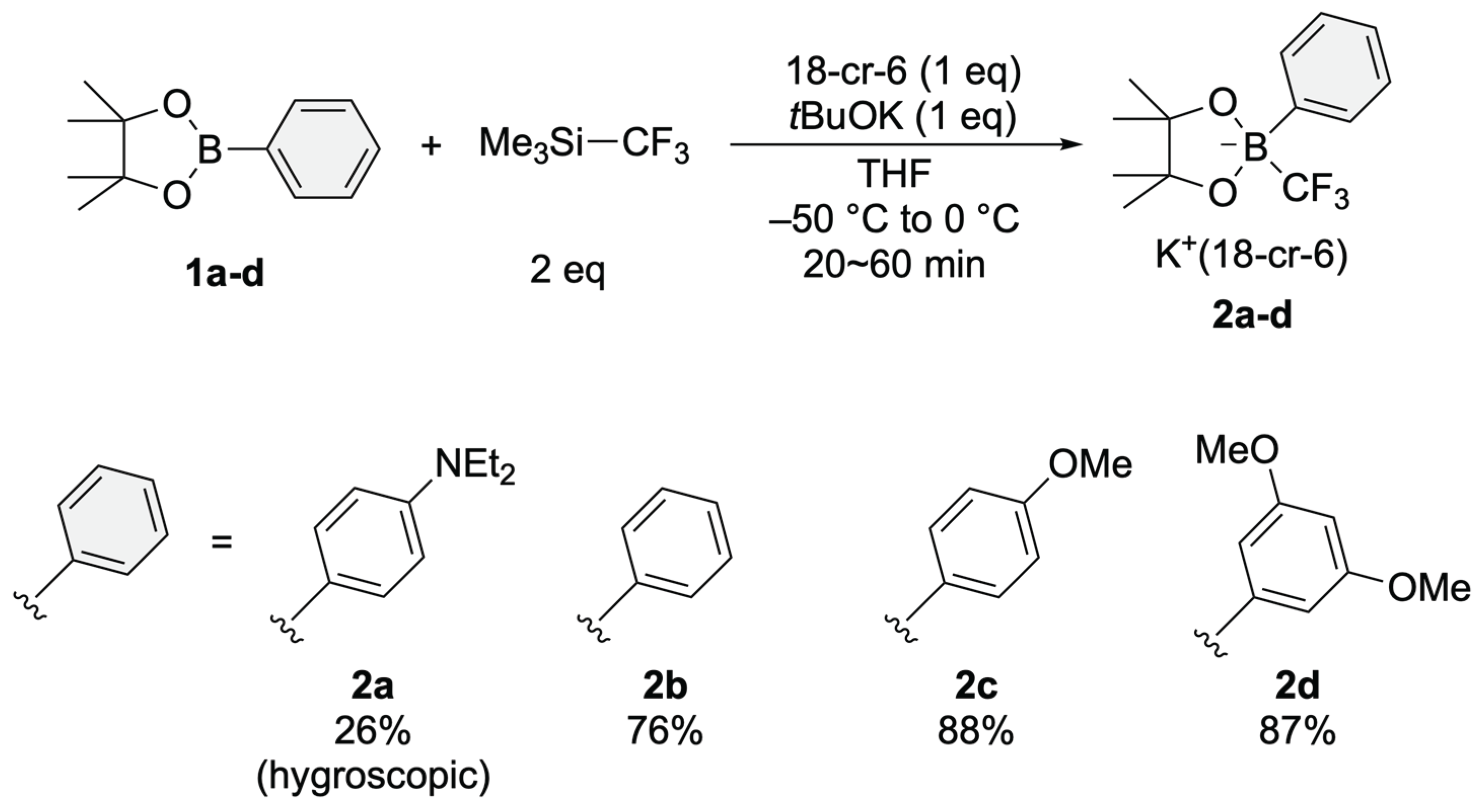
The synthesis of the desired trifluoromethylborates was partly based on the previous reports on trimethoxy(trifluoromethyl)borate [(MeO)3B-CF3] [19,20,21,22]. In our study, we employed pinB-Aryl boronates 1 (Scheme 1). At first, we employed p-diethylaminophenylboronate 1a because the C6H4-NEt2-p unit promoted the most efficient radical difluoromethylation reactions through one-electron oxidation of the difluoromethyl(aryl)borate precursor [13,14]. Indeed, the synthetic protocol using potassium tert-butoxide and 18-cr-6 [9] was appropriate, but the obtained trifluoromethylborate 2a was considerably hygroscopic, and the isolated yield was low. Such a hygroscopic characteristic was observed in [pinB(Aryl)CF2H] borates bearing relatively electron-donating aryl substituents [13]. It is plausible that combining the highly electron-withdrawing character of CF3, compared with CF2H, and the considerably electron-donating C6H4-NEt2-p unit would promote the inclusion of water. Therefore, we controlled the electron-sufficient character of the aryl group in 1 by avoiding amino groups and employed boronates 1b-d. As we expected, the isolated trifluoromethylborates 2b-d were air-stable crystalline compounds and not hygroscopic.
Scheme 1. Preparation of trifluoromethylborates 2a-d with isolated yields.
Preprints 210124 sch001

2.2. Crystal Structures of the Stable Trifluoromethyl(aryl)borates

Single crystals of 2b and 2d were obtained from hexane/dichloromethane (1:1) at 298 K. Figure 1a shows a drawing of 2b with 50% probability level. As displayed in a schematic drawing of the crystal structure (Figure 1b), 2b involved two H2O molecules. Two pinB(CF3)Ph units are bridged at the para positions of the phenyl groups with the K(18-cr-6), with K1···C(para) of 3.154 Å. On the other hand, two H2O molecules coordinate to another K(18-cr-6), and the K1 and K2 atoms are separated by 12.6 Å. The B–CF3 distance of 1.651(2) Å is comparable with that in [(MeO)3B-CF3] of 1.646(7) Å [22]. The hydrated 2b, in which the water molecules would come from the ambient environment, is consistent with the CF3-promoted hygroscopic character of 2a.
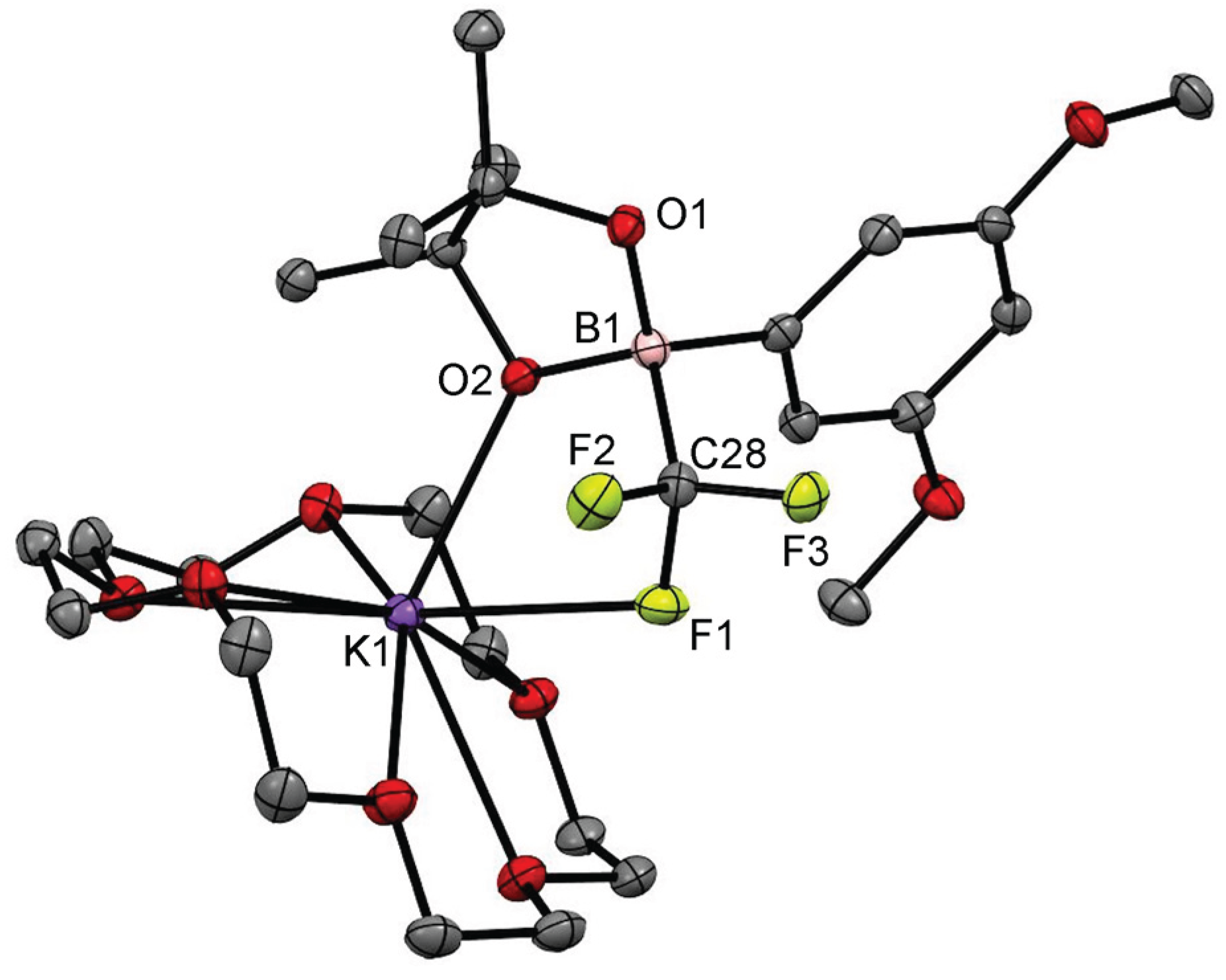
Figure 2 shows a drawing of 2d (50% probability level), indicating no inclusion of water. The molecular structure is almost identical to the corresponding difluromethyl derivative [9]. One of the fluorine atoms (F1) is distinctly coordinated by the potassium, and the C–F1 distance is slightly elongated. Additionally, one of the oxygen atoms (O2) interacts with K1.

2.3. Producing Trifluoromethyl Radical from the Aryl-Containing Trifluoromethylborates

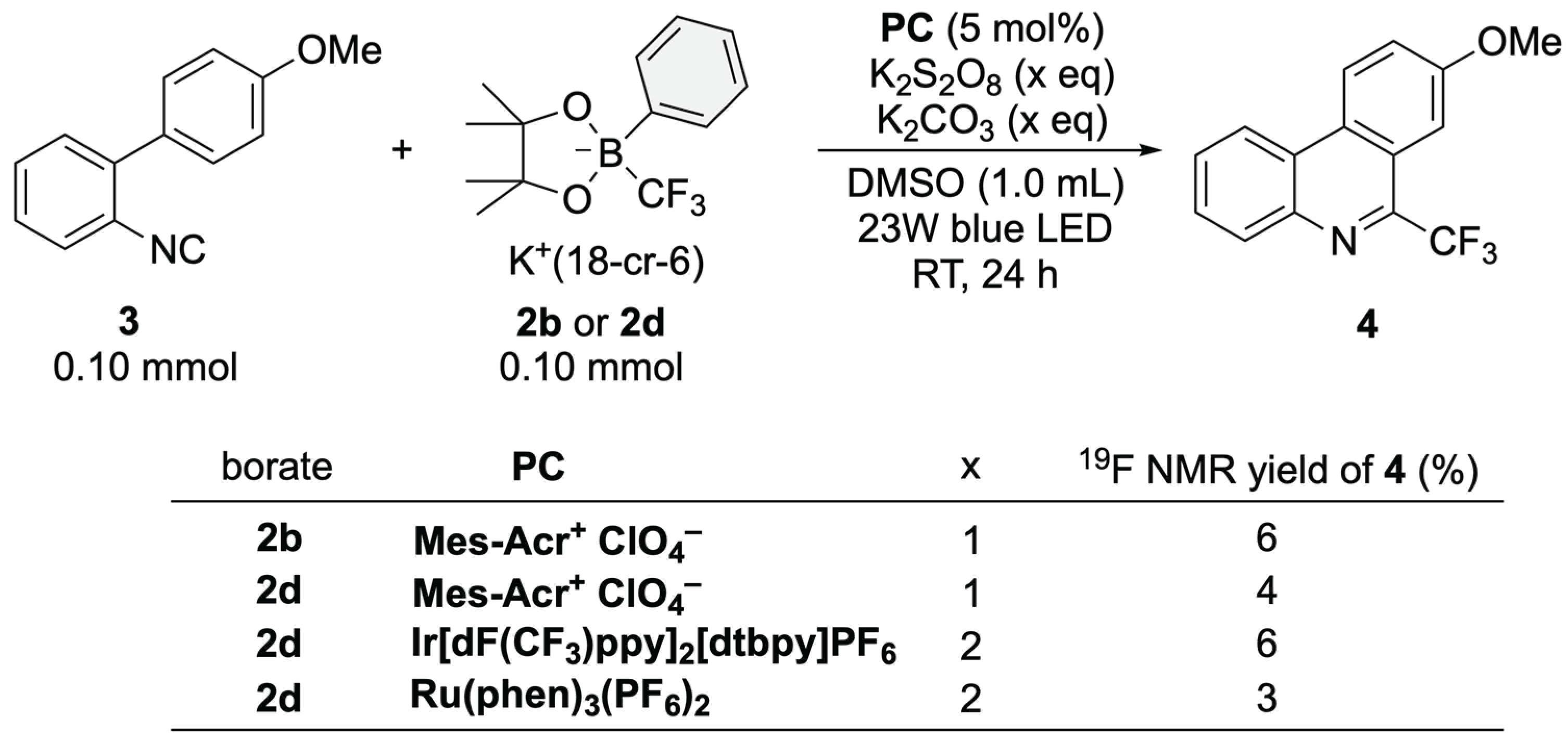
The difluoromethyl(aryl)borates served as sources of difluoromethyl radicals upon oxidation and were useful for the synthesis of difluoromethyl-substituted phenanthridines [13] and benzene-fused γ-sultams [14]. On the other hand, radical trifluoromethylation with Photoredox-Catalysts (PC), affording trifluoromethylated phenanthridine 4 from isonitrile 3 [23], indicates that trifluoromethylborates 2 are reluctant to produce the trifluoromethylated product (Scheme 2). Preliminary density-functional theory (DFT) calculations estimated that the highest occupied molecular orbital (HOMO) of [pinB(Ph)CF3] is approximately 0.2 eV lower than that of [pinB(Ph)CF2H] at the ωB97XD/6-311+G(d) level [24], and accordingly, the oxidation of 2 would be insufficient for producing trifluoromethyl radical. In addition, in all entries in Scheme 2 and Scheme 18-28% of HCF3 was accompanied, indicating the instability of 2 under the reaction conditions. On the other hand, it was noteworthy that the considerably electron-abundant 3,5-dimethoxyphenyl group in 2d was ineffective, as indicated by the comparable yield of the phenyl-substituted derivative 2b. We speculated that the arylBpin platform 1 would capture the electrophilic ·CF3 radical [16,17,18] and disturb the ·CF3 addition to 3. In other words, the pinB-Aryl boronates 1 are functional for producing the paramagnetic tetra-coordinated boron species [25,26]. In our previous report [13], the calculated structure of paramagnetic [pinB(CF2H)Aryl]·, where Aryl = C6H4-NEt2-p, indicated a paramagnetic tetra-coordinated boron species. Also, we revealed a catalytic property of 1 through the capture of the difluoromethyl radical [14].

3. Materials and Methods

3.1. General Instrumentation

All experiments were conducted under an inert atmosphere (nitrogen or argon) unless otherwise noted. 1H NMR, 13C{1H} NMR, and 19F NMR spectra were measured on a Bruker Avance Neo (400 MHz) spectrometer. Chemical shifts of 1H NMR were expressed in parts per million downfield from CHCl3 as an internal standard (δ = 7.26) in CDCl3. 13C{1H} NMR chemical shifts were expressed in parts per million relative to the central line of the triplet (δ = 77.10) in CDCl3. 19F NMR chemical shifts were expressed in parts per million downfield from benzotrifluoride (δ = –63.24) as the internal standard in CDCl3. Mass spectra were measured on a JEOL JMS-T100LC spectrometer. pinB-Aryl boronates 1 and 2-isocyano-4'-methoxy-1,1'-biphenyl 3 were prepared according to the literature [13]. Analytical thin-layer chromatography (TLC) was performed on a glass plate pre-coated with silica gel (Merck Kieselgel 60 F254, layer thickness 0.25 mm). Visualization was accomplished by UV light (254 nm) and anisaldehyde. Column chromatography was performed on KANTO Silica Gel 60N (spherical, neutral). X-ray diffraction data were collected on a Rigaku XtaLAB Synergy R diffractometer. The structures were solved by utilizing the Olex2 package [27]. SHELXL and SHELXT were employed for structure refinement and structure solution, respectively [28]. CCDC 2548130 and 2548131 contain crystallographic data for compounds 2b and 2d, respectively. The data can be obtained free of charge from the Cambridge Crystallographic Data Centre via www.ccdc.cam.ac.uk/structures.

3.2. Synthesis of 4,4,5,5-Tetramethyl-2-aryl-2-(trifluoromethyl)-1,3,2-dioxaborolan-2-uides 2

18-Crown-6 ether (529 mg, 2.0 mmol) and solid potassium butoxide (225 mg, 2.0 mmol ) were dissolved in 4 mL THF and cooled to –50 °C. Then (trifluoromethyl)trimethylsilane (593 μL, 4.0 mmol) was added, and the mixture was stirred for 20 minutes. Arylboronic acid pinacol ester 1 (2.0 mmol) dissolved in 1.0 mL THF was added, and the solution was stirred at 0 ℃ for 1 h. The solution was poured into 20 mL of hexane and stirred at room temperature for 5 min. The suspension was filtered and washed with hexane (20 mL x 2). After the residue was dried in vacuo, it was purified by washing with Et2O to afford the trifluoromethylborate as a solid.
2-(4-(Diethylamino)phenyl)-2-(trifluoromethyl)-4,4,5,5-tetramethyl-1,3,2-dioxaborolan-2-uide 18-crown-6-ether complex (2a): Colorless solid (170.2 mg, 26%).1H NMR (CDCl3, 400 MHz) δ 7.52 (d, J = 8.1 Hz, 2H), 6.58 (d, J = 8.6 Hz, 2H), 3.57 (s, 24H), 3.26 (q, J = 7.0 Hz, 4H), 1.21 (s, 6H), 1.10 (t, J = 7.0 Hz, 6H), 1.00 (s, 6H); 19F NMR (CDCl3, 376 MHz): δ –67.4 (s, 3F).
2-(Trifluoromethyl)-4,4,5,5-tetramethyl-2-phenyl-1,3,2-dioxaborolan-2-uide 18-crown-6-ether complex (2b): Colorless solid (439.7mg, 76%).1H NMR (CDCl3, 400 MHz) δ 7.71 (d, J = 7.2 Hz, 2H), 7.12 (t, J = 7.2 Hz, 2H), 7.05-7.00 (m, 1H), 3.56 (s, 24H), 1.22 (s, 6H), 0.97 (s, 6H); 13C{1H} NMR (CDCl3, 100 MHz) δ 132.4, 125.9, 124.1, 78.7, 70.0, 26.5, 26.2 (CF3 and Cipso were unclear); 19F NMR (CDCl3, 376 MHz) δ –67.6 (s, 3F); HRMS (ESI--TOF) calcd for C13H17BF3O2 [M+ – K(18-cr-6)]: 273.1276, found: 272.9919.
Crystallographic data of 2b·2H2O: C25H43BF3O9K, MW = 594.50, crystal dimensions = 0.160 x 0.140 x 0.060 mm3, monoclinic, P21/n (#14), a = 8.8792(3), b = 17.9898(6), c = 18.8255 (6) Å, β = 93.773(3)°, V = 3000.57(17) Å3, Z = 4, T = 100.15 K, λ = 0.71073 Å, ρcalc = 1.316 g cm–3, µMoKa = 0.242 mm–1, F000 = 1264, –11≤h≤9, –25≤k≤23, –26≤l≤25, 22014 total reflections (2θmax = 62.28°), 7705 unique (Rint = 0.0567), R = 0.0478 (σ>2σ(I)), 0.0633 (all data), wR = 0.1253 (I >2σ(I)), 0.1350 (all data), S = 1.038 (360 parameters).
2-(Trifluoromethyl)-2-(4-methoxyphenyl)-4,4,5,5-tetramethyl-1,3,2-dioxaborolan-2-uide 18-crown-6-ether complex (2c): Colorless solid (981.4 mg, 88%).1H NMR (CDCl3, 400 MHz) δ 7.62 (d, J = 8.3 Hz, 2H), 6.75-6.70 (m, 2H), 3.75 (s, 3H), 3.57 (s, 24H), 1.21 (s, 6H), 0.98 (s, 6H); 13C{1H} NMR (CDCl3, 100 MHz) δ 156.9, 133.3, 111.6, 78.6, 69.9, 54.9, 26.6, 26.2 (CF3 and Cipso were unclear); 19F NMR (CDCl3, 376 MHz) δ –67.8 (s, 3F); HRMS (ESI--TOF) calcd for C14H19BF3O3 [M+ – K(18-cr-6)]: 303.1382, found: 302.9858.
2-(Trifluoromethyl)-2-(3,5-dimethoxyphenyl)-4,4,5,5-tetramethyl-1,3,2-dioxaborolan-2-uide 18-crown-6-ether complex (2d): Colorless solid (827.5 mg, 87%).1H NMR (CDCl3, 400 MHz) δ 6.95 (d, J = 2.4 Hz, 2H), 6.18 (t, J = 2.4 Hz, 1H), 3.76 (s, 6H), 3.56 (s, 24H), 1.22 (s, 6H), 1.00 (s, 6H); 13C{1H} NMR (CDCl3, 100 MHz) δ 159.0, 109.7, 97.6, 78.7, 69.9, 55.2, 26.5, 26.2 (CF3 and Cipso were unclear); 19F NMR (CDCl3, 376 MHz) δ –67.7 (s, 3F); HRMS (ESI--TOF) calcd for C15H21BF3O4 [M+ – K(18-cr-6)]: 333.1488, found: 332.9802.
Crystallographic data of 2d: C27H45BF3O10K, MW = 636.54, crystal dimensions = 0.180 x 0.180 x 0.110 mm3, orthorhombic, P212121 (#19), a = 10.3006(3), b = 12.3895(4), c = 24.7086(8) Å, V = 3153.29(17) Å3, Z = 4, T = 100.15 K, λ = 0.71073 Å, ρcalc = 1.341 g cm–3, µMoKa = 0.238 mm–1, F000 = 1352, –10≤h≤14, –17≤k≤12, –26≤l≤33, 20330 total reflections (2θmax = 62.28°), 8221 unique (Rint = 0.0389), R = 0.0384 (σ>2σ(I)), 0.0498 (all data), wR = 0.0799 (I >2σ(I)), 0.0692 (all data), S = 1.033 (396 parameters).

3.3. Synthesis of 8-Methoxy-6-(trifluoromethyl)phenanthridine 4

To a suspension of 2b or 2d (0.1 mmol) in DMSO (1 mL), 3 (0.1 mmol), PC (5.0 µmol), potassium persulfate (0.1 or 0.2 mmol), and potassium carbonate (0.1 or 0.2 mmol) were added. The resulting suspension was stirred upon blue LED (23 W) irradiation under a nitrogen balloon for 24 h at room temperature. After 24 h, BTF was added, and the mixture was analyzed by 19F NMR spectroscopy. 4: 19F NMR (CDCl3, 376 MHz) δ –64.2 (s, F) [28].

4. Conclusions

In this study, we successfully synthesized 4,4,5,5-tetramethyl-2-aryl-2-(trifluoromethyl)-1,3,2-dioxaborolan-2-uides 2. The hydrated crystal structure of 2b is consistent with the hygroscopic character of 2a. Thus, the trifluoromethyl group would promote the capture of water molecules. On the contrary, the 3,5-dimethoxyphenyl group in 2d showed an almost identical structure to that of the previously reported difluoromethyl derivative [9]. In contrast to the difluoromethyl derivatives, the trifluoromethylborates 2 were reluctant to serve the synthetically useful trifluoromethyl radical. The findings would be helpful to produce novel functional trifluoromethylborates.

Supplementary Materials

The following supporting information can be downloaded at the website of this paper posted on Preprints.org. Figures S1-S11: Copies of NMR spectra of 2; DFT calculations data of [pinB(Ph)CF3] and [pinB(Ph)CF2H].

Author Contributions

Conceptualization, Y.-E.H. and S.I.; methodology, Y.-E.H.; investigation, Y.-E.H. and S.I; writing—original draft preparation, Y.-E.H.; writing—review and editing, Y.-E.H. and S.I.; supervision, S.I.; project administration, S.I. All authors have read and agreed to the published version of the manuscript.

Funding

This research was funded by JSPS KAKENHI Grant number 22K19023.

Data Availability Statement

Data are contained within the article and Supplementary Materials.

Acknowledgments

Nissan Chemical Corporation provided financial support. The authors thank Prof. Dr. Tetsuro Murahashi and Prof. Dr. Tsubasa Omoda of Institute of Science Tokyo (Science Tokyo) for supporting the X-ray crystallographic analyses.

Conflicts of Interest

The authors declare no conflicts of interest.

References

  1. Ojima, I. Frontiers of Organofluorine Chemistry. World Scientific, New Jersey, 2019.
  2. In Modern Fluoroorganic Chemistry; Kirsch, P. Ed. Modern Fluoroorganic Chemistry. Wiley, Weinheim, 2013.
  3. Müller, K.; Faeh, C.; Diederich, F. Fluorine in Pharmaceuticals: Looking Beyond Intuition. Science 2007, 317, 1881-1886.
  4. Zhou, Y.; Wang, J.; Gu, Z.; Wang, S.; Zhu, W.; Aceña, J. L.; Soloshonok, V. A.; Izawa, K.; Liu, H. Next Generation of Fluorine-Containing Pharmaceuticals, Compounds Currently in Phase II–III Clinical Trials of Major Pharmaceutical Companies: New Structural Trends and Therapeutic Areas. Chem. Rev. 2016, 116, 422-518. [CrossRef]
  5. He, J.; Li, Z.; Dhawan, G.; Zhang, W.; Sorochinsky, A. E.; Butler, G.; Soloshonok, V. A. Han, J. Fluorine-containing drugs approved by the FDA in 2021. Chin. Chem. Lett. 2023, 34, 107578.
  6. Purser, S.; Moore, P. R.; Swallow, S.; Gouverneur, V. Fluorine in medicinal chemistry. Chem. Soc. Rev. 2008, 37, 320-330.
  7. Ogawa, Y.; Tokunaga, E.; Kobayashi, O.; Hirai, K.; Shibata, N. Current Contributions of Organofluorine Compounds to the Agrochemical Industry. iScience 2020, 23, 101467. [CrossRef]
  8. Reddy, V. P. Materials applications of organofluorine compounds. In Organofluorine Chemistry (Reddy, V. P. Ed.) pp 279-327. Elsevier, 2020.
  9. Yokawa, A.; Ito, S. Convenient Preparation and Structure Determination of Air- and Moisture-Tolerant Difluoromethylborates. Chem. Asian J. 2021, 15, 3432-3436. [CrossRef]
  10. Ito, S.; Kato, N.; Mikami, K. Stable (sila)difluoromethylboranes via C–F activation of fluoroform derivatives. Chem. Commun. 2017, 53, 5546-5548. [CrossRef]
  11. Mealwell, N. A. Synopsis of Some Recent Tactical Application of Bioisosteres in Drug Design. J. Med. Chem. 2011, 54, 2529-2591.
  12. Wang, M.; Shi, Z. Methodologies and Strategies for Selective Borylation of C–Het and C–C Bonds. Chem. Rev. 2020, 120, 7348-7398. [CrossRef]
  13. Konagaya, K.; Huang, Y.-E.; Iwami, K.; Fujino, T.; Abe, R.; Parchment-Morrison, P.; Kojima, K. M.; McKenzie, I.; Ito, S. Difluoromethylborates and Muonium for the Study of Isonitrile Insertion Affording Phenanthridines via Imidoyl Radicals. J. Org. Chem. 2023, 88, 8042-8054. [CrossRef]
  14. Huang, Y.-E.; Konagaya, K.; Ito, S. The boron effect on radical difluoromethylation of N-sulfonyl cyclic ketimines. Org. Biomol. Chem. 2025, 23, 6225-6230. [CrossRef]
  15. Cao, X.; Lan, G.; Wang, Z.; Liu, S.; Wei, Y.; Xu, L.; Song, H. Copper/Photoredox Dual Catalysis for the Redox-Neutral C(sp3)–CF2H Cross-Coupling between Benzylic Bromides and Tetracoordinated Difluoromethylborates. Org. Lett. 2026, 28, 2188-2193. [CrossRef]
  16. Garwood, J. J. A.; Chen, A. D.; Nagib, D. A. Radical Polarity. J. Am. Chem. Soc. 2024, 146, 28034-28059.
  17. Fernandes, A. J.; Giri, R.; Houk, K. N.; Katayev, D. Review and Theoretical Analysis of Fluorinated Radicals in Direct CAr−H Functionalization of (Hetero)arenes. Angew. Chem. Int. Ed. 2024, 63, e202318377. [CrossRef]
  18. Duan, M.; Shao, Q.; Zhou, Q.; Baran, P. S.; Houk, K. N. Why •CF2H is nucleophilic but •CF3 is electrophilic in reactions with heterocycles. Nat. Commun. 2024, 15, 4630. [CrossRef]
  19. Knauber, T.; Arikan, F.; Röschenthaler, G.-V.; Gooßen, L. J. Copper-Catalyzed Trifluoromethylation of Aryl Iodides with Potassium (Trifluoromethyl)trimethoxyborate. Chem. Eur. J. 2011, 17, 2689-2697.
  20. Kolomeitsev, A. A.; Kadyrov, A. A.; Szczeplowsk-Sztolcman, J.; Milewska, M.; Koroniak, H.; Bissky, G.; Barten, J. A.; Röschenthaler, G.-V. Perfluoroalkyl borates and boronic esters: new promising partners for Suzuki and Petasis reactions. Tetrahedron Lett. 2003, 44, 8273-8277. [CrossRef]
  21. Levin, V. V.; Dilman, A. D.; Belyakov, P. A.; Struchkova, M. I.; Tartakovsky, V. A. Nucleophilic trifluoromethylation with organoboron reagents. Tetrahedron Lett. 2011, 52, 281-284. [CrossRef]
  22. Molander, G. A.; Hoag, B. P. Improved Synthesis of Potassium (Trifluoromethyl)trifluoroborate [K(CF3BF3)]. Organometallics 2003, 22, 3313-3315.
  23. Fang, J.; Shen, W.-G.; Ao, G.-Z.; Liu, F. Transition-metal-free radical fluoroalkylation of isocyanides for the synthesis of tri-/di-/monofluoromethylated phenanthridines. Org. Chem. Front. 2017, 4, 2049-2053.
  24. Chai, J.-D.; Head-Gordon, M. Long-range corrected hybrid density functionals with damped atom–atom dispersion corrections. Phys. Chem. Chem. Phys. 2008, 10, 6615-6620.
  25. Andrews, L.; Wang, X. Infrared spectrum of the novel electron-deficient BH4 radical in solid neon. J. Am. Chem. Soc. 2002, 124, 7280-7281.
  26. Zee, R. J. V.; Williams, A. P.; Weltner, Jr., W. ESR of the BH4 molecule in solid hydrogen. J. Chem. Phys. 1997, 107, 4756-4759.
  27. Dolomanov, O. V.; Bourhis, L. J.; Gildea, R. J.; Howard, J. A. K.; Puschmann, H. OLEX2: a complete structure solution, refinement and analysis program. J. Appl. Crystallogr. 2009, 42, 339-341. [CrossRef]
  28. Sheldrick, G. M. Crystal structure refinement with SHELXL. Struct. Chem. 2015, 71, 3-8.
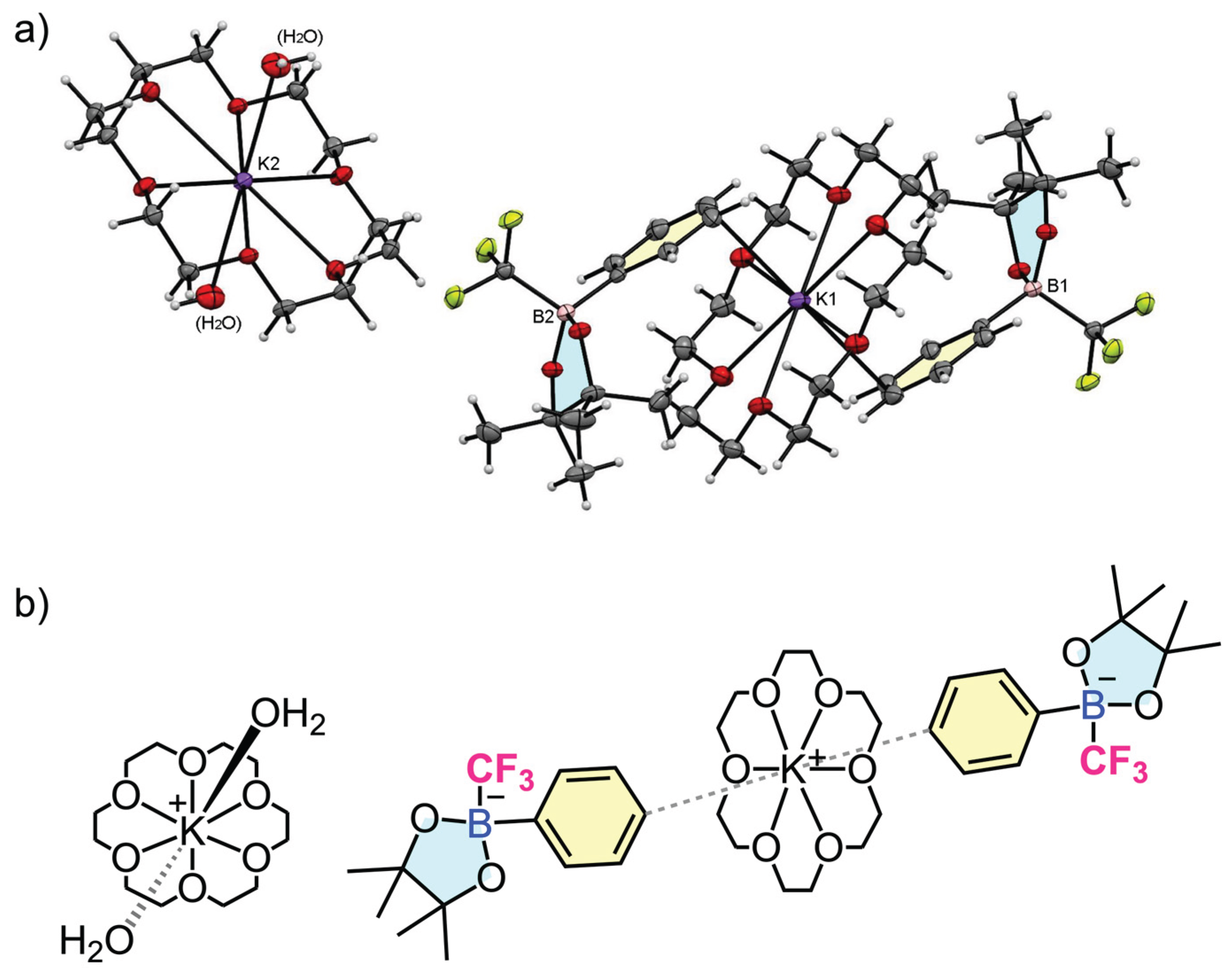
Figure 1. a) An ORTEP drawing (50% probability level) of 2b·2H2O. b) A schematic drawing of the molecular structure of 2b·2H2O in the crystalline state.
Preprints 210124 g001
Figure 2. An ORTEP drawing (50% probability level) of 2d. Hydrogen atoms are omitted for clarity. Bond lengths (Å): C28–F1 1.381(3), C28–F2 1.363(3), C28–F3 1.371(3), F1···K1 2.923(2), B1–O1 1.475(3), B1–O2 1.483(3), O2···K1 2.656(1).
Preprints 210124 g002
Scheme 2. Attempted photoredox-catalyzed synthesis of trifluoromethylphenanthridine 4.
Preprints 210124 sch002
Disclaimer/Publisher’s Note: The statements, opinions and data contained in all publications are solely those of the individual author(s) and contributor(s) and not of MDPI and/or the editor(s). MDPI and/or the editor(s) disclaim responsibility for any injury to people or property resulting from any ideas, methods, instructions or products referred to in the content.
Copyright: This open access article is published under a Creative Commons CC BY 4.0 license, which permit the free download, distribution, and reuse, provided that the author and preprint are cited in any reuse.
Prerpints.org logo

Preprints.org is a free preprint server supported by MDPI in Basel, Switzerland.

Subscribe

Disclaimer

Terms of Use

Privacy Policy

Privacy Settings

© 2026 MDPI (Basel, Switzerland) unless otherwise stated