

Submitted:
23 April 2026
Posted:
24 April 2026
You are already at the latest version
Abstract
Peptides are a rapidly expanding drug class with a parallel and largely unregulated gray market that sells preparations directly to consumers for self-administration. The use of gray market peptides has grown substantially, with patients self-administering these compounds for purported benefits including accelerated musculoskeletal injury recovery, muscle hypertrophy, fat loss, and athletic performance enhancement. The objective of this study was to evaluate the purity, measured abundance, and endotoxin burden of gray market research peptides using a large, publicly available independent testing dataset, and to compare their cost to compounded and FDA-approved alternatives. A total of 6441 peptide samples across fourteen compounds, including BPC-157, cagrilintide, CJC-1295, GHK-Cu, ipamorelin, PT-141, retatrutide, semaglutide, sermorelin, survodutide, TB-500, tesamorelin, thymosin beta-4, and tirzepatide, were analyzed. Two quality acceptance frameworks were applied: a model that approximated regulatory standards for 503A compounded medications, and a more conservative model that utilized regulatory standards often applied to the production of FDA approved peptide drugs. Between the two models, 41.6% to 71.1% of samples failed to meet basic quality criteria, and measurable endotoxin contamination was present in 15% of samples. Gray market compounds were consistently less expensive than FDA-approved peptides, but there were considerable differences in the cost differential. Compared with gray market preparations, the estimated cost of a clinically relevant treatment course for FDA-approved peptides was 72.8% higher for tirzepatide, and 3850% higher for PT-141. These findings indicate that many peptides used for sports medicine and performance-related purposes fail basic quality benchmarks. Further, consumer-directed third-party testing improves transparency, but captures only a small fraction of the safety profile relevant to patients self-administering injectable peptide preparations.
Keywords:
peptides
; gray market peptides
; peptide purity
; measured abundance
; endotoxin
; compounded drugs
1. Introduction
Peptides are molecules composed of short chains of amino acids that occupy a unique therapeutic space between small-molecule drugs and large biological proteins [1,2]. Their biologic specificity, high target affinity, and broad applicability across endocrine, metabolic, infectious, oncologic, and regenerative medicine have made them an established and expanding drug class [1,3]. The development and approval of peptide drugs requires extensive preclinical characterization followed by rigorous clinical evaluation, typically involving phase I safety studies, phase II dose-finding trials, and large phase III efficacy trials that together can involve thousands of subjects over a decade or more of development [2,4]. Once approved, peptide drug products must be manufactured under current good manufacturing practice regulations, with validated manufacturing processes, comprehensive impurity profiling, stability testing, and batch release against pharmacopeial or approved specifications, before they can be dispensed to patients [4,5,6,7,8,9].
Despite this regulatory framework, a parallel and rapidly expanding gray market for unapproved peptides has emerged, driven by direct-to-consumer marketing through social media platforms, e-commerce websites, and online forums [2,10]. These compounds are typically sold under the label “research chemical” or “not for human consumption,” a designation intended to circumvent FDA regulatory oversight, despite being purchased and self-administered by consumers for a wide range of purported therapeutic purposes [2,10]. These indications include muscle hypertrophy, joint pain, recovery from musculoskeletal injuries, fat loss, and athletic performance, making these compounds particularly relevant to sports medicine clinicians [2,10,11]. The gray market encompasses both peptides that have never been tested in humans and compounds that are FDA-approved but produced outside of regulated manufacturing channels, without the quality controls that govern licensed pharmaceutical production [2,10]. Because gray market peptides are produced without current good manufacturing practice oversight, they are not subject to the facility inspections, validated manufacturing processes, or mandatory batch release testing required of regulated drug products, creating a supply chain in which product quality is largely opaque to the consumer [2,4,5,6,7,8,9].
In response to growing consumer demand for independent quality information, third-party testing platforms have emerged that allow consumers and peptide vendors to submit preparations for independent analytical testing. Finnrick Analytics is one such platform, offering publicly accessible results of high performance liquid chromatography (HPLC) and mass spectrometry-based testing for identity, measured abundance, purity, and in a subset of samples, endotoxin burden. This publicly available dataset represents one of the largest collections of independent quality data on gray market peptides assembled to date, and offers a unique opportunity to characterize the quality landscape of this supply chain at scale.
The objective of this study was to use the Finnrick Analytics publicly available dataset to evaluate the most fundamental quality attributes of gray market research peptides across a broad range of peptide classes and vendors. The fourteen peptides evaluated in this study (Supplemental Table 1) include: (i) those with purported roles in tissue repair, BPC-157, TB-500, thymosin beta-4, and GHK-Cu; (ii) growth hormone axis peptides that were tested in clinical trials but never approved, CJC-1295 and ipamorelin; (iii) FDA-approved growth hormone axis peptides sermorelin and tesamorelin; (iv) the FDA-approved melanocortin receptor agonist PT-141/bremelanotide; (v) peptides in late-stage clinical trial development for obesity and metabolic diseases, cagrilintide, retatrutide, and survodutide; and (vi) peptides approved by the FDA for the treatment of obesity and type 2 diabetes, semaglutide and tirzepatide. We applied two quality acceptance frameworks benchmarked against compounded and commercially manufactured pharmaceutical standards to determine what proportion of gray market peptide preparations meet basic safety criteria, examined inter-vendor variability as a determinant of product quality, and compared the cost of gray market preparations to compounded and FDA-approved alternatives. Together, these analyses are intended to provide clinicians and patients with an objective, data-driven characterization of the quality and cost of gray market peptides currently available to consumers.
2. Materials and Methods
2.1. Data Source
This study was based exclusively on analysis of a publicly available, deidentified dataset. No human subjects were recruited, enrolled, or directly studied. Therefore, Institutional Review Board approval and informed consent were not required. Publicly available data was obtained from Finnrick Analytics (Austin, TX). Finnrick Analytics allows consumers and peptide synthesis companies to submit samples for independent testing and analysis. The publicly available data obtained from Finnrick Analytics included the name of the peptide, the name of the company that produced the peptide, the test date, the quantity of the peptide stated on the label, the quantity and purity of the peptide as determined by the independent testing lab who performed the analysis, the batch ID, and a description of the container in which the peptide was provided [12]. The abundance and purity of peptide samples were measured by high performance liquid chromatography followed by ultraviolet or mass spectrometry for detection. The measured amount of peptide was expressed as a percentage of the stated amount on the label. Purity is defined as the percentage of the peptide being tested as a percentage of total detected substances. The dataset also includes endotoxin testing from a limited number of samples, which was performed using a Limulus Amebocyte Lysate (LAL) or recombinant detection assay.
We selected a total of 14 peptides for analysis, based on the following criteria: (i) peptides that are approved for use in the US, which include GHK-Cu (glycyl-L-histidyl-L-lysine bound to copper, permitted for topical use), PT-141/bremelanotide, semaglutide, sermorelin, tesamorelin, and tirzepatide; (ii) peptides that have completed phase II or III clinical trials in the US but are not approved for use, which include cagrilintide, CJC-1295, ipamorelin, retatrutide, survodutide, and thymosin beta-4; (iii) peptides that are not approved in the US, that have not completed phase II or III clinical trials, and that are extensively marketed to consumers through social media, which includes BPC-157 (body protection compound 157) and TB-500 (Supplemental Table 1). Within this group of 14 peptides, 6487 analysis reports were available in the Finnrick Analytics dataset (Figure 1). A total of 156 reports (BPC-157 N=17, CJC-1295 N=22, GHK-Cu N=1, ipamorelin N=6, retatrutide N=59, semaglutide N=6, TB-500 N=4, tesamorelin N=11, tirzepatide N=30) did not contain the stated peptide and were excluded from measured abundance and purity analysis, but were included in the composite release analysis. There were 46 additional reports that contained incomplete data and were excluded. This left a total of 6285 reports (96.9%) of the original dataset that were subsequently analyzed for measured abundance and purity in this study. Within this dataset, there were also 243 reports that included endotoxin testing results that were included for analysis. A total of 203 individual peptide synthesis companies were represented in the overall dataset. The dates of reports spanned a period of approximately 15 months, from December 17, 2024 through April 3, 2026.
2.2. Quality Acceptance Criteria and Model Development
Two conditional quality acceptance models were applied to evaluate each sample against distinct pharmaceutical quality frameworks. These models were developed as representative standards to compare peptide data in the Finnrick Analytics dataset to peptide drug products available for clinical use. The first model (Compounded Standards Model) was designed to be reflective of compounded drugs produced under FDA 503A or 503B standards, and available through compounded pharmacies with prescription from a licensed provider. The second model (Manufactured Standards Model) was designed as a more stringent set of guidelines, consistent with peptide drugs produced under FDA-approved monographs and available through retail pharmacies with prescription from a licensed provider. Both models integrate measured peptide abundance and HPLC purity as independent quality attributes, consistent with the standard pharmaceutical principle that assay and impurity profile must each satisfy predefined acceptance criteria [13,14,15]. Because the samples in this dataset represent only a subset of the characterization that would be required for either a compounded sterile preparation or a commercially manufactured peptide drug product, additional testing such as sterility, endotoxin, residual solvent, water content, and stability indicating analysis would be required for formal batch release [16,17,18,19]. Accordingly, all release designations in this study were considered conditional. Endotoxin data were available for fewer than 4% of samples and were therefore analyzed separately rather than incorporated into the composite release scoring framework.
For the Compounded Standards Model, measured abundance was considered acceptable if the sample contained 90.0% to 110.0% of the stated label claim. This range was selected as a compounding-oriented benchmark consistent with the broader potency tolerance commonly applied in compounded preparation quality assessment [15,17,18,20,21,22,23]. A purity threshold of ≥98.0% by HPLC was applied as the pass or fail criterion. Because no single numeric HPLC purity threshold for finished compounded peptide vials is explicitly codified across USP compounding chapters or ICH impurity guidance, the 98.0% threshold was used here as a pragmatic, literature informed benchmark for acceptable peptide purity in a limited attribute dataset rather than as a formal universal regulatory requirement [4,8,19,20,24,25].
For the Manufactured Standards Model, measured abundance was considered acceptable if the sample contained 95.0% to 105.0% of the stated label claim. This narrower window was selected to represent a higher stringency commercial assay benchmark consistent with the tighter specification philosophy commonly used for manufactured drug products and peptide therapeutic quality control [4,13,15,17,26]. A purity threshold of ≥99.5% by HPLC was applied as a high stringency comparator intended to approximate the low impurity burden expected for well controlled manufactured peptide drug substances. This threshold was selected to align conceptually with FDA impurity control expectations for synthetic peptide drugs, including the recommendation that any new specified peptide related impurity generally not exceed 0.5% of the drug substance [4]. It should therefore be interpreted as a conservative analytical benchmark for this study rather than as a universal purity specification for all FDA approved peptide drug products.
2.3. Cost Comparisons
For peptide medications that are approved, we sought to determine the approximate cost of a clinically relevant treatment dose and time course. Of the available peptides in the dataset that are available for use in the US, GHK-Cu is only available for topical use and not frequently available in research grade manufacturers in a topical format, and sermorelin is no longer actively produced as a name brand medication. The remaining peptides in this category were PT-141, semaglutide, tesamorelin, and tirzepatide. For this analysis, we used the dose and time course for each of these peptides from their pivotal phase III clinical trials of these four peptides. For PT-141, premenopausal women with hypoactive sexual desire disorder have intercourse on average 3 times every four weeks [27], the pivotal study involved a 24-week treatment period [28], and the FDA-approved dose of Vyleesi (PT-141) is 1.75mg [29]. This corresponds to a dose of 31.5mg of PT-141 over 24 weeks. In treating lipodystrophy in patients who are HIV+, Egrifta SV (tesamorelin) is administered at 1.4mg per day [30]. The pivotal study observed an 18% reduction in visceral adipose tissue abundance in 26 weeks [31], which equates to a total dose of 254.8mg of tesamorelin over this time period. Semaglutide and tirzepatide both have dose-escalation scales for their use. In the pivotal STEP 1 trial, patients initially began at a dose of 0.25mg of Wegovy (semaglutide), increasing to 0.5mg, 1.0mg, 1.7mg, and 2.4mg as tolerated over a 68-week period [32]. Each dose was maintained for at least 4 weeks before progressing to the next dose, and at the high end this equates to a total of 139mg of Wegovy delivered over a 68-week time frame, resulting in a 14.9% reduction in body weight from baseline [32]. For Zepbound (tirzepatide), the SURMOUNT-1 [33] trial involved three different dosing arms over a 72-week period. The highest dose group began with 2.5mg of Zepbound weekly for four weeks, increasing to 5mg, 7.5mg, 10mg, 12.5mg, and 15mg as tolerated over a 72-week period [33]. Each dose of Zepbound was maintained for at least 4 weeks before progressing to the next dose, resulting in an up to 928mg cumulative dose of Zepbound over 72 weeks and a corresponding 20.9% reduction in body mass [33].
After dosing information was established, pricing estimates were then calculated. To obtain cost information for gray market research peptides, we used two price comparison sites, Peptide Critic and PeptiPrices [34,35]. These sites list pricing for gray market peptides across a variety of vendors, with direct links to purchase. A total of N=271 prices were available for the four peptides being analyzed. For compounded medications, we used a web search to identify compounding pharmacies producing these medications under 503A guidance, and obtained pricing information (N=178). We then obtained pricing for FDA approved manufactured peptide drugs. For Vyleesi (bremelanotide), we used extensive internet searches across multiple cash pay prescription websites, which had an average price of $262.09 per 1.75mg dose (N=47 pharmacies). Egrifta (tesamorelin) is available through a limited access program for the treatment of visceral fat in HIV+ patients, and patients who meet eligibility criteria and who do not have coverage can receive Egrifta at no cost [36]. Therefore, cash pay Egrifta is not available, and was excluded from our analysis. Both Wegovy and Zepbound offer cash pay pricing that is considerably less expensive than list prices or standard pharmacy discount programs, and for this reason when analyzing the cost of these medications we will only use this pricing as it is generally available to any patient with a valid prescription. At the time of manuscript preparation, the cost per four pack of pens for Wegovy was as follows: 0.25mg, $199; 0.5mg, $199; 1mg, $349; 1.7mg $349, 2.4mg $349 [37]. We used this pricing and the dose escalation protocol from the STEP 1 trial [32] to estimate a total cost of $5633 of semaglutide over a 68-week period. Similarly, we used the cash pay pricing from the manufacturer [38] and the dose escalation protocol from the SURMOUNT-1 [33] trial to estimate a cost of $7882 for 72 weeks of Zepbound (tirzepatide). At the time of manuscript preparation, the cost per four pack of pens of Zepbound was as follows: 2.5mg, $299; 5mg, $399; 7.5-15mg, $449 [38].
2.4. Data Analysis
Data analysis was performed with Prism version 11 (GraphPad Software, Boston, MA). Measured amount, purity, and endotoxin data were not normally distributed, and values presented are median with the interquartile range (25th-75th percentile). Linear regression analysis was performed to determine the coefficient of determination (R2) between sample purity and endotoxin levels. For statistical analyses, data were natural log transformed and the differences between two groups were tested using Welch’s t-test (α=0.05) or between multiple groups with a one-way ANOVA (α=0.05) followed by Tukey’s post-hoc sorting.
3. Results
3.1. Endotoxin
Because endotoxin contamination poses a direct risk of serious adverse events, we evaluated the prevalence and magnitude of endotoxin burden across available samples (Figure 2). We also assessed whether purity could serve as a reliable proxy for endotoxin safety. No detectable endotoxin was observed in 74 samples (30%), endotoxin levels below the lower limit of quantification (<0.5 EU/mL) were observed in 133 samples (55%), and low but measurable endotoxin levels (0.5-40 EU/mL) were observed in 36 samples (15%). To determine whether chromatographic purity was related to endotoxin levels, we performed linear regression between sample purity and endotoxin levels, and determined that there was no correlation between purity and endotoxin contamination (R2<0.01, P=0.75).
3.2. Measured Abundance and Purity
To characterize the overall quality landscape of gray market and compounded peptide preparations, we examined the distribution of measured abundance and purity across all peptide classes in the analytic cohort. Across the full analytic cohort, the overall median measured abundance was 101.80% of label claim (IQR 95.00-109.00%), and the overall median purity was 99.80% (IQR 99.50-99.90%) (Figure 3 and Figure 4). Substantial variability was present across peptide classes in both dimensions. Median measured abundance ranged from 97.45% (IQR 89.30-105.00%) for sermorelin to 103.50% (IQR 94.20-115.10%) for BPC-157. The widest abundance IQRs were observed for BPC-157, tirzepatide, and CJC-1295, indicating considerable within-class variability in dosing accuracy across vendors. GHK-Cu had the highest median purity at 99.90% (IQR 99.85-99.95%), while TB-500 had the lowest at 97.29% (IQR 93.83-99.59%). CJC-1295 also demonstrated a notably depressed median purity of 98.49% (IQR 91.59-99.60%), with substantial downward spread in the lower quartile.
3.3. Inter-Vendor Variability
To determine whether quality differences were attributable to specific vendors rather than inherent properties of individual peptide classes, we examined inter-vendor variability in measured abundance and purity among the most represented peptide classes and assessed overall vendor-level performance across the dataset. Among the five most represented peptide classes, BPC-157, GHK-Cu, retatrutide, tesamorelin, and tirzepatide, there was substantial inter-vendor variability in both measured abundance and purity (Figure 5). The top 20 vendors by sample volume contributed 3098 samples, representing 49.3% of the overall analytic cohort. When vendor-peptide combinations were plotted by median measured abundance versus median purity, the distribution of vendor-level performance was heterogeneous, with some vendors consistently producing samples within both quality thresholds across multiple peptide classes and others falling outside one or both criteria regardless of peptide (Figure 6).
3.4. Composite Release Score
To provide a clinically interpretable summary of overall sample quality, we applied two parallel quality acceptance frameworks: (i) one benchmarked against standards for compounded pharmaceutical preparations (Compounded Standards Model), and (ii) one against standards for commercially manufactured FDA-approved drug products (Manufactured Standards Model). We then determined the proportion of samples that met both, one, or neither quality criterion under each model. Samples that did not contain the stated peptide on identity testing were included as a fifth category in both models, constituting 2.4% of overall samples across both models.
Applying the Compounding Standards Model, which requires a measured abundance between 90% and 110% of label claim and purity of 98.0% or greater, 58.4% of all samples met both criteria simultaneously, with 41.6% failing to meet basic purity, abundance, or identity standards (Figure 7A). An additional 3.0% met the abundance criterion but failed the purity threshold, while 32.8% met purity but fell outside the acceptable abundance range, and 3.3% failed both criteria. At the individual peptide level, retatrutide had the highest proportion of samples meeting both compounding standards (67.8%), followed by survodutide (64.0%) and thymosin beta-4 (64.5%). TB-500 had the lowest dual-pass rate at 22.5%, and also had the highest identity failure rate at 10.0%, meaning that one in ten TB-500 samples did not contain the stated compound. CJC-1295 had the second highest identity failure rate at 9.1%, with only 29.2% of samples meeting both compounding criteria. Tesamorelin and BPC-157 had identity failure rates of 3.6% and 3.5% respectively.
Under the more rigorous Manufactured Standards Model, requiring measured abundance between 95% and 105% of label claim and purity of 99.5% or greater, the overall proportion of samples meeting both criteria was 28.9%, meaning that 71.1% of all samples failed to meet manufactured drug product quality standards (Figure 7B). An additional 8.4% met abundance but failed purity, while 44.3% met purity but fell outside the tighter abundance window, and 15.9% failed both criteria. At the peptide level, retatrutide again performed best at 47.0%, followed by ipamorelin (34.2%) and PT-141 (29.7%). Tirzepatide had a notably low dual-pass rate of 13.8% under the Manufactured Standards Model, with 58.8% of samples meeting purity but failing the abundance criterion, reflecting consistent purity paired with frequent dosing inaccuracy. CJC-1295 had the lowest dual-pass rate at 10.7%, compounded by a 9.1% identity failure rate, meaning fewer than 1 in 10 CJC-1295 samples would meet manufactured drug product standards. TB-500 had the highest combined failure burden, with only 7.5% of samples meeting both manufactured criteria and an additional 10.0% not containing the stated compound at all.
3.5. Cost Comparisons Between Gray Market, Compounded and FDA-Approved Peptides
To contextualize the cost differences between gray market research peptides, compounded 503A peptides, and FDA-approved manufactured formulations, we compared per-milligram pricing across all four peptides, and estimated the total cost of a clinically relevant treatment course for peptides which are FDA-approved and actively marketed (PT-141, tesamorelin, semaglutide, and tirzepatide). Expressed as cost per milligram, gray market peptides were consistently the least expensive across all four compounds, ranging from $3.88/mg for PT-141 to $7.00/mg for semaglutide, while FDA-approved manufactured formulations ranged from $7.48/mg for tirzepatide to $153.00/mg for PT-141 (Table 1).
The estimated cost of a clinically relevant treatment course differed substantially across gray market, compounded 503A, and FDA-approved manufactured formulations for all four peptides analyzed (Figure 8). For PT-141, the median cost of a 24-week treatment course was $122 (IQR $100-$142) for gray market preparations, $266 (IQR $245-$281) for compounded 503A formulations, and $4,819 (IQR $4464-$4949) for the FDA-approved manufactured product. Both the compounded and FDA-approved formulations were significantly more expensive than gray market preparations, and for tesamorelin, the median 26-week course cost was $1605 (IQR $1376-$1949) for gray market preparations and $3928 (IQR $3695-$4204) for compounded 503A formulations, with the compounded formulation significantly more expensive than the gray market product. Cash-pay pricing for FDA-approved tesamorelin was not available, as it is accessible to eligible patients at no cost through a limited patient access program. For semaglutide, the median cost of a 68-week treatment course following the STEP 1 dose-escalation protocol was $973 (IQR $660-$1626) for gray market preparations and $5004 (IQR $4830-$5143) for compounded 503A formulations, with the compounded formulation significantly more expensive than the gray market product. The cash-pay price for FDA-approved Wegovy over a STEP 1 treatment course duration was $5,633. For tirzepatide, the median cost of a 72-week treatment course following the SURMOUNT-1 highest-dose escalation protocol was $4,561 (IQR $2784-$7176) for gray market preparations and $9,512 (IQR $9048-$9647) for compounded 503A formulations, with the compounded formulation significantly more expensive than the gray market product. The cash-pay price for FDA-approved Zepbound was $7882.
4. Discussion
In this study, we used a large, publicly available testing dataset to evaluate the purity, measured abundance, and endotoxin burden of gray market research peptides sold directly to consumers. Under the more liberal Compounding Standards Model, 41.6% of gray market research peptides failed to meet at least basic purity and dose standards, while under the more rigorous Manufactured Standards Model, 71.1% of samples failed these criteria. Endotoxin contamination was detectable in 15% of samples with available endotoxin data, and peptide purity was not a reliable predictor of endotoxin burden. Gray market research peptides were considerably less expensive than compounded or FDA-approved alternatives across all four peptides with active clinical indications, a cost differential that could be a primary driver of consumer demand. These findings highlight a substantial and largely uncharacterized safety burden borne by patients who use gray market peptides. Consumer-directed quality testing, while a step in the right direction, captures only a fraction of the safety profile relevant to patients self-administering injectable peptide preparations.
Purity and measured abundance are critical quality attributes in compounding and drug manufacturing, as they directly impact patient safety and therapeutic efficacy. From a patient safety perspective, impurities can cause adverse effects including immunogenicity, genotoxicity, carcinogenicity, and other toxicities, with certain impurities such as mutagenic nitrosamines posing significant health risks even at low concentrations [39,40,41]. Pharmaceutical impurities represent a primary reason for drug product recalls and market withdrawals [41,42]. The presence of impurities also reduces the actual amount of active pharmaceutical ingredient available to produce the therapeutic effect, potentially compromising treatment outcomes [41,43]. Additionally, impurities serve as indicators of manufacturing process control and can signal degradation, contamination, or synthesis problems, making control of impurities within specified limits fundamental to ensuring consistent product quality throughout the drug lifecycle [40,41]. Measured abundance confirms that patients receive the intended therapeutic dose stated on the label. Improper dose is the most common error type leading to fatal medication errors, accounting for 40.9% of drug-related deaths [44,45]. Additionally, approximately 76% of adverse drug events are dose-related [44,45]. Ensuring that a peptide preparation meets acceptable standards for both purity and measured abundance is therefore a fundamental prerequisite for its safe and effective use in patients.
No single uniform quality specification governs all peptide drug products, and the standards that apply to a given preparation depend heavily on how it is produced and distributed [8,13,15]. This is because approved peptide drugs have monographs, which are formally published, legally enforceable quality standards that specify the tests, analytical procedures, and acceptance criteria, including identity, strength, purity, and impurity limits, that drug must meet to be used in patients [46]. Monographs are developed after FDA approval of a drug product, in collaboration with the manufacturer and USP, and are based on data from the validated commercial manufacturing process [46]. This process has advantages because peptide drugs can vary in their unique chemistry and biology, and having customized guidelines that are specific to that particular peptide can better ensure patient safety and drug efficacy [46]. Because many peptides in the gray market space have never received FDA approval, they do not have USP monographs. For peptides that have FDA approval and are produced in the gray market, our observation has been that no manufacturer of gray market peptides follows USP monographs because the products they produce are considered “research grade” or “not for use in humans”. Compounded peptides produced by licensed pharmacists under FDA 503A guidance are required to follow a published monograph if one exists, but this only applies to the bulk substance peptide, and not necessarily to the inactive ingredients in the compounded formulation [24]. Compounded medications are therefore subject to less rigorous manufacturing conditions than commercially manufactured FDA-approved drug products, which must satisfy the full requirements of an approved New Drug Application, including validated manufacturing processes, comprehensive impurity profiling, and stability data [4,47,48]. Because many of the FDA-approved peptides that we evaluated are also available as 503A compounded medications, it was important to include compounded medications in the study.
To contextualize the quality of gray market research peptides relative to these two distinct regulatory tiers, we developed the Manufactured Standards Model and the Compounding Standards Model as practical benchmarks for discussion in this study, with the explicit acknowledgment that neither model represents a perfect or universal specification for any individual peptide. Rather, they are intended to frame gray market peptide quality within a familiar pharmaceutical reference range and provide a basis for comparison that is grounded in existing regulatory and pharmacopeial guidance. For the Manufactured Standards Model, the 95.0-105.0% abundance window reflects the tighter assay acceptance philosophy commonly applied to commercially manufactured drug products [5,15]. Purity thresholds of 99.5% or greater are consistent with FDA regulatory expectations for manufactured synthetic peptide drug substances, which recommend that any individual peptide-related impurity not exceed 0.5% of the drug substance [4,6,8]. For the Compounded Standards Model, the governing standard for compounded sterile preparations in the United States requires that the labeled strength be within 90-110% for nonofficial articles [24]. For bulk drug substances used in compounding that do not have a specific monograph purity limit, the sum of all detected impurities may not exceed 2.0% unless a monograph exists for that substance which specifies otherwise [49]. This represents the most directly applicable standard for compounded peptide preparations in the absence of peptide-specific monograph purity criteria, and forms the primary regulatory basis for the 98.0% threshold used here.
The main finding of the study, that 41.6% to 71.1% of gray market peptides failed fundamental safety standards, is clinically important for several reasons. Patients who self-administer these preparations are making therapeutic decisions, including dose selection, frequency, and route of administration, based on the assumption that the vial they are injecting contains what the label states, at the concentration stated, and without a harmful burden of impurities. When measured abundance deviates substantially from label claim, patients are effectively receiving an unknown dose, which for potent injectable peptides can result in subtherapeutic dosing that undermines the intended clinical effect, or inadvertent overdosing that increases the risk of adverse events [39,40,42,43]. Purity failures introduce structurally related impurities that can be immunogenic, pharmacologically active at unintended receptors, or toxic at low concentrations, none of which the patient or their provider is aware of [7,50]. These risks are compounded by the fact that gray market peptides are typically obtained without a formal clinical encounter, administered without medical supervision, and used in the absence of any pharmacovigilance infrastructure that would capture or report adverse events [2,10,11]. The findings of this study therefore suggest that a substantial proportion of patients using gray market peptides are exposed to safety risks that are invisible to them, unquantified by the healthcare system, and unaddressed by current regulatory oversight [2,51]. The failure modes differed meaningfully between peptide classes. TB-500, CJC-1295, sermorelin, and tesamorelin had the highest rates of dual failure, while dosing inaccuracy was the dominant quality deficit across the dataset as a whole. Additionally, the absence of a relationship between purity and endotoxin burden is clinically important, because chromatographic purity does not predict microbial or pyrogenic contamination, with many samples >99.5% purity having potentially concerning levels of endotoxin.
Inter-vendor variability in measured abundance and purity was substantial among the five most represented peptide classes, indicating that quality differences are not inherent properties of a given peptide class alone but are also meaningfully driven by the manufacturer producing the preparation. When vendor-level performance was examined across the top 20 vendors by sample volume, which collectively accounted for nearly half of all samples in the dataset, the distribution was heterogeneous with some vendors consistently producing samples within acceptable quality thresholds across multiple peptide classes and others falling outside one or both criteria regardless of which peptide they produced. The data suggest that in the gray market peptide supply chain, the manufacturer is as important a determinant of quality as the compound itself, and that quality is not uniformly distributed across vendors. In a regulated pharmaceutical environment, this problem is addressed through facility inspections, validated manufacturing processes, and mandatory batch release testing [4,5,8], none of which exist in the gray market context. The result is a supply chain in which product quality is largely opaque to the end user, and in which the absence of regulatory infrastructure means there is no reliable mechanism by which a patient can verify, in advance, that what they are purchasing meets any defined standard of safety.
The quality attributes assessed in this study represent only a small subset of processes typically involved in producing peptide drugs (Figure 9). These steps include advanced structural characterization, stability studies, structural analysis, aggregation, sterility testing beyond endotoxin, immunogenicity, and container evaluations, among others (Figure 9) [4,5,6,7,8,9]. The lack of many of these quality control processes matters because failure rates can compound across quality steps. If 41.6% to 71.1% of samples fail even the basic purity and abundance criteria evaluated here, adding the cumulative failure probability across additional testing would almost certainly increase the overall proportion of samples that would fail a standard safety assessment [13]. Published analyses of seized and illicitly purchased peptide preparations have identified heavy metal contamination, residual synthesis reagents, incorrect peptide sequences, and complete absence of the stated active ingredient, none of which are captured by purity and abundance testing alone [8,52]. The combined safety findings in this study underscore the need for clinicians to proactively discuss the quality and safety risks of gray market peptides with patients, and to recognize that a certificate of analysis from a third-party testing platform, while a step toward transparency, does not constitute a guarantee of pharmaceutical-grade safety for an injectable preparation.
The cost analysis provides important context for understanding why the gray market persists despite these quality concerns. Across various therapeutic areas, companies that sell illegal, counterfeit or unapproved drug products attract consumer business due to a combination of lower prices and ease of accessibility [53]. In this study, expressed as cost per milligram, gray market peptides were consistently the least expensive across all four compounds analyzed, which translated into dramatic disparities in the total cost of a clinically relevant treatment course. For PT-141, the median cost of a 24-week treatment course was $122 for gray market preparations, compared with $266 for compounded 503A formulations and $4819 for the FDA-approved product, resulting in a 39-fold difference between the gray market and the manufactured drug. For semaglutide, the cost of a 68-week treatment course that resulted in a 14.9% reduction in body weight in clinical trials [32] was $973 for gray market peptides, compared with $5004 for compounded preparations and $5633 for FDA-approved Wegovy at cash-pay pricing. With N=1 for the FDA-approved drug pricing, we cannot make direct statistical inferences, but in a descriptive context the FDA approved version of semaglutide was nearly 500% more expensive than the compounded peptide. The cost of a 72-week treatment course of tirzepatide that was previously shown to reduce body weight by 20.9% [33] was $4561, compared with $7882 for FDA-approved Zepbound at cash-pay pricing. While less of a difference than semaglutide, in a descriptive context the FDA-approved version of tirzepatide was still 73% more expensive than the gray market peptide. Interestingly, descriptively the compounded version of tirzepatide was 37% more expensive than the FDA-approved version. These are not trivial differences for patients paying out of pocket, and they are occurring in a therapeutic landscape where demand for GLP-1 receptor agonists and related peptides has grown enormously, insurance coverage remains inconsistent, and the out-of-pocket cost of FDA approved versions of medications remains high [54]. The price differential does not simply reflect the cost of regulatory compliance, it also reflects the absence of the facility inspections, validated manufacturing processes, stability testing, and comprehensive quality assurance infrastructure that underpin consistent product quality in regulated pharmaceutical manufacturing. With the ability to purchase gray market peptides by simply clicking through a website, it is likely that both price and accessibility play a role in consumer consumption of gray market peptides. Price and safety are also items for providers to consider when discussing the use of 503A compounded medications versus FDA approved versions.
Several limitations of this study warrant discussion. First, the Finnrick Analytics dataset is not a random or representative sample of the gray market peptide supply. Samples are submitted voluntarily by consumers and vendors, which introduces selection bias. Companies confident in their product quality may be more likely to submit samples, and poor-performing batches may be systematically underrepresented. Second, endotoxin data were available for less than 4% of samples, which substantially limits the conclusions that can be drawn about the prevalence of pyrogenic contamination across the broader dataset. Third, the quality acceptance thresholds applied in this study, while grounded in pharmaceutical guidance documents and peer-reviewed literature, do not correspond to formally codified specifications for any specific product, and are not regulatory determinations. Fourth, pricing data for gray market and compounded peptides were obtained from publicly available price comparison websites and pharmacy searches at a single point in time, and prices are subject to market volatility. Finally, this study evaluated only purity, abundance, and endotoxin, which are three of the many quality attributes that would be required for a complete pharmaceutical assessment. The absence of data on sterility, residual solvents, particulate matter, stability, and structural integrity means that the failure rates reported here should be understood as a lower bound on the true quality deficit in this supply chain.
The gray market peptide industry has grown substantially in a short period of time, driven by social media promotion, direct-to-consumer marketing, and a genuine unmet demand for effective treatments for obesity, metabolic disease, and tissue repair [2,10]. While gray market peptide companies often refer to themselves as selling compounds for “research purposes” with vials labeled “not for human consumption” [2,10] , in reality, they are selling potentially dangerous compounds to consumers with no bona fide research interests. Illicit online pharmacies are defined as “websites that violate regulations by selling counterfeit, adulterated or unapproved drugs or dispensing prescription drugs without a valid prescription” [53], and in applying these standards, gray market peptide producers are the equivalent of illicit online pharmacies. Third-party testing platforms like Finnrick Analytics have introduced a degree of accountability into an otherwise opaque market, and the availability of independent purity and abundance data represents genuine progress. An appropriate public health analogy for gray-market peptide testing is the checking of illicit narcotic drugs in the community. In both settings, testing functions as a harm-reduction response to an established unregulated market characterized by profound information asymmetry between seller and buyer [55]. The analogy is not perfect because screening for chemical purity and sterility does not identify biological risks of peptide drugs that have never been tested in humans. Indeed, we know more about the physiology and pharmacology of cocaine, heroin, methamphetamine, 3,4-methylenedioxymethamphetamine (MDMA), and fentanyl in humans than we do for BPC-157 or TB-500. Consumers, clinicians, and policymakers should understand that a vial of gray market peptide that has been independently tested for purity and abundance has cleared only a small fraction of the quality hurdles that a regulated pharmaceutical product is required to meet before reaching a patient [4,5,6,7,8,9]. For peptides that have not yet undergone clinical trials, the only way to truly evaluate the safety and efficacy of these drugs is to conduct the clinical trials. The data presented here suggest that in the gray market peptide industry, as in most things, you get what you pay for.
Supplementary Materials
The following supporting information can be downloaded at the website of this paper posted on Preprints.org.
Author Contributions
Conceptualization, CLM and TMA; formal analysis, CLM; resources, CLM and TMA; data curation, CLM and TMA.; writing—original draft preparation, CLM; writing—review and editing, CLM and TMA. All authors have read and agreed to the published version of the manuscript.
Funding
This research received no external funding.
Institutional Review Board Statement
Not applicable.
Informed Consent Statement
Not applicable.
Data Availability Statement
Not applicable.
Acknowledgments
Not applicable.
Conflicts of Interest
The authors declare no conflict of interest.
Abbreviations
The following abbreviations are used in this manuscript:
| ACTH | adrenocorticotropic hormone |
| ANDA | abbreviated new drug application |
| ANOVA | analysis of variance |
| BPC-157 | body protection compound 157 |
| CagriSema | cagrilintide plus semaglutide |
| CJC-1295 | peptide CJC-1295 |
| DAC | Drug Affinity Complex |
| DPP-4 | dipeptidyl peptidase 4 |
| EGF | epidermal growth factor |
| EU | endotoxin units |
| F-actin | filamentous actin |
| FAK | focal adhesion kinase |
| FDA | U.S. Food and Drug Administration |
| G-actin | globular actin |
| GCGR | glucagon receptor |
| GH | growth hormone |
| GHK-Cu | glycyl-L-histidyl-L-lysine copper |
| GHRH | growth hormone-releasing hormone |
| GHRHR | growth hormone-releasing hormone receptor |
| GHRP-2 | growth hormone-releasing peptide 2 |
| GHRP-6 | growth hormone-releasing peptide 6 |
| GHSR-1a | growth hormone secretagogue receptor 1a |
| GI | gastrointestinal |
| GIP | glucose-dependent insulinotropic polypeptide |
| GIPR | glucose-dependent insulinotropic polypeptide receptor |
| GLP-1 | glucagon-like peptide 1 |
| GLP-1R | glucagon-like peptide 1 receptor |
| HIV | human immunodeficiency virus |
| HPLC | high performance liquid chromatography |
| IGF-1 | insulin-like growth factor 1 |
| IQR | interquartile range |
| ILK | integrin-linked kinase |
| LAL | Limulus amebocyte lysate |
| MC3R | melanocortin 3 receptor |
| MC4R | melanocortin 4 receptor |
| MDMA | 3,4-methylenedioxymethamphetamine |
| MMP | matrix metalloproteinase |
| MMP-1 | matrix metalloproteinase 1 |
| MMP-2 | matrix metalloproteinase 2 |
| NDA | new drug application |
| NO | nitric oxide |
| PKG | protein kinase G |
| PT-141 | bremelanotide |
| R2 | coefficient of determination |
| rhGH | recombinant human growth hormone |
| TB-500 | thymosin beta-4 fragment 17-23 |
| TIMP | tissue inhibitor of metalloproteinase |
| USP | United States Pharmacopeia |
| VEGF | vascular endothelial growth factor |
| alpha-MSH | alpha-melanocyte-stimulating hormone |
| cGMP | cyclic guanosine monophosphate |
References
- Otvos, L.; Wade, J.D. Big peptide drugs in a small molecule world. Front. Chem. 2023, 11, 1302169. [Google Scholar] [CrossRef]
- Mendias, C.L.; Awan, T.M. Safety and Efficacy of Approved and Unapproved Peptide Therapies for Musculoskeletal Injuries and Athletic Performance. Sports Med. 2026, 1–15. [Google Scholar] [CrossRef]
- Wang, L.; Wang, N.; Zhang, W.; Cheng, X.; Yan, Z.; Shao, G.; Wang, X.; Wang, R.; Fu, C. Therapeutic peptides: current applications and future directions. Signal Transduct. Target. Ther. 2022, 7, 1–27. [Google Scholar] [CrossRef] [PubMed]
- Rastogi, S.; Shukla, S.; Kalaivani, M.; Singh, G.N. Peptide-based therapeutics: quality specifications, regulatory considerations, and prospects. Drug Discov. Today 2019, 24, 148–162. [Google Scholar] [CrossRef] [PubMed]
- Vergote, V.; Burvenich, C.; Van de Wiele, C.; De Spiegeleer, B. Quality specifications for peptide drugs: a regulatory-pharmaceutical approach. J. Pept. Sci. 2009, 15, 697–710. [Google Scholar] [CrossRef] [PubMed]
- US Food and Drug Administration. ANDAs for Certain Highly Purified Synthetic Peptide Drug Products That Refer to Listed Drugs of rDNA Origin. In US Food and Drug Administration; 2021. [Google Scholar]
- De Groot, A.S.; Roberts, B.J.; Mattei, A.; Lelias, S.; Boyle, C.; Martin, W.D. Immunogenicity risk assessment of synthetic peptide drugs and their impurities. Drug Discov. Today 2023, 28, 103714. [Google Scholar] [CrossRef]
- D’hondt, M.; Bracke, N.; Taevernier, L.; Gevaert, B.; Verbeke, F.; Wynendaele, E.; De Spiegeleer, B. Related impurities in peptide medicines. J. Pharm. Biomed. Anal. 2014, 101, 2–30. [Google Scholar] [CrossRef]
- Elsayed, Y.Y.; Kühl, T.; Imhof, D. Regulatory Guidelines for the Analysis of Therapeutic Peptides and Proteins. J. Pept. Sci. 2025, 31, e70001. [Google Scholar] [CrossRef]
- Turnock, L.; Gibbs, N. Click, click, buy: The market for novel synthetic peptide hormones on mainstream e-commerce platforms in the UK. Perform. Enhanc. Heal. 2023, 11. [Google Scholar] [CrossRef]
- Turnock, L.A.; Hearne, E. Novel wellbeing and repair peptide use in the UK: Netnographic findings. Perform. Enhanc. Heal. 2024, 13. [Google Scholar] [CrossRef]
- Finnrick Analytics [Online]. Finnrick Analytics. 2026. Available online: https://www.finnrick.com (accessed on 13 April 2026).
- International Council for Harmonisation. ICH Q6A: Specifications: Test Procedures and Acceptance Criteria for New Drug Substances and New Drug Products - Chemical Substances; International Council for Harmonisation of Technical Requirements for Pharmaceuticals for Human Use: Geneva, 1999. [Google Scholar]
- International Council for Harmonisation. ICH Q6B: Specifications: Test Procedures and Acceptance Criteria for Biotechnological/Biological Products; International Council for Harmonisation of Technical Requirements for Pharmaceuticals for Human Use: Geneva, 1999. [Google Scholar]
- Bercu, J.; Berlam, S.C.; Berridge, J.; Cherney, B.; Cowley, D.; Laughton, H.W.; McLoughlin, D.; McMahon, M.; Moore, C.M.V.; Murti, C.; et al. Establishing Patient Centric Specifications for Drug Substance and Drug Product Impurities. J. Pharm. Innov. 2018, 14, 76–89. [Google Scholar] [CrossRef]
- United States Pharmacopeia. Water Determination; United States Pharmacopeial Convention: Rockville, MD, 2024. [Google Scholar]
- McCarthy, D.; Han, Y.; Carrick, K.; Schmidt, D.; Workman, W.; Matejtschuk, P.; Duru, C.; Atouf, F. Reference Standards to Support Quality of Synthetic Peptide Therapeutics. Pharm. Res. 2023, 40, 1317–1328. [Google Scholar] [CrossRef] [PubMed]
- United States Pharmacopeia. Strength and Stability Testing for Compounded Preparations. United States Pharmacopeial Convention, 2014. [Google Scholar]
- United States Pharmacopeia. Bacterial Endotoxins Test; United States Pharmacopeial Convention: Rockville, MD, 2023. [Google Scholar]
- International Council for Harmonisation. ICH Q3A(R2): Impurities in New Drug Substances; International Council for Harmonisation of Technical Requirements for Pharmaceuticals for Human Use: Geneva, 2006. [Google Scholar]
- International Council for Harmonisation. ICH Q3B(R2): Impurities in New Drug Products; International Council for Harmonisation of Technical Requirements for Pharmaceuticals for Human Use: Geneva, 2006. [Google Scholar]
- International Council for Harmonisation. ICH Q3C(R8): Impurities: Guideline for Residual Solvents; International Council for Harmonisation of Technical Requirements for Pharmaceuticals for Human Use: Geneva, 2021. [Google Scholar]
- Kupiec, T.C.; Skinner, R.; Lanier, L. Stability Versus Potency Testing: The Madness is in the Method. Int. J. Pharm. Compd. 2008, 12, 50–3. [Google Scholar] [PubMed]
- United States Pharmacopeia. Pharmaceutical Compounding — Sterile Preparations; United States Pharmacopeial Convention: Rockville, MD, 2023. [Google Scholar]
- United States Pharmacopeia. Sterility Tests; United States Pharmacopeial Convention: Rockville, MD, 2023. [Google Scholar]
- Capen, R.; Christopher, D.; Forenzo, P.; Ireland, C.; Liu, O.; Lyapustina, S.; O’nEill, J.; Patterson, N.; Quinlan, M.; Sandell, D.; et al. On the Shelf Life of Pharmaceutical Products. Aaps Pharmscitech 2012, 13, 911–918. [Google Scholar] [CrossRef]
- Simon, J.A.; Thorp, J.; Millheiser, L. Flibanserin for Premenopausal Hypoactive Sexual Desire Disorder: Pooled Analysis of Clinical Trials. J. Women's Heal. 2019, 28, 769–777. [Google Scholar] [CrossRef]
- Kingsberg, S.A.; Clayton, A.H.; Portman, D.; Williams, L.A.; Krop, J.; Jordan, R.; Lucas, J.; Simon, J.A. Bremelanotide for the Treatment of Hypoactive Sexual Desire Disorder. Obstet. Gynecol. 2019, 134, 899–908. [Google Scholar] [CrossRef]
- US Food and Drug Administration. Vyleesi (bremelanotide) Injection Prescribing Information. US Food and Drug Administration, 2021. [Google Scholar]
- US Food and Drug Administration. Egrifta SV (tesamorelin) Injection Prescribing Information. In US Food and Drug Administration; 2024. [Google Scholar]
- Falutz, J.; Allas, S.; Blot, K.; Potvin, D.; Kotler, D.; Somero, M.; Berger, D.; Brown, S.; Richmond, G.; Fessel, J.; et al. Metabolic Effects of a Growth Hormone–Releasing Factor in Patients with HIV. New Engl. J. Med. 2007, 357, 2359–2370. [Google Scholar] [CrossRef]
- Wilding, J.P.H.; Batterham, R.L.; Calanna, S.; Davies, M.; Van Gaal, L.F.; Lingvay, I.; McGowan, B.M.; Rosenstock, J.; Tran, M.T.; Wadden, T.A.; et al. Once-Weekly Semaglutide in Adults with Overweight or Obesity. N. Engl. J. Med. 2021, 384, 989–1002. [Google Scholar] [CrossRef]
- Jastreboff, A.M.; Aronne, L.J.; Ahmad, N.N.; Wharton, S.; Connery, L.; Alves, B.; Kiyosue, A.; Zhang, S.; Liu, B.; Bunck, M.C.; et al. Tirzepatide Once Weekly for the Treatment of Obesity. New Engl. J. Med. 2022, 387, 205–216. [Google Scholar] [CrossRef]
- Peptide Critic [Online]. 2026. Available online: https://peptidecritic.com/ (accessed on 13 April 2026).
- PeptiPrices [Online]. PeptiPrices: 2026. Available online: https://peptiprices.com (accessed on 13 April 2026).
- THERA patient support program [Online]. THERA patient support program: 2026. Available online: https://www.egriftawr.com/thera-patient-support/how-to-enroll (accessed on 13 April 2026).
- NovoCare Pharmacy [Online]. NovoCare Pharmacy: 2026. Available online: https://www.novocare.com/pharmacy.html (accessed on 13 April 2026).
- Zepbound - Lilly Direct [Online]. Zepbound - Lilly Direct: 2026. Available online: https://www.lilly.com/lillydirect/medicines/zepbound (accessed on 13 April 2026).
- Liu, F. Safety assessment of drug impurities for patient safety: A comprehensive review. Regul. Toxicol. Pharmacol. 2024, 153, 105715. [Google Scholar] [CrossRef]
- Cordeiro, C.F.; Franco, L.L.; Carvalho, D.T.; Bonfilio, R. Impurities in Active Pharmaceutical Ingredients and Drug Products: A Critical Review. Crit. Rev. Anal. Chem. 2024, 56, 55–75. [Google Scholar] [CrossRef] [PubMed]
- Pokar, D.; Rajput, N.; Sengupta, P. Industrial approaches and consideration of clinical relevance in setting impurity level specification for drug substances and drug products. Int. J. Pharm. 2020, 576, 119018. [Google Scholar] [CrossRef] [PubMed]
- Buschmann, H.; Handler, N.; Holzgrabe, U. The quality of drugs and drug products – Always guaranteed? J. Pharm. Biomed. Anal. 2023, 239, 115880. [Google Scholar] [CrossRef] [PubMed]
- Görög, S. Drug safety, drug quality, drug analysis. J. Pharm. Biomed. Anal. 2008, 48, 247–253. [Google Scholar] [CrossRef]
- Cohen, J.S. Dose Discrepancies Between the Physicians' Desk Reference and the Medical Literature, and Their Possible Role in the High Incidence of Dose-Related Adverse Drug Events. Arch. Intern. Med. 2001, 161, 957–964. [Google Scholar] [CrossRef]
- Phillips, J.; Beam, S.; Brinker, A.; Holquist, C.; Honig, P.; Lee, L.Y.; Pamer, C. Retrospective analysis of mortalities associated with medication errors. Am. J. Heal. Pharm. 2001, 58, 1835–1841. [Google Scholar] [CrossRef]
- United States Pharmacopeia. What is a USP Monograph; United States Pharmacopeial Convention: Rockville, MD, 2019. [Google Scholar]
- Mattingly, A.N.; Mattingly, T.J.; Phan, A.L.N.; Negash, K. Categorization and comparisons of drug recalls for manufacturers and compounders. J. Am. Pharm. Assoc. 2022, 62, 1344–1350. [Google Scholar] [CrossRef]
- Watson, C.J.; Whitledge, J.D.; Siani, A.M.; Burns, M.M. Pharmaceutical Compounding: a History, Regulatory Overview, and Systematic Review of Compounding Errors. J. Med Toxicol. 2020, 17, 197–217. [Google Scholar] [CrossRef]
- United States Pharmacopeia. The Pharmacopeia of the United States of America, Thirty-Second Revision and the National Formulary, Twenty-Seventh Edition; United States Pharmacopeial Convention: Rockville, MD, 2009. [Google Scholar]
- Puig, M.; Shubow, S. Immunogenicity of therapeutic peptide products: bridging the gaps regarding the role of product-related risk factors. Front. Immunol. 2025, 16, 1608401. [Google Scholar] [CrossRef]
- Vasireddi, N.; Hahamyan, H.; Salata, M.J.; Karns, M.; Calcei, J.G.; Voos, J.E.; Apostolakos, J.M. Emerging Use of BPC-157 in Orthopaedic Sports Medicine: A Systematic Review. HSS J. ® 2025, 21, 485–495. [Google Scholar] [CrossRef]
- Janvier, S.; Cheyns, K.; Canfyn, M.; Goscinny, S.; De Spiegeleer, B.; Vanhee, C.; Deconinck, E. Impurity profiling of the most frequently encountered falsified polypeptide drugs on the Belgian market. Talanta 2018, 188, 795–807. [Google Scholar] [CrossRef] [PubMed]
- Limbu, Y.B.; Huhmann, B.A. Illicit Online Pharmacies: A Scoping Review. Int. J. Environ. Res. Public Heal. 2023, 20, 5748. [Google Scholar] [CrossRef] [PubMed]
- Mozaffarian, D.; Agarwal, M.; Aggarwal, M.; Alexander, L.; Apovian, C.M.; Bindlish, S.; Bonnet, J.; Butsch, W.S.; Christensen, S.; Gianos, E.; et al. Nutritional priorities to support GLP-1 therapy for obesity: a joint Advisory from the American College of Lifestyle Medicine, the American Society for Nutrition, the Obesity Medicine Association, and The Obesity Society. Am. J. Clin. Nutr. 2025, 122, 344–367. [Google Scholar] [CrossRef] [PubMed]
- Maghsoudi, N.; Tanguay, J.; Scarfone, K.; Rammohan, I.; Ziegler, C.; Werb, D.; Scheim, A.I. Drug checking services for people who use drugs: a systematic review. Addiction 2021, 117, 532–544. [Google Scholar] [CrossRef]
- Józwiak, M.; Bauer, M.; Kamysz, W.; Kleczkowska, P. Multifunctionality and Possible Medical Application of the BPC 157 Peptide—Literature and Patent Review. Pharmaceuticals 2025, 18, 185. [Google Scholar] [CrossRef]
- McGuire, F.P.; Martinez, R.; Lenz, A.; Skinner, L.; Cushman, D.M. Regeneration or Risk? A Narrative Review of BPC-157 for Musculoskeletal Healing. Curr. Rev. Musculoskelet. Med. 2025, 18, 611–619. [Google Scholar] [CrossRef]
- Davies, M.J.; Bajaj, H.S.; Broholm, C.; Eliasen, A.; Garvey, W.T.; le Roux, C.W.; Lingvay, I.; Lyndgaard, C.B.; Rosenstock, J.; Pedersen, S.D. Cagrilintide–Semaglutide in Adults with Overweight or Obesity and Type 2 Diabetes. New Engl. J. Med. 2025, 393, 648–659. [Google Scholar] [CrossRef]
- Garvey, W.T.; Blüher, M.; Contreras, C.K.O.; Davies, M.J.; Lehmann, E.W.; Pietiläinen, K.H.; Rubino, D.; Sbraccia, P.; Wadden, T.; Zeuthen, N.; et al. Coadministered Cagrilintide and Semaglutide in Adults with Overweight or Obesity. New Engl. J. Med. 2025, 393, 635–647. [Google Scholar] [CrossRef]
- Teichman, S.L.; Neale, A.; Lawrence, B.; Gagnon, C.; Castaigne, J.-P.; Frohman, L.A. Prolonged Stimulation of Growth Hormone (GH) and Insulin-Like Growth Factor I Secretion by CJC-1295, a Long-Acting Analog of GH-Releasing Hormone, in Healthy Adults. J. Clin. Endocrinol. Metab. 2006, 91, 799–805. [Google Scholar] [CrossRef]
- A Multicenter, Randomized, Placebo-Controlled, Double-Blind, Phase 2 Study to Evaluate the Efficacy and Safety of CJC 1295 Administered for 12 Weeks in HIV Infected Patients With HIV Associated Visceral Obesity. Available online: https://clinicaltrials.gov/study/NCT00267527 (accessed on 2 February 2026).
- Maquart, F.X.; Bellon, G.; Chaqour, B.; Wegrowski, J.; Patt, L.M.; E Trachy, R.; Monboisse, J.C.; Chastang, F.; Birembaut, P.; Gillery, P. In vivo stimulation of connective tissue accumulation by the tripeptide-copper complex glycyl-L-histidyl-L-lysine-Cu2+ in rat experimental wounds. J. Clin. Investig. 1993, 92, 2368–2376. [Google Scholar] [CrossRef]
- Pickart, L.; Margolina, A. Regenerative and Protective Actions of the GHK-Cu Peptide in the Light of the New Gene Data. Int. J. Mol. Sci. 2018, 19, 1987. [Google Scholar] [CrossRef]
- Pickart, L.; Margolina, A. Skin Regenerative and Anti-Cancer Actions of Copper Peptides. Cosmetics 2018, 5, 29. [Google Scholar] [CrossRef]
- Dou, Y.; Lee, A.; Zhu, L.; Morton, J.; Ladiges, W. The potential of GHK as an anti-aging peptide. Aging Pathobiol. Ther. 2020, 2, 58–61. [Google Scholar] [CrossRef] [PubMed]
- Johansen, P.B.; Nowak, J.; Skjærbæk, C.; Flyvbjerg, A.; Andreassen, T.T.; Wilken, M.; Ørskov, H. Ipamorelin, a new growth-hormone-releasing peptide, induces longitudinal bone growth in rats. Growth Horm. IGF Res. 1999, 9, 106–113. [Google Scholar] [CrossRef] [PubMed]
- Prinz, P.; Stengel, A. Control of Food Intake by Gastrointestinal Peptides: Mechanisms of Action and Possible Modulation in the Treatment of Obesity. J. Neurogastroenterol. Motil. 2017, 23, 180–196. [Google Scholar] [CrossRef]
- Beck, D.E.; Sweeney, W.B.; McCarter, M.D. On behalf of the Ipamorelin 201 Study Group Prospective, randomized, controlled, proof-of-concept study of the Ghrelin mimetic ipamorelin for the management of postoperative ileus in bowel resection patients. Int. J. Color. Dis. 2014, 29, 1527–1534. [Google Scholar] [CrossRef]
- Safarinejad, M.R.; Hosseini, S.Y. Salvage of Sildenafil Failures With Bremelanotide: A Randomized, Double-Blind, Placebo Controlled Study. J. Urol. 2008, 179, 1066–1071. [Google Scholar] [CrossRef]
- Rosenstock, J.; Frias, J.; Jastreboff, A.M.; Du, Y.; Lou, J.; Gurbuz, S.; Thomas, M.K.; Hartman, M.L.; Haupt, A.; Milicevic, Z.; et al. Retatrutide, a GIP, GLP-1 and glucagon receptor agonist, for people with type 2 diabetes: a randomised, double-blind, placebo and active-controlled, parallel-group, phase 2 trial conducted in the USA. Lancet 2023, 402, 529–544. [Google Scholar] [CrossRef]
- Jastreboff, A.M.; Kaplan, L.M.; Frías, J.P.; Wu, Q.; Du, Y.; Gurbuz, S.; Coskun, T.; Haupt, A.; Milicevic, Z.; Hartman, M.L. Triple–Hormone-Receptor Agonist Retatrutide for Obesity — A Phase 2 Trial. New Engl. J. Med. 2023, 389, 514–526. [Google Scholar] [CrossRef]
- NCT06354660: A Phase 3, Randomized, Multicenter, Double-Blind Study to Investigate the Efficacy and Safety of Retatrutide Once Weekly Compared With Placebo in Adult Participants With Type 2 Diabetes and Inadequate Glycemic Control With Diet and Exercise Alone (TRANSCEND-T2D-1). Available online: https://clinicaltrials.gov/study/NCT06354660 (accessed on 13 April 2026).
- NCT05931367: A Phase 3 Study to Investigate the Efficacy and Safety of LY3437943 Once Weekly in Participants Who Have Obesity or Overweight and Osteoarthritis of the Knee: A Randomized, Double-Blind, Placebo-Controlled Trial [Online]. Available online: https://clinicaltrials.gov/study/NCT05931367 (accessed on 13 April 2026).
- Albor, C.; Anyiam, O.; Boyle, L.D.; Makaronidis, J.; Tan, R.; Iftikhar, S.; Burzic, A.; Trempe, F.L.; Stanley, M.; Bhatti, A.; et al. The Role of GLP1 Receptor Agonists and Multi-agonist Incretin Therapies for Specific Obesity-related Health Conditions: Evidence and Rationale for Prioritisation. Curr. Obes. Rep. 2026, 15, 29. [Google Scholar] [CrossRef]
- Bhandarkar, A.; Bhat, S.; Kapoor, N. Effect of GLP-1 receptor agonists on body composition. Curr. Opin. Endocrinol. Diabetes 2025, 32, 279–285. [Google Scholar] [CrossRef] [PubMed]
- Prakash, A.; Goa, K.L. Sermorelin. BioDrugs 1999, 12, 139–157. [Google Scholar] [CrossRef] [PubMed]
- Ishida, J.; Saitoh, M.; Ebner, N.; Springer, J.; Anker, S.D.; von Haehling, S. Growth hormone secretagogues: history, mechanism of action, and clinical development. JCSM Rapid Commun. 2020, 3, 25–37. [Google Scholar] [CrossRef]
- Khorram, O.; Laughlin, G.A.; Yen, S.S.C. Endocrine and Metabolic Effects of Long-Term Administration of[ Nle 27 ]Growth Hormone-Releasing Hormone-(1–29)-NH 2 in Age-Advanced Men and Women 1. J. Clin. Endocrinol. Metab. 1997, 82, 1472–1479. [Google Scholar] [CrossRef] [PubMed]
- Mendias, C.L.; Enselman, E.R.S.; Olszewski, A.M.; Gumucio, J.P.; Edon, D.L.; Konnaris, M.A.; Carpenter, J.E.; Awan, T.M.; Jacobson, J.A.; Gagnier, J.J.; et al. The Use of Recombinant Human Growth Hormone to Protect Against Muscle Weakness in Patients Undergoing Anterior Cruciate Ligament Reconstruction: A Pilot, Randomized Placebo-Controlled Trial. Am. J. Sports Med. 2020, 48, 1916–1928. [Google Scholar] [CrossRef]
- Sanyal, A.J.; Bedossa, P.; Fraessdorf, M.; Neff, G.W.; Lawitz, E.; Bugianesi, E.; Anstee, Q.M.; Hussain, S.A.; Newsome, P.N.; Ratziu, V.; et al. A Phase 2 Randomized Trial of Survodutide in MASH and Fibrosis. New Engl. J. Med. 2024, 391, 311–319. [Google Scholar] [CrossRef]
- le Roux, C.W.; Wharton, S.; Bozkurt, B.; Platz, E.; Bleckert, G.; Hussain, S.A.; Brueckmann, M.; Startseva, E.; Kloer, I.M.; Kaplan, L.M. Survodutide for treatment of obesity: Baseline characteristics of participants in a randomized, double-blind, placebo-controlled, phase 3 trial ( SYNCHRONIZE ™-1). Diabetes, Obes. Metab. 2025, 28, 337–346. [Google Scholar] [CrossRef]
- Sosne, G.; Qiu, P.; Goldstein, A.L.; Wheater, M. Biological activities of thymosin ß 4 defined by active sites in short peptide sequences. FASEB J. 2010, 24, 2144–2151. [Google Scholar] [CrossRef]
- Esposito, S.; Deventer, K.; Goeman, J.; Van der Eycken, J.; Van Eenoo, P. Synthesis and characterization of the N-terminal acetylated 17-23 fragment of thymosin beta 4 identified in TB-500, a product suspected to possess doping potential. Drug Test. Anal. 2012, 4, 733–738. [Google Scholar] [CrossRef]
- Makimura, H.; Feldpausch, M.N.; Rope, A.M.; Hemphill, L.C.; Torriani, M.; Lee, H.; Grinspoon, S.K. Metabolic Effects of a Growth Hormone-Releasing Factor in Obese Subjects with Reduced Growth Hormone Secretion: A Randomized Controlled Trial. J. Clin. Endocrinol. Metab. 2012, 97, 4769–4779. [Google Scholar] [CrossRef]
- Baker, L.D.; Barsness, S.M.; Borson, S.; Merriam, G.R.; Friedman, S.D.; Craft, S.; Vitiello, M.V. Effects of Growth Hormone–Releasing Hormone on Cognitive Function in Adults With Mild Cognitive Impairment and Healthy Older Adults: Results of a Controlled Trial. Arch. Neurol. 2012, 69, 1420–1429. [Google Scholar] [CrossRef] [PubMed]
- Gattu, A.K.; Fourman, L.T. Metabolic dysfunction-associated steatotic liver disease in people with HIV. Curr. Opin. HIV AIDS 2025, 20, 350–358. [Google Scholar] [CrossRef] [PubMed]
- Tuffaha, S.H.; Singh, P.; Budihardjo, J.D.; Means, K.R.; Higgins, J.P.; Shores, J.T.; Salvatori, R.; Höke, A.; Lee, W.A.; Brandacher, G. Therapeutic augmentation of the growth hormone axis to improve outcomes following peripheral nerve injury. Expert Opin. Ther. Targets 2016, 20, 1259–1265. [Google Scholar] [CrossRef] [PubMed]
- Sosne, G.; Kleinman, H.K.; Springs, C.; Gross, R.H.; Sung, J.; Kang, S. 0.1% RGN-259 (Thymosin ß4) Ophthalmic Solution Promotes Healing and Improves Comfort in Neurotrophic Keratopathy Patients in a Randomized, Placebo-Controlled, Double-Masked Phase III Clinical Trial. Int. J. Mol. Sci. 2022, 24, 554. [Google Scholar] [CrossRef]
- Goldstein, A.L.; Kleinman, H.K. Advances in the basic and clinical applications of thymosin β 4. Expert Opin. Biol. Ther. 2015, 15, 139–145. [Google Scholar] [CrossRef]
- Spurney, C.F.; Cha, H.-J.; Sali, A.; Pandey, G.S.; Pistilli, E.; Guerron, A.D.; Gordish-Dressman, H.; Hoffman, E.P.; Nagaraju, K. Evaluation of Skeletal and Cardiac Muscle Function after Chronic Administration of Thymosin β-4 in the Dystrophin Deficient Mouse. PLOS ONE 2010, 5, e8976. [Google Scholar] [CrossRef]
- Guarnera, G.; DeRosa, A.; Camerini, R.; Sites, O.B.O.8E. The effect of thymosin treatment of venous ulcers. Ann. New York Acad. Sci. 2010, 1194, 207–212. [Google Scholar] [CrossRef]
- Treadwell, T.; Kleinman, H.K.; Crockford, D.; Hardy, M.A.; Guarnera, G.T.; Goldstein, A.L. The regenerative peptide thymosin β4 accelerates the rate of dermal healing in preclinical animal models and in patients. Ann. New York Acad. Sci. 2012, 1270, 37–44. [Google Scholar] [CrossRef]
- Di, H.; Huang, J.; Zhang, D.; Ni, F.; Zheng, R.; Geng, H. Thymosin beta 4: An emerging therapeutic candidate for kidney diseases. Peptides 2026, 195, 171467. [Google Scholar] [CrossRef]
- Karacabeyli, D.; Lacaille, D. Glucagon-like peptide-1 receptor agonists in arthritis: current insights and future directions. Nat. Rev. Rheumatol. 2025, 21, 671–683. [Google Scholar] [CrossRef]
- Fuentes-Mendoza, J.M.; Concepción-Zavaleta, M.J.; Mendoza-Godoy, J.J.; Concepción-Urteaga, L.; Paz-Ibarra, J.; Coronado-Arroyo, J.C. Beyond metabolism: sexual dysfunction and weight-loss drugs. Sex. Med. Rev. 2025, 14. [Google Scholar] [CrossRef]
- Patil, S.; Jha, N.; Jha, M.K. Glucagon-like peptide 1 receptor agonists in substance use disorders: A systematic review of ClinicalTrials. Gov. Addict. Behav. Rep. 2026, 23. [Google Scholar] [CrossRef]
- Malhotra, A.; Grunstein, R.R.; Fietze, I.; Weaver, T.E.; Redline, S.; Azarbarzin, A.; Sands, S.A.; Schwab, R.J.; Dunn, J.P.; Chakladar, S.; et al. Tirzepatide for the Treatment of Obstructive Sleep Apnea and Obesity. New Engl. J. Med. 2024, 391, 1193–1205. [Google Scholar] [CrossRef]
Figure 1.
Data selection and sample inclusion workflow. A total of 6487 peptide samples from the publicly available Finnrick Analytics dataset were screened. Endotoxin testing data (red) were available for 243 samples and were analyzed separately. Forty-six samples with incomplete data were excluded from further analysis. Identity testing demonstrated that 156 samples did not contain the stated peptide. The remaining 6285 samples had complete measured abundance and purity data. Composite release analyses were performed using two parallel quality models: a Compounded Standards Model (Green), with acceptable measured abundance defined as 90% to 110% of label claim and acceptable purity defined as 98.0% or greater, and a Manufactured Standards Model (Blue), with acceptable measured abundance defined as 95% to 105% of label claim and acceptable purity defined as 99.5% or greater. Samples that did not contain the stated peptide were retained as a separate category in both release models. Pie charts depict the peptide composition of the endotoxin subset, the identity failure subset, and the primary analytic cohort.
Figure 1.
Data selection and sample inclusion workflow. A total of 6487 peptide samples from the publicly available Finnrick Analytics dataset were screened. Endotoxin testing data (red) were available for 243 samples and were analyzed separately. Forty-six samples with incomplete data were excluded from further analysis. Identity testing demonstrated that 156 samples did not contain the stated peptide. The remaining 6285 samples had complete measured abundance and purity data. Composite release analyses were performed using two parallel quality models: a Compounded Standards Model (Green), with acceptable measured abundance defined as 90% to 110% of label claim and acceptable purity defined as 98.0% or greater, and a Manufactured Standards Model (Blue), with acceptable measured abundance defined as 95% to 105% of label claim and acceptable purity defined as 99.5% or greater. Samples that did not contain the stated peptide were retained as a separate category in both release models. Pie charts depict the peptide composition of the endotoxin subset, the identity failure subset, and the primary analytic cohort.
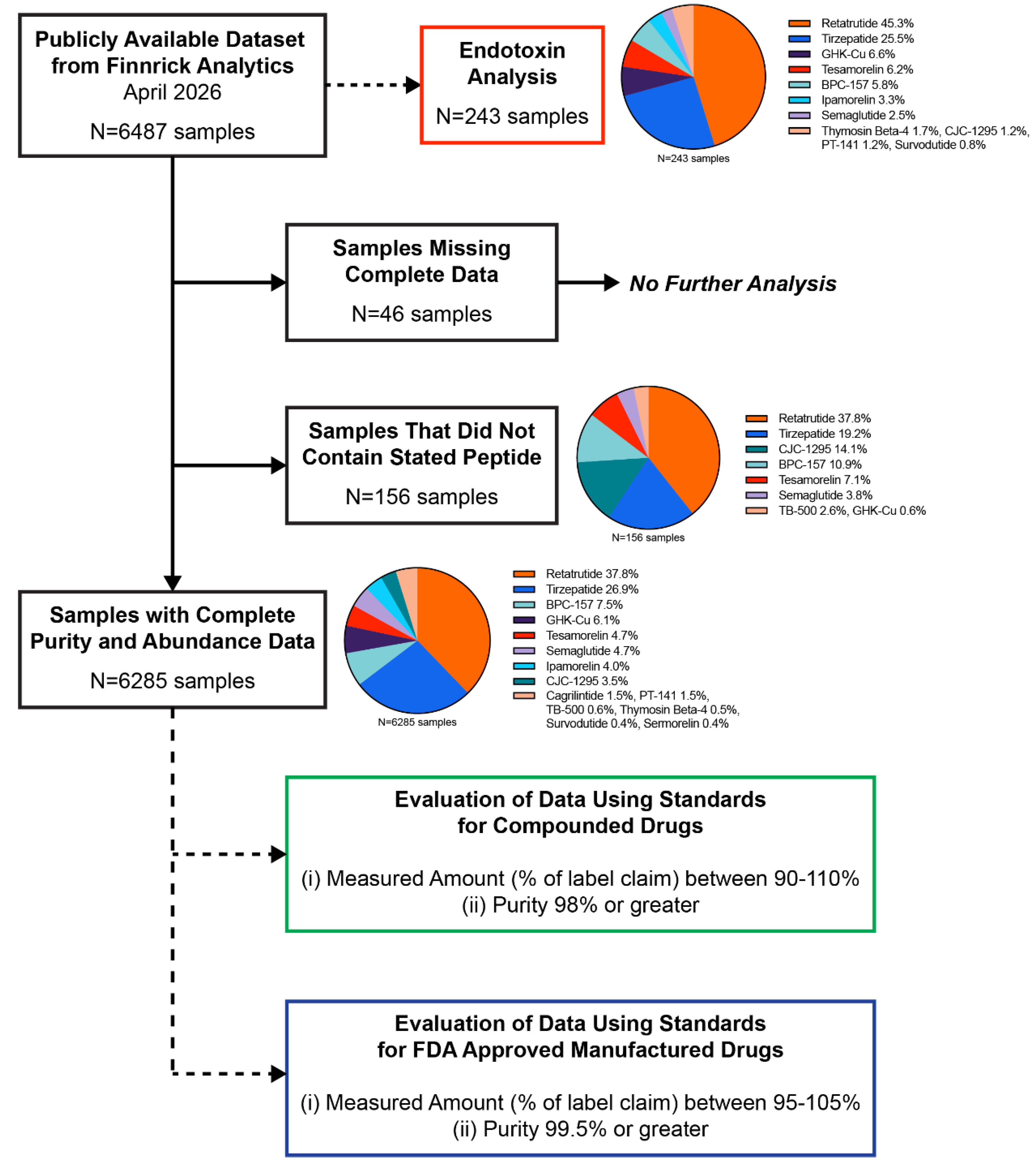
Figure 2.
Endotoxin analysis. (A) Distribution of endotoxin levels across all samples tested (N=243). Samples were categorized as having no detectable endotoxin (N=74, 30%), low-level endotoxin below the quantifiable threshold (endotoxin <0.5 EU/vial; N=133, 55%), or measurable endotoxin contamination (0.5-40 EU/vial; N=36, 15%). (B) Scatter plot of endotoxin level versus sample purity among the subset of samples with quantifiable endotoxin (0.5-40 EU/vial; N=36), as indicated by the arrow in panel A. Linear regression between endotoxin burden and peptide purity is shown (R2<0.01, P=0.75).
Figure 2.
Endotoxin analysis. (A) Distribution of endotoxin levels across all samples tested (N=243). Samples were categorized as having no detectable endotoxin (N=74, 30%), low-level endotoxin below the quantifiable threshold (endotoxin <0.5 EU/vial; N=133, 55%), or measurable endotoxin contamination (0.5-40 EU/vial; N=36, 15%). (B) Scatter plot of endotoxin level versus sample purity among the subset of samples with quantifiable endotoxin (0.5-40 EU/vial; N=36), as indicated by the arrow in panel A. Linear regression between endotoxin burden and peptide purity is shown (R2<0.01, P=0.75).
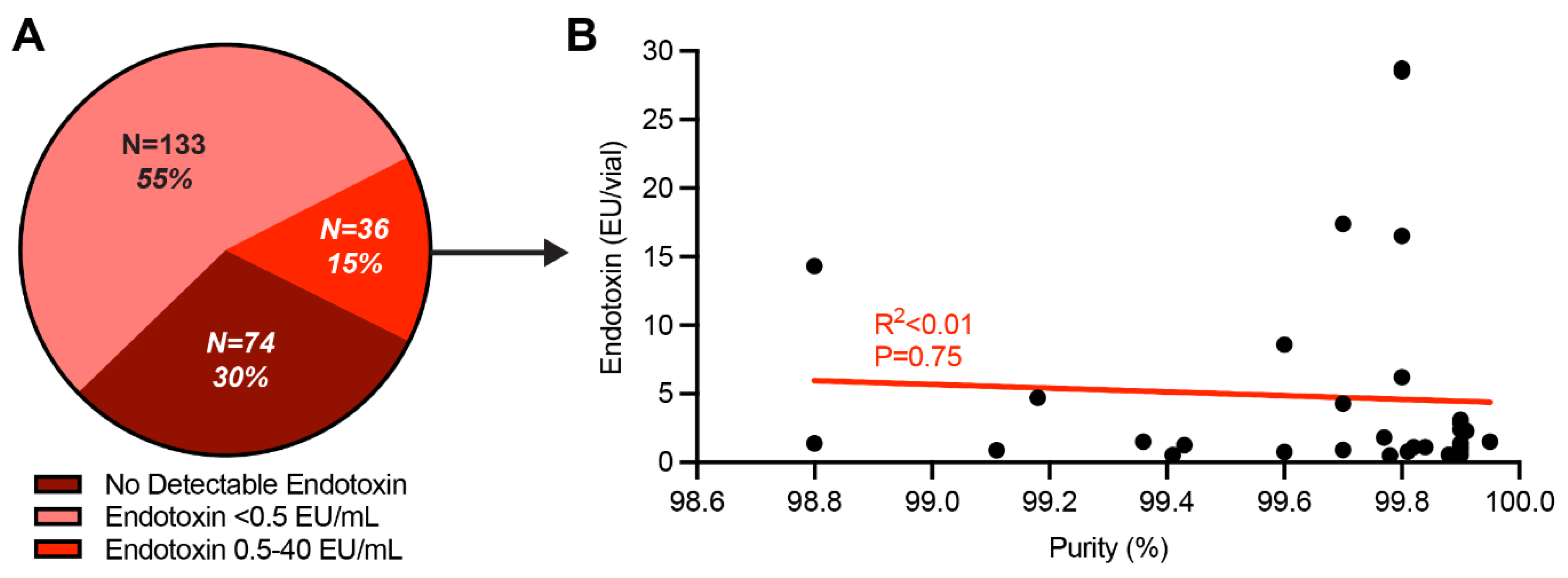
Figure 3.
Median and interquartile range of measured abundance and purity of peptide samples. (A) Measured abundance, expressed as percent of label claim. (B) Purity. The green shaded region denotes the Compounding Standards Model range (abundance 90-110% and purity ≥98.0%), while the blue shaded region denotes the Manufactured Standards Model range (abundance 95-105% and purity ≥99.5%). Values are median±IQR.
Figure 3.
Median and interquartile range of measured abundance and purity of peptide samples. (A) Measured abundance, expressed as percent of label claim. (B) Purity. The green shaded region denotes the Compounding Standards Model range (abundance 90-110% and purity ≥98.0%), while the blue shaded region denotes the Manufactured Standards Model range (abundance 95-105% and purity ≥99.5%). Values are median±IQR.
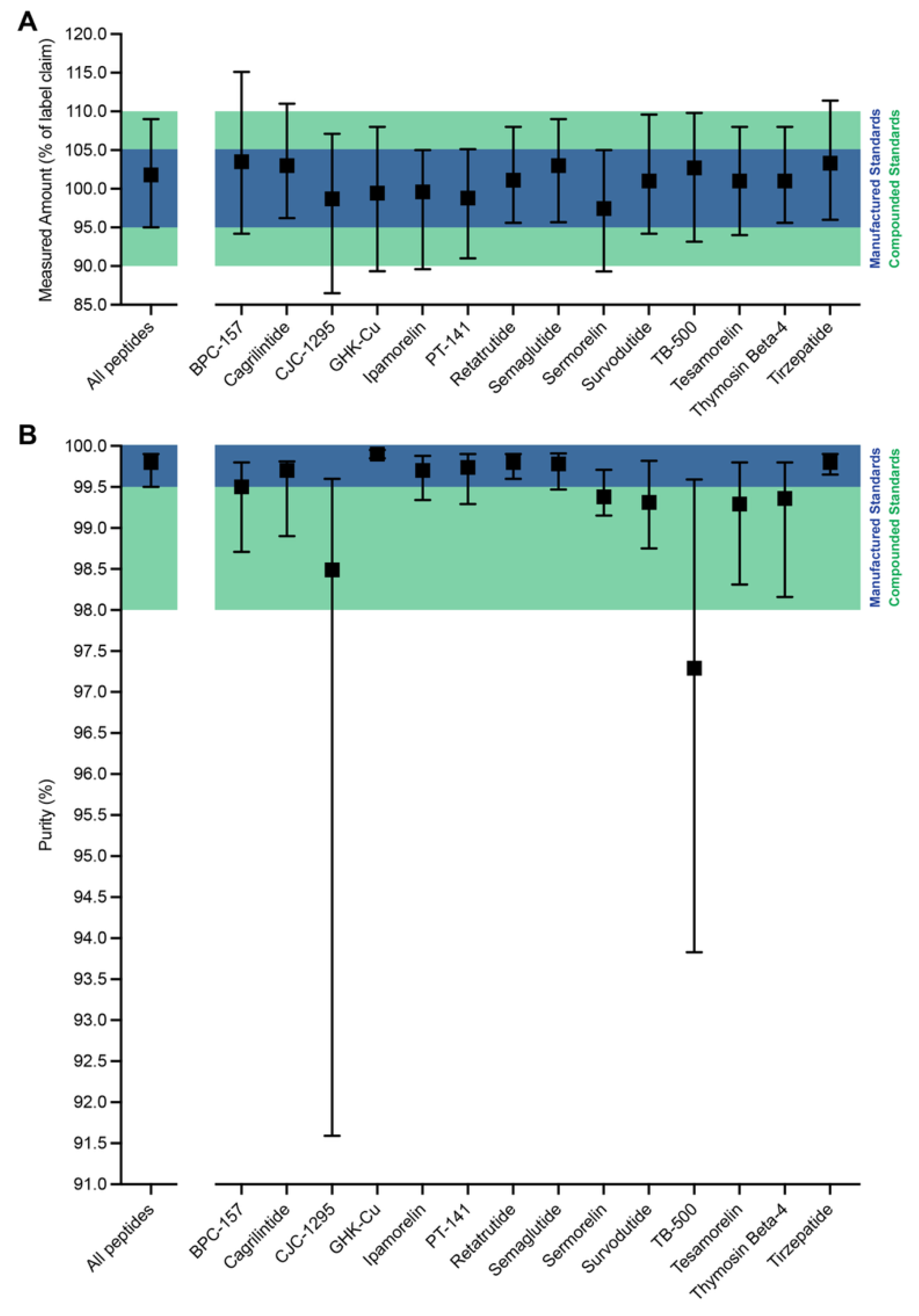
Figure 4.
Distribution of measured abundance and purity across samples. Violin plots demonstrating the distribution of (A) measured abundance and (B) purity for each peptide, with individual data points overlaid. The green shaded region denotes the Compounding Standards Model range (abundance 90-110% and purity ≥98.0%), while the blue shaded region denotes the Manufactured Standards Model range (abundance 95-105% and purity ≥99.5%). Axes were constrained to improve visualization of the central distribution. Values beyond this boundary are represented at the truncation limits. N=6285.
Figure 4.
Distribution of measured abundance and purity across samples. Violin plots demonstrating the distribution of (A) measured abundance and (B) purity for each peptide, with individual data points overlaid. The green shaded region denotes the Compounding Standards Model range (abundance 90-110% and purity ≥98.0%), while the blue shaded region denotes the Manufactured Standards Model range (abundance 95-105% and purity ≥99.5%). Axes were constrained to improve visualization of the central distribution. Values beyond this boundary are represented at the truncation limits. N=6285.
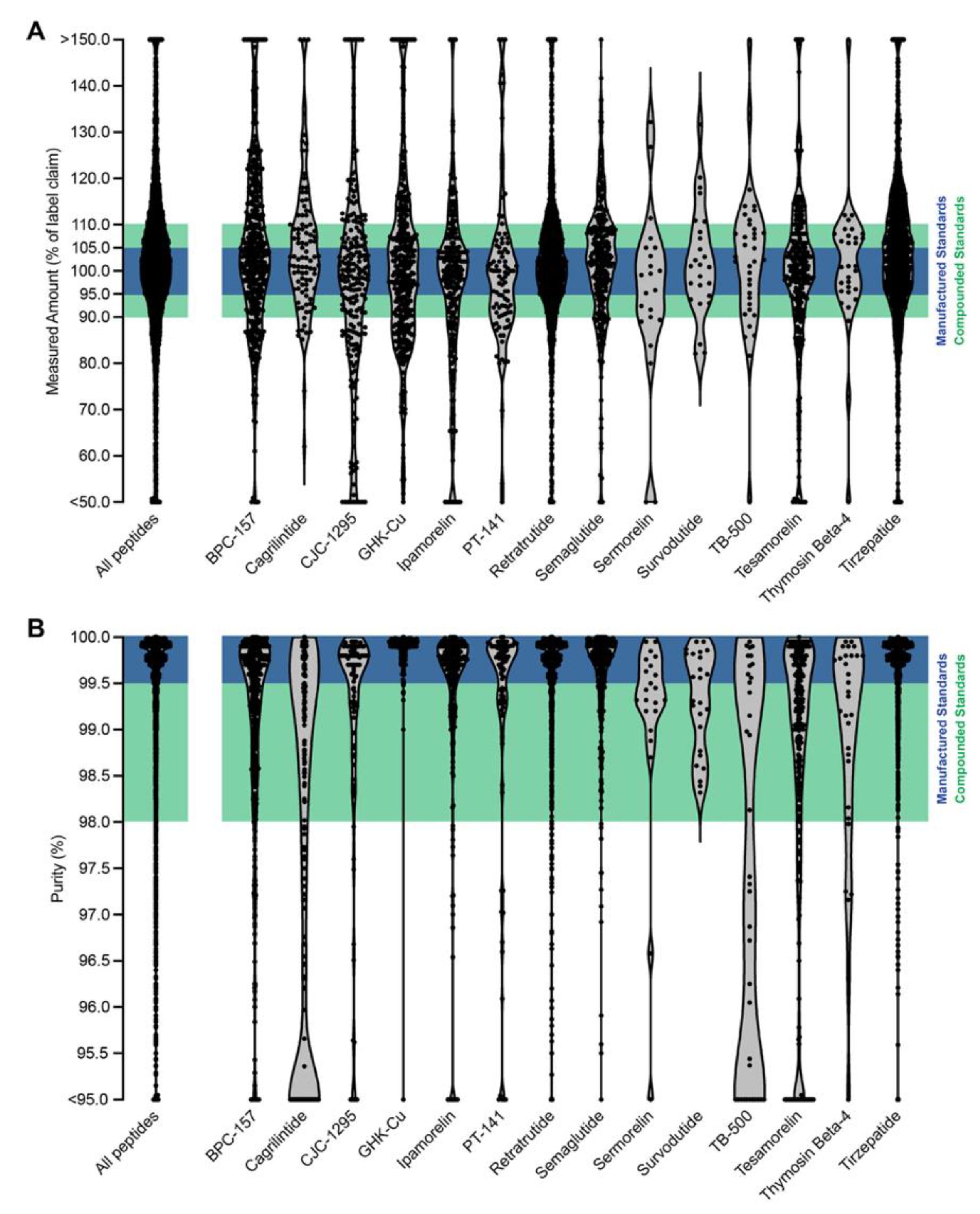
Figure 5.
Inter-vendor variability in measured amount and purity for the five most represented peptide classes. Data points represent individual vendor-peptide pairings for (A) measured amount as a percentage of label claim and (B) purity for BPC-157 (N=88), GHK-Cu (N=120), retatrutide (N=507), tesamorelin (N=111), and tirzepatide (N=335). The green shaded region denotes the Compounding Standards Model range (abundance 90-110% and purity ≥98.0%), while the blue shaded region denotes the Manufactured Standards Model range (abundance 95-105% and purity ≥99.5%). Values are median±IQR.
Figure 5.
Inter-vendor variability in measured amount and purity for the five most represented peptide classes. Data points represent individual vendor-peptide pairings for (A) measured amount as a percentage of label claim and (B) purity for BPC-157 (N=88), GHK-Cu (N=120), retatrutide (N=507), tesamorelin (N=111), and tirzepatide (N=335). The green shaded region denotes the Compounding Standards Model range (abundance 90-110% and purity ≥98.0%), while the blue shaded region denotes the Manufactured Standards Model range (abundance 95-105% and purity ≥99.5%). Values are median±IQR.
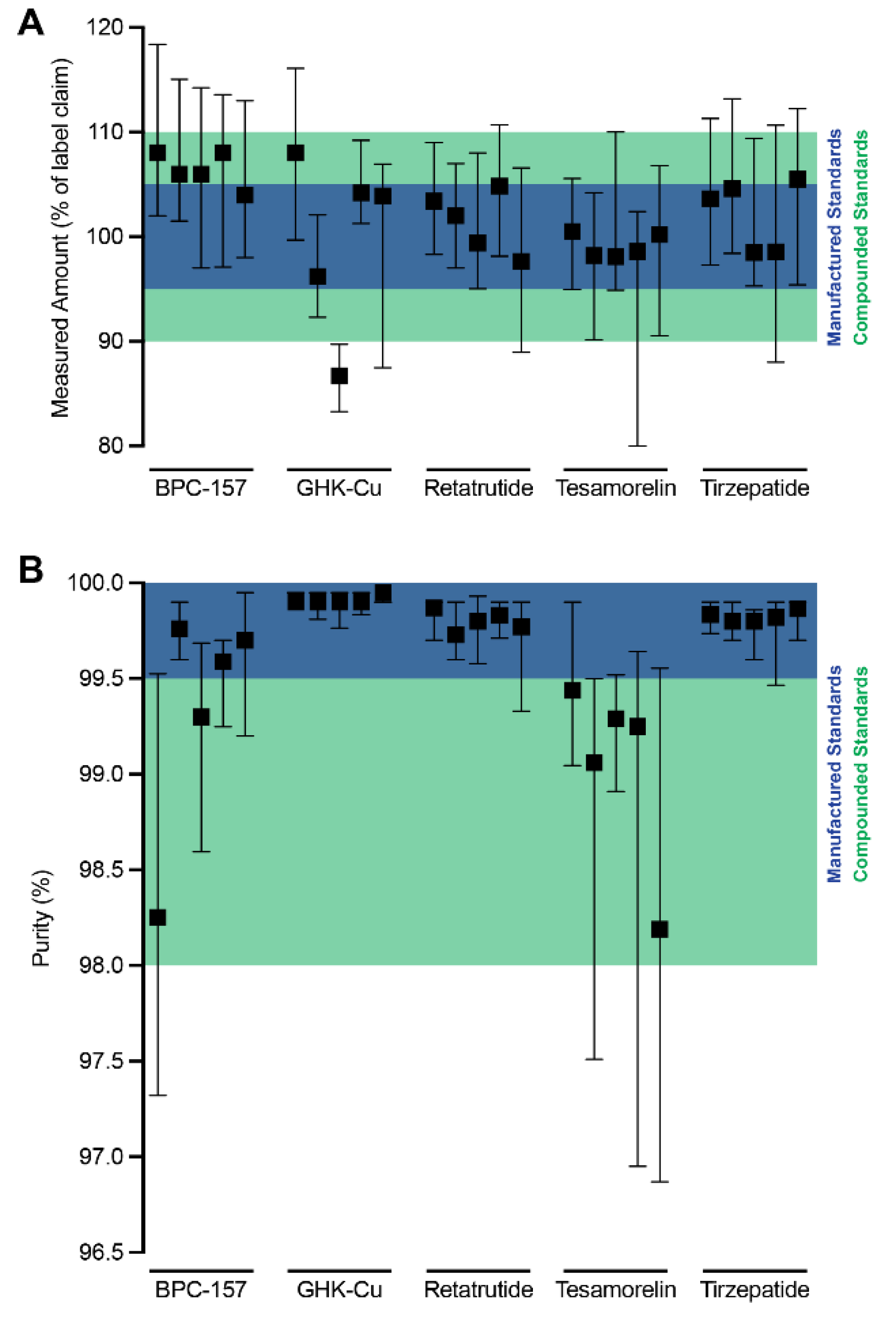
Figure 6.
Relationship between median measured amount and median purity across the top 20 vendors by sample volume. Each data point represents a manufacturer-peptide combination, with one specific manufacturer and all of the peptide samples they produced. The top 20 vendors by sample volume contributed 3098 peptide samples (49.3% of the overall analytic sample). Green dotted lines indicate the Compounding Standards Model used in this study (abundance 90-110% and purity ≥98.0%). Blue dashed lines indicate the Manufactured Standards Model (abundance 95-105% and purity ≥99.5%). Values are median±IQR.
Figure 6.
Relationship between median measured amount and median purity across the top 20 vendors by sample volume. Each data point represents a manufacturer-peptide combination, with one specific manufacturer and all of the peptide samples they produced. The top 20 vendors by sample volume contributed 3098 peptide samples (49.3% of the overall analytic sample). Green dotted lines indicate the Compounding Standards Model used in this study (abundance 90-110% and purity ≥98.0%). Blue dashed lines indicate the Manufactured Standards Model (abundance 95-105% and purity ≥99.5%). Values are median±IQR.
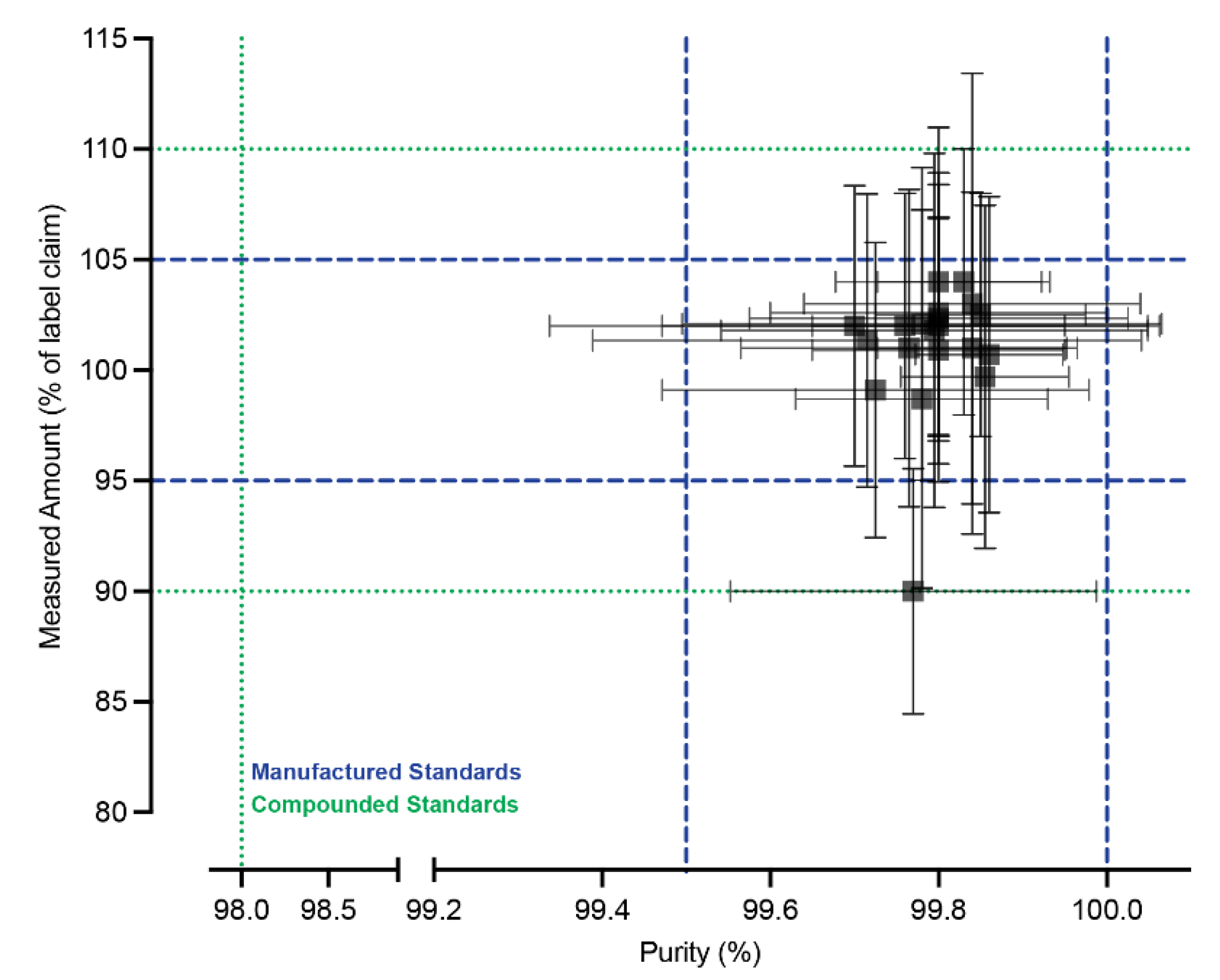
Figure 7.
Composite release score distribution by peptide. Stacked bar charts display the proportion of samples in each release score category for all peptides combined and for each of the 14 individual peptide classes. (A) Classification using the Compounding Standards Model (measured abundance 90-110% and purity ≥98.0%). (B) Classification using Manufactured Standards Model (measured abundance 95-105% and purity ≥99.5%). Stacked bars show the percentage of samples in each group that met both criteria, met purity but not abundance criteria, met abundance but not purity criteria, failed both criteria, or did not contain the stated peptide.
Figure 7.
Composite release score distribution by peptide. Stacked bar charts display the proportion of samples in each release score category for all peptides combined and for each of the 14 individual peptide classes. (A) Classification using the Compounding Standards Model (measured abundance 90-110% and purity ≥98.0%). (B) Classification using Manufactured Standards Model (measured abundance 95-105% and purity ≥99.5%). Stacked bars show the percentage of samples in each group that met both criteria, met purity but not abundance criteria, met abundance but not purity criteria, failed both criteria, or did not contain the stated peptide.
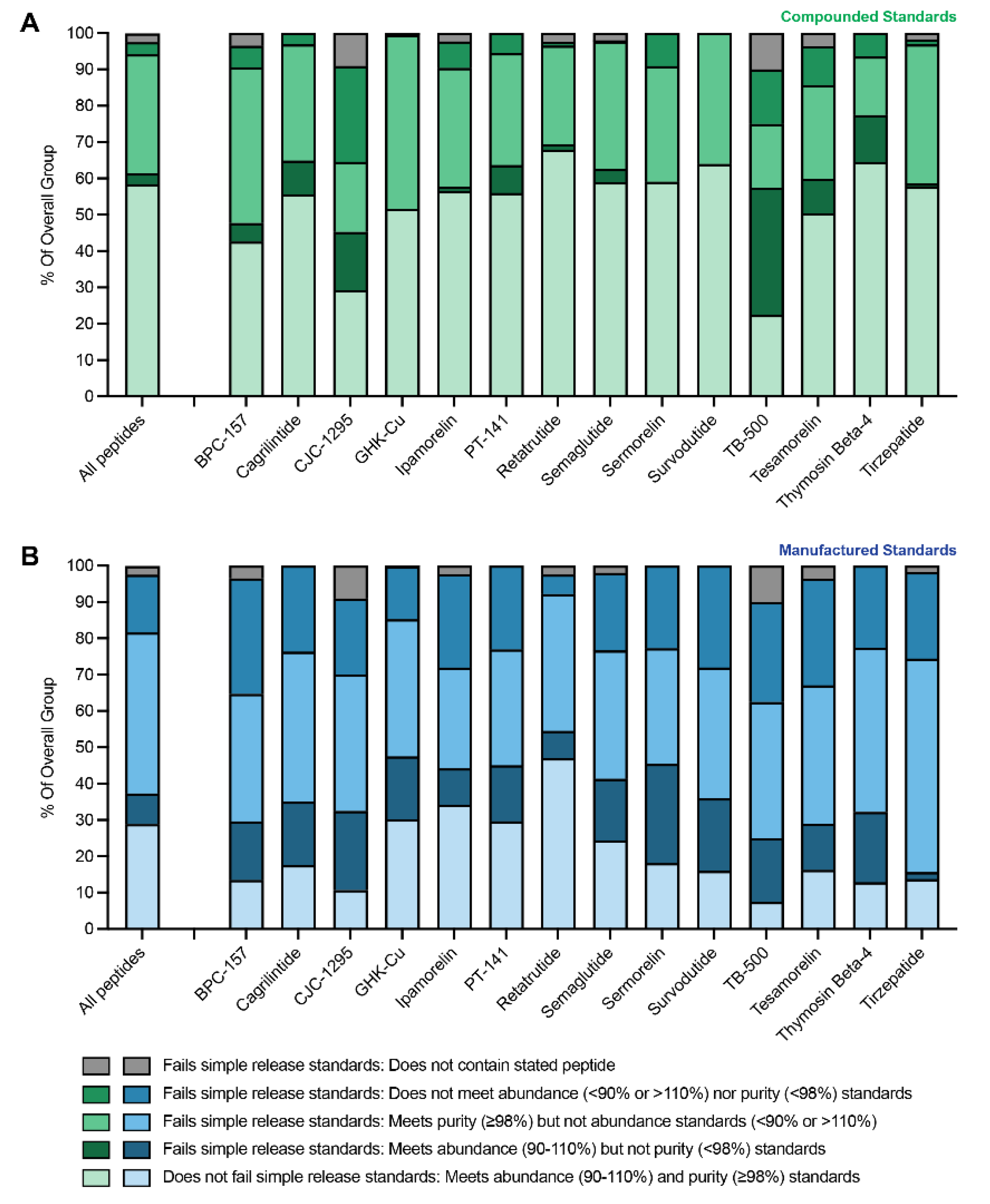
Figure 8.
Estimated cost of a clinically relevant treatment course for compounded (503A) and gray market research peptides compared to FDA-approved manufactured formulations. Cost estimates were calculated for (A) PT-141, (B) tesamorelin, semaglutide, and tirzepatide based on drug doses and treatment durations derived from the pivotal phase III clinical trial data of each peptide. For PT-141, costs reflect a 24-week treatment course at 1.75 mg per intercourse event. For tesamorelin, costs reflect a 26-week course at 1.4 mg/day. For semaglutide, costs reflect a 68-week course using the STEP 1 dose-escalation protocol. For tirzepatide, costs reflect a 72-week course using the SURMOUNT-1 highest-dose escalation protocol. Tesamorelin is available at no cost through a limited access program and cash-pay pricing is not available (NA). Wegovy (semaglutide) and Zepbound (tirzepatide) cash-pay pricing (N=1 each). Data are presented as median with interquartile range. *, significantly different (P<0.05) from the gray market research peptide group; †, significantly different (P<0.05) from the 503A compounded peptide group; ‡, N=1 data point, not included in statistical model. Statistical comparisons were performed using natural log-transformed data with Welch’s t-test (α=0.05, tesamorelin, semaglutide, and tirzepatide) or between multiple groups with a one-way ANOVA (α=0.05, PT-141) followed by Tukey’s post-hoc sorting.
Figure 8.
Estimated cost of a clinically relevant treatment course for compounded (503A) and gray market research peptides compared to FDA-approved manufactured formulations. Cost estimates were calculated for (A) PT-141, (B) tesamorelin, semaglutide, and tirzepatide based on drug doses and treatment durations derived from the pivotal phase III clinical trial data of each peptide. For PT-141, costs reflect a 24-week treatment course at 1.75 mg per intercourse event. For tesamorelin, costs reflect a 26-week course at 1.4 mg/day. For semaglutide, costs reflect a 68-week course using the STEP 1 dose-escalation protocol. For tirzepatide, costs reflect a 72-week course using the SURMOUNT-1 highest-dose escalation protocol. Tesamorelin is available at no cost through a limited access program and cash-pay pricing is not available (NA). Wegovy (semaglutide) and Zepbound (tirzepatide) cash-pay pricing (N=1 each). Data are presented as median with interquartile range. *, significantly different (P<0.05) from the gray market research peptide group; †, significantly different (P<0.05) from the 503A compounded peptide group; ‡, N=1 data point, not included in statistical model. Statistical comparisons were performed using natural log-transformed data with Welch’s t-test (α=0.05, tesamorelin, semaglutide, and tirzepatide) or between multiple groups with a one-way ANOVA (α=0.05, PT-141) followed by Tukey’s post-hoc sorting.
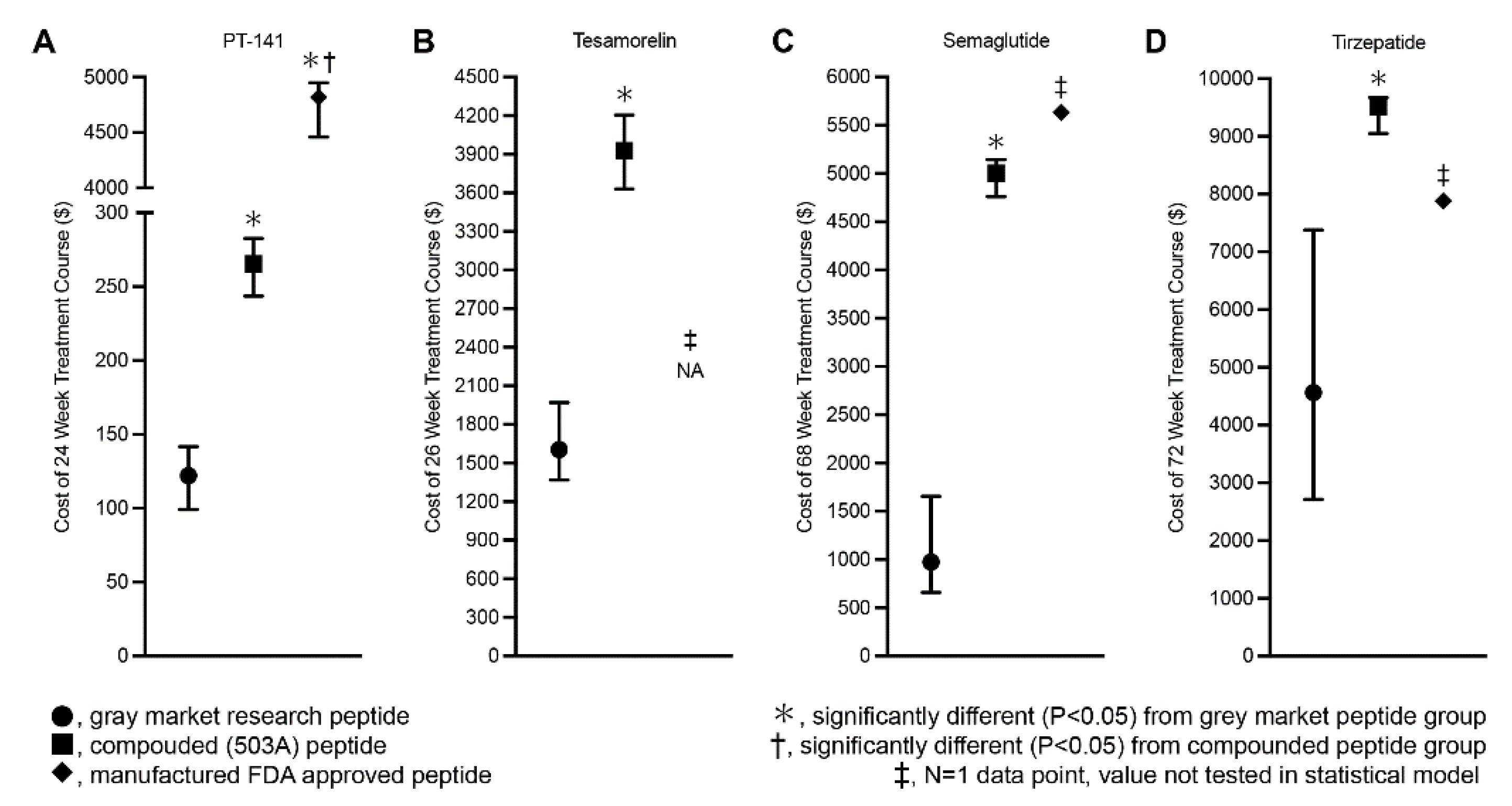
Figure 9.
Common steps in producing FDA-approved peptide medications. Ten steps often used to produce an FDA-approved peptide drug product are shown, from initial synthesis and purification through drug substance characterization, advanced structural analysis, formulation development, container closure evaluation, sterility and endotoxin testing, stability evaluation, manufacturing controls, and final batch release. Items in bold were assessed in the current dataset: purity and identity confirmation (Step 3) and bacterial endotoxins (Step 7). This figure is intended as a conceptual summary of the broader quality framework typically applied to regulated peptide drug products and does not represent an exhaustive or product invariant release pathway.
Figure 9.
Common steps in producing FDA-approved peptide medications. Ten steps often used to produce an FDA-approved peptide drug product are shown, from initial synthesis and purification through drug substance characterization, advanced structural analysis, formulation development, container closure evaluation, sterility and endotoxin testing, stability evaluation, manufacturing controls, and final batch release. Items in bold were assessed in the current dataset: purity and identity confirmation (Step 3) and bacterial endotoxins (Step 7). This figure is intended as a conceptual summary of the broader quality framework typically applied to regulated peptide drug products and does not represent an exhaustive or product invariant release pathway.
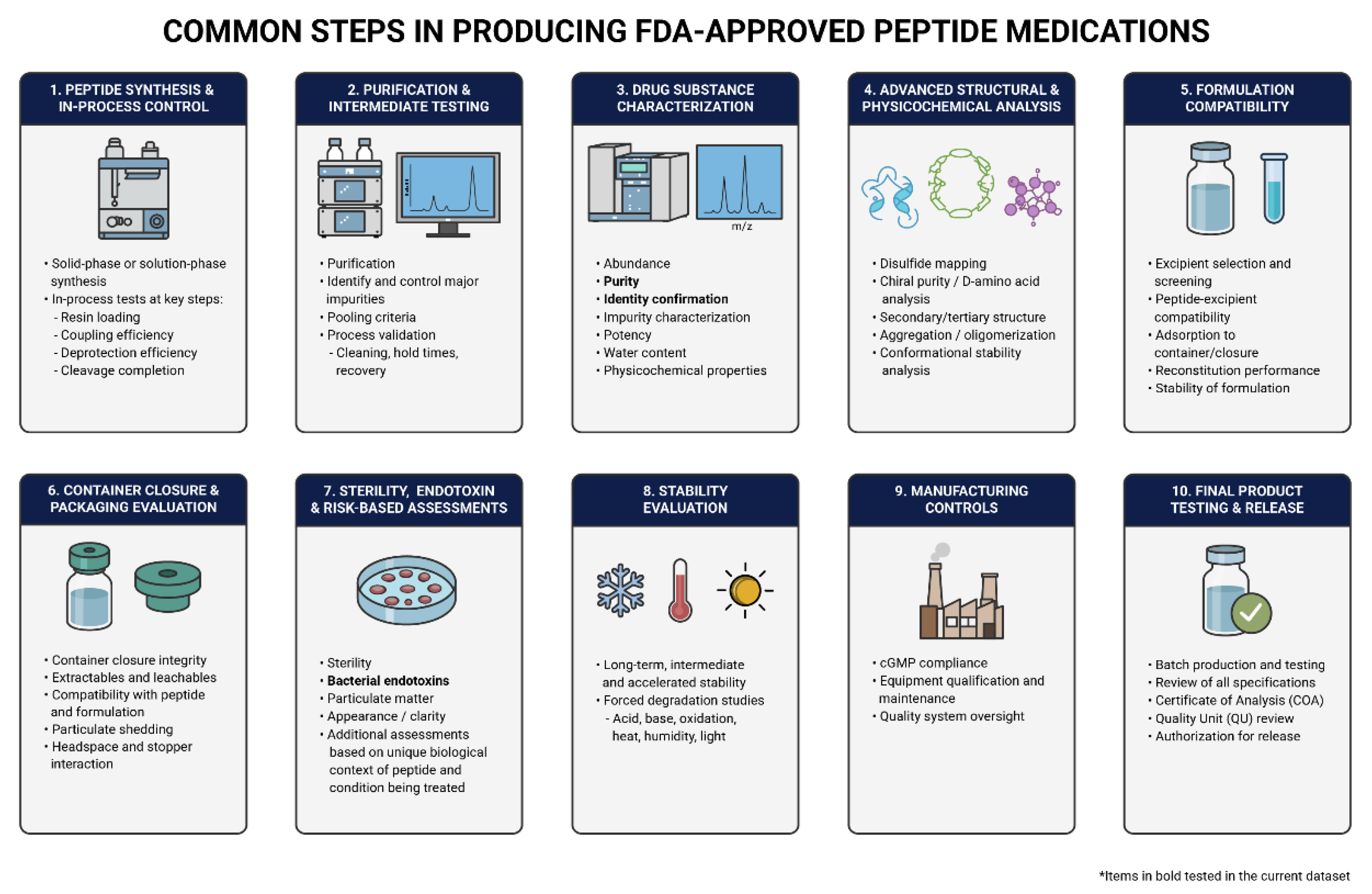

Table 1.
Cost of peptides expressed as dollars ($) per milligram (mg). Values are median (IQR). Differences between groups were tested using Welch’s t-test (α=0.05) or between multiple groups with a one-way ANOVA (α=0.05) followed by Tukey’s post-hoc sorting. FDA-approved tesamorelin is not available for cash pay purchasing. For FDA-approved semaglutide and tirzepatide, the price represents the cost per milligram of the highest dose pen. *, significantly different (P<0.05) from gray market research peptide price; †, significantly different (P<0.05) from 503A compounded peptide price; ‡, not tested in statistical model.the FDA-approved product was significantly more expensive than the compounded formulation.
Table 1.
Cost of peptides expressed as dollars ($) per milligram (mg). Values are median (IQR). Differences between groups were tested using Welch’s t-test (α=0.05) or between multiple groups with a one-way ANOVA (α=0.05) followed by Tukey’s post-hoc sorting. FDA-approved tesamorelin is not available for cash pay purchasing. For FDA-approved semaglutide and tirzepatide, the price represents the cost per milligram of the highest dose pen. *, significantly different (P<0.05) from gray market research peptide price; †, significantly different (P<0.05) from 503A compounded peptide price; ‡, not tested in statistical model.the FDA-approved product was significantly more expensive than the compounded formulation.
| Gray Market Research Peptide Price ($ per mg) | 503A Compounded Peptide Price ($ per mg) | FDA Approved Commercial Peptide Price ($ per mg) | |
|---|---|---|---|
| PT-141 | 3.88 (3.15-4.50) N=86 | 8.50 (7.80-9.05)* N=34 | 153.0 (141.6-157.1) † N=47 |
| Semaglutide | 7.00 (4.74-11.90) N=53 | 36.00 (34.25-37.00)* N=64 | 36.35‡ N=1 |
| Tesamorelin | 6.30 (5.37-7.73) N=81 | 15.42 (14.25-16.50)* N=33 | NA‡ |
| Tirzepatide | 4.90 (2.91-7.93) N=51 | 10.25 (9.75-10.42)* N=47 | 7.48‡ N=1 |
Disclaimer/Publisher’s Note: The statements, opinions and data contained in all publications are solely those of the individual author(s) and contributor(s) and not of MDPI and/or the editor(s). MDPI and/or the editor(s) disclaim responsibility for any injury to people or property resulting from any ideas, methods, instructions or products referred to in the content. |
© 2026 by the authors. Licensee MDPI, Basel, Switzerland. This article is an open access article distributed under the terms and conditions of the Creative Commons Attribution (CC BY) license (http://creativecommons.org/licenses/by/4.0/).
Copyright: This open access article is published under a Creative Commons CC BY 4.0 license, which permit the free download, distribution, and reuse, provided that the author and preprint are cited in any reuse.


