

Submitted:
23 April 2026
Posted:
24 April 2026
You are already at the latest version
Abstract
The role of the gut-brain axis is crucial in maintaining homeostasis and regulating neural, hormonal, and immunological activity. This study aimed to evaluate the effects of prebiotic or synbiotic on serum markers related to emotional disorders in individuals with morbid obesity in a triple-blind randomized trial. The sample consisted of 22 subjects, 16 women and 6 men, with a mean age of 41.8 ± 8.5 years and a mean BMI of 47.7 ± 6.8 kg/m2. Serum BDNF concentrations decreased significantly after 30 days of prebiotic supplementation (p=0.017), and when analyzing the difference between the evaluated moments, only this group showed a reduction in this parameter. Serum cortisol concentrations were increased in all groups between the moments evaluated, being statistically significant in the synbiotic supplemented group (p=0.028). Serum TNF-α concentrations increased significantly after 30 days of prebiotic supplementation when compared to the baseline of the group itself (p=0.035): however, this variation did not promote significant difference between the groups evaluated after 30 days of supplementation. The results suggest that low grade chronic inflammatory state may be related to neuroendocrine changes present in emotional disorders, but studies with greater sampling power and correlations with clinical findings are necessary to strengthen this evidence.
Keywords:
obesity
; depression
; anxiety
; prebiotic
; synbiotic
1. Introduction
Obesity is characterized by a metabolic disorder that generates and maintains a state of chronic stress, considered a risk factor for emotional disorders (i.e., depression and anxiety) [1].
Depression and anxiety increase corticotropin-releasing hormone (CRH) release, with consequent increase in corticotropin hormone (ACTH) and cortisol release. In this situation, reduced glucocorticoid receptor activity precludes negative cortisol control over the hypothalamus while maintaining hyperactivity of the hypothalamus-pituitary-adrenal axis (HPA) [2,3,4].
Additionally, hypercortisolemia stimulates the hypothalamus to increase the release of thyrotropin-releasing hormone (TRH), followed by increased thyrotropin (TSH) release from the pituitary gland, with consequent stimulation of the thyroid gland and increased release of thyroxine (T4). Concomitantly, increased cortisol release can negatively affect the conversion of T4 to triiodothyronine (T3), thus compromising the synthesis of serotonin (5HT) and noradrenaline (NOR) [2,3].
The synthesis of these neurotransmitters also depends on B-complex vitamins, such as vitamin B12 and folic acid, which are often reduced in individuals with depression, anxiety, and obesity [5,6]. In these situations, an increase in serum parathyroid hormone (PTH) concentrations is also evidenced, which in depression and anxiety may be related to increased HPA axis and consequent parathyroid gland stimulation, as well as oxidative stress and vitamin D deficiency, also evidenced in obese individuals [7,8].
Currently, research indicates the strong relationship between intestinal dysbiosis and obesity, depression, and anxiety due to increased production and systemic release of inflammatory mediators such as interleukins and transcription factors [9,10,11]. Also, increased maintenance of serum concentrations of inflammatory mediators leads to chronic inflammation in the production and release of hormones such as cortisol, leptin and ghrelin, and vitamin deficiency. Chronic systemic inflammation and hypercortisolemia are associated with hippocampal atrophy, and with resistance to leptin and ghrelin hormones, maintaining them in high serum concentrations and feeding the release of inflammatory mediators [1,3,12,13]. Hippocampal dysfunction also promotes reduced release of brain-derived neurotrophic factor (BDNF) evidenced in individuals with depression and anxiety. Concomitantly, B-vitamin deficiency and chronic systemic inflammation are also involved in altering blood-brain barrier (BBB) permeability, with consequent low-grade chronic neuroinflammation related to increased CRH release and BDNF reduction [1,3,14,15,16].
Therefore, there is an interrelation between gastrointestinal tract and brain essential in maintaining homeostasis and regulating neural, hormonal, and immune activity establishing a microbiome-gut-brain axis [17], in which the gut microbiota acts as a mediator of gut-brain communication [18]. Given the above, this study is aimed to evaluate the effects of prebiotic or synbiotic supplementation on serum markers related to depression and anxiety in morbidly obese individuals.
2. Materials and Methods
This study is a randomized, placebo-controlled, triple-blind clinical trial conducted at the Polidoro Ernani of São Thiago University Hospital at the Federal University of Santa Catarina (HU/UFSC), Florianopolis, SC. The study sample consisted of adult individuals with morbid obesity (IMC≥40,0 kg/m²) referred for first consultation at the bariatric surgery outpatient clinic of the HU/UFSC. The protocol of this study follows the precepts set out in the Helsinki Declaration [19] and National Health Council Resolution nº 466 of 2012 [20]. The project was approved by the UFSC Human Research Ethics Committee under number 1.340.253 and was registered to the clinical trial registration platform ClinicalTrials.gov (http://www.clinicaltrials.gov/) under the number NCT02660333. This manuscript was prepared following the CONSORT (Consolidated Standards of Reporting Trials) statement [21] (supplementary file 1).
For inclusion criteria, adult subjects (18-60 years old) of both sexes with BMI≥40,0 kg/m2 were selected. Subjects were excluded if they presented previous gastrointestinal diseases; food intolerances and/ or allergies; alcohol and/ or drug addiction; use of anti-inflammatory and/ or antibiotic and/ or immunosuppressive drugs up to three months prior to the study; regular use of laxatives, opioid narcotic analgesics and appetite suppressants; current or prior use (up to one month) of prebiotics, probiotics, synbiotics or products enriched with these ingredients; intolerance to prebiotics and/ or probiotics and/ or synbiotics; following a diet for weight loss or gain in the last three months; pregnant or lactating; currently following unusual diets (i.e., vegetarian, macrobiotic, paleolithic) and tobacco use.
All participants received standardized clarification on nutritional treatment for weight loss and guidance during the supplementation period to avoid intense physical activity; consuming alcoholic beverages and foods enriched with prebiotics, probiotics, or synbiotics.
The study consisted of two experimental moments: baseline—the moment of the first outpatient consultation and beginning of prebiotic, synbiotic, or placebo supplementation; and endline—moment after 30 days of the first outpatient consultation and completion of prebiotic, synbiotic or placebo supplementation use. The researches and collaborators maintained face-to-face contact with the individuals under analysis (when they went to the HU/UFSC) or by telephone call once a week to record adherence to treatment and appropriate care support when needed.
Participants were randomly assigned to one of the treatment groups (G1—control group that received placebo, G2—group that received prebiotic and G3—group that received synbiotic), using a randomization list generated by a computer program consisting of randomly interchanged blocks with three patients each. After that, the treatment groups were replaced by random three-digit numeric codes also generated by a computer program. This step was performed by a researcher not involved with the research and the researcher who recruited and tracked participants only had access to the list containing randomization blocks and numeric codes, thus ensuring allocation concealment. Supplements and placebo were pre-packaged in opaque sachets and closed by the supplier with random codes, being identical in physical appearance and sensory (taste and color). Supplement identification codes were revealed by the supplier company only after statistical analysis of the study data, characterizing the study as triple blind.
2.1. Characterization of Nutritional Supplements
The prebiotic was constituted of fructooligosacharide (FiberFOS®—Invictus Farma Nutrição, Group FQM, Rio de Janeiro, Brazil), packaged in sachets of 6 g each. The synbiotic was constituted of fructooligosacharide and probiotics (Lactobacillus paracasei LPC-37 109 UFC; Lactobacillus rhamnosus HN001 109 UFC; Lactobacillus acidophilus NCFM 109 UFC; Bifidobacterium lactis HN019 109 UFC) (Simbioflora®- Invictus Farma Nutrição, Group FQM, Rio de Janeiro, Brazil), packaged in sachets of 6 grams each. The placebo consisted of maltodextrin, packaged in 6 g sachets, identical to the intervention supplements.
Subjects were instructed to consume two sachets per day (12 g) for 30 days at different hours: one sachet (6 g) to be consumed while fasting and one sachet (6 g) between two meals. Each sachet should be diluted in 100 mL of room temperature water until complete dilution.
2.2. Characterization of Subjects and Clinical Data Collection
Subjects participating in the study were characterized at baseline by personal and clinical data. To assess nutritional status, anthropometric measurements of weight, height and waist circumference (WC) were performed by trained professionals, following techniques proposed by the World Health Organization (WHO) from 1995 and 2008 [22,23]. Body Mass Index (BMI) was calculated and classified according to the cut-off points defined by the WHO [23].
As clinical parameters, it was recorded the associated comorbidities, drugs used, gastrointestinal changes, presence of constipation, consistency, and shape of stools, use of vitamin and mineral supplements, practice of physical activity and characteristics about the menstrual period were verified through survey conducted at baseline and endline. To determine the presence of constipation, the diagnostic criteria of ROMA IV were used [24]. To determine the consistency and shape of the stool, the Bristol Fecal Scale criteria were used [25].
2.3. Biological Sampling and Biochemical Analysis
For laboratory analysis, peripheral venous blood samples were collected, always in the morning before 10 am, by a trained professional according to the standard technique, after fasting of 8 to 10 hours, at baseline and endline. From the collected samples, plasma and serum were separated for analysis as described below:
- BDNF determined in plasma by the ELISA method (Enzyme-Linked Immunosorbent Assay) (R&D Systems®, R&D Systems a biotechnical brand, Minneapolis, USA);
- ACTH and cortisol were determined in plasma by the microparticle chemiluminescence method (ACTH: CMIA Immulite 2000 XPi®, Siemens Healthcare Diagnostics Inc., Newark, DE, USA; Cortisol: CMIA Centaur XP®, Siemens Healthcare Diagnostics Inc., Newark, DE, USA);
- TSH, PTH, vitamin D—25OH, vitamin B12, and folic acid were determined in serum by microparticle chemiluminescence method (CMIA Architect®, ABBOTT Park Inc., IL, USA);
- High-sensitive C-reactive protein (hs-CRP) determined in serum by the nephelometry method (BN II®, Siemens Healthcare Diagnostics Inc., Newark, DE, USA);
- IL-1β, IL-6, and TNF-α were determined in plasma by the ELISA method (BD OptEIATM®, BD Biosciences, San Jose, California, USA).
2.4. Statistical Analysis
To calculate the sample size, a study power of 80%, a confidence interval of 95%, and 10% increase related to possible follow-up losses were considered. The calculation was performed according to IL-6 values (a primary outcome of the original survey), resulting in a minimum sample size of 54 subjects per group.
Statistical analysis was performed using STATA® version 13.0 for Windows®. Continuous variables were synthesized into two single measurements per group: mean and standard deviation when the distribution was symmetrical, and median and interquartile range when it was asymmetric. In contrast, categorical variables were described in categories and frequency from the appearance in the established groups. To evaluate the distribution of data, the Shapiro-Wilk, Skewness, Kurtosis and Coefficient of Variation normality test were applied.
For continuous variables, comparisons between groups (control and supplemented) were performed using the ANOVA test (parametric data) or the Kruskal Wallis test (nonparametric data). As post hoc tests the Tukey (parametric data) and Mann Whitney (nonparametric data) tests were used. For comparisons in the same group at baseline and after the intervention, the Wilcoxon test (nonparametric data) was applied.
For categorical variables, comparisons between groups (control and supplemented) were performed using Fisher’s exact test. Correlation analysis was performed using Spearman correlation (non-parametric data). For all test, a significance level of 95% (p<0.05) was adopted.
3. Results
Between January 2016 and February 2018, 64 subjects underwent the eligibility check screening. Of these, 23 subjects did not meet the selection criteria, as shown in Figure 1.
Of the 41 subjects considered eligible, 3 subjects refused to participate in the research. These subjects that refused were male, aged between 31 and 38 years old and BMI between 41.1 and 59.8 kg/m2. Therefore, 38 subjects were randomized into the 3 treatment groups (placebo, prebiotic, or synbiotic). During the supplementation period 16 subjects did not complete the survey and are presented as “Follow-up Losses” in Figure 1. These individuals reported not experiencing any adverse effects related to supplementation and did not attend the final evaluation due to scheduling conflicts caused by work commitments. The infection that led to discontinuation for some individuals was in the upper respiratory tract, and the use of NSAIDs (non-steroidal anti-inflammatory drugs) was due to pain in the lower limbs and lumbar region. In the end, 22 subjects completed the survey: 7 subjects from the placebo group; 8 subjects from the prebiotic group and 7 subjects from the synbiotic group. The complete sample recruitment and selection flowchart are shown in Figure 1.
The sample consisted of 16 women and 6 men, with a mean age of 41.8 ± 8.5 years old and a mean BMI of 47.7 ± 6.8 kg/m2. At baseline, there was no difference between the groups in terms of age, gender, nutritional status, and clinical parameters, comorbidities, and medications for continuous use (Table 1).
Biochemical Variations Between Study Moments
Serum BDNF concentrations decreased significantly after 30 days of prebiotic supplementation (p=0.017, Figure 2A), and when the difference between the baseline and endline was analysed, only this group showed a reduction in this parameter (Table 2). Comparing the groups after 30 days of intervention, the prebiotic group had significantly lower serum BDNF concentrations than the placebo group (p=0.015) (Figure 2A). Considering the difference between the baseline and endline and performing an analysis excluding subjects who were diagnosed with anxiety, we observed that the group receiving synbiotic supplementation was the only group that showed an increase in serum BDNF concentration, but without statistical significance (Figure 2B).
The number of individuals that constituted the final sample of this study, was not sufficient to identify significant differences to IL-6 values (a primary outcome of the original survey), according to the sample size calculation. Therefore, we calculated the minimum detectable difference of BDNF (primary outcome of this paper), considering an alpha (α) value of 5%, beta (β) value of 20%, the sample size obtained at the end of the study (7 individuals per group) and a standard deviation calculated from the 95% CI= 6.62 ng/mL, observed in the meta-analysis of Molendijik et al. [26] Thus, we identified that the minimum detectable difference (p<0.05) for BDNF, with the sample obtained in this study is 9.92 ng/mL, if the standard deviation is equal to ou less than 6.62 ng/mL.
The data presented in Table 2 show that serum cortisol concentration was increased in all groups between baseline and endline, being statistically significant in the synbiotic supplemented group (p=0.028). Considering the difference between the baseline and endline, and performing an analysis excluding subjects diagnosed with depression, we observed that the group receiving prebiotic supplementation had a lower increase in serum cortisol concentrations, but without statistical significance (Figure 2C).
The data presented in Table 2 also show that serum TNF-α concentrations increased significantly after 30 days of prebiotic supplementation when compared to the baseline of the group itself (p=0.035). However, this variation did not promote significant difference between the groups evaluated after 30 days of supplementation. For the other variables, no significant differences were found between groups or in the same group at baseline and after the interventions (Table 2).
In addition, a strong positive correlation (r = 0.892) was observed between serum BDNF and vitamin B12 concentration, as well as a strong negative correlation (r = -0,714) between serum BDNF and IL-6 concentration in subjects who received synbiotic supplementation for 30 days (Table 3). Among placebo-treated subjects, we observed a strong positive correlation between serum ACTH and IL-6 concentration (r = 0.785) and a strong negative correlation between ACTH and BDNF (r = -0,607). These effects were not observed with the other treatments (placebo or prebiotic), as can be observed in Table 3.
4. Discussion
The association between obesity and neuroendocrine changes related to the diagnosis of depression and anxiety reported in the literature [1,4,27,28], was consistent with the proportion of subjects diagnosed with depression and/ or anxiety (31.8%; n = 7) and continuous use of antidepressants (fluoxetine, sertraline, bupropion or clonazepam) (31.8%; n = 7) observed in our clinical trial sample. Interestingly, 2 subjects diagnosed with depression and/or anxiety were not on antidepressants, while 2 subjects who used these drugs (prescribed in the medical record) had no diagnosis of emotional disorder. These findings highlight the difficulty of establishing a standardized diagnosis for these emotional disorders, especially in the presence of other neuroendocrine disorders, such as obesity [29,30,31,32].
The relationship between depression and anxiety with obesity is mainly related to endocrine changes in common, such as HPA axis hyperactivity [1,3,9], observed by ACTH and cortisol hypersecretion [2,3,4]. In our clinical study, serum ACTH concentration was within the reference parameters for all samples analyzed and did not change significantly after the interventions performed. While cortisol, although also within the reference parameters, increased in all groups, with significant difference between baseline and endline in the synbiotic group. Importantly, when evaluated only individuals without a diagnosis of depression, those who received prebiotic supplementation had the lowest cortisol increase.
Schachter et al. [1] in a literature review, they observed that neurochemical changes and maintenance of chronic inflammatory status are related to diets with a high concentration of fat and obesity, in addition to correlating with increased emotional disorders, such as depression and anxiety, especially in experimental studies [33,34,35,36,37,38]. The review authors [1] point out that the use of probiotics and prebiotics to maintain the integrity of the intestinal microbiota can be used to prevent and treat obesity and emotional disorders. In an experimental model (mice), supplementation with associated FOS and GOS was more effective than supplementation of these isolate prebiotics in reducing serum corticosterone concentration and increasing gene expression of hippocampal BDNF [38].
In our clinical trial, it was observed that all subjects before and after any of the interventions performed (placebo, prebiotic, or synbiotic) had serum BDNF concentration below the reference parameters. Prebiotic treatment for 30 days accentuated this reduction, while placebo and synbiotic treatment for the same period promoted a slight increase but establishing normality with reference values and without statistical significance. It is possible that in morbid obesity, the microbiome response differs from the general population due to the already established chronic low-grade inflammatory state [1], and that the intervention period (30 days) was insufficient to overcome the initial adaptation or metabolic stress phase. It is important to note that our sample is not large enough to guarantee the statistical power to identify differences if they exist. However, considering the calculation of the minimum detectable difference for BDNF, based on a meta-analysis published in 2014 with an evaluation of 5203 individuals [26], the variations observed in our sample would be significant if our standard deviation were smaller. These findings lead us to reflect on the statistical significance of variations in BDNF concentrations in this population. It is also important to consider that our sample did not present a similar gender distribution between groups, and that studies have demonstrated differences in the gut-brain axis interaction between genders, from puberty through aging [39], with implications for emotional disorders such as depression and anxiety [40].
Additionally, a strong negative correlation was observed between ACTH and BDNF, demonstrating the neuroendocrine interaction present in this population. Contradicting these results, serum TSH, vitamin B12, and folic acid concentrations were within the reference parameters and were not altered by the treatments performed. However, a positive correlation was observed between serum BDNF and vitamin B12 concentrations after 30 days of synbiotic supplementation, suggesting that the synbiotic may be optimizing nutrient absorption (B12) which, in turn, supports neuronal health (BDNF), even though absolute levels have not yet reached global statistical significance. Experimental studies in mice have shown that administration of prebiotics (FOS and/or GOS) [33] or probiotics [41] promoted increased BDNF expression and reduced anxious and depressive behavior.
Neuroendocrine communication is dependent on several metabolic factors, such as the synthesis and release of neurotransmitters and hormones, expression of receptors and ion channels, and is influenced by membrane permeability and cellular integrity. These reactions are largely dependent on B vitamins, causing their deficiencies to be related to clinical symptoms of depression and anxiety and reduced cognitive function [5,6,42]. In our clinical trial, it is likely that synbiotic supplementation positively influenced the absorption of B-complex vitamins and thus aided BDNF synthesis, evidenced by the strong positive correlation observed between vitamin B12 and BDNF.
In depression and anxiety, hormonal changes that affect the HPA axis also promote parathyroid gland stimulation with the consequent increase in PTH concentrations [8], accompanied and intensified by the reduction in vitamin D concentrations [43]. In our clinical trial, baseline PTH serum concentrations were above reference values in the prebiotic and synbiotic supplemented groups. After 30 days of prebiotic supplementation this parameter was normalized, while the synbiotic supplemented group presented a mean increment of 11.7 pg/mL. Serum vitamin D concentrations were below the reference parameters in the placebo group only, with this difference increasing after 30 days of supplementation. This change did not influence serum PTH concentrations, which were within the reference in this group. Prebiotic or synbiotic supplemented groups started with serum vitamin D concentrations within the reference parameters and showed an increase after 30 days of intervention, most notably in the synbiotic group. Thus, the results of our clinical trial show that prebiotic or synbiotic supplementations improved serum vitamin D concentrations, but the inverse relationship with PTH was only observed in the prebiotic group and without statistical significance. Possibly a supplementation period longer than 30 days is necessary to evidence a sustained response pattern to prebiotic or synbiotic supplementation.
Studies show that serum PTH and vitamin D concentrations are inversely related and that in depression and/ or anxiety there is an increase in serum PTH concentrations and a reduction in vitamin D [7,8]. Studies in the elderly with depression have observed serum PTH concentration similar to the healthy elderly, while vitamin D concentrations were lower among elderly with depression when compared to the group without depression [44]. Vitamin deficiency, commonly observed in obesity, associated with low physical activity, poor nutrition, and chronic inflammation, is among the risk factors for the development of emotional disorders such as depression and anxiety [13].
Communication of the gut-brain axis participates in the regulation of synthesis and secretion of hormones, neurotransmitters, and cytokines [17,18,41,45], suggesting that maintaining the integrity of the intestinal microbiota may act as a therapeutic adjunct in emotional disorders [45]. Dysbiosis is associated with chronic inflammation, reduced serum BDNF concentrations, impaired memory and increased anxiety and depression in humans [11,46]. On the other hand, probiotic supplementation shows a reduction in corticosterone, adrenaline and noradrenaline concentrations in mice under chronic stress [41].
Bruce-Keller, Salbaum, and Berthoud [12] showed in one review that administration of prebiotics, probiotics, and fecal transplantation have beneficial effects in reducing the symptoms associated with emotional disorders, as evidenced in experimental [41,47,48,49] and clinical studies [50,51,52,53]. However, the authors of the review [12] warn that the exact mechanisms by which such benefits are obtained are not yet fully understood, and further well-designed and controlled studies are needed to identify the pathways and markers involved.
In our clinical trial, in which the sample consisted of morbidly obese individuals, as expected, they presented a low chronic inflammatory state, evidenced by serum hs-CRP, IL-1β and IL-6 concentrations above the reference values for healthy individuals both at baseline as after 30 days of intervention. Serum TNF-α concentration, which although significantly increased after 30 days of prebiotic supplementation, remained within the normal range at both moments analyzed for all experimental groups. It was also possible to observe a strong negative correlation between BDNF and IL-6 in the synbiotic group and a strong positive correlation between ACTH and TNF-α in the placebo group, showing the relationship between low-grade chronic inflammatory status and neuroendocrine changes in this population.
A meta-analysis by McLoughlin et al. [54] showed that supplementation with prebiotics or synbiotics promoted a reduction in serum CRP concentrations. However, the authors reported that only 48% of studies using prebiotics as supplementation showed a reduction in inflammatory parameters, similar to what was observed in a systematic review conducted by our research group of overweight or obese individuals [55]. It is believed that the heterogeneity of the experimental designs of the studies, as well as the difference in dose and intervention time, are among the possible cause of divergence of results [54,55].
In summary, our clinical study was unable to demonstrate the biochemical effects expected from prebiotic or synbiotic supplementation. Our main limitation was the small sample size at the end of the experimental period, resulting from the demanding inclusion and continuity criteria. These criteria were designed to obtain a homogeneous sample that did not present factors influencing the gut microbiota that would confound the effects of supplementation. Unfortunately, this also promoted a very small sample from the beginning, and we were still surprised by a loss of 42% (n=16) of the sample within 30 days of treatment, greatly limiting the power of our results. Thus, we had to work with a sample much smaller than desirable, and when carrying out the analyzes, we found differences in the distribution if genders between the study groups, which, although not significant, may have contributed to the variability of the results and, consequently, of the respective standard deviations.
Additionally, the evaluation of the neuroendocrine interaction related to emotional disorders was added to the research during its progress, making it impossible to apply any tool for the evaluation of emotional disorders or to maintain the balance between the groups regarding the diagnosis and pharmacological treatment of these disorders. Therefore, we do not have enough information to correlate the biochemical results found with clinical parameters related to emotional disorders. However, our clinical study was carried out following careful methods to eliminate factors that could influence the composition of the gut microbiota, leading us to believe that the effects of prebiotic and synbiotic supplementation could be statistically observed in a supplementation period longer than 30 days.
5. Conclusions
In conclusion, the results observed in morbidly obese individuals corroborate the hypothesis that low-grade chronic inflammatory status in these individuals may be related to neuroendocrine changes present in emotional disorders such as depression and anxiety. In this situation, maintaining healthy gut microbiome may contribute to the regulation of biochemical balance through the gut-brain communication axis. However, it is necessary to carry out studies with adequate statistical power and with the application of tools for the clinical assessment of emotional disorders to correlate them with biochemical parameters, to identify possible clinical significance of nutritional interventions in obese individuals, in prevention and/ or treatment emotional disorders.
Supplementary Materials
The following supporting information can be downloaded at the website of this paper posted on Preprints.org, CONSORT checklist.
Author Contributions
DSB—Conceptualization, Methodology, Data curation, Investigation, Formal analysis, Writing—Original Draft Preparation, Writing—Review & Editing; RF—Conceptualization, Methodology, Investigation, Formal analysis, Writing—Review & Editing; BBPM and SIK—Conceptualization, Methodology, Investigation, Writing—Review & Editing; EBSMT and ARSS—Conceptualization, Methodology, Resources, Writing—Review & Editing, Supervision. All authors have read and agreed to the published version of the manuscript.
Funding
The supplements used in the research were donated by Invictus, without any conflict of interest. The researchers received a scholarship from CAPES during the research. Laboratory input materials were funded by CNPq.
Institutional Review Board Statement
The protocol of this study follows the precepts set out in the Helsinki Declaration19 and National Health Council Resolution nº 466 of 2012.20 The project was approved by the UFSC Human Research Ethics Committee under number 1.340.253 and was registered to the clinical trial registration platform ClinicalTrials.gov (http://www.clinicaltrials.gov/) under the number NCT02660333.
Informed Consent Statement
Informed consent was obtained from all subjects involved in the study.
Data Availability Statement
The original data presented in the study are openly available in OSF as a public project ID: Bh6ud, available at: https://osf.io/bh6ud/overview.
Acknowledgments
We thank the research volunteers, the HU/UFSC endocrinology service team and collaborators from the UFSC Nutrition department who assisted in data collection, to Invictus for donating the supplements used in the intervention, to CAPES for providing scholarships to the students researchers involved, to CNPq for the financial collaboration in the acquisition of materials and supplies necessary for laboratory analysis and to the Clinical Analysis Laboratories of HU/UFSC and Santa Luzia for the partnership in conducting clinical analysis.
Conflicts of Interest
The authors declare no conflicts of interest.
References
- Schachter, J.; Martel, J.; Lin, C.S.; Chang, C.J.; Wu, T.R.; Lu, C.C.; et al. Effects of obesity on depression: a role for inflammation and the gut microbiota. Brain Behav. Immun. 2018, 69, 1–8. [Google Scholar] [CrossRef]
- Almada, L.F.; Borges, M.F.; Machado, S.E.C. Considerações neurobiológicas sobre a depressão maior. Encontro Rev. De. Psicol. 2014, 17, 111–124. [Google Scholar]
- Palazidou, E. The neurobiology of depression. Br. Med. Bull. 2012, 101, 127–145. [Google Scholar] [CrossRef]
- Zarouna, S.; Wozniak, G.; Papachristou, A.I. Mood disorders: a potential link between ghrelin and leptin on human body? World J. Exp. Med. 2015, 5, 103–109. [Google Scholar] [CrossRef]
- Mikkelsen, K.; Hallam, K.; Stojanovska, L.; Apostolopoulos, V. Yeast based spreads improve anxiety and stress. J. Funct. Foods 2018, 40, 471–476. [Google Scholar] [CrossRef]
- Vargas-Upegui, C.D.; Noreña-Rengifo, D. Déficit de vitamina B12 en la práctica psiquiátrica. Iatreia 2016, 30, 391–403. [Google Scholar] [CrossRef]
- Mollard, E.; Bilek, L.; Waltman, N. Emerging evidence on the link between depressive symptoms and bone loss in postmenopausal women. Int. J. Women’s Health 2018, 10, 1–9. [Google Scholar] [CrossRef] [PubMed]
- Yilmaz, B.A.; Toruner, F.B.; Degertekin, C.K.; Lyidir, O.T.; Kaya, B.; Çakir, N. Neuropsychological Changes and Health-related Quality of Life in Patients with Asymptomatic Primary Hyperparathyroidism. Turk. J. Endocrinol. Metab. 2017, 21, 9–14. [Google Scholar] [CrossRef]
- Cao, J.; Ma, J.; Zha, X.; Bian, X.; Wang, W.; Liu, X. Gut Microbiota Dysbiosis in Depression: Pathological Correlations, Molecular Pathways, and Therapeutic Interventions. Int. J. Mol. Sci. 2026, 27(3), 1530. [Google Scholar] [CrossRef]
- Lin, S.K.K.; Chen, H.C.; Chen, I.M.; et al. Dysbiosis and depression: A study of gut microbiota alterations and functional pathways in antidepressant-naïve mood disorder patients. Transl. Psychiatry 2025, 15, 290. [Google Scholar] [CrossRef]
- Mora-Martínez, C.; Molina-Mendoza, G.; Cenit, M.C.; Medina-Rodríguez, E.M.; Larroya-García, A.; Sanchez-Carro, Y.; Gonzalez-Blanco, L.; Bobes, J.; Lopez-Garcia, P.; Zandio-Zorrilla, M.; Lahortiga-Ramos, F.; Gili, M.; Garcia-Toro, M.; Barcelo, B.; Ibarra, O.; Sanz, Y. Gut microbiome signatures associated with depression and obesity. ASM Journals—mSystems 2026, 11, e01263-25. [Google Scholar] [CrossRef] [PubMed]
- Bruce-Keller, A.J.; Salbaum, J.M.; Berthoud, H.R. Harnessing Gut Microbes for Mental Health: Getting From Here to There. Biol. Psychiatry 2018, 83, 214–223. [Google Scholar] [CrossRef]
- Lang, U.E.; Walter, M. Depression in the Context f Medical Disorders: New Pharmaclogical Pathways Revisited. Neurosignals 2017, 25, 54–73. [Google Scholar] [CrossRef]
- Ambrósio, G.; Kaufmann, F.N.; Manosso, L.; Platt, N.; Ghisleni, G.; Rodrigues, A.L.S.; et al. Depression and peripheral inflammatory profile of patients with obesity. Psychoneuroendocrinology 2018, 91, 132–141. [Google Scholar] [CrossRef]
- Hing, B.; Sathyaputri, L.; Potash, J.B. A comprehensive review of genetic and epigenetic mechanisms that regulate BDNF expression and function with relevance to major depressive disorder. Am. J. Med. Genet. 2018, 177B, 143–167. [Google Scholar] [CrossRef]
- Barde, Y. A. The physiopathology of brain-derived neurotrophic Factor. Physiol. Rev. 2025, 105(4), 2073–2140. [Google Scholar] [CrossRef]
- Cryan, J.F.; O’Mahony, S.M. The microbiome-gut-brain axis: from bowel to behavior. Neurogastroenterol. Motil. 2011, 23, 187–192. [Google Scholar] [CrossRef]
- Neufeld, K.M.; Kang, N.; Bienenstock, J.; Foster, J.A. Effects of intestinal microbiota on anxiety-like behavior. Commun. Integr. Biol. 2011, 4(4), 492–494. [Google Scholar] [CrossRef]
- Rickhman, P.P. Human Experimentation. Code of Ethics of the World Medical Association. Declaration of Helsinki. Br. Med. J. 1964, 2, 177. [Google Scholar] [CrossRef]
- Brasil. Resolução nº 466, de 12 de dezembro de 2012; Aprova diretrizes e normas regulamentadoras de pesquisas envolvendo seres humanos. Diário Oficial da União: Brasília; Brasília, DF, 2013.
- Hopewell, S.; Chan, A.W.; Collins, G.S.; Hróbjartsson, A.; Moher, D.; Schulz, K.F.; et al. CONSORT 2025 statement: updated guideline for reporting randomised trials. BMJ 2025, 388, e081123. [Google Scholar] [CrossRef] [PubMed]
- World Health Organization. Expert committee on physical status: the use and interpretation of anthropometry. Physical status: the use and interpretation of anthropometry. Report of a WHO expert committee. WHO technical report series, 854; WHO: Geneva, 1995. [Google Scholar]
- World Health Organization. Waist Circumference and Waist–Hip Ratio. Report of a WHO Expert Consultation; WHO: Geneva, 2008. [Google Scholar]
- Lacy, B.E.; Mearin, F.; Chang, L.; Chey, W.D.; Lembo, A.J.; Simren, M.; et al. Bowel Disorders. Gastroenterology 2016, 150, 1393–1407. [Google Scholar] [CrossRef]
- Lewis, S.J.; Heaton, K.W. Stool form scale as a useful guide to intestinal transit time. Scand. J. Gastroenterol. 1997, 32, 920–924. [Google Scholar] [CrossRef]
- Molendijk, M.L.; Spinhoven, P.; Polak, M.; Bus, B.A.A.; Penninx, B.W.J.H.; Elzinga, B.M. Serum BDNF concentration as peripheral manifestations of depression: evidence from a systematic review and meta-analyses on 179 associations (N=9484). Mol. Psychiatry 2014, 19, 791–800. [Google Scholar] [CrossRef]
- Mietus-Snyder, M.J.; Lustig, R.H. Childhood Obesity: Adrift in the “Limbic Triangle”. Annu. Rev. Med. 2008, 59, 147–162. [Google Scholar] [CrossRef]
- Wedrychowicz, A.; Zajac, A.; Pilecki, M.; Koscielniak, B.; Tomasik, P.J. Peptides from adipose tissue in mental disorders. World J. Psychiatry 2014, 4(4), 103–111. [Google Scholar] [CrossRef] [PubMed]
- Krogh, J.; Videbech, P.; Renvillard, S.G.; Garde, A.H.; Jorgensen, M.B.; Nordentoft, M. Cognition and HPA axis reactivity in mildly to moderately depressed outpatients. A case-control study. Nord. J. Psychiatry 2012, 66(6), 414–421. [Google Scholar] [CrossRef] [PubMed]
- Mocking, R.J.T.; Verburg, H.F.; Westerink, A.M.; Assies, J.; Vaz, F.M.; Koeter, M.W.J.; et al. Fatty acid metabolism and its longitudinal relationship with the hypothalamic-pituitary-adrenal axis in major depression: Associations with prospective antidepressant response. Psychoneuroendocrinology 2015, 59, 1–13. [Google Scholar] [CrossRef]
- Otte, C.; Wingenfeld, K.; Kuehl, L.H.; Kaczmarczyk, M.; Richter, S.; Quante, A.; et al. Mineralocorticoid receptor stimulation improves cognitive function and decreases cortisol secretion in depressed patients and healthy individuals. Neuropsychopharmacology 2015, 40(2), 386–393. [Google Scholar] [CrossRef]
- Ruhe, H.G.; Khoenkhoen, S.J.; Ottenhof, K.W.; Koeter, M.W.; Mocking, R.J.T.; Schene, A.H. Longitudinal effects of the SSRI paroxetine on salivary cortisol in Major Depressive Disorder. Psychoneuroendocrinology 2015, 52, 261–271. [Google Scholar] [CrossRef] [PubMed]
- Ataka, K.; Asakawa, A.; Nagaishi, K.; Kaimoto, K.; Sawada, A.; Hayakawa, Y.; et al. Bone marrow-derived microglia infiltrate into the paraventricular nucleus of chronic psychological stress-loaded mice. PLoS ONE 2013, 8(11), e81744. [Google Scholar] [CrossRef]
- Bocchio-Chiavetto, L.; Bargnardi, V.; Zanardini, R.; Molteni, R.; Nielsen, M.G.; Placentino, A.; et al. Serum and plasma BDNF levels in major depression: a replication study and meta-analyses. World J. Biol. Psychiatry 2010, 11(6), 763–773. [Google Scholar] [CrossRef]
- Molteni, R.; Wu, A.; Vaynman, S.; Ying, Z.; Barnard, R.J.; Gómez-Pinilla, F. Exercise reverses the harmful effects of consumption of a high-fat diet on synaptic and behavioral plasticity associated to the action of brain-derived neurotrophic factor. Neuroscience 2004, 123(2), 429–440. [Google Scholar] [CrossRef]
- Pistell, P.J.; Morrison, C.D.; Gupta, S.; Knight, A.G.; Keller, J.N.; Ingram, D.K.; et al. Cognitive impairment following high fat diet consumption is associated with brain inflammation. J. Neuroimmunol. 2010, 219(1-2), 25–32. [Google Scholar] [CrossRef]
- Sharma, S.; Fulton, S. Diet-induced obesity promotes depressive-like behaviour that is associated with neural adaptations in brain reward circuitry. Int. J. Obes. 2013, 37, 382–389. [Google Scholar] [CrossRef] [PubMed]
- Burokas, A.; Arboleya, S.; Moloney, R.D.; Peterson, V.L.; Murphy, K.; Clarke, G.; et al. Targeting the Microbiota-Gut-Brain Axis: Prebiotics Have Anxiolytic and Antidepressant-like Effects and Reverse the Impact of Chronic Stress in Mice. Biol. Psychiatry 2017, 82(7), 472–487. [Google Scholar] [CrossRef]
- Jašarević, E.; Morrison, K. E.; Bale, T. L. Sex differences in the gut microbiome-brain axis across the lifespan. Philos. Trans. R. Soc. London. Ser. B Biol. Sci. 2016, 371(1688), 20150122. [Google Scholar] [CrossRef]
- Holingue, C.; Budavari, A. C.; Rodriguez, K. M.; Zisman, C. R.; Windheim, G.; Fallin, M. D. Sex Differences in the Gut-Brain Axis: Implications for Mental Health. Curr. Psychiatry Rep. 2020, 22(12), 83. [Google Scholar] [CrossRef]
- Ait-Belgnaoui, A.; Colom, A.; Braniste, V.; Ramalho, L.; Marrot, A.; Cartier, C.; et al. Probiotic gut effect prevents the chronic psychological stress-induced brain activity abnormality in mice. Neurogastroenterol. Motil. 2014, 26(4), 510–520. [Google Scholar] [CrossRef]
- Maier, H.; Helms, S.; Toto, S.; Moschny, N.; Sperling, W.; Hillemarcher, T.; et al. S100B, Homocysteine, Vitamin B12, Folic Acid, and Procalcitonin Serum Levls in Remitters to Eletroconvulsive Therapy: A Pilot Study. Dis. Markers 2018, 1–8. [Google Scholar] [CrossRef] [PubMed]
- Callegari, E.T.; Reavley, N.; Gorelik, A.; Garland, S.M.; Wark, J.D. Serum 25-hydroxyvitamin D and mental health in young Australian women: Results from the Safe-D study. J. Affect. Disord. 2017, 224, 48–55. [Google Scholar] [CrossRef] [PubMed]
- Almeida, O.P.; Ford, A.H.; Flincker, L. Systematic review and meta-analysis of randomized placebo-controlled trials of folate and vitamin b12 for depression. Int. Psychogeriatr. 2015, 27, 727–737. [Google Scholar] [CrossRef] [PubMed]
- Magnano, M.; Valastro, I.; Rampello, L.; Vacante, M.; Malaguarnera, M.; Alessandria, I. The gut-brain axis. Effect of probiotics on anxiety. Acta Medica Mediterr. 2012, 28(3), 231–235. [Google Scholar]
- Rios, A.C.; Maurya, P.K.; Pedrini, M.; Zeni-Graiff, M.; Asevedo, E.; Mansur, R.B.; et al. Microbiota abnormalities and the therapeutic potential of probiotics in the treatment of mood disorders. Rev. Neurosci. 2017, 28(7), 739–749. [Google Scholar] [CrossRef] [PubMed]
- Clarke, G.; Grenham, S.; Scully, P.; Fitzgerald, P.; Moloney, R.D.; Shanahan, F.; et al. The microbiome-gut-brain axis during early life regulates the hippocampal serotonergic system in a sexdependent manner. Mol. Psychiatry 2013, 18, 666–673. [Google Scholar] [CrossRef]
- Al-Asmakh, M.; Hedin, L. Microbiota and the control of blood-tissue barriers. Tissue Barriers 2015, 3(3), e1039691. [Google Scholar] [CrossRef]
- Braniste, V.; Al-Asmakh, M.; Kowal, C.; Anuar, F.; Abbaspour, A.; Tóth, M.; et al. The gut microbiota influences blood-brain barrier permeability in mice. Sci. Transl. Med. 2014, 6(263), 263ra158. [Google Scholar] [CrossRef]
- Spor, A.; Koren, O.; Ley, R. Unravelling the effects of the environment and host genotype on the gut microbiome. Nat. Rev. Microbiol. 2011, 9, 279–290. [Google Scholar] [CrossRef]
- Messaoudi, M. Assessment of psychotropic-like properties of a probiotic formulation (Lactobacillus helveticus R0052 and Bifidobacterium longum R0175) in rats and human subjects. Br. J. Nutr. 2011, 105, 755–764. [Google Scholar] [CrossRef]
- Steenbergen, L. A randomized controlled trial to test the effect of multispecies probiotics on cognitive reactivity to sad mood. Brain Behav. Immun. 2015, 48, 258–264. [Google Scholar] [CrossRef]
- Kato-Kataoka, A.; Nishida, K.; Takada, M. Fermented milk containing Lactobacillus casei strain Shirota preserves the diversity of the gut microbiota and relieves abdominal dysfunction in healthy medical students exposed to academic stress. Appl. Env. Microbiol. 2016, 82, 3649–3658. [Google Scholar] [CrossRef]
- McLoughlin, R.F.; Berthon, B.S.; Jensen, M.E.; Baines, K.J.; Wood, L.G. Short-chain fatty acids, prebiotics, synbiotics, and systemic inflammation: a Systematic Review and Meta-Analysis. Am. J. Clin. Nutr. 2017, 106(3), 930–945. [Google Scholar] [CrossRef] [PubMed]
- Fernandes, R.; Rosario, V.A.; Mocellin, M.C.; Kuntz, M.G.F.; Trindade, E.M.S.M. Effects of Inulin-type fructans, galacto-oligosaccharides and related synbiotics on inflammatory markers in adult patients with overweight or obesity: A systematic review. Clin. Nutr. 2017, 36(5), 1197–1206. [Google Scholar] [CrossRef] [PubMed]
Figure 1.
Recruitment flowchart and study sample selection. NSAIDs: non-steroidal anti-inflammatory drugs (ibuprofen, tenoxicam or acetylsalicylic acid). Source: Hopewell et al. [21].
Figure 1.
Recruitment flowchart and study sample selection. NSAIDs: non-steroidal anti-inflammatory drugs (ibuprofen, tenoxicam or acetylsalicylic acid). Source: Hopewell et al. [21].
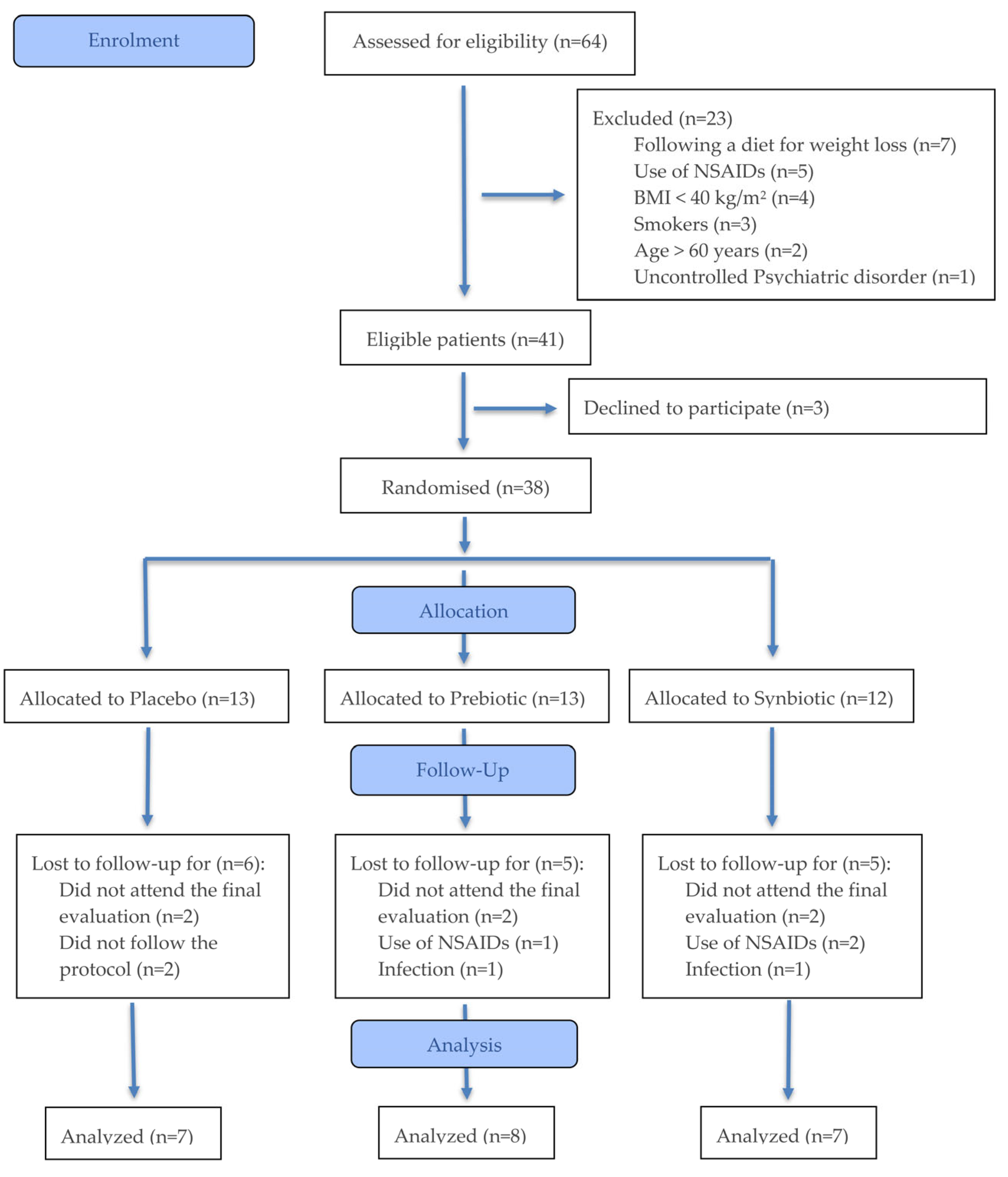
Figure 2.
Serum BDNF and Cortison concentrations between experimental groups. A: Serum BDNF concentrations observed between experimental groups at baseline and after 30 days of supplementation. B: Difference in serum BDNF concentrations between the baseline and endline, observed among individuals without anxiety diagnosis. C: Difference in serum cortisol concentrations between the baseline and endline, observed among subjects without a diagnosis of depression. Concentrations expressed as median and interquartile range. *Mann Whitney test. #Wilcoxon test for paired data. Violin plots display Kernel Density Estimation (KDE) with individual data points and median/IQR (boxplot).
Figure 2.
Serum BDNF and Cortison concentrations between experimental groups. A: Serum BDNF concentrations observed between experimental groups at baseline and after 30 days of supplementation. B: Difference in serum BDNF concentrations between the baseline and endline, observed among individuals without anxiety diagnosis. C: Difference in serum cortisol concentrations between the baseline and endline, observed among subjects without a diagnosis of depression. Concentrations expressed as median and interquartile range. *Mann Whitney test. #Wilcoxon test for paired data. Violin plots display Kernel Density Estimation (KDE) with individual data points and median/IQR (boxplot).
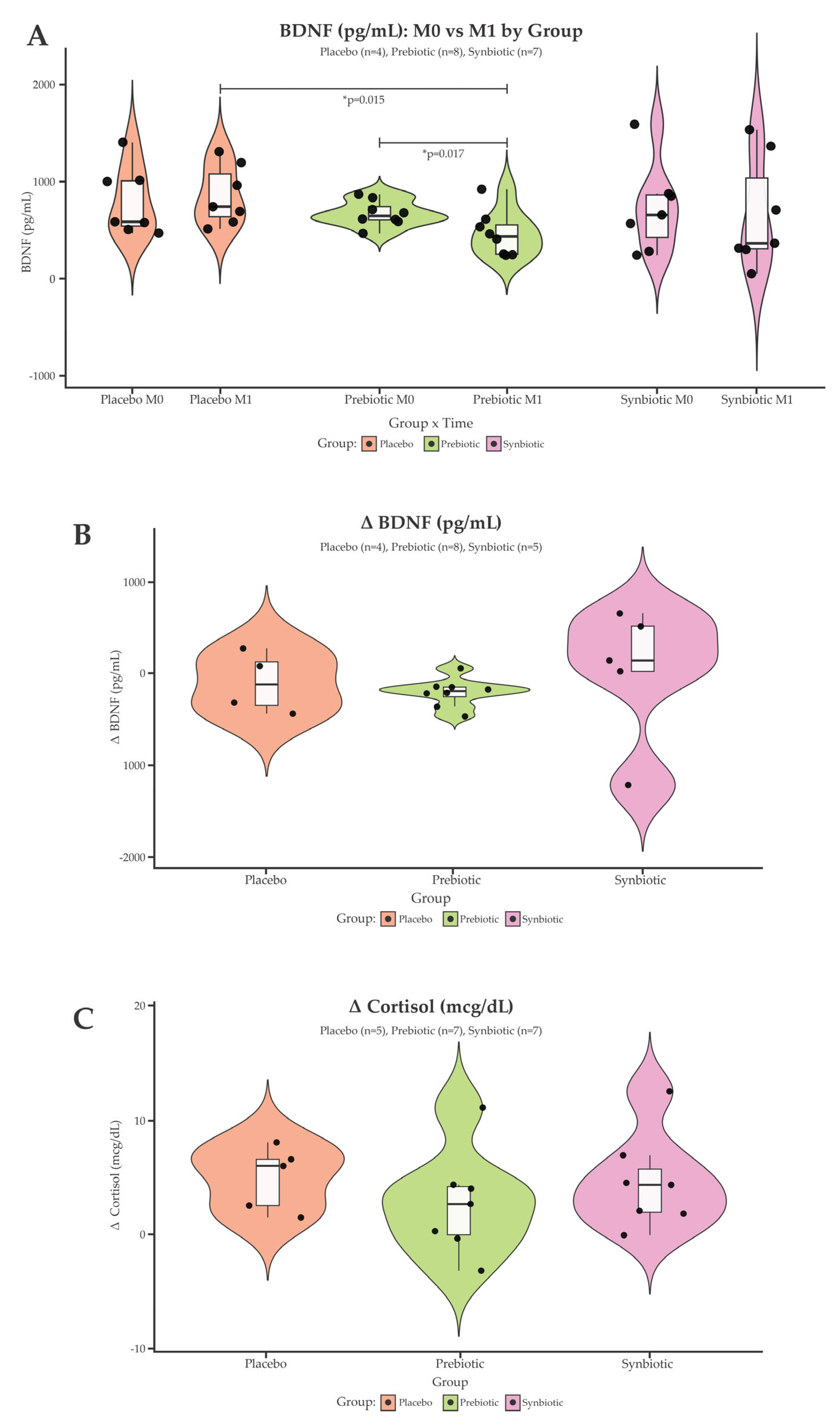

Table 1.
General characteristics of study participants at baseline.
| Characteristics | Study Groups | P value | ||
|---|---|---|---|---|
| Placebo (n=7) | Prebiotic (n=8) | Synbiotic (n=7) | ||
| Age (years) | 43.9 ± 10.0 | 40.5 ± 10.3 | 41.3 ± 4.9 | 0.753a |
| Gender (Male/ Female) | 2/5 | 0/8 | 4/3 | 0.057b |
| Body weight (kg) | 135.3 ± 28.4 | 119.9 ± 17.9 | 129.0 ± 25.4 | 0.473a |
| Body Mass Index (kg/ m²) | 50.9 ± 9.4 | 46.6 ± 5.3 | 46.0 ± 5.2 | 0.363a |
| Waist circumference (cm) | 137.3 ± 13.1 | 126.3 ± 11.6 | 136.1 ± 14.4 | 0.216a |
| Functional constipation (n/ %)* | 0 (0) | 2 (25.0) | 0 (0) | 0.582b |
| Stool consistency and shape (Bristol Scale) | 1.000b | |||
| Types 1-3 or 5-7 | 5 (71.4) | 5 (75.0) | 5 (71.4) | |
| Type 4 | 2 (28.6) | 2 (25.0) | 2 (28.6) | |
| Menopause (n/ %) | 2 (28.6) | 2 (25.0) | 0 (0) | 0.582b |
| Associated comorbidities (n/ %) | ||||
| Systemic arterial hypertension | 4 (57.1) | 1 (12.5) | 3 (42.9) | 0.119b |
| Anxiety/ Depression | 4 (57.1) | 1 (12.5) | 2 (28.6) | 0.282b |
| Type 2 Diabetes Mellitus | 1 (14.3) | 0 (0) | 2 (28.6) | 0.303b |
| Dyslipidaemia | 1 (14.3) | 0 (0) | 1 (14.3) | 0.500b |
| Others** | 1 (14.3) | 3 (37.5) | 4 (57.1) | 0.266b |
| Drugs for continuous use (n/ %) | ||||
| Antihypertensives | 4 (57.1) | 1 (12.5) | 3 (42.9) | 0.119b |
| Antidepressants | 4 (57.1) | 1 (12.5) | 2 (28.6) | 0.282b |
| Oral hypoglycaemic agents | 1 (14.3) | 0 (0) | 2 (28.6) | 0.303b |
| Statins | 0 (0) | 0 (0) | 0 (0) | 1.000b |
| Others*** | 1 (14.3) | 2 (25.0) | 1 (14.3) | 1.000b |
Continuous variables were expressed as mean and standard deviation. aANOVA test. bFisher’s exact test. *According to the criteria of ROME IV (Lacy et al.) [24]. **Psoriasis, hypothyroidism, gastroesophageal reflux, sleep apnea, panic syndrome, congestive heart failure and varicose veins in the lower members. ***Antacids, thyroid hormone and venotonic.
Table 2.
Biochemical parameters analyzed between groups.
| Outcomes | Study groups | P valuea | ||
|---|---|---|---|---|
| Placebo | Prebiotic | Synbiotic | ||
| BDNF (pg/ mL) | (n=7) | (n=8) | (n=7) | |
| Baseline | 575.2 (496.6; 1001.7) | 635.8 (588.3; 761.7) | 645.3 (271.1; 864.7) | 0.959 |
| Endline | 731.2 (572.8; 1182.7) | 424.7 (241.0; 563.0) | 355.2 (291.9; 1350.9) | 0.098 |
| P value (paired test)b | 0.735 | 0.017 | 0.735 | |
| Difference between moments | 76.16 (-319.9; 305.2) | -194.6 (-291.5; -148.3) | 71.9 (-603.2; 514.2) | 0.226 |
| ACTH (pg/ mL) | (n=7) | (n=8) | (n=7) | |
| Baseline | 13.9 (9.5; 17.2) | 12.7 (11.2; 15.0) | 19.0 (7.5; 35.6) | 0.759 |
| Endline | 12.5 (7.9; 15.9) | 17.6 (12.6; 19.3) | 21.5 (7.0; 42.6) | 0.368 |
| P value (paired test)b | 0.671 | 0.092 | 0.612 | |
| Difference between moments | -0.7 (-3.8; 3.0) | 3.3 (1.0; 7.1) | 1.2 (-4.5; 9.6) | 0.343 |
| Cortisol (µg/ dL) | (n=7) | (n=8) | (n=7) | |
| Baseline | 9.4 (4.8; 11.7) | 7.7 (5.5; 9.3) | 6.2 (5.7; 7.3) | 0.223 |
| Endline | 10.8 (8.4; 12.4) | 9.6 (6.9; 11.2) | 10.2 (8.6; 12.9) | 0.751 |
| P value (paired test)b | 0.398 | 0.092 | 0.028 | |
| Difference between moments | 2.5 (-4.7; 6.5) | 3.3 (-0.0; 4.1) | 4.3 (1.8; 6.9) | 0.678 |
| TSH (µUI/ mL) | (n=6) | (n=7) | (n=7) | |
| Baseline | 2.34 (1.6; 2.4) | 2.08 (1.7; 3.2) | 1.56 (1.1; 2.3) | 0.375 |
| Endline | 2.14 (1.8; 2.9) | 2.52 (1.7; 4.1) | 2.12 (1.8; 2.5) | 0.422 |
| P value (paired test)b | 0.600 | 0.236 | 0.310 | |
| Difference between moments | 0.09 (-0.1; 0.2) | 0.45 (-0.4; 1.2) | 0.18 (-0.07; -0.5) | 0.710 |
| PTH (pg/ mL) | (n=6) | (n=8) | (n=7) | |
| Baseline | 56.3 (45.5; 62.3) | 67.1 (61.5; 108.0) | 82.8 (48.7; 86.6) | 0.212 |
| Endline | 51.2 (27.4; 64.4) | 64.0 (58.2; 79.2) | 80.8 (46.0; 98.8) | 0.141 |
| P value (paired test)b | 0.173 | 0.123 | 0.398 | |
| Difference between moments | -8.9 (-14.9; 2.9) | -5.95 (-15.9; 1.7) | 11.7 (-5.2; 14.5) | 0.201 |
| Vitamin D (ng/ mL) | (n=7) | (n=8) | (n=7) | |
| Baseline | 19.8 (13.7; 23.1) | 23.0 (15.9; 25.1) | 25.2 (14.8; 31.0) | 0.362 |
| Endline | 19.3 (11.7; 23.8) | 23.2 (19.7; 25.3) | 27.6 (24.0; 33.5) | 0.079 |
| P value (paired test)b | 0.865 | 0.327 | 0.120 | |
| Difference between moments | -1.3 (-2.9; 4.0) | 0.7 (-1.0; 2.8) | 2.5 (-0.7; 2.8) | 0.429 |
| Vitamin B12 (pg/ mL) | (n=7) | (n=8) | (n=7) | |
| Baseline | 419.0 (298.0; 627.0) | 348.0 (289.5; 446.5) | 546.0 (345.0; 603.0) | 0.338 |
| Endline | 325.0 (309.0; 588.0) | 347.0 (289.0; 431) | 516.0 (375.0; 610.0) | 0.247 |
| P value (paired test)b | 0.865 | 0.888 | 0.671 | |
| Difference between moments | 8.0 (-76.0; 105.0) | 4.0 (-93.5; 57.5) | 28.0 (-30.0; 48.0) | 0.918 |
| Folic acid (ng/ mL) | (n=7) | (n=8) | (n=7) | |
| Baseline | 11.8 (9.1; 21.7) | 13.1 (10.2; 14.2) | 15.7 (11.6; 24.1) | 0.323 |
| Endline | 11.5 (7.8; 15.1) | 14.1 (7.9; 16.3) | 12.9 (11.8; 16.4) | 0.700 |
| P value (paired test)b | 0.499 | 0.674 | 0.176 | |
| Difference between moments | -1.8 (-8.6; 5.1) | 1.0 (-3.0; 4.9) | -3.1 (-7.6; 2.1) | 0.408 |
| hs-CRP (mg/ L) | (n=7) | (n=8) | (n=7) | |
| Baseline | 8.9 (3.5; 10.5) | 11.2 (7.9; 19.8) | 9.0 (2.5; 10.8) | 0.339 |
| Endline | 5.8 (5.5; 22.8) | 8.6 (4.1; 13.4) | 6.7 (4.1; 10.5) | 0.957 |
| P value (paired test)b | 0.671 | 0.207 | 0.735 | |
| Difference between moments | -1.2 (-3.2; 2.9) | -1.9 (-5.5; 1.3) | 1.5 (-3.1; 1.6) | 0.606 |
| IL-1β (pg/ mL) | (n=7) | (n=8) | (n=7) | |
| Baseline | 7.7 (2.2; 8.1) | 6.5 (5.5; 7.7) | 3.0 (0; 9.5) | 0.502 |
| Endline | 7.9 (6.6; 10.0) | 8.2 (6.3; 10.7) | 5.9 (0; 7.2) | 0.097 |
| P value (paired test)b | 0.310 | 0.262 | 0.799 | |
| Difference between moments | 1.9 (-2.2; 7.0) | 1.6 (-0.7; 4.1) | 0 (-3.6; 3.2) | 0.547 |
| IL-6 (pg/ mL) | (n=7) | (n=8) | (n=7) | |
| Baseline | 8.7 (6.2; 11.2) | 10.7 (8.5; 12.4) | 6.6 (4.5; 10.5) | 0.103 |
| Endline | 9.8 (5.6; 12.2) | 11.3 (6.7; 12.0) | 7.7 (4.6; 9.1) | 0.495 |
| P value (paired test)b | 0.499 | 0.483 | 0.612 | |
| Difference between moments | 1.1 (-1.1; 2.6) | -0.7 (-1.8; 1.2) | 0.09 (-1.4; 2.5) | 0.510 |
| TNF-α (pg/ mL) | (n=7) | (n=8) | (n=7) | |
| Baseline | 4.0 (2.6; 8.6) | 4.4 (3.4; 5.8) | 4.9 (0; 10.7) | 0.962 |
| Endline | 5.0 (1.9; 13.8) | 7.0 (3.6; 11.5) | 6.7 (3.6; 11.8) | 0.927 |
| P value (paired test)b | 0.735 | 0.035 | 0.350 | |
| Difference between moments | 0.7 (-2.6; 5.5) | 2.9 (0.4; 5.3) | 1.3 (-1.6; 6.8) | 0.645 |
Caption: continuous variables were expressed as median and interquartile range. aKruskal Wallis test. bWilcoxon test for paired data. Difference between moments: endline value (after 30 days)—baseline value.
Table 3.
Neuroendocrine and inflammatory correlations between experimental groups after 30 days of supplementation.
Table 3.
Neuroendocrine and inflammatory correlations between experimental groups after 30 days of supplementation.
| GROUPS | BDNF versus Vit. B12 | BDNF versus IL-6 | BDNF versus ACTH | ACTH versus IL-6 |
|---|---|---|---|---|
| Placebo | -0.0357 | -0.2143 | -0.6071 | 0.7857 |
| Prebiotic | -0.0476 | 0.0952 | -0.3095 | 0.3095 |
| Synbiotic | 0.8929 | -0.7143 | -0.3571 | -0.0714 |
“r” value obtained by Spearman correlation.
Disclaimer/Publisher’s Note: The statements, opinions and data contained in all publications are solely those of the individual author(s) and contributor(s) and not of MDPI and/or the editor(s). MDPI and/or the editor(s) disclaim responsibility for any injury to people or property resulting from any ideas, methods, instructions or products referred to in the content. |
© 2026 by the authors. Licensee MDPI, Basel, Switzerland. This article is an open access article distributed under the terms and conditions of the Creative Commons Attribution (CC BY) license (http://creativecommons.org/licenses/by/4.0/).
Copyright: This open access article is published under a Creative Commons CC BY 4.0 license, which permit the free download, distribution, and reuse, provided that the author and preprint are cited in any reuse.


