

Submitted:
22 April 2026
Posted:
23 April 2026
You are already at the latest version
Abstract
Background and Clinical Significance: Glioblastoma is the most common and aggressive primary malignant brain tumour in adults. Maximal safe surgical resection remains the cornerstone of treatment; however, tumour vascularisation may increase the risk of in-traoperative bleeding and complicate surgical management. Preoperative endovascular embolisation is commonly used for highly vascular intracranial tumours such as men-ingiomas, whereas its role in glioblastoma remains poorly defined. A focused literature review using the search string (((preoperative) AND (endovascular)) AND (embolization)) AND (glioblastoma) identified only two relevant publications, highlighting the scarcity of available evidence. In this context, we report a case series of three patients with intra-cranial lesions suspected to be high-grade gliomas who underwent preoperative angi-ographic evaluation and, when feasible, endovascular embolisation prior to surgical resection. Case Presentation: Three patients presenting with large intracranial lesions suggestive of high-grade glioma underwent preoperative digital subtraction angi-ography to assess tumour vascular supply (histological analysis confirmed the diagnosis of glioblastoma). In a 61-years-old woman with a right frontal tumour, selective catheteri-sation of a frontal branch of the right anterior cerebral artery enabled embolisation with coils, achieving partial tumour devascularisation before surgery. A second patient, a 53-year-old man with a large left temporo-fronto-insular mass extending to the corpus callosum, underwent embolisation of tumour feeders arising from the anterior choroidal artery using N-butyl cyanoacrylate and Lipiodol prior to resection. In a third case, a 77-year-old man with a left temporo-parietal lesion underwent preoperative angiography that demonstrated tumour capillary blush but no catheterisable feeding arteries, and embolisation was therefore not feasible. All patients subsequently underwent surgical resection without perioperative complications or new neurological deficits. Conclusions: Preoperative angiographic evaluation may help characterise tumour vascular supply in selected glioblastoma cases. When identifiable arterial feeders are present, endovascular embolisation may represent a feasible adjunct to facilitate surgical management. Further studies are required to better define the indications, safety profile, and potential benefits of this approach.
Keywords:
glioblastoma
; preoperative embolization
; endovascular treatment
; cerebral angiography
; tumor embolization
1. Introduction and Clinical Significance
Glioblastoma is the most frequent malignant primary brain tumour in adults and remains associated with poor prognosis despite multimodal treatment. Maximal safe resection is a key therapeutic step because it allows cytoreduction, tissue diagnosis and molecular profiling, and can improve symptom control. However, some lesions suspected to be high-grade gliomas may present with marked vascularity on imaging and/or during surgery, increasing the likelihood of intraoperative bleeding, reducing visibility, and potentially limiting the extent of safe resection.
Preoperative embolisation is a widely adopted adjunct for hypervascular extra-axial tumours (particularly meningiomas), where devascularisation can reduce operative blood loss and facilitate dissection [1]. In contrast, embolisation for intra-axial malignant gliomas is uncommon, largely because tumour supply is often diffuse, supplied by small pial branches, or associated with “en passage” arteries that also perfuse normal brain. Consequently, the role of angiography and embolisation in suspected glioblastoma remains undefined and supported mainly by limited case-based evidence [2].
Given the paucity of published data, we report a three-patient series in which preoperative digital subtraction angiography (DSA) was used to characterise tumour vascular supply in lesions suspected to be high-grade gliomas. When catheterisable arterial feeders were identified, targeted embolisation was performed prior to surgical resection. We describe the angiographic patterns encountered, technical feasibility, and perioperative course.
2. Materials and Methods
2.1. Study Design
This study is a retrospective description of three consecutive patients managed at our institution who underwent preoperative DSA for intracranial lesions radiologically suspicious for high-grade glioma (histological analysis always confirmed the diagnosis of glioblastoma), with embolisation performed when technically feasible.
2.2. Focused Literature Review
A focused literature review was conducted using the search string:
(((preoperative) AND (endovascular)) AND (embolization)) AND (glioblastoma)
2.3. Clinical Workflow and Selection Considerations
Preoperative DSA was performed to:
- -
- confirm the presence and degree of tumour vascularity (tumour blush, early venous drainage);
- -
- identify arterial feeders potentially amenable to superselective catheterisation;
- -
- evaluate risks related to perforators, dangerous anastomoses, and “en passage” supply.
Embolisation was considered when a discrete feeder could be catheterised safely with an acceptable risk profile, and when the multidisciplinary team judged that devascularisation might improve operative conditions.
3. Case Presentation
3.1. Case 1
A 61-year-old woman presented with a large right frontal lesion radiologically suspicious for high-grade glioma (histological analysis confirmed the diagnosis of glioblastoma). Preoperative DSA demonstrated a tumour blush with supply from a frontal branch of the right anterior cerebral artery. Superselective catheterisation was feasible and coil embolisation was performed, achieving partial devascularisation on completion angiography. The patient underwent subsequent tumour resection. No perioperative complications or new neurological deficits occurred (Figure 1, Figure 2 and Figure 3).
3.2. Case 2
A 53-year-old man presented with a large left temporo-fronto-insular mass extending to the corpus callosum, suggestive of high-grade glioma. DSA revealed tumour supply arising from the anterior choroidal artery. Superselective catheterisation was achieved and embolisation was performed using N-butyl cyanoacrylate (NBCA) with Lipiodol, targeting tumour feeders. Resection followed without perioperative complications or new neurological deficits (Figure 4 and Figure 5).
3.3. Case 3
A 77-year-old man presented with a left temporo-parietal lesion suspicious for high-grade glioma. Preoperative DSA demonstrated tumour capillary blush; however, no catheterisable feeding arteries were identified. Embolisation was therefore not feasible. The patient underwent surgical resection and experienced no perioperative complications or new neurological deficits (Figure 6). Cases are summarized in Table 1.
4. Discussion
Published evidence supporting preoperative embolisation specifically for glioblastoma remains extremely limited and is largely confined to case-based reports and small technical series. Imai et al. described successful embolisation of an extremely hypervascular GBM mimicking an arteriovenous malformation, highlighting that a subset of tumours may show angiographic patterns (dense blush and/or shunting with identifiable feeders) in which targeted devascularisation can be technically feasible prior to resection [2]. More recently, a small technical series of endoscopic GBM resections reported selective use of tumour embolisation when vascular anatomy permitted, with no embolisation-related complications in the embolised subgroup, suggesting feasibility in carefully selected cases [3]. In parallel, broader reviews on preoperative embolisation of brain/head/neck tumours emphasise that the principal goals are reduction of intraoperative bleeding and improved operative conditions, while stressing that outcomes are highly dependent on angioarchitecture, embolic agent selection, and operator technique, and that evidence quality is generally low outside established indications (e.g., meningioma) [4,5]. Existing reporting standards and guidelines further underscore the importance of documenting tumour supply patterns, superselective catheter position, embolic endpoint, and periprocedural complications to enable meaningful comparison across small series [1,2,3,4,5]. Finally, contemporary overviews of liquid embolic agents summarise material properties relevant to neuro-oncology (penetration, controllability, reflux risk), reinforcing the need to tailor agent choice to the target feeder and risk of non-target embolisation [6]. Collectively, available literature supports the concept that preoperative DSA can be informative and that embolisation may be considered as an adjunct in rare, hypervascular GBM phenotypes with catheterisable feeders, but robust evidence for routine use is lacking and further systematic study is required [1,2,3,4,5,6].
This case series illustrates three practical scenarios encountered when considering endovascular adjuncts for lesions suspected to be glioblastoma: (i) a tumour with a discrete feeder amenable to embolisation (Case 1), (ii) a tumour with deep arterial supply where embolisation is technically possible but requires particular caution (Case 2), and (iii) a tumour with angiographic blush but without accessible or safely catheterisable feeders (Case 3).
4.1. Role of DSA in Selected Suspected Glioblastomas
Although advanced MRI techniques can suggest hypervascularity, DSA remains the reference standard for detailed vascular mapping. In selected cases, DSA may provide actionable information by identifying dominant feeders, excluding alternative diagnoses with distinct vascular signatures, and clarifying whether devascularisation is technically feasible and reasonably safe.
4.2. Feasibility of Embolisation and Technical Considerations
The feasibility of embolisation in glioblastoma appears to be limited by the typical angioarchitecture of intra-axial tumours: supply is frequently diffuse and derived from pial branches that may also perfuse normal cortex. Thus, embolisation may only be possible in a subset of cases with a clear target feeder.
The two embolised cases in this series highlight two different approaches:
Coil embolisation (Case 1): potentially useful when a larger calibre feeder can be occluded proximally, accepting that devascularisation may be partial.
Liquid embolic (NBCA + Lipiodol, Case 2): allows deeper penetration but increases the need for precise superselective positioning and careful control to minimise reflux and non-target embolisation. This is particularly relevant when the feeder is the anterior choroidal artery, given its supply to eloquent deep structures.
4.3. Potential Clinical Benefit
The intended benefit of preoperative embolisation in this setting is to facilitate surgery by reducing arterial inflow to the tumour and improving the hemostatic environment during resection. While our cases had an uncomplicated perioperative course, the present series is not designed to quantify reductions in blood loss, operative time, or extent of resection. These outcomes require systematic assessment in larger cohorts.
4.4. Safety Considerations
Safety is a central concern given the risk of ischemic complications from non-target embolisation, particularly with pial or perforator-rich territories. Our experience suggests that embolisation can be integrated without immediate complications when careful angiographic assessment confirms a catheterisable tumour feeder and when embolisation is performed with strict attention to vascular anatomy and flow dynamics. However, the absence of complications in three cases should not be interpreted as proof of safety; this remains a hypothesis-generating observation.
4.5. Limitations
This report has several limitations: a very small sample size, inherent selection bias (only lesions prompting DSA were included), lack of a comparator group without embolisation, and limited quantifiable intraoperative metrics (e.g., estimated blood loss) reported in a standardised fashion.
5. Conclusions
Preoperative angiographic evaluation may help characterise tumour vascular supply in selected cases of suspected glioblastoma. When identifiable and safely catheterisable arterial feeders are present, endovascular embolisation may be a feasible adjunct prior to surgical resection; embolisation facilitated surgical management. Larger studies are necessary to clarify indications, establish safety profiles, and determine whether embolisation provides measurable intraoperative or oncological benefits.
Author Contributions
Conceptualization, X.X. and Y.Y.; methodology, X.X.; software, X.X.; validation, X.X., Y.Y. and Z.Z.; formal analysis, X.X.; investigation, X.X.; resources, X.X.; data curation, X.X.; writing—original draft preparation, X.X.; writing—review and editing, X.X.; visualization, X.X.; supervision, X.X.; project administration, X.X.; funding acquisition, Y.Y. All authors have read and agreed to the published version of the manuscript.
Funding
This research received no external funding.
Institutional Review Board Statement
This study was conducted in accordance with the Declaration of Helsinki. Ethical review and approval were waived as the procedure was part of routine care and approval of this study was not required by the Ethics Committee for case reports.
Informed Consent Statement
Written informed consent has been obtained from the patient to publish this paper.
Data Availability Statement
The original data presented in this study are available on reasonable request from the corresponding author. The data are not publicly available due to privacy concerns.
Acknowledgments
We would like to thank Stefano Vecchioni, Massimo Vissani, Nicola Giacchetta, and Roberta Benigni from the Department of Neurosurgery. Umberto Russo, Elena Gambelli from the Department of Neuroradiology. Maria Elena Bagnarelli, Andrea Vito and Agnese Damia Paciarini from the Department of Neuroanesthesia.
Conflicts of Interest
The authors declare no conflicts of interest.
Abbreviations
The following abbreviations are used in this manuscript:
| ACA | anterior cerebral artery |
| AChA | anterior choroidal artery |
| CC | corpus callosum |
| CT | computed tomography |
| DSA | digital subtraction angiography |
| NBCA | N-butyl cyanoacrylate |
| MRI | magnetic resonance imaging |
References
- Achi-Arteaga J, Flores-Vazquez JG, Fuentes-Calvo I, Gonzalez-Salido J, Wong-Achi X. Preoperative embolization of brain, head, and neck tumors: Single center experience and literature review. J Cerebrovasc Endovasc Neurosurg. 2025 Sep;27(3):195-211. [CrossRef] [PubMed] [PubMed Central]
- Imai T, Ohshima T, Nishizawa T, Shimato S, Kato K. Successful Preoperative Endovascular Embolization of an Extreme Hypervascular Glioblastoma Mimicking an Arteriovenous Malformation. World Neurosurg. 2016 Feb;86:512.e1-4. [CrossRef] [PubMed]
- Sakata T, Tanikawa M, Yamada H, Fujinami R, Nishikawa Y, Yamada S, Mase M. Minimally invasive treatment for glioblastoma through endoscopic surgery including tumor embolization when necessary: a technical note. Front Neurol. 2023 Apr 21;14:1170045. [CrossRef] [PubMed] [PubMed Central]
- Ashour R, Aziz-Sultan A. Preoperative tumor embolization. Neurosurg Clin N Am. 2014 Jul;25(3):607-17. [CrossRef] [PubMed]
- Duffis EJ, Gandhi CD, Prestigiacomo CJ, Abruzzo T, Albuquerque F, Bulsara KR, Derdeyn CP, Fraser JF, Hirsch JA, Hussain MS, Do HM, Jayaraman MV, Meyers PM, Narayanan S; Society for Neurointerventional Surgery. Head, neck, and brain tumor embolization guidelines. J Neurointerv Surg. 2012 Jul;4(4):251-5. [CrossRef] [PubMed] [PubMed Central]
- Pal A, Blanzy J, Gómez KJR, Preul MC, Vernon BL. Liquid Embolic Agents for Endovascular Embolization: A Review. Gels. 2023 May 4;9(5):378. [CrossRef] [PubMed] [PubMed Central]
Figure 1.
Preoperative brain MRI showing the large right frontal lesion (blu arrow).
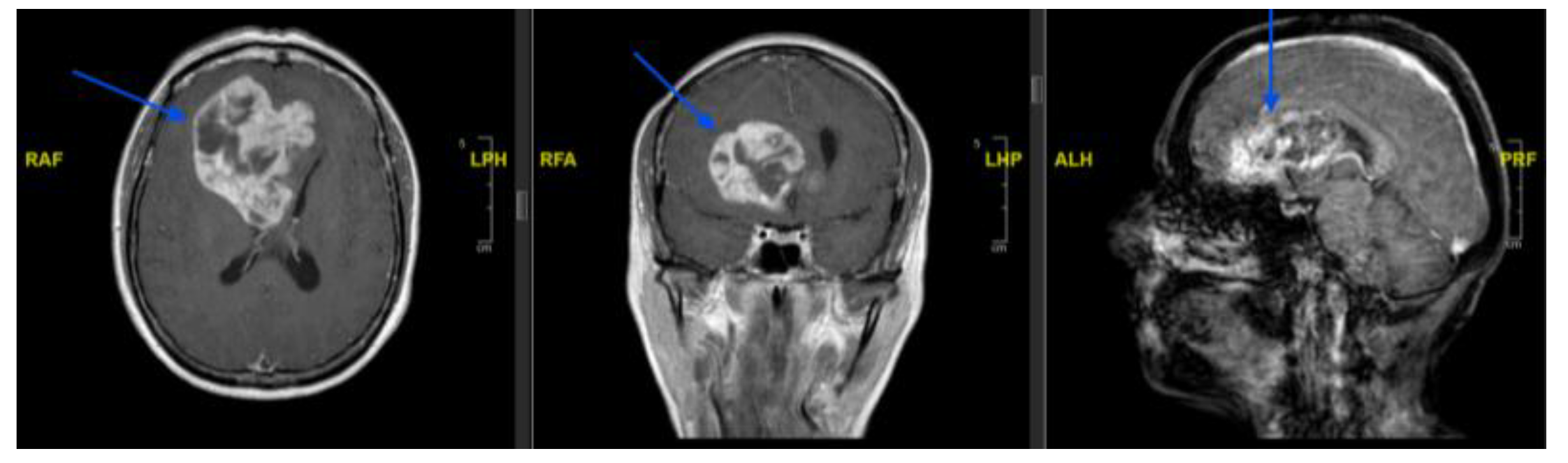
Figure 2.
Preoperative brain CT (left image) showing the large right frontal lesion (blu arrow) and the coiled vessel (yellow arrow); DSA (central and right images) demonstrates supply from a frontal branch of the right anterior cerebral artery and its coil embolization (yellow arrow).
Figure 2.
Preoperative brain CT (left image) showing the large right frontal lesion (blu arrow) and the coiled vessel (yellow arrow); DSA (central and right images) demonstrates supply from a frontal branch of the right anterior cerebral artery and its coil embolization (yellow arrow).
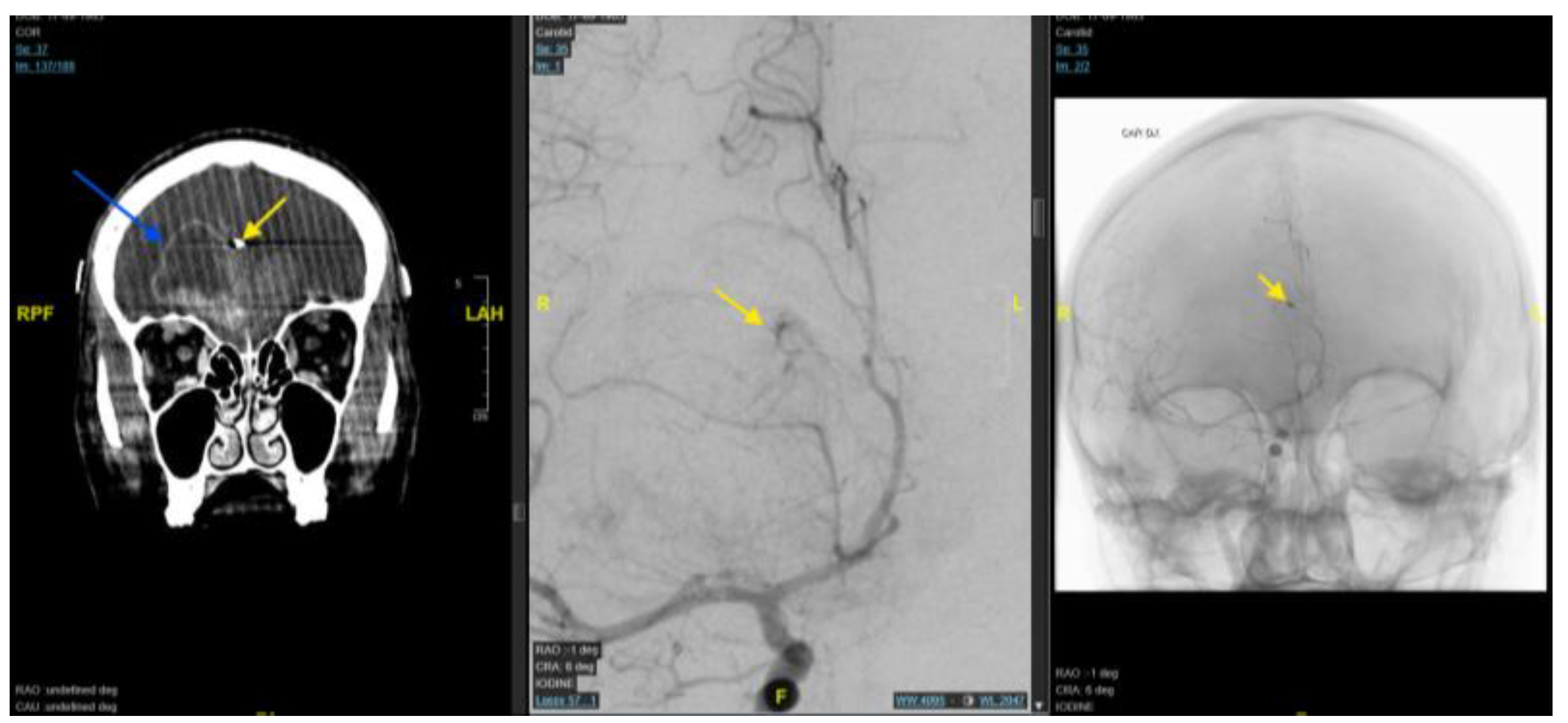
Figure 3.
Postoperative brain MRI showing tumour resection.
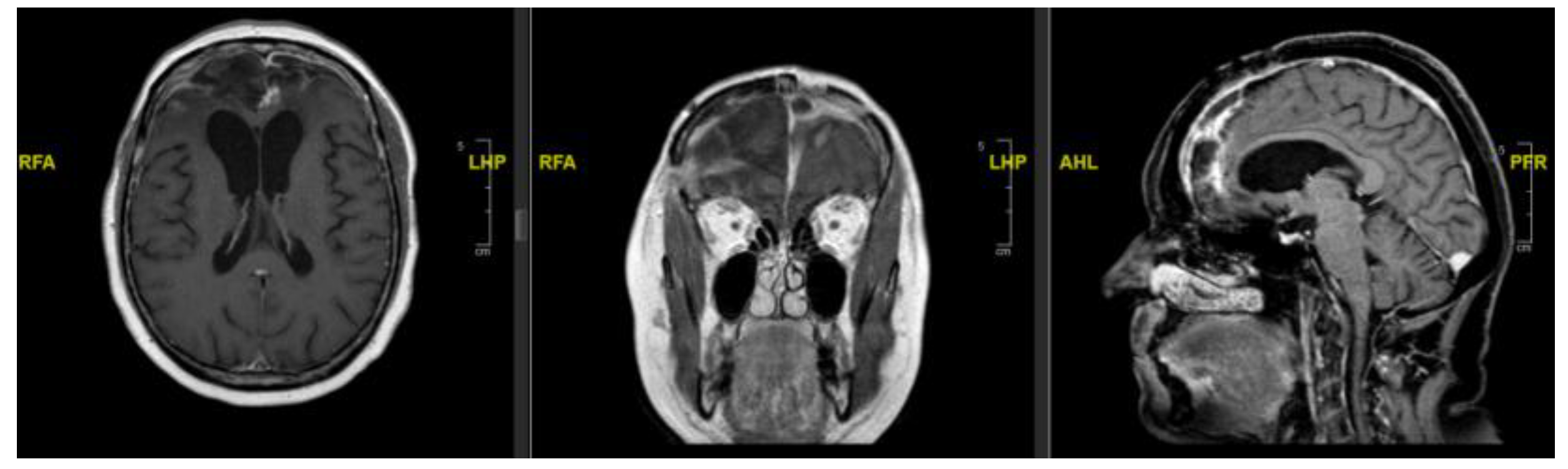
Figure 4.
Preoperative brain MRI showing the large left temporo-fronto-insular mass (blu arrow).
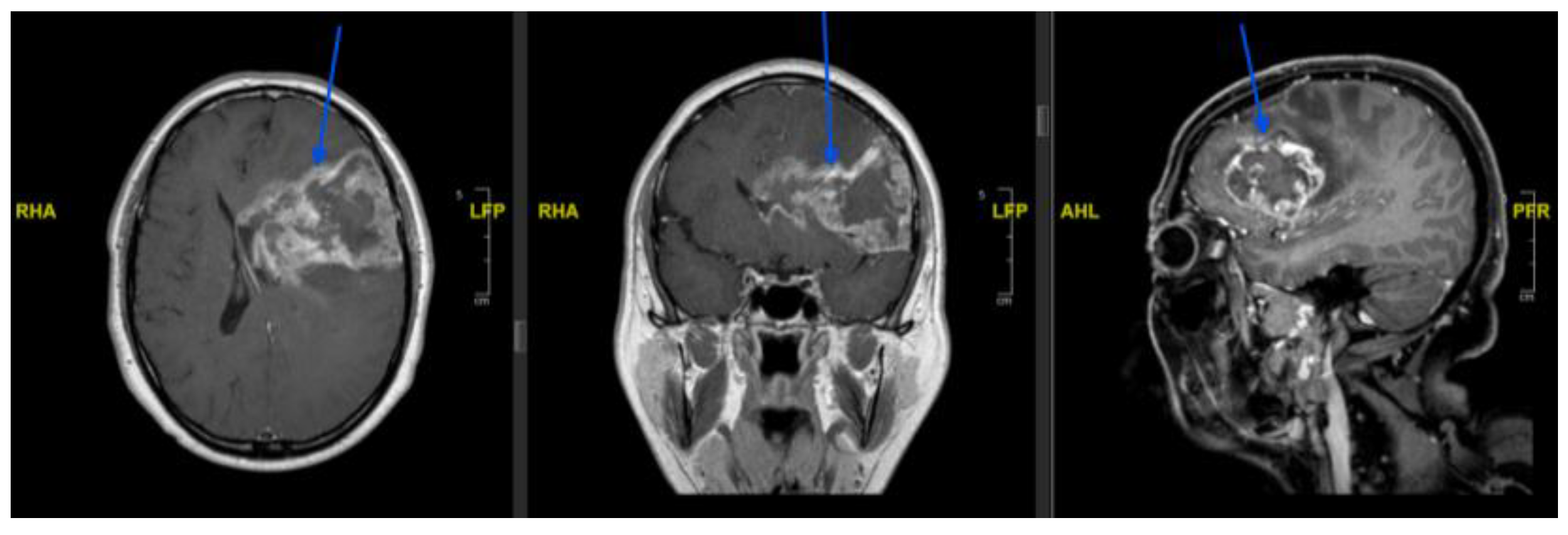
Figure 5.
Preoperative brain CT (left image) showing the large left temporo-fronto-insular mass (blu arrow) and the embolised vessel (yellow arrow); DSA (central and right images) demonstrates supply from the anterior choroidal artery (yellow arrow).
Figure 5.
Preoperative brain CT (left image) showing the large left temporo-fronto-insular mass (blu arrow) and the embolised vessel (yellow arrow); DSA (central and right images) demonstrates supply from the anterior choroidal artery (yellow arrow).
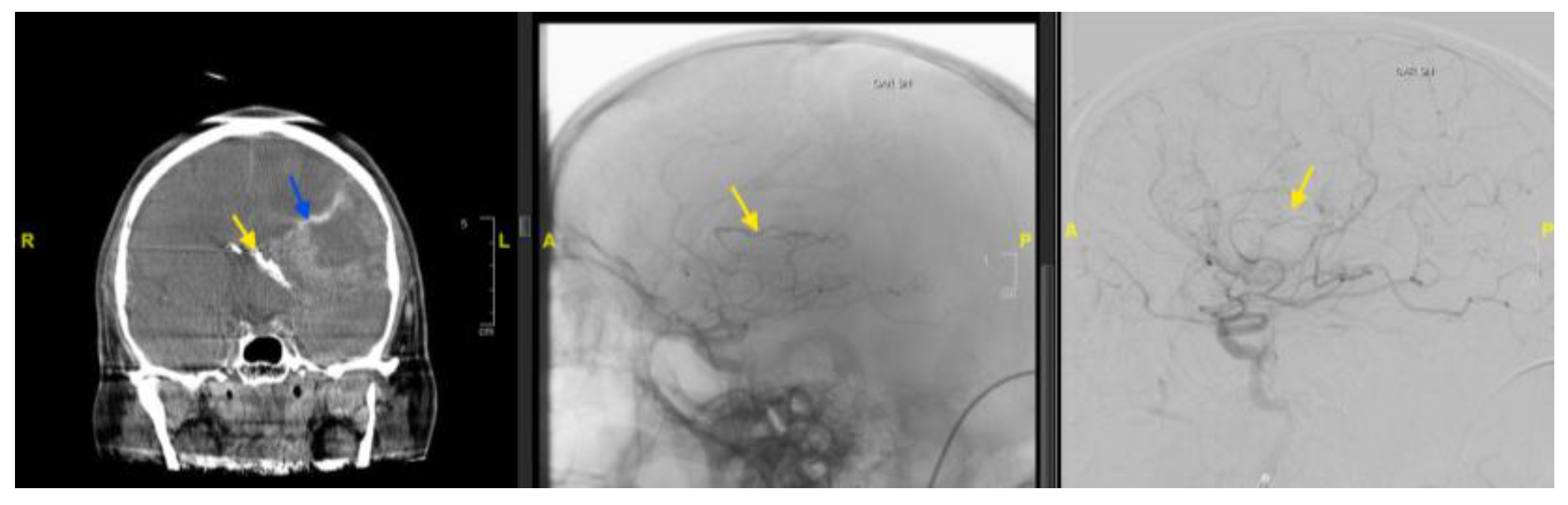
Figure 6.
Left temporo-parietal glioblastoma (blu arrow). Preoperative DSA demonstrated tumour capillary blush (yellow arrow); no catheterisable feeding arteries were identified.
Figure 6.
Left temporo-parietal glioblastoma (blu arrow). Preoperative DSA demonstrated tumour capillary blush (yellow arrow); no catheterisable feeding arteries were identified.
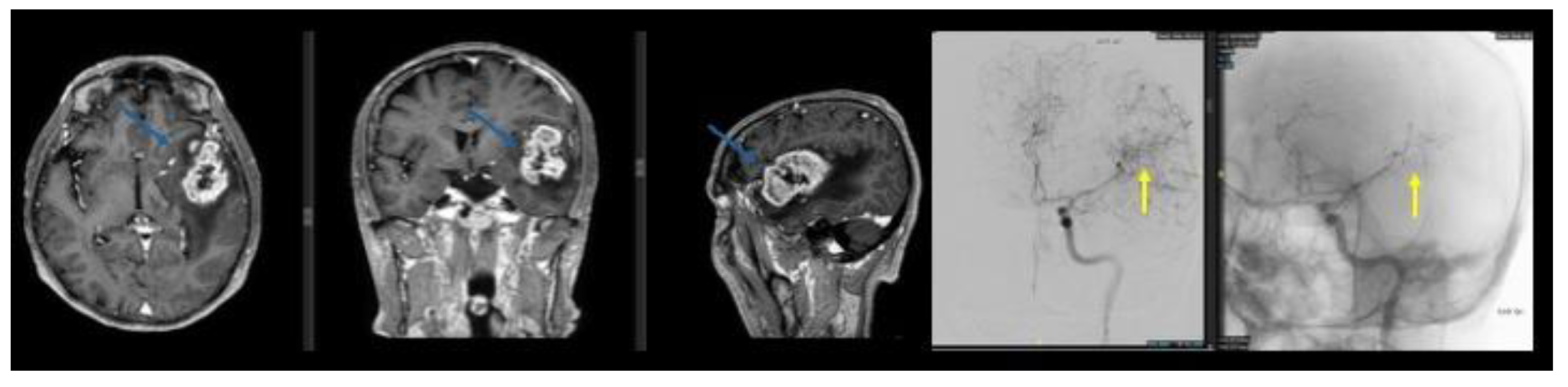

Table 1.
Summary of Cases.
| CASE | AGE/SEX | LOCATION | DSA FINDINGS | EMBOLISATION FEASIBLE | TARGET VESSEL(S) | EMBOLIC AGENT | ANGIOGRAPHIC RESULT | POSTOPERATIVE COURSE |
|---|---|---|---|---|---|---|---|---|
| 1 | 61/F | Right frontal | Tumour blush; discrete feeder | Yes | Frontal branch of right ACA | Coils | Partial devascularisation | No new deficit/complication |
| 2 | 53/M | Left temporo-fronto-insular + CC | Tumour supply from AChA | Yes | AChA tumour feeders | NBCA + Lipiodol | Targeted devascularisation | No new deficit/complication |
| 3 | 77/M | Left temporo-parietal | Capillary blush; no catheterisable feeders | No | — | — | — | No new deficit/complication |
Description of Table 1. Abbreviations: ACA, anterior cerebral artery; AChA, anterior choroidal artery; CC, corpus callosum; DSA, digital subtraction angiography; NBCA, N-butyl cyanoacrylate.
Disclaimer/Publisher’s Note: The statements, opinions and data contained in all publications are solely those of the individual author(s) and contributor(s) and not of MDPI and/or the editor(s). MDPI and/or the editor(s) disclaim responsibility for any injury to people or property resulting from any ideas, methods, instructions or products referred to in the content. |
© 2026 by the authors. Licensee MDPI, Basel, Switzerland. This article is an open access article distributed under the terms and conditions of the Creative Commons Attribution (CC BY) license (http://creativecommons.org/licenses/by/4.0/).
Copyright: This open access article is published under a Creative Commons CC BY 4.0 license, which permit the free download, distribution, and reuse, provided that the author and preprint are cited in any reuse.


