

Submitted:
22 April 2026
Posted:
23 April 2026
You are already at the latest version
Abstract
The diverse clinical manifestations of allergic skin diseases often overlap with other pathologies, posing significant diagnostic challenges. Allergen-specific IgE (sIgE) testing is essential for identifying triggers and personalizing treatments in allergic skin diseases. A retrospective study was conducted on 4,277 medical records of patients with allergic skin diseases who underwent sIgE testing at the HCMC Hospital of Dermato-Venereology, a tertiary referral dermatology center serving Southern Vietnam, from January to December 2024. The results revealed that 64.09% of the patients exhibited sIgE sensitization. House dust mites (D. farinae: 30.91%, D. pteronyssinus: 25.67%) and fire ants (24.06%) were the predominant allergens. Food sensitization was predominantly mild, with almond being the most common (10.26%). Significantly higher sensitization severity was observed in males, young adults (12–35 years), and non-urban residents (p < 0.001). Correlation analysis demonstrated robust co-sensitization and cross-reactivity among aeroallergens, predominantly driven by house dust mites. In conclusion, allergen sensitization profiles are strongly influenced by demographic and geographic factors, with a characteristic pattern observed in Southern Vietnam. Multiplex sIgE testing provides substantial value in disease stratification, prognostic assessment, and the development of personalized treatment strategies in this tropical setting.
Keywords:
allergen-specific IgE
; skin diseases
; allergen sensitization
1. Introduction
Allergic diseases currently represent a global health burden with diverse clinical manifestations, most commonly appearing on the skin, which often overlap with other pathologies. In developed countries, up to 30% of the population suffers from at least one allergic disease, and this rate is increasing rapidly in Southeast Asia [1]. Type I hypersensitivity plays a central role in the pathogenesis, characterized by the production of allergen-specific IgE (sIgE) antibodies. Therefore, sIgE testing is highly valuable for accurately identifying causative allergens, supporting definitive diagnosis, and contributing to personalized treatments [2].
In clinical practice, both total IgE (tIgE) and sIgE quantification are commonly used. However, the previous over-reliance on tIgE has been proven inaccurate, as tIgE only provides orienting value and cannot fully replace sIgE; in fact, studies show that 82.2% of patients with normal tIgE levels still test positive for sIgE [3]. The European Academy of Allergy and Clinical Immunology (EAACI) also emphasizes the essential role of sIgE in improving diagnostic accuracy [4]. In Vietnam, recent studies have begun to outline the allergy epidemiology of the tropical region, highlighting a predominance of house dust mites [5,6]. Nevertheless, sensitization profiles are strongly influenced by geography, age, and gender, necessitating large-scale, updated, and comprehensive data from leading specialized facilities.
Therefore, the main objective of this retrospective study was to evaluate sIgE reactions to 52 common allergens using 4,277 medical records of patients with allergic skin diseases at the Ho Chi Minh City Hospital of Dermato-Venereology. The findings indicate that allergen sensitization profiles are strongly influenced by demographic and local geographic factors, with higher levels of sensitization observed in male patients, individuals aged 12–35 years, and those residing outside Ho Chi Minh City. A clear predominance of house dust mites and tropical insect allergens, particularly fire ants, was identified.
Furthermore, correlation analysis revealed distinct co-sensitization patterns, with strong associations among aeroallergens and relatively weak correlations among food and insect allergens, suggesting different underlying sensitization mechanisms. These results highlight the complex interplay between environmental exposure and host factors in shaping IgE-mediated responses.
Taken together, this study reinforces the clinical value of multiplex sIgE testing for risk stratification, prognostic assessment, and the development of personalized treatment strategies in tropical settings such as Southern Vietnam.
2. Materials and Methods
Study Design and Population A retrospective study design was employed. We reviewed the medical records of all patients diagnosed with at least one allergic skin disease (urticaria, psoriasis, atopic dermatitis, and allergic contact dermatitis) who were indicated for 52 allergen-specific IgE (sIgE) testing at the HCMC Hospital of Dermato-Venereology from January 1, 2024, to December 31, 2024. A total of 4,277 medical records meeting the inclusion criteria were extracted from the Hospital Information System (HIS).
Laboratory Procedures sIgE quantification was performed at the hospital's Laboratory Department using a multiparameter immunoassay technique with the Euroline™ test kit (EUROIMMUN AG, Germany). The analysis evaluated 52 allergens, encompassing food, aeroallergens, and contact allergens. Based on the E.A.S.T. scoring system, sIgE concentrations were classified into seven classes (ranging from class 0: < 0.35 kU/L to class 6: ≥ 100 kU/L).

Table 1.
Interpretation of sIgE results according to the E.A.S.T. scoring system
| Class | Concentration (kU/L) | Interpretation |
|---|---|---|
| 0 | 0 ≤ sIgE < 0.35 | Negative. No antibodies detected. |
| 1 | 0.35 ≤ sIgE < 0.7 | Very low positive. Very low antibody concentration; clinical symptoms are usually absent upon sensitization. |
| 2 | 0.7 ≤ sIgE < 3.5 | Low positive. Low antibody concentration; sensitization is present, and clinical symptoms frequently occur at the upper limit of this class. |
| 3 | 3.5 ≤ sIgE < 17.5 | Positive. Significant antibody concentration; clinical symptoms frequently occur. |
| 4 | 17.5 ≤ sIgE < 50 | Strong positive. High antibody concentration; clinical symptoms consistently occur. |
| 5 | 50 ≤ sIgE < 100 | Very strong positive. |
| 6 | sIgE ≥ 100 | Extremely strong positive. |
3. Results
3.1. Baseline Characteristics of the Study Population
A total of 4,277 medical records meeting the inclusion criteria were analyzed. The age of participants ranged from 1 to 94 years, with a mean age of 27.91 ± 19.59 years (p < 0.01). Participants were categorized into four age groups: <12 years (27.78%), 12–35 years (38.13%), 36–59 years (26.84%), and ≥60 years (7.25%). Females accounted for a higher proportion of cases (61.12%) compared to males (38.88%). Most participants resided in Ho Chi Minh City (50.18%). Regarding clinical diagnoses, atopic dermatitis was the most common condition (52.84%), whereas psoriasis was rare (0.58%). The majority of patients had no comorbidities (87.51%).
3.2. Characteristics of Allergen-Specific IgE Sensitization
The distribution of the highest sensitization classes is presented in Figure 1. Overall, 64.09% of patients were positive for at least one sIgE allergen. Among sensitized individuals, moderate-to-very strong sensitization (Class ≥3) was observed in more than 45% of patients, whereas high-level sensitization (Classes 5–6) remained relatively uncommon. These findings suggest that although IgE sensitization is frequent, it is predominantly mild, with a substantial proportion of patients exhibiting clinically relevant moderate-to-high sensitization.
Table 2 detail the prevalence and distribution of sIgE sensitization classes across different allergen groups. Aeroallergens demonstrated the highest sensitization rates, particularly house dust mites, with Dermatophagoides farinae (30.9%), Dermatophagoides pteronyssinus (25.7%), and Blomia tropicalis (20.2%) being the most prevalent. These allergens also exhibited a substantial proportion of high-level sensitization (Classes 4–6), indicating strong IgE-mediated immune responses.
Contact and insect allergens, including fire ant (24.1%), cockroach (19.6%), and Hymenoptera venom (15.2%–17.6%), were also highly prevalent. They showed a broad distribution across all sensitization classes, with a clinically significant frequency of moderate-to-high level reactions. Among food allergens, plant-based foods such as tree nuts (almond, 10.3%), cereals (barley, 9.6%; rye, 7.1%), and fruits (tomato, 7.4%; strawberry, 7.1%) showed relatively higher positivity rates. However, sensitization to food allergens was predominantly low-level (Classes 1–2), with high-level responses being uncommon.
Overall, sensitization patterns differed markedly between allergen categories. Aeroallergens and insect allergens contributed most to clinically significant moderate-to-severe sensitization, whereas food allergens were primarily associated with mild sensitization.
Table 2.
Allergen-specific IgE sensitization levels.
| Allergen | Positive | Class 1 | Class 2 | Class 3 | Class 4 | Class 5 | Class 6 |
| Egg white | 301 (7.0%) | 75 (1.8%) | 104 (2.4%) | 60 (1.4%) | 40 (0.9%) | 22 (0.5%) | 0 (0.0%) |
| Egg yolk | 55 (1.3%) | 18 (0.4%) | 21 (0.5%) | 6 (0.1%) | 7 (0.2%) | 3 (0.1%) | 0 (0.0%) |
| Codfish | 19 (0.4%) | 8 (0.2%) | 2 (0.0%) | 6 (0.1%) | 1 (0.0%) | 2 (0.0%) | 0 (0.0%) |
| Shrimp | 161 (3.8%) | 15 (0.4%) | 36 (0.8%) | 32 (0.7%) | 39 (0.9%) | 38 (0.9%) | 1 (0.0%) |
| Tuna | 6 (0.1%) | 2 (0.0%) | 2 (0.0%) | 2 (0.0%) | 0 (0.0%) | 0 (0.0%) | 0 (0.0%) |
| Sardine | 96 (2.2%) | 58 (1.4%) | 30 (0.7%) | 7 (0.2%) | 1 (0.0%) | 0 (0.0%) | 0 (0.0%) |
| Wheat | 211 (4.9%) | 189 (4.4%) | 14 (0.3%) | 5 (0.1%) | 3 (0.1%) | 0 (0.0%) | 0 (0.0%) |
| Rye | 303 (7.1%) | 97 (2.3%) | 178 (4.2%) | 25 (0.6%) | 3 (0.1%) | 0 (0.0%) | 0 (0.0%) |
| Barley | 412 (9.6%) | 91 (2.1%) | 141 (3.3%) | 174 (4.1%) | 5 (0.1%) | 1 (0.0%) | 0 (0.0%) |
| Oat | 61 (1.4%) | 32 (0.7%) | 18 (0.4%) | 6 (0.1%) | 4 (0.1%) | 1 (0.0%) | 0 (0.0%) |
| Rice | 318 (7.4%) | 251 (5.9%) | 55 (1.3%) | 7 (0.2%) | 3 (0.1%) | 2 (0.0%) | 0 (0.0%) |
| Soybean | 77 (1.8%) | 51 (1.2%) | 15 (0.4%) | 8 (0.2%) | 1 (0.0%) | 2 (0.0%) | 0 (0.0%) |
| Maize (corn) | 277 (6.5%) | 137 (3.2%) | 119 (2.8%) | 16 (0.4%) | 4 (0.1%) | 1 (0.0%) | 0 (0.0%) |
| Gluten | 59 (1.4%) | 26 (0.6%) | 10 (0.2%) | 5 (0.1%) | 9 (0.2%) | 8 (0.2%) | 1 (0.0%) |
| Peanut | 204 (4.8%) | 70 (1.6%) | 99 (2.3%) | 15 (0.4%) | 14 (0.3%) | 6 (0.1%) | 0 (0.0%) |
| Hazelnut | 63 (1.5%) | 44 (1.0%) | 12 (0.3%) | 4 (0.1%) | 2 (0.0%) | 1 (0.0%) | 0 (0.0%) |
| Almond | 439 (10.3%) | 110 (2.6%) | 140 (3.3%) | 175 (4.1%) | 9 (0.2%) | 5 (0.1%) | 0 (0.0%) |
| Cow’s milk | 199 (4.7%) | 75 (1.8%) | 75 (1.8%) | 34 (0.8%) | 14 (0.3%) | 1 (0.0%) | 0 (0.0%) |
| α-lactalbumin | 182 (4.3%) | 92 (2.2%) | 69 (1.6%) | 17 (0.4%) | 4 (0.1%) | 0 (0.0%) | 0 (0.0%) |
| β-lactoglobulin | 258 (6.0%) | 98 (2.3%) | 104 (2.4%) | 44 (1.0%) | 10 (0.2%) | 2 (0.0%) | 0 (0.0%) |
| Casein | 142 (3.3%) | 58 (1.4%) | 60 (1.4%) | 15 (0.4%) | 8 (0.2%) | 1 (0.0%) | 0 (0.0%) |
| Chocolate | 123 (2.9%) | 63 (1.5%) | 53 (1.2%) | 7 (0.2%) | 0 (0.0%) | 0 (0.0%) | 0 (0.0%) |
| Goat milk | 50 (1.2%) | 22 (0.5%) | 17 (0.4%) | 8 (0.2%) | 2 (0.0%) | 1 (0.0%) | 0 (0.0%) |
| Tomato | 317 (7.4%) | 66 (1.5%) | 217 (5.1%) | 31 (0.7%) | 1 (0.0%) | 2 (0.0%) | 0 (0.0%) |
| Lemon | 182 (4.3%) | 109 (2.5%) | 59 (1.4%) | 9 (0.2%) | 5 (0.1%) | 0 (0.0%) | 0 (0.0%) |
| Orange | 263 (6.1%) | 171 (4.0%) | 76 (1.8%) | 4 (0.1%) | 9 (0.2%) | 3 (0.1%) | 0 (0.0%) |
| Strawberry | 302 (7.1%) | 104 (2.4%) | 183 (4.3%) | 13 (0.3%) | 1 (0.0%) | 1 (0.0%) | 0 (0.0%) |
| Apple | 204 (4.8%) | 157 (3.7%) | 24 (0.6%) | 5 (0.1%) | 8 (0.2%) | 10 (0.2%) | 0 (0.0%) |
| Pineapple | 229 (5.4%) | 111 (2.6%) | 85 (2.0%) | 15 (0.4%) | 12 (0.3%) | 6 (0.1%) | 0 (0.0%) |
| Pork (cooked) | 39 (0.9%) | 14 (0.3%) | 8 (0.2%) | 9 (0.2%) | 6 (0.1%) | 2 (0.0%) | 0 (0.0%) |
| Beef | 88 (2.1%) | 34 (0.8%) | 34 (0.8%) | 10 (0.2%) | 6 (0.1%) | 4 (0.1%) | 0 (0.0%) |
| Chicken | 27 (0.6%) | 14 (0.3%) | 7 (0.2%) | 4 (0.1%) | 1 (0.0%) | 1 (0.0%) | 0 (0.0%) |
| Brewer’s yeast | 101 (2.4%) | 27 (0.6%) | 41 (1.0%) | 25 (0.6%) | 8 (0.2%) | 0 (0.0%) | 0 (0.0%) |
| Baker’s yeast | 52 (1.2%) | 16 (0.4%) | 25 (0.6%) | 6 (0.1%) | 5 (0.1%) | 0 (0.0%) | 0 (0.0%) |
| Latex | 464 (10.8%) | 80 (1.9%) | 289 (6.8%) | 71 (1.7%) | 16 (0.4%) | 8 (0.2%) | 0 (0.0%) |
| D. pteronyssinus | 1098 (25.7%) | 140 (3.3%) | 155 (3.6%) | 184 (4.3%) | 170 (4.0%) | 367 (8.6%) | 82 (1.9%) |
| D. farinae | 1322 (30.9%) | 168 (3.9%) | 228 (5.3%) | 214 (5.0%) | 164 (3.8%) | 400 (9.4%) | 148 (3.5%) |
| Blomia tropicalis | 863 (20.2%) | 185 (4.3%) | 204 (4.8%) | 194 (4.5%) | 167 (3.9%) | 105 (2.5%) | 8 (0.2%) |
| Cat dander | 192 (4.5%) | 15 (0.4%) | 25 (0.6%) | 30 (0.7%) | 49 (1.1%) | 62 (1.4%) | 11 (0.3%) |
| Dog dander | 82 (1.9%) | 7 (0.2%) | 8 (0.2%) | 13 (0.3%) | 11 (0.3%) | 31 (0.7%) | 12 (0.3%) |
| Chicken feathers | 19 (0.4%) | 7 (0.2%) | 9 (0.2%) | 2 (0.0%) | 1 (0.0%) | 0 (0.0%) | 0 (0.0%) |
| Penicillium notatum | 82 (1.9%) | 39 (0.9%) | 28 (0.7%) | 13 (0.3%) | 2 (0.0%) | 0 (0.0%) | 0 (0.0%) |
| Cladosporium herbarum | 24 (0.6%) | 14 (0.3%) | 5 (0.1%) | 2 (0.0%) | 2 (0.0%) | 0 (0.0%) | 1 (0.0%) |
| Aspergillus fumigatus | 40 (0.9%) | 13 (0.3%) | 15 (0.4%) | 5 (0.1%) | 4 (0.1%) | 2 (0.0%) | 1 (0.0%) |
| Candida albicans | 192 (4.5%) | 72 (1.7%) | 62 (1.4%) | 32 (0.7%) | 19 (0.4%) | 7 (0.2%) | 0 (0.0%) |
| Alternaria alternata | 59 (1.4%) | 24 (0.6%) | 24 (0.6%) | 10 (0.2%) | 1 (0.0%) | 0 (0.0%) | 0 (0.0%) |
| Grass pollen | 632 (14.8%) | 95 (2.2%) | 131 (3.1%) | 309 (7.2%) | 72 (1.7%) | 24 (0.6%) | 1 (0.0%) |
| Dandelion pollen | 312 (7.3%) | 130 (3.0%) | 156 (3.6%) | 21 (0.5%) | 2 (0.0%) | 3 (0.1%) | 0 (0.0%) |
| Honey bee venom | 754 (17.6%) | 122 (2.9%) | 240 (5.6%) | 267 (6.2%) | 90 (2.1%) | 35 (0.8%) | 0 (0.0%) |
| Wasp venom | 649 (15.2%) | 199 (4.7%) | 194 (4.5%) | 138 (3.2%) | 90 (2.1%) | 26 (0.6%) | 2 (0.0%) |
| Fire ant | 1029 (24.1%) | 210 (4.9%) | 313 (7.3%) | 230 (5.4%) | 160 (3.7%) | 107 (2.5%) | 9 (0.2%) |
| Mosquito | 85 (2.0%) | 26 (0.6%) | 39 (0.9%) | 11 (0.3%) | 5 (0.1%) | 4 (0.1%) | 0 (0.0%) |
| Cockroach | 837 (19.6%) | 190 (4.4%) | 263 (6.1%) | 201 (4.7%) | 146 (3.4%) | 37 (0.9%) | 0 (0.0%) |
Data are presented as number (percentage). Sensitization levels were classified according to EAST classes (1–6).
3.3. Factors Associated with Clinically Relevant sIgE Sensitization (Class ≥3)
To identify factors associated with clinically relevant sensitization, we analyzed the relationship between patient characteristics and moderate-to-high sIgE sensitization (Class ≥3). Female patients had significantly lower odds of clinically relevant sIgE sensitization compared to males (OR = 0.67, p < 0.01). Patients aged 12–35 years exhibited a higher prevalence of sensitization (55.1%) and increased odds compared with those aged <12 years (OR = 1.37; 95% CI: 1.18–1.59). In contrast, individuals aged ≥36 years, particularly those ≥60 years, showed significantly reduced odds of sensitization, with ORs of 0.56 and 0.42, respectively. With respect to diagnosis, psoriasis had the highest proportion of sensitization. Compared with psoriasis, both urticaria (OR = 0.51; 95% CI: 0.43–0.60) and contact dermatitis (OR = 0.38; 95% CI: 0.28–0.53) were associated with significantly lower odds of sensitization. All observed associations were statistically significant (p < 0.05).
Table 3.
Allergen-specific IgE sensitization levels.
| Characteristics | Class ≥3 n (%) |
Class <3 n (%) |
OR | 95% CI | p-value |
|---|---|---|---|---|---|
| Sex | |||||
| Male | 849 (51.05) | 841 (48.95) | 1 | - | - |
| Female | 1080 (41.32) | 1534 (58.68) | 0.67 | 0.60 – 0.76 | <0.01 |
| Age group | |||||
| <12 years | 562 (47.31) | 626 (52.69) | 1 | - | - |
| 12–35 years | 899 (55.12) | 732 (44.88) | 1.37 | 1.18 – 1.59 | <0.01 |
| 36–59 years | 383 (33.36) | 765 (66.64) | 0.56 | 0.47 – 0.66 | <0.01 |
| ≥60 years | 85 (27.42) | 225 (72.58) | 0.42 | 0.32 – 0.55 | <0.01 |
| Residence | |||||
| Ho Chi Minh City | 938 (43.71) | 1208 (56.29) | 1 | - | - |
| Other regions | 991 (46.50) | 1140 (53.50) | 1.12 | 0.99 – 1.26 | 0.07 |
| Diagnosis | |||||
| Psoriasis | 15 (60.00) | 10 (40.00) | 1 | - | - |
| Urticaria | 620 (42.97) | 823 (57.03) | 0.51 | 0.43 – 0.60 | 0.001 |
| Atopic dermatitis | 1095 (48.45) | 1165 (51.55) | 0.63 | 0.28 – 1.40 | 0.32 |
| Contact dermatitis | 199 (36.25) | 350 (63.75) | 0.38 | 0.28 – 0.53 | <0.01 |
| Comorbidity | |||||
| Yes | 254 (47.57) | 280 (52.43) | 1 | - | - |
| No | 1675 (44.75) | 2068 (55.25) | 1.12 | 0.93 – 1.34 | 0.22 |
Chi-square test (χ²).
The higher likelihood of sensitization observed in males may be related to sex-specific immunological differences, including the modulatory effects of sex hormones on IgE-mediated responses. In addition, the higher sensitization rates in younger individuals may reflect greater environmental exposure and a more active Th2-skewed immune response, which tends to decline with age.
3.4. Association Patterns of Aeroallergen Co-Sensitization
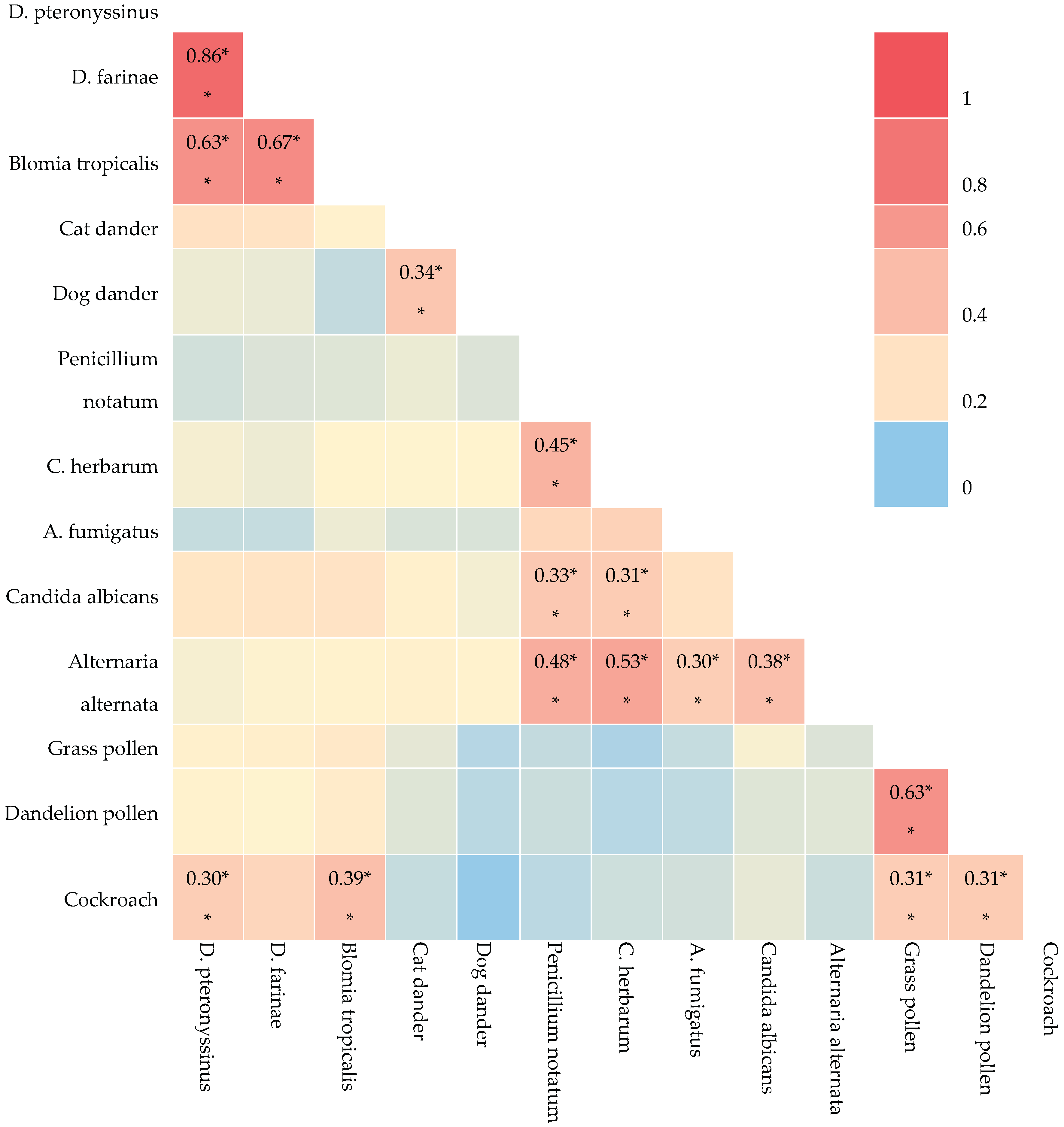
To assess relationships between aeroallergens, we computed Spearman’s rank correlation coefficients and visualized the results using a heatmap (Figure 3). The heatmap illustrates the strength and direction of associations between aeroallergen-specific IgE sensitization levels. Strong positive correlations were observed among house dust mite allergens, particularly between Dermatophagoides pteronyssinus, D. farinae, and Blomia tropicalis, indicating a high degree of co-sensitization. A similarly strong correlation was observed between Dandelion pollen and Grass pollen (Spearman correlation = 0.63, p < 0.001), suggesting shared sensitization patterns among pollen allergens. Moderate correlations were also identified within fungal allergens, supporting possible common environmental exposure. The color gradient represents the magnitude and direction of correlations, with darker shades indicating stronger associations.
In contrast, food and insect allergens showed predominantly weak correlations, indicating limited co-sensitization compared to aeroallergen clusters.
4. Discussion
In our study involving 4,277 patients, allergic skin diseases were most prevalent among young adults (aged 12–35 years) and females. Clinically, atopic dermatitis was overwhelmingly predominant, consistent with its IgE-mediated nature. Notably, the presence of strong specific IgE (sIgE) reactions in a subset of psoriasis patients reinforces the hypothesis of an "immunological overlap" within this population. These findings strongly corroborate existing domestic and international literature, including reports from the EAACI, highlighting that pediatric and adolescent populations bear a disproportionate burden of allergic diseases [5,6,7,8]. Overall, the allergen sensitization rate reached 64.09%, with house dust mites (Dermatophagoides farinae, Dermatophagoides pteronyssinus, Blomia tropicalis) demonstrating absolute dominance in both frequency and reaction intensity. This finding distinctly reflects the hot and humid tropical climate of Southern Vietnam, establishing house dust mites as the primary risk factor that necessitates prioritization in environmental control strategies and allergen immunotherapy [5].
Beyond house dust mites, the sensitization profiles for contact and food allergens in this cohort revealed marked deviations from Western literature [4,7]. Tropical insect allergens, notably fire ants, cockroaches, and bee venom, exhibited high positivity rates and a substantial risk for moderate-to-severe systemic reactions, warranting heightened vigilance in clinical practice. Regarding food allergens, patients were predominantly sensitized to local plant-based sources, typically presenting with mild reactions. Shrimp emerged as the most clinically significant seafood allergen, with a relatively high proportion of moderate-to-severe reactions compared to other fish allergens, which were predominantly associated with mild sensitization. This finding is consistent with previous studies in Asian populations, where shrimp is a leading cause of food-induced anaphylaxis, largely attributed to tropomyosin—a heat-stable and digestion-resistant protein capable of inducing strong IgE responses. In contrast, fish allergens such as tuna, cod, and sardine showed low sensitization rates and minimal severe reactions, aligning with global reports indicating lower clinical relevance of fish allergy in Southeast Asia[7,9].
Our analysis revealed a significant sex disparity in sensitization severity. Although females often exhibit a higher prevalence of allergic skin diseases, our data demonstrated that females had significantly lower odds of clinically relevant moderate-to-high sensitization (Class ≥3) compared to males (OR = 0.67, p < 0.01) . This paradox aligns with recent immunological concepts highlighting the modulatory effects of sex hormones. While estrogens may increase the incidence of allergic manifestations in females by promoting a Th2-skewed cytokine profile, androgens in males are associated with a stronger, more intense humoral IgE response once sensitization occurs [10]. Similar sex-specific IgE intensity has been documented by King et al. (2022) and Xu-De Zhang et al. (2021) across common aeroallergens [8,11].
Age also demonstrated a profound impact on sensitization severity. The highest odds of moderate-to-high sensitization were observed in the 12–35 age group (OR = 1.37). This peak in young adulthood likely reflects the intersection of maximum environmental/occupational exposure and a robust, highly active Th2 immune response. Conversely, a marked reduction in sensitization odds was noted in older populations, particularly those ≥60 years (OR = 0.42). This decline is a hallmark of immunosenescence—the gradual age-related deterioration of immune function, characterized by decreased B-cell activity and diminished IgE production capability [4,8,12].
Interestingly, regarding clinical diagnoses, psoriasis patients exhibited the highest proportion of high-level IgE sensitization, significantly higher than urticaria and contact dermatitis. While psoriasis is classically driven by the IL-23/Th17 axis rather than IgE, our findings support the growing recognition of "immunological overlap" or "AD-like psoriasis". This subset of psoriasis patients exhibits concurrent Th2 inflammation, eosinophilia, and elevated sIgE, emphasizing that chronic skin inflammation can disrupt epidermal barriers, facilitating secondary aeroallergen sensitization [12,13].
The correlation analysis revealed distinct clustering patterns of allergen sensitization, with strong positive associations observed primarily among aeroallergens. In particular, the high correlations between house dust mite species (D. pteronyssinus, D. farinae, and Blomia tropicalis) suggest a substantial degree of co-sensitization. This pattern is consistent with previous reports indicating that mites are dominant aeroallergens in tropical regions and often coexist in similar indoor environments, leading to overlapping exposure and sensitization profiles [14,15,16].
A similarly strong correlation between Dandelion and grass pollen further supports the concept of shared sensitization among pollen allergens. This may reflect overlapping environmental exposure or common allergenic components, although the contribution of immunological cross-reactivity cannot be excluded. Moderate correlations observed among fungal allergens also indicate potential shared exposure patterns, likely related to environmental conditions favoring fungal growth. In contrast, the predominantly weak correlations among food and insect allergens suggest that sensitization to these allergens is more heterogeneous and individualized. Unlike aeroallergens, which are continuously inhaled and tend to produce cluster-based sensitization patterns, food and insect allergens are typically encountered intermittently, resulting in less consistent co-sensitization [4,8].
Overall, these findings highlight the heterogeneous nature of IgE sensitization and emphasize that co-sensitization patterns are strongly influenced by environmental exposure and allergen characteristics, particularly in tropical settings.
Limitations and future directions
This study has several limitations. First, as a retrospective study conducted at a single tertiary dermatology referral center serving Southern Vietnam, the findings may be subject to selection bias and may not be fully generalizable to the broader population. Second, the cross-sectional nature of the data precludes assessment of disease progression and temporal changes in allergen sensitization.
Future studies should employ prospective, multicenter designs to improve generalizability and allow longitudinal evaluation of sensitization patterns. In addition, integrating clinical outcomes with allergen-specific IgE profiles may help clarify the clinical relevance of co-sensitization and support the development of personalized management strategies.
5. Conclusions
Allergic skin diseases are multifactorial conditions, with a predominance of house dust mites, tropical insect allergens, and locally relevant food allergens in Southern Vietnam. The severity of sIgE sensitization is strongly influenced by demographic factors, with higher risks observed in males, young adults, and individuals residing outside urban areas. Correlation analysis further demonstrated distinct co-sensitization patterns, with strong associations observed among aeroallergens and predominantly weak correlations among food and insect allergens, reflecting different underlying sensitization mechanisms. Specific IgE testing plays a crucial role in risk stratification and supports the development of personalized therapeutic strategies.
Author Contributions
Conceptualization, D.D.K.N. and H.A.N.; methodology, T.D.H.T. and D.D.K.N.; software, T.D.H.T. and H.A.N.; validation, T.P.T.N. and D.T.T.P.; formal analysis, H.A.N. and T.D.H.T.; investigation, T.D.H.T.; resources, T.P.T.N.; data curation, H.A.N.; writing original draft preparation, T.D.H.T. and H.A.N.; writing review and editing, D.T.T.P. and D.D.K.N.; visualization, H.A.N. All authors have read and agreed to the published version of the manuscript.
Funding
This research received no external funding.
Institutional Review Board Statement
This study was approved by the Institutional Review Board of the HCMC Hospital of Dermato-Venereology (Approval No. 781/CN-BVDL, dated April 24, 2025).
Informed Consent Statement
Not applicable
Data Availability Statement
The data presented in this study are available on request from the corresponding author. The data are not publicly available due to privacy or ethical restrictions.
Acknowledgments
The authors would like to thank the Department of Laboratory Medicine, HCMC Hospital of Dermato-Venereology, for their support in data collection.
Conflicts of Interest
The authors declare no conflicts of interest.
Abbreviations
The following abbreviations are used in this manuscript:
| HCMC | Ho Chi Minh City |
Appendix A
Appendix A.1
Table A1.
Baseline characteristics of the study population (N = 4,277).
| Characteristics | Number | Percentage |
|---|---|---|
| Age group | ||
| <12 years | 1188 | 27.78 |
| 12–35 years | 1631 | 38.13 |
| 36–59 years | 1148 | 26.84 |
| ≥60 years | 310 | 7.25 |
| Sex | ||
| Male | 1663 | 38.88 |
| Female | 2614 | 61.12 |
| Residence | ||
| Ho Chi Minh City | 2146 | 50.18 |
| Other regions | 2131 | 49.82 |
| Diagnosis | ||
| Urticaria | 1443 | 33.74 |
| Psoriasis | 25 | 0.58 |
| Atopic dermatitis | 2260 | 52.84 |
| Allergic contact dermatitis | 549 | 12.84 |
| Comorbidities | ||
| Urticaria | 138 | 3.23 |
| Seborrheic dermatitis | 52 | 1.22 |
| Infectious dermatitis | 187 | 4.37 |
| Allergic contact dermatitis | 157 | 3.67 |
| None | 3743 | 87.51 |
References
- Valenta, R.; Karaulov, A.; Niederberger, V.; et al. Molecular Aspects of Allergens and Allergy. Adv Immunol 2018, 2018, 195–256. [Google Scholar] [CrossRef]
- Ansotegui, I.J.; Melioli, G.; Canonica, G.W.; et al. IgE allergy diagnostics and other relevant tests in allergy, a World Allergy Organization position paper. World Allergy Organ J 2020, 2020, 100080. [Google Scholar] [CrossRef] [PubMed]
- Chang, M.L.; Cui, C.; Liu, Y.H.; et al. Analysis of total immunoglobulin E and specific immunoglobulin E of 3,721 patients with allergic disease. Biomedical Reports 2015, 2015, 573–577. [Google Scholar] [CrossRef] [PubMed]
- Zuberbier, T.; Abdul Latiff, A.H.; Abuzakouk, M.; et al. The international EAACI/GA²LEN/EuroGuiDerm/APAAACI guideline for the definition, classification, diagnosis, and management of urticaria. Allergy 2022, 2022 Mar, 734–766. [Google Scholar] [CrossRef] [PubMed]
- Pham Nguyen Hai Ho; Tran Nguyen Du; Do Hoang Long. The prevalenceof allergens detected byimmunoblotting assay and some related factorsamong allergy patients at Can Tho Hospital of Dermato–Venereology in 2020. Can Tho Journal of Medicine and Pharmacy 2021, 41, 167–175.
- Vu Le Ngoc Lan; Cao Thi Binh; Uong Nguyen Duc Ninh; et, a. Total serum IgE and the relationship between total serum IgE and allergen - specific IgE on allergic patients at LAM Department, Pasteur Institute in Ho Chi Minh City, 2020 - 2021. VietNam Journal of Preventive Medicine 2022, 32, 169–178. [CrossRef]
- Zuberbier, T.; Aberer, W.; Asero, R.; et al. The EAACI/GA²LEN/EDF/WAO guideline for the definition, classification, diagnosis and management of urticaria. Allergy 2018, 2018 Jul, 1393–1414. [Google Scholar] [CrossRef] [PubMed]
- Xu-De, Z.; Bei-Bei, G.; Xi-Juan, W.; et al. Serum IgE Predicts Difference of Population and Allergens in Allergic Diseases: Data from Weifang City, China. Mediators of Inflammation 2021, 2021, 6627087. [Google Scholar] [CrossRef] [PubMed]
- Pawankar, R.; Canonica, G.W.; Holgate, S.T.; et al. WAO White Book on Allergy; World Allergy Organization, 2013. [Google Scholar]
- Gutiérrez-Brito, J.A.; Lomelí-Nieto, J.Á.; Muñoz-Valle, J.F.; et al. Sex hormones and allergies: exploring the gender differences in immune responses. Front Allergy 2025, 2025 Jan 7, 1483919. [Google Scholar] [CrossRef] [PubMed]
- King, F.; Kaczmarczyk, R.; Zink, A.; Biedermann, T.; Brockow, K. A new way forward? Examining the potential of quantitative analysis of IgE datasets. Allergy, Asthma & Clinical Immunology 2022, 18, 75. [Google Scholar] [CrossRef] [PubMed]
- Mediaty, A.; Neuber, K. Total and specific serum IgE decreases with age in patients with allergic rhinitis, asthma and insect allergy but not in patients with atopic dermatitis. Immunity & Ageing 2005, 2, 9. [Google Scholar] [CrossRef] [PubMed]
- Shi, L.; Liu, C.; Xiong, H.; Shi, D. Elevation of IgE in patients with psoriasis: Is it a paradoxical phenomenon? Frontiers in Medicine 2022, 9. [Google Scholar] [CrossRef] [PubMed]
- Chew; Yi; Chua; Fernandez, C.; Arruda; Chapman; Lee. Allergenic differences between the domestic mites Blomia tropicalis and Dermatophagoides pteronyssinus. Clinical & Experimental Allergy 1999, 29, 982–988. [Google Scholar] [CrossRef] [PubMed]
- Yeoh, S.M.; Kuo, I.C.; Wang, D.Y.; Liam, C.K.; Sam, C.K.; de Bruyne, J.A.; Lee, B.W.; Cheong, N.; Chua, K.Y. Sensitization Profiles of Malaysian and Singaporean Subjects to Allergens from Dermatophagoides pteronyssinus and Blomia tropicalis. International Archives of Allergy and Immunology 2003, 132, 215–220. [Google Scholar] [CrossRef] [PubMed]
- Lam, H.T.; Ekerljung, L.; Bjerg, A.; et al. Sensitization to airborne allergens among adults and its impact on allergic symptoms: a population survey in northern Vietnam. Clinical and Translational Allergy 2014, 4, 6. [Google Scholar] [CrossRef] [PubMed]
Figure 1.
Frequency distribution of the highest sensitization class per patient.
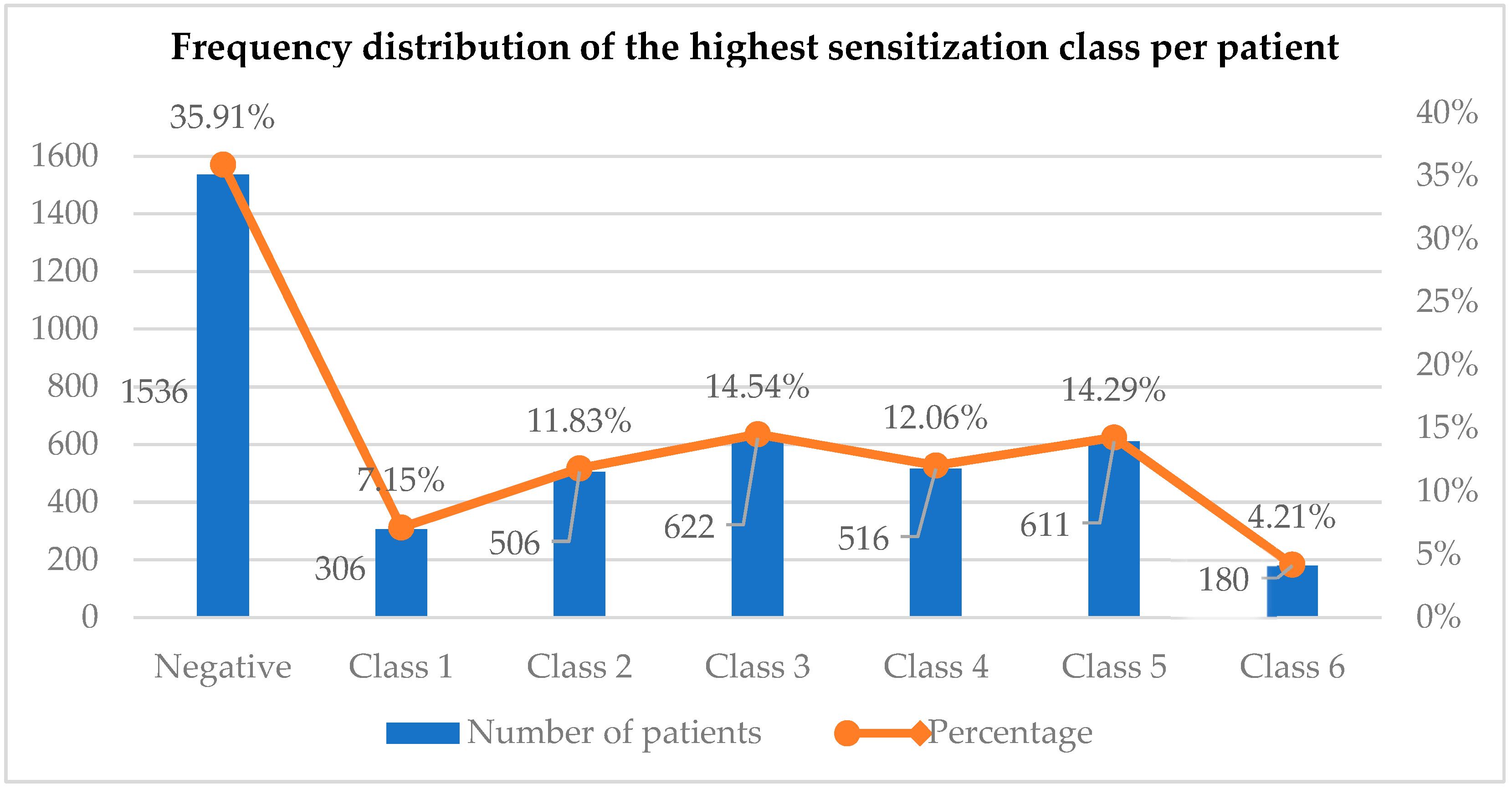
Figure 3.
Heatmap of Spearman correlation coefficients between aeroallergens. Spearman correlation analysis demonstrated strong positive associations among house dust mite allergens, particularly between D. farinae, D. pteronyssinus, and Blomia tropicalis ( Spearman correlation > 0.6, p < 0.001), between Dandelion pollen and Grass pollen (Spearman correlation = 0.63, p < 0.001). Moderate correlations were also observed between mites and cockroach allergens, suggesting shared environmental exposure. Statistical significance is denoted by asterisks (*p < 0.05, **p < 0.01).
Figure 3.
Heatmap of Spearman correlation coefficients between aeroallergens. Spearman correlation analysis demonstrated strong positive associations among house dust mite allergens, particularly between D. farinae, D. pteronyssinus, and Blomia tropicalis ( Spearman correlation > 0.6, p < 0.001), between Dandelion pollen and Grass pollen (Spearman correlation = 0.63, p < 0.001). Moderate correlations were also observed between mites and cockroach allergens, suggesting shared environmental exposure. Statistical significance is denoted by asterisks (*p < 0.05, **p < 0.01).
Disclaimer/Publisher’s Note: The statements, opinions and data contained in all publications are solely those of the individual author(s) and contributor(s) and not of MDPI and/or the editor(s). MDPI and/or the editor(s) disclaim responsibility for any injury to people or property resulting from any ideas, methods, instructions or products referred to in the content. |
© 2026 by the authors. Licensee MDPI, Basel, Switzerland. This article is an open access article distributed under the terms and conditions of the Creative Commons Attribution (CC BY) license (http://creativecommons.org/licenses/by/4.0/).
Copyright: This open access article is published under a Creative Commons CC BY 4.0 license, which permit the free download, distribution, and reuse, provided that the author and preprint are cited in any reuse.


