

Submitted:
22 April 2026
Posted:
22 April 2026
You are already at the latest version
Abstract
This study describes a new species of the family Caliscelidae (Hemiptera) from the Xizang region of China—Peltonotellus lasaensis sp. nov. Through integrated morphological examination (including external morphology and genitalia dissection) and mitochondrial gene (COI) sequence analysis, the taxonomic status of this species was determined. Morphological results reveal that the male aedeagus terminates in valvular lobes, with ventral processes comprising a pair of spinous projections. In females, the type IX arcuate process bears approximately 15 ridge teeth on the dorsal margin, a feature that distinctly differentiates it from congeners. Molecular phylogenetic analysis demonstrated a substantial genetic divergence (K2P = 16.5%) between the new species and its closest relative, Peltonotellus sp. (MW928530.1), far exceeding the species-level threshold (< 2%). Additionally, the new species formed a monophyletic clade with high bootstrap support (>97%) in the maximum likelihood tree. This study represents the first record of Caliscelidae in the high-altitude regions of Xizang (3 650–3 800 m), thereby enriching the diversity data of Hemiptera in Asia and providing valuable insights into the biogeography of the Qinghai-Xizang Plateau.
Keywords:
new species
; Hemiptera
; Caliscelidae
; COI gene
; phylogenetic tree
; Xizang
1. Introduction
Hemiptera, one of the most diverse insect orders, is globally distributed across various ecosystems and plays a significant role in agricultural and forestry systems [1]. The family Caliscelidae (superfamily Fulgoroidea) has attracted taxonomic interest due to its distinctive morphology and complex speciation patterns [2]. Members of this family predominantly inhabit tropical and subtropical regions, with approximately 30 genera and over 200 species described worldwide. However, taxonomic studies in Asia remain limited. The Xizang region of southwestern China, a recognized biodiversity hotspot owing to its unique topography and ecosystems, harbors poorly documented Caliscelidae diversity, with numerous undescribed species likely awaiting discovery. Recent advances in molecular systematics have complemented traditional taxonomy, particularly through mitochondrial cytochrome oxidase subunit I (COI) gene analysis, which enables precise delineation of genetic divergence among closely related species and validation of morphological classifications [3]. Phylogenetic reconstructions of Fulgoroidea using COI have suggested revisions for several genus-level taxa. Nevertheless, Caliscelidae remains underrepresented in such studies, especially for Asian species. The scarcity of molecular data hinders comprehensive insights into their evolutionary history and biogeographic distribution.
Xizang, situated in southwestern China, harbors a remarkable diversity of Hemiptera insects owing to its unique topography and diverse climatic zones [4]. However, studies on the family Caliscelidae in this region have long been neglected due to challenges in specimen collection and limited taxonomic resources. Previous research has demonstrated that male genital structures (e.g., aedeagus morphology and clasper characteristics) in this family exhibit pronounced interspecific variation, providing key diagnostic traits for species delimitation [5]. Furthermore, geographical isolation and microhabitat specialization likely exacerbate species differentiation in this region. Thus, an integrative approach combining morphological and molecular data will be essential for elucidating the diversity and evolutionary drivers of this understudied group.
This study examined specimens of the family Caliscelidae collected from the Xizang region in southwestern China through comprehensive morphological analysis (including external morphology and genitalia dissection) and molecular characterization using COI gene sequencing. As a result, we describe and identify a new species, Peltonotellus lasaensis sp. nov. The study objectives were threefold: (1) to provide detailed morphological descriptions and high-resolution diagnostic images of the new species; (2) to reconstruct a phylogenetic tree based on COI sequences to determine its taxonomic position; and (3) to evaluate the biodiversity conservation significance of Caliscelidae in the Xizangan region. These findings contribute significantly to the documentation of Hemiptera diversity in Asia while establishing fundamental data for future biogeographical and evolutionary biology research. The integration of morphological and molecular approaches in this study provides a robust framework for taxonomic studies of this under-researched insect family.
2. Materials and Methods
Specimen Collection and Preservation
Specimens were collected from plantation habitats in Xizang, southwestern China, at coordinates 29°38′20″N, 91°9′23″E and 29°41′38″N, 91°5′38″E, with an elevation range of 3,650-3,800 m above sea level. Field collections were conducted from May to September 2023 by Huang Zhi using two complementary methods: (1) sweep netting of vegetation and (2) Malaise traps. All adult specimens were immediately preserved in 95% ethanol upon collection to maintain DNA integrity for molecular analysis. Voucher specimens are currently deposited in the entomological collection of the Plateau Resource Insects and Applied Entomology Laboratory at Xizang Agricultural and Animal Husbandry College for long-term preservation and future reference.
Morphological Observation and Imaging
Morphological examinations were conducted using a Leica M205 C stereomicroscope (Leica Microsystems, Germany), with body length (measured from the head apex to wing tips) and maximum head width recorded as mean ± standard deviation [6]. For male genitalia preparation, abdomens were immersed in 10% KOH solution and heated in an 80°C water bath for 30 minutes [7], followed by thorough rinsing with distilled water. The cleared specimens were then transferred to glycerol, where the aedeagus and claspers were carefully separated using microdissection needles for observation. All microscopic images were captured using the Leica M205 C system, with photographic documentation including multiple focal planes and views (dorsal, lateral, and ventral) of key morphological structures. The images were subsequently processed using Adobe Photoshop software, with scale bars calibrated against the microscope's integrated measurement ruler.
Molecular Experiment
DNA Extraction and PCR Amplification. Genomic DNA was extracted from whole worm tissues using a magnetic bead-based DNA extraction kit (Wuhan Tianyi Huayu Gene Technology Co., Ltd.), with nucleic acid purity, concentration, and integrity assessed through NanoDrop spectrophotometry and agarose gel electrophoresis. The mitochondrial COI gene was amplified using universal insect primers (Table 1) following standard barcoding protocols [8,9], with all PCR reactions performed in duplicate for bidirectional sequencing. The resulting sequences were assembled and queried against the NCBI nr/nt database, where the top 10 matching sequences (e.g., MW928530.1) were retained as reference materials alongside the highest-scoring match for species identification. The newly obtained sequence has been deposited in GenBank under accession number PRJNA1253866.
Phylogenetic analysis. Phylogenetic analysis was conducted using MEGA 11 software, beginning with multiple sequence alignment performed with the ClustalW algorithm followed by manual trimming of non-conserved terminal regions [10]. The maximum likelihood (ML) tree was constructed using seven closely related outgroup taxa from the same family: Nasatus davidouvrardi (KX702952.1), Apache degeerii (KR578829.1), Ceropria induta (KF692067.1), Ephemera danica (LN734766.1), Machilis engiadina (KJ501738.1), Ossoides lineatus (MN609349.1), and Papilio brevicauda (KJ363295.1) . The resulting phylogenetic tree was visualized and annotated using FigTree v1.4.4, with bootstrap support values and taxonomic units clearly indicated for all nodes.
3. Results
Morphological Description
Figure 1–16.
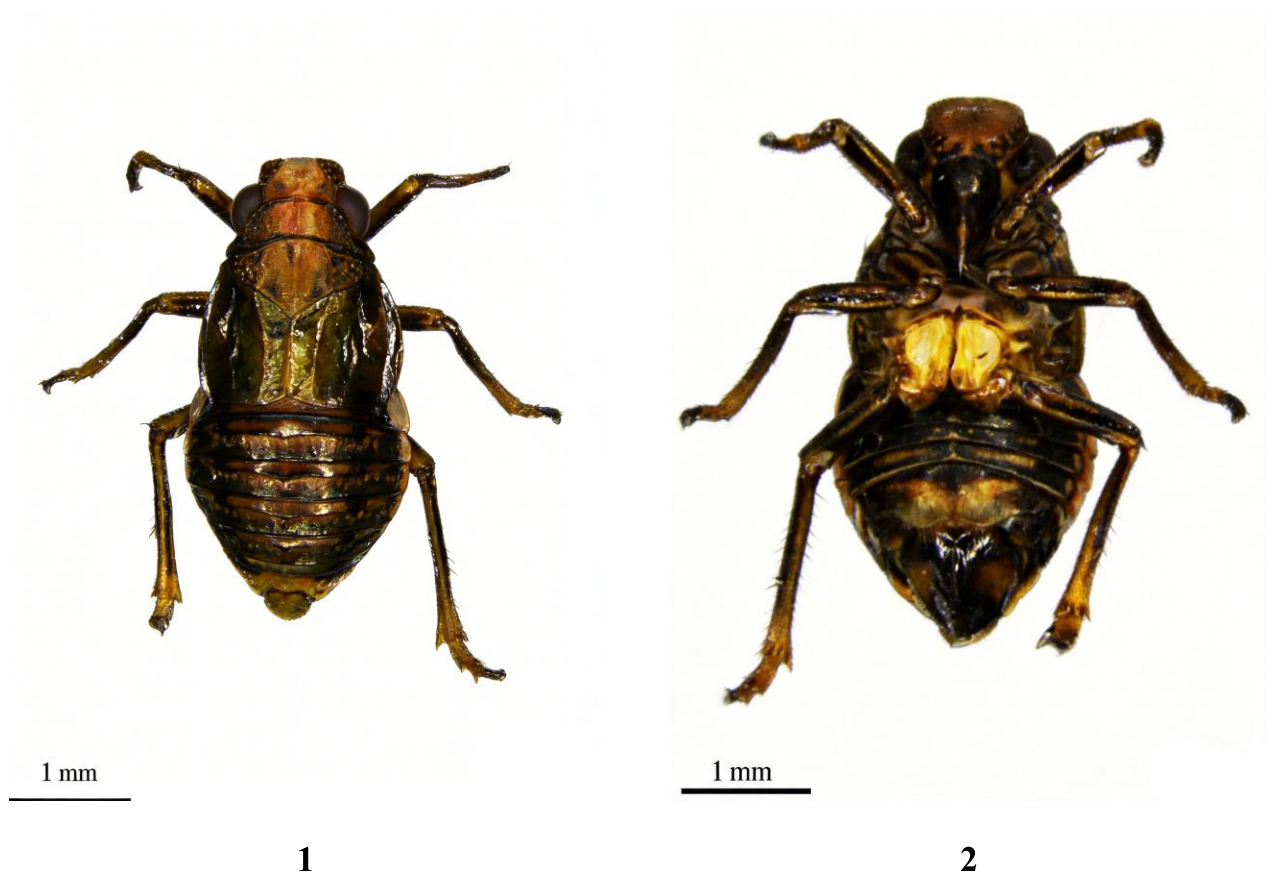
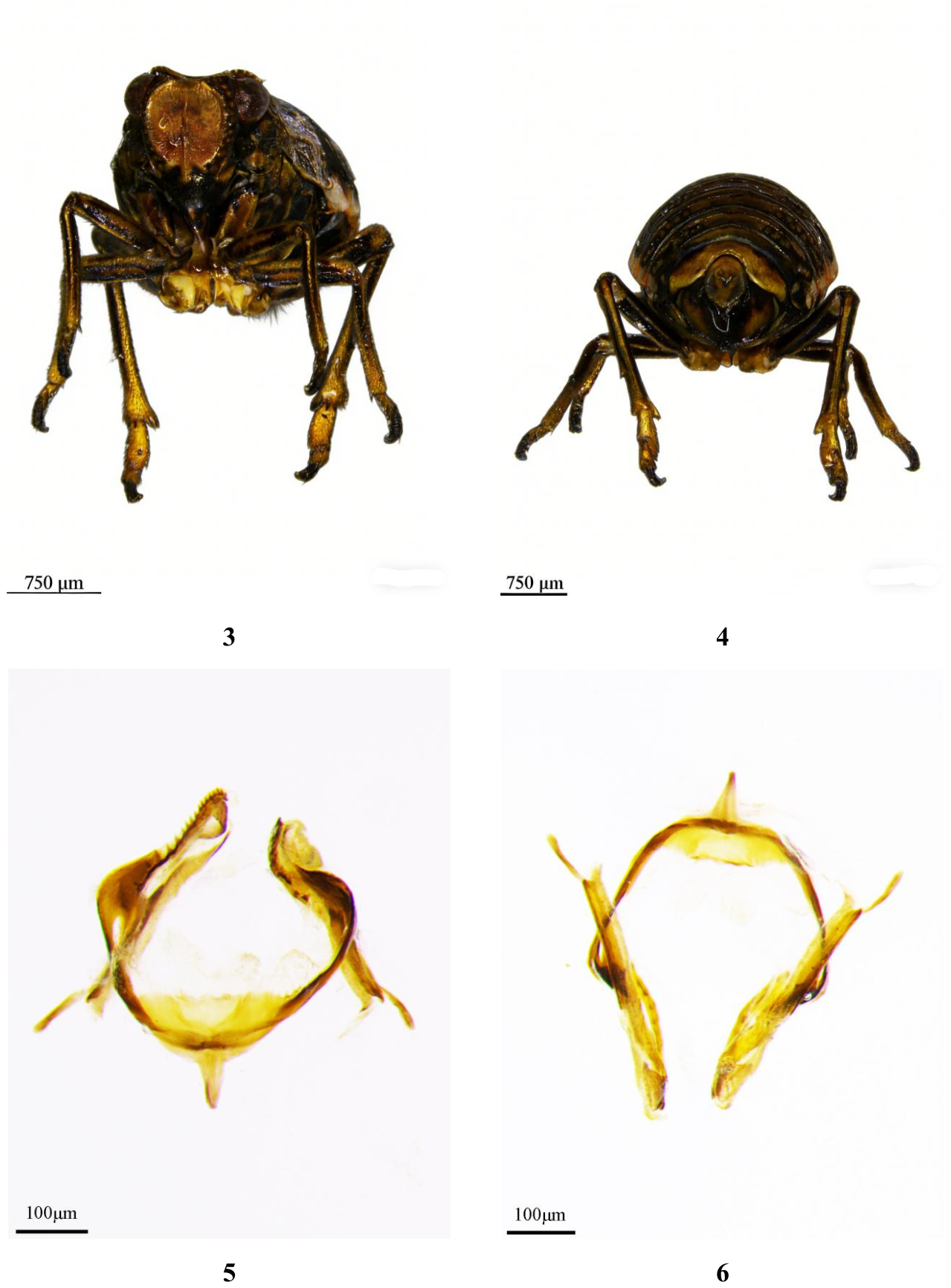
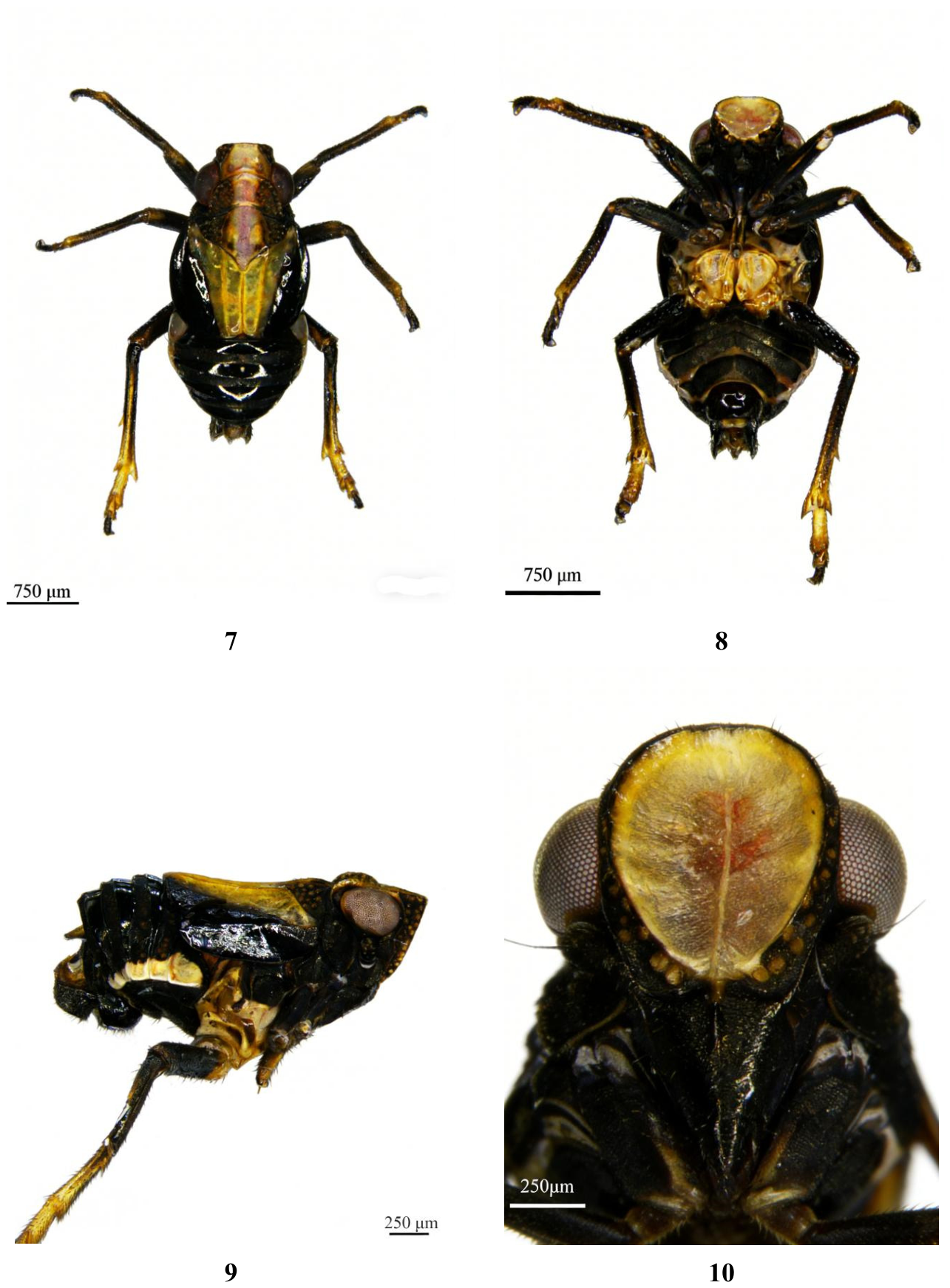
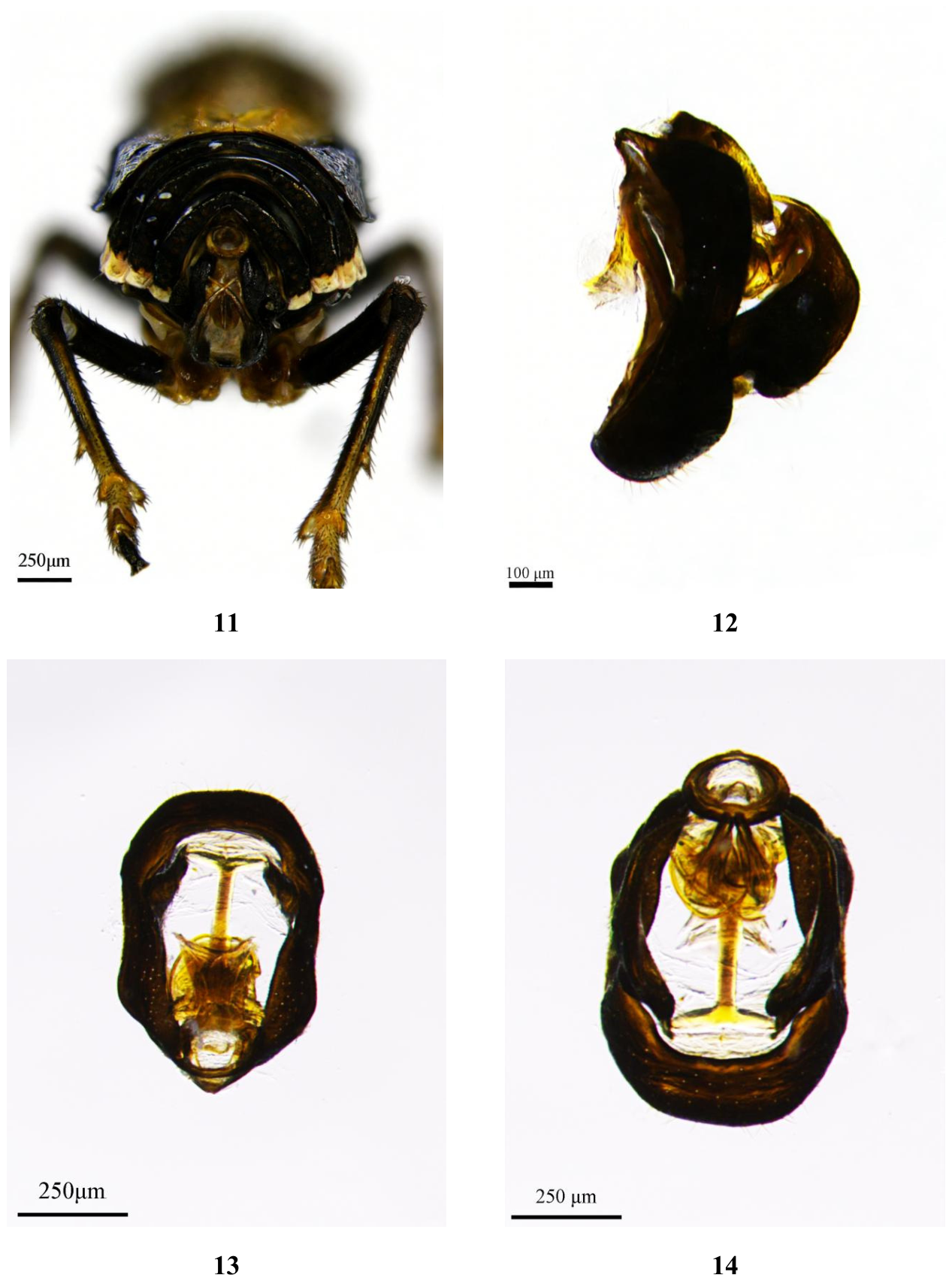
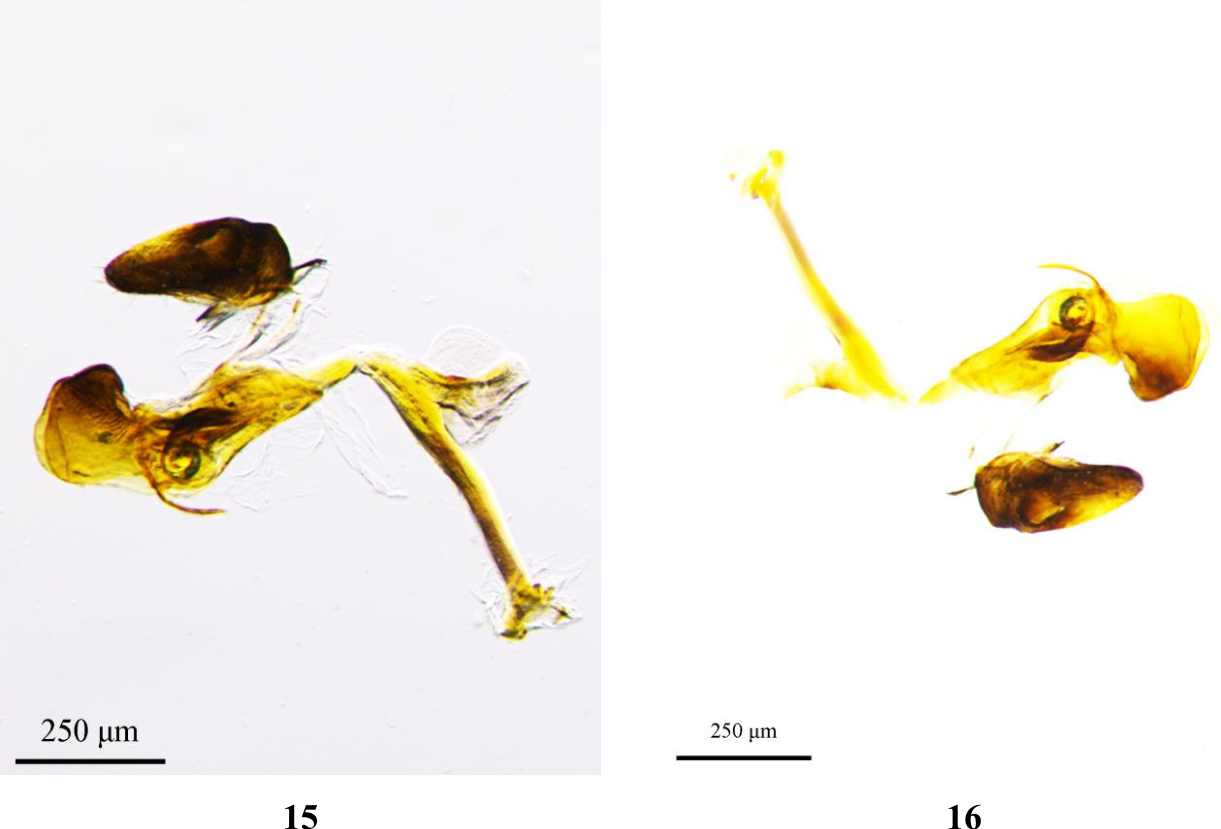
Peltonotellus lasaensis. 1. Female, dorsal view; 2. Female, ventral view; 3. Female, head; 4. Female, tail; 5. Type IX arch bone process and gonapophyseal bridge, dorsal view; 6. Type IX arch bone process and gonapophyseal bridge, frontal view; 7. Male, dorsal view; 8. Male, ventral view; 9. Male, lateral view; 10. Male, head; 11. Male, tail; 12. Male, lateral view of genital segment; 13. Male, internal view of genital segment; 14. Male, dorsal view of genital segment; 15. Male, aedeagus-1; 16. Male, aedeagus-2.
Figure 1–16.
Peltonotellus lasaensis. 1. Female, dorsal view; 2. Female, ventral view; 3. Female, head; 4. Female, tail; 5. Type IX arch bone process and gonapophyseal bridge, dorsal view; 6. Type IX arch bone process and gonapophyseal bridge, frontal view; 7. Male, dorsal view; 8. Male, ventral view; 9. Male, lateral view; 10. Male, head; 11. Male, tail; 12. Male, lateral view of genital segment; 13. Male, internal view of genital segment; 14. Male, dorsal view of genital segment; 15. Male, aedeagus-1; 16. Male, aedeagus-2.
Type Materials
Holotype:♂:Lhasa City, Xizang Autonomous Region, China; the middle and lower reaches of the Lhasa River valley; 29°38′6″ N, 91°8′49″ E; elevation 3,600-3,700 meters; July 10, 2024; Lab of Resource and Applied Insect in the Xizang Plateaus, Chan Helin.
Paratypes:♀:Lhasa City, Xizang Autonomous Region, China; Forest restoration area on a mountainside near the Lhalu Wetland National Nature Reserve, 29°41′38″ N, 91°5′38″ E; elevation 3,600-3,700 meters; July 15, 2023; Lab of Resource and Applied Insect in the Xizang Plateaus, Huang Zhi.
This study describes a new species of the family Peltodellidae (Hemiptera), which is named Peltonotellus lasaensis based on its type locality. The proposed Chinese name is 拉萨杯瓢蜡蝉. Morphological observations and comparative analyses of this species were conducted with reference to the identification characteristics and taxonomic framework for the family Caliscelidae provided in Che et al. (2007) [11].
Body length: Male 3.0-3.1mm (n=5) (Figure 7, Figure 8, Figure 9, Figure 10 and Figure 11), Female 3.3-3.7mm (n=4) (Figure 1, Figure 2, Figure 3 and Figure 4)
Body color: The specimens exhibit pronounced sexual dimorphism in coloration patterns. Male specimens are characterized by a distinctly white head and medial pronotal region bordered by reddish margins, contrasting sharply with the black lateral portions that bear irregular yellowish-brown spotting; their dark brown compound eyes, translucent forewings (showing yellowish inner and blackish outer coloration), and uniformly black ventral abdomen complete the diagnostic coloration. In contrast, female specimens present a predominantly brown head and pronotum with irregular yellowish-brown lateral spotting, similarly dark brown compound eyes, semi-transparent uniformly brown forewings, and a ventrally brown abdomen marked by irregular black patches distributed across the surface.
Head (Figure 3 and Figure 10): The head exhibits a slightly wider-than-long morphology (male head width: 0.64±0.02 mm; female: 0.77±0.02 mm), featuring elliptical compound eyes and short antennae characterized by a distinctly swollen scape bearing yellowish-brown punctate markings, while the flagellum maintains a slender profile throughout its length.
Thorax (Figure 1 and Figure 7): The pronotum exhibits a trapezoidal morphology, with male specimens showing pronounced apical convergence forming a distinct angle; the mesoscutum presents a triangular configuration characterized by a well-defined central longitudinal depression, while the forewings display prominent venation patterns accompanied by striking color demarcation in males.
Male genitalia (Figure 11, Figure 12, Figure 13, Figure 14, Figure 15 and Figure 16)
The male genitalia exhibit distinctive morphological features: the paramere presents a nearly rectangular lateral profile with a bluntly rounded, prominently protruding ventral posterior margin, while its dorsal process displays pronounced curvature terminating in a sharp point. The anal segment forms a perfect circle, characterized by a slightly thickened basal margin and a distal protrusion, with the anal orifice positioned centrally. Posteriorly, the caudal segment opens in a distinctive pod-shaped configuration. The aedeagus consists of a shallow U-shaped tubular structure distally divided into valvular lobes, from which arises a pair of elongated, spine-like ventral processes.
Female genitalia (Figure 4–6)
The Type IX arcuate process displays approximately 15 distinct ridge teeth along its dorsal margin, while the posterior connective plate exhibits minimally protruding denticles along its outer margin.
Phylogenetic Tree
The phylogenetic tree of the COI gene system constructed based on the maximum likelihood method (Figure 17) and the genetic distance heatmap based on COI sequences (Figure 18) are shown above: Only two COI gene sequences of the genus Peltonotellus were found in the NCBI database, MW928530.1 (Peltonotellus sp.) and KX761559.1 (Peltonotellus quadrivittatus), among which MW928530.1 forms a highly supported independent branch with Peltonotellus lasaensis (support value >97%). Based on the K2P model calculation, Peltonotellus lasaensis is genetically closest to MW928530.1, with a genetic distance of 16.5%, which is significantly higher than the generally accepted threshold for species-level identification among congeneric insect species [12]. This clade forms a highly supported close-genus clade with Bruchomorpha, Aphelonema, and Acothrura (genetic distance 17.5%-22.90%), among which the genus Bruchomorpha is the closest in genetic distance (17.5%-17.9%). In addition, species of the genera Gergithoides, Euhemisphaerius, Celyphoma, Falcophantis, Salurnis, Melormenis, Geisha distinctissima, Metcalfa pruinose, and others also show close phylogenetic relationships with this clade (genetic distance 19.99%-26.83%), collectively forming a distinct evolutionary cluster within the superfamily Cixiidae. This further confirms the taxonomic status of Peltonotellus lasaensis, while supporting its recognition as a new species within the genus Peltonotellus [13].
Differential Diagnosis
The discovery of P. lasaensis at 3,800 m elevates the altitudinal distribution limit of Caliscelidae; contrasting with P. niger (2,347–3,147 m) and P. brevis (unspecified). The female genital ridge tooth count exhibits: P. lasaensis (15 teeth) > P. niger (11 teeth) > P. brevis (10 teeth). The male aedeagus of P. lasaensis displays a unique valvular lobes + paired spinous processes combination, distinct from P. niger's dual processes (thin process + transverse process) and P. brevis's single short process. These three species demonstrate NW–SW geographic isolation: Ningxia (P. brevis) → Gansu (P. niger) → Xizang (P. lasaensis). Based on data from Meng et al. (2015) and this study, Table 2 compares morphological characteristics of three Chinese new species in Peltonotellus [14].
Acknowledgments
This study was supported and funded by the Xizang Autonomous Region Key R&D and Transformation Program (XZ202301ZY0019N); the Xizang Agriculture and Animal Husbandry University Forestry Doctoral Program (Phase I) (533325001); the Central Guidance for Local Science and Technology Development Fund (XZ202401YD0026); and the 2024 Central Financial Support for Local University Development and Reform Special Fund: Construction and Comprehensive Service Capacity Enhancement of Plateau Characteristic Agriculture and Animal Husbandry Science and Technology Backyards (XK2024-03).
References
- Goncalves, C. C.; Prando, J. S.; Domahovski, A. C. Review of the genus Tenuacia DeLong (Insecta: Hemiptera: Cicadellidae: Gyponini), including two new species and Rubacea DeLong raised to generic status. Zootaxa 2025, 5604, 361–372. [Google Scholar] [CrossRef] [PubMed]
- de FREITAS, A. S.; Dietrich, C. H.; Takiya, D. M. Five new species of Caliscelidae (Insecta, Hemiptera) from Mexico and Panama, with additional redescriptions of little-known species. European Journal of Taxonomy 2020, 717, 27–69. [Google Scholar] [CrossRef]
- Strueder-Kypke, M. C.; Lynn, D. H. Comparative analysis of the mitochondrial cytochrome c oxidase subunit I (COI) gene in ciliates (Alveolata, Ciliophora) and evaluation of its suitability as a biodiversity marker. Systematics and Biodiversity 2010, 8, 131–148. [Google Scholar] [CrossRef]
- Li, J.; Liu, H.; Wu, Y.; Zeng, L.; Huang, X. Spatial patterns and determinants of the diversity of Hemipteran insects in the Qinghai-Xizangan Plateau. Frontiers in Ecology and Evolution 2019, 7, 165. [Google Scholar] [CrossRef]
- Cho, J. Y.; Rédei, D.; Chan, M. L. A revision of the genus Euhemisphaerius (Hemiptera: fulgoromorpha: issidae), with taxonomic corrections on related genera. The European Zoological Journal 2024, 91, 915–989. [Google Scholar] [CrossRef]
- Purse, B. The ecology and conservation of the Southern Damselfly (Coenagrion mercuriale). Doctoral dissertation, University of Liverpool, 2001. [Google Scholar]
- HU, S.; RAN, S.; XING, J. Description of a new species of the leafhopper genus Mimotettix Matsumura (Hemiptera: Cicadellidae: Deltocephalinae) from China. Zootaxa 2025, 5570, 380–386. [Google Scholar] [CrossRef] [PubMed]
- Ahmed, S.S. DNA Barcoding in Plants and Animals: A Critical Review. Preprints 2022, 2022010310. [Google Scholar]
- Li, Q.; Wang, C.; Gong, Z.; Liu, G. Phylogenetic relationships of 52 Eimeria species based on COI sequences. Mitochondrial DNA Part B 2019, 4, 3956–3958. [Google Scholar] [CrossRef] [PubMed]
- Koichiro, Tamura; Glen, Stecher; Sudhir, Kumar. MEGA11: Molecular Evolutionary Genetics Analysis version 11. Molecular biology and evolution CrossRef. 2021, 38, 3022–3027. [Google Scholar]
- Che, Y. L.; Zhang, Y. L.; Wang, Y.L. Seven new species and one new record of Gergithus Stal (Hemiptera: Fulgoroidea: Issidae) from China. Proceedings of the Entomological Society of Washington 2007, 109, 611--627. [Google Scholar]
- Hebert, P. D.; Cywinska, A.; Ball, S. L.; deWaard, J. R. Biological identifications through DNA barcodes. Proceedings of the Royal Society B: Biological Sciences 2003, 270, 313–321. [Google Scholar] [CrossRef] [PubMed]
- Kumar, S.; Stecher, G.; Tamura, K. MEGA7: MEGA7: Molecular Evolutionary Genetics Analysis Version 7.0 for Bigger Datasets. Molecular Biology and Evolution 2016, 33, 1870–1874. [Google Scholar] [CrossRef] [PubMed]
- Meng, R.; Gnezdilov, V.M.; Wang, Y. Two new species of the genus Peltonotellus Puton (Hemiptera: Fulgoromorpha: Caliscelidae) from northwestern China with a world checklist. Zootaxa 2015, 4052, 465–477. [Google Scholar] [CrossRef] [PubMed]
Figure 17.
Phylogenetic tree constructed based on COI sequences.
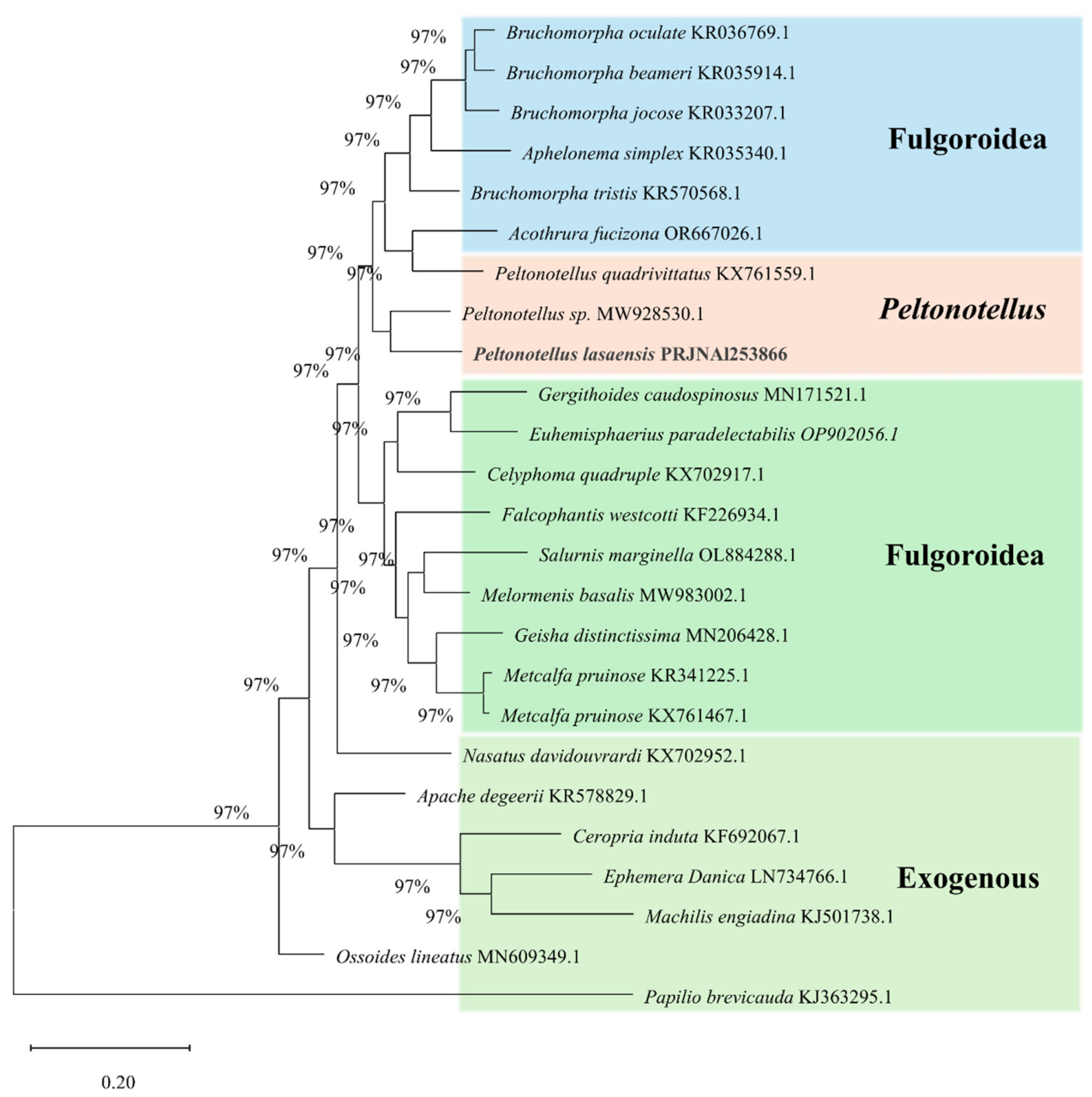
Figure 18.
Genetic distance heatmap based on COI sequences. Note: The greater the genetic distance, the darker the color and the larger the value.
Figure 18.
Genetic distance heatmap based on COI sequences. Note: The greater the genetic distance, the darker the color and the larger the value.
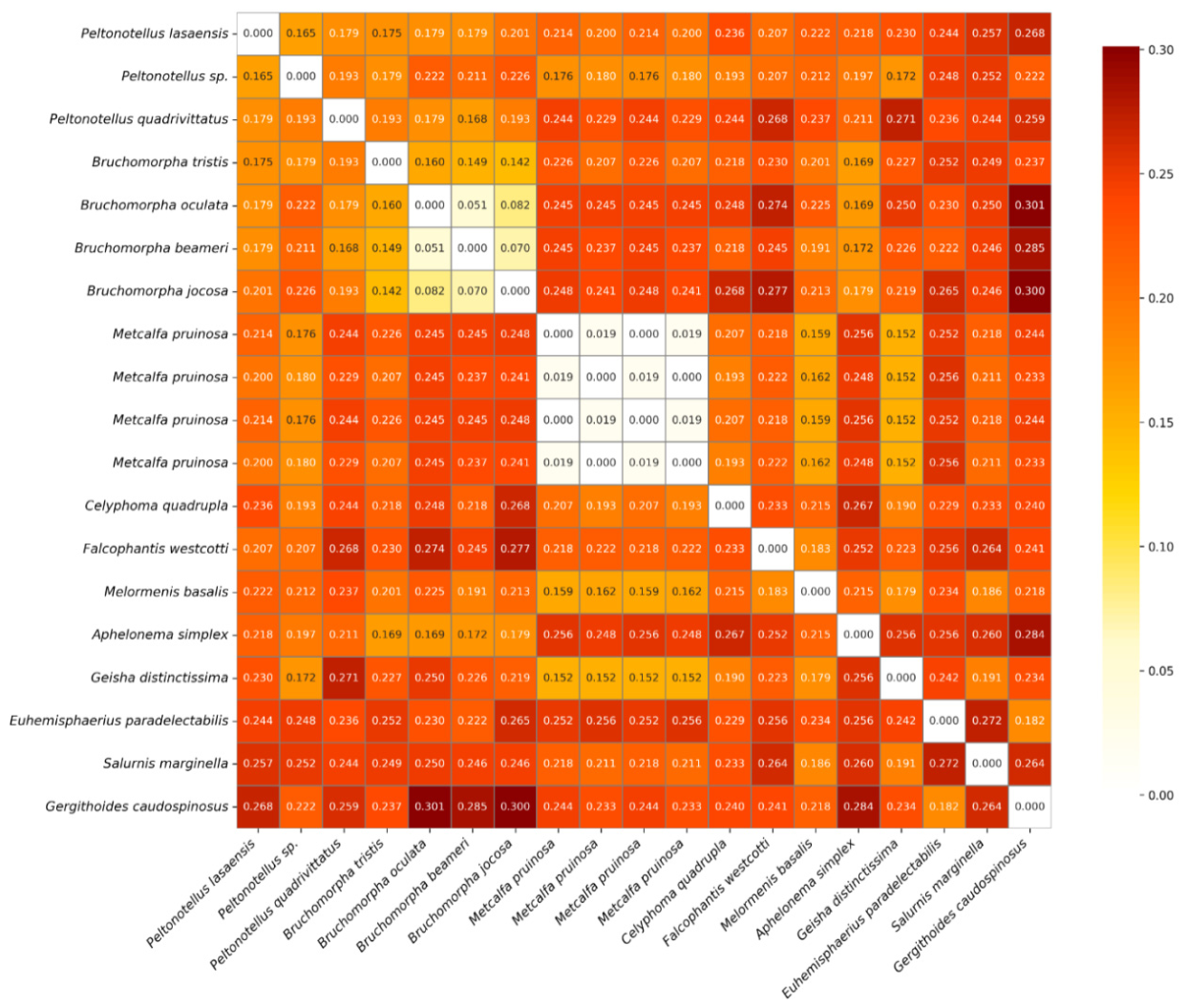

Table 1.
Primer Information.
| Site Name | Primer Name | Primer sequence | Product size | TM Value |
|---|---|---|---|---|
| COI-KC | LCO1490 | GGTCAACAAATCATAAAGATATTGG | 650 | 42 |
| HC02198 | TAAACTTCAGGGTGACCAAAAAATCA |
Table 2.
Compares morphological characteristics of three Chinese new species in Peltonotellus.
| Character | P. brevis Meng et al., 2015(Ningxia) | P. niger Meng et al., 2015(Gansu) | P. lasaensis Chan et al., 2025(Xizang) |
|---|---|---|---|
| Type Locality | Tongxin County, Ningxia(Altitude unspecified) | Luqu County, Gansu(2,347–3,147 m) | Lhasa, Xizang(3,650–3,800 m) |
| Body Length (mm) | ♂ 1.7–1.9 ♀ 2.8–3.0 | ♂ 2.2–2.4 ♀ 2.5–2.7 | ♂ 3.0–3.1♀ 3.3–3.7 |
| Key Coloration | |||
| Male | Head/thorax with broad white median stripe; forewings dark brown/orange | Entirely black; white median stripe on head/thorax | Head white + red margins; lateral black spots; forewings translucent (yellow-black gradient) |
| Female | Light yellowish-brown; abdominal B&W stripes | Dark fulvous; black spots flanking white stripe | Predominantly brown; irregular black abdominal patches |
| Male Genitalia | |||
| Aedeagus Structure | Short thin process on right side (not reaching phallobase base) | Short thin process + transverse process on right | Distally divided into valvular lobes; paired spinous ventral processes |
| Phallobase Dorsal Margin | Concave near distal 1/3 | Slightly concave | U-shaped tubular |
| Female Genitalia | |||
| Teeth on Type IX Arcuate Process | ~10 teeth on dorsal margin of posterior connective lamina | ~11 dorsal teeth + 6 small lateral teeth | ~15 ridge teeth (key diagnostic) |
| Denticle Protrusion | Minimal | Prominent | Distinct |
| Head Ratio (Width/Length) | ♂ 1.1×, ♀ 0.9× | 0.8× | Width > Length(♂ 0.64 mm, ♀ 0.77 mm) |
| Forewing Features | Grayish-brown; no transparency | Subtransparent; prominent veins | Semi-transparent; ♂ color-demarcated, ♀ uniformly brown |
| Habitat | Mountain vegetation | High-altitude grasslands | Highest recorded altitude for the family (3,650–3,800 m) |
Disclaimer/Publisher’s Note: The statements, opinions and data contained in all publications are solely those of the individual author(s) and contributor(s) and not of MDPI and/or the editor(s). MDPI and/or the editor(s) disclaim responsibility for any injury to people or property resulting from any ideas, methods, instructions or products referred to in the content. |
© 2026 by the authors. Licensee MDPI, Basel, Switzerland. This article is an open access article distributed under the terms and conditions of the Creative Commons Attribution (CC BY) license (http://creativecommons.org/licenses/by/4.0/).
Copyright: This open access article is published under a Creative Commons CC BY 4.0 license, which permit the free download, distribution, and reuse, provided that the author and preprint are cited in any reuse.


