
Submitted:
21 April 2026
Posted:
22 April 2026
You are already at the latest version
Abstract
Background/Objectives: Cardiovascular diseases are the leading cause of death in developed countries. The most challenging clinical presentation of their natural history is heart failure with lifetime probability of 20% in both genders. It is recognized when typical symptoms such as exercise intolerance, shortness of breath in horizontal position together with signs comprising of lower limb oedema, crackles in the lungs, widening of the jugular veins and liver enlargement. The aim of the study is to assess the relationship between the change in non-oedematous body mass and the clinical and laboratory profile in patients with heart failure with reduced ejection fraction. Methods: The research material consists of 1029 patients with heart failure who were included in the Prospective Heart Failure Register maintained in the Third Department of Cardiology of the Silesian Center for Heart Diseases in Zabrze since 2003. The collected data was subjected to statistical analysis in Statistica 13. Conclusions: The highest median values of ejection fraction of the left ventricle were observed in patients with weight gain, and the lowest – in patients who lost more than 5% of body weight. Patients with the loss of> 5% of body weight are characterized by the lowest probability of survival. Change in non-oedematous body mass affects adversely the clinical and laboratory profile of patients with heart failure with reduced ejection fraction. Both weight loss above 5% and weight gain are associated with poorer prognosis and increased mortality in the study participants.
Keywords:
heart failure
; weight change
; sarcopenia
; cardiac cachexia
1. Introduction
Cardiovascular diseases are the first cause of death in developed countries. Heart failure (HF) is a new epidemic of the 21st century. Almost 70% of HF cases result from cardiac damage in the course of ischemic heart disease, the rest are a consequence of arterial hypertension and other heart diseases [1].
A recent national report in 2018 stated that in Poland about 1,240,000 people suffer from heart failure, and the yearly number of cases and hospitalizations due to HF is constantly growing [2].
Heart failure, according to the new guidelines of the European Society of Cardiology (ESC), is defined not as a single pathological diagnosis, but as a group of typical symptoms, such as edema of the lower limbs, dyspnea, decreased exercise tolerance, which may result in abnormal physical examination: peripheral edema, crackles above lungs, and jugular veins distention. Abnormalities found on physical examination are caused by disturbances in heart function and/or structure that reduce cardiac output and/or increase intracardiac pressure at rest or during exercise. Reduction of left ventricular ejection fraction (LVEF) ≤40% is defined as heart failure with reduced ejection fraction (HFrEF) i.e., those with a significant reduction in LV systolic function [3].
Abnormal body weight values are a global medical problem. In the general population, overweight and obesity are among the risk factors for many diseases and disorders, especially cardiovascular diseases and malignant neoplasms, and also have an adverse effect on the patient’s survival. Both weight gain and weight loss are associated with a higher risk of general and cardiovascular mortality [4,5]. In patients with heart failure, the relationship between body weight as measured by BMI and mortality is different than in the general population. This phenomenon has been called the obesity paradox or reverse epidemiology. Patients with chronic heart failure with a BMI within the normal range (20–25 kg/m2) show an increased risk of death when compared to patients with HF with a BMI of 25–35 kg/m2, overweight or obese I degree [6]. There is no clear position confirming the existence of the obesity paradox in heart failure and explaining its mechanisms. A significant number of studies found relationship between body mass and mortality in HF [7,8,9,10,11,12]; however, there are also reports expressing doubts about the existence of the obesity paradox [7,13,14].
When estimating the risk of possible death and an unfavorable course of the disease, one should take into account the patient’s age, renal function, arterial pressure, blood count, presence of ischemic heart disease, carbohydrate metabolism and the patient’s weight. The most important factor—apart from cardiovascular risk factors—is the patient’s nutritional status [15,16,17,18,19].
Cardiac cachexia is a metabolic disorder defined as the unintentional loss of ≥ 6% of edema-free body weight within the previous 6–12 months that occurs in advanced stages of chronic heart failure. Cachexia is an independent factor of mortality in HF, its prevalence among patients with HF ranges between 10% and 39% [20].
The aim of the study is to assess the relationship between changes in swelling-free body weight and the clinical and laboratory profile of patients with heart failure.
2. Materials and Methods
Study Group
The research material consists of 1029 patients with heart failure who have been entered into the Prospective Register of Heart Failure kept at the 3rd Department of Cardiology of the Silesian Center for Heart Diseases in Zabrze since 2003.
- Study inclusion criteria:
diagnosed heart failure with reduced left ventricular ejection fraction (LVEF ≤ 40%) according to the guidelines of the European Society of Cardiology;
age > 18 years;
the duration of heart failure longer than 6 months;
excess fluid-free status as judged by clinical examination and stable diuretic within 3 months.
- Study exclusion criteria:
pharmacotherapy with glucocorticosteroids, bisphosphonates, preparations with vitamin D3, calcium or phosphorus salts;
active infection;
liver disease with four-fold elevated enzyme levels;
active bleeding;
diagnosed neoplastic and/or granulomatous disease;
status after bariatric surgery and/or procedures reducing intestinal absorption.
The diagnosis of HFrEF has been established according to the ESC guidelines. HFrEF was confirmed in symptomatic patients with left ventricular ejection fraction (LVEF) < 40% measured in transthoracic echocardiography.
Body mass and height were measured at the day of blood sampling (index date) using certified scale (B150L, Radwag, Radom, Poland). Oedema-free weight was assured through clinical examination by experienced cardiologist showing no signs and/or symptoms of congestion and no change of diuretics within previous 3 months. We have calculated BMI by dividing weights in kilograms by height in meters squared.
Body mass within a 1 year prior to HF onset was identified based on the available medical records and medical history collected from the patient and his or her family. The value established at least 2 months before HF diagnosis was taken as the mass before HF to avoid the possible influence of asymptomatic water retention on the mass before HF.
Weight change was calculated as the difference between weight before HF and index weight and expressed as percentage of weight before HF:
Weight change [%] = [(weight before HF − weight index)/weight before HF] × 100%
Statistical Methods
The normality of variables was tested using Shapiro–Wilk test. None of them had normal distribution. Continuous variables were presented as medians and interquartile range. Categorical variables were shown as percentages. Patients were compared using χ2 test for categorical data with Yates ‘correction if applicable and nonparametric Kruskal-Wallis test for continuous variables. Post hoc comparisons between groups were performed using Tukey test. Kaplan–Meier curves were drawn to show the cumulative survival 3 years observation. The Cox proportional hazard model was used to estimate the risk of weight gain (group 1) and weigh loss exceeding 5% (group 3), relative to a group with lowest weight loss below 5% defined as weight stable (group 2). Statistical significance was defined as p < 0.05. The collected data were statistically analyzed in Statistica 13.3.
3. Results
The study involved 1029 patients, including 888 (86%) men and 141 (14%) women. The majority of patients—589 (57%)—lost more than 5% of their body weight. Weight gain was observed in 233 (23%) of the study participants, while weight loss of less than 5% of the initial body weight, further defined as stable weight was observed in 207 (20%) patients. The clinical characteristics of patients are shown in Table 1.
The highest median hemoglobin concentrations were observed in patients with stable weight (Figure 1).
The median albumin concentrations values were the same in all three groups of patients (Figure 2).
The highest median concentrations of NTproBNP were observed in patients who lost more than 5% of body weight, and the lowest—in patients with a weight gain (Figure 3).
The lowest median GFR MDRD concentrations was observed in patients who lost more than 5% of their body weight and the highest—in patient with a stable weight (Figure 4).
The highest median value of LVEF was observed in patients with weight gain (Figure 5).
The highest median sodium concentration was observed in patients with stable weight and weight gain (Figure 6).
The highest median hsCRP concentration was observed in patients with weight loss. (Figure 7).
The highest median triglycerides concentration was observed in patients with weight gain (Figure 8).
Patients with heart failure who lost more than 5% of their body weight have the lowest probability of survival (Figure 9).
Table 2 shows that in all 3 models, patients with weight loss had a higher risk of death compared to the control group (with stable body weight).
4. Discussion
Heart failure is a growing social, economic and clinical problem due to the increasing number of patients, especially above the age of 70. In Europe, the annual incidence of HF is about 3/1000 person-years in all age groups and 5/1000 in adults and is still increasing. The new ESC 2021 guidelines for heart failure once again highlighted the importance of non-cardiac comorbidities in heart failure such as cachexia, sarcopenia and obesity. Patients with weight loss greater than 5% have the worst prognosis, clinical and biochemical parameters [3].
The above data prove the necessity of undertaking actions of a broad spectrum in order to combat the increase in the number of cases. It is essential to improve the prevention, quick diagnosis and care of patients with heart failure. It is crucial to pay attention to the significance of maintaining a constant weight of the patient and reducing the risk of developing cardiac cachexia and sarcopenia as factors negatively influencing patients’ prognosis.
In epidemiological studies on heart failure, weight loss was noted in approximately 57% of patients. 20.8% of the respondents lost at least 5% of their body weight within 1 year. Weight loss, whatever its initial value, is related to a worse prognosis. A 1% reduction in body weight over 6 months increases the risk of death by 5%. Patients who lost more than 5% of body weight within 12 months, i.e., with cachexia, are at the greatest risk. It follows from this definition that cachexia can also be diagnosed in overweight or obese people [6]. In the authors’ own research, patients with a loss of more than 5% of body weight have the lowest probability of 3-year survival.
Determination of the concentration of the N-terminal fragment of B-type natriuretic propeptide is useful not only in the initial stage of HF diagnostics, but also in estimating the prognosis of patients with heart failure, as well as in assessing the effectiveness of treatment [21]. A systematic review of 76 studies with the evaluation of NT-proBNP in patients with acute HF found that NT-proBNP is independent marker prognostic for the risk of death from causes general and cardiovascular [22]. In studies by Hsich et al. evaluating the relationship between sex, NT-proBNP protein concentration, left ventricular ejection fraction and prognosis in patients with heart failure, higher NT-proBNP levels were found in women than in men. As the left ventricular ejection fraction decreased, the concentration of this protein increased. In all study groups, the concentration of natriuretic peptide correlated with mortality [23]. In our own studies, statistically significant (p < 10−3) differences in the NT-proBNP concentration values were observed—the lowest concentration was found in patients with weight gain, and the highest—in patients who lost more than 5% of body weight. In a large, the population-based cohort showed an inverse relationship between body max index and NT-proBNP concentration. Moreover, the researchers observed that the association between BMI and BNP and NT-proBNP is mediated by lean mass rather than fat mass [24]. Several epidemiologic studies have reported lower circulating natriuretic peptide concentrations in obese people [25,26].
5. Conclusions
The present study demonstrated that change in non-oedematous body mass, especially the loss of more than 5% of body weight has an adverse effect on the clinical and laboratory profile of patients with heart failure with reduced ejection fraction.
Author Contributions
Conceptualization, M.P. and P.R.; methodology, P.R.; software, M.P.; validation, M.P. and P.R.; formal analysis, M.P.; investigation, M.P.; resources, M.P.; data curation, P.R.; writing—original draft preparation, M.P.; writing—review and editing, P.R.; visualization, P.R.; supervision, P.R.; project administration, P.R. All authors have read and agreed to the published version of the manuscript.
Funding
This research received no external funding.
Institutional Review Board Statement
This study was conducted in accordance with the Declaration of Helsinki and approved by the Ethical Committee of Medical University of Silesia in Katowice (NN-6501-12/I/04; date of approval, 12 January 2004).
Informed Consent Statement
Informed consent was obtained from all subjects involved in the study.
Data Availability Statement
Data are unavailable due to privacy.
Acknowledgments
Not applicable.
Conflicts of Interest
The authors declare no conflicts of interest.
Abbreviations
The following abbreviations are used in this manuscript:
| BMI | – body mass index, |
| HF | – heart failure, |
| NYHA | - New York Heart Association, |
| LVEF | - left ventricle ejection fraction, |
| ESV | - end-systolic volume, |
| EDV | - end-diastolic volume, |
| HR | - heart rate, |
| MVO2 | - maximal volume of oxygen consumption during treadmill test, |
| SBP | - systolic blood pressure, |
| DBP | - diastolic blood pressure, |
| eGFRMDRD | estimated glomerular filtration rate based on Modification of Diet in Renal Disease Study equation, |
| hsCRP | - high sensitivity C-reactive protein, |
| LDL | - low density lipoprotein, |
| HDL | - high density lipoprotein, |
| NTproBNP | - N-terminal pro brain-type natriuretic peptide, |
| ACEI | - angiotensin converting enzyme inhibitor, |
| BB | - β-receptors antagonists, |
| MRA | - mineralocorticoid receptor antagonists |
References
- Nessler, J.; Kozierkiewicz, A.; Gackowski, A.; Ponikowski, P.; Straburzynska-Migaj, E.; Uchmanowicz, I.; Hoffman, P.; Chlebus, K.; Gielerak, G.; Gąsior, M.; et al. Coordinated heart failure care in Poland: Towards optimal organisation of the health care system. Kardiol. Pol. 2018, 76, 479–487. [Google Scholar] [CrossRef] [PubMed]
- Lelonek, M.; Grabowski, M.; Kasprzak, J.D.; Leszek, P.; Nessler, J.; Pawlak, A.; Rozentryt, P.; Straburzynska-Migaj, E.; Rubiś, P. An expert opinion of the Heart Failure Association of the Polish Cardiac Society on the 2021 European Society of Cardiology guidelines for the diagnosis and treatment of acute and chronic heart failure: Heart failure guidelines from a national perspective. Kardiol. Pol. 2022, 80, 239–246. [Google Scholar] [CrossRef]
- McDonagh, T.A.; Metra, M.; Adamo, M.; Gardner, R.S.; Baumbach, A.; Böhm, M.; Burri, H.; Butler, J.; Čelutkienė, J.; Chioncel, O.; et al. 2021 ESC Guidelines for the diagnosis and treatment of acute and chronic heart failure: Developed by the Task Force for the diagnosis and treatment of acute and chronic heart failure of the European Society of Cardiology (ESC). With the special contribution of the Heart Failure Association (HFA) of the ESC. Eur. J. Heart Fail. 2022, 24, 4–131. [Google Scholar] [CrossRef]
- Chartrand, D.J.; Murphy-Després, A.; Alméras, N.; Lemieux, I.; Larose, E.; Després, J.P. Overweight, Obesity, and CVD Risk: A Focus on Visceral/Ectopic Fat. Curr. Atheroscler. Rep. 2022, 24, 185–195. [Google Scholar] [CrossRef]
- Heath, L.; Jebb, S.A.; Aveyard, P.; Piernas, C. Obesity, metabolic risk and adherence to healthy lifestyle behaviours: Prospective cohort study in the UK Biobank. BMC Med. 2022, 20, 65. [Google Scholar] [CrossRef]
- Niedziela, J.; Hudzik, B.; Rozentryt, P. Epidemiologia zmian masy ciała w przebiegu przewlekłej niewydolności serca. Folia Cardiol. Excerpta 2013, 8, 18–24. [Google Scholar]
- Marcks, N.; Aimo, A.; Januzzi, J.L.; Vergaro, G.; Clerico, A.; Latini, R.; Meessen, J.; Anand, I.S.; Cohn, J.N.; Gravning, J.; et al. Re-appraisal of the obesity paradox in heart failure: A meta-analysis of individual data. Clin. Res. Cardiol. 2021, 110, 1280–1291. [Google Scholar] [CrossRef]
- Horwich, T.B.; Fonarow, G.C.; Clark, A.L. Obesity and the Obesity Paradox in Heart Failure. Prog. Cardiovasc. Dis. 2018, 61, 151–156. [Google Scholar] [CrossRef]
- Carbone, S.; Lavie, C.J.; Arena, R. Obesity and Heart Failure: Focus on the Obesity Paradox. Mayo Clin. Proc. 2017, 92, 266–279. [Google Scholar] [CrossRef] [PubMed]
- Aimo, A.; Januzzi, J.L.; Vergaro, G.; Clerico, A.; Latini, R.; Meessen, J.; Anand, I.S.; Cohn, J.N.; Gravning, J.; Ueland, T.; et al. Revisiting the obesity paradox in heart failure: Per cent body fat as predictor of biomarkers and outcome. Eur. J. Prev. Cardiol. 2019, 26, 1751–1759. [Google Scholar] [CrossRef] [PubMed]
- Thomas, E.; Gupta, P.P.; Fonarow, G.C.; Horwich, T.B. Bioelectrical impedance analysis of body composition and survival in patients with heart failure. Clin. Cardiol. 2019, 42, 129–135. [Google Scholar] [CrossRef]
- Wawrzeńczyk, A.; Anaszewicz, M.; Budzyński, J. Clinical significance of nutritional status in patients with chronic heart failure-a systematic review. Heart Fail. Rev. 2019, 24, 671–700. [Google Scholar] [CrossRef]
- Edqvist, J.; Rawshani, A.; Adiels, M.; Björck, L.; Lind, M.; Svensson, A.M.; Gudbjörnsdottir, S.; Sattar, N.; Rosengren, A. BMI, Mortality, and Cardiovascular Outcomes in Type 1 Diabetes: Findings Against an Obesity Paradox. Diabetes Care 2019, 42, 1297–1304. [Google Scholar] [CrossRef]
- Schetz, M.; De Jong, A.; Deane, A.M.; Druml, W.; Hemelaar, P.; Pelosi, P.; Pickkers, P.; Reintam-Blaser, A.; Roberts, J.; Sakr, Y.; et al. Obesity in the critically ill: A narrative review. Intensive Care Med. 2019, 45, 757–769. [Google Scholar] [CrossRef]
- Czapla, M.; Juárez-Vela, R.; Łokieć, K.; Karniej, P. The Association between Nutritional Status and In-Hospital Mortality among Patients with Heart Failure-A Result of the Retrospective Nutritional Status Heart Study 2 (NSHS2). Nutrients 2021, 13, 1669. [Google Scholar] [CrossRef]
- Karahalios, A.; English, D.R.; Simpson, J.A. Change in body size and mortality: A systematic review and meta-analysis. Int. J. Epidemiol. 2017, 46, 526–546. [Google Scholar] [CrossRef]
- Wleklik, M.; Uchmanowicz, I.; Jankowska-Polańska, B.; Andreae, C.; Regulska-Ilow, B. The Role of Nutritional Status in Elderly Patients with Heart Failure. J. Nutr. Health Aging 2018, 22, 581–588. [Google Scholar] [CrossRef] [PubMed]
- Yasuhara, S.; Maekawa, M.; Bamba, S.; Kurihara, M.; Nakanishi, N.; Yamamoto, T.; Sakai, H.; Yagi, N.; Nakagawa, Y.; Sasaki, M. Energy Metabolism and Nutritional Status in Hospitalized Patients with Chronic Heart Failure. Ann. Nutr. Metab. 2020, 76, 129–139. [Google Scholar] [CrossRef] [PubMed]
- Sze, S.; Pellicori, P.; Zhang, J.; Weston, J.; Clark, A.L. The impact of malnutrition on short-term morbidity and mortality in ambulatory patients with heart failure. Am. J. Clin. Nutr. 2021, 113, 695–705. [Google Scholar] [CrossRef] [PubMed]
- Valentova, M.; Anker, S.D.; von Haehling, S. Cardiac Cachexia Revisited: The Role of Wasting in Heart Failure. Heart Fail. Clin. 2020, 16, 61–69. [Google Scholar] [CrossRef]
- Przewłocki, T.; Gackowski, A. [Is it practical to use measurement of BNP and NT-proBNP levels in patients with acute coronary syndromes?]. Kardiol. Pol. 2009, 67, 1207–1209. [Google Scholar]
- Nessler, J.; Straburzyńska-Migaj, E.; Windak, A.; Solnica, B.; Szmitkowski, M.; Paradowski, M.; Kaźmierczak, J.; Puacz, E.; Rozentryt, P. Expert consensus on the usefulness of natriuretic peptides in heart failure. Kardiol. Pol. 2018, 76, 215–224. [Google Scholar] [CrossRef] [PubMed]
- Hsich, E.M.; Grau-Sepulveda, M.V.; Hernandez, A.F.; Eapen, Z.J.; Xian, Y.; Schwamm, L.H.; Bhatt, D.L.; Fonarow, G.C. Relationship between sex, ejection fraction, and B-type natriuretic peptide levels in patients hospitalized with heart failure and associations with inhospital outcomes: Findings from the Get With The Guideline-Heart Failure Registry. Am. Heart J. 2013, 166, 1063–1071.e1063. [Google Scholar] [CrossRef] [PubMed]
- Das, S.R.; Drazner, M.H.; Dries, D.L.; Vega, G.L.; Stanek, H.G.; Abdullah, S.M.; Canham, R.M.; Chung, A.K.; Leonard, D.; Wians, F.H.; et al. Impact of body mass and body composition on circulating levels of natriuretic peptides: Results from the Dallas Heart Study. Circulation 2005, 112, 2163–2168. [Google Scholar] [CrossRef] [PubMed]
- Arora, P.; Reingold, J.; Baggish, A.; Guanaga, D.P.; Wu, C.; Ghorbani, A.; Song, Y.; Chen-Tournaux, A.; Khan, A.M.; Tainsh, L.T.; et al. Weight loss, saline loading, and the natriuretic peptide system. J. Am. Heart Assoc. 2015, 4, e001265. [Google Scholar] [CrossRef]
- Wang, T.J.; Larson, M.G.; Levy, D.; Benjamin, E.J.; Leip, E.P.; Wilson, P.W.; Vasan, R.S. Impact of obesity on plasma natriuretic peptide levels. Circulation 2004, 109, 594–600. [Google Scholar] [CrossRef]
Figure 1.
Hemoglobin concentration in groups with different body weight.
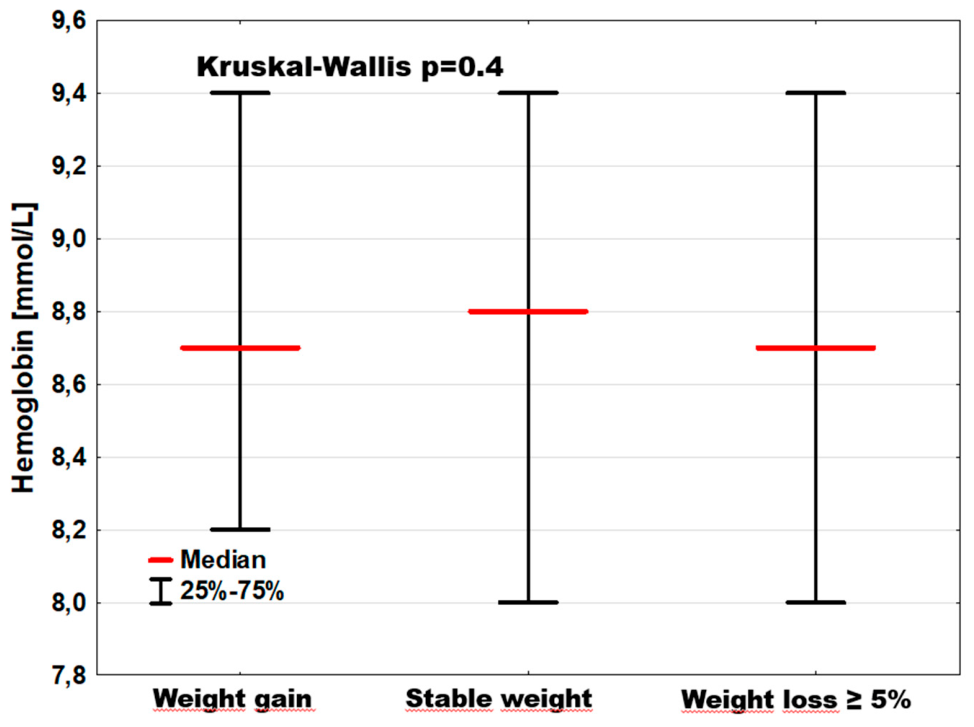
Figure 2.
Albumin concentration depending on the changes in the patient’s body weight.
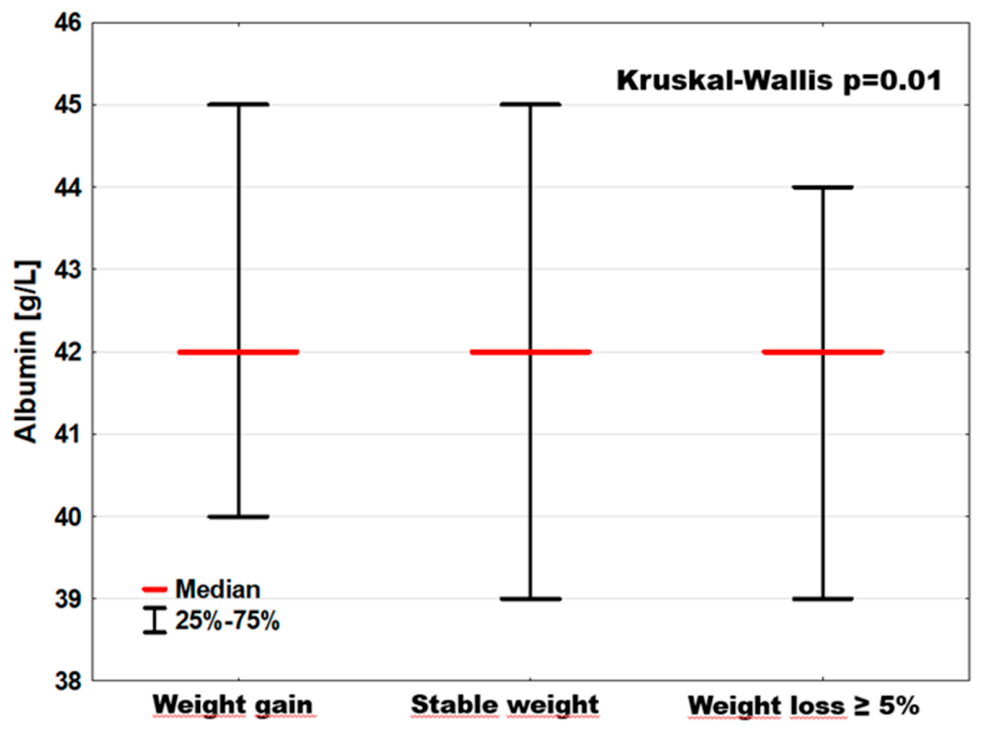
Figure 3.
NT-proBNP concentration depending on the changes in patients’ body weight.
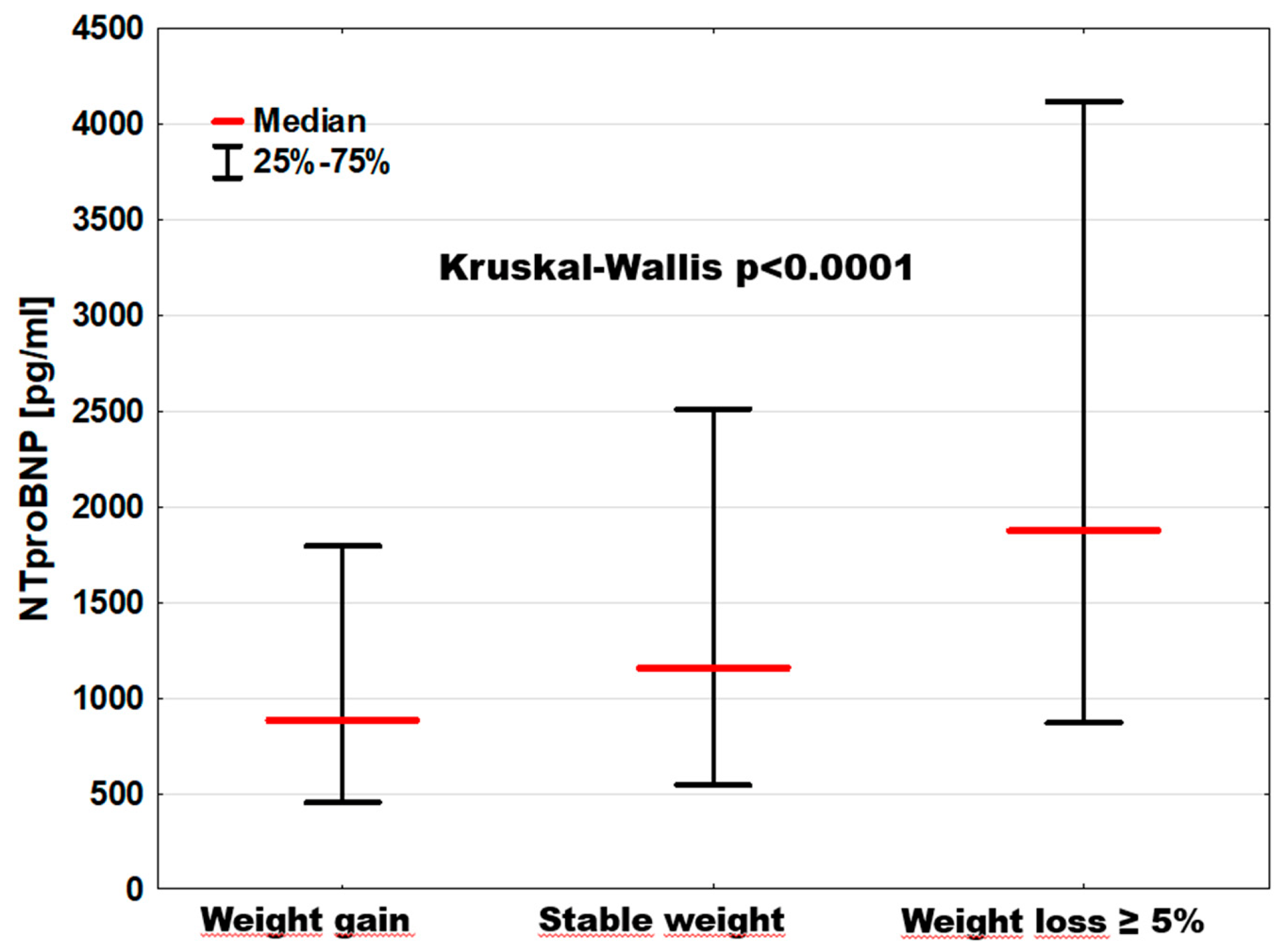
Figure 4.
GFR MDRD concentration depending on the changes in patients’ body weight.
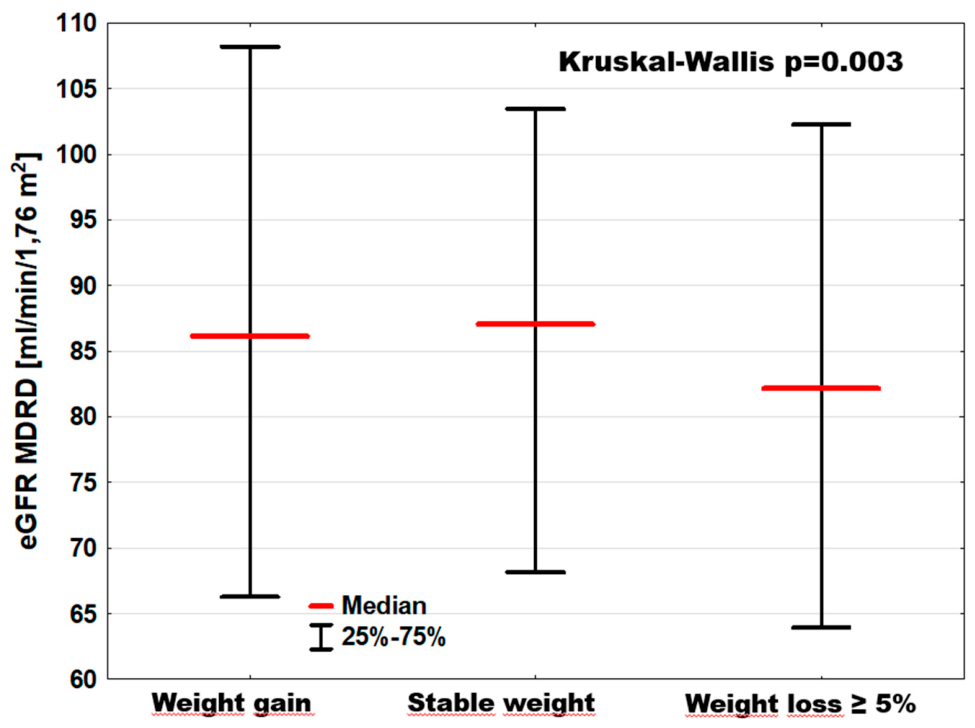
Figure 5.
Left ventricular ejection fraction determined by changes in patient weight.
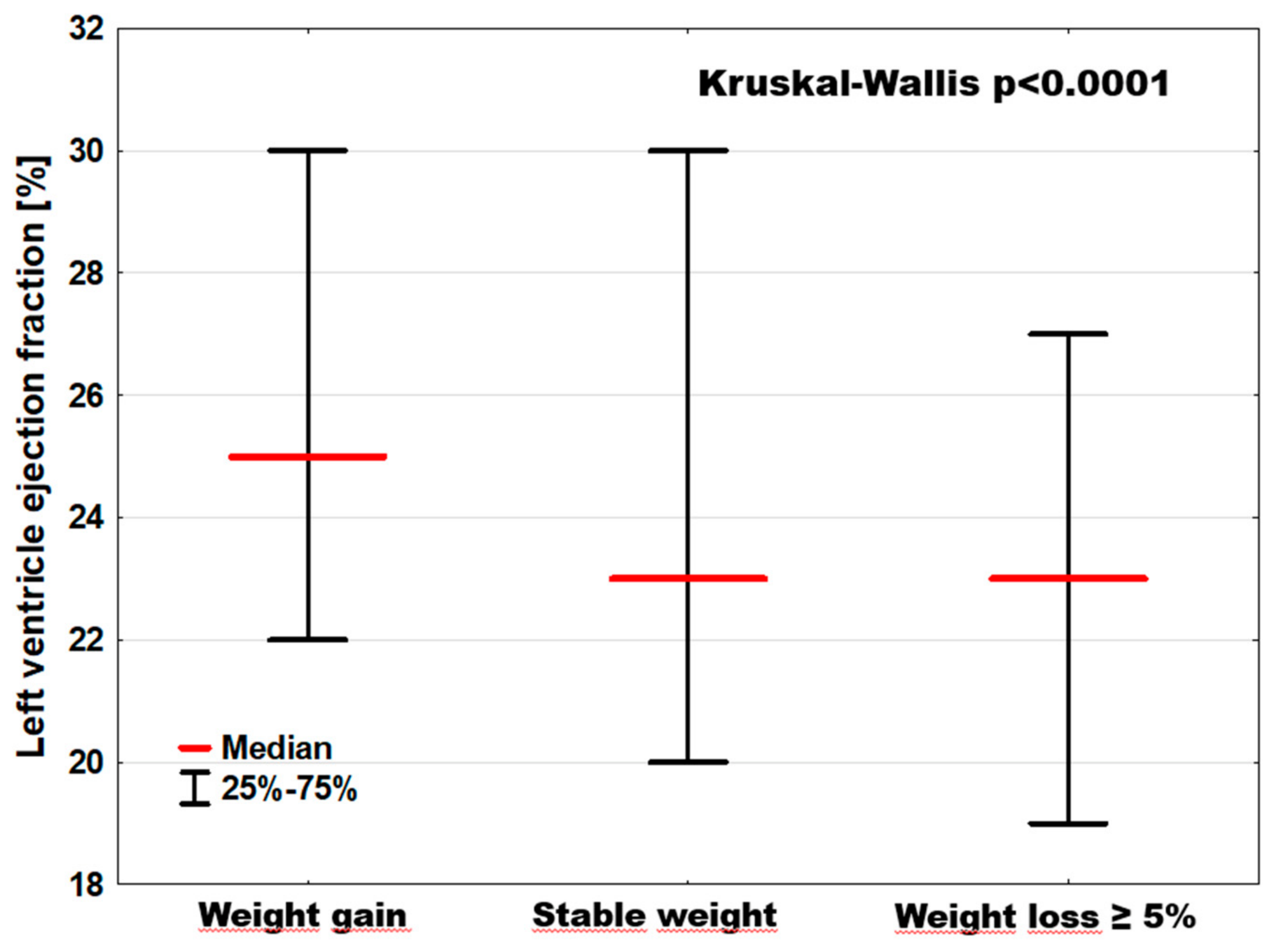
Figure 6.
Sodium concentration depending on the changes in patients’ body weight.
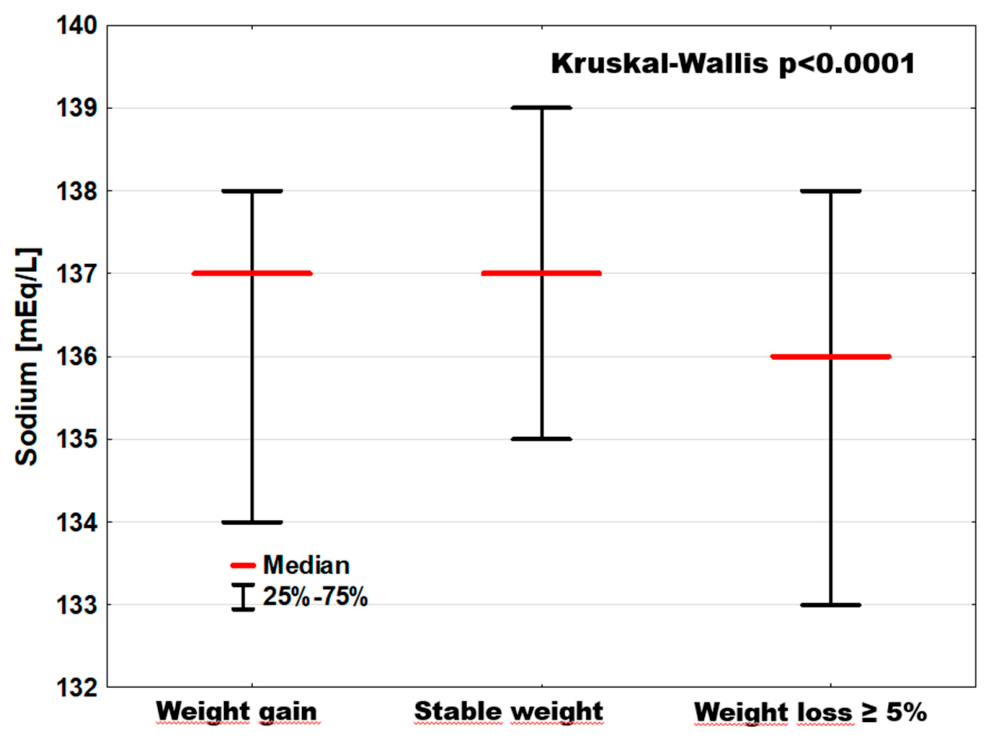
Figure 7.
hsCRP concentration depending on the changes in patients’ body weight.
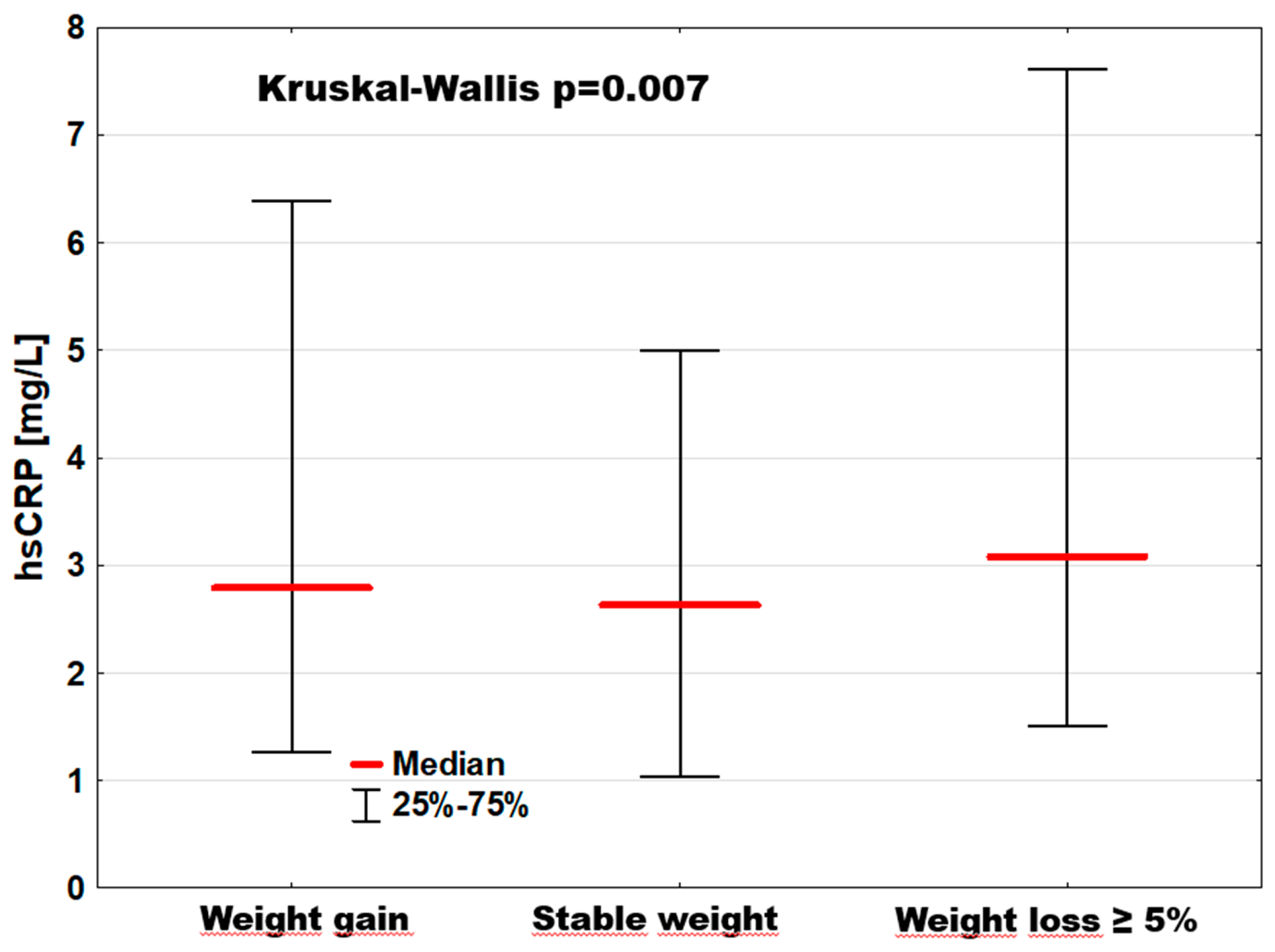
Figure 8.
Triglycerides concentration depending on the changes in patients’ body weight.
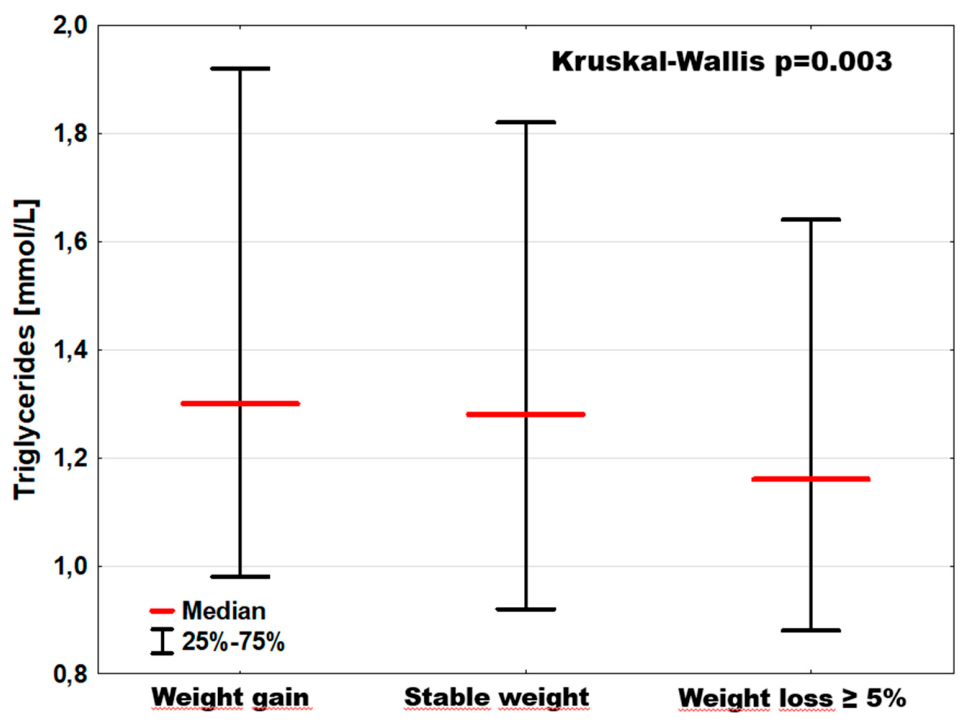
Figure 9.
Survival analysis according to the Kaplan-Meier method in relation to the change in body weight in patients with heart failure.
Figure 9.
Survival analysis according to the Kaplan-Meier method in relation to the change in body weight in patients with heart failure.
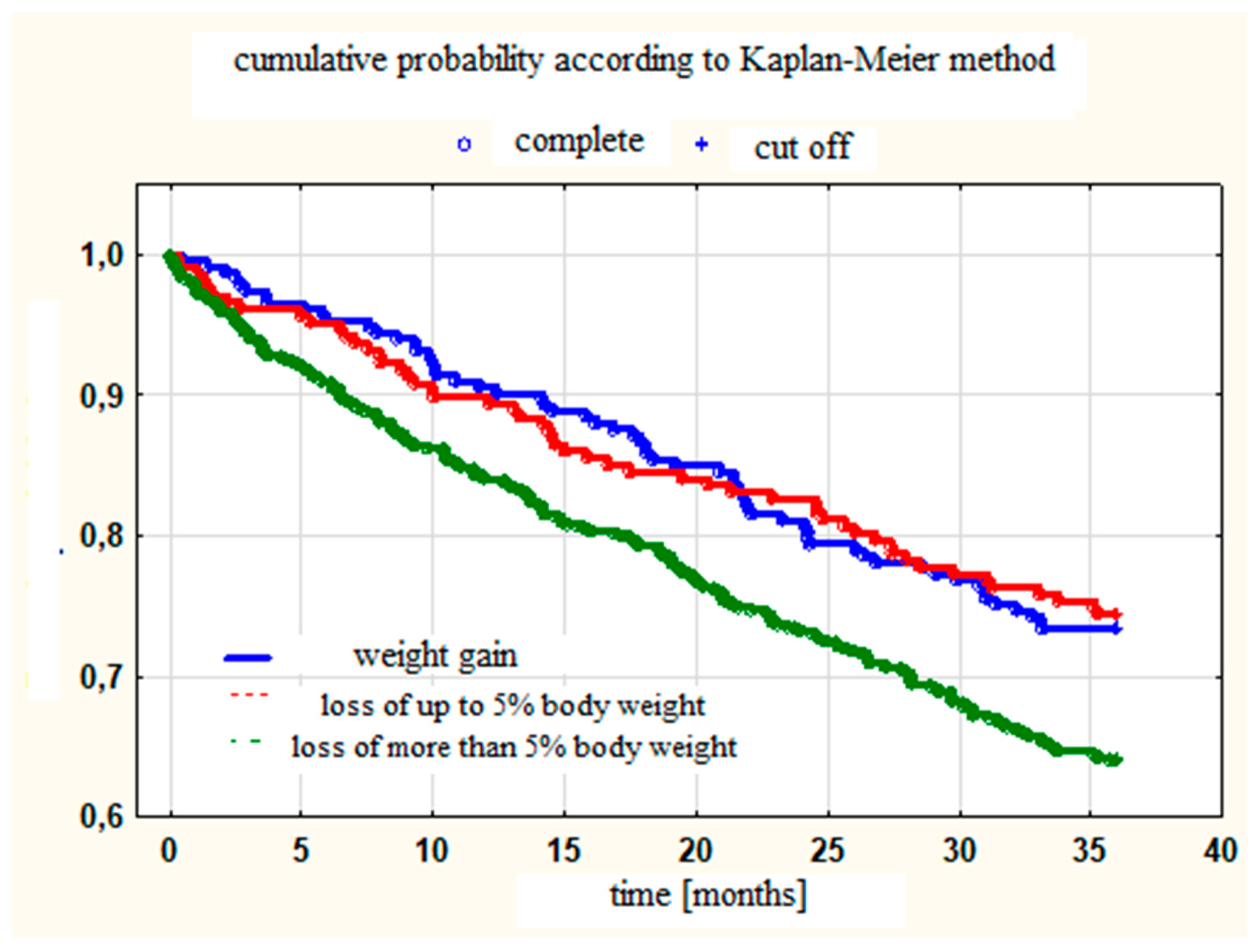

Table 1.
Clinical and biochemical parameters depending on the change in body weight.
| Weight Change Categories | p-Value | |||
|
Group 1 N = 233 (23%) Weight Gain |
Group 2 N = 207 (20%) Stable Weight [%] |
Group 3 N = 589 (57%) Weight Loss |
||
| Clinical Parameters | ||||
| Age [years] | 54; [49–58] | 55; [48–59] | 54; [48–59] | p = 0.59 |
| Gender [% of women] | 18.5 | 12.6 | 12.2 | p = 0.06 |
| Etiology HF [% ischemic] | 63.1 | 66.7 | 61.5 | p = 0.41 |
| Height [m] | 1.7; [1.7–1.8] | 1.7; [1.7–1.8] | 1.7; [1.7–1.8] | p = 0.60 |
| BMI before the development of HF symptoms [kg/m2] | 26.0; [24.0–29.1] | 27.7; [25.2–30.5] B | 28.7; [25.8–32.0] Y,$ | p < 0.0001 |
| BMI at index date [kg/m2] | 28.7; [26.1–31.8] | 27.0; [24.8–29.7] C | 24.8; [25.8–32.0] Z,$ | p < 0.0001 |
| Weight change [%] | 7.8; [14.6–4.2] | 2.6; [0.4–3.6] C | 12.4; [8.6–17.3] Z,$ | p < 0.0001 |
| HF duration [months] | 46.1; [22.8–88.5] | 33.5; [14.2–64.3] B | 31.1; [11.0–66.7] % | p < 0.001 |
| NYHA class | 3.0; [2.0–3.0] | 2.0; [2.0–3.0] A | 3.0; [2.0–3.0] $ | p < 0.0001 |
| NYHA class (I/II/III/IV) [%] | 8.7/40.8/47.2/3.4 | 11.1/42.0/40.1/6.8 $ | 3.7/32.9/50.6/12.7 | p < 0.0001 |
| LVEF [%] | 25; [22–30] | 23; [20–30] B | 23.0; [19.0–27.0] $ | p < 0.0001 |
| ESV [mm] | 55; [48–62] | 57; [48–65] | 57; [51–65] $ | p = 0.0138 |
| EDV [mm] | 69; [63–75] | 70; [64–76] | 69; [64–76] | p = 0.31 |
| HR [ud/min] | 79; [72–90] | 79; [73–88] | 79; [71–91] | p = 0.85 |
| MVO2 [mL/kg*min] | 14.3; [11.3–17.5] | 14.3; [11.3–17.6] | 14.0; [11.4–17.0] | p = 0.73 |
| SBP [mmHg] | 110; [100–125] | 110; [100–120] C | 105; [90–115] $ | p < 0.0001 |
| DBP [mmHg] | 70; [65–80] | 70; [70–80] A | 70; [60–70] % | p < 0.0001 |
| Biochemical parameters | ||||
| Hemoglobin [mmol/L] | 8.7; [8.2–9.4] | 8.8; [8.0–9.4] | 8.7; [8.0–9.4] | p = 0.43 |
| Creatinine [µmoll/l] | 86; [71–106] | 84; [74–104] | 88; [74–110] | p = 0.31 |
| eGFRMDRD [mL/min] | 86; [66–108] | 87; [68–103] | 82; [64–102] | p = 0.38 |
| Uric acid [mmol/L] | 409; [337–504] | 402; [329–493] | 413; [337–519] | p = 0.66 |
| hsCRP [mg/L] | 2.8; [1.3–6.4] | 2.6; [1.0–5.0] | 3.1; [1.5–7.6] | p = 0.0066 |
| Sodium [mEq/L] | 137; [134–138] | 137; [135–139] B | 136; [133–138] & | p = 0.0002 |
| Potassium [mEq/L] | 4.5; [4.3–4.8] | 4.5; [4.2–4.9] | 4.6; [4.3–5.0] & | p = 0.0126 |
| Glucose [mol/L] | 5.5; [5.0–6.4] | 5.6; [5.0–6.2] | 5.5; [4.9–6.4] | p = 0.95 |
| Total Cholesterol [mmol/L] | 4.3; [3.6–5.2] | 4.4; [3.7–5.3] | 4.3; [3.6–5.3] | p = 0.75 |
| LDL [mmol/L] | 2.5; [1.9–3.2] | 2.5; [2.0–3.4] | 2.5; [1.9–3.2] | p = 0.65 |
| HDL [mmol/L] | 1.1; [1.0–1.4] | 1.1; [0.9–1.4] | 1.2; [0.9–1.4] | p = 0.76 |
| Triglycerides [mmol/L] | 1.3; [1.0–1.9] | 1.3; [0.9–1.8] | 1.2; [0.9–1.6] | p = 0.0035 |
| Bilirubin [µmol//L] | 12.3; [9.5–18.1] | 12.9; [9.4–20.0] | 15.3; [10.5–22.8] % | p < 0.0001 |
| Albumin [g/L] | 42.0; [40.0–45.0] | 42.0; [39.0–45.0] | 42.0; [39.0–44.0] & | p = 0.0134 |
| NTproBNP [pg/mL] | 882; [454–1794] | 1157; [545–2511] C | 1874; [870–4114] $ | p < 0.0001 |
| Accompanying diseases [%] | ||||
| Hypertension | 56.7 | 59.9 | 53.0 | p = 0.20 |
| Hypercholesterolaemia | 64.0 | 64.3 | 58.1 | p = 0.15 |
| Hypertriglyceridaemia | 50.2 | 44.4 | 41.6 & | p = 0.08 |
| Diabetes melitus | 27.5 | 26.1 | 33.6 X | p = 0.06 |
| Smoking history | 6.4 | 10.6 | 12.1 & | p = 0.70 |
| Pharmacotherapy [%] | ||||
| ACEI | 98.7 | 95.2 | 91.0 % | p = 0.007 |
| BB | 98.7 | 98.1 | 96.9 | p = 0.29 |
| MRA | 84.3 | 89.9 | 90.8 % | p = 0.006 |
| Loop diuretics | 92.8 | 84.1 | 94.6 Y | p = 0.0002 |
| Prognosis | ||||
| Mortality at 3 years [%] | 16.7 | 17.9 | 25.5 Y,% | p = 0.0035 |
Legend: BMI—body mass index, HF—heart failure, NYHA—New York Heart Association, LVEF- left ventricle ejection fraction, ESV—end-systolic volume, EDV—end-diastolic volume, HR—heart rate, MVO2—maximal volume of oxygen consumption during treadmill test, SBP—systolic blood pressure, DBP—diastolic blood pressure, eGFRMDRD—estimated glomerular filtration rate based on Modification of Diet in Renal Disease Study equation, hsCRP—high sensitivity C-reactive protein, LDL—low density lipoprotein, HDL—high density lipoprotein, NTproBNP—N-terminal pro brain-type natriuretic peptide, ACEI—angiotensin converting enzyme inhibitor, BB—β-receptors antagonists, MRA—mineralocorticoid receptor antagonists. p values for post hoc analysis comparison between Group 1 versus 2. A—< 0.05, B—<0.01, C—<0.001. p values for post hoc analysis comparison between Group 2 versus 3. X—< 0.05, Y—<0.01, Z—<0.001, p values for post hoc analysis comparison between Group 1 versus 3. &—< 0.05, %—<0.01, $—<0.001.
Table 2.
Hazard ratio in relation to the change in body weight in patients with heart failure.
| Group 1 (Weight Gain) |
Group 2 (Stable Weight) |
Group 3 (Weight Loss) |
|
| Hazard ratio; (95% confidence intervals), p-value | |||
| Raw model | 1.03; (0.72–1.49), p = 0.24 | 1.0 | 1.51; (1.12–2.04), p = 0.0006 |
| Model 1 (adjusted for age and gender) | 1.06; (0.73–1.53), p = 0.28 | 1.0 | 1.55; (1.15–2.10), p = 0.0004 |
| Model 2—model 1 and BMI before HF, duration of HF, etiology of HF | 0.95; (0.66–1.38), p = 0.07 | 1.0 | 1.60; (1.18–2.17), p < 0.0001 |
Disclaimer/Publisher’s Note: The statements, opinions and data contained in all publications are solely those of the individual author(s) and contributor(s) and not of MDPI and/or the editor(s). MDPI and/or the editor(s) disclaim responsibility for any injury to people or property resulting from any ideas, methods, instructions or products referred to in the content. |
© 2026 by the authors. Licensee MDPI, Basel, Switzerland. This article is an open access article distributed under the terms and conditions of the Creative Commons Attribution (CC BY) license (http://creativecommons.org/licenses/by/4.0/).
Copyright: This open access article is published under a Creative Commons CC BY 4.0 license, which permit the free download, distribution, and reuse, provided that the author and preprint are cited in any reuse.


