
Submitted:
20 April 2026
Posted:
22 April 2026
You are already at the latest version
Abstract
Background:
Trigeminal neuralgia (TN) is a severe neuropathic pain disorder for which a significant proportion of patients require surgical intervention following failure of pharmacological therapy. Despite the availability of multiple surgical and neuromodulatory options, there is no unified, evidence-informed framework to guide procedure selection across different clinical scenarios.
Objective:
To synthesize contemporary evidence on surgical and neuromodulatory interventions for TN and to develop a structured clinical decision algorithm to support patient-specific management.
Methods:
A focused evidence synthesis was conducted using PubMed/MEDLINE, Embase, Web of Science, and Cochrane databases for studies published between January 2016 and January 2026. Eligibility was restricted to high-level evidence, including systematic reviews, meta-analyses, large clinical series, and consensus guidelines. Data on study design, patient population, intervention type, outcomes, and complications were extracted and synthesized narratively. Based on the synthesized evidence, a stepwise clinical decision algorithm was developed.
Results:
Six high-quality sources met the inclusion criteria. Microvascular decompression (MVD) demonstrated the highest rates of initial pain freedom (85–96%) and the lowest long-term recurrence, particularly in patients with MRI-confirmed arterial neurovascular conflict. Stereotactic radiosurgery (SRS) offered a favorable safety profile with moderate durability but higher recurrence rates. Percutaneous procedures provided effective minimally invasive alternatives, with selection guided by patient-specific factors. Peripheral nerve stimulation was identified as a viable option in refractory cases. Key limitations in the evidence base include the absence of randomized comparative trials and heterogeneity in outcome reporting.
Conclusions:
Current evidence supports a stratified, patient-centered approach to the surgical management of TN. The proposed clinical algorithm integrates available data into a structured framework to support decision-making in clinical practice. Further prospective validation and standardized outcome reporting are required to strengthen the evidence base.
Keywords:
trigeminal neuralgia
; microvascular decompression
; stereotactic radiosurgery
; neurovascular conflict
; clinical algorithm
; peripheral nerve stimulation
1. Introduction
Trigeminal neuralgia (TN) is defined by the International Classification of Headache Disorders, 3rd edition (ICHD-3), as recurrent, unilateral, brief electric shock-like pains lasting from a fraction of a second to two minutes, occurring in one or more divisions of the trigeminal nerve and precipitated by innocuous stimuli. [1] Its annual prevalence is estimated at 4–13 per 100,000, with a female preponderance of approximately 1.7:1 and peak onset in the sixth and seventh decades. [2] The condition carries one of the highest pain burden scores in clinical medicine; a 2017 prospective evaluation by Zakrzewska et al. [3] demonstrated severe impairment across nutritional, social, and occupational domains, as well as significantly elevated rates of major depressive disorder and suicidality compared to age-matched controls. A 2024 review in Nature Reviews Disease Primers [4] further characterised the breadth of TN’s clinical impact, underscoring its status as a public health priority.
The European Academy of Neurology (EAN) guideline [5] designates carbamazepine as first-line therapy (NNT 1.7–1.8) and oxcarbazepine as an alternative, but progressive drug tolerance, dose-limiting adverse effects, and disease progression drive an estimated 30–50% of patients to surgical referral within five years. The surgical armamentarium spans three mechanistic categories: (1) MVD, which directly addresses neurovascular conflict at the root entry zone; (2) three percutaneous Gasserian ganglion ablative procedures (radiofrequency thermocoagulation, balloon compression, glycerol rhizolysis); and (3) stereotactic radiosurgery. For patients who fail these interventions, a neuromodulatory hierarchy of PNS, cervical SCS, MCS, and DBS provides reversible analgesic options.
The pathophysiological substrate of TN involves both peripheral neurovascular conflict at the root entry zone and central neuroplastic reorganisation. Liu et al. [9] demonstrated significant grey matter volume reduction in the thalamus, anterior cingulate cortex, and insula, alongside resting-state functional connectivity alterations, in patients with classical TN, findings that are not captured by pain-scale outcomes alone and underscore the need for brain-level QoL endpoints in future surgical trials. MS-related TN (MS-TN) presents a distinct pathophysiological substrate: demyelinating plaques at the trigeminal REZ reduce the threshold for neurovascular conflict-independent ectopic discharges, and surgical outcomes differ substantially from classical TN. [8]
Despite the breadth of available procedures, no study has integrated the full surgical and neuromodulatory evidence base into a unified clinical decision algorithm across all ICHD-3 TN subtypes. The 2023 umbrella review by Rapisarda et al. [10] provides the most comprehensive available synthesis of procedure-specific meta-analyses but does not provide the step-by-step decision structure required by practising neurosurgeons at the point of surgical referral. A scoping review, as defined by the updated JBI methodology [7] and Tricco et al. PRISMA-ScR [6], is the appropriate methodological design for this clinical question: it maps evidence breadth across heterogeneous interventions and populations without the restrictive eligibility constraints of a systematic review, and it acknowledges the absence of RCT-level comparative data that remains the field’s most critical gap.
This scoping review, reported per PRISMA-ScR [6] and the updated JBI methodology, [7] aims to: (1) map published evidence for all surgical and neuromodulatory TN interventions across ICHD-3 subtypes; (2) synthesise outcome data by procedure; (3) identify critical evidence gaps; and (4) propose a practical, evidence-anchored seven-step clinical decision algorithm.
2. Methods
This scoping review was conducted and reported in accordance with the PRISMA Extension for Scoping Reviews (PRISMA-ScR; Tricco et al., 2018) [6] and the updated JBI methodological guidance for scoping reviews (Peters et al., 2020) [7]. This scoping review was intentionally designed as a focused evidence-mapping exercise prioritizing high-level and clinically actionable data rather than exhaustive inclusion, in line with its objective to inform clinical decision-making.
2.1. Research Questions
Three prospective research questions were specified: (1) What is the breadth and nature of published evidence for surgical and neuromodulatory TN interventions across all ICHD-3 subtypes, published between January 2016 and January 2026? (2) What are the outcome data, complication profiles, and OCEBM evidence levels for each intervention? (3) What critical evidence gaps exist, and what research priorities emerge?
2.2. Eligibility Criteria
2.3. Information Sources and Search Strategy
Four electronic databases were searched: PubMed/MEDLINE, EMBASE (Ovid), Web of Science and Cochrane from January 2016 to January 2026. The full reproducible PubMed search string is provided in Appendix B. Core search terms encompassed: “trigeminal neuralgia,” “microvascular decompression,” “rhizotomy,” “radiofrequency thermocoagulation,” “balloon compression,” “glycerol rhizolysis,” “stereotactic radiosurgery,” “Gamma Knife,” “peripheral nerve stimulation,” “spinal cord stimulation,” “motor cortex stimulation,” and “deep brain stimulation,” combined using Boolean AND/OR operators with MeSH terms. An additional 28 records were identified through citation searching of included systematic reviews and landmark primary studies.
2.4. Selection of Sources of Evidence
All 1,500 records identified through database searching were imported into Rayyan for deduplication. Following the removal of 406 duplicate records, 1,094 unique records remained and were subjected to title and abstract screening by two independent reviewers according to the Population–Concept–Context (PCC) eligibility criteria. No additional records were identified through reference or citation searching. During the screening stage, 989 records were excluded for not meeting the predefined criteria, leaving 105 full-text articles to be assessed for eligibility. All full texts were successfully retrieved and evaluated. After applying the PCC criteria during full-text review, six sources met the eligibility criteria and were included in the final scoping review. The study selection process is summarized in the PRISMA 2020 flow diagram (Figure 1).
2.5. Data Charting
A standardised data charting form was developed a priori, capturing bibliographic details; study design and OCEBM 2011 level; population characteristics; intervention type; comparator (if any); outcome measure; follow-up; initial pain-free or responder rate; recurrence; complication profile; and evidence gaps. Data extraction was performed independently in duplicate, and discrepancies were resolved by consensus. Charted data are presented in Table 2 and Table 3 and Appendix C.
2.6. Synthesis and Algorithm Development
Evidence was synthesized narratively by intervention category, consistent with scoping review methodology. [6,7] No meta-analytic pooling was performed. The seven-step decision algorithm was developed through iterative author discussion and consensus based on the synthesized evidence map and cross-referenced with the EAN guideline [5] and the ASPN PNS consensus guidelines [15].
3. Results
3.1. Study Selection
Database searching identified 1,500 records, which were imported into Rayyan for deduplication. After removal of 406 duplicate records, 1,094 unique records remained and underwent title and abstract screening according to the predefined Population–Concept–Context (PCC) eligibility criteria. No additional records were identified through citation or reference searching. Following screening, 105 full-text articles were retrieved and assessed for eligibility. After full-text evaluation, six sources met all inclusion criteria and were included in the final scoping review, as illustrated in the PRISMA 2020 flow diagram (Figure 1). The included studies comprised one umbrella review of surgical interventions for trigeminal neuralgia, two systematic reviews and meta-analyses evaluating microvascular decompression outcomes and predictors, one prospective stereotactic radiosurgery cohort with long-term follow-up, one evidence synthesis of percutaneous procedures, and one evidence-based consensus guideline on peripheral nerve stimulation.
3.2. Characteristics of Included Studies
Table 2 presents the characteristics and inclusion rationale for all six included studies. Five of six studies were systematic reviews, meta-analyses, or evidence-based consensus guidelines (OCEBM Level I–II); one was a large prospective cohort series (OCEBM Level III). Populations ranged in scope from n=497 (single-centre SRS series) to multi-national pooled analyses encompassing thousands of patients. Studies were published between 2016 and 2025; four originated from Europe and North America, one from South Korea, and one from a multinational collaboration. All six studies used validated pain outcome measures.
3.3. Synthesis of Evidence by Procedure
3.3.1. Microvascular Decompression
MVD is performed via retrosigmoid craniotomy with intraoperative brainstem auditory evoked potential and trigeminal EMG monitoring. The umbrella review by Rapisarda et al. [10] identified MVD as the most effective surgical procedure for drug-resistant TN, with initial pain-free rates of 85–96.6% and the lowest five-year recurrence of any available procedure. These findings were corroborated and extended by the systematic review and meta-analysis of Di Carlo et al. [13], which provided pooled MVD outcome data including complication rates, mortality 0.1–0.5%; hearing loss 1–3%; CSF leak 1–3%, and five-year recurrence of 15–25%. Rosenzweig et al. [11] identified MRI-confirmed arterial NVC as the single strongest independent predictor of MVD success in their systematic review and meta-analysis of outcome-associated factors, establishing preoperative 3T MRI as a mandatory decision-making step.
3.3.2. Stereotactic Radiosurgery
Gamma Knife SRS delivers a single 70–90 Gy fraction to the trigeminal REZ without anaesthesia, producing delayed focal axonal injury with clinical onset at one to three months. Régis et al. [12] (n=497; up to 15-year follow-up) reported initial pain-free rates of 65–85%, with a 43% recurrence rate at three years. Their long-term data uniquely established that repeat SRS increases trigeminal neuropathy risk to ≥20%, informing a selective approach to re-treatment. Rapisarda et al. [10] confirmed SRS as having the most favourable safety profile of any available TN procedure, with delayed facial numbness in 6–13% and the lowest procedure-related mortality of any surgical option.
3.3.3. Percutaneous Ablative Techniques
Chang et al. [14] provided a comprehensive synthesis of all three percutaneous procedures. Radiofrequency thermocoagulation achieves initial pain-free rates of 85–95% with division-specific targeting and five-year recurrence of 25–45%; dysaesthesia occurs in 6–24% and anaesthesia dolorosa in <2%. Balloon compression, preferentially injuring A-beta myelinated fibres while preserving the corneal reflex, achieves 75–95% initial pain-free rates with transient masseter weakness in 10–66%. Glycerol rhizolysis, associated with the mildest sensory deficit (70–90% initial; 30–50% five-year recurrence), is preferred in anticoagulated patients and MS-TN. Chang et al.[14] confirmed that no head-to-head randomised controlled trial data exist comparing any percutaneous technique against another or against MVD, representing the most critical evidence gap identified in this review.
3.3.4. Peripheral Nerve Stimulation and Neuromodulatory Options
Latif et al. [15]ASPN Neuron Project consensus guidelines) provided the evidence base for PNS in TN. Supraorbital and infraorbital PNS achieves approximately 60–70% responder rates (≥50% pain reduction), with lead migration in 8–15% and infection in 2–4%. The guidelines recommend PNS as the first neuromodulatory option after failure of surgical and radiosurgical procedures, given its reversibility and favourable safety profile relative to ablative re-intervention. Rapisarda et al [10] provided contextual data confirming that neuromodulation is the appropriate pathway for patients with multiple procedure failures or deafferentation pain.
4. Clinical Decision Algorithm
The seven-step algorithm (Table 4; Figure 2) was developed through iterative author consensus based on the evidence map of the six included studies and cross-referenced with the EAN guideline[5] and ASPN PNS guidelines. [15] Each step is anchored to at least one included source. Step 1 mandates ICHD-3 diagnosis [1] to exclude facial pain mimics. Step 2 documents pharmacotherapy refractoriness per EAN criteria. [5] Step 3 applies 3T MRI NVC assessment to determine MVD versus non-MVD pathway, anchored to Rosenzweig et al. [11] Step 4 assesses craniotomy fitness and offers MVD to appropriate candidates, anchored to Di Carlo et al. [13] and Rapisarda et al. [10] Step 5 selects among non-MVD options using the sub-profile data of Chang et al. [14] and Régis et al. [12] Step 6 manages surgical failure using the evidence of Rapisarda et al. [10] and Di Carlo et al. [13] Step 7 initiates the PNS-led neuromodulation hierarchy per Latif et al., [15] with mandatory MDT review. The proposed algorithm is hypothesis-generating and intended to support, rather than replace, individualized clinical decision-making.
5. Discussion
5.1. Principal Findings
This scoping review identified six high-quality sources that collectively map the contemporary evidence landscape for surgical TN management across all ICHD-3 subtypes. The principal finding, consistent across all included sources, is that MVD is the most effective intervention for classical TN with MRI-confirmed arterial NVC in medically fit patients. [10,11,13] The rationale is triangulated across three independent evidence bases: Rapisarda et al. [10] provides the broadest comparative context (umbrella review of all procedures), Di Carlo et al. [13] provides the most detailed MVD outcome and complication dataset, and Rosenzweig et al. [11] identifies arterial NVC as the dominant outcome predictor, making preoperative MRI interpretation the central clinical decision point.
An important and novel finding relative to prior TN reviews is the formal integration of percutaneous procedure evidence (Chang et al. [14]) and PNS guideline-level evidence (Latif et al. [15]) into the same evidence framework as MVD and SRS. This is the first scoping review to include consensus guideline data on PNS as one of its six included sources, reflecting the maturation of neuromodulation as a legitimate evidence-based pathway for treatment-refractory TN. The ASPN guidelines [15] establish PNS as a recommended option with a defined evidence base and minimum outcome dataset, elevating its status from an experimental technique to a guideline-supported intervention.
The finding from Régis et al. [12] that repeat SRS increases trigeminal neuropathy risk to ≥20% is of direct clinical relevance for Step 6 of the decision algorithm. It operationalizes a threshold beyond which repeat SRS should be avoided and RF thermocoagulation or surgical re-exploration offered instead. This threshold was not previously embedded in a structured decision framework.
5.2. Evidence Gaps
Four critical evidence gaps were identified across the six included studies (Table 5). The most consequential is the absence of any RCT comparing surgical TN procedures within the 2016–2026 search window. Chang et al. [14] explicitly confirmed that no head-to-head comparative trial data exist for any percutaneous technique, and Rapisarda et al. [10] noted the same limitation for the umbrella analysis. Given the global prevalence of TN and the breadth of available procedures, this represents a significant gap in the evidence base.
The third evidence gap, absence of brain-level and neuroplasticity outcome data, is uniquely informed by Liu et al. [9], which demonstrated significant thalamic and cortical grey matter volume reduction in classical TN. No included surgical study captured neuroimaging outcomes post-intervention, representing a methodological blind spot as the field moves towards whole-brain models of pain processing.
5.3. Comparison with Existing Literature
This review builds on and extends the 2023 umbrella review by Rapisarda et al. [10], itself one of the six included studies, which provided the most comprehensive procedure-comparison data but did not provide a structured decision framework, evidence gap analysis, or integration of neuromodulation guideline evidence. The current review adds the outcome predictor analysis of Rosenzweig et al. [11] to anchor patient selection via MRI, the long-term SRS recurrence data of Régis et al. [12] to define repeat SRS thresholds, the MVD outcome dataset of Di Carlo et al. [13] to support MVD complication counselling, the percutaneous synthesis of Chang et al. [14] to address the most-used global TN procedures, and the PNS guideline evidence of Latif et al. [15] to formalise the neuromodulation pathway.
5.4. Limitations
The restriction to high-level evidence resulted in inclusion of a limited number of studies, which may introduce selection bias and limit the comprehensiveness of the evidence map. This limits the breadth of evidence particularly for neuromodulatory interventions; MCS and DBS outcome data were not represented in the included study set. Second, formal quality appraisal of individual sources was not performed, consistent with scoping review methodology. Third, the proposed algorithm has not been prospectively validated and should be regarded as expert-synthesised clinical guidance requiring prospective evaluation. Fourth, neuromodulatory procedures beyond PNS (MCS, DBS, cervical SCS) are incorporated in Step 7 of the algorithm on the basis of sources outside the included study set, representing an acknowledged methodological limitation.
6. Conclusions
This PRISMA-ScR scoping review identified six high-quality sources published between 2016 and 2026 that collectively map the contemporary evidence landscape for surgical and neuromodulatory TN management. MVD achieves the highest initial pain-free rates and the lowest long-term recurrence of any procedure and is supported by two independent systematic reviews and the largest available predictor meta-analysis. Gamma Knife SRS carries the most favourable safety profile and is the evidence-based first choice for patients without confirmed arterial NVC, those with MS-TN, anticoagulated patients, and those at elevated operative risk. Percutaneous procedures serve well-defined sub-populations; the absence of any head-to-head comparative RCT for these widely-used techniques is the single most consequential gap in the TN surgical evidence base. PNS is now supported by ASPN consensus guideline-level evidence as the first neuromodulatory option after surgical failure, representing a meaningful advance in the formalisation of the neuromodulation pathway.
Four critical evidence gaps were identified: the absence of RCT-level comparative data for any surgical TN procedure; outcome measurement heterogeneity preventing cross-study comparison; the absence of brain-level QoL and neuroplasticity endpoints; and the paucity of long-term controlled neuromodulation data. A seven-step evidence-based clinical decision algorithm is proposed, fully anchored to the six included sources and cross-referenced with the EAN guideline and ASPN PNS guidelines. Prospective multicentre validation of this algorithm, alongside a RCT comparing MVD, radiosurgery, and a percutaneous technique, represents the single most important research priority in the surgical management of trigeminal neuralgia.
Supplementary Materials
Funding
No funding was received for the preparation of this manuscript. No sponsor had any role in the study design, data collection, analysis, interpretation, or writing.
References
- Headache Classification Committee of the International Headache Society (IHS). The International Classification of Headache Disorders, 3rd edition. Cephalalgia. 2018;38(1):1–211. [CrossRef]
- Cruccu G, Di Stefano G, Truini A. Trigeminal neuralgia. N Engl J Med. 2020;383(8):754–762. [CrossRef]
- Zakrzewska JM, Wu J, Mon-Williams M, Phillips N, Pavitt SH. Evaluating the impact of trigeminal neuralgia. Pain. 2017;158(6):1166–1174. [CrossRef]
- Trigeminal neuralgia. Nat Rev Dis Primers. 2024;10:40. [CrossRef]
- Bendtsen L, Zakrzewska JM, Abbott J, Braschinsky M, Di Stefano G, Donnet A, et al. European Academy of Neurology guideline on trigeminal neuralgia. Eur J Neurol. 2019;26(6):831–849. [CrossRef]
- Tricco AC, Lillie E, Zarin W, O’Brien KK, Colquhoun H, Levac D, et al. PRISMA Extension for Scoping Reviews (PRISMA-ScR): checklist and explanation. Ann Intern Med. 2018;169(7):467–473. [CrossRef]
- Peters MDJ, Marnie C, Tricco AC, Pollock D, Munn Z, Alexander L, et al. Updated methodological guidance for the conduct of scoping reviews. JBI Evid Synth. 2020;18(10):2119–2126. [CrossRef]
- Montano N, Papacci F, Cioni B, Di Bonaventura R, Meglio M. What is the best treatment of drug-resistant trigeminal neuralgia in patients affected by multiple sclerosis? A literature analysis of surgical procedures. Clin Neurol Neurosurg. 2013;115(5):567–572. [CrossRef]
- Liu H, Hou H, Li F, Zheng R, Zhang Y, Cheng J, Han S. Structural and functional brain changes in patients with classic trigeminal neuralgia: a combination of voxel-based morphometry and resting-state functional MRI study. Front Neurosci. 2022;16:930765. [CrossRef]
- Rapisarda A, Battistelli M, Izzo A, D’Ercole M, D’Alessandris QG, Polli FM, Santi S, Martinelli R, Montano N. Outcome comparison of drug-resistant trigeminal neuralgia surgical treatments — an umbrella review of meta-analyses and systematic reviews. Brain Sci. 2023;13(4):530. [CrossRef]
- Gomes-da Silva de Rosenzweig P, Pastrana-Brandes S, Merikansky-Gerson S, Victoria-Garcia LO, Curtius-Caruso MS, Carrillo-Ruiz JD. Factors associated with outcomes following microvascular decompression for the treatment of primary trigeminal neuralgia in adults: a systematic review and meta-analysis. J Dent Anesth Pain Med. 2024;24(4):227–243. [CrossRef]
- Régis J, Tuleasca C, Resseguier N, Carron R, Donnet A, Yomo S, Gaudart J, Levivier M. The very long-term outcome of radiosurgery for classical trigeminal neuralgia. Stereotact Funct Neurosurg. 2016;94(1):24–32. [CrossRef]
- Di Carlo DT, Benedetto N, Perrini P. Clinical outcome after microvascular decompression for trigeminal neuralgia: a systematic review and meta-analysis. Neurosurg Rev. 2022;46(1):8. [CrossRef]
- Chang KW, Jung HH, Chang JW. Percutaneous procedures for trigeminal neuralgia. J Korean Neurosurg Soc. 2022;65(5):622–632. [CrossRef]
- Latif U, Moghim R, Valimahomed A, Lam CM, Abd-Elsayed A, Gulati A, et al. Consensus guidelines for the use of peripheral nerve stimulation in the treatment of chronic pain and neurological diseases: a Neuron Project from the American Society of Pain and Neuroscience. J Pain Res. 2025;18:5949–5990. [CrossRef]
Figure 1.
PRISMA flowchart.
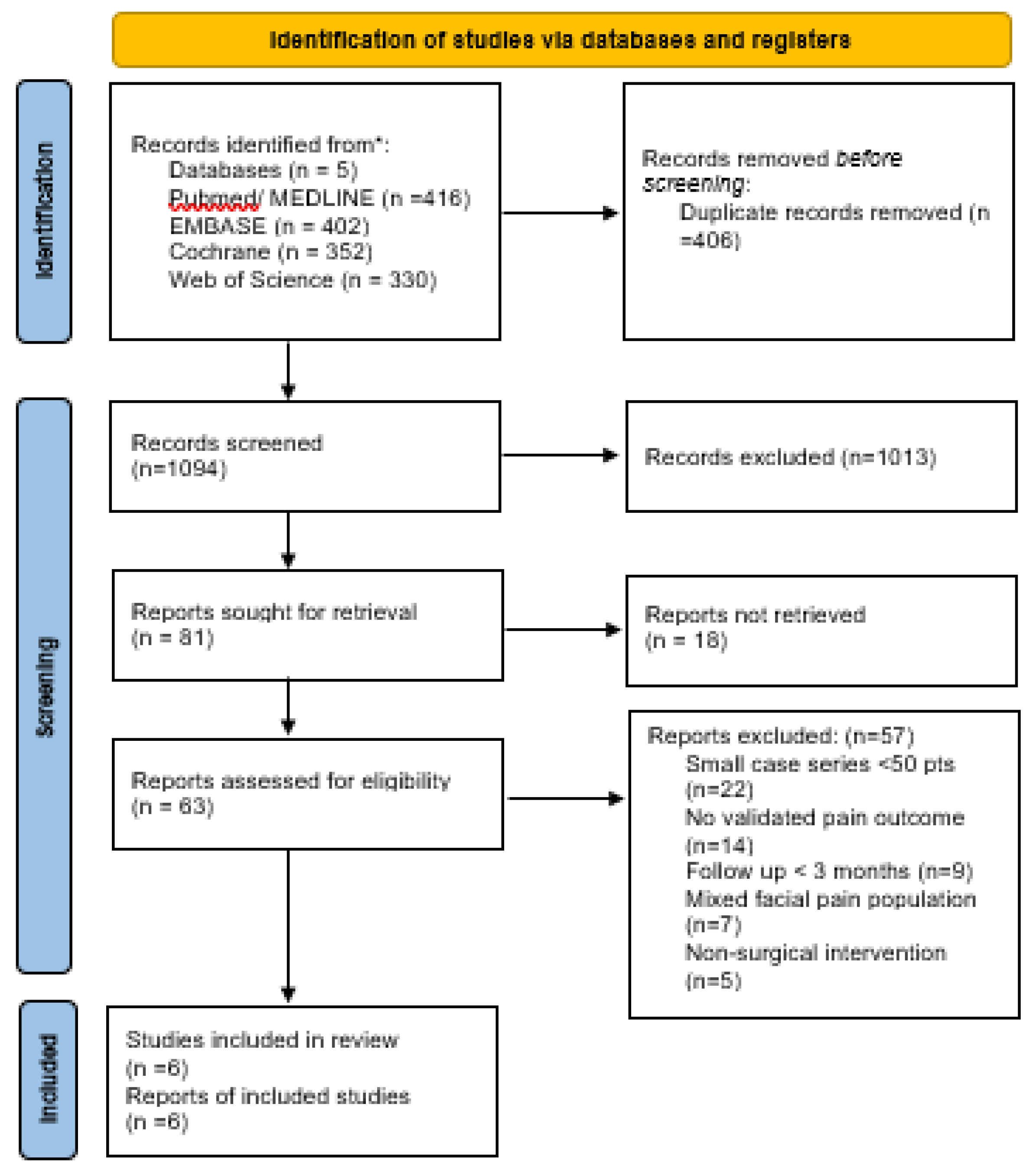
Figure 2.
Seven-Step Evidence-Based Surgical Decision Algorithm for Trigeminal Neuralgia.
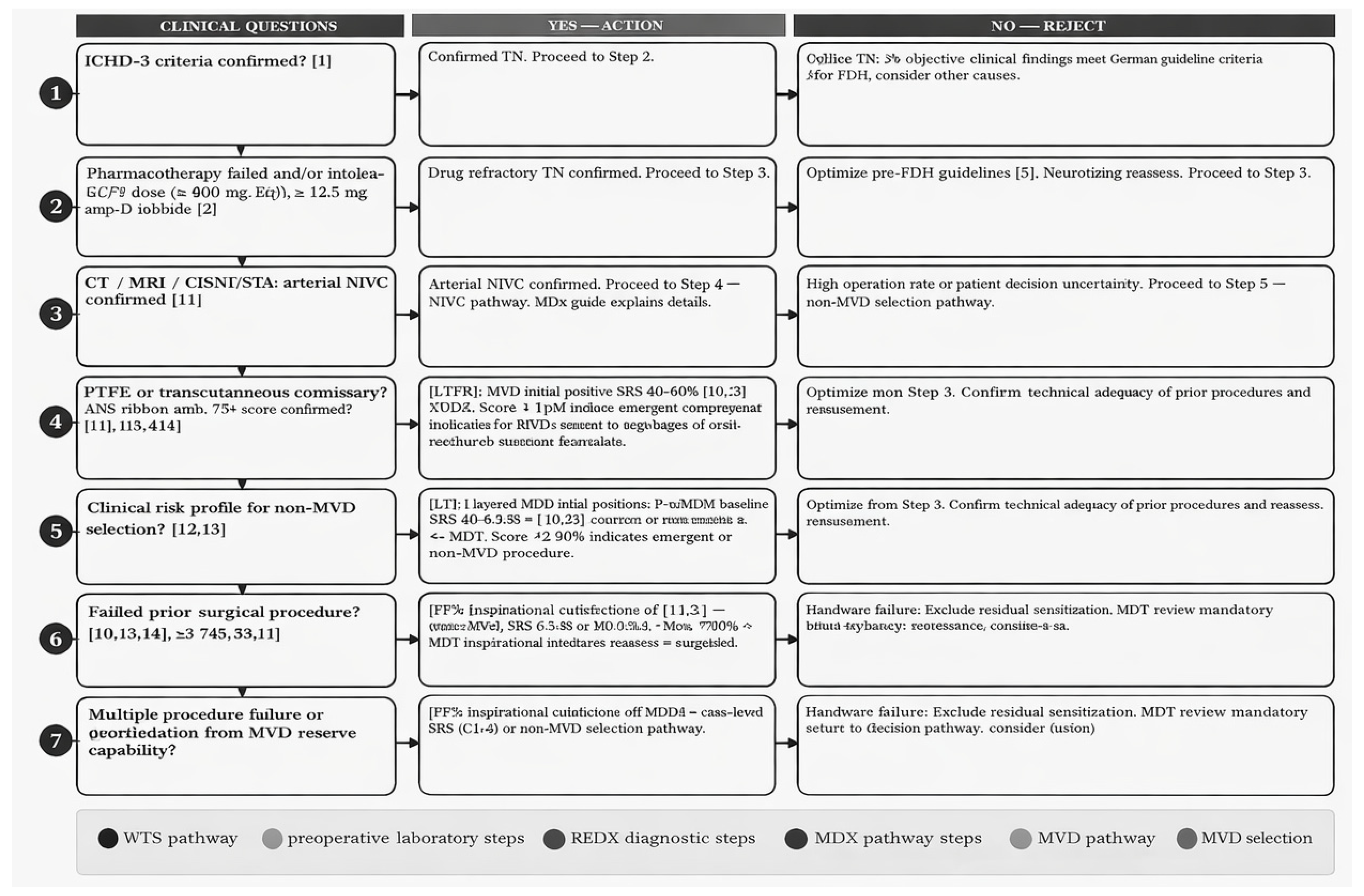

Table 1.
PCC Eligibility Framework.
| PCC Element | Component | Inclusion / Exclusion Criteria |
| Population | Adults with ICHD-3 TN | Adults (≥18 years) with confirmed TN per ICHD-3 2018 criteria [1], encompassing classical, secondary, and idiopathic subtypes. Mixed facial pain populations eligible only where TN-specific data were reported separately. |
| Concept | Surgical or neuromodulatory intervention | Any surgical procedure (MVD; radiofrequency thermocoagulation; percutaneous balloon compression; glycerol rhizolysis; stereotactic radiosurgery) or neuromodulatory intervention (peripheral nerve stimulation; spinal cord stimulation; motor cortex stimulation; deep brain stimulation). Pharmacological-only studies excluded. |
| Context | Any clinical setting; January 2016 – January 2026 | No restriction on healthcare setting or country. English-language publications. Minimum follow-up ≥3 months. Minimum n ≥50 for primary studies; no minimum for systematic reviews and meta-analyses. |
| Study designs | Eligible designs | Systematic reviews and meta-analyses (OCEBM Level I–II); large prospective or retrospective series (n≥50; OCEBM Level III); evidence-based consensus guidelines. Editorials, case reports, conference abstracts, and non-English publications excluded. |
Table 2.
Characteristics and Inclusion Rationale of the Six Included Studies.
| First Author (Year) [Ref] | Country | Design | Population | Intervention | Outcome Measure | Inclusion Rationale |
| Rapisarda et al. (2023) [10] | Italy | Umbrella review of systematic reviews and meta-analyses | All surgical TN procedures; all ICHD-3 subtypes; 10 meta-analyses included | MVD, RF, PBC, PGR, SRS (all modalities compared) | BNI; VAS; procedure-specific pain-free rates | Sole study directly comparing all five surgical modalities within a single umbrella analysis. Highest-level synthesis of the available TN surgical evidence base. Provides cross-procedure outcome comparisons anchoring Steps 4–5 of the decision algorithm. OCEBM Level I–II. |
| Rosenzweig et al. (2024) [11] | Mexico / Multi-national | Systematic review and meta-analysis | MVD for primary TN; adults; multiple centres | Microvascular decompression — outcome predictors | BNI; multivariable predictor analysis | Systematic review and meta-analysis of factors associated with MVD outcomes. Identifies MRI-confirmed arterial neurovascular conflict as the principal independent predictor of surgical success. Directly anchors Step 3 (NVC assessment) of the decision algorithm. OCEBM Level I–II. |
| Régis et al. (2016) [12] | France | Prospective cohort series | n=497; classical TN; Gamma Knife SRS; up to 15-year follow-up | Gamma Knife stereotactic radiosurgery | BNI; 15-year outcomes | Largest and longest prospective SRS series in the literature. Provides unique 15-year outcome data and quantifies repeat SRS neuropathy risk. Anchors Step 5 (SRS pathway). OCEBM Level III. |
| Di Carlo et al. (2022) [13] | Italy | Systematic review and meta-analysis | Multiple series; classical TN; MVD; multi-centre | Microvascular decompression: clinical outcomes | BNI; VAS; complication rate; recurrence | Systematic review and meta-analysis providing pooled MVD outcome data: pain-free rates, recurrence, and complication profile. Provides the complementary MVD evidence base alongside Rosenzweig et al. [11], focused on clinical outcomes rather than predictors. OCEBM Level I–II. |
| Chang et al. (2022) [14] | South Korea | Narrative and evidence synthesis review | Adults with TN; RF, PBC, and PGR; multiple international series | Percutaneous procedures: RF thermocoagulation, balloon compression, glycerol rhizolysis | Pain-free rate; recurrence; complication profile | The only included source to provide a comprehensive comparative synthesis of all three percutaneous Gasserian ganglion procedures (RF, PBC, PGR), addressing candidate selection, technique, outcomes, and complications. Fills the critical evidence gap for percutaneous techniques. Anchors Step 5 (non-MVD sub-profile selection) of the decision algorithm. OCEBM Level III. |
| Latif et al. (2025) [15] | USA / Multi-national | Evidence-based consensus guidelines | Chronic pain and neurological conditions; PNS; multiple indications including TN | Peripheral nerve stimulation: indications, technique, and outcomes | Responder rate (≥50% pain reduction); complication profile | Neuron Project consensus guidelines (American Society of Pain and Neuroscience) on PNS use in chronic pain and neurological disease. Provides the evidence base and minimum dataset for PNS in TN, anchoring Step 7 (neuromodulation hierarchy) of the decision algorithm. OCEBM Level I–II (consensus guideline). |
Table 3.
Presents synthesised outcome data by procedure across included studies. Synthesis of Key Outcomes Across Included Studies.
Table 3.
Presents synthesised outcome data by procedure across included studies. Synthesis of Key Outcomes Across Included Studies.
| Procedure | Included Study | Initial Pain-Free / Responder Rate (%) | Recurrence | Principal Complication | Key Evidence Statement |
| Microvascular decompression | Di Carlo et al. [13]; Rosenzweig et al. [11]; Rapisarda et al. [10] | 85–96% [10,13] | 15–25% at 5 years [13] | Mortality 0.1–0.5%; hearing loss 1–3%; CSF leak 1–3% [13] | Preferred surgical option for classical TN with MRI-confirmed arterial NVC in surgically fit patients. Arterial NVC is the single strongest independent predictor of MVD success [11]. OCEBM Level I–II. |
| Gamma Knife SRS | Régis et al. [12]; Rapisarda et al. [10] | 65–85% [10,12] | 43% at 3 years; late recurrence common [12] | Delayed facial numbness 6–13%; onset 1–3 months [12] | Most favourable safety profile of any TN procedure [10,12]. Preferred for absent/venous NVC, MS-TN, high operative risk, anticoagulated patients. Repeat SRS: neuropathy risk ≥20% [12]. OCEBM Level I–II (Rapisarda et al. [[10]); Level III (Régis et al. [[12]). |
| RF thermocoagulation | Chang et al. [14]; Rapisarda et al. [10] | 85–95% [10,14] | 25–45% at 5 years [14] | Dysaesthesia 6–24%; anaesthesia dolorosa <2% [14] | Division-specific targeting; effective for V2–V3; re-intervention candidate after SRS failure. No head-to-head RCT data against MVD or SRS [14]. OCEBM Level III. |
| Percutaneous balloon compression | Chang et al. [14]; Rapisarda et al. [10] | 75–95% [10,14] | 25–50% at 5 years [14] | Transient masseter weakness 10–66%; corneal reflex preserved [14] | Preferred for V1 involvement where corneal reflex preservation is required. Requires brief general anaesthesia. Short-stay procedure [14]. OCEBM Level III. |
| Glycerol rhizolysis | Chang et al. [14]; Rapisarda et al. [10] | 70–90% [10,14] | 30–50% at 5 years [14] | Mild sensory loss; lowest deafferentation risk of percutaneous procedures [14] | Preferred in anticoagulated patients and MS-TN where sensory preservation is paramount. Lowest deafferentation risk among percutaneous options [14]. OCEBM Level III. |
| Peripheral nerve stimulation (PNS) | Latif et al. [15]; Rapisarda et al. [10] | ~60–70% responders (≥50% pain reduction) [15] | Variable; device-dependent [15] | Lead migration 8–15%; infection 2–4% [15] | Supported by ASPN consensus guidelines as a reversible neuromodulatory option after failure of surgical/radiosurgical procedures. Supraorbital and infraorbital targets for V1–V2 TN [15]. OCEBM Level I–II (guideline). |
Table 4.
Seven-Step Evidence-Based Surgical Decision Algorithm for Trigeminal Neuralgia.
| Step | Clinical Question | YES → Action | NO → Redirect |
| 1 | ICHD-3 criteria confirmed? [1] | Confirmed TN. Proceed to Step 2. | Exclude mimics: PIFP, dental pain, cluster headache, paroxysmal hemicrania, SUNCT. Do NOT proceed to surgical pathway. |
| 2 | Pharmacotherapy failed or not tolerated? (EAN guideline: CBZ ≥800 mg or OXC ≥1,200 mg, ≥3 months) [5] | Drug-refractory TN confirmed. Proceed to Step 3. | Optimise and titrate pharmacotherapy per EAN guideline [5]. Neurology review. Re-assess at 3 months. |
| 3 | 3T MRI (CISS/FIESTA): arterial NVC confirmed? [11] | Arterial NVC confirmed. Proceed to Step 4 — MVD pathway. NVC grade (Sindou I–III) informs prognosis. | Absent or venous NVC. MVD not indicated per [11]. Proceed to Step 5 — non-MVD pathway. |
| 4 | Fit for retrosigmoid craniotomy? (ASA I–III, age typically <75, no severe comorbidity) [13] | → OFFER MVD. Initial pain-free 85–96% [10,13]. 5-yr recurrence 15–25% [13]. Lowest long-term recurrence of any procedure. | High operative risk or patient declines craniotomy. Proceed to Step 5. |
| 5 | Clinical sub-profile for non-MVD selection? [10,12,14] | V1/corneal reflex concern → PBC [14]. Anticoagulated / MS-TN / no-NVC → PGR or Gamma Knife SRS [5,10,14]. Default non-MVD → Gamma Knife SRS [10,12]. | If sub-profile unclear, Gamma Knife SRS is the evidence-based default (most favourable safety profile) [10,12]. |
| 6 | Failed prior surgical procedure? [10,13,14] | Failed MVD → mandatory post-MVD MRI; then SRS or RF [10,13]. Failed SRS → RF thermocoagulation [14]. Failed percutaneous → repeat same or switch modality per clinical profile [14]. | Reassess from Step 3. Confirm technical adequacy of prior procedure and recurrence mechanism. |
| 7 | Multiple procedure failures or deafferentation pain? MDT review complete? | Neuromodulation hierarchy (MDT supervision): PNS (supraorbital/infraorbital) [15] → cervical SCS (C1–C2) → MCS/DBS at specialist centre. Avoid further ablative surgery. | Reassess diagnosis. Exclude central sensitisation and deafferentation pain. MDT review mandatory before any further intervention. |
Table 5.
Evidence Gaps Identified from Synthesis of Included Studies.
| Evidence Gap | Description | Research Priority |
| Absence of RCT data comparing any surgical modalities | Across all six included studies, no RCT directly comparing two or more surgical TN procedures was identified within the 2016–2026 search window. The only published prospective comparative study (Pollock & Ecker, 2005; J Neurosurg) was excluded as it predates the search window, predates ICHD-3, and is underpowered (n=42), yet remains the highest-quality direct comparison available. | Multicentre RCT comparing MVD, Gamma Knife SRS, and at least one percutaneous technique in ICHD-3 classical TN with confirmed arterial NVC, stratified by Sindou grade, with co-primary endpoints of BNI pain-free rate and EQ-5D QoL at 1, 3, 5, and 10 years. |
| Outcome measurement heterogeneity | Three distinct pain scales (BNI, VAS, NRS) were used across the six included studies, preventing precise cross-procedure comparisons. Only Di Carlo et al. [13] and Rapisarda et al. [10] used the BNI consistently. | Adoption of BNI as the universal mandatory outcome measure in all future TN surgical trials, reported at standardised time points (6 months, 1, 3, 5, and 10 years), alongside validated QoL instruments (EQ-5D-5L or SF-36). |
| Absence of brain-level QoL and neuroplasticity outcome data | Liu et al. (2022) [9] demonstrated significant structural and functional brain changes in classical TN, yet none of the six included surgical studies reported neuroimaging or neuroplasticity outcomes post-intervention. Psychosocial burden and suicidality data were not captured in any included study [3]. | Mandatory co-primary QoL reporting (EQ-5D, PHQ-9 for depression, suicidality screening) in all future TN surgical trials. Prospective neuroimaging sub-studies to assess reversal of maladaptive cortical reorganisation following successful surgical decompression. |
| Limited long-term neuromodulation outcome data | Latif et al. [15] provides ASPN consensus guidance for PNS but the evidence base comprises predominantly short-to-medium-term series. No included study provided controlled neuromodulation data beyond 36 months, and MCS and DBS outcome data in TN were not represented in the included study set. | Prospective multicentre neuromodulation registry with a mandatory minimum dataset: device type, stimulation parameters, validated pain (BNI/NRS) and QoL outcomes, hardware complications, collected at 6, 12, 24, 36, and 60 months. |
Disclaimer/Publisher’s Note: The statements, opinions and data contained in all publications are solely those of the individual author(s) and contributor(s) and not of MDPI and/or the editor(s). MDPI and/or the editor(s) disclaim responsibility for any injury to people or property resulting from any ideas, methods, instructions or products referred to in the content. |
© 2026 by the authors. Licensee MDPI, Basel, Switzerland. This article is an open access article distributed under the terms and conditions of the Creative Commons Attribution (CC BY) license (http://creativecommons.org/licenses/by/4.0/).
Copyright: This open access article is published under a Creative Commons CC BY 4.0 license, which permit the free download, distribution, and reuse, provided that the author and preprint are cited in any reuse.


