

Submitted:
20 April 2026
Posted:
22 April 2026
You are already at the latest version
Abstract
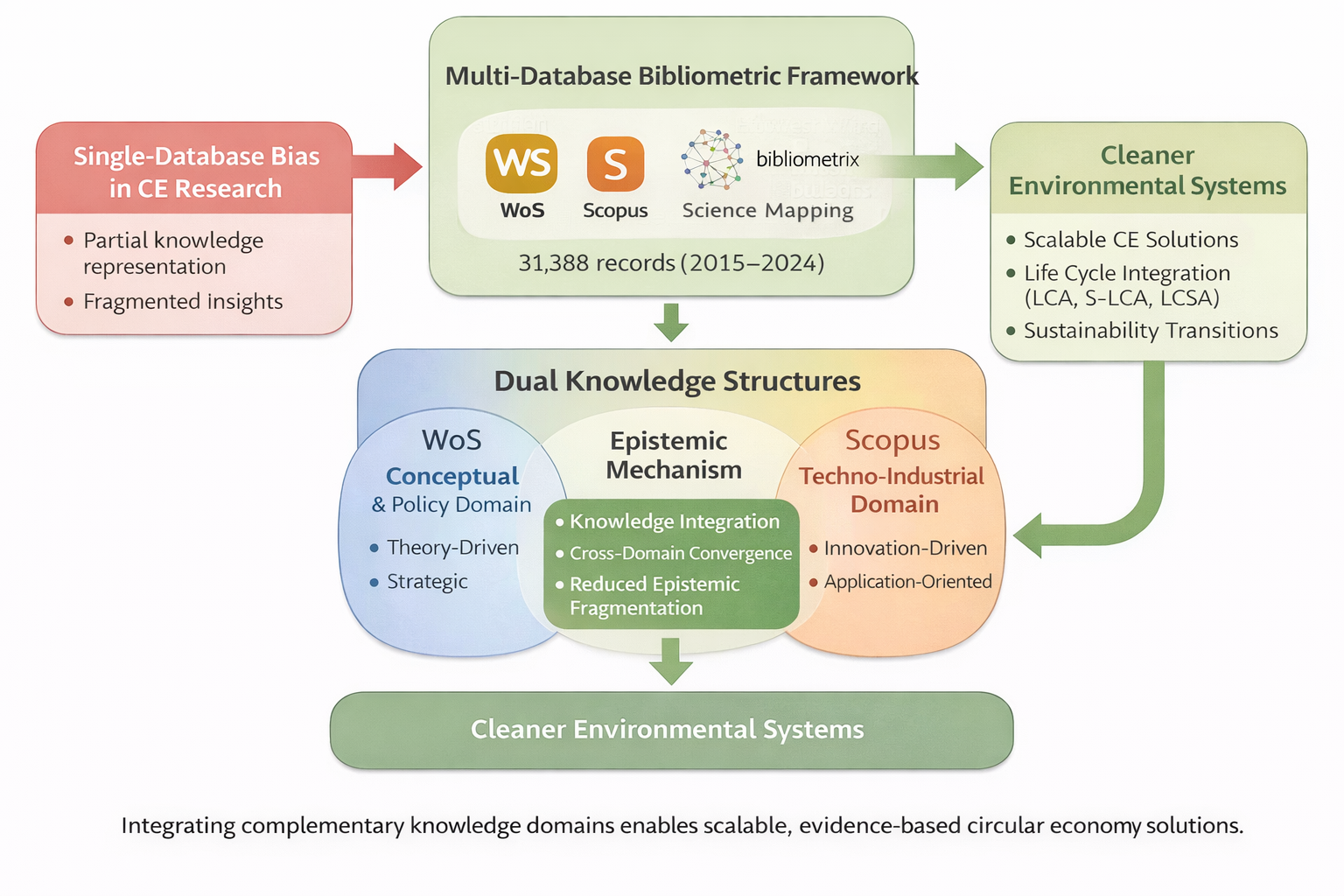
The circular economy (CE) has emerged as a central paradigm for advancing sustainable development; however, most bibliometric studies rely on single-database approaches, potentially generating partial and structurally biased representations of the field. This study addresses this limitation by developing a multi-database bibliometric framework integrating Web of Science (WoS) and Scopus to support more robust, evidence-based circular economy solutions. A total of 17,836 records from Scopus and 13,552 from WoS (2015–2024) were analyzed using the Bibliometrix R-package, combining performance analysis, science mapping, and conceptual structure techniques. The results reveal the existence of dual and complementary knowledge structures: WoS predominantly captures theory-driven, policy-oriented, and strategic research, whereas Scopus expands techno-industrial, application-oriented, and innovation-driven domains. This study demonstrates that database selection functions as an epistemic mechanism shaping knowledge structures, introducing systematic biases when single-source approaches are used. By bridging conceptual and technological knowledge domains, the proposed framework enhances the design, evaluation, and scalability of circular strategies, particularly when aligned with life cycle-based approaches (LCA, S-LCA, and LCSA) and cleaner production systems. These findings contribute to sustainability science by reframing bibliometric structures as operational enablers of solution development, providing a robust decision-support perspective for sustainability transitions, climate change mitigation, and circular economy implementation across diverse sectors.
Keywords:
circular economy
; bibliometric analysis
; multi-database analysis
; life cycle assessment
; sustainability transitions
; cleaner production
1. Introduction
The circular economy (CE) has emerged as a transformative paradigm for addressing the environmental, economic, and social limitations of linear production systems [1,2]. By promoting resource efficiency, waste minimization, and regenerative processes, CE seeks to decouple economic growth from environmental degradation while advancing more sustainable production and consumption models [3,4].
In recent years, CE has evolved beyond the foundational “3Rs” framework toward more systemic and integrative approaches, including eco-design, industrial symbiosis, and circular business models [5,6]. This transition has been driven by the increasing urgency of global challenges such as climate change and resource scarcity, positioning CE as a key mechanism for sustainability transitions and for achieving the Sustainable Development Goals [7,8,9].
The rapid expansion of CE research has given rise to a highly dynamic and multidisciplinary field spanning engineering, environmental sciences, business, and policy domains [6,10,11]. However, this accelerated growth has also intensified fragmentation in knowledge production, reflecting disciplinary divergence and inconsistencies in how CE is conceptualized and operationalized across different research domains.
A persistent challenge identified in the literature is the gap between conceptual development and the practical implementation of CE strategies [12,13]. In this context, the integration of circular economy strategies with sustainability assessment tools, such as Life Cycle Assessment (LCA), Social LCA, and Life Cycle Sustainability Assessment (LCSA), has become increasingly relevant. These tools enable the systematic evaluation of environmental, social, and economic impacts of circular solutions, thereby supporting evidence-based decision-making and enhancing the effectiveness of sustainability transitions. Consequently, strengthening the linkage between knowledge production and life cycle-based assessment frameworks is essential for advancing the practical implementation of CE strategies [6].
Bibliometric analysis has become a key methodological approach for mapping the intellectual structure of CE research. Nevertheless, most existing studies rely on a single database, typically the Web of Science (WoS) or Scopus, thereby introducing systematic biases in coverage, citation patterns, and disciplinary representation [14,15]. Existing evidence demonstrates that these databases differ significantly in indexing policies and knowledge representation [16,17]. However, the epistemic implications of database selection, particularly its role in shaping how knowledge is constructed and interpreted, remain largely unexplored.
Despite this, comparative analyses examining how database selection influences the structure and interpretation of CE knowledge remain limited [18]. This gap is particularly critical in the context of cleaner production, where the integration of technological innovation, policy frameworks, and organizational strategies is essential for enabling effective sustainability transitions [18,19,20].
Therefore, the main objective of this study is to analyze how database selection shapes the intellectual structure, thematic evolution, and knowledge dynamics of circular economy research through a comparative bibliometric approach.
Accordingly, this study argues that database selection is not merely a methodological decision, but an epistemic mechanism that actively structures how knowledge is produced, validated, and interpreted. By conducting a comparative bibliometric analysis of circular economy (CE) research across Web of Science (WoS) and Scopus, this research demonstrates the existence of dual and interdependent knowledge systems: a conceptual–policy-oriented domain predominantly represented in WoS, and a techno-industrial domain more extensively captured by Scopus.
Beyond its methodological contribution, these findings advance the understanding of cleaner environmental systems by demonstrating how database-driven knowledge structures influence the design, implementation, and scalability of circular economy strategies in real-world sustainability transitions. In doing so, this study provides a more robust analytical framework to support environmental decision-making, policy design, and industrial transformation toward cleaner production systems.
2. Materials and Methods
2.1. Research Design and Bibliometric Analytical Framework
This research adopts an integrative, quantitative, and comparative bibliometric research design to analyze the intellectual structure, thematic evolution, and collaboration patterns of circular economy (CE) research. Bibliometric methods enable the systematic and reproducible analysis of large-scale scientific production, facilitating the identification of knowledge structures, research fronts, and emerging trends [21].
Two major multidisciplinary databases were selected: Web of Science (WoS) and Scopus, due to their complementary coverage and recognized indexing standards in sustainability and cleaner production research. The search strategy was designed to capture core CE-related publications using standardized queries applied consistently across both databases (Table 1).
Bibliographic records were exported in BibTeX format and processed using RStudio (v4.3.1) with the Bibliometrix package (v4.1.2) and Biblioshiny interface. Data preprocessing included author name standardization, institutional harmonization, and keyword cleaning. Duplicate records across databases were intentionally retained to preserve database-specific structures for comparative analysis.
A multi-level analytical framework was implemented, combining performance analysis (publication trends and citation metrics), science mapping (co-authorship and collaboration networks), and conceptual structure analysis using Multiple Correspondence Analysis (MCA). Network normalization was conducted using the association strength index, and clustering was performed using the Louvain algorithm.
This integrative methodological approach ensures robustness, reproducibility, and the capacity to capture both conceptual and techno-industrial dimensions of CE research within the context of cleaner environmental systems.
2.2. Data Sources and Search Strategy
Two major multidisciplinary scientific databases were selected: Web of Science (WoS) and Scopus, due to their recognized coverage, indexing standards, and complementary disciplinary scope in sustainability and cleaner production research. Previous studies have demonstrated that both databases differ significantly in journal inclusion criteria, geographical representation, and citation structures, which may lead to systematic biases when used independently.
The search strategy was designed to capture the core scientific production related to circular economy using standardized queries applied to each database (Table 1). The search was conducted in June 2024 to ensure temporal consistency.
The following inclusion criteria were applied: Time span: 2015–2024 (the period of exponential growth in CE research), Document types: Articles and review papers, Languages: English and Spanish, and Subject areas: Environmental sciences, sustainability, energy, and social sciences. This selection ensures a balance between conceptual, technical, and policy-oriented research, aligning with the scope of cleaner production and sustainable resource management. The datasets generated and analyzed during the current study are available from the corresponding author upon reasonable request.
2.3. Data Collection and Preprocessing
Bibliographic records were retrieved in BibTeX format and processed using RStudio (v4.3.1) in conjunction with the Bibliometrix package (v4.1.2) and its graphical interface Biblioshiny. The preprocessing stage was designed to ensure internal consistency while preserving the structural characteristics of each database, which are central to the comparative objective of the study.
Data refinement involved the standardization of author names to consolidate variant forms, the harmonization of institutional affiliations to improve comparability, and the cleaning and normalization of keywords through the unification of synonyms and spelling variations. These procedures were applied systematically to reduce noise and enhance the reliability of subsequent analyses without altering the intrinsic structure of the datasets.
Importantly, duplicate records across databases were intentionally retained. This decision reflects the methodological premise that WoS and Scopus represent distinct epistemic systems rather than overlapping repositories. Preserving these records allows for a more accurate examination of differences in coverage, citation dynamics, and collaboration patterns, thereby strengthening the validity of the comparative analysis.
2.4. Bibliometric and Science Mapping Analysis
The analytical strategy integrates multiple bibliometric techniques to capture the structural and dynamic properties of circular economy research. Performance analysis was employed to assess scientific productivity and impact through the examination of annual publication trends, total citations, and normalized citation indicators. This provides a quantitative baseline for understanding the expansion and influence of the field across databases.
Science mapping techniques were applied to investigate collaboration structures and knowledge diffusion patterns. Network analysis, grounded in graph theory, enabled the identification of key actors and structural positions within co-authorship and institutional collaboration networks. Metrics such as degree centrality and betweenness centrality were used to characterize the role of nodes in connecting otherwise fragmented clusters and facilitating the circulation of knowledge.
To ensure comparability and analytical consistency, network normalization was conducted using the association strength index, which accounts for differences in co-occurrence frequencies across nodes. Community detection was performed using the Louvain clustering algorithm, allowing for the identification of cohesive substructures within the networks based on modularity optimization.
The conceptual structure of the field was examined through Multiple Correspondence Analysis (MCA) applied to the keyword co-occurrence matrix. This multivariate technique enables the reduction of high-dimensional data into a lower-dimensional space, revealing the latent conceptual organization of the field and the relationships among thematic domains. Complementarily, thematic evolution was analyzed using strategic diagrams based on centrality and density metrics, allowing for the classification of research themes according to their relevance, maturity, and developmental stage within the field [14,22,23].
2.5. Methodological Limitations
Despite its robustness, this study presents several limitations: dependence on two databases (WoS and Scopus), excluding others such as dimensions or Google Scholar, potential bias derived from keyword selection (“circular economy”, “circularity”), language restriction (English and Spanish), differences in indexing policies between databases and absence of cross-database deduplication (intentional for comparative purposes). However, these limitations are consistent with the study’s objective of highlighting structural differences between databases and do not compromise the validity of the comparative findings.
3. Results
3.1. Scientific Production Dynamics and Database Coverage
The comparative analysis reveals a sustained and exponential expansion of circular economy (CE) research between 2015 and 2024, confirming its consolidation as a core domain within sustainability and cleaner production literature (Figure 1).
A total of 17,836 records in Scopus and 13,552 in WoS were identified, indicating a higher coverage in Scopus. The temporal evolution exhibits a clear inflection point around 2017, after which publication output accelerates markedly in both databases. However, Scopus shows a steeper growth trajectory, surpassing 3,000 annual publications by 2024, whereas WoS displays a more stabilized growth pattern.
Beyond quantitative differences, this divergence reflects structural variations in database coverage. Scopus captures a broader spectrum of applied and emerging research, particularly in engineering and industrial systems, while WoS tends to consolidate more selective and conceptually oriented contributions.
These results indicate that technological and process-oriented CE innovations are more extensively represented in Scopus, whereas WoS emphasizes conceptual and strategic contributions.
3.2. Core Journals and Scientific Influence
The distribution of publications across journals reveals a strong concentration consistent with Bradford’s Law, indicating the existence of a core set of sources shaping CE research (Table 2).
Across both databases, Journal of Cleaner Production emerges as the dominant publication outlet, confirming its central role as a knowledge integrator linking industrial sustainability, resource efficiency, and circular production systems.
The convergence of leading journals across WoS and Scopus suggests the presence of a shared intellectual core. However, higher impact metrics in Scopus indicate a broader diffusion of applied knowledge, particularly in technologically oriented domains.
3.3. Citation Structure and Intellectual Foundations
The citation analysis identifies the foundational and high-impact contributions shaping the intellectual structure of CE research (Table 3).
The results reveal a consistent pattern across both databases, showing higher citation counts in Scopus. Significantly, normalized citation metrics highlight the emergence of rapidly influential studies in advanced materials and industrial applications, indicating a shift toward implementation-oriented research. Overall, the citation structure confirms the evolution of CE from theoretical framing toward applied innovation, directly aligned with the transition toward cleaner production systems.
3.4. Co-Authorship Networks and Collaboration Patterns
To characterize these patterns, both network density and centrality metrics were analyzed. Figure 2 illustrates the structural differences in co-authorship networks between databases.
While WoS exhibits slightly higher density values (0.07) compared to Scopus (0.06), this does not necessarily indicate stronger collaboration. Instead, WoS reflects a more locally cohesive but fragmented structure, with limited interaction across clusters.
In contrast, Scopus displays higher degree and betweenness centrality, indicating the presence of highly connected nodes that function as hubs within the collaboration network. These hubs play an observable role in bridging otherwise disconnected clusters and facilitating knowledge diffusion, particularly in regions with strong industrial and technological research activity.
These results show that Scopus captures a more globally integrated collaboration structure, whereas WoS reflects more localized and specialized research clusters. The results indicate that Scopus captures more dynamic and emerging themes, while WoS reflects more stable thematic structures.
WoS exhibits a fragmented network characterized by loosely connected clusters, suggesting disciplinary specialization and limited cross-domain integration. In contrast, Scopus displays a dense and highly interconnected structure, dominated by transnational collaboration networks, particularly in Asia and Europe.
This structural contrast indicates that Scopus more effectively captures large-scale collaborative ecosystems associated with industrial implementation, while WoS reflects more specialized and concept-driven research communities. These results indicate an observable dimension of CE knowledge production: the alignment between collaboration intensity and the operationalization of cleaner production practices.
3.5. Keyword Analysis and Thematic Orientation
The keyword analysis reveals both convergence and divergence in thematic orientation across databases (Table 4)
While “circular economy” remains the dominant descriptor, WoS emphasizes strategic and policy-related themes such as sustainability and governance, whereas Scopus prioritizes technical and operational domains, including recycling, life cycle assessment, and environmental impact.
This divergence reflects differentiated thematic orientations between databases.
Such differentiation underscores the complementary roles of both databases in capturing the full spectrum of CE research, from strategic design to technological implementation.
3.6. Conceptual Structure and Knowledge Domains
The factor analysis map (FAM) of keywords in the Scopus database allows the identification and visualization of the underlying conceptual structure of circular economy (CE) research (Figure 3).
The WoS map exhibits a more cohesive and conceptually oriented structure centered on sustainability, industrial ecology, and system-level approaches. In contrast, the Scopus map reflects a broader and more application-oriented structure, emphasizing environmental management, waste treatment, and life cycle analysis. These differences provide strong empirical support for the existence of dual knowledge structures in circular economy research.
The comparison highlights the existence of dual knowledge structures in circular economy research, reflecting differences in database coverage and collaboration patterns. The analysis reveals a high level of statistical robustness, with Dimension 1 explaining 65.02% of the variance and Dimension 2 contributing 17.48%, resulting in a cumulative variance of 82.5%. This indicates that the model captures the dominant semantic relationships within the dataset, providing a high-fidelity representation of the field’s intellectual organization. The conceptual structure reveals a strongly polarized configuration. Dimension 1 is predominantly associated with technical and implementation-oriented domains, including industrial processes, waste management, recycling systems, and energy efficiency. This dominance suggests that CE research indexed in Scopus is largely driven by operational and engineering-focused approaches. In contrast, Dimension 2 differentiates emerging and complementary themes related to sustainability governance, regulatory frameworks, and circular business models, reflecting a transition toward more systemic and integrative perspectives.
Comparative analysis with WoS highlights a more balanced conceptual configuration, where management, sustainability strategies, and environmental assessment are more evenly distributed. This contrast reinforces the existence of differentiated knowledge domains across databases: while Scopus captures a functionally dominant techno-industrial core, WoS reflects a more conceptually integrated and policy-oriented knowledge structure.
The results reveal a structural differentiation in conceptual domains between databases. The observed asymmetry between databases further suggests that knowledge production in CE is not uniformly distributed but organized along distinct epistemic dimensions, shaped by database-specific indexing logics. This reinforces the need to interpret conceptual structures not only as reflections of scientific activity but also as outcomes of underlying knowledge infrastructures.
3.7. Thematic Evolution and Research Frontiers
The thematic mapping provides insights into the maturity and evolution of CE research domains (Figure 4).
The maps illustrate the structural configuration of research themes, distinguishing between motor, basic, niche, and emerging or declining topics. WoS is characterized by stable motor themes aligned with sustainability and policy agendas, reflecting institutional consolidation. In contrast, Scopus exhibits more dynamic and emerging themes related to recycling technologies, biomaterials, and environmental assessment. These findings demonstrate that Scopus captures the technological frontier of CE, while WoS reflects its strategic stabilization. Together, these patterns illustrate the co-evolution of conceptual frameworks and technological innovation in advancing cleaner production systems.
3.8. Institutional Collaboration and Global Knowledge Networks
The institutional analysis reveals a geographically structured and highly interconnected global research system (Figure 5).
WoS networks are dominated by European institutions, particularly Delft University of Technology, reflecting leadership in conceptual and design-oriented research. In contrast, Scopus displays a more global and integrated network, with strong participation from Asian institutions such as Tsinghua University and the National University of Singapore.
This configuration reveals the emergence of a dominant Euro-Asian axis as the central driver of CE research and innovation. However, the presence of peripheral and weakly connected regions indicates persistent inequalities in global knowledge integration.
These results show a geographically structured research network with a strong Euro-Asian axis.
Overall, the results reveal consistent structural differences between databases, highlighting the coexistence of distinct but complementary knowledge domains in circular economy research.
4. Discussion
4.1. Database Divergence as an Epistemic Constraint in CE Knowledge Production
These findings contribute to the emerging “science of science” literature, where scientific knowledge production is increasingly understood as being shaped by data infrastructures and indexing systems rather than solely by epistemic or disciplinary dynamics. In this context, bibliographic databases function as epistemic filters that condition not only visibility but also the direction and evolution of research fields [24].
The divergence observed between Scopus and Web of Science (WoS) extends beyond differences in document volume, reflecting structurally embedded epistemological biases in how knowledge is indexed, validated, and disseminated. Scopus systematically captures applied, engineering-driven, and emerging research domains, whereas WoS privileges theoretically grounded and high-impact contributions, reinforcing distinct knowledge hierarchies within circular economy (CE) research [17].
Recent studies increasingly conceptualize scientific databases as active knowledge infrastructures rather than neutral repositories, shaping not only visibility but also the evolution of research agendas [25,26]. In this context, database selection becomes an epistemic filter that conditions the identification of research fronts and influences how scientific progress is interpreted.
The present findings demonstrate that Scopus amplifies implementation-oriented domains, particularly those linked to industrial applications and technological innovation, while WoS consolidates conceptual and policy-oriented knowledge structures. This asymmetry introduces a structural bias in bibliometric analyses. Relying exclusively on WoS risks underrepresenting technological feasibility, whereas dependence on Scopus may obscure governance, institutional, and strategic dimensions required for sustainability transitions [16,17].
Therefore, integrating multiple databases is not simply a methodological improvement but a necessary condition for capturing the multidimensional nature of CE as a socio-technical system. These results reinforce the argument that bibliometric analyses are epistemically conditioned reconstructions shaped by database architectures, with direct implications for how knowledge priorities and research trajectories are constructed. This reinforces the central argument of this study: database selection operates as an epistemic mechanism that systematically structures the production, validation, and interpretation of circular economy knowledge.
4.2. Knowledge Fragmentation and the Transition Toward Implementation
The results reveal a persistent fragmentation between conceptual and implementation-oriented knowledge domains in CE research. While technological fields, such as waste management, life cycle assessment, and recycling systems, are strongly represented in Scopus, governance, business models, and policy frameworks remain concentrated in WoS [27].
This fragmentation reflects the broader implementation gap widely documented in the literature, where advances in CE theory have not been fully translated into scalable industrial practices [10,11,12]. From an epistemic perspective, this fragmentation is not merely a functional limitation but a structurally conditioned outcome of database-specific knowledge representations, reinforcing the separation between conceptual and implementation-oriented domains. Recent evidence suggests that this gap is reinforced by systemic barriers, including regulatory misalignment, technological uncertainty, and limited organizational capabilities [28,30].
Rather than representing independent dynamics, the separation between conceptual and applied domains constitutes a structural misalignment in knowledge production systems. This misalignment limits the effectiveness of cleaner production strategies, which require the integration of technological innovation with organizational and policy frameworks to achieve measurable sustainability outcomes [31,32,34].
From a life cycle perspective, this fragmentation constrains the effective application of tools such as Life Cycle Assessment (LCA) and Life Cycle Sustainability Assessment (LCSA), which depend on the integration of engineering data, environmental metrics, and strategic decision-making processes. Without such integration, circular solutions may remain technically viable but systemically unscalable.
Addressing this challenge requires moving toward integrative research approaches that align engineering solutions with governance mechanisms and business models. Emerging research directions point to the potential of digital technologies [35], particularly artificial intelligence, to bridge this divide by enabling data-driven optimization of circular systems and enhancing decision-making processes across production networks [13].
Future research should advance toward integrative analytical frameworks that combine multi-database bibliometric approaches with emerging tools such as artificial intelligence and machine learning. These approaches can enhance knowledge integration, improve the identification of research frontiers, and facilitate the translation of conceptual advances into scalable industrial solutions.
This structural misalignment represents a systemic and epistemically conditioned bottleneck, where the lack of integration between database-driven knowledge domains constrains the effectiveness and scalability of cleaner production systems.
4.3. Geopolitics of CE Knowledge and Global Asymmetries
The structure of collaboration networks reveals a geographically concentrated system dominated by a Euro-Asian axis, reflecting the alignment between scientific production and national sustainability strategies. Asian institutions, particularly those in China, exhibit strong representation in implementation-oriented research, supported by industrial policies and large-scale investments in green technologies [8,26]. In contrast, European institutions maintain leadership in conceptual and policy-oriented research, emphasizing governance and sustainability transitions. These patterns further reflect how database-specific coverage reinforces geographically uneven knowledge visibility, contributing to the construction of regionally biased epistemic landscapes.
This regional specialization suggests a global division of knowledge production, where technological implementation and strategic design are unevenly distributed across regions. Such asymmetries are consistent with recent studies highlighting the concentration of scientific capabilities in countries with strong institutional and industrial ecosystems [37].
However, the persistence of peripheral and weakly connected regions raises concerns regarding the inclusivity of CE transitions. Limited participation in global knowledge networks may constrain the diffusion of circular innovations and reduce their adaptability to local socio-economic contexts [8,38,39]. These dynamic risks reinforce epistemic dependency, where peripheral regions adopt externally generated models that may not align with their specific development needs. From a sustainability and life cycle perspective, this imbalance may also limit the contextualization of environmental impact assessments, as LCA-based evaluations require region-specific data, infrastructure conditions, and socio-economic parameters. Strengthening transregional collaboration and promoting more inclusive knowledge networks is therefore essential to ensure that circular solutions are both scalable and context sensitive.
4.4. Implications for Research, Policy, and Cleaner Production Systems
These findings reinforce the central argument that circular economy knowledge production is structured through database-dependent epistemic systems, with direct implications for cleaner environmental systems and sustainability transitions. From a theoretical perspective, this study demonstrates that CE knowledge production is structured across differentiated but interdependent epistemic systems. This challenges the assumption of a unified scientific field and highlights the need for more robust approaches to bibliometric analysis that explicitly account for database-induced biases.
From a cleaner production perspective, the results emphasize that effective implementation of CE depends on integrating technological feasibility with strategic and organizational frameworks [40]. The observed fragmentation suggests that current research remains insufficiently coordinated to support large-scale industrial transformation [31].
For practitioners, the findings highlight the importance of combining insights from both databases to design more robust circular strategies. Technological innovations must be complemented by governance and policy frameworks to ensure effective implementation.
For policymakers, the study underscores the risks associated with fragmented evidence. Policies based solely on conceptual frameworks may lack technological feasibility, while those grounded exclusively in technical evidence may lack strategic coherence.
Methodologically, this research reinforces the value of multi-database approaches to enhance analytical robustness and reduce indexing bias. Future research should integrate additional data sources and leverage advanced analytical techniques, including artificial intelligence and machine learning, to better capture the complexity of CE knowledge systems.
Ultimately, advancing circular economy research requires moving beyond fragmented knowledge structures toward integrative, transdisciplinary frameworks capable of aligning technological innovation, policy design, and industrial implementation within coherent cleaner production systems.
Overall, this study demonstrates that overcoming fragmentation in circular economy research requires moving beyond database-dependent knowledge silos toward integrated, multi-source epistemic frameworks. Such integration is essential to support scalable, evidence-based, and context-sensitive sustainability transitions, particularly within cleaner production systems where the alignment of technological innovation, policy design, and organizational capabilities is critical. These findings position bibliometric analysis not only as a descriptive tool, but as a strategic instrument for guiding sustainability transitions and circular economy implementation.
5. Conclusions
This study provides a comprehensive comparative bibliometric analysis of circular economy (CE) research across Web of Science (WoS) and Scopus, demonstrating that database selection plays a structurally significant role in shaping the production, visibility, and interpretation of scientific knowledge. The results confirm the rapid expansion of CE research since 2017, while revealing that this growth is not epistemically neutral but conditioned by database-specific indexing logics.
A key contribution of this research lies in the identification of dual and interdependent knowledge systems within CE research. WoS predominantly consolidates conceptual, strategic, and policy-oriented knowledge, whereas Scopus captures more interconnected and implementation-driven domains, particularly in technological and industrial contexts. This structural divergence reflects the ongoing transition of CE from theoretical development toward operationalization within cleaner production systems, while simultaneously exposing a persistent fragmentation between knowledge generation and practical application.
From a theoretical perspective, these findings advance bibliometric research by framing databases as epistemic infrastructures that actively shape scientific fields. This challenges the assumption of neutrality in knowledge representation and contributes to a more robust understanding of how research agendas and innovation trajectories are constructed within sustainability transitions.
From a methodological standpoint, the findings demonstrate that WoS and Scopus should be treated as complementary rather than interchangeable data sources. Their combined use enhances analytical robustness, reduces epistemic bias, and enables a more comprehensive interpretation of complex and multidisciplinary fields such as the circular economy.
From a sustainability and applied perspective, this study highlights that the effective implementation of circular economy strategies depends on the integration of technological innovation, governance frameworks, and decision-making processes supported by life cycle-based sustainability assessment tools. In particular, the alignment of knowledge production with methodologies such as Life Cycle Assessment (LCA), Social LCA, and Life Cycle Sustainability Assessment (LCSA) is essential to ensure that circular solutions are not only conceptually robust but also operationally viable and environmentally effective.
The findings further suggest that epistemic fragmentation may limit the scalability and impact of circular strategies, as disconnections between conceptual and technological domains hinder the development of integrated and evidence-based solutions. Addressing this challenge requires advancing toward transdisciplinary and integrative research approaches capable of bridging knowledge domains and supporting real-world implementation.
Future research should focus on combining multi-database bibliometric approaches with life cycle-based methodologies and emerging analytical tools such as artificial intelligence and machine learning. Such integration can enhance the identification of research frontiers, improve decision-making processes, and facilitate the design, evaluation, and scaling of circular economy solutions across sectors and regions.
Ultimately, this study contributes to the advancement of circular economy research by providing a robust analytical framework that supports the development of scalable, evidence-based, and sustainability-oriented solutions. Bridging epistemic fragmentation is therefore a critical step toward enabling more coherent, effective, and impactful sustainability transitions within cleaner environmental systems. This integrative perspective redefines the role of bibliometric analysis as a decision-support framework for accelerating the transition toward sustainable and circular production systems
Supplementary Materials
The following supporting information can be downloaded at the website of this paper posted on Preprints.org. Dataset S1 (Web of Science bibliographic data in BibTeX format) and Dataset S2 (Scopus bibliographic data in BibTeX format).
Author Contributions
Conceptualization, J.G. Morales-Rivas. and L. Salas-Pérez; methodology, J.G. Morales-Rivas, L. Salas-Pérez. and A.B.A. Flores de-Villa; software, E.R. Díaz-Gurrola and E. Contreras-Medina; validation, S. López-Chavarría, M.J. Calleros-Rincón and R.R. Guillen-Enríquez; formal analysis, J.G. Morales-Rivas, L. Salas-Pérez and R.R. Guillen-Enríquez; investigation, J.G. Morales-Rivas, A.B.A. Flores de-Villa and G. Santiago-Hurtado; resources, E.P. Reyes-Díaz and A.J. Montes-Lira; data curation, E.R. Díaz-Gurrola and E. Contreras-Medina; writing—original draft preparation, J.G. Morales-Rivas and L. Salas-Pérez; writing—review and editing, L. Salas-Pérez, S. López-Chavarría and R.R. Guillen-Enríquez; visualization, A.B.A. Flores de-Villa and G. Santiago-Hurtado; supervision, L. Salas-Pérez; project administration, L. Salas-Pérez; All authors have read and agreed to the published version of the manuscript.
Funding
This research received no external funding and was conducted without specific financial support from public, commercial, or not-for-profit sectors.
Institutional Review Board Statement
Not applicable.
Informed Consent Statement
Not applicable.
Data Availability Statement
The data used in this study were obtained from Web of Science and Scopus databases. The raw bibliographic datasets (.bib files) are provided as supplementary material (Dataset S1 and Dataset S2) to ensure full reproducibility of the analysis.
Acknowledgments
The authors would like to express their sincere gratitude to the participating universities for their support in the development of this research. Special thanks are extended to the research departments of these institutions for their administrative and technical assistance, which contributed significantly to the execution of this study.
Artificial Intelligence Statement
AI tools were used exclusively for language refinement and editing, without involvement in research design, data collection, analysis, or interpretation.
References
- Kirchherr, J.; Bauwens, T.; Ramos, T. Circular disruption: Concepts, enablers and ways ahead. Bus. Strateg. Environ. 2023, 32, 1005–1009. [Google Scholar] [CrossRef]
- Neri, A.; Cagno, E.; Lepri, M.; Trianni, A. A triple bottom line perspective on circular economy adoption in manufacturing industries. J. Clean. Prod. 2023, 382, 135280. [Google Scholar] [CrossRef]
- Kirchherr, J.; Reike, D.; Hekkert, M. Conceptualizing the circular economy revisited: A multi-dimensional framework. Resour. Conserv. Recycl. 2024, 198, 107199. [Google Scholar] [CrossRef]
- D’Amato, D.; Korhonen, J. Integrating green economy, circular economy and bioeconomy. Ecol. Econ. 2021, 188, 107143. [Google Scholar] [CrossRef]
- Abu-Bakar, H.; Charnley, F. Developing a strategic methodology for circular economy roadmapping: A theoretical framework. Sustainability 2024, 16, 6682. [Google Scholar] [CrossRef]
- Geissdoerfer, M.; Santa-Maria, T.; Kirchherr, J.; Pelzeter, C. Drivers and barriers for circular business model innovation. Bus. Strateg. Environ. 2023, 32, 3814–3832. [Google Scholar] [CrossRef]
- Bleischwitz, R.; Yang, M.; Huang, B.; Xu, X.; Zhou, J.; McDowall, W.; Yong, G. The circular economy in China: Achievements, challenges and implications. Resour. Conserv. Recycl. 2022, 183, 106350. [Google Scholar] [CrossRef]
- Islam, N. F.; Gogoi, B.; Saikia, R.; Yousaf, B.; Narayan, M.; Sarma, H. Encouraging circular economy and sustainable environmental practices. Reg. Sustain. 2024, 5, 100174. [Google Scholar] [CrossRef]
- Bayatanova, L.; Rakhadilov, B.; Kengesbekov, A.; Kylyshkanov, M.; Abdulina, S.; Adilkanova, M.; Sagdoldina, Z. Production of anhydrite binder from waste fluorangydrite. ChemEngineering 2023, 7, 28. [Google Scholar] [CrossRef]
- Centobelli, P.; Cerchione, R.; Chiaroni, D.; Del Vecchio, P.; Urbinati, A. Designing business models in circular economy: A systematic literature review. Bus. Strateg. Environ. 2020, 29, 1734–1749. [Google Scholar] [CrossRef]
- Al Halbusi, H.; Popa, S.; Soto-Acosta, P.; Alshallaqi, M. The nexus of managerial and technical AI knowledge, disruptive innovation and the circular economy: The role of organizational change capability and financial resilience. Technol. Soc. 2025, 82, 102937. [Google Scholar] [CrossRef]
- Bocken, N. M. P.; Niessen, L.; Short, S. W. The sufficiency-based circular economy: An analysis of 150 companies. Front. Sustain. 2022, 3, 899289. [Google Scholar] [CrossRef]
- Rodrigo, N.; Omrany, H.; Chang, R.; Zuo, J. Digital technologies for circular economy. Smart Sustain. Built Environ. 2024, 13, 85–116. [Google Scholar] [CrossRef]
- Donthu, N.; Kumar, S.; Mukherjee, D.; Pandey, N.; Lim, W. M. How to conduct a bibliometric analysis: An overview and guidelines. J. Bus. Res. 2021, 133, 285–296. [Google Scholar] [CrossRef]
- Pişirgen, A.; Peker, S. Bibliometric clustering approach. Egypt. Inform. J. 2024, 28, 100537. [Google Scholar] [CrossRef]
- Martín-Martín, A.; Thelwall, M.; Orduna-Malea, E.; Delgado López-Cózar, E. Google Scholar, Scopus, and WoS comparison. Scientometrics 2021, 126, 871–906. [Google Scholar] [CrossRef]
- Pranckutė, R. Web of Science and Scopus comparison. Publications 2021, 9, 12. [Google Scholar] [CrossRef]
- Berniak-Wozny, J.; Lewandowska, A. Mapping circular economy adoption in European SMEs from a bibliometric perspective. Ruch Praw. Ekon. Socjol. 2025, 87, 259. [Google Scholar] [CrossRef]
- Öztürk, O.; Kocaman, R.; Kanbach, D. K. How to design bibliometric research. Rev. Manag. Sci. 2024, 18, 3333–3361. [Google Scholar] [CrossRef]
- Alka, T. A.; Raman, R.; Suresh, M. Research trends in innovation ecosystem and circular economy. Discov. Sustain. 2024, 5, 535. [Google Scholar] [CrossRef]
- Zupic, I.; Čater, T. Bibliometric methods in management and organization: Updated review and future directions. Organ. Res. Methods 2023, 26, 3–31. [Google Scholar] [CrossRef]
- Lim, W. M.; Rasul, T.; Kumar, S.; Ala, M. Past, present, and future of customer engagement. J. Bus. Res. 2022, 140, 439–458. [Google Scholar] [CrossRef]
- Aria, M.; Cuccurullo, C. Bibliometrix: An R-tool for comprehensive science mapping analysis. J. Informetr. 2020, 11, 959–975. [Google Scholar] [CrossRef]
- Van Eck, N. J.; Waltman, L. Advances in bibliometric mapping techniques and visualization of science. Scientometrics 2023, 128, 1235–1260. [Google Scholar] [CrossRef]
- Vergura, D. T.; Zerbini, C.; Luceri, B.; Palladino, R. Sustainable consumption behaviors. Br. Food J. 2023, 125, 253–276. [Google Scholar] [CrossRef]
- Chaklader, B.; Gupta, B. B.; Panigrahi, P. K. Progress of fintech companies and integration with emerging technologies. J. Bus. Res. 2023, 161, 113847. [Google Scholar] [CrossRef]
- Korhonen, J.; Honkasalo, A.; Seppälä, J. Circular economy: The concept and its limitations in sustainability transitions. Ecol. Econ. 2024, 216, 107515. [Google Scholar] [CrossRef]
- D’Amato, D.; Korhonen-Kurki, K.; Lyytikainen, V.; Matthies, B. D.; Horcea-Milcu, A. I. Circular bioeconomy: Actors and dynamics of knowledge co-production in Finland. For. Policy Econ. 2022, 135, 102820. [Google Scholar] [CrossRef]
- Mubarik, M. S.; Kontoleon, A.; Shahbaz, M. Policy obstacles in CE adoption. J. Environ. Manag. 2024, 370, 122667. [Google Scholar] [CrossRef]
- Morseletto, P.; Mooren, C. E.; Munaretto, S. Circular economy of water. Circ. Econ. Sustain. 2022, 2, 1463–1477. [Google Scholar] [CrossRef]
- Gao, J. Q.; Li, D.; Qiao, G. H.; Jia, Q. R.; Li, S. R.; Gao, H. L. Circular economy strategies in supply chains. Environ. Sci. Pollut. Res. 2024, 31, 8751–8767. [Google Scholar] [CrossRef]
- Palm, J.; Lazoroska, D.; Valencia, M.; Bocken, N.; Södergren, K. A gender perspective on the circular economy. J. Ind. Ecol. 2024, 28, 1670–1683. [Google Scholar] [CrossRef]
- Fu, B.; Zailani, S. Factors influencing circular carbon economy readiness among heavy industries in China. Sustainability 2025, 17, 999. [Google Scholar] [CrossRef]
- Montag, L. Circular economy and supply chains. Circ. Econ. Sustain. 2023, 3, 35–75. [Google Scholar] [CrossRef] [PubMed]
- Wang, H.; Schandl, H.; Wang, X.; Ma, F.; Yue, Q.; Wang, G.; Zheng, R. Measuring China’s circular economy. Resour. Conserv. Recycl. 2020, 163, 105070. [Google Scholar] [CrossRef]
- Calisto Friant, M.; Reid, K.; Boesler, P.; Vermeulen, W. J. V.; Salomone, R. Sustainable circular cities? Analysing urban circular economy policies in Amsterdam, Glasgow, and Copenhagen. Local Environ. 2023, 28, 1331–1369. [Google Scholar] [CrossRef]
Disclaimer/Publisher’s Note: The statements, opinions, and data contained in all publications are solely those of the individual author(s) and contributor(s) and not of MDPI and/or the editor(s). MDPI and/or the editor(s) disclaim responsibility for any injury to people or property resulting from any ideas, methods, instructions, or products referred to in the content. |
Figure 1.
Annual scientific production trends in circular economy research (2015–2024) based on Web of Science (WoS) and Scopus, illustrating differential growth patterns and database coverage.
Figure 1.
Annual scientific production trends in circular economy research (2015–2024) based on Web of Science (WoS) and Scopus, illustrating differential growth patterns and database coverage.
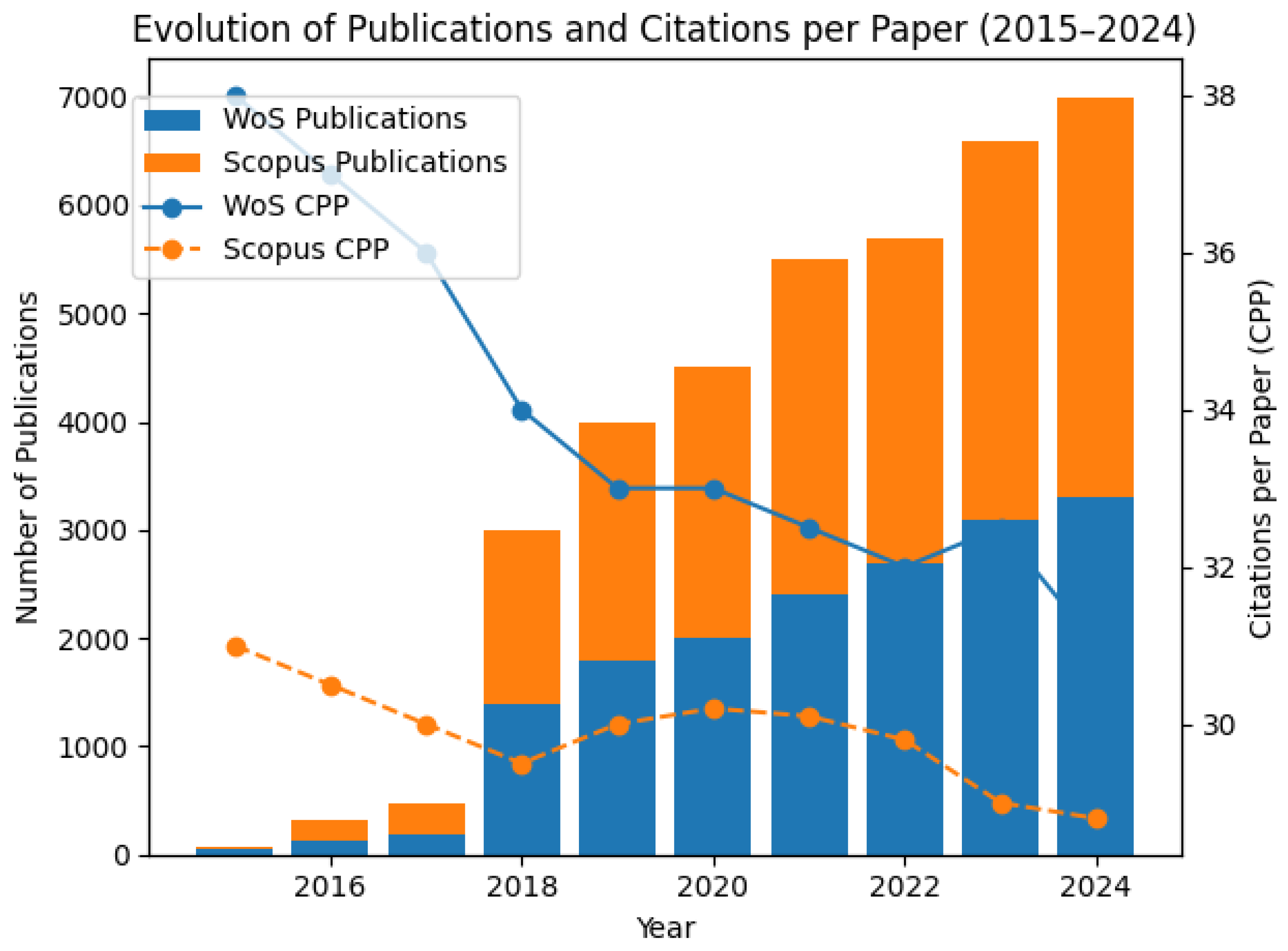
Figure 2.
Co-authorship network comparison between databases. (a) Web of Science (WoS) showing a more fragmented and locally cohesive structure; (b) Scopus displaying a more interconnected and globally integrated collaboration network.
Figure 2.
Co-authorship network comparison between databases. (a) Web of Science (WoS) showing a more fragmented and locally cohesive structure; (b) Scopus displaying a more interconnected and globally integrated collaboration network.
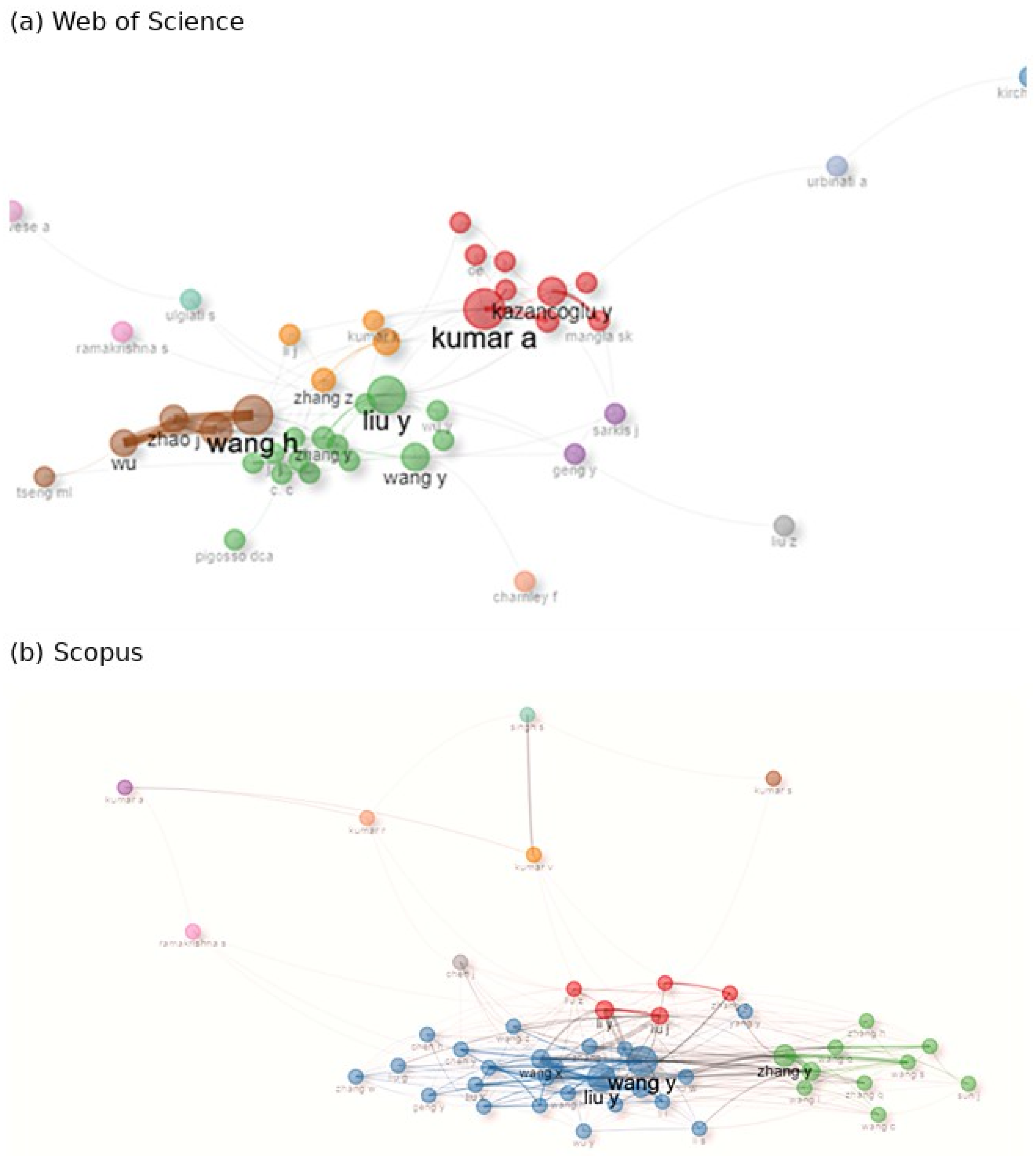
Figure 3.
Conceptual structure of circular economy research based on Multiple Correspondence Analysis (MCA): a comparative visualization of Web of Science (WoS) and Scopus. (a) WoS and (b) Scopus.
Figure 3.
Conceptual structure of circular economy research based on Multiple Correspondence Analysis (MCA): a comparative visualization of Web of Science (WoS) and Scopus. (a) WoS and (b) Scopus.
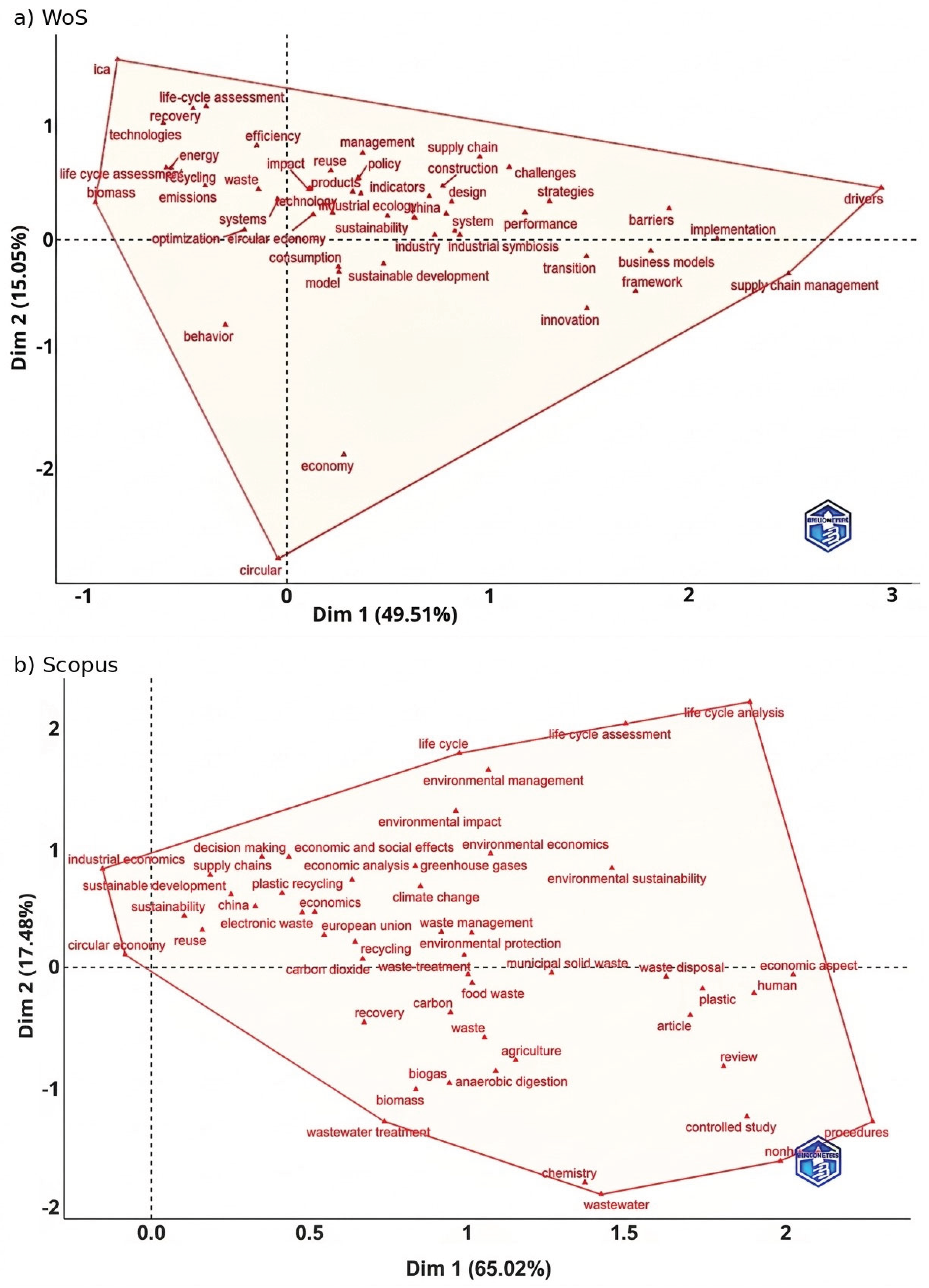
Figure 4.
Thematic maps based on centrality (x-axis) and density (y-axis) derived from keyword co-occurrence analysis. (a) Web of Science (WoS) highlighting stable and policy-oriented themes; (b) Scopus illustrating emerging and technology-driven research fronts.
Figure 4.
Thematic maps based on centrality (x-axis) and density (y-axis) derived from keyword co-occurrence analysis. (a) Web of Science (WoS) highlighting stable and policy-oriented themes; (b) Scopus illustrating emerging and technology-driven research fronts.
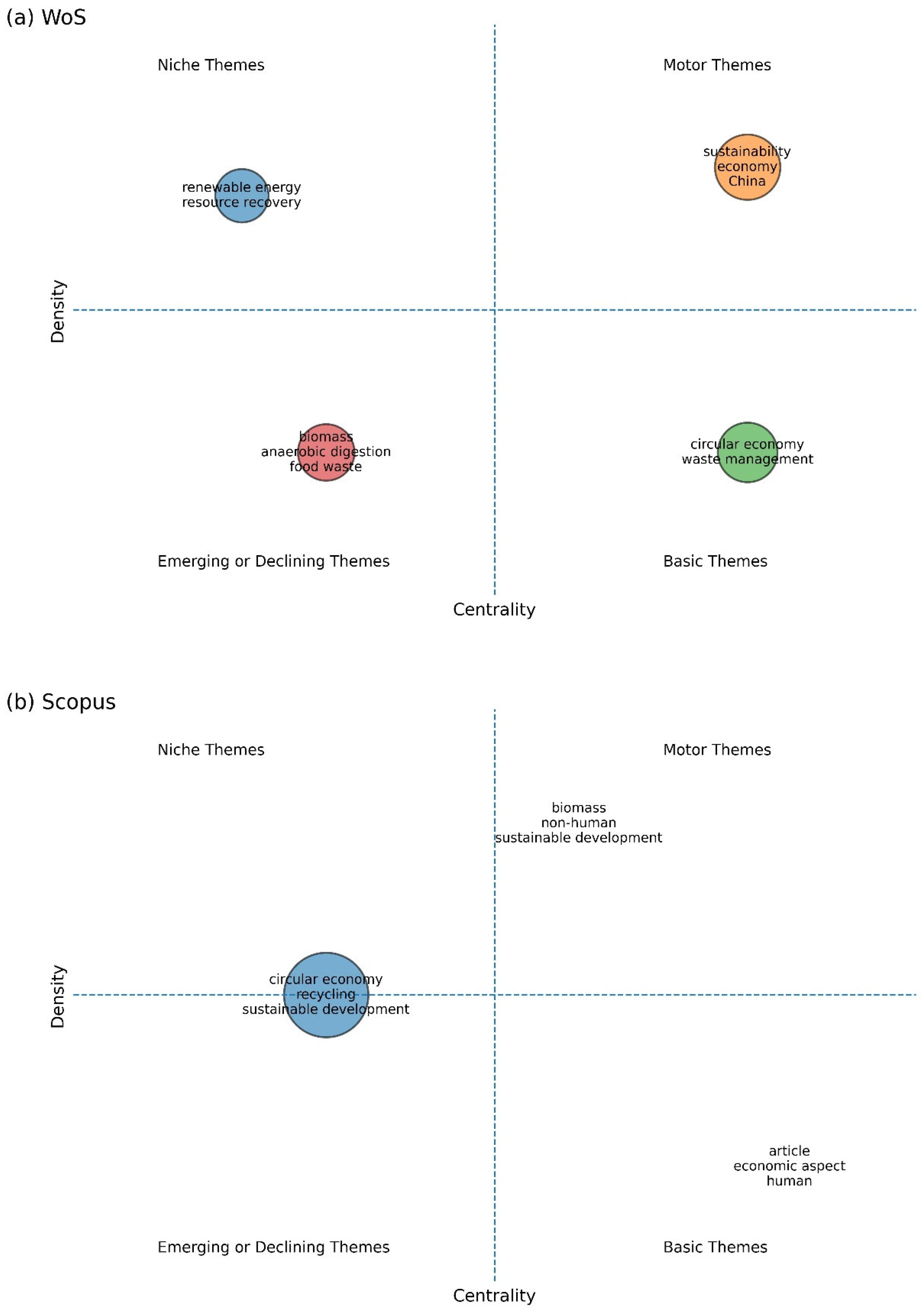
Figure 5.
Institutional collaboration networks in circular economy research. (a) Web of Science (WoS) dominated by European institutions; (b) Scopus showing a more globally distributed and interconnected network, particularly involving Asian research hubs.
Figure 5.
Institutional collaboration networks in circular economy research. (a) Web of Science (WoS) dominated by European institutions; (b) Scopus showing a more globally distributed and interconnected network, particularly involving Asian research hubs.
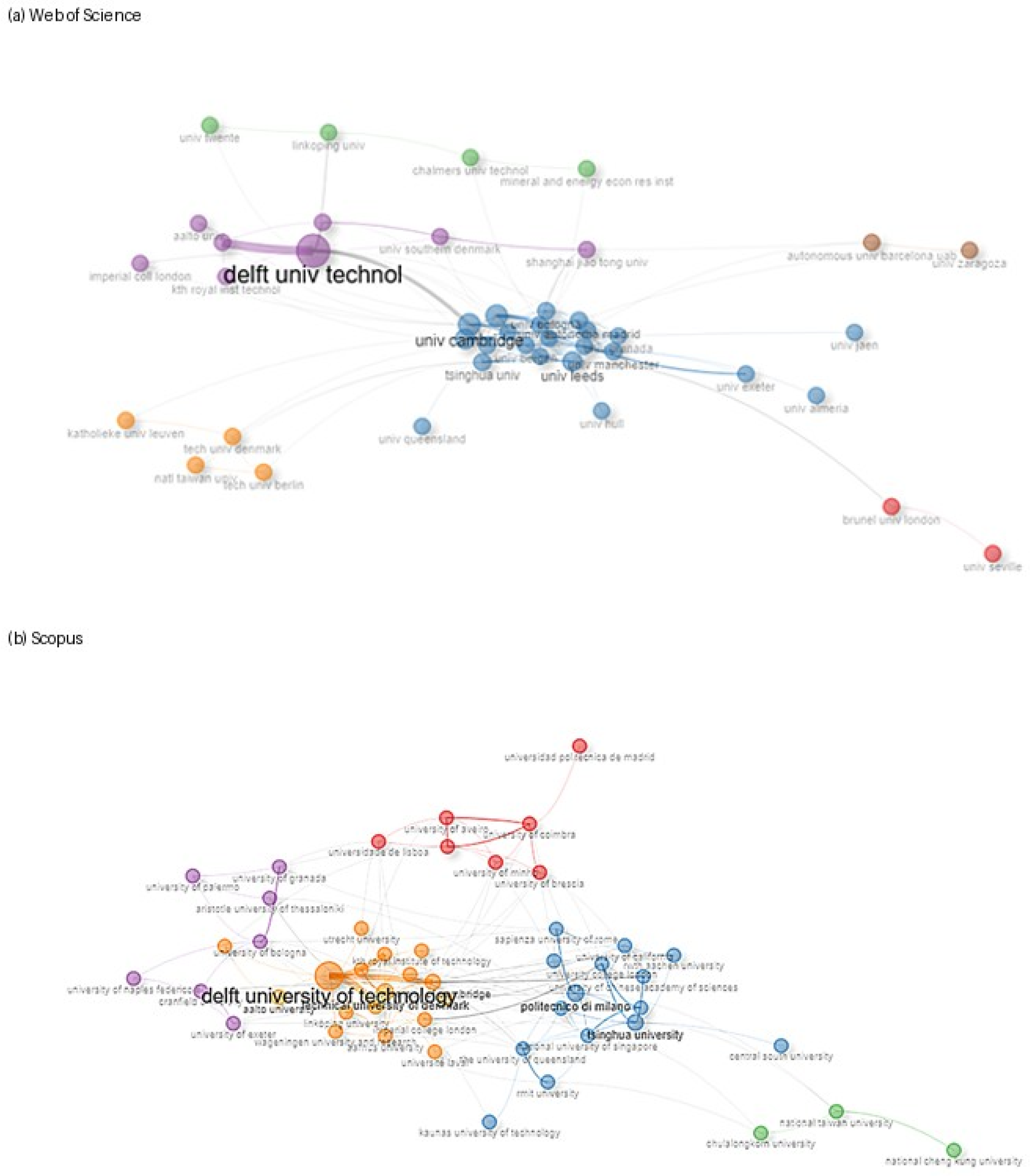

Table 1.
Search strategy, inclusion criteria, and database configuration used for data collection and bibliometric analysis.
Table 1.
Search strategy, inclusion criteria, and database configuration used for data collection and bibliometric analysis.
| Parameter | Web of Science (WoS) | Scopus |
|---|---|---|
| Search field | Topic (TS) | Title, Abstract, Keywords |
| Search query | TS = (“circular economy” OR “circularity”) | TITLE-ABS-KEY (“circular economy” OR “circularity”) |
| Download date | June 5, 2024 | June 10, 2024 |
| Time span | 2015–2024 | 2015–2024 |
| Document types | Article, Review | Article, Review |
| Languages | English, Spanish | English, Spanish |
| Subject areas / filters | Environmental Sciences; Green & Sustainable Science and Technology | Environmental Science; Energy; Social Sciences |
Table 2.
Core journals, impact indicators, and knowledge orientation in circular economy research across Web of Science and Scopus.
Table 2.
Core journals, impact indicators, and knowledge orientation in circular economy research across Web of Science and Scopus.
| Rank | Journal | Publications (WoS / Scopus) | Impact Indicators (g-index WoS / Scopus) | Knowledge Orientation | Role in CE Research |
|---|---|---|---|---|---|
| 1 | Journal of Cleaner Production | 884 / 770 | 136 / 207 | Applied + Strategic | Core integrator of cleaner production and CE |
| 2 | Resources, Conservation and Recycling | 326 / 269 | 103 / 146 | Technical + Environmental | Resource efficiency and waste valorization |
| 3 | Sustainability (Switzerland) | 951 / 697 | 65 / 108 | Multidisciplinary | Broad sustainability discourse |
| 4 | Business Strategy and the Environment | 219 / 66 | 60 / 66 | Strategic + Policy | Business models and governance |
| 5 | Journal of Industrial Ecology | 97 / 76 | 68 / 76 | Systems + Industrial | Industrial metabolism and LCA |
| 6 | Science of the Total Environment | 122 / 184 | 50 / 72 | Environmental | Impact assessment and pollution |
| 7 | Waste Management | 99 / 121 | 39 / 68 | Technical | Waste systems and recycling |
| 8 | Bioresource Technology | 35 / 80 | 53 / 68 | Biotechnological | Biomass and bio-based CE |
| 9 | Journal of Environmental Management | 119 / 169 | 34 / 59 | Environmental + Policy | Resource governance |
Table 3.
Highly cited publications and their contribution to the intellectual structure of circular economy research.
Table 3.
Highly cited publications and their contribution to the intellectual structure of circular economy research.
| Author (Year) | Journal | Total Citations (WoS / Scopus) | TC per Year | Contribution Type | Role in CE Development |
|---|---|---|---|---|---|
| Geissdoerfer et al. (2017) | J. Clean. Prod. | 3297 / 4272 | High | Conceptual framework | Integration of CE and sustainability |
| Kirchherr et al. (2017) | Resour. Conserv. Recycl. | 3249 / 4157 | High | Definition standardization | Conceptual consolidation of CE |
| Murray et al. (2017) | J. Bus. Ethics | 1395 / 1849 | Medium | Theoretical analysis | Interdisciplinary CE perspective |
| Swain (2017) | Sep. Purif. Technol. | 1042 / 1155 | Medium | Technical application | Process innovation and materials |
| Ghisellini et al. (2016) | J. Clean. Prod. | — / 3651 | High | Literature review | CE implementation pathways |
| Coates & Getzler (2020) | Nat. Rev. Mater. | 784 / — | High | Emerging frontier | Advanced materials and CE |
Table 4.
Comparative keyword analysis and thematic orientation between Web of Science (WoS) and Scopus.
Table 4.
Comparative keyword analysis and thematic orientation between Web of Science (WoS) and Scopus.
| WoS Keywords | Occurrences | Orientation (WoS) | Scopus Keywords | Occurrences | Orientation (Scopus) |
|---|---|---|---|---|---|
| Circular economy | 918 | Core concept | Circular economy | 6,135 | Core concept |
| Sustainability | 294 | Strategic / Policy | Recycling | 1,866 | Technical / Process |
| Management | 185 | Governance | Sustainable development | 1,844 | Policy / Development |
| Waste | 183 | Resource management | Sustainability | 1,527 | Integrated |
| Economy | 155 | Conceptual | Waste management | 1,225 | Operational |
| China | 124 | Geopolitical | Article | 1,219 | Indexing artifact |
| Sustainable development | 116 | Policy | Life cycle | 808 | Analytical |
| Life cycle assessment | 110 | Analytical | Environmental impact | 778 | Technical |
| Energy | 108 | Systems | Economic aspect | 666 | Economic |
Disclaimer/Publisher’s Note: The statements, opinions and data contained in all publications are solely those of the individual author(s) and contributor(s) and not of MDPI and/or the editor(s). MDPI and/or the editor(s) disclaim responsibility for any injury to people or property resulting from any ideas, methods, instructions or products referred to in the content. |
© 2026 by the authors. Licensee MDPI, Basel, Switzerland. This article is an open access article distributed under the terms and conditions of the Creative Commons Attribution (CC BY) license (http://creativecommons.org/licenses/by/4.0/).
Copyright: This open access article is published under a Creative Commons CC BY 4.0 license, which permit the free download, distribution, and reuse, provided that the author and preprint are cited in any reuse.


