

Submitted:
20 April 2026
Posted:
22 April 2026
You are already at the latest version
Abstract
Melanoma adjuvant therapy has substantially improved recurrence-free and distant metastasis-free survival in patients with resected high-risk disease, and more recently these advances have extended to earlier stages. However, important unmet needs remain, including the management of stage IIIA disease, the optimal treatment strategy after relapse on adjuvant therapy, and the identification of biomarkers capable of refining patient selection. This review summarizes recent advances and unresolved questions in the adjuvant and neoadjuvant treatment of melanoma. We discuss novel systemic strategies, including immune checkpoint inhibitor combinations and personalized neoantigen mRNA vaccines, together with the expanding role of neoadjuvant approaches. We also examine prognostic and predictive tools - such as clinicopathologic models, circulating tumor DNA, serum biomarkers, tumor microenvironment features, and gene expression profiling – that may help better define recurrence risk and therapeutic benefit. Current evidence suggests that although modern therapies have changed the natural history of resected melanoma, a substantial proportion of patients are still overtreated or undertreated when treatment decisions are based on stage alone. Future progress will depend on integrating biological risk stratification with clinical staging and on optimizing treatment sequencing across adjuvant and neoadjuvant settings.
Keywords:
melanoma
; adjuvant therapy
; neoadjuvant therapy
; immunotherapy
; immune checkpoint inhibitors
; mRNA vaccine
; biomarkers
; gene expression profiling
; circulating tumor DNA
; recurrence risk
1. Introduction
Adjuvant therapy (ADJ) has significantly improved recurrence-free survival (RFS) and distant metastasis-free survival (DMFS) in resected melanoma and has likely contributed to the recent decline in melanoma-related mortality. More recently, neoadjuvant immunotherapy (NIT) has emerged as a promising strategy for resectable stage IIIB/IV melanoma, with the potential to improve outcomes and enable response-adapted treatment. As treatment options expand, several uncertainties have emerged, including the management of stage IIIA disease, the most appropriate endpoints for evaluating benefit, the interpretation of pathologic response after NIT, and the optimal management of patients who relapse after ADJ/NIT treatment. Despite these advances, a substantial proportion of patients do not derive benefit from systemic therapy. Novel immunotherapy combinations, including mRNA-based cancer vaccines, are under investigation, and the development of predictive biomarkers may improve patient selection and optimize treatment across both the ADJ/NIT settings.
2. New Combinations: Promise and Disappointment in the Adjuvant Setting
2.1. ICIs Combinations
The success of combined immune checkpoint inhibitors (ICIs) in advanced cutaneous melanoma [1] provided a strong rationale for testing ICIs combinations in the adjuvant setting. However, the results available so far have been largely disappointing. In the phase III CheckMate 915 trial, adjuvant nivolumab plus low-dose ipilimumab did not improve RFS compared with nivolumab alone in patients with resected stage IIIB-D or IV melanoma (24-month RFS 64.6% vs 63.2%; HR 0.92), and no benefit was observed in the PD-L1 < 1% subgroup. Toxicity was substantially higher with the combination, with grade 3-4 treatment-related adverse events in 32.6% versus 12.8% of patients and treatment discontinuation in 31.6% vs 10.4% [2]. One important exception is the phase II IMMUNED trial, conducted in a highly selected population of patients with resected stage IV melanoma with no evidence of disease. In that study, standard-dose nivolumab plus ipilimumab significantly improved RFS compared with placebo (HR 0.25; 4-year RFS 64.2% vs 15.0%) and was also associated with an overall survival (OS) advantage versus placebo. Nevertheless, this benefit came at the cost of marked toxicity, with grade 3-4 treatment-related adverse events in 71% of patients. In addition, the trial was relatively small and allowed crossover, which limits the generalizability of its results to the broader adjuvant population [3]. More recent studies have reinforced this negative picture. In the phase III RELATIVITY-098 trial, adjuvant nivolumab plus relatlimab failed to improve RFS/DMFS over nivolumab alone after complete resection of stage III/IV melanoma (HR 1.01; 95% CI 0.83-1.22; P=0.928). Toxicity was again higher with the combination, with grade 3/4 treatment-related adverse events in 19% versus 8% of patients and treatment discontinuation in 17% versus 9%. Notably, translational analyses suggested that the absence of macroscopic tumor and the lower frequency of circulating LAG-3-positive T cells in the adjuvant setting may partly explain why a regimen active in metastatic melanoma did not provide additional benefit after complete resection [4]. A similar outcome was observed with TIGIT blockade. In the phase III KEYVIBE-010 trial, adjuvant vibostolimab plus pembrolizumab in resected high-risk stage IIB-IV melanoma crossed the prespecified futility boundary at the first interim analysis and was discontinued. The combination did not improve outcomes over pembrolizumab alone and was numerically inferior for RFS (HR 1.25; 6-month RFS 80% vs 85%), while also causing more grade ≥3 treatment-related adverse events, more serious adverse events, and more treatment discontinuations [5]. Therefore, as of March 2026, no ICI combination has demonstrated superiority over single-agent anti-PD-1 therapy in an unselected adjuvant melanoma population. Combination strategies remain investigational, including the phase III study of fianlimab plus cemiplimab versus pembrolizumab (NCT05352672), but anti-PD-1 monotherapy remains the adjuvant benchmark.
2.2. Cancer Vaccines: From Concept to Clinic
Vaccination is one of the oldest approaches developed to modulate the immune system, with the earliest attempts dating back more than a century [6,7,8]. Cancer vaccines can potentially target a broad range of intracellular antigens and prime tumor-reactive T cells. This property enables them to expand the spectrum of tumors that may benefit from immunological therapies, in contrast to ICIs, CAR-T cells, and bispecific T cell engagers (BiTEs) which rely primarily on surface antigen repertoire and pre-existing T-cell infiltration. However, despite encouraging early-phase results, many cancer vaccines have failed to demonstrate clinical benefit in phase III randomized controlled trials. For instance, a vaccine targeting the common melanoma tumor antigen MAGE-A3 showed promising phase II activity, but did not confer a benefit over placebo in a subsequent adjuvant phase III trial [7,8]. Moreover, the rapid and dominant development of immune checkpoint inhibitors (ICIs) has contributed to a relative slowdown in cancer vaccine research. For example, treatment with the glycoprotein 100 (gp100) peptide vaccine with IL-2 improved response rate and PFS compared with IL-2 alone [9]. However, ipilimumab received regulatory approval in the same year based on a significant OS benefit, which was not enhanced by the addition of the gp100 vaccine. Consequently, further development of this vaccine strategy was discontinued. Several different types of antigens have been tested in clinical trials and can be broadly categorized into three groups: anonymous ex vivo antigens (e.g., dendritic cell-derived antigens); predefined shared antigens (including tumor-associate antigens, TAAs, and viral antigens); and predefined personalized neoantigens (Figure 1). Shared antigens are expressed in a sufficiently large proportion of patients to allow the development of “off-the-shelf” vaccines applicable to broad patient populations. Unfortunately, many trials evaluating vaccines based on shared antigens have failed to demonstrate meaningful clinical benefit. In contrast, the recent development of personalized neoantigen vaccines has the potential to overcome several limitations inherent to shared antigen approaches [10]. Personalized antigens are unique to each vaccinated patient, thereby overcoming the heterogeneous distribution of shared antigens. Moreover, targeting personalized antigens allows for exquisite specificity and activates T cells that bypass thymic negative selection, potentially mounting widespread T cell reactivity in responding patients and promoting epitope spreading to new neoantigens [10,11]. Rapid advances in this field - driven by the success of mRNA vaccines (e.g., mRNA-1273) for SARS-CoV2 and by the refinement and widespread adoption of next-generation sequencing (NGS) technologies - have enabled the translation of this promising strategy into the field of oncology. The breakthrough was achieved with the publication of the results of the first phase II study in the field, KEYNOTE-942. This randomized, open-label, phase II trial assessed a personalized mRNA-based cancer vaccine in combination with pembrolizumab in patients with resected stage IIIB-IV melanoma. The mRNA-based vaccine (mRNA-4157/V940), which encodes up to 34 patient-specific tumor neoantigens, is administered intramuscularly every three weeks. At 18 months, RFS was 78% in the combination arm compared with 62% in the single-agent pembrolizumab arm [HR = 0.561 (95% CI 0.309–1.017), p=0.0266]. DMFS was also significantly improved, with rates of 91.8% in the mRNA vaccine group versus 76.8% in the pembrolizumab group [HR = 0.347 (95% CI 0.145–0.828), p=0.0063] [12]. These results were further strengthened by a three-year follow-up presented at the ASCO 2024 Annual Meeting, which confirmed an increasing delta between the curves with 49% risk reduction in terms of RFS and 62% risk reduction in terms of DMFS, along with an emerging trend toward improved OS (2.5-y OS 96.0% vs 90.2%, HR 0.425)[12]. Notably, the incidence of immune-related AEs (irAEs) was comparable between the two treatment arms. These findings may represent a paradigm shift in oncology, as the development of a combination strategy that enhances efficacy without increasing toxicity could enable broader clinical application, including in earlier disease stages. Accordingly, a phase III randomized controlled trial (NCT05933577) has been conducted to evaluate the efficacy of this mRNA vaccine, in combination with pembrolizumab, in patients with stage IIB–IV melanoma. Should this trial yield positive results, it could fundamentally transform the management of melanoma and potentially other malignancies. Nevertheless, several challenges remain. These include optimizing neoantigen selection based on mRNA expression levels, variant allele frequency, MHC binding/presentation, as well as peptide solubility and stability. In addition, the development of scalable manufacturing infrastructures will be essential to ensure that vaccine production becomes more accessible and less time-consuming. Addressing these issues will be critical in the coming years to enable the widespread implementation of personalized cancer vaccines.
3. Open Issues in Neoadjuvant Therapy
NIT has increasingly emerged as a transformative approach for managing resectable stage IIIB-IV melanoma, offering more effective treatment options compared to traditional ADJ [13]. In the past, ADJ extended systemic treatment into earlier melanoma stages to eradicate microscopic residual disease after surgery. Although this approach has reduced recurrence risk, it treats patients uniformly without considering the individual biological and immunological characteristics of each patient’s tumor. Furthermore, adjuvant immunotherapy offers significant benefits in terms of RFS and DMFS, but uncertainties regarding OS benefits, however, remain. Trials such as Keynote-054, which are expected to provide crucial OS information, have delayed their final analyses until 2027. Additionally, real-world studies have raised questions about the correlation between RFS/DMFS improvements observed in clinical trials and OS outcomes in routine clinical practice. In contrast, NIT, which involves administering systemic therapy before surgery, enhances antigen presentation and promotes a more robust immune response by preserving tumor architecture. Then, blocking the PD1/PDL1 pathway leads to the expansion of tumor-specific T cell clones within the microenvironment of the tumor that is still present in situ and reverses the functional anergy of tumor-specific T cells in the tumor-draining lymph nodes [14]. This strategy has led to significant clinical advances, with several randomized trials validating its efficacy. For example, the SWOG S1801 study demonstrated that perioperative pembrolizumab significantly improved event-free survival (EFS) compared to adjuvant-only therapy [15]. Similarly, the NADINA trial showed superior EFS with low-dose neoadjuvant nivolumab plus ipilimumab, followed by response-adapted adjuvant treatment, compared to upfront surgery and adjuvant therapy alone [15]. Despite small differences in patient populations across these trials, such as the inclusion of <10% resectable stage IV melanoma patients in SWOG S1801, the results are sufficient to establish NIT as a new standard for patients with resectable macroscopic stage III/IV melanoma. However, several unresolved issues need to be addressed in this rapidly evolving field. One primary issue concerns the therapeutic strategy: nivolumab + ipilimumab, compared to anti-PD-1 monotherapy, has shown higher 1-year EFS (84% vs. 72%) and pathological complete response (pCR) rates (48% vs. 38%). However, this comes with increased toxicity (29.7% vs. 12% for grade ≥3 adverse events). There is an urgent need for predictive biomarkers to guide treatment choices, optimize efficacy, and minimize toxicity. Unlike metastatic disease, standard markers like BRAF status and PD-L1 expression have not proven predictive for the success of combo- versus mono-IO in the neoadjuvant setting. Current treatment decisions in NIT rely on subjective clinical parameters (e.g., tumor burden, lymph node involvement, patient age) due to the lack of reliable biological markers to guide therapy. Some exploratory analyses have linked molecular signatures such as IFN-γ and tumor mutational burden (TMB) to NIT outcomes. For example, the phase 2 PRADO trial showed that high TMB, IFN-γ expression, and PD-L1 levels were associated with a 100% major pathological response (MPR) and a 100% 5-year event-free survival (EFS) [16]. In contrast, low expression of these markers was associated with poorer outcomes. Future trials should focus on developing prospective, biomarker-driven studies to identify patient subgroups for tailored NIT approaches. Another important question is whether a risk-adapted strategy, as demonstrated in the NADINA and PRADO trials, should be adopted moving forward. Patients who achieve a major pathological response (MPR) after neoadjuvant therapy may benefit from less intensive adjuvant therapy or even omission of total lymph node dissection (TLND). However, further validation is required, particularly for patients bearing either multiple positive nodes at baseline or high lymph node tumor burden, as recurrences have been observed in this group despite achieving MPR. In fact, in the most recent NADINA trial update, patients achieving a near pCR had worse RFS at 2 years after surgery compared with those achieving a pPR (69,4 vs 81,2%), likely indicating the need for adjuvant therapy also in this patient subset [17]. However, these data should be interpreted with caution, and we need additional information and further characterization of such patients. The use of imaging techniques, such as PET-FDG scans, and tumor-derived biomarkers like ctDNA, may improve the accuracy of predicting treatment responses in the NIT. Evidence from trials including NADINA, PRADO, and OPACINneo suggests that patients achieving MPR after neoadjuvant nivolumab plus ipilimumab may not need adjuvant therapy, given their excellent RFS and distant DMFS outcomes [15,18,19]. Management of patients with pathological partial responses (pPR) or non-responses (pNR) remains controversial. Data from the PRADO trial showed that patients with pPR after nivolumab plus ipilimumab had worse long-term EFS and DMFS compared to patients with pNR. This counterintuitive finding largely reflects the trial design, in which pPR patients received only TLND, whereas pNR patients received both TLND and adjuvant systemic therapy (with the possibility of switching to dabrafenib + trametinib for those with BRAF V600E/K mutations). Following these results, the NADINA trial was revised to administer adjuvant therapy to all patients with pPR, but 1-year RFS rates remained similar to those reported in PRADO (76.1% vs. 73%). These findings suggest that adjuvant therapy may still benefit for pNR patients; however, additional studies are needed to fully clarify its role, particularly within the more heterogeneous pPR subgroup. Looking forward, innovative therapeutic options in NIT for melanoma are expanding beyond ICIs, incorporating localized approaches such as oncolytic viral therapies and intralesional immunocytokines. These strategies aim to prime the tumor microenvironment for enhanced immune activation while minimizing systemic toxicity. Oncolytic viruses, such as Talimogene laherparepvec (T-VEC), have shown promise in early-phase trials by selectively targeting and lysing tumor cells, and boosting immune responses when combined with PD-1 inhibitors to improve pathological response rates in resectable stage III/IV disease [20]. Additionally, intralesional immunocytokine therapy with Daromun (a combination of L19IL2 and L19TNF) has demonstrated favorable results in the PIVOTAL trial, showing significant improvements in RFS and DMFS in a more pre-treated patient population [21]. The neoadjuvant melanoma landscape continues to evolve, offering new opportunities for personalized treatment based on individual tumor biology. While current evidence supports the use of neoadjuvant immunotherapy as a standard approach for resectable stage III/IV melanoma, addressing unresolved issues regarding biomarkers, personalized treatment strategies, and novel therapeutic modalities will be crucial to optimize patient outcomes. In this context, the planned Multicentre Selective Lymphadenectomy Trial-3 (MSLT-3, NCT07049276) will be particularly important: by comparing selective index lymph node resection to standard therapeutic total lymph node dissection following NIT, the trial aims to determine whether less extensive surgery can preserve disease control while reducing morbidity and improving quality of life — findings that could substantially refine surgical management in the neoadjuvant setting.
4. Open Issues and Controversies
4.1. Adjuvant Treatment of Stage IIIA Melanoma
The AJCC 8th edition classification of stage III melanoma is complex and heterogeneous, ranging from stage IIID—whose outcomes resemble those of metastatic melanoma—to stage IIIA, which is associated with a 5-year survival approaching 90% [22]. This staging system presents a paradox: stage IIIA melanoma has a substantially better prognosis than high-risk, sentinel lymph node (SLN)–negative primary melanoma (stage IIB–IIC). In addition, SLN positivity is defined irrespective of tumor size, tumor cell count, and the method of detection. Patients with stage IIIA disease were either excluded from pivotal adjuvant trials (e.g., CheckMate 238) or included only if the lymph node metastasis was >1 mm (e.g., KEYNOTE-054 and COMBI-AD). Subgroup analyses of these trials did not demonstrate an OS or RFS benefit. The absence of clear, compelling evidence that patients with stage IIIA melanoma benefit from adjuvant therapy has led to guidelines that emphasize clinician judgment and shared decision-making. The key question, therefore, is how to identify higher-risk patients who may warrant treatment. One important prognostic factor is the microanatomic location of the tumor deposit within the lymph node, as reflected by the Dewar classification [23] and, more recently, the sentinel node invasion level (SNIL) [24]. Other studies have focused on quantifying SLN tumor burden to identify subgroups with more favorable outcomes. In the study by Satzger et al., an SLN tumor burden <1 mm was identified as a favorable prognostic factor in stage III melanoma [25]. Amaral et al. further showed that the presence of isolated melanoma cells in the SLN (<0.1 mm) is associated with outcomes comparable to stage IB melanoma, suggesting that these patients may not require systemic treatment (10-year RFS, 84% vs 49%) [26]. In a multi-institutional registry study of 408 patients with stage IIIA melanoma with known SLN tumor burden, Moncrieff et al. reported a 5-year melanoma-specific survival (MSS) of 80.3% for patients with metastatic deposits ≥0.3 mm versus 94.1% for those with deposits <0.3 mm (HR = 1.26, 95% CI 1.11–1.44; p < 0.0001) [27]. Notably, no significant survival differences were observed between patients with stage IIIA melanoma with deposits <0.3 mm and their SLN-negative counterparts. For patients with tumor burdens of 0.3–0.9 mm, a recent retrospective analysis of 613 patients with stage IIIA melanoma found that greater Breslow thickness, a high mitotic rate, and nodal metastasis in the neck were associated with shorter RFS [28]. Another approach is to integrate clinical and pathologic variables into composite prognostic models. Stassen et al. developed a prediction model incorporating pathologic factors (ulceration, histologic subtype, Breslow thickness, sentinel node status, number of sentinel nodes removed, maximum diameter of the largest sentinel node metastasis, and Dewar classification) and clinical variables (sex, age, and primary tumor location) to predict 5-year RFS and MSS. Further development of this individualized prognostic approach is discussed in the section on translational data [29].
4.2. Overall Survival and Recurrence-Free Survival in Adjuvant Trials
Traditionally in oncology, RFS has been used as a surrogate for OS. This is based on the principle that chemotherapy cannot cure established metastatic disease; therefore, preventing relapse offers the best chance of cure. However, this paradigm has shifted with the advent of IO, which, particularly in melanoma, is sufficiently effective to induce durable remissions (and likely cure) in a subset of patients with metastatic disease. This raises an important question: what proportion of patients who do not receive ADJ can be salvaged with the same treatment if and when they develop metastatic disease? The most influential study linking RFS with OS in melanoma is that of Suciu et al., who showed, in a meta-analysis of high-risk stage II–III melanoma treated with interferon or ICIs, that RFS is a valid surrogate for OS [30]. However, to date, ipilimumab is the only ADJ that has demonstrated an OS benefit versus placebo, in an era when the most effective therapies for relapse were not yet available [31]. Despite clear improvements in RFS and DMFS, none of the adjuvant trials with anti–PD-1 therapy or dabrafenib plus trametinib have demonstrated an OS benefit. Thus, the magnitude of benefit for the most clinically meaningful endpoint for melanoma patients who are candidates for ADJ remains incompletely defined. This is particularly relevant when considering absolute benefit: in stage III disease, the absolute improvement in RFS is approximately 17%–20% [32], whereas it is approximately 12% in stage IIB–IIC disease based on KEYNOTE-716 [33]. A more direct way to evaluate net benefit is the number needed to treat (NNT) and its relationship to the number needed to harm (NNH), which reflects toxicity-related harm. In stage IIB–IIC disease, the margin between benefit and harm is particularly narrow (NNT 7.8 and NNH 6.8) [34]. One approach to addressing these uncertainties is the crossover design adopted by some trials. For example, KEYNOTE-054 allowed patients who relapsed after being initially randomized to placebo to cross over to pembrolizumab. More trials are expected to incorporate similar designs in the future.
4.3. Retreatment at Relapse After Adjuvant Therapy
As adjuvant treatment expands to earlier disease stages, an increasing proportion of patients who present with metastatic relapse in routine practice will have previously received ICIs or TT. Optimal management in this setting remains an area of active investigation. Because most landmark trials were conducted in systemic treatment–naïve populations, robust prospective data are limited. In the most recent report of KEYNOTE-054, the 5-year RFS2 rate was 68.2% in the pembrolizumab group; at first recurrence, anti–PD-1–based therapy, anti–CTLA-4 therapy, and TT were administered to 27.2%, 18.4%, and 14.7% of patients, respectively [35]. At 4 years after first recurrence, the proportion of patients alive and free of progression and second recurrence was 21.8% and 24.3% in the pembrolizumab and placebo groups, respectively, suggesting that initiating treatment at metastatic relapse may partially mitigate prognosis in a subset of patients. Nevertheless, among patients previously treated with pembrolizumab who relapsed >6 months after completing therapy and were rechallenged with pembrolizumab, the response rate was only 15%, with a median PFS of 4.1 months. Systemic therapy may retain activity in this context; however, response rates vary by drug class and by whether recurrence occurs during (on-treatment) or after (off-treatment) ADJ. In a retrospective study, Owen et al. described outcomes among patients who relapsed during (ON) or after (OFF) adjuvant anti–PD-1 therapy. Ipilimumab-based regimens and BRAF/MEK inhibitors appeared most active at relapse, with response rates of 26% (10/38) and 82% (27/33), respectively. These findings are broadly consistent with data in advanced melanoma, in which response rates after anti–PD-1 failure are approximately 30% with subsequent anti–CTLA-4–based immunotherapy [36]. However, response rates with ipilimumab monotherapy versus ipilimumab plus anti–PD-1 were similar—an unexpected observation, given retrospective data in advanced melanoma suggesting higher activity with combination therapy than with single-agent ipilimumab after anti–PD-1 failure [37]. Among patients who recurred ON adjuvant anti–PD-1 therapy, none (0/6) responded to anti–PD-1 rechallenge, 24% (8/33) responded to ipilimumab (alone or in combination with anti–PD-1), and 78% (18/23) responded to TT. Among those who recurred OFF adjuvant anti–PD-1 therapy, 40% (2/5) responded to anti–PD-1 monotherapy, 40% (2/5) to ipilimumab-based therapy, and 90% (9/10) to TT. Other real-world studies have confirmed poor outcomes among patients who progress during ADJ and the limited effectiveness of anti–PD-1 retreatment in the setting of early progression [38]. Although the optimal interval remains uncertain, a minimum washout of 3–6 months has been proposed before considering retreatment with the same agent, as emphasized by the SITC Immunotherapy Resistance Taskforce [39]. These studies also highlight a substantial risk of early systemic recurrence after an initial resectable locoregional relapse. Taylor et al. recently explored the effectiveness of a “second adjuvant” strategy with BRAF/MEK inhibitors in patients who develop locoregional or oligometastatic recurrence despite adjuvant PD-1–based immunotherapy. This approach was associated with improved RFS (median RFS 30.4 vs 4.0 months), albeit with immature OS data and at the cost of substantial toxicity [40].
5. Translational Data
5.1. Biomarkers in Adjuvant Therapy
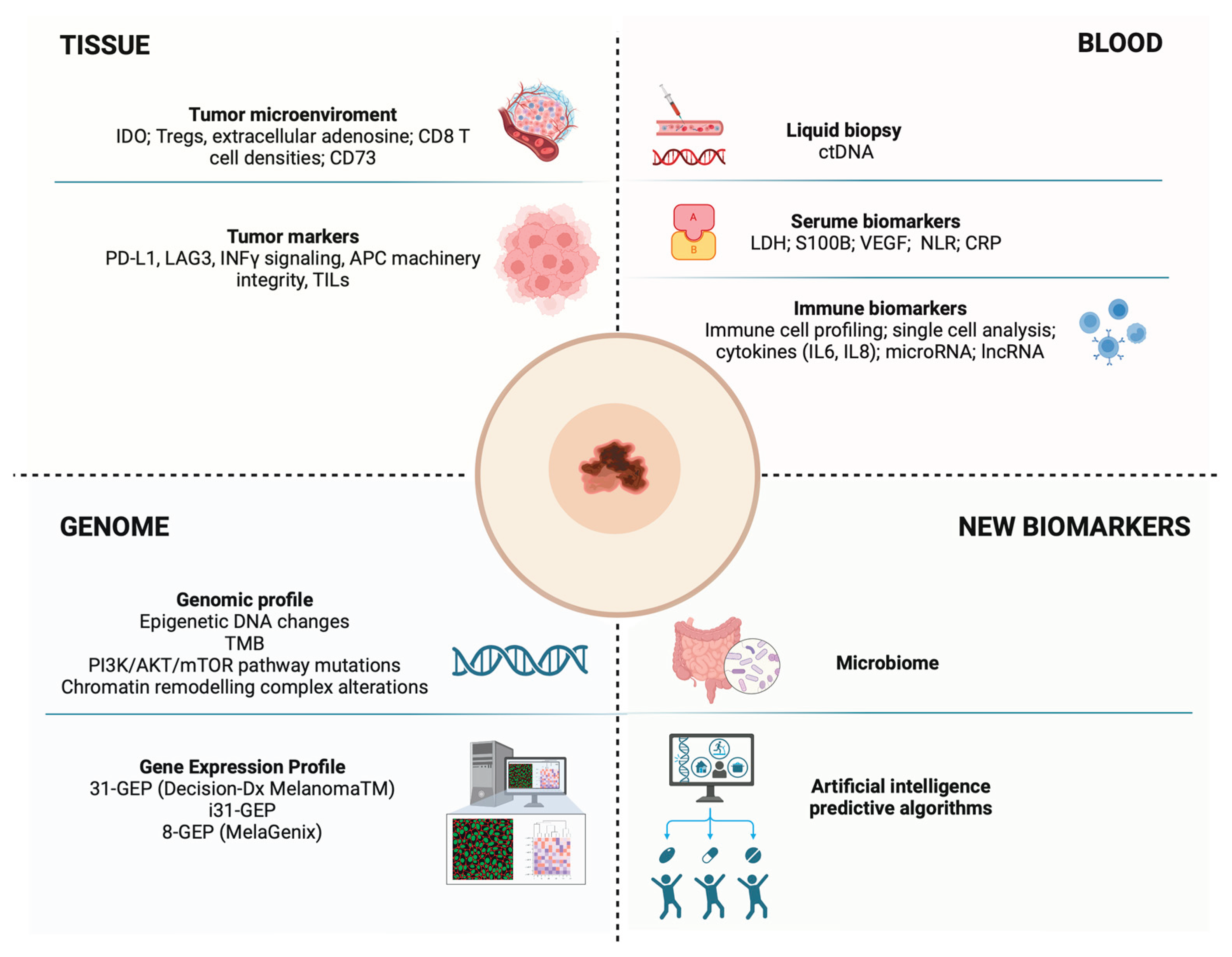
Despite substantial progress in melanoma treatment, a considerable proportion of patients treated with ICIs do not benefit or experience disease progression after an initial response. Therefore, elucidating mechanisms of IO resistance and identifying biomarkers that predict treatment efficacy are critical. A reliable biomarker could meaningfully improve the number NNT/NNH balance by helping clinicians select patients most likely to benefit from ADJ/NIT and by reducing overtreatment. Ideally, such a biomarker would demonstrate adequate sensitivity and specificity, identifying patients who derive benefit while sparing those unlikely to benefit from unnecessary toxicity. Although several candidate biomarkers have been investigated (Figure 2), the only one used in routine clinical practice in the metastatic setting—albeit imperfect—is tumor PD-L1 expression; in the adjuvant/neoadjuvant setting, no robust, clinically actionable predictors of efficacy are currently available. This remains one of the major unmet needs in cancer immunotherapy. Blood-based assays are feasible, minimally invasive tools that may provide predictive and prognostic circulating biomarkers. These include white blood cell subpopulations (e.g., neutrophils, lymphocytes, eosinophils), the neutrophil-to-lymphocyte ratio (NLR), and C-reactive protein (CRP), which have been associated with outcomes on ICIs [41]. Other circulating biomarkers, such as lactate dehydrogenase (LDH) and S100B, reflect greater tumor aggressiveness and worse prognosis in metastatic disease [42]; however, neither has a clearly defined role in the adjuvant setting. Circulating tumor DNA (ctDNA) has emerged as a promising biomarker across multiple tumor types. In melanoma, recent studies have shown that ctDNA detection after surgery predicts relapse in patients with stage II–III disease [43], and that detectable preoperative ctDNA is prognostic in this population. Collectively, these data suggest that ctDNA can identify patients at higher risk of early relapse and poorer survival. This concept is being prospectively evaluated in the DETECTION study (NCT04901988), which uses ctDNA to identify high-risk patients for treatment rather than treating all comers. Mechanistically, response to ICIs has been linked to enhanced cytolytic activity, antigen processing, and interferon-γ (IFN-γ) pathway components. However, translation of these findings into clinically deployable biomarkers remains limited. Characterization of the tumor microenvironment (TME) may yield predictors of relapse and treatment response and is an active area of investigation. Upregulation of immunosuppressive pathways within the TME—including indoleamine 2,3-dioxygenase (IDO), regulatory T cells (Tregs), extracellular adenosine, and CD73—can impair T-cell activity and represents an extrinsic mechanism of resistance to ICIs [44]. Conversely, tumor-infiltrating lymphocytes (TILs) have been associated with improved survival [45]. Nonetheless, substantial interpatient overlap in baseline intratumoral CD8+ T-cell density limits the definition of clinically useful cutoffs. Longitudinal profiling of immune markers before and after IO initiation is also being explored, including differences in induced gene expression between PD-1 and CTLA-4 blockade [46]. High tumor mutational burden (TMB) has been associated with long-term clinical benefit in metastatic melanoma treated with ipilimumab [47], and this association has also been observed in patients treated with nivolumab [48]. In CheckMate 238, higher TMB, PD-L1 expression, intratumoral CD8+ T cells, an IFN-γ–associated gene expression signature, and lower peripheral CRP levels were associated with improved RFS and OS with both nivolumab and ipilimumab [32]. A trend toward improved RFS was also reported among patients receiving nivolumab who had lower levels of peripheral myeloid-derived suppressor cells (MDSCs). In a substudy of CheckMate 76K, higher IFN-γ signature, TMB, and CD8+ T cells and lower CRP levels were associated with improved RFS in patients treated with nivolumab [49]. The most relevant prognostic biomarker data for adjuvant targeted therapy in cutaneous melanoma come from an exploratory analysis of the randomized phase III COMBI-AD trial [50]. Patients with low TMB derived greater benefit from adjuvant targeted therapy, whereas those with high TMB derived less benefit, particularly in the presence of a low IFN-γ signature. Similar findings were previously reported in The Cancer Genome Atlas (TCGA) dataset. Notably, mutational load was not correlated with T-helper 1 or IFN-γ signatures but had independent prognostic value [51]. Data from neoadjuvant trials are directionally consistent. Exploratory analyses from OpACIN and OpACIN-neo showed that baseline IFN-γ and gene-signature expression were associated with absence of relapse in OpACIN and with higher pathologic complete response (pCR) rates and lower relapse risk in OpACIN-neo [52]. Responders to NIT demonstrated increased levels of multiple immune cell populations within tumor tissue and greater activity of proliferation- and immune signaling–related pathways, whereas nonresponders exhibited increased activity of angiogenesis and epithelial-to-mesenchymal transition gene sets. The association between microbiome composition and IO efficacy is another active area of research; Wheeler et al. identified several microorganisms linked to IO response and immune-related gene expression [53]. Finally, implementation of artificial intelligence approaches may further enhance prognostic and predictive performance by enabling simultaneous analysis of multisource data [54].
5.2. Improve Prognostication of Stage II Melanoma: Focus on Gene Expression Profile (GEP)
Because of their high incidence, early-stage thin melanomas account for a substantial number of melanoma-related deaths each year. Following the demonstrated RFS and DMFS benefits in stage IIB–IIC melanoma, major regulatory agencies have approved pembrolizumab for this indication. However, the proportion of patients who benefit from treatment is lower than in stage III disease, and many patients who are already cured by surgery alone are nevertheless exposed to potentially long-term toxicities. For example, immune-related effects involving the pituitary, thyroid, pancreas, and adrenal glands may lead to chronic endocrinopathies that can persist lifelong. Identifying patients most likely to benefit from adjuvant therapy—while sparing those with low recurrence risk—therefore remains a key unmet need. Moreover, a subset of patients at genuinely high risk may be underestimated by conventional anatomic staging alone. Gene expression profile (GEP) assays are molecular tests that measure the expression of a panel of validated genes and provide prognostic information, including the risk of recurrence, metastasis, and melanoma-specific death [55]. This approach has already proven useful in other malignancies, including uveal melanoma [56]. The 31-GEP (DecisionDx-Melanoma, Castle Biosciences, Inc.) assay for cutaneous melanoma quantifies expression of 28 target genes and 3 control genes in tumor tissue [57]. The 31-GEP stratifies patients as high risk (Class 2B), intermediate risk (Class 1B/2A), or low risk (Class 1A) for recurrence, metastasis, or mortality [58]. In a prospective analysis, patients with Class 2B results had significantly lower RFS (59.7% vs 96.0%) and DMFS (77.8% vs 97.8%) than those with Class 1A results. Importantly, among patients considered low risk by AJCC staging (i.e., stage I–IIA), those with Class 2B results also had significantly lower RFS (78.6% vs 97.3%) and DMFS (85.7% vs 99.4%) than those with Class 1A results. Another commercially available assay, MelaGenix (Neracare, Frankfurt, Germany), has also been reported to improve prognostication beyond AJCC staging [59]. These tests could inform clinical management—for example, by identifying patients at sufficiently low risk (traditionally <5%) to forgo sentinel lymph node biopsy (SLNB), as is being prospectively evaluated in the MERLIN study (NCT04759781). They could also guide the intensity of radiologic surveillance, which may enable earlier detection of recurrence and metastasis at lower tumor burden [60]. More recently, the integrated 31-GEP (i31-GEP) combined clinicopathologic features (patient age, mitotic rate, ulceration, Breslow thickness, presence of TILs, histologic subtype, and anatomic location) with gene-expression data, further improving prognostication [61]. While promising, longer follow-up and incorporation of contemporary adjuvant therapy into model development will be essential for broader clinical adoption.
6. Conclusions
The therapeutic landscape of resected melanoma has evolved remarkably, with adjuvant anti-PD-1 therapy and BRAF/MEK inhibition improving outcomes in stage III and IV disease, and pembrolizumab and nivolumab extending benefit to stage IIB-IIC melanoma. At the same time, these advances have exposed the limits of a treatment strategy based mainly on anatomic staging. Several critical questions remain open, including the true magnitude of benefit in stage IIIA disease, the most appropriate endpoints for treatment evaluation, and the optimal management of patients who relapse after adjuvant therapy. Emerging approaches such as neoadjuvant immunotherapy, novel checkpoint inhibitor combinations, and individualized neoantigen vaccines may further improve outcomes, but they also increase the need for better patient selection. A major priority for the next phase of research is the integration of biomarkers into routine decision making. Circulating tumor DNA, serum markers, tumor microenvironment features, and gene expression profile assays all show promise for refining prognosis and identifying patients at higher or lower risk than suggested by AJCC stage alone. Nevertheless, most of these tools still require prospective validation, longer follow-up, and demonstration of clinical utility in the era of modern systemic therapy. In practice, the future of melanoma care will likely depend on a more personalized model in which clinical stage, pathologic features, molecular risk, and response-adapted strategies are combined to guide both adjuvant and neoadjuvant treatment.
Funding
This research received no external funding.
Acknowledgments
The authors thank their colleagues and collaborators for the clinical and scientific discussions that contributed to this work.
References
- Hodi, F. S.; et al. ‘Long-term survival in advanced melanoma for patients treated with nivolumab plus ipilimumab in CheckMate 067.’. https://doi.org/10.1200/JCO.2022.40.16_suppl.9522. 2022, vol. 40(no. 16_) suppl, pp. 9522. [Google Scholar] [CrossRef]
- Weber, J. S.; et al. ‘Adjuvant Therapy of Nivolumab Combined With Ipilimumab Versus Nivolumab Alone in Patients With Resected Stage IIIB-D or Stage IV Melanoma (CheckMate 915)’. J. Clin. Oncol. 2023, vol. 41(no. 3), 517–527. [Google Scholar] [CrossRef]
- Livingstone, E.; et al. ‘Adjuvant nivolumab plus ipilimumab or nivolumab alone versus placebo in patients with resected stage IV melanoma with no evidence of disease (IMMUNED): Final results of a randomised, double-blind, phase 2 trial’. The Lancet 2022, vol. 400(no. 10358), 1117–1129. [Google Scholar] [CrossRef]
- Long, G. V.; et al. ‘Adjuvant nivolumab and relatlimab in stage III/IV melanoma: The randomized phase 3 RELATIVITY-098 trial’. Nature Medicine 2025, 2025 31:12, vol. 31(no. 12), 4301–4309. [Google Scholar] [CrossRef]
- Dummer, R.; et al. ‘Vibostolimab coformulated with pembrolizumab versus pembrolizumab alone as adjuvant therapy for high-risk stage IIB–IV melanoma (KEYVIBE-010): A randomised, double-blind, phase 3 study’. Lancet Oncol. 2026, vol. 27(no. 3), 327–339. [Google Scholar] [CrossRef]
- Peng, M.; et al. ‘Neoantigen vaccine: An emerging tumor immunotherapy’. Mol. Cancer 2019, vol. 18(no. 1). [Google Scholar] [CrossRef] [PubMed]
- Kruit, W. H. J.; et al. ‘Selection of immunostimulant AS15 for active immunization with MAGE-A3 protein: Results of a randomized phase II study of the European Organisation for Research and Treatment of Cancer Melanoma Group in Metastatic Melanoma’. J. Clin. Oncol. 2013, vol. 31(no. 19), 2413–2420. [Google Scholar] [CrossRef] [PubMed]
- Dreno, B.; et al. ‘MAGE-A3 immunotherapeutic as adjuvant therapy for patients with resected, MAGE-A3-positive, stage III melanoma (DERMA): A double-blind, randomised, placebo-controlled, phase 3 trial’. Lancet Oncol. 2018, vol. 19(no. 7), 916–929. [Google Scholar] [CrossRef] [PubMed]
- Schwartzentruber, D. J.; et al. ‘gp100 Peptide Vaccine and Interleukin-2 in Patients with Advanced Melanoma’. New England Journal of Medicine 2011, vol. 364(no. 22), 2119–2127. [Google Scholar] [CrossRef]
- Hu, Z.; et al. ‘Personal neoantigen vaccines induce persistent memory T cell responses and epitope spreading in patients with melanoma’. Nature Medicine 2021, 2021 27:3, vol. 27(no. 3), 515–525. [Google Scholar] [CrossRef]
- Sahin, U.; et al. ‘Personalized RNA mutanome vaccines mobilize poly-specific therapeutic immunity against cancer’. Nature 2017, 2017 547:7662, vol. 547(no. 7662), 222–226. [Google Scholar] [CrossRef] [PubMed]
- Weber, J. S.; et al. ‘Individualized neoantigen therapy mRNA-4157 (V940) plus pembrolizumab in resected melanoma: 3-year update from the mRNA-4157-P201 (KEYNOTE-942) trial.’. Journal of Clinical Oncology 2024, vol. 42(no. 17_) suppl, LBA9512–LBA9512. [Google Scholar] [CrossRef]
- Therien, A. D.; Chime-Eze, C. M.; Rhodin, K. E.; Beasley, G. M. ‘Neoadjuvant therapy for melanoma: Past, present, and future’. Surg. Oncol. 2024, vol. 56, 102127. [Google Scholar] [CrossRef] [PubMed]
- Topalian, S. L.; Taube, J. M.; Pardoll, D. M. ‘Neoadjuvant checkpoint blockade for cancer immunotherapy’, Science (1979). 2020, vol. 367(no. 6477). [Google Scholar] [CrossRef]
- Blank, C. U.; et al. ‘Neoadjuvant Nivolumab and Ipilimumab in Resectable Stage III Melanoma’. New England Journal of Medicine 2024, vol. 391(no. 18), 1696–1708. [Google Scholar] [CrossRef] [PubMed]
- Hoeijmakers, L. L.; et al. ‘Neoadjuvant ipilimumab plus nivolumab in melanoma: 5-year survival and biomarker analysis from the phase 2 PRADO-trial’. Nature Medicine 2026, 2026 32:3, vol. 32(no. 3), 952–963. [Google Scholar] [CrossRef]
- Lucas, M. W.; et al. ‘LBA57 Two-year clinical update and first biomarker analyses of the phase III NADINA trial comparing neoadjuvant nivolumab plus ipilimumab versus adjuvant nivolumab in resectable stage III melanoma’. Annals of Oncology 2025, vol. 36, S1600–S1601. [Google Scholar] [CrossRef]
- Rozeman, E. A.; et al. ‘Identification of the optimal combination dosing schedule of neoadjuvant ipilimumab plus nivolumab in macroscopic stage III melanoma (OpACIN-neo): A multicentre, phase 2, randomised, controlled trial’. Lancet Oncol. 2019, vol. 20(no. 7), 948–960. [Google Scholar] [CrossRef]
- Reijers, I. L. M.; et al. ‘Personalized response-directed surgery and adjuvant therapy after neoadjuvant ipilimumab and nivolumab in high-risk stage III melanoma: The PRADO trial’. Nature Medicine 2022, 2022 28:6, vol. 28(no. 6), 1178–1188. [Google Scholar] [CrossRef] [PubMed]
- Robert, C.; et al. ‘Open-label, phase II study of talimogene laherparepvec plus pembrolizumab for the treatment of advanced melanoma that progressed on prior anti–PD-1 therapy: MASTERKEY-115’. Eur. J. Cancer 2024, vol. 207. [Google Scholar] [CrossRef]
- Kähler, K. C.; et al. ‘Neoadjuvant intralesional targeted immunocytokines (daromun) in stage III melanoma’. Annals of Oncology 2025, vol. 36(no. 10), 1166–1177. [Google Scholar] [CrossRef] [PubMed]
- Gershenwald, J.E.; Scolyer, R.A.; Hess, K.R.; Sondak, V.K.; Long, G.V.; Ross, M.I.; Lazar, A.J.; Faries, M.B.; Kirkwood, J.M.; McArthur, G.A.; Haydu, L.E.; Eggermont, A.M.M.; Flaherty, K.T.; Balch, C.M.; Thompson, J.F. Melanoma staging: Evidence-based changes in the American Joint Committee on Cancer eighth edition cancer staging manual. CA: A Cancer Journal for Clinicians 2017, 67, 472–492. [Google Scholar] [CrossRef]
- Dewar, D. J.; Newell, B.; Green, M. A.; Topping, A. P.; Powell, B. W. E. M.; Cook, M. G. ‘The microanatomic location of metastatic melanoma in sentinel lymph nodes predicts nonsentinel lymph node involvement’. J. Clin. Oncol. 2004, vol. 22(no. 16), 3345–3349. [Google Scholar] [CrossRef]
- Kretschmer, L.; et al. ‘The sentinel node invasion level (SNIL) as a prognostic parameter in melanoma’. Mod. Pathol. 2021, vol. 34(no. 10), 1839–1849. [Google Scholar] [CrossRef] [PubMed]
- Satzger, I.; Leiter, U.; Gräger, N.; Keim, U.; Garbe, C.; Gutzmer, R. ‘Melanoma-specific survival in patients with positive sentinel lymph nodes: Relevance of sentinel tumor burden’. Eur. J. Cancer 2019, vol. 123, 83–91. [Google Scholar] [CrossRef]
- Amaral, T.; et al. ‘Isolated melanoma cells in sentinel lymph node in stage IIIA melanoma correlate with a favorable prognosis similar to stage IB’. Eur. J. Cancer 2024, vol. 201, 113912. [Google Scholar] [CrossRef]
- Moncrieff, M. D.; et al. ‘Clinical Outcomes and Risk Stratification of Early-Stage Melanoma Micrometastases from an International Multicenter Study: Implications for the Management of American Joint Committee on Cancer IIIA Disease’. Journal of Clinical Oncology 2022, vol. 40(no. 34), 3940–3951. [Google Scholar] [CrossRef]
- Grover, P.; et al. ‘Efficacy of adjuvant therapy in patients (pts) with AJCC v8 stage IIIA cutaneous melanoma.’. https://doi.org/10.1200/JCO.2023.41.16_suppl.9518. 2023, vol. 41(no. 16_) suppl, 9518–9518. [Google Scholar] [CrossRef]
- Stassen, R. C.; et al. ‘Development and validation of a novel model to predict recurrence-free survival and melanoma-specific survival after sentinel lymph node biopsy in patients with melanoma: An international, retrospective, multicentre analysis’. Lancet Oncol. 2024, vol. 25(no. 4), 509–517. [Google Scholar] [CrossRef]
- Suciu, S.; et al. ‘Relapse-Free Survival as a Surrogate for Overall Survival in the Evaluation of Stage II-III Melanoma Adjuvant Therapy’. J. Natl. Cancer Inst. 2018, vol. 110(no. 1), 87–96. [Google Scholar] [CrossRef] [PubMed]
- Eggermont, M. M.; et al. ‘Prolonged Survival in Stage III Melanoma with Ipilimumab Adjuvant Therapy’. N. Engl. J. Med. 2016, vol. 375(no. 19), 1845–1855. [Google Scholar] [CrossRef] [PubMed]
- Ascierto, P. A.; et al. ‘Adjuvant nivolumab versus ipilimumab in resected stage IIIB-C and stage IV melanoma (CheckMate 238): 4-year results from a multicentre, double-blind, randomised, controlled, phase 3 trial’. Lancet Oncol. 2020, vol. 21(no. 11), 1465–1477. [Google Scholar] [CrossRef]
- Luke, J. J.; et al. ‘Pembrolizumab versus placebo as adjuvant therapy in stage IIB or IIC melanoma: Final analysis of distant metastasis-free survival in the phase 3 KEYNOTE-716 study.’. https://doi.org/10.1200/JCO.2023.41.17_suppl.LBA9505. 2023, vol. 41(no. 17_) suppl, LBA9505–LBA9505. [Google Scholar] [CrossRef]
- van Akkooi, A. C. J.; et al. ‘Adjuvant systemic therapy in melanoma: Relative versus absolute benefit; the number needed to treat (NNT) versus the number needed to harm (NNH)?’. EJC Skin Cancer 2024, vol. 2, 100021. [Google Scholar] [CrossRef]
- Eggermont, A. M. M.; et al. ‘Five-Year Analysis of Adjuvant Pembrolizumab or Placebo in Stage III Melanoma’. NEJM Evidence 2022, vol. 1(no. 11). [Google Scholar] [CrossRef]
- Owen, C. N.; et al. ‘Management of early melanoma recurrence despite adjuvant anti-PD-1 antibody therapy☆’. Ann. Oncol. 2020, vol. 31(no. 8), 1075–1082. [Google Scholar] [CrossRef]
- VanderWalde, A.; et al. ‘Ipilimumab with or without nivolumab in PD1/PDL1 blockade refractory metastatic melanoma: A randomized phase 2 trial’. Nat. Med. 2023, vol. 29(no. 9), 2278. [Google Scholar] [CrossRef]
- Dima, D.; et al. ‘Real-world outcomes of patients with resected stage III melanoma treated with adjuvant therapies’. Cancer Med. 2024, vol. 13(no. 12), e7257. [Google Scholar] [CrossRef]
- Kluger, H. M.; et al. ‘Defining tumor resistance to PD-1 pathway blockade: Recommendations from the first meeting of the SITC Immunotherapy Resistance Taskforce’. J. Immunother. Cancer 2020, vol. 8(no. 1). [Google Scholar] [CrossRef]
- Taylor, A. M.; et al. ‘Efficacy and safety of “Second Adjuvant” therapy with BRAF/MEK inhibitors after local therapy for recurrent melanoma following adjuvant PD-1 based immunotherapy’. Eur. J. Cancer 2024, vol. 199. [Google Scholar] [CrossRef] [PubMed]
- Indini, A.; et al. ‘Developing a score system to predict therapeutic outcomes to anti-PD-1 immunotherapy in metastatic melanoma’. Tumori 2019, vol. 105(no. 6), 465–473. [Google Scholar] [CrossRef]
- Hauschild, A.; et al. ‘S100B protein detection in serum is a significant prognostic factor in metastatic melanoma’. Oncology 1999, vol. 56(no. 4), 338–344. [Google Scholar] [CrossRef]
- Tan, L.; et al. ‘Prediction and monitoring of relapse in stage III melanoma using circulating tumor DNA’. Annals of Oncology 2019, vol. 30(no. 5), 804–814. [Google Scholar] [CrossRef]
- Holmgaard, R. B.; et al. ‘Tumor-expressed IDO recruits and activates MDSCs in a Treg-dependent manner’. Cell Rep. 2015, vol. 13(no. 2), 412. [Google Scholar] [CrossRef] [PubMed]
- Kunte, C.; et al. ‘Prognostic factors associated with sentinel lymph node positivity and effect of sentinel status on survival: An analysis of 1049 patients with cutaneous melanoma’. Melanoma Res. 2010, vol. 20(no. 4), 330–337. [Google Scholar] [CrossRef] [PubMed]
- Chen, P. L.; et al. ‘Analysis of immune signatures in longitudinal tumor samples yields insight into biomarkers of response and mechanisms of resistance to immune checkpoint blockade’. Cancer Discov. 2016, vol. 6(no. 8), 827. [Google Scholar] [CrossRef] [PubMed]
- Snyder, A.; et al. ‘Genetic basis for clinical response to CTLA-4 blockade in melanoma’. N. Engl. J. Med. 2014, vol. 371(no. 23), 2189–2199. [Google Scholar] [CrossRef]
- Hugo, W.; et al. ‘Genomic and Transcriptomic Features of Response to Anti-PD-1 Therapy in Metastatic Melanoma’. Cell 2016, vol. 165(no. 1), 35–44. [Google Scholar] [CrossRef]
- Long, G. V.; et al. ‘Association of biomarkers (BMs) with efficacy of adjuvant nivolumab (NIVO) vs placebo (PBO) in patients with resected stage IIB/C melanoma (CA209-76K).’. https://doi.org/10.1200/JCO.2023.41.16_suppl.9504. 2023, vol. 41(no. 16_) suppl, pp. 9504. [Google Scholar] [CrossRef]
- Dummer, R.; et al. ‘Adjuvant dabrafenib plus trametinib versus placebo in patients with resected, BRAFV600-mutant, stage III melanoma (COMBI-AD): Exploratory biomarker analyses from a randomised, phase 3 trial’. Lancet Oncol. 2020, vol. 21(no. 3), 358–372. [Google Scholar] [CrossRef]
- Danilova, L.; et al. ‘Association of PD-1/PD-L axis expression with cytolytic activity, mutational load, and prognosis in melanoma and other solid tumors’. Proc. Natl. Acad. Sci. U. S. A 2016, vol. 113(no. 48), E7769–E7777. [Google Scholar] [CrossRef] [PubMed]
- Rozeman, E. A.; et al. ‘Survival and biomarker analyses from the OpACIN-neo and OpACIN neoadjuvant immunotherapy trials in stage III melanoma’. Nature Medicine 2021, 2021 27:2, vol. 27(no. 2), 256–263. [Google Scholar] [CrossRef] [PubMed]
- Wheeler, C. E.; et al. ‘The tumor microbiome as a predictor of outcomes in patients with metastatic melanoma treated with immune checkpoint inhibitors’. bioRxiv 2023. [Google Scholar] [CrossRef]
- Cozzolino, C.; et al. ‘Machine learning to predict overall short-term mortality in cutaneous melanoma’. Discover. Oncology 2023, vol. 14(no. 1), 13. [Google Scholar] [CrossRef] [PubMed]
- Cohen, P. R.; Kurzrock, R. ‘Dermatologic Disease-Directed Targeted Therapy (D3T2): The Application of Biomarker-Based Precision Medicine for the Personalized Treatment of Skin Conditions-Precision Dermatology’. Dermatol. Ther. (Heidelb) 2022, vol. 12(no. 10), 2249–2271. [Google Scholar] [CrossRef]
- Harbour, J. W. ‘A Prognostic Test to Predict the Risk of Metastasis in Uveal Melanoma Based on a 15-Gene Expression Profile’. Methods Mol. Biol. 2014, vol. 1102, 427. [Google Scholar] [CrossRef]
- Gerami, P.; et al. ‘Development of a Prognostic Genetic Signature to Predict the Metastatic Risk Associated with Cutaneous Melanoma’. Clinical Cancer Research 2015, vol. 21(no. 1), 175–183. [Google Scholar] [CrossRef]
- Greenhaw, B. N.; et al. ‘Molecular risk prediction in cutaneous melanoma: A meta-analysis of the 31-gene expression profile prognostic test in 1,479 patients’. J. Am. Acad. Dermatol. 2020, vol. 83(no. 3), 745–753. [Google Scholar] [CrossRef]
- Brunner, G.; et al. ‘A Prognostic Gene Signature Expressed in Primary Cutaneous Melanoma: Synergism With Conventional Staging’. JNCI Cancer Spectr. 2018, vol. 2(no. 3). [Google Scholar] [CrossRef]
- Dhillon, S.; et al. ‘Routine imaging guided by a 31-gene expression profile assay results in earlier detection of melanoma with decreased metastatic tumor burden compared to patients without surveillance imaging studies’. Arch. Dermatol. Res. 2023, vol. 315(no. 8), 2295–2302. [Google Scholar] [CrossRef]
- Jarell, A.; et al. ‘Optimizing treatment approaches for patients with cutaneous melanoma by integrating clinical and pathologic features with the 31-gene expression profile test’. J. Am. Acad. Dermatol. 2022, vol. 87(no. 6), 1312–1320. [Google Scholar] [CrossRef] [PubMed]
Figure 1.
Types of cancer vaccines and mechanism of action.
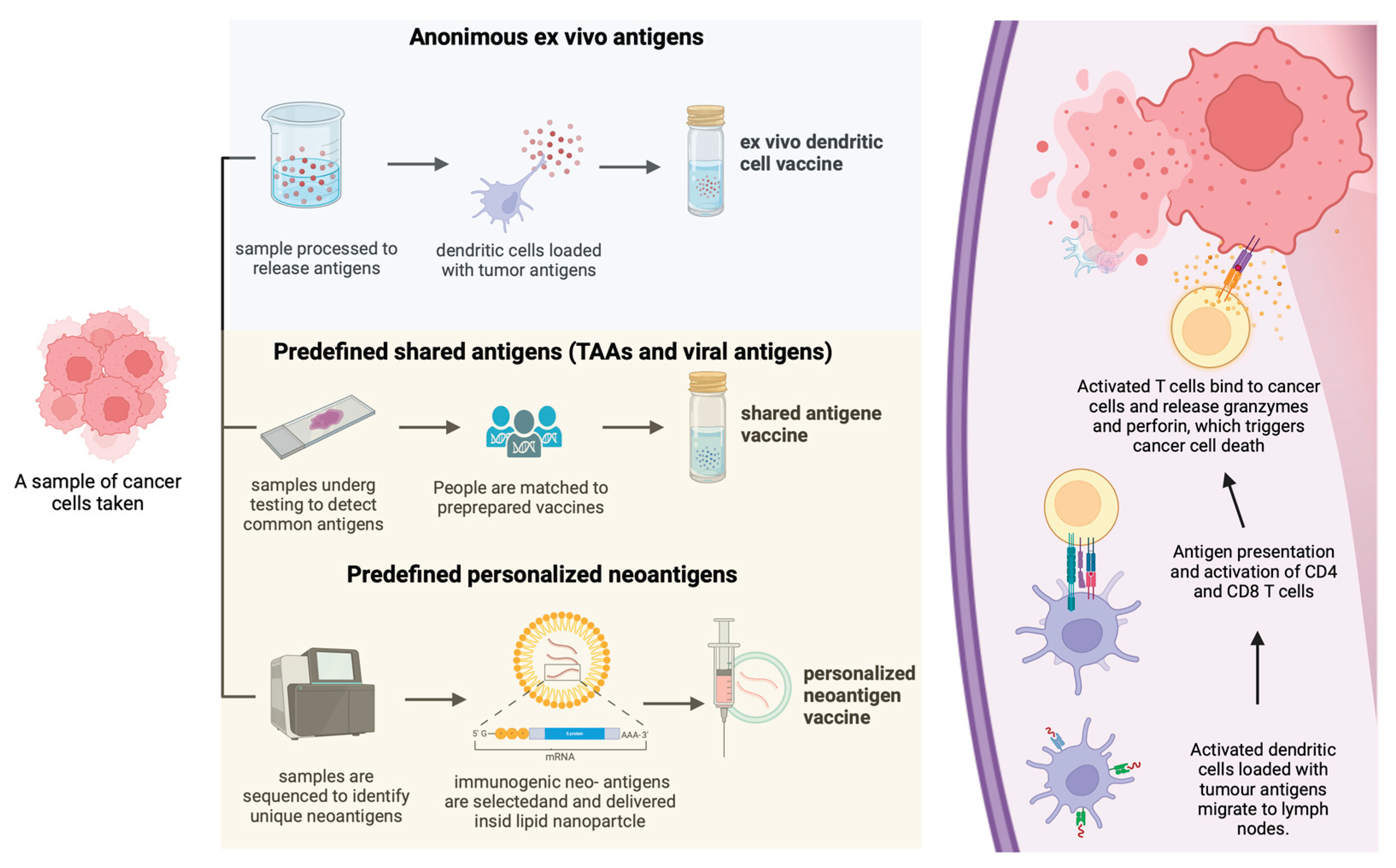
Figure 2.
Biomarkers in melanoma.
Disclaimer/Publisher’s Note: The statements, opinions and data contained in all publications are solely those of the individual author(s) and contributor(s) and not of MDPI and/or the editor(s). MDPI and/or the editor(s) disclaim responsibility for any injury to people or property resulting from any ideas, methods, instructions or products referred to in the content. |
© 2026 by the authors. Licensee MDPI, Basel, Switzerland. This article is an open access article distributed under the terms and conditions of the Creative Commons Attribution (CC BY) license (http://creativecommons.org/licenses/by/4.0/).
Copyright: This open access article is published under a Creative Commons CC BY 4.0 license, which permit the free download, distribution, and reuse, provided that the author and preprint are cited in any reuse.


