

Submitted:
21 April 2026
Posted:
22 April 2026
You are already at the latest version
Abstract
This study set out to explore the role that microfinance institutions (MFIs) could play in promoting sustainable environmental practices within Zimbabwe’s arti-sanal gold mining sector. Despite the global economic benefits of the gold mining sector, it poses significant environmental challenges for Zimbabwe, including deforestation, water contamination, and soil erosion. The growing global focus on sustainability has prompted many questions about the role MFIs could play in fostering environmental responsiveness among enterprises in Zimbabwe. This study adopted an interpretivist research approach and a qualitative research design, conducting in-depth interviews with senior personnel from MFIs and artisanal gold miners in the critical gold mining areas of Shurugwi, Gwanda, Masvingo, and Kwekwe. Ten informed participants were purposively selected from these mining areas, and their opinion regarding the role that MFIs could play in promoting environmental responsiveness was examined. The study found that while MFIs' primary role and function is to focus on financial access and poverty reduction, they can also play an essential role in advancing sustainability initi-atives among community members in gold-mining areas. MFIs were found to have the potential to use monetary rewards to encourage environmentally friendly behaviours and to conduct ecological education among members of the gold mining community. However, challenges such as a weak regulatory framework and resource constraints were identified as major obstacles to MFIs' ability to promote environmental respon-siveness among members of gold-mining communities in Zimbabwe. The findings of this study underscore an essential, though underappreciated, role that MFIs could play in promoting environmental responsiveness in Zimbabwe's gold mining communities by incorporating environmental responsiveness into their mission statements. Accom-plishing this goal requires greater stakeholder cooperation and greater governmental oversight. The study advocates that the Zimbabwean government enact policies that integrate environmental management into MFIs' operations, offer incentives for micro-finance products, and create strategic partnerships to deliver technical support and environmental management education to the artisanal gold mining sector to curb growing environmental degradation in Zimbabwe. In addition, it is recommended that enhancing environmental regulatory supervision and creating reliable monitoring mechanisms are essential for preserving the environment for future generations.
Keywords:
microfinance institutions
; environmental management
; artisanal gold mining
; sustainability
; gold mining
1. Introduction
Although the gold mining sector remains the major driver of economic growth and a poverty eradicator, it continues to be a major driver of global environmental degradation, leaving the greatest footprint in Zimbabwe [1]. Artisanal gold mining (AGM) has increased significantly in Zimbabwe due to the country’s economic challenges, which have resulted in high unemployment and poverty rates, as well as rising global gold prices [2,3]. The unregulated and informal nature of the AGM sector has contributed to significant environmental degradation, including deforestation, soil erosion, and the use of hazardous chemicals that contaminate water sources and endanger the lives of both animals and humans [4]. It has been argued that environmental degradation is an obstacle to ecological sustainability and livelihoods in general, thereby compromising the ability of future generations to meet their needs [5]. The conflict between economic necessity and ecological deterioration prompts essential questions about the role financial institutions can play in promoting environmental management and encouraging the AGM sector to adopt ethical mining practices. This, therefore, implies that understanding the role and capacity of MFIs to influence sustainable mining practices within the AGM sector is crucial for harmonising economic resilience with environmental management.
Due to environmental challenges created by the AGM sector, there has been growing interest in exploring the role the financial sector, particularly MFIs, could play in advancing sustainability [3,6,7]. MFIs have historically focused on poverty eradication by making financial services accessible to marginalised individuals and groups through loan provision [8]. In response to the global call to advance the green ideology, the MFI sector has rebranded to incorporate environmental and social objectives within its mission statements [6,9]. “Green microfinance” has therefore emerged as an interesting and captivating concept that underscores the sustainability and eco-friendly financial services of the MFIs [9,10].
MFIs have, over the years, grown and developed beyond their traditional roles to consider the environmental bottom line and have embraced environmental management [11]. Due to this growth and their ability to serve many previously marginalised communities and individuals, MFIs have, of late, been observed to be an essential vehicle for dual objectives: poverty eradication and environmental management [12,13]. In this regard, MFIs have emerged as a vehicle for economic growth and financial inclusion because they provide financial services to institutions and individuals considered high risk by the formal financial sector [14,15]. As a strategy to augment revenue streams, MFIs have tended to create their own market segments by serving marginalised communities and identifying creative strategies, such as providing underwriting and advisory services, which have improved their visibility through the adoption of technological innovations [14].
Based on their role, MFIs are thus defined as providers of financial services to previously marginalised informal and low-income sectors of the economy [16]. Researchers have observed that MFIs are reaching more people than the formal banking sector [13], making them critical agents of an economy. Due to their ability to access many people, they have been forced to rebrand and adopt a dual objective of poverty reduction and environmental management [17]. The global call for sustainable development has positioned environmental goals at the forefront, and the MFIs have responded by coming up with innovative products like “green microfinance”, which encourage environmental management while also reducing poverty and financial exclusion [17,18]. The International Finance Corporation (IFC) estimates that around 130 million people are engaged in microfinance, suggesting a potentially significant impact given its extensive coverage and reliance on its services. A study conducted in Bangladesh found that green microfinance offered environmentally responsive products that promoted the conservation of natural resources while simultaneously yielding sufficient returns to investors [19]. Based on the above, it can be deduced that MFIs have the potential to play a key role in enforcing environmental responsiveness by the AGM sector. The researchers, through in-depth interviews with key personnel working in MFIs, were able to explore the role they could play in promoting green gold mining in Zimbabwe.
Based on their growth and the number of people they can reach, and by deliberately promoting and financing environmentally friendly practices, Zimbabwe’s MFIs have the potential to influence green gold mining with the AGM sector [20]. Nevertheless, there is limited knowledge regarding the extent to which MFIs have used these tactics and their impact on financial and environmental performance [9,12,21]. Understanding the role that MFIs can play in facilitating sustainable mining practices is essential, as the sector has the potential to boost national economic growth while also protecting the environment [1,22].
The central challenge facing Zimbabwe’s AGM sector is balancing economic gains with environmental protection. Despite the AGM sector’s contribution to employment and poverty alleviation, its ecological footprint continues to worsen in developing countries due to unregulated operations and limited access to sustainable financing models [23]. Concurrently, national and global priorities, such as the Sustainable Development Goals (SDGs) and climate adaptation imperatives, demand stronger institutional responses to environmental degradation, creating a tension that underscores the need to reassess how financial intermediaries, particularly microfinance institutions, can promote environmentally responsible mining practices [24].
Despite the recognised economic and social roles of MFIs, their environmental impact within Zimbabwe’s AGM sector remains poorly understood. While AGM contributes significantly to rural livelihoods and national gold output, it also causes severe deforestation, mercury contamination, and land degradation [25]. Existing research has primarily focused on the social and financial inclusion roles of MFIs, thereby leaving an essential gap in understanding how their financial products and non-financial services contribute to environmental sustainability in resource-dependent communities like Zimbabwe [26]. The absence of structured environmental frameworks and regulatory incentives for MFIs further exacerbates environmentally destructive mining practices by the AGM sector [27]. Therefore, this study seeks to address how MFIs can integrate environmental management into their lending and operational frameworks to promote sustainable AGM in Zimbabwe. The study argues that addressing this issue is essential in the current context of Zimbabwe’s resource-driven economy and global calls for green finance, making it timely to investigate how MFIs can embed environmental objectives into their operational frameworks to influence green gold mining.
In Zimbabwe, the AGM sector operates within a multifaceted legal and policy framework anchored in the Mines and Minerals Act [Chapter 21:05] and the Environmental Management Act [Chapter 20:27], which mandate the Environmental Management Agency (EMA) to oversee environmental compliance and enforce rehabilitation standards. Meanwhile, institutions such as the Ministry of Mines and Mining Development, along with the Zimbabwe Miners Federation (ZMF), are responsible for regulating the sector and formalising miners. The AGM subsector contributes more than 60% of the country’s annual gold output and directly employs over 500,000 [28].
The aim of this study is to explore how MFIs can contribute to environmental management within the AGM of Zimbabwe and to identify mechanisms for aligning financial services with ecological protection and sustainable development goals. The study contributes to sustainable development literature by investigating and analysing the experiences and practices of MFIs in the AGM sector. In addition, the study provides recommendations to policymakers for developing environmental responsiveness regulations that could safeguard the environment for future generations.
This study addresses the growing demand for empirical evidence about the environmental aspect of microfinance in developing economies, especially in resource-dependent nations like Zimbabwe. Consequently, by associating the financial inclusion aim with ecological management, the study enhances both sustainability scholarship and policy discourse on green microfinance. The novelty of this study lies in its empirical and contextual contribution to the limited body of literature on green microfinance within sub-Saharan Africa. Whereas prior research has primarily focused on Asian and Latin American experiences [9,10], very few studies have examined the intersection of microfinance, environmental management, and artisanal mining in resource-dependent economies such as Zimbabwe. By applying an interpretivist qualitative design and drawing insights from people working in MFIs across mining districts, this study extends the understanding of how financial intermediation can serve as a mechanism for environmental promotion in informal extractive sectors. The findings provide new evidence on the potential of MFIs to mainstream sustainability within lending portfolios and to catalyse behavioural change among AGMs. Consequently, the study contributes to the discourse on sustainable development finance by offering context-specific policy guidance that supports Zimbabwe’s ongoing formalisation and climate-resilient development agendas.
The manuscript will be organised as follows: the research questions are presented first, followed by the literature review. The study methodology will then be presented, followed by the results and their discussion. After these conclusions and future research direction are presented, a list of references will follow. The above discussion motivates the following research questions:
Research Questions
- How do environmentally oriented financing strategies adopted by MFIs influence the financial performance and long-term sustainability of AGM operations in Zimbabwe?
- What mechanisms and institutional practices do MFIs utilise to promote and monitor compliance with environmental sustainability standards in the Zimbabwean AGM sector?
- What organisational frameworks and structural innovations can strengthen the role of MFIs in supporting environmental management in AGM while ensuring their own financial sustainability?
Answers to these questions helped explain the role played by MFIs in promoting environmental management within the Zimbabwean AGM industry.
2. Literature Review
2.1. Artisanal Gold Mining (AGM)
The economic challenges faced by Zimbabwe have led to high unemployment, leaving people with no option but to venture into mining [29]. Due to high levels of unemployment in developing economies, AGM has grown to unprecedented levels, driven by firming gold prices that have made the sector attractive, thereby posing an environmental threat, as most artisanal miners remain unregistered [30]. In developing economies, poverty is a common issue, and many people have been attracted to AGM as the easiest route to eradication and for survival [31]. Zimbabwe has, of late, experienced droughts, which have decreased agricultural yields in areas practising AGM, making gold mining a more appealing source of income and a methodology of poverty alleviation [30,32]. AGM, if not controlled, has a significant environmental impact, which motivated this study to explore the role that MFIs can play in promoting green gold mining in the AGM sector. The number of people directly employed and those who depend on the AGM is estimated to exceed 100 million [33], making it crucial to human survival and economic development.
2.2. Adverse Environmental Impacts of AGM
Researchers have argued that, though gold mining is the greatest contributor to economic development in developing economies, it is one of the most environmentally harmful, leaving a larger footprint than other sectors [34]. The environmental impacts of AGM have been extensively examined by researchers, who have identified significant ecological disruptions affecting both natural ecosystems and community welfare [35].
Deforestation, in which large areas of forest are destroyed to expose mineral-rich earth, has resulted in habitat damage and biodiversity loss and has been noted as a significant impact of gold mining [36,37]. Deforestation disturbs biological networks by jeopardising the existence of many animal species, has the potential to undermine biodiversity protection, and can degrade the environment [38,39]. In addition to deforestation, research has documented serious water pollution by the AGM sector, by hazardous mining chemicals, such as mercury and cyanide, to extract gold, which have found their way into water bodies [25,40,41] and thereby inflicting harm to the aquatic ecosystem and degrading the quality of usable water [42]. This has exposed members of the local community and animals who depend on these waters for drinking and agriculture to health risks, which could potentially result in chronic health issues [43].
AGM has been argued to degrade soil quality, as deforestation caused by land clearing to pave the way for mining has removed fertile topsoil, leaving the soil barren and unsuitable for agriculture [44], thereby destroying soil structure and adversely impacting agricultural productivity [45]. Gold mining activities have been recognised as serious air pollutants, as they emit fine particulates that not only pollute the air but also compromise human health in communities near mining areas [46], an aspect linked to respiratory illnesses and bronchitis among mining community members [43,47]. In addition to the above, studies have linked AGM to worsening climate change, as deforestation has reduced carbon sequestration capacity and, in turn, contributed to global warming [24,30,48]. By nature, gold mining is energy-intensive, often relying on non-renewable energy sources that emit large volumes of greenhouse gases associated with climate change and global warming [48]. The following section presents management theories:
2.3. Management Theories
Most theories in management position profit maximisation as the major objective of an enterprise and position the satisfaction of shareholders as the central reason for their existence [49], and that satisfying other stakeholders’ interests could adversely dilute a firm’s earning power [50]. Recent studies have demonstrated that organisations tend to excel and achieve their intended objectives when they prioritise the interests of all stakeholders [51,52,53], thereby raising awareness and motivating many to engage in environmental management. It has been observed that organisations that focus on satisfying the interests of their various stakeholders tend to create a positive image among community members, which, in the long term, is viewed as key to organisational success [54], which aspect we position as key for long-term organisational success and being granted a social licence to operate with.
Environmental responsiveness is a new development underpinning green microfinance within the MFI sector [55], which has been observed not only to improve an organisation’s reputation but also to act as a shield against negative market responses and to secure the firm’s stock [56], thereby positioning this as a vehicle to sustaining an organisation during a crisis. Researchers have identified an association and linkage between the environmental responsiveness of an enterprise and its financial performance, and have advocated that those enterprises that tend to focus on satisfying all stakeholders like focusing on environmental management have been able to maintain their market share, reported higher profits when compared to non-social responsive ones, and have tended to have a stable stock price for long periods of times [57,58]. This implies that MFIs stand to benefit from adopting environmental management initiatives, which are likely to improve their reputation and image, as well as their financial performance. Despite evidence of a positive association between environmental management and the financial performance of enterprises, it must be noted that not all investors may embrace environmental management initiatives of their own will, as they perceive them as expenses and view the funds allocated to them as costs [59,60]. The following section discusses regulations and microfinance institutions:
2.4. Regulations and Microfinance Institutions
Given their potential to reach many people, many governments have enacted regulations to control the operations of MFIs and use them as vehicles to promote environmental management [61,62]. Due to growing global pressures on firms, many MFIs have been urged to adopt ecological practices that protect the environment for current and future generations [63]. As a strategy to commit to social responsibility initiatives (CSR), MFIs have been urged to engage in environmental management, which will serve as a pillar of good corporate citizenship, and to integrate greening into their products and services [6,63,64]. In this regard, researchers have shown that MFIs that invest in environmental management would gain in the long term compared to those that do not [63,65]. The following section presents the materials and methods adopted for this study:
3. Materials and Methods
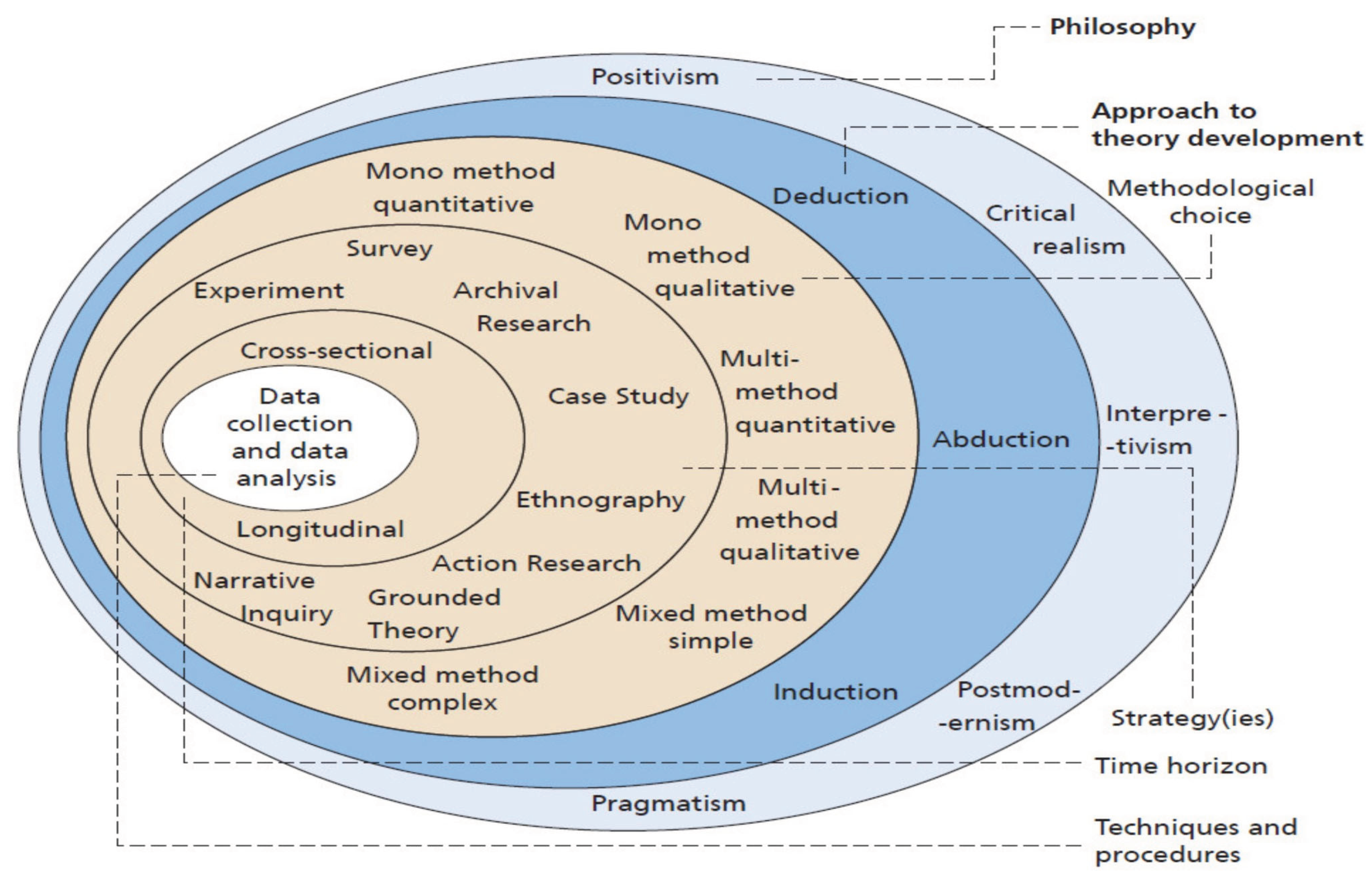
This study employed the research onion, as proposed by [66] and depicted in Figure 1, and found that peeling away and addressing each layer of the research onion is a tactic for addressing a study’s methodology.
Discussion of the Methodological Layers
Beginning with the research philosophy, which is addressed in the outer layer of the research onion, this study adopted an interpretivist research philosophy. The research philosophy emphasises a subjective approach to understanding human behaviour and social phenomena through inductive interpretations of participants’ perspectives [67], thereby motivating its adoption. In the second layer of the research onion, an inductive research approach was adopted, as it aligned with the study’s philosophical underpinnings. In cultural anthropology, the inductive research approach entails deriving general principles from specific instances by formulating propositions, which are then explored to develop a general theory [68].
The study was conducted in four major AGM regions of Zimbabwe, namely Gwanda, Shurugwi, Masvingo, and Kwekwe, which were purposively selected due to their concentration of microfinance operations and artisanal mining activities. These areas represent the primary sites where microfinance institutions interact with small-scale miners, thereby providing a suitable context for examining environmental practices within the sector.
The researchers began by obtaining relevant data for the research topic. After accumulating substantial data and taking a step back to gain perspective, the researcher formulated an empirical generalisation. The researcher commenced by identifying basic patterns and consistencies in the data, which led to a preliminary proposition that explained them. The study employed a monomethod approach, utilising in-depth interviews. A total of ten (10) participants were purposively selected from people working within MFIs in AGM districts. Purposive sampling was adopted to ensure the inclusion of participants with direct experience in environmental risk management, credit appraisal, and sustainability-related activities, which allowed the researcher to gather in-depth perspectives from information-rich participants familiar with both microfinance operations and the environmental implications of AGM. The qualitative technique was adopted to elicit participants’ perspectives, meanings, and experiences, yielding significant insights. Qualitatively, the views of key personnel in MFIs were sought to determine their efforts in promoting environmentally friendly gold mining practices in Zimbabwe.
The strategy at level four involved surveying people from microfinance institutions across the country, as surveys can be conducted with humans through in-depth interviews. The study was cross-sectional at the level of five and focused on MFIs during a specific period, akin to a series of snapshots of occurrences at a given point in time. Cross-sectional studies are reasonably quick and cost-effective to conduct because most data collection occurs at a single time point and does not require manual manipulation of variables [69], which motivated their adoption. Examining the inner layer of the study onion, data gathering and analysis were conducted through in-depth interviews with individuals.
Data collected from interviews were analysed thematically following the procedures outlined by [70]. The researcher transcribed all interviews verbatim, read and re-read transcripts to familiarise themselves with the content, and manually coded responses to identify emerging patterns. The Codes were then grouped into broader themes that reflected the roles, mechanisms, and challenges of MFIs in promoting environmental sustainability. Thematic analysis was chosen because it aligns with the interpretivist philosophy and enables the extraction of rich, contextual insights from qualitative data.
Towards the Qualitative Surveys
Personnel from MFIs in areas where AGM activities are primarily practiced, including Gwanda, Shurugwi, Masvingo, Kadoma, Kwekwe, Mazowe, Chinhoyi, and Penhalonga, were approached for in-depth interviews. Each participant received a participant information document detailing the study’s aims, as well as the rights of the interviewees. Before taking part in the survey, interviewees were required to sign an informed consent form and were assured that their comments would be kept confidential. Appendix A presents the interview questions. Ethical clearance for this research was approved by Walter Sisulu University Senate Research Ethics Committee (FREC), the approval number is: 07/03/10/2025/PG, and the approval date is 2025-02-10, prior to data collection. Participants were fully informed of the study’s purpose, assured of confidentiality, and granted the right to withdraw at any point. To ensure data integrity, pseudonyms were used in transcripts and reporting, and interview recordings were securely stored in password-protected files accessible only to the researchers. The researcher believed that the chosen participants had sufficient experience and were better positioned to provide insight into the industry’s role in promoting greener gold mining in Zimbabwe’s AGM sector. To enhance the trustworthiness of the findings, the study applied criteria of credibility, dependability, confirmability, and transferability as recommended by [71]. Credibility was ensured through participant validation of transcripts, dependability through systematic documentation of research procedures, confirmability by maintaining an audit trail of coding decisions, and transferability by providing rich contextual descriptions of the study sites and participants. The following section contains the results and discussion:
4. Results and Discussion
The results of the interviews are discussed in this section:
A total of 10 in-depth interviews, coded P1, P2, …, and P10, were conducted and transcribed by a transcriber who signed a confidential agreement as part of ethical clearance approval.
Environmental Impact of Gold Mining
The first question posed was:
“What are the harmful effects of gold mining on the environment?”
The most frequently noted consequence after a synthesis of respondents’ answers was the widespread deforestation linked with gold mining. Most of the respondents (P1, P2, P4, P6, P7, P9, and P10) noted that removing large areas of vegetation is often necessary to gain access to gold-rich areas. Respondents concurred that this devastation caused biodiversity loss by displacing or eradicating plant and animal species that rely on forest environments. They argued that clearing trees disrupts habitats and jeopardizes the biological balance, resulting in long-term damage to the land. The feedback aligns well with the views of [39,44,72] who contended that mining causes deforestation and harms habitat life.
Most respondents (P2, P3, P6, P7, P8, P10) identified water pollution as a serious concern caused by gold mining activities. Respondents described how toxic chemicals in gold production, such as mercury and cyanide, damage nearby rivers and streams. It was argued that despite an international ban on the use of mercury, it was a widely used chemical by the AGM sector in Zimbabwe during the processing of gold and would, in the end, find its way into water bodies. These pollutants, which are frequently leached or spilled, have devastating consequences for aquatic life and the overall water ecosystem. Fish populations, for example, have lower reproduction rates, and polluted water poses significant health hazards to the local inhabitants who rely on these water supplies for drinking and agriculture. The findings concur with the view of [42,73,74] who noted that gold mining activities tend to produce hazardous chemicals that enter water bodies, poisoning them and posing a risk to both animals and humans.
Several respondents (P1, P2, P4, P6, P7, P9, and P10) highlighted the substantial soil deterioration caused by mining activity. They argued that the excavation procedure not only depletes the land’s topsoil but also makes it unsuitable for agriculture. They also agreed that the loss of fertile land, along with chemical contamination, jeopardizes food security for local communities, many of whom rely on farming. Respondents were concerned about diminished soil fertility and the challenges of restoring mined areas to plant-friendly conditions. These findings agree with those of [47,75,76] who found that gold mining causes considerable soil damage, as excavating and removing topsoil makes the ground barren and unsuitable for agriculture, thereby affecting long-term food security.
Additionally, dust and pollutants from gold mining operations were identified as significant contributors to air pollution. Some respondents reported how blasting and mineral processing produce delicate particulate matter, which degrades air quality. Toxic gases, such as sulfur dioxide, are released, exacerbating health concerns and contributing to environmental hazards like acid rain. This result is consistent with [45,77,78], who found that gold mining activities have been generally recognized as contributing to air pollution by producing dust and releasing pollutants, which have affected air quality and have had a negative consequence on human health.
Some participants linked the environmental consequences of gold mining to broader concerns about climate change. They argued that deforestation and land degradation limit the earth’s natural capacity to sequester carbon, worsening global warming. The energy-intensive nature of mining operations, which are often dependent on fossil fuels, was also noted as a substantial source of greenhouse gas emissions, contributing to climate change. This finding concurs with those of researchers like [30,48,79], who have found that gold mining activities have contributed to the worsening of climate change, as deforestation has led to increased emissions and global warming.
Respondents emphasized erosion and the destabilization of geological structures. The removal of vegetation and modification of land surfaces render the area susceptible to landslides and soil erosion, particularly following heavy rainfall. This instability not only degrades the soil but also increases residents’ vulnerability to natural disasters. This finding agrees with those of [34,80,81] who found that gold mining causes considerable geological changes, making communities more vulnerable to calamities.
The second question posed was:
“How accurate is it that if your operations are not managed and monitored, you can support environmental terrorism by sponsoring firms that engage in risky mining practices? Explain?’
According to respondents, AGMs are significant to the national economy because they can be used as a poverty-reduction strategy. This aspect can only be achieved if MFIs and the mining sector operate under monitoring and regulation to achieve the desired objectives. A synthesis of respondents’ responses demonstrated that there is only one planet, Earth, which must be jealously conserved for the benefit of all stakeholders and future generations. In this regard, respondents indicated that environmental stewardship requires monitoring of MFIs, as most of these institutions were primarily concerned with profit maximization at the expense of environmental management. This aligns with the view that if MFIs are permitted to operate without oversight and funding is allocated to individuals without regard for environmental considerations, the outcome could be a simplistic microcredit approach that fails to foster long-term, sustainable green business development [82]. Furthermore, it has been stated that a lack of control and inefficient compliance programs expose banking and trust organizations to the increased danger of money laundering and terrorist financing [83].
Role of Microfinance Institutions (MFIs) in Environmental Management
The next question posed:
“Why have microfinance institutions included non-financial services, such as incentives and assistance to promote environmental management?”
It was discovered that MFIs are primarily motivated by competitiveness, social duty, and, to some extent, legitimacy (stemming from stakeholder pressure), as well as the inclusion of non-financial services, such as incentives to improve environmental management, intended to enhance their image. In addition, most MFIs are looking to attract foreign investors who consider the ecological, social, and governance (ESG) aspects of their programs as a condition to unlock foreign funding. Besides, MFIs act as a watchdog for the country’s citizens, as gold mining activities have the potential to displace people from their communal lands without adequate compensation, and pollute water bodies if left unobserved. To emphasize the reasons and importance of including non-financial services to promote environmental management, P2 remarked:
“Gold mining activities are destructive by nature since they can destroy the ecosystems and contaminate waterbodies through the chemicals that are used. In addition, we want to build a good image with foreign investors, thus if we show them that we have the environment at heart.”
The above discussion aligns well with the findings of [6] that MFIs have begun to consider the environmental bottom line for legitimacy (stakeholder pressure). As a result, they tend to take a defensive stance, using superficial measures to appear green.
The other question posed was:
“What role has been played by MFIs in promoting green gold mining in Zimbabwe?”
A summary of participant responses demonstrated that microfinance provides impoverished individuals with access to productive capital, which, when combined with human capital acquired through education and training, enables them to escape poverty. Respondents stated that poverty is detrimental in a society because it deprives individuals of fundamental rights like education, health, and freedom of expression, among other things, all of which are necessary for a community’s development and growth. Respondents stated that MFIs provide financing to AGM, as well as insurance coverage, which helps to lessen the risk involved in a mining enterprise. The argument aligns well with the view that MFIs enable the poor to obtain capital, which they could invest in gold mining and thereby generate income that could be used to build assets and obtain educational levels that would move them out of poverty [84], and that MFIs have become a popular approach to finance in developing countries due to their objective of helping reduce poverty by giving the impoverished new options for business [85].
The next question posed was:
“How are MFIs assisting the gold mining sector to structure their operations along sustainable development goals?”
A synthesis of the replies revealed that MFIs, in addition to their usual duty of providing credit, play an important role in encouraging environmental management because they are more accessible than formal banks. Several respondents (P2, P3, P5, P7, P8, P9, and P10) indicated that by providing alternative funds at accommodating rates to small-scale miners, MFIs are helping in structuring their operations towards sustainable development. In this regard, respondents stated that assistance to small-scale miners was critical in encouraging grassroots economic growth. Respondents stated that while Zimbabwe is blessed with vast mineral resources, the country faces some social, environmental, and political issues, including the resource curse and MFIs, due to its being accessible by many small-scale miners, who have been observed organizing and funding environmental management programs in conjunction with the Ministry of Mines. The debate aligns with the assumption that development practice has seen that MFIs are beginning to consider their environmental bottom line in addition to their financial and social goals [9,86].
A few of the respondents (P1, P4, and P6) argued that the training programs were relatively scarce. A few respondents opined that mining was very destructive to the environment, and progressive efforts and strategies needed to be adopted if the UN Sustainable Development Goals objective of 2030 is to be met. In addition, respondents argued that AGMs, who are the most likely to visit MFIs seeking financial assistance, are challenging to control since their operations are not well-organized. It was also argued that the situation was exacerbated by the fact that the Ministry of Mines and the Environmental Management Agency (EMA), an arm of the government mandated to monitor and supervise small-scale mines, was poorly funded. To emphasize the above point, P6 had this to say:
“There is no proper monitoring and supervision of AGMS by the Ministry of Mines and EMA, as these do not have resources. We can go for months without any visits from officials of these organizations. Because of a lack of resources, this has fuelled corruption in that when they come; they are easily bribed, making them turn a blind eye to environmental management issues.”
The discussion aligns with the argument that larger MFIs registered as banks tend to do better on environmental policy and environmental risk assessment than smaller MFIs [6].
The other question asked was:
“How can MFIs and the gold mining sector collaborate and work together to achieve sustainable development goals in the gold mining sector?”
Most respondents (P1, P3, P5, P6, P7, and P10) stated that for collaboration to be effective, stakeholder commitment from the government, miners, and microfinance service providers was required, as these parties must work together to develop a robust system that is both aggressive and viable enough to drive economic development. Respondents believed that AGMs should be included in the development of collaborative policies because they have a direct impact on the viability of their operations. All respondents believed that the government plays a significant role in establishing an inclusive financial sector that meets the needs of miners, while also intensifying efforts to foster a stable macroeconomic environment, which is crucial for long-term economic development. Several respondents suggested that numerous cooperative engagement meetings between the government and gold miners are necessary, enabling them to find common ground and promote a mutually beneficial working relationship.
The debate corresponds with the premise that a cooperative method for AGM might leverage a state gold-buying program, promote the formalization of the sector and thereby alleviate poverty and promoting macroeconomic stability [2].
Most respondents (P1, P3, P5, P6, P7, and P10) indicated that most AGMs, though contributing a lot to the development of the Zimbabwean economy, lack financial skills and are unable to recruit professional accountants to do books of accounts for them, which in the end tends to inhibit them from accessing funding from large money lenders. Respondents suggested that MFIs could help organize and facilitate workshops on financial literacy, ultimately enabling miners to manage their finances more effectively and contribute to sustainable development in the long term. To emphasize the importance of the above point, P3 stated:
“There are things that we do out of ignorance. Artisanal mining is profitable, but most of the time, people see us without money. I think, as a sector, the government and other interested stakeholders must come in and train us on financial management, which will help us manage what we generate, so that we appreciate the importance of sustainable development goals.”
This is consistent with study findings that show a link between financial literacy and funding structures, which is beneficial for long-term management [87].
Collaboration and Sustainable Development
The following interview question was posed:
“Should sustainable growth be regarded as a rule that all entities must follow? Explain”
A synthesis of respondents’ responses revealed that achieving sustainable development goals requires coordinated efforts at multiple levels, including social, environmental, and economic challenges. The successful implementation of the SDGs will depend on untangling the complicated relationships between the objectives and their targets. An integrated approach to sustainability entails realizing the potential of all its key dimensional pillars simultaneously, while also managing the tensions, trade-offs, and synergies that exist between them. More importantly, international organizations and institutions such as the United Nations, individual country governments, non-governmental organizations, and civil society organizations must play critical roles in resolving the contradictions between sustainability and sustainable development. In addition, the respondents indicated that sustainable development has emerged as an essential factor for both business and society, which aspect has imposed a new system of corporate governance that calls for accountability in the usage and governance of resources. Based on the importance of sustainable developments, respondents argued that it should be taken as a rule of law, as this would promote equality of treatment and enhance the security of persons and property, in addition to providing for the impartial and peaceful resolution of disputes. Respondents argued that the extractive industry’s activities are inconsistent with the objectives of sustainable development. If AGMs are not compelled to manage the environment, we risk the destruction of planet Earth; hence, the need for sustainable development to be adopted as a rule.
The discussion aligns with research findings, which have demonstrated that there is a connection between the rule of law and sustainable development, even though the association is not that solid [88]. Furthermore, research has shown that mining can be classified as sustainable if its earnings are gathered and used to further sustainable objectives at both the local and national levels [89].
Relationship Between Environmental Responsibility and Financial Performance
The next question asked was:
“How does an entity’s environmental responsiveness relate to its financial performance?”
A synthesis of interviewee responses revealed that environmental issues have been and continue to be a major problem that firms face. Given that gold mining operations have a significant environmental impact, it is necessary to investigate how the environmental performance of heavy-polluting enterprises influences their financial performance. Additional respondents claimed that environmental information disclosure (EID) has gained popularity as an alternative strategy for managing business ecological performance. Respondents contended that the focus of gold mining organizations should not only be on profit, but also on environmental responsibility, ethical operations, and duty to other stakeholders, such as animals, because we share the natural environment. Respondents argued that, since it was essential, small-scale gold miners were only complying with the EMA’s requirements because they lacked resources. To emphasize the importance of being environmentally responsive, P3 remarked:
“Environmental responsiveness enables big mining companies to improve their processes, thereby resulting in improved financial performance over the years. It enables organizations to avoid penalties from environmental regulators, thereby strengthening the brand of the company.”
On the contrary, respondents argued that artisanal gold miners viewed environmental responsiveness as an additional cost that could erode their profits and hence adversely impact their financial performance. In addition, it was argued that holding artisanal gold miners accountable was challenging since the majority are not registered in Zimbabwe. One interviewee remarked that:
“Being responsive needs some money to spend on that program. These costs can eat into our profits unless being environmentally responsive is carried out in a way that markets the organization and improves its customer loyalty.”
The discussion aligns with the findings that environmental performance and firm size had a positive, though not strong, effect on environmental performance [90].
Government and Policy Influence
The next question asked was:
“What role is being played by the government in promoting and ensuring that MFIs work towards promoting green gold mining in Zimbabwe?”
A synthesis of respondents’ answers revealed that, since most AGMs lacked collateral security, which was essential for obtaining funding from the mainstream banking sector, assessing funding from MFIs was the only option available to them, even though the lending rates were slightly higher. Respondents suggested that the government needed to develop legislation to help AGMs obtain low-cost capital from both the commercial and public sectors. Respondents stated that the government can use MFIs to advocate for sustainable development by including them as a key component of MFI CSR. This is because the government can provide MFIs with the institutional support they need to promote green gold mining. Respondents suggested that the government should give incentive programs and offer tax relief to MFIs that are seen as promoting sustainable development goals. This strategy aims to ensure that MFIs work towards promoting green gold mining in Zimbabwe. Additionally, the regulator should enact compelling legislation that requires all MFIs to participate in environmentally friendly initiatives.
Research has indicated that financial inclusion can contribute to achieving the seventeen Sustainable Development Goals (SDGs), which include eradicating poverty in all its manifestations, reducing hunger, achieving food security, improving nutrition, and promoting sustainable agriculture [1,91]. In addition, research has also shown that MFIs are essential contributors to informal financial intermediation and convenience to consumers. However, this industry has the potential to negatively affect consumers via the exorbitant interest rates and the need for the government to regulate the MFIs to encourage fair commercial agreements between lenders and their consumers [92].
This is consistent with the belief that MFIs’ role and contribution to the sector should be strengthened and also backed by the government, which is the official buyer of minerals in the country, because this would aid in plugging the holes in the minerals market and ensuring the profitability and survival of the sector, as well as sustainable employment generation [93].
Organizational Vision and Environmental Practices
The other question posed was:
“Is environmental responsiveness embedded or included in the vision and mission statement of your entity? How has this assisted your organization in promoting a greener environment?”
A synthesis of respondent answers revealed that several institutions had environmental responsibility embedded in their vision and mission statements, and this had assisted them in promoting a greener environment, as it was a requirement of the organization. Respondents stated that employees are an essential stakeholder in a company, and that employee stakeholder integration is associated with or linked to an entity’s environmental performance through a firm’s proactive ecological plans, which are based on a shared vision. The consensus among respondents was that demonstrating commitment to sustainable development within the mission was necessary to impress the regulator and avoid scrutiny and heavy environmental fines.
The preceding explanation aligns nicely with research findings showing that a firm’s proactive environmental measures, translated into employee stakeholder integration into ecological performance as a common goal, constituted a critical element for pushing the company’s greening agenda through proactive environmental measures [94].
The study found that, although many firms openly supported goals and values related to sustainable development in the extractive industry, they showed little commitment to implementing them, as most respondents viewed them as a cost that could diminish revenues. The discussion aligns well with the research view that, while many firms publicly endorsed sustainable development goals within their mission and vision, this did not align with the progress and commitment to work done [95].
5. Conclusions
This study investigated the role of MFIs in promoting sustainable environmental practices within Zimbabwe’s AGM sector, using an interpretivist qualitative design and in-depth interviews with ten (10) employees across major mining regions. The study explored how MFIs could integrate environmental considerations into their financial operations. The findings revealed that while MFIs primarily focus on financial inclusion and poverty alleviation, there is growing recognition of their potential contribution to environmental management, as they are beginning to incorporate environmental awareness programs, offer incentives for green practices, and collaborate with government agencies in efforts to reduce deforestation, water pollution, and land degradation associated with artisanal mining. However, these initiatives remain fragmented due to weak regulatory frameworks, limited funding for environmental monitoring, and inadequate coordination among stakeholders.
The study demonstrates that MFIs can promote environmental sustainability in Zimbabwe’s gold mining industry. Although MFIs now provide financial services to small-scale miners, their ecological function remains underdeveloped and requires strategic reinforcement. The results show that although several MFIs have implemented green practices, more extensive structural and policy adjustments are needed to increase the effectiveness and sustainability of these programs.
The study contributes to new empirical evidence associated with the limited literature on green microfinance in sub-Saharan Africa by situating it within the context of Zimbabwe’s resource-dependent economy. The study highlights the emerging shift among MFIs from purely financial objectives to hybrid goals that encompass social and environmental accountability. A key finding is that MFIs in Zimbabwe are informally assuming quasi-regulatory roles by conditioning credit access on environmental compliance and supporting environmental education among AGMs. In addition, a significant contribution has been made by the identification of institutional and policy gaps that hinder the scaling-up of green microfinance, including the absence of environmental screening tools, weak enforcement of the Environmental Management Act, and insufficient integration between financial and environmental governance. These insights extend the discourse on sustainable finance by illustrating how financial intermediaries can function as agents of environmental governance in informal extractive sectors.
It is recommended that the government establish regulations mandating MFIs to integrate environmental risk evaluations into their loan approval procedures. Tax subsidies for green initiatives could be used to incentivize MFIs to adopt more environmentally sound operations. Promote collaborations between MFIs, governmental organizations, and environmental non-governmental organizations to create training initiatives for small-scale miners. These training programs should prioritize financial literacy and environmentally friendly mining methods. To ensure compliance and promote sustainable mining practices, MFIs must incorporate environmental performance criteria into their evaluation frameworks. Additionally, it would enhance the MFIs’ reputational capital, drawing in more eco-aware investors. Increase funding for governmental organizations, such as the Environmental Management Agency, to enable them to oversee gold mining operations efficiently. Furthermore, MFIs should be included in a multi-stakeholder group that monitors environmental compliance, to better understand social and ecological challenges, as well as ensuring that financial services meet the complete needs of miners and communities.
The findings carry important policy implications for the government, financial institutions, and all relevant stakeholders. The government needs to revise and strengthen the Mines and Minerals Act and the Environmental Management Act to explicitly require the integration of environmental risk assessments within all financial lending to the AGM sector. The Reserve Bank of Zimbabwe, in collaboration with the Environmental Management Agency (EMA), should develop green-finance guidelines and introduce tax incentives for MFIs that implement environmental risk management systems. MFIs themselves should institutionalize environmental policies, adopt sustainability reporting standards, and train credit officers to assess the ecological impacts of funded projects. Non-governmental organizations (NGOs) could complement these efforts by funding environmental education and technical assistance programs that build miners’ capacity for compliance. Future research could employ longitudinal or mixed method designs to assess the long-term effects of green microfinance interventions on environmental restoration and community livelihoods in artisanal mining regions.
Future work could involve conducting longitudinal research or a mixed-method design intended to track the success of MFIs’ green microfinance interventions on environmental restoration and community livelihoods in artisanal mining regions, which would help determine the long-term impact of green microfinance schemes on sustainable development and ecological restoration efforts.
Author Contributions
“Conceptualization, M. N. and P. M.; methodology, M. N and P. M.; validation, M. N and P. M.; formal analysis, M. N.; investigation, M. N; data curation, M. N and P. M.; writing—original draft preparation, M. N.; writing—review and editing, M. N and P. M.; visualization, P. M.; supervision, P.M.; project administration, M. N. All authors have read and agreed to the published version of the manuscript.” .
Funding
Walter Sisulu University’s Postgraduate Studies Office for funding the publication fees associated with this manuscript.
Institutional Review Board Statement
The study was approved by the Walter Sisulu University Senate Research Ethics Committee (FREC), with approval number 07/03/10/2025/PG and approval date 10 February 2025.
Informed Consent Statement
All participants provided informed consent. Before participation, verbal informed consent was obtained, with participants informed of the study’s purpose, assured of confidentiality, and informed of their right to withdraw at any time. All identifying information was anonymised to protect participants’ identities. Participants have provided informed consent for the publication of anonymised excerpts from their narratives in this paper.
Data Availability Statement
The data supporting the findings of this case study are not publicly available due to privacy and ethical restrictions that protect participant confidentiality. Transcripts and raw interview data may contain identifiable information and are therefore accessible only to the principal investigator upon reasonable request, provided that appropriate ethical clearance has been obtained.
Appendix A. Interview Guide
- 1)
- What are the harmful effects of gold mining on the environment?
- 2)
- How accurate is it that if your operations are not managed and monitored, you can support environmental terrorism by sponsoring firms that engage in risky mining practices? Explain?
- 3)
- Why have microfinance institutions included non-financial services, such as incentives and assistance to promote environmental management?
- 4)
- What role has been played by MFIs in promoting green gold mining in Zimbabwe?
- 5)
- How are MFIs assisting the gold mining sector to structure their operations along sustainable development goals?
- 6)
- How can MFIs and the gold mining sector collaborate and work together to achieve sustainable development goals in the gold mining sector?
- 7)
- Should sustainable growth be regarded as a rule that all entities must follow? Explain?
- 8)
- How does an entity’s environmental responsiveness relate to its financial performance?
- 9)
- What role is being played by the government in promoting and ensuring that MFIs work towards promoting green gold mining in Zimbabwe?
- 10)
- Is environmental responsiveness embedded or included in your entity’s vision and mission statement? How has this helped your organization promote a greener environment?
References
- Mvile, B. N.; Bishoge, O. K. Mining and sustainable development goals in Africa. Resource Policy 90 2024, 1–17. [Google Scholar] [CrossRef]
- Banda, W.; Chanda, E. A proposed cooperative strategy for the artisanal and small-scale gold mining sector in Zambia. Resources Policy 70. p101909 2021, 1–17. [Google Scholar] [CrossRef]
- Shaba, J.; Swart, S. The Occult Goes Underground: Rumours, Rituals, and the Everyday Entrepreneurship of Women in Artisanal Gold Mining in Mazowe, Zimbabwe, c. 2000-2021. The Extractive Industries and Society 17 2024, 1–10. [Google Scholar] [CrossRef]
- Ahenkan, A.; Suleiman, N.; Boon, E. Small-Scale Mining and Sustainable Rural Development in the Atiwa District of Ghana. Journal of Rural and Community Development 2020, 15(4), 57–79. [Google Scholar]
- Shahzad, L.; Tahir, A.; Sharif, F.; Khan, W.; Farooq, M.; Abbas, A.; Saqib, Z. Vulnerability, well-being, and livelihood adaptation under changing environmental conditions: A case from mountainous regions of Pakistan. Environmental Science and Pollution Research 26 2019, 26748–26764. [Google Scholar] [CrossRef] [PubMed]
- Allet, M. Why do microfinance institutions go green? An exploratory study. Journal of Business Ethics 122 2014, 405–424. [Google Scholar] [CrossRef]
- Nugroho, L.; Utami, W.; Akbar, T.; Arafah, W. The challenges of microfinance institutions in empowering micro and small entrepreneurs to implement green activities. International Journal of Energy Economics and Policy 2017, 7(3), 66–73. [Google Scholar]
- Mader, P.; Morvant-Roux, S. Financial inclusion and microfinance.; Edward Elgar Publishing, 2019. [Google Scholar]
- Allet, M.; Hudon, M. Green microfinance: Characteristics of microfinance institutions involved in environmental management. Journal of Business Ethics 2015, 126(3), 395–414. [Google Scholar] [CrossRef]
- Huybrechs, F.; Bastiaensen, J.; Van Hecken, G. Exploring the potential contribution of green microfinance in transformations to sustainability. Current Opinion in Environmental Sustainability 41 2019, 85–92. [Google Scholar] [CrossRef]
- Rippery, P. Microfinance and climate change: threats and opportunities.; Springer: In Greening the Microfinance Sector: Berlin, Heidelberg, 2012; pp. 215–239. [Google Scholar]
- Forcella, D.; Hudon, M. Green microfinance in Europe. Journal of Business Ethics 2014, 135(3), 445–459. [Google Scholar] [CrossRef]
- Hug, B.; Azad, A.; Masum, A.; Wanke, P.; Rahman, A. Examining the trade-off between social outreach and financial efficiency: evidence from microfinance institutions in South Asia. Global Business Review 2017, 18(3), 617–628. [Google Scholar] [CrossRef]
- Githaiga, P. Revenue diversification and financial sustainability of microfinance institutions. Asian Journal of Accounting Research 2021, 7(1), 31–43. [Google Scholar] [CrossRef]
- Abor, J. Microfinance intervention. In Entrepreneurial Finance for MSMEs; Palgrave Macmillan: Cham, 2017; pp. 107–152. [Google Scholar]
- Morduch, J. The microfinance schism. World Development 2000, 28(4), 617–629. [Google Scholar] [CrossRef]
- Ramaswamy, A.; Krishnamoorthy, A. The nexus between microfinance and sustainable development: examining the regulatory changes needed for its efficient implementation. European Journal of Sustainable Development 2016, 5(3), 453–460. [Google Scholar]
- Hall, J.; Collins, L.; Israel, E.; Wenner, M. The missing bottom line: is microfinance and the environment.; Green Microfinance-LLC: Philadelphia, 2008. [Google Scholar]
- Komatsu, S.; Kaneko, S.; Ghosh, P. Are micro-benefits negligible? The implications of the rapid expansion of solar home systems (SHS) for sustainable development in rural Bangladesh. Energy Policy 2011, 39(7), 4022–4031. [Google Scholar] [CrossRef]
- Moschella, M.; Weaver, C. Handbook of global economic governance.; Routledge, 2014; pp. 1–22. [Google Scholar]
- Navin, N.; Sinha, P. Social and financial performance of MFIs: Complementary or compromise? Vilakshan-XIMB Journal of Management 2021, 18(1), 42–61. [Google Scholar] [CrossRef]
- Celestin, M.; Kumar, A.; Vusuki, M. Sustainable procurement in the mining industry: A focus on SADC. International Journal of Current Research and Modern Education 2024, 9(2), 18–26. [Google Scholar]
- Richard, G.; Odubo, T. C. Impacts of Artisanal Mining on Air Quality and One Health. In Air Pollutants in the Context of One Health: Fundamentals, Sources, and Impacts; Springer Nature Switzerland: Cham, 2024; pp. 279–311. [Google Scholar]
- Ahmad, F.; Boumaiza, A.; Yazici, M.; Taşaltın, N.; Özmen, S. From Global Mapping to Local Action: Green Finance, Regulatory Frameworks, and Policy Transformation for Sustainable Energy Transition in Qatar and Türkiye. Sustainable Development 2025. [Google Scholar] [CrossRef]
- Arellano-Yasasca, D.; Chu, C.; Hoang, T. The Impact of Gold Mining Activities: Understanding the Dynamics of Cyanide in River Ecosystems in Ecuador. In Environmental Science and Pollution Research; Springer, 2024; pp. 1–15. [Google Scholar]
- Soundararajan, V.; Jamali, D.; Spence, L. J. Small business social responsibility: A critical multilevel review, synthesis and research agenda. International Journal of Management Reviews 2018, 20(4), 934–956. [Google Scholar] [CrossRef]
- Paridhi, Ritika; Arora, H.; Arora, P.; Saini, N. Unlocking the path to sustainability: A hierarchical model for understanding corporate barriers to ESG reporting adoption. Journal of Risk and Financial Management 2024, 17(12), 527. [Google Scholar] [CrossRef]
- Verbrugge, B.; Geenen, S. The gold commodity frontier: A fresh perspective on change and diversity in the global gold mining economy. The Extractive Industries and Society 2019, 6(2), 413–423. [Google Scholar] [CrossRef]
- Hilson, G. Poverty Traps in Small-Scale Mining Communities: The Case of Sub-Saharan Africa. Canadian Journal of Development Studies 2012, 33(2), 180–197. [Google Scholar] [CrossRef]
- Asamoah, E.; Xu, W.; Huang, W.; Yang, W. Environmental impacts of artisanal gold mining: a case study of Nkaseim community—Ghana. Journal of Environment and Earth Science 2018, 8(12), 116–130. [Google Scholar]
- Hilson, G.; Potter, C. Structural adjustment and subsistence industry: artisanal gold mining in Ghana. Development and Change 2005, 36(1), 103–131. [Google Scholar] [CrossRef]
- Banchirigah, S.; Hilson, G. De-granitization and Local Economic Development: Reorienting Livelihoods in African Artisanal Mining Communities. Policy Sciences 2010, 43(2), 157–180. [Google Scholar] [CrossRef]
- Ayelazuno, J. A.; Aziabah, M. A. The evolution of ASGM and its negative ecological and socioeconomic effects. In State Capture in the Militarised Fight against Illegal Small-Scale Goldmining in Ghana; Springer Nature Switzerland: Cham, 2025; pp. 1–29. [Google Scholar]
- Yu, M.; Wang, Y.; Umair, M. Minor mining, significant influence: Economic implications and policy challenges of artisanal gold mining. Resources Policy 91 2024, 1–11. [Google Scholar]
- Worlanyo, A.; Jiangfeng, L. Evaluating the environmental and economic impact of mining for post-mining land restoration and land-use: A review. Journal of Environmental Management 279 2021, 1–16. [Google Scholar] [CrossRef]
- Shanmuhha, N.; Vinayaka, B.; Lokeshappa, B.; Nadaf, S. Biodiversity loss due to mining activities. In Impact of Societal Development and Infrastructure on Biodiversity Decline; IGI Global, 2024; pp. 166–191. [Google Scholar]
- Tiamgne, X.; Kalaba, F.; Nyirenda, V. Mining and socio-ecological systems: A systematic review of Sub-Saharan Africa. Resources Policy 78 2022, 1–19. [Google Scholar] [CrossRef]
- Liu, Y.; Huang, X.; Liu, Y. Detection of long-term land use and ecosystem services dynamics in the Loess Hilly-Gully region based on artificial intelligence and multiple models. Journal of Cleaner Production 447 2024, 1–16. [Google Scholar] [CrossRef]
- Upadhyay, R. Markers for global climate change and its impact on social, biological, and ecological systems: A review. American Journal of Climate Change 2021, 9(3), 11–14. [Google Scholar] [CrossRef]
- Tomassi, O. Transitioning towards sustainability in artisanal and small-scale gold mining: A case study from Tanzania. The Extractive Industries and Society 17 2024, 1–10. [Google Scholar] [CrossRef]
- Sahu, A.; Poler, J. Removal and degradation of dyes from textile industry wastewater: Benchmarking recent advancements, toxicity assessment, and cost analysis of treatment processes. Journal of Environmental Chemical Engineering 1–32 2024, 113754. [Google Scholar] [CrossRef]
- Mushtag, N.; Singh, D.; Bhat, R.; Dervash, M.; Hameed, O. Freshwater Contamination: Sources and Hazards to Aquatic Biota. In Fresh Water Pollution Dynamics and Remediation; Springer, 2020; pp. 27–50. [Google Scholar]
- Sharma, K.; Rajan, S.; Nayak, S. Water pollution: Primary sources and associated human health hazards with special emphasis on rural areas.; Elsevier, 2024. [Google Scholar]
- Wells, J.; Dawson, N.; Culver, N.; Reid, F.; & Morgan Siegers, S. The state of conservation in North America’s boreal forest: issues and opportunities. Frontiers in Forests and Global Change 3 2020, 1–18. [Google Scholar] [CrossRef]
- Azam, S.; Liu, S.; Bhattacharyya, S.; Zheng, S. Assessing the hazard of diesel particulate matter (DPM) in the mining industry: A review of the current state of knowledge. International Journal of Coal Science & Technology 2024, 11(1), 1–47. [Google Scholar] [CrossRef]
- Krismanuel, H.; Hairunisa, N. The effects of air pollution on respiratory problems: A literature review. Poltekita: Jurnal IImu Kesehatan 2024, 18(1), 1–15. [Google Scholar] [CrossRef]
- Wang, J.; Shahbaz, M.; Dong, K.; Dong, X. Renewable energy transition in global carbon mitigation: Does the use of metallic minerals matter? Renewable and Sustainable Energy Reviews 181 2023, 1–13. [Google Scholar] [CrossRef]
- Saoum, M.; Sarkar, S. Monitoring mangrove forest change and its impacts on the environment. Ecological Indicators 159 2024, 1–23. [Google Scholar] [CrossRef]
- Shakil, M.; Mahmood, N.; Tasnia, M.; Munim, Z. Does environmental, social, and governance performance affect the financial performance of banks? A cross-country study of emerging market banks. Management of Environmental Quality: An International Journal 2019, 30(6), 1331–1344. [Google Scholar] [CrossRef]
- Brown, I.; Caylor, M. Corporate governance and firm valuation. Journal of Accounting and Public Policy 2006, 25(4), 409–434. [Google Scholar] [CrossRef]
- Cahyono, S.; Harymawan, I.; Djajadikerta, H. G.; Noman, A. H. M. Corporate business strategy, CEO’s managerial ability, and environmental disclosure: the perspective of stakeholder theory. Business Strategy and the Environment 2024, 33(8), 8149–8189. [Google Scholar] [CrossRef]
- Battaglia, M.; Ceglia, I.; Calabrese, M.; Iandolo, F. Systemic risk management and stakeholder engagement: insights from business CSR disclosure. Corporate Social Responsibility and Environmental Management 2025, 32(3), 4295–4314. [Google Scholar] [CrossRef]
- Bui, T. M. C.; Fifka, M. From adversaries to allies: cross-sector partnerships for sustainability between businesses and civil society organisations—a systematic literature review and future research avenues. Management Review Quarterly 2025, 1–56. [Google Scholar] [CrossRef]
- Awa, H. O.; Etim, W.; Ogbonda, E. Stakeholders, stakeholder theory and corporate social responsibility (CSR). International Journal of Corporate Social Responsibility 2024, 9(1), 11. [Google Scholar] [CrossRef]
- Leite, Z. N.; Sá, E. S. Microfinance institutions managers’ motivation towards environmental protection through green microfinance: the case of the developing country of Cabo Verde. International Journal of Bank Marketing 2024, 42(4), 725–744. [Google Scholar] [CrossRef]
- Siankwilimba, E.; Mumba, C.; Hang’ombe, B. M.; Faccia, A.; Sizyoongo, M.; Dzvimbo, M. A.; Chanda, M. Green banking innovation for smallholder farmers: a commentary on financial accessibility and sustainability. International Journal of Agricultural Sustainability 2025, 23(1), 2553957. [Google Scholar] [CrossRef]
- Gull, A. A.; Saeed, A.; Suleman, M. T.; Mushtaq, R. Revisiting the association between environmental performance and financial performance: Does the level of environmental orientation matter? Corporate Social Responsibility and Environmental Management 2022, 29(5), 1647–1662. [Google Scholar] [CrossRef]
- Gerged, A. M.; Zahoor, N.; Cowton, C. J. Understanding the relationship between environmental management accounting and firm performance: The role of environmental innovation and stakeholder integration–Evidence from a developing country. Management Accounting Research 2024, 62, 100865. [Google Scholar] [CrossRef]
- Voß, L.; Cordes, H.; Lueg, R. The impact of environmental sustainability on willingness to invest in startups: A survey among private investors. Sustainable Development 2025, 33(2), 2672–2695. [Google Scholar] [CrossRef]
- Ayoungman, F. Z.; Islam, M. S.; Masukujjaman, M.; Shawon, A. H.; Al Mahmud, A. Financial factors influencing investment willingness in environment-friendly business: Empirical study on an emerging economy. Innovation and Green Development 2025, 4(1), 100206. [Google Scholar] [CrossRef]
- Rasheed, B.; Malik, Z. F.; Shakeel, A.; Kazmi, S. T. F. H. Evaluating the State Laws and Regulations of Microfinance Institutions (MFIs) in Asia: A Comparative Study. Audit and Accounting Review 2021, 1(2), 91–110. [Google Scholar] [CrossRef]
- Leite, Z. N.; Sá, E. S. Microfinance institutions managers’ motivation towards environmental protection through green microfinance: the case of the developing country of Cabo Verde. International Journal of Bank Marketing 2024, 42(4), 725–744. [Google Scholar] [CrossRef]
- Laguir, I.; Marais, M. Reversing the business rationale for environmental management commitment in banking. Does financial performance lead to higher environmental performance? Management Decision 2017, 56(2), 368–375. [Google Scholar]
- Gazi, M. A. I.; Al Masud, A.; bin Kabir, S.; Chaity, N. S.; Rahman, M. K. H. Elevating green CSR through green banking: The mediating role of green financing activities. Sustainable Futures 2025, 10, 100804. [Google Scholar] [CrossRef]
- Enjolras, G.; Madiès, P.; Medina, P. M. The Sustainability of Microfinance Institutions: How Do Their Environmental, Social, and Financial Performance Interact? Corporate Social Responsibility and Environmental Management 2025, 32(5), 6586–6598. [Google Scholar] [CrossRef]
- Saunders, M.; Lewis, P.; Thornhill, A. Research methods for business students, 8th ed.; Pearson: Harlow, 2019. [Google Scholar]
- Pulla, V.; Carter, E. Employing interpretivism in social work research. International Journal of Social Work and Human Service Practice 6 2018, 6–14. [Google Scholar] [CrossRef]
- Kim, S. Inductive or deductive? Research by maxillofacial surgeons. Journal of the Korean Association of Oral and Maxillofacial Surgeons 2021, 47(3), 151–152. [Google Scholar] [CrossRef] [PubMed]
- Voleti, S. Cross-sectional study. In Translational Orthopedics; Academic Press, 2024; pp. 185–190. [Google Scholar]
- Braun, V.; Clarke, V. Using thematic analysis in psychology. Qualitative research in psychology 2006, 3(2), 77–101. [Google Scholar] [CrossRef]
- Lincoln, Y. S.; Guba, E. G. Naturalistic inquiry; Sage Publications, India Pvt. Ltd: New Delhi, 1985; Vol. 75. [Google Scholar]
- Dossou Etui, I.; Stylo, M.; Davis, K.; Evers, D.; Slaveykova, V.; Wood, C.; Burton, M. Artisanal and small-scale gold mining and biodiversity: A global literature review. Ecotoxicology 2024, 33(4), 484–504. [Google Scholar] [CrossRef]
- Sharma, R.; Kurmi, O.; Hariprasad, P.; Tyagi, S. Health implications due to exposure to delicate and ultra-fine particulate matters: A short review. International Journal of Ambient Energy 2024, 45(1), 1–18. [Google Scholar] [CrossRef]
- Talukder, P.; Ray, R.; Sarkar, M.; Das, A.; Chakraborty, S. Adverse effects of mining pollutants on the terrestrial and aquatic environment and their remediation. Environmental Quality Management 2024, 33(4), 595–610. [Google Scholar] [CrossRef]
- Timsina, S.; Hardy, N.; Woodbury, D.; Ashton, M.; Cook-Patton, S.; Pasternack, R.; Martin, M. Tropical surface gold mining: A review of ecological impacts and restoration strategies. Land Degradation & Development 2022, 33(18), 3661–3674. [Google Scholar] [CrossRef]
- Wang, X. Managing land carrying capacity: Key to achieving sustainable production systems for food security. Land 2022, 11(4), 1–21. [Google Scholar] [CrossRef]
- Ondayo, M.; Watts, M.; Mitchell, C.; King, D.; Osano, O. Artisanal gold mining in Africa—Environmental pollution and human health implications. Exposure and Health 2024, 16(4), 1067–1095. [Google Scholar] [CrossRef]
- Poole, J.; Zamora-Sifuentes, J.; de las Vecillas, L.; Quirce, S. Respiratory diseases associated with organic dust exposure. The Journal of Allergy and Clinical Immunology: In Practice 2024, 12(8), 1960–1971. [Google Scholar] [CrossRef]
- Dontala, S.; Reddy, T.; Vadde, R. Environmental Aspects and Impacts of Mitigation Measures in Corporate Coal Mining. Procedia Earth and Planetary Science 11 2015, 2–7. [Google Scholar] [CrossRef]
- Kolapo, P.; Oniyide, G.; Said, K.; Lawal, A.; Onifade, M.; Munemo, P. An overview of slope failure in mining operations. Mining 2022, 2(2), 350–384. [Google Scholar] [CrossRef]
- Sujatha, E.; Sudarsan, J.; Nithiyanantham, S. A review of sustainable reinforcing techniques to stabilize slopes against landslides. International Journal of Environmental Science and Technology 2023, 20(12), 13873–13882. [Google Scholar] [CrossRef]
- Rouf, A. K. Green microfinance promoting green enterprise development. Humanomics 2012, 28(2), 148–161. [Google Scholar] [CrossRef]
- Nottage, C. Compliance strategies to reduce the risk of money laundering and terrorist financing.; Walden University: Walden, 2018. [Google Scholar]
- Usman, A. S.; Tasmin, R. Islamic microfinance plays a crucial role in enhancing human development in Muslim countries. Journal of Islamic Finance 2016, 5(1), 53–62. [Google Scholar] [CrossRef]
- Banerjee, S. B.; Jackson, L. Microfinance and the business of poverty reduction: critical perspectives from rural Bangladesh. Human Relations 2017, 70(1), 63–91. [Google Scholar] [CrossRef]
- Odoom, D.; Fosu, K. O.; Ankomah, K.; Amofa, M. B. Exploring the contributions of microfinance institutions to the Ghanaian economy: a study at Takoradi. Journal of Economics and Sustainable Development 2019, 10(1), 77–95. [Google Scholar]
- Matsiwira, L.; Mabvure, T. J.; Sifile, O. The Nexus between Financial Skills and Funding Models that Lead to Optimal Gold Production for Artisanal and Small-Scale Gold Miners (ASSGM) in Zimbabwe. International Journal of Economics, Commerce and Management 2020, X (6), 58–74. [Google Scholar]
- Michel, J. The rule of law and sustainable development.; Center for Strategic and International Studies: Washington, D.C, 2020. [Google Scholar]
- Waye, A.; Young, D.; Richards, J. P.; Doucet, J. A. Sustainable development and mining: an exploratory examination of the roles of government and industry.; Mining, Society and Sustainable World: Springer, 2010; pp. PP. 151–182. [Google Scholar]
- Siew, R. Y.; Balatbat, M. C.; Carmichael, D. G. The relationship between sustainability practices and the financial performance of construction companies. Innovative and Sustainable Build Environment 2013, 2(1), 6–27. [Google Scholar] [CrossRef]
- Mhlanga, D.; Dunga, S. H.; Moloi, T. Financial inclusion and poverty alleviation among smallholder farmers in Zimbabwe: an empirical study. Eurasian Journal of Business and Management 2020, 8(3), 266–281. [Google Scholar] [CrossRef]
- Setine, M. An assessment of the role of government regulation on micro-lending and the resulting impact on the borrowers in Botswana. MBA Thesis, Management College of Southern Africa (MANCOSA), 2012. [Google Scholar]
- Munyoro, G.; Nyandoro, Z.; Tanhara, J.; Dzapasi, Y. The significance of the microfinance sector on the development of artisanal and small-scale mining in Zimbabwe. A case of Mashonaland West. Africa Development and Resource Institute Journal 2017, 26(3-4), 29–43. [Google Scholar]
- Ait, E.; Diez-de-Castro, E. P.; Llorens-Montes, F. J. Linking employee stakeholders to environmental performance: the role of proactive ecological strategies and shared vision. Journal of Business Ethics 128 2015, 167–181. [Google Scholar]
- Lee, K. H.; Barker, M.; Mouasher, A. Is it even espoused? An exploratory study of commitment to sustainability as evidenced in vision, mission, and graduate attribute statements in Australian universities. Journal of Cleaner Production 48 2013, 20–28. [Google Scholar] [CrossRef]
Figure 1.
The research onion. Source: Saunders et al. (2019:130).
Disclaimer/Publisher’s Note: The statements, opinions and data contained in all publications are solely those of the individual author(s) and contributor(s) and not of MDPI and/or the editor(s). MDPI and/or the editor(s) disclaim responsibility for any injury to people or property resulting from any ideas, methods, instructions or products referred to in the content. |
© 2026 by the authors. Licensee MDPI, Basel, Switzerland. This article is an open access article distributed under the terms and conditions of the Creative Commons Attribution (CC BY) license (http://creativecommons.org/licenses/by/4.0/).
Copyright: This open access article is published under a Creative Commons CC BY 4.0 license, which permit the free download, distribution, and reuse, provided that the author and preprint are cited in any reuse.


