

Submitted:
20 April 2026
Posted:
21 April 2026
You are already at the latest version
Abstract
Background:Cancer remains a major global health challenge, with treatment efficacy li-mited by drug resistance and adverse effects. Drug repurposing offers opportunities for novel anticancer strategies. This study evaluated the cytotoxic, antiproliferative, and pro-apoptotic effects of metformin and caffeine, alone and in combination, in human cancer cell lines, and their potentialinteraction mechanisms. Methods:Human cervical carcinoma (HeLa), lung adenocarcinoma (A549), and colorectal carcinoma (HT29) cell lines were treated with metformin (0.05–50 mM) and caffeine (0.5–5 mM), alone or combined, for 24 and 48 h. Cell viability and proliferation were assessed using Trypan Blue and sulforhodamine B (SRB) assays. Apoptosis was analyzed by Annexin V/propidium iodide flow cytometry, and p53 expression in HeLa cells was determined by ELISA. Statistical analysis was performed using one-way ANOVA with Tukey’s post hoc test. Results:Metformin induced dose- and time-dependent cytotoxicity in all tested cell lines, with the lowest IC₅₀ values observed in HeLa and A549 cells after 48 h (2.28 and 3.30 mM, respectively; p < 0.05). Caffeine showed moderate antiproliferative activity, with the strongest effects at 2.03 mM in HeLa and 2.01 mM in HT29 cells (p < 0.05). The combined treatment produced effects that varied depending on both the cell line and exposure time. At earlier time points, transient synergistic effects were observed in certain cell lines, particularly HeLa; however, these effects were not sustained over time. With prolonged exposure, the interaction shifted toward predominantly antagonistic effects, indicating a reduced overall efficacy of the combination compared to expected additive outcomes.Increased apoptosis and elevated p53 expression further support the activation of tumor-suppressive pathways. Conclusions:Metformin exhibits significant anticancer activity in vitro, supporting met-formin repurposing in oncology. However,the addition of caffeine does not uniformly enhance its efficacy and appears to exert context-dependent effects.Further in vivo studies are required to confirm its clinical relevance. Keywords:AMPK;Antitumor activity; Apoptosis; Caffeine; Cancer cell lines;Chou–Talalay method; Drug repurposing;Docking;Metfomin;Molecular docking; p53;
Keywords:
AMPK
; antitumor activity
; apoptosis
; caffeine
; cancer cell lines
; Chou–Talalay method
; drug repurposing
; docking
; Metfomin
; molecular docking
; p53
1. Introduction
Rational combination of repurposed drugs targeting complementary cellular pathways represents a promising strategy to enhance anticancer efficacy while minimizing toxicity. Inthis context,cancer remains a major global health challenge and one of the leading causes of mortality worldwide, highlighting the urgent need for more effective and safer therapeutic strategies [1]. Despite significant advances in oncology, conventional treatment modalities—including surgery, radiotherapy, and chemotherapy—are often limited by drug resistance, suboptimal efficacy, and considerable adverse effects [2]. These limitations emphasize the need for alternative approaches, particularly those based on molecular targeting and drug repurposing.
Recent epidemiological data confirm the sustained global burden of malignancies, with lung, colorectal, and cervical cancers among the most prevalent and lethal types [1,3,4]. These trends further underscore the importance of developing novel therapeutic strategies with improved safety profiles and enhanced efficacy.
In this context, drug repurposing has emerged as a promising strategy in anticancer research, offering advantages such as reduced development time, lower costs, and well-characterized pharmacokinetic and safety profiles. Among repurposed agents, metformin—a widely used antidiabetic drug—has attracted considerable attention due to its reported antiproliferative and pro-apoptotic effects in various cancer models [1,3,4]. These effects have been associated with modulation of cellular metabolism, activation of AMP-activated protein kinase (AMPK), and regulation of tumor suppressor pathways, including p53 signaling [5].
Metformin (1,1-dimethylbiguanide hydrochloride) is a biguanide oral hypoglycaemic agent and the first-line therapy for type 2 diabetes mellitus [6]. Its favorable safety profile, good tolerability, and efficacy in reducing hyperglycaemia without inducing weight gain or hypoglycaemia have contributed to its widespread clinical use.Metforminhasemerged as a promising repurposed anticancer agent [7,8], with epidemiological and experimental studies demonstrating itsantiproliferative and pro-apoptotic effects across multiple cancer types.However, the precise molecular mechanisms underlying these effects remain incompletely understood.
The anticancer activity of metformin involves both indirect and direct mechanisms. Indirectly, metformin reduces systemic glucose levels by suppressing hepatic gluconeogenesis, increasing insulin sensitivity, and enhancing peripheral glucose uptake through activation of AMP-activated protein kinase (AMPK) [9]. This leads to reduced circulating insulin and insulin-like growth factor-1 (IGF-1) levels, thereby limiting tumor growth stimulation [6,9,10].
Directly, metformin exerts antiproliferative effects on tumor cells by inducing apoptosis and inhibiting protein synthesis [11,12]. It promotes cell cycle arrest in the G1 phase primarily through activation of AMPK and inhibition of the mammalian target of rapamycin (mTOR) signaling pathway. In addition, metformin modulates autophagy, while the STK11/AMPK/mTOR axis plays a central role in regulating cellular processes, including survival, proliferation, apoptosis, and metabolism [13,14].
Caffeine is a natural methylxanthine compound with diverse biological effects, including modulation of cellular signaling pathways relevant to cancer progression. At the molecular level, caffeine acts as a non-selective phosphodiesterase (PDE) inhibitor, leading to increased intracellular levels of cyclic adenosine monophosphate (cAMP) and cyclic guanosine monophosphate (cGMP), which are associated with inhibition of cancer cell proliferation and induction of apoptosis [15,16].
In addition, caffeine interferes with key regulators of the DNA damage response, including ataxia telangiectasia mutated (ATM) and ataxia telangiectasia and Rad3-related (ATR) kinases, thereby affecting cell cycle progression and apoptotic signaling [15,17].Through these mechanisms, caffeine modulates cellular stressresponses, influences tumor cell survival, and enhances sensitivity to metabolic stress.
Caffeine has also been reported to enhance the effects of conventional anticancer therapies, acting as a chemo- and radiosensitizer [15,18].However, despite growing evidence on the individual anticancer effects of metformin and caffeine, their combined molecular interactions—particularly in relation to p53 signaling—remain insufficiently characterized. Targeting both metabolic and stress-response pathways may provide a synergistic framework for enhancing anticancer efficacy [19].
In silico approaches, such as molecular docking, provide valuable insights into drug–protein interactions and may help elucidate the molecular mechanisms underlying their biological effects [20]. Therefore, the aim of this study was to evaluate the cytotoxic and antiproliferative effects of metformin and caffeine, individually and in combination, in human cancer cell lines, and to investigate their potential interactions with the p53 protein using molecular docking analysis.
2. Results
The cytotoxic and antiproliferative effects of metformin and caffeine, administered individually and in combination, were evaluated in human cancer cell lines (HeLa, A549, and HT29), as well as in normal lung fibroblasts (MRC-5), using the sulforhodamine B (SRB) assay. Both compounds exhibited a dose- and time-dependent reduction in cell viability across all tested cancer cell lines. Among them, HeLa cells demonstrated the highest sensitivity to treatment, indicating a pronounced antiproliferative response.
Initial screening experiments revealed a significant inhibitory effect of metformin at concentrations ranging from 1 mM to 50 mM. Based on these findings, further analyses were conducted using a broader concentration range (50 μM to 10 mM) to better characterize the dose–response relationship. Comparable concentration ranges were applied to A549 and HT29 cell lines.
Combined treatment exhibited variable effects depending on cell line and exposure time, with limited synergistic interaction observed under specific conditions and predominantly antagonistic effects overall. Notably, cancer cell lines exhibited greater sensitivity to treatment than normal fibroblasts (MRC-5), indicating a degree of selectivity toward malignant cells.
Given the pronounced sensitivity of HeLa cells, subsequent mechanistic analyses were focused on this cell line. Flow cytometry analysis confirmed the cytotoxic effects of metformin, while ELISA assays demonstrated modulation of p53 expression following treatment.
To further investigate the molecular basis of these effects, molecular docking studies were performed to evaluate the potential interactions of metformin and caffeine with the p53 protein. The docking results revealed that both compounds are capable of binding within the p53 structure, forming stabilizing interactionswithin the p53 binding site and support the experimental observations obtained in vitro.
2.1. Metformin
2.1.1. Cytotoxic Activity
The IC₅₀ value determined after 24 h of metformin treatment in cervical carcinoma cells was 6.036 mM, in lung adenocarcinoma cells 14.79 mM, and in colorectal adenocarcinoma cells 26.53 mM. Since normal lung fibroblasts (MRC-5) were also tested under the same conditions, the IC₅₀ value after 24 h for these cells was 33.46 mM, which was considerably higher than those observed in tumor cell lines.
As shown in Figure 1, HeLa cells exhibited the highest sensitivity to metformin treatment. When examining the effects of metformin exposure for 48 h, all cell lines demonstrated a marked reduction in IC₅₀ values, with an approximate 50% decrease compared to those at 24 h. Metformin reduced cell viability in a dose- and time-dependent manner across all cell lines. HeLa cells were the most sensitive, with an IC₅₀ of 2.28 mM at 48 h, followed by A549 (3.30 mM) and HT29 cells (10.54 mM).Although the concentrations of metformin used in this study are higher than those typically achieved in clinical settings, such concentrations are commonly employed in in vitro studies to elucidate underlying cellular and molecular mechanisms.
In contrast, normal MRC-5 fibroblasts showed significantly higher IC₅₀ values (33.46 mM), and cancer cell lines exhibited significantly lower IC₅₀ values compared to MRC-5 fibroblasts (p < 0.05), confirming selective cytotoxicity toward malignant cells.

Table 1.
The IC50 value (mM) determined after 24 and 48h of metformin treatment inHeLa (cervical carcinoma), A549 (lung adenocarcinoma), and HT29 (colorectal carcinoma).
Table 1.
The IC50 value (mM) determined after 24 and 48h of metformin treatment inHeLa (cervical carcinoma), A549 (lung adenocarcinoma), and HT29 (colorectal carcinoma).
| Cell line | Metformin 24h | Metformin 48h |
|---|---|---|
| HeLa | 6.04 | 2.28 |
| A549 | 14.79 | 3.30 |
| HT29 | 26.53 | 10.54 |
| MRC-5 | 33.461 | 33.461 |
Abbreviations:normal lung fibroblasts (MRC-5) - control cell line.
2.2. Caffeine
Caffeine exhibited moderate antiproliferative activity in all tested cell lines. The strongest effects were observed in HeLa and HT29 cells after 48 h, with IC₅₀ values of 2.03 mM and 2.01 mM, respectively, as shown in Table 2, indicating time-dependent enhancement of cytotoxic effects. Caffeine reduced cell viability in a dose- and time-dependent manner, although its effects were less pronounced compared to metformin in certain cell lines. Greater sensitivity was observed in HeLa and HT29 cells (Figure 2).
Lower concentrations of caffeine did not produce significant effects and were therefore excluded from further analyses.Only concentrations of 1–4 mM produced measurable effects and were therefore included in further analyses.
2.3. Combination of Metformin and Caffeine
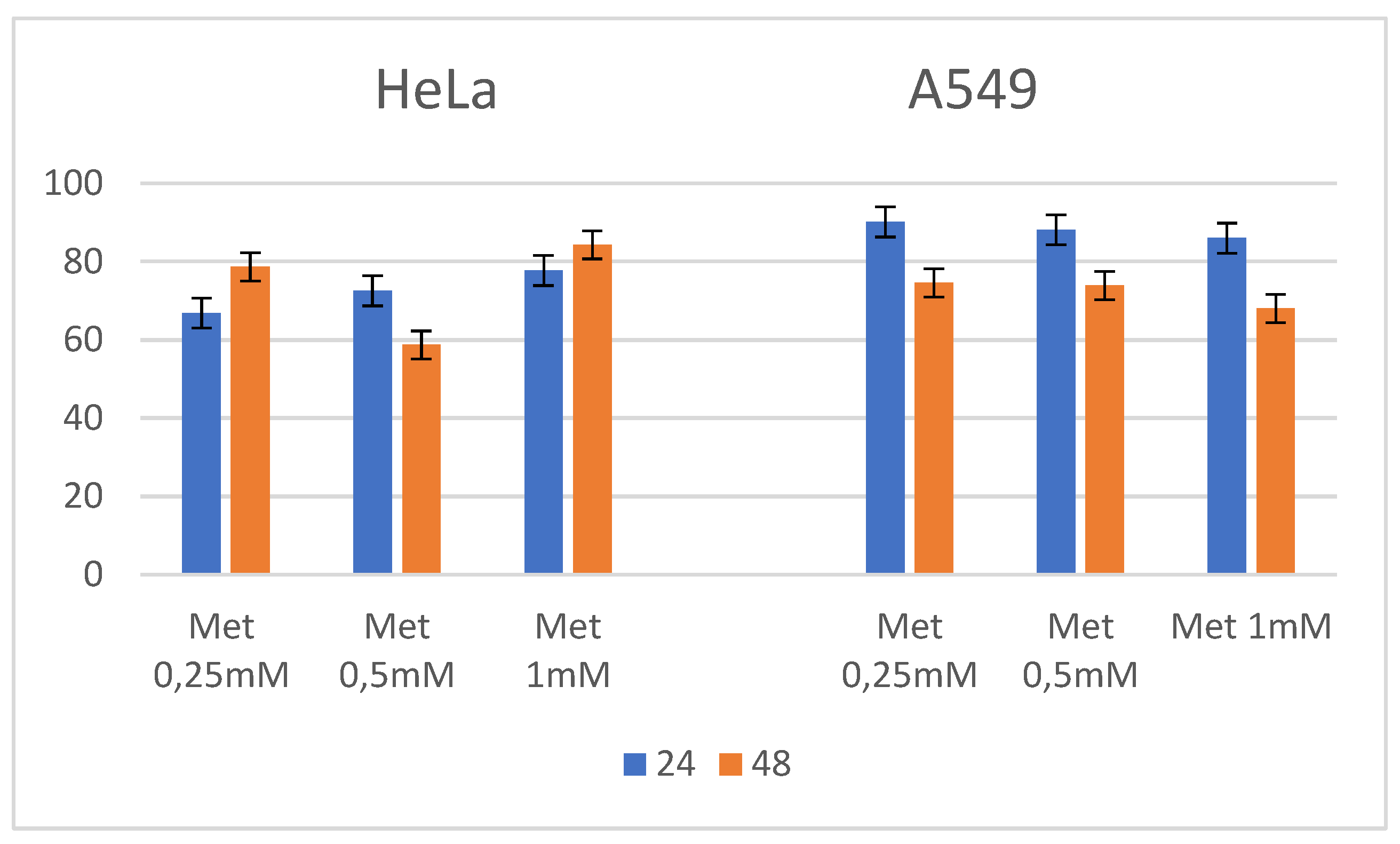
To investigate the cytotoxic effects of combined treatment with metformin and caffeine, concentrations were selected based on the results obtained from their individual applications. Cervical cancer (HeLa), lung adenocarcinoma (A549), and colorectal cancer (HT29) cell lines were treated with metformin at concentrations of 0.05–1 mM(0.05 mM, 0.1 mM, 0.25 mM, 0.5 mM, and 1 mM) in combination with caffeine (1 mM), in order to evaluate potential interactions affecting cell viability.
The results are presented in Table 3. Combined treatment exhibited variable effects depending on the cell line and exposure time. The strongest cytotoxic effect was observed in HeLa cells, with IC₅₀ values of 2.23 mM at 24 h and 2.40 mM at 48 h. In A549 and HT29 cells, higher IC₅₀ values were observed, indicating lower sensitivity to combined treatment.No consistent synergistic effects were observed across most conditions, and the interaction between metformin and caffeine varied depending on cell line and exposure time.
Analysis of drug interactions using the combination index (CI) revealed that synergistic effects (CI < 1) were observed only in HeLa cells after 24 h, whereas antagonistic interactions predominated under other conditions, particularly after prolonged exposure.
Figure 3.
Cytotoxic activity of Metformin and caffeine on HeLa and A549 cell lines,data are presented as mean ± SD (n = 3), *p < 0.05.
Figure 3.
Cytotoxic activity of Metformin and caffeine on HeLa and A549 cell lines,data are presented as mean ± SD (n = 3), *p < 0.05.
2.4. Mechanistic Studies
2.4.1. Flow Cytometry
Apoptosis 4. Flow cytometry analysis confirmed that metformin treatment increased apoptotic cell populations in HeLa cells in a time-dependent manner. The proportion of early and late apoptotic cells increased after 48 h compared to 24 h, indicating enhanced induction of apoptosis.
Figure 4.
Flow cytometry analysis of apoptosis in HeLa cells following metformin treatment at 24 h and 48 h. Representative dot plots showing viable, early apoptotic, and late apoptotic populations.
Figure 4.
Flow cytometry analysis of apoptosis in HeLa cells following metformin treatment at 24 h and 48 h. Representative dot plots showing viable, early apoptotic, and late apoptotic populations.
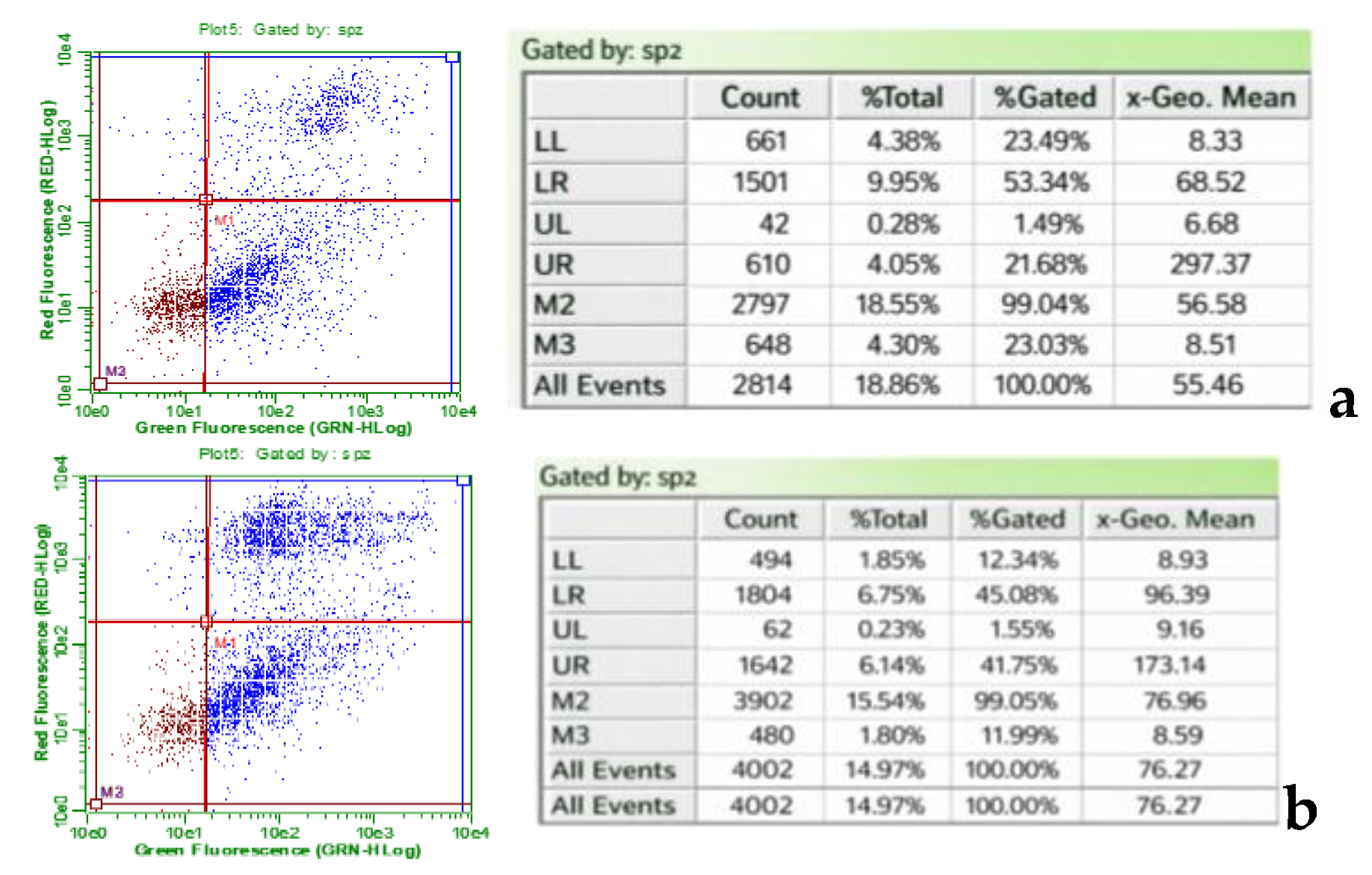
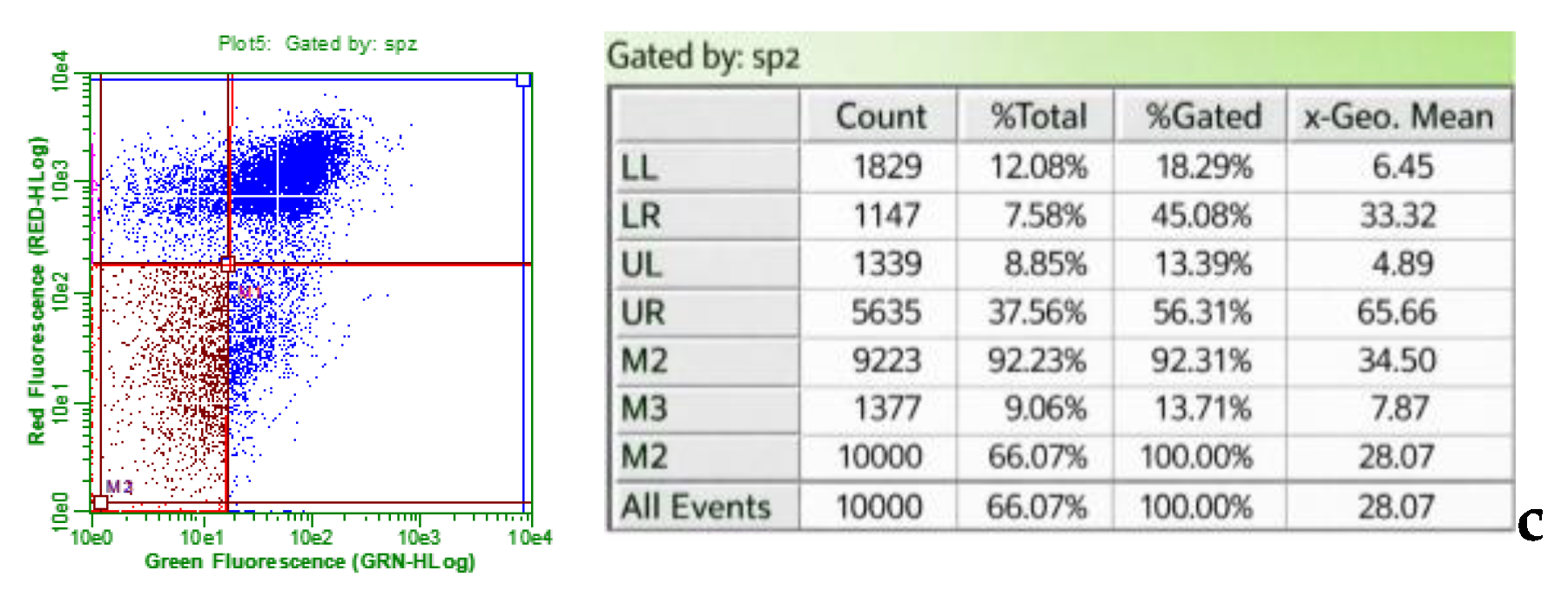
a) without adjuvant, after 24 h
b) with metformin after 24 h of treatment
These findings were accompanied by a reduction in cell viability.
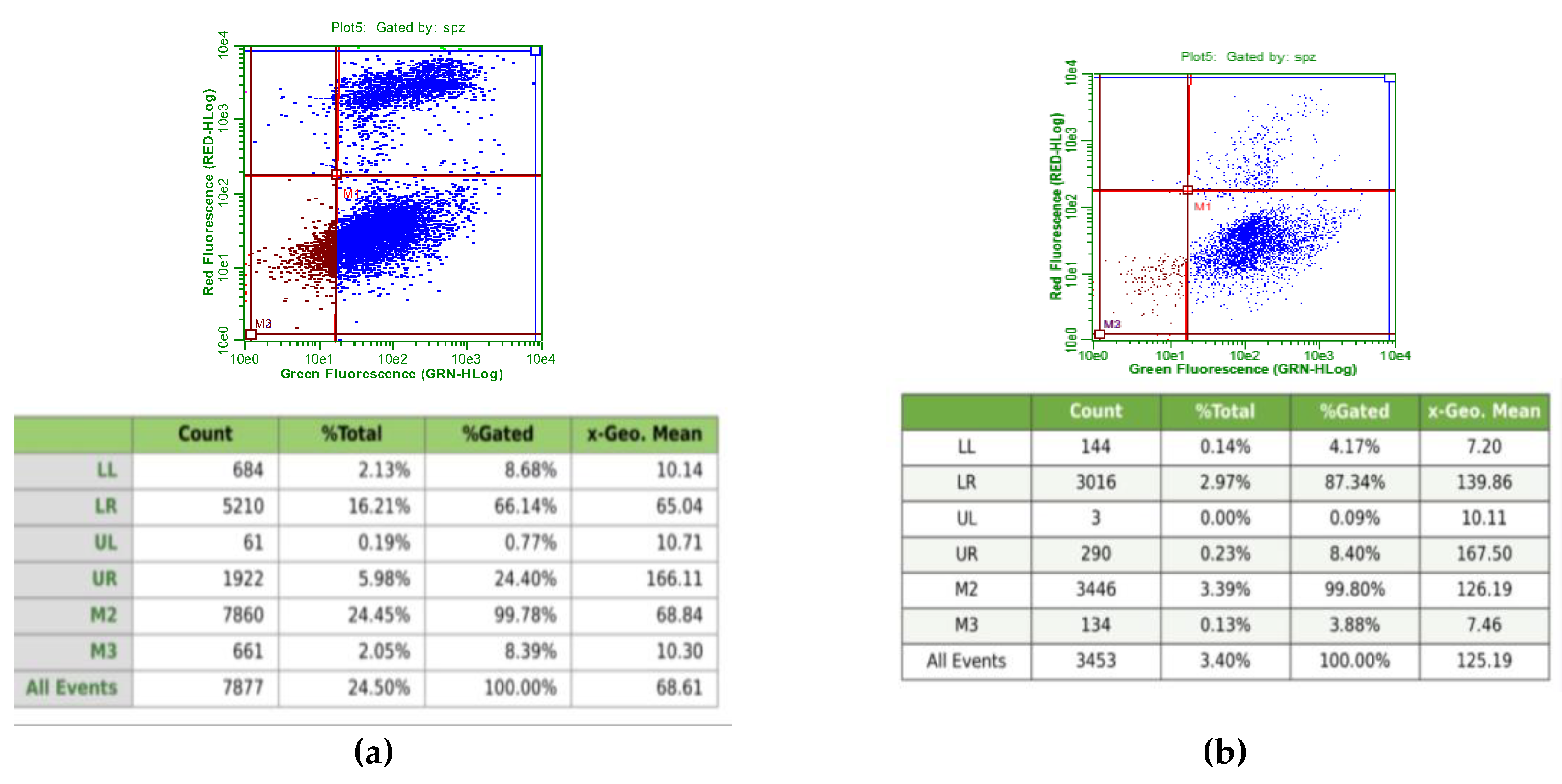
Figure 5.
Flow cytometry dot plot analysis and population statistics, on MRC-5 cell line (a) The impact of metformin after 24 h (b) The impact of metformin after 48 h.
Figure 5.
Flow cytometry dot plot analysis and population statistics, on MRC-5 cell line (a) The impact of metformin after 24 h (b) The impact of metformin after 48 h.
2.4.2. Immunofluorescence Microscopy Analysis of Apoptosis
Immunofluorescence analysis using Annexin V staining confirmed the induction of apoptosis following metformin treatment. An increased proportion of apoptotic cells was observed, particularly after 48 h, supporting the results obtained by flow cytometry.In Figure 6a, early apoptotic cells were identified based on Annexin V staining, indicating initiation of programmed cell death.Differences in sensitivity among cell lines were observed across the tested conditions.
2.4.3. p53 ELISA: Modulation of Tumor Suppressor p53 Expression Following Metformin and Combined Metformin–Caffeine Treatment in Cervical Cancer Cells (HeLa cells)
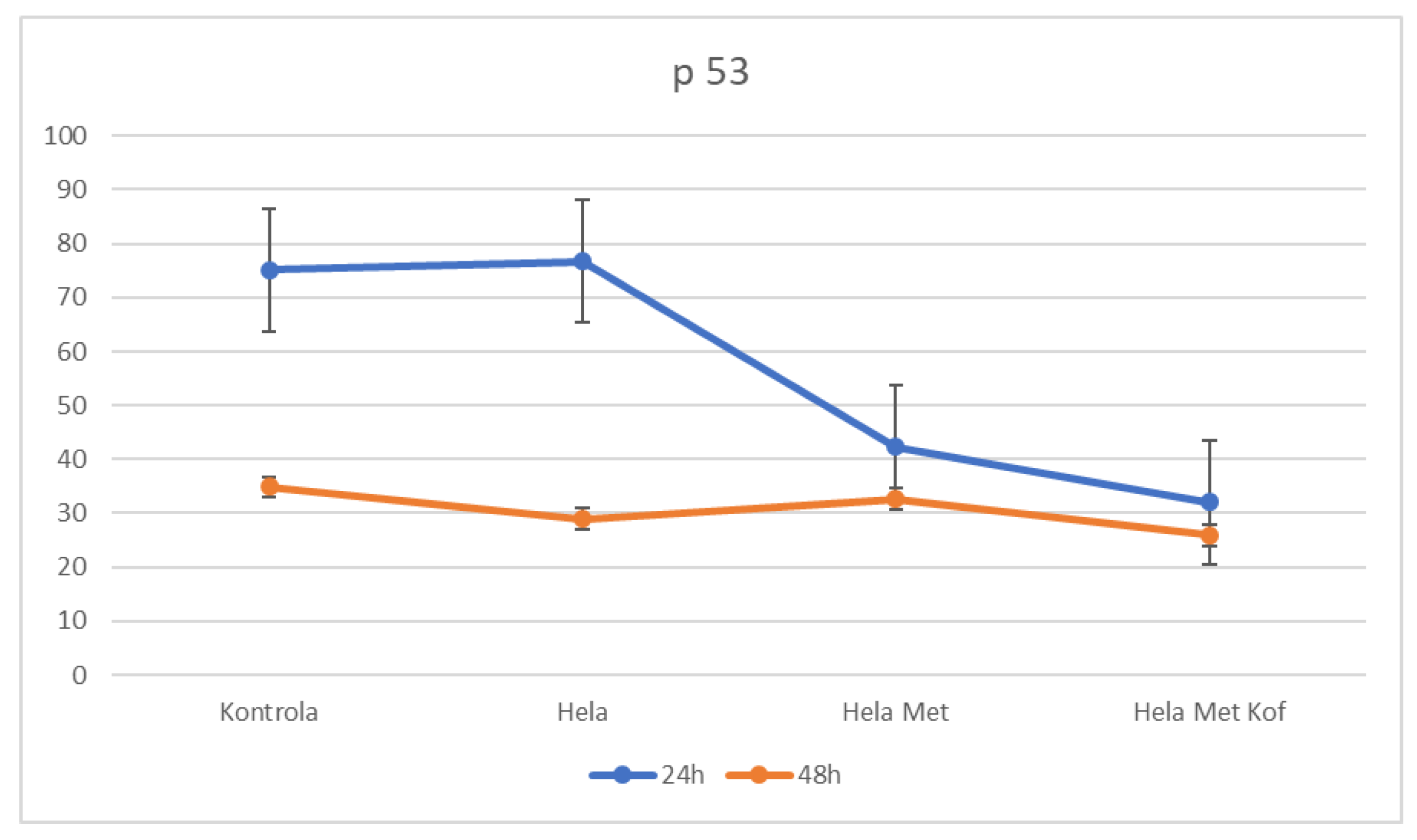
Metformin treatment resulted in increased p53 expression in HeLa cells, which was further enhanced following combined treatment with caffeine. A complete dataset, including raw optical density values and calculated concentrations, is presented in the Supplementary Materials(Table S2).
The second and fourth columns represent the raw measured values, whereas the third and fifth columns correspond to concentrations calculated from the standard values and the calibration curve. O.D. denotes the optical density measured at 450 nm, and C represents the concentration expressed in international units per millilitre (U/mL).The calibration curve and corresponding calculated concentrations are provided in the Supplementary Materials (Table S1, Figure S1).
Figure 7.
Quantitative Measurements p53 in HeLa cells after 24 h and 48 h of Incubation.
2.5. Molecular Docking Analysis
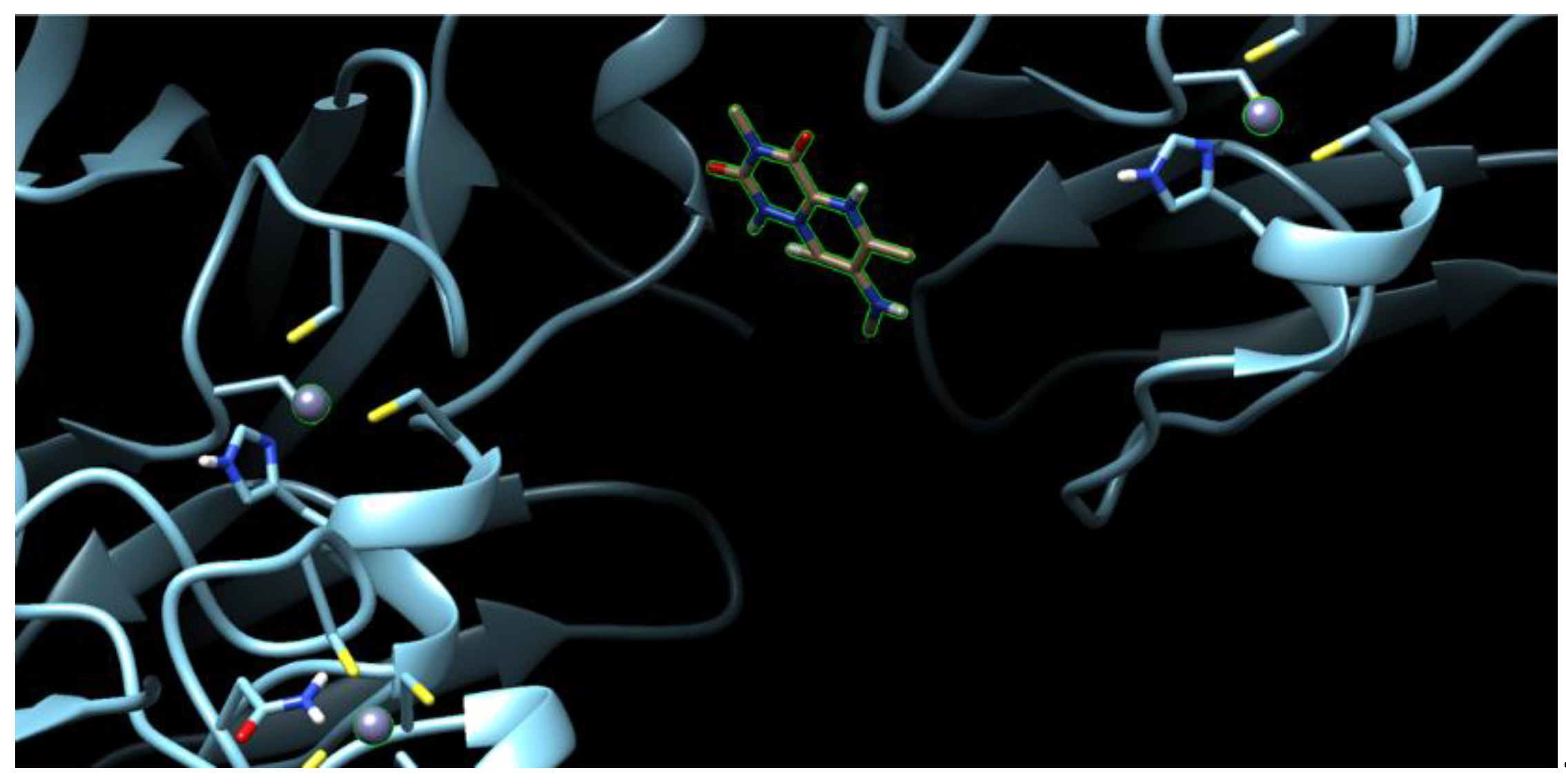
Molecular docking analysis demonstrated that both metformin and caffeine can bind to the p53 protein, forming stabilizing interactions with key amino acid residues. Metformin predominantly formed hydrogen bonds, whereas caffeine engaged in hydrophobic and π–π interactions, consistent with its aromatic structure. Caffeine exhibited a higher binding affinity (−5.2 kcal/mol) compared to metformin (−4.1 kcal/mol).
Figure 8.
Molecular docking of metformin and caffeine within the p53 binding site. Hydrogen bonds are shown as dashed lines.
Figure 8.
Molecular docking of metformin and caffeine within the p53 binding site. Hydrogen bonds are shown as dashed lines.
2.6. Drug Interaction Analysis by the Chou–Talalay Method
Drug interaction analysis performed at the IC₅₀ level revealed that the effect of metformin combined with caffeine was both cell line- and time-dependent. In HeLa cells, the combination showed a synergistic interaction after 24 h of treatment (CI = 0.779), whereas an antagonistic effect was observed after 48 h (CI = 1.545). In A549 cells, antagonism was detected at both time points, with CI values of 1.134 at 24 h and 2.337 at 48 h. In HT29 cells, the interaction was nearly additive after 24 h (CI = 0.998) but shifted toward antagonism after 48 h (CI = 1.775). In normal MRC-5 fibroblasts, the combination showed slight synergy or a nearly additive effect at 24 h (CI = 0.957), while antagonism was observed after 48 h (CI = 1.526). Overall, these findings show that the interaction between metformin and caffeine was not uniformly synergistic and depended strongly on both treatment duration and cellular background. Combination Index (CI) values were calculated using the Chou–Talalay method implemented in CompuSyn software based on IC₅₀-derived dose equivalence.
Table 4.
Evaluation of drug interaction between metformin and caffeine based on IC₅₀-derived combination index (CI) values in HeLa, A549, HT29, and MRC-5 cells after 24 h and 48 h.
Table 4.
Evaluation of drug interaction between metformin and caffeine based on IC₅₀-derived combination index (CI) values in HeLa, A549, HT29, and MRC-5 cells after 24 h and 48 h.
| 24h CI1 |
48h CI1 |
|---|---|
| MRC-5 0.96 | 1.53 |
| HeLa 0.78 | 1.55 |
| A549 1.13 | 2.34 |
| HT29 0.99 | 1.78 |
1Footer: CI < 1 indicates synergism, CI = 1 additive effect, and CI > 1 antagonism.
2.6.1. Isobologram Analysis and Theoretical Model
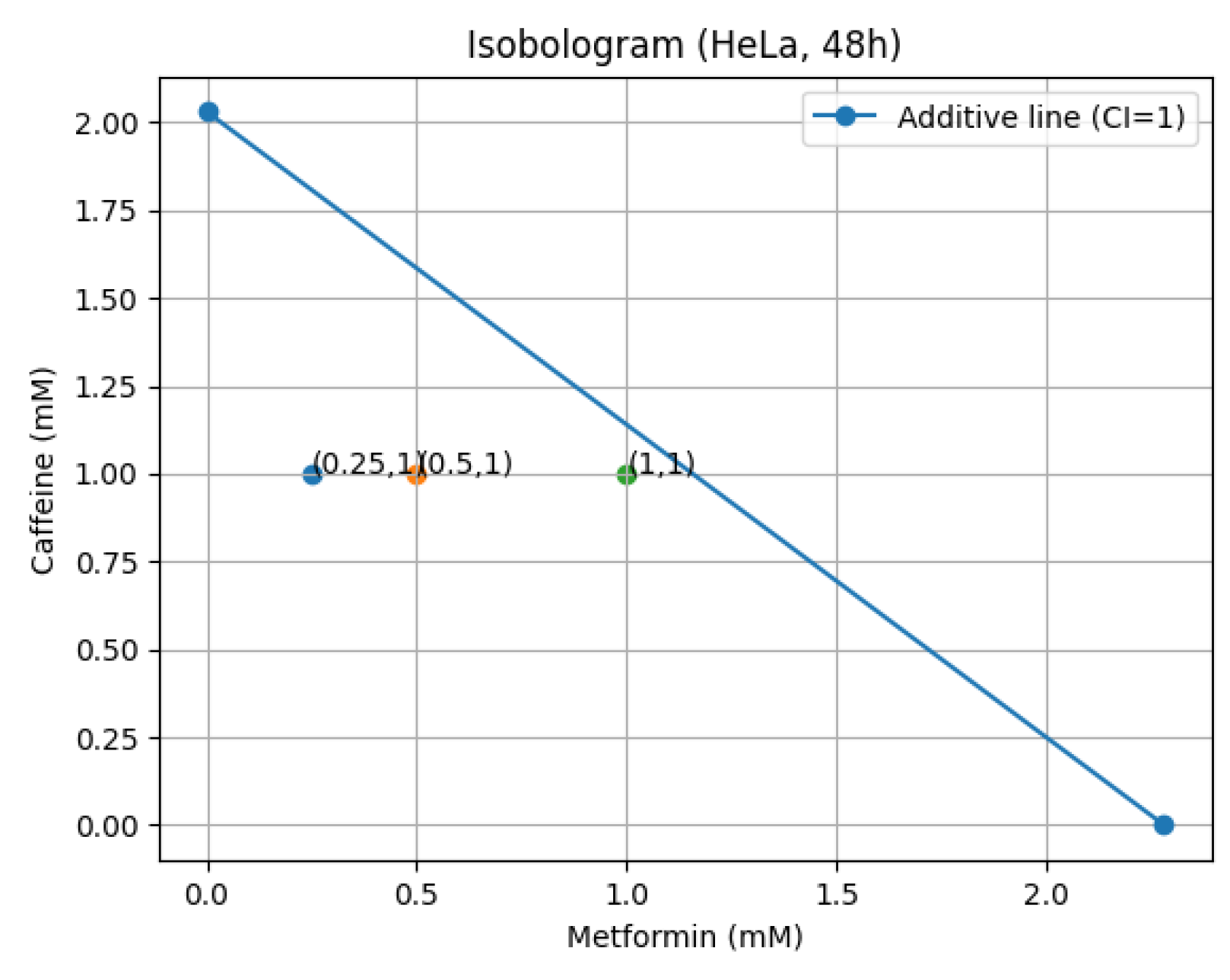
Isoblogram of metformin and caffeine interaction in HeLa cells after 48 h of treatment. The straight line represents the theoretical additive effect (CI = 1). Data points located below the line demonstrate a synergistic interaction.
The CI values were consistent with the IC₅₀ results, confirming that the combination effect varied depending on the cell line and treatment duration, with improved efficacy observed only in HeLa cells at 24 h and predominantly reduced efficacy in other conditions.
Figure 9.
Isobologram analysis of metformin and caffeine interaction in HeLa cells (48 h).
3. Discussion
The present study investigated the cytotoxic and antiproliferative effects of metformin and caffeine, administered individually and in combination, in several human cancer cell lines including cervical carcinoma (HeLa), lung adenocarcinoma (A549), and colorectal carcinoma (HT29). Our results demonstrate that metformin significantly reduced tumor cell viability in a dose- and time-dependent manner, while caffeine alone exhibits moderate antiproliferative activity. The combination of metformin and caffeine demonstrated differential effects across the tested models, with synergism observed only under specific conditions, while antagonistic interactions predominated overall.
Metformin has attracted considerable attention as a potential candidate for drug repurposing in oncology due to its favorable safety profile and widespread clinical use in the treatment of type 2 diabetes mellitus. Epidemiological studies have suggested that diabetic patients receiving metformin therapy may exhibit a reduced risk of cancer development and improved survival outcomes compared with patients treated with other antidiabetic drugs [8,12]. These observations have stimulated extensive investigation into the anticancer mechanisms of metformin.
One of the primary mechanisms of metformin action involvesactivation of AMP-activated protein kinase (AMPK), a key regulator of cellular energy homeostasis. Activation of AMPK results in inhibition of the mammalian target of rapamycin (mTOR) signaling pathway, which plays a crucial role in cell growth, protein synthesis, and tumor cell proliferation [13,14,21]. Inhibition of mTOR signaling reduces tumor cell growth and promotes metabolic stress that may ultimately lead to apoptosis [18]. In addition to this mechanism, metformin has also been reported to inhibit mitochondrial respiratory chain complex I, resulting in decreased ATP production and activation of metabolic stress responses in cancer cells [21,22].The concentrations of metformin used in this study exceed physiological plasma levels; however, such ranges are commonly applied in in vitro models to overcome limited cellular uptake and to approximate intracellular accumulation required to elicit measurable anticancer effects.
The predominance of antagonism represents a particularly important finding. One possible explanation is that caffeine-mediated inhibition of checkpoint signaling may interfere with the cellular stress response required for full activation of metformin-induced cytotoxicity. Specifically, while metformin is known to induce metabolic stress and activates AMPK–p53 signaling, caffeine may attenuate stress signaling pathways or alter cell cycle dynamics in a way that reduces apoptotic susceptibility. Alternatively, caffeine-induced increases in intracellular cAMP levels may activate pro-survival pathways under certain conditions, thereby counteracting the effects of metabolic inhibition.
Another plausible explanation lies in the temporal dynamics of stress responses. The observed synergism at 24 h followed by antagonism at 48 h suggests that early co-treatment may transiently overwhelm cellular adaptive mechanisms, while prolonged exposure allows cancer cells to activate compensatory survival pathways. This highlights the importance of treatment scheduling and duration when evaluating drug combinations targeting cancer metabolism.
The antiproliferative effects observed in our study are consistent with previous findings demonstrating that metformin can inhibit the growth of multiple cancer types, including breast, pancreatic, lung, and colorectal cancers [23,24,25]. In the present study, metformin significantly reduced the viability of all investigated cancer cell lines. However, differences in sensitivity were observed among the cell lines. HeLa cells showed the highest responsiveness to metformin treatment, whereas HT29 cells exhibited relatively greater resistance.Similar variability has been reported and may be related to differences in metabolic and signaling characteristics among tumor types [26].
Although the concentrations of metformin used in this study (up to 50 mM) exceed physiological plasma levels (~10–40 µM), this approach is consistent with commonly applied in vitro experimental models. Higher extracellular concentrations are often required due to limited drug uptake in standard cell culture conditions, which lack the complex pharmacokinetic and tissue distribution mechanisms present in vivo.
Importantly, metformin is known to accumulate intracellularly, particularly within mitochondria, where it may reach concentrations substantially higher than those observed in plasma. This process is mediated, at least in part, by organic cation transporters (e.g., OCT1), which are variably expressed across different tumor types and may influence cellular sensitivity to metformin [27].
Nevertheless, the use of supraphysiological concentrations represents a limitation when considering clinical translation. Therefore, the present findings should be interpreted with caution, and further studies employing more physiologically relevant models, such as 3Dcultures or in vivo systems, are warranted to better assess the therapeutic potential of metformin-based combinations.
In addition to metformin, caffeine has also been investigated for its potential role in modulating tumor cell survival. Caffeine is known to interfere with the DNA damage response by inhibiting checkpoint kinases such as ATM and ATR, which regulate cell cycle progression and DNA repair mechanisms [17]. Inhibition of these kinases disrupts the ability of tumor cells to repair DNA damage and increases susceptibility to apoptosis under conditions of cellular stress. Previous studies have demonstrated that caffeine can enhance the cytotoxic effects of anticancer therapies by sensitizing tumor cells to metabolic or genotoxic stress [16].
Although enhanced cytotoxicity was observed under limited conditions, the overall interaction was predominantly antagonistic.This observation suggests that caffeine may interfere with metformin -induced metabolic stress under certain conditions, potentially reducing its cytotoxic efficiency. Under specific conditions, the interaction between metformin and caffeine may result from complementary mechanisms. The simultaneous disruption of these pathways may overwhelm tumor cell survival mechanisms and promote apoptotic cell death.
An increased expression of p53 was observed following treatment. The p53 protein is a key regulator of cell cycle arrest, DNA repair, and apoptosis in response to cellular stress [37]. Activation of p53 signaling pathways plays a crucial role in preventing malignant transformation and promoting programmed cell death. Previous studies have suggested that metabolic stress induced by metformin may stabilize p53 and enhance apoptotic signaling in cancer cells [29]. The increased expression of p53 observed in our experiments therefore supports the hypothesis that activation of tumor suppressor pathways contributes to the cytotoxic effects of metformin and caffeine.
An additional important observation of this study is the relatively low cytotoxic effect observed in normal lung fibroblasts (MRC-5). While metformin and caffeine significantly inhibited proliferation of cancer cell lines, their effects on normal cells were considerably less pronounced. This finding suggests a degree of selectivity toward malignant cells. Tumor cells often exhibit altered metabolic pathways and increased energy demands compared with normal cells, making them more susceptible to metabolic inhibitors such as metformin [24].Importantly, the observed shift from synergism at 24 h to antagonism at 48 h highlights the critical role of treatment timing in determining the outcome of metabolic drug combinations.
Recent studies have further highlighted the potential of metformin as a metabolic modulator in cancer therapy. For example, Heckman-Stoddard et al. reported that metformin can influence tumor metabolism and inhibit cancer cell growth through both systemic metabolic effects and direct cellular mechanisms, supporting its role as a promising candidate for drug repurposing in oncology [21]. Similarly, Rena et al. provided an updated overview of the molecular mechanisms underlying metformin action and emphasized its ability to interfere with mitochondrial respiration and cellular energy balance, which may selectively affect tumor cells with high metabolic demands [29].
More recently, clinical and translational studies have continued to explore the anticancer potential of metformin in various malignancies. A comprehensive review by Marciniak et al. highlighted the growing evidence supporting the use of metformin as an adjuvant therapy in cancer treatment, particularly in tumors characterized by altered metabolic signaling pathways [30]. In addition, emerging studies suggest that metabolic modulators such as metformin may enhance the sensitivity of cancer cells to other stress-inducing agents, thereby improving therapeutic outcomes [25].
These findings support the hypothesis proposed in the present study that metabolic stress induced by metformin may increase tumor cell susceptibility to additional modulators such as caffeine. The combination of agents targeting different cellular pathways may result in complex and sometimes antagonistic interactions, underscoring the need for careful evaluation of combination strategies in cancer therapy.
Despite these promising findings, several limitations should be acknowledged. The experiments were conducted under in vitro conditions and therefore do not fully reproduce the complexity of tumor biology in vivo. In addition, although increased p53 expression suggests activation of tumor suppressor pathways, further molecular studies are required to clarify the precise signaling mechanisms responsible for the observed interaction between metformin and caffeine.
The molecular docking results provide additional insight into the potential interactions between metformin, caffeine, and the p53 protein.Interestingly, caffeine exhibited a higher binding affinity (−5.2 kcal/mol) compared to metformin (−4.1 kcal/mol), which can be attributed to its aromatic structure and capacity to form π–π and hydrophobic interactions within the protein binding site.
However, despite this stronger predicted binding, caffeine demonstrated weaker antiproliferative effects in vitro compared to metformin. This apparent discrepancy suggests that binding affinity alone is not the primary determinant of biological activity in this system.
Metformin is known to exert its anticancer effects predominantly through indirect mechanisms, including induction of metabolic stress, activation of AMPK, and modulation of downstream signaling pathways such as mTOR and p53. Therefore, its relatively low docking affinity is consistent with a mechanism that does not rely on strong direct binding to target proteins.
In contrast, although caffeine is capable of interacting more favorably with the p53 structure at the molecular level, its biological effects appear to depend on modulation of signaling pathways such as ATM/ATR and cAMP-mediated processes, which may not directly translate into strong antiproliferative activity under all experimental conditions.
Molecular docking analysis revealed that both metformin and caffeine interact with the p53 protein, with caffeine exhibiting higher binding affinity. However, this did not correspond to stronger antiproliferative effects in vitro, indicating that binding affinity alone is not sufficient to predict biological activity. These findings suggest that metformin exerts its effects primarily through indirect metabolic and signaling mechanisms, while caffeine modulates cellular responses in a context-dependent manner.
Overall, the results of this study support the concept of drug repurposing in oncology [32], highlighting metformin as a primary contributor to antiproliferative effects. The interaction between metformin and caffeine was not uniformly beneficial and depended on treatment duration and cellular context. These findings underscore the complexity of metabolic drug interactions and emphasize the need for further studies using physiologically relevant models to evaluate their therapeutic potential.
4. Materials and Methods
4.1. Reagents
Metformin hydrochloride (99.99%, Galenika, Serbia) was dissolved in phosphate-buffered saline (PBS, Dulbecco’s PBS, Capricorn Scientific GmbH, Germany) immediately before use. The following reagents were used: 2-deoxy-D-glucose (2DG) and caffeine (Abcam, Cambridge, UK); sulforhodamine B, Tris base, dimethyl sulfoxide (DMSO), and DMEM (Sigma-Aldrich Chemie GmbH, Germany); trichloroacetic acid (Merck Chemie GmbH, Germany); acetic acid and sodium chloride (Zorka Pharma Hemija, Serbia); Annexin V-FITC and propidium iodide (Becton Dickinson Pharmingen, Germany); viability kit (Invitrogen); and SYBR-14/PI (Sigma-Aldrich Chemie GmbH, Germany). Metformin and other pharmacological modulators were added before treatment.
4.2. Cell Culture
Human cervical carcinoma cells HeLa cells (ATCC® CCL-2™), A549 lung adenocarcinoma cells (ATCC® CCL-185™), and HT29 colorectal carcinoma cells (ATCC® HTB-38™) were obtained from the American Type Culture Collection (ATCC), Manassas, VA, USA. Cells were cultured in Dulbecco’s Modified Eagle Medium (DMEM) containing 4.5 g/L glucose, supplemented with 10% fetal bovine serum (FBS) and 1% antibiotic/antimycotic solution.
Cells were incubated at 37 °C in a humidified atmosphere containing 5% CO₂. Cell lines were passaged twice weekly and used during the exponential growth phase (passages 3–10). After thawing, cells were cultured in 25 cm² flasks at a density of 1×10⁶ cells in 10 mL medium. When confluence was reached, cells were detached using 0.1% trypsin and seeded for experiments.
For viability assays, cells were seeded in 96-well plates (1×10⁵ cells per well), while for flow cytometry analysis cells were seeded in 25 cm² flasks at 1×10⁶ cells per flask.
4.3. Cell Viability and Proliferation Assays
4.3.1. Trypan Blue Exclusion Assay:
Only viable cells were used in the experiment.Cell viability was determined using the Trypan Blue exclusion method [33].Cells were mixed with 0.1% Trypan Blue and counted using a hemocytometer under an inverted microscope.Cell viability prior to treatment was assessed using the Trypan Blue exclusion assay to ensure that only viable cells were included in subsequent experiments.
4.3.2. Sulforhodamine B (SRB) Assay
The cytotoxic effects of metformin and caffeine on HeLa, A549, and HT29 cell proliferation were evaluated using the SRB assay. Cells in the exponential growth phase were treated with increasing concentrations of metformin (0.05–50 mM) and caffeine (0.5–5 mM), individually or in combination, for 24 and 48 h. The SRB assay is based on quantification of cellular protein content through binding of sulforhodamine B to amino acid residues [34]. Following treatment, cells were fixed with 10% trichloroacetic acid, stained with SRB, and washed with 1% acetic acid. The bound dye was solubilized, and absorbance was measured at 540 nm [31].
4.4. Apoptosis Analysis by Flow Cytometry
Apoptosis was assessed using Annexin V-FITC/propidium iodide (PI) staining. Following treatment, cells were trypsinized, collected, and centrifuged (250 × g, 5 min), then resuspended in binding buffer and stained with Annexin V-FITC and PI. Samples were incubated for 15 min in the dark at room temperature and analyzed within 1 h using flow cytometry (Guava EasyCyte). Annexin V-positive/PI-negative cells were classified as early apoptotic, while Annexin V-positive/PI-positive cells were considered late apoptotic or necrotic [35]. Staining was performed according to the manufacturer’s instructions (BD Pharmingen, San Diego, CA, USA).
Cell death parameters were analysed by flow cytometry, by Annexin V-FITC on Guava EasyCyte, Guava Technologies, Hayward, CA, USA. At least 10,000 particles were analysed per sample. Different cell cultures were automatically photographed using an Olympus BX40 microscope, with images archived via Olympus SP/500 UZ software (Japan).
4.5. ELISA Assay: Determination of Tumor-Suppressor Genes for p53
Expression of the tumor suppressor protein p53 in HeLa cells was quantified using a commercially available ELISA kit (Abcam, Cambridge, UK) according to the manufacturer’s instructions.
Briefly, standards, control samples, and treated cell lysates were added to 96-well microplates and incubated with a biotinylated anti-p53 antibody. Following washing steps, streptavidin–horseradish peroxidase (HRP) conjugate was added and incubated under standard conditions. After removal of unbound components, tetramethylbenzidine (TMB) substrate was applied, resulting in a colorimetric reaction proportional to the p53 concentration.The reaction was terminated using a stop solution, and absorbance was measured at 450 nm using a microplate reader. p53 concentrations were calculated based on a standard calibration curve generated using known concentrations of the protein.
All measurements were performed in triplicate, and results are presented as mean ± standard deviation (SD).
4.6. Molecular Docking Analysis
Molecular docking studies were performed to evaluate the interactions of metformin and caffeine with the p53 protein. The three-dimensional structure of the p53 protein (PDB ID: 2OCJ) was obtained from the Protein Data Bank.
Prior to docking, water molecules and co-crystallized ligands were removed, and polar hydrogens were added using AutoDockTools. The prepared protein structure was used as the receptor, while ligand structures (metformin and caffeine) were obtained from PubChem and energy-minimized prior to docking.
Docking simulations were carried out using PyRx software (AutoDock Vina engine). The grid box was defined to include the active binding region of the protein. Binding affinities were expressed in kcal/mol, and the best docking poses were selected based on the lowest binding energy values.
Protein–ligand interactions were further analyzed using UCSF Chimera to identify hydrogen bonds and other non-covalent interactions.
4.7. Statistics
All experiments were performed in at least three independent experiments, and results are presented as mean ± standard deviation (SD). Statistical analysis was performed using one-way ANOVA followed by Tukey’s post hoc test for multiple comparisons. Statistical comparisons were performed between treated groups and control, as well as between combination and individual treatments. Differences were considered statistically significant at p < 0.05. IC50 values were calculated using nonlinear regression analysis (log[inhibitor] vs. response). The interaction between metformin and caffeine was evaluated using the Chou–Talalay method [37,38], and combination index (CI) values were calculated using CalcuSyn software (Biosoft, Cambridge, UK) based on the median-effect principle to assess synergistic, additive, or antagonistic effects.
5. Conclusions
This study reveals that caffeine does not uniformly enhance metformin efficacy, but may instead induce antagonistic interactions depending on treatment duration. The combination with caffeine showed variable effects depending on the cell type and treatment duration, with limited synergistic interaction observed only under specific conditions, while predominantly antagonistic effects were detected overall. Apoptosis induction and increased p53 expression indicate possible involvement of tumor-suppressive pathways, while limited toxicity toward normal fibroblasts highlights a degree of selectivity for malignant cells. These findings support the repurposing of metformin as a potential anticancer agent; however, the addition of caffeine does not consistently enhance its efficacy and may lead to antagonistic interactions depending on cellular context and treatment duration. Further in vivo studies and mechanistic investigations are warranted to confirm clinical relevance and fully elucidate underlying molecular mechanisms.
Supplementary Materials
The following supporting information can be downloaded at the website of this paper posted on Preprints.org, Figure S1: Calibration curve for p53 determination (https://www.abcam.com; Table S1: Standards for calibration curve for p53 (https://www.abcam.com).
Author Contributions
For research articles with several authors, a short paragraph specifying their individual contributions must be provided. The following statements should be used “Conceptualization, V.Z. and M.K.; methodology, V.Z, M.B.; software, V.K., E.M; validation, M.D., E.M. and S.M.; formal analysis, V.Z., S.M. and M.D; investigation, V.Z. and V.K; resources, V.Z., M.K. and M.B.; data curation, V.Z.,V.K. and M.K.; writing—original draft preparation, V.Z.; writing—review and editing, V.Z., V.K., M.K. and M.B; visualization, V.Z. and M.D; supervision, M.B. and E.M; project administration, V.Z, V.K. and M.D.; funding acquisition, S.M. and E.M. All authors have read and agreed to the published version of the manuscript.
Funding
This research received no external funding.
Institutional Review Board Statement
Not applicable for studies not involving humans or animals.
Informed Consent Statement
Not applicable for studies not involving humans.
Data Availability Statement
The datasets generated during this study are not publicly available due to privacy restrictions but are available from the corresponding author on reasonable request.
Acknowledgments
During the preparation of this manuscript/study, the author(s) used ChatGPT (OpenAI, GPT-5 mini) for the purposes of designing graphical abstract. The authors have reviewed and edited the output and take full responsibility for the content of this publication.
Conflicts of Interest
The authors declare no conflicts of interest.
References
- World Health Organization. World Health Statistics 2024: Monitoring Health for the SDGs. WHO Press: Geneva, Switzerland, 2024. Available online: https://www.who.int/data/gho/publications/world-health-statistics(accessed on 2 September 2024).
- Wagle, N.S.; Nogueira, L.; Devasia, T.P.; et al. Cancer treatment and survivorship statistics, 2025. CA Cancer J. Clin. 2025, 75, 308–340. https://doi.org/10.3322/caac.70011. [CrossRef]
- Siegel, R.L.; Kratzer, T.B.; Giaquinto, A.N.; Sung, H.; Jemal, A. Cancer statistics, 2025. CA Cancer J. Clin. 2025, 75, 10–45. https://doi.org/10.3322/caac.21871. [CrossRef]
- Sung, H.; Ferlay, J.; Siegel, R.L.; Laversanne, M.; Soerjomataram, I.; Jemal, A.; Bray, F. Global cancer statistics 2020: GLOBOCAN estimates of incidence and mortality worldwide for 36 cancers in 185 countries. CA Cancer J. Clin. 2021, 71, 209–249. https://doi.org/10.3322/caac.21660. [CrossRef]
- Pryor, R.; Cabreiro, F. Repurposing metformin: an old drug with new tricks in its binding pockets. Biochem. J. 2015, 471(3):307-22. https://doi: 10.1042/BJ20150497. [CrossRef]
- Flory, J.; Lipska, K. Metformin in 2019. JAMA 2019, 321, 1926–1927.
- Evans, J.M.M.; Donnelly, L.A.; Emslie-Smith, A.M.; Alessi, D.R.; Morris, A.D. Metformin and reduced risk of cancer in diabetic patients. BMJ 2005, 330, 1304–1305. [CrossRef]
- Quinn, B.J.; Kitagawa, H.; Memmott, R.M.; Gills, J.J.; Dennis, P.A. Repositioning metformin for cancer prevention and treatment. Trends Endocrinol. Metab. 2013, 24, 469–480. [CrossRef]
- Vujovic, S.; Perovic, S.; Vlaovic, M.; Scepanovic, A.; Scepanovic, S. From metabolism to longevity: Molecular mechanisms underlying metformin’s anticancer and anti-aging effects. Curr. Issues Mol. Biol. 2026, 48, 286. [CrossRef]
- Saraei, P.; Asadi, I.; Kakar, M.A.; Moradi-Kor, N. The beneficial effects of metformin on cancer prevention and therapy: A comprehensive review of recent advances. Cancer Manag. Res. 2019, 11, 3295–3313. [CrossRef]
- Boroughs, L.K.; DeBerardinis, R.J. Metabolic pathways promoting cancer cell survival and growth. Nat. Cell Biol. 2015, 17, 351–359. [CrossRef]
- Morales, D.R.; Morris, A.D. Metformin in cancer treatment and prevention. Annu. Rev. Med. 2015, 66, 17–29.
- Zakikhani, M.; Dowling, R.; Fantus, I.; Sonenberg, N.; Pollak, M. Metformin is an AMPK-dependent growth inhibitor for breast cancer cells. Cancer Res. 2006, 66, 10269–10273. [CrossRef]
- Dowling, R.J.O.; Zakikhani, M.; Fantus, I.G.; Pollak, M.; Sonenberg, N. Metformin inhibits mTOR signaling in cancer cells. Cancer Res. 2007, 67, 10804–10812.
- Wang, Z.; Gu, C.; Wang, X.; Lang, Y.; Wu, Y.; Wu, X.; Zhu, X.; Wang, K.; Yang, H. Caffeine enhances the anti-tumor effect of 5-fluorouracil via increasing the production of reactive oxygen species in hepatocellular carcinoma. Med. Oncol.2019, 36, 97. https://doi.org/10.1007/s12032-019-1323-8. [CrossRef]
- Bode, A.M.; Dong, Z. The enigmatic effects of caffeine in cell cycle and cancer. Cancer Lett. 2007, 247, 26–39. [CrossRef]
- Weber, A.M.; Ryan, A.J.ATM and ATR as therapeutic targets in cancer. Pharmacol.Ther. 2015.149, 124–138. [CrossRef]
- Fagundes, T.R.; Madeira, T.B.; Melo, G.P.; Silva, C.R.; Silva, A.R.; Nunes, P.S.; de Oliveira, R.M.; de Souza, P.O.; Valverde, L.F.; de Souza, M.G.M. Caffeine improves the cytotoxic effect of dacarbazine on melanoma cells. Bioorg. Chem.2022, 120, 105576. https://doi.org/10.1016/j.bioorg.2022.105576. [CrossRef]
- Al-Lazikani, B.; Banerji, U.; Workman, P. Combinatorial drug therapy for cancer in the post-genomic era. Nat. Biotechnol.2012, 30, 679–692. https://doi.org/10.1038/nbt.2284. [CrossRef]
- Trott, O.; Olson, A.J. AutoDock Vina: Improving the speed and accuracy of docking. J. Comput. Chem.2010, 31, 455–461. https://doi.org/10.1002/jcc.21334. [CrossRef]
- Hardie, D.G. AMPK: A key regulator of energy balance in cells and organisms. Nat. Rev. Mol. Cell Biol. 2012, 13, 251–262.
- Wheaton, W.W.; Weinberg, S.E.; Hamanaka, R.B.; et al.Metformin inhibits mitochondrial complex I of cancer cells.eLife 2014, 3, e02242. [CrossRef]
- Heckman-Stoddard, B.; DeCensi, A.; Sahasrabuddhe, V.; Ford, L.Repurposing metformin for cancer prevention and treatment.Diabetologia2017, 60, 1639–1647.
- Pernicova, I.; Korbonits, M.Metformin—Mode of action and implications for cancer therapy.Endocr. Rev. 2014, 35, 688–719.
- Kasznicki, J.; Sliwinska, A.; Drzewoski, J.Metformin in cancer prevention and therapy. Ann. Transl. Med. 2018, 6, 1–11. [CrossRef]
- Rena, G.; Hardie, D.G.; Pearson, E.R.The mechanisms of action of metformin. Diabetologia 2017,60,1577-1585.
- Luengo, A.; Sullivan, L.B.; Vander Heiden, M.G. Understanding the complex-I-ty of metformin action: Limiting mitochondrial respiration to improve cancer therapy. BMC Biol.2014, 12, 82. [CrossRef]
- Lefranc, F.; Tabanca, N.; Kiss, R. Assessing the anticancer effects associated with food products and/or nutraceuticals using in vitro and in vivo preclinical development-related pharmacological tests. Semin. Cancer Biol.2017, 46, 14–32. [CrossRef]
- Vousden, K.H.; Lane, D.P. p53 in health and disease. Nature Reviews Molecular Cell Biology 2007.Nat Rev Mol Cell Biol. 2007 (4):275-83. doi: 10.1038/nrm2147. [CrossRef]
- Kalender A., Selvaraj A., Kim S.Y., Gulati P., BrûléS., ViolletB., Kalender, A.; et al. Metformin inhibits mTOR signaling. Cell Metabolism 2010; 11(5):390-401. doi: 10.1016/j.cmet.2010.03.014. [CrossRef]
- Bogdanović, G. Raletić-Savić, J. Marković N. In vitro assays for antitumor-drug screening on human tumor cell lines: dye exclusion test and colorimetric cytotoxicity assay. Arch Oncol. 1994; 2(4):181-4.
- Marciniak, M., Torbicki, A., Korpalski, M., Pawluczyk, M., Pawlikowski, K., Żygłowicz, M., Augustyn, D., Gaworek, P., Trybuła A. Metformin in Oncology- Its Effect on Cancer Development and Progression. Medical Science2025; 29: e132ms3665 doi: https://doi.org/10.54905/disssi.v29i162.e132ms3665. [CrossRef]
- Strober, W. Trypan blue exclusion test of cell viability. CurrProtoc Immunol. 2001; 21(1):A.3B.1-A.3B.2. [CrossRef]
- Shekan P., Storeng R., Scudiero D., Monks A., McMahon J.,Vistica D., et al. New colorimetric cytotoxicity assay for anticancer-drug screening. J Natl Cancer Inst. 1990; 82(13):1107-12.
- Higuchi, K.Mitsuhashi, N. Saitoh, J, Maebayashi, K. Sakurai, H, Akimoto, T. Niibe, H. Caffeine enhanced radiosensitivity of rat tumor cells with a mutant-type p53 by inducing apoptosis in a p53-independent manner. Cancer Lett. 2000; 152(2):157-62. doi: 10.1016/s0304-3835(99)00449-8. [CrossRef]
- Chou, TC.Talalay, P. Quantitative analysis of dose–effect relationships: the combined effects of multiple drugs or enzyme inhibitors. Adv Enzyme Regul. 1984; 22:27–55. doi: 10.1016/0065-2571(84)90007-4. [CrossRef]
- Chou, TC. Drug combination studies and their synergy quantification using the Chou–Talalay method. Cancer Res. 2010;70(2):440–446. doi:10.1158/0008-5472. CAN-14-3763. [CrossRef]
Figure 1.
Cytotoxic activity of metformin in HeLa, A549, HT29, and MRC-5 cells following 24 h and 48 h treatment,data are presented as mean ± SD (n = 3), *p < 0.05.
Figure 1.
Cytotoxic activity of metformin in HeLa, A549, HT29, and MRC-5 cells following 24 h and 48 h treatment,data are presented as mean ± SD (n = 3), *p < 0.05.
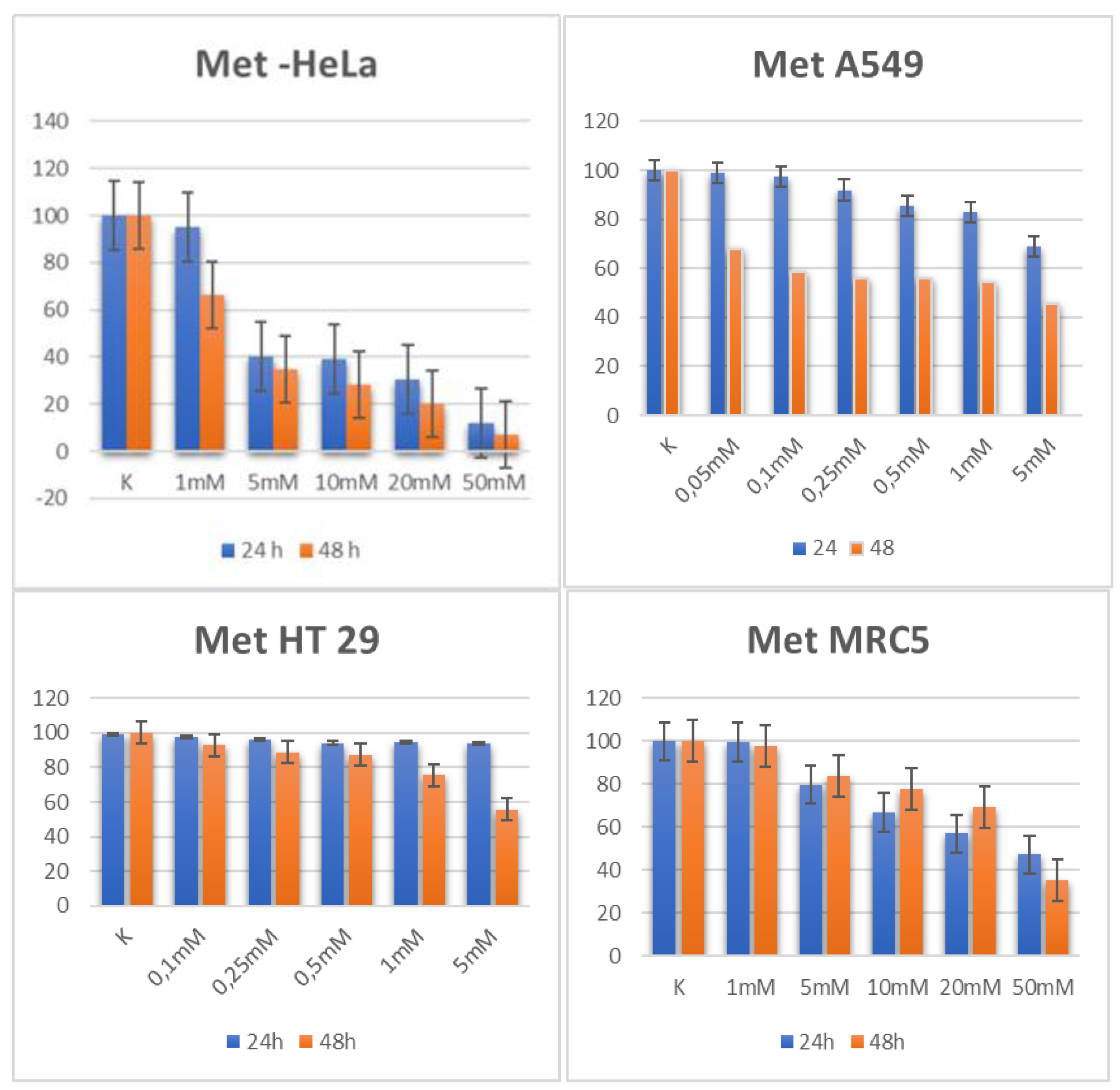
Figure 2.
Cytotoxic activity of caffeine against all tested human cancer cell lines and MRC-5,data are presented as mean ± SD (n = 3), *p < 0.05.
Figure 2.
Cytotoxic activity of caffeine against all tested human cancer cell lines and MRC-5,data are presented as mean ± SD (n = 3), *p < 0.05.
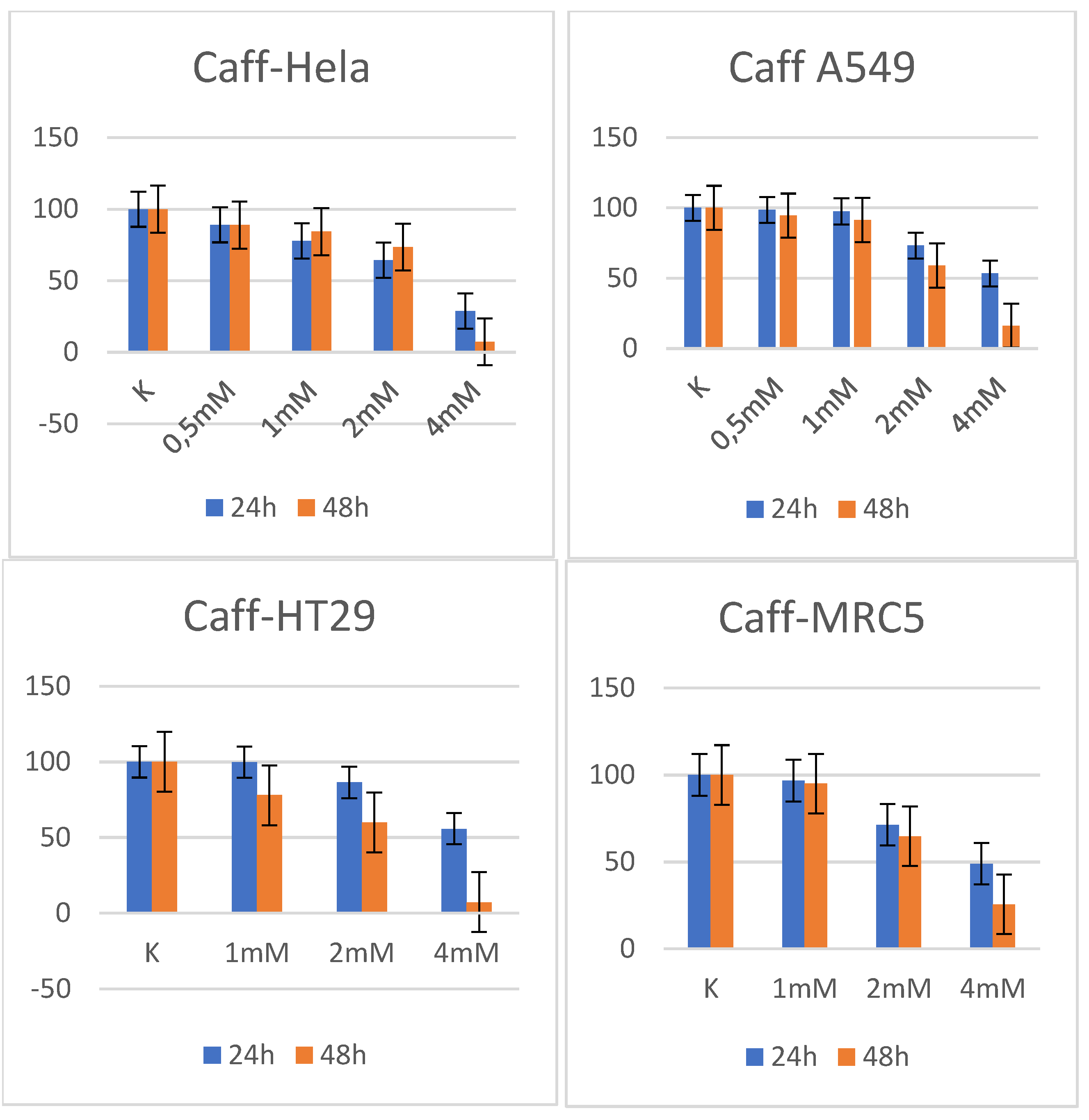
Figure 6.
Apoptosis on cancer cell line: (a) Immunofluorescence micrograph of early apoptosis, affected by metformin on cervical adenocarcinoma HeLa cells (1000x); (b) Immunofluorescence micrograph of late apoptosis, affected by metformin on cervical adenocarcinoma HeLa cells (400x) 1. 1Footer The moment of bonding Annexin-V late apoptosis
Figure 6.
Apoptosis on cancer cell line: (a) Immunofluorescence micrograph of early apoptosis, affected by metformin on cervical adenocarcinoma HeLa cells (1000x); (b) Immunofluorescence micrograph of late apoptosis, affected by metformin on cervical adenocarcinoma HeLa cells (400x) 1. 1Footer The moment of bonding Annexin-V late apoptosis
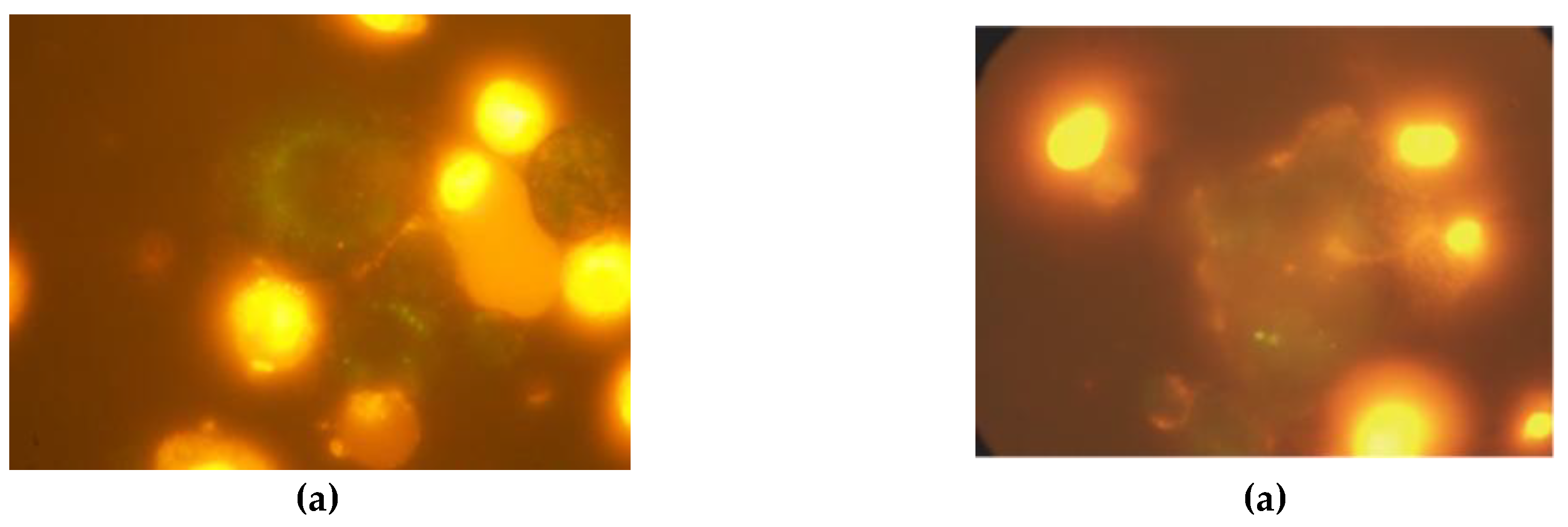
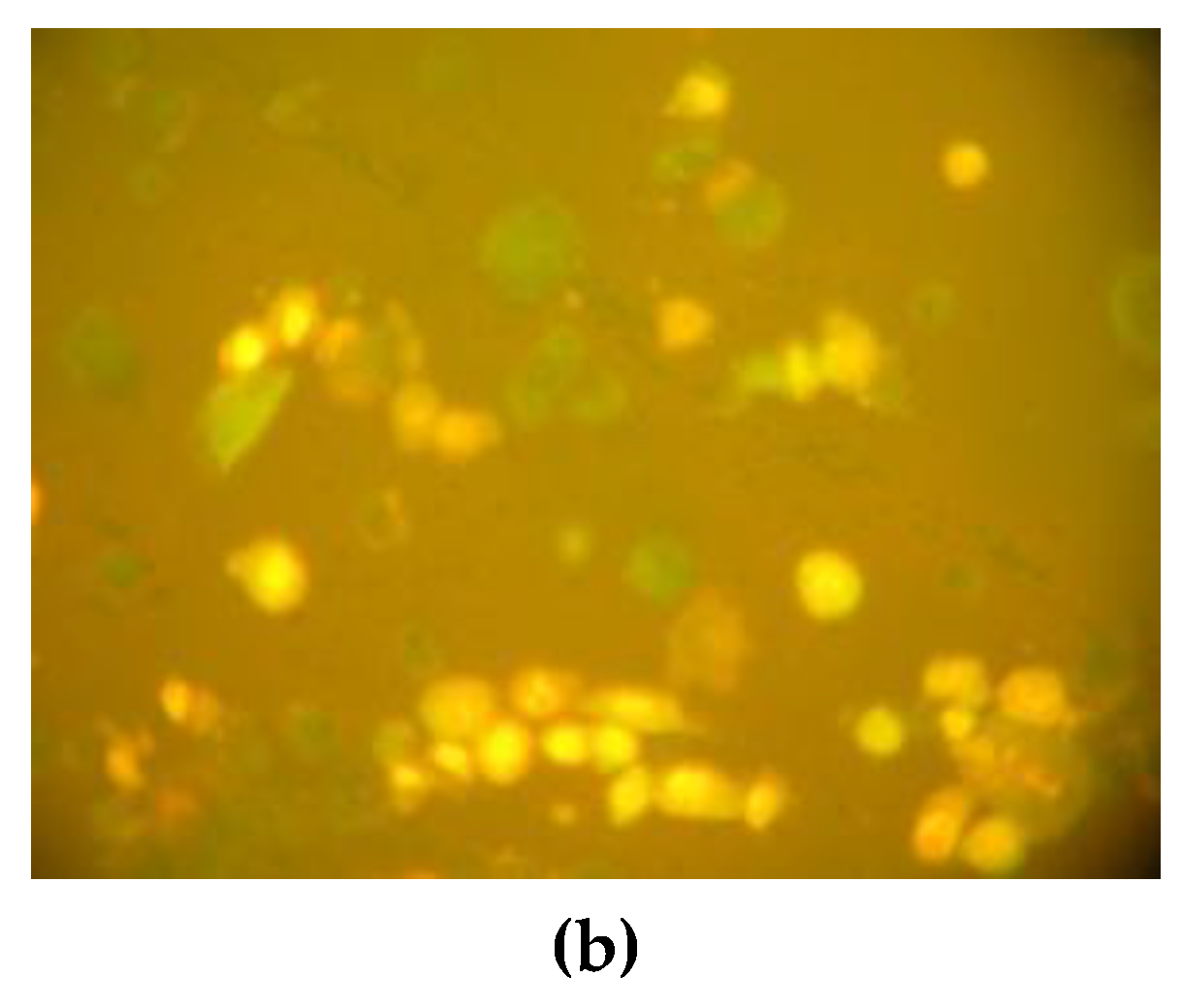
Table 2.
The IC50 value mMdetermined after 24 and 48h of caffeine treatment in HeLa (cervical carcinoma), A549 (lung adenocarcinoma), and HT29 (colorectal carcinoma).
Table 2.
The IC50 value mMdetermined after 24 and 48h of caffeine treatment in HeLa (cervical carcinoma), A549 (lung adenocarcinoma), and HT29 (colorectal carcinoma).
| Cell line | Caffeine24h | Caffeine48h |
|---|---|---|
| HeLa | 2.44 | 2.03 |
| A549 | 3.38 | 2.44 |
| HT29 | 3.41 | 2.01 |
| MRC-5 | 3.55 | 2.62 |
Abbreviations:normal lung fibroblasts (MRC-5) - control cell line.
Table 3.
The IC50 value determined after 24 and 48h of (Met + Caff)treatmentinHeLa (cervical carcinoma), A549 (lung adenocarcinoma), and HT29 (colorectal carcinoma).
Table 3.
The IC50 value determined after 24 and 48h of (Met + Caff)treatmentinHeLa (cervical carcinoma), A549 (lung adenocarcinoma), and HT29 (colorectal carcinoma).
| Cell line | 24 h | 48h |
|---|---|---|
| HeLa | 2.23 | 2.40 |
| A549 | 12.39 | 6.36 |
| HT29 | 18.71 | 13.46 |
| MRC-5 | 22.60 | 38.30 |
Abbreviations: Met + Caff, metformin and caffeine,normal lung fibroblasts (MRC-5) - control cell line.
Disclaimer/Publisher’s Note: The statements, opinions and data contained in all publications are solely those of the individual author(s) and contributor(s) and not of MDPI and/or the editor(s). MDPI and/or the editor(s) disclaim responsibility for any injury to people or property resulting from any ideas, methods, instructions or products referred to in the content. |
© 2026 by the authors. Licensee MDPI, Basel, Switzerland. This article is an open access article distributed under the terms and conditions of the Creative Commons Attribution (CC BY) license (http://creativecommons.org/licenses/by/4.0/).
Copyright: This open access article is published under a Creative Commons CC BY 4.0 license, which permit the free download, distribution, and reuse, provided that the author and preprint are cited in any reuse.


