

Submitted:
20 April 2026
Posted:
22 April 2026
You are already at the latest version
Abstract
Fabry disease is an X-linked lysosomal storage disease that leads to the intracellular ac-cumulation of glycosphingolipids in many tissues and fluids, including the kidney.
We report a single family with Fabry disease that includes 7 patients carrying the path-ogenic variant c.797A>C in the GLA gene, with remarkable variability of kidney in-volvement, assessed based on the clinical, biological and histological data. The patients were monitored for a period of 2–9 years, and all of them received enzyme replacement therapy. This study provides valuable insights into kidney involvement evaluated through kidney biopsy, personalized management strategies for family members ac-cording with their phenotype, and long-term follow-up of the kidney function. We un-derscore the importance of molecular screening of the GLA gene in all family members for early identification of the disease and early initiation of specific treatment that can potentially prevent or delay the progression of the disease.
Keywords:
Fabry disease
; family screening
; kidney involvement
; kidney biopsy
1. Introduction
Fabry disease (FD) is a systemic, rare, X-linked, recessive lysosomal storage disease caused by pathogenic variants in α-galactosidase A (GLA) gene that leads to severe or-gan damage, including kidney failure, hypertrophic cardiomyopathy and stroke [1,2]. Diagnostic delays are determined by phenotype variability, rarity of the disease, and non-specificity of early symptoms [3].
Fabry nephropathy is an important feature and one of the major complications of Fabry disease [4]. Untreated classically affected males develop proteinuria and progressive renal impairment in the second to third decades of life and typically progress to kidney failure by the fourth to fifth decades of life [2,4,5]. In women with Fabry, be-cause of the random X-chromosomal inactivation, the disease progression is variable, ranging from nonprogressive asymptomatic carriers to a classic phenotype, with symptoms as severe as men [6,7].Clinical diagnosis of Fabry nephropathy rely on GFR <90 ml/min/1.73 m2, albuminuria >30 mg/g creatinine, and proteinuria >300 mg/day or >300 mg/g creatinine, after the exclusion of other kidney diseases [5]. Morphologic studies have demonstrated that kidney lesions are present even before clinical signs of nephropathy become visible [8,9,10,11,12,13]. Pathological albuminuria and proteinuria have as corresponding histological abnormalities globotriaosylceramide (GL-3) accumulation in podocytes. At the ultrastructural level, podocyte injury and foot process effacement precede pathological albuminuria [2,8,9,10,11,12,13,14,15]. GL-3 storage could also be observed in various kidney cell types: distal tubules, epithelium of the loop of Henle, endothelial and smooth muscle cells of the renal arterioles [2,11]. Impaired kidney function with a progressively decrease in glomerular filtration rate occurs in patients with chronic histological lesions of glomerulosclerosis, tubular atrophy, interstitial fibrosis, microvascular endothelial GL-3 accumulation, and arteriolar injury [5,11,14]. Kidney biopsy may be a very important diagnostic tool for the assessment of renal involvement and for the exclusion of the coexistence of other kidney disease [2,5,13,16,17]. Kidney involvement in Fabry disease has significant variability between patients, even in those with the same pathogenic GLA gene variant from the same family [18,19,20,21,22,23,24].
In this case report, we describe a family with Fabry disease (FD) with remarkable variability of the renal phenotype within the family members. We highlight the im-portance of appropriate family screening, and of the assessment of kidney impairment in order to establish the indication for specific treatment initiation. We also report the long-term follow-up of the members of the family, showing disease progression and demonstrating the importance of timely treatment initiation. Between 2017 and 2026, all the patients were monitored by our Fabry multidisciplinary team. The duration of follow-up, between diagnosis and the latest evaluation, ranged from 2 to 9 years.
2. Case Presentation
Seven patients (3 males and 4 females) from the same family spanning two generations (Figure 1), who were comprehensively evaluated by the multidisciplinary team of the Expert Center for Rare Disease of the Fundeni Clinical Institute, Bucharest, and Emer-gency Institute for Cardiovascular Diseases "Prof. Dr. C. C. Iliescu", Bucharest, were retrospectively investigated in this study. We collected data regarding demographics, clinical, biological, histological, and molecular data, clinical events and comorbidities, at baseline and during a follow-up period of up to 9 years.
The family index case (II-1) is a 49-year-old female with a history of hypertrophic cardiomyopathy and a stroke at the age of 43. Six years after the first clinical manifestations, she was diagnosed with Fabry disease by a cardiologist based on clinical phenotype and genetic testing. Molecular analysis identified a pathogenic missense classic GLA variant (c.797A>C; p.Asp266Ala). Specific laboratory tests for FD found borderline α-galactosidase level at 1.2 μmol/l/h (cut-off >1.2), and mildly increased lyso-GL-3 at 6.7 ng/mL (cut-off <3.5) (Table 1). Cardiological workup revealed a short PR interval on electrocardiogram and increased left ventricular (LV) voltage, severe biventricular hypertrophic cardiomyopathy, and preserved LV ejection fraction. She also presented perioral angiokeratoma at the skin level, and acroparesthesia, white matter lesions and chronic lacunar ischemic lesions as neurological manifestations. Nephrological evaluation showed microalbuminuria, proteinuria, and mildly to moderately decreased eGFR, corresponding to chronic kidney disease (CKD) stage G3a (Table 1). Ultrasound showed a decrease in kidneys size and parenchyma. Kidney biopsy was performed to broaden the evaluation and showed specific lesions and chronic lesions. Vacuoles were frequently observed in podocytes, tubules, and endothelial cells, corresponding to extracted GL-3 deposits (Figure 2, panel a). Segmental and global glomerulosclerosis (Figure 2, panel b), moderate interstitial fibrosis, tubular atrophy, and vasculopathy were also observed.
Therapeutic management comprised an angiotensin receptor inhibitor for decreasing proteinuria and enzyme replacement therapy (ERT) with agalsidase beta at a dose of 1 mg/kgc every 2 weeks. Kidney function stabilized and subsequently slowly improved (Figure 3). From a cardiological point of view, the patient remained symptomatic under treatment, and she underwent surgical septal myectomy and mitral valvuloplasty, with favorable evolution [25].
Molecular, clinical, and biochemical tests were extended to the proband’s family members. The pedigree of the family is shown in Figure 1. Six additional affected family members were identified. Fabry disease-specific features, renal manifestations at baseline, kidney biopsy and extrarenal phenotype for the entire family are presented in Table 1.
The index patient had 1 son and 1 daughter. The proband’s 29-year-old son (number III-1) had the GLA familial variant, the level of α-GLA activity was 0.0 µmol/l/h, and lyso-GL-3 was 129.2 ng/ml. He presented acroparesthesia, angiokeratomas, hypohidrosis, mild decreased eGFR (78 ml/min/1.73 m2), and mild proteinuria (240 mg/day). He also had cornea verticillata, normal brain magnetic resonance imaging (MRI) exam, and normal cardiological evaluation (ECG, transthoracic echocardiography, and cardiac MRI). Kidney biopsy specimen evaluated by light microscopy showed typical GL3 ac-cumulation in the podocytes, distal tubular epithelium (Figure 4, panels a and b), mesangium, and parietal epithelium. Arteries presented deposits in endothelial and smooth muscle cells (Figure 4, panel c). Electron microscopy (EM) revealed numerous zebra bodies within the podocyte cytoplasm in the glomerulus (Figure 5, panels a, b, c). In EM we observed segmental podocytes foot process effacement.
The sister of the index patient (II-2) had kidney failure requiring dialysis and died at the age of 54. One of her sons had kidney failure, performed hemodialysis and died at 28 years old. Her second son, patient number III-3, was identified with familial genotype at 29 years old and had the level of α-GLA activity of 0.0 µmol/l/h and lyso-GL-3 of 68.2 ng/ml. He had been known with moderate to severe CKD for 2 years, and at Fabry disease diagnosis had severe chronic kidney disease, corresponding to stage G4 CKD, and secondary arterial hypertension (Table 1). Due to advanced CKD, we did not perform kidney biopsy on this patient. Multidisciplinary evaluation also revealed other target organ impairments: left ventricular hypertrophy, acroparesthesia, white matter lesions on brain MRI, hypohidrosis, and cornea verticillata.
The two related young male patients, patient III-1 and patient III-3, had the same age (29 years) at diagnosis but had remarkable different disease severity, and, also, different disease evolution and life trajectory. Following the diagnosis and complete evaluation, both patients started ERT. The patient III-1 received ERT when he presented with mildly decreased eGFR and mild proteinuria. After nine years of follow-up, his general condition and kidney function were excellent (Figure 3). For his cousin of the same age, patient III-3, ERT was initiated after he had already presented with advanced organ damage. Eight months after the diagnosis, despite the initiation of ERT, he had a rapid deterioration of kidney function and required hemodialysis. Unfortunately, after 2 years of hemodialysis, he died at home of sudden cardiac arrest. In his case, the treatment was ineffective for kidney impairment but was indicated in order to prevent left ventricular hypertrophy progression and other target organ damage and to maintain the eligibility for kidney transplantation.
Upon family screening another 2 females and two children were diagnosed with the familial genetic variant. The females were the proband′s daughter (III-2) and the proband’s sister (II-3).
The proband′s daughter, patient III-2, carried the heterozygous GLA c.797A>C variant, had decreased α-Gal A activity (0.7 µmol/l/h) and slightly increased lyso-GL-3 (3.9 ng/ml). The multidisciplinary clinical evaluation showed acroparesthesia and an-giokeratomas on the lips, cornea verticillata but normal heart structure and function, a normal T1 value on cardiac MRI, and normal cerebral MRI. Nephrological evaluation showed mildly decreased eGFR (eGFR 88 ml/min/1.73 m2), 24-hour urinary protein ex-cretion of 200 mg, without albuminuria. To better evaluate kidney involvement, kidney biopsy was performed. Despite the mild biological abnormality, the kidney histology showed numerous lysosomes with lamellated contents in podocytes, mesangial cells, parietal epithelial cells, vascular smooth muscle cells, tubular epithelia of the distal tu-bules, and podocyte foot effacement in the affected podocytes (Figure 6). In this heter-ozygous female, the podocytes were heterogeneously affected by the disease due to random inactivation of the X chromosome during embryogenesis (Figure 6, panel a). The clinical and biological data from the initial evaluation did not meet the criteria for initiation of ERT according to the Romanian national protocol criteria for initiating ERT at that time, and annually multidisciplinary follow-up was recommended. Two years later, she started ERT with agalsidase beta, and her kidney function remained stable after 5 years of follow-up (Figure 3).
Patient II-3, the 45-year-old sister of the index case, had the familial variant, a low α-GLA activity (0.4 µmol/l/h), and increased plasma lyso-GL-3 (10.7 ng/mL). Clinically, she presented with fatigue, vertigo, hearing disorders, and acroparesthesia. Cardio-logical evaluation showed mild mitral regurgitation, mild tricuspid regurgitation with a spontaneous tendency to bradycardia. Neurological evaluation revealed sensitive polyneuropathy, hypohidrosis history of transient ischemic attack and chronic vertigo, while brain MRI showed cerebral small vessels disease. Nephrological examination identified normal kidney function, but our experience showed that normal standard assessment of the kidney cannot rule out kidney involvement in female patients with FD [13]. We performed a kidney biopsy, which revealed numerous lysosomal inclusions in podocytes (Figure 7, panels a and b), vascular smooth muscle cells, distal tubules and parietal epithelial cells.
The patient II-3 had two children who were both diagnosed with the GLA familial variant: the 9-year-old son (III-7) and 17-year-old daughter (III-8).
The 9-year-old boy (III-7) presented with undetectable α-GLA activity and severely increased plasma lyso-GL-3 (101.1 ng/mL). As concomitant pathology, he had type 1 diabetes mellitus from the age of 4. He was evaluated in the department of pediatric nephrology, and he was diagnosed with mildly decreased GFR (eGFR = 87.5 ml/min/1,73 m2), without albuminuria. We performed kidney biopsy to assess kidney involvement in Fabry disease and if there were superimposed lesions determined by diabetes. Kidney biopsy showed lamellar inclusions in the podocytes of all glomeruli (Figure 8, panels a, b) and foot processes effacement. Additionally, numerous zebra bodies were visible in endothelium, vascular smooth muscle cells (Figure 8, panels b, c), and in the epithelia of the distal tubules. Cardiological evaluation showed mild left ventricular hypertrophy at transthoracic echocardiography and low native T1 value (880-920ms) at cardiac MRI. Neurological evaluation revealed acroparesthesia, but brain MRI was normal. Due to multiple target organ involvement, ERT treatment was started at the age of 10. The evolution of kidney function was favorable during the 5 years of follow-up (Figure 3).
The 17-year-old female (patient III-8) was initially evaluated in the pediatric nephrology department and had cornea verticillata, but no other signs of target organ involvement. After the age of 18, she was monitored in our clinic, and we observed intermittent microalbuminuria. We deepened her assessment by performing kidney biopsy, which revealed numerous GL3 inclusions in the podocytes, without uniform distribution of GL3 inclusions in podocytes (Figure 9, panels a and b). Segmental effacement of podocyte foot processes and rare segmental detachment were also observed. Numerous GL3 inclusions were present in the parietal epithelial cells and arterial smooth muscle cells. Occasional GL3 inclusions were present in the endothelial cells, and rare GL3 inclusions were present in the mesangial cells and peritubular capillaries. At that time, she did not meet the criteria for initiation of ERT according to the Romanian national protocol criteria, and annually follow-up was recommended. She was monitored through clinical, biological and imaging as well as the evolution of biomarkers. We observed persistent microalbuminuria and a decrease in eGFR during the 4 years of follow-up. The disease further manifested through pain in the extremities and hearing loss, while lyso-GL-3 progressively increased. She was started on ERT (agalsidase alfa) at the age of 22.
3. Discussion
We present a large family diagnosed with Fabry disease demonstrating significant differences in the phenotype between the members. Our findings confirm previous data from the literature reporting high variability of organ involvement in patients from the same families [18,19,20,21,22,23,24]. A remarkable variability in renal disease was documented in a large Slovenian family with FD, in which some family members had kidney failure and some other members had normal kidney function, but presented with proteinuria [18]. In addition, an extreme variability of disease manifestations was observed in an extended Italian family and emphasized the need to consider other factors involved in the pathogenesis of FD [20]. Rigoldi et al. showed a high degree of intrafamilial phenotypic variability and underscored the difficulty in making an accurate prognosis for young family members based on their family history [21]. Genotype-phenotype correlations lack consistency and predictive power. In our case report, the same pathogenic GLA variant had notable variable phenotypes in terms of target organs and variability of renal manifestations in relation to age and gender. The proband had severe cardiac manifestation and moderate kidney damage, her son and daughter had mild kidney involvement, one sister and her two sons had severe kidney disease and needed dialysis, and her second sister had preponderant neurologic involvement. Family members had varying kidney involvement, ranging from subclinical kidney involvement to severe kidney involvement. Family screening identified 4 young patients in early stages of the disease (2 young adults, 1 teenager, and 1 child), but one young adult was diagnosed in an advanced stage of the disease, with severe kidney involvement and hypertrophic cardiomyopathy.
We underscored that cascade screening does not always identify patients in early stages of kidney involvement, despite their young age. The reported family included two young male cousins of the same age. When comparing their disease extension at diagnosis, one male had mild kidney involvement, low T1 on cardiac MRI, no enzymatic activity, and high lyso-GL-3 while the other had severe kidney disease, hypertrophic cardiomyopathy, no enzymatic activity and high lyso-GL-3. Both male patients had the same genotype and no enzymatic α-GAL A activity, suggesting that other genetic and non-genetic modifiers could influence the clinical phenotype. Also, the progression of the disease under ERT was radically different. The male with mild kidney involvement had normal kidney function after 9 years of ERT, whereas the second one rapidly progressed to kidney failure, and, ultimately, died.
According to the Fabry International Registry data, the progression of kidney disease under ERT is related to the severity of the disease before treatment. The indicators for poor renal prognosis are urinary protein/creatinine ratio above 0.5 g/g, and ≥ 50% sclerotic glomeruli at baseline [37]. Our 29-year-old patient that rapidly progressed to kidney failure had increased proteinuria and severe chronic disease at diagnosis, showing that early diagnosis is crucial for the response to ERT.
Fabry disease is a multisystemic disease that requires a high index of suspicion as the phenotype could be classical or atypical and family history could reveal other affected organs. The index case from our family had cardiac involvement, but her family history showed kidney involvement. The diagnostic approach should consider any organ involvement and needs a good understanding of early biomarkers and phenotypic heterogeneity. Diagnostic delay is common due to the non-specificity of disease manifestations and the rarity of the disease. Family genetic testing is an effective strategy to identify the affected members, most of whom younger and in earlier stages of the disease than the proband. The members of the studied family with early diagnosis after cascade screening had the best outcome.
In this family, females developed renal manifestations later than males. Female patients showed a wide spectrum of disease expression, ranging from severe Fabry disease manifestations—including kidney failure and advanced cardiac involvement—to subclinical organ involvement. Predicting the clinical phenotype in females remains particularly challenging. Phenotypic variability in heterozygous females is influenced by skewed X-chromosome inactivation, residual α-galactosidase An activity, and age. Current treatment guidelines recommend initiation of disease-specific therapy in females once evidence of target organ involvement is demonstrated [14,27]. Therefore, careful evaluation by a multidisciplinary clinical team is essential. In our cohort, renal involvement among female patients with Fabry disease ranged from asymptomatic or mildly symptomatic stages to severe disease with kidney failure. These findings emphasize that standard renal assessment based solely on clinical and laboratory parameters cannot reliably exclude kidney involvement in female patients. Kidney biopsy represents a valuable diagnostic tool for detecting early renal involvement and provides important support for therapeutic decision-making.
Furthermore, this report documents the clinical and histological findings within this family and the longitudinal evolution of kidney function over a follow-up period ranging from 2 to 9 years. This longitudinal assessment offers insight into renal outcomes across different degrees of kidney involvement and at various stages of ERT initiation. Renal manifestations included severe reduction in GFR with significant proteinuria (III-3), mildly to moderately reduced GFR with proteinuria (II-3), mild reduction in GFR with microalbuminuria/proteinuria (III-1, III-2) or normoalbuminuria (III-7), hyperfiltration with normoalbuminuria (III-8), and preserved kidney function (II-3). Notably, all patients who underwent kidney biopsy exhibited Fabry-specific lesions, and in some cases, chronic histological damage (II-1, III-1). With the exception of the patient who presented with advanced renal impairment at diagnosis, all other patients demonstrated a favorable renal course after ERT initiation.
Despite recent advances in understanding the molecular mechanisms of Fabry disease, including contributions from genetics and transcriptomics, significant knowledge gaps remain regarding intrafamilial phenotypic variability, optimal use of biomarkers for diagnosis, and the identification of prognostic markers to guide treatment initiation. The underlying causes of phenotypic heterogeneity within the same family continue to be investigated. Emerging evidence indicates that DNA methylation and genetic modifiers play a key role in modulating disease expression in Fabry disease [28]. Altarescu et al. presented preliminary data from our reported family suggesting that non-GLA genes and related pathways may influence phenotypic variability. Differentially expressed gene (DEG) analysis identified subsets of genes that were significantly up-regulated or down-regulated in both male and female patients with Fabry disease. Functional analysis revealed that these DEGs are involved in renal, vascular, and cardiac function, as well as sphingolipid metabolism, but transcriptomic profiling was proposed as an additional tool to improve the interpretation of variable phenotypes in FD patients from the same family [29]. Transcriptome analysis facilitates the identification of early gene expression changes associated with the development and progression of Fabry nephropathy [30]. A recent transcriptomic study examining glomerular, tubular, and small arterial gene expression using RNA sequencing demonstrated that, with few exceptions—particularly in arterial tissue—early initiation of ERT in patients with classical Fabry disease can result in sustained normalization of Fabry nephropathy-related gene expression patterns [31]. Further studies are warranted to deepen the understanding of gene expression profiles and their contribution to intrafamilial phenotypic variability.
4. Conclusions
Our findings from a single family highlight the phenotypic variability of kidney involvement in the same GLA variant of FD. Genetic testing of the entire family was an effective method to identify other family members affected by Fabry disease and to enable early diagnosis. This study provides personalized management strategies and valuable insights into kidney involvement in the same family, and for long-term evolution of kidney function. We underline the importance of kidney biopsy in detecting early kidney manifestations and guiding therapeutic decisions, potentially improving long-term outcomes.
Author Contributions
Conceptualization, E.E.R.,G.I.; Data curation, E.E.R. and B.M.S.; Methodology, E.E.R. and G.I.; Investigation, E.E.R., R.O.J., C.S., R.A., M.G., F.M., A.P., V.S., G.I.; Writing—original draft, E.E.R., F.M., B.S.; Writing—review and editing E.E.R., G.I.; Formal analysis and software, E.E.R. and B.M.S.; Supervision, G.I., G.A. All authors have read and agreed to the published version of the manuscript.
Funding
This research received no external funding.
Conflicts of Interest
The authors declare no conflict of interest.
References
- Zarate, Y.A.; Hopkin, R. J. Fabry's disease. Lancet 2008, 372, 1427–1435. [Google Scholar] [CrossRef] [PubMed]
- Germain, D.P. Fabry disease. Orphanet J Rare Dis. 2010, 5, 30. [Google Scholar] [CrossRef] [PubMed]
- Germain, D.P.; Moiseev, S.; Suárez-Obando, F.; Al Ismaili, F.; Al Khawaja, H.; Altarescu, G.; Barreto, F.C.; Haddoum, F.; Hadipour, F.; Maksimova, I.; Kramis, M.; Nampoothiri, S.; Nguyen, K.N.; Niu, D.M.; Politei, J.; Ro, L.S.; Vu Chi, D.; Chen, N.; Kutsev, S. The benefits and challenges of family genetic testing in rare genetic diseases-lessons from Fabry disease. Mol Genet Genomic Med. 2021, 9, e1666. [Google Scholar] [CrossRef] [PubMed]
- Schiffmann, R.; Warnock, D.G.; Banikazemi, M.; Bultas, J.; Linthorst, G.E.; Packman, S.; Sorensen, S.A.; Wilcox, W.R.; Desnick, R.J. Fabry disease: progression of nephropathy, and prevalence of cardiac and cerebrovascular events before enzyme replacement therapy. Nephrol Dial Transplant. 2009, 24, 2102–2111. [Google Scholar] [CrossRef]
- Waldek, S.; Feriozzi, S. Fabry nephropathy: a review - how can we optimize the management of Fabry nephropathy? BMC Nephrol 2014, 15, 72. [Google Scholar] [CrossRef]
- Mursă, A.; Militaru, S.; Rusu, E.; Onciul, S.; Neculae, G.; Adam, R.; Ciobotaru, L.; Stefănescu, V.; Dulămea, A.; Rădoi, V.; Popescu, B.A.; Ismail, G.; Jurcuţ, R. Fabry disease phenotyping in women from the complete Romanian cohort - time for early diagnostic awareness. Rom J Intern Med. 2024, 62, 414–429. [Google Scholar] [CrossRef]
- Wilcox, W.R.; Oliveira, J.P.; Hopkin, R.J.; Ortiz, A.; Banikazemi, M.; Feldt-Rasmussen, U.; Sims, K.; Waldek, S.; Pastores, G.M.; Lee, P.; Eng, C.M.; Marodi, L.; Stanford, K.E.; Breunig, F.; Wanner, C.; Warnock, D.G.; Lemay, R.M.; Germain, D.P. Fabry Registry. Females with Fabry disease frequently have major organ involvement: lessons from the Fabry Registry. Mol Genet Metab. 2008, 93, 112–128. [Google Scholar] [CrossRef]
- Najafian, B.; Svarstad, E.; Bostad, L.; Gubler, M.C.; Tøndel, C.; Whitley, C.; Mauer, M. Progressive podocyte injury and globotriaosylceramide (GL-3) accumulation in young patients with Fabry disease. Kidney Int. 2011, 79, 663–670. [Google Scholar] [CrossRef]
- Tøndel, C.; Bostad, L.; Hirth, A.; Svarstad, E. Renal biopsy findings in children and adolescents with Fabry disease and minimal albuminuria. Am J Kidney Dis. 2008, 51, 767–776. [Google Scholar] [CrossRef]
- Ramaswami, U.; Najafian, B.; Schieppati, A.; Mauer, M.; Bichet, D.G. Assessment of renal pathology and dysfunction in children with Fabry disease. Clin J Am Soc Nephrol. 2010, 5, 365–370. [Google Scholar] [CrossRef]
- Fogo, A.B.; Bostad, L.; Svarstad, E.; Cook, W.J.; Moll, S.; Barbey, F.; Geldenhuys, L.; West, M.; Ferluga, D.; Vujkovac, B.; Howie, A. J.; Burns, A.; Reeve, R.; Waldek, S.; Noël, L.H.; Grünfeld, J.P.; Valbuena, C.; Oliveira, J.P.; Müller, J.; Breunig, F.; Zhang, X.; Warnock, D.G. all members of the International Study Group of Fabry Nephropathy (ISGFN). Scoring system for renal pathology in Fabry disease: report of the International Study Group of Fabry Nephropathy (ISGFN). Nephrol Dial Transplant 2010, 25, 2168–2177. [Google Scholar] [CrossRef]
- Kim, I.Y.; Lee, H.J.; Cheon, C.K. Fabry nephropathy before and after enzyme replacement therapy: important role of renal biopsy in patients with Fabry disease. Kidney Res Clin Pract. 2021, 40, 611–619. [Google Scholar] [CrossRef]
- Rusu, E.E.; Zilisteanu, D.S.; Ciobotaru, L.M.; Gherghiceanu, M.; Procop, A.; Jurcut, R.O.; Dulamea, A.O.; Sorohan, B.M. The Impact of Kidney Biopsy for Fabry Nephropathy Evaluation on Patients’ Management and Long-Term Outcomes: Experience of a Single Center. Biomedicines 2022, 10, 1520. [Google Scholar] [CrossRef] [PubMed]
- Ortiz, A.; Germain, D.P.; Desnick, R.J.; Politei, J.; Mauer, M.; Burlina, A.; Eng, C.; Hopkin, R.J.; Laney, D.; Linhart, A.; Waldek, S.; Wallace, E.; Weidemann, F.; Wilcox, W.R. Fabry disease revisited: Management and treatment recommendations for adult patients. Mol. Genet. Metab. 2018, 123, 416–427. [Google Scholar] [CrossRef] [PubMed]
- Tøndel, C.; Kanai, T.; Larsen, K.K.; Ito, S.; Politei, J.M.; Warnock, D.G.; Svarstad, E. Foot process effacement is an early marker of nephropathy in young classic Fabry patients without albuminuria. Nephron. 2015, 129, 16–21. [Google Scholar] [CrossRef] [PubMed]
- Silva, C.A.B.; Moura-Neto, J.A.; Dos Reis, M.A.; Vieira Neto, O.M.; Barreto, F.C. Renal Manifestations of Fabry Disease: A Narrative Review. Can J Kidney Health Dis. 2021, 8, 2054358120985627. [Google Scholar] [CrossRef]
- Capelli, I.; Martano, L.; Berti, G.M.; Vischini, G.; Lerario, S.; Donadio, V.; Incensi, A.; Aiello, V.; Ciurli, F.; Fabbrizio, B.; Chilotti, S.; Mignani, R.; Pasquinelli, G.; La Manna, G. The Role of Kidney Biopsy in Fabry Disease. Biomedicines 2025, 13, 767. [Google Scholar] [CrossRef]
- Verovnik, F.; Benko, D.; Vujkovac, B.; Linthorst, G.E. Remarkable variability in renal disease in a large Slovenian family with Fabry disease. Eur J Hum Genet. 2004, 12, 678–681. [Google Scholar] [CrossRef]
- Tuttolomondo, A.; Simonetta, I.; Duro, G.; Pecoraro, R.; Miceli, S.; Colomba, P.; Zizzo, C.; Nucera, A.; Daidone, M.; Di Chiara, T.; Scaglione, R.; Della Corte, V.; Corpora, F.; Vogiatzis, D.; Pinto, A. Interfamilial and intrafamilial phenotypic variability in three Sicilian families with Anderson-Fabry disease. Oncotarget 2017, 8, 61415–61424. [Google Scholar] [CrossRef]
- Cammarata, G.; Fatuzzo, P.; Rodolico, M.S.; Colomba, P.; Sicurella, L.; Iemolo, F.; Zizzo, C.; Alessandro, R.; Bartolotta, C.; Duro, G.; Monte, I. High variability of Fabry disease manifestations in an extended Italian family. Biomed Res Int. 2015, 2015, 504784. [Google Scholar] [CrossRef]
- Rigoldi, M.; Concolino, D.; Morrone, A.; Pieruzzi, F.; Ravaglia, R.; Furlan, F.; Santus, F.; Strisciuglio, P.; Torti, G.; Parini, R. Intrafamilial phenotypic variability in four families with Anderson-Fabry disease. Clin Genet. 2014, 86, 258–263. [Google Scholar] [CrossRef]
- Li, J.; Wang, J.; Chen, Y. Phenotypic Diversity on Cardiac Magnetic Resonance in a Han Family With Fabry Disease. CJC Open 2025, 7, 736–739. [Google Scholar] [CrossRef]
- Altarescu, G.M.; Goldfarb, L.G.; Park, K.Y.; Kaneski, C.; Jeffries, N.; Litvak, S.; Nagle, J.W.; Schiffmann, R. Identification of fifteen novel mutations and genotype-phenotype relationship in Fabry disease. Clin Genet. 2001, 60, 46–51. [Google Scholar] [CrossRef]
- Mignani, R.; Moschella, M.; Cenacchi, G.; Donati, I.; Flachi, M.; Grimaldi, D.; Cerretani, D.; Giovanni, P.; Montevecchi, M.; Rigotti, A.; Ravasio, A. Different renal phenotypes in related adult males with Fabry disease with the same classic genotype. Mol Genet Genomic Med. 2017, 5, 438–442. [Google Scholar] [CrossRef]
- Militaru, S.; Adam, R.; Dorobantu, L.; Ferrazzi, P.; Iascone, M.; Radoi, V.; Ismail, G.; Popescu, B.A.; Jurcut, R. Rare presentation and wide intrafamilial variability of Fabry disease: A case report and review of the literature. Anatol J Cardiol. 2019, 22, 154–158. [Google Scholar] [CrossRef]
- Germain, D.P.; Charrow, J.; Desnick, R.J.; Guffon, N.; Kempf, J.; Lachmann, R.H.; Lemay, R.; Linthorst, G.E.; Packman, S.; Scott, C.R.; Waldek, S.; Warnock, D.G.; Weinreb, N.J.; Wilcox, W.R. Ten-year outcome of enzyme replacement therapy with agalsidase beta in patients with Fabry disease. J Med Genet. 2015, 52, 353–358. [Google Scholar] [CrossRef] [PubMed]
- Biegstraaten, M.; Arngrímsson, R.; Barbey, F.; Boks, L.; Cecchi, F.; Deegan, P.B.; Feldt-Rasmussen, U.; Geberhiwot, T.; Germain, D.P.; Hendriksz, C.; Hughes, D.A.; Kantola, I.; Karabul, N.; Lavery, C.; Linthorst, G. E.; Mehta, A.; van de Mheen, E.; Oliveira, J.P.; Parini, R.; Ramaswami, U.; Rudnicki, M.; Serra, A.; Sommer, C.; Sunder-Plassmann, G.; Svarstad, E.; Sweeb, A.; Terryn, W.; Tylki-Szymanska, A.; Tøndel, C.; Vujkovac, B.; Weidemann, F.; Wijburg, F.A.; Woolfson, P.; Hollak, C.E.M. Recommendations for initiation and cessation of enzyme replacement therapy in patients with Fabry disease: The European Fabry Working Group consensus document. Orphanet J. Rare Dis. 2015, 10, 36. [Google Scholar] [CrossRef] [PubMed]
- Singh, J.; Santosh, P.; Ramaswami, U. Epigenetic Mechanisms in Fabry Disease: A Thematic Analysis Linking Differential Methylation Profiles and Genetic Modifiers to Disease Phenotype. Curr. Issues Mol. Biol. 2025, 47, 855. [Google Scholar] [CrossRef] [PubMed]
- Altarescu, G.; Murik, O.; Jurcut, R.; Rusu, E.E.; Mursa, A.; Mann, T.; Eldar-Yedidia, Y.; Zeevi, D.A. Whole blood transcriptomic profiling in the interpretation of variable phenotype presentation in Fabry disease”. Mol Genet Metab. 2022, 138, 6–6. [Google Scholar] [CrossRef]
- Breznik, N.; Levstek, T.; Vujkovac, B.; Cokan Vujkovac, A.; Trebušak Podkrajšek, K. Transcriptomic Approach in Understanding Fabry Nephropathy: A Review of the Literature and Proof-of-Concept. Genes 2025, 16, 601. [Google Scholar] [CrossRef]
- Delaleu, N.; Marti, H.P.; Philipp, S.; Sekulic, M.; Osman, T.; Tøndel, C.; Skrunes, R.; Leh, S.; Svarstad, E.; Nowak, A.; Gaspert, A.; Rusu, E.; Kwee, I.; Rinaldi, A.; Flatberg, A.; Eikrem, O. Systems analyses of the Fabry kidney transcriptome and its response to enzyme replacement therapy identified and cross-validated enzyme replacement therapy-resistant targets amenable to drug repurposing. Kidney Int. 2023, 104, 803–819. [Google Scholar] [CrossRef]
Figure 1.
The family pedigree showed the index case heterozygous female (II-1) and the family screening results. The molecular analysis of the GLA gene showed the c.797A>C variant in 7 pa-tients from two generations. The index patient is marked with an arrow. Both parents of the index case were already deceased (I-1, I-2), both at 73 years old, with the presumed cause of death of liver cirrhosis for the father and pulmonary cancer for the mother. The proband’s son (III-1) and daughter (III-2) had the pathogenic variant in GLA gene. The second branch of the family included the proband’s sister (II-2) with kidney failure needing dialysis. She deceased in the absence of an FD diagnosis, but based on her clinical manifestation and X-linked transmission of the disease, we presume she had it. The patient II-2 had two sons, one deceased with kidney failure on hemodialysis and the other with CKD diagnosed with FD. Cascade genotyping of GLA in the index case sister II-3 and her children showed another 3 affected family members.
Figure 1.
The family pedigree showed the index case heterozygous female (II-1) and the family screening results. The molecular analysis of the GLA gene showed the c.797A>C variant in 7 pa-tients from two generations. The index patient is marked with an arrow. Both parents of the index case were already deceased (I-1, I-2), both at 73 years old, with the presumed cause of death of liver cirrhosis for the father and pulmonary cancer for the mother. The proband’s son (III-1) and daughter (III-2) had the pathogenic variant in GLA gene. The second branch of the family included the proband’s sister (II-2) with kidney failure needing dialysis. She deceased in the absence of an FD diagnosis, but based on her clinical manifestation and X-linked transmission of the disease, we presume she had it. The patient II-2 had two sons, one deceased with kidney failure on hemodialysis and the other with CKD diagnosed with FD. Cascade genotyping of GLA in the index case sister II-3 and her children showed another 3 affected family members.
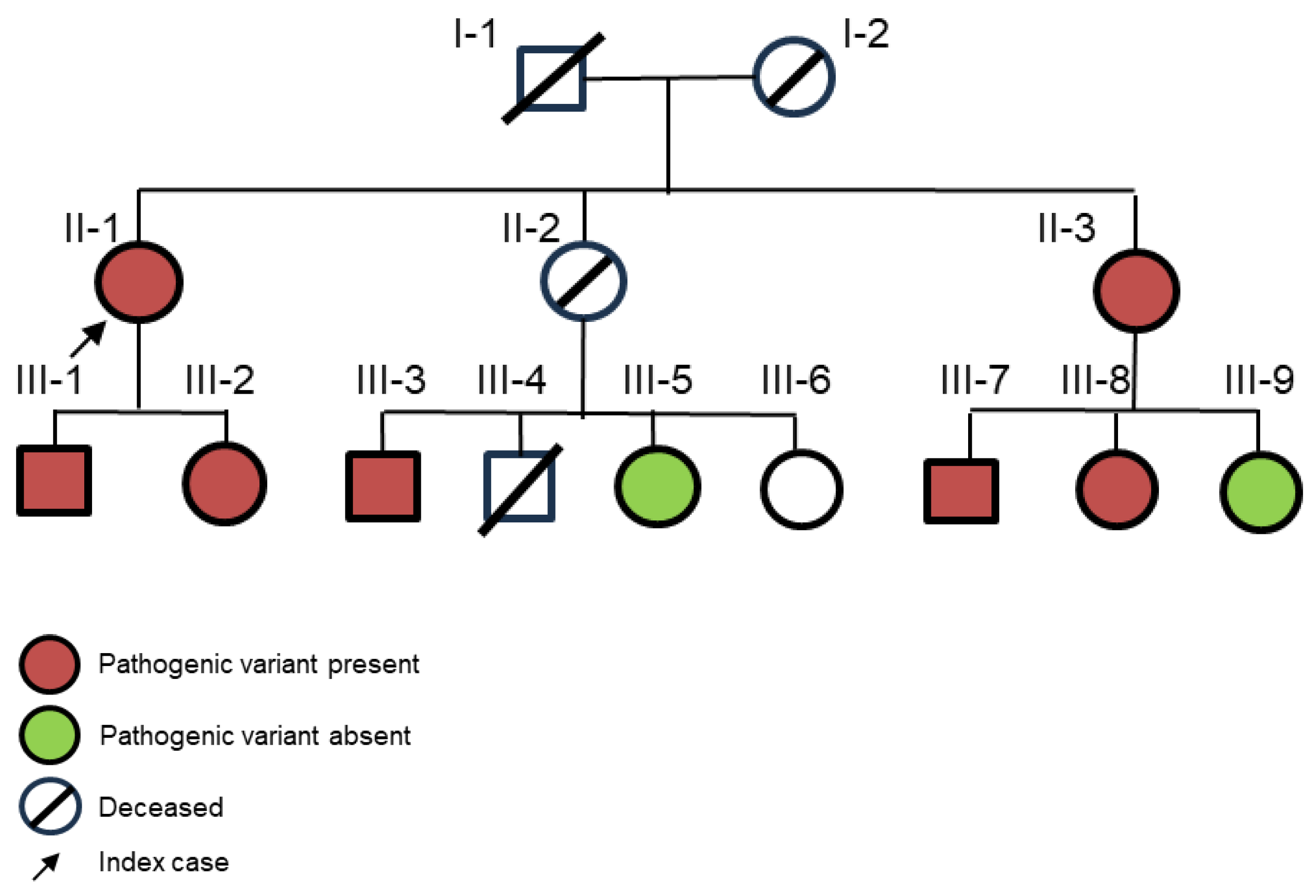
Figure 2.
Light microscopy (hematoxylin and eosin) of the patient II-1: (a) cortical renal parenchyma showing segmental vacuolated appearance of podocytes (arrowhead), (b) global glomerulosclerosis (arrow).
Figure 2.
Light microscopy (hematoxylin and eosin) of the patient II-1: (a) cortical renal parenchyma showing segmental vacuolated appearance of podocytes (arrowhead), (b) global glomerulosclerosis (arrow).
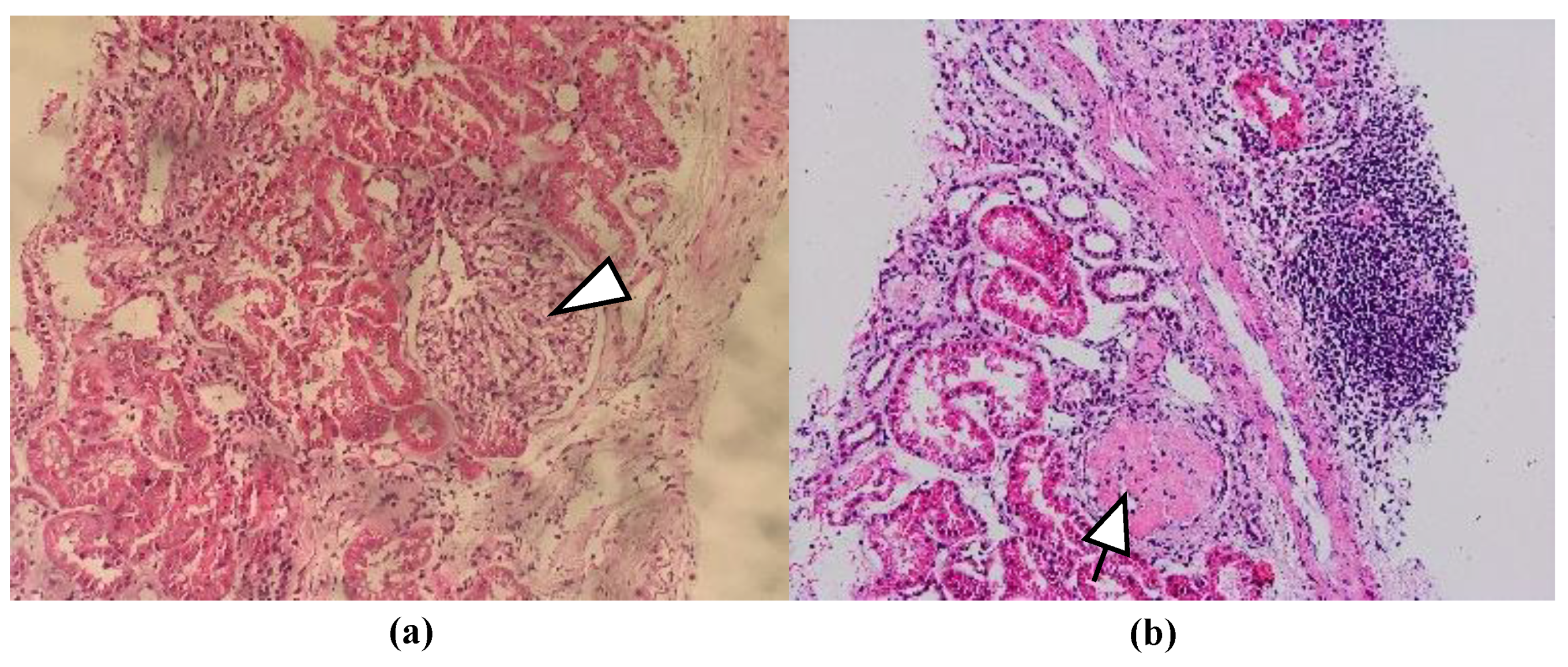
Figure 3.
Evolution of GFR during the follow-up period for family members. The year of treatment initiation is marked by asterisk.
Figure 3.
Evolution of GFR during the follow-up period for family members. The year of treatment initiation is marked by asterisk.
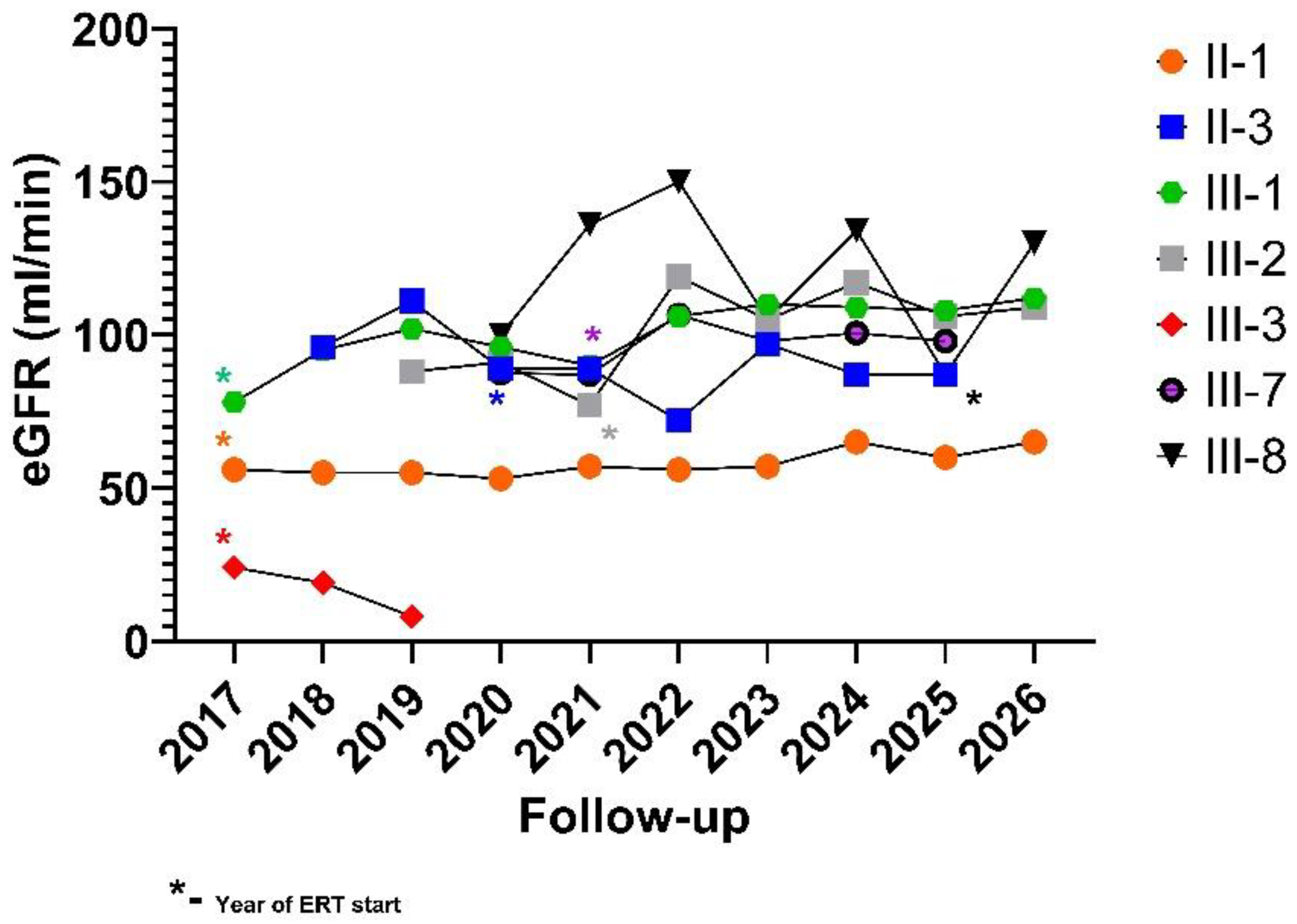
Figure 4.
Light microscopy (toluidine blue staining of resin-embedded section) of the patient III-1: (a) Glomerulus with podocyte densely stained glycosphingolipids lysosomal accumulations–arrowheads. Most podocytes seem to be affected; (b) Distal tubules with glycosphingolipids deposition. Proximal tubules are mostly unaffected by the disease (arrow); (c) Arteriole with lipid accumulation in smooth muscle cells.
Figure 4.
Light microscopy (toluidine blue staining of resin-embedded section) of the patient III-1: (a) Glomerulus with podocyte densely stained glycosphingolipids lysosomal accumulations–arrowheads. Most podocytes seem to be affected; (b) Distal tubules with glycosphingolipids deposition. Proximal tubules are mostly unaffected by the disease (arrow); (c) Arteriole with lipid accumulation in smooth muscle cells.
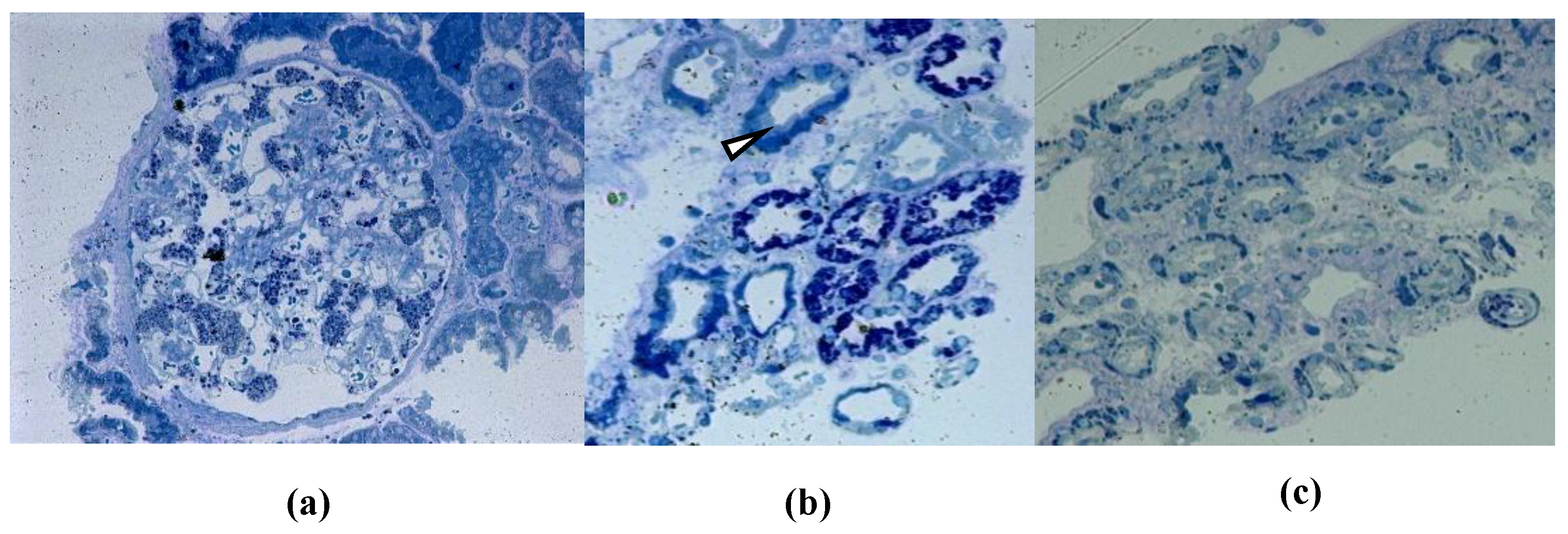
Figure 5.
Electron micrograph images from the patient III-1: (a) A podocyte with characteristic laminated glycosphingolipids lysosomal inclusions (“zebra bodies”) – arrow. Some deposits may be homogenous, without a particular substructure - arrowhead; (b) Characteristic laminated glycosphingolipids inclusion; (c) Glomerular hilum with visible lipid inclusions in extraglomerular mesangial cells – arrowheads.
Figure 5.
Electron micrograph images from the patient III-1: (a) A podocyte with characteristic laminated glycosphingolipids lysosomal inclusions (“zebra bodies”) – arrow. Some deposits may be homogenous, without a particular substructure - arrowhead; (b) Characteristic laminated glycosphingolipids inclusion; (c) Glomerular hilum with visible lipid inclusions in extraglomerular mesangial cells – arrowheads.
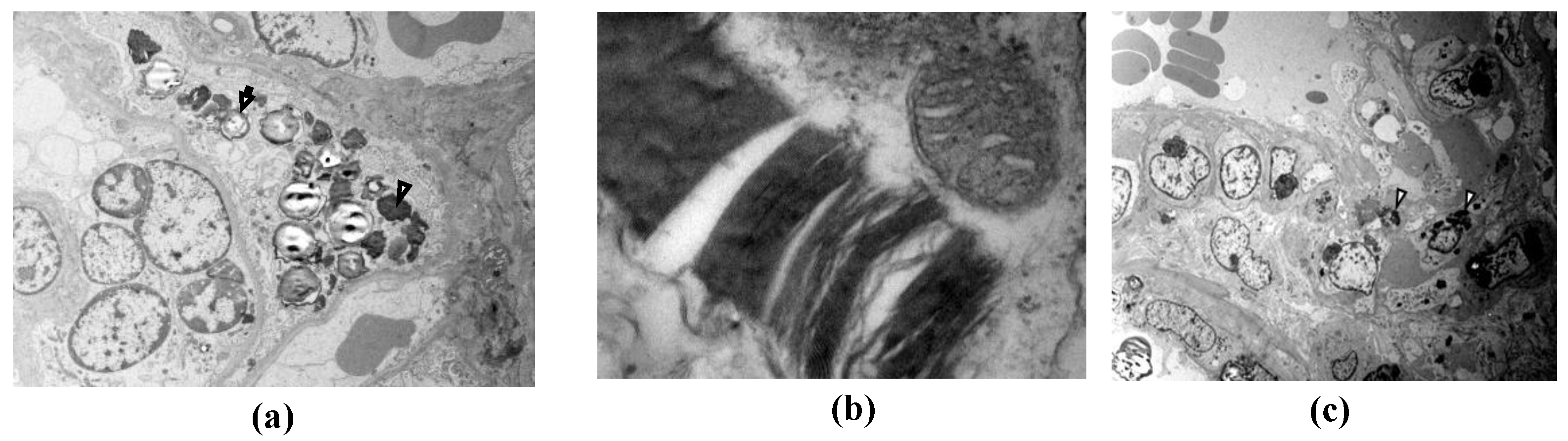
Figure 6.
Light microscopy aspect of resin-embedded tissue sections (toluidine blue) (panels a, b) and electron micrograph (panel c) from patient III-2, a heterozygous female: (a) Glomerulus demonstrating cellular mosaicism due to random X-chromosome inactivation. Note the heterogeneous population of podocytes, with some showing heavy inclusions (arrows) and others appearing normal (arrowheads); (b) tubules with lipid inclusions - arrowhead; (c) Podocyte with characteristic lipid cytoplasmic inclusions.
Figure 6.
Light microscopy aspect of resin-embedded tissue sections (toluidine blue) (panels a, b) and electron micrograph (panel c) from patient III-2, a heterozygous female: (a) Glomerulus demonstrating cellular mosaicism due to random X-chromosome inactivation. Note the heterogeneous population of podocytes, with some showing heavy inclusions (arrows) and others appearing normal (arrowheads); (b) tubules with lipid inclusions - arrowhead; (c) Podocyte with characteristic lipid cytoplasmic inclusions.
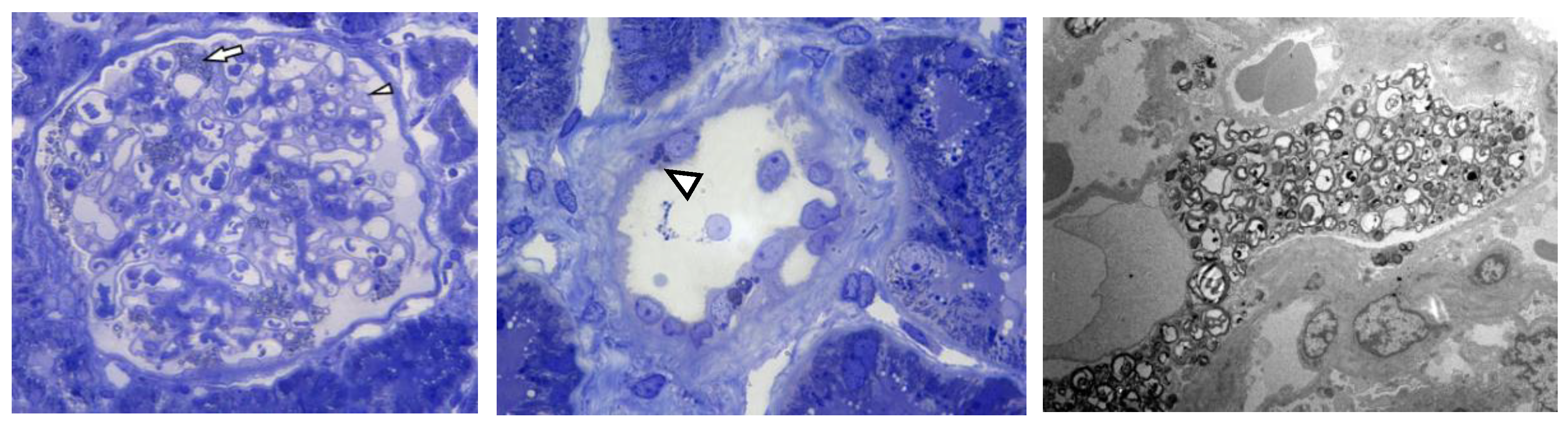
Figure 7.
Light microscopy aspect of resin-embedded tissue sections (toluidine blue) (panel a) and electron micrograph (panel b) from the patient II-3: (a) Glomerulus of patient II-3 demonstrating diffuse, densely stained lysosomal glycosphingolipid accumulations within podocytes (arrowhead); (b) Electron microscopy image showing electron dense, lamellate inclusions in the cytoplasm of podocytes (arrow) and in glomerular mesangial cells (arrowhead).
Figure 7.
Light microscopy aspect of resin-embedded tissue sections (toluidine blue) (panel a) and electron micrograph (panel b) from the patient II-3: (a) Glomerulus of patient II-3 demonstrating diffuse, densely stained lysosomal glycosphingolipid accumulations within podocytes (arrowhead); (b) Electron microscopy image showing electron dense, lamellate inclusions in the cytoplasm of podocytes (arrow) and in glomerular mesangial cells (arrowhead).
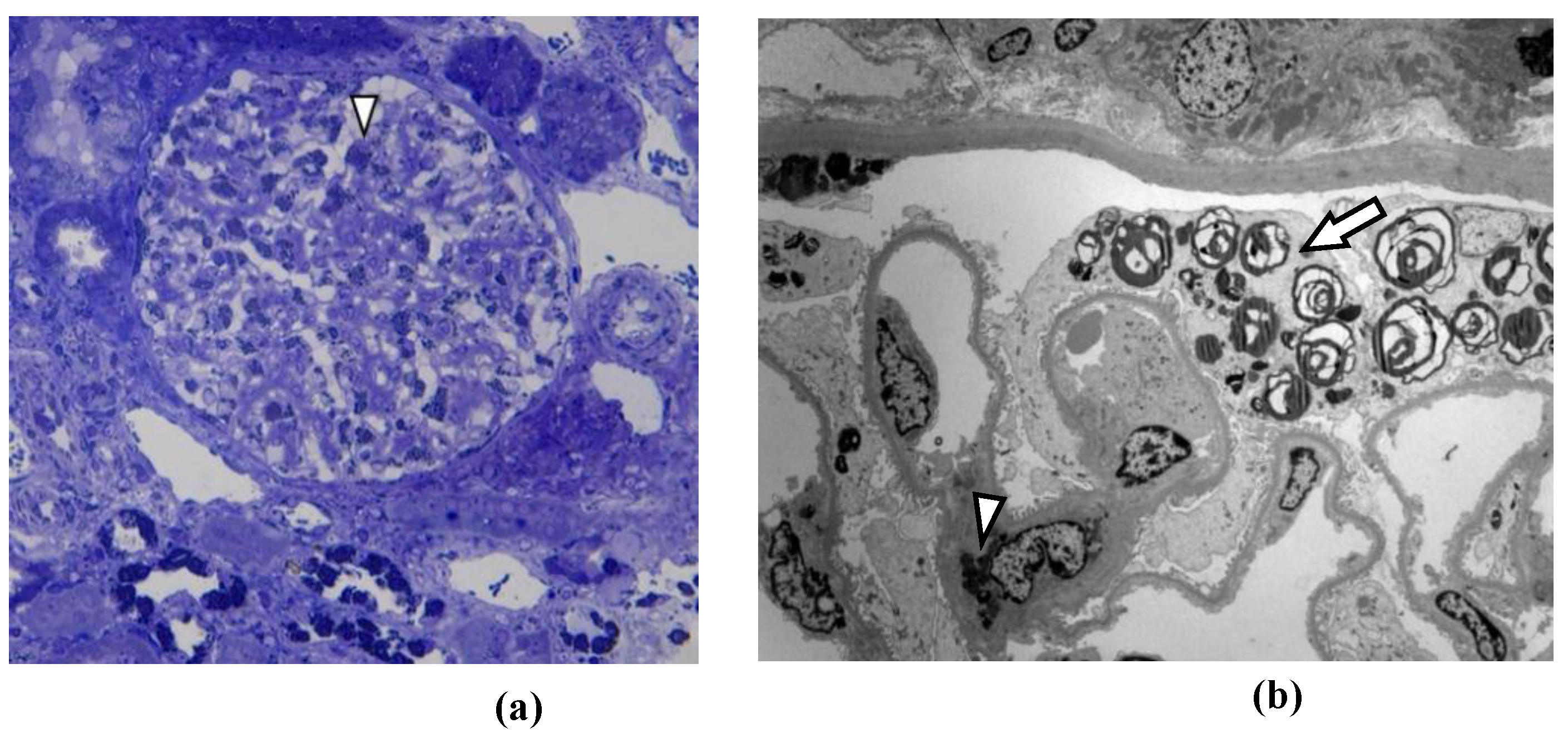
Figure 8.
Kidney biopsy findings from the 9-year-old child (patient III-7): (a) Glomerulus and tubules with lipid deposition (light microscopy, toluidine blue staining of resin-embedded section); (b) podocyte (arrow) and glomerular endothelial cell (arrowhead) with lipid cytoplasmic inclusions (electron microscopy); (c) arteriole with lipid accumulation in smooth muscle cells (electron microscopy).
Figure 8.
Kidney biopsy findings from the 9-year-old child (patient III-7): (a) Glomerulus and tubules with lipid deposition (light microscopy, toluidine blue staining of resin-embedded section); (b) podocyte (arrow) and glomerular endothelial cell (arrowhead) with lipid cytoplasmic inclusions (electron microscopy); (c) arteriole with lipid accumulation in smooth muscle cells (electron microscopy).
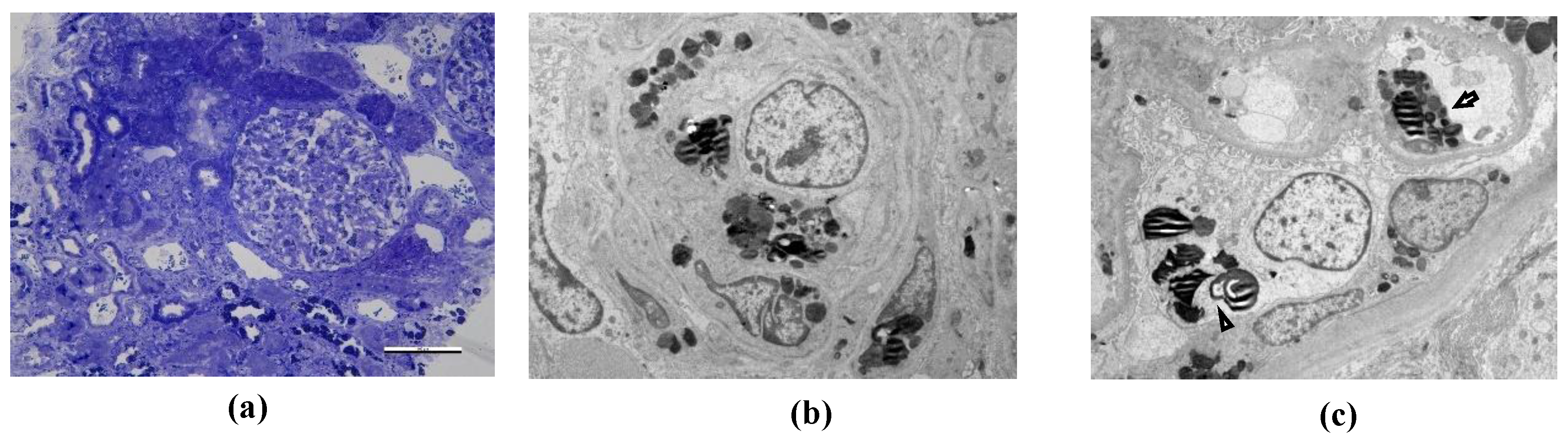
Figure 9.
Electron micrograph images from patient III-8 showing lamellar cytoplasmic inclusions in podocytes (panels a and b).
Figure 9.
Electron micrograph images from patient III-8 showing lamellar cytoplasmic inclusions in podocytes (panels a and b).
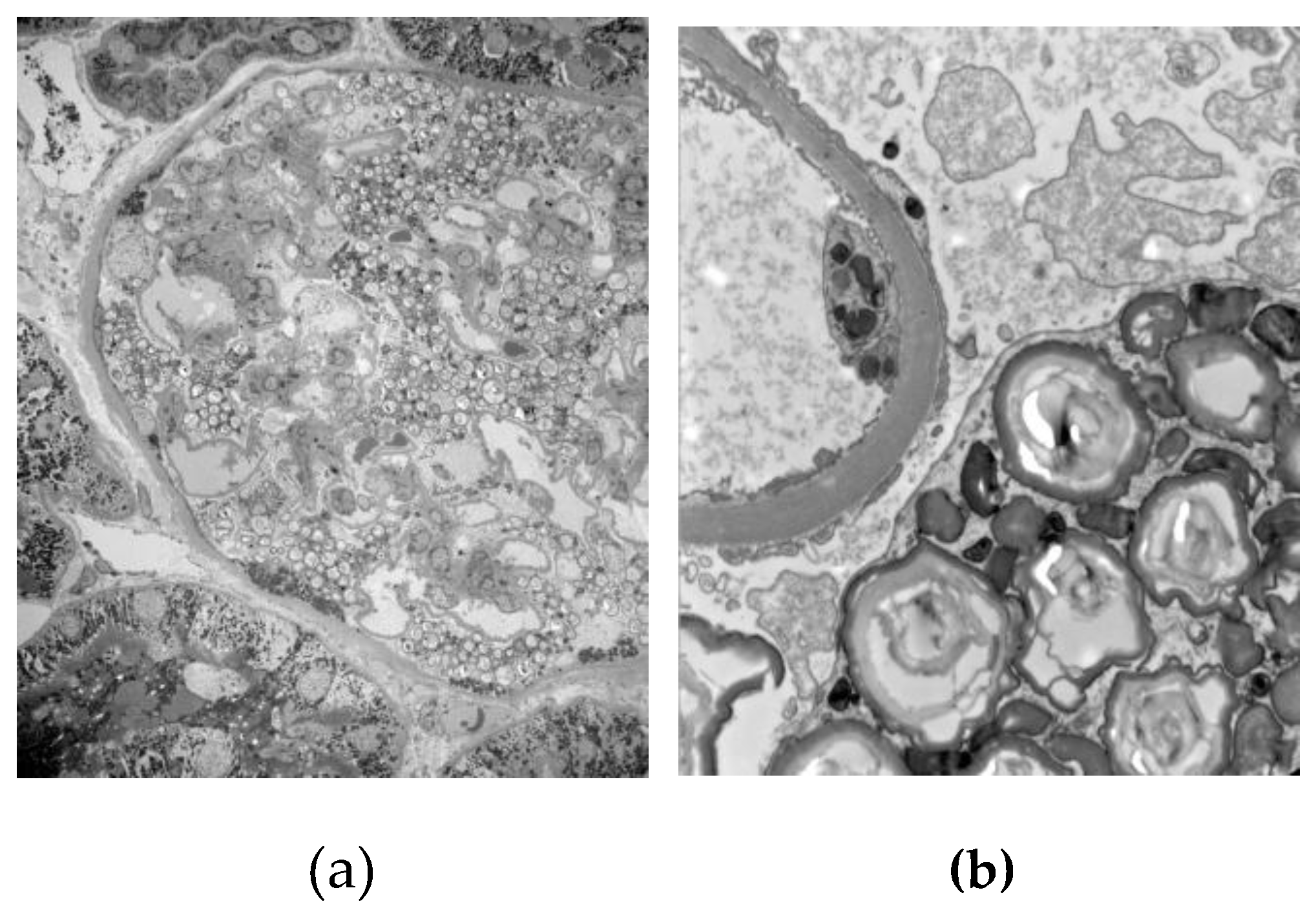

Table 1.
The Fabry disease features, renal involvement, kidney biopsy findings and extrarenal phenotype for the family members with Fabry disease.
Table 1.
The Fabry disease features, renal involvement, kidney biopsy findings and extrarenal phenotype for the family members with Fabry disease.
| N | II-1 | II-3 | III-1 | III-2 | III-3 | III-7 | III-8 | |
| Gender | Female | Female | Male | Female | Male | Male | Female | |
| Fabry features | Age at onset, years | 43 | 45 | 12 | 28 | 9 | 17 | |
| Age at genetic test, years | 49 | 45 | 29 | 30 | 29 | 9 | 17 | |
| α-GLA activity (µmol/l/h) | 1.2* | 0.4 | 0.0 | 0.7 | 0.0 | 0.0 | 0.5 | |
| Lyso-GL-3 (ng/ml) | 6.7 | 10.7 | 129.2 | 3.9 | 68.2 | 101.1 | 4.4 | |
| Total MSSI at baseline, points | 37 | 14 | 19 | 10 | 30 | 9 | 3 | |
| Renal manifestations at kidney biopsy |
eGFR, ml/min/1.73m2 | 56 | 96 | 78 | 88 | 24 | 87.5 | 135 |
| CKD stage | 3 | 1 | 2 | 2 | 4 | 2 | 1 | |
| UACR (mg/g) | 100 | 10 | 30 | 10 | 300 | 10 | 10 | |
| Proteinuria (g/24h) | 0.4 | 0.1 | 0.2 | 0.2 | 1.7 | 0.08 | 0.08 | |
| Hypertension | Yes | No | No | No | Yes | No | No | |
| Kidney biopsy | Age at kidney biopsy | 50 | 46 | 29 | 30 | NA | 9 | 19 |
| Podocyte GL-3 deposits | + | + | + | + | + | + | ||
| Tubular GL-3 deposits | + | + | + | + | + | + | ||
| Glomerular endothelial cells GL-3 deposits | + | + | + | + | + | + | ||
| Podocyte foot effacement at EM | NA | No | Segmental | Segmental | Segmental | Segmental | ||
| Segmental sclerosis | + | - | + | - | - | - | ||
| Global sclerosis | + | - | - | - | - | - | ||
| Fibrosis | + | - | - | - | - | - | ||
| Tubular atrophy | + | - | - | - | - | - | ||
| Vasculopathy | + | - | - | - | - | - | ||
| Hypertrophic cardiomyopathy | Yes | No | No | No | Yes | Mild LVH | No | |
| Cardiac MRI changes | HOCM | No | No | No | NA | low T1 | No | |
| Extrarenal phenotype at baseline |
Hypohidrosis | Yes | Yes | Yes | Yes | Yes | No | No |
| Acroparesthesia | Yes | Yes | Yes | Yes | Yes | Yes | No | |
| Cornea verticillata | Yes | Yes | Yes | Yes | Yes | NA | Yes | |
| Cerebral MRI changes | Yes | Yes | No | No | No | No | No | |
| Angiokeratoma | Yes | Yes | Yes | No | Yes | Yes | No | |
| Concomitant disease | Type 1 DM |
α-GLA, α-galactosidase A; α-GLA activity cut-off value > 2.8 µmol/l/h; *α-GLA activity cut-off value > 1.2 µmol/l/h in patient II-1; lyso-GL-3, globotriaosylsphingosine; lyso-GL-3 (ng/ml) cut-off value < 3.5 ng/ml; eGFR, estimated glomerular filtration rate; CKD, chronic kidney disease; UACR, urine albumin/creatinine ratio; NA, not available; Plus (+) sign represent the presence and minus (-) sign represent the absence; MRI, magnetic resonance imaging; LVH, left ventricular hypertrophy; HOMC, hypertrophic cardiomyopathy; DM, diabetes mellitus.
Disclaimer/Publisher’s Note: The statements, opinions and data contained in all publications are solely those of the individual author(s) and contributor(s) and not of MDPI and/or the editor(s). MDPI and/or the editor(s) disclaim responsibility for any injury to people or property resulting from any ideas, methods, instructions or products referred to in the content. |
© 2026 by the authors. Licensee MDPI, Basel, Switzerland. This article is an open access article distributed under the terms and conditions of the Creative Commons Attribution (CC BY) license.
Copyright: This open access article is published under a Creative Commons CC BY 4.0 license, which permit the free download, distribution, and reuse, provided that the author and preprint are cited in any reuse.


