
Submitted:
20 April 2026
Posted:
21 April 2026
You are already at the latest version
Abstract
This study analyses the quality of electricity supply in the industrial sector of Lubumbashi (Democratic Republic of the Congo), highlighting disparities between different categories of industry. Despite a relatively high rate of access, the reliability and quality of service remain major constraints to industrial development. The analysis is based on a field survey of 160 industrial enterprises, representing approximately 71% of the identified population. A strati-fied random sample was used to represent the main categories (mining, agri-food, foundries, plastics and semi-industrial). The quality of the electricity supply was assessed using indicators such as the frequency and duration of outages, voltage drops, load factor and the use of gen-erators. Statistical analyses (ANOVA and regression) were used to compare performance and analyse the determinants of satisfaction. The results reveal significant variation. The mining sector has an aver-age load factor of 56.61%, indicating a relatively stable power supply, whilst the plastics and semi-industrial sectors exceed 100%, reflecting an overloaded grid. Power cuts are more frequent and longer in dura-tion in smaller units. Although 100% of industries are connected, the use of generators reaches 100% in certain categories. A significant neg-ative correlation (-0.58) is observed between voltage drop and satisfac-tion. These results confirm that service quality is inadequate and unevenly distributed, highlighting the need to strengthen infrastructure, improve voltage regulation and develop decentralised solutions.
Keywords:
power quality
; grid reliability
; industrial sector
; sub-saharan Africa
; voltage drop
; Lubumbashi
1. Introduction
Electricity is a key driver of economic development, particularly through its pivotal role in the functioning of the industrial sector and in reducing dependence on imports [1,2]. In developing countries, micro, small and medium-sized enterprises (MSMEs) play a central role in economic growth, job creation and the fight against poverty. However, their potential remains severely constrained by the unreliability of the electricity supply, characterised by frequent and prolonged power cuts. These disruptions directly affect production processes, reduce productivity and limit growth prospects [3,4].
Globally, the industrial sector accounts for a significant share of final energy consumption, estimated at around 37% (166 EJ) in 2022 [2]. In advanced economies, this share is typically between 15 and 18 % of final consumption [5]. While, in these contexts, the challenges are mainly focused on energy efficiency and the decarbonization of industrial systems, in many developing countries, particularly in sub-Saharan Africa, the essential issue remains that of the reliability and quality of the power supply.
Empirical studies highlight the significant economic costs associated with grid instability. Losses resulting from power cuts are estimated at around 6% of turnover for formal businesses and can reach 16% for informal activities [3]. At the macroeconomic level, the costs of backup solutions and inefficiencies in the electricity system can amount to as much as 3-4% of gross domestic product in some countries [6]. In addition, electricity tariffs in sub-Saharan Africa are among the highest in the world, even though the quality of service remains lower than in other developing regions, reflecting significant structural inefficiencies [7].
Against this backdrop, electricity demand from the industrial sector in the south-east of the Democratic Republic of the Congo (DRC), particularly in the Katanga Copper Belt, is growing steadily as a result of mining expansion. The city of Lubumbashi, the region’s main economic hub, faces persistent constraints regarding both the quantity and quality of the electricity available. Several studies have already highlighted recurring problems of load shedding, voltage drops and competition between industrial and residential uses [8]. For example, some mining companies have particularly high energy needs, while the capacity allocated to the city remains insufficient to meet all demand.
Recent developments confirm this upward trend. Large-scale mining projects, such as Kamoa-Kakula, have energy needs in excess of 200 MW, with projections of up to 450 MW in the next few years [9]. This increasing pressure on the electricity system raises major questions about the quality, continuity and distribution of the power supply among the different categories of industries.
Despite the significance of these issues, comparative empirical analyses of the quality of electricity supply across different categories of industry in sub-Saharan Africa remain limited. In particular, few studies systematically examine the disparities between large consumers connected to the high-voltage grid and small industrial or semi-industrial units connected to the low-voltage grid, as well as their implications for economic performance and business satisfaction.
With this in mind, this study examines the quality of the electricity supply to industries in the city of Lubumbashi. It takes into account the diversity of consumption patterns and connection types. The analysis distinguishes between industries connected to the high-voltage grid, which are generally associated with large industrial units, and those connected to the low-voltage grid, comprising small and medium-sized enterprises.
This research's central hypothesis is that the quality of the electricity supply in Lubumbashi's industrial sector is structurally heterogeneous: large industries benefit from a relatively stable service, while small industrial and semi-industrial units experience more frequent and severe disruptions. These disparities are thought to be primarily linked to grid constraints, load prioritisation mechanisms, and limitations in the existing electrical infrastructure.
2. Materials and Methods
2.1. Study Area
Lubumbashi, the capital of Haut-Katanga Province, is the second-largest urban area in the Democratic Republic of the Congo in socio-economic terms. The city is situated at 11°40’ south latitude and 27°29’ east longitude [10]. Historically, the city of Lubumbashi’s electricity supply relied on thermal power stations operated by the Union Minière du Haut-Katanga (UMHK). From the 1930s onwards, the city was gradually integrated into the interconnected grid powered by the Lufira hydroelectric power stations, marking a decisive milestone in the development of the regional electricity system [11,12]. Subsequently, the distribution of electricity was carried out by the Société générale d'électricité (SOGÉLEC), which has now become the Société nationale d'électricité (SNEL).
On the urban level, Lubumbashi has experienced rapid spatial expansion, accompanied by sustained population growth. This is the result of both natural population growth and positive net migration, largely influenced by fluctuations in the price of copper, the main driver of the regional economy [13]. This has led to a heterogeneous urbanisation process, characterised by the gradual expansion of urban peripheries and significant disparities in access to basic infrastructure, including energy services.
Access to electricity varies significantly depending on the municipality. Central districts such as Kamalondo and Kenya have relatively high rates of electrification, estimated at 80.4% and 79.7% respectively. In contrast, the Annexe district, characterised by recently urbanised neighbourhoods, has the lowest levels of access. Overall, the rate of access to electricity in the city is estimated to be over 60% [14]. However, beyond the issue of access, the quality of the electricity supply remains poor, as evidenced in particular by frequent voltage drops and regular power cuts, which are observed across all municipalities [15].
Sampling Methods
To ensure that the results are representative, a stratified random sampling method was adopted. This probabilistic approach ensures that each statistical unit in the target population has a known, non-zero probability of being included in the sample, whilst ensuring better representation of the various industry categories [16,17,18]. The sampling frame was compiled from the official list of local industries provided by the Fund for the Promotion of Industry (FPI). From this base, stratification was carried out according to the industrial categories, in accordance with the approach proposed by Eberhard et al. [6], which consists of analysing the different components of the industrial sector separately before carrying out an overall assessment [17]. A total of 225 industrial enterprises were identified in the city of Lubumbashi. Of these, 160 were actually surveyed, representing a coverage rate of approximately 71%. This coverage rate is well above the generally accepted threshold for ensuring the statistical representativeness of field surveys. The industries surveyed were grouped into five categories: (i) mining industries, (ii) agri-food industries, (iii) foundries, (iv) plastics industries, and (v) semi-industrial units. The mining industries encompass the processing and transformation of ores. The agri-food industries include food production units such as breweries and biscuit factories. Foundries involve the manufacture of metal parts [19], while semi-industrial units include activities of the artisanal or small-scale processing type, such as welding workshops, mills or certain shops [20].
Data collection was carried out through field surveys of industry managers. However, due to the sensitive nature of certain information, particularly that relating to electricity consumption, some variables could not be collected in full and were excluded from the questionnaire. The quality of the electricity supply was assessed using several indicators, including: the method of access to electricity, the number of days of load shedding per week, the number of hours of power cuts per day, the availability of alternative energy sources (generators), the load factor and voltage drops.
Statistical Analyses
The data collected were entered, cleaned and organised using Microsoft Excel, then analysed using Minitab 17. An analysis of variance (ANOVA) was carried out to compare the different industry categories in relation to the variables studied and to identify statistically significant differences between the groups. ANOVA is a widely used method for testing differences in means between several independent groups and allows the influence of categorical factors on quantitative variables to be assessed [21]. In addition, manufacturers’ satisfaction with the quality of service provided by SNEL, as well as their perceptions of the use of diesel generators, were measured using a five-point Likert scale, ranging from ‘not at all satisfied’ (1) to ‘completely satisfied’ (5). This type of scale is commonly used in social science surveys to measure attitudes and perceptions, due to its ease of use and its ability to capture the intensity of opinions [22,23].
3. Results
3.1. Number of Hours and Days of Load Shedding
Figure 1 shows the variation in the number of load-shedding hours per day and the number of power cut days per week by industry type. The results highlight significant variation in the quality of the electricity supply depending on the sector of activity. The mining industry stands out for its near-total absence of interruptions, reflecting a high level of power supply reliability. Conversely, semi-industrial units are the most affected, with the longest outage durations. The agri-food and plastics industries show intermediate levels, whilst foundries appear to be the most affected industries, with both a high frequency and duration of outages (around 4 days/week and 4 hours/day), reflecting a high level of instability in the power supply. These results suggest that the continuity of the electricity supply varies significantly depending on the economic importance and the level of connection of the industries.
3.2. Number of Power Lines
Figure 2 shows that industrial facilities have, on average, two to three power supply lines. The mining, agri-food and foundry sectors have, on average, a higher number of lines (up to three), whilst the plastics industry and semi-industrial units generally have two lines. This configuration reflects a strategy to secure the electricity supply. The use of multiple lines reduces the risk of a total outage in the event of a failure of the main grid, thus illustrating the extent to which industries depend on the continuity of the electricity supply.
3.3. Grid Connection and Use of Power Generators
Figure 3 shows that all the industries surveyed (100%) are connected to the public electricity grid. However, a significant proportion of them use generators as an alternative source. The use of generators is particularly widespread in foundries, where it reaches 100%, reflecting a heavy reliance on backup power sources. In contrast, the plastics industry and semi-industrial units show lower usage rates (20% and 21.7% respectively), suggesting a lower capacity to invest in alternative solutions. These results highlight a discrepancy between access to the electricity grid and the actual quality of the service provided.
3.4. Variation in Load Rate and Voltage Drop
Figure 4 shows the variations in load factor and voltage drop across different types of industry. The results indicate that the load factor ranges from 56.61% to 107%, reflecting contrasting situations of underutilisation and overloading. The mining sector has the lowest average load factor (56.61%), reflecting a significant safety margin in its power supply. Conversely, the plastics industry and semi-industrial units have load factors exceeding 100%, indicating situations of grid overload. In addition, voltage drops are lower in the mining, food and foundry industries, while they are greater in the plastics and semi-industrial industries. These results confirm the existence of a differentiated quality of service according to industry categories.
3.5. Perception of the Quality of Electrical Service
Figure 5 shows manufacturers’ perceptions of the quality of the electricity supply. The results indicate that the mining sector generally rates the quality of the service as satisfactory. In contrast, foundries, plastics manufacturers and semi-industrial units express a high level of dissatisfaction.Overall, the majority of industrialists consider the quality of the electricity supply to be inadequate, with only 13.34% of respondents stating that they are satisfied. This perception reflects a significant gap between the energy needs of industry and the quality of the service provided.
3.6. Satisfaction of Manufacturers with Regard to the Quality of Electrical Service
Figure 6 highlights a strong negative correlation (-0.58) between voltage drops and manufacturers’ satisfaction. This indicates that an increase in voltage fluctuations is strongly associated with a decrease in satisfaction.
The load factor shows a positive but weak correlation (+0.1) with satisfaction, whilst the frequency of outages and the cost of fuel show moderate negative correlations (-0.3 and -0.2 respectively). These results show that several technical factors simultaneously influence the perception of service quality.
Furthermore, although generators are an essential backup solution, their use is associated with a decline in satisfaction due to high operating costs.
The average level of satisfaction with or without the use of the diesel unit is summarised in Table 1.
3.7. Industrial Satisfaction Modeling
Figure 7 presents the results of the multiple linear regression analysing the relationship between industrial satisfaction and technical variables. The model demonstrates a good level of fit, with a coefficient of determination (R²) of 0.79, ranging from 0.77 to 0.82 depending on the type of industry.
These results indicate that the technical variables selected account for a significant proportion of the variation in industrial satisfaction.
3.8. Effects of Technical Variables on Satisfaction
Figure 8 highlights the effects of various variables on satisfaction. The load factor has a moderate positive effect, whilst voltage drop has a particularly marked negative effect. The analysis shows that a voltage drop threshold of less than 5% is a key factor in maintaining an acceptable level of satisfaction.
The frequency of power cuts also has a significant negative effect. Finally, the use of generators, although essential for ensuring business continuity, is associated with a decrease in satisfaction due to the high costs and operational constraints it entails.
4. Discussion
The findings of this study highlight significant variations in the quality of the electricity supply in the industrial sector of Lubumbashi, thereby confirming that the energy challenge in developing countries is not limited to access to electricity, but primarily concerns its reliability and quality. This reality is well documented by Blimpo & Cosgrove-Davies [4], which show that, in many sub-Saharan African countries, electrification does not guarantee a continuous power supply. They show that frequent and unpredictable power cuts significantly reduce the efficiency of economic activities and limit the expected benefits of access to electricity. In this context, the findings from Lubumbashi provide a concrete illustration of this disconnect between access and service quality.
The differences observed across industry sectors also confirm the trends described in the literature. Mining industries, which benefit from a more stable power supply, stand in stark contrast to semi-industrial units, which are more vulnerable to disruptions. This situation can be interpreted in the light of the work of Nock et al. [24], which show that large companies often have better access to a reliable electricity supply, particularly because of their ability to negotiate or secure their supply. At the local level, observations from Banza et al [25]reports on Lubumbashi confirm that the quality of electricity varies significantly depending on the area and the users, particularly in terms of voltage drops and load shedding. This study builds on that research by showing that these inequalities are not only spatial but also structural within the industrial fabric.
The analysis of the impacts of electrical disturbances reinforces this interpretation. Cole et al. [26]show, based on an empirical study conducted in South Africa, that power cuts lead to a significant reduction in business productivity, estimated at around 3 or 4 per cent, and directly affect their turnover. These findings help to explain the high levels of dissatisfaction observed among the industries most affected by power cuts in Lubumbashi as a reflection of real economic costs, even though these were not directly quantified in this study. More generally, Zhang et al. [27] show that electricity shortages can lead to a significant decline in industrial production nationwide, underscoring the macroeconomic importance of grid reliability.
The issue of service quality also appears to be central to the analysis of voltage drops. The results show that voltage stability is a key factor in manufacturers’ satisfaction, which is consistent with the findings of Jacome et al. [28] according to which voltage fluctuations can significantly affect equipment performance, even in areas officially connected to the grid. This confirms that access to the grid is not enough to guarantee a usable service, particularly for productive activities. In Lubumbashi, industries connected to the low-voltage grid appear to be the most vulnerable, reflecting the technical limitations of distribution networks in rapidly expanding urban areas.
The widespread use of generators is another structuring element of the results. Nock et al. [24] show that, in many African countries, businesses are investing heavily in on-site electricity generation to compensate for grid failures. However, this strategy entails high costs, particularly in terms of fuel and maintenance, thereby reducing business profitability. This finding helps to explain the paradox observed in this study: although generators enable businesses to continue operating, they do not offset the negative effects of grid instability on manufacturers’ overall satisfaction. This result suggests that, even where voltage quality is good, the use of generators remains associated with lower satisfaction, due to operating costs, noise and operational constraints.
The results must also be interpreted in light of the structural constraints of African power systems. Salite et al. [29], based on the case of Mozambique, show that ageing infrastructure and tariff imbalances can weaken public electricity companies, leading to a deterioration in the quality of service. This type of dynamic is consistent with the situation observed in Lubumbashi, where capacity limitations and network constraints contribute to the frequency of disruptions. In addition, Nock et al. [24] point out that traditional energy planning models tend to prioritise economic efficiency, often at the expense of equity. In this context, the higher quality of service observed for large industries can be interpreted as the result of an implicit prioritisation of strategic consumers.
In addition, the social and economic implications of electricity quality should not be neglected. Irwin et al. [30] indeed, the findings show that access to a reliable electricity supply is linked to improved living conditions, particularly in terms of health and safety. Conversely, service disruptions can have negative indirect effects, limiting economic opportunities and increasing the vulnerability of households and small businesses. In this context, the findings of this study suggest that the inequalities observed in the quality of electricity supply in Lubumbashi could have wider repercussions on local development.
The solutions considered in the literature also allow us to put these results into perspective. Bhattacharyya & Palit [31] stress that mini-grids can be a suitable alternative for improving the quality of electricity in underserved areas, especially for productive uses. However, their deployment requires a clear regulatory framework and appropriate financing mechanisms. For their part, Bell & Gill and Popa [32,33] highlight the role of active network management technologies and compensation devices in improving power quality without compromising system stability. These approaches therefore suggest that improving service quality in Lubumbashi requires both investment in infrastructure and technical innovation.
From a broader perspective, the findings of this study form part of the wider debate on the energy transition in developing countries. Babayomi et al. [34] underline the importance of mobilizing renewable energy sources to support industrialization, while Rajper & Albrecht [35] highlight the potential of adapted technologies, such as light electric mobility, to reduce the pressure on energy infrastructure. These elements indicate that the issue of electricity quality is inseparable from structural transformations in the energy system.
Finally, this study makes a specific contribution to the literature by offering an intra-sectoral comparative analysis based on empirical field data. It shows that the quality of electricity supply varies not only between regions but also between industry sectors, and that it depends on interdependent technical, economic and institutional factors. The methodological approach adopted, based on stratified sampling and direct surveys of industrialists, is a strength, as it allows for a contextualised analysis. However, certain limitations must be acknowledged, notably the lack of detailed data on electricity consumption and the use of self-reported data, which may introduce bias. Despite these limitations, the results obtained answer the research question by clearly showing that the quality of electricity supply in Lubumbashi is heterogeneous and by confirming the hypothesis that large industries benefit from a more stable service than small units, due to structural constraints of the grid and prioritisation mechanisms.
5. Conclusions
The aim of this study was to analyse the quality of the electricity supply in the industrial sector of the city of Lubumbashi, highlighting the disparities between different categories of industry based on their connection methods and consumption patterns. Using an empirical approach based on field surveys, it characterised the quality of the electricity service through several technical indicators, notably the frequency and duration of outages, voltage drops, load factor and the use of alternative energy sources. The results show that the quality of the electricity supply in Lubumbashi is highly variable. Large industries, particularly mining, benefit from a relatively stable supply, whilst small industrial and semi-industrial units are exposed to more frequent disruptions, greater voltage drops and situations of overload. This differentiation highlights structural inequalities in access to quality electricity, despite a relatively high connection rate. The study also highlights that the quality of the electricity supply depends not only on the availability of energy, but also on its stability and continuity. Voltage drops appear to be a key factor in industrial customers’ satisfaction, whilst the use of generators, although essential for ensuring business continuity, is a costly and inefficient solution in the long term. These findings confirm that the technical constraints of the grid, combined with implicit load prioritisation mechanisms, contribute to a deterioration in service quality for certain categories of users. In light of these findings, the research question is clearly answered: the quality of the electricity supply in Lubumbashi’s industrial sector is not only inadequate but also unevenly distributed across different categories of industry. The initial hypothesis is thus confirmed, showing that large industries benefit from a more stable supply than small units, due to structural constraints within the electricity system.
These results highlight the need to adopt an integrated approach to improve electricity quality in urban systems in developing countries. Firstly, it appears essential to strengthen generation and distribution infrastructure in order to reduce overloads and improve grid stability. Secondly, the integration of technical solutions such as voltage compensation devices and active grid management systems could help improve service quality without requiring heavy investment in the short term. Thirdly, it is necessary to rethink electricity planning and management mechanisms in order to reduce inequalities in access to quality electricity among different users. Furthermore, the development of decentralised solutions, such as mini-grids or hybrid systems, could offer a viable alternative for improving electricity quality, particularly for small-scale generation units. However, the implementation of these solutions requires an appropriate regulatory framework, as well as institutional and financial support. Finally, this study opens up avenues for future research. Further work could incorporate direct technical measurements of electricity quality, as well as a quantitative analysis of the economic costs associated with grid disturbances. Furthermore, extending the analysis to other cities or regions would provide a better understanding of energy dynamics at the national level and enable the development of strategies tailored to local contexts.
Author Contributions
Conceptualization, B.B.B. and B.S.B.; methodology, B.S.B. and B.B.B. software, B.S.B.; validation, B.B.B., H.D.T. and A.M.K.; formal analysis, B.S.B. and Y.M.K.; investigation, B.S.B., Y.M.K. and F.T.K.; resources, B.B.B. and A.M.K. (Kawinda); data curation, B.S.B. and A.M.K. (Kakeza).; writing—original draft preparation, B.S.B.; writing—review and editing, B.B.B., H.D.T. and A.M.K. (Kakeza); visualization, B.S.B.; supervision, B.B.B. All authors have read and agreed to the published version of the manuscript.
Funding
This research received no external funding.
Data Availability Statement
The data that support the findings of this study are available from the corresponding author upon request.
Acknowledgments
During the preparation of this manuscript/study, the authors used [tool name, version information] for the purposes of [description of use]. The authors have reviewed and edited the output and take full responsibility for the content of this publication.”
Conflicts of Interest
The authors declare no conflicts of interest
References
- Asad, K.; Khan, M. I. Energy Crisis: Effects on Industrial Growth of Pakistan. 2024, 9, 1944–1957. [Google Scholar]
- International Energy Agency. World Energy Outlook 2023. 2023. Available online: www.iea.org/terms.
- World Bank. CHANGING NATURE OF WORK A World Bank Group Flagship Report WORLD DEVELOPMENT REPORT. 2019. [Google Scholar]
- Blimpo, M. P.; Cosgrove-Davies, M. Electricity Access in Sub-Saharan Africa Uptake, Reliability, and Complementary Factors for Economic Impact. 2019. [Google Scholar]
- Desnz. UK ENERGY IN BRIEF 2025. 2025. Available online: https://www.gov.uk/government/organisations/department-for-energy-.
- Eberhard, A.; Foster, V.; Briceño-Garmendia, C.; Ouedraogo, F.; Camos, D.; Shkaratan, M. AFRICA INFRASTRUCTURE COUNTRY DIAGNOSTIC Underpowered: The State of the Power Sector in Sub-Saharan Africa. 2008. Available online: www.infrastructureafrica.org.
- World Bank. World Development Report 2020: Trading for Development in the Age of Global Value Chains; World Bank: Washington, DC, 2020. [Google Scholar] [CrossRef]
- Bonaventur, B. W. B.; Flory, K. T.; Bouillard, P. Spatial Distribution of Electrical Infrastructures: Impact of Urban Sprawl in Lubumbashi, DR Congo. Asian Journal of Industrial Engineering 2015, 8, 10–17. [Google Scholar] [CrossRef]
- IVANOE. ivanoe2025. 2025.
- UN-Habitant. REPUBLIQUE DEMOCRATIQUE DU CONGO VILLE DE LUBUMBASHI ETUDE DE PROFIL REGIONAL DU SECTEUR URBAIN Projet conçu et élaboré par UN-Habitat et financé par l’Union Européenne et les Gouvernements d’Italie, de Belgique et de la Hollande. 2023. [Google Scholar]
- Soyer and Wilmet. pub_071_05. 1983.
- Banza, W. B. B.; Amuri, A. P.; Ndibazokize, G.; Ilunga, S. N. ANALYSIS OF ALTERNATIVE ENERGY SOURCES IN LUBUMBASHI: DISPARITIES BETWEEN FORMAL AND INFORMAL SETTLEMENTS. 2018. [Google Scholar]
- Mabiala, C. N. ANALYSE TEXTURALE DE L’IMAGE PANCHROMATIQUE QUICKBIRD A TRES HAUTE RESOLUTION SPATIALE Application à la différentiation des types d’occupation du sol à Lubumbashi. 2010. Available online: https://hal.science/tel-05171755v1.
- Banza, B. W. Banza; Tshikala, K. Flory; Bouillard, P.; Tungadio, D. Hyacinthe. Electrification of Suburbs of Lubumbashi in DRC with Hybrid Energy System. 2019. Available online: http://www.iaras.org/iaras/journals/ijres.
- Bonaventur, B. W. B.; Nene, M. T. Identification and Analysis of Off-grid Energy Sources Used at the Household Scale in Lubumbashi, DR Congo. Asian Journal of Industrial Engineering 2018, 11, 1–7. [Google Scholar] [CrossRef]
- Ahmed, S. K. How to choose a sampling technique and determine sample size for research: A simplified guide for researchers; Elsevier Ltd, 01 Dec 2024. [Google Scholar] [CrossRef]
- Alan. Bryman, Social research methods; Oxford University Press, 2016. [Google Scholar]
- Leslie Kish. 2015.214343.Survey-Sampling. 1965.
- World Bank. Agriculture for Development. 2008. [Google Scholar]
- Energy Agency. World Energy Outlook 2025. 2025. Available online: www.iea.org/terms.
- Montgomery, D. C. Design and Analysis of Experiments, 9th ed.; Wiley, 2017. [Google Scholar]
- Rensis Likert. A TECHNIQI]N FOR THE MEAST]REMENT OF ATTITT]DES ARCHIVES OF PSYCHOLOGY Vr(v^e zz (n5z-3s) The Method of Constructing an Attitude A Technique for the Measurement of Attitudes. 1932.
- Andy Field. DISCOVERING STATISTICS USING IBM SPSS STATISTICS. 2013.
- Nock, D.; Levin, T.; Baker, E. Changing the policy paradigm: A benefit maximization approach to electricity planning in developing countries. Appl. Energy 2020, 264. [Google Scholar] [CrossRef]
- Banza, B. B.; Mbungu, N. T.; Siti, M. W.; Tungadio, D. H.; Bansal, R. C. Critical analysis of the electricity market in developing country municipality. Energy Reports 2022, 8, 329–337. [Google Scholar] [CrossRef]
- Cole, M. A.; Elliott, R. J. R.; Occhiali, G.; Strobl, E. Power outages and firm performance in Sub-Saharan Africa. J. Dev. Econ. 2018, 134, 150–159. [Google Scholar] [CrossRef]
- Zhang, T.; Shi, X.; Zhang, D.; Xiao, J. Socio-economic development and electricity access in developing economies: A long-run model averaging approach. Energy Policy 2019, 132, 223–231. [Google Scholar] [CrossRef]
- Jacome, V.; Klugman, N.; Wolfram, C.; Grunfeld, B.; Callaway, D.; Ray, I. Power quality and modern energy for all. Proc. Natl. Acad. Sci. U. S. A 2019, 116, 16308–16313. [Google Scholar] [CrossRef] [PubMed]
- Salite, D. Electricity access in Mozambique: A critical policy analysis of investment, service reliability and social sustainability. Energy Res. Soc. Sci. 2021, 78. [Google Scholar] [CrossRef]
- Irwin, B. R.; Hoxha, K.; Grépin, K. A. Conceptualising the effect of access to electricity on health in low- and middle-income countries: A systematic review. Glob. Public Health 2020, 15, 452–473. [Google Scholar] [CrossRef] [PubMed]
- Bhattacharyya, S. C.; Palit, D. Mini-grid based off-grid electrification to enhance electricity access in developing countries: What policies may be required? Energy Policy 2016, 94, 166–178. [Google Scholar] [CrossRef]
- Popa, G. N. Electric Power Quality through Analysis and Experiment; MDPI, 2022. [Google Scholar] [CrossRef]
- Bell, K.; Gill, S. Delivering a highly distributed electricity system: Technical, regulatory and policy challenges. Energy Policy 2018, 113, 765–777. [Google Scholar] [CrossRef]
- Babayomi, O. O.; Dahoro, D. A.; Zhang, Z. iScience Affordable clean energy transition in developing countries: Pathways and technologies, 2022.
- Rajper, S. Z.; Albrecht, J. Prospects of electric vehicles in the developing countries: A literature review. Sustainability (Switzerland) 2020, 12. [Google Scholar] [CrossRef]
Figure 1.
Number of hours and days of load shedding according to the type of industry.
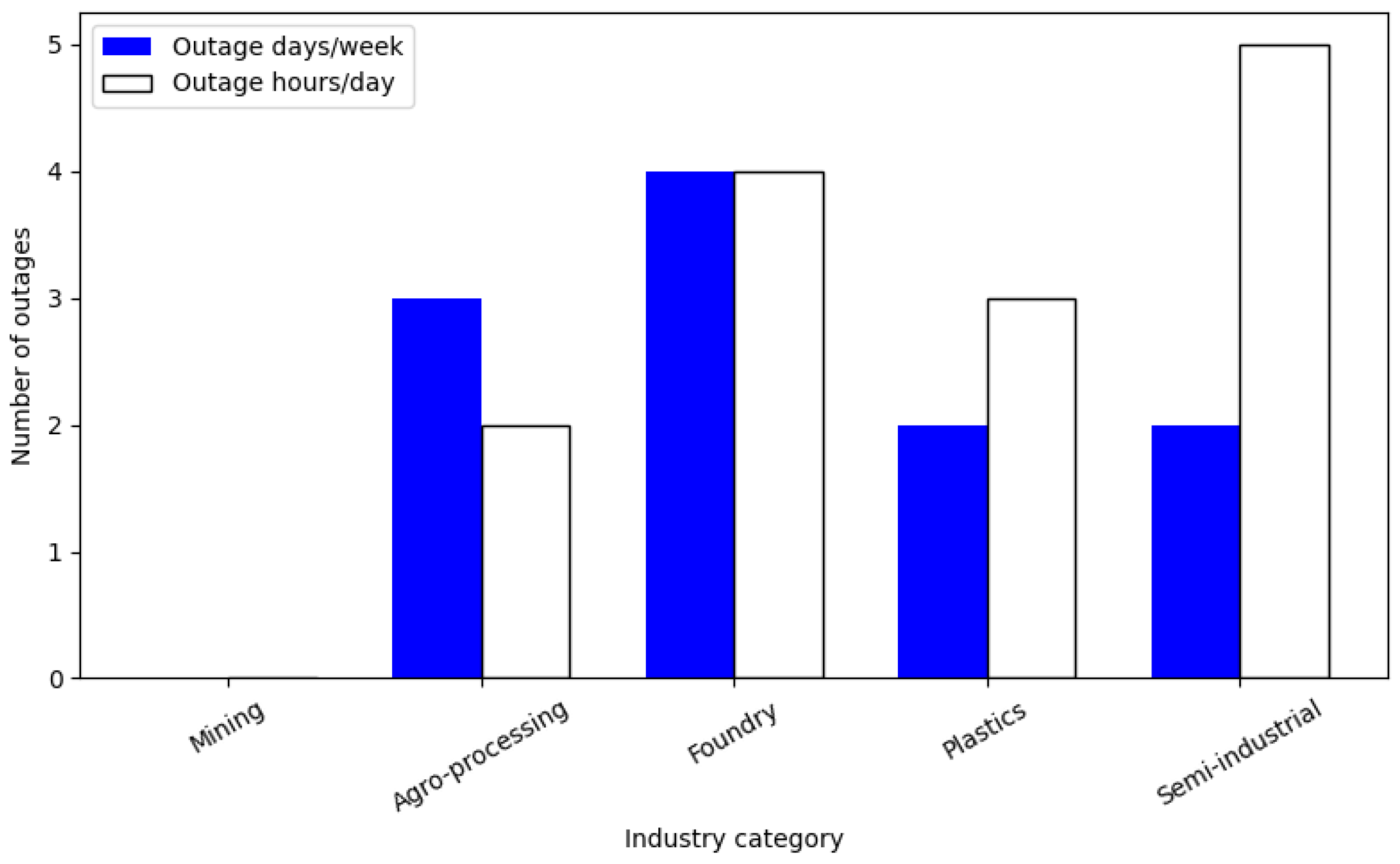
Figure 2.
Number of power lines by type of enterprise.
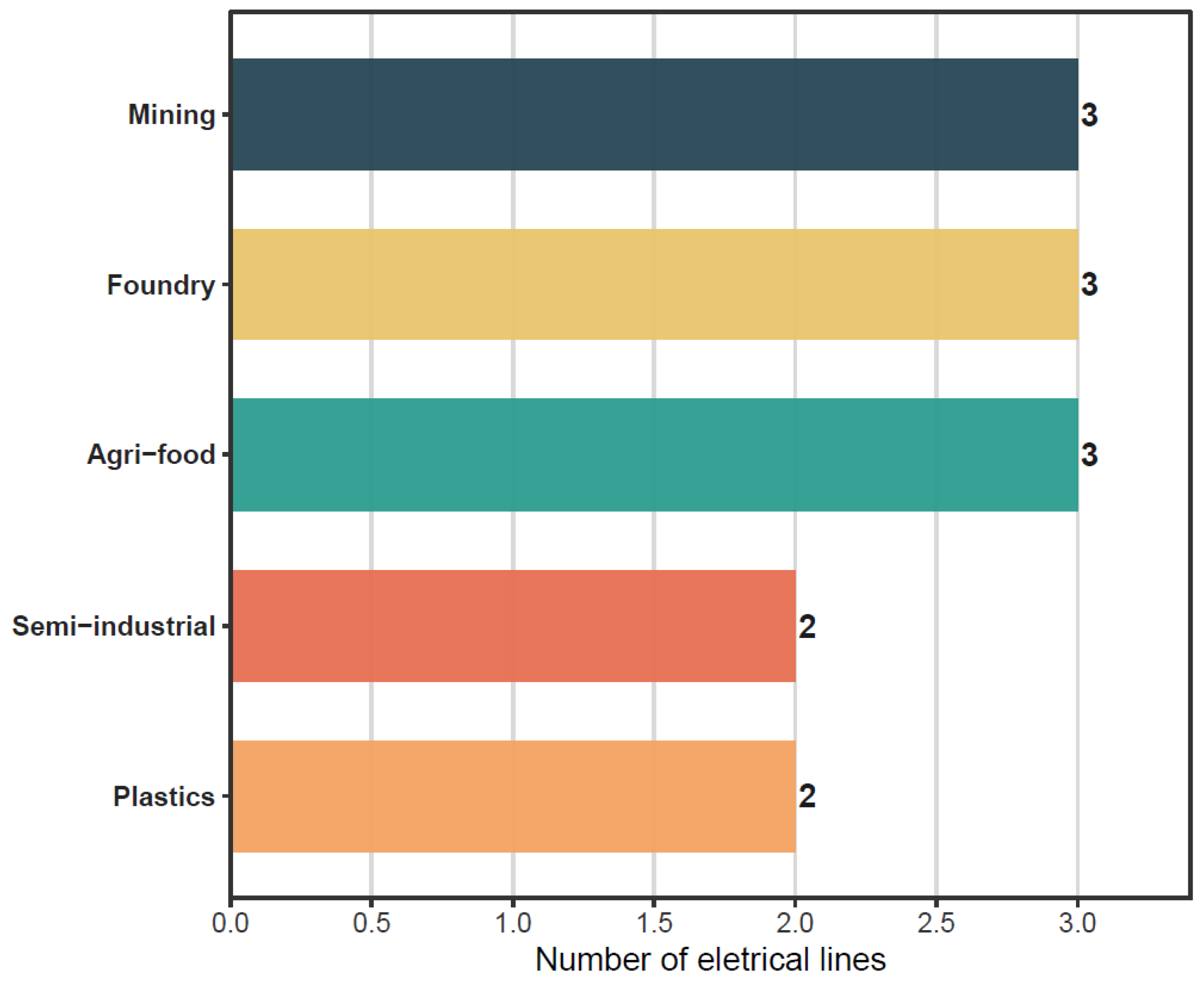
Figure 3.
Grid connection and use of personal generators.
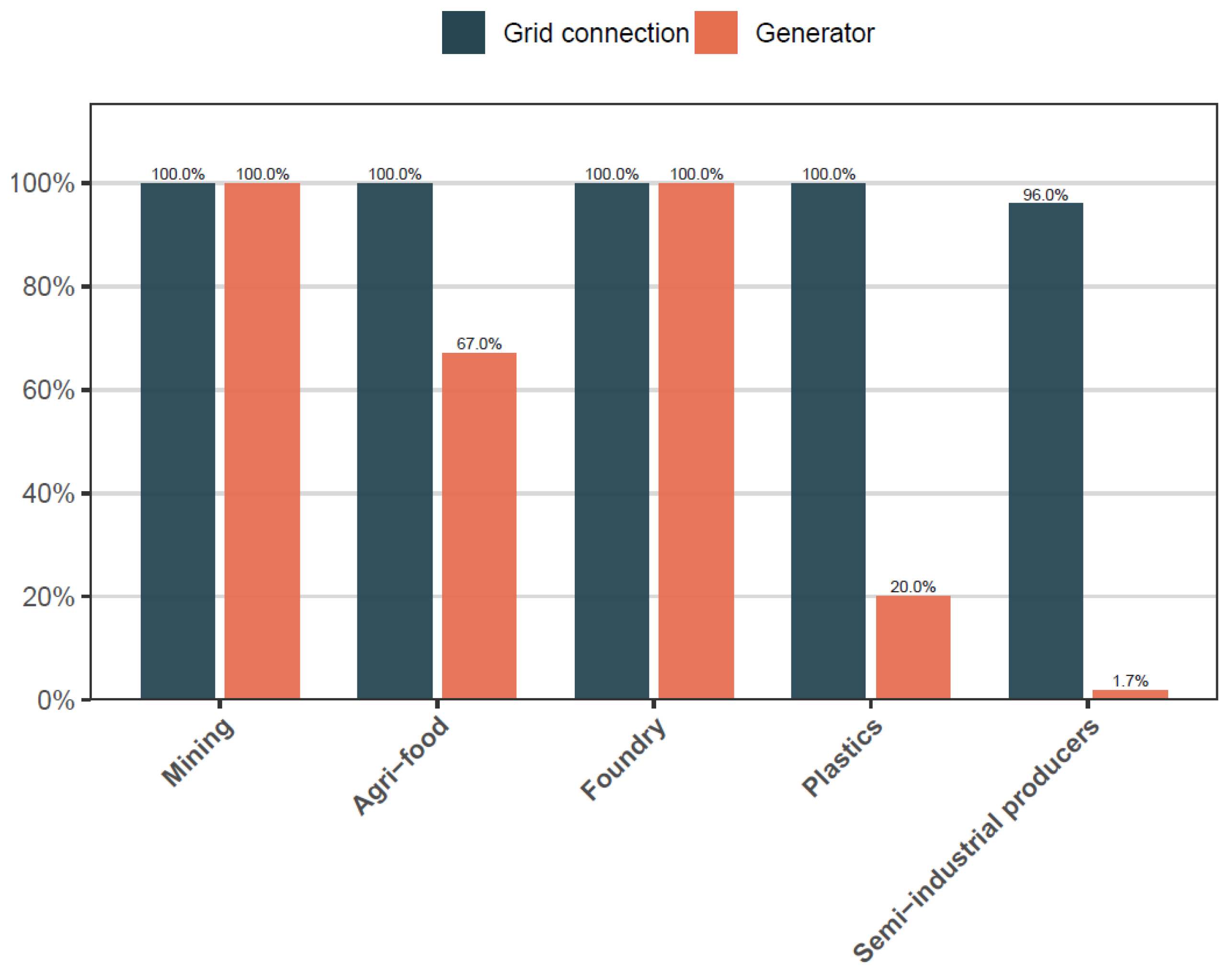
Figure 4.
Variation in Load Rate and Voltage Drop Across Industry Types.
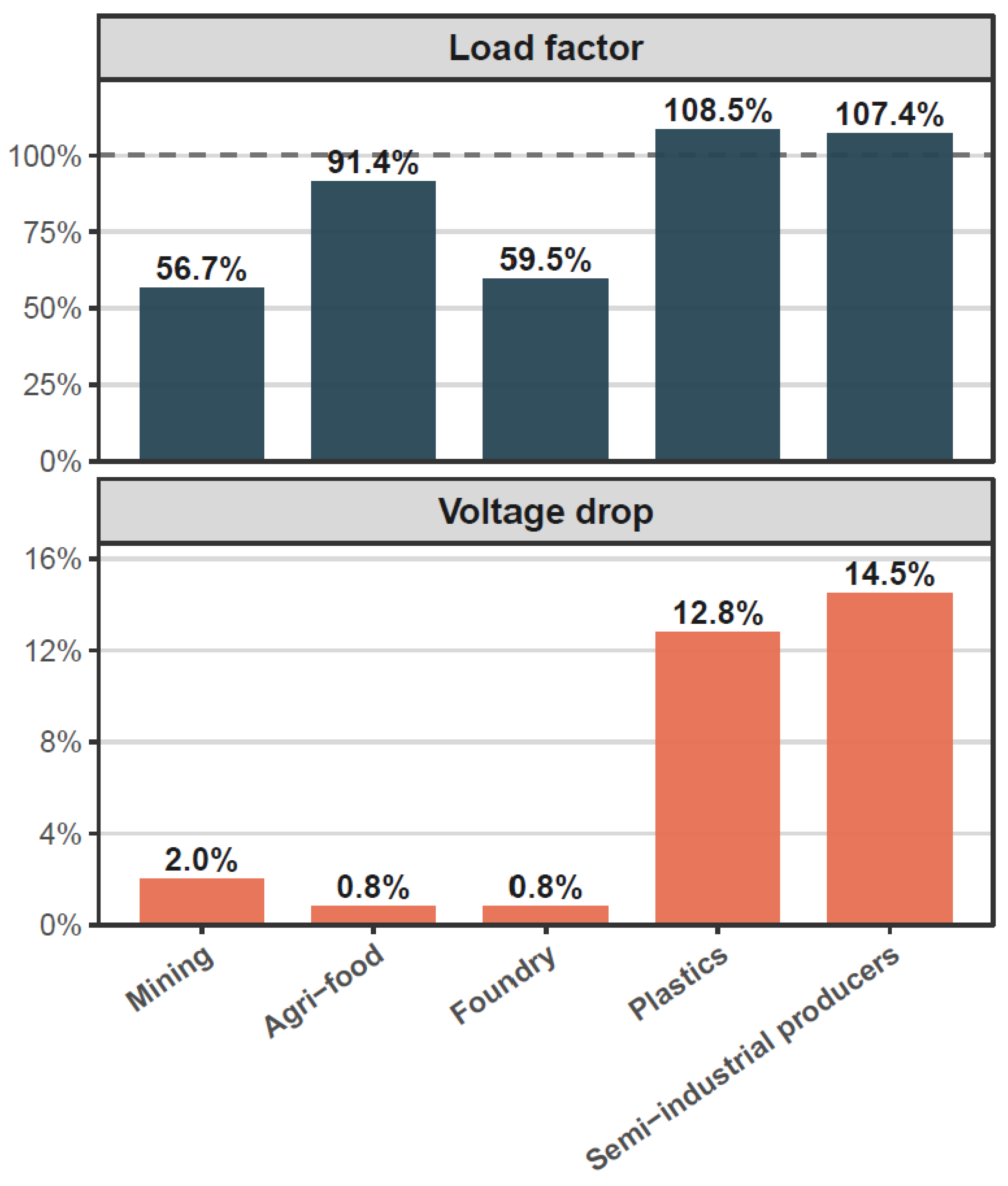
Figure 5.
Perception of the quality of electrical service by manufacturers.
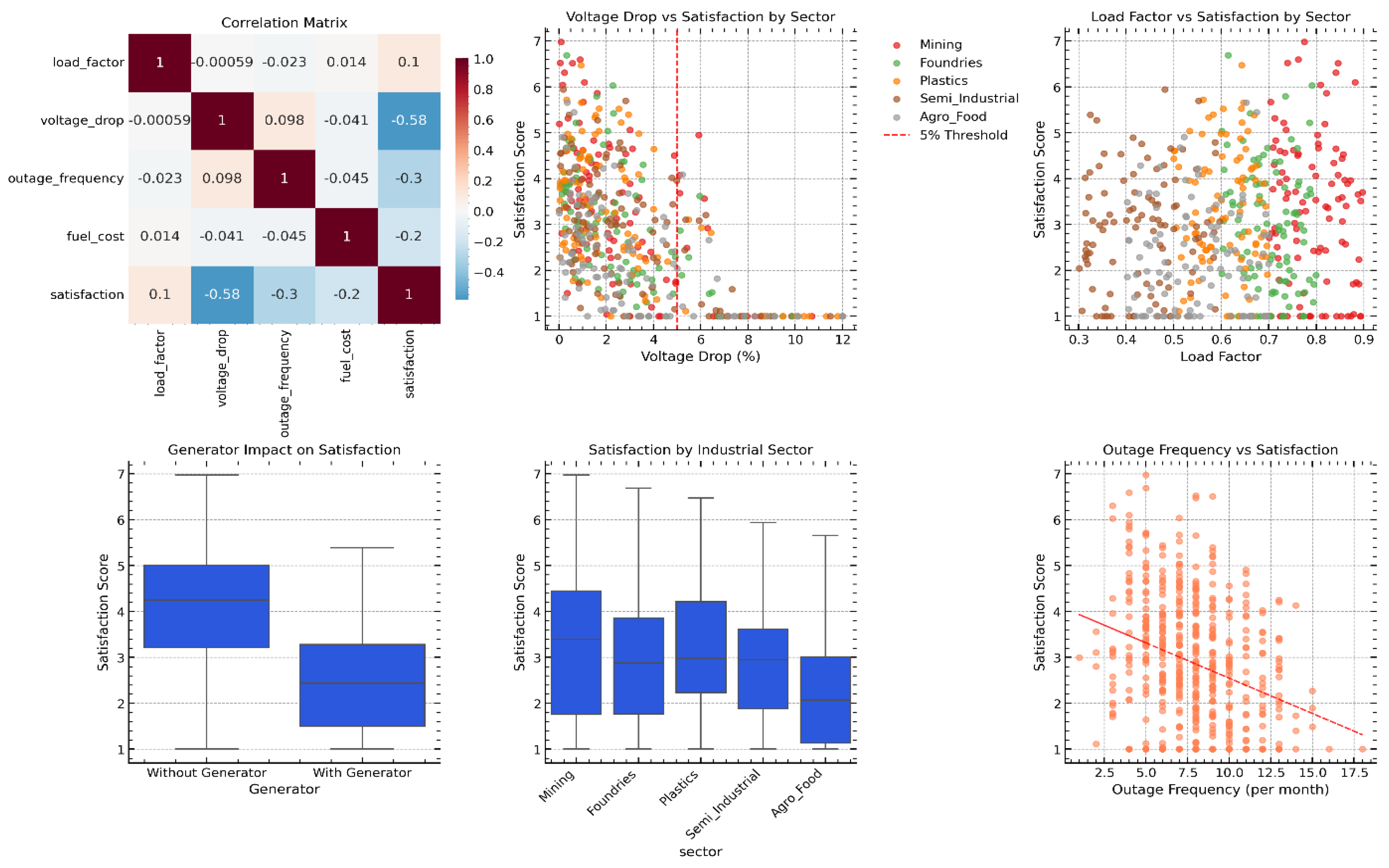
Figure 6.
Relationship between satisfaction with the quality of electrical service, technical variables, load factor, frequency of cuts, impact of diesel generator and type of industry.
Figure 6.
Relationship between satisfaction with the quality of electrical service, technical variables, load factor, frequency of cuts, impact of diesel generator and type of industry.
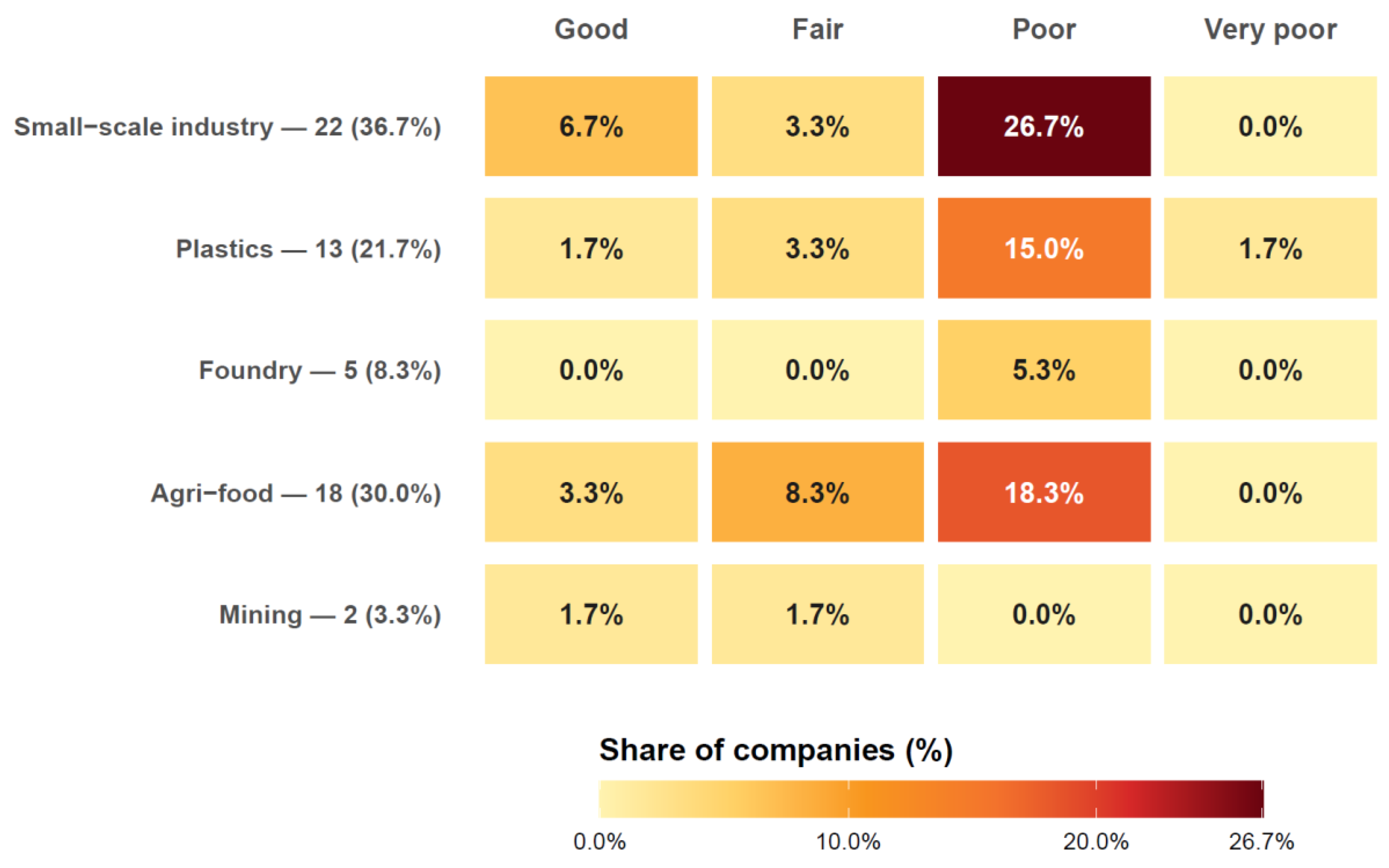
Figure 7.
Modelling industrial satisfaction according to techniques.
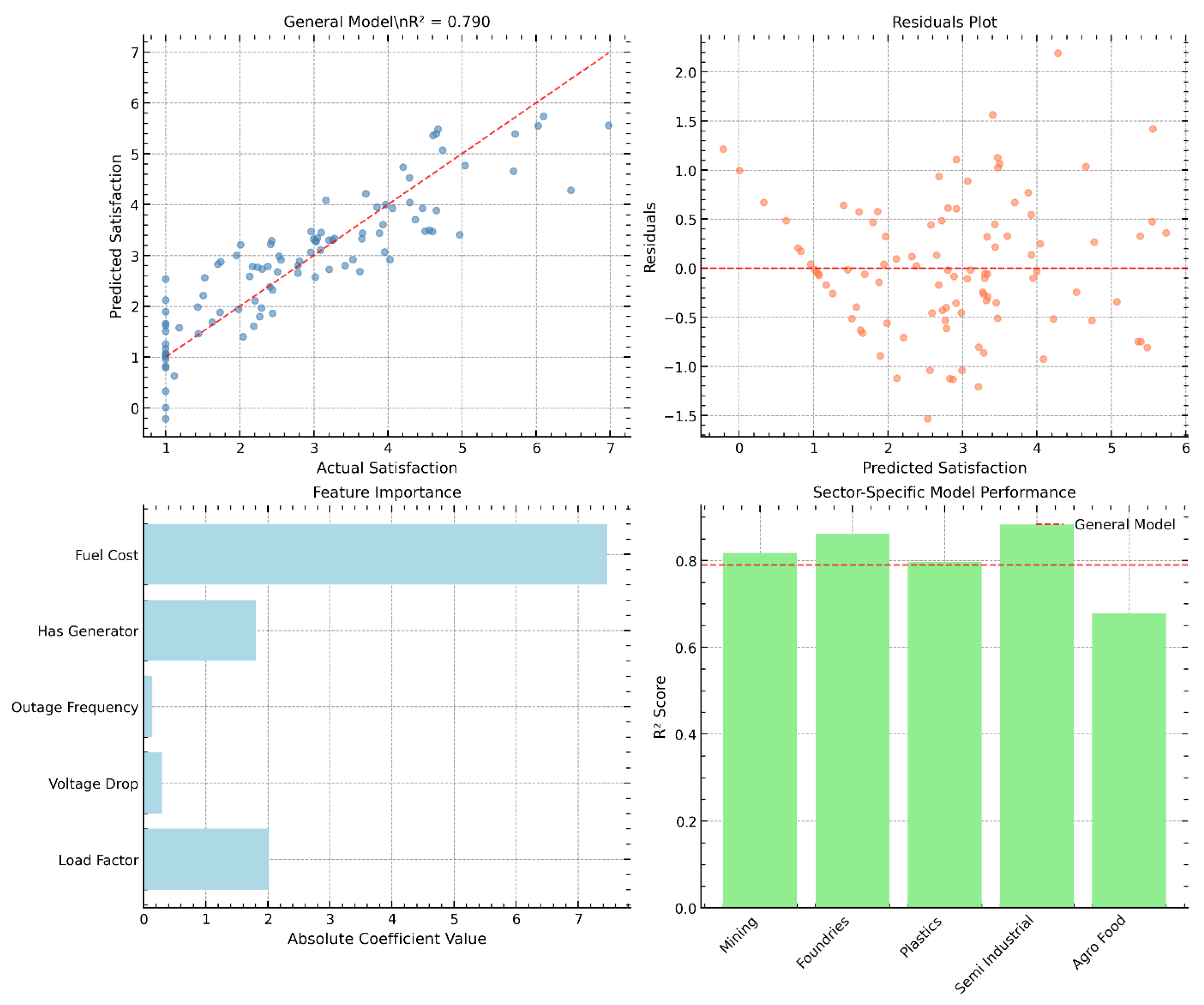
Figure 8.
Relationship between satisfaction, 5% voltage drop threshold, load rate, frequency of outages, fuel cost and type of industry.
Figure 8.
Relationship between satisfaction, 5% voltage drop threshold, load rate, frequency of outages, fuel cost and type of industry.
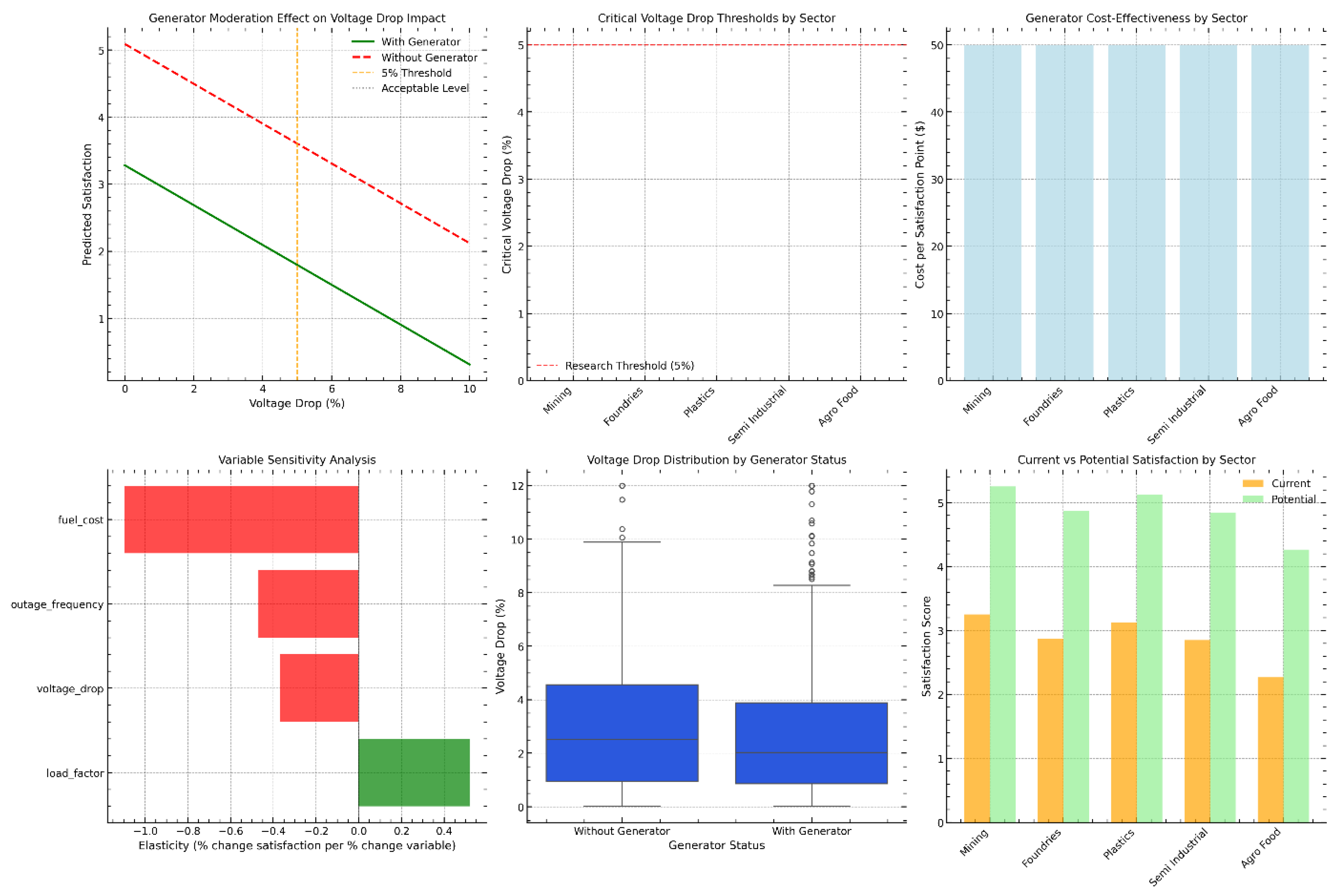

Table 1.
Average level of satisfaction with or without use of the diesel unit depending on the voltage drop.
Table 1.
Average level of satisfaction with or without use of the diesel unit depending on the voltage drop.
| Range of voltage drop | Average satisfaction with diesel generator | Average satisfaction without diesel unit |
| 0-2% | 3,12 | 4,95 |
| 2-5% | 2,08 | 4,10 |
| 5-8% | 1,55 | 2,75 |
| >8% | 1 | 1 |
Disclaimer/Publisher’s Note: The statements, opinions and data contained in all publications are solely those of the individual author(s) and contributor(s) and not of MDPI and/or the editor(s). MDPI and/or the editor(s) disclaim responsibility for any injury to people or property resulting from any ideas, methods, instructions or products referred to in the content. |
© 2026 by the authors. Licensee MDPI, Basel, Switzerland. This article is an open access article distributed under the terms and conditions of the Creative Commons Attribution (CC BY) license (http://creativecommons.org/licenses/by/4.0/).
Copyright: This open access article is published under a Creative Commons CC BY 4.0 license, which permit the free download, distribution, and reuse, provided that the author and preprint are cited in any reuse.


