

Submitted:
01 June 2026
Posted:
02 June 2026
You are already at the latest version
Abstract
Micro-nonuniformity, as a fundamental natural property, is widespread across a range of microscopic aggregate systems, such as polymer systems, biomacromolecular systems, and nanosystems. However, the construction of micro-nonuniform molecular systems has not yet been realized at the level of organic molecules with well-defined structural compositions. Inspired by the “chemical space” concept, I recently reported a study of the single-molecule mixture state; in this paper, I provide a detailed discussion of micro-nonuniformity and the hypothesis of a “single-molecule mixture state”, and propose a possible experimental approach for testing it.
Keywords:
single-molecule mixture
; micro-nonuniformity
; micro-nonuniform synthesis
; chemical modification of polysaccharides
1. Introduction
There is a famous saying that “no two snowflakes in the world are the same”, which reveals a fundamental law of nature: no two objects in nature are identical. In the microscopic world, this law also exists, hence the term “micro-nonuniformity” to describe this phenomenon.
However, in the molecular world we are currently studying, the situation is different. If we compare a molecule to a snowflake, we find that a pure organic molecule is composed of a single molecule with the same structural formula, i.e., from the point of view of the structural formula of the composition, every snowflake is the same! (Of course, molecules are always in motion, and if we consider conformation, each molecule is different.)
It is natural to wonder whether there is a class of substances in which each molecule has a different structural formula. In other words, are there substances in the form of “single-molecular mixtures”?
This idea, at first glance, sounds impossible and even absurd. After all, the number of molecules in one mole is 6.02×10²³, and the number of structures that have been synthesized is on the order of 108, and it is simply not possible to make a mixture of one molecule from each structure that has been synthesized. Therefore, there does not seem to be a feasible way to obtain such a conceivable “single-molecule mixture”.
However, from another point of view, if we can make full use of the principle of permutation and combination, it is possible to obtain molecules with different structural formulas by exponential expansion, and thus obtain a unique form of “single-molecule mixtures”. This idea came to my mind in April 2018, and was published on arXiv in 2021 [1] and in Int. J. Mol. Sci. in 2024 [2]. In the subsequent sections, I will discuss the hypothesis of a “single-molecule mixture state” in detail.
2. The Basic Principle of Single-Molecule Mixture System Construction
The basic principle of the construction of single-molecule mixture system is: firstly, use the principle of permutation and combination to construct a theoretical molecular structure space containing a sufficiently large number of structures, and then use the approximate equal-probability random synthesis method to synthesize the molecules in this space, if the number of structures in the actual synthesized samples is much less than the theoretical value, then we may obtain a “single-molecule mixture” sample with a large probability.
There are three important parameters in a single-molecular mixture system: the total number of isomers n in the structural space to which the product belongs, the total number of molecules m of the product obtained according to the equiprobable stochastic synthesis method, and the probability that the resulting product will be in the single-molecular mixture state P. How is the relationship between them calculated? It is illustrated here by a mathematical model, as shown in Figure 1.
Let us consider this model: one box containing n differently numbered balls, numbered from 1 to n. Each time a ball is removed, its number is recorded, and then the ball is put back into the box, and the sampling process is repeated for a total of m times, resulting in m numbers. What is the probability P that the resulting numbers are each different?
This is a typical probability calculation problem, and P is calculated as follows:
This equation satisfies the conditions for the establishment of Bernoulli’s inequality, so it can be approximated by Bernoulli’s inequality:
In this way, the relational equation between m, n, and P is obtained. Through this relational equation, the following three important pieces of information can be calculated:
1) The minimum value of P for a given number n of spatial samples and a given number m of samples;
2) The minimum value of the number of spatial samples n required to make P greater than a certain value for a given number of samples m;
3) For a given total number of spatial samples n, the maximum value of the number of samples m to make P greater than a certain value.
This mathematical model is a good solution to the computational problems associated with single-molecule mixture systems. In the single-molecule mixture model, the total number of isomers in a structural space corresponds to n in the above model, the number of molecules in the sample obtained by the equal-probability random synthesis method corresponds to m in the above model, and the probability that the product exists in a single-molecule mixture state corresponds to P in the above model, and the relationship between the three is the same as that in the above model (eq.2).
According to the above formula, we can get the following results: for a structure space containing n isomers, 1 mol (6.022×10²³) molecules of this space are synthesized by the equal-probability random synthesis method, and the probability that the resulting product exists in a single molecule mixed state is P. The minimum number of isomers n of this space is 3.63×1050 for P > 0.999, and the minimum number of n should be 3.63 × 1052 for P > 0.99999, as shown in Figure 2.
3. Micro-Nonuniformity and Single-Molecule Mixture Science
Micro-nonuniformity, like chirality, is a fundamental property of nature, and important types of biological macromolecules, such as proteins, DNA, and glycoproteins, exhibit micro-nonuniformity [3,4,5,6,7,8,9]—i.e., there are subtle differences in the structural composition of each molecule [10,11,12]. This property is consistent with the fundamental properties of a single-molecule mixture. A single-molecule mixture is a class of organic molecules with micro-nonuniformity.
Chiral science, asymmetric synthesis, and especially asymmetric catalysis, from conception to the practical exploration, have been greatly developed in the last half a century or so, and have gradually become a very active research field in the field of modern organic chemistry [13,14,15]. Taking history as a reference, we can boldly foresee that micro-nonuniform molecules, single-molecule mixture science (the theory), synthetic methods, and functional development of this type of molecule will comprise important research topics in the field of chemistry in the 21st century.
3.1. A Method for Defining the Structure of Micro-Nonuniform Molecules
The structure of pure organic molecules can be defined by a single chemical formula because they are pure, and the properties of these molecules depend on their structure.
However, this does not apply to micro-nonuniform molecules, which contain a huge number of different structural formulas; thus, how to define the structure of this class of molecules remains an open question.
A reasonable solution is to define it by the structural space to which it belongs. In this case, a “structural space” consists of a basic structural skeleton and the number and type of possible substituents attached to it. It contains a large number of isomers, and the total number of isomers can be calculated precisely. The specific structural formulae of each isomer can be described one by one. Molecules from such a well-defined structural space, like different individuals of a biological “species”, have different but very similar structural formulae, and the macroscopic properties of the aggregates formed by the molecules in this space are uniform and constant. Such a “structural space” is equivalent to a “structural formula” in a pure substance.
In short, the concept of structural spaces is very important for understanding the structure of micro-nonuniform molecules. Just as the structure of pure molecules is infinite, the number of structural spaces is also infinite. Constructing a structural space with a sufficiently large number of theoretical isomers and synthesizing a small part of the molecules contained therein by random synthesis with equal probability is a basic way to prepare micro-nonuniform molecules.
4. Micro-Nonuniform Synthesis: A Frontier Topic in Molecular Science
Micro-nonuniformity, as a fundamental natural property, is present in a range of microscopic systems such as polymer systems, biomacromolecular systems, and nanosystems [16,17,18,19,20]; however, the construction of these types of molecular systems has not yet been realized at the level of organic molecules with well-defined structural compositions. Consequently, the synthesis of micro-nonuniform molecules with well-defined structural compositions and determined molecular weights that exist in a single-molecule mixture state is a cutting-edge topic in the field of molecular science. The synthesis of organic molecular systems of this form will be a landmark achievement in the development of molecular science.
4.1. Micro-Nonuniform s Synthesis: Principles and Methods
Micro-nonuniform synthesis is a novel chemical synthesis technique that constructs molecules with micro-nonuniform characteristics by integrating general principles of synthetic chemistry with the science of single-molecule mixtures. Its fundamental principle involves constructing a structural space system with a large number of possible isomers through an equal-probability random synthesis method. When the number of possible isomers in this space far exceeds the number of molecules in the actual synthesized sample, the synthesized sample will exist with a high probability as a single-molecular mixture. This achieves the synthesis of micro-nonuniform molecules, representing a typical micro-nonuniform synthesis process.
Figure 3 details the fundamental process of micro-nonuniform synthesis.
The key to achieving micro-nonuniform synthesis lies in realizing random, equal-probability synthesis. However, there is one potential question that arises in this process: Is an equally probable random synthesis process feasible? To answer this question, we will conduct a detailed analysis using the following model system.
As shown in Figure 4, an etherification reaction occurs between a polyol system and a multicomponent, equally distributed set of alkyl bromides. In this process, do the products follow an equally distributed probability distribution, or is the isomer with the lowest energy formed preferentially?
I argue that, in this system, the etherification reaction is an irreversible process, and the distribution of reaction products follows a kinetically controlled regime. Under these conditions, the basic structures of different alkyl bromides are highly similar, and the energy barriers for their reactions with specific hydroxyl groups are nearly identical. Consequently, the reaction products follow an equiprobable random distribution; thus, an equiprobable random synthesis process can be achieved in this class of systems.
To achieve a thermodynamically controlled process, the reaction must be fully reversible, allowing for interconversion between reactants and products, and the reaction must reach complete equilibrium. However, this condition cannot be met in the aforementioned system; consequently, the thermodynamically controlled mode in which the product with the lowest energy is preferentially formed cannot be realized.
Through this analysis, we can be confident that, with ingenious experimental design and precise control of conditions, an equal-probability random synthesis process is entirely feasible.
It should be noted that the equal-probability random synthesis strategy is an idealized design. Whether this process can be perfectly achieved in actual synthesis, particularly in complex chiral environments, remains to be verified experimentally. This can be tested through clever experimental design; for example, by mixing equal amounts of n-decyl bromide and a deuterated decyl bromide (an isomer of decyl bromide), and testing the degree of deuteration of the product after complete alkylation of cyclodextrin. Mass spectrometry analysis can then be used to determine the substitution ratio of the two decyl groups, thereby assessing whether the process constitutes an equal-probability random substitution. Through similar experimental methods, the feasibility of equal-probability random synthesis can be verified.
Finally, there is one remaining question: How can we obtain a homogeneous, equally probable random mixture of alkyl bromide starting materials, as shown in Figure 4? The answer is quite simple: by taking equal moles of each required brominated precursor, dissolving them uniformly, and mixing them, one can obtain the desired equi-probabilistic random mixture of brominated reagents. This is the fundamental method for introducing elements of initial micro-nonuniformity into micro-nonuniform synthesis. This process bears some similarity to the approach in chiral catalysis, where chirality is initially introduced into the catalyst and subsequently amplified through the chiral catalytic process to yield chiral products.
4.2. A Unique Feature of Micro-Nonuniform Synthesis
Micro-nonuniform synthesis has a unique feature compared to the usual organic synthesis studies, which are illustrated here. As shown in Figure 5, the goal of normal organic synthesis is to prepare pure molecules with the same structural composition, and in this type of study, the molecules synthesized under identical experimental conditions have the same structural formulae every time the experiment is carried out, and the parameter of “molecular composition” can be completely reproduced. In the synthesis of micro-nonuniform molecules, the molecules prepared are single-molecule mixtures with different structures for each molecule, and the molecules synthesized under identical experimental conditions have different structural formulas, and the parameter “molecular composition” is not reproducible at all!
However, this does not mean that this type of experiment is against basic scientific principles; in fact, in many chemical studies, there is a certain amount of “non-reproducible parameters”, as illustrated here by one of the simplest crystallization experiments.
As shown in Figure 6, a dichloromethane solution of a certain amount of the gold complex Ph3PAuCl was prepared in a flask, and the system was naturally evaporated to dryness at room temperature to obtain crystals of the gold complex. In this experiment, the non-reproducible parameters obtained under the same experimental conditions each time included the number and shape of the particles of the crystals, and the distribution of the crystals in the bottle. Of course, there are some reproducible parameters under the same experimental conditions each time, such as the cell parameters of the crystals and the total mass of the crystals.
From this, we can find that the most unique feature of micro-nonuniform synthesis is to change the most important result parameter of synthetic chemistry, namely, the composition of the product, from being reproducible every time to being irreproducible every time, thus greatly enriching the research connotation of synthetic chemistry. By analogy with crystallization experiments, it is not difficult to find that the “non-reproducible result parameter under the same experimental conditions every time” is in fact widespread and easy to understand. What is important is that although the result of “the composition of molecules” is not reproducible, the macroscopic properties of molecular aggregates from the same structural space are constant and unique, just like the cell parameters in crystallization experiments.
5. Sugar Chains, the Ideal Backbone for Building Single-Molecule Mixture Models
A typical process for constructing a single-molecule mixture model is shown in Figure 7; firstly, the basic modular units are designed and prepared, and then these modular units are chemically spliced to obtain a single-molecule mixture model system. In this, the design of the basic modular units and their splicing methods are crucial.
In my recent work, I have considered the feasibility of adopting sugar building blocks as the basic modules and chemical glycosylation as the splicing method, and after comprehensive consideration, I have found that the sugar chains are the ideal skeletal materials for constructing the single-molecular mixture model. The main reasons for this are as follows: 1) the synthesis method of monosaccharide building blocks with various types of protecting groups is mature; 2) the technology of splicing monosaccharide building blocks using the chemical glycosylation method is mature and reliable; and 3) the purification and characterization techniques of the synthesized substituted sugar chains are mature and reliable. Thus, glyco-synthesis technology will play a key role in the development of single-molecule mixture science.
5.1. A Typical Example of a Single-Molecule Mixture System Based on a Sugar Backbone
In the following sections, I illustrate the construction of a single-molecule mixture system based on a sugar chain backbone with a specific example.
The constructed single-molecule mixture model is shown in Figure 8, whose basic skeleton consists of polydextrose chains, in which three different substituents R can be attached to each sugar, and the number of isomers for each R is calculated to be 13,950, with an equal-probability random distribution. (Since the structural differences in the substituents are extremely small, the different substituents and the numerous isomers in the synthesis and splicing of these sugar blocks have little effect on the reaction and purification process, and the experiments are essentially the same as when pure material is used as raw material.)
For sugar chains with different numbers of polymerization (m), the molecular weights and the number of isomers are shown in Figure 9. As can be seen from the figure, when m = 4, the number of isomers of the system is already as high as 5.431×1049 species, which, according to the following calculations, is a number, relative to the usual scale of preparation (no more than 1 mmol), sufficient to ensure that the product is distributed in a single-molecule mixture state.
Calculation Process: according to equation 2 in section 2, we obtain,
Here, P represents the probability that the molecular aggregate exists as a single-molecule mixture, m represents the total number of molecules in the molecular aggregate sample. If we assume this to be 1 mmol, then m = 6.022×10²⁰, n represents the total number of structures in the structure space, which is 5.431×1049. Substituting these values into the above formula, we calculate that
P > 1-6.68×10⁻⁹ ≈ 0.999999993
These results indicate that it is highly likely that this system consists of a single-molecule mixture state.
From this example, it can be seen that the sugar chain is an ideal backbone material in the construction of single-molecule mixture systems, and knowledge in glycoscience will play an important role in the construction of such systems. Glycoscientists are being presented with significant development opportunities in the field of single-molecule mixture research!
5.2. Construction of a Spherical Single-Molecule Mixture Model
The single-molecule mixture model can be constructed using not only chain-like molecular skeletons, but also globular molecular skeletons, and its chemical splicing can be performed not only by etherification and chemical glycosylation reactions, but also by click reactions. In the previous examples, I mainly discussed the chain-like single-molecule mixture model. Here, I provide an example of a globular single-molecule mixture model, which belongs to the structural space A1 defined, as shown in Figure 10.
Each molecule in this space has an equal molecular weight, and the total number of isomers is on the order of 1066, which is sufficient to ensure that the product is in a single-molecule mixture state at the usual scale of preparation (<<1 mol, for the calculation process, please refer to Section 5.1). The preparation was mainly linked using a click reaction, as shown in Figure 11, which is well established and convenient for synthesis and characterization.
The spherical single-molecule mixture model constructed here may present different and exotic properties relative to the single alkyl-substituted purity model, which has yet to be explored in detail. In the near future, I will conduct relevant experimental explorations that will unravel the mystery of this class of molecules.
5.3. A Cyclic Single-Molecule Mixture Model Based on the Cyclodextrin Backbone
With b-cyclodextrin as the backbone, it is easy to construct a single-molecule mixture model of cyclic structure by taking advantage of the fact that it can easily undergo fully acylation or fully alkylation reactions, as shown in Figure 12. The alkyl or acyl portion thereof has an extremely rich design space. The resulting single-molecule mixtures can be conveniently purified and analyzed by existing separation, purification, and structural characterization techniques. The highlight of this synthetic scheme is its simplicity, which allows the construction of a complex cyclic structure of the single-molecule mixture system with only a one-step reaction.
It is important to note that the O-chemical modification of cyclodextrins is not merely a theoretical concept; in fact, glycochemists have conducted extensive research on the structural modification of cyclodextrins [21]. Since cyclodextrin systems consist of only 6–8 sugar units, with 18–24 substituable hydroxyl sites, it is only possible to obtain a sufficient number of isomers to form a single-molecule mixture if there is a relatively large variety of substituents at each site.
5.4. A Class of Single-Molecule Mixture Models Based on the Monosaccharide Backbone
Designing single-molecule mixture systems with more concise structures and easier preparation is a worthy and continuous goal in the field of single-molecule mixture science. Following the previous series of designs, I have designed a class of more concise single-molecule mixture models based on the monosaccharide backbone, as shown in Figure 13. The system used a- glucose methyl glycoside as the backbone and 3,4,5-tris [3,4,5-tris(decyl)benzyloxy]benzoyl as the modifying group, in which the decyl substituents were 30 structures with equal-probability random distribution, as shown in Figure 13.
According to the calculations, the molecular weight of the system is 7509.7870, and the total number of isomers in the structural space is 5.43 × 1049; in the presence of 1 mmol (7.5 g) preparation scale, the probability of the product presenting a single molecule mixed state was > 0.999 (for the calculation process, please refer to Section 5.1). Total acylation of hydroxyl groups on monosaccharides is an easily achievable process, and thus, the preparation of this system is more facile compared to the previous systems.
6. Applications of Mathematical Modeling and Analysis in the Chemical Modification of Natural Polysaccharides
Natural polysaccharides are the most abundant natural polymers in the world. Representative examples include cellulose, starch, and chitin, which have a wide range of extremely important applications and play a vital role in modern society and human life [22,23]. The chemical modification of natural polysaccharides (such as O-etherification, O-acylation, and N-deacetylation) is a topic of great importance in both academia and industry[24,25,26,27]. Here, I attempt to gain a deeper understanding of the structural characteristics of chemically modified polysaccharides through mathematical modeling and detailed computational analysis, in conjunction with the analysis of the single-molecule mixing model system presented in Section 2.
Let us consider the model system shown in the Figure 14: A polysaccharide structure contains n substitution sites, each of which is initially occupied by a substituent R1. Through chemical modification, a portion of R1 is converted to R2, with each site having a probability of P of being substituted by R2. For 1 mol of this polysaccharide molecule undergoing the aforementioned chemical modification, what is the relationship between n and P that would reasonably ensure the probability of the modified product exhibiting a single-molecule mixture state is greater than 0.99999?
Below, I will begin the detailed estimation process, as illustrated in the Figure 15.
First, let us analyze the actual structural space composed of all possible structures of the fully modified polysaccharide. This structural space contains 2n possible structures. For a given structure, its probability of occurrence is equal to the product of the probabilities of each site being substituted by a specific group. The probabilities of occurrence for each structure are likely to be unequal; in fact, the actual structural space is highly complex.
Next, we seek the structure with the highest probability of occurrence among all possible isomers. Clearly, when 1 > P > 0.5, the structure with the highest probability of occurrence is the one in which all sites are substituted by R2; the probability of this structure occurring is p = Pn. When 0.5 > P > 0, the structure with the highest probability of occurrence is the one in which all sites are substituted by R1; the probability of this structure occurring is p = (1 - P)n. When P = 0.5, the probability of each structure occurring is equal, at 0.5n.
The actual system is highly complex, and the probability of each isomer forming must be calculated individually. To simplify this system, a simplified virtual system is constructed using the isomer with the highest probability of formation as a reference. This virtual space containing p-1 number of structures of different types, distributed randomly with equal probability, such that the probability of selecting any given structure is p.
Let us now discuss the virtual structure space in more detail. The virtual structure space is a structure space established based on the structure with the highest generation probability (p) in the real structure space. This space contains p-1 structures, each with a generation probability of p. Compared to the real structure space, the number of structures in this space is less than or equal to that of the former, while the generation probability of each structure in this space is greater than or equal to the generation probability of any structure in the real structure space. According to the model in Section 2, if a structure is randomly selected from this space and the process is repeated m times, the probability that the resulting structures are all distinct is less than or equal to the probability of obtaining m distinct structures by repeatedly sampling from the actual structural space. Therefore, using a simplified virtual structural space to estimate the formation probability of a single-molecule mixed state is a reasonable and feasible approach.
Based on the results of Section 2, if 1 mol molecules are randomly selected from this space such that the probability of them forming a single-molecule mixed state is greater than 0.99999, then the number of molecules in this space must be at least 3.63 × 1052.
Therefore, we obtain the following estimation formula:
When 0<P≦0.5, then (1-P)-n > 3.63 × 1052
When 0.5≦P<1, then P-n > 3.63 × 1052
Using the formula above, we obtained the estimated results shown in Table 1:
As shown in the results of the above analysis (Table 1, entry 10), when a polysaccharide molecule contains more than 2,360 substituable sites, and the probability P that each site is substituted by R2 ranges from 0.05 to 0.95, the probability that the modified product exhibits a single-molecule mixture state exceeds 0.99999 when synthesized on a scale of less than 1 mol.
When analyzing a real reaction system, the P-value can be estimated by dividing the total number of R2 substituents in the molecule by the total number of substituents in the molecule (the average degree of substitution); this value can be readily obtained through chemical or spectroscopic analysis.
Based on these estimates, it is evident that, in most cases, products derived from the chemical modification of natural polysaccharides exist in a single-molecule mixture state. Representative examples include partially acetylated cellulose and chitosan, as shown in Figure 16. In the figure, DP represents the degree of polymerization, and DS represents the degree of substitution on each sugar monomer.
Although we intuitively sense that the variety of isomers in modified polysaccharides is extremely diverse, to date, no detailed method for estimating the number of isomers in modified products has been reported in the literature. This paper proposes, for the first time, a model and estimation method for reasonably estimating the number of isomers in modified polysaccharides. By combining this with the single-molecule mixture model, we obtained a surprising computational result: In most cases, modified natural polysaccharides exist in a single-molecule mixture state. This estimation method and its conclusions are of significant importance for understanding the chemical modification processes of polysaccharides and the structures of their products.
Using natural polysaccharides as a model system to study single-molecule mixtures presents a problem: the degree of polymerization (DP) of natural polysaccharides is not fixed, introducing an additional variable that complicates the study of how the degree of site substitution (DS) affects product properties. In recent years, significant progress has been made in the artificial chemical synthesis of homogeneous polysaccharides with precisely controlled structures [28,29]. Polysaccharides with DP ranging from 92 to 1,080 can now be obtained through artificial chemical synthesis [30,31,32,33,34]. This technological advancement has made it possible to construct single-molecule mixture models derived from polysaccharides with a single DP value.
It is worth noting that significant progress has recently been made in the precise structural characterization of polysaccharides [35,36]. Information regarding the linkages between sugar units in naturally occurring sugar chains, as well as the positions and types of substitutions within them, can now be accurately determined. Although precise characterization of single-molecule sugar chain structures is not yet achievable, breakthroughs in this area are highly promising in the near future. This opens up new possibilities and avenues for research into the structures of single-molecule mixture models based on polysaccharide systems.
7. Understanding the Architecture of Single-Molecule Mixtures
The single-molecule mixtures prepared according to the scheme we devised in Section 5 have three distinctive features:
1) The molecular weight of each molecule is equal;
2) The type of substituent group in each substitution site in the molecule is fixed and randomly distributed with equal probability;
3) The structure corresponding to each molecule in the sample belongs to the same structural space, and the theoretical number of isomers in this structural space can be calculated reasonably.
So, how can we further understand the structure of this single-molecule mixture system?
Obviously, this single-molecule mixture system is not a disordered system, and they have their intrinsic laws and characteristics.
In the following, we use the method of model analysis to further discuss the structure of this type of single-molecule mixture.
In the chain-like single-molecule mixture system shown in Figure 17, the molecule contains m substitution sites, each of which is replaced by a substituent R, where R = RA1, RA2, RA3.......RAn, which are randomly distributed with equal probability.
We define a new substituent RA* as a statistical average group of RA1, RA2, RA3.......RAn; then in this model, each substitution site is replaced by a single substituent RA*. This single-molecular mixture system can be regarded as a “pure statistical average structure”. With this in mind, I have proposed a hypothesis: single-molecule mixtures belonging to the same structural space can be regarded as hybrids of different structures within that space, and their macroscopic physicochemical properties still retain a uniformity similar to that of pure substances. This hypothesis can be verified by constructing a specific structural space, synthesizing samples of single-molecule mixtures belonging to that space using an equal-probability random synthesis method, and testing their physicochemical properties. Research in this area will commence in the near future.
From the above analysis, it can be seen that we can better understand the structure of single-molecule mixtures using the method of statistical averaging at the molecular structure level. This idea is feasible because of the large number of molecules and substitution sites in a macroscopic sample, thus enabling the use of statistical averaging.
8. Constructing Single-Molecule Mixture Models Using Deuterium Labeling Methods
In the single-molecule mixture models I constructed above, all were generated by changing the structure of the alkyl side chain to create different isomers. Although this strategy is very effective, there is a potential problem: isomers with different alkyl side chains belong to different molecules with different structures. Thus, it is uncertain as to whether the mixtures formed by them can be effectively separated and purified by existing purification methods. Here, I considered another scheme to construct a single-molecule mixture model using the deuterium labeling method, the basic principle of which is shown in Figure 18.
Taking a pure substance molecular system A containing many alkyl hydrogen substitution sites in its structure as a prototype, a single-molecule mixture system was created by deuterium-labeling the hydrogen atoms in it; in this system, each molecule differed in structure, with a different number of deuterium-labeled sites.
Based on this principle, I constructed a deuterium-labeled single-molecule mixture system based on a monosaccharide backbone, as shown in Figure 19
This system is based on the glucose monosaccharide backbone, and by introducing 30 different deuterium-labeled n-decyl substituent side chains into the molecule, a structural space containing a sufficiently large number of deuterium-labeled isomers is created. The molecular weights of the deuterium-labeled isomeric structures in this space are distributed in an interval, with a minimum molecular weight MWmin of 7504.1372 (corresponding to the molecular formula C479H822O58) for non-deuterated substituents and a maximum molecular weight of 7612.8151 (corresponding to the molecular formula C479H714D108O58) for the maximum theoretical degree of deuterium substitution.
The number of isomers in this structural space is 5.43 × 1049, which is sufficient to ensure that the product exists in a single-molecule mixture state at the usual scale of prep-aration (1 mmol level, for the calculation process, please refer to Section 5.1).
During the synthesis of molecules in this structural space, since the difference between different isomers only lies in the degree of deuterium substitution and deuterium substitution site, the physical properties of the mixtures composed of each isomer are similar, and it is very likely that they can be effectively separated and purified by the usual methods. Through this strategy, it is possible to overcome the separation challenges that may arise when preparing single-molecule mixtures (where “separation” refers to isolating the target single-molecule mixture sample from other components in the system to obtain a “pure and homogeneous” single-molecule mixture sample), and the approach is highly feasible experimentally.
In the prepared product samples, the degree of deuterium substitution and molecular weight distribution can be accurately simulated by theoretical calculations. By comparing this simulation result with the mass spectrometry measurement result, it can be verified whether the product presents the theoretical distribution of the single-molecule mixtures, which provides an effective method to verify the single-molecule mixtures through the combination of theoretical simulation and actual measurement.
In summary, the single-molecule mixture model constructed by the deuterium labeling method is a very feasible and valuable method for preparing single-molecule mixture models, and in the future, this method will play a very crucial role in the development of single-molecule mixture science.
9. Constructing Single-Molecule Mixture Models Using a Fluorine Labeling Strategy
By first constructing a basic structural skeleton and then labeling the groups in it, it is a very effective way to construct single-molecule mixture models. In the previous discussion, I mainly used alkyl labeling and hydrogen isotope labeling to construct single-molecule mixture models, and here, I provide another scheme for constructing single-molecule mixture models using a fluorine labeling strategy.
The principle of this strategy is shown in Figure 20. Taking a pure substance molecular system A, which contains many alkyl hydrogen substitution sites in its structure, as a prototype, a fluorine-labeled single-molecule mixture system is created by fluorine-substituted labeling of hydrogen atoms in it, in which the structure of each molecule differs in the sites of the fluorine substituents.
Based on this principle, I constructed a fluorine-labeled single-molecule mixture system based on a disaccharide backbone, as shown in Figure 21.
In this system, a structural space containing a sufficiently large number of fluorine-labeled isomers was created by introducing 19 different fluorine-labeled n-dodecyl substituent side chains into the molecule. The number of isomers in this structural space is 5.10095204 × 1074, which is sufficient to ensure that the product exists in a single-molecule mixture state at the usual scale of preparation (1 mol level, for the calculation process, please refer to Section 5.1). Each molecule in this space contains an equal number of fluorine atoms (63) in its structure and has an equal molecular weight of 16059.43 (corresponding to the molecular formula C965H1627F63O102).
During the synthesis of the molecules in this structural space, since the difference between different isomers only lies in the difference in the fluorine substitution sites, the physical properties of the mixtures composed of the isomers are less different, and it is likely to be able to be effectively separated and purified by the usual separation and purification means, with a high experimental feasibility.
In summary, the use of a fluorine-labeling strategy to construct single-molecule mixture models is a feasible and valuable method to prepare single-molecule mixture models, and this method will play an important role in the development of single-molecule mixture science in the future.
10. How to Test the Hypothesis of Single-Molecule Mixture State Using Experimental Methods
Some famous hypotheses or theories in the history of chemistry—such as the atomic-molecular hypothesis, the tetrahedral structure of carbon hypothesis, the polymer hypothesis, and the nonclassical carbocation hypothesis—were difficult to verify with conclusive experimental evidence when they were first proposed. As a result, they sparked intense debate and skepticism for a long time. However, with the advancement of research tools, they were eventually confirmed, demonstrated immense value, and became the foundational theories of modern chemistry. Specifically, regarding the polymer hypothesis, although it was proposed over a century ago and has been widely applied, it was not until recently that it was truly confirmed through direct experimental observation [37].
In today’s scientific community, it is common for complex research subjects to be difficult to study effectively due to a lack of suitable experimental tools. In the initial stages of research, employing mathematical modeling and analysis to conduct theoretical studies on a new class of research subjects is an effective approach. For “single-molecule mixtures”—an entirely new and highly complex subject of chemical research—theoretical investigation using mathematical methods is currently the most feasible approach available to us. In particular, concepts from statistics and probability theory are extremely helpful in understanding this class of chemical systems. As concepts are established and research deepens, a critical and unavoidable question arises: How can we experimentally verify the hypothesis of “single-molecule mixture state”?
This issue can be broken down into two aspects: 1) How can we experimentally verify that the molecular structures within a sample of molecular aggregates are all different? 2) How can we experimentally verify the differences in properties between molecular aggregates in a “single-molecule mixture” state and the corresponding pure molecular aggregates? These two questions will be discussed separately below.
10.1. How Can We Experimentally Verify That the Molecular Structures Within a Sample of Molecular Aggregates Are All Different?
Just as a “pure state” is merely an ideal condition that cannot be achieved in practice, an absolute “single-molecule mixture state” is also likely an ideal condition—one that can only be approached infinitely closely but never actually attained. However, in the not-too-distant future, we may indeed be able to use experimental verification methods to determine the probability that a sample of molecular aggregates exhibits a “near-single-molecule mixture state”, in which “the structures of the vast majority of molecules are distinct”.
For molecular aggregates containing a vast number of molecules, proving that the structures of the vast majority of molecules are distinct may at first glance seem like a task that is “virtually impossible” to accomplish. However, by employing mathematical modeling and probabilistic reasoning, we can use random sampling and testing methods to estimate the probability that the molecules in a sample exhibit a “near-single-molecule mixture state” in which “the structures of the vast majority of molecules are distinct”. The specific method is as follows.
Consider the following mathematical model: There is a pile of balls, each with a unique number. Numbers may be duplicated, meaning that multiple balls have the same number. Now, we randomly select a certain number of balls from this pile and find that their numbers are all different (i.e., there are no duplicate numbers). Based on this observation, we wish to infer that at least 99% of the balls have unique numbers within the entire pile, and we want the probability of this inference being correct to be greater than or equal to 99%. Question: What is the minimum number of balls that must be selected?
With the assistance of DeepSeek, I performed calculations on the above model. Below is the detailed calculation process.
1. Problem Statement
Consider a finite population of balls (with large), each labeled by an integer. Labels may repeat. Let
- be the number of balls whose label appears exactly once in the entire population (unique balls),
- be the number of balls whose label appears at least twice (non-unique balls).
A simple random sample of balls is drawn without replacement, and it is observed that all sampled balls have distinct labels.
We wish to make the inference:
with probability at least .
Find the minimal integer such that this inference is valid.
2. Statistical Framework
We treat the problem as a hypothesis test. Define
Let be the event “the sampled balls have all distinct labels”.
We require that, under , the probability of observing be at most ; otherwise, observing would not allow us to reject with high confidence.
Thus we need:
If the maximum over all configurations with is , then whenever is observed, we may reject and accept with a probability of error .
3. Worst-Case Configuration
For a fixed , to maximize we should arrange the non-unique balls so that they are as “harmless” as possible for the event .
The most favourable arrangement is:
- All non-unique balls are grouped into label types, each containing exactly 2 balls (the minimal number to be non-unique).
- The remaining balls are unique (each label appears once).
Hence the population consists of:
- unique labels (one ball each),
- label types with 2 balls each.
The worst case for the bound is when is as large as allowed under , i.e.,
4. Probability Bound
Under the above configuration, the probability that a random sample of balls (without replacement) have all distinct labels is:
For large we can approximate. Using the asymptotic forms:
we obtain
Substituting and gives
which is too crude because it ignores the constraint that we cannot select both balls from a double-label type.
A refined bound uses the fact that for each double-label type, the probability of not selecting its second ball is approximately for large .
Over all such types, and noting the remaining unique balls contribute a factor from a simple hypergeometric approximation, we get
For very large, the second factor tends to , so a conservative bound is
5. Numerical Result
We require
Taking natural logarithms:
Numerical values:
Since must be an integer and we require a strict inequality to hold for all worst-case configurations (including a slight loss due to the finite-population correction), we take
From this, we can conclude that when n = 460 balls are drawn at random without replacement from the population, and it is observed that all their numbers are distinct, we can infer with at least 99% confidence that at least 99% of the balls in the population have unique numbers.
From this model, we can see that for a molecular aggregate containing a very large number of molecules, if we randomly select individual molecules for “single-molecule structural identification”, record their structures, and repeat this test 460 times to obtain 460 structures, and if we observe that these structures are all different, then we can infer with at least 99% confidence that at least 99% of the molecules in this molecular aggregate have unique structures. Thus, we have developed a method to experimentally infer the probability that a sample of a molecular aggregate exhibits a “near-single-molecule mixture state”, in which “the structures of the vast majority of molecules are distinct”. This provides a potential solution to the problem of “how to experimentally test the single-molecule mixture hypothesis”.
It is worth noting that the approach of using extensive sampling to understand the complete behavior of an important chemical system is a widely recognized and highly effective method in the field of chemistry. A recent study by Kotov et al., which employed extensive sampling to investigate the evolution of nanoparticles, serves as an excellent example [38].
Although techniques for directly detecting the precise structure of individual molecules are not yet fully mature, significant progress has been made in both single-molecule structural detection and single-molecule sequencing [39,40,41,42,43,44,45,46,47,48]. In the near future, breakthroughs in the precise detection of polymer single-molecule structures are likely to occur. At that time, the “single-molecule mixture” hypothesis is expected to be experimentally validated to a certain extent, thereby providing a solid theoretical foundation for the development of single-molecule mixture science.
10.2. How Can We Experimentally Verify the Differences in Properties Between Molecular Aggregates in a “Single-Molecule Mixture” State and the Corresponding Pure Molecular Aggregates?
To investigate this issue, it is first necessary to establish a suitable model system. Ideally, this system should be derived from real-world polymer systems with well-established synthetic methods and characterization techniques, thereby facilitating experimental work. After a thorough literature review, I have identified fully acylated cellulose polysaccharides as a suitable model system. A detailed introduction to this model system is provided below.
Tri-acetylated cellulose, with its well-established synthesis methods, wide-ranging and significant applications [49,50,51], and thoroughly studied physical properties, serves as an excellent “prototype material” for testing the “single-molecule mixture” hypothesis. However, tri-acetyl cellulose derived from natural cellulose has non-uniform sugar chain lengths and cannot be used directly as a substrate to test the “single-molecule mixture” hypothesis proposed in this paper. Using it as a prototype, I designed a single-molecule mixture model based on fully hexanoylated cellulose 128-mer polysaccharide, as shown in the Figure 22.
First, the iterative exponential growth strategy developed by Yu’s research group was employed to efficiently assemble 128-mer polysaccharides [31], yielding unprotected fibrous 128-mer saccharides. Using these as feedstock, a complete acylation reaction was carried out (involving the two types of hexanoyl groups shown as R1 and R2 in the figure) to prepare two systems with different substitution patterns, corresponding to the pure state and the single-molecule mixture state. In the two pure states, the hexanoyl groups on the sugars are either a single n-hexanoyl group (R1) or an i-hexanoyl group (R2); in the single-molecule mixture state, the hexanoyl groups on the sugars are a statistically averaged mixture of the two hexanoyl groups (R*). According to the calculation results in Section 6, at a preparation scale of 1 mmol, this molecular aggregate exhibits a typical “single-molecule mixture” state.
Having resolved the issues of model construction and sample preparation, we can now examine in detail the differences in the properties of molecular aggregates in the “pure state” and “single-molecule mixture state.” The types of physical properties that can be examined include melting point, solubility, optical rotation, refractive index, and crystallization behavior. In practical applications, fully acetylated cellulose in a single-molecule mixture state, which incorporates the statistically averaged structure of R*, may exhibit unique properties and find applications in the field of optical devices, separation membranes, and in thermoplastics..
Through this example, I have demonstrated in detail how experimental methods can be used to investigate the unique properties of single-molecule mixed-phase assemblies compared to pure-state molecular aggregates. In fact, as a completely new form of molecular aggregate, once its extraordinary and unique properties are revealed through experimentation, there is great potential for its application across a wide range of fields to achieve a variety of functions.
11. Conclusions
Single-molecular mixtures represent an entirely novel form of matter characterized by micro-nonuniformity at the molecular structural level. This paper may be regarded as a detailed elaboration of my previously published theoretical research on a single-molecular mixture. In this paper, I present a comprehensive argument in favor of the “single-molecule mixture” hypothesis—a new hypothesis in the field of molecular science—and propose a possible experimental approach for testing it. Research in this area will commence in the near future. I firmly believe that research into this form of matter represents a frontier direction for the future development of molecular science. As studies on single-molecule mixtures deepen, they will inevitably yield a wealth of new achievements that benefit humanity.
Funding
This research was funded by the National Natural Science Foundation of China, under grant number 22371291.
Data Availability Statement
Data is contained within the article.
Acknowledgments
The author thanks Professor Biao Yu for his long-standing support.
Conflicts of Interest
The author declares no conflicts of interest.
References
- Tang, Y. A Theoretical Exploration of Single-Molecule Mixture Through Combinatorial Method. arxiv.org. 2021, 2102.05845. [Google Scholar] [CrossRef]
- Tang, Y. Single-Molecule Mixture: A Concept in Polymer Science. Int. J. Mol. Sci. 2024, 25, 7571. [Google Scholar] [CrossRef] [PubMed]
- Colvin, J.R.; Smith, D.B.; Cook, W.H. The Microheterogeneity of Proteins. Chem. Rev. 1954, 54, 687–711. [Google Scholar] [CrossRef]
- An, H.J.; Froehlich, J.W.; Lebrilla, C.B. Determination of glycosylation sites and site-specific heterogeneity in glycoproteins. Curr. Opin. Chem. Biol. 2009, 13, 421–426. [Google Scholar] [CrossRef]
- Adams, T.M.; Zhao, P.; Seenivasan, S.H.; Wells, L. The Biological Basis and Analyses of N-Glycan Microheterogeneity. Mol. Cell Proteom. 2026, 25(1), 101491. [Google Scholar] [CrossRef]
- Zacchi, L.F.; Schulz, B.L. N-glycoprotein macroheterogeneity: Biological implications and proteomic characterization. Glycoconj. J. 2016, 33(3), 359–376. [Google Scholar] [CrossRef] [PubMed]
- Wu, D.; Li, J.; Struwe, W.B.; Robinson, C.V. Probing N-glycoprotein microheterogeneity by lectin affinity purification-mass spectrometry analysis. Chem. Sci. 2019, 10, 5146–5155. [Google Scholar] [CrossRef]
- Lee, J.Y.; Choi, J.-W.; Hwang, S.; Hahm, S.H.; Ahn, Y.H. Site-Specific Glycan Microheterogeneity Evaluation of Aflibercept Fusion Protein by Glycopeptide-Based LC-MSMS Mapping. Int. J. Mol. Sci. 2022, 23, 11807. [Google Scholar] [CrossRef]
- Rush, R.S.; Derby, P.L.; Smith, D.M.; Merry, C.; Rogers, G.; Rohde, M.F.; Katta, V. Microheterogeneity of Erythropoietin Carbohydrate Structure. Anal. Chem. 1995, 67, 1442–1452. [Google Scholar] [CrossRef]
- Kouzarides, T. Chromatin Modifications and their Function. Cell 2007, 128, 693–705. [Google Scholar] [CrossRef]
- Lyko, F. The DNA Methyltransferase Family: A Versatile Toolkit for Epigenetic Regulation. Nat. Rev. Genet. 2017, 19, 81–92. [Google Scholar] [CrossRef]
- Luo, M. Chemical and Biochemical Perspectives of Protein Lysine Methylation. Chem. Rev. 2018, 118, 6656–6705. [Google Scholar] [CrossRef] [PubMed]
- Noyori, R. Asymmetric Catalysis: Science and Opportunities (Nobel Lecture). Angew. Chem. Int. Ed. 2002, 41, 2008–2022. [Google Scholar] [CrossRef]
- Mukherjee, S.; Yang, J.W.; Hoffmann, S.; List, B. Asymmetric Enamine Catalysis. Chem. Rev. 2007, 107, 5471−5569. [Google Scholar] [CrossRef] [PubMed]
- Dondoni, A.; Massi, A. Asymmetric Organocatalysis: From Infancy to Adolescence. Angew. Chem. Int. Ed. 2008, 47, 4638–4660. [Google Scholar] [CrossRef] [PubMed]
- Gentili, P.L.; Perez-Mercader, J. Quantitative estimation of chemical microheterogeneity through the determination of fuzzy entropy. Front. Chem. 2022, 10, 950769. [Google Scholar] [CrossRef]
- Chen, Q. Beyond snowflakes: Heterogeneity in nanomaterials. Nano Lett. 2022, 22, 3–5. [Google Scholar] [CrossRef]
- Rabanel, J.-M.; Adibnia, V.; Tehrani, S.F.; Sanche, S.; Hildgen, P.; Banquy, X.; Ramassamy, C. Nanoparticle heterogeneity: an emerging structural parameter influencing particle fate in biological media? Nanoscale 2019, 11, 383–406. [Google Scholar] [CrossRef]
- Beyer, B.; Schuster, M.; Jungbauer, A.; Lingg, N. Microheterogeneity of Recombinant Antibodies: Analytics and Functional Impact. Biotechnol. J. 2018, 13, 1700476. [Google Scholar] [CrossRef]
- Friedrich, L.; Požar, M.; Perera, A.; Paulus, M.; Thiering, N.; Savelkouls, J.; Schneider, E.; Lovrinčević, B.; Lützenkirchen-Hecht, D.; Sternemann, C. Molecular Microheterogeneity: Structure Formation in Amine-Water Mixtures. J. Am. Chem. Soc. 2026, 148, 3401−3411. [Google Scholar] [CrossRef]
- Khan, A. R.; Forgo, P.; Stine, K. J.; D’Souza, V. T. Methods for Selective Modifications of Cyclodextrins. Chem. Rev. 1998, 98, 1977−1996. [Google Scholar] [CrossRef] [PubMed]
- Klemm, D.; Philipp, B.; Heinze, T.; Heinze, U.; Wagenknecht, W. Comprehensive Cellulose Chemistry Volume l; WILEY-VCH, Germany, 1998. [Google Scholar]
- Klemm, D.; Philipp, B.; Heinze, T.; Heinze, U.; Wagenknecht, W. Comprehensive Cellulose Chemistry; WILEY-VCH, Germany, 1998; Volume 2. [Google Scholar]
- Yang, Y.; Yu, B. Recent advances in the synthesis of chitooligosaccharides and congeners. Tetrahedron 2014, 70, 1023–1046. [Google Scholar] [CrossRef]
- Chen, X.; Shen, M.; Yu, Q.; Chen, Y.; Xie, J. Recent advance in chemistry modified methods of natural polysaccharides and their applications. Trends Food Sci. Technol. 2024, 144, 104317. [Google Scholar]
- Liu, T.; Ren, Q.; Wang, S.; Gao, J.; Shen, C.; Zhang, S.; Wang, Y.; Guan, F. Chemical Modification of Polysaccharides: A Review of Synthetic Approaches, Biological Activity and the Structure–Activity Relationship. Molecules 2023, 28, 6073. [Google Scholar] [CrossRef]
- Negm, N. A.; Hefni, H. H.H.; Abd-Elaal, A. A.A.; Badr, E. A.; Kana, M. T.H. A. Advancement on modification of chitosan biopolymer and its potential applications. Int. J. Biol. Macromol. 2020, 152, 681–702. [Google Scholar] [CrossRef]
- Wang, S.; Yang, Y.; Zhu, Q.; Lin, G.-Q.; Yu, B. Chemical synthesis of polysaccharides. Curr. Opin. Chem. Biol. 2022, 69, 102154. [Google Scholar] [CrossRef]
- Wang, X.; Xiao, G. Recent chemical synthesis of plant polysaccharides. Curr. Opin. Chem. Biol. 2023, 77, 102387. [Google Scholar] [CrossRef]
- Wu, Y.; Xiong, D.-C.; Chen, S.-C.; Wang, Y.-S.; Ye, X.-S. Total synthesis of mycobacterial arabinogalactan containing 92 monosaccharide units. Nat. Commun. 2017, 8, 14851. [Google Scholar] [CrossRef]
- Zhu, Q.; Shen, Z.; Chiodo, F.; Nicolardi, S.; Molinaro, A.; Silipo, A.; Yu, B. Chemical synthesis of glycans up to a 128-mer relevant to the O-antigen of Bacteroides vulgatus. Nat. Commun. 2020, 11, 4142. [Google Scholar] [CrossRef] [PubMed]
- Joseph, A. A.; Pardo-Vargas, A.; Seeberger, P. H. Total Synthesis of Polysaccharides by Automated Glycan Assembly. J. Am. Chem. Soc. 2020, 142, 8561−8564. [Google Scholar] [CrossRef]
- Yao, W.; Xiong, D.-C.; Yang, Y.; Geng, C.; Cong, Z.; Li, F.; Li, B.-H.; Qin, X.; Wang, L.-N.; Xue, W.-Y.; Yu, N.; Zhang, H.; Wu, X.; Liu, M.; Ye, X.-S. Automated solution-phase multiplicative synthesis of complex glycans up to a 1,080-mer. Nat. Synth. 2022, 1, 854–863. [Google Scholar] [CrossRef]
- Ma, Y.; Zhang, Y.; Huang, Y.; Chen, Z.; Xian, Q.; Su, R.; Jiang, Q.; Wang, X.; Xiao, G. One-Pot Assembly of Mannose-Capped Lipoarabinomannan Motifs up to 101-Mer from the Mycobacterium tuberculosis Cell Wall. J. Am. Chem. Soc. 2024, 146, 4112−4122. [Google Scholar] [CrossRef] [PubMed]
- Wu, X.; Delbianco, M.; Anggara1, K.; Michnowicz1, T.; Pardo-Vargas, A.; Bharate, P.; Sen, S.; Pristl, M.; Rauschenbach, S.; Schlickum, U.; Abb, S.; Seeberger, P. H.; Kern, K. Imaging single glycans. Nature 2020, 582, 375–378. [Google Scholar] [CrossRef]
- Huang, J.; Tao, H.; Chen, S.; Cui, Y.; Xu, Y.; Yan, C.; Yan, N. Structural N- and O-glycans revealed by high-resolution cryo-EM analysis of tubular mastigonemes. Science 2026. [Google Scholar] [CrossRef]
- Liu, Y.; Vancso, G. J. Polymer single chain imaging, molecular forces, and nanoscale processes by Atomic Force Microscopy: The ultimate proof of the macromolecular hypothesis. Prog. Polym. Sci. 2020, 104, 101232. [Google Scholar] [CrossRef]
- Hallstrom, J.; Pan, P.; Sia, J.; Bae, S.; Qian, D.; Qian, C.; Liu, S.; Yao, L.; Truskett, T. M.; Milliron, D. J.; Chen, Q.; Mao, X.; Bogdan, P.; Kotov, N. A. Decoding collective dynamics and complexity in nanoparticle assemblies using graph theory. Science 2026, 392, eaeb5134. [Google Scholar] [CrossRef]
- Severins, I.; Bastiaanssen, C.; Kim, S. H.; Simons, R. B.; Noort, J.; Joo, C. Single-molecule structural and kinetic studies across sequence space. Science 2024, 385, 898–904. [Google Scholar] [CrossRef]
- Bi, X.; Czajkowsky, D. M.; Shao, Z.; Ye, J. Digital colloid-enhanced Raman spectroscopy by single-molecule counting. Nature 2024, 628, 771–775. [Google Scholar] [CrossRef] [PubMed]
- Janshoff, A.; Neitzert, M.; Oberdörfer, Y.; Fuchs, H. Force Spectroscopy of Molecular Systems-Single Molecule Spectroscopy of Polymers and Biomolecules. Angew. Chem. Int. Ed. 2000, 39, 3212–3237. [Google Scholar] [CrossRef]
- Lelek, M.; Gyparaki, M. T.; Beliu, G.; Schueder, F.; Griffié, J.; Manley, S.; Jungmann, R.; Sauer, M.; Lakadamyali, M.; Zimmer, C. Single-molecule localization microscopy. Nat. Rev. Methods Prim. 2021, 1, 39. [Google Scholar] [CrossRef]
- Hong, L. H.; Zhang, J. Z.; Gao, Z. H.; Yang, J.; Yang, H. Y.; Liu, J. M.; Li, Z.-Y. Seeing, Counting, Identifying, and Distinguishing Single Molecules from Their Mixtures via Raman Spectroscopy. Nano Lett. 2025, 25, 2947–12953. [Google Scholar] [CrossRef] [PubMed]
- Han, Y.; Tong, W.; Ma, F.; Zhang, C.-Y. Recent advance in single-molecule detection and imaging. Trends Anal. Chem. 2025, 189, 118252. [Google Scholar] [CrossRef]
- Ying, Y.-L.; Yang, C.-N.; Liu, W.; Wu, X.-Y.; Long, Y.-T. Understanding single-molecule reactions using nanopore-based techniques. Nat. Chem. 2025, 17, 1450–1461. [Google Scholar] [CrossRef]
- Ritmejeris, J.; Chen, X.; Dekker, C. Single-molecule protein sequencing with nanopores. Nat. Rev. Bioeng. 2025, 3, 303–316. [Google Scholar] [CrossRef]
- Ren, M.; Qin, F.; Liu, Y.; Liu, D.; Lopes, R. P.; Astruc, D.; Liang, L. Single-molecule resolution of the conformation of polymers and dendrimers with solid-state nanopores. Talanta 2025, 286, 127544. [Google Scholar] [CrossRef] [PubMed]
- Wang, Y.; Liu, J.; Wang, Z.; Zhang, M.; Zhang, Y. The Research Progress of Single-Molecule Sequencing and Its Significance in Nucleic Acid Metrology. Biosensors 2025, 15, 4. [Google Scholar] [CrossRef]
- Selvakumar, M.; Bhat, D. LiClO4 doped Cellulose Acetate as Biodegradable Polymer Electrolyte for Supercapacitors. J. Appl. Polym. Sci. 2008, 110, 594−602. [Google Scholar] [CrossRef]
- Lee, J.; Nguyen, D.; Lee, S.; Kim, H.; Ahn, B.; Lee, H.; Kim, H. Cellulose Triacetate-based Polymer Gel Electrolytes. J. Appl. Polym. Sci. 2010, 115, 32−36. [Google Scholar] [CrossRef]
- Wallner, G.; Hausner, R.; Hegedys, H.; Schobermayr, H.; Lang, R. Application Demonstration and Performance of a Cellulose Triacetate Polymer Film based Transparent Insulation Wall Heating System. Sol. Energy 2006, 80, 1410−1416. [Google Scholar] [CrossRef]
Figure 1.
A mathematical model illustrating the relationship between m, n, and P.
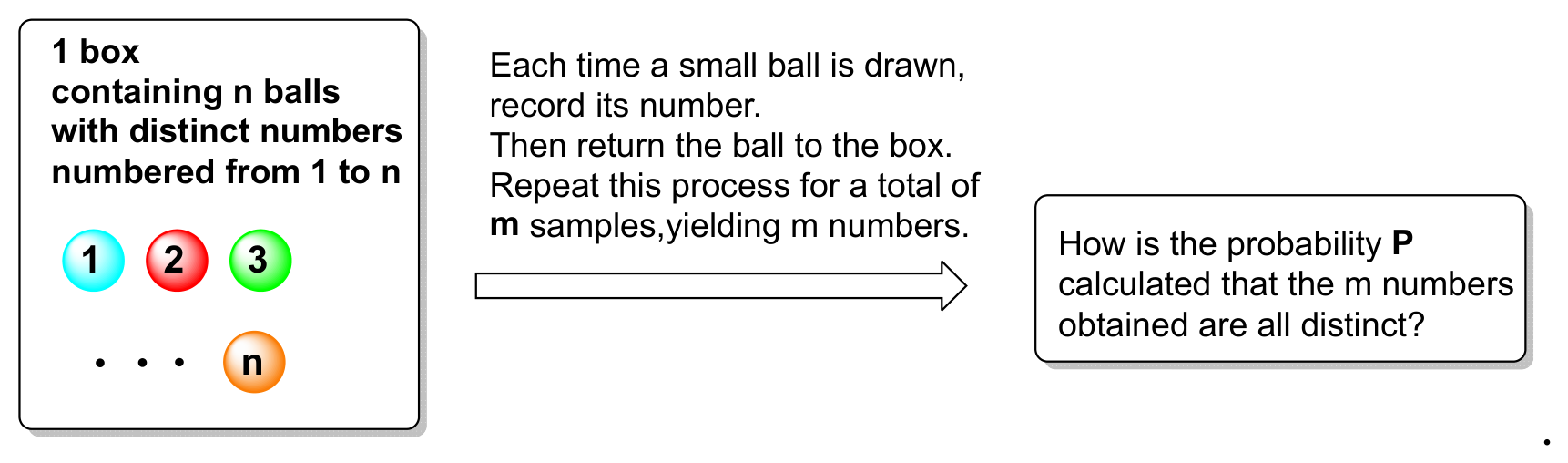
Figure 2.
Calculation results.
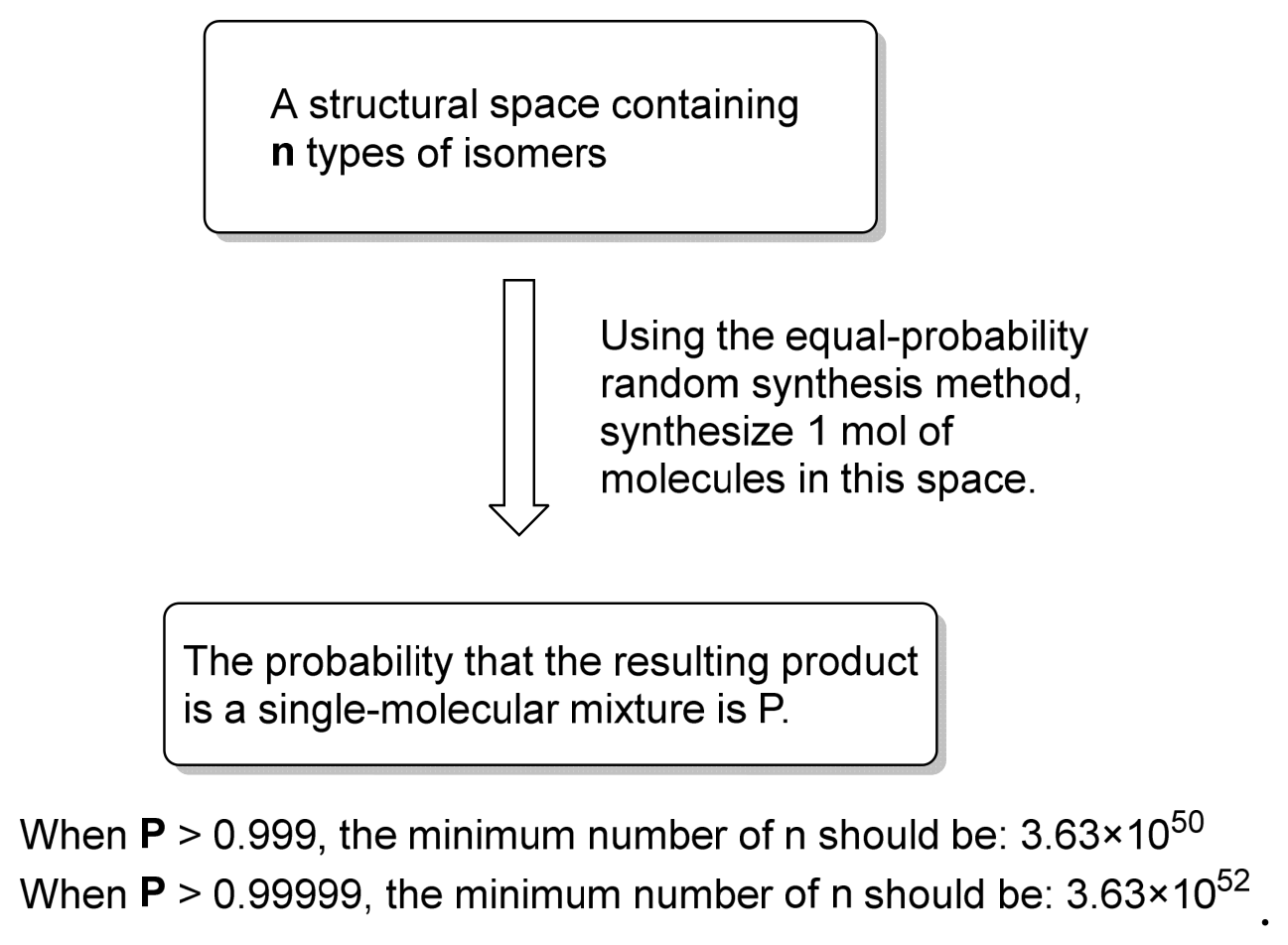
Figure 3.
General process of micro-nonuniform synthesis.
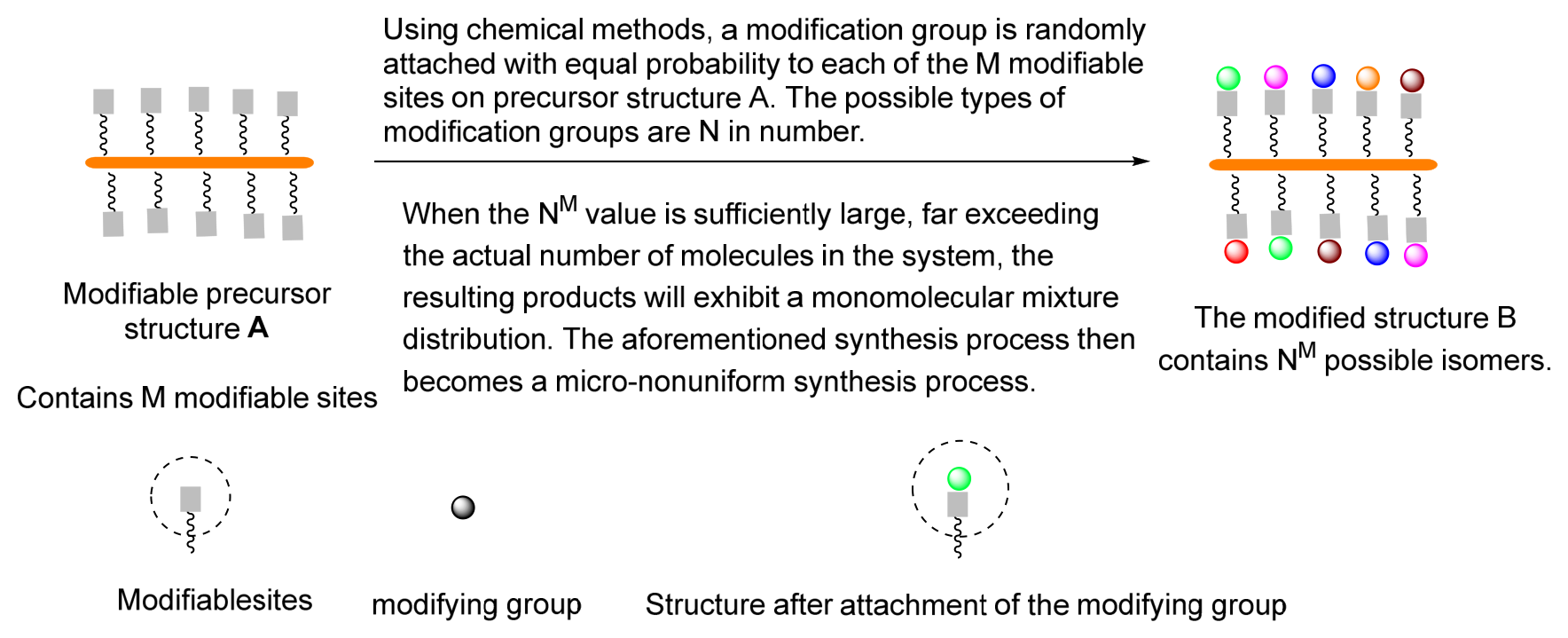
Figure 4.
A model framework demonstrating the feasibility of an equal-probability random synthesis strategy.
Figure 4.
A model framework demonstrating the feasibility of an equal-probability random synthesis strategy.
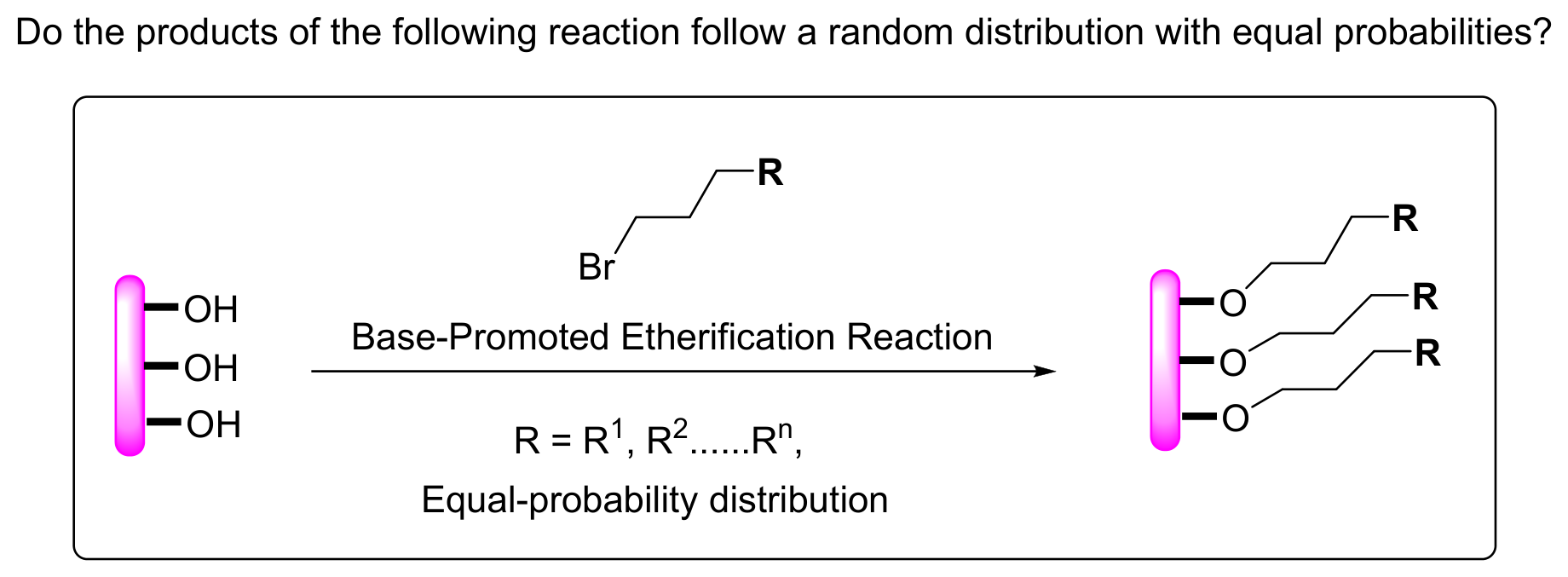
Figure 5.
Comparison between micro-nonuniform synthesis and conventional organic synthesis.
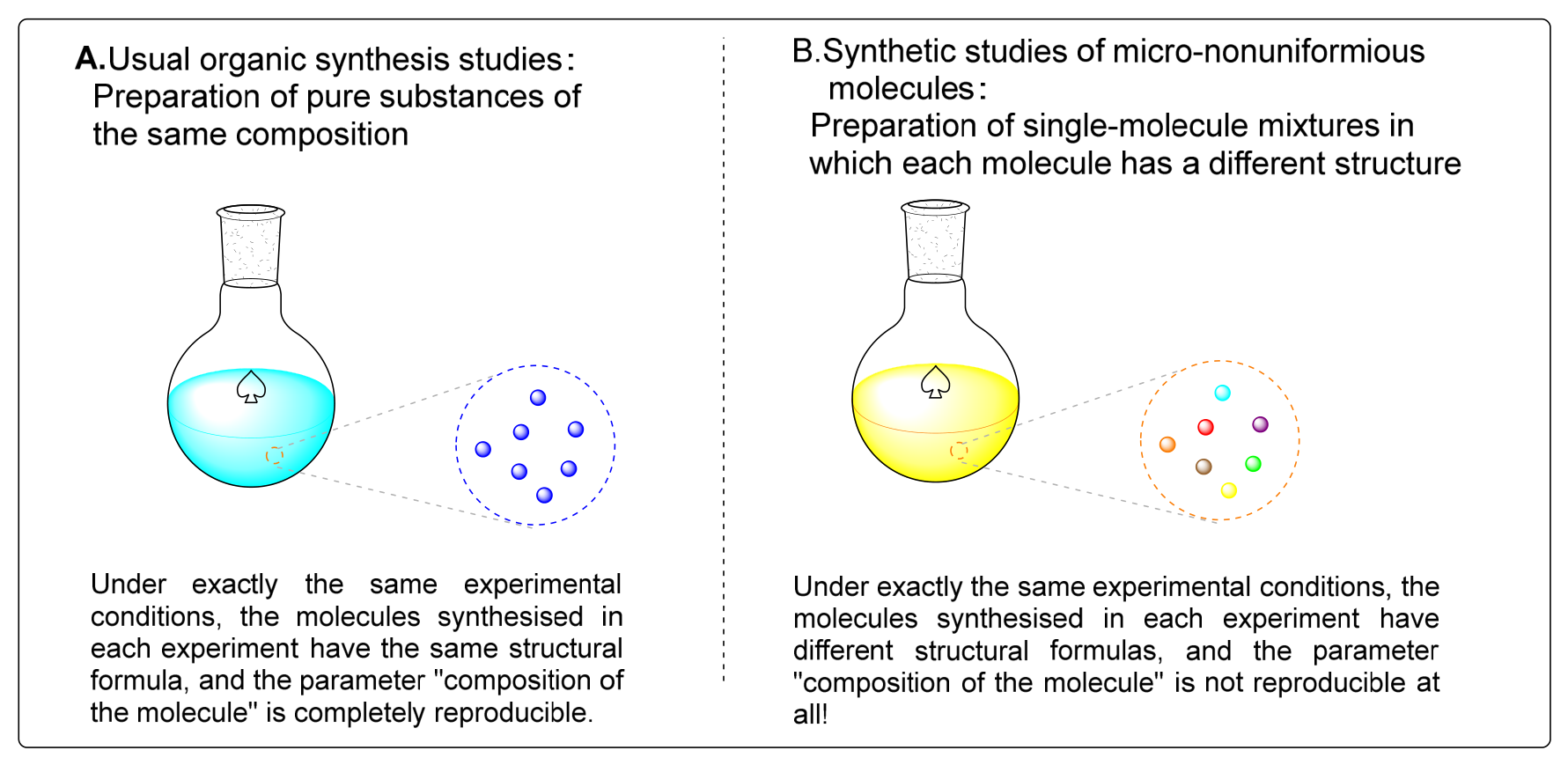
Figure 6.
The non-reproducible parameters and reproducible parameters in a crystallization experiment.
Figure 6.
The non-reproducible parameters and reproducible parameters in a crystallization experiment.
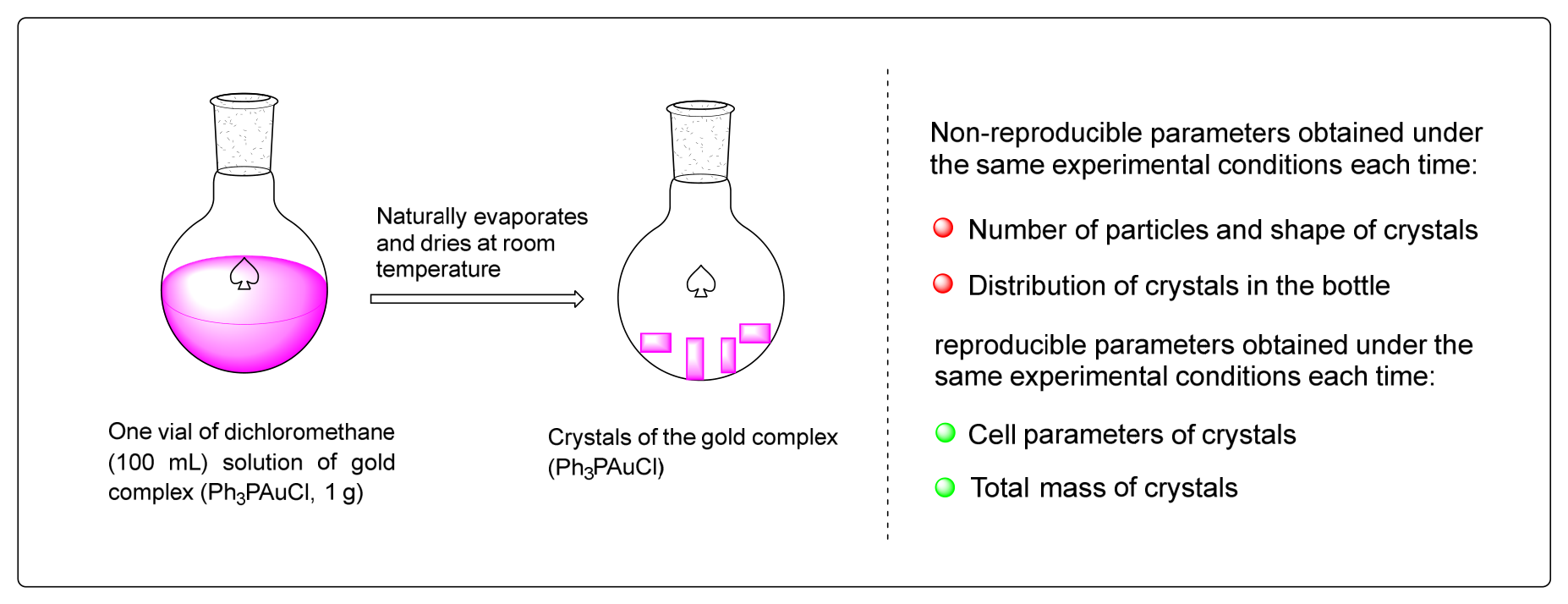
Figure 7.
A typical process for constructing a single-molecule mixture model.
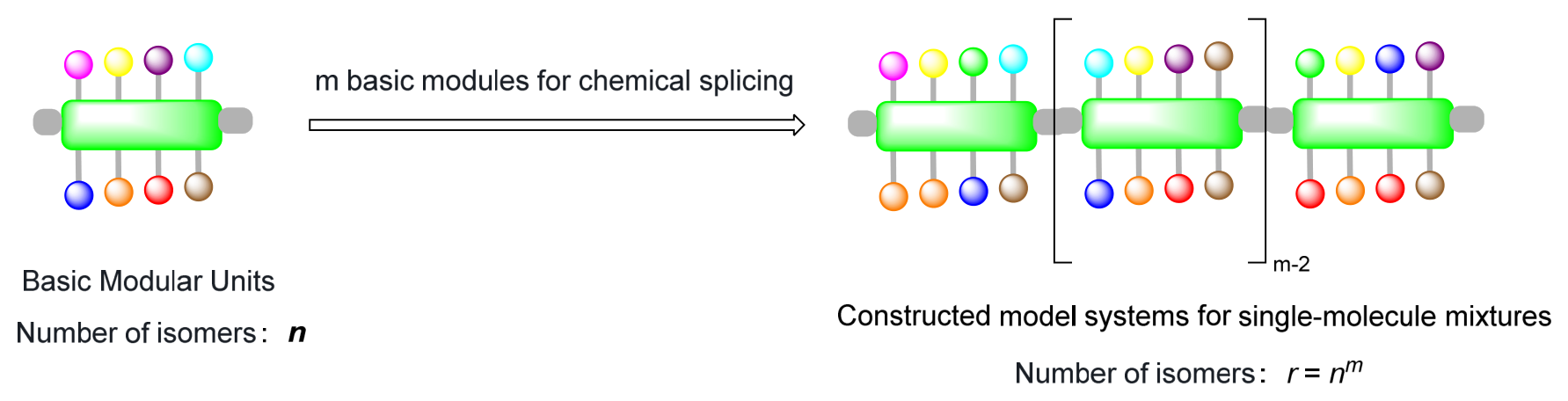
Figure 8.
A typical example of a single-molecule mixture system based on a sugar backbone.
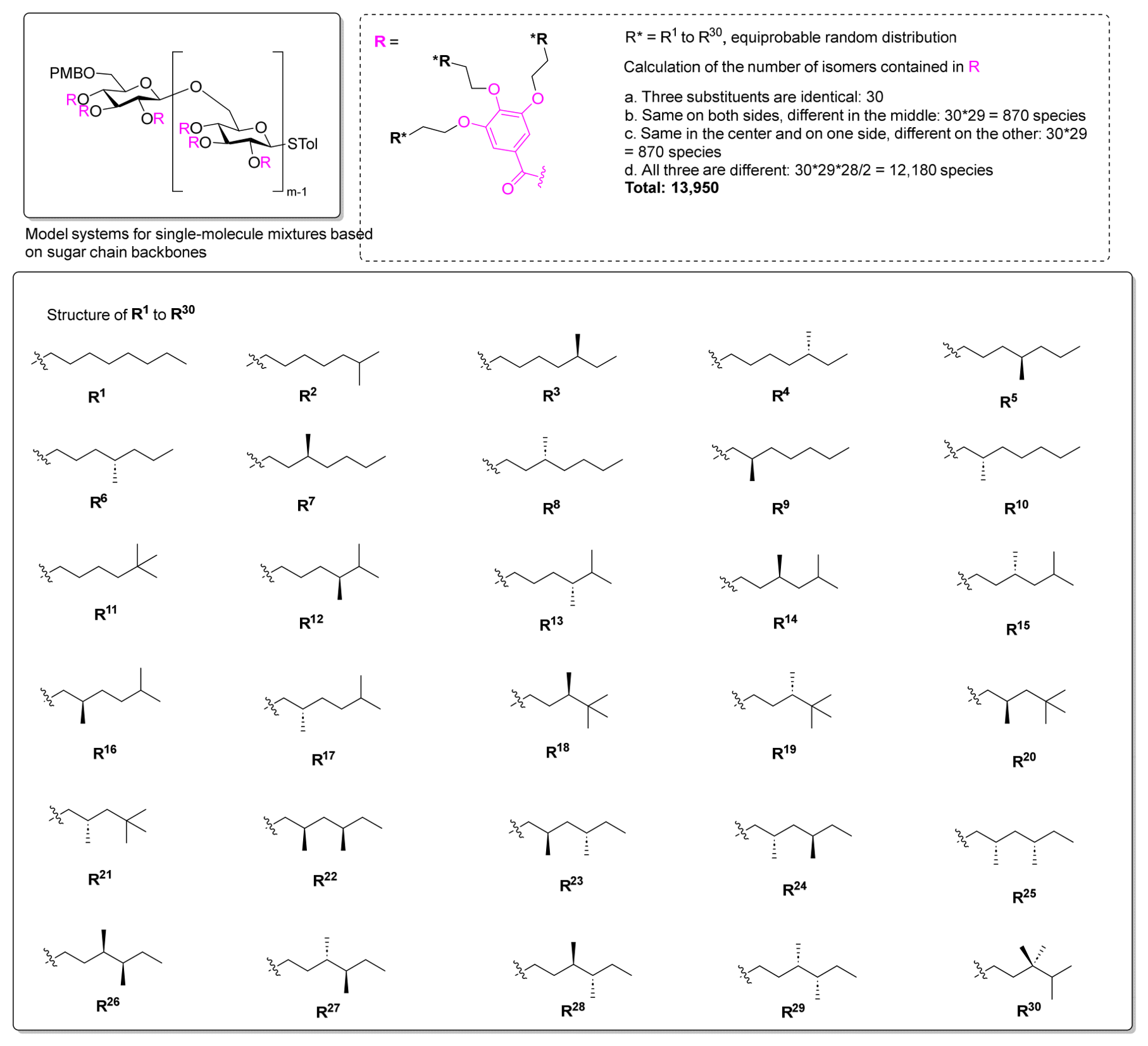
Figure 9.
Number of isomers and molecular weights of sugar chains with different numbers of polymerization.
Figure 9.
Number of isomers and molecular weights of sugar chains with different numbers of polymerization.
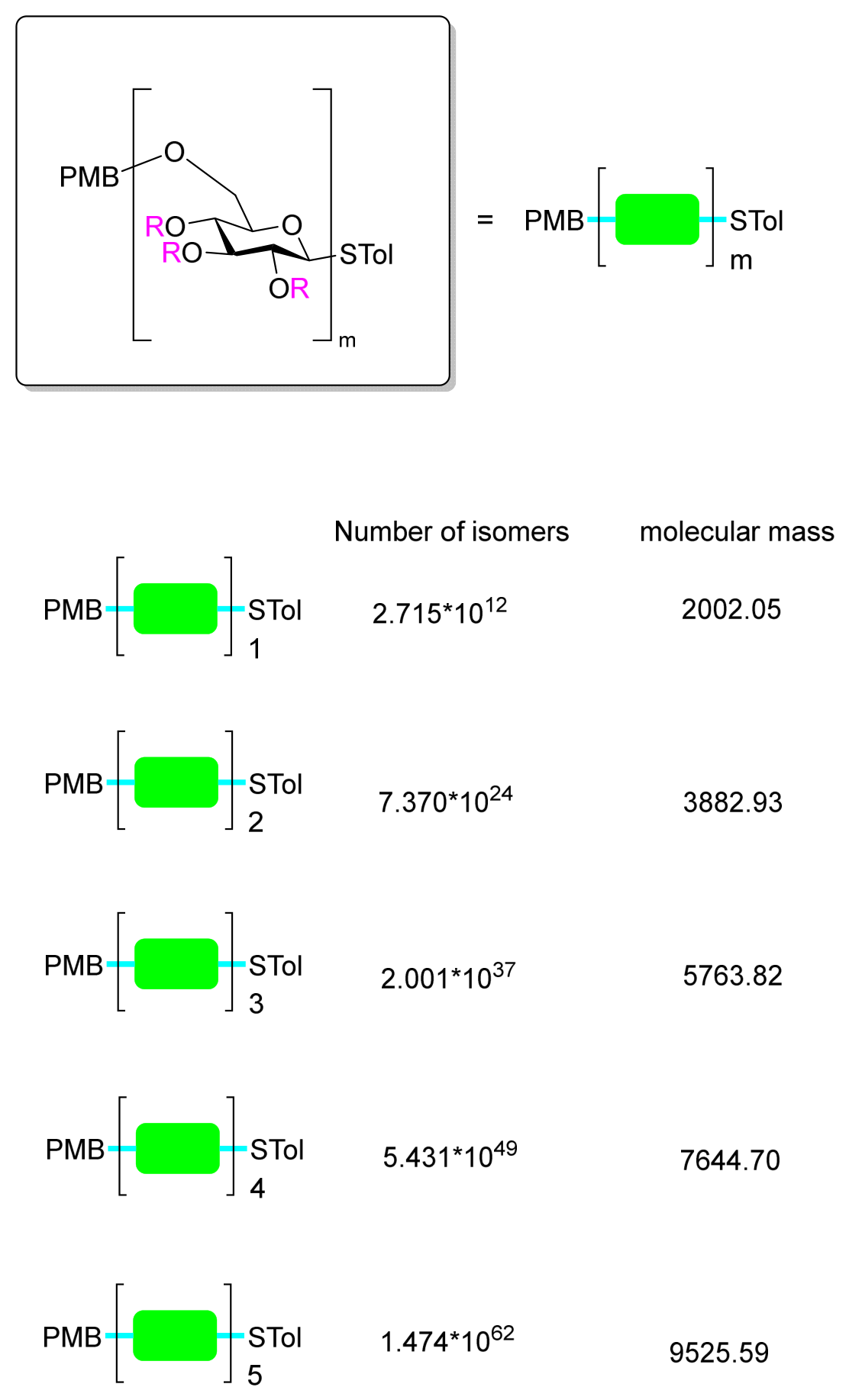
Figure 10.
A defined structural space.
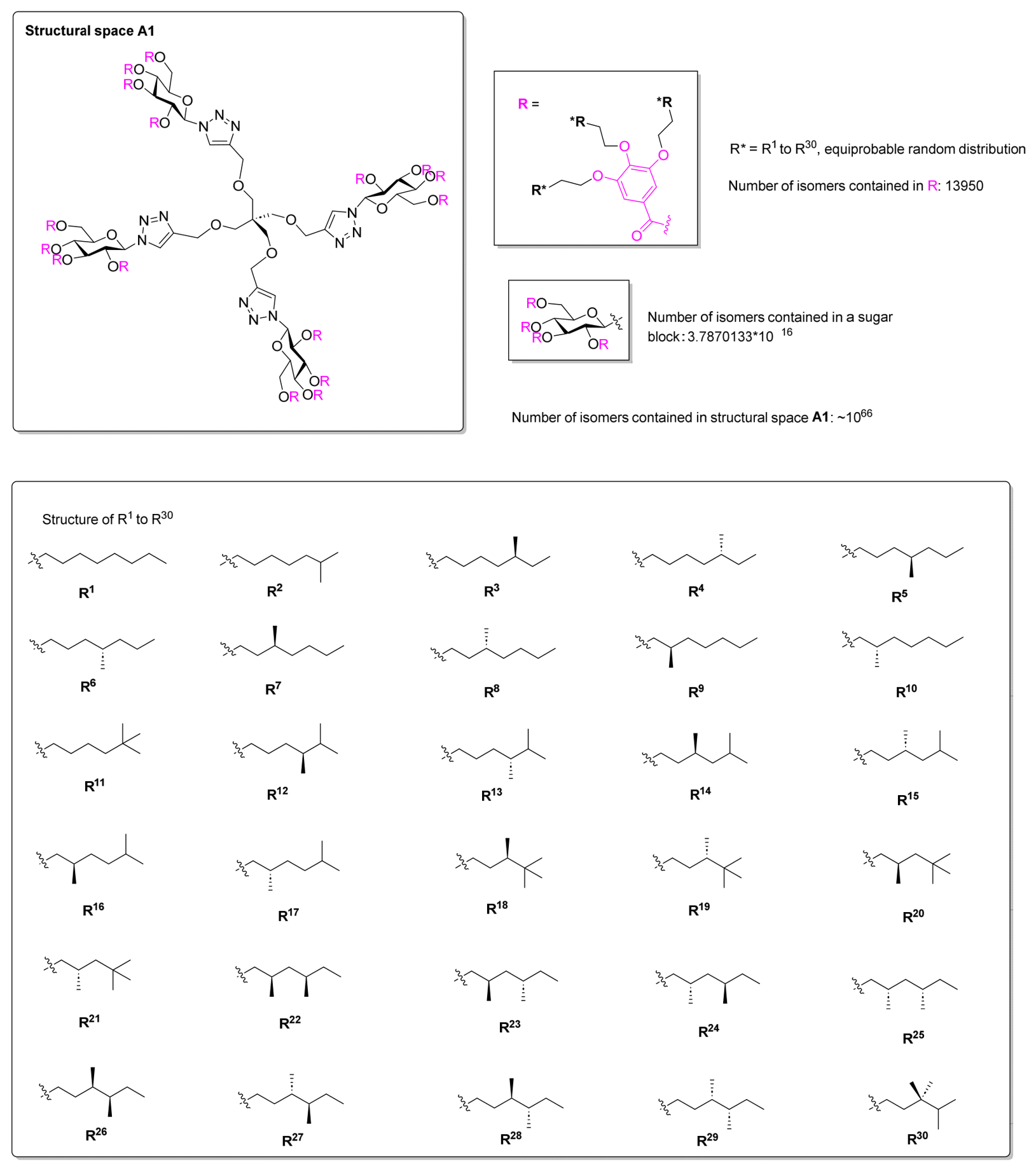
Figure 11.
Synthetic strategy for the above structural space molecules.
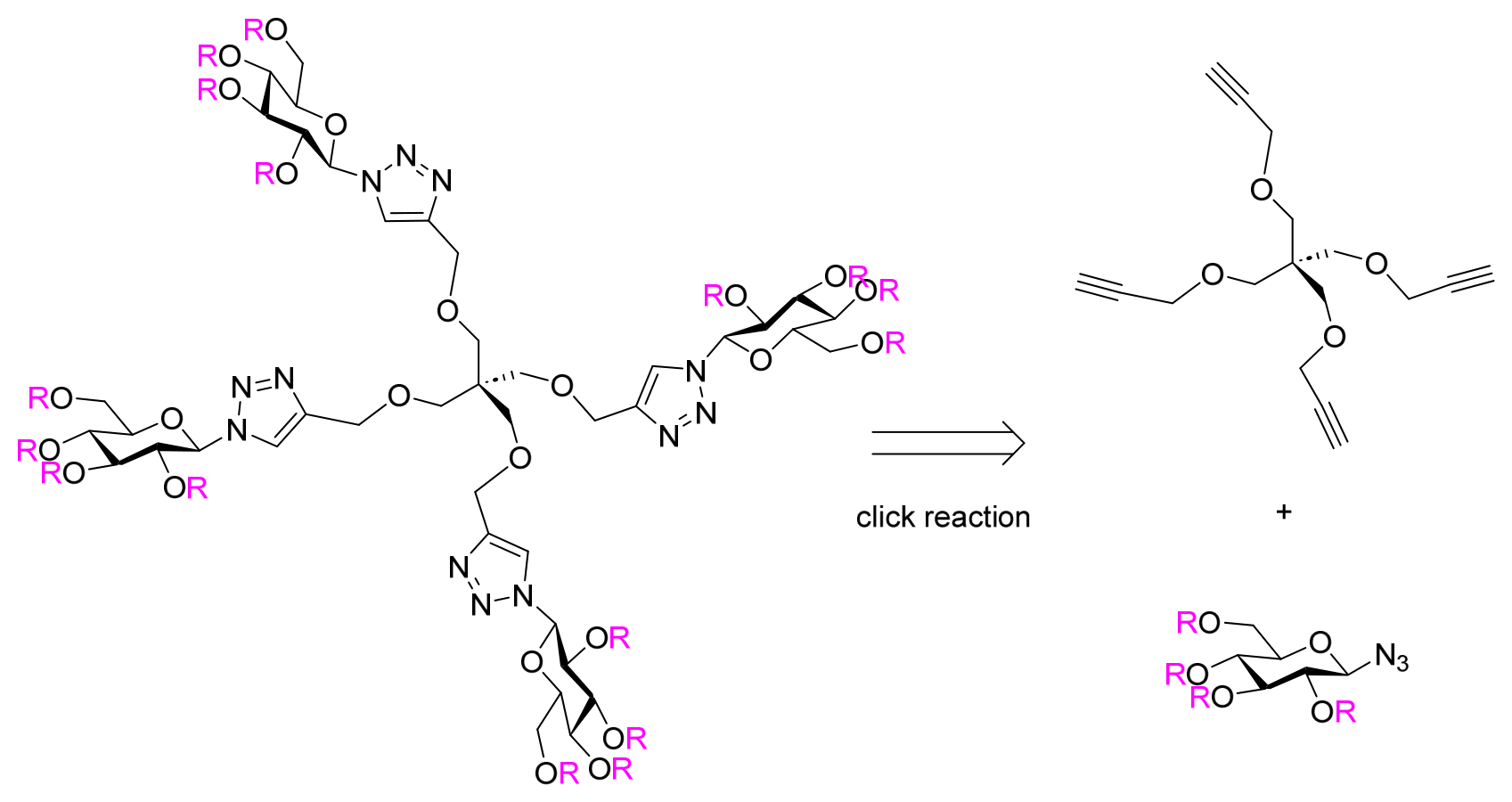
Figure 12.
Construction of a cyclic single-molecule mixture model based on the b-cyclodextrin backbone.
Figure 12.
Construction of a cyclic single-molecule mixture model based on the b-cyclodextrin backbone.
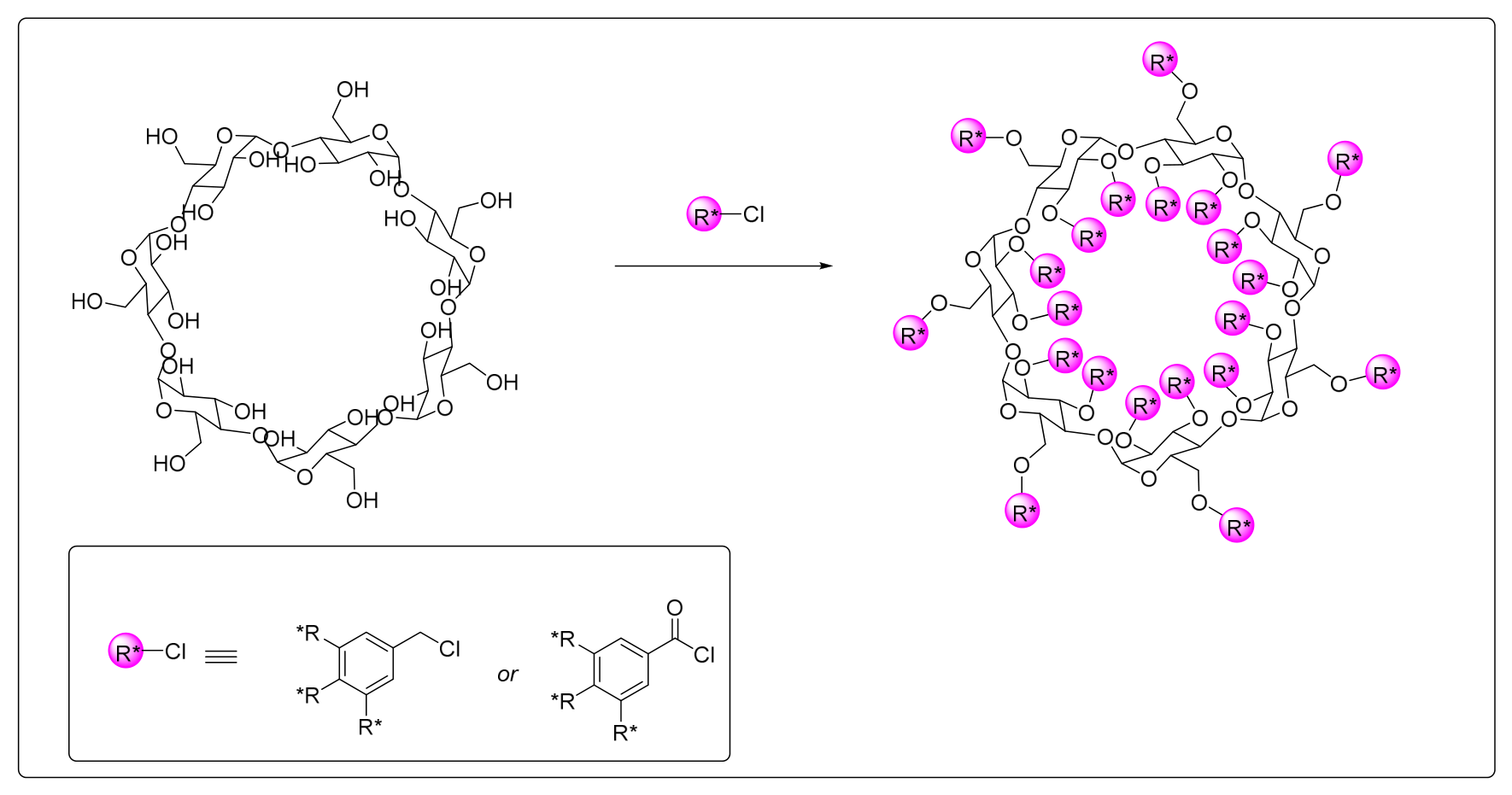
Figure 13.
Single-molecule mixture models based on monosaccharide backbone.
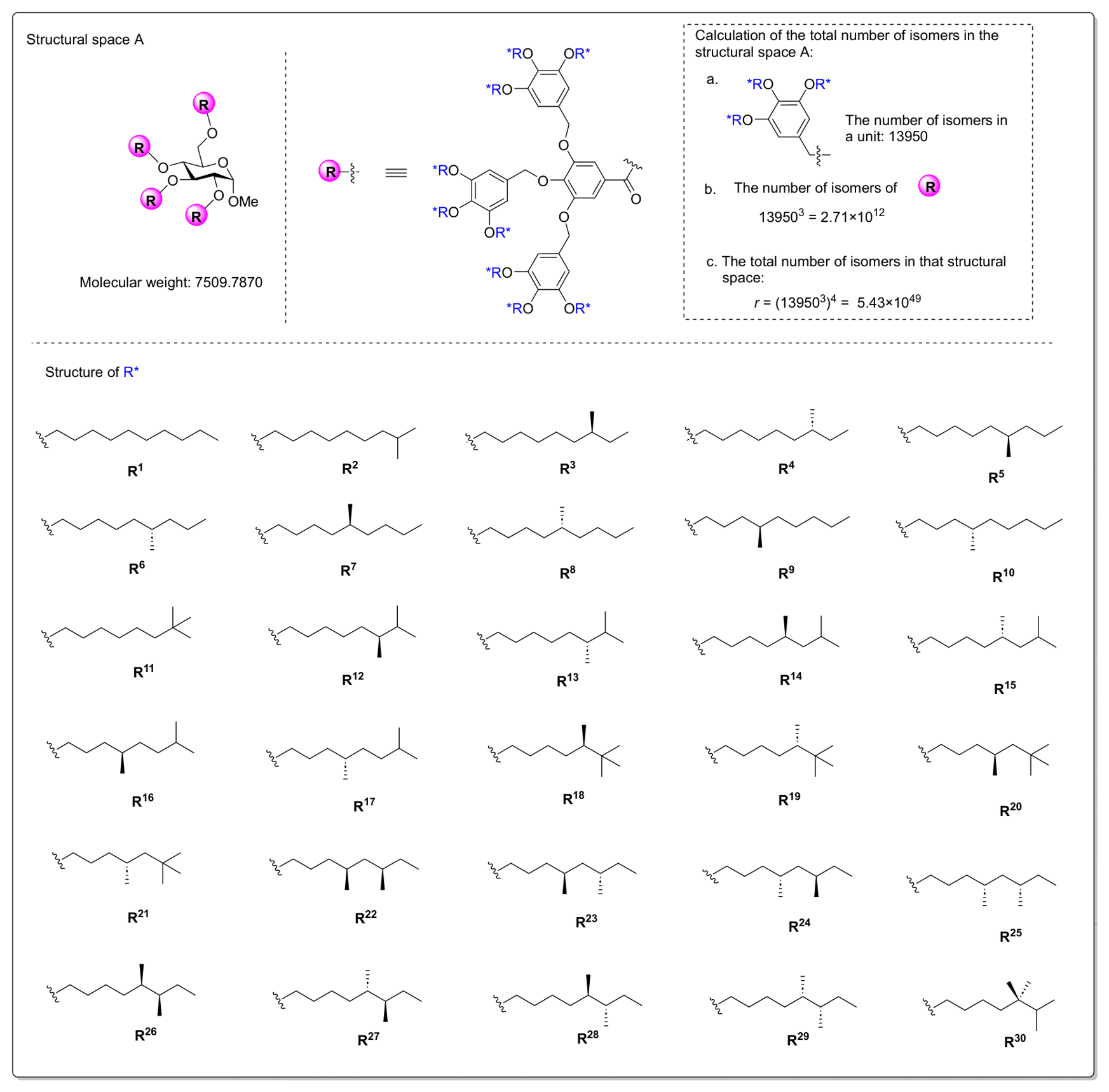
Figure 14.
A model system—chemical modification of polysaccharides.
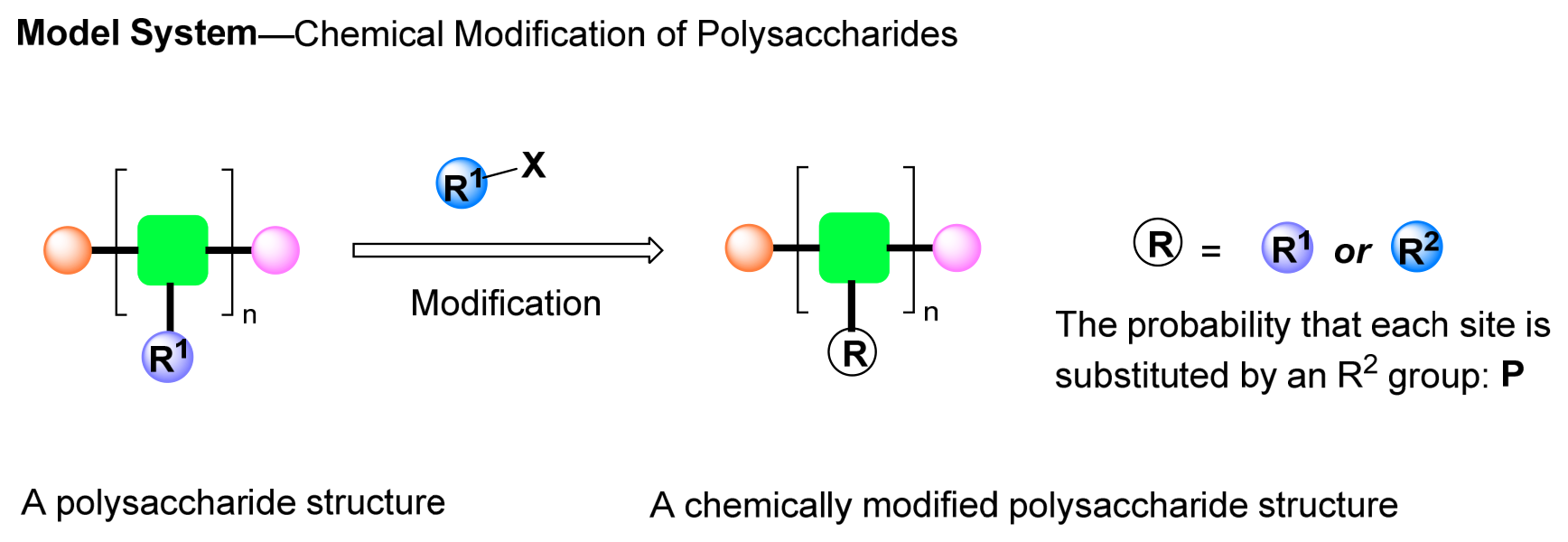
Figure 15.
Estimation process.
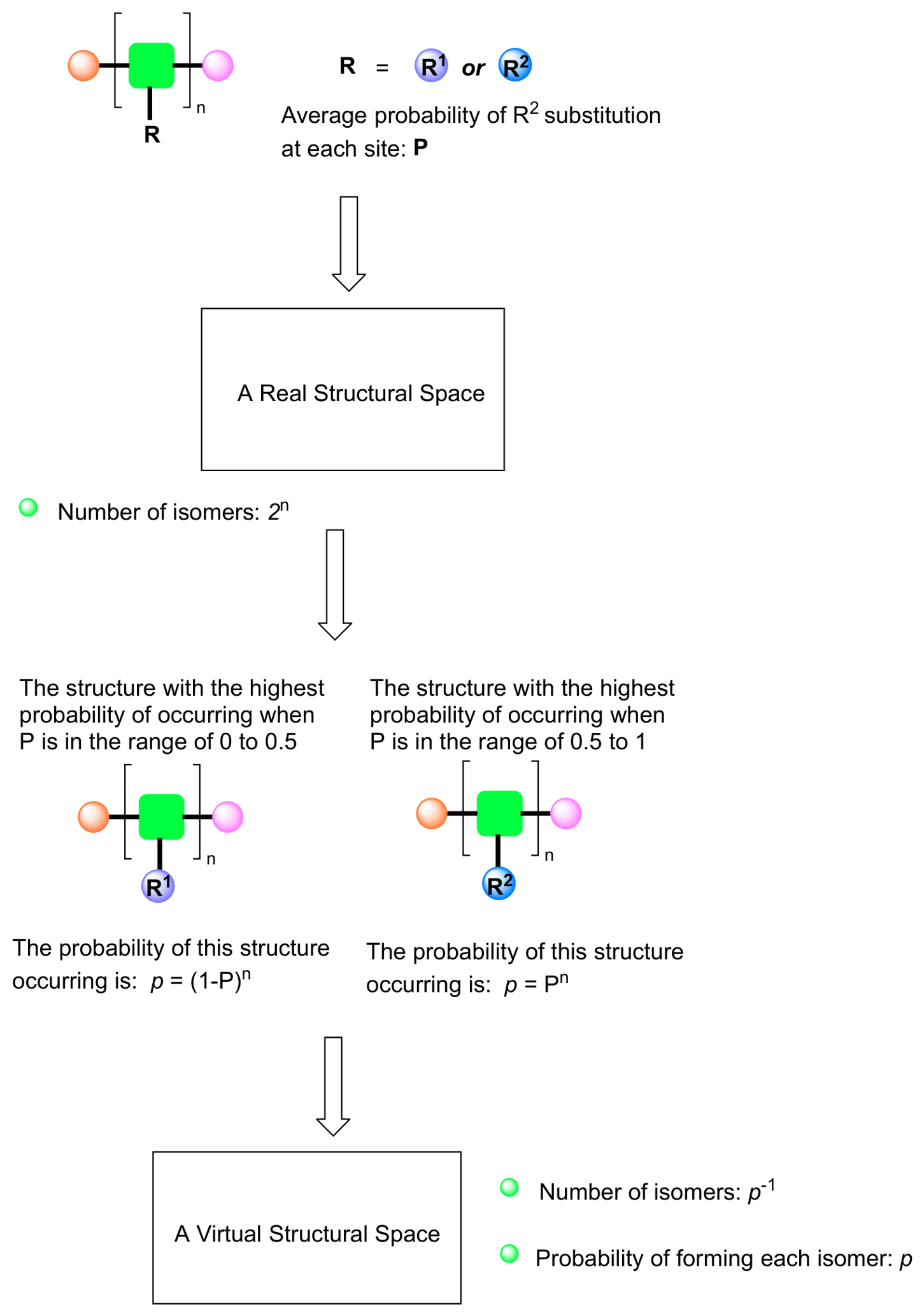
Figure 16.
Some representative examples of chemically modified polysaccharides in a single-molecule mixture state.
Figure 16.
Some representative examples of chemically modified polysaccharides in a single-molecule mixture state.
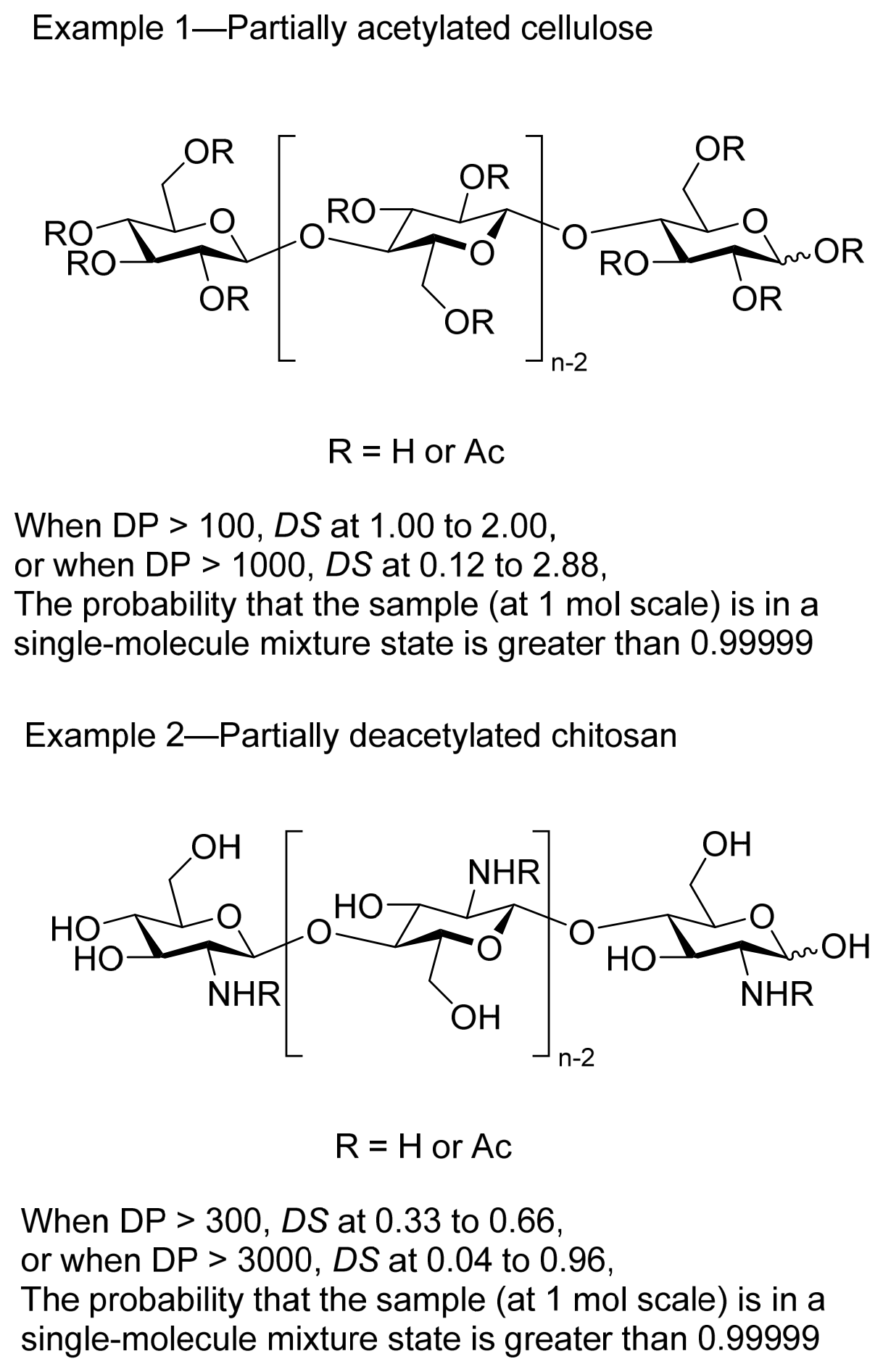
Figure 17.
Understanding the architecture of a single-molecular mixture using the method of statistical averaging.
Figure 17.
Understanding the architecture of a single-molecular mixture using the method of statistical averaging.
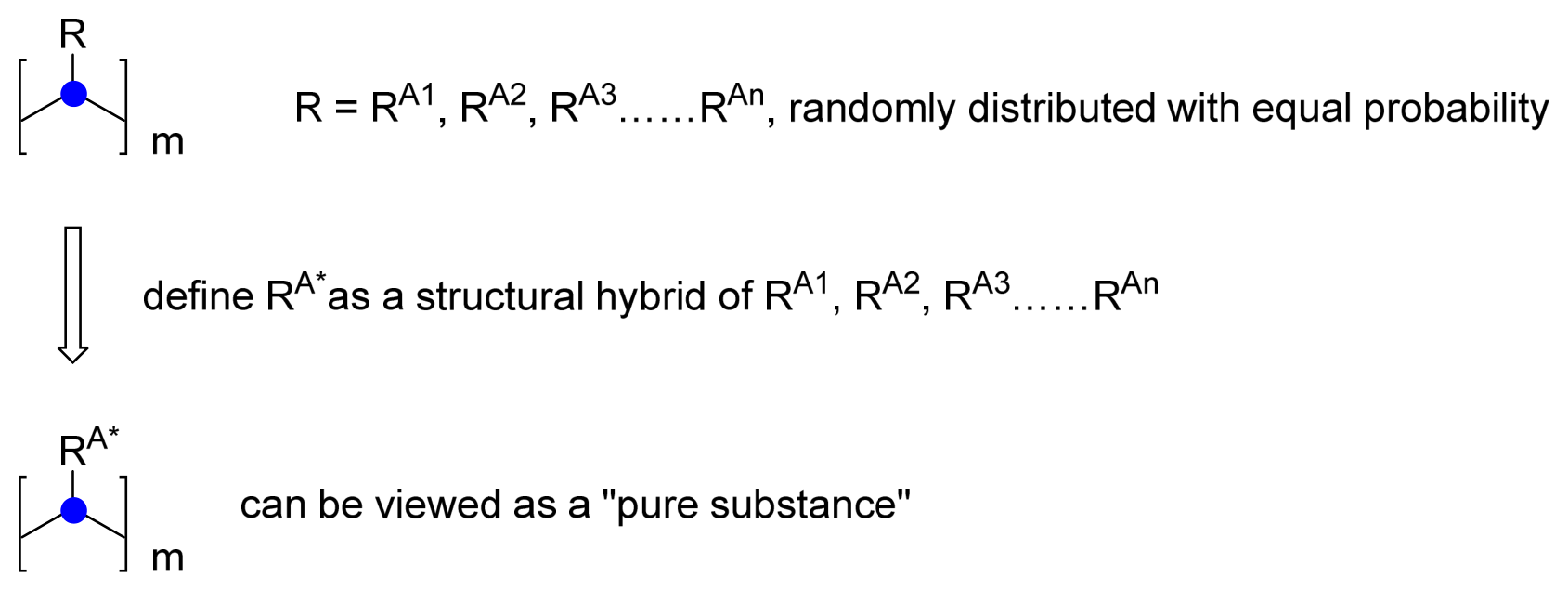
Figure 18.
Fundamental principles for constructing single-molecule mixture systems using deuterium labeling strategies.
Figure 18.
Fundamental principles for constructing single-molecule mixture systems using deuterium labeling strategies.
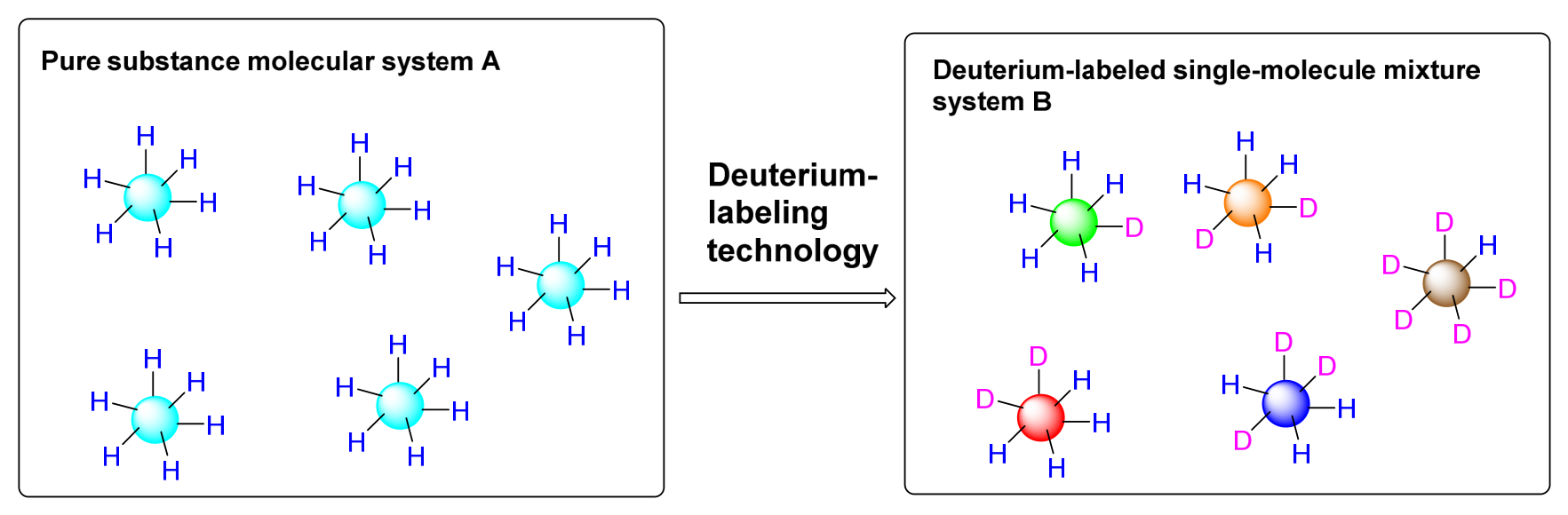
Figure 19.
A deuterium-labeled single-molecule mixture system based on a monosaccharide backbone.
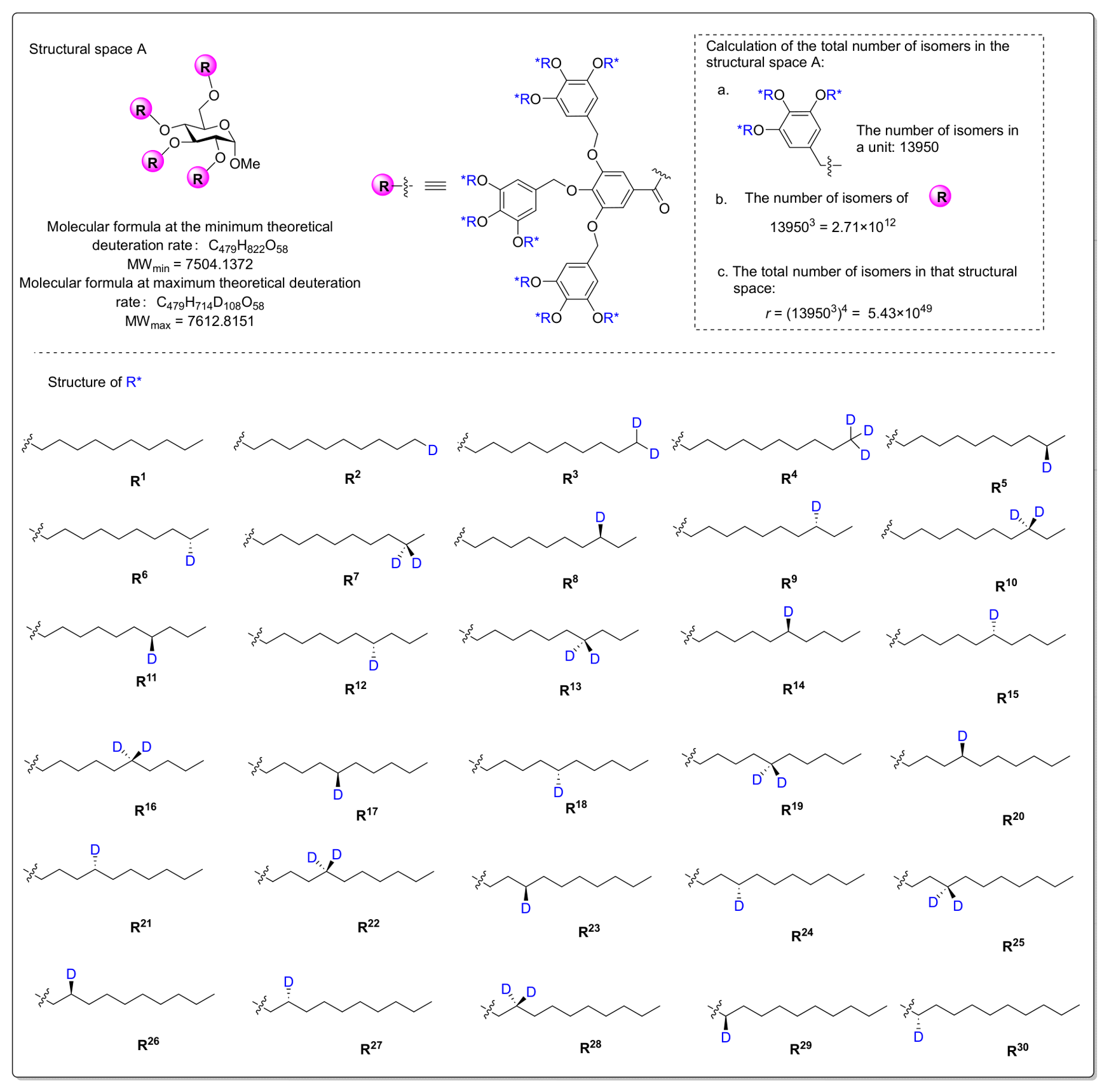
Figure 20.
Fundamental principles for constructing single-molecule mixture systems using fluorine labeling strategies.
Figure 20.
Fundamental principles for constructing single-molecule mixture systems using fluorine labeling strategies.
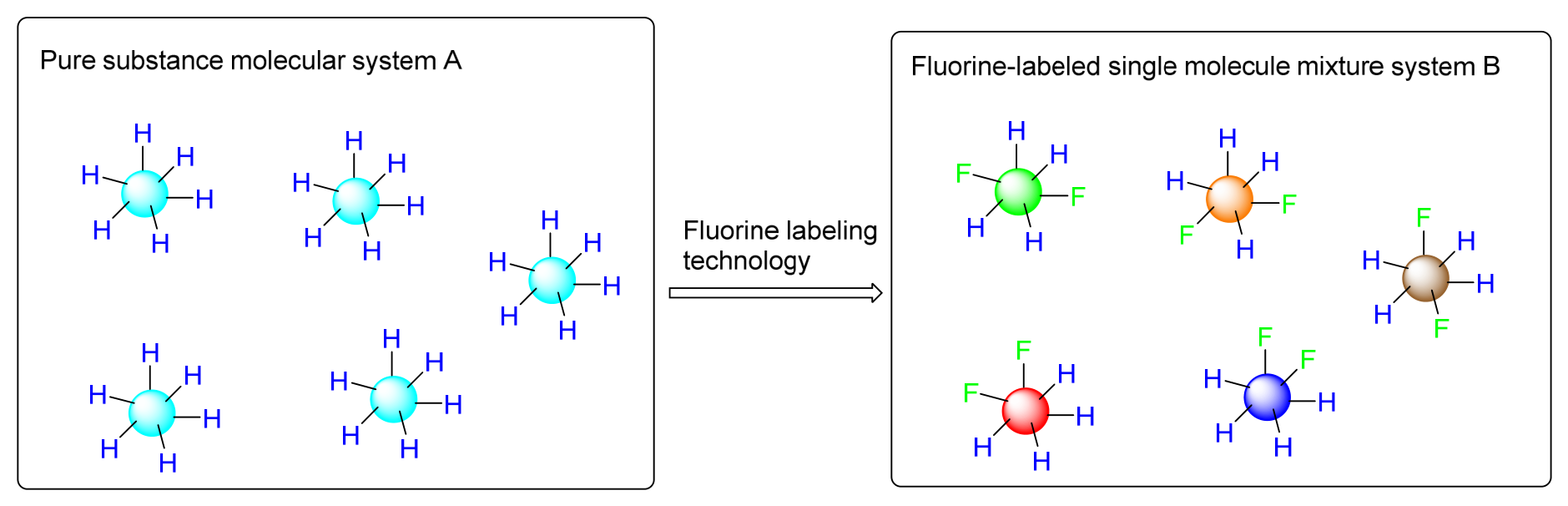
Figure 21.
A fluorine-labeled single-molecule mixture system based on a disaccharide backbone.
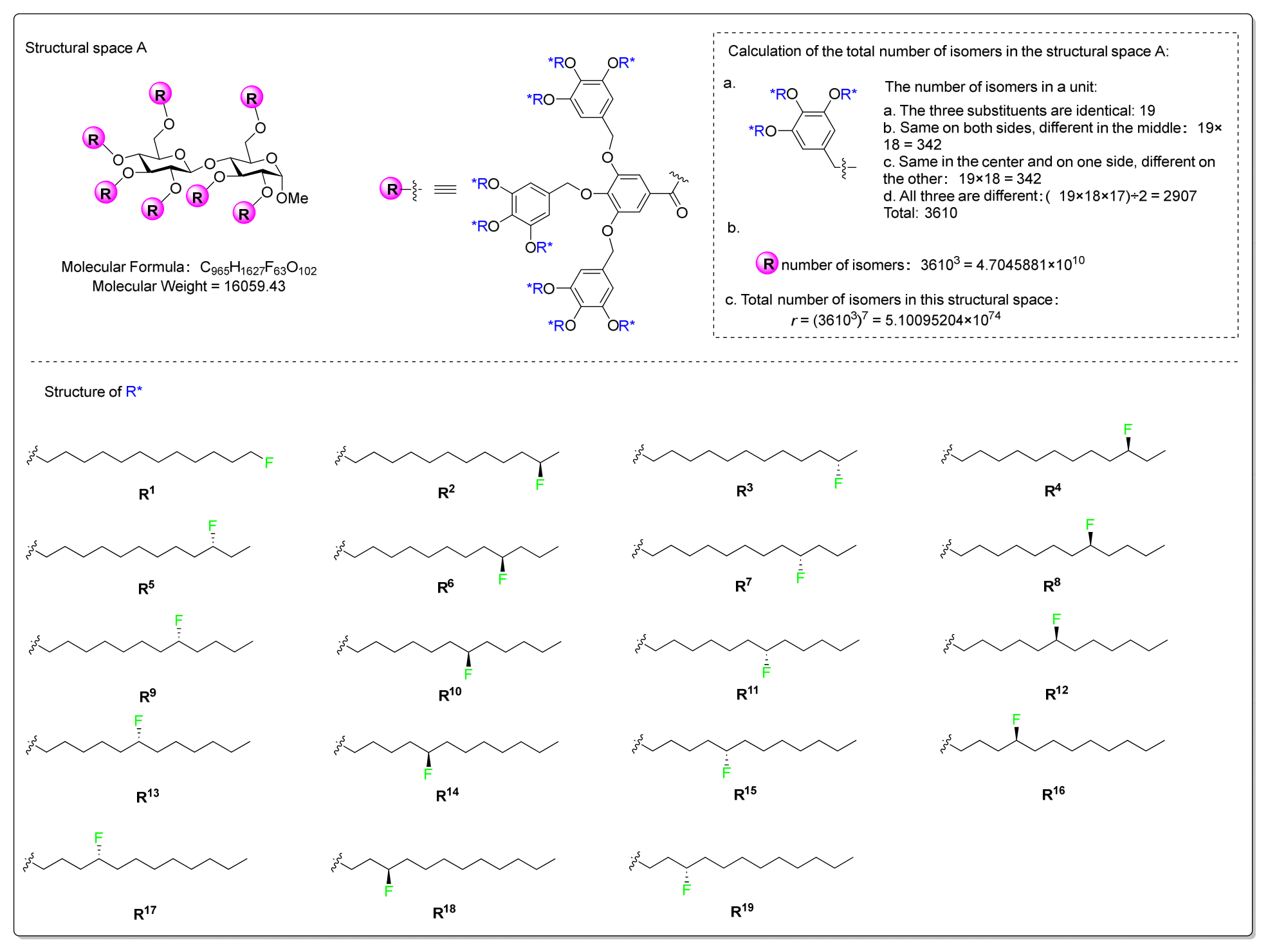
Figure 22.
A single-molecule mixture model based on fully hexanoylated cellulose 128-mer polysaccharide.
Figure 22.
A single-molecule mixture model based on fully hexanoylated cellulose 128-mer polysaccharide.
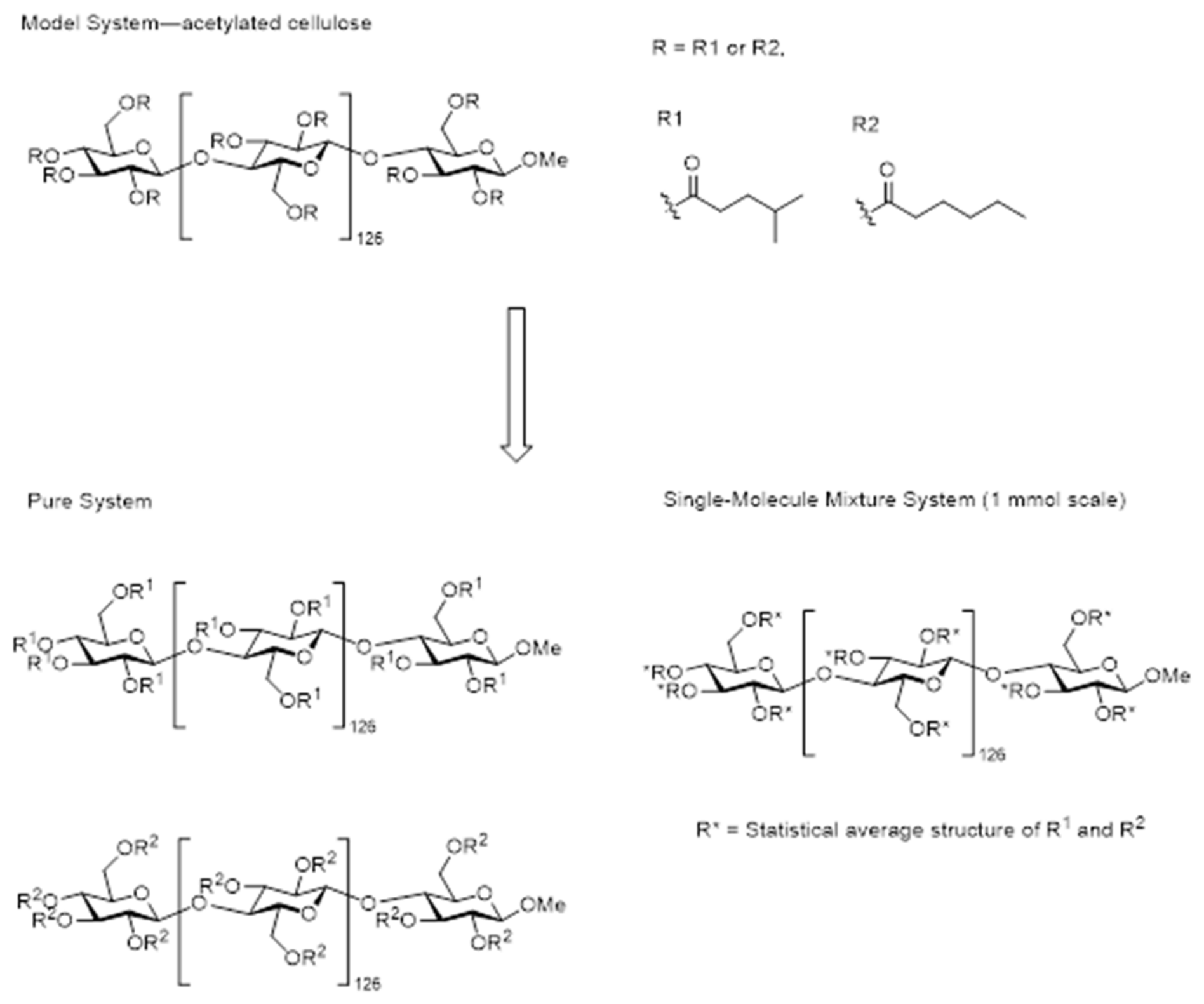

Table 1.
Estimated relationship between n and P for a model polysaccharide system containing n modifiable sites (as shown in Figure 14), where each site has a probability of P of being modified, and the probability that the modified product exists in a single-molecule mixed state is greater than 0.99999.
Table 1.
Estimated relationship between n and P for a model polysaccharide system containing n modifiable sites (as shown in Figure 14), where each site has a probability of P of being modified, and the probability that the modified product exists in a single-molecule mixed state is greater than 0.99999.
| Entry | P value | the minimum value of n |
| 1 | 0.50 | 175 |
| 2 | 0.55 or 0.45 | 203 |
| 3 | 0.60 or 0.40 | 237 |
| 4 | 0.65 or 0.35 | 278 |
| 5 | 0.70 or 0.30 | 340 |
| 6 | 0.75 or 0.25 | 421 |
| 7 | 0.80 or 0.20 | 543 |
| 8 | 0.85 or 0.15 | 745 |
| 9 | 0.90 or 0.10 | 1149 |
| 10 | 0.95 or 0.05 | 2360 |
| 11 | 0.99 or 0.01 | 12042 |
Disclaimer/Publisher’s Note: The statements, opinions and data contained in all publications are solely those of the individual author(s) and contributor(s) and not of MDPI and/or the editor(s). MDPI and/or the editor(s) disclaim responsibility for any injury to people or property resulting from any ideas, methods, instructions or products referred to in the content. |
© 2026 by the authors. Licensee MDPI, Basel, Switzerland. This article is an open access article distributed under the terms and conditions of the Creative Commons Attribution (CC BY) license (http://creativecommons.org/licenses/by/4.0/).
Copyright: This open access article is published under a Creative Commons CC BY 4.0 license, which permit the free download, distribution, and reuse, provided that the author and preprint are cited in any reuse.


