

Submitted:
17 April 2026
Posted:
20 April 2026
You are already at the latest version
Abstract
Background: In Japan, the total number of births is decreasing, while the proportions of late preterm and early term infants are increasing. Infants born at 36 weeks of gestation (hereinafter “36-week infants”) are not considered an indication for hospitalization, resulting in limited clinical data and insufficient understanding of their actual conditions. In this study, we aimed to examine the characteristics of 36-week infants. Methods: We reviewed the medical records of mothers and their 36-week infants born at the Kyorin University Hospital from April 2014 to March 2015. We evaluated birth weight using “standard values for physical measurements at birth according to gestational age.” F-test and Student’s t-test were used to examine the difference in mean gestational age between the 36-week infants who were hospitalized and those who were not hospitalized. Results: We included 84 infants, with multiple births accounting for 63%. Overall, 20% of the infants were born through assisted reproductive technology, 54% required hospitalization, 87% were fed orally rather than through a gastric tube, and 82% received a simple glucose solution for intravenous nutrition. Among the full-term infants, 3.6% weighed below the 10th percentile of the standard weight. Of the 11 children who underwent developmental and intelligence tests, 3 had below-average scores. Conclusions: Infants born at 36 weeks of gestation is an absolute indication for hospitalization. Proactive tube feeding may be considered for 36-week infants. Extending follow-up throughout infancy and early childhood is beneficial for 36-week infants.
Keywords:
gestational age at 36 weeks
; infants
; hospitalization
; neurodevelopmental disorders
; extrauterine growth restriction
1. Introduction
Preterm birth occurs before 37 weeks of gestation [1]. Obstetric precursors leading to preterm birth include (i) delivery for maternal or fetal indications, in which labor is induced, or the infant is delivered via pre-labor cesarean section; (ii) spontaneous preterm labor with intact membranes; and (iii) preterm premature rupture of the membranes, irrespective of vaginal delivery or cesarean section [2]. Preterm infants lose connection with their mothers before the physiological time of delivery for various reasons.
Preterm infants born between 34 weeks 0 day and 36 weeks 6 days of gestation are classified as late preterm (LP) infants [3], whereas those born between 37 weeks 0 day and 38 weeks 6 days of gestation are classified as early term (ET) infants [4]. In Japan, the total number of births decreased from 1.64 million in 1979 to 840,000 in 2020; however, during the same period, the proportions of LP and ET infants increased from 2.9 to 4.2% and 18.0 to 34.0%, respectively [5]. LP and ET infants have attracted medical and public health interest because of the higher frequency of neonatal complications and neurodevelopmental disorders compared with those born after 39 weeks of gestation [6,7,8,9,10,11,12,13,14]. However, compared with the standardized medical care provided to preterm infants born before 34 weeks of gestation or very-low-birth-weight infants, evidence for medical care provided to LP and ET infants remains limited.
In several hospitals, infants born at 36 weeks of gestation (hereinafter referred to as “36-week infants”) are not considered to be an absolute indication for hospitalization, resulting in limited clinical data on 36-week infants. Therefore, conducting analyses exclusively on 36-week infants to fully understand their actual conditions is difficult. In this study, we aimed to examine the characteristics of 36-week infants over a 1-year period.
2. Materials and Methods
We included 36-week infants born at the Kyorin University Hospital during the fiscal year (FY) 2014 (April 2014 to March 2015). We excluded infants born elsewhere and transferred to our hospital, those with obvious congenital malformation syndromes, and those with congenital heart or gastrointestinal disease. We reviewed data from the medical records of the infants and their mothers.
Birth weight was evaluated using “standard values for physical measurements at birth according to gestational age” [15]. An Excel file with an automatic percentile display function (created by Dr. Yoshiya Ito, Japanese Red Cross Hokkaido College of Nursing) was used, and infants with height and weight between the 10th and 90th percentiles were classified as appropriate for gestational age (AGA). Among 36-week infants classified as AGA, those with birth weights below the 10th percentile at corrected 39 weeks, using the “standard values for physical measurements at birth according to gestational age” [15], were defined as “appropriate for gestational age–neonatal weight gain insufficiency (AGA-NWGI)”. This was defined at corrected 39 weeks of gestational age because it corresponds to the neonatal period after the physiological weight loss phase in 36-week infants.
For the 36-week infants, the difference in mean gestational age between those hospitalized and non-hospitalized was examined using F-test to assess variance, followed by a Student’s t-test using Microsoft® Excel for Mac version 16.93.1.
This study was approved by the Ethics Committee of the Faculties of Health Sciences and Medicine at Kyorin University (approval numbers: 2022-80 by the Faculty of Health Sciences and R04-253 by the Faculty of Medicine). As this was a retrospective observational study, an opt-out approach was implemented instead of obtaining informed consent from the participants.
3. Results
Of the 84 36-week infants included in the study, 47 (56%) were female (Figure 1A), 44 (52%) were firstborn (Figure 1B), and 31 (37%) were singleton born (Figure 1C). With respect to birth height and weight, 74% were AGA infants, with small for gestational age (SGA) and large for gestational age infants accounting for 19 and 1%, respectively (Figure 1D).
Seventeen infants (20%) were born through assisted reproductive technology (ART), including in vitro fertilization and frozen-thawed embryo transfer (Figure 2A). Thirteen infants (15%) were vaginally delivered (Figure 2B).
In total, 45 infants (54%) were admitted to the pediatric department (hereinafter referred to as “infants who were hospitalized”). The average gestational age was significantly shorter for the infants who were hospitalized compared with the non-hospitalized infants (36 weeks and 3.0 days vs. 36 weeks and 4.3 days; t-test with equal variance [F-test p = 0.14], p = 0.004). The reasons for hospitalization were as follows: 22 infants weighed <2,300 g, 11 infants weighed <2,300 g and had neonatal disease, and 12 infants weighed ≥2,300 g and had neonatal disease (Figure 3). Among 15 infants with neonatal disease weighing <2,300 g, the diagnoses were transient tachypnea of the newborn (TTN): asphyxia in seven cases, respiratory disorder (other than TTN) in three cases, feeding difficulty in two cases, and a sleepy infant in one case. Among 16 cases of diseases in infants with neonatal disease weighing ≥2,300 g, the diagnoses were TTN: hypoglycemia in five cases, feeding difficulty in five cases, asphyxia in three cases, hyperbilirubinemia in one case, and a sleepy infant in one case. Three infants were not hospitalized from birth: one was hospitalized for hyperbilirubinemia on the 4th day of life, and two were hospitalized because of feeding difficulty on the 0th and 2nd day of life.
Regarding enteral nutrition, 39 (87%) out of 45 infants who were hospitalized were fed orally, whereas six (13%) were fed using a combination of gastric tube and oral feeding (Figure 4A). For intravenous nutrition, 37 infants (82%) received glucose infusion via peripheral veins, six (13%) did not receive intravenous infusion, and two (4%) received infusion via central veins (high-calorie infusion in one infant and administration of a calcium preparation in another) (Figure 4B). The hospitalization period ranged from a minimum of 3 to a maximum of 53 days (average: 19 days; Figure 4C).
At 1-month check-up, 51 infants (61%) completed their follow-up. Among these 51 infants, 16 of 45 infants were hospitalized, whereas 35 of 39 infants were not (Figure 5).
Three (3.6%) infants were classified as AGA-NWGI (Table 1), among whom two were from a dichorionic diamniotic (DD) twin pregnancy, and one was a singleton born via grade A emergency cesarean section due to umbilical cord prolapse. Except for one case of TTN, no postnatal complications were identified in any of the three infants.
At outpatient follow-up, developmental and intelligence tests were conducted for 11 children (Table 2). Specifically, the Enjoji Test for Infants and Young Children was conducted for nine children aged 1–3 years, the New Kyoto Scale was used for seven children aged 1 and 2 years, and the Wechsler Intelligence Scale for Children–Fourth Edition (WISC-IV) was used for one child aged 5–9 years. Scores lower than the average age at the time of testing were recorded for three children.
4. Discussion
Our findings showed that the rates of cesarean delivery and twin births among 36-week infants in the Comprehensive Perinatal Maternal and Child Medical Center of our hospital were remarkably higher than those of all births in Japan. Most patients required hospitalization, and oral feeding and glucose infusion were primarily provided. Follow-up visits were conducted for most infants up to the 1-month check-up. The originality of this study lies in its focus on 36-week infants, for whom clinical data is scarce, thereby clarifying their characteristics to a certain extent.
The frequency of neonatal complications and neurodevelopmental disorders is higher in LP and ET infants compared with those born after 39 weeks of gestation. Accordingly, the American College of Obstetricians and Gynecologists and the Society for Maternal-Fetal Medicine have emphasized the need to balance the risks of maternal and neonatal outcomes related to LP and ET deliveries against the risks of continuing pregnancy [16]. For instance, uncomplicated DD twins, DD twins with fetal growth restriction, uncomplicated monochorionic diamniotic (MD) twins, and MD twins with fetal growth restriction are recommended to be delivered between 38 weeks 0 day and 38 weeks 6 days, 36 weeks 0 day and 37 weeks 6 days, 34 weeks 0 day and 37 weeks 6 days, and 32 weeks 0 day and 34 weeks 6 days, respectively. In tertiary medical institutions, such as ours, the frequency of pregnancies and deliveries with complications or fetal growth restriction is high, resulting in a higher number of LP and ET births. The pediatric department of the Comprehensive Maternal and Child Medical Center was responsible for their care. Thus, there is significant potential to contribute to the establishment of evidence for the treatment of LP and ET infants.
In FY 2014, the percentage of 36-week infants was 9.9% among those born at our hospital and 9.1% after excluding those who met the exclusion criteria. This was higher than the percentage of 36-week infants in Japan during the same period (2.8% in 2015) [17]. This may be related to the high rates of cesarean sections and multiple births at our hospital, which caters to high-risk pregnancies.
The number of infants with a longer gestational period (36 weeks and 4, 5, or 6 days) was 1.9 times greater than that of infants with a shorter gestational period (36 weeks and 0, 1, or 2 days). This finding may be related to the fact that 35 (71%) of 49 infants delivered via elective cesarean section were born at 36 weeks and 4, 5, or 6 days, suggesting that elective cesarean section is more common in the latter half of the 36th week.
In this study, the sex ratio at birth was 79 and 100 for male and female 36-week infants, respectively; this is lower than the sex ratio at birth of 103.9–107.6 in Japan (from 1873 to 2023), where male infants have consistently been more prevalent [18]. Among the 36-week infants included in this study, more were born to primiparous mothers than to multiparous mothers. The 2023 statistics of Japan indicated that 46% of infants were “first-born infants,” which was lower than the percentage of second-born or subsequent infants. Additionally, multiple births accounted for most of the 36-week infants included in this study. According to 2023 statistics of Japan, single births accounted for 98%, whereas multiple births accounted for 2% [19]. The high rate of multiple births was attributed to the function of our hospital. Among the 84 infants included in this study, 60 mothers were included. Among 29 mothers who had multiple pregnancies, 11 became pregnant through infertility treatments (ART, 6; artificial insemination, 2; hormone therapy, 2; and timing method, 1). Among 31 mothers with singleton pregnancies, 4 became pregnant through infertility treatment (ART, n = 2; timing method, n = 2).
The number and percentage of infants born through ART are increasing annually, exceeding 75,000 and accounting for 9.7% of all births in 2022 [20]. In this study, the percentage of infants born through ART was as high as 20%, which is attributed to two factors: the function of our hospital and the group of 36-week infants. The safety and effectiveness of ART have been established, making it the standard treatment for infertility. Considering the increasing age of women with children [21] and the expanding applications of ART beyond infertility treatment, including fertility preservation for cancer survivors and preimplantation diagnosis for severe hereditary diseases, a further increase in the use of ART is expected in the future. In addition, an increase in the number of multiple pregnancies is anticipated.
In this study, 87% of 36-week infants were born via cesarean section. According to statistics from general hospitals and clinics in Japan, the rate of cesarean sections, including elective and emergency cases, was 38.4% in 2014 and 44.4% in 2023 [22]. The high rate observed at our hospital may be attributed to the management of high-risk pregnancies.
The prevalence rate of SGA infants in this study was high at 19%, compared with the nationwide prevalence rate of 5.9–10.5% for SGA infants [23]. This may be due to our hospital’s ability to manage high-risk pregnancies.
More than half of the 36-week infants were admitted to the pediatric department, implying that these infants were not kept with their mothers in the obstetrics ward but were hospitalized separately in the pediatric department. This finding indicated that a significant proportion of 36-week infants required inpatient care. Additionally, the diagnoses of infants who were hospitalized because of relative indications for admission (birth weight of ≥2,300 g and neonatal diseases) were mostly related to immaturity, including TTN, hypoglycemia, feeding difficulty, and hyperbilirubinemia, suggesting that a considerable number of 36-week infants exhibit clear signs of immaturity. Considering a gestational age of 36 weeks as an absolute indication for hospitalization, irrespective of the presence or absence of other issues, is worth exploring to reduce neonatal complications and unknown medium-to-long-term risks. Nevertheless, Iizuka, who phenomenologically analyzed the psychological impact of mother–infant separation caused by neonatal intensive care unit (NICU) admissions, revealed that placing a child in an incubator led to mother–infant separation, creating psychological distance between them and causing a critical situation during the precious period for building the mother–infant relationship [24]. These negative aspects should be considered.
Oral feeding accounted for a substantial proportion of enteral nutrition initiated after hospitalization (87%). Several people, including medical professionals and non-medical individuals, regard oral feeding as a more “natural” method of nutrition compared with tube feeding. We previously conducted a survey (unpublished) targeting nurses and doctors at the perinatal and maternal medical centers of our hospital to investigate their sentiments and reasoning regarding LP infants. In the question pertaining to oral feeding, for LP infants showing feeding difficulty (they were expected to smoothly consume the given amount but instead showed inconsistent patterns, such as drinking smoothly at times, pausing frequently, or barely drinking at all), the respondents were provided with three options: “With appropriate support, oral feeding should be possible at this stage,” “Even with support, oral feeding is difficult at this stage,” and “Cannot say either way.” Among these, the first option accounted for >40%. Most respondents believed that “oral feeding is appropriate for LP infants and providing support in oral feeding is necessary.” Starting with oral feeding and responding to the needs of 36-week infants are natural. Mizuno et al. quantitatively observed the feeding behavior of preterm infants born at 32–36 weeks of gestation by breaking it down into the elements of sucking, swallowing, and breathing. They confirmed that the coordination between swallowing and breathing progressed at 33–36 corrected weeks. However, they also reported that the maturity of breathing during feeding was not fully established at 36 weeks [25]. Therefore, it is reasonable to proactively select tube feeding as the first treatment option.
Tube feeding for 36-week-old infants is considered necessary from the perspective of the fetal growth rate in late pregnancy. Preterm birth refers to birth that occurs before the natural timing of delivery. Dunsworth et al. proposed the “energetics of gestation and growth” (EGG) hypothesis, stating that “the duration of human pregnancy and the timing of delivery directly follow the constraints of maternal metabolic rate. As the fetus grows exponentially, its metabolic demands also increase, and by the ninth month of pregnancy, the fetal metabolic demands exceed twice the maternal basal metabolic rate at this critical time. The growth rate of newborns slows down compared with the growth rate of fetuses, maintaining a balance between the metabolic demands of offspring and the mother.” [26] The EGG hypothesis has been examined and validated in mammals, and the relationship between pregnancy maintenance and miscarriage in whales has been demonstrated [27].
In this study, we defined AGA-NWGI as infants without intrauterine growth restriction but who experienced significant weight loss during the early postnatal period and whose transition to catch-up growth was not observed near the expected date of delivery. In a study on preterm infants born at <28 weeks of gestation at their facility in Japan, Kobayashi et al. showed that the standard deviation score (SDS) for weight reached its lowest value at 30–31 weeks of gestation, and that the period until weight began to increase was longer in infants with a shorter gestational age. They cited a review by Bhatia et al. [28] and considered that the decrease in SDS during the early postnatal period was due to a reduction in extracellular fluid and protein catabolism [29]. Egashira et al. defined “weight-based extrauterine growth restriction (EUGR)” as “infants born appropriate for date and whose weight z-score was less than −1.28 at the expected date of delivery.” In their study conducted at a Japanese institution, they demonstrated that this accounted for 35.4% [30]. Embleton et al. prospectively reported that infants born at <30 weeks of gestation experienced an energy deficit of 813 kcal/kg and a protein deficit of 23 g/kg by the fifth week of life [31]. Ehrenkranz et al. showed that among extremely low-birth-weight infants, including both AGA and SGA infants, those in the slowest quartile of weight gain in the NICU had a significantly higher independent frequency of cerebral palsy, low mental development index, or the presence of at least one of the following: cerebral palsy, low mental development index, low motor development index, hearing loss, or blindness than those in the fastest quartile [32].
In this study, AGA-NWGI was defined as an indicator equivalent to weight-based EUGR in infants born at fewer weeks in the exploration of risk factors for neurodevelopmental disorders in 36-week infants. The aim was to examine the development of an indicator similar to the relationship between weight-based EUGR and neurological, developmental, and sensory conditions identified in previous studies in 36-week infants. In this study, the initial feeding method for the three AGA-NWGI infants was oral. Statistical testing was not possible; however, nutrient-focused feeding methods, such as tube feeding may improve early postnatal weight gain. It is necessary to further explore appropriate feeding methods for 36-week infants by integrating nutritional, physiological, and psychological perspectives.
Among the 11 children who underwent developmental and intelligence tests, results below the standard were recorded for three cases, indicating mild neurodevelopmental disorders. The three infants who met the criteria for AGA-NWGI were not subjected to developmental and intelligence tests during follow-up, and the possibility that this group was at risk for neurodevelopmental disorders was not indicated in this study. However, a prospective study on preterm infants born at 22–32 weeks of gestation presented two findings: “AGA infants with poor weight gain during the first 6 months of life also showed poor weight gain at 15 and 30 days of life,” and “AGA infants with poor weight gain during the first 6 months of life had a higher, though not significant, rate of attention deficit hyperactivity disorder and difficulties in school life.” These findings suggest that “early nutritional management may be important for neonatal growth and neurological outcomes” [33]. It is necessary to investigate the presence of similar phenomena in 36-week infants and LP and ET infants and to verify the effectiveness of avoiding AGA-NWGI in mitigating developmental issues, including those in the gray zone. A unified definition of EUGR is necessary as a premise for such research. However, even in studies on very-low-birth-weight infants, that are the main focus of this concept, various criteria exist, including those based on AGA births and those that are not [34]. Discussions on the definition of EUGR in 36-week infants and LP and ET infants are scarce, and it is necessary to establish this definition in the future.
Most of the 36-week infants had no issues with their overall condition at 1-month check-up; therefore, no follow-up visits were conducted. To address developmental issues, including those in the gray zone, follow-up during infancy is necessary. It may be beneficial to extend the follow-up period by incorporating not only general developmental and intelligence tests, such as the Enjoji Developmental Test, New Edition of the Kyoto Scale of Psychological Development, Tanaka-Binet Intelligence Test, and WISC-IV, but also screening tests specifically designed for developmental disorders, including the Modified Checklist for Autism in Toddlers, Japanese version of the Attention-Deficit/Hyperactivity Disorder Rating Scale-IV, and Reading and Writing Screening Test for Elementary School Students to assess learning disabilities.
This study has some limitations. First, the target population was from a single facility, and we reviewed records for only 1 year. Second, the analysis was conducted without separating the twins and singleton births. Third, the analysis did not consider height or head circumference. Fourth, there were missing values due to the retrospective nature of the study. Future large-scale surveys and prospective studies should be conducted to clarify the characteristics of 36-week infants.
5. Conclusions
Infants born at 36 weeks of gestation is an absolute indication for hospitalization. Proactive tube feeding may be considered for 36-week infants. Extending follow-up throughout infancy and early childhood is beneficial for 36-week infants. In this study, we focused on 36-week infants, which are the closest to full-term infants among LP infants. Our findings can guide future research involving a larger population and serve as a foundation for research on not only 36-week infants with increasing birth rates but also LP and ET infants, thereby providing insights that guide the development of strategies to improve the prognosis of these infants.
Author Contributions
T.K., K.H., S.H., and M. N. designed the study; T.K. and K.H. collected data; T.K.; analyzed data, T.K.; wrote the manuscript, K.H., S.H. and M.N.; gave conceptual advice. M.N. critically reviewed the manuscript and supervised the entire study process. All authors have read and agreed to the published version of this manuscript.
Funding
This work was supported by annual research funds provided by Kyorin University (Grant Number: N/A).
Institutional Review Board Statement
The study was conducted in accordance with the Declaration of Helsinki, and approved by the Ethics Committee of the Faculties of Health Sciences and Medicine at Kyorin University (approval numbers: 2022-80 by the Faculty of Health Sciences and R04-253 by the Faculty of Medicine).
Informed Consent Statement
This study was approved by the Ethics Committee of the Faculties of Health Sciences and Medicine at Kyorin University (approval numbers: 2022-80 by the Faculty of Health Sciences and R04-253 by the Faculty of Medicine). As this was a retrospective observational study, an opt-out approach was implemented instead of obtaining informed consent from the participants.
Data Availability Statement
The aggregated data supporting the findings of this study are available from the corresponding author upon reasonable request. Individual participant data will not be shared to protect patient privacy.
Acknowledgments
The authors are grateful to Dr. Satoshi Kusuda for providing advice on the analytical methods.
Conflicts of Interest
The authors declare no conflicts of interest.
Abbreviations
The following abbreviations are used in this manuscript:
| AIH | Artificial Insemination with Husband’s Semen |
| AGA | Appropriate for Gestational Age |
| ART | Assisted Reproductive Technology |
| AGA-NWGI | Age–Neonatal Weight Gain Insufficiency |
| CV | Central Vein |
| c/s | Cesarean Section |
| DD | Dichorionic Diamniotic |
| EGG | Energetics of Gestation and Growth |
| EUGR | Extrauterine Growth Restriction |
| ET | Early Term |
| FET | Frozen-Thawed Embryo Transfer |
| FY | Fiscal Year |
| IV | Intravenous |
| IVF-ET | in vitro fertilization–embryo transfer |
| LGA | Large for Gestational Age |
| LP | Late Preterm |
| MD | Monochorionic Diamniotic |
| ND | No Data |
| NICU | Neonatal Intensive Care Unit |
| SDS | Standard Deviation Score |
| SGA | Small for Gestational Age |
| TTN | Transient Tachypnea of the Newborn |
| WISC-IV | Wechsler Intelligence Scale for Children–Fourth Edition |
References
- WHO: recommended definitions, terminology, and format for statistical tables related to the perinatal period and use of a new certificate for cause of perinatal deaths. Modifications recommended by FIGO as amended October 14, 1976. Acta Obstet Gynecol Scand 1977, 56, 247–253.
- Goldenberg, R.L.; Culhane, J.F.; Iams, J.D.; Romero, R. Epidemiology and causes of preterm birth. Lancet 2008, 371, 75–84. [Google Scholar] [CrossRef]
- Raju, T.N.; Higgins, R.D.; Stark, A.R.; Leveno, K.J. Optimizing care and outcome for late-preterm (near-term) infants: a summary of the workshop sponsored by the National Institute of Child Health and Human Development. Pediatrics 2006, 118, 1207–1214. [Google Scholar] [CrossRef]
- Spong, C.Y. Defining “term” pregnancy: recommendations from the Defining “Term” Pregnancy Workgroup. JAMA 2013, 309, 2445–2446. [Google Scholar] [CrossRef]
- Office for Vital and Health Statistics; Ministry of Health; Labor and Welfare. Annual Report Section II. “Response regarding statistical information on gestational weeks at birth.”. October 2023. [Google Scholar]
- Engle, W.A.; Tomashek, K.M.; Wallman, C. “Late-preterm” infants: a population at risk. Pediatrics 2007, 120, 1390–1401. [Google Scholar] [CrossRef]
- Petrini, J.R.; Dias, T.; McCormick, M.C.; Massolo, M.L.; Green, N.S.; Escobar, G.J. Increased risk of adverse neurological development for late preterm infants. J Pediatr 2009, 154, 169–176. [Google Scholar] [CrossRef] [PubMed]
- Morse, S.B.; Zheng, H.; Tang, Y.; Roth, J. Early school-age outcomes of late preterm infants. Pediatrics 2009, 123, e622–e629. [Google Scholar] [CrossRef]
- McGowan, J.E.; Alderdice, F.A.; Doran, J.; Holmes, V.A.; Jenkins, J.; Craig, S.; Johnston, L. Impact of neonatal intensive care on late preterm infants: developmental outcomes at 3 years. Pediatrics 2012, 130, e1105–e1112. [Google Scholar] [CrossRef] [PubMed]
- Chan, E.; Quigley, M.A. School performance at age 7 years in late preterm and early term birth: a cohort study. Arch Dis Child Fetal Neonatal Ed 2014, 99, F451–F457. [Google Scholar] [CrossRef]
- Delnord, M.; Zeitlin, J. Epidemiology of late preterm and early term births - An international perspective. Semin Fetal Neonatal Med 2019, 24, 3–10. [Google Scholar] [CrossRef] [PubMed]
- Stewart, D.L.; Barfield, W.D. Committee on Fetus and Newborn Updates on an at-risk population: late-preterm and early-term infants. In Pediatrics; Cummings, J.J., Adams-Chapman, I.S., Aucott, S.W., Goldsmith, J.P., Hand, I.L., Juul, S.E., Poindexter, B.B., Puopolo, K.M., Eds.; 2019; Volume 144, p. e20192760. [Google Scholar]
- Yang, S.; Platt, R.W.; Kramer, M.S. Variation in child cognitive ability by week of gestation among healthy term births. Am J Epidemiol 2010, 171, 399–406. [Google Scholar] [CrossRef] [PubMed]
- Stene-Larsen, K.; Lang, A.M.; Landolt, M.A.; Latal, B.; Vollrath, M.E. Emotional and behavioral problems in late preterm and early term births: outcomes at child age 36 months. BMC Pediatr 2016, 16, 196. [Google Scholar] [CrossRef]
- Neonatal Committee of the Japan Pediatric Society. Revision of the new standard values for physical measurements at birth by gestational age. J Jpn Pediatr Soc 2010, 114, 1771–1806. [Google Scholar]
- Gyamfi-Bannerman, C.; Gantt, A.B.; Miller, R.S. Medically indicated late-preterm and early-term deliveries: ACOG Committee Opinion, Number 831. Obstet Gynecol 2021, 138, e35–e39. [Google Scholar]
- e-Stat. Vital statistics survey. Vital statistics. Confirmed figures. Births. Supplementary statistical tables (tables not included in reports) > Births > Annual (2015). Available online: https://www.e-stat.go.jp/dbview?sid=0003411912 (accessed on 13 September 2025).
- National Institute of Population and Social Security Research. Population Statistics Handbook (2025 Edition). IV Births and stillbirths. Table 4-1 Number of births by gender and birth sex ratio: 1873-2023. Available online: https://www.ipss.go.jp/syoushika/tohkei/Popular/P_Detail2025.asp?fname=T04-01.htm (accessed on 11 September 2025).
- e-Stat. Vital statistics survey. Vital statistics. Confirmed figures. Births. Available online: https://www.e-stat.go.jp/dbview?sid=0003411616 (accessed on 12 September 2025).
- Japan Society of Obstetrics and Gynecology Registration and Survey Subcommittee. 2022 Clinical performance results of in vitro fertilization and embryo transfer. Available online: https://www.jsog.or.jp/activity/art/2022_JSOG-ART.pdf (accessed on 12 September 2025).
- Ministry of Health; Labor and Welfare. Overview of vital statistics [confirmed figures] for Reiwa 1 [2019]. 2020. Available online: https://www.mhlw.go.jp/toukei/saikin/hw/jinkou/kakutei19/ (accessed on 12 September 2025).
- Ministry of Health; Labour and Welfare. Overview of the 2023 medical facilities (static/dynamic) survey and hospital report. Available online: https://www.mhlw.go.jp/toukei/saikin/hw/iryosd/23/ (accessed on 12 September 2025).
- Ishitsuka, K.; Piedvache, A.; Kobayashi, S.; Iwama, N.; Nishimura, T.; Watanabe, M.; Metoki, H.; Iwata, H.; Miyashita, C.; Ishikuro, M.; Obara, T. The population-attributable fractions of small-for-gestational-age births: results from the Japan Birth Cohort Consortium. Nutrients 2024, 16, 186. [Google Scholar] [CrossRef]
- Iizuka, Y. The experience of mother-infant separation and reunification for mothers of low birth weight infants admitted to the NICU (translated by the author). J Dev Psychol Res (In Japanese) 2013, 24, 263–272. [Google Scholar]
- Mizuno, K.; Ueda, A. The maturation and coordination of sucking, swallowing, and respiration in preterm infants. J Pediatr 2003, 142, 36–40. [Google Scholar] [CrossRef]
- Dunsworth, H.M.; Warrener, A.G.; Deacon, T.; Ellison, P.T.; Pontzer, H. Metabolic hypothesis for human altriciality. Proc Natl Acad Sci U S A 2012, 109, 15212–15216. [Google Scholar] [CrossRef]
- Christiansen, F.; Uhart, M.M.; Bejder, L.; Clapham, P.; Ivashchenko, Y.; Tormosov, D.; Lewin, N.; Sironi, M. Fetal growth, birth size and energetic cost of gestation in southern right whales. J Physiol 2022, 600, 2245–2266. [Google Scholar] [CrossRef]
- Bhatia, J.; Mena, P.; Denne, S.; García, C. Evaluation of adequacy of protein and energy. J Pediatr 2013, 162, S31–S36. [Google Scholar] [CrossRef] [PubMed]
- Kobayashi, K.; Sakurai, M.; Itabashi, K.; et al. Study on the transition of SD scores of anthropometric measurements during NICU hospitalization in preterm low birth weight infants (translated by the author). J Jpn Soc Premature Newborn Med (In Japanese) 2015, 27, 77–83. [Google Scholar]
- Egashira, T.; Tomino, H.; Ogiwara, S.; et al. Influence of enteral nutrition content during NICU hospitalization on the incidence of extrauterine growth restriction (translated by the author). Jpn J Perinat Neonat Med (In Japanese) 2022, 58, 516–522. [Google Scholar]
- Embleton, N.E.; Pang, N.; Cooke, R.J. Postnatal malnutrition and growth retardation: an inevitable consequence of current recommendations in preterm infants. Pediatrics 2001, 107, 270–273. [Google Scholar] [CrossRef] [PubMed]
- Ehrenkranz, R.A.; Dusick, A.M.; Vohr, B.R.; Wright, L.L.; Wrage, L.A.; Poole, W.K. Growth in the neonatal intensive care unit influences neurodevelopmental and growth outcomes of extremely low birth weight infants. Pediatrics 2006, 117, 1253–1261. [Google Scholar] [CrossRef] [PubMed]
- Guellec, I.; Lapillonne, A.; Marret, S.; Picaud, J.C.; Mitanchez, D.; Charkaluk, M.L.; Fresson, J.; Arnaud, C.; Flamand, C.; Cambonie, G.; Kaminski, M. Effect of intra- and extrauterine growth on long-term neurologic outcomes of very preterm infants. J Pediatr 2016, 175, 93–9.e1. [Google Scholar] [CrossRef]
- González-López, C.; Solís-Sánchez, G.; Lareu-Vidal; Mantecón-Fernández, S.; Ibáñez-Fernández, L.; Rubio-Granda, A.; Suárez-Rodríguez, A.M. Variability in definitions and criteria of extrauterine growth restriction and its association with neurodevelopmental outcomes in preterm infants: a narrative review. Nutrients 2024, 16, 968. [Google Scholar] [CrossRef]
Figure 1.
Demographic and obstetric characteristics of 36-weeks infants born at the Kyorin University Hospital. (A) Sex. (B) Primiparity or multiparity of the mother. (C) Single or multiple births. (D) Classification of growth at birth based on gestational age. Abbreviations: DD, dichorionic diamniotic; MD, monochorionic diamniotic; SGA, small for gestational age; AGA, appropriate for gestational age; LGA, large for gestational age; ND, no data.
Figure 1.
Demographic and obstetric characteristics of 36-weeks infants born at the Kyorin University Hospital. (A) Sex. (B) Primiparity or multiparity of the mother. (C) Single or multiple births. (D) Classification of growth at birth based on gestational age. Abbreviations: DD, dichorionic diamniotic; MD, monochorionic diamniotic; SGA, small for gestational age; AGA, appropriate for gestational age; LGA, large for gestational age; ND, no data.
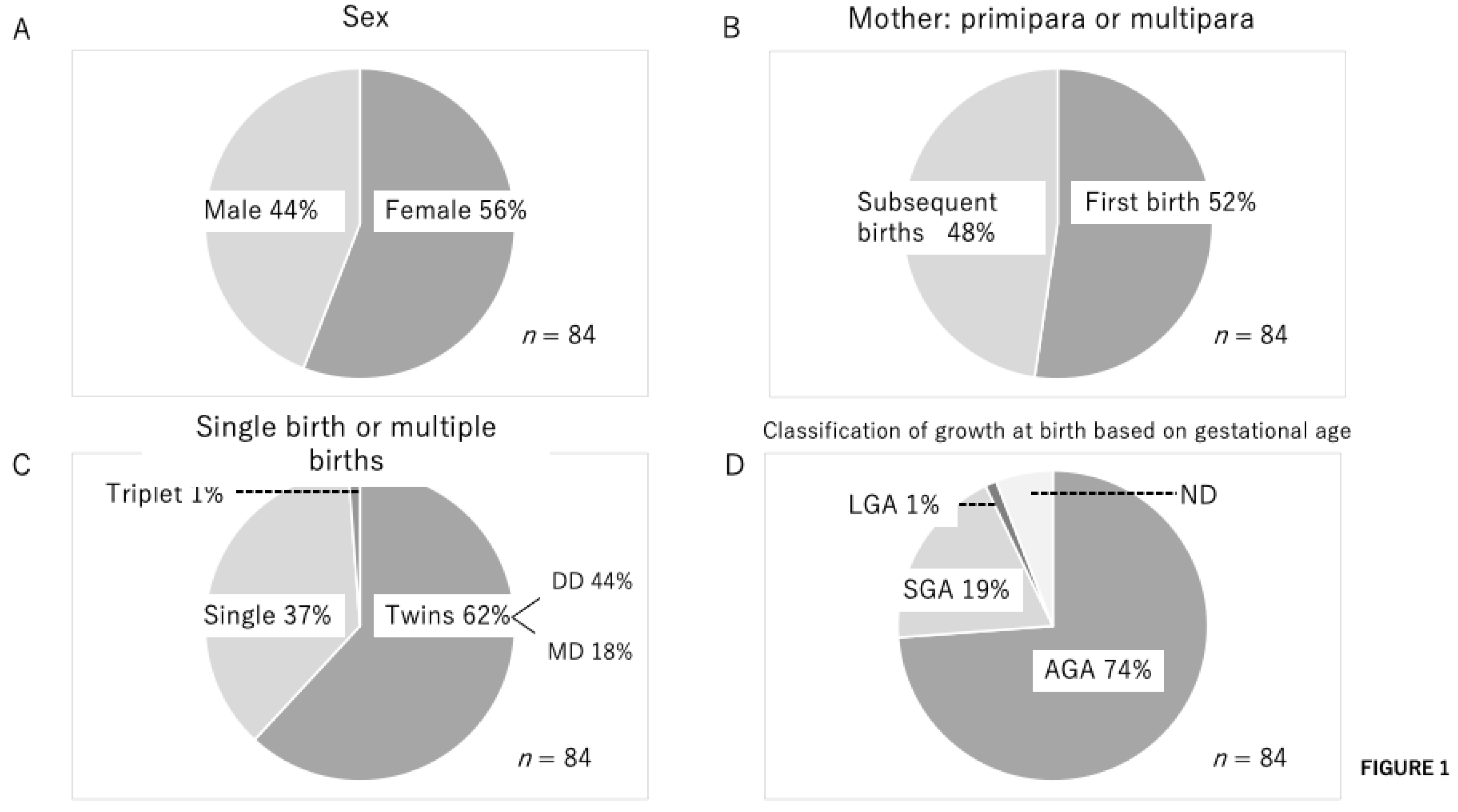
Figure 2.
Conception and delivery. (A) Overall, 42 infants (50%) were born via natural conception, whereas 17 infants (20%) were born through assisted reproductive technology. (B) Thirteen infants (15%) were born vaginally, whereas the other infants were born via cesarean section. Abbreviations: AIH, artificial insemination with husband’s semen; IVF-ET, in vitro fertilization–embryo transfer; FET, frozen-thawed embryo transfer; c/s, cesarean section.
Figure 2.
Conception and delivery. (A) Overall, 42 infants (50%) were born via natural conception, whereas 17 infants (20%) were born through assisted reproductive technology. (B) Thirteen infants (15%) were born vaginally, whereas the other infants were born via cesarean section. Abbreviations: AIH, artificial insemination with husband’s semen; IVF-ET, in vitro fertilization–embryo transfer; FET, frozen-thawed embryo transfer; c/s, cesarean section.
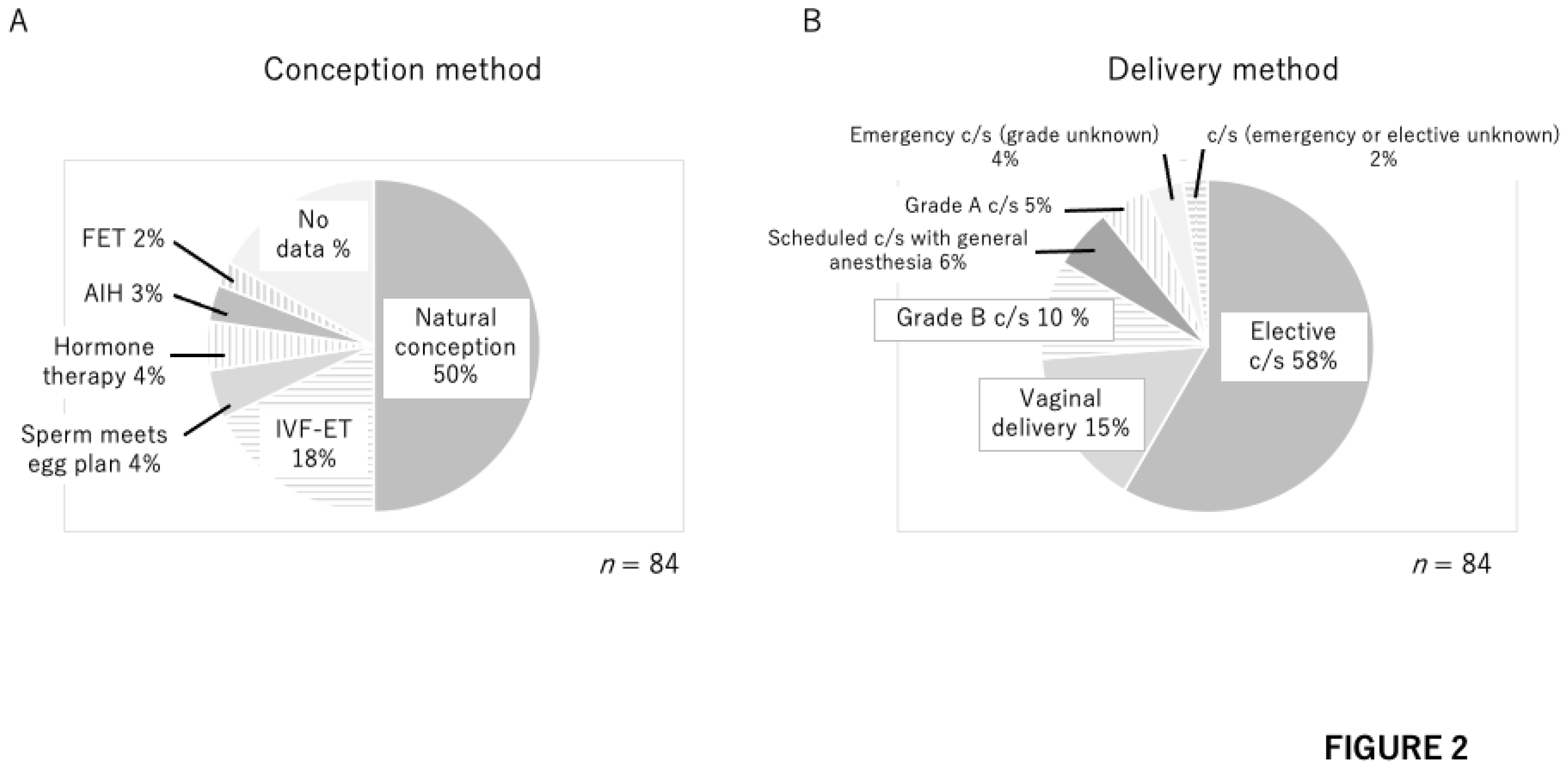
Figure 3.
Percentage of infants admitted to the pediatric department and the reasons for their admission. Forty-five (54%) infants were admitted to the pediatric department. Regarding the reasons for admission, 22 infants weighed <2,300 g, 11 weighed <2,300 g and had some kind of disease, and 12 weighed ≥2,300 g and had some kind of disease. The specific names of “some kind of diseases” are indicated in square brackets.
Figure 3.
Percentage of infants admitted to the pediatric department and the reasons for their admission. Forty-five (54%) infants were admitted to the pediatric department. Regarding the reasons for admission, 22 infants weighed <2,300 g, 11 weighed <2,300 g and had some kind of disease, and 12 weighed ≥2,300 g and had some kind of disease. The specific names of “some kind of diseases” are indicated in square brackets.
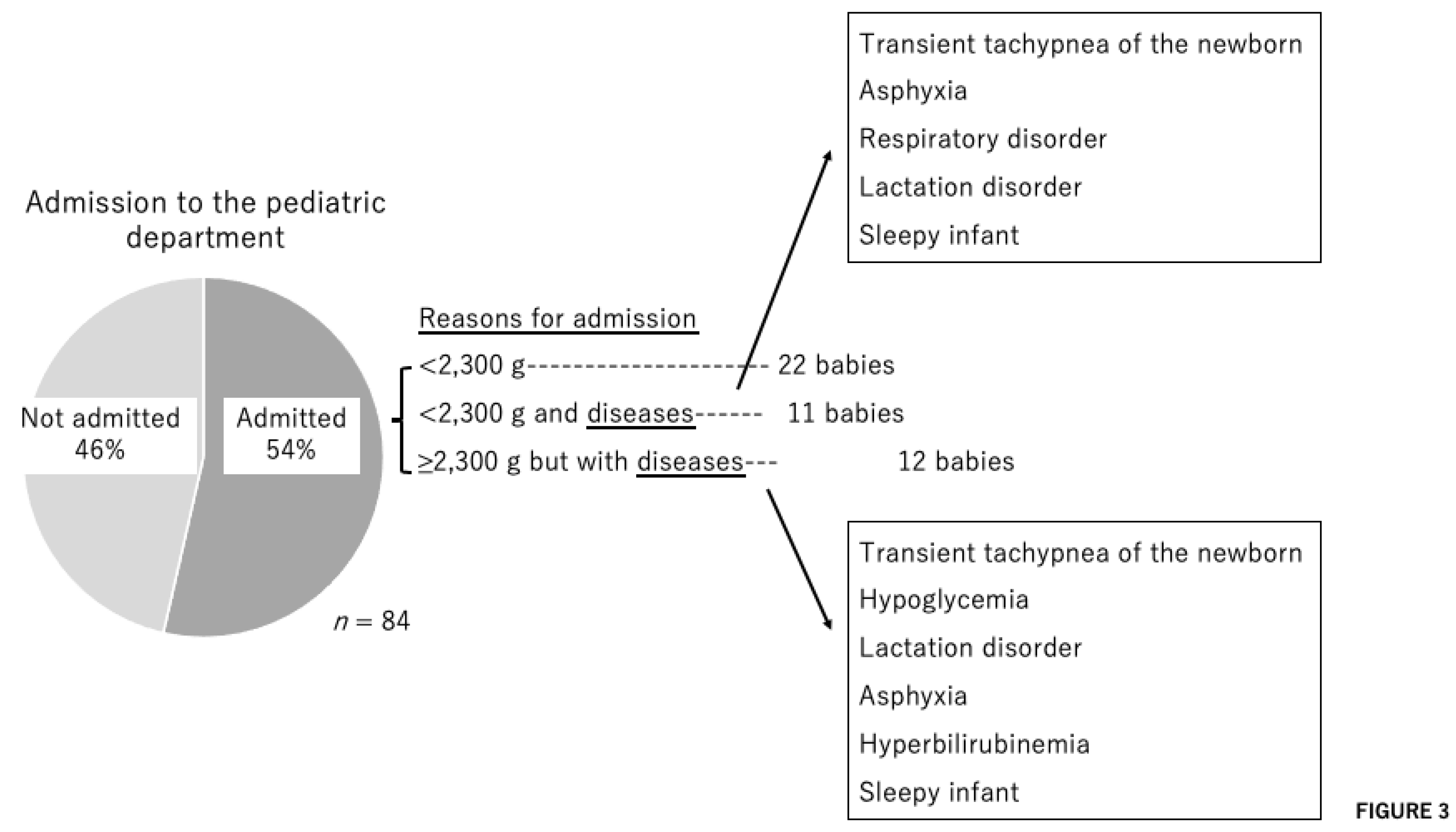
Figure 4.
Nutrition method and length of hospital stay in 45 hospitalized infants. (A) Regarding enteral nutrition for hospitalized infants, 39 (87%) were only fed orally. (B) Regarding parenteral nutrition for hospitalized infants, 37 infants (82%) received glucose solution drip infusion via the peripheral veins, whereas 6 infants (13%) did not receive intravenous nutrition. (C) The length of hospital stay ranged from a minimum of 3 to a maximum of 53 days (average and median: 19 days). Abbreviations: V-line, venous line; CV, central vein; IV, intravenous.
Figure 4.
Nutrition method and length of hospital stay in 45 hospitalized infants. (A) Regarding enteral nutrition for hospitalized infants, 39 (87%) were only fed orally. (B) Regarding parenteral nutrition for hospitalized infants, 37 infants (82%) received glucose solution drip infusion via the peripheral veins, whereas 6 infants (13%) did not receive intravenous nutrition. (C) The length of hospital stay ranged from a minimum of 3 to a maximum of 53 days (average and median: 19 days). Abbreviations: V-line, venous line; CV, central vein; IV, intravenous.
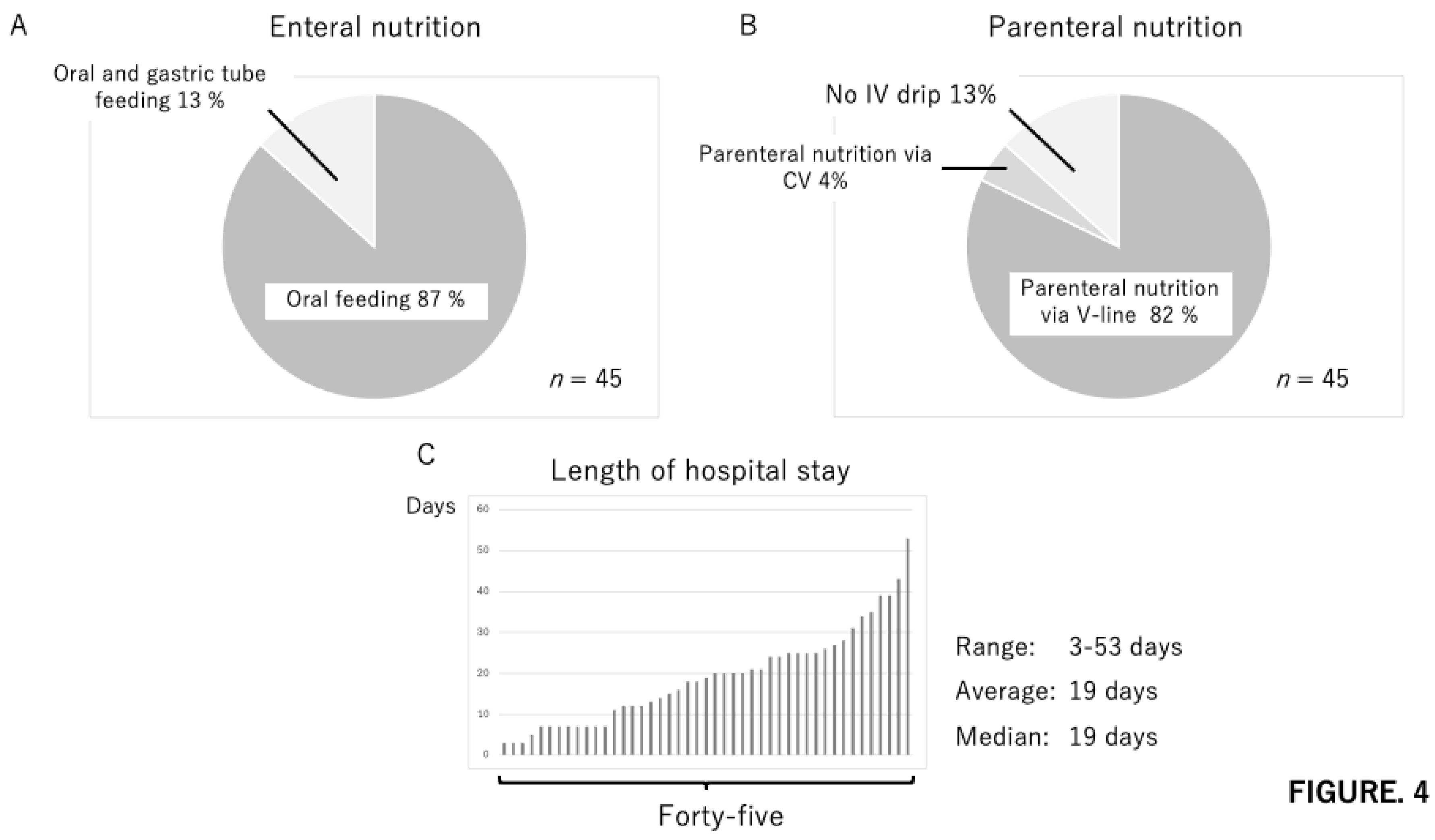
Figure 5.
Period until the final pediatric consultation. Among 84 infants, the period until the final pediatric consultation was “until 1-month checkup” in 51 infants (61%). Follow-up was completed at the 1-month checkup in 16 out of 45 infants who were hospitalized and 35 of 39 non-hospitalized infants.
Figure 5.
Period until the final pediatric consultation. Among 84 infants, the period until the final pediatric consultation was “until 1-month checkup” in 51 infants (61%). Follow-up was completed at the 1-month checkup in 16 out of 45 infants who were hospitalized and 35 of 39 non-hospitalized infants.
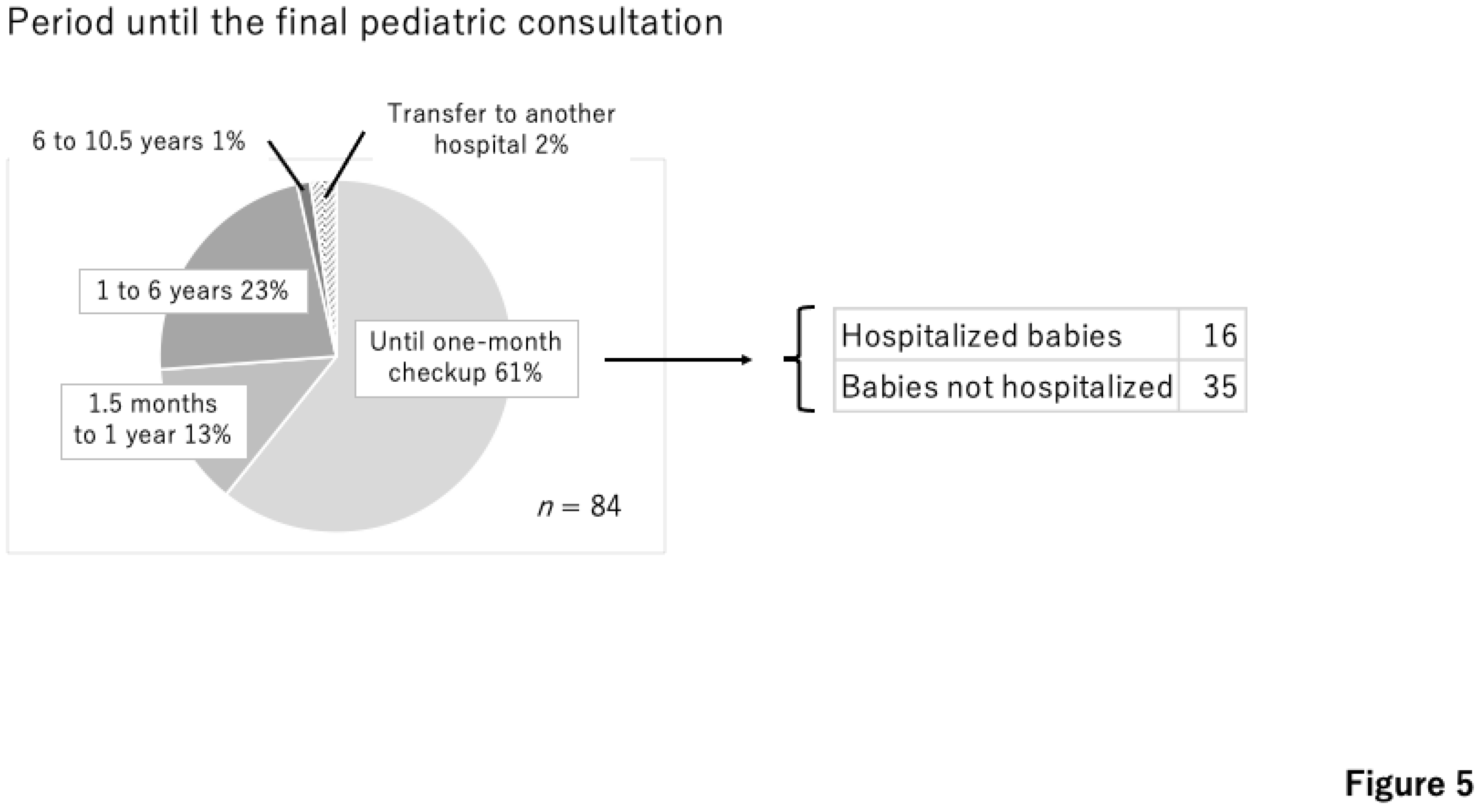

Table 1.
Infants with poor weight gain during the neonatal period.
| Baby | Baby A | Baby B | Baby C |
| Sex | Female | Female | Female |
| Mother | Multipara | Multipara | Primipara |
| Gestational age | 36w5d | 36w5d | 36w6d |
| Birth weight | 2250 g | 2198 g | 2222 g |
| Birth height | 45.6 cm | 45.4 cm | 46.0 cm |
| Birth weight percentile | 16.4 | 12.6 | 17.4 |
| Birth height percentile | 27.1 | 24.3 | 29.8 |
| Growth class at birth | AGA | AGA | AGA |
| Weight measurement at 39 corrected weeks | Corrected 39w3d | Corrected 39w3d | Corrected 39w2d |
| Age | Day 18 | Day 18 | Day 18 |
| Birth weight at 39 corrected weeks | 2537 g | 2589 g | 2494 g |
| Birth weight percentile at 39 corrected weeks | 7.2 | 9.7 | 9.9 |
| Conception method | Natural conception | Natural conception | ND |
| Maternal complications | Graves’ disease | Graves’ disease | Uterine fibroid |
| Obstetric complications | None | None | Preterm labor, umbilical cord prolapse |
| Delivery method | Selective C/S | Selective C/S | GradeA C/S |
| Single or multiple birth | DD twin | DD twin | Single |
| Baby’s diagnosis | LBWI, TTN | LBWI | LBWI |
| Enteral nutrition | Oral feeding | Oral feeding | Oral feeding |
| Parenteral nutrition | None | None | None |
| Length of hospitalization | 20 days | 20 days | 20 days |
| Follow-up | Up to 1 year and 7 months old | Up to 1 year and 7 months old | Up to 1 month old |
w, week; d, day; AGA, appropriate for gestational age; ND, no data; C/S, cesarean section; DD, dichorionic diamniotic; LBWI, low-birth-weight infant; TTN, transient tachypnea of the newborn; IVH, intravenous hyperalimentation.
Table 2.
Characteristics of children who underwent developmental assessments.
| Child | Gestational age | Birth weight | Single or multiple births | Age: developmental assessment (results) |
| Child A | 36w4d | 2316 g | DD twin | 2 yrs and 2 mos: New Kyoto Scale (appropriate for age) |
| 2 yrs and 11 mos: Enjohji Test (appropriate for age) | ||||
| Child B | 36w4d | 2048 g | DD twin | 2 yrs and 2 mos: New Kyoto Scale (appropriate for age) |
| 2 yrs and 11 mos: Enjohji Test (appropriate for age) | ||||
| Child C | 36w5d | 1944 g | DD twin | 3 yrs and 0 mo: Enjohji Test (appropriate for age) |
| Child D | 36w0d | 2132 g | DD twin | 2 yrs and 4 mos: New Kyoto Scale (appropriate for age) |
| 3 yrs and 7 mos: Enjohji Test (appropriate for age) | ||||
| Child E | 36w0d | 1676 g | DD twin | 2 yrs and 4 mos: New Kyoto Scale (slightly below age-appropriate level) |
| Child F | 36w0d | 1502 g | Single | 1 yr and 6 mos: New Kyoto Scale (slightly below age-appropriate level) |
| 2 yrs and 11 mos: New Kyoto Scale (appropriate for age) | ||||
| 3 yrs and 6 mos: New Kyoto Scale (appropriate for age) | ||||
| Child G | 36w0d | 1588 g | MD twin | 1 yr and 7 mos: New Kyoto Scale (appropriate for age) |
| 3 yrs and 0 mo: Enjohji Test (appropriate for age) | ||||
| Child H | 36w0d | 1821 g | MD twin | 1 yr and 7 mos: New Kyoto Scale (appropriate for age) |
| 3 yrs and 0 mo: Enjohji Test (appropriate for age) | ||||
| Child I | 36w5d | 2080 g | DD twin | 1 yr and 6 mos: Enjohji Test (appropriate for age) |
| 2 yrs and 0 mo: Enjohji Test (appropriate for age), | ||||
| 9 yrs and 0 mo: WISC-4 (slightly below age-appropriate level) | ||||
| Child J | 36w4d | 1841 g | DD twin | 3 yrs and 0 mo: Enjohji Test (appropriate for age) |
| Child K | 36w0d | 2130 g | Single | 1 yr and 11 mos: Enjohji Test (appropriate for age) |
w, weeks; d, days; yrs, years; mos, months; DD, dichorionic diamniotic; MD, monochorionic diamniotic. The gray highlights indicate scores lower than the average.
Disclaimer/Publisher’s Note: The statements, opinions and data contained in all publications are solely those of the individual author(s) and contributor(s) and not of MDPI and/or the editor(s). MDPI and/or the editor(s) disclaim responsibility for any injury to people or property resulting from any ideas, methods, instructions or products referred to in the content. |
© 2026 by the authors. Licensee MDPI, Basel, Switzerland. This article is an open access article distributed under the terms and conditions of the Creative Commons Attribution (CC BY) license (http://creativecommons.org/licenses/by/4.0/).
Copyright: This open access article is published under a Creative Commons CC BY 4.0 license, which permit the free download, distribution, and reuse, provided that the author and preprint are cited in any reuse.


