

Submitted:
14 April 2026
Posted:
15 April 2026
You are already at the latest version
Abstract
Food fermentation is a widely used processing technique that enhances sensory properties, shelf life, and nutritional value, partly through the activity of beneficial microorganisms. This study investigated the microbial communities associated with traditional pearl millet fermentation and their potential nutritional contributions. Pearl millet (TiftLHB open-pollinated variety) was obtained from USDA-ARS and subjected to spontaneous fermentation in sterilized water at 28 ± 2 °C for 72 hours, followed by wet milling and an additional 72-hour fermentation. Microbial DNA was extracted, and 16S rRNA amplicon sequencing was performed after PCR amplification and quality control. Sequence data were analyzed using DADA2 and PICRUSt2 pipelines for taxonomic and functional prediction. The dominant bacterial genera identified were Weissella and Lactobacillus, both commonly associated with cereal fermentations. Weissella is known for reducing antinutrients and contributing to folate production, while the overall microbial profile was consistent with reports from other regions, including the presence of lactic acid bacteria such as Leuconostoc. These findings suggest that spontaneous fermentation of pearl millet supports microbial communities with potential nutritional and functional benefits. Metagenomic approaches may provide an effective strategy for identifying and optimizing beneficial microorganisms to enhance the nutritional quality and health-promoting properties of fermented cereal-based foods.
Keywords:
pearl millet fermentation
; 16S rRNA sequencing
; lactic acid bacteria
; microbial community analysis
; metagenomics
; PICRUSt2
; functional prediction
; cereal fermentation
1. Introduction
Food fermentation represents one of the oldest and most widespread food processing technologies, dating back to the Neolithic period (around 10,000 years BC), and has historically contributed to food preservation, shelf-life extension, and nutritional improvement of staple foods [1]. The archaeological evidence suggests cereal-based products like bread and beer are the oldest documented fermented foods [2], demonstrating the historical association between grain consumption and microbial fermentation processes. Over time, grain-based fermentation practices evolved into regionally distinct traditions, particularly in Africa, where spontaneous cereal fermentation remains integral to indigenous food systems [3]. African fermented foods exhibit substantial diversity in substrates, microbial ecology, and production methods [4].
Cereal grains are considered a valuable source of dietary protein, fiber and bioactive phytochemicals with anti-oxidant properties [5] and the presence of anti-nutritional factors such as saponins, trypsin inhibitors, α-amylase inhibitors, phytic acid, and oxalates can limit nutrient bioavailability [6]. These nutritional limitations can be partially overcome through traditional processing methods, including fermentation [7], where microbial metabolic activities contribute to the transformation and improvement of food nutritional quality [8]. Spontaneous cereal fermentations are largely dominated by Lactic acid bacteria (LAB) [9], a heterogeneous group of Gram-positive, non-sporulating, catalase-negative, and acid-tolerant microorganisms capable of efficiently converting carbohydrates into lactic acid via substrate-level phosphorylation [10]. However, naturally occurring microbial communities, influenced by grain characteristics, environmental factors, and processing practices, determine the nutritional properties of fermented foods during spontaneous fermentation [11]. Due to this reason, there is a growing interest in identifying microorganisms capable of reducing anti-nutrients, synthesizing vitamins, and exhibiting probiotic traits such as acid tolerance, bile tolerance, and antimicrobial activity among different grain types [12,13].
Pearl millet (Pennisetum glaucum L. (R.) Br.), a descendant of the African continent [14], is the sixth major cereal crop in the world, consumed by around 90 million people across Africa and northwestern India [15]. It is a highly resilient, nutrient-dense cereal widely cultivated in arid and semi-arid regions [16]. Despite its high nutritional value rich in protein, fiber, essential minerals and several bioactive compounds [17], Pearl millet remains underutilized and contains anti-nutritional factors like Phytate and Goitrogens [18] that can limit nutrient bioavailability making it an ideal candidate for exploring how traditional fermentation and associated microbial communities can enhance its functional and nutritional properties.
Therefore, this study aimed to investigate the microbial community structure and predicted metabolic pathways associated with spontaneous pearl millet fermentation using 16S rRNA amplicon sequencing and PICRUSt2 functional prediction to assess the potential of fermentation-associated microorganisms in enhancing nutritional quality and probiotic-associated functions.
2. Materials and Methods
2.1. Collection of Grain Samples
Pearl millet (Pennisetum glaucum) TiftLHB open-pollinated variety was obtained from the United States Department of Agriculture–Agricultural Research Service (USDA-ARS). Grains (100 g per replicate) were rinsed twice with sterile distilled water under aseptic conditions in a laminar flow hood. Fermentation was carried out in triplicate using 1 L Erlenmeyer flasks containing 200 mL sterile distilled water (grain-to-water ratio 1:2, w/v). The fermentation was conducted under aerobic conditions at 28 ± 2 °C for 72 hours. Following steeping, the water was discarded and the grains were wet-milled into slurry, which was further fermented for an additional 72 hours. Following steeping, the water was discarded and the grains were wet-milled into slurry, which was further fermented for an additional 72 hours. Samples were collected at 72 hours and 144 hours for downstream analyses.
2.2. DNA Extraction and Amplicon Sequencing
Genomic DNA was extracted from 250 µL of fermented samples using the Quick-DNA™ Fecal/Soil Microbe Microprep Kit (Zymo Research Corporation, Irvine, CA, USA; Catalog No. ZD6012) according to the manufacturer’s protocol. Mechanical lysis was performed using bead beating in ZR BashingBead™ Lysis Tubes.
DNA concentration and purity were assessed using spectrophotometric and fluorometric methods, and integrity was further verified by agarose gel electrophoresis. Extracted DNA was stored at -80 °C until further analysis.
Amplification of the bacterial 16S rRNA gene targeting the V3–V4 regions was performed using following universal primers with Illumina overhang adapters; Forward primer: 5′-TCGTCGGCAGCGTCAGATGTGTATAAGAGACAGCCTACGGGNGGCWGCAG-3′ and Reverse primer: 5′-GTCTCGTGGGCTCGGAGATGTGTATAAGAGACAGGACTACHVGGGTATCTA- ATCC-3’.
PCR amplification was carried out using the KAPA HiFi HotStart ReadyMix PCR Kit (Roche Sequencing Solutions, Pleasanton, CA, USA) following the manufacturer’s protocol. The reaction mixture (25 μL total volume) contained 12.5 μL of 2× master mix, 0.2 μM of each primer, and a fixed volume of DNA template.
Thermal cycling conditions were as follows: initial denaturation at 95 °C for 3 min; 25 cycles of denaturation at 95 °C for 30 seconds, annealing at 55 °C for 30 seconds, and extension at 72 °C for 30 seconds; followed by a final extension at 72 °C for 5 min.
Amplicon libraries were prepared using the Illumina DNA Prep kit with Illumina DNA/RNA UD Indexes and sequenced on the Illumina MiSeq platform (paired-end 2 × 250 bp) at the BioAnalytical Services Laboratory (BAS Lab), Institute of Marine and Environmental Technology (IMET), Baltimore, MD, USA. A total of 84 libraries were pooled per sequencing run, including seven samples from this study, with an average sequencing depth of approximately 300,000 reads per sample.
2.3. Bioinformatics and Statistical Analysis
Raw sequencing reads were processed using the DADA2 pipeline implemented in R (v4.4.3). Sequence data were quality-filtered, trimmed, denoised, merged, and screened for chimeras. Amplicon sequence variants (ASVs) were inferred and used to construct an ASV table. Taxonomic assignment was performed against a reference database (e.g., SILVA; v132). Alpha diversity metrics, including the Shannon diversity index, were calculated to assess species richness and evenness across samples.
Functional prediction of microbial communities was conducted using PICRUSt2 v.2.6.0 (Phylogenetic Investigation of Communities by Reconstruction of Unobserved States), enabling inference of metabolic pathways based on 16S rRNA gene data.
3. Results
3.1. Changes in pH During Fermentation
The fermentation process was monitored through the measurement of pH. A progressive decrease in pH was observed during fermentation, indicating active microbial metabolism and acid production. The pH declined from 6.50 at 0 hr to 4.09 at 72 hrs and further to 3.59 at 144 hrs (Table 1).
3.2. PCR Amplification and Sequencing Quality
Successful amplification of the V3-V4 regions of the 16S rRNA gene was confirmed by agarose gel electrophoresis, which showed clear bands corresponding to the expected amplicon size (~ 460 bp) (Figure 1: Amplification of V3–V4 regions of 16S rRNA genes (Agarose gel electrophoresis showing clear bands corresponding to the expected amplicon size (~460 bp), confirming successful amplification of the target region). This confirmed that the extracted DNA was suitable for downstream sequencing applications.
3.3. DNA Yield and Quality
Genomic DNA extracted from fermented millet samples showed variation in concentration across fermentation time points. At 72 hours, DNA concentrations ranged from 7.1 to 59.7 ng/µL, while samples collected at 144 hours exhibited concentrations ranging from 18.2 to 28.4 ng/µL as determined by NanoDrop spectrophotometric analysis. Overall, the DNA yields were sufficient for PCR amplification and subsequent sequencing. The DNA concentrations for each biological replicate are presented in Table 2.
3.3. Genus-Level Microbial Community Composition
Analysis using the DADA2 pipeline revealed differences in bacterial community composition across fermentation time points, as shown in Figure 2. At 72 h (3 days), Pediococcus was the dominant genus in all samples, accounting for the largest proportion of the microbial community. In addition, Weissella and Lactobacillus were present at moderate levels, along with smaller contributions from genera such as Clostridium sensu stricto and Pseudomonas.
At 144 h (6 days), a shift in microbial composition was observed. The relative abundance of Lactobacillus increased, while Pediococcus remained a major component of the community. Weissella continued to be present but showed variability across samples. Minor genera, including Clostridium sensu stricto, Staphylococcus, and Acinetobacter, were detected at lower abundances.
Overall, the fermentation process resulted in a dynamic microbial succession, with lactic acid bacteria such as Pediococcus and Lactobacillus dominating at different stages. These findings are consistent with spontaneous cereal fermentations, where lactic acid bacteria play a key role in acidification and microbial stabilization.
3.4. Species-Level Microbial Community Composition
Species-level microbial diversity varied across samples, as indicated by Shannon diversity indices, which ranged from 0.655 (C2) to 1.139 (CONTROL). The control sample exhibited the highest diversity and the greatest number of identified species (231), whereas fermented samples showed comparatively lower diversity and species richness.
Across all samples, a large proportion of reads remained unclassified at the species level (62.10%–88.19%). Among the classified taxa, members of the genera Weissella and Lactobacillus were predominant in most fermented samples. In samples A1 and A2, Weissella paramesenteroides accounted for 27.16% and 25.49% of reads, respectively, followed by Lactobacillus coryniformis and Lactobacillus sakei. Similarly, samples B1 and B2 were dominated by Weissella paramesenteroides (30.27% and 29.64%, respectively).
In contrast, the control sample displayed a more diverse microbial profile, including Lactobacillus fermentum (19.04%), Salmonella enterica (7.19%), Pseudomonas aeruginosa (2.96%), and several Bacillus species. Samples C1 and C2 showed higher proportions of unclassified reads, with comparatively lower dominance of individual classified taxa, although Lactobacillus and Weissella species were still present.
Overall, fermented samples were characterized by the dominance of lactic acid bacteria, particularly Weissella and Lactobacillus, compared to the more heterogeneous microbial community observed in the control sample as indicated in Figure 3.
3.5. Functional Preddiction of Microbial Communities
Functional pathway analysis was performed to compare the metabolic potential of microbial communities between day 3 and day 6 fermentation samples (Figure 4). The analysis included mean proportional abundances (left bar plots) and effect sizes with 95% confidence intervals (right forest plot). Overall, the results indicate time-dependent metabolic shifts, with several biosynthetic and degradation pathways showing modest but consistent differences between the two groups.
Early time points (day 3) were characterized by relatively higher abundance of nucleotide degradation and central carbon metabolism pathways, whereas later time points (day 6) showed enrichment of amino acid biosynthesis, cofactor metabolism, and cell wall-associated pathways. Although effect sizes were generally small, consistent directional changes suggest a transition from metabolically active growth to a more biosynthetically oriented and stabilized microbial community.
4. Discussion
The present study investigated the microbial dynamics and functional potential of spontaneous pearl millet fermentation over time. A progressive decrease in pH was observed over the period of time, followed by shifts in microbial composition and predicted metabolic activity, showing active fermentation and microbial succession.
The substantial reduction in pH from 6.50 to 3.59 observed in our fermentation system confirms active organic acid production, primarily lactic acid, which is characteristic of LAB-driven cereal fermentations. This acidification pattern is consistent with previous studies reporting rapid pH decline during spontaneous grain fermentations [19,20]. The dominance of LAB in our samples supports this trend, as these organisms are well known for their central role in carbohydrate metabolism, acid production, and the enhancement of product safety and sensory attributes due to the formation of specific flavoring compounds [21,22].
The observed microbial community structure aligns with established patterns in cereal fermentations, where genera such as Lactobacillus, Weissella, and Pediococcus frequently dominate [23,24]. The progressive acidification likely imposed selective pressure favoring acid-tolerant species, resulting in a succession pattern commonly reported in millet, sorghum, maize, and sourdough fermentations [25]. This ecological transition reflects the shift from early-stage, metabolically diverse communities to more specialized and acidophilic LAB, such as Lactobacillus plantarum and Pediococcus pentosaceus, thereby supporting the dynamic nature of microbial succession observed in this study [26,27].
The presence of Weissella alongside Lactobacillus and Pediococcus further emphasizes the functional diversity of lactic acid bacteria in spontaneous fermentations. Weissella species are documented to contribute to the reduction of antinutritional factors and enhance the nutritional quality by the active production of metabolites such as folate and organic acids [28]. In addition to acidification, these organisms may influence texture and flavor through exopolysaccharide production, thereby contributing to the overall quality of fermented products [29]. The coexistence of these genera suggests a cooperative microbial network in which different LAB contribute complementary metabolic functions during fermentation.
The species-level analysis provided further insight into the microbial composition, with Weissella paramesenteroides, Lactobacillus coryniformis, and Lactobacillus sakei identified as notable contributors. These species have been previously associated with cereal and food fermentations, where they participate in acid production, flavor development, and microbial stabilization [28,30]. However, a substantial proportion of sequences remained unclassified (65–88%), highlighting the limitations of 16S rRNA gene-based taxonomic resolution and suggesting the presence of potentially novel or poorly characterized microorganisms [31]. This limitation underscores the need for more comprehensive approaches, such as metagenomic sequencing, to better resolve microbial diversity and functional potential in complex fermentation systems [32].
Functional prediction analysis revealed distinct temporal shifts in metabolic potential between day 3 and day 6 samples, reflecting changes in microbial activity during fermentation. Early-stage fermentation (day 3) was characterized by higher representation of pathways related to nucleotide degradation and central carbon metabolism, indicating active microbial growth and energy production [33]. In contrast, later stages (day 6) showed enrichment of amino acid biosynthesis, cofactor metabolism, and cell wall-associated pathways, suggesting a shift toward anabolic processes and increased structural organization within the microbial community. This transition is consistent with the progression from rapid microbial proliferation to metabolic specialization as environmental conditions become more selective due to acid accumulation [34]. Similar approaches in millet fermentation microbiomes have revealed the presence of predicted vitamin biosynthesis pathways, indicating potential contributions to micronutrient enhancement during fermentation [35].
Despite these findings, several limitations should be acknowledged. Functional predictions were inferred using PICRUSt2 based on 16S rRNA gene data and therefore represent estimated, rather than directly measured, metabolic functions. Additionally, the high proportion of unclassified taxa limits the ability to fully interpret species-level contributions and their ecological roles. Future studies integrating metagenomic, transcriptomic, or metabolomic approaches would provide a more comprehensive understanding of microbial functionality and interactions during fermentation.
Overall, the results of this study demonstrate that spontaneous pearl millet fermentation is characterized by dynamic microbial succession and associated metabolic shifts, driven primarily by lactic acid bacteria. The observed transition from early-stage metabolic activity to later-stage biosynthetic processes highlights the adaptive nature of microbial communities in response to environmental changes. These findings contribute to a deeper understanding of the microbial ecology of cereal fermentations and support their potential for improving food safety, nutritional quality, and functional properties.
5. Conclusions
Spontaneous fermentation of pearl millet resulted in significant acidification, dynamic microbial succession, and distinct temporal shifts in predicted metabolic function. Lactic acid bacteria, particularly Lactobacillus, Pediococcus, and Weissella, dominated the process, contributing to microbial stability and potential improvements in product quality. Early fermentation stages were associated with active energy metabolism, while later stages showed enrichment of biosynthetic and structural pathways, indicating community adaptation and stabilization. However, the high proportion of unclassified taxa and reliance on predictive functional tools highlight the need for further validation using advanced omics approaches. Overall, these findings enhance understanding of cereal fermentation microbiology and support its application in developing nutritionally improved fermented foods.
Supplementary Materials
The following supporting information can be downloaded at the website of this paper posted on Preprints.org, Figure S1: Agarose gel electrophoresis of PCR amplification of V3–V4 regions of the 16S rRNA gene; Table S1: DNA concentration of fermented millet samples measured using NanoDrop; Figure S2: Additional genus-level microbial community composition plots; Figure S3: Species-level microbial relative abundance across samples; Figure S4: Extended functional pathway analysis comparing day 3 and day 6 fermentation samples.
Author Contributions
For Conceptualization: B.F., J.W., R.P.; experimental work: B.F., J.W.; drafting manuscript and data analysis: B.F., J.W., R.P.; J.W., R.P., A.D. critically revised the final version; B.F. and A.D. prepared the final version. All authors have read and agreed to the published version of the manuscript.
Funding
The authors acknowledge the use of core facilities supported by the National Institute on Minority Health and Health Disparities through grant number 5U54MD013376 and the National Institute of General Medical Sciences through grant number 5UL1GM118973.
Institutional Review Board Statement
Not Applicable.
Informed Consent Statement
Not Applicable.
Data Availability Statement
The data presented in this study are available within the article and the Supplementary Materials. Additional data can be made available from the corresponding author upon reasonable request.
Acknowledgments
We thank Sabeena Nazar, BioAnalytical Service Lab (BAS Lab), Institute of Marine and Environmental Technology for performing all the sequencing works. The authors thank Dr. Joe Knoll from USDA-ARS for providing the Tift Long-Headed Bulk (Tift LHB) pearl millet.
Conflicts of Interest
The authors declare no conflicts of interest. The funders had no role in the design of the study; in the collection, analyses, or interpretation of data; in the writing of the manuscript; or in the decision to publish the results.
Abbreviations
The following abbreviations are used in this manuscript:
| ASV | Amplicon Sequence Variant |
| DNA | Deoxyribonucleic Acid |
| LAB | Lactic Acid Bacteria |
| PCR | Polymerase Chain Reaction |
| rRNA | Ribosomal Ribonucleic Acid |
| NanoDrop | Spectrophotometric instrument used for nucleic acid quantification |
| SILVA | Ribosomal RNA gene database used for taxonomic classification |
| PICRUSt2 | Phylogenetic Investigation of Communities by Reconstruction of Unobserved States (version 2) |
References
- Prajapati, J.; Nair, B. The history of fermented foods in Fermented Functional Foods. Handb Fermented Foods 2003, 1–25. [Google Scholar]
- Gänzle, M. The periodic table of fermented foods: limitations and opportunities. Appl. Microbiol. Biotechnol. 2022, 106, 2815–2826. [Google Scholar] [CrossRef] [PubMed]
- Pswarayi, F.; Gänzle, M. African cereal fermentations: A review on fermentation processes and microbial composition of non-alcoholic fermented cereal foods and beverages. Int. J. Food Microbiol. 2022, 378, 109815. [Google Scholar] [CrossRef] [PubMed]
- Obafemi, Y.D.; Oranusi, S.U.; Ajanaku, K.O.; Akinduti, P.A.; Leech, J.; Cotter, P.D. African fermented foods: overview, emerging benefits, and novel approaches to microbiome profiling. npj Sci. Food 2022, 6, 1–9. [Google Scholar] [CrossRef]
- Borrelli, G.M.; Ficco, D.B.M. Cereals and Cereal-Based Foods: Nutritional, Phytochemical Characterization and Processing Technologies. Foods 2025, 14, 1234. [Google Scholar] [CrossRef]
- Gunathunga, C.; Senanayake, S.; Jayasinghe, M.A.; Brennan, C.S.; Truong, T.; Marapana, U.; Chandrapala, J. Germination effects on nutritional quality: A comprehensive review of selected cereals and pulses changes. J. Food Compos. Anal. 2024, 128. [Google Scholar] [CrossRef]
- Garrido-Galand, S.; Asensio-Grau, A.; Calvo-Lerma, J.; Heredia, A.; Andrés, A. The potential of fermentation on nutritional and technological improvement of cereal and legume flours: A review. Food Res. Int. 2021, 145, 110398. [Google Scholar] [CrossRef]
- Iqbal, B.; Alabbosh, K.F.; Raheem, A.; Ullah, I.; Khan, A.R.; Memon, M.S. Microbial transformation: the role of fermentation in advancing nutritional quality and human health. Arch. Microbiol. 2025, 207, 1–13. [Google Scholar] [CrossRef]
- Atter, A.; Diaz, M.; Tano-Debrah, K.; Kunadu, A.P.-H.; Mayer, M.J.; Sayavedra, L.; Misita, C.; Amoa-Awua, W.; Narbad, A. The predominant lactic acid bacteria and yeasts involved in the spontaneous fermentation of millet during the production of the traditional porridge Hausa koko in Ghana. BMC Microbiol. 2024, 24, 1–17. [Google Scholar] [CrossRef]
- Kandler, O. Carbohydrate metabolism in lactic acid bacteria. Antonie van Leeuwenhoek 1983, 49, 209–224. [Google Scholar] [CrossRef]
- Gautam, A.; Poopalarajah, R.; Ahmad, A.R.; Rana, B.N.; Denekew, T.W.; Ahn, N.; Utenova, L.; Kunwor, Y.S.; Bhandari, N.N.; Jha, A.R. Ecological factors that drive microbial communities in culturally diverse fermented foods. BMC Microbiol. 2025, 25, 1–20. [Google Scholar] [CrossRef]
- Arsov, A.; Tsigoriyna, L.; Batovska, D.; Armenova, N.; Mu, W.; Zhang, W.; Petrov, K.; Petrova, P. Bacterial Degradation of Antinutrients in Foods: The Genomic Insight. Foods 2024, 13, 2408. [Google Scholar] [CrossRef]
- Kazemi, S.; Homayouni-Rad, A.; Kafil, H.S.; Sarabi-Aghdam, V.; Zeynolabedini, P.; pour Agha, B.; Madadi, S.A. Selection of appropriate probiotic yeasts for use in dairy products: a narrative review. Food Prod. Process. Nutr. 2025, 7, 1–28. [Google Scholar] [CrossRef]
- Sharma, S.; Sharma, R.; Govindaraj, M.; Mahala, R.S.; Satyavathi, C.T.; Srivastava, R.K.; Gumma, M.K.; Kilian, B. Harnessing wild relatives of pearl millet for germplasm enhancement: Challenges and opportunities. Crop. Sci. 2020, 61, 177–200. [Google Scholar] [CrossRef]
- Srivastava, R.K.; Singh, R.B.; Pujarula, V.L.; Bollam, S.; Pusuluri, M.; Chellapilla, T.S.; Yadav, R.S.; Gupta, R. Genome-Wide Association Studies and Genomic Selection in Pearl Millet: Advances and Prospects. Front. Genet. 2020, 10, 1389. [Google Scholar] [CrossRef] [PubMed]
- Rai, K.; Singh, P.; Ameta, V.; Gupta, S.K.; Jayalekha, A.; Mahala, R.; Pareek, S.; Swami, M.; Verma, Y. Seed set variability under high temperatures during flowering period in pearl millet (Pennisetum glaucum L. (R.) Br.). Field Crop. Res. 2015, 171, 41–53. [Google Scholar] [CrossRef]
- Krishnan, R.; Meera, M.S. Pearl millet minerals: effect of processing on bioaccessibility. J. Food Sci. Technol. 2018, 55, 3362–3372. [Google Scholar] [CrossRef]
- Boncompagni, E.; Orozco-Arroyo, G.; Cominelli, E.; Gangashetty, P.I.; Grando, S.; Zu, T.T.K.; Daminati, M.G.; Nielsen, E.; Sparvoli, F. Antinutritional factors in pearl millet grains: Phytate and goitrogens content variability and molecular characterization of genes involved in their pathways. PLOS ONE 2018, 13, e0198394. [Google Scholar] [CrossRef]
- Rault, A.; Bouix, M.; Béal, C. Fermentation pH Influences the Physiological-State Dynamics of Lactobacillus bulgaricus CFL1 during pH-Controlled Culture. Appl. Environ. Microbiol. 2009, 75, 4374–4381. [Google Scholar] [CrossRef] [PubMed]
- Savoie, S.; Champagne, C.; Chiasson, S.; Audet, P. Media and process parameters affecting the growth, strain ratios and specific acidifying activities of a mixed lactic starter containing aroma-producing and probiotic strains. J. Appl. Microbiol. 2006, 103, 163–174. [Google Scholar] [CrossRef] [PubMed]
- Admassie, M. A Review on Food Fermentation and the Biotechnology of Lactic Acid Bacteria. World J. Food Sci. Technol. 2018, 2, 19. [Google Scholar] [CrossRef]
- Zapaśnik, A.; Sokołowska, B.; Bryła, M. Role of Lactic Acid Bacteria in Food Preservation and Safety. Foods 2022, 11, 1283. [Google Scholar] [CrossRef] [PubMed]
- Atuna, R.A.; Akabanda, F.; Bletz, S.; Scherff, N.; Makurat, J.; Bordewick-Dell, U.; Lamping, M.; Ritter, G.; Mellmann, A.; Amagloh, F.K. Bacterial community dynamics in spontaneously fermented Ghanaian cereals, legumes, root, tuber and plantain flours. BMC Microbiol. 2025, 25, 1–12. [Google Scholar] [CrossRef]
- Zhao, X.; Xiang, F.; Tang, F.; Cai, W.; Guo, Z.; Hou, Q.; Yang, X.; Song, W.; Shan, C. Bacterial Communities and Prediction of Microbial Metabolic Pathway in Rice Wine Koji From Different Regions in China. Front. Microbiol. 2022, 12, 748779. [Google Scholar] [CrossRef]
- Abedfar, A.; Hosseininezhad, M.; Sadeghi, A.; Raeisi, M.; Feizy, J. Investigation on “spontaneous fermentation” and the productivity of microbial exopolysaccharides by Lactobacillus plantarum and Pediococcus pentosaceus isolated from wheat bran sourdough. LWT 2018, 96, 686–693. [Google Scholar] [CrossRef]
- Han, D.; Yan, Q.; Liu, J.; Jiang, Z.; Yang, S. Transcriptomic Analysis of Pediococcus pentosaceus Reveals Carbohydrate Metabolic Dynamics Under Lactic Acid Stress. Front. Microbiol. 2021, 12. [Google Scholar] [CrossRef]
- Liu, L.; Zhu, T.; Yang, J.; Zhao, J.; Jiang, J.; Zhang, W.; Liu, M.; Shi, Y.; Li, H.; Hu, Y. Metabolic network of lactic acid bacteria driving the formation of characteristic flavor compounds in traditional Yunnan fermented soy whey (FSW) and their formation mechanisms. LWT 2025, 230. [Google Scholar] [CrossRef]
- Deatraksa, J.; Sunthornthummas, S.; Rangsiruji, A.; Sarawaneeyaruk, S.; Suwannasai, N.; Pringsulaka, O. Isolation of folate-producing Weissella spp. from Thai fermented fish (Plaa Som Fug). LWT 2018, 89, 388–391. [Google Scholar] [CrossRef]
- Liu, M.; Li, X.; Ye, T.; Zhao, L.; Zhang, X. Safety evaluation of Weissella confusa SY628 and the effect of its fermentation on the taste and quality of soy yogurt. Front. Microbiol. 2025, 16, 1567399. [Google Scholar] [CrossRef] [PubMed]
- Zagorec, M.; Champomier-Vergès, M.-C. Lactobacillus sakei: A Starter for Sausage Fermentation, a Protective Culture for Meat Products. Microorganisms 2017, 5, 56. [Google Scholar] [CrossRef] [PubMed]
- O’cAllaghan, J.L.; Willner, D.; Buttini, M.; Huygens, F.; Pelzer, E.S. Limitations of 16S rRNA Gene Sequencing to Characterize Lactobacillus Species in the Upper Genital Tract. Front. Cell Dev. Biol. 2021, 9, 641921. [Google Scholar] [CrossRef] [PubMed]
- Niya, B.; Yaakoubi, K.; Beraich, F.Z.; Arouch, M.; Kadmiri, I.M. Current status and future developments of assessing microbiome composition and dynamics in anaerobic digestion systems using metagenomic approaches. Heliyon 2024, 10, e28221. [Google Scholar] [CrossRef]
- Raes, E.J.; Karsh, K.; Sow, S.L.S.; Ostrowski, M.; Brown, M.V.; van de Kamp, J.; Franco-Santos, R.M.; Bodrossy, L.; Waite, A.M. Metabolic pathways inferred from a bacterial marker gene illuminate ecological changes across South Pacific frontal boundaries. Nat. Commun. 2021, 12, 1–12. [Google Scholar] [CrossRef]
- Naylor, D.; McClure, R.; Jansson, J. Trends in Microbial Community Composition and Function by Soil Depth. Microorganisms 2022, 10, 540. [Google Scholar] [CrossRef] [PubMed]
- Dania, M.I.; Faraji, B.; Wachira, J. Micronutrient Biosynthesis Potential of Spontaneous Grain Fermentation Microbiomes. Int. J. Environ. Res. Public Heal. 2022, 19, 16621. [Google Scholar] [CrossRef] [PubMed]
Figure 1.
Amplification of V3–V4 regions of 16S rRNA genes (Agarose gel electrophoresis showing clear bands corresponding to the expected amplicon size (~460 bp), confirming successful amplification of the target region).
Figure 1.
Amplification of V3–V4 regions of 16S rRNA genes (Agarose gel electrophoresis showing clear bands corresponding to the expected amplicon size (~460 bp), confirming successful amplification of the target region).
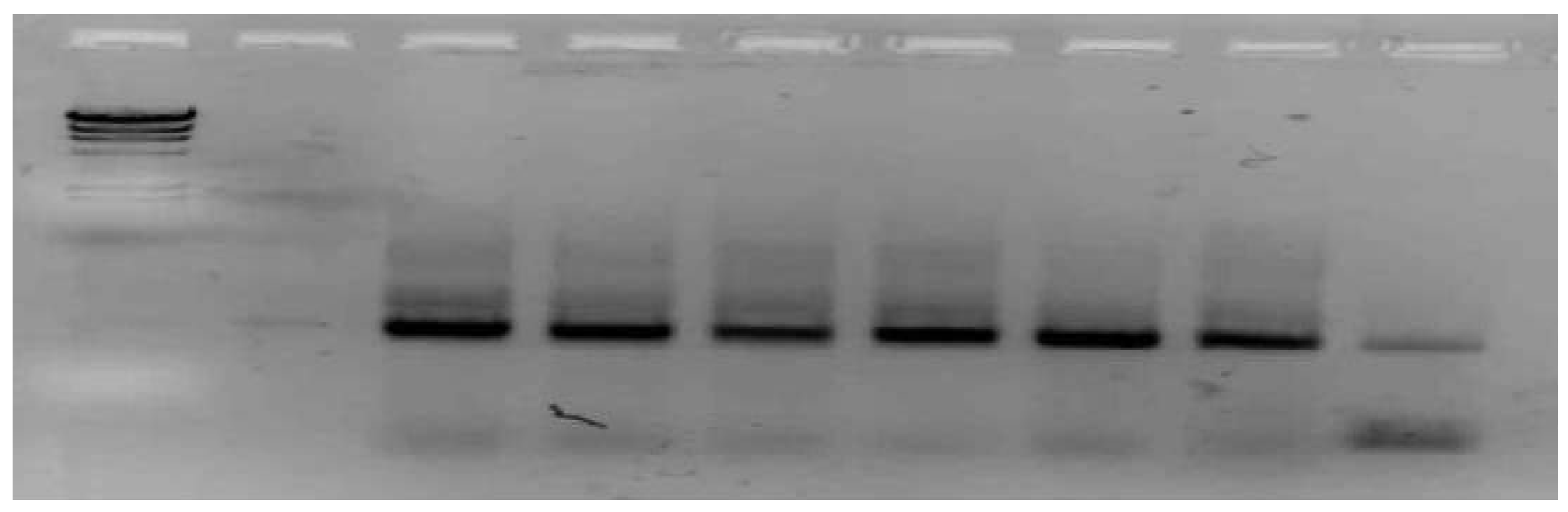
Figure 2.
Relative abundance of bacterial genera during millet fermentation (Stacked bar plot showing the relative abundance of bacterial genera in individual samples at 72 h (3 days) and 144 h (6 days) of fermentation. Each bar represents one biological replicate. A shift in microbial composition was observed over time, with Pediococcus dominating early fermentation and increased representation of Lactobacillus at later stages).
Figure 2.
Relative abundance of bacterial genera during millet fermentation (Stacked bar plot showing the relative abundance of bacterial genera in individual samples at 72 h (3 days) and 144 h (6 days) of fermentation. Each bar represents one biological replicate. A shift in microbial composition was observed over time, with Pediococcus dominating early fermentation and increased representation of Lactobacillus at later stages).
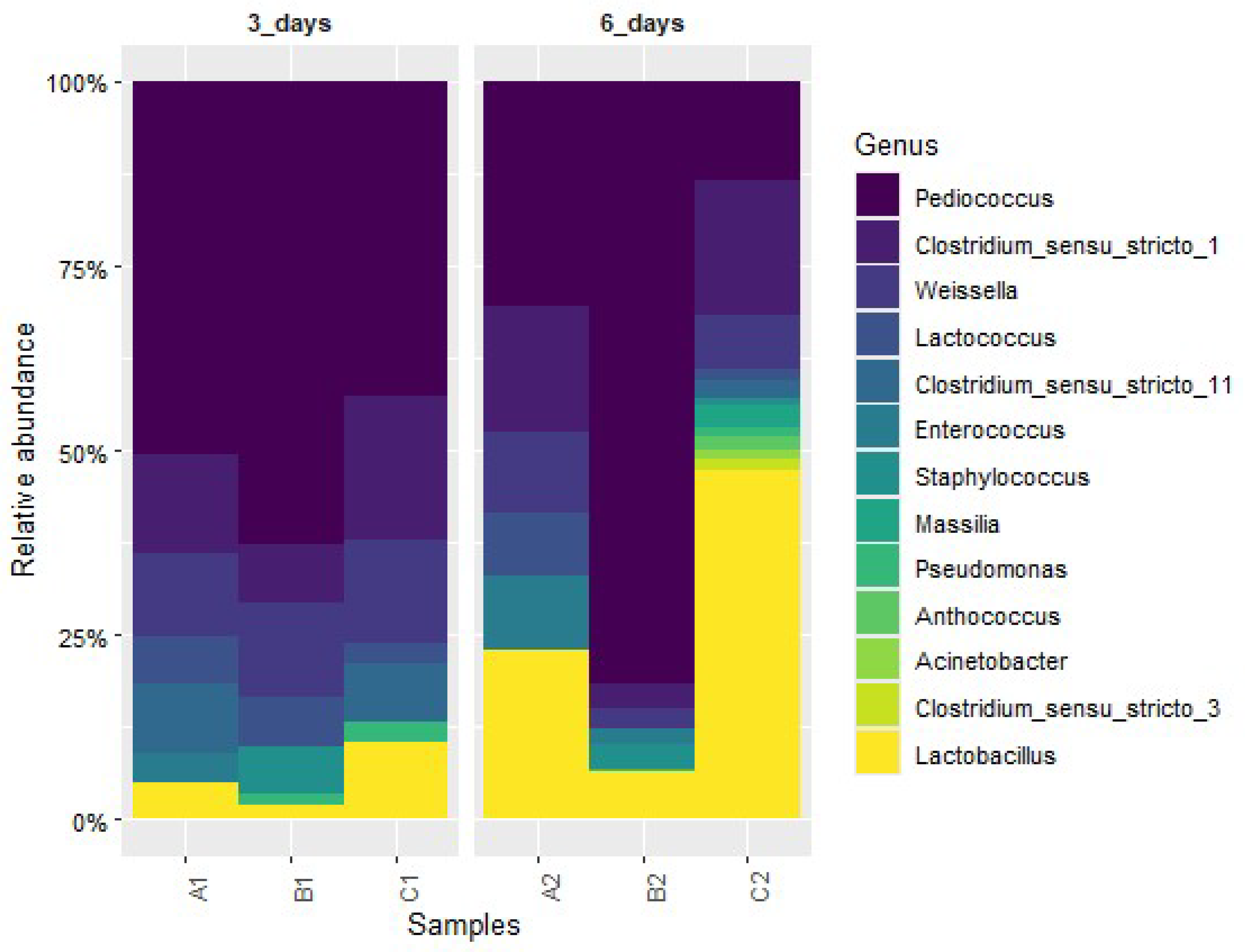
Figure 3.
Figure 3. Species-level relative abundance of microbial communities across samples (A 100% stacked horizontal bar chart showing the relative abundance (%) of identified bacterial species across control and fermented samples (A1–C2). A substantial proportion of reads remained unclassified at the species level. Fermented samples were predominantly composed of lactic acid bacteria, particularly Weissella and Lactobacillus, whereas the control sample exhibited a more diverse microbial profile).
Figure 3.
Figure 3. Species-level relative abundance of microbial communities across samples (A 100% stacked horizontal bar chart showing the relative abundance (%) of identified bacterial species across control and fermented samples (A1–C2). A substantial proportion of reads remained unclassified at the species level. Fermented samples were predominantly composed of lactic acid bacteria, particularly Weissella and Lactobacillus, whereas the control sample exhibited a more diverse microbial profile).
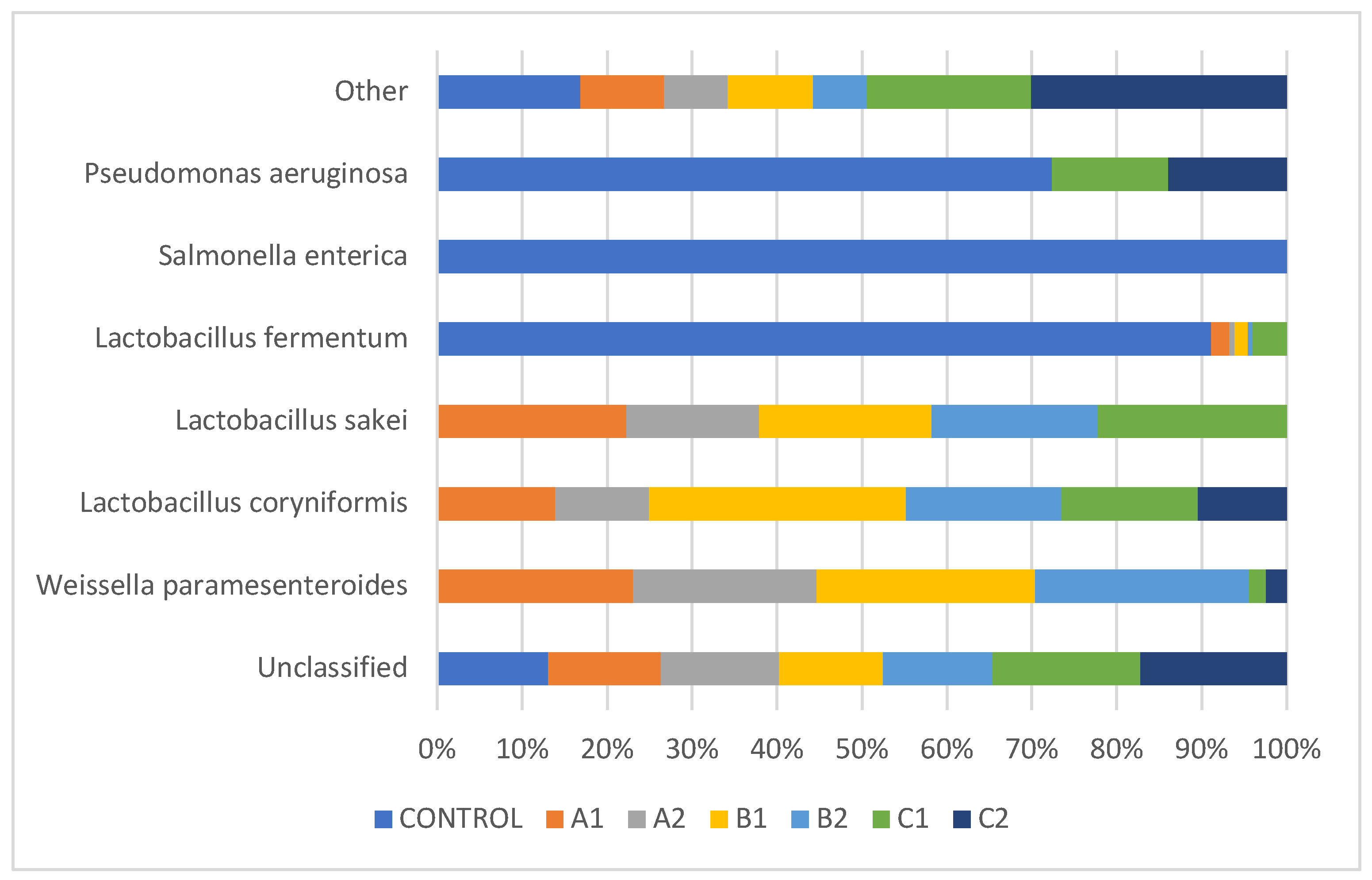
Figure 4.
Comparative functional pathway analysis of microbial communities at day 3 and day 6 ((Left panel: mean proportional abundances of selected metabolic pathways in the two groups. Right panel: effect sizes (%) with 95% confidence intervals, indicating the magnitude and direction of differences between groups. Day 3 samples were enriched in nucleotide degradation, central carbon metabolism, and amino acid catabolic pathways, whereas day 6 samples showed higher relative abundance of amino acid biosynthesis, cofactor and vitamin metabolism, and cell wall-associated pathways. Small effect sizes and overlapping confidence intervals indicate subtle but consistent temporal shifts in community metabolic potential).
Figure 4.
Comparative functional pathway analysis of microbial communities at day 3 and day 6 ((Left panel: mean proportional abundances of selected metabolic pathways in the two groups. Right panel: effect sizes (%) with 95% confidence intervals, indicating the magnitude and direction of differences between groups. Day 3 samples were enriched in nucleotide degradation, central carbon metabolism, and amino acid catabolic pathways, whereas day 6 samples showed higher relative abundance of amino acid biosynthesis, cofactor and vitamin metabolism, and cell wall-associated pathways. Small effect sizes and overlapping confidence intervals indicate subtle but consistent temporal shifts in community metabolic potential).
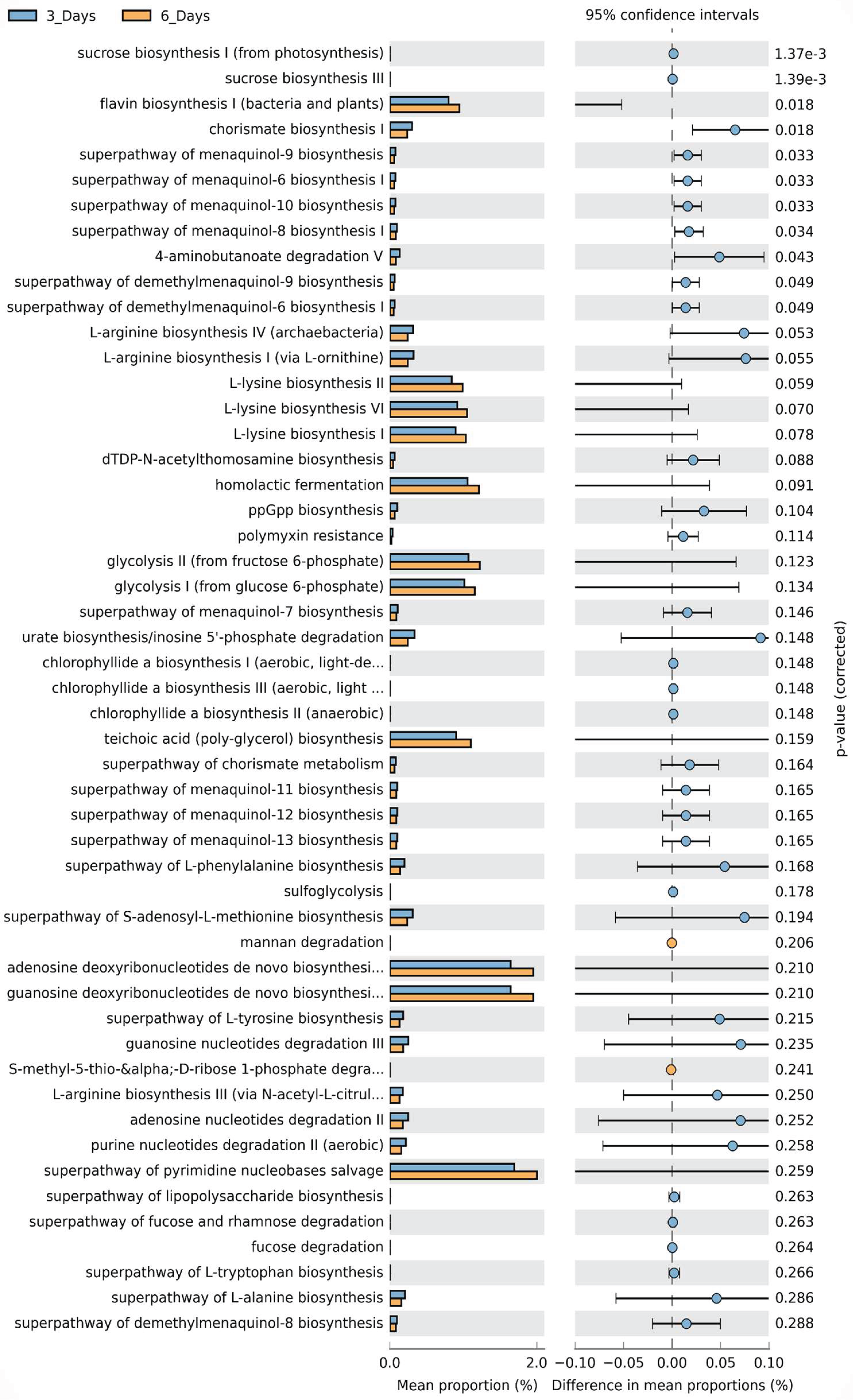

Table 1.
Effect of fermentation time on pH (mean, n=3).
| Parameter | 0h | 72h | 144h |
|---|---|---|---|
| pH (mean, n=3) | 6.50 | 4.09 | 3.59 |
1 Values are expressed as mean (n = 3). pH was measured at different fermentation times (0, 72, and 144 hours).
Table 2.
DNA concentration of fermented millet samples measured using NanoDrop.
| Sample | Fermentation Time (hours) | DNA Concentration (ng/µL) by Nanodrop |
|---|---|---|
| A1 | 72 | 13.8 |
| B1 | 72 | 59.7 |
| C1 | 72 | 7.1 |
| A2 | 144 | 28.4 |
| B2 | 144 | 18.9 |
| C2 | 144 | 18.2 |
1 DNA concentration was determined using a NanoDrop spectrophotometer and is expressed in ng/µL. Samples A1–C1 were analyzed at 72 hours of fermentation, and samples A2–C2 at 144 hours.
Disclaimer/Publisher’s Note: The statements, opinions and data contained in all publications are solely those of the individual author(s) and contributor(s) and not of MDPI and/or the editor(s). MDPI and/or the editor(s) disclaim responsibility for any injury to people or property resulting from any ideas, methods, instructions or products referred to in the content. |
© 2026 by the authors. Licensee MDPI, Basel, Switzerland. This article is an open access article distributed under the terms and conditions of the Creative Commons Attribution (CC BY) license (http://creativecommons.org/licenses/by/4.0/).
Copyright: This open access article is published under a Creative Commons CC BY 4.0 license, which permit the free download, distribution, and reuse, provided that the author and preprint are cited in any reuse.


