
Submitted:
14 April 2026
Posted:
15 April 2026
You are already at the latest version
Abstract
Despite transformative therapeutic advances, multiple myeloma (MM) remains an incurable malignancy characterized by sequential relapses and progressive treatment resistance. Patients with heavily pretreated relapsed or refractory MM continue to face limited therapeutic options and poor outcomes. Melflufen (melphalan flufenamide) is a peptide–drug conjugate that enhances intracellular delivery of alkylating agents via aminopeptidase-mediated activation. Early clinical studies demonstrated encouraging activity in advanced MM, leading to accelerated approval by the U.S. Food and Drug Administration in 2021. However, results from the phase III OCEAN trial raised concerns re-garding overall survival, ultimately resulting in withdrawal of the drug from the U.S. market. In this review, we examine the biological rationale, clinical development, and regulatory trajectory of melflufen, and critically reassess its role within the evolving therapeutic landscape of MM. The negative survival signal observed in OCEAN challenges the clinical viability of melflufen, yet also provides key insights into patient selection and mechanism-based drug delivery strategies. These observations support a selective, mechanism-based positioning of melflufen and argue for a broader shift from drug-centered evaluation to biology-driven therapeutic strategies.
Keywords:
multiple myeloma
; relapsed/refractory disease
; novel therapies
; melflufen
; peptide-drug conjugate
; aminopeptidases
; alkylating agents
; triple-class refractory disease
; treatment sequencing
1. Introduction
Multiple myeloma (MM) is the second most common hematologic malignancy and is characterized by the clonal proliferation of malignant plasma cells within the bone marrow, leading to the production of monoclonal immunoglobulins [1,2,3]. Genetic alterations, metabolic dysregulation, and complex interactions with the bone marrow microenvironment contribute to disease progression and to a wide spectrum of clinical manifestations, including bone lesions, hypercalcemia, anemia, immune dysfunction, and renal impairment [4]. According to data from the Global Cancer Observatory (GLOBOCAN), more than 187,000 new cases of MM were diagnosed worldwide in 2022 [5].
Over the past two decades, the therapeutic landscape of MM has undergone profound transformation, resulting in substantial improvements in patient outcomes. Five-year overall survival (OS) has increased from approximately 30% in the 1990s to over 60% in recent years [6]. These advances are largely attributable to the introduction of several novel therapeutic classes, including proteasome inhibitors (PIs), immunomodulatory drugs (IMiDs), monoclonal antibodies, antibody–drug conjugates (ADCs), T-cell–redirecting bispecific antibodies, and chimeric antigen receptor (CAR) T-cell therapies [7]. Combination regimens incorporating these agents, often administered as triplets or quadruplets, now represent the standard of care in both newly diagnosed and relapsed disease settings [8,9].
Despite these advances, MM remains an incurable disease characterized by recurrent relapses and the progressive development of drug resistance [10]. Patients who become refractory to multiple therapeutic classes, particularly those with triple-class refractory disease (i.e., refractory to PIs, IMiDs, and anti-CD38 monoclonal antibodies), represent a difficult-to-treat population with limited therapeutic options and poor prognosis [11,12,13,14]. This unmet clinical need has driven the development of novel therapeutic strategies targeting previously unexploited biological vulnerabilities of MM cells. These include selective inhibitors of nuclear export (SINE), such as selinexor; BCL2 inhibitors, such as venetoclax; cereblon E3 ligase modulators (CELMoDs); antibody-drug conjugates targeting B-cell maturation antigen (BCMA), such as belantamab mafodotin; and peptide-drug conjugates, such as melflufen, designed to enhance the intracellular delivery of cytotoxic agents [15,16,17,18,19] (Figure 1). However, the clinical trajectory of melflufen raises a broader question: how should therapies with discordant efficacy signals be interpreted in the era of rapidly evolving treatment landscapes? In this review, we propose that melflufen should not be viewed as a failed therapeutic, but rather as a prototype of enzyme-targeted drug delivery with a potential role in selected clinical settings in the post-immunotherapy era.
2. Mechanism of Action of Melflufen
Melphalan, first synthesized in 1953, exerts its cytotoxic activity by alkylating DNA and inducing interstrand cross-links, thereby inhibiting DNA and RNA synthesis and ultimately triggering apoptosis [20]. It has been used in the treatment of MM since the late 1950s and remains a key component of high-dose conditioning regimens for autologous stem cell transplantation (ASCT) [21]. Building on the well-established clinical activity of melphalan, melflufen was developed as a peptidase-potentiated alkylating agent designed to enhance intracellular drug delivery and improve tumor selectivity [22].
Melflufen is a highly lipophilic peptide-drug conjugate composed of a melphalan-derived alkylating moiety linked to a peptide carrier (p-L-fluorophenylalanine ethyl ester), which facilitates rapid passive diffusion across cellular membranes [23,24] (Figure 2). Once inside the cell, melflufen undergoes rapid enzymatic hydrolysis mediated by intracellular peptidases and esterases, leading to the release of hydrophilic alkylating metabolites, including melphalan and desethyl-melflufen [22,25]. Because these metabolites exhibit limited membrane permeability, they become trapped within the cell, resulting in the intracellular accumulation of cytotoxic alkylating compounds [22,26].
The preferential activation of melflufen within malignant plasma cells is largely driven by aminopeptidases, a family of proteolytic enzymes that catalyze the hydrolysis of N-terminal amino acids from peptides [20]. Aminopeptidases play a key role in protein turnover and are frequently overexpressed in malignant cells, including MM. Elevated expression of several aminopeptidase genes has been associated with disease progression and poor prognosis, suggesting that these enzymes may represent a therapeutic vulnerability [27,28]. Following intracellular activation, melflufen-derived metabolites induce extensive DNA damage, including cross-links affecting both nuclear and mitochondrial DNA, ultimately leading to apoptosis. In addition, melflufen disrupts mitochondrial membrane potential, further contributing to tumor cell death [25,29,30]. Importantly, preclinical studies indicate that the cytotoxic activity of melflufen is largely independent of TP53 mutational status, a feature associated with poor prognosis and resistance to therapy in MM [25,26,31]. Moreover, melflufen appears less susceptible to multidrug resistance mechanisms mediated by multidrug resistance protein 1 (MDR1/ABCB1), which contribute to resistance to several anti-myeloma agents [32,33,34].
Taken together, these properties enable melflufen to achieve high intracellular concentrations of alkylating agents within malignant plasma cells while potentially limiting systemic exposure. This represents a novel strategy to improve the therapeutic index of alkylating therapy in MM [35].
3. Clinical Development
The clinical development of melflufen has primarily focused on patients with relapsed or refractory multiple myeloma (RRMM). Early-phase studies demonstrated encouraging anti-myeloma activity with a manageable safety profile, supporting further evaluation in larger trials.
The first clinical assessment of melflufen in RRMM was the multicenter phase I/II O-12-M1 study, which evaluated melflufen in combination with dexamethasone in patients who had received at least two prior lines of therapy, including lenalidomide or bortezomib, and were refractory to their most recent treatment [46,47]. Eligible patients had measurable disease and an Eastern Cooperative Oncology Group (ECOG) performance status ≤2. The phase I portion established the maximum tolerated dose, while the phase II portion assessed efficacy and safety. In the phase II cohort, 45 patients received melflufen 40 mg intravenously every 28 days plus weekly dexamethasone. The median age was 66 years, and patients had received a median of four prior lines of therapy. The population was enriched for high-risk features: 67% were double-refractory, 58% had undergone prior ASCT, and 44% had high-risk cytogenetics. After a median follow-up of 27.9 months, the overall response rate (ORR) was 31%, including 20% partial responses and 11% very good partial responses. The clinical benefit rate was 49%, with a median duration of response (DOR) of 8.4 months. Median progression-free survival (PFS), overall survival (OS), and time to next treatment were 5.7, 20.7, and 7.9 months, respectively. Notably, responses were observed in patients with melphalan-resistant disease, and high-risk cytogenetics did not appear to adversely impact OS. Toxicity was predominantly hematologic, with thrombocytopenia, neutropenia, and anemia as the most common adverse events. Non-hematologic toxicities were generally manageable and included fatigue, pyrexia, gastrointestinal symptoms, and bone pain. Serious adverse events occurred in 38% of patients, most frequently infections and febrile neutropenia.
These findings were further explored in the phase II HORIZON (OP-106) study, a single-arm trial enrolling 157 heavily pretreated RRMM patients refractory to pomalidomide and/or an anti-CD38 monoclonal antibody [48,49]. Patients had received a median of five prior lines of therapy, and a substantial proportion had triple-class refractory disease. After a median follow-up of 14 months, the ORR was 29%, including 11% very good partial responses and 18% partial responses. Median DOR, PFS, and OS were 5.5, 4.2, and 11.6 months, respectively. Importantly, clinically meaningful activity was maintained in the triple-class refractory subgroup (ORR 26%).
The phase III OCEAN trial subsequently compared melflufen plus dexamethasone with pomalidomide plus dexamethasone in patients with RRMM refractory to lenalidomide after two to four prior lines of therapy [50,51,52]. Among 495 randomized patients, melflufen improved the primary endpoint of PFS (6.8 vs 4.9 months) and achieved a numerically higher ORR (33% vs 27%). However, overall survival favored the pomalidomide arm (25.0 vs 19.8 months). Subgroup analyses suggested a differential effect according to prior transplant history: patients without prior ASCT or relapsing more than 36 months after transplantation appeared to benefit from melflufen, whereas those with early post-transplant relapse experienced inferior outcomes [53,54].
The discordance between PFS and OS observed in OCEAN warrants careful interpretation and raises important biological and methodological considerations. Importantly, the OS detriment observed in OCEAN represents a clinically relevant safety signal that cannot be fully mitigated by post-hoc explanations. Differences in post-progression therapies may have contributed to OS outcomes, particularly in a rapidly evolving therapeutic landscape with heterogeneous access to subsequent treatments. In addition, the detrimental effect observed in specific subgroups, notably patients with early relapse after ASCT, suggests that prior treatment exposure and disease biology may significantly influence the therapeutic index of melflufen. Cumulative hematologic toxicity may also have affected treatment delivery or predisposed to complications impacting long-term survival. Trial design factors, including potential imbalances in patient characteristics and subsequent treatment strategies, may have further contributed to the observed survival outcomes. More broadly, these findings highlight the limitations of PFS as a surrogate endpoint in heavily pretreated MM populations and underscore the need for refined patient selection and more nuanced interpretation of efficacy outcomes.
These results led to a complex regulatory trajectory. In the United States, melflufen initially received accelerated approval in 2021 for patients who had received at least four prior lines of therapy but was subsequently withdrawn following the OCEAN findings, with formal confirmation by the U.S. Food and Drug Administration [24,55]. In contrast, the European Medicines Agency granted conditional approval in 2022 for a more selected population, namely patients with at least three prior lines of therapy who had not undergone prior ASCT or had relapsed more than three years after transplantation [56,57].
Melflufen has also been investigated in combination strategies aimed at improving efficacy. The phase I/IIa ANCHOR study investigated melflufen plus dexamethasone in combination with daratumumab or bortezomib in patients who had received one to four prior lines of therapy [58]. In the daratumumab cohort (n=33), the ORR was 73%, with a median PFS of 12.9 months and a median OS of 26.1 months. In the bortezomib cohort (n=23), the ORR was 78%, with a median PFS of 14.7 months, although OS data remained immature. Toxicity was consistent with previous studies and predominantly hematologic. However, given the limited sample size and non-randomized design, these results should be interpreted with caution. The phase III LIGHTHOUSE trial evaluated melflufen in combination with daratumumab and dexamethasone versus daratumumab alone in patients with RRMM who had received at least three prior lines of therapy or were refractory to both an immunomodulatory drug and a proteasome inhibitor [59]. Although the triplet regimen demonstrated improved response rates (ORR 59% vs 30%), the study was prematurely terminated following a partial clinical hold requested by the U.S. Food and Drug Administration during the regulatory reassessment of melflufen (Table 1).
4. Real-World Evidence and Special Populations
Evidence on the real-world use of melflufen in RRMM patients remains limited but provides important insights into its activity in heavily pretreated populations that are often underrepresented in clinical trials. One of the earliest retrospective analyses, conducted at the Dana-Farber Cancer Institute, included 12 patients who had received a median of 5.5 prior lines of therapy [60]. Treatment with melflufen plus dexamethasone achieved an ORR of 55%, including complete responses in 27% of patients. The median duration of response was 21.3 weeks, and the median time to treatment failure was 29.7 weeks. Adverse events were predominantly hematologic and generally manageable with supportive measures such as transfusions and growth factor support. Infections were relatively uncommon, and no cases of mucositis, alopecia, or secondary malignancies were reported.
Additional real-world experiences from European small retrospective cohorts have yielded broadly consistent results. A Spanish series including seven heavily pretreated patients reported an ORR of 43% [61], while a multicenter cohort of 19 patients demonstrated an ORR of 26% and a median progression-free survival (PFS) of 4.8 months despite a high prevalence of triple- and penta-class refractory disease [62]. Similar outcomes have been observed in Italian cohorts, with response rates ranging from 37.5% to 47% in advanced disease settings [63,64]. Across studies, hematologic toxicity, particularly thrombocytopenia, neutropenia, and anemia, was the most common adverse event profile but was generally manageable with dose modifications and supportive care. Although derived from small retrospective series, these data consistently suggest that melflufen retains clinically meaningful activity in late-line RRMM, including in patients previously exposed to immunotherapies. Notably, several cohorts included patients treated with prior T-cell–redirecting therapies or BCMA-targeted agents, supporting the hypothesis that melflufen may maintain efficacy in immunotherapy-exposed disease.
Beyond advanced RRMM, emerging evidence supports the feasibility of melflufen in specific clinical subgroups. The phase I/II BRIDGE (OP-107) study evaluated its pharmacokinetics and safety in patients with renal impairment [65]. Although systemic exposure to melphalan increased with decreasing estimated glomerular filtration rate (eGFR), no clinically meaningful differences in toxicity were observed, suggesting that melflufen can be administered in patients with moderate renal dysfunction without dose adjustment.
Taken together, these findings support the potential role of melflufen in heavily pretreated and immunotherapy-exposed patients. These findings should be interpreted with caution given the retrospective design, small sample sizes, and heterogeneity of patient populations. These limitations preclude definitive conclusions and highlight the need for prospective studies and registry-based analyses to better define the effectiveness, safety, and optimal positioning of melflufen in routine clinical practice.
5. Positioning of Melflufen in the Evolving Treatment Landscape of MM
In the current immunotherapy-driven era, the clinical positioning of melflufen should move beyond a purely descriptive framework toward a more decision-oriented approach grounded in mechanism, patient characteristics, and treatment sequencing [12,66,67]. Rather than competing directly with T-cell–redirecting therapies, melflufen is best conceptualized as a complementary, non–immune-based strategy that may address specific unmet needs in RRMM. Compared with CAR T-cell therapies and bispecific antibodies, melflufen does not rely on immune competence or antigen expression, which may represent an advantage in patients with T-cell exhaustion or antigen escape [68,69,70,71]. However, its overall efficacy appears more modest, supporting its role as a complementary rather than competing therapeutic option.
Three clinical scenarios may define its most rational use [72]. First, melflufen may serve as a bridging strategy in patients awaiting access to CAR T-cell therapies or bispecific antibodies. In this setting, its rapid cytotoxic activity and independence from immune effector function may allow for disease control without impairing subsequent immunotherapy, particularly in patients with high disease burden requiring prompt cytoreduction. Second, melflufen may represent a therapeutic option in patients relapsing after T-cell–redirecting therapies. Post-immunotherapy relapse is increasingly characterized by antigen escape, T-cell exhaustion, and limited responsiveness to further immune-based interventions. Given its mechanism of action, which is independent of both antigen expression and T-cell fitness, melflufen may retain activity in this setting and provide a mechanistically orthogonal approach. Third, melflufen may be relevant in patients who are not candidates for cellular or T-cell–redirecting therapies due to advanced age, comorbidities, frailty, or limited access to specialized centers. In this population, treatment options remain limited, and non–immune-based therapies with manageable toxicity profiles are critically needed [49,52].
Importantly, available data suggest that patient selection is a key determinant of benefit-risk balance. Subgroup analyses from the OCEAN trial indicate that prior ASCT and timing of relapse significantly influence outcomes, with improved results observed in patients without prior ASCT or with late relapse after transplantation [54]. Conversely, inferior outcomes in early post-transplant relapse highlight the need for careful selection. In clinical practice, the selection of melflufen should be weighed against available alternatives, including CELMoDs, bispecific antibodies, and CAR T-cell therapies, considering treatment availability, prior exposure, disease kinetics, and patient fitness [12,73,74,75,76].
Taken together, these considerations support a more restrictive, biology- and context-driven use of melflufen. Ideal candidates may include patients with heavily pretreated disease requiring rapid disease control, those relapsing after immunotherapy, and individuals ineligible for T-cell-redirecting approaches (Figure 3). In contrast, patients with early relapses after ASCT or those with highly effective alternative options available may derive limited benefit. Future efforts should aim to refine this positioning through prospective studies and biomarker-driven strategies, enabling a more precise integration of melflufen within an increasingly complex therapeutic landscape. In practical terms, melflufen may be considered in patients requiring rapid cytoreduction, those relapsing after immunotherapy, and individuals ineligible for T-cell–redirecting approaches, while it should be used with caution in patients with early relapse after ASCT or when more effective alternatives are available. To contextualize the clinical positioning of melflufen within the current therapeutic landscape, a comparison with selected available treatment options is summarized in Table 2.
6. Safety Profile
The safety profile of melflufen is predominantly characterized by hematologic toxicity [72]. The most frequently reported adverse events include thrombocytopenia, neutropenia, and anemia, which are generally manageable through dose modifications, treatment delays, and supportive measures such as transfusions or growth factor support. Non-hematologic adverse events occur less frequently and primarily include infections, fatigue, and gastrointestinal symptoms. Overall, the toxicity profile is consistent with the mechanism of action of melflufen as an alkylating agent and is comparable to that observed with other agents in this class. However, the overall survival findings reported in the phase III OCEAN trial raised concerns regarding potential long-term risks in specific patient subgroups, particularly in relation to prior transplant exposure. These observations underscore the importance of careful patient selection and the need for continued evaluation of safety outcomes in both clinical trials and real-world settings.
7. Future Perspectives
Despite the regulatory challenges encountered during its clinical development, melflufen represents a compelling proof of concept for enzyme-targeted intracellular drug delivery. By exploiting tumor-associated aminopeptidase activity to enhance intracellular accumulation of cytotoxic agents, this approach provides a mechanistically distinct strategy to improve the therapeutic index of alkylating therapy. More broadly, it highlights the potential of peptide-drug conjugates to achieve selective drug activation within malignant cells while limiting systemic exposure. Future research should extend beyond melflufen itself and focus on the development of next-generation peptide–drug conjugates that exploit tumor-specific enzymatic vulnerabilities.
In parallel, a deeper understanding of the biological determinants of response and toxicity will be essential to optimize the clinical application of these agents within an increasingly complex therapeutic landscape. A critical unmet need is the identification of predictive biomarkers to guide patient selection [77]. Given its mechanism of action, aminopeptidase expression and activity represent biologically plausible candidates. Candidate biomarkers may include CD13 (ANPEP) expression levels, which could be assessed by immunohistochemistry or transcriptomic profiling to stratify patients prior to treatment [27]. Preclinical data suggest that higher aminopeptidase activity enhances intracellular activation of melflufen and cytotoxic efficacy; however, these approaches remain exploratory and lack prospective validation.
At present, no validated biomarkers are available for routine clinical use, and aminopeptidase-based stratification remains investigational. Future studies should aim to identify the most relevant aminopeptidases, standardize methods for their assessment (including immunohistochemistry, transcriptomic profiling, and functional enzymatic assays), and define clinically meaningful thresholds. Importantly, biomarker analyses should be prospectively integrated into clinical trials to enable validation of their predictive value. Ultimately, a biomarker-driven approach may allow for more precise patient selection, improving the benefit–risk balance of melflufen and supporting its integration into a personalized, mechanism-based treatment strategy in MM.
8. Conclusions
Melflufen represents a novel therapeutic strategy based on enzyme-targeted intracellular delivery of alkylating agents, designed to enhance tumor selectivity and cytotoxic efficacy in multiple myeloma. Early clinical development demonstrated encouraging activity in heavily pretreated patients, leading to accelerated regulatory approval. However, the results of the phase III OCEAN trial raised important concerns, particularly regarding overall survival in specific patient subgroups, prompting a substantial reassessment of its clinical role. Despite these limitations, the clinical experience with melflufen extends beyond the fate of a single drug. Rather than being viewed solely as a failed therapeutic, melflufen should be considered a proof of principle for a broader strategy based on tumor-selective, enzyme-driven drug activation. This paradigm provides a foundation for the development of next-generation peptide–drug conjugates and targeted alkylating agents.
In the current immunotherapy era, the role of melflufen is likely to be confined to selected clinical scenarios, including patients with limited therapeutic options, those ineligible for cellular therapies, and individuals relapsing after T-cell–redirecting approaches. In these contexts, its mechanism of action may offer a complementary, non–immune-based strategy.
Ultimately, the trajectory of melflufen highlights a central principle for modern myeloma therapy: effective treatment increasingly depends on the rational integration of mechanistically distinct approaches guided by disease biology and patient-specific factors. Future progress will rely on precise patient selection, biomarker-driven strategies, and optimized treatment sequencing to fully exploit the potential of emerging therapeutic platforms. Melflufen illustrates a critical lesson in modern oncology: therapeutic failure at the drug level may still represent success at the conceptual level.
Author Contributions
Conceptualization M.G. and M.C.; writing original draft preparation, figures and tables M.G. and M.C.; supervision and review, D.S., A. C. and R.L. All authors have read and agreed to the published version of the manuscript.
Funding
This research received no external funding.
Acknowledgments
Some of the icons used in the figures were created with BioRender.com under a licensed version.
Conflicts of Interest
The authors declare no competing conflicts of interest.
Abbreviations
The following abbreviations are used in this manuscript:
| ADC | Antibody-drug Conjugate |
| ASCT | autologous stem cell transplantation |
| BM | bone marrow |
| Bz | bortezomib |
| CAR-T | chimeric antigen receptor T |
| CELMoDs | cereblon E3 ligase modulators |
| Dara | Daratumumab |
| DEX | dexamethasone |
| DOAJ | Directory of open access journals |
| DOR | duration of response |
| LD | Linear dichroism |
| MDR1/ABCB1 | multidrug resistance protein 1 |
| MM | Multiple Myeloma |
| NR | Not reached |
| ORR | overall response rate |
| OS | Overall Survival |
| PFS | progression-free survival |
| PI | Proteasome inhibitor |
| Pom | Pomalidomide |
| RRMM | relapsed or refractory multiple myeloma |
| SINE | selective inhibitors of nuclear export |
| TCE | T-cell engagers |
References
- Palumbo, A.; Anderson, K. Multiple myeloma. N Engl J Med 2011, vol. 364(no. 11), 1046–1060. [Google Scholar] [CrossRef]
- Rajkumar, S. V. International Myeloma Working Group updated criteria for the diagnosis of multiple myeloma. Lancet Oncol 2014, vol. 15(no. 12), e538–548. [Google Scholar] [CrossRef] [PubMed]
- Kumar, S. K. Multiple myeloma. Nat Rev Dis Primers 2017, vol. 3, 17046. [Google Scholar] [CrossRef] [PubMed]
- Malard, F. Multiple myeloma. Nat Rev Dis Primers 2024, vol. 10(no. 1), 45. [Google Scholar] [CrossRef] [PubMed]
- Bray, F.; et al. Global cancer statistics 2022: GLOBOCAN estimates of incidence and mortality worldwide for 36 cancers in 185 countries. CA Cancer J Clin 2024, vol. 74(no. 3), 229–263. [Google Scholar] [CrossRef]
- Zanwar, S.; Rajkumar, S. V. Current risk stratification and staging of multiple myeloma and related clonal plasma cell disorders. Leukemia 2025, vol. 39(no. 11), 2610–2617. [Google Scholar] [CrossRef]
- Rajkumar, S. V. Multiple myeloma: 2024 update on diagnosis, risk-stratification, and management. Am J Hematol 2024, vol. 99(no. 9), 1802–1824. [Google Scholar] [CrossRef]
- Kumar, S.; et al. Gaps and opportunities in the treatment of relapsed-refractory multiple myeloma: Consensus recommendations of the NCI Multiple Myeloma Steering Committee. Blood Cancer Journal 2022, vol. 12(no. 6), 98. [Google Scholar] [CrossRef]
- Chen, Q.; Zhang, M.; Zheng, S.; Tong, Y.; Tan, Y. Therapeutic progress in relapsed/refractory multiple myeloma. Annals of Hematology 2024, vol. 103(no. 6), 1833–1841. [Google Scholar] [CrossRef]
- van de Donk, N. W. C. J.; Pawlyn, C.; Yong, K. L. Multiple myeloma. The Lancet 2021, vol. 397(no. 10272), 410–427. [Google Scholar] [CrossRef]
- Wang, P. F. Treatment patterns and overall survival of patients with double-class and triple-class refractory multiple myeloma: a US electronic health record database study. Leukemia & Lymphoma 2023, vol. 64(no. 2), 398–406. [Google Scholar] [CrossRef]
- Dimopoulos, M. A. EHA–EMN Evidence-Based Guidelines for diagnosis, treatment and follow-up of patients with multiple myeloma. Nature Reviews Clinical Oncology 2025, vol. 22(no. 9), 680–700. [Google Scholar] [CrossRef]
- Mateos, M.-V. LocoMMotion: a study of real-life current standards of care in triple-class exposed patients with relapsed/refractory multiple myeloma - 2-year follow-up (final analysis). Leukemia 2024, vol. 38(no. 12), 2554–2560. [Google Scholar] [CrossRef]
- Riedhammer, C.; et al. The evolution to hepta-refractory myeloma involves sequential loss of CD38, BCMA and GPRC5D. Leukemia. 2026. [CrossRef]
- Talarico, M.; et al. Exceptional long-term responses from OCEAN and HORIZON trials: melflufen-dexamethasone as an expansion of treatment options for relapsed/refractory multiple myeloma in the era of new immunotherapies? J Cancer Res Clin Oncol 2025, vol. 151(no. 11), 288. [Google Scholar] [CrossRef] [PubMed]
- Neupane, K.; et al. Profile and management of toxicity of selinexor and belantamab mafodotin for the treatment of triple class refractory multiple myeloma. Journal of Blood Medicine 2021, 529–550. [Google Scholar] [CrossRef] [PubMed]
- Bobin, A. Novel Non-Immunologic Agents for Relapsed and Refractory Multiple Myeloma: A Review Article. Cancers 2021, vol. 13(no. 20), 5210. [Google Scholar] [CrossRef] [PubMed]
- Dhillon, S. Melphalan Flufenamide (Melflufen): First Approval. Drugs 2021, vol. 81(no. 8), 963–969. [Google Scholar] [CrossRef]
- Sgherza, N.; Curci, P.; Rizzi, R.; Musto, P. Novel Approaches Outside the Setting of Immunotherapy for the Treatment of Multiple Myeloma: The Case of Melflufen, Venetoclax, and Selinexor. Front Oncol 2021, vol. 11, 716751. [Google Scholar] [CrossRef]
- Schjesvold, F.; Oriol, A. Current and Novel Alkylators in Multiple Myeloma. Cancers 2021, vol. 13(no. 10), 2465. [Google Scholar] [CrossRef]
- Kazandjian, D.; Dew, A.; Hill, E. The changing role of high dose melphalan with stem cell rescue in the treatment of newly diagnosed multiple myeloma in the era of modern therapies—back to the future! Best Practice & Research Clinical Haematology 2020, vol. 33(no. 1), 101150. [Google Scholar] [CrossRef]
- Wickström, M. Melflufen - a peptidase-potentiated alkylating agent in clinical trials. Oncotarget 2017, vol. 8(no. 39), 66641–66655. [Google Scholar] [CrossRef]
- National Center for Biotechnology Information. “PubChem Compound Summary for CID 9935639, Melphalan Flufenamide.”. 2026. Available online: https://pubchem.ncbi.nlm.nih.gov/compound/Melphalan_flufenamide (accessed on 16 March 2026).
- Cliff, E. R. S.; Janakiram, M.; Kesselheim, A. S. Melflufen: post-hoc subgroup analyses and the US FDA Oncologic Drugs Advisory Committee. The Lancet Haematology 2023, vol. 10(no. 5), e314–e317. [Google Scholar] [CrossRef] [PubMed]
- Westermark, U.; et al. A rapid intracellular enrichment of alkylating payload is essential for melphalan flufenamide potency and mechanism of action. Biochemical and Biophysical Research Communications 2023, vol. 656, 122–130. [Google Scholar] [CrossRef] [PubMed]
- Chauhan, D.; et al. In vitro and in vivo antitumor activity of a novel alkylating agent, melphalan-flufenamide, against multiple myeloma cells. Clin Cancer Res 2013, vol. 19(no. 11), 3019–3031. [Google Scholar] [CrossRef] [PubMed]
- Miettinen, J. J. Aminopeptidase Expression in Multiple Myeloma Associates with Disease Progression and Sensitivity to Melflufen. Cancers (Basel) 2021, vol. 13(no. 7). [Google Scholar] [CrossRef]
- Bianchi, G.; Anderson, K. C. Contribution of Inhibition of Protein Catabolism in Myeloma. Cancer J 2019, vol. 25(no. 1), 11–18. [Google Scholar] [CrossRef]
- Wallace, D. C. Mitochondria and cancer. Nat Rev Cancer 2012, vol. 12(no. 10), 685–698. [Google Scholar] [CrossRef]
- Porporato, P. E.; Filigheddu, N.; Pedro, J. M. B.-S.; Kroemer, G.; Galluzzi, L. Mitochondrial metabolism and cancer. Cell Res 2018, vol. 28(no. 3), 265–280. [Google Scholar] [CrossRef]
- Acs, K. Efficacy of melflufen in multiple myeloma with mutated or deleted TP53. Experimental Hematology & Oncology 2025, vol. 14(no. 1), 138. [Google Scholar] [CrossRef]
- Kühne, A.; Tzvetkov, M. V.; Hagos, Y.; Lage, H.; Burckhardt, G.; Brockmöller, J. Influx and efflux transport as determinants of melphalan cytotoxicity: Resistance to melphalan in MDR1 overexpressing tumor cell lines. Biochem Pharmacol 2009, vol. 78(no. 1), 45–53. [Google Scholar] [CrossRef]
- Byrgazov, K.; et al. Novel Peptide-drug Conjugate Melflufen Efficiently Eradicates Bortezomib-resistant Multiple Myeloma Cells Including Tumor-initiating Myeloma Progenitor Cells. HemaSphere 2021, vol. 5(no. 7). [Google Scholar] [CrossRef] [PubMed]
- Byrgazov, K.; et al. Up-regulation of multidrug resistance protein MDR1/ABCB1 in carfilzomib-resistant multiple myeloma differentially affects efficacy of anti-myeloma drugs. Leukemia Research 2021, vol. 101, 106499. [Google Scholar] [CrossRef] [PubMed]
- Ocio, E. M. Melflufen for the treatment of multiple myeloma. Expert Rev Clin Pharmacol 2022, vol. 15(no. 4), 371–382. [Google Scholar] [CrossRef] [PubMed]
- Flanagan, K.; et al. The Peptide-Drug Conjugate Melflufen Modulates the Unfolded Protein Response of Multiple Myeloma and Amyloidogenic Plasma Cells and Induces Cell Death. Hemasphere 2022, vol. 6(no. 3), e687. [Google Scholar] [CrossRef]
- Giliberto, M. Ex vivo drug sensitivity screening in multiple myeloma identifies drug combinations that act synergistically. Mol Oncol 2022, vol. 16(no. 6), 1241–1258. [Google Scholar] [CrossRef]
- Strese, S.; et al. In vitro and in vivo anti-leukemic activity of the peptidase-potentiated alkylator melflufen in acute myeloid leukemia. Oncotarget 2017, vol. 8(no. 4), 6341–6352. [Google Scholar] [CrossRef]
- Gebraad, A. Growth Response and Differentiation of Bone Marrow-Derived Mesenchymal Stem/Stromal Cells in the Presence of Novel Multiple Myeloma Drug Melflufen. Cells 2022, vol. 11(no. 9). [Google Scholar] [CrossRef]
- Strese, S.; et al. The novel alkylating prodrug melflufen (J1) inhibits angiogenesis in vitro and in vivo. Biochemical Pharmacology 2013, vol. 86(no. 7), 888–895. [Google Scholar] [CrossRef]
- Byrgazov, K. Melphalan flufenamide inhibits osteoclastogenesis by suppressing proliferation of monocytes. Bone Rep 2021, vol. 15, 101098. [Google Scholar] [CrossRef]
- Wickström, M.; Larsson, R.; Nygren, P.; Gullbo, J. Aminopeptidase N (CD13) as a target for cancer chemotherapy. Cancer Sci 2011, vol. 102(no. 3), 501–508. [Google Scholar] [CrossRef]
- Sevcikova, S.; Minarik, J.; Stork, M.; Jelinek, T.; Pour, L.; Hajek, R. Extramedullary disease in multiple myeloma – controversies and future directions. Blood Reviews 2019, vol. 36, 32–39. [Google Scholar] [CrossRef] [PubMed]
- Bladé, J.; Fernández de Larrea, C.; Rosiñol, L.; Cibeira, M. T.; Jiménez, R.; Powles, R. Soft-tissue plasmacytomas in multiple myeloma: incidence, mechanisms of extramedullary spread, and treatment approach. J Clin Oncol 2011, vol. 29(no. 28), 3805–3812. [Google Scholar] [CrossRef] [PubMed]
- Schepsky, A. Melflufen, a peptide-conjugated alkylator, is an efficient anti-neo-plastic drug in breast cancer cell lines. Cancer Med 2020, vol. 9(no. 18), 6726–6738. [Google Scholar] [CrossRef] [PubMed]
- Bringhen, S.; et al. Melflufen plus dexamethasone in relapsed/refractory multiple myeloma: long-term survival follow-up from the Phase II study O-12-M1. Br J Haematol 2021, vol. 193(no. 6), 1105–1109. [Google Scholar] [CrossRef]
- Richardson, P. G.; et al. Melflufen plus dexamethasone in relapsed and refractory multiple myeloma (O-12-M1): a multicentre, international, open-label, phase 1-2 study. Lancet Haematol 2020, vol. 7(no. 5), e395–e407. [Google Scholar] [CrossRef]
- Richardson, P. G. Melflufen and Dexamethasone in Heavily Pretreated Relapsed and Refractory Multiple Myeloma. J Clin Oncol 2021, vol. 39(no. 7), 757–767. [Google Scholar] [CrossRef]
- Larocca, A.; et al. Patient-reported outcomes in relapsed/refractory multiple myeloma treated with melflufen plus dexamethasone: analyses from the Phase II HORIZON study. Br J Haematol 2022, vol. 196(no. 3), 639–648. [Google Scholar] [CrossRef]
- Schjesvold, F.; Robak, P.; Pour, L.; Aschan, J.; Sonneveld, P. OCEAN: a randomized Phase III study of melflufen + dexamethasone to treat relapsed refractory multiple myeloma. Future Oncol 2020, vol. 16(no. 11), 631–641. [Google Scholar] [CrossRef]
- Schjesvold, F. H.; et al. Melflufen or pomalidomide plus dexamethasone for patients with multiple myeloma refractory to lenalidomide (OCEAN): a randomised, head-to-head, open-label, phase 3 study. Lancet Haematol 2022, vol. 9(no. 2), e98–e110. [Google Scholar] [CrossRef]
- Schjesvold, F. H.; et al. Health-related quality of life in relapsed/refractory multiple myeloma treated with melflufen and dexamethasone: analyses from the phase III OCEAN study. Haematologica 2024, vol. 109(no. 7), 2331–2336. [Google Scholar] [CrossRef]
- Sonneveld, P.; et al. Benefit Versus Risk Assessment of Melflufen and Dexamethasone in Relapsed/Refractory Multiple Myeloma: Analyses From Longer Follow-up of the OCEAN and HORIZON Studies. Clin Lymphoma Myeloma Leuk 2023, vol. 23(no. 9), 687–696. [Google Scholar] [CrossRef]
- Schjesvold, F. H.; et al. Melflufen in relapsed/refractory multiple myeloma refractory to prior alkylators: A subgroup analysis from the OCEAN study. Eur J Haematol 2024, vol. 112(no. 3), 402–411. [Google Scholar] [CrossRef] [PubMed]
- “FDA (2024) Final Decision on the Proposal to Withdraw Approval of Pepaxto (melphalan flufenamide) for Injection.”. Available online: https://www.fda.gov/media/176510/download?attachment (accessed on 10 February 2026).
- EMA (2022) Pepaxti: melphalan flufenamide. European Medicines Agency]. Available online: https://www.ema.europa.eu/en/documents/smop-initial/chmp-summary-positive-opinion-pepaxti_en.pdf (accessed on 10 February 2026).
- EMA (2025) Pepaxti—Annex 1—Summary of Product Characteristics. EMA. Available online: https://www.ema.europa.eu/en/documents/product-information/pepaxti-epar-product-information_en.pdf (accessed on 10 February 2026).
- Ocio, E. M.; et al. ANCHOR: melflufen plus dexamethasone and daratumumab or bortezomib in relapsed/refractory multiple myeloma: final results of a phase I/IIa study. Haematologica 2024, vol. 109(no. 3), 867–876. [Google Scholar] [CrossRef] [PubMed]
- Pour, L.; et al. Efficacy and safety of melflufen plus daratumumab and dexamethasone in relapsed/refractory multiple myeloma: results from the randomized, open-label, phase III LIGHTHOUSE study. Haematologica 2024, vol. 109(no. 3), 895–905. [Google Scholar] [CrossRef] [PubMed]
- Hossain, S. Outcomes of Melflufen Treatment in Patients With Relapsed/Refractory Multiple Myeloma. Eur J Haematol 2025, vol. 114(no. 6), 982–989. [Google Scholar] [CrossRef]
- Gálvez Ruiz, A.; et al. Experiencia en vida real con melflufen en pacientes con mieloma múltiple en recaída/refractario en un centro español. in proceedings of the XIX Reunión Anual de la Asociación Valenciana de Hematología y Hemoterapia (AVHH), Valencia, Spain, 26-28 February 2025. [Google Scholar]
- Martínez-Campuzano, D.; Lamas, C.; Sopeña, B.; et al. Real-World Use of Melflufen Plus Dexamethasone in Relapsed/Refractory Multiple Myeloma: A Retrospective Study from the Valencian Community and the Region of Murcia (Spain). in proceedings of the International Myeloma Society Annual Meeting 2025, Toronto, Canada, 17-20 September 2025. [Google Scholar]
- Mancuso, K. Positioning of Melflufen in Heavily Pretreated RRMM Patients: Real-World Evidence in a Rapidly Evolving Therapeutic Landscape. Eur J Haematol 2026. [Google Scholar] [CrossRef]
- Giunta, G.; Longo, E.; Lo Faro, C.; et al. Efficacy and tolerability of melflufen in relapsed multiple myeloma: a single-center real-life experience. in proceedings of the European Myeloma Network (EMN) Meeting, Athens, Greece, 10-12 April, 2025. [Google Scholar]
- Pour, L.; et al. BRIDGE (OP-107): A Phase 2 pharmacokinetic study of melflufen plus dexamethasone in patients with relapsed/refractory multiple myeloma and impaired renal function. In EHA Library; 2021. [Google Scholar]
- Costa, L. J.; et al. International myeloma working group immunotherapy committee recommendation on sequencing immunotherapy for treatment of multiple myeloma. Leukemia 2025, vol. 39(no. 3), 543–554. [Google Scholar] [CrossRef]
- Manier, S.; Jurczyszyn, A.; Vesole, D. H. “Bridging Chemotherapy: Multiple Myeloma.,” in The EBMT/EHA CAR-T Cell Handbook; Kröger, N., Gribben, J., Chabannon, C., Yakoub-Agha, I., Einsele, H., Eds.; Springer: Cham (CH), 2022; pp. 127–129. [Google Scholar]
- Da Vià, M. C. Homozygous BCMA gene deletion in response to anti-BCMA CAR T cells in a patient with multiple myeloma. Nat Med 2021, vol. 27(no. 4), 616–619. [Google Scholar] [CrossRef]
- Lee, H. Impact of soluble BCMA and non-T-cell factors on refractoriness to BCMA-targeting T-cell engagers in multiple myeloma. Blood 2024, vol. 144(no. 25), 2637–2651. [Google Scholar] [CrossRef]
- Lee, H.; et al. Mechanisms of antigen escape from BCMA- or GPRC5D-targeted immunotherapies in multiple myeloma. Nat Med 2023, vol. 29(no. 9), 2295–2306. [Google Scholar] [CrossRef]
- Friedrich, M. J. The pre-existing T cell landscape determines the response to bispecific T cell engagers in multiple myeloma patients. Cancer Cell 2023, vol. 41(no. 4), 711–725.e6. [Google Scholar] [CrossRef]
- Ludwig, H.; Mai, E. K.; Högner, M.; Welslau, M.; Waldschmidt, J. M. Optimizing the use of melflufen (melphalan flufenamide) in relapsed or refractory multiple myeloma: recommendations for clinical practice. Annals of Hematology 2025, vol. 104(no. 11), 5593–5603. [Google Scholar] [CrossRef]
- Moreau, P. Teclistamab in Relapsed or Refractory Multiple Myeloma. N Engl J Med 2022, vol. 387(no. 6), 495–505. [Google Scholar] [CrossRef]
- Lesokhin, A. M.; et al. Elranatamab in relapsed or refractory multiple myeloma: phase 2 MagnetisMM-3 trial results. Nat Med 2023, vol. 29(no. 9), 2259–2267. [Google Scholar] [CrossRef]
- Berdeja, J. G.; et al. Ciltacabtagene autoleucel, a B-cell maturation antigen-directed chimeric antigen receptor T-cell therapy in patients with relapsed or refractory multiple myeloma (CARTITUDE-1): a phase 1b/2 open-label study. Lancet 2021, vol. 398(no. 10297), 314–324. [Google Scholar] [CrossRef]
- Rodriguez-Otero, P. Ide-cel or Standard Regimens in Relapsed and Refractory Multiple Myeloma. N Engl J Med 2023, vol. 388(no. 11), 1002–1014. [Google Scholar] [CrossRef]
- Wallington-Beddoe, C. T.; Mynott, R. L. “Prognostic and predictive biomarker developments in multiple myeloma,”. J Hematol Oncol 2021, vol. 14(no. 1), 151. [Google Scholar] [CrossRef] [PubMed]
Figure 1.
Mechanisms of action of selected therapeutic classes in MM. This schematic summarizes the intracellular mechanisms of action of representative non-T-cell–redirecting and targeted agents used in MM. Cereblon E3 ligase modulators (CELMoDs) induce ubiquitination and degradation of transcription factors such as Aiolos and Ikaros. Venetoclax inhibits BCL2, restoring apoptotic signaling through activation of BAX/BAK. Melflufen, a peptide–drug conjugate, undergoes aminopeptidase-mediated intracellular activation, leading to accumulation of alkylating agents and DNA damage. Selinexor inhibits exportin 1 (XPO1), promoting nuclear retention of tumor suppressor proteins. These agents exemplify mechanistically distinct, non-immune-based therapeutic strategies within the evolving MM landscape.
Figure 1.
Mechanisms of action of selected therapeutic classes in MM. This schematic summarizes the intracellular mechanisms of action of representative non-T-cell–redirecting and targeted agents used in MM. Cereblon E3 ligase modulators (CELMoDs) induce ubiquitination and degradation of transcription factors such as Aiolos and Ikaros. Venetoclax inhibits BCL2, restoring apoptotic signaling through activation of BAX/BAK. Melflufen, a peptide–drug conjugate, undergoes aminopeptidase-mediated intracellular activation, leading to accumulation of alkylating agents and DNA damage. Selinexor inhibits exportin 1 (XPO1), promoting nuclear retention of tumor suppressor proteins. These agents exemplify mechanistically distinct, non-immune-based therapeutic strategies within the evolving MM landscape.
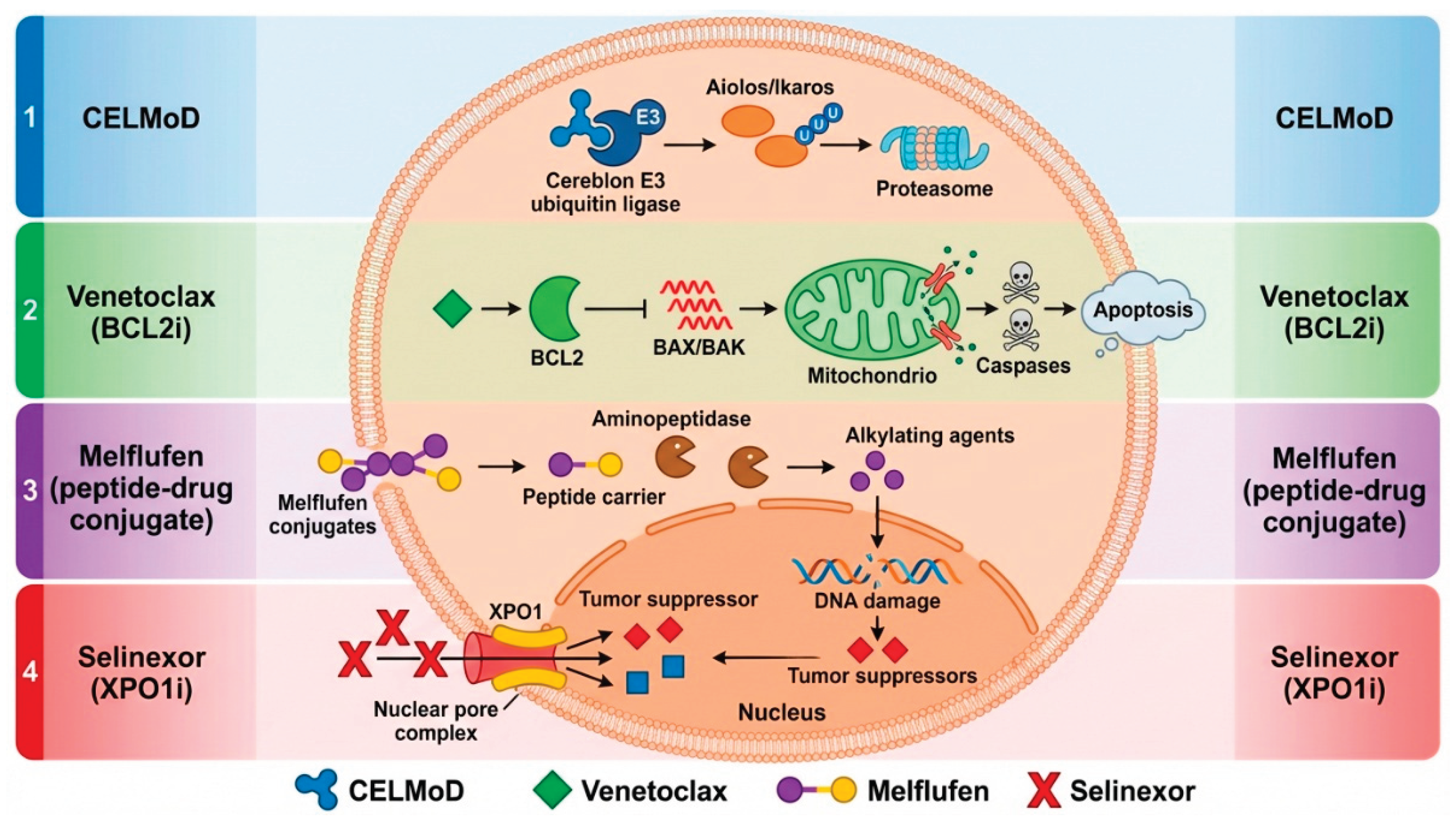
Figure 2.
Mechanism of action of melflufen in MM cells. Melflufen, a highly lipophilic peptide–drug conjugate, rapidly diffuses across the plasma membrane of malignant plasma cells. Once internalized, it undergoes enzymatic cleavage by intracellular aminopeptidases and esterases, releasing hydrophilic alkylating metabolites, including melphalan. Due to their limited membrane permeability, these metabolites are retained within the cell, resulting in intracellular accumulation of cytotoxic payload. This leads to extensive DNA damage, including interstrand cross-linking in nuclear and mitochondrial DNA, ultimately triggering cell cycle arrest and apoptosis. This mechanism exemplifies enzyme-targeted intracellular drug delivery and selective tumor cell trapping of alkylating agents.
Figure 2.
Mechanism of action of melflufen in MM cells. Melflufen, a highly lipophilic peptide–drug conjugate, rapidly diffuses across the plasma membrane of malignant plasma cells. Once internalized, it undergoes enzymatic cleavage by intracellular aminopeptidases and esterases, releasing hydrophilic alkylating metabolites, including melphalan. Due to their limited membrane permeability, these metabolites are retained within the cell, resulting in intracellular accumulation of cytotoxic payload. This leads to extensive DNA damage, including interstrand cross-linking in nuclear and mitochondrial DNA, ultimately triggering cell cycle arrest and apoptosis. This mechanism exemplifies enzyme-targeted intracellular drug delivery and selective tumor cell trapping of alkylating agents.
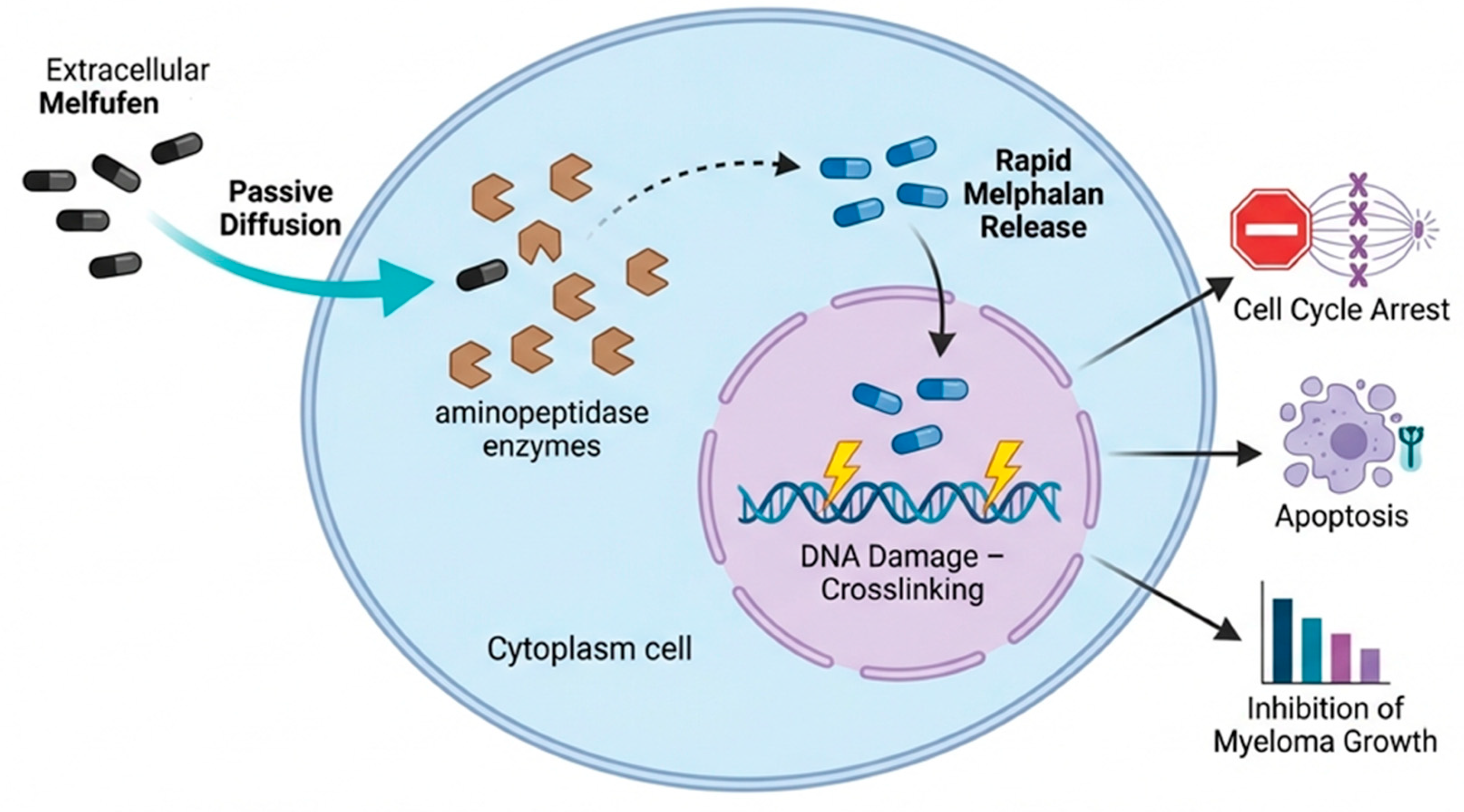
Figure 3.
Proposed clinical positioning of melflufen in RRMM pts. In the current immunotherapy-driven landscape, melflufen represents a mechanistically distinct, non–T-cell–redirecting therapeutic strategy based on enzyme-targeted intracellular delivery of alkylating agents. This schematic illustrates three potential clinical scenarios for its use: (1) bridging therapy in patients awaiting access to CAR T-cell or bispecific antibody treatments; (2) post-immunotherapy relapse, where resistance is often driven by antigen escape or T-cell dysfunction; and (3) patients ineligible for T-cell–based therapies due to frailty, comorbidities, or limited access to specialized centers. Dashed arrows indicate that optimal sequencing remains undefined and should be guided by prior treatments, disease biology, and patient-specific factors.
Figure 3.
Proposed clinical positioning of melflufen in RRMM pts. In the current immunotherapy-driven landscape, melflufen represents a mechanistically distinct, non–T-cell–redirecting therapeutic strategy based on enzyme-targeted intracellular delivery of alkylating agents. This schematic illustrates three potential clinical scenarios for its use: (1) bridging therapy in patients awaiting access to CAR T-cell or bispecific antibody treatments; (2) post-immunotherapy relapse, where resistance is often driven by antigen escape or T-cell dysfunction; and (3) patients ineligible for T-cell–based therapies due to frailty, comorbidities, or limited access to specialized centers. Dashed arrows indicate that optimal sequencing remains undefined and should be guided by prior treatments, disease biology, and patient-specific factors.
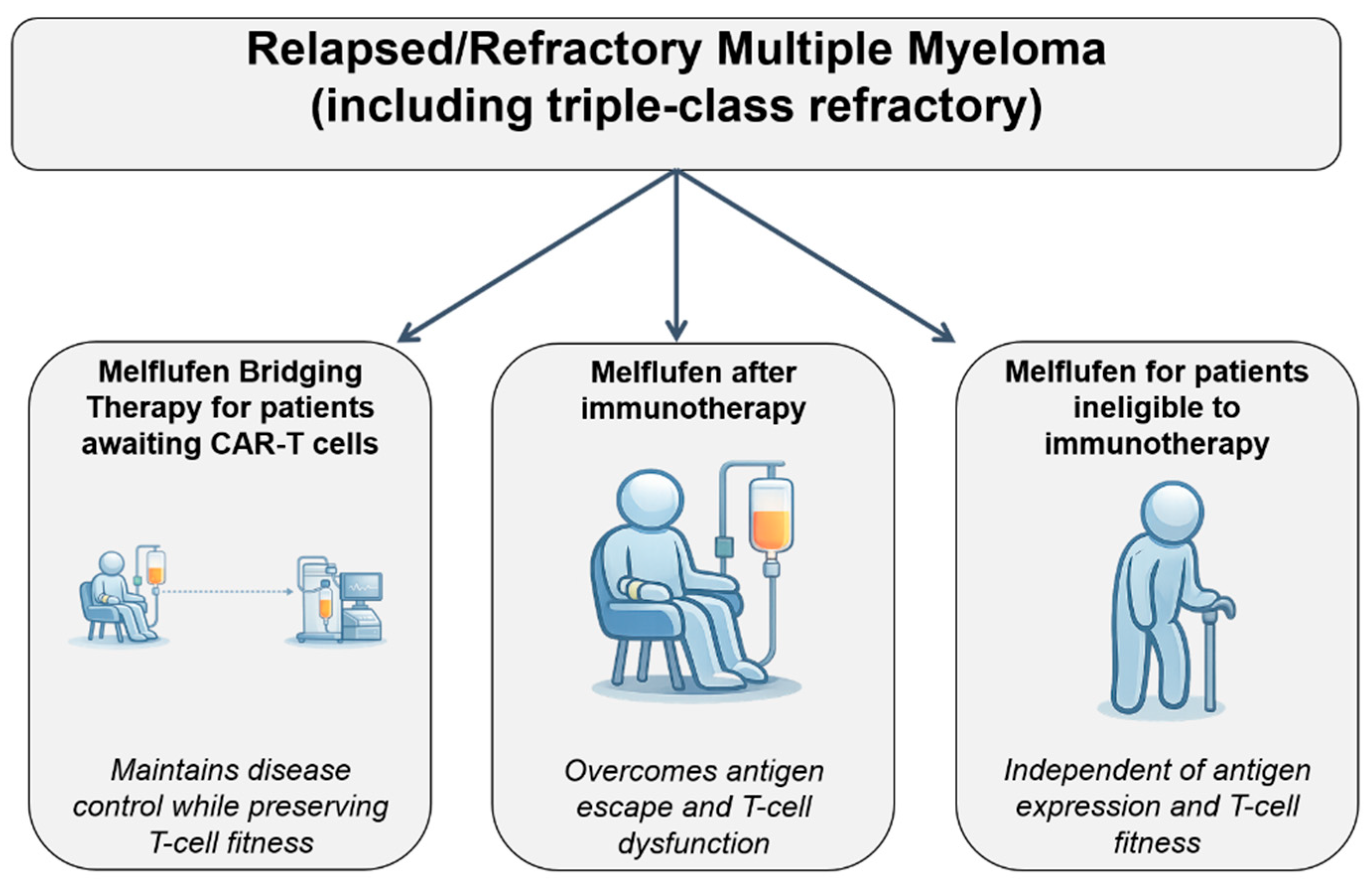

Table 1.
Summary of clinical trials evaluating melflufen in RRMM patients.
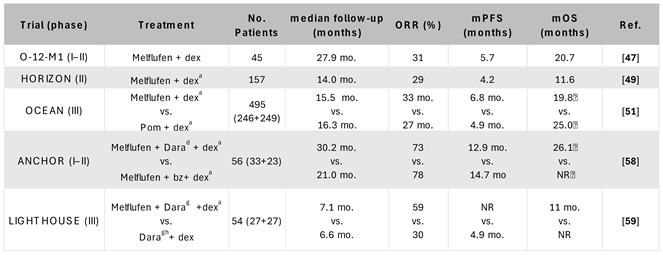 |
Dex: dexamethasone; Bz bortezomib; Dara, daratumumab; NR not reached; mo, months. a DEX was reduced to 20 mg in patients with age ≥ 75 years. b At a median follow-up of 19.8 months. c At a median follow-up of 18.6 months. d Daratumumab 16 mg/kg was administered intravenously on D 2, 8, 15 and 22 in cycle 1, weekly on cycle 2, every other week on cycles 3-6 and on day 1 from cycle 7 onward. e At a median follow-up of 32.8 months. f At a median follow-up of 17.6 months OS data were considered immature. g Daratumumab 1800 mg was administered weekly for the first 2 cycles, every other week in cycles 3-6 and only on day 1 in cycle 7 onward. h Patients in the daratumumab group received dexamethasone 20 mg (or an equivalent glucocorticoid) pre-dose, with an allowed dose reduction to 12 mg from the second injection, and dexamethasone 4 mg orally for two days post-dose.
Table 2.
Comparative efficacy of selected therapies in RRMM pts.
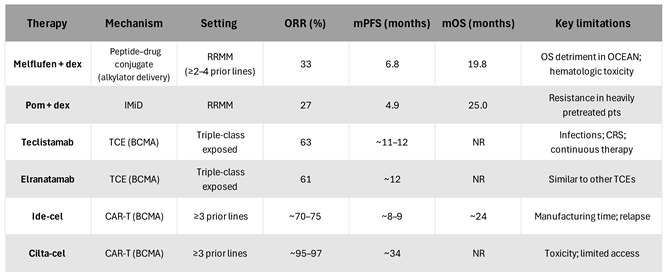 |
RRMM relapsed/refractory MM pts; Pom pomalidomide; TCE T-cells engagers; CAR-T chimeric antigen receptor T cells; NR not reached.
Disclaimer/Publisher’s Note: The statements, opinions and data contained in all publications are solely those of the individual author(s) and contributor(s) and not of MDPI and/or the editor(s). MDPI and/or the editor(s) disclaim responsibility for any injury to people or property resulting from any ideas, methods, instructions or products referred to in the content. |
© 2026 by the authors. Licensee MDPI, Basel, Switzerland. This article is an open access article distributed under the terms and conditions of the Creative Commons Attribution (CC BY) license (http://creativecommons.org/licenses/by/4.0/).
Copyright: This open access article is published under a Creative Commons CC BY 4.0 license, which permit the free download, distribution, and reuse, provided that the author and preprint are cited in any reuse.


