
Submitted:
14 April 2026
Posted:
15 April 2026
You are already at the latest version
Abstract
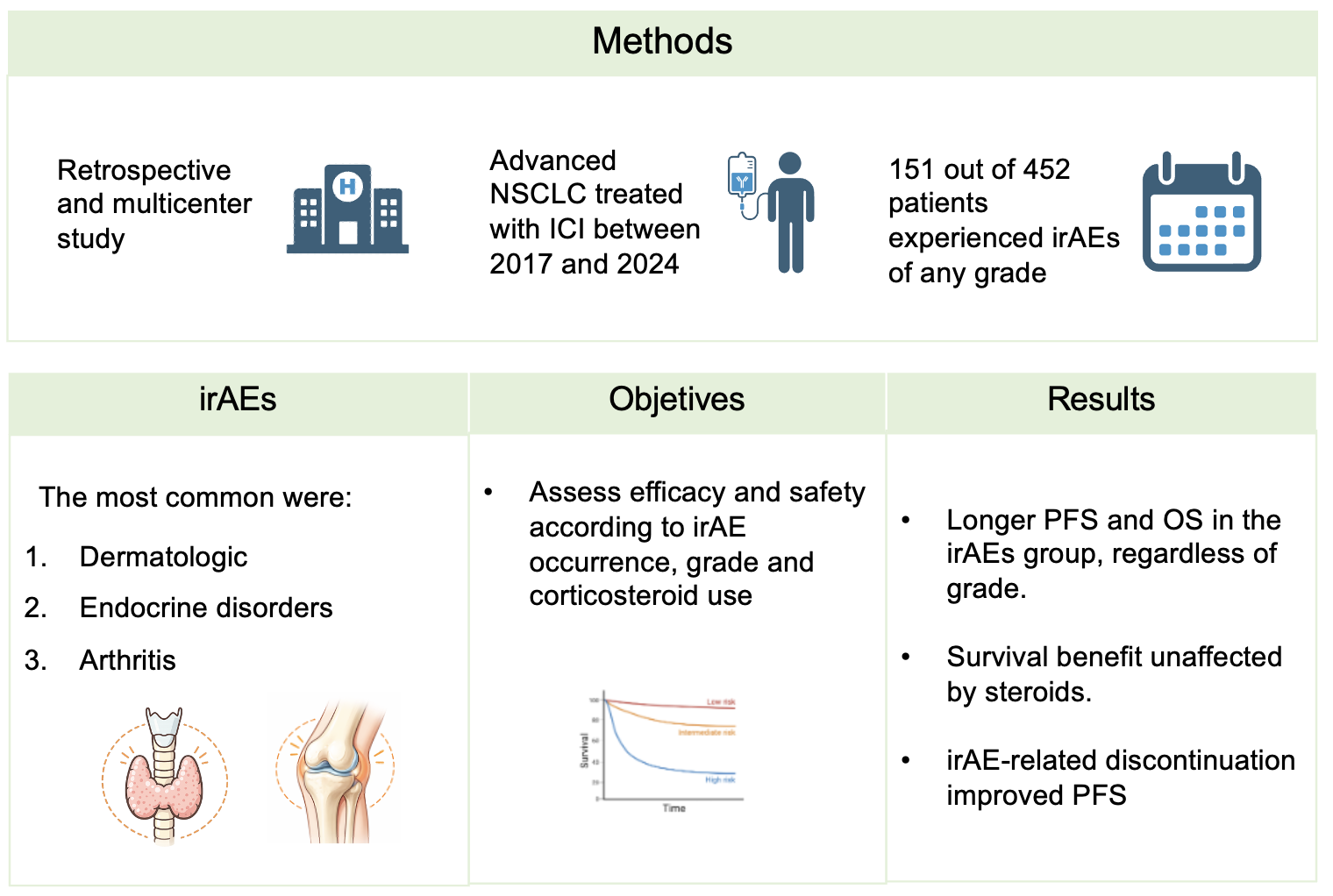
Background/Objectives: Immune checkpoint inhibitors (ICIs) have transformed the treatment landscape of non-small cell lung cancer (NSCLC), introducing a distinct spectrum of immune-related toxicities (irAEs). However, the real-world impact of irAEs and corticosteroid use on treatment outcomes remains uncertain. Methods: We conducted a multicenter, retrospective study including patients with advanced NSCLC treated with ICIs alone or in combination with chemotherapy between April 2017 and December 2023. Clinical records were reviewed to collect data on irAEs and corticosteroid administration. Efficacy and safety outcomes were compared according to irAE occurrence, grade, and corticosteroid use. Results: Among 452 patients, 151 (33.4%) experienced irAEs of any grade, and 37 (8.2%) developed grade ≥3 events. The most common irAEs were dermatologic (11.1%), endocrine disorders (9.1%), and arthritis (5.5%). Corticosteroids were administered for irAE management in 60 patients (13.3%). Patients who developed irAEs achieved significantly improved progression-free survival (median PFS: 23.2 vs. 4.2 months; HR = 0.29; p<0.001) and overall survival (median OS: 31.2 vs. 7.6 months; HR=0.35; p<0.001), including those with grade ≥3 events. The survival benefit associated with irAEs was not compromised by corticosteroid use for irAE management (median PFS 46.3 in irAE vs. 5.5 months in non-irAE/no use; HR=0.28; p<0.001). Temporary ICI discontinuation due to irAEs was associated with longer median PFS (39.1 vs. 5.6 months; HR=0.29; p<0.001), as was permanent ICI discontinuation due to irAEs (median not reached vs. 7.4 months; HR=0.20; p<0.001). Conclusions: The occurrence of irAEs—and their management with corticosteroids—was independently associated with enhanced ICI efficacy in metastatic NSCLC, including among patients who developed high-grade toxicities and those who discontinued treatment due to toxicity.
Keywords:
carcinoma
; non-small-cell lung cancer
; immunotherapy
; drug-related side effects and adverse reactions
; immune-related adverse events
1. Introduction
Immune checkpoints inhibitors (ICIs) have transformed the non-small cell lung cancer (NSCLC) treatment landscape. Anti-PD1 and anti-PDL1 inhibitors—such as pembrolizumab, nivolumab, atezolizumab, cemiplimab and durvalumab—are established as first-line systemic treatment options in metastatic NSCLC whether monotherapy or in combination with platinum-based chemotherapy according to PD-L1 expression and/or clinical indication [1,2].
The use of ICIs has also introduced a new spectrum of immune-related adverse events (irAEs), which require an appropriate evaluation and patient management [3]. These toxicities are classified using the National Cancer Institute common toxicity criteria for adverse events (NCI CTCAE) [4]. Grade ≥3 toxicities are potentially life-threating and may require permanent discontinuation and prolonged administration of high-dose steroids [5]. However, several studies have reported that patients with NSCLC who develop irAEs during ICI therapy may experience improved survival outcomes [3].
Corticosteroids (CS) are widely used not only for managing irAEs but also for controlling cancer-related symptoms unrelated to immunotherapy. However, their immunosuppressive effect may alter ICI efficacy. Notably, patients receiving ≥ 10mg prednisone equivalent were excluded from pivotal clinical trials [6]. Although the impact of CS on ICI efficacy remains controversial, retrospective studies have suggested that doses of ≥ 10mg/day prednisone equivalent for non-irAE indications may be associated with poorer outcomes [7,8]. In contrast, real-world data suggest that steroids due to irAEs do not interfere with ICI efficacy, with some controversies regarding the dose, which may lead to reconsider starting with lower dose whenever is feasible [9,10].
In this multicenter retrospective study, we aimed to explore the relationship between irAE and treatment outcomes in a large cohort of patients with advanced NSCLC treated with ICIs. Additionally, we assessed the effect of corticosteroid use—both for irAE and non-irAE indications—on progression-free survival (PFS) and overall survival (OS) in this population.
2. Materials and Methods
2.1. Study Design and Participants
We conducted a retrospective, multicenter analysis involving patients diagnosed with advanced or metastatic non-small cell lung cancer (NSCLC), confirmed histologically, who underwent treatment with PD-1/PD-L1 immune checkpoint inhibitors. Therapies included atezolizumab, nivolumab, pembrolizumab, or cemiplimab, administered either as single agents or in combination with platinum-based chemotherapy, following routine clinical practice. Data were collected from four centers in Extremadura and Andalucía (Spain) between April 2017 and December 2023. Individuals who received fewer than two doses of immunotherapy were excluded from the analysis. We collected patients who received corticosteroids (CS) for immune-related adverse events (irAEs) and other non-irAEs medical conditions. We did not include corticosteroids used for chemotherapy premedication. The data cutoff was April 10, 2025. The study was conducted in accordance with the Declaration of Helsinki and received approval of the Ethics Committee of Complejo Hospitalario Universitario de Cáceres (Reference: 018-2024).
2.2. Objectives
The primary aim of the study was to evaluate the influence of immune-related adverse events irAEs severity, frequency, and CS use for their management on the efficacy of immune checkpoint inhibitors (ICIs) based on objective response rate (ORR), progression-free survival (PFS), and overall survival (OS). PFS and OS were defined as the interval from initiation of immunotherapy to either radiologically confirmed disease progression or death from any cause. ORR comprised complete responses (CR) and partial responses (PR), while disease control rate (DCR) also included stable disease (SD). Tumor burden was estimated by summing the longest diameters of up to five target lesions, with a maximum of two per organ. Radiological responses (CR, PR, SD, and PD) were evaluated according to local institutional protocols without centralized review.
A secondary objective was to evaluate the safety profile across age groups, focusing on the incidence and severity of immune-related adverse events (irAEs), which were assessed according to the Common Terminology Criteria for Adverse Events (CTCAE) version 5.0
2.3. Statiscal Analysis
Patients without documented disease progression or death at the time of analysis were censored at the date of their most recent follow-up. Unless otherwise specified, continuous variables were dichotomized using the median as the cutoff. PFS and OS were estimated using the Kaplan–Meier method, with group comparisons conducted via the log-rank test.
Univariable Cox proportional hazards models were used to calculate hazard ratios (HRs) and 95% confidence intervals (CIs) for both PFS and OS. Variables that reached statistical significance in univariable analyses, along with other clinically relevant factors—such as histopathological characteristics, treatment-related variables, and laboratory values—were included in the multivariable Cox regression models to control for confounding effects. Analyses were stratified by the occurrence of irAEs and by the indication for corticosteroid use. To further reduce selection bias, a 12-week landmark analysis was also performed.
All statistical computations were conducted using IBM SPSS Statistics, version 27.0.1 (IBM Corp., Armonk, NY, USA).
2.4. Review
A narrative literature review was performed by conducting a thorough search of the PubMed database, restricted to English-language articles published up to January 2025. The search strategy included the keywords: “non-small cell lung cancer,” “immune-related adverse events,” “corticosteroids,” and “efficacy”. No exclusion criteria were applied. Articles were selected based on their relevance to the topic, and additional references were identified through manual screening of the cited literature.
3. Results
3.1. Patient Characteristics
A total of 452 patients with locally advanced or metastatic NSCLC who initiated immunotherapy during the study period were included in the analysis. The median patient age was 67 years (range: 40–89). Baseline characteristics are summarized in Table 1. In the overall cohort, 58.4% had adenocarcinoma histology, and 82.1% were male. According to the 8th edition of the TNM classification, M1c status was more prevalent in the non-irAE group (42.5% vs. 31.1%). Similarly, bone metastases were more frequent in the non-irAE group (29.1% vs. 19.4%). Conversely, PD-L1 expression ≥50% was more common in the irAE group (55.7% vs. 31.6%).
3.2. Characterization of irAEs
Among the 452 patients included in the study, 151 (33.4%) developed an irAE of any grade, of whom 35 (7.7% of the total cohort) experienced grades ≥3 irAEs. The most frequently observed irAEs we dermatologic disorders (11.1%), endocrine disorders (9.1%), and pneumonitis (5.5%) as detailed in Table 2. Regarding the number of irAE episodes, 6 patients (1.3% of the total cohort) experienced ≥3 episodes and 35 patients (7.7%) experienced ≥2 episodes. Four treatment-related deaths were reported: one due to severe dermatologic toxicity, two due to hepatotoxicity, and one due to pneumonitis.
The median number of treatment cycles before the onset of the first irAE was 4 (range: 1–115). ICIs were temporarily discontinued in 74 patients (16.3%), and 35 patients (7.7%) required permanent discontinuation due to persistent grade 2 or grade 3–4 irAEs.
Corticosteroids (CS) were used exclusively for the treatment of irAEs in 60 patients (13.3%) during ICI therapy, and for both irAEs and other medical conditions in 15 (3.3%) patients. The median corticosteroid dose in the irAE group was 4 mg dexamethasone-equivalent (range: 0.8–75 mg) and median treatment duration was 45 days (range: 3–330). Similarly, patients receiving CS for both irAEs and other indications (n = 15) had a median dexamethasone-equivalent dose of 4 mg (range: 1–20 mg) and a median treatment duration of 40 days (range: 19–150). In the group treated for other indications (n = 155), the median CS dose was 4 mg (range: 0.5–24 mg), and the median treatment duration was 30 days (range: 1–360).
3.3. Impact of irAEs on Efficacy of ICIs
The disease control rate (DCR) and objective response rate (ORR) for the entire cohort were 57.7% and 36.9%, respectively, with median PFS and OS of 7.1 and 13 months. Patients who developed irAEs (n=151) had significantly higher DCR (88.1% vs. 42.5%; p<0.001) and ORR (62.3% vs. 24.3%; p<0.001) than those without irAEs (n=301).
Patients who experienced irAEs showed significantly improved survival outcomes. Median PFS in the irAE group was 23.2 months vs. 4.2 months in the non-irAE group (hazard ratio [HR]=0.29; CI: 0.23–0.38; p<0.001). Both patients with grade ≥3 and grade 1–2 irAEs had significantly longer PFS than those without irAEs (47.2 vs. 4.2 months, HR=0.21, 95% CI: 0.12–0.37, p<0.001; and 21.3 vs. 4.2 months, HR=0.31, 95% CI: 0.24–0.41, p<0.001, respectively) (Figure 1).
A statistically significant difference in OS was also observed. Median OS in the irAE group was 31.2 months vs. 7.6 months in the non-irAE group (HR=0.35; 95%. CI: 0.27–0.44; p<0.001). Patients with grade ≥3 irAEs had significantly longer OS than those without irAEs (24.4 vs. 7.6 months; HR = 0.37; 95% CI: 0.23–0.57; p<0.001), and those with grade 1–2 irAEs similarly showed improved OS (33 vs. 7.6 months in non-irAE; HR=0.34; 95% CI: 0.26–0.45; p<0.001) (Figure 2).
A 12-week landmark analysis including 323 patients (139 with irAEs) confirmed these findings in favor of the irAE group, demonstrating significantly longer median PFS (27.5 vs. 6.8 months in the non-irAE group; HR = 0.34; 95% CI: 0.26–0.45; p < 0.001) and OS (33.6 vs. 14.2 months in the non-irAE group; HR = 0.41; 95% CI: 0.31–0.54; p < 0.001).
To mitigate immortal time bias, additional landmark analyses at 24, 36, and 48 weeks were performed. At 24 weeks from ICI initiation, 127 of 225 patients had experienced at least one irAE and demonstrated significantly longer PFS compared with those without irAEs (30.8 vs. 15.4 months; HR = 0.53; 95% CI: 0.38–0.74; p < 0.001). At 36 weeks, 105 of 172 patients had developed irAEs and also showed significantly longer PFS compared with those without irAEs (35.5 vs. 22.8 months; HR = 0.66; 95% CI: 0.44–0.99; p = 0.043). At 48 weeks, 92 of 147 patients had developed irAEs, with a non-significant trend toward longer PFS (median PFS: 39.4 vs. 28.1 months; HR = 0.69; 95% CI: 0.42–1.11; p = 0.123).
Patients with ≥2 irAE episodes (n=36) had longer PFS than those without irAEs (46.3 vs. 4.2 months; HR=0.24; 95% CI: 0.16–0.35; p<0.001), and a single irAE episode (n=112) was also associated with prolonged PFS compared to the no-irAE group (21.1 vs. 4.2 months; HR=0.38; 95% CI: 0.29–0.51; p<0.001). Moreover, ≥2 irAE episodes conferred longer PFS than a single episode (46.3 vs. 21.1 months; HR=0.54; 95% CI: 0.30–0.96; p=0.037).
Among patients who temporarily discontinued ICIs (n=74), a clinical benefit was observed, with median PFS of 39.1 vs. 5.6 months in patients who did not discontinue (HR=0.29; 95% CI: 0.20–0.42; p<0.001). In particular, patients who permanent discontinued due to an irAE had longer PFS than those who did not discontinue ICIs due to irAEs, including patients still on therapy or those who discontinued for progression or death. Median PFS was not reached (NR) in this group vs. 7.4 months in the control group (HR=0.20; 95% CI: 0.10–0.41; p<0.001) (Figure 3).
3.4. Impact of Corticosteroids on Effectiveness of ICIs
Patients who received CS for irAE management experienced longer PFS (46.3 vs. 5.5 months; HR = 0.28; 95% CI: 0.19–0.40; p<0.001) and OS (32.6 vs. 10 months; HR = 0.38; 95% CI: 0.28–0.54; p<0.001) compared to those who did not.
Stratifying by the occurrence of irAEs, patients treated with CS demonstrated longer median PFS than those with irAEs who did not receive CS (46.3 vs. 19.1 months; HR=0.56; 95% CI 0.36–0.89; p=0.013). Further efficacy details regarding corticosteroid use in this cohort are provided in Table 3.
No significant differences in PFS were observed according to dexamethasone-equivalent dose among patients receiving CS for irAEs (n=75). Median PFS was NR in patients receiving ≤4 mg dexamethasone-equivalent vs. 15.9 months in those receiving >4mg DEX-equivalent dose (HR=0.50; 95% CI 0.24–1.08; p=0.078). Conversely, among patients requiring CS for non-irAE indications (n=160), dose appeared to influence PFS, with median PFS of 5.6 months in those receiving ≤4 mg vs. 3.4 months in patients receiving >4 mg dexamethasone-equivalent dose (HR=0.67; 95% CI: 0.46–0.99; p=0.045).
3.5. Multivariant Analysis
A Cox regression model confirmed that ECOG 0-1 PDL-1 expression ≥50%, the occurrence of irAEs and the exclusive use of CS for their management were independently associated with longer PFS. Similarly, OS was significantly prolonged in patients with ECOG 0-1, stage III/IV-A, PD-L1 expression >1%, irAEs occurrence and those who received CS exclusively for irAEs. Additional details are provided in Table 4.
4. Discussion
Our study, based on a large real-world cohort of patients with advanced NSCLC, demonstrates a statistically significant improvement in ORR, PFS, and OS among those who developed irAEs of any grade. Higher-grade irAEs and multiple episodes were associated with greater clinical benefit. Importantly, corticosteroid use for irAE management did not adversely affect ORR, PFS, or OS, thereby adding robust evidence to the current body of literature on the prognostic role of irAEs in ICI-treated patients.
A meta-analysis of randomized clinical trials assessing ICIs—administered either as monotherapy or in combination with placebo, chemotherapy, or other ICIs—in patients with NSCLC reported rates of any-grade and severe irAEs of 37.1% and 18.5%, respectively, along with a discontinuation rate due to severe irAEs of 9.2%. These prospective data closely resemble our findings, which showed irAE rates of 36.9% for any grade and 22.2% for grade ≥3 events, with treatment discontinuation due to persistent grade 2 or grade ≥3 irAEs occurring in 7.7% of patients [11].
Current evidence on the association between irAEs and the efficacy of ICIs in patients with advanced NSCLC remains limited [12]. While some prospective data exist, the majority of findings are derived from retrospective cohort studies [13,14,15,16,17]. The strongest evidence to date comes from metastatic melanoma, where a secondary analysis of a phase III trial demonstrated a clear association between irAEs and improved clinical outcomes [18]. However, melanoma exhibits unique immunological features, which may limit the generalizability of these results to other solid tumors, including NSCLC.
A non-interventional prospective study including various non-melanoma solid tumors, Schweizer et al. reported significantly longer median PFS (8.8 vs. 4.0 months, p=0.026) and OS (22.8 vs. 11.3 months, p=0.037) in the NSCLC subgroup among patients experiencing irAEs (n = 46) [19]. Similarly, another prospective analysis of 97 patients evaluated the association between irAEs and ICI response, with 51% of patients experiencing irAEs of any grade and 7% experiencing grade ≥3 events. Notably, patients with grade ≥3 irAEs had a higher objective response rate compared to those with no or only grade 1–2 irAEs (68% vs. 20%, p = 0.023) [13]. Another prospective study specifically identified a correlation between ICI-related thyroid dysfunction and longer OS in a cohort of 51 patients with advanced NSCLC enrolled in KEYNOTE-001 [20]. However, these studies primarily included patients receiving ICI monotherapy, with only a small proportion receiving combination therapy [19]. In contrast, our retrospective cohort included 32.9% of patients treated with chemo-immunotherapy, yet showed comparable findings. These results underscore the need for prospective studies specifically evaluating the predictive value of irAEs in the context of combination regimens.
Retrospectively, two meta-analyses with large cohorts reported an association between the occurrence of irAEs and improved response and survival outcomes [21,22]. Ma S. et al. meta-analysis, which included 2 prospective studies out of 18, not only evaluated this correlation but also examined how different irAEs may impact ICI efficacy, finding that cutaneous, gastrointestinal, endocrine, and grade ≥3 irAEs were associated with PFS and OS benefit, whereas pneumonitis and hepatotoxicity were not. Moreover, another retrospective study assessed the association between grade 3–4 irAEs and ICI efficacy, showing longer median OS and time to next therapy (TTNT) —as a surrogate of PFS— in patients experiencing grade 3–4 irAEs compared to those without irAEs or with lower-grade events [17], reinforcing the conclusions from our findings. As with prospective studies, retrospective data primarily focused on ICI monotherapy. In one retrospective cohort, where 9 out of 90 patients received chemotherapy, a predictive role of irAEs in ICI efficacy was also observed [6]. Therefore, our findings confirm this association in a larger cohort in which 149 patients received chemoimmunotherapy. Of note, the higher incidence of pneumonitis observed in our cohort may be partly attributable to an underrepresentation of mild-grade irAEs, inherent to the retrospective design.
IrAEs are considered time-dependent events, which is why several retrospective studies have employed landmark analyses to minimize bias [15], particularly in settings where ICIs are administered in combination with chemotherapy. In our study, a landmark analysis was also performed for this purpose, confirming the association between irAEs and improved outcomes. However, meta-analyses [21,22,23] compiling retrospective studies demonstrated a correlation between irAEs and ICI efficacy regardless of whether a landmark analysis was applied. Notably, the aforementioned meta-analyses [21,22,23], focused on ICI monotherapy, where chemotherapy-related toxicity could not confound the interpretation of early irAE onset. In contrast, the 12-week cut-off in our study was chosen to ensure that patients had completed the chemotherapy component of combined regimens, thereby minimizing potential misclassification of early toxicities. We acknowledge that this approach may have excluded some early-onset irAEs, which were nonetheless captured in the overall analysis.
Different cutoff points have been used in landmark analyses (e.g., 3, 6, and 12 months) [23,24,25]. In our study, a survival benefit was observed across several cutoff points, thereby reducing the impact of immortal time bias. The lack of statistical significance at the 48-month landmark may be explained by the reduced sample size and the influence of other coexisting favorable prognostic factors.
Several retrospective studies have evaluated the association between the number of irAEs and ICI efficacy and have demonstrated a statistically significant benefit in PFS [15,24,26]. A pooled analysis from the KEYNOTE-001 trial showed that patients with a higher number of irAEs had improved OS (HR=0.75; 95% CI: 0.58–0.96; p=0.021) and PFS (HR=0.75; 95% CI: 0.56–0.99; p=0.043) [26]. Our study confirms this association in the largest retrospective cohort to date, observing longer PFS in patients experiencing ≥2 irAE episodes, with significant PFS differences even between patients with ≥2 versus 1 irAE episode.
Regarding corticosteroid use, a large real-world study from two institutions reported that doses higher than 10 mg prednisone-equivalent were associated with decreased ORR, PFS, and OS with ICI, even after adjusting for smoking history, ECOG PS, and brain metastases [7]. However, pooled analyses from phase III melanoma trials and a large meta-analysis showed that corticosteroids for adverse event management did not negatively impact PFS or OS, whereas their use for symptom control did, highlighting the need for caution [8,25]. A retrospective study in patients with stage IV NSCLC reported impaired survival among those treated with ICIs who received high peak doses of corticosteroids [27]. Our results are consistent with these findings, showing no impact on PFS or OS when corticosteroids were used for irAE management, regardless of dose (≤4 mg or >4 mg dexamethasone-equivalent); however, patients receiving high peak corticosteroid doses may be underrepresented in our cohort.
Our study has several limitations. First, the inclusion of patients treated with chemo-immunotherapy raises the possibility that early-onset irAEs may be confounded with chemotherapy-related adverse events. To address this issue, landmark analyses were performed to minimize potential biases, including immortal time bias. In addition, due to the retrospective nature of the study, some grade 1 irAEs and the exact time to irAE onset may have been underreported or inaccurately captured, potentially leading to an underestimation of their true incidence and limiting more detailed analyses. Nevertheless, a consistent association between irAEs and survival outcomes was observed across multiple landmark time points. Despite these limitations, our findings provide valuable real-world evidence on the impact of irAEs and corticosteroid use on the effectiveness of immune checkpoint inhibitors.
5. Conclusions
In this real-world cohort, the development of irAEs was strongly associated with improved ICI efficacy, even among patients requiring treatment discontinuation or experiencing multiple irAEs. Corticosteroids used for irAE management did not compromise clinical outcomes, regardless of dose. These findings support the prognostic value of irAEs and underscore the need for prospective studies in chemo-immunotherapy settings.
Author Contributions
For research articles with several authors, a short paragraph specifying their individual contributions must be provided. The following statements should be used “Conceptualization, J.d.C.-M.; methodology, J.d.C-M. and P.A-d.M.; validation, all authors; formal analysis, J.d.C-M. and P.A-d.M.; investigation, all authors; resources, all authors; data curation, all authors; writing—original draft preparation, J.d.C-M.; writing—review and editing, all authors; visualization, all authors; supervision, J.F.-P and P.A-d.M; project administration, J.d.C-M. and P.A-d.M. All authors have read and agreed to the published version of the manuscript.
Funding
This research received no external funding.
Institutional Review Board Statement
The study was conducted in accordance with the Declaration of Helsinki and approved by the Ethics Committee of Complejo Hospitalario Universitario de Cáceres (Reference: 018-2024) on 22 March 2024
Informed Consent Statement
Informed consent was waived by the Institutional Review Board owing to the retrospective design of the study.
Data Availability Statement
The original contributions presented in this study are included in the article. Further inquiries can be directed to the corresponding author(s).
Conflicts of Interest
J.d.C.-M. received honoraria for speaking grants from Lilly and Astellas and support for attendance at conferences from Beigene, Novartis and BMS. C.A.-d.M. received support for attendance at conferences from Novartis, BMS, and MSD; L.Q.-C. received honoraria for speaking grants and travel/accommodation from Roche, Servier, AstraZeneca, BMS, Merck, and Nutricia; S.G.-S. received speaker bureau for Novartis, GSK, and Lilly, advisory/consultancy roles for Daiichi Sankyo and AstraZeneca, and travel expenses from Pfizer and Gilead; J.F.-P. received hon-oraria for advisory role and speaking grants from Roche, Pfizer, Takeda, AstraZeneca, Bristol, Beigene, Johnson & Johnson, and Regeneron and travel/accommodation expenses from Roche and Johnson & Johnson. The author’s institution has received research funding from MSD, Roche, Pfiz-er, Daiichi Sankyo, Gilead, AstraZeneca, and Beigene; P.A.-d.M. received honoraria for advisory role from Sanofi, Regeneron, and Sun Pharma, and speaking grants and travel/accommodation expenses from MSD, Pierre-Fabre, Novartis, and AstraZeneca.
Abbreviations
The following abbreviations are used in this manuscript:
| ICIs | Immune checkpoint inhibitors |
| NSCLC | Non-small cell lung cancer |
| IRAEs | Immune-related adverse events |
| NCI CTCAE | National cancer institute common toxicity criteria for adverse events |
| CS | Corticosteroids |
| ORR | Objective response rate |
| PFS | Progression-free survival |
| OS | Overall survival |
| CR | Complete responses |
| PR | Partial responses |
| DCR | Disease control rate |
| SD | Stable disease |
| HR | Hazard ratios |
| CIs | Confidence intervals |
| ICI | Immune-checkpoints inhibitors |
| ECOG PS | Eastern cooperative oncology group performance status |
| GI | Gastrointestinal |
| NR | Not reached |
| NLR | Neutrophil-lymphocyte ratio |
| TTNT | Time to next therapy |
References
- Hendriks, L.; Kerr, K.; Menis, J.; Mok, T.; Nestle, U.; Passaro, A.; Peters, S.; Planchard, D.; Smit, E.; Solomon, B.; et al. Non-oncogene-addicted metastatic non-small-cell lung cancer: ESMO Clinical Practice Guideline for diagnosis, treatment and follow-up. Ann. Oncol. 2023, 34, 358–376. [Google Scholar] [CrossRef]
- Di Federico, A.; De Giglio, A.; Parisi, C.; Gelsomino, F.; Ardizzoni, A. PD-1/PD-L1 inhibitor monotherapy or in combination with chemotherapy as upfront treatment for advanced NSCLC with PD-L1 expression ≥ 50%: Selecting the best strategy. Crit. Rev. Oncol. 2021, 160, 103302. [Google Scholar] [CrossRef]
- Grangeon, M.; Tomasini, P.; Chaleat, S.; Jeanson, A.; Souquet-Bressand, M.; Khobta, N.; Bermudez, J.; Trigui, Y.; Greillier, L.; Blanchon, M.; et al. Association Between Immune-related Adverse Events and Efficacy of Immune Checkpoint Inhibitors in Non–small-cell Lung Cancer. Clin. Lung Cancer 2019, 20, 201–207. [Google Scholar] [CrossRef]
- National Cancer Institute. Common Terminology Criteria for Adverse Events (CTCAE) v5.0 [Internet]. 2017. Available online: https://www.meddra.org/.
- Haanen, J.; Obeid, M.; Spain, L.; Carbonnel, F.; Wang, Y.; Robert, C.; Lyon, A.; Wick, W.; Kostine, M.; Peters, S.; et al. Management of toxicities from immunotherapy: ESMO Clinical Practice Guideline for diagnosis, treatment and follow-up. Ann. Oncol. 2022, 33, 1217–1238. [Google Scholar] [CrossRef] [PubMed]
- Şen, G.A.; Öztaş, N.Ş; Değerli, E.; Safarov, S.; Guliyev, M.; Bedir, Ş; Can, G.; Turna, H.; Özgüroğlu, M. Effects of immune related adverse events and corticosteroids on the outcome of patients treated with immune checkpoint inhibitors. Sci. Rep. 2025, 15, 1–9. [Google Scholar] [CrossRef]
- Arbour, K.C.; Mezquita, L.; Long, N.; Rizvi, H.; Auclin, E.; Ni, A.; Martínez-Bernal, G.; Ferrara, R.; Lai, W.V.; Hendriks, L.E.L.; et al. Impact of Baseline Steroids on Efficacy of Programmed Cell Death-1 and Programmed Death-Ligand 1 Blockade in Patients With Non–Small-Cell Lung Cancer. J. Clin. Oncol. 2018, 36, 2872–2878. [Google Scholar] [CrossRef]
- Petrelli, F.; Signorelli, D.; Ghidini, M.; Ghidini, A.; Pizzutilo, E.G.; Ruggieri, L.; Cabiddu, M.; Borgonovo, K.; Dognini, G.; Brighenti, M.; et al. Association of Steroids Use with Survival in Patients Treated with Immune Checkpoint Inhibitors: A Systematic Review and Meta-Analysis. Cancers 2020, 12, 546. [Google Scholar] [CrossRef]
- Verheijden, R.J.; de Groot, J.S.; Fabriek, B.O.; Hew, M.N.; May, A.M.; Suijkerbuijk, K.P. Corticosteroids for Immune-Related Adverse Events and Checkpoint Inhibitor Efficacy: Analysis of Six Clinical Trials. J. Clin. Oncol. 2024, 42, 3713–3724. [Google Scholar] [CrossRef]
- Skribek, M.; Rounis, K.; Afshar, S.; Grundberg, O.; Friesland, S.; Tsakonas, G.; Ekman, S.; De Petris, L. Effect of corticosteroids on the outcome of patients with advanced non–small cell lung cancer treated with immune-checkpoint inhibitors. Eur. J. Cancer 2021, 145, 245–254. [Google Scholar] [CrossRef] [PubMed]
- Berti, A.; Bortolotti, R.; Dipasquale, M.; Kinspergher, S.; Prokop, L.; Grandi, G.; Inchiostro, S.; Paolazzi, G.; Caffo, O.; Veccia, A. Meta-analysis of immune-related adverse events in phase 3 clinical trials assessing immune checkpoint inhibitors for lung cancer. Crit. Rev. Oncol. 2021, 162, 103351. [Google Scholar] [CrossRef] [PubMed]
- Das, S.; Johnson, D.B. Immune-related adverse events and anti-tumor efficacy of immune checkpoint inhibitors. J. Immunother. Cancer 2019, 7, 306. [Google Scholar] [CrossRef]
- Sung, M.; Zer, A.; Walia, P.; Khoja, L.; Maganti, M.; Labbe, C.; Shepherd, F.A.; Bradbury, P.A.; Liu, G.; Leighl, N.B. Correlation of immune-related adverse events and response from immune checkpoint inhibitors in patients with advanced non-small cell lung cancer. J. Thorac. Dis. 2020, 12, 2706–2712. [Google Scholar] [CrossRef]
- Daniello, L.; Elshiaty, M.; Bozorgmehr, F.; Kuon, J.; Kazdal, D.; Schindler, H.; Shah, R.; Volckmar, A.-L.; Lusky, F.; Diekmann, L.; et al. Therapeutic and Prognostic Implications of Immune-Related Adverse Events in Advanced Non-Small-Cell Lung Cancer. Front. Oncol. 2021, 11, 703893. [Google Scholar] [CrossRef]
- Cortellini, A.; Chiari, R.; Ricciuti, B.; Metro, G.; Perrone, F.; Tiseo, M.; Bersanelli, M.; Bordi, P.; Santini, D.; Giusti, R.; et al. Correlations Between the Immune-related Adverse Events Spectrum and Efficacy of Anti-PD1 Immunotherapy in NSCLC Patients. Clin. Lung Cancer 2019, 20, 237–247.e1. [Google Scholar] [CrossRef]
- Grangeon, M.; Tomasini, P.; Chaleat, S.; Jeanson, A.; Souquet-Bressand, M.; Khobta, N.; Bermudez, J.; Trigui, Y.; Greillier, L.; Blanchon, M.; et al. Association Between Immune-related Adverse Events and Efficacy of Immune Checkpoint Inhibitors in Non–small-cell Lung Cancer. Clin. Lung Cancer 2019, 20, 201–207. [Google Scholar] [CrossRef]
- Guezour, N.; Soussi, G.; Brosseau, S.; Abbar, B.; Naltet, C.; Vauchier, C.; Poté, N.; Hachon, L.; Namour, C.; Khalil, A.; et al. Grade 3–4 Immune-Related Adverse Events Induced by Immune Checkpoint Inhibitors in Non-Small-Cell Lung Cancer (NSCLC) Patients Are Correlated with Better Outcome: A Real-Life Observational Study. Cancers 2022, 14, 3878. [Google Scholar] [CrossRef]
- Eggermont, A.M.M.; Kicinski, M.; Blank, C.U.; Mandala, M.; Long, G.V.; Atkinson, V.; Dalle, S.; Haydon, A.; Khattak, A.; Carlino, M.S.; et al. Association Between Immune-Related Adverse Events and Recurrence-Free Survival Among Patients With Stage III Melanoma Randomized to Receive Pembrolizumab or Placebo. JAMA Oncol. 2020, 6, 519–527. [Google Scholar] [CrossRef] [PubMed]
- Schweizer, C.; Schubert, P.; Rutzner, S.; Eckstein, M.; Haderlein, M.; Lettmaier, S.; Semrau, S.; Gostian, A.-O.; Frey, B.; Gaipl, U.S.; et al. Prospective evaluation of the prognostic value of immune-related adverse events in patients with non-melanoma solid tumour treated with PD-1/PD-L1 inhibitors alone and in combination with radiotherapy. Eur. J. Cancer 2020, 140, 55–62. [Google Scholar] [CrossRef] [PubMed]
- Osorio, J.C.; Ni, A.; Chaft, J.E.; Pollina, R.; Kasler, M.K.; Stephens, D.; Rodriguez, C.; Cambridge, L.; Rizvi, H.; Wolchok, J.D.; et al. Antibody-mediated thyroid dysfunction during T-cell checkpoint blockade in patients with non-small-cell lung cancer. Ann. Oncol. 2017, 28, 583–589. [Google Scholar] [CrossRef] [PubMed]
- Lin, L.; Liu, Y.; Chen, C.; Wei, A.; Li, W. Association between immune-related adverse events and immunotherapy efficacy in non-small-cell lung cancer: a meta-analysis. Front. Pharmacol. 2023, 14. [Google Scholar] [CrossRef]
- Ma, S.; Nie, H.; Wei, C.; Jin, C.; Wang, L. Association between immune-related adverse events and prognosis in patients with advanced non-small cell lung cancer: a systematic review and meta-analysis. Front. Oncol. 2024, 14, 1402017. [Google Scholar] [CrossRef] [PubMed]
- Liang, Y.; Xu, H.; Liu, F.; Li, L.; Lin, C.; Zhang, Y.; Wang, N.; Wang, L. Immune-related adverse events and their effects on survival outcomes in patients with non-small cell lung cancer treated with immune checkpoint inhibitors: a systematic review and meta-analysis. Front. Oncol. 2024, 14, 1281645. [Google Scholar] [CrossRef] [PubMed]
- Naqash, A.R.; Ricciuti, B.; Owen, D.H.; Florou, V.; Toi, Y.; Cherry, C.; Hafiz, M.; De Giglio, A.; Muzaffar, M.; Patel, S.H.; et al. Correction to: Outcomes associated with immune-related adverse events in metastatic non-small cell lung cancer treated with nivolumab: a pooled exploratory analysis from a global cohort. Cancer Immunol. Immunother. 2020, 69, 1189–1189. [Google Scholar] [CrossRef] [PubMed]
- Weber, J.S.; Hodi, F.S.; Wolchok, J.D.; Topalian, S.L.; Schadendorf, D.; Larkin, J.; Sznol, M.; Long, G.V.; Li, H.; Waxman, I.M.; et al. Safety Profile of Nivolumab Monotherapy: A Pooled Analysis of Patients With Advanced Melanoma. J. Clin. Oncol. 2017, 35, 785–792. [Google Scholar] [CrossRef]
- Lisberg, A.; Tucker, D.A.; Goldman, J.W.; Wolf, B.; Carroll, J.; Hardy, A.; Morris, K.; Linares, P.; Adame, C.; Spiegel, M.L.; et al. Treatment-Related Adverse Events Predict Improved Clinical Outcome in NSCLC Patients on KEYNOTE-001 at a Single Center. Cancer Immunol. Res. 2018, 6, 288–294. [Google Scholar] [CrossRef]
- van Dijk, E.; Smeenk, M.; Bensch, F.; Sadowska, A.; Verschueren, M.; Verhaert, M.; Llobell, A.; Suzuki, Y.; Liew, D.; Takeji, A.; et al. Checkpoint inhibitor effectiveness after corticosteroids and second-line immunosuppressants for immune-related adverse events in non-small-cell lung cancer. ESMO Open 2026, 11, 106052. [Google Scholar] [CrossRef]
Figure 1.
Progression-free survival according to irAE grade.
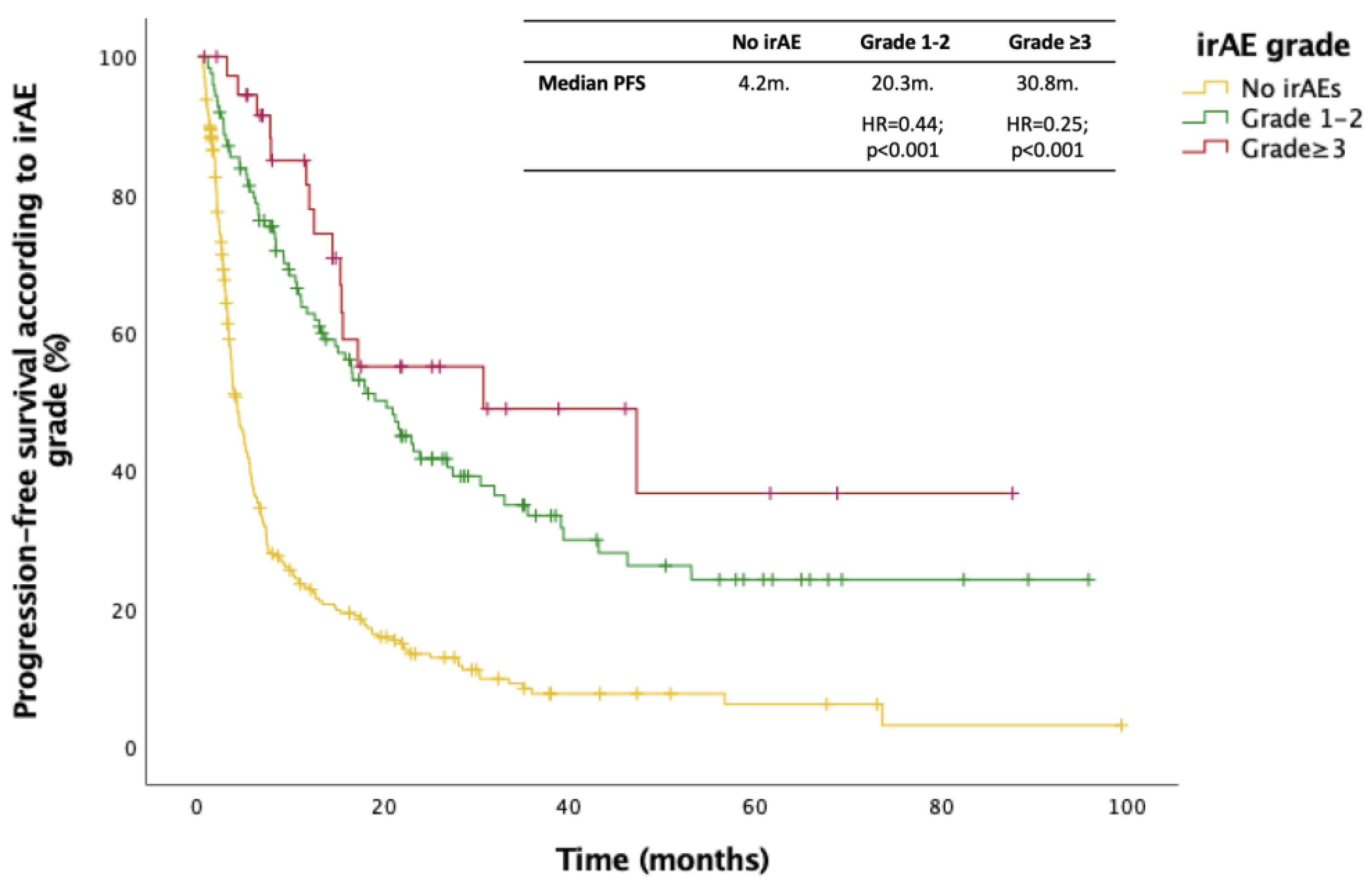
Figure 2.
Overall survival according to irAE grade.
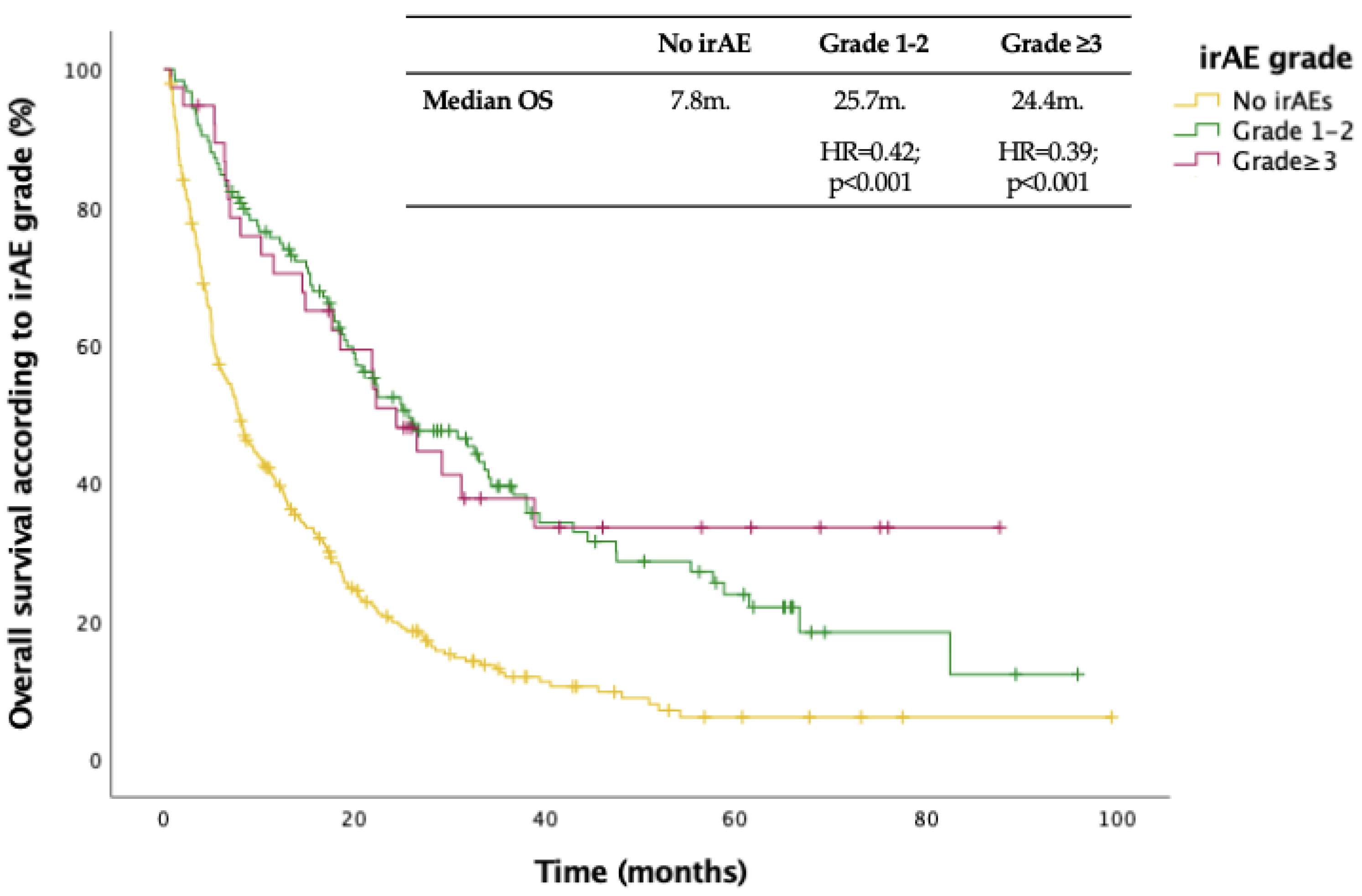
Figure 3.
Progression-free survival according to ICI discontinuation due to an immune-related adverse event (irAE).
Figure 3.
Progression-free survival according to ICI discontinuation due to an immune-related adverse event (irAE).
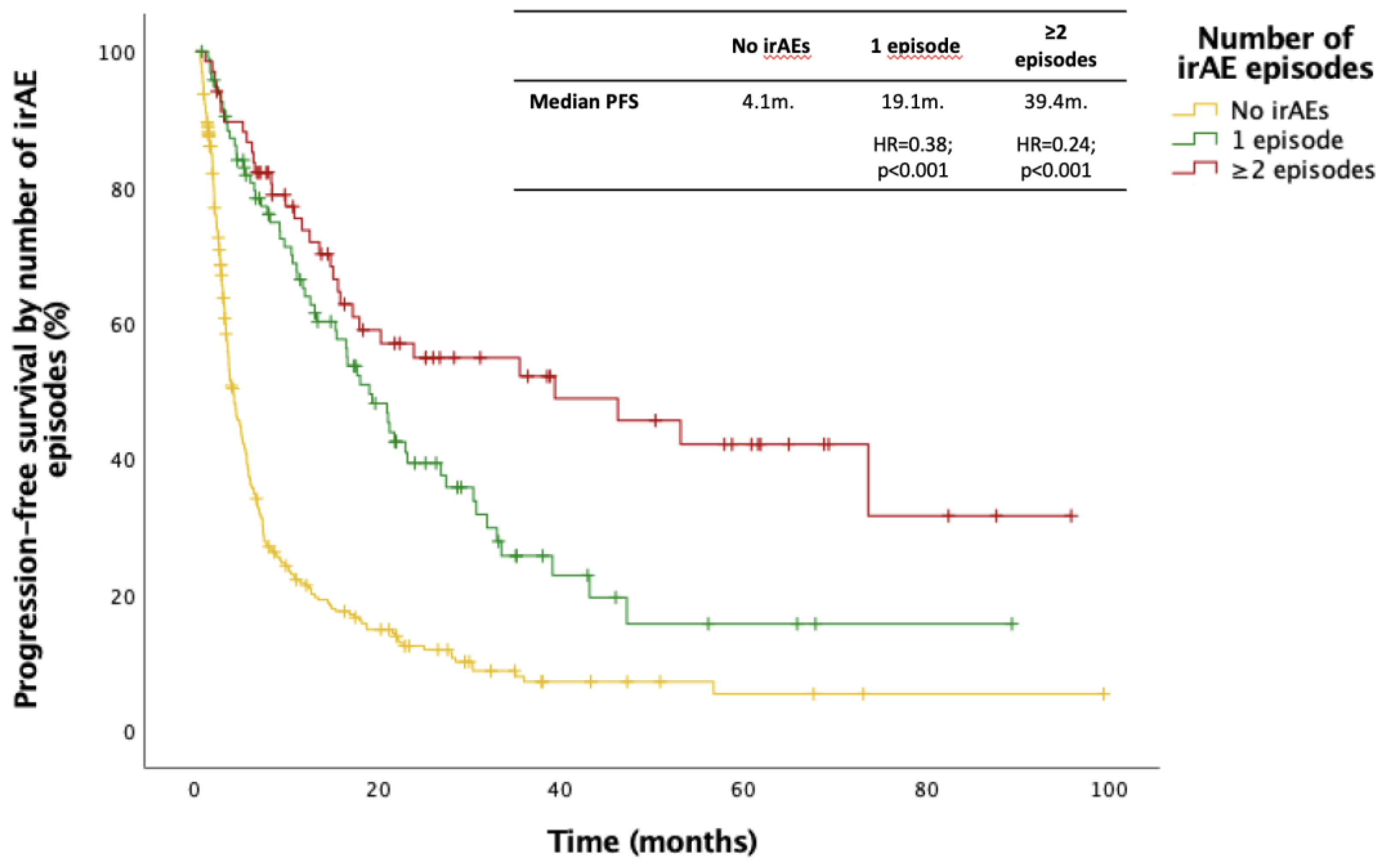

Table 1.
Patient characteristics. Abbreviations: Squamous cell carc: Squamous cell carcinoma. ICI: Immune-checkpoints inhibitors. ECOG PS: Eastern Cooperative Oncology Group Performance Status.
Table 1.
Patient characteristics. Abbreviations: Squamous cell carc: Squamous cell carcinoma. ICI: Immune-checkpoints inhibitors. ECOG PS: Eastern Cooperative Oncology Group Performance Status.
| Overall, n (%) (n=452) | irAEs (%) (n=167) | No irAEs (%) (n=285) | p- value | |
|---|---|---|---|---|
| Age, y | 0.384 | |||
| ≥65 | 269 (59.5%) | 95 (56.9% | 174 (61.1%) | |
| <65 | 183 (40.5%) | 72 (43.1%) | 111 (38.9%) | |
| Sex | 0.814 | |||
| Male | 371 (82.1%) | 138 (82.6%) | 233 (81.8%) | |
| Female | 81 (17.9%) | 29 (17.4%) | 52 (18.2%) | |
| Smoking status | 0.008 | |||
| Current smoker | 202 (44.7%) | 91 (54.5%) | 113 (39.6%) | |
| Never-smoker | 40 (8.8%) | 11 (6.6%) | 29 (10.2%) | |
| Former smoker | 210 (46.5%) | 65 (38.9%) | 143 (50.2%) | |
| Histology | 0.18 | |||
| Adenocarcinoma | 264 (58.4%) | 101 (60.5%) | 163 (57.2%) | |
| Squamous cell carc. | 152 (33.6%) | 50 (29.9%) | 102 (35.8%) | |
| NOS | 33 (7.3%) | 14 (8.4%) | 19 (6.7%) | |
| Other | 3 (0.9%) | 2 (1.2%) | 1 (0.4%) | |
| Stage | 0.197 | |||
| Recurrent IIIA | 17 (3.8%) | 6 (3.6%) | 11 (3.9%) | |
| Recurrent IIIB | 17 (3.8%) | 8 (4.8%) | 9 (3.2%) | |
| Recurrent IIIC | 2 (0.4%) | 0 (0.0%) | 2 (0.7%) | |
| M1a | 158 (34.9%) | 64 (38.3%) | 94 (33.0%) | |
| M1b | 85 (18.8%) | 37 (22.2%) | 48 (16.8%) | |
| M1c | 173 (38.3%) | 52 (31.1%) | 121 (42.5%) | |
| M1 location | ||||
| Brain | 73 (16.2%) | 25 (15.0%) | 48 (16.8%) | 0.602 |
| Liver | 59 (10.1%) | 20 (12.0%) | 39 (13.7%) | 0.603 |
| Bone | 115 (25.4%) | 33 (19.8%) | 82 (28.8%) | 0.034 |
| Adrenal | 73 (16.2%) | 32 (19.2%) | 41 (14.4%) | 0.183 |
| PDL1 | <0.001 | |||
| ≥ 50% | 183 (40.4%) | 93 (55.7%) | 90 (31.6%) | |
| 1-49% | 101 (22.4%) | 33 (19.8%) | 68 (23.9%) | |
| <1% | 101 (22.4%) | 23 (13.8%) | 78 (27.4%) | |
| Unknown | 67 (14.8%) | 18 (10.8%) | 49 (17.2%) | |
| Treatment line | 0.128 | |||
| First line | 263 (58.4%) | 109 (65.3%) | 154 (54.0%) | |
| Second line | 153 (33.8%) | 50 (29.9%) | 103 (36.1%) | |
| Third and beyond | 36 (7.7%) | 8 (4.8%) | 28 (9.8%) | |
| Treatment regimen | 0.008 | |||
| Chemotherapy-ICI | 149 (32.9%) | 51 (30.5%) | 98 (34.4%) | |
| Pembrolizumab | 134 (29.9%) | 65 (38.9%) | 69 (24.2%) | |
| Atezolizumab | 116 (25.7%) | 33 (19.8%) | 83 (29.1%) | |
| Nivolumab | 53 (11.5%) | 18 (10.8%) | 35 (12.3%) | |
| ECOG PS | 0.003 | |||
| 0-1 | 398 (88.1%) | 157 (94%) | 241 (84.6%) | |
| ≥ 2 | 54 (11.9%) | 10 (6.0%) | 44 (15.4%) | |
| Subsequent therapy | 0.266 | |||
| 0 subsequent line | 276 (61.7%) | 106 (63.5%) | 170 (59.6%) | |
| 1 subsequent line | 136 (29.6%) | 43 (25.7%) | 93 (32.6%) | |
| ≥2 subsequent lines | 39 (8.6%) | 17 (10.2%) | 22 (7.7%) | |
| Driver mutations | 0.044 | |||
| ALK translocation | 2 (0.4%) | 2 (1.2%) | 0 (0.0%) | |
| EGFR | 18 (4%) | 2 (1.2%) | 16 (5.6%) | |
| KRAS | 52 (10%) | 15 (9.0%) | 37 (13.0%) | |
| BRAF | 8 (2%) | 2 (1.2%) | 6 (2.1%) | |
| MET | 3 (0.4%) | 1 (0.6%) | 2 (0.7%) |
Table 2.
Immune-related adverse events. Abbreviations: GI: Gastrointestinal.
| Total, n=452 (%) | Grade 1-2 | Grade ≥3 | |
|---|---|---|---|
| Affected organ | |||
| Skin | 50 (11.1%) | 38 (8.4%) | 12 (2.7%) |
| Endocrine | 41 (9.1%) | 39 (8.6%) | 2 (0.4%) |
| Arthritis | 25 (5.5%) | 21 (4.6%) | 4 (0.9%) |
| Pneumonitis | 25 (5.5%) | 17 (3.8%) | 8 (1.8%) |
| GI | 23 (5.1%) | 21 (4.6%) | 2 (0.4%) |
| Hepatitis | 18 (4.0%) | 10 (2.2%) | 8 (1.8%) |
| Nephritis | 8 (1.8%) | 7 (1.5%) | 1 (0.2%) |
| Mucositis | 6 (1.3%) | 6 (1.3%) | 0 (0.0%) |
| Neurologic | 5 (1.1%) | 4 (0.9%) | 1 (0.2%) |
Table 3.
Efficacy details according to CS indication. Abbreviations: irAEs: Immune-checkpoint inhibitors; DCR: Disease control rate; ORR: Objective Response Rate; PFS: Progression-free survival; HR: Hazard Ratio.
Table 3.
Efficacy details according to CS indication. Abbreviations: irAEs: Immune-checkpoint inhibitors; DCR: Disease control rate; ORR: Objective Response Rate; PFS: Progression-free survival; HR: Hazard Ratio.
| irAEs | irAEs and others | Others | p value | |
|---|---|---|---|---|
| DCR | 90% | 93.3% | 49.4% | <0.001 |
| ORR | 65% | 60% | 31.3% | <0.001 |
| PFS, months | 46.3 | 21.3 | 4.5 | – |
| HR for PFS vs. others (95% CI) | 0.26 (0.17–0.41) |
0.39 (0.18–0.83) |
Reference | <0.001 and 0.014 |
Table 4.
Multivariant analysis. Abbreviations: Squamous cell carc: Squamous cell carcinoma. ECOG: Estern Cooperative Oncology Group. NLR: Neutrophil-Lymphocyte ratio. irAEs: Immune-related adverse events. CS: Corticosteroids. Note: bold indicates statistical significance at p < 0.05.
Table 4.
Multivariant analysis. Abbreviations: Squamous cell carc: Squamous cell carcinoma. ECOG: Estern Cooperative Oncology Group. NLR: Neutrophil-Lymphocyte ratio. irAEs: Immune-related adverse events. CS: Corticosteroids. Note: bold indicates statistical significance at p < 0.05.
| PFS | OS | |||
|---|---|---|---|---|
| HR | p-value | HR | p-value | |
| Sex | ||||
| Male | ||||
| Female | 1.12 (0.71-1.75) | 0.639 | 1.04 (0.67-1.63) | 0.857 |
| Age | ||||
| <65 | ||||
| ≥65 | 0.94 (0.64-1.39) | 0.753 | 1.26 (0.86-1.85) | 0.242 |
| Histology | ||||
| Squamous cell carc. | ||||
| Adenocarcinoma | 1.11 (0.70-1.76) | 0.658 | 1.15 (0.75-1.78) | 0.522 |
| ECOG | ||||
| 0-1 | ||||
| ≥2 | 2.29 (1.38-3.80) | 0.001 | 3.05 (1.86-5.00) | <0.001 |
| NLR | ||||
| <5 | ||||
| ≥5 | 0.88 (0.60-1.31) | 0.533 | 1.04 (0.71-1.52) | 0.830 |
| Stage | ||||
| III/IVA | ||||
| IVB | 1.46 (0.95-2.25) | 0.083 | 1.62 (1.08-2.42) | 0.019 |
| Brain metastases | ||||
| No | ||||
| Yes | 0.88 (0.55-1.40) | 0.594 | 0.81 (0.52-1.26) | 0.343 |
| PD-L1 (%) | ||||
| <1% | ||||
| 1-49% | 0.67 (0.40-1.11) | 0.123 | 0.55 (0.34-0.90) | 0.017 |
| ≥50% | 0.47 (0.29-0.76) | 0.003 | 0.48 (0.30-0.76) | 0.002 |
| Treatment line | ||||
| First line | ||||
| Second line | 0.75 (0.47-1.20) | 0.229 | 0.83 (0.53-1.31) | 0.421 |
| Third and beyond | 1.13 (0.55-2.35) | 0.736 | 0.93 (0.45-1.93) | 0.840 |
| irAEs | ||||
| No irAEs | ||||
| irAEs | 0.40 (0.23-0.71) | 0.002 | 0.44 (0.26-0.77) | 0.004 |
| CS indication | ||||
| Non-irAE | ||||
| irAE and non-irAE | 0.55 (0.18-1.69) | 0.299 | 0.77 (0.30-2.01) | 0.602 |
| irAE | 0.49 (0.25-0.97) | 0.041 | 0.52 (0.27-0.99) | 0.045 |
Disclaimer/Publisher’s Note: The statements, opinions and data contained in all publications are solely those of the individual author(s) and contributor(s) and not of MDPI and/or the editor(s). MDPI and/or the editor(s) disclaim responsibility for any injury to people or property resulting from any ideas, methods, instructions or products referred to in the content. |
© 2026 by the authors. Licensee MDPI, Basel, Switzerland. This article is an open access article distributed under the terms and conditions of the Creative Commons Attribution (CC BY) license (http://creativecommons.org/licenses/by/4.0/).
Copyright: This open access article is published under a Creative Commons CC BY 4.0 license, which permit the free download, distribution, and reuse, provided that the author and preprint are cited in any reuse.


