
Submitted:
14 April 2026
Posted:
15 April 2026
You are already at the latest version
Abstract
A substantial share of reinforced-concrete infrastructure assets has reached an age where deterioration mechanisms such as cracking, delamination, and voiding may develop, potentially increasing safety risks and maintenance demands. Conventional condition assessment commonly relies on localized intrusive testing (e.g. coring) and manual sounding, which can be disruptive, labour-intensive, and partly subjective. Vibration-based non-destructive testing (NDT) provides an alternative by exciting the structure and evaluating changes in its dynamic response. In contrast to previous studies, which typically assess a single excitation method in isolation, this study provides a systematic side-by-side comparison of three vibration-based NDT excitation approaches: mechanical impact using a custom compressed-air impact device, acoustic excitation, and shaker excitation. All three methods were evaluated under identical measurement conditions. The vibration response is measured using laser Doppler vibrometry (LDV), enabling non-contact acquisition of frequency-response signatures. A custom mechanical excitation device was developed and evaluated, and the results indicate that it provides stable and repeatable excitation with good defect discrimination. Experiments on specimens with representative defect types show that mechanical impact and shaker excitation yield the most repeatable and discriminative response features, whereas acoustic excitation provides insufficient signal-to-noise ratio (SNR) for the smallest tested specimens (150 x 150 x 150 mm). Among the evaluated setups, the electrodynamic shaker and the compressed-air impact device offer the most promising low-noise measurements. The goal is to enable efficient and scalable inspection methods for safer and more reliable monitoring of reinforced-concrete infrastructure.
Keywords:
non-destructive testing (NDT)
; tunnel inspection
; concrete
; vibration-based methods
; laser doppler vibrometer
; mechanical excitation
1. Introduction
Many assets of reinforced-concrete infrastructure currently in service were built during the major construction wave of the 1970s and 1980s; reinforced-concrete bridge decks constructed from the mid-1970s to the late 1980s are a well-documented example of this aging asset stock [1,2]. More recently, durability-oriented innovations have also been demonstrated on a field scale; for instance, the first large-scale application of self-healing concrete in Belgium showed the practical potential of such approaches [3]. Despite its inherent durability, concrete remains susceptible to deterioration over time. It can develop cracks, voids, delamination, and other forms of internal deterioration [4]. These deterioration processes are often driven or accelerated by environmental exposure and reinforcement corrosion (e.g. chloride ingress, carbonation), which can further compromise structural performance and durability [5,6]. These defects gradually weaken the structure and, in severe cases, can pose safety hazards, such as falling debris. To avoid such risks, reliable inspection methods are essential for timely maintenance and repair planning [7].
Traditional inspections often rely on destructive testing, such as drilling cores, to assess material condition. Although effective for detailed analysis, these methods cause local damage and are not practical for frequent or large-scale monitoring. Moreover, access constraints and operational disruptions can make extensive intrusive testing costly and difficult to deploy at scale [8]. In many tunnels, inspections are still carried out manually, with workers tapping the lining with a hammer and judging the sound by ear [9]. This approach is simple, but subjective, physically demanding and difficult to standardize [10]. Field guidance also notes that hammer-sounding outcomes can be highly operator-dependent and sensitive to ambient noise [11].
Non-destructive testing (NDT) methods offer an alternative that can be faster, repeatable, and more objective [12]. For concrete, widely used NDT families include stress-wave methods (e.g. impact-echo), ultrasonic techniques, GPR, and acoustic emission [8,13]. Vibration-based techniques, in particular, can detect structural changes by measuring shifts in resonance frequencies, changes in amplitude, and changes in mode shapes [14]. This aligns with the larger concept of structural health monitoring (SHM), where damage-sensitive dynamic features are used for condition evaluation, while accounting for environmental and operational variability [15,16]. When a structure is excited mechanically, acoustically, or by a controlled shaker, its response carries information about stiffness, mass distribution, and internal condition. To improve robustness and scalability, statistical pattern recognition and machine-learning methods are increasingly applied for feature extraction and classification in SHM/NDT [17,18,19].
Laser Doppler vibrometry (LDV) offers clear advantages for vibration-based damage detection in concrete because it enables non-contact measurements without mass loading [20]. However, the effectiveness of LDV-based assessment is strongly dependent on the excitation method, which influences the amplitude, repeatability, and signal-to-noise ratio of the response. Therefore, this study compares three excitation approaches for concrete defect detection using LDV: mechanical, acoustic, and shaker-based excitation. In addition, a custom mechanical excitation device was designed and tested as a low-cost alternative to commercial systems. Since both excitation type and coupling can strongly influence signal-to-noise ratio and the observed resonance features, a comparative evaluation is required before moving towards automated interpretation. By evaluating these approaches on concrete samples with known defects, this work aims to identify methods that could eventually support automated, scalable, and non-destructive inspection of concrete structures [21].
2. Materials and Methods
2.1. Materials
Firstly, concrete blocks were custom made to allow for small sample testing. The test samples consisted of cubic concrete blocks with dimensions of 150 × 150 × 150 mm and an average mass of kg. These blocks were cast with standard cement concrete and were used both as reference samples and as modified samples containing artificial defects. All samples were produced in-house at the SuPAR laboratory (University of Antwerp). Reusable rigid molds were used to obtain the target cube geometry. Before casting, the mold surfaces were cleaned and lightly oiled to facilitate demolding and reduce surface damage. The concrete mixture was prepared in batches using a standard procedure: dry components were first mixed, after which water was added gradually while mixing until a homogeneous consistency was obtained. To minimize trapped air and improve compaction, the filled molds were placed on a vibration table during casting (vibration-assisted compaction), after which the top surface was leveled. After demolding, the samples were stored under ambient laboratory conditions at room temperature (≈19 °C) for one month prior to testing. Artificial defects were introduced during casting by placing pre-defined inserts at specified locations in the molds, ensuring repeatable defect geometry and positioning across specimens.
Figure 1.
All of the concrete blocks that were prepared using the molds shown on the left.
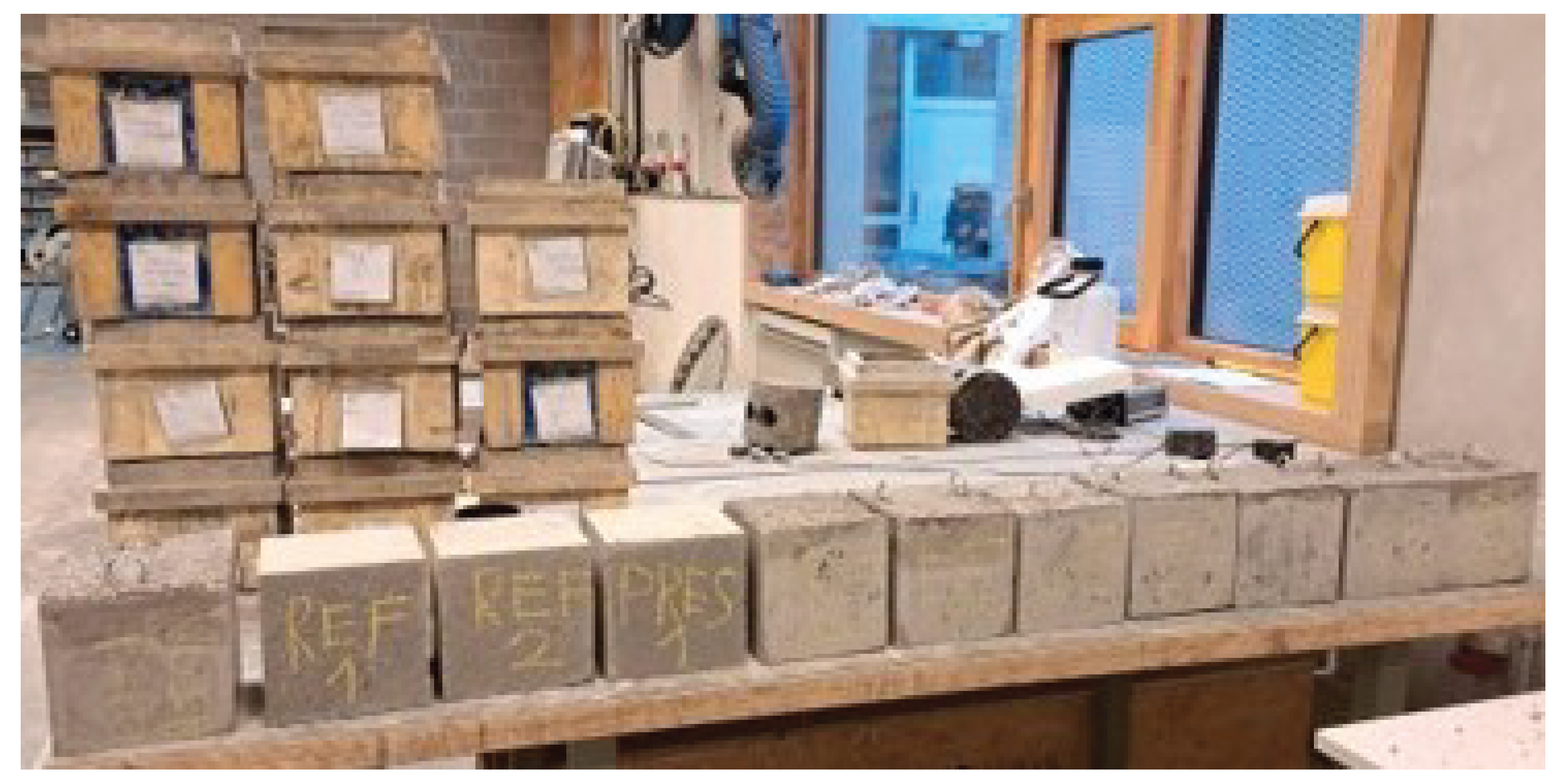
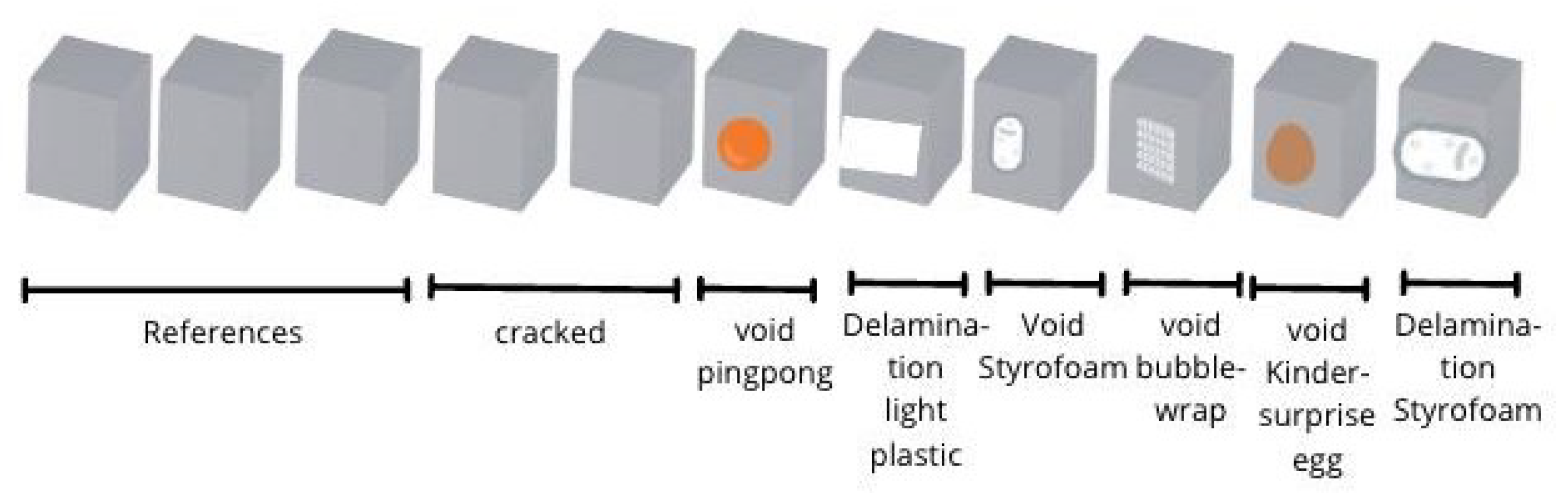
To simulate internal anomalies, certain blocks were prepared with embedded objects intended to represent voids or delamination. These included a ping-pong ball with a diameter of 40 mm, a polystyrene insert measuring 30 × 30 × 15 mm and a plastic capsule with a diameter of 32 mm and a height of 45 mm, similar to those found inside Kinder’s toy-filled chocolate eggs. In addition to these inclusions, two samples were deliberately cracked using a mechanical press to replicate the type of damage that is often seen in aged or overstressed concrete structures. The applied load was carefully controlled so that visible cracks on the surface formed without compromising the overall integrity of the blocks.
Figure 2.
Overview of concrete test blocks with various defect types, including cracks, voids (ping pong ball, styrofoam, plastic) and delaminations.
Figure 2.
Overview of concrete test blocks with various defect types, including cracks, voids (ping pong ball, styrofoam, plastic) and delaminations.
2.2. Mechanical Excitation
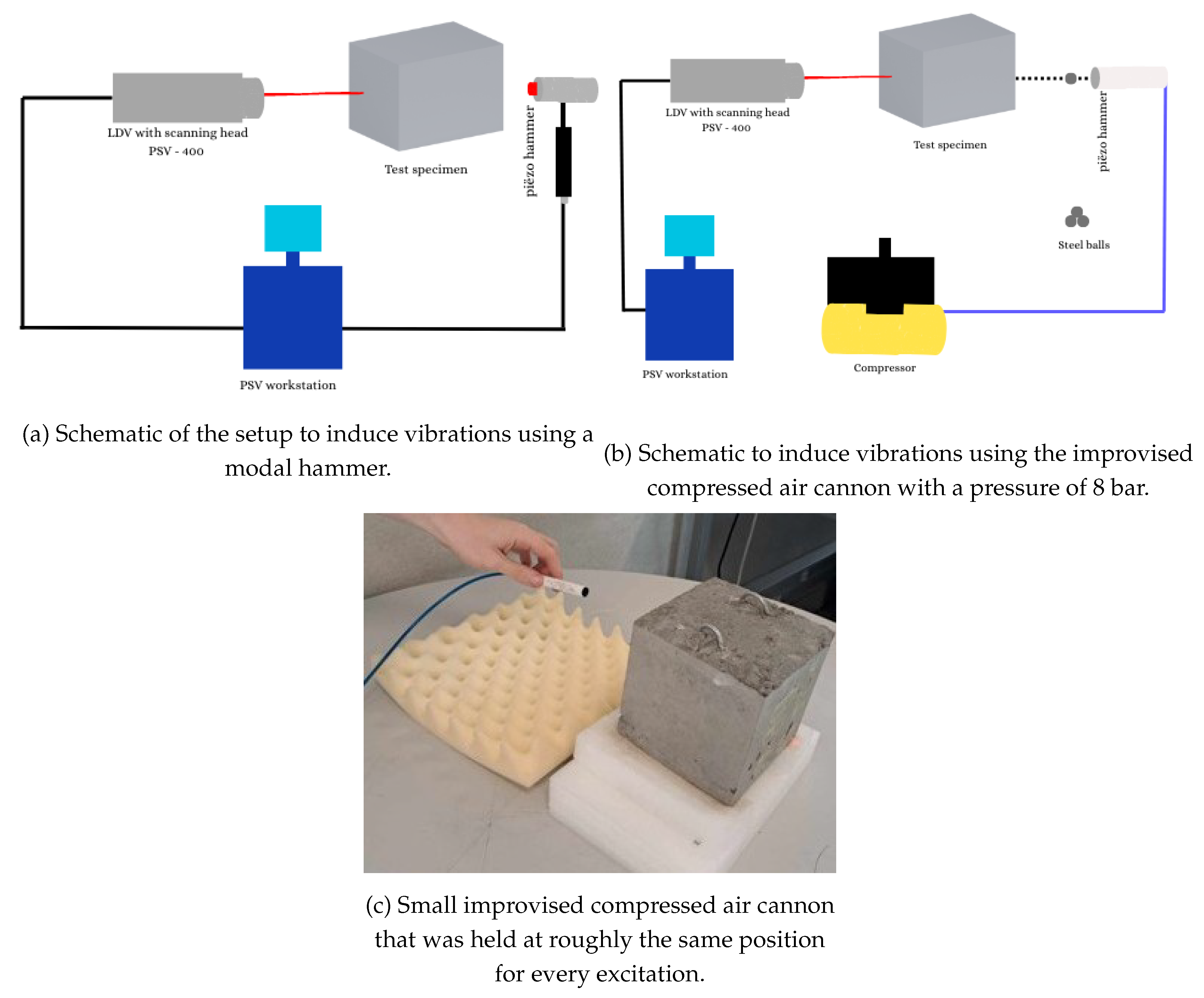
To generate vibrations in the concrete samples, two mechanical excitation techniques were investigated: impact excitation with an instrumented hammer (PCB Piezotronics Modally tuned hammer, Model 086C03) and impulsive excitation using a small compressed air cannon. The hammer method involved striking the surface of the sample with an instrumented hammer capable of producing a broadband excitation from DC up to 10 kHz. The force of each impact was measured by a load cell with a sensitivity of 2.2 mV/N, enabling the calculation of the frequency response function (FRF). This made it possible to compare the FRFs of the different samples in both frequency and amplitude.
To test projectile excitation, the use of compressed air was proposed. The compressed air guns/cannons on the market can only shoot very small projectiles, such as airsoft bullets, and they proved to be quite expensive. The compressed air cannon, which was custom-built (Figure 3 (b,c)) for this study with cheap materials, delivered a more powerful and consistent impulse than the hammer. The device propelled an 8 g steel ball at an approximate velocity of 50 km/h using compressed air at 8 bar. The impact produced a strong and well-defined excitation signal. Initially, the measurement trigger was provided by the laser Doppler vibrometer (LDV), but this proved to be sensitive to vibrations from nearby activity. The issue was resolved by enabling an external trigger to be synchronized with the cannon firing. This approach ensured that each excitation was highly repeatable and had sufficient energy to produce a clear vibrational response.
Figure 3.
Setups of the mechanical excitation methods with the PSV-400 as measuring device
2.3. Acoustic Excitation
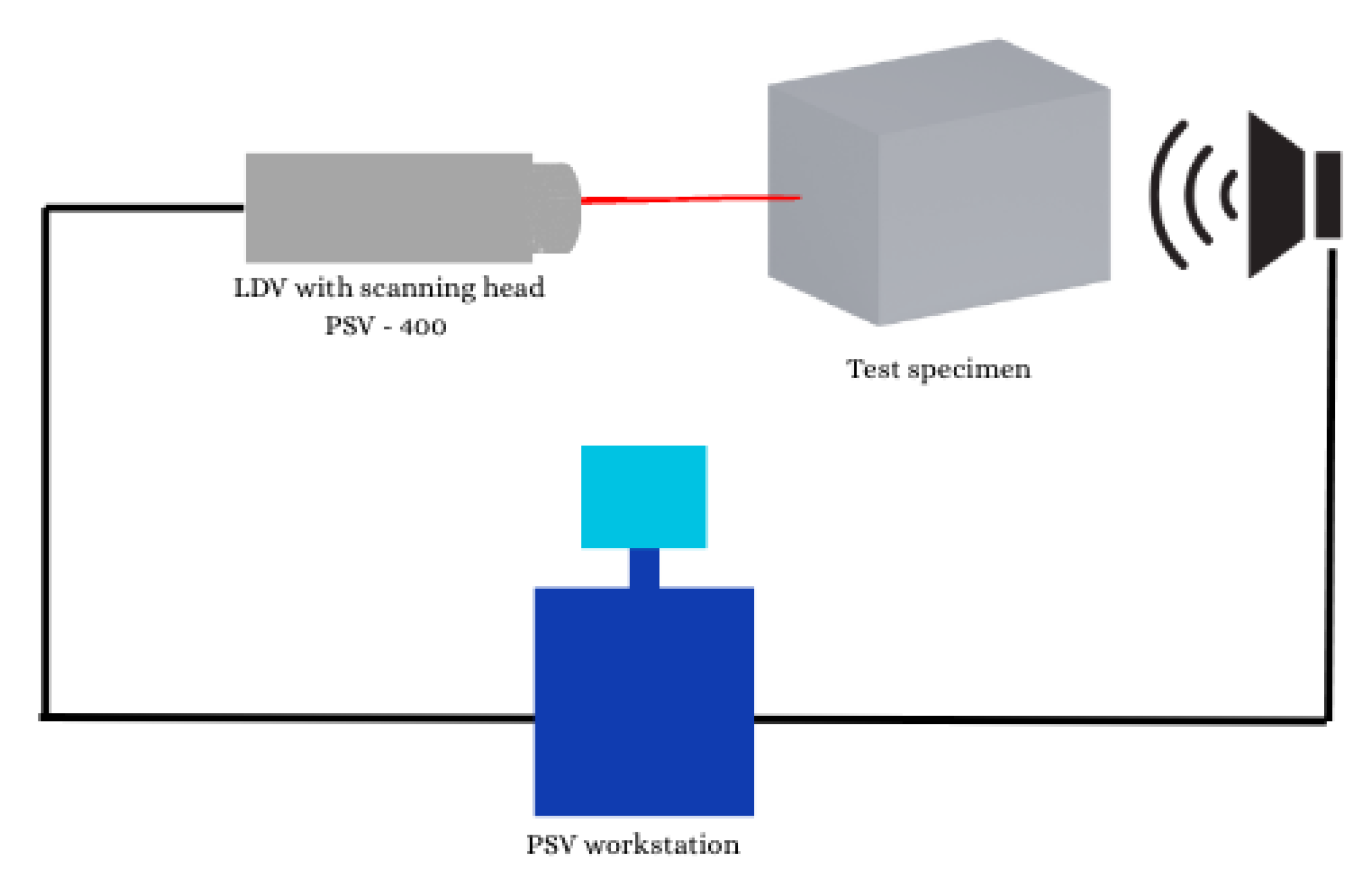
Acoustic excitation was explored as a fully non-contact alternative for inducing vibrations that was already proven to be successful for [9,14]. In this configuration, a smaller and less powerful loudspeaker was used that emitted a sinusoidal sweep signal ranging from 3 kHz to 20 kHz with an amplitude of 400 mV was generated using an integrated function generator. This signal was then amplified to 20 V and transmitted to a loudspeaker positioned approximately 10 mm from the sample surface. The purpose of this method was to excite the natural modes of vibration in the concrete without any physical contact. The chosen frequency range was selected to encompass the expected resonance frequencies of the samples, allowing for subsequent frequency response analysis. It should be noted that the performance of the acoustic excitation approach may strongly depend on the loudspeaker characteristics and sound-field focusing. The use of a more powerful or more directional acoustic source may improve excitation efficiency and should be investigated in future work.
Figure 4.
Experimental setup for acoustic excitation using a 20 V amplitude signal over a frequency range of 3–20 kHz.
Figure 4.
Experimental setup for acoustic excitation using a 20 V amplitude signal over a frequency range of 3–20 kHz.
2.4. Shaker Excitation
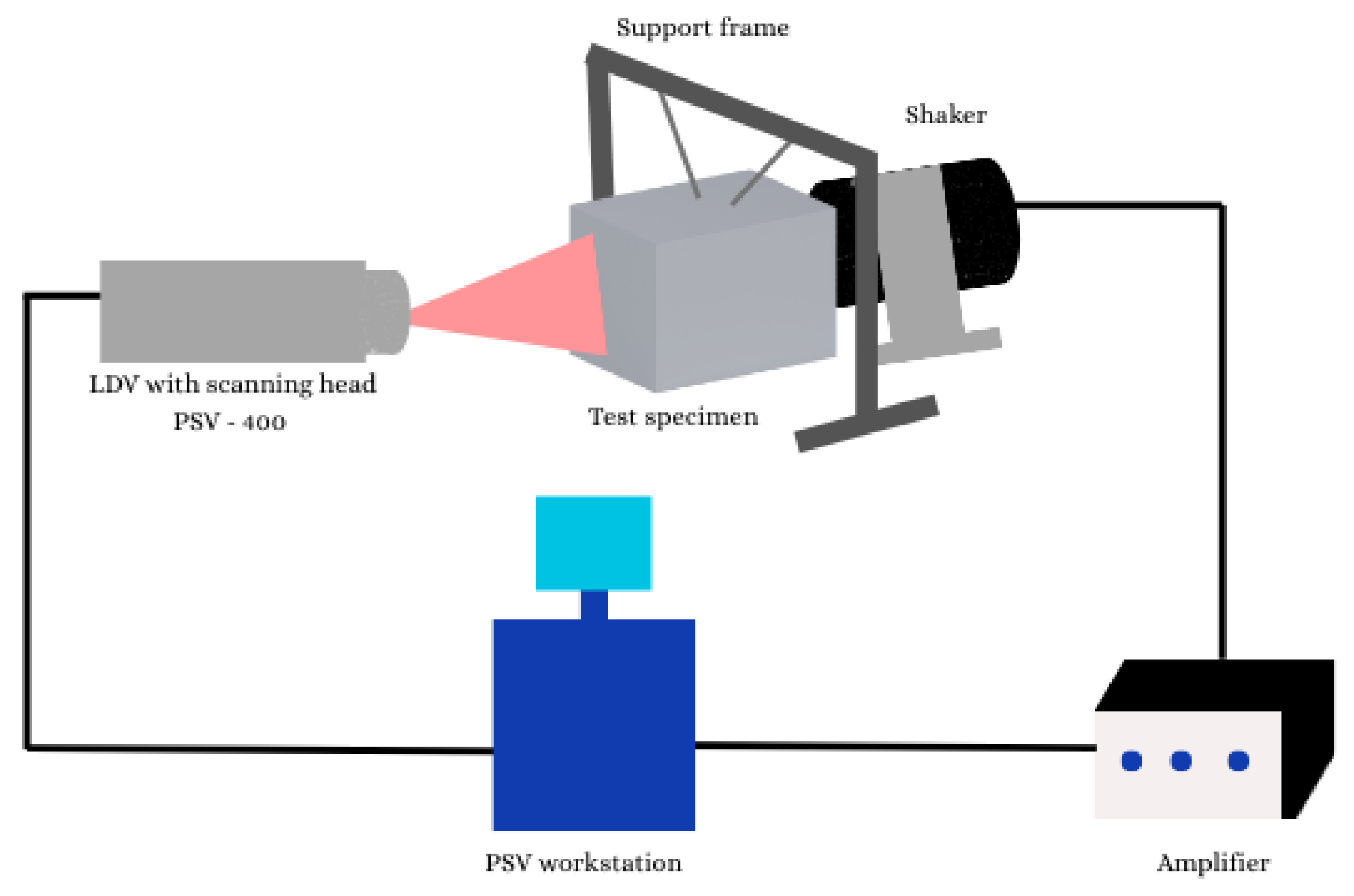
In addition to mechanical and acoustic methods, electrodynamic excitation was applied using two different shakers: a Vibration Exciter, type 4809 (Brüel & KjÆr, NÆrum, Denmark), and a Qlws miniature surface-mounted shaker (Qsources, Liège, Belgium). The BRÜEL & KJÆR system was initially used as a reference, operating over a frequency range from DC to 20 kHz. However, its performance showed limitations at both ends of the spectrum, delivering a minimal input force below 6 kHz and a reduced excitation efficiency above 15 kHz. The Qsources Qlws shaker, by contrast, offered several advantages for small-scale testing. Its low mass and compact form factor allowed it to be mounted directly on the concrete surface with minimal influence on the sample’s mass. This direct coupling improved the efficiency of force transmission and provided cleaner frequency response data with fewer artifacts. In both shaker setups, the excitation force was measured by an integrated force sensor and the vibrational response was recorded by the LDV. This allowed FRFs to be calculated, enabling a detailed comparison between the excitation methods.

Table 1.
Main specifications of the shakers used for electrodynamic excitation.
| Device | Manufacturer | Model | Range | Remarks |
|---|---|---|---|---|
| Vibration Exciter | Brüel & Kjær Nærum, Denmark |
4809 | 10 Hz–20 kHz | Reference shaker; limited below 6 kHz and less efficient above 15 kHz. |
| Miniature surface-mounted shaker | Qsources Liège, Belgium |
Qlws | Core: 250–8000 Hz Extended: 63–12500 Hz |
Low-noise measurements; suitable for small-scale testing. |
Figure 5.
The schematic of the excitation by the big shaker with the PSV-400 as measuring device.
2.5. Vibration Measurement Device
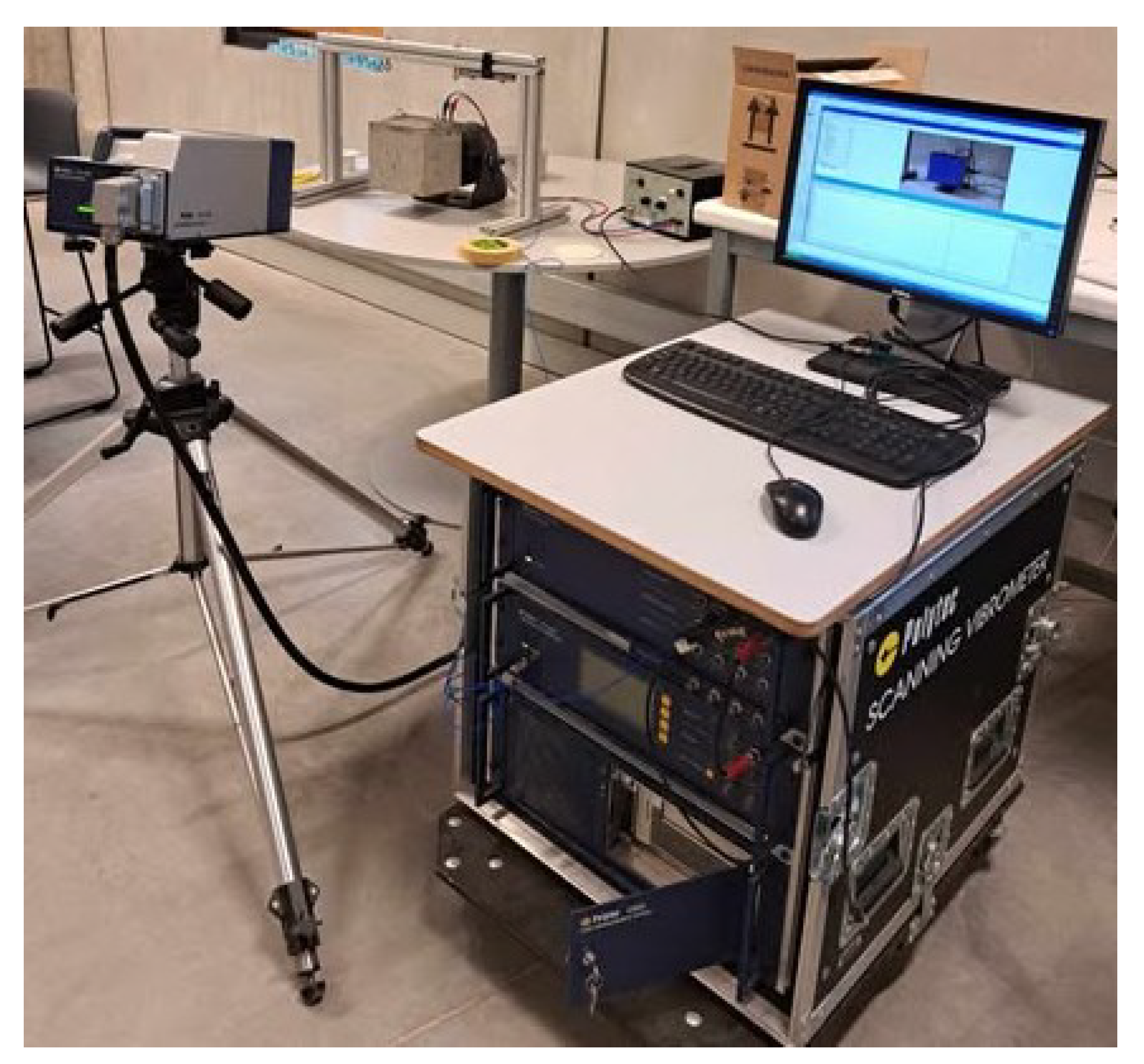
Vibration measurements were performed with the Polytec PSV-400 scanning vibrometer. A total of 81 points were selected on the specimen surface. The number and distribution of points were chosen to provide sufficient spatial resolution to capture the relevant vibration patterns while maintaining a feasible measurement duration. Each point was measured 5 times and complex averaging was applied. The minimum and maximum measurement frequencies were set to 3 kHz and 20 kHz, respectively. Accordingly, the excitation range was limited to 3-20 kHz. This range was considered appropriate for the 150 x 150 x 150 mm concrete specimens, for which distinct resonance peaks were observed within this frequency band. Frequencies below 3 kHz showed significant measurement artifacts, which reduced the reliability of the results. Limiting the analysis to frequencies above 3 kHz therefore ensured a more reliable representation of the frequency response. Using 6400 FFT lines resulted in a frequency resolution of 3.125 Hz.
Velocity was measured with a sensitivity of 5E-3 (m/s) /V and a sampling time of 320 ms. When triggering was necessary, a BNC splitter was used. For the compressed air cannon, a trigger was set on the signal measured by the LDV.
However, it should be noted that the dynamic response of full-scale concrete elements is expected to differ from that of the small laboratory specimens used in this study. In larger structural components, global resonance frequencies typically occur at lower frequencies, while increased modal density, damping, and structural boundary effects, therefore, should be interpreted in the context of laboratory-scale specimens, and further work is needed to assess how the excitation range and measurement strategy should be adapted for full-scale concrete structures.
Figure 6.
A picture of the PSV-400 laserhead measuring the vibration of the concrete block from the BRÜEL & KJÆR Vibration Exciter
Figure 6.
A picture of the PSV-400 laserhead measuring the vibration of the concrete block from the BRÜEL & KJÆR Vibration Exciter
3. Results
3.1. Shaker
3.1.1. BRÜEL & KJÆR Vibration Exciter
The BRÜEL & KJÆR Vibration Exciter was used to establish a baseline to compare the different excitation methods. Initial measurements were performed on the healthy, delamination, and void samples to assess whether the different conditions can be distinguished in the frequency domain. As shown in Figure 7, the responses differ primarily through changes in the resonance peak frequencies. Figure 7 compares the measured frequency responses for the three specimen conditions (healthy, void, and delamination), where each condition exhibits a strong set of dominant peak frequencies across the measured band. The delamination and void cases show additional and/or shifted peaks relative to the healthy specimen, indicating a change in dynamic signature associated with the type of defect. Because the measured velocity level can be influenced by excitation and coupling conditions (e.g., shaker input, stinger dynamics, and contact/ interface effects), the interpretation focuses primarily on peak frequencies and their relative prominence under identical test settings rather than on absolute amplitude values. Therefore, these peak-frequency patterns are used as the main comparative features in the subsequent analysis.
Analysis of the force sensor data at the tip of the stinger showed that the input energy was not evenly distributed throughout the frequency range (Figure 8). In this setup, a stinger is a rod that mechanically connects the shaker to the specimen. Distinct peaks appeared at the eigenfrequencies of the stinger itself, causing motion in the block not related to its own natural frequencies. This effect highlights the necessity of using the frequency response function (FRF) when applying shaker excitation. By relating the measured response to the input force, FRF analysis suppresses spurious peaks in the frequency domain that occur in ranges with minimal input force, allowing for a more accurate representation of the dynamic behavior of the sample.
One notable limitation of this shaker is its low excitation force in the lower frequency range (Figure 9). For frequencies below approximately 6 kHz, the input force was minimal, making this method unsuitable for larger structures, which tend to resonate at lower frequencies. Similarly, excitation above 15 kHz was less effective, as evidenced by increased noise levels in the measurements. Consequently, the optimal working range of the BRÜEL & KJÆR Vibration Exciter in this setup is limited to approximately 6–15 kHz.
3.1.2. Qsources Qlws Shaker
The Qsources Qlws shaker yielded considerably better results compared to the larger BRÜEL & KJÆR system. Its compact size and low mass allowed it to be mounted directly on the surface of the concrete block with minimal influence on the overall mass and stiffness of the structure. This direct coupling resulted in efficient force transmission and clean FRF measurements.
The frequency response functions recorded with the Qsources shaker exhibited well-defined eigenfrequencies and low background noise. Unlike the larger shaker, which introduced artifact peaks, the Qsources data was free from such interference. The ease of repositioning this small shaker makes it possible to target specific locations on the specimen for rapid testing. The low noise floor and high peak resolution observed confirm its suitability for small-scale structures and applications where quick and repeatable measurements are required.
Before discussing the response of the defective specimens, it is useful to first identify the main resonance peaks and the corresponding mode shapes of the reference block. These reference modes provide a basis for interpreting the frequency-response changes observed in damaged samples. The dominant peaks at 8.475, 11.884, and 15.29 kHz correspond to the mode shapes shown in Figure 11, respectively.
Figure 12 shows the measured frequency response in the upper left corner of the "Kinder egg void" specimen under Qsources shaker excitation. The response is dominated by a sharp resonance at 8.8 kHz, which is identified as the first natural frequency of this measurement point. Several additional peaks are observed between approximately 11 and 20 kHz, indicating higher-order modes and/or resonances of the coupled measurement chain.
Figure 10.
The input force from Qsources shaker which is roughly evenly distributed with a small peak at 19.5 kHz.
Figure 10.
The input force from Qsources shaker which is roughly evenly distributed with a small peak at 19.5 kHz.
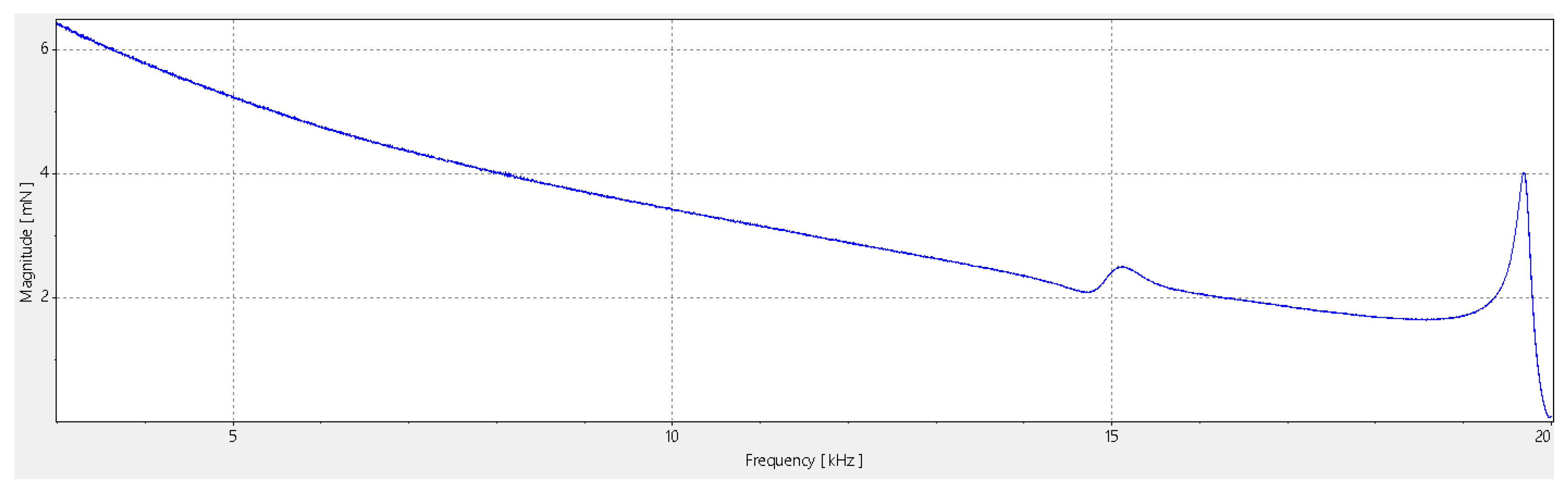
Figure 11.
Eigenmodes from a reference block obtained with Qsources shaker.
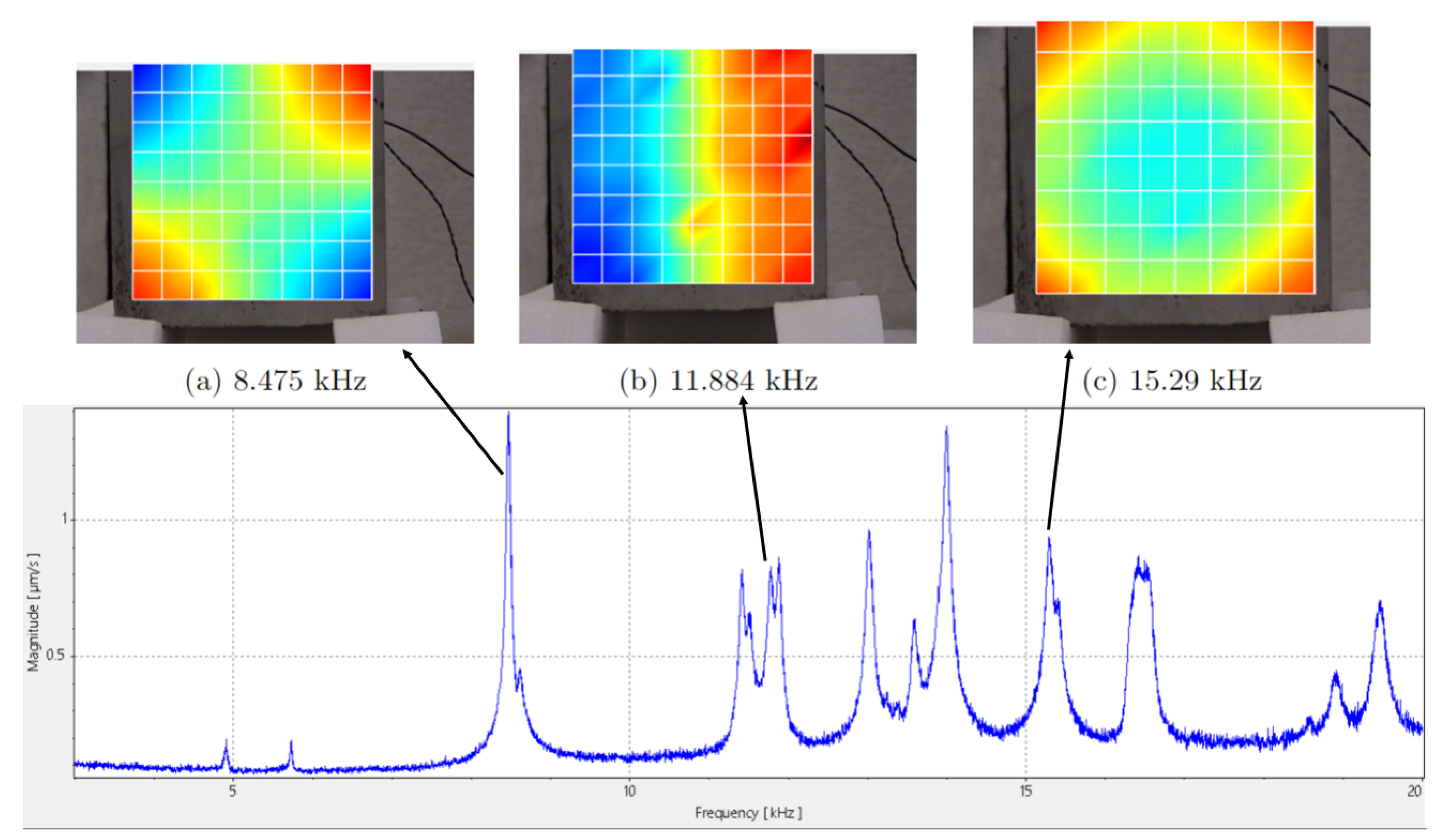
Figure 12.
Measurement of ’Kinder egg void’ on the top left corner of the sample with Qsources shaker. First natural frequency at 8.8 kHz.
Figure 12.
Measurement of ’Kinder egg void’ on the top left corner of the sample with Qsources shaker. First natural frequency at 8.8 kHz.
3.2. Mechanical
3.2.1. Hammer
The setup of the shakers takes some time and requires glue to attach the stinger to the samples. Therefore, the instrumented hammer was tested to determine whether mechanical impact excitation could produce usable data on the concrete samples. The main limitation of this method was the relatively long impact duration, which restricted the excitation of higher frequencies. As shown in Figure 13, the energy content at frequencies above 10 kHz was insufficient to excite the corresponding resonant modes.
Although the FRF can improve the signal-to-noise ratio and partially address variability in the impact force, the lack of repeatability remains problematic, especially when the hammer is operated manually. This limitation also prevents the use of the hammer for surface scanning, as it is nearly impossible to deliver identical impulses across multiple points while maintaining a short contact duration. Consequently, the hammer is recommended only for situations in which low-frequency response at a single location is of interest, but it is not suitable for the objectives of the present study (Figure 14).
3.2.2. Compressed Air Cannon
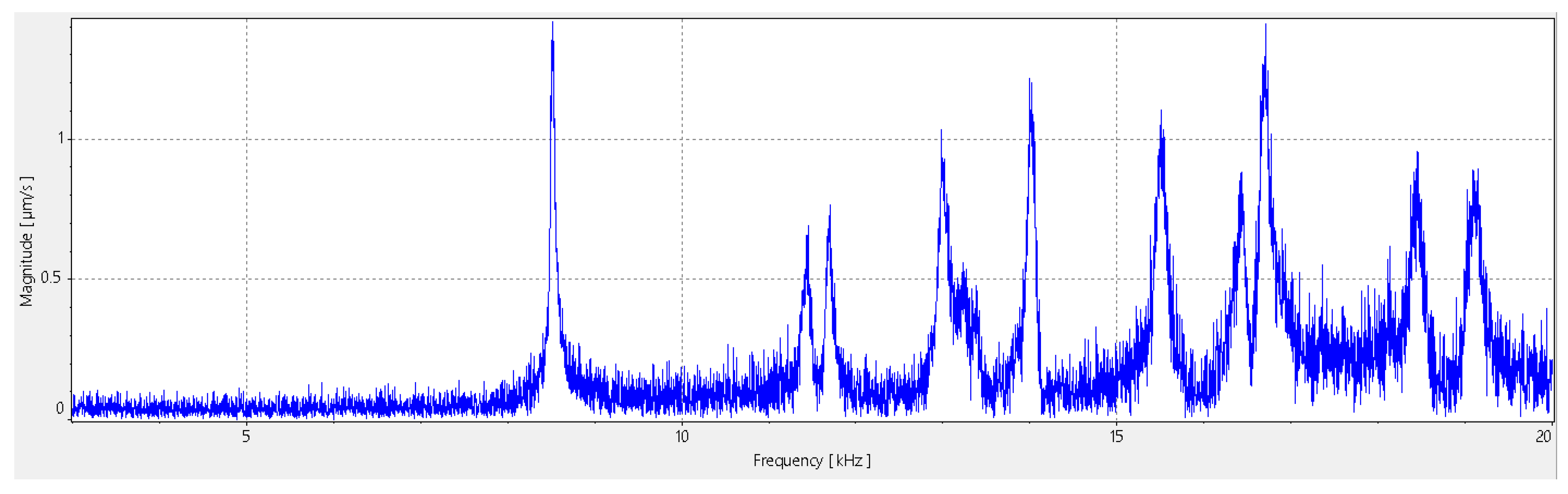
Unfortunately, shakers take a long time to set up and the hammer does not excite high enough frequencies; that is why the small compressed air cannon proved to be a highly effective method to mechanically excite the concrete samples. Operating at a pressure of 8 bar, the device propelled an 8 g steel ball at a velocity of approximately 50 km/h, delivering a strong, short-duration impulse to the sample surface. The resulting vibration responses, such as that shown in Figure 15, exhibited a high signal-to-noise ratio and clear resonance peaks.
One of the key advantages of the cannon was that even a single impact provided reliable data without the need for averaging multiple measurements. The high energy of the impulse is likely responsible for exciting a wide range of structural modes, making the method particularly effective for detecting subtle changes in the dynamic response. Compared to the hammer, the cannon offered greater repeatability, higher frequency content, and a much clearer signal, although its repeatability still does not match that of controlled shaker excitation.
3.3. Acoustic
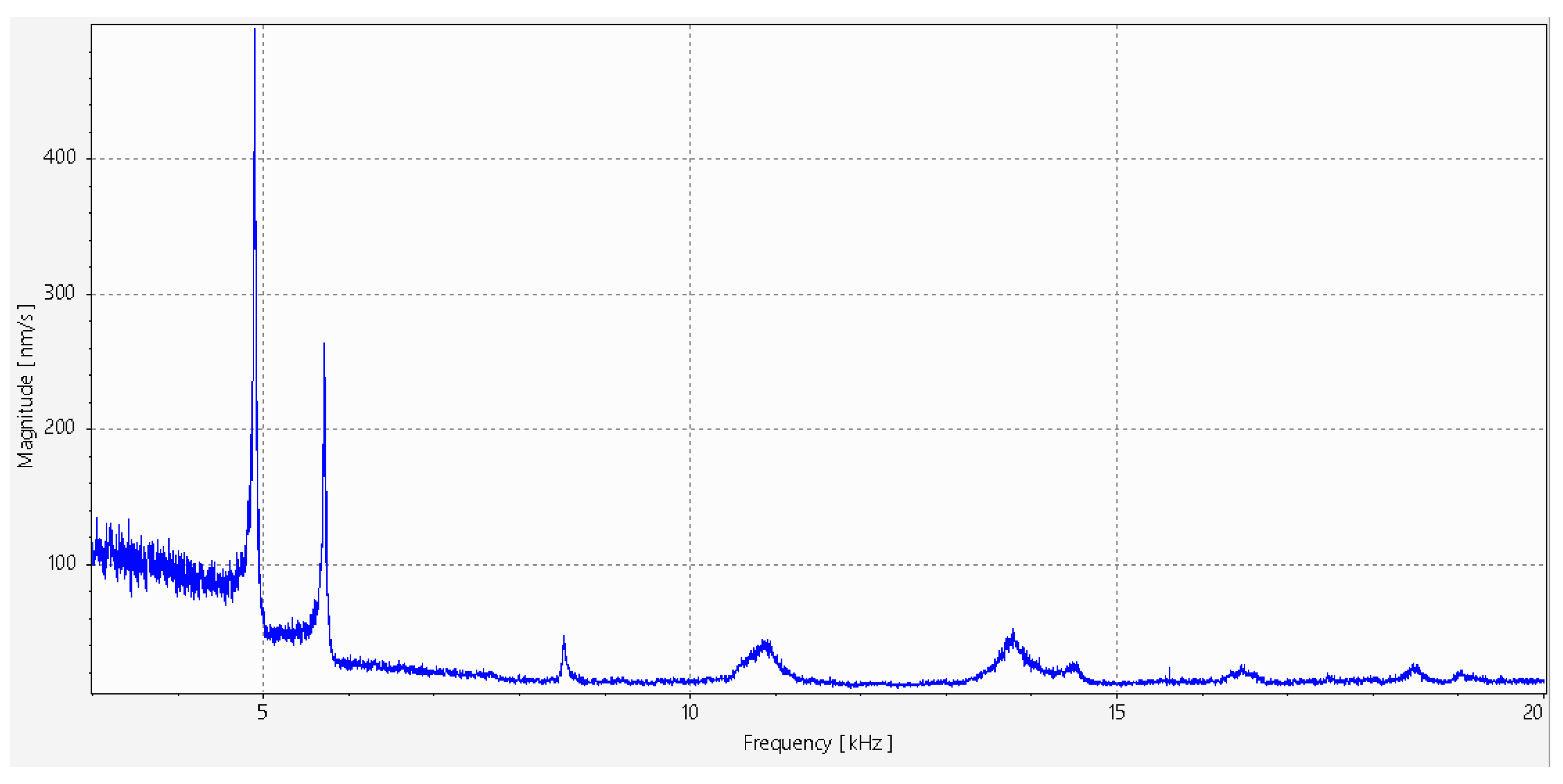
Acoustic excitation, in the form of an amplified sinusoidal sweep directed at the sample surface, did not produce satisfactory results under the test conditions in contrast to that of the compressed air cannon. Despite adjustments to the frequency range and amplitude, the measured vibration responses from the LDV were minimal or undetectable within the targeted range of DC to 20 kHz.
This lack of response is likely due to the limited acoustic power of the loudspeaker relative to the mass of the concrete samples. The energy transferred through air coupling was insufficient to generate detectable resonances. As shown in Figure 16, no distinct peaks could be identified in the frequency response functions.
Although this method was ineffective for the small and dense samples used in the laboratory, it may still hold potential for larger structures such as tunnel linings, provided that a sufficiently powerful sound source—such as a Long-Range Acoustic Device (LRAD)—is used [14]. This possibility should be explored before acoustic excitation is completely excluded from tunnel inspection applications.
4. Discussion
This study investigated how internal defects influence the vibrational characteristics of concrete blocks, using different excitation techniques and recording the dynamic response with a laser Doppler vibrometer (LDV). By embedding artificial defects such as voids, delamination, and cracks, and comparing these modified specimens with intact reference blocks, it was possible to examine the sensitivity of frequency-based measurements for defect detection.
An important observation across all measurements involving the shakers and loudspeaker was the occurrence of artifact peaks at approximately 4.9 kHz and 5.7 kHz. These peaks appeared in all measurements where the output of the junction box generator was used to control the excitation device. This behavior was traced to an electrical error and is not related to the dynamic properties of the samples. As such, these frequencies should be taken into account in the interpretation of the results.
The performance of the different excitation methods varied significantly, both in terms of signal-to-noise ratio (SNR) and the ability to use a frequency response function (FRF) to suppress noise and remove false peaks. The hammer, Qsources shaker and BRÜEL & KJÆR Vibration Exciter all allowed FRF calculation, which improves the reliability of the data. In the case of the loudspeaker, an FRF could be obtained by dividing the LDV-measured velocity by the input voltage. However, this approach is not entirely accurate because the air gap between the speaker and the sample introduces unequal damping across frequencies, altering the amplitude of the transmitted signal. In contrast, the compressed air cannon cannot be used directly to calculate an FRF because the input force is not measured.
When comparing the two shaker systems, the BRÜEL & KJÆR exciter delivered higher peak input power overall, but its frequency range was limited in practice. It struggled to excite frequencies below 6 kHz and above 15 kHz, reducing its applicability for larger structures and higher-frequency defect detection. The Qsources shaker, while producing lower peak input power, maintained effective excitation across higher frequencies and delivered cleaner, artifact-free data, making it more versatile for small-scale testing. For mechanical methods, the comparison between the hammer and the compressed air cannon demonstrated a clear difference in frequency content and SNR. The hammer produced responses dominated by lower frequencies, a direct consequence of its longer impact time, and showed greater noise even when analyzed using an FRF. The compressed air cannon, on the other hand, generated short-duration, high-energy impulses that excited a broader frequency range with very high SNR. This suggests that the cannon is better suited for applications that require the detection of fine structural details.
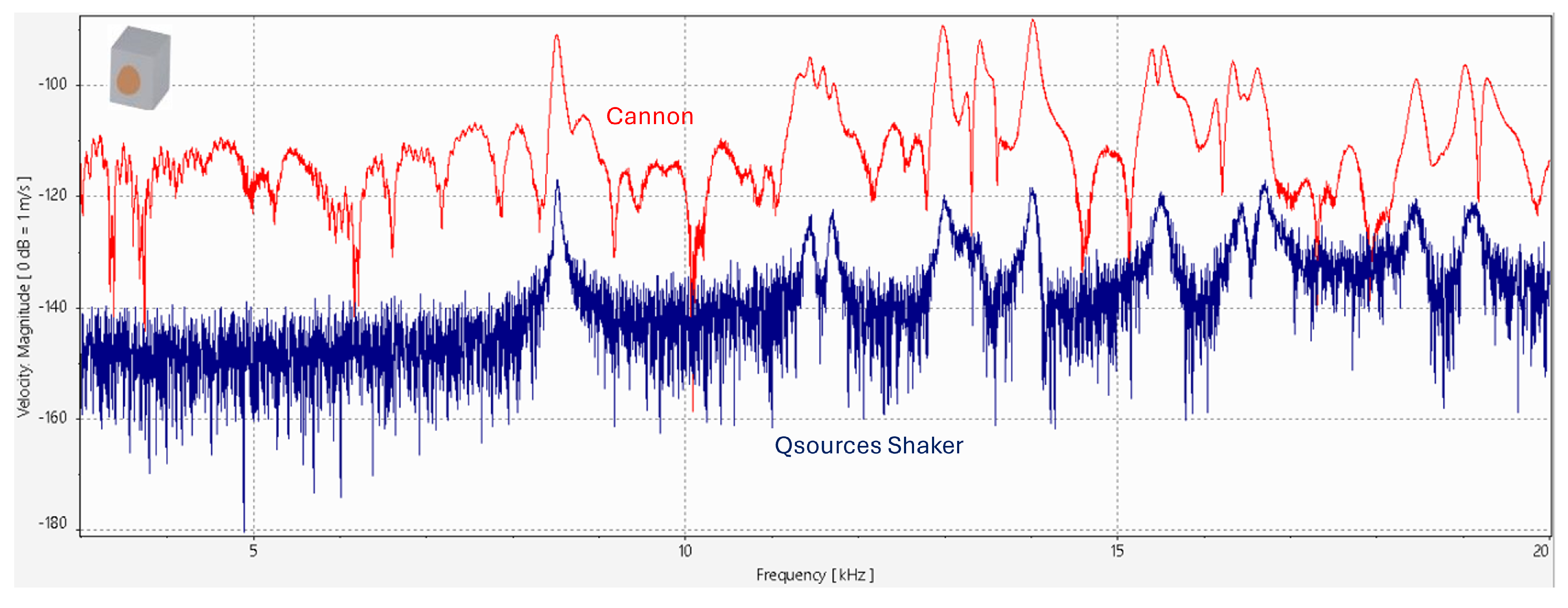
The comparison between the two best-performing methods—the Qsources shaker and the compressed air cannon—revealed distinct trade-offs. Here, the signal-to-noise ratio (SNR) is defined as the ratio between the response magnitude at a resonance peak and the surrounding noise floor in a narrow frequency window around that peak (expressed in dB). Using this definition, the air cannon generally yields a higher peak-to-noise floor contrast than the shaker in the measured spectra, even without computing the FRF. This may be due to the greater amount of energy imparted to the sample, which excites additional structural features beyond the natural frequencies of the sample. However, the repeatability of the cannon is inherently lower than that of the Qsources shaker. For single-point measurements, where repeatability is less critical, the cannon may therefore be preferable. In contrast, for applications requiring consistent excitation across multiple measurement locations, such as scanning a larger surface, the Qsources shaker offers a more reliable solution.
Figure 17.
Measurement of ’Kinder egg void’ on the top left corner of the sample: Qsources(blue) vs Air compressed cannon(red) [in dB]. Both give the same natural frequencies but with a different amplitude.
Figure 17.
Measurement of ’Kinder egg void’ on the top left corner of the sample: Qsources(blue) vs Air compressed cannon(red) [in dB]. Both give the same natural frequencies but with a different amplitude.
In general, the results confirm that damage and internal defects in concrete produce measurable changes in dynamic response, particularly in the form of shifts in natural frequencies and alterations to the mode shapes. This validates the potential of vibration-based non-destructive testing (NDT) methods for structural health monitoring and early defect detection in reinforced concrete infrastructure.
However, several limitations of this study must be acknowledged. All tests were conducted on small-scale laboratory-prepared specimens under controlled conditions. Although the defects introduced are representative of those found in real structures, the environmental stability and material uniformity of the test blocks differ from real-world concrete, which often degrades in more complex and heterogeneous patterns. In addition, large structures such as tunnels may not display distinct mode shapes detectable in small laboratory samples. In such cases, defect detection may need to rely on amplitude changes across frequency bands rather than on clear modal peaks, which requires further investigation.
Finally, the laboratory setup allowed for measurements on all sides of each block, an advantage that is not available in the field. In a tunnel environment, measurements would be limited to the accessible surface, typically the front face of the tunnel lining. This restriction could limit the applicability of certain excitation methods or require adaptations to the measurement strategy.
Future work should therefore include in-situ tests on full-scale concrete elements under realistic environmental conditions, assessing the influence of temperature, humidity, and other operational factors. Such studies could determine the practicality of applying these methods in the field and identify which excitation techniques offer the best combination of sensitivity, repeatability, and operational feasibility.
5. Conclusions
This study compared three excitation methods—acoustic, mechanical, and shaker-based—for their effectiveness in detecting defects in small-scale concrete specimens through vibration-based non-destructive testing (NDT) using a laser Doppler vibrometer. The concrete blocks included both intact reference samples and samples with artificial defects such as voids, delamination, and cracks, allowing controlled assessment of the sensitivity of each method to structural changes.
Acoustic excitation, implemented with a loudspeaker producing a sinusoidal sweep, proved ineffective under current laboratory conditions. The limited acoustic power, combined with the relatively high mass of the specimens, prevented sufficient energy transfer to excite detectable resonances. Although unsuitable for the present setup, acoustic methods may still be viable for large-scale applications if high-power directional sources, such as Long-Range Acoustic Devices (LRAD), are employed.
Mechanical excitation with the custom-built compressed air cannon produced excellent results. The short-duration, high-energy impulse generated a high signal-to-noise ratio and clearly defined resonance peaks without requiring multiple measurements for averaging. These findings indicate that further refinement of this technique could provide a valuable, low-cost option for defect detection, particularly in applications where single-point measurements are sufficient.
Shaker excitation was performed using both a BRÜEL & KJÆR Vibration Exciter and a Qsources Qlws surface-mounted shaker. The Qsources device outperformed the larger shaker in multiple aspects, producing cleaner and artifact-free data, effectively exciting higher frequency ranges, and offering greater ease of use. These characteristics make it highly suitable for scanning applications that require repeatable excitation.
After decades of reliance on subjective and invasive inspection techniques, the results of this study demonstrate that objective vibration-based methods can provide significant advancements in the monitoring of concrete infrastructure. Short-impact mechanical excitation, particularly with devices like compressed air cannons and surface-mounted shakers such as the Qsources Qlws, shows strong potential for incorporation into scalable and automated inspection systems. Acoustic excitation, while ineffective in this laboratory context, may still have niche applications pending further investigation with more powerful sources.
A promising direction for future research lies in combining these excitation techniques with artificial intelligence and pattern recognition algorithms. By building datasets of frequency response characteristics for healthy and defective concrete, machine learning models could be trained to automatically classify structural condition and potentially locate defects. Such developments could make tunnel inspections faster, safer and entirely non-destructive, while reducing reliance on manual interpretation and subjective judgment. Lastly, in the field of automating the measurements, research could be done on a moving measurement setup to have no human involvement in moving the setup and configuring it again. For tunnels, this could be achieved with a ground drone that has the excitation method and the LDV mounted on it.
Author Contributions
Conceptualization, M.A., J.L., N.G. and S.V.; methodology, M.A. and J.L.; software, M.A. and J.L.; validation, M.A., J.L. and N.G.; formal analysis, M.A. and J.L.; investigation, M.A. and J.L.; resources, N.G., O.D.M. and S.V.; data curation, M.A. and J.L.; writing—original draft preparation, M.A. and J.L.; writing—review and editing, N.G. and O.D.M.; visualization, M.A. and J.L.; supervision, N.G.and O.D.M. All authors have read and agreed to the published version of the manuscript.
Institutional Review Board Statement
Not applicable
Data Availability Statement
Data available on request.
Acknowledgments
The authors would like to thank Jan Stoop and Lacy Wouters for their assistance in manufacturing the concrete specimens in their laboratory. The authors also acknowledge Konnexxions for providing and supplying materials used in this work. Furthermore, the authors gratefully acknowledge support from the Research Fund of the University of Antwerp, in particular through the Impuls Project (No. 46381). During the preparation of this manuscript, the authors used ChatGPT (GPT-5.2 Thinking) for language editing. The authors reviewed and edited the output and take full responsibility for the content of this publication.
Conflicts of Interest
The authors declare no conflict of interest.
Abbreviations
The following abbreviations are used in this manuscript:
| NDT | Non-destructive testing |
| LDV | Laser Doppler vibrometry |
| FRF | Frequency response function |
| SHM | Structural health monitoring |
| SNR | Signal-to-noise ratio |
| LRAD | Long-Range Acoustic Device |
References
- Canziani, A.; Quist, W. CONCRETO Code Book: Study on Historic Concrete Conservation. https://concreto-academy.org/wp-content/uploads/2025/05/Concreto_book_e-book.pdf, 2025. CONCRETO Academy. Accessed: 2026-03-03.
- Austroads. Fatigue Life Estimation for Existing Reinforced Concrete Slab Bridges. Technical Report ABC-IAR004-11, Austroads, 2011. Accessed: 2026-03-03.
- Van Mullem, T.; Gruyaert, E.; Caspeele, R.; De Belie, N. First Large Scale Application with Self-Healing Concrete in Belgium: Analysis of the Laboratory Control Tests. Materials 2020, 13. [CrossRef]
- Breysse, D. Deterioration processes in reinforced concrete: an overview. Woodhead Publishing Series in Civil and Structural Engineering 2010, 1, 28–56.
- Mehta, P.K.; Monteiro, P.J.M. Concrete: Microstructure, Properties, and Materials, 4 ed.; McGraw-Hill Education, 2014.
- Broomfield, J.P. Corrosion of Steel in Concrete: Understanding, Investigation and Repair, 2 ed.; CRC Press, 2007.
- Boccacci, G.; Frasca, F.; Bertolin, C.; Siani, A.M. Diagnosis of Historic Reinforced Concrete Buildings: A Literature Review of Non-Destructive Testing (NDT) Techniques. Procedia Structural Integrity 2024, 55, 160–167. [CrossRef]
- Helal, J.; Sofi, M.; Mendis, P. Non-Destructive Testing of Concrete: A Review of Methods. Electronic Journal of Structural Engineering 2015, 14, 97–105.
- Kasahara, J.Y.L.L.; Yamashita, A.; Asama, H. Acoustic Inspection of Concrete Structures Using Active Weak Supervision and Visual Information. Sensors 2020, 20, 629. [CrossRef]
- Jedidi, M. Evaluation of the concrete quality using destructive and non-destructive tests [Review Article]. MOJ Civil Engineering 2018, 4, 219–223. [CrossRef]
- Federal Highway Administration (FHWA). Hammer Sounding (limitations and practice notes). https://infotechnology.fhwa.dot.gov/, 2017. Accessed: 2026-02-16.
- Aggelis, D.; Kordatos, E.; Strantza, M.; Soulioti, D.; Matikas, T. NDT approach for characterization of subsurface cracks in concrete. Construction And Building Materials 2011, 25, 3089–3097. [CrossRef]
- Sansalone, M.; Carino, N.J. Impact-Echo: A Method for Flaw Detection in Concrete Using Transient Stress Waves. Technical Report NBSIR 86-3452, National Bureau of Standards, 1986.
- Akamatsu, R.; Sugimoto, T.; Utagawa, N.; Katakura, K. Proposal of Non Contact Inspection Method for Concrete Structures Using High-Power Directional Sound Source and Scanning Laser Doppler Vibrometer. Japanese Journal Of Applied Physics 2013, 52, 07HC12. [CrossRef]
- Farrar, C.R.; Worden, K. An Introduction to Structural Health Monitoring. Philosophical Transactions of the Royal Society A 2007, 365, 303–315. [CrossRef]
- Doebling, S.W.; Farrar, C.R.; Prime, M.B. A Summary Review of Vibration-Based Damage Identification Methods. Shock and Vibration Digest 1998, 30, 91–105.
- Sohn, H.; Farrar, C.R.; Hunter, N.F.; Worden, K. Structural Health Monitoring Using Statistical Pattern Recognition Techniques. Journal of Dynamic Systems, Measurement, and Control 2001, 123, 706–711. [CrossRef]
- Worden, K.; Manson, G. The Application of Machine Learning to Structural Health Monitoring. Philosophical Transactions of the Royal Society A 2007, 365, 515–537. [CrossRef]
- Azimi, M.; Eslamlou, A.D.; Pekcan, G. Data-Driven Structural Health Monitoring and Damage Detection through Deep Learning: State-of-the-Art Review. Sensors 2020, 20, 2778. [CrossRef]
- Staszewski, W.J.; Klepka, A.; Uhl, T. Laser Doppler Vibrometry for Structural Health Monitoring: A Review. In Proceedings of the Key Engineering Materials, 2012, Vol. 518, pp. 1–15.
- Bekele, A.; Ryden, N.; Gudmarsson, A.; Birgisson, B. Automated Non-contact Resonance Excitation Method to Assess Low Temperature Dynamic Modulus of Asphalt Concrete. Journal Of Nondestructive Evaluation 2019, 38. [CrossRef]
- HBK. Type 4809, 2026. Accessed 25 March 2026.
- Qsources. Light weight shaker – Qlws, 2026. Accessed 25 March 2026.
Figure 7.
The different FFT’s of the 3 types of samples, with a clear difference between the frequencies at which peaks are located.
Figure 7.
The different FFT’s of the 3 types of samples, with a clear difference between the frequencies at which peaks are located.
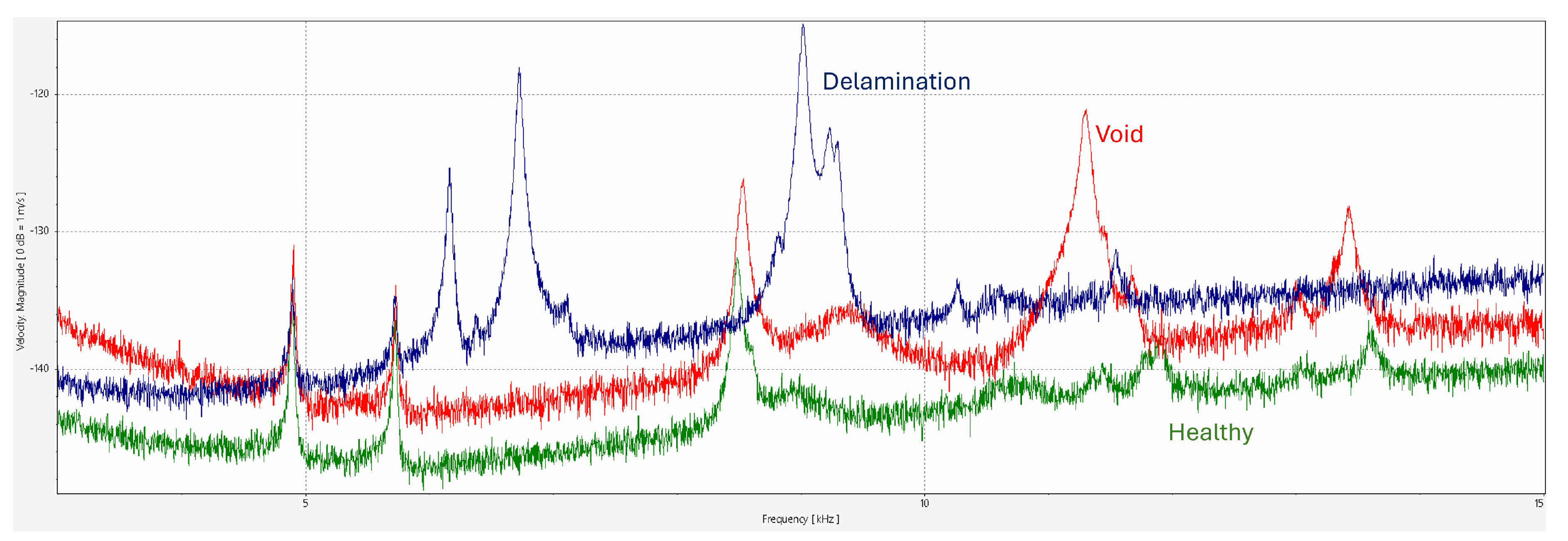
Figure 8.
Input shaker from 3 kHz to 15 kHz with a resonance frequency at 9.2 kHz.
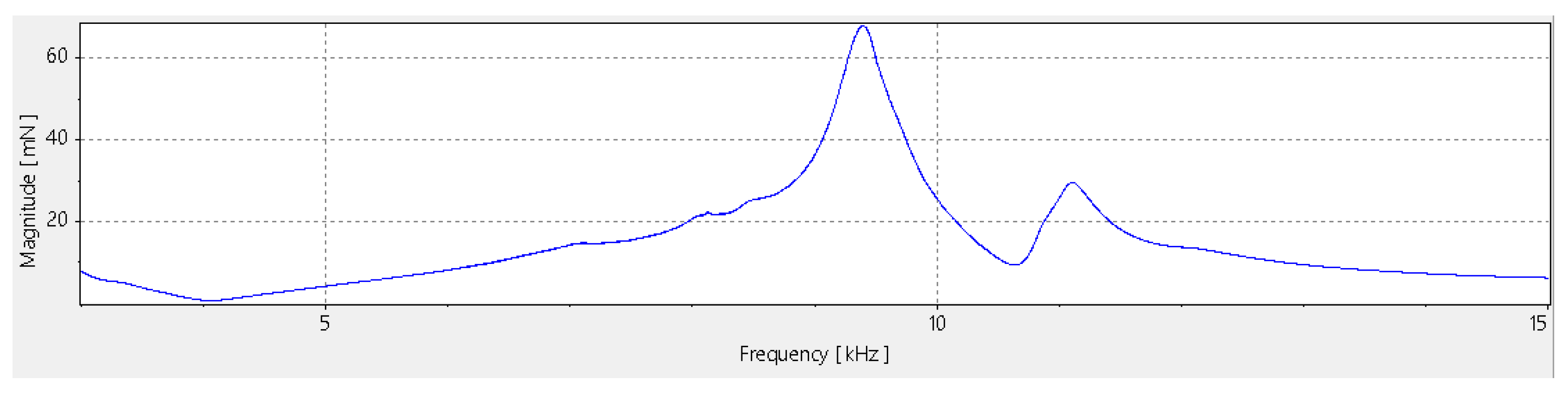
Figure 9.
Measurement on sample ’Kinder egg void’ on the top left corner of the sample with the BRÜEL & KJÆR Vibration Exciter. First natural frequency is at 8.8 kHz
Figure 9.
Measurement on sample ’Kinder egg void’ on the top left corner of the sample with the BRÜEL & KJÆR Vibration Exciter. First natural frequency is at 8.8 kHz
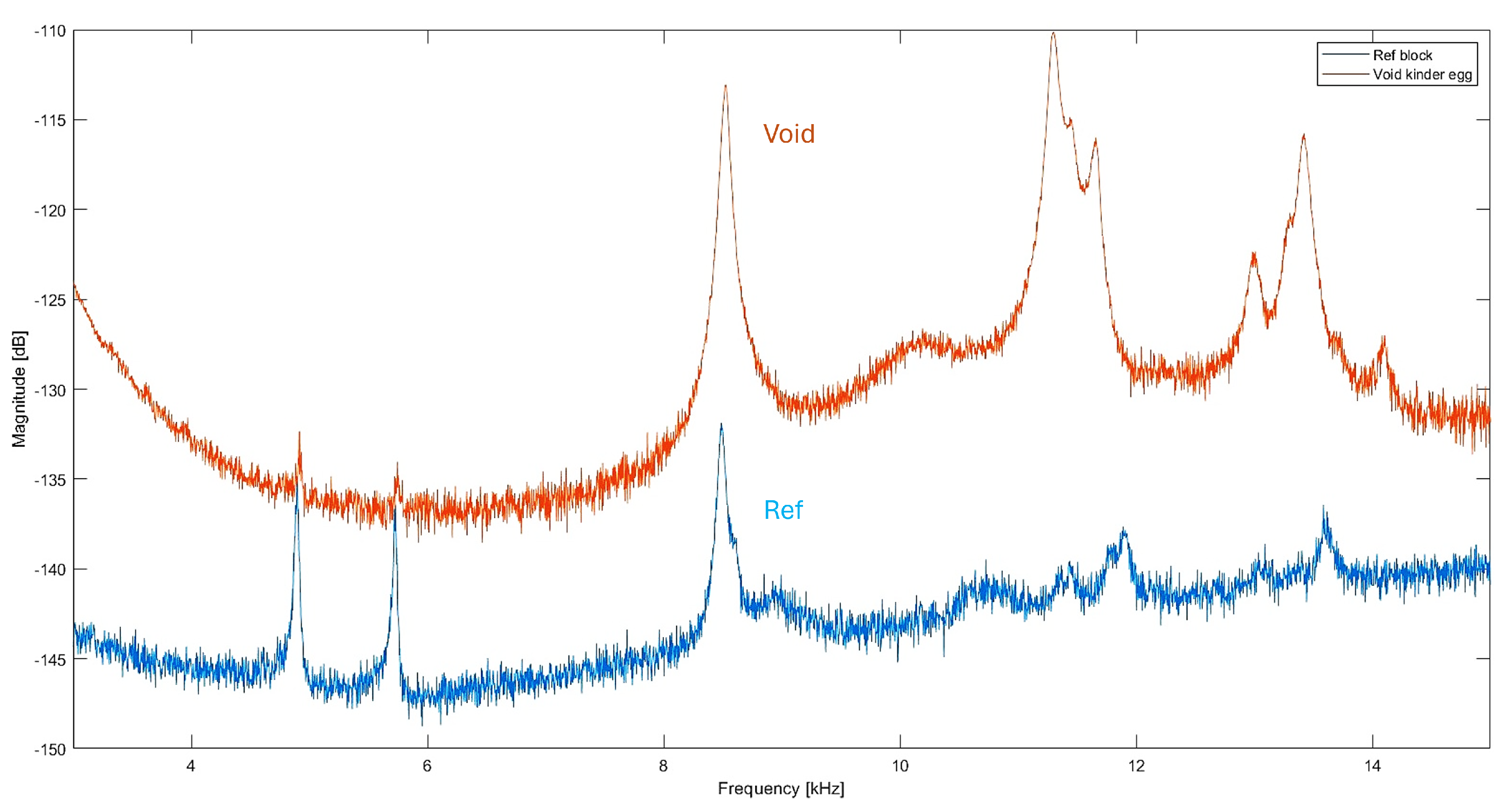
Figure 13.
The input force of the modal hammer is very low from 10 kHz. Measurements of low frequencies can be made using this hammer.
Figure 13.
The input force of the modal hammer is very low from 10 kHz. Measurements of low frequencies can be made using this hammer.
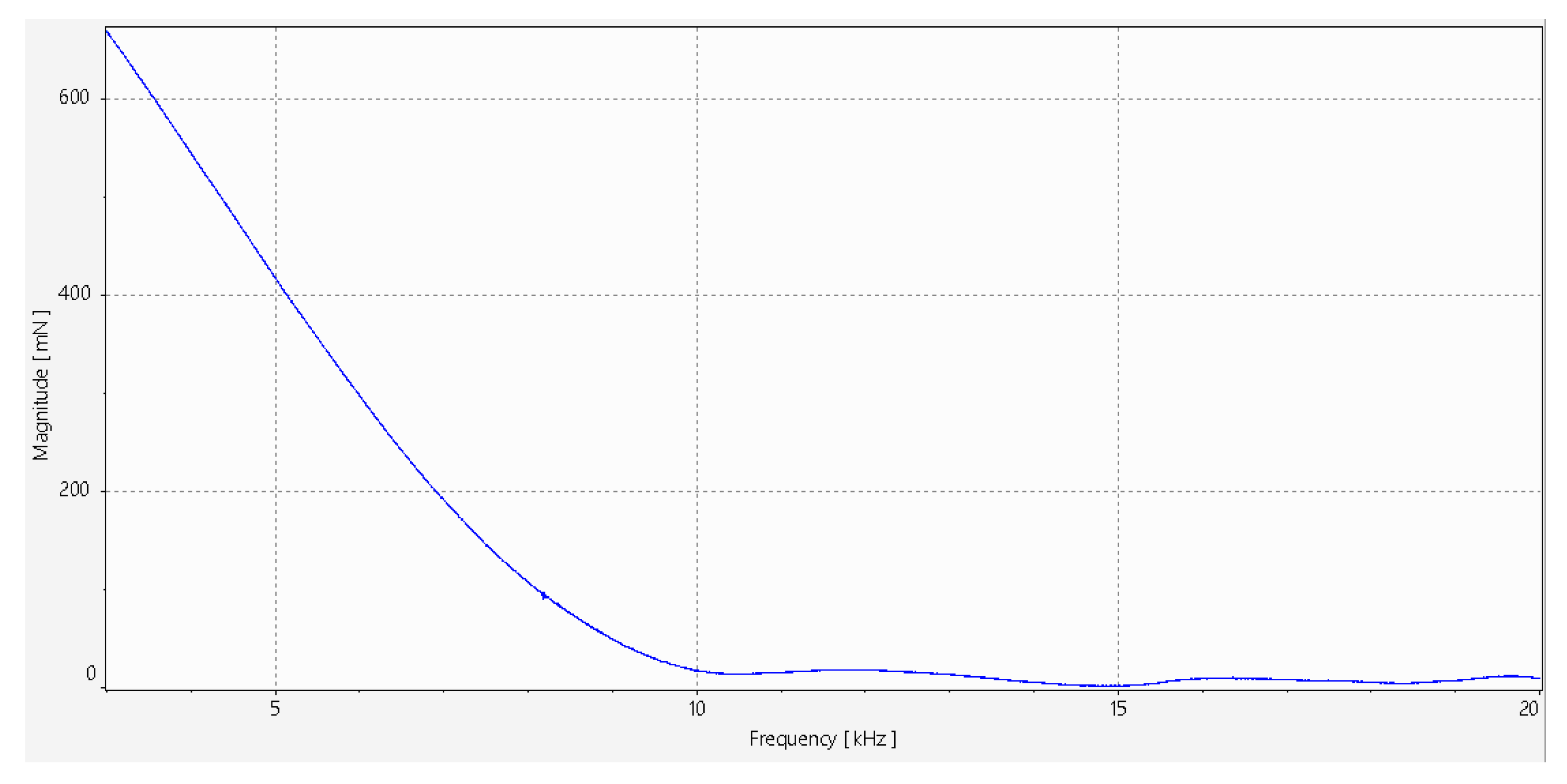
Figure 14.
Measurement of ’Kinder egg void’ on the top left corner of the sample with the modal hammer. Only the first natural frequency can be determined because of the inefficient input force at higher frequencies.
Figure 14.
Measurement of ’Kinder egg void’ on the top left corner of the sample with the modal hammer. Only the first natural frequency can be determined because of the inefficient input force at higher frequencies.
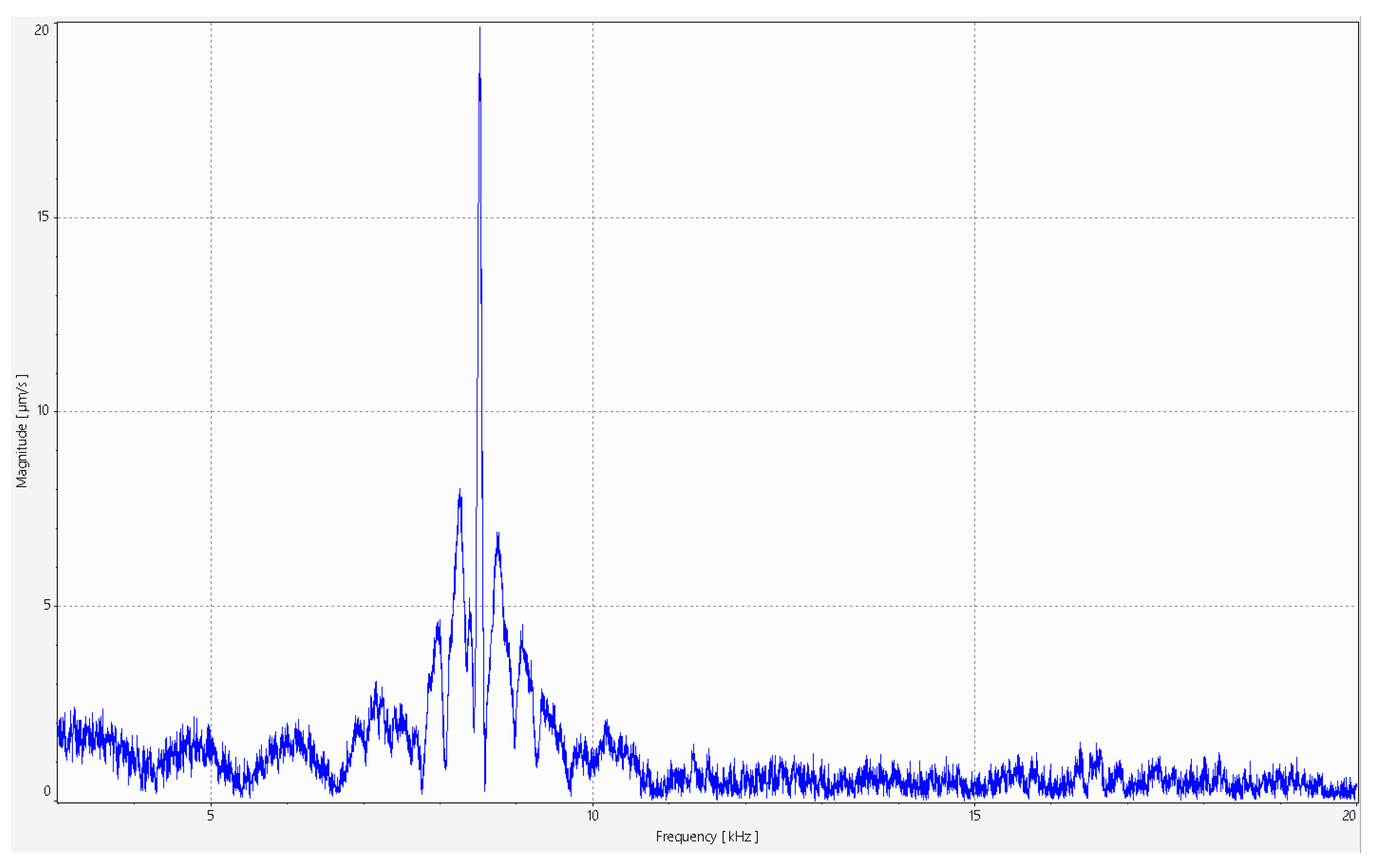
Figure 15.
Measurement of ’Kinder egg void’ on the top left corner of the sample with compressed air cannon. Higher natural frequencies are visible because of the short impact time.
Figure 15.
Measurement of ’Kinder egg void’ on the top left corner of the sample with compressed air cannon. Higher natural frequencies are visible because of the short impact time.
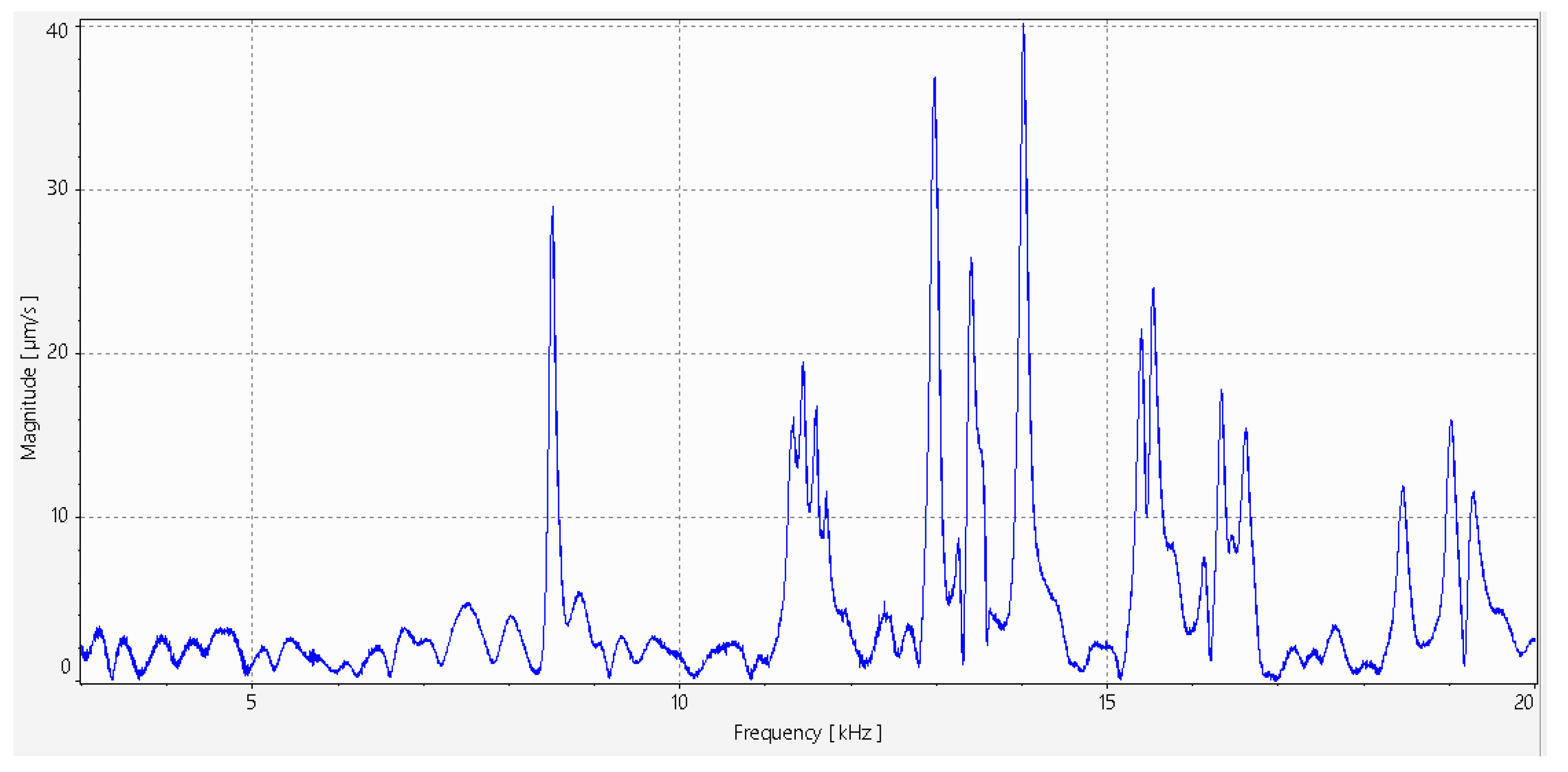
Figure 16.
Measurement of ’Kinder egg void’ on the top left corner of the sample with loudspeaker. The artifact peaks at 4.8 kHz and 5.4 kHz are much higher than the natural frequencies which are barely visible.
Figure 16.
Measurement of ’Kinder egg void’ on the top left corner of the sample with loudspeaker. The artifact peaks at 4.8 kHz and 5.4 kHz are much higher than the natural frequencies which are barely visible.
Disclaimer/Publisher’s Note: The statements, opinions and data contained in all publications are solely those of the individual author(s) and contributor(s) and not of MDPI and/or the editor(s). MDPI and/or the editor(s) disclaim responsibility for any injury to people or property resulting from any ideas, methods, instructions or products referred to in the content. |
© 2026 by the authors. Licensee MDPI, Basel, Switzerland. This article is an open access article distributed under the terms and conditions of the Creative Commons Attribution (CC BY) license (http://creativecommons.org/licenses/by/4.0/).
Copyright: This open access article is published under a Creative Commons CC BY 4.0 license, which permit the free download, distribution, and reuse, provided that the author and preprint are cited in any reuse.


