

Submitted:
14 April 2026
Posted:
15 April 2026
You are already at the latest version
Abstract
Due to the increasing threat of antibiotic resistance and the emergence of new pathogenic strains, the development of effective combined therapeutic agents represents a crucial direction in the fight against infections. Within this study, several compounds were synthesized in which iodine is present in a coordination complex with antibiotics – sodium sulfathimidine and gentamicin sulfate. The physicochemical parameters of these compounds were investigated using capillary electrophoresis and UV-spectroscopy, along with their cytotoxicity, antimicrobial, and antiviral activities. As a result of this work, two stable compounds, KC-246 and KC-248, were synthesized, demonstrating virus-inhibitory activity against herpes simplex virus and influenza A under extremely low cytotoxicity levels of 0.018–0.106 mg/ml. Additionally, they exhibited antimicrobial activity against representatives of the families Staphylococcaceae, Pseudomonadaceae, Enterobacteriaceae, Enterococcaceae, and yeast-like fungi. The minimum bactericidal concentrations (MBCs) ranged from 0.794 µg/ml to 0.198 µg/ml (KC-246) and from 2.093 µg/ml to 0.523 µg/ml (KC-248).
Keywords:
iodine-containing compounds
; active pharmaceutical substances
; drug–drug synergy
; novel antimicrobial adjuvants
; resistance mitigation
1. Introduction
Antibiotics have played a pivotal role in combating infectious diseases, substantially improving quality of life and extending human life expectancy. Despite these undeniable benefits, their extensive application in human medicine, agriculture, and veterinary practice has introduced significant environmental challenges. In particular, the continuous release of antibiotic residues into natural ecosystems − via wastewater effluents, livestock waste, and improper pharmaceutical disposal − has emerged as a critical driver of ecological imbalance and microbial adaptation.
Within this environmental context, the development of antimicrobial resistance (AMR), although an inherent evolutionary process, is being markedly accelerated. The excessive and often uncontrolled use of antibiotics, combined with inadequate waste management practices, creates selective pressure that favors resistant microbial populations. Consequently, antibiotic resistance has evolved from a localized clinical concern into one of the most pressing global public health threats of the 21st century. According to the United States Centers for Disease Control and Prevention (CDC), more than 2.8 million infections caused by antibiotic-resistant microorganisms are reported annually, resulting in over 35,000 deaths in the United States alone [1]. Beyond its clinical implications, AMR imposes a substantial economic burden; in the European Union, costs associated with prolonged hospitalization and complex therapeutic regimens are estimated at approximately €1.5 billion per year [2].
The long-term consequences of this trend are particularly alarming. Projections by Naghavi, Mohsen et al. suggest that, in the absence of effective intervention strategies, annual mortality attributable to infections caused by resistant pathogens may exceed 10 million by 2050. This projected burden is comparable to global mortality from oncological diseases, highlighting not only the scale but also the urgency of the antimicrobial resistance crisis [3]. These forecasts underscore the critical need for innovative approaches that can preserve the efficacy of existing antimicrobial agents.
In response to this growing threat, current research efforts are increasingly focused on the development of antibiotic adjuvants and potentiators designed to enhance the activity of conventional drugs. Among these strategies, the synthesis of iodine-containing combined potentiators has attracted particular attention. Such compounds are capable of increasing microbial cell membrane permeability and suppressing the activity of antibiotic-degrading enzymes, thereby restoring or amplifying antibacterial efficacy against resistant strains [4,5].
At the molecular level, iodine exhibits distinctive physicochemical properties that allow it to penetrate microbial membranes and interact with intracellular targets. The antimicrobial activity of iodine-containing species, including elemental iodine, hypoiodous acid, and iodide ions, is primarily associated with their ability to interact with amino acids containing -NH2 groups (such as lysine, histidine, and arginine), as well as with nucleotides including adenine, cytosine, and guanine [6,7,8]. These interactions lead to the formation of N-iodinated derivatives, which disrupt essential cellular processes and compromise microbial viability. Notably, the capacity of iodine to access intracellular compartments is particularly advantageous in the treatment of infections with an intracellular life cycle, such as brucellosis, chlamydial infections, and viral hepatitis.
However, the practical application of iodine-based systems requires addressing their inherent chemical instability. Iodine and iodide species are susceptible to oxidative degradation under exposure to light, air, and moisture. To overcome this limitation, lithium iodide is employed as a stabilizing agent. Through its protective effect, lithium iodide inhibits iodine decomposition, thereby extending the shelf life of iodine-containing formulations and enhancing their stability and reliability in clinical practice [9,10,11].
Sulfonamide class of antibiotics (sodium sulfadimidine) exert a bacteriostatic effect by acting as structural analogues of para-aminobenzoic acid, competitively inhibiting the enzyme dihydropteroate synthase, a key catalyst- in the microbial biosynthesis of folic acid necessary for purine and pyrimidine formation [12,13]. By interrupting folate synthesis, sulfonamides impede nucleic acid production and bacterial replication without directly lysing cells, resulting in growth inhibition across a broad spectrum of gram-positive and gram-negative organisms.
Aminoglycoside antibiotics (gentamicin) exert a bactericidal effect by binding to the 16S rRNA of the 30S ribosomal subunit, thereby impairing translational fidelity and inhibiting bacterial protein synthesis [14]. This interaction induces codon misreading and the production of aberrant proteins, which contributes to irreversible damage to bacterial cellular functions and loss of viability. Gentamicin is used primarily in the treatment of severe infections caused predominantly by aerobic gram-negative microorganisms [15], and in selected combination regimens where synergistic antimicrobial activity is required.
The effectiveness of these stabilized iodine-containing systems can be further enhanced through co-administration with antibiotics of complementary molecular structures. Synergistic interactions between these agents can substantially increase antimicrobial activity, particularly against multidrug-resistant pathogens. Whereas monotherapy often results only in temporary growth inhibition, combination strategies exert multi-level pressure on microbial systems, providing a more robust approach capable of overcoming resistance mechanisms and achieving complete pathogen eradication.
2. Results
2.1. Quantum-Chemical Calculations
Within the framework of the quantum-chemical investigation, an analysis of possible coordination interactions between the compound and triiodide and lithium iodide was performed. Three computational models of coordination complexes ab were constructed (Figure 1 and Figure 2), and their complexation energies were calculated to assess their thermodynamic stability (Table 1 and Table 2).
2.2. Synthesis and Physicochemical Characterization
For the synthesis of new active pharmaceutical ingredients (APIs) and the investigation of their physicochemical properties, the following stages were performed. A weighed portion of the antibiotics with an accuracy of ±0.001 g, was dissolved in 10 mL of distilled water under heating in a water bath at +40 °C with continuous stirring until complete dissolution. Solutions of lithium iodide (LiI) and crystalline iodine (I₂) were prepared analogously in 10 mL of distilled water at room temperature.
The resulting lithium triiodide solution was added to the solution of the active substance with thorough stirring at RT for 5 min. The reaction mixture was kept in the dark at RT for 48 h to reach equilibrium. After the incubation period, the mixture was heated at +40 °C for 10 min, vacuum-filtered through a Schott filter, and transferred to a dark glass desiccator containing anhydrous calcium chloride to remove the bulk of water. The formed crystals were separated by vacuum filtration, washed twice with ethanol pre-cooled to 0 °C, and dried on an ashless filter. The dried crystals were weighed and placed into hermetically sealed glass vials for storage under refrigeration conditions.
During variation of synthesis parameters (temperature, reaction time), it was established that the optimal conditions involve the use of an aqueous medium and temperatures up to 40 °C.
As a result of the synthesis, the compounds designated KC-246 (sodium sulfadimidine) and KC-248 (gentamicin sulfate) were obtained. The results of the physicochemical characterization are presented in Table 3.
The iodide ion concentration determined by capillary electrophoresis (CE) correlates with the data obtained by titration.

Table 4.
Quantification of iodide ions using CE.
| Indicator | KC-246 | KC-248 |
|---|---|---|
| Iodide concentration, mg/L | 382.99 ± 0.76 | 238.80 ± 0.62 |
| Peak area, S (mEA×s ) | 1008.97 | 629.13 |
Table 5.
Quantification of lithium cations using CE.
| Indicator | KC-246 | KC-248 |
|---|---|---|
| Cation concentration, mg/L | 11.43 ± 0.11 | 9.15 ± 0.04 |
| Peak area, S (mEA×s) | 14.005 | 11.215 |
Table 6.
Physicochemical characterization after 3-month storage.
| Compound name | Solubility | рН | Melting point, °С | Iodine, g/kg | Iodide, g/kg |
|---|---|---|---|---|---|
| Titration | |||||
| KC-246 | Water, DMSO, acetone 1g/10mL (soluble) |
2.31 ± 0.02 | 57-58 ± 0.58 | 99.78 ± 1.05 | 286.95 ± 0.98 |
| KC-248 | Water 1g/5mL (freely soluble) |
3.92 ± 0.05 | 62-64 ± 0.25 | 99.47 ± 2.13 | 168.17 ± 1.97 |
To confirm stability, the solubility of the samples was reassessed after 3 months. The results showed that the solubility of KC-246 and KC-248 remained unchanged: both samples retained good solubility in water, as well as in DMSO and acetone at a ratio of 1g/5mL to 1 g/10 mL. These data confirm the stability of the chemical structure and the absence of significant degradative changes in the sample characteristics during the investigated period.
2.3. UV Spectroscopic Methods of Analysis
2.4. In Vitro Safety Testing
The cytotoxicity of the synthesized APSs KC-246 and KC-248 was investigated on human peripheral blood mononuclear cell (PBMC) cultures, as well as on MDCK and RD cells under in vitro conditions. The CC50 values were determined by the nonlinear regression method using GraphPad Prism 6 software based on the full concentration range.
To determine the cytotoxic concentration of KC-248, PBMCs (1×10⁵ cells/well) were seeded into 96-well plates with the addition of the substance at concentrations of 0.02–5.0 mg/mL, where 5.0 mg/mL was used as the maximum dose. The control group consisted of cells with the addition of RPMI-1640 medium.
For KC-246, the investigated concentrations were 0.002–0.500 mg/mL; the control group consisted of cells with 0.1% DMSO, since it served as the solvent. Each concentration was added in triplicate.
Incubation of PBMCs was carried out for 48 h at 37 °C, 5% CO₂, and 95% humidity, after which the cytotoxic effect was assessed by the MTT assay based on cell viability.
For KC-246, 48-hour exposure at concentrations of 0.25–0.5 mg/mL caused a cytotoxic effect exceeding the permissible limit of (55 ± 5)%. The calculated CC₅₀ value was 0.179 mg/mL (95% confidence interval: 0.149–0.214). The compound KC-248 exhibited cytotoxicity at concentrations of 1.25–5.0 mg/mL. The CC₅₀ value was 0.425 mg/mL (95% confidence interval: 0.351–0.514) (Table 8) (Figure 5 and Figure 6).
The maximum non-toxic concentration for KC-246 is 0.045 mg/mL, and for KC-248 it is 0.106 mg/mL.
MDCK and RD cell cultures were seeded into 96-well plates at a concentration of 2×10⁵ cells/mL. Cultivation was carried out at 37 °C and 5% CO2.
To assess the cytotoxicity of KC-246, the test substance was administered once at the following concentrations: 1.0 mg/mL, 0.5 mg/mL, 0.25 mg/mL, 0.125 mg/mL, 0.063 mg/mL, 0.031 mg/mL, 0.016 mg/mL, 0.008 mg/mL. For KC-248, the concentrations were: 20.0 mg/mL, 10.0 mg/mL, 5.0 mg/mL, 2.5 mg/mL, 1.25 mg/mL, 2.0 mg/mL, 1.0 mg/mL, 0.5 mg/mL, 0.25 mg/mL, 0.125 mg/mL, 0.063 mg/mL, 0.031 mg/mL, 0.016 mg/mL.
The exposure lasted 72 h. Upon completion of incubation, the optical density in the wells was measured using a Tecan Sunrise RC.4 plate reader (Austria) at wavelengths of 540 nm (main filter) and 620 nm (reference filter).
Table 9.
Assessment of the cytotoxic effect of the new compounds KC-246 and KC-248 in MDCK and RD cell culture models after 72 h of incubation.
Table 9.
Assessment of the cytotoxic effect of the new compounds KC-246 and KC-248 in MDCK and RD cell culture models after 72 h of incubation.
| Compound name | CC50, on MDCK cell celture, (mg/mL) | CC50, on RD cell culture, (mg/mL) |
|---|---|---|
| KC-246 | 0.730 ± 0.06 | 0.660 ± 0.3 |
| KC-248 | 2.550 ± 3.30 | 2.600 ± 1.60 |
2.5. Antimicrobial Activity Screening
The antimicrobial activity of KC-246 and KC-248 substances was investigated against reference and clinical strains. Testing was performed by the method of two-fold serial dilutions in physiological saline.
During the studies, the minimum bactericidal concentrations (MBCs) of the samples were determined. These values were taken as the lowest concentration of the sample in dilution that completely suppressed the growth of the test microorganism on a Petri dish after inoculation onto the corresponding medium. The obtained study data are presented in Table 10.
2.6. Virus-Inhibitory Activity Screening
The antiviral activity of KC-246 and KC-248 substances was investigated on MDCK and RD cell cultures, based on the calculated CC₅₀ values. The study was carried out in vitro to assess the effect on influenza A/Swine/Iowa/15/30 (H1N1) virus and herpes simplex virus type 1 (HSV-1), strain “Victory”, using a virus-inhibitory scheme of substance administration.
3. Discussion
In the current study, The formation energies of LiI complexes with sulfadimidine (a) and gentamicin sulfate (b) (Figure 1) were calculated using the DFT/B3PW91/6-31G** quantum-chemical method [29,30] (Table 1).
The calculated data indicate that the stability of the complexes depends on the type of metal ion and the donor activity of the heteroatoms of the active substance. The most stable complexes are formed with LiI. The I2 bond dissociation energy in structure c (Figure 2) was calculated using the DFT/B3PW91/6-31G** quantum-chemical method (Table 2). The calculated interaction energy of I2 with a potential protein binding site (ΔE = –2.23 kcal/mol) is significantly lower than the interaction energy of I₂ in structure c.
Computational results suggest that complex c possesses the capability to deliver molecular iodine to nucleotide triplets of bacterial DNA.
The stability of the obtained compounds over a period of 3 months was evaluated according to the following parameters: pH, melting point, iodine content, and iodide content. Since the synthesized coordination compounds are considered as potential medicinal agents, their stability is a critical factor for further pharmaceutical investigations.
The solubility of samples KC-246 and KC-248 was examined; the results are presented in Table 6. Both samples demonstrated high solubility in water as well as in aprotic organic solvents such as dimethyl sulfoxide (DMSO) and acetone at a ratio of 1g/5 mL to 1 g/10 mL. The high solubility may be attributed to changes in the molecular structure facilitating solvent interactions and reducing intermolecular interactions within the polymeric matrix.
To confirm stability, the solubility of the samples was reassessed after 3 months. The results showed that the solubility of KC-246 and KC-248 remained unchanged: both samples retained good solubility in water, as well as in DMSO and acetone at a ratio of 1g/5mL to 1 g/10 mL. These data confirm the stability of the chemical structure and the absence of significant degradative changes in the sample characteristics during the investigated period.
In the Figure 3 presents the UV spectra of KC-246 and sodium sulfadimidine. The peak at 194.06 nm (Amax = 1.63) is located in the deep UV region, which is associated with the presence of iodides and σ → σ* transitions characteristic of small organic molecules with saturated bonds.
The peak at 225.57 nm (Amax = 1.16) indicates aromatic groups or conjugated systems in the structure of sodium sulfadimidine, which is confirmed by its position in the 200–280 nm range characteristic of aromatic compounds. Iodides influence the spectrum by causing peak shifts. The peak at 262.40 nm (Amax = 0.53) corresponds to π → π* transitions typical of aromatic compounds and conjugated systems. The analysis was carried out in an aqueous medium. The main peaKC are due to the absorption of the aromatic structure of sulfadimidine. In solution, a change in peak intensity is observed due to the mutual influence of the components.
Figure 4 presents the UV spectra of KC-248 and gentamicin sulfate. The peak at 194.18 nm (A = 1.91) is located in the deep UV region, which indicates the influence of ions or simple molecular species. Absorption in this range is associated with σ → σ* transitions characteristic of iodide- and lithium-containing compounds. The high intensity of this peak indicates the predominant contribution of these components in the mixture.
Absorption at 225.13 nm (A = 1.46) is typical of iodine complexes and other halide-containing species. Most likely, this peak corresponds to interactions between iodides and lithium iodide in solution. π → π* transitions may also be observed in structures interacting with iodine.
The peak at 283.80 nm (A = 0.18) is a weak band indicating aromatic or conjugated structures; however, gentamicin itself does not possess strong chromophores, which is confirmed by the absence of peaKC in its individual solution. Most likely, this band in the mixture is caused by weak interactions of the components with iodine or other ions, leading to slight absorption at this wavelength.
Thus, the iodides present in KC-248 give rise to the intense peak at 194.18 nm and 225.13 nm, reflecting their strong absorption.
The study results (Table 9) confirmed the CC50 values for KC-246 and KC-248 in MDCK (Figure 7 and Figure 8) and RD (Figure 9 and Figure 10) cell cultures after 72 h of incubation, which indicates the cytotoxic effect of these newly synthesized potentiators.
From the data of Table 10, it was established that KC-246 possesses antimicrobial activity against all test strains. The coordination compound KC-246 exhibits identical activity against representatives of the Enterobacteriaceae family (E. coli ATCC 8739, E. coli ATCC 2523, P. aeruginosa TA2, Kl. pneumoniae ATCC 2524, Kl. pneumoniae ATCC 10031, S. enterica ATCC 14028) and a representative of the enterococci family (Ent. hirae ATCC 10541); the MBC was 0.794 μg/mL. Against S. aureus ATCC 33591, Ent. faecalis ATCC 51575, P. aeruginosa ATCC 9027, and S. enterica ATCC 35988, the minimum bactericidal concentration was 0.397 μg/mL. The MBC against Staphylococcus aureus (S. aureus ATCC 6538) was 0.198 μg/mL. Against the yeast-like fungi C. albicans ATCC 10231 (reference strain) and C. albicans SCAID PHPX 1-2019 (clinical strain), the minimum bactericidal concentration (MBC) was 0.794 μg/mL.
The coordination compound KC-248 also possesses antimicrobial activity against all tested microorganisms. Thus, it was established that against representatives of the genus Escherichia (E. coli ATCC 8739, E. coli ATCC 2523), S. aureus ATCC 33591, S. enterica ATCC 35988, Kl. pneumoniae ATCC 10031, and Ent. hirae ATCC 10541, the minimum bactericidal concentration was 0.787 μg/mL. Against representatives of Gram-positive cocci, namely staphylococci (S. aureus ATCC 6538) and enterococci (Ent. faecalis ATCC 51575), as well as S. enterica ATCC 14028, P. aeruginosa TA2, and yeast-like fungi (C. albicans ATCC 10231, C. albicans SCAID PHPX 1-2019), the MBC was 3.149 μg/mL. The minimum bactericidal concentration against representatives of the Enterobacteriaceae family, namely Kl. pneumoniae ATCC 2524, was recorded at 0.393 μg/mL, whereas against P. aeruginosa ATCC 9027 it was 1.574 μg/mL.
Thus, it was experimentally established that the coordination compounds KC-246 and KC-248 possess antimicrobial activity against Gram-positive, Gram-negative microorganisms and yeast-like fungi.
The study of the antiviral activity of the coordination compounds against influenza A/Swine/Iowa/15/30 (H1N1) virus showed that the substance KC-246, at concentrations of 0.365 mg/mL and 0.183 mg/mL, completely suppresses viral replication, providing a 100% inhibitory effect. Likewise, the substance KC-248 demonstrates a 100% reduction in influenza A virus replication at a concentration of 1.275 mg/mL.
In the study of antiviral activity against herpes simplex virus type 1, strain “Victory”, it was established that KC-246, at concentrations of 0.330 mg/mL and 0.165 mg/mL, completely suppresses viral replication, achieving a 100% inhibitory effect. At the same time, the substance KC-248 exhibits 100% antiviral activity against herpes simplex virus type 1, strain “Victory”, at a concentration of 1.300.
Thus, KC-246 and KC-248 demonstrated pronounced virus-inhibitory activity against both viruses.
4. Materials and Methods
4.1. Reagents
Glass laboratory ware was used throughout the study, including beakers of 50 and 100 mL, a 100 mL volumetric flask, and graduated cylinders of 10 and 25 mL (Duran, Czech Republic). Filter paper “Red Ribbon” (Russia) and a Schott filter (Simax, Czech Republic) were employed for filtration.
Analytical grade reagents were obtained from commercial suppliers and used without further purification: lithium iodide (Sigma-Aldrich, USA, ≥99%), iodine (Labpharm, JSC “Troitsky Iodine Plant”, Russia, ≥98%), sodium sulfathimidine, and gentamicin sulfate (Sigma-Aldrich, USA, ≥99%).
4.2. Test-Systems
The bacterial and fungal test strains were obtained from the American Type Culture Collection (ATCC). Both reference (museum) and clinical strains, including sensitive and multidrug-resistant variants, were employed as follows:
- Staphylococcus aureus ATCC 6538-P (museum, sensitive strain)
- Staphylococcus aureus ATCC 333591 (museum, multidrug-resistant strain)
- Escherichia coli ATCC 8739 (museum, sensitive strain)
- Escherichia coli ATCC BAA-2523 (museum, multidrug-resistant strain)
- Pseudomonas aeruginosa ATCC 9027 (museum, sensitive strain)
- Pseudomonas aeruginosa TA2 (clinical, multidrug-resistant strain)
- Klebsiella pneumoniae ATCC 10031 (museum, sensitive strain)
- Klebsiella pneumoniae ATCC 2524 (museum, multidrug-resistant strain)
- Salmonella enterica ATCC 14028 (museum, sensitive strain)
- Salmonella enterica ATCC 35988 (museum, multidrug-resistant strain)
- Enterococcus hirae ATCC 10541 (museum, sensitive strain)
- Enterococcus faecalis ATCC 51575 (museum, multidrug-resistant strain)
- Candida albicans ATCC 10231 (museum, sensitive strain)
- Candida albicans SCID PHRX 1-2019 (clinical, multidrug-resistant strain)
Virus strains – Influenza A virus A/Swine/Iowa/15/30 (H1N1) and Herpes Simplex Virus type 1 (strain "Victory"), obtained from the Laboratory of Viral Ecology, Institute of Virology and Microbiology, Committee of Science, MES RK.
Cell cultures – MDCK cells (Madin-Darby Canine Kidney), obtained from the Laboratory of Cellular Biotechnology, Research Institute for Biological Safety Problems, National Center for Biotechnology, MES RK, and RD cells (human embryonal rhabdomyosarcoma), obtained from the cell culture collection of the National Center of Infectious and Parasitic Diseases, Sofia, Republic of Bulgaria.
Human peripheral blood mononuclear cells (PBMCs) – isolated from healthy donors (without acute or severe chronic diseases) of both sexes.
4.3. Preparation of the APSs
Accurately weighed samples of sodium sulfathimidine and flunixin meglumine (±0.001 g) were dissolved in 10 mL of distilled water by heating in a water bath at 40 °C with continuous stirring until complete dissolution. Solutions of lithium iodide (LiI) and crystalline iodine (I2) were prepared similarly in 10 mL of distilled water at room temperature (RT). The resulting lithium triiodide solution was added to the active substance solution, and the mixture was stirred thoroughly at RT for 5 minutes. The reaction mixture was then kept in the dark at RT for 48 hours to reach equilibrium.
After the incubation period, the mixture was heated at 40 °C for 10 minutes, vacuum-filtered through a Schott filter, and transferred to a dark glass desiccator containing anhydrous calcium chloride to remove the majority of water. The resulting crystals were collected by vacuum filtration, washed twice with ethanol precooled to 0 °C, and dried on an ashless filter. The dried crystals were weighed and stored in airtight glass vials under refrigeration.
4.4. Quantum-Chemical Calculations
The DFT/B3PW91/6-31G** method used for quantum-chemical calculations is based on density functional theory (DFT) employing the hybrid B3PW91 functional, which combines Hartree-Fock exchange–correlation effects with gradient-corrected correlation, providing high accuracy in predicting electronic structure. The 6-31G** basis set includes polarization functions, allowing an adequate description of the spatial distribution of electron density, as well as inductive and dispersion interactions. This method is particularly suitable for calculations of antibiotics in complex with lithium iodide, as it accurately captures ion–dipole interactions, specific solvation effects, charge delocalization, and hydrogen-bond formation. All computations were carried out on a Fujitsu PRIMERGY BX920 S1 supercomputer with a peak performance of 10.9 TFLOPS.
4.5. UV-Vis Spectroscopy
Ultraviolet–visible (UV–Vis) absorption spectra of the investigated systems were obtained using a double-beam Lambda 35 spectrophotometer (PerkinElmer), equipped with a monochromator operating over the 190–1100 nm spectral range. Spectral acquisition was carried out in the 190–500 nm wavelength interval under continuous scanning (SCAN mode). Measurements were performed in 1.0 cm path length quartz cuvettes at room temperature.
4.6. Capillary Electrophoresis (CE)
The analyses were conducted using an Agilent 1600 capillary electrophoresis system (Agilent Technologies, USA) equipped with a diode-array detector (DAD). Analytical solutions were prepared at analyte concentrations ranging from 5 to 200 mg/L and filtered through 0.2 µm membrane filters prior to injection.
Qualitative identification was performed by comparing the migration times of the analyte ions with those of reference standards. Quantitative analysis was carried out by comparison of peak areas with those obtained for certified reference standards (CRS).
Cation determination was performed according to a validated internal analytical protocol using an uncoated fused-silica capillary (50 µm internal diameter, total length 56 cm). The background electrolyte (BGE) was adjusted to pH 3.2. Electrophoretic separation was conducted at 25 °C under normal polarity with an applied voltage of +30 kV. UV detection was performed at 310 and 215 nm.
Iodide ions were analyzed using a separate validated internal protocol under the following conditions: uncoated fused-silica capillary (50 µm i.d., 56 cm total length), BGE pH 9.3, reversed polarity (-30 kV), and UV detection at 226 nm. Both analytical procedures were validated in compliance with the requirements of the State Pharmacopoeia of the Republic of Kazakhstan and relevant literature sources [16,17,18].
4.7. Quantitive Analysis of Iodine and Iodide
The quantitative determination of molecular iodine in the obtained complexes was performed by iodometric titration with sodium thiosulfate in the presence of starch indicator.
An accurately weighed sample (0.1–0.3 g) was transferred into a 50 mL beaker, dissolved in 20 mL of purified water, and titrated with 0.05 M sodium thiosulfate solution until the brown coloration disappeared. Subsequently, 1–2 drops of starch solution were added, and titration was continued until complete decolorization of the solution (endpoint).
The iodine content (CI2) per 1 kg of the preparation, expressed in grams, was calculated using Equation (1):
where:
CI2 = V1 × K1 × 12.69/m,
V1 — volume of sodium thiosulfate solution consumed for titration, mL;
K1 — correction factor for the molar concentration of 0.05 M sodium thiosulfate solution (K1 = 0.5);
m — sample mass, g.
According to the State Pharmacopoeia of the Republic of Kazakhstan, 1 mL of 0.1 M sodium thiosulfate corresponds to 12.69 g of iodine.
Potassium iodide in the obtained complexes was quantified by an electrochemical method according to an in-house validated procedure. After completion of iodine titration, 5 mL of 0.1 N nitric acid was added to the resulting solution, followed by potentiometric titration with 0.05 M silver nitrate solution.
Potentiometric measurements were performed using a combined platinum electrode with an integrated silver/silver chloride reference electrode. The equivalence point was determined from the titration curve (electrode potential versus volume of AgNO3 solution) as the midpoint of the potential jump.
The potassium iodide content (CKI) per 1 kg of the preparation, expressed in grams, was calculated using Equation (2):
where:
CKI = (V2 × K2 – V1 × K1) × 16.60/m,
V2 — volume of silver nitrate solution consumed for sample titration, mL;
K2 — correction factor for the molar concentration of 0.05 M silver nitrate solution (K2 = 0.5);
V1 — volume of sodium thiosulfate solution used for iodine titration, mL;
K1 — correction factor for the molar concentration of 0.05 M sodium thiosulfate solution (K1 = 0.5);
m — sample mass, g.
According to the State Pharmacopoeia of the Republic of Kazakhstan, 1 mL of 0.1 M silver nitrate corresponds to 16.60 g of potassium iodide.
4.8. Serial Dilution Method
The testing procedure and evaluation of antimicrobial activity were performed using the broth serial dilution method in accordance with the guidelines of the Clinical and Laboratory Standards Institute (CLSI) [19,20,21,22,23]. All experiments were carried out in triplicate to ensure reproducibility of the results.
4.9. Endpoint Dilution Assay for Infectious Titer Determination
The infectious titer of influenza A virus was determined by the limiting dilution assay in MDCK cell culture (MDCK). The presence of virus was confirmed by the hemagglutination assay performed according to the standard protocol using a 0.75% suspension of human erythrocytes (blood group I, O) [24,25].
The infectious titer of herpes simplex virus was determined by an analogous limiting dilution method in RD cell culture (RD). Virus-induced cytopathic effect (CPE) was assessed visually by examination of microplates under an inverted microscope. Viral infectious titers were calculated according to the Reed and Muench method (Reed and Muench) [26].
4.10. MTT Cytotoxicity Assay
The cytotoxicity of the synthesized coordination compounds was evaluated in human peripheral blood mononuclear cells (PBMCs; referred to as MNC), as well as in MDCK (Madin–Darby canine kidney) and RD lines.
Cell viability was assessed using the MTT assay [27,28], based on the ability of metabolically active cells to reduce the soluble tetrazolium salt 3-(4,5-dimethylthiazol-2-yl)-2,5-diphenyltetrazolium bromide (MTT) into insoluble intracellular formazan crystals.
Cell passaging, seeding, and cytotoxicity evaluation were performed according to internal laboratory protocols. Cells were seeded at a density of 2.5 × 10⁵ cells/mL and incubated for 24 h at 37 °C in a humidified atmosphere containing 5% CO₂. After removal of the growth medium, 200 µL of DMEM containing various concentrations of the test compounds were added. Cells cultured in incomplete DMEM served as the negative control.
After 72 h, the medium was replaced, 50 µL of MTT working solution was added, and incubation was continued for 4 h. Subsequently, the supernatant was removed and the formazan crystals were dissolved in 100 µL of DMSO. Optical density (OD) was measured using a Tecan Sunrise RC.4 (Austria) at 540/620 nm.
The arithmetic mean OD value (Ȳ) for the negative control was calculated as:
where yi is the OD value for each replicate and n is the number of replicates.
The percentage of viable cells for each concentration was calculated as:
where Yi is the OD value for the test sample and ȲNC is the mean OD of the negative control.
The half-maximal cytotoxic concentration (CC50), defined as the concentration causing 50% cell death, was calculated using linear interpolation:
where X1 and X2 represent percentages of viable cells above and below 50%, respectively; Mx1 and Mx2 correspond to the concentrations associated with X1 and X2.
Peripheral blood mononuclear cells were isolated by density-gradient centrifugation using Histopaque (Sigma-Aldrich, USA; ρ = 1.077 g/mL) at 3000 rpm for 20 min at 4 °C. Cells were resuspended in RPMI-1640 medium (Sigma-Aldrich, USA). Cell viability was assessed by trypan blue exclusion; only cell preparations with viability >90% were used in experiments.
PBMCs were cultured in complete RPMI-1640 medium supplemented with 10% fetal bovine serum (FBS), 2% L-glutamine, and 1% antibiotic–antimycotic solution in a CO₂ incubator (37 °C, 5% CO₂, 95% humidity).
Cell counting was performed using a Goryaev hemocytometer with trypan blue staining. The percentage of viable cells was calculated as:
where N is the total number of cells counted in five large squares and N1 is the number of unstained (viable) cells.
Cell concentration was calculated as:
where C is the number of cells per mL; 225 is the chamber conversion factor; 1111 is the Goryaev chamber coefficient; and 2 is the dilution factor.
For compound KC-248, the tested concentration range was 0.02–5.0 mg/mL, whereas for KC-246 it was 0.002–0.5 mg/mL. DMSO (0.1%) was used as the solvent for KC-246. Incubation was carried out for 48 h, after which cytotoxicity was determined using the MTT assay as described above.
Conclusions
As a result of the conducted scientific research, 2 new APSs, KC-246 and KC-248, were synthesized, and their physicochemical properties and the stability of quality parameters during three months of storage were studied. Stability was confirmed on the basis of the study of the APSs over 3 months according to the main physicochemical parameters (pH, melting point, iodine and iodide content).
The spectral characteristics of the synthesized complex compounds indicate the presence of aromatic systems, carbonyl groups, and heteroatoms (oxygen, nitrogen), since the main electronic transitions correspond to π–π* and n–π* transitions.
By the quantum-chemical method, the structures and stabilities of 3 lithium iodide complexes with sodium sulfadimidine and gentamicin sulfate were calculated.
As a result of studies of the antimicrobial activity of the coordination compounds against representatives of Gram-positive, Gram-negative, and yeast-like fungi, the antimicrobial activity of the synthesized compounds KC-246 and KC-248 was experimentally established. The minimum bactericidal concentrations were recorded within the ranges: for KC-246, from 0.794 μg/mL to 0.198 μg/mL, and for KC-247, from 2.093 μg/mL to 0.523 μg/mL.
The cytotoxic concentration (CC₅₀) of KC-246 on a culture of human peripheral blood PBMCs after 48-hour exposure was determined to be 0.179 mg/mL. Accordingly, the maximum non-toxic concentration of KC-246 is 0.045 mg/mL. The cytotoxic concentration (CC₅₀) of KC-248 on a culture of human peripheral blood PBMCs after 48-hour exposure was established to be 0.425 mg/mL. Accordingly, the maximum non-toxic concentration of KC-248 is 0.106 mg/mL.
Using a virus-inhibitory scheme of substance administration, KC-246 exhibited antiviral activity against influenza A/Swine/Iowa/15/30 (H1N1) virus in MDCK cell culture at concentrations of 0.365 and 0.183 mg/mL, whereas KC-248 was active at 1.275 mg/mL. A similar trend was observed against herpes simplex virus type 1, strain “Victory”: KC-246 demonstrated activity at 0.330 and 0.165 mg/mL, while KC-248 was effective at 1.300 mg/mL. These findings indicate that both coordination compounds possess antiviral activity; however, KC-246 produced the effect at lower concentrations, suggesting greater antiviral potency compared with KC-248.
For the development of a dosage form, studies of the compatibility of KC-246 and KC-248 substances with excipients have been initiated.
Author Contributions
Conceptualization, S.T., A.S.; methodology, S.T., A.J., T.B., N.Z.; validation, T.B., A.J., D.A; L.I., formal analysis, D.Sh., D.A., S.K. and N.T.; investigation, D.Sh., S.T. and A.J.; writing—original draft preparation, D.Sh., S.T.; writing—review and editing, N.T.; G.Y.; visualization, A.J. and N.T.; supervision, S.T., A.S. All authors have read and agreed to the published version of the manuscript.
Funding
This research was funded by the Committee of Science of the Ministry of Science and Higher Education of the Republic of Kazakhstan (Grant No. BR24992760).
Institutional Review Board Statement
.
Informed Consent Statement
.
Data Availability Statement
The authors confirm that the data supporting the findings of this study are available within the article or its supplementary materials.
Conflicts of Interest
The authors declare no conflicts of interest.
Abbreviations
The following abbreviations are used in this manuscript:
| APS | Active Pharmaceutical Substance |
| AMR | Antimicrobial Resistance |
| ATCC | American Type Culture Collection |
| BGE | Background Electrolyte |
| CC₅₀ | Half-maximal Cytotoxic Concentration |
| CDC | Centers for Disease Control and Prevention |
| CE | Capillary Electrophoresis |
| CLSI | Clinical and Laboratory Standards Institute |
| CPE | Cytopathic Effect |
| CRS | Certified Reference Standard |
| DAD | Diode-Array Detector |
| DFT | Density Functional Theory |
| DMSO | Dimethyl Sulfoxide |
| FBS | Fetal Bovine Serum |
| GLP | Good Laboratory Practice |
| GMP | Good Manufacturing Practice |
| HSV-1 | Herpes Simplex Virus Type 1 |
| MBC | Minimum Bactericidal Concentration |
| MDCK | Madin-Darby Canine Kidney |
| MES | Ministry of Education and Science |
| MTT | 3-(4,5-dimethylthiazol-2-yl)-2,5-diphenyltetrazolium bromide |
| OD | Optical Density |
| PBMC | Peripheral Blood Mononuclear Cell |
| RD | Rhabdomyosarcoma |
| RT | Room Temperature |
| UV-Vis | Ultraviolet-Visible (spectroscopy) |
References
- Curren, E.J.; Lutgring, J.D.; Kabbani, S.; Diekema, D.J.; Gitterman, S.; Lautenbach, E.; Morgan, D.J.; Rock, C.; Salerno, R.M.; McDonald, L.C. Advancing diagnostic stewardship for healthcare-associated infections, antibiotic resistance, and sepsis. Clin. Infect. Dis. 2022, 74, 723–728. [Google Scholar] [CrossRef] [PubMed]
- World Health Organization Regional Office for Europe. Tackling Antibiotic Resistance from a Food Safety Perspective in Europe; World Health Organization Regional Office for Europe: Copenhagen, Denmark, 2011. [Google Scholar]
- Naghavi, M.; et al. Global burden of bacterial antimicrobial resistance 1990–2021: A systematic analysis with forecasts to 2050. Lancet 2024, 404, 1199–1226. [Google Scholar] [CrossRef] [PubMed]
- Poirel, L.; Jayol, A.; Nordmann, P. Polymyxins: Antimicrobial activity, susceptibility testing, and resistance mechanisms encoded by plasmids or chromosomes. Clin. Microbiol. Rev. 2017, 30, 557–596. [Google Scholar] [CrossRef] [PubMed]
- Falagas, M.E.; Kasiakou, S.K.; Tsiodras, S. Colistin: The revival of polymyxins for the management of multidrug-resistant gram-negative bacterial infections. Clin. Infect. Dis. 2019, 40, 1333–1341. [Google Scholar] [CrossRef] [PubMed]
- Turganbay, S.; Kenesheva, S.; Jumagaziyeva, А. et al. Synthesis, physicochemical properties and antimicrobial activity of a di-aminopropionic acid hydrogen tri-iodide coordination compound. BMC Res Notes 2024, 17, 384. [Google Scholar] [CrossRef] [PubMed]
- Doszhanov, Y.; Atamanov, M.; Jandosov, J.; Saurykova, K.; Bassygarayev, Zh.; Orazbayev, A.; Turganbay, S.; Sabitov, A. Preparation of Granular Organic Iodine and Selenium Complex Fertilizer Based on Biochar for Biofortification of Parsley. Scientifica 2024, 6601899, 14 pages. [Google Scholar] [CrossRef] [PubMed]
- Sirimulla, S.; Bailey, J.B.; Vegesna, R.; Narayan, M. Halogen interactions in protein–ligand complexes: Implications of halogen bonding for rational drug design. J. Chem. Inf. Model. 2013, 53, 2781–2791. [Google Scholar] [CrossRef] [PubMed]
- Shepilov, D.; Turganbay, S.; Jumagaziyeva, A.; Bukeyeva, T.; Askarova, D.; Bolatova, D.; Doszhanov, Y.; Zhumazhanov, A.; Kerimkulova, A.; Saurykova, K.; et al. The Iodine–Dextrin–Lithium Complex: Morphology, Antibacterial Activity, and Cytotoxicity. Molecules 2025, 30, 4822. [Google Scholar] [CrossRef] [PubMed]
- Turganbay, S.; Ilin, A.; Sabitov, A.; Askarova, D.; Jumagaziyeva, A.; Iskakbayeva, Z.; Seisembekova, A.; Bukeyeva, T.; Azembayev, A. Dextrin/Polyvinyl Alcohol/Iodine Complexes: Preparation, Characterization, and Antibacterial, Cytotoxic Activity. Eng. Sci. 2025, 35, 1595. [Google Scholar] [CrossRef]
- Aluker, N.L.; Mitrofanov, A.Yu.; Suzdaltseva, Ya.M. Spektrofotometricheskoe issledovanie vodnykh rastvorov soedinenii ioda [Spectrophotometric Study of Aqueous Solutions of Iodine Compounds]. 1964.
- Vardanyan, R.S.; Hruby, V.J. Antimicrobial Drugs. In Synthesis of Essential Drugs; Elsevier: Amsterdam, The Netherlands, 2006; pp. 499–523. [Google Scholar] [CrossRef]
- Plumlee, K.H. Pharmaceuticals. In Clinical Veterinary Toxicology; Mosby: St. Louis, MO, USA, 2004; pp. 282–336. [Google Scholar] [CrossRef]
- Hodiamont, C.J.; van den Broek, A.K.; de Vroom, S.L.; Prins, J.M.; Mathôt, R.A.A.; van Hest, R.M. Clinical pharmacokinetics of gentamicin in various patient populations and consequences for optimal dosing for gram-negative infections: An updated review. Clin. Pharmacokinet. 2022, 61, 1075–1094. [Google Scholar] [CrossRef] [PubMed]
- Garneau-Tsodikova, S.; Labby, K.J. Mechanisms of resistance to aminoglycoside antibiotics: Overview and perspectives. MedChemComm 2016, 7, 11–27. [Google Scholar] [CrossRef] [PubMed]
- Voloshchuk, A.M. Rukovodstvo po kapillyarnomu elektroforezu [Guide to Capillary Electrophoresis]; Moscow, Russia, 1996.
- Agilent Technologies. Instruction Manual for the Capillary Electrophoresis System; Agilent Technologies, 2000. [Google Scholar]
- Council of Europe. European Pharmacopoeia, 7th ed.; Council of Europe: Strasbourg, France, 2011; Vol. 1, pp. 77–82. [Google Scholar]
- Clinical and Laboratory Standards Institute. Performance Standards for Antimicrobial Susceptibility Testing, 29th ed.; CLSI Supplement M100; Clinical and Laboratory Standards Institute: Wayne, PA, USA, 2019.
- Clinical and Laboratory Standards Institute. Methods for Dilution Antimicrobial Susceptibility Tests for Bacteria That Grow Aerobically, 10th ed.; CLSI Document M07-A10; Clinical and Laboratory Standards Institute: Wayne, PA, USA, 2015.
- Clinical and Laboratory Standards Institute. Performance Standards for Antimicrobial Susceptibility Testing, 28th ed.; CLSI Supplement M100; Clinical and Laboratory Standards Institute: Wayne, PA, USA, 2018.
- Andrews, J.M. Determination of minimum inhibitory concentrations. J. Antimicrob. Chemother. 2001, 48, 5–16. [Google Scholar] [CrossRef] [PubMed]
- Balouiri, M.; Sadiki, M.; Ibnsouda, S.K. Methods for in vitro evaluating antimicrobial activity: A review. J. Pharm. Anal. 2016, 6, 71–79. [Google Scholar] [CrossRef] [PubMed]
- Freshney, R.I. Culture of Animal Cells: A Manual of Basic Technique, 5th ed.; John Wiley & Sons: Hoboken, NJ, USA, 2005. [Google Scholar]
- Gibaldi, M.; Perrier, D. Pharmacokinetics, 2nd ed.; Informa Healthcare: New York, NY, USA, 2007. [Google Scholar] [CrossRef]
- Reed, L.; Muench, H. A simple method of estimating fifty percent endpoints. Am. J. Hyg. 1938, 27, 493–497. [Google Scholar]
- Ershov, F.I.; Tazulakhova, E.B.; Narovlyanskii, A.N.; Mironov, A.N.; Merkulov, V.A.; Leneva, I.A.; Ospelnikova, T.P.; Vasilev, A.N. Metodicheskie rekomendatsii po doklinicheskomu izucheniyu spetsificheskoi protivovirusnoi aktivnosti lekarstvennykh sredstv [Guidelines for the Preclinical Study of Specific Antiviral Activity of Medicinal Products]. In Rukovodstvo po provedeniyu doklinicheskikh issledovanii lekarstvennykh sredstv [Guidelines for Conducting Preclinical Studies of Medicinal Products]; Ministerstvo zdravookhraneniya RF: Moscow, Russia, 2012; pp. 525–549.
- Loginova, S.Ya.; Borisevich, S.V.; Semenova, I.V.; MaKCimov, V.A.; Bondarev, V.P.; Nebolsin, V.E. Izuchenie protivovirusnoi aktivnosti Ingavirina v otnoshenii vozbuditelya grippa A (H3N2) in vitro [Study of the Antiviral Activity of Ingavirin against Influenza A (H3N2) in Vitro]. Antibiot. Khimioter. 2009, 54, 19–22. [Google Scholar]
- Atkins, P.W.; Friedman, R.S. Solutions Manual for Molecular Quantum Mechanics; Oxford University Press: Oxford, UK, 1997. [Google Scholar]
- Levine, I.N. Quantum Chemistry, 5th ed.; Prentice Hall: Upper Saddle River, NJ, USA, 1999. [Google Scholar]
Figure 1.
Suggested structures: (a) LiI + sulfadimidine; (b) LiI + gentamicin sulfate.
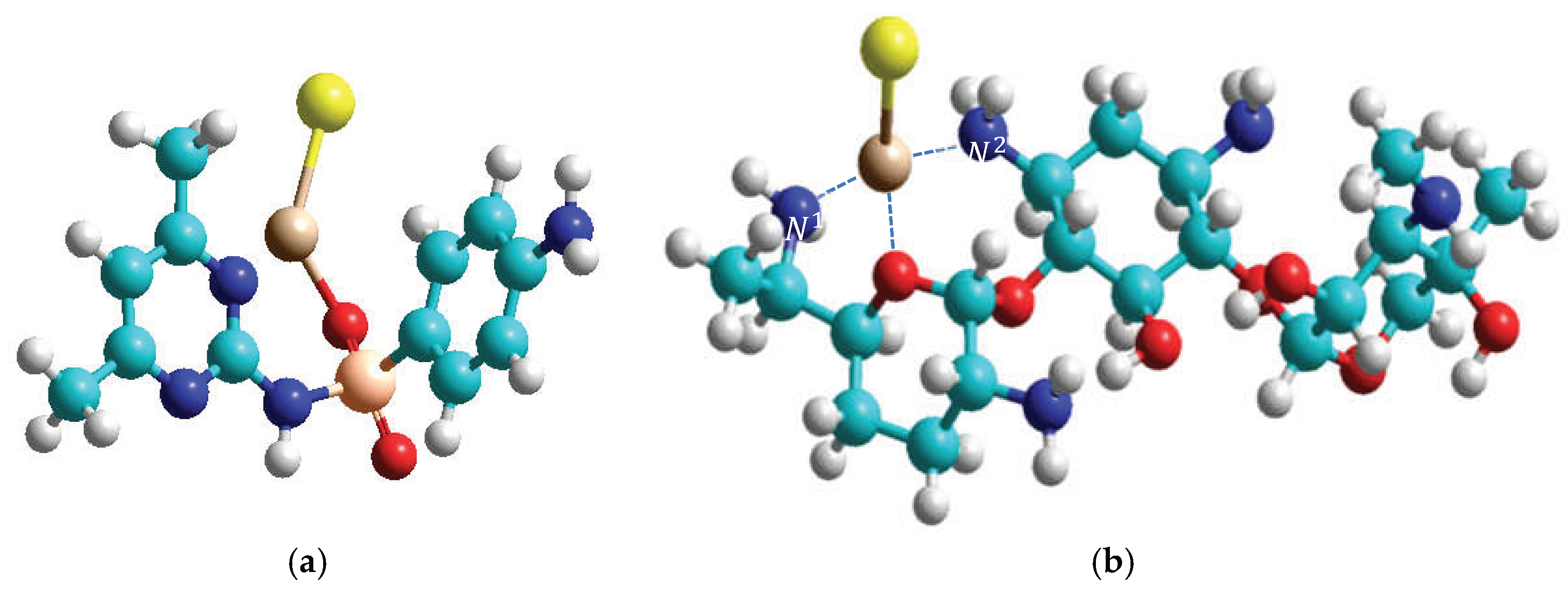
Figure 2.
Suggested structure: (с) LiI3 + sodium sulfadimidine.
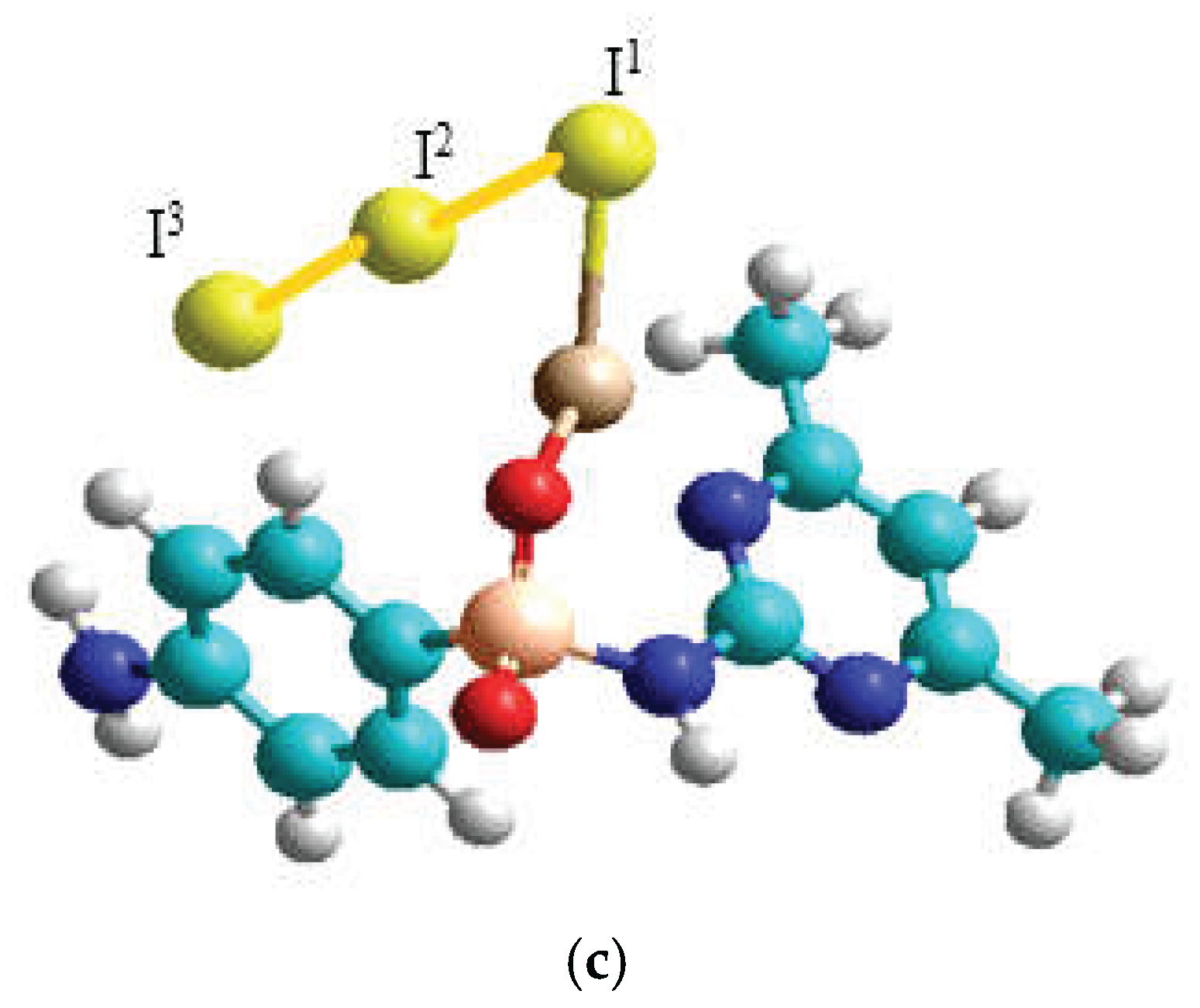
Figure 3.
UV spectra of KC-246 0.0017% and sodium sulfadimidine 0.01%.
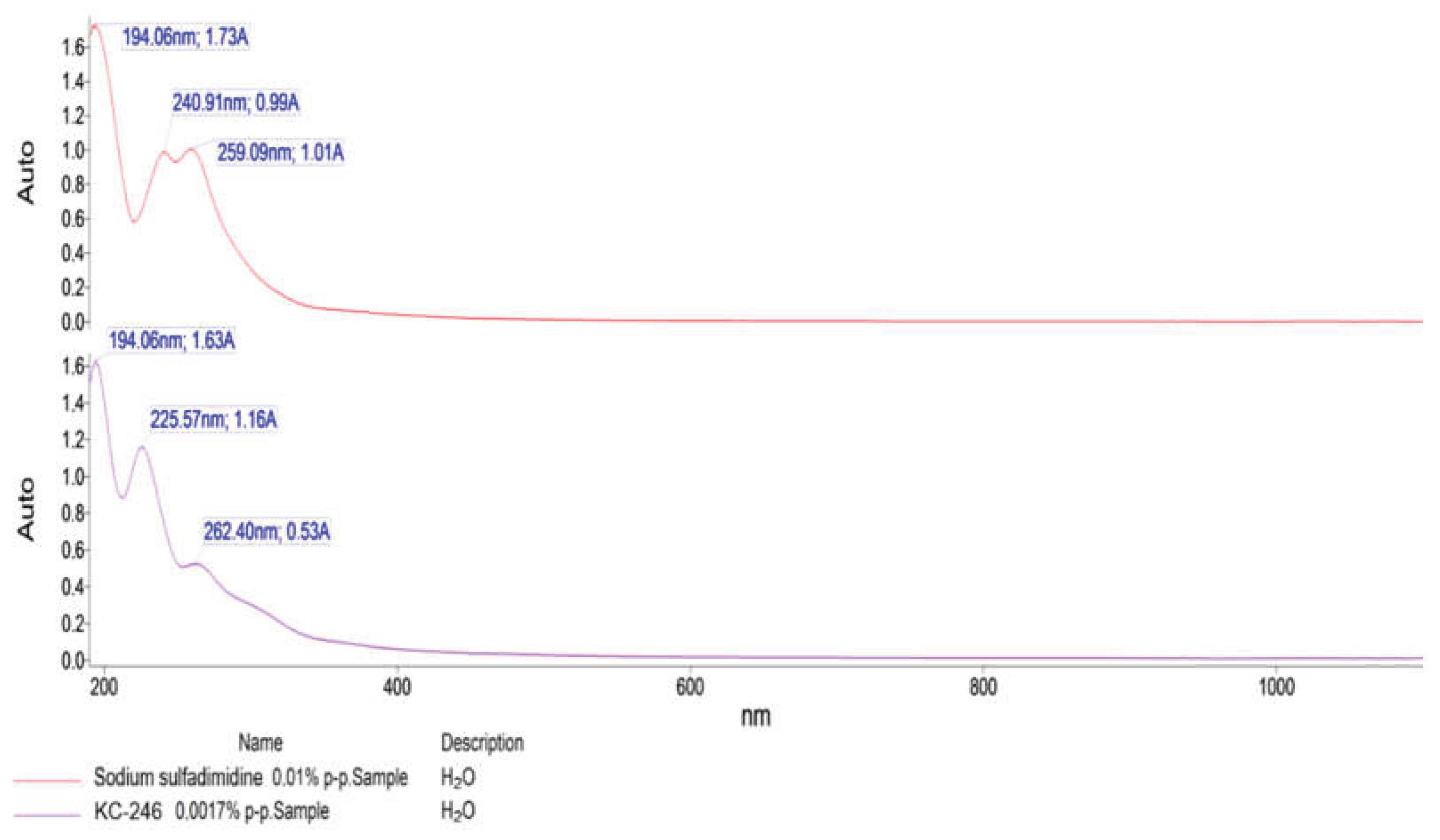
Figure 4.
UV spectra of KC-248 (0.005%) and gentamicin sulfate (0.01%).
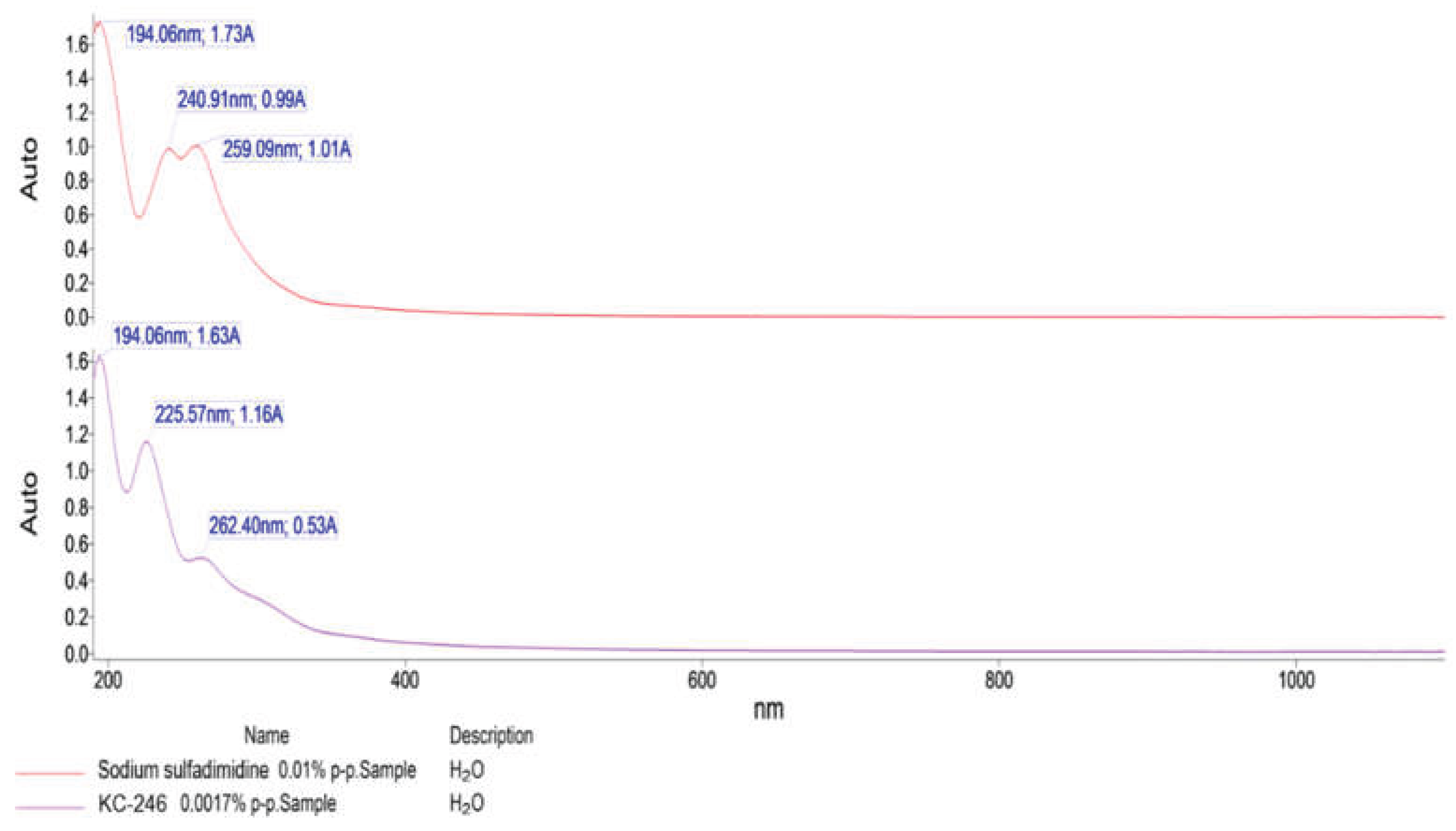
Figure 5.
Dose–response curve for compound KC-246 on PBMC culture.
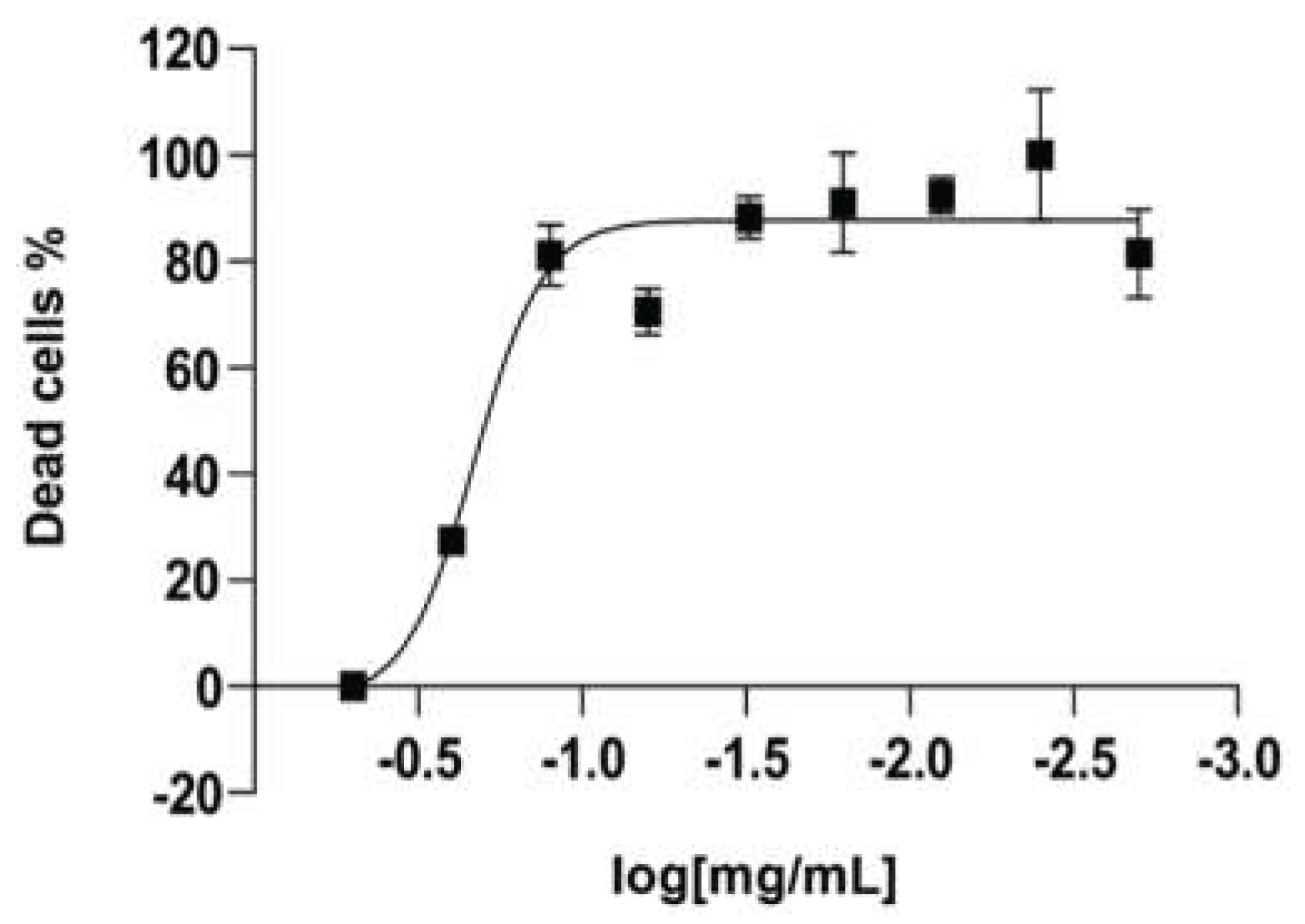
Figure 6.
Dose–response curve for compound KC-248 on PBMC culture.
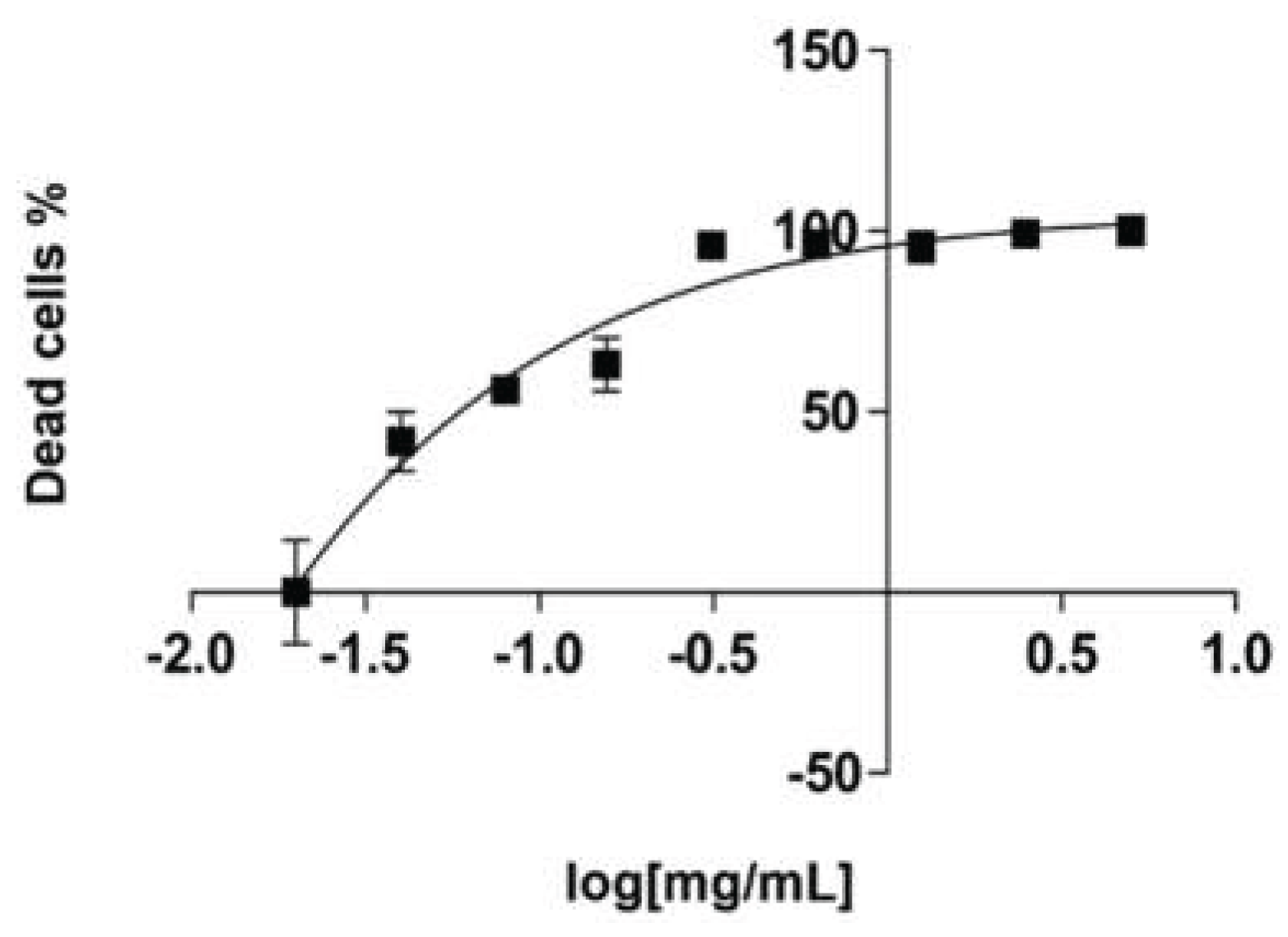
Figure 7.
Cytotoxic effect of compound KC-246 on MDCK cell culture.
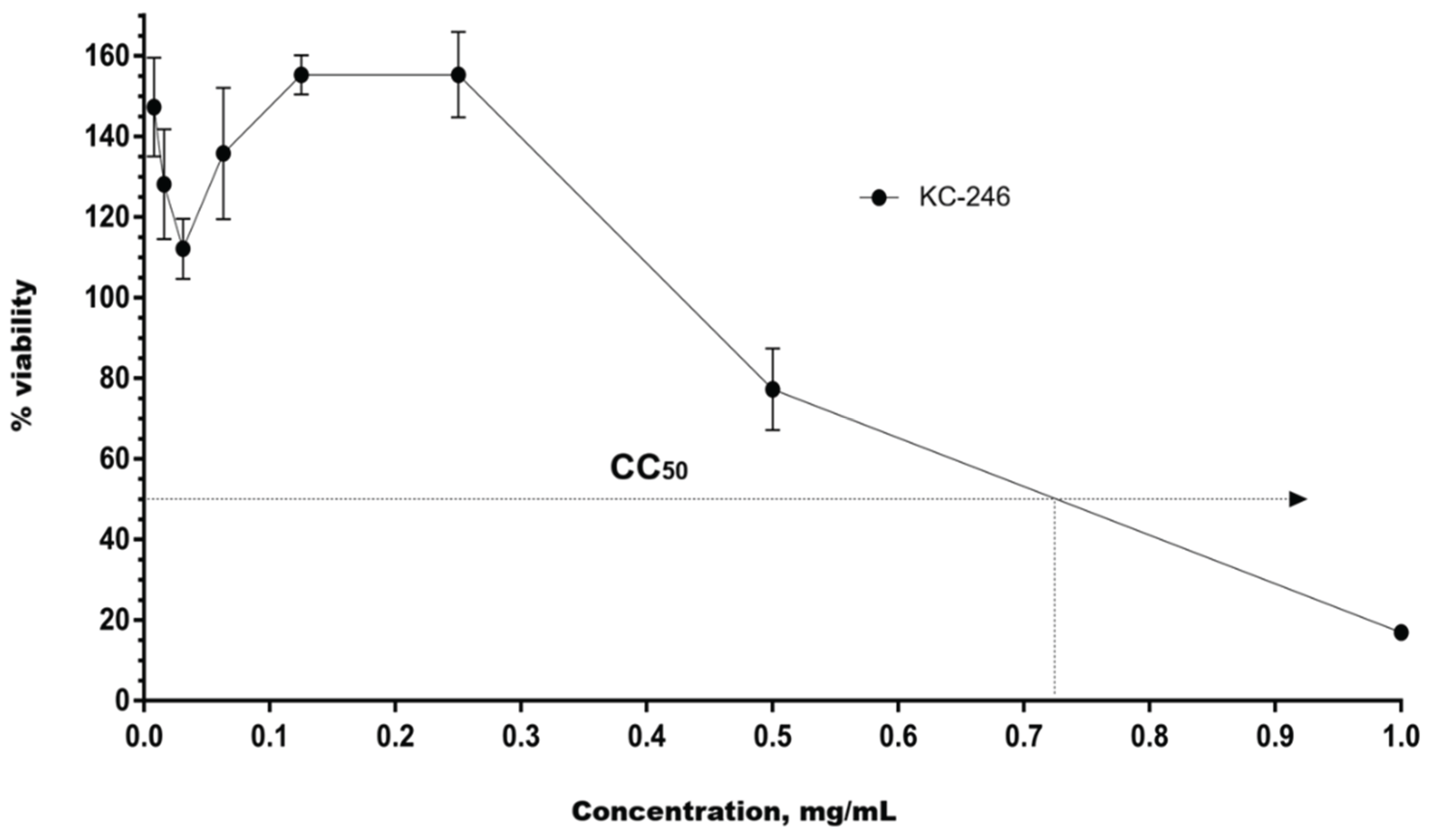
Figure 8.
Cytotoxic effect of compound KC-248 on MDCK cell culture.
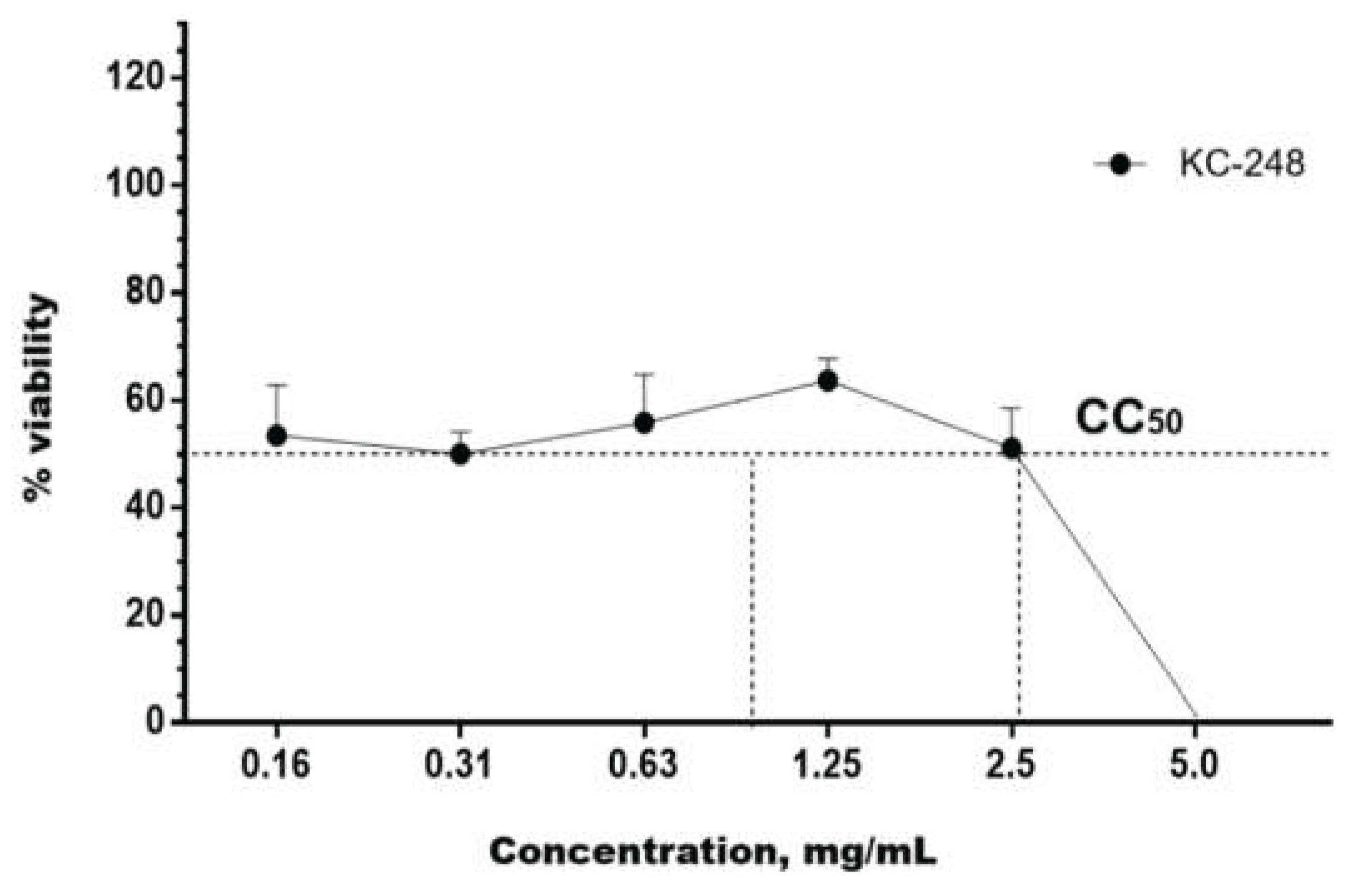
Figure 9.
Cytotoxic effect of compound KC-246 on RD cell culture.
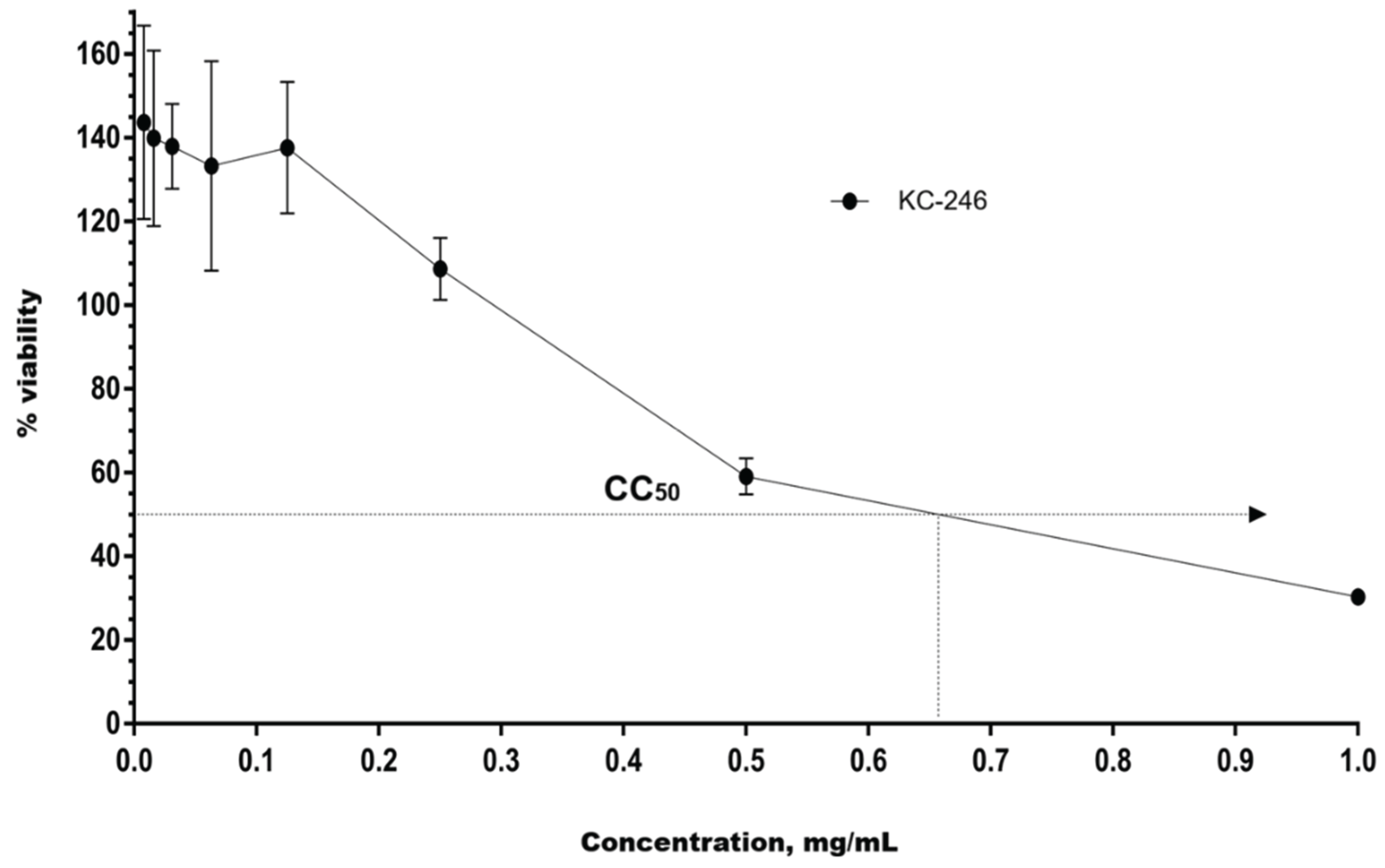
Figure 10.
Cytotoxic effect of compound KC-248 on RD cell culture.
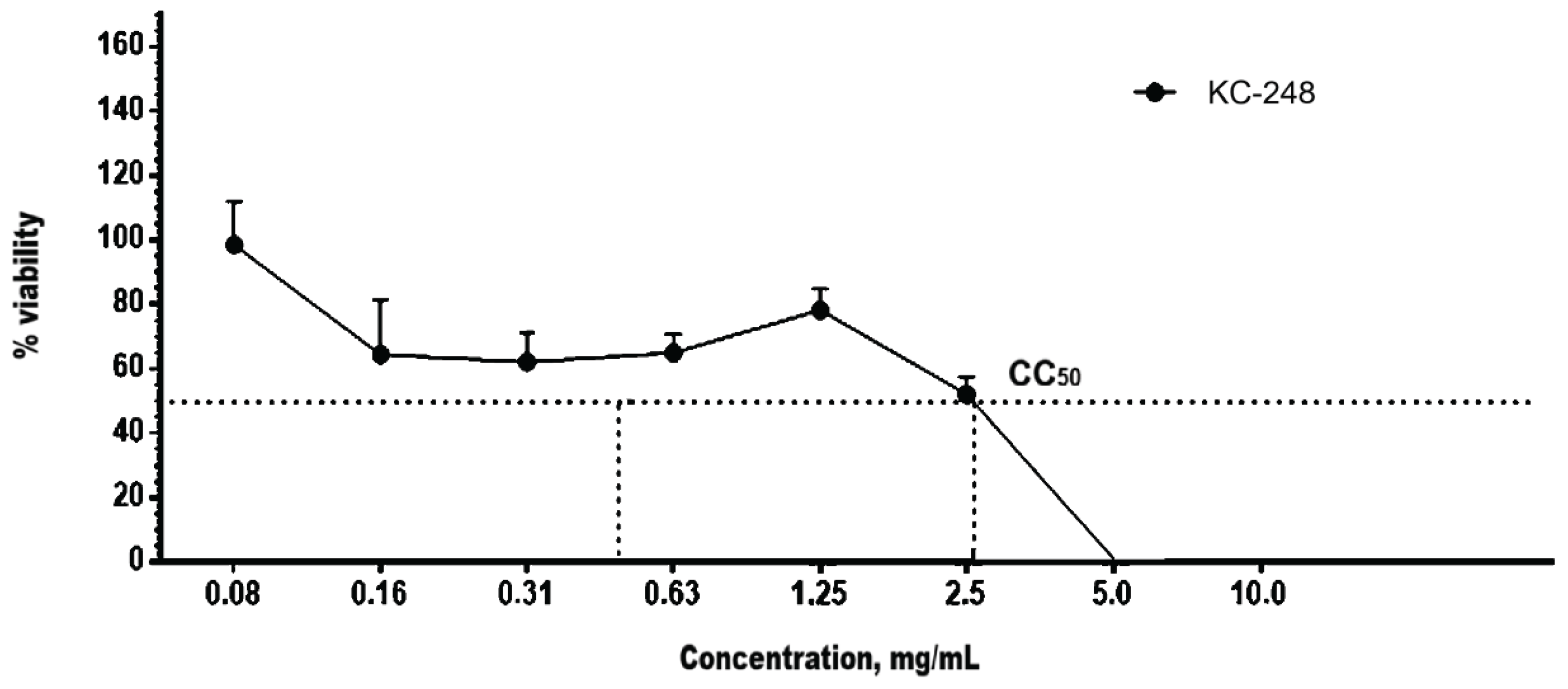
Table 1.
Complexation energies (ΔE, kcal/mol) and coordination bond lengths (Å).
| Structure | -∆Е | Me-O | Me-N |
|---|---|---|---|
| A | 72.39 | 1.93 | 2.12 |
| B | 84.44 | 2.00 | 2.10 |
Table 2.
Complexation energy (ΔE, kcal/mol), I2 bond energy in the complex (ΔE1, kcal/mol), and coordination bond length (Å).
Table 2.
Complexation energy (ΔE, kcal/mol), I2 bond energy in the complex (ΔE1, kcal/mol), and coordination bond length (Å).
| Structure | -∆Е | -∆Е1 | Li-O | Li-I1 | Li-I2 | I1-I2 | I2-I3 |
|---|---|---|---|---|---|---|---|
| c | 27.23 | 20.48 | 1.92 | 2.62 | 2.96 | 3.07 | 2.91 |
Table 3.
Physicochemical characterization.
| Compound name | Solubility | рН | Melting point, °С | Iodine, g/kg | Iodide, g/kg |
|---|---|---|---|---|---|
| Titration | |||||
| KC-246 | Water, DMSO, acetone 1g/10ml (soluble) |
2.35 ± 0.01 | 56-57 ±0.71 | 101.67 ± 0.57 | 266.68 ± 0.82 |
| KC-248 | Water 1g/5ml (freely soluble) |
2.35± 0.01 | 60-61 ± 1.0 | 100.78 ± 2.26 | 166.87 ± 1.29 |
Table 7.
Spectral characteristics of the synthesized complex compounds (UV spectra).
| Compound name | λmax, nm | Amax | Transitions |
|---|---|---|---|
| KC-246 | 194.06 | 1.63 | σ → σ* |
| 225.57 | 1.16 | n → π* | |
| 262.40 | 0.53 | n → π* | |
| Sodium sulfadimidine | 194.06 | 1.73 | n → π* |
| 240.91 | 0.99 | n → π* | |
| 259.09 | 1.01 | n → π* or π → π* | |
| KC-248 | 194.18 | 1.91 | σ → σ* |
| 225.13 | 1.46 | π → π* | |
| 283.80 | 0.18 | n → π* | |
| Gentamicin sulfate | - | - | - |
Table 8.
Percentage of viable PBMCs after 48-hour exposure to KC-246 and KC-248 substances.
| Concentrations, mg/mL | KC-246 M ± SD (n = 4) |
Concentrations, mg/mL | KC-248 M ± SD (n = 4) |
|---|---|---|---|
| 0.50 | 28.7 ± 2.6 | 5.00 | 18.0 ± 4.2 |
| 0.25 | 50.9 ± 2.3 | 2.50 | 18.7 ± 1.3 |
| 0.125 | 87.4 ± 7.9 | 1.25 | 22.7 ± 4.5 |
| 0.063 | 84.0 ± 8.8 | 0.62 | 21.8 ± 1.9 |
| 0.031 | 98.5 ± 8.6 | 0.31 | 22.2 ± 1.6 |
| 0.016 | 97.8 ± 10.7 | 0.15 | 56.7 ± 7.7 |
| 0.008 | 99.3 ± 3.4 | 0.08 | 63.9 ± 2.8 |
| 0.004 | 102.2 ± 10.9 | 0.04 | 78.9 ± 8.5 |
| 0.002 | 96.4 ± 14.7 | 0.02 | 122.5 ± 15.1 |
| CC50, mg/mL | 0.179 | CC50, mg/mL | 0.072 |
Table 10.
Results of the antimicrobial activity of KC-246 and KC-248 substances.
| Test strains | Compound name | |
|---|---|---|
| KC-246 | KC-248 | |
| Minimum bactericidal concentration (MBC) values, μg/mL, expressed as I2 | ||
| S.aureus ATCC 6538 | 0.198 | 0.787 |
| S.aureus ATCC 33591 | 0.397 | 0.393 |
| E.coli ATCC 8739 | 0.794 | 0.787 |
| E.coli ATCC 2523 | 0.794 | 0.787 |
| S.enterica ATCC 14028 | 0.794 | 3.149 |
| S.enterica ATCC 35988 | 0.397 | 0.787 |
| Kl.pneumoniae ATCC 10031 | 0.794 | 0.787 |
| Kl.pneumoniae ATCC 2524 | 0.794 | 0.393 |
| P.aeruginosa ATCC 9027 | 0.397 | 1.574 |
| P.aeruginosa ТА2 | 0.794 | 3.149 |
| Ent.hirae ATCC 10541 | 0.794 | 0.787 |
| Ent.faecalis ATCC 51575 | 0.397 | 0.787 |
| C.albicans ATCC 10231 | 0.794 | 3.149 |
| C.albicans SCAID PHPX 1-2019 | 0.794 | 3.149 |
Table 11.
Assessment of the virus-inhibitory activity of KC-246 and KC-248 substances on the influenza A/Swine/Iowa/15/30 (H1N1) virus model.
Table 11.
Assessment of the virus-inhibitory activity of KC-246 and KC-248 substances on the influenza A/Swine/Iowa/15/30 (H1N1) virus model.
| Compound name | Concentration, mg/mL | Ku, % |
|---|---|---|
| KC-246 | 0.365 | 100 |
| 0.183 | 100 | |
| 0.091 | 21.7 | |
| KC-248 | 1.275 | 100.0 |
| 0.638 | 66.7 | |
| 0.319 | 4.5 |
Table 12.
Assessment of the virus-inhibitory activity of KC-246 and KC-248 substances on the herpes simplex virus type 1, strain “Victory” model.
Table 12.
Assessment of the virus-inhibitory activity of KC-246 and KC-248 substances on the herpes simplex virus type 1, strain “Victory” model.
| Compound name | Concentration, mg/mL | Ku, % |
|---|---|---|
| KC-246 | 0.330 | 100 |
| 0.165 | 100 | |
| 0.083 | 33.3 | |
| KC-248 | 1.300 | 100 |
| 0.650 | 4.8 | |
| 0.325 | 0 |
Disclaimer/Publisher’s Note: The statements, opinions and data contained in all publications are solely those of the individual author(s) and contributor(s) and not of MDPI and/or the editor(s). MDPI and/or the editor(s) disclaim responsibility for any injury to people or property resulting from any ideas, methods, instructions or products referred to in the content. |
© 2026 by the authors. Licensee MDPI, Basel, Switzerland. This article is an open access article distributed under the terms and conditions of the Creative Commons Attribution (CC BY) license (http://creativecommons.org/licenses/by/4.0/).
Copyright: This open access article is published under a Creative Commons CC BY 4.0 license, which permit the free download, distribution, and reuse, provided that the author and preprint are cited in any reuse.