
Submitted:
13 April 2026
Posted:
15 April 2026
You are already at the latest version
Abstract
Addressing the issue that evaluations of historic districts often rely heavily on qualitative analysis and lack quantitative support, this study constructs a comprehensive quantitative assessment system integrating the SOR model with image semantic segmentation technology. Taking Cuojie Street in Hefei as a case study, the DeepLab-V3+ algorithm is employed to analyze street-view images, extracting eight physical spatial features—including green view ratio and enclosure ratio—as environmental stimulus variables (S). Combined with the Semantic Difference (SD) method, we quantified the public's psychological perceptions (Organism O) and behavioral responses (Reaction R). Multiple regression analysis indicates: (1) Cultural visual distinctiveness and color diversity are core factors positively driving the perception of historical atmosphere; (2) Enclosure ratio exhibits a significant trade-off effect: while it strengthens cultural identity, excessively high levels lead to a decline in physical comfort; (3) Green view ratio and walkable space play a decisive role in the perception of environmental comfort. Based on this quantitative analysis, this paper proposes micro-renewal strategies such as visual anchoring and color correction, flexible interface design, three-dimensional greening, and refined operation and maintenance. This study precisely maps subjective psychological perceptions to objective physical pixels, providing a scientific reference for evidence-based renewal and sustainable development of similar districts.
Keywords:
historic and cultural districts
; micro-renewal
; sor model
; image semantic segmentation
; vitality enhancement
1. Introduction
Historic and cultural districts are specific urban spaces characterized by concentrated clusters of historic buildings and intact spatial layouts [1,2]. As important repositories of collective urban memory and cultural heritage, they play a central role in shaping urban identity [3,4]. From the perspective of environmental psychology, the unique physical environment and cultural atmosphere of historic and cultural districts can effectively stimulate deep psychological responses in users [5]. This "person-place" interaction, rooted in physical space, not only shapes distinct spatial imagery but also strengthens users’ sense of place attachment and cultural belonging—factors crucial for maintaining the district’s long-term social vitality [6]. However, against the backdrop of rapid urbanization and the homogenization of urban landscapes, the evolution of historic and cultural districts faces a significant paradigm shift—their development trajectory is shifting from traditional "static preservation" toward a dynamic revitalization model centered on "adaptive reuse" and organic renewal [7]. Consequently, current research is increasingly focused on resolving the dichotomy between preservation and development—that is, actively integrating modern urban functions and promoting sustainable urban development while scientifically and authentically preserving intrinsic cultural values and enhancing the spatial vitality of the neighborhood [8].
At this stage, research on public spaces in historic and cultural districts is undergoing a profound paradigm shift, moving from a static assessment of the physical environment to a dual-dimensional approach that places strong emphasis on the dynamic coupling between people and the environment [9,10]. Traditional research has largely relied on field surveys and questionnaire interviews. While these methods can provide qualitative insights, they generally suffer from limitations such as high subjectivity, low efficiency, and difficulty in achieving fine-grained quantification when dealing with large-scale, complex spaces [11,12]. In recent years, the rapid evolution of computer vision and artificial intelligence technologies has brought about a methodological revolution in spatial analysis [13,14,15,16,17,18,19,20,21]. In particular, deep learning-based semantic segmentation technology enables researchers to leverage vast amounts of street-view imagery to quantitatively extract visual features of the physical environment—such as green coverage and sky openness—with high precision and throughput [22,23,24,25,26,27,28,29,30]. This leap from "qualitative assessment" to "precise quantitative measurement" provides robust technical support for deconstructing the complex relationships between spatial elements and human activity [31]. More importantly, the refined spatial diagnostics enabled by intelligent vision technology align closely with the "micro-renewal" theory for contemporary historic and cultural districts [32]. Compared to traditional large-scale renovations, modern micro-renewal advocates for small-scale, low-impact, localized interventions based on precise data feedback. Consequently, the deep integration of iterative intelligent vision analysis technologies with micro-renewal theory—using scientific quantification to drive the precise reshaping of spatial design and vitality—is emerging as a key frontier trend in research on the sustainable development of historic and cultural districts [33].
Although intelligent vision technologies such as semantic segmentation provide a solid data foundation for quantifying physical spatial characteristics, the "vitality" of historic districts is not essentially a static physical entity, but rather a dynamic manifestation of the deep interaction between the built environment and the psychological behaviors of its users [34]. Therefore, the interdisciplinary introduction of an environmental psychology perspective to explore how objective spatial characteristics drive subjective human behavior has become the key to bridging the gap between data quantification and spatial design [35]. In this regard, the "Stimulus-Organism-Response" (SOR) model offers a highly explanatory theoretical framework [36]. Originally proposed by environmental psychologists, this model emphasizes that external environmental stimuli trigger internal cognitive and emotional changes in individuals, leading to approach or avoidance behavioral responses [37,38]. Within the specific context of historic and cultural districts, the SOR model demonstrates exceptional theoretical relevance and practical applicability [39,40]. The unique building facades, street scales, green space ratios, and cultural landscapes within the district form a complex visual "stimulus (S)" matrix [41,42]; after perceiving these multidimensional stimuli, visitors generate internalized "organism (O)" responses such as spatial comfort, cultural identification, and place attachment [43]; which ultimately manifest as behavioral "responses (R)"—such as increased dwell time and frequent social interactions—that directly enhance the vitality of the district [44]. By treating the detailed visual metrics extracted through semantic segmentation as objective "environmental stimuli (S)," this approach effectively overcomes the shortcomings of previous SOR models, which relied on overly subjective measurements of environmental stimuli, and establishes a rigorous causal chain between the physical spatial form and the vitality of the crowd [45].
Based on the aforementioned background and theoretical framework, the core significance of this study lies in providing a scientific, quantitative approach to resolving the conflict between historical heritage preservation and modern commercialization, particularly in the context of rapid global urbanization and within developing countries [46]. At the theoretical level, this study breaks through the single methodological approach of traditional vitality assessments for historic and cultural districts [47]. It innovatively integrates computer vision technology—specifically semantic segmentation—with the classic framework of environmental psychology, namely the SOR model, to construct a new full-chain assessment paradigm: "quantification of objective visual features—assessment of subjective psychological perception—feedback on spatial behavioral vitality" [48]. At the practical level, this study takes Cuojie in Hefei—a typical district where traditional character and modern commerce are deeply intertwined—as a case study, conducting qualitative strategy research driven by quantitative data [49]. This not only provides precise spatial optimization strategies for the study area but also offers a low-cost, high-throughput, and highly replicable methodological reference for the living heritage and sustainable spatial governance of similar urban historical sites worldwide within the context of "micro-renewal" [50]. To achieve the aforementioned research objectives, this paper is dedicated to thoroughly exploring and addressing the following three key scientific questions: (1) Leveraging intelligent visual extraction technologies such as semantic segmentation to accurately extract and quantitatively reveal the visual characteristics of the physical space in Cuojie’s historic and cultural district, thereby scientifically characterizing the "environmental stimulus" variable (S) in environmental psychology;(2) To uncover the underlying mechanisms through which the objective physical spatial characteristics of Cuojie influence the district’s overall vitality (R) via visitors’ internal perceptions and emotional experiences (O), and to precisely identify the spatial and experiential elements that play a key driving role in this "S-O-R" multidimensional pathway; (3) Based on model simulation results and precise data feedback mechanisms, propose targeted, low-impact micro-renewal and spatial optimization strategies that align with the historical context, aiming to effectively revitalize and enhance the long-term vitality of the historic district.
2. Materials and Methods
2.1. Overview of the Study Area
This study selects "Cuojie," a renowned cultural district in Feidong County, Hefei City, Anhui Province, China, as the case study site (Figure 1). Nestled against the Longquan Mountains to the south, the district is deeply rooted in the millennia-old historical context of "Confucius’s Mentor" and the unique geographical foundation of "city-lake symbiosis." It has now evolved into one of the representative new cultural tourism and commercial landmarks and cultural showcases in eastern Hefei.
In terms of spatial form, the core area of Cuojie exhibits a ribbon-like layout characterized by "one axis and two wings." Its main visitor circulation route, with the iconic "Kuixing Tower" as its central visual focal point, connects the South Square, the core main street, and the North Entrance in sequence from south to north, forming a continuous commercial façade stretching hundreds of meters. Spatially, this main street organically integrates an ancient opera stage, a traditional academy, and diverse specialty commercial nodes (Figure 2). In terms of the visual environment, the core district of Cuojie highly condenses the architectural texture of Song Dynasty-style buildings, high-density modern commercial signage, and a rich array of landscape features. This intense overlap and collision of traditional Song Dynasty aesthetics with a modern commercial atmosphere within the public space creates a high degree of visual complexity and spatial heterogeneity in the district, while also harboring immense potential for micro-renewal.
Selecting the core area of Cuojie as the empirical site for this study is scientifically sound. First, its highly heterogeneous and element-dense physical space provides a high-quality, multidimensional source of street-view image data for semantic segmentation technology. Second, this intense visual collision between tradition and modernity offers excellent observational samples for the "environmental stimulus" variable in the SOR model of environmental psychology. In summary, this case study perfectly aligns with the requirements of this research’s data-driven quantitative experimental design and micro-renewal strategy simulation in terms of commercial representativeness and the richness of image data.
2.2. Street View Image Acquisition
As a crucial medium for quantifying the urban micro-built environment, first-person-view street-view imagery is widely adopted in studies evaluating the spatial form and vitality of historic districts due to its ability to objectively map pedestrians’ actual visual perceptions. The image data collection for this study is based on rigorous field research, utilizing photographic images as a direct substitute for semantic segmentation and body perception assessment. To ensure that the images authentically recreate the continuous spatial experience of pedestrians strolling through the streets, the image collection followed strict standardized procedures: Using ArcGIS 10.2 software, a data point was selected every 5 meters along the neighborhood’s road network. Through field surveys, one street view image was captured from each of the four cardinal directions (north, south, east, and west) at each data point. All photographs were taken during daylight hours under clear weather and stable lighting conditions. The shooting height was uniformly set at approximately 1.6 meters above ground level—corresponding to the average human eye level—and the camera lens was maintained at a horizontal angle of view. This approach was designed to minimize interference with the objectivity of the physical environment caused by extreme weather, atypical lighting conditions, and special photographic techniques—such as low-angle shots, overhead shots, or wide-angle distortion (Figure 3).
During the sample screening phase, to effectively eliminate redundant data and highlight the unique cultural authenticity and spatial heterogeneity of Hefei’s streets, this study introduced a rigorous expert scoring mechanism. The study invited nine experts and scholars from landscape architecture and related fields to form a review panel, which conducted two rounds of strict screening and evaluation of the 873 raw street view images initially collected. The first round of preliminary evaluation focused on image quality control, eliminating invalid samples with severe overexposure, blurriness, or extensive obstruction by temporary obstacles, thereby reducing the image library to 546 images. The second round of re-evaluation focused on image representativeness and visual information richness, eliminating secondary samples that failed to represent the character of Cuojie. Following the final review by experts, 413 images were selected as those that most accurately capture the core characteristics of Cuojie’s landscape and best exemplify its spatial composition. These 413 core images form the dedicated database for this experiment, laying a solid data foundation for subsequent deep learning-based semantic segmentation and the quantitative evaluation of bodily perception in the S-O-R model.
2.3. Evaluation Metrics for Street Physical Characteristics
For image-based measurements, this study employs the DeepLab-V3+ semantic segmentation model to extract street landscape elements from street view images (Figure 4). To ensure the model’s recognition accuracy in complex historic district settings, the DeepLab-V3+ model used in this study was pre-trained and fine-tuned on the Cityscapes large-scale urban street view dataset. Validation using a local dataset showed that the model achieved an average mean inter-class overlap (mIoU) of 82.4% for core categories such as buildings, vegetation, sky, and hard paving, and an overall mean pixel accuracy (mPA) of 91.2%, demonstrating high recognition reliability. This model accurately converts the highly heterogeneous composition of visual street landscapes into quantifiable pixel-level area ratios, thereby enabling the extraction of semantic features of street spaces and a deep interpretation of environmental structural systems.
Based on the urban design quality evaluation system developed by Ewing and Handy—which includes core elements such as imagery, enclosure, human scale, permeability, and complexity—scholars in recent years have focused on quantifying street landscape indicators to characterize design quality [51,52]. Drawing on the aforementioned research approaches and closely integrating the unique environmental and historical-cultural context of the study area, this research has established a physical spatial characteristic measurement system comprising eight quantitative indicators (Table 1), specifically: green view ratio, openness, enclosure, walkable space, cultural visual distinctiveness, street cleanliness, landscape diversity index, and environmental color diversity [53]. Extensive empirical research indicates that these physical characteristic indicators not only accurately depict the features of the built environment at the micro-scale but also serve as effective explanatory variables for analyzing the spatial heterogeneity of urban vitality at the street and neighborhood scales [54].
2.4. Organismic Perception Assessment Indicators
Within the SOR theoretical framework, the external physical spatial form and environmental factors constitute the objective "stimulus" (S), while the internal cognition, emotional feedback, and psychological activities generated by the individual upon receiving the stimulus are regarded as "organism" (O) variables [55,56]. For the specific environment of historic and cultural districts, this study needs to establish a mapping relationship between the objective physical stimulus variables extracted via image semantic segmentation, as described earlier, and the user’s subjective psychological activities [57,58]. To scientifically and comprehensively measure visitors’ multidimensional perceptions and internal emotional states under the stimuli of complex neighborhood environments, this study constructed an organismic perception evaluation index system comprising four dimensions—spatial visual perception, environmental comfort perception, emotional arousal perception, and cultural identity perception—based on a comprehensive review of classic theories and empirical research in environmental psychology, landscape architecture, and urban design [59,60,61]. First, the establishment of the "spatial visual perception" and "environmental comfort perception" dimensions primarily draws on Kevin Lynch’s classic theory of urban imagery and relevant research on social behavior in public spaces. Indicators such as a sense of spatial scale, visual order, physical comfort, and wayfinding clarity were extracted to comprehensively reflect visitors’ subjective experiences regarding three-dimensional spatial volume, interface continuity, and pedestrian safety [62,63]. The construction of the "Emotional Arousal Perception" dimension is not only rooted in the classification of emotional valence from classical environmental psychology models but also deeply integrates Attention Restoration Theory (ART). This dimension precisely characterizes the level of activation of visitors’ sensory systems by the neighborhood environment. As well as the state of mental relaxation that alleviates psychological stress, through indicators such as emotional pleasure, neural arousal, and psychological relaxation [64,65]. Finally, the "Cultural Identity Perception" dimension focuses on the core characteristics of historic districts. Drawing on place theory and the concept of authenticity in heritage conservation, it measures visitors’ sense of identification with the authenticity of traditional features, their sense of attachment to the place, and their overall assessment of its appeal [66].
To achieve the quantitative conversion of the aforementioned subjective psychological perception indicators, this study introduced the Semantic Differential (SD) method to construct a somatosensory perception assessment scale (Table 2). For each of the twelve specific assessment indicators across the four dimensions, the scale established pairs of opposing adjectives and employed a seven-point rating scale ranging from -3 to 3 for quantitative scoring. Given that this study focuses on the objective visual characteristics of the built environment, an image-based visual perception evaluation experiment that controls for environmental variables was employed during the data collection phase for the perceptual assessment. To achieve a precise mapping between objective environmental stimuli and subjective perceptual responses, the experiment utilized 413 core street scene images—previously rigorously selected by experts—as the specific medium for the perceptual assessment. This study specifically recruited 45 participants with a certain level of spatial cognition, primarily undergraduate and graduate students majoring in landscape architecture and urban and rural planning. The participant group maintained a relatively balanced gender ratio, with males accounting for 46.7% and females for 53.3%. Recognizing that evaluating all 413 images in a single session could easily induce cognitive fatigue in participants, thereby compromising data reliability, this experiment implemented strict batching and randomization controls within a standardized indoor testing environment. First, a pre-experiment phase was introduced prior to the formal testing, during which participants were asked to provide trial ratings for five non-sample images to calibrate the scoring criteria and ensure their accurate understanding of the academic implications of the 12 indicators; Second, the presentation order of the 413 core images was fully randomized for each participant to eliminate order effects. Most importantly, the entire evaluation process was divided into 7 independent testing modules, each containing 59 images. Participants were required to take a 10- to 15-minute break for visual and mental relaxation between modules. To avoid overloading participants on a single day, all scoring tasks were reasonably distributed over three consecutive days. To eliminate outlier biases in individual subjective perceptions, this study calculated the arithmetic mean of all participants’ scores for each metric on the same image, ultimately constructing a quantitative dataset of subjective perceptions that corresponds one-to-one with the 413 objective physical images. This rigorous data collection and processing system effectively transforms ambiguous psychological perceptions into standardized numerical values. It achieves a precise mapping of objective environmental stimuli to subjective bodily perceptions on a unified image pixel foundation, providing a solid data foundation for the subsequent construction of a full-chain causal logic model.
2.5. Development of the SOR Model
Guided by the classic SOR theoretical framework and incorporating the spatial characteristics of the historical and cultural district under study, this research has constructed a comprehensive evaluation and micro-renewal pathway model in which objective environmental stimuli drive subjective human perception, ultimately influencing the vitality of the district. As shown in Figure 5, this model identifies eight refined physical environmental elements—green view ratio, openness, enclosure, walkable space, cultural visual distinctiveness, street cleanliness, landscape diversity index, and environmental color diversity—extracted via image semantic segmentation technology, as objective stimulus variables (S). Concurrently, the model employs four dimensions of user perception—spatial visual perception, environmental comfort perception, emotional arousal perception, and cultural identity perception—as mediating organismic perception variables (O). Ultimately, these four categories of multidimensional subjective perceptions converge to influence the outcome variable (R), namely the vitality response of the historic and cultural district (Figure 5).
In constructing this transmission pathway from "Organismic Perception (O)" to "Vitality Response (R)," this model draws heavily on the broad empirical consensus within environmental behavioral science [67,68,69]. As revealed by mechanisms identified in classic models such as Mehrabian and Russell’s emotional and approach-avoidance behavior model, Jan Gehl’s long-term quantitative observations of social interactions in urban public spaces, and numerous interdisciplinary studies on the psychological restorative qualities of the built environment, the high-quality positive perceptions generated by individuals in response to external physical environmental stimuli—such as cultural identity, psychological resilience, and environmental comfort—serve as the core drivers that directly trigger positive recreational behaviors, extend visitor dwell times, and stimulate micro-vitality within the neighborhood [70,71,72]. Based on this logical framework, the model establishes a complete causal chain of "objective spatial quantification—subjective perception mapping—vitality behavior feedback," translating the ambiguous, multidimensional spatial forms of a neighborhood into objective numerical metrics [73,74,75]. This bridges the gap between theory and practice, translating abstract aspirations for revitalization into spatial intervention parameters that designers can directly utilize and precisely implement, ultimately providing scientific, evidence-based guidelines for people-centered micro-renewal practices in Hefei’s Cuojie Street and similar historic and cultural districts [76].
2.6. Statistical Analysis
To thoroughly analyze the complex relationship between spatial environmental stimuli in historic and cultural districts and people’s subjective experiences, this study utilized SPSS 26.0 statistical analysis software to conduct in-depth correlation analysis and multiple linear regression analysis on the quantitative assessment data of street physical space characteristics and the results of body perception assessments. During the specific variable setting and model construction phase, the study systematically selected eight key physical environmental stimulus indicators as independent variables. These eight core indicators specifically include green visibility rate, spatial openness, interface enclosure, proportion of walkable space, cultural visual distinctiveness, street cleanliness, landscape diversity index, and environmental color diversity. Concurrently, the comprehensive quantitative score of the somatosensory perception evaluation dimension was set as the dependent variable. In the multiple linear regression analysis, after first using Cronbach’s alpha to test the internal consistency of sub-indicators within each dimension, the arithmetic mean method was employed to equally weight and combine the scores of sub-indicators belonging to the same macro-dimension. This scientifically integrated the original observed variables into four core dimensions—spatial visual perception, environmental comfort perception, emotional arousal perception, and cultural identity perception—which were then set as the dependent variables in the regression model. Through this rigorous quantitative analytical approach, this study aims to scientifically elucidate the specific mechanisms and pathways through which the physical spatial elements of a neighborhood influence individual psychological perceptions and emotional responses. The final research findings will not only objectively reflect the current stimulus efficacy of the spatial environment but also provide robust empirical data support for the subsequent development of neighborhood micro-renewal strategies that are both scientifically grounded and targeted.
3. Results
3.1. Assessment Results of Street Physical Characteristics
Based on eight physical feature indicators extracted using image semantic segmentation technology, this study quantitatively analyzed the current distribution characteristics of the physical spatial form in historic and cultural districts. The analysis indicates that, among the evaluated features, the landscape diversity index and enclosure degree exhibit high numerical values (Table 3). Specifically, enclosure degree shows a significant trend toward dispersion, objectively reflecting the heterogeneity of the internal spatial form of the neighborhood—that is, within the same neighborhood system, open gathering and distribution plaza nodes are interwoven with traditional narrow alleys that evoke a strong sense of architectural oppression. At the same time, the high landscape diversity index indicates that the visual field of the district integrates diverse visual elements such as building facades, distinctive paving, and ancillary facilities, resulting in a highly heterogeneous and rich spatial environment.
Furthermore, the high average street cleanliness score and low variability indicate that the neighborhood’s environmental hygiene management maintains a high degree of consistency and stability across the entire spatial scope, with minimal visual disturbances. Comparative analysis reveals that the neighborhood’s cultural visual distinctiveness is significantly higher than its green coverage rate and openness. This distribution of characteristics aligns closely with the spatial logic of a typical traditional commercial district: on the one hand, high-density traditional architectural symbols and decorative elements create a strong cultural atmosphere; on the other hand, constrained by the compact scale of traditional alleys and extensive hard-surfaced paving, the view of the sky is limited, and plant landscapes are primarily used as accents, resulting in relatively low levels of openness and green visibility.
3.2. Results of Somatic Perception Assessment
Based on the SOR theoretical model, this study quantitatively analyzed the subjective evaluation characteristics of respondents regarding the spatial environment of the historic and cultural district across four dimensions: spatial visual perception, environmental comfort perception, emotional arousal perception, and cultural identity perception. Through comparative analysis of the mean values of each indicator, the audience’s spatial perceptions exhibited significant hierarchical differences: overall, the distribution pattern was dominated by walking safety and visual appeal, while physical and mental relaxation and comfort were relatively weaker (Table 4).
Specifically, among the various perception dimensions, pedestrian safety and overall appeal received extremely high ratings in environmental perception evaluations. Notably, the data for pedestrian safety exhibits extremely low variability, indicating that respondents share a high degree of consensus regarding the neighborhood’s pedestrian-only streets and the spatial organization model that separates pedestrians and vehicles. At the same time, overall appeal and spatial richness maintain high evaluation benchmarks with minimal fluctuations in perception. This reflects the neighborhood’s success in establishing a spatial order characterized by strong visual impact and commercial vitality through the revitalization of high-density traditional building facades and the use of highly saturated visual symbols.
However, certain deeper-level perception metrics reveal limitations in the neighborhood’s ability to shape spatial quality. Notably, psychological relaxation scored the lowest among all evaluation indicators, but also exhibited the greatest disparity in perceptions and the highest data volatility. This phenomenon profoundly reflects that while high-intensity commercial activities and cultural stimuli can effectively enhance visitors’ emotional well-being and neural arousal, the spatial crowding and high-frequency visual stimuli make it difficult for the site to provide a consistent experience of psychological healing and relaxation. Furthermore, the overall perceived ratings for physical comfort and cultural authenticity were low, and significant spatial heterogeneity was observed. The shortcomings in physical comfort are strongly correlated with the insufficient microclimate regulation capacity resulting from the low green view ratio and extensive hard paving mentioned earlier; meanwhile, the low ratings for cultural authenticity reflect respondents’ reservations regarding the excessive reliance on modern commercial logic in reconstructing the historic district’s ambiance.
3.3. Correlation and Regression Analysis
3.3.1. Correlation Analysis
This study utilized SPSS software to conduct a correlation analysis of eight physical stimulus characteristics of the districts and twelve somatosensory evaluation indicators, revealing the relationships between different physical characteristics of the districts and the somatosensory evaluation indicators in the SOR model. The results are shown in the correlation analysis heatmap (Figure 6).
Exploring the correlation mechanisms between objective physical spatial characteristics and subjective perceptual evaluations is key to analyzing the vitality of the spatial environment in historic and cultural districts. In terms of spatial visual perception, spatial richness exhibits a significant positive correlation with the landscape diversity index, environmental color diversity, and cultural visual distinctiveness.
This indicates that high-frequency, diverse color combinations and architectural facade symbols constitute the core physical foundation for enhancing spatial visual richness. It is worth noting that a strong positive correlation exists between visual order and street cleanliness, yet a negative correlation exists with landscape diversity and color diversity: excessive visual elements, if lacking systematic planning and integration, can easily lead to visual chaos and thereby weaken the sense of order; conversely, high standards of street sanitation and facade maintenance serve as fundamental principles for maintaining basic spatial order. Furthermore, the strong positive correlation between a sense of spatial scale and enclosure, as well as the negative correlation with openness, strongly confirms that a compact street aspect ratio can more effectively evoke the audience’s psychological identification with the native scale of traditional urban alleys.
In the environmental comfort perception dimension, the spatial distribution of objective physical indicators directly reflects the trade-offs in comfort experiences. This further confirms that microclimate regulation and the ventilation and lighting conditions provided by open skies are key factors in enhancing thermal comfort in the neighborhood microenvironment, whereas overly enclosed, hard-paved spaces are prone to causing negative effects—such as localized heat island effects—and generating negative perceptions. Additionally, pedestrian safety is positively influenced by the proportion of walkable space and street cleanliness; spacious, pedestrian-only paved surfaces provide respondents with a higher sense of safety. Regarding spatial wayfinding mechanisms, wayfinding clarity is positively correlated with cultural visual recognition and the proportion of walkable space. This indicates that distinctive traditional cultural symbols—such as archways and iconic historic buildings—serve as crucial "visual anchors" within the spatial sequence. Combined with a continuous pedestrian base, these elements can effectively enhance the public’s wayfinding efficiency.
The analysis of correlation results in the emotional arousal perception dimension profoundly reflects the interactive effects between environmental stimuli in commercial districts and psychological responses [77]. Neural arousal exhibits a strong positive correlation with environmental color diversity, landscape diversity, and enclosure. This indicates that high-density, high-saturation visual stimuli and relatively crowded spatial configurations readily trigger high-arousal emotions such as excitement in the audience [78,79]. In contrast, psychological relaxation follows a diametrically opposite pattern: it is positively correlated with green visibility and openness, while negatively correlated with various diversity indicators and enclosure. These results validate the Attention Restoration Theory (ART) in environmental psychology, which posits that natural landscape elements possess significant psychological healing effects, whereas an overload of commercial visual stimuli and enclosed spaces inhibit the audience’s deep emotional relaxation [80]. Building on this, emotional pleasure maintains a stable positive correlation with cultural visual recognition and color diversity, collectively reflecting the positive feedback of high-quality cultural and commercial vitality on audience emotions [81].
In the dimension of perceived cultural identity, objectively existing physical carriers serve as the cornerstone for evoking deep emotional resonance among the audience. Analysis indicates that cultural authenticity exhibits a moderately strong positive correlation with cultural visual recognition. Although traditional architectural elements embedded in the objective space form the basis for perceived authenticity, this correlation did not reach a high level due to the constraints of the context of modern commercial scene reconstruction. However, a sense of place attachment is significantly influenced by the dual positive effects of enclosure and cultural visual distinctiveness. The sense of spatial shelter created by high enclosure, combined with a high concentration of cultural symbols, jointly reinforces the audience’s emotional belonging and reliance on the place. Ultimately, as a comprehensive evaluation indicator, overall attractiveness showed a significant positive correlation with landscape diversity, cultural visual distinctiveness, and walkable space. This fully demonstrates that constructing a physical spatial foundation characterized by "distinct cultural features, rich visual elements, and an excellent walking experience" is one of the key drivers for enhancing the core attractiveness and vitality of historic and cultural districts.
3.3.2. Regression Analysis
Prior to constructing an in-depth regression model, this study conducted systematic data aggregation on the 12 somatosensory assessment scale items obtained via the semantic differential method, based on the SOR theoretical model. To ensure the rigor and reliability of the aggregation, this study first employed Cronbach’s alpha to test internal consistency. The results showed that the α coefficients for the four core dimensions—spatial visual perception, environmental comfort perception, emotional arousal perception, and cultural identity perception—were 0.812, 0.785, 0.843, and 0.867, respectively. The reliability coefficients for each dimension were significantly greater than the standard threshold of 0.7, confirming that the items in each subscale demonstrated high convergent validity, measurement reliability, and statistical equivalence when measuring the same underlying latent variable.
Given that the selected indicators are all grounded in well-established theories of spatial perception and use a completely uniform measurement scale—a seven-point scale ranging from -3 to 3—this study ultimately employed the arithmetic mean method to calculate the combined scores of sub-indicators belonging to the same dimension, assigning equal weights to each. Compared to exploratory factor analysis based on variance maximization, this method not only effectively avoids the risk of overfitting weights due to sample-specific characteristics but also more fully preserves the physical dimensions and intuitive interpretability of the original assessment scores. Through this scientific data integration strategy, the original 12 body perception assessment variables were successfully transformed into four core latent variables, establishing a robust data foundation for subsequent precise quantification of the mechanisms by which spatial physical characteristics drive environmental perception.
To further elucidate the specific mechanisms by which objective physical features influence subjective perception dimensions, this study constructed stepwise multiple linear regression models using the physical features of the block—selected through correlation analysis—as independent variables, and spatial visual perception, environmental comfort perception, emotional arousal perception, and cultural identity perception as dependent variables. By progressively eliminating non-significant physical feature variables, optimized regression models for the four perception dimensions were ultimately established. As shown in Figure 7, the standardized residuals of the four regression models closely follow the normal distribution curve, indicating that the model residuals satisfy the normality assumption, further confirming the validity of the regression model specifications and the statistical results (Figure 7). Additionally, all four stepwise multiple linear regression models constructed in this study passed the significance test (F.Sig < 0.001), and their respective coefficients of determination R²indicate that the models provide a good explanation of the dependent variable. A comparative analysis of the standardized regression coefficients β reveals significant differences in the mechanisms by which physical spatial characteristics drive different perception dimensions (Table 5).
First, the regression analysis results for spatial visual perception indicate that cultural visual distinctiveness (β = 0.352), landscape diversity index (β = 0.284), and environmental color diversity (β = 0.215) have significant positive predictive effects on it. Among these, the contribution of cultural visual distinctiveness is the most prominent. This suggests that in historical and cultural districts such as Cuojie, the high frequency of traditional cultural symbols—such as signboards and the facades of ancient buildings—along with rich facade elements, are the core drivers of enhanced visual spatial quality. Furthermore, landscape and color diversity effectively break the visual monotony that might result from a gray brick-and-tile backdrop, creating a visually stimulating environment with rich layers. The variance inflation factors (VIF) for all retained variables were well below the threshold of 5, indicating that each physical characteristic functions independently within the spatial context and that the model is free of multicollinearity issues.
Regarding the perception of environmental comfort, the regression model reveals a set of mutually constraining spatial relationships. While green view ratio (β=0.318), walkable space (β=0.265), and street cleanliness (β=0.182) exerted significant positive influences, enclosure (β=-0.154) had a significant negative effect on comfort. This result profoundly reflects the objective challenges of the current environment in Cuojie: Spacious, pedestrian-only streets and high standards of sanitation provide visitors with a high-quality basic walking experience. While these factors enhance fundamental comfort, the excessive sense of enclosure created by the buildings blocks natural ventilation. Furthermore, the relatively scarce shade from vegetation—reflected in the low green view ratio—can easily trigger localized heat island effects in summer, thereby significantly reducing the physical comfort of the environment at the microclimate level.
In the regression model of emotional arousal perception, environmental color diversity (β = 0.345) and enclosure (β = 0.276) exhibited strong positive influences, while openness (β = -0.142) showed a negative correlation. This characteristic combination confirms that, in the context of commercial pedestrian streets, emotional arousal often depends on "information density" and "spatial enclosure". High-saturation visual stimuli—such as dense nighttime lighting, red lanterns, and distinctive store signs—combined with a relatively crowded, low-openness street layout, create a rich atmosphere of bustling street life. This high-intensity environmental stimulation effectively shortens the psychological distance between people and between people and commercial spaces, thereby greatly stimulating the audience’s excitement and enthusiasm for strolling.
Finally, an analysis of cultural identity perception reveals that cultural visual distinctiveness (β = 0.412) is one of the most influential determinants, ranking first in explanatory power among all individual indicators; this is followed by enclosure (β = 0.228) and the landscape diversity index (β = 0.156). This finding offers important guidance for urban renewal: it emphasizes that it is not merely individual traditional-style architecture that evokes visitors’ attachment to a place and cultural resonance, but rather the deep integration of cultural symbols with traditional spatial scales. The incorporation of authentic cultural visual elements, combined with the traditional street and alley texture restored by high enclosure, collectively creates an immersive experience of dialogue between history and the present in the minds of the audience. The VIF values of all variables also fall within an extremely low safety range, further validating the robustness of this explanatory model.
4. Discussion
4.1. Perceptual Drivers of Physical Space
Through the construction of a multiple linear regression (SOR) model, this study found that the physical spatial characteristics of Hefei’s Cuojie have significant and differentiated driving effects on the subjective perception of its vitality [82,83]. Unlike previous studies that focused on macro-level planning, this research quantitatively confirms that, from a micro-level perspective, "cultural visual distinctiveness" and "environmental color diversity" are decisive factors in enhancing historical atmosphere and visual quality [84,85]. Simultaneously, the study revealed a significant trade-off regarding "enclosure" in historic commercial districts: while it evokes emotion and cultural identity, it negatively impacts thermal comfort in the microclimate [86,87]. This conclusion fosters a meaningful cross-cultural academic dialogue with findings from Western scholars studying high-density historic urban areas in Europe, such as Rome and Barcelona [88]. Traditional Western urban morphology theories, such as those of Jan Gehl and Alan Jacobs, generally emphasize that the strong sense of enclosure created by a high building height-to-width ratio is a core prerequisite for shaping a street’s "intimacy" and "psychological sense of security" [89,90]. However, this study demonstrates, within the empirical context of a subtropical monsoon climate, that when highly enclosed physical spaces are combined with the high-frequency visual stimuli of modern commerce, they not only tend to trigger localized heat island effects but also lead to psychological "overload" and a sense of crowding among the public [91,92]. This finding is of significant importance for expanding the empirical boundaries of environmental behavioral science across climatic zones and within cross-cultural commercial heritage spaces [93].
4.2. Guidelines for Optimizing Micro-Renovation Spaces
Based on the quantitative analysis and empirical results of the aforementioned SOR model, this study confirms that physical spatial characteristics exert a relatively significant driving effect on public perception. To translate these theoretical findings into practical engineering and design applications, and to effectively address common challenges—such as the homogenization of streetscapes and the degradation of the physical environment—faced by historic districts amid rapid urbanization, this paper proposes the following four evidence-based micro-renewal guidelines for the refined spatial management of similar commercial historic and cultural districts.
4.2.1. Visual Anchors and Color Restoration
Based on the quantitative analysis results of multiple linear regression, cultural visual distinctiveness, landscape diversity index, and environmental color diversity exerted a relatively significant positive driving effect on the audience’s spatial visual perception and sense of cultural identity [94]. Therefore, for micro-renewal practices in historic cultural districts, strategies should focus on "stitching together" the historic fabric and explicitly expressing cultural landmarks [95].
On the one hand, planners should establish district environmental color guidelines with local characteristics [96]. Avoiding large-scale, homogeneous, and lifeless monochromatic paint schemes, these guidelines should extract the inherent colors of traditional street-front buildings as a base and scientifically introduce a diverse range of complementary color schemes that harmonize with the historical character. This approach allows for gradual color adjustments to the facades of street-front buildings, commercial stores, and various street-side facilities. This approach not only effectively enhances environmental color diversity but also breaks the monotony from a visual psychology perspective, increasing the visual richness and vitality of the space [97]. On the other hand, refined landscape interventions—such as non-intrusive architectural projection lighting (Figure 8), the integration of smart signage systems featuring traditional cultural symbols, or the creation of micro-landscape nodes at key sightline intersections—are needed to further enhance the visual accessibility of core cultural landmarks, ensuring they truly serve as visual anchors that define the spatial sequence of the neighborhood. At the same time, within the core conservation zone of the historic district, excessive openness of the spatial scale should be strictly controlled [98]. By appropriately preserving or restoring traditional street and alley textures and physical boundaries, a spatial density with a sense of historical authenticity can be maintained, thereby effectively protecting and extending the unique immersive experience and sense of place inherent to the historic district within a modern commercial context.
4.2.2. Flexible Interfaces and Pedestrian Optimization
Given that the regression model has profoundly revealed the significant dual nature of "enclosure" in the perception of complex spaces—namely, that while it can effectively stimulate emotional arousal and a deep sense of cultural identity in the audience, excessive and rigid physical enclosure can significantly diminish the perceived comfort of the microenvironment—micro-renewal strategies must strike a precise balance between creating a strong sense of spatial enclosure and maintaining a pleasant microclimate [99]. It is recommended that the design philosophy of elastic or flexible boundaries be widely adopted in street-front renovations [100]. This involves replacing monotonous, enclosed solid walls and rigid commercial facades with landscape features that offer good visual permeability, such as low hedges and flower boxes, or wooden lattice-style street furniture with semi-permeable characteristics [101]. This soft intervention approach not only defines comfortable, secure, and sheltered spaces on a psychological level—meeting pedestrians’ social and recreational needs—but also maximizes visual permeability and the flow of breezeways, eliminating blind spots and achieving a win-win outcome for spatial comfort and security [102]. Furthermore, given the significant positive contribution of walkable spaces to environmental comfort, micro-renewal initiatives should systematically clear unnecessary obstructions within street boundaries—such as abandoned municipal facilities and illegal street vendors—reallocate visible right-of-way, optimize the material continuity and slip resistance of pavement, and ensure sufficiently spacious, level, and barrier-free pedestrian pathways for users of all ages, thereby comprehensively enhancing street accessibility and the strolling experience from an ergonomic perspective [103].
4.2.3. Vertical Greening and Targeted Configuration
Given the central role of the "green visibility ratio" in shaping perceptions of environmental comfort, and the strong positive synergy between the "landscape diversity index" and perceptions of spatial visual experience and cultural identity, micro-renewal projects should move away from traditional, extensive greening approaches and instead adopt an ecological intervention strategy that combines "vertical greening" with "precision placement" [104]. Research indicates that in historic districts with low street-to-height ratios, improper vegetation planting often exacerbates the spatial oppression and visual confinement caused by the high enclosure of buildings [105]. Therefore, in sections with limited space or high demand for ground-floor commercial display, the planting density of broad-canopied, deep-rooted trees should be carefully controlled [106]. As an alternative, multi-dimensional vertical greening systems should be vigorously promoted, such as climbing plants attached to traditional blue-brick walls, hanging eave planters, and flexible, modular movable planters [107]. This approach of borrowing scenery from vertical spaces not only effectively increases the green coverage within the human field of view and improves local thermal comfort but also ensures that the transparency of ground-floor commercial facades and the visibility of cultural elements remain unobstructed [108] (Figure 9). Regarding specific plant community configurations, the focus should not merely be on increasing "green volume"; rather, it should be based on the principle of biodiversity, emphasizing the introduction of native plant species, the gradual transition of seasonal foliage colors, and the overlapping of flowering periods. By creating mixed plant communities with rich layers and distinct seasonal characteristics, the landscape diversity index can be significantly enhanced, thereby maximizing ecological benefits while deeply enhancing the aesthetic appeal and environmental quality of the neighborhood [109].
4.2.4. Meticulous Maintenance and Spatial Openness
The revitalization of modern historic districts relies not only on the reshaping of the physical spatial framework but also heavily on long-term spatial governance mechanisms [110]. Based on the significant positive impact of "street cleanliness" on environmental comfort perception in the regression results, as well as the key role of "openness" in alleviating spatial oppression and preventing excessive emotional arousal, the scope of micro-renewal should be extended toward refined operation and maintenance management [111]. First, management authorities should elevate environmental sanitation and facility maintenance to a strategic level aimed at enhancing the neighborhood’s sense of security and comfort [112]. They should establish high-frequency, grid-based standards for meticulous cleaning and patrols, particularly focusing on routine maintenance of visual blind spots, gaps in traditional stone paving, and high-wear street furniture, thereby eliminating at the source the negative psychological implications caused by environmental disorder. Simultaneously, in the spatial renovation of key nodes and visual intersections along streets, a "subtractive" approach should be adopted [113]. This involves scientifically pruning low-hanging or overly dense tree branches, implementing the undergrounding of overhead cables, and systematically removing redundant, non-historical obstructions from building facades to actively open up the skyline above the streets. This moderate opening of top-down visual corridors not only effectively counteracts the localized sense of confinement and psychological oppression caused by high-density enclosed interfaces but also enhances the visual cues of accessibility along traffic routes. Consequently, it guides commercial foot traffic toward the deeper areas of the block, promoting even distribution and aggregation, thereby achieving a positive feedback loop between the physical quality of the space and commercial vitality [114].
5. Conclusion
This study aims to address the issues of over-reliance on subjective qualitative analysis and the lack of quantitative data support in the evaluation of traditional historic and cultural districts. It constructs a comprehensive assessment system that deeply integrates the SOR environmental psychology model with image semantic segmentation technology. Taking Cuojie Street in Hefei as a case study, this research employed the DeepLab-V3+ algorithm to precisely analyze a massive dataset of street-view images, high-throughput extracting objective physical spatial features—such as green view ratio, enclosure ratio, openness, and cultural visual distinctiveness—as stimulus (S) variables. Concurrently, the semantic difference method was employed to capture and quantify tourists’ intrinsic somatic perceptions (O) and behavioral feedback (R). Through correlation and multiple linear regression analyses, this study established a full-chain causal model encompassing "quantification of objective visual features—assessment of subjective psychological perceptions—feedback on spatial behavioral vitality," scientifically revealing the multidimensional driving mechanisms by which physical built environment elements influence neighborhood vitality.
Based on the inferences and data diagnostics derived from the aforementioned quantitative model, this study proposes a series of targeted micro-renewal strategies. The study confirms that cultural visual distinctiveness and environmental color diversity are core positive factors in enhancing the perception of a space’s historical atmosphere and visual quality. Accordingly, strategies for constructing visual anchors and color restoration should be implemented to explicitly express historical textures. Addressing the double-edged sword effect of spatial enclosure—which "enhances comfort but reduces the sense of pedestrian safety"—renewal practices must incorporate flexible interface design to strike a balance between creating a sense of spatial enclosure and maintaining the permeability of the microenvironment. Furthermore, given the dominant role of green visibility in environmental aesthetics and comfort, as well as the potential negative risk of obscuring commercial facades, strategies should move away from extensive, indiscriminate greening toward three-dimensional greening and precise configuration. Finally, through refined maintenance and moderate spatial openness—essentially "subtracting" elements—it is possible to effectively alleviate the psychological oppression caused by high-density enclosure and guide the in-depth development of commercial vitality.
Compared to traditional qualitative research that relies on on-site surveys and subjective experience, this study utilizes computer vision technology to effectively overcome the bottleneck of sample quantification and reproducibility in the evaluation of neighborhood character. By precisely mapping abstract subjective psychological perceptions onto specific objective physical spatial pixels, it provides a scientific logical framework for historical and cultural districts to transition from traditional, experience-based renovation to "subject-object collaborative" quantitative, evidence-based renewal. This interdisciplinary research paradigm not only confirms the high feasibility of using intelligent vision technology and refined data to drive low-impact, incremental updates, but also provides a transferable digital assessment tool for similar urban historical and cultural heritage sites to achieve a dynamic balance between revitalization and the preservation of cultural context when facing the impact of commercialization.
Despite achieving phased results, this study still has certain limitations in terms of depth and breadth. First, current semantic segmentation algorithms focus on the extraction of physical visual features, and there remains an interpretive gap in analyzing the deep cultural semantics of historic districts, such as the symbolic metaphors of architectural ornamentation and the emotional projections of place memory. Second, the current research data fails to fully capture the dynamic spatiotemporal behavior of visitors within complex districts, such as real-time changes in recreational trajectories and dwell times. Future research could further incorporate multimodal data fusion paradigms, such as combining eye-tracking technology to deeply analyze the mechanisms of visual attention toward cultural landmarks, or utilizing LBS location data to enhance dynamic measurements of behavioral responses. Additionally, exploring the establishment of a bidirectional adaptive mapping model linking "spatial morphology and cultural emotions" will help construct a comprehensive evaluation system with greater humanistic sensitivity, thereby driving the protection and renewal of urban historic districts toward smarter, more scientific, and more refined development. In summary, this study not only broadens the theoretical framework of a new evaluation paradigm that integrates environmental psychology with computer vision but also provides highly transferable, evidence-based guidance and scientific grounds for the long-term revitalization and refined spatial governance of similar historic and cultural districts.
Author Contributions
Conceptualization, H.Y. and D.J.; methodology, H.Y. and D.J.; software, H.Y. and D.J.; validation, H.Y. and D.J.; formal analysis, H.Y. and D.J.; investigation, H.Y. and D.J.; resources, H.Y. and D.J.; data curation, H.Y. and D.J.; writing—original draft preparation, H.Y. and D.J.; writing—review and editing, H.Y. and D.J.; visualization, H.Y. and D.J.; supervision, H.Y. and D.J.; project administration, H.Y. and D.J.; funding acquisition, H.Y. and D.J. All authors have read and agreed to the published version of the manuscript.
Funding
This research received no external funding.
Data Availability Statement
All analyzed data generated in this study are available within the article.
Acknowledgments
We would like to thank the journal experts who edited this paper. We also appreciate the constructive suggestion and comments on the manuscript from the reviewers and editors.
Conflicts of Interest
The authors declare no conflicts of interest.
References
- Li, J.; Luo, J.; Deng, T.; Tian, J.; Wang, H. Exploring perceived restoration, landscape perception, and place attachment in historical districts: insights from diverse visitors. Frontiers in Psychology 2023, 14, 1156207. [Google Scholar] [CrossRef]
- Chan, S.H.G.; Lee, W.H.H.; Tang, B.M.; Chen, Z. Legacy of culture heritage building revitalization: place attachment and culture identity. Frontiers in Psychology 2024, 14, 1314223. [Google Scholar] [CrossRef]
- Cocola-Gant, A. Place-based displacement: Touristification and neighborhood change. Geoforum 2023, 138, 103665. [Google Scholar] [CrossRef]
- Kim, M.J.; Finn, C.; Liang, P. Fine-Tuning Vision-Language-Action Models: Optimizing Speed and Success. ArXiv 2025. [Google Scholar] [CrossRef]
- Ma, X.; Zhang, X.; Pun, M.; Liu, M. A Multilevel Multimodal Fusion Transformer for Remote Sensing Semantic Segmentation. IEEE Transactions on Geoscience and Remote Sensing 2024, 62, 5600116. [Google Scholar] [CrossRef]
- Qu, D.; Song, H.; Chen, Q.; Yao, Y.; Ye, X.; Ding, Y.; Wang, Z.; Gu, J.; Zhao, B.; Wang, D.; Li, X. SpatialVLA: Exploring Spatial Representations for Visual-Language-Action Model. ArXiv 2025. [Google Scholar] [CrossRef]
- Li, M.; Jiang, Y.; Zhang, Y.; Zhu, H. Medical image analysis using deep learning algorithms. Frontiers in Public Health 2023, 11, 1273253. [Google Scholar] [CrossRef] [PubMed]
- Pertsch, K.; Stachowicz, K.; Ichter, B.; Driess, D.; Nair, S.; Vuong, Q.; Mees, O.; Finn, C.; Levine, S. FAST: Efficient Action Tokenization for Vision-Language-Action Models. ArXiv 2025. [Google Scholar] [CrossRef]
- Qiu, N.; Li, H.; Pan, C.; Wu, J.; Guo, J. The study on the relationship between perceived value, satisfaction, and tourist loyalty at industrial heritage sites. Heliyon 2024, 10, e37184. [Google Scholar] [CrossRef]
- Vaccaro, M.; Almaatouq, A.; Malone, T.W. When combinations of humans and AI are useful: A systematic review and meta-analysis. Nature Human Behaviour 2024, 8, 1–12. [Google Scholar] [CrossRef]
- Witherspoon, D.P.; White, R.M.B.; Bámaca, M.Y.; Browning, C.R.; Leech, T.G.J.; Leventhal, T.; Matthews, S.A.; Pinchak, N.; Roy, A.L.; Sugie, N.; Winkler, E.N. Place-Based Developmental Research: Conceptual and Methodological Advances in Studying Youth Development in Context. Monographs of the Society for Research in Child Development 2023, 88, 1–185. [Google Scholar] [CrossRef] [PubMed]
- Wu, H.; Huang, P.; Zhang, M.; Tang, W.; Yu, X. CMTFNet: CNN and Multiscale Transformer Fusion Network for Remote-Sensing Image Semantic Segmentation. IEEE Transactions on Geoscience and Remote Sensing 2023, 61, 1–14. [Google Scholar] [CrossRef]
- Fu, Y.; Luo, J. An empirical study on cultural identity measurement and its influence mechanism among heritage tourists. Frontiers in Psychology 2023, 13, 1032672. [Google Scholar] [CrossRef]
- Anwar, M.S.; Yang, J.; Frnda, J.; Choi, A.; Baghaei, N.; Ali, M. Metaverse and XR for cultural heritage education: applications, standards, architecture, and technological insights for enhanced immersive experience. Virtual Reality 2025, 29, 1–25. [Google Scholar] [CrossRef]
- Ballard, J.L.; Wang, Z.; Li, W.; Shen, L.; Long, Q. Deep learning-based approaches for multi-omics data integration and analysis. BioData Mining 2024, 17, 1–20. [Google Scholar] [CrossRef]
- Afroogh, S.; Akbari, A.; Malone, E.; Kargar, M.; Alambeigi, H. Trust in AI: progress, challenges, and future directions. Humanities and Social Sciences Communications 2024, 11, 1–12. [Google Scholar] [CrossRef]
- Li, Y.; Zhang, Y.; Wang, C.; Zhong, Z.; Chen, Y.; Chu, R.; Liu, S.; Jia, J. Mini-Gemini: Mining the Potential of Multi-modality Vision Language Models. IEEE Transactions on Pattern Analysis and Machine Intelligence 2024. [Google Scholar] [CrossRef]
- Baumert, J.; Becker, M.; Jansen, M.; Köller, O. Cultural Identity and the Academic, Social, and Psychological Adjustment of Adolescents with Immigration Background. Journal of Youth and Adolescence 2023, 52, 1–15. [Google Scholar] [CrossRef]
- Xiang, J.; Wang, X.; Zhang, X.; Xi, Y.; Eweje, F.R.; Chen, Y.; Li, Y.; Bergstrom, C.P.; Gopaulchan, M.; Kim, T.; Yu, K.; Willens, S.H.; Olguin, F.; Nirschl, J.J.; Neal, J.; Diehn, M.; Yang, S.; Li, R. A vision–language foundation model for precision oncology. Nature 2025, 625, 1–10. [Google Scholar] [CrossRef] [PubMed]
- Yang, Y.; Yuan, G.; Li, J. SFFNet: A Wavelet-Based Spatial and Frequency Domain Fusion Network for Remote Sensing Segmentation. IEEE Transactions on Geoscience and Remote Sensing 2024, 62, 1–15. [Google Scholar] [CrossRef]
- Naveed, H.; Khan, A.U.; Qiu, S.; Saqib, M.; Anwar, S.; Usman, M.; Barnes, N.; Mian, A. A Comprehensive Overview of Large Language Models. ACM Transactions on Intelligent Systems and Technology 2023, 15, 1–38. [Google Scholar] [CrossRef]
- Cheng, A.; Ji, Y.; Yang, Z.; Zou, X.; Kautz, J.; Biyik, E.; Yin, H.; Liu, S.; Wang, X. NaVILA: Legged Robot Vision-Language-Action Model for Navigation. ArXiv 2024. [Google Scholar] [CrossRef]
- Wang, L.; Ma, C.; Feng, X.; Zhang, Z.; Yang, H.; Zhang, J.; Chen, Z.; Tang, J.; Chen, X.; Lin, Y.; Zhao, W.X.; Wei, Z.; Wen, J. A survey on large language model based autonomous agents. Frontiers of Computer Science 2024, 18, 186307. [Google Scholar] [CrossRef]
- Osco, L.; Wu, Q.; Lemos, E.L.D.; Gonçalves, W.; Ramos, A.P.; Li, J.; Junior, J.M. The Segment Anything Model (SAM) for Remote Sensing Applications: From Zero to One Shot. ArXiv 2023. [Google Scholar] [CrossRef]
- Mzoughi, O.; Yahiaoui, I. Deep learning-based segmentation for disease identification. Ecological Informatics 2023, 75, 102000. [Google Scholar] [CrossRef]
- Wiegrebe, S.; Kopper, P.; Sonabend, R.; Bender, A. Deep learning for survival analysis: a review. Artificial Intelligence Review 2024, 57, 1–45. [Google Scholar] [CrossRef]
- Thirunavukarasu, A.; Ting, D.S.J.; Elangovan, K.; Gutierrez, L.; Tan, T.F.; Ting, D. Large language models in medicine. Nature Medicine 2023, 29, 1930–1940. [Google Scholar] [CrossRef]
- Jiang, J.; Wang, F.; Shen, J.; Kim, S.; Kim, S. A Survey on Large Language Models for Code Generation. ACM Transactions on Software Engineering and Methodology 2024, 33, 1–38. [Google Scholar] [CrossRef]
- Mu, X.; Antwi-Afari, M. The applications of Internet of Things (IoT) in industrial management: a science mapping review. International Journal of Production Research 2024, 62, 1–25. [Google Scholar] [CrossRef]
- Xiao, T.; Liu, Y.; Huang, Y.; Li, M.; Yang, G. Enhancing Multiscale Representations With Transformer for Remote Sensing Image Semantic Segmentation. IEEE Transactions on Geoscience and Remote Sensing 2023, 61, 1–15. [Google Scholar] [CrossRef]
- Li, X.; Xu, F.; Yu, A.; Lyu, X.; Gao, H.; Zhou, J. A Frequency Decoupling Network for Semantic Segmentation of Remote Sensing Images. IEEE Transactions on Geoscience and Remote Sensing 2025, 63, 1–14. [Google Scholar] [CrossRef]
- Feng, H.; Hu, Q.; Zhao, P.; Wang, S.; Ai, M.; Zheng, D.; Liu, T. FTransDeepLab: Multimodal Fusion Transformer-Based DeepLabv3+ for Remote Sensing Semantic Segmentation. IEEE Transactions on Geoscience and Remote Sensing 2025, 63, 1–15. [Google Scholar] [CrossRef]
- Zhao, X.; Wang, L.; Zhang, Y.; Han, X.; Deveci, M.; Parmar, M. A review of convolutional neural networks in computer vision. Artificial Intelligence Review 2024, 57, 1–40. [Google Scholar] [CrossRef]
- Oladimeji, D.; Gupta, K.; Kose, N.A.; Gundogan, K.; Ge, L.; Liang, F. Smart Transportation: An Overview of Technologies and Applications. Sensors 2023, 23, 3880. [Google Scholar] [CrossRef]
- Jin, J.; Zhou, W.; Yang, R.; Ye, L.; Yu, L. Edge Detection Guide Network for Semantic Segmentation of Remote-Sensing Images. IEEE Geoscience and Remote Sensing Letters 2023, 20, 1–5. [Google Scholar] [CrossRef]
- Pan, H.; Hong, Y.; Sun, W.; Jia, Y. Deep Dual-Resolution Networks for Real-Time and Accurate Semantic Segmentation of Traffic Scenes. IEEE Transactions on Intelligent Transportation Systems 2023, 24, 3448–3460. [Google Scholar] [CrossRef]
- Wang, J.; Huang, Y.; Chen, C.; Liu, Z.; Wang, S.; Wang, Q. Software Testing With Large Language Models: Survey, Landscape, and Vision. IEEE Transactions on Software Engineering 2024, 50, 1–25. [Google Scholar] [CrossRef]
- Liu, F.; Chen, D.; Guan, Z.; Zhou, X.; Zhu, J.; Zhou, J. RemoteCLIP: A Vision Language Foundation Model for Remote Sensing. IEEE Transactions on Geoscience and Remote Sensing 2024, 62, 1–16. [Google Scholar] [CrossRef]
- Gu, A.; Dao, T. Mamba: Linear-Time Sequence Modeling with Selective State Spaces. ArXiv 2023. [Google Scholar]
- Xu, H.; Wu, J.; Pan, Q.; Guan, X.; Guizani, M. A Survey on Digital Twin for Industrial Internet of Things: Applications, Technologies and Tools. IEEE Communications Surveys & Tutorials 2023, 25, 2038–2075. [Google Scholar] [CrossRef]
- Bail, C.A. Can Generative AI improve social science? Proceedings of the National Academy of Sciences of the United States of America 2024, 121, e2314021121. [Google Scholar] [CrossRef]
- Arafin, P.; Billah, A.M.; Issa, A. Deep learning-based concrete defects classification and detection using semantic segmentation. Structural Health Monitoring 2023, 23, 1–20. [Google Scholar] [CrossRef] [PubMed]
- Zhu, Q.; Cai, Y.; Fang, Y.; Yang, Y.; Chen, C.; Fan, L.; Nguyen, A. Samba: Semantic segmentation of remotely sensed images with state space model. Heliyon 2024, 10, e38495. [Google Scholar] [CrossRef] [PubMed]
- Zhang, J.; Huang, J.; Jin, S.; Lu, S. Vision-Language Models for Vision Tasks: A Survey. IEEE Transactions on Pattern Analysis and Machine Intelligence 2024, 46, 1–20. [Google Scholar] [CrossRef] [PubMed]
- Ma, X.; Wu, Q.; Zhao, X.; Zhang, X.; Pun, M.; Huang, B. SAM-Assisted Remote Sensing Imagery Semantic Segmentation With Object and Boundary Constraints. IEEE Transactions on Geoscience and Remote Sensing 2024, 62, 1–15. [Google Scholar] [CrossRef]
- Verdecchia, R.; Sallou, J.; Cruz, L. A systematic review of Green AI. Wiley Interdisciplinary Reviews: Data Mining and Knowledge Discovery 2023, 13, e1507. [Google Scholar] [CrossRef]
- Guo, Z.; Lai, A.; Thygesen, J.; Farrington, J.; Keen, T.; Li, K. Large Language Models for Mental Health Applications: Systematic Review. JMIR Mental Health 2024, 11, e57400. [Google Scholar] [CrossRef]
- Hou, X.; Zhao, Y.; Liu, Y.; Yang, Z.; Wang, K.; Li, L.; Luo, X.; Lo, D.; Grundy, J.C. Large Language Models for Software Engineering: A Systematic Literature Review. ACM Transactions on Software Engineering and Methodology 2024, 33, 1–45. [Google Scholar] [CrossRef]
- Kawaharazuka, K.; Oh, J.; Yamada, J.; Posner, I.; Zhu, Y. Vision-Language-Action Models for Robotics: A Review Towards Real-World Applications. IEEE Access 2025, 13, 1–25. [Google Scholar] [CrossRef]
- Li, J.; Xue, E. Dynamic Interaction between Student Learning Behaviour and Learning Environment: Meta-Analysis of Student Engagement and Its Influencing Factors. Behavioral Sciences 2023, 13, 59. [Google Scholar] [CrossRef]
- Yang, J.; Li, X.; Du, J.; Cheng, C. Exploring the Relationship between Urban Street Spatial Patterns and Street Vitality: A Case Study of Guiyang, China. International Journal of Environmental Research and Public Health 2023, 20, 1646. [Google Scholar] [CrossRef]
- Jin, B.; Geng, J.; Ke, S.; Pan, H. Analysis of spatial variation of street landscape greening and influencing factors: an example from Fuzhou city, China. Scientific Reports 2023, 13, 14811. [Google Scholar] [CrossRef]
- Wu, M.; Zhu, J. Can Subjective Perception Objectively Explain Street Vitality? Buildings 2024, 14, 1040. [Google Scholar] [CrossRef]
- Fu, X.; Tang, L.; You, C.; Chen, X. Evaluating public spaces: Measuring spatial quality of urban streets and its effect on built environment vitality. Frontiers in Public Health 2023, 11, 1119561. [Google Scholar] [CrossRef]
- Pan, J.; Ishak, N.A.; Qin, Y. The application of Moore’s online learning interactions model in learning outcomes: The SOR (stimulus-organism-response) paradigm perspective. Heliyon 2024, 10, e28505. [Google Scholar] [CrossRef]
- Chang, Y.; Fang, Y.; Liang, X. Examining how rural revitalization features influence visitors’ behavioral intentions. Frontiers in Psychology 2023, 14, 1130635. [Google Scholar] [CrossRef]
- Ouyang, W.; Wei, Z.; Jia, N. Visual perception and landscape elements of urban neighborhood block based on image segmentation and random forest: A case of Tianjin, China. Ecological Informatics 2024, 80, 102377. [Google Scholar] [CrossRef]
- Wu, S.; Wang, S. Exploring the impact of AI-enhanced virtual tourism on Tourists’ pro-environmental behavior: A stimulus-organism-response model perspective. Acta psychologica 2025, 253, 104773. [Google Scholar] [CrossRef]
- Yang, Y.; Liu, B. Emotional perception on the characteristics of traditional villages: A stimulus-organism-response approach. Heliyon 2024, 10, e37346. [Google Scholar] [CrossRef]
- Zhou, X.; Luo, M.; Hu, B. Role of Place Identity in the Visual Perception of Local Residents in a Rapidly Developing Rural Landscape: A Case of Suburban Beijing. Land 2023, 12, 1375. [Google Scholar] [CrossRef]
- Nurdin, N.; Oemar, F.; Suhadak, S. The Impact of Halal Destination Image on Revisit Intention with Islamic Value as a Moderating: The Case of West Sumatra Province in Indonesia. Quality - Access to Success 2023, 24, 195–201. [Google Scholar] [CrossRef]
- Xia, Y.X.; Chae, S.W.; Xiang, Y.C. How social and media cues induce live streaming impulse buying? SOR model perspective. Frontiers in Psychology 2024, 15, 1352458. [Google Scholar] [CrossRef]
- Zhaolong, G.; Wang, W. Effect Mechanism of Destination Local Cultural Attributes on Tourists’ Pro-Environmental Behavior. Sustainability 2023, 15, 8749. [Google Scholar] [CrossRef]
- Guojiang, P.; Sun, Y.; Ye, G.; He, K.; Ye, G. Measuring psychological perceptions to built environment along waterfronts based on multi-task CNN. Scientific Reports 2023, 13, 38012. [Google Scholar] [CrossRef]
- Levavi, L.R.; Friedmann, E.; Kalagy, T.; Cohen, C. Applying the SOR framework to mitigate single-use plastic tableware consumption and why does it work? Solving the dissonance with an extended SOR framework. Journal of environmental management 2023, 344, 118941. [Google Scholar] [CrossRef]
- Mladenović, D.; Todua, N.; Pavlović-Höck, N. Understanding individual psychological and behavioral responses during COVID-19: Application of stimulus-organism-response model. Telematics and Informatics 2023, 82, 101994. [Google Scholar] [CrossRef]
- Hu, F.; Jiang, Q.; Du, X.; Han, Y.; Yang, D. Restorative assessment of natural and built environments in campuses based on the combination of continuous physiological signals and self-reports. Indoor and Built Environment 2023, 32, 1–15. [Google Scholar] [CrossRef]
- Wang, C.; Song, C.; Sun, P. Visualizing Urban Vitality: A Systematic Review. Sustainability 2023, 15, 7063. [Google Scholar] [CrossRef]
- Zhang, Y.; Li, Y. Built Environmental Features and Street Vitality from the Perspective of Elderly Walking Trips. Buildings 2024, 14, 1047. [Google Scholar] [CrossRef]
- Hao, R.; Han, B. Association between objective and subjective characteristics of the built environment and human stress response: A systematic review. Urban Forestry & Urban Greening 2024, 92, 128362. [Google Scholar] [CrossRef]
- Wei, Y.; Xu, F. A Structural Equation Modeling Approach to Spatial Visual Behavior Based on Landscape Characteristics in High-Density Environments. Land 2024, 13, 1569. [Google Scholar] [CrossRef]
- Wu, R.; Wu, Y.; Xiao, F.; Zhang, X. Influence Mechanism and Intervention Strategies for Micro-Renewal on Community Vitality in Historic and Cultural Blocks: An Empirical Study of Guancheng. Buildings 2024, 14, 3334. [Google Scholar] [CrossRef]
- Geng, W.; Peng, C. Measurement and analysis of spatial vitality in comprehensive park based on multisource data fusion: A case study of Shuxiang Park in Chengdu. Frontiers in Ecology and Evolution 2023, 11, 1130835. [Google Scholar] [CrossRef]
- Yang, Y.; Tang, J.; Luo, H.; Ge, C. Spatial Vitality Dynamics and Influencing Factors of Waterfront Public Spaces: A Case Study of Shanghai’s Suzhou Creek. Land 2024, 13, 1410. [Google Scholar] [CrossRef]
- Hao, Z.; Li, Z.; Li, X.; Chen, L.; Shen, C.; Wu, Z.; Qiong, H.; He, R. Exploring spatial equity of urban public space with multisource data: A conceptual framework and a case study. Frontiers in Public Health 2023, 11, 1102509. [Google Scholar] [CrossRef]
- Zhu, Q. Built Environmental Correlates of the Commute Behavior among Shared Micromobility Users: A Spatiotemporal Modeling Approach. Journal of Advanced Transportation 2023, 2023, 1569300. [Google Scholar] [CrossRef]
- Shi, X.; Shi, S.; Li, J.; Yan, Z. The association between built environment attributes and self-reported emotional reactions to large-scale, extreme weather events. Health & place 2023, 83, 103099. [Google Scholar] [CrossRef]
- Wang, C.; Song, Q.; Guo, S.; Li, B. Effects of color characteristics of urban forest landscape on human physiological and psychological relaxation. Frontiers in Public Health 2023, 11, 1203024. [Google Scholar] [CrossRef]
- Guo, K.; Wang, S.; Ding, L.; He, S.; Qu, J. The Correlation between Multi-Dimensional Natural Environmental Features and Attention Restoration of the Aging Population: A Path Analysis Model. International Journal of Environmental Research and Public Health 2023, 20, 2784. [Google Scholar] [CrossRef]
- Zhang, X.; He, J. Research and Implementation on Feature Perception Model and Color Image Design Method of Modern Local Landscape Environment in Deep Learning Era. Scientific Programming 2023, 2023, 6744883. [Google Scholar] [CrossRef]
- Nian, J.; Hu, X.; Wu, S. Study on landscape satisfaction, psychological benefit, and vitality of forest parks. Frontiers in Psychology 2023, 13, 1068800. [Google Scholar] [CrossRef]
- Ge, M.; Zhou, L.; Wang, X. Measurement and Spatiotemporal Heterogeneity of Urban Spatial Vitality: A Case Study of Historic Commercial Areas in Central Beijing, China. Buildings 2023, 13, 1559. [Google Scholar] [CrossRef]
- Zeng, Z.; Gao, X.; Shi, X.; Sun, J. Assessment of building morphological characteristics and their associations with microclimate on a campus in severe cold region: A case study of Harbin Institute of Technology. Sustainable Cities and Society 2024, 102, 105494. [Google Scholar] [CrossRef]
- Fan, H.; Huang, Z. Assessing Spatiotemporal Morphology and Influencing Factors of Urban Street Vitality Based on POI and LBS Data. Sustainability 2024, 16, 3007. [Google Scholar] [CrossRef]
- Yan, L.; Du, X.; Cui, S. A Machine-Learning Based Method for Evaluating Street Features and Its Relevance on Housing Prices: A Case Study of Tianjin. Buildings 2023, 13, 1307. [Google Scholar] [CrossRef]
- Li, Y.; Liu, B. The Relationship Between the Local Climate Zone, Thermal Environment, and Neighborhood Vitality at the Block Level. Buildings 2024, 14, 2490. [Google Scholar] [CrossRef]
- Xu, X.; Cao, Q.; Liu, H.; Wang, X. The Effects of Street Spatial Form on Temperature and Built-Environment Quality Analysis Using Google Street View Images in a High-Density City: A Case Study of Chengdu. Buildings 2024, 14, 353. [Google Scholar] [CrossRef]
- Xu, X.; Wang, X.; Tian, Z.; Yin, J. Effects of physical activities and built environment on thermal comfort in dynamic urban outdoor environments. Building and Environment 2023, 238, 110292. [Google Scholar] [CrossRef]
- Yan, R.; Fang, L.; Xu, L.; Ji, C. The Relationship Analysis of Block Scale and Spatial Vitality—Taking 12 Commercial Streets in Guangzhou as Examples. Sustainability 2024, 16, 9361. [Google Scholar] [CrossRef]
- Lu, C.; Feng, J.; Zhou, Q. Effect mechanism of block morphological characteristics on local temperature: A study based on Local Climate Zone (LCZ) classification framework. Ecological Informatics 2023, 77, 102220. [Google Scholar] [CrossRef]
- Sun, C.; Lin, W.; Zhou, Q.; Zhai, Z. Study on the Association between Multi-Scale Urban Morphology and Land Surface Temperature of Wuhan based on High-Resolution Data. Sustainable Cities and Society 2024, 102, 105459. [Google Scholar] [CrossRef]
- Jiao, B.; Jiao, M.; Li, D.; Zhang, T.; Liu, L. Built Environment Attributes and Walking Vitality: High-Resolution Spatial Models Using Real-World Pedestrian Trajectories. Tsinghua Science and Technology 2024, 29, 1–15. [Google Scholar] [CrossRef]
- Du, F.; Sun, Z.; Yin, J. Exploring street vitality using Wi-Fi location and street view data: a case study of Wuhan. GIScience & Remote Sensing 2024, 61, 1–20. [Google Scholar] [CrossRef]
- Venter, Z.; Hassani, A.; Stange, E.; Schneider, P.; Castell, N. Reassessing the role of urban green space in air pollution control. Proceedings of the National Academy of Sciences of the United States of America 2024, 121, e2306200121. [Google Scholar] [CrossRef]
- Tahir, Z.; Haseeb, M.; Mahmood, S.A.; Batool, S.; Abdullah-Al-Wadud, M.; Ullah, S.; Tariq, A. Predicting land use and land cover changes for sustainable land management using CA-Markov modelling and GIS techniques. Scientific Reports 2025, 15, 87796. [Google Scholar] [CrossRef] [PubMed]
- Jo, H.; Lee, J.; Lee, Y.; Choo, S. Generative artificial intelligence and building design: early photorealistic render visualization of façades using local identity-trained models. Journal of Computational Design and Engineering 2024, 11, 1–15. [Google Scholar] [CrossRef]
- Flores, B.; Montoya, E.; Sakschewski, B.; Nascimento, N.; Staal, A.; Betts, R.A.; Levis, C.; Lapola, D.; Esquível-Muelbert, A.; Jakovac, C.C.; Nobre, C.A.; Oliveira, R.S.; Borma, L.; Nian, D.; Boers, N.; Hecht, S.B.; Steege, H.t.; Arieira, J.; Lucas, I.L.; Berenguer, E.; Marengo, J.; Gatti, L.V.; Mattos, C.R.; Hirota, M. Critical transitions in the Amazon forest system. Nature 2024, 626, 1–10. [Google Scholar] [CrossRef] [PubMed]
- Hou, X.; Zhao, Y.; Wang, S.; Wang, H. Model Context Protocol (MCP): Landscape, Security Threats, and Future Research Directions. ArXiv 2025. [Google Scholar] [CrossRef]
- Zhou, W.; Arcot, Y.; Medina, R.F.; Bernal, J.S.; Cisneros-Zevallos, L.; Akbulut, M.E.S. Integrated Pest Management: An Update on the Sustainability Approach to Crop Protection. ACS Omega 2024, 9, 1–20. [Google Scholar] [CrossRef]
- El-Araby, R. Biofuel production: exploring renewable energy solutions for a greener future. Biotechnology for Biofuels and Bioproducts 2024, 17, 1–15. [Google Scholar] [CrossRef]
- Shao, Z.; Ahmad, M.N.; Javed, A. Comparison of Random Forest and XGBoost Classifiers Using Integrated Optical and SAR Features for Mapping Urban Impervious Surface. Remote Sensing 2024, 16, 665. [Google Scholar] [CrossRef]
- Boeing, G. Modeling and Analyzing Urban Networks and Amenities with OSMnx. Geographical Analysis 2025, 57, 1–20. [Google Scholar] [CrossRef]
- He, L.; Zhou, Y.; Liu, L.; Cao, W.; Ma, J. Research on object detection and recognition in remote sensing images based on YOLOv11. Scientific Reports 2025, 15, 96314. [Google Scholar] [CrossRef] [PubMed]
- Trepel, J.; Roux, E.l.; Abraham, A.J.; Buitenwerf, R.; Kamp, J.; Kristensen, J.; Tietje, M.; Lundgren, E.J.; Svenning, J. Meta-analysis shows that wild large herbivores shape ecosystem properties and promote spatial heterogeneity. Nature Ecology & Evolution 2024, 8, 1–12. [Google Scholar] [CrossRef] [PubMed]
- Priyadarshana, T.; Martin, E.A.; Sirami, C.; Woodcock, B.; Goodale, E.; Martínez-Núñez, C.; Lee, M.; Pagani-Núñez, E.; Raderschall, C.A.; Brotons, L.; Rege, A.; Ouin, A.; Tscharntke, T.; Slade, E.M. Crop and landscape heterogeneity increase biodiversity in agricultural landscapes: A global review and meta-analysis. Ecology letters 2024, 27, e14412. [Google Scholar] [CrossRef]
- Ren, H.; Pang, B.; Bai, P.; Zhao, G.; Liu, S.; Liu, Y.; Li, M. Flood Susceptibility Assessment with Random Sampling Strategy in Ensemble Learning (RF and XGBoost). Remote Sensing 2024, 16, 320. [Google Scholar] [CrossRef]
- Gadd, G.M.; Fomina, M.; Pinzari, F. Fungal biodeterioration and preservation of cultural heritage, artwork, and historical artifacts: extremophily and adaptation. Microbiology and Molecular Biology Reviews 2024, 88, 1–30. [Google Scholar] [CrossRef]
- Zhang, Z.; Cui, Z.; Fan, T.; Ruan, S.; Wu, J. Spatial distribution of intangible cultural heritage resources in China and its influencing factors. Scientific Reports 2024, 14, 55454. [Google Scholar] [CrossRef]
- Siino, M.; Falco, M.; Croce, D.; Rosso, P. Exploring LLMs Applications in Law: A Literature Review on Current Legal NLP Approaches. IEEE Access 2025, 13, 1–25. [Google Scholar] [CrossRef]
- Dai, S.; Li, Y.; Stein, A.; Yang, S.; Jia, P. Street view imagery-based built environment auditing tools: a systematic review. International Journal of Geographical Information Science 2024, 38, 1–30. [Google Scholar] [CrossRef]
- McLeod, L.; Kitson, J.C.; Dorner, Z.; Tassell-Matamua, N.A.; Stahlmann-Brown, P.; Milfont, T.; Hine, D.W. Environmental stewardship: A systematic scoping review. PLOS ONE 2024, 19, e0284255. [Google Scholar] [CrossRef]
- Katsoulakis, E.; Wang, Q.; Wu, H.; Shahriyari, L.; Fletcher, R.; Liu, J.; Achenie, L.; Liu, H.; Jackson, P.; Xiao, Y.; Syeda-Mahmood, T.F.; Tuli, R.; Deng, J. Digital twins for health: a scoping review. NPJ Digital Medicine 2024, 7, 1–15. [Google Scholar] [CrossRef] [PubMed]
- Qu, D.; Song, H.; Chen, Q.; Yao, Y.; Ye, X.; Ding, Y.; Wang, Z.; Gu, J.; Zhao, B.; Wang, D.; Li, X. SpatialVLA: Exploring Spatial Representations for Visual-Language-Action Model. ArXiv 2025. [Google Scholar] [CrossRef]
- Alegbe, E.O.; Uthman, T. A review of history, properties, classification, applications and challenges of natural and synthetic dyes. Heliyon 2024, 10, e33646. [Google Scholar] [CrossRef] [PubMed]
Figure 1.
Location of the Study Area.
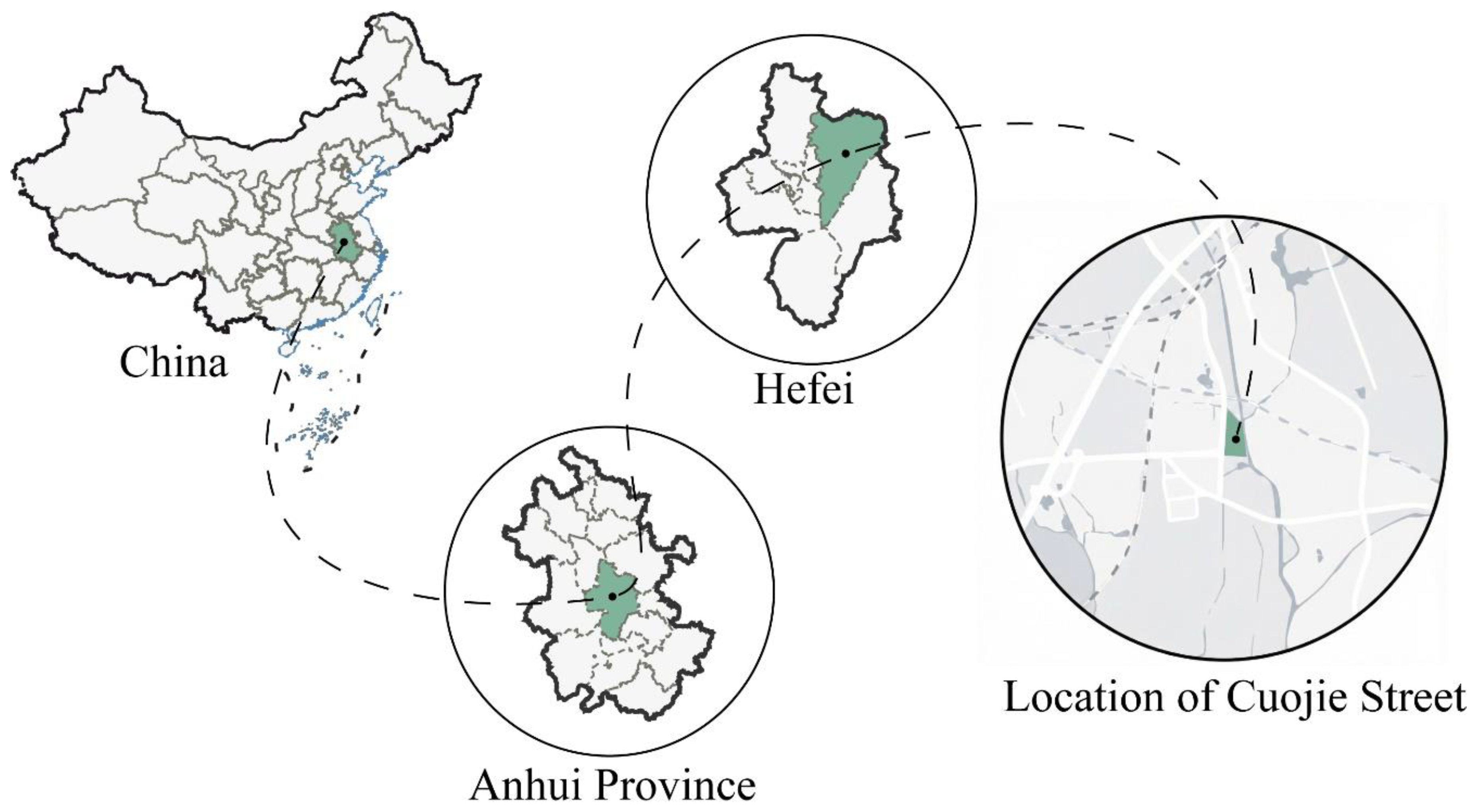
Figure 2.
Plan of the Study Area.
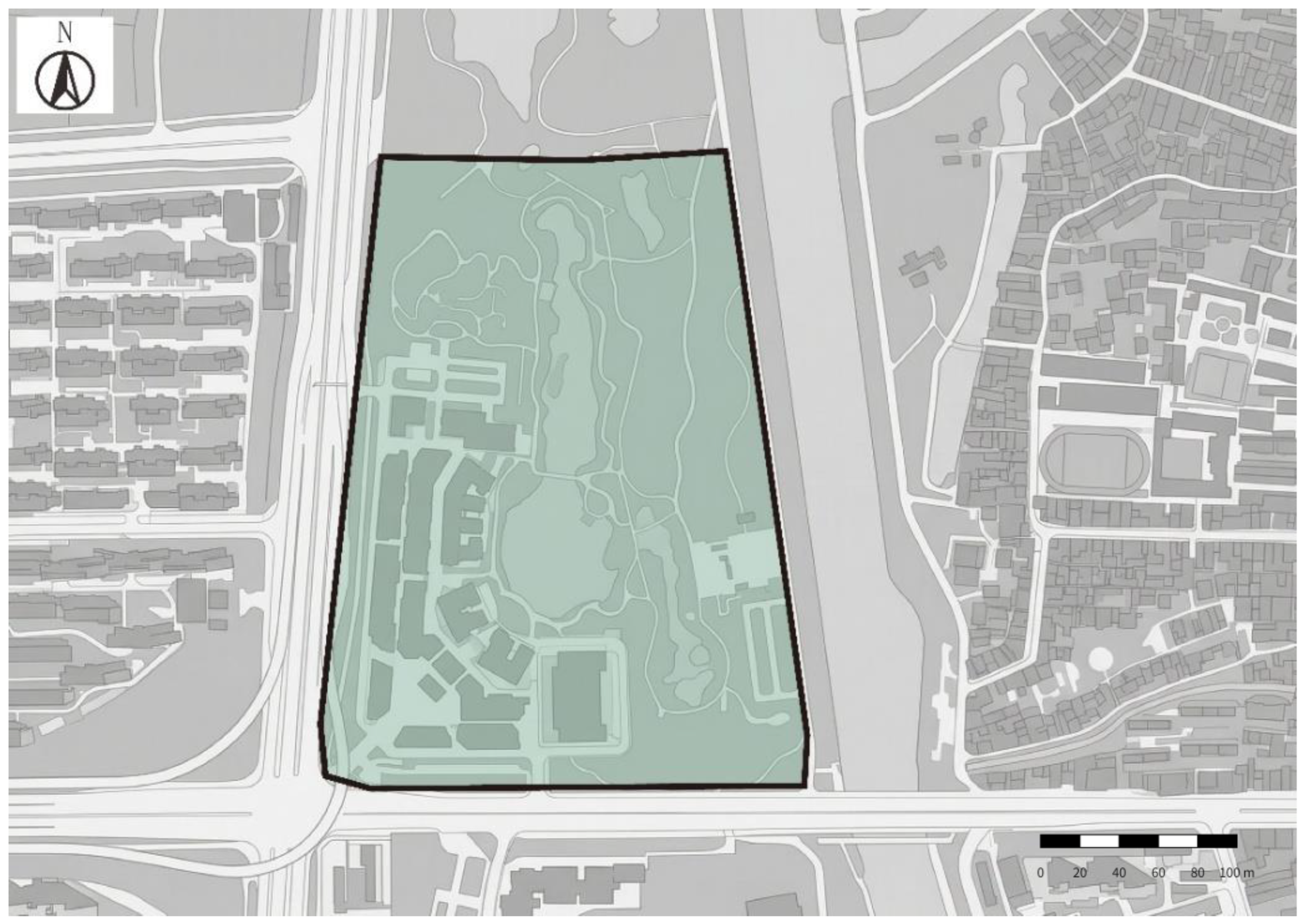
Figure 3.
Street View Image Acquisition.
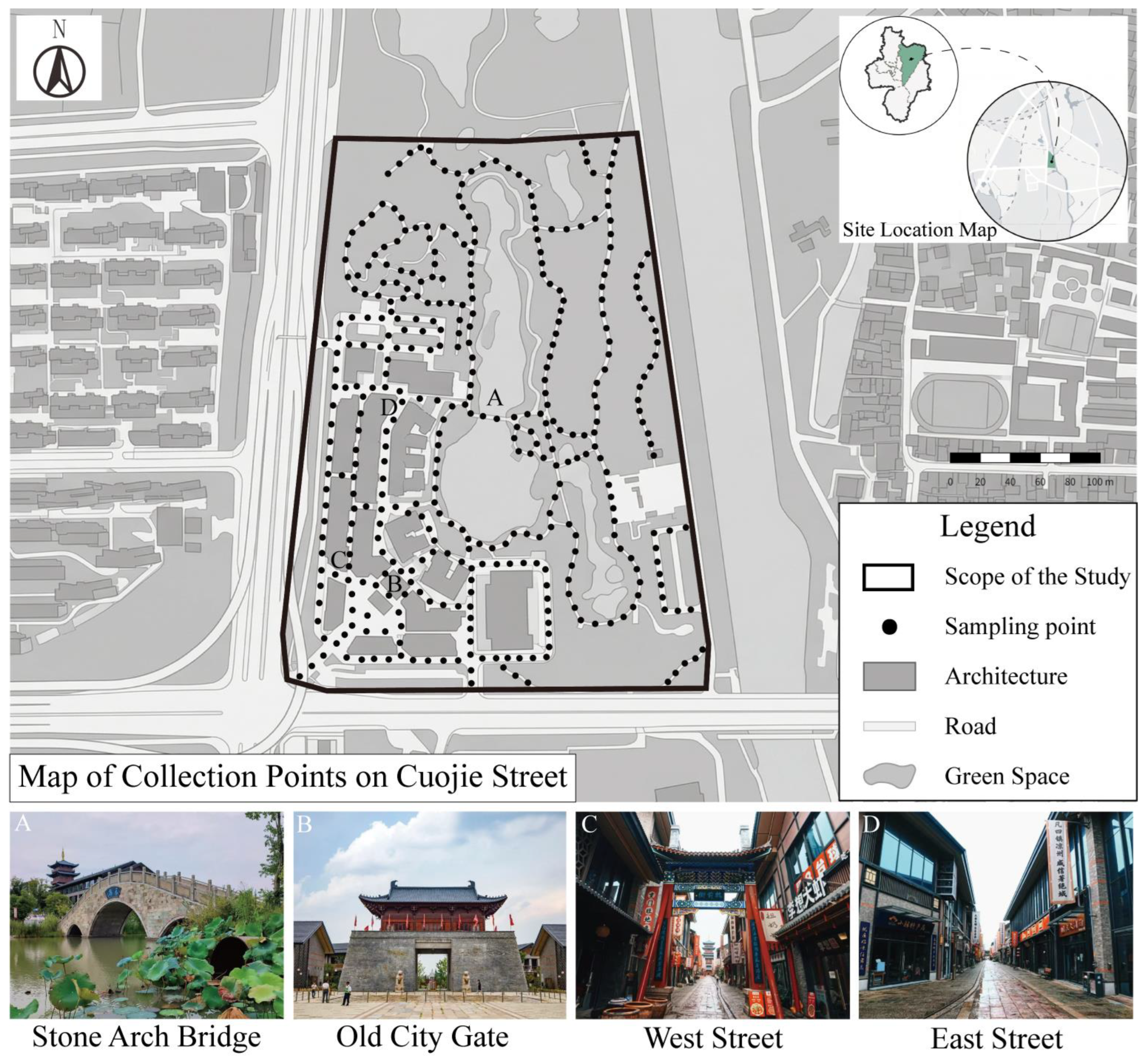
Figure 4.
Street View Image Acquisition.
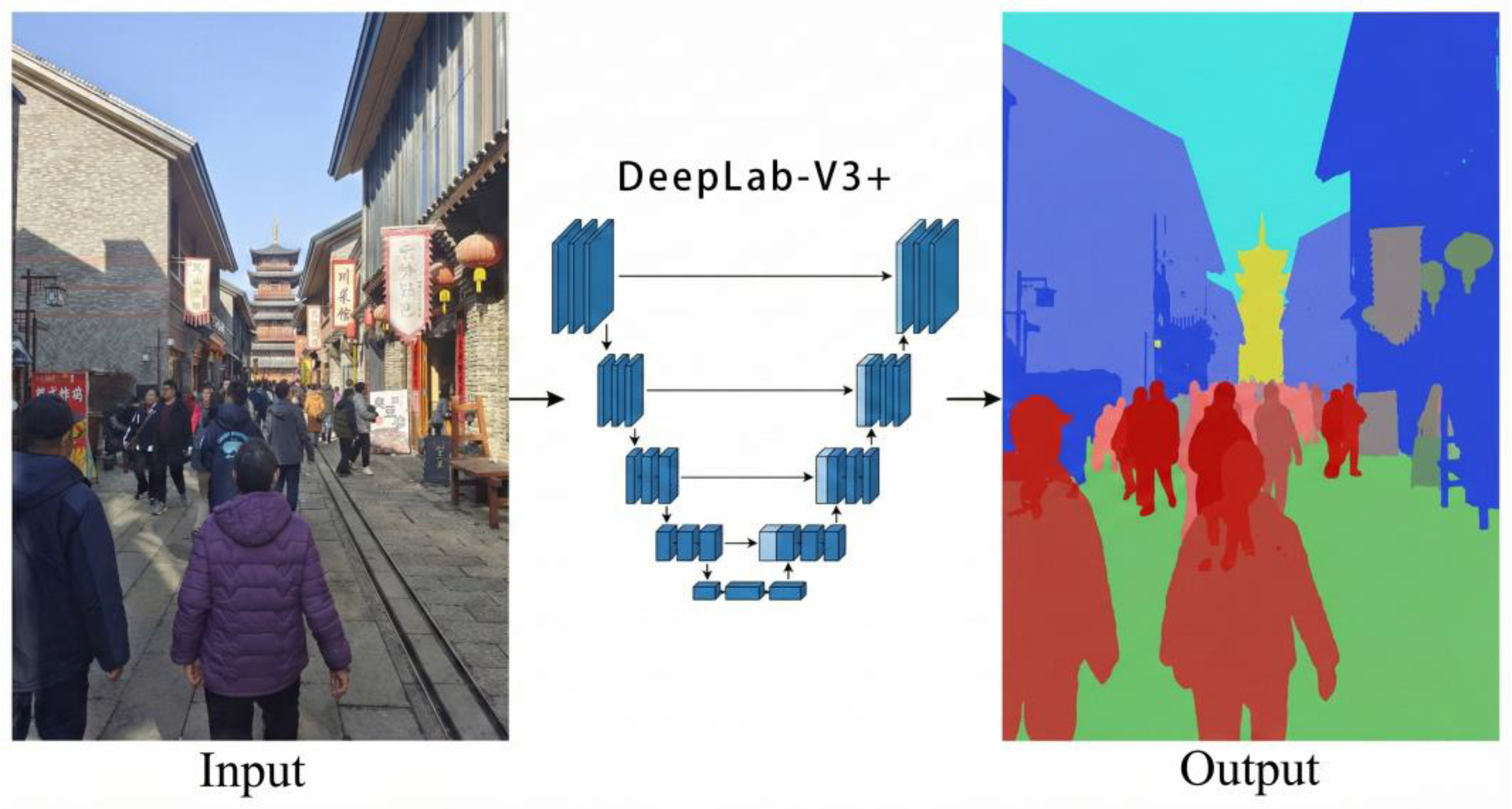
Figure 5.
SOR Theoretical Model Diagram.
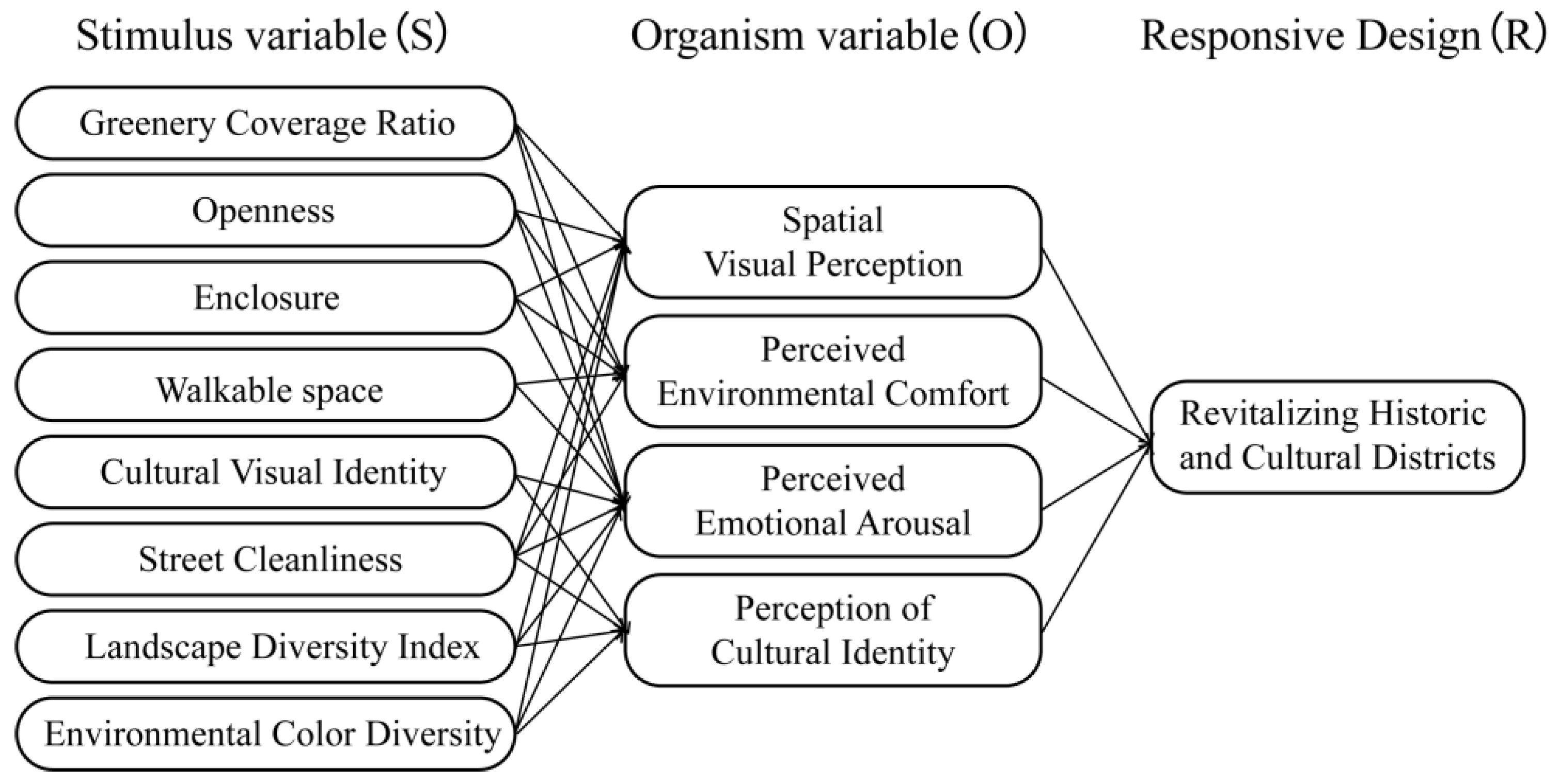
Figure 6.
Correlation Analysis Heatmap.
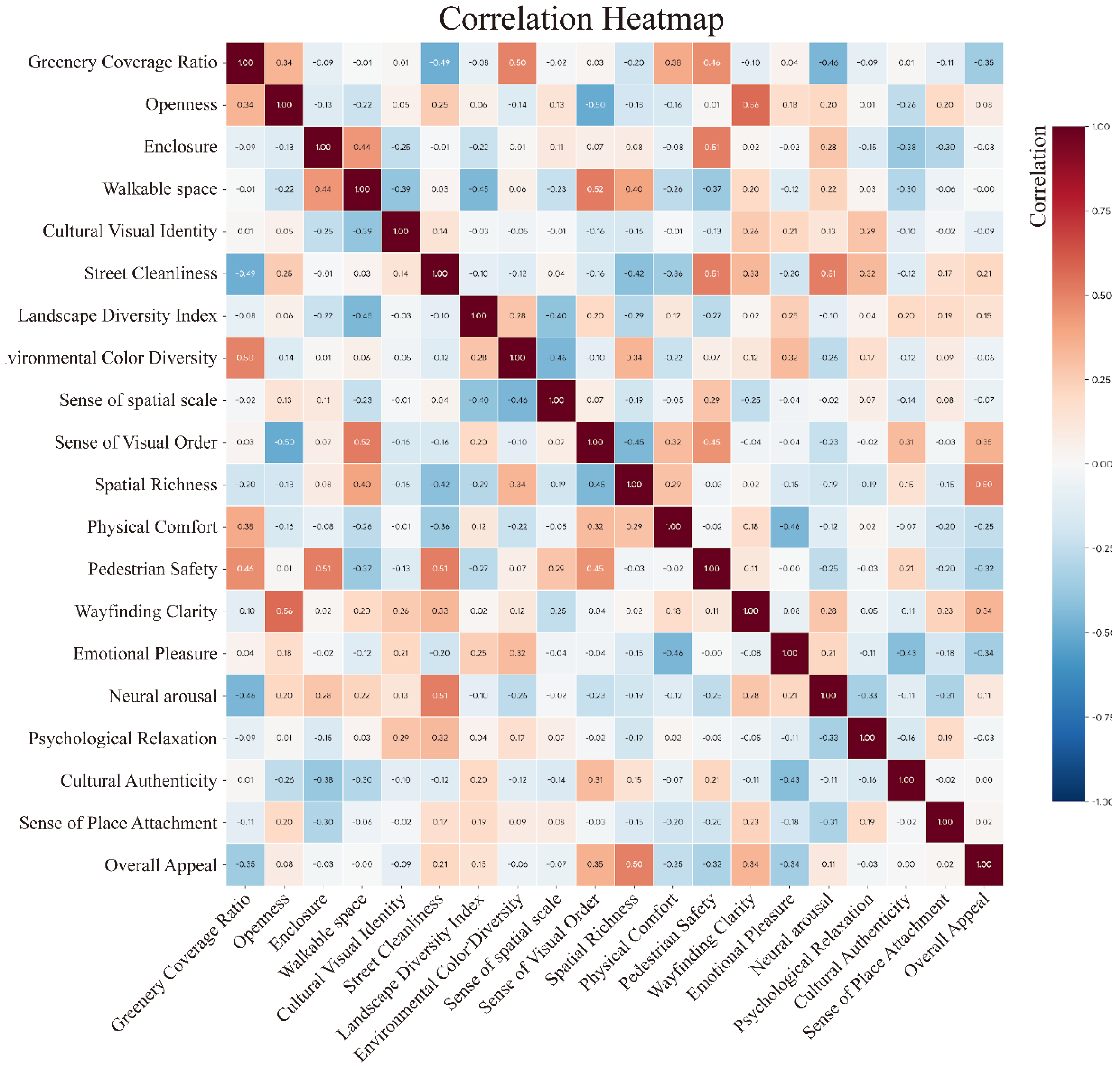
Figure 7.
Regression-standardized residuals for the four somatosensory assessment variables.
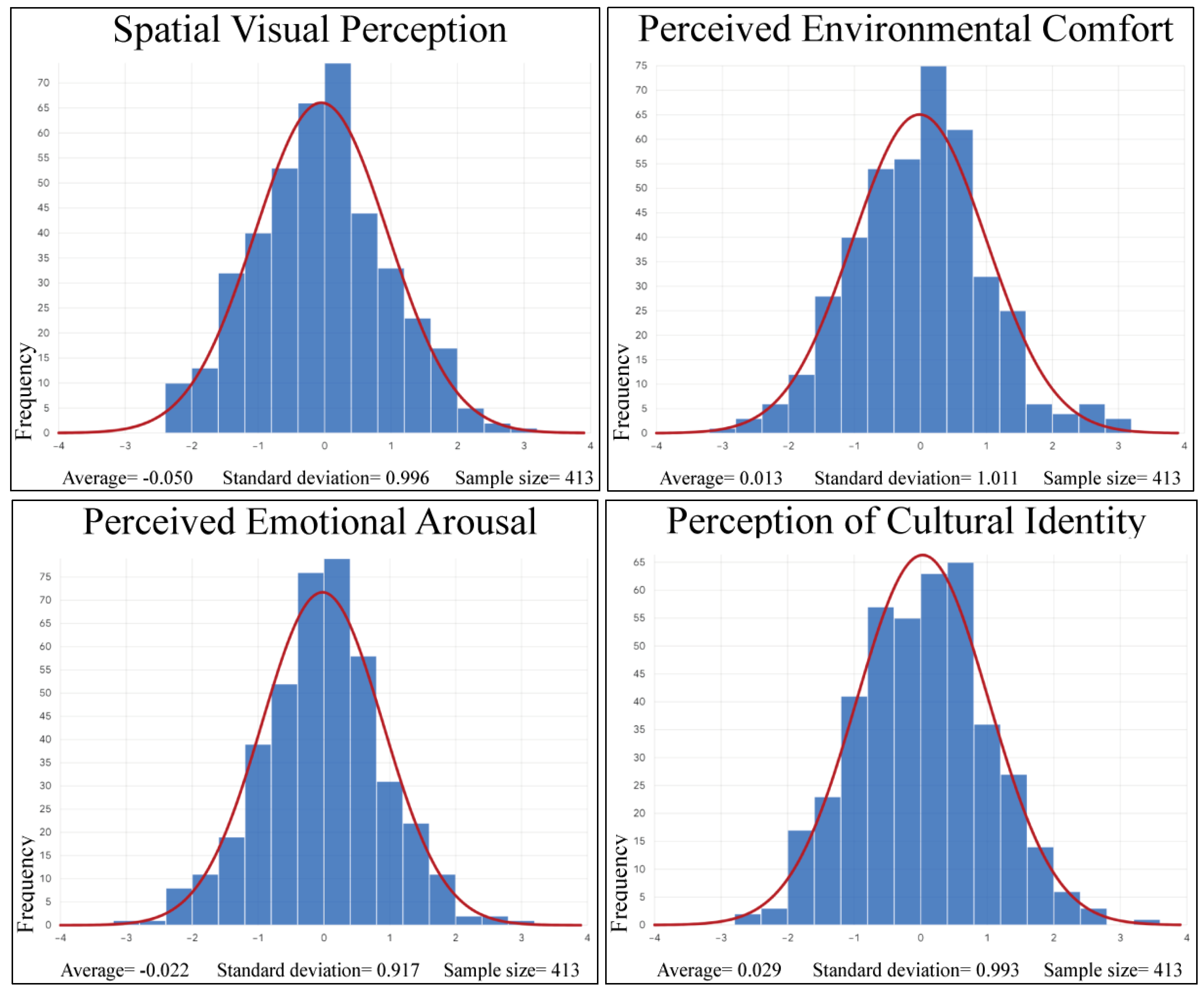
Figure 8.
Schematic Diagram of Architectural Projection Lighting Design.
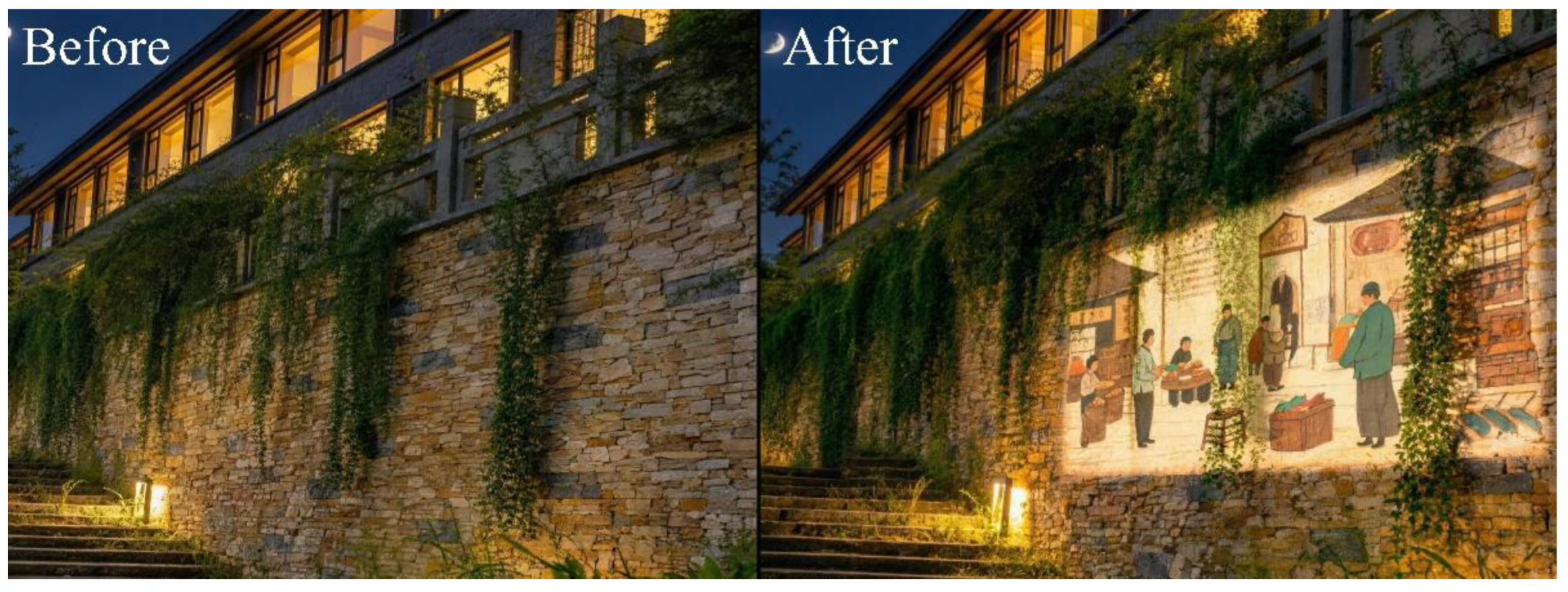
Figure 9.
Schematic Diagram of Vertical Greening Improvements on Cuojie Street.
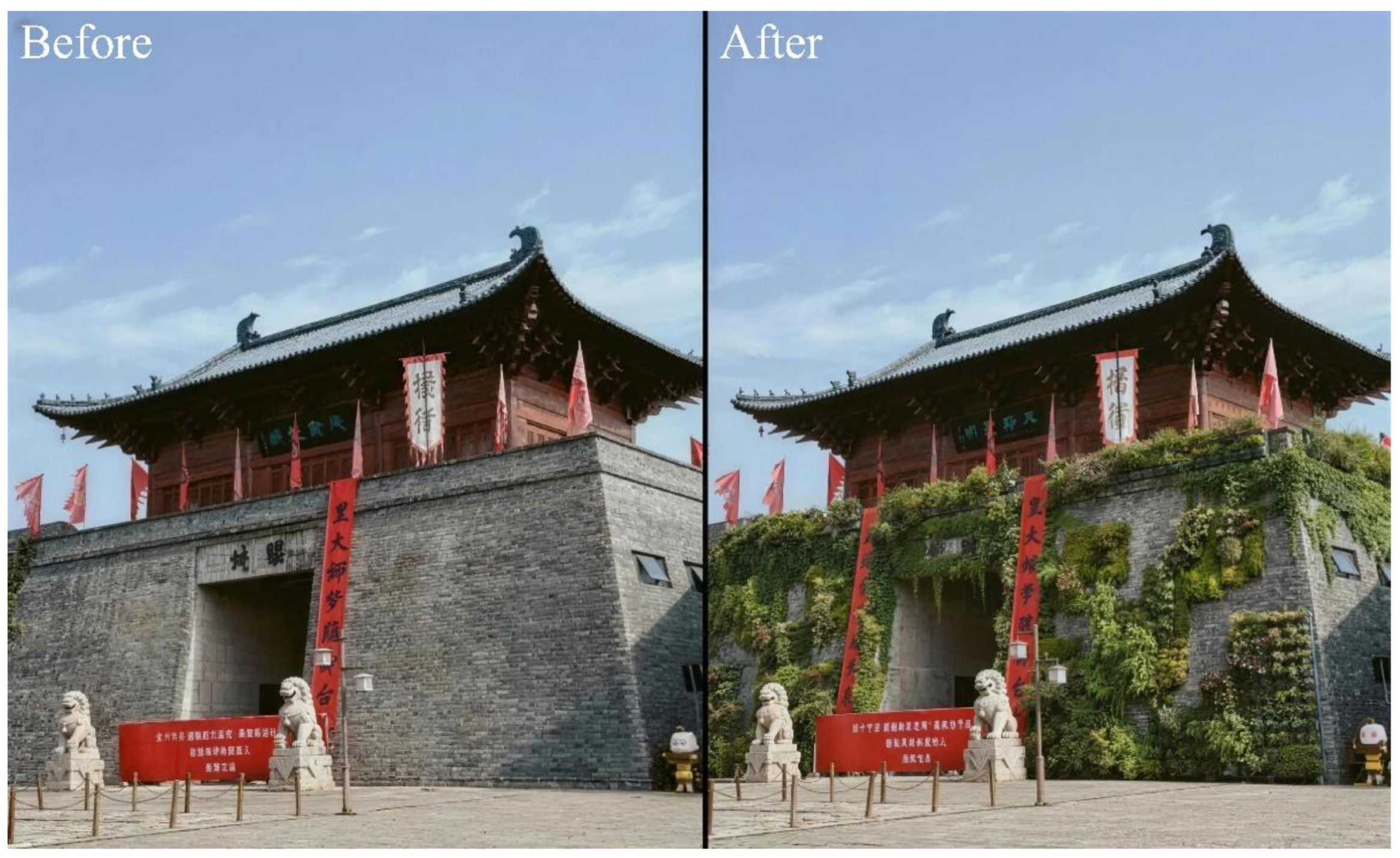

Table 1.
Selection and Definition of Physical Characteristics of Historic and Cultural Districts.
| Block Characteristics | Formula | Expression Description | Definition |
|---|---|---|---|
| Greenery Coverage Ratio | Represents the proportion of pixels occupied by trees, grass, and plants. | Refers to the ratio of tree, plant, and grass pixels to the total number of pixels. | |
| Openness | Represents the proportion of sky pixels. | Refers to the degree of openness in street spaces. | |
| Enclosure | Represents the proportion of pixels occupied by walls, buildings, and trees. | Indicates the extent to which a street | |
| Walkable space | Represents the proportion of sidewalk pixels. | Refers to the ratio of sidewalk pixels to total pixels | |
| Cultural Visual Identity | Represents the proportion of pixels containing cultural elements. | Refers to the ratio of elements with unique cultural characteristics to the total number of pixels | |
| Street Cleanliness | Represents the proportion of pixels depicting litter, graffiti, and debris. | Reflects the level of cleanliness in the street environment | |
| Landscape Diversity Index | Represents the proportion of landscape element i within the entire community. | Indicates the richness of landscape elements observable on the street. | |
| Environmental Color Diversity | Represents the number of pixels of the jth color in the ith image, where J denotes the total number of environmental colors in the ith image. | Refers to the richness of environmental colors observable on the street. |
Table 2.
Body Perception Evaluation Metrics.
| Evaluation Dimension | Evaluation Indicator | Descriptive Adjectives | Academic Definition |
|---|---|---|---|
| Spatial Visual Perception | Sense of spatial scale |
Clustered - Open | Measures the perceived sense of enclosure or openness created by physical boundaries. |
| Sense of Visual Order | Cluttered - Neat | Evaluates the perceived order, visual continuity, and overall harmony of environmental elements. | |
| Spatial Richness | Monotonous - Rich | Measures sensory satisfaction regarding the space’s details, material textures, and color diversity. | |
| Perceived Environmental Comfort | Physical Comfort | Uncomfortable–Pleasant | Reflects visitors’ overall physiological and psychological comfort within the micro-environment. |
| Pedestrian Safety | Dangerous–Safe | Measures the psychological sense of safety regarding the pedestrian environment and spatial defensibility. | |
| Wayfinding Clarity | Confused–Clear | Assesses how easily visitors can orient themselves and navigate the street network. | |
| Perceived Emotional Arousal | Emotional Pleasure | Dull - Pleasant | Represents the pleasure and positive emotions visitors experience from environmental stimuli. |
| Neural arousal | Boring–Interesting | Measures the sensory stimulation and emotional engagement evoked by the neighborhood’s cultural and commercial vitality. | |
| Psychological Relaxation | Tense-Relaxed | Reflects the degree to which the environment helps visitors relax and restore mental attention. | |
| Perception of Cultural Identity | Cultural Authenticity | Artificial - Historical | Measures visitors’ identification with the authenticity of the district’s historical and cultural features. |
| Sense of Place Attachment | Distant-Intimate | Evaluates the emotional bond and deep sense of belonging visitors establish with the space. | |
| Overall Appeal | Ordinary–Eye-catching | A holistic assessment of the neighborhood’s overall spatial quality, culture, and sense of place. |
Table 3.
Image Segmentation Evaluation Results.
| Block Features | Mean | Standard Deviation | Number of Image Samples |
|---|---|---|---|
| Green Rate | 0.112 | 0.075 | 413 |
| Openness | 0.135 | 0.063 | 413 |
| Enclosure Ratio | 1.524 | 0.583 | 413 |
| Walkable space | 0.385 | 0.106 | 413 |
| Cultural Visual Recognition | 0.315 | 0.094 | 413 |
| Street Cleanliness | 0.883 | 0.021 | 413 |
| Landscape Diversity Index | 1.842 | 0.415 | 413 |
| Environmental Color Diversity | 0.734 | 0.128 | 413 |
Table 4.
Results of Somatic Perception Assessment.
| Evaluation Dimension | Evaluation Indicator | Mean | Standard Deviation | Number of Image Samples |
|---|---|---|---|---|
| Spatial Visual Perception | Sense of spatial scale | 1.15 | 0.82 | 413 |
| Sense of visual order | 1.48 | 0.65 | 413 | |
| Spatial Richness | 1.76 | 0.73 | 413 | |
| Perceived Environmental Comfort |
Physical comfort | 0.85 | 0.98 | 413 |
| Pedestrian Safety | 2.12 | 0.54 | 413 | |
| Wayfinding Clarity | 1.34 | 0.77 | 413 | |
| Perceived Emotional Arousal |
Emotional Pleasantness | 1.68 | 0.69 | 413 |
| Neural arousal | 1.55 | 0.75 | 413 | |
| Psychological Relaxation | 0.62 | 1.05 | 413 | |
| Perceived Cultural Identity |
Cultural Authenticity | 0.95 | 0.88 | 413 |
| Sense of Place Attachment | 1.08 | 0.92 | 413 | |
| Overall Attractiveness | 1.85 | 0.66 | 413 |
Table 5.
Regression Analysis Results.
| Model | Variable | Unstandardized B | Std. Error | Standardized Beta | t | Sig. | VIF | R2 | F. Sig |
|---|---|---|---|---|---|---|---|---|---|
| Spatial Visual Perception | (constant) | 0.842 | 0.125 | - | 0.000 | 1.000 | - | 0.485 | 0.000 |
| Cultural Visual Recognition | 1.256 | 0.184 | 0.352 | 6.826 | 0.000 | 1.254 | |||
| Landscape Diversity Index | 0.658 | 0.112 | 0.284 | 5.875 | 0.001 | 1.342 | |||
| Environmental Color Diversity | 0.845 | 0.176 | 0.215 | 4.801 | 0.007 | 1.288 | |||
| Perceived environmental comfort | (constant) | 1.156 | 0.142 | - | 0.000 | 1.000 | - | 0.426 | 0.000 |
| Green View Rate | 1.854 | 0.265 | 0.318 | 6.996 | 0.000 | 1.185 | |||
| Walkable space | 1.246 | 0.218 | 0.265 | 5.716 | 0.001 | 1.102 | |||
| Street Cleanliness | 0.985 | 0.245 | 0.182 | 4.020 | 0.020 | 1.056 | |||
| Enclosure ratio | -0.428 | 0.126 | -0.154 | -3.397 | 0.007 | 1.214 | |||
| Emotional arousal perception | (constant) | 0.624 | 0.158 | - | 0.000 | 1.000 | - | 0.462 | 0.000 |
| Environmental Color Diversity | 1.542 | 0.214 | 0.345 | 7.206 | 0.000 | 1.312 | |||
| Enclosure ratio | 0.865 | 0.145 | 0.276 | 5.966 | 0.001 | 1.158 | |||
| Openness | -0.654 | 0.212 | -0.142 | -3.085 | 0.012 | 1.095 | |||
| Perceived cultural identity | (constant) | 0.415 | 0.136 | - | 0.000 | 1.000 | - | 0.514 | 0.000 |
| Cultural Visual Recognition | 1.685 | 0.188 | 0.412 | 8.963 | 0.000 | 1.165 | |||
| Enclosure ratio | 0.742 | 0.142 | 0.228 | 5.225 | 0.004 | 1.205 | |||
| Landscape Diversity Index | 0.426 | 0.125 | 0.156 | 3.408 | 0.010 | 1.328 |
Disclaimer/Publisher’s Note: The statements, opinions and data contained in all publications are solely those of the individual author(s) and contributor(s) and not of MDPI and/or the editor(s). MDPI and/or the editor(s) disclaim responsibility for any injury to people or property resulting from any ideas, methods, instructions or products referred to in the content. |
© 2026 by the authors. Licensee MDPI, Basel, Switzerland. This article is an open access article distributed under the terms and conditions of the Creative Commons Attribution (CC BY) license (http://creativecommons.org/licenses/by/4.0/).
Copyright: This open access article is published under a Creative Commons CC BY 4.0 license, which permit the free download, distribution, and reuse, provided that the author and preprint are cited in any reuse.


