Preprint
Article

This version is not peer-reviewed.

The Protective Effects of Aspirin Use from Adverse In Hospital Outcomes and Metastatic Disease in Colorectal Cancer: An Evaluation of the National Inpatient Sample

Submitted:

13 April 2026

Posted:

15 April 2026

You are already at the latest version

Abstract

Introduction Aspirin initially recognized for its anti-inflammatory, antipyretic and analgesic properties hold a prominent role in the treatment of cardiovascular disease. The utility of aspirin in cancer therapeutics has been explored and stratified into COX dependent and independent mechanisms. COX2 gene expression has been demonstrated to be significantly upregulated in colorectal cancer and various other gastrointestinal malignancies including pancreatic, esophageal, and gastric cancer. This study investigates the relationship of aspirin use and outcomes in patients with colorectal cancer. Methodology The Nationwide Inpatient Sample (NIS) database from 2017 to 2022 was analyzed for patients age >18 who were hospitalized for colorectal cancer and its decompensations using ICD-10 diagnostic codes. These patients were further stratified based on the long term use of aspirin. The principal outcome of this investigation is in-hospital mortality, with secondary outcomes including rates of pulmonary embolism, portal vein thrombosis, acute kidney injury and need for renal replacement therapy, septic shock and rates of hepatic, pulmonary, gastrointestinal and peritoneal or retroperitoneal metastatic disease. Multivariate logistic regression accounting for hospital and patient characteristics was implemented for analysis, with the Charlson Comorbidity Index used to adjust for coexisting comorbidity burden; a p-value (p) of <0.05 was considered statistically significant. Results In our analysis of the NIS, 569,306 patients were identified with colorectal cancer and 11.7% (66,608) of this population were identified with long term use of aspirin. Aspirin use was identified to have a significantly reduced odds of in-patient mortality (adjusted odds ratio) [aOR] 0.530, p value <0.001 95% CI (confidence interval): 0.460 – 0.617. Patients with aspirin use also demonstrated significantly reduced odds of gastrointestinal, hepatic, pulmonary and retroperitoneal/peritoneal metastasis; (aOR 0.606, 95% CI: 0.564-0.653, P<0.001), (aOR 0.628, 95% CI: 0.582 – 0.678, P<0.001), (aOR 0.676, 95% CI: 0.605 – 0.755, P<0.001) and (aOR 0.751, 95% CI: 0.685 – 0.825, P<0.001) respectively. Conclusion In recent years there has been an alarming increase in incidence of colorectal cancer, particularly amongst younger individuals with increased associated mortality. This mortality increase, albeit alarming, is a driving force for treatment innovation with continual examination of our repertoire of medications for possible repurposed applications. COX2 mediated signaling serves as a key promotor of tumorigenic molecular signaling that directly contribute to tumor cell proliferation, angiogenesis and metastasis in colorectal cancer. Aspirin use and its inhibitory action on COX2 demonstrated a significantly reduced risk of in-hospital mortality. Aspirin use is also linked to a significant reduction in odds of developing metastatic disease to the liver, gastrointestinal system, lungs and peritoneum in patients with colorectal cancer. These findings reveal that aspirin exerts shielding effects against in-hospital mortality and protects patients with colorectal cancer from the development of major comorbid conditions and metastatic disease as compared to those who do not use aspirin.

Keywords: 
;  ;  ;  ;  ;  

1. Introduction

Aspirin, acetylsalicylic acid, initially recognized for its anti-inflammatory antipyretic and analgesic properties using willow bark extract in the late 1600s now holds a prominent role in the treatment of acute coronary syndrome and chronic cardiovascular disease [1]. The leading cause of death across the globe remains cardiovascular disease however followed closely by malignancy. According to the American Cancer Society in the year 2022 an estimated 20 million new malignancy cases were diagnosed with 9.7 million cancer deaths; these data include both sexes combined [2,3]. The leading causes of cancer related mortality in the United States are lung, colorectal and pancreatic cancer. Despite recent advancements in the treatment of colorectal cancer it remains a deadly disease with an alarming increased incidence in younger individuals. This uncontrolled increase in colorectal cancer mortality, albeit alarming, serves as a driving force for innovation and development of novel therapeutic treatments. It also stimulates continual examination of current treatment modalities and our repertoire of medications for possible repurposed applications.
The utility of aspirin in cancer therapeutics has been studied by several groups and stratified into COX dependent and independent mechanisms. The cellular expression profiles that COX2 gene expression was significantly increased in colorectal cancer and various other gastrointestinal malignancies; colorectal, esophageal and gastric cancer. Further studies revealed that COX2 over expression is also associated with accelerated tumor growth, and the induction of molecular processes known to accelerate cancer progression. Aspirin demonstrates several COX independent molecular interactions with key mitotic regulators of the cell cycle, p53 and various cyclins, and other pathways implicated in tumor carcinogenesis. These interactions interfere with cancer genomics and biochemistry including cancer cell DNA replication, proliferation, protein expression and mechanisms of metastasis and angiogenesis [4,5,6]. These studies have garnered significant scientific attention with special interest into gaining a mechanistic understanding of how aspirin functions in the treatment of and prevention of malignancies including colorectal cancer. A number of groups have identified aspirin’s association with decreased incidence of and mortality from colorectal cancer [7,8,9,10]. However, these studies are limited by sample size and confounders including comorbidities, patient demographics and age. We conducted this analysis to measure the effects of long-term aspirin use on the incidence of in hospital mortality, inpatient outcomes and decompensations and of the occurence of metastatic events with progression to advanced disease states in those with colorectal cancer on a national scale.

2. Materials and Methods

The National Inpatient Sample (NIS), administered by the Healthcare Cost and Utilization Project (HCUP) under the Agency for Healthcare Research and Quality, stands as the largest repository of inpatient hospitalization records in the United States. This database aggregates information from hospitals across 37 states and serves as a dependable resource for estimating disease prevalence and analyzing outcomes. Within the NIS, each hospital stay is anonymized and cataloged as a distinct entry, featuring one primary discharge diagnosis and a maximum of 39 secondary diagnoses, varying according to the data collection year. Each entry contains comprehensive patient demographics (such as age, gender, and race), insurance status, details of primary and secondary procedures (up to 25), hospitalization outcomes, total charges, and length of stay (LOS).
Inclusion Criteria, Population of Study and Examined Variables
The primary endpoint of our study is comparing the odds of in hospital mortality between aspirin and non-aspirin using cohorts; while secondary endpoints included the odds of developing septic shock, portal vein thrombosis, pulmonary embolism, acute kidney injury, intensive care unit (ICU) admission and the development of pulmonary, hepatic, gastrointestinal or peritoneal and retroperitoneal metastasis. The 10th version of the international classification of diseases, ICD 10, diagnostic codes were used to identify patients who were greater than 18 years of age who were hospitalized between the years of 2017 to 2022 with a primary diagnosis of colorectal cancer. Patients were stratified into two groups based on the presence or absence of long-term aspirin use identified during their hospitalization. The final study cohort consisted of 596,160 cases. In this study the primary exposure variable is the use of aspirin in patients with colorectal cancer. Information on variables such as race, gender, age, median income and hospital characteristics including urban versus rural location, bed size and hospital region were also adjusted for during the analysis. The analysis of the comorbidity burden was investigated using the Charleson Comorbidity Index, CCI. The CCI is a well validated clinical index including 19 classes of comorbidities that serves as a clinical prediction tool for a patient’s comorbidity burden.
Statement of Ethics
All data used in this study was captured from the NIS database which represents completely de-identified information. An IRB approval was not required for this study as all patient information is deidentified.
Statistical Analysis
Hospital-level discharge weights provided by NIS were used to generate national estimates. Categorical variables were compared using the chi-square test, whereas an independent sample t-test was used for continuous variables. To investigate the effect of defined variables on in-hospital outcomes, univariate logistic regression was performed using a p-value threshold of 0.2 for variable selection. Variables meeting this inclusion criterion were subsequently entered into a multivariable logistic regression model for further analysis. Adjusted odds ratios (aORs) were calculated with corresponding 95% confidence intervals (CIs), and statistical significance was defined as a two-tailed p-value < 0.05. All analyses were conducted using Stata/MP version 19.5.

3. Results

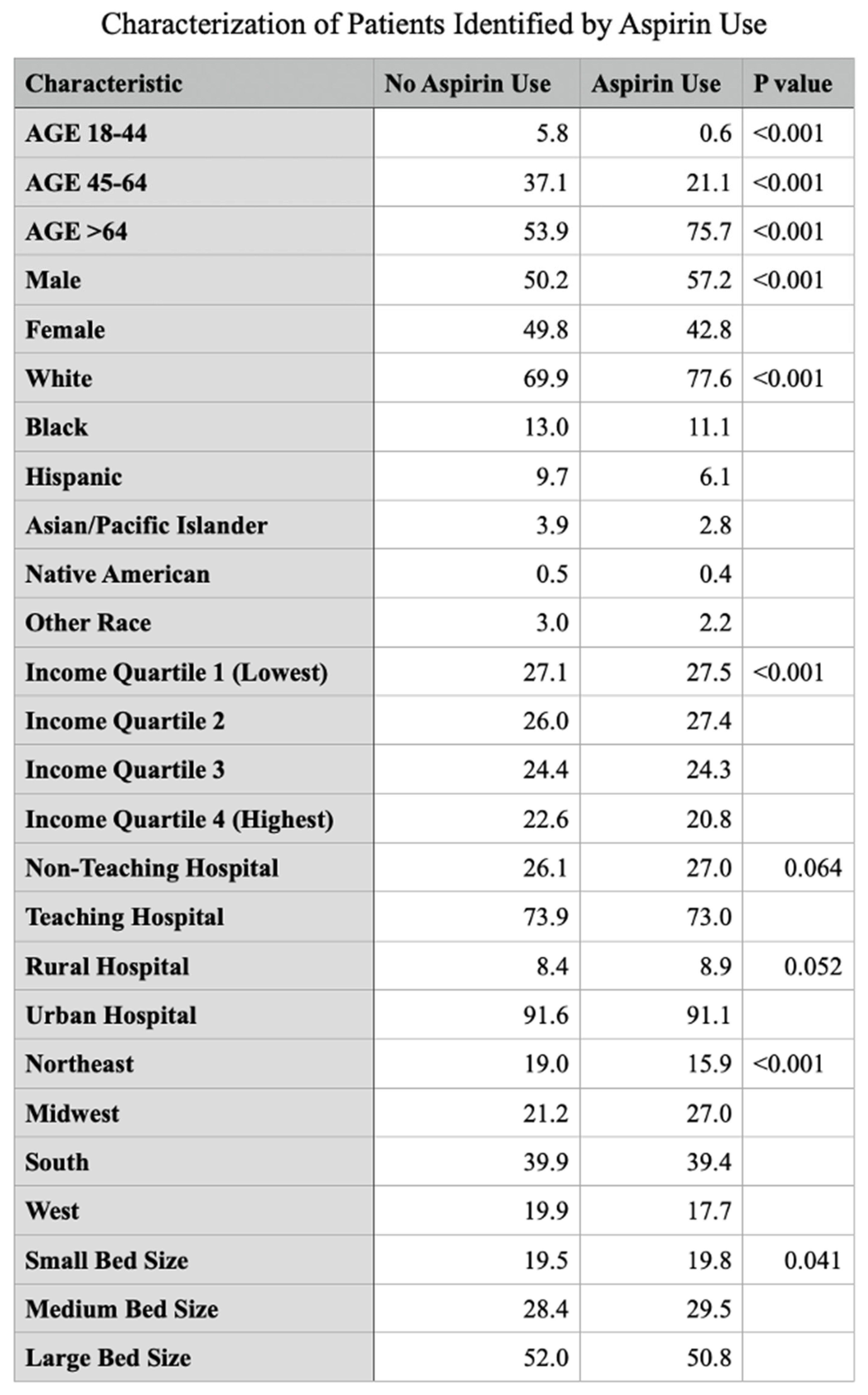
Our study interval of 2017 to 2022 contained 205,215,316 hospitalizations of which 596,160 adult patients were diagnosed with colorectal cancer that represent the sub population in our study. Of them 69,750 11.7%, were identified as using aspirin meanwhile 526,410, 88.3%, of patients within this subpopulation did not use aspirin. Of note the patients with long-term aspirin use were on average of greater age than the group with no aspirin use; aspirin use age: 73, non-aspirin use age: 69. Further characterization of baseline patient characteristics categorized by the use of aspirin are presented in Table 1.
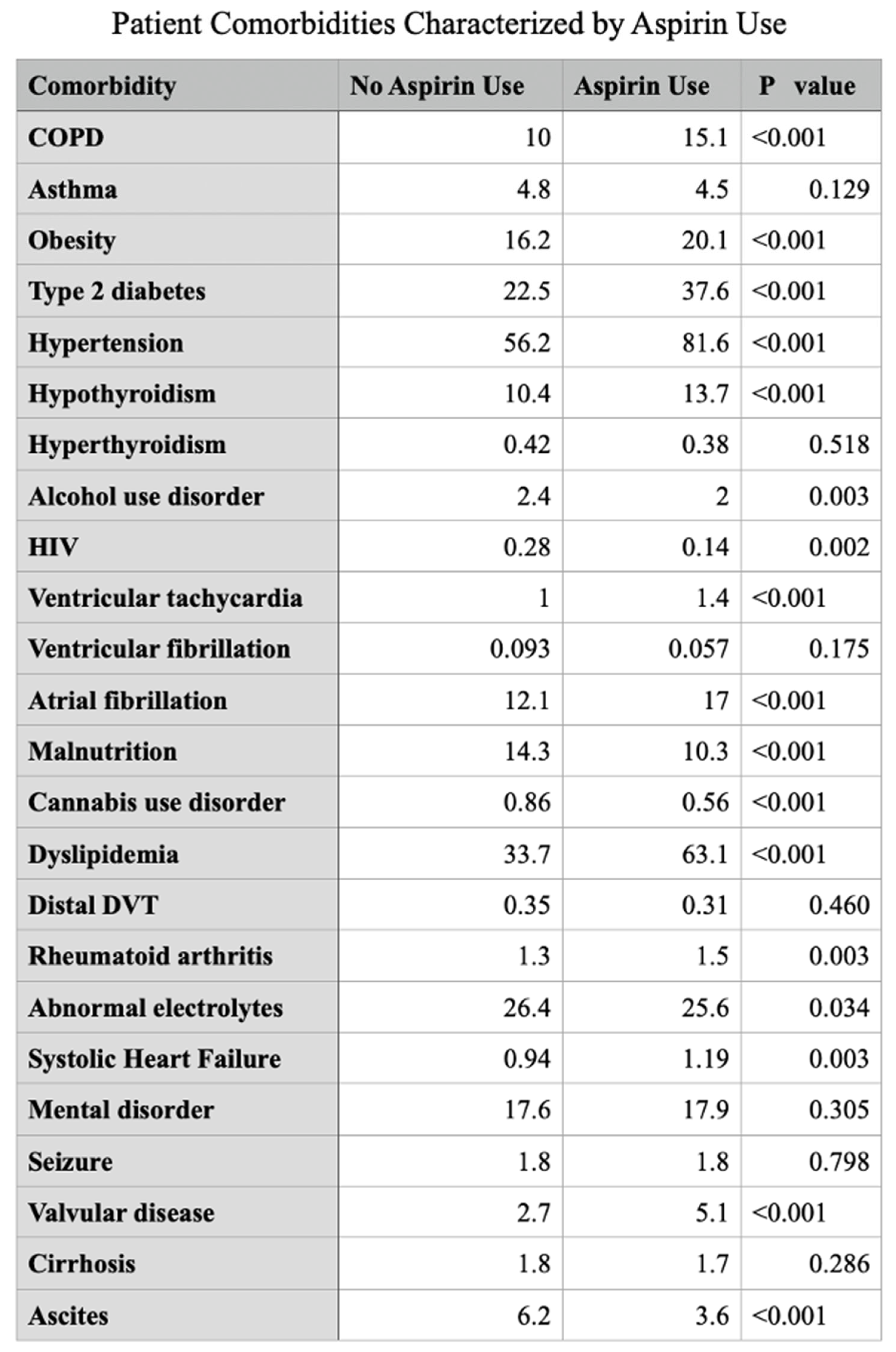
A greater incidence of chronic obstructive pulmonary disease, metabolic disorders including obesity, type 2 diabetes mellitus, dyslipidemia, hypertension and cardiac arrythmias were observed amongst individuals with aspirin use. Interestingly, individuals with no aspirin use were observed to have greater incidences of ascitic liver disease, cirrhosis and polysubstance use disorder including cannabis use and alcohol use disorder; see further characterization below in Table 2.
In Hospital Mortality
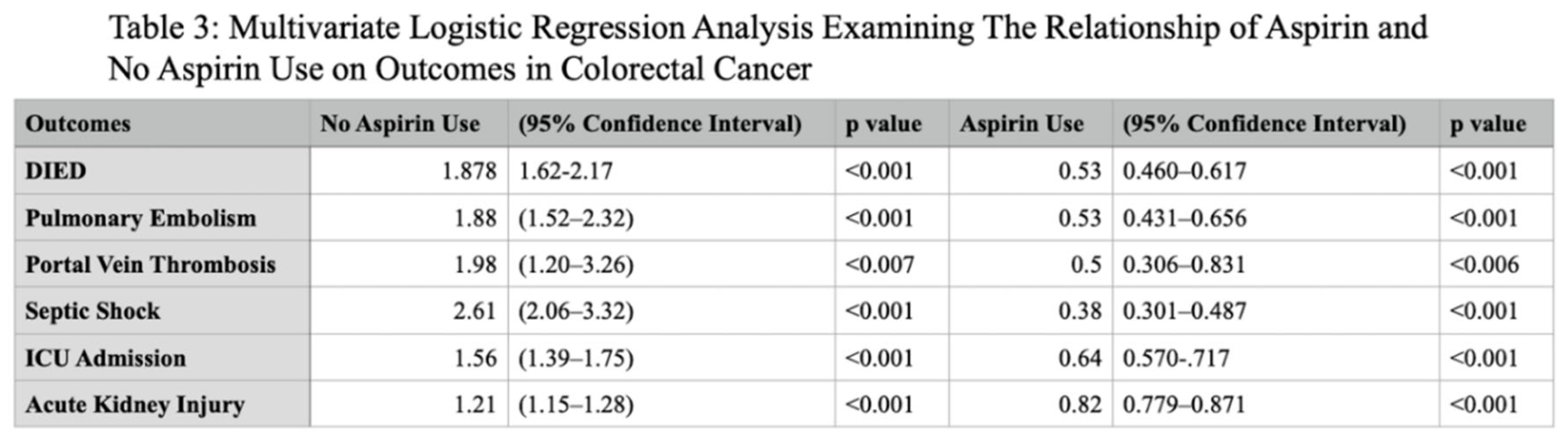
Patients with colorectal cancer and aspirin use demonstrated decreased odds of in-hospital mortality, adjusted odds ratio, (aOR) 0.530; p value <0.001 95% CI (confidence interval): 0.460–0.617. Those with colorectal cancer and no aspirin use demonstrated increased rates of in hospital mortality (aOR) 1.878; p value <0.001 95% CI (confidence interval): 1.62–2.17. The total proportion of mortality amongst patients with colorectal cancer with aspirin use is 1.59% versus 2.78% in non-aspirin users; p: <0.00004.
Pulmonary Embolism
Patients with colorectal cancer and aspirin use demonstrated a decreased odds of developing pulmonary embolism, aOR 0.530; p value <0.001 95% CI: 0.431–0.656. Those with colorectal cancer and no aspirin use demonstrated increased rates of developing pulmonary embolism (aOR) 1.88; p value <0.001 95% CI (confidence interval): 1.52–2.32. The total proportion of pulmonary embolism in aspirin users was identified to be 0.77% versus 1.47% in patients with colorectal cancer and no aspirin use; p:<0.0001
Portal vein thrombosis
The aOR of developing portal vein thrombosis for patients with colorectal cancer and aspirin use is 0.500; p value <0.007 95% CI: 0.306–0.831. Those with colorectal cancer and no aspirin use demonstrated increased rates of developing portal vein thrombosis (aOR) 1.98; p value <0.006 95% CI (confidence interval): 1.20- 3.26. The total proportion of portal vein thrombosis in aspirin users was identified to be 0.12% as compared to 0.35% in non-aspirin users; p:<0.00004
Septic Shock
Patients with colorectal cancer and aspirin use demonstrated decreased odds of developing septic shock, aOR 0.380; p value <0.001 95% CI: 0.301–0.487. Those with colorectal cancer and no aspirin use demonstrated increased rates of septic shock (aOR) 2.61; p value <0.001 95% CI (confidence interval): 2.06-3.32. The total proportion of septic shock in aspirin users was identified to be 0.55% versus 1.39% in patients with no aspirin use; p:<0.00007.
ICU Stay
Patients with colorectal cancer and aspirin use demonstrated decreased odds of requiring an ICU admission, aOR 0.640; p value <0.001 95% CI: 0.570–0.717. Those with colorectal cancer and no aspirin use demonstrated increased rates of requiring an ICU level of care (aOR) 1.56; p value <0.001 95% CI (confidence interval): 1.39–1.75. The total proportion of critical care escalation as determined by in hospital ICU admission was measured to be 3.71% in non-aspirin users vs 2.67% in patients with aspirin use; p: <0.00002.
Acute kidney injury, AKI
The aOR of developing AKI for patients with colorectal cancer and aspirin use is 0.82; p value <0.001 95% CI: 0.779–0.871. Those with colorectal cancer and no aspirin use demonstrated increased rates of developing an AKI (aOR) 1.21; p value <0.001 95% CI (confidence interval): 1.15–1.28. The total proportion of acute kidney failure in aspirin users was identified to be 13.72% versus 12.49% in patients with no aspirin use; p:<0.0001.
Table 3. Aspirin use decreases the incidence of in hospital mortality and the development of clinical comorbidities.
Preprints 208184 i003
Aspirin use significantly reduces the incidence of in hospital mortality and the occurrence of major clinical comorbidities including pulmonary embolism, portal vein thrombosis, acute kidney injury, the onset of septic shock and from requiring an ICU level of care. Those with colorectal cancer and no aspirin use demonstrated significantly increased incidence of in hospital mortality and the occurrence of major clinical comorbidities including pulmonary embolism, portal vein thrombosis, acute kidney injury, the onset of septic shock and from requiring an ICU level of care as demonstrated.
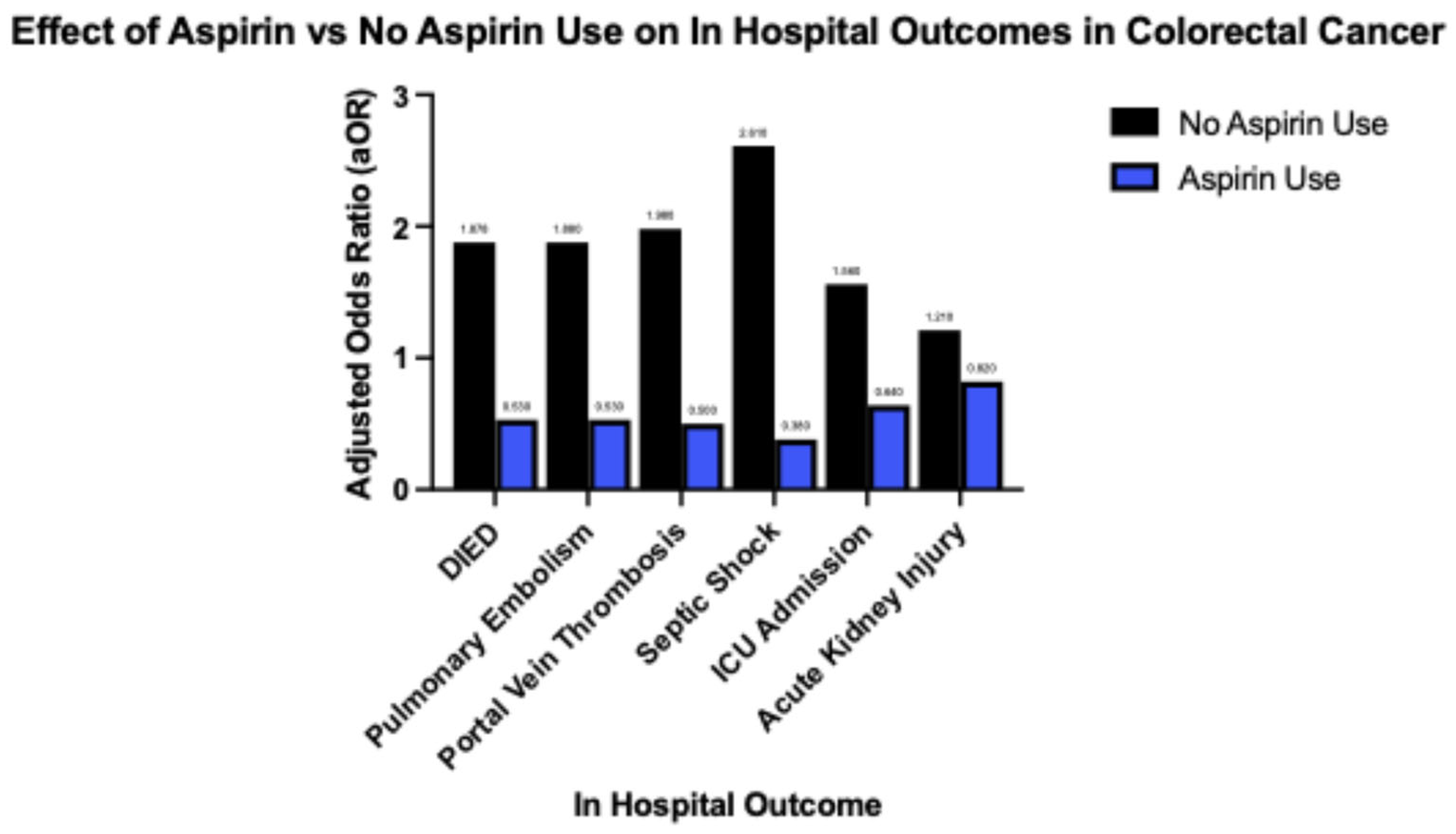
Graphical representation conveying that aspirin use in those with colorectal cancer demonstrates protective effects from in hospital mortality and the development of major secondary complications including pulmonary embolism, portal vein thrombosis, acute kidney injury, the onset of septic shock and from requiring an ICU level of care. Those with colorectal cancer and no aspirin use demonstrate significantly increased odds of in hospital mortality and of developing major comorbid conditions associated with colorectal malignancies including pulmonary emboli, portal vein thrombosis and secondary complications including acute kidney injury, septic shock and of requiring an ICU level of care.
Figure 1. Effect of aspirin vs no aspirin use on in hospital outcomes in colorectal cancer.
Preprints 208184 g001
Gastrointestinal Metastasis
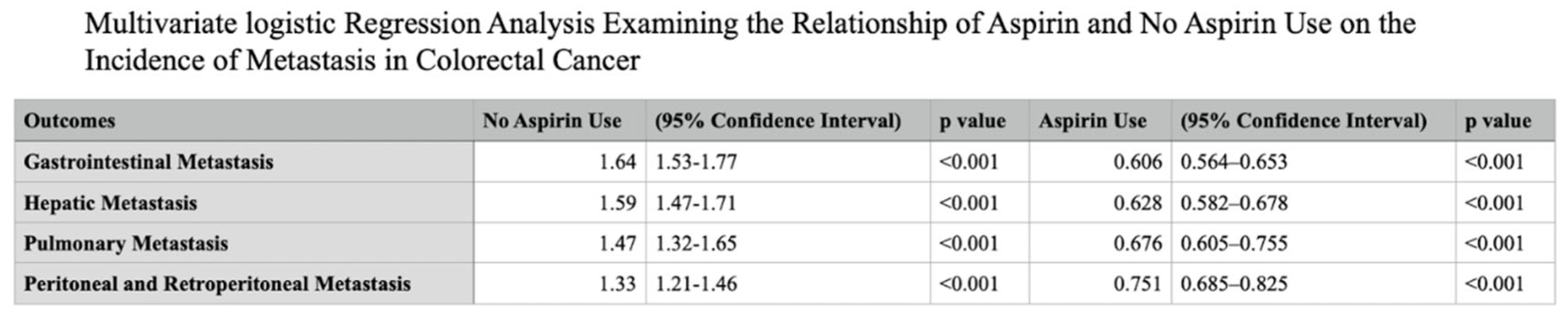
Patients with colorectal cancer and aspirin use demonstrated a decreased odds of developing gastrointestinal metastasis, aOR 0.606; p value <0.001 95% CI: 0.564-0.653. Those with colorectal cancer and no aspirin use demonstrated increased rates of developing gastrointestinal metastasis (aOR) 1.64; p value <0.001 95% CI (confidence interval): 1.53–1.77. The total proportion of gastrointestinal metastasis in aspirin users was identified to be 15.47% versus 23.86% in non aspirin users in patients with colorectal cancer; p: <0.0001.
Hepatic Metastasis
Patients with colorectal cancer and aspirin use demonstrated a decreased odds of developing hepatic metastasis, aOR 0.628; p value <0.001 95% CI: 0.582-0.678. Those with colorectal cancer and no aspirin use demonstrated increased rates of developing hepatic metastasis (aOR) 1.59; p value <0.001 95% CI (confidence interval): 1.47–1.71. The total proportion of hepatic metastasis in aspirin users was identified to be 10.22% versus 16.71% in non aspirin users in patients with colorectal cancer; p: <0.0001.
Pulmonary Metastasis
Patients with colorectal cancer and aspirin use demonstrated a decreased odds of developing pulmonary metastasis, aOR 0.676; p value <0.001 95% CI: 0.605-0.755. Those with colorectal cancer and no aspirin use demonstrated increased rates of developing pulmonary metastasis (aOR) 1.47; p value <0.001 95% CI (confidence interval): 1.32-1.65. The total proportion of pulmonary metastasis in aspirin users was identified to be 3.26% versus 5.55% in non aspirin users in patients with colorectal cancer; p:<0.0001.
Peritoneal and Retroperitoneal Metastasis
Patients with colorectal cancer and aspirin use demonstrated a decreased odds of developing peritoneal and retroperitoneal metastasis, aOR 0.751; p value <0.001 95% CI: 0.685-0.825. Those with colorectal cancer and no aspirin use demonstrated increased rates of developing peritoneal and retroperitoneal metastasis aOR 1.33; p value <0.001 95% CI (confidence interval): 1.21–1.46. The total proportion of peritoneal and retroperitoneal metastasis in aspirin users was identified to be 5.21% versus 8.03% in non-aspirin users in patients with colorectal cancer; p:<0.0001.
Aspirin use in those with colorectal cancer demonstrate significantly decreased incidence of gastrointestinal, hepatic, pulmonary, peritoneal and retroperitoneal metastasis. Those with colorectal cancer and no aspirin use demonstrate significantly increased incidence of developing metastatic disease to these sites. Aspirin use in those with colorectal cancer demonstrates an antimalignancy given the substantially increased incidence of metastatic events in those with colorectal cancer and no aspirin use.
Table 4. Aspirin use decreases the incidence of metastatic events in colorectal cancer.
Preprints 208184 i004
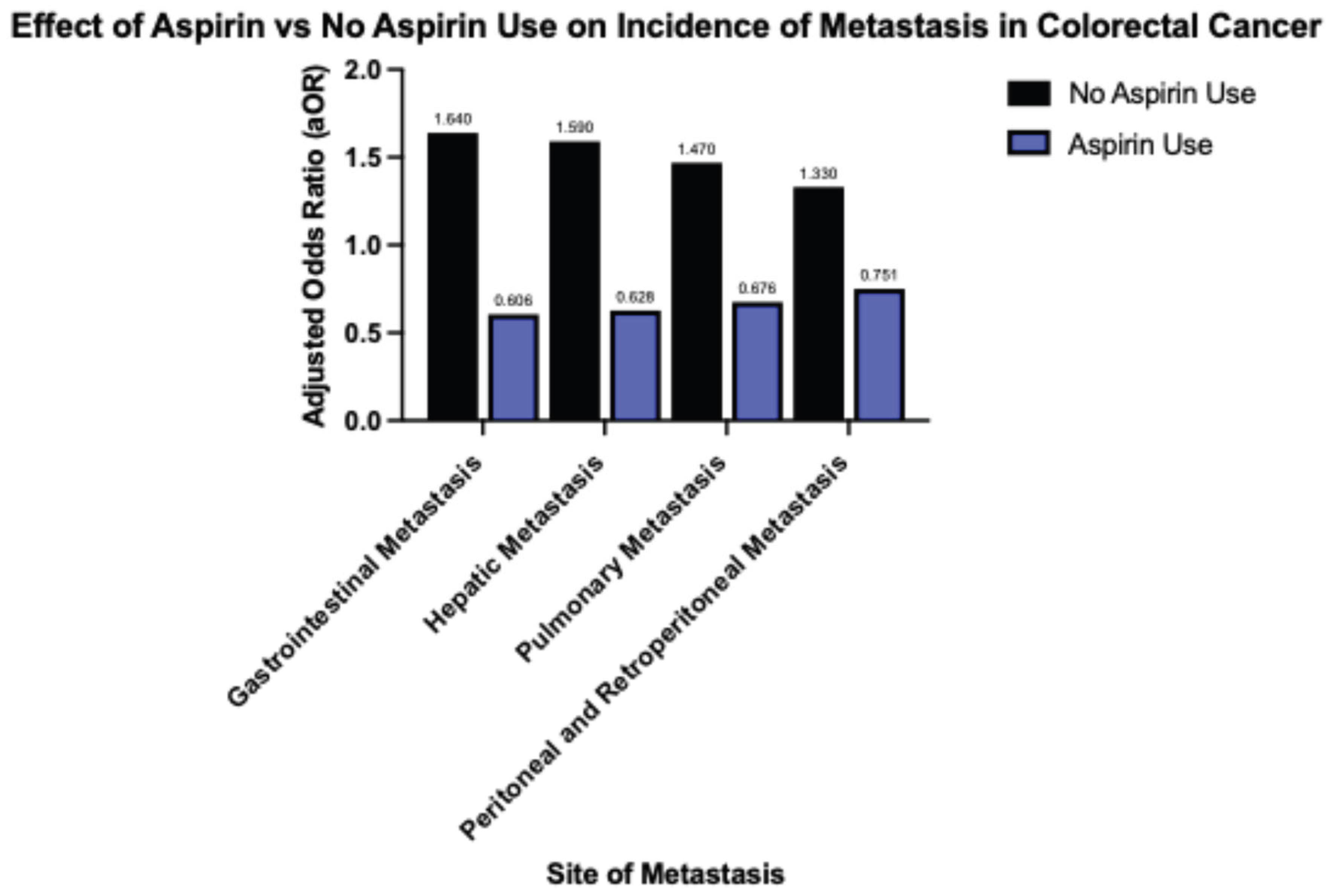
Figure 2. Aspirin use protects from the development of metastatic disease in colorectal cancer.
Preprints 208184 g002
Graphical representation conveying that aspirin use in those with colorectal cancer demonstrate significantly decreased incidence of gastrointestinal, hepatic, pulmonary, peritoneal and retroperitoneal metastasis. Those with colorectal cancer and no aspirin use demonstrate significantly increased incidence of developing metastatic disease to these sites. Aspirin use in those with colorectal cancer demonstrates antimalignancy effects as represented by the increased incidence of progression to metastatic disease in those with colorectal cancer and no aspirin use.

4. Discussion

In our evaluation of the effects of aspirin in 569,862 cases of colorectal cancer we have identified this statistically significant reduction in in hospital mortality amongst patients with long-term use of aspirin as compared to non-aspirin users. These findings are supported by those in several other groups, such as pooled analysis of four randomized trials which compared rates of development of colorectal cancer in those with aspirin use versus no aspirin use. Aspirin use was associated with a significantly reduced likelihood of developing colorectal cancer as compared to those without aspirin use [11]. They subsequently identified a time dependent relationship between the incidents of colorectal cancer and total duration of exposure to aspirin. Specifically, patients with longer consecutive use of aspirin, demonstrated even lower incidences of colorectal cancer as compared to non-aspirin users; n=14,023 patients with average aspirin exposure times six years and median follow up time between aspirin and control groups of 18.3 years [11]. Another study reported a similar reduction in rate of colorectal cancer related mortality amongst patients with concurrent aspirin use [12]. Other researchers have also examined the rate of mortality in patients with colorectal cancer with and without aspirin use. A perspective cohort study of 1279 men and women who were diagnosed with either stage one, two or three colorectal cancer with a median follow up time of 11.8 years [7]. These investigators identified that regular asper use is significantly associated with decreased colorectal, cancer specific and overall mortality.
While these findings suggest a survival benefit of aspirin use in colorectal cancer the precise biological mechanisms by which aspirin may exert these protective effects in those with colorectal malignancies and against the molecular events that drive its progression remain largely unknown. The targets of aspirin, cyclooxygenase one and two, COX1 and COX2, and their expression profiles in colorectal malignancies have been evaluated by several groups [13,14,15]. Cancer cells derived from these tissues have demonstrated differential protein expression of both COX1 and COX2 with significant elevations of COX2 enzyme levels [13,14,15]. Increased COX2 expression has been identified to promote tumor cell growth and to affect the structural integrity of mucosal and vascular tissue through molecular changes that drive and promote chronic tissue inflammation. COX2 has been identified as an integral promoter of the pathophysiology in colorectal malignancies [13,14,15]. It is well documented in scientific and clinical literature that states of chronic inflammation are known drivers of malignancy through increased production of inflammation induced reactive oxygen species, ROS. Persistent proinflammatory signaling therefore induces prolonged states of oxidative stress and DNA mutations both of which contribute to tissue carcinogenesis; particularly in colorectal tissue [16,17]. The anti-inflammatory properties of aspirin, through decreased generation of COX1 and COX2 enzyme products, may be a key contributor to the observed decrease of in hospital mortality identified in our study.
Despite the well known anti inflammatory effects driven by cyclooxygenase inhibition, aspirin has been demonstrated to exert protective antineoplastic properties. Several studies of aspirins potential role in the treatment of colorectal cancer has been stratified into COX dependent and independent mechanisms. Loss of function, LOF, mutations of the tumor suppressor TP53 gene, encoding the p53 protein, are a known inciting molecular event leading to several malignancies. LOF of TP53 has been characterized in approximately 50 -75% of patients with colorectal malignancies [18]. p53 primarily serves as a cell cycle checkpoint inhibitor, G1-S phase and G2-M phase [18]. When activated p53 mediates apoptosis in atypical cells ultimately protecting the organism from proliferation of cells with damaged DNA and dysregulated cellular growth signaling [18]. Aspirin has been shown to directly acetylate and activate p53 proteins in vivo and vitro in several gastrointestinal malignancies [19]. These molecular and genetic derangements therefore remain molecular targets of interest in the augmentation of colorectal cancer therapeutics. Recent studies reveal a growing number of patients with colorectal cancer phenotypes with greater amounts of resistance to current chemotherapy treatment [20,21,22]. This highlights the need for innovation and reevaluation of current medications regimens in managing this disease. This COX independent mechanism may explain the observed decreased incidence of colorectal cancer and mortality in patients with aspirin use identified by several other groups. Alongside the antimalignancy properties of aspirin are the clinically significant benefits of aspirin use in mitigating the development of clinical complications noted to significantly enhance morbidity and mortality.
Our study also demonstrates a decreased rate of developing thrombotic events such as pulmonary emboli and deep vein thromboses, DVTs. Malignancies are well known drivers of hypercoagulable states due to local and systemic deregulatory processes affecting vascular structural integrity and causing pathological derangements of the clotting cascade. Colorectal malignancies have been identified to have significantly elevated rates of thrombotic events when compared to other malignancies [23,24,25]. Our data demonstrates statistically significant decreased odds of developing several thrombotic conditions all of which carry significantly increased risk of mortality and worsened outcomes. Although aspirin does not demonstrate great capacity to dissolve and treat an active thrombosis it is, however, significantly associated with the ability to decrease the incidence of these events. Suppression of COX1 activity decreases platelet production of thromboxane A2, TxA2, a key mediator of platelet activation and aggregation [26,27]. TxA2 is enzymatically synthesized from COX1 activity on arachidonic acid within platelets. Once synthesized and released by activated platelets, TxA2 acts as a potent secondary messenger augmenting further downstream platelet activation, aggregation and vasoconstriction. Aspirin inhibits COX1 activity and therefore TxA2 synthesis preventing activation of the TxA2 receptor on other platelets and dampening downstream procoagulant signaling cascade [26,27]. Aspirin also mediates downregulation of tissue factors, the formation of thrombin and by extension thrombin coordinated downstream coagulation reactions; all important components of a mature and stable thrombus [28]. This suggests a protective or shielding effect of aspirin use against the development of thrombotic disorders in a particularly high-risk population of patients. This features an important consideration for a potential prophylactic application of aspirin against the development of such thromboses in patients with colorectal malignancies. Although venous thrombotic events of distal lower extremity vasculature and pulmonary emboli occur more commonly, less frequent events such as portal vein thrombosis are associated with disproportionately increased morbidity and mortality. This includes the development of venous thromboembolisms, VTEs, DVTs, pulmonary emboli, however this also extends to more rare sites of thrombosis such as the portal vein. In patients with colorectal cancer the formation of portal vein thrombosis does represent a rare event; estimated incidence rate of less than 1% [29,30]. Although rare, portal vein thrombosis is associated with a statistically significant doubled odds of mortality in patients with colorectal cancer [31]. Our findings of decreased odds of developing portal vein thrombosis, aOR 0.500; p value <0.007 95% CI: 0.306–0.831, with aspirin use highlights an application for this medication in the prevention of a rare but deadly and costly complication of colorectal cancer.
These observations provide strong support for the antithrombotic and vascular benefit of aspirin use in colorectal cancer however the clinical application of aspirin and its relationship with rates of metastases remain poorly understood. COX2 has been identified as a key promoter of malignant cell growth in various kinds of cancers [32,33,34]. Several groups have identified increased COX2 expression levels in several gastrointestinal malignancies including colorectal cancer [32,33,34]. Overexpression of COX2 in colorectal malignancies was identified as a significant predictor of poor prognosis and increased mortality. Various studies have investigated the relationship between overexpression of COX2 and tumorigenesis revealing that COX2 is as an important driver of advanced stage tumor development by regulation of underlying mechanisms involving angiogenesis, proliferation, inhibition of apoptosis and metastasis [32,33,34,35,36,37,38]. A known requisite for tumor progression involves angiogenesis and its regulation of vascular delivery of nutrients, tumor cell growth, secondary tissue invasion and metastasis. Indeed, COX2 activity has been identified as a significant promoter of angiogenesis in colorectal cancer through the upregulation of critical pro angiogenic factors including vascular endothelial growth factor, VEGF, platelet derived growth factor B, PEGFB, fibroblast growth factor, bFGF, and bFGF receptor, endothelin 1, nitric oxide synthase and transforming growth factor B, TGFB [32,33,34,35,36,37,38]. Collectively these studies identify COX2 overexpression as a substantial regulator of the cellular and molecular processes underlying tumor progression and remains a molecular target of interest in colorectal cancer therapeutics. This is of particular interest given recently identified chemotherapy resistance amongst patients with colorectal cancer undergoing treatment where recurrence of tumors and chemotherapy resistance remain as leading causes of poor prognosis [38,39,40].
The effects of anti-platelet agents, primarily aspirin, on the incidence of metastasis have been evaluated in a limited capacity by some other groups. Several metanalysis of large-scale randomized control studies have identified a significant decrease in the incidence of metastasis to secondary site in patients with colorectal cancer, who used aspirin as compared to control [41].
Improved survival benefits of aspirin use in those with colorectal cancer has been identified to share a relationship with expression levels of human leukocyte antigen, HLA, type 1 suggesting an immunological component of the anti-metastatic activity of aspirin [42]. This study demonstrates that platelet derived TXA2 suppresses T cell immunity to cancer metastasis through activation and upregulation of a T lymphocyte specific pathway that requires a guanine exchange, factor protein named ARHGEF1. This was further evaluated by restricting the total pool of TXA2 through aspirin use and downregulation of COX1 expression which was shown to reduce rates of metastasis by a novel mechanism involving reduced T cell expression levels of ARHGEF1 and signaling level levels of TXA2 [42]. Correspondingly they also identified that ARHGEF1 knockout mice injected with melanoma cell lines demonstrated significantly reduced rates of metastasis, providing further support for the role of aspirin use in enhancing T cell dependent, anti-tumor and anti-metastatic effects [42]. These findings provide mechanistic support for the observed decreased incidence of metastatic events in patients with colorectal cancer and aspirin use as identified in our study. Given the venous drainage of the colon the liver remains the most common site of metastasis in colorectal cancer. This study demonstrates that aspirin exerts antimalignancy effects as evidenced by consistently decreased annual incidence of hepatic metastasis in those with colorectal cancer and aspirin use as compared to those with colorectal cancer and no aspirin use, depicted in Figure 3. Given aspirins identified reduction of metastatic events it can therefore be further extrapolated that aspirin use decreases the incidence of progression of colorectal cancer towards advanced stages typically characterized by metastatic invasion. The incidence of hepatic metastasis in colorectal cancer with aspirin use (2017): 10.26% CI: 9.63%–10.89%, p: <0.0001, aspirin use (2022): 10.09% CI: 9.46%–10.72%, p: <0.0001 and the incidence of hepatic metastasis in colorectal cancer with no aspirin use (2017): 16.7% CI: 16.1%–17.29%, p: <0.0001, no aspirin use (2022): 16.52% CI: 15.9%–17.14%, p: <0.0002. Further longitudinal prospective studies are required to further delineate the susceptibility of patients with colorectal cancer in developing secondary metastasis with and without aspirin use.
Aspirin use in those with colorectal cancer demonstrate significantly decreased incidence of hepatic metastatic disease consistently throughout the study interval of 2017-2022. Those with colorectal cancer and no aspirin use consistently demonstrate significantly increased incidence of metastatic disease to the liver. Aspirin use in those with colorectal cancer demonstrates antimalignancy effects given the significantly increased incidence of hepatic metastatic events identified in those with colorectal cancer and no aspirin use. Incidence of hepatic metastasis in colorectal cancer with aspirin use (2017): 10.26% CI: 9.63%–10.89%, p: <0.0001, aspirin use (2022): 10.09% CI: 9.46%–10.72%, p: <0.0001 and the incidence of hepatic metastasis in colorectal cancer with no aspirin use (2017): 16.7% CI: 16.1%–17.29%, p: <0.0001, no aspirin use (2022): 16.52% CI: 15.9%–17.14%, p: <0.0002.
In addition to colorectal cancer induced vascular and gastrointestinal pathophysiology this malignancy is associated with derangements in immune cell function that precipitate infectious complications driving clinical decompensation. Colorectal cancer, like other malignancies, lead to several immune dysregulations that both suppress and alter the immune system in ways that promote its growth. One such mechanism involves colorectal cancer cells inducing dysregulation of immunosuppressive molecules such as interleukin, IL,10, TGFB, MUC5A and MUC1 [43,44,45,46,47,48,49,50,51]. These signaling molecules normally play a key role in the regulation of immune cell responses in normal physiology, however, their secretion in a dysregulated, constitutive fashion, allows for dampening of the host immune response at both local and systemic scales and support rapid tumor growth [43,44,45,46,47,48,49,50,51]. Another major consequence of this immune dysregulation becomes the hosts’ inability to properly fight and clear infections. Infections impose a significant clinical burden on patients with malignancies and often precipitate major complications and a worse prognosis [52]. Several recent studies have identified that up to 60% of malignancy related mortality is derived both directly and indirectly from the incidence of infections [52,53]. The nature of cancer treatment, including chemo and radiation therapy in colorectal cancer greatly predisposes to the development of infections. If infectious disease occurs their treatment necessitates complete cessation of cancer treatment which directly impinges on the treatment course of the illness.
This immune dysfunction frequently precipitates infections leading to systemic hemodynamic compromise driving multiorgan involvement necessitating an ICU level of care. AKI represents a major complication in those with malignancies with recent evaluations indicating an increased frequency of AKI, particularly within the first year of diagnosis with a significant proportion of those with AKI becoming critically ill [54]. Acute renal failure in malignancy patients often is attributed to rapid cellular turnover from aggressive cancer or the development of tumor lysis syndrome in the setting of tumor cell destruction from chemo or radiation therapy. Our findings demonstrate that aspirin use was indeed associated with a significantly decreased odds of developing septic shock, hemodynamic decompensation in the setting of any infection, in patients with colorectal cancer. We also demonstrate that aspirin use was associated with a concurrent significantly reduced incidence of requiring an ICU level of care and of developing an AKI. Other groups have identified a significant incidence of AKI in patients with colorectal cancer who undergo varying treatment modalities [54,55,56]. This features another potential application of aspirin use in patients with colorectal cancer. These complications are noted to significantly increase both the mortality and morbidity in patients with colorectal cancer. Our data supports the notion that aspirin use may help prevent further decompensation in patients admitted for clinical manifestations related to colorectal cancer or its progression. The impact of these in hospital complications influence short term mortality however extend well beyond this and have longer lasting implications for utilization of healthcare resources and the patient’s quality of life.
Aspirin’s therapeutic potential not only resides in its clinical benefits however also in protecting from major ICU admissions. The ICU, although a lifesaving escalation of care, is not without complications. Several single and multi-center analysis evaluated the factors that influence the development of post intensive care syndrome, PICS [57,58,59,60]. The incidence of septic shock, hypotension, use of vasoactive medications, age at time of admission and infections were identified to significantly increase the risk of PICS and subsequently decrease quality of life [57,58,59,60]. Our findings support that aspirin use in colorectal cancer not only provides in hospital clinical benefit but is also shown to protect patients from severe clinical decompensations with significant likelihood of negatively impacting their quality of life. Aspirin use therefore also serves to minimize healthcare resource utilization, further decreasing total hospital length of stay and decreased overall total hospital charges with translation to decreased financial burden on the healthcare system.
Our observations provide compelling support for the multifaceted benefits of aspirin use in patients with colorectal cancer however several limitations must also be considered when evaluating this data. We conducted a retrospective analysis of the NIS where the study population is selected for inclusion by the user and is therefore subject to selection bias. To mitigate this effect standardized selection protocols using the ICD 10 coding system was implemented to identify patients with long term aspirin use and colorectal cancer. The accuracy of which is reliant on correct and consistent entry of appropriate ICD 10 codes during patient encounters. This is subject to varying degrees of fluctuation in different hospital systems with varying policies. Although vast in nature, the NIS database does not capture information on indications for medications, the total duration of therapy or dosage. Unique, ICD 10 codes were used to identify patients with colorectal cancer, long-term use of aspirin and the in hospital outcomes in our study. This was performed to maximize the accuracy of data collection, to minimize user error when designing codes and to ensure reproducibility of our study. Our study has successfully investigated the effects of aspirin exposure in patients with colorectal cancer while also integrating the impact of patient demographic factors and age into the analysis. The findings in our study are supported by high statistical power. Our study utilizes data obtained and maintained by the HCUP over an interval of six years therefore conferring a large enough sample size that counterbalances several of these limitations and supports larger power of our study findings in comparison to several current single center or smaller based multicenter studies.

5. Conclusions

Fundamentally our study demonstrates that patients with colorectal cancer and aspirin use demonstrate a significant reduction of in hospital mortality and known decompensations and comorbidities that drive increased mortality and healthcare resource utilization. Aspirin use also demonstrates a protective effect from the development of malignancy progression by reducing the incidence of metastatic disease in those with colon cancer as compared to those without aspirin use. Given the retrospective nature of NIS analysis, future prospective longitudinal studies must be performed to further investigate and corroborate the findings in our study. Considering the ubiquitous availability and relatively minimal cost of aspirin these findings both reveal and support the multifaceted benefits for its use in these patients and future research needs to be performed to analyze the role of aspirin in both primary prevention of malignancies and as an adjunctive treatment agent.

Author Contributions

All listed authors have significantly contributed to the composition of this manuscript as described in the following: Conceptualization, OO, TA.; methodology, OO, KP, TA & JP.; software, OO, TA.; validation, OO, KB, TA & JP; formal analysis, OO, TA; investigation, OO TA.; resources, OO, TA, KP, AA & JP; data curation, OO KP.; writing—original draft preparation, OO, KP, CO, TA & AA; writing—review and editing, OO, TA, KP, JP, CO, AA & JS; visualization, OO & TA; supervision, OO KP & JS; project administration, OO; funding acquisition, OO, TA, KP, AA & JP. All authors have read and agreed to the published version of the manuscript.

Funding

This research received no external funding.

Institutional Review Board Statement

All data used in this study was captured from the NIS database which represents completely de-identified information. An IRB approval was not required for this study as all patient information is deidentified.

Data Availability Statement

The National Inpatient Sample, NIS, represents the largest deidentified database containing information on various in hospital outcomes and is maintained by the healthcare cost and utilization project, HCUP; all information contained within NIS database files are uniquely represented and validated by HCUP to ensure accuracy of the information’s content and its origin. Due to privacy and federal regulations governing the maintenance and protected distribution of HCUP data used for analysis in this study direct distribution of this data is federally prohibited. All HCUP data used for analysis in this study is available for access through the following link following engagement with and completion of HCUP mandated registration and HCUP data handling training processes. https://hcup-us.ahrq.gov/team/NationwideDUA.jsp

Acknowledgments

The authors have reviewed and edited the output and take full responsibility for the content of this publication.

Conflicts of Interest

The authors declare no conflicts of interest.

References

  1. Miret Durazo, C.I.; Zachariah Saji, S.; Rawat, A.; Motiño Villanueva, A.L.; Bhandari, A.; Nurjanah, T.; Ryali, N.; Zepeda Martínez, I.G.; Cruz Santiago, J.A. Exploring Aspirin’s Potential in Cancer Prevention: A Comprehensive Review of the Current Evidence. Cureus 2024, 16, e70005. [Google Scholar] [CrossRef] [PubMed] [PubMed Central]
  2. Siegel, R. L.; Kratzer, T. B.; Giaquinto, A. N.; Sung, H.; Jemal, A. Cancer statistics, 2025. CA: A Cancer Journal for Clinicians 2025, 75, 10–45. [Google Scholar] [CrossRef]
  3. National Cancer Institute. Surveillance, epidemiology, and end results (SEER) program. Cancer Statistics, SEER Data & Software, Registry Operations 2018. [Google Scholar]
  4. Gurpinar, E.; Grizzle, W. E.; Piazza, G. A. COX-Independent Mechanisms of Cancer Chemoprevention by Anti-Inflammatory Drugs. Frontiers in Oncology 2013, 3, 55079. [Google Scholar] [CrossRef] [PubMed]
  5. Lim, S. C.; Lee, T. B.; Choi, C. H.; Ryu, S. Y.; Kim, K. J.; Min, Y. D. Expression of Cyclooxygenase-2 and its Relationship to p53 Accumulation in Colorectal Cancers. Yonsei Medical Journal 2007, 48, 495. [Google Scholar] [CrossRef]
  6. Pang, L. Y.; Hurst, E. A.; Argyle, D. J. Cyclooxygenase-2: A Role in Cancer Stem Cell Survival and Repopulation of Cancer Cells during Therapy. Stem Cells International 2016, 2016, 2048731. [Google Scholar] [CrossRef]
  7. Chan, A. T.; Ogino, S.; Fuchs, C. S. Aspirin Use and Survival After Diagnosis of Colorectal Cancer. JAMA: The Journal of the American Medical Association 2009, 302, 649. [Google Scholar] [CrossRef]
  8. Elwood, P. C.; Morgan, G.; Delon, C.; Protty, M.; Galante, J.; Pickering, J.; Watkins, J.; Weightman, A.; Morris, D. Aspirin and cancer survival: A systematic review and meta-analyses of 118 observational studies of aspirin and 18 cancers. Ecancermedicalscience 2021, 15, 1258. [Google Scholar] [CrossRef] [PubMed]
  9. Li, P.; Wu, H.; Zhang, H.; et al. Aspirin use after diagnosis but not prediagnosis improves established colorectal cancer survival: a meta-analysis. Gut 2015, 64, 1419–1425. [Google Scholar] [CrossRef] [PubMed]
  10. Rothwell, P. M.; Wilson, M.; Elwin, C. E.; Norrving, B.; Algra, A.; Warlow, C. P.; Meade, T. W. Long-term effect of aspirin on colorectal cancer incidence and mortality: 20-year follow-up of five randomised trials. The Lancet 2010, 376, 1741–1750. [Google Scholar] [CrossRef]
  11. Chan, A.T.; Giovannucci, E.L.; Meyerhardt, J.A.; Schernhammer, E.S.; Curhan, G.C.; Fuchs, C.S. Aspirin Dose and Duration of Use and Risk of Colorectal Cancer in Men and Women. JAMA. 2005, 294, 914–923. [Google Scholar] [CrossRef]
  12. Albandar, H. J.; Markert, R.; Agrawal, S. The relationship between aspirin use and mortality in colorectal cancer. Journal of Gastrointestinal Oncology 2018, 9, 1133. [Google Scholar] [CrossRef] [PubMed]
  13. Negi, R. R.; Rana, S. V.; Gupta, V.; Gupta, R.; Chadha, V. D.; Prasad, K. K.; Dhawan, D. K. Over-Expression of Cyclooxygenase-2 in Colorectal Cancer Patients. Asian Pacific Journal of Cancer Prevention: APJCP 2019, 20, 1675. [Google Scholar] [CrossRef]
  14. Wu, Q. B.; Sun, G. P. Expression of COX-2 and HER-2 in colorectal cancer and their correlation. World Journal of Gastroenterology: WJG 2015, 21, 6206. [Google Scholar] [CrossRef]
  15. Roelofs, H. M.; Nagengast, F. M.; Peters, W. H. Over-expression of COX-2 mRNA in colorectal cancer. BMC Gastroenterology 2014, 14, 1. [Google Scholar] [CrossRef]
  16. Qu, D.; Shen, L.; Liu, S.; Li, H.; Ma, Y.; Zhang, R.; Wu, K.; Yao, L.; Li, J.; Zhang, J. Chronic inflammation confers to the metabolic reprogramming associated with tumorigenesis of colorectal cancer. Cancer Biology & Therapy 2017, 18, 237–244. [Google Scholar] [CrossRef]
  17. Fajardo, A.M.; Piazza, G.A. Chemoprevention in gastrointestinal physiology and disease. Anti-inflammatory approaches for colorectal cancer chemoprevention. Am J Physiol Gastrointest Liver Physiol. 2015, 309, G59–G70. [Google Scholar] [CrossRef] [PubMed] [PubMed Central]
  18. Liebl, M.C.; Hofmann, T.G. The Role of p53 Signaling in Colorectal Cancer. Cancers (Basel) 2021, 13, 2125. [Google Scholar] [CrossRef] [PubMed] [PubMed Central]
  19. Ai, G.; Dachineni, R.; Kumar, D.R.; Marimuthu, S.; Alfonso, L.F.; Bhat, G.J. Aspirin acetylates wild type and mutant p53 in colon cancer cells: identification of aspirin acetylated sites on recombinant p53. Tumour Biol. 2016, 37, 6007–6016. [Google Scholar] [CrossRef] [PubMed]
  20. Wang, Q.; Shen, X.; Chen, G.; Du, J. Drug Resistance in Colorectal Cancer: From Mechanism to Clinic. Cancers 2022, 14, 2928. [Google Scholar] [CrossRef]
  21. Ashique, S.; Bhowmick, M.; Pal, R.; Khatoon, H.; Kumar, P.; Sharma, H.; Garg, A.; Kumar, S.; Das, U. Multi drug resistance in Colorectal Cancer- approaches to overcome, advancements and future success. Advances in Cancer Biology—Metastasis 2024, 10, 100114. [Google Scholar] [CrossRef]
  22. Chen, L.; Yang, F.; Chen, S.; Tai, J. Mechanisms on chemotherapy resistance of colorectal cancer stem cells and research progress of reverse transformation: A mini-review. Frontiers in Medicine 2022, 9, 995882. [Google Scholar] [CrossRef] [PubMed]
  23. Ades, S.; Pulluri, B.; Holmes, C.E.; Lal, I.; Kumar, S.; Littenberg, B. Risk factors for venous thromboembolism in metastatic colorectal cancer with contemporary treatment: A SEER-Medicare analysis. Cancer Med 2022, 11, 1817–1826. [Google Scholar] [CrossRef] [PubMed] [PubMed Central]
  24. Aonuma, A.O.; Nakamura, M.; Sakamaki, K.; Murai, T.; Matsuda, C.; Itaya, K.; Sone, T.; Yagisawa, M.; Koike, Y.; Endo, A.; Tsukuda, Y.; Ono, Y.; Nagasaka, A.; Nishikawa, S.; Yamanaka, T.; Sakamoto, N. Incidence of cancer-associated thromboembolism in Japanese gastric and colorectal cancer patients receiving chemotherapy: a single-institutional retrospective cohort analysis (Sapporo CAT study). BMJ Open 2019, 9, e028563. [Google Scholar] [CrossRef] [PubMed] [PubMed Central]
  25. Rees, P.A.; Clouston, H.W.; Duff, S.; Kirwan, C.C. Colorectal cancer and thrombosis. Int J Colorectal Dis 2018, 33, 105–108. [Google Scholar] [CrossRef] [PubMed] [PubMed Central]
  26. Rucker, D.; Dhamoon, A.S. Physiology, Thromboxane A2. [Updated 2022 Sep 12]; In StatPearls [Internet]; StatPearls Publishing: Treasure Island (FL), 2025; Available online: https://www.ncbi.nlm.nih.gov/books/NBK539817/.
  27. Patrono, C.; Rocca, B. Measurement of Thromboxane Biosynthesis in Health and Disease. Frontiers in Pharmacology 2019, 10, 476355. [Google Scholar] [CrossRef]
  28. Undas, A.; Undas, R.; Musiał, J.; Szczeklik, A. A low dose of aspirin (75 mg/day) lowers thrombin generation to a similar extent as a high dose of aspirin (300 mg/day). Blood Coagul Fibrinolysis 2000, 11, 231–234. [Google Scholar] [PubMed]
  29. Otani, K.; Ishihara, S.; Hata, K.; Murono, K.; Sasaki, K.; Yasuda, K.; Nishikawa, T.; Tanaka, T.; Kiyomatsu, T.; Kawai, K.; Nozawa, H.; Yamaguchi, H.; Watanabe, T. Colorectal cancer with venous tumor thrombosis. Asian Journal of Surgery 2018, 41, 197–202. [Google Scholar] [CrossRef]
  30. Shah, D. Diagnosis of portal vein tumor thrombosis in colorectal carcinoma in fluorodeoxyglucose positron emission tomography–computed tomography scan and its clinical implication. World Journal of Nuclear Medicine 2020, 19, 296. [Google Scholar] [CrossRef]
  31. Ginjupalli, M.; Hotwani, P.; Jayakumar, J.; et al. Portal vein thrombosis in gastrointestinal cancers: Insights into prevalence and prognosis—A nationwide inpatient analysis 2018–2020. J Clin Oncol. 2024, 42, e16382. [Google Scholar] [CrossRef]
  32. Xu, B.; Wang, Y.; Yang, J.; Zhang, Z.; Zhang, Y.; Du, H. Celecoxib induces apoptosis but up-regulates VEGF via endoplasmic reticulum stress in human colorectal cancer in vitro and in vivo. Cancer Chemother Pharmacol. 2016, 77, 797–806. [Google Scholar] [CrossRef] [PubMed]
  33. Tsujii, M.; Kawano, S.; Tsuji, S.; Sawaoka, H.; Hori, M.; DuBois, R.N. Cyclooxygenase regulates angiogenesis induced by colon cancer cells. Cell. 1998, 93, 705–716. [Google Scholar] [CrossRef] [PubMed]
  34. Xiao, Y.; Teng, Y.; Zhang, R.; Luo, L. Antitumor effect of the selective COX-2 inhibitor celecoxib on endometrial adenocarcinoma in vitro and in vivo. Oncol Lett. 2012, 4, 1219–1224. [Google Scholar] [CrossRef] [PubMed]
  35. Ranger, G.S. Current concepts in colorectal cancer prevention with cyclooxygenase inhibitors. Anticancer Res 2014, 34, 6277–6282. [Google Scholar] [PubMed]
  36. Wang, D.; DuBois, R. N. The Role of COX-2 in Intestinal Inflammation and Colorectal Cancer. Oncogene 2009, 29, 781. [Google Scholar] [CrossRef]
  37. Sheng, J.; Sun, H.; Yu, F. B.; Li, B.; Zhang, Y.; Zhu, Y. T. The Role of Cyclooxygenase-2 in Colorectal cancer. International Journal of Medical Sciences 2020, 17, 1095. [Google Scholar] [CrossRef]
  38. Chen, L.; Yang, F.; Chen, S.; Tai, J. Mechanisms on chemotherapy resistance of colorectal cancer stem cells and research progress of reverse transformation: A mini-review. Frontiers in Medicine 2022, 9, 995882. [Google Scholar] [CrossRef]
  39. Voutilainen, S.; Heikkilä, P.; Sampo, M.; Nevanlinna, H.; Blomqvist, C.; Mattson, J. Expression of markers of stem cell characteristics, epithelial-mesenchymal transition, basal-like phenotype, proliferation, and androgen receptor in metaplastic breast cancer and their prognostic impact. Acta Oncologica 2021, 60, 1233–1239. [Google Scholar] [CrossRef]
  40. Tang, D.; Yang, Z.; Long, F.; Luo, L.; Yang, B.; Zhu, R.; Sang, X.; Cao, G.; Wang, K. Long noncoding RNA MALAT1 mediates stem cell-like properties in human colorectal cancer cells by regulating miR-20b-5p/Oct4 axis. Journal of Cellular Physiology 2019, 234, 20816–20828. [Google Scholar] [CrossRef]
  41. Algra, A.M.; Rothwell, P.M. Effects of regular aspirin on long-term cancer incidence and metastasis: a systematic comparison of evidence from observational studies versus randomised trials. Lancet Oncol 2012, 13, 518–527. [Google Scholar] [CrossRef] [PubMed]
  42. Yang, J.; Yamashita-Kanemaru, Y.; Morris, B. I.; Contursi, A.; Trajkovski, D.; Xu, J.; Patrascan, I.; Benson, J.; Evans, A. C.; Conti, A. G.; et al. Aspirin prevents metastasis by limiting platelet TXA2 suppression of T cell immunity. Nature 2025, 640, 1052–1061. [Google Scholar] [CrossRef] [PubMed]
  43. El Omari, N.; El Fessikh, M.; Aboulaghras, S.; Bakrim, S.; Khalid, A.; Abdalla, A. N.; Goh, K. W.; Bouyahya, A. The role of inflammation in colorectal Cancer and the preventive potential of natural compounds. Journal of Functional Foods 2025, 129, 106857. [Google Scholar] [CrossRef]
  44. Li, Q.; Geng, S.; Luo, H.; Wang, W.; Mo, Y. Q.; Luo, Q.; Wang, L.; Song, G. B.; Sheng, J. P.; Xu, B. Signaling pathways involved in colorectal cancer: Pathogenesis and targeted therapy. Signal Transduction and Targeted Therapy 2024, 9, 266. [Google Scholar] [CrossRef]
  45. Li, J.; Huang, L.; Zhao, H.; Yan, Y.; Lu, J. The Role of Interleukins in Colorectal Cancer. International Journal of Biological Sciences 2020, 16, 2323. [Google Scholar] [CrossRef]
  46. Liu, Q.; Yang, C.; Wang, S.; et al. Wnt5a-induced M2 polarization of tumor-associated macrophages via IL-10 promotes colorectal cancer progression. Cell Commun Signal 2020, 18, 51. [Google Scholar] [CrossRef] [PubMed]
  47. Townsend, M. H.; Felsted, A. M.; Piccolo, S. R.; Robison, R. A. Metastatic colon adenocarcinoma has a significantly elevated expression of IL-10 compared with primary colon adenocarcinoma tumors. Cancer Biology & Therapy 2018, 19, 913. [Google Scholar] [CrossRef]
  48. Waldner, M.J.; Neurath, M.F. TGFβ and the Tumor Microenvironment in Colorectal Cancer. Cells 2023, 12, 1139. [Google Scholar] [CrossRef] [PubMed] [PubMed Central]
  49. Li, W.; Zhang, N.; Jin, C.; Long, M.D.; Rajabi, H.; Yasumizu, Y.; Fushimi, A.; Yamashita, N.; Hagiwara, M.; Zheng, R.; Wang, J.; Kui, L.; Singh, H.; Kharbanda, S.; Hu, Q.; Liu, S.; Kufe, D. MUC1-C drives stemness in progression of colitis to colorectal cancer. JCI Insight 2020, 5, e137112. [Google Scholar] [CrossRef] [PubMed] [PubMed Central]
  50. Pothuraju, R.; Rachagani, S.; Krishn, S.R.; et al. Molecular implications of MUC5AC-CD44 axis in colorectal cancer progression and chemoresistance. Mol Cancer 2020, 19, 37. [Google Scholar] [CrossRef]
  51. Betge, J.; Schneider, N.I.; Harbaum, L.; Pollheimer, M.J.; Lindtner, R.A.; Kornprat, P.; Ebert, M.P.; Langner, C. MUC1, MUC2, MUC5AC, and MUC6 in colorectal cancer: expression profiles and clinical significance. Virchows Arch 2016, 469, 255–265. [Google Scholar] [CrossRef] [PubMed] [PubMed Central]
  52. Zheng, Y.; Chen, Y.; Yu, K.; Yang, Y.; Wang, X.; Yang, X.; Qian, J.; Liu, X.; Wu, B. Fatal Infections Among Cancer Patients: A Population-Based Study in the United States. Infectious Diseases and Therapy 2021, 10, 871. [Google Scholar] [CrossRef] [PubMed]
  53. Homsi, J.; Walsh, D.; Panta, R.; et al. Infectious complications of advanced cancer. Support Care Cancer 2000, 8, 487–492. [Google Scholar] [CrossRef] [PubMed]
  54. Andresen, K.; Carreira, H.; Strongman, H.; McDonald, H.I.; Benitez-Majano, S.; Mansfield, K.E.; Nitsch, D.; Tomlinson, L.A.; Bhaskaran, K. The risk of acute kidney injury in colorectal cancer survivors: an english population-based matched cohort study. BMC Cancer 2023, 23, 839. [Google Scholar] [CrossRef]
  55. Cosmai, L.; Porta, C.; Foramitti, M.; Perrone, V.; Mollica, L.; Gallieni, M.; Capasso, G. Preventive strategies for acute kidney injury in cancer patients. Clinical Kidney Journal 2020, 14, 70. [Google Scholar] [CrossRef]
  56. Rosner, M. H.; Perazella, M. A. Acute kidney injury in the patient with cancer. Kidney Research and Clinical Practice 2019, 38, 295. [Google Scholar] [CrossRef]
  57. Jesus Pereira, I.; Santos, M.; Sganzerla, D.; Robinson, C. C.; De Souza, D.; Kochhann, R.; Falavigna, M.; Azevedo, L.; Bozza, F.; Sharshar, T.; Goulart Rosa, R.; Granja, C.; Teixeira, C. Long term cognitive dysfunction among critical care survivors: Associated factors and quality of life—A multicenter cohort study. Annals of Intensive Care 2024, 14, 1–13. [Google Scholar] [CrossRef]
  58. Yao, L.; Li, Y.; Yin, R.; Yang, L.; Ding, N.; Li, B.; Shen, X.; Zhang, Z. Incidence and influencing factors of post-intensive care cognitive impairment. Intensive and Critical Care Nursing 2021, 67, 103106. [Google Scholar] [CrossRef]
  59. Pandharipande, P.P.; Girard, T.D.; Jackson, J.C.; Morandi, A.; Thompson, J.L.; Pun, B.T.; Brummel, N.E.; Hughes, C.G.; Vasilevskis, E.E.; Shintani, A.K.; Moons, K.G.; Geevarghese, S.K.; Canonico, A.; Hopkins, R.O.; Bernard, G.R.; Dittus, R.S.; Ely, E.W. BRAIN-ICU Study Investigators. Long-term cognitive impairment after critical illness. N Engl J Med. 2013, 369, 1306–1316. [Google Scholar] [CrossRef] [PubMed] [PubMed Central]
  60. Inoue, S.; Nakanishi, N.; Amaya, F.; Fujinami, Y.; Hatakeyama, J.; Hifumi, T.; Iida, Y.; Kawakami, D.; Kawai, Y.; Kondo, Y.; et al. Post-intensive care syndrome: Recent advances and future directions. Acute Medicine & Surgery 2024, 11, e929. [Google Scholar] [CrossRef]
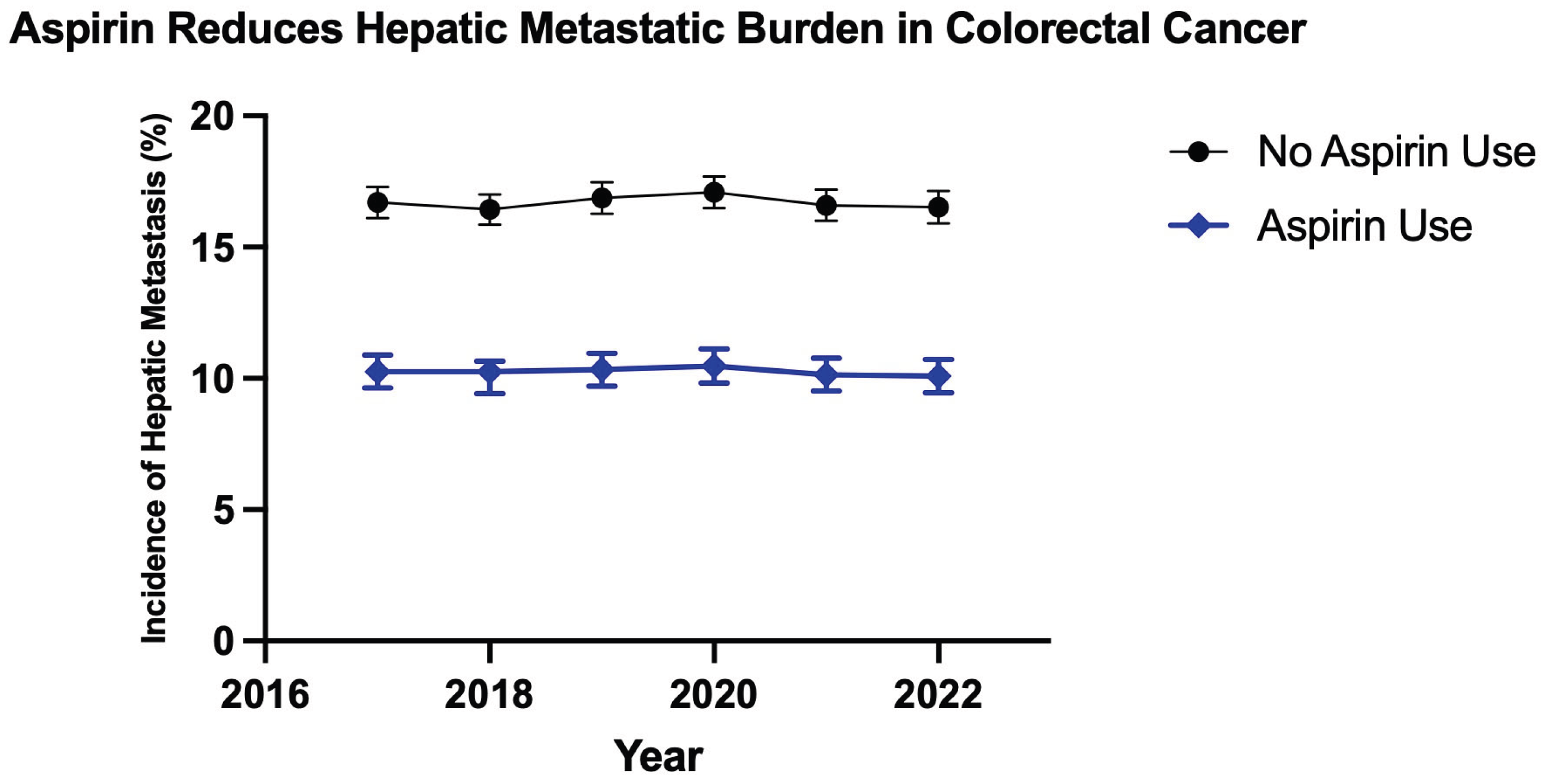
Figure 3. Aspirin reduces hepatic metastatic burden in colorectal cancer.
Preprints 208184 g003
Table 1. Baseline characteristics categorized by aspirin use.
Preprints 208184 i001
Table 2. Baseline comorbidities categorized by aspirin use.
Preprints 208184 i002
Disclaimer/Publisher’s Note: The statements, opinions and data contained in all publications are solely those of the individual author(s) and contributor(s) and not of MDPI and/or the editor(s). MDPI and/or the editor(s) disclaim responsibility for any injury to people or property resulting from any ideas, methods, instructions or products referred to in the content.
Copyright: This open access article is published under a Creative Commons CC BY 4.0 license, which permit the free download, distribution, and reuse, provided that the author and preprint are cited in any reuse.
Prerpints.org logo

Preprints.org is a free preprint server supported by MDPI in Basel, Switzerland.

Subscribe

Disclaimer

Terms of Use

Privacy Policy

Privacy Settings

© 2026 MDPI (Basel, Switzerland) unless otherwise stated