

Submitted:
14 April 2026
Posted:
15 April 2026
You are already at the latest version
Abstract
This study examines climate-related policies in Turkana County in ensuring youth inclusivity, relevance, and effectiveness amid chronic climate variability. Despite the existence of national and county-level policies, climate risks continue to pose challenges. With all policies in alignment with the Paris Agreement, Turkana’s vulnerable youth continue to suffer from extreme socio-economic miseries triggered by repeated droughts, floods, heat stress, and wind storms. Based on PESTEL analysis and vulnerability theory, the research identifies notable policy gaps, including poor youth representation, inadequate financial support, and few engagement mechanisms. Findings indicate that climate risks significantly affect livelihoods, exacerbating poverty, particularly among young people, and underscoring their limited participation and voice in climate governance and decision-making. In addition, findings reveal that current policies do not make specific provisions for the inclusion of youths in decision-making, innovation, and climate resilience initiatives, thereby restricting their transformative agency. Policy limitations include a lack of youth-specific policies and fewer financial tools to encourage youth-led climate action. Proposals emphasize mainstreaming youth capacity-building, enhancing digital and peer climate education, and fostering youth-led green action. This transforms young people from vulnerable groups into active forces inspiring climate resilience and enhancing socio-economic development and sustainability in Turkana County.
Keywords:
climate-related policies
; youth
; resilience
; Turkana
1. Introduction
Climate variability has been a subject of global attention lately due to its growing impacts, prompting an urgent call for adaptation and mitigation. For a long time, it has been a threat to the environment and humankind (Mushitsi et al., 2023). It has been recognized as one of the most significant threats to younger generations (Pereira & Freire, 2021). According to Jegede & Adejonwo (2022) the practicality of the challenges of climate variability and the rationale for addressing its impacts on people have remained a matter of discussion, from the Africa Climate Summit held in Nairobi, Kenya, to COP 28 held in Dubai in 2023. The COP28 plan of action centered on key pillars, among them is focusing on people, lives, and livelihoods (United Nations Framework Convention on Climate Change, 2023), especially in the Global South.
Youth represent a significant demographic group that is vulnerable to the impacts of climate variability due to their developmental stage, socio-economic status, and dependency on natural resources for livelihood. Youth are disproportionately affected by climate variability characterized by changes in rainfall, temperature, and frequency of extreme weather events, in the form of drought, flood, heat stress, and wind. They are among the most vulnerable groups in society to the impacts of climate variability. As climate variability increases, the increased frequency and severity of these weather events contribute to rising levels of hopelessness, anxiety, and distress among youth (Gao et al., 2025). Youth face significant threats from climate variability, including water insecurity, agricultural activity, livelihoods, and migration patterns.
In Kenya, especially in semi-arid and arid (ASAL) regions like Turkana, climate variability impacts are even worse due to geographical location and climate conditions. The changing climate is reshaping the world that young people are due to inherit and will bear the costs for in the coming decades. Turkana County has a long history of climate variability impacts and continues to be among the climate hot spots in Kenya. The county whose economy relies strongly on pastoralism and agro-pastoralism is facing recurring droughts, increasing temperatures throughout the year, with unreliable and unpredictable rainfall patterns, rendering its landscape more barren wasteland, and increasing socio-economic miseries among the youth (Akall, 2021). The county’s main economic activity, pastoralism, which is mostly carried out by young people, is highly susceptible to climate risks.
Due to cognizance of the socio-economic impacts of climate variability by the Government of Kenya, climate-related policies were developed to fulfill the Paris Agreement 2015 and to take care of both climate variability and change. Despite the enforcement of the existing policies, the socio-economic impacts on youth remain unabated. Turkana young people suffer from high levels of multidimensional poverty, with limited access to sanitation, education, nutrition, and housing, even with policy documents in place. This disconnect indicated a gap between policy formulation and implementation, often hindered by a shortage of adequate institutional capacity, funds, poor infrastructure, and limited youth engagement.
This study, therefore, analyses the effectiveness of climate-related policies in Turkana County with a focus on youth engagement and resilience. Even with many policies that comply with international agreements like the Paris Agreement, youth continue to be vulnerable due to socio-economic hardships experienced. This is due to climate risks like drought, flooding, heat stress, and windstorms. Using PESTEL analysis and vulnerability theory, the paper determines policy deficits, including inadequate youth representation, financial support, and missing processes for youth engagement in managing climate variability impacts and decision-making on innovation.
This study presents findings that indicate that climate variability has a major impact on livelihoods, deepening poverty, and reducing youth involvement in decision-making. In addition, the findings also highlight that young people are susceptible to climate disruptions due to limited resources and livelihood options (Mugeere et al., 2021). Most policies lack specific provisions for youth engagement, nurturing technology innovations, and specialized financial tools to empower the youth. The study recommends policy review to include youth participation, creating specialized climate finance tools for youth initiatives, and increasing education and awareness. In addition, strengthen institutional mechanisms so that youth inputs are systematically included in climate action. These measures are imperative to harness the potential of Turkana in building resilient, sustainable communities in the face of the ongoing challenges of climate variability.
2. Literature Review
The adoption of the Paris Climate Agreement in 2015 marked a milestone in the history of international climate negotiations, stressing the importance of national response and local action in addressing climate variability and its impacts (Hamdy et al., 2023). Core realizes the success of the Paris Agreement in the extent to which national climate actions, including NDCs achievements and other climate actions of mitigation and adaptation down to local levels, are well guided by regulatory frameworks with effective policies (Ilyas & Xinlei, 2025). The global framework emphasized the need for inclusive, responsive, and effective climate-related policies addressing not only environmental concerns but also socio-economic dimensions, particularly for marginalized groups such as the youth of developing countries.
Negative climate-related impacts are more pronounced in Africa than in any other place globally since the continent is characterized by limited mitigation and adaptation strategies, highly vulnerable people, a vulnerable ecosystem and exposure (Adejonwo, 2022). For instance, the youth of Phalga, Nigeria, are susceptible to the impacts of climate variability, including flooding, erosion, and extreme weather events (Ogbanga, 2024). North Africa is battling recurrent droughts and floods that exacerbate water shortages, disrupt agriculture, and weaken public health (Tanarhte et al., 2024). Climate variability impacts occur more often in Sub-Saharan Africa and are more intense, leading to loss of crops, water scarcity, and food deficiency (Lombe et al., 2024). People living in this part of Africa are exposed to these risks, and amongst them are young people.
Climate variability in Eastern Africa results in displacement and migration, with pastoralist communities bearing the brunt of such risks since they are the most exposed (Chetto et al., 2024). Somaliland experiences crop failures, livestock mortalities, and food deficiencies (Omer, 2024). Likewise, Ethiopian pastoralists experience the impacts of drought along Kenya’s borders, which result in massive livestock mortality and migration in the southern part of the country. Climate variability threatens Uganda’s social and economic development. For instance, youth observations in the Karamoja region observed temperature increase, rainfall changes, increased droughts, and finally, stronger winds (Barford et al., 2021).
Comparing all East African countries, Kenya is highly affected by climate variability compared to others due to its geographic location (Mushitsi et al., 2023). Similarly, the country is at risk of experiencing drought impacts since 80% of its geographical area is either arid or very arid (Turkana County Government, 2023a). These regions, covering 89% of Kenya’s land area, are experiencing warming trends and increased drying, affecting agriculture and pastoralism, which is mostly carried out by youth (Nunow, 2024). The impacts include reduced agricultural productivity, water scarcity and increased food insecurity. Food insecurity remains a challenge, notwithstanding government interventions, due to climate variability and socio-economic disparities (Kofa et al., 2024).
Turkana County (Figure 1) is one of the dryland counties in Kenya with major economic activities such as livestock production at 62%, agro-pastoralism at 20%, fishing at 12%, and casual labor at 8% depend on pastoralism, followed by fishing activities, as its main livelihood sources (International Organization for Migration Kenya Country Office - IOM, 2023). Despite being rich in history and vast landmass, climate variability has turned it into a barren wasteland. This variability has increased poverty levels among youth, worsening their socio-economic status. Among youths aged 18-34, 80.9% are multidimensionally poor, way above the national average of 55.7% (Turkana County Government, 2023a). The main drivers of this poverty are housing (93.3%), nutrition (80%), education (76%), and sanitation (57.8%). The county faces increasing exposure to climate variability, with warming trends observed and predictions of enhanced warming and drying by the end of the 21st century. Furthermore, increased weather-related hazards in Turkana West sub-county worsen resource-use conflicts, thus contributing to security threats along the borders. Pastoralists confront both traditional risks like political marginalization and harsh climate conditions, as well as new threats from large-scale development projects that can restrict mobility and access to resources (Schilling & Werland, 2023). Youth in these areas have limited knowledge of climate issues, highlighting the need for enhanced education and capacity-building (Tadeo, 2024).
However, in recognition of the impacts of climate variability, the government of Kenya developed a set of policy instruments aligned with international commitments, such as the Paris Agreement. The Kenyan government began with the National Climate Change Response Strategy (2010). This policy was the first national document on climate variability and change, intended to advance integration of climate impacts, adaptation, and mitigation into government planning, budgeting, and development objectives (GoK, 2010). To expunge the wrongs that emanated from policies that discouraged development in ASAL areas of Kenya, a responsive and specific policy for ASAL areas was developed and named the National Policy for Sustainable Development of Northern Kenya and other ASALs (GoK, 2012). This policy was intended to strengthen sustainable development in Kenya’s ASAL regions and focused on water, agriculture, infrastructure, and environmental conservation (Government of Kenya, 2012). ASAL policy comprises four pillars: building a strong infrastructure, human capital foundation for development governance mechanisms; encouraging national integration, cohesion, and equity; creating new strategies for effective governance and public service delivery methods; and supporting climate resilience practices that provide stable livelihood opportunities for people (Saadiya & Muna, 2024). This policy influenced the resources used to tackle socio-economic marginalization resulting from pre- and post-independence policies.
In the interest of the people, the Government of Kenya developed the National Climate Change Action Plan 2013-2017. This plan was developed to set enabling actions for adaptation and mitigation. Furthermore, the plan recommended several actions, including the establishment of a national climate change fund and a climate change code within the government budget system. It also called for coordination and harmonization of government and development partner funding (Omala, 2025). Furthermore, the Kenya National Adaptation Plan (2015-2030) was developed as a result of efforts called for to consolidate the country’s vision and actions on adaptation at national and county levels to enhance long-term resilience. It offers a background of national socio-economic situations and forthcoming climate situations needed in consideration for decision-making, planning, and budgetary processes. It merges the nation’s vision on adaptation actions related to fiscal sectors and county vulnerability levels to enhance lasting empowerment and adaptive ability (Kenya National Adaptation Plan: 2015-2030, 2016). It identifies climate hazards, assesses vulnerability status, and pinpoints precedence adaptation activities in the 21-planning medium-term plan (Radeny et al., 2022).
To coordinate climate finance in Kenya at both the national and county levels, the National Climate Finance Policy (2018) was developed to serve this purpose. This policy was set to guide the mobilization, allocation, and utilization of climate finance towards supporting Kenya in climate change adaptation and mitigation. The policy’s institutions, authorized, institutional, and reporting frameworks are used to access and manage climate finance (Radeny et al., 2022).
Due to the interest in youth affairs, the government of Kenya developed the Kenya Youth Development Policy (2019) through a consultative process while giving cognizance to the dynamic nature of issues that affect the youth. The policy aims at ensuring that youth issues are reflected in all sectors of national development at both national and county levels within the society, private, and public sectors. It further underscores the importance of affirmative action for the youth as a strategy of participation in decision-making and empowerment. The policy prioritizes the socio-economic environment and development, and regards youth as solvers where projects and programs are initiated by youth and decision-making is shared among youth and stakeholders.
The county governments of Kenya were later on mandated to develop their climate policy in alignment with the national climate change policy to address climate issues at the county level. Turkana County became one of the leaders in developing its own policies to guide adaptation strategies within the county. Firstly, it started with the Turkana County Climate Change Policy (2021). The policy was developed to provide a clear and succinct articulation of overall response priorities to climate variability and change. It facilitates a coordinated, coherent, and effective response to the local, national, and global opportunities and challenges presented by climate variability and change. Further, the policy focuses on adaptation, mitigation, and financial mechanism outcomes for the implementation of climate change actions (Turkana County Government, 2021). This policy is meant to inform Turkana County’s interventions in climate variability, and change impacts management and building resilience, sustainable development, and, of course, environmental sustainability. The policy provides a clear strategic direction that is aligned with climate realities, recognizes the importance of mainstreaming climate into development planning, and emphasizes community engagement and capacity development.
The Turkana County Disaster Risk Management Policy (2019) is a major step towards achieving sustainable development in line with county, national, and international frameworks. This policy aims to facilitate the effective coordination at all levels by leveraging the collective capacity of the government, communities, and other stakeholders towards effective disaster preparedness, mitigation, response, and recovery. The overall goal of the institutional framework is to strengthen and establish efficient institutional mechanisms for integrating disaster management into socio-economic and all environmental development processes at all levels in the county.
The Turkana County Climate Change Action Plan (CCAP) 2023-2027 was later developed as a result of vulnerability risk assessment that was done in every ward. Its goal is to enhance the resilience of communities and natural systems to steer the county towards a low-carbon pathway for sustainable development. Implementation of the plan is driven by the local communities through climate change committees at both the ward and county levels. Furthermore, the action plan ensures county climate change funds embrace social inclusion and public accountability (Turkana County Government, 2023a). The CCAP is expected to identify sectoral adaptation needs and also detail specific sectoral actions, key implementation partners, and indicative costs. The action plan is in line with national and county-level climate policies, focusing on institutional capacity and policy coordination. While the policies offer a foundation for climate resilience, their effectiveness is characteristically compromised by gaps in youth involvement financing mechanisms, technology accessibility, and institutional coordination. For instance, the policies exclude explicit provisions for youth inclusion in decision-making, climate finance access for young entrepreneurs, and mechanisms for indigenous and local knowledge integration.
This study aims to analyze climate-related policies for Turkana County to establish their effectiveness in building youth resilience. Since Turkana is vulnerable to climate variability and is confronted with socio-economic challenges, there is a pressing need to examine whether existing policies adequately address youth participation and empowerment. The overall agenda is to identify gaps and suggest actions to integrate youth involvement into climate resilience initiatives to make sure policies developed are inclusive, participatory, and capable of empowering youth from being vulnerable stakeholders to active agents of sustainable development. The study underscores the importance of integrating youth perspectives and capacities into climate policy frameworks to foster resilient communities capable of adapting to an increasingly unpredictable climate future.
2.1. Theoretical Framework
The study adopted vulnerability theory to form its theoretical foundation, which provides insights into how poverty and social inequities impact youth. Youth living in ASALs face heightened vulnerability to drought, poverty, and limited access to food, clean water, and other basic resources and amenities (Chongwo et al., 2025). Vulnerability is influenced by age, sex, family structure, and climatic hardship. Agro-pastoral and pastoral livelihoods are extremely sensitive to climate variability impacts, with livestock deaths and food insecurity being of greatest concern (Tofu et al., 2025). However, resilience can be built through various mechanisms, such as social support networks, indigenous knowledge, and adaptation strategies.
Sormunen (2023) argues that vulnerability theory offers a persuasive framework for rethinking effective remedies to the climate crisis, emphasizing the universal yet differentially distributed nature of climate vulnerability. Understanding the interrelationships between vulnerability, adaptation, and resilience is crucial for developing effective climate variability and change policies and disaster risk reduction strategies. Studies reveal that while many Kenyan youth have superficial knowledge of climate issues, there is a critical need for enhanced education and capacity-building to deepen their understanding (Tadeo, 2024). The literature emphasizes the importance of supporting youth-led initiatives and ensuring access to resources to promote resilience in pastoralist communities. To address these challenges, there is a growing emphasis on incorporating youth perspectives in climate policy decisions and empowering youth-led environmental activism. Pastoralist communities in northern Kenya face both traditional risks like political marginalization and new challenges from development projects, necessitating their involvement in decision-making processes (Schilling & Werland, 2023).
2.2. Conceptual Framework
The framework below (Figure 2) draws on the learning and empirical experience of climate resilience among vulnerable populations. The framework shows the intricate interlinkages between climate variability, causes of vulnerability among youth, and ways of improving youth resilience in the face of climate variability. The vulnerability of youth depends on socio-economic, environmental, and institutional capabilities that make them susceptible to climate variability. Climate variability entails fluctuations in climate patterns such as heatwaves, floods, droughts, and windstorms. It amplifies existing vulnerabilities to cause negative impacts such as food insecurity, water scarcity, resource use conflict, youth migration, and health risks. These changes endanger livelihoods, particularly for individuals heavily reliant on pastoralism, agro-pastoralism, and natural resources. To enhance resilience among youth, a climate-related policy review is called for in response to changing climate risks. The reviewed existing climate-related policies can include youth voices, and with this in place, socio-economic empowerment will be achieved, hence a resilient community.
3. Materials and Methods
To establish what Turkana County is doing to enhance the resilience of youth in the face of climate risks, the researchers used PESTEL analysis, explained below, to analyze existing climate-related policies. Importantly, before the researchers analyzed the policies, it was important to first know the climate extreme events experienced by youth in the last 12 months. The study was conducted in Turkana Central and Turkana West sub-counties, whereby purposive and random sampling were used in the study (Tofu et al., 2023), considering the vulnerability of households to the impacts of climate variability. For instance, the vulnerability of youth stands at 80.9% while the national poverty level is 48.1% (TCG, 2023). Factors contributing to youth poverty include nutrition (80%), housing (93.3%), sanitation (57.8%), and education (76%). Simple random sampling was done until the required sample size was achieved (Azubuike, 2025). This ensured that the sample size was representative of the entire population and helped reduce bias. The sampling population was derived from local youth traders and households with youthful populations, using Cochran’s (1977) formula to get the sample size of 394 against 287,363 youth.
Data on existing climate-related policies were subjected to political, economic, social, technological, environmental, and legal (PESTEL) analysis to establish gaps that interfere with their implementation (Poudel & Kumar, 2025). The PESTEL method is a useful tool as it helps identify external factors affecting the success of climate policies. It is a tool that has demonstrated adaptability to different fields, including sustainability policy analysis (Anderson, 2025) and a simple analytical concept and framework (Whittington et al., 2020). Despite its popularity, the tool faces criticism as a simplistic checklist lacking rigorous analytical depth (Anderson, 2025). Furthermore, it is criticized for data availability and reliability. In addition, the tool is criticized based on historical data and what is known as of today, since it might not capture ongoing changes and emerging issues. To overcome this, the PESTEL tool was used as a checklist in the study, and to deal with the problem of data, quantitative data were used to support the PESTEL analysis of existing climate policies. Quantitative data were analyzed using frequency and percentages to determine major climate risks in Turkana County. It was helpful to identify and assess the six main factors listed above to establish the impact of existing climate-related policies on the resilience of youth. The initial stage was to identify data for each of the factors included in the analysis, then highlight parameters that have a major contribution to each factor, and then examine their relevance in enhancing youth resilience. Finally, gaps hindering the success of policies were identified in improving youth resilience in the face of climate variability. In conducting this analysis, the paper relies on a review of existing literature and field data collected using open-and closed-ended questionnaires and key informant interviews.
4. Results and Discussion
4.1. Major Climate Risks in Turkana County
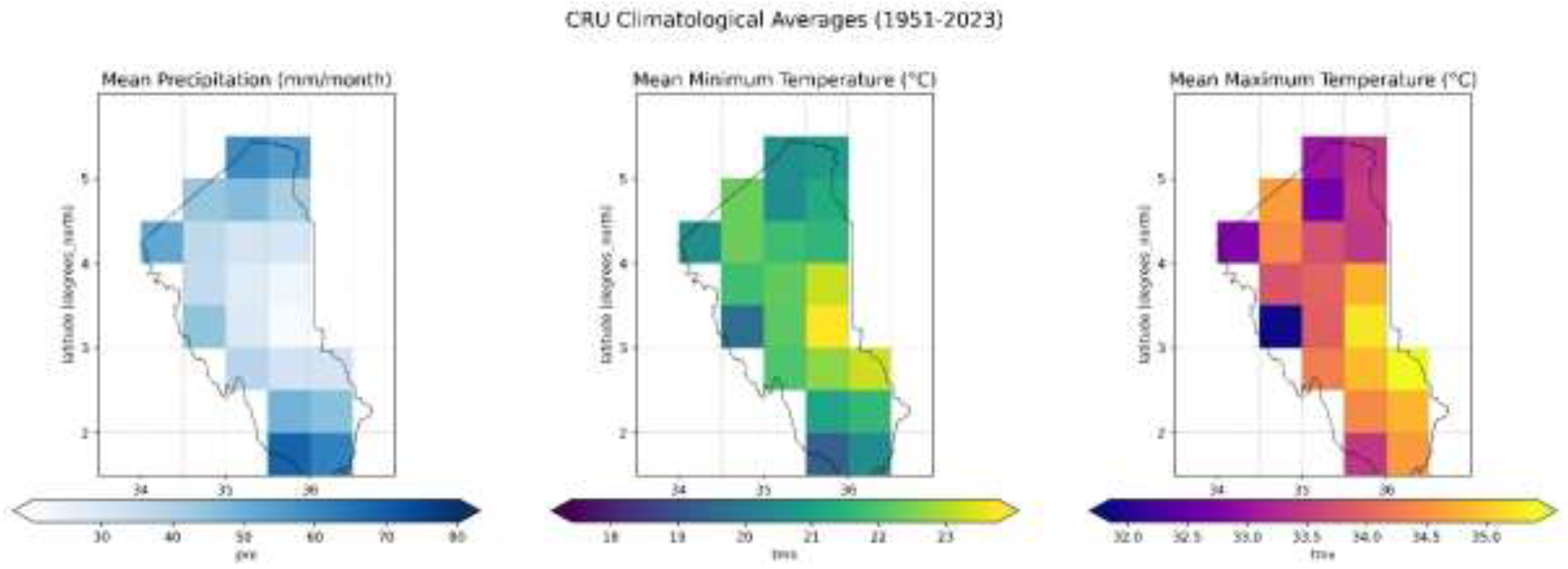
Climate risks in Turkana County are very common. The community is exposed to a mix of drought, excessive rainfall, flooding, heat stress, and windstorms as indicated in Figure 3 below. These climate risks are linked to one another. For instance, high rainfall leads to flooding, whereas drought worsens heat stress. The findings indicated that drought (59.7%) is the most frequent climate risk affecting nearly 60% of the respondents. This highlights that water scarcity is a priority concern that could most likely impact agriculture, health, water supply, and financial security in the community. Flooding comes second and is experienced by more than a third (36.4%) of the population, often resulting from heavy rain, poor drainage, or topographic factors. A significant proportion of the population suffers extreme heat impacts (38%), which impacts their agriculture and health. Temperature rise can be linked with broader climate variability trends requiring intervention measures such as heat-resistant crops and public health interventions. Over a quarter of the respondents experienced heavy rainfall (27.9%) in the last 12 months, which could have caused direct hazards such as flooding or long-term impacts like soil erosion. Strong winds (20.5%) affect approximately one-fifth of the population, and compared to other climate risks, it is less frequent, but it is still a significant risk that intervention measures could be taken, as shown in Figure 2 below. The county’s mean temperature and precipitation are indicated in Figure 3 below.
Figure 4.
Mean precipitation and Temperature. Source: Field data.
4.2. Climate-Related Policy Actors
The County Government of Turkana responds to climate variability through a collaborative and multi-sectoral approach, in which many ministries, NGOs, CBOs, and state agencies work together and where the areas of responsibility intersect. The county departments include climate change, agriculture, water, disaster management, livestock, gender, and youth affairs. Among these, the youth and gender sub-sector finds its relevance as it is core to the realization of the promotion of equality of all opportunities for women, men, girls, and boys to ensure no one is left behind. This mandate is achieved through youth infrastructure, capacity enhancement, youth representation and coordination, youth empowerment, and advocacy. It further looks into the extent to which young people have access to fair opportunities, the factors influencing their aspirations, and their ability to pursue aspirations and carry out their life plans
4.3. PESTEL Analysis of Climate-Related Policies
PESTEL analysis was originally designed as an assessment tool of the external macro-environment in which an industry or business operates (Housni et al., 2024). Later, this tool was found to be important and useful in identifying and understanding the key political interferences that are likely to affect policy implementation, key economic, social, and environmental aspects, as well as technological innovations that are likely to occur, and legislation that may support and regulate policy implementation (Christodoulaki et al., 2024). The use of PESTEL analysis is necessarily narrative, restricted to the identification and conceptual evaluation of the relative importance of contextual issues (Housni et al., 2024). Such issues include political support and government initiatives; economic viability, finance; community participation, acceptance, and awareness; technological infrastructure, including phones and technological advancements; environmental sustainability; and legal or regulatory framework. All policies below (Table 1) are subject to PESTEL analysis to identify gaps that hinder their implementation and enhance youth resilience.
4.3.1. Kenya National Adaptation Plan (2015-2030)
The NAP (2016) is a national-level plan led by the national government, and its role is to build resilience. It was developed by the Government of Kenya to address climate-related impacts, especially ending drought emergencies, water, livestock, agriculture, and fisheries sectors drought (Muhatiah et al., 2025). Interventions embedded in the plan are geared towards humanitarian action, disaster risk reduction, preparedness, and response actions, to attain its goals under Vision 2030. This plan encourages counties that, when they are formulating their county adaptation plans, they should be able to identify their priority actions from the actions indicated in the NAP to suit their context after conducting vulnerability assessments. The objectives of NAP include integrating climate change adaptation into national and county-level development planning and budgeting processes; stating the importance of adaptation and resilience-building actions in development; and enhancing the resilience of vulnerable populations to climate shocks through adaptation and disaster risk reduction (Mushitsi et al., 2023).
However, climate resilience has been prioritized by the national government of Kenya, but policies addressing the youth specifically are limited in the climate adaptation agenda. The gap existing in it is a lack of dedicated policies that address youth engagement in climate resilience and leadership development. Economically, NAP has insufficient budget allocation for specifically youth-led climate activities, hence a lack of financing mechanisms to support youth entrepreneurship and innovation in climate adaptation (Kiremu et al., 2022). Socially, youth are not well represented in decision-making due to inadequate formal platforms for youth engagement and sensitization (Bwire, 2024). This is not in line with enhancing resilience among vulnerable populations to climate shocks through adaptation and disaster risk reduction strategies. Technologically, there is restricted access to innovative technologies tailored for youth-led solutions. This means that there are no youth-specific programs for engagement in technological innovation in climate adaptation. NAP addresses climate risks but does not specifically consider youth vulnerabilities and roles. This means there is no attention paid to empowering youth to get involved in conservation and sustainable use of resources. The legal factors of NAP indicate that there are no mandates for youth representation and protection in climate decision-making, thus calling for revision of policies to include youth representation in climate governance structures.
4.3.2. National Climate Finance Policy (2018)
The Republic of Kenya established a significant climate finance policy to guide the utilization of climate funds. However, there are implementation challenges, particularly for youth initiatives. Politically, the policy fails to ensure mandatory youth representation in climate finance governance mechanisms and platforms for decision-making. It has insufficient focus on empowering youth economically in ventures within the climate sectors. The policy mentions vulnerable groups, but does not mention youth as a major stakeholder group requiring special attention. Youth, however, have an uphill battle to get into climate-related ventures via credit, with too little money from services that currently exist, such as the Hustler Fund, and unrealistic eligibility requirements that deny them entry into climate finance programs (Athiambo, 2024). There is insufficient support for the youth to participate in developing and implementing climate-smart technologies or digital interventions to ensure climate resilience. Additionally, the policy does not directly involve young people in environmental protection and project implementation of climate finance-supported projects, and no legal framework empowering young people as stakeholders or beneficiaries in climate finance systems. The National Climate Finance Policy (2018) should evolve to formally recognize the role of Kenya’s youth in climate finance agendas for the country to leverage the dynamism, innovativeness and leadership potential of the youth. The aim is for the youth not to be only recipients but also game changers of the Kenya climate journey.
4.3.3. National Policy for Sustainable Development of Northern Kenya and Other ASALs (2012)
Research on ASALs of Kenya reveals significant challenges and opportunities for youth development. Youth in pastoral communities like Turkana County demonstrate superficial knowledge of climate issues, highlighting critical needs for enhanced education and capacity building to deepen their understanding of climate change and policies (Tadeo, 2024). However, the policy lacks official mechanisms for youth engagement in governance structures regarding ASAL development. Economically, there is decreased priority in the facilitation of programs for youth employment or entrepreneurship in ASALs; few efforts are made towards empowering youth education, community cohesion, or social inclusion programs to harness the potential of youth for sustainable development. There is limited facilitation of youth-led innovation in mobile technology, renewable energy, and digital agriculture that are relevant to issues in ASAL. While youth are embracing alternative livelihoods for extra income, participation remains limited by restricted access to information, skills, and resources (Lydiah et al., 2023). The policy further fails to mention involvement of young people in environmental conservation or adaptation to climate variability and change activities, and there are no laws to legitimize youth participation in development activities and protect their interests.
4.3.4. Kenya Youth Development Policy 2019
The Kenya Youth Development Policy was developed to promote the creation of sustainable, decent jobs and income-generating opportunities for all youth, and it facilitates the building of digital skills and leveraging young people’s natural affinity to technology. In addition, the policy intends to help realize a mentally and physically healthy nation that is socially secure. The policy has outlined strategies that contribute to a crime-free, secure, peaceful, and united nation. However, the challenge of building a qualified and competent youth workforce for sustained development in Turkana is inadequate because illiteracy levels are still high. The objective of creating opportunities for youth to earn decent and sustainable livelihoods in Turkana County may not be significant because the percentage of illiteracy is still high. The associated priority areas for interventions include investing in adult education, addressing underemployment and unemployment, and funding youth programs for better lives.
4.3.5. Turkana County Climate Change Policy (2021)
The Turkana County Climate Change Policy focuses on the interlinkages between sustainable development and climate variability and change. The goal of the policy is to facilitate socio-economic transformation of Turkana through sustainable use of resources to ensure a high quality of life for the people of Turkana County (Turkana County Government, 2021). However, development interventions have failed to support local livelihoods, instead contributing to existing problems undermining pastoralism (Akall, 2021). The policy does not mention empowerment actions for the youth to become climate resilient, lacks clear legal provisions to cater to youth and community participation and has inadequate emphasis on fostering youth-led innovation, digital solutions, or climate technology adoption. It is therefore recommended to have explicit youth inclusion, capacity building, funding access, youth declaration as stakeholders, facilitate technology and innovation and collaborate with youth organizations to enhance participation of young people and promote sustainable and equitable resilience for the future.
4.3.6. Turkana County Climate Change Action Plan 2023-2027
The development of the Turkana County Climate Change Action Plan 2023-2027 was a participatory process involving various stakeholders, among them key stakeholders such as youth, to identify climate variability priorities and vulnerabilities at all 30 wards in the county. This plan helps identify sectoral adaptation needs and details specific sectoral action plans, key implementing partners, and indicative coasts. The most striking policy gap remains one of clearly engaging youth in decision-making. Youth engagement stands at the periphery, with few mechanisms in place for their inclusion in planning and leadership. Socially, Turkana youth are vibrant and innovative, but are not being leveraged in climate resilience. Many youth, both women and men, no longer aspire to being pastoralist herders, hence, they would prefer to receive education, find jobs, and open businesses (Turkana County Government, 2023b). Young people are underrepresented in environmental monitoring and conservation activities. In addition, many youths in underserved communities have limited access to appropriate information on environmental change causes and consequences (Sitas et al., 2022). There are no clear provisions in current policies regarding youth involvement in climate governance. Inclusion of legal provisions where youths are mandated to be represented within county climate committees and development planning is important. These legal provisions institutionalize youth participation so that their voices are systematically captured.
4.3.7. Turkana Disaster Risk Management Policy (2019)
The development of the County Disaster Risk Management Policy is a step towards achieving sustainable development in line with the county and national frameworks. This policy has several objectives, among them the reduction of disaster risk and vulnerabilities by undertaking systematic identification and assessment of disaster risk and enhancing early warning systems, and enhancing the resilience of the county to the impacts of disaster risk and climate variability and change. The policy faces challenges such as no institutional arrangements for engaging youth in risk planning and response, no specific funding or economic programs for youth-led risk reduction initiatives, such as youth entrepreneurship or livelihood diversification to buffer climate risks, no youth-specific programs for empowering youth in risk identification, preparedness, and response, limited provisions for training youth in risk management, early warning systems, and climate resilience because interventions are done by strangers (Nason, 2023). There is a lack of utilization of digital platforms and tools to involve youth in risk reduction efforts actively, and no provision to address the special vulnerabilities or needs of marginalized groups of youth. Strengthening youth involvement, capacity building, and accessibility to risk management facilities can consolidate overall resilience and enable the youth to become positive collaborators in risk mitigation.
4.4. Institutional Support
Based on political factors, several questions were drafted to gain a deeper understanding of the government’s performance and support in Turkana County. The bar chart (Figure 5) shows the percentage of responses to various issues, including living standards, water, and sanitation, young women’s opportunities, vulnerable youth, climate variability, environment, and community support. Respondents view living standards, climate variability, and vulnerable youth as crucial issues, with the majority responding fairly badly or very badly. More positive views exist for young women’s opportunities and community support. These conclusions point out where particular policies could help address the most pressing issues. The results are summarized below.
4.5. Key Challenges in Policy Implementation in Turkana County
While Turkana County has made notable strides in formulating climate-related policies across various sectors, the county continues to face considerable challenges in effectively implementing these policies. Climate policies are known to affect vulnerable rural communities, low-income households, and low-skilled workers disproportionately and thus pose further challenges to the already weak social protection system (Christodoulaki et al., 2024). The gap between policy formulation and execution remains a persistent issue, preventing many striving goals from being realized (Poudel & Kumar, 2025). The main obstacle to policy implementation in Turkana County is insufficient climate finance allocation (Omala et al., 2024). The county government allocates only 2% of its financial budget to the climate change department, which is inadequate to finance long-term projects. The limited financial allocation prevents adaptation projects from being prioritized, preventing the achievement of resilience targets.
Turkana County has inadequate infrastructure development in terms of road network, mast, transportation, and communication; thus, it remains underdeveloped (Eweet, 2022). The vastness of Turkana County and poor infrastructure prevent the distribution of resources; hence, policies fall short of their intended outcome. Most rural areas of Turkana lack modern roads and transport networks, making it difficult to deliver the agricultural equipment necessary for agricultural initiatives or industrial development.
Dependence on imported technologies interferes with policy implementation. This dependency is evident in infrastructure development and manufacturing (Poudel & Kumar, 2025). Infrastructure requires advanced equipment and construction materials that are not manufactured locally. As a result, project cost increases, causing a delay in implementation, and other projects may not be implemented completely. Sometimes, it reduces the overall sustainability of the initiatives due to high operational costs.
The institutional capacity and governance issues are another major barrier to policy implementation (Muriithi & Ngare, 2023). Turkana County’s policies are well designed; however, the weak institutional structures, inadequate human resources, and insufficient technical expertise compromise implementation. Public institutions lack coordination and face political interference. Policy implementation gets derailed due to overlapping responsibilities, unclear mandates, and frequent changes in leadership within key government institutions. The shortage of skilled professionals who can manage complex projects in the public sector is also a barrier to policy implementation.
Public-private sector engagement is also a barrier to policy implementation (Ngo et al., 2024). The private sector is very important as it accelerates development, particularly in areas like technology, infrastructure, and services. However, policy clarity, high-risk areas, and an unfavorable business environment, as indicated by corruption and political instability, dissuade private players from fully participating in the country’s development initiatives.
Turkana County has benefited from assistance in various sectors, including water, livestock, climate variability and change, social protection, education, health, infrastructure, and security. However, national and international collaboration has not been fully realized due to poor coordination and misalignment between donor priorities and county policies (Muhatiah et al., 2025). To strengthen policy implementation, the county government of Turkana can ensure development aid is channelled towards critical projects and encourage transparency and accountability in the utilization of funds. Additionally, the policies face inadequate public awareness and participation. Widespread public understanding and engagement are crucial for effective climate action. However, there is limited awareness of the impacts of climate risk and participation in climate initiatives. This lack of involvement results in many policies not being implemented.
5. Limitations and Future Directions for the Study
The research produced positive findings but had a few limitations. For instance, the study started with a sample size of 394 respondents, but after cleaning the data, only 258 (65.4%) valid responses were obtained. Based on the University of Nairobi’s policy, which states that 30% of the target population is sufficient and a representative sample, the findings are likely to represent the views of youth in all the sub-counties in Turkana County. Another limitation of the research was the geographic area with a poor road network; thus, they could only manage to conduct research in 2 out of 8 sub-counties. This was mainly due to financial constraints, which restricted the study to four wards in each of the two sub-counties. Language constraints also presented some challenges, which led to the use of local enumerators to help in the process of administering questionnaires. Despite the limitations, the study results are rich in information and can help in decision-making, for example, the need to involve youth in decision-making. Moreover, the results can help in the development of new policies through the coming together of policymakers, youth, and national and international bodies, which will ultimately lead to the development of effective policies.
6. Conclusions and Recommendations
The policies analyzed in this paper were formulated mainly to respond to the impacts of climate variability that have caused devastating impacts on youth livelihoods, particularly in the ASAL counties of Kenya. The examination of climate policies in Turkana County presents substantial accomplishment in formulating frameworks targeted towards addressing climate variability and resilience. There are still shortcomings in the inclusion and empowerment of the youth, regardless of the existence of numerous county and national policies. The majority of the policies lack explicit provisions on youth participation in decision-making, access to financial resources, and opportunities for innovation and leadership. The unavailability of institutional platforms through which youth may be engaged and their participation made possible in climate adaptation and mitigation limits the effectiveness and sustainability of resilience. Climate hazard prevention and preparedness, such as for drought, flooding, wind, and heat stress, requires an open process that embraces youth participation as drivers of change alongside other vulnerable groups. The government and policymakers ought to involve young people in creating their own policies, plans, and programs. Additionally, the government should promote youth growth technically, educationally, and financially. Without deliberate attempts at mainstreaming youth engagement, the promise of innovative, grassroots solutions is not optimally utilized, thereby undermining the overall resilience of Turkana’s most at-risk communities. This study conducted a comprehensive examination of climate policies using the PESTEL analysis tool to identify gaps that hinder their success in enhancing the resilience of youth in the face of climate variability impacts.
To bridge these gaps and build a better, more inclusive climate resilience framework, several strategic measures are recommended. First, policies need to be revised to specifically mandate the engagement of youths in climate decision-making structures, such as establishing youth advisory committees and youth representation in county and national planning committees. Second, special financial tools such as youth climate funds, grants, and microcredit programs need to be created to enable financing youth climate action, entrepreneurship, and technological innovations. These can be complemented by capacity development programs that equip young people with climate-resilient technology, digital skills, and green management capabilities. In addition, climate learning can be mainstreamed through school curricula and youth-led platforms like climate hubs and innovation centers that support peer education, leadership, and experimentation on adaptive solutions. Last but not least, conservation action should involve youth actively through volunteer programs, environmental patrols, and community activities, instilling ownership and sustainability. Finally, institutional frameworks need to be strengthened to guarantee youth rights, representation, and protection in climate policy and programs, guaranteeing their voices are systematically integrated in decision-making.
By operationalizing these recommendations, Turkana County will harness the creativity and traditional knowledge of its youth population, transforming them from vulnerable stakeholders to proactive drivers of climate-resilient, sustainable development. Participatory approach is at the heart of building resilient communities best able to meet the increasing climate variability and related socio-economic challenges.
Funding
This study was funded by the Pan-African and Trans-disciplinary Lens in the Margins: Tackling the Risks of Extreme Events (PALM-TREEs) project, implemented by the Institute of Climate Change and Adaptation (ICCA), University of Nairobi, Kenya.
Data Availability Statement
The data used for the study is available on request.
Acknowledgments
The authors wish to thank the County Government of Turkana for granting permission to conduct their study within the county. They also acknowledge the local authorities for their valuable guidance on data collection locations. Additionally, gratitude is extended to the youth who generously volunteered their time to participate as respondents. The dedication of the enumerators in carrying out the data collection is also sincerely appreciated.
Conflicts of Interest
The authors declare no conflict of interest.
References
- Adejonwo, O. Promoting productive rights as a pathway to climate-compatible development in Africa. In Climate Change Justice and Human Rights: An African Perspective; Pretoria University Law Press, 2022; pp. 59–73. [Google Scholar]
- Akall, G. Impacts of development interventions on pastoral livelihoods in Turkana County, Kenya. Pastoralism 2021, 11(1), 23. [Google Scholar] [CrossRef]
- Anderson, P. The Pestel Framework and its Variants for Analyzing the Strategic Environment: Evolution, Limitations and Adoption in Energy Policy Research; SSRN, 2025. [Google Scholar] [CrossRef]
- Athiambo, A. Factors Limiting Credit Uptake among the Youth in Kenya. International Journal of Finance and Accounting 2024, 9(1), 13–20. [Google Scholar] [CrossRef]
- Azubuike, O. R. Utilization Of Learning Resources for Teaching in Primary Schools in Udi LGA of Enugu State. Irish J. Edu Pract 2025, 8(01). [Google Scholar]
- Barford, A.; Mugeere, A.; Proefke, R.; Stocking, B. Young People and Climate Change; 2021. [Google Scholar] [CrossRef]
- Bwire, V. Youth Engagement in Policy Making: Assessing Perspectives from Kenyan Parliamentarians, Civil Society, and the Youth; 2024. [Google Scholar]
- Chetto, R.; Mdemu, M.; Kihila, J. Climate Change-Related Drivers of Migration in East Africa: An Integrative Review of the Literature. In Environmental Science & Sustainable Development; 2024; pp. 42–56. [Google Scholar] [CrossRef]
- Chongwo, E. J.; Aoko, B.; Kaniala, M.; Esala, M.; Magoma, P.; Njoroge, E.; Nyamanya, S.; Marangu, J.; Khamis, A.; Ng’asike, J.; Huizink, A. C.; Abubakar, A. Intersection between individual, household, environmental, and system-level factors in defining risk and resilience for children in Kenya’s ASAL: A qualitative study. PLOS ONE 2025, 20(1), e0316679. [Google Scholar] [CrossRef]
- Christodoulaki, R.; Drosou, V.; Papadopoulos, A. Political, Economic, Social, Technical, Environmental and Legal Analysis of the Hellenic Heating and Cooling Sector. Energies 2024, 17(16), 3902. [Google Scholar] [CrossRef]
- Cochran, W. G. Sampling techniques, 3rd ed.; John Wiley & Sons, 1977. [Google Scholar]
- Devonald, M.; Jones, N.; Yadete, W. ‘The first thing that I fear for my future is lack of rain and drought’: Climate change and its impacts on adolescent capabilities in low- and middle-income countries; Gender and Adolescence: Global Evidence: London, 2020. [Google Scholar]
- Eweet, J. T. Impacts of Water Policy Implementation and Management of Common Pool Resources in Turkana County, Kenya. Kenyatta University. Journal of Public Policy & Governance 2022, 6(2), 72–85. [Google Scholar] [CrossRef]
- Gao, C. X.; Fava, N.; Browne, V.; Patrick, R.; Gunasiri, H.; Menssink, J. M. Climate Change and Youth: Fast-Tracking Mental Health Solutions. Journal of Applied Youth Studies 2025. [Google Scholar] [CrossRef]
- Government of Kenya. National policy for the sustainable development of Northern Kenya and other arid lands: Sessional Paper No. 08 of 2012; Ministry of State for Development of Northern Kenya and Other Arid Lands, Republic of Kenya: Nairobi, 2012. [Google Scholar]
- Housni, H.; Amrous, N.; Daoudi, N.; Malzi, M. J. Strategic analysis for advancing Morocco’s nuclear infrastructure using PESTELE framework. Nuclear Analysis 2024, 3(2), 100110. [Google Scholar] [CrossRef]
- Ilyas, C. D.; Xinlei, L. The Effectiveness of the Paris Agreement: Successes, Challenges and Future Directions. World 2025, 25(3), 420–433. [Google Scholar]
- International Organization for Migration Kenya Country Office. Sub-County Climate Change Adaptation Action Plan (CCAAP) 2023-2027, Turkana West Sub-County; International Organization for Migration: IOM, Kenya, 2023. [Google Scholar]
- Jegede, A. O.; Adejonwo, O. Climate change justice and human rights: An African perspective; Pretoria University Law Press, 2022. [Google Scholar]
- Kenya National Adaptation Plan: 2015-2030. Government of Kenya, Ministry of Environment and Natural Resources, 2016.
- Kiremu, M.; Scrimgeour, F.; Mutegi, J.; Mumo, R. Climate finance readiness: A review of institutional frameworks and policies in Kenya. Sustainable Environment 2022, 8(1), 2022569. [Google Scholar] [CrossRef]
- Kofa, A. D.; Sabala, K.; Mutungi, J. National Food Policies and Food Security in Kenya’s Arid and Semi-Arid Lands. International Journal For Multidisciplinary Research 2024, 6(4). [Google Scholar] [CrossRef]
- Lombe, P.; Carvalho, E.; Rosa-Santos, P. Drought Dynamics in Sub-Saharan Africa: Impacts and Adaptation Strategies. Sustainability 2024, 16(22), 9902. [Google Scholar] [CrossRef]
- Lydiah, M.; Juster, G.; Margaret, K.; Kamau, M. Levels of Participation of Men, Women and Youth in Alternative Livelihoods in Turkana County, Kenya. International Journal of Gender Studies 2023, 8(1), 27–53. [Google Scholar] [CrossRef]
- Mugeere, A.; Barford, A.; Magimbi, P. Climate Change and Young People in Uganda: A Literature Review. The Journal of Environment & Development 2021, 30(4), 344–368. [Google Scholar] [CrossRef]
- Muhatiah, W.; Nyambane, A.; Ozor, N.; Mburu, S. A. STAKEHOLDER MAPPING AND ANALYSIS FOR CLIMATE CHANGE POLICY IMPLEMENTATION IN KENYA. 2025. [Google Scholar]
- Muriithi, J. K.; Ngare, I. O. Transitioning circular economy from policy to practice in Kenya. Frontiers in Sustainability 2023, 4, 1190470. [Google Scholar] [CrossRef]
- Mushitsi, P.; San, N. M.; Nsabimana, A. A. Climate change in Kenya: Understanding major threats and government policies for resilience. International Journal of Environment and Climate Change 2023, 13(11), 3741–3754. [Google Scholar] [CrossRef]
- Nason, V. Management of Climate Changes in Turkana County, Kenya. East African Journal of Education and Social Sciences 2023, 4(6). Available online: https://orcid.org/0009-0007-6873-9935. [CrossRef]
- Ngo, V. M.; Nguyen, H. H.; Pham, H. C.; Nguyen, L. H. Engage or retreat? Exploring the determinants of participation in Climate Finance public-private partnerships. Climatic Change 2024, 177(7), 104. [Google Scholar] [CrossRef]
- Nunow, A. A. The Nexus Between Climate Change and Livelihoods in Arid and Semi-Arid (ASAL) Areas of Kenya: Evidence from the Literature. International Journal of Social Science and Human Research 2024, 7(06). [Google Scholar] [CrossRef]
- Ogbanga, M. M. (2024). Vulnerabilities of Youths to Climate Change Impacts: A Case Study of Phalga Local Government Area. 12 issue 08(2235-767X).
- Omala, M. A. Examining socio-political factors influencing climate finance coordination in Turkana County, Kenya. Doctoral dissertation, Kenyatta University, Kenyatta University, 2025. [Google Scholar]
- Omala, M. A.; Kioko, E.; Gravesen, M. Effective climate finance coordination? Stakeholder perceptions, climate change policy implementation and the underlying political economy factors in Kenya. Climate Policy 2024, 24(7), 863–877. [Google Scholar] [CrossRef]
- Omer, M. A. Climate variability and livelihood in Somaliland: A review of the impacts, gaps, and ways forward. Cogent Social Sciences 2024, 10(1). [Google Scholar] [CrossRef]
- Pereira, T.; Freire, T. Positive Youth Development in the Context of Climate Change: A Systematic Review. Frontiers in Psychology 2021, 12, 786119. [Google Scholar] [CrossRef]
- Poudel, Y.; Kumar, R. Review of Energy Policies and Strategies in Nepal: Challenges and Opportunities. International Journal of Sustainable and Green Energy 2025, 14(2), 66–79. [Google Scholar] [CrossRef]
- Radeny, M.; Amwata, D.; Hunt, S.; Mungai, C.; Tumbo, M.; Eshetu, Z.; Tolo, A.; Butare, L.; Auma, J.; Solomon, D. Review of Policies and Frameworks on Climate Change, Agriculture, Food and Nutrition Security in Eastern Africa; Nairobi, Kenya, Accelerating Impacts of CGIAR Climate Research in Africa (AICCRA), 2022; Volume AICCRA working paper no. 3. [Google Scholar]
- Saadiya, I. H.; Muna, W. Impacts of the implementation of the Arid and Semi-Arid Lands (ASAL) policy on drought resilience in Wajir County, Kenya. Reviewed Journal of Social Science & Humanities 2024, 5(1), 23–49. [Google Scholar]
- Schilling, J.; Werland, L. Facing old and new risks in arid environments: The case of pastoral communities in Northern Kenya. PLOS Climate 2023, 2(7), e0000251. [Google Scholar] [CrossRef]
- Sitas, N., Selomane, O., Atkins, F., CareCreative, DFeat Once, Urban Khoi Soldier, Mac1, Hlongwane, E., Fanana, S., Wigley, T., Boulle, T. (2022). Youth visions in a changing climate: Emerging lessons from using immersive and arts-based methods for strengthening community-engaged research with urban youth. Gateways: International Journal of Community Research and Engagement, 15(2). [CrossRef]
- Sormunen, M. Rethinking Effective Remedies to the Climate Crisis: A Vulnerability Theory Approach. Human Rights Review 2023, 24(2), 171–192. [Google Scholar] [CrossRef]
- Tadeo, P. Youth and Climate Change in Pastoralist Communities in the IGAD’s Karamoja Cluster: The Case Study of Turkana County, Kenya. Journal of Developing Country Studies 2024, 8(2), 74–109. [Google Scholar] [CrossRef]
- Tanarhte, M.; De Vries, A. J.; Zittis, G.; Chfadi, T. Severe droughts in North Africa: A review of drivers, impacts and management. Earth-Science Reviews 2024, 250, 104701. [Google Scholar] [CrossRef]
- Tofu, D. A.; Dilbato, T.; Fana, C.; Dirbaba, N. B.; Tesso, G. Analysis of vulnerability, its drivers, and strategies applied towards reducing the pastoral and agro-pastoral livelihood vulnerability to climatic shocks. Scientific Reports 2025, 15(1), 2567. [Google Scholar] [CrossRef] [PubMed]
- Tofu, D. A.; Haile, F.; Tolossa, T. Livelihood vulnerability and socio-economic determinants of households to climate change-induced recurrent drought in Ethiopia. GeoJournal 2023, 88(5), 5043–5067. [Google Scholar] [CrossRef]
- Turkana County Government. Climate change policy, 2020. Water, Environment, and Natural Resources, Turkana County; Government Printer, 2021. [Google Scholar]
- Turkana County Government. FINAL TURKANA CIDP III 2023-2027. 2023a. [Google Scholar]
- Turkana County Government. Turkana County Climate Change Action Plan 2023-2027; 2023b. [Google Scholar]
- United Nations Framework Convention on Climate Change. (2023). United Nations Climate Change Conference, COP28. United Nations Secretariat of the United Nations Framework Convention on Climate Change, Expo City Dubai, United Arab Emirates.
- Whittington, R.; Regnér, P.; Angwin, D.; Johnson, G.; Scholes, K. Fundamentals of strategy; Pearson Higher Ed, 2020. [Google Scholar]
Figure 1.
Map of the study area. Source: ArcGIS 2025.
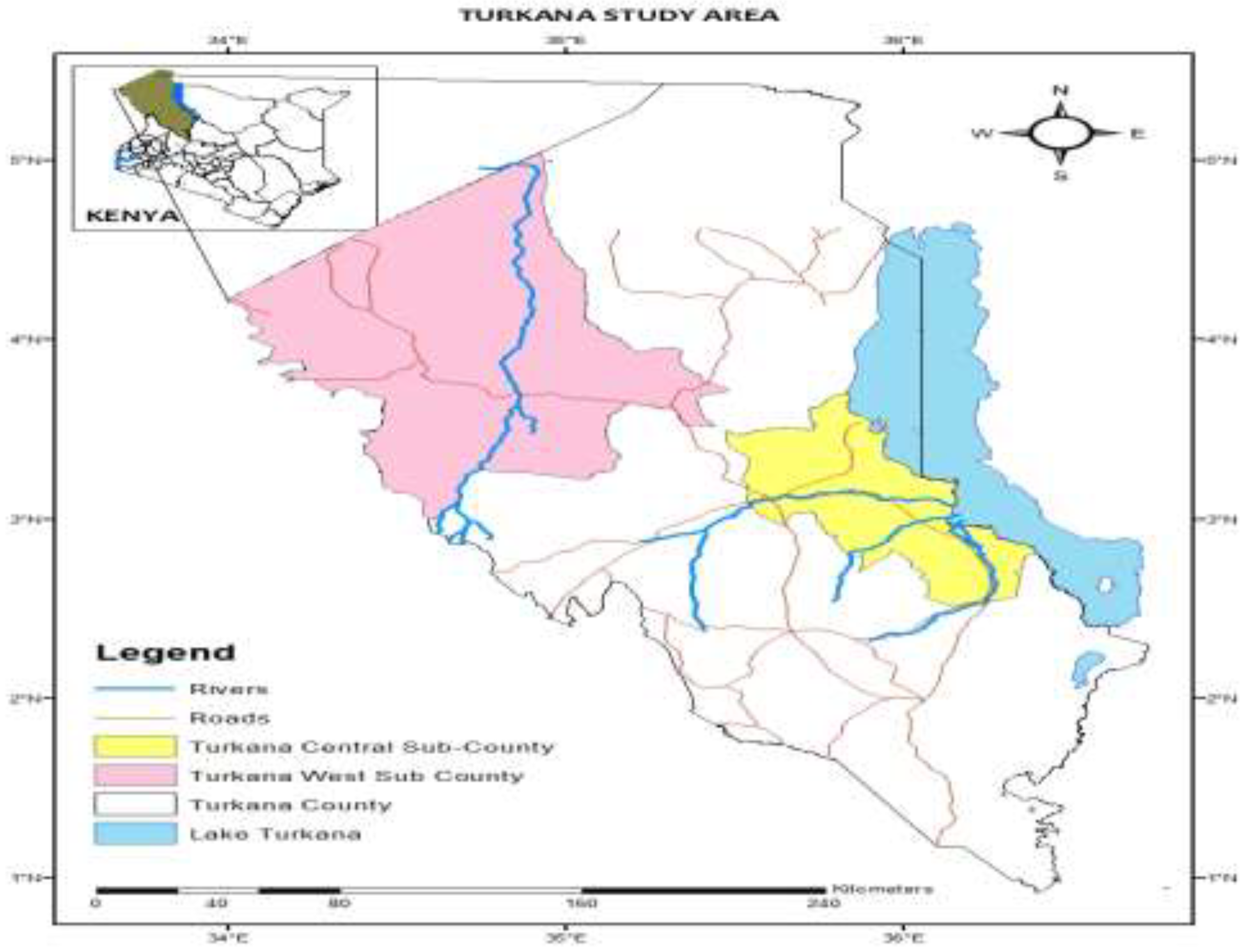
Figure 2.
Conceptual framework: Vulnerabilities, climate variability, and ways of improving resilience among marginalized communities. Source: Adopted from (Devonald et al., 2020) .
Figure 2.
Conceptual framework: Vulnerabilities, climate variability, and ways of improving resilience among marginalized communities. Source: Adopted from (Devonald et al., 2020) .
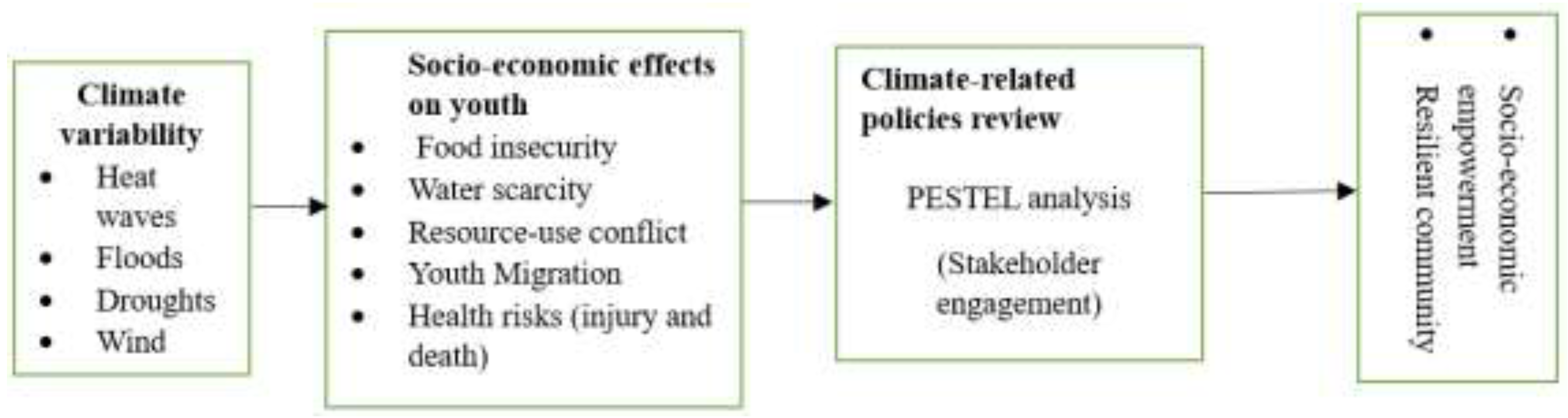
Figure 3.
(a) Climate risks in Turkana County; (b) Flood-prone areas. Source: Field data.
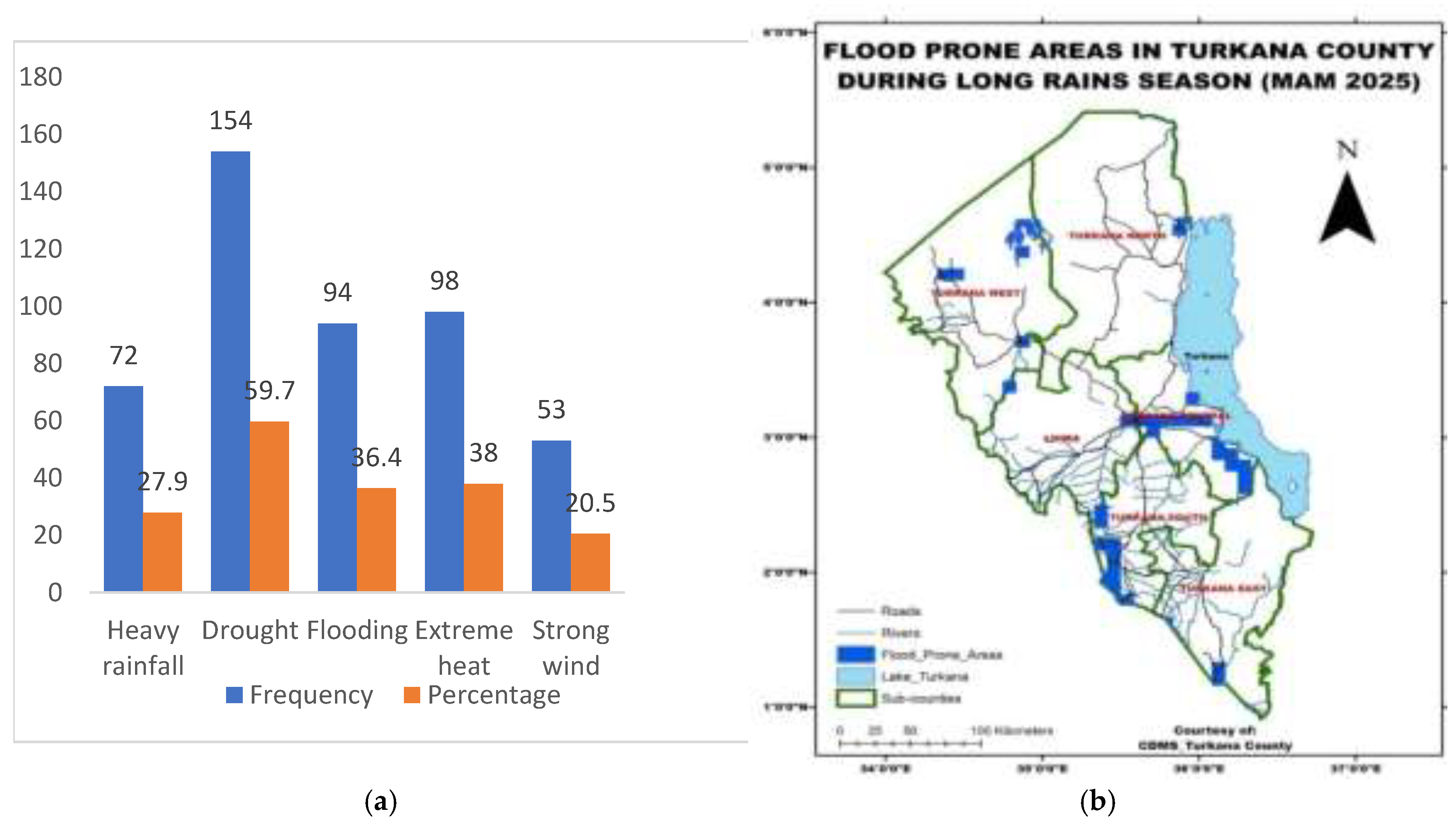
Figure 5.
Summary of government support in Turkana County. Source: Field data.
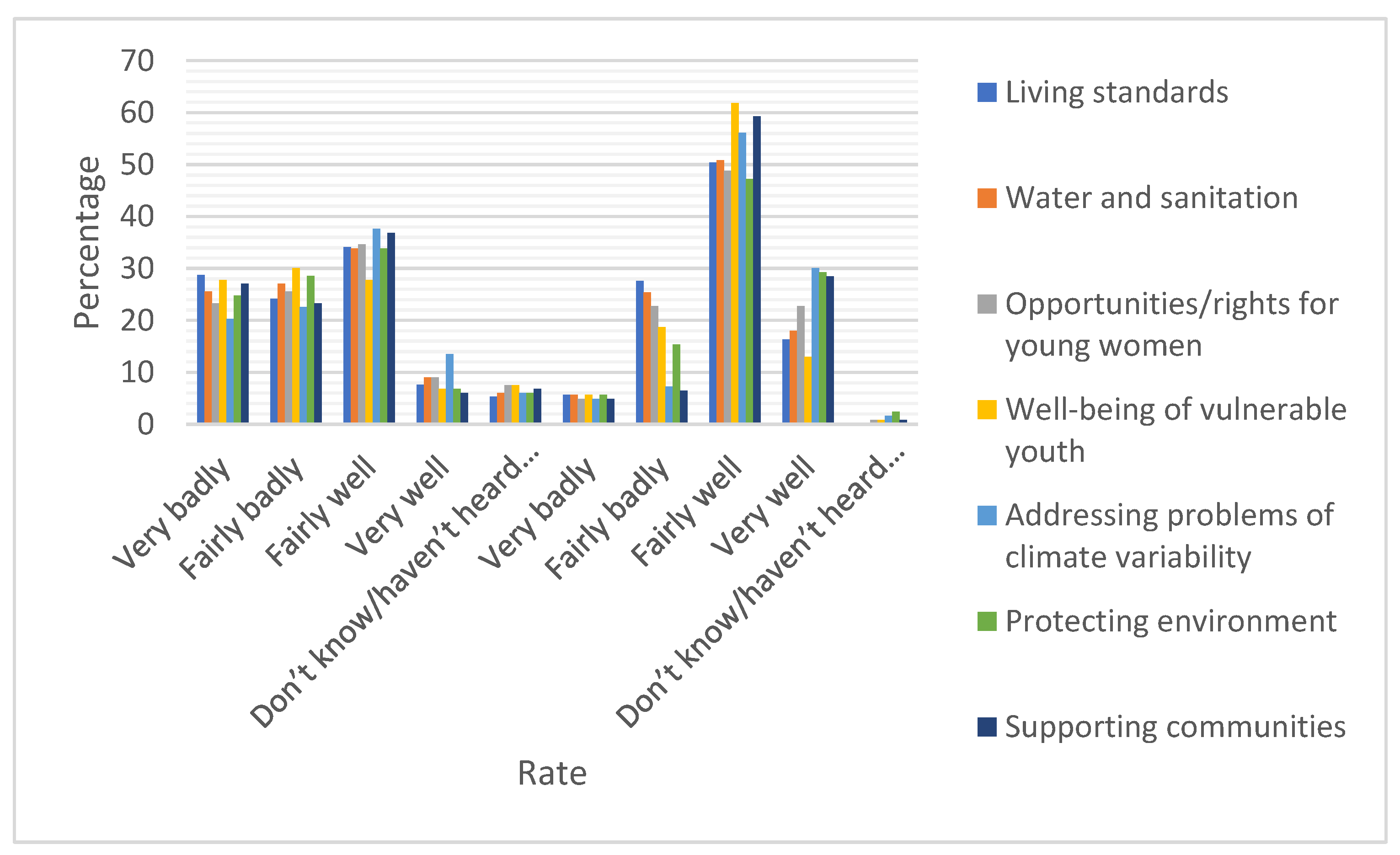

Table 1.
Policies and plans subjected to PESTEL analysis.
| Policy Document | Year |
| National Policy for Sustainable Development of Northern Kenya and other ASALs | 2012 |
| Kenya National Adaptation Plan (2015-2030) | 2016 |
| National Climate Finance Policy | 2018 |
| Kenya Youth Development Policy | 2019 |
| Turkana Disaster Risk Management Policy (2019) | 2019 |
| Turkana County Climate Change Policy | 2021 |
| Turkana County Climate Change Action Plan 2023-2027 | 2023 |
Disclaimer/Publisher’s Note: The statements, opinions and data contained in all publications are solely those of the individual author(s) and contributor(s) and not of MDPI and/or the editor(s). MDPI and/or the editor(s) disclaim responsibility for any injury to people or property resulting from any ideas, methods, instructions or products referred to in the content. |
© 2026 by the authors. Licensee MDPI, Basel, Switzerland. This article is an open access article distributed under the terms and conditions of the Creative Commons Attribution (CC BY) license (http://creativecommons.org/licenses/by/4.0/).
Copyright: This open access article is published under a Creative Commons CC BY 4.0 license, which permit the free download, distribution, and reuse, provided that the author and preprint are cited in any reuse.


