

Submitted:
13 April 2026
Posted:
14 April 2026
You are already at the latest version
Abstract
Background: Obesity arises from complex interactions beyond energy imbalance, with the gut microbiome increasingly recognised as a key modulator of metabolic function in obesity. This narrative review examines microbiome-targeted interventions for obesity prevention and treatment. Objective: To synthesise evidence on diet, exercise, biotics (pre/pro/post/synbiotics) and faecal microbiota transplantation (FMT) as modulators of gut microbiota composition and function to improve body composition and metabolic health. Methods: A structured literature search of PubMed, Scopus and Web of Science (2015–2026) informed this narrative review, focusing on studies evaluating the role of the gut microbiome in obesity and the impact of microbiome-targeted interventions. Randomised controlled trials, systematic reviews, meta-analyses and key observational and preclinical studies were prioritised. Evidence was synthesised narratively. Results: Microbiome-targeted interventions including dietary modification, physical activity and biotic therapies demonstrate modest and variable effects on adiposity but may improve metabolic outcomes through mechanisms involving short-chain fatty acids (SCFA), inflammation and gut barrier function. High-fibre diets (e.g., resistant starch, Mediterranean) consistently enhance SCFA-producing taxa and reduce fat mass. Exercise induces modest microbiome shifts favouring beneficial bacteria such as Akkermansia / Bifidobacterium. Biotics (Lactobacillus / Bifidobacterium strains) yield small-moderate reductions in BMI / fat mass with next-generation strains (A. muciniphila, F. prausnitzii) showing promise in preclinical / human pilots. Evidence for FMT in obesity remains limited and inconsistent in humans. Mechanisms converge on energy harvesting, barrier integrity, endotoxemia reduction and GLP-1 / bile signalling. Conclusions: Microbiome modulation appears to complement lifestyle and therapeutic interventions but translation into clinical practice requires strain-specific, well-designed randomised controlled trials and longitudinal data. Personalised multiomics approaches offer future potential.
Keywords:
gut microbiome
; obesity
; prebiotics
; probiotics
; synbiotics
; postbiotics
; short-chain fatty acids
; faecal microbiota transplantation
; Akkermansia muciniphila
; body composition
1. Introduction
Obesity has traditionally been viewed as a disorder of energy imbalance, where increase in weight is a consequence of increased calories consumed than burned.[1] This concept however does not explain the considerable variations in fat distribution, insulin sensitivity and long-term weight patterns noted in populations despite similar energy intake and physical activity levels. Recent studies indicate that host metabolism is more complex than calorie balance alone.[2,3] Research shows that the gut microbiome plays a key role in host energy handling by influencing digestion and energy extraction. Obese individuals tend to have less diverse microbiomes and different microbial profiles than lean individuals, with reduced beneficial species and more pro-inflammation-linked species. This gut dysbiosis is linked with poor insulin sensitivity, dyslipidaemia and low-grade systemic inflammation regardless of calorie intake.[4,5,6]
Randomised trials combining calorie restriction with exercise often improve weight and metabolic health but changes in the gut microbiome diversity and function observed are inconsistent or small. This suggests that the calorie-focused approaches do not fully address the key biological factors driving obesity including the microbe-host interactions.[7,8] The gut microbiome ferments non-digestible carbohydrates into key metabolites, including short-chain fatty acids (acetate, propionate and butyrate) and tryptophan-derived compounds, that regulate host microbiota interactions and metabolic functions through mechanisms such as enhanced caloric extraction, SCFA-mediated control of adiposity and inflammation, bile acid signalling, gut–brain appetite pathways, intestinal barrier dysfunction and immune dysregulation.[9,10,11,12,13,14,15] Observational studies consistently demonstrate lower microbial alpha diversity and reduced abundance of SCFA-producing taxa in obese individuals compared with lean controls altering host responsiveness to dietary interventions.[6,16] Recent meta-analyses and systematic reviews indicate that microbiome-targeted interventions (prebiotics, probiotics and synbiotics) can shift microbial composition and improve metabolic parameters in overweight and obese adults, though heterogeneity in study design and outcomes highlight the need for standardised protocols.[17,18,19] Restoring microbial diversity and function in obese individuals may attenuate inflammation, improve gut barrier integrity and aid in energy balance.[20] This shifts treatment strategy beyond calorie restriction to target gut microbial pathways to improve host metabolic functions.[21,22,23] With this background, we synthesised evidence from clinical and preclinical studies on microbiome modulating interventions, including dietary patterns, exercise, biotics including next-generation strains and faecal microbiota transplantation and multiomics approaches focused on obesity phenotypes and clinical translation, to evaluate their effects on microbial composition, metabolite production and obesity related outcomes.
Literature Search and Selection
This narrative review was informed by a structured literature search conducted in PubMed, Scopus, Web of Science, and Google Scholar (January 2015–February 2026) using MeSH terms and keywords: ("obesity" OR "overweight") AND ("gut microbiome" OR "gut microbiota") AND ("prebiotic*" OR "probiotic*" OR "synbiotic*" OR "postbiotic*" OR "fecal microbiota transplantation" OR "diet" OR "exercise"). Priority was given to RCTs, meta-analyses, systematic reviews and key observational and preclinical studies reporting microbiome composition, metabolites (SCFAs) or metabolic outcomes (BMI, fat mass, insulin sensitivity) (n=103 included). Evidence was narratively synthesised, and greater emphasis placed on higher-quality evidence. Study design, sample size and consistency of findings were considered while evaluating robustness of findings. The narrative review did not undergo a formal systematic review protocol.
2. Treatment Modalities Targeting the Gut Microbiota for Obesity
Dietary modification, physical activity, microbiota-directed biotics and faecal microbiota transplantation influence gut microbial composition and function through overlapping and distinct mechanisms that converge on host metabolic regulation in obesity. In addition, pharmacological therapies such as GLP-1 receptor agonists and bariatric surgery have also been shown to influence gut microbiome composition and metabolic outcomes, highlighting the broader role of microbiome modulation across obesity treatments. (Figure 1).
2.1. Diet as the Primary Gut Microbiome Modulator
Diet is the most potent environmental determinant of gut microbiome composition and function. In longitudinal studies, changes in diet particularly increases in intake of fermentable fibres, resistant starches and diverse plant foods rapidly and reproducibly reshape microbial communities and is associated with reduced risk of chronic diseases including cardiovascular disease, diabetes, obesity and certain cancers [24,25]. Fermentation of dietary fibre by the gut microbiota generates metabolites that regulate gut health, mucosal inflammation and epithelial proliferation.
In contrast, western dietary patterns characterised by high intake of refined carbohydrates, saturated fats and ultra-processed foods combined with low intake of dietary fibre are linked with decrease in microbial diversity and reduction of SCFA-producing taxa and expansion of taxa associated with proinflammation. These microbial shifts are mechanistically linked to increase in the intestinal permeability, metabolic endotoxemia, chronic low-grade inflammation and adverse adipose tissue distribution, which contribute to obesity risk [26,27,28] In addition, food additives such as emulsifiers, including polysorbates, can alter gut microbiota composition, disrupt intestinal barrier integrity and promote endotoxemia and inflammatory responses, thereby contributing to the development of metabolic disorders, diabetes and obesity. [29,30,31,32,33]
Resistant starch, one of the dietary fibres, is difficult to digest and hence it is digested and fermented by gut bacteria in the large intestine.[34,35] RS supplementation increases butyrate production, mainly produced by Firmicutes, which enter the bloodstream and exerts beneficial epigenetic and immunological effects in the body thus making RS a potential treatment strategy to reduce obesity risk. [34,36] In individuals with type 2 diabetes, dietary fibres can modulate the gut microbiome by significantly increasing relative abundance of Bifidobacterium causing increase in SCFA production. This improves glycated haemoglobin aiding in weight reduction.[37] Consistent with these findings, a randomised placebo-controlled crossover trial demonstrated that eight weeks of RS supplementation, combined with an isoenergetic balanced diet, resulted in significant reductions in body weight and improvements in insulin resistance among individuals with overweight and obesity, effects attributed to microbiota-mediated mechanisms.[38]
A plant-based diet; vegetarian and vegan diet, rich in fruits, vegetables, grains and legumes intake, has been shown to be effective in weight management. These diets are naturally high in dietary fibre and hence promote growth of beneficial bacteria and reduce production of harmful metabolites thus supporting both growth of healthy gut microbiota and reduction in metabolic diseases risks suggesting a promising strategy for clinical practice.[39,40,41] Mediterranean diet has been known to aid in weight loss and prevent various diseases due to abundance of polyunsaturated fatty acids (PUFAs), dietary fibre, polyphenols, vitamins and trace elements. Healthy changes in gut microbiota were observed in OW/OB people who adopted the Mediterranean diet pattern in comparison to western diet.[27,42,43,44] An extract of Carob (Legume tree), common in Mediterranean area, has high fibre content, vitamin and minerals and can be a potential therapy for management and prevention of diabetes and obesity. Carob is known to support balanced gut flora and improve glucose metabolism.[45]
Traditional approach for weight loss, a low-fat diet, has been challenged by alternative diets focusing mainly on increasing protein and decreasing carbohydrate intake. In a dietary intervention trial, a calorie-restricted diet high in protein was linked with higher microbial diversity when compared to calorie-restricted normal-protein diet.[46] Ketogenic diet, low on carbohydrate and high in fat diet, showed increase in microbiome diversity and ratio of Bacteroidetes to Firmicutes.[42,47] Further analysis are however needed to evaluate the efficacy and potential risks of ketogenic diet in weight loss across all ages.[47] In a recent study, intermittent fasting - protein pacing significantly increased beneficial gut microbes and circulating metabolites in eight weeks compared to calorie restriction. Protein pacing refers to intake of 4 meals/day evenly paced at 4 hours and each meal consists of 25-50 g of protein. In addition, comparatively greater reductions in weight loss, BMI as well as fat mass were noted with retention of lean mass, possibly attributed to gut microbiome modulation and improved metabolic outcomes.[48] A prebiotic incorporated high protein, low-carbohydrate diet showed Faecalibacterium abundance and was associated with comparatively greater decrease in total body fat and visceral adiposity than a low-carbohydrate diet.[49] The SWEET study observed improved maintenance of weight loss and favourable gut microbiota changes among adults with overweight or obesity who replaced sugar-rich products with sweeteners and sweetness enhancers as part of a reduced-sugar diet, without negative cardiometabolic effects.[50] Variability in microbiome and metabolic responses to dietary interventions may be influenced by baseline microbial composition, fibre type and dose, dietary adherence, and host metabolic phenotype, which together determine responsiveness to dietary modulation.
The effects of various dietary patterns on body weight, body composition and related metabolic parameters mediated through gut microbiome modulation are summarised in Table 1.
2.2. Physical Activity as a Microbial Modifier
Physical exercise along with dietary changes have been associated with reduced obesity and cardiovascular risks. Athletes exhibit richer alpha diversity than obese individuals probably due to positive influence of physical activity and healthy diet. Recent studies, though limited in humans, have observed a close association between physical activity and gut microbiota underscoring the potential of exercise to modulate gut microbiota composition in obesity and metabolic diseases. Studies have noted that changes in the composition of the gut microbiota in obese gut varied with type of exercise. High-intensity interval training (HIIT) and resistance training in non-dieting OW/OB postmenopausal women reduced abdominal and visceral fat mass partly associated with exercise-induced modulation of faecal microbiota; changes in beta, but not alpha diversity were noted.[54] Exercise induced changes in beta diversity with decreased heterogeneity when vigorous activity was followed in OW/OB individuals.[55] Exercise increased butyrate-producing bacteria independent of diet and there was a higher abundance of Firmicutes genus (Ruminococcaceae or Fecalibacteria) noted.[56] Six weeks of moderate-to-high intensity aerobic exercise were beneficial in modulating gut microbiota diversity; it increased Bifidobacteriaceae, Bacteroides and Akkermansia abundance and decreased Proteobacteria in OB individuals.[57] Aerobic training at moderate intensity was also beneficial in previously sedentary healthy individuals with significant changes in variations of Clostridiales and Streptococcus noted.[58] Further studies need to investigate role of aerobic training in OW/OB individuals. Another study on IF and HIIT in adult OB women noted no changes in gut microbiota composition but suggested that exercise may play a modulatory role in acetate production.[59] Resistance training for six weeks showed mixed effects on gut microbiome in OW/OB young adults; it increased Roseburia abundance with minor shifts in microbial pathways, however no significant shifts in the microbial diversity was noted.[60] Exercise may modulate profile of gut microbiota by reducing endotoxemia and impairing inflammatory signalling pathway.[57,61,62] Though physical activity drives a subtle positive shift towards a healthier microbiome in OW/OB individuals, the exercise intensity, type, duration or volume still remains unclear due to lack of more qualitative and quantitative studies in humans. Inconsistent findings across studies may be attributed to differences in exercise modality, intensity, duration and participant characteristics as well as the relatively modest and potentially transient effects of physical activity on gut microbiome composition.
2.3. Microbiota-Targeted Therapeutics
Modulation of the gut microbiome through biotic supplementation represents a targeted approach to influence host metabolic pathways relevant to obesity. The effects of prebiotics, probiotics, synbiotics and postbiotics on host metabolic outcomes and commonly used biotic formulations are summarised in Table 2.
2.3.1. Prebiotics
Prebiotic refers to substrates that are utilised by host microorganisms to confer a health benefit. Most prebiotic interventions increased the abundance of Actinobacteria and Bifidobacterium, regarded as beneficial microbiota, which could promote the SCFA levels and maintain gut health. [66] Prebiotics decreased HbA1c and fasting glucose.[67] In contrast, studies investigating the use of prebiotics in obesity have reported mixed results.[19]
2.3.2. Probiotics
Probiotics are live microorganisms that are administered in specific dosage for specific duration to exert certain host health benefits. Several studies have shown beneficial effects of probiotic supplementation in treating obesity [70]. Some probiotic strains are shown to be more effective in reducing BMI and hip circumference [68], with Lactobacillus and Bifidobacterium species being more effective against obesity [69,70]. Probiotic interventions were mostly effective in increasing Lactobacillus abundance and reducing body weight and fat.[66]
The effects of probiotics were dose- and duration-dependent.[67,71,74] In addition, probiotics improved glucose and lipid profiles [67,71]. Probiotic supplementation within dairy matrices could have anti-obesity effects by lowering lipid concentrations and reducing anthropometric parameters.[75]
In OW/OB postmenopausal women, probiotics regulated glucose metabolism and inflammatory processes, although effects were mild, suggesting their utility as a complementary treatment.[54] Probiotics also reduced lipid profile and inflammatory markers in OW/OB children.[77] and reduced fasting blood glucose, BMI and inflammatory markers in OW/OB adolescents.[78]
Probiotics promote tight junction integrity, reducing intestinal permeability and preventing endotoxemia and LPS-induced inflammation, which leads to increased insulin sensitivity and satiety. Increased leptin in adipose tissue and increased GLP-1 and PYY in the intestine contribute to reduced food intake and enhanced satiety. More research is needed to identify optimal species or strains, dosages, duration and delivery methods for obesity management [72]
The mechanistic links between specific probiotic strains, microbial metabolites and host metabolic pathways are detailed in Table 3.
2.3.3. Synbiotics
Synbiotics, a mixture of both probiotics and prebiotics, serve to further enhance the beneficial effects of probiotics. Probiotic or synbiotic supplementation significantly reduced anthropometric indices such as BMI, birth weight, waist circumference and waist-to-hip ratio in healthy, overweight and obese individuals with or without associated metabolic disorders compared to control groups. [18,67,68,69,70]
Body composition studies demonstrated significant reductions in fat mass and percent body fat, with no difference in fat-free mass or lean body mass compared to controls.[18] These effects were observed when probiotics or synbiotics were consumed either naturally through food or as supplements.[18] Synbiotic supplementation significantly improved lipid profiles, obesity indices such as body weight and waist circumference and inflammatory markers [81] Probiotic or synbiotic supplementation also had positive effects on appetite-regulating hormones such as leptin and adiponectin [74]
2.3.4. Postbiotics
Postbiotics are biological components produced by probiotics that exert beneficial effects on the host. In animal studies, postbiotics showed positive anti-obesity effects, while human clinical trials observed improvements in body composition and anthropometric indices that may help prevent cardiometabolic diseases in individuals with obesity. Postbiotics were shown to reduce adipogenesis and increase energy expenditure. [18,66,67,68,69,70,71,72,73,74,75,76,77,78,79,80,82]
2.3.5. Next-Generation Probiotics
Although Bifidobacterium and Lactobacillus strains remain the most commonly used probiotics, next-generation probiotics such as Faecalibacterium prausnitzii, Akkermansia muciniphila and selected Clostridia strains have demonstrated promising results in preclinical and emerging clinical studies (Table 3).
The heterogeneity in outcomes observed with biotic interventions likely reflects strain-specific effects, variations in dosage and duration, differences in delivery matrices, and host-related factors such as baseline microbiota composition and metabolic status.
2.4. Faecal Microbiota Transplantation
Faecal microbiota transplantation (FMT) was initially developed for treatment of infections especially recurrent C. difficile infections. Following its success in treating C. difficile infections, recently FMT has been studied to address non-infectious diseases such as metabolic diseases and obesity. FMT which involves transfer of healthy donor faecal material to the recipient is proposed to restore gut microbiota balance in the recipient.[97] While FMT provides important mechanistic insights into microbiome–host interactions, its clinical applicability in obesity remains uncertain.
Evidence from animal studies suggests that FMT may be beneficial in preventing obesity and associated metabolic diseases. Germ-free mice colonised with microbiota from obese humans developed obesity while those receiving microbiota from lean donors continued to remain lean supporting a causal role of the gut microbiome in obesity development.[98,99] However, translation of these findings to humans has been inconsistent, highlighting key differences between controlled experimental models and complex human metabolic environments. Human studies on effects of FMT on obesity are very limited and report mixed findings. Observed benefits are generally modest, variable across studies and often transient, with limited evidence supporting sustained weight loss or long-term metabolic improvements. A RCT on obese adolescents observed no weight loss post FMT, however a reduction in abdominal adiposity was reported. [98,99] Human FMT studies examining its benefits on metabolic syndromes also report variable outcomes, with some reporting metabolic improvements while others demonstrating no clear clinical benefit despite sustained alterations in gut microbiota composition.[100] In another study, preliminary data revealed that FMT may be beneficial in preventing metabolic syndrome in individuals with obesity.[101] Outcomes may also be influenced by donor characteristics and variability in microbiota engraftment, which can affect the reproducibility and durability of responses. A 4-year followup study in obese adolescents treated with a single FMT noted reductions in waist circumference and total body fat as well as improvements in metabolic parameters compared to the placebo group.[102] Animal studies have also noted an alteration in dopamine and serotonin after FMT and similar effect was observed in obese humans with metabolic syndrome possibly mediated through alterations in plasma metabolites, composition and involvement of the GBA.[103] Overall, while FMT remains a valuable research tool, current evidence does not support its routine clinical use for obesity, and further studies are needed to optimise donor selection, engraftment and long-term efficacy.
3. Future Directions & Research Gaps
Despite growing evidence that diet, physical activity, microbiota-targeted biotics and FMT can influence gut microbiome composition in obesity, important research gaps persist. Human studies of dietary and physical activity interventions are heterogeneous and largely short-term with inconsistent findings and limited clarity on dose-response relationships or the optimal dietary patterns, fibre types and exercise modality, intensity, duration and volume required for sustained microbiome-mediated metabolic benefits [7,8,55,56,57,58,59,60,61,67]. While prebiotics, probiotics and synbiotics generally show favourable effects on body weight and metabolic outcomes, their clinical translation is constrained by population heterogeneity, strain specificity, variability in formulation and dosing and limited long-term safety data, particularly in immunocompromised populations [17,80,105,106]. Evidence for FMT in obesity is strong in animal models but limited and inconsistent in humans highlighting the need for larger, well-designed longitudinal trials [98]. Across interventions, mechanistic human studies, stratified obesity phenotyping and longitudinal multiomics approaches are required to support the development of safe and personalised microbiome-based therapies.
4. Conclusions
Microbiome-targeted interventions for obesity appear to enhance metabolic responses and treatment efficacy through modulation of microbial energy extraction, inflammation, gut barrier function and metabolic signalling potentially contributing to inter-individual variability in obesity and the limited long-term success of calorie restriction. High-fibre diets are among the most effective in reshaping the gut microbiome, with exercise providing complementary benefits on microbial diversity and SCFA production. Probiotics and synbiotics complement lifestyle and pharmacological therapies, while next-generation biotics including Akkermansia muciniphila, Faecalibacterium prausnitzii and select Clostridia together with postbiotic SCFAs show promise in targeting adiposity, insulin resistance and metabolic inflammation. Future advances will rely on well-designed clinical trials and multiomics-driven precision approaches to personalise microbiota-targeted interventions alongside standard obesity treatments.
References
- Hall, K.D.; Farooqi, I.S.; Friedman, J.M.; Klein, S.; Loos, R.J.F.; Mangelsdorf, D.J.; et al. The energy balance model of obesity: beyond calories in, calories out. Am. J. Clin. Nutr. 2022, 115, 1243. [Google Scholar] [CrossRef]
- Ludwig, D.S.; Apovian, C.M.; Aronne, L.J.; Astrup, A.; Cantley, L.C.; Ebbeling, C.B.; et al. Competing paradigms of obesity pathogenesis: energy balance versus carbohydrate-insulin models. Eur. J. Clin. Nutr. 2022, 76, 1209. [Google Scholar] [CrossRef]
- Buscemi, C.; Randazzo, C.; Barile, A.M.; Bo, S.; Ponzo, V.; Caldarella, R.; et al. Factors associated with body weight gain and insulin-resistance: a longitudinal study. Nutr. Diabetes 2024, 14, 21. [Google Scholar] [CrossRef]
- Davis, C.D. The Gut Microbiome and Its Role in Obesity. Nutr. Today 2016, 51, 167. [Google Scholar] [CrossRef] [PubMed]
- Turnbaugh, P.J.; Ley, R.E.; Mahowald, M.A.; Magrini, V.; Mardis, E.R.; Gordon, J.I. An obesity-associated gut microbiome with increased capacity for energy harvest. Nature 2006, 444, 1027–31. [Google Scholar] [CrossRef]
- Chanda, D.; De, D. Meta-analysis reveals obesity associated gut microbial alteration patterns and reproducible contributors of functional shift. Gut Microbes 2024, 16, 2304900. [Google Scholar] [CrossRef] [PubMed]
- Davies, R.G.; Wood, L.A.; Hengist, A.; O’Donovan, C.; Barton, W.; Crispie, F.; et al. Effects of a combined energy restriction and vigorous-intensity exercise intervention on the human gut microbiome: A randomised controlled trial. J. Physiol. 2025, 603, 7731. [Google Scholar] [CrossRef]
- Nechalová, L.; Bielik, V.; Hric, I.; Babicová, M.; Baranovičová, E.; Grendár, M.; et al. Gut microbiota and metabolic responses to a 12-week caloric restriction combined with strength and HIIT training in patients with obesity: a randomized trial. BMC Sports Sci. Med. Rehabil. 2024, 16, 239. [Google Scholar] [CrossRef] [PubMed]
- Koh, A.; De Vadder, F.; Kovatcheva-Datchary, P.; Bäckhed, F. From Dietary Fiber to Host Physiology: Short-Chain Fatty Acids as Key Bacterial Metabolites. Cell 2016, 165, 1332–45. [Google Scholar] [CrossRef]
- Den Besten, G.; Van Eunen, K.; Groen, A.K.; Venema, K.; Reijngoud, D.J.; Bakker, B.M. The role of short-chain fatty acids in the interplay between diet, gut microbiota, and host energy metabolism. J. Lipid Res. 2013, 54, 2325–40. [Google Scholar] [CrossRef] [PubMed]
- Eslick, S.; Thompson, C.; Berthon, B.; Wood, L. Short-chain fatty acids as anti-inflammatory agents in overweight and obesity: a systematic review and meta-analysis. Nutr. Rev. 2022, 80, 838–56. [Google Scholar] [CrossRef] [PubMed]
- Den Besten, G.; Bleeker, A.; Gerding, A.; Van Eunen, K.; Havinga, R.; Van Dijk, T.H.; et al. Short-Chain Fatty Acids Protect Against High-Fat Diet-Induced Obesity via a PPARγ-Dependent Switch From Lipogenesis to Fat Oxidation. Diabetes 2015, 64, 2398–408. [Google Scholar] [CrossRef]
- Iqbal, M.; Yu, Q.; Tang, J.; Xiang, J. Unraveling the gut microbiota’s role in obesity: key metabolites, microbial species, and therapeutic insights. J. Bacteriol. 2025, 207, e00479-24. [Google Scholar] [CrossRef]
- Pham, N.H.T.; Joglekar, M.V.; Wong, W.K.M.; Nassif, N.T.; Simpson, A.M.; Hardikar, A.A. Short-chain fatty acids and insulin sensitivity: a systematic review and meta-analysis. Nutr. Rev. 2023, 82, 193. [Google Scholar] [CrossRef]
- May, K.S.; den Hartigh, L.J. Gut Microbial-Derived Short Chain Fatty Acids: Impact on Adipose Tissue Physiology. Nutrients 2023, 15, 272. [Google Scholar] [CrossRef] [PubMed]
- Ecklu-Mensah, G.; Choo-Kang, C.; Maseng, M.G.; Donato, S.; Bovet, P.; Viswanathan, B.; et al. Gut microbiota and fecal short chain fatty acids differ with adiposity and country of origin: the METS-microbiome study. Nat. Commun. 2023, 14, 5160. [Google Scholar] [CrossRef]
- Bineid, M.M.; Liu, L.; Ventura, E.F.; Bansal, S.; Curi-Quinto, K.; del Valle-Mendoza, J.; et al. The effect of probiotics, prebiotics and synbiotics on gut microbial community profile in overweight and obese Latin American and Caribbean populations: a systematic review of human trials. Gut Microbiome 2025, 6, e2. [Google Scholar] [CrossRef] [PubMed]
- Saadati, S.; Naseri, K.; Asbaghi, O.; Yousefi, M.; Golalipour, E.; de Courten, B. Beneficial effects of the probiotics and synbiotics supplementation on anthropometric indices and body composition in adults: A systematic review and meta-analysis. Obesity Reviews 2024, 25, e13667. [Google Scholar] [CrossRef] [PubMed]
- Rasaei, N.; Heidari, M.; Esmaeili, F.; Khosravi, S.; Baeeri, M.; Tabatabaei-Malazy, O.; et al. The effects of prebiotic, probiotic or synbiotic supplementation on overweight/obesity indicators: an umbrella review of the trials’ meta-analyses. Front. Endocrinol. 2024, 15, 1277921. [Google Scholar] [CrossRef] [PubMed]
- Borrego-Ruiz, A.; Borrego, J.J. The Gut Microbiome in Human Obesity: A Comprehensive Review. Biomedicines 2025, 13, 2173. [Google Scholar] [CrossRef] [PubMed]
- Masi, D.; Watanabe, M.; Clément, K. Gut microbiome and obesity care: Bridging dietary, surgical, and pharmacological interventions. Cell Rep. Med. 2026, 0, 102573. [Google Scholar] [CrossRef] [PubMed]
- Jumpertz, R.; Le, D.S.; Turnbaugh, P.J.; Trinidad, C.; Bogardus, C.; Gordon, J.I.; et al. Energy-balance studies reveal associations between gut microbes, caloric load, and nutrient absorption in humans1. Am. J. Clin. Nutr. 2011, 94, 58. [Google Scholar] [CrossRef]
- Corbin, K.D.; Carnero, E.A.; Dirks, B.; Igudesman, D.; Yi, F.; Marcus, A.; et al. Host-diet-gut microbiome interactions influence human energy balance: a randomized clinical trial. Nat. Commun. 2023, 14, 3161. [Google Scholar] [CrossRef]
- O’Keefe, S.J. The association between dietary fibre deficiency and high-income lifestyle-associated diseases: Burkitt’s hypothesis revisited. Lancet Gastroenterol. Hepatol. 2019, 4, 984–96. [Google Scholar] [CrossRef]
- Wilson, A.S.; Koller, K.R.; Ramaboli, M.C.; Nesengani, L.T.; Ocvirk, S.; Chen, C.; et al. Diet and the Human Gut Microbiome: An International Review. Dig. Dis. Sci. 2020, 65, 723. [Google Scholar] [CrossRef] [PubMed]
- Malesza, I.J.; Malesza, M.; Walkowiak, J.; Mussin, N.; Walkowiak, D.; Aringazina, R.; et al. High-Fat, Western-Style Diet, Systemic Inflammation, and Gut Microbiota: A Narrative Review. Cells 2021, 10, 3164. [Google Scholar] [CrossRef]
- García-Montero, C.; Fraile-Martínez, O.; Gómez-Lahoz, A.M.; Pekarek, L.; Castellanos, A.J.; Noguerales-Fraguas, F.; et al. Nutritional Components in Western Diet Versus Mediterranean Diet at the Gut Microbiota–Immune System Interplay. Implications for Health and Disease. Nutrients 2021, 13, 699. [Google Scholar] [CrossRef]
- Veeraraghavan, B.; Kesavelu, D.; Yadav, B. Gut Microbiota Composition in Indian and Western Infants (0–24 Months): A Systematic Review. Nutr. Diet. Suppl. 2023, 15, 25–46. [Google Scholar] [CrossRef]
- Daniel, N.; Gewirtz, A.T.; Chassaing, B. Akkermansia muciniphila counteracts the deleterious effects of dietary emulsifiers on microbiota and host metabolism. Gut 2023, 72, 906. [Google Scholar] [CrossRef]
- Paone, P.; Petitfils, C.; Puel, A.; Latousakis, D.; de Vos, W.M.; Delzenne, N.M.; et al. Akkermansia muciniphila modulates intestinal mucus composition to counteract high-fat diet-induced obesity in mice. Gut Microbes 2026, 18, 2612580. [Google Scholar] [CrossRef] [PubMed]
- Ye, W.Y.; Cai, Y. Akkermansia muciniphila: a microbial guardian against oxidative stress–gut microbiota crosstalk and clinical prospects. J. Transl. Med. 2025, 23, 1169. [Google Scholar] [CrossRef]
- Lv, W.; Song, J.; Nowshin Raka, R.; Sun, J.; Shi, G.; Wu, H.; et al. Effects of food emulsifiers on high fat-diet-induced obesity, intestinal inflammation, changes in bile acid profile, and liver dysfunction. Food Research International 2023, 173, 113302. [Google Scholar] [CrossRef]
- De Siena, M.; Raoul, P.; Costantini, L.; Scarpellini, E.; Cintoni, M.; Gasbarrini, A.; et al. Food Emulsifiers and Metabolic Syndrome: The Role of the Gut Microbiota. Foods 2022, 11, 2205. [Google Scholar] [CrossRef]
- Wen, J.J.; Li, M.Z.; Hu, J.L.; Tan, H.Z.; Nie, S.P. Resistant starches and gut microbiota. Food Chem. 2022, 387. [Google Scholar] [CrossRef]
- Chen, R.; Zhang, C.; Xu, F.; Yu, L.; Tian, F.; Chen, W.; et al. Meta-analysis reveals gut microbiome and functional pathway alterations in response to resistant starch. Food Funct. 2023, 14. [Google Scholar] [CrossRef]
- Liu, H.; Zhang, M.; Ma, Q.; Tian, B.; Nie, C.; Chen, Z.; et al. Health beneficial effects of resistant starch on diabetes and obesity via regulation of gut microbiota: a review. Food Funct. 2020, 11, 5749–67. [Google Scholar] [CrossRef] [PubMed]
- Ojo, O.; Feng, Q.Q.; Ojo, O.O.; Wang, X.H. The Role of Dietary Fibre in Modulating Gut Microbiota Dysbiosis in Patients with Type 2 Diabetes: A Systematic Review and Meta-Analysis of Randomised Controlled Trials. Nutrients 2020, 12, 3239. [Google Scholar] [CrossRef]
- Li, H.; Zhang, L.; Li, J.; Wu, Q.; Qian, L.; He, J.; et al. Resistant starch intake facilitates weight loss in humans by reshaping the gut microbiota. Nat. Metab. 2024, 6, 578. [Google Scholar] [CrossRef]
- Kahleova, H.; Rembert, E.; Alwarith, J.; Yonas, W.N.; Tura, A.; Holubkov, R.; et al. Effects of a Low-Fat Vegan Diet on Gut Microbiota in Overweight Individuals and Relationships with Body Weight, Body Composition, and Insulin Sensitivity. A Randomized Clinical Trial. Nutrients 2020, 12, 2917. [Google Scholar] [CrossRef] [PubMed]
- Moszak, M.; Szulińska, M.; Bogdański, P. You Are What You Eat—The Relationship between Diet, Microbiota, and Metabolic Disorders—A Review. Nutrients 2020, 12, 1096. [Google Scholar] [CrossRef] [PubMed]
- Sidhu, S.R.K.; Kok, C.W.; Kunasegaran, T.; Ramadas, A. Effect of Plant-Based Diets on Gut Microbiota: A Systematic Review of Interventional Studies. Nutrients 2023, 15, 1510. [Google Scholar] [CrossRef]
- Santangelo, A.; Corsello, A.; Spolidoro, G.C.I.; Trovato, C.M.; Agostoni, C.; Orsini, A.; et al. The Influence of Ketogenic Diet on Gut Microbiota: Potential Benefits, Risks and Indications. Nutrients 2023, 15, 3680. [Google Scholar] [CrossRef] [PubMed]
- Meslier, V.; Laiola, M.; Roager, H.M.; De Filippis, F.; Roume, H.; Quinquis, B.; et al. Mediterranean diet intervention in overweight and obese subjects lowers plasma cholesterol and causes changes in the gut microbiome and metabolome independently of energy intake. Gut 2020, 69, 1258. [Google Scholar] [CrossRef] [PubMed]
- Tsigalou, C.; Paraschaki, A.; Karvelas, A.; Kantartzi, K.; Gagali, K.; Tsairidis, D.; et al. Gut microbiome and Mediterranean diet in the context of obesity. Current knowledge, perspectives and potential therapeutic targets. Metabol. Open 2021, 9, 100081. [Google Scholar] [CrossRef] [PubMed]
- Micheletti, C.; Medori, M.C.; Bonetti, G.; Iaconelli, A.; Aquilanti, B.; Matera, G.; et al. Effects of Carob Extract on the Intestinal Microbiome and Glucose Metabolism: A Systematic Review and Meta-Analysis. Clin. Ter. 2023, 174, 169–72. [Google Scholar] [CrossRef] [PubMed]
- Dong, T.S.; Luu, K.; Lagishetty, V.; Sedighian, F.; Woo, S.L.; Dreskin, B.W.; et al. A High Protein Calorie Restriction Diet Alters the Gut Microbiome in Obesity. Nutrients 2020, 12, 3221. [Google Scholar] [CrossRef]
- Dowis, K.; Banga, S. The potential health benefits of the ketogenic diet: A narrative review. Nutrients 2021, 13, 1654. [Google Scholar] [CrossRef] [PubMed]
- Mohr, A.E.; Sweazea, K.L.; Bowes, D.A.; Jasbi, P.; Whisner, C.M.; Sears, D.D.; et al. Gut microbiome remodeling and metabolomic profile improves in response to protein pacing with intermittent fasting versus continuous caloric restriction. Nat. Commun. 2024, 15, 4155. [Google Scholar] [CrossRef]
- McFarlin, B.K.; Tanner, E.A.; Hill, D.W.; Vingren, J.L. Prebiotic/probiotic supplementation resulted in reduced visceral fat and mRNA expression associated with adipose tissue inflammation, systemic inflammation, and chronic disease risk. Genes. Nutr. 2022, 17, 15. [Google Scholar] [CrossRef]
- Pang, M.D.; Kjølbæk, L.; Bastings, J.J.A.J.; Andersen, S.S.H.; Umanets, A.; Sost, M.M.; et al. Effect of sweeteners and sweetness enhancers on weight management and gut microbiota composition in individuals with overweight or obesity: the SWEET study. Nat. Metab. 2025, 7, 2083. [Google Scholar] [CrossRef]
- Zhu, R.; Fogelholm, M.; Poppitt, S.D.; Silvestre, M.P.; Møller, G.; Huttunen-Lenz, M.; et al. Adherence to a plant-based diet and consumption of specific plant foods—associations with 3-year weight-loss maintenance and cardiometabolic risk factors: A secondary analysis of the preview intervention study. Nutrients 2021, 13, 3916. [Google Scholar] [CrossRef]
- Tettamanzi, F.; Bagnardi, V.; Louca, P.; Nogal, A.; Monti, G.S.; Mambrini, S.P.; et al. A high protein diet is more effective in improving insulin resistance and glycemic variability compared to a mediterranean diet—a cross-over controlled inpatient dietary study. Nutrients 2021, 13, 4380. [Google Scholar] [CrossRef] [PubMed]
- Pereira, V.; Cuevas-Sierra, A.; de la, O.V.; Salvado, R.; Barreiros-Mota, I.; Castela, I.; et al. Gut Microbiota Shifts After a Weight Loss Program in Adults with Obesity: The WLM3P Study. Nutrients 2025, 17, 2360. [Google Scholar] [CrossRef] [PubMed]
- Dupuit, M.; Rance, M.; Morel, C.; Bouillon, P.; Boscaro, A.; Martin, V.; et al. Effect of Concurrent Training on Body Composition and Gut Microbiota in Postmenopausal Women with Overweight or Obesity. Med. Sci. Sports Exerc. 2022, 54, 517–29. [Google Scholar] [CrossRef]
- Kern, T.; Blond, M.B.; Hansen, T.H.; Rosenkilde, M.; Quist, J.S.; Gram, A.S.; et al. Structured exercise alters the gut microbiota in humans with overweight and obesity—A randomized controlled trial. International Journal of Obesity 2019, 44, 125–35. [Google Scholar] [CrossRef] [PubMed]
- Mitchell, C.M.; Davy, B.M.; Hulver, M.W.; Neilson, A.P.; Bennett, B.J.; Davy, K.P. Does Exercise Alter Gut Microbial Composition? A Systematic Review. Med. Sci. Sports Exerc. 2019, 51, 160–7. [Google Scholar] [CrossRef] [PubMed]
- Silva, J.S.C.; Seguro, C.S.; Naves, M.M.V. Gut microbiota and physical exercise in obesity and diabetes – A systematic review. Nutr. Metab. Cardiovasc. Dis. 2022, 32, 863–77. [Google Scholar] [CrossRef]
- Resende, A.S.; Leite, G.S.F.; Lancha Junior, A.H. Changes in the gut bacteria composition of healthy men with the same nutritional profile undergoing 10-week aerobic exercise training: A randomized controlled trial. Nutrients 2021, 13, 2839. [Google Scholar] [CrossRef]
- Batitucci, G.; Almeida, O.G.; De Martinis, E.C.P.; Solar, I.; Cintra, D.E.; de Freitas, E.C. Intermittent fasting and high-intensity interval training do not alter gut microbiota composition in adult women with obesity. Am. J. Physiol. Endocrinol. Metab. 2024, 327, E241–57. [Google Scholar] [CrossRef]
- Cullen, J.M.A.; Shahzad, S.; Kanaley, J.A.; Ericsson, A.C.; Dhillon, J. The effects of 6 wk of resistance training on the gut microbiome and cardiometabolic health in young adults with overweight and obesity. J. Appl. Physiol. 2024, 136, 349–61. [Google Scholar] [CrossRef] [PubMed]
- Motiani, K.K.; Carmen Collado, M.; Eskelinen, J.; Virtanen, K.A.; Löyttyniemi, E.; Salminen, S.; et al. Exercise Training Modulates Gut Microbiota Profile and Improves Endotoxemia. Med. Sci. Sports Exerc. 2019, 52, 94. [Google Scholar] [CrossRef] [PubMed]
- Quiroga, R.; Nistal, E.; Estébanez, B.; Porras, D.; Juárez-Fernández, M.; Martínez-Flórez, S.; et al. Exercise training modulates the gut microbiota profile and impairs inflammatory signaling pathways in obese children. Exp. Mol. Med. 2020, 52, 1048. [Google Scholar] [CrossRef] [PubMed]
- Da Silva Borges, D.; Fernandes, R.; Thives Mello, A.; Da Silva Fontoura, E.; Soares Dos Santos, A.R.; Santos De Moraes Trindade, E.B. Prebiotics may reduce serum concentrations of C-reactive protein and ghrelin in overweight and obese adults: a systematic review and meta-analysis. Nutr. Rev. 2020, 78, 235–48. [Google Scholar] [CrossRef]
- EH Probiotics and prebiotics, targeting obesity with functional foods. Bratisl. Lek. Listy 2021, 122, 647–52. [CrossRef]
- Cerdó, T.; García-Santos, J.A.; Bermúdez, M.G.; Campoy, C. The Role of Probiotics and Prebiotics in the Prevention and Treatment of Obesity. Nutrients 2019, 11, 635. [Google Scholar] [CrossRef]
- Lee, Y.T.; Akan, A.; Önel, D.B.; Medawar, E.; Jensen, D.E.A.; Villringer, A.; et al. Impacts of Lifestyle and Microbiota-Targeted Interventions for Overweight and Obesity on the Human Gut Microbiome: A Systematic Review. Obesity Reviews 2025, e70037. [Google Scholar] [CrossRef]
- Vazquez-Marroquin, G.; Ochoa-Précoma, R.; Porchia, L.M.; Pérez-Fuentes, R.; Nicolás-Toledo, L.; Rodríguez-Antolín, J.; et al. The Effect of Microbiome Therapies on Waist Circumference, a Measure of Central Obesity, in Patients with Type 2 Diabetes: A Systematic Review and Meta-analysis of Randomized Controlled Trials. J. Acad. Nutr. Diet. 2023, 123, 933–952.e1. [Google Scholar] [CrossRef]
- Tomé-Castro, X.M.; Rodriguez-Arrastia, M.; Cardona, D.; Rueda-Ruzafa, L.; Molina-Torres, G.; Roman, P. Probiotics as a therapeutic strategy in obesity and overweight: a systematic review. Benef. Microbes 2021, 12, 5–15. [Google Scholar] [CrossRef]
- Perna, S.; Ilyas, Z.; Giacosa, A.; Gasparri, C.; Peroni, G.; Faliva, M.A.; et al. Is Probiotic Supplementation Useful for the Management of Body Weight and Other Anthropometric Measures in Adults Affected by Overweight and Obesity with Metabolic Related Diseases? A Systematic Review and Meta-Analysis. Nutrients 2021, 13, 666. [Google Scholar] [CrossRef]
- Álvarez-Arraño, V.; Martín-Peláez, S. Effects of probiotics and synbiotics on weight loss in subjects with overweight or obesity: A systematic review. Nutrients 2021, 13, 3627. [Google Scholar] [CrossRef] [PubMed]
- Dixon, A.; Robertson, K.; Yung, A.; Que, M.; Randall, H.; Wellalagodage, D.; et al. Efficacy of Probiotics in Patients of Cardiovascular Disease Risk: a Systematic Review and Meta-analysis. Curr. Hypertens. Rep. 2020, 22. [Google Scholar] [CrossRef] [PubMed]
- Hamed Riveros, N.F.; García-Corredor Lady Martínez-Solarte, M.A.; González-Clavijo, A. Effect of Bifidobacterium Intake on Body Weight and Body Fat in Overweight and Obese Adult Subjects: A Systematic Review and Meta-Analysis. Journal of the American Nutrition Association 2024, 43, 519–31. [Google Scholar] [CrossRef] [PubMed]
- Li, C.P.; Chen, C.C.; Hsiao, Y.; Kao, C.H.; Chen, C.C.; Yang, H.J.; et al. The Role of Lactobacillus plantarum in Reducing Obesity and Inflammation: A Meta-Analysis. Int. J. Mol. Sci. 2024, 25, 7608. [Google Scholar] [CrossRef] [PubMed]
- Noormohammadi, M.; Ghorbani, Z.; Löber, U.; Mahdavi-Roshan, M.; Bartolomaeus, T.U.P.; Kazemi, A.; et al. The effect of probiotic and synbiotic supplementation on appetite-regulating hormones and desire to eat: A systematic review and meta-analysis of clinical trials. Pharmacol. Res. 2023, 187. [Google Scholar] [CrossRef] [PubMed]
- Companys, J.; Pla-Pagà, L.; Calderen-Pérez, L.; Llaurade, E.; Solà, R.; Pedret, A.; et al. Fermented Dairy Products, Probiotic Supplementation, and Cardiometabolic Diseases: A Systematic Review and Meta-analysis. Adv. Nutr. 2020, 11, 834. [Google Scholar] [CrossRef]
- Li, Z.; Li, Y.; Pan, B.; Wang, X.; Wu, Y.; Guo, K.; et al. The Effects of Oral Probiotic Supplementation in Postmenopausal Women with Overweight and Obesity: A Systematic Review and Meta-analysis of Randomized Controlled Trials. Probiotics Antimicrob. Proteins 2023, 15, 1567–82. [Google Scholar] [CrossRef]
- Li, Y.; Liu, T.; Qin, L.; Wu, L. Effects of probiotic administration on overweight or obese children: a meta-analysis and systematic review. J. Transl. Med. 2023, 21, 525. [Google Scholar] [CrossRef]
- Duan, Y.; Wang, L.; Ma, Y.; Ning, L.; Zhang, X. A meta-analysis of the therapeutic effect of probiotic intervention in obese or overweight adolescents. Front. Endocrinol. 2024, 15, 1335810. [Google Scholar] [CrossRef] [PubMed]
- Vallianou, N.; Stratigou, T.; Christodoulatos, G.S.; Tsigalou, C.; Dalamaga, M. Probiotics, Prebiotics, Synbiotics, Postbiotics, and Obesity: Current Evidence, Controversies, and Perspectives. Curr. Obes. Rep. 2020, 9, 179–92. [Google Scholar] [CrossRef]
- Kocsis, T.; Molnár, B.; Németh, D.; Hegyi, P.; Szakács, Z.; Bálint, A.; et al. Probiotics have beneficial metabolic effects in patients with type 2 diabetes mellitus: a meta-analysis of randomized clinical trials. Scientific Reports 2020, 10, 1–14. [Google Scholar] [CrossRef]
- Musazadeh, V.; Assadian, K.; Rajabi, F.; Faghfouri, A.H.; Soleymani, Y.; Kavyani, Z.; et al. The effect of synbiotics on liver enzymes, obesity indices, blood pressure, lipid profile, and inflammation in patients with non-alcoholic fatty liver: A systematic review and meta-analysis of randomized controlled trials. Pharmacol. Res. 2024, 208, 107398. [Google Scholar] [CrossRef]
- Eslami, M.; Pakmehr, A.; Pourghazi, F.; Kami, A.; Ejtahed, H.S.; Mohajeri-Tehrani, M.; et al. The anti-obesity effects of postbiotics: A systematic review of pre-clinical and clinical studies. Clin. Nutr. ESPEN 2024, 64, 370–89. [Google Scholar] [CrossRef]
- Companys, J.; Calderón-Pérez, L.; Pla-Pagà, L.; Llauradó, E.; Sandoval-Ramirez, B.A.; Gosalbes, M.J.; et al. Effects of enriched seafood sticks (heat-inactivated B. animalis subsp. lactis CECT 8145, inulin, omega-3) on cardiometabolic risk factors and gut microbiota in abdominally obese subjects: randomized controlled trial. Eur J Nutr 2022, 61, 3597. [Google Scholar] [CrossRef] [PubMed]
- Wu, W.; Chen, Z.; Han, J.; Qian, L.; Wang, W.; Lei, J.; et al. Endocrine, genetic, and microbiome nexus of obesity and potential role of postbiotics: a narrative review. Eating and Weight. Disorders 2023, 28, 84. [Google Scholar] [CrossRef] [PubMed]
- Wang, X.; Lv, X.; Qi, Y.; Wang, S.; Yang, M.; Wang, B.; et al. Lactobacillus rhamnosus GG Supernatant Improves GLP-1 Secretion Through Attenuating L Cell Lipotoxicity and Modulating Gut Microbiota in Obesity. Probiotics Antimicrob. Proteins 2025. [Google Scholar] [CrossRef] [PubMed]
- Li, C.P.; Chen, C.C.; Hsiao, Y.; Kao, C.H.; Chen, C.C.; Yang, H.J.; et al. The Role of Lactobacillus plantarum in Reducing Obesity and Inflammation: A Meta-Analysis. Int. J. Mol. Sci. 2024, 25, 7608. [Google Scholar] [CrossRef]
- Mo, S.J.; Lee, K.; Hong, H.J.; Hong, D.K.; Jung, S.H.; Park, S.D.; et al. Effects of Lactobacillus curvatus HY7601 and Lactobacillus plantarum KY1032 on Overweight and the Gut Microbiota in Humans: Randomized, Double-Blinded, Placebo-Controlled Clinical Trial. Nutrients 2022, 14, 2484. [Google Scholar] [CrossRef]
- Niu, X.; Zhang, N.; Li, S.; Li, N.; Wang, R.; Zhang, Q.; et al. Bifidobacterium animalis subsp. lactis MN-Gup protects mice against gut microbiota-related obesity and endotoxemia induced by a high fat diet. Front. Nutr. 2022, 9, 992947. [Google Scholar] [CrossRef]
- Depommier, C.; Everard, A.; Druart, C.; Plovier, H.; Van Hul, M.; Vieira-Silva, S.; et al. Supplementation with Akkermansia muciniphila in overweight and obese human volunteers: a proof-of-concept exploratory study. Nat. Med. 2019, 25, 1096. [Google Scholar] [CrossRef] [PubMed]
- Huang, B.; Xian, Y.; Xue, W.; Pu, Z.; Kong, P.; Li, P.; et al. Probiotic attributes and safety profile of AKM Lab-01: a novel Akkermansia muciniphila strain combating obesity and metabolic disorders in diet-induced obese mice. Front. Microbiol. 2026, 16, 1627870. [Google Scholar] [CrossRef]
- Yang, L.; Huang, Y.; Chen, M.; Ma, X.; Yu, X.; Ren, D.; et al. Pasteurized Akkermansia muciniphila AKK PROBIO Attenuates Obesity Through Gut Microbiota-SCFA-GLP-1 Axis and Potential Involvement of AMPK/PPAR-α Pathway. Probiotics Antimicrob. Proteins 2025. [Google Scholar] [CrossRef] [PubMed]
- Sato, S.; Arai, S.; Kato, K.; Yoshida, K.; Iwabuchi, N.; Sagami, T.; et al. Effects of Bifidobacterium longum BB536 and Bifidobacterium breve MCC1274 on Body Composition in Normal and Overweight Adults in Randomized Placebo-Controlled Study. Nutrients 2024, 16, 815. [Google Scholar] [CrossRef]
- Schellekens, H.; Torres-Fuentes, C.; van de Wouw, M.; Long-Smith, C.M.; Mitchell, A.; Strain, C.; et al. Bifidobacterium longum counters the effects of obesity: Partial successful translation from rodent to human. EBioMedicine 2020, 63, 103176. [Google Scholar] [CrossRef]
- Martín, R.; Rios-Covian, D.; Huillet, E.; Auger, S.; Khazaal, S.; Bermúdez-Humarán, L.G.; et al. Faecalibacterium: a bacterial genus with promising human health applications. FEMS Microbiol. Rev. 2023, 47, fuad039. [Google Scholar] [CrossRef]
- Yang, M.; Wang, J.H.; Shin, J.H.; Lee, D.; Lee, S.N.; Seo, J.G.; et al. Pharmaceutical efficacy of novel human-origin Faecalibacterium prausnitzii strains on high-fat-diet-induced obesity and associated metabolic disorders in mice. Front. Endocrinol. 2023, 14. [Google Scholar] [CrossRef]
- Meng, Y.; Bai, L.J.; Meng, J.; Ding, C.H.; Xi, J. The anti-obesity effects of Clostridium butyricum B-3 and its impact on gut microbiota. Appl. Environ. Microbiol. 2025, 91. [Google Scholar] [CrossRef]
- Karimi, M.; Shirsalimi, N.; Hashempour, Z.; Salehi Omran, H.; Sedighi, E.; Beigi, F.; et al. Safety and efficacy of fecal microbiota transplantation (FMT) as a modern adjuvant therapy in various diseases and disorders: a comprehensive literature review. Front. Immunol. 2024, 15, 1439176. [Google Scholar] [CrossRef]
- Trikha, S.R.J.; Lee, D.M.; Ecton, K.E.; Wrigley, S.D.; Vazquez, A.R.; Litwin, N.S.; et al. Transplantation of an obesity-associated human gut microbiota to mice induces vascular dysfunction and glucose intolerance. Gut Microbes 2021, 13, 1940791. [Google Scholar] [CrossRef] [PubMed]
- Neyrinck, A.M.; Ahmed, H.; Leyrolle, Q.; Leclercq, S.; Amadieu, C.; Meuronen, T.; et al. Fecal transplantation from humans with obesity to mice drives a selective microbial signature without impacting behavioral and metabolic health. Sci. Rep. 2025, 15, 15455. [Google Scholar] [CrossRef] [PubMed]
- Leong, K.S.W.; Jayasinghe, T.N.; Wilson, B.C.; Derraik, J.G.B.; Albert, B.B.; Chiavaroli, V.; et al. Effects of Fecal Microbiome Transfer in Adolescents With Obesity: The Gut Bugs Randomized Controlled Trial. JAMA Netw. Open 2020, 3, e2030415. [Google Scholar] [CrossRef]
- Allegretti, J.R.; Kassam, Z.; Hurtado, J.; Marchesi, J.R.; Mullish, B.H.; Chiang, A.; et al. Impact of fecal microbiota transplantation with capsules on the prevention of metabolic syndrome among patients with obesity. Hormones 2021, 20, 209. [Google Scholar] [CrossRef] [PubMed]
- Wilson, B.C.; Zuppi, M.; Derraik, J.G.B.; Albert, B.B.; Tweedie-Cullen, R.Y.; Leong, K.S.W.; et al. Long-term health outcomes in adolescents with obesity treated with faecal microbiota transplantation: 4-year follow-up. Nat. Commun. 2025, 16. [Google Scholar] [CrossRef] [PubMed]
- Hartstra, A.V.; Schüppel, V.; Imangaliyev, S.; Schrantee, A.; Prodan, A.; Collard, D.; et al. Infusion of donor feces affects the gut–brain axis in humans with metabolic syndrome. Mol. Metab. 2020, 42, 101076. [Google Scholar] [CrossRef] [PubMed]
Figure 1.
Treatment modalities targeting the gut microbiota for obesity.
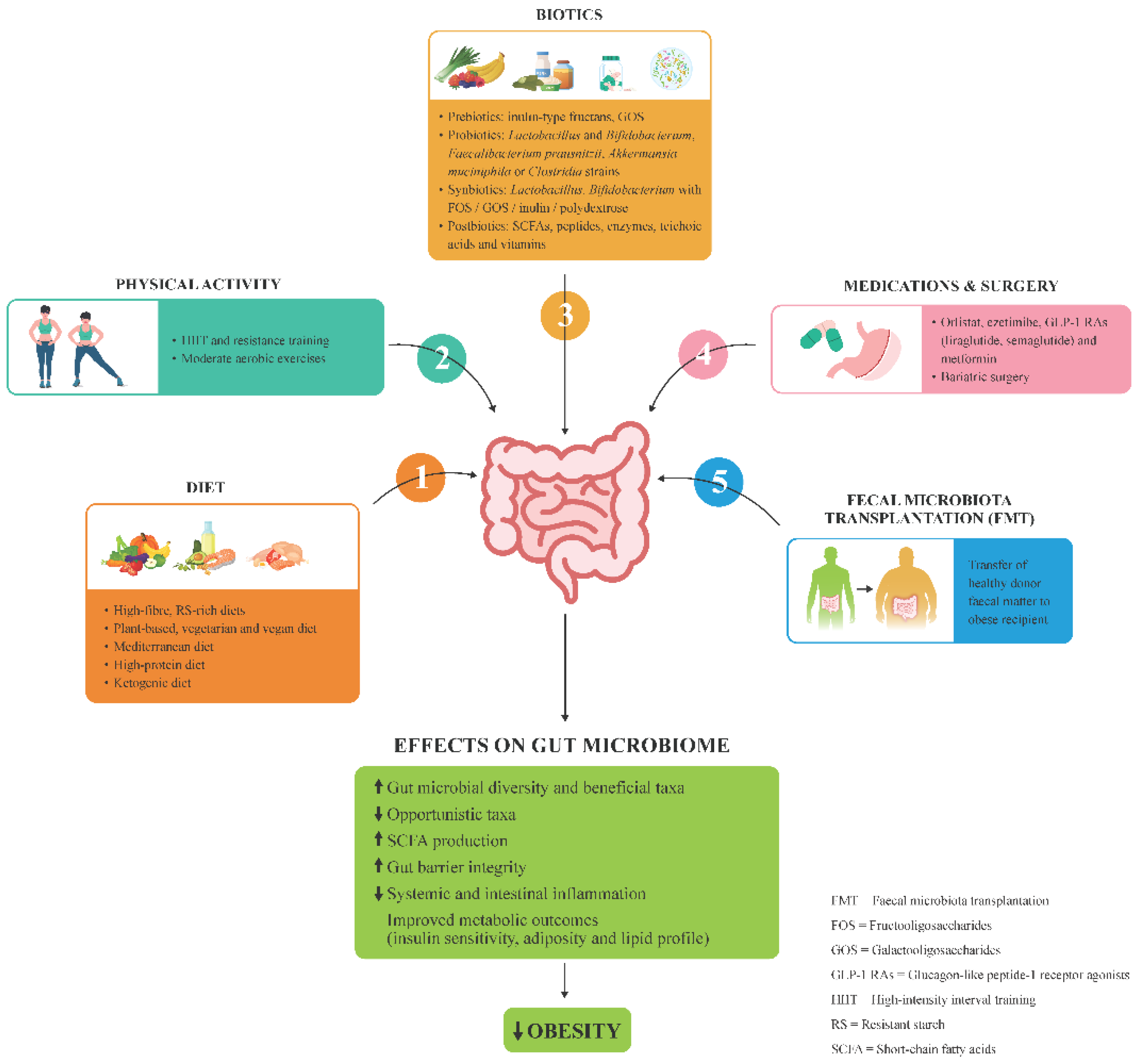

Table 1.
Effect of dietary modalities targeting the gut microbiota for weight loss.
| Diet | Alteration in Gut microbiota | Effects on the host | |
| High-fibre diet, diets rich in resistant starch [35,36,37] | Improves gut microbiota structure; acts as a prebiotic and stimulates growth of beneficial bacteria; ↑ Ruminococcus, Agathobacter, Faecalibacterium, Bifidobacterium; ↑ butyrate production; improves gut barrier function; ↓ inflammation | ↓ fat accumulation; ↑ blood glucose regulation and insulin sensitivity; supports weight reduction and lowers risk of metabolic disease. | |
| Plant-based diet, vegetarian and vegan diet [40,41,51] | ↑ Prevotella abundance and growth of beneficial bacteria; ↑ SCFA production; ↓ pro-inflammatory cytokines. | Promotes positive changes in body weight and body composition; reduces risk of metabolic diseases. | |
| Low-fat vegan diet [39] | ↑ Faecalibacterium prausnitzii; smaller reduction in Bacteroides fragilis. | ↓ Body weight, fat mass and visceral fat; ↑ insulin sensitivity. | |
| Mediterranean diet [27,43,44] | ↑ gene richness; ↑ fibre-degrading Faecalibacterium prausnitzii, Bacteroides, Prevotella and other SCFA-producing bacteria. | Greater reduction in body weight and BMI compared with other diets; reduction in waist circumference and fat mass; maintains fat-free mass; improves insulin sensitivity and inflammation; decreases cardiovascular risk. | |
| High-protein diet [46,52,53] |
↑ Akkermansia, Bifidobacterium, and Faecalibacterium; ↓ Prevotella spp. | ↓ Fat mass; maintenance of fat-free mass; improved insulin resistance. | |
| Ketogenic diet [42] | ↑ Akkermansia muciniphila and Parabacteroides; variable changes in E. coli and Lactobacillus; ↓ Bifidobacterium and some Proteobacteria. |
↓ Glucose levels and BMI with associated ketosis; aids weight loss, visceral fat reduction and appetite control. |
BMI: body mass index; FAO: fatty acid oxidation; GLP-1: glucagon-like peptide-1; SCFAs: short-chain fatty acids; WC: waist circumference.
Table 2.
Effects of biotics on host health.
| Biotics for weight loss | Benefits on host | Commonly used biotics |
| Prebiotics [19,63,64,65,66] | Reduced BW, BMI, WC and fat mass; improved glucose and lipid metabolism and glycaemic control; anti-inflammatory effects; reduced serum C-reactive protein and ghrelin. | Inulin-type fructans (FOS, inulin, and oligofructose) or GOS. |
| Probiotics [18,66,67,68,69,70,71,72,73,74,75,76,77,78,79,80] | Reduced BMI, BW, WC and waist-to-hip ratio; reduced fat mass, percent body fat and abdominal subcutaneous fat; reduced total cholesterol, LDL-C, serum glucose and HbA1c and increased HDL-C; reduced food intake and positively influenced appetite-regulating hormones such as leptin and adiponectin. | Lactobacillus species including L. gasseri, L. rhamnosus, L. plantarum, L. curvatus and/or Bifidobacterium species ; next-generation probiotics such as Faecalibacterium prausnitzii, Akkermansia muciniphila or Clostridia strains. |
| Synbiotics [18,70,74,79,81] |
Reduced BMI, BW, WC and waist-to-hip ratio; reduced fat mass, percent body fat and visceral fat; improved lipid profile and inflammatory markers; reduced food intake and positively affected leptin and adiponectin. | Probiotic-prebiotic mixtures combining Lactobacillus and Bifidobacterium with FOS, GOS, inulin or polydextrose. |
| Postbiotics [79,82,83,84] | May reduce food intake and appetite by regulating hormones such as GLP-1 and PYY; positive effects on obesity have been noted in animal studies. | SCFAs, peptides, enzymes, teichoic acids and vitamins; commonly used postbiotic types include paraprobiotics and FIF. |
BMI: Body mass index; BW: Body weight; FIF: Fermented infant formula; FOS: Fructo-oligosaccharides; GLP-1: Glucagon-like peptide-1; GOS: Galacto-oligosaccharides; HbA1c: Haemoglobin A1c; HDL-C: High-density lipoprotein-cholesterol; LDL-C: Low-density lipoprotein-cholesterol; PYY: Peptide YY; WC: Waist circumference.
Table 3.
Gut microbiota-related biotics in obesity: proposed mechanisms and reported outcomes.
| Probiotics | Prebiotics | Postbiotics | Proposed pathway | Reported outcome |
| Lactobacillus (rhamnosus, gasseri, plantarum, paracasei, curvatus) [85,86,87] | Inulin, FOS | SCFAs (acetate, propionate) | ↑ AMPK/PPARs (FAO); ↑ GLP-1 signalling; microbiota modulation |
↓ body weight and fat mass; ↑ insulin sensitivity |
| Bifidobacterium (animalis/lactis) [88] | GOS | SCFAs (acetate) | ↑ barrier function; ↓ endotoxemia; ↑ lipolysis/FAO |
↓ inflammation and adiposity |
| Akkermansia muciniphila (live/pasteurised, e.g., AKM Lab-01) [89,90,91] | Mucin, inulin | Propionate, indoles | ↑ barrier function; ↓ endotoxemia; ↓ inflammation; ↑ GLP-1 signalling; ↑ bile acid metabolism |
↓ metabolic endotoxemia and obesity risk |
| Bifidobacterium longum APC1472/BB536 (synbiotic) [92,93] | Resistant starch, FOS | SCFAs, lactate | ↓ appetite and ghrelin; ↑ homeostasis; ↓ fat accumulation |
↓ food intake and fat storage |
| Faecalibacterium prausnitzii [94,95] | Inulin, resistant starch | Butyrate | ↑ barrier function; ↑ IL-10/Tregs; ↓ lipid accumulation; ↑ FAO |
↓ obesity, inflammation, and insulin resistance |
| Clostridium butyricum [96] | Resistant starch, FOS | Butyrate | ↑ barrier function; ↓ endotoxemia; ↓ inflammation; ↑AMPK/PPARα/FAO |
↓ body weight and fat mass; ↓ hepatic steatosis; ↑ insulin sensitivity |
AMPK: AMP-activated protein kinase; FAO: fatty acid oxidation; FOS = fructo-oligosaccharides; GLP-1: glucagon-like peptide-1; GOS = galacto-oligosaccharides; PPARα: peroxisome proliferator-activated receptor alpha; PPARs: peroxisome proliferator-activated receptors; SCFAs: short-chain fatty acids; Tregs: regulatory T cells.
Disclaimer/Publisher’s Note: The statements, opinions and data contained in all publications are solely those of the individual author(s) and contributor(s) and not of MDPI and/or the editor(s). MDPI and/or the editor(s) disclaim responsibility for any injury to people or property resulting from any ideas, methods, instructions or products referred to in the content. |
© 2026 by the authors. Licensee MDPI, Basel, Switzerland. This article is an open access article distributed under the terms and conditions of the Creative Commons Attribution (CC BY) license (http://creativecommons.org/licenses/by/4.0/).
Copyright: This open access article is published under a Creative Commons CC BY 4.0 license, which permit the free download, distribution, and reuse, provided that the author and preprint are cited in any reuse.


