

Submitted:
13 April 2026
Posted:
14 April 2026
You are already at the latest version
Abstract
Upper respiratory tract infections such as the common cold are highly prevalent and impose a substantial health and economic burden, with many individuals relying on over-the-counter (OTC) medications for symptomatic relief despite limited real‑world evidence on perceived effectiveness. This non‑interventional, retrospective, cross‑sectional survey evaluated the product attributes most valued when selecting cold and flu medications and assessed perceptions of the effectiveness, quality‑of‑life impact, and overall attitudes toward MED‑LEMON. A total of 249 adults completed a structured questionnaire covering symptom relief priorities, medication attributes, perceived effectiveness, quality of life outcomes, and post-intake attitudes. Relief of fever, sore throat, headache, and sinus congestion, along with fast action, long‑lasting relief, and ease of use, were identified as key drivers of OTC cold and flu medication choice. MED‑LEMON was widely perceived as effective, with over 90% of participants reporting overall symptom improvement and strong relief of pain, headache, and fever. Adherence to the recommended dosing regimen was associated with better symptom control and improved quality of life, including sleep, emotional well‑being, and daily functioning. Overall attitudes toward MED‑LEMON were highly positive. From a public health perspective, these findings highlight the role of effective OTC treatments in supporting health promotion and responsible self-care during cold/flu period.
Keywords:
over-the-counter medication
; real-world evidence
; self-care
; upper respiratory tract infection
; quality of life
; common cold
; perceived effectiveness
; South Africa
1. Introduction
Upper respiratory tract infections (URTIs) are a leading cause of acute illness worldwide and represent a significant public health concern [1,2]. The common cold is the most frequent manifestation of URTIs, characterized by inflammation that often results in malaise, nasal congestion, rhinorrhea, sneezing, pharyngitis, cough, and occasionally fever and headache [3].
Although the common cold is typically self-limiting and resolves without medical intervention, it imposes a substantial short-term burden on quality-of-life (QoL). Symptoms such as nasal congestion, sore throat, cough and headache can impair physical comfort, cognitive performance, mood, productivity and sleep, leading to absenteeism from work or school and reduced daily functioning [4,5,6]. These infections also contribute to considerable economic losses due to reduced productivity. In South Africa, seasonal colds and influenza place a notable burden on the primary healthcare system. The estimated annual cost of influenza-associated illness is $270.5 million, with medically attended mild cases contributing more than double the cost of severe cases [7,8].
Self-management is recommended as first-line care for uncomplicated colds and influenza-like illness, including rest, adequate hydration, and appropriate symptomatic treatment. Previous studies have shown that many individuals seek relief from colds and flu symptoms through self-management [9,10]. Furthermore, guidance from the National Institute for Health and Care Excellence (NICE) [11] and the South African National Department of Health Standard Treatment Guidelines [12] emphasizes supportive care and recognizes the self-limiting nature of cold and flu Over-the-counter (OTC) medicines are widely used within this framework to relieve symptoms, and responsible self-management may help reduce unnecessary healthcare utilization [13].
Despite the widespread use of OTC medications for cold and flu self-management, there remains a limited understanding of how individuals make decisions regarding these products. In particular, little is known about the specific health benefits consumers seek when using cold and flu medications or the product characteristics they value most—such as rapid onset of action, sustained relief, or convenience—as well as their perceptions of effectiveness and impact on quality of life (QoL). Evidence regarding whether individuals feel these products meaningfully improve daily functioning, sleep quality, productivity, and overall well-being remains scarce. Gaining insight into these preferences and perceived outcomes is essential for informing strategies that promote safe, effective, and rational OTC use [14,15].
In this context, MED-LEMON- a hot medication with vitamin C, is an OTC cold and flu medication widely marketed in South Africa for its ability to provide symptomatic relief and alleviate discomfort during episodes of cold and flu [16]. The product contains aspirin, caffeine, vitamin C, and menthol as active pharmaceutical ingredients, and is available in 3 flavours: Original, Lemon menthol, and Cherry menthol. Despite MED LEMON’s presence in the South African OTC cold and flu market, there remains limited peer reviewed evidence evaluating real world user experiences, including perceived effectiveness, QoL outcomes, and attitudes toward the product.
Therefore, this study aims to understand the product characteristics individuals value most when selecting OTC medications for the management of cold and flu symptoms. It further seeks to assess the perceived effectiveness of MED-LEMON and its impact on the QoL of adults in South Africa, as well as to evaluate public attitudes related to trust, satisfaction, and perceived value for money. Results from this study aim to contribute to a broader understanding of public behavior toward OTC medication within the South African context. Importantly, this is the first real-world evidence study of MED-LEMON in South Africa, providing novel insights into patient behavior and preferences in the context of OTC cold and flu medications. The findings are expected to inform healthcare providers, policymakers, and manufacturers by identifying factors that drive OTC medication choice, satisfaction, and perceived value in improving QoL, thereby contributing to improved patient-centered care and evidence-based strategies for OTC medication use.
2. Materials and Methods
2.1. Study Design
A non-interventional retrospective observational cross-sectional study was conducted in South Africa using a self-administered structured online questionnaire via GeoPoll survey platform. The online questionnaire was designed by the study team members to capture comprehensive information relevant to the study objectives. To reduce recall bias, this study only recruited participants who had consumed MED-LEMON within the past three months.
2.2. Ethical Considerations
All respondents provided informed consent to participate in the survey. No personally identifiable data were collected. Ethical approval for the study was reviewed and granted by Pharma-Ethics Research Ethics Committee in South Africa (Ethics Reference No: 250327101).
2.3. Sample
Participants from South Africa were recruited via a professional research organization’s established consumer panel. The established consumer panel is a pre-recruited database of individuals who have previously agreed to participate in survey research and who provide demographic and profiling information upon registration. Panel members are typically recruited through multiple channels (e.g., online advertising and social media) and are verified by the panel provider to ensure data quality and prevent duplicate registrations. Study invitations were distributed to panel members via email and the panel website portal. Individuals who were interested could follow a link to access the informed consent form.
After providing consent, participants completed a screening questionnaire to determine eligibility. Only those who were eligible were redirected to the survey link to complete a one-time survey. Exclusion criteria were verified based on participants’ self-reported responses in the screening questionnaire.
The inclusion criteria were as follows: adults aged 18-65 years old, residing in South Africa, experienced cold and flu symptoms in the 3 past months, consumed MED-LEMON for their cold and flu symptoms in the past 3 months, and provided consent to participate in this study. Additionally, the following exclusion criteria were applied: adults older than 65 years old and who took other cold and flu or analgesic products concomitantly with MED-LEMON in the past 3 months.
2.4. Sample Size Considerations
The sample size for this study was determined using standard statistical principles to ensure adequate precision in estimating perceived effectiveness and attitudes toward MED-LEMON. Assuming a margin of error of 10%, a standard deviation (SD) of 0.5, and a 95% confidence level, a minimum sample size of approximately n = 200 consumers was calculated as sufficient to address the study objectives. Although larger samples could further reduce the margin of error, the chosen sample size was deemed appropriate for generating real-world evidence and exploratory insights into consumer behavior and attitudes toward OTC cold and flu medications.
2.5. Data Collection and Measures
Data was collected between July 2025 and August 2025. All respondents completed a structured online questionnaire. The structured online questionnaire was designed to align with the study objectives and collected the following information:
- Demographics: Participants reported age, gender, acute and chronic illness status, and other relevant sociodemographic characteristics.
- Importance of symptom relief and product characteristics: Participants rated the importance of symptom relief and various characteristics of OTC cold and flu medications in their selection of such products. Ratings were captured using investigator-designed statements with a 5-point Likert-type agreement scale ranging from “completely disagree” to “completely agree.”
- Perceived effectiveness of MED-LEMON and impact on QoL: Participants provided self-reported assessments of MED-LEMON’s effectiveness in relieving cold/ flu symptoms and its impact on QoL, using investigator-designed statements with 5-point Likert-type agreement scale ranging from “completely disagree” to “completely agree.”
- Reasons for product choice: Participants indicated their motivations for selecting MED-LEMON.
- Attitudes toward MED-LEMON: Participants’ perceptions were assessed regarding product trust, satisfaction, value for money, and likelihood of recommending MED-LEMON to others. These attitudes were measured using investigator-designed agreement statements on a 5-point Likert scale (e.g. from “absolutely dissatisfied” to “completely satisfied”).
2.6. Data Analysis
Only completed questionnaires were analyzed. Questionnaires with missing or incomplete responses were considered as indicative of withdrawal of consent and were therefore excluded from the analysis. Respondent characteristics and demographics were summarized using descriptive statistics. Continuous variables were reported as means and standard deviations, while categorical variables were presented as frequencies and proportions. Exploratory subgroup analyses were conducted to examine variations across predefined groups selected for their potential influence on the outcomes of interest (i.e., perceived effectiveness of MED LEMON and the impact on QoL after MED LEMON use). Subgroups included: (i) income level, measured using the Living Standards Measure (LSM)—a composite index of household wealth and access to services that categorizes the South African population into 10 groups, where LSM 10 reflects the highest material living standards and LSM 1 the lowest, based on indicators such as urban versus rural residence, ownership of major appliances, and vehicle possession; (ii) living location (peri urban/rural vs. urban); (iii) age (18–35 vs. 36–65 years); and (iv) frequency of product use (≤1 sachet/day vs. 2–3 sachets/day).
Between group comparisons were conducted using the chi square test for categorical variables and the independent t-test for continuous variables. Pairwise comparisons were further performed to investigate differences among subgroups, with adjustments applied for multiple comparisons where applicable. Differences between groups were considered significant at the 5% level (P<.05). All data analysis was performed using the Statistical Package for Social Sciences (SPSS), version 23.
3. Results
A total of 249 participants were recruited for this study, with a mean age of 29.6 years (SD = 9.0). Males constituted 55.0% of the study population, while females accounted for 45.0%. All sociodemographic, clinical characteristics, and MED-LEMON consumption details are summarized in Table 1. Most participants resided in Gauteng (43.4%), followed by KwaZulu-Natal (15.7%), Western Cape (12.9%), and Limpopo (8.8%), with smaller proportions from other provinces. Overall, 57.0% lived in peri urban, township, or rural areas, whereas 43.0% lived in urban areas. Educational attainment varied, with the largest proportion reporting a high school diploma (24.5%), followed by completion of secondary school (19.3%) and certificate-level qualifications (16.9%). The majority of participants (58.6%) were classified within the middle-income group (LSM 5–7). Most participants (80.7%) reported having none of the listed chronic conditions.
Over the past three months, the majority of participants reported using the original flavor of MED-LEMON (81.1%), followed by Lemon menthol (13.7%), and Cherry menthol (5.2%). Most participants consumed MED LEMON for 1–3 days during their cold or flu episode (77.9%), while smaller proportions used it for 4–6 days (18.1%) or 7–10 days (4.0%). Half of the participants reported taking one sachet per day (50.2%). A statistically significant difference in consumption patterns was observed across income groups: fewer participants in the higher income LSM 8–10 group reported using one sachet per day compared with those in the middle income LSM 5–7 group (35.7% vs. 58.0%, p < 0.05) (Table A1).
3.1. Participant-Rated Importance of Symptom Relief from Cold and Flu Medication
Participants rated the importance of various health benefits sought from cold and flu medication. Overall, fever, sore throat, headache, and sinus congestion emerged as the most critical symptoms to address with cold and flu medication (Figure 1). Relief from sore throat was considered the most critical, with 96.4% of respondents rating it as important, very or extremely important. This was followed by fever (96.0%), headache (90.0%), throat irritation (90.0%), and body pain (88.8%). Relief from sinus pain and congestion (84.3%), muscle pain (83.5%), and chills (77.1%) were also considered important by most participants.
3.2. Participant-Rated Importance of Cold and Flu Medication Characteristics
Participants also rated the importance of various characteristics of cold and flu medication. Responses marked as ‘Important’, ‘Very Important’, and ‘Extremely Important’ were grouped together to identify the most valued product attributes. Using this classification, the highest-rated attribute was quick action (fast-acting medication), with 97.2% of participants rating it as important or higher. This was followed by duration of relief (long lasting effects), rated as important or higher by 93.2% of participants, and ease of use (e.g., liquid or tablet form), rated by 91.5%. Although a non-drowsy formulation was considered somewhat less critical than other attributes, it remained important to most participants, with 75.5% rating it as important or higher. Detailed ratings are presented in Figure 2.
3.3. Perceived Effectiveness of MED-LEMON and Impact on QoL
3.3.1. Symptom Relief
Participants reported strong agreement regarding MED-LEMON’s effectiveness in alleviating cold and flu symptoms (Table 2). A large majority felt more in control of their symptoms (88.0%) and reported overall improvement after taking MED-LEMON (93.6%). Relief from specific symptoms was also highly endorsed: 91.2% agreed that MED-LEMON’s triple action provided relief from headache, pain, and fever; 76.7% experienced relief from throat irritation; and 77.5% reported less muscle soreness. Although slightly less participants reported relief from earache (63.9%). Detailed breakdown of results is presented in Table A2.
Notably, a higher proportion of participants who reported taking two to three sachets of MED-LEMON per day reported symptomatic relief compared with those who took one sachet per day during their cold or flu episode. Specifically, individuals in the higher-dose group more frequently reported better overall control of their symptoms (93.4% vs 83.9%, P<.05), as well as reduced muscle soreness (85.8% vs 71.3%, P<.05) and less earache (75.5% vs 55.2%, P<.05) [Table 2].
3.3.2. Impact on QoL
Participants reported notable agreement with statements related to improvements in sleep and emotional well-being. MED-LEMON’s soothing relief helped 93.2% of participants sleep better, and 89.6% reported waking less frequently during the night due to cold and flu symptoms. Feeling well-rested and refreshed was endorsed by 94.4%, while 92.4% reported feeling less frustrated with their symptoms as a result of using MED-LEMON. [Table 2]. Participants also perceived MED LEMON to support daily functioning and social engagement during cold and flu episodes (Table 2). Most participants agreed that MED LEMON made it easier to return to daily routines (88.4%) and maintain normal activities (89.2%). In addition, 96.8% indicated that MED LEMON provided sufficient relief to continue caring for loved ones, and 87.1% reported that their social life was not disrupted by cold or flu symptoms. Furthermore, 88.8% stated that they did not have to miss important events or gatherings due to their cold or flu symptoms.
Notably, a higher proportion of participants who consumed two to three sachets of MED LEMON per day reported improvements in their QoL compared with those who consumed one sachet per day. This included feeling more physically comfortable (91.5% vs. 81.8%, P< .05) and feeling more confident in returning to their normal routine (91.5% vs. 81.1%, P < .05) (Table 2). A detailed breakdown of results is presented in Appendix Table 2.
3.3.3. Perceived MED-LEMON Product Attributes
Most participants (85.1%) strongly agreed that MED-LEMON’s non-drowsy formulation helped them remain focused and productive during the day (Table 3). Fast acting relief was also highly endorsed: 82.7% reported experiencing symptom relief within 30 minutes, and 86.8% agreed they were able to return to their daily routine on the same day. Rapid relief from fever was reported by 79.5%, while 74.7% experienced quick relief from chills. Additionally, 91.2% agreed that MED-LEMON provided long-lasting relief from cold and flu symptoms, with a significantly higher proportion of participants taking two to three sachets per day reporting this benefit compared with those taking one sachet per day (95.3% vs 87.4%, P<.05). Convenience of use was also highly rated: 90.8% of participants found MED-LEMON convenient or very convenient to use, with significantly higher proportions observed in participants in LSM 5-7 group (91.1%) and 8-10 group (95.2%) compared with those in the LSM 1-4 group (68.4%), P<.05. Furthermore, 94.0% of participants rated MED-LEMON as easy or very easy to consume in its liquid format. A detailed breakdown of results is provided in Table A3.
3.3.4. Participant-Reported Reasons for Choosing MED-LEMON
The most frequently reported reason for choosing MED-LEMON was trust in its ability to provide relief from cold/ flu symptoms, reported by 63.1% of participants (Table 4). Other factors included brand familiarity (57.0%) and recommendations from friends or family (53.4%). Professional recommendations influenced 21.3%, while 20.5% were motivated by positive online reviews. Advertising and in-store visibility played smaller roles, with 17.3% and 13.7% respectively, and only 3.6% cited promotional offers.
3.3.5. Participants-Reported Attitudes Towards MED-LEMON
Overall, participants expressed highly positive attitudes toward MED-LEMON, as shown in Table 5. A subgroup breakdown of responses by income, location, and frequency of use is presented in Table A4. Most respondents reported liking the product’s flavor, with 83.9% somewhat or completely agreeing. Nearly all participants (98.8%) considered MED LEMON to offer good value for money. Trust in the product was also high: 97.2% regarded MED-LEMON as their first choice for treating cold and flu symptoms, 98.0% trusted it to provide effective symptom relief, and 88.3% trusted it to deliver relief within 30 minutes. Satisfaction levels were similarly strong, with 90.4% reporting they were somewhat or completely satisfied with MED-LEMON. Future use and repurchase intention were equally positive. Most participants indicated they would use MED-LEMON again (96.8%) and repurchase it for future cold and flu relief (99.6%). Furthermore, likeliness to recommend the product was high, with 97.2% stating they would recommend MED-LEMON to friends and family, and 96.4% reporting they would recommend it as their first choice for cold and flu relief.
4. Discussion
This cross-sectional study explored consumer preferences towards OTC medications for the management of cold and flu symptoms in South Africa. Specifically, it examined the product characteristics that individuals consider most important when selecting OTC remedies, assessed the perceived effectiveness of MED-LEMON, and evaluated its impact on adults’ QoL. In addition, the study investigated public attitudes toward trust, satisfaction, and perceived value for money towards MED-LEMON.
The study found that participants rated fever, sore throat, and headache as the most important symptoms to relieve, with 96.0%, 96.4%, and 91.0% of participants, respectively, identifying these as important, very important, or extremely important. Importantly, this study found that MED-LEMON was perceived to effectively address key symptom relief needs of individuals seeking cold and flu medications. Perceived symptom-specific relief closely mirrored participant priorities: 91.2% reported relief from headache, pain, and fever; and 76.7% experienced relief from throat irritation. Additionally, MED-LEMON’s attributes— including its fast-acting formulation, long-lasting symptom relief, and ease of use—were highly endorsed by participants and correspond closely to the product characteristics that consumers considered most important when selecting OTC medications for the management of cold and flu symptoms
Findings from this study also indicate that MED-LEMON was perceived not only to provide targeted relief for the cold and flu symptoms most valued by individuals, but also to support daily functioning and QoL during acute episodes. Most participants reported being able to maintain normal routines, remain socially engaged, sleep better, and continue caring for others while using MED-LEMON. Notably, the majority of participants indicated that they were able to resume their usual daily activities on the same day of consuming MED-LEMON, suggesting a rapid return to functioning.
Importantly, the observed improvements in QoL appear closely linked to the symptom relief provided, suggesting that MED-LEMON may help individuals better manage both physical discomfort and functional impairment while supporting improved sleep quality, focus and productivity during cold and flu episodes. This aligns with a prior study showing that effective symptom management can translate into preserved QoL and reduced disruption of daily activities during URTIs [17].
These findings provide valuable evidence for using MED-LEMON to relieve cold and flu symptoms and enhance the overall well-being of individuals suffering from cold and flu. Notably, individuals who consumed two to three sachets per day-consistent with the recommended regimen of MED-LEMON- reported greater symptom relief and enhanced QoL, including improved focus and productivity, compared with those taking only one sachet per day. These findings suggest that adhering to the full dosage range may optimize treatment outcomes.
The high overall convenience rating for MED-LEMON (90.8 %) masks a notable disparity by socioeconomic segment: participants in the higher-income LSM 5-7 and LSM 8-10 groups rated convenience at 91.1 % and 95.2 %, respectively, whereas only 68.4 % of those in the lower-income[18–21 LSM 1-4 reported the product to be convenient (P< .05). This disparity may reflect practical barriers faced by lower-income households, such as limited access to hot water or adequate kitchen facilities required for the powder-based formulation of MED-LEMON. This interpretation aligns with study findings showing that participants in the LSM 1–4 group used fewer sachets per day than those in higher-income groups, suggesting potential convenience or access constraints. Previous research similarly showed that socioeconomic status influences medication access, usage patterns, and adherence, with lower-income individuals often facing greater environmental and resource-related barriers to optimal therapy use [18,19,20,21]. Collectively, these findings suggest that although MED-LEMON’s format is broadly acceptable, infrastructure-related limitations and resource constraints among lower-income users may reduce ease of use and adherence to the full recommended dosage regimen, potentially affecting perceived effectiveness.
Overall, the positive consumer perceptions of MED LEMON’s effectiveness and value have important implications for public health and OTC medicine policy in South Africa. In a context where access to formal healthcare is often limited by cost and resource constraints, OTC medications play a critical role in enabling self-care and reducing the burden on primary care facilities. MED-LEMON’s ability to provide rapid symptom relief and support a prompt return to daily functioning suggests that effective OTC options can help maintain productivity and QoL during acute cold and flu episodes, while also minimizing unnecessary clinic visits. Policymakers and healthcare providers should consider these findings when developing strategies to promote responsible self-care, ensure equitable access to trusted OTC products, and provide clear guidance on appropriate use to optimize outcomes and safeguard public health.
A key strength of this study lies in its consumer-centered design, as data was collected directly from individuals who use MED-LEMON, ensuring that findings reflect authentic consumer experiences. Additionally, the use of real-world data, self-reported data on perceived effectiveness provides valuable insights into everyday usage patterns, enhancing the ecological validity of the results. However, certain limitations should be acknowledged. First, the reliance on a digital online survey may have introduced selection bias as individuals with limited internet access or lower digital literacy were less likely to participate, potentially skewing the sample toward younger, more tech-savvy consumers. Second, recall bias is an inherent concern in self-reported data; although this was mitigated by recruiting participants who had consumed MED LEMON within the past three months, inaccurate recollection may still have occurred. Third, the absence of clinical verification means that responses reflect subjective perceptions rather than objective measures of effectiveness, which may have been influenced by expectancy effects or prior beliefs about the product. In addition, unmeasured confounders—such as variation in cold and flu severity or differences in health-seeking behaviour—may have affected perceived outcomes, limiting causal interpretation. Finally, because this study was conducted among South African consumers who reported using MED LEMON, the findings may not be generalizable to populations in other countries or to individuals with different healthcare access, cultural practices, or OTC medication preferences.
5. Conclusions
This study provides real-world evidence on consumer decision-making, perceived effectiveness, and attitudes toward OTC cold and flu medications, with a specific focus on MED-LEMON. The findings offered valuable insights into the factors influencing OTC medication selection among individuals managing acute cold/ flu symptoms, highlighting the importance of attributes such as effective symptom relief, ease of use, and overall user satisfaction.
Perceptions of MED-LEMON aligned with key consumer priorities, and its use was associated with reported benefits in QoL during periods of illness. These results contribute to the growing body of evidence supporting patient-centered approaches to OTC medication use and underscore the relevance of incorporating consumer perspectives when evaluating treatment options and designing self-care strategies for health promotion.
Overall, the study informs healthcare providers, policymakers, and manufacturers by identifying determinants of OTC medication choice, perceived value, and user satisfaction. From a public health perspective, these insights support evidence-based decision-making and may contribute to the optimization of population-level strategies for the management of cold/flu symptoms, potentially improving self-care practices and reducing unnecessary healthcare utilization.
Author Contributions
Conceptualization, B.F.C, M.G.J, N.G, A.H, and A.G.; methodology, all authors; formal analysis, A.G and R.L.Y.T; writing—original draft preparation, R.L.Y.T.; writing—review and editing, all authors; funding acquisition, B.F.C, M.G.J, N.G, and A.H. All authors have read and agreed to the published version of the manuscript.
Funding
This research was funded by Haleon.
Institutional Review Board Statement
The study was conducted in accordance with the Declaration of Helsinki and approved by the Institutional Review Board (or Ethics Committee) of Pharma-Ethics Research Ethics Committee in South Africa (Ethics Reference No: 250327101, Approval Date: 20 May 2025).
Informed Consent Statement
Informed consent was obtained from all subjects involved in the study.
Data Availability Statement
The data presented in this study are available on request from the corresponding author due to legal and ethical reasons.
Acknowledgments
The authors would like to express their sincere gratitude to the teams at Haleon and IQVIA for their valuable contributions to this study. We especially acknowledge Viehann du Plessis from IQVIA for his dedicated efforts during data collection. We thank all team members, including Jane Themane, Simon Hughes, Papikie Lebelo and Bronwyn Hughes for their professionalism, collaboration, and commitment to high-quality research.
Conflicts of Interest
IQVIA Solutions Asia Pte Ltd. reports financial support was provided by Haleon Pte Ltd. Aida Gadzhieva and Rachel Lee-Yin Tan report a relationship with IQVIA Solutions Asia Pte Ltd. that includes employment. Bibi Fatima Choonara, Morten Georg Jensen, Ahmed Hamdy, and Nishern Govender report a relationship with Haleon that includes employment. Bangalee Varsha reports a relationship with Haleon that includes a professional collaboration.
Abbreviations
The following abbreviations are used in this manuscript:
| LSM | Living Standards Measure |
| NICE | National Institute for Health and Care Excellence |
| OTC | Over-the-counter |
| QoL | Quality of life |
| RWE | Real-world evidence |
| SD | Standard deviation |
| SPSS | Statistical Package for Social Sciences |
| URTI | Upper respiratory tract infection |
Appendix A

Table A1.
Distribution of Med-Lemon Consumption Across Income Levels, Location, and frequency of use.
Table A1.
Distribution of Med-Lemon Consumption Across Income Levels, Location, and frequency of use.
| MED-LEMON Consumption | Total Participants | Age | Income | Location | ||||||||||||
| 18-35 years old | 35-65 years old | LSM (1-4) | LSM (5-7) | LSM (8-10) | Peri-urban / Rural | Urban | ||||||||||
| N=249 | n=195 | n=54 | n=19 | n=146 | n=84 | n=142 | n=107 | |||||||||
| Number of days taking MED-LEMON, n (%) | ||||||||||||||||
| 1-3 days | 194 | (77.9) | 155 | (79.5) | 39 | (72.2) | 16 | (84.0) | 119 | (82.0) | 59 | (70.0) | 118 | (83.0) | 76 | (71.0)@ |
| 4-6 days | 45 | (18.1) | 34 | (17.4) | 11 | (20.4) | 1 | (5.0) | 24 | (16.0) | 20 | (24.0) | 21 | (15.0) | 24 | (22.0) |
| 7-10 days | 10 | (4.0) | 6 | (3.1) | 4 | (7.4) | 2 | (11.0) | 3 | (2.0) | 5 | (6.0) | 3 | (2.0) | 7 | (7.0) |
| Number of MED-LEMON sachets taken a day, n (%) | ||||||||||||||||
| 3 sachets a day | 16 | (6.4) | 11 | (5.6) | 5 | (9.3) | 2 | (11.0) | 5 | (3.0) | 9 | (11.0) | 6 | (4.0) | 10 | (9.0) |
| 2 sachets a day | 90 | (36.1) | 66 | (33.8) | 24 | (44.4) | 4 | (21.0) | 47 | (32.0) | 39 | (46.0) | 49 | (35.0) | 41 | (38.0) |
| 1 sachet a day | 125 | (50.2) | 102 | (52.3) | 23 | (42.6) | 11 | (58.0) | 84 | (58.0) | 30 | (35.7)# | 76 | (54.0) | 49 | (46.0) |
| As and when I remember to take | 18 | (7.2) | 16 | (8.2) | 2 | (3.7) | 2 | (11.0) | 10 | (7.0) | 6 | (7.0) | 11 | (8.0) | 7 | (7.0) |
Abbreviation: LSM, Living Standard Measure. # p<0.05, compared to respondents in LSM (5-7) group. @ p<0.05, compared to respondents in peri-urban/rural group.
Table A2.
Distribution of responses related to statements regarding symptom relief, benefits on QoL, and mood & sleep.
Table A2.
Distribution of responses related to statements regarding symptom relief, benefits on QoL, and mood & sleep.
| Statement | Completely disagree | Somewhat disagree | Neither agree nor disagree | Somewhat agree |
Completely agree | |||||
|---|---|---|---|---|---|---|---|---|---|---|
| Symptom Relief, n (%) | ||||||||||
| I feel more in control of my cold and flu symptoms | 5 | (2.0%) | 11 | (4.4%) | 14 | (5.6%) | 62 | (24.9%) | 157 | (63.1%) |
| I feel relief from itchy/ scratchy throat/ throat irritation | 8 | (3.2%) | 11 | (4.4%) | 39 | (15.7%) | 69 | (27.7%) | 122 | (49.0%) |
| I experienced less muscle soreness after taking MED-LEMON | 7 | (2.8%) | 13 | (5.2%) | 36 | (14.5%) | 82 | (32.9%) | 111 | (44.6%) |
| MED-LEMONs triple action provided me relief from headache/ pain/ and fever | 2 | (2.8%) | 2 | (2.8%) | 18 | (13.3%) | 57 | (30.9%) | 170 | (50.2%) |
| I feel less body pain | 7 | (0.8%) | 7 | (0.8%) | 33 | (7.2%) | 77 | (22.9%) | 125 | (68.3%) |
| I experienced less earache after taking MED-LEMON | 15 | (6.0%) | 15 | (6.0%) | 60 | (24.1%) | 71 | (28.5%) | 88 | (35.3%) |
| I feel better overall after taking MED-LEMON | 1 | (0.4%) | 2 | (0.8%) | 13 | (5.2%) | 43 | (17.3%) | 190 | (76.3%) |
| Impact on QoL (Daily and Social activities), n (%) | ||||||||||
| It is easier to do get back to my daily activities after taking MED-LEMON | 1 | (0.4%) | 7 | (2.8%) | 21 | (8.4%) | 73 | (29.3%) | 147 | (59.0%) |
| I feel more active and engaged during cold and flu period after taking MED-LEMON | 3 | (1.2%) | 10 | (4.0%) | 29 | (11.6%) | 68 | (27.3%) | 139 | (55.8%) |
| I feel more physically comfortable and can do more throughout the day after taking MED-LEMON | 1 | (0.4%) | 9 | (3.6%) | 25 | (10.0%) | 67 | (26.9%) | 147 | (59.0%) |
| It is easier for me to maintain my normal routine during cold/flu after taking MED-LEMON | 1 | (0.4%) | 6 | (2.4%) | 20 | (8.0%) | 73 | (29.3%) | 149 | (59.8%) |
| I feel confident in returning to my normal routine as soon as possible after taking MED-LEMON | 5 | (2.0%) | 8 | (3.2%) | 23 | (9.2%) | 65 | (26.1%) | 148 | (59.4%) |
| I can continue with my daily activities without interruption from cold or flu symptoms | 4 | (1.6%) | 15 | (6.0%) | 27 | (10.8%) | 64 | (25.7%) | 139 | (55.8%) |
| MED-LEMON gives me relief from cold/flu1 symptoms so that I can keep taking care of the people I love | 3 | (1.2%) | 3 | (1.2%) | 4 | (1.6%) | 60 | (24.1%) | 181 | (72.7%) |
| With MED-LEMON, my social life did not have to stop just because of my cold/flu symptoms | 3 | (1.2%) | 12 | (4.8%) | 17 | (6.8%) | 73 | (29.3%) | 144 | (57.8%) |
| MED-LEMON gives me relief from cold/flu symptoms so that I did not have to miss important events and gatherings | 1 | (0.4%) | 3 | (1.2%) | 24 | (9.6%) | 60 | (24.1%) | 161 | (64.7%) |
| MED-LEMON's soothing relief from cold/flu helped me sleep better | 1 | (0.4%) | 1 | (0.4%) | 15 | (6.0%) | 48 | (19.3%) | 184 | (73.9%) |
| I woke up less often during the night due to cold/flu symptoms after taking MED-LEMON | 6 | (2.4%) | 6 | (2.4%) | 18 | (7.2%) | 58 | (23.3%) | 165 | (66.3%) |
| After taking MED-LEMON, I feel well rested and refreshed after sleeping | 1 | (0.4%) | 0 | (0.0%) | 13 | (5.2%) | 65 | (26.1%) | 170 | (68.3%) |
| I feel less frustrated with my cold/flu symptoms due to relief from MED-LEMON | 3 | (1.2%) | 3 | (1.2%) | 13 | (5.2%) | 67 | (26.9%) | 163 | (65.5%) |
Abbreviation: QoL, Quality of Life. * Percentages sum up to more than 100% because participants could select more than one option.
Table A3.
Distribution of responses related to statements regarding product attributes.
| Statement | Completely disagree | Somewhat disagree | Neither agree nor disagree | Somewhat agree | Completely agree | |||||
|---|---|---|---|---|---|---|---|---|---|---|
| Non-drowsy, n (%) | ||||||||||
| I can stay focused and productive during the day as MED-LEMON is non-drowsy | 5 | (2.0%) | 8 | (3.2%) | 24 | (9.6%) | 54 | (21.7%) | 158 | (63.5%) |
| Fast action, n (%) | ||||||||||
| I experienced fast relief from cold and flu symptoms within 30 minutes after taking MED-LEMON | 7 | (2.8%) | 11 | (4.4%) | 25 | (10.0%) | 70 | (28.1%) | 136 | (54.6%) |
| I am able to go back to my daily routine in the same day after taking MED-LEMON | 6 | (2.4%) | 6 | (2.4%) | 21 | (8.4%) | 73 | (29.3%) | 143 | (57.4%) |
| I experienced fast relief from fever within 30 minutes after taking MED-LEMON | 8 | (3.2%) | 18 | (7.2%) | 25 | (10.0%) | 70 | (28.1%) | 128 | (51.4%) |
| I experienced fast relief from chills within 30 minutes after taking MED-LEMON | 14 | (5.6%) | 13 | (5.2%) | 36 | (14.5%) | 84 | (33.7%) | 102 | (41.0%) |
| I experienced long-lasting relief from cold/flu symptoms after taking MED-LEMON | 2 | (0.8%) | 5 | (2.0%) | 15 | (6.0%) | 73 | (29.3%) | 154 | (61.9%) |
| Convenience, n (%) | Very inconvenient | Inconvenient | Somewhat convenient | Convenient | Very convenient | |||||
| How would you rate the convenience of using MED-LEMON? | 17 | (6.8%) | 1 | (0.4%) | 5 | (2.0%) | 57 | (22.9%) | 169 | (67.9%) |
| Ease of consumption, n (%) | Very difficult to swallow | Difficult to swallow | Somewhat easy to swallow | Easy to swallow | Very easy to swallow | |||||
| How would you rate the ease of taking MED-LEMON (in liquid format)? | 1 | (0.4%) | 5 | (2.0%) | 9 | (3.6%) | 53 | (21.3%) | 181 | (72.7%) |
Table A4.
Proportion of respondents who reported positive attitudes towards MED-LEMON by income, location, and frequency of use.
Table A4.
Proportion of respondents who reported positive attitudes towards MED-LEMON by income, location, and frequency of use.
| Attitudes towards MED-LEMON | Total Participants | Age | Income | Location | Frequency of use | |||||||||||||||
| 18-35 yrs old | 36-65 yrs old | LSM (1-4) | LSM (5-7) | LSM (8-10) | Peri-urban / Rural | Urban | ≤ 1 sachet/ day | 2-3 sachet/ day | ||||||||||||
| N=249 | n=195 | n=54 | n=19 | n=146 | n=84 | n=142 | n=107 | n=143 | n=106 | |||||||||||
| Like the flavor of MED-LEMON, n (%) | ||||||||||||||||||||
| somewhat agree/ completely agree | 209 | (83.9) | 158 | (81.0) | 51 | (94.4)$ | 14 | (73.7) | 122 | (83.6) | 73 | (86.9) | 118 | (83.1) | 91 | (85.0) | 119 | (83.2) | 90 | (84.9) |
| Value for money, n (%) | ||||||||||||||||||||
| Yes- MED-LEMON is good value for money) | 246 | (98.8) | 181 | (92.8) | 53 | (98.1) | 19 | (100.0) | 143 | (97.9) | 84 | (100.0) | 141 | (99.3) | 105 | (98.1) | 133 | (93.0) | 101 | (95.3) |
| Product Trust, n (%) | ||||||||||||||||||||
| I somewhat/ completely trust MED-LEMON as my first choice against cold and flu? | 242 | (97.2) | 190 | (97.4) | 52 | (96.3) | 17 | (89.5) | 143 | (97.9) | 82 | (97.6) | 139 | (97.9) | 103 | (96.3) | 126 | (88.1) | 99 | (93.4) |
| I somewhat/ completely trust MED-LEMON to provide me effective relief from cold and flu symptoms. | 244 | (98.0) | 191 | (97.9) | 53 | (98.1) | 17 | (89.5) | 144 | (98.6)# | 83 | (98.8) | 139 | (97.9) | 105 | (98.1) | 126 | (88.1) | 99 | (93.4) |
| I somewhat/ completely trust MED-LEMON to provide me effective relief from cold and flu symptoms within 30 minutes. | 220 | (88.4) | 174 | (89.2) | 46 | (85.2) | 16 | (84.2) | 128 | (87.7) | 76 | (90.5) | 125 | (88.0) | 95 | (88.8) | 126 | (88.1) | 99 | (93.4) |
| Overall Satisfaction, n (%) | ||||||||||||||||||||
| I am overall somewhat/ completely satisfied with MED-LEMON. | 225 | (90.4) | 174 | (89.2) | 51 | (94.4) | 16 | (84.2) | 133 | (91.1) | 76 | (90.5) | 130 | (91.5) | 95 | (88.8) | 126 | (88.1) | 99 | (93.4) |
| Intention to use/repurchase MED-LEMON again, n (%) | ||||||||||||||||||||
| I would probably/definitely use MED-LEMON again the next time I need effective relief from cold and flu symptoms. | 241 | (96.8) | 188 | (96.4) | 53 | (98.1) | 19 | (100.0) | 141 | (96.6) | 81 | (96.4) | 140 | (98.6) | 101 | (94.4) | 137 | (95.8) | 104 | (98.1) |
| I would probably/definitely buy MED-LEMON again for future cold and flu relief. | 248 | (99.6) | 194 | (99.5) | 54 | (100.0) | 19 | (100.0) | 145 | (99.3) | 84 | (100.0) | 142 | (100.0) | 106 | (99.1) | 142 | (99.3) | 106 | (100.0) |
| Likelihood of Recommendation, n (%) | ||||||||||||||||||||
| I would probably/definitely recommend it to my friends and family. | 242 | (97.2) | 191 | (97.9) | 51 | (94.4) | 19 | (100.0) | 142 | (97.3) | 81 | (96.4) | 138 | (97.2) | 104 | (97.2) | 141 | (98.6) | 101 | (95.3) |
| I would probably/definitely recommend it to others as my first choice for relieving cold/flu. | 240 | (96.4) | 187 | (95.9) | 53 | (98.1) | 19 | (100.0) | 139 | (95.2) | 82 | (97.6) | 134 | (94.4) | 106 | (99.1) | 139 | (97.2) | 101 | (95.3) |
Abbreviation: LSM, Living Standard Measure. # p<0.05, compared to respondents in LSM (1-4) group. $ p<0.05, compared to respondents aged 18-35 years old.
References
- Mobarki, A.M.; Al-Subaie, A.A.; Machajy, M.Y.A.; Maeid, A.H.A.; Fagihi, E.A.A.; Tayash, A.I.N.K.; et al. Comprehensive Clinical Perspectives on Upper Respiratory Tract Infections: A Multidisciplinary Focus on the Common Cold. Saudi Journal of Medicine and Public Health 2024, 1(2), 665–82. [Google Scholar] [CrossRef] [PubMed]
- Hellgren, J.; Cervin, A.; Nordling, S.; Bergman, A.; Cardell, L. Allergic rhinitis and the common cold–high cost to society. Allergy 2010, 65(6), 776–83. [Google Scholar] [CrossRef] [PubMed]
- Tobin, E.H.; Thomas, M.; Bomar, P.A. Upper Respiratory Tract Infections With Focus on The Common Cold. In StatPearls [Internet]; StatPearls Publishing, 2025. [Google Scholar]
- Bramley, T.J.; Lerner, D.; Sarnes, M. Productivity losses related to the common cold. Journal of occupational and environmental medicine 2002, 44(9), 822–9. [Google Scholar] [CrossRef] [PubMed]
- Dicpinigaitis, P.V.; Eccles, R.; Blaiss, M.S.; Wingertzahn, M.A. Impact of cough and common cold on productivity, absenteeism, and daily life in the United States: ACHOO Survey. Current medical research and opinion 2015, 31(8), 1519–25. [Google Scholar] [CrossRef] [PubMed]
- Fragaszy, E.B.; Warren-Gash, C.; White, P.J.; Zambon, M.; Edmunds, W.J.; Nguyen-Van-Tam, J.S.; et al. Effects of seasonal and pandemic influenza on health-related quality of life, work and school absence in England: results from the Flu Watch cohort study. Influenza and other respiratory viruses 2018, 12(1), 171–82. [Google Scholar] [CrossRef] [PubMed]
- Tempia, S.; Moyes, J.; Cohen, A.L.; Walaza, S.; Edoka, I.; McMorrow, M.L.; et al. Health and economic burden of influenza-associated illness in South Africa, 2013-2015. Influenza and other respiratory viruses 2019, 13(5), 484–95. [Google Scholar] [CrossRef] [PubMed]
- Motlogeloa, O.; Fitchett, J.M.; Sweijd, N. Defining the South African acute respiratory infectious disease season. International Journal of Environmental Research and Public Health 2023, 20(2), 1074. [Google Scholar] [CrossRef] [PubMed]
- Tian, Y.-S.; Mao, X.; Zhou, Y.; Fukuzawa, K.; Ikeda, K.; Hatabu, A. Status and influencing factors of OTC medicine use for self-medication in cold and cough: a cross-sectional survey in Japan. BMC Public Health 2025, 25(1), 1918. [Google Scholar] [CrossRef] [PubMed]
- Thielmann, A.; Gerasimovska-Kitanovska, B.; Buczkowski, K.; Koskela, T.H.; Mevsim, V.; Czachowski, S.; et al. Self-Care for Common Colds by Primary Care Patients: A European Multicenter Survey on the Prevalence and Patterns of Practices—The COCO Study. Evidence-Based Complementary and Alternative Medicine 2016, 2016(1), 6949202. [Google Scholar] [CrossRef] [PubMed]
- Summary of Antimicrobial Prescribing Guidance—Managing Common Infections: National Institute for Health Care and Excellence (NICE). 2021. Available from: https://www.nice.org.uk/about/what-we-do/our-programmes/nice-guidance/antimicrobial-prescribing-guidelines.
- Standard Treatment Guidelines and Essential Medicines List for South Africa: The National Department of Health, Pretoria, Republic of South Africa. 2020. Available from: https://www.health.gov.za/wp-content/uploads/2024/02/Primary-Healthcare-STGs-and-EML-7th-edition-2020-v3.0.pdf?utm_source=chatgpt.com.
- Panagioti, M.; Richardson, G.; Small, N.; Murray, E.; Rogers, A.; Kennedy, A.; et al. Self-management support interventions to reduce health care utilisation without compromising outcomes: a systematic review and meta-analysis. BMC health services research 2014, 14(1), 356. [Google Scholar] [CrossRef]
- Deaton, A.; Muellbauer, J. Economics and consumer behavior; Cambridge university press, 1980. [Google Scholar]
- Albert, S.M.; Bix, L.; Bridgeman, M.M.; Carstensen, L.L.; Dyer-Chamberlain, M.; Neafsey, P.J.; Wolf, M.S. Promoting safe and effective use of OTC medications: CHPA-GSA National Summit. The Gerontologist 2014, 54(6), 909–18. [Google Scholar] [CrossRef] [PubMed]
- Welcome to the Home of MED-LEMON: The Hardworking Colds and Flu Fighter That You Can Trust: Haleon group of companies. Available from: https://www.medlemon.co.za/.
- Hagen, M.; Clark, K.; Kalita, P.; Serra, G.; Sanchez, E.; Varbiro, G.; Albasser, M.M. A real-world study of quality of life following treatment with xylometazoline hydrochloride in individuals with common cold. Therapeutic Advances in Respiratory Disease 2024, 18, 17534666241228927. [Google Scholar] [CrossRef] [PubMed]
- Maron, J.; De Matos, E.G.; Piontek, D.; Kraus, L.; Pogarell, O. Exploring socio-economic inequalities in the use of medicines: is the relation mediated by health status? Public Health 2019, 169, 1–9. [Google Scholar] [CrossRef] [PubMed]
- Edessa, D.; Kumsa, F.A.; Dinsa, G.; Oljira, L. Inequity in access to medications among communities in Eastern Ethiopia: a decomposition analysis. BMC Health Services Research 2025, 25(1), 816. [Google Scholar] [CrossRef] [PubMed]
- Enslin, D.; Mallya, P. Factors influencing treatment adherence in hypertension and HIV management in South Africa: A comparative literature review. S Afr Fam Pract. 2022, 64(1), a5434. [Google Scholar] [CrossRef] [PubMed]
- Ataguba, J.E.; Akazili, J.; McIntyre, D. Socioeconomic-related health inequality in South Africa: evidence from General Household Surveys. International journal for equity in health 2011, 10(1), 48. [Google Scholar] [CrossRef] [PubMed]
Figure 1.
Ranked importance of symptom relief from cold & flu medication.
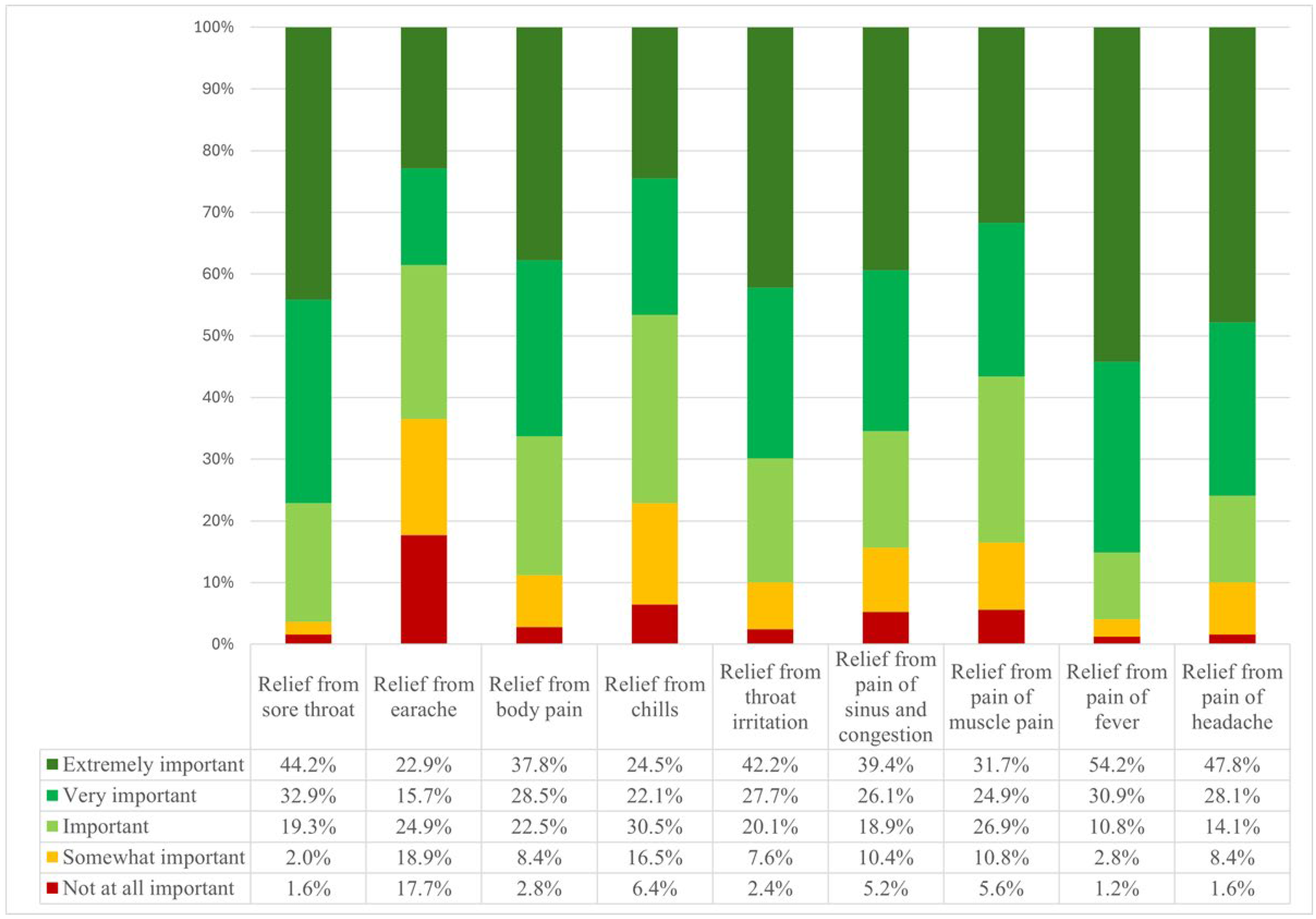
Figure 2.
Ranked importance of cold and flu medication characteristics.
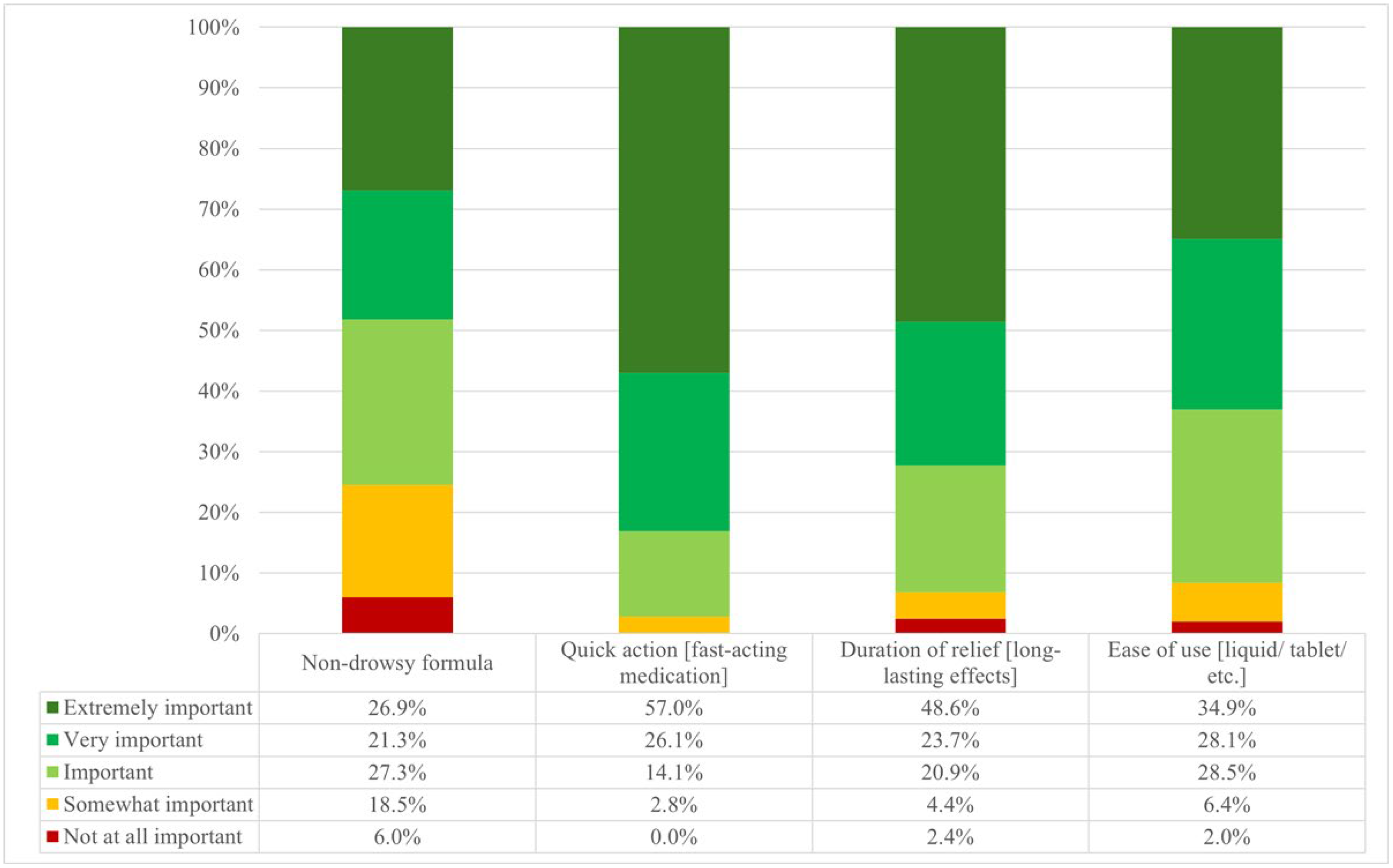
Table 1.
Sociodemographic, Clinical Characteristics, and MED-LEMON Consumption History of Study Participants.
Table 1.
Sociodemographic, Clinical Characteristics, and MED-LEMON Consumption History of Study Participants.
| Sociodemographic characteristics | Total respondents (N=249) | |
|---|---|---|
| n | (%) | |
| Age, years | ||
| Mean (SD) | 29.6 | (9.0) |
| Sex | ||
| Male | 137 | (55.0%) |
| Female | 112 | (45.0%) |
| Region | ||
| Eastern Cape | 10 | (4.0%) |
| Free State | 9 | (3.6%) |
| Gauteng | 108 | (43.4%) |
| KwaZulu-Natal | 39 | (15.7%) |
| Limpopo | 22 | (8.8%) |
| Mpumalanga | 9 | (3.6%) |
| North West | 17 | (6.8%) |
| Northern Cape | 3 | (1.2%) |
| Western Cape | 32 | (12.9%) |
| Location | ||
| Peri-urban area/ township/ Rural area/village | 142 | (57.0%) |
| Urban area | 107 | (43.0%) |
| Highest level of education | ||
| Primary school | 1 | (0.4%) |
| Secondary school | 48 | (19.3%) |
| High school diploma | 61 | (24.5%) |
| Certificate | 42 | (16.9%) |
| Diploma | 29 | (11.6%) |
| Degree | 35 | (14.1%) |
| Post-graduate degree or higher | 29 | (11.6%) |
| Prefer not to say | 4 | (1.6%) |
| Income band | ||
| LSM 1-4 (low) | 19 | (7.6%) |
| LSM 5-7 (middle) | 146 | (58.6%) |
| LSM 8-10 (high) | 84 | (33.7%) |
| Clinical characteristics | n | (%) |
| Acute medical condition*@ | ||
| Common cold | 157 | (63.1%) |
| Influenza (Flu] | 133 | (53.4%) |
| Chronic Medical condition, | ||
| Cancer | 1 | (0.4%) |
| Asthma | 23 | (9.2%) |
| Chronic respiratory illness (e.g. COPD] | 1 | (0.4%) |
| Chronic mental health conditions (e.g. anxiety/ depression/ schizophrenia/ bipolar disorder etc.) | 27 | (10.8%) |
| None of the above | 201 | (80.7%) |
| MED-LEMON consumption history | n | (%) |
| MED-LEMON flavor, | ||
| Original flavor | 202 | (81.1%) |
| Cherry menthol flavor | 13 | (5.2%) |
| Lemon menthol flavor | 34 | (13.7%) |
| Number of days taking MED-LEMON, | ||
| 1-3 days | 194 | (77.9%) |
| 4-6 days | 45 | (18.1%) |
| 7-10 days | 10 | (4.0%) |
| Number of MED-LEMON sachets taken a day, | ||
| 3 sachets a day | 16 | (6.4%) |
| 2 sachets a day | 90 | (36.1%) |
| 1 sachet a day | 125 | (50.2%) |
| As and when I remember to take | 18 | (7.2%) |
Abbreviation: COPD, Chronic Obstructive Pulmonary Disease; LSM, Living Standard Measure; SD, standard deviation. * Percentages sum up to more than 100% because participants could select more than one option. @ Participants’ responses were based on self-report and their own understanding of ‘common cold’ and ‘influenza (flu)’; no formal definitions were provided.
Table 2.
Proportion of respondents who agreed to statements related to perceived effectiveness and impact on QoL by income, location, and frequency of use.
Table 2.
Proportion of respondents who agreed to statements related to perceived effectiveness and impact on QoL by income, location, and frequency of use.
| Statement | Total Participants | Age | Income | Location | Frequency of use | |||||||||||||||
| 18-35 yrs old | 36-65 yrs old | LSM (1-4) | LSM (5-7) | LSM (8-10) | Peri-urban / Rural | Urban | ≤ 1 sachet/ day | 2-3 sachet/ day | ||||||||||||
| N=249 | n=195 | n=54 | n=19 | n=146 | n=84 | n=142 | n=107 | n=143 | n=106 | |||||||||||
| Perceived effectiveness in symptom relief (somewhat/completely agree), n (%) | ||||||||||||||||||||
| I feel more in control of my cold and flu symptoms. | 219 | (88.0) | 168 | (86.2) | 51 | (94.4) | 15 | (78.9) | 129 | (88.4) | 75 | (89.3) | 124 | (87.3) | 95 | (88.8) | 120 | (83.9) | 99 | (93.4)@ |
| I feel relief from itchy/ scratchy throat/ throat irritation. | 191 | (76.7) | 148 | (75.9) | 43 | (79.6) | 17 | (89.5) | 107 | (73.3) | 67 | (79.8) | 108 | (76.1) | 83 | (77.6) | 104 | (72.7) | 87 | (82.1) |
| I experienced less muscle soreness after taking MED-LEMON. | 193 | (77.5) | 147 | (75.4) | 46 | (85.2) | 15 | (78.9) | 111 | (76.0) | 67 | (79.8) | 111 | (78.2) | 82 | (76.6) | 102 | (71.3) | 91 | (85.8)@ |
| I feel less body pain | 202 | (81.1) | 154 | (79.0) | 48 | (88.9) | 16 | (84.2) | 116 | (79.5) | 70 | (83.3) | 115 | (81.0) | 87 | (81.3) | 112 | (78.3) | 90 | (84.9) |
| MED-LEMONs triple action provided me relief from headache/ pain/ and fever. | 227 | (91.2) | 174 | (89.2) | 53 | (98.1) | 14 | (73.7) | 135 | (92.5)# | 78 | (92.9)# | 128 | (90.1) | 99 | (92.5) | 128 | (89.5) | 99 | (93.4) |
| I experienced less earache after taking MED-LEMON. | 159 | (63.9) | 119 | (61.0) | 40 | (74.1) | 13 | (68.4) | 88 | (60.3) | 58 | (69.0) | 89 | (62.7) | 70 | (65.4) | 79 | (55.2) | 80 | (75.5)@ |
| I feel better overall after taking MED-LEMON. | 233 | (93.6) | 182 | (93.3) | 51 | (94.4) | 19 | (100.0) | 136 | (93.2) | 78 | (92.9) | 133 | (93.7) | 100 | (93.5) | 131 | (91.6) | 102 | (96.2) |
| Impact on QoL (somewhat/completely agree), n (%) | ||||||||||||||||||||
| It is easier to do get back to my daily activities after taking MED-LEMON. | 220 | (88.4) | 170 | (87.2) | 50 | (92.6) | 17 | (89.5) | 123 | (84.2)# | 80 | (95.2)# | 121 | (85.2) | 99 | (92.5) | 124 | (86.7) | 96 | (90.6) |
| I feel more active and engaged during cold and flu period after taking MED-LEMON. | 207 | (83.1) | 161 | (82.6) | 46 | (85.2) | 17 | (89.5) | 118 | (80.8) | 72 | (85.7) | 118 | (83.1) | 89 | (83.2) | 116 | (81.1) | 91 | (85.8) |
| I feel more physically comfortable and can do more throughout the day after taking MED-LEMON. | 214 | (85.9) | 165 | (84.6) | 49 | (90.7) | 16 | (84.2) | 121 | (82.9) | 77 | (91.7) | 117 | (82.4) | 97 | (90.7) | 117 | (81.8) | 97 | (91.5)@ |
| It is easier for me to maintain my normal routine during cold and flu after taking MED-LEMON. | 222 | (89.2) | 173 | (88.7) | 49 | (90.7) | 17 | (89.5) | 130 | (89.0) | 75 | (89.3) | 126 | (88.7) | 96 | (89.7) | 123 | (86.0) | 99 | (93.4) |
| I feel confident in returning to my normal routine as soon as possible after taking MED-LEMON. | 213 | (85.5) | 165 | (84.6) | 48 | (88.9) | 17 | (89.5) | 119 | (81.5) | 77 | (91.7) | 118 | (83.1) | 95 | (88.8) | 116 | (81.1) | 97 | (91.5)@ |
| I can continue with my daily activities without interruption from cold and flu symptoms. | 203 | (81.5) | 160 | (82.1) | 43 | (79.6) | 17 | (89.5) | 114 | (78.1) | 72 | (85.7) | 116 | (81.7) | 87 | (81.3) | 111 | (77.6) | 92 | (86.8) |
| MED-LEMON gives me relief from cold and flu symptoms so that I can keep taking care of the people I love. | 241 | (96.8) | 187 | (95.9) | 54 | (100.0) | 18 | (94.7) | 141 | (96.6) | 82 | (97.6) | 134 | (94.4) | 107 | (100.0) | 136 | (95.1) | 105 | (99.1) |
| With MED-LEMON, my social life did not have to stop just because of my cold and flu symptoms. | 217 | (87.1) | 169 | (86.7) | 48 | (88.9) | 16 | (84.2) | 126 | (86.3) | 75 | (89.3) | 124 | (87.3) | 93 | (86.9) | 124 | (86.7) | 93 | (87.7) |
| MED-LEMON gives me relief from cold and flu symptoms so that I did not have to miss important events and gatherings. | 221 | (88.8) | 175 | (89.7) | 46 | (85.2) | 18 | (94.7) | 127 | (87.0) | 76 | (90.5) | 126 | (88.7) | 95 | (88.8) | 123 | (86.0) | 98 | (92.5) |
| MED-LEMON's soothing relief from cold and flu helped me sleep better. | 232 | (93.2) | 181 | (92.8) | 51 | (94.4) | 18 | (94.7) | 135 | (92.5) | 79 | (94.0) | 129 | (90.8) | 103 | (96.3) | 131 | (91.6) | 101 | (95.3) |
| I woke up less often during the night due to cold and flu symptoms after taking MED-LEMON. | 223 | (89.6) | 172 | (88.2) | 51 | (94.4) | 17 | (89.5) | 131 | (89.7) | 75 | (89.3) | 125 | (88.0) | 98 | (91.6) | 126 | (88.1) | 97 | (91.5) |
| After taking MED-LEMON, I feel well rested and refreshed after sleeping. | 235 | (94.4) | 184 | (94.4) | 51 | (94.4) | 19 | (100.0) | 137 | (93.8) | 79 | (94.0) | 136 | (95.8) | 99 | (92.5) | 137 | (95.8) | 98 | (92.5) |
| I feel less frustrated with my cold and flu symptoms due to relief from MED-LEMON. | 230 | (92.4) | 176 | (90.3) | 54 | (100.0) | 18 | (94.7) | 132 | (90.4) | 80 | (95.2) | 130 | (91.5) | 100 | (93.5) | 130 | (90.9) | 100 | (94.3) |
Abbreviation: LSM, Living Standard Measure. # P<.05, compared to respondents in LSM (1-4) group. @ P<.05, compared to respondents who took ≤ 1 sachet/ day.
Table 3.
Proportion of who agreed to statements related to product attributes.
| Perceived Product Attributes | Total Participants | Age | Income | Location | Frequency of use | |||||||||||||||
|---|---|---|---|---|---|---|---|---|---|---|---|---|---|---|---|---|---|---|---|---|
| 18-35 yrs old | 36-65 yrs old | LSM (1-4) | LSM (5-7) | LSM (8-10) | Peri-urban / Rural | Urban | ≤ 1 sachet/ day | 2-3 sachet/ day | ||||||||||||
| N=249 | n=195 | n=54 | n=19 | n=146 | n=84 | n=142 | n=107 | n=143 | n=106 | |||||||||||
| Non-drowsy (somewhat/completely agree), n (%) | ||||||||||||||||||||
| I can stay focused and productive during the day as MED-LEMON is non-drowsy | 212 | (85.1) | 164 | (84.1) | 48 | (88.9) | 16 | (84.2) | 119 | (81.5) | 77 | (91.7) | 117 | (82.4) | 95 | (88.8) | 115 | (80.4) | 97 | (91.5) |
| Fast action (somewhat/completely agree), n (%) | ||||||||||||||||||||
| I experienced fast relief from cold and flu symptoms within 30 minutes after taking MED-LEMON | 206 | (82.7) | 159 | (81.5) | 47 | (87.0) | 15 | (78.9) | 118 | (80.8) | 73 | (86.9) | 115 | (81.0) | 91 | (85.0) | 113 | (79.0) | 93 | (87.7) |
| I am able to go back to my daily routine in the same day after taking MED-LEMON | 216 | (86.7) | 167 | (85.6) | 49 | (90.7) | 18 | (94.7) | 123 | (84.2) | 75 | (89.3) | 124 | (87.3) | 92 | (86.0) | 121 | (84.6) | 95 | (89.6) |
| I experienced fast relief from fever within 30 minutes after taking MED-LEMON | 198 | (79.5) | 152 | (77.9) | 46 | (85.2) | 16 | (84.2) | 115 | (78.8) | 67 | (79.8) | 109 | (76.8) | 89 | (83.2) | 108 | (75.5) | 90 | (84.9) |
| I experienced fast relief from chills within 30 minutes after taking MED-LEMON | 186 | (74.7) | 139 | (71.3) | 47 | (87.0)$ | 14 | (73.7) | 106 | (72.6) | 66 | (78.6) | 104 | (73.2) | 82 | (76.6) | 101 | (70.6) | 85 | (80.2) |
| Long lasting relief (somewhat/completely agree), n (%) | ||||||||||||||||||||
| I experienced long-lasting relief from cold and flu symptoms after taking MED-LEMON | 227 | (91.2) | 174 | (89.2) | 53 | (98.1)$ | 14 | (73.7) | 133 | (91.1) | 80 | (95.2)# | 128 | (90.1) | 99 | (92.5) | 126 | (88.1) | 101 | (95.3)@ |
| Convenience (convenient/ very convenient), n (%) | ||||||||||||||||||||
| How would you rate the convenience of using MED-LEMON? | 226 | (90.8) | 175 | (89.7) | 51 | (94.4) | 13 | (68.4) | 133 | (91.1)# | 80 | (95.2)# | 129 | (90.8) | 97 | (90.7) | 125 | (87.4) | 101 | (95.3)@ |
| Ease of consumption (easy/very easy to swallow), n (%) | ||||||||||||||||||||
| How would you rate the ease of taking MED-LEMON (in liquid format)? | 234 | (94.0) | 181 | (92.8) | 53 | (98.1) | 14 | (73.7) | 138 | (94.5)# | 82 | (97.6)# | 133 | (93.7) | 101 | (94.4) | 133 | (93.0) | 101 | (95.3) |
Abbreviation: LSM, Living Standard Measure. # P<.05, compared to respondents in LSM (1-4) group. $ P<.05, compared to respondents aged 18-35 years old. @ P<.05, compared to respondents in who took ≤ 1 sachet/ day.
Table 4.
Reported reasons for choosing MED-LEMON.
| Total respondents (N=249) | ||
|---|---|---|
| Reasons for choosing MED-LEMON* | n (%) | |
| I trust that it will provide me relief from my cold and flu symptoms | 157 | (63.1%) |
| It is a well-known brand | 142 | (57.0%) |
| My friends/family recommended it to me | 133 | (53.4%) |
| It was recommended by a healthcare professional [e.g. doctor/ pharmacist etc.] | 53 | (21.3%) |
| I saw positive reviews online [e.g. social media/ blogs/ social influencers/ etc.] | 51 | (20.5%) |
| I saw an ad and decided to try it | 43 | (17.3%) |
| I saw it displayed on the pharmacy/ grocery shelf and I decided to try it | 34 | (13.7%) |
| It was on promotion | 9 | (3.6%) |
| None of the above | 0 | (0.0%) |
Table 5.
Participants' attitudes towards MED-LEMON.
| Attitudes towards MED-LEMON | Total respondents (N=249) | |
| Flavour preference | n | (%) |
| I like the flavor of MED-LEMON | ||
| Completely disagree | 3 | (1.2%) |
| Somewhat disagree | 5 | (2.0%) |
| Neither agree nor disagree | 32 | (12.9%) |
| Somewhat agree | 35 | (14.1%) |
| Completely agree | 174 | (69.9%) |
| Value for money | n | (%) |
| Yes- MED-LEMON is good value for money | 246 | (98.8%) |
| No- MED-LEMON is not good value for money | 3 | (1.2%) |
| Product Trust | n | (%) |
| How much do you trust MED-LEMON as your first choice against cold and flu? | ||
| I do not trust it at all | 2 | (0.8%) |
| I somewhat do not trust it | 3 | (1.2%) |
| I am not sure whether I trust it or not | 2 | (0.8%) |
| I somewhat trust it | 39 | (15.7%) |
| I completely trust it | 203 | (81.5%) |
| How much do you trust MED-LEMON to provide you effective relief from cold and flu symptoms? | ||
| I do not trust it at all | 1 | (0.4%) |
| I somewhat do not trust it | 3 | (1.2%) |
| I am not sure whether I trust it or not | 1 | (0.4%) |
| I somewhat trust it | 49 | (19.7%) |
| I completely trust it | 195 | (78.3%) |
| How much do you trust MED-LEMON to provide you effective relief from cold and flu symptoms within 30 minutes? | ||
| I do not trust it at all | 2 | (0.8%) |
| I somewhat do not trust it | 9 | (3.6%) |
| I am not sure whether I trust it or not | 18 | (7.2%) |
| I somewhat trust it | 83 | (33.3%) |
| I completely trust it | 137 | (55.0%) |
| Overall Satisfaction | n | (%) |
| How would you rate your overall satisfaction with MED-LEMON? | ||
| Absolutely dissatisfied | 18 | (7.2%) |
| Somewhat dissatisfied | 5 | (2.0%) |
| Neither satisfied nor dissatisfied | 1 | (0.4%) |
| Somewhat satisfied | 41 | (16.5%) |
| Completely satisfied | 184 | (73.9%) |
| Intention to use/repurchase MED-LEMON again | n | (%) |
| Will you use MED-LEMON again the next time you need effective relief from cold and flu symptoms? | ||
| I would definitely not use it again | 3 | (1.2%) |
| I would probably not use it again | 1 | (0.4%) |
| I am not sure whether I would use it again or not | 4 | (1.6%) |
| I would probably use it again | 42 | (16.9%) |
| I would definitely use it again | 199 | (79.9%) |
| Will you repurchase MED-LEMON for future cold and flu relief? | ||
| I would definitely not buy it again | 0 | (0.0%) |
| I would probably not buy it again | 1 | (0.4%) |
| I am not sure whether I would buy it again or not | 0 | (0.0%) |
| I would probably buy it again | 36 | (14.5%) |
| I would definitely buy it again | 212 | (85.1%) |
| Likelihood of Recommendation | n | (%) |
| How likely would you be to recommend MED-LEMON to your friends and family? | ||
| I would definitely not recommend it to my family and friends | 3 | (1.2%) |
| I would probably not recommend it to my family and friends | 1 | (0.4%) |
| I am not sure whether I would recommend it or not to my family and friends | 3 | (1.2%) |
| I would probably recommend it to my family and friends | 46 | (18.5%) |
| I would definitely recommend it to my family and friends | 196 | (78.7%) |
| How likely would you be to recommend MED-LEMON to others as your first choice to relieve cold/flu? | ||
| I would definitely not recommend it to others as my first choice for relieving cold/flu | 2 | (0.8%) |
| I would probably not recommend it to others as my first choice for relieving cold/flu | 0 | (0.0%) |
| I am not sure whether I would recommend it to others as my first choice for relieving cold/flu | 7 | (2.8%) |
| I would probably recommend it to others as my first choice for relieving cold/flu | 58 | (23.3%) |
| I would definitely recommend it to others as my first choice for relieving cold/flu | 182 | (73.1%) |
Disclaimer/Publisher’s Note: The statements, opinions and data contained in all publications are solely those of the individual author(s) and contributor(s) and not of MDPI and/or the editor(s). MDPI and/or the editor(s) disclaim responsibility for any injury to people or property resulting from any ideas, methods, instructions or products referred to in the content. |
© 2026 by the authors. Licensee MDPI, Basel, Switzerland. This article is an open access article distributed under the terms and conditions of the Creative Commons Attribution (CC BY) license (http://creativecommons.org/licenses/by/4.0/).
Copyright: This open access article is published under a Creative Commons CC BY 4.0 license, which permit the free download, distribution, and reuse, provided that the author and preprint are cited in any reuse.


