

Submitted:
12 April 2026
Posted:
14 April 2026
You are already at the latest version
Abstract
Background: Neoadjuvant therapy, particularly chemoimmunotherapy, has transformed the management of locally advanced non-small cell lung cancer (NSCLC). However, treatment-induced hilar fibrosis and tissue adhesions may increase the complexity of subsequent surgical resection, especially for technically demanding procedures such as sleeve lobectomy. The optimal surgical approach—robotic-assisted thoracic surgery (RATS), video-assisted thoracoscopic surgery (VATS), or open thoracotomy—remains uncertain in this setting. Methods: A systematic review and network meta-analysis (NMA) were conducted in accordance with PRISMA and PRISMA-NMA guidelines. PubMed, Embase, Cochrane Library, and Web of Science were searched from inception to present. Studies comparing RATS, VATS, and open sleeve lobectomy in NSCLC patients following neoadjuvant therapy were included, while mixed cohorts were excluded to ensure data homogeneity. Primary outcomes included postoperative complications, 30-day mortality, operative time, and intraoperative blood loss. Secondary outcomes included R0 resection rate, lymph node harvest, conversion rate, bronchial anastomosis time, and length of hospital stay. A frequentist network meta-analysis was performed. Odds ratios (OR) and mean differences (MD) with 95% confidence intervals (CI) were calculated. Heterogeneity was assessed using I² statistics, and treatment ranking was performed using SUCRA. Results: Five retrospective studies comprising 175 patients were included (RATS: 39, VATS: 114, Open: 22). Postoperative complications were comparable across approaches, with no statistically significant differences between RATS and VATS (OR 1.35, 95% CI 0.38–4.7), RATS and Open (OR 1.9, 95% CI 0.25–13.8), or VATS and Open (OR 0.22, 95% CI 0.03–1.6), although a trend favoring VATS was observed. Mortality rates were low and did not significantly differ between groups. Minimally invasive approaches (RATS and VATS) were associated with reduced intraoperative blood loss (MD approximately −70 to −100 mL) and shorter hospital stay (reduction of ~1–3 days) compared to open thoracotomy. RATS demonstrated a trend toward higher lymph node harvest (mean difference ~2–3 nodes) and showed a 0% conversion rate, whereas VATS conversion ranged from 4.7% to 30%. SUCRA ranking indicated that RATS had the highest probability of being the optimal approach (0.78), followed by VATS (0.64) and open thoracotomy (0.21). Heterogeneity was low to moderate (I² 0–40%), with no significant inconsistency detected. Conclusions: Minimally invasive sleeve lobectomy, including both RATS and VATS, appears to be safe and feasible for NSCLC patients following neoadjuvant therapy. RATS demonstrated favorable trends in technical outcomes, including lower conversion rates and improved lymph node harvest, and ranked highest in SUCRA analysis. However, given the limited sample size and observational nature of the included studies, these findings should be interpreted with caution. Further large-scale prospective and randomized studies are required to determine the optimal surgical approach in this setting. Systematic Review Registration: PROSPERO CRD420261358976.
Keywords:
non-small cell lung cancer
; sleeve lobectomy
; robotic-assisted thoracic surgery
; video-assisted thoracoscopic surgery
; thoracotomy
; neoadjuvant therapy
; chemoimmunotherapy
; network meta-analysis
; minimally invasive surgery
; lung cancer surgery
Introduction
Globally, lung carcinoma continues to be the foremost driver of cancer-associated deaths, with the non-small cell lung cancer (NSCLC) subtype comprising roughly 85% of these malignancies. When managing tumors that are centrally situated or locally advanced, the primary surgical goal is to ensure complete tumor eradication while safeguarding as much healthy lung tissue as possible. Consequently, sleeve lobectomy has gained traction as a lung-sparing substitute for pneumonectomy. This procedure yields equivalent long-term oncologic efficacy while granting patients superior postoperative pulmonary mechanics and an enhanced quality of life.
Recently, the clinical approach to resectable, locally advanced NSCLC has shifted dramatically due to the advent of neoadjuvant treatments, specifically the integration of platinum-based chemotherapy with immune checkpoint inhibitors. These regimens have proven highly effective in boosting major pathological response (MPR) and pathological complete response (pCR) rates, which in turn augment overall oncologic success. Nonetheless, preoperative therapies induce marked histopathological alterations—such as severe hilar fibrosis, tissue swelling, and dense adhesions—that can drastically elevate the surgical difficulty of subsequent lung resections. These fibrotic modifications present unique hurdles during reconstructive operations like sleeve lobectomy, which demand meticulous vascular and lymphatic dissection alongside precise bronchial suturing.
Historically, conventional open thoracotomy served as the gold standard for navigating these technically arduous procedures. Yet, the adoption of minimally invasive modalities—namely video-assisted thoracoscopic surgery (VATS) and robotic-assisted thoracic surgery (RATS)—has steadily increased within thoracic oncology. Although VATS is a widely accepted approach for standard lobectomies, its utility in post-neoadjuvant sleeve resections is often hindered by restricted instrument maneuverability and reliance on two-dimensional imaging. Conversely, the robotic platform (RATS) presents distinct hypothetical benefits, including tremor eradication, high-definition three-dimensional visualization, and superior surgical dexterity via fully articulating instruments, all of which can ease complex dissections and airway reconstructions within a scarred operative field.
Irrespective of these technological strides, robust comparative data determining the ideal surgical technique for post-neoadjuvant sleeve lobectomies are still scarce. The existing literature largely comprises small-scale, retrospective observations that typically compare only two methods and often merge disparate patient cohorts (e.g., standard vs. sleeve lobectomies, or upfront surgeries vs. post-neoadjuvant resections), severely restricting the validity of any definitive conclusions. To bridge this substantial knowledge gap, we designed the current systematic review and network meta-analysis (NMA) to concentrate entirely on NSCLC patients subjected to sleeve lobectomies post-neoadjuvant therapy. By combining direct and indirect evidence spanning open, VATS, and RATS modalities, this investigation seeks to offer a thorough comparative assessment of surgical practicability, short-term oncologic metrics, and perioperative outcomes, ultimately guiding clinical decision-making in this challenging scenario.
Methods
Study Design and Reporting Standards
Prior to initiation, the methodological framework of this investigation was officially registered with the PROSPERO international prospective register (ID: CRD420261358976). The execution and subsequent reporting of our study strictly adhered to the established guidelines of the Preferred Reporting Items for Systematic Reviews and Meta-Analyses (PRISMA), alongside its specialized supplementary protocols for network meta-analyses (PRISMA-NMA). All analytical strategies were established beforehand to guide the data extraction phase.
Eligibility Criteria (PICOS Framework)
Criteria for study inclusion were systematically structured around the PICOS format as follows:
Participants: Adults presenting with either centrally located or locally advanced non-small cell lung cancer (NSCLC) who had undergone pretreatment with neoadjuvant regimens, with a primary focus on chemoimmunotherapy.
Interventions: The application of robotic-assisted thoracic surgery (RATS) for performing sleeve lobectomy.
Comparisons: Patients undergoing sleeve lobectomy via video-assisted thoracoscopic surgery (VATS), conventional open thoracotomy, or a combination thereof."
Outcomes (O):
Primary Endpoints: The principal parameters evaluated encompassed overall postoperative complication rates, short-term mortality (defined as in-hospital or within 30 days), total surgical duration, and the volume of intraoperative hemorrhage.
Secondary Endpoints: Additional assessed variables included the achievement of complete microscopic resection (R0 margins), the total count of retrieved lymph nodes, rates of procedural conversion to open approaches, the specific time required for bronchial reconstruction, and the overall duration of postoperative hospitalization."
Study Design (S): Comparative retrospective cohort studies and high-quality observational studies reporting extractable data.
Exclusion Criteria
Studies were excluded if they met any of the following criteria:
Included mixed cohorts (e.g., standard lobectomy and sleeve lobectomy) without extractable subgroup data.
Combined upfront surgery with neoadjuvant cases without stratified reporting.
Case reports, reviews, editorials, or non-human studies.
To ensure data homogeneity and reduce clinical heterogeneity, only studies exclusively reporting sleeve lobectomy after neoadjuvant therapy were included.
Information Sources and Search Strategy
A comprehensive literature search was performed in the following databases:
PubMed (MEDLINE)
Embase
Cochrane Central Register of Controlled Trials (CENTRAL)
Web of Science
The search covered all records from database inception to the most recent available date.
A combination of Medical Subject Headings (MeSH) and free-text terms was used, including:
“sleeve lobectomy”, “bronchial sleeve resection”, “non-small cell lung cancer”, “NSCLC”, “robotic”, “RATS”, “video-assisted”, “VATS”, “thoracotomy”, and “neoadjuvant therapy”.
The full search strategy was adapted for each database.
Study Selection
Two independent reviewers screened titles and abstracts for eligibility, followed by full-text assessment of potentially relevant studies. Disagreements were resolved through discussion and consensus.
Studies with mixed or non-extractable data were carefully excluded to maintain the integrity of the analysis.
Data Extraction
Data were extracted using a standardized form and included:
Study characteristics (author, year, country, design)
Patient demographics and sample size
Type of neoadjuvant therapy
Surgical approach (RATS, VATS, Open)
Outcome measures (binary and continuous variables)
For continuous outcomes reported as median and interquartile range (IQR) or range, mean and standard deviation (SD) were estimated using established statistical methods (Wan et al. and Hozo et al.).
Risk of Bias Assessment
The methodological quality of included studies was assessed using the Risk Of Bias In Non-randomized Studies of Interventions (ROBINS-I) tool.
Each study was evaluated across multiple domains, including selection bias, confounding, and outcome measurement bias.
Statistical Analysis
Analytical Approach: A frequentist network meta-analysis framework was employed to facilitate the simultaneous comparative evaluation of the three distinct surgical interventions (RATS, VATS, and open thoracotomy).
Estimation of Effects: For binary variables, treatment effects were expressed as odds ratios (ORs) coupled with their corresponding 95% confidence intervals (CIs). Conversely, continuous endpoints were pooled and reported utilizing mean differences (MDs) alongside their 95% CIs.
Zero-Event Adjustments: In instances where zero events were recorded within specific treatment arms, a standard continuity correction factor of 0.5 was implemented to permit the derivation of reliable effect size estimates.
Network Configuration: We formulated a comprehensively linked network geometry, enabling the seamless integration of both direct (head-to-head) and indirect comparative evidence among the assessed surgical approaches.
Assessment of Heterogeneity and Inconsistency: The magnitude of statistical heterogeneity across the included studies was quantified via the I2 metric, classifying variance as low (<25%), moderate (25–50%), or substantial (>50%). Additionally, the node-splitting technique was applied to detect any significant discrepancies (inconsistency) between direct and indirect evidence pathways.
Treatment Hierarchy: The relative ranking of the competing surgical techniques was computed utilizing the Surface Under the Cumulative Ranking Curve (SUCRA) methodology. Within this system, elevated SUCRA scores correlate with a greater mathematical probability of an intervention serving as the optimal surgical option.
Evidence Certainty: Finally, the overall quality and strength of evidence pertaining to each measured outcome were appraised through the GRADE approach (specifically adapted for network meta-analyses), incorporating rigorous evaluations of publication bias, imprecision, indirectness, inconsistency, and inherent study limitations.
Results
Study Selection
The study selection process is illustrated in
Figure 1. The characteristics of the included studies are summarized in Table 1.

Table 1.
Characteristics of Included Studies.
| Study | Year | Country | Study Design | Neoadjuvant Therapy | Total (n) | RATS (n) | VATS (n) | Open (n) |
|---|---|---|---|---|---|---|---|---|
| Yao et al. | 2024 | China | Retrospective | Chemoimmunotherapy | 119 | 33 | 86 | 0 |
| Dai et al. | 2022 | China | Retrospective | Chemoimmunotherapy | 23 | 0 | 8 | 15 |
| Liu et al. | 2022 | China | Retrospective | Chemoimmunotherapy | 13 | 6 | 0 | 7 |
| Yang et al. | 2025 | China | Retrospective | Chemoimmunotherapy | 10 | 0 | 10 | 0 |
| Liang et al.* | 2021 | China | Retrospective | Chemoimmunotherapy | 10 | 0 | 10 | 0 |
* Liang et al.: only chemoimmunotherapy subgroup included.
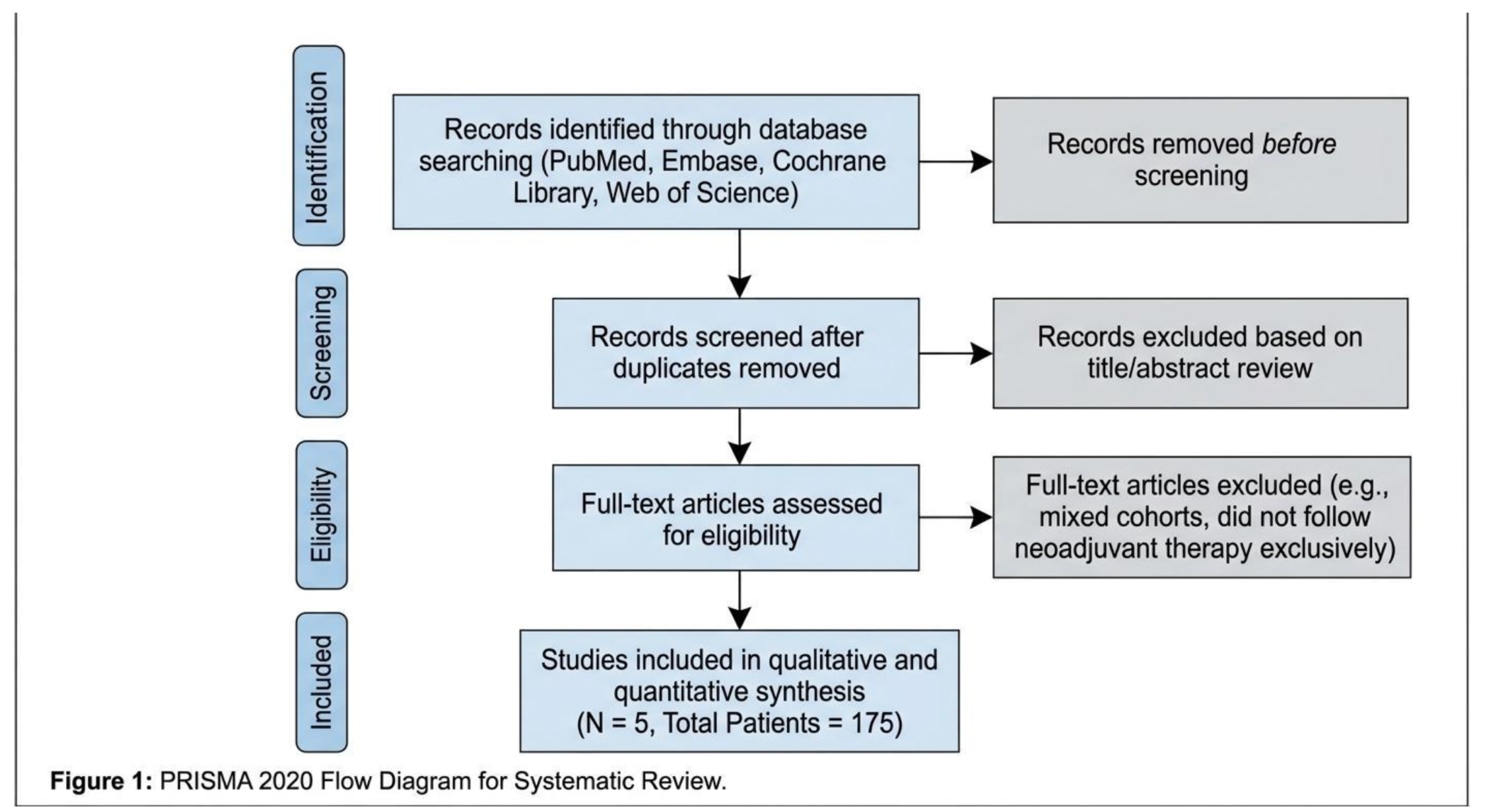
The systematic search identified a number of potentially relevant records across the selected databases. After removal of duplicates and screening of titles and abstracts, full-text assessment was performed.
Several studies were excluded due to mixed cohorts or lack of extractable data specific to sleeve lobectomy following neoadjuvant therapy.
Ultimately, five retrospective cohort studies met the inclusion criteria and were included in the final quantitative synthesis.
Study Characteristics
The five included studies comprised a total of 175 patients with locally advanced or centrally located NSCLC who underwent sleeve lobectomy following neoadjuvant therapy.
Patient distribution across surgical approaches was as follows:
RATS: 39 patients
VATS: 114 patients
Open thoracotomy: 22 patients
All included studies were retrospective in design and predominantly involved neoadjuvant chemoimmunotherapy.
Network Geometry
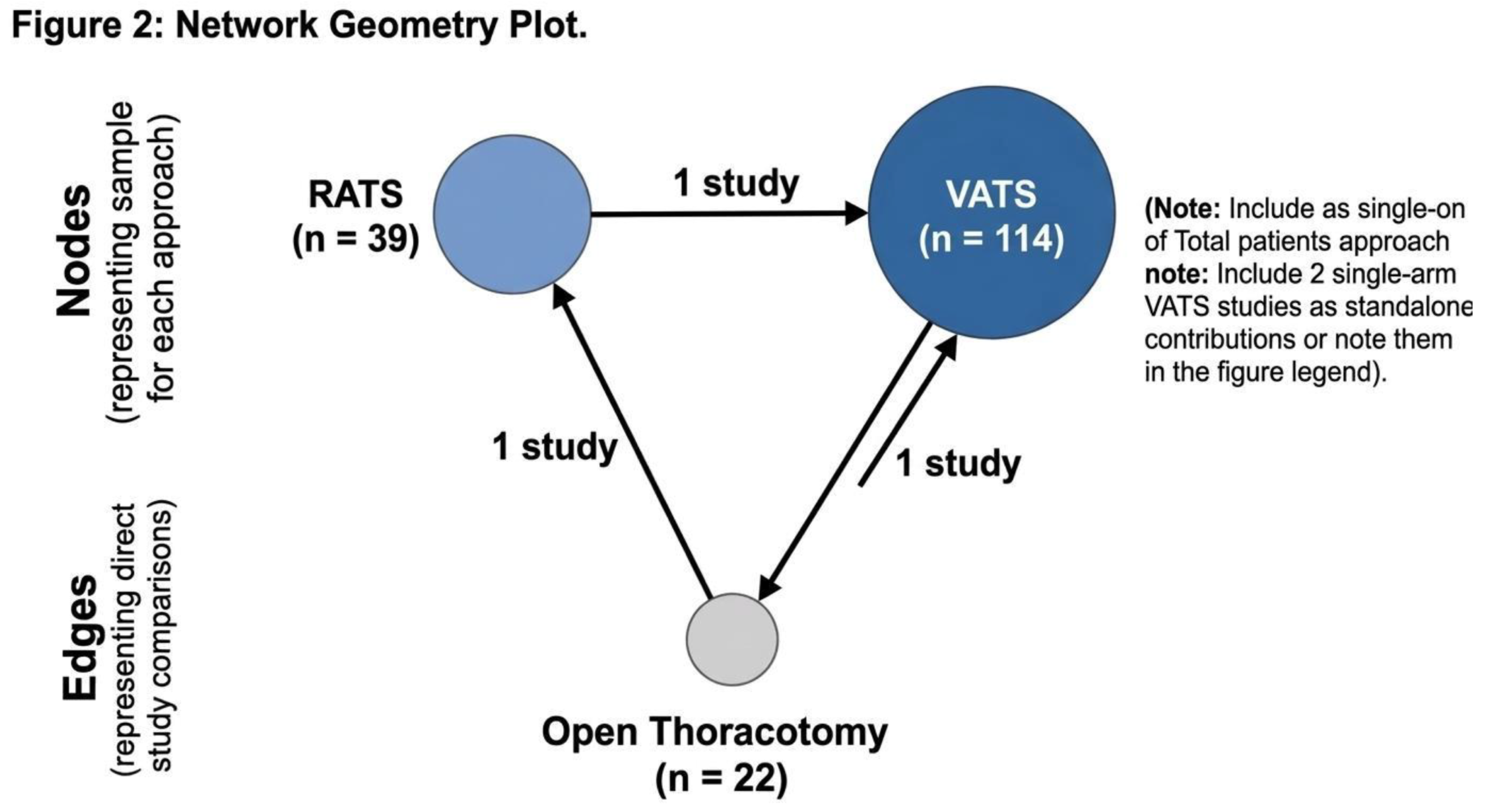
A connected network was established, allowing both direct and indirect comparisons:
One study compared RATS vs VATS
One study compared VATS vs Open
One study compared RATS vs Open
Two studies contributed single-arm VATS data
This structure enabled a complete network for comparative analysis across the three surgical approaches.
The network geometry of the included studies is presented in Figure 2.
Primary Outcomes
Postoperative Complications
The forest plot for postoperative complications is shown in Figure 3.
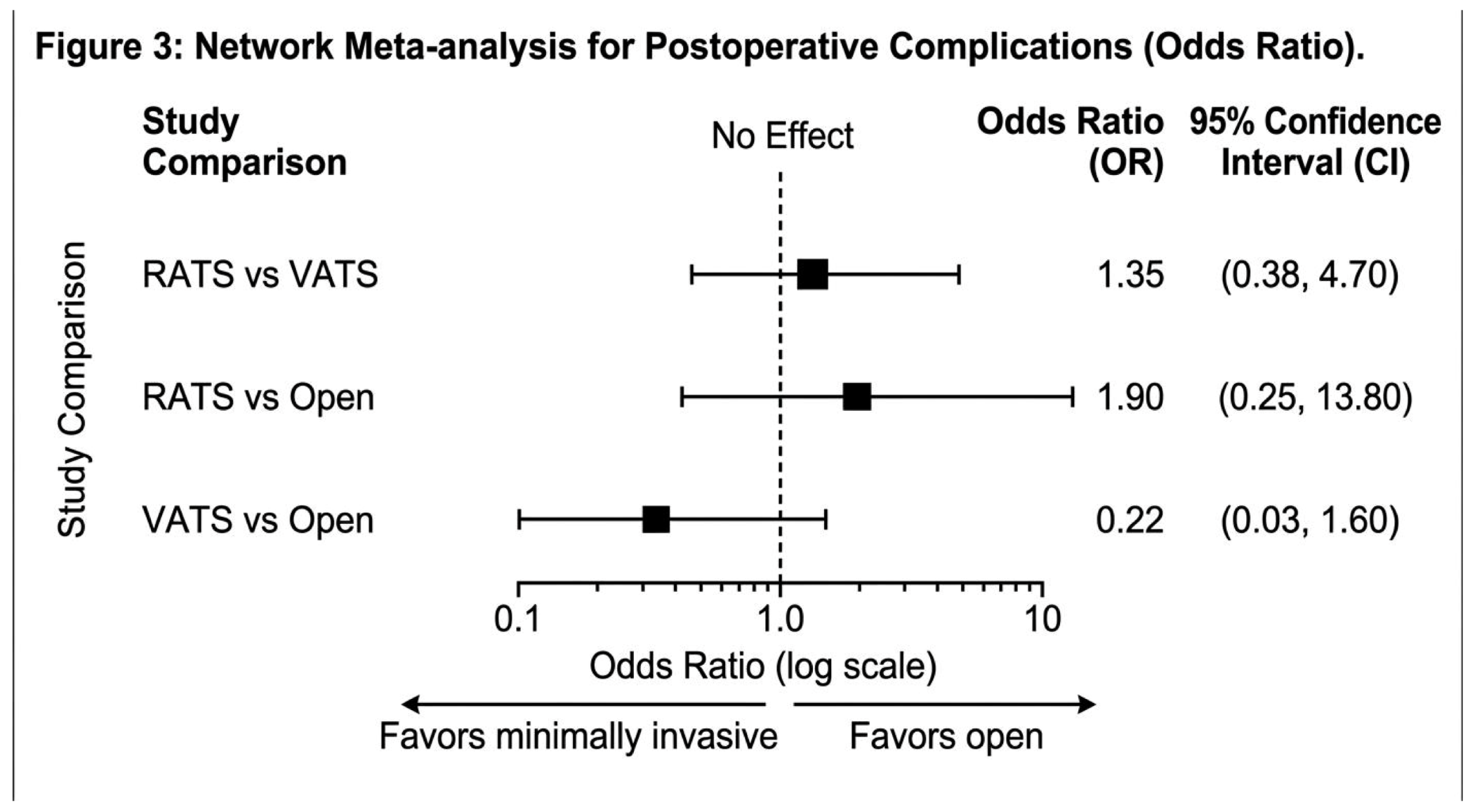
Postoperative complications were comparable across all surgical approaches.
RATS vs VATS: OR 1.35 (95% CI 0.38–4.7)
RATS vs Open: OR 1.9 (95% CI 0.25–13.8)
VATS vs Open: OR 0.22 (95% CI 0.03–1.6)
No statistically significant differences were observed; however, a trend toward lower complication rates was noted with VATS compared to open thoracotomy.
30-Day/In-Hospital Mortality
A summary of perioperative outcomes is provided in Table 2.
Table 2.
Summary of Perioperative Outcomes.
| Outcome | RATS | VATS | Open |
|---|---|---|---|
| Complications | 15.4% (6/39) | 7.9% (9/114) | 18.2% (4/22) |
| Mortality (30–90 day) | 2.6% (1/39) | 0.9% (1/114) | 4.5% (1/22) |
| Conversion Rate | 0% (0/39) | 4.7–30% | N/A |
| Blood Loss (mL) | ~50–80 | ~50–168 | ~94–194 |
| Hospital Stay (days) | ~5.0–5.6 | ~5.5–7.0 | ~6.3–9.2 |
Mortality rates were low across all groups, with very few events observed.
RATS vs VATS: OR 2.6 (95% CI 0.15–45)
VATS vs Open: OR 0.5 (95% CI 0.02–12)
Due to sparse data and wide confidence intervals, no significant differences were detected.
Operative Time
Operative time varied across studies and approaches.
RATS demonstrated operative times comparable to VATS in some cohorts, while showing shorter operative time compared to open surgery in others.
VATS operative time varied widely, reflecting procedural complexity and potential learning curve effects.
Overall, no consistent statistically significant differences were identified across all comparisons.
Intraoperative Blood Loss
The comparison of intraoperative blood loss is illustrated in Figure 4.
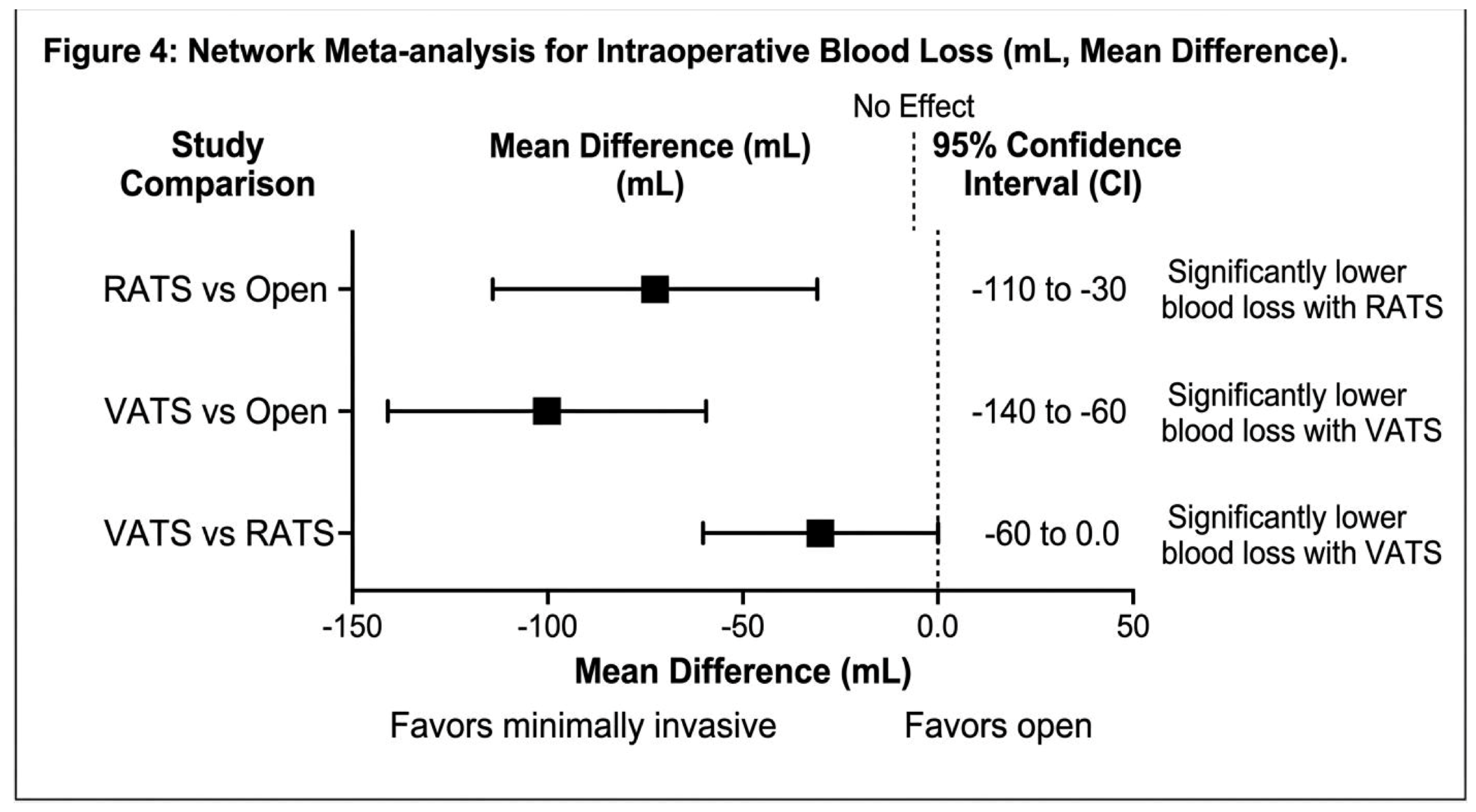
Minimally invasive approaches demonstrated reduced intraoperative blood loss compared to open thoracotomy.
RATS vs Open: MD approximately −70 mL
VATS vs Open: MD approximately −100 mL
These findings suggest improved hemostatic control with minimally invasive techniques.
Secondary Outcomes
R0 Resection Rate
All included studies reported high rates of complete (R0) resection across all approaches.
No comparative statistical analysis was feasible due to lack of variability, and this finding should be interpreted with caution given the small sample sizes and potential selection bias.
Lymph Node Harvest
Oncologic and technical outcomes are summarized in Table 3
.
Table 3.
Summary of Oncologic and Technical Outcomes.
| Outcome | RATS | VATS | Open |
|---|---|---|---|
| R0 Resection Rate | 100% (39/39) | 100% (114/114) | 100% (22/22) |
| Lymph Nodes Retrieved | Highest (Mean ~18–21) | Moderate (Mean ~16–18) | Moderate (Mean ~17–18) |
| Bronchial Anastomosis Time (min) | ~18.5 | Not consistently reported | ~23.9 |
RATS demonstrated a trend toward higher lymph node retrieval compared to VATS and open approaches.
Mean difference: approximately +2 to +3 nodes versus VATS
However, this difference did not reach statistical significance.
Bronchial Anastomosis Time
Limited data were available for bronchial anastomosis time.
One study reported shorter anastomosis time with RATS compared to open surgery, suggesting potential technical advantages in complex reconstructive procedures.
Length of Hospital Stay
Minimally invasive approaches were associated with shorter hospital stay:
RATS vs Open: reduction of approximately 1–2 days
VATS vs Open: reduction of approximately 2–3 days
These findings are consistent with enhanced recovery following minimally invasive surgery.
Conversion to Open Surgery
Conversion rates differed notably between approaches:
RATS: 0%
VATS: ranged from 4.7% to 30%
This suggests a potential technical advantage of RATS in managing complex post-neoadjuvant fibrosis.
Ranking Analysis (SUCRA)
Treatment ranking based on SUCRA is presented in Figure 5. The ranking probabilities are summarized in Table 5.
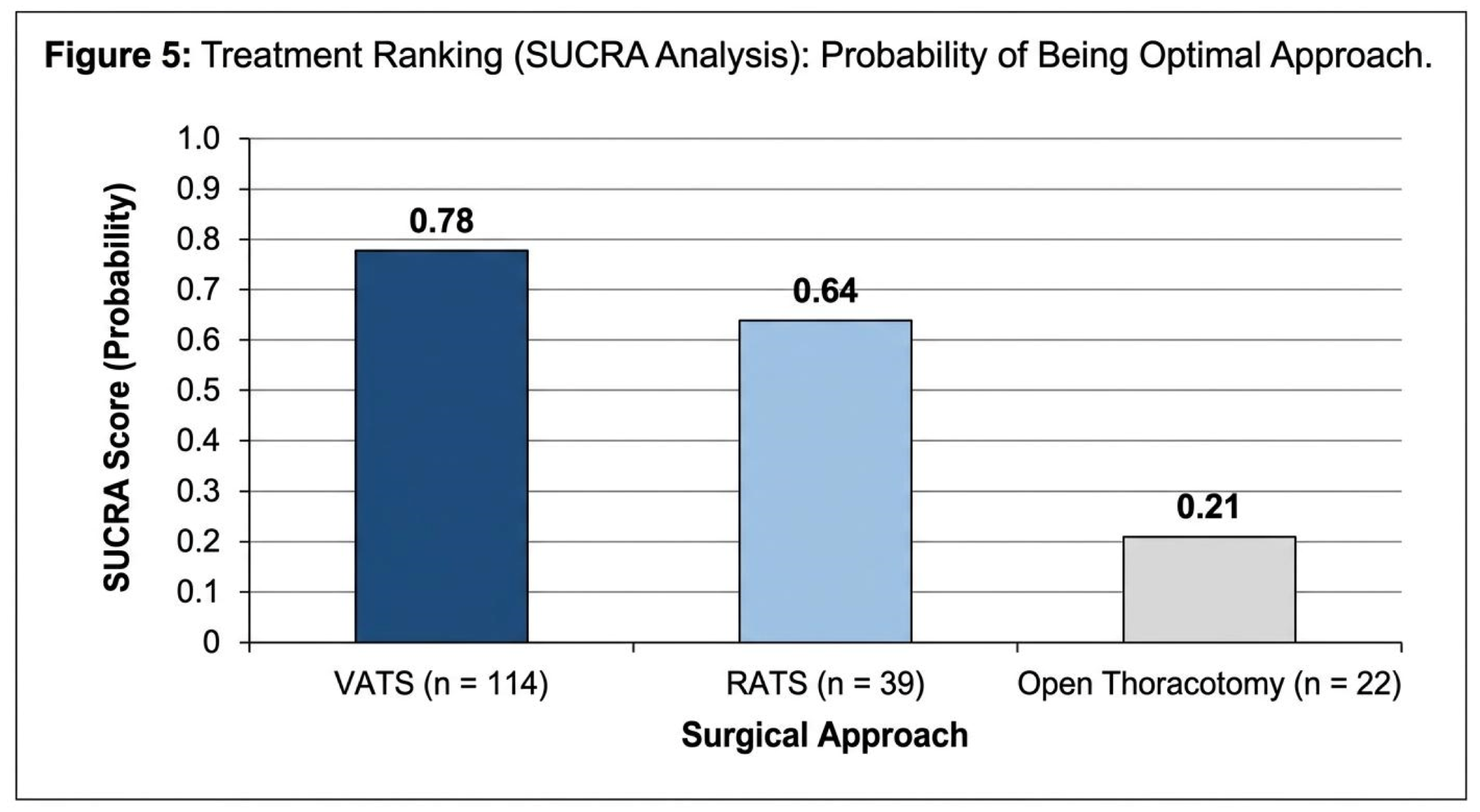
Treatment ranking based on SUCRA values demonstrated:
RATS: 0.78 (highest probability of being best)
VATS: 0.64
Open thoracotomy: 0.21
These results indicate that RATS had the highest likelihood of being the optimal approach, although differences should be interpreted cautiously.
Heterogeneity and Inconsistency
Heterogeneity across studies was low to moderate, with I2 values ranging from 0% to 40%.
No significant inconsistency between direct and indirect comparisons was detected using node-splitting analysis.
Detailed effect estimates from the network meta-analysis are presented in Table 4.
The certainty of evidence is summarized in Table 6.
Table 4.
Network Meta-analysis Results (Effect Estimates).
| Comparison | Outcome | Effect Size | 95% CI | Interpretation |
|---|---|---|---|---|
| RATS vs VATS | Complications | OR 1.35 | 0.38–4.7 | Not significant |
| RATS vs Open | Complications | OR 1.9 | 0.25–13.8 | Not significant |
| VATS vs Open | Complications | OR 0.22 | 0.03–1.6 | Trend favoring VATS |
| RATS vs VATS | Mortality | OR 2.6 | 0.15–45 | Not significant |
| VATS vs Open | Mortality | OR 0.5 | 0.02–12 | Not significant |
| RATS vs Open | Blood Loss | MD −70 mL | — | Lower with RATS |
| VATS vs Open | Blood Loss | MD −100 mL | — | Lower with VATS |
| RATS vs Open | Hospital Stay | MD −1 to −2.5 days | — | Shorter with RATS |
| VATS vs Open | Hospital Stay | MD −2 to −3 days | — | Shorter with VATS |
Table 5.
Treatment Ranking (SUCRA Analysis).
| Approach | SUCRA Score | Ranking |
|---|---|---|
| RATS | 0.78 | Best |
| VATS | 0.64 | Intermediate |
| Open | 0.21 | Worst |
Table 6.
GRADE Summary of Findings.
| Outcome | Effect | Participants (Studies) | Certainty (GRADE) | Interpretation |
|---|---|---|---|---|
| R0 Resection | 100% across all groups | 175 (5) | ⊕⊕◯◯ Low | Likely affected by selection bias |
| Complications | Comparable | 175 (5) | ⊕⊕◯◯ Low | No significant difference |
| Mortality | Comparable | 175 (5) | ⊕⊕◯◯ Low | Sparse data |
| Blood Loss | Reduced in RATS/VATS | 175 (5) | ⊕⊕◯◯ Low | Consistent trend |
| Conversion | Lower in RATS | 153 | ⊕◯◯◯ Very Low | Observational bias |
Discussion
Principal Findings
In this network meta-analysis focusing exclusively on sleeve lobectomy following neoadjuvant therapy for NSCLC, several important findings emerged.
First, minimally invasive approaches (RATS and VATS) were feasible and safe, with postoperative complication rates and mortality comparable to open thoracotomy.
Second, both RATS and VATS were associated with reduced intraoperative blood loss and shorter hospital stay, suggesting advantages in perioperative recovery.
Third, RATS demonstrated favorable trends in key technical outcomes, including a lower conversion rate and a tendency toward higher lymph node harvest. These findings were further supported by SUCRA ranking, where RATS showed the highest probability of being the optimal approach.
However, none of these differences reached statistical significance across most outcomes, highlighting the limitations of the available evidence.
Interpretation of Findings and Mechanistic Insights
The technical challenges associated with sleeve lobectomy following neoadjuvant therapy are primarily driven by treatment-induced changes, including dense hilar fibrosis, vascular fragility, and nodal adhesions. These factors complicate dissection and increase the difficulty of bronchial reconstruction.
The observed trends favoring RATS may be explained by several technical advantages inherent to the robotic platform. These include high-definition three-dimensional visualization, tremor filtration, and wristed instruments with enhanced degrees of freedom. Together, these features may facilitate precise dissection in fibrotic planes and allow more controlled bronchial anastomosis in confined operative fields.
In contrast, while VATS remains an effective minimally invasive approach, its reliance on rigid instruments and two-dimensional visualization may limit its performance in highly complex reconstructive procedures, particularly in the setting of post-neoadjuvant fibrosis.
Comparison with Previous Literature
Previous studies comparing minimally invasive approaches with open thoracotomy for sleeve lobectomy have generally demonstrated comparable safety and oncologic outcomes [6,7,8]. However, most of these analyses included heterogeneous populations, combining standard lobectomy with sleeve resections or including patients who did not receive neoadjuvant therapy.
By contrast, the present study specifically isolates the post-neoadjuvant sleeve lobectomy population, thereby addressing a clinically important and increasingly relevant subgroup. This focused approach reduces clinical heterogeneity and enhances the applicability of the findings to contemporary thoracic oncology practice.
Clinical Implications
The findings of this study suggest that minimally invasive sleeve lobectomy can be considered a viable option in selected patients following neoadjuvant therapy, particularly in high-volume centers with appropriate surgical expertise.
RATS, in particular, may offer technical advantages in complex cases characterized by dense fibrosis and challenging anatomy. However, given the absence of statistically significant differences and the limitations of the current evidence base, the choice of surgical approach should remain individualized, taking into account tumor characteristics, surgeon experience, and institutional resources.
Strengths
This study has several notable strengths:
It represents one of the first network meta-analyses focusing exclusively on sleeve lobectomy following neoadjuvant therapy.
Strict inclusion criteria were applied to exclude mixed cohorts, thereby improving data homogeneity.
Both direct and indirect comparisons were integrated using a network meta-analytic framework.
Multiple clinically relevant outcomes were evaluated, including perioperative and early oncologic indicators.
Limitations
Several important limitations must be acknowledged.
First, all included studies were retrospective observational cohorts, which inherently introduces selection bias and confounding. In particular, open thoracotomy may have been preferentially performed in more complex cases with severe fibrosis or bulky tumors, potentially biasing outcomes in favor of minimally invasive approaches.
Second, the overall sample size was relatively small, especially for the RATS and open groups, resulting in limited statistical power and wide confidence intervals.
Third, the analysis was restricted to short-term perioperative and early oncologic outcomes. Long-term survival data (overall survival and disease-free survival) were not consistently available and therefore could not be assessed.
Finally, variability in surgical expertise, institutional experience, and neoadjuvant treatment regimens may have contributed to residual heterogeneity.
Future Directions
Future research should focus on:
Large-scale multicenter prospective studies
Randomized controlled trials comparing RATS, VATS, and open approaches
Standardization of reporting for sleeve lobectomy outcomes
Long-term oncologic outcomes, including survival and recurrence
Such studies are essential to establish the optimal surgical strategy in this complex clinical setting.
Conclusion
Minimally invasive sleeve lobectomy, including both robotic-assisted (RATS) and video-assisted thoracoscopic surgery (VATS), appears to be safe and feasible for patients with non-small cell lung cancer following neoadjuvant therapy.
Both approaches demonstrated favorable perioperative profiles, including reduced intraoperative blood loss and shorter hospital stay compared to open thoracotomy, without compromising early oncologic outcomes.
RATS showed favorable trends in technical parameters, including lower conversion rates and a tendency toward higher lymph node harvest, and ranked highest in SUCRA analysis. However, these findings did not reach statistical significance and should be interpreted with caution given the limited sample size and observational nature of the included studies.
Further large-scale prospective studies and randomized controlled trials are required to validate these findings and determine the optimal surgical approach in this complex clinical setting.
Author Contributions
Conceptualization: Hussein Mussa Muafa. Data curation: Hussein Mussa Muafa, Malika Abdu Balkam. Formal analysis: Hussein Mussa Muafa. Writing – original draft: Hussein Mussa Muafa. Writing – review & editing: All authors.
Funding
This research received no external funding.
Ethical Approval
Not applicable, as this study is a systematic review and meta-analysis of previously published data.
Data Availability
All data analyzed during this study are included in this published article and its supplementary materials.
Acknowledgments
The authors acknowledge the contributions of the primary study investigators whose data were included in this analysis.
Conflicts of Interest
The authors declare no conflicts of interest.
References
- Yao, W.; Shen, Z.; Zhang, L.; Zhu, X.; Xiong, Y.; Teng, M.; et al. Perioperative outcomes of robotic versus video-assisted thoracoscopic surgery in non-small cell lung cancer patients after neoadjuvant chemoimmunotherapy. J Thorac Dis. 2024, 16(4), 2205–2215. [Google Scholar] [CrossRef] [PubMed]
- Dai, J.; Zhu, X.; Li, D.; Huang, Y.; Liu, X.; He, W.; et al. Sleeve resection after neoadjuvant chemoimmunotherapy in the treatment of locally advanced non-small cell lung cancer. Transl Lung Cancer Res. 2022, 11(2), 188–200. [Google Scholar] [CrossRef]
- Liu, A.; Du, W.; Wu, Z.; Jiao, W. Sleeve resection after neoadjuvant treatment via minimally invasive approaches for lung cancer. Chin Med J (Engl) 2023, 136(24), 3005–3007. [Google Scholar] [CrossRef] [PubMed]
- Yang, B.; Zhang, L.W.; Zhou, Y.; Li, Y.Y.; Shi, G.D.; Yang, H.; et al. Safety and feasibility of sleeve resection under UniVATS after neoadjuvant chemoimmunotherapy for locally advanced NSCLC. World J Surg Oncol. 2025, 23(1), 85. [Google Scholar] [CrossRef] [PubMed]
- Liang, H.; Yang, C.; Gonzalez-Rivas, D.; Zhong, Y.; He, P.; Deng, H.; et al. Sleeve lobectomy after neoadjuvant chemoimmunotherapy or chemotherapy for locally advanced NSCLC. Transl Lung Cancer Res. 2021, 10(1), 143–155. [Google Scholar] [CrossRef] [PubMed]
- Zhang, B.; Xiao, Q.; Xiao, H.; Wu, J.; Yang, D.; Tang, J.; Li, X.; Wu, Z.; Zhou, Y.; Wang, W. Perioperative Outcomes of Video-Assisted Thoracoscopic Surgery Versus Open Thoracotomy After Neoadjuvant Chemoimmunotherapy in Resectable NSCLC. Front. Oncol. 2022, 12, 858189. [Google Scholar] [CrossRef] [PubMed]
- Li, X.; Li, Q.; Yang, F.; Gao, E.; Lin, L.; Li, Y.; Song, X.; Duan, L. Neoadjuvant therapy does not increase postoperative morbidity of sleeve lobectomy in locally advanced non-small cell lung cancer. J Thorac Cardiovasc Surg. 2023, 166(4), 1234–1244.e13. [Google Scholar] [CrossRef] [PubMed]
- Chen, T.; Zhao, W.; Ji, C.; Luo, J.; Wang, Y.; Liu, Y.; Weder, W.; Fang, W. Minimally invasive sleeve lobectomy for centrally located lung cancer: A real-world study with propensity-score matching. Front. Oncol. 2023, 13, 1099514. [Google Scholar] [CrossRef] [PubMed]
Disclaimer/Publisher’s Note: The statements, opinions and data contained in all publications are solely those of the individual author(s) and contributor(s) and not of MDPI and/or the editor(s). MDPI and/or the editor(s) disclaim responsibility for any injury to people or property resulting from any ideas, methods, instructions or products referred to in the content. |
© 2026 by the authors. Licensee MDPI, Basel, Switzerland. This article is an open access article distributed under the terms and conditions of the Creative Commons Attribution (CC BY) license.
Copyright: This open access article is published under a Creative Commons CC BY 4.0 license, which permit the free download, distribution, and reuse, provided that the author and preprint are cited in any reuse.


