

Submitted:
11 April 2026
Posted:
13 April 2026
You are already at the latest version
Abstract
Regenerative medicine has emerged as a transformative paradigm in contemporary healthcare, shifting the therapeutic focus from symptomatic management toward the restoration of tissue structure and function through biologically active interventions. Within this framework, adipose-derived products have attracted substantial interest owing to their relative abundance, ease of harvesting, and rich cellular and paracrine composition, including mesenchymal stromal cells, pericytes, and bioactive mediators with immunomodulatory potential. Among these technologies, Lipogems® represents an innovative approach based on minimally manipulated microfragmented adipose tissue, because it preserves the native stromal vascular niche and extracellular matrix architecture while avoiding enzymatic processing. This characteristic not only maintains biological integrity but also facilitates regulatory compliance in multiple jurisdictions. This narrative review provides a comprehensive synthesis of the current evidence on Lipogems®, integrating biological rationale, mechanistic insights, and clinical applications across musculoskeletal disorders and chronic pain conditions. Particular attention is devoted to its capacity to modulate inflammatory pathways, promote angiogenesis, and support tissue regeneration within complex pathological environments. In addition, the review critically appraises the methodological limitations of existing clinical studies, including heterogeneity of design and limited high-quality randomized evidence. Finally, future perspectives are explored, emphasizing the integration of precision medicine approaches, biomarker-driven patient stratification, and combinatorial regenerative strategies aimed at optimizing therapeutic outcomes.
Keywords:
regenerative medicine
; microfragmented adipose tissue
; Lipogems®
; mesenchymal stromal cells
; chronic pain
; osteoarthritis
; Immunomodulation
; angiogenesis
; precision medicine
; tissue regeneration
1. Introduction
Regenerative medicine represents a paradigm shift from symptom-oriented treatment to biologically driven restoration of tissue integrity and function [1]. This transition is particularly relevant in chronic pain and degenerative disorders, where conventional pharmacological and interventional strategies, such as nonsteroidal anti-inflammatory drugs (NSAIDs), opioids, intra-articular corticosteroids and radiofrequency-based procedures, primarily target symptom control rather than the underlying biological drivers of disease. While these approaches may provide short-term analgesia, their long-term efficacy is often limited and they may be associated with significant adverse effects, including gastrointestinal, cardiovascular, and dependency-related risks [2,3].
In this context, adipose tissue has emerged as a central component of regenerative strategies due to its abundance, ease of harvesting and high content of mesenchymal stromal cells (MSCs), pericytes and bioactive mediators [4]. Compared with bone marrow-derived aspirates, adipose tissue yields a substantially higher number of progenitor cells per unit volume, enhancing its therapeutic potential in autologous applications [5]. Importantly, the regenerative capacity of adipose-derived products is increasingly understood to be mediated through paracrine signaling, immunomodulation and microenvironmental support rather than direct cellular differentiation [4,6].
Lipogems® (Lipogems International SpA, Milan, Italy) is a closed, minimally manipulative system that processes lipoaspirate into microfragmented adipose tissue (MFAT) through gentle mechanical forces, preserving the native stromal vascular niche without enzymatic digestion [7]. This preservation of the perivascular architecture, including pericytes and extracellular matrix components, is hypothesized to enhance biological activity while maintaining compliance with regulatory definitions of minimal manipulation. Consequently, it occupies a unique translational position between advanced cell therapies and conventional injectables [8]. From a clinical perspective, the growing interest on it is driven by its dual potential to provide symptomatic relief and to modify disease processes [9]. Overall, it represents a promising regenerative approach that bridges the gap between purely symptomatic analgesia and disease-modifying interventions.
Several studies have attempted to compare MFAT with established analgesic interventions. For instance, observational and comparative studies in knee osteoarthritis suggest that MFAT may provide more sustained improvements in pain and function compared with intra-articular corticosteroids or hyaluronic acid [10]. In a prospective comparative study, Russo et al [11]. demonstrated that patients treated with MFAT exhibited clinically meaningful improvements in pain scores and functional outcomes that persisted beyond 6-12 months, exceeding the typical duration observed with corticosteroid injections. Similarly, Bruno et al [12]. reported that adipose-derived therapies, including MFAT, were associated with longer-lasting clinical benefits compared with conventional viscosupplementation, although heterogeneity among data limited definitive conclusions. Direct head-to-head randomized controlled trials remain scarce; however, emerging evidence suggests that MFAT may offer advantages over platelet-rich plasma (PRP) in certain contexts, particularly in more advanced degenerative conditions where a structural scaffold and sustained paracrine activity may be beneficial [13]. Conversely, PRP may demonstrate comparable or superior outcomes in early-stage disease, highlighting the importance of patient selection and disease phenotyping [14]. While preliminary comparative data are encouraging, there remains a critical need for high-quality randomized controlled trials directly comparing MFAT with standard-of-care treatments, including corticosteroids, hyaluronic acid, PRP, and emerging biologics, to better define its role within the evolving landscape of pain management and regenerative medicine.
Compared with systemic pharmacological analgesia, MFAT offers a fundamentally different therapeutic paradigm, targeting local inflammatory and degenerative processes while minimizing systemic exposure [15]. This is particularly relevant in elderly or comorbid populations, where the risk profile of chronic pharmacotherapy is substantial.
The growing clinical interest in MFAT and especially in Lipogems® stems from its potential to provide a biologically active scaffold capable of delivering regenerative signals in situ. This review aims to synthesize current knowledge on MFAT, focusing on Lipogems®, and to critically appraise its role in regenerative medicine and pain management.
2. Methods
This narrative review was conducted in accordance with the Scale for the Assessment of Narrative Review Articles (SANRA), ensuring methodological transparency, comprehensive literature coverage, and critical appraisal of the available evidence [16]. Although narrative in nature, particular attention was paid to minimizing selection and interpretative bias through a structured and reproducible search strategy, explicit eligibility criteria, and rigorous source verification.
Literature Search Strategy
A comprehensive literature search was performed across the following electronic databases: PubMed/MEDLINE, EMBASE, Web of Science, and Scopus. The search covered the period from January 2005 to March 2026, in order to capture both foundational studies on adipose-derived regenerative therapies and the most recent clinical applications of MFAT, including Lipogems®.
The literature search strategy was designed to ensure both sensitivity and specificity by integrating controlled vocabulary (e.g., MeSH terms) with free-text keywords. Core search strings targeted key concepts related to microfragmented adipose tissue and regenerative medicine, including combinations such as “Lipogems” or “microfragmented adipose tissue” with “regenerative medicine”, “tissue repair,” and “mesenchymal stromal cells”. Additional queries focused on adipose-derived cellular therapies in relation to pain conditions, including “chronic pain”, “osteoarthritis”, and “tendinopathies”, as well as “clinical applications” in “musculoskeletal and orthopedic settings”. Comparative effectiveness was explored through searches combining “regenerative therapies” with established interventions such as “PRP”, “corticosteroids”, and “hyaluronic acid”. Boolean operators and truncation strategies were adapted to each database. To enhance completeness, manual screening of reference lists from relevant studies and reviews was also performed.
Eligibility Criteria
Studies were deemed eligible if they were peer-reviewed publications indexed in major biomedical databases and included clinical (randomized or non-randomized), translational, or preclinical investigations focusing on MFAT, Lipogems®, or adipose-derived regenerative therapies. Eligible studies were required to report outcomes related to pain, functional improvement, tissue repair, or underlying biological mechanisms, and to be published in English. Exclusion criteria comprised conference abstracts without full-text availability, non-peer-reviewed sources, studies with insufficient methodological transparency, and secondary citations lacking access to original data.
Study Selection and Data Extraction
Titles and abstracts were screened for relevance by 3 independent authors (YVT, PVP and MNE), followed by full-text evaluation of potentially eligible studies. Data extraction focused on study design, patient population, intervention characteristics (including processing techniques), comparator groups where available, outcome measures, follow-up duration and key findings.
Quality Appraisal and Synthesis
In line with SANRA recommendations, the methodological quality of included studies was appraised qualitatively, with emphasis on study design robustness, sample size, consistency of outcome measures, and transparency of reporting. Particular attention was given to the identification of comparative studies evaluating MFAT against established analgesic or regenerative interventions (e.g., corticosteroids, hyaluronic acid, platelet-rich plasma).
The synthesis was conducted using a thematic and mechanistic approach, integrating biological rationale with clinical evidence to provide a coherent translational perspective. Potential sources of bias, heterogeneity and limitations in the current literature were explicitly acknowledged throughout the review.
3. Biological Rationale of MFAT
Cellular Composition and Structural Preservation
Adipose tissue is a highly complex and heterogeneous organ composed of adipocytes, endothelial cells, immune cells, pericytes, and mesenchymal stromal/stem cells (MSCs), all embedded within a dynamic extracellular matrix (ECM) that provides structural support and biochemical signaling [17]. Within this milieu, the stromal vascular fraction (SVF) represents a critical functional compartment, orchestrating regenerative processes primarily through paracrine signaling, extracellular vesicle release, and immunomodulatory interactions rather than direct cellular differentiation [18]. This paradigm has been increasingly reinforced by recent translational studies highlighting the central role of the adipose secretome, including cytokines, growth factors and exosomes, in modulating inflammation and promoting tissue repair [19].
In contrast to enzymatic digestion techniques, which disrupt cellular architecture and may alter cell phenotype, the Lipogems® system employs gentle mechanical processing to preserve the structural integrity of adipose tissue clusters [7,20]. This approach maintains the native stromal vascular niche, resulting in a MFAT product enriched in pericyte-like cells and MSC precursors that remain embedded within their physiological microenvironment. The preservation of ECM components and microvascular structures is increasingly recognized as a key determinant of regenerative efficacy, as it facilitates cell-cell communication and sustains a bioactive scaffold capable of prolonged paracrine activity [21,22]. Pericytes, localized along the abluminal surface of microvessels, are now widely considered progenitors of MSCs and play a central role in angiogenesis, vascular stability, and tissue regeneration [23]. Their retention within MFAT is hypothesized to enhance therapeutic potential by enabling a context-dependent activation into MSC-like phenotypes in response to local injury signals. More recent evidence further suggests that pericyte-immune cell crosstalk contributes to macrophage polarization and modulation of the inflammatory microenvironment, thereby linking vascular biology with immune-mediated repair mechanisms [24]. Additionally, emerging studies have emphasized the importance of extracellular vesicles and exosomes derived from adipose tissue as critical mediators of regenerative signaling, capable of influencing gene expression, angiogenesis, and anti-fibrotic pathways [25]. Collectively, these advances support the concept that MFAT represents not merely a cellular therapy but a structurally preserved, biologically active microenvironment that integrates cellular, matrix, and paracrine components to optimize regenerative outcomes.
Paracrine Signaling and Secretome
As already exposed, the therapeutic efficacy of MFAT is now widely understood to be predominantly mediated through paracrine and trophic mechanisms rather than direct engraftment or differentiation of transplanted cells. MSCs, together with pericytes and other components of the stromal vascular niche, secrete a complex and dynamic repertoire of bioactive molecules, including cytokines, chemokines, growth factors, and extracellular vesicles (EVs), which collectively orchestrate tissue repair and immunomodulation [26]. Among the most relevant mediators are vascular endothelial growth factor (VEGF), hepatocyte growth factor (HGF), transforming growth factor-β (TGF-β), and interleukin-10 (IL-10), all of which contribute to angiogenesis, anti-inflammatory signaling, and extracellular matrix remodeling.
More recent and well-controlled studies have further highlighted the central role of extracellular vesicles and exosomes as key effectors of MSC function, capable of transferring microRNAs, proteins, and lipids that modulate gene expression in target cells and promote regenerative pathways [27]. This EV-mediated communication is increasingly recognized as a critical mechanism underlying the sustained biological activity of MFAT [28]. Importantly, these paracrine signals facilitate a shift from a pro-inflammatory to an anti-inflammatory microenvironment, characterized by macrophage polarization toward an M2 phenotype and attenuation of cytokines such as tumor necrosis factor-α (TNF-α) and interleukin-1β (IL-1β) [29]. Such immunological reprogramming is particularly relevant in chronic pain states, where persistent low-grade inflammation and neuroimmune dysregulation play a central pathogenic role [30]. These insights reinforce the concept of MFAT as a biologically active signaling platform capable of modulating local tissue environments and promoting functional recovery.
Immunomodulatory Effects
MFAT exerts significant immunomodulatory effects through complex interactions with both innate and adaptive immune systems, influencing macrophage polarization, T-cell activity, and the broader cytokine milieu [31]. Along with the paracrine effect promoting macrophage polarization toward an M2 anti-inflammatory phenotype, which supports anti-inflammatory responses, tissue repair and remodeling [32,33], this transition is associated with the downregulation of key pro-inflammatory mediators, such as TNF-α and IL-1β, and the upregulation of anti-inflammatory cytokines, including IL-10 and TGF-β. More recent and well-controlled studies have further demonstrated that this immunological reprogramming is mediated not only by soluble factors but also by extracellular vesicles and microRNA signaling, which modulate gene expression in immune and stromal cells [34]. Additionally, MFAT has been shown to influence T-cell proliferation and regulatory T-cell induction, contributing to immune tolerance and resolution of chronic inflammation [35]. These mechanisms closely align with contemporary models of chronic pain, which increasingly emphasize the role of neuroimmune crosstalk, peripheral sensitization, and central immune activation in the persistence of pain states [36].
4. Mechanisms of Action in Tissue Repair and Pain Modulation
Anti-Inflammatory Effects
Chronic musculoskeletal disorders, including osteoarthritis, are increasingly recognized as conditions driven not only by structural degeneration but also by persistent, low-grade inflammation within the joint microenvironment [37]. Synovial inflammation, activation of innate immune pathways, and the release of catabolic mediators contribute to cartilage degradation, subchondral bone remodeling, and the sensitization of peripheral nociceptors [38]. In this context, inflammation represents a central mechanistic link between tissue damage and pain generation, reinforcing the need for therapeutic strategies that extend beyond purely symptomatic analgesia. MFAT has demonstrated the capacity to modulate this inflammatory milieu through a multifaceted biological action (Figure 1). Experimental and clinical evidence indicates that MFAT downregulates key articular pro-inflammatory cytokines (TNF-α and IL-1β) and induces microRNA-mediated suppression of nuclear factor-κB (NF-κB) signaling and other inflammatory pathways implicated in osteoarthritis progression [39]. Importantly, these anti-inflammatory effects are closely linked to modulation of neuroimmune interactions, which are now understood to play a critical role in pain chronification [36]. By attenuating synovial inflammation and reducing the release of algogenic substances, MFAT may contribute not only to structural tissue preservation but also to the reduction of peripheral sensitization and nociceptive input [40]. This positions MFAT as a biologically coherent intervention within contemporary models of pain, where inflammation is both a driver of tissue pathology and a key determinant of pain persistence.
Angiogenesis and Tissue Regeneration
The promotion of neovascularization represents a fundamental prerequisite for effective tissue repair and regeneration, as adequate vascular supply is essential for oxygen delivery, nutrient exchange, and the removal of metabolic waste [41]. In degenerative and chronically inflamed tissues, impaired microcirculation and endothelial dysfunction contribute to a hostile microenvironment that limits intrinsic healing capacity [42]. Within this context, MFAT has emerged as a biologically active substrate capable of enhancing angiogenic processes through multiple coordinated mechanisms [43]. MFAT-derived cells and their secretome release a broad spectrum of pro-angiogenic factors, including vascular endothelial growth factor (VEGF), hepatocyte growth factor (HGF), and angiopoietins, which collectively stimulate endothelial cell proliferation, migration, and capillary network formation (Figure 1) [17,44]. In addition to these soluble mediators, more recent and well-controlled studies have emphasized the role of extracellular vesicles and exosome-associated microRNAs in regulating endothelial gene expression, thereby promoting sustained angiogenic signaling [45]. The preservation of perivascular niches within MFAT further supports vascular regeneration by maintaining pericyte-endothelial interactions, which are critical for vessel stabilization and maturation [46].
Importantly, enhanced neovascularization not only facilitates structural repair but also contributes to functional recovery by improving tissue perfusion and modulating local inflammatory responses. Emerging evidence suggests that improved microvascular integrity may indirectly influence nociceptive processing by reducing ischemia-induced sensitization and limiting the release of algogenic mediators [47]. All these findings position MFAT as a promising therapeutic approach that integrates angiogenic, immunomodulatory and regenerative mechanisms within a unified biological framework.
Extracellular Matrix Remodeling
MFAT contributes to extracellular matrix remodeling through the regulated secretion of matrix metalloproteinases (MMPs) and their tissue inhibitors (TIMPs), thereby maintaining a balanced turnover between matrix degradation and synthesis [48]. Recent studies highlight the role of adipose-derived stromal cells in modulating MMP/TIMP dynamics, supporting controlled tissue repair and limiting fibrosis [49,50].
The extracellular matrix (ECM) is a dynamic network of macromolecules that provides structural support, regulates cellular behavior and serves as a reservoir for signaling molecules (Figure 1) [48]. Its homeostasis depends on a balance between synthesis and degradation, primarily regulated by MMPs and TIMPs [51]. Disruption of this balance, as observed in osteoarthritis and other chronic conditions, leads to pathological remodeling characterized by excessive degradation or fibrosis [52,53]. In osteoarthritis, this catabolic shift is driven by increased activity of MMPs and aggrecans, amplified by pro-inflammatory cytokines such as TNF-α and IL-1β, alongside insufficient TIMP activity, resulting in progressive cartilage damage [54,55,56]. MFAT exerts a modulatory effect on ECM remodeling through multiple mechanisms. Adipose-derived stromal cells regulate MMP/TIMP dynamics, reducing matrix degradation and promoting tissue repair, while enhancing collagen synthesis via paracrine and juxtacrine signaling [49,50,57]. Experimental models show that MFAT reduces degradative mediators such as MMP-9, increases TIMP-1, and downregulates inflammatory pathways including TLR4 and NF-κB, thereby attenuating ECM breakdown [35,58]. A key mechanism involves EVs released by adipose-derived MSCs, which carry bioactive molecules capable of modulating gene expression and ECM turnover [59]. These EVs promote matrix reconstruction, regulate collagen balance and exert anti-fibrotic effects through pathways such as ERK/MAPK and miRNA-mediated signaling, including miR-192-5p targeting the IL-17RA/Smad axis [60,61].
Proteomic and miRNA analyses further highlight MFAT’s cartilage-protective profile, including promotion of anti-inflammatory macrophage polarization [62]. Clinically, MFAT injections have been associated with increased glycosaminoglycan content in cartilage, suggesting enhanced matrix regeneration [63]. Additionally, inflammatory priming may further enhance the anti-fibrotic and remodeling capacity of MFAT, supporting a context-dependent therapeutic effect [49].
Neuro-Modulatory Effects
Emerging evidence indicates that adipose-derived products can modulate nociceptive pathways by attenuating neuroinflammation and reducing peripheral nerve sensitization [38,64]. These effects are mediated through cytokine regulation, glial cell modulation, and extracellular vesicle signaling. Recent well-controlled studies further support their role in influencing neuroimmune interactions and pain processing, positioning MFAT as a promising therapeutic strategy in mixed pain conditions characterized by overlapping nociceptive and neuropathic mechanisms [65,66].
As previously reported, emerging evidence suggests that adipose-derived products modulate nociceptive pathways by attenuating neuroinflammation and reducing peripheral sensitization [38,64]. Chronic pain is driven by maladaptive neuroimmune interactions, in which activated glial cells release pro-inflammatory mediators that sustain central sensitization and neuronal hyperexcitability [67,68,69]. Adipose-derived MSCs and stromal components within MFAT counteract these processes through multiple mechanisms. Preclinical studies show reversal of nociceptive hypersensitivity and reduction of inflammatory cytokines (e.g., TNF-α, IL-6), partly via modulation of microglial polarization toward an anti-inflammatory M2 phenotype [70,71,72]. EVs further contribute to neuromodulation by delivering bioactive molecules across neural barriers, promoting nerve repair, neurite growth and upregulation of neurotrophic factors such as BDNF, NGF and GDNF [73,74,75,76]. Additionally, the adipose-derived secretome suppresses microglial activation and modulates purinergic signaling, supporting pain reduction [77,78]. MFAT also exerts antioxidant effects, reducing reactive oxygen species and restoring redox balance, thereby limiting neuronal hyperexcitability associated with neuropathic pain [79,80]. By targeting neuroinflammation, glial activation, neurotrophic support, and oxidative stress, MFAT represents a multimodal approach to pain modulation in mixed pain conditions [65,66], although further translational studies are needed to clarify underlying mechanisms and optimize clinical use (Table 1).

Table 1.
Biological Mechanisms of Micro-Fragmented Adipose Tissue (MFAT) Relevant to Pain Modulation and Tissue Repair.
Table 1.
Biological Mechanisms of Micro-Fragmented Adipose Tissue (MFAT) Relevant to Pain Modulation and Tissue Repair.
| Mechanism Domain | Study Type | Reported Biological Effects | Proposed Mechanism of Pain Modulation |
Ref |
|---|---|---|---|---|
|
Cellular Architecture & Perivascular Niche Preservation |
In vivo In vitro SR/MA |
MAT pericyte fraction 33.5% vs LPA 8.39%; enzymatic dissociation abolished secretory advantage. WBC –79%, RBC –76% after microfragmentation; stromal proportions preserved. CD146+CD34–CD45– pericytes 14.6%±1.02% of SVF; clonal multipotency confirmed†. SMF/Lipogems grafts enriched in pericytes + ↑VEGF vs centrifuged fat. Lipogems filtration bag retains intact microvascular clusters | Intact perivascular niche may sustain prolonged paracrine signalling; 3D scaffold may act as sustained-release depot, potentially attenuating peripheral nociceptor sensitisation. | [20,21,22,23,62] |
|
Immune modulation & Macrophage Polarization |
In vitro In vivo Mechanistic/ Review |
MFAT co-culture with OA synoviocytes: CCL2↓, CCL3↓, CCL5↓, MMP-9, IL-10↑, PGE₂↑; miR-92a-3p → KLHL29 suppression confirmed by luciferase assay. MFAT-CM fully attenuated LPS-induced IL-1β and IL-6 in U937 macrophages, IL-1Rα, TGF-β1/β3, MIF progressively ↑ D1→D5. MSC-mediated M1→M2 shift via CARD9–NF-κB pathway demonstrated in in vivo MSC models†. | M1→M2 shift and cytokine attenuation may reduce synovial pro-algesic signalling, potentially decreasing peripheral sensitisation and nociceptor activation in OA joints. | [32,33,34,35,54,67,81] |
|
Paracrine Secretome & Extracellular Vesicles (EVs) |
In vitro Mechanistic/ Review |
MAT secretes quantitatively more growth factors/cytokines than SVF; enzymatic dissociation abolishes secretory advantage. 376/381 EV-miRNAs detected; μFAT-enriched subset corresponds to ASC-EV-specific miRNAs (proteomics confirmed). MFAT-CM: IL-1Rα, TGF-β1/β3, MIF ↑ D1→D5; HGF stable. ASC-secretome proteomic analysis: 101 immune-regulatory factors identified†. | Intact 3D scaffold may function as sustained paracrine depot; secreted factors and EV-miRNA cargo may modulate immune, angiogenic, and neuroprotective pathways, potentially contributing to multimodal analgesic and regenerative effects. | [19,20,25,27,34,62,77,81] |
|
Angiogenesis & Microvascular Remodeling |
SR/MA In vitro Mechanistic Review |
MFAT-CM → tube-like structure formation in BAECs (3/5 wells at 24 h → 5/5 at 5 d); p-ERK1/2 ↑. AT-MSC secretome ↑ HUVEC branching ×2.24 normoxia and ×2.44 hypoxia; significant in both HUVEC and RAEC models†. SMF grafts: enriched pericyte fraction + ↑VEGF vs centrifuged fat; improved graft retention in animal models. | MFAT paracrine factors may activate VEGFR2/ p-ERK1/2 in resident endothelial cells, potentially facilitating neovascularisation; preserved pericytes may stabilise capillaries and restore microcirculation, consistent with attenuation of ischaemia-driven peripheral sensitisation. | [17,21,41,43,44,46,81] |
|
Extracellular Matrix (ECM) Remodeling |
In vitro In vivo Mechanistic/ Review Observational |
Intra-articular MFAT: dGEMRIC GAG ↑ in 53.6% of 224 joint facets at 12 mo; deterioration in only 11.2%; VAS rest 3.94→0.56, VAS movement 7.33→3.17; no chondrotoxicity (n=17, 32 knees). ASC paracrine → collagen I (PRO-C1) ↑; juxtacrine → collagen VI ↑; TGF-β upregulated 18 ECM transcripts (COL1A1/A2, COL3A1, FN1, LOX1, POSTN, XYLT1)†. MFAT-CM: MMP-9↓, TIMP-1↑ in OA synoviocytes. | ASC-secreted TGF-β1/TIMP-1 may shift MMP/TIMP balance toward matrix preservation, potentially attenuating aggrecan degradation; proteoglycan restoration is consistent with reduced subchondral mechanosensitisation and nociceptor sensitisation. | [35,48,51,52,53,55,56,57,60,63] |
|
Neuroprotection & Neuroinflammation Attenuation |
In vivo In vitro Mechanistic Review |
IV hASC (1×10⁶, CCI model): complete thermal hyperalgesia reversal at day 1; IL-1β ↓ to sham levels in sciatic nerve by day 3; IL-10 ↑ progressively; iNOS fully restored at L4–L6 spinal cord at 14 d†. hASC-CM (MIA-OA mice): rapid antihyperalgesic + antiallodynic effect via IV/IA/IPL; DRG/spinal cord neuroinflammatory markers ↓ by RT-qPCR; 101 immune-regulatory secretome factors (mass spectrometry)†. AdMSC co-culture with rat SDH: LPS-induced TNFα↓, IL-6↓; NFκB nuclear translocation↓ in microglia; IL-10↑, TGF-β, TSG-6 expressed†. ADSC-Exo: Schwann cell apoptosis↓; Bcl-2↑, Bax↓; proliferation ↑ in SNI model†. | ASC secretome/ EVs may suppress microglial/astrocyte activation in DRG and dorsal horn, potentially reducing NFκB-driven neuroinflammation and central sensitisation; EV-mediated Schwann cell survival may preserve peripheral nerve integrity, attenuating ongoing nociceptive input. | [24,67,68,69,70,71,72,73,74,75,77,82] |
|
Study Type categories:SR/MA = Systematic review or meta-analysis; RCT = Randomized controlled trial; Controlled clinical = Non-randomized study with comparator; Observational clinical = Case series, cohort, before-after without control; Preclinical (in vivo) = Animal models; Preclinical (in vitro) = Cell culture, explant, organoid † General MSC/ASC/SVF study; findings not specific to MFAT/Lipogems® Abbreviations: ASC: adipose-derived stromal/stem cell; AdMSC: adipose-derived mesenchymal stem cell; AT-MSC: adipose tissue–derived mesenchymal stromal cell; BAEC: bovine aortic endothelial cell; Bax: BCL2-associated X protein; Bcl-2: B-cell lymphoma 2; CARD9: caspase recruitment domain-containing protein 9; CCI: chronic constriction injury; CCL: C-C motif chemokine ligand; CD: cluster of differentiation; CM: conditioned medium; COL: collagen; dGEMRIC: delayed gadolinium-enhanced MRI of cartilage; DRG: dorsal root ganglion; ECM: extracellular matrix; ERK1/2: extracellular signal-regulated kinase 1/2; EV: extracellular vesicle; FN1: fibronectin 1; GAG: glycosaminoglycan; hASC: human adipose-derived stromal/stem cell; HGF: hepatocyte growth factor; HUVEC: human umbilical vein endothelial cell; IA: intra-articular; IL: interleukin; IL-1Rα: interleukin-1 receptor antagonist; iNOS: inducible nitric oxide synthase; IPL: intraplantar; IV: intravenous; KLHL29: kelch-like protein 29; LOX1: lysyl oxidase 1; LPA: lipoaspirate; LPS: lipopolysaccharide; MAT: microfragmented adipose tissue; MFAT: microfragmented adipose tissue; MFAT-CM: microfragmented adipose tissue–conditioned medium; MIF: macrophage migration inhibitory factor; MIA: monosodium iodoacetate; miRNA: microRNA; MMP: matrix metalloproteinase; MSC: mesenchymal stromal/stem cell; NF-κB: nuclear factor kappa-light-chain-enhancer of activated B cells; NG2: neural/glial antigen 2; OA: osteoarthritis; PDGF: platelet-derived growth factor; PDGFR-β: platelet-derived growth factor receptor beta; PGE₂: prostaglandin E₂; POSTN: periostin; RAEC: rat aortic endothelial cell; RANTES: regulated on activation, normal T cell expressed and secreted (CCL5); RBC: red blood cell; RCT: randomized controlled trial; RT-qPCR: reverse transcription quantitative polymerase chain reaction; SDH: spinal dorsal horn; SMF: stromal microfragmented fat; SNI: spared nerve injury; SR/MA: systematic review and meta-analysis; SVF: stromal vascular fraction; TGF-β: transforming growth factor beta; TIMP: tissue inhibitor of metalloproteinases; TNF-α: tumor necrosis factor alpha; TSG-6: tumor necrosis factor-stimulated gene 6 protein; VAS: Visual Analogue Scale; VEGF: vascular endothelial growth factor; VEGFR2: vascular endothelial growth factor receptor 2; WBC: white blood cell; XYLT1: xylosyltransferase 1. | ||||
Clinical Applications of MFAT
Osteoarthritis
Osteoarthritis (OA) represents the most extensively investigated clinical indication for MFAT, reflecting both its high global prevalence and the persistent limitations of conventional therapies [83]. Increasing evidence suggests that MFAT may provide clinically meaningful improvements in pain and function by targeting underlying inflammatory and degenerative processes rather than offering purely symptomatic relief [9]. Early clinical investigations have provided encouraging results. Prospective studies reported sustained and statistically significant improvements in clinical conditions at 12 months following intra-articular MFAT injection in patients with knee OA [84,85]. The studies highlighted not only symptomatic relief but also functional gains, suggesting a durable therapeutic effect. Similarly, Russo et al [86]. demonstrated clinically meaningful reductions in pain intensity alongside improvements in joint function in a cohort of patients treated with microfragmented adipose tissue. Notably, the observed benefits extended beyond the typical duration associated with intra-articular corticosteroids, supporting the hypothesis of a disease-modifying rather than purely analgesic mechanism. The results were confirmed in a 3 year follow-up [87]. More recent systematic reviews have further contextualized these findings within the broader landscape of intra-articular therapies, supporting promising efficacy and acceptable safety of adipose-derived therapies for knee OA, but robust evidence of superiority over standard injective treatments is still insufficient [88,89].
Collectively, these data support the emerging role of MFAT as a biologically driven therapeutic option in osteoarthritis (Table 2). However, despite promising outcomes, the current evidence base remains largely composed of observational studies, underscoring the need for rigorously designed randomized controlled trials to more precisely define its comparative efficacy and optimal clinical positioning.
Tendinopathies
MFAT has increasingly been explored as a regenerative strategy in chronic tendinopathies, including rotator cuff disease, lateral epicondylitis and Achilles tendinopathy, conditions characterized by failed healing responses, disorganized collagen architecture and persistent low-grade inflammation. Among the available clinical evidence, Usuelli et al [90]. reported significant improvements in pain and functional outcomes following MFAT injection in patients with chronic Achilles tendinopathy, supporting both the feasibility and therapeutic potential of this approach. From a mechanistic perspective, these clinical effects are biologically plausible. Adipose-derived stromal cells and pericyte-rich niches within MFAT are known to promote tenogenic processes through paracrine signaling, including the release of growth factors such as VEGF and TGF-β, which support collagen synthesis and matrix remodeling [81]. Preclinical and translational studies further demonstrate that adipose-derived products can modulate tendon-derived cell activity, enhance type I collagen deposition, and reduce inflammatory mediators implicated in tendinopathy progression [91]. For example, Andia et al [92]. highlighted the role of biological therapies in stimulating tendon regeneration through modulation of the local microenvironment, while more recent experimental data confirm that adipose-derived extracellular vesicles contribute to anti-inflammatory and pro-regenerative signaling within tendon tissue [93,94].
These findings suggest that MFAT may act not only as a cellular therapy but also as a biologically active scaffold capable of restoring tendon homeostasis. Nevertheless, despite encouraging clinical signals, the current evidence base remains limited, and well-designed randomized controlled trials are required to definitively establish its efficacy and comparative effectiveness against established treatments such as platelet-rich plasma or structured rehabilitation programs (Table 2).
Sports Medicine and Orthopedics
In the field of sports medicine, MFAT is increasingly being investigated as a regenerative strategy aimed at accelerating tissue recovery and reducing time to return to activity [10,95]. Its application spans a range of sports-related injuries, including focal cartilage defects, muscle injuries and ligamentous lesions, all of which are characterized by limited intrinsic healing capacity and a high risk of incomplete recovery. The biological rationale for MFAT in this context lies in its ability to provide a pericyte-rich, stromal vascular niche capable of modulating inflammation, promoting angiogenesis, and supporting matrix remodeling within damaged tissues. Clinical evidence, although still evolving, supports this approach. For example, Zaffagnini et al [96]. conducted a prospective randomized controlled trial comparing MFAT with PRP in knee osteoarthritis, a condition frequently encountered in athletic populations, and demonstrated significant clinical improvement in both groups, confirming the regenerative potential of MFAT in joint pathology (Table 2). In the context of cartilage lesions, injectable biologic treatments, including MFAT, are increasingly used for focal chondral defects, with promising outcomes in terms of symptom relief and functional improvement [97,98]. Furthermore, experimental and translational studies have shown that adipose-derived products enhance muscle regeneration and ligament healing through paracrine signaling and modulation of local inflammatory responses. A comprehensive review highlights the role of adipose-derived stem cells in musculoskeletal regeneration, including muscle and ligament repair [99]. These data suggest that MFAT represents a promising adjunct in the management of sports-related injuries. However, despite increasing clinical adoption, high-quality, injury-specific randomized controlled trials, particularly in muscle and ligament repair, remain limited, underscoring the need for more robust evidence to define its precise role in sports medicine.
Chronic Pain Syndromes
Beyond its role in structural tissue repair, MFAT is increasingly being explored as a biologically oriented intervention in chronic pain conditions [65]. This includes emerging applications in chronic low back pain, facet joint arthropathy, and selected forms of neuropathic pain, where conventional therapies often provide limited and transient benefit [84,100]. The rationale for these indications is grounded in the capacity of MFAT to modulate local inflammatory processes, influence neuroimmune interactions, and potentially attenuate peripheral sensitization.
Although high-quality randomized trials remain scarce, early clinical evidence is beginning to accumulate. For example, Noriega et al [101]. demonstrate that cell-based regenerative approaches can improve pain and disc degeneration, supporting the biological plausibility of MFAT in spine pain. Similarly, others have shown feasibility and clinical improvement using adipose-derived regenerative approaches in low back pain [102].
From a mechanistic standpoint, these clinical observations are supported by growing experimental evidence demonstrating that adipose-derived products exert immunomodulatory effects, including the downregulation of pro-inflammatory cytokines and modulation of glial activation, both of which are implicated in chronic pain states [103,104]. Moreover, extracellular vesicles derived from adipose stromal cells have been shown to influence neuronal signaling pathways and reduce neuroinflammation, providing a plausible biological basis for their use in mixed pain syndromes [82,105]. Importantly, the concept of mixed pain, characterized by overlapping nociceptive, neuropathic, and nociplastic mechanisms, aligns well with the multimodal biological activity of MFAT. By simultaneously targeting inflammation, tissue degeneration, and neuroimmune dysregulation, MFAT may offer a more integrative therapeutic approach compared with conventional analgesics [66].
e. Low Back Pain and Discogenic Pain
Low back pain (LBP), frequently driven by intervertebral disc degeneration (IDD), is characterized by loss of nucleus pulposus cell viability, increased catabolic activity, reduced proteoglycan and collagen synthesis, and chronic inflammation mediated by cytokines such as TNF-α, IL-1β, and IL-6, ultimately leading to structural deterioration and nociceptive sensitization [1,106,107,108,109]. Current therapeutic strategies remain largely symptomatic and fail to reverse the underlying degenerative process [110].
Adipose-derived mesenchymal stem cells (MSCs) have emerged as promising regenerative candidates due to their accessibility, chondrogenic potential, and immunomodulatory properties [4,111]. Preclinical evidence demonstrates their capacity to survive within the hostile disc microenvironment, enhances extracellular matrix production, and attenuates inflammation [112,113]. Early clinical studies report favorable safety profiles and preliminary efficacy, with improvements in pain, function, and imaging outcomes following intradiscal administration [102,114]. Supporting evidence from bone marrow-derived MSCs reinforces biological plausibility, although clinical benefits remain variable and occasionally comparable to placebo [101,115,116]. MFAT represents a further evolution, preserving the stromal vascular niche and enabling sustained paracrine and trophic activity [7,9]. Preliminary clinical reports and small case series suggest feasibility and potential benefit, both as a standalone therapy and adjunct to surgical procedures (Table 2) [100,117]. Mechanistically, MFAT may mitigate inflammation, modulate matrix degradation, and promote nucleus pulposus anabolism, partly via extracellular vesicle-mediated signaling [39,109,118]. Nevertheless, the evidence remains preliminary, and key variables, including delivery route, dosing, patient selection, and long-term efficacy, require validation in rigorously designed randomized controlled trials [107,119,120].
Facet joint arthropathy represents another major contributor to chronic axial LBP, accounting for approximately 15-45% of cases. It is characterized by degenerative changes analogous to peripheral osteoarthritis, including cartilage loss, subchondral sclerosis, osteophyte formation, and synovial inflammation [121,122,123]. Current interventions, such as corticosteroid injections and radiofrequency neurotomy, provide only transient symptom relief without altering disease progression [124].
Adipose-derived regenerative approaches offer a biologically grounded alternative by delivering MSCs, pericytes, and bioactive mediators capable of modulating inflammation, supporting cartilage homeostasis, and reducing nociceptive signaling [9]. Although clinical evidence remains limited, observational data indicate sustained pain improvement [125], and early-phase trials with bone marrow-derived MSCs confirm the safety and feasibility of intra-articular administration [126]. MFAT may confer additional advantages, including preservation of the stromal vascular niche and simplified intraoperative preparation [7,9]. However, high-quality evidence specific to MFAT in facet arthropathy is lacking. Robust, controlled trials are urgently needed to define efficacy, optimal delivery parameters, and long-term safety in chronic pain management.
Other Emerging Indications
Emerging applications of MFAT extend beyond musculoskeletal indications to include wound healing, reconstructive surgery, and urological disorders. Clinical and translational studies suggest that adipose-derived products enhance tissue regeneration, angiogenesis, and immunomodulation in chronic wounds and soft-tissue defects, while also showing potential in conditions such as stress urinary incontinence [127,128].
Table 2.
Clinical evidence of micro-fragmented adipose tissue (MFAT) for musculoskeletal pain: Study characteristics and outcomes.
Table 2.
Clinical evidence of micro-fragmented adipose tissue (MFAT) for musculoskeletal pain: Study characteristics and outcomes.
| Author, Year | Study design |
N |
MFAT preparation |
Comparator | Follow-up (months) |
Primary outcome tool |
Key pain / functional Result |
Safety/ AEs reported |
|---|---|---|---|---|---|---|---|---|
| A. Knee Osteoarthritis | ||||||||
| Panchal et al., 2018 [84] | Case series | 17 | Lipogems system; autologous MFAT; mechanical micro-fragmentation; closed system; no enzymatic processing; preserves perivascular niche (~500 µm clusters); same-day processing and injection | None |
12 (6 wk, 6 mo, 12 mo follow-up) | NPRS; KSS (1989); Functional Score (FXN); LEAS | Significant improvement in pain (NPRS ↓ from ~5.7 → ~3.0 at 6 mo → ~4.35 at 12 mo); KSS ↑ (74 → 81.6 at 12 mo); FXN ↑ (65.4 → 76.4 at 12 mo); LEAS improved up to 6 mo (not significant at 12 mo) | No serious AEs; minor AEs: transient pain & swelling resolving within 48–72 h |
| Russo et al., 2017 [86] | Retrospective observational study | 30 | Lipogems®; autologous MFAT; mechanical micro-fragmentation; closed system; no enzymatic processing; intra-operative (one-step); 10–15 mL injected intra-articular | None |
12 | KOOS; IKDC-subjective; Tegner Lysholm; VAS | Median improvement: KOOS_total +20; IKDC +20; VAS −24; Tegner +31; ≥10-point improvement: KOOS 67%, IKDC 70%, VAS 83% | No major AEs; 3 minor events (2 hematoma harvest site, 1 recurrent effusion); no infection |
| Russo et al., 2018 [87] | Retrospective observational | 30 | Lipogems®; autologous MFAT; mechanical micro-fragmentation; closed system; no enzymatic processing; intra-operative injection | None |
36 (12 & 36 mo assessed) | KOOS; IKDC-subjective; Tegner Lysholm; VAS | Results at 1 year maintained at 3 years ; further improvement vs 1-year in: KOOS (64%), IKDC (55%), VAS (55%), Tegner (41%); >50% patients improved ≥20 points vs baseline | No AEs, 7 patients required additional treatments |
| Russo et al., 2023 [11] | Case series |
49 (67 knees) | Lipogems®; autologous MFAT; mechanical micro-fragmentation; closed system; no enzymatic processing; intra-articular injection (10 mL/knee); one-step | None (single arm) |
Mean 34 months (range 11–59; assessed up to 36 months) | VAS, KOOS | Significant improvement in WOMAC & KOOS at all follow-ups; improvement begins at 3 months → peaks ~6 months → stable to 24–36 months; ~80% đạt MCID WOMAC function; effect influenced by KL grade & gender; worse baseline → better response | No severe AEs; mild AE: knee pain/ swelling (10.4%), abdominal ecchymosis (6%) |
| Ulivi et al., 2023 [10] | Prospective RCT, single centre | 78 (final n=67) | Lipogems®; autologous mFAT; mechanical microfragmentation; intra-articular injection 6–8 mL; one-step procedure during surgery | Arthroscopic debridement alone |
6 (primary); mean 26.1 ± 9.5 months (follow-up) | VAS; KOOS-PS (primary); WOMAC; KSS; SF-12 | At 6 months: significant improvement in KOOS-PS (p=0.024) & KSS (p=0.046) vs AD; MCID achieved (VAS, KOOS-PS, KSS); At final follow-up (~26 months): trend but no significant difference; intra-group improvement maintained | No procedure-related serious AEs; 1 mild hematoma; serious AE unrelated |
| Bruno et al., 2025 [12] | Prospective clinical study (case series) | 41 (38 at 48 months) | Lipogems®; autologous MFAT; intra-articular injection after arthroscopic debridement | None (single arm) |
48 | KOOS, VAS | Significant reduction in VAS from 5.8 ± 1.63 to 2.22 ± 1.4 at 3 months, maintained at ~2.89 at 48 months; all KOOS subscales significantly improved from 3 months and sustained to 48 months; Tegner score improved modestly; greater benefit observed in KL I–II vs KL III–IV |
No serious AEs; minor complications: abdominal hematoma (self-resolving); 3 patients required total knee arthroplasty |
| Stanciu et al., 2025 [40] | Retrospective observational study | 335 | Lipogems®; autologous MFAT; mechanical micro-fragmentation; closed system; no enzymatic processing; single intra-articular injection (6–8 mL); outpatient procedure | None (single arm) |
36 | VAS; OKS; WOMAC; KOOS | Significant improvement in all scores at 3 months, sustained up to 3 years (p < 0.001); early improvement at 3 months strongly predicts long-term outcomes (1–3 years); e.g., VAS ↓ from ~43.5 to ~25.9 at 3 months and ~29.0 at 3 years; KOOS, WOMAC, OKS all improved significantly | No major safety concerns reported |
| De Groote et al., 2025 [85] | Longitudinal observational cohort | 39 (initial 58) | Autologous MFAT via MYFILL®; abdominal liposuction; centrifugation; 5–10 mL intra-articular injection | None (single arm) |
12 | KOOS | Significant improvement in all KOOS domains (except Symptoms not reaching MCID); peak at 6 months, slight decline at 12 months but still > baseline; ΔKOOS ~ +14.1 points at 12 months (> MCID) | Synovitis 18% (self-limited), no severe AEs |
| Zaffagnini et al., 2022 [96] | RCT (single-blind) | 118 (final: 108; MFAT =53, PRP =55) | Lipogems® system; autologous adipose tissue; mechanical microfragmentation; no enzymatic digestion; ~5 mL intra-articular injection | PRP (single intra-articular injection; leukocyte-rich PRP ~5× platelet concentration) | 24 | IKDC (primary), KOOS pain, VAS, EQ-5D, EQ-VAS | Both MFAT and PRP showed significant improvement in IKDC and KOOS pain from baseline to 6 months and sustained up to 24 months (p < 0.0005); no significant difference between groups; MFAT showed higher MCID achievement in moderate–severe OA at 6 months | Comparable safety; AEs: MFAT 18.9% vs PRP 10.9% (mostly mild, self-limiting); no treatment-related serious AEs |
| Ye et al., 2024 [13] | Systematic review & meta-analysis (4 RCTs) |
266 (326 knees) | MFAT intra-articular injection | PRP intra-articular injection | 6–24 months | VAS, KOOS, Tegner | PRP superior in VAS at 12 months (MD=0.99, p=0.004); MFAT superior in Tegner at 6 months (MD=0.65, p=0.02); no difference in KOOS domains | No serious AEs |
| Hu et al., 2025 [83] | Systematic review (2 RCTs + 4 retrospective) | 440 | Autologous MFAT; processed via Lipogems® / VacLock®; delivered intra-articularly under knee arthroscopy (combined with debridement / lavage) | Variable (some controlled vs arthroscopy alone/ conventional care; some single -arm) | 12–48 | VAS, WOMAC, KOOS, Lysholm, IKDC | Pain reduction: 44.4–62.2%; significant improvement in all functional scores; consistent clinical benefit across studies | Mild AEs only (pain, swelling, hematoma); no serious complications |
| B. Focal Chondral Lesion & Rotator Cuff | ||||||||
| Bisicchia et al., 2020 [97] | RCT (single-blind) |
40 | Autologous micro-fragmented stromal vascular fraction (SVF) via Lipogems®; mechanical processing; ~10 mL intra-articular injection under arthroscopy (same procedure as microfracture) | Micro-fractures alone |
12 | WOMAC (primary), VAS, Oxford Knee Score, EQ-5D | No difference at 1 month; at 3 months ↓VAS significantly in MFAT group (p=0.04); at 6 and 12 months: MFAT group superior in all outcomes; WOMAC significantly better at 12 months (17.7 vs 25.5; p=0.03); medium effect size (Cohen’s d ~0.65–0.75) | No AEs related to MFAT; one knee effusion in control group |
| Randelli et al., 2022 [98] | RCT (single-blind) |
44 (22 MFAT + repair; 22 repair alone) | Autologous microfragmented adipose tissue (Lipogems®; enzyme-free; intraoperative processing; ~60–100 mL injected at repair site) | Standard arthroscopic rotator cuff repair |
24 | VAS | No difference in early postoperative pain (first 4 weeks); at 6 months: improved CMS, ASES, SST, strength in MFAT group; no difference at 24 months | No serious AEs |
| C. Tendinopathy | ||||||||
| Usuelli et al., 2018 [90] | RCT |
44 | Autologous SVF from adipose tissue; mechanical processing (FastKit); intratendinous + peritendinous ultrasound-guided injection | Leukocyte -poor PRP | 6 | VAS | Both groups improved significantly vs baseline; SVF showed faster pain reduction at 15 and 30 days (p<0.05); no significant difference between groups at later time points (≥60 days) | No serious AEs; mild harvest-site discomfort/ hematoma (~25%) |
| D. Intervertebral Disc Degeneration/ Low Back Pain | ||||||||
| Comella et al., 2017 [112] | Prospective open-label pilot study | 15 | Autologous SVF (collagenase digestion) + PRP; intradiscal injection under fluoroscopy | None (single arm) |
6 (safety follow-up 12 months) | VAS, ODI, SF-36 | Significant pain reduction: VAS 5.6 → 3.6 at 6 months (p=0.01); improvement in PPI, flexion, SF-36; ODI/BDI trend improvement (NS) | No serious AEs; mild soreness post-procedure |
| Noriega DC et al., 2021 [101] | RCT (long-term follow-up) | 23 (from original RCT n=24) | Allogeneic bone marrow–derived MSCs (expanded ex vivo, 25×10⁶ cells/disc; intradiscal injection under local anesthesia) | Sham control (paravertebral infiltration) | 42 (~3.5 years) | VAS; ODI; MRI (Pfirrmann grade) | Sustained improvement: early VAS and ODI improvement maintained at 3.5 years; therapeutic efficiency increased over time (pain: 0.60; disability: 0.71); clear responder subgroup identified | No serious AEs in either group |
| Kumar et al., 2017 [102] | Phase I single-arm clinical trial | 10 | Autologous AT-MSCs (2×10⁷–4×10⁷ cells/disc) + HA derivative (Tissuefill®); intradiscal injection under fluoroscopy | None (safety study) |
12 | VAS; ODI; SF-36 | Significant improvement: VAS reduced from 6.5 → 2.9 at 12 months (p=0.002); ODI reduced from 42.8% → 16.8% (p=0.002); 6/10 patients achieved ≥50% improvement; partial increase in disc hydration (ADC MRI) in 3 patients | No procedure- or cell-related adverse events; no serious AEs |
| Schol J et al., 2024 [113] | Systematic review | ≥1974 patients (68 studies) | Mixed: MSCs (BM, AD, UC), BMC, BMA, PRP (LP-PRP, LR-PRP), SVF, cell combinations | Variable (placebo, steroid, surgery, conservative care, or none) | Up to 24–72 months (heterogeneous across studies) | VAS/NRS/NPS; ODI; QoL (SF-12/36); MRI (Pfirrmann, ADC, disc height) | Median pain reduction ≈ 3.2–3.8 points; ODI reduction ≈ 27 points at 12 months; ~60–78% studies reached MCID; outcomes comparable to spinal fusion at 2 years | Severe AEs rate ≈ 1.8% overall; mainly disc herniation and infection; generally favorable safety |
| Lee et al., 2023 [114] | Phase I single-arm open-label clinical trial | 8 | Autologous adipose-derived stromal cells (ASC) → matrilin-3 priming (10 ng/mL, 5 days) → spheroid formation (125 cells/ well) → combined with hyaluronic acid (HA); intradiscal injection (6×10⁶ cells/disc) | None |
6 | VAS; ODI; MRI | 6/8 patients (75%) achieved clinical success (≥2-point VAS ↓ and ≥10-point ODI ↓); marked reduction in VAS & ODI over time; partial MRI improvement (↓ HIZ, ↓ disc protrusion); no change in Pfirrmann grade | No AEs, normal lab parameters throughout follow-up |
| E. Lumbar Facet Joint Arthropathy | ||||||||
| Rothoerl et al., 2023 [125] | Observational cohort (single-arm) | 37 | Autologous ADRCs from lipoaspirate (50–100 mL), enzymatic isolation (Transpose RT + Matrase), point-of-care (no expansion), injected periarticular facet joints | None (single arm) |
60 | VAS, ODI | VAS: 6.8 → 1.5 (1 year) → 1.4 (5 years); ODI: 71% → 17.5% (1 year) → 18.7% (5 years); improvement in 100% patients | 1 hematoma (anti-coagulated patient); no infection, no systemic AEs |
| Qu W et al., 2025 [126] | Phase I, prospective, single-arm, open-label | 10 (9 completed) | Allogeneic bone marrow–derived mesenchymal stromal cells (BM-MSCs), culture-expanded under cGMP; 10 million cells per facet joint (2 joints injected) | None | 24 | VAS; PROMIS CAT Physical Function; MRI | Pain responder rate (≥50% VAS reduction): 33.3% at 3 mo, 75% at 6 mo, 66.7% at 12–24 mo; mean VAS reduction ≈ −4.27 (6 months), −4.04 (12 months), −3.37 (24 months); functional responder rate (PROMIS CAT PF ≥2.3 improvement): 55.6% across follow-up; MRI: reduced facet degeneration in 5/9 patients, unchanged in 3, progression in 1 | No study-related serious AEs; transient procedure-related AEs (e.g., injection-site pain, discomfort); reported serious AEs were unrelated to treatment |
| F. Other Musculoskeletal/ Wound-Healing Indications | ||||||||
| Lonardi et al., 2019 [127] | RCT |
114 (57 MFAT vs 57 control) | Autologous micro-fragmented adipose tissue (Lipogems®, mechanical processing, no enzymatic digestion, 50–100 mL lipoaspirate → 10–30 mL injected locally) | Standard wound care | 6 | Healing rate/ time; VAS (secondary) | Healing rate: 80% vs 46% (p=0.0064); healing time: no difference (~2.8 months both groups); pain (VAS): no significant difference between groups | No treatment-related AEs; 2 hematomas at harvest site (anti-coagulated patients); no relapse |
| Stark et al., 2020 [128] | Observational case series |
10 | Autologous micro-fragmented adipose tissue (Lipogems®, mechanical processing, no enzymatic digestion; ~200 mL lipoaspirate → ~20 mL MFAT injected) | None (single arm) |
6–16 months (planned up to 24 months) | FSFI; ICIQ-UI SF; VSQ; SF-12 | All patients showed symptom improvement; FSFI↑, ICIQ-UI↓, VSQ↓, SF-12↑; resolution or marked reduction of dyspareunia, dryness, and SUI in multiple cases | No intra-operative or post-operative AEs; no infection, no pain, no worsening symptoms |
| Abbreviations:ADC: apparent diffusion coefficient; ADRCs: adipose-derived regenerative cells; AEs: adverse events; ASC: adipose-derived stromal cells; ASES: American Shoulder and Elbow Surgeons score; AT-MSCs: adipose tissue-derived mesenchymal stromal/stem cells; BM-MSCs: bone marrow-derived mesenchymal stromal/stem cells; CMS: Constant–Murley Score; EQ-5D: EuroQol 5-Dimension; EQ-VAS: EuroQol Visual Analogue Scale; EVs: extracellular vesicles; FSFI: Female Sexual Function Index; HA: hyaluronic acid; HIZ: high-intensity zone; ICIQ-UI SF: International Consultation on Incontinence Questionnaire–Urinary Incontinence Short Form; IKDC: International Knee Documentation Committee score; KL: Kellgren–Lawrence grading system; KOOS: Knee injury and Osteoarthritis Outcome Score; KOOS-PS: KOOS Physical Function Shortform; KSS: Knee Society Score; LEAS: Lower Extremity Activity Scale; LoE: level of evidence; MCID: minimal clinically important difference; MFAT: microfragmented adipose tissue; MRI: magnetic resonance imaging; MSCs: mesenchymal stromal/stem cells; NPRS: numerical pain rating scale; ODI: Oswestry Disability Index; OKS: Oxford Knee Score; PROMIS: Patient-Reported Outcomes Measurement Information System; PRP: platelet-rich plasma; SF-12: 12-item Short Form Health Survey; SF-36: 36-item Short Form Health Survey; SST: Simple Shoulder Test; SVF: stromal vascular fraction; VAS: visual analogue scale; VSQ: Vaginal Symptoms Questionnaire; WOMAC: Western Ontario and McMaster Universities Osteoarthritis Index. | ||||||||
Safety Profile and Regulatory Considerations
Lipogems®-derived MFAT is generally considered safe, with a low incidence of adverse events, most of which are minor and related to the harvesting procedure. Clinical series and observational studies consistently report favorable safety profiles without serious procedure-related complications. Importantly, the system operates under “minimal manipulation” criteria, aligning with U.S. FDA HCT/P 21 CFR Part 1271 (Section 361) and European regulatory frameworks for homologous use, thereby facilitating clinical adoption compared with enzymatically processed cell therapies [86,129,130].
Limitations of Current Evidence and Future Directions
MFAT represents a biologically plausible and clinically applicable regenerative strategy, bridging advanced cell-based therapies and routine practice. Its multimodal mechanisms, anti-inflammatory, pro-angiogenic, and immunomodulatory, align with contemporary disease models emphasizing immune dysregulation and impaired tissue repair, thereby targeting key drivers of chronic pain and degeneration. However, the field remains in an early translational stage. Current evidence is limited by substantial heterogeneity in study design, a predominance of observational data, and a relative paucity of high-quality randomized controlled trials. Small sample sizes, variability in harvesting and processing techniques, and short follow-up durations further constrain the robustness and comparability of findings. In addition, placebo effects—particularly relevant in pain outcomes—and incomplete mechanistic understanding warrant cautious interpretation. MFAT should therefore be considered within a multimodal, patient-centered framework integrating rehabilitation and pharmacological strategies. Future progress will depend on precision regenerative approaches incorporating biomarkers, advanced imaging, and clinical phenotyping to optimize patient selection. Combination therapies and artificial intelligence–driven decision support may enhance efficacy. Crucially, large-scale randomized trials, standardized methodologies, and long-term outcome data are needed to establish definitive clinical utility.
Limitations: This narrative review presents several limitations that should be acknowledged. First, its non-systematic design may introduce selection and interpretative bias, despite efforts to ensure methodological rigor, especially applying the SANRA criteria. Second, the available literature is heterogeneous, with a predominance of small observational studies and limited high-quality randomized controlled trials. Third, variability in MFAT preparation and administration techniques limits comparability across studies. Additionally, follow-up durations are often insufficient to assess long-term efficacy and safety. Finally, mechanistic insights remain incompletely defined, and publication bias cannot be excluded, particularly given the emerging nature of the field.
5. Conclusions
MFAT, including the one delivered through the Lipogems® system, represents a promising and biologically sound approach in regenerative medicine. Its ability to modulate inflammation, promote tissue repair, and potentially influence pain pathways positions it as a valuable tool in the management of musculoskeletal and chronic pain conditions. Future research should focus on methodological rigor, mechanistic elucidation, and integration into personalized treatment paradigms to fully realize its clinical potential.
Author Contributions
Conceptualization: Giustino Varrassi, Matteo Luigi Giuseppe Leoni, Giacomo Farì; Formal analysis: Y Van Tran, Phong Van Pham, Miguel Narvaez Encinas; Methodology: Miguel Narvaez Encinas, Dariusz Myrcik, Pierfrancesco Dauri, Matteo Luigi Giuseppe Leoni, Giustino Varrassi; Visualization: Y Van Tran, Phong Van Pham, Miguel Narvaez Encinas; Writing–original draft: Matteo Luigi Giuseppe Leoni, Giustino Varrassi; Writing–review & editing: Piercarlo Sarzi Puttini, Christopher Gharibo, Matteo Luigi Giuseppe Leoni, Giustino Varrassi; All authors meet the criteria for authorship, have approved the final version of the manuscript, and agree to be accountable for all aspects of the work.
Funding
This research received no external funding.
Acknowledgments
The authors wish to express their deepest and most sincere gratitude to the Fondazione Paolo Procacci for its generous and sustained support throughout all phases of the publication process. The Foundation’s steadfast commitment to advancing scientific research and promoting academic excellence has been pivotal in enabling the conception, development, refinement, and dissemination of this work.
Ethical approval
Not applicable.
Consent to participate
Not applicable.
Consent to publication
Not applicable.
Data Availability Statement
Not applicable.
Conflicts of Interest
The authors declare no conflicts of interests.
Abbreviations
| Abbreviation | Full Expansion |
| ADC | apparent diffusion coefficient |
| ADRCs | adipose-derived regenerative cells |
| AdMSC | adipose-derived medicinal signalling cell |
| ADAMTS | a disintegrin and metalloproteinase with thrombospondin motifs |
| AEs | adverse events |
| AKT | protein kinase B |
| AMPA | α-amino-3-hydroxy-5-methyl-4-isoxazolepropionic acid |
| Angpt1 | angiopoietin-1 |
| ASES | American Shoulder and Elbow Surgeons score |
| ASC | adipose-derived stromal cell |
| AT-MSC | adipose tissue-derived mesenchymal stromal/stem cell |
| BAEC | bovine aortic endothelial cell |
| BDNF | brain-derived neurotrophic factor |
| BM-MSC | bone marrow-derived mesenchymal stromal/stem cell |
| BMA | bone marrow aspirate |
| BMC | bone marrow concentrate |
| CARD9 | caspase recruitment domain family member 9 |
| CCL2,3,5 | C-C motif chemokine ligand 2,3,5 |
| CD | cluster of differentiation |
| CFR | Code of Federal Regulations |
| cGMP | current good manufacturing practice |
| CMS | Constant–Murley Score |
| COX-2 | cyclooxygenase-2 |
| CXCL-9 | C-X-C motif chemokine ligand 9 |
| dGEMRIC | delayed gadolinium-enhanced MRI of cartilage |
| DRG | dorsal root ganglion |
| ECM | extracellular matrix |
| eNOS | endothelial nitric oxide synthase |
| EQ-5D | EuroQol 5-Dimension questionnaire |
| EQ-VAS | EuroQol Visual Analogue Scale |
| ERK | extracellular signal-regulated kinase |
| EV | extracellular vesicle |
| FDA | U.S. Food and Drug Administration |
| FGF | fibroblast growth factor |
| FSFI | Female Sexual Function Index |
| GAG | glycosaminoglycan |
| GDNF | glial cell line-derived neurotrophic factor |
| HA | hyaluronic acid |
| HCT/P | human cells, tissues, and cellular and tissue-based products |
| HGF | hepatocyte growth factor |
| HIF-1α | hypoxia-inducible factor-1α |
| HIZ | high-intensity zone |
| HUVEC | human umbilical vein endothelial cell |
| ICIQ-UI SF | International Consultation on Incontinence Questionnaire–Urinary Incontinence Short Form |
| IDD | intervertebral disc degeneration |
| κB | inhibitor of nuclear factor-κB |
| IKK | IκB kinase |
| IKDC | International Knee Documentation Committee score |
| IL | Interleukin |
| IL-1β, 6,10 | interleukin-1β,6,10 |
| IL-1R | interleukin-1 receptor |
| IL-1Rα | interleukin-1 receptor antagonist |
| IL-17RA | interleukin-17 receptor A |
| iNOS | inducible nitric oxide synthase |
| KLHL29 | kelch-like protein 29 |
| KL | Kellgren–Lawrence grading system |
| KOOS | Knee injury and Osteoarthritis Outcome Score |
| KOOS-PS | Knee injury and Osteoarthritis Outcome Score Physical Function Short Form |
| KSS | Knee Society Score |
| LBP | low back pain |
| LEAS | Lower Extremity Activity Scale |
| LoE | level of evidence |
| LOX1 | lysyl oxidase 1 |
| LP-PRP | leukocyte-poor platelet-rich plasma |
| LR-PRP | leukocyte-rich platelet-rich plasma |
| M1, M2 | classically activated macrophage |
| MAPK | mitogen-activated protein kinase |
| MCID | minimal clinically important difference |
| MeSH | Medical Subject Headings |
| MFAT | microfragmented adipose tissue |
| MIF | macrophage migration inhibitory factor |
| miRNA | microRNA |
| MMP | matrix metalloproteinase |
| MRI | magnetic resonance imaging |
| MSC | mesenchymal stromal/stem cell |
| NF-κB | nuclear factor-κB |
| NGF | nerve growth factor |
| NMDA | N-methyl-D-aspartate |
| NPRS | numerical pain rating scale |
| NSAIDs | nonsteroidal anti-inflammatory drugs |
| OA | Osteoarthritis |
| ODI | Oswestry Disability Index |
| OKS | Oxford Knee Score |
| PDGF | platelet-derived growth factor |
| PDGFR-β | platelet-derived growth factor receptor beta |
| PGE₂ | prostaglandin E₂ |
| PI3K | phosphoinositide 3-kinase |
| PKC | protein kinase C |
| PLCγ | phospholipase Cγ |
| POSTN | Periostin |
| PROMIS | Patient-Reported Outcomes Measurement Information System |
| PRP | platelet-rich plasma |
| RAEC | rat aortic endothelial cell |
| RBC | red blood cell |
| RCT | randomized controlled trial |
| ROS | reactive oxygen species |
| SANRA | Scale for the Assessment of Narrative Review Articles |
| SDH | spinal dorsal horn |
| SF-12 | 12-item Short Form Health Survey |
| SF-36 | 36-item Short Form Health Survey |
| SMAD | mothers against decapentaplegic homolog |
| SR/MA | systematic review and/or meta-analysis |
| SST | Simple Shoulder Test |
| SVF | stromal vascular fraction |
| TGF-β | transforming growth factor-β |
| Tie2 | TEK receptor tyrosine kinase |
| TIMP | tissue inhibitor of metalloproteinases |
| TLR | Toll-like receptor |
| TLR4 | Toll-like receptor 4 |
| TNF-α | tumor necrosis factor-α |
| TNFR | tumor necrosis factor receptor |
| TSG-6 | tumor necrosis factor-stimulated gene 6 |
| UC | umbilical cord |
| VAS | visual analogue scale |
| VEC | vascular endothelial cell |
| VEGF | vascular endothelial growth factor |
| VEGFR2 | vascular endothelial growth factor receptor 2 |
| VSQ | Vaginal Symptoms Questionnaire |
| WBC | white blood cell |
| WOMAC | Western Ontario and McMaster Universities Osteoarthritis Index |
References
- Ząbek, Z.; Wyczałkowska-Tomasik, A.; Poboży, K.; et al. Understanding the Microenvironment of Intervertebral Disc Degeneration: A Comprehensive Review of Pathophysiological Insights and Therapeutic Implications. IJMS 2025, 26, 9938. [Google Scholar] [CrossRef]
- Wang, X.; Martin, G.; Sadeghirad, B.; et al. Common interventional procedures for chronic non-cancer spine pain: a systematic review and network meta-analysis of randomised trials. BMJ 2025, 388, e079971. [Google Scholar] [CrossRef]
- Shtroblia, V.; Petakh, P.; Kamyshna, I.; et al. Recent advances in the management of knee osteoarthritis: a narrative review. Front Med. 2025, 12, 1523027. [Google Scholar] [CrossRef] [PubMed]
- Qin, Y.; Ge, G.; Yang, P.; et al. An Update on Adipose-Derived Stem Cells for Regenerative Medicine: Where Challenge Meets Opportunity. Advanced Science 2023, 10, 2207334. [Google Scholar] [CrossRef]
- Zuk, P.A.; Zhu, M.; Mizuno, H.; et al. Multilineage Cells from Human Adipose Tissue: Implications for Cell-Based Therapies. Tissue Engineering 2001, 7, 211–28. [Google Scholar] [CrossRef]
- Wang, L.; Jiang, X.; Zhao, F.; et al. A review of adipose-derived mesenchymal stem cells‘ impacts and challenges: metabolic regulation, tumor modulation, immunomodulation, regenerative medicine and genetic engineering therapies. Front Endocrinol. 2025, 16, 1606847. [Google Scholar] [CrossRef]
- Tremolada, C.; Colombo, V.; Ventura, C. Adipose Tissue and Mesenchymal Stem Cells: State of the Art and Lipogems® Technology Development. Curr Stem Cell Rep. 2016, 2, 304–12. [Google Scholar] [CrossRef]
- Rodeo, S.A.; De La Huerta Meza, D.; Kirschner, J.; et al. The Hospital for Special Surgery Center for Regenerative Medicine: Clinical Registries, Basic and Translational Research, and Education Programs. HSS Journal®: The Musculoskeletal Journal of Hospital for Special Surgery 2025, 21, 361–5. [Google Scholar] [CrossRef] [PubMed]
- Parmar, T.; Lingam, S.; AlSamhori, J.; et al. Microfragmented adipose tissue in orthopedic regeneration: mechanisms, clinical evidence, and regulatory perspectives. Regenerative Medicine 2026, 1–13. [Google Scholar] [CrossRef]
- Ulivi, M.; Meroni, V.; Viganò, M.; et al. Micro-fragmented adipose tissue (mFAT) associated with arthroscopic debridement provides functional improvement in knee osteoarthritis: a randomized controlled trial. Knee surg sports traumatol arthrosc. 2023, 31, 3079–90. [Google Scholar] [CrossRef] [PubMed]
- Russo, A.; Cortina, G.; Condello, V.; et al. Autologous micro-fragmented adipose tissue injection provides significant and prolonged clinical improvement in patients with knee osteoarthritis: a case-series study. J exp orthop. 2023, 10, 116. [Google Scholar] [CrossRef]
- Bruno, A.A.M.; Anzillotti, G.; De Donato, M.; et al. Arthroscopic debridement followed by intra-articular injection of micro-fragmented adipose tissue in patients affected by knee osteoarthritis: Clinical results up to 48 months from a prospective clinical study. J exp orthop. 2025, 12, e70144. [Google Scholar] [CrossRef] [PubMed]
- Ye, X.; Shen, Z.; Li, X.; et al. Microfragmented adipose tissue versus platelet-rich plasma in the treatment of knee osteoarthritis: a systematic review and meta-analysis. Acta Orthop Belg. 2024, 90, 549–58. [Google Scholar] [CrossRef]
- Wang, C.; Yao, B. Efficacy and safety of platelet-rich plasma injections for the treatment of knee osteoarthritis: a systematic review and meta-analysis of randomized controlled trials. Eur J Med Res. 2025, 30, 992. [Google Scholar] [CrossRef]
- Alad, M.; Yousef, F.; Epure, L.M.; et al. Unraveling Osteoarthritis: Mechanistic Insights and Emerging Therapies Targeting Pain and Inflammation. Biomolecules 2025, 15, 874. [Google Scholar] [CrossRef]
- Baethge, C.; Goldbeck-Wood, S.; Mertens, S. SANRA—a scale for the quality assessment of narrative review articles. Res Integr Peer Rev. 2019, 4, 5. [Google Scholar] [CrossRef] [PubMed]
- Krawczenko, A.; Klimczak, A. Adipose Tissue-Derived Mesenchymal Stem/Stromal Cells and Their Contribution to Angiogenic Processes in Tissue Regeneration. IJMS 2022, 23, 2425. [Google Scholar] [CrossRef] [PubMed]
- Liu, J.; Li, Y.; Zhang, Y.; et al. Engineered stromal vascular fraction for tissue regeneration. Front Pharmacol. 2025, 16, 1510508. [Google Scholar] [CrossRef]
- Da Silva, K.; Kumar, P.; Choonara, Y.E. The paradigm of stem cell secretome in tissue repair and regeneration: Present and future perspectives. Wound Repair Regeneration 2025, 33, e13251. [Google Scholar] [CrossRef] [PubMed]
- Vezzani, B.; Shaw, I.; Lesme, H.; et al. Higher Pericyte Content and Secretory Activity of Microfragmented Human Adipose Tissue Compared to Enzymatically Derived Stromal Vascular Fraction. Stem Cells Translational Medicine 2018, 7, 876–86. [Google Scholar] [CrossRef]
- McSweeney, J.E.; Yong, L.Y.; Goddard, N.V.; et al. Does Secondary Mechanical Manipulation of Lipoaspirate Enhance the Vasculogenic Potential of Fat Grafts? A Systematic Review. Ann Plast Surg. 2024, 93, 389–96. [Google Scholar] [CrossRef] [PubMed]
- Ma, X.; Li, Z.; Zhang, Y.; et al. A Scoping Review on Mechanically Micronized Adipose-Derived Products: Technological Innovations and Regenerative Potential. Aesthetic Surgery Journal 2026, sjag025. [Google Scholar] [CrossRef]
- Crisan, M.; Yap, S.; Casteilla, L.; et al. A Perivascular Origin for Mesenchymal Stem Cells in Multiple Human Organs. Cell Stem Cell. 2008, 3, 301–13. [Google Scholar] [CrossRef] [PubMed]
- Dabravolski, S.A.; Andreeva, E.R.; Eremin, I.I.; et al. The Role of Pericytes in Regulation of Innate and Adaptive Immunity. Biomedicines 2023, 11, 600. [Google Scholar] [CrossRef]
- Liu, W.; Liu, T.; Zhao, Q.; et al. Adipose Tissue-Derived Extracellular Vesicles: A Promising Biomarker and Therapeutic Strategy for Metabolic Disorders. Yuan S, editor. Stem Cells International 2023, 2023, 1–16. [Google Scholar] [CrossRef]
- Giannasi, C.; Cadelano, F.; Della Morte, E.; et al. Unlocking the Therapeutic Potential of Adipose-Derived Stem Cell Secretome in Oral and Maxillofacial Medicine: A Composition-Based Perspective. Biology 2024, 13, 1016. [Google Scholar] [CrossRef]
- Wu, T.; Liu, Y.; Wang, S.; et al. MSC-Derived Extracellular Vesicles: Roles and Molecular Mechanisms for Tissue Repair. IJN 2025, Volume 20, 7953–74. [Google Scholar] [CrossRef]
- Mo, W.; Peng, Y.; Zheng, Y.; et al. Extracellular vesicle-mediated bidirectional communication between the liver and other organs: mechanistic exploration and prospects for clinical applications. J Nanobiotechnol 2025, 23, 190. [Google Scholar] [CrossRef] [PubMed]
- Xue, Z.; Liao, Y.; Li, Y. Effects of microenvironment and biological behavior on the paracrine function of stem cells. Genes & Diseases 2024, 11, 135–47. [Google Scholar] [CrossRef] [PubMed]
- Caplan, A.I.; Correa, D. PDGF in bone formation and regeneration: New insights into a novel mechanism involving MSCs. Journal Orthopaedic Research 2011, 29, 1795–803. [Google Scholar] [CrossRef]
- Medina-Urrutia, A.X.; Torre-Villalvazo, I.; Juárez-Rojas, J.G. Adipose Tissue Immunometabolism: Unveiling the Intersection of Metabolic and Immune Regulation. Revista de Investigación Clínica 2024, 76, 65–79. [Google Scholar] [CrossRef] [PubMed]
- Wang, J.; Tian, J.; Wang, L.; et al. Mesenchymal stem cells regulate M1 polarization of peritoneal macrophages through the CARD9-NF-κB signaling pathway in severe acute pancreatitis. J Hepato Biliary Pancreat. 2023, 30, 338–50. [Google Scholar] [CrossRef] [PubMed]
- Fan, S.; Sun, X.; Su, C.; et al. Macrophages—bone marrow mesenchymal stem cells crosstalk in bone healing. Front Cell Dev Biol. 2023, 11, 1193765. [Google Scholar] [CrossRef]
- Wong, C.; Stoilova, I.; Gazeau, F.; et al. Mesenchymal stromal cell derived extracellular vesicles as a therapeutic tool: immune regulation, MSC priming, and applications to SLE. Front Immunol. 2024, 15, 1355845. [Google Scholar] [CrossRef]
- Shi, Z.; He, J.; He, J.; et al. Micro-fragmented adipose tissue regulated the biological functions of osteoarthritis synoviocytes by upregulating MiR-92a-3p expression. Tissue and Cell. 2022, 74, 101716. [Google Scholar] [CrossRef]
- Moncada, M.A.A.; Tamayo, M.A.N.; Encinas, M.A.N.; et al. Immuno-Inflammatory Mechanisms in the Chronification of Pain. Pain Ther. 2026, 15, 443–64. [Google Scholar] [CrossRef]
- Puntillo, F.; Giglio, M.; Corriero, A.; et al. Unraveling the joints: a narrative review of osteoarthritis. European Review for Medical and Pharmacological Sciences 2024, 28, 4080–104. [Google Scholar] [CrossRef]
- Sethi, V.; Anand, C.; Della Pasqua, O. Clinical Assessment of Osteoarthritis Pain: Contemporary Scenario, Challenges, and Future Perspectives. Pain Ther. 2024, 13, 391–408. [Google Scholar] [CrossRef] [PubMed]
- Zhou, B.; Chen, Q.; Zhang, Q.; et al. Therapeutic potential of adipose-derived stem cell extracellular vesicles: from inflammation regulation to tissue repair. Stem Cell Res Ther. 2024, 15, 249. [Google Scholar] [CrossRef]
- Stanciu, N.; Heidari, N.; Slevin, M.; et al. Predicting Long-Term Benefits of Micro-Fragmented Adipose Tissue Therapy in Knee Osteoarthritis: Three-Year Follow-Up on Pain Relief and Mobility. JCM 2025, 14, 4549. [Google Scholar] [CrossRef] [PubMed]
- Wang, Y.; Liu, M.; Zhang, W.; et al. Mechanical strategies to promote vascularization for tissue engineering and regenerative medicine. Burns & Trauma 2024, 12, tkae039. [Google Scholar] [CrossRef]
- Sheikh, AMd; Yano, S.; Tabassum, S.; et al. The Role of the Vascular System in Degenerative Diseases: Mechanisms and Implications. IJMS 2024, 25, 2169. [Google Scholar] [CrossRef]
- Akbarian, M.; Bertassoni, L.E.; Tayebi, L. Biological aspects in controlling angiogenesis: current progress. Cell Mol Life Sci. 2022, 79, 349. [Google Scholar] [CrossRef]
- Pinheiro-Machado, E.; Koster, C.; Smink, A. Modulating adipose-derived stromal cells’ secretomes by culture conditions: effects on angiogenesis, collagen deposition, and immunomodulation. Bioscience Reports 2025, BSR20241389. [Google Scholar] [CrossRef]
- Zhai, K.; Deng, L.; Wu, Y.; et al. Extracellular vesicle-derived miR-146a as a novel crosstalk mechanism for high-fat induced atherosclerosis by targeting SMAD4. Journal of Advanced Research 2025, 73, 729–41. [Google Scholar] [CrossRef]
- Xining, Z.; Sai, L. The Evolving Function of Vasculature and Pro-angiogenic Therapy in Fat Grafting. Cell Transplant. 2024, 33, 09636897241264976. [Google Scholar] [CrossRef] [PubMed]
- Chaliha, D.R.; Lam, V.; Sharif, A.; et al. Microvascular hypoxia and inflammation in chronic pain syndromes. Trends in Molecular Medicine 2025, S1471491425002862. [Google Scholar] [CrossRef] [PubMed]
- Chen, K.; Xu, M.; Lu, F.; et al. Development of Matrix Metalloproteinases-Mediated Extracellular Matrix Remodeling in Regenerative Medicine: A Mini Review. Tissue Eng Regen Med. 2023, 20, 661–70. [Google Scholar] [CrossRef]
- Brizio, M.; Mancini, M.; Lora, M.; et al. Cytokine priming enhances the antifibrotic effects of human adipose derived mesenchymal stromal cells conditioned medium. Stem Cell Res Ther. 2024, 15, 329. [Google Scholar] [CrossRef] [PubMed]
- AlAdwan, S.; Abosaoda, M.K.; Hassoon, O.A.; et al. Cell-free therapeutics for non-healing wounds: role of MSC-derived exosomes in macrophage polarization, angiogenesis, and fibroblast-mediated ECM remodeling-bridging preclinical insights to clinical translation. Inflammopharmacol 2026, 34, 1343–60. [Google Scholar] [CrossRef]
- Bonnans, C.; Chou, J.; Werb, Z. Remodelling the extracellular matrix in development and disease. Nat Rev Mol Cell Biol. 2014, 15, 786–801. [Google Scholar] [CrossRef]
- Troeberg, L.; Nagase, H. Proteases involved in cartilage matrix degradation in osteoarthritis. Biochimica et Biophysica Acta (BBA) - Proteins and Proteomics 2012, 1824, 133–45. [Google Scholar] [CrossRef]
- Hu, Q.; Ecker, M. Overview of MMP-13 as a Promising Target for the Treatment of Osteoarthritis. IJMS 2021, 22, 1742. [Google Scholar] [CrossRef]
- Kapoor, M.; Martel-Pelletier, J.; Lajeunesse, D.; et al. Role of proinflammatory cytokines in the pathophysiology of osteoarthritis. Nat Rev Rheumatol. 2011, 7, 33–42. [Google Scholar] [CrossRef] [PubMed]
- Verma, P.; Dalal, K. ADAMTS-4 and ADAMTS-5: Key enzymes in osteoarthritis. J Cell Biochem. 2011, 112, 3507–14. [Google Scholar] [CrossRef] [PubMed]
- Brew, K.; Nagase, H. The tissue inhibitors of metalloproteinases (TIMPs): An ancient family with structural and functional diversity. Biochimica et Biophysica Acta (BBA) - Molecular Cell Research 2010, 1803, 55–71. [Google Scholar] [CrossRef] [PubMed]
- Søndergaard, R.H.; Højgaard, L.D.; Reese-Petersen, A.L.; et al. Adipose-derived stromal cells increase the formation of collagens through paracrine and juxtacrine mechanisms in a fibroblast co-culture model utilizing macromolecular crowding. Stem Cell Res Ther. 2022, 13, 250. [Google Scholar] [CrossRef]
- Paolella, F.; Manferdini, C.; Gabusi, E.; et al. Effect of microfragmented adipose tissue on osteoarthritic synovial macrophage factors. Journal of Cellular Physiology 2019, 234, 5044–55. [Google Scholar] [CrossRef]
- Joo, H.S.; Suh, J.H.; Lee, H.J.; et al. Current Knowledge and Future Perspectives on Mesenchymal Stem Cell-Derived Exosomes as a New Therapeutic Agent. IJMS 2020, 21, 727. [Google Scholar] [CrossRef]
- Wang, L.; Hu, L.; Zhou, X.; et al. Exosomes secreted by human adipose mesenchymal stem cells promote scarless cutaneous repair by regulating extracellular matrix remodelling. Sci Rep. 2017, 7, 13321. [Google Scholar] [CrossRef]
- Li, Y.; Zhang, J.; Shi, J.; et al. Exosomes derived from human adipose mesenchymal stem cells attenuate hypertrophic scar fibrosis by miR-192-5p/IL-17RA/Smad axis. Stem Cell Res Ther. 2021, 12, 221. [Google Scholar] [CrossRef]
- Ragni, E.; Viganò, M.; Torretta, E. Characterization of Microfragmented Adipose Tissue Architecture, Mesenchymal Stromal Cell Content and Release of Paracrine Mediators Located at: 35456324. J Clin Med. 2022, 11, 2231. [Google Scholar] [CrossRef] [PubMed Central]
- Hudetz, D.; Borić, I.; Rod, E.; et al. The Effect of Intra-articular Injection of Autologous Microfragmented Fat Tissue on Proteoglycan Synthesis in Patients with Knee Osteoarthritis. Genes. 2017, 8, 270. [Google Scholar] [CrossRef]
- Corriero, A.; Giglio, M.; Soloperto, R.; et al. Microbial Symphony: Exploring the Role of the Gut in Osteoarthritis-Related Pain. A Narrative Review. Pain Ther. 2024, 13, 409–33. [Google Scholar] [CrossRef]
- Kataria, S.; Patel, U.; Yabut, K.; et al. Recent Advances in Management of Neuropathic, Nociceptive, and Chronic Pain: A Narrative Review with Focus on Nanomedicine, Gene Therapy, Stem Cell Therapy, and Newer Therapeutic Options. Curr Pain Headache Rep. 2024, 28, 321–33. [Google Scholar] [CrossRef]
- Varrassi, G.; Farì, G.; Narvaez Tamayo, M.A.; et al. Mixed pain: clinical practice recommendations. Front Med. 2025, 12, 1659490. [Google Scholar] [CrossRef]
- Ji, R.R.; Chamessian, A.; Zhang, Y.Q. Pain regulation by non-neuronal cells and inflammation. Science 2016, 354, 572–7. [Google Scholar] [CrossRef] [PubMed]
- Huh, Y.; Ji, R.R.; Chen, G. Neuroinflammation, Bone Marrow Stem Cells, and Chronic Pain. Front Immunol. 2017, 8, 1014. [Google Scholar] [CrossRef] [PubMed]
- Latremoliere, A.; Woolf, C.J. Central Sensitization: A Generator of Pain Hypersensitivity by Central Neural Plasticity. The Journal of Pain 2009, 10, 895–926. [Google Scholar] [CrossRef]
- Sacerdote, P.; Niada, S.; Franchi, S.; et al. Systemic Administration of Human Adipose-Derived Stem Cells Reverts Nociceptive Hypersensitivity in an Experimental Model of Neuropathy. Stem Cells and Development 2013, 22, 1252–63. [Google Scholar] [CrossRef] [PubMed]
- Leisengang, S.; Heilen, L.B.; Klymiuk, M.C.; et al. Neuroinflammation in Primary Cultures of the Rat Spinal Dorsal Horn Is Attenuated in the Presence of Adipose Tissue–Derived Medicinal Signalling Cells (AdMSCs) in a Co-cultivation Model. Mol Neurobiol. 2022, 59, 475–94. [Google Scholar] [CrossRef] [PubMed]
- Zhang, W.J.; Pi, X.W.; Hu, D.X.; et al. Advances and challenges in cell therapy for neuropathic pain based on mesenchymal stem cells. Front Cell Dev Biol. 2025, 13, 1536566. [Google Scholar] [CrossRef] [PubMed]
- Shiue, S.J.; Rau, R.H.; Shiue, H.S.; et al. Mesenchymal stem cell exosomes as a cell-free therapy for nerve injury–induced pain in rats. Pain 2019, 160, 210–23. [Google Scholar] [CrossRef]
- Fan, B.; Chopp, M.; Zhang, Z.G.; et al. Treatment of diabetic peripheral neuropathy with engineered mesenchymal stromal cell-derived exosomes enriched with microRNA-146a provide amplified therapeutic efficacy. Experimental Neurology 2021, 341, 113694. [Google Scholar] [CrossRef]
- Liu, C.Y.; Yin, G.; Sun, Y.D.; et al. Effect of exosomes from adipose-derived stem cells on the apoptosis of Schwann cells in peripheral nerve injury. CNS Neuroscience & Therapeutics 2020, 26, 189–96. [Google Scholar] [CrossRef]
- Wei, S.; Dong, J.; Hu, Q.; et al. Advances in mesenchymal stem cells and their derivatives for promoting peripheral nerve regeneration. BURNS TRAUMA 2025, 13, tkaf027. [Google Scholar] [CrossRef]
- Amodeo, G.; Niada, S.; Moschetti, G.; et al. Secretome of human adipose-derived mesenchymal stem cell relieves pain and neuroinflammation independently of the route of administration in experimental osteoarthritis. Brain Behav Immun.;PubMed Located at: 33737173. 2021, 94, 29–40. [Google Scholar] [CrossRef] [PubMed]
- Shahrezaei, A.; Sohani, M.; Nasirinezhad, F. Mesenchymal stem cells as a therapeutic strategy to combat oxidative stress-mediated neuropathic pain. Bioimpacts 2025, 15, 30648. [Google Scholar] [CrossRef]
- Salvemini, D.; Little, J.W.; Doyle, T.; et al. Roles of reactive oxygen and nitrogen species in pain. Free Radical Biology and Medicine 2011, 51, 951–66. [Google Scholar] [CrossRef] [PubMed]
- Di Cesare Mannelli, L.; Tenci, B.; Zanardelli, M.; et al. α 7 Nicotinic Receptor Promotes the Neuroprotective Functions of Astrocytes against Oxaliplatin Neurotoxicity. Neural Plasticity 2015, 2015, 1–10. [Google Scholar] [CrossRef]
- Guo, B.; Sawkulycz, X.; Heidari, N.; et al. Characterisation of Novel Angiogenic and Potent Anti-Inflammatory Effects of Micro-Fragmented Adipose Tissue. IJMS 2021, 22, 3271. [Google Scholar] [CrossRef] [PubMed]
- Hou, Z.; Chen, J.; Yang, H.; et al. microRNA-26a shuttled by extracellular vesicles secreted from adipose-derived mesenchymal stem cells reduce neuronal damage through KLF9-mediated regulation of TRAF2/KLF2 axis. Adipocyte 2021, 10, 378–93. [Google Scholar] [CrossRef] [PubMed]
- Hu, X.; Zhang, Z.; Zhang, W.; et al. Efficacy and safety of micro-fragmented adipose tissue combined with knee arthroscopy in the treatment of knee osteoarthritis: a systematic review. J Orthop Surg Res. 2025, 20, 646. [Google Scholar] [CrossRef] [PubMed]
- Panchal, J.; Malanga, G.; Sheinkop, M. Safety and Efficacy of Percutaneous Injection of Lipogems Micro-Fractured Adipose Tissue for Osteoarthritic Knees. Am J Orthop (Belle Mead NJ) 2018, 47. [Google Scholar] [PubMed]
- De Groote, J.; Roten, C.; Fomenko, E.; et al. Autologous Micro-Fragmented Adipose Tissue (MFAT) Injections May Be an Effective Treatment for Advanced Knee Osteoarthritis: A Longitudinal Study. JCM 2025, 14, 6571. [Google Scholar] [CrossRef]
- Russo, A.; Condello, V.; Madonna, V.; et al. Autologous and micro-fragmented adipose tissue for the treatment of diffuse degenerative knee osteoarthritis. J exp orthop. 2017, 4, 33. [Google Scholar] [CrossRef]
- Russo, A.; Screpis, D.; Di Donato, S.L.; et al. Autologous micro-fragmented adipose tissue for the treatment of diffuse degenerative knee osteoarthritis: an update at 3 year follow-up. J exp orthop. 2018, 5, 52. [Google Scholar] [CrossRef]
- Agarwal, N.; Mak, C.; Bojanic, C.; et al. Meta-Analysis of Adipose Tissue Derived Cell-Based Therapy for the Treatment of Knee Osteoarthritis. Cells 2021, 10, 1365. [Google Scholar] [CrossRef]
- Veronesi, F.; Andriolo, L.; Salerno, M.; et al. Adipose Tissue-Derived Minimally Manipulated Products versus Platelet-Rich Plasma for the Treatment of Knee Osteoarthritis: A Systematic Review of Clinical Evidence and Meta-Analysis. JCM 2023, 13, 67. [Google Scholar] [CrossRef]
- Usuelli, F.G.; Grassi, M.; Maccario, C.; et al. Intratendinous adipose-derived stromal vascular fraction (SVF) injection provides a safe, efficacious treatment for Achilles tendinopathy: results of a randomized controlled clinical trial at a 6-month follow-up. Knee Surg Sports Traumatol Arthrosc. 2018, 26, 2000–10. [Google Scholar] [CrossRef]
- Senesi, L.; De Francesco, F.; Marchesini, A.; et al. Efficacy of Adipose-Derived Mesenchymal Stem Cells and Stromal Vascular Fraction Alone and Combined to Biomaterials in Tendinopathy or Tendon Injury: Systematic Review of Current Concepts. Medicina 2023, 59, 273. [Google Scholar] [CrossRef] [PubMed]
- Andia, I.; Maffulli, N. Muscle and Tendon Injuries: The Role of Biological Interventions to Promote and Assist Healing and Recovery. Arthroscopy 2015, 31, 999–1015. [Google Scholar] [CrossRef]
- Chen, S.H.; Chen, Z.Y.; Lin, Y.H.; et al. Extracellular Vesicles of Adipose-Derived Stem Cells Promote the Healing of Traumatized Achilles Tendons. IJMS 2021, 22, 12373. [Google Scholar] [CrossRef] [PubMed]
- Liu, H.; Zhang, M.; Shi, M.; et al. Adipose-derived mesenchymal stromal cell-derived exosomes promote tendon healing by activating both SMAD1/5/9 and SMAD2/3. Stem Cell Res Ther. 2021, 12, 338. [Google Scholar] [CrossRef] [PubMed]
- Wang, J.; Liu, X.; Peng, H.; et al. Effects of injecting micro-fragmented adipose tissue (MFAT) in the tendon-bone junction region during anterior cruciate ligament reconstruction on postoperative tendon-bone healing: a protocol for a randomised controlled trial in China. BMJ Open 2025, 15, e104249. [Google Scholar] [CrossRef] [PubMed]
- Zaffagnini, S.; Andriolo, L.; Boffa, A.; et al. Microfragmented Adipose Tissue Versus Platelet-Rich Plasma for the Treatment of Knee Osteoarthritis: A Prospective Randomized Controlled Trial at 2-Year Follow-up. Am J Sports Med. 2022, 50, 2881–92. [Google Scholar] [CrossRef]
- Bisicchia, S.; Bernardi, G.; Pagnotta, S.M.; et al. Micro-fragmented stromal-vascular fraction plus microfractures provides better clinical results than microfractures alone in symptomatic focal chondral lesions of the knee. Knee Surg Sports Traumatol Arthrosc. 2020, 28, 1876–84. [Google Scholar] [CrossRef]
- Randelli, P.S.; Cucchi, D.; Fossati, C.; et al. Arthroscopic Rotator Cuff Repair Augmentation With Autologous Microfragmented Lipoaspirate Tissue Is Safe and Effectively Improves Short-term Clinical and Functional Results: A Prospective Randomized Controlled Trial With 24-Month Follow-up. Am J Sports Med. 2022, 50, 1344–57. [Google Scholar] [CrossRef]
- Yuan, C.; Song, W.; Jiang, X.; et al. Adipose-derived stem cell-based optimization strategies for musculoskeletal regeneration: recent advances and perspectives. Stem Cell Res Ther. 2024, 15, 91. [Google Scholar] [CrossRef]
- Grossi, P.; Giarratana, S.; Cernei, S.; et al. Low back pain treated with disc decompression and autologous micro-fragmented adipose tissue: a case report. CellR4 2016, 4, e1770. [Google Scholar]
- Noriega, D.C.; Ardura, F.; Hernández-Ramajo, R.; et al. Treatment of Degenerative Disc Disease With Allogeneic Mesenchymal Stem Cells: Long-term Follow-up Results. Transplantation 2021, 105, e25–7. [Google Scholar] [CrossRef]
- Kumar, H.; Ha, D.H.; Lee, E.J.; et al. Safety and tolerability of intradiscal implantation of combined autologous adipose-derived mesenchymal stem cells and hyaluronic acid in patients with chronic discogenic low back pain: 1-year follow-up of a phase I study. Stem Cell Res Ther. 2017, 8, 262. [Google Scholar] [CrossRef]
- Ceccarelli, S.; Pontecorvi, P.; Anastasiadou, E.; et al. Immunomodulatory Effect of Adipose-Derived Stem Cells: The Cutting Edge of Clinical Application. Front Cell Dev Biol. 2020, 8, 236. [Google Scholar] [CrossRef]
- Lin, Y.; Mu, D. Immunomodulatory effect of human dedifferentiated fat cells: comparison with adipose-derived stem cells. Cytotechnology 2023, 75, 231–42. [Google Scholar] [CrossRef] [PubMed]
- Wang, J.; Li, L.; Zhang, Z.; et al. Extracellular vesicles mediate the communication of adipose tissue with brain and promote cognitive impairment associated with insulin resistance. Cell Metabolism 2022, 34, 1264–1279.e8. [Google Scholar] [CrossRef] [PubMed]
- Ferreira, M.L.; De Luca, K.; Haile, L.M.; et al. Global, regional, and national burden of low back pain, 1990–2020, its attributable risk factors, and projections to 2050: a systematic analysis of the Global Burden of Disease Study 2021. The Lancet Rheumatology 2023, 5, e316–29. [Google Scholar] [CrossRef] [PubMed]
- Vadalà, G.; Ambrosio, L.; Russo, F.; et al. Interaction between Mesenchymal Stem Cells and Intervertebral Disc Microenvironment: From Cell Therapy to Tissue Engineering. Stem Cells International 2019, 2019, 1–15. [Google Scholar] [CrossRef]
- Risbud, M.V.; Shapiro, I.M. Role of cytokines in intervertebral disc degeneration: pain and disc content. Nat Rev Rheumatol. 2014, 10, 44–56. [Google Scholar] [CrossRef]
- Johnson, Z.; Schoepflin, Z.; Choi, H.; et al. Disc in flames: Roles of TNF-α and IL-1β in intervertebral disc degeneration. eCM 2015, 30, 104–17. [Google Scholar] [CrossRef]
- Li, Z.P.; Li, H.; Ruan, Y.H.; et al. Stem cell therapy for intervertebral disc degeneration: Clinical progress with exosomes and gene vectors. World J Stem Cells 2025, 17, 102945. [Google Scholar] [CrossRef] [PubMed] [PubMed Central]
- Ishiguro, H.; Kaito, T.; Yarimitsu, S.; et al. Intervertebral disc regeneration with an adipose mesenchymal stem cell-derived tissue-engineered construct in a rat nucleotomy model. Acta Biomaterialia 2019, 87, 118–29. [Google Scholar] [CrossRef]
- Comella, K.; Silbert, R.; Parlo, M. Effects of the intradiscal implantation of stromal vascular fraction plus platelet rich plasma in patients with degenerative disc disease. J Transl Med. 2017, 15, 12. [Google Scholar] [CrossRef]
- Schol, J.; Tamagawa, S.; Volleman, T.N.E.; et al. A comprehensive review of cell transplantation and platelet-rich plasma therapy for the treatment of disc degeneration-related back and neck pain: A systematic evidence-based analysis. JOR Spine 2024, 7, e1348. [Google Scholar] [CrossRef] [PubMed]
- Lee, D.H.; Park, K.S.; Shin, H.E.; et al. Safety and Feasibility of Intradiscal Administration of Matrilin-3-Primed Adipose-Derived Mesenchymal Stromal Cell Spheroids for Chronic Discogenic Low Back Pain: Phase 1 Clinical Trial. IJMS 2023, 24, 16827. [Google Scholar] [CrossRef] [PubMed]
- Pers, Y.M.; Soler-Rich, R.; Vadalà, G.; et al. Allogenic bone marrow–derived mesenchymal stromal cell–based therapy for patients with chronic low back pain: a prospective, multicentre, randomised placebo controlled trial (RESPINE study). Annals of the Rheumatic Diseases 2024, 83, 1572–83. [Google Scholar] [CrossRef] [PubMed]
- Vadalà, G.; Russo, F.; Lavazza, C.; et al. Intradiscal Mesenchymal Stromal Cell Therapy for the Treatment of Low Back Pain Due to Moderate-to-Advanced Multilevel Disc Degeneration: A Preliminary Report of a Double-Blind, Phase IIB Randomized Clinical Trial ( DREAM Study). JOR Spine 2025, 8, e70086. [Google Scholar] [CrossRef]
- Conti, M.; Giovannini, M.; Bianchini, A.; et al. Microdiscectomy Combined with Autologous Microfragmented Adipose Tissue Injection for the Treatment of Low Back Pain due to Intervertebral Lumbar Disc Degeneration [Internet]. Research Square; 2024. Available online: https://www.researchsquare.com/article/rs-4837039/v1 (accessed on 4 April 2026). [CrossRef]
- Tilotta, V.; Vadalà, G.; Ambrosio, L.; et al. Wharton’s Jelly mesenchymal stromal cell-derived extracellular vesicles promote nucleus pulposus cell anabolism in an in vitro 3D alginate-bead culture model. JOR Spine 2024, 7, e1274. [Google Scholar] [CrossRef]
- Munda, M.; Velnar, T. Stem cell therapy for degenerative disc disease: Bridging the gap between preclinical promise and clinical potential. Biomolecules and Biomedicine 2024, 24, 210–8. [Google Scholar] [CrossRef] [PubMed]
- Soufi, K.H.; Castillo, J.A.; Rogdriguez, F.Y.; et al. Potential Role for Stem Cell Regenerative Therapy as a Treatment for Degenerative Disc Disease and Low Back Pain: A Systematic Review. IJMS 2023, 24, 8893. [Google Scholar] [CrossRef] [PubMed]
- Manchikanti, L.; Kaye, A.D.; Soin, A.; et al. Comprehensive Evidence-Based Guidelines for Facet Joint Interventions in the Management of Chronic Spinal Pain: American Society of Interventional Pain Physicians (ASIPP) Guidelines Facet Joint Interventions 2020 Guidelines. Pain Physician 2020, 23, S1–127. [Google Scholar] [PubMed]
- Perolat, R.; Kastler, A.; Nicot, B.; et al. Facet joint syndrome: from diagnosis to interventional management. Insights Imaging 2018, 9, 773–89. [Google Scholar] [CrossRef]
- Cohen, S.P.; Huang, J.H.Y.; Brummett, C. Facet joint pain—advances in patient selection and treatment. Nat Rev Rheumatol. 2013, 9, 101–16. [Google Scholar] [CrossRef]
- Occhigrossi, F.; Carpenedo, R.; Leoni, M.L.G.; et al. Delphi-Based Expert Consensus Statements for the Management of Percutaneous Radiofrequency Neurotomy in the Treatment of Lumbar Facet Joint Syndrome. Pain Ther. 2023, 12, 863–77. [Google Scholar] [CrossRef] [PubMed] [PubMed Central]
- Rothoerl, R.; Tomelden, J.; Alt, E.U. Safety and Efficacy of Autologous Stem Cell Treatment for Facetogenic Chronic Back Pain. J Pers Med. 2023, 13, 436. [Google Scholar] [CrossRef] [PubMed] [PubMed Central]
- Qu, W.; Yan, D.; Durand, N.C.; et al. Intra-articular delivery of allogeneic bone marrow derived mesenchymal stromal cells (BM-MSCs) for painful lumbar facet arthropathy: a phase I clinical trial. Stem Cell Res Ther. 2025, 16, 596. [Google Scholar] [CrossRef]
- Lonardi, R.; Leone, N.; Gennai, S.; et al. Autologous micro-fragmented adipose tissue for the treatment of diabetic foot minor amputations: a randomized controlled single-center clinical trial (MiFrAADiF). Stem Cell Res Ther. 2019, 10, 223. [Google Scholar] [CrossRef] [PubMed]
- Stark, L.; Razzaque, M.; Yoon, J.; et al. Safety and Feasibility of Autologous Micro-Fragmented Adipose Tissue Injections for the Treatment of Vaginal Atrophy, Vulvovaginal Dystrophy, and Stress Urinary Incontinence: An Observational Case Series. EMJ. 2020, 8, 29–37. [Google Scholar] [CrossRef]
- U.S. Food and Drug Administration. 510(k) Premarket Notification K161636: Lipogems System [Internet]. Silver Spring, MD: U.S. Food and Drug Administration, Center for Devices and Radiological Health; 2016. Available online: https://www.accessdata.fda.gov/cdrh_docs/pdf16/k161636.pdf (accessed on 4 April 2026).
- Lipogems International S.p.A. Lipogems [Internet]. Milan, Italy: Lipogems International; 2026. Available online: https://www.lipogems.com/en/documentation/ (accessed on 4 April 2026).
Figure 1.
Mechanistic framework of microfragmented adipose tissue (MFAT) in tissue repair and pain modulation. Microfragmented adipose tissue (MFAT) constitutes a minimally manipulated, structurally preserved adipose-derived niche enriched in adipocytes, mesenchymal stromal/stem cells (MSCs), stromal vascular fraction (SVF) components and extracellular vesicles (EVs), including exosomes. This multicellular and secretome-rich system exerts coordinated paracrine and immunomodulatory effects that converge on inflammation resolution, vascular regeneration, extracellular matrix (ECM) restoration and neuroimmune regulation. At the molecular level, MFAT attenuates inflammatory signalling through suppression of tumour necrosis factor-α (TNF-α) and interleukin-1β (IL-1β)-driven nuclear factor-κB (NF-κB) activation, via stabilization of inhibitor of κB (IκB), thereby reducing transcription of pro-inflammatory mediators (including IL-6, cyclooxygenase-2 (COX-2) and inducible nitric oxide synthase (iNOS)). In parallel, MFAT promotes angiogenesis through growth factor-mediated activation of vascular endothelial growth factor receptor 2 (VEGFR2), engaging phosphoinositide 3-kinase (PI3K)–protein kinase B (AKT)–endothelial nitric oxide synthase (eNOS) and phospholipase Cγ (PLCγ)–protein kinase C (PKC) pathways, as well as angiopoietin-1 (Angpt1)–TEK receptor tyrosine kinase (Tie2) signalling, leading to endothelial proliferation, migration and vessel maturation. MFAT also regulates ECM remodelling by modulating matrix metalloproteinase (MMP) activity and tissue inhibitor of metalloproteinases (TIMP) balance, suppressing NF-κB-driven catabolic signalling and enhancing ECM synthesis via integrin-mediated extracellular signal-regulated kinase (ERK)/mitogen-activated protein kinase (MAPK) pathways. Additionally, EV-associated cargo (including microRNAs) contributes to transcriptional reprogramming of target cells. In the neuroimmune axis, MFAT-derived EVs and paracrine factors promote macrophage polarization towards an anti-inflammatory alternatively activated macrophage (M2) phenotype, reduce microglial activation and enhance neurotrophic signalling (including brain-derived neurotrophic factor (BDNF), glial cell line-derived neurotrophic factor (GDNF) and nerve growth factor (NGF)). At the tissue level, these integrated mechanisms result in reduced synovial inflammation, expansion and stabilization of the microvascular network, restoration of ECM architecture and attenuation of neuroinflammation. At the pain system level, MFAT modulates nociceptive processing across hierarchical domains. It reduces peripheral nociceptor sensitization, limits spinal central sensitization by attenuating glutamatergic transmission and N-methyl-D-aspartate (NMDA)/α-amino-3-hydroxy-5-methyl-4-isoxazolepropionic acid (AMPA) receptor-mediated synaptic potentiation, and ultimately dampens supraspinal nociceptive signalling, leading to reduced pain perception. Abbreviations: AKT: protein kinase B; AMPA: α-amino-3-hydroxy-5-methyl-4-isoxazolepropionic acid receptor; Angpt1: angiopoietin-1; BDNF: brain-derived neurotrophic factor; CD: cluster of differentiation; COX-2: cyclooxygenase-2; ECM: extracellular matrix; eNOS: endothelial nitric oxide synthase; ERK: extracellular signal-regulated kinase; EVs: extracellular vesicles; FGF: fibroblast growth factor; GDNF: glial cell line-derived neurotrophic factor; HGF: hepatocyte growth factor; IKK: IκB kinase; IL: interleukin; IL-1R: IL-1 receptor; IκB: inhibitor of NF-κB; iNOS: inducible nitric oxide synthase; M1: classically activated macrophage; M2: alternatively activated macrophage; MAPK: mitogen-activated protein kinase; MFAT: microfragmented adipose tissue; MMP: matrix metalloproteinase; MSCs: mesenchymal stromal/stem cells; NF-κB: nuclear factor-κB; NGF: nerve growth factor; NMDA: N-methyl-D-aspartate receptor; PI3K: phosphoinositide 3-kinase; PKC: protein kinase C; PLCγ: phospholipase Cγ; SVF: stromal vascular fraction; Tie2: TEK receptor tyrosine kinase; TIMP: tissue inhibitor of metalloproteinases; TLR: Toll-like receptor; TNF: tumour necrosis factor; TNFR: TNF receptor; VEGF: vascular endothelial growth factor; VEGFR2: VEGF receptor 2.
Figure 1.
Mechanistic framework of microfragmented adipose tissue (MFAT) in tissue repair and pain modulation. Microfragmented adipose tissue (MFAT) constitutes a minimally manipulated, structurally preserved adipose-derived niche enriched in adipocytes, mesenchymal stromal/stem cells (MSCs), stromal vascular fraction (SVF) components and extracellular vesicles (EVs), including exosomes. This multicellular and secretome-rich system exerts coordinated paracrine and immunomodulatory effects that converge on inflammation resolution, vascular regeneration, extracellular matrix (ECM) restoration and neuroimmune regulation. At the molecular level, MFAT attenuates inflammatory signalling through suppression of tumour necrosis factor-α (TNF-α) and interleukin-1β (IL-1β)-driven nuclear factor-κB (NF-κB) activation, via stabilization of inhibitor of κB (IκB), thereby reducing transcription of pro-inflammatory mediators (including IL-6, cyclooxygenase-2 (COX-2) and inducible nitric oxide synthase (iNOS)). In parallel, MFAT promotes angiogenesis through growth factor-mediated activation of vascular endothelial growth factor receptor 2 (VEGFR2), engaging phosphoinositide 3-kinase (PI3K)–protein kinase B (AKT)–endothelial nitric oxide synthase (eNOS) and phospholipase Cγ (PLCγ)–protein kinase C (PKC) pathways, as well as angiopoietin-1 (Angpt1)–TEK receptor tyrosine kinase (Tie2) signalling, leading to endothelial proliferation, migration and vessel maturation. MFAT also regulates ECM remodelling by modulating matrix metalloproteinase (MMP) activity and tissue inhibitor of metalloproteinases (TIMP) balance, suppressing NF-κB-driven catabolic signalling and enhancing ECM synthesis via integrin-mediated extracellular signal-regulated kinase (ERK)/mitogen-activated protein kinase (MAPK) pathways. Additionally, EV-associated cargo (including microRNAs) contributes to transcriptional reprogramming of target cells. In the neuroimmune axis, MFAT-derived EVs and paracrine factors promote macrophage polarization towards an anti-inflammatory alternatively activated macrophage (M2) phenotype, reduce microglial activation and enhance neurotrophic signalling (including brain-derived neurotrophic factor (BDNF), glial cell line-derived neurotrophic factor (GDNF) and nerve growth factor (NGF)). At the tissue level, these integrated mechanisms result in reduced synovial inflammation, expansion and stabilization of the microvascular network, restoration of ECM architecture and attenuation of neuroinflammation. At the pain system level, MFAT modulates nociceptive processing across hierarchical domains. It reduces peripheral nociceptor sensitization, limits spinal central sensitization by attenuating glutamatergic transmission and N-methyl-D-aspartate (NMDA)/α-amino-3-hydroxy-5-methyl-4-isoxazolepropionic acid (AMPA) receptor-mediated synaptic potentiation, and ultimately dampens supraspinal nociceptive signalling, leading to reduced pain perception. Abbreviations: AKT: protein kinase B; AMPA: α-amino-3-hydroxy-5-methyl-4-isoxazolepropionic acid receptor; Angpt1: angiopoietin-1; BDNF: brain-derived neurotrophic factor; CD: cluster of differentiation; COX-2: cyclooxygenase-2; ECM: extracellular matrix; eNOS: endothelial nitric oxide synthase; ERK: extracellular signal-regulated kinase; EVs: extracellular vesicles; FGF: fibroblast growth factor; GDNF: glial cell line-derived neurotrophic factor; HGF: hepatocyte growth factor; IKK: IκB kinase; IL: interleukin; IL-1R: IL-1 receptor; IκB: inhibitor of NF-κB; iNOS: inducible nitric oxide synthase; M1: classically activated macrophage; M2: alternatively activated macrophage; MAPK: mitogen-activated protein kinase; MFAT: microfragmented adipose tissue; MMP: matrix metalloproteinase; MSCs: mesenchymal stromal/stem cells; NF-κB: nuclear factor-κB; NGF: nerve growth factor; NMDA: N-methyl-D-aspartate receptor; PI3K: phosphoinositide 3-kinase; PKC: protein kinase C; PLCγ: phospholipase Cγ; SVF: stromal vascular fraction; Tie2: TEK receptor tyrosine kinase; TIMP: tissue inhibitor of metalloproteinases; TLR: Toll-like receptor; TNF: tumour necrosis factor; TNFR: TNF receptor; VEGF: vascular endothelial growth factor; VEGFR2: VEGF receptor 2.
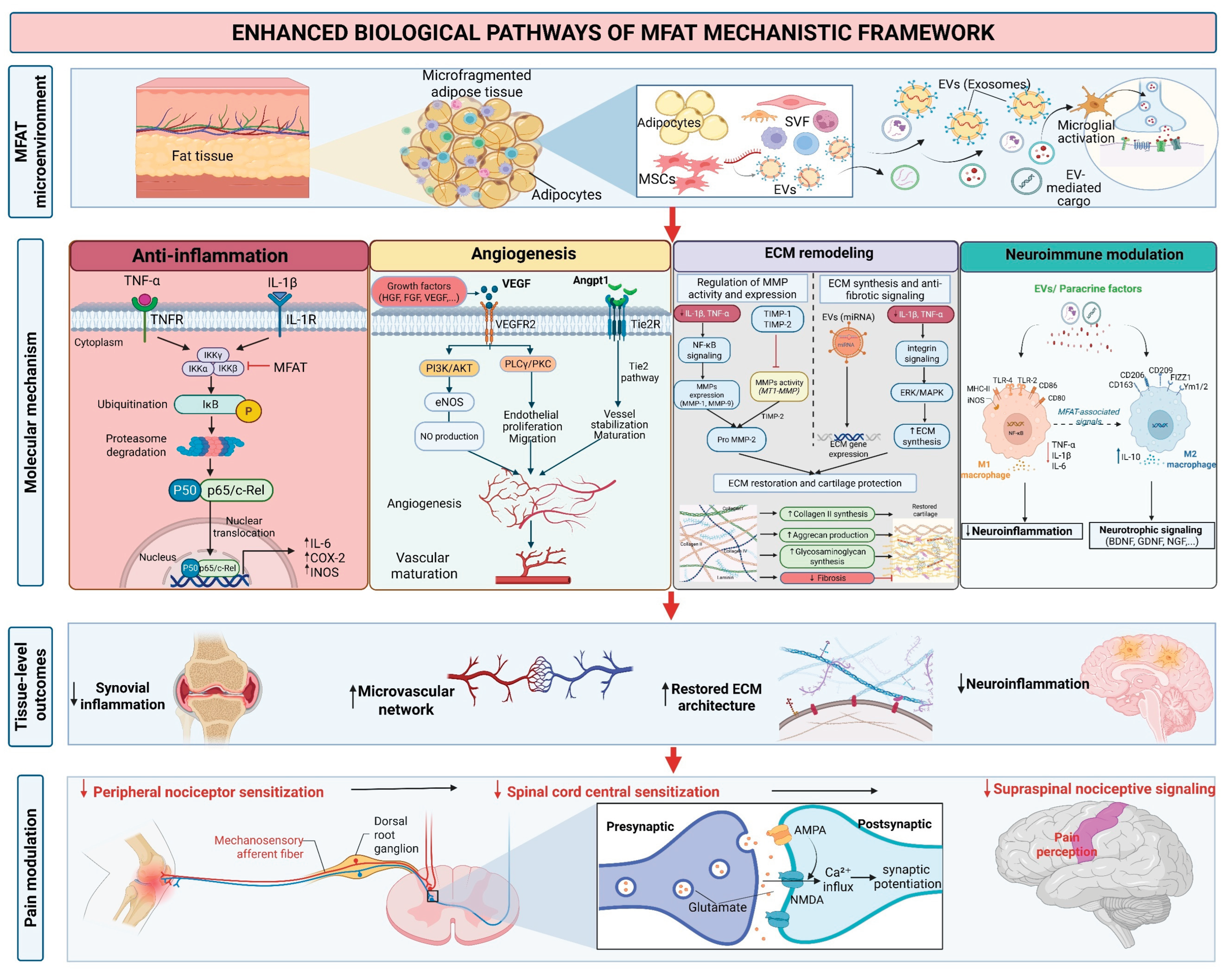
Disclaimer/Publisher’s Note: The statements, opinions and data contained in all publications are solely those of the individual author(s) and contributor(s) and not of MDPI and/or the editor(s). MDPI and/or the editor(s) disclaim responsibility for any injury to people or property resulting from any ideas, methods, instructions or products referred to in the content. |
© 2026 by the authors. Licensee MDPI, Basel, Switzerland. This article is an open access article distributed under the terms and conditions of the Creative Commons Attribution (CC BY) license (http://creativecommons.org/licenses/by/4.0/).
Copyright: This open access article is published under a Creative Commons CC BY 4.0 license, which permit the free download, distribution, and reuse, provided that the author and preprint are cited in any reuse.


