
Submitted:
10 April 2026
Posted:
13 April 2026
You are already at the latest version
Abstract
In this paper, the different emerging metaverse technologies are identified and a comprehensive understanding of the various technologies that can empower supply chains in various parts of the world is provided. It also presents a structure that shows how each of these classified technologies would work towards a robust and sustainable system of supply chain. Moreover, the study uses the fuzzy TOPSIS method to determine the most significant metaverse technology that can significantly enhance the resilience and sustainability of the supply chain networks across the world. The basic aim of this research is to arm the organizations with the latest technology in the metaverse, which enables them to develop a future-proof supply chain network capable of surviving in this ever-evolving world.
Keywords:
supply chain management (SCM)
; resilience
; sustainability
; metaverse technologies
; digital integration
; fuzzy TOPSIS
1. Introduction
Supply chain management (SCM) is an essential role in the modern business and it determines the efficiency, sustainability and customer satisfaction. According to Ibrahim and Hamid (2014), supply chain refers to a joint system of a variety of firms, individuals, stakeholders, processes, information, and physical resources involved in production and distribution of different goods or services to the final client or consumer. The supply chain network comprises numerous crucial players, but the most significant are those suppliers, manufacturers, distributors, retailers, and, in the end, consumer, who is the most central stakeholder in the entire supply chain because he or she is the driver of the entire supply chain [1]. A small fluctuation at the customer level can result in significant disruption at the topmost level of the supply chain network [2]. This phenomenon is known as the bullwhip effect, and SCM plays an important role in limiting its influence.
The notion of SCM began in the 1980s and has since expanded to become an essential component of business operations [3,4] are of the opinion that SCM is a methodical way of controlling and managing the flow of products, services, data and money between the manufacturing location and the final consumer or customer. Due to the unmatched volatility and uncertainty in businesses currently experienced in the global arena, the significance of SCM becomes even more evident. Two important elements in this framework are resilience and sustainability since they make sure that firms maintain continuity and sustainable practices in their operations resulting to long term success and stability of the firms [5]. Figure 1(a) shows the main challenges that the global supply chains are exposed to in regards to resilience and sustainability.
The emerging predicaments of global supply chain networks have introduced the necessity of considering resilience and sustainability as part of supply chain practices. According to [6], resilience in supply chains refers to the ability to anticipate, prepare, respond, and recover normal operations in the wake of a disruption or an interruption. These are various disruptions and interruptions that may arise due to various factors including natural calamities, pandemics and economic instability and manufacturing hiccups that may include delays, shortages and machine failures. According to [7], sustainability in SCM is the systematic, deliberate, and transparent integration of societal, environmental, and economic goals into supply chain operations. These goals are usually referred to as the “triple bottom line” (TBL) or the “three pillars of sustainability” [8]. A resilient and sustainable supply chain offers several benefits, which are depicted in Figure 1b. Any technological advancement in supply chain practices carries the potential to lift or empower all other sectors of the economy. Metaverse technologies have the potential to help businesses improve and futureproof their supply chain practices.
Metaverse can be described as an innovative form of online interaction that unites the actual and virtual worlds, thus allowing users to interact in real-time within a unified computer-generated environment without any geographical boundaries [9,10]. The term metaverse was originally coined by Neal Stephenson in his 1992 book, Snow Crash. Previously, the term metaverse was not that prominent among the masses; it has only gained momentum in recent years because of platforms like Fortnite and the rebranding of Facebook to meta [11]. Metaverse platforms have a vast potential and this has made companies such as Meta, Microsoft, and Epic Games invest heavily in them. The metaverse platform gives users not only a chance of having immersive experiences but also enables them to develop avatars, interact, play games, visit events or exposition, and conduct business in a virtual collaborative setting [12,13]. The COVID-19 crisis increased the demand and rate of development of metaverse technologies in various sectors of industries. Because of the governmental restrictions, most of the world population were at home during the pandemic, therefore, people started to check new online sources where they could work, study, and communicate remotely. The move to online platforms and the necessity of immersive experiences boosted the development of metaverse platforms at the expense of the traditional communication systems. By encouraging innovative methods of communicating and collaborating with individuals and companies, metaverse platforms have the potential to make them feel trusted [14]. Figure 2. represents how metaverse has been given a lot of focus as a revolutionary platform in a number of industries.
The metaverse is useful in building online manufacturing plants that enhance supply chain resiliency through real-time visibility. It provides virtual learning environments that facilitate immersion, learning and retention. It assists telemedicine, virtual rehabilitation, and mental health therapy in the healthcare sector. The metaverse also favors virtual currency, blockchain transactions, and the investment of digital assets that allow users to buy, sell and rent virtual space to advertise and host events as well. Metaverse assists in enhancement of customer interaction in the virtual marketplaces. It also provides platforms where artists and cultural institutions can manage their work digitally by enabling them to store and showcase their work.
This study aims to provide a broad summary of different new metaverse technologies and their most significant advantages when implemented in the supply chain activities. The paper will also aim at analyzing and classifying the identified technology in the metaverse to determine the most influential ones, which do not only enhance resilience but also offer contributions to long-term development and enhance the long-life of the current systems. The potential application of this research is in the prioritization of investments in technologies that will result in a more sustainable and ecologically friendly metaverse infrastructure. It will also encourage best practices and sustainability, and innovation would bend towards enhanced solutions, which would yield the performance and environmental responsibility equilibrium. Lastly, this rating creates a stronger digital ecosystem that has the potential to grow over the long term as well as adhere to global sustainability standards.
In section 1, the author outlines the supply chain management in general, and then delves into the metaverse and its importance in various areas of the economy. Section 2 contains a table containing the major literature reviews under investigation, which are the motivation behind this research. It consists of a number of researches on the effect of metaverse on SCM. Section 3 classifies and offers a profound understanding of different emerging metaverse technologies and their main advantages in the implementation into supply chain practices. Section 4 outlines a detailed fuzzy TOPSIS methodology to prioritize and rank the metaverse technologies. Section 5 continues with the results and discussions, and lastly, Section 6 provides a detailed conclusion with the future research direction.
2. Literature Review
The key goals of SCM are depicted in Figure 3. Industry practitioners and researchers are particularly concerned with the integration of emerging technologies into supply chain practices to have a resilient and sustainable supply chain network [15]. The metaverse has piqued the interest of the supply chain and the attention of commercial communities because of its ability to convert the conventional supply chain into one that is resilient and sustainable [16]. Metaverse technologies offer an extensive foundation for digitally coordinating the entire supply chain network [17]. Table 1 highlights some of the key literature reviews that drew the authors’ attention to conduct the research.
Introducing metaverse technologies into SCM has a great potential of increasing resilience, sustainability, and collaboration. Through VR, AR, AI and digital twins, companies will have the ability to simulate processes, optimise their logistics, and enhance real-time decisions.

Table 1.
Literature review.
| Author | Key focuses | Research gaps. |
|---|---|---|
| [18] |
Investigates the transformational possibilities of integrating AI and metaverse technologies into SCM. | Lack of extensive research addressing how to take advantage of advanced emerging technologies. |
| [19] | Analyzes the relationship between the metaverse and sustainability. | Lack of comprehensive studies that clearly define the link between the metaverse and sustainability. |
| [20] | Examines the influence of metaverse technologies on sustainable advertising and SCM. | Lack of a holistic vision of metaverse technologies, digital transformation, and sustainability in the context of SCM. |
| [21] | Explores how metaverse technologies can influence marketing practices and consumer behavior. | Insufficient exploration of different emerging metaverse technologies and their impact on different sectors. |
| [22] | Investigates the metaverse’s role in boosting communication and collaboration in a supply chain network. | Lack of extensive research that studies the potential use of metaverse technologies in enhancing the resilience of supply chain networks, particularly in the context of manufacturers. |
| [23] |
Examine the metaverse’s sustainability challenges and implications for the transition to Industry. 5.0. | Insufficient understanding of how various supply chain stakeholders perceive the changes and benefits associated with metaverse technologies. |
| [24] | Explore the implications of the metaverse platform on SCOM. |
Inadequate investigation of performance indicators that highlight distinctive features of the metaverse, like: Virtual customer satisfaction levels Digital sustainability and resilience |
| [15,25] | Investigate the metaverse platform’s ability to design a robust and sustainable supply chain network. | Lack of comprehensive studies that explore how integration of VR and metaverse technologies can foster resilience and sustainability within supply chain networks. |
| [26] | Analyze the relationship between the metaverse and the strength of the supply chain, with special focus on the way in which sensory input allows building a stronger trust and collaboration between the participants. | Absence of empirical research on how the metaverse, supply chain resilience, and sensory input are directly related. |
| [27] |
Investigate the integration of metaverse technologies into supply chain practices. | Lack of exploration on how metaverse technologies can improve resilience within supply chain networks. |
3. Emerging Metaverse Technologies
This section may be divided by subheadings. It should provide a concise and precise description of the experimental results, their interpretation, as well as the experimental conclusions that can be drawn.
The new digital technologies that have just emerged can significantly assist the traditional OEMs to provide the best value to their customers. With the growing business size, the supply chain is becoming increasingly complex and more interdependent hence there is a need to integrate these digital technologies into the supply chain practices to become more efficient, visible and innovative. The metaverse helps to fill this gap as it is a critical trigger in the development of supply chains networks to compete in this dynamic business environment [28]. Following paragraph is focusing different emerging metaverse technologies, and it gives specific insight into these technologies.
Artificial Intelligence (AI) can be regarded as a key element in the operation and design of metaverse platforms. [29] emphasize that AI is important to facilitate the creation of intelligent virtual environments, and [30] underlines that AI algorithms assist in the creation of human-like interaction with virtual agents and the real-time decision-making process. [31,32] describe that AI consists of various sub-technologies, including machine learning (ML), which is used to improve the experience of users and enhance their security; deep learning (DL), which can be used to handle more complicated tasks, image recognition, and sentiment analysis; reinforcement learning (RL), which is used to streamline the process of making decisions; natural language processing (NLP), which can be used to facilitate real-world communication; and machine vision and computer vision, which can be used to.
The networking technologies are the base to exchange data and real-time communication between the users and devices within the metaverse [33]. Internet of Things (IoT) is a network of sensors and intelligent objects which collect, share, and analyze real-time information in the digital space [34]. The heterogeneous Networks (HetNets) incorporate the use of various network types including microcells and small cells in order to improve service delivery [35]. Software-Defined Networking (SDN) is used to support the control of the network and the dynamism of resources allocation by isolating the control and data planes [36]. Besides, SAGIN offers a multi-layered network architecture that combines a satellite, aerial, ground, and sea network to guarantee connectivity worldwide [33].
Communication technologies are also critical in facilitating interaction and exchange of information within virtual environments and high-speed connection, ultra-low latency, and reliable communication, which is indispensable in the experience of immersive metaverse [37]. According to [38], 6G has the potential to add to the bridge between the physical and digital world. Relying on quantum states, e.g., on superposition, entanglement, quantum communication ensures a very high level of data security and efficiency in data transmission [39].
The metaverse is built with computing technologies to aid data processing, storage, and transmission. Spatial computing enables users to work inside three-dimensional spaces but superimpose digital data on the real-world [40]. Cloud computing provides the enormous computing ability and storage to support the extensive amount of metaverse information [41]. Edge computing is performed on the data that is much closer to the user, minimizing latency and reliance on the centralized servers [42]. Fog computing is an expansion of this model, in which communication is spread between the edge devices and the cloud system, so that data is processed efficiently at close proximity to the end users [43].
The technologies related to cybersecurity are crucial to defend users, data, and virtual environments against cyber threats. VPNs increase the degree of protection by encrypting the traffic over the internet and hiding the IP address of the users [44]. Identity and Access Management (IAM) is used to make sure that only authorized users can get access to given metaverse services [45]. Encryption protects confidential messages and avoids the unauthorized access to information [44]. The systems used to detect and mitigate possible cyber risks include Intrusion Detection and Prevention Systems (IDPS) which track the network traffic [46]. The blockchain technology offers a ledger system that is decentralized and forbids tampering [47]. It boosts transparency and data integrity without having to control it centrally [45]. Smart contracts allow automating the process of digital agreement [48], and NFTs are unique digital assets that establish ownership in virtual world [49].
The interactive technologies allow users to experience the digital environment actively in visual, auditory, and haptic feedback. Somatosensory technology enables the user to make use of body movements and gestures to communicate instead of using conventional input devices [50]. Extended Reality (XR), the name of which incorporates virtual reality (VR), augmented reality (AR) and mixed reality (MR), is an experience in the form of immersion in digital reality as a combination of virtual and physical aspects [51,52]. Brain-Computer Interfaces (BCIs) can provide users with the option not only to interact with virtual beings (avatars or robots) by means of a thought but also to command the digital system via neural signals [53].
The development of digital twins, which are simulated and modeled representations of the real world, is assisted with the help of simulation and modeling technology. Digital twins enable organizations to model, manage, and optimize physical processes at virtual, the so-called real worlds [52,54]. This paper defines digital twins as real-time digital versions, which allow prediction, verification, and control throughout the lifecycle of a system [55]. As an example, BMW is modelling its electric vehicle production with NVIDIA Omniverse [56], and Anheuser-Busch InBev is applying digital twins to make its brewing and supply chains more efficient [57].
A clear and succinct overview of emerging metaverse technologies that have been identified in this study and their key benefits on integration into SCM practices has been depicted in Figure 4 These technologies have been grouped together and their contribution to the SCM practices was pinpointed. Figure 5 shows an example of a framework of how different emergent metaverse technologies play a crucial role in ensuring a resilient and sustainable supply chain.
4. Methodology
Fuzzy TOPSIS is an MCDM technique that integrates fuzzy sets into the traditional TOPSIS method to deal with uncertainties and imprecise data [58]. The fuzzy TOPSIS methodology selects an alternative based on proximity to the FPIS and distance from the FNIS [58,59]. According to [59], FPIS includes the optimal performance values for each alternative, whereas a FNIS includes the lowest performance values. Figure 6 illustrates the steps involved in fuzzy TOPSIS.
Step 1. Selection of alternatives and assessment criteria. Table 3 lists the alternatives and assessment criteria.
Step 2. Choosing fuzzy linguistic variables and fuzzy number system. This paper uses a triangular fuzzy number system to have a fuzzy rating scale for linguistic variables. Table 4 depicts a 5-point fuzzy rating scale for linguistic variables.
Step 3. Alternatives rating and criteria weightage by experts. Due to the scarcity of subject matter experts and industry practitioners in the realm of the metaverse, the data is collected from six distinguished experts for the fuzzy TOPSIS analysis. Their diverse expertise will provide a robust foundation for evaluating metaverse technologies in terms of resilience and sustainability. Table 5 depicts different linguistic variables assigned to alternatives and criteria by the six experts.
Step 4. Applying the fuzzy triangular number system to both the alternatives rating and criteria weightage. Table 6 depicts different fuzzy numbers assigned to alternatives and criteria as per Table 4.
Let there be a group of experts consisting of z number of individuals. The fuzzy rating of the zth expert about alternativeAm w.r.t criteriaCn is denoted as = () and weightage of criteria Cn is denoted as = ().
Step 5. Constructing a combined fuzzy decision matrix by calculating:
The aggregated fuzzy rating = () of alternative w.r.t criteria:
The aggregated fuzzy weightage = () for the criteria Cn:
Table 7 Depicts a combined matrix for aggregated fuzzy rating and aggregated fuzzy weightage.
Step 6. Normalizing the combined fuzzy decision matrix. The matrix is represented as U = [umn], where,

The assessment criteria taken into consideration in this paper are both benefit criteria so the formula for benefit criteria is used to normalize the matrix. Table 8 depicts the normalized matrix.
Step 7. Computing the weighted normalized fuzzy decision matrix. The matrix is represented as W = wmn, where wmn = umn × yn. Table 9 depicts the weighted normalized matrix.



Table 11 and Table 12 depicts the distance of each alternative from the F+ and F− and the associated dm+ and dm− values respectively.
Step 10. Computing the Proximity coefficient (PCm) for each alternative. Table 13 depicts the Proximity coefficient of each alternative.
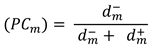
Step 11. Ranking the alternatives, where the alternative having the highest proximity coefficient(PCm) value is considered to be the optimal choice. Table 13 depicts the ranking of alternatives.
5. Results and Discussions
Using fuzzy TOPSIS to rank metaverse technologies allows for effective handling of the uncertainty or ambiguity inherent in linguistic evaluations [60]. After TOPSIS analysis the Proximity coefficient for each alternative was found. The technology with the highest Proximity coefficient was deemed the best option. Table 15 depicts the ranking of metaverse technologies for a resilient and sustainable supply chain network.
Figure 7 depicts the Proximity coefficients graphically for each of the evaluated technologies. Figure 8 depicts key benefits offered by metaverse technologies to various supply chain stakeholders thereby benefiting the entire system.
graph for various metaverse technologies.
Therefore, the adoption of metaverse technologies into the supply chain practices impacts personal stakeholders in the sense that it makes them more innovative, efficient, and productive [61]. This will subsequently help the whole supply chain offer the best value to its customers besides responding to challenges and evolving market needs efficiently.
6. Conclusions
New metaverse technologies are bound to have massive possibilities in making supply chains more resilient and sustainable worldwide. This paper has critically examined some of the metaverse technologies with the MCDM approach, in particular such as the fuzzy TOPSIS methodology, to provide an estimate of their role in creating a resilient and sustainable supply chain network. The study found that the most powerful technology, in terms of digital twins, is simulation and modelling technology, which can be used to improve the resilience and sustainability of global supply chains. Digital twins are highly effective in responding to disruptions and ensuring that processes are optimized, prediction of component failures, and real-time monitoring is done, which makes them very effective in reacting to disruptions and minimizing wastage. Interactive technologies, though important, were considered to be last among the direct contribution to the resilient and sustainable supply chain network. The results of this research indicate that the use of simulation and modelling technology (digital twins) should be highlighted in the list of the factors that companies wishing to futurize their supply chains should pay attention to. These implications enable the companies to manage barriers, reduce their environmental impact, and project a stronger chain network in an uncertain international market.
Author Contributions
Conceptualization, S.D. and S.T.; methodology, S.D and D.S.; validation, S.T, and D.S.; formal analysis, S.D and S.T.; investigation, S.D, S.T and D.S; resources, S.D., S.T and D.S.; data curation, S.D., S.R. and D.S.; writing—original draft preparation, A.; writing—review and editing, S.T., D.S and S.R.; visualization, S.D. and D.S.; supervision, S.T., S.D., and D.S. All authors have read and agreed to the published version of the manuscript.
Institutional Review Board Statement
Not applicable.
Informed Consent Statement
All the participants gave their consent to participate in this study.
Data Availability Statement
The data presented in this study are available on request from the corresponding author due to confidentiality restrictions.
Conflicts of Interest
The authors declare no conflict of interest.
References
- Lambert, D. M.; Cooper, M. C. Issues in supply chain management. Industrial marketing management 2000, 29(1), 65–83. [Google Scholar] [CrossRef]
- Power, D. Supply chain management integration and implementation: a literature review. Supply chain management: an international journal 2005, 10(4), 252–263. [Google Scholar] [CrossRef]
- Dash, A.; Das, R. K.; Tripathy, S.; Nayak, S. Supply chain coordination voyage towards supplier relationship management: a critical review. International Journal of Procurement Management 2018, 11(5), 586–607. [Google Scholar] [CrossRef]
- Mentzer, J. T.; DeWitt, W.; Keebler, J. S.; Min, S.; Nix, N. W.; Smith, C. D.; Zacharia, Z. G. Defining supply chain management. Journal of Business logistics 2001, 22(2), 1–25. [Google Scholar] [CrossRef]
- Murino, T.; Romano, E.; Santillo, L. C. Supply chain performance sustainability through resilience function. In Proceedings of the 2011 winter simulation conference (WSC), 2011, December; IEEE; pp. 1600–1611. [Google Scholar]
- Alshurideh, M.; Kurdi, B.; Yasin, S.; Damra, Y.; Al-Gasaymeh, A.; Alzoubi, H.; Alquqa, E. Exploring the impact of metaverse adoption on supply chain effectiveness: A pathway to competitive advantage. Uncertain Supply Chain Management 2024, 12(2), 883–892. [Google Scholar] [CrossRef]
- Scoones, I. Sustainability. Development in practice 2007, 17(4-5), 589–596. [Google Scholar] [CrossRef]
- Ruiz-Benitez, R.; López, C.; Real, J. C. Achieving sustainability through the lean and resilient management of the supply chain. International Journal of Physical Distribution & Logistics Management 2019, 49(2), 122–155. [Google Scholar] [CrossRef]
- Huang, X.; Chen, P. K. A systematic literature review exploring the relationship between metaverse and supply chain resilience: the role of sensory feedback. In Proceedings of the 2022 4th International Conference on E-Business and E-Commerce Engineering, 2022, December; pp. 94–99. [Google Scholar]
- Lee, L. H.; Zhou, P.; Braud, T.; Hui, P. What is the metaverse? an immersive cyberspace and open challenges. arXiv 2022, arXiv:2206.03018. [Google Scholar] [CrossRef]
- Laeeq, K. Metaverse: why, how and what. In How and what; 2022. [Google Scholar]
- Dincelli, E.; Yayla, A. Immersive virtual reality in the age of the Metaverse: A hybrid-narrative review based on the technology affordance perspective. The journal of strategic information systems 2022, 31(2), 101717. [Google Scholar] [CrossRef]
- Bale, A. S.; Ghorpade, N.; Hashim, M. F.; Vaishnav, J.; Almaspoor, Z. A comprehensive study on metaverse and its impacts on humans. Advances in Human-Computer Interaction 2022, 2022(1), 3247060. [Google Scholar] [CrossRef]
- George, A. H.; Fernando, M.; George, A. S.; Baskar, T.; Pandey, D. Metaverse: The next stage of human culture and the internet. International Journal of Advanced Research Trends in Engineering and Technology (IJARTET) 2021, 8(12), 1–10. [Google Scholar]
- Bahr, W.; Kamal, M. M.; Nezhad, A. J.; Sarsam, S. Understanding the role of Virtual Reality and Metaverse platform in designing resilient and sustainable supply chain networks. Annual Logistics Research Network (LRN) Conference, 2023, September. [Google Scholar]
- Queiroz, M. M.; Wamba, S. F.; Pereira, S. C. F.; Jabbour, C. J. C. The metaverse as a breakthrough for operations and supply chain management: Implications and call for action. International Journal of Operations & Production Management 2023, 43(10), 1539–1553. [Google Scholar] [CrossRef]
- Cui, Y.; Idota, H.; Ota, M. Reforming supply chain systems in metaverse. In Proceedings of the 9th Multidisciplinary International Social Networks Conference, 2022, October; pp. 39–43. [Google Scholar]
- Dolgui, A.; Ivanov, D. Metaverse supply chain and operations management. International Journal of Production Research 2023, 61(23), 8179–8191. [Google Scholar] [CrossRef]
- Chen, P. K.; Ye, Y.; Huang, X. The metaverse in supply chain knowledge sharing and resilience contexts: An empirical investigation of factors affecting adoption and acceptance. Journal of Innovation & Knowledge 2023, 8(4), 100446. [Google Scholar] [CrossRef]
- Barrera, K. G.; Shah, D. Marketing in the Metaverse: Conceptual understanding, framework, and research agenda. Journal of Business Research 2023, 155, 113420. [Google Scholar] [CrossRef]
- Patnaik, D.; Pradhan, B. B.; Barikc, T. R. OPTIMIZATION POTENTIAL USING AI AND METAVERSE IN SUPPLY CHAIN MANAGEMENT: A FORWARD-LOOKING PERSPECTIVE. OPTIMIZATION 2024, 22(01). [Google Scholar]
- Piccarozzi, M.; Silvestri, C.; Fici, L.; Silvestri, L. Metaverse: a possible sustainability enabler in the transition from Industry 4.0 to 5.0. Procedia Computer Science 2024, 232, 1839–1848. [Google Scholar] [CrossRef]
- Zhong, Z. Z.; Zhao, E. Y. Collaborative driving mode of sustainable marketing and supply chain management supported by metaverse technology. IEEE Transactions on Engineering Management, 2023. [Google Scholar]
- Bag, S.; Rahman, M. S.; Srivastava, G.; Shrivastav, S. K. Unveiling metaverse potential in supply chain management and overcoming implementation challenges: an empirical study. In Benchmarking: An International Journal; 2023. [Google Scholar]
- Huynh-The, T.; Pham, Q. V.; Pham, X. Q.; Nguyen, T. T.; Han, Z.; Kim, D. S. Artificial intelligence for the metaverse: A survey. Engineering Applications of Artificial Intelligence 2023, 117, 105581. [Google Scholar] [CrossRef]
- Ng, D. T. K. What is the metaverse? Definitions, technologies and the community of inquiry. Australasian Journal of Educational Technology 2022, 38(4), 190–205. [Google Scholar] [CrossRef]
- Otoum, Y.; Gottimukkala, N.; Kumar, N.; Nayak, A. Machine Learning in Metaverse Security: Current Solutions and Future Challenges. ACM Computing Surveys 2024, 56(8), 1–36. [Google Scholar] [CrossRef]
- Natarajan, T.; Pragha, P.; Dhalmahapatra, K.; Veera Raghavan, D. R. Unveiling metaverse sentiments using machine learning approaches; Kybernetes, 2024. [Google Scholar]
- Tang, F.; Chen, X.; Zhao, M.; Kato, N. The Roadmap of Communication and Networking in 6G for the Metaverse. IEEE Wireless Communications 2022, 30(4), 72–81. [Google Scholar] [CrossRef]
- Asif, R.; Hassan, S. R. Exploring the confluence of IoT and metaverse: Future opportunities and challenges. IoT 2023, 4(3), 412–429. [Google Scholar] [CrossRef]
- Agarwal, B.; Togou, M. A.; Marco, M.; Muntean, G. M. A comprehensive survey on radio resource management in 5G HetNets: Current solutions, future trends and open issues. IEEE Communications Surveys & Tutorials 2022, 24(4), 2495–2534. [Google Scholar] [CrossRef]
- Ali, M.; Naeem, F.; Kaddoum, G.; Hossain, E. Metaverse communications, networking, security, and applications: Research issues, state-of-the-art, and future directions. In IEEE Communications Surveys & Tutorials; 2023. [Google Scholar]
- Gustavsson, U.; Frenger, P.; Fager, C.; Eriksson, T.; Zirath, H.; Dielacher, F.; Carvalho, N. B. Implementation challenges and opportunities in beyond-5G and 6G communication. IEEE Journal of Microwaves 2021, 1(1), 86–100. [Google Scholar] [CrossRef]
- Wang, H.; Ning, H.; Lin, Y.; Wang, W.; Dhelim, S.; Farha, F.; Daneshmand, M. A survey on the metaverse: The state-of-the-art, technologies, applications, and challenges. IEEE Internet of Things Journal 2023, 10(16), 14671–14688. [Google Scholar] [CrossRef]
- Khalid, U.; Ulum, M. S.; Farooq, A.; Duong, T. Q.; Dobre, O. A.; Shin, H. Quantum semantic communications for metaverse: Principles and challenges. IEEE Wireless Communications 2023, 30(4), 26–36. [Google Scholar] [CrossRef]
- Valaskova, K.; Vochozka, M.; Lăzăroiu, G. Immersive 3D technologies, spatial computing and visual perception algorithms, and event modeling and forecasting tools on blockchain-based metaverse platforms. Analysis and Metaphysics 2022, 21, 74–90. [Google Scholar] [CrossRef]
- Joshi, R.; Pandey, K.; Kumari, S. A Metaverse: Significance and Dimensions in Various Sectors. 2024 11th International Conference on Computing for Sustainable Global Development (INDIACom), 2024, February; IEEE; pp. 1781–1786. [Google Scholar]
- Fu, Y.; Li, C.; Yu, F. R.; Luan, T. H.; Zhao, P.; Liu, S. A survey of blockchain and intelligent networking for the metaverse. IEEE Internet of Things Journal 2022, 10(4), 3587–3610. [Google Scholar] [CrossRef]
- Xu, M.; Ng, W. C.; Lim, W. Y. B.; Kang, J.; Xiong, Z.; Niyato, D.; Miao, C. A full dive into realizing the edge-enabled metaverse: Visions, enabling technologies, and challenges. IEEE Communications Surveys & Tutorials 2022, 25(1), 656–700. [Google Scholar] [CrossRef]
- Jaipong, P.; Siripipattanakul, S.; Sriboonruang, P.; Sitthipon, T.; Jaipong, P.; Siripipattanakul, S.; Sitthipon, T. A review of metaverse and cybersecurity in the digital era. International Journal of Computing Sciences Research 2023, 7, 1125–1132. [Google Scholar] [CrossRef]
- Pooyandeh, M.; Han, K. J.; Sohn, I. Cybersecurity in the AI-Based metaverse: A survey. Applied Sciences 2022, 12(24), 12993. [Google Scholar] [CrossRef]
- Chow, Y. W.; Susilo, W.; Li, Y.; Li, N.; Nguyen, C. Visualization and cybersecurity in the metaverse: A survey. Journal of Imaging 2022, 9(1), 11. [Google Scholar] [CrossRef]
- Dolgui, A.; Ivanov, D. Metaverse supply chain and operations management. International Journal of Production Research 2023, 61(23), 8179–8191. [Google Scholar] [CrossRef]
- Arora, A.; Kanisk; Kumar, S. Smart contracts and NFTs: non-fungible tokens as a core component of blockchain to be used as collectibles. Cyber Security and Digital Forensics: Proceedings of ICCSDF 2021, 2022; Springer Singapore; pp. 401–422. [Google Scholar]
- Yenduri, G.; Ranaweera, P.; Pham, Q. V.; da Costa, D. B.; Liyanage, M. Blockchain for the Metaverse: A Review.
- Chen, Y.; Luo, X. Design of digital campus somatosensory interactive system based on unity3D and VR technology. In Journal of Physics: Conference Series; IOP Publishing, November 2019; Vol. 1345, No. 6, p. 062015. [Google Scholar]
- Qamar, S.; Anwar, Z.; Afzal, M. A systematic threat analysis and defense strategies for the metaverse and extended reality systems. Computers & Security 2023, 128, 103127. [Google Scholar] [CrossRef]
- Wu, D.; Yang, Z.; Zhang, P.; Wang, R.; Yang, B.; Ma, X. Virtual-reality interpromotion technology for metaverse: A survey. IEEE Internet of Things Journal 2023, 10(18), 15788–15809. [Google Scholar] [CrossRef]
- Mystakidis, S. Metaverse. Encyclopedia 2022, 2(1), 486–497. [Google Scholar] [CrossRef]
- Park, S. M.; Kim, Y. G. A metaverse: Taxonomy, components, applications, and open challenges. IEEE access 2022, 10, 4209–4251. [Google Scholar] [CrossRef]
- Lv, Z.; Xie, S.; Li, Y.; Hossain, M. S.; El Saddik, A. Building the metaverse using digital twins at all scales, states, and relations. Virtual Reality & Intelligent Hardware 2022, 4(6), 459–470. [Google Scholar] [CrossRef]
- Chen, C.; Zhang, K. Z.; Chu, Z.; Lee, M. Augmented reality in the metaverse market: the role of multimodal sensory interaction. Internet Research 2024, 34(1), 9–38. [Google Scholar] [CrossRef]
- Barrera, K. G.; Shah, D. Marketing in the Metaverse: Conceptual understanding, framework, and research agenda. Journal of Business Research 2023, 155, 113420. [Google Scholar] [CrossRef]
- Azizi, A.; Aikhuele, D. O.; Souleman, F. S. A fuzzy TOPSIS model to rank automotive suppliers. Procedia Manufacturing 2015, 2, 159–164. [Google Scholar] [CrossRef]
- Kore, N. B.; Ravi, K.; Patil, S. B. A simplified description of fuzzy TOPSIS method for multi criteria decision making. International Research Journal of Engineering and Technology (IRJET) 2017, 4(5), 2047–2050. [Google Scholar]
- Nanda, D.; Tripathy, S.; Rudra, S.; Mohapatra, B.; Singhal, D.; Aich, S. A Fuzzy TOPSIS Approach Towards Industrial Safety. In Digitalization of Culture Through Technology; Routledge, 2022; pp. 23–30. [Google Scholar]
- Chen, C. T. Extensions of the TOPSIS for group decision-making under fuzzy environment. Fuzzy sets and systems 2000, 114(1), 1–9. [Google Scholar] [CrossRef]
- Pandey, S.; Singh, R. K.; Gunasekaran, A.; Kaushik, A. Cyber security risks in globalized supply chains: conceptual framework. Journal of Global Operations and Strategic Sourcing 2020, 13(1), 103–128. [Google Scholar] [CrossRef]
- Van Nguyen, T.; Pham, H. T.; Ha, H. M.; Tran, T. T. T. An integrated model of supply chain quality management, Industry 3.5 and innovation to improve manufacturers’ performance–a case study of Vietnam. International Journal of Logistics Research and Applications 2024, 27(2), 261–283. [Google Scholar] [CrossRef]
- Trivedi, S.; Negi, S. The metaverse in supply chain management: application and benefits. International Journal of Advanced Virtual Reality 2023, 1(1), 36–43. [Google Scholar]
- Tsang, Y. P.; Yang, T.; Chen, Z. S.; Wu, C. H.; Tan, K. H. How is extended reality bridging human and cyber-physical systems in the IoT-empowered logistics and supply chain management? Internet of Things 2022, 20, 100623. [Google Scholar] [CrossRef]
Figure 1.
(a). Key challenges that global supply chains face in terms of resilience and sustainability. (b). Key benefits offered by a resilient and sustainable supply chain.
Figure 1.
(a). Key challenges that global supply chains face in terms of resilience and sustainability. (b). Key benefits offered by a resilient and sustainable supply chain.
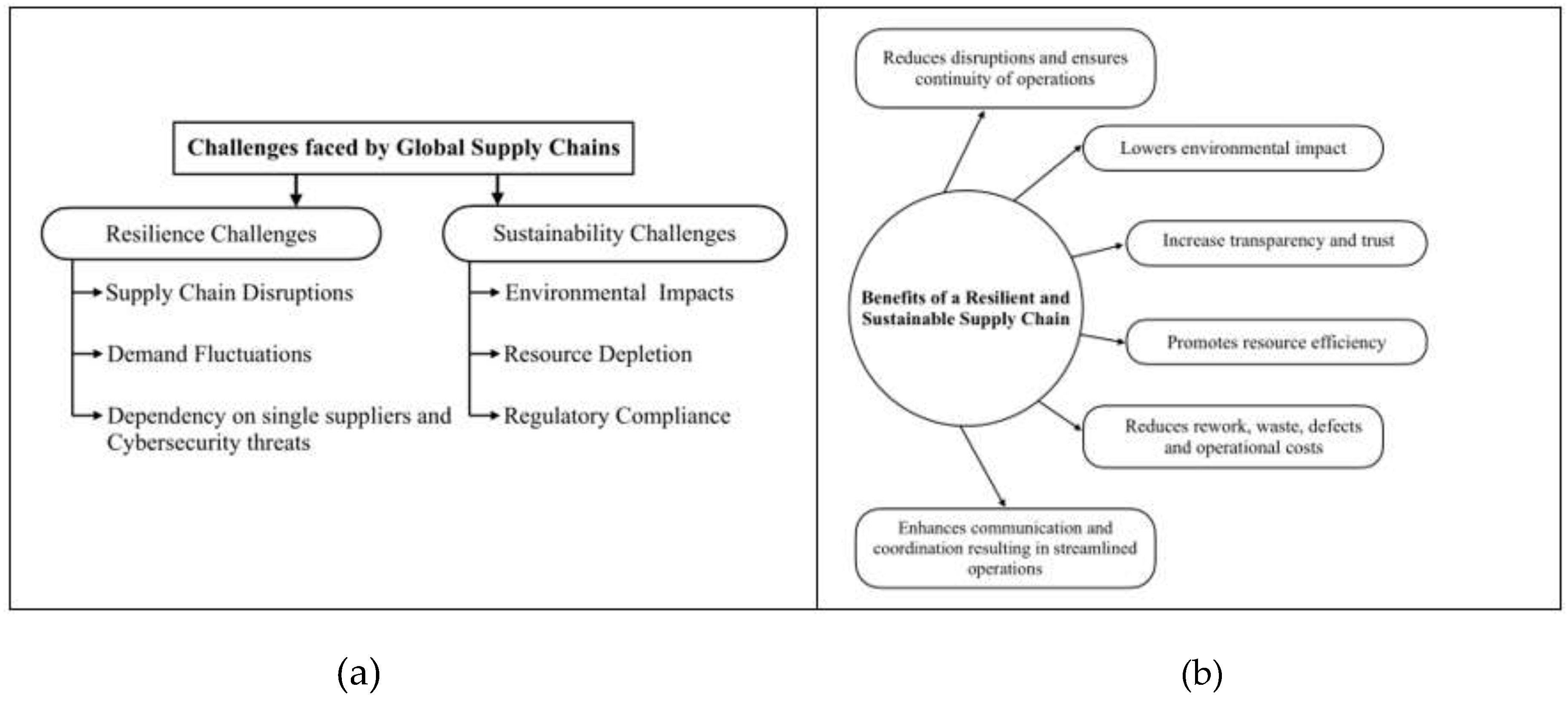
Figure 2.
Metaverse is important in different sectors.
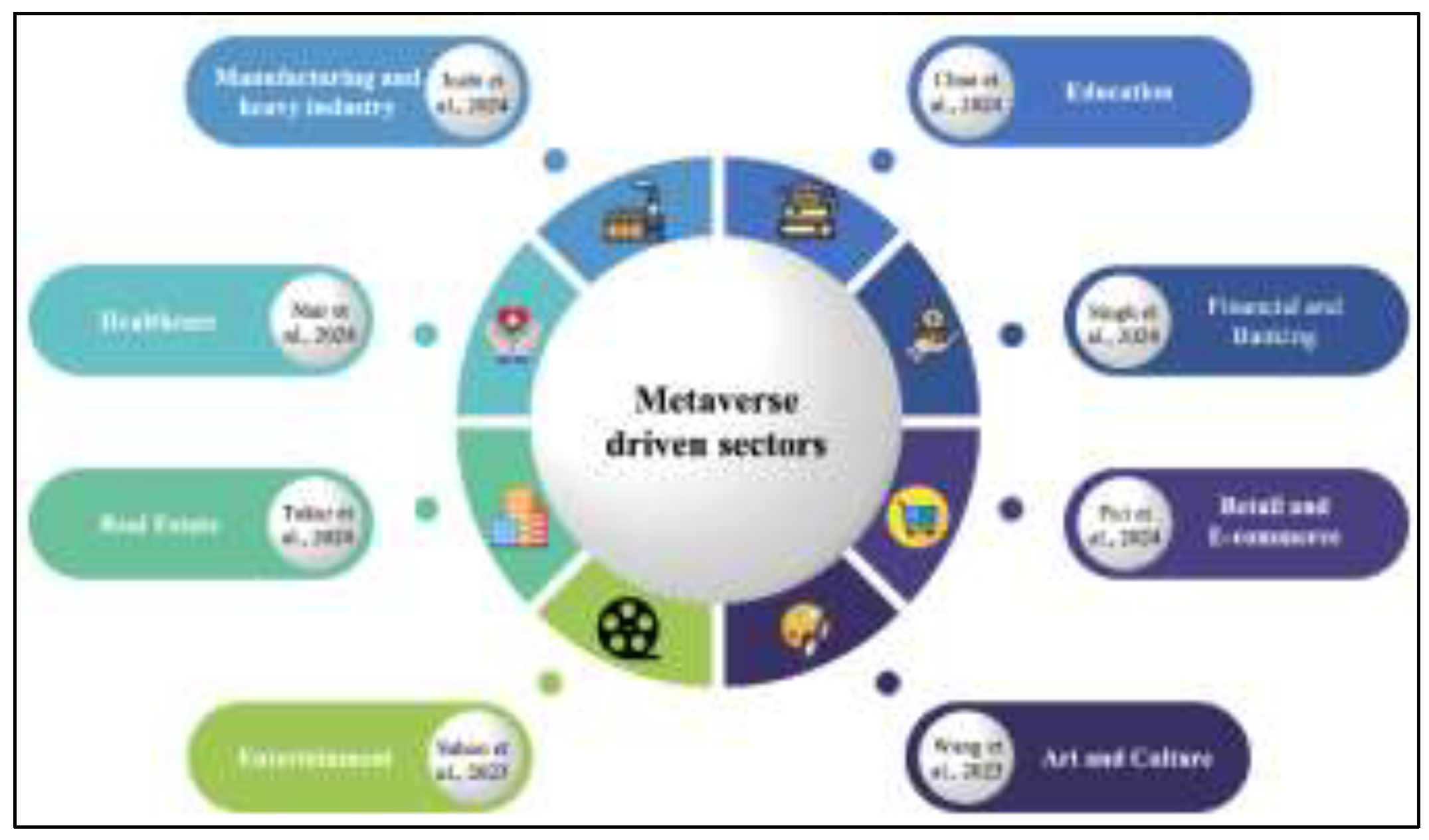
Figure 3.
Key goals of SCM.
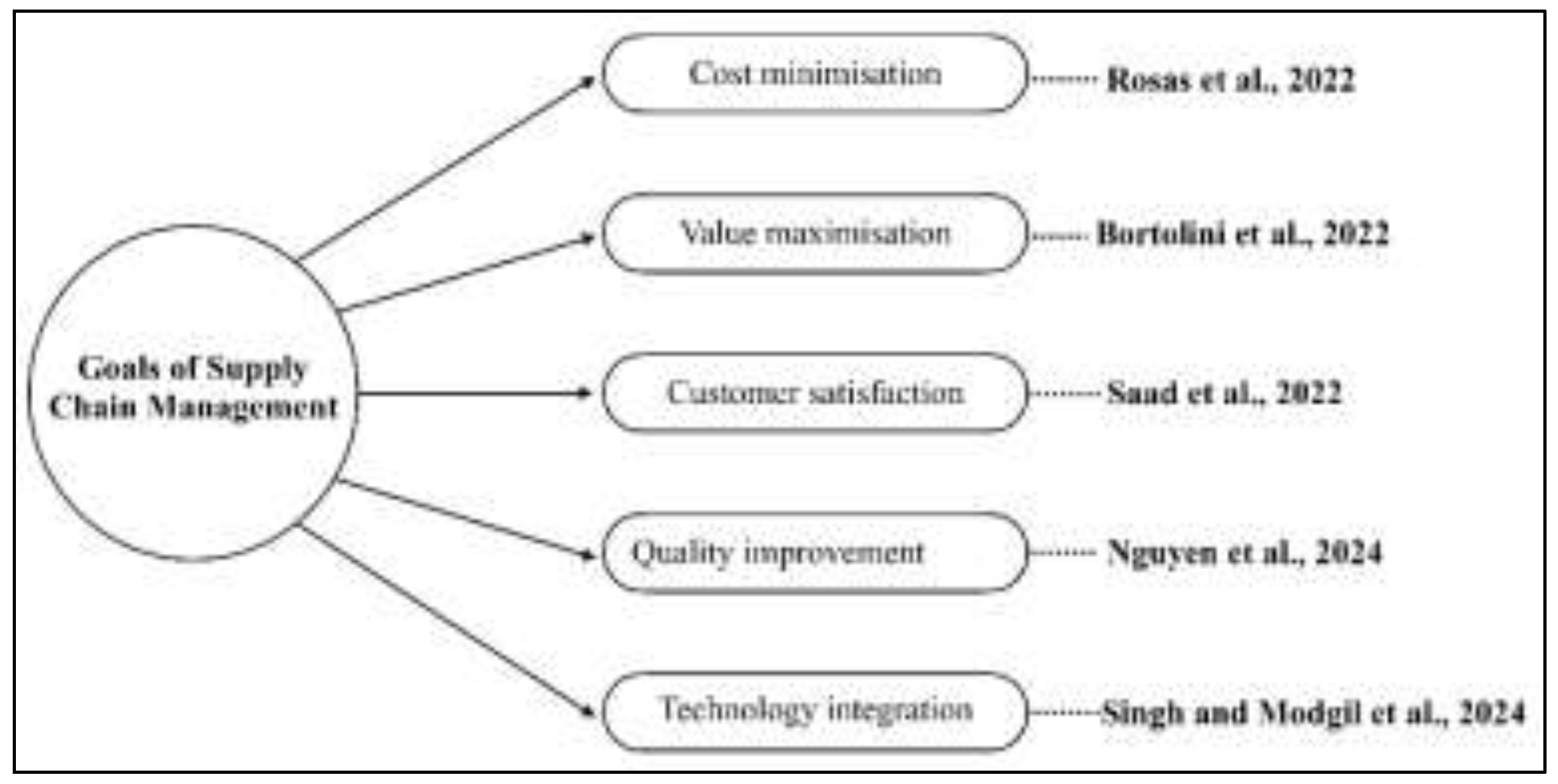
Figure 4.
New metaverse technologies and their main advantages in incorporating them in supply chain practices.
Figure 4.
New metaverse technologies and their main advantages in incorporating them in supply chain practices.
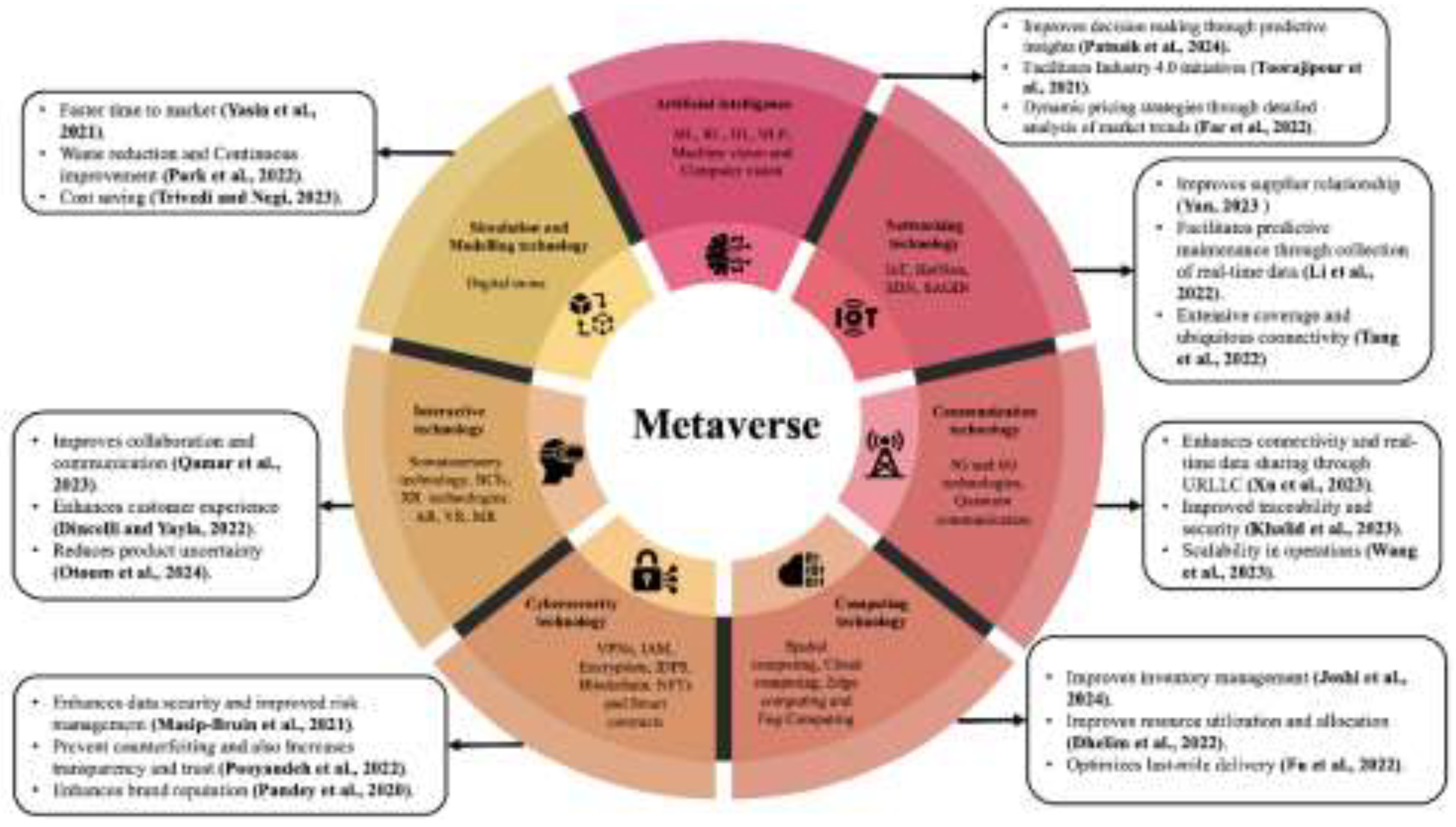
Figure 5.
Framework depicting how various emerging metaverse technologies significantly contribute to a resilient and sustainable supply chain.
Figure 5.
Framework depicting how various emerging metaverse technologies significantly contribute to a resilient and sustainable supply chain.
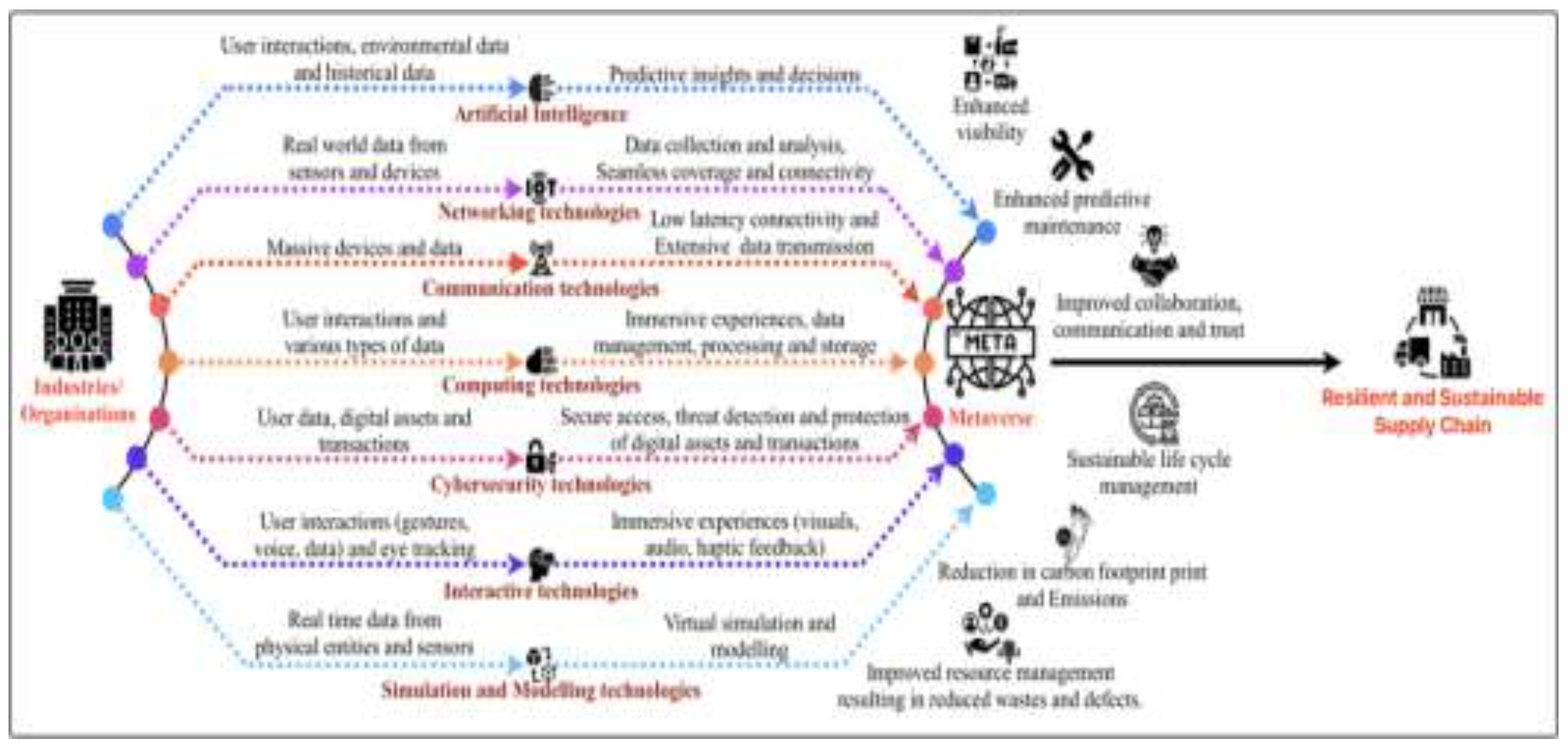
Figure 6.
Flowchart depicting the steps involved in fuzzy TOPSIS.
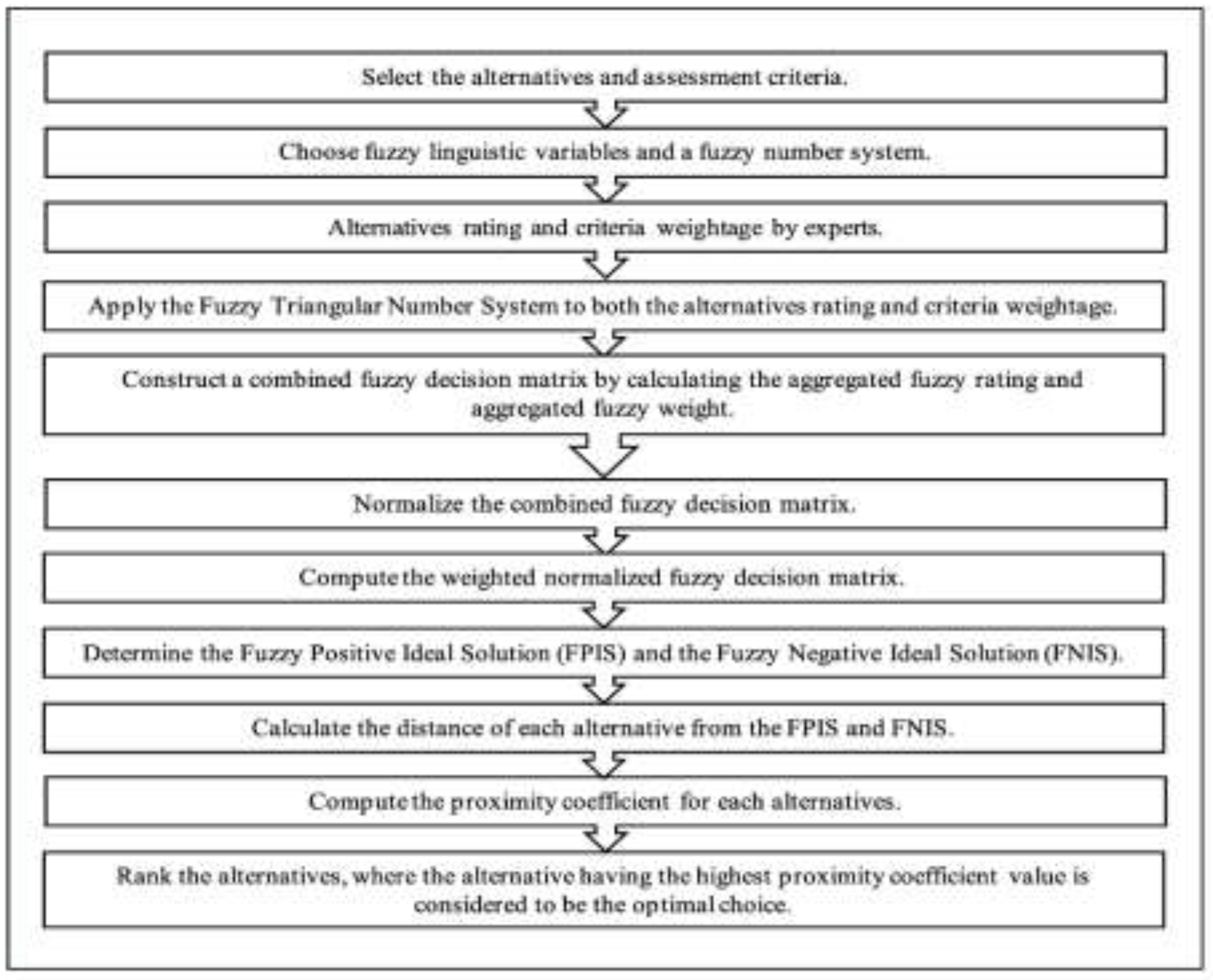
Figure 7.
Proximity coefficient
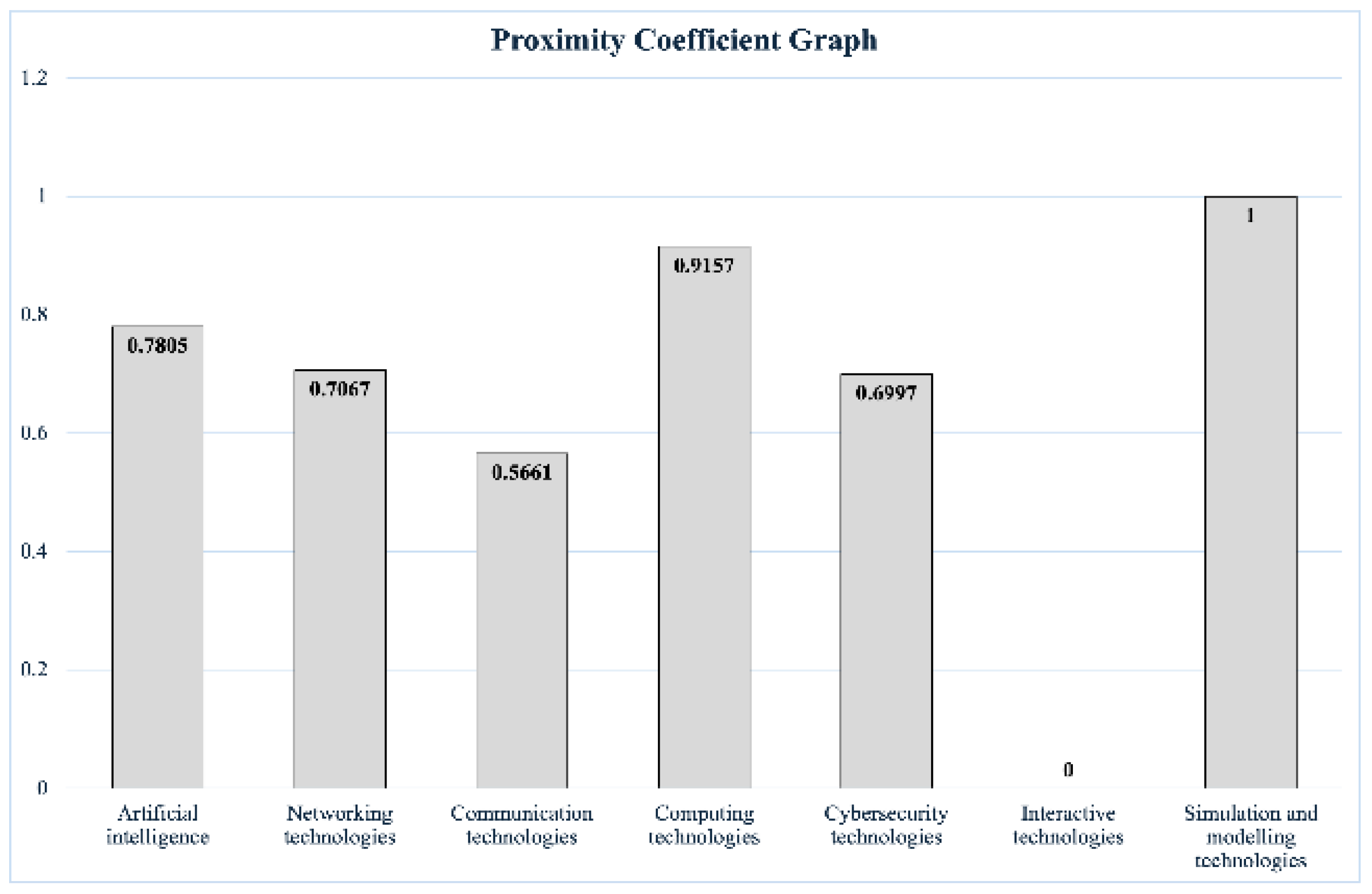
Figure 8.
Benefits offered by the metaverse platform to various supply chain stakeholders.
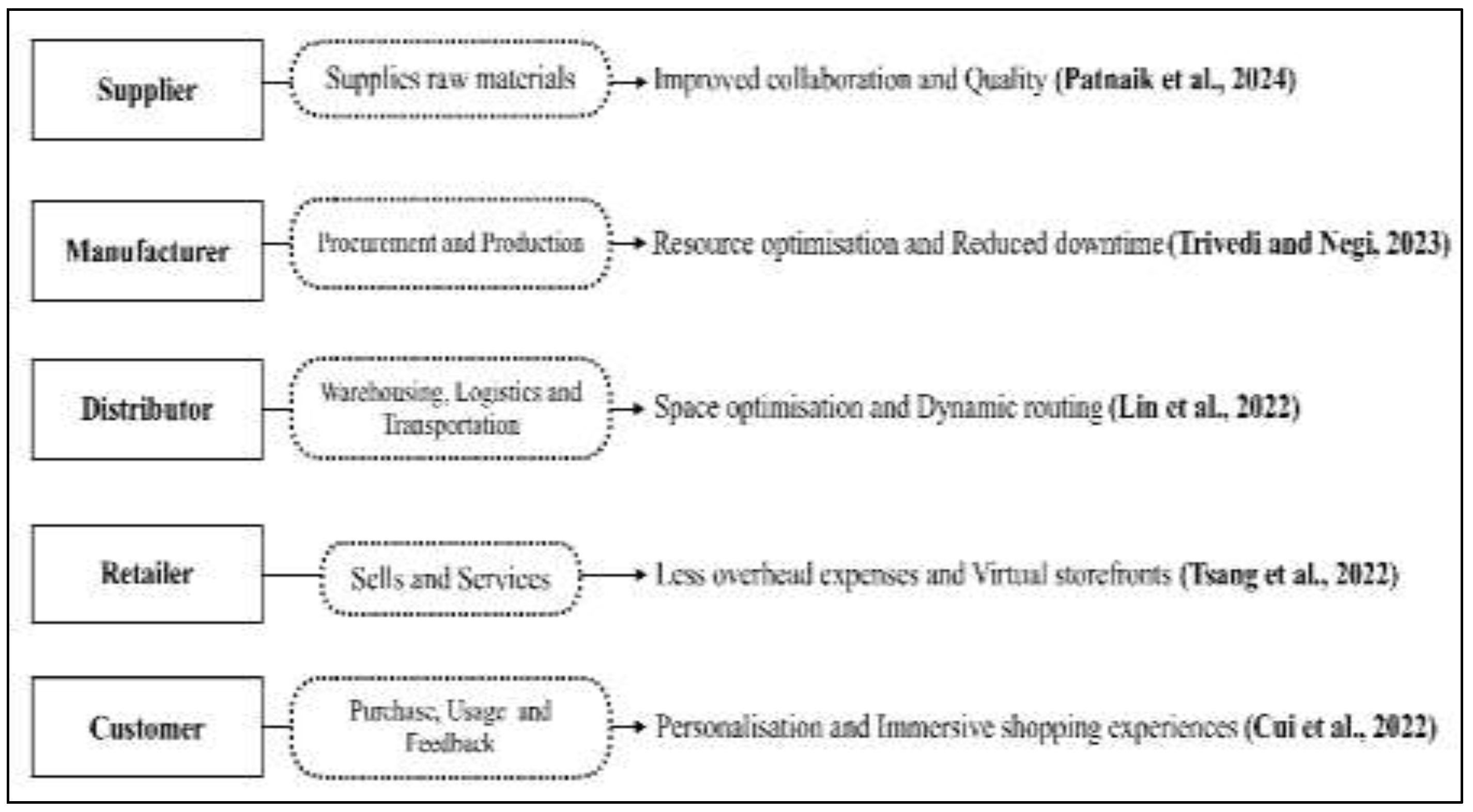
Table 1.
Key abbreviations.
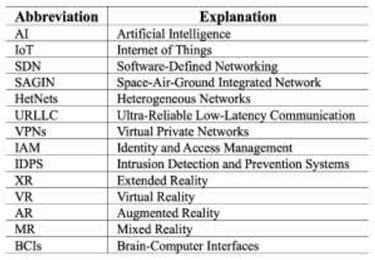 |
Table 3.
Alternatives and assessment criteria.
| Sl. No. | Alternatives |
|---|---|
| AI (ML, DL, RL, NLP, Machine vision, Computer vision) | |
| Networking Technologies (IoT, HetNets, SDN, SAGIN) | |
| Communication Technologies (5G, 6G, Quantum Communication) | |
| Computing Technologies (Spatial, Cloud, Edge, Fog) | |
| Cybersecurity Technologies (VPNs, Encryption, IDPS, Blockchain) | |
| Interactive Technologies (Somatosensory, XR, BCIs) | |
| Simulation & Modelling Technologies (Digital Twins) | |
| Criteria | |
| Resilience | |
| Sustainability |
Table 4.
Fuzzy rating scale for linguistic variables.
| Linguistic Variables | Fuzzy numbers |
|---|---|
| Extremely Low (EL) | (1,1,3) |
| Low (L) | (1,3,5) |
| Moderate (M) | (3,5,7) |
| High (H) | (5,7,9) |
| Extremely High (EH) | (7,9,9) |
Table 5.
Linguistic variables assigned to alternatives and assessment criteria by six domain experts.
Table 5.
Linguistic variables assigned to alternatives and assessment criteria by six domain experts.
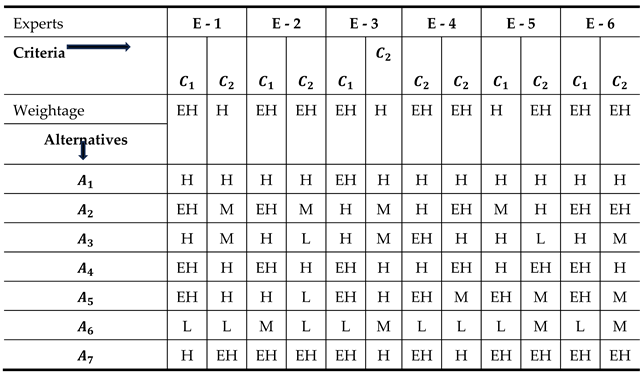 |
Table 6.
Depicts different fuzzy numbers assigned to alternatives and criteria.
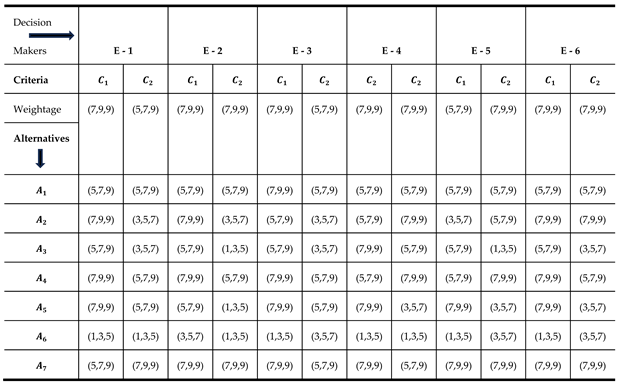 |
Table 7.
Combined matrix.
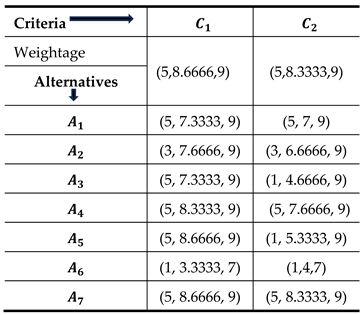 |
Table 8.
Normalized matrix.
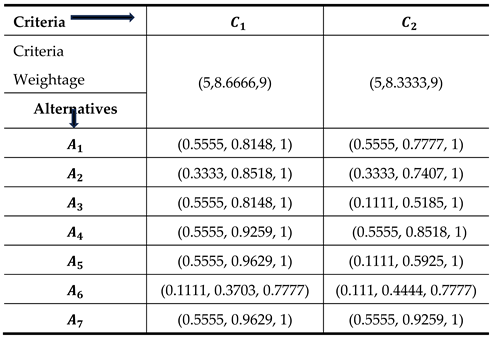 |
Table 9.
Weighted normalized matrix.
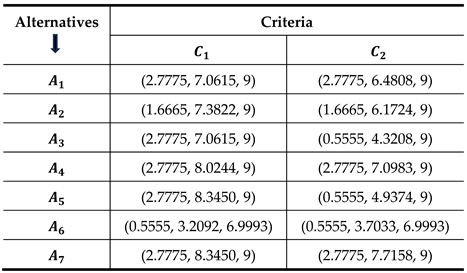 |
Table 10.
FPIS ( and FNIS
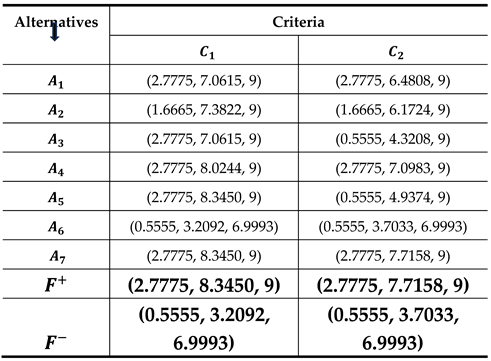 |
Table 11.
Distance of each alternative from
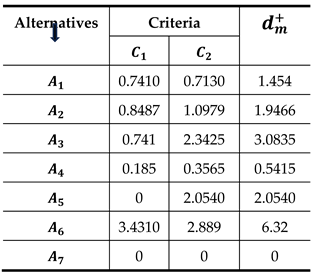 |
Table 12.
Distance of each alternative from
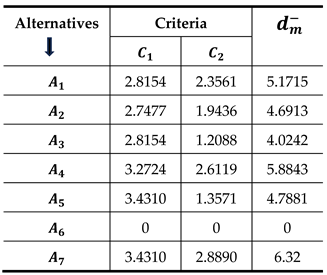 |
Table 13.
Proximity coefficient and ranking of alternatives.
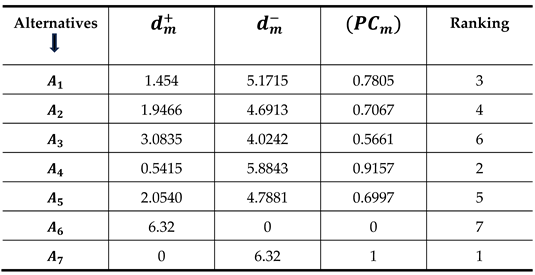 |
Table 15.
Ranking of metaverse technologies.
| Alternatives | Ranking | |
| Artificial intelligence | 0.7805 | 3 |
| Networking technologies | 0.7067 | 4 |
| Communication technologies | 0.5661 | 6 |
| Computing technologies | 0.9157 | 2 |
| Cybersecurity technologies | 0.6997 | 5 |
| Interactive technologies | 0 | 7 |
| Simulation and modelling technologies | 1 | 1 |
Disclaimer/Publisher’s Note: The statements, opinions and data contained in all publications are solely those of the individual author(s) and contributor(s) and not of MDPI and/or the editor(s). MDPI and/or the editor(s) disclaim responsibility for any injury to people or property resulting from any ideas, methods, instructions or products referred to in the content. |
© 2026 by the authors. Licensee MDPI, Basel, Switzerland. This article is an open access article distributed under the terms and conditions of the Creative Commons Attribution (CC BY) license (http://creativecommons.org/licenses/by/4.0/).
Copyright: This open access article is published under a Creative Commons CC BY 4.0 license, which permit the free download, distribution, and reuse, provided that the author and preprint are cited in any reuse.


