

Submitted:
12 April 2026
Posted:
13 April 2026
You are already at the latest version
Abstract
A reverse-phase high-performance liquid chromatographic (RP-HPLC) technique capable of indicating stability was established and validated for the concurrent measurement of Acetylsalicylic acid and Omeprazole in combined pharmaceutical products. Separation was carried out on a Luna Phenyl Hexyl column (250 × 4.6 mm, 5 µm) with a mobile phase composed of Acetonitrile and 0.1% Perchloric acid mixed at 20:80 (v/v), delivered at 1.0 mL/min. The detection wavelength was set at 249 nm, representing the isosbestic point for both substances, with an overall analysis duration of 5 minutes. The retention times recorded were 2.038 min for Acetylsalicylic acid and 2.995 min for Omeprazole, showing a resolution factor of 4.63. The procedure was validated following ICH criteria for selectivity, response linearity, recovery, repeatability, intermediate precision, durability, detection limit, and quantitation limit. The calibration plots exhibited outstanding linearity, with recovery percentages and %RSD values falling within prescribed limits. Stress degradation experiments involving acidic, basic, oxidative, reductive, thermal, photolytic, and hydrolytic conditions verified the method's ability to separate intact drugs from breakdown products, as purity angles remained below purity thresholds. The method showed strong sensitivity, with LOD/LOQ values calculated as 0.49/1.62 µg/mL for Acetylsalicylic acid and 0.24/0.80 µg/mL for Omeprazole. This validated procedure is straightforward, reproducible, accurate, and appropriate for routine quality monitoring.
Keywords:
RP-HPLC
; aspirin
; omeprazole
; ICH validation
1. Introduction
In contemporary pharmaceutical analysis, the concurrent quantification of multiple active ingredients in fixed-dose combinations has become increasingly important because such products provide better therapeutic outcomes, greater patient adherence to therapy, and fewer daily doses [1,2,3,4,5]. A particularly relevant example is the pairing of Acetylsalicylic acid with Omeprazole, which is frequently prescribed for individuals needing extended antiplatelet treatment along with protection against gastric injury.
Acetylsalicylic acid, belonging to the non-steroidal anti-inflammatory drug (NSAID) class, is widely utilized for its pain-relieving, fever-reducing, anti-inflammatory, and blood-thinning effects. It serves as a fundamental treatment for preventing cardiovascular incidents including heart attacks and strokes [6,7,8,9]. Nevertheless, long-term intake of Acetylsalicylic acid often leads to notable gastrointestinal complications such as mucosal damage, peptic ulcers, and gastric bleeding due to its suppression of prostaglandin synthesis. To counteract these harmful effects, Omeprazole—a proton pump inhibitor (PPI)—is frequently given alongside Acetylsalicylic acid. Omeprazole works by irreversibly blocking the H⁺/K⁺-ATPase enzyme in the stomach’s acid-producing cells, thereby reducing gastric acid secretion and shielding the stomach lining from damage induced by Acetylsalicylic acid.
Given the widespread clinical application of this two-drug regimen, creating a trustworthy, precise, and responsive analytical technique for their simultaneous determination holds significant pharmaceutical and regulatory value. Such a method is necessary for product quality testing, bioavailability assessments, and pharmacokinetic investigations. High-performance liquid chromatography (HPLC) continues to be the most preferred analytical tool in pharmaceutical testing owing to its excellent selectivity, sensitivity, precision, and potential for automation. Reverse-phase HPLC (RP-HPLC) is especially common for analyzing drugs with different polarity levels within complex mixtures [10,11,12,13,14].
A stability-indicating analytical procedure is a validated method that can accurately and exclusively quantify the active pharmaceutical ingredient (API) in the presence of its decomposition products, manufacturing impurities, and formulation excipients [15,16,17]. Developing such methods is a regulatory necessity according to International Council for Harmonisation (ICH) guidelines Q1A(R2) and Q2(R1), which require that the analytical technique must prove its capacity to distinguish the unchanged drug from its breakdown products formed under forced degradation conditions, including exposure to acid, alkali, oxidizing agents, light, heat, and reducing agents.
Although several analytical methods have been reported for measuring Acetylsalicylic acid and Omeprazole separately, few validated stability-indicating RP-HPLC methods exist for their simultaneous analysis. The currently available procedures often involve prolonged run times, complex mobile phase mixtures, or inadequate validation according to modern ICH standards. Consequently, this research aimed to create, refine, and validate a straightforward, fast, accurate, and stability-indicating RP-HPLC method for the concurrent estimation of Acetylsalicylic acid and Omeprazole in pharmaceutical formulations, adhering to ICH Q2(R1) recommendations. The method was further challenged with forced degradation experiments to confirm its stability-indicating capability, making it suitable for routine quality control operations in pharmaceutical laboratories.
2. Methodology
2.1. Instrumentation and Chemicals Used in the Present Work
An RP-HPLC technique was established and validated for the simultaneous measurement of Acetylsalicylic acid and Omeprazole in drug products. The analysis employed a Waters Alliance HPLC system fitted with a PDA detector. Chromatographic separation was achieved using a Luna Phenyl Hexyl column (250 × 4.6 mm, 5 µm particle diameter). The mobile phase comprised Acetonitrile and 0.1% Perchloric acid in a 20:80 (v/v) ratio, which was filtered using a 0.45 µm membrane filter and degassed before use. The flow rate was set at 1.0 mL/min, and the detection wavelength was fixed at 249 nm, chosen as the isosbestic point for the two drugs. The injection volume was 10 µL, and the total analysis time was 5 minutes. The equipment and reagents employed are summarized in Table 1 and Table 2.
2.2. Selection of Detection Wavelength and Preparation of Solutions
Standard solutions of Acetylsalicylic acid and Omeprazole were scanned across the 200–400 nm range using a PDA detector. An isosbestic point at 249 nm was observed for both drugs, indicating equal absorbance at this wavelength. Hence, 249 nm was selected for simultaneous measurement. Precisely weighed quantities of 81 mg Acetylsalicylic acid and 40 mg Omeprazole were placed into a 10 mL volumetric flask, dissolved in diluent (acetonitrile), sonicated, and diluted to the mark. Further dilution produced final concentrations of 81 µg/mL for Acetylsalicylic acid and 40 µg/mL for Omeprazole. A sample corresponding to 20 mg of each drug was accurately weighed, transferred into a 10 mL volumetric flask, sonicated for 30 minutes, and diluted to volume with diluent. Additional dilution and filtration through a 0.45 µm filter were carried out before injection. Several experimental runs were performed by modifying chromatographic parameters such as mobile phase composition, column type, and flow rate. Among these, Trial-6 proved optimal, yielding well-separated peaks with satisfactory system suitability parameters including resolution, asymmetric factor, and theoretical plate number.2.3. Method optimization and system suitability
Several trials were conducted by varying chromatographic conditions such as mobile phase composition, column type, and flow rate. Among the trials, Trial-6 was found to be optimal, providing well-resolved peaks with acceptable system suitability parameters including resolution, tailing factor, and plate count as shown in Table 3.
System suitability was evaluated by injecting standard solutions and assessing parameters such as retention time, theoretical plates, tailing factor, and resolution. The acceptance criteria were a tailing factor less than 2, plate count greater than 2000, and resolution greater than 2.
2.3. Method Validation
The developed method was validated according to ICH criteria for specificity, linearity, accuracy, precision, robustness, LOD, and LOQ. Linearity was examined by preparing six different concentration levels of each drug. A calibration graph was constructed by plotting concentration against peak areas. Accuracy was assessed using the standard addition approach at three levels (80%, 100%, and 120%). Percentage recovery was calculated to evaluate accuracy. Precision was studied as system precision, method precision, and intermediate precision. Six replicate injections were analyzed, and %RSD was determined. Robustness was tested by introducing intentional changes in chromatographic conditions including flow rate and mobile phase composition. The limit of detection (LOD) and limit of quantification (LOQ) were computed using Equation 1 and 2.
Where is standard deviation of response and is slope of calibration curve. The percentage assay of the sample was calculated using Equation 3.
Where is area of test sample, is area of standard, is weight of standard, is dilution of standard, is dilution of sample, is weight of sample, is purity of standard, and LC is label claim.
3. Results and Discussion
An RP-HPLC method was established for the simultaneous determination of Acetylsalicylic acid and Omeprazole by assessing various chromatographic parameters. Several trials (Trial 1 to Trial 6) were carried out by modifying mobile phase composition, column type, and detection wavelength. Among these, Trial-6 was chosen as the optimized method because of its superior chromatographic performance. The final optimized chromatogram (Figure 1) displayed well-resolved and symmetric peaks for both compounds. The retention times recorded were 2.038 min for Acetylsalicylic acid and 2.995 min for Omeprazole, indicating fast separation within a short runtime. The resolution between the two peaks was 4.63, significantly above the acceptable limit of 2, confirming effective separation.
The detailed optimized chromatographic conditions are presented in Table 4, and the corresponding results are summarized in Table 5. The system suitability parameters such as tailing factor and plate count were within acceptable limits, indicating that the developed method is efficient and reliable.
System suitability was evaluated by injecting standard solutions, and the outcomes are shown in Table 6. The plate count for Acetylsalicylic acid and Omeprazole was 11485 and 7693, respectively, both exceeding the minimum requirement of 2000. The tailing factors were 0.97 and 1.03, respectively, indicating symmetrical peak shapes. The resolution between the two peaks was 4.63, confirming adequate separation. The %RSD values for peak areas were 0.17% for Acetylsalicylic acid and 0.42% for Omeprazole, both well within the acceptable limit of 2%. These results confirm that the system is appropriate for analysis.
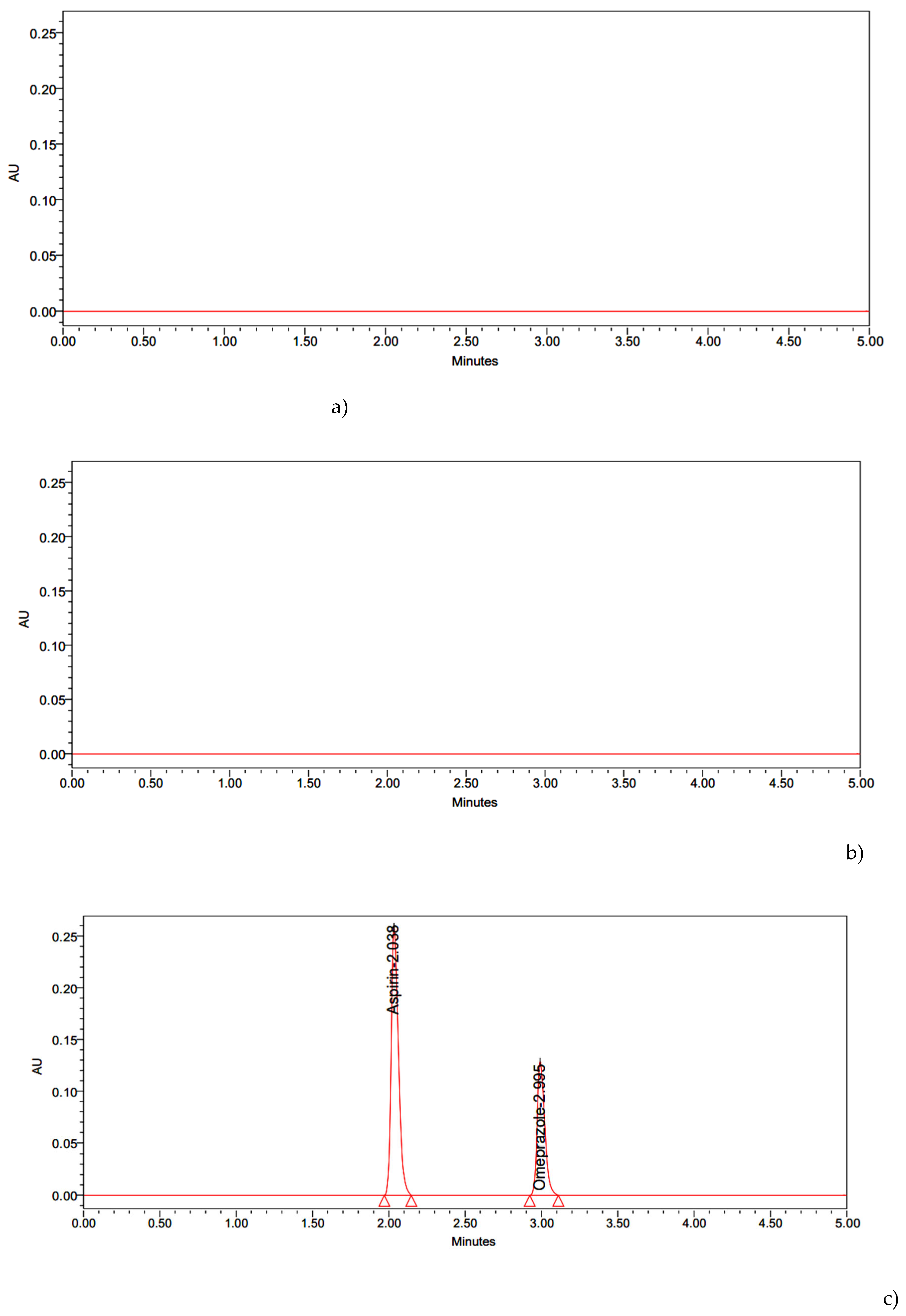
The specificity of the method was assessed by analyzing blank, placebo, and standard solutions. No interfering peaks appeared at the retention times of Acetylsalicylic acid and Omeprazole. This confirms that the method is specific and can accurately measure the analytes in the presence of excipients.
Figure 9.
Representative chromatograms showing (a) blank, (b) placebo, and (c) standard solution of Aspirin and Omeprazole, demonstrating the specificity of the RP-HPLC method with no interference observed at the retention times of the analytes.
Figure 9.
Representative chromatograms showing (a) blank, (b) placebo, and (c) standard solution of Aspirin and Omeprazole, demonstrating the specificity of the RP-HPLC method with no interference observed at the retention times of the analytes.
System precision was evaluated by six replicate injections of standard solution, and the results are shown in Table 7 and Figure 10. The %RSD values were found to be 0.17% for Aspirin and 0.42% for Omeprazole, indicating excellent repeatability of the instrument.
The system precision of the developed RP-HPLC method was evaluated by performing six replicate injections of the standard solution. The chromatograms (Figure 11) showed consistent retention times of approximately 2.03 min for Aspirin and 2.99 min for Omeprazole with no significant variation in peak shape or area.
The method precision results are presented in Table 8. The %RSD values were 0.55% for Acetylsalicylic acid and 0.75% for Omeprazole, which are within acceptable limits (<2%). Intermediate precision results are shown in Table 9, with %RSD values of 0.38% for Acetylsalicylic acid and 0.69% for Omeprazole. These results confirm that the method is precise under different conditions.
Figure 12.
Intermediate precision (inter-day) results showing peak area consistency for (a) Aspirin and (b) Omeprazole over six replicate injections, with %RSD values of 0.38% and 0.69%, respectively, indicating good reproducibility of the RP-HPLC method.
Figure 12.
Intermediate precision (inter-day) results showing peak area consistency for (a) Aspirin and (b) Omeprazole over six replicate injections, with %RSD values of 0.38% and 0.69%, respectively, indicating good reproducibility of the RP-HPLC method.

Linearity was evaluated over a concentration range of 20.25–121.50 µg/mL for Aspirin and 10–60 µg/mL for Omeprazole. The calibration curves are shown in Figure 13, and the results are summarized in Table 10. The correlation coefficients (R²) were found to be 0.99983 for Aspirin and 0.99981 for Omeprazole, indicating excellent linearity.
Accuracy was evaluated using the standard addition method at three levels (80%, 100%, and 120%), and the results are presented in Table 11 (Acetylsalicylic acid) and Table 12 (Omeprazole) and Figure 14. The mean percentage recovery was 99.9% for Acetylsalicylic acid and 100.0% for Omeprazole. These values fall within the acceptable range of 98–102%, indicating that the method is accurate.
The assay results for Aspirin and Omeprazole are presented in Figure 15. The percentage assay values were found to be 99.7% for Aspirin and 100.2% for Omeprazole. These results indicate that the method is suitable for quantitative analysis of both drugs in pharmaceutical formulations.
Robustness was evaluated by intentionally varying chromatographic parameters such as flow rate and mobile phase composition. The results are presented in Table 13 (Acetylsalicylic acid) and Table 14 (Omeprazole). The variations did not significantly affect retention time, peak area, or system suitability parameters. The %RSD values remained within acceptable limits, confirming that the method is robust. Representative chromatograms are shown in Figure 16, Figure 17, Figure 18 and Figure 19.
Forced degradation studies were carried out under acid, alkali, peroxide, reduction, thermal, photolytic, and hydrolytic stress conditions to assess the stability-indicating ability of the developed RP-HPLC method. The degradation results for Acetylsalicylic acid and Omeprazole are presented in Table 15 and Figure 20. Under acidic conditions, Acetylsalicylic acid showed 11.9% degradation, whereas Omeprazole showed 1.9% degradation. Under alkaline conditions, degradation was 11.2% for Acetylsalicylic acid and 12.3% for Omeprazole. Oxidative degradation using peroxide resulted in 14.1% degradation for Acetylsalicylic acid and 13.3% for Omeprazole, indicating that both drugs were highly susceptible to oxidative stress. In contrast, reduction, thermal, and photolytic conditions produced relatively low degradation, while hydrolytic stress caused moderate degradation in both analytes.
Peak purity evaluation further confirmed the specificity of the method shown in Figure 21. For all stressed samples, the purity angle was lower than the purity threshold for both Aspirin and Omeprazole, demonstrating that the analyte peaks remained spectrally pure and that degradation products did not co-elute with the principal peaks. For example, in the peroxide degradation study, the purity angle/purity threshold values were 1.605/3.017 for Aspirin and 2.169/3.719 for Omeprazole. Similar results were observed for acid, alkali, reduction, thermal, photolytic, and hydrolytic degradation studies. These findings establish that the developed RP-HPLC method is stability-indicating and suitable for analysis of Aspirin and Omeprazole in the presence of their degradation products.
The sensitivity of the developed RP-HPLC method was evaluated in terms of limit of detection (LOD) and limit of quantification (LOQ), and the results are depicted in Figure 22. The LOD and LOQ values for Aspirin were found to be 0.49 µg/mL and 1.62 µg/mL, respectively, while for Omeprazole, the LOD and LOQ values were 0.24 µg/mL and 0.80 µg/mL, respectively. The chromatograms corresponding to LOD and LOQ are presented in Figure 53 and Figure 54. These results indicate that the developed method is highly sensitive and capable of detecting and quantifying low concentrations of the analytes.
4. Conclusion
In this investigation, a straightforward, fast, reproducible, accurate, and stability-indicating RP-HPLC technique was effectively established, refined, and confirmed for the concurrent quantification of Acetylsalicylic acid and Omeprazole in combined drug products. The separation process was carried out using a Luna Phenyl Hexyl column (250 × 4.6 mm, 5 µm) with a mobile phase composed of Acetonitrile and 0.1% Perchloric acid mixed at 20:80 (v/v), delivered at 1.0 mL/min, and monitored at 249 nm. The overall analysis time of 5 minutes, featuring distinct peaks at 2.038 minutes for Acetylsalicylic acid and 2.995 minutes for Omeprazole, highlights the effectiveness and speed of the proposed procedure.
The technique underwent thorough validation in line with ICH Q2(R1) requirements and produced acceptable outcomes across all validation parameters. Key system suitability indicators—such as resolution (4.63), asymmetry factor, and theoretical plate number—fell well within the prescribed limits, affirming the dependability and consistency of the chromatographic setup. A strong linear relationship between analyte concentration and detector response was observed over a broad concentration range, supported by excellent correlation coefficients for both compounds. Recovery experiments conducted at 80%, 100%, and 120% levels confirmed the method’s accuracy, with mean recovery values lying between 98% and 102%. Precision assessments, covering system repeatability, method repeatability, and intermediate precision, produced %RSD values significantly below 2%, demonstrating outstanding consistency and reproducibility.
Robustness testing through intentional minor adjustments in chromatographic parameters—including flow rate and mobile phase ratio—showed that the method remained unaffected by small variations, confirming its suitability for routine laboratory use. The method’s high sensitivity was evidenced by low LOD and LOQ figures: 0.49 µg/mL and 1.62 µg/mL for Acetylsalicylic acid, and 0.24 µg/mL and 0.80 µg/mL for Omeprazole, respectively, enabling the detection of trace amounts of both substances.
Forced degradation experiments performed under acidic, alkaline, oxidative, reductive, thermal, photolytic, and hydrolytic conditions revealed considerable breakdown of both medications under severe environments, especially during oxidative and alkaline stress. Crucially, for every stress condition examined, the purity angle of both Acetylsalicylic acid and Omeprazole remained consistently lower than their corresponding purity threshold values, confirming the spectral homogeneity and chromatographic peak purity of the analytes. This firmly establishes the stability-indicating nature of the developed approach, proving its capacity to accurately measure the unchanged active ingredients even in the presence of their decomposition products without any chromatographic interference.
Finally, the analysis of a commercially available tablet formulation yielded percentage assay values within pharmacopoeial acceptance limits for both Acetylsalicylic acid and Omeprazole, further confirming the practical utility of this method for everyday quality control testing
References
- Gioumouxouzis, C.I.; Eleftheriadis, G.K.; Kyriakidis, A.S.; Karavasili, C. Translation of pharmaceutical 3D printing to clinical point-of-care and industrial manufacturing. In Drug Delivery and Translational Research; 2026; pp. 1–14. [Google Scholar]
- Carou-Senra, P.; Rodríguez-Pombo, L.; Alvarez-Lorenzo, C.; Goyanes, A. Accelerating dataset generation for machine learning using large language models: a pharmaceutical additive manufacturing case. International Journal of Pharmaceutics 2026, 126587. [Google Scholar] [CrossRef] [PubMed]
- Mascareñas-García, M.; Rivero-de-Aguilar, A.; Candal-Pedreira, C.; García, G.; Guerra-Tort, C.; Martín-Gisbert, L.; Rey-Brandariz, J.; Ríos, M.P.R.; Casal-Acción, B.; Santiago-Pérez, M.I.; Varela-Lema, L. Distortion in the communication of nonsignificant primary outcomes: the spin strategy in multiple sclerosis trials. Annals of Neurology 2026. [Google Scholar] [CrossRef] [PubMed]
- Zhavoronkov, A.; Gennert, D.; Shi, J. From Prompt to Drug: Toward Pharmaceutical Superintelligence. In ACS Central Science; 2026. [Google Scholar]
- Tanga, S.; Ramburrun, P.; Aucamp, M. From Liquid SNEDDS to Solid SNEDDS: A Comprehensive Review of Their Development and Pharmaceutical Applications. The AAPS Journal 2026, 28(1), 1–18. [Google Scholar] [CrossRef] [PubMed]
- Hernández-Ramírez, V.I.; Varela-Rodríguez, H.; Varela-Rodríguez, L.; Sierra-López, F.; San Juan-Mora, D.E.; Morales-Mora, J.D.; Falcón-Navarrete, D.; Osorio-Trujillo, C.; Ríos-López, J.; Rodríguez-Mera, I.B.; Carrasco-Yépez, M.M. Acanthamoeba castellanii: Non-Steroidal Anti-Inflammatory Drugs Affect Adhesion, Motility, and Encystment, Suggesting a Link with a gp63-like Protein Candidate. Pathogens 2026, 15(3), 263. [Google Scholar] [CrossRef] [PubMed]
- Hayat, A.; Khanem, A.; Ullah, I.; Riaz, M.; Younas, F. Reversion of multidrug resistance in clinical isolates of Escherichia coli using non-steroidal anti-inflammatory drugs (NSAIDs). The Journal of Antibiotics 2026, 79(2), 110–121. [Google Scholar] [CrossRef] [PubMed]
- Hesham, K.; Aboulthana, W.M.; Ragab, A. Development of novel salicylic acid derivatives with dual anti-inflammatory and anti-arthritic potentials: synthesis, in vitro bio-evaluation, and in silico toxicity prediction with molecular modeling simulations. RSC advances 2026, 16(4), 3509–3526. [Google Scholar] [CrossRef] [PubMed]
- Peng, K.P.; Chang, K.H. Long-term non-steroidal anti-inflammatory drug (NSAID) use and dementia or cognitive decline risk in adults over 50 based on epidemiological studies: A narrative review. In Tungs’ Medical Journal; pp. 10–4103.
- Shaikh, F.; Uzgare, A. HIGH-PERFORMANCE LIQUID CHROMATOGRAPHY (HPLC): PRINCIPLE, APPLICATIONS, AND THE ROLE OF ARTIFICIAL INTELLIGENCE–A REVIEW. Journal of microbiology, biotechnology and food sciences 2026, 15(4), e13541–e13541. [Google Scholar] [CrossRef]
- Halko, R.; Pavelek, D.; Kaykhaii, M. High performance liquid chromatography-fourier transform infrared spectroscopy coupling: a comprehensive review. Critical Reviews in Analytical Chemistry 2026, 56(1), 167–178. [Google Scholar] [CrossRef] [PubMed]
- Zhang, F.; Zhang, L.; Wang, L. Quantification of Protochlorophyllide (Pchlide) Content in Arabidopsis Seedlings Using a High-Performance Liquid Chromatography (HPLC) System. Bio-protocol 2026, 16(1). [Google Scholar] [CrossRef] [PubMed]
- Luo, J.; Cen, G.; Zhou, H.; Zhang, C.; Wang, L.; Su, L.; Gu, W.; Pan, H.; Li, Y. Locked Nucleic Acid-Modified Parallel Entropy-Driven Circuit Integrated with High-Performance Liquid Chromatography for Sensitive, Automated, and Multiplexed Detection of Breast Cancer-Related MicroRNAs. Sensors and Actuators B: Chemical 2026, 139545. [Google Scholar] [CrossRef]
- Xu, D.; Yan, D.; Zhang, C.; Sun, Y.; Wang, R.; Yang, L.; Xing, R.; Hu, S.; Chen, X. A novel biomimetic nanovesicle-based microextraction combined with high performance liquid chromatography for the determination of flavonoids in Huangqisan. Microchemical Journal 2026, 117151. [Google Scholar] [CrossRef]
- Machireddy, N.R.; Katam, K. Pharmaceutical Ingredients (API) Industry. Sustainable Advanced Technologies for Industrial Pollution Control: Proceedings of ATIPC 2026, 277. [Google Scholar]
- Tareq, A.Z.; Hyder, M.; Chippindale, A.M.; Spencer, N.; Mohan, S.; Kaur, A.; Hallett, J.; Zinn, T.; Shankland, K.; Hayes, W. Low-molecular weight organogel matrices as crystallisation media for active pharmaceutical ingredients. Journal of Materials Chemistry B 2026. [Google Scholar] [CrossRef] [PubMed]
- Romano, S.; Damian, M.; Nardi, M.; Procopio, A.; Strähler, S.; Preschel, D.; Oliverio, M.; Mutti, F.G. Stereoselective Bio-Organocatalytic Cascade to Chiral Amides as Active Pharmaceutical Ingredient Intermediates Using ω-Transaminase and Choline Chloride Under Microwave Irradiation. ChemSusChem 2026, 19(6), e202501501. [Google Scholar] [CrossRef] [PubMed]
Figure 1.
Optimized RP-HPLC chromatogram of Aspirin and Omeprazole demonstrating well-resolved peaks at retention times of 2.038 min and 2.995 min, respectively, indicating efficient separation under optimized conditions.
Figure 1.
Optimized RP-HPLC chromatogram of Aspirin and Omeprazole demonstrating well-resolved peaks at retention times of 2.038 min and 2.995 min, respectively, indicating efficient separation under optimized conditions.
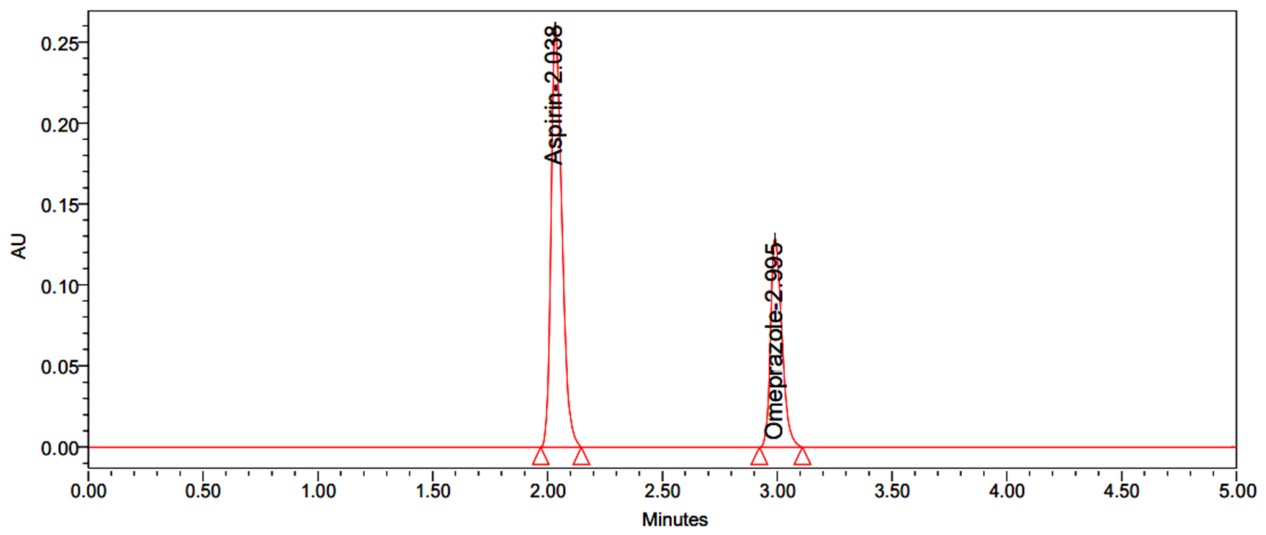
Figure 10.
System precision results showing peak area consistency for (a) Aspirin and (b) Omeprazole over six replicate injections, demonstrating low %RSD values (0.17% and 0.42%, respectively) and confirming excellent precision of the RP-HPLC method.
Figure 10.
System precision results showing peak area consistency for (a) Aspirin and (b) Omeprazole over six replicate injections, demonstrating low %RSD values (0.17% and 0.42%, respectively) and confirming excellent precision of the RP-HPLC method.
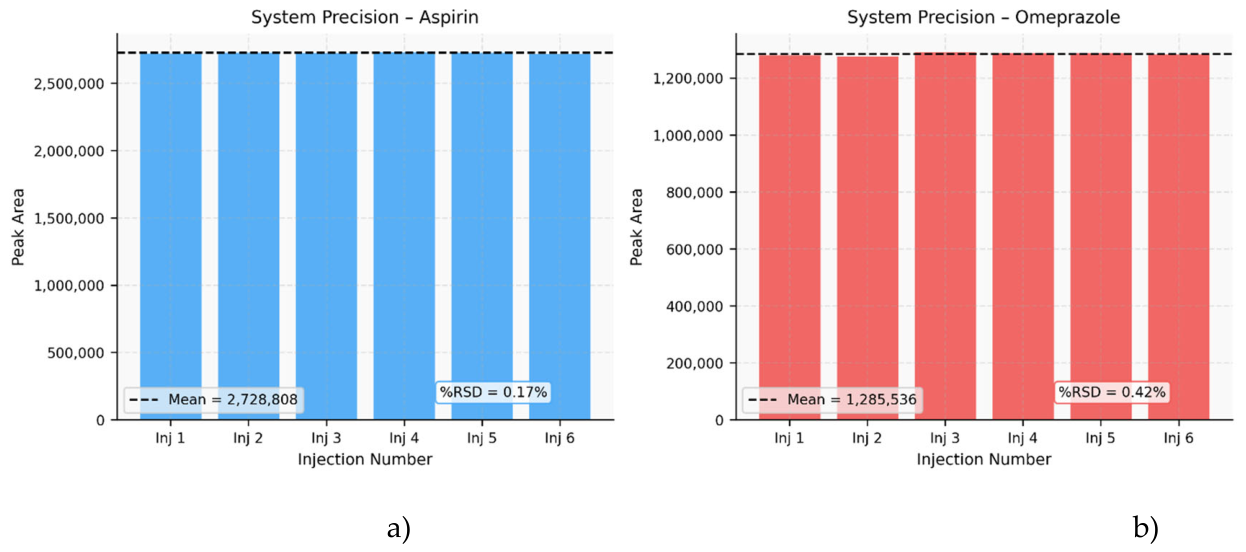
Figure 11.
System precision chromatograms of Aspirin and Omeprazole obtained from six replicate injections [(a) Injection 1, (b) Injection 2, (c) Injection 3, (d) Injection 4, (e) Injection 5, and (f) Injection 6], showing consistent retention times and peak areas, indicating good repeatability of the RP-HPLC method.
Figure 11.
System precision chromatograms of Aspirin and Omeprazole obtained from six replicate injections [(a) Injection 1, (b) Injection 2, (c) Injection 3, (d) Injection 4, (e) Injection 5, and (f) Injection 6], showing consistent retention times and peak areas, indicating good repeatability of the RP-HPLC method.
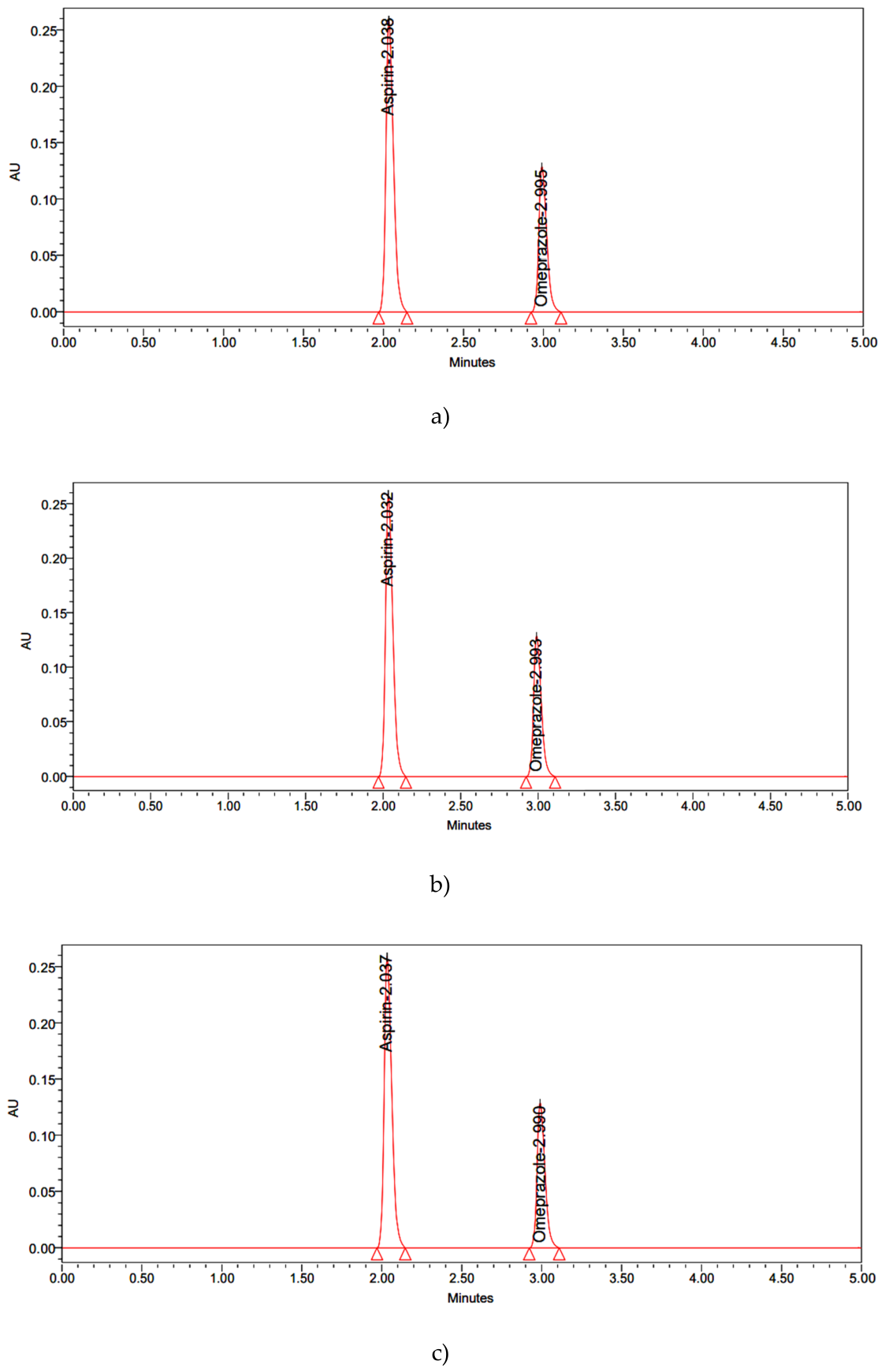
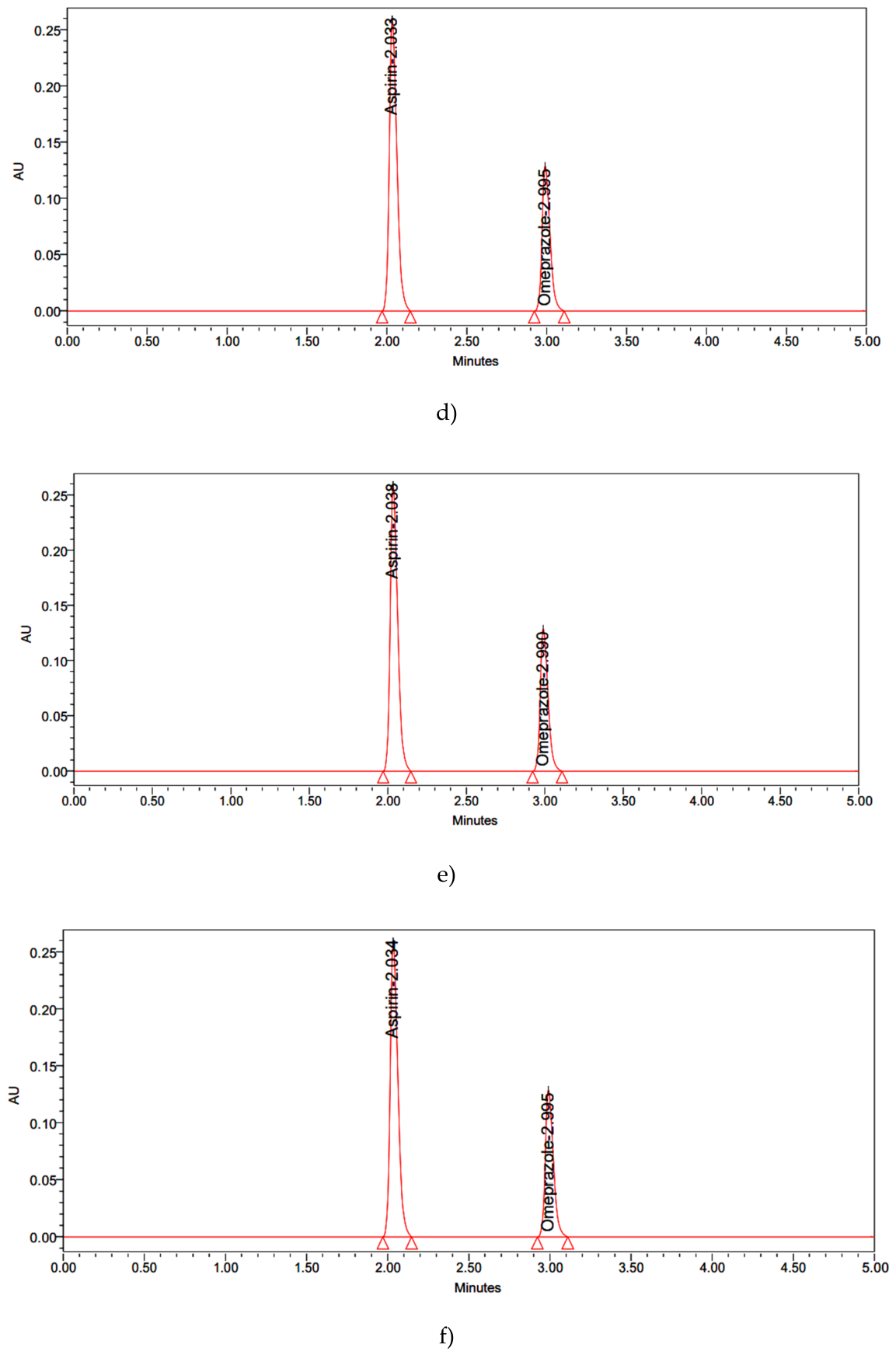
Figure 13.
Calibration curves showing the linear relationship between concentration and peak area for (a) Aspirin and (b) Omeprazole, with correlation coefficients (R²) of 0.99983 and 0.99981, respectively, indicating excellent linearity of the RP-HPLC method.
Figure 13.
Calibration curves showing the linear relationship between concentration and peak area for (a) Aspirin and (b) Omeprazole, with correlation coefficients (R²) of 0.99983 and 0.99981, respectively, indicating excellent linearity of the RP-HPLC method.

Figure 14.
Accuracy (% recovery) results for (a) Aspirin and (b) Omeprazole at 80%, 100%, and 120% concentration levels, showing mean recovery values within the acceptable range (98–102%), indicating good accuracy of the RP-HPLC method.
Figure 14.
Accuracy (% recovery) results for (a) Aspirin and (b) Omeprazole at 80%, 100%, and 120% concentration levels, showing mean recovery values within the acceptable range (98–102%), indicating good accuracy of the RP-HPLC method.
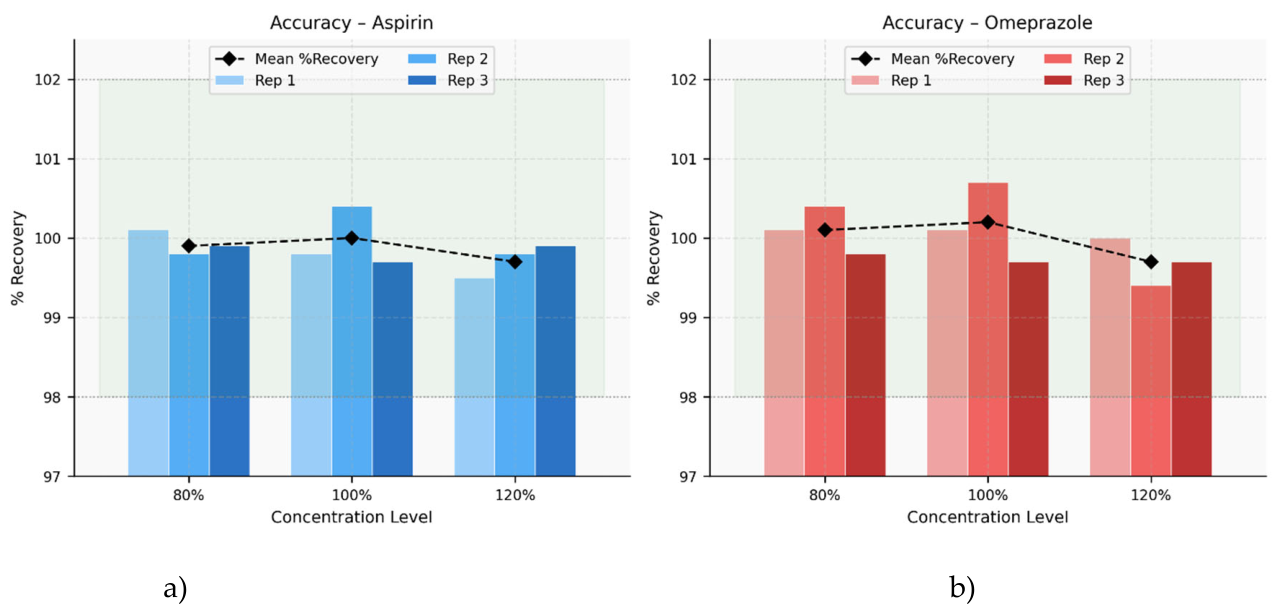
Figure 15.
Assay results (% label claim) for Aspirin and Omeprazole in INNOVIDA formulation, showing percentage assay values of 99.7% and 100.2%, respectively, within the acceptable limits (98–102%), confirming the suitability of the RP-HPLC method for quantitative analysis.
Figure 15.
Assay results (% label claim) for Aspirin and Omeprazole in INNOVIDA formulation, showing percentage assay values of 99.7% and 100.2%, respectively, within the acceptable limits (98–102%), confirming the suitability of the RP-HPLC method for quantitative analysis.
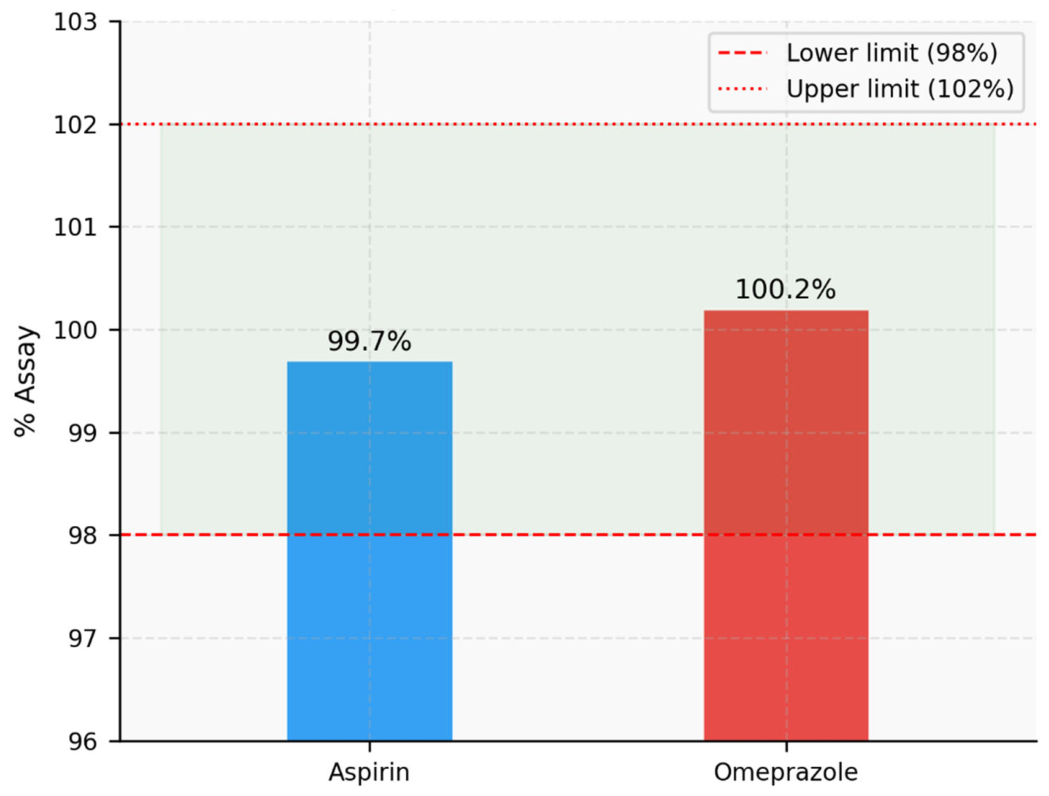
Figure 16.
Chromatogram for less flow rate (0.9 ml).

Figure 17.
Chromatogram for more flow rate (1.1mL).

Figure 18.
Chromatogram for less Organic Phase (18:82).
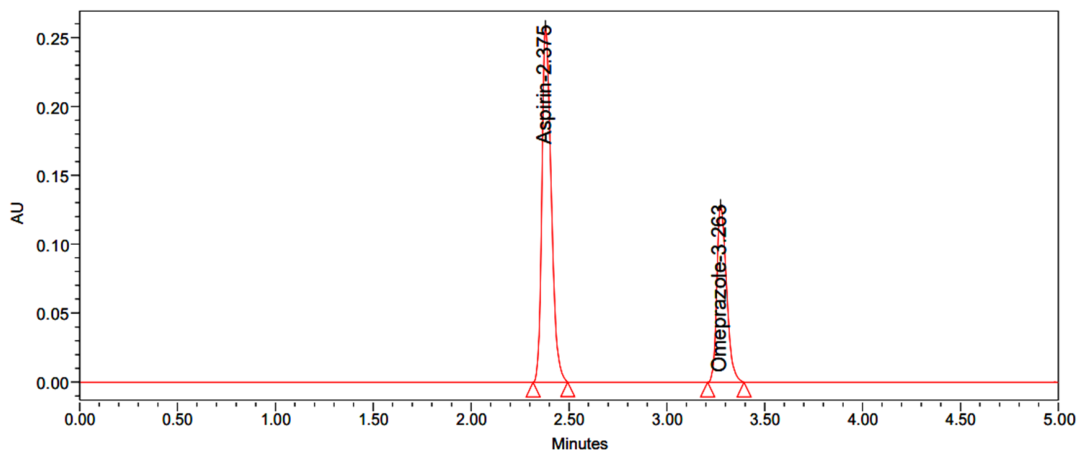
Figure 19.
Chromatogram for more Organic Phase (22:78).
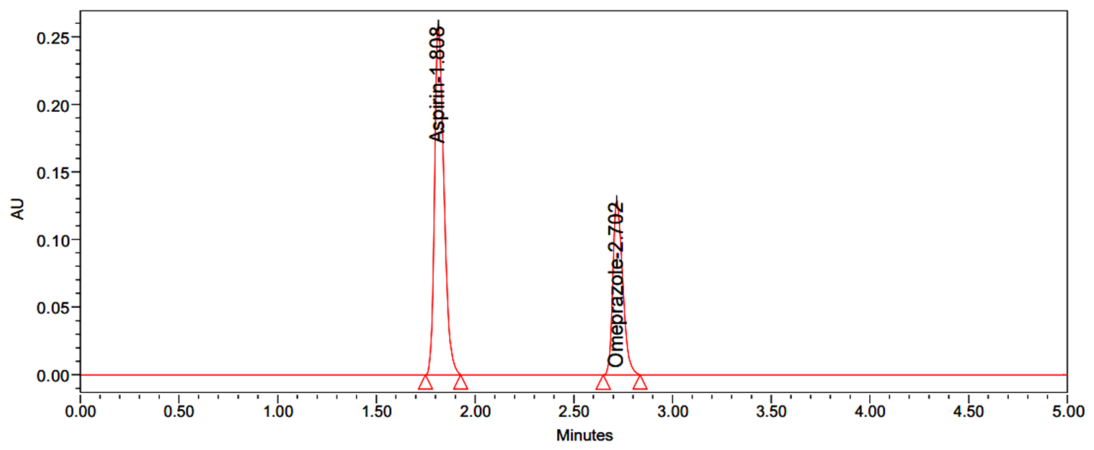
Figure 20.
Representative RP-HPLC chromatograms of Aspirin and Omeprazole under different stress conditions: (a) acid degradation, (b) alkali degradation, (c) oxidative (peroxide) degradation, (d) reduction degradation, (e) thermal degradation, (f) photolytic degradation, (g) hydrolytic degradation, and (h) control sample, demonstrating the stability-indicating capability of the developed method.
Figure 20.
Representative RP-HPLC chromatograms of Aspirin and Omeprazole under different stress conditions: (a) acid degradation, (b) alkali degradation, (c) oxidative (peroxide) degradation, (d) reduction degradation, (e) thermal degradation, (f) photolytic degradation, (g) hydrolytic degradation, and (h) control sample, demonstrating the stability-indicating capability of the developed method.
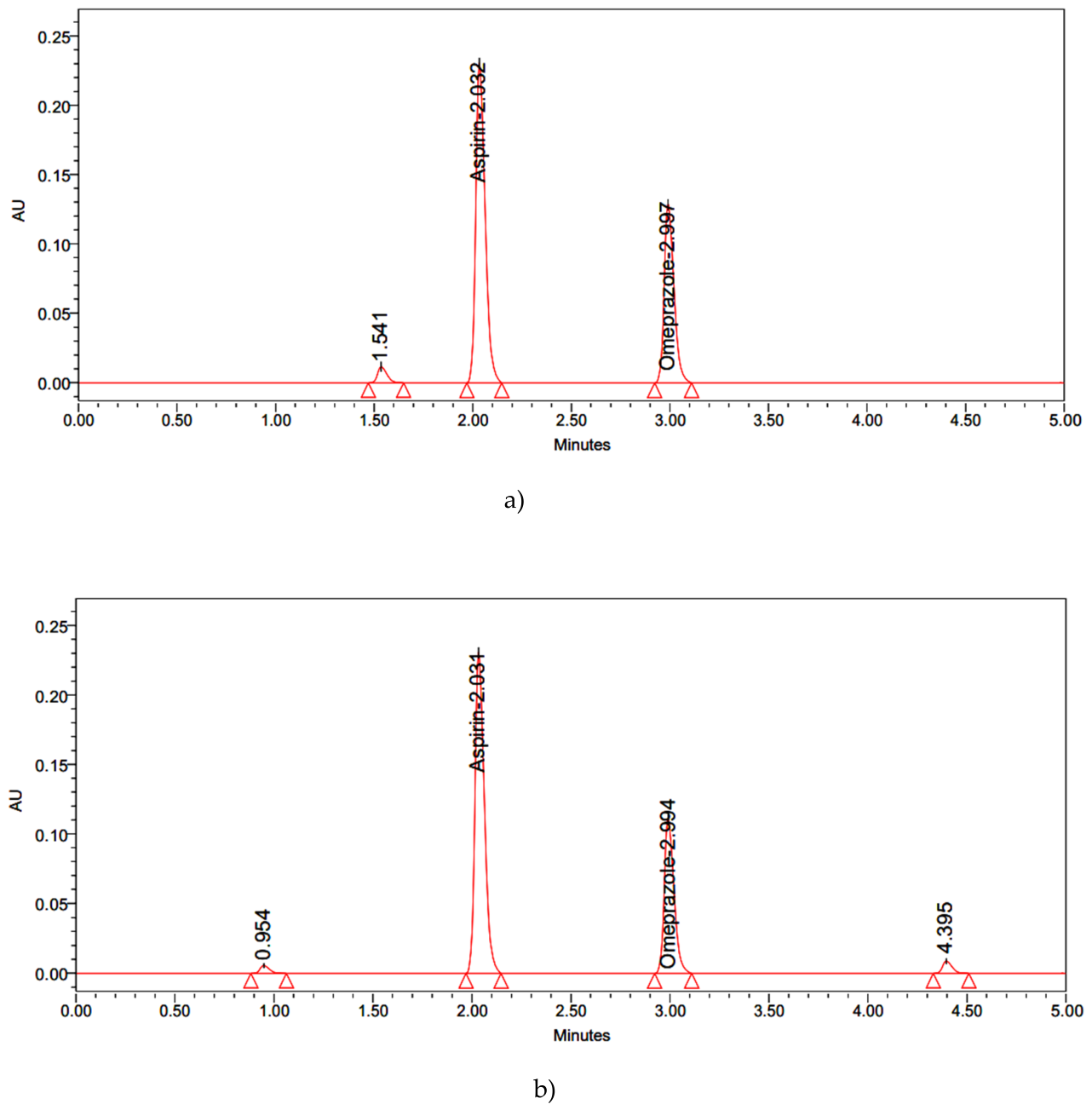
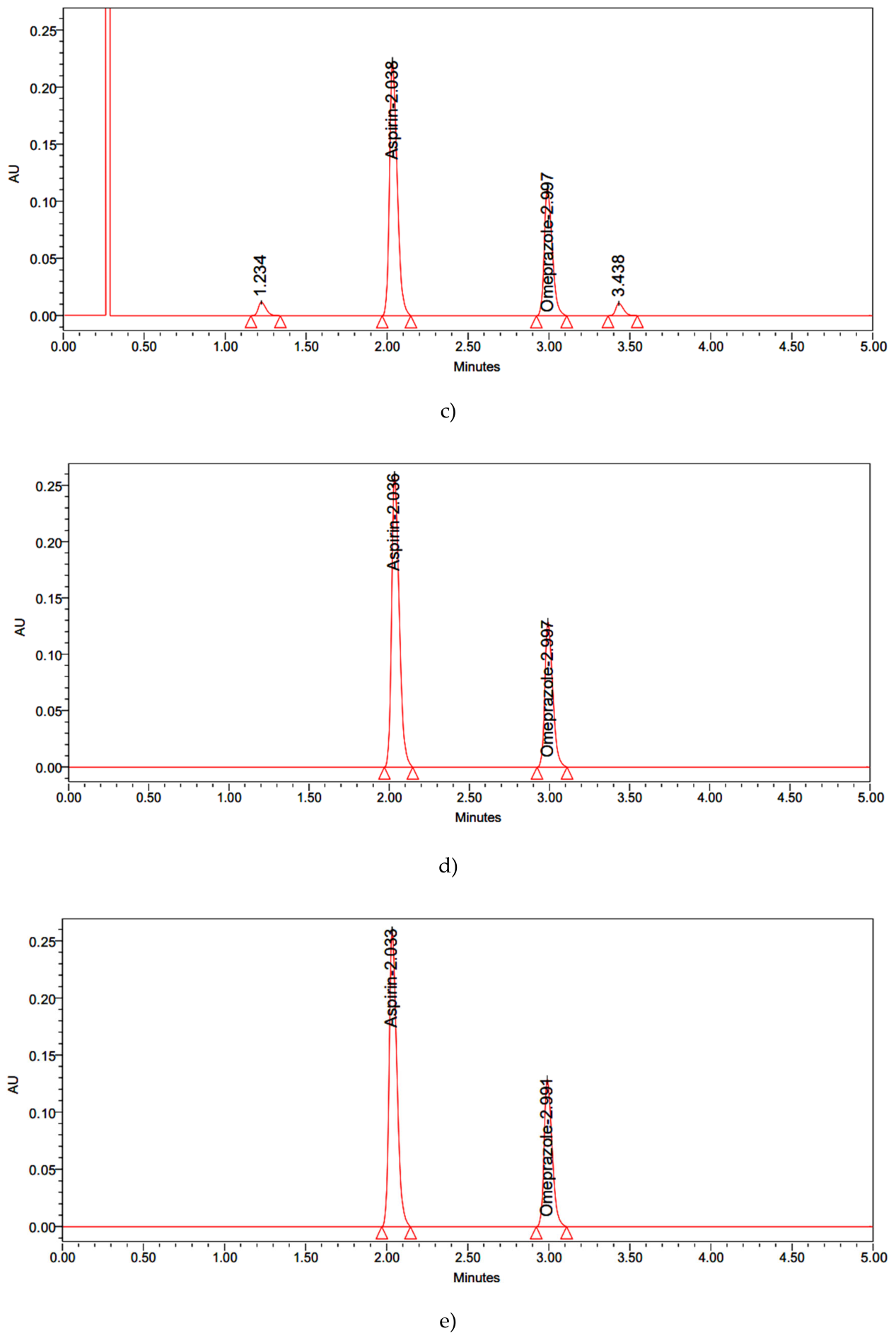
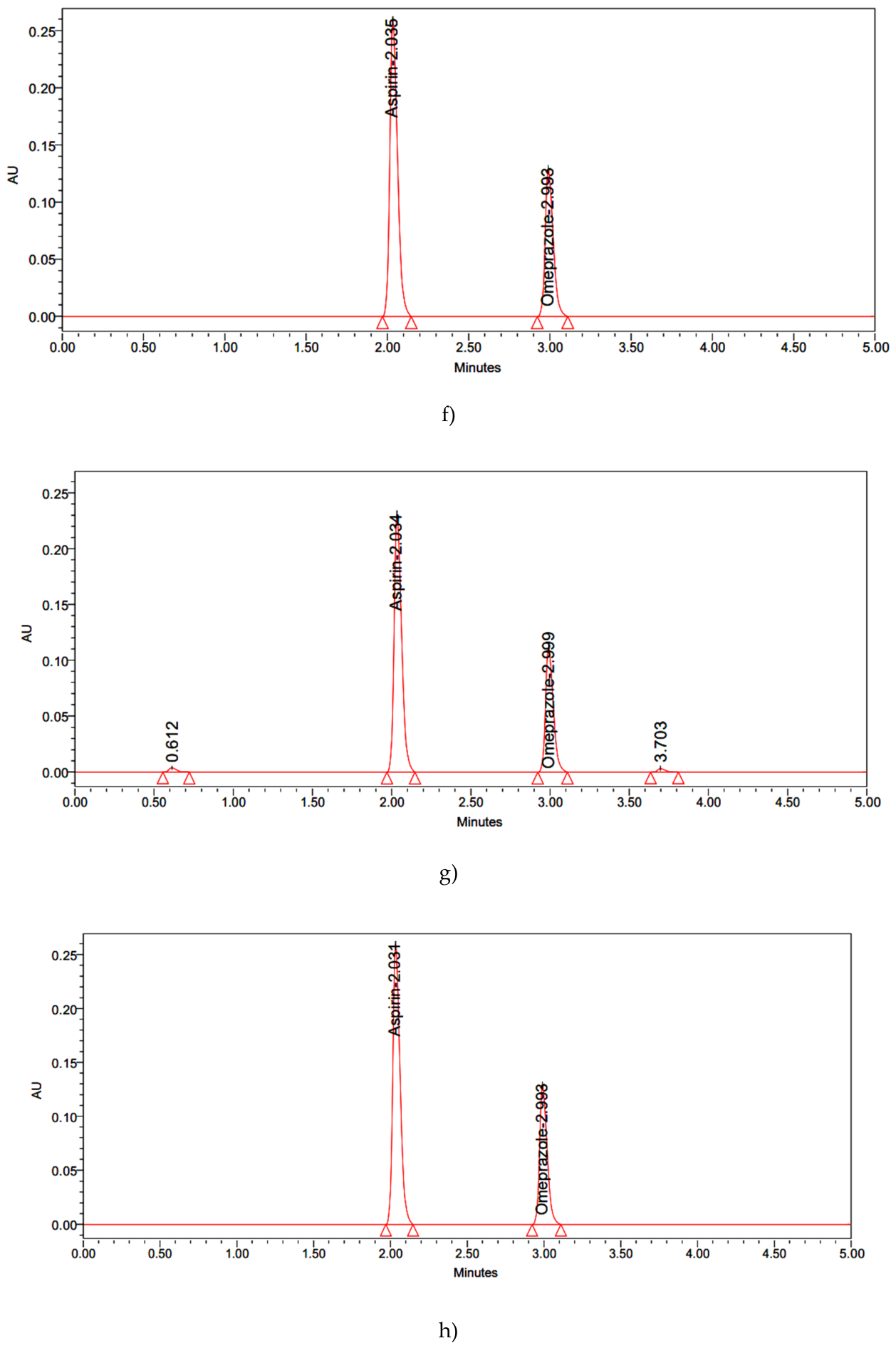
Figure 21.
Peak purity plots of (a) Aspirin and (b) Omeprazole obtained by RP-HPLC-PDA analysis under acid stress conditions. The purity angle (PA) values of 1.628° and 2.173° were found to be less than the purity threshold (TH) values of 3.034° and 3.742° for Aspirin and Omeprazole, respectively, confirming the spectral homogeneity and peak purity of both analytes, thereby validating the stability-indicating capability of the developed method.
Figure 21.
Peak purity plots of (a) Aspirin and (b) Omeprazole obtained by RP-HPLC-PDA analysis under acid stress conditions. The purity angle (PA) values of 1.628° and 2.173° were found to be less than the purity threshold (TH) values of 3.034° and 3.742° for Aspirin and Omeprazole, respectively, confirming the spectral homogeneity and peak purity of both analytes, thereby validating the stability-indicating capability of the developed method.

Figure 22.
Sensitivity parameters (LOD and LOQ) for Aspirin and Omeprazole, showing LOD values of 0.49 µg/mL and 0.24 µg/mL and LOQ values of 1.62 µg/mL and 0.80 µg/mL, respectively, indicating high sensitivity of the developed RP-HPLC method.
Figure 22.
Sensitivity parameters (LOD and LOQ) for Aspirin and Omeprazole, showing LOD values of 0.49 µg/mL and 0.24 µg/mL and LOQ values of 1.62 µg/mL and 0.80 µg/mL, respectively, indicating high sensitivity of the developed RP-HPLC method.
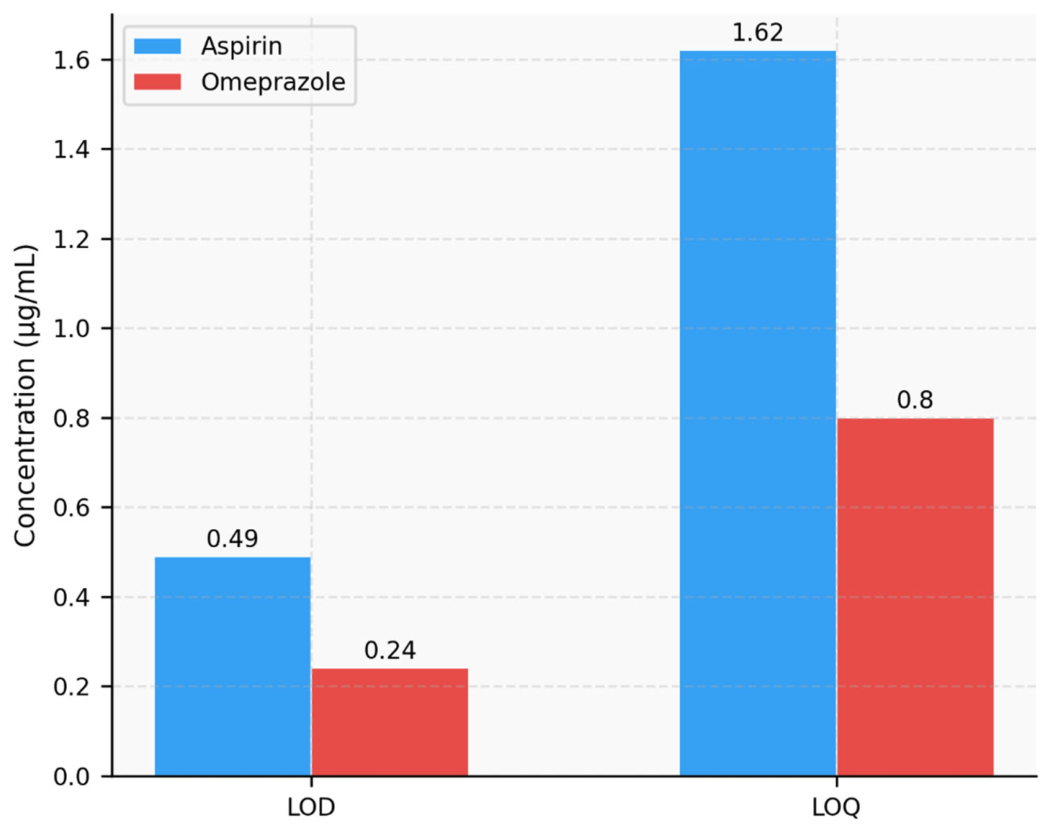

Table 1.
Instruments used in the present work.
| S.No | Instrument | Model / Specification | Manufacturer |
| 1 | HPLC System | Waters Alliance e2695 | Waters |
| 2 | pH Meter | pH700 | Eutech |
| 3 | Weighing balance | BSA224S-CW | Sartorius |
| 4 | Ultrasonicator | UCA 701 | Unichrome |
| 5 | Glassware | Class A | Borosil |
Table 2.
Chemicals used in the present work.
| S.No | Chemical | Grade | Manufacturer |
| 1 | Acetonitrile | HPLC | Merck |
| 2 | Water (Milli-Q) | HPLC | In-house |
| 3 | Perchloric Acid | AR | Merck |
Table 3.
Optimized Chromatographic Conditions.
| Parameter | Condition |
| Column | Luna Phenyl Hexyl (250 × 4.6 mm, 5 µm) |
| Mobile Phase | Acetonitrile : 0.1% Perchloric acid (20:80) |
| Flow rate | 1.0 mL/min |
| Detection Wavelength | 249 nm |
| Injection Volume | 10 µL |
| Run Time | 5 min |
Table 4.
Optimized chromatographic conditions for the simultaneous estimation of Aspirin and Omeprazole by RP-HPLC.
Table 4.
Optimized chromatographic conditions for the simultaneous estimation of Aspirin and Omeprazole by RP-HPLC.
| Parameters | Observation |
| Instrument used | Waters HPLC with auto sampler and PDA detector. |
| Injection volume | 10µl |
| Mobile Phase | Acetonitrile: 0.1% Perchloric acid (20:80) |
| Column | Luna Phenyl Hexyl (250x4.6mm, 5µm) |
| Detection Wave Length | 249nm |
| Flow Rate | 1 mL/min |
| Runtime | 5min |
| Temperature | Ambient(25° C) |
| Mode of separation | Isocratic mode |
Table 5.
Optimized chromatographic results showing retention time, peak area, resolution, tailing factor, and theoretical plate count for Aspirin and Omeprazole.
Table 5.
Optimized chromatographic results showing retention time, peak area, resolution, tailing factor, and theoretical plate count for Aspirin and Omeprazole.
| Name | RT | Area | USP Resolution | USP Tailing | USP Plate Count |
| Aspirin | 2.038 | 2726427 | - | 0.97 | 11485 |
| Omeprazole | 2.995 | 1282031 | 4.63 | 1.03 | 7693 |
Table 6.
System suitability parameters for Aspirin & Omeprazole.
| S.no | Parameter | Aspirin | Omeprazole |
| 1 | Retention time | 2.038 | 2.995 |
| 2 | Plate count | 11485 | 7693 |
| 3 | Tailing factor | 0.97 | 1.03 |
| 4 | Resolution | ---- | 4.63 |
| 5 | %RSD | 0.17 | 0.42 |
Table 7.
System precision table of Aspirin & Omeprazole.
| ConcentrationAspirin(µg/ml) |
Area of Aspirin |
Concentration of Omeprazole (µg/ml) |
Area of Omeprazole |
|
| 1. | 81 | 2726427 | 40 | 1282031 |
| 2. | 81 | 2732136 | 40 | 1277094 |
| 3. | 81 | 2728974 | 40 | 1291557 |
| 4. | 81 | 2733127 | 40 | 1289461 |
| 5. | 81 | 2731329 | 40 | 1288950 |
| 6. | 81 | 2720852 | 40 | 1284123 |
| Mean | 2728808 | 1285536 | ||
| S.D | 4584.31 | 5456.42 | ||
| %RSD | 0.17 | 0.42 | ||
Table 8.
Method Precision for Aspirin & Omeprazole by RP-HPLC method.
| S. No. | Area for Aspirin | Area for Omeprazole |
| 1 | 2746531 | 1272322 |
| 2 | 2721402 | 1291542 |
| 3 | 2715620 | 1285690 |
| 4 | 2703102 | 1290972 |
| 5 | 2725876 | 1286541 |
| 6 | 2711172 | 1269003 |
| Average | 2720617 | 1282678 |
| STD Dev | 14971.720 | 9649.955 |
| %RSD | 0.55 | 0.75 |
Table 9.
Intermediate Precision for Aspirin and Omeprazole by RP-HPLC method.
| S. No. | Area | |
| Aspirin | Omeprazole | |
| 1 | 2734860 | 1278683 |
| 2 | 2714532 | 1280152 |
| 3 | 2706130 | 1269887 |
| 4 | 2715613 | 1293543 |
| 5 | 2721584 | 1286791 |
| 6 | 2727625 | 1290956 |
| Average | 2720057 | 1283335 |
| Standard Deviation | 10227.133 | 8796.001 |
| %RSD | 0.38 | 0.69 |
Table 10.
Results of linearity for Aspirin & Omeprazole.
| S.NO | Aspirin | Omeprazole | ||
| Conc.(µg/ml) | Peak area | Conc.(µg/ml) | Peak area | |
| 1 | 20.25 | 724355 | 10.00 | 331897 |
| 2 | 40.50 | 1389604 | 20.00 | 663072 |
| 3 | 60.75 | 2013896 | 30.00 | 962431 |
| 4 | 81.00 | 2728462 | 40.00 | 1286541 |
| 5 | 101.25 | 3425137 | 50.00 | 1602253 |
| 6 | 121.50 | 4141720 | 60.00 | 1889428 |
| Regression equation | y = 33801.73x +6998.21 | y =12908.70x + 16825.71 | ||
| Slope | 33801.73 | 31544.52 | ||
| Intercept | 6998.21 | 15896.18 | ||
| R2 | 0.99983 | 0.99981 | ||
Table 11.
Accuracy results of Aspirin by RP-HPLC method.
| %Concentration(at specification Level) | Area |
Amount Added (mg) |
Amount Found (mg) |
% Recovery | Mean Recovery |
| 80% | 4915263 | 14.58 | 14.59 | 100.1 | 99.9 |
| 4903187 | 14.58 | 14.55 | 99.8 | ||
| 4909866 | 14.58 | 14.57 | 99.9 | ||
| 100% | 5446318 | 16.20 | 16.17 | 99.8 | 100.0 |
| 5478749 | 16.20 | 16.26 | 100.4 | ||
| 5440612 | 16.20 | 16.15 | 99.7 | ||
| 120% | 5972161 | 17.82 | 17.73 | 99.5 | 99.7 |
| 5991320 | 17.82 | 17.78 | 99.8 | ||
| 5996224 | 17.82 | 17.80 | 99.9 |
Table 12.
The Accuracy results for Omeprazole by RP-HPLC method.
|
%Concentration (at specification Level) |
Area |
Amount Added (mg) |
Amount Found (mg) |
% Recovery | Mean Recovery |
| 80% | 2316850 | 7.2 | 7.21 | 100.1 | 100.1 |
| 2323568 | 7.2 | 7.23 | 100.4 | ||
| 2308191 | 7.2 | 7.18 | 99.8 | ||
| 100% | 2574813 | 8.0 | 8.01 | 100.1 | 100.2 |
| 2590255 | 8.0 | 8.06 | 100.7 | ||
| 2562161 | 8.0 | 7.97 | 99.7 | ||
| 120% | 2828913 | 8.8 | 8.80 | 100.0 | 99.7 |
| 2812106 | 8.8 | 8.75 | 99.4 | ||
| 2820465 | 8.8 | 8.78 | 99.7 |
Table 13.
Robustness results of Aspirin by RP-HPLC.
| Parameter | Aspirin | ||||||
| Condition | Retention time(min) | Peak area | Resolution | Tailing | Plate count | % RSD | |
| Flow rate Change (mL/min) |
Less flow (0.9ml) | 2.207 | 2624513 | - | 1.01 | 11142 | 0.57 |
| Actual (1.0ml) | 2.038 | 2726427 | - | 0.97 | 11485 | 0.17 | |
| More flow (1.1ml) | 1.914 | 2916432 | - | 0.93 | 11644 | 0.53 | |
| Organic Phase change | Less Org (18:82) | 2.375 | 2481793 | - | 1.10 | 10813 | 0.31 |
| Actual (20:80) | 2.032 | 2732136 | - | 0.92 | 11413 | 0.17 | |
| More Org (22:78) | 1.808 | 3088792 | - | 0.88 | 11814 | 0.41 | |
Table 14.
Robustness results of Omeprazole by RP-HPLC.
| Parameter | Omeprazole | ||||||
| Condition | Retention time(min) | Peak area | Resolution | Tailing | Plate count | %RSD | |
| Flow rate Change (mL/min) |
Less flow (0.9ml) | 3.135 | 1126354 | 4.32 | 1.12 | 7429 | 0.50 |
| Actual (1.0ml) | 2.995 | 1282031 | 4.63 | 1.03 | 7693 | 0.42 | |
| More flow (1.1ml) | 2.847 | 1436211 | 4.38 | 0.97 | 7978 | 0.73 | |
| Organic Phase change | Less Org (18:82) | 3.263 | 1028562 | 3.91 | 1.18 | 7107 | 0.99 |
| Actual (20:80) | 2.993 | 1277094 | 4.65 | 1.05 | 7677 | 0.42 | |
| More Org (22:78) | 2.702 | 1589456 | 4.09 | 0.94 | 8276 | 1.12 | |
Table 15.
Forced Degradation results for Aspirin and Omeprazole.
| Results: % Degradation results | Aspirin | Omeprazole | ||||||||
| Area | % Assay | % Deg | Purity Angle | Purity Threshold | Area | % Assay | % Deg | Purity Angle | Purity Threshold | |
| Control | 2717859 | 100 | 0 | 1.632 | 3.011 | 1279657 | 100 | 0 | 2.145 | 3.716 |
| Acid | 2393654 | 88.1 | 11.9 | 1.628 | 3.034 | 1255360 | 98.1 | 1.9 | 2.173 | 3.742 |
| Alkali | 2412970 | 88.8 | 11.2 | 1.667 | 3.068 | 1121798 | 87.7 | 12.3 | 2.121 | 3.738 |
| Peroxide | 2334286 | 85.9 | 14.1 | 1.605 | 3.017 | 1108724 | 86.7 | 13.3 | 2.169 | 3.719 |
| Reduction | 2662463 | 98.0 | 2.0 | 1.689 | 3.024 | 1243516 | 97.2 | 2.8 | 2.105 | 3.765 |
| Thermal | 2667091 | 98.2 | 1.8 | 1.624 | 3.033 | 1260427 | 98.5 | 1.5 | 2.127 | 3.744 |
| Photolytic | 2680728 | 98.7 | 1.3 | 1.688 | 3.076 | 1234238 | 96.5 | 3.5 | 2.143 | 3.720 |
| Hydrolysis | 2431300 | 89.5 | 10.5 | 1.673 | 3.091 | 1149677 | 89.9 | 10.1 | 2.119 | 3.718 |
Disclaimer/Publisher’s Note: The statements, opinions and data contained in all publications are solely those of the individual author(s) and contributor(s) and not of MDPI and/or the editor(s). MDPI and/or the editor(s) disclaim responsibility for any injury to people or property resulting from any ideas, methods, instructions or products referred to in the content. |
© 2026 by the authors. Licensee MDPI, Basel, Switzerland. This article is an open access article distributed under the terms and conditions of the Creative Commons Attribution (CC BY) license (http://creativecommons.org/licenses/by/4.0/).
Copyright: This open access article is published under a Creative Commons CC BY 4.0 license, which permit the free download, distribution, and reuse, provided that the author and preprint are cited in any reuse.


