
Submitted:
10 April 2026
Posted:
13 April 2026
You are already at the latest version
Abstract
Following a description of the woad plant and its distribution in the world, the locations in Europe where commercial woad growing took place during the middle ages until the end of the nineteenth century are described. The four unique steps which were used to convert the leaf of the plant into a dye bath for textile dyeing with indigo are described. The 21st century revival of interest in the process is summarised.
Keywords:
dyes
; history
; indigo
; textiles
; woad
Introduction
Woad is a yellow flowering plant with the botanical name Isatis tinctoria which was, for many centuries, a commercial source of a blue dye now known to be indigo. The earliest use could have been in Dzudzuana Cave in Georgia. Using combined morphological and spectroscopic analyses (μ-Raman, μ-FTIR) has provided robust multiscale physical and biomolecular evidence for the deliberate pounding and grinding of Isatis tinctoria leaves 34–32,000 years ago. Whether the woad was used as a colourant, and/or as a medicine is unknown[1].
While woad was commercially grown around the world, in the Unites States some authors now consider it to be a noxious and invasive weed[2].
Jamieson Boyd Hurry (1857-1930) was a doctor who spent most of his life in Reading in the county of Berkshire and wrote over a dozen books mainly on medical subjects or about Reading Abbey, a ruined monastery. In 1926 he and his wife moved to Bournemouth on the south coast of England in the county of Dorset. Here, he wrote a book, The Woad Plant and its Dye, which was at the printers when he died in 1930. For students of woad this is a highly detailed source which is essential reading. A reviewer was of the opinion that Hurry’s reason for his interest in woad was unknown[3]. But in the book, in a memoir by Warren Dawson, it is clear that Hurry had a life-long interest in economic botany. The woad plant is illustrated in Figure 1 and comes from the frontispiece of this book[4].
The name
The woad plant name first appeared in the Early English period (before 1150 CE) and in its long use has suffered from many different spellings. Jamieson Hurry reported 32 different spellings from Waad to Wysda [5].
Indigo distribution worldwide
There are at least eight major species of plants which can yield indigo precursors and they have a worldwide distribution as shown in Figure 2[6]. Due to their higher indigo precursor content compared to woad, some of the non-woad species presented a fierce competition to woad when trade and transport increased over the years in the middle ages.
Indigo’s chemical brother, dibromoindigo, shows a similar world distribution to that of indigo and is better known as Tyrian purple, also known as Royal purple, shellfish purple and Purple of the Ancients. Woad and Tyrian purple are often mentioned together[7]. Tyrian purple dye is derived from shellfish of at least 36 varieties located in seas around all continents apart from Antarctica and has only one use: a textile dye. Rolf Haubrichs in Geneva, far from the sea, supplies a comprehensive illustrated summary of Tyrian purple with about 180 references[8].
Here, we summarise the commercial use of woad in some European countries over the last thousand years.
England
The most famous quotation about woad in England was made by Julius Caesar in 54 BCE: "all the Britons, indeed, dye themselves with woad, which produces a blue colour, and makes their appearance in battle more terrible" (Caesar, Gallic War, 5.14)[9]. A thousand years later during the 1066 invasion it appears that the weather has cooled and all the defenders are now clothed according to the Bayeux Tapestry. This tapestry, which as the name suggests, was manufactured in France, is an 11th century embroidered cloth which illustrates the Norman conquest of England which succeeded after the Battle of Hastings in 1066. The blue colours used are all from wool dyed with indigo obtained from woad[10]. There are controversial plans to loan the tapestry to the British Museum in London for nine months from September 2026. Artist David Hockney has described the plan as "madness" since the tapestry is old and fragile[11].
The principal counties in England where woad was grown are Lincolnshire and Somerset[12]. While physical relics of the woad industry are rare, there are place names which often indicate past cultivation or significance of the woad plant, for example appearing as "Wad-" or "Wod-". Examples are Wadborough in Worcestershire, Waddon (Dorset and Surrey), Wadd Ground (Warwickshire), Waddicar (Lancashire) and Wadland Furlong (Warwickshire). Woodhill (Wiltshire) appears as Wadhill, “the hill where woad is cultivated”, in the 1086 Domesday Book. Odell in Bedfordshire was originally Wodell, from Woad-hill. Alternative names for woad are ‘vitrum’ or ‘glastum’ hence the name Glastonbury in Somerset [13].
Unlike the mainland of Europe, where the use of woad had disappeared by the end of the nineteenth century, the use of woad continued in the UK until the 1930s. The causes could have been the availability of inexpensive plant based indigo from British colonies and the use of woad to make an indigo vat which could be used for processing plant based sources with a superior indigo content. Hurry comments in 1930: “And from the woad vat emerges that cloth of almost indestructible colour from which the uniforms of the London police and other servants of the Crown are still manufactured”[14]. The last two places where woad was commercially grown were Algarkirk and Skirbeck in Lincolnshire[15].
France
The major areas where woad was grown during the middle ages and later were in Languedoc, Picardy and Normandy.
In the Languedoc there was a blue triangle of towns – Toulouse, Albi and Carcassonne[16]. A detailed map of the area with place names shows where woad growing took place before, during and after the period 1450-1510[17]. Around the city of Toulouse successful woad merchants built large and expensive castles or stately homes. Some 16 of these edifices in the area are illustrated, full page size, 15 x 23 cm., in the book Le Pastel[18].
Further north, woad production in Picardy from the 12th to the 15th centuries has been summarised by John Edmonds[19]. The main towns involved with woad lie on the banks of the River Somme, viz. Abbeville, St. Quentin and Amiens. The woad processed in Amiens was mainly for export and trade was high until a war between the Duke of Burgundy and the Dauphin caused a catastrophic decline following the siege of Crotoy in 1436. Much of the profits of the industry were used to build the Cathedral of Our Lady of Amiens (Cathédrale Notre-Dame d'Amiens) and this was commemorated by a statue of two 13th century woad merchants displaying their wares on the south wall of the cathedral.
The woad industry in Normandy has been traced back to 1292. The major centre was in the town of Caen. Woad mills were frequently referred to in the 15th century but trade rapidly diminished when tropical indigo began to be imported[20].
Germany
In the middle ages woad was grown over most of the country but there were two main areas: Thuringia and Julich.
At the centre of the Thuringian woad district is the city of Erfurt which is currently the capital and largest city of the Central German state of Thuringia and was in East Germany when the country was divided and lies on the Gera River, 200 miles (320 km) southwest of Berlin. The first mention of woad dates back to 1250[21]. The woad plant and the indigo vat used in Erfurt in the 13th century are described by Helmut Schweppe (1941-2023)[22]. The industry was so successful that the town was able to fund its own university which received its charter in 1392[23]. The Thirty Years War (1619-1648) caused severe damage to the German woad industry and it struggled to recover[24]. The industry suffered from over use of the fields which leads to a lower indigo production. It was recommended that no more than three years of consecutive use occurred over eight years[25].
Julich lies 26 miles west of Cologne on the River Roer. The surrounding 24 towns and villages hosted 11 woad mills suggesting that woad cultivation was very extensive[26]. Like the Thuringian experience following the Thirty Years War, the woad industry declined as imports of different indigo producing plant species with a higher dye content became acceptable.
Italy
Woad was grown in many parts of Italy but the main centre of cultivation was in Tuscany around the town of Florence[27]. A recent summary of data from a book by Giovacchino Pinciardi, a woad merchant from Sansepolcro, in Tuscany, who had moved to Florence suggests that in 1362 he had imported 104,482 woad balls to Florence from Sansepolcro[28]. The scale of woad activity then was quite large and suggests that if woad were commercially grown there today, the scale would need to be large.
The history of the use of woad in Marche, Umbria and Toscana areas has recently been summarised by Maria Stella Rossi[29]. There is evidence that the use of woad in Italy was still extensive throughout the 18th and the first half of the 19th century in a study covering the “geography” of Italian woad, on its processing techniques and on its relation to “rival” Indian indigo[30].
All of these sites in mainland Europe had declined in use by the late 19th century as the import of plant-based indigo sources with a higher indigo precursor concentration succeeded. The next section examines in detail the process of converting the woad leaf into an indigo dye bath.
Woad to indigo step 1
The successful cultivation of woad required fertile soil which had been subjected to repeated ploughings to a depth of at least five inches. This was required to accommodate the tap-root of the plant. The stronger root gave a heavier crop of leaves. The woad seed was sown in rows about two feet apart which allowed weeding which could be needed three of four times in a season and which used specific tools called woad spuds in the UK. In a favourable season the seed would sprout in about two weeks, When fully grown the leaves were individually picked by hand and processed on the same day[31].
The first process after picking was to reduce the leaves to shreds. On small farms this was done by hand, but the larger ones used a unique and specific device: a woad mill. This is illustrated in Figure 3. This Figure is a copy of a 1762 drawing which was published in 1928[32]. The author of the original article was Daniel Schreber and is an illustrated account of the German woad-milling industry, particularly in Thuringia[33,34]. The unique feature is a horse-drawn mill which has a circular millstone fitted with metal blades. Also shown are racks for drying the woad balls (see later) which would be covered with a roof in the UK which has wetter weather.
A more recent mill picture, taken by Jenny Balfour-Paul, is shown in Figure 4[35]. This mill was a restored mill in a Thuringian village which was used as a demonstration during the 1st International Symposium on Woad and Indigo held in Erfurt in June 1992.
Step 2: woad ball
Without delay, the chopped up woad leaves were gathered up by hand and made into a ball which was then put out to dry as seen in Figure 3 and the fresh woad ball, described as legéndaire et mystérieuse, is illustrated in Figure 5[36]. After some weeks the woad ball, now 3 to 6 cm in diameter, was hard and black as shown in Figure 6[37]. The black colour is the result of indigo formation – indigo dye is a black powder. Further illustrations of the woad balling process are provided by Hurry[38].
The first two centuries of research into the indigo precursors in woad leaves has been summarized[39]. It was largely unsuccessful. Woad leaves contain a little indican which is the major indigo precursor component in other plants. The major components in woad leaves are isatans of which there are three, isatans A, B and C with smaller amounts of indican. The structures of some of the isatans reported in reference 39 were subsequently modified following further research (see later). For the chemically inclined, the full chemical names of isatans are:
isatan A (1H-indol-3yl-6′-O-carboxyacetyl)-β-D-ribohex-3′-ulopyranoside),
isatan B (1H-indol-3yl β-D-ribohex-3-ulopyranoside),
isatan C (2-oxo-2,3-dihydro-1H-indol-3yl ester)
indican (1H-indol-3yl β-D-glucoside)
The up to date (2025) chemical structures of indican, the isatans, indigo and indirubin are illustrated in Figure 7[40]. In the 1880s Adolf von Baeyer proposed the structure of indigo, but erroneously drew it as a cis isomer i.e., the carbonyl groups are on the same side of the molecule. In 1923 Thorpe and Ingold wrote a book about vat colours which contained hundreds of indigo structures drawn with the cis configuration. The trans structure was only confirmed by Hélène von Eller in 1954[41].
The isatans are unstable and some are hydrated in aqueous solution. Early studies identified some of the difficulties which were resolved by using a new spectro-photometric method involving the formation of a red adduct from indoxyl and rhodamine[42]. In a more recent study a reverse phase HPLC column was used for the separation of isatans with detection at 280 nm[43]. The structures illustrated in this paper for isatans B and C were modified later (see below). Different researchers have revealed a complex pattern of indigo-forming products with higher polarities than the known indigo precursors isatan B and indican. These highly unstable compounds underwent rapid post-harvest transformation and were not detected in air-dried leaves. With shock-frozen woad leaves it was found that the major indigo precursor was isatan A, which was isolated by rapid normal-phase and gel chromatography, along with a little isatan B and indican[44]. Further experiments with different cultivars of Isatis tinctoria showed a considerable variation in the composition of the indigo precursors with the time of harvesting[45].
The current state of knowledge (2025) about the isatans has been reviewed by Pirjo Yli-Hemminki et al[46]. Isatan B is the major precursor that accumulates in the vacuoles of woad leaves. Following cutting and crushing and turning into woad balls, the isatan precursors are released and are enzymatically hydrolysed to give indoxyl which dimerises and is then oxidized by a low concentration of oxygen to give indigo. A higher oxygen concentration results in the indoxyl being oxidized to give isatin which couples with indoxyl to give indirubin, a red dye.
Step 3: couched woad
The woad balls were then transferred to the couching house where they were broken up, piled three feet deep on the floor and sprinkled with water after which a fermentation started. The mixture became hot and it steamed as the plant cells were broken down and consumed. Hurry says that at this stage the fermentation is very vigorous and emitted “disgusting odours” and Queen Elizabeth I of England prayed that she should not be exposed to the ammoniacal odour evolved[47]. The mixture was turned over from time to time to guarantee good access to oxygen and moistened over a period of up to nine weeks. The temperature achieved was critical for success and should have been 125 oF according to Hurry[48] and was judged by experience (hand in the pile). If the temperature had risen too high the woad became what was called foxy while too low a temperature rendered it heavy. The product was called couched woad (couched i.e. laid down). It was put into barrels and sent to a dyer to be converted into a dye vat.
Step 4: indigo vat, at last
The final step was to use the couched woad to produce a dye vat which could be used to dye textiles. The couched woad was added to water along with slaked lime (to make the pH greater than 9) and bran (to feed the bacteria which are present) and the mixture maintained at 50 oC. Stirring was kept to a minimum to avoid exposure to oxygen in the air. Within a day or two bacterial fermentation converted the indigo in couched woad into colourless or pale yellow water soluble leuco-indigo. John Edmonds comments “From our experience a vat pH of 8.5-9 would have been the optimum. If the alkalinity is higher than 9 then the fermentation stops, and if it is below 7 the sludge floats to the top of the vat.”[49]. Following activation textiles can be placed in the vat for an hour or two when the leuco-indigo bonds to molecules in the fibres. When brought out of the vat and exposed to air the leuco-indigo is oxidized to give indigo. In medieval times, it is thought that dyers used multiple immersions followed each time by exposure to air. More recent experiences of the woad vat have been extensively related by Ashley Stillwell-Hasan[50].
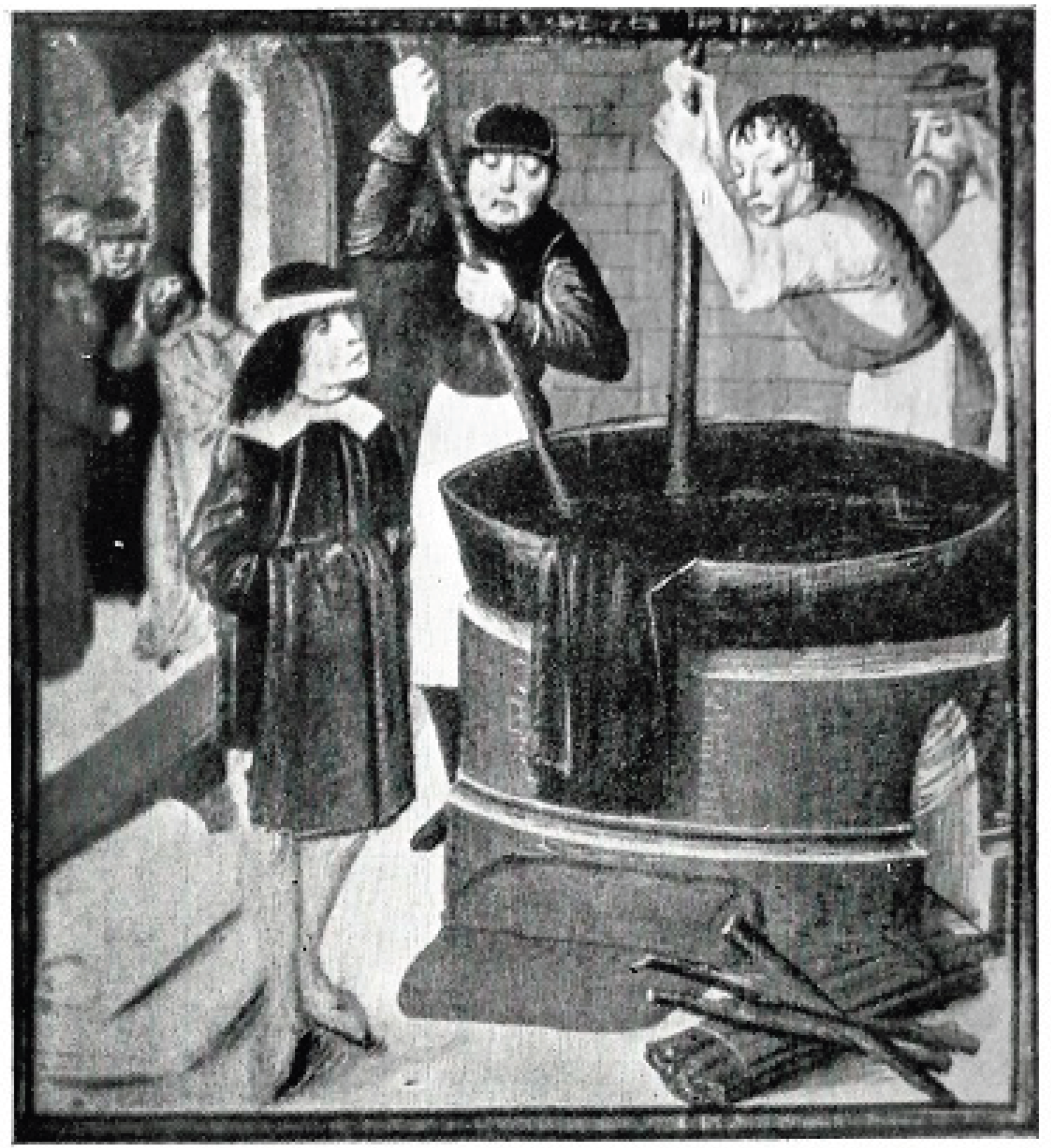
A fifteenth century mediaeval woad vat is illustrated in Figure 8 but further details were not disclosed[51],
Synthetic Indigo
Following many years of expensive research the commercial production of synthetic indigo was first achieved by Badische Anilin- und Sodafabrik, now known as BASF, in Ludwigshafen in 1897. While the introduction of synthetic indigo did not affect commercial woad growing in the late nineteenth century – it was already nearly extinct – synthetic indigo could provide serious competition if the reintroduction of the woad growing industry were contemplated. The estimated production of synthetic indigo in 2025 was over 70,000 tons per year[52]. More than half of this production, 45,000 tons, was used by the denim industry[53].
The big stink
One drawback of the use of woad to produce an indigo dye vat is the terrible smell associated with it. The odour comes from the enzymatic breakdown of proteins in the woad leaf which give amino acids some of which (methionine and cysteine) contain sulfur. Following breakdown and alkylation the sulfur ends up as methane thiol, CH3SH. Methane thiol is smelly; it is the prominent component of human farts. Oxidation of methane thiol in air leads to dimethyl disulphide which is much smellier and also to dimethyl trisulfide which is a lot worse. The odour thresholds in micrograms per gram are 0.0012 for the disulfide and 0.0001 for the trisulfide[54]. Dimethyl trisulfide is also associated with the aroma of half decomposed dead human bodies. Some plants, e.g., Amorphophallus titanum (Titan Arum), or "corpse flower" known for its massive size and odour of rotting flesh, generate this aroma to attract insects from as far away as two miles who swarm to an expected feast on decomposed bodies but are disappointed: they only assist pollination. Readers who wish to sample the experience without encountering a woad vat could investigate botanic gardens who use these smelly plants to attract paying visitors.
When John Edmonds demonstrated the operation of a woad based indigo vat at Toulouse during the second international conference on woad in June 1998 everybody in the building knew when it was available from the characteristic aroma. The demonstration was very popular and the indigo vat was soon used for scarves, ties and T-shirts[55].
Shellfish purple provides an identical stench but the mechanism is quite different and unique. The colour precursors in shellfish are methylthio bromoindoxyl derivatives. Exposure to sunlight releases methane thiol, allows the bromoindoxyls to dimerise and then, exposure to air gives the dibromoindigo. For every molecule of dye that is generated you release two molecules of methane thiol! A big stink is guaranteed [56].
The 21st century
The upsurge of interest in woad as a source of indigo can be demonstrated by comparing the number of mentions in published literature for different years. Looking at the number of publications using Google Scholar it is clear that the number of mentions has increased from 55 in the year 2000 to 254 in the year 2025.
Spindigo
Sustainable Production of Plant-derived Indigo (SPINDIGO) was a European Union funded project costing 3.6 million Euros which ran between the years 2000 and 2003. The aim was to take 5% of the indigo market, then currently about 80,000 tonnes (1 tonne = 1,000 Kg) each year, by using woad as a source. Various studies included determining the best strains of woad to use, the optimum growing conditions, extraction methods and the different methods of reducing indigo to give leuco-indigo. Companies and universities in six countries were involved: England, France, Spain, Germany, Italy and Finland.
One study investigated the genes which are involved in the metabolic pathways of indigo biosynthesis in woad, in particular, (i) the alfa-tryptophanase gene which is involved in the first step of indican biosynthesis and (ii) the beta-D-glucosidase gene which is involved in indican hydrolysis which leads to the release of indoxyl groups and subsequently to indigo synthesis [57].
Another of the objectives of the Spindigo project was to provide a means for European farmers to produce natural indigo with a purity of at least 90%. This paper considered the nature and origin of the impurities in natural indigo. The effect of kaempferol, soil and woad extract on the yield and purity of indigo produced from indoxyl acetate hydrolysed with potassium hydroxide was measured. It was found that indigo can be extracted from woad with a purity of 90% if three conditions are met: the leaves contain a sufficiently high yield of indigo precursors; the leaves are rinsed free of soil; and the indigo is sedimented in an acid medium [58].
A variety of reduction methods of indigo were investigated and included a literature survey with 141 references by Anne Vuorema at the University of Turku in Finland[59]. This study also investigated the electrochemical analysis methods used for indigo and gave an insight into the reduction mechanism of indigo.
The main conclusion of the Spindigo project was that more work needed to be done.
The investigations of Philip John and colleagues mentioned above (ref. 58) have been reported in more detail. A reliable procedure for the spectrophotometric determination of indigo using N-methyl-2-pyrrolidone as solvent was developed. In a novel application of fluorescence spectroscopy, the indoxyl intermediates of indigo formation were shown to be stable for several minutes. Bright field microscopy of indigo products and scanning electron microscopy combined with energy-dispersive X-ray analysis revealed the relationship of indigo with particulate materials[60].
The Spindigo project did seem to encourage woad growing in Europe. In England, a field of woad was grown at the Chiltern Open Air Museum, Buckinghamshire [61] and a company was formed by Ian and Bernadette Howard in Norfolk called Woad-Inc where woad was grown and used for dyeing[62]. In France, Le Bleu de Lectoure located in the town of Lectoure in the Gers department of France produce indigo from woad and offer a range of products, including clothing, textiles, and sometimes art materials, coloured with this natural blue pigment[63]. In Finland, woad plants were grown in Jokioinen, Finland (60o 49’N, 23o 29’E)[64]. While these activities contributed to the publicity and entertainment at the sites mentioned they did not lead to any commercial advancement in the use of woad as a source of indigo.
Given the burst of publications in the 21st century, authors often give a summary of the current state of knowledge about woad and indigo before adding more data to the pile, for example, Anne Vuorema in 2008 (reference 59), members of the Université de Toulouse in 2022[65] and Dominique Cardon et al in 2023 (reference 28).
In the twenty years since the SPINDIGO project took place much research has been published, but a revival of woad based indigo production on a commercial scale has yet to take place. The barriers to be overcome are
- (i)
- the cultivation and harvesting of woad and the subsequent processing is labour intensive
- (ii)
- the major indigo precursors in woad, the isatins, are fragile and easily decomposed
- (iii)
- enzymatic hydrolysis of the isatans leads to isatin which dimerizes, but at low concentrations the isatin decomposes before it meets another isatin molecule and consequently leuco-indigo is not produced and
- (iv)
- during the oxidation of leuco-indigo, the oxygen concentration is critical: too low and no conversion to indigo takes place and if too high, it leads to indirubin rather than indigo.
The future of woad seems to be … small scale woad growing with traditional processing for, in order: publicity, entertainment and research purposes.
One unusual woad use deserves a mention, even though not European or about indigo. Following studies in the Xinjiang Uygur Autonomous Region, China and Khujand City, Tajikistan, it was found that Uygur, Tatar, Krigiz, Kazak, Uzbek, and Tajik nationalities applied woad on the eyebrows to promote hair growth{66]. It was shown that indirubin was the active ingredient which simultaneously regulated Wnt/β-catenin and TGF-β/Samd signaling pathways leading to hair growth. “Our results indicated that I. tinctoria is of great potential for the development of novel hair loss remedies.” This might suggest that Roman soldiers were not only surprised by naked ancient Britons with blue skin but also by their unusual body hair growth.
Funding
This research received no external funding.
Acknowledgments
Dominique Cardon and Jenny Balfour-Paul have given the author permissions to use their illustrations in figures 2 and 4.:
Conflicts of Interest
The author declares no conflicts of interest.
Abbreviations
The following abbreviations are used in this manuscript
| BASF | Badische Anilin- und Sodafabrik |
| CE | Current Era |
| Date | format day.month.year |
| inc | incorporated |
| Kg | Kilogram(s) |
| ORCID | Open Researcher and Contributor ID |
| pp | pages |
| Ref | Reference |
| SPINDIGO | Sustainable Production of Plant-derived Indigo |
| UK | United Kingdom |
| URL | Uniform Resource Locator |
References
- Laura Longo, Mauro Veronese, Clarissa Cagnato, Giusi Sorrentino, Ana Tetruashvili, Anna Belfer-Cohen, Nino Jakeli, Tengiz Meshveliani, Moreno Meneghetti, Alfonso Zoleo, Antonio Marcomini, Gilberto Artioli, Elena Badetti, Karen Hardy Direct evidence for processing Isatis tinctoria L., a non-nutritional plant, 32–34,years ago. PLoS One 2025. 20(5), e0321262.
- Taseer Ahmad, Khawar Jabran, Bhagirath Singh Chauhan Studies on the ecology of dyer’s woad: a common non-crop weed worldwide Phytoparasitica 2025. 53:63. 11 pages.
- E. Armstrong, The Woad Plant and its Dye. Nature 1931 127, 658-659. [CrossRef]
- Jamieson B Hurry. The Woad Plant and its Dye. Oxford University Press. London. UK. 1930.
- Ref 4 p. 280.
- Jenny Balfour-Paul. Indigo: Egyptian mummies to blue jeans. The British Museum Press. London. UK. 1998. p. 90.
- RJH Clark, CJ Cooksey, MAM Daniels, R Withnall. Indigo, woad, and Tyrian Purple: important vat dyes from antiquity to the present. Endeavour 1993 17 (4), 191-199. [CrossRef]
- Rolf Haubrichs. L’étude de la pourpre: histoire d’une couleur, chimie et expérimentations. Preistoria Alpina Suppl. 1. 2004 133-160.
- Ruby Becker and Helen Banta. Adventures in Woad: Woad Dyeing in the Ancient, Medieval, and Modern Worlds. 2025 EXARC Journal Issue 2025/3 41 pages.
- Carola Hicks. The Bayeux Tapestry: The Life Story of a Masterpiece. Vintage Books. London 2007. 346 pages,.
- David Hockney, the Independent newspaper, Wednesday 14th January 2026.
- Hurry ref. 4, Chapter 6. The woad industry in Great Britain. Pp 51-93.
- Clark et al, ref. 7, p.194.
- Hurry, ref. 4, p.213.
- HO Clark and Rex Wailes. The Preparation of Woad in England. Transactions of the Newcomen Society 1935 16. pp 69-95. [CrossRef]
- Charles Giot, Etienne Clausse, Youri Carbonnier, Romain Vauquelin, Nicolas Joly, Patrick Martin and Pierre Schneider Isatis tinctoria & Indigo; A Spatiotemporal Culture in France and Elsewhere - Historical Review. American Journal of Plant Sciences, 2025, 16, pp. 287-300.
- Patrice G Rufino. Le Pastel Or bleu du Pays de Cocagne. Editions Daniel Briand. France. 1991. P.40.
- ref 17, many large illustrations, 15 x 23 cm, of buildings.
- John Edmonds. The History of Woad and the Medieval Woad Vat Historic Dye Series No. 1. Self published. UK. 1998. Pp, 12-15. URL: https://www.tekhelet.com/pdf/0905.pdf. Accessed 11.03.2026.
- Hurry, ref. 4, pp. 103-104.
- Hurry, ref. 4, pp. 120-121.
- Helmut Schweppe. Handbuch der Naturfarbstoffe: Vorkommen Verwendung Nachweis. Nikol Verlagsgesellschaft mbH & Co. Hamburg. Germany. 1993. pp. 295-296.
- Hurry, ref. 4, p. 206. Erfurt is widely mentioned in this publication (>20 times).
- Hurry ref 4, pp. 288-291.
- Hurry ref 4, p. 66.
- Hurry ref 4, p. 122 with a map on p. 124.
- Hurry ref 4, Chapter 9, The Woad Industry in Italy. Pp. 150-174. With a map on p. 151.
- Dominique Cardon, Zvi C. Koren, and Hisako Sumi. Woaded blue: a colorful approach to the dialectic between written historical sources, experimental archaeology, chromatographic analyses, and biochemical research. Heritage 6.1 (2023): 681-704. [CrossRef]
- Maria Stella Rossi, In the woad blue : history of a plant and a colour : itinerary in the art, craftmanship and archeology of "the blue gold" territories among Marche, Umbria and Toscana. 2021 - Il Lavoro Editoriale 95 p. URL: https://www.torrossa.com/it/resources/an/4987770. Last accessed 11.03.2026.
- Camilla Tartaglia, The hidden history of woad blue: a path through technology and diffusion of “European indigo” in 18th-century technical literature. Proceedings of the International Colour Association (AIC) Conference 2021 ISBN (International Standard Book Number) 9780648472438, pp. 971-976. URL: https://re.public.polimi.it/handle/11311/1204784. Last accessed 11.03.2026.
- Hurry ref 4, Chapter 2, The Cultivation of Woad, pp. 11-21. With illustrations.
- Helmut Schweppe (1941-2023). Handbuch der Naturfarbstoffe: Vorkommen Verwendung Nachweis. Nikol Verlagsgesellschaft mbH & Co. Hamburg. Germany. 1993. p. 296.
- Jenny Balfour-Paul. Indigo: Egyptian mummies to blue jeans. The British Museum Press. London. UK. 1998. p. 56.
- Daniel Schreber. Historische, physische und economische Beschreibung des Waidtes, dessen Baues, Bereitung und Gebrauchs zum Färben. Commission der Buchhandlung des Waysenhauses, 1752, 277 pages. It has been digitised: URL: https://scholar.google.co.uk/scholar?hl=en&as_sdt=0%2C5&q=Historische%2C+physische+und+economische+Beschreibung+des+Waidtes&btnG=Last accessed 11.03.2026.
- Illustration by Jenny Balfour-Paul in Dominique Cardon. Natural Dyes. Sources, Tradition, Technology and Science. Archetype Publications Ltd. London. UK. 2007. p. 369.
- Patrice G Rufino, ref 17. P. 42.
- Dominique Cardon. Zvi C. Koren, Hisako Sumi, see ref. 28.
- Hurry ref. 4, pp 24-25.
- Chris Cooksey. The ABC of isatans. In The Diversity of Dyes in History and Archaeology (Editor J Kirby), Archetype Publications Ltd. London. UK. 2017. pp. 390-397.
- Pirjo Yli-Hemminki, Juha-Matti Pihlava, Johanna Leppälä and Marjo Keskitalo. Microbes Associated to Dyer's woad (Isatis tinctoria L.): Pigment Extraction, Dyeing and Cultivation with Non-toxic Inputs. A Review. Current Microbiology, 2025, 11 pages. [CrossRef]
- Hélène von Eller, Stéréochemie de l’indigo dans l’etat cristallin. Comptes Rendus Hebdomadaires des Séances de l’Académie des Sciences, 1954. 239: pp. 975–976.
- Tetsuo Kokubun, John Edmonds and Philip John, Indoxyl derivatives in woad in relation to medieval indigo production. Phytochemistry, London. UK. 1998. 49, No 1, pp 79-87. [CrossRef]
- Thierry Maugard, Estelle Enaud, Patrick Choisy and Marie Dominique Legoy, Identification of an indigo precursor from leaves of Isatis) tinctoria (Woad), Phytochemistry, London. UK. 2001. 58, pp. 897-904. [CrossRef]
- Christine Oberthür, Bernd Schneider, Heidemarie Graf and Matthias Hamburger. The Elusive Indigo Precursors in Woad (Isatis tinctoria L.) – Identification of the Major Indigo Precursor, Isatan A, and a Structure Revision of Isatan B, Chemistry & Biodiversity, Zurich, Switzerland, 2004, 1, (1) pp. 174-182. [CrossRef]
- Christine Oberthür, Heidemarie Graf and Matthias Hamburger. The content of indigo precursors in Isatis tinctoria leaves: a comparative study of selected accessions and post-harvest treatments. Phytochemistry, London. UK. 2004, 65, 3261-3268. [CrossRef]
- ref. 40.
- Hurry ref. 4, p. 26.
- Hurry ref. 4, pp. 26-27.
- Edmonds ref. 19, p. 25.
- Ashley Stillwell-Hasan, Searching for Dubh: Experiments in Black Dyes Pre 15th Century in Ireland and Scotland, EXARC Journal Issue 2025/1 URL: https://exarc.net/sites/default/files/2025-03/Searching%20for%20Dubh_%20Experiments%20in%20Black%20Dyes%20Pre%2015th%20Century%20in%20Ireland%20and%20Scotland%20_%20The%20EXARC%20Journal.pdf (53 pages). Last accessed 11.03.2026,.
- Hurry, ref. 4, p. 31.
- José Adson Pereira dos Santos, Natália da Rocha Pires, Adonay Rodrigues Loiola and Ronaldo Ferreira do Nascimento, New insights into the removal of indigo blue dye from aqueous effluent using a low-cost adsorbent. Colloids and Surfaces A: Physicochemical and Engineering Aspects. Volume 711, 20 April 2025, 136338. [CrossRef]
- Romain Vauquelin, Léa Juillard-Condat, Nicolas Joly, Nathalie Jullian, Elodie Choque, and Patrick Martin. Study of Woad (Isatis tinctoria L.)-Extracted Indoxyl Precursors Conversion into Dyes: Influence of the Oxidative Media on Indigo Recovery Yields and Indigotin/Indirubin Ratio Measured by HPLC-DAD Method. Molecules 2024 issue 20 volume 29, 4804. 16 pages. [CrossRef]
- Song, Minhui, Yining Liu, Chenxiu Wu, Ke Wang, Zhen Yu, Jingting Zhang and Yongjian Yu. Molecular Insight into the Sensory Profiles of Four Solid-State Fermented Rice Vinegars: A Flavoromics Approach. In Table 3. 48 Pages Posted: 9 Jan 2026 Available at SSRN. URL: https://papers.ssrn.com/sol3/Delivery.cfm?abstractid=6049098. Accessed 11.03.2026.
- John Edmonds ref. 19. P. 37.
- Haubrichs, ref. 8. L’odeur de la pourpre. P.148.
- Rodolfo Bernardi, Franco Cecconi, Luciana Gabriella Angelini Studies of genes involved in the metabolic steps of indigo production in Isatis tinctoria. In Proceedings of the XLVII Italian Society of Agricultural Genetics-SIGA Annual Congress.
- Philip John, Kalani Seymour and Paulina Garcia Macias The Production of Natural Indigo with a High Purity URL: https://www.researchgate.net/profile/Philip-John-2/publication/268362162_The_Production_of_Natural_Indigo_with_a_High_Purity/links/56573ef508aefe619b1ee77a/The-Production-of-Natural-Indigo-with-a-High-Purity.pdf Accessed 11.03.2026.
- Anne Vuorema PhD thesis: Reduction and analysis Methods of indigo. URL: https://www.utupub.fi/bitstream/handle/10024/42825/AI388%20Vuorema.pdf. Accessed 11.03.2026.
- Paulina Garcia-Macias and Philip John Formation of Natural Indigo Derived from Woad (Isatis tinctoria L.) in Relation to Product Purity Journal of Agricultural and Food Chemistry Vol 52 Issue 26 November 2004. 7891-7896. [CrossRef]
- Chiltern Open Air Museum, Newland Park, Gorelands Lane, Chalfont St Giles, Buckinghamshire, England HP8 4AB. URL: https://www.coam.org.uk. Accessed 11.03.2026.
- Woad-Inc, Woad Centre, Rawhall Lane, Dereham, England NR20 4HH. URL: https://www.visiteastofengland.com/attraction_activity/woad-centre. Accessed 11.03.2026.
- URL: https://www.culture.gouv.fr/Media/Thematiques/Patrimoine-culturel-immateriel/Files/Fiches-inventaire-du-PCI/les-savoir-faire-lies-a-la-teinture-au-pastel-en-pays-de-cocagne.pdf. Accessed 11.03.2026.
- Anne Vuorema, ref. 59 p.24.
- Julia Mocquard, Anne-Cécile Le Lamer, Paul-Louis Fabre, Céline Mathieu, Clément Chastrette, Adrien Vitrai and Virginie Vandenbossche. Indigo dyeing from Isatis tinctoria L.: From medieval to modern use. Dyes and pigments, Volume 207, November 2022, 52 pages. [CrossRef]
- Libin Zhang, Yu Zhang, Yao Fu, Xiong Zhang, and Yuhua Wang. Food of Eyebrow: Local Knowledge and Mechanism of Hair Growth Promotion of Isatis tinctoria L. Along the Silk Road. In Ethnobiology and Development in Asia: The Belt and Road Initiative, Volume 2, pp. 3-29. Cham: Springer Nature Switzerland, 2026. URL: https://link.springer.com/chapter/10.1007/978-3-032-13573-5_1. Accessed 11.03.2026.
Figure 1.
The woad plant with seeds (left) and a flower (right).
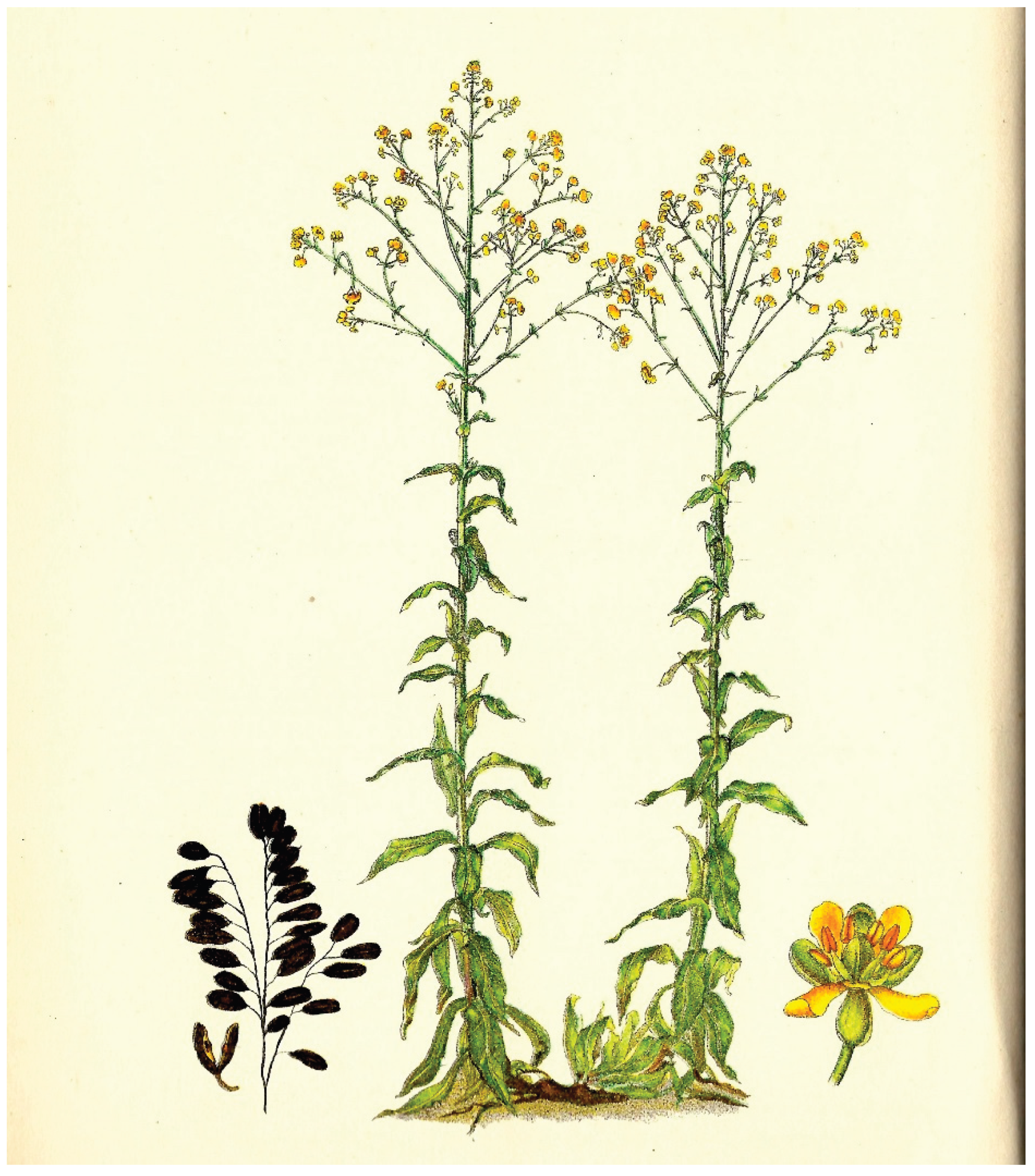
Figure 2.
Map of indigo-producing plants.
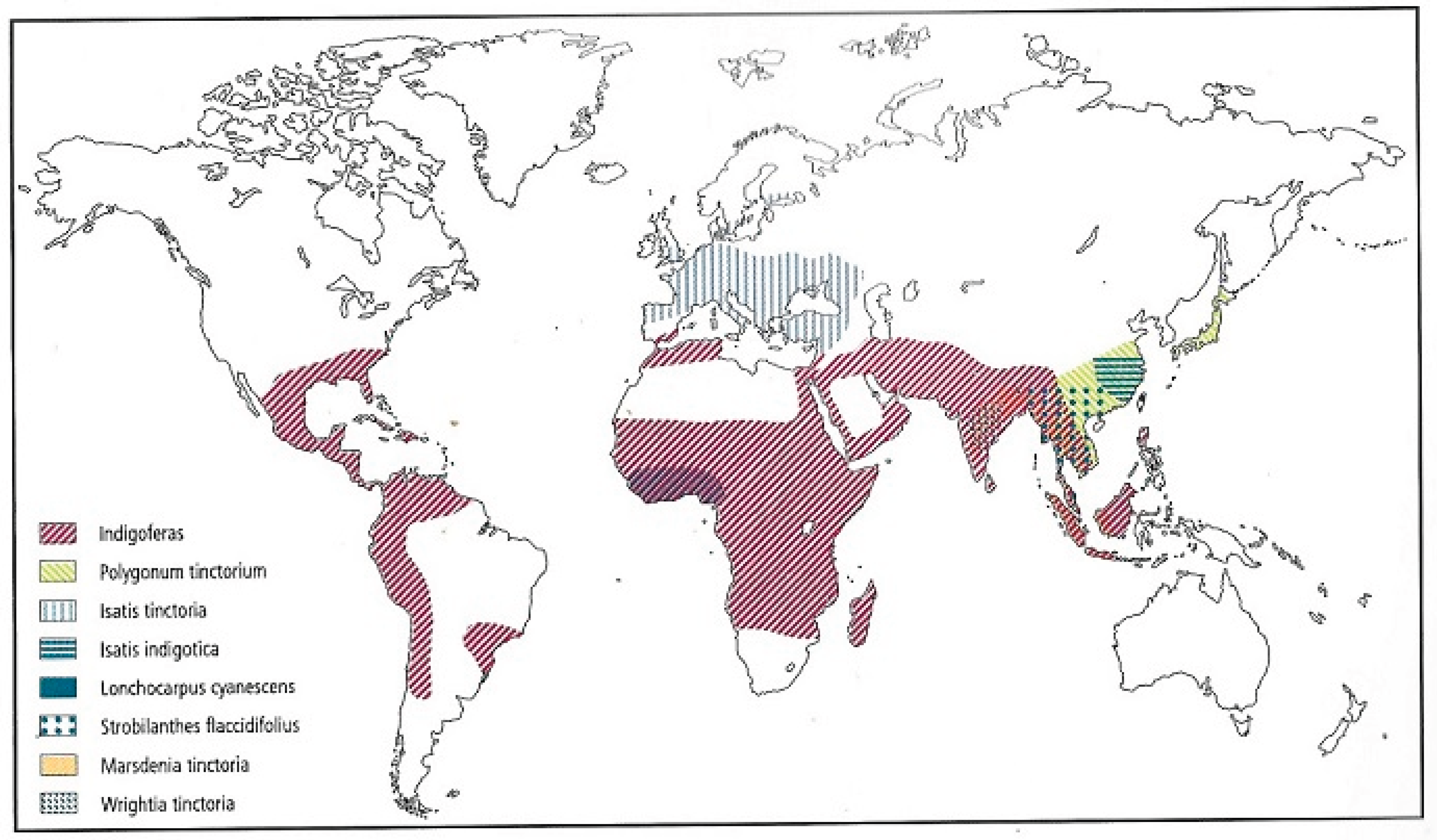
Figure 3.
Drawing of a woad mill dated 1762.
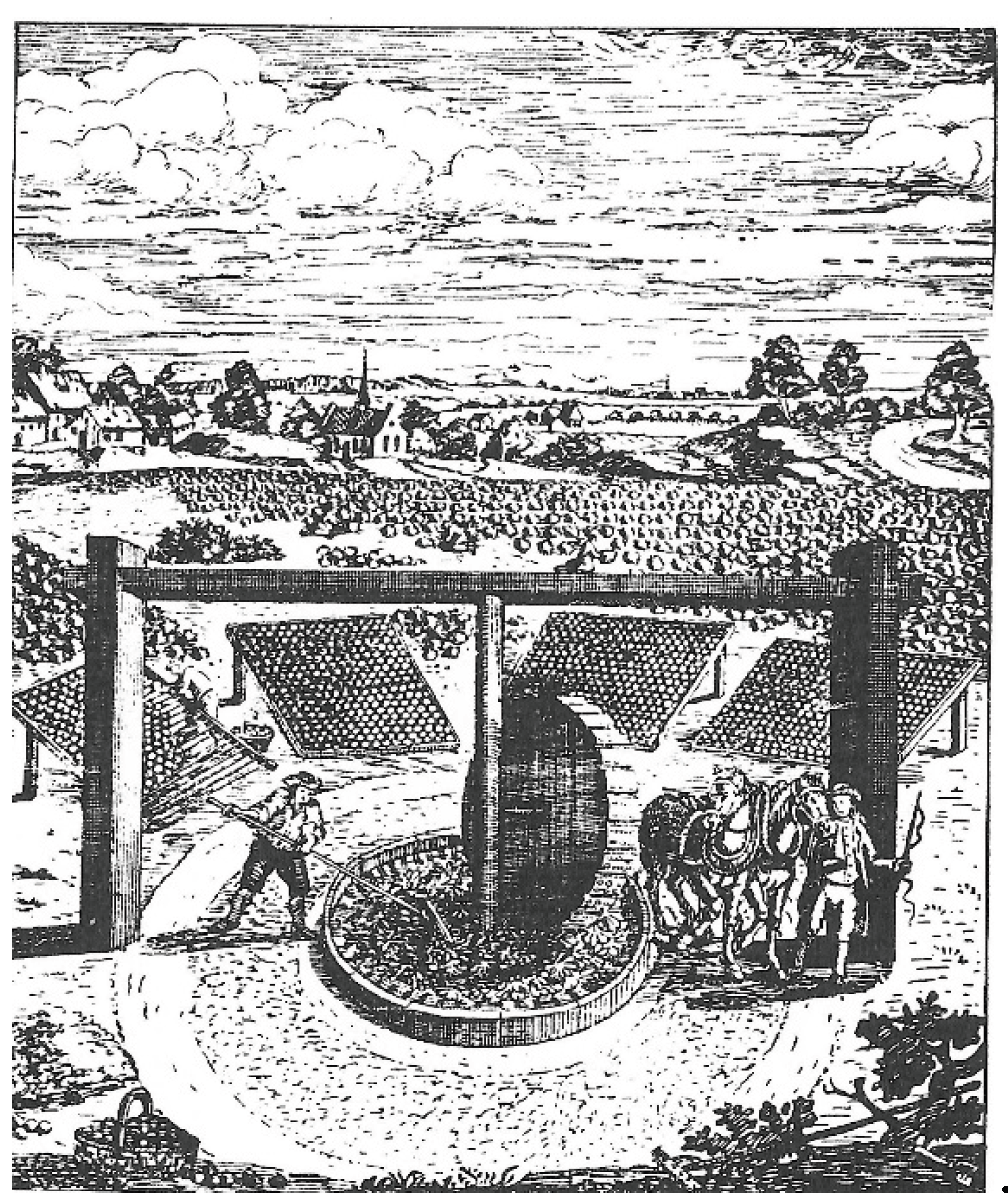
Figure 4.
A restored woad mill in Thuringia in 1992.
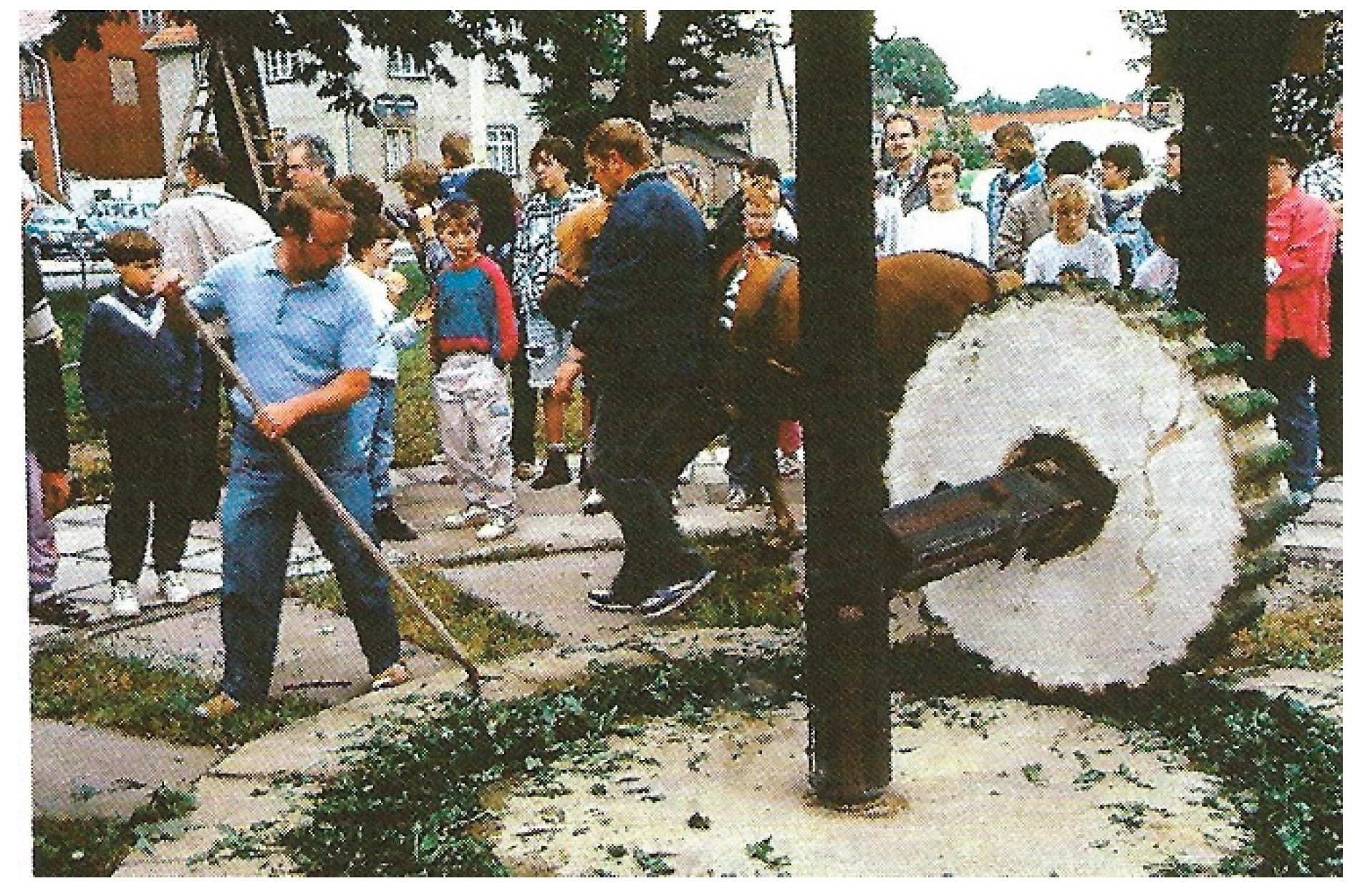
Figure 5.
A fresh woad ball.
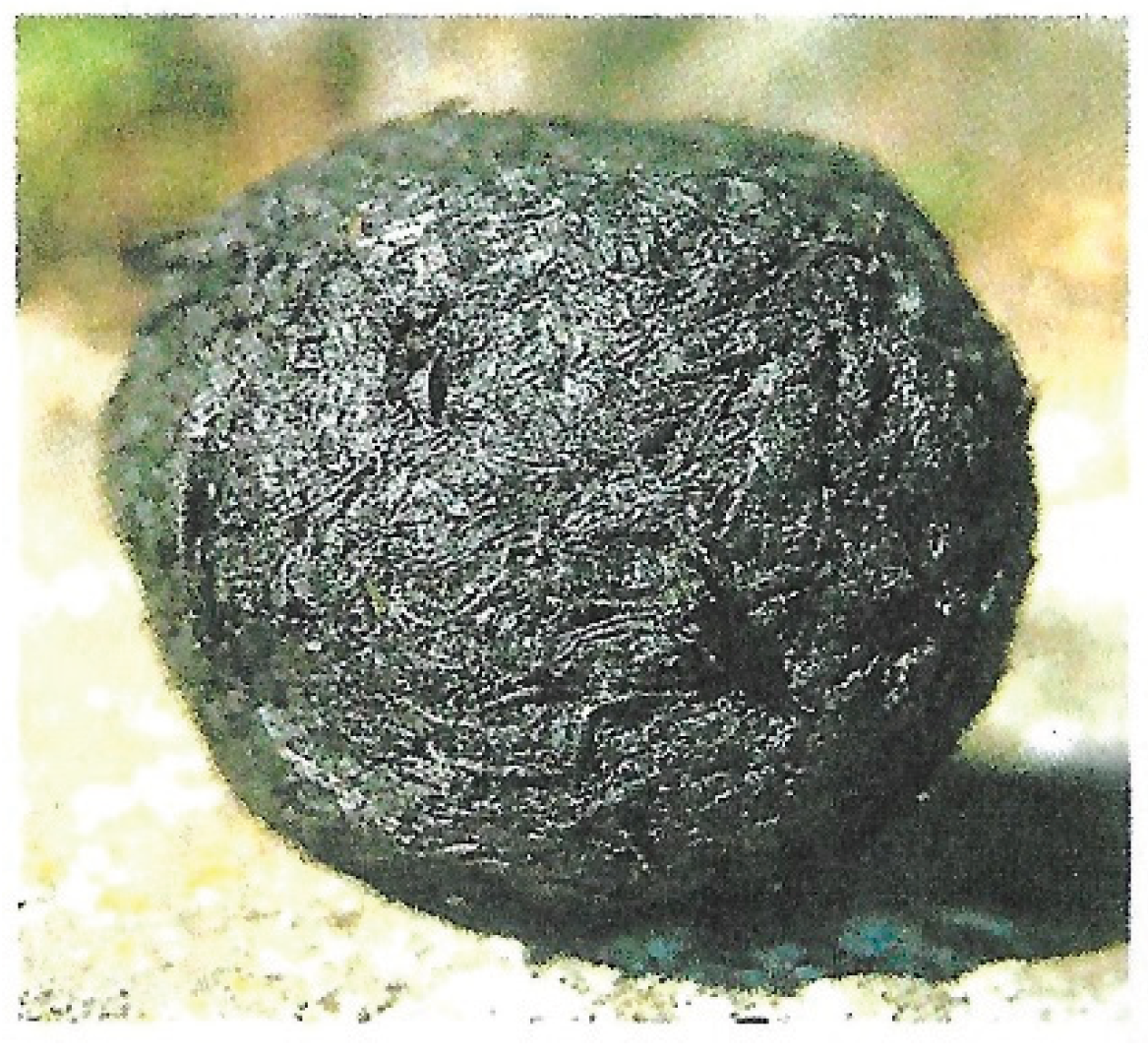
Figure 6.
A mature woad ball.
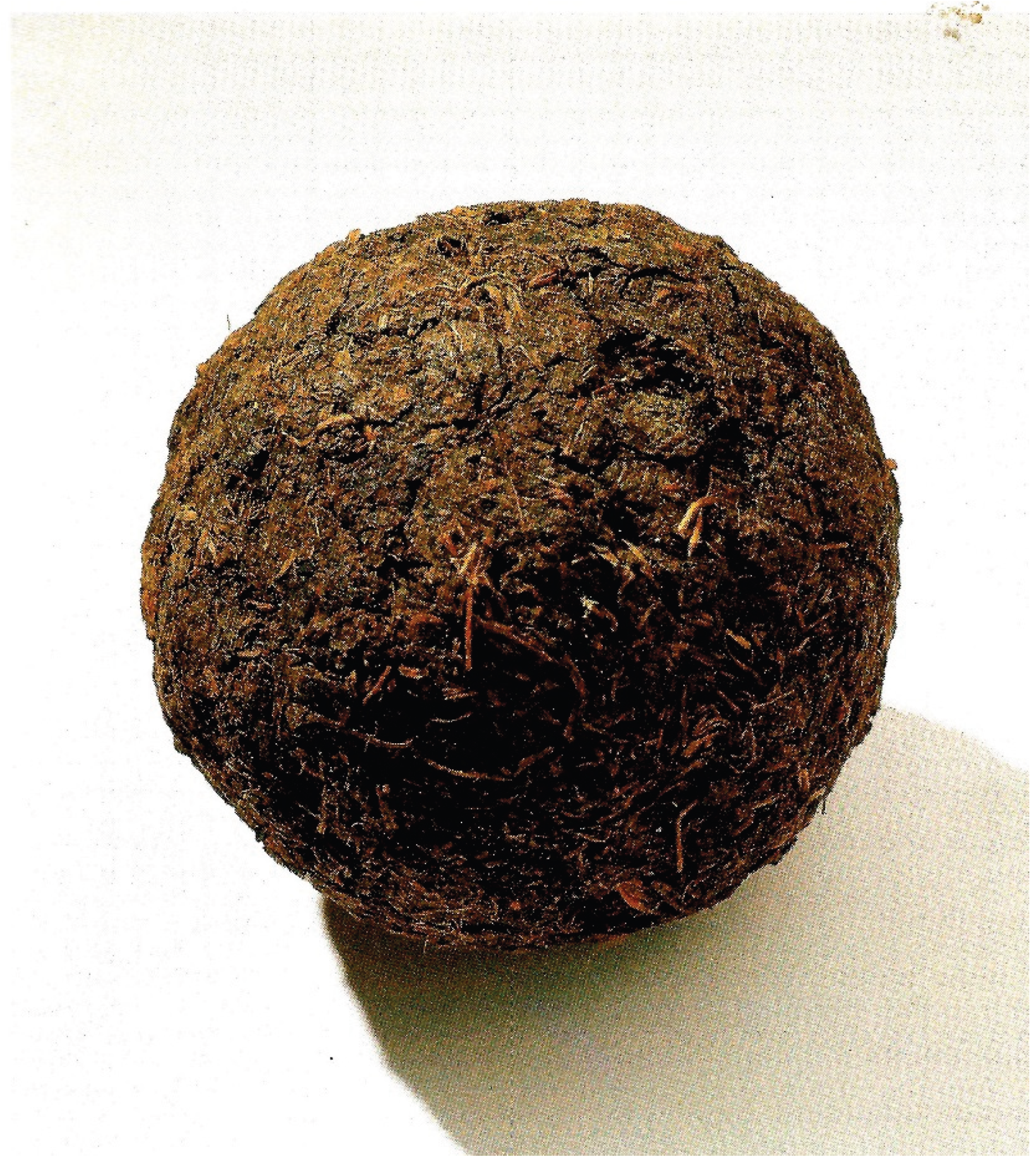
Figure 7.
The structures of indigo precursors, indigo and indirubin.
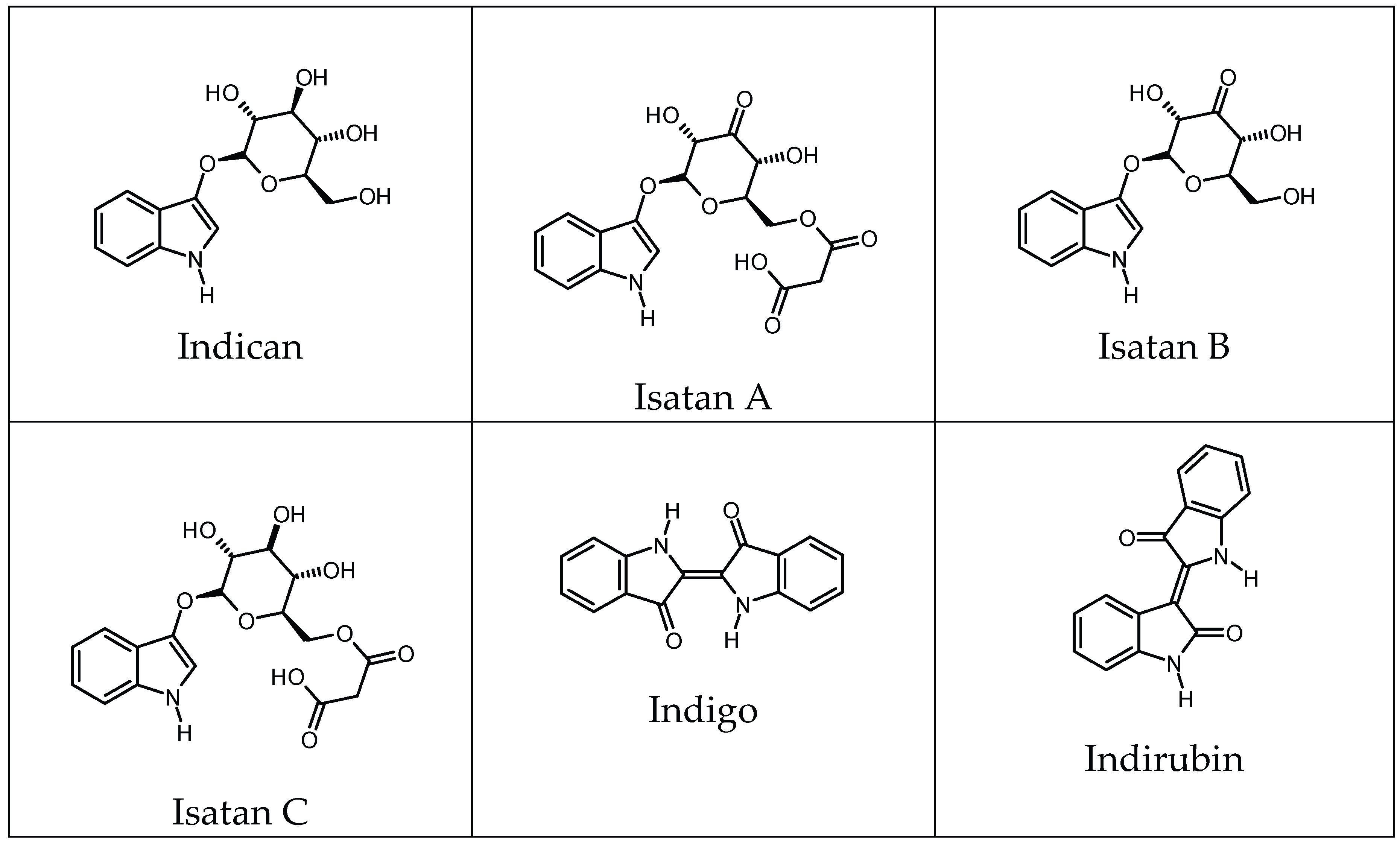
Figure 8.
A fifteenth century mediaeval woad vat.
Disclaimer/Publisher’s Note: The statements, opinions and data contained in all publications are solely those of the individual author(s) and contributor(s) and not of MDPI and/or the editor(s). MDPI and/or the editor(s) disclaim responsibility for any injury to people or property resulting from any ideas, methods, instructions or products referred to in the content. |
© 2026 by the author. Licensee MDPI, Basel, Switzerland. This article is an open access article distributed under the terms and conditions of the Creative Commons Attribution (CC BY) license.
Copyright: This open access article is published under a Creative Commons CC BY 4.0 license, which permit the free download, distribution, and reuse, provided that the author and preprint are cited in any reuse.


