

Submitted:
10 April 2026
Posted:
13 April 2026
You are already at the latest version
Abstract
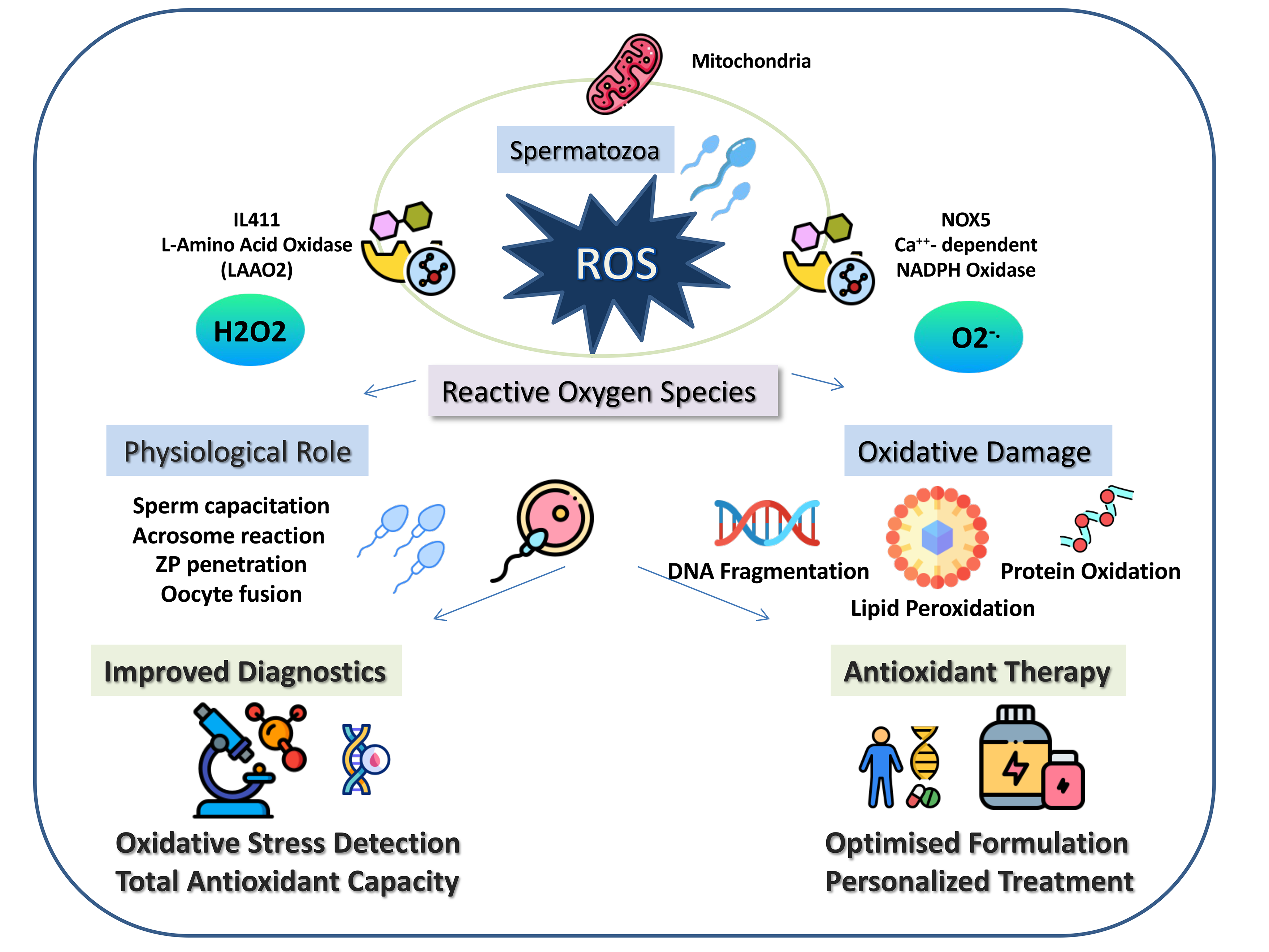
Oxidative stress is one of the few defined causes of male infertility affecting at least one third of patients attending infertility clinics. Human spermatozoa are vulnerable to this form of attack because their stripped-down architecture means that they possess limited antioxidant protection and little capacity for biochemical repair. They also compound their vulnerability by being active generators of reactive oxygen species (ROS) and possessing multiple substrates for oxidative damage. The major sources of ROS in these cells are their mitochondria, an L-amino acid oxidase (IL4I1) and a calcium-dependent NADPH oxidase (NOX 5). Spermatozoa tolerate the risks associated with ROS generation because their biology is heavily dependent on redox regulation. ROS are important mediators of sperm capacitation, stimulating the generation of cAMP and prostaglandins, inhibiting protein phosphatases and encouraging removal of cholesterol from the plasma membrane. Furthermore, during fertilization, the ability of ROS to activate metalloproteinases facilitates penetration of the zona pellucida and sperm-oocyte fusion. While ROS are physiologically important for sperm function, the over-production of these metabolites can impair sperm function. Antioxidants have therefore assumed some importance as a possible therapy for the infertile male. However, before this potential can be realized, we need to optimize the composition and dose of reagents used in such formulations and develop improved methods of diagnosing oxidative stress within the patient population.
Keywords:
male infertility
; spermatozoa
; oxidative stress
; mitochondria
; NADPH oxidase
; L-amino acid oxidase
; lipid peroxidation
; DNA damage
; antioxidants
Copyright: This open access article is published under a Creative Commons CC BY 4.0 license, which permit the free download, distribution, and reuse, provided that the author and preprint are cited in any reuse.


