
Submitted:
09 April 2026
Posted:
10 April 2026
You are already at the latest version
Abstract
This article explores how memory emerges through material environments and em-bodied practices in historic wooden neighbourhoods. Drawing on research from the WoodiSH project (Wooden Cities: Memory, Sustainability and Craft in Historic Neigh-bourhoods), the study examines how knowledge and cultural memory become embed-ded in-built environments through everyday practices of dwelling, repair, and craft.
The article proposes the concept of terroir as a conceptual framework for understand-ing historic environments as place-bound ecologies of memory. Originally associated with viticulture, terroir is here expanded to describe how relationships between land-scape, materials, craft traditions, and human practices shape the character and memory of place. By combining this concept with theoretical perspectives from mate-rial culture studies, phenomenology, and 4E cognition (embodied, embedded, enactive, and extended cognition), the article argues that memory is not located solely in human minds but distributed across people, materials, tools, and environments.
The discussion further draws on Tim Ingold’s concepts of meshwork and wayfaring to show how knowledge about built heritage emerges through movement, engagement, and practical interaction with material environments. Historic wooden neighbour-hoods in Trondheim, Vilnius, and Pori are approached as living archives in which traces of use, repair, and everyday life accumulate in buildings and landscapes.
The article concludes by suggesting that heritage environments should be understood not only as objects of preservation but also as pedagogical and cognitive landscapes. Through attentive engagement with materials, surfaces, and practices, researchers, craftspeople, and residents participate in ongoing dialogues with the past. Memory, in this perspective, is not simply remembered—it is encountered, inhabited, and sus-tained through material practice.
Keywords:
terroir
; material memory
; wooden built heritage
; embodied cognition
; craft knowledge
; meshwork and wayfaring
; material culture
; cultural landscapes
1. Introduction
This article emerges from the research project WoodiSH (Wooden Cities: Memory, Sustainability and Craft in Historic Neighbourhoods) and from the panel “Remembering the Old and Questioning the Future.” The project investigates how memory, knowledge, and identity are embedded and enacted within historic wooden neighbourhoods in Finland, Norway, and Lithuania. Rather than treating these environments as passive remnants of the past, we approach them as living cultural landscapes in which material practices, tacit knowledge, and everyday routines continue to shape social continuity.
Figure 1.
How life lived in a wooden house characterizes and leaves tactile memories.
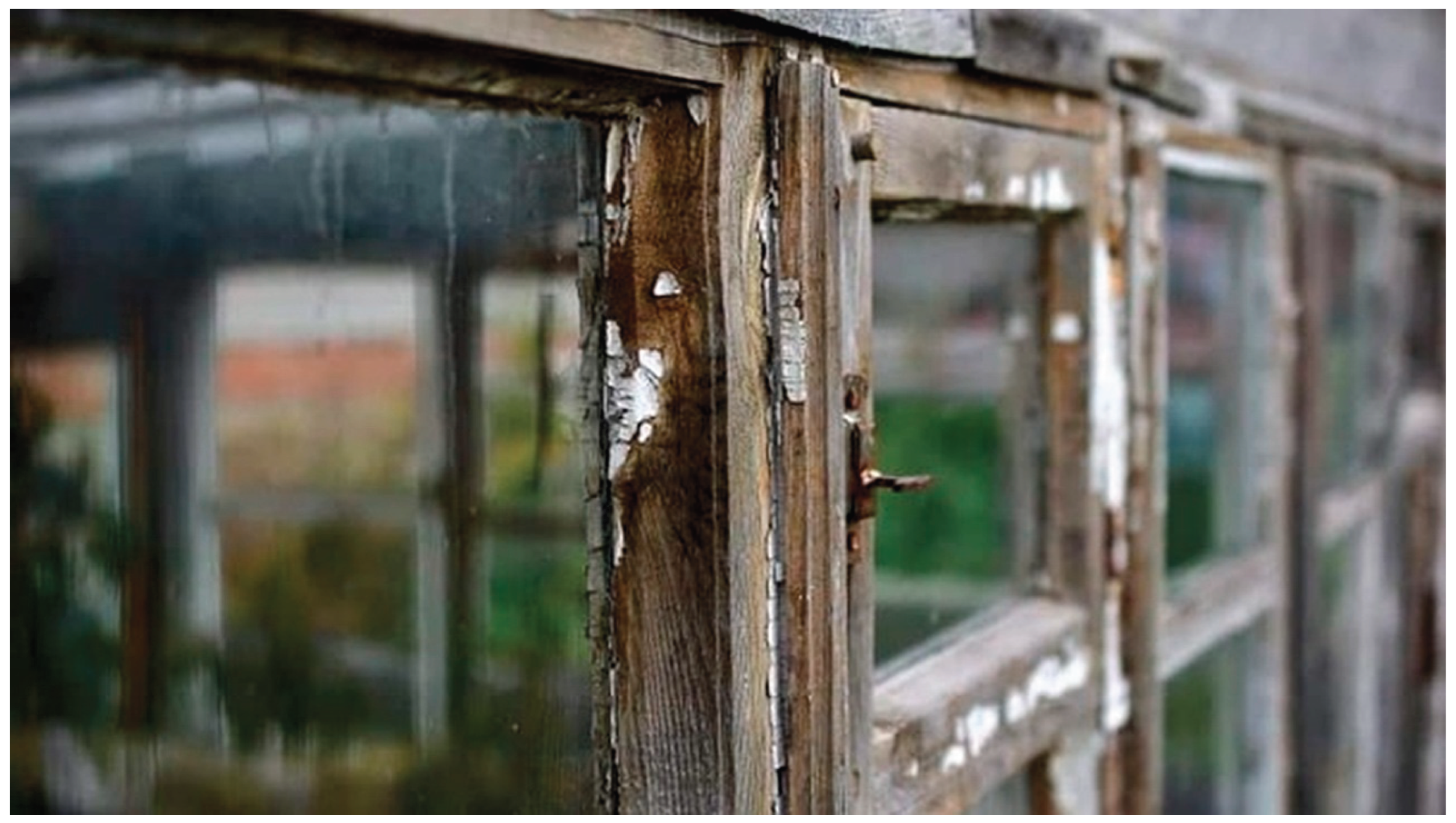
Historic wooden environments are often described through architectural history, conservation policy, or urban planning. Yet such approaches frequently overlook the sensory, embodied, and practice-based dimensions of memory embedded within these places. Wooden houses, workshops, and neighbourhood structures are not simply objects of preservation; they are environments where gestures accumulate, repairs unfold, and traces of lived experience remain inscribed in materials.
This article therefore explores how memory may be understood as materially distributed, emerging through interactions between people, materials, and places. The analysis builds upon concepts from material culture studies, craft research, and embodied cognition, and draws particularly on the notion of terroir as a framework for understanding how knowledge and memory become grounded in specific environments.
Figure 2.
The workshop.
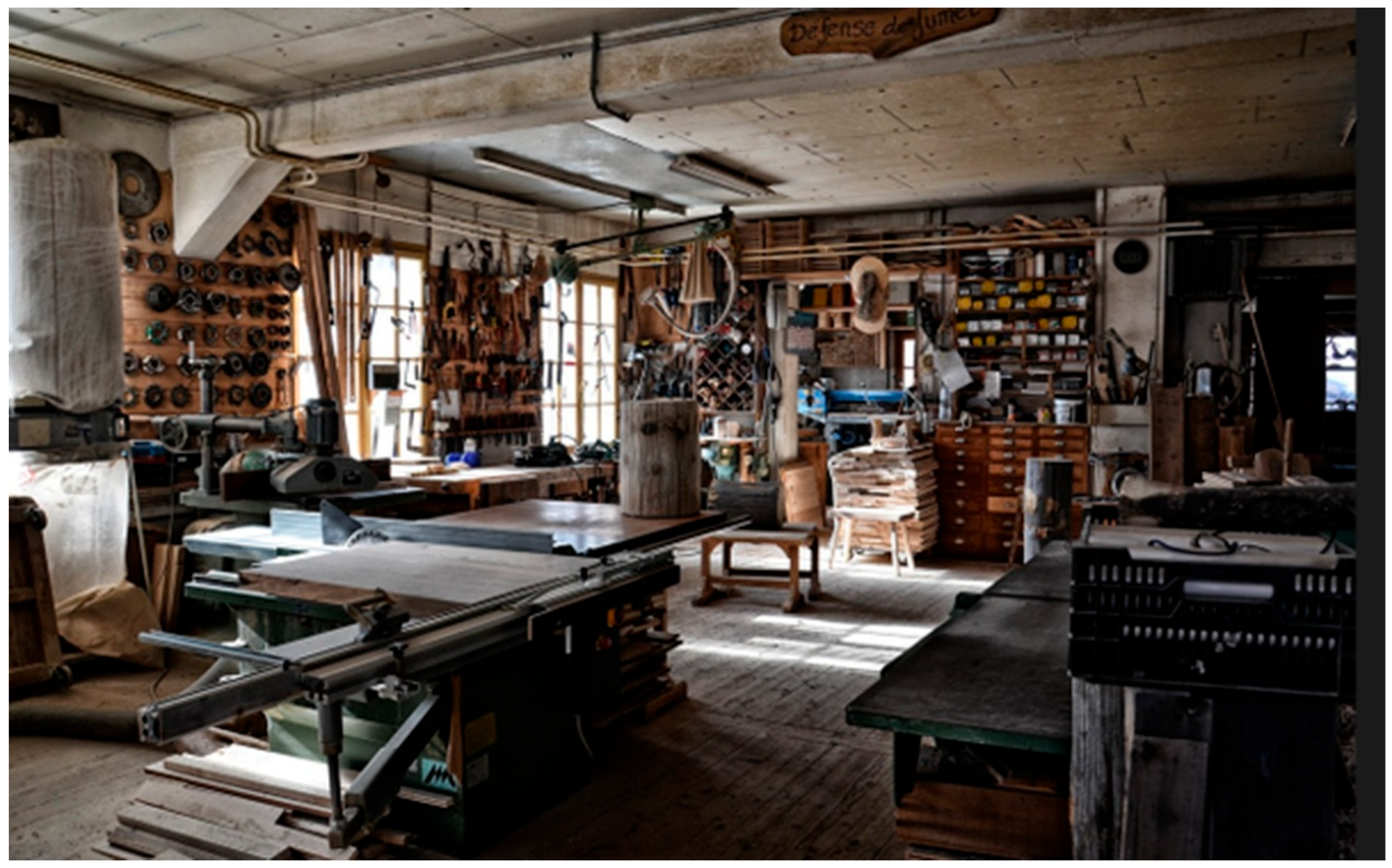
The argument is introduced through a personal encounter with material memory.
Following the death of my father several years ago, I returned to his workshop to sort through his belongings. The smell of his clothes remained faintly present. Tools lay where he had last used them. The space felt suspended in time. What unfolded in that moment was not simply recollection in the cognitive sense, but an encounter mediated through material surroundings. The objects did not merely remind me of him; they seemed to invite participation in a shared past.
This experience suggests that memory does not reside exclusively in the mind. It may also dwell in things, gestures, and environments. The workshop did not function as a symbolic reminder but as a material field of presence, where memory emerged through sensory engagement with tools, space, and atmosphere. It is precisely this form of place-bound memory that this article approaches through the concept of terroir.
2. Objective and Research Question
This article proposes a conceptual reframing of how memory and cultural heritage may be understood in relation to material environments and embodied practice.
The central research question is: How can the concept of terroir, expanded through theories of embodied cognition and material culture, contribute to understanding memory within historic wooden neighbourhoods?
More specifically, the article explores three related questions:
- How does memory become embedded in material environments and everyday practices?
- How do people learn to read and interpret such environments through embodied engagement?
- How might concepts such as terroir, meshwork, and wayfaring provide analytical tools for understanding built heritage as a living archive?
By integrating perspectives from anthropology, archaeology, craft research, and cognitive theory, the article argues that historic environments should not be approached solely as objects of preservation. Instead, they can be understood as material ecologies of memory, where knowledge is enacted through interaction with tools, materials, and places.
3. Terroir as Conceptual Framework
The French term terroir is most commonly associated with viticulture, referring to the combination of soil, climate, landscape, and local cultivation practices that shape the distinctive character of wine. Yet the concept also carries broader cultural meanings.
Figure 3.
Terroir of people, practice, nature and place. French farming landscape with wines (left), Vilnius Šnipiškės (in the middle) and typically Norwegian cultivated landscape (right).
Figure 3.
Terroir of people, practice, nature and place. French farming landscape with wines (left), Vilnius Šnipiškės (in the middle) and typically Norwegian cultivated landscape (right).
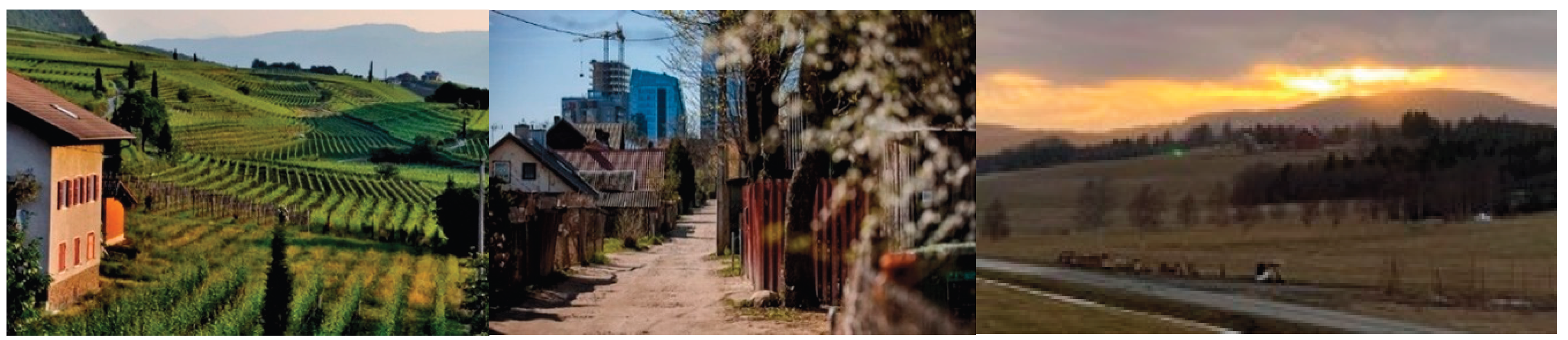
During periods of fieldwork and professional collaboration with winemakers in southern France, I came to understand that terroir extends beyond natural conditions such as sunlight, soil composition, or humidity. Terroir also encompasses human practices, temporal rhythms, and cultural attention. Stone walls, vineyard paths, cellar temperatures, seasonal routines, and inherited craft knowledge all contribute to the character of place.
In this sense, terroir represents a relationship between environment, practice, and memory. It refers not only to what grows in the soil but also to how people dwell, cultivate, repair, and inhabit their surroundings.
When translated into the context of cultural heritage, terroir offers a powerful way of understanding historic built environments. A wooden house, a workshop, or an urban neighbourhood may be approached as a cultural terrain where material traces and human practices intertwine.
Within the WoodiSH project we have often described such environments as “material libraries.” Time is written into surfaces: in weathered wood, in repaired beams, in replaced boards, and in the gradual layering of paint and use. These traces do not merely represent history; they are expressions of lived time.
Terroir therefore becomes a way of recognising heritage environments as sensory, historical, and skill-bound landscapes. Rather than static monuments, they appear as evolving fields of interaction where nature, culture, and craftsmanship remain entangled.
4. Meshwork and Wayfaring
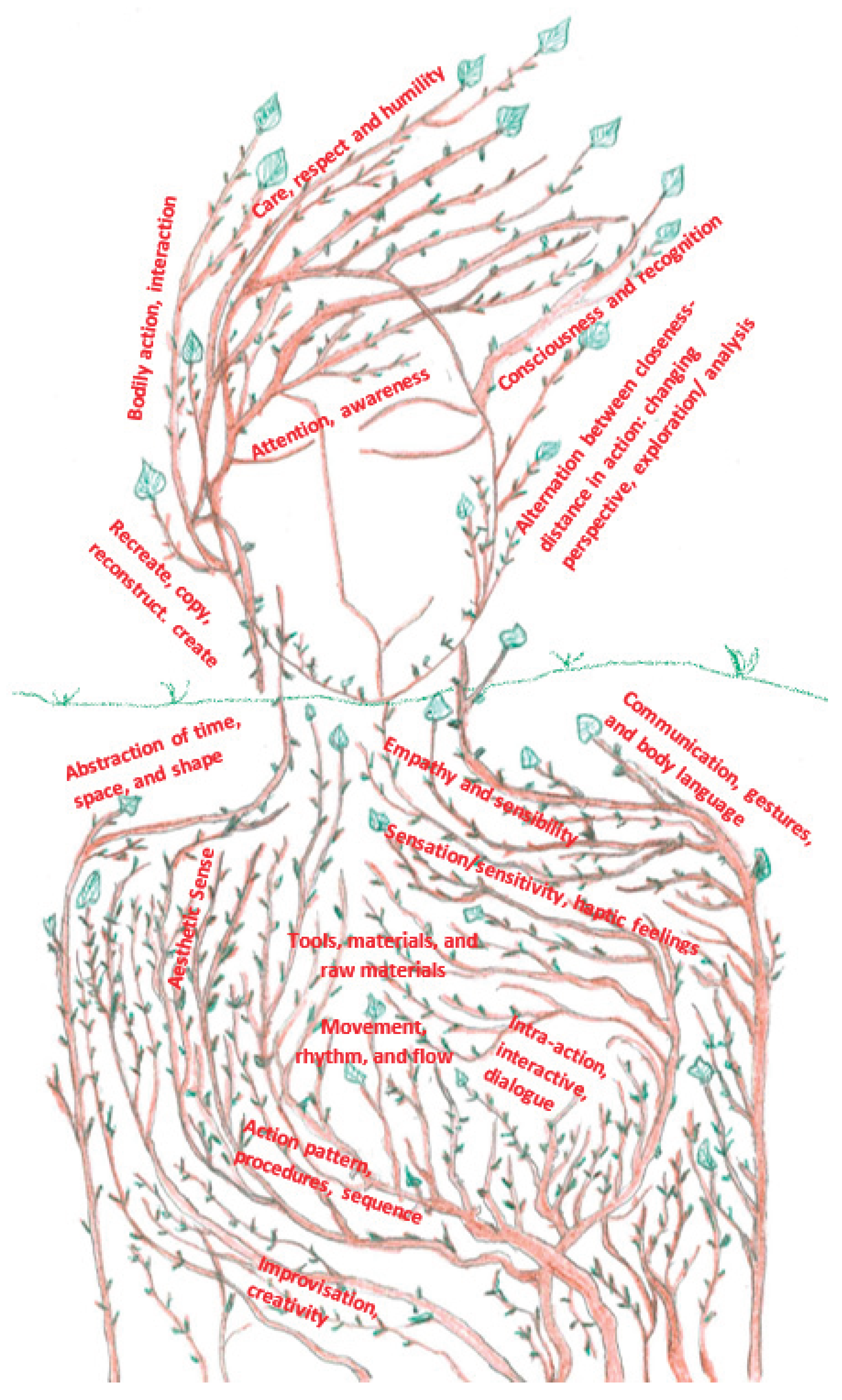
Tim Ingold gives us two key concepts that help us unpack this: meshwork and wayfaring. Meshwork is not a network of static points- it’s a living weave of paths and relationships. Imagine a forest: not a map of trees, or isolated units; but a tangle of roots, trails, wind patterns, and shared stories. Picture a historic neighbourhood, not as buildings, but as a web of lifelines where houses, people, repairs, materials, tools, habits, and traditions are all interwoven.
In Šnipiškės, Vilnius, for example, you don’t just study a street - you walk a memory path: of repairs, reused boards, improvised sheds, and garden routines handled down between neighbours. It’s not a blueprint. It’s a living weave.
Wayfaring describes the kind of knowing that comes from dwelling and doing. You don’t learn a building to know by analysing it in distance alone. You learn it by living in it, by repairing it, by tracing its textures with your hands.
Knowledge arises not before movement, but in it and through it. As students, researchers, craftspeople, or residents, we do not follow a script. We walk into meaning, step by step, with our hands, tools, materials, attention and senses engaged. They activate meshwork and wayfaring.
To understand a building solely through documentation or visual analysis is insufficient. Knowledge arises through inhabiting, repairing, and working with structures—through following the grain of wood, examining tool marks, or tracing the wear of doorframes.
In this perspective, meaning does not precede movement. It emerges through engagement with materials and places. Craftspeople, residents, and researchers alike enter into such environments not by following predefined scripts but by gradually discovering relations through practice.
Through wayfaring, the built environment becomes part of embodied memory.
Figure 4.
Meshwork and Wayfaring as empathy (Illustration: Harald B. Høgseth 2023).
5. The Phenomenology of Things
The archaeologist Bjørnar Olsen offers a complementary perspective for understanding how memory resides within material environments. In In Defense of Things (2010), Olsen argues that objects should not merely be treated as passive carriers of symbolic meaning. Rather, they possess their own form of presence and agency within human worlds.
Material objects, Olsen suggests, participate in social life through their durability, resistance, and persistence. They endure beyond individual human lives, accumulating traces of use and interaction. A weathered wooden wall, for instance, does not simply represent time—it is itself a material expression of time passing.
Figure 5.
Affect and presence through objects. Rooms with details of a lived life. How a bedroom can evoke intimate memories, even if it is not your own.
Figure 5.
Affect and presence through objects. Rooms with details of a lived life. How a bedroom can evoke intimate memories, even if it is not your own.
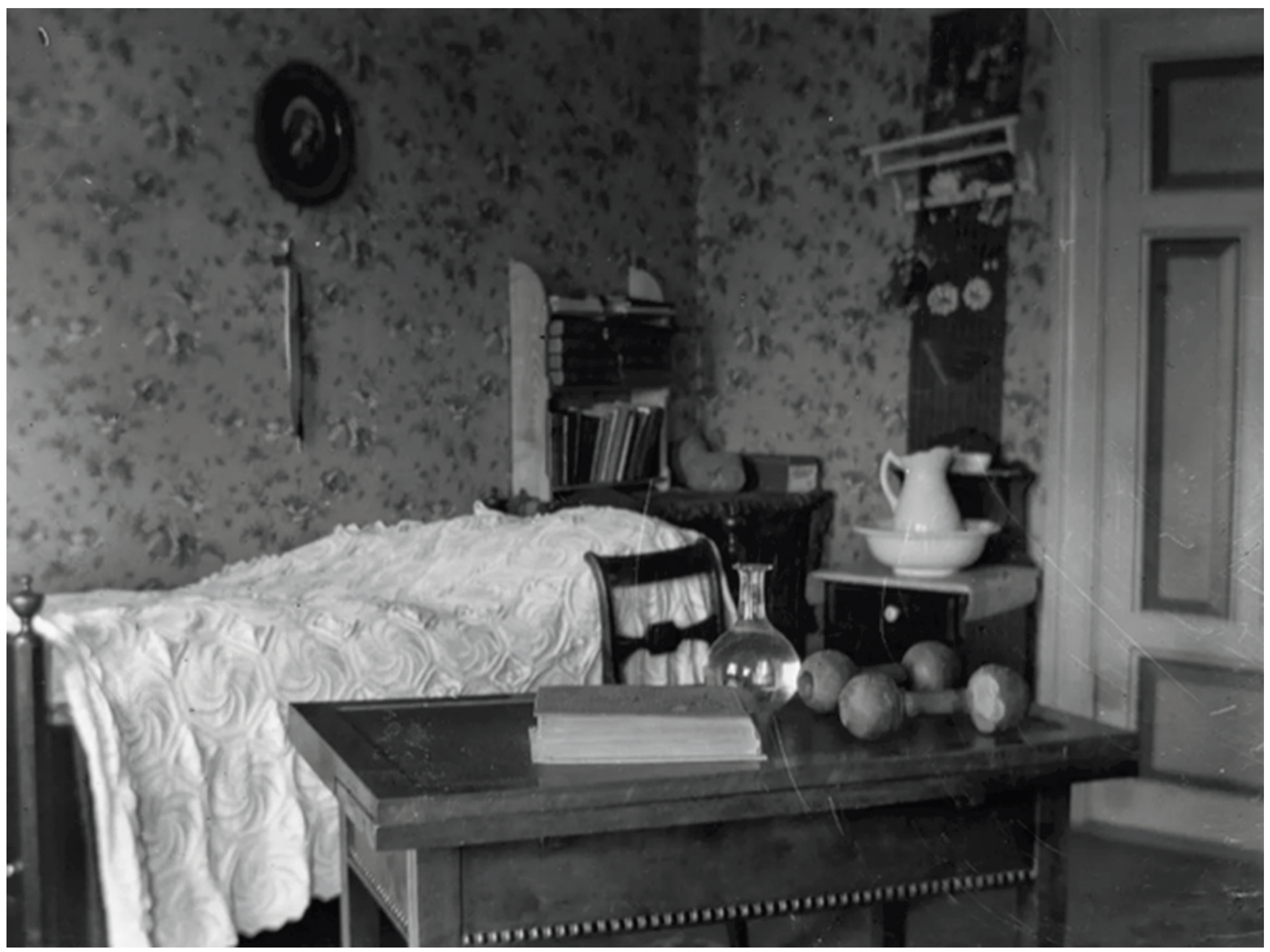
Olsen instead proposes a phenomenological approach that encourages us to attend to the textures, surfaces, and resistances of material culture. Wooden houses, workshops, and domestic spaces can thus be understood as memory-bearing bodies—structures shaped and reshaped through generations of use.
This insight resonates strongly with the concept of terroir introduced earlier. Memory does not merely reside in narratives about objects; it emerges through sensory engagement with material environments.
Rooms, tools, and buildings possess an affective capacity. A bedroom containing worn furniture, faded textiles, and personal belongings may evoke a sense of intimacy even for visitors unfamiliar with the individuals who once lived there. Such environments create atmospheres in which traces of lived life remain perceptible.
Material presence therefore plays a crucial role in shaping how memory is experienced.
6. Tacit Matter and Embodied Memory
Building on these observations, Olsen introduces the notion of tacit matter. This concept refers to forms of knowledge that reside not primarily in written documentation but in material traces and embodied practices.
Tacit matter becomes visible in tool marks left on wooden beams, in the wear of doorframes touched repeatedly over time, or in the layered surfaces of repaired walls. These traces reveal decisions, gestures, and forms of knowledge embedded in practice.
At this point, insights from 4E cognition become particularly relevant. The 4E framework—embodied, embedded, enactive, and extended cognition—emphasises that thinking and knowing do not occur exclusively within the brain. Rather, cognition emerges through interactions between body, environment, and material artefacts (Varela, Thompson & Rosch 1991; Gallagher 2017).
Within this perspective:
- knowledge is embodied in posture, gesture, and bodily skill
- it is embedded within specific environments and cultural contexts
- it is enacted through action and practical engagement
- and it is extended into tools and material surroundings
Historic buildings therefore function not merely as architectural structures but as cognitive environments where knowledge and memory are distributed across materials, tools, and practices.
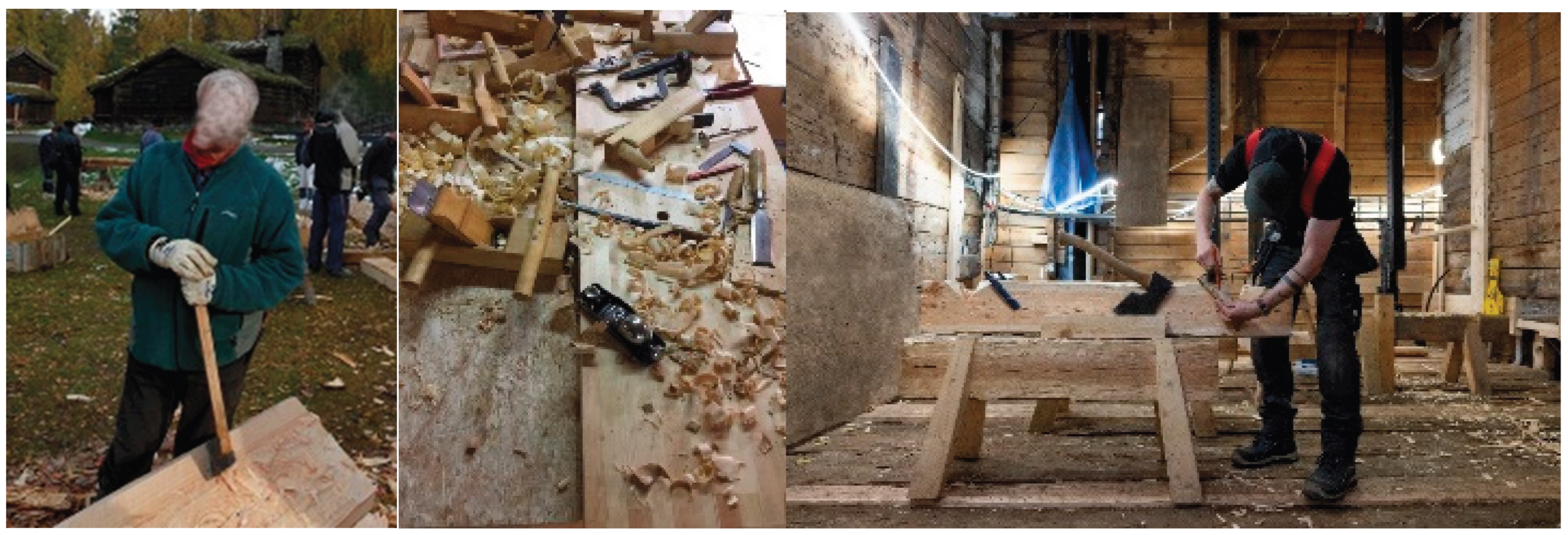
In Trondheim, for example, students in building conservation or art and craft at NTNU, learn not only from drawings or surveys, but through direct engagement with buildings themselves. A damaged beam, the way an old joint fit, or the remains of toolmarks are not just technical details. They were material expressions, knowledge and memories embedded within earlier craft practices. As carpenters repair and reconstruct such elements, they enter into a form of dialogue with the building. The material resists, guides, and informs their actions. Through this process, practitioners learn to “listen with their hands.”
But heritage management often strips these things of life - preserving facades while erasing gestures, materials, and the stories they carry. A polished surface may satisfy regulations, but it can betray memory. When memory is reduced to images or style, we lose the feel, the friction, the truth of lived space.
This is terroir in practice: knowledge emerging through interaction with place and material memory.
Tools, beams, and structural elements become active participants in the learning process. The hammer striking wood, the grain of a timber surface, or the fit of a joint are not passive elements; they contribute to shaping understanding.
Figure 6.
Students, craftsmen and craft researchers memorizing.
7. Natural Imperfection and the Aesthetics of Time
Reflections on the aesthetic qualities of ageing materials can be traced back to classical philosophy. In his Meditations, the Roman emperor Marcus Aurelius observes how natural processes often produce forms of beauty that arise precisely through imperfection.
He notes how cracks in baked bread, the splitting of ripe figs, or the weathering of natural surfaces may appear visually appealing because they reveal processes unfolding over time. Marcus Aurelius reflects on the beauty of natural imperfection:
“One must also pay close attention to the fact that what happens by chance in nature has something beautiful and attractive about it. When bread rises, the crust sometimes cracks. These cracks, which should not actually occur when baking bread, are a delight to the eye and in a way whet the appetite. The fig also cracks when it is completely mature. When the olive is ready to fall from the tree and is on the verge of rotting, it acquires beauty of its own. Hanging ears of corn, the loose skin of lions, the foam at the mouth of wild boars, and much else - If you look at it in isolation, it is far from beautiful, but because it is something that nature allows to happen, it is appealing and captivating ...” (Marcus Aurelius, Meditations, Book 3.2, trans. Hammond, 2006).
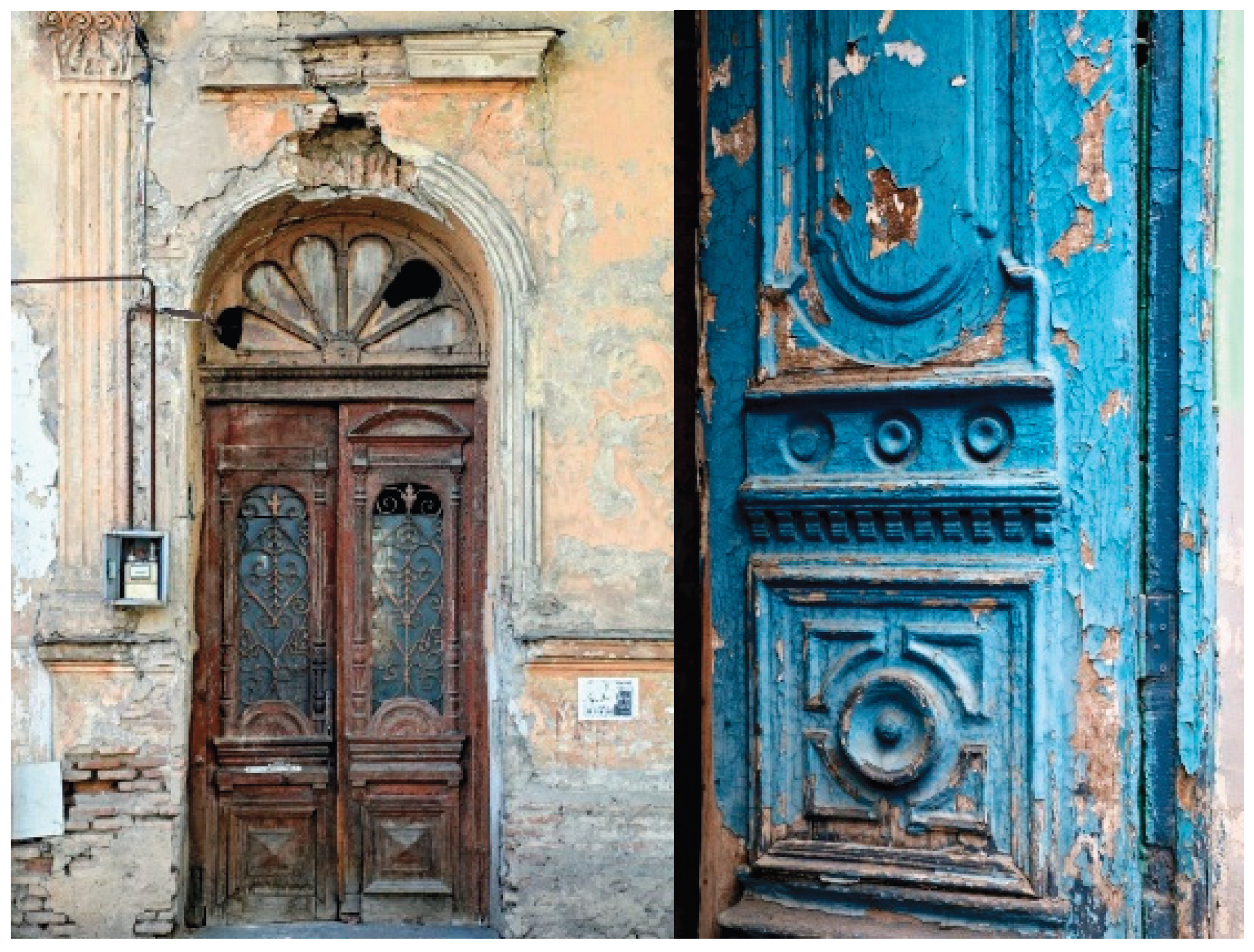
This stoic insight helps us reframe how we see aged wood, slanted walls, or rough or bumpy plaster - not as failures, but as the terroir of time. In historic wooden neighbourhoods, imperfection is not decay; it is authenticity. This wisdom maps onto how we must view wooden neighbourhoods - not as imperfect relics, but as living ecosystems of wear, repair, and time. Nature and culture are not separate - they are co-authors of beauty.
Such observations offer a useful lens for approaching historic wooden environments. Weathered timber, uneven walls, or rough plaster surfaces are frequently interpreted within conservation discourse as signs of deterioration requiring correction or restoration.
Yet from the perspective suggested by Aurelius, these features may also represent the aesthetic expression of time itself.
Ageing surfaces record cycles of repair, exposure, and adaptation. Rather than diminishing authenticity, such imperfections may strengthen the sense of continuity between past and present.
In historic wooden neighbourhoods, wear and repair become part of the environment’s material narrative. The gradual transformation of surfaces reflects ongoing interactions between human activity, climate, and time.
Nature and culture are therefore not separate forces acting upon buildings; they function as co-authors of material landscapes.
8. Wooden Neighbourhoods as Living Archive
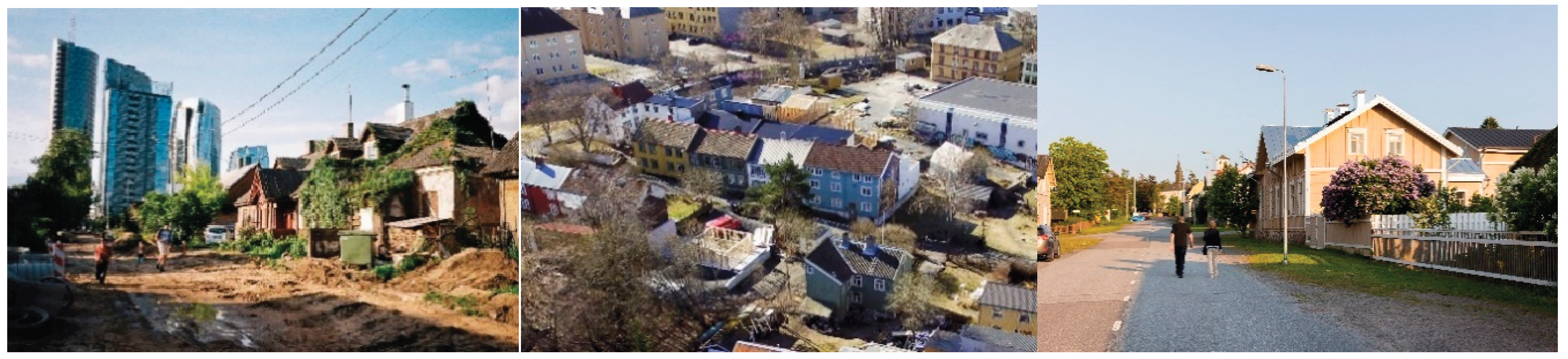
Within the WoodiSH project, historic wooden neighbourhoods in Trondheim, Vilnius, and Pori have been studied as examples of such living material archives. Memory within these environments does not exist solely in museum exhibitions or historical documentation. Instead, it unfolds within everyday structures: doorways, courtyards, sheds, fences, and workshops - in living traditions and material culture. These are relational heritage sites, where people continue to build, repair, argue, decorate, and dwell. Each modification leaves new traces while preserving older layers of material history.
These neighbourhoods therefore cannot be understood as static relics frozen in time. They are dynamic environments shaped by cycles of care, neglect, and renewal. Individual building elements reveal these processes. The replacement of boards, the reinforcement of joints, or the reuse of construction materials reflects practical decisions made by residents over generations. Each door and board, the selected and used materials, the toolmarks, joint connections or repairs tell a story. Such traces function as sensory narratives embedded in the built environment. They communicate knowledge about material availability, craft traditions, and everyday routines.
To protect these neighbourhoods, we must first listen. And to listen, we must touch, dwell, and learn - like the winemaker or like the craftsman. To read them, is not to decode a map. It is to enter a meshwork and wayfaring; to walk, to listen, to work.
To understand these environments fully requires a shift in perspective. Rather than reading buildings as symbolic representations of historical styles, researchers must learn to approach them as fields of interaction between materiality, practice, and memory.
This is where the concepts introduced earlier—terroir, meshwork, and phenomenology—intersect.
Historic neighbourhoods may be understood as terroirs of memory: environments where knowledge emerges through dwelling, movement, and care.
Figure 7.
The aesthetics of aging. The natural wear and tear is not something to be removed but understood – things are active mediators of lived life.
Figure 7.
The aesthetics of aging. The natural wear and tear is not something to be removed but understood – things are active mediators of lived life.
9. Toward a Pedagogy of Material Empathy
Recognising the role of material environments in shaping memory also has implications for heritage education and research practice.
Historic buildings should not be approached solely as problems to be solved or resources to be marketed. Instead, they may function as pedagogical partners in processes of learning and interpretation.
The concept of terroir encourages researchers, craftspeople, and educators to engage with heritage environments through attention, adaptation, and sensory awareness.
Such engagement requires time and presence. To understand a building’s history is not merely to decode architectural plans but to walk through spaces, observe materials closely, and participate in acts of maintenance and repair.
Learning in this context becomes experiential and relational. It involves cultivating sensitivity toward material traces, gestures of care, and accumulated knowledge embedded within environments.
In this sense, heritage education may be understood as a pedagogy of empathy—a practice of learning to ecognize the agency of materials and the histories they embody.
Figure 8.
The three cities - three terroirs. Commonalities and differences.
10. Conclusions
This article has explored how memory may be understood as a phenomenon emerging through material environments, embodied practices, and cultural landscapes.
By bringing together the concepts of terroir, meshwork, wayfaring, and 4E cognition, the analysis has suggested that historic wooden neighbourhoods function not merely as preserved artefacts but as living archives of practice and memory.
Material traces—tool marks, repairs, worn surfaces, and structural adaptations—record the accumulated gestures of those who have lived and worked within these environments. Memory is therefore not confined to human recollection but distributed across people, materials, and places.
Recognising this distributed character of memory calls for new approaches to heritage research and education. Rather than focusing exclusively on documentation or representation, scholars and practitioners must learn to engage with environments through dwelling, movement, and material attention.
Terroir provides a conceptual guide for such engagement. It reminds us that places acquire meaning through relationships between landscape, practice, and care.
Historic wooden neighbourhoods therefore invite us not only to interpret the past but to participate in ongoing material dialogues with it.
Through attentive engagement with these environments, memory becomes something we do not simply study—it becomes something we encounter, inhabit, and sustain.
Funding
This research received no external funding.
Data Availability Statement
The article is based on the author's study and fieldwork done specifically in the period 2003-2015 (some of the documentation can be found in: https://hdl.handle.net/11250/242854). Mostly of the documentation builds on courses and continuing education for craftsmen in building conservation and traditional crafts at NTNU. There are no identifiable human participants presented in the article.
Conflicts of Interest
The author declare no conflict of interest.
References
- Aurelius, Marcus. 2006. Meditations. Translated by Martin Hammond. London: Penguin Classics. (Original work written ca. 170–180 CE).
- Bjerck, Hein B. 2017. “Things and Time—Or How Objects Remember.” In Ruin Memories: Materialities, Aesthetics and the Archaeology of the Recent Past, edited by Bjørnar Olsen and Þóra Pétursdóttir, 47–62. London: Routledge.
- Gallagher, Shaun. 2017. Enactivist Interventions: Rethinking the Mind. Oxford: Oxford University Press.
- Harrison, Rodney. 2013. Heritage: Critical Approaches. London: Routledge.
- Ingold, Tim. 2011. Being Alive: Essays on Movement, Knowledge and Description. London: Routledge.
- Ingold, Tim. 2013. Making: Anthropology, Archaeology, Art and Architecture. London: Routledge.
- Ingold, Tim. 2018. Anthropology and/as Education. London: Routledge.
- Malafouris, Lambros. 2013. How Things Shape the Mind: A Theory of Material Engagement. Cambridge, MA: MIT Press.
- Olsen, Bjørnar. 2010. In Defense of Things: Archaeology and the Ontology of Objects. Lanham, MD: Rowman & Littlefield.
- Pallasmaa, Juhani. 2012. The Eyes of the Skin: Architecture and the Senses. Chichester: Wiley.
- Pink, Sarah. 2015. Doing Sensory Ethnography. 2nd ed. London: Sage.
- Rietveld, Erik, and Julian Kiverstein. 2014. “A Rich Landscape of Affordances.” Mind, Brain, and Education 8 (2): 57–72.
- Varela, Francisco J., Evan Thompson, and Eleanor Rosch. 1991. The Embodied Mind: Cognitive Science and Human Experience. Cambridge, MA: MIT Press. [CrossRef]
- WoodiSH Project Consortium. 2023. Wooden Cities: Memory, Sustainability, and Craft in Historic Neighborhoods. Internal project documentation.
Disclaimer/Publisher’s Note: The statements, opinions and data contained in all publications are solely those of the individual author(s) and contributor(s) and not of MDPI and/or the editor(s). MDPI and/or the editor(s) disclaim responsibility for any injury to people or property resulting from any ideas, methods, instructions or products referred to in the content. |
© 2026 by the author. Licensee MDPI, Basel, Switzerland. This article is an open access article distributed under the terms and conditions of the Creative Commons Attribution (CC BY) license.
Copyright: This open access article is published under a Creative Commons CC BY 4.0 license, which permit the free download, distribution, and reuse, provided that the author and preprint are cited in any reuse.


